

Short curly hair can look expensive when the cut respects the way it moves. It can also look like a triangle in a rainstorm if the shape is wrong. That’s the whole game with short wavy curly hairstyles: not length, shape.
Length hides mistakes. Short hair doesn’t.
A curl pattern has its own ideas about gravity, lift, and where it wants to sit on the face. Some heads need weight removed at the sides. Some need a longer top so the wave can swing instead of poof. Some need a fringe that lands soft and a little imperfect, because a perfectly blunt edge on a bendy texture can look stiff fast. I’ve always thought the best short curly cuts look deliberate from ten feet away and a little undone up close. That’s the sweet spot.
These fifteen styles lean into that idea. Some are clean and easy. Some have a little attitude. All of them work because the cut and the texture are doing the talking together, not fighting each other.
1. Textured Pixie Bob
A textured pixie bob is one of those cuts that makes people say, “Wait, your hair did that on purpose?” That’s exactly why it works. The nape stays short and neat, the sides stay light, and the top keeps enough length for waves and curls to show some movement instead of collapsing into a flat cap.
Why It Works
A clean pixie bob takes bulk off the back of the head while leaving room at the crown. That matters more than people think. Curls that are too heavy at the nape drag the whole shape down, and short layers solve that problem fast.
- Best for fine to medium density
- Nice on oval, heart, and slightly round faces
- Easier to air-dry than a longer bob
- Looks polished with a side part or a messy finger rake
Ask for point-cut ends so the outline stays soft. A blunt edge on curly hair can look boxy after the first wash. This cut also likes a dry check at the chair, because wet curls lie. They always do.
Styling tip: use a pea-sized amount of curl cream on damp hair, then add a little mousse at the roots if you want lift. Too much product weighs the top down, and that ruins the shape.
2. French Bob with Soft Fringe
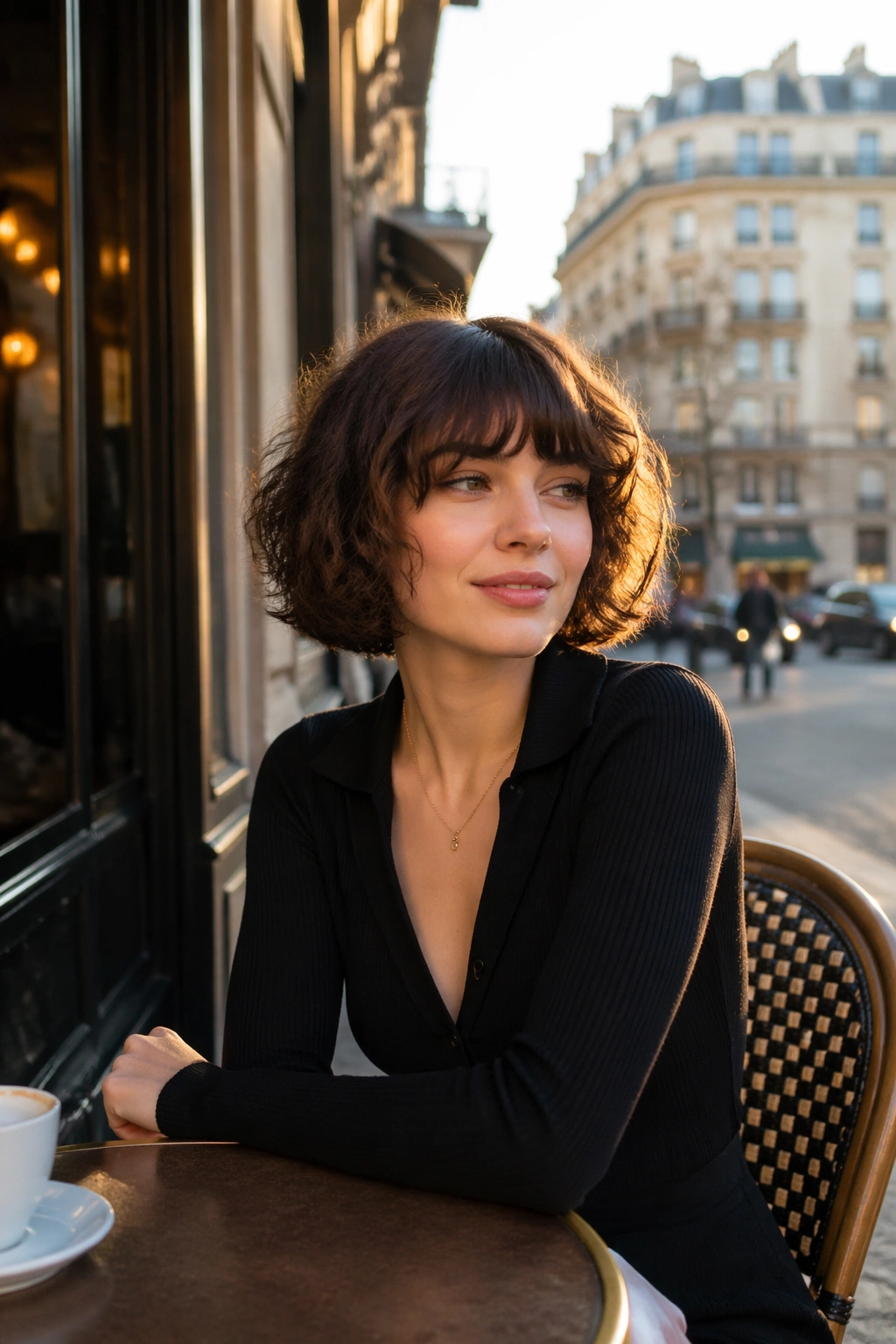
The French bob has a kind of quiet confidence that curly hair wears well. It sits around the jaw, skims the cheekbones, and keeps the whole look compact without feeling severe. With waves or curls, the trick is to leave the fringe soft enough to bend, not so blunt that it turns into a shelf.
A lot of people ask for a French bob and end up with something too sharp. That’s the mistake. Curly texture wants a little air in the cut, especially at the ends. If your hair shrinks a lot when dry, the bangs should sit a touch longer than you think so they don’t jump halfway up the forehead.
I like this style on anyone who wants structure without a lot of styling time. It’s especially good if you have a strong jaw or cheekbones and want the hair to frame rather than hide them. The fringe should land in pieces, not as one solid curtain.
Best for: loose curls, 2B to 3A texture, and people who want a short shape that still feels soft.
Watch for: overly blunt bangs. They can make curly hair look heavy fast.
3. Curly Shag Bob
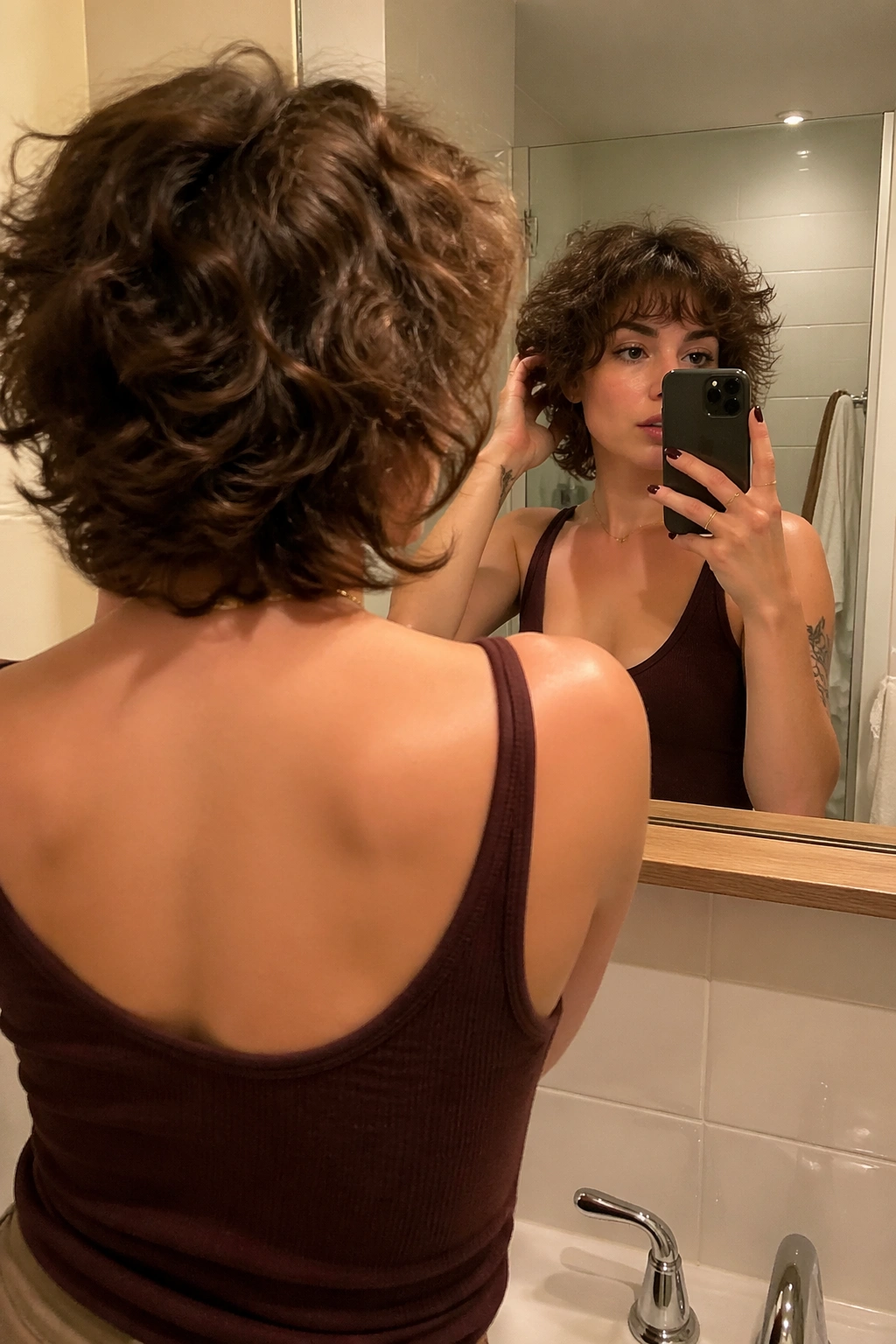
Why do some curly bobs look full of life while others puff out like a mushroom? Layers. A shag bob uses layers the way a good seamstress uses darts: to give shape where you want it and remove bulk where you don’t.
This one has movement built into it. The ends are lighter, the crown gets some lift, and the face-framing pieces fall in a way that makes the whole haircut feel less precious. It’s a little messy, but in a flattering way. Not sloppy. Just relaxed.
How to Style It
The shag bob looks best when you let the curls form their own little clumps. Don’t rake through it too much after applying product.
- Work in a light leave-in conditioner
- Add curl cream from mids to ends
- Scrunch with your hands or a microfiber towel
- Diffuse on low heat if you want more root lift
This cut is a gift for thick hair, especially when the lower half of the hair tends to swell wider than the top. The shag breaks that up. If your curl pattern is uneven, even better. The shape forgives a lot.
My take: this is one of the easiest short wavy curly hairstyles to live with if you like texture more than polish.
4. Side-Parted Wavy Crop
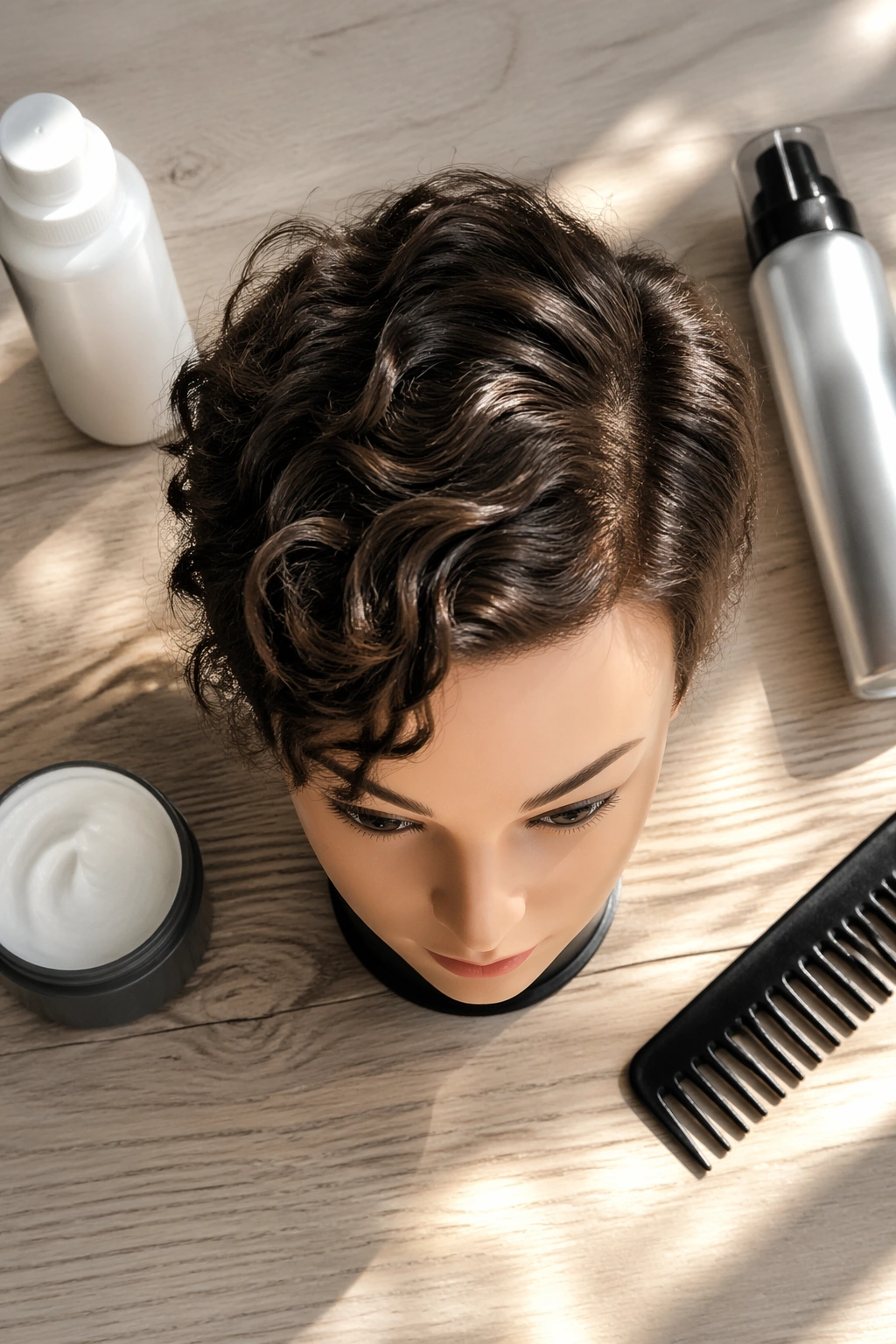
If your hair already leans to one side, stop pretending it wants a perfect center part. A side-parted crop works with that natural bias and turns it into shape. The result is lift at the roots, a little drama around the brow, and less of that awkward flat spot that shows up when short curls are forced into symmetry.
This cut is short enough to feel fresh, but not so short that it loses softness. The part does a lot of the visual work. One side can tuck behind the ear, while the other side falls forward a bit more and gives the face some angle. That asymmetry is easy on most hairlines.
I like this style on people with a cowlick at the front because the side part tucks the cowlick into the design instead of making it the enemy. A little mousse at the root and a gentle finger-dry is usually enough.
Good for: rounder faces, strong brows, and wavy hair that needs a little direction.
Avoid if: you want a perfectly balanced outline. This one is meant to look slightly off-center.
5. Tapered Curly Cut
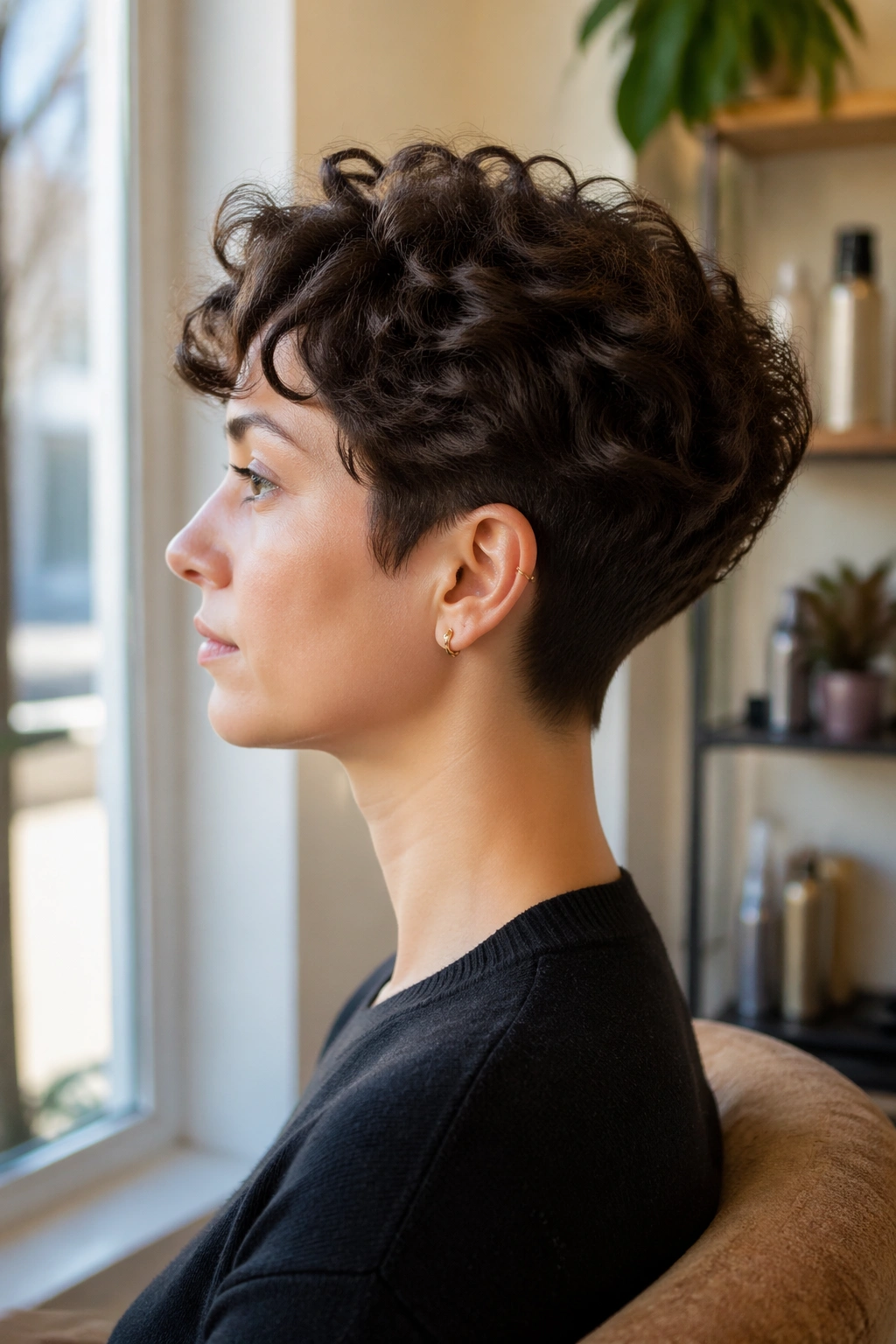
A tapered curly cut is the cleanest option in the whole bunch if you like short hair that still feels neat around the neck. The back is trimmed closer, the sides stay controlled, and the top keeps enough length for curls to rise instead of sitting in a heavy lump.
There’s a big difference between tapered and shaved, and I think people mix them up too often. A taper keeps the shape soft and wearable. It lets the cut follow the head without turning harsh. That matters if your curls are dense or coarse, because those textures can look bulky very fast once they hit the ears and nape.
This is the haircut I’d point to if someone says, “I want short hair, but I do not want it to feel messy.” It works especially well with a side sweep or a small curl at the forehead. The silhouette stays tidy even when the curls loosen a bit over the day.
Best for: thick hair, strong curl patterns, and anyone who wants less bulk at the neckline.
Styling note: a lightweight gel at the roots and a cream on the ends keeps the taper from puffing out.
6. Asymmetrical Curly Bob
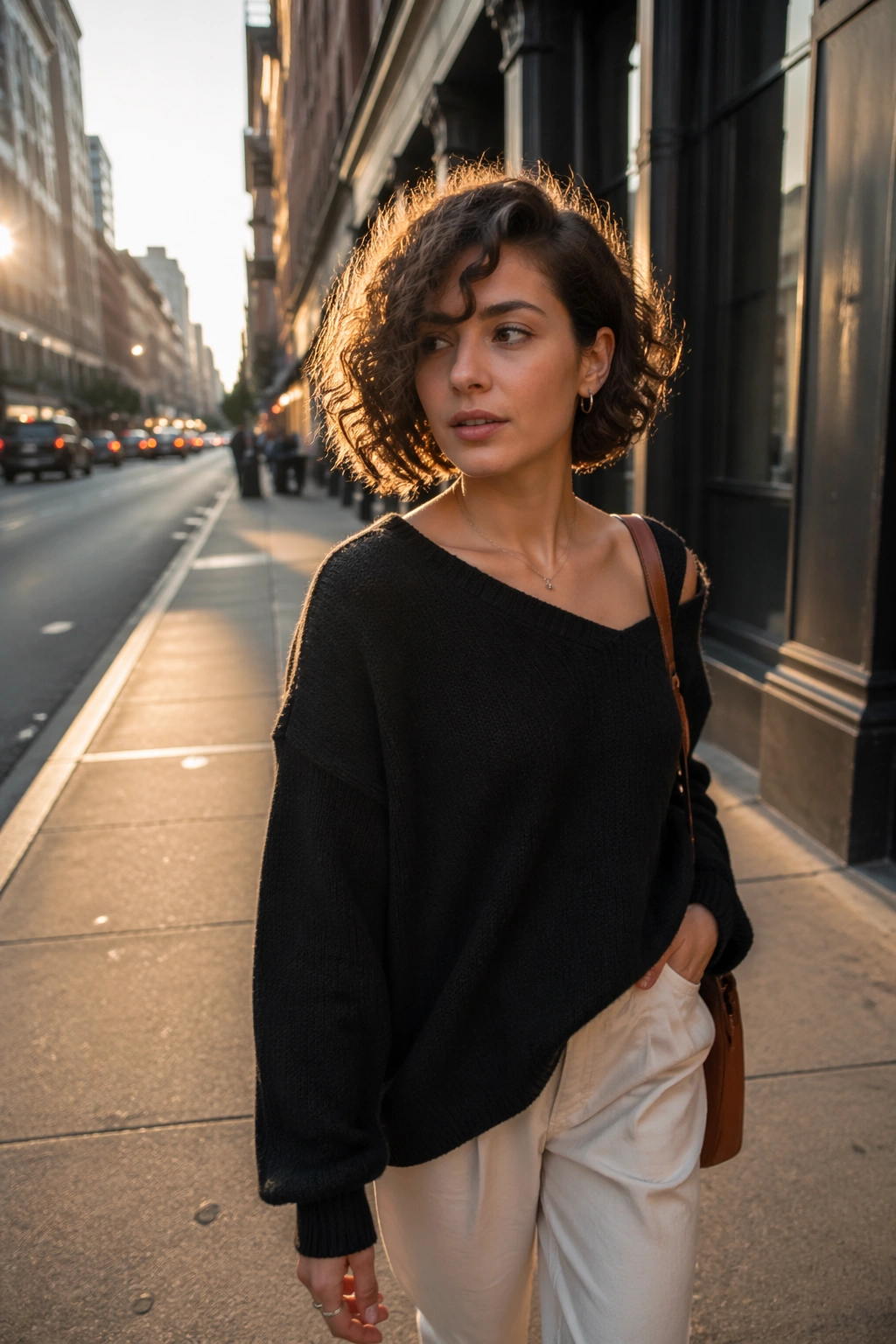
An asymmetrical curly bob looks a little sharper than the classic version, and that’s the point. One side sits longer, the other side stays shorter, and the contrast gives the curls something to do. On wavy or curly hair, that shape keeps the eye moving.
Unlike a straight asymmetrical bob, this version doesn’t need a hard line to work. In fact, a bit of softness helps. The longer side can curve toward the chin, while the shorter side opens the face and shows off earrings, glasses, or just the neck.
I like this haircut for people whose hair grows in different directions on each side. Instead of fighting that, the asymmetry makes it part of the style. It can also take the edge off a very wide face shape by drawing attention diagonally instead of straight across.
Best for: square or round faces, and people who want something a little more styled than a standard bob.
Keep in mind: this is not the most low-maintenance choice. The longer side needs a trim to keep the line clean, or the whole point gets muddy.
7. Rounded Curly Bob
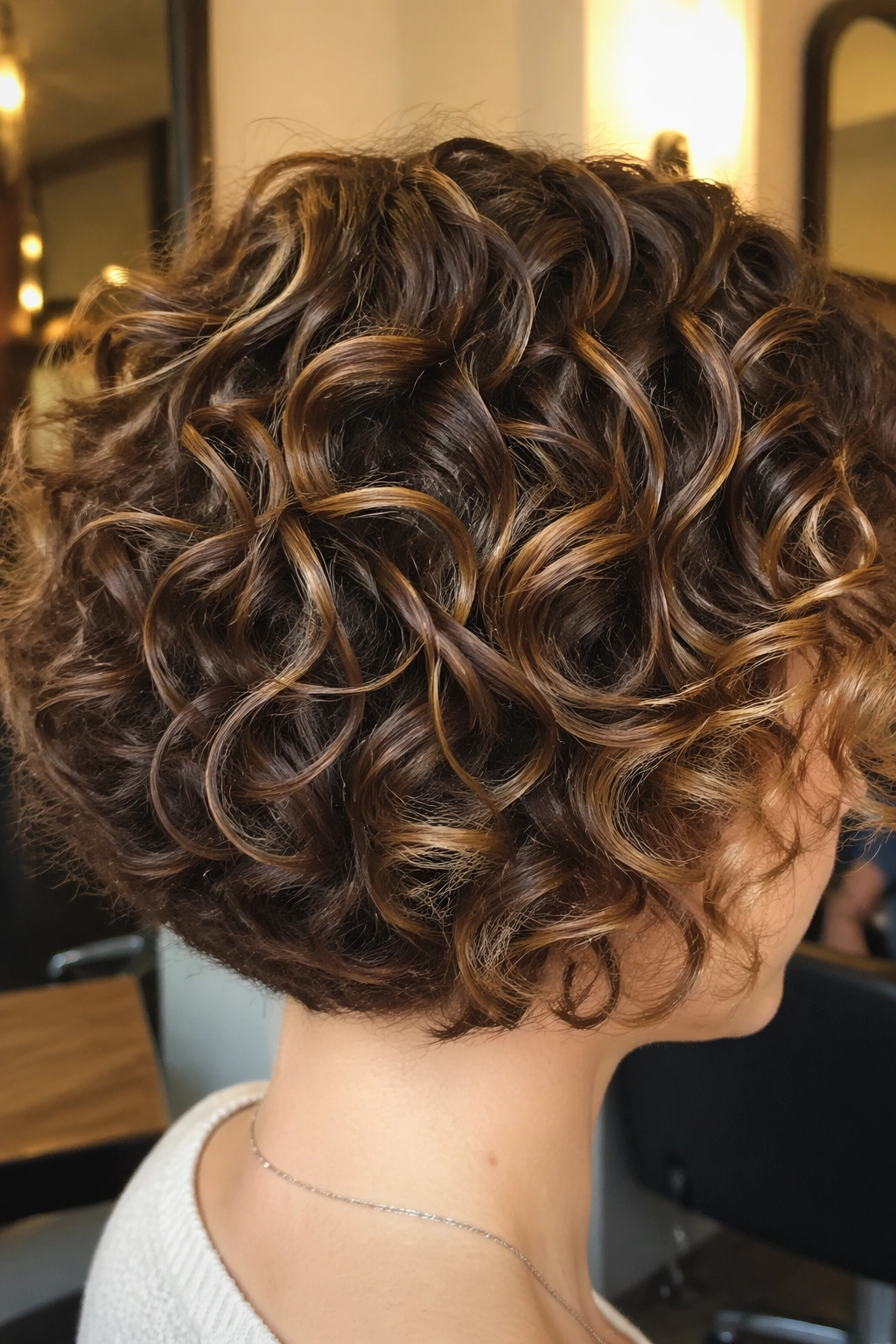
A rounded curly bob is one of the prettiest shapes for short hair, and I mean that in the plainest sense. It hugs the head, keeps volume distributed evenly, and lets the curls create a soft halo instead of a wide shelf. When it’s cut well, the shape feels calm.
The rounded outline works best when the layers are subtle. Too many choppy pieces can break the curve and make the hair stick out in odd places. Too few layers, and the bob turns into a block. The sweet spot is a shape that follows the natural head curve while giving the curls room to spring.
This one looks especially good on medium-density hair. Fine hair can wear it too, but the cut has to be light enough not to flatten out the crown. A center part gives it a clean, balanced feel. A side part makes it softer and more face-framing.
The texture should feel springy, not stiff. If the ends are too dry, the rounded shape gets frizzy around the perimeter. A little leave-in conditioner at the ends helps more than people think.
8. Curly Pixie with Long Top
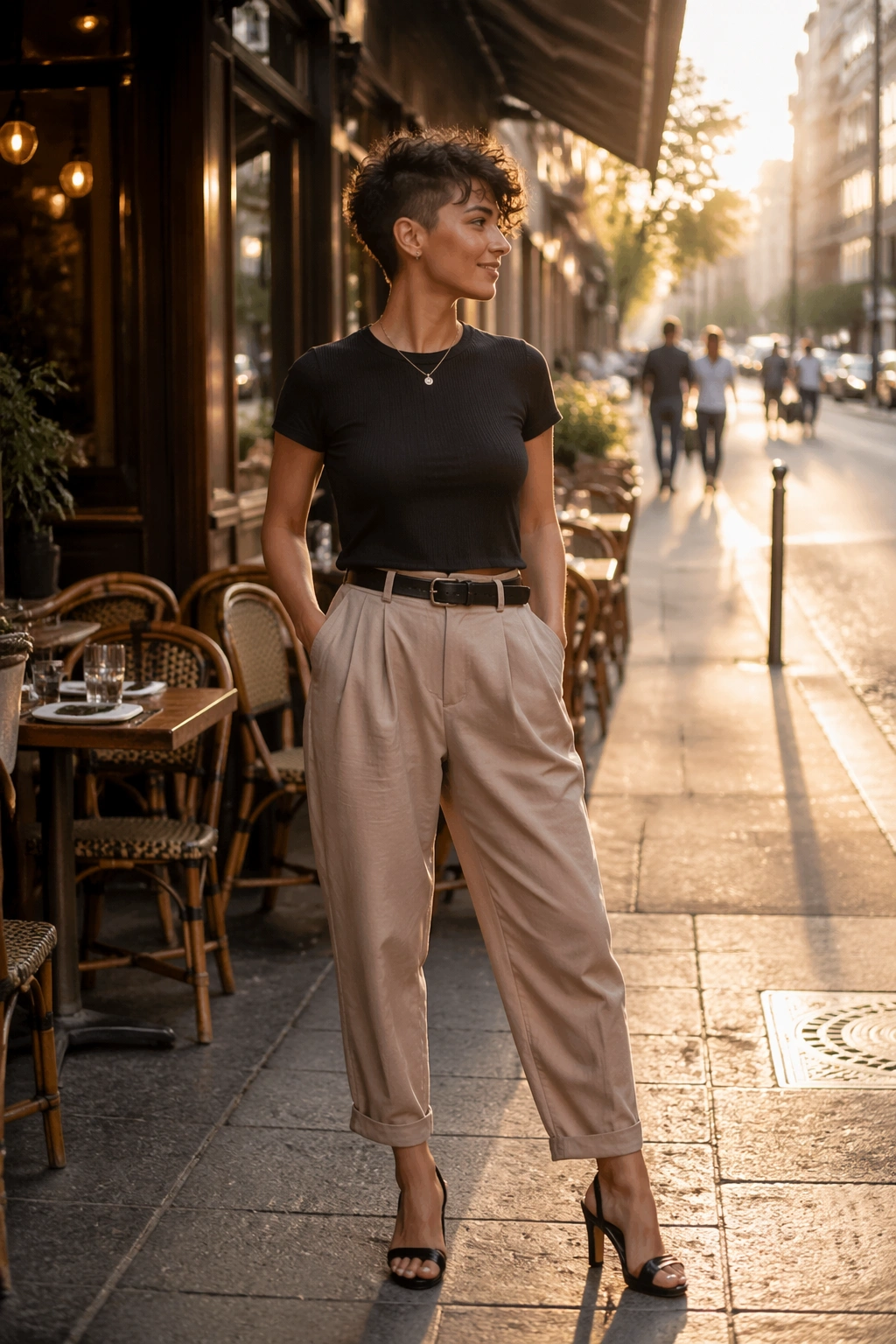
The curly pixie with a long top is for anyone who wants short sides but refuses to give up movement on top. It’s close at the ears, lighter at the nape, and fuller through the crown. The whole look depends on that contrast. Without it, the shape can fall flat.
What Makes It Different
This cut gives you options. You can push the top forward, sweep it to the side, lift it slightly, or let it fall into little curls across the forehead. It’s a small haircut with a lot of personality.
- Great for stronger curl patterns
- Works well with glasses
- Easy to make polished or messy
- Needs regular shaping around the ears
I’d call this a smart choice for people with fine hair who still want visible texture. The longer top makes the hair look like it has more body than it actually does. That said, it also needs a decent product. A dry, fuzzy pixie top is not the same thing as texture. One looks intentional. The other just looks tired.
Styling tip: emulsify a small dab of curl cream between your palms, then press it into the top instead of rubbing. Rubbing breaks up the curl clumps.
9. Jaw-Grazing Cut with Curtain Bangs
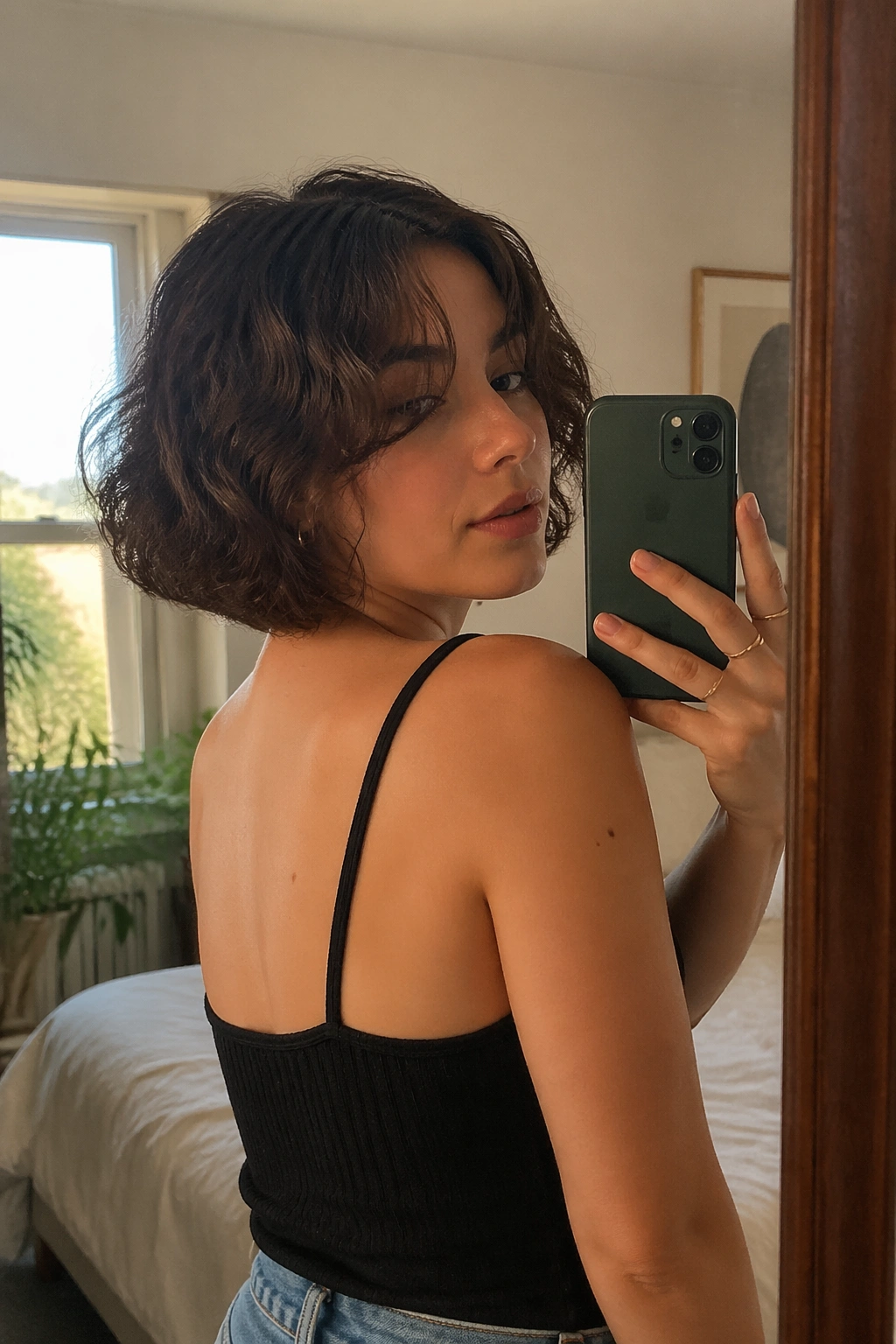
What happens when you want short hair, but you still want something that softens the face? Curtain bangs are the answer more often than not. A jaw-grazing cut with curtain bangs keeps the ends near the jawline while the fringe splits and bends away from the face, which gives you shape without a hard edge.
The bangs matter here. A lot. They should be cut long enough to move—usually around cheekbone length when dry, a little longer when wet—because waves shrink in all directions and you don’t want the fringe popping up too high. If the bangs are too short, they can turn fussy fast.
This style works well on people with a longer face because the fringe shortens the visual length a bit. It also helps balance heavier curls at the bottom by drawing attention upward. The haircut needs a soft finish around the perimeter, not a razor line. Curly fringe and a hard edge rarely get along for long.
Best for: loose to medium curls, heart-shaped faces, and anyone who likes a romantic, face-framing shape.
Styling tip: dry the bangs first with a side-to-side motion from your fingers so they don’t separate weirdly down the middle.
10. Feathered Crop
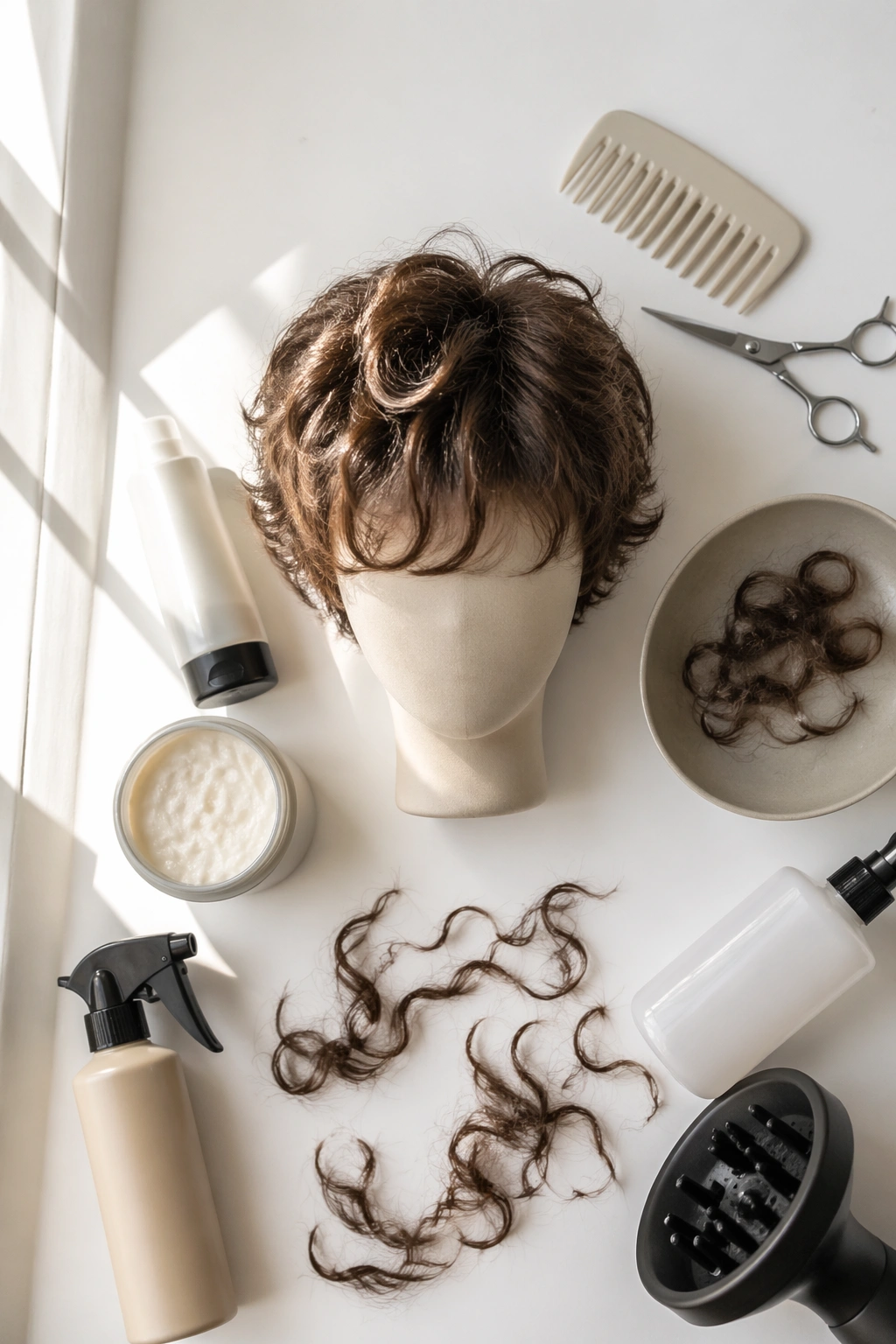
A feathered crop takes a lot of weight out of thick curly hair without making it look thin. That’s the real appeal. The ends are broken up, the layers are light, and the whole cut moves instead of sitting in a dense block.
This is a strong choice when your hair tends to balloon at the sides. The feathering removes some of that bulk and gives the cut a softer outline. I’d avoid anything too aggressive with thinning shears here, though. Feathered does not mean shredded. If too much texture is taken out, the ends can frizz and the shape loses its body.
A feathered crop can be styled with very little effort. A light mousse, a quick scrunch, and air-drying usually do the job. It also plays nicely with natural highlights because the lighter pieces move a little more and catch the eye as the curls shift.
Who it suits: coarse textures, dense hair, and people who want less width around the cheek area.
What to ask for: soft interior layering and pieces that stay piecey at the ends, not a heavily razored finish.
11. Tucked-Behind-Ear Bob
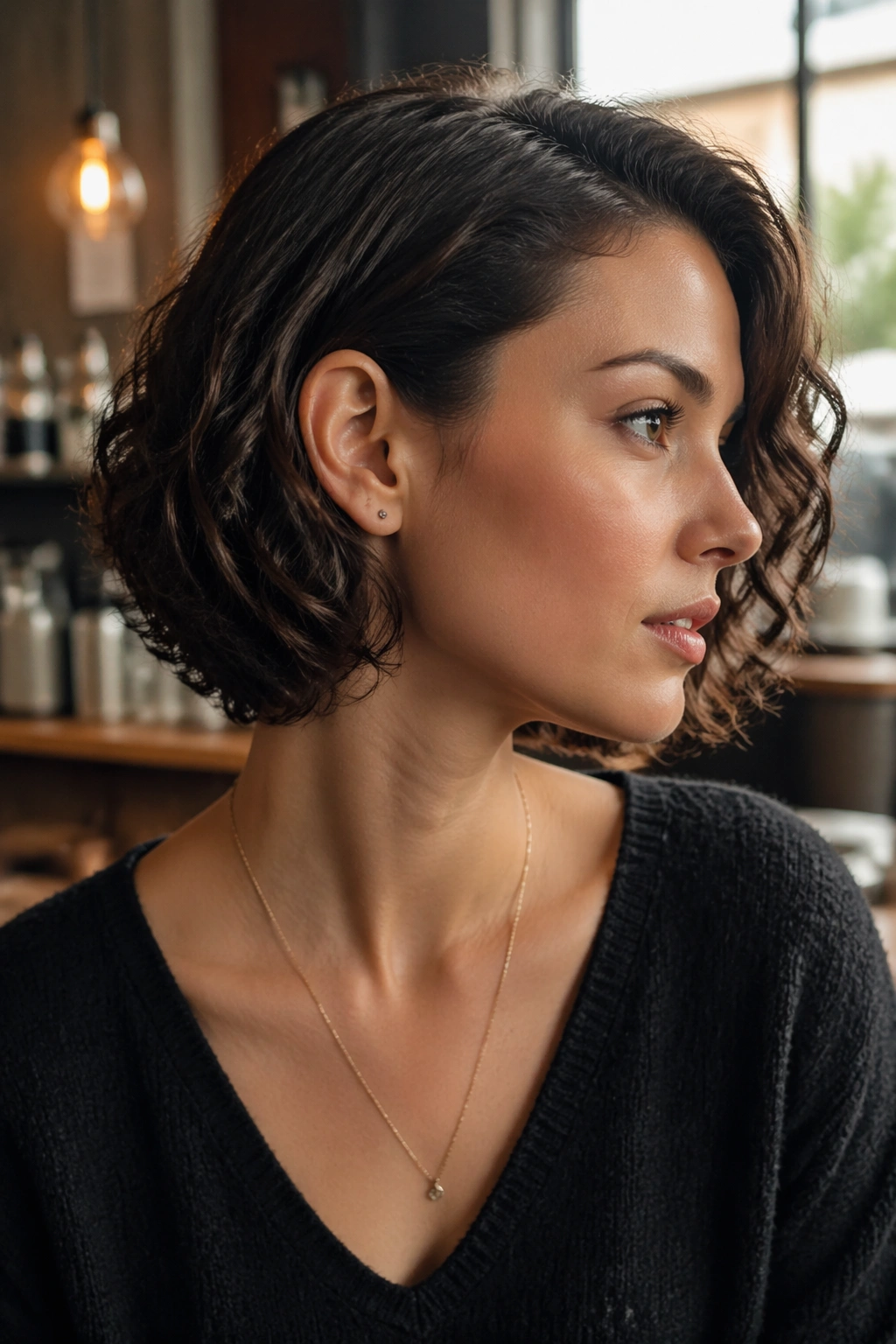
A tucked-behind-ear bob is a hairstyle more than a haircut, and that’s why I like it. It takes a basic short bob and makes it look intentional with almost no effort. One side gets tucked, the other side stays loose, and the asymmetry gives curly hair a little shape without needing a dramatic cut.
That tucked side shows off the jaw and the neck, which is handy if you want the hair away from the face but don’t want to lose softness. It also works well with earrings, glasses, and strong cheekbones. The loose side keeps the style from feeling too neat.
I think this is one of the easiest short wavy curly hairstyles to wear on ordinary days, because it doesn’t ask for perfection. The hair can be a little uneven. It still works. A side part helps, but a center part can work too if the curls naturally fall in a soft bend.
Simple trick: tuck one side while the hair is still slightly damp, then let it dry that way for a bend that lasts longer.
12. Undercut Curly Short Style
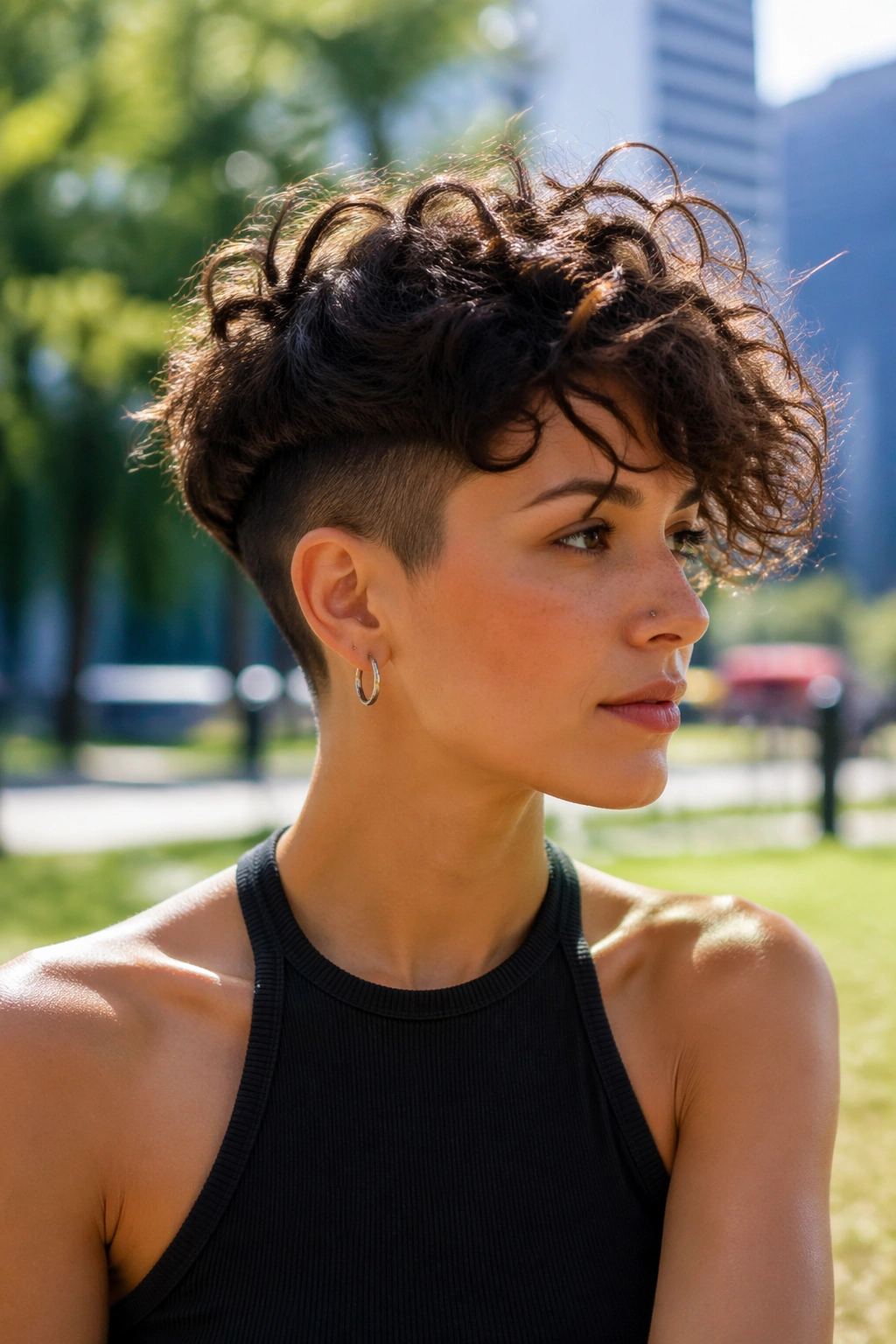
An undercut on curly hair sounds bold, and sometimes it is. But a hidden undercut at the nape or under the sides can solve a real problem: too much bulk where you don’t want it. If your hair is thick and it puffs near the ears, this cut can make the whole shape sit closer to the head.
Unlike a standard short haircut, an undercut removes weight underneath the top layer. That means the visible curls can stay full while the underneath area stays light. It’s a clean fix for people who want a short style without that helmet-like spread.
There’s a catch. The grow-out stage can be awkward if the clippered section is too big. Keep the undercut hidden or small if you want more flexibility later. A nape-only undercut is easier to live with than a high one, and it still gives the hair room to move.
Best for: thick, dense curls that refuse to sit flat.
Worth knowing: this style pairs well with a side part, since the top layer can drape over the shorter section and keep the look soft.
13. Curly Bixie
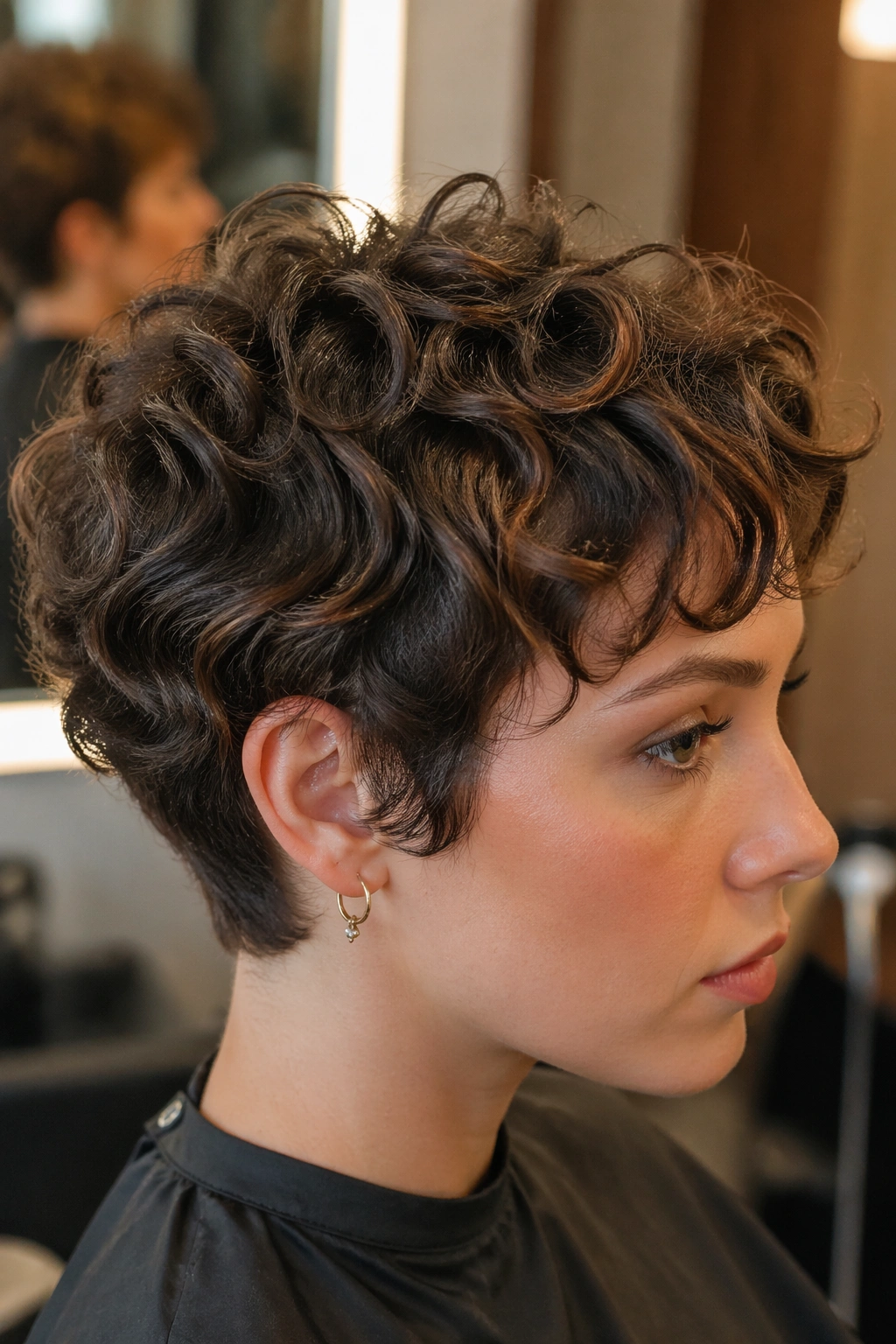
A curly bixie sits between a bob and a pixie, which is exactly why it has such a nice shape on wavy hair. It’s short, light, and easy to move around with your hands, but it still leaves enough length around the top and sides to show off the curl pattern.
This cut is especially helpful if you’re growing out a pixie or cutting down from a longer bob and want something in the middle. The bixie gives you a softer landing. It doesn’t look as severe as a pixie, and it doesn’t carry the weight of a bob. That middle ground can be a relief.
The best versions keep the nape neat and let the top pieces fall forward a bit. Some curl around the temples helps a lot. Too much layering, though, and the silhouette can get choppy fast. I like this cut on people who want to touch their hair a lot. It responds well to finger styling and doesn’t need a blowout to make sense.
Styling note: a light curl cream plus a tiny bit of gel at the crown keeps the top from frizzing out.
14. Modern Bowl Cut
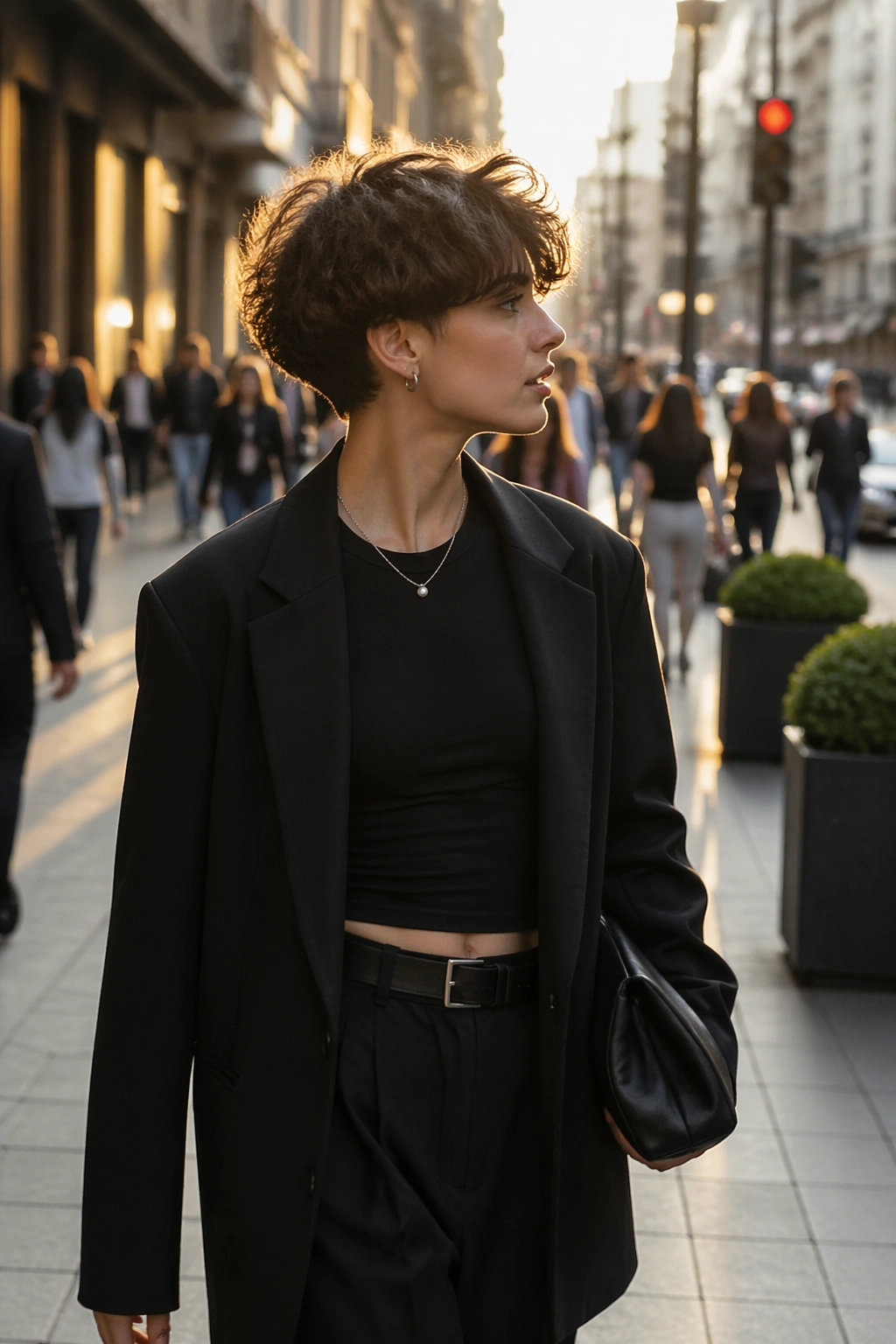
The bowl cut got a bad reputation for a reason. The old version was stiff, heavy, and hard around the edges. The modern version is different. It uses texture, air, and soft layering to turn a blunt shape into something with movement. On curly or wavy hair, that can look striking in the best way.
What makes this cut work is the balance between structure and softness. The perimeter still has a clear line, but the curls break it up enough that it doesn’t feel rigid. That’s what saves it. If the texture is too flat, the cut looks dated fast. If the top is too long, the shape loses the whole point.
This style is not for people who want invisible hair. It has presence. A lot of it. But if you like strong shapes and you don’t mind looking a little fashion-forward, it can be a fantastic choice. It works especially well when the curls have spring and the sides are trimmed close enough to keep the head shape clean.
My honest take: it’s a bold cut, not an easy one. When it’s right, though, it looks sharp in a way that a plain bob never will.
15. Soft Wolf Cut
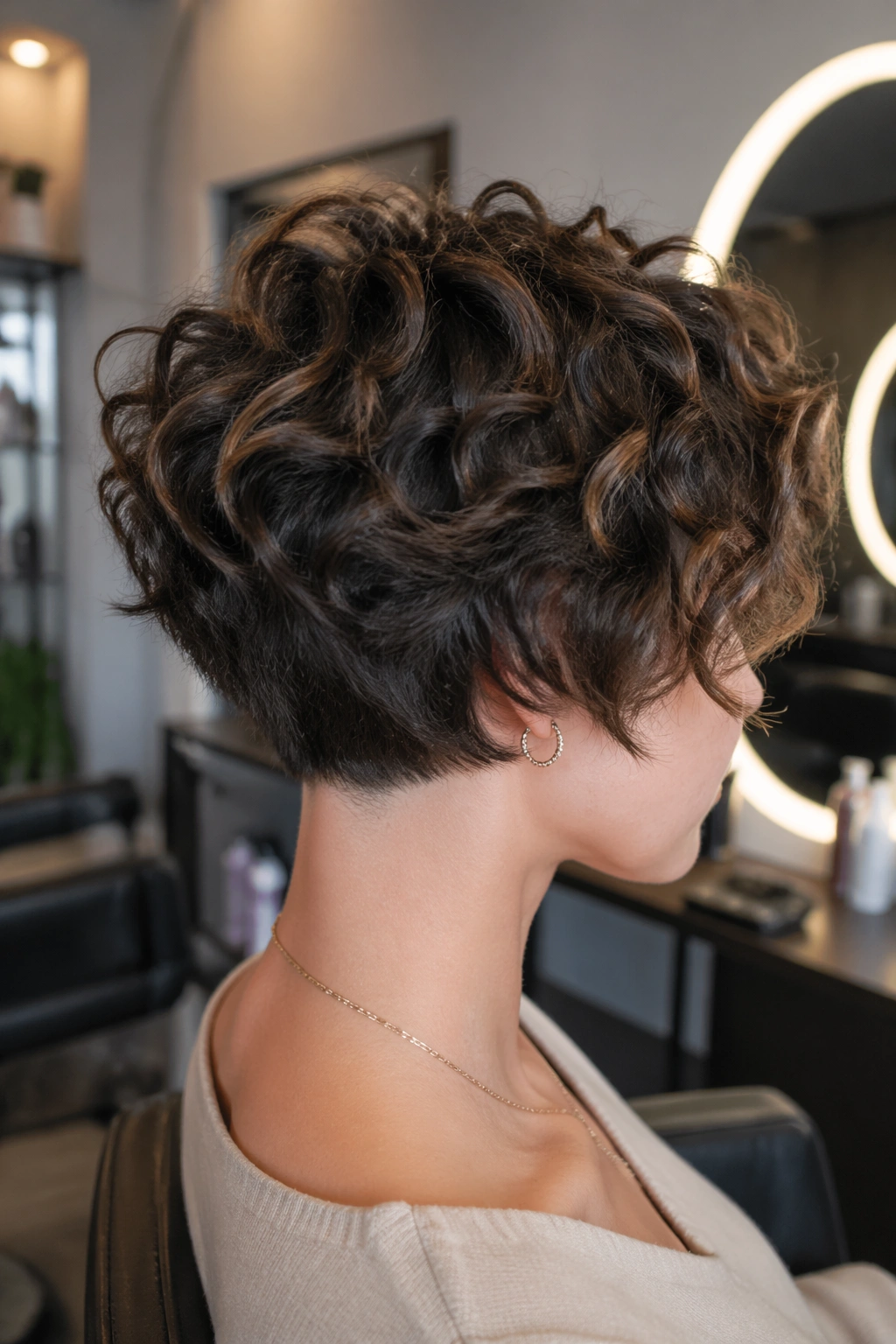
A soft wolf cut is the wild card in short wavy curly hairstyles, and I mean that in a good way. It gives you a shorter crown, light face-framing pieces, and ends that stay a little longer in the back. The result is messy in the right places and controlled where it needs to be.
The shape works because the top gets enough lift to stop the hair from sitting heavy, while the lower layers keep the style from looking too chopped up. On curls, that balance matters. Too much layering and the head can start to look triangular. Too little and the wolf cut turns into a plain shag with no edge.
I like this cut for people who want movement more than polish. It looks especially good when the hair is air-dried and touched with just a bit of product. A diffuser can sharpen the layers if you want more definition, but it is not required. That’s part of the charm. It can look cool on a good hair day and still look fine on a lazy one.
Best for: medium to thick curls, strong waves, and anyone who likes a shape with a little bite.
Final tip: keep the crown layers light and the ends soft. That contrast is what gives the cut its swing, and it is what keeps the whole thing from feeling overworked.