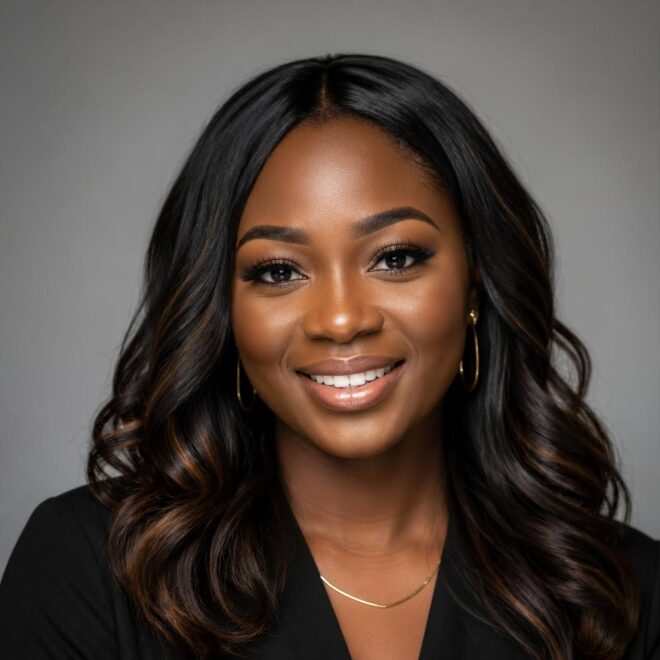


Curly wedding styles with a veil work best when the veil feels like part of the hairstyle, not something bolted on at the end. Curls need room to spring, and they need anchor points that can hold a comb without crushing the shape.
That sounds fussy, but it is really just respect for the hair you have. A tight coil, a loose wave, and a brushed-out curl all behave differently once pins, tulle, and a bit of humidity get involved. Push too hard on the texture and the style goes flat. Leave too much loose and the veil slips by the first hug.
The sweet spot is a style that gives the veil a job: sitting above a bun, tucked under a twist, or floating from a crown with enough support to stay put. The prettiest bridal curls keep movement around the face, because that motion is what makes the whole look feel alive instead of stiff.
Some brides want polished. Some want soft and romantic. Some want the veil to do most of the visual work, which is fair enough if the dress is simple and the neckline needs a clean frame. Start with the curl texture, then choose the veil length and anchor point that make sense for it. The rest gets easier from there.
1. Soft Side-Swept Curls with a Fingertip Veil
If you want the veil to stay in the background, this is the easiest place to start. Soft side-swept curls keep the shape loose and flattering, and a fingertip veil lands in that sweet middle zone where it feels formal but not heavy.
Why It Works
The side part gives the style a little architecture without turning it into a stiff set. Curls fall across one shoulder, which leaves the other side open for the veil comb to sit cleanly at the crown or just behind the part.
That placement matters more than people think. If the comb sits too low, the veil drags the curls down. Too high, and it can look like it’s floating off the head. A fingertip veil usually lands around mid-back, so the weight stays balanced and the curl shape keeps its bounce.
This is also a forgiving style if your hair has mixed texture. Loose waves up top, a few tighter curls underneath, maybe a soft bend around the face — it all works. The trick is to keep the front polished and let the ends do their own thing.
- Best for medium to long hair
- Nice with sweetheart, scoop, and off-the-shoulder necklines
- Looks good with naturally curly hair or heat-styled curls
- Ask for a veil comb anchored under a light veil cushion if your hair is fine
Pro tip: keep the part clean and let one ear stay visible. It makes the veil placement look deliberate, not accidental.
2. Half-Up Twists with a Cathedral Veil
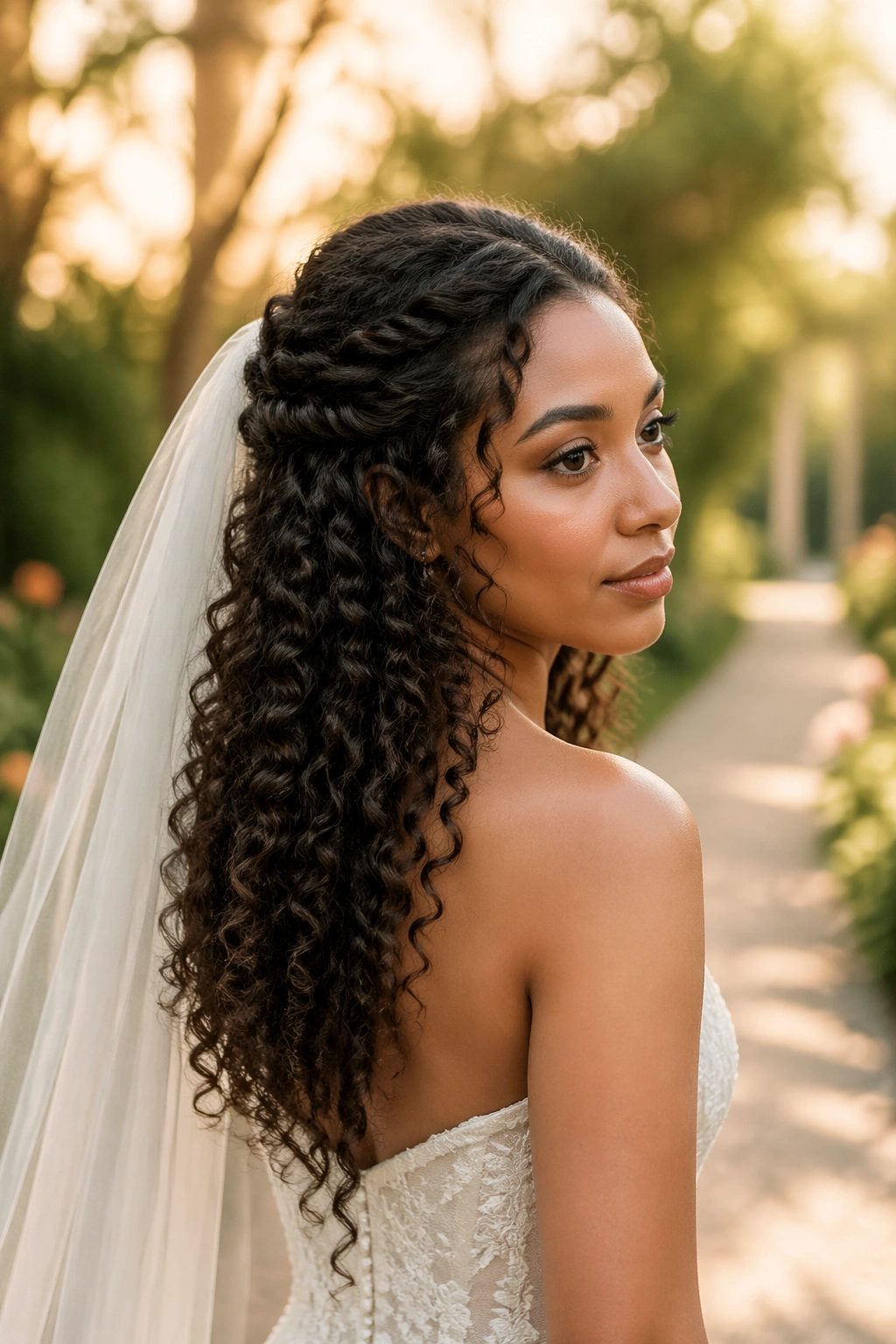
This is the look that keeps curls off the face without killing the shape. The upper section gets twisted back from the temples, the crown gets a little lift, and the rest of the curls spill down in a way that still feels full.
A cathedral veil needs a strong anchor, and half-up twists give you one without forcing the whole style into an updo. That’s why I like it for brides who want length, drama, and a veil that trails well behind them. The veil comb can sit just under the twist line, where hidden pins hold everything steady.
There’s a small detail that makes a big difference: the twists should be soft, not tight rope twists that look overworked. Keep a bit of volume at the roots. If you flatten the crown, the cathedral length starts to feel too heavy. If your hair is fine, a couple of discreet clip-in pieces can bulk up the top section without showing.
This style is all about balance. The curls stay visible, the veil gets a proper stage, and the overall look feels formal without turning severe.
3. Low Curly Chignon with a Blusher Veil
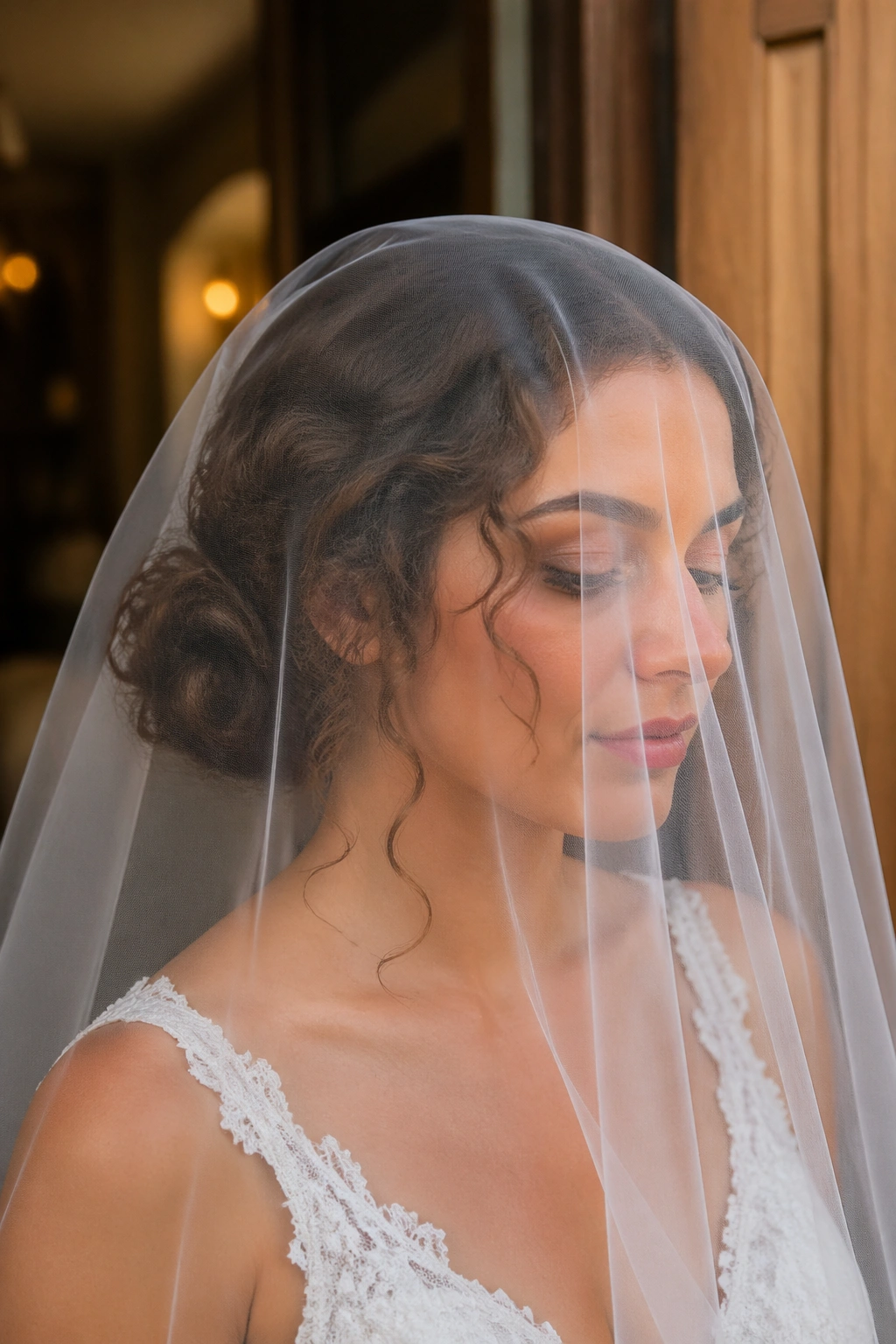
Want the veil to feel classic but not stiff? A low curly chignon does that job beautifully. The bun sits at the nape, the curls are tucked and pinned in a loose knot, and the blusher can fall over the face before being lifted at the ceremony.
That little lift is where the magic lives. A blusher veil adds a gentle sense of ceremony, and curly hair makes it softer than pin-straight styling ever could. You still see texture around the bun, especially if your stylist leaves a few tendrils near the ears or the temples.
A low chignon also works well with dresses that show off the neckline or the back. If your gown has lace at the shoulders or an open back, this style keeps the hair out of the way without looking bare. The veil should sit above the bun, not buried inside it, so the fabric falls cleanly instead of catching on every pin.
One warning: don’t make the bun too perfect. A curly chignon looks better when a few loops and coils stay visible. Otherwise it turns into a formal knot with none of the softness that curls bring.
4. Brushed-Out Old-Hollywood Waves with a Clean Comb Veil
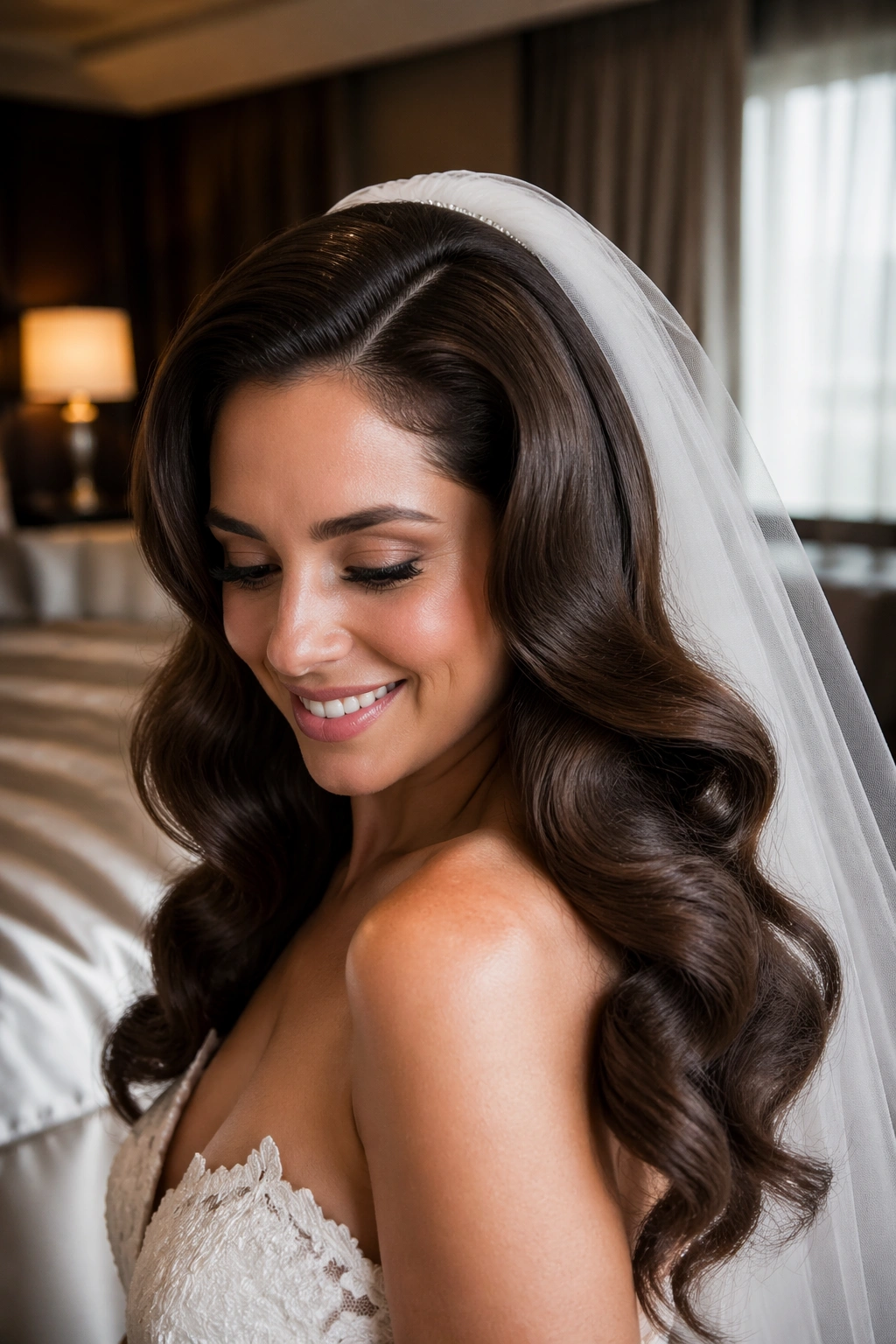
I keep coming back to this one for brides who want polish without a helmet effect. Brushed-out waves give you that old-Hollywood curve, and the veil can sit on a clean comb at the crown or a touch above one ear, depending on where the part lives.
The key is timing. Curl the hair first, let it cool completely, then brush it out only when the shape has set. If you brush too early, you get fluff. If you use too much product, you get crunchy waves that don’t move. A medium-hold spray is enough for most heads of hair; you want shine and shape, not shellac.
This style looks especially good with satin gowns, clean lines, and simple jewelry. The veil doesn’t fight the hair. It slides into the look and lets the waves do the talking.
A neat comb veil also keeps the profile tidy from the side, which matters if your dress has a dramatic back or a high neckline. That’s the part people forget to check in the mirror. The front can look lovely, then the side view suddenly feels crowded.
5. Curly Ponytail with a Floating Veil
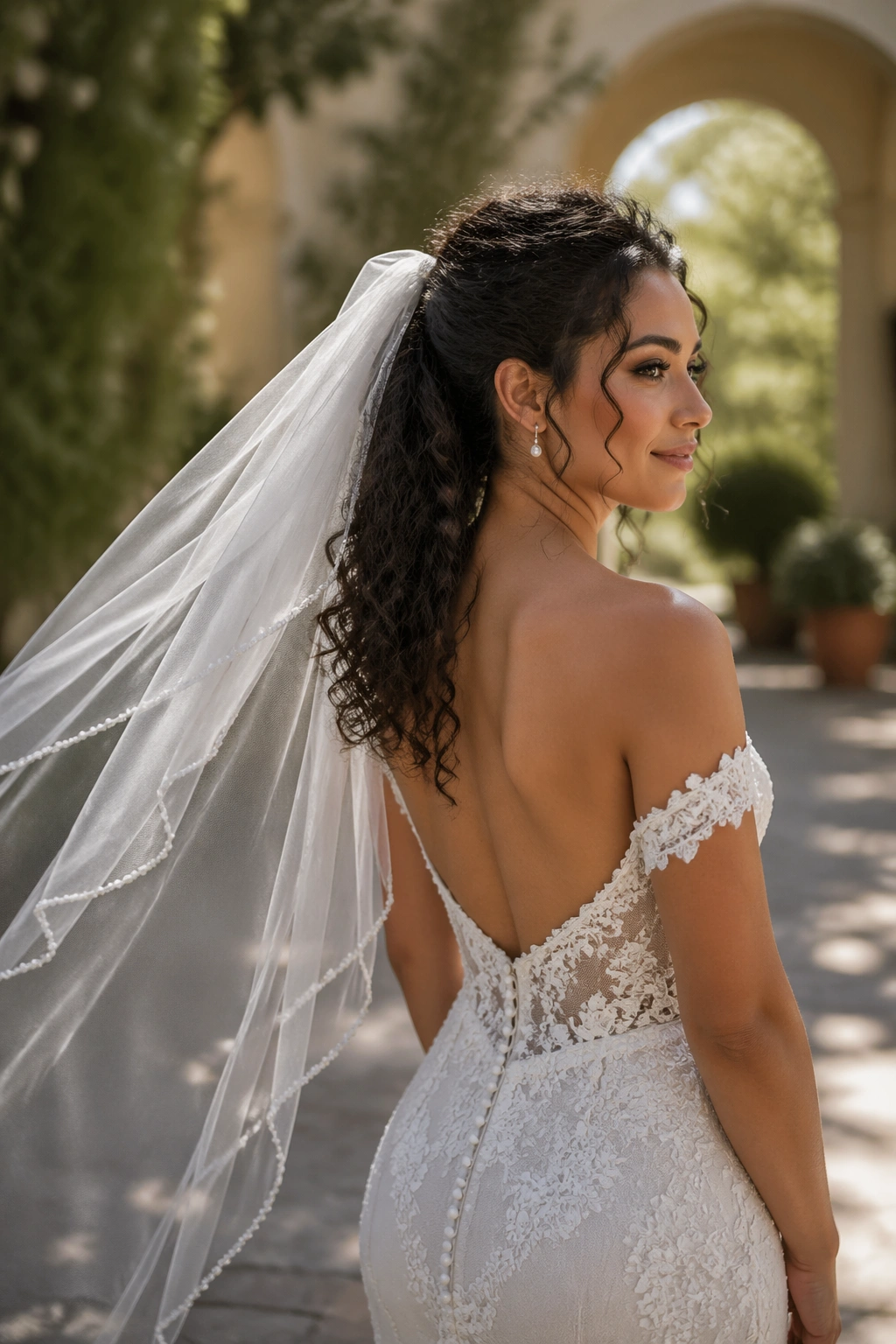
A curly ponytail is one of those styles that sounds simple until you see it done properly. Then it makes perfect sense. The curls stay bouncy, the neckline stays open, and the veil floats from the base without stealing volume from the rest of the hair.
High ponytail, low ponytail, mid-height — all three can work. A mid-height version usually feels the most bridal because it lets the veil comb hide below the crown while the curls fall in a full cascade. Wrap a strand of hair around the elastic if you want the finish to look cleaner. That tiny move changes everything.
This is also a smart choice for dancing. The ponytail moves with you, and the veil can be removed after the ceremony without dismantling the whole style. If you know you’ll wear the veil only for portraits and the aisle, this one saves a lot of fuss.
The look depends on curl shape. Tight curls give you a springier ponytail. Looser waves give a softer, more romantic drop. Either way, it’s one of the few veil styles that looks relaxed without reading casual.
6. Side-Swept Shoulder-Length Curls with a One-Sided Veil
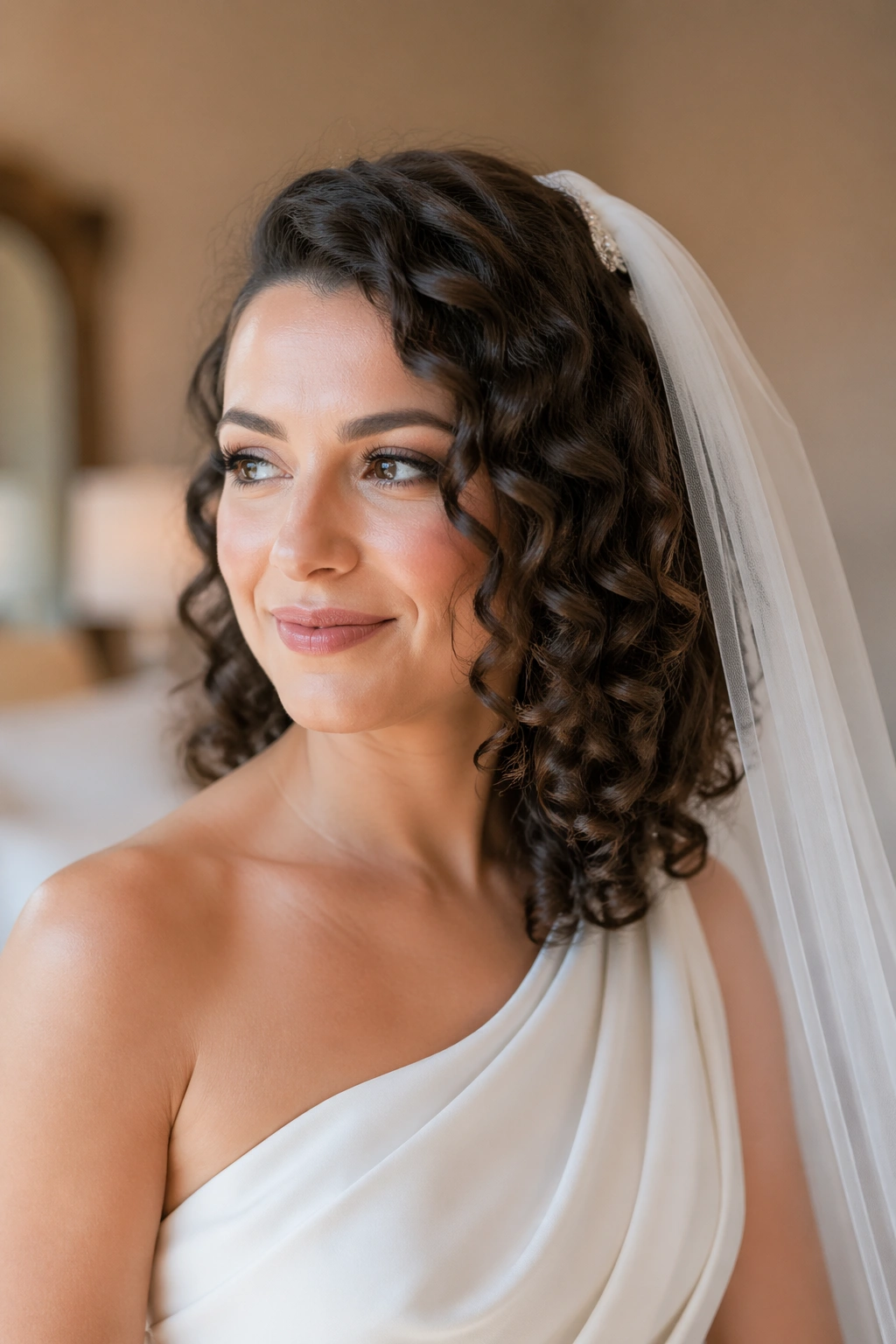
Unlike a centered veil, one-sided placement lets shoulder-length curls keep their movement. That matters more than it sounds. When curls stop around the shoulders, a veil dropped straight down can swallow the shape. Shift the veil to one side, and the hair still breathes.
This style works best with an asymmetrical neckline, one-shoulder dress, or any gown with a strong detail on one side. The hair and the dress stop competing. They start talking to each other instead. The veil comb can clip behind the heavier side of the part, and the rest of the curls can swing freely across the chest.
If you’ve got layered curls, this is a lovely way to show the cut. Layers keep the silhouette light, which stops shoulder-length hair from looking boxy under the veil.
Shorter curly hair can wear a veil too, but the placement has to be smart. Keep the veil starting just behind the ear or slightly higher at the crown so the ends still bounce instead of getting pinned flat.
7. Crown Braid with Loose Curls and a Chapel Veil
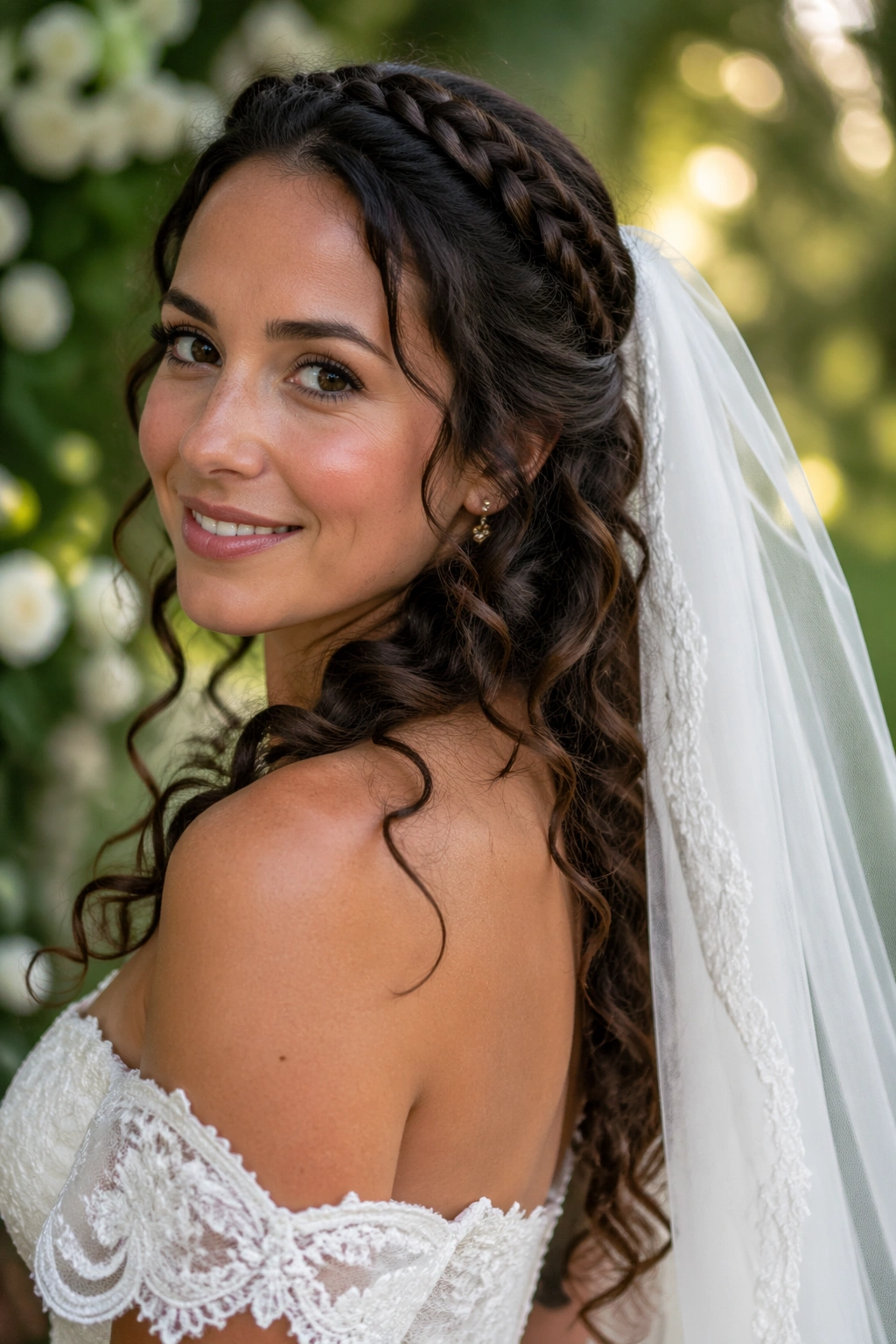
A crown braid gives the veil something sturdy to rest against, and the loose curls below keep the whole look from feeling severe. It’s a good mix for brides who want a bit of detail around the head but still want the hair to read soft from a distance.
Where the Braid Does the Heavy Lifting
The braid does not need to be thick. In fact, a braid that’s about 1 to 1½ inches wide is usually enough to shape the front without taking over the style. Anything wider can start to look heavy, especially on finer hair.
The chapel veil should anchor just under the braid line or slightly behind it, where the pins can hide. That keeps the veil from slipping and keeps the braid visible from the front. If the veil starts too low, it can hide the braid and make the style feel flat. Too high, and the braid loses its framing job.
- Best for thick curls and medium-to-long lengths
- Nice for garden ceremonies and outdoor aisles
- Works with lace veils, raw-edge tulle, or simple comb veils
- Ask for a few curls left out near the ears so the braid does not feel rigid
One thing I love here: the braid gives structure, but the curls keep the mood soft. That mix is hard to beat.
8. Natural Afro Curls with a Halo Veil
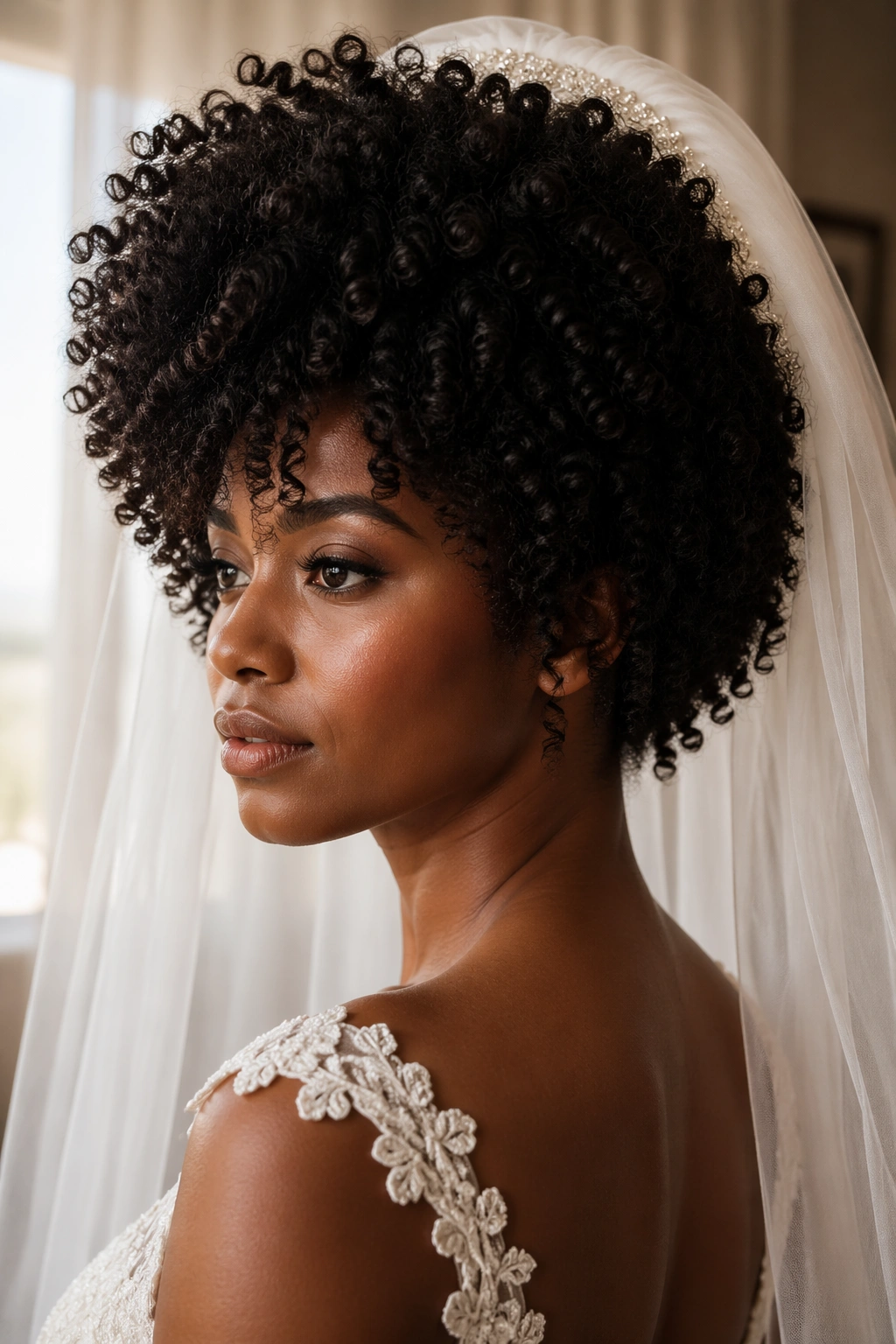
A veil does not have to flatten textured hair to look bridal. That is the whole point of this style. A shaped afro, a defined coil pattern, and a veil placed with care can look just as formal and elegant as any pin-set chignon.
The veil here is usually anchored with a halo-style piece, a comb set behind the crown, or a light band that sits over the top without crushing the silhouette. What matters most is keeping the round shape visible. Don’t force the veil too far forward. Let the hair keep its outline.
A wash-and-go with a strong curl cream or a softly stretched twist-out works well, depending on how much definition you want. The front can stay crisp around the hairline, while the rest of the shape stays full and cloudlike. That contrast is lovely in photos and even better in motion.
If your dress has a clean neckline, this style shines. If your gown is heavily detailed, keep the veil simple so the hair doesn’t compete with the fabric. The hair is already the statement. The veil should frame it, not bury it.
9. Textured Low Bun with Face-Framing Tendrils and an Elbow-Length Veil
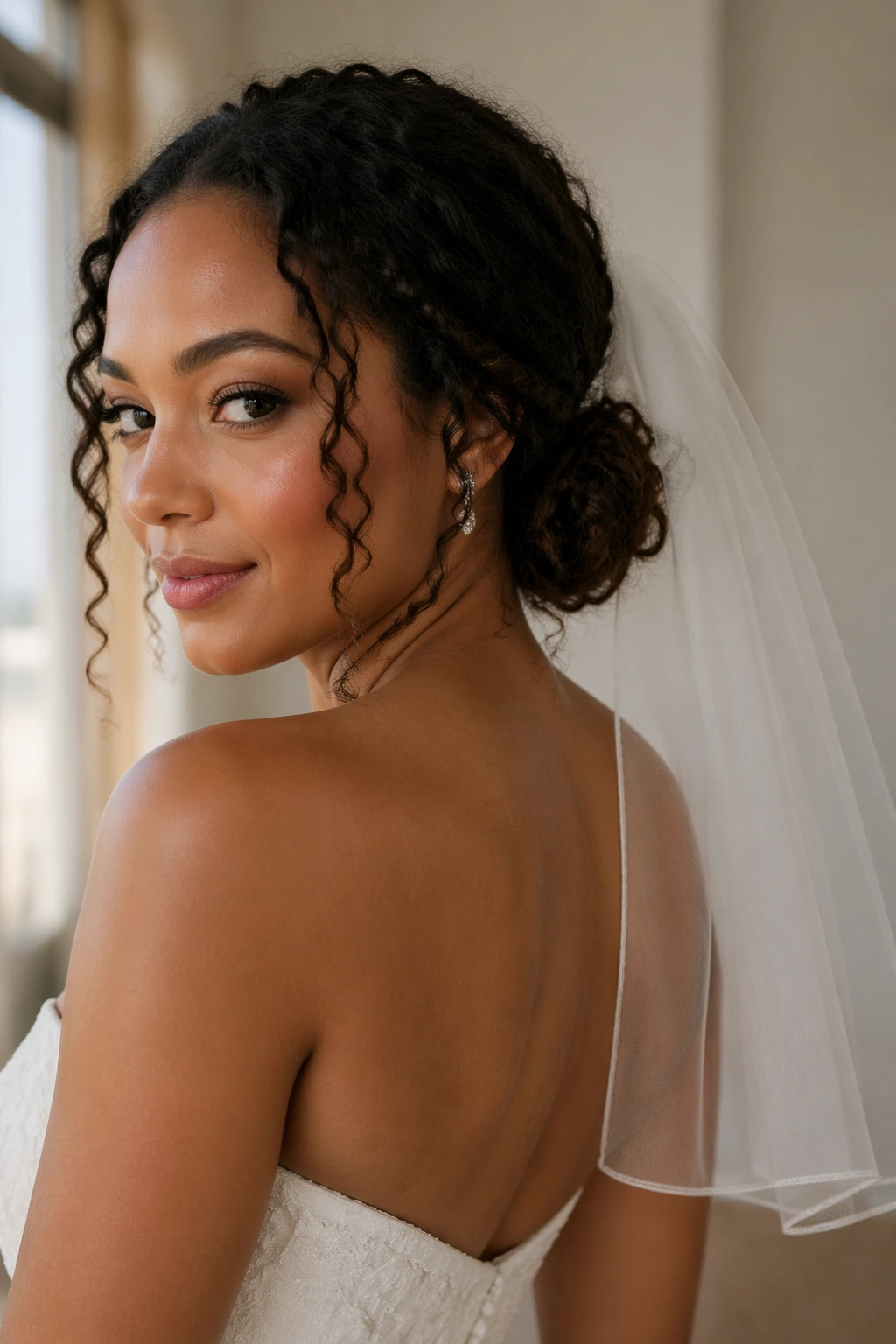
Do you want the neckline open but still want curls to show? A textured low bun is the answer I keep giving brides who ask for both. The bun sits softly at the nape, the front stays open with a few face-framing pieces, and the veil falls from just above the bun in a clean line.
An elbow-length veil is a good match because it’s long enough to feel graceful without crowding the back of the dress. That length also tends to move well when you walk. Shorter veils can look abrupt with a low bun. Longer ones sometimes drag on the knot and start to snag.
The tendrils around the cheeks and temples matter here. They keep the style from looking too formal. I like them slightly uneven, not mirror-image perfect. A curl that lands near the jawline does a nice job softening the face and giving the bun some life.
This is a strong pick for brides wearing statement earrings. The bun clears the shoulders, the veil stays tidy, and the curls still get a place in the frame.
10. Shoulder-Length Curls with a Veil Tucked Under the Top Layer
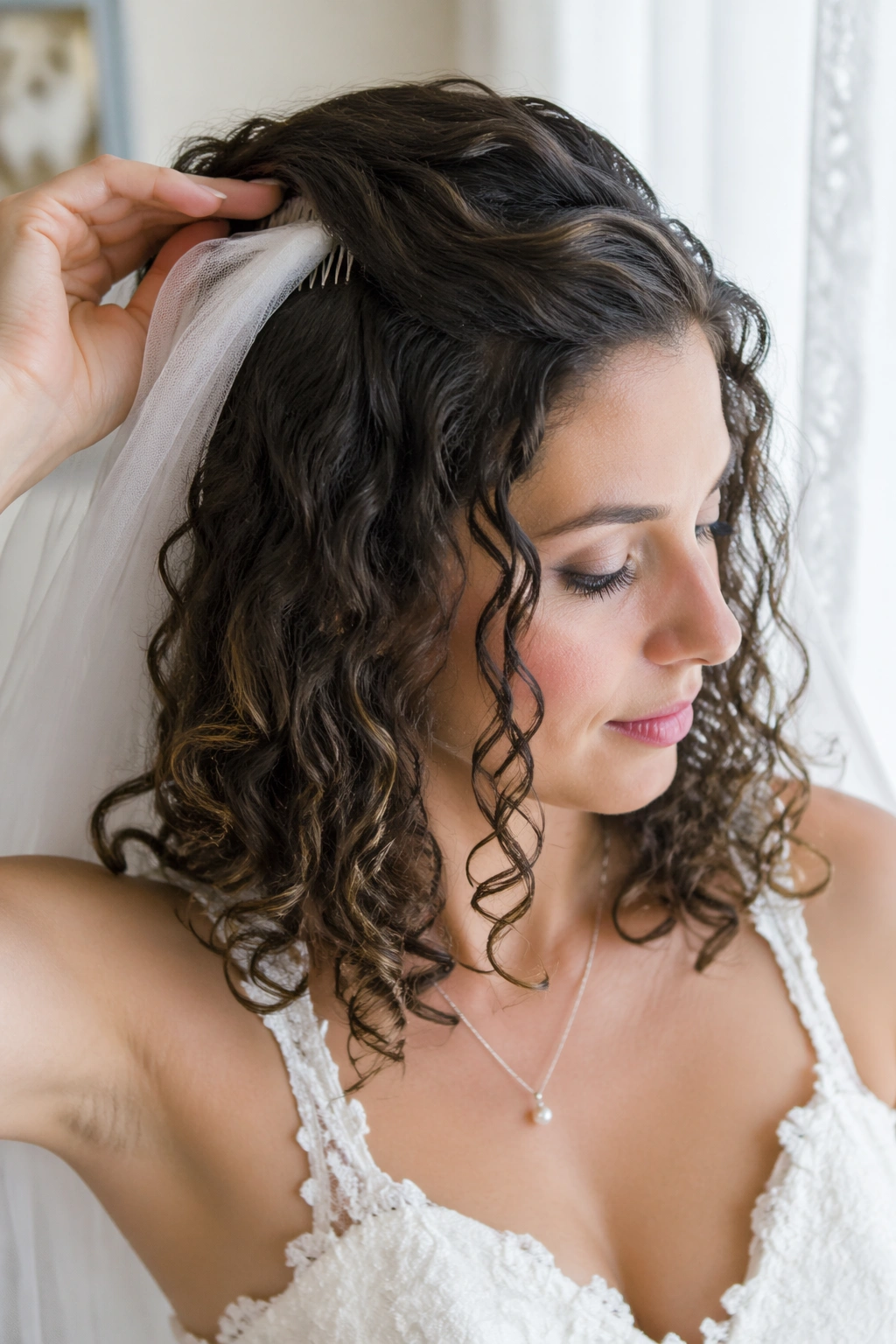
Picture a bride who wants her curls to still look like curls from every angle. That is where this style earns its keep. The top layer is lifted just enough to hide the veil comb, while the lower curls stay loose and visible, so the hairstyle feels full instead of pinned down.
What to Ask For
- A veil comb hidden under the top crown layer
- A light backcomb at the root for lift
- Two to three hidden pins to keep the comb from shifting
- Soft curls around the front so the hairline stays gentle
Shoulder-length hair is tricky because it can lose shape if the veil sits too low. Tuck it under the top layer and the style keeps its balance. The veil becomes part of the architecture instead of an obvious add-on.
This also works well if you want to take the veil off later and still have a hairstyle that reads finished. The curls don’t collapse. They just keep doing their thing.
11. Hollywood Side Part with Sparkling Pins and a Tulle Veil
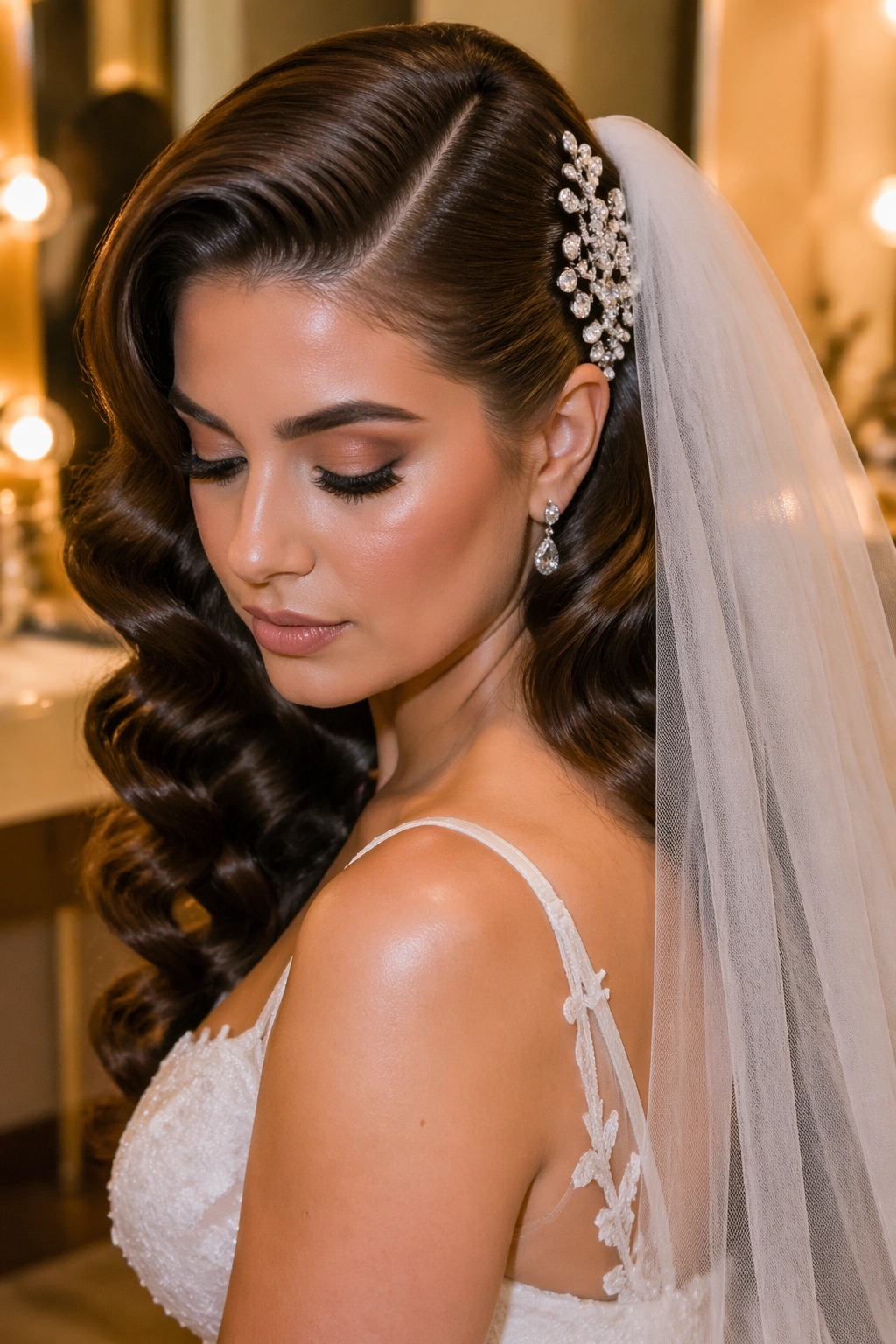
A deep side part changes the whole mood of curly wedding hair. It gives you one clean sweep across the forehead, one side pinned back with sparkling clips, and a veil that sits lightly enough to keep the profile sleek.
I like this style when the dress is simple and the jewelry has some shine. The hair carries the glamour, so you do not need much else. A few crystal pins at the heavier side of the part are enough to anchor the veil and keep the front from falling forward.
Tulle is the right fabric here. Heavy lace can clutter the line. Sheer tulle lets the curl pattern stay visible underneath, which is exactly what you want if the side part and wave set are the main event.
This is also a good style for brides who like a little drama but do not want a full updo. The hair sits close enough to the head to stay neat, but the curls still have movement. The finish should feel sleek at the roots and soft at the ends. That contrast is what makes the style work.
12. Waterfall Braid into Cascading Curls with a Chapel or Cathedral Veil
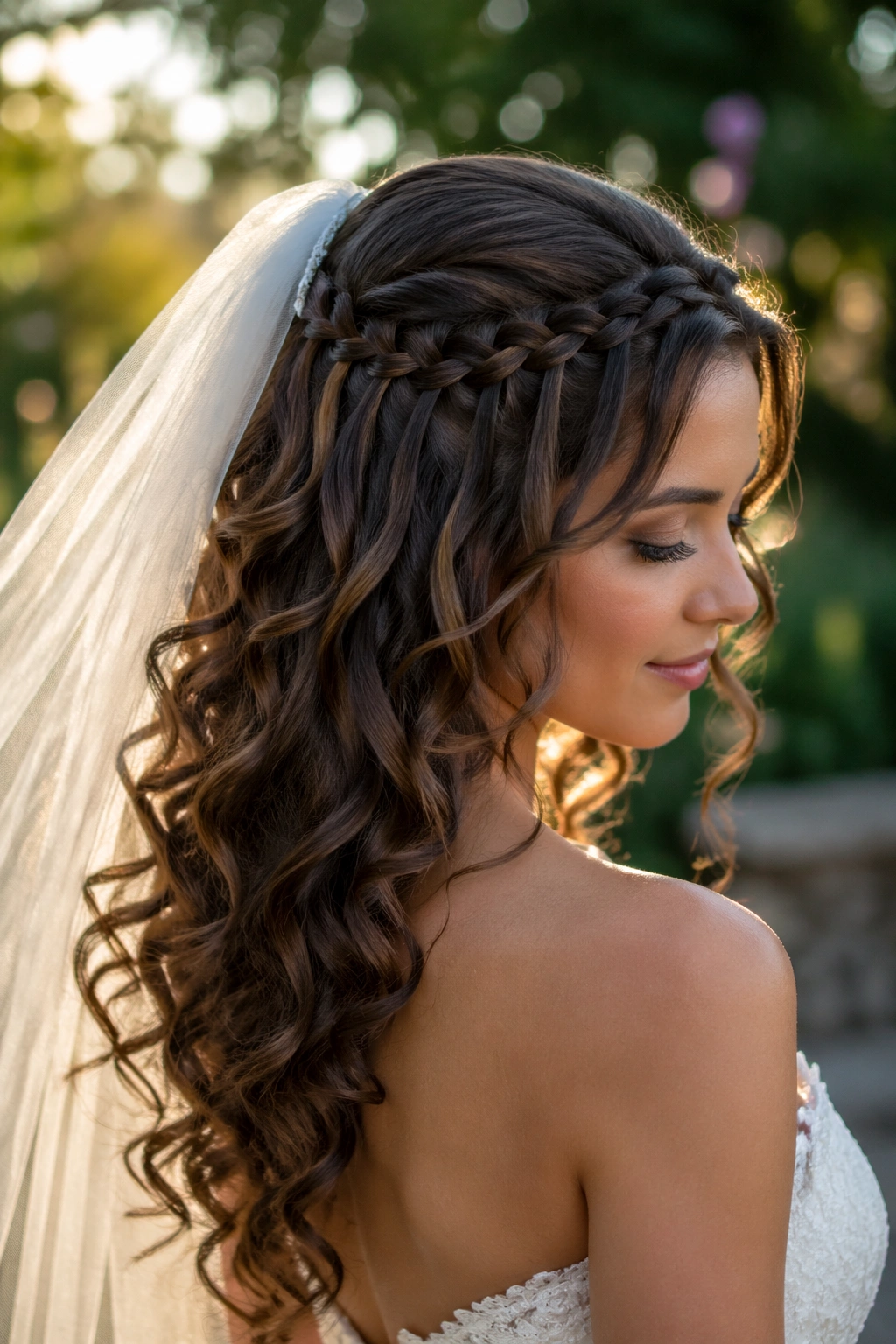
Compared with a full crown braid, a waterfall braid keeps more of the hair free. That is the reason it works so well with curls. The braid acts like a frame instead of a cage, and the curls behind it get to stay big and loose.
A waterfall braid usually starts near the temple and travels across the back or upper side of the head, dropping sections as it goes so the curls underneath keep falling. The veil comb can sit just above the braid’s anchor point, which keeps the fabric from tugging on the pattern.
This style is a nice fit for long hair, especially if the curls have some layered movement. The braid shows off texture near the top, while the veil length — chapel or cathedral — gives the back a long, clean line. It looks detailed without feeling busy.
If your hair is thick, keep the braid a bit looser. Tight braiding can flatten the crown and fight the curl pattern underneath. If your hair is finer, a few light backcombed sections under the braid add enough lift to support the veil.
13. Messy Low Knot with Soft Tendrils and a Veil at the Crown
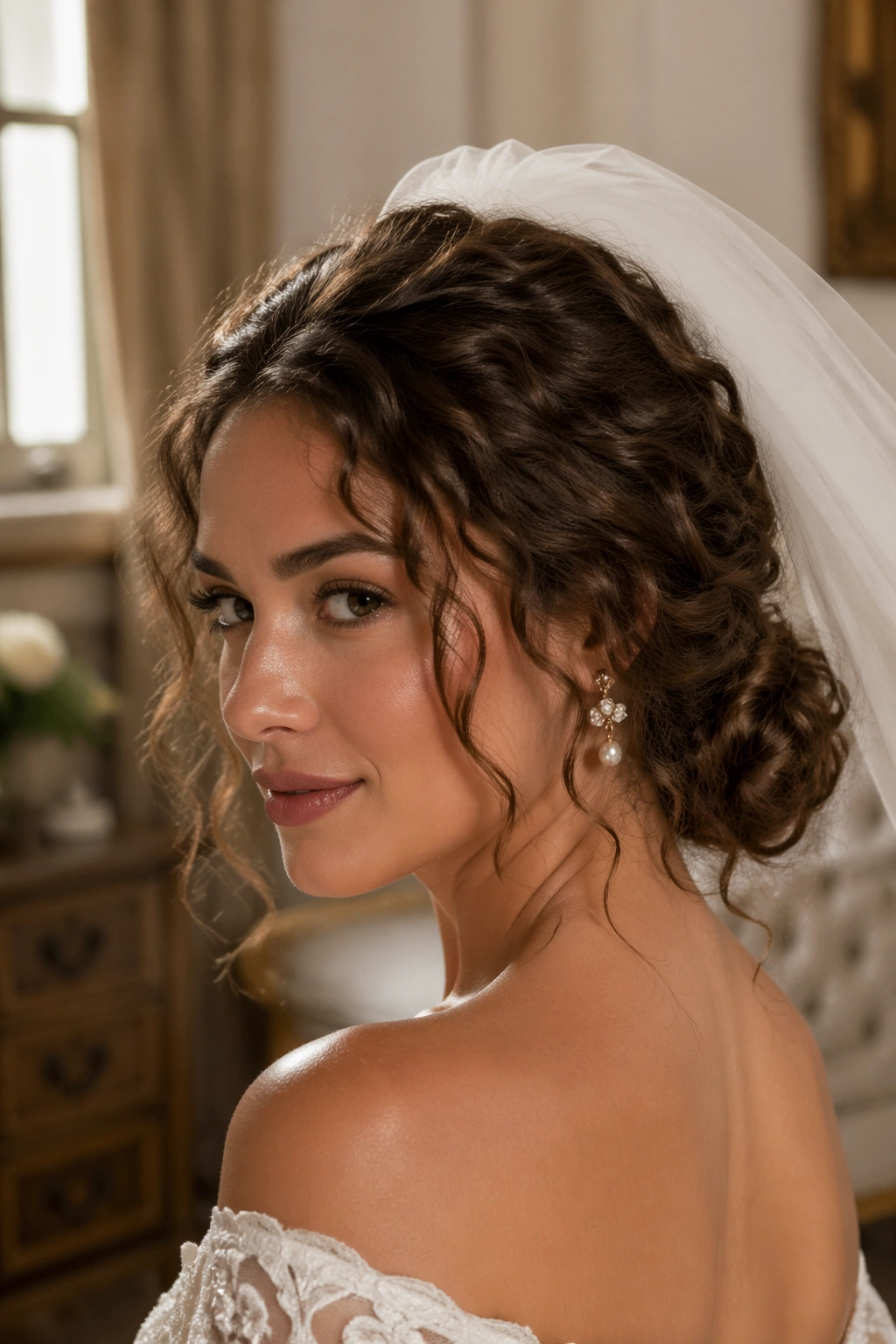
Why does this look work so well? Because it does not try to be perfect. A messy low knot keeps the shape relaxed, and the veil at the crown gives it height, which stops the whole style from sinking into the nape.
The knot itself should look gathered, not wound into a hard little ball. Think loose loops, a few pinned bends, and just enough structure to keep it secure. Then leave a couple of soft tendrils around the face. They don’t need to match. In fact, they look better when they don’t.
This is the style I’d pick for a bride who wants a low-key romantic feel but still wants the veil to be noticeable. The crown placement lifts the eye upward, which helps if the dress has a simple front or a low back. It also gives the veil a clearer fall line, so it doesn’t bunch at the neck.
Do not over-tease the crown. A little lift is enough. Too much and the style stops feeling soft.
14. Curly Half-Up Puff with a Dramatic Veil
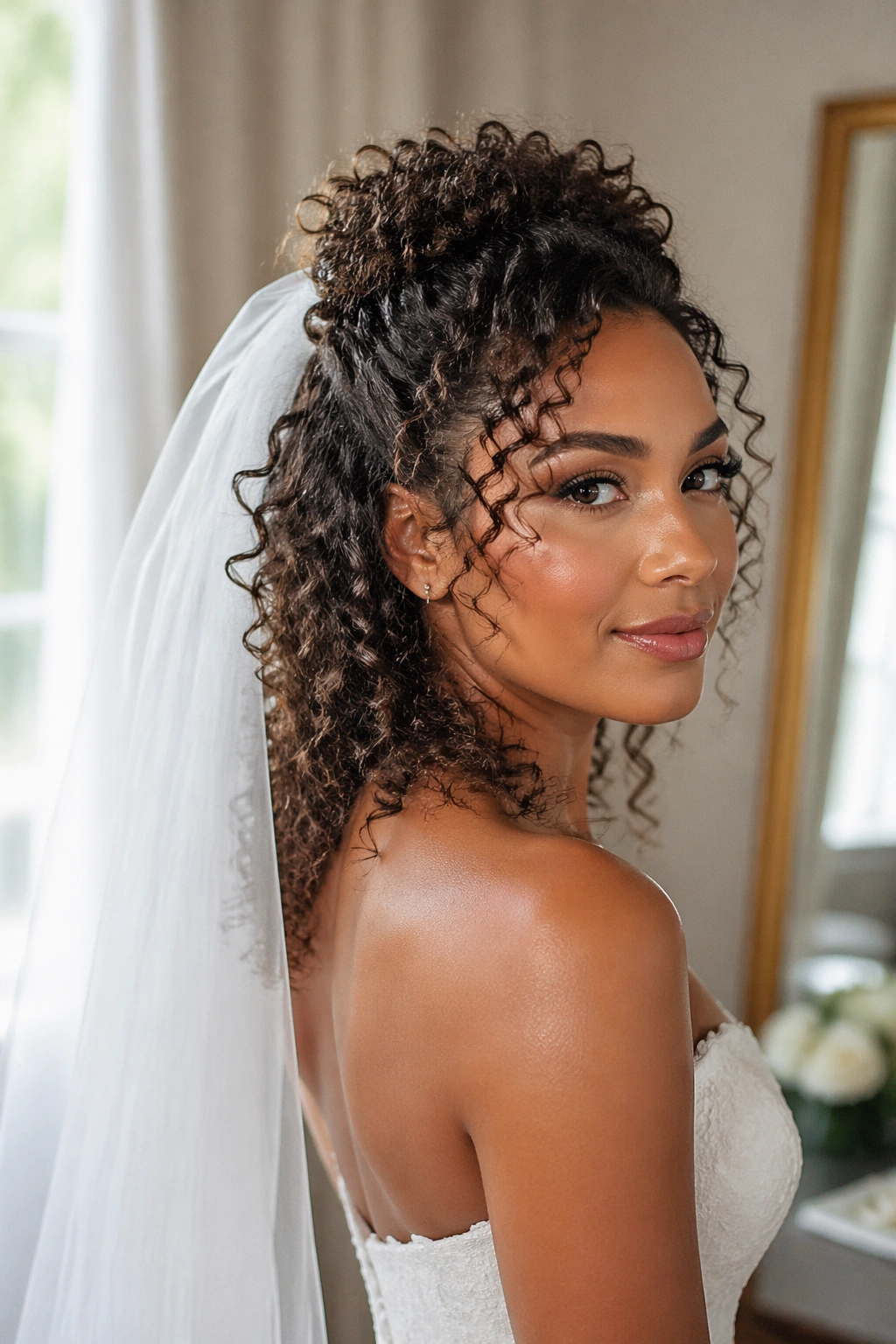
Some brides need volume. This is the answer when the dress is simple, the veil is long, and the hair needs to bring some presence all by itself.
A curly half-up puff lifts the top section into a rounded shape while the rest of the curls stay loose underneath. It can be polished or loose, depending on how much edge you want. The veil usually anchors just under the puff, where the comb has a solid base and the fabric can fall cleanly over the back.
This style is especially good with strong curl patterns that hold shape without needing much heat. It also gives you room to show off the face and the earrings while keeping the back full. If the veil has a beaded edge or a little embroidery near the comb, the puff gives it a nice stage.
The shape matters more than the exact height. Too flat, and it loses the point. Too tall, and it starts to feel costume-like. Aim for rounded lift, a clean front, and curls that still move when you turn your head.
15. High Curly Updo with a Statement Veil
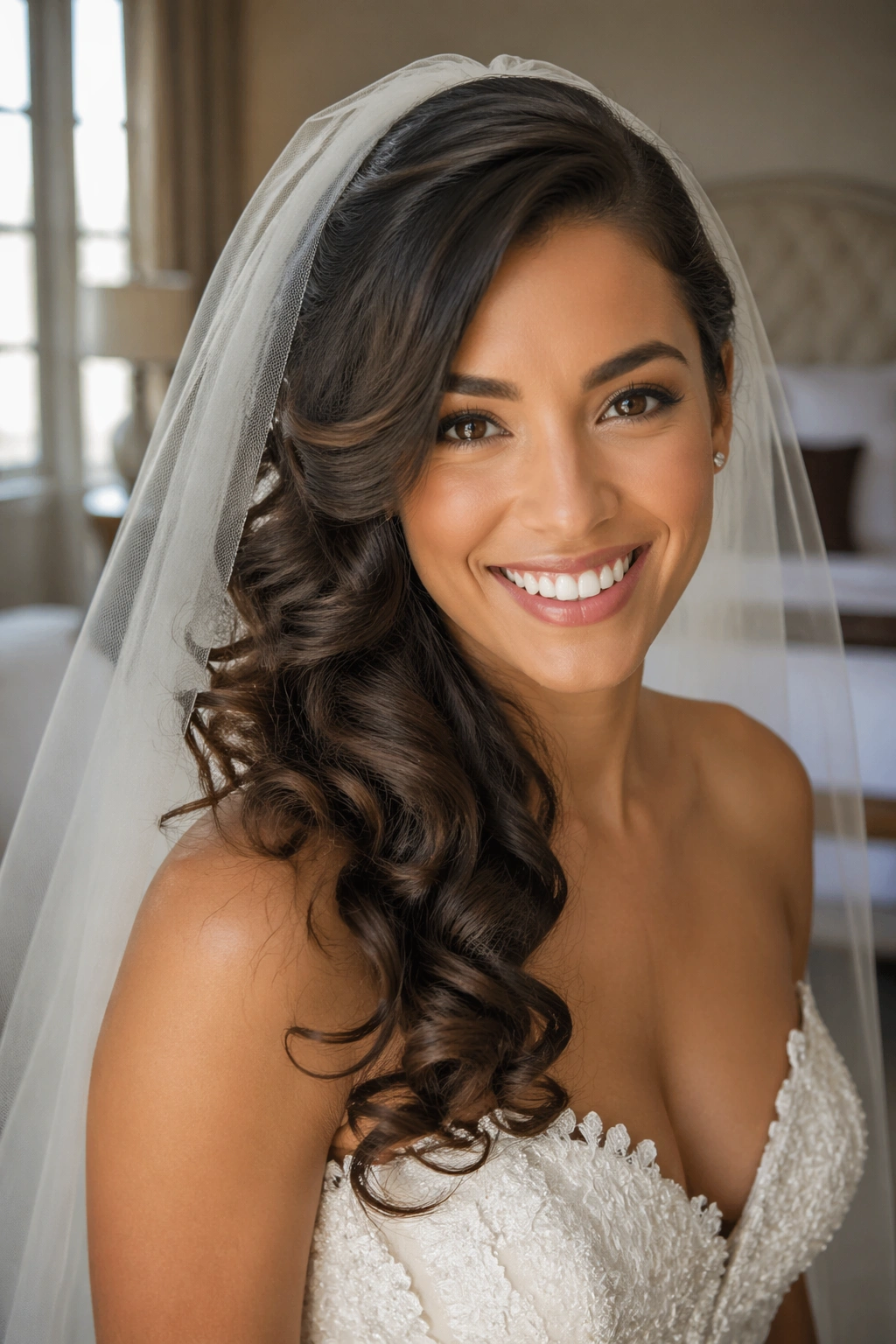
A high curly updo is the style for brides who want the dress, the earrings, and the neckline to do their thing without hair getting in the way. It lifts the curls up and away, leaving a clean frame around the face and a strong line through the shoulders.
The veil can be dramatic here. A long veil falling from the crown gives height. A shorter veil with a defined edge makes the updo feel sharper. Either way, the placement matters. Set the veil comb on a firm base of pinned curls, not on a loose outer layer, or it will slide once the weight settles.
This style can look especially good with larger curls pinned into a sculpted shape rather than stuffed into a tight knot. Leave a few bends visible near the top and sides. That keeps the updo from looking stiff, which is the main trap with high bridal hair.
If your curls are prone to frizz, do a test run with the exact veil, pins, and hair prep you plan to use. The small things change the outcome fast. A different comb width, one extra pin, or a heavier veil can shift the balance more than people expect.
A good curly wedding style with a veil should hold through hugs, photos, and hours of movement without losing its shape. That is the real test. Not the first mirror check.