

Curly hair and a stacked bob can be a beautiful match, but only when the cut respects the curl pattern instead of fighting it. A good stacked bob hairstyle for curly hair gives the back shape, lifts the crown, and keeps the outline readable even after shrinkage does its thing.
The trouble starts when the cut is too blunt or the stacking is too aggressive. Then you get that puffy triangle at the sides, a neck that looks overly bulky, or curls that spring up higher than the stylist planned. Curls do not behave like straight hair. They bend, bunch, and change their mind the second they dry.
That’s why the best curly stacked bob ideas are never one-note. Some lean sleek and rounded. Some use a deep side part to make the shape look fuller. Some keep the front longer so the cut feels softer around the face. The right version depends on curl size, density, shrinkage, and how much time you want to spend styling in the morning.
Short doesn’t have to mean flat. Not even close.
1. Classic Stacked Bob for Curly Hair
The classic stacked bob is the version most people picture first, and honestly, that’s for good reason. It has the shortest length at the nape, a gradual build through the back, and a rounded top that lets curls sit with shape instead of collapsing into a boxy mass.
Why It Works on Curls
Stacking removes weight where curls usually feel heaviest — the lower back of the head. That weight loss lets the curls spring up and form a cleaner curve from crown to neckline. The silhouette reads as tidy, but not stiff. That balance is the whole point.
A dry cut often makes this version easier to control, especially if your curl pattern changes a lot from wet to dry. If your hair is dense, the stylist should keep the graduation gentle. Too steep, and the back can balloon out more than you wanted.
Quick notes:
- Best for medium-density curls with some natural bounce
- Looks especially good on chin-length or slightly shorter shapes
- Works with a center part or a soft off-center part
- Needs a diffuser or air-dry routine that preserves lift at the crown
Pro tip: ask for the nape to stay slightly longer than you think you want. Curly hair shrinks, and a bob that looks chic in the chair can turn tiny fast.
2. Chin-Length Stacked Bob with Side Part
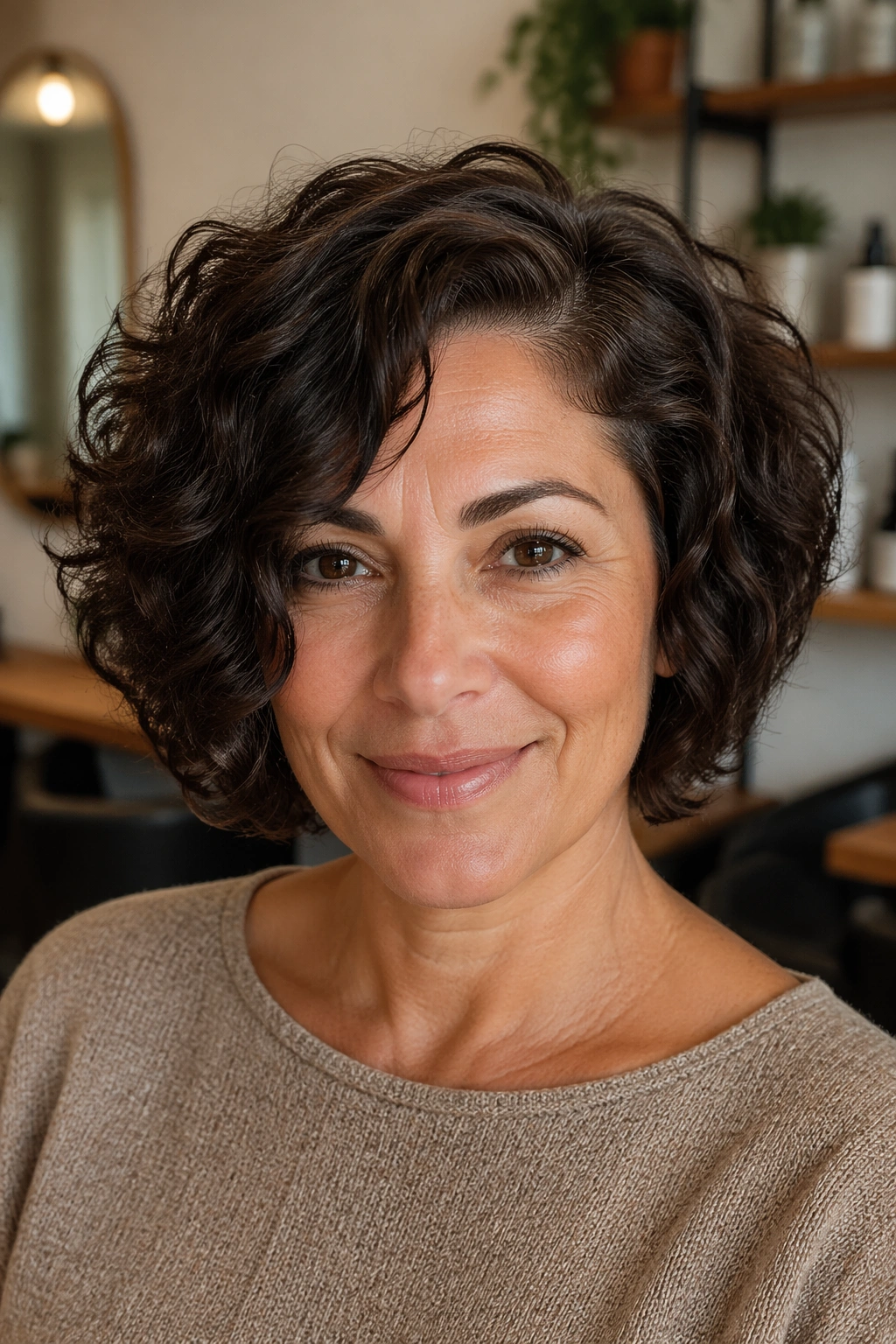
A side part can make a curly stacked bob look longer and more expensive without adding a single inch. That sounds like a small thing, but it changes the whole balance of the haircut.
When the part shifts off center, one side gets more height and the other side falls closer to the cheek. That breaks up the symmetry and gives the bob a little movement, which curly hair usually wears better than a rigid line. Chin length is the sweet spot here because it keeps the shape light around the face while still showing off the stack in back.
I like this version for round or heart-shaped faces, but it also helps if your curls naturally separate unevenly. Instead of fighting the curl clumps, the side part turns them into part of the design. The trick is keeping the part consistent while the hair dries. If it moves around every time you fluff it, the whole silhouette gets messy.
A root clip on the heavier side helps a lot. So does directing the front away from the face with your fingers while diffusing. It’s a small bit of fuss, but not much. And the result looks deliberate.
3. Curly Inverted Bob
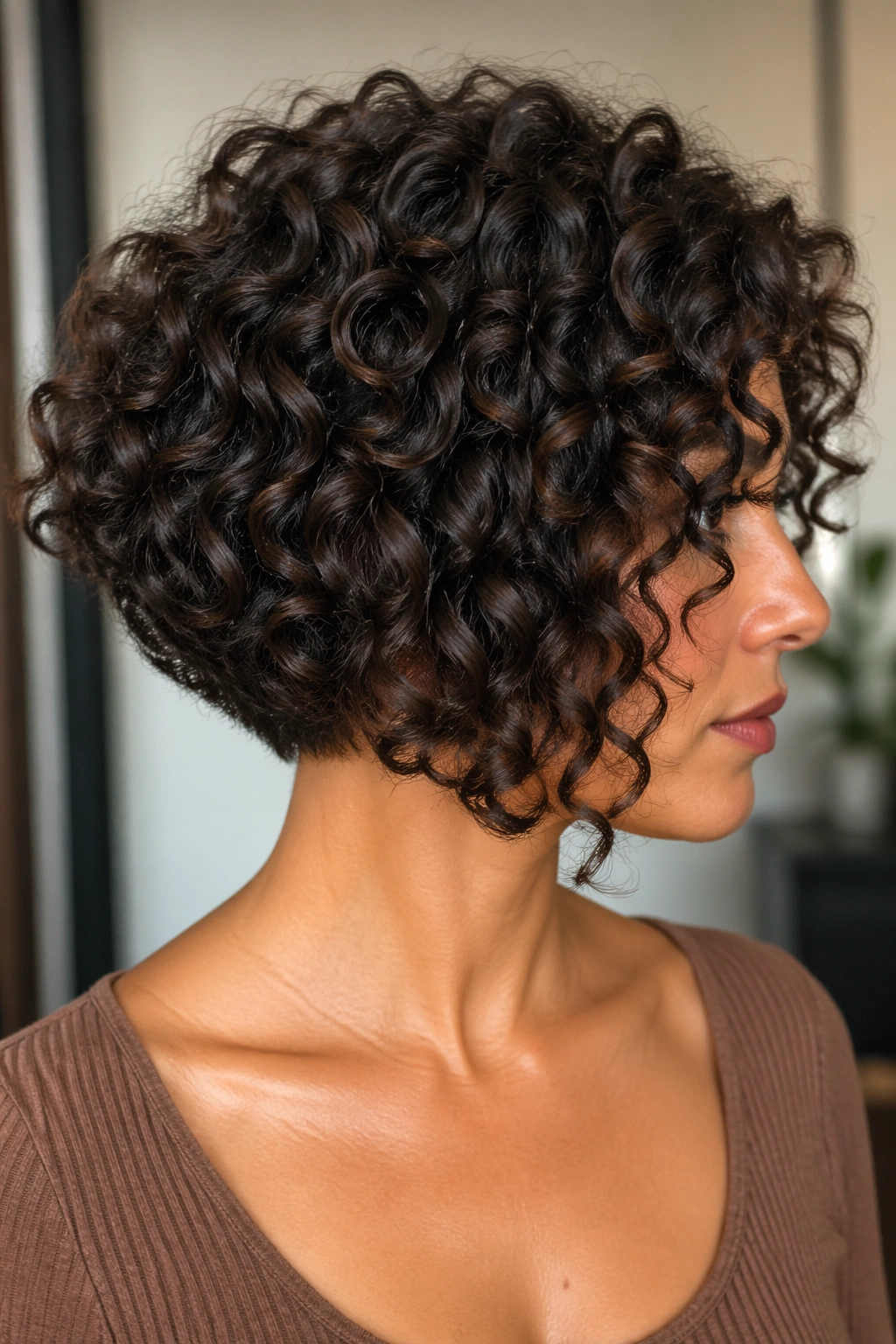
Why do some curly bobs feel heavy even when they’re short? Usually because the front and back don’t have enough contrast. A curly inverted bob fixes that by keeping the back shorter and the front noticeably longer, which creates a cleaner line from the nape to the jaw.
This shape has more attitude than the classic stacked bob. The angle makes the face look more defined, and on curls it adds a nice bit of drama without needing sharp styling. The front pieces can skim the jaw or sit just below it, depending on how much shrinkage you get. That detail matters. If your curls spring up a lot, the front needs to be cut with that in mind or the angle disappears.
How to Ask for It
Tell the stylist you want a graduated back with a front that stays long enough to frame the face after drying. If your curl pattern is tighter, that usually means leaving the front a touch longer than you would on wavy hair.
This version suits people who want more shape than softness. It’s especially good if your hair is dense at the crown and flatter around the cheeks, because the angle gives the cut some forward motion. It does need regular reshaping, though. A grown-out inverted bob can lose its clean line fast.
4. Stacked Bob with Curtain Bangs
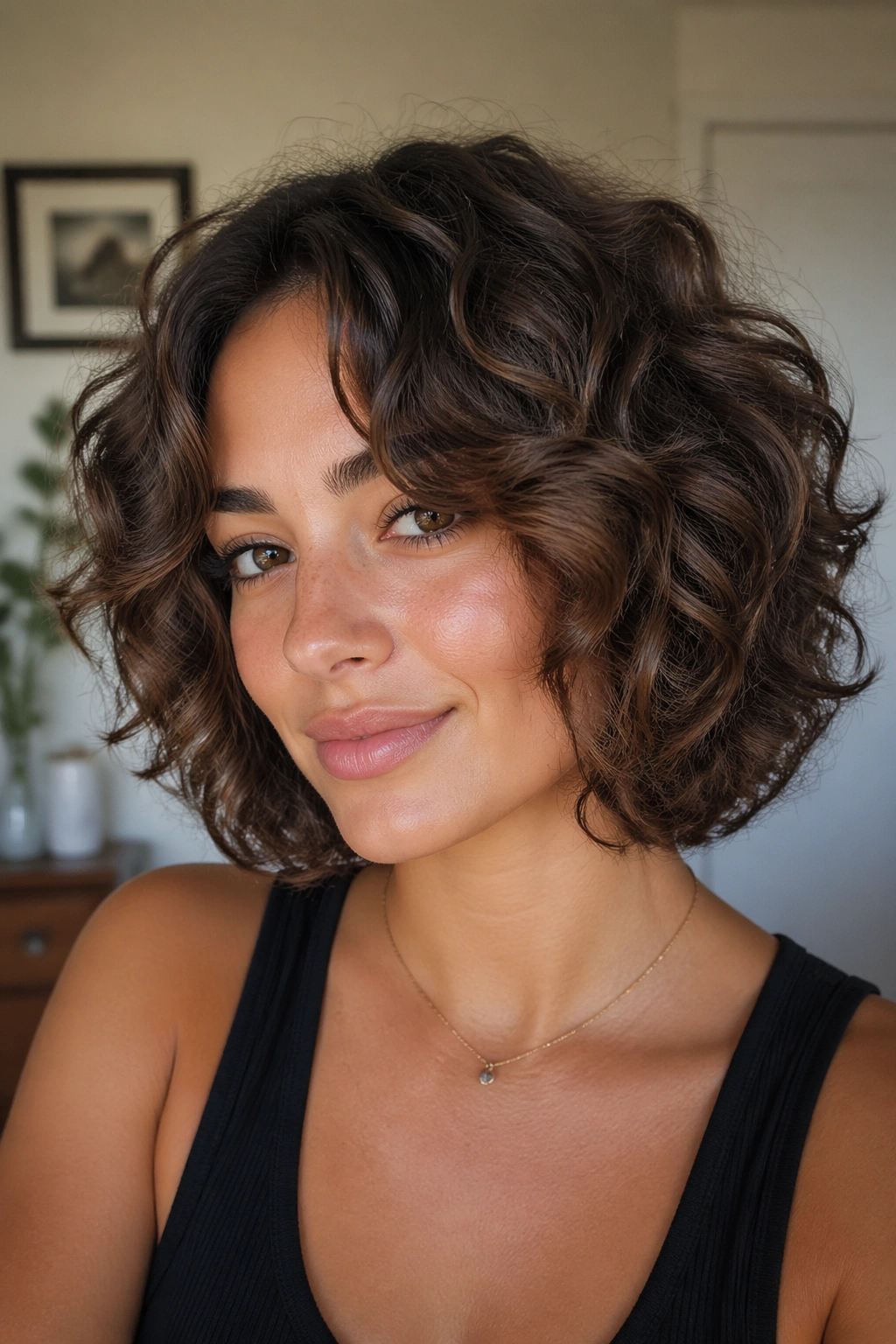
If you’ve ever pinned your curls back from your forehead three times before lunch, curtain bangs may be the answer. They take the pressure off the face and make a stacked bob feel softer, less helmet-like, and more lived-in.
The bangs don’t need to be super short. In fact, with curly hair, I’d rather see them a little longer at first — grazing the brows or landing around the cheekbone — because shrinkage will pull them up. The goal is that loose split in the center, not a blunt wall of fringe.
Curtain bangs work especially well when the back is heavily stacked and the front needs something to balance it. Without that front softness, the whole haircut can feel too neat. With it, the bob gets a little swing. A little looseness. It feels less engineered.
- Start the bang area long enough to part in the middle
- Ask for soft internal layering, not a hard line
- Diffuse the front first if your bangs dry faster than the back
- Keep a few longer face-framing pieces so the transition feels smooth
Best part: this cut grows out more gracefully than a full fringe. That matters more than people admit.
5. Stacked Bob with an Undercut Nape
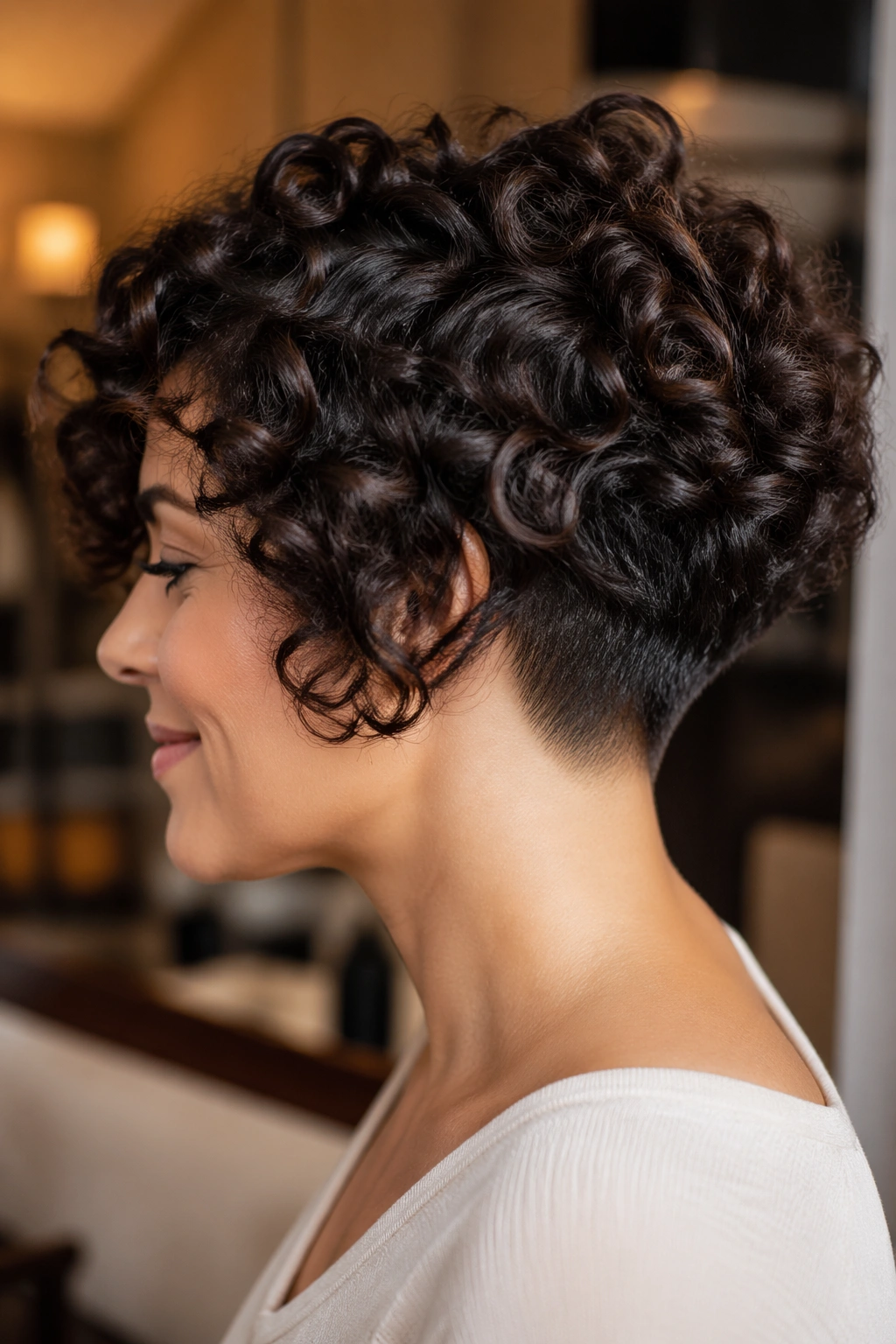
A hidden undercut at the nape is one of those changes people ignore until they see the difference in person. For thick curly hair, it can remove the bulk that makes a stacked bob puff out at the neckline.
The cut is not about shaving the whole back into oblivion. That would be too much for most people. A small, discreet undercut beneath the top layer is usually enough — just enough to let the curls above it sit without piling up. When done well, the neckline looks cleaner and the bob sits closer to the head.
This version is not for everyone. If your hair is medium to fine, the undercut can take away more shape than it gives. But if you spend a lot of time blow-diffusing and still end up with a wide back panel, this is a smart fix. It also helps in humid weather, when thick curls tend to swell and grab at the neck.
It does need maintenance. The undercut grows out faster than the rest of the bob, and once it gets fuzzy, the clean line starts to blur. Still, for the right head of hair, it’s worth it. The difference is real.
6. Asymmetrical Stacked Bob
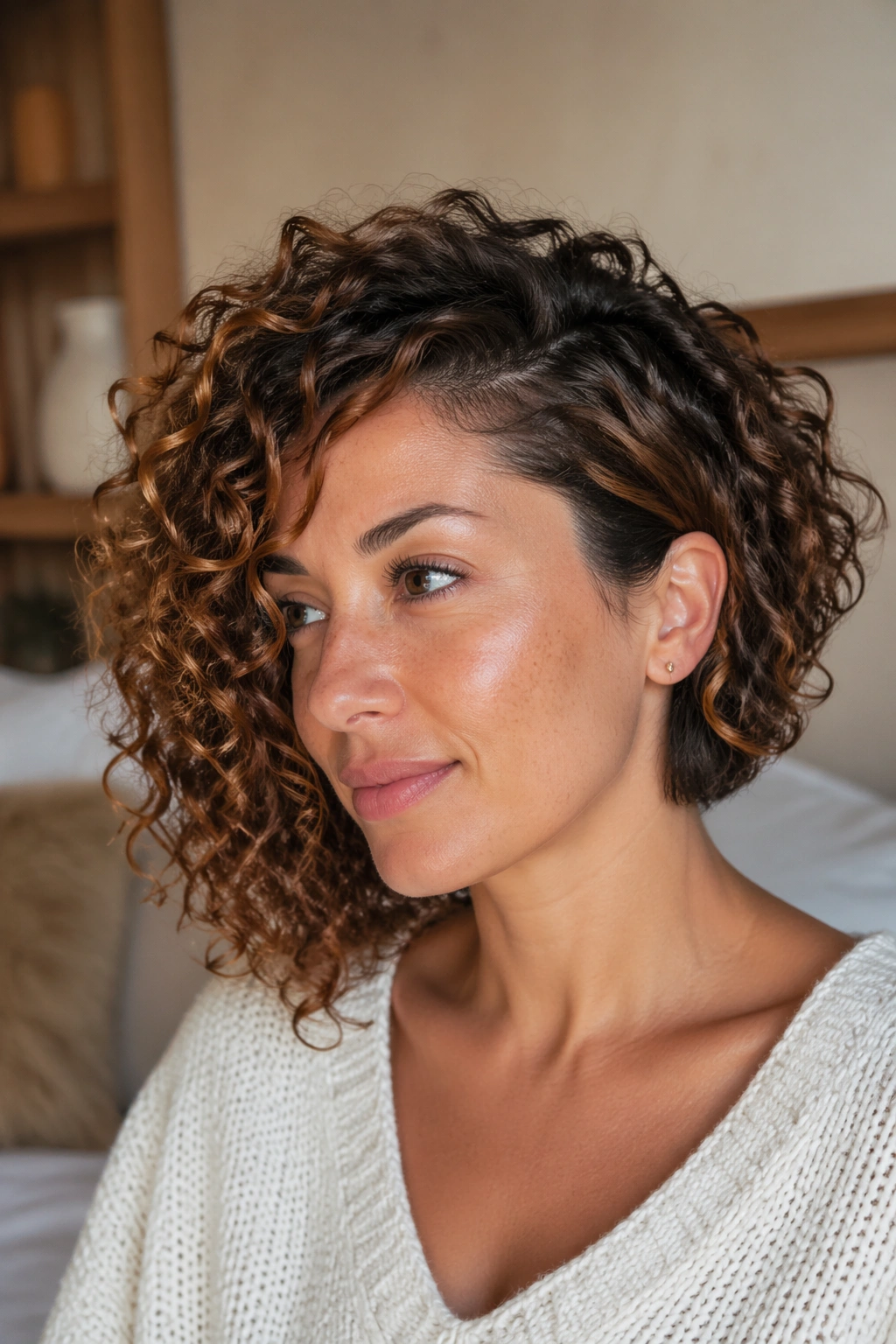
Unlike the classic stacked bob, the asymmetrical version leans into imbalance on purpose. One side stays a little longer, which gives the curls a more modern line and keeps the cut from feeling too symmetrical or too sweet.
That longer side changes how the eye moves across the face. It can soften a square jaw, make a round face look a bit longer, or help balance curls that naturally fall stronger on one side than the other. Small asymmetry reads cleaner on curly hair than dramatic asymmetry does. If the gap between sides gets too big, the curl pattern can make the whole shape look jumpy instead of sharp.
I usually like this look best when the difference is subtle — maybe an inch or so, not a huge swing. You still want the bob to feel like one cut, not two separate ideas. The back should stay stacked and rounded, while the front drapes with a little more length on one side.
This is the cut I’d point to if you want something a little less expected but don’t want to babysit it every morning. It has personality without demanding elaborate styling. That’s a good trade.
7. Stacked Bob for Tight Coils
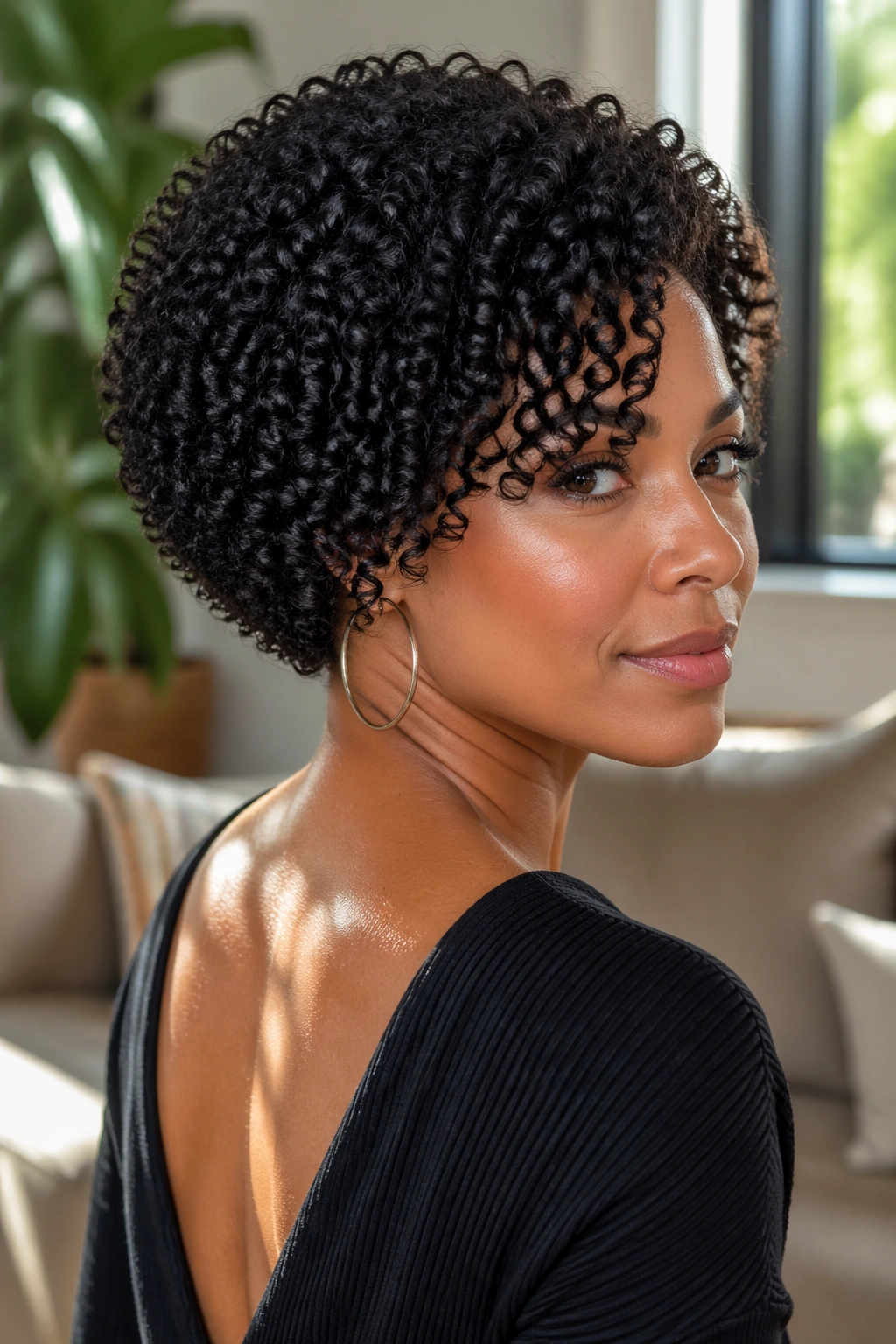
Tight coils can wear a stacked bob better than people expect. The shape gives the coils a place to sit, and the shorter back keeps the whole cut from spreading outward like a mushroom.
Keep the Layers Longer Than You Think
With tighter curl patterns, shrinkage is not a minor detail. It’s the whole story. A bob that looks chin length when wet may sit much higher once it dries, so the layers should be planned with that in mind. If the stylist stacks too aggressively, the back can creep up and the silhouette gets too round too fast.
Let the Hair Dry Before You Judge It
This part matters. A lot.
Coils can look compact while damp and then open up into a much fuller shape after drying, which means the haircut should be checked in its dry state before anything gets too short. A dry cut, or at least a careful dry refinement, is often smarter here. It lets the stylist see where the volume really lives.
This style also loves a bit of product with hold. A curl cream alone can be too soft if your coils need definition. A lighter gel over cream usually gives a better cast and keeps the bob from frizzing at the top. The result is rounded, tidy, and full of movement — not flat, and not puffy.
8. Stacked Bob for Loose Waves
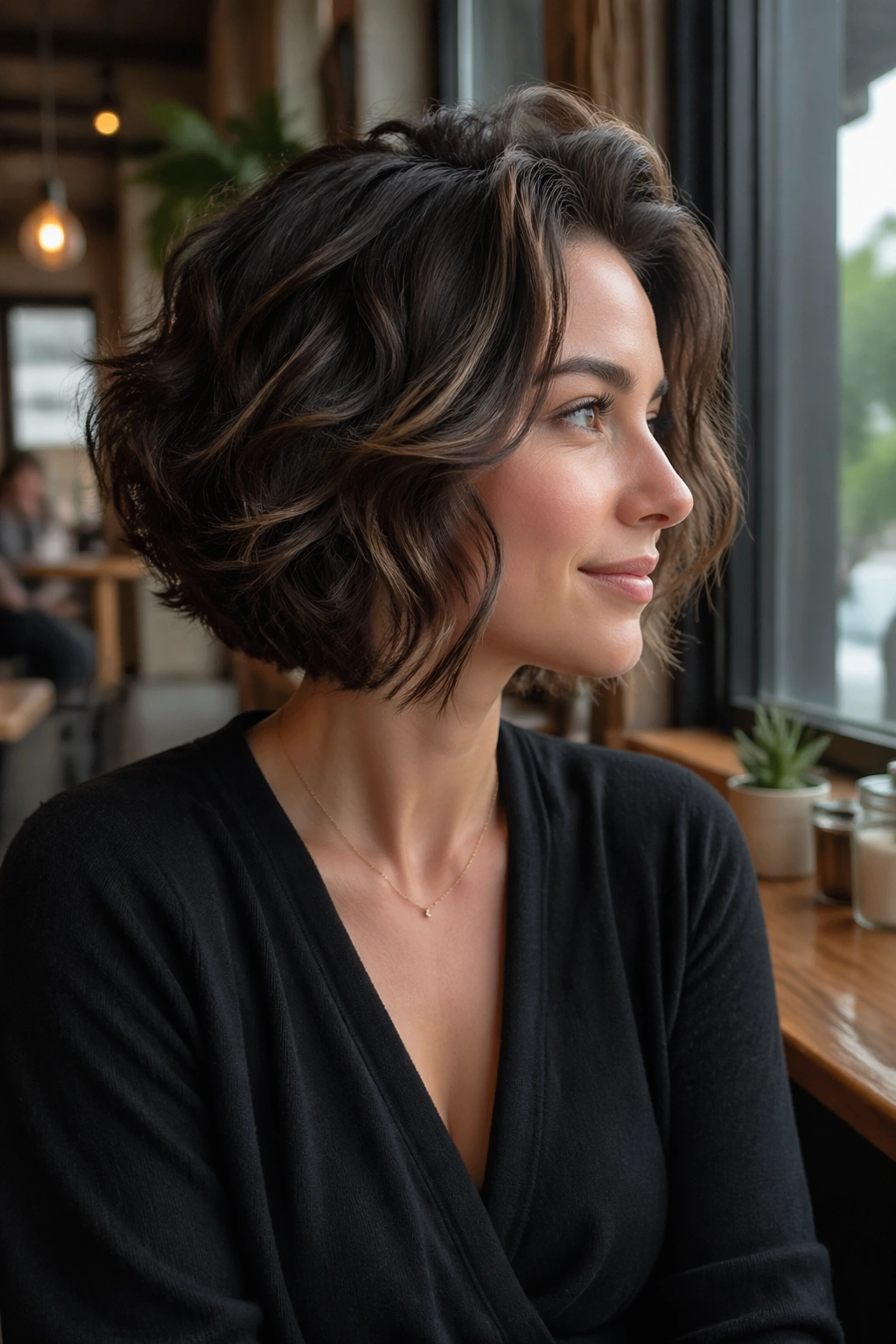
What if your hair bends more than it curls? Then a stacked bob can still work, but the stack should stay softer and less dramatic.
Loose waves tend to lie closer to the head, so a heavy graduation can make them collapse in the front or flip out at odd angles. A gentler stack keeps the back lifted without stealing too much weight from the sides. That gives the waves room to move instead of making them look sliced into pieces.
How to Style It So It Doesn’t Go Limp
Mousse at the roots helps. So does a small amount of curl cream through the mid-lengths, but not so much that the waves lose their shape. If your hair dries flat near the crown, clip the roots for 10 to 15 minutes while it’s still damp. That tiny bit of lift changes the whole cut.
A side part also helps waves behave. It gives the front some direction and makes the bob feel fuller through the crown. Air-drying can work here, but I’d still diffuse until the roots are about 80 percent dry if you want a cleaner shape.
This version is easy to live with. It looks relaxed, and it does not fight the texture you already have.
9. Tapered Stacked Bob
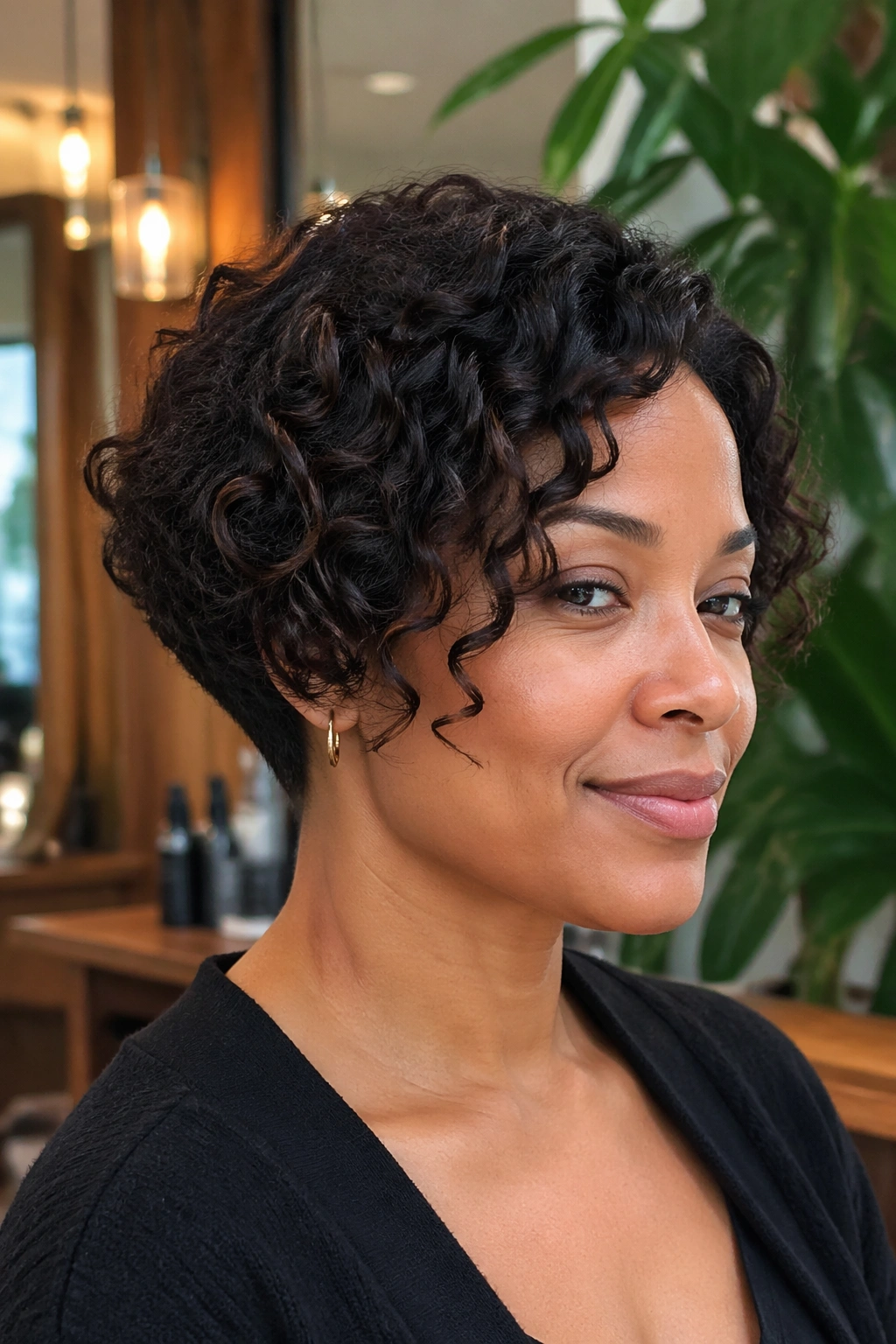
A tapered stacked bob is the neatest version of the bunch. The neckline narrows in a controlled way, the back hugs the head more closely, and the whole cut feels deliberate from every angle.
That taper is useful if you like shorter hair but don’t want a wide, bulky back panel. On curly hair, the shorter nape keeps the silhouette from becoming bottom-heavy, while the rounded top gives the curls room to breathe. It can feel almost tailored on the right head shape.
One-sentence truth: this cut looks expensive when it’s done right.
The key is not cutting the nape too high. If the taper climbs too far up the head, the back loses the soft stack that makes the bob look balanced in motion. You want the change in length to feel gradual, almost like the haircut is tucking itself into the neckline rather than sitting on top of it.
It’s a strong choice for anyone who likes a polished outline and doesn’t mind keeping the shape trimmed. If you prefer a looser, beachier feel, this may read too neat. But if clean lines make you happy, it’s a winner.
10. Stacked Bob with Highlights
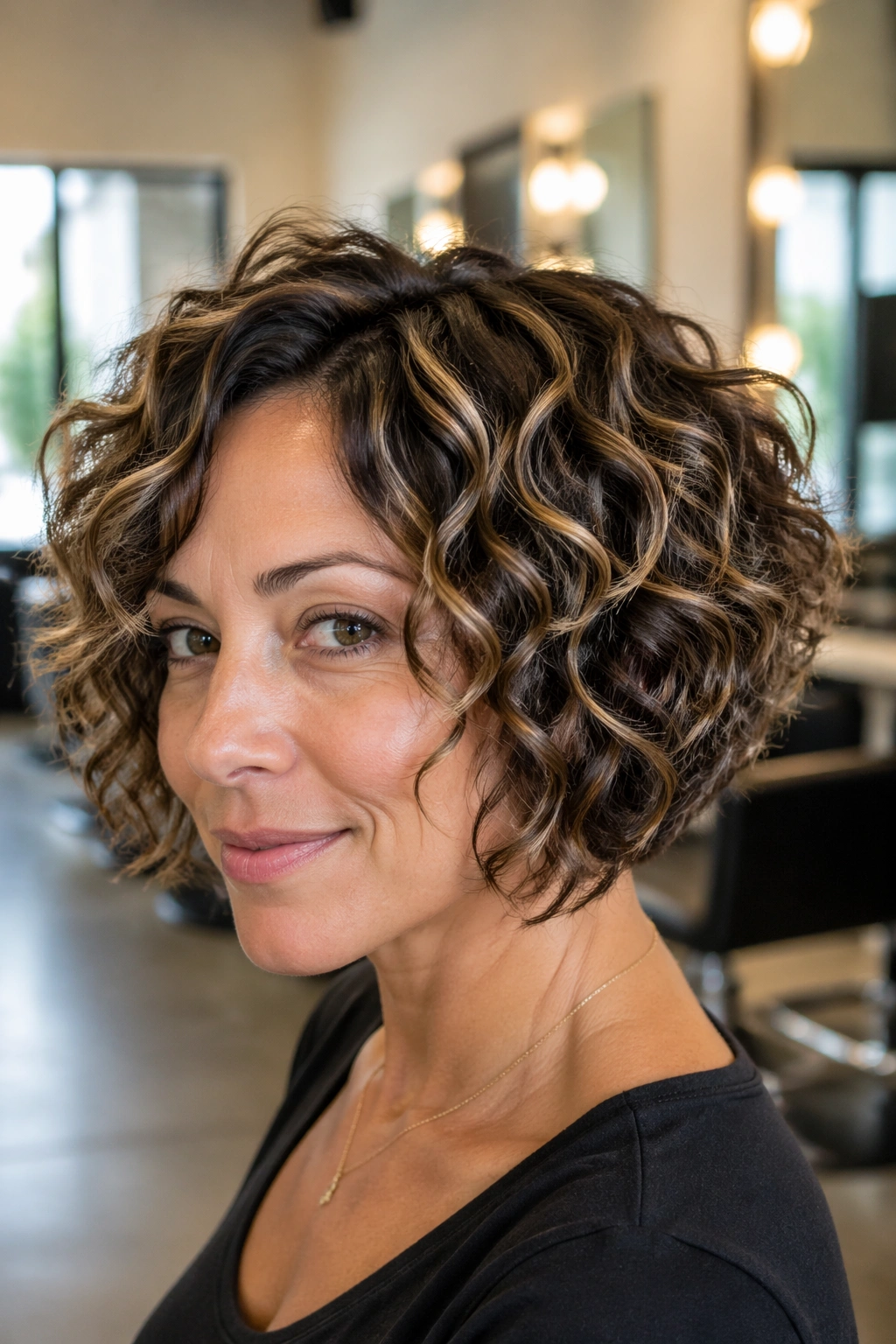
If your curls feel visually dense — one dark block from root to end — a few well-placed highlights can wake the shape up fast. The cut starts showing its layers more clearly once light hits the different curl sections.
A stacked bob with dimension is especially good when the curls are thick enough to hide detail. Highlights create the illusion of depth, and the layers stop looking like one heavy mass. Caramel on dark brown, chestnut on espresso, honey on medium brown — all of those can work if the placement is thoughtful. You do not need stripes. You need ribbons.
- Place lighter pieces around the crown to show the stack
- Keep some brightness near the face so the front doesn’t disappear
- Avoid over-lightening the ends if your curls are already dry
- Choose low-contrast highlights if you want the color to read soft, not loud
The reason this works is simple: curly hair bends light in different directions. A single-color bob can look flat in photos and in person, especially if the curl pattern is tight. A little color variation gives the eye more to follow.
I like this option for people who want the haircut to look fuller without adding more bulk. It’s a styling trick and a color trick at the same time. Handy.
11. Curly Fringe Stacked Bob
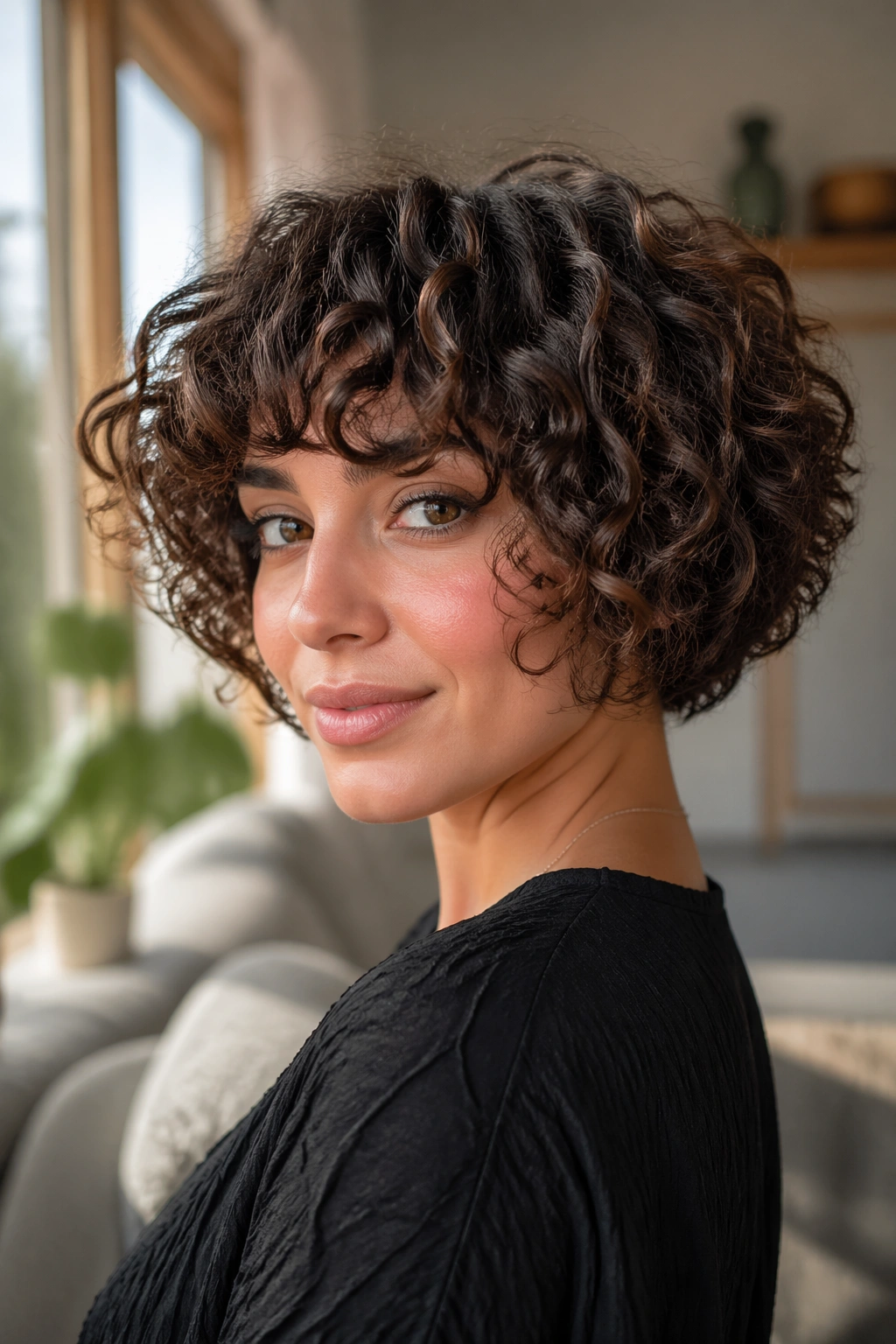
Curly fringe and stacked bobs make a stronger pair than straight bangs and stacked bobs ever will. Why? Because the fringe can move with the rest of the curl pattern instead of sitting there like a separate piece that needs constant rescue.
This version works best when the fringe is kept soft and piece-y. You want curls or waves that skim the forehead, not a hard line cut straight across the face. On a curly bob, that front softness helps the cut feel youthful without looking fussy. It also pulls attention upward, which is useful if the back is stacked high and you want the whole shape to feel balanced.
The caution is simple: curly fringe shrinks. A lot. If the shortest pieces are cut too close to the brows, they can spring up into a short, choppy line that needs daily styling. That is fine for some people. Not for everybody. If you wear glasses, or if your curl pattern is springy, leaving the fringe a little longer is the safer move.
I like this look on oval and longer faces, but it can work almost anywhere if the fringe is tailored to the curl pattern. The secret is restraint. Too short, and it becomes high-maintenance. Just right, and it looks easy.
12. Layered Stacked Bob for Thick Hair
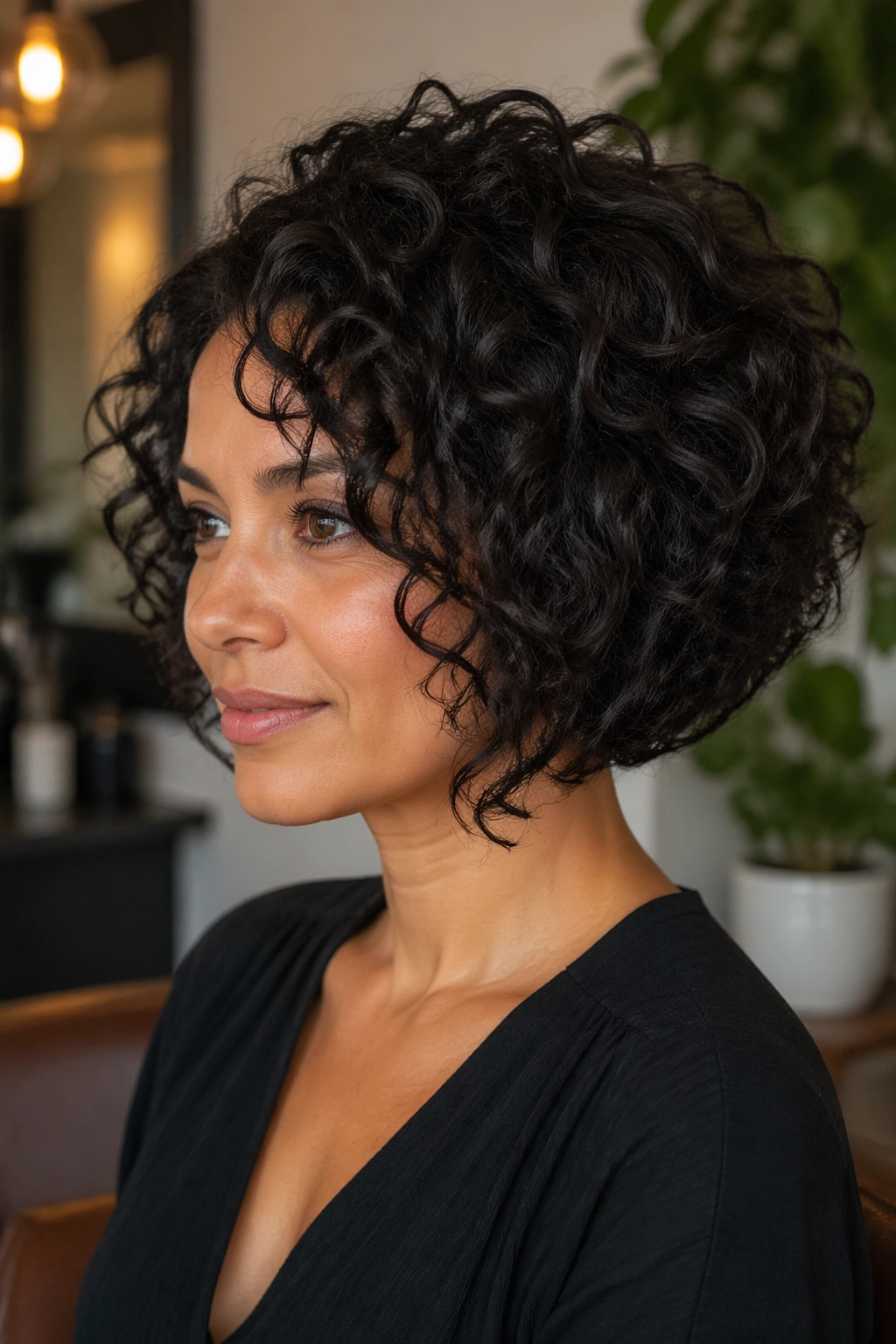
Unlike the rounded stacked bob, this version spreads the weight around more evenly. That matters when the hair is thick enough to build a shelf at the back of the head.
Thick curly hair needs a smarter cut, not just a shorter one. A layered stacked bob removes bulk through the interior while keeping enough perimeter to hold the shape. If you thin the ends too much, the bob can go wispy and frizzy. If you leave too much bulk in the lower half, it turns into a triangle. Neither is the goal.
What to Ask for in the Chair
Ask for graduated layers at the nape, but keep the outer line solid. That gives the style structure without making the ends disappear. Point cutting can soften the edge without hacking it apart, and that usually suits curls better than aggressive razor work.
This cut is especially good if your hair feels heavy by midday or if the back of your bob loses its shape the moment you step into humidity. It gives the curls a lighter base and keeps the silhouette from dragging downward. The best part is that it still looks full. Just better organized.
If you’ve got thick curls, this is the version that respects their strength instead of trying to hide it.
13. Rounded Stacked Bob for Fine Curls
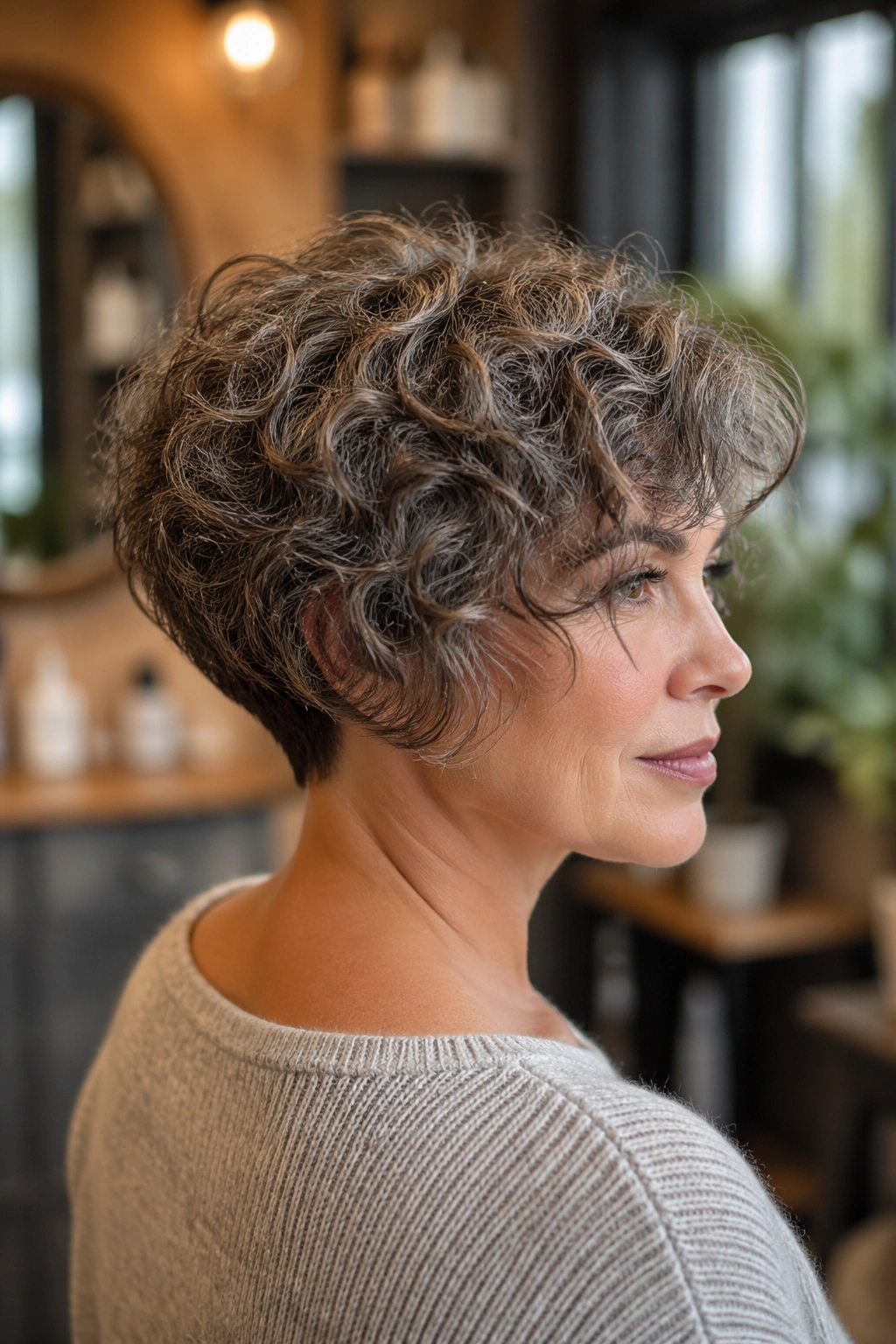
Can fine curls hold a stacked shape? Yes, if the cut is careful and the layers are not too hungry. That’s the whole game here.
Fine curls need enough length to read as a bob, but they also need lift at the crown or the haircut can collapse into the head. A rounded stack helps because it keeps the back full and curved while preserving a soft outline. The stylist should avoid removing too much weight from the mid-lengths. Once that happens, the curls separate and the bob starts to look thin.
The Volume Tricks That Matter
- Use root clips while the hair is damp to build lift at the crown
- Dry with a diffuser until the roots are mostly set
- Keep a mousse or lightweight foam at the base, not just the ends
- Avoid heavy oils near the scalp, since they can flatten fine curls fast
The shape also benefits from a slightly shorter back than the front, but not an extreme stack. Fine curls can lose visual density if the back is cut too tight. A soft round shape is usually safer and more flattering.
This is one of those cuts that looks better the more carefully it’s done. You can’t rush it. But when it lands correctly, fine curls get a surprising amount of body.
14. Deep Side Part Stacked Bob
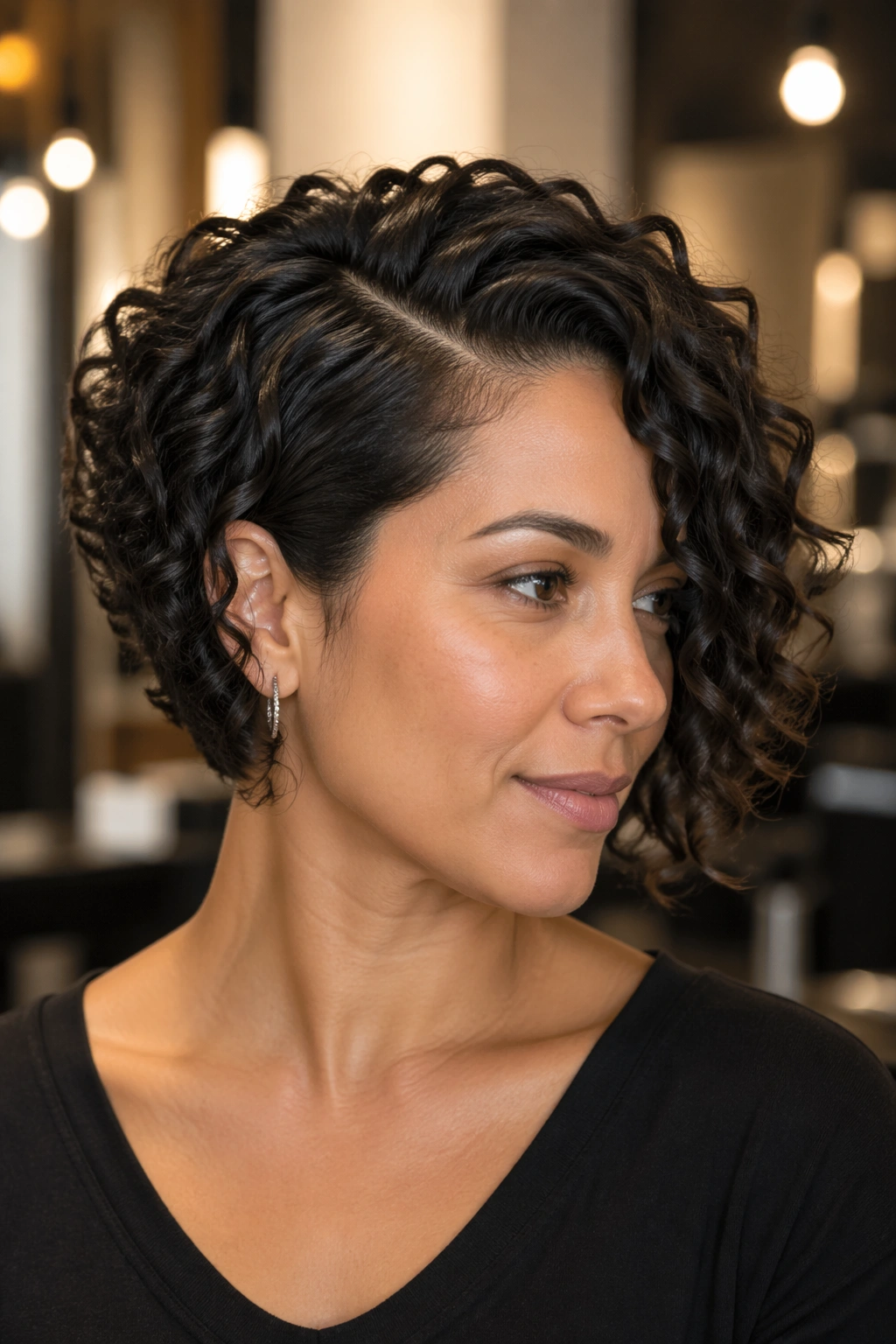
A deep side part is the easiest way to make a stacked bob look fuller at the crown. It shifts weight dramatically, lifts one side of the head, and gives curly hair a more sculpted profile.
The move is small, but the effect is not. On hair that tends to lie flat near the roots, the deeper part creates a visible ridge of volume. On denser curls, it breaks up the top so the style doesn’t look too wide. Either way, the bob gets more shape from the front, which helps balance the short stacked back.
- Place the part about 1 to 2 inches farther over than your usual part
- Clip the roots on the heavier side while drying
- Tuck the flatter side behind the ear if you want more face focus
- Keep the front lengths soft so the part does not look severe
This is also a useful trick on days when your curls won’t cooperate. A deep side part can rescue a bob that’s gone flat on one side or puffy on the other. It gives the haircut a clear direction, and that matters more than people realize.
I’d call this the low-effort, high-reward version of the stacked bob. Simple. Effective. Hard to mess up.
15. Soft Stacked Bob with Face-Framing Pieces
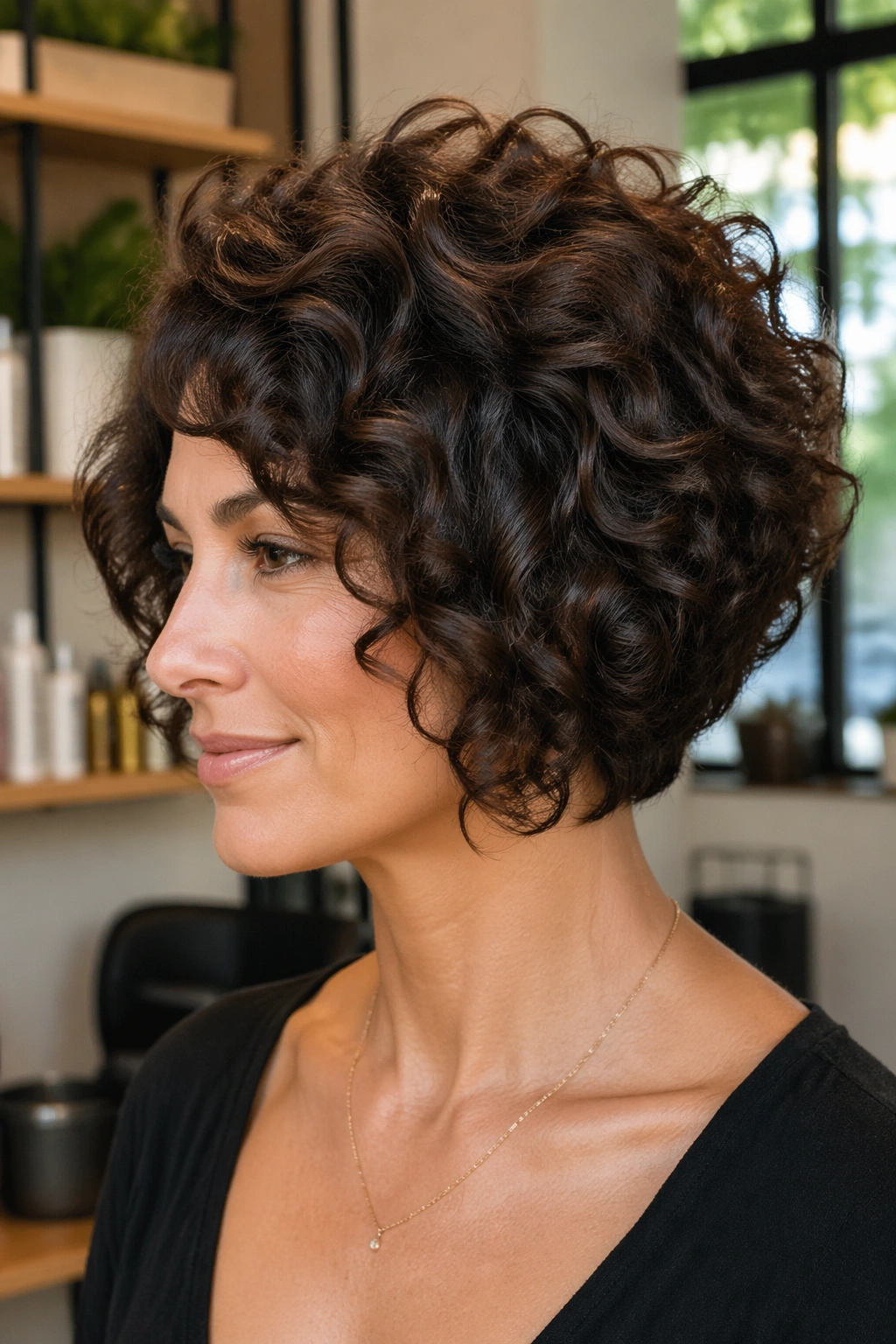
A soft stacked bob is the one I keep coming back to when someone wants shape but not sharpness. It keeps the back shorter, yes, but the graduation is gentler, and the front pieces are left long enough to skim the cheekbone or jaw.
That softness matters on curly hair because curls already bring personality to the cut. You do not need a severe angle on top of that. A softer stack gives you the lift and the movement without turning the style into a hard-edged shape that needs constant smoothing. It also grows out better, which is one of those details people only appreciate after a few weeks have passed.
This version works especially well if you air-dry most of the time. The face-framing pieces help the bob look finished even when the curls dry in slightly different directions. They also make the haircut easier to wear with glasses, earrings, or a tucked-back side, because there’s always a bit of movement around the face.
If you want one stacked bob that plays nicely with busy mornings, rainy sidewalks, and the occasional skip-the-styling day, this is the one I’d pick first. It has enough structure to look intentional and enough softness to stay believable when life gets messy.