



Curly faux loc hairstyles solve a problem a lot of protective styles run into: you want structure, but you do not want the hair to look stiff or heavy. The curls change the whole mood. They soften the line of the locs, break up the length, and keep the style from feeling like one solid block of hair.
The tricky part is balance. Too many curls, and the style starts to look busy. Too few, and the locs can feel flat or even a little severe. The sweet spot is somewhere in the middle, where the locs still read as locs and the curls feel like part of the design, not an afterthought.
I’ve always liked the versions that look polished on day one and still have a bit of movement after the curls loosen and settle. That lived-in softness is hard to fake. It’s also the reason curly faux loc hairstyles can look expensive even when the setup is simple: the texture does the heavy lifting.
Length, parting, and curl placement change everything. Waist-length pieces feel dramatic, shoulder-length bobs feel lighter, and a high bun can make even a heavy install feel easier to wear. The trick is matching the shape to your face, your routine, and how much weight you want on your head.
1. Waist-Length Boho Curly Faux Locs
Waist-length boho faux locs are the version I reach for when someone wants real drama but does not want the style to feel rigid. The length gives you swing, and the loose curls woven through the ends keep the whole look from tipping into “too much hair” territory.
Why the Boho Finish Works
The best part about this shape is that the curls show up where your eye already wants to go: the lower half of the hair. That keeps the roots neat and the crown tidy, while the ends stay soft and touchable. If you’ve ever seen faux locs that felt a little boxy, odds are the curls were either too short or too evenly placed.
A good boho finish also breaks up the outline of the locs. Instead of one blunt curtain, you get little pockets of movement. That matters more than people think. A style can be long and still feel light if the ends move independently.
- Keep the curls concentrated from mid-length down, not right at the roots.
- Ask for a few face-framing tendrils that sit near the cheekbones.
- Mix curl lengths so every piece does not end at the same spot.
- Use medium-sized locs if you want the style to last without looking bulky.
Best tip: ask for 2 to 4 inches of difference between the curly pieces. That small variation makes the ends look natural instead of stacked.
2. Deep Side-Part Curly Faux Locs
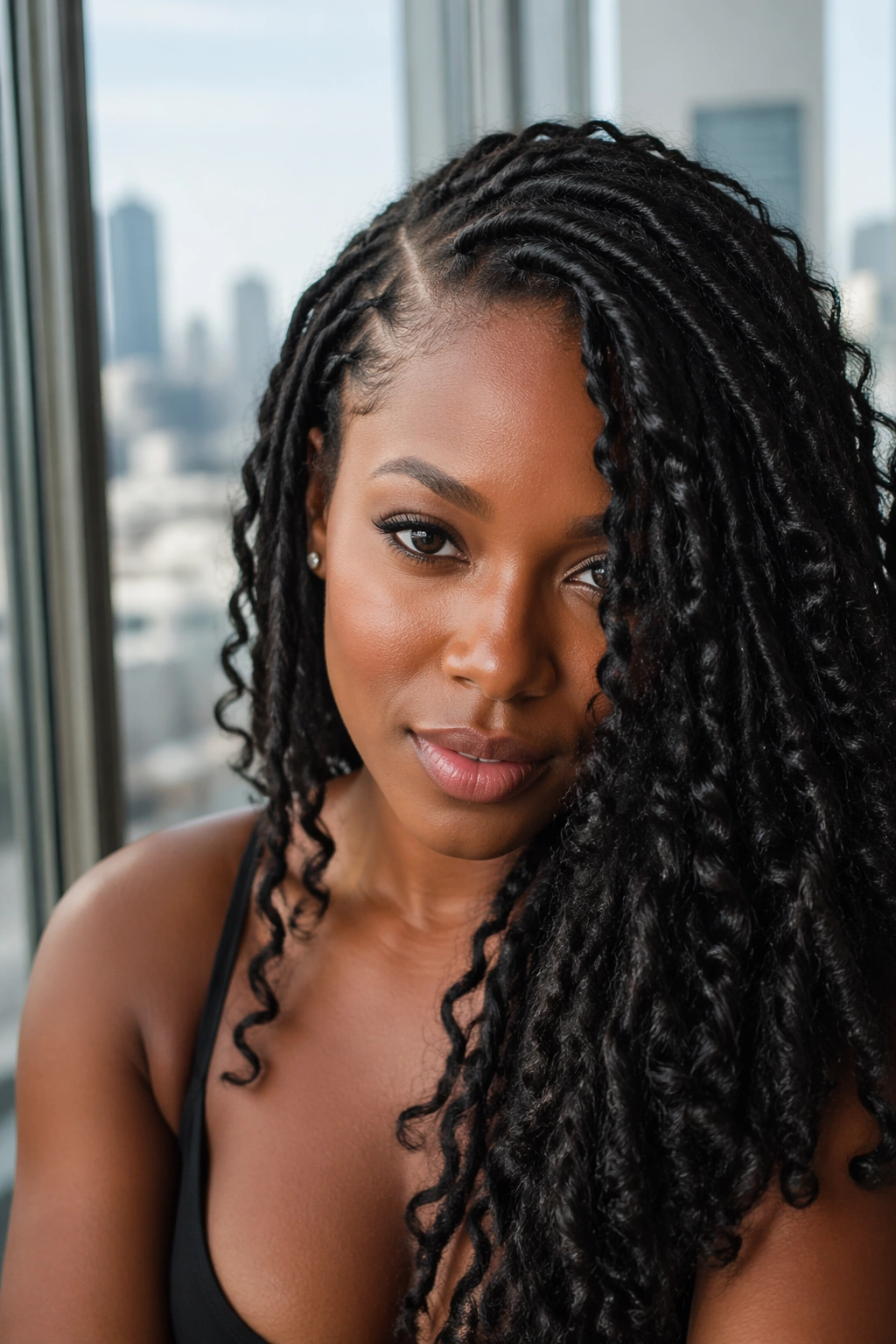
A deep side part changes the mood of faux locs in about ten seconds. It adds shape before you even touch the curls, which is why this style feels so flattering on round, square, and heart-shaped faces.
The diagonal line pulls the eye upward and across the face instead of straight down. That gives the locs motion before the curls even start doing their job. It also creates a little asymmetry, which is handy if you want the style to feel a bit softer and less formal.
I like this look when the curls are clustered a little heavier on the fuller side of the part. Not packed in, not random. Just enough volume to make the part feel intentional. If the curls are too equal on both sides, the whole style can lose that effortless swing people are usually after.
This one works especially well if you wear your faux locs with thick, blunt ends. The side part keeps the shape from looking square. Clean. Easy. Not fussy.
3. Shoulder-Length Curly Faux Loc Bob
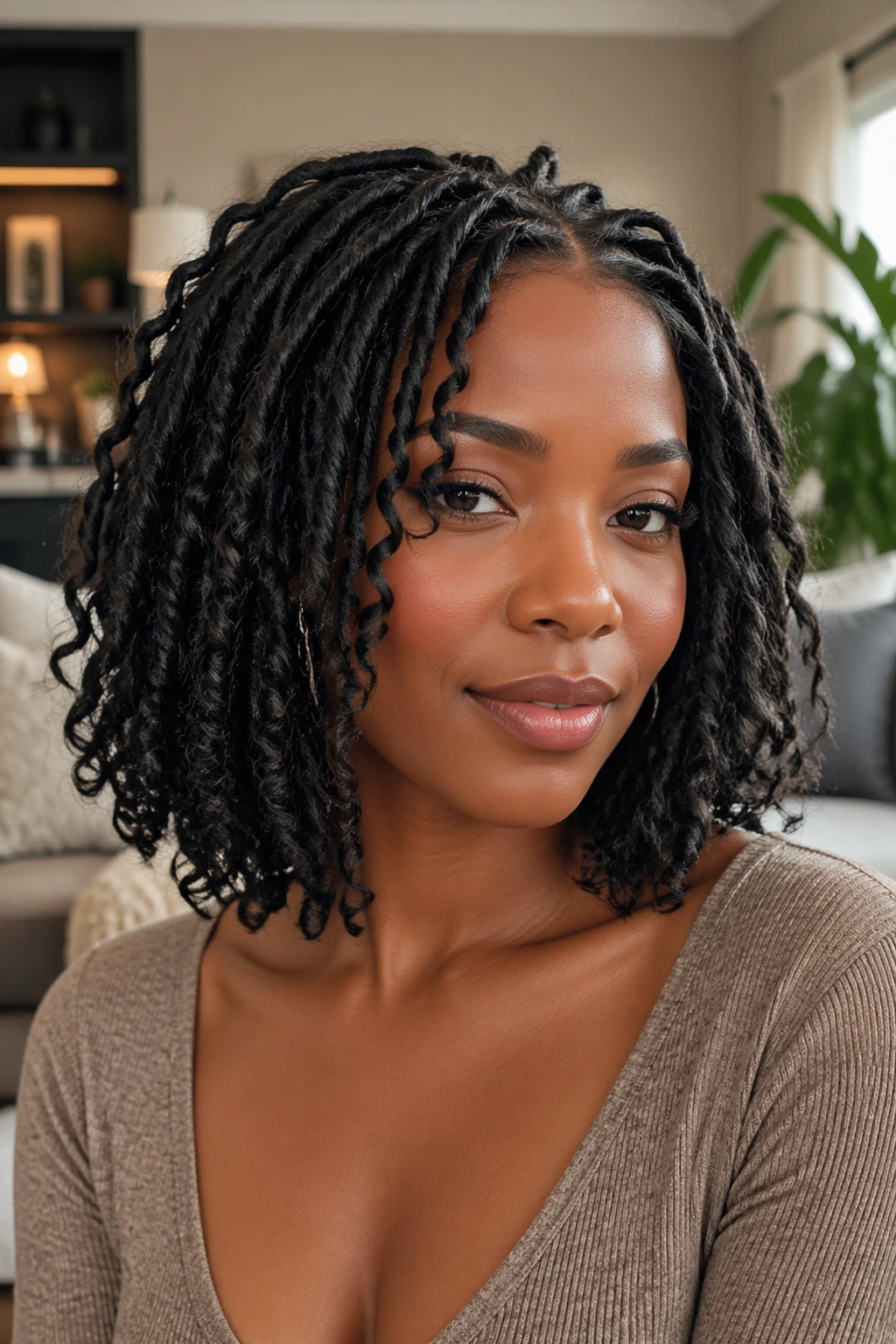
Why do shoulder-length faux loc bobs keep showing up again and again? Because they’re practical without feeling plain. The length sits in that sweet zone where the hair still moves, but it doesn’t drag on your neck or catch on every zipper and backpack strap.
A bob also changes the way the curls behave. Shorter length makes the curl pattern look fuller, almost springier, because the weight is lighter. That means the ends can puff out a little in a good way, especially if you use loose spirals or water-wave texture at the tips.
How to Style It
- Tuck one side behind the ear for a cleaner profile.
- Add a center part if you want the locs to look balanced and neat.
- Pull half the hair into a small top knot when you want the curls off your face.
- Choose a blunt bob if you like structure, or a slightly uneven cut if you want more movement.
This style is also kind to people who do not want to spend all morning detangling curls. Less length means less friction. That matters more than people admit. Shorter faux locs usually feel easier to sleep in, easier to wash around the scalp, and easier to keep fresh between appointments.
4. Half-Up Curly Faux Locs with a High Crown Bun
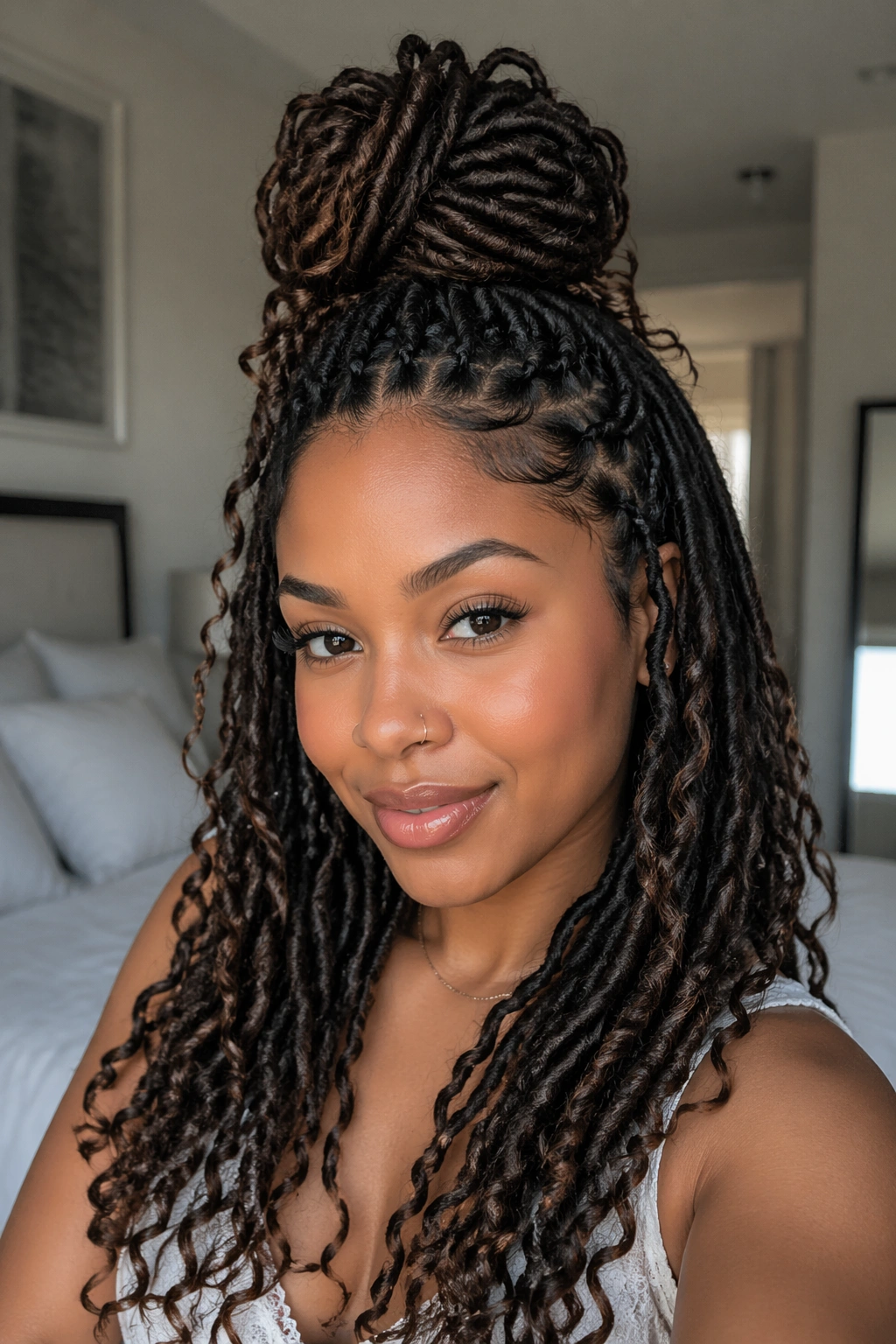
If your hair tends to land in your face by noon, this is the style that saves the day. The half-up crown bun gives you lift at the top, while the loose locs and curls keep the rest of the style soft and wearable.
What I like here is the contrast. The bun looks neat and intentional, but the curls hanging below it keep the whole style from feeling severe. You get shape at the crown, movement at the shoulders, and enough loose hair to still feel feminine and relaxed.
This style works best when the bun sits high but not tight. That’s a real difference. A bun that’s pulled too hard can make faux locs look strained at the root, and that’s not a cute trade-off for a lifted silhouette. Keep the tension gentle and let the locs fan out a little.
- Leave a few curly pieces around the temples.
- Wrap the bun with a loc or two instead of a plain elastic if you want a cleaner finish.
- Keep the bun slightly loose so the base does not look flat.
- Use this shape when you want earrings, makeup, or a strong neckline to show.
The half-up version is also one of the easiest ways to make faux locs feel less heavy on busy days. Simple trick. Big payoff.
5. Center-Part Goddess Faux Locs
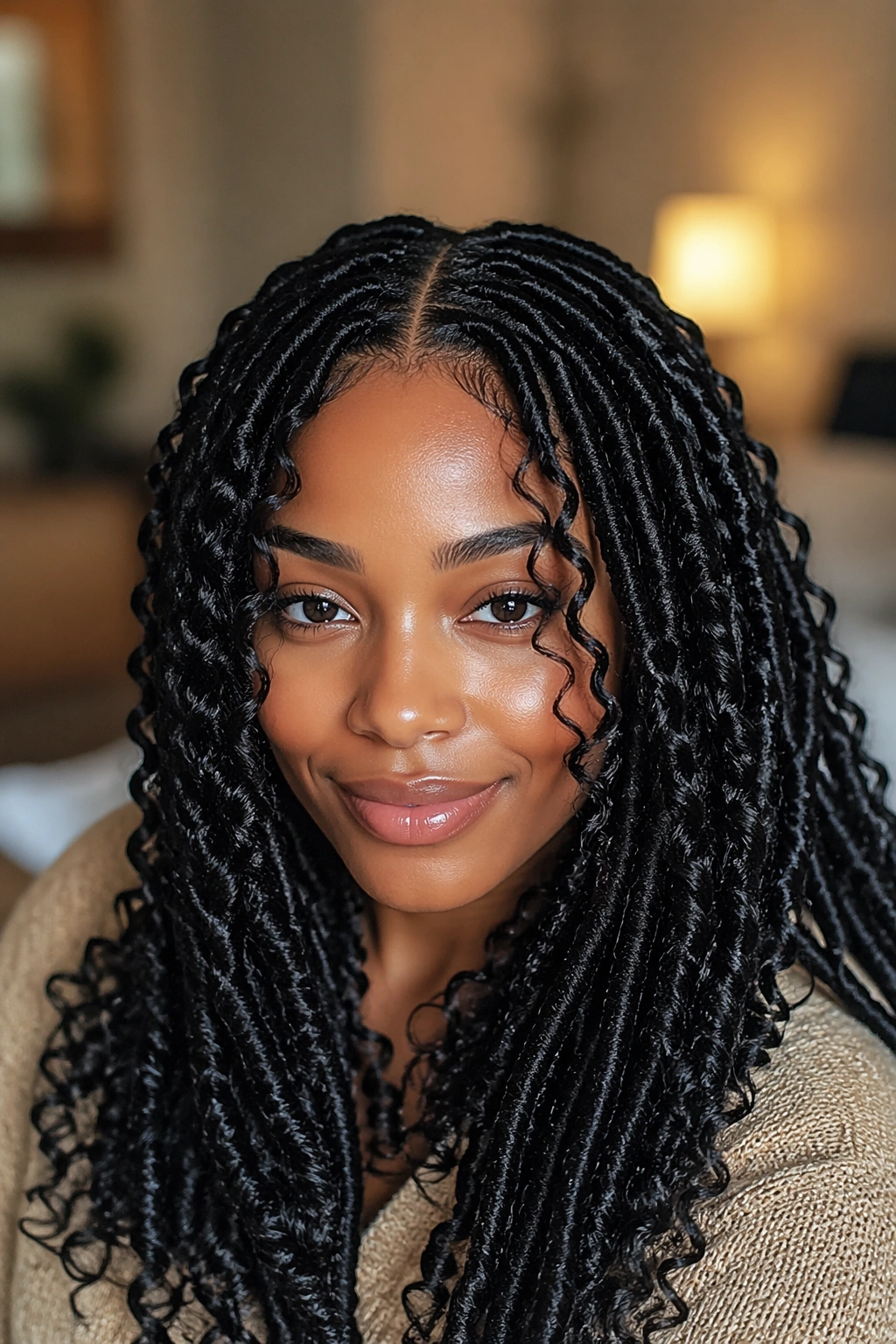
A center part gives curly faux locs a clean, almost architectural line, and the curls stop that line from feeling too severe. That’s the whole magic of it. You get symmetry at the top, then softness everywhere else.
This style looks especially good when the locs fall evenly on both sides of the face and the curls begin a little below the chin. That placement matters. If the curls start too high, the part can get lost. If they start too low, the style can feel weighed down and sleepy.
There’s also something nice about the way a center part frames the face without trying too hard. It lets the eyes and cheekbones stay visible. It gives the curls a clear place to land. And if you like jewelry, this is one of the best shapes for showing off layered necklaces or a strong earring.
I think this one works best on people who like a tidy look with a soft finish. It’s not flashy in a loud way. It just sits well. That’s a bigger compliment than it sounds like.
6. Jumbo Curly Faux Locs
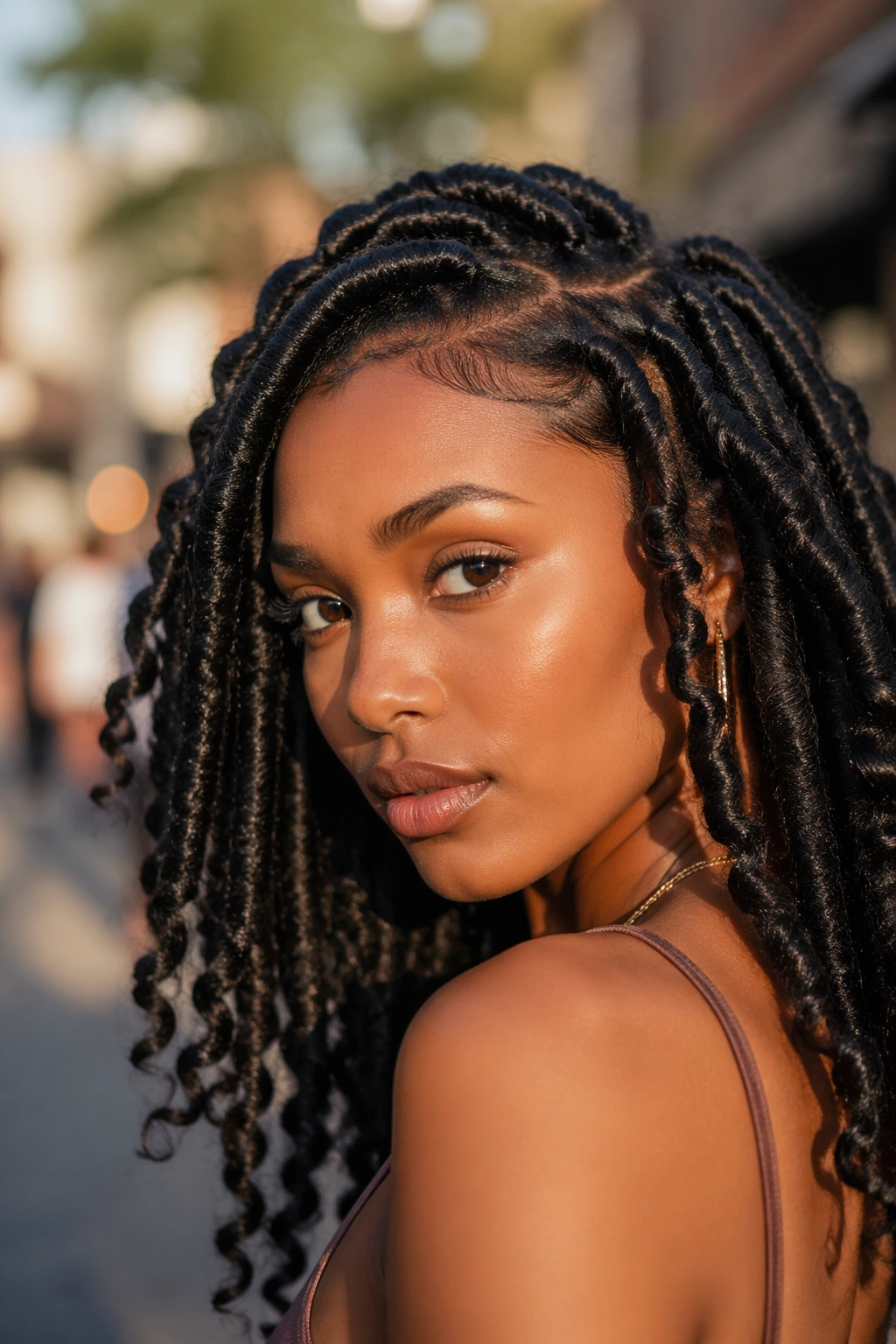
Jumbo faux locs make a statement before the curls even show up. The pieces are thicker, the parts are bolder, and the whole style reads a little more graphic than smaller locs do. If you like hair that people notice from across the room, this is the lane.
Unlike slim locs, jumbo pieces give you fewer strands to deal with, which can make the install feel faster and the overall look feel fuller. That said, they can also look heavy if the curls are too sparse or if the locs are too long for the thickness of the base. Balance matters here more than drama does.
When Jumbo Locs Make Sense
- You want a fuller look with fewer individual strands.
- You like a strong parting pattern and obvious texture.
- You do not want tiny pieces that take forever to section and style.
- You’re aiming for a look that stays visible even when pulled into a bun or ponytail.
Jumbo faux locs work best when the curls are used to soften the ends rather than cover them. A few loose spirals are enough. If the curls overwhelm the locs, the style starts to lose its shape. And that shape is the point.
7. Extra-Long Mermaid Curly Faux Locs
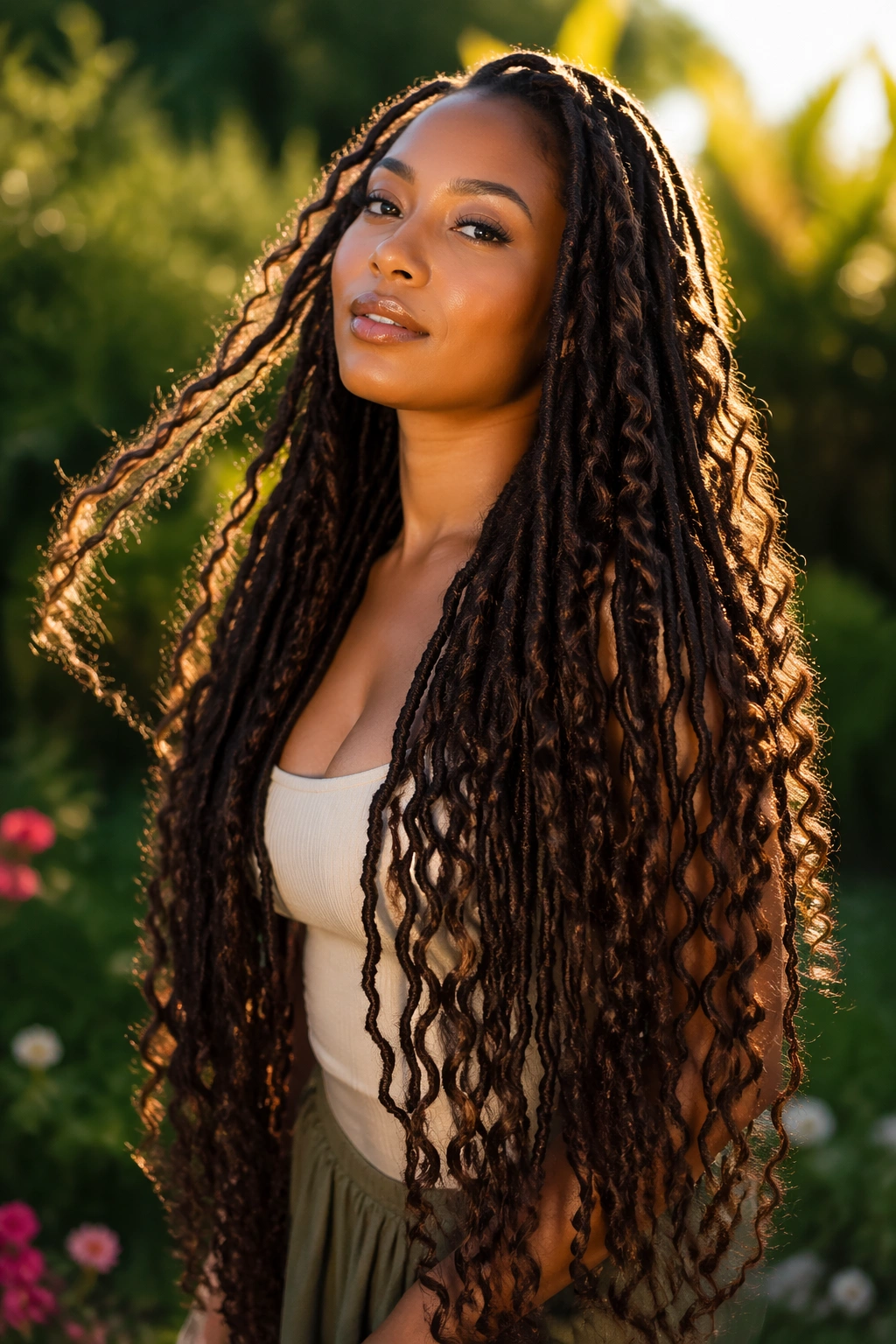
There’s a certain feeling that comes with hair brushing your waist and grazing your hips as you walk. Extra-long faux locs are dramatic in a way that shorter styles just can’t fake, and the curls at the ends make the length feel more fluid instead of heavy.
This is the style for someone who likes presence. Not noise. Presence. The locs create a long vertical line, while the curls break up the ends so the hair doesn’t hang like a single rope. That little bit of bounce matters when the length goes past the ribs.
The downside is obvious: more length means more weight, more tangling, and more care when you sleep. You can avoid some of that by keeping the root sections compact and choosing lighter synthetic hair near the ends. That helps the style move without pulling too hard at the scalp.
I’m partial to this look when the curls are left a little uneven. A few pieces can be loose and airy. A few can be tighter spirals. That variation keeps the whole thing from looking staged.
8. Curly Faux Loc Ponytail
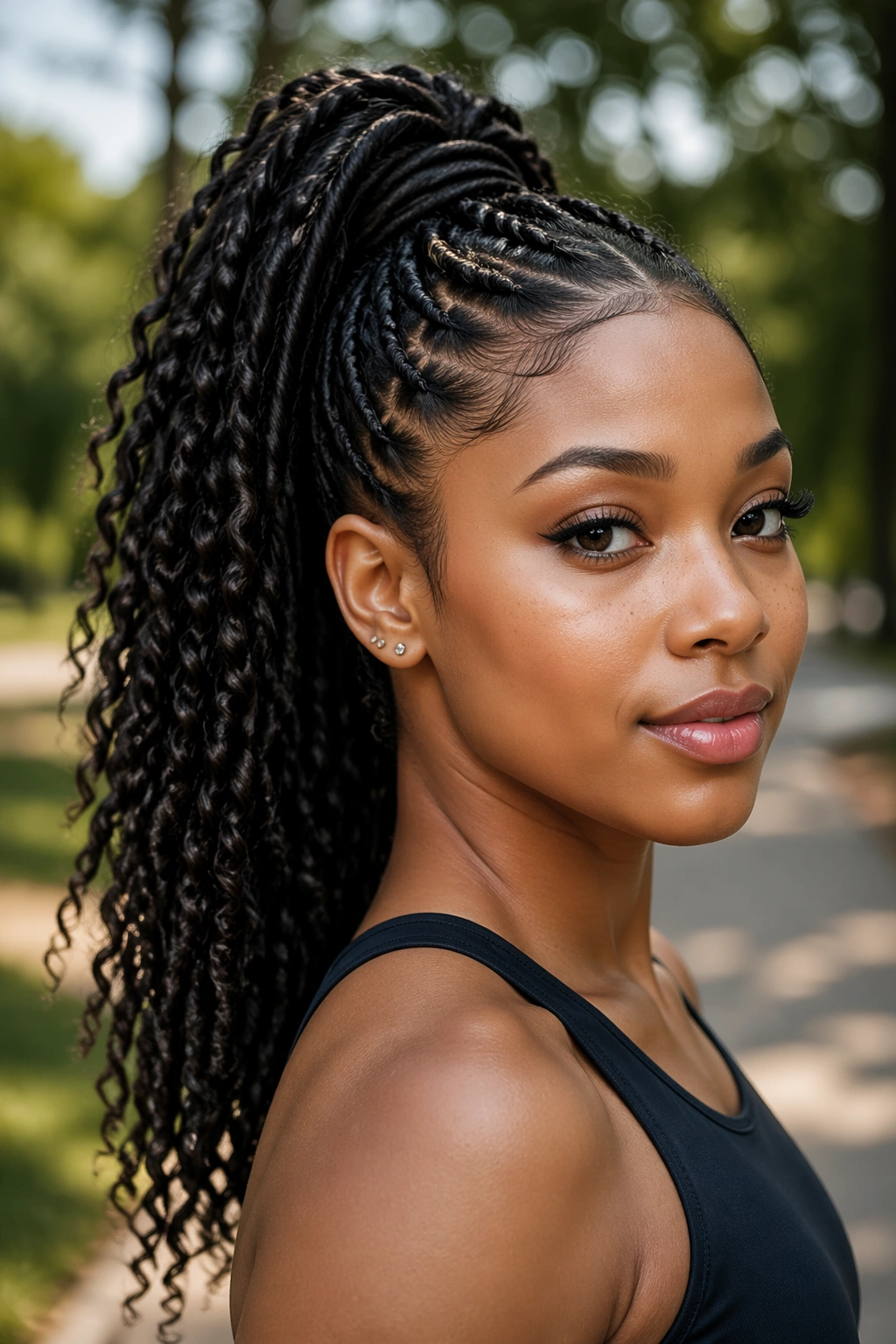
A curly faux loc ponytail is the move when you want the length, but you do not want it all around your face. It feels athletic, polished, and a little bit sharp, depending on where you place it.
A high ponytail gives lift and shows off the neck. A mid ponytail feels more casual. A low ponytail reads softer and can make long locs easier to wear on a day when you’re sitting at a desk or running errands. Same hair, different mood.
What matters most is tension. Pulling faux locs into a ponytail too tightly can flatten the front and create strain at the edges. That’s not worth the sleekness. Leave enough give at the root so the style still moves.
- High ponytail: best for a lifted, bold shape.
- Mid ponytail: best for everyday wear.
- Low ponytail: best when you want the curls to fall over the back and shoulders.
- Wrapped base: best if you want the elastic hidden.
This style also takes accessories well. A scarf, a wrap, or even a single loc wrapped around the base can make the ponytail feel finished instead of rushed.
9. Beaded Curly Faux Locs
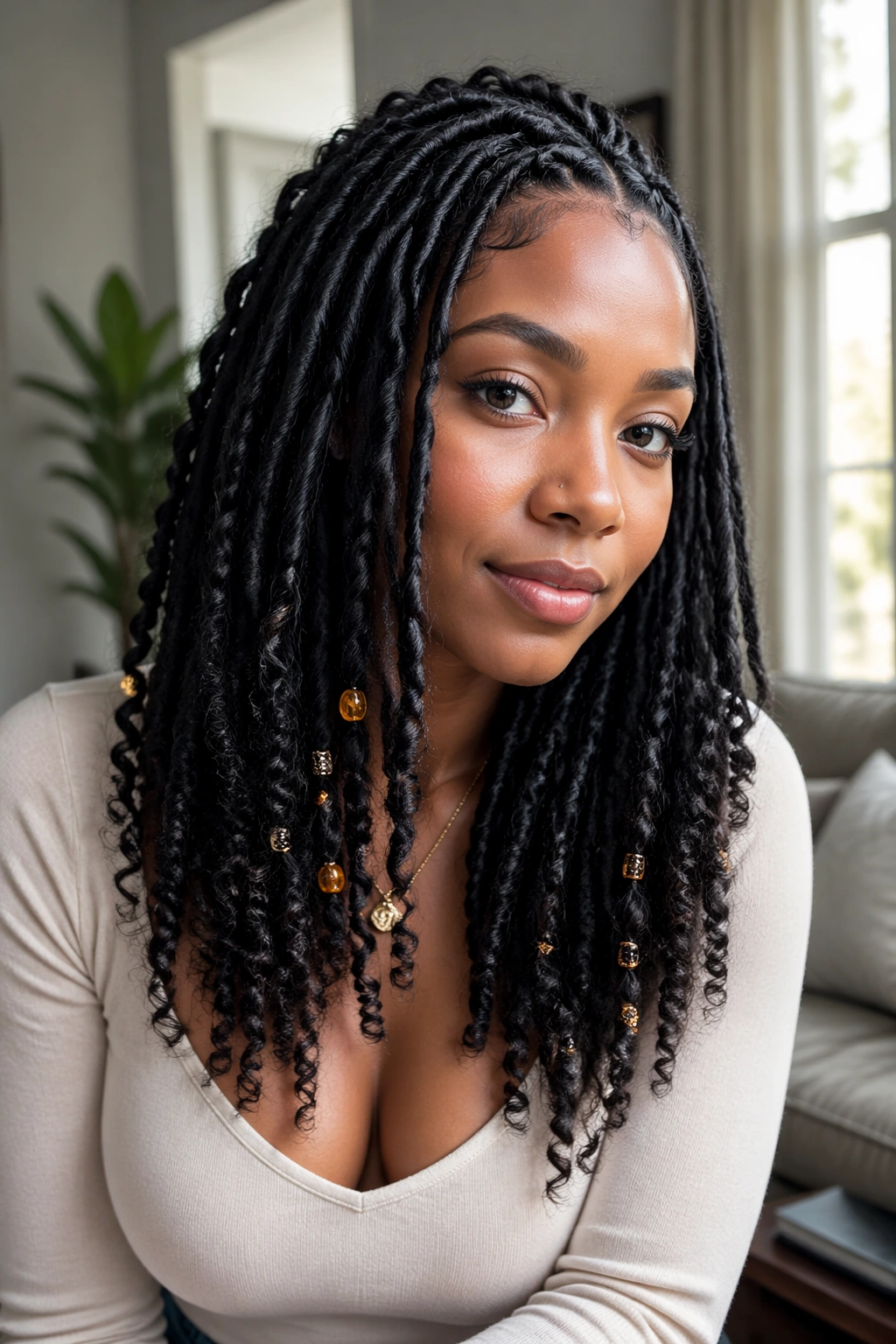
Beads on faux locs can go one of two ways: thoughtful and beautiful, or too much. The difference usually comes down to placement. Put the beads near the ends, and the style stays balanced. Put too many near the roots, and the whole thing starts to feel weighed down.
The cleanest version uses only a few beads per loc, not a full stack. That lets the curls still show, which is the point of curly faux loc hairstyles in the first place. I like this look when the beads are spaced out unevenly, almost like punctuation marks.
Where the Beads Should Sit
- Place them on the lower third of the loc.
- Use lighter beads near the face.
- Keep heavier wooden or metal beads closer to the back or lower layers.
- Leave the curly ends visible so the beads don’t swallow the texture.
Beaded faux locs are especially nice when you want a little personality without committing to bright color or a full accessory overhaul. They give the hair a handmade feel. That can be gorgeous when the locs themselves are clean and neat.
10. Layered Curly Faux Locs with Mixed Curl Sizes
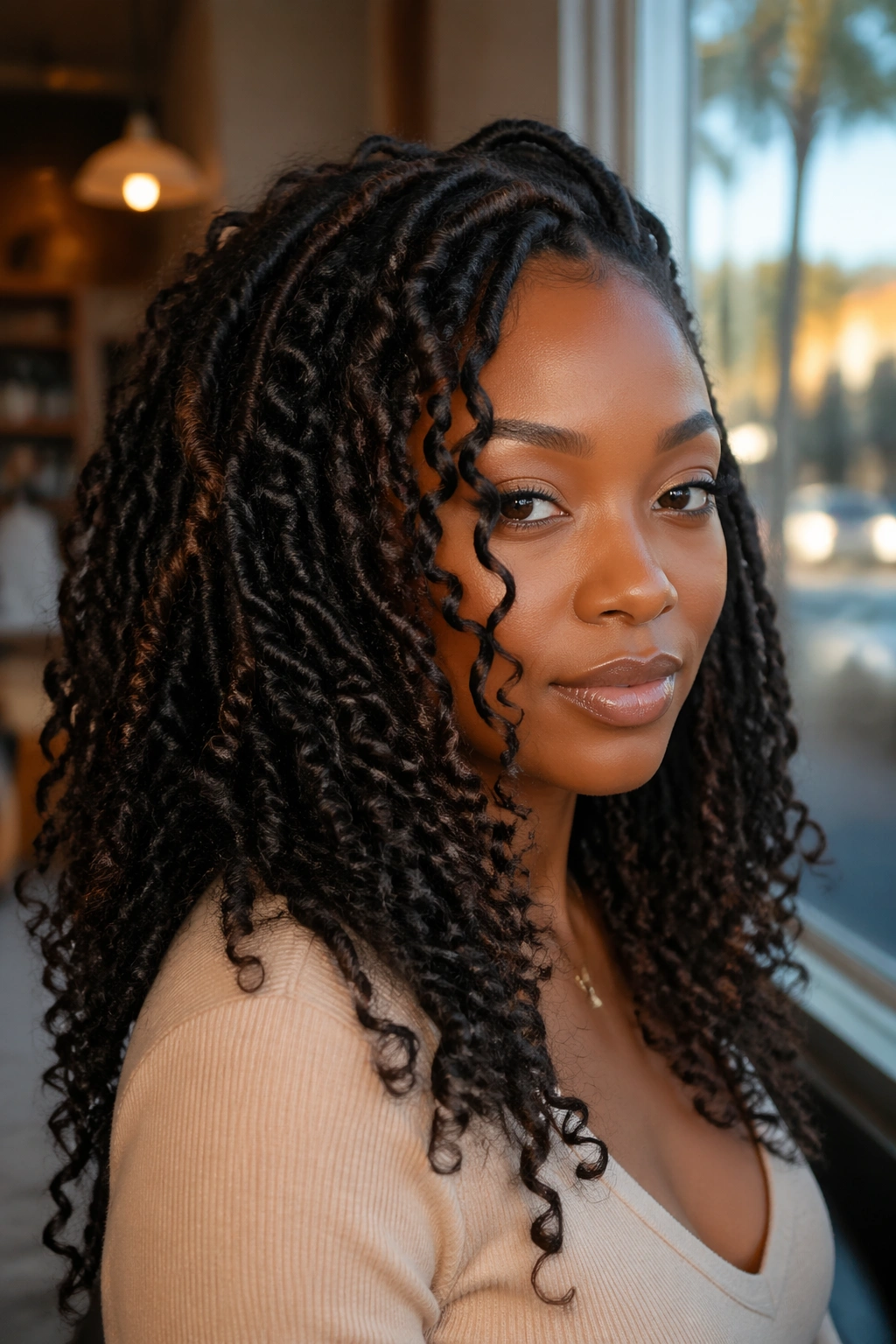
Layering changes the silhouette in a way that flat, even-length locs never can. When some pieces fall a little shorter and others hang a little longer, the curls land in different places and the whole style gets more movement.
I’m fond of mixed curl sizes here. Tight spirals near the face can make the frame look lively, while looser waves at the back keep the style from becoming too busy. That contrast is what makes the hair interesting from every angle.
This shape is a smart choice if you want faux locs that look less uniform. Uniform can be neat, sure, but it can also be a little predictable. Layering fixes that fast. The hair has places to open up, places to stack, and places to fall flat on purpose.
A layered set also grows out in a forgiving way. As the curls loosen, the shorter front pieces often keep their bounce longer than the back, so the style stays dimensional even when it’s lived in for a while. Small detail. Big difference.
11. Crochet Curly Faux Locs
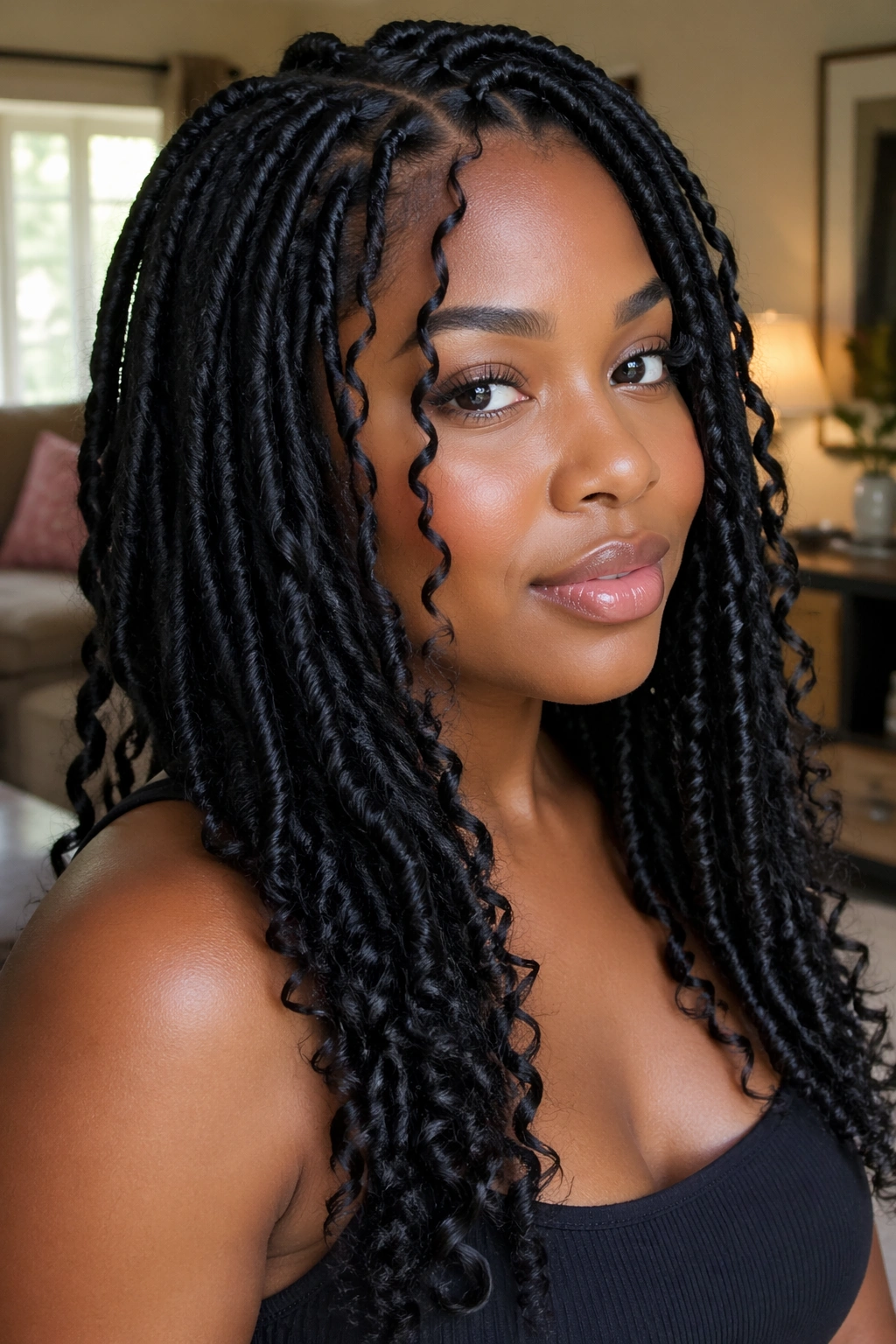
Want the look without spending forever in the chair? Crochet curly faux locs are one of the easiest answers. The braids underneath create a base, then the faux locs get added in a way that can be much faster than individual wrapping.
That speed comes with a trade-off: crochet styles can look a little more uniform, so the curl placement has to do some of the visual work. If every piece falls at the same angle, the style can feel stiff. Letting a few curls rest closer to the face and a few toward the back helps break that up.
What Makes Crochet Locs Different
The roots tend to sit flatter and neater, which is useful if you like a tidy scalp line. The locs also distribute evenly across the head, so the weight feels more balanced. That’s handy for anyone who wants a protective style that doesn’t tug in one spot all day.
Crochet faux locs are a strong pick for fuller hair, or for anyone who wants a dense look without a lot of visible parts. They can be worn sleek, fluffy, or somewhere in between, depending on how tightly the curls are placed and how much fringe you leave around the hairline.
12. Feed-In Curly Faux Locs with Sleek Hairline
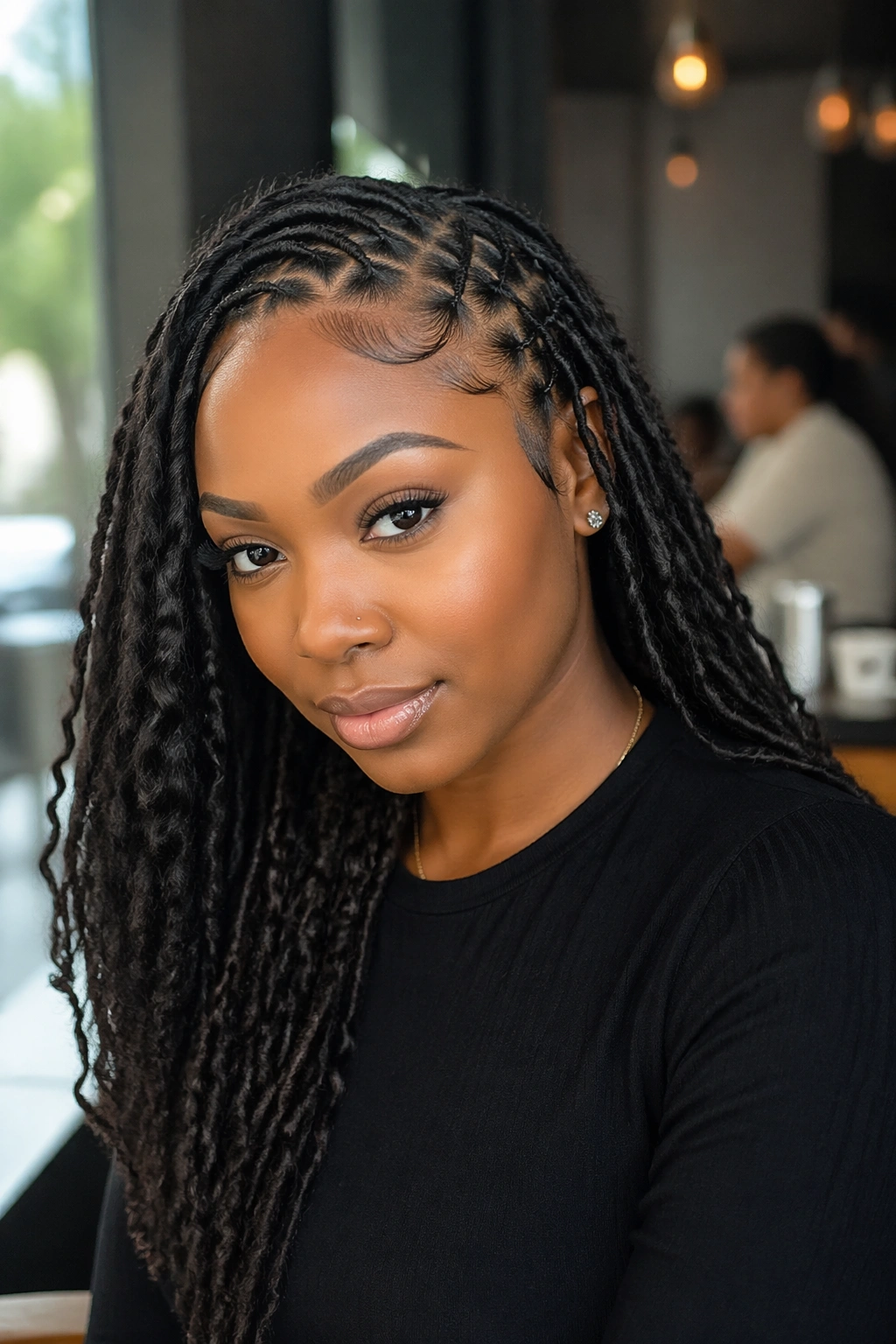
Feed-in faux locs look clean because the base starts small and builds gradually. That gradual change makes the hairline feel smoother, especially around the temples and front edge. It is one of those styles that reads neat before anyone even notices the curls.
The advantage here is control. You can keep the front soft and close to the scalp, then let the locs get fuller as they move back. That gives the style a finished shape without the heavy look that sometimes shows up when the front is built too thick.
This is the version I’d point someone toward if they want curly faux locs for work, events, or any setting where they want the hair to look polished. The curls can still be loose and pretty, but the root area stays tidy. That contrast is doing a lot of work.
A clean hairline also makes the parting pattern more visible. Square parts, triangles, and crisp rows all look better when the base is gradual. You do not need a loud style for it to have impact. Sometimes the neatest versions are the ones that stand out the most.
13. Color-Blocked Curly Faux Locs
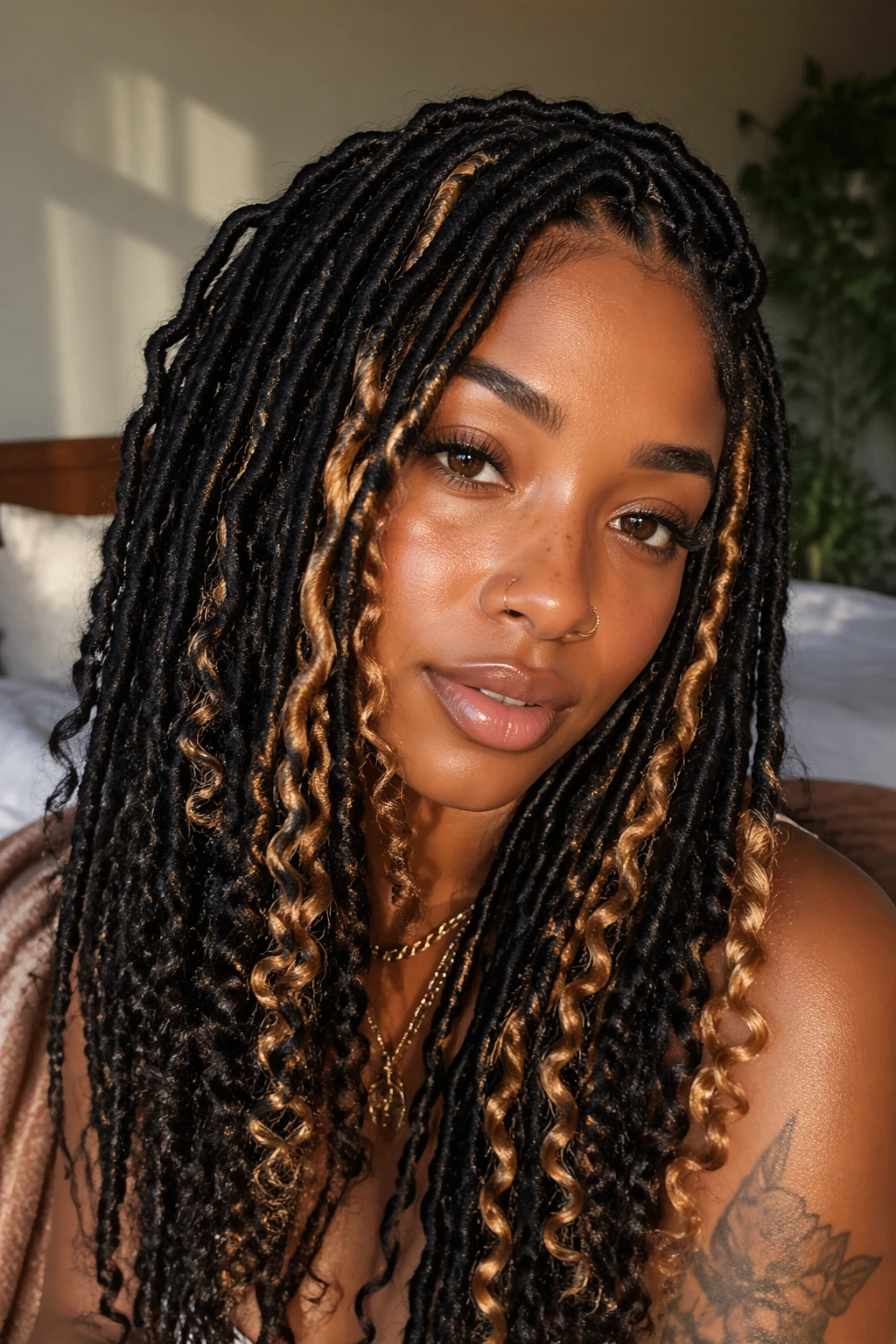
Color-blocked faux locs are for anyone who wants the texture to stay the star while the color does a little extra talking. You can keep the roots dark, brighten the ends, or place a second tone in face-framing sections only. That last one is my favorite because it adds interest without making the whole head feel loud.
The easiest way to think about color-blocking is placement, not just shade. A caramel panel near the front reads softer than a hard stripe in the middle. A few blonde curls at the ends feel lighter than a full blonde loc. Where the color sits matters as much as the color itself.
This style also works well with curly ends because the curls blur the line between shades. A straight cut would show every color change in a harsher way. The curl softens that edge and makes the transition feel more natural.
If you want the hair to look custom, this is a good place to start. Even subtle shifts — black to brown, brown to honey, burgundy to plum — can change the entire mood of the style. You do not need a rainbow to make it feel personal.
14. Accessorized Curly Faux Locs with Wraps and Cuffs
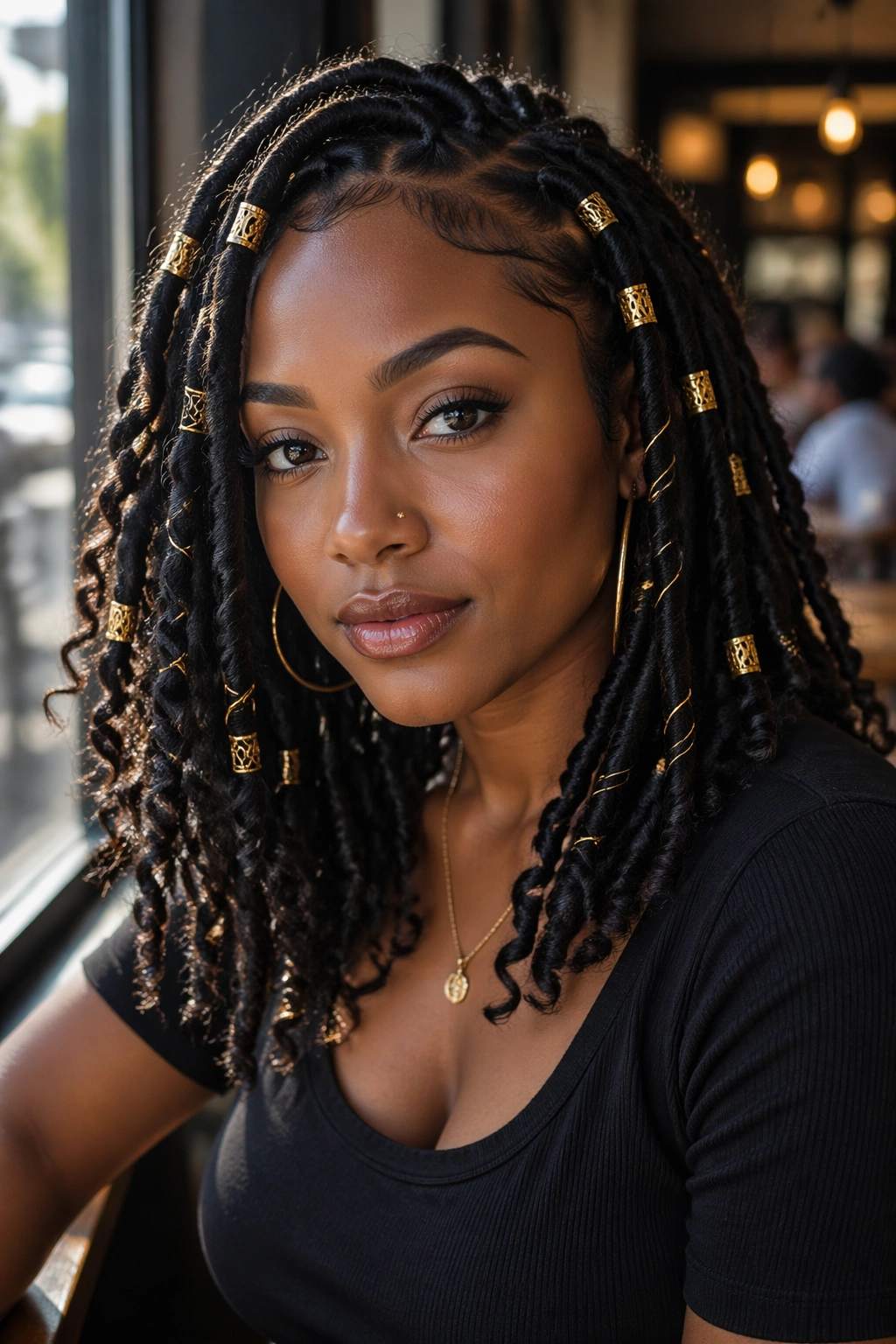
Accessories can turn curly faux locs from pretty to memorable, but the key is restraint. One cuff in the right spot can look deliberate. Ten cuffs scattered everywhere can look crowded.
Wraps, cuffs, rings, and even a few thread details all work here because the loc texture gives the accessories something to grab onto. The hair already has structure, so the extras can sit on top without disappearing into the style. That makes this one of the easiest ways to change the mood of the same base install.
How to Place Accessories
- Put metal cuffs near the mid-length, not right against the scalp.
- Use thread wraps on a few locs only, so the color reads as an accent.
- Place rings on the outer layers where they’ll show without fighting the curls.
- Keep heavier pieces lower on the loc to avoid extra pull at the root.
I like this look for people who wear simple clothes and want the hair to carry a little more personality. The accessories can lean gold, silver, brass, wooden, or even beaded, depending on the finish you want. The curls keep it from looking too hard-edged.
15. Soft Messy Curly Faux Loc Updo
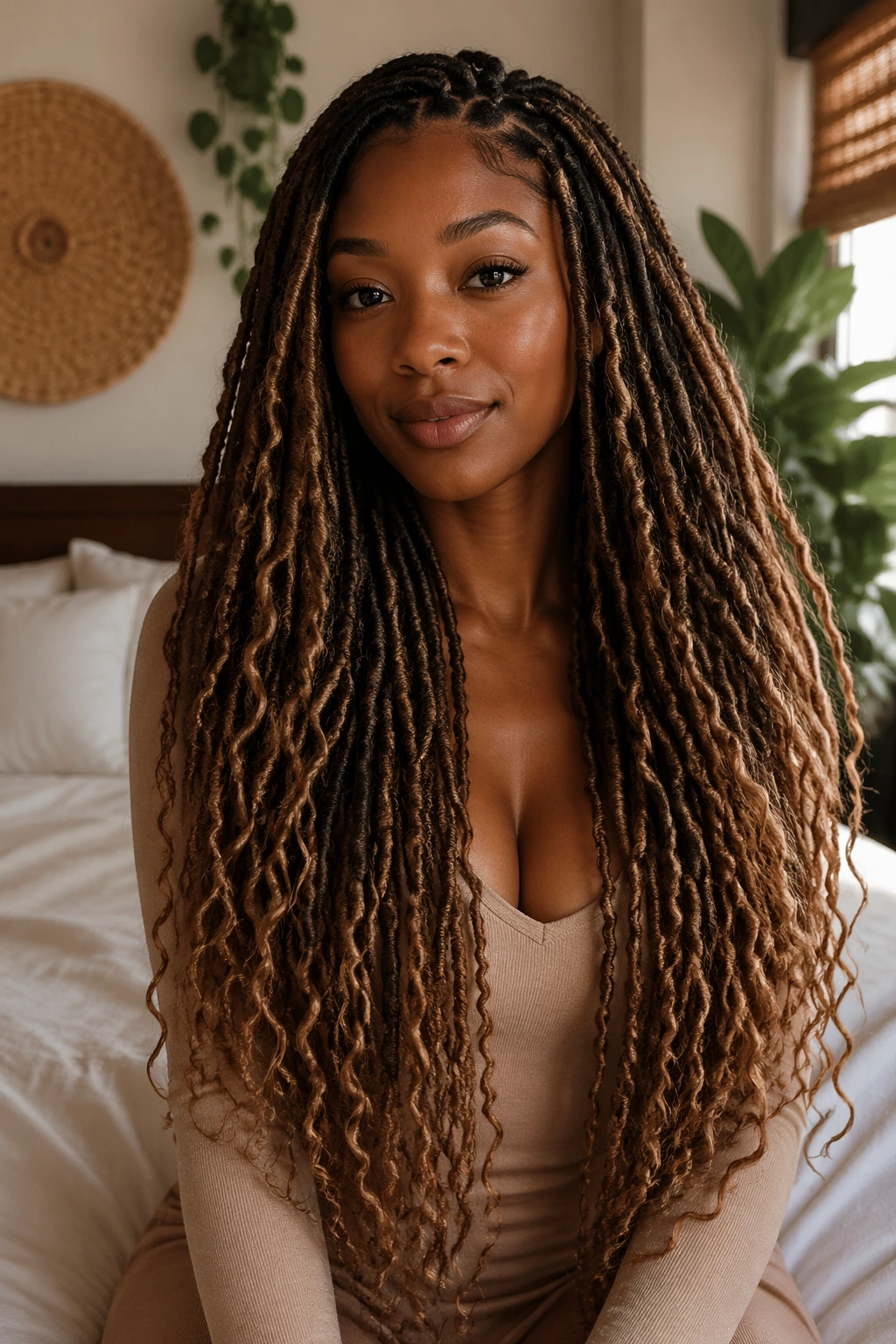
A soft messy updo is the style that makes curly faux locs feel a little less formal and a lot easier to live with. You gather the locs loosely at the crown or nape, then let a few curls escape around the temples, ears, and neckline. The result is relaxed, but not sloppy.
This is the one I’d pick for a day when the weather is humid, the week is busy, or the hair just needs to get off your shoulders. It still shows off the loc texture, but it removes the weight from your back. That alone can make a huge difference.
The best versions leave 4 to 8 curly pieces out on purpose. Not by accident. Around the face, at the nape, and sometimes just one little curl near the ear. Those pieces keep the updo from looking too tight or too finished. A little mess is the point here.
If you want a practical curly faux loc hairstyle that still looks pretty in photos, this is hard to beat. It works for brunch, errands, and dressier settings too. Keep the bun loose, let the curls fall where they want, and resist the urge to smooth every strand into place. That softer finish is the whole charm.
Curly faux locs work best when the shape matches the way you actually wear your hair. Some people want length and drama. Some want a clean part and soft curls near the face. Some need the hair up and out of the way by lunch. There’s no single version that wins every time.
The styles that last in real life are usually the ones with good balance: neat roots, curls placed with a purpose, and enough movement to keep the locs from feeling heavy. Pick the silhouette first. The details fall into place after that.
