



Curly pixie cuts for women over 50 work best when the shape follows the curl, not the other way around. That sounds obvious, but it is the part a lot of short haircuts get wrong: they chop away too much weight, then spend the rest of the appointment trying to force curls into a shape they never wanted in the first place.
After a certain point, many women notice the same things happening at once. Hair may feel drier, the curl pattern can loosen in some spots and tighten in others, and the crown may not have the same lift it used to. None of that means short hair is off the table. It means the cut has to be smarter.
The best pixies for curly hair do three jobs at once. They keep enough length to show off the texture, they control bulk where it needs controlling, and they leave the face with some softness instead of a hard line. That balance is the whole trick.
And yes, there are a lot of ways to get there. Soft and rounded. Choppy and playful. Sleek at the nape. A little asymmetrical. A little silver. A little wild. The styles below all work for different curl patterns, face shapes, and styling habits — which is exactly why the pixie keeps showing up as one of the most useful short curly hairstyles for women over 50.
1. Soft Curly Pixie Cut with a Tapered Nape
This is the pixie I point to when someone wants short hair but does not want to look like they lost a bet with the scissors. The top stays long enough for the curls to bend and lift, while the nape is tapered close enough to keep the shape neat. It is clean without feeling severe.
The reason it works so well is simple: it removes bulk where curls usually puff out first. At the same time, it leaves the crown free to do its own thing, which keeps the whole haircut looking alive instead of helmet-like. If your hair has medium density or a little extra width at the back of the head, this shape can be a relief.
Why It Flatters So Many Faces
A tapered nape pulls the eye upward. That matters if your face has softened a little over time, because the eye goes to the curl line and the cheekbone area instead of straight down to the jaw. It also plays nicely with glasses, since the sides sit close enough that frames do not get swallowed by hair.
Ask a stylist for soft internal layering, not aggressive thinning. That distinction matters. Too much thinning on curly hair can leave the ends fuzzy and irregular, especially if the hair is dry or color-treated. A good cut should feel light, not sparse.
- Best for medium to thick curls
- Works well with a round, oval, or heart-shaped face
- Easy to style with curl cream and a diffuser
- Needs a trim about every 4 to 6 weeks
Pro tip: air-dry the top about 70 percent before diffusing. The curls hold their shape better when they are not blasted from soaking wet.
2. Silver Curly Pixie with a Feathered Fringe
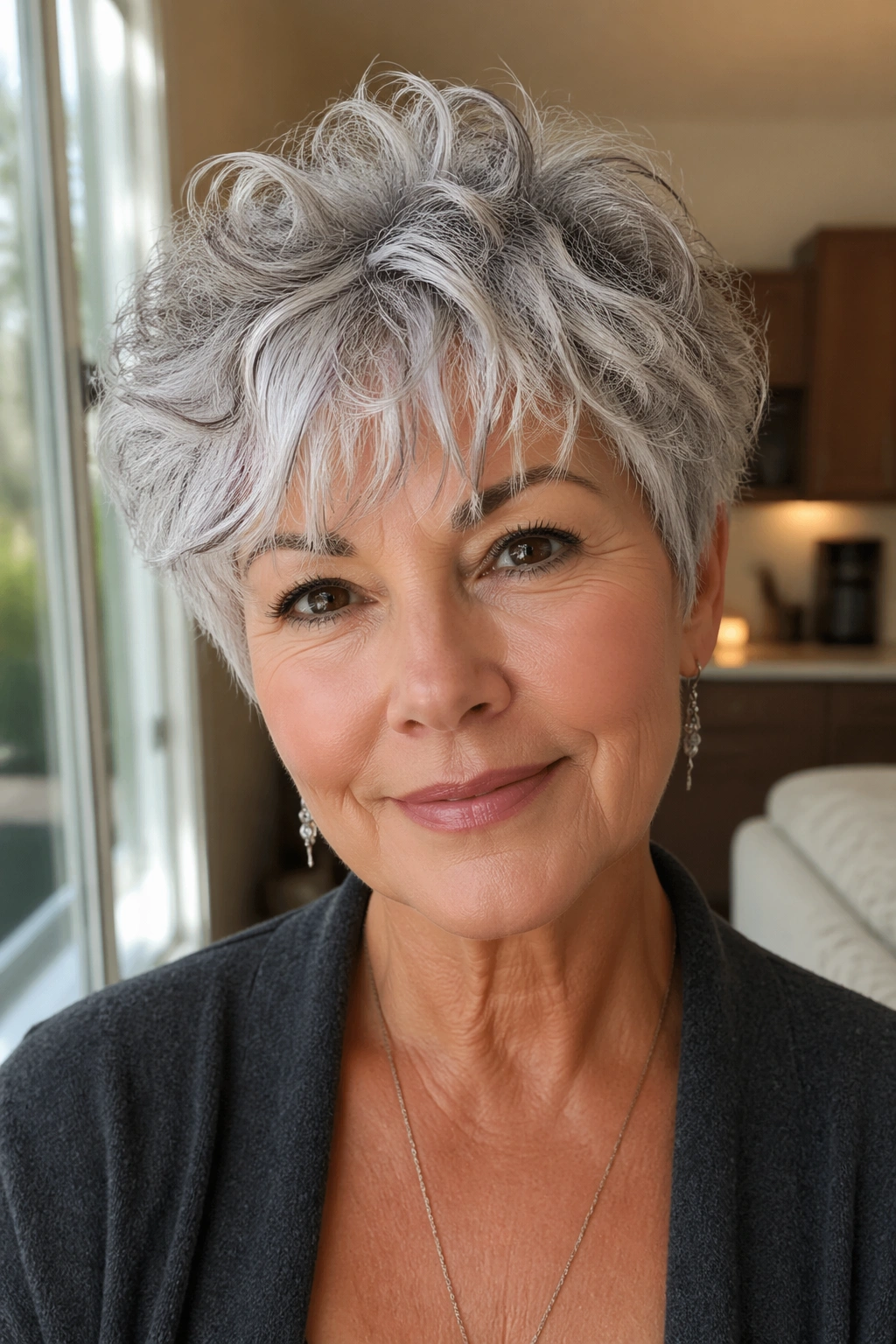
Silver curls are not a problem to hide. They are the whole point. When the color has that natural shine and the cut is soft enough to move, the result has a kind of brightness that flat dyes rarely match. This style leans into that.
A feathered fringe keeps the front from looking blocky. It also softens forehead lines without covering the face in hair, which is the mistake I see far too often with short curly cuts. The fringe should skim, not sit heavy.
If your silver hair is wiry or a little coarse, the styling product matters more than the cut itself. Use a light leave-in conditioner or a very small amount of curl cream, then let the fringe separate with your fingers. Heavy oils can make gray curls collapse, and then the whole style loses air.
The nice thing about this look is that it does not need perfect curl uniformity. A few looser spirals in the fringe and a little tighter texture at the sides can actually make it better. That lived-in irregularity is part of the charm.
One more thing: silver hair tends to show product buildup faster than darker shades. Keep the wash routine simple and avoid thick butters unless your hair is truly thirsty.
3. Side-Swept Curly Pixie with a Long Front Curl
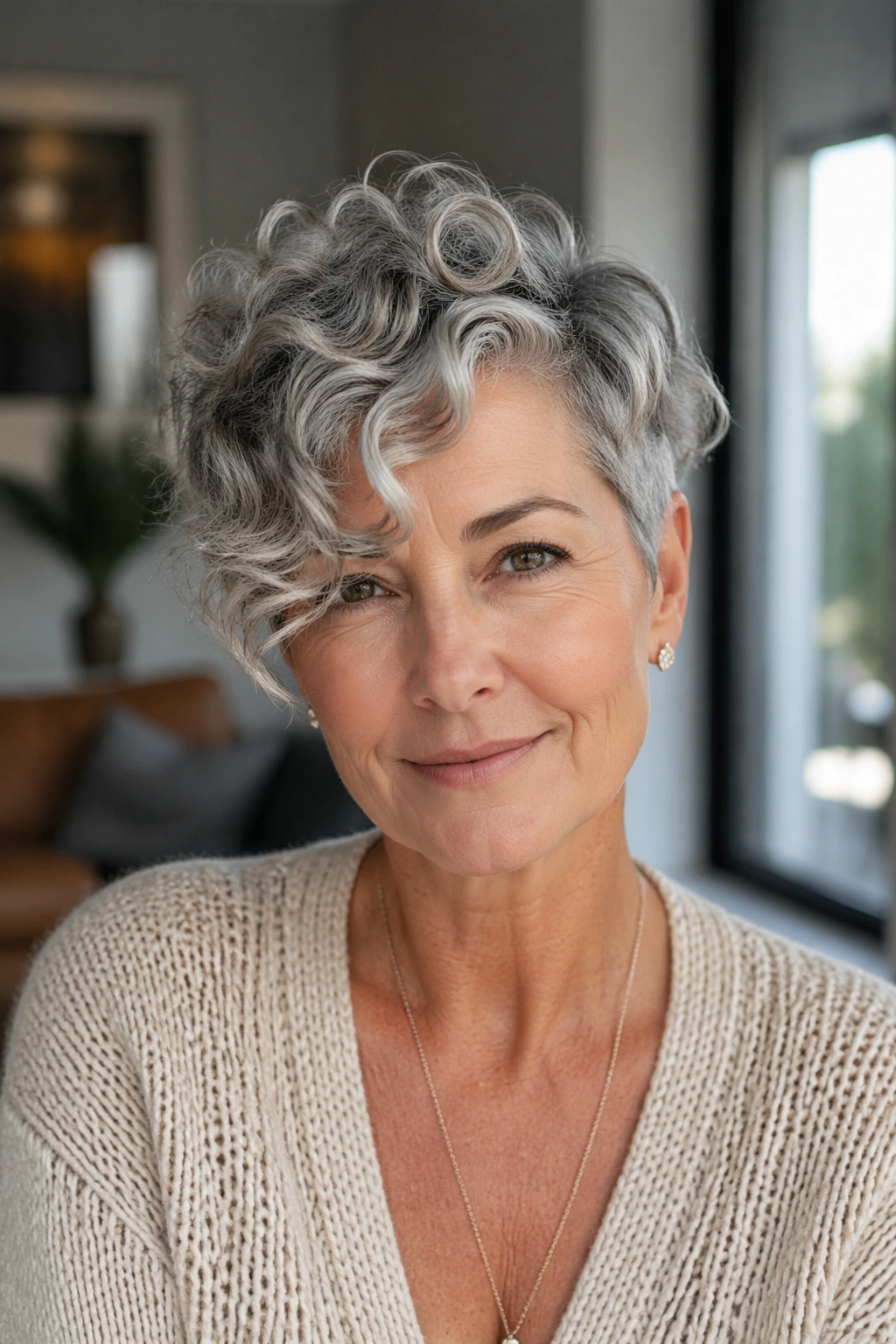
What if you want the ease of a pixie but still like a little sweep across the forehead? This is the answer. One front section stays longer and curves across the face, while the rest of the cut stays compact and tidy.
That long front curl does a lot of work. It can soften a strong brow, balance a wider forehead, and add length through the face without turning the whole cut into a bob. It also gives you something to play with on days when your hair wants a bit more attitude.
What to Ask For
- Keep one front section at cheekbone length
- Shape the sides close to the head
- Leave enough length at the crown for a visible curl pattern
- Avoid blunt cutting at the front line
This style is especially useful if your curls shrink a lot once they dry. A longer front section gives you room for that shrinkage, so you are not left with bangs that jump halfway up your forehead. I have seen that happen. It is not cute.
Styling is straightforward. Part the hair slightly off-center, work a small amount of foam through the front, then sweep the curl toward the fuller side with your fingers. If you want more polish, pin the longer side back for a minute while it dries. That sets the direction without making it stiff.
4. Choppy Curly Pixie Cut with Piecey Ends
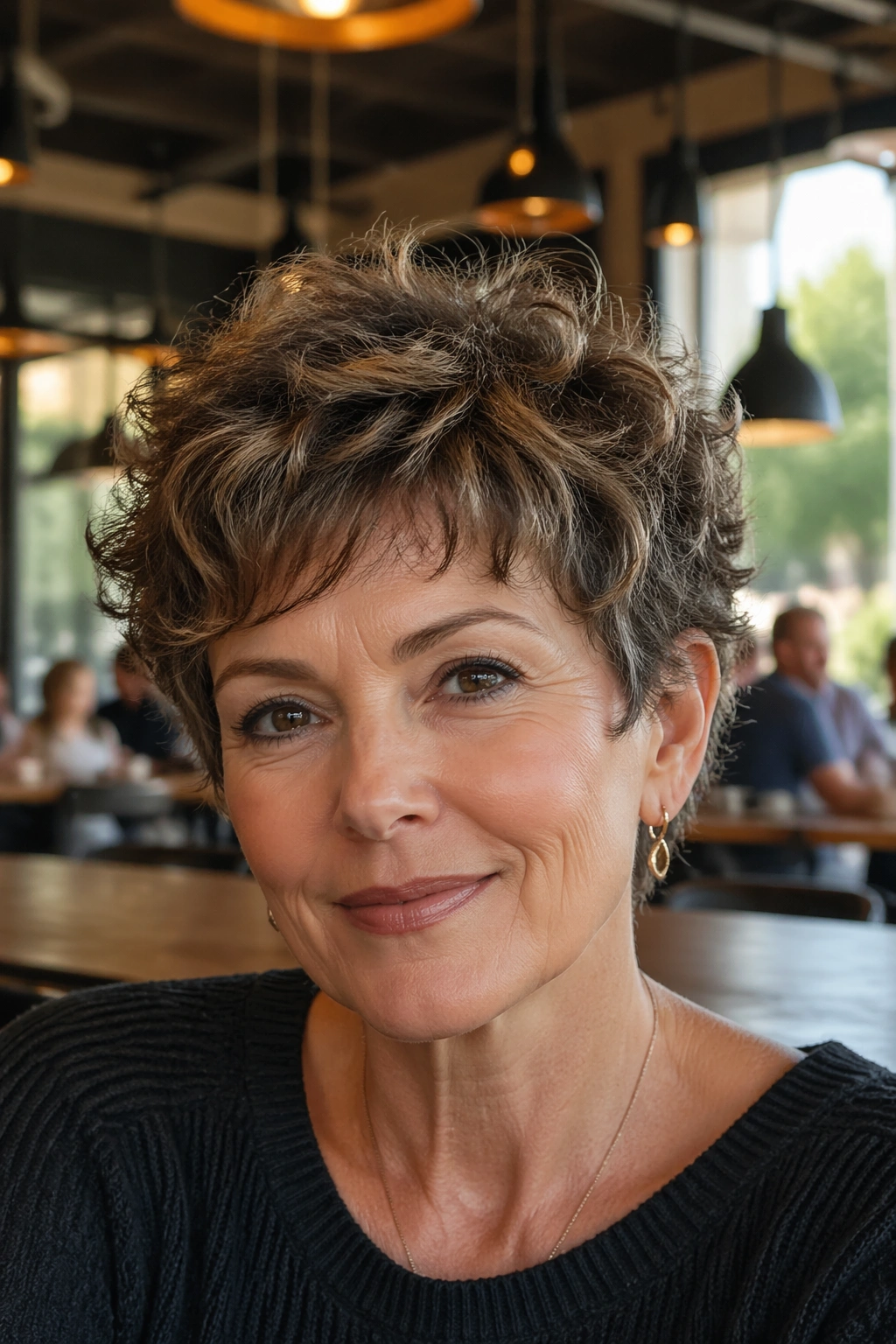
This is not the haircut for someone who wants every curl to sit politely in line. It is for women who like texture with a little bite, especially if the hair has some natural spring and can handle being broken into smaller pieces.
The charm is in the ends. Instead of a smooth, rounded outline, the cut has small broken-up layers that let the curl pattern separate into little twists and coils. The result feels lighter and more modern, but it still belongs in the real world — not on a fashion-only mood board.
A choppy pixie works best when the stylist uses point-cutting and keeps the layers balanced. Too many razor cuts can make the shape frizzy, especially around the ears and temples. Too few layers, though, and the cut loses that lively, piecey look. There is a sweet spot, and it sits in the middle.
This is one of the better pixies for women who like a bit of movement around the face. The broken edges make earrings show more, and the style looks relaxed even when it is freshly cut. A dab of styling paste on dry hair can sharpen a few curls around the hairline, but keep it light. You want definition, not crunchy little spikes.
5. Lifted-Crown Curly Pixie for Extra Height
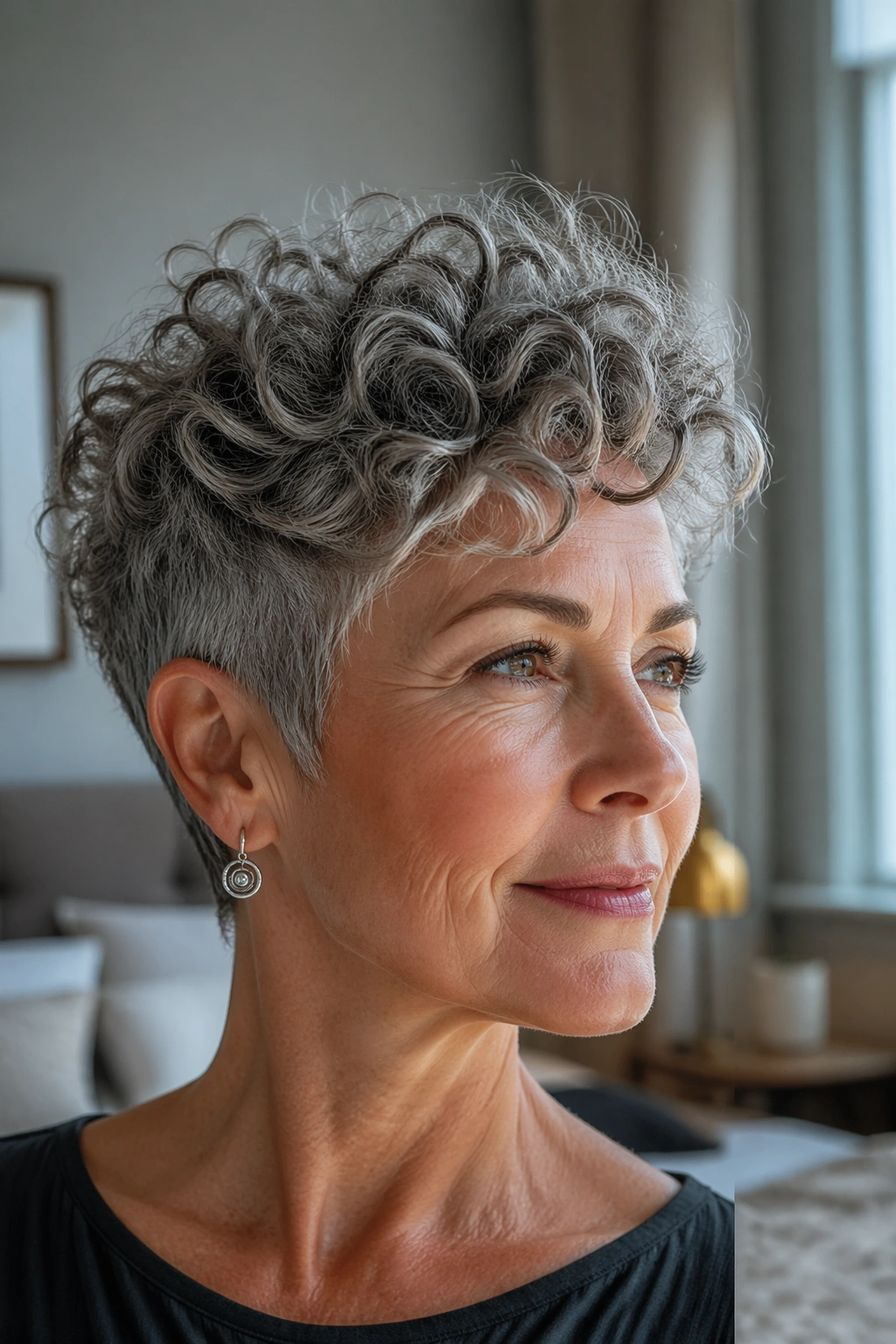
If your crown lies flat by noon, this one matters. A lifted-crown pixie uses shorter layers underneath the top section so the hair rises instead of collapsing toward the scalp. It is one of those cuts that sounds simple and ends up making a big difference in how the whole head looks.
The trick is to create height without making the top look thin. That means the stylist should keep enough weight in the upper layers to support the curls, then remove bulk lower down. When it is done well, the shape looks airy from the front and surprisingly elegant from the side.
How to Style the Lift
Use a root-boosting mousse at the crown while the hair is damp. Then clip the top up in 2 or 3 sections while you get dressed. That small pause helps set the lift before heat hits it. After that, diffuse on low speed and medium heat, aiming the airflow toward the roots, not straight at the curl ends.
- Best for flatter crowns
- Good for round or square faces
- Works well with medium-density curls
- Avoid heavy creams near the roots
A lot of people think more product equals more volume. Usually the opposite is true here. Too much cream at the scalp weighs the cut down and turns the crown soft in all the wrong ways. Keep the roots light, let the curls form, and lift them before they dry completely.
6. Asymmetrical Curly Pixie for a Sharper Profile
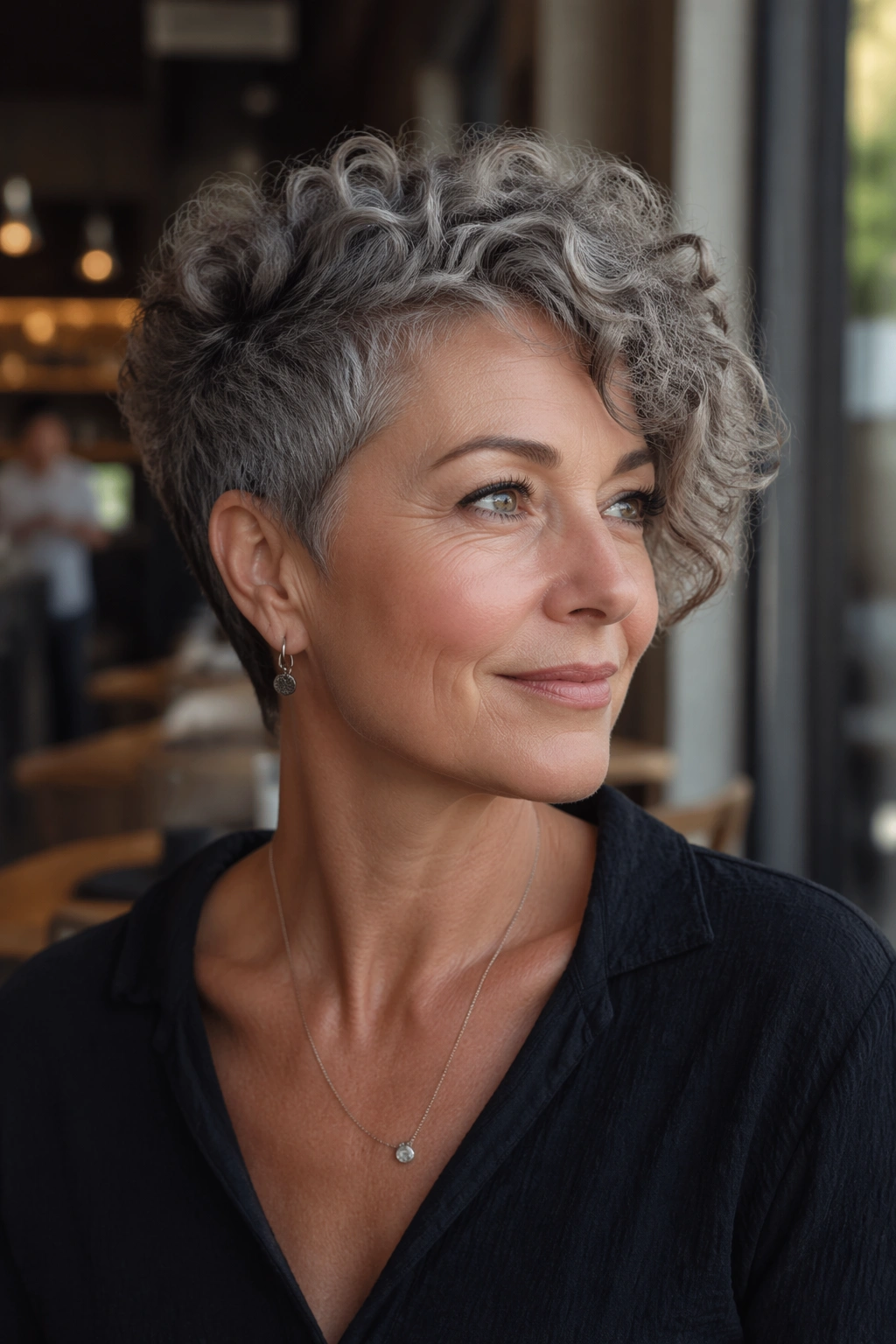
A pixie does not have to be symmetrical to look neat. In fact, a slight imbalance can make the whole haircut feel more deliberate, especially if your face is a little angular or you want the eyes drawn to one side.
This version leaves one side a touch longer, usually around the temple or cheekbone, while the other side stays tighter and closer to the head. The contrast gives the curl pattern somewhere to go. It also keeps the style from looking too precious, which is a problem with some short curly cuts.
When I see this style done well, the longer side looks like it belongs there naturally, not like an afterthought. That means the asymmetry should be subtle. You are not trying to build a dramatic runway shape. You are trying to create a line that moves around the face instead of stopping dead at the cheek.
It suits women who wear side parts, like strong earrings, or want a little edge without committing to a full undercut. Ask your stylist to keep the longer side soft at the ends so the curl can still bend. Hard edges and tight curls rarely get along for long.
7. Tapered Curly Pixie with a Clean Nape
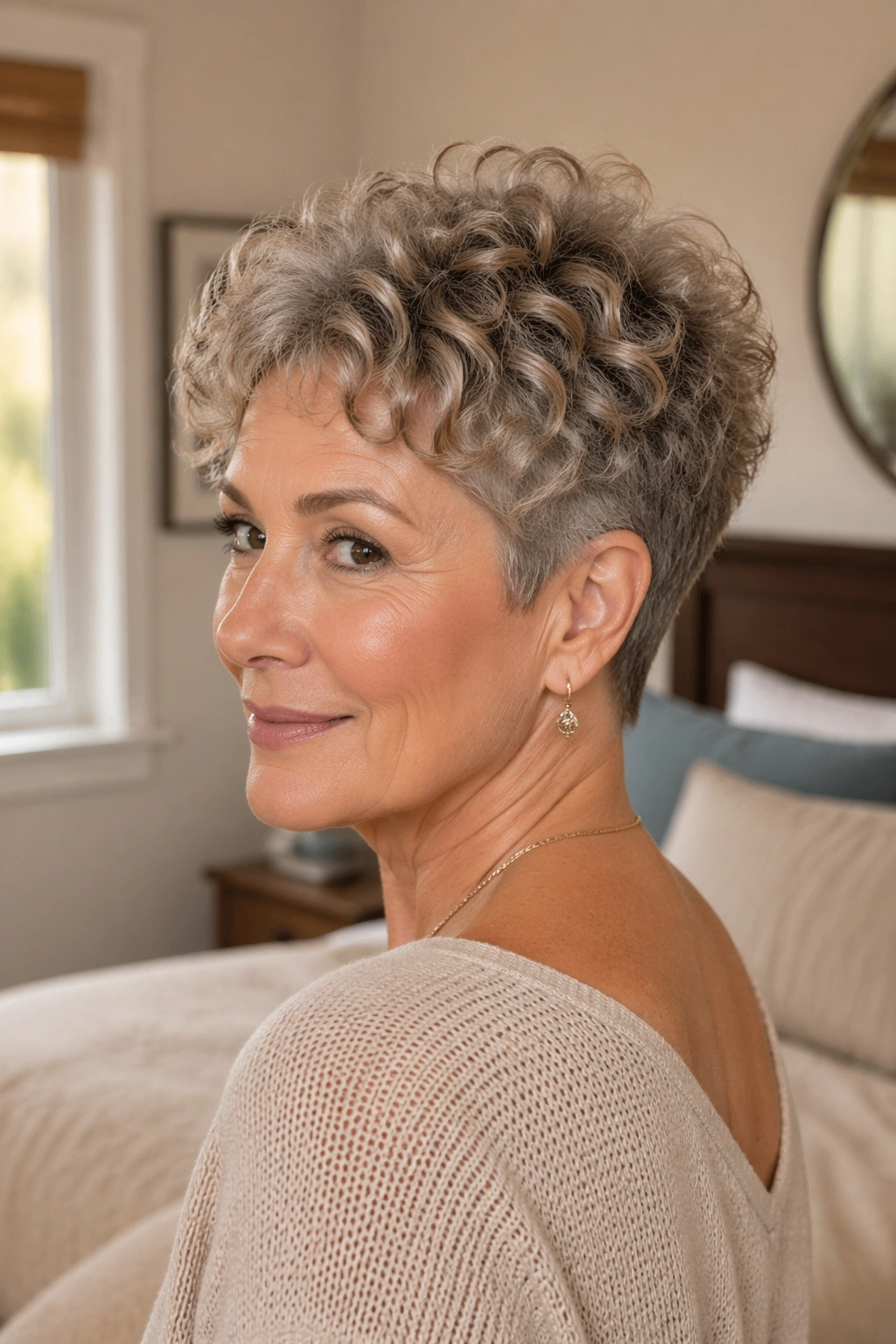
Four to six weeks. That is the trim window for this one if you want it to stay sharp. The cut itself is compact, with the nape trimmed close and the sides blended neatly, while the top stays full enough to show off your natural texture.
It is a good choice for thick curls that need containment more than encouragement. If the back of your hair tends to balloon out under a collar, this shape solves the problem without sacrificing curl character. The outline stays crisp, which is nice when you want your hair to look polished with almost no effort.
The clean nape also does a flattering thing for the neckline. It exposes just enough skin to make the haircut feel light, and it works especially well with open collars, crew necks, and statement earrings. Small details. Big difference.
This is not the most casual pixie on the list. It looks best when it is maintained, and that is the deal. If you let it grow out too far, the nape loses its shape first and the haircut starts to feel bulky. A trim schedule keeps the silhouette from turning round and heavy.
8. Soft Curly Pixie Shag for Loose Waves
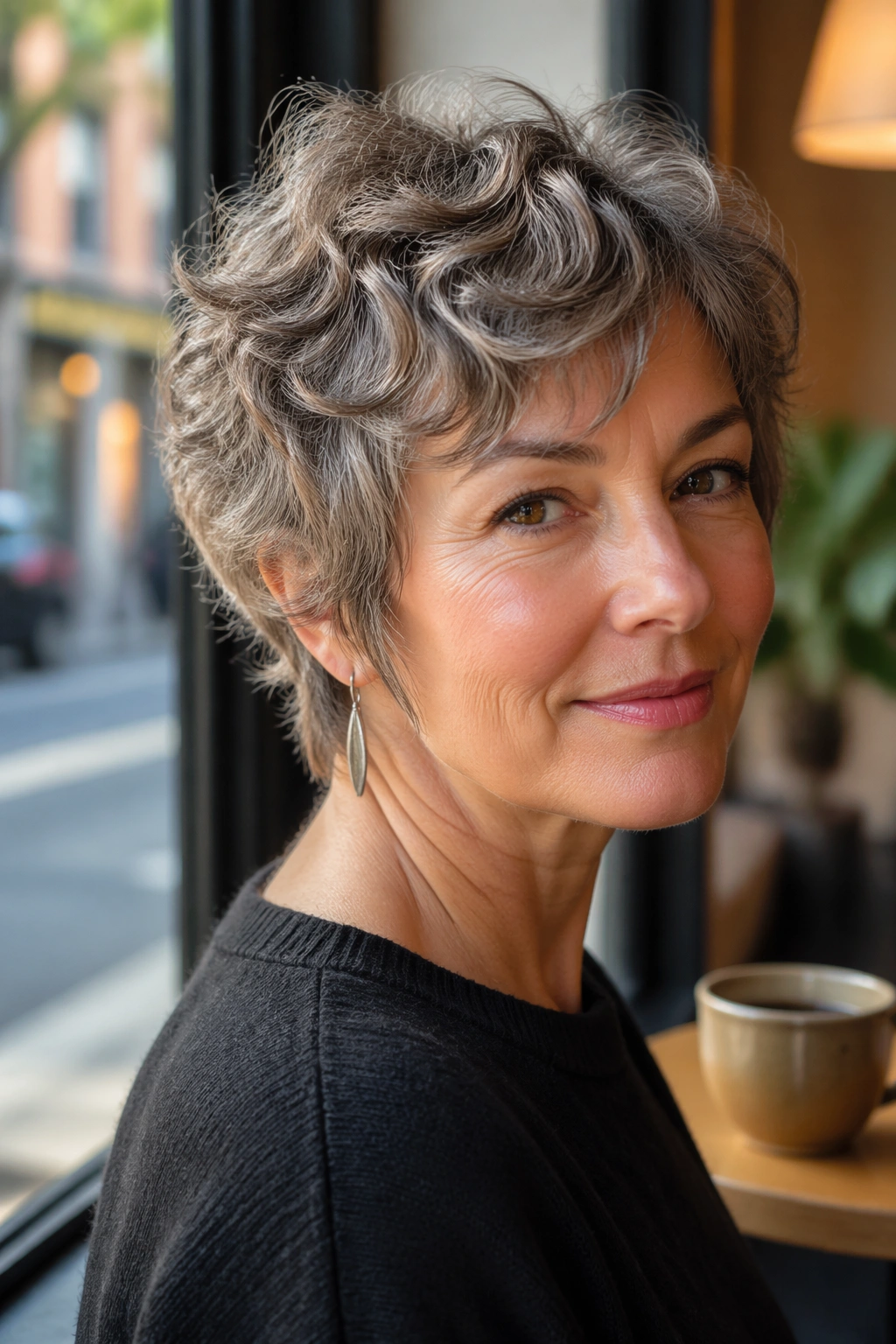
Loose curls and strong waves can get swallowed by a classic pixie if the cut is too blunt. A pixie shag solves that by keeping the top a little longer and adding feathered layers through the sides, so the texture has room to fall instead of snapping into a hard shape.
This is one of the easier short styles to live with if your hair is in that middle zone — not quite straight, not quite ringlets. The layers encourage movement, and the cut looks good with a bit of bend rather than a fully set curl pattern. That makes it forgiving on busy mornings.
A small caution: do not let this turn into a frizzy triangle. The layers need direction, not random shredding. I would ask for soft, controlled layers and a perimeter that still feels intentional. The difference shows up when the hair dries. One version looks airy. The other looks unplanned.
A texture mist or lightweight mousse usually works better than a heavy cream here. You want separation at the ends and some lift at the crown, not a weighted-down curtain. If your waves are fine, even a little too much product will flatten the whole thing by lunch.
9. Curly Pixie with Curtain-Bang Energy
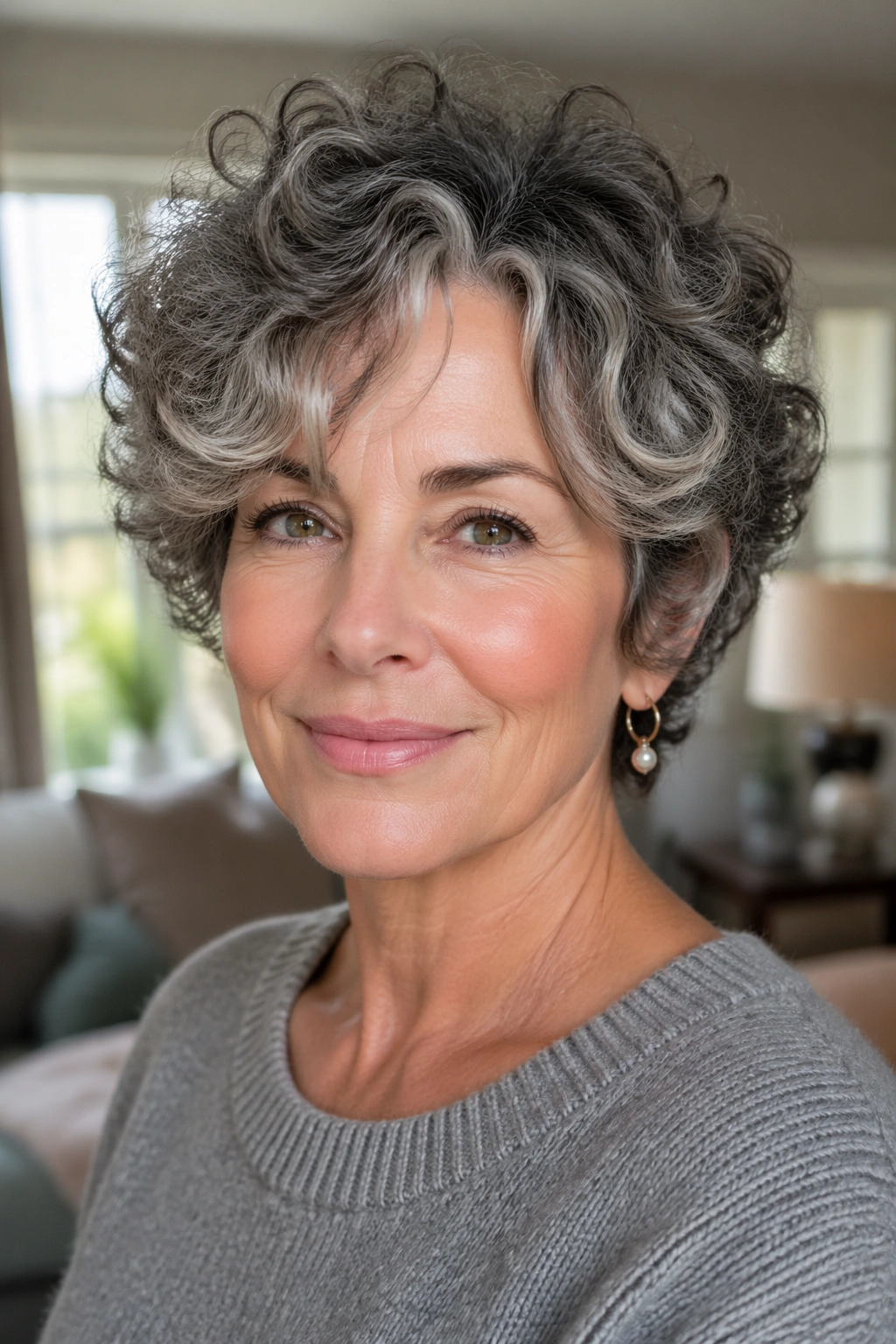
Fringe can change everything. A curly pixie with curtain-bang energy uses a longer front section that splits softly in the middle or just off-center, then falls away from the face in two light pieces. It is flattering in a way that feels easy, not fussy.
This shape is especially good if you wear glasses or feel like full bangs make your forehead disappear. The front stays open, but there is still enough hair to soften the upper face. That balance matters more than people think. Too little fringe and the style can feel exposed. Too much and it gets heavy fast.
The Styling Move That Makes It Work
Work a dime-sized amount of curl cream through the front sections only. Then twist each side once with your fingers and let them dry away from the face. A diffuser helps, but even air-drying can work if you clip the front slightly out to the sides while it sets.
The key is to keep the bangs soft at the root. Flat roots make curtain bangs look like curtains. Nobody wants that. A tiny lift at the base, then a loose curve through the ends, gives the whole cut a gentler frame.
10. Salt-and-Pepper Textured Pixie with Airy Ends
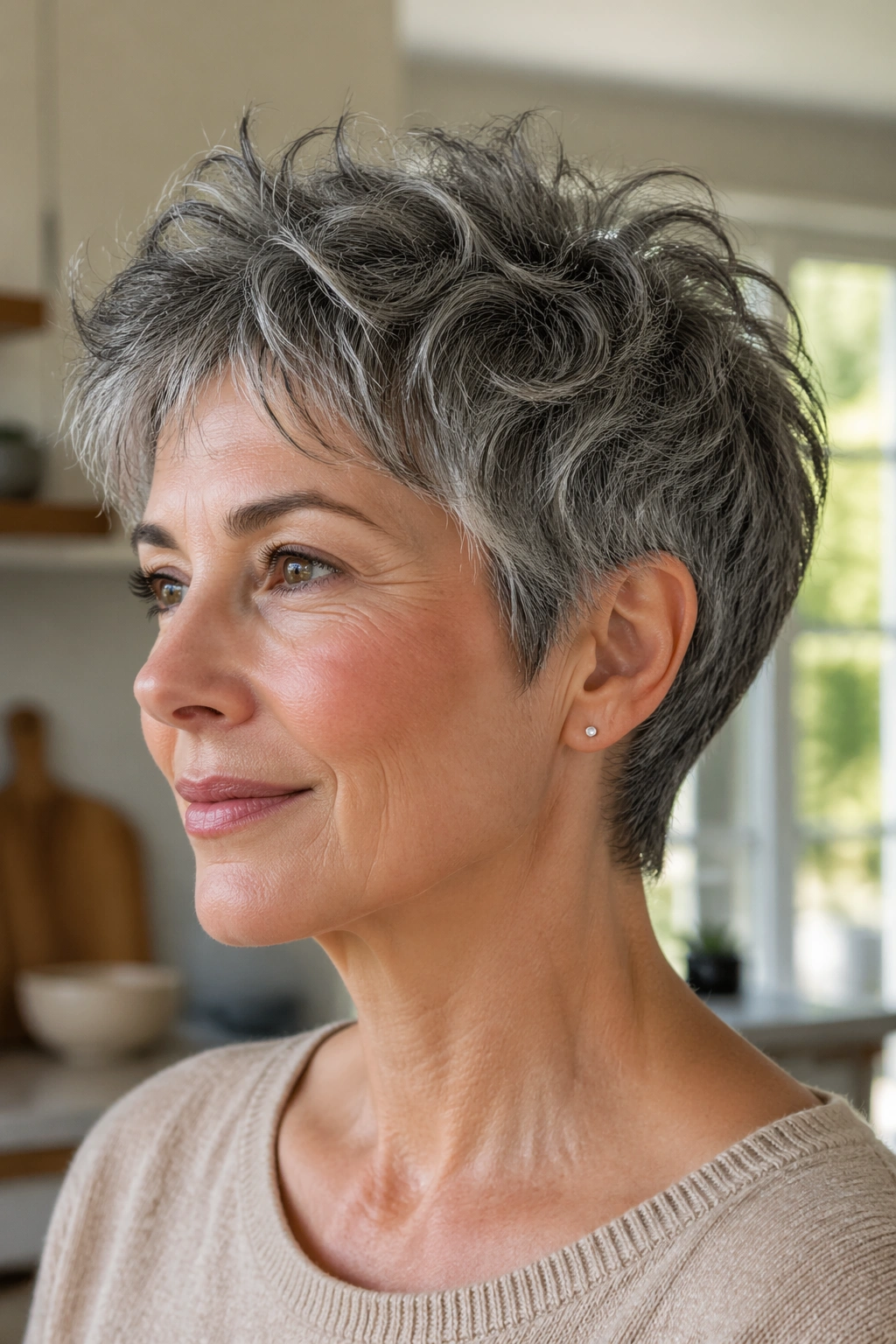
Salt-and-pepper hair can look heavy if the cut is too blunt. It can also look flat if the styling product is too rich. A textured pixie with airy ends solves both problems by giving the color room to show and the curls room to separate.
Mixed silver and dark strands are a gift here. The contrast catches every bend in the hair, so the texture reads more clearly than it would in a single flat color. That is one reason this style looks so good in natural light. The shading does half the styling for you.
Keep the ends light. Really light. Ask for soft perimeter detailing and avoid thick layers that bunch at the bottom of the cut. The whole point is to let the lighter strands around the face sit on top of the darker base, which makes the haircut feel dimensional without trying too hard.
A small amount of mousse or volumizing foam at the roots is enough for most people. If the hair is coarse, use a pea-sized dab of cream on the ends only. More than that can turn the texture sticky, and then the airy effect disappears.
11. Deep Side-Part Curly Pixie for a Dressier Look
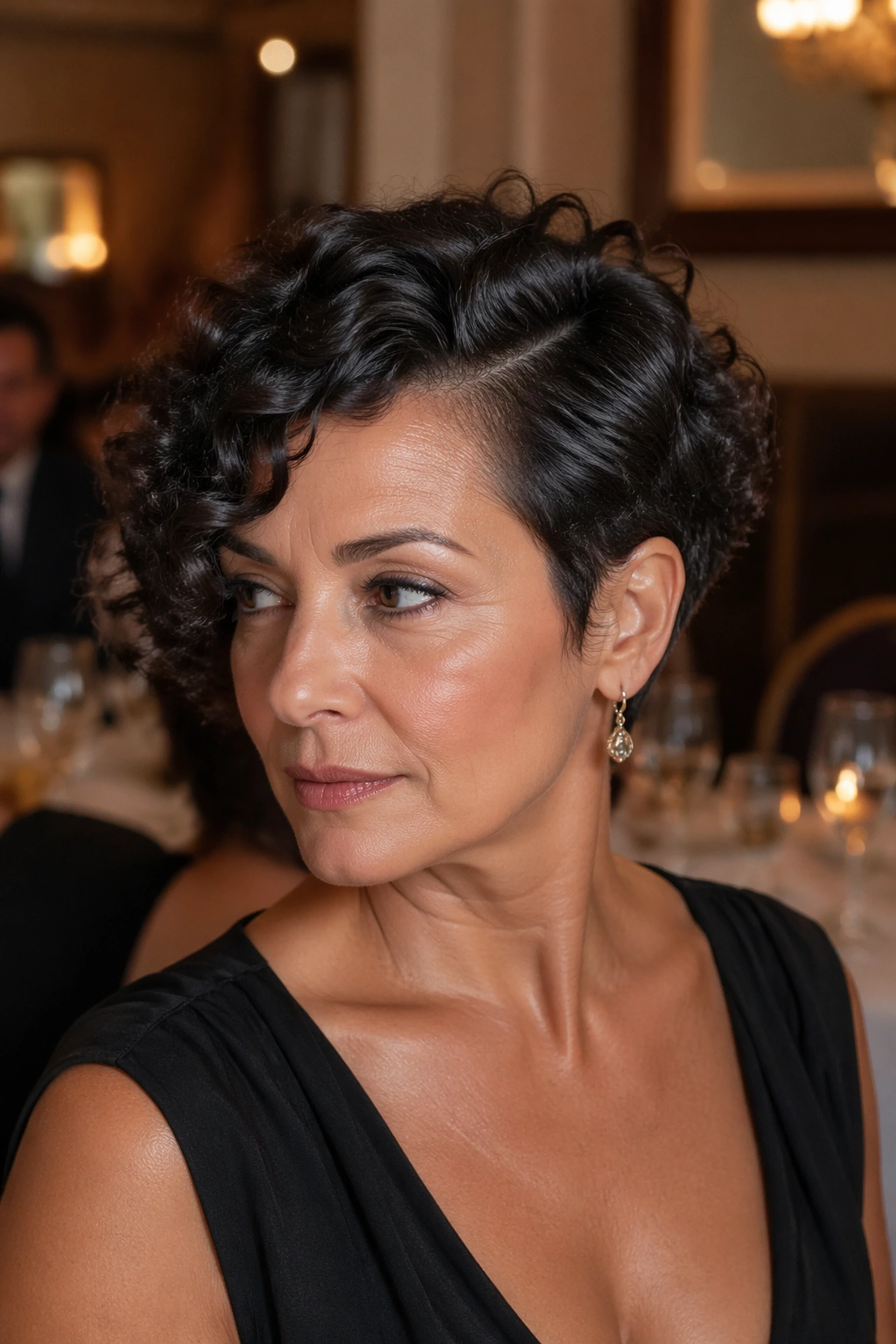
Need a pixie that can look polished without a blowout? The deep side-part version is one of the easiest ways to get there. A strong side part creates height on one side, smooths the front, and gives the curl pattern a more sculpted shape.
This is the cut I would pick for a dinner, a wedding, or any day when you want your hair to look considered. The structure does the heavy lifting. One side can be tucked behind the ear, which is a small move but a useful one — it sharpens the jaw and shows off a necklace or earring in a way that feels pulled together.
The trick is to set the part while the hair is still damp. Use a comb, not your fingers, if you want the line to stay clear. Then add a little gel or foam at the root on the fuller side and let the curls dry with direction. Once the hair is dry, break up any hard cast with a drop of oil on your palms.
This style can look too polished if every curl is forced into place, so leave a few front pieces a little loose. That tiny bit of softness keeps it from feeling stiff.
12. Curly Pixie Cut with a Soft Undercut
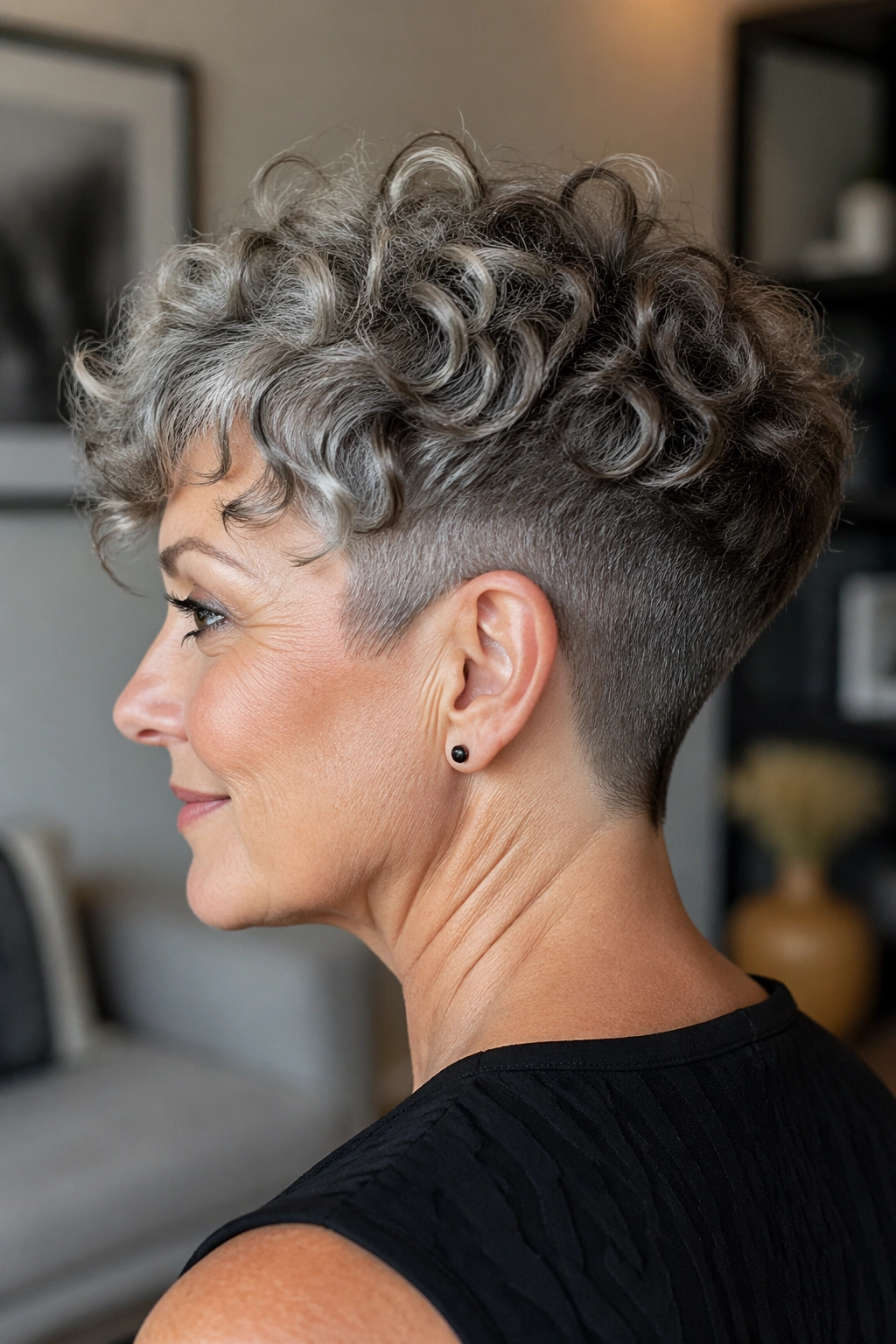
An undercut does not have to look punk. When it is softened for curly hair, it becomes one of the smartest ways to handle thickness, because it removes bulk where the hair piles up and keeps the shape from expanding outward like a mushroom.
This cut is especially useful if your curls are dense at the sides or back of the head. The stylist can clip the lower section shorter while leaving the top fuller and more visible. That means the visible part of the style still looks feminine and soft, but the hidden part does some practical work.
How to Ask for Less Bulk
Tell the stylist you want the underside reduced, not shaved bare. That difference matters a lot. A softer undercut gives you control without creating a harsh edge that shows every time you tuck your hair behind your ear.
The top should still have enough length to curl, bend, and fall. If the top is cut too short, the undercut loses its point and the whole head can start to look boxy. I like this cut most on thick hair that frizzes in humidity or grows outward at the nape. It stays neater for longer, which is a nice thing to have on a cut this short.
13. Rounded Pixie for Fine Curls
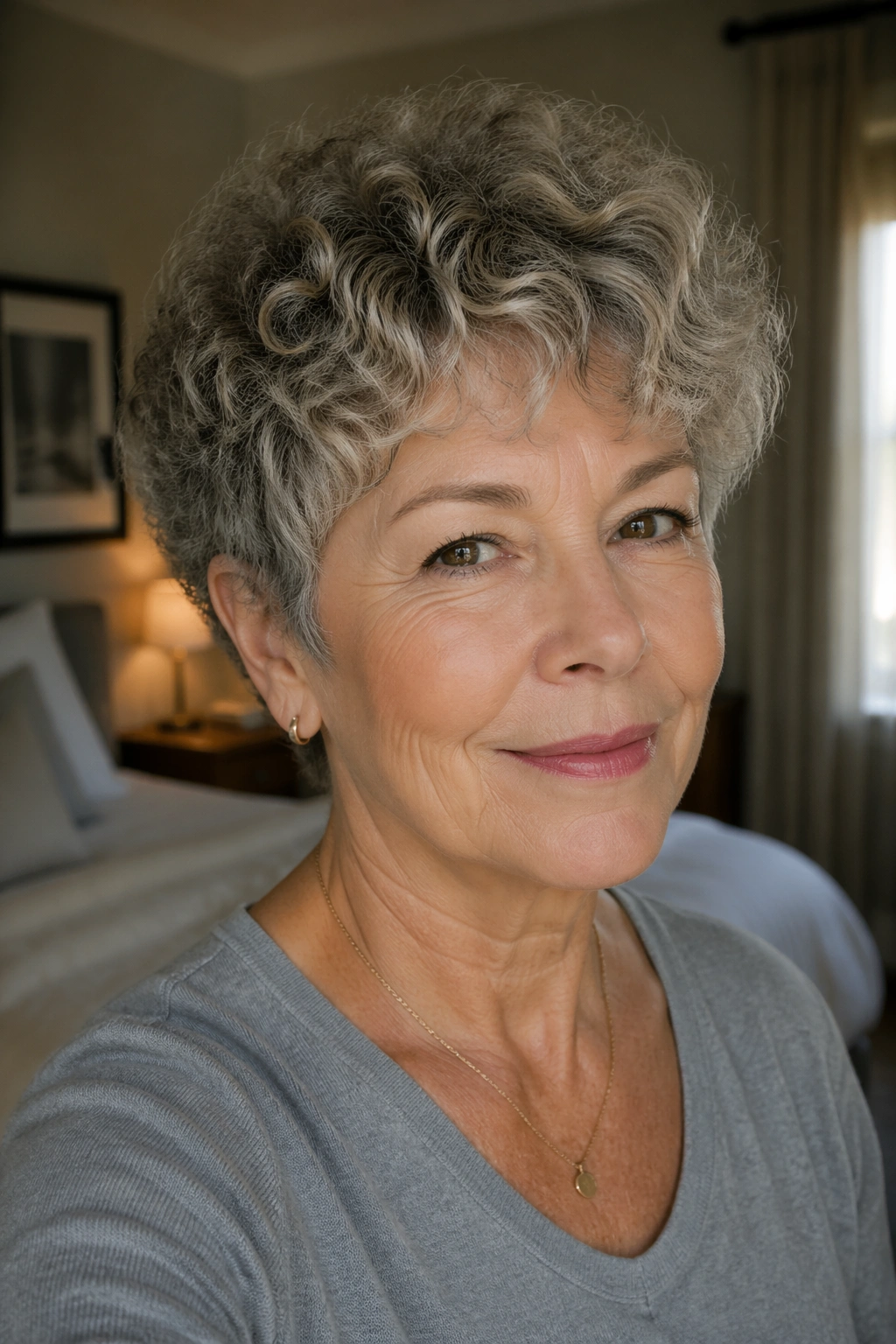
Fine curls need a different game. They do not want to be buried under too many layers, because those layers can make the hair look thinner than it is. A rounded pixie keeps the silhouette soft and balanced, with enough fullness around the sides to make the curls read as intentional.
The shape matters more than extra product here. If the cut is too sharp, fine curls can separate and show the scalp in places you do not want. A rounded outline keeps the visual density intact. It makes the hair look like a shape, not a collection of loose strands.
This style is good when you want movement without a lot of daily fuss. Use a light mousse, scrunch gently, and let the curls form their own little clumps. Too much brushing ruins the effect fast. Finger-combing is safer, and honestly better looking.
One thing I would avoid is aggressive thinning at the top. Fine curls already lose volume easily, and once that top section gets overcut, you spend weeks trying to fake fullness back in. Keep the layers soft and the outline round. That is the whole trick.
14. Wash-and-Go Curly Pixie with Minimal Layers
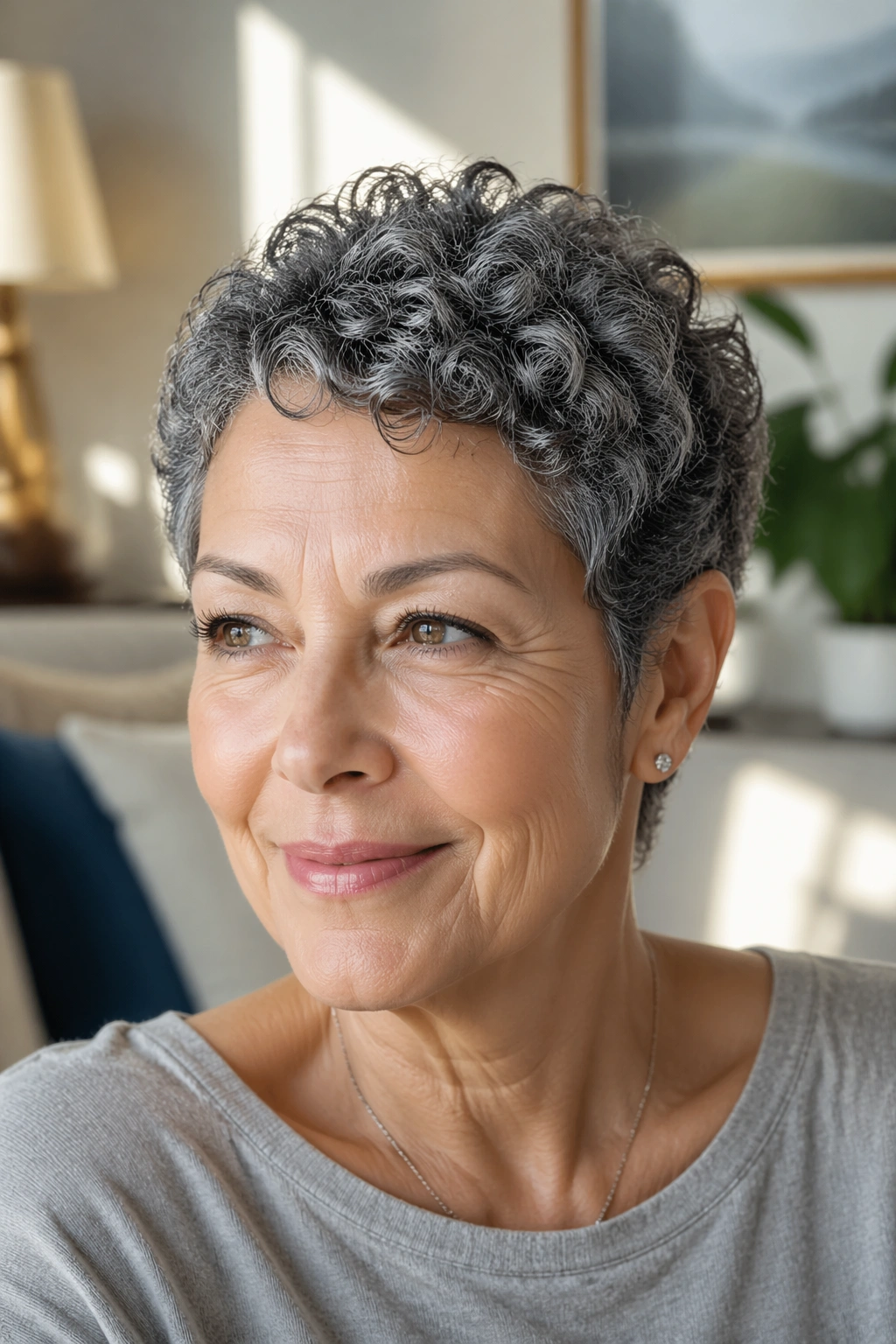
If you hate styling, this one matters. A wash-and-go curly pixie keeps the cut simple, with fewer interior layers and enough length on top for the curls to settle on their own. It is one of the most practical choices on the list because it respects how curls behave when you leave them alone.
The goal is not perfect shape. The goal is a shape that survives a normal morning. A leave-in conditioner, a small amount of gel, and a quick scrunch are usually enough. If you want to diffuse, do it for 5 to 8 minutes just to set the roots, then let the rest air-dry.
This cut works best when the curl pattern is fairly consistent from front to back. If one side is much looser than the other, minimal layers can expose that mismatch. But when the pattern is steady, the payoff is huge. Less shaping, less product, less time in front of the mirror.
It also tends to age well with the hair, which is useful. As the cut grows out, it does not fall apart as fast as a more sculpted pixie can. That means you can stretch the trim a little longer if needed, though the nape will still want attention before the top does.
15. Edgy Curly Pixie with a Defined Outline
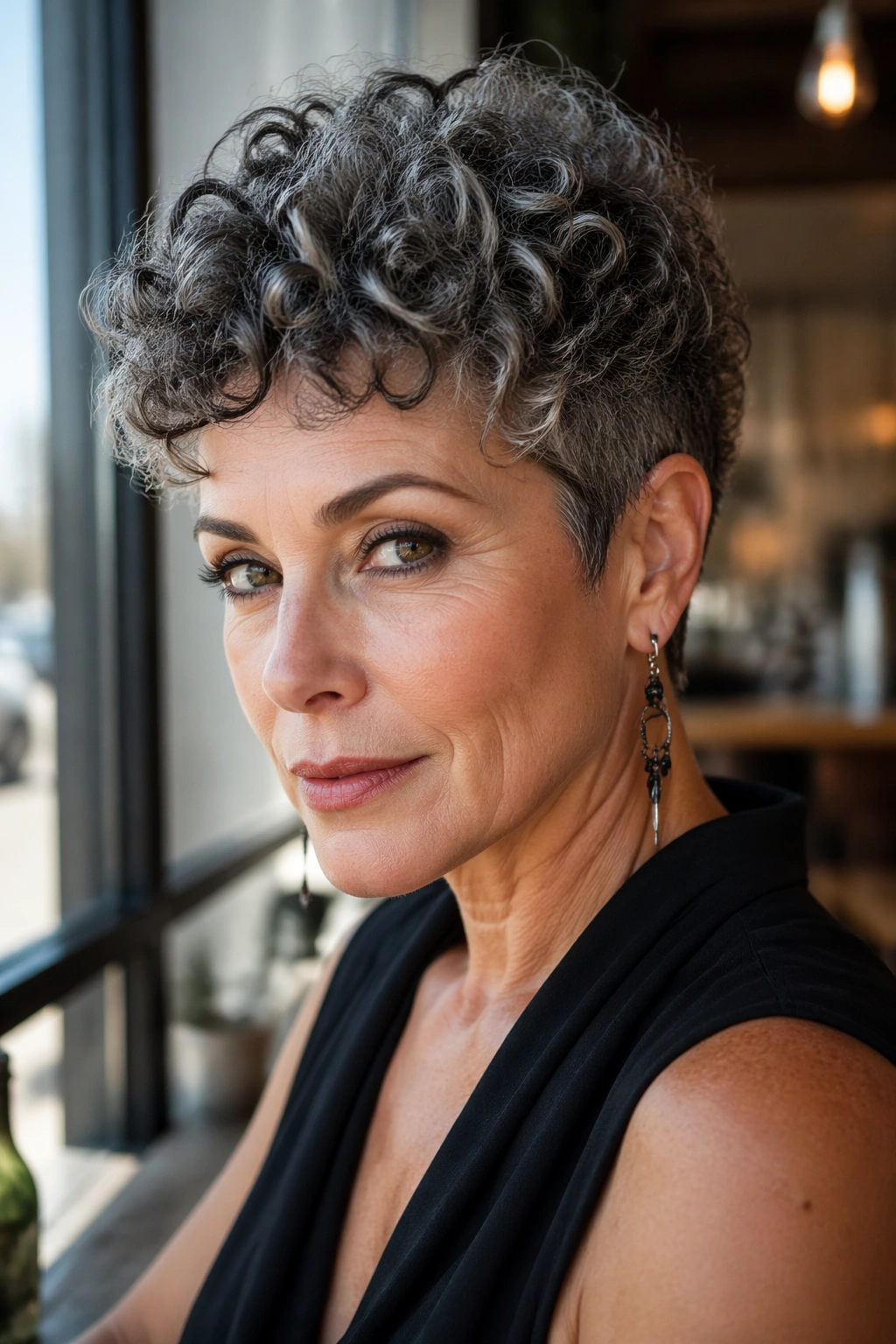
Clean lines can make curls look stronger, not harsher. An edgy curly pixie with a defined outline keeps the nape crisp, the temples neat, and the top textured enough to keep the personality in the cut. It is sharp, but not severe.
This style suits women who like a haircut with a bit of architecture. The silhouette matters here — you want to see the head shape, the curl pattern, and the neckline all working together. If the cut is too soft, it loses its edge. If it is too hard, it can feel dated. The sweet spot is somewhere between the two.
The finish should be deliberate. A light gel cast on the top gives the curls some hold and lets the outline stay visible as the day goes on. Once the hair is dry, break the cast gently with your hands. You will still keep the shape, but the curls will look touchable instead of stiff.
This is a good pick if you like to wear bold lipstick, sharp glasses, or statement jewelry. The haircut holds its own. No apologies needed.
Final Thoughts
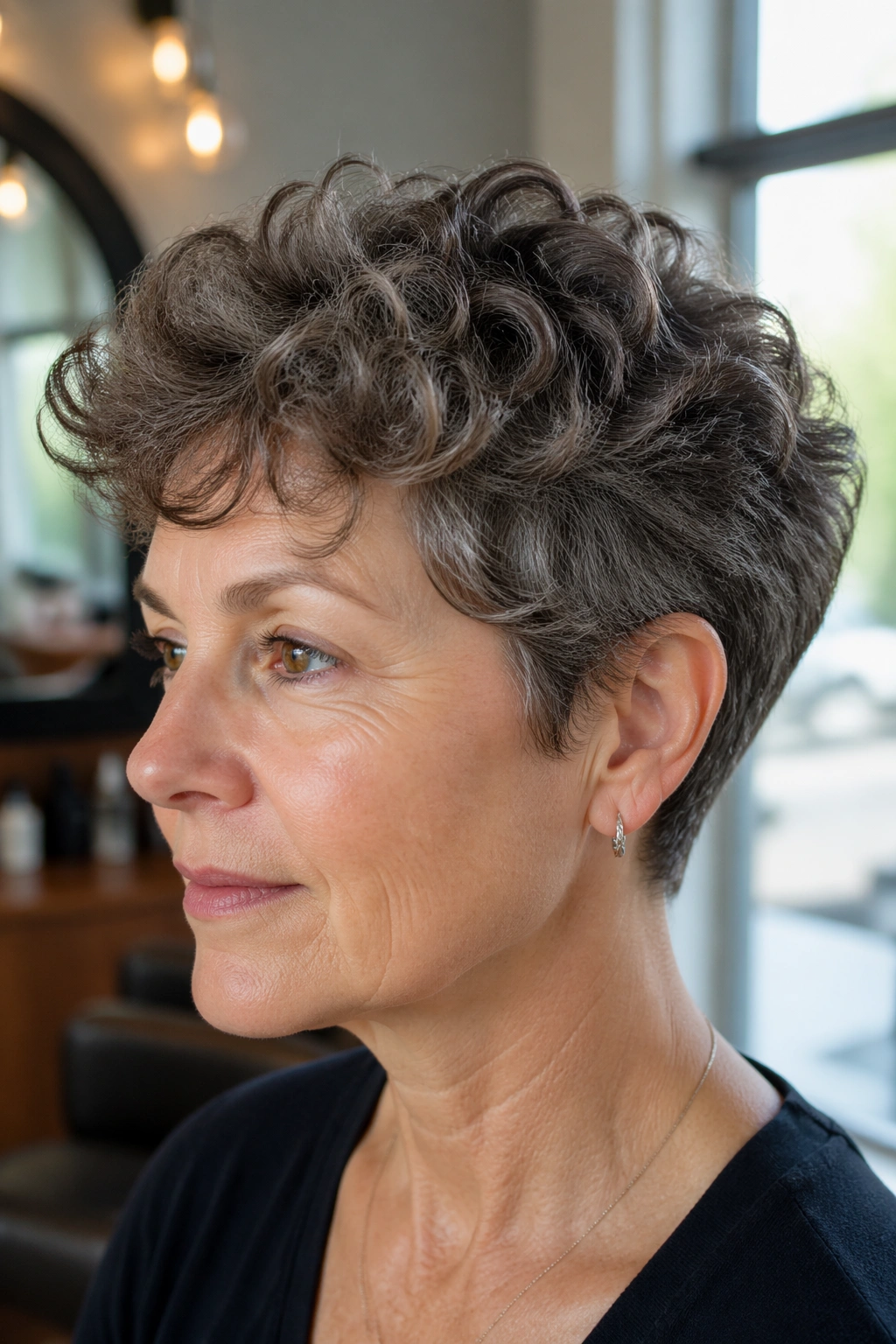
The smartest curly pixie cuts for women over 50 are the ones that respect the hair you actually have. Not the hair you had at 30. Not the hair in a salon photo with perfect lighting. The real thing, with its softer crown, its drier ends, its tighter patch behind one ear.
That is why shape matters more than trends here. A tapered nape, a longer front curl, a little asymmetry, a rounded outline — those details change how the whole cut sits on your face and how much work it asks from you in the morning.
If you are bringing one of these looks to a stylist, bring a photo of the shape and then talk about your curl pattern, your density, and how much time you are willing to spend styling. That conversation is worth more than any celebrity reference.
And if a cut needs half an hour of coaxing every day just to look decent, it is not a good pixie. It is a chore with good branding.
