



Brown and ombré box braids have a sneaky advantage: they look polished even when the styling is plain. The color does a lot of the heavy lifting. A deep root, a warm midtone, and a lighter end can make a braid style feel richer, softer, or more expensive-looking without adding extra fuss.
The thing people miss is that brown is not one shade. It can lean chocolate, chestnut, mocha, walnut, cinnamon, copper, caramel, or something smoky and cool. Push the fade only two shades lighter and the look stays subtle. Push it three or four shades and the braids start doing that flattering little thing where they show movement every time you turn your head.
That range is why brown and ombré box braids work so well. They can be quiet and sleek, or warm and glowy, or a bit more playful if you want loose curls, beads, or a shorter cut. The braid size matters. So does the parting. So does where the lightest color starts. A lot.
Some versions read soft from a distance. Others have a sharper, more styled feel. The good ones don’t look random. They look chosen.
1. Deep Chocolate Box Braids with Caramel Ends
Deep chocolate with caramel ends is the easiest brown ombré look to wear well. The dark base keeps the style grounded, while the caramel tips give you just enough contrast to notice the fade without turning the braids into a full blonde moment. That balance is doing a lot of work.
I like this version most on medium-length and waist-length braids, where the color shift has room to show. If the ends are too light and the braids are too short, the effect can feel busy. Keep the root color rich and let the caramel start lower, around the last third of the braid, and the whole style settles down.
The best part is how forgiving it is with everyday clothes. Black tees, denim jackets, cream sweaters, gold hoops — it all fits. There’s no need to dress around the hair. It already knows what it’s doing.
A small detail matters here: ask for caramel that stays warm, not yellow. Warm caramel looks expensive. Pale yellow can turn the whole braid flat.
2. Espresso Knotless Box Braids with a Soft Brown Fade
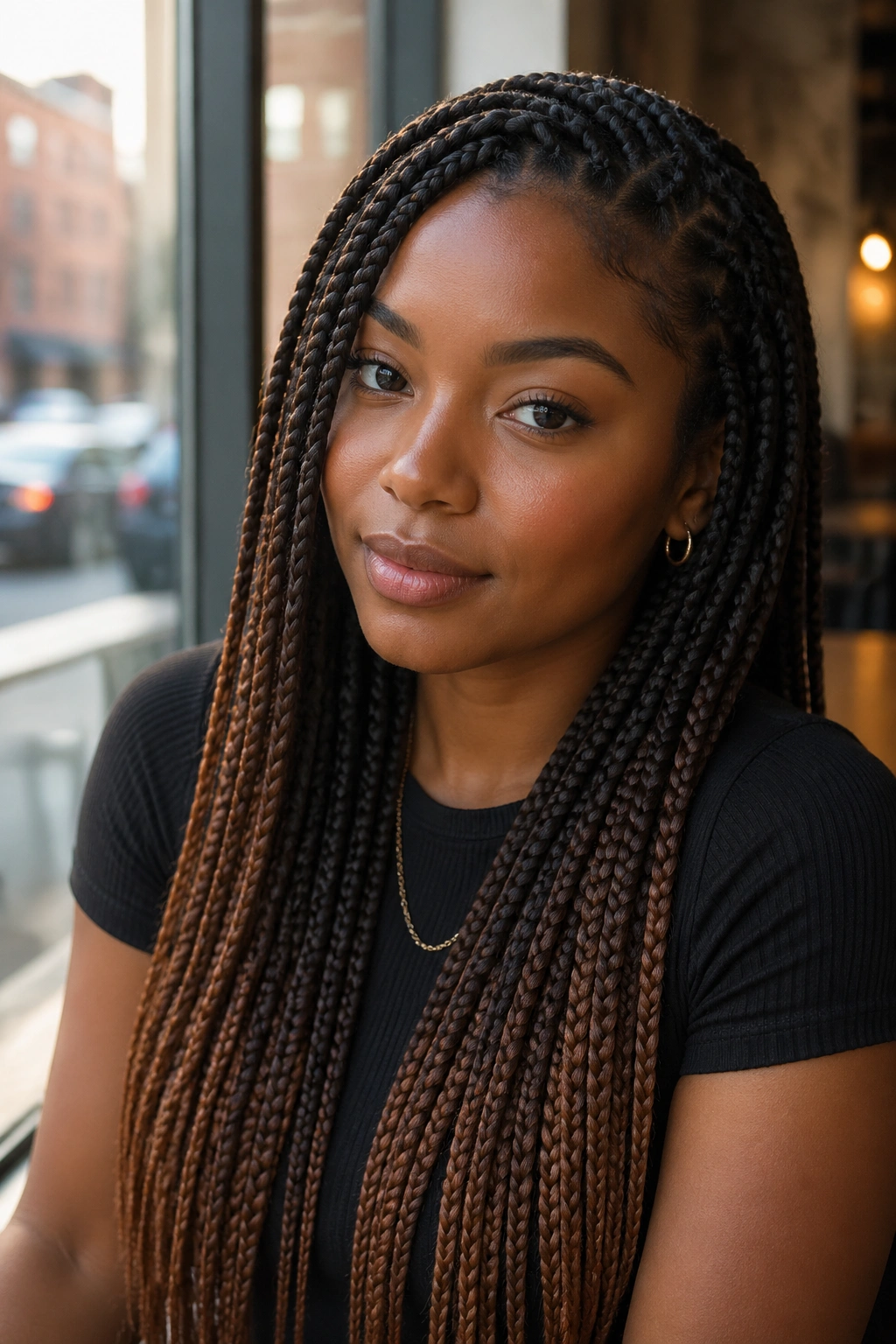
Why do some ombré braids look smooth and others look striped? Usually, it comes down to the transition point. Knotless braids help because the color can melt from your natural root shade into brown without that hard little bump at the scalp.
Why the Fade Looks Soft
Knotless box braids are the right home for a subtle brown fade because the start of each braid sits flatter. That means your eyes go to the color blend first, not the base of the braid. If you want a style that looks polished but not loud, this is the one I’d point to.
A good soft fade usually moves from near-black at the root to chestnut or espresso-brown through the middle, then a slightly lighter brown near the ends. You do not need a dramatic jump. A difference of two shades is enough to read clearly.
Who It Works Best For
- People who want less bulk at the scalp
- Anyone who likes a smoother grow-out
- Medium to long lengths
- Round, oval, and heart-shaped faces
- Wearers who keep their braids up a lot
The key detail: keep the fade gradual, not striped. If the color changes too quickly, the braid starts looking chopped up instead of blended.
3. Cinnamon Brown Box Braids with Tiny Loose Pieces
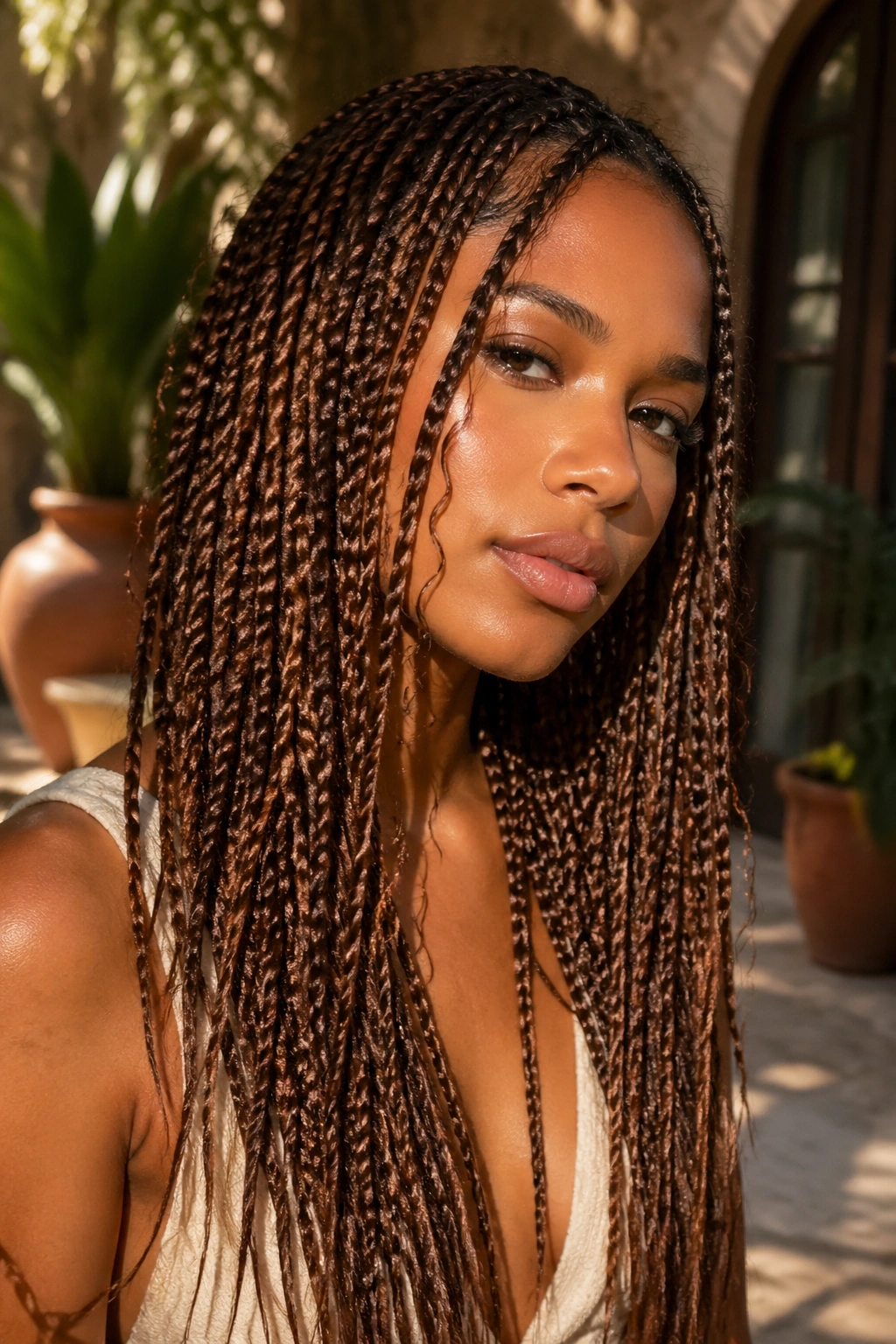
Cinnamon brown has a little warmth in it that plain brown never quite gives you. It reads richer in daylight and softer indoors, which is why I like it for boho-style box braids with a few loose curly pieces mixed in. The color and texture support each other instead of competing.
This is the style that looks best when the braids are medium-small. Big braids can swallow the color a bit. Smaller sections let the cinnamon shade show, and the loose pieces keep the style from feeling stiff or boxed in. If you like hair that moves when you walk, this one has that built in.
A lot of people try to make boho braids look “messy” on purpose and end up with something frizzy instead. Better to keep the braid bodies neat and let only a few face-framing curls wander. That contrast is the whole point.
Skip overly bright cuffs here. Cinnamon already has personality. A handful of gold rings is enough.
4. Mocha Bob Box Braids with Honey Ombré
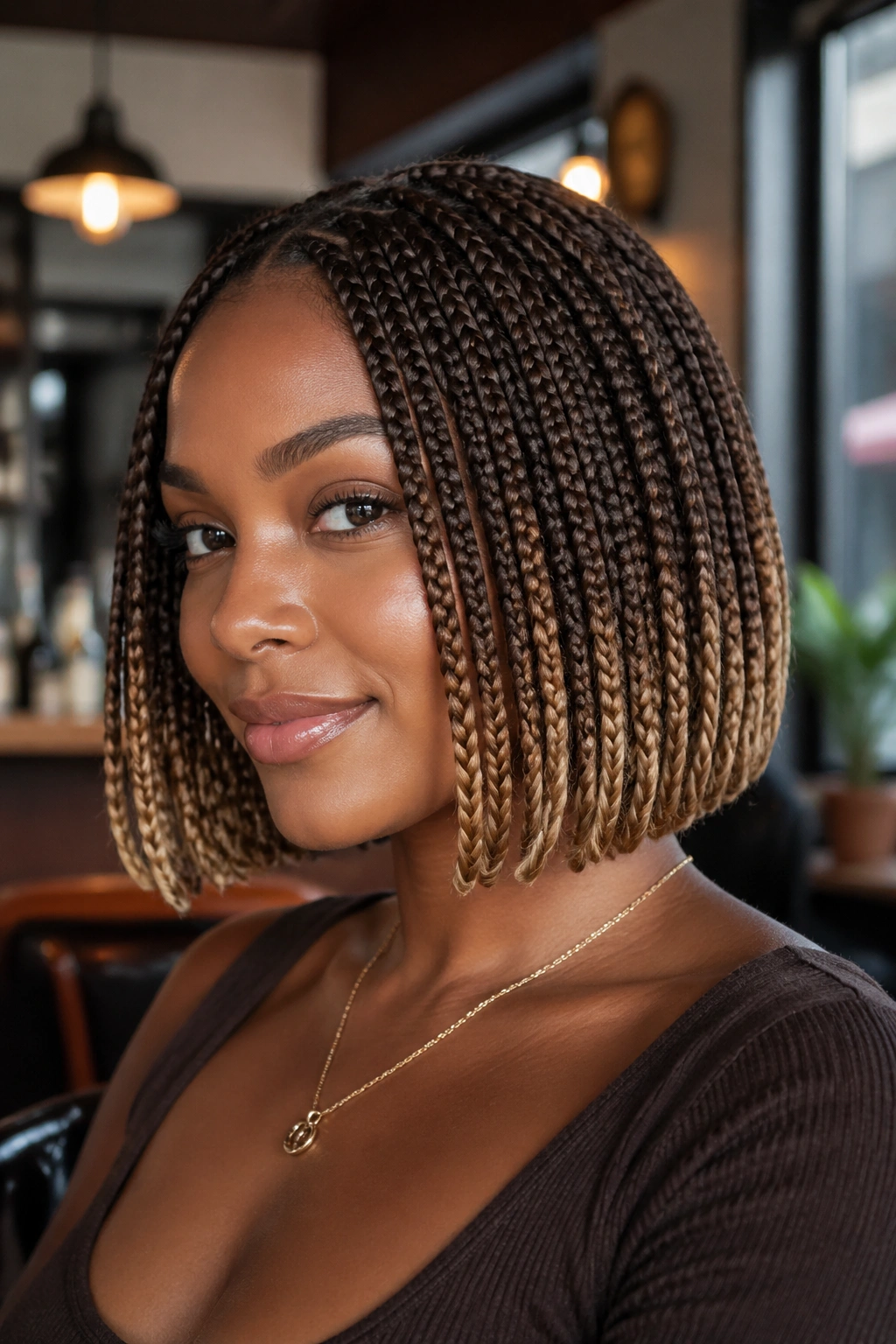
Mocha and honey together are such a smart pairing on a bob. The short length makes the color shift easy to see, and the honey ends keep the style from disappearing into a single dark block. On longer braids, honey can look louder. On a bob, it feels clean and deliberate.
The shape matters as much as the shade. A blunt bob sits around the jaw or just below it, so the lighter ends keep drawing the eye upward. That makes the face look more open. It also means the braid ends hit in a neat line instead of scattering all over your shoulders.
If you’re nervous about light brown ends, a bob is the gentlest place to start. The color change is visible, but the overall look stays controlled. No drama. No heavy styling pressure.
I’d keep the parts crisp and the braid size medium. Tiny braids can make a bob feel fussy. Huge braids can make the cut feel boxy. Somewhere in the middle is where this one gets good.
5. Chestnut Box Braids with a Curved Side Part
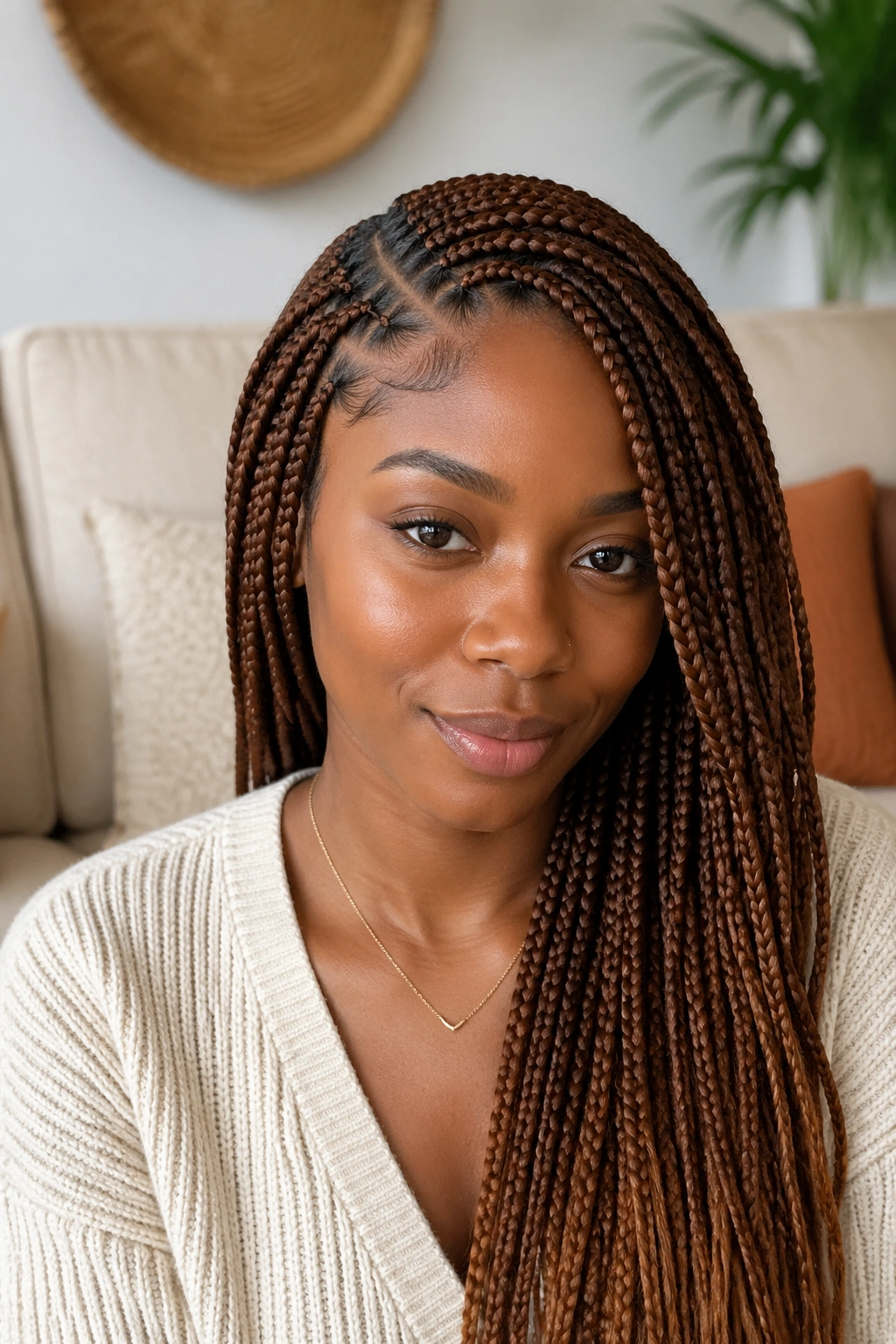
Chestnut brown has a red-brown warmth that feels flattering without shouting for attention. Add a curved side part, and the style suddenly has movement before you even touch it. That part line is doing more than people give it credit for. It changes where the eye starts.
The Parting Rule
A curved side part works best when it starts a little off-center and sweeps gently back instead of cutting straight across the scalp. Straight lines can feel severe with chestnut tones. A soft curve keeps the look easy and wearable.
What Makes It Different
- The parting adds shape at the crown
- Chestnut color warms the face without going copper
- Medium-to-large braids keep the style from looking too busy
- A curved front works well with side-swept edges or soft baby hairs
There’s a quiet trick here: the side part makes the lighter parts of the braid show from the front, which gives chestnut more depth. It’s a small thing. It changes everything.
If you wear earrings a lot, this is one of the easier braid styles to pair with them. The hair moves to one side and leaves room for the face.
6. Auburn-Brown Box Braids with Copper Ends
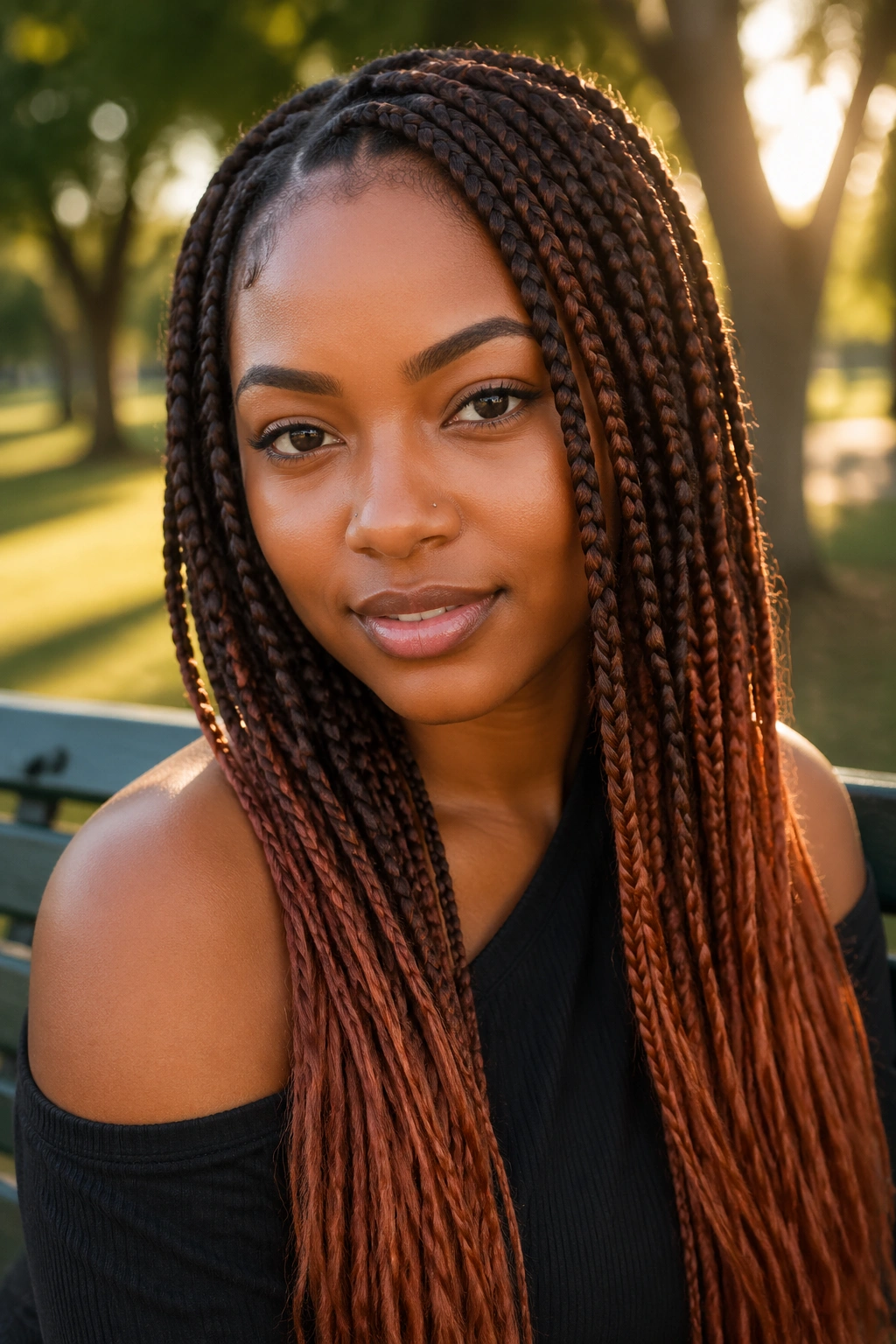
Auburn-brown is for people who want warmth without going full red. It has that little rust note in it, and when you fade it into copper ends, the whole style gets more alive. Not louder. Just less flat. That’s a useful difference.
This version looks especially good in braid styles that have clean sectioning, because the color itself already has personality. Triangle parts, square parts, or neat feed-in bases all work. I’d avoid too much extra decoration. The copper tips are already the focal point.
The nice thing about auburn tones is that they still play well with brown clothing, black clothing, and denim. You do not have to rethink your wardrobe. The hair gives the outfit a warmer edge, and that’s usually enough.
If your skin has golden or olive undertones, this color combo can look especially rich. But it also works on cooler complexions if the auburn stays deep rather than orange. Orange is where things can go sideways fast.
7. Golden Brown Box Braids with Face-Framing Pieces
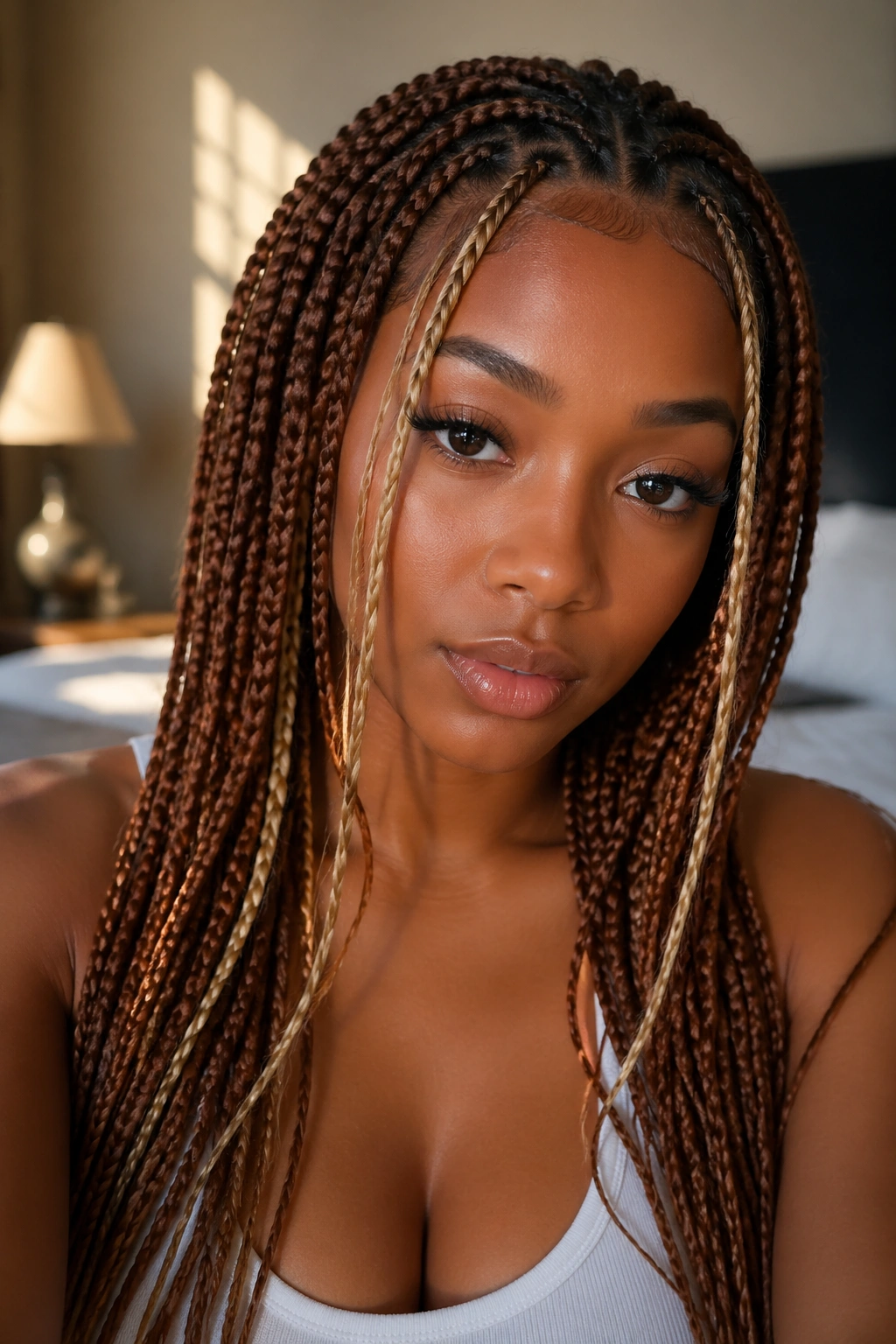
Golden brown box braids are for people who want light in the hair without going blonde. The shade sits between honey and caramel, which gives you warmth at the front and a softer finish through the length. On face-framing pieces, that color shift gets noticed fast.
The trick is not to overdo the light sections. Two to four slimmer braids near the face are enough. If every braid around the hairline is light, the style starts looking patchy. When the front pieces are just a little brighter than the rest, the whole look feels intentional.
I also like this style for people who wear minimal makeup. The warmer pieces around the face do a lot on their own. A clean brow and gloss are enough. Maybe earrings. That’s about it.
What to Ask For
- Roots one to two shades darker than the frame pieces
- Face-framing braids no wider than a pencil, if you want the color to feel light
- Medium-to-long length for better contrast
- A satin scarf at night, because golden tones show frizz sooner than darker shades
8. Brown Goddess Box Braids with Loose Curls at the Ends
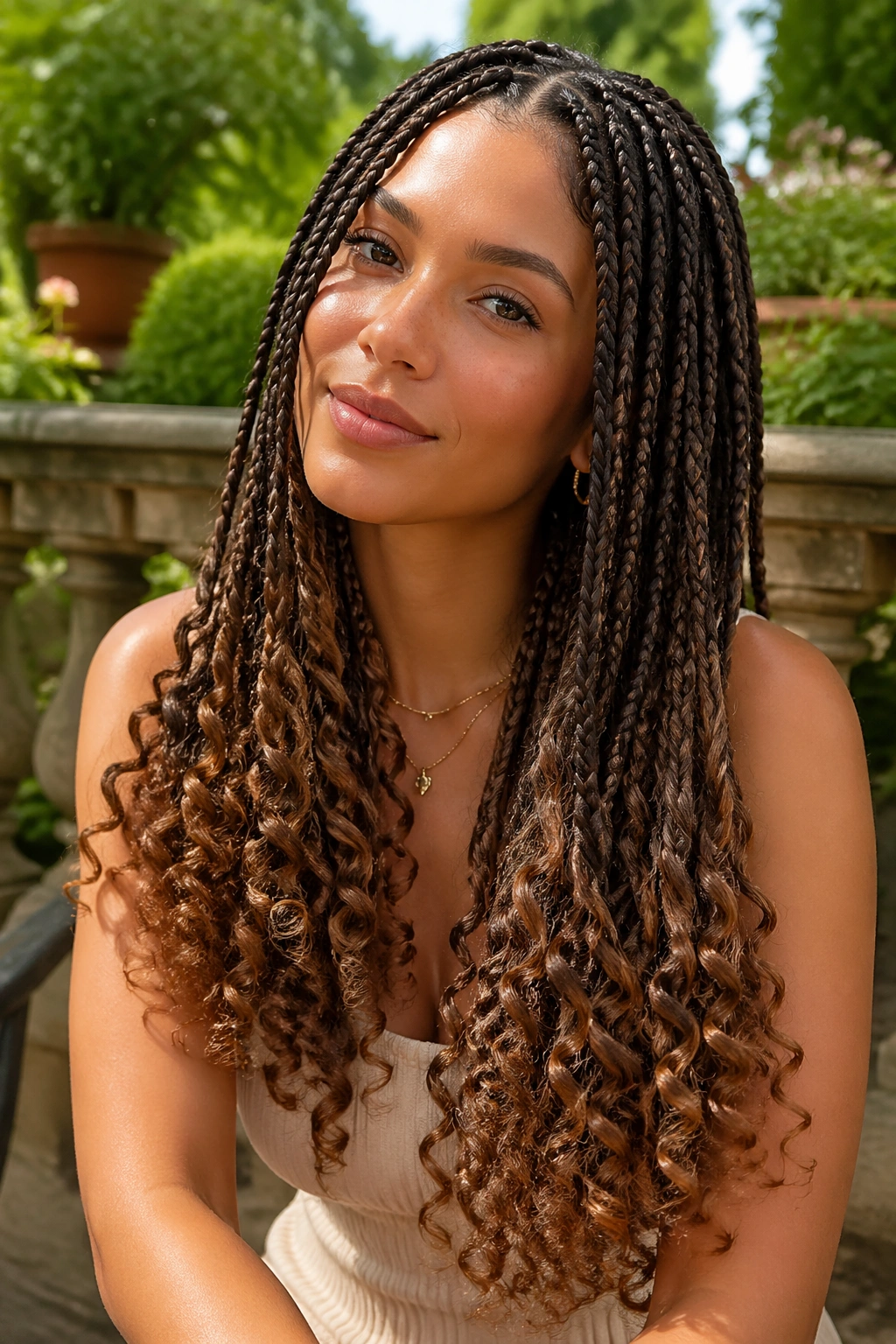
Why does a little curl at the end change the whole mood? Because straight braid ends can feel strict, and loose curls soften that line immediately. Brown goddess box braids use that trick well, especially when the base shade is mocha or chocolate and the curls carry a lighter brown.
The curls don’t need to be huge. In fact, huge curls can make the style look overdone. A few soft spirals at the ends, kept around two to four inches long, are enough to break up the braid and add movement. The effect is prettier than people expect, mostly because it stops the hair from reading as one solid block.
How to Wear It
Wear these down on the first day, then pull half the braid section back once the curls settle. That lets the ends show without getting in your mouth all day. If you want the curls to last, wrap them loosely at night and avoid crushing them under a tight bonnet.
A brown goddess braid style feels a bit softer than black goddess braids, and that softness matters. The color makes the curl detail easier to see. It gives the whole look a lived-in feel.
9. Toffee Brown Box Braids in a Half-Up High Pony
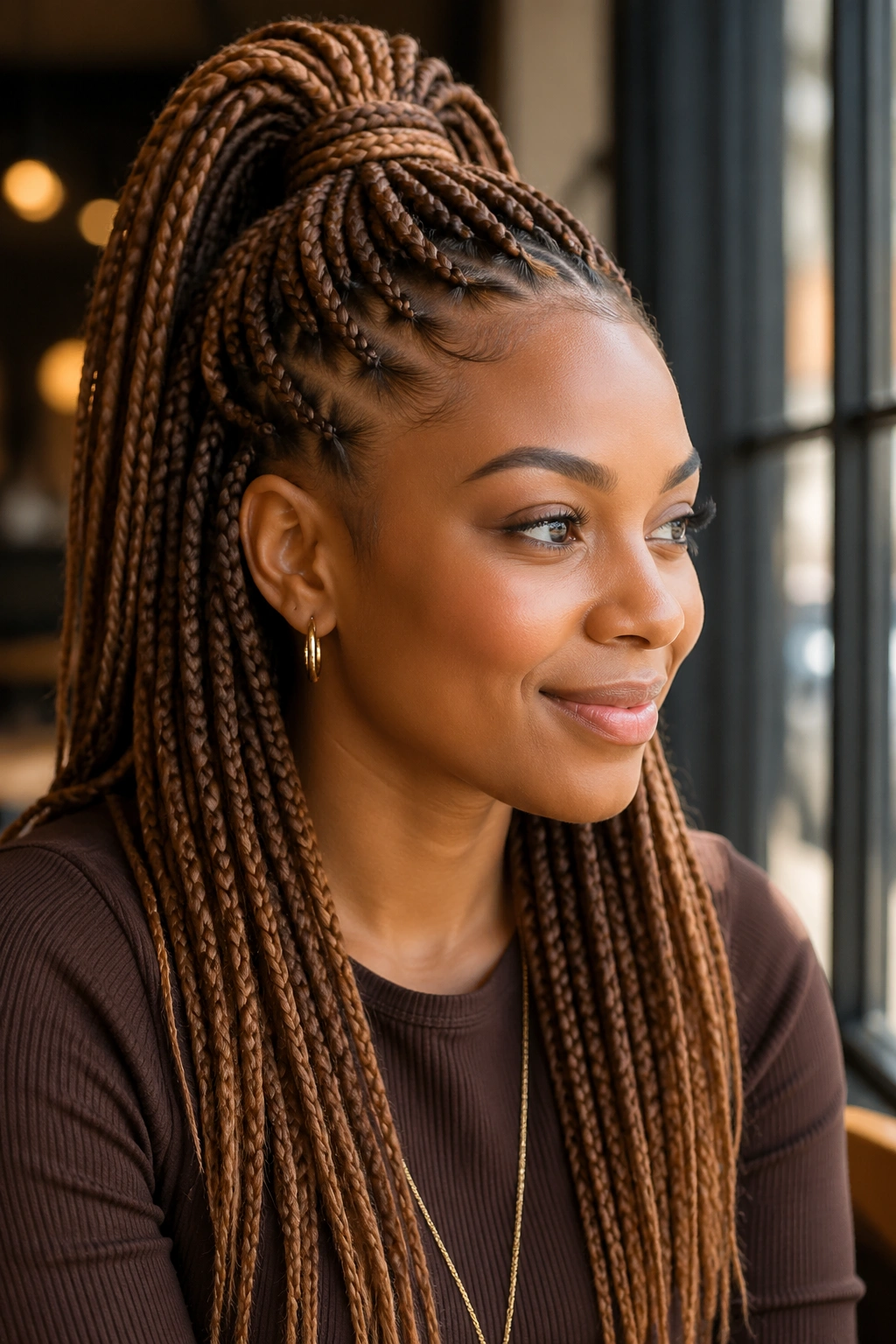
Toffee brown box braids in a half-up high pony are what I’d suggest when someone wants height without the full commitment of an all-up style. The lighter brown shade pulls the eye upward, and the ponytail shape gives the face a lift. Clean, quick, done.
This style works best with medium-length braids, maybe shoulder to mid-back. Too short and the pony feels stubby. Too long and the style can get heavy at the crown. The color helps here because toffee reads warm from every angle, so even the tied-up section still looks finished.
Use a soft wrap instead of a tight rubber band at the base if you can. Tight elastics tug the roots and make the front feel sore by the end of the day. A wrapped braid, or even a hidden satin tie, is kinder.
It’s one of those looks that can go to brunch, a wedding, or the grocery store without changing much. That’s a useful braid style. No drama required.
10. Walnut Box Braids with Triangle Parts
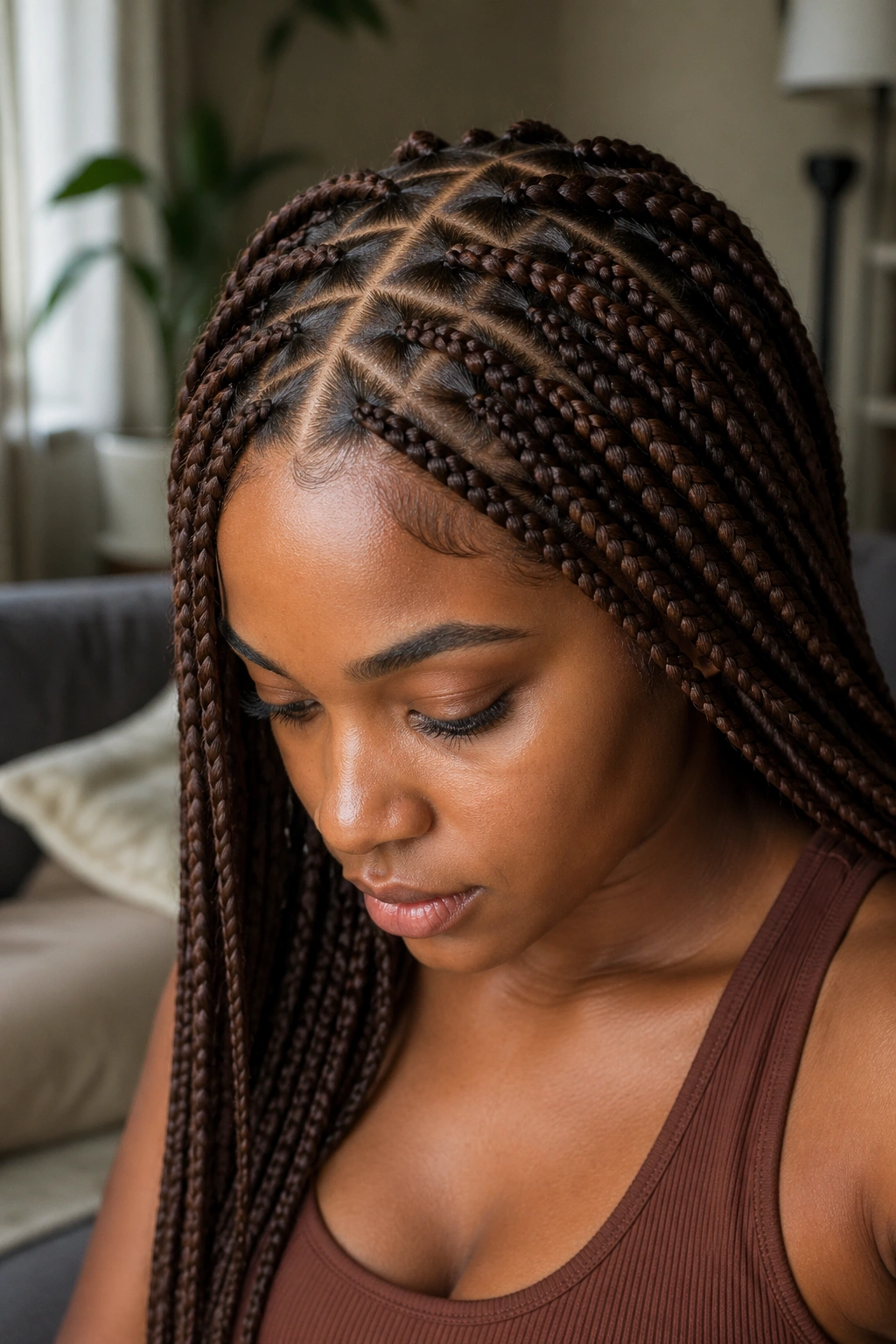
Walnut brown has a deeper, earthier look than caramel or honey, and triangle parts give it a little structure. That combination is underrated. The triangles make the scalp pattern more interesting, while the walnut shade keeps the style calm instead of flashy.
A client who wants a neat but not severe braid set usually does well with this. Square parts are fine, but triangle parts add a subtle geometric feel that looks better with darker brown tones. The edges of the parting catch the eye, then the braid color takes over.
What to Watch For
- Keep the triangles medium-sized, not tiny, or the scalp can look busy
- Use walnut brown if you want depth without red undertones
- Pair with medium braids for the best balance
- Keep part lines clean, because triangle parts show mistakes fast
This is a good pick if you wear a lot of neutral clothes. Tan, cream, olive, black — walnut braids slide into all of that without asking for attention. The style feels finished even when you barely do anything else.
11. Dark Brown Box Braids with a Sharp Center Part
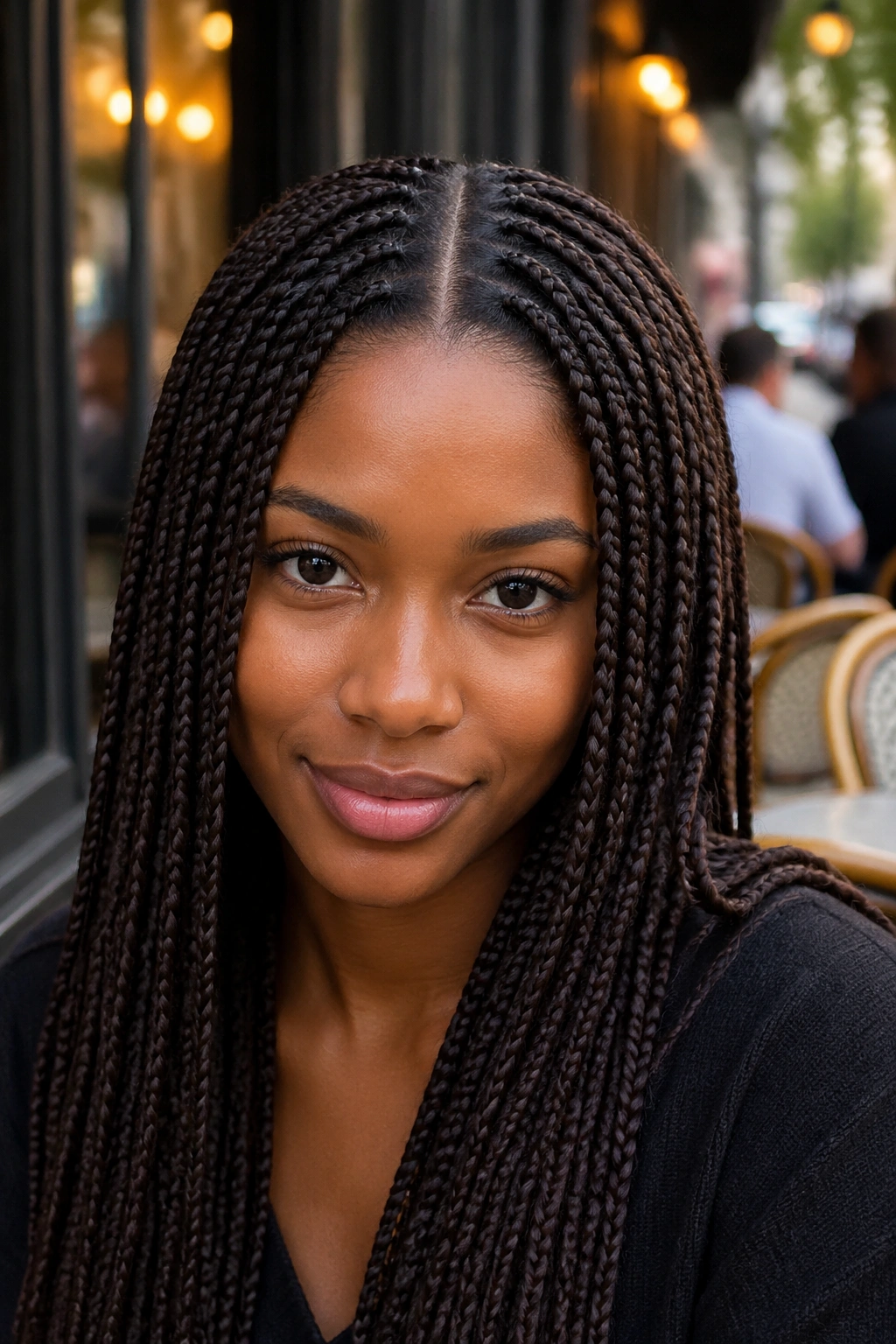
Dark brown box braids with a center part have a very clean look. Not cold. Clean. The color stays close to natural hair, which makes the middle part stand out more, and that line down the scalp gives the whole style a crisp shape.
Why the Center Part Works
A center part gives dark brown braids symmetry, and symmetry is part of why this style feels so neat. The eye goes straight down the face, then lands on the braid lengths. If the parts are tidy and the braids are consistent, the result looks sharp in a way that does not need extra decoration.
How to Keep It Clean
- Use a rat-tail comb for a straight part line
- Keep product light at the scalp so the part does not look greasy
- Braid in medium sections for even fall
- Tuck the front neatly behind the ears if you want the line to stay visible
This style is good when you want your braids to look grown-up and low-effort at the same time. A center part can be a little unforgiving if your sections are uneven, but when it’s right, it’s hard to beat.
12. Mushroom Brown Ombré Box Braids
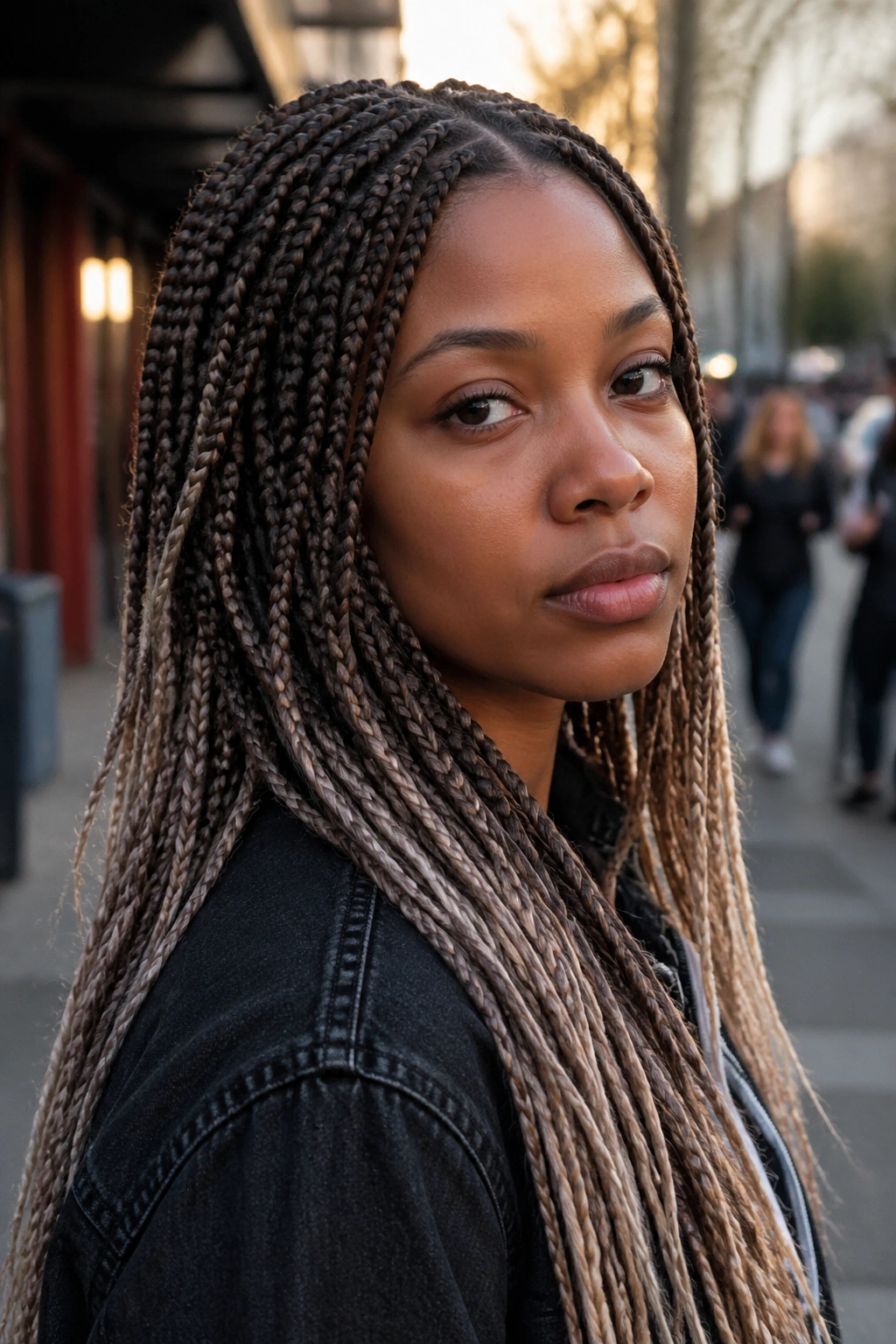
Mushroom brown is one of those shades people overlook until they see it in person. It sits in a cooler brown family, with a muted, smoky feel that leans taupe instead of red. On ombré box braids, that softness is the point. The fade looks understated and a little unusual in a good way.
I like this for anyone who finds warm browns too orange on them. Mushroom brown is calmer. It blends into beige, gray, cream, and soft black clothing without fighting the outfit. If your wardrobe lives in those colors, this braid shade makes a lot of sense.
The braid style itself can stay simple. Medium parts, medium length, no extra fluff. The shade carries enough interest on its own. If you want to make it more visible, wear it in a low bun for a day and let the ends fall out later. That little shift shows the color mix from root to tip.
This is one of those styles that looks quiet in photos and even better in motion.
13. Caramel-Dipped Small Box Braids
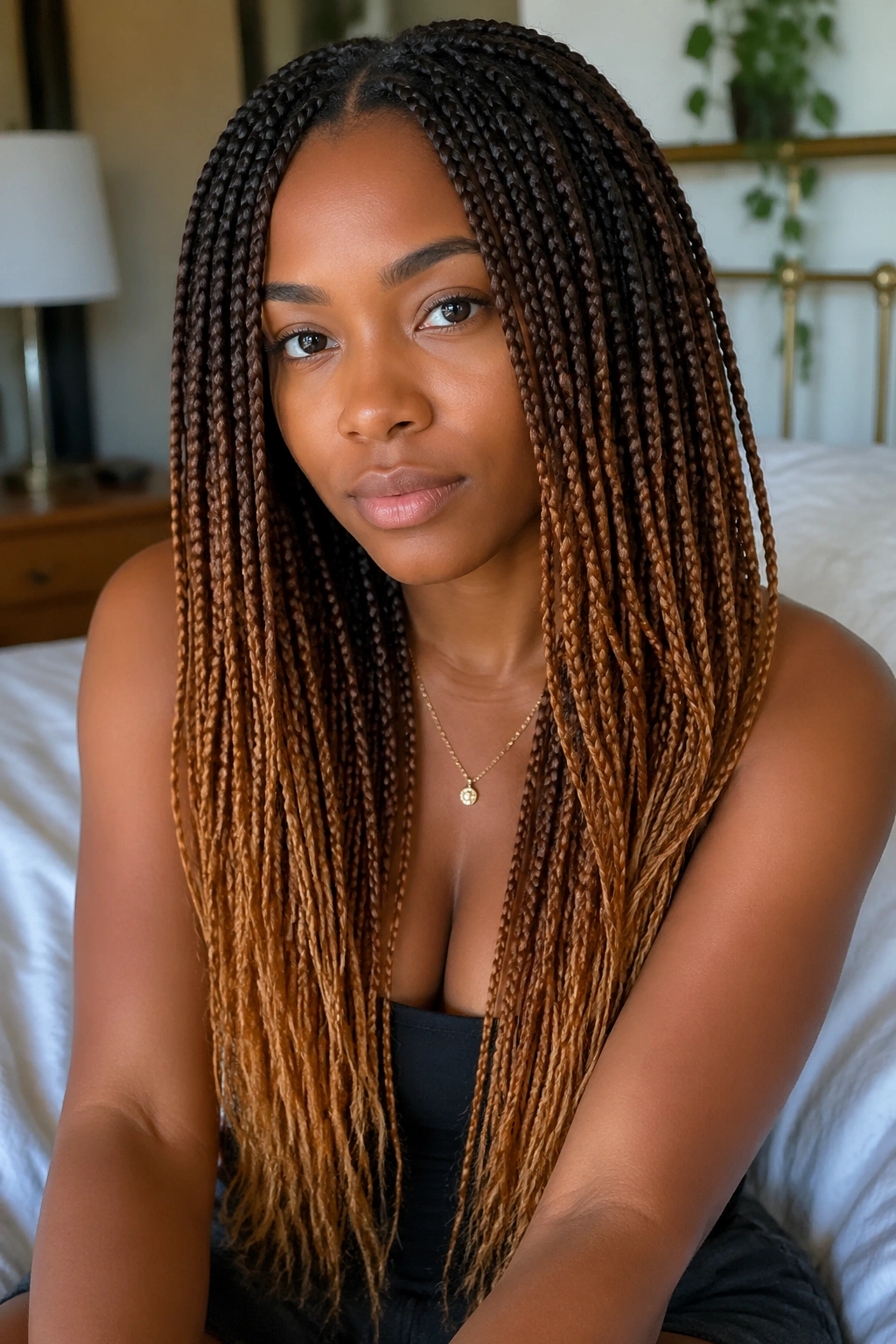
Small box braids show ombré color more clearly than big ones. That’s the whole reason caramel-dipped versions work so well. Every braid carries its own little fade, and when there are more braids, the color shift feels textured instead of flat.
Small braids take more time and patience, and I’m not going to pretend otherwise. They also give you more styling options. You can sweep them up, braid them into a crown, or wear them down and let the lighter ends create movement around the shoulders. The payoff is that the color looks layered from a distance.
Caramel-dipped ends are strongest when the root stays a rich brown. If the whole braid starts too light, the contrast disappears. A darker base also helps the style last longer visually as it grows out.
A lot of people choose tiny braids only for length. I think that misses the point. With the right brown-to-caramel fade, the small size gives you a more detailed look, and that detail matters.
14. Two-Tone Brown Box Braids with Chunky Beads
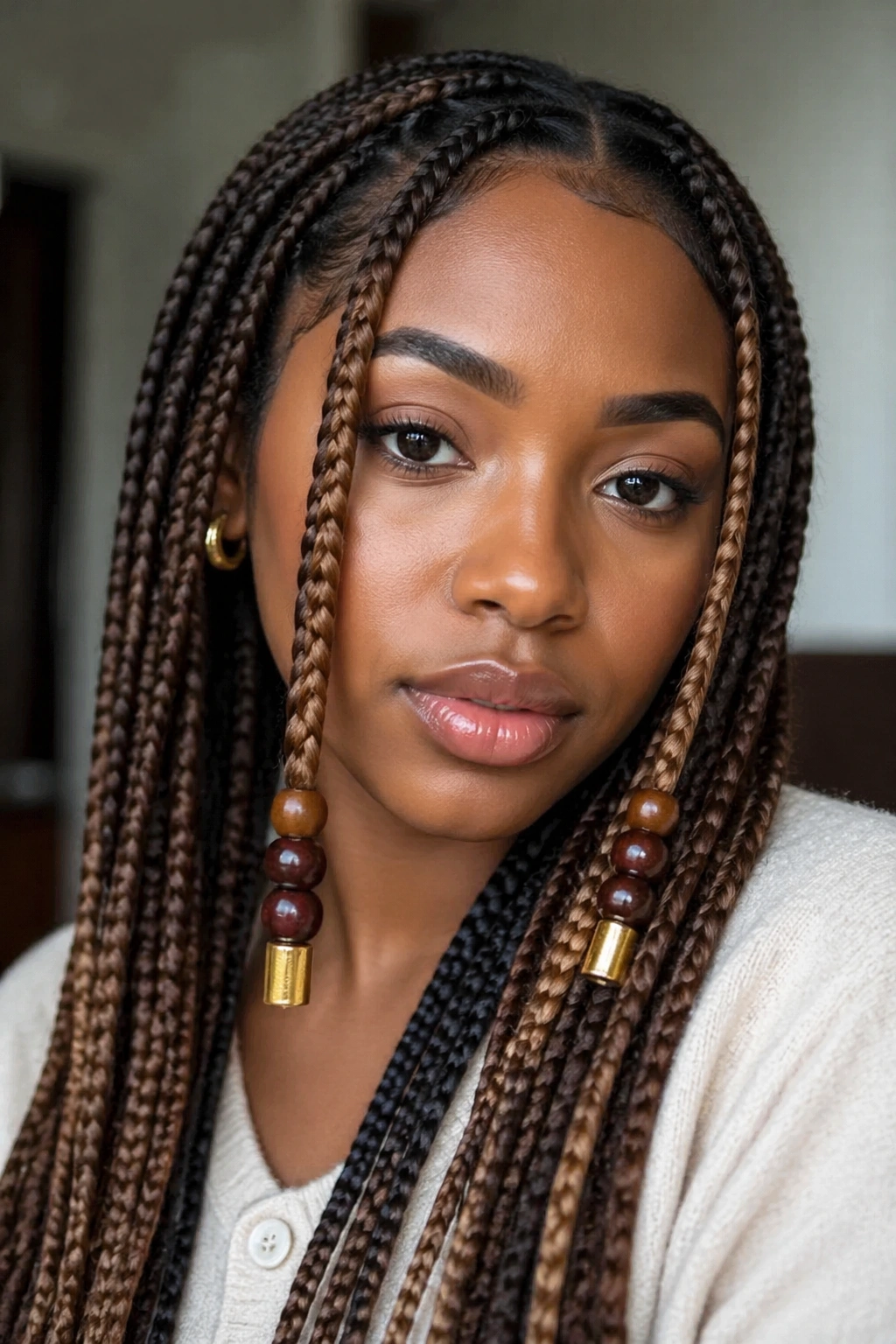
When do beads help? When the braid color is already understated and you want a few sharp points of attention. Two-tone brown box braids with chunky beads do that well, especially if the beads are wood, matte gold, or transparent brown instead of shiny plastic.
This style can get crowded fast, so keep the rest of the look simple. A darker brown root with a lighter brown or honey tip is enough. Add beads near the ends, not all the way through the braid, or the style starts feeling weighed down. The bead placement should feel deliberate, not scattered.
A good rule: use beads on only a few braids around the front or the temples. That gives you movement near the face and keeps the neckline from getting noisy. The hair should still be the main event.
If you like jewelry, this is one of the easiest braid styles to coordinate. Gold hoops, stacked rings, a brown leather jacket — it all makes sense together. The beads do not need to shout. They just need to show up.
15. Sunlit Brown Box Braids with Mixed-Length Layers
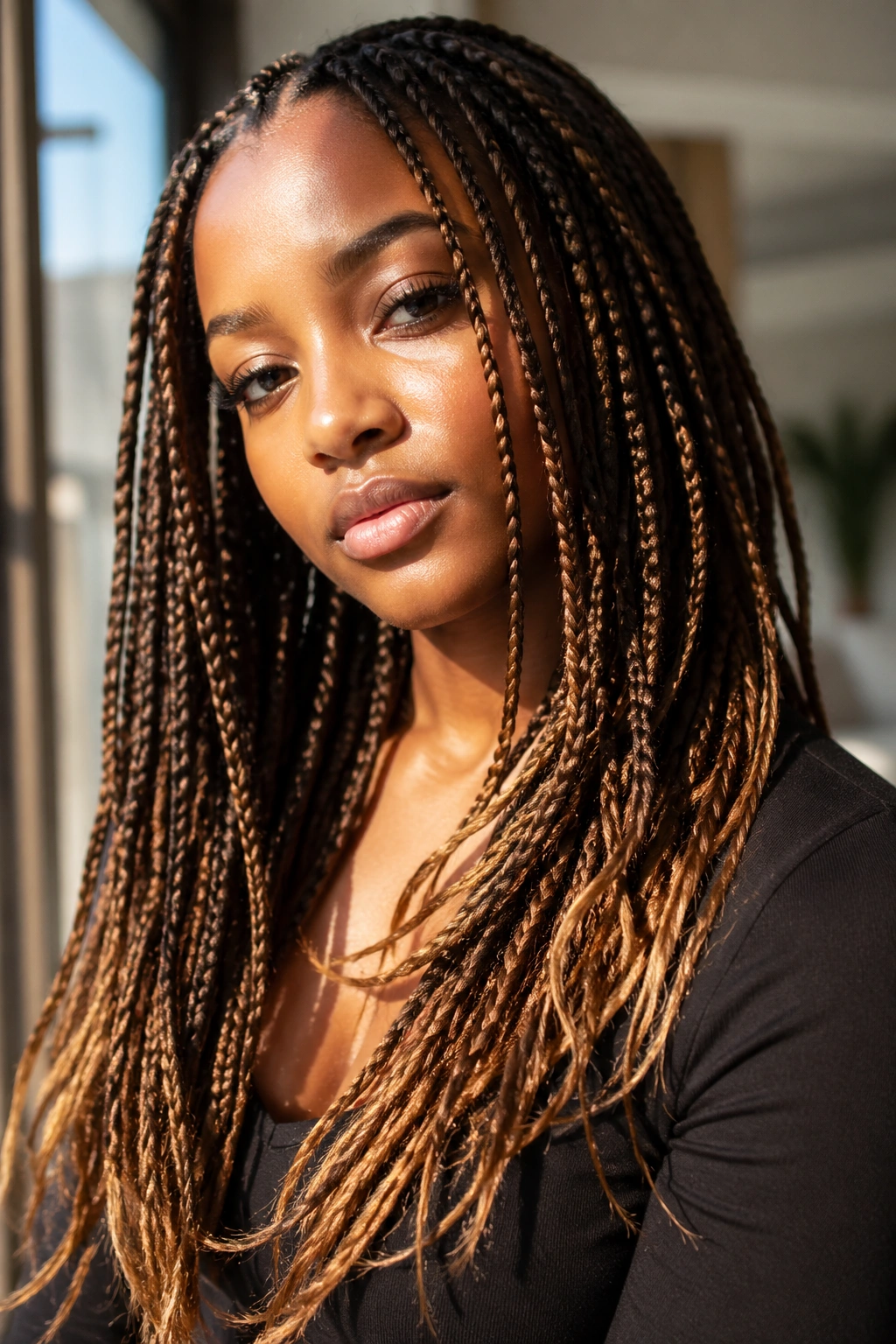
All braids do not need to land at the same point. In fact, mixed-length layers can make brown box braids look lighter and more mobile, especially when the shade moves from deep brown at the root to a sunlit brown through the ends. That staggered line keeps the shape from looking heavy.
What Makes the Layers Work
- Shorter front pieces open the face
- Mid-back pieces keep the length from feeling flat
- Longer back pieces give the braid set weight and swing
- Layering helps the lighter brown tips show at different points
This works best if the color change is soft, not high contrast. If the ends are too pale, the layers can start feeling busy. Keep the brown family warm and muted, and the cut does the rest.
I’ve always thought this style looks best when the braids are worn down first, then half-up later. The layers show differently in each version. That gives you two moods from the same install, which is handy when you do not want to redo your hair every time you leave the house.
16. Chocolate and Honey Ombré Box Braids in a Low Bun
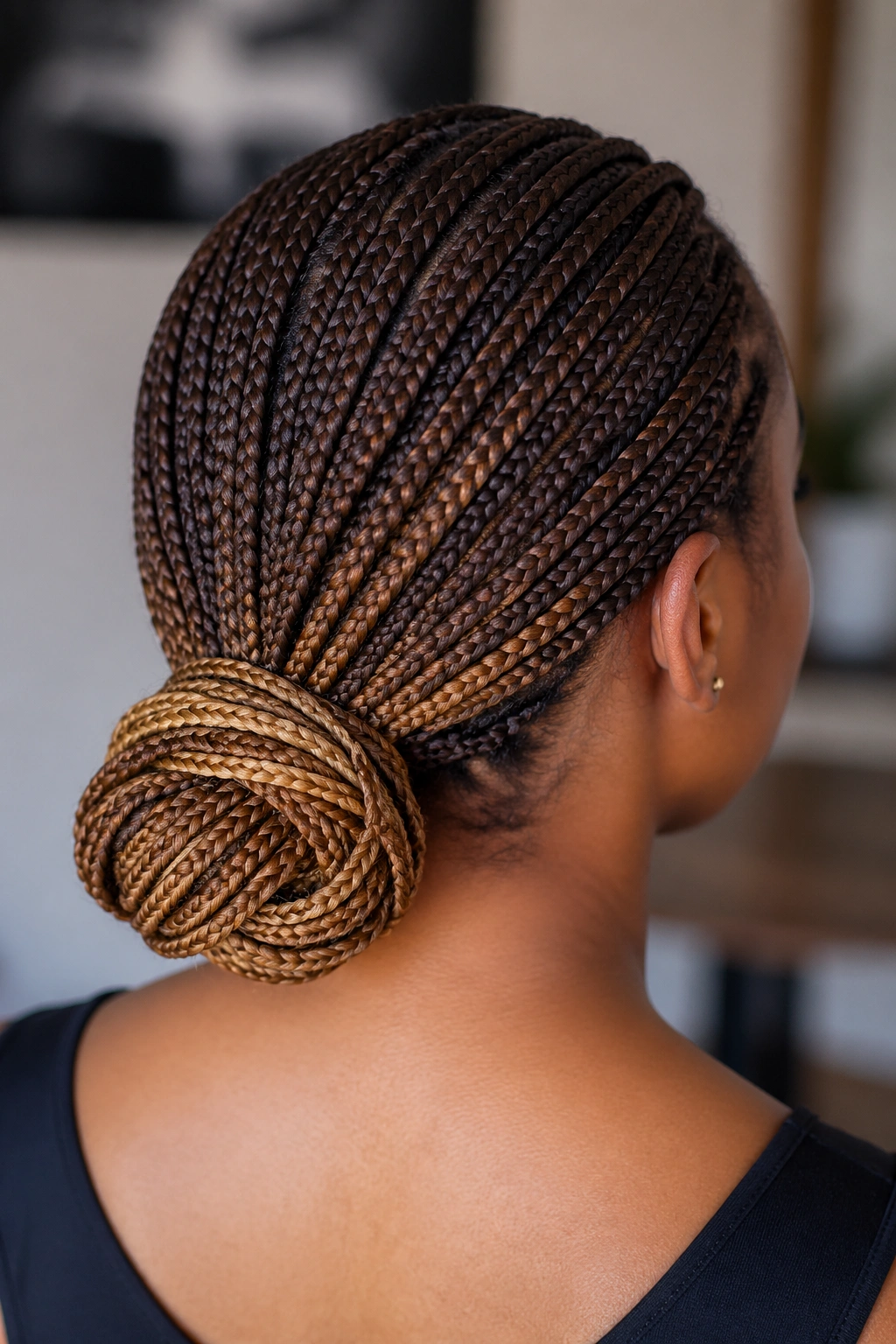
Chocolate roots fading into honey ends make sense when the braids are pulled into a low bun. The darker base keeps the bun looking neat, while the lighter ends peek out in little streaks and loops. You get color without the whole style feeling loud.
Low Bun Tricks
A low bun works best when you leave enough length to wrap once or twice without forcing the braid ends under too tightly. Too much tension at the nape gets uncomfortable fast. Keep the bun low and a little loose, then pin the ends discreetly so the shape holds.
Where the Color Shows Up
- At the outer loop of the bun
- Along the braid tails that fall against the neck
- Near the front when a few pieces are left out
- In the side view, where the honey ends catch the eye first
This is one of the nicer braid styles for events because it looks tidy from the front and interesting from the side. Also, it keeps hair off the neck, which matters more than people admit once the day gets long. A silk scarf at night keeps the bun shape from turning fuzzy.
17. The Soft Brown Ombré That Works on Almost Everyone
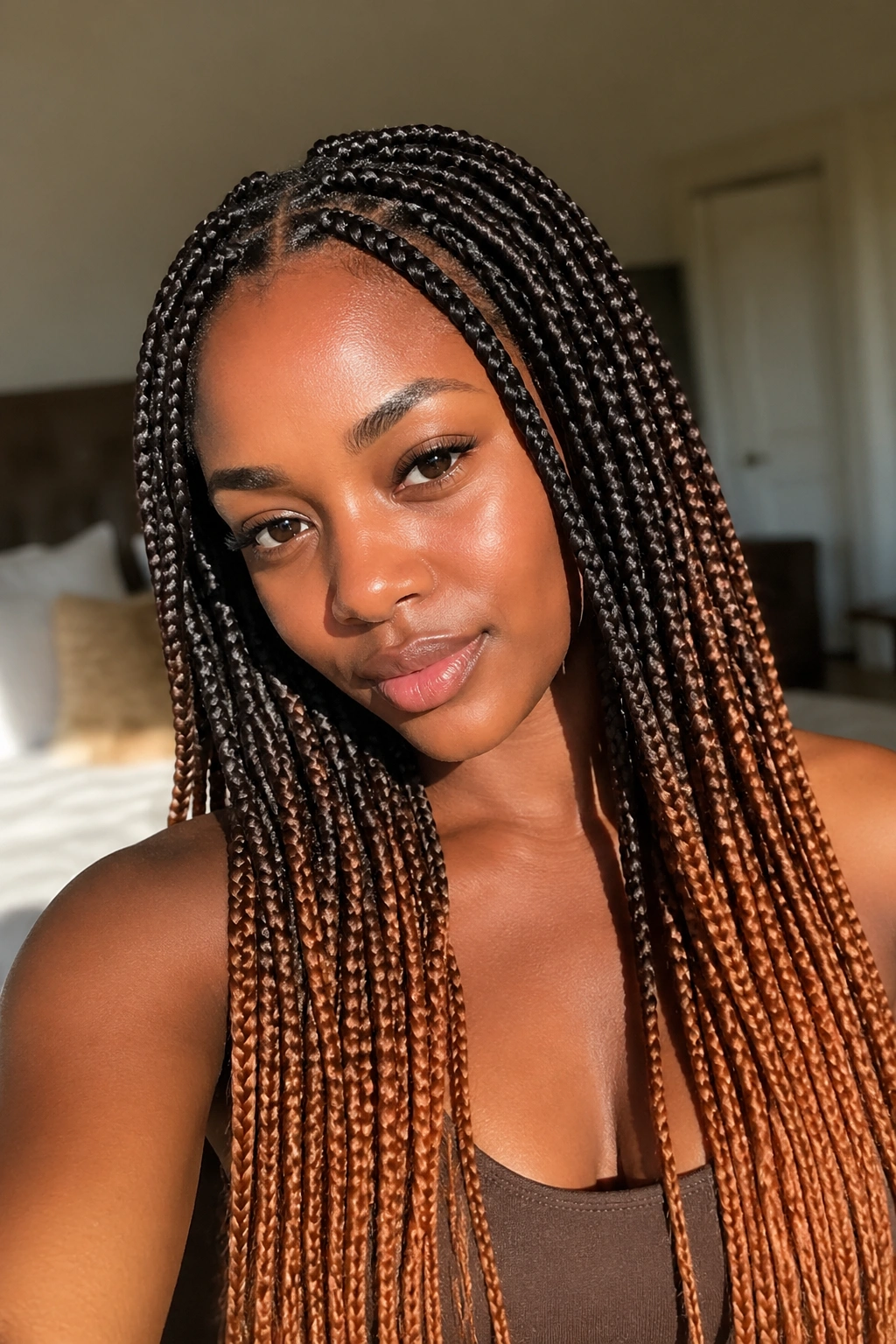
If you want the safest brown and ombré box braids choice, keep the fade soft and the root close to your natural shade. That sounds plain, and maybe it is. But plain is not a bad thing when the hair sits well, the color flatters your skin, and the grow-out does not look awkward after a few weeks.
The version I come back to most is a deep brown root, a mid-brown body, and ends that move only two shades lighter. That’s enough contrast to show the ombré without turning the braids into a high-drama statement. It also gives you room to wear the style with lipstick, glasses, hoops, or nothing at all.
Some people want the color to shout. Fine. Others want it to whisper. This is the whisper version, and it has staying power because it does not get old quickly.
If you are choosing your first brown ombré set, I’d start here. Keep the parts clean, the finish neat, and the shade transition soft. The style will do its job without asking for much back.
