

Purple box braids can go sleek, smoky, loud, or soft, and the ombré version is what keeps the color from tipping too far in any one direction. A dark root, a purple fade, and a clean braid pattern give the style structure, so the color has room to move instead of shouting from the first inch.
That’s why ombré and purple box braids work so well together. The darker base keeps the style grounded, while the lighter ends catch your eye when the braids shift, swing, or get pulled into a ponytail. If you’ve ever loved fantasy color but didn’t want the whole head to feel flat, this is the sweet spot.
There’s a practical side too. Purple braiding hair shows frizz, lint, and rough handling faster than black hair, which makes placement matter more than people think. A good fade hides wear better than a hard block of color, and the right shade choice can move the whole style from soft lilac to deep wine in a way that still feels polished.
Some of these looks are dramatic. Some are quietly expensive-looking. A few are the kind of styles you can wear for weeks without getting bored of your own reflection, and that’s really the test.
1. Deep Plum Ombré Box Braids
Deep plum is the shade I reach for when I want purple to feel rich instead of playful. The color has enough red in it to keep the braids from looking flat, and that matters more than people admit.
Start the fade low, around the mid-length or lower third of the braid, and the whole look gets softer. On longer box braids, the plum catches light in a way that reads almost like dyed silk, especially if the roots stay black or espresso.
What Makes This Shade Work
Plum sits in that useful middle zone. It’s not neon, but it’s not shy either, so it works for someone who wants color without turning the whole style into a costume.
- Best on medium to long braids, where the fade has room to show.
- Looks clean with gold cuffs, clear beads, or a single side part.
- Pairs well with black roots if you want less contrast and easier grow-out.
My favorite move: keep the plum a shade darker than you think you want. It photographs better in daily life because it doesn’t scream for attention every time the light hits it.
2. Lavender-Tipped Knotless Box Braids
Why do lavender tips look softer than a full lavender head of braids? Because the eye reads the lighter color as an accent, not the whole story. Knotless braids make that even easier to wear since the base sits flatter and feels lighter at the scalp.
A tip-only fade also keeps the braid length from feeling heavy. That matters if you like braids that move easily when you turn your head or throw them into a low ponytail.
How to Wear It
Knotless braids give the lavender a cleaner landing point, so the ends look intentional instead of chopped off.
- Ask for the lavender to begin just past the final third of the braid.
- Keep the braid size medium if you want the color to look even.
- Add small silver rings near the tips instead of loading the whole head.
The nice thing here is that the style stays calm at the roots and playful at the ends. That balance does a lot of work for you.
3. Jumbo Amethyst Box Braids with Crisp Parts
Jumbo braids make purple look more expensive, not less. The larger sections give the color blocks room to breathe, so the fade reads clean from a distance instead of turning muddy.
The parting matters just as much as the shade. If the sections are neat and the grid is consistent, the whole style looks deliberate before you even notice the amethyst tones.
Why Bigger Braids Change the Mood
A jumbo braid shows off the gradient fast. You can see where black turns to violet, where violet softens into a lighter purple, and where the ends taper into something almost smoky.
For this look, keep the parts around 1 to 1¼ inches if your density allows it. Bigger than that and the style starts to feel loose; smaller and you lose the bold braid shape that makes the color pop.
This is the style for someone who likes a confident silhouette. Clean parting. Clean color. No fuss.
4. Purple Peekaboo Braids Under a Dark Top Layer
If you like a style that looks quiet from the front and playful when you move, this one earns its keep fast. The top layer stays dark, while the purple hides underneath and flashes out when you lift a braid, tuck hair behind your ear, or pull it into a half-up style.
That hidden color placement changes the whole mood. You get the surprise of purple without needing the full head to carry the brightness all day long.
Where the Color Works Hardest
Peekaboo color is best when it shows up in motion, not in a static mirror shot. That means the nape, the lower crown, and the sections near the temples do most of the visual work.
- Keep the top two layers dark for contrast.
- Use a deep violet underneath if you want a subtle reveal.
- Save brighter purple for the lower rows so the style shifts when you wear it down.
This is also one of the easier purple braid styles to live with. When the underneath color gets a little fuzzy, the top layer still keeps the whole thing looking neat.
5. Violet-to-Silver Box Braids
Violet fading into silver has a cold, sharp look that some purple styles never quite manage. The silver keeps the braid ends from feeling heavy, while the violet gives the color enough depth so it doesn’t turn chalky.
The trick is restraint. Too much silver and the style loses its shape. Too little and you miss the whole point of the fade.
A good version of this look starts with deep violet near the roots or mid-length, then moves into a softer gray-silver at the last few inches. That puts the brightest shade where the eye naturally lands, which is usually the ends anyway.
Keep the silver narrow if your braids are long. On waist-length braids, broad silver sections can start to look disconnected from the darker top half, especially once a little frizz comes in. A thinner silver fade feels cleaner and ages better. It also works nicely with blunt-cut ends, because the color line and the braid line reinforce each other instead of fighting for attention.
6. Burgundy Roots with Purple Ends
This is the one for people who want purple with warmth in it. Burgundy roots melt into purple ends in a way that feels smoother than a hard black-to-purple contrast, and the result is less icy, more wine-toned.
It also grows out nicely. If your natural hair is dark brown or black, the root zone doesn’t scream for attention every couple of weeks, which is a small mercy when you’re wearing box braids for real life.
Unlike a full-head violet style, this version has a little more softness at the scalp. Unlike a solid burgundy set, the purple ends keep it from feeling too autumn-heavy. That middle ground is useful if your clothes lean neutral, or if you like color but don’t want it to fight with everything in your closet.
For a smoother fade, ask your braider to blend the burgundy through the first half of the braid and save the purple for the bottom third. It reads richer that way.
7. Waist-Length Lilac Box Braids with Beads
Lilac shows up differently when the braids are long. Shorter braids can make pastel colors feel cute; waist-length braids make them feel airy and deliberate, almost like ribbon falling down your back.
The bead choice changes the whole thing. A few clear, pearl, or frosted beads near the ends are enough. Dumping heavy beads near the scalp makes the style drag, and pastel hair does not need extra weight to be noticed.
Why the Length Matters
Long braids give the lilac fade space to breathe. That matters because pastel purple can look washed out if the braid is too short or too thick.
What to Put at the Ends
- Use 2 to 4 beads per side if you want movement without clatter.
- Keep bead placement in the last 4 to 6 inches of the braid.
- Choose light-colored beads so the lilac stays the star.
The best part is the sound. Soft bead taps, a little braid swing, and that pale purple moving against a dark root. It’s a small detail, but it changes how the whole style feels when you walk.
8. Triangle-Part Purple Ombré Braids
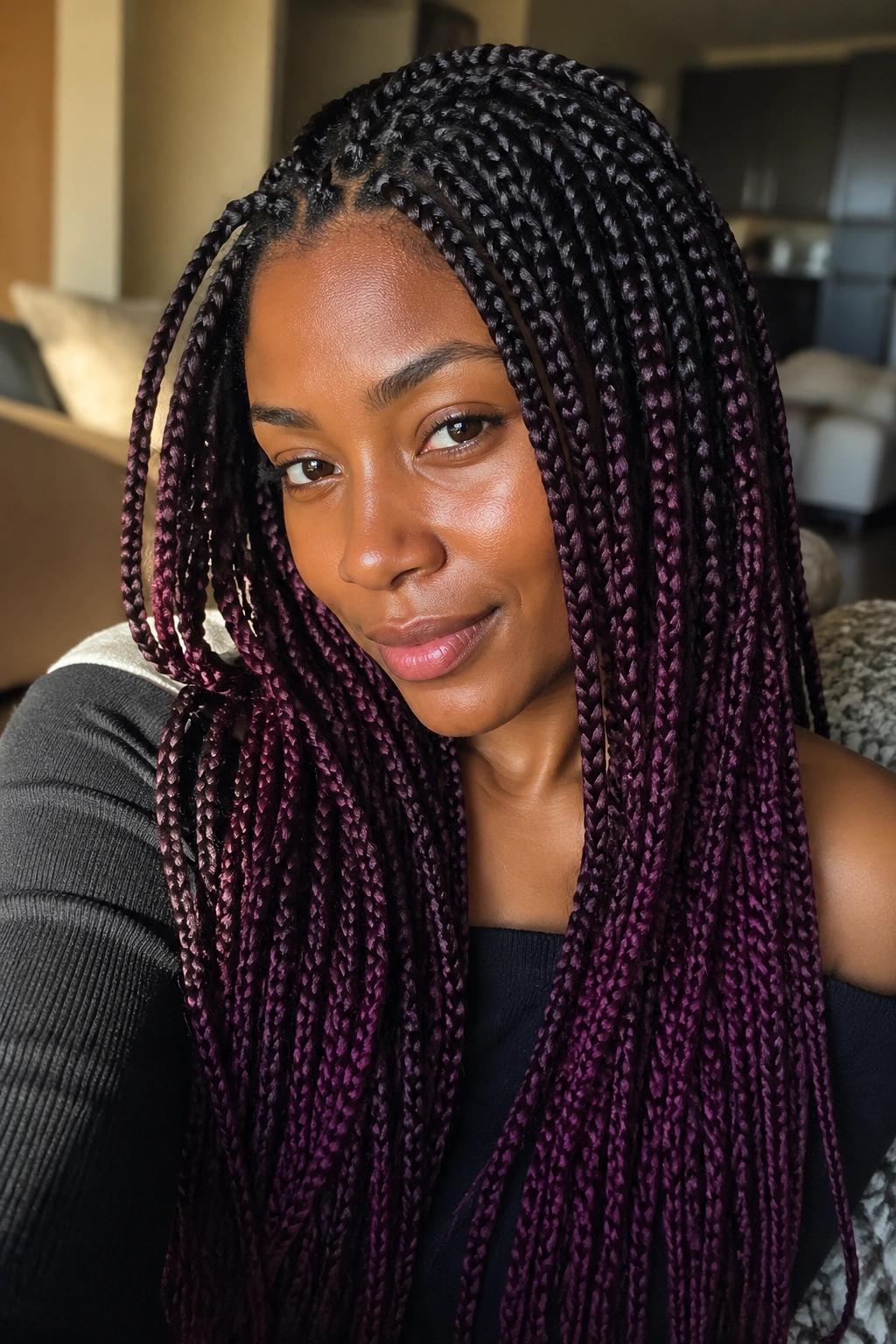
Triangle parts change the mood before the color even starts. The braids look less like a standard grid and more like a pattern with personality, which is exactly what a purple ombré style needs if you want it to feel fresh.
The part shape also gives the scalp a more dynamic look. Straight squares can feel tidy and classic; triangles add movement, especially when the fade is subtle and the color does most of the talking.
How to Get the Parting Right
Triangle parts work best when the sections are consistent in size. If one triangle is tiny and the next is huge, the eye catches the mistake faster than it catches the color.
- Keep each triangle roughly the same width at the base.
- Pair the shape with medium braids so the pattern stays readable.
- Let the purple fade start below the part line, not right at the scalp.
A strong triangle-part set does not need a lot of extra accessories. The geometry is the accessory.
9. Bob-Length Grape Box Braids
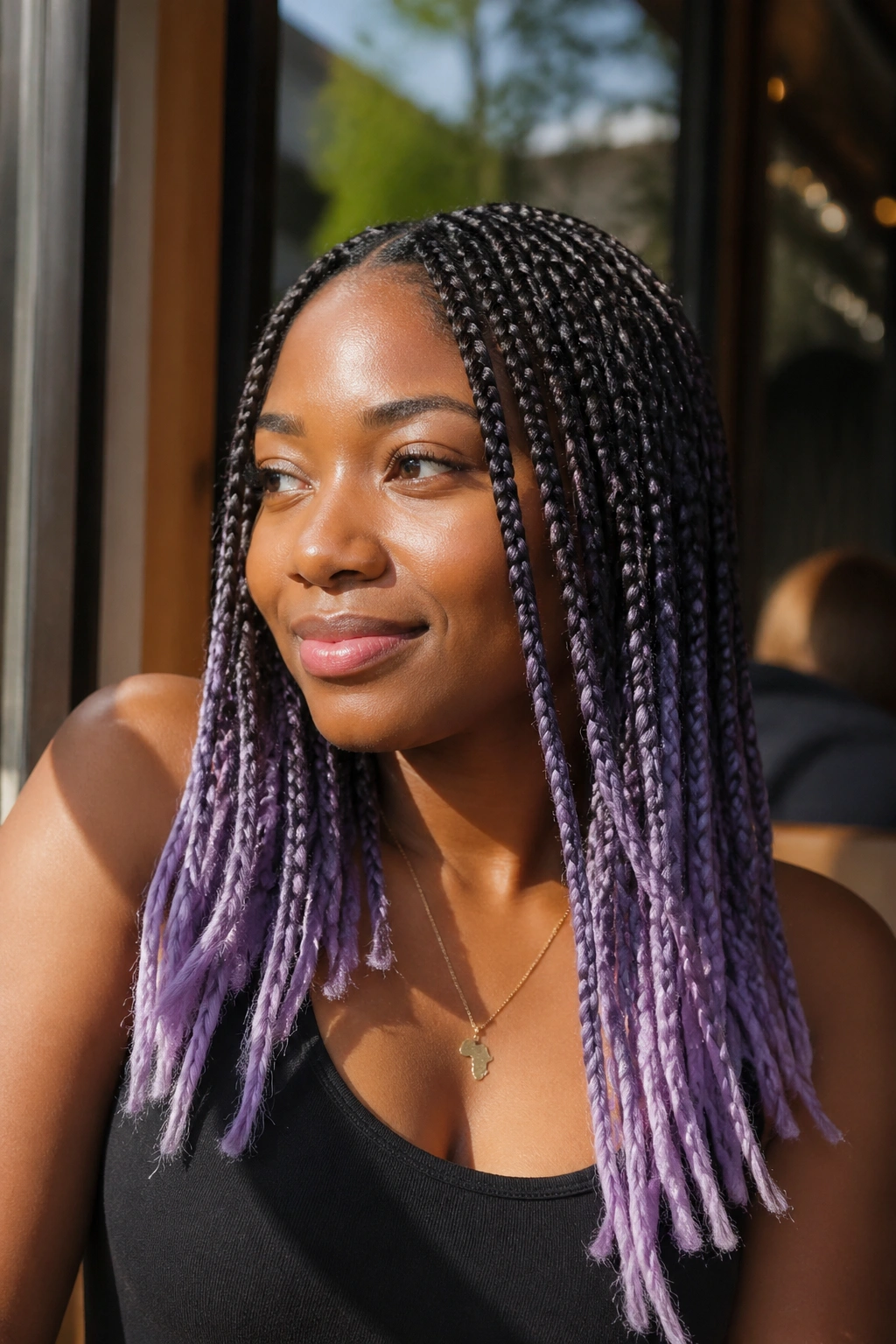
Bob-length braids are the easiest way to make purple look sharp. They sit near the jawline, frame the face, and keep the saturated color from swallowing the rest of your features.
Grape purple works especially well here because the shorter length keeps the tone from feeling too heavy. Instead of reading as a full-color curtain, the braids become a neat shape with a strong edge.
This is also the simplest version to wear if you want less weight. A chin-to-collarbone bob is easier on the neck, dries faster after washing, and makes daily styling less annoying. Pull one side behind the ear and the cut line changes immediately.
If you want a bob that still feels rich, ask for a dark root and a grape fade that begins low. The result is cleaner than a full bright-purple bob, and it grows out with less drama.
10. Goddess Box Braids with Purple Curly Ends
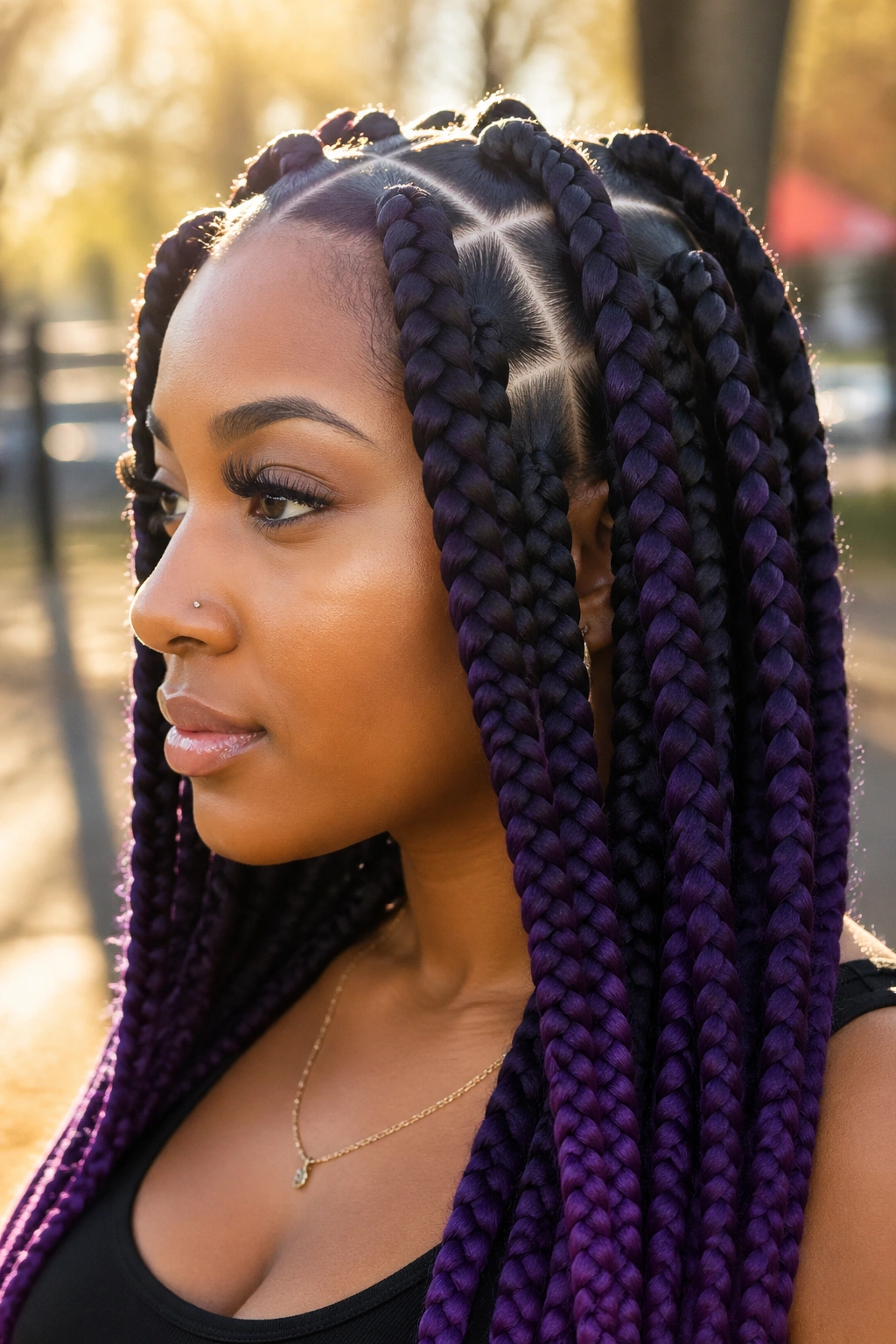
The curly ends do half the work here. Box braids already give structure, but once you add loose purple curls at the bottom, the whole style starts moving in a softer way.
I like this look on days when regular braids feel a little too strict. The braids stay neat near the scalp, but the ends bounce and twist, which keeps the color from feeling boxed in.
Why the Curly Ends Matter
The loose curl breaks up the straight line of the braid. That gives the purple more dimension, especially if you mix a deep violet braid with lighter curly pieces.
A Few Things That Help
- Start the curls below mid-length so they do not puff near the face.
- Use 2 to 3 curly pieces per section if you want fullness without tangling.
- Wrap the ends at night so the curl pattern lasts longer.
The style looks best when the curls are not too tight. Loose ringlets make the braid ends feel expensive; stiff curls make them look like an afterthought.
11. Micro Box Braids with an Amethyst Fade
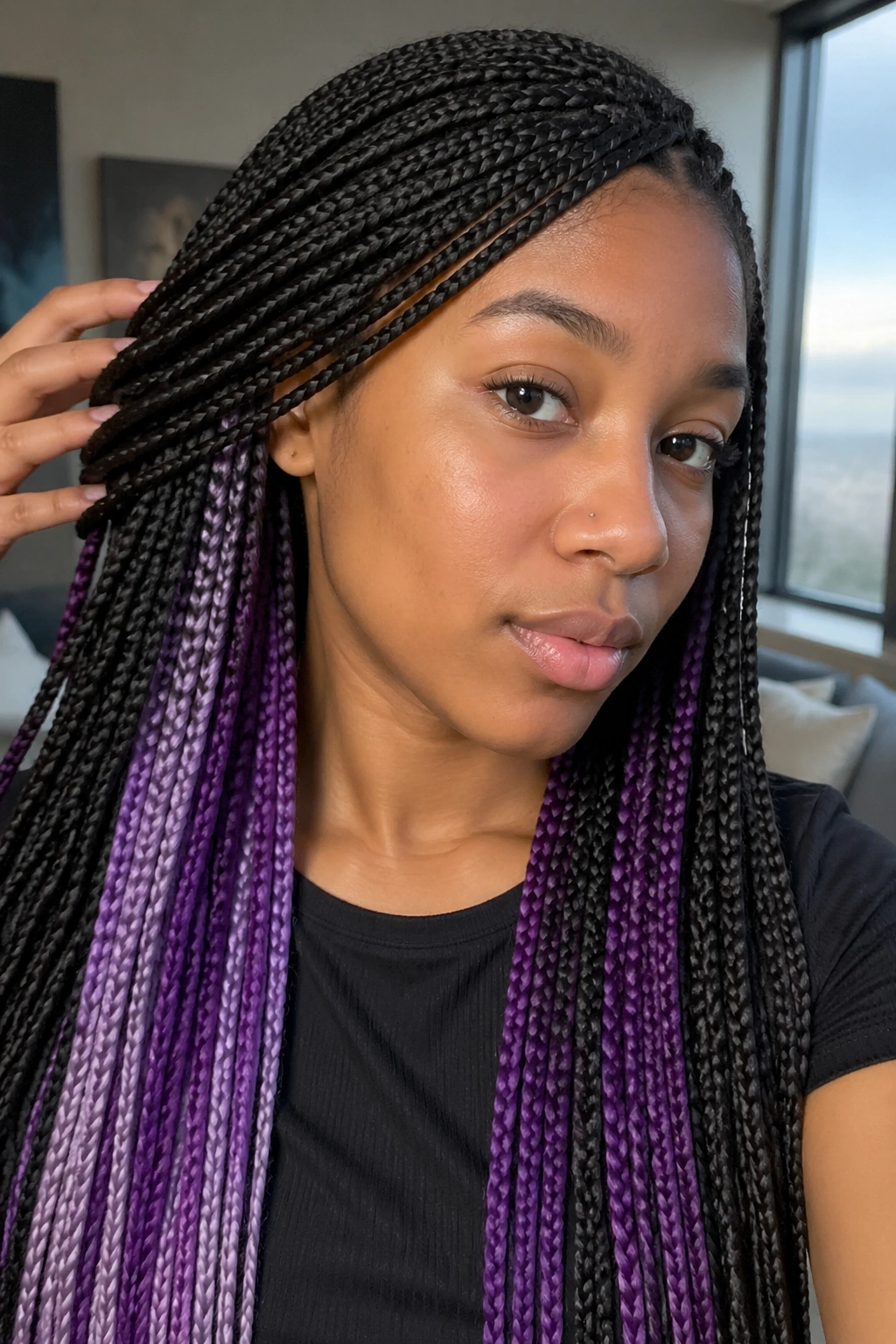
Micro box braids are not the fast option. They take time, they take patience, and your scalp will remind you of both. But the payoff is a color fade that looks incredibly smooth because the braid size is so small.
Amethyst works well here because the shade shift feels more gradual across many slim sections. Instead of one obvious color block, you get a soft ripple of dark to light across the whole head.
That said, this style needs a careful hand. Too much tension at the root will make the first week miserable, and too much weight in the hair will flatten the braid pattern before the color has a chance to show. If you choose a micro set, keep the accessories light and skip anything chunky near the base.
The upside is longevity. Micro braids can stay visually interesting longer than bigger braids because the small sections hold the shape differently. They are not for everyone. They are for the person who does not mind sitting still and wants a purple style that feels detailed from every angle.
12. Half-Black, Half-Purple Ombré Braids
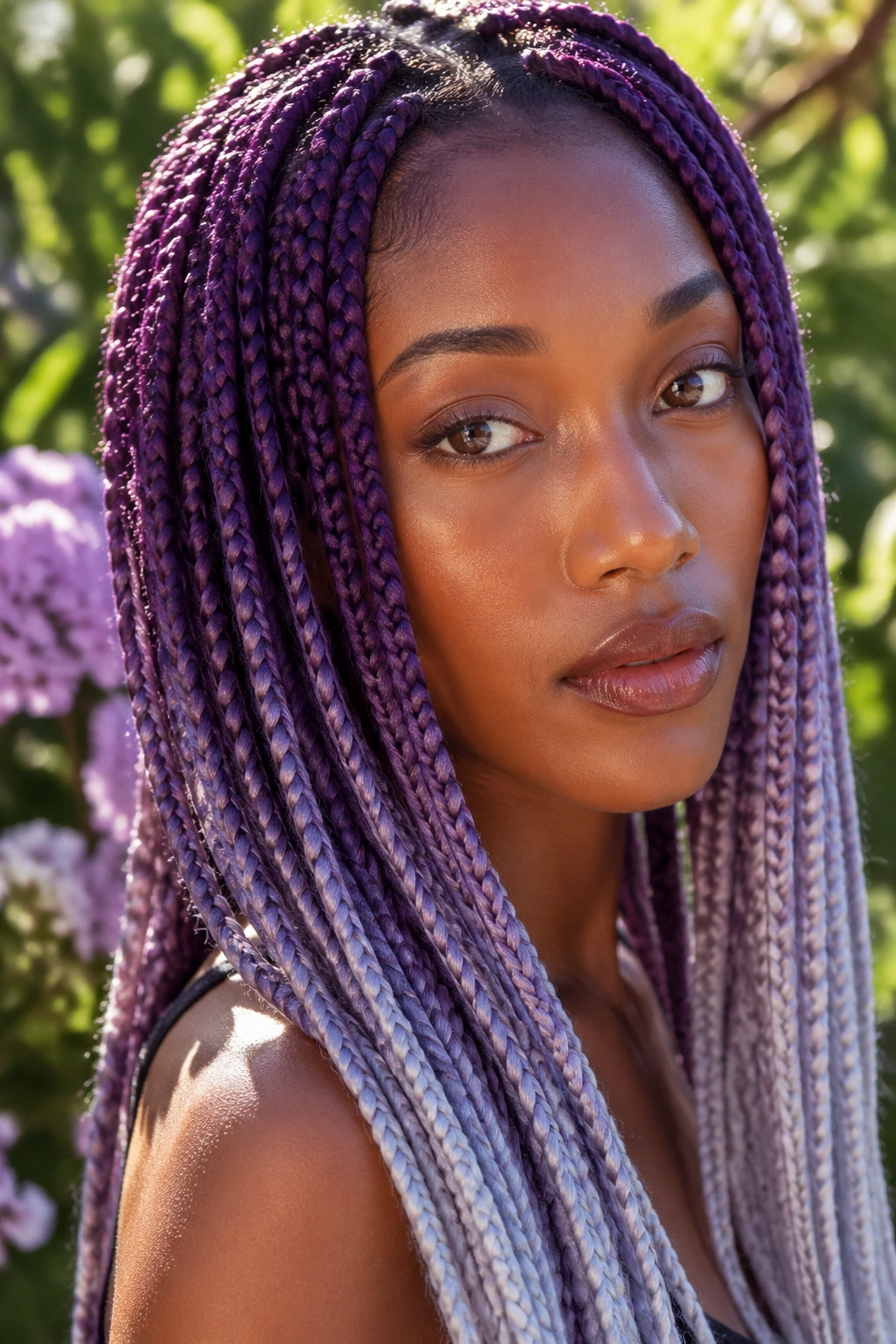
A hard split between black and purple is bolder than a fade, and that is the whole point. The contrast makes the purple look sharper, especially if the line sits at the crown, temple, or just off-center.
Compared with a gradual ombré, this look is more graphic. Less soft. More attitude. If you like clean lines and strong shapes, it hits fast.
The key is balance. Keep the braid size the same on both sides so the split feels intentional, not accidental. And if you want the style to read clearly from a distance, choose a purple with enough depth to stand up to the black — grape, violet, or plum all work better than a very pale lilac here.
This is the best pick for someone who wants one side to speak louder than the other. It looks especially good with side swoops, a low bun, or one shoulder pulled forward so the contrast shows.
13. Pastel Orchid Box Braids
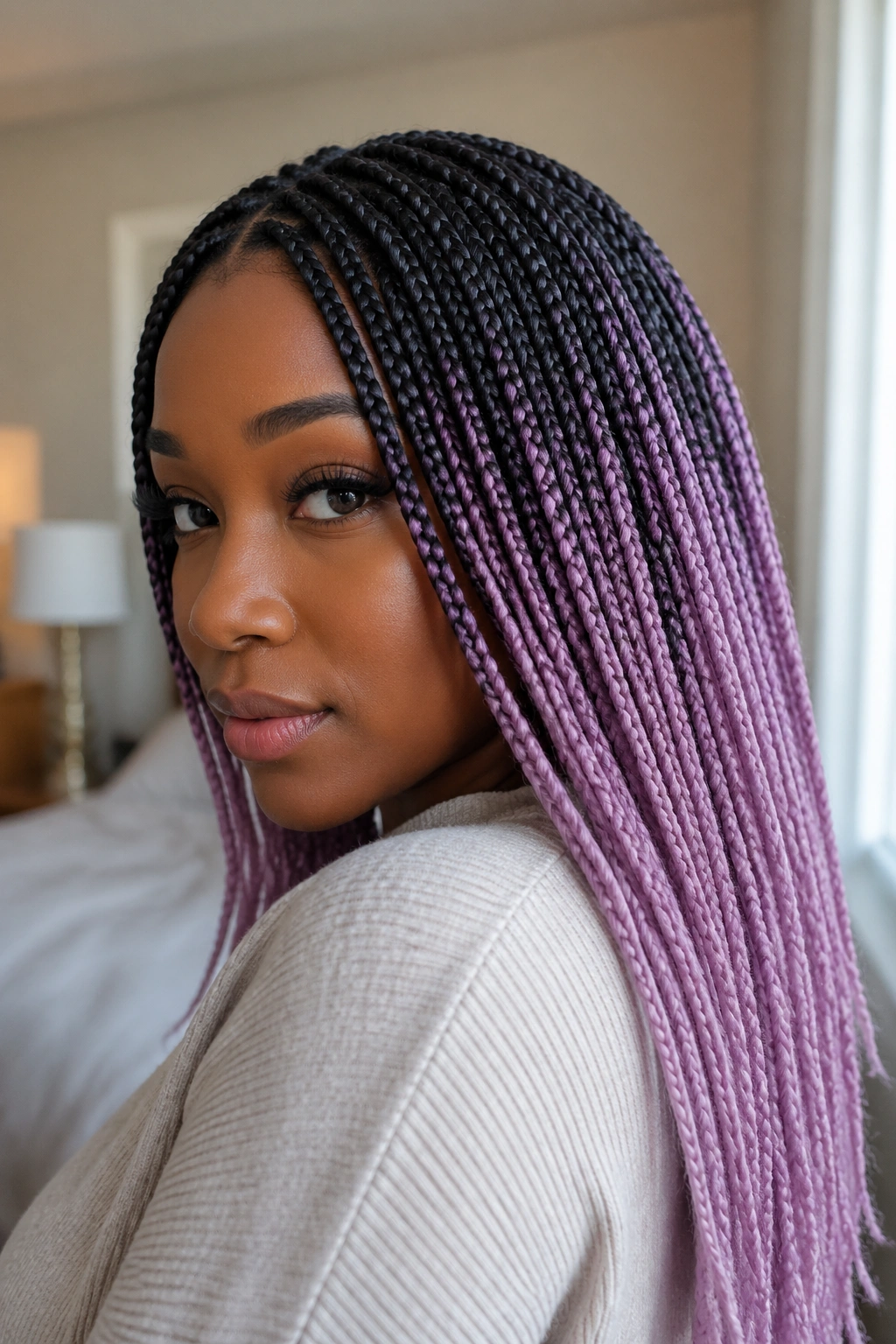
Can pastel purple work in box braids without disappearing? Yes, if the braid pattern is neat and the color is supported by a darker base. Pastel orchid is soft, but it should still have enough depth to look intentional instead of faded.
Smaller braids help here. A tiny braid count gives the pastel more surface texture, so the color looks fuller than it would on huge sections. That’s useful because light purple can flatten quickly if the braid is too chunky.
Orchid also likes clean accessories. White beads, silver rings, or a single satin scarf at the edge of the style keep it from feeling overworked. Heavy gold can clash, and too many extras turn the whole head into noise.
This is a good pick if you like light makeup, clean edges, and color that feels calm rather than loud. It still reads purple. It just whispers instead of shouting.
14. Magenta-Violet Braids with Gold Cuffs
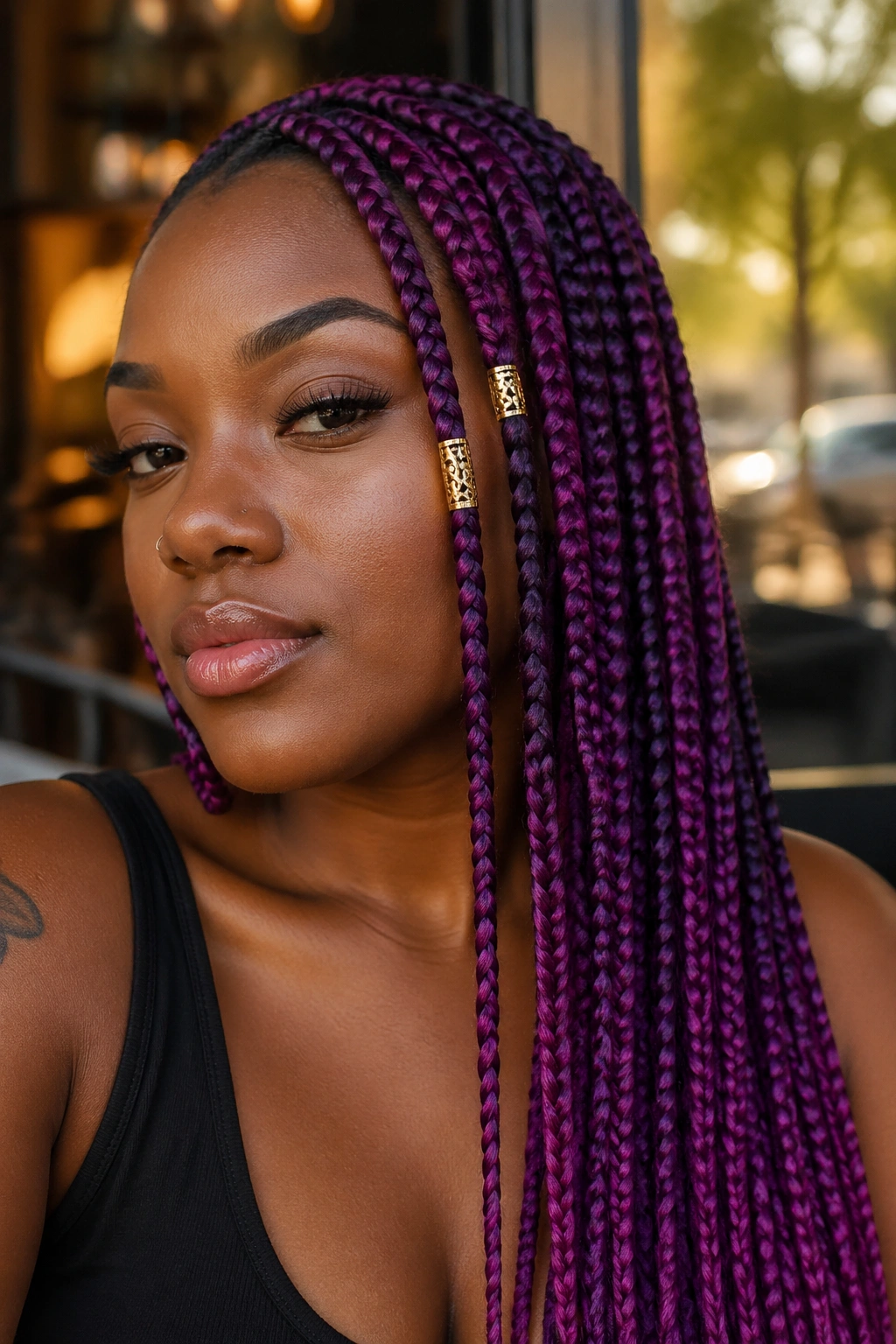
I like magenta-violet when purple needs heat. The shade sits closer to pink than some of the cooler purples, which gives the braids a richer, warmer feel right away.
Gold cuffs make that warmth even more obvious. One or two near the face can be enough, especially if the braids are long and the color shift already has movement.
Where the Cuffs Belong
Put the cuffs where they can be seen in profile or in a ponytail. That’s usually near the front sections or about halfway down the length, not packed all over the head.
A Quick Rule That Helps
- Use fewer cuffs if the braid color is already bright.
- Mix matte and shiny gold if you want texture without clutter.
- Leave some braids bare so the cuffs feel like accents, not armor.
Too many cuffs can make even a beautiful color look busy. A few placed with care will do more than a dozen tossed on at random.
15. Dark Auburn-to-Plum Box Braids
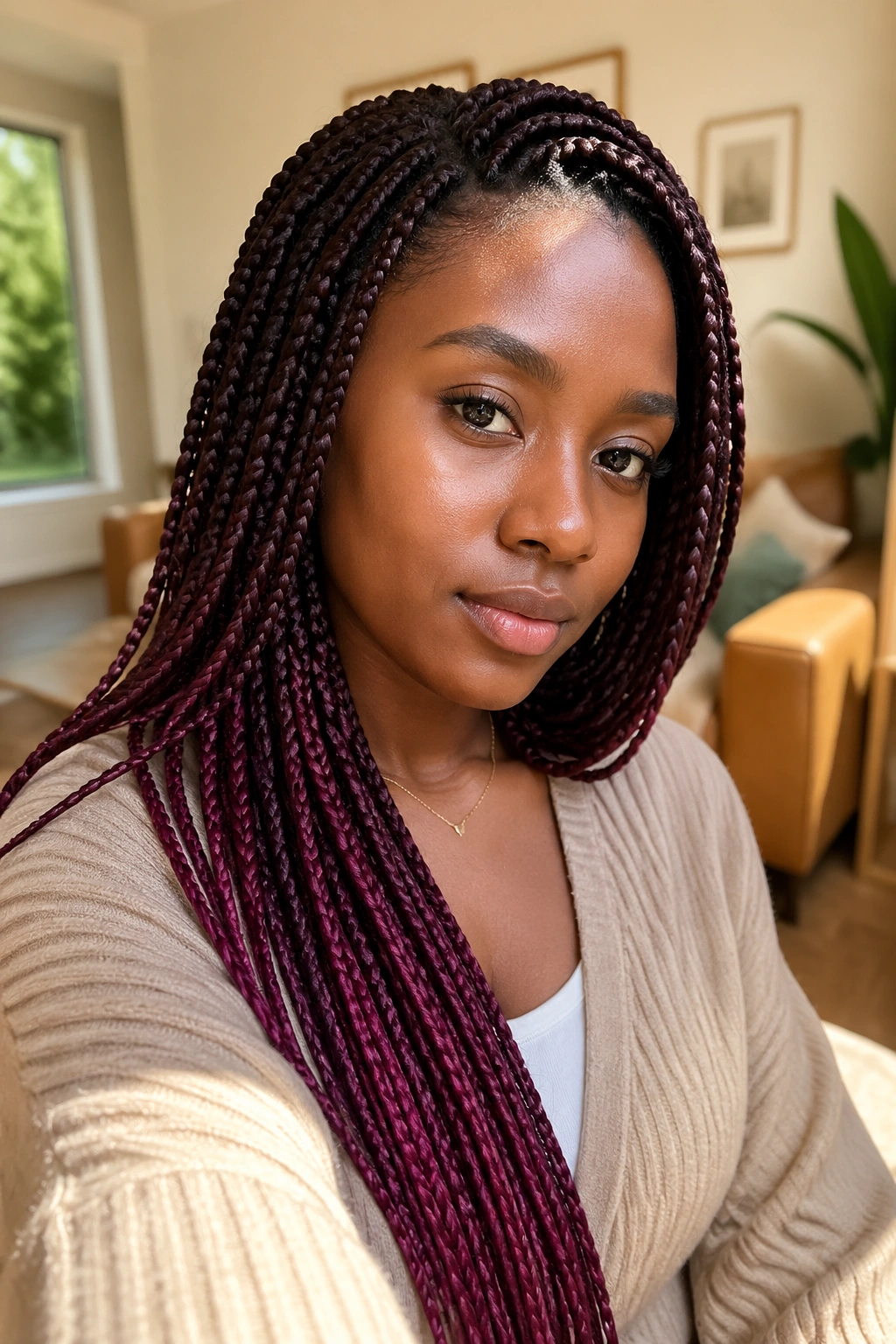
This is one of the easiest purple looks to wear if you usually live in warm colors. Dark auburn at the roots blends into plum in a way that feels full and deep, not sugary or cold.
The red-brown base softens the purple, and that makes the whole style read more like wine than candy. If you wear brown lipstick, rust sweaters, denim, or gold jewelry, the color sits in the same family instead of fighting for attention.
It also hides grow-out with more grace than a high-contrast fade. New growth disappears into the auburn better than it would into a bright lilac or silver blend. That matters if you keep braids in long enough to watch the roots change.
For the cleanest result, ask for a fade that starts around the first third of the braid and deepens into plum near the ends. The color will look richer in motion, especially in natural light.
16. Side-Swept Purple Box Braids
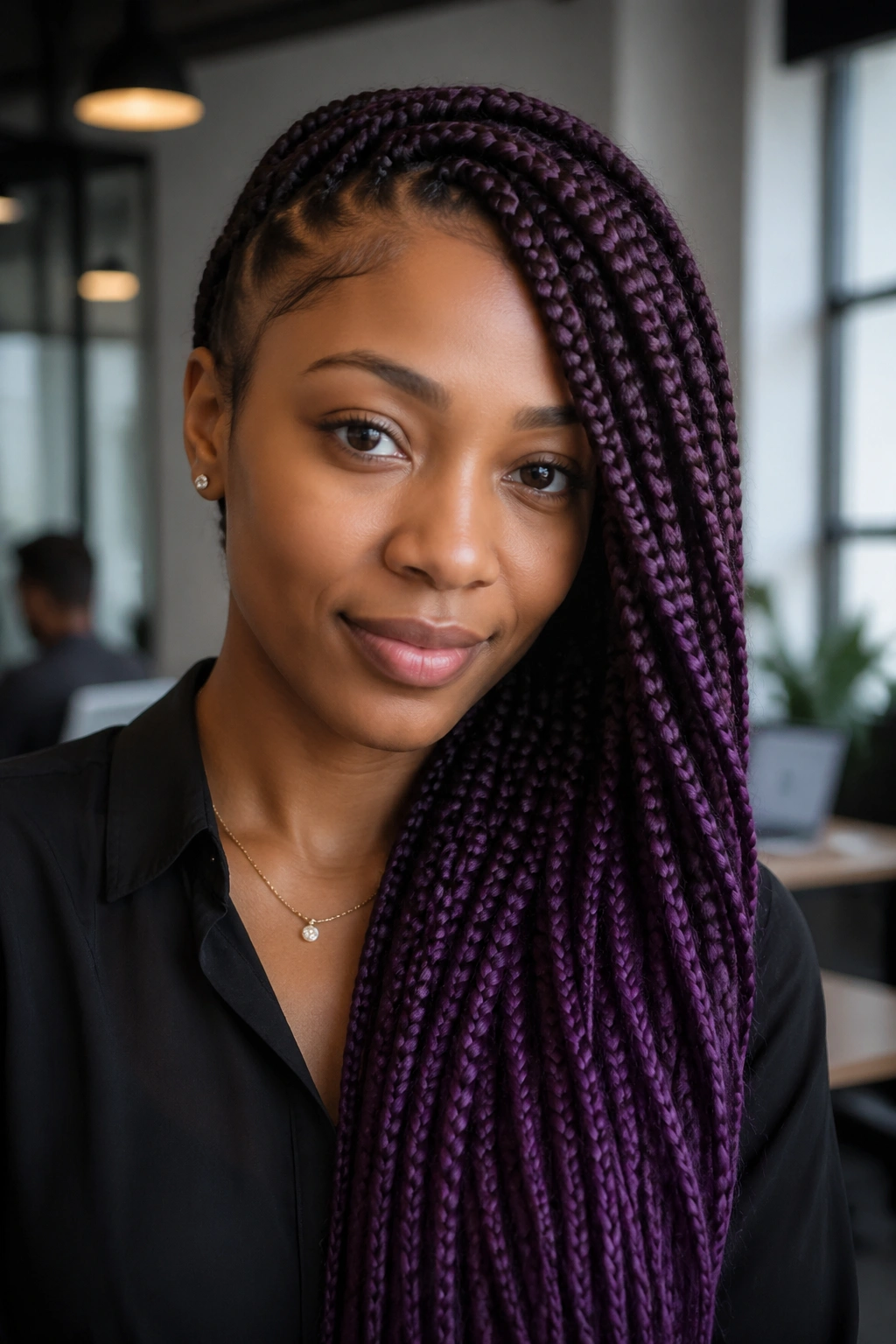
Side-swept braids change the whole silhouette. Same color. Same braid type. Completely different attitude.
A side part gives purple ombré braids a softer drape, and that works especially well with shoulder-length or midback hair. The color seems to fall forward, which draws the eye in a more flattering line than a rigid center part sometimes does.
Unlike a symmetrical style, this one feels a little less formal. A deep side part with purple ends pulled over one shoulder can look polished for work, then turn more dramatic if you tuck one side behind the ear and let the other side hang loose.
Ask for slightly heavier braids on the sweeping side if you want the shape to hold. If both sides are identical, the style can collapse back into the middle faster than you’d like. A side-swept set needs a little structure to stay believable.
17. Multitone Violet Galaxy Braids
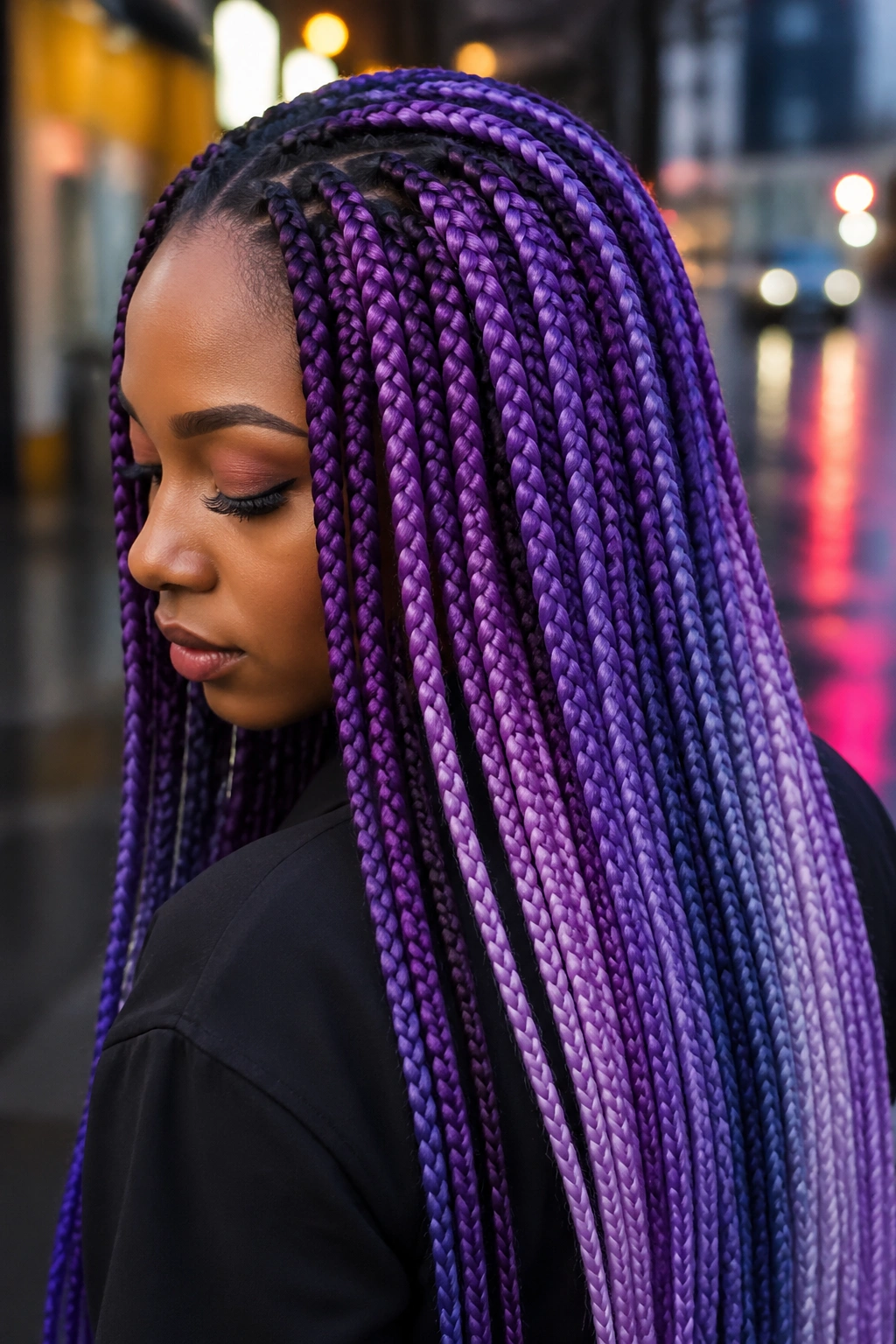
Multitone violet galaxy braids are for the person who wants depth first and neatness second. The trick is not using every purple you can find — it’s spacing three or four shades so the head feels layered instead of chaotic.
A dark base, a mid-violet, a softer lilac, and a smoky indigo can work together if they repeat in a rhythm. Too much randomness and the style turns muddy. Good placement makes the color shift look deliberate.
How to Keep the Mix Clean
- Repeat each shade across multiple braids instead of using one-off pieces.
- Keep the darkest color near the roots so the lighter tones have something to sit on.
- Limit the palette to 3 or 4 shades so the braid pattern stays readable.
This style looks best when the colors move like a wave, not a scatter. Once that rhythm is right, you do not need much else — no big beads, no heavy wraps, no extra drama.
Final Thoughts
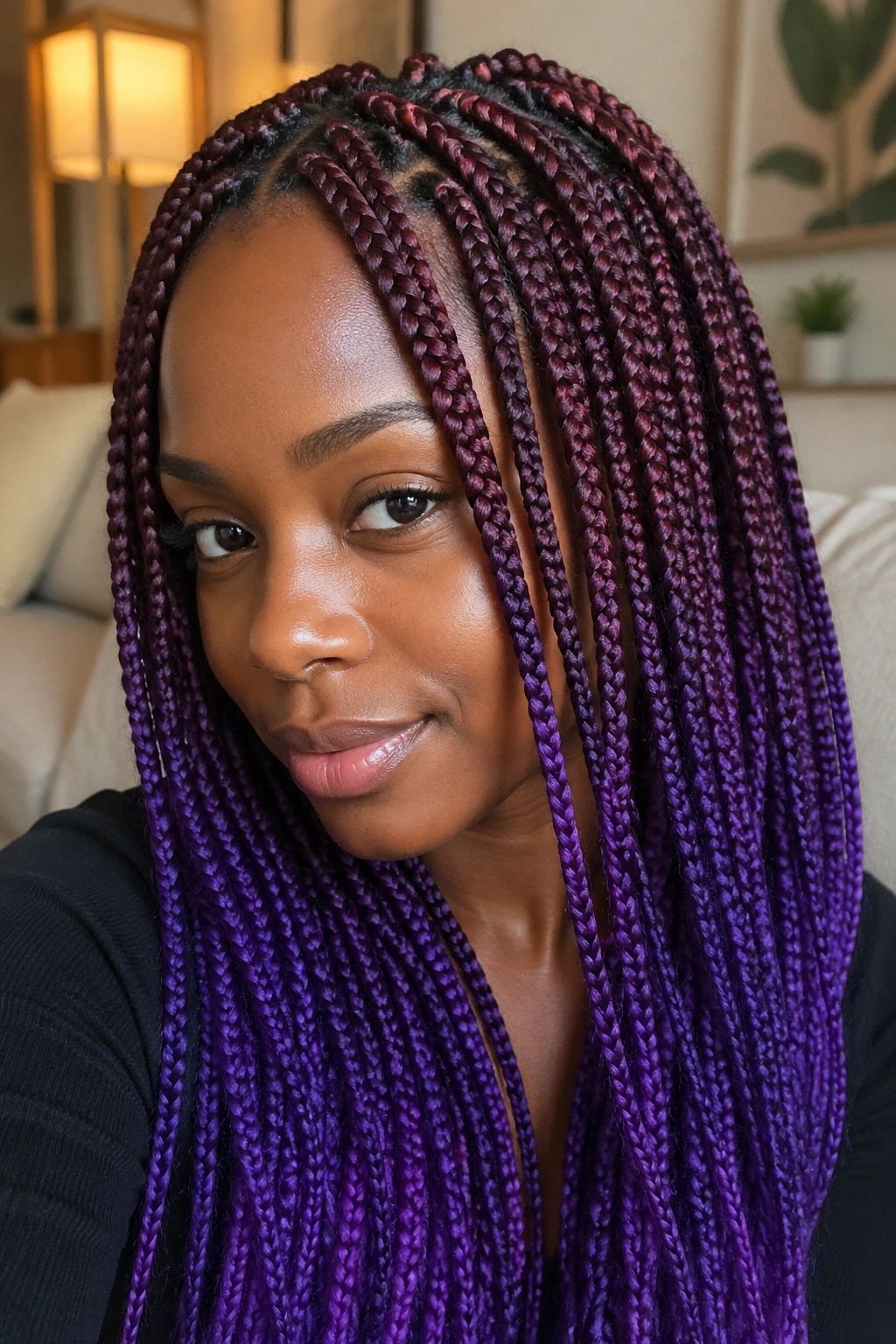
Purple box braids work best when the fade has a reason. Dark roots give you shape, mid-tones give you depth, and lighter ends keep the style from looking one-note after a week of wear.
The smartest choice usually comes down to how much contrast you want to carry. Deep plum and burgundy reads rich. Lilac and orchid feel softer. Violet, silver, and galaxy mixes give the most edge, but they also ask for the most care when the braids start to fray.
If you are sitting between two styles, pick the one that looks best after the first wash and the first imperfect hair day. That is the version you’ll actually enjoy living with.