

Blonde and rainbow box braids are the kind of style that make people look twice before they even notice the outfit. Done well, they feel sharp and playful at the same time; done badly, the colors crowd each other and the braid lines get lost.
The trick is not cramming every bright shade into one head. It’s picking the blonde base first — honey, caramel, champagne, platinum — then deciding whether the rainbow should hide under the top layer, sit at the ends, or show up in bold panels.
That decision matters more than most people think. Synthetic braiding hair takes color differently from hair that has been dyed on the head, and bright shades show every crooked part, every lumpy section, every bit of tension you wished nobody would see.
The best versions feel deliberate. A warm blonde can soften neon. A cool platinum can make pastel look clean instead of sugary. A chunky braid can carry big color blocks, while a smaller braid lets the rainbow read like a whisper. The styles below lean into those differences, because that is where the good stuff lives.
1. Honey-Blonde Waist-Length Knotless Braids
Honey blonde is the easy yes. It sits between caramel and platinum, which means rainbow box braids don’t look pasted on; they look chosen.
Knotless braids help too. The flatter base keeps the scalp from looking bulky at the front, and waist length gives enough runway for a few color shifts without turning the whole head into noise.
My favorite move here is to keep most braids honey blonde and add rainbow only in two places: a face-framing braid and one braid tucked near the nape. That balance keeps the style bright without tipping into costume territory.
If you want the rainbow to read clean, choose one cool shade, one warm shade, and one dark anchor — cobalt, coral, and deep purple, for instance. That little bit of structure keeps the look from getting muddy.
2. Platinum Blonde Bob With Rainbow Tips
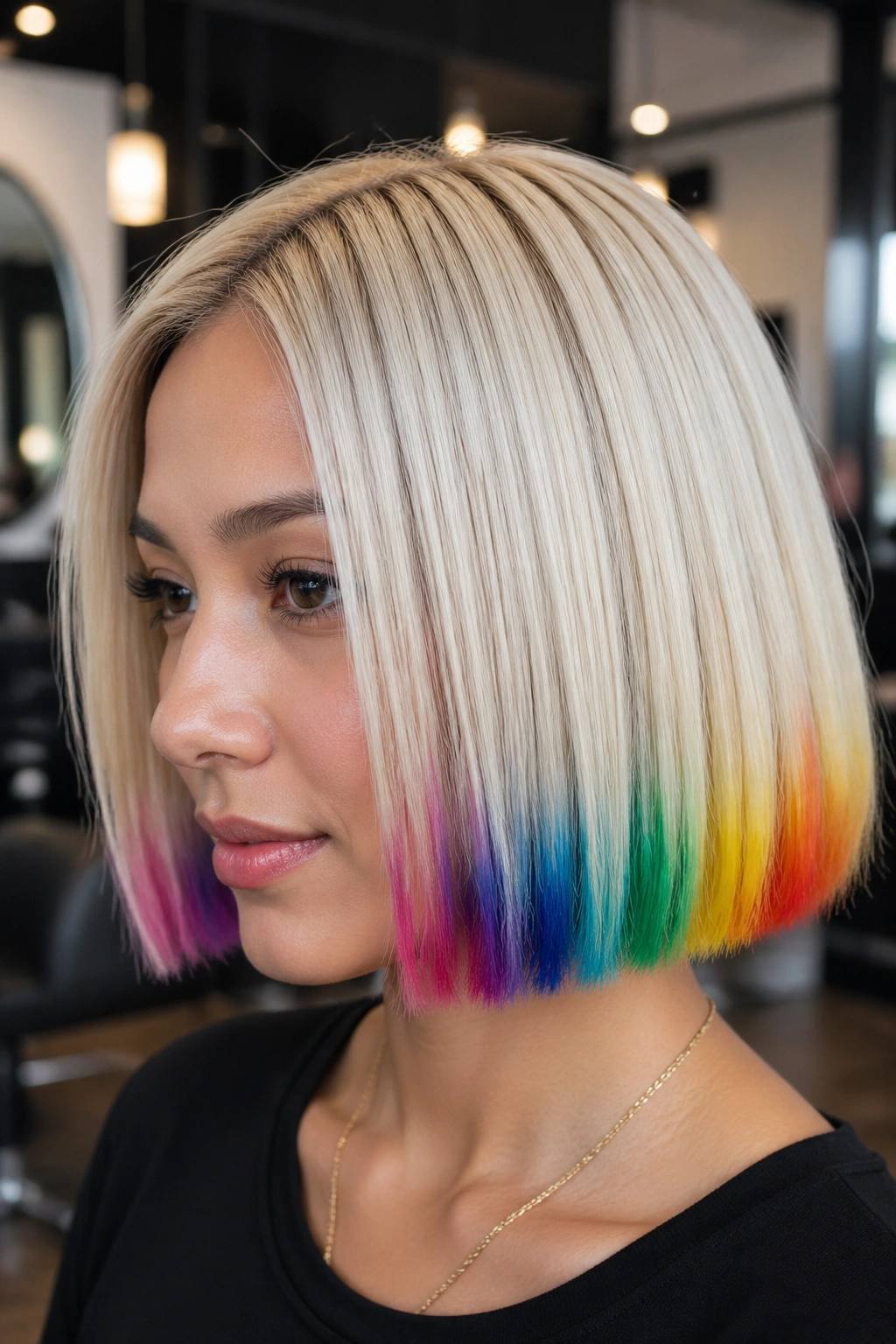
Need the color to hit faster? Go shorter.
A shoulder-length platinum blonde bob gives rainbow tips a sharp edge. Because the braid ends stop around the jaw or collarbone, every color block lands where people actually look first, and the style never drags or feels heavy.
Why the bob changes the whole look
The shorter length also makes maintenance easier. You spend less time detangling the ends, the style dries faster after a wash, and the rainbow at the tips stays visible instead of disappearing into a long curtain of hair.
Ask for ends that are sealed carefully. Short braided styles show fraying sooner, and a rough tip can make the whole look feel unfinished in a hurry.
If you want the cleanest version, keep the bob blunt and the rainbow narrow — thin bands at the ends, not thick streaks halfway up the braid. That keeps the platinum icy and the rainbow crisp.
3. Blonde Braids With Hidden Rainbow Panels
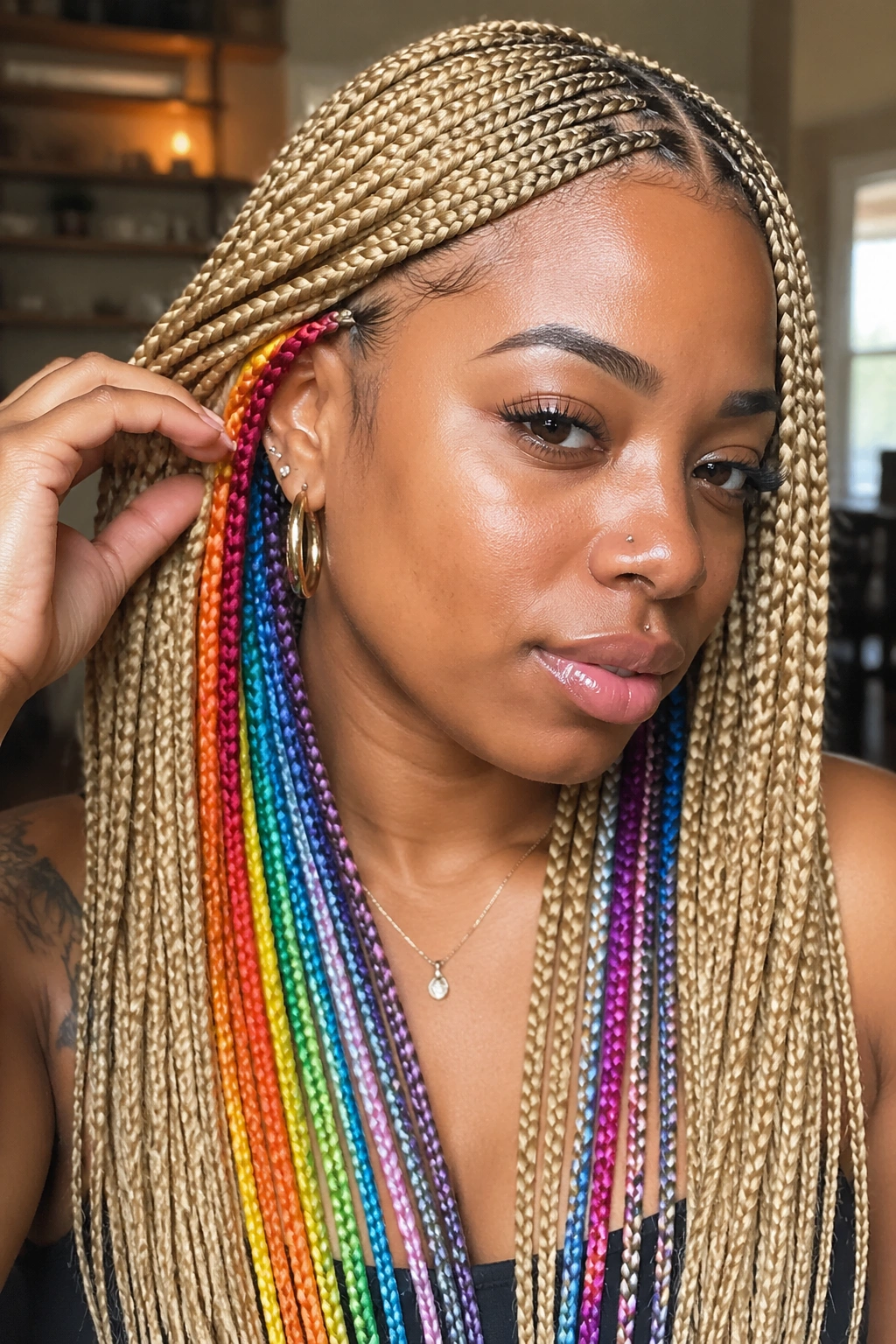
You see the color when the braids move. That’s the whole point.
Peekaboo panels are for anyone who likes a quiet front with a bright surprise underneath. The top layer stays blonde, which makes the style easy to wear, and the hidden rainbow pops when you tuck the hair behind an ear, flip a braid forward, or pull half the style into a ponytail.
Where to hide the color
- A few thin braids at the nape if you want the reveal to happen when the hair swings.
- A temple panel if you like the color near the face without taking over the whole head.
- Two or three alternating underlayer braids if you want the rainbow to read more like a streak than a chunk.
- A single back-center panel if you plan to wear your hair down most of the time.
The trick is restraint. Too many hidden colors stop being a peekaboo effect and start looking busy. Better to let one or two bright zones do the talking.
4. Blonde Ombre Braids That Melt Into Rainbow Ends
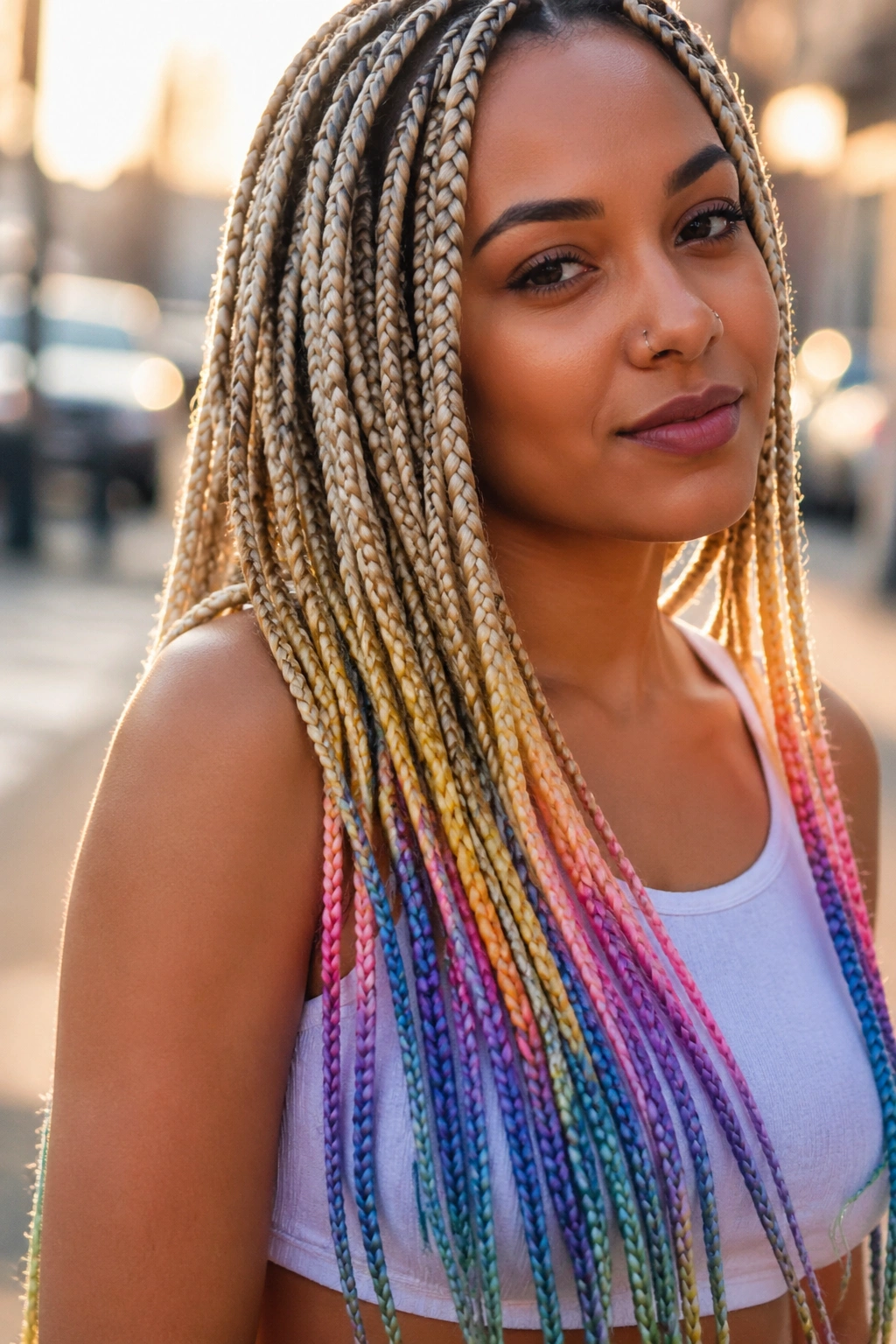
The cleanest rainbow look is often the quietest one.
When blonde fades into rainbow ends, the style gets a built-in bridge. Honey or champagne blonde softens the jump into pink, teal, and violet, so the color change feels smooth instead of chopped into pieces.
Long braids show this best. The more length you have, the more room there is for the blonde to do its job before the bright end arrives.
I like this on braids that fall past the bust line, because the rainbow shows after the braid has already swayed and settled. If you keep the ends sealed well and use only two or three bright shades at the tips, the whole look feels cleaner than a full-head mix.
A blunt rainbow tip can look fun. A blended one looks expensive. That difference matters more than people admit.
5. Jumbo Blonde Braids With Rainbow Hair Cuffs
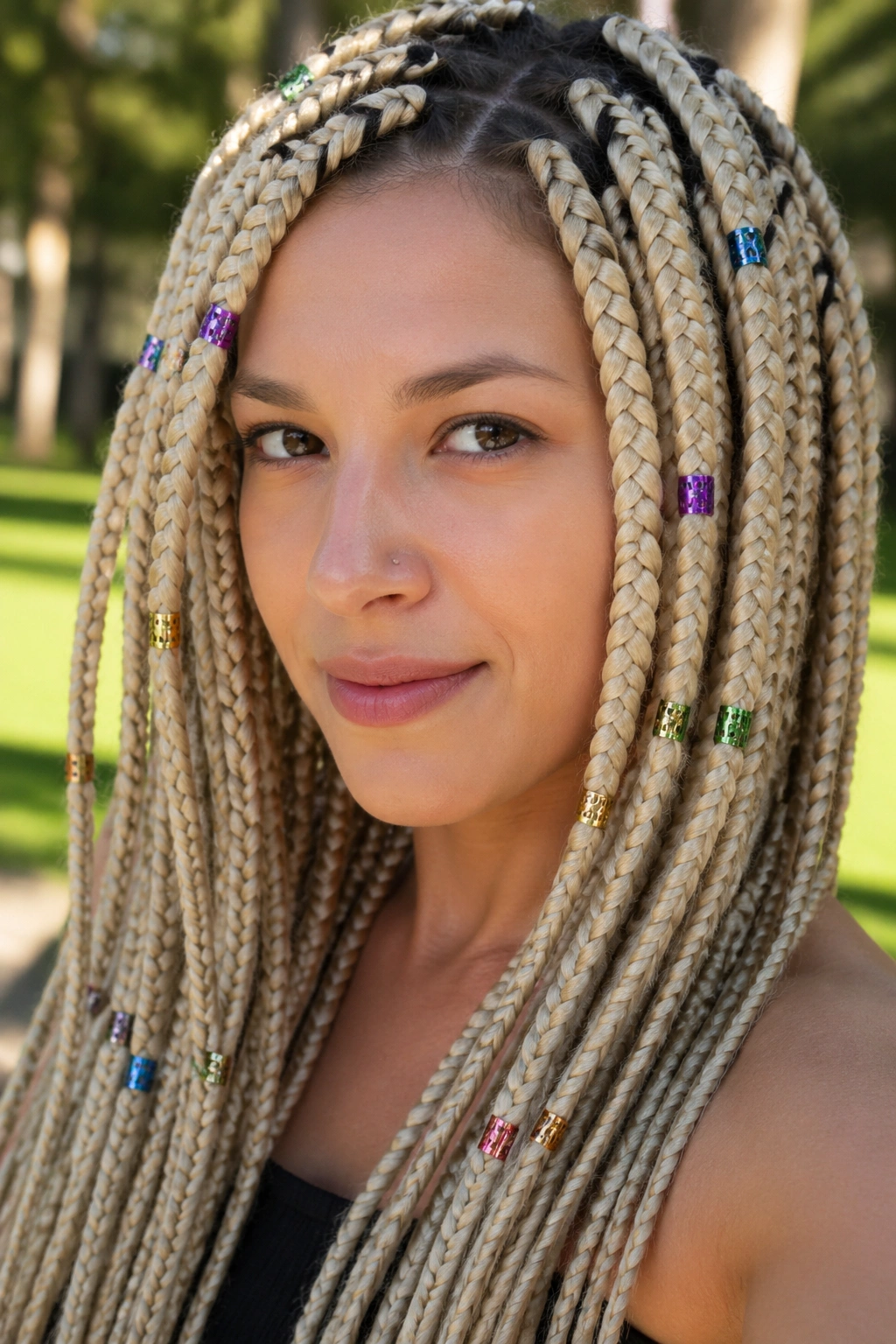
Jumbo braids are not subtle. Good.
The thicker the braid, the easier it is to treat color like jewelry instead of building the whole hairstyle around it. Blonde keeps the base bright, then rainbow cuffs or rings add little hits of color where the braid bends and moves.
What makes jumbo braids work
Large sections show off clean parting, so the rainbow details need breathing room. Put cuffs near the lower third of the braid, not packed together at the root, or the style starts to look cluttered.
- Use 6 to 10 cuffs total on a full head if you want a polished look.
- Keep the cuffs on the outer braids if you want them visible in photos.
- Pair gold cuffs with one or two rainbow cuffs instead of all rainbow, which can get noisy fast.
My rule: if the braid itself is thick, the color accent should be small. Big braid, small accessory. That ratio keeps the look neat.
6. Blonde Lemonade Braids With a Rainbow Part
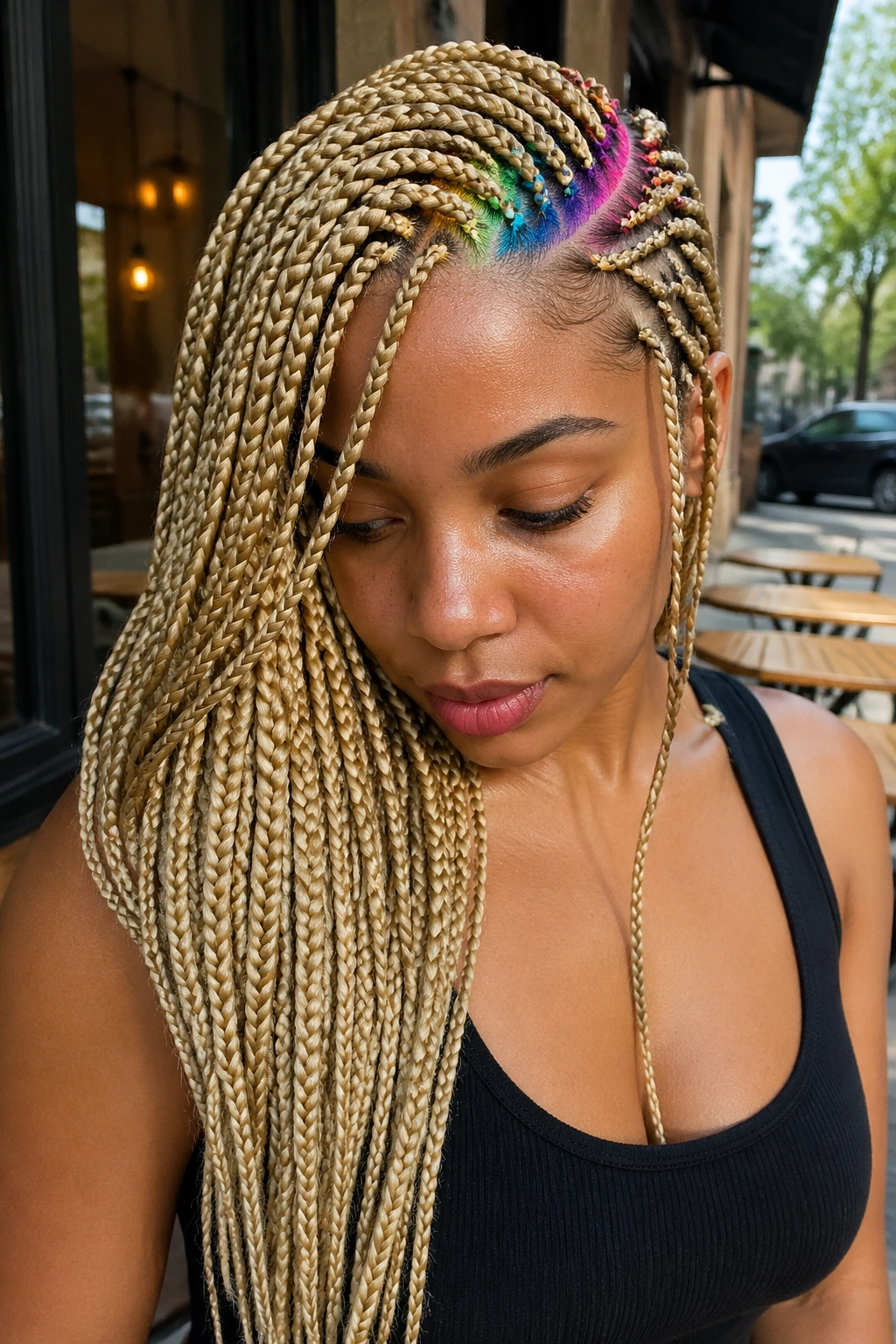
A side part changes the mood before the colors even show up.
Lemonade braids already have movement built in, because the whole style sweeps to one side. Add a rainbow part line — a thin strip of bright color placed right along the part — and the shape starts doing half the work for you.
The nice thing here is control. You can keep the braid bodies blonde and let only the part and a few front pieces carry the rainbow. That keeps the style easy to wear if you like a strong look but do not want full neon sitting around your face.
This also flatters people who like angled lines. The side sweep pulls attention to the cheekbones and jaw, and the color line gives the eye somewhere to land. If you want the braids to look neat, keep the part crisp and the rainbow section narrow.
A messy side part ruins the whole effect. A clean one makes the color look intentional from across the room.
7. Micro Blonde Braids Threaded With Rainbow Strands
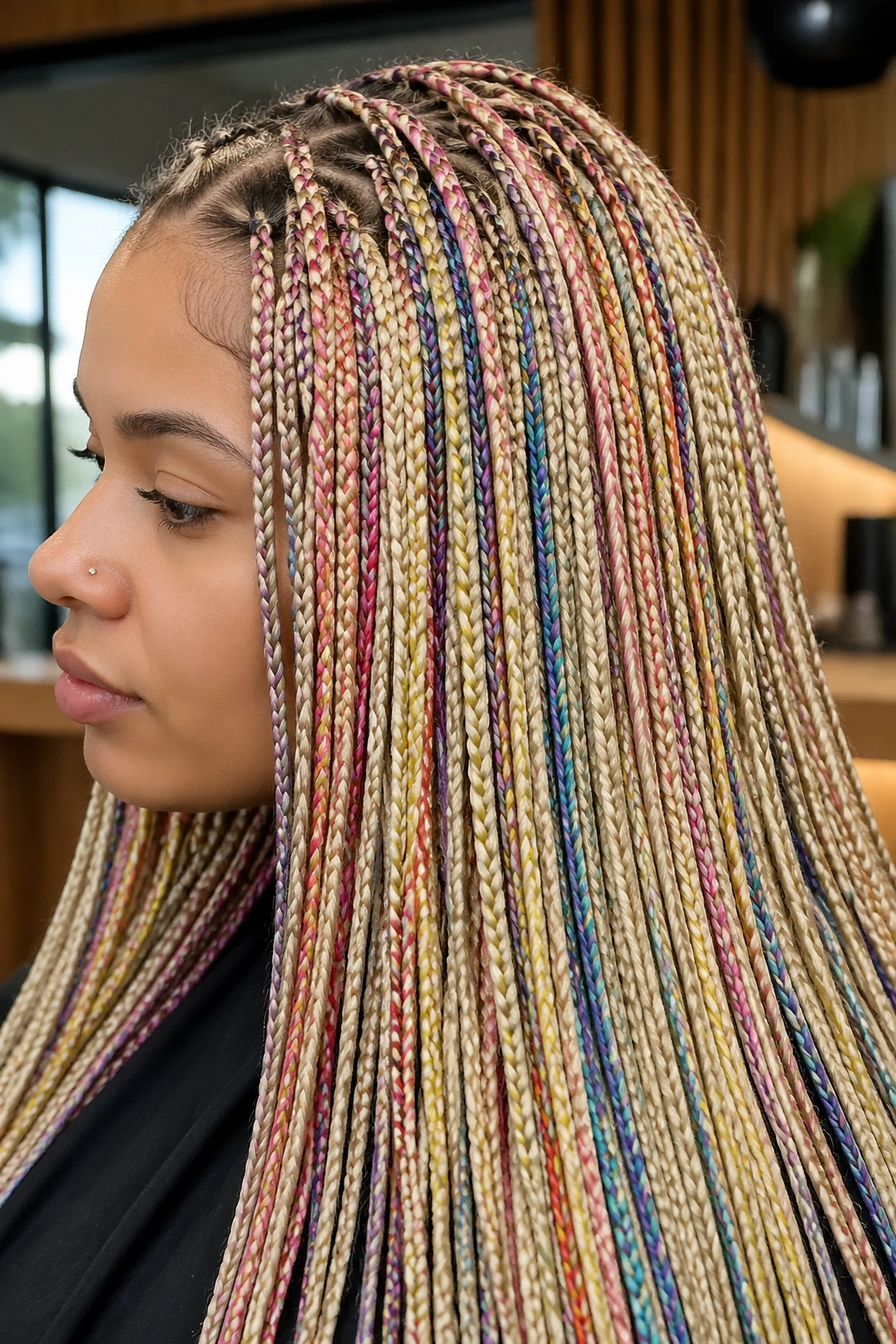
Unlike jumbo braids, micro braids make the color feel woven in.
The smaller braid size lets blonde and rainbow sit closer together, so the finished style reads almost like fabric. It takes longer to install, and you feel that in the chair, but the payoff is a lighter, more detailed look that moves well.
What makes this version different
Micro braids are best when you want the rainbow to look threaded through the hair rather than added on top. Thin strips of color can be crossed in at the root, wrapped around a few braids, or braided in as narrow accent strands.
- Best for people who like detail up close.
- Best with pre-stretched braiding hair, which keeps the braids from looking bulky at the base.
- Best when the colors are close in finish — all matte or all slightly glossy.
- Not the best choice if you want a quick install. Small braids take time.
The style looks especially good when the blonde is pale and the rainbow is limited to two or three shades. Too many colors can turn the detail into blur.
8. Blonde Goddess Braids With Rainbow Curly Pieces
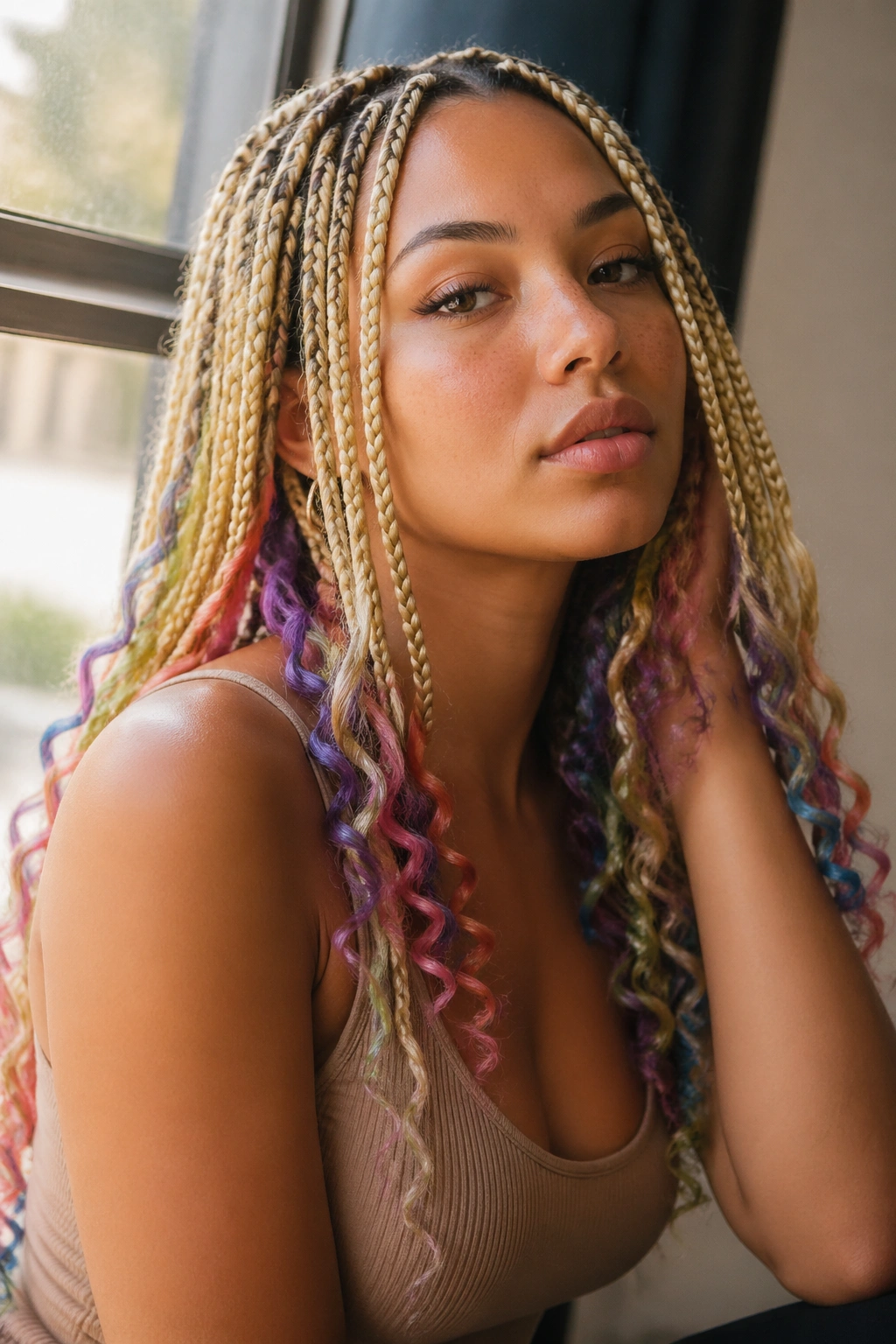
Can rainbow braids still feel soft? Absolutely.
Goddess braids fix the problem a lot of bright styles have: they can feel too sharp. By leaving a few curly pieces loose — usually water-wave or deep-wave hair blended in near the ends — the style picks up movement, and the rainbow pieces get a softer frame.
How to keep the softness
The loose curls should look placed, not random. Tuck the rainbow curls near the face or at the ends of a few blonde braids so the color shows in motion instead of sitting in one solid block.
A lighter hand with mousse helps here. Too much product makes the curls crunchy, and the whole style loses that easy swing that makes goddess braids worth wearing.
This version works best when the blonde is warm and the rainbow leans pastel or jewel-toned rather than neon. Strong color can still work, but the curls already ask for attention. If the shade is too loud, the look starts fighting itself.
There’s a reason people keep returning to this one. It looks like effort without looking stiff.
9. Triangle-Part Blonde Braids With Bright Accents
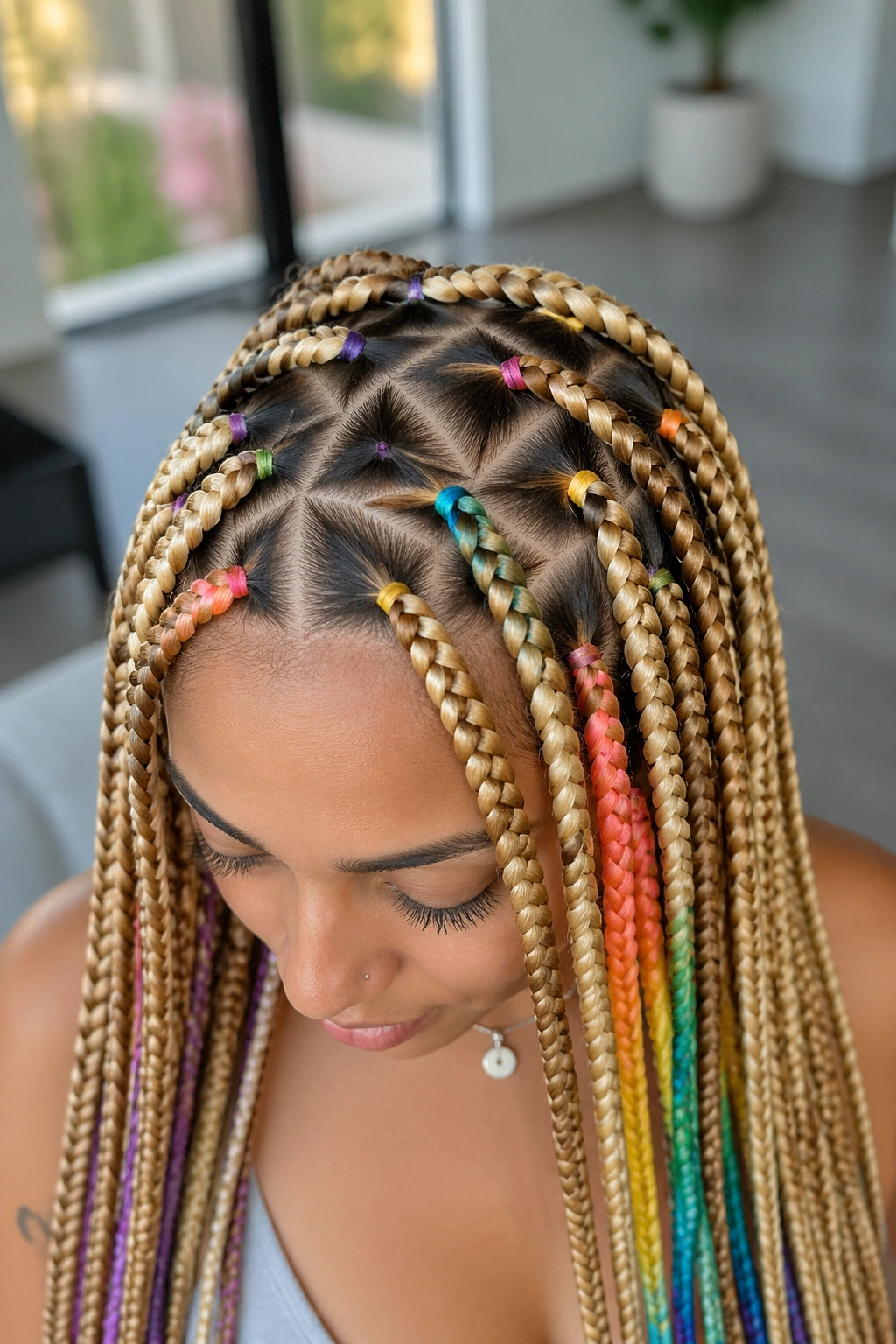
Triangle parts do half the styling for you.
Square parts are classic, but triangle parting gives blonde and rainbow box braids a little more shape at the scalp. The geometry matters because bright color looks better when the base is neat; otherwise the eye wanders to the parts instead of the braids.
A few rainbow accents placed at the triangle points can make the whole head feel designed, not random. That is the real advantage. The color lands in a pattern, and the parting pattern supports it.
If you want this look to stay clean, keep the braid size medium. Very tiny braids can make the triangles disappear, and huge braids can flatten the parting shape. Medium width gives the triangles enough room to show.
This is the kind of style that photographs well from above and from the side. The part lines stay visible, the blonde reflects light, and the rainbow details have a clear place to sit. Small thing, big payoff.
10. Blonde Braids With a Neon Underlayer
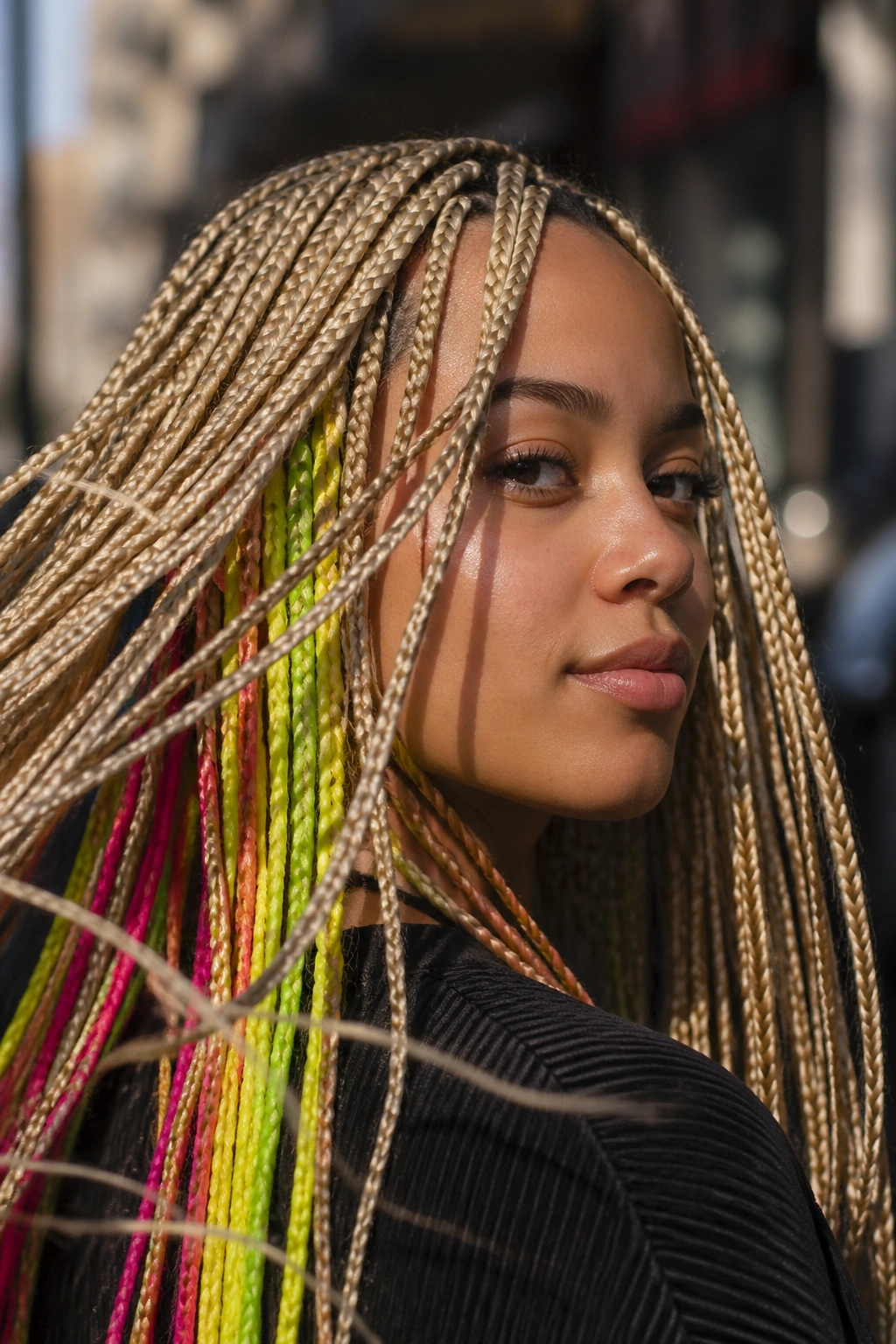
You only catch the neon when the hair moves.
That is what makes the underlayer so good. The blonde sits on top and does the polite thing. The neon waits underneath and flashes out when you toss the braids over one shoulder, tie them up, or let the wind catch them.
Good places for the color
- The lowest row of braids if you want a hidden strip.
- Two panels behind the ears if you want the neon to show when the hair is tucked back.
- A full underlayer if you plan to wear high buns and ponytails a lot.
- A few center-back braids if you want the color to appear only in motion.
The best neon choices are the ones that stay separate from the blonde. Hot pink, lime, electric blue, and violet all hold their own. Pale shades can get washed out once they sit under a bright base.
This style is a smart pick when you want drama without a full-head color commitment. It gives you a switch you can turn on and off.
11. Blonde Braids and Beads in Rainbow Order
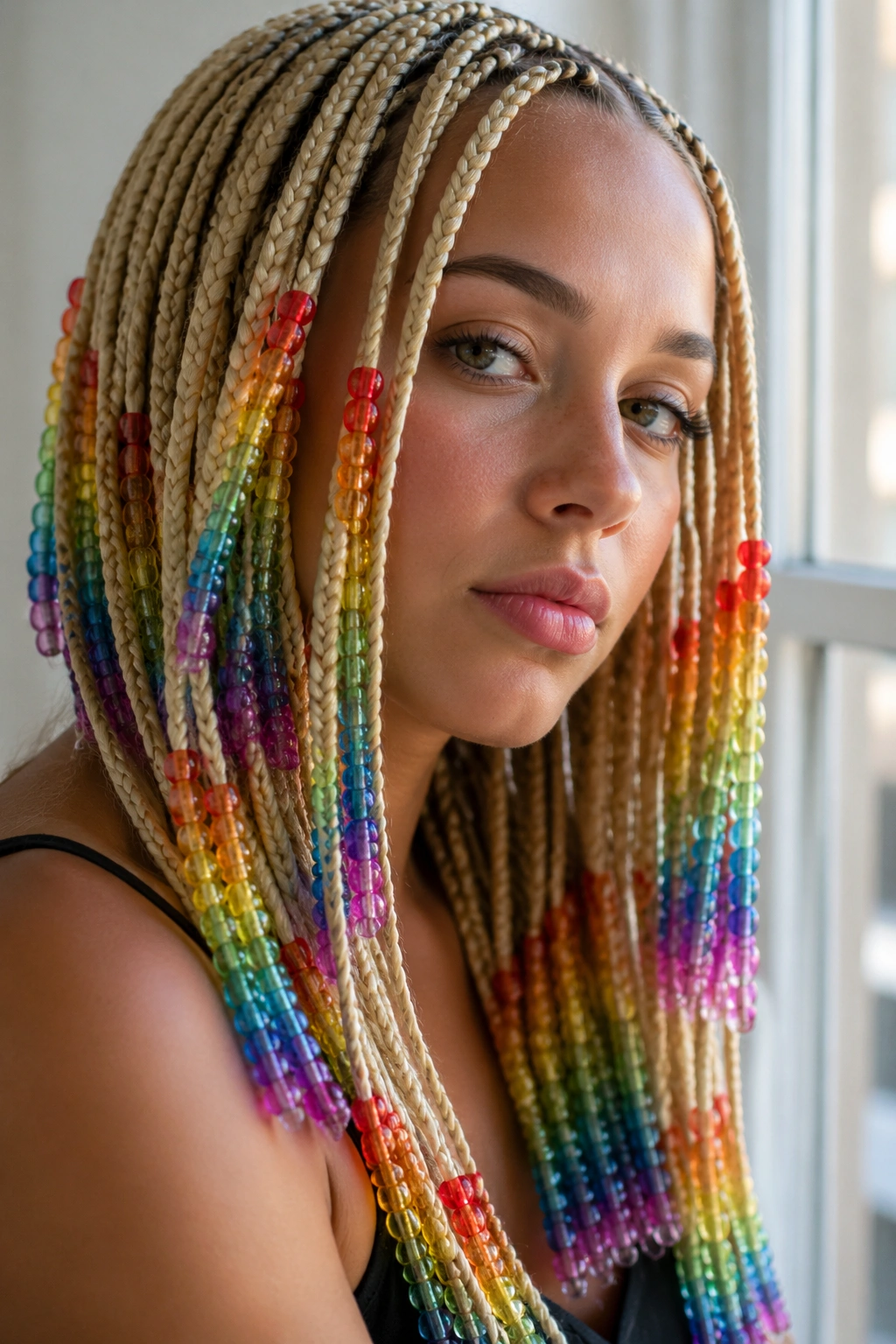
Beads change the sound of a style.
Rainbow beads on blonde box braids add motion that color alone cannot give. Every step turns into a small clink, and the ends stop looking static. That makes the style feel younger and a little more playful, even when the braids themselves are neat and simple.
The best part is the patterning. You can run the beads in a strict rainbow order from braid to braid, or repeat a short sequence — red, orange, yellow, then back to blue, purple, green. A repeated pattern feels more polished than a random scatter.
Keep the bead size under control. Big acrylic beads can weigh the ends down fast, especially on long braids. If you want the rainbow to stay light, use medium beads on the front braids and smaller ones farther back.
Unlike cuffs, beads bring movement all the way to the tips. That is the whole charm. They’re louder, yes, but they also look alive.
12. Blonde Boho Box Braids Wrapped With Rainbow Thread
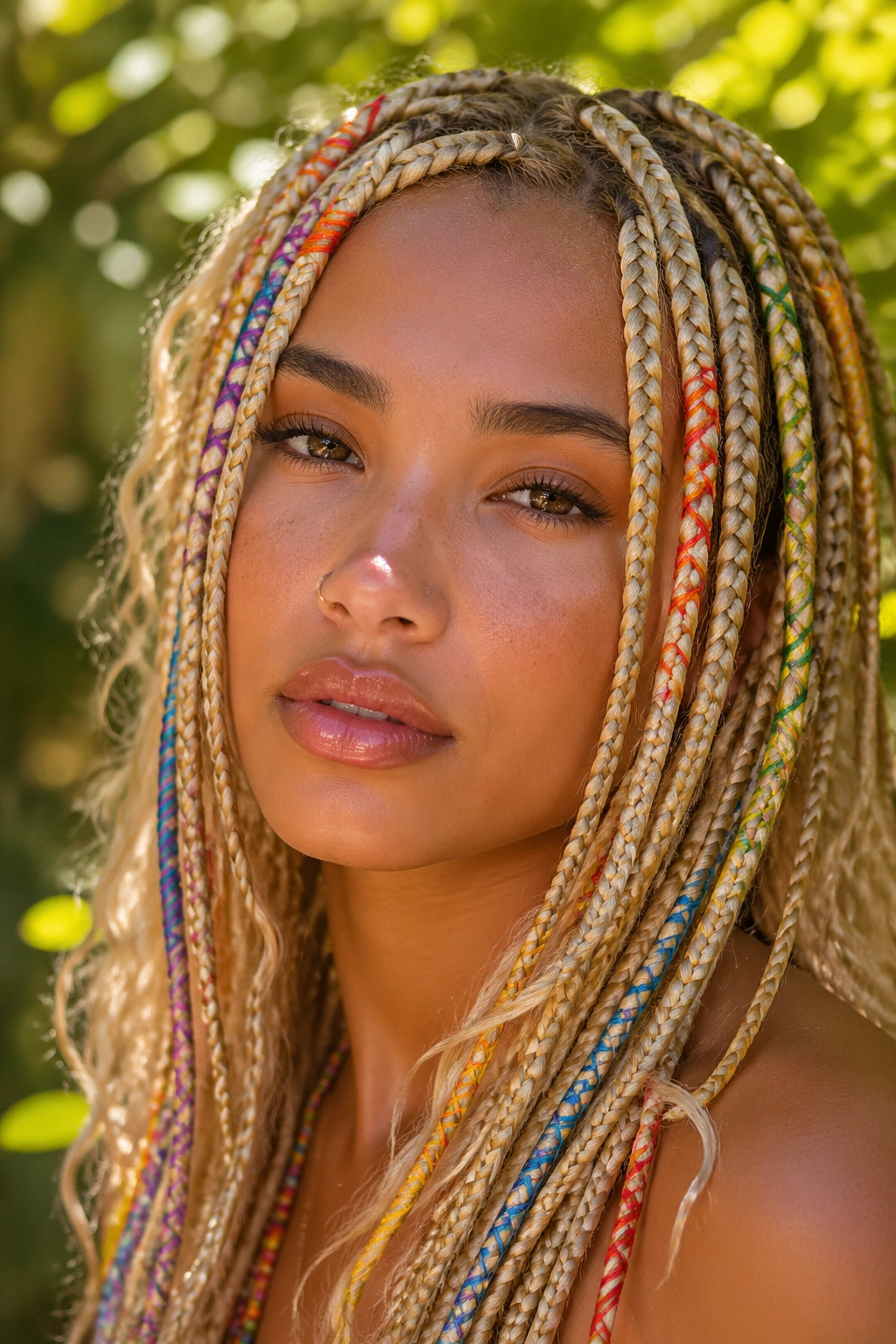
If you hate hair that looks too finished, this is the lane.
Boho box braids already lean relaxed. Add rainbow thread wraps around a few blonde braids, then leave some curly ends loose, and the whole style softens into something that feels lived-in instead of rigid.
The thread matters more than people think. Thin satin ribbon or smooth wrapping thread gives a cleaner look than fuzzy yarn, which can snag and bulk up the braid. A few wraps around the middle third of the braid is enough. Wrap too much and the effect stops looking casual.
This style also gives you room to mix textures. Straight braid body, curly end, smooth thread, maybe one or two tiny colored accents. It sounds like a lot, but the pieces do different jobs.
My favorite version uses warm blonde as the base and one rainbow thread color repeated across three or four braids. That repetition keeps the style from looking pieced together in a hurry.
13. Blonde Braids With Rainbow Bangs
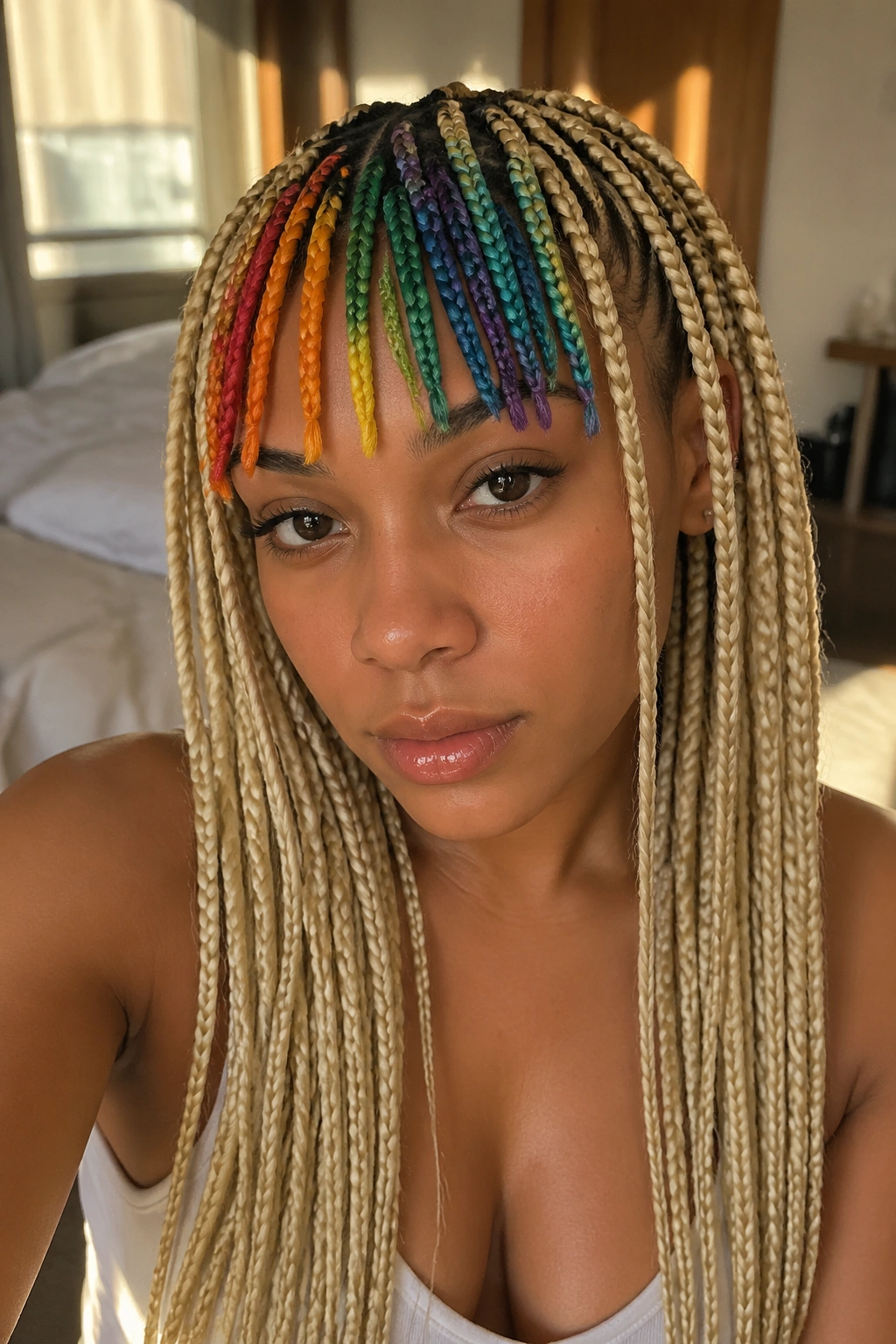
Can rainbow bangs work without taking over the whole head?
Yes, and they’re a smart place to start if you want color near the face but do not want the commitment of a full rainbow install. The bang section can be a short row of braids across the forehead or a fringe-like cluster that lands just above the brows.
The key is keeping the rest of the hair calmer. Blonde through the length, rainbow up front. That contrast makes the fringe read on purpose, not like a leftover detail.
This style works best when the bangs are narrow and the color choices are clear. A mix of pale pink, blue, and yellow can get soft fast, while hotter shades make the fringe pop. If your face shape already benefits from a little framing, rainbow bangs can do a surprising amount of work.
A blunt bang line looks bold. A staggered one looks softer. Pick based on the mood you want, because the front of the head does not give you much room to hide.
14. Split Blonde and Rainbow Braids
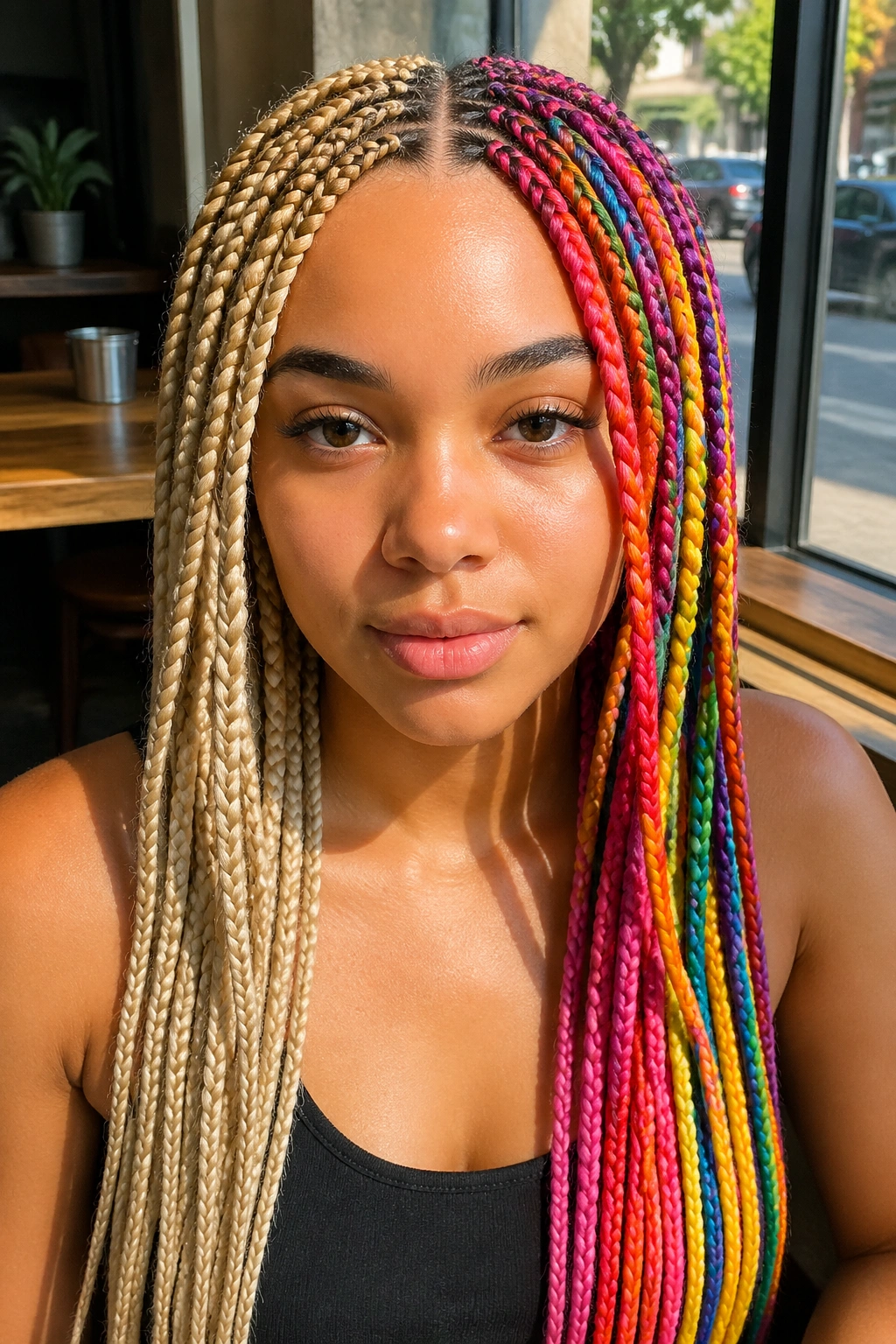
Picture a clean middle part with one side all blonde and the other side stacked with rainbow. It sounds simple. It is not.
Split-color braids are for people who like a style that makes a decision and sticks to it. One side can stay honey or platinum, while the other side runs through a full rainbow gradient. The sharp divide gives the look a graphic edge that softer styles never quite reach.
- Keep the part line razor clean.
- Match braid size on both sides, or the split will feel unbalanced.
- Use the same length on both halves if you want the contrast to look deliberate.
- Let the rainbow side hold the brightest shade near the face if you want the color to read immediately.
The style works because the contrast is easy to understand at a glance. There’s no hunting for the color. You see it. Then you see the blonde, and the two halves play off each other.
If you like neat lines and bold contrast, this one is hard to beat.
15. Smoky Blonde Braids With Pastel Rainbow Tips
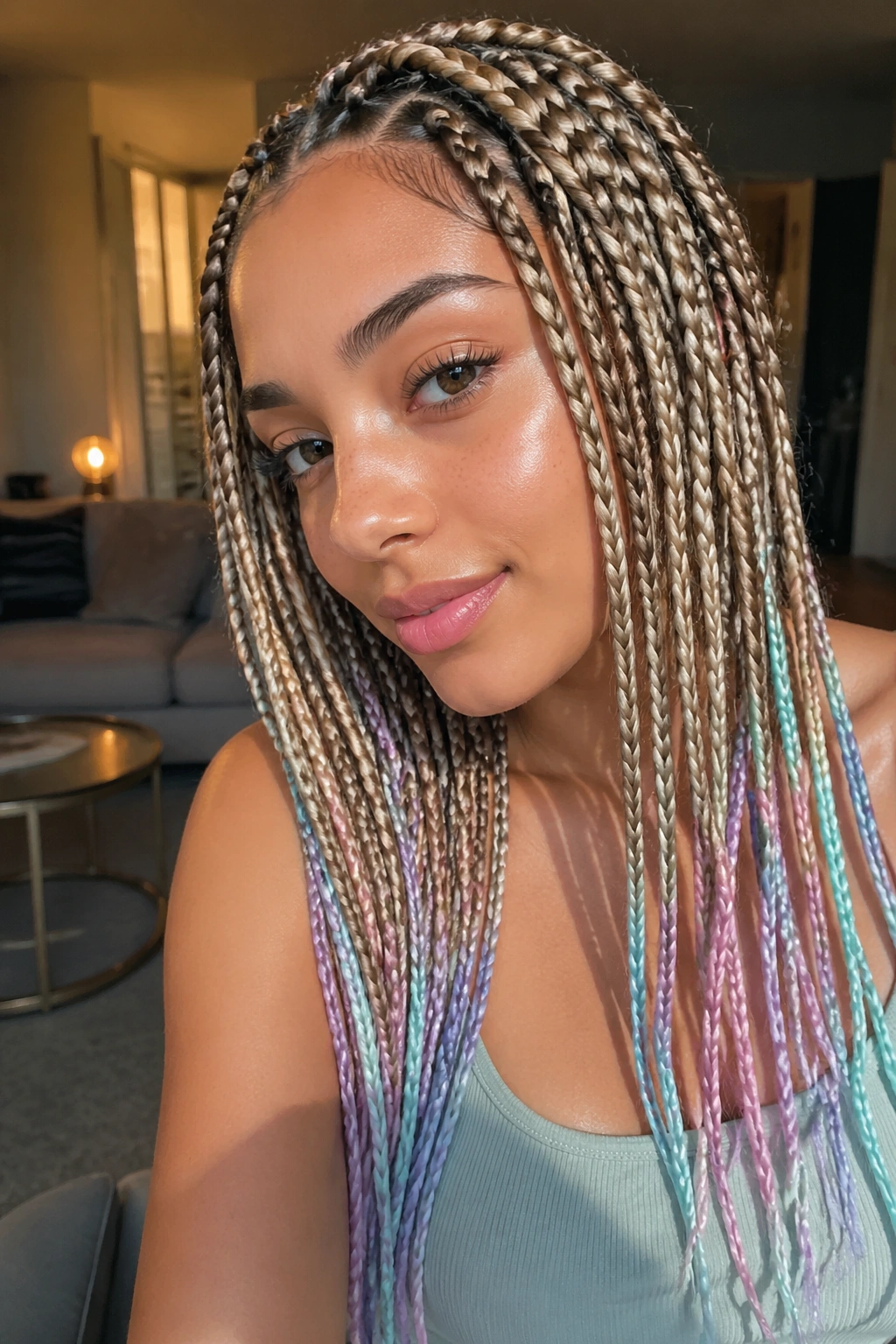
Smoky blonde is the grown-up cousin of bright blonde.
It has enough depth to keep the style from looking flat, and it gives pastel rainbow tips room to breathe. Lilac, mint, blush pink, and pale blue sit nicely on top of that darker blonde because they do not have to fight a super-bright base.
Why pastel works here
Pastel at the ends works best when the braid body does the heavy lifting. Smoky blonde gives you that base. It makes the whole style look a little softer and a little more expensive than a harsh platinum-and-pastel mix, which can sometimes read cold.
This is also a good choice if you want rainbow box braids but do not want the colors shouting. The pastel tips are visible, but they do not take over. That makes the style easier to wear with plain clothes, work clothes, or anything that already has a lot going on.
Keep the tips sealed cleanly. Soft colors show fray fast, and nothing kills a pastel finish faster than rough ends.
16. Blonde Braids With Color-Block Panels
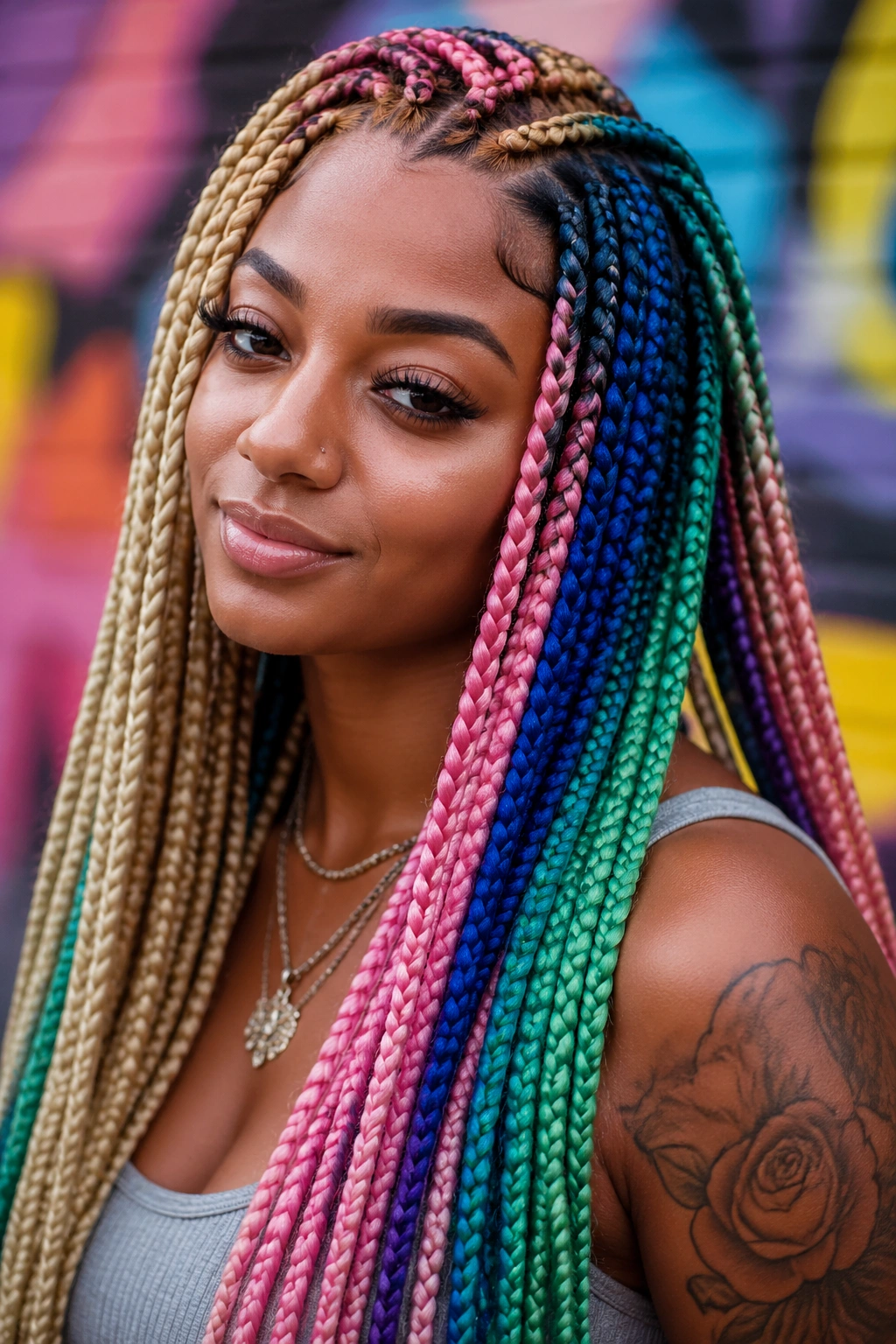
Unlike ombré, color-blocking keeps each shade obvious.
That is the whole appeal. Instead of a slow fade, you get clear sections: blonde, pink, blue, green, purple. The style feels graphic and a little bolder because the eye can tell where one color stops and the next begins.
This works best with medium or large braids. Tiny braids can make the blocks blur together, while very long braids can make the color look stretched thin. A medium length gives each panel enough space to register.
I like color-blocking when the goal is to show the rainbow on purpose, not imply it. The style reads clean in photos, especially if each block takes up at least a few braids in a row. One braid of each color can look scattered. A proper block looks planned.
If you want the brightest version, keep the blonde cool and the rainbow saturated. That contrast makes each section sit apart instead of melting into one another.
17. XL Blonde Braids With Multicolor Feed-Ins
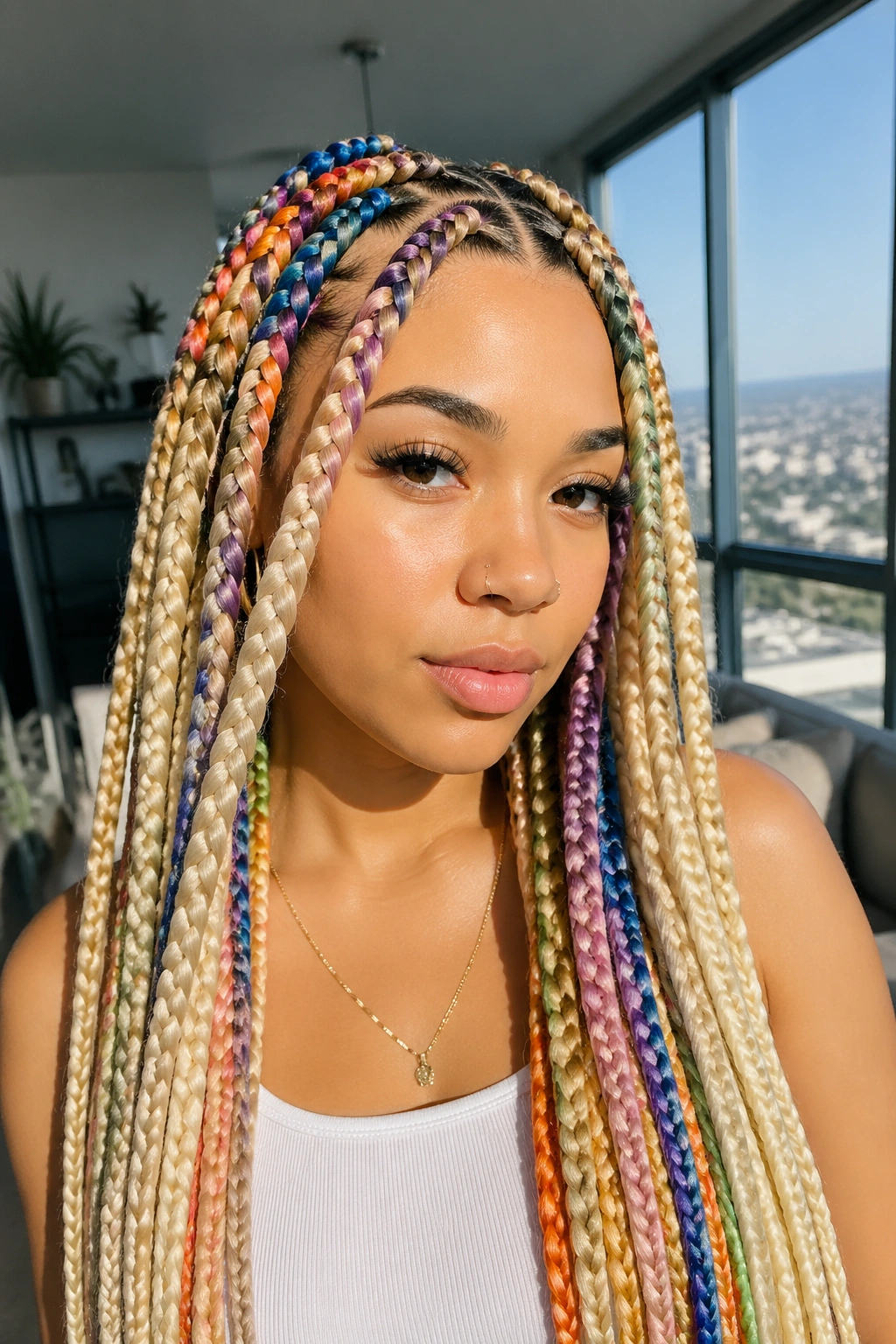
If you want color at the scalp without making every braid rainbow, feed-ins are the sharpest option.
XL braids already carry presence. Add multicolor feed-in strands at the root, and you get a style that looks engineered rather than decorated. The color starts near the scalp, then settles into a blonde body, which gives the braid a stacked, dimensional look.
What to ask for
- Thin colored feed-in pieces at the front rows if you want the color visible right away.
- A heavier color mix at the crown if you plan to wear high ponytails.
- Blonde through the main braid length so the style does not turn muddy.
- Two or three repeated colors instead of every shade under the sun.
This style works because the color changes in layers. You notice the root first, then the braid body, then the ends. That staged effect looks great on long braids, especially when the parting is neat and the sections are even.
It is bold, yes. It is also one of the smartest ways to wear rainbow without losing the blonde.
18. Curly-End Blonde Box Braids With Floating Rainbow Strands
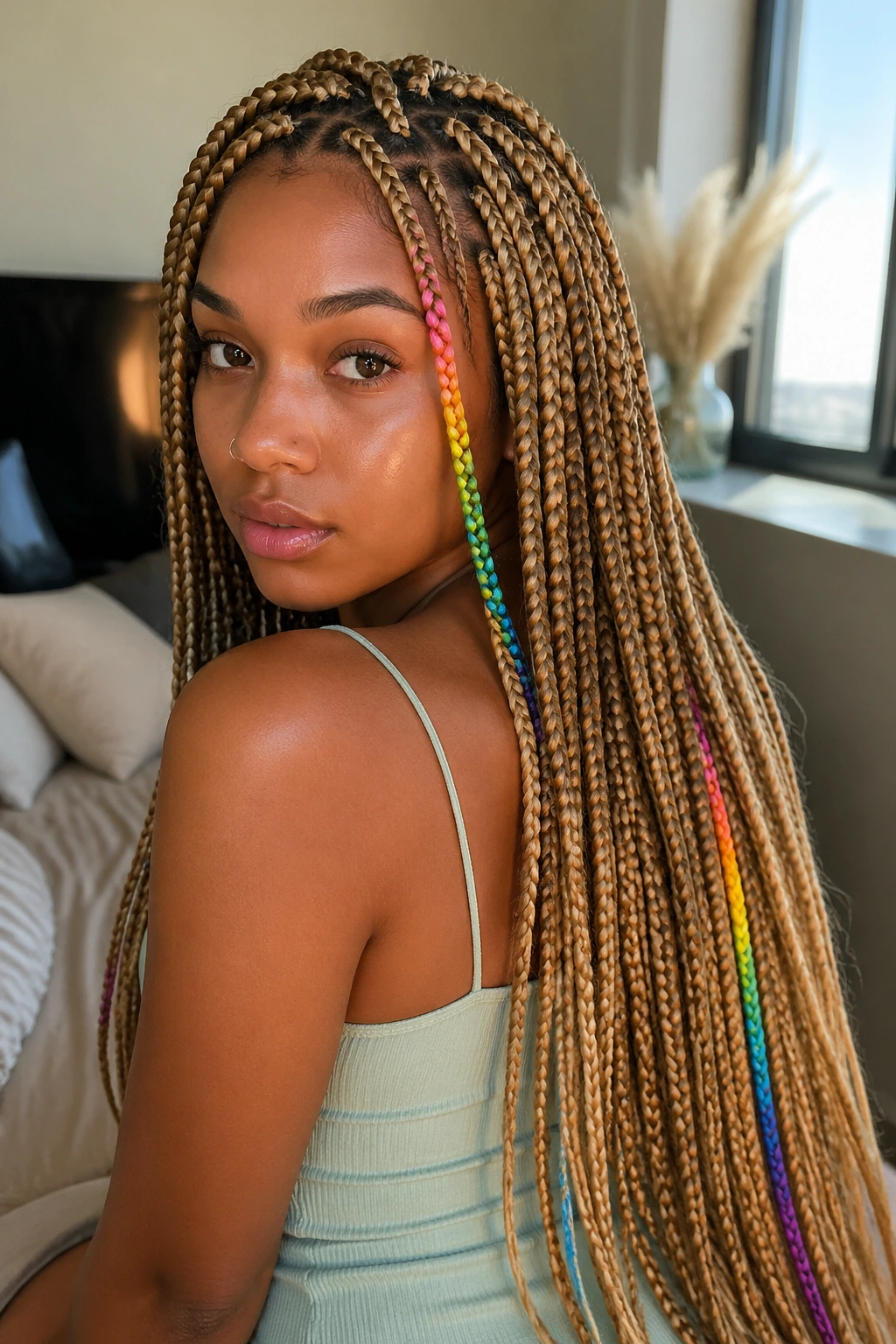
The strongest blonde and rainbow box braids are the ones that know when to stop.
Curly-end braids do that well. The braid stays structured, then the ends open up into soft texture that catches color in motion. Add a few floating rainbow strands through the length — thin accents that move with the braids rather than sitting on top — and the whole style gets a lighter feel.
This is a good final note because it shows how much the finishing details matter. The same blonde base can look sleek, loud, soft, or playful depending on whether the ends are blunt, curled, beaded, wrapped, or left loose. Color alone does not carry the whole look. Shape does the heavy lifting.
If you want the rainbow to feel airy, keep the bright pieces thin and place them near the front and ends. If you want more punch, make the curly ends more defined and choose a higher-contrast blonde. One extra move can change the mood a lot.
Good braids do not need every trick. They need the right few.