


The best lemonade box braids do two jobs at once. They sweep cleanly across the head, and they still look like box braids when they move.
That sounds simple until you sit in the chair and the part starts drifting, the roots get bulky, or the braids feel heavier than they looked in the photo. Side-swept styles expose every mistake near the hairline, which is why a neat part matters so much. They also show off texture in a way a straight-back style never will. Good lemonade braids have attitude. Bad ones just hang there.
I keep coming back to this style because it can go in so many directions. You can keep it polished and minimal, load it with cuffs, cut it into a bob, stretch it past the waist, or soften it with curls and color. The shape stays the same, but the mood changes fast. That’s the part people underestimate.
1. Classic Side-Swept Lemonade Box Braids
The classic version works because it is disciplined. A clean diagonal part and evenly sized braids do most of the visual work before accessories or color ever show up.
Why the angle matters
A side-swept line opens the face without making the whole style feel exposed. It gives one side a little drama and keeps the other side anchored, which is why this version still looks neat after a long day. The braids fall in a way that feels intentional, not random.
- Best braid size: medium sections that stay tidy without looking bulky.
- Best part placement: start the sweep above the arch of the eyebrow.
- Best finish: a light mousse pass and a scarf wrap at night.
- Best use: everyday wear, job interviews, trips, and low-key events.
Keep the first braid row crisp. If the front part is crooked, the whole style reads tired fast.
2. Waist-Length Lemonade Box Braids
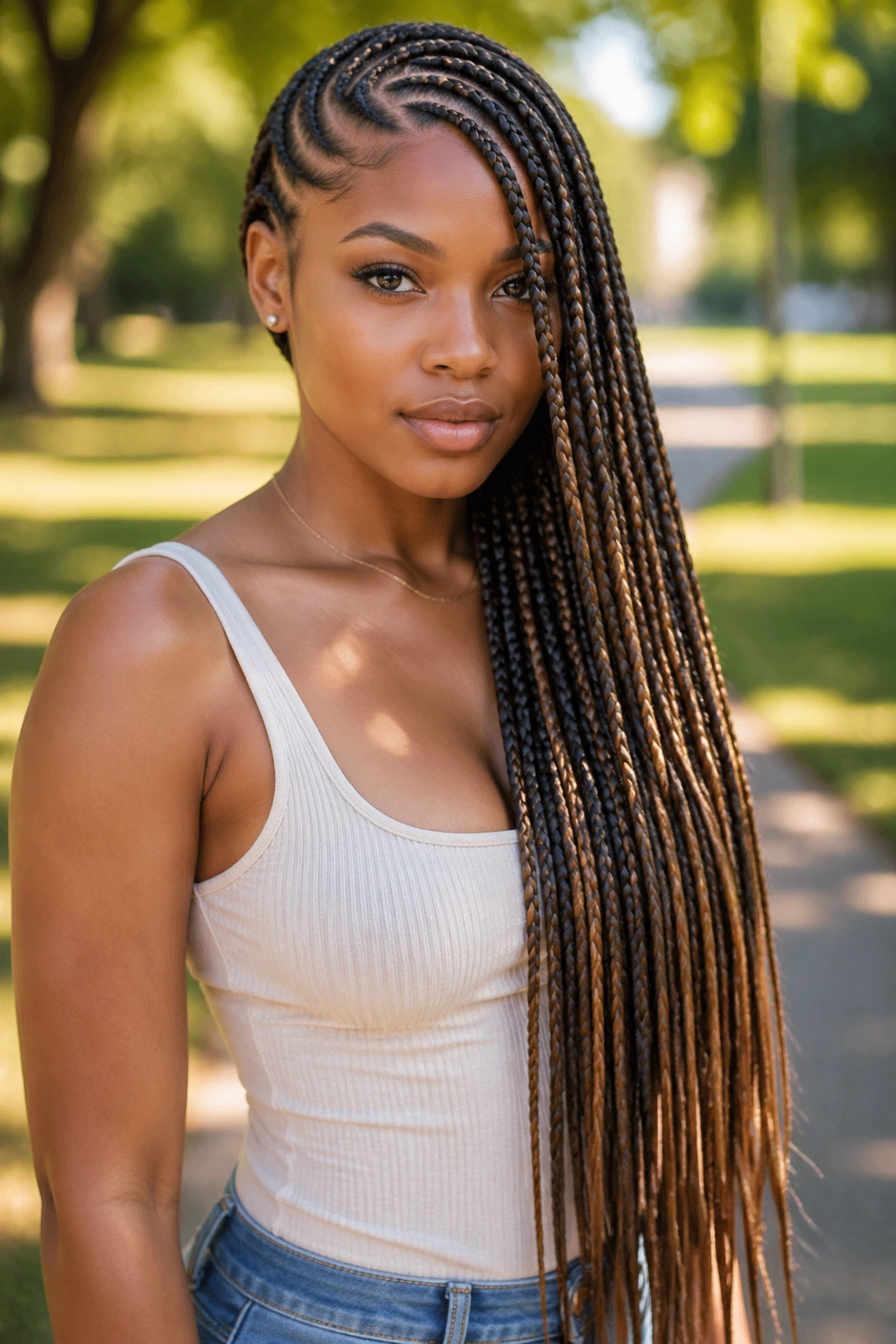
Waist-length lemonade box braids look dramatic because the sweep has room to move. The longer the braid, the more obvious the curve becomes when it lands over one shoulder.
That length does ask for balance. If the hair added to each section is too heavy, the roots feel tight and the style starts fighting itself by the second day. Knotless or feed-in installation helps here because the braid can start lighter near the scalp and build gradually. The result is smoother and easier to wear for long stretches.
Length changes the whole mood. Shoulder skimming says practical. Waist-length says you meant it.
If you want this version to stay wearable, keep the front rows a little smaller than the back. That stops the style from tipping too much weight toward the face and makes the side sweep fall in a cleaner line.
3. Jumbo Lemonade Box Braids
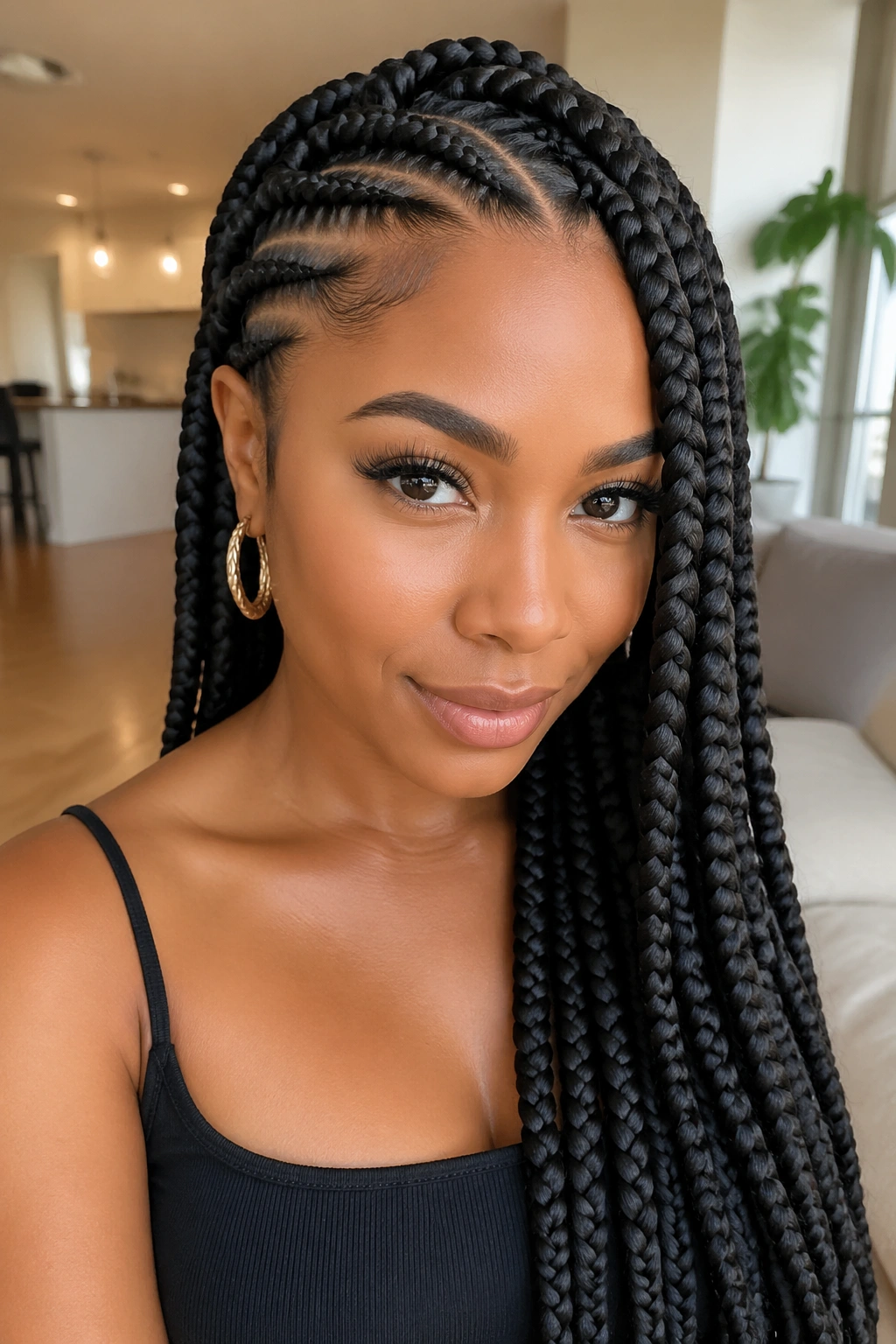
Why do jumbo lemonade box braids get attention so fast? Because they turn the side sweep into a bold shape instead of a soft one.
How to keep jumbo braids neat
The trick is not making the sections huge all over. The first row near the part still needs control, even if the lengths are thick and chunky. When the front braids are too oversized, the style loses that polished side-swept line and starts looking puffy at the root.
- Use larger sections through the crown, smaller ones near the hairline.
- Keep the braid tension even so the base does not feel sore.
- Use a setting mousse after installation to calm flyaways.
- Choose this size if you want a faster install and a louder silhouette.
Big braids are not lazy braids. They just need cleaner parting. Done well, they look strong and modern without feeling stiff.
4. Medium-Length Everyday Lemonade Box Braids
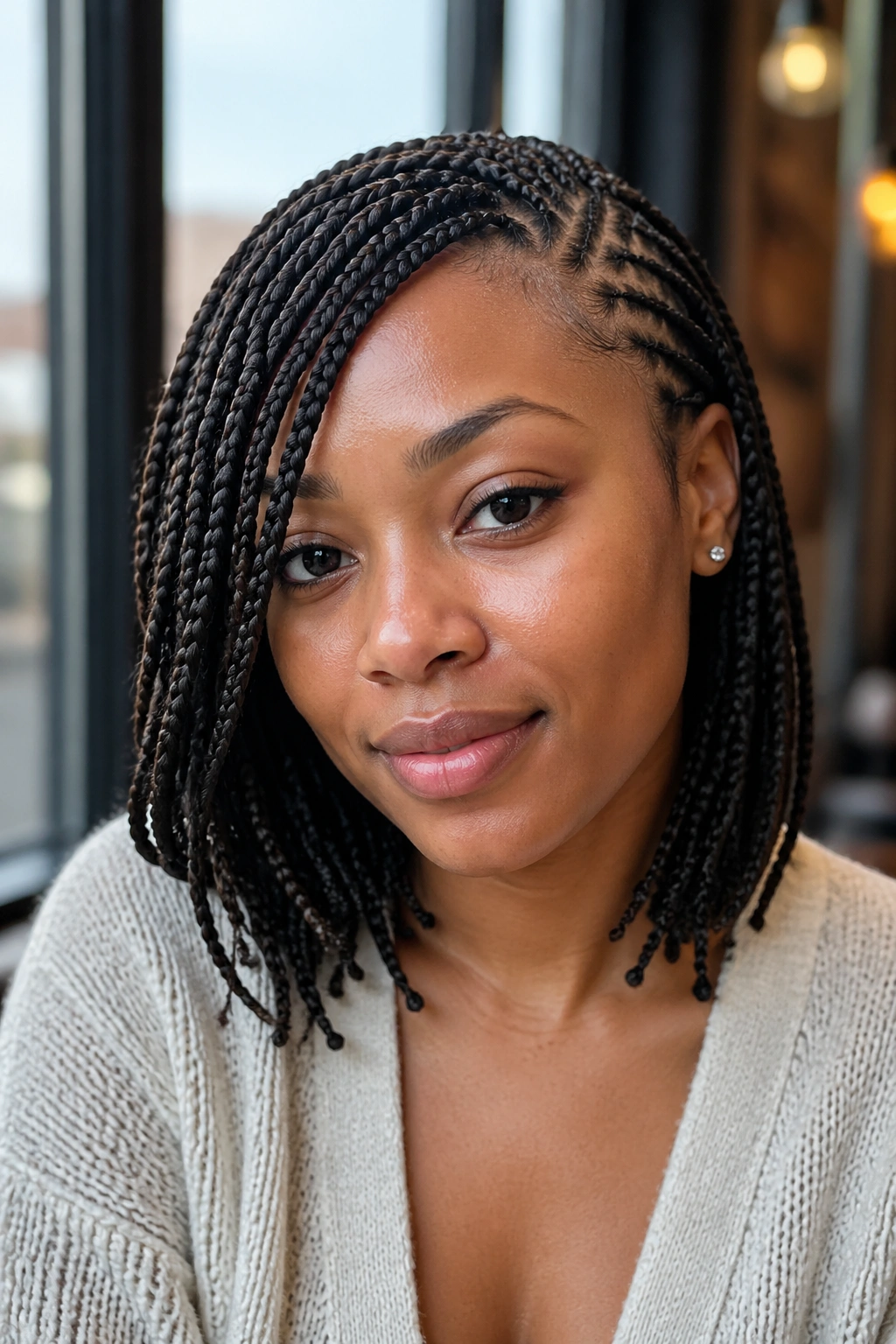
If you want a style that can handle a commute, errands, and a last-minute dinner without a full restyle, medium-length lemonade box braids make a lot of sense. They sit in that useful middle zone where the hair still moves, but it does not drag.
This length is the one I suggest to people who want a side-swept look without committing to waist-length weight or bob-level sharpness. It’s easy to tuck behind the ear, easy to pin back, and far less annoying when you sleep. The style also dries faster after washing, which matters more than people admit.
- Works well for school, work, and travel.
- Fits under a scarf or bonnet more easily than longer sets.
- Keeps the side part visible without overwhelming the face.
- Gives you enough length for buns, ponytails, and half-up styles.
Middle length is underrated. It may not shout, but it gets used.
5. Knotless Lemonade Box Braids
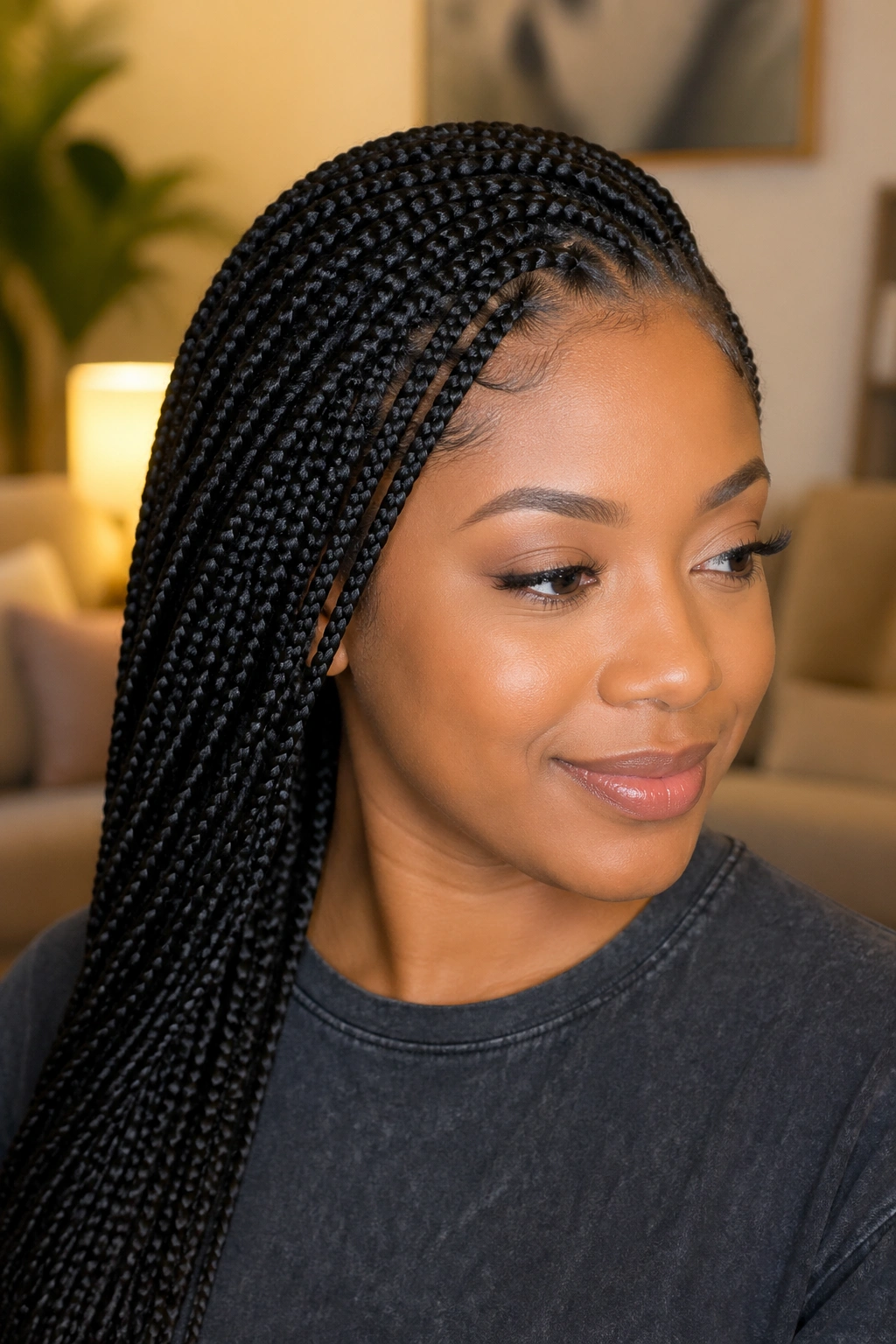
Knotless lemonade box braids are the version I recommend to people who hate that hard bump sitting at the scalp. The braid starts with your natural hair and gets fed in gradually, which gives the root a softer look and usually a more comfortable feel.
They also move differently. That matters. A knotless braid swings in a looser way, so the side sweep feels less boxy and more fluid. The style still reads as lemonade braids, but the finish is gentler around the edges and less bulky near the forehead.
The tradeoff is time. A knotless install usually takes more patience than a traditional braid set, and the braider has to keep the feed-in sections even. When it’s done well, though, the result looks cleaner as it grows out. You get less of that harsh “new install” edge and more of a soft transition from scalp to braid.
If your scalp gets tender easily, start here.
6. Small Lemonade Box Braids
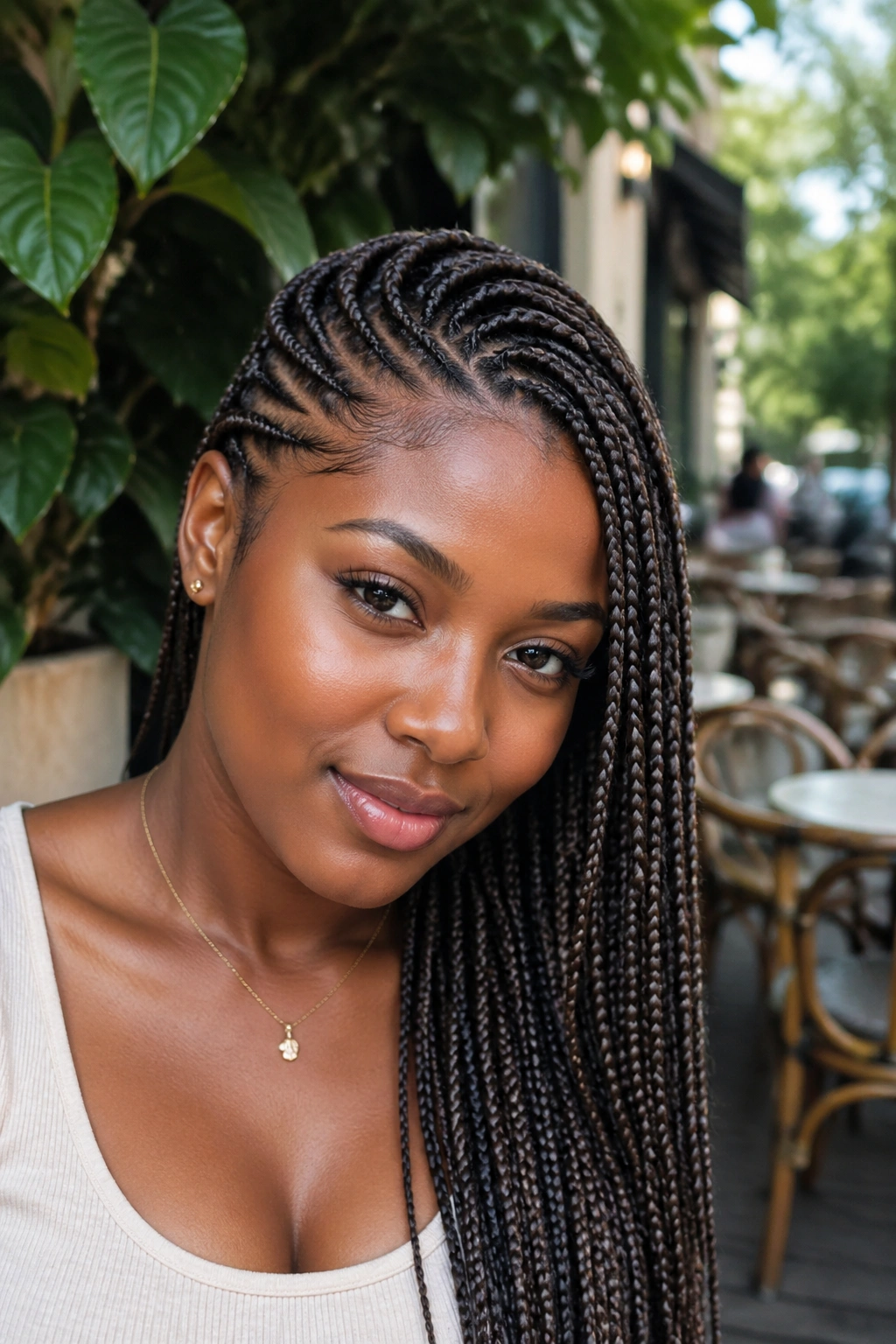
Unlike jumbo braids, small lemonade box braids don’t announce themselves from across the room. They build the shape slowly, braid after braid, until the side sweep looks almost tailored.
That is the real appeal. Small braids give you a lot of movement and a tighter, more detailed parting pattern. They also tend to last longer before the style starts looking fuzzy, which is one reason people who wear braids all the time keep returning to them. The downside is obvious: the install takes longer. No one should pretend otherwise.
Small braids are a good fit if you want a more delicate look, if you like to wear your braids in multiple styles, or if you don’t mind sitting through a long appointment. They also make color gradients and subtle highlights stand out more clearly because each braid acts like its own tiny line.
Choose this size if detail matters more than speed.
7. Lemonade Box Braids With Curled Ends

Curled ends soften a side-swept braid faster than color or cuffs do. The shape at the bottom changes the whole line of the style, especially when the curls brush the shoulder instead of hanging straight.
Why the curl changes the whole shape
A straight braid can feel strict. Add curls at the ends and the style gets movement without losing structure. Perm rods, flexi rods, or a clean hot-water set can give you that finish, but the ends need to cool fully before you touch them. Pulling the rods out too soon is how curls go flat or frizzy before they have a chance to set.
- Use dry braid hair before dipping the ends.
- Let the curl cool before separating it.
- Mist the ends lightly with mousse if they start to puff.
- Wrap them at night so the curls keep their shape.
Do not rush the cool-down. That waiting time is where the curl holds.
8. Triangle-Part Lemonade Box Braids
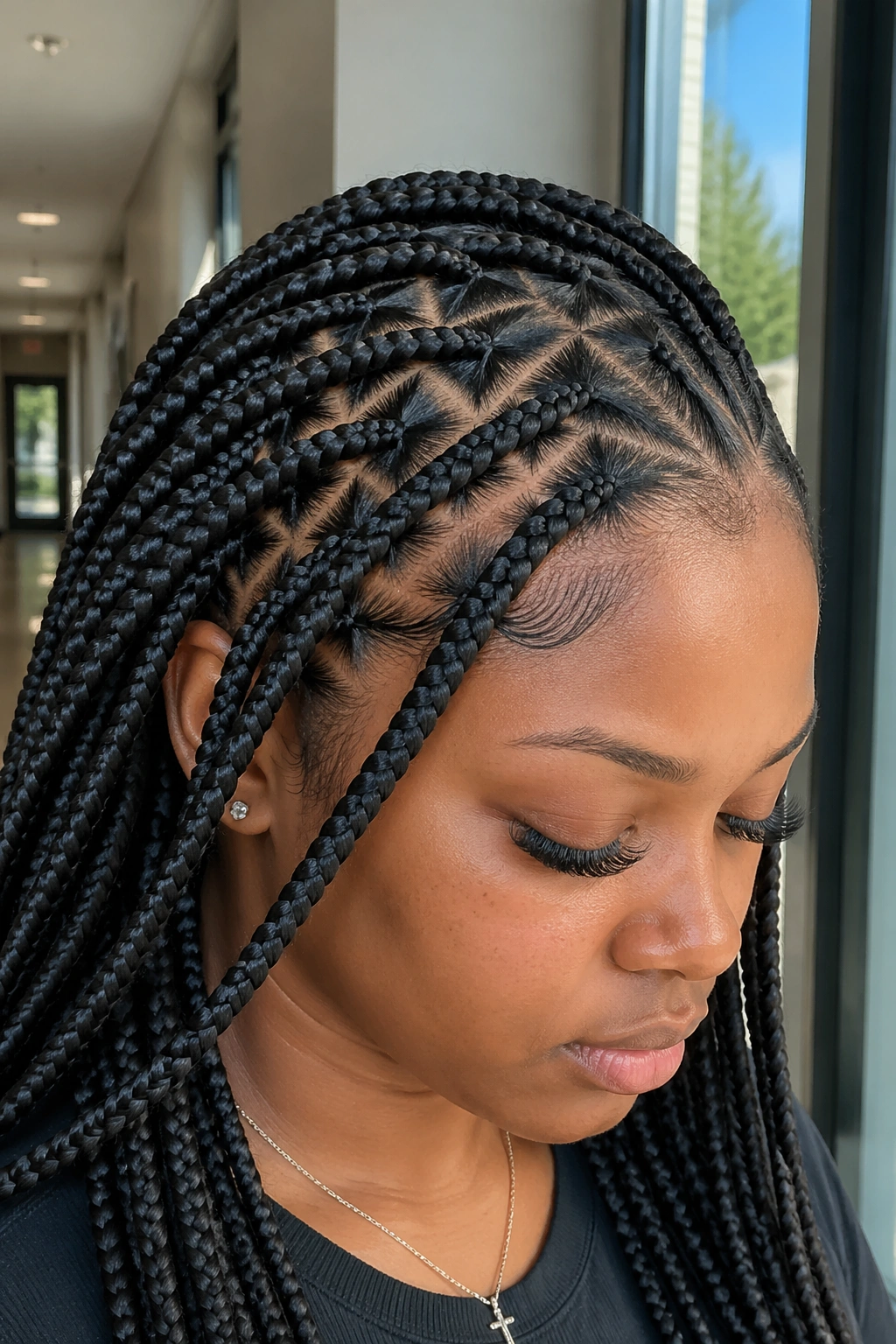
Triangle parts change the whole read of the style. The side sweep is still there, but the scalp pattern becomes part of the design instead of hiding underneath it.
That little shape shift gives the braids a more geometric feel. Triangle parts can make medium braids look sharper and can help a simple install feel more considered. They work best when the sections stay clean and the triangles are even enough to repeat across the head. If the parts wobble, you see it immediately. There is nowhere for them to hide.
This version suits people who like braid styles that show craft. It’s not flashy in the accessory sense, but the parting itself is a flex. Put it next to a plain square-part set and the difference is obvious in one glance.
Clean triangle sections make the style feel custom.
9. Lemonade Box Braids With Gold Cuffs
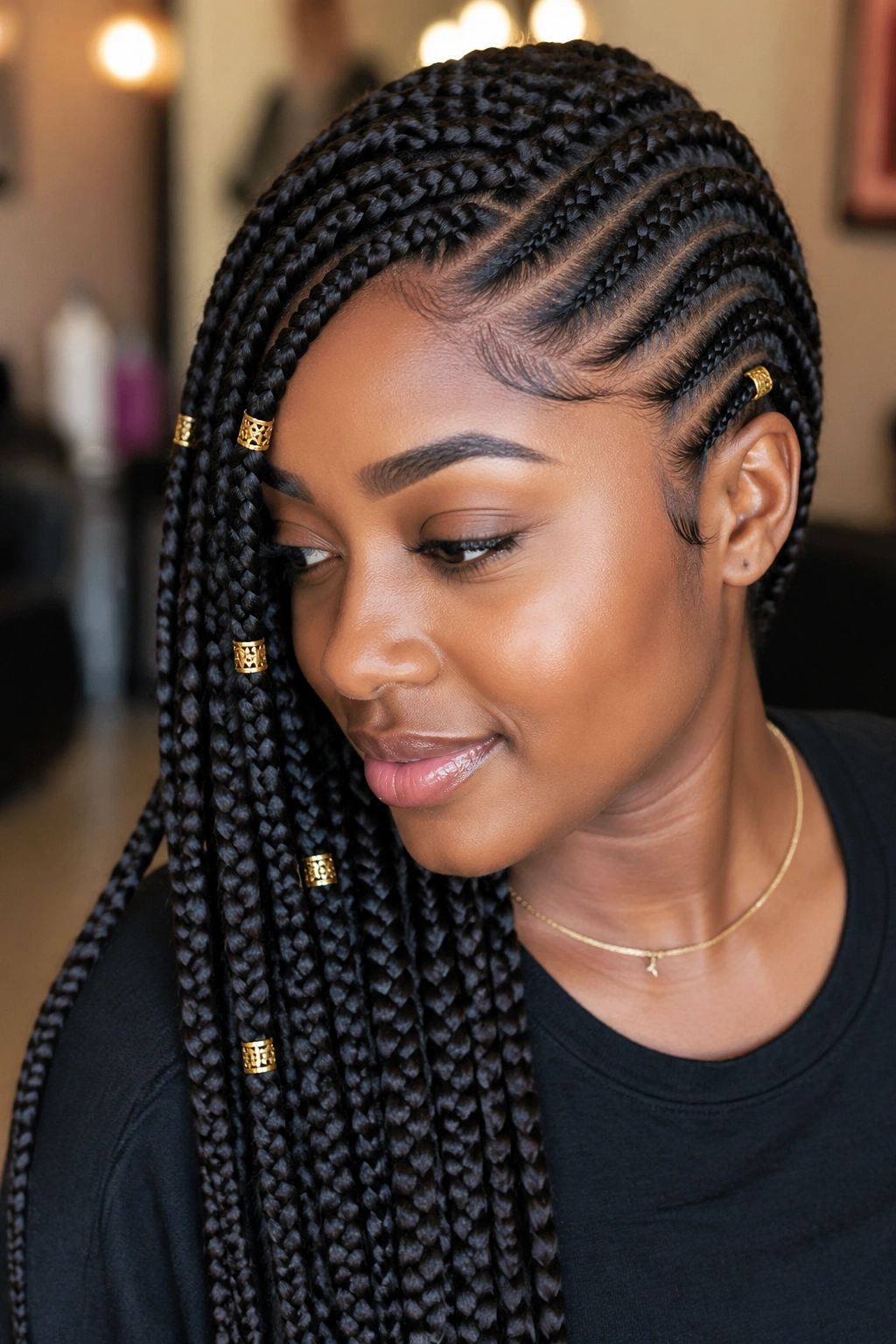
A few gold cuffs can fix a braid style that feels too plain. They catch the eye in small flashes, which works especially well on dark hair where the braid line can otherwise disappear into one solid tone.
Where the cuffs belong
The best placements are usually near the face, midway down the side-swept lengths, or clustered at the ends in a controlled way. Too many cuffs on every braid and the style starts sounding busy, visually speaking. One row of metal accents can do more than a whole pile of them.
- Place cuffs on 3 to 6 braids, not all of them.
- Mix one or two sizes if you want variation.
- Keep them away from spots that already feel heavy.
- Use them to frame the side-swept line, not drown it.
A small amount of metal goes far. Overdoing it is easy, and it usually looks worse in person than it did in your head.
10. Boho Lemonade Box Braids
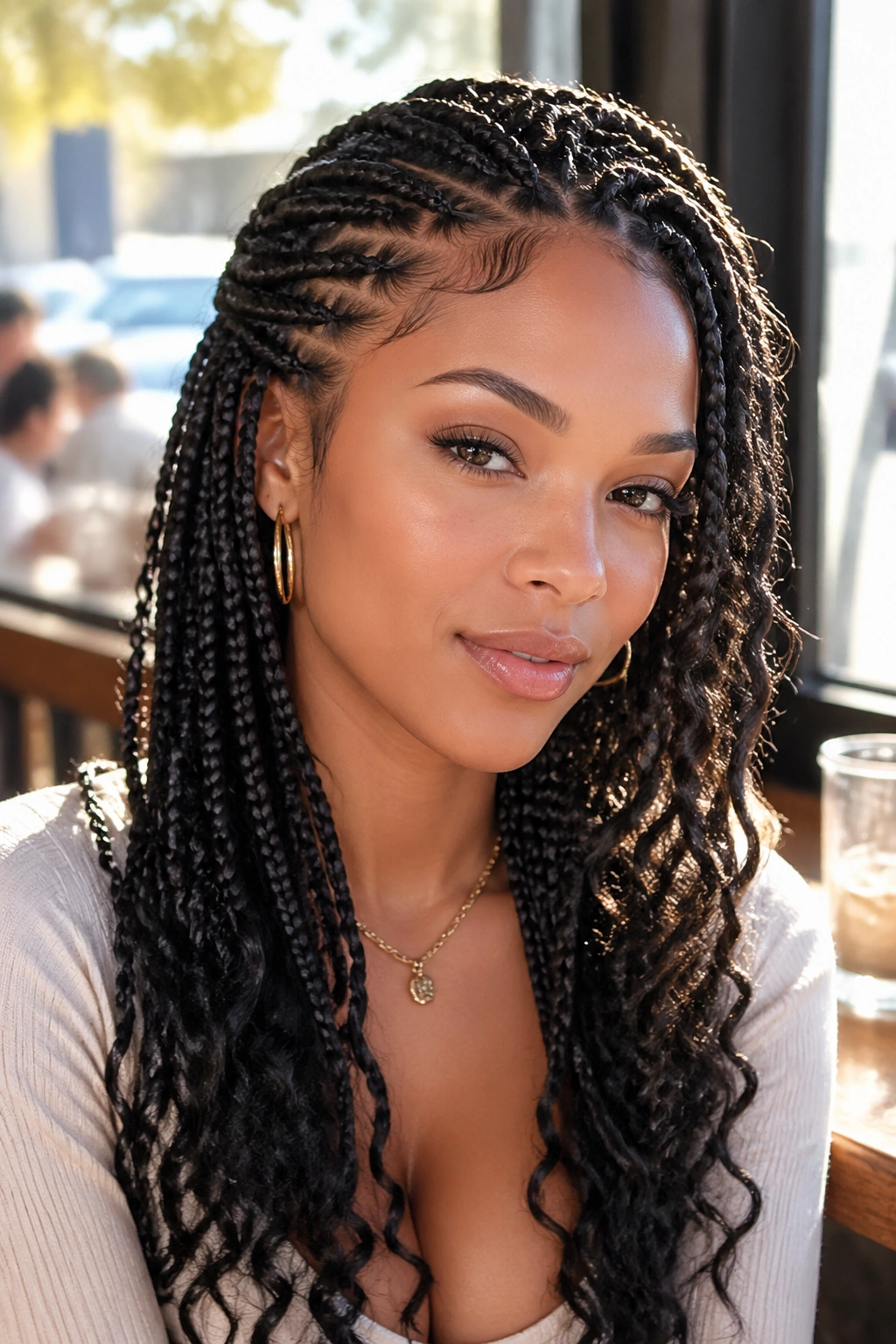
Boho lemonade box braids are for people who like a little softness around a clean style. The braids still sweep to one side, but loose curly strands are left in or added through the set, so the finish feels lived-in on purpose.
They work because they break the hard line that box braids can sometimes create. A few water-wave pieces near the front or scattered through the lengths give the style movement, and the side part stops it from looking messy. The catch is maintenance. Curly pieces frizz faster than the braids themselves, so a light mousse and a silk wrap matter more here than they do on a plain set.
If you like braids that read relaxed rather than strict, this is the lane. If you want every strand to sit still, skip it.
They look better with a little imperfection. That is the point.
11. Blonde Lemonade Box Braids
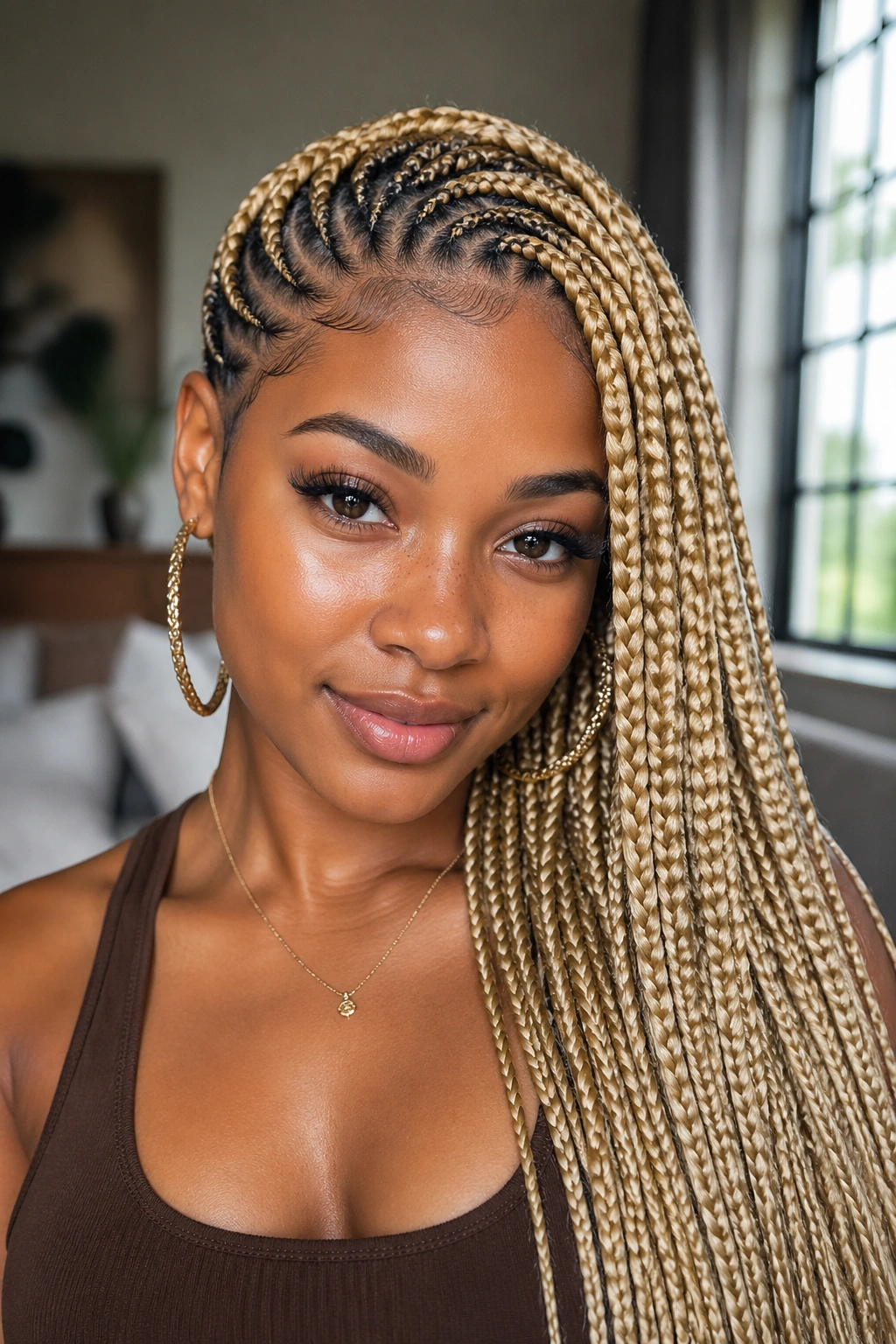
Blonde lemonade box braids are not shy. The color alone changes how far the side sweep reaches visually, because light hair reflects more and makes every curve stand out.
Honey blonde, champagne blonde, and platinum all give different moods. Honey is softer and easier on the eye. Platinum is high contrast and a little icy. A darker root stretch can help the look feel more grounded, especially if you wear the style for more than a couple of weeks and want the grow-out line to stay calm.
Blonde braids also show lint, edge residue, and product buildup faster than darker sets. That means your nighttime wrap and your mousse choice matter more than usual. Keep the finish clean, and the color does the heavy lifting for you.
Blonde looks best when the parting stays sharp. Sloppy parts steal all the attention.
12. Copper and Auburn Lemonade Box Braids
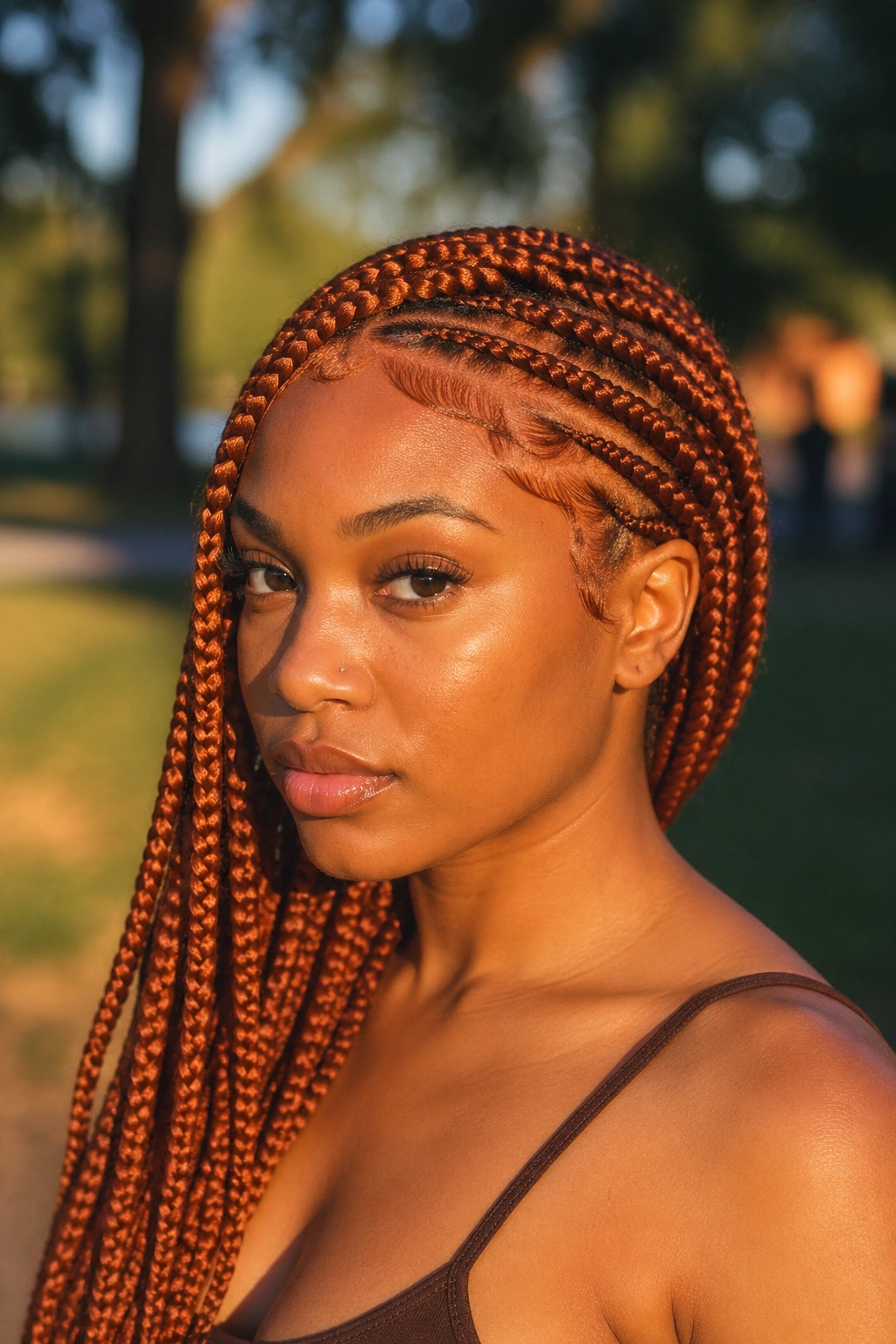
Why do copper and auburn shades flatter this style so well? Because the warmth sits close to the face and gets picked up every time the braids sweep over one shoulder.
Those tones bring a softer kind of brightness than blonde, and they tend to work well on box braids because the weave of the hair adds depth before you even style it. Copper can read rich and bold. Auburn leans more earthy and grounded. Both are easier to wear than a very pale blonde if you want color without a full contrast jump.
This is also a smart choice if you like a side part that feels warm instead of severe. The color rounds off the geometry a bit. Not by much. Just enough.
Auburn catches light without looking loud. That balance is why people keep returning to it.
13. Red Lemonade Box Braids
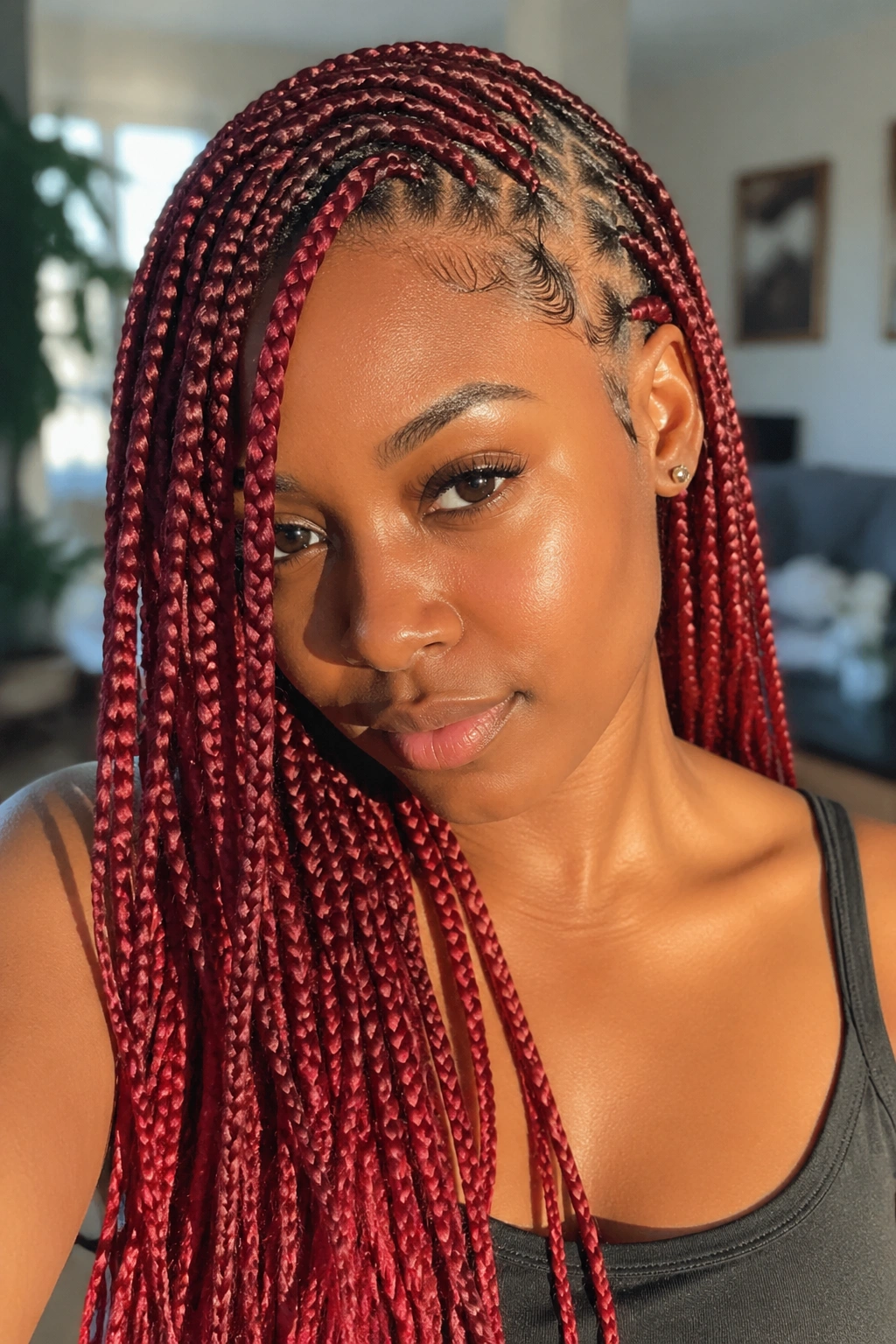
I keep coming back to red lemonade box braids when someone wants the style to read instantly. Red does not wait for a second look.
Shades that change the mood
Deep burgundy feels smooth and a little moody. Cherry red is louder and more playful. Wine tones sit between the two and work well if you want color that still feels wearable with plain clothes. The side sweep makes all of them easier to enjoy because the color has room to travel across the face instead of sitting in one fixed curtain.
- Burgundy softens the look for everyday wear.
- Cherry red gives you a brighter finish.
- Wine red pairs well with black, cream, and gold accessories.
- A darker root adds depth and helps with grow-out.
Red braids work best when the braid size is not too tiny. Bigger sections show the color more clearly.
14. Black-and-Brown Mixed Lemonade Box Braids
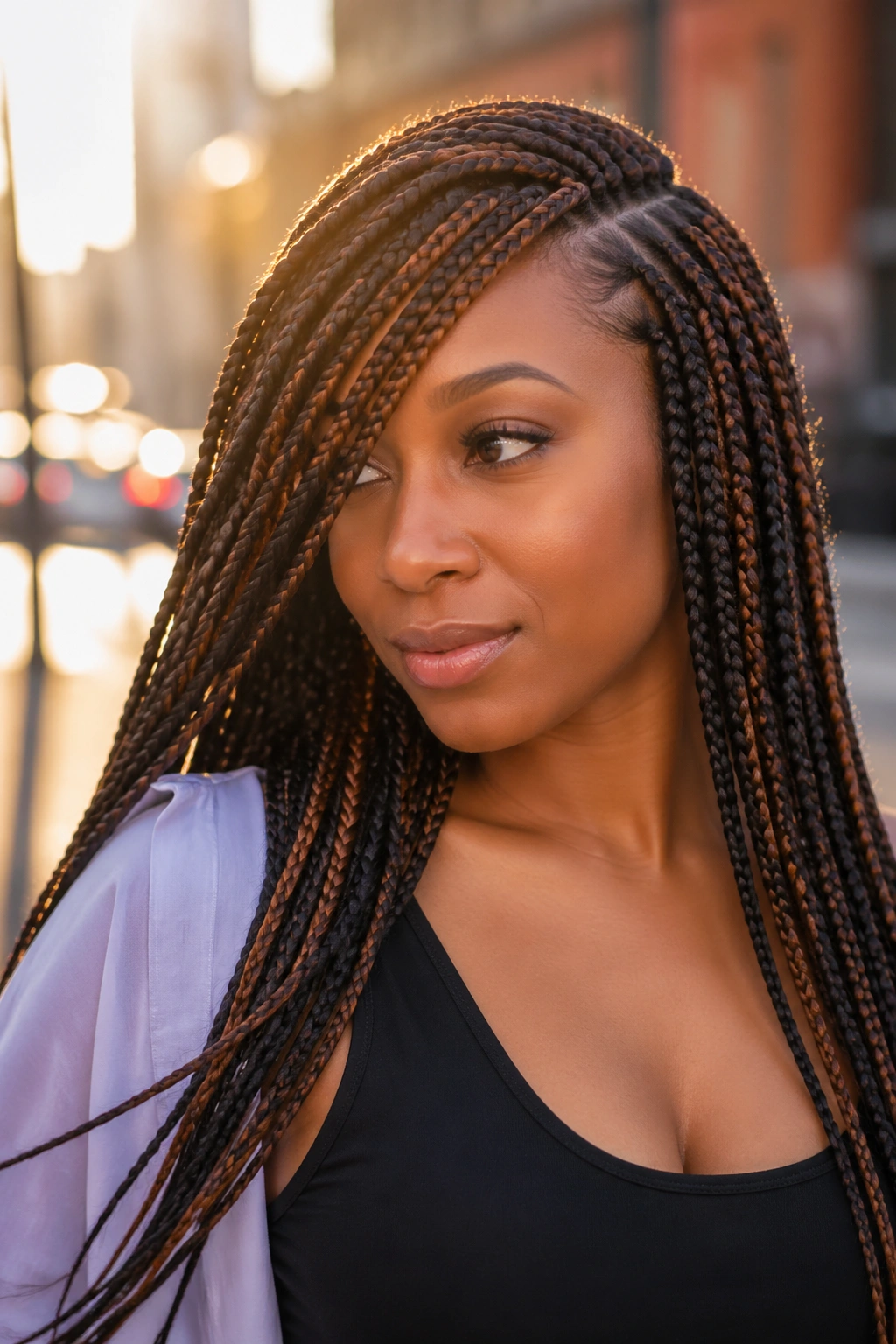
Black-and-brown mixed lemonade box braids are the quiet answer for people who want dimension without dye. A mix of 1B, warm brown, or deep caramel hair gives the style movement that shows up when the braids swing, especially across the side sweep.
The effect is subtle in a way that reads expensive only because the hair has visible depth. One shade alone can flatten a braid set if the lighting is dull. Add a brown blend and the rows start to separate visually. That’s useful for medium and long lengths, where the braid lines can blur into one mass from a distance.
This version is also easier to pair with makeup and clothes because it doesn’t compete for attention. It gives texture, not noise.
The result is calm, not flat. That difference is easy to miss until you see it on a moving head.
15. Shoulder-Length Lemonade Box Braids
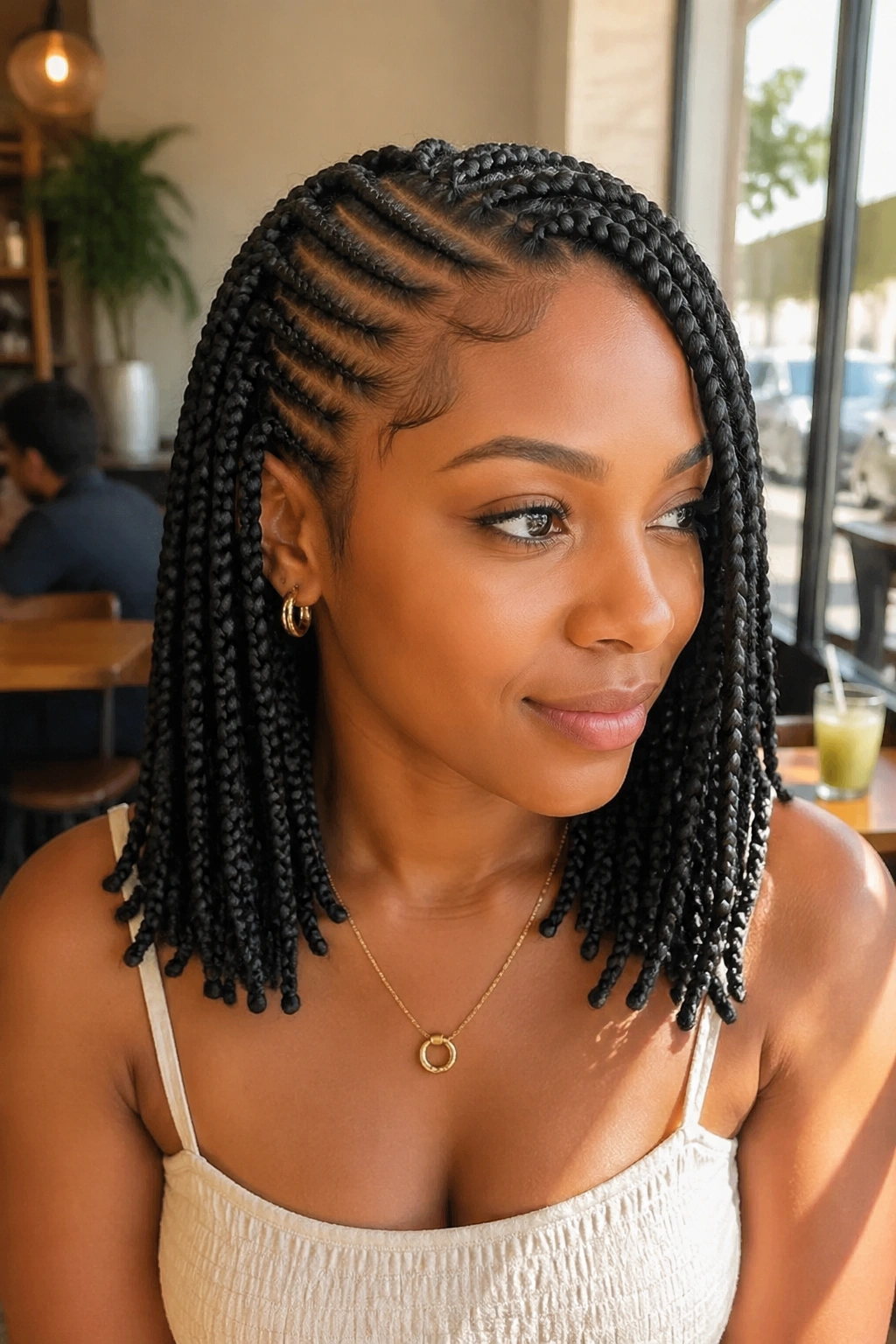
Shoulder-length lemonade box braids are the version I point people toward when they want movement without neck strain. The hair still sweeps to the side, but it does not drag the same way longer sets do.
This length is practical in a way that matters on busy mornings. It dries faster after washing, tangles less at the ends, and stays out of the way while you sleep. The style can still be dressed up with cuffs, curls, or color, but it does not need extras to feel finished.
Shorter does not mean plain. It means easier to live with.
If you’re trying lemonade braids for the first time, shoulder length is often the safest bet. You get the shape, the side part, and the visual line without making the install feel like a long-term commitment.
16. Lemonade Box Braid Bob
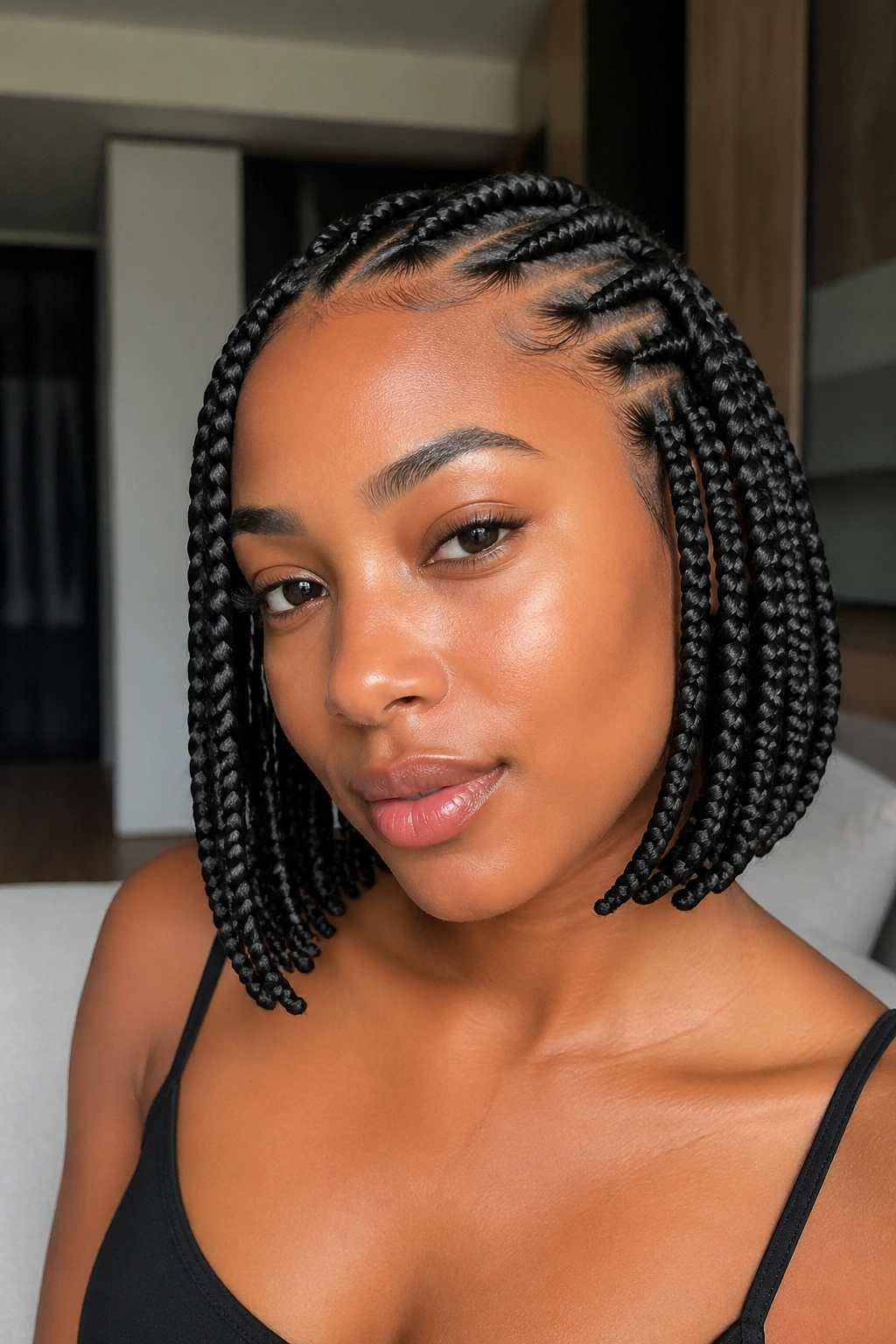
A lemonade box braid bob has edge the moment it lands at the jaw. The shape is compact, the sweep is clear, and the haircut-inspired outline makes the braids feel modern without losing their protective style roots.
The bob works because it puts the focus on the face and the parting. It also keeps the style light, which is useful if you hate heavy braids or if your scalp gets tired fast. Ends can be blunt, slightly layered, or curled under for a softer finish. Each version changes the tone, so a bob is not one look—it’s a family of looks.
This is one of the easiest braid styles to keep looking fresh after a few days because it has less hair to frizz or mat. A clean wrap at night helps, but the shape does a lot of work on its own.
A braid bob reads polished fast. No extra drama needed.
17. Half-Up Lemonade Box Braids
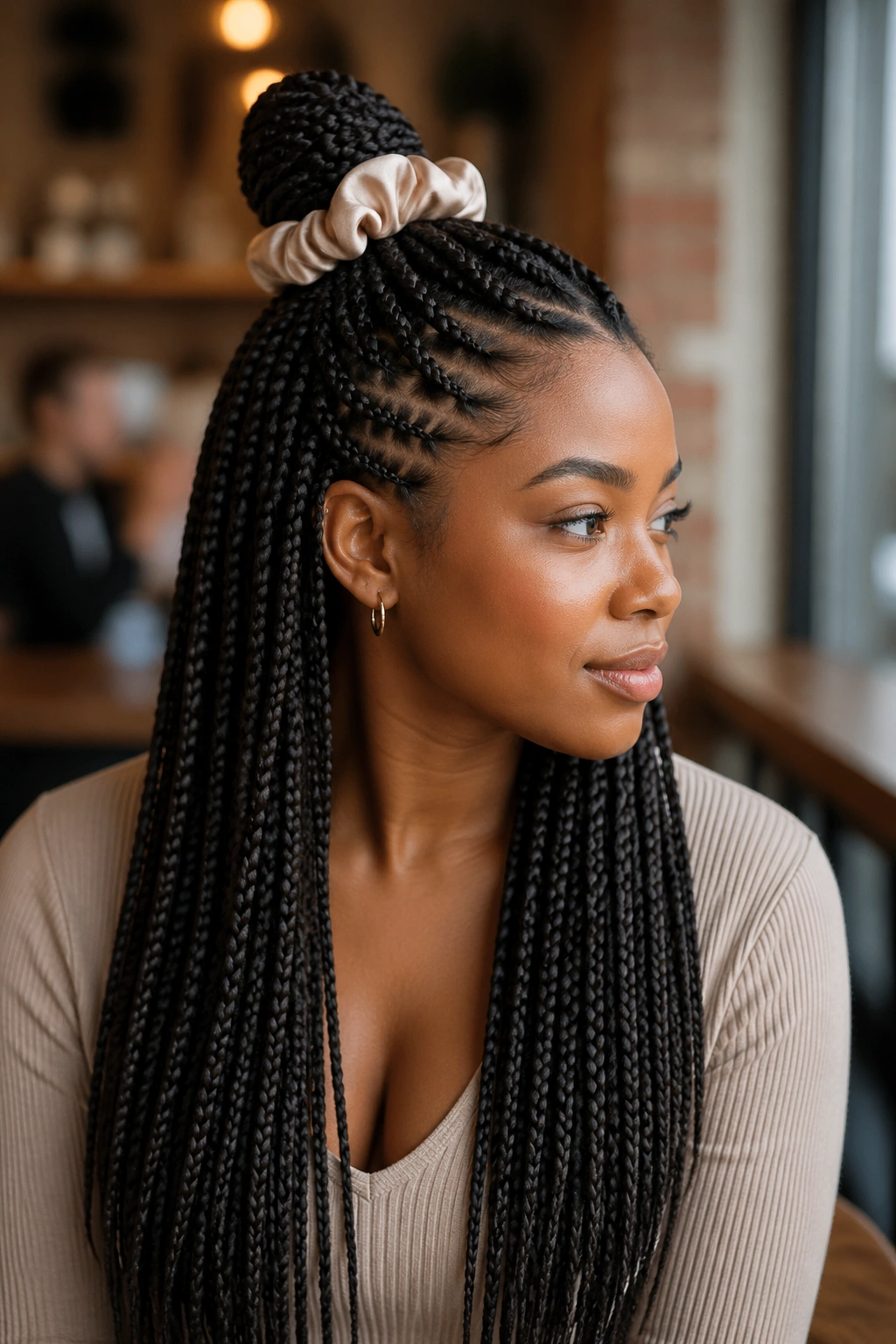
Need your braids off your face, but do not want to lose the side sweep? Half-up lemonade box braids solve that neatly.
The top section pulls back the hair that would otherwise sit near the eyes, while the lower length still shows the braid fall. That makes this style useful for work, exercise, or any day when you want the front clean and the back loose. It also gives you a small lift at the crown, which helps the side-swept line look a little fuller.
How to secure the top half
Use a silk scrunchie, a soft band, or a small claw clip if the braids are not too heavy. Tight elastics are a bad idea here because they leave dents and can tug at the edges. If you want the top to look smoother, gather the braids gently and wrap one braid around the base to hide the tie.
Keep the pull soft. That’s the difference between styled and strained.
18. Low Ponytail Lemonade Box Braids
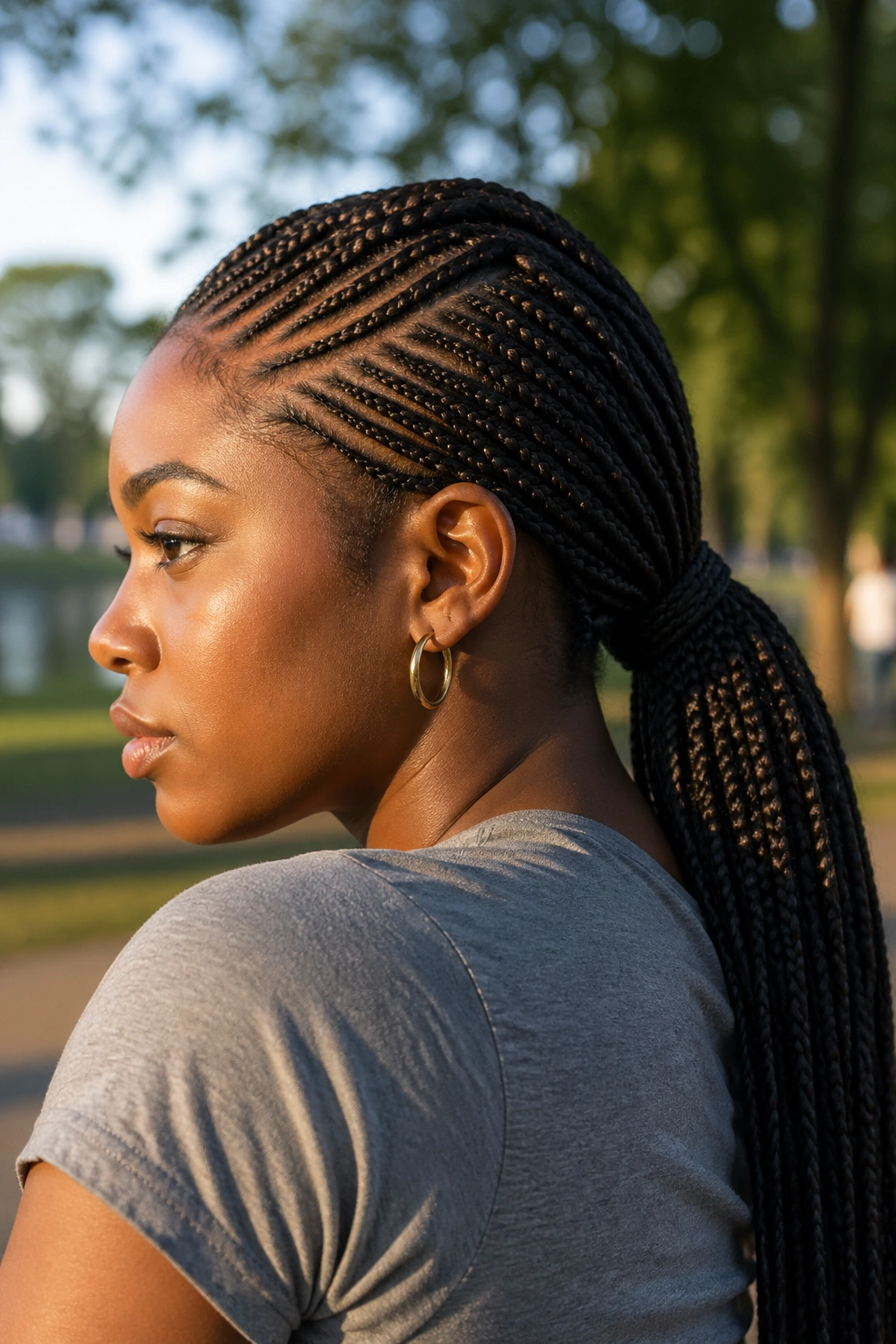
Some styles look best loose; lemonade braids in a low ponytail do the opposite, and that’s the point. The side part stays visible, but the lengths get pulled into one clean line that sits low at the nape or just off to one side.
This is a smart choice when the braids are a little older and you want them to look intentional again. It also works for active days because the ends stay contained. A low ponytail gives the face a clear frame, especially when the front rows are neat and the braid set still has some shine.
- Great for workouts and travel.
- Easy to dress up with a wrapped base.
- Helps longer braids feel less heavy.
- Works best when the ponytail sits low, not halfway up the head.
A low ponytail makes the parting do more work. Keep that line clean.
19. Side Bun Lemonade Box Braids
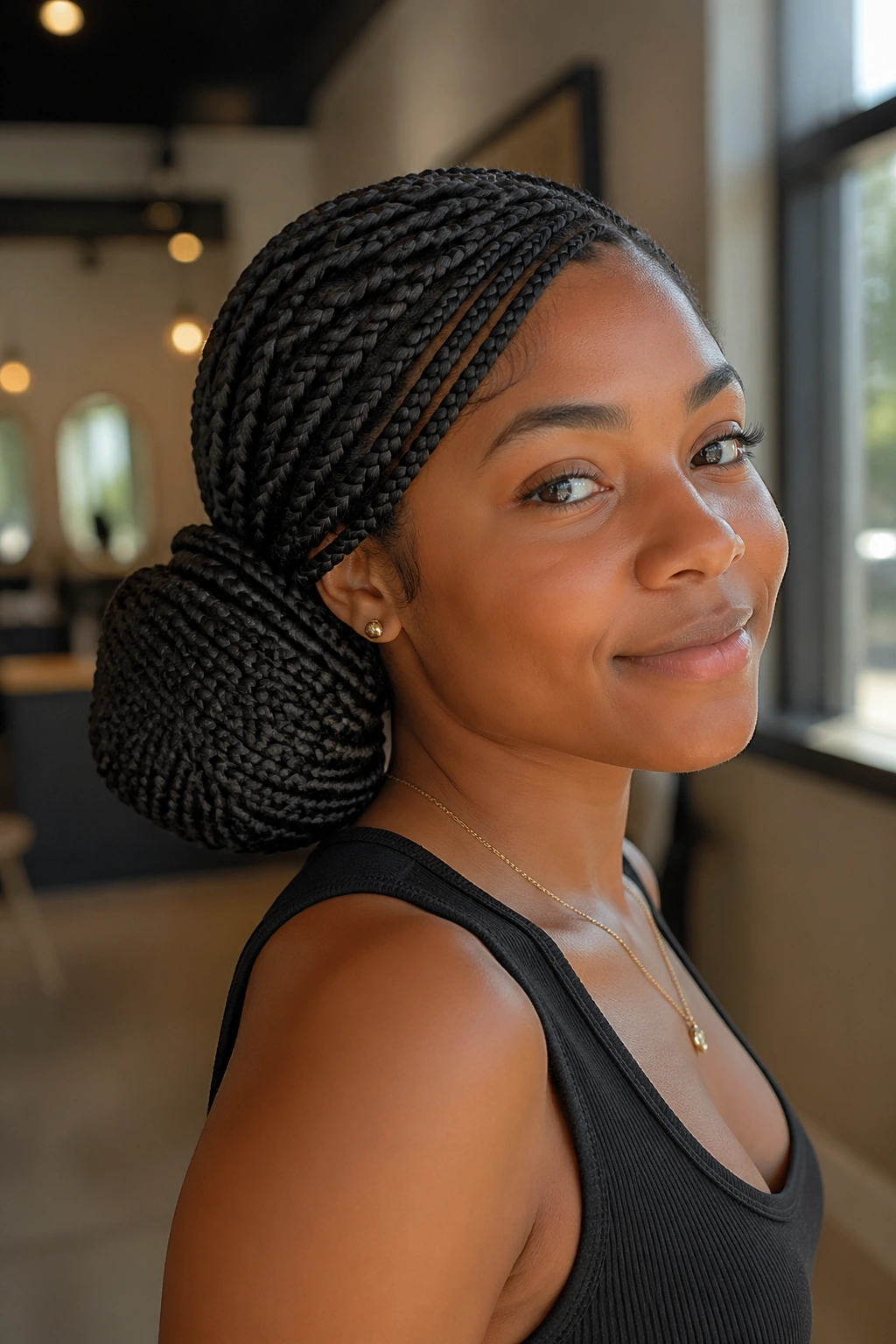
A side bun is what I reach for when a set is a little older and I want it to look on purpose again. Pull the lemonade braids into a low bun on the same side as the sweep, and the whole style shifts from free-flowing to neat in about ten seconds.
The bun can be tight and sleek or loose and puffy, depending on the mood. A tighter bun feels more dressed up. A softer one reads casual and slightly undone. Either way, the side placement keeps the lemonade shape visible, which is why this works better than a centered bun on this braid pattern.
Use pins if the bun feels heavy. A thick braid set can slide if you rely on one wrap alone.
The bun should sit low enough to keep the sweep readable. That’s the part people forget.
20. Criss-Cross Part Lemonade Box Braids
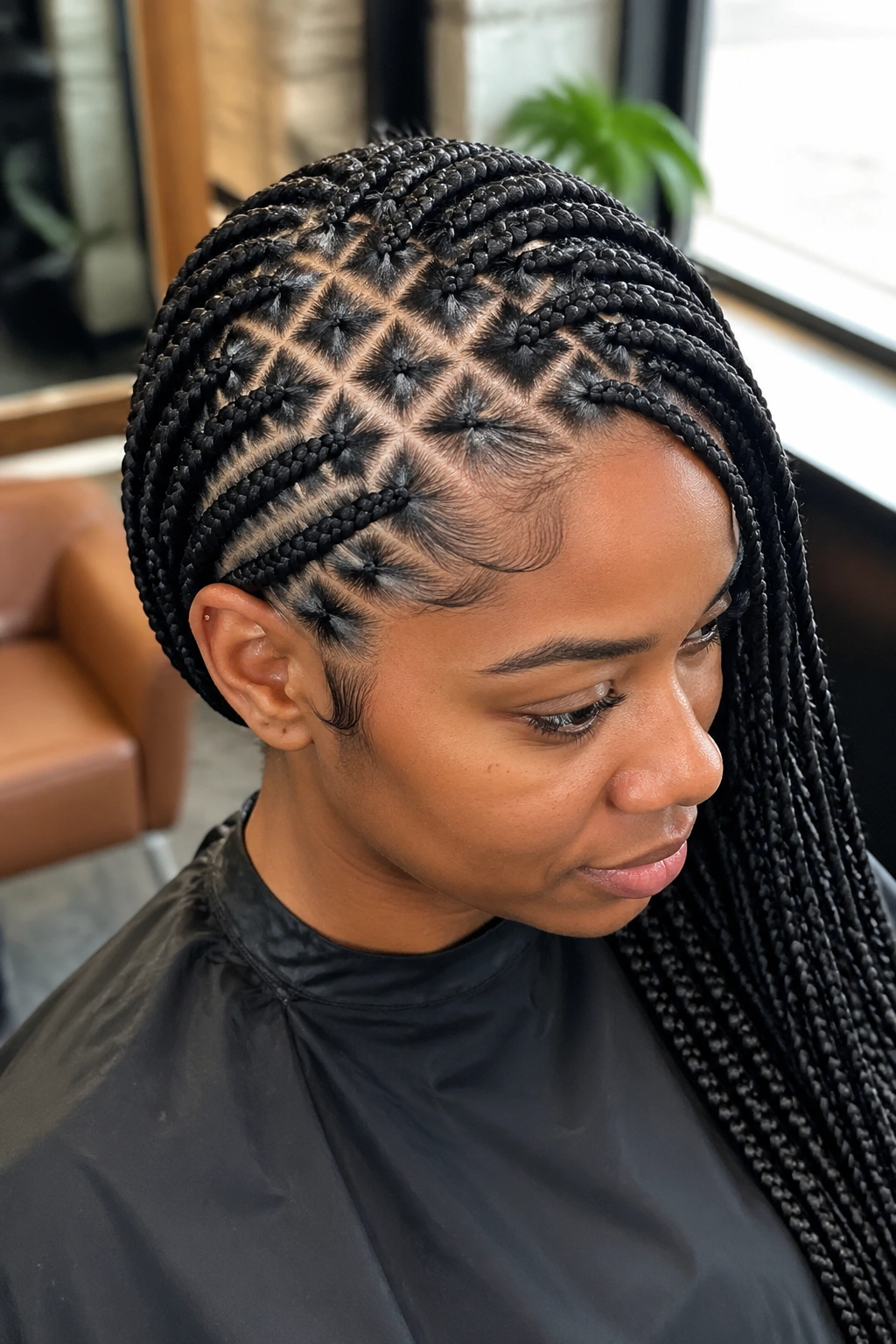
Criss-cross parts are not quiet. They turn the scalp itself into part of the design, which makes them a strong choice if you want the parting to be noticed before the braids even move.
This style needs a steady hand. The intersecting lines have to stay clean or the whole look starts to blur, and that is much more visible on a side-swept braid set than on a straight-back style. Medium braids work especially well here because they give the crossing pattern enough space to show.
It is not the fastest install on this list. It is also not the one to pick if you are in a rush or if you want something low drama. But if you like detail and you enjoy looking at the parting itself, it has a lot to give.
Criss-cross parts reward patience. Sloppy sections show immediately.
21. Zig-Zag Part Lemonade Box Braids
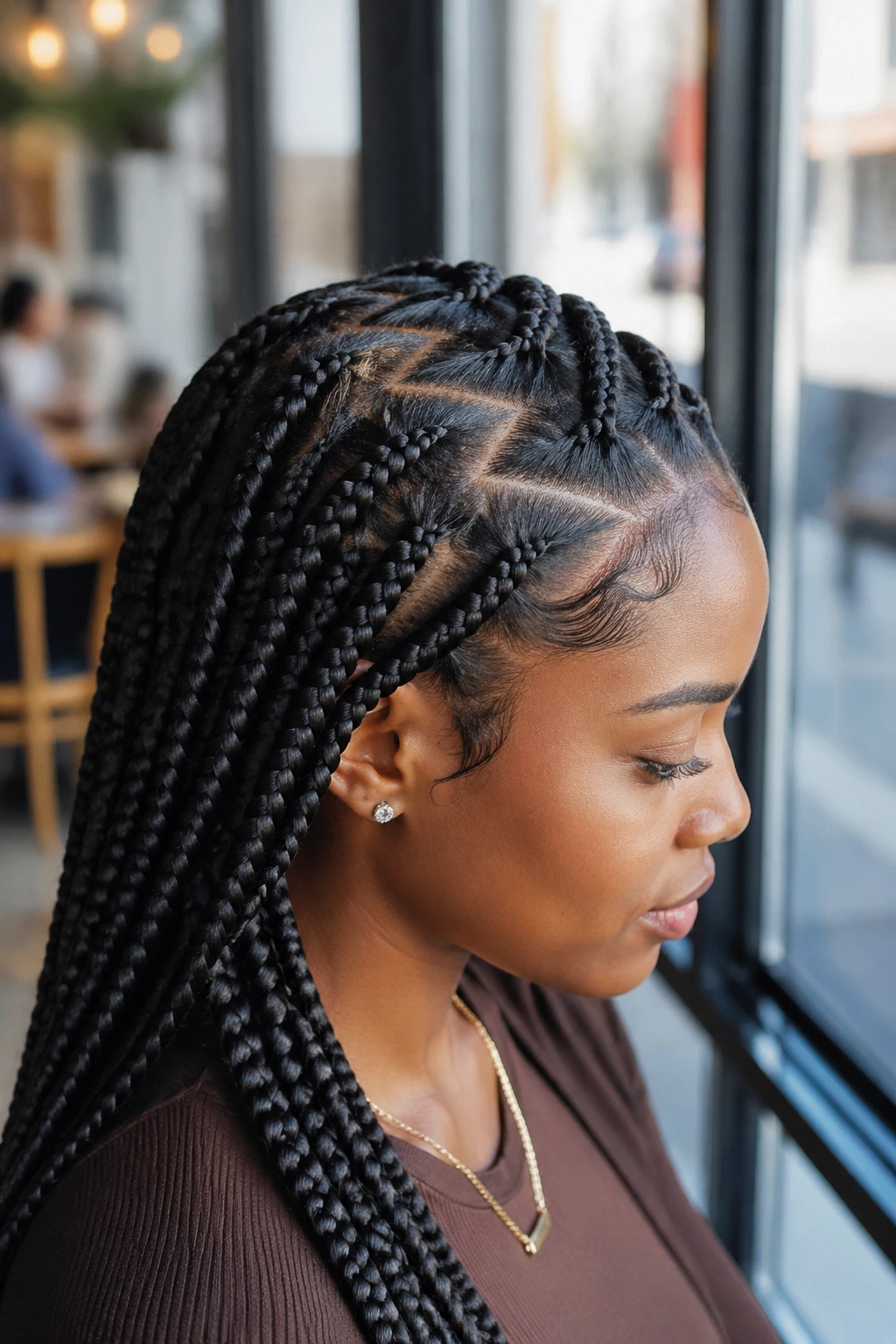
What changes when the part itself becomes the detail? A zig-zag part turns the scalp line into motion, even before the braids start falling to the side.
When zig-zag works best
This parting style looks strongest on medium to large braid sets where the line has enough room to show. Tiny braids can hide the zig-zag effect if the sections are too busy. A zig-zag also feels a little softer than a harsh straight line, which makes it a good choice if you want the style to look playful without going full decorative.
- Best on clean, freshly parted hair.
- Works well with one or two accent braids near the front.
- Needs sharp lines at the start or it loses the shape.
- Looks especially good with color that contrasts against the scalp.
The part is the star here. The braids are supporting cast.
22. Layered Lemonade Box Braids
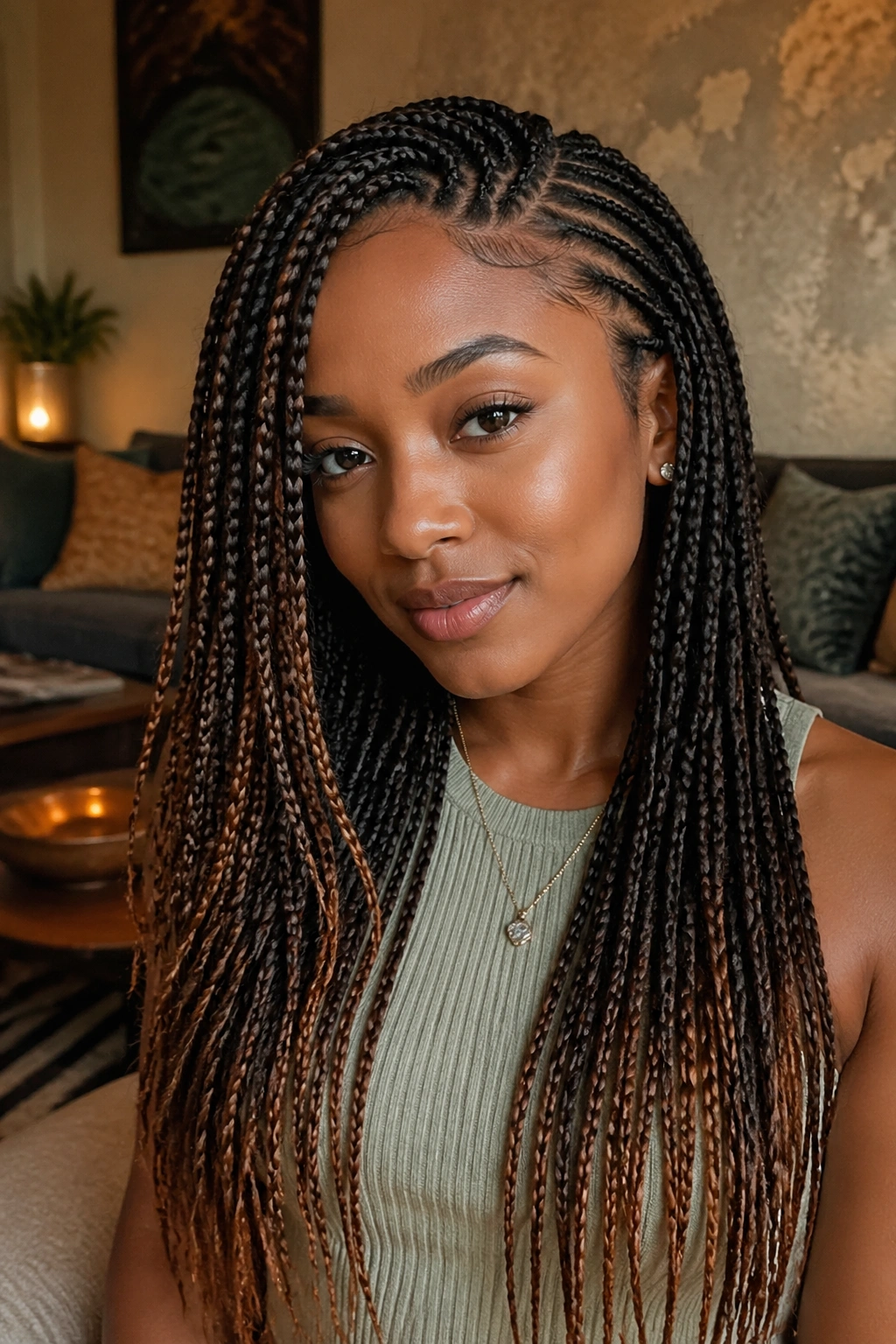
Unlike one-length braids, layered lemonade box braids build movement into the shape. Shorter pieces sit near the face or crown, while longer braids fall behind them and create a softer outline.
That layering helps if you like the lemonade sweep but do not want all the weight hanging in one line. It can also make the style easier to wear on days when long braids feel too much. The front pieces lift the eye upward, which keeps the face frame from looking flat or dense.
Layered sets tend to look especially good when the braids are medium size and the ends are neatly finished. The lengths do not have to be extreme to make an impression. A small difference in tiering is enough.
A layered set looks lighter even when the hair count is the same. That’s the whole trick.
23. Beaded Lemonade Box Braids
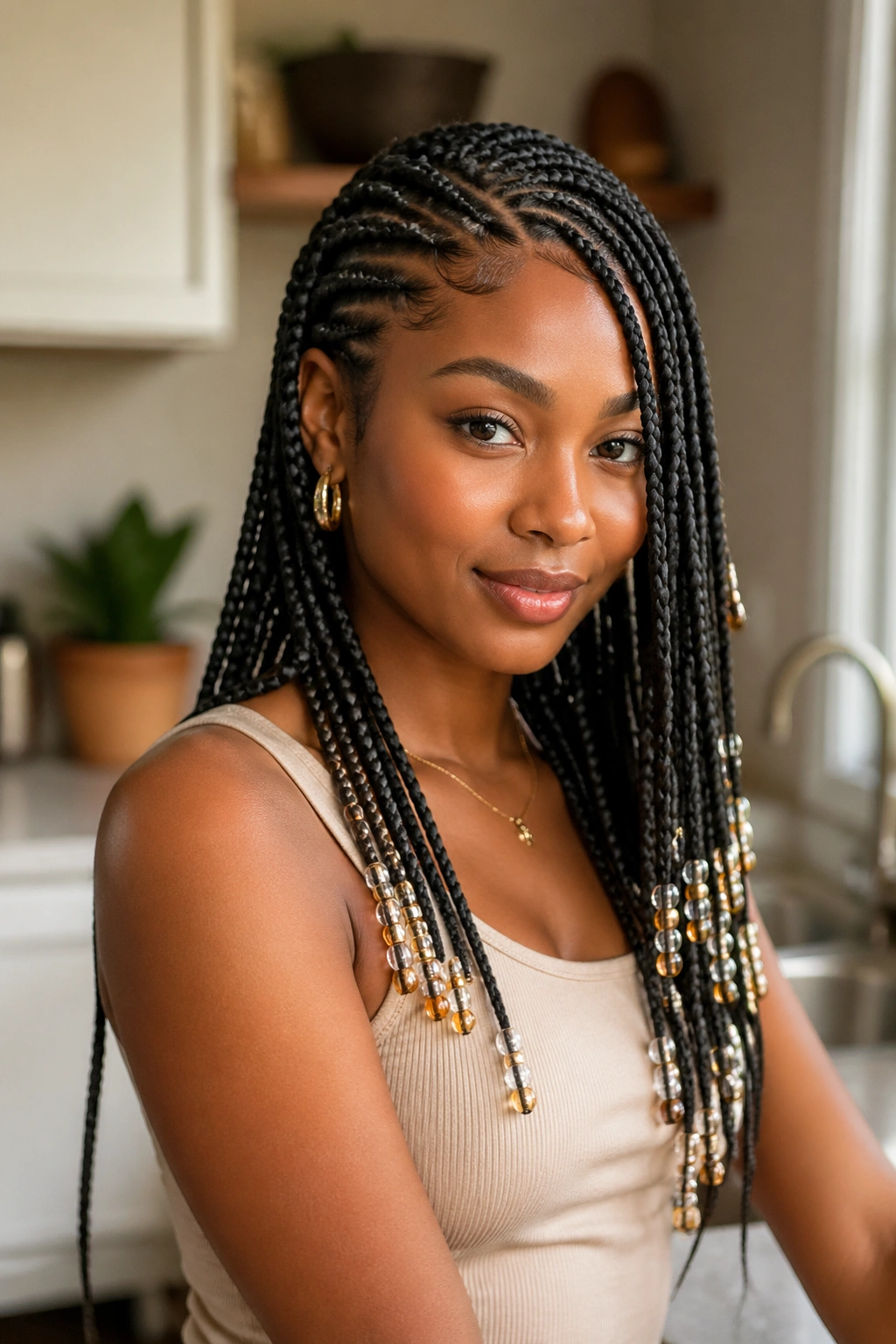
Beads change the sound of the style. Every step, every turn of the head, every quick move sends a tiny click through the ends, and that little detail gives beaded lemonade box braids a life of their own.
How to keep beads from taking over
The best versions use beads with restraint. Clear beads, wood, or small metallic pieces can work without crowding the ends. Too many beads on every braid and the finish gets heavy fast. A few well-placed strands are enough to frame the side sweep and draw the eye down the length.
- Put beads on the front or outer braids first.
- Mix bead size only if the set is simple.
- Keep the ends from getting too overloaded.
- Check that the beads do not slide loose after wrapping.
Beads should accent the style, not compete with it. If they’re louder than the braids, the balance is off.
24. Heart-Part Lemonade Box Braids
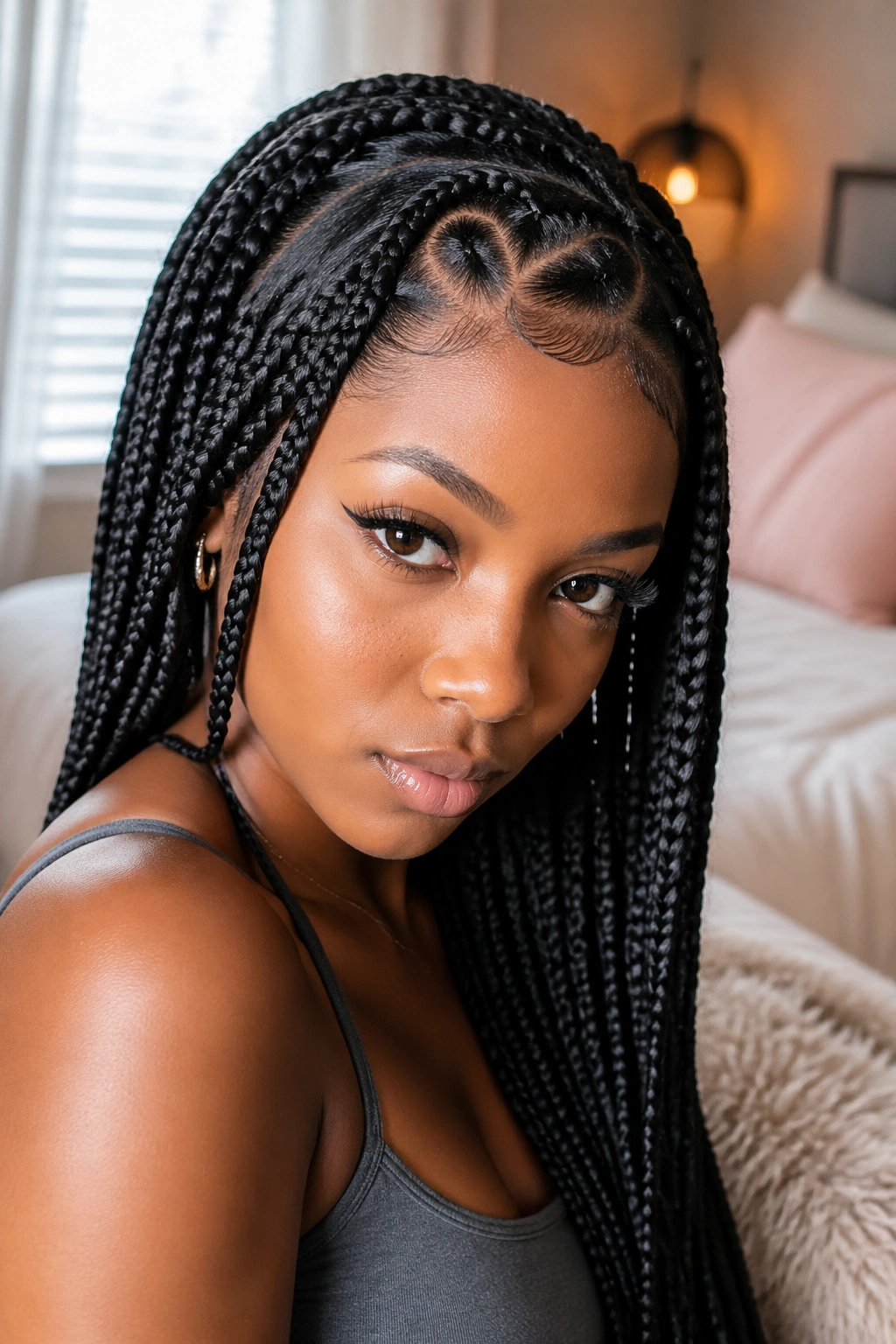
A heart part is one of those details people notice only when they get close, which is exactly why it works. It feels personal without needing extra color or accessories.
The shape usually sits near the temple or side crown, where the lemonade part can flow around it. That means the design has to be planned before the first braid gets installed. You cannot really improvise it halfway through. A good heart part has smooth curves and even spacing, and it looks best when the rest of the parts are clean enough to support it.
This is the version to pick when you want something sweet, a little playful, and clearly custom. It’s also a nice choice for birthdays, photo shoots, or any time you want the scalp design to carry part of the style.
The heart part only works when the lines are crisp. Soft edges weaken the whole effect.
25. Soft Glam Lemonade Box Braids
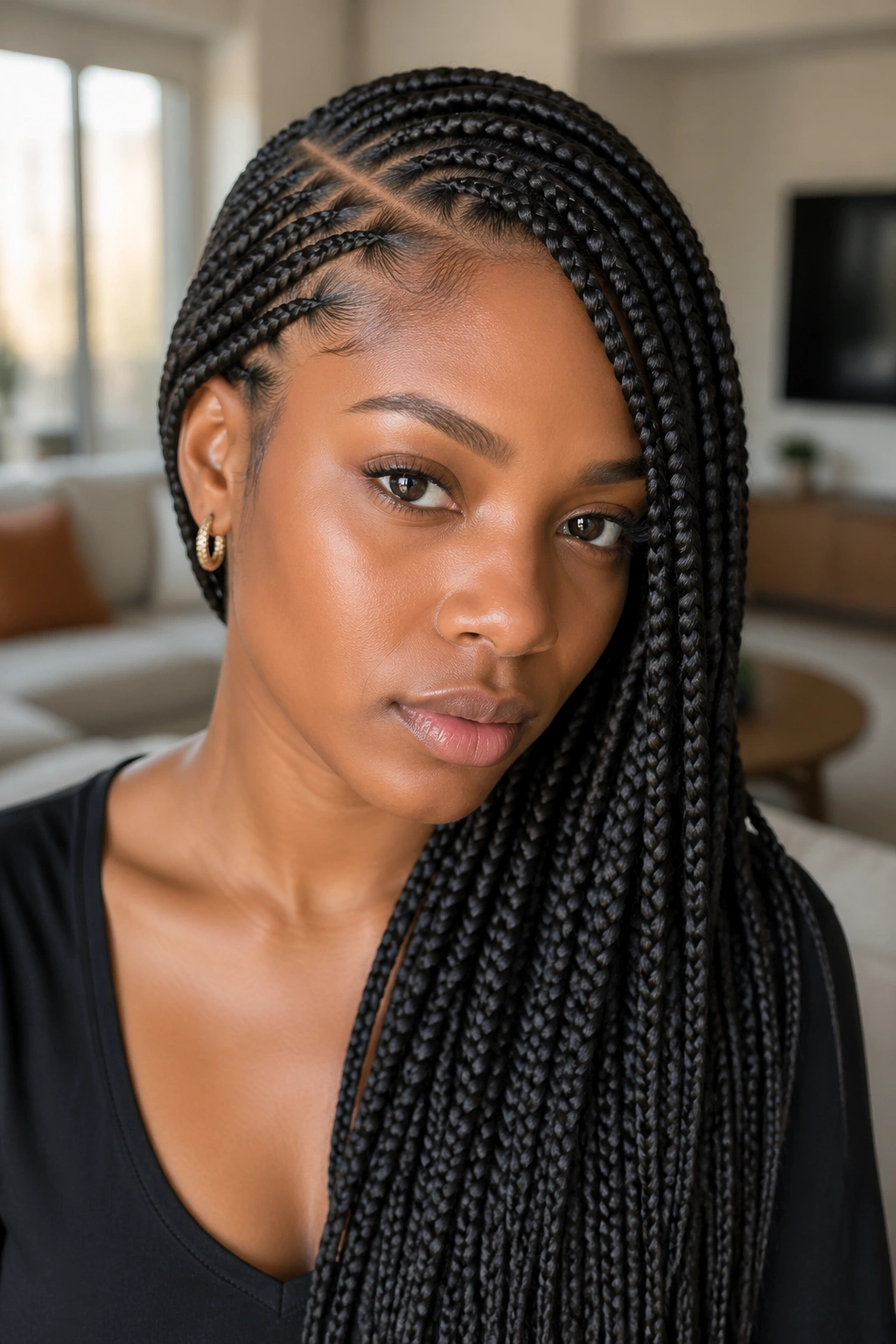
Soft glam lemonade box braids sit right between polished and easy. The side sweep stays clean, but the finish leans smoother, glossier, and a little more dressed up than the everyday versions.
This is the look I like when the braids need to do more than sit there. A light shine spray, neat roots, moderate length, and maybe curled ends or a few cuffs are enough to push the style into a softer glam lane without making it feel overloaded. The whole point is control. Not stiffness. Control.
If you want one version that can move from errands to dinner without looking out of place, this is the one that makes the most sense. It does not beg for attention, but it holds it anyway.
Pick the braid size, length, and color that fit your life. Not the photo. Not the trend. Your life.
And that is the real test with lemonade box braids: whether the style still feels good after the first perfect day has passed. If it stays neat, sits comfortably, and still looks like you meant to wear it on day eight, you chose well.