



A messy half up half down bun can rescue hair that has lost the plot by lunchtime. On Black women, the style works because it gives the crown lift without stealing the movement, shrinkage, or texture that makes the rest of the look feel alive.
The best versions do not look stiff. They sit somewhere between polished and undone: roots held firmly enough to stay up, ends left soft enough to move, and edges treated like the frame they are. If the top half feels like it is fighting the rest of the hair, the shape is off.
That balance changes with texture. A twist-out wants different support than locs; blown-out hair needs less product than a wash-and-go; and a silk press can turn greasy fast if you pile on too much cream near the crown. That is why the same half-up bun can look flat on one head and rich, full, and alive on another. Not expensive in the fake sense. Just well-shaped.
Some of the styles below are quick enough for a school run or a workday. Others take a few more minutes and a couple of extra pins, but they reward you with better hold and cleaner lines. Start with the one that matches your texture, not the one that looks prettiest in a photo.
1. High-Crown Half Bun with Loose Coil Ends
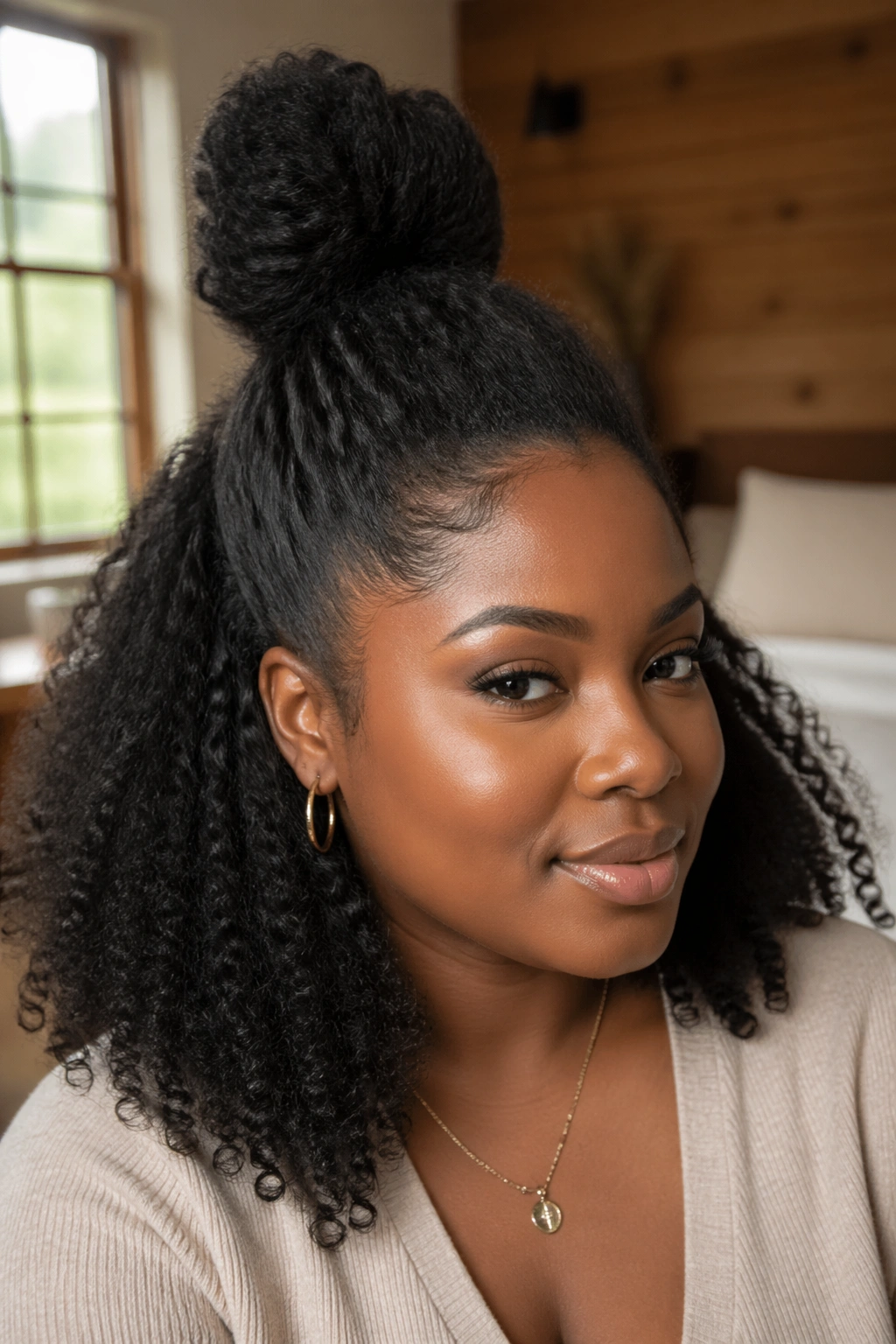
This is the style I reach for when I want height without losing curl drama. The bun sits near the crown, not the forehead, so the upper half gives lift and the lower half keeps its shape and bounce.
Why the Shape Works
A high crown pulls the eye upward, which makes the face look a little longer and the curls below feel fuller. It also gives you room to make the bun messy on purpose. That matters. If the bun is too tight and too small, the whole look starts to feel pinched.
On Black hair, this version works best when the top section is lifted first and then secured loosely with a satin scrunchie or a snag-free elastic. Then you wrap the ends around the base once or twice and stop. Don’t chase a perfect circle. A soft loop with a few coils poking out looks better and feels less fussy.
- Gather the top third of your hair only.
- Leave the lower curls alone unless they need a quick finger detangle.
- Loosen the bun with your fingers after securing it.
- Let a few face-framing pieces fall if your hair naturally does that.
Best tip: keep the bun soft at the base and firm at the roots. That split is what makes the style hold.
2. Low Half Bun with a Deep Side Part for Black Hair
Why does a low bun feel softer than a high one? Because it shifts the weight of the style closer to the back of the head, where it looks relaxed instead of lifted and dramatic. A deep side part also gives the style a little attitude.
This version is lovely on stretched natural hair, twist-outs, and old wash-and-go curls that still have shape but need a little order. The side part creates a strong line, and the low half bun sits just above the ears or slightly higher, depending on your length. The rest of the hair falls over one shoulder or down the back, which keeps the style from looking too neat.
A rat-tail comb helps, but do not overwork the part. Once the line is clean, stop touching it. Over-smoothing the front can make the style look hard instead of soft, and that is a bad trade.
The trick is tension. The front should feel secure. The rest should move.
3. Two-Strand Twist Half Bun
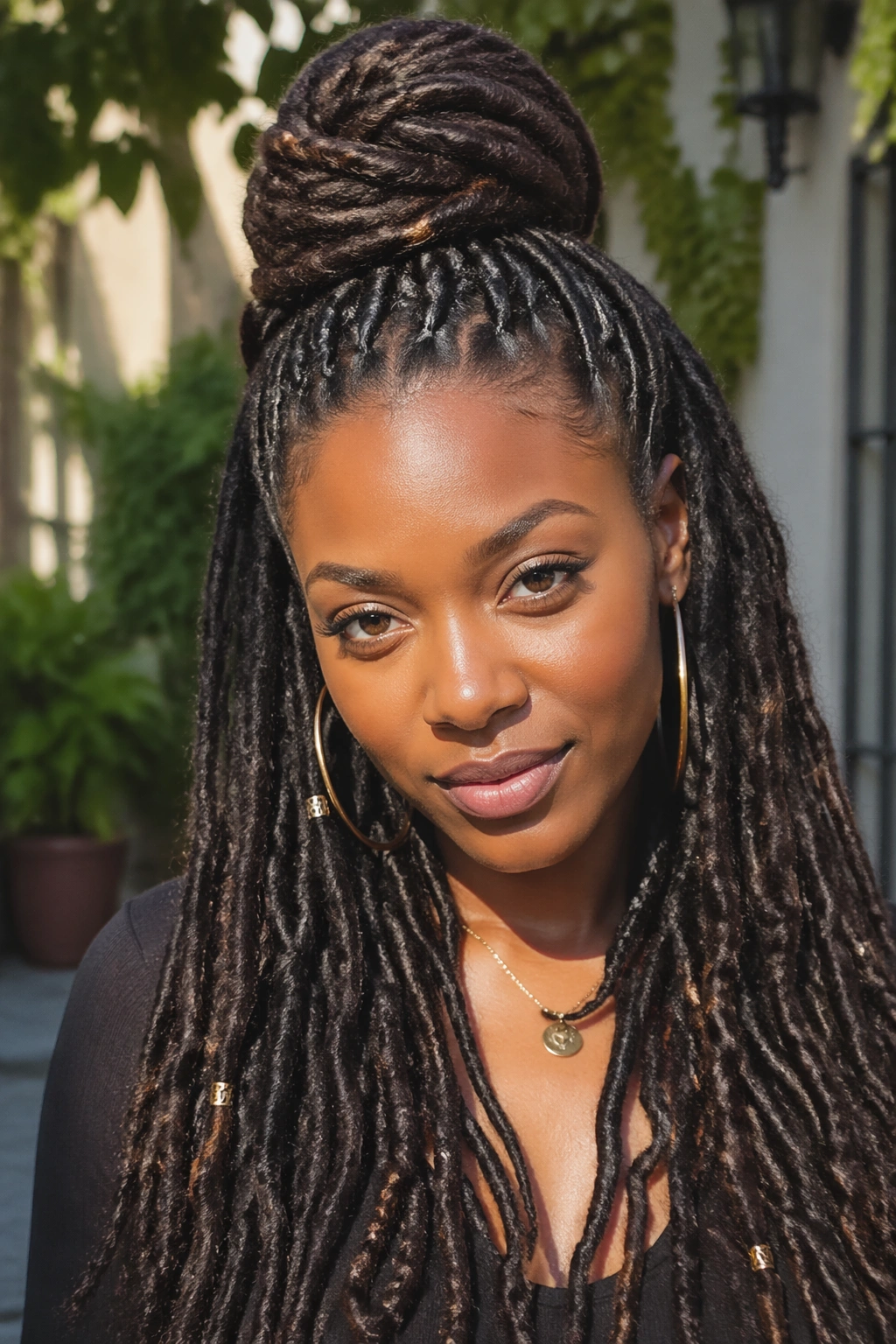
If your hair puffs at the roots the second you breathe on it, twists are your friend. They give shape without asking every strand to behave at once.
A two-strand twist half bun works especially well on 4b and 4c hair because the twists hold the top section in place before you wrap it into a bun. You can make four chunky twists or eight smaller ones depending on how detailed you want the front to look. Then coil the twists into a bun, pin the ends down, and leave the lower half loose in its twist-out or shrunken natural state.
The Best Part
Twists do a lot of hidden work. They stretch the top section just enough to show the bun’s shape, and they keep the style from collapsing by the end of the day. That matters when your hair has a mind of its own.
- Use a cream with slip, not a heavy butter.
- Twist while the hair is slightly damp, not wet.
- Pin the bun after the twists have set for a few minutes.
- Fluff the back only after the top is secure.
A messy half up half down bun built from twists always looks intentional. Even when it leans a little to one side.
4. Flat-Twist Halo Half Bun
Unlike a plain ponytail, flat twists keep the crown neat before the bun starts. That clean base gives the style a polished edge, even if the bun itself is soft and a little undone.
Flat-twist halo buns work well when you want the top section to stay close to the scalp. Start at the hairline and twist back along both sides, or work in a curved pattern that follows the shape of your head. When the twists meet at the crown, gather them into a small bun and leave the back loose. The result has structure up top and movement underneath.
This style is good on natural hair that has enough density to hold a twist pattern. It also plays nicely with stretched hair because the twists show up more clearly. If your ends are dry, seal them before you start. The loose hair in back needs softness, not frizz fighting with frizz.
A flat-twist style can look fancy with almost no accessories. Or, if you want a little edge, add one gold cuff on each side and stop there. Too many extras ruin the shape.
5. Braided Crown Half Bun for Black Women Who Want Hold
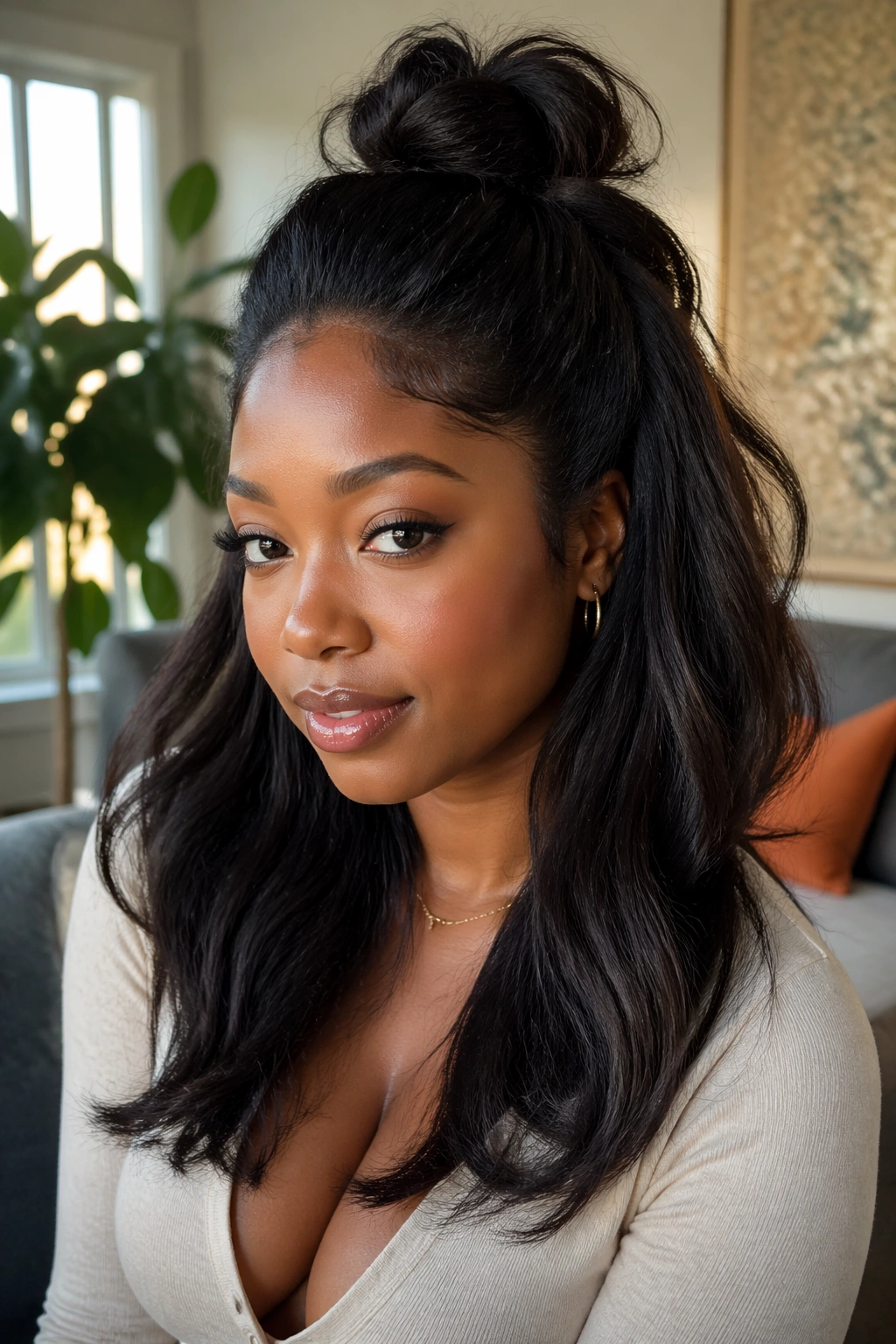
Braids make this style hold longer, full stop. If you want the top section to survive a long day, a workout, or a night out without fluffing itself into chaos, braided roots are hard to beat.
The front can be cornrowed, feed-in braided, or done as small plaits that feed into the bun at the crown. The lower half can stay loose, curly, stretched, or braided too. I like this version when the top needs control but the rest of the hair should still move. That mix keeps it from feeling helmet-like.
Where It Shines
- Travel days, when you do not want to fuss with your hair.
- Protective styling, especially if your edges need a break from constant combing.
- Formal events, where you want a cleaner front and softer length in back.
Keep the first braid at least a finger-width back from the hairline. Tight braids do not make the style better. They just make your scalp angry, and that trade is never worth it.
A braided crown half bun gives you a strong shape with very little daily maintenance. That’s why it stays on my list.
6. Wash-and-Go Half Bun for Natural Curls
Fresh curls, a little mousse, and a few bobby pins can do a lot. This version is one of the easiest ways to turn a wash-and-go into a half-up style without flattening the whole head.
The lower half stays free so your curl pattern can still show. The upper half is gathered gently and tucked into a soft bun or puff at the crown. If your curls are defined but soft, this style gives you shape without killing the texture. If the roots are a little fuzzy, even better. The style looks lived-in, which is the whole point.
Wet buns are a gamble. If the hair is still damp, the top section can shrink weirdly and the bun can dry in a weird lump. Give the curls enough time to set before you tie them up. That one detail saves the shape.
A curl cream or light gel on the front section helps, but do not stack product until the roots feel sticky. Heavy buildup at the crown is a fast way to make the style droop. A clean base keeps the bun airy.
7. Stretched Natural Hair Half Bun
What if you want shape without shrinkage eating the whole look? Stretch the hair first. A blowout, band stretch, or even a solid twist-out that has been separated carefully gives the bun more length and more visual fullness.
This version is useful when your hair is dense and you want the top half to sit higher without getting swallowed by coils. Stretched hair also takes pins better, which matters if your bun needs support instead of just a tie. The lower half can stay stretched too, or you can leave it with some curl at the ends for contrast.
Styling Notes
- Use a wide-tooth comb or fingers first.
- Keep the crown smooth, but not slick.
- Wrap the top section once and stop if the hair is long enough.
- Pin the bun in two places so it doesn’t slide.
The main mistake here is drowning the hair in heavy cream. Stretched hair does not need all that. A small amount of leave-in on the ends and a little oil on the dry parts is enough.
This is one of those styles that looks like you spent more time than you did. Always useful.
8. Half Bun on Locs
Locs make this style easy and dramatic at the same time. The texture does most of the work, so the bun can be simple and still look full.
Pull the top half of the locs into a bun at the crown or slightly behind it, then let the rest hang freely. You can twist the bun once and secure it with a strong hair tie, or wrap the locs around the base for a larger shape. The lower half gives movement, which keeps the style from feeling too rigid.
A few things matter here. Use pins that can handle weight. Don’t yank the locs tight near the temples. And if your locs are long, make the bun wider rather than taller so the weight stays balanced.
A polished loc bun can look excellent with one small accessory, like a cuff or a wrapped thread detail. More than that starts to crowd the hair. The locs already bring enough texture.
This is a solid choice when you want the upper section out of the way but still want the length to show.
9. Blowout Half Bun
Big hair loves this shape. A blowout half bun keeps the volume alive while giving the crown a little lift, and that combination works beautifully on thick natural textures.
The best part is the softness. A blowout creates a fluffy base that does not need a lot of extra manipulation. Gather the top section loosely, twist it once or twice, and let the bun stay full. The lower half can spill down the back in big waves or stretched texture. Either way, the style feels airy.
This is not the time for heavy gels or thick creams. Blowout hair does better with light hold. Too much product will flatten the movement and make the hair look stringy. A small touch of holding spray at the front is usually enough.
The style gets even better if you leave a few pieces around the temples free. They soften the profile and make the bun feel less severe. I like this one on hair that has been freshly blown out and then cooled completely before styling.
10. Claw-Clip Half Bun
A claw clip gives you the messy part for free. That is the appeal. You twist the top section, lift it, clip it, and let the ends spill wherever they want.
This works best on medium-length hair, stretched natural hair, or a twist-out that has enough softness to bend into the clip. The lower half stays loose, and the top gets a casual lift without a tight elastic. If you have ever wanted a half-up style that does not feel overworked, this is the one.
Use a clip with teeth that grip well. Cheap clips slip, especially on dense hair. A medium or large clip is safer than a tiny one, because the top section needs room. If the bun looks too tidy, pull one or two strands free around the crown.
The style reads as easy, but it still has structure. That’s the sweet spot. And it saves your edges from the constant tug of a narrow hair tie.
11. Bubble Half Pony with Bun Finish
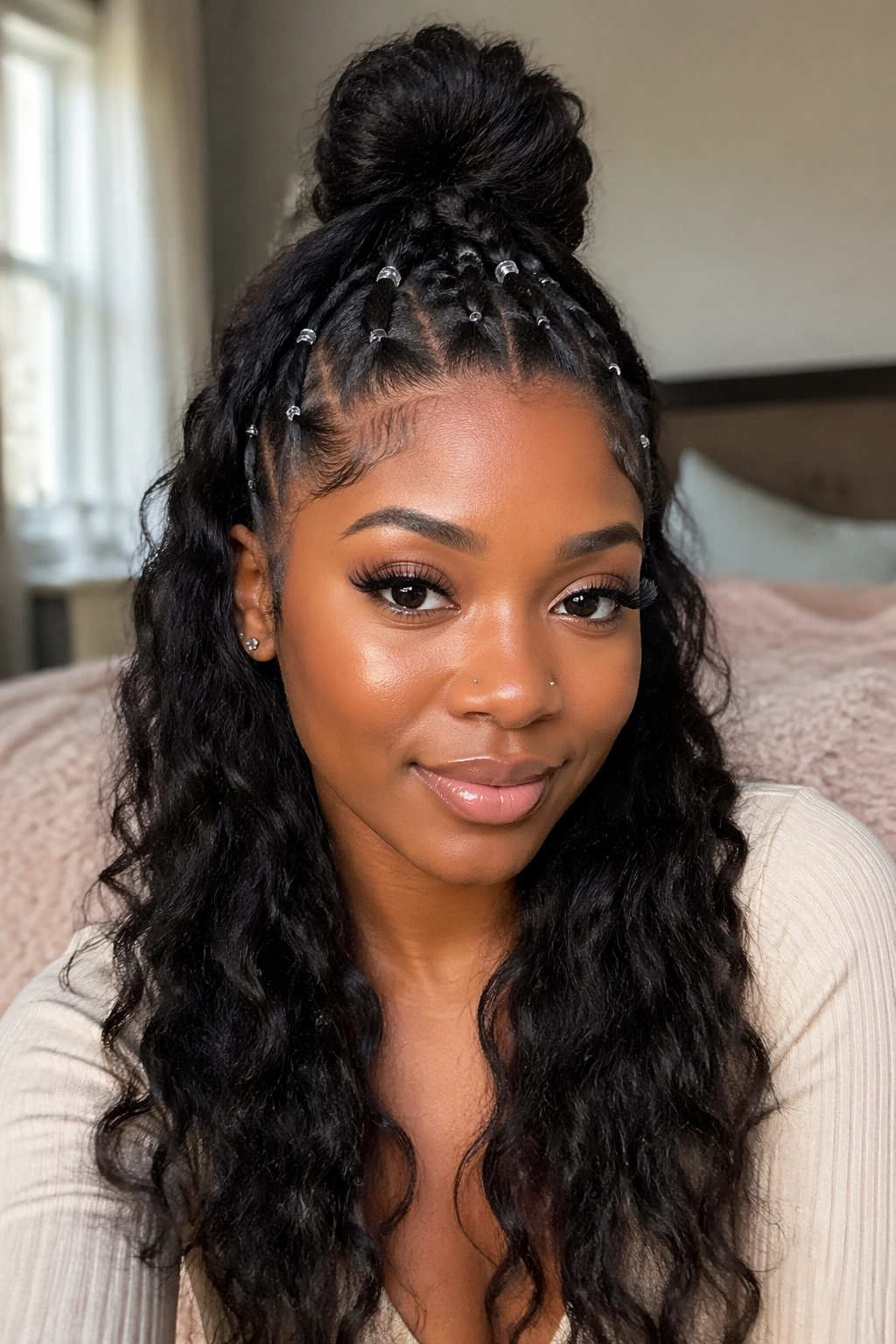
If your hair is thick enough to fight back, bubbles tame it without flattening it. This style breaks the top section into a few soft puffs before the ends are wrapped into a bun.
Start by securing the half-up section with one elastic, then add more elastics every 2 to 3 inches down the length of the top section. Gently pull each section outward so it rounds into a bubble. Once you reach the end, wrap the remaining hair into a small bun or coil it at the crown. The lower half stays loose, which keeps the look playful instead of stiff.
What Makes It Different
The bubbles create shape without relying on a single giant bun. That means the style can handle thicker hair better than a normal half-up knot. It also gives you a little motion in the top section, which looks especially good on stretched curls or blown-out lengths.
- Use clear elastics or small bands that match your hair.
- Keep each bubble the same size if you want symmetry.
- Tug the bubbles only after the last elastic is secure.
- Leave the bun soft instead of wrapping it too tight.
A bubble half pony with a bun finish has a little personality. Not too much. Enough.
12. Feed-In Braid Accent Half Bun
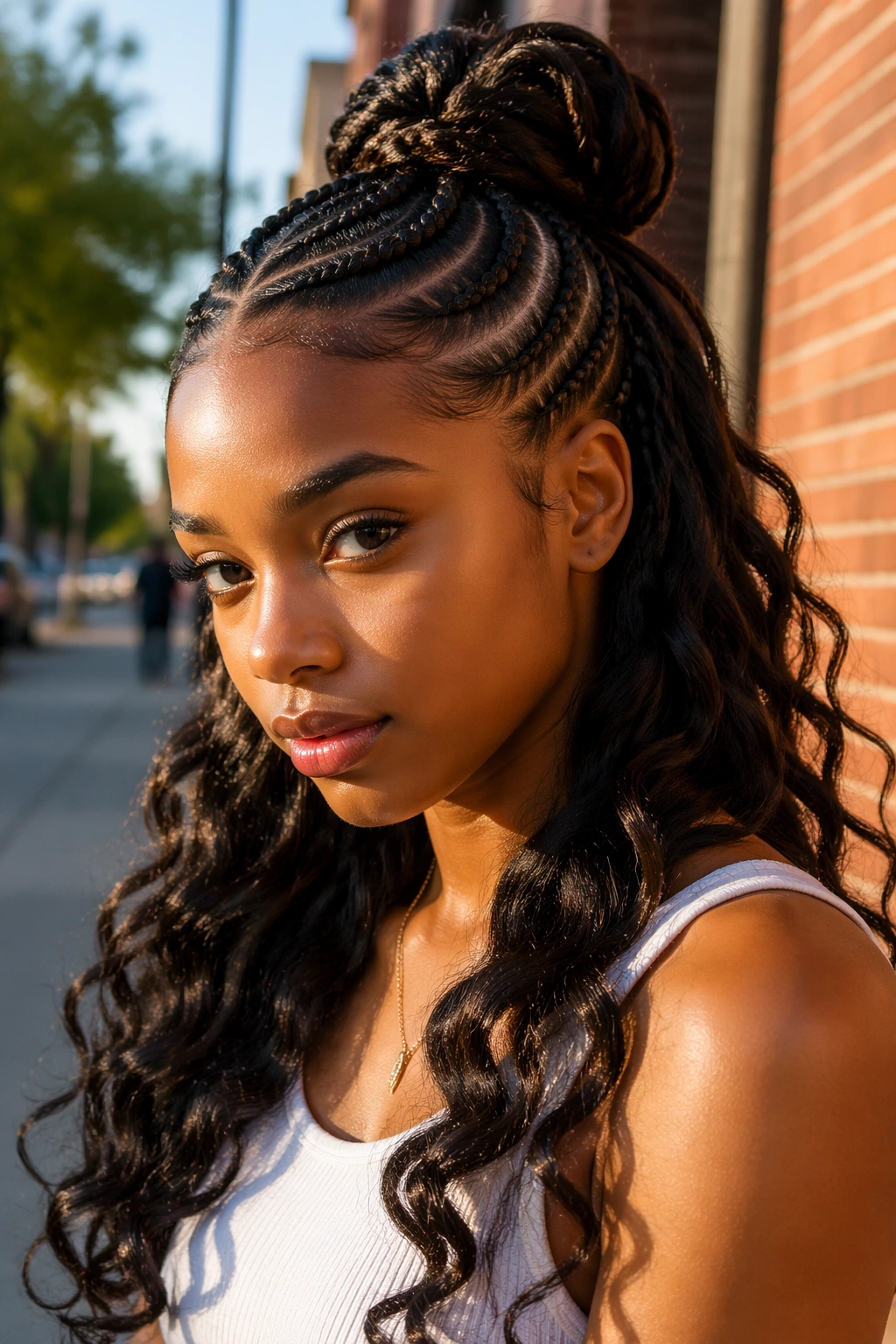
Want the style to hold for more than one day? Feed-in braids help. They add a clean front and a strong base, which makes the bun part behave.
The braids can start at the temples or just above the ears and feed toward the crown, where the hair is gathered into a bun. The rest of the hair is left loose, curly, stretched, or braided. This makes the style feel detailed without becoming complicated everywhere.
What I like here is the contrast. The front looks neat, almost tailored, while the lower half stays soft. The braided sections also protect the front from too much manipulation, which is a plus if you are trying to give your hair a break.
A feed-in braid accent bun works well when your hair is medium to long and has enough density to support small cornrowed sections. The braids should not be too thick. A few well-placed accents go further than a crowded scalp pattern that starts to look busy.
A style like this lives nicely for several days if you wrap it at night with a satin scarf.
13. Faux Hawk Half Bun
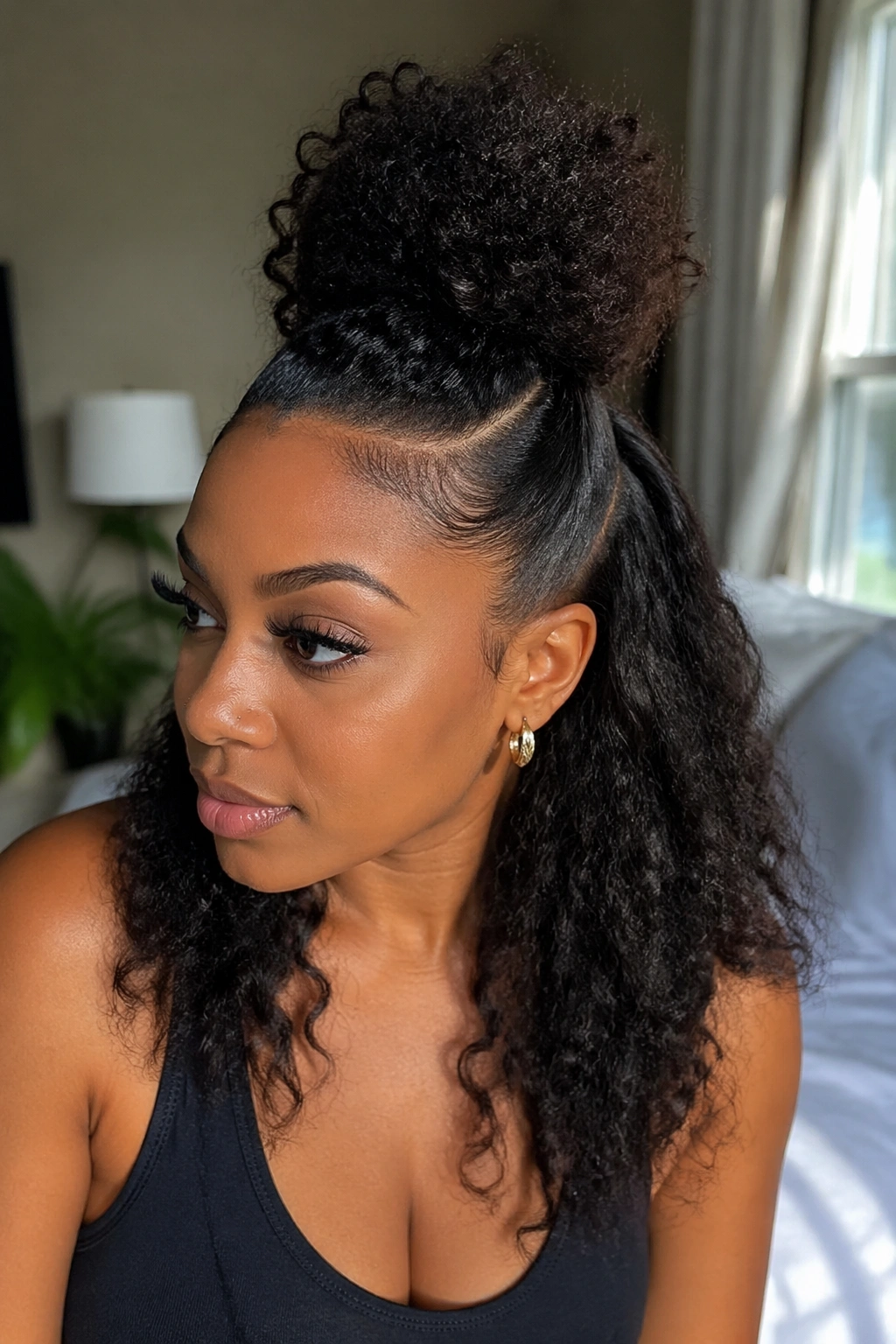
A half bun does not have to sit in the center. Shift the sides down and the whole style turns sharper, almost like a soft faux hawk.
This look starts with smooth or braided sides and a fuller top section that rises through the middle of the head. The bun can sit toward the back of the crown, while the lower hair stays loose. That center ridge gives the style its attitude. It is a little bolder than the usual half-up shape, and I like that.
How to Keep the Sides Clean
- Part the sides with a rat-tail comb.
- Pin or braid the hair close to the scalp.
- Use a light edge product only where needed.
- Keep the top section fluffy so the center height stands out.
The faux hawk half bun is a good option when you want your hair to feel a little sharper without going all the way into an updo. It works on natural curls, stretched hair, and some braided styles too.
One warning: if the sides are too slick, the style can lose its energy. Leave a bit of softness near the temples. A little texture keeps the shape from looking severe.
14. Curly Bang Half Bun for Black Women
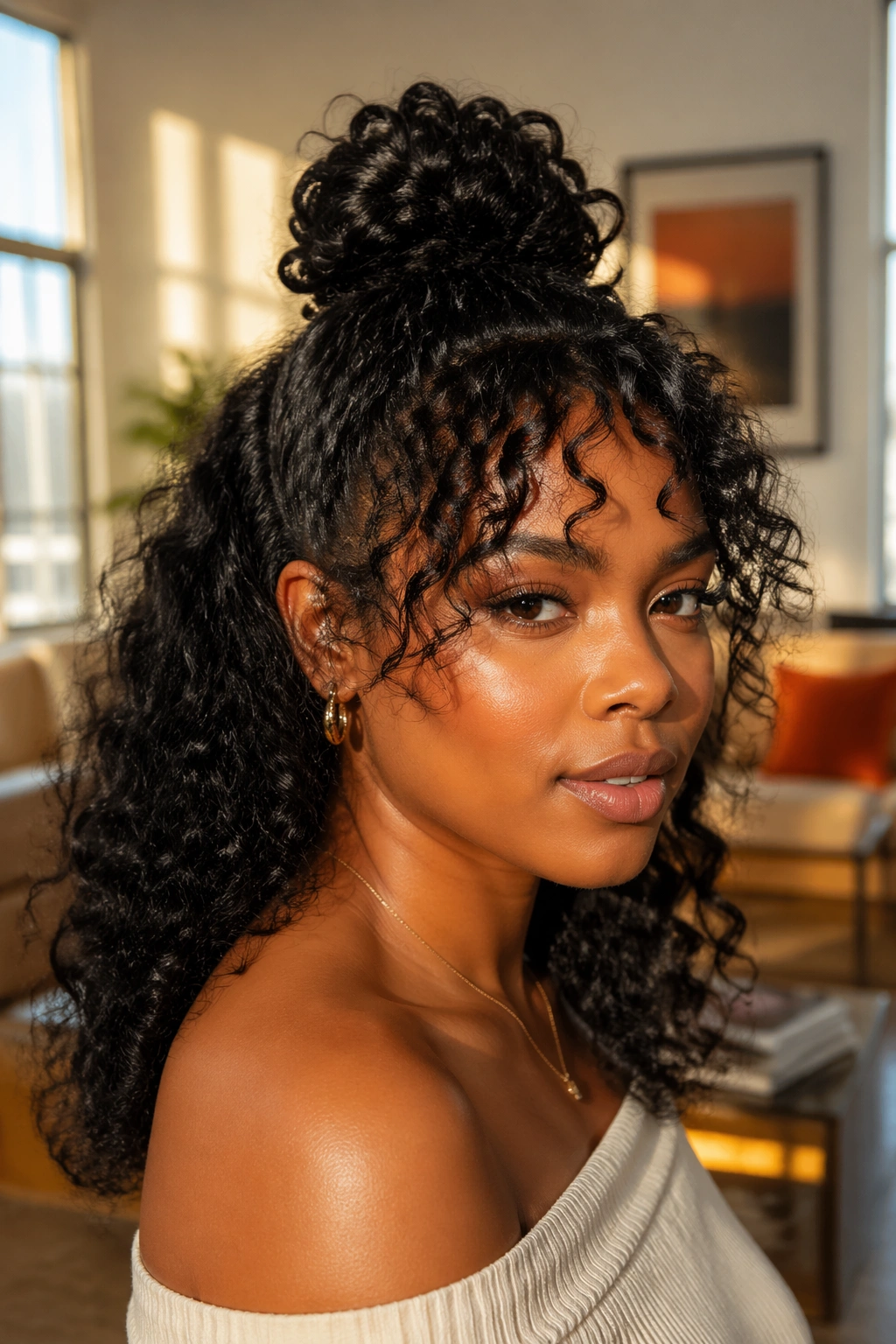
What if the front pieces do the talking? Then a curly bang half bun makes sense.
This style leaves the fringe or front curls out while the top section is pulled into a bun. The bangs can be a real cut or just a few face-framing curls shaped into place. The lower half stays loose, so the whole look keeps movement around the face and neckline. It is flattering without trying too hard.
I like this one on twist-outs, flexi-rod sets, and layered curls, because the bangs have enough definition to sit apart from the bun. If your front pieces are short, a small amount of mousse or curl cream can help them separate without clumping. If they are longer, pin them lightly behind the bun line and let the rest fall.
Who Should Try It
- Anyone who wants the face framed more softly.
- People with forehead length they want to break up a little.
- Haircuts with layers or intentional front pieces.
- Styles that already have curl definition in the front.
The bun itself does not need to be big. The bangs carry part of the visual weight. That is what makes this version feel balanced.
15. Satin-Scarf-Wrapped Half Bun
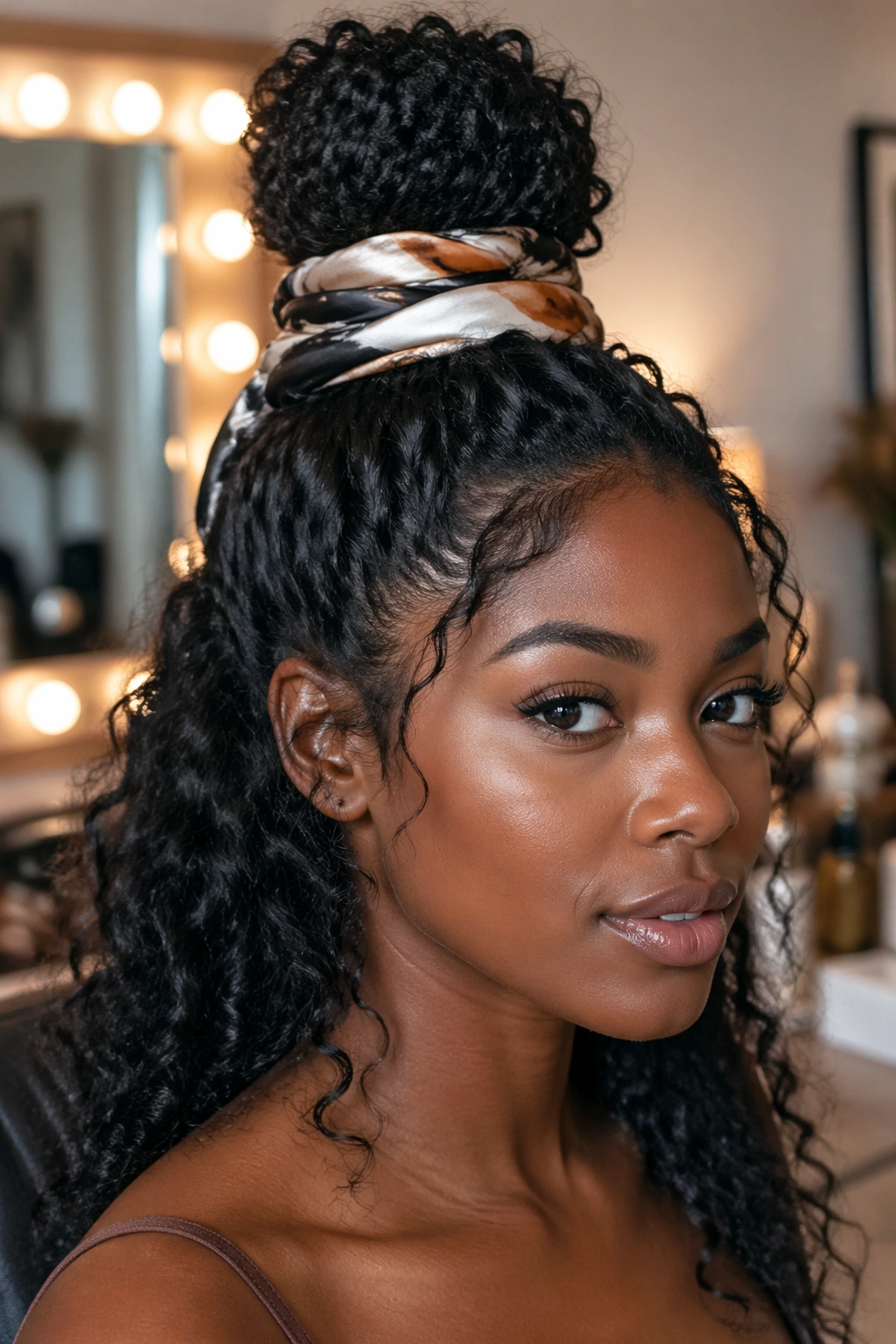
A silk scarf changes the whole mood in one knot. It can make a simple half-up bun feel deliberate, and it helps the style last a little longer too.
Wrap the scarf around the base of the bun, or tie it just under the bun so the fabric peeks out. You can keep the rest of the hair loose and textured, or let the scarf sit as the main accent while the bun stays compact. Printed satin, plain silk, and matte scarves all work. The key is how you tie it, not how expensive it looks.
This version is especially helpful if your roots need protection or if the bun is starting to frizz after a few hours. A scarf covers the roughest part of the style and draws attention to the shape instead of every flyaway. That’s handy on humid days, but it also works on clean hair when you just want a little polish.
Do not tie the scarf too tight. It should hold the bun’s base, not crush the crown. If you want the hairline to stay soft, leave a small gap at the front.
16. Silk Press Half Bun
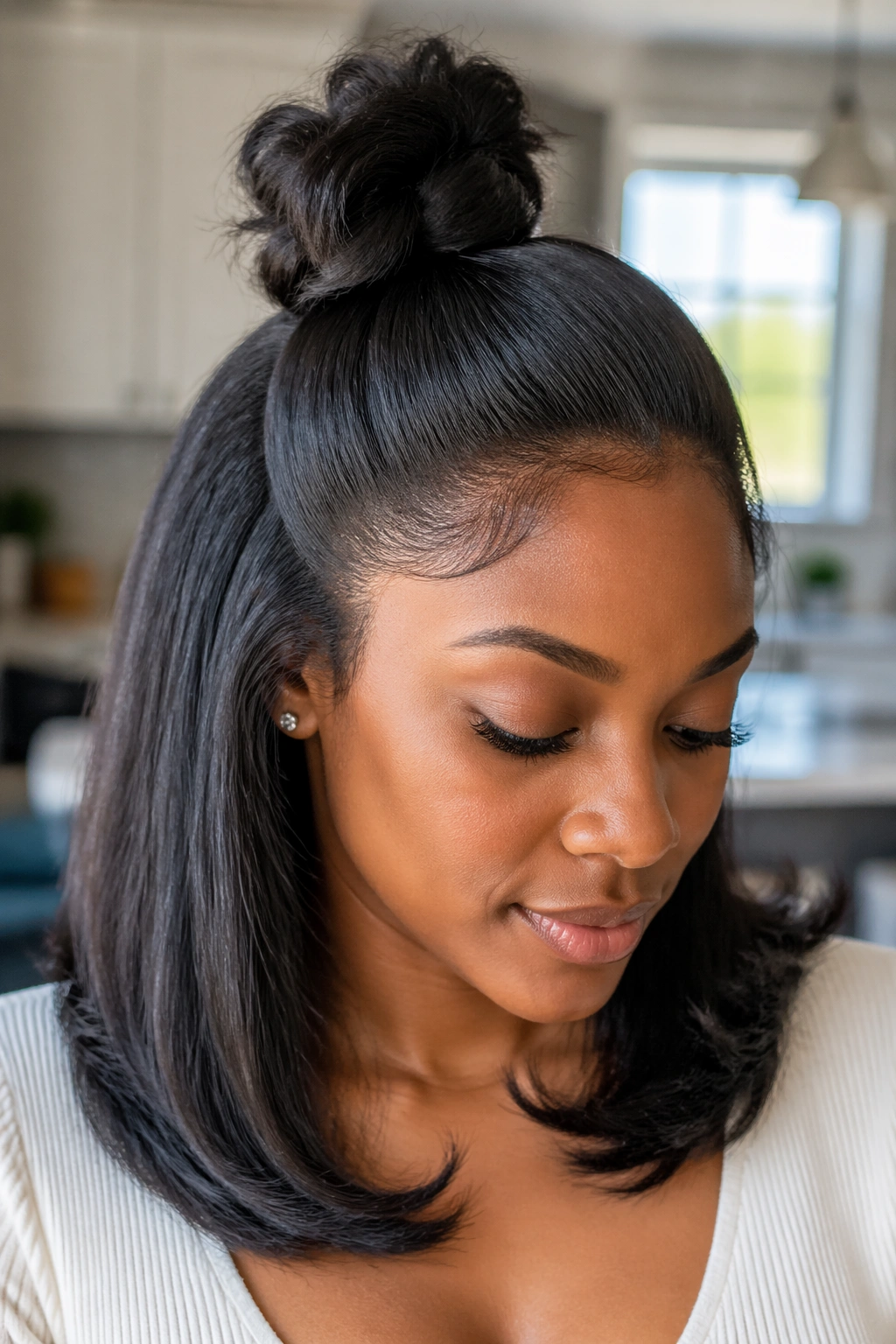
Silk press hair likes lightness. A heavy hand ruins it fast, and a messy half up half down bun on straightened hair only works if the bun feels soft and controlled.
This style usually sits best with a smooth crown, a loose twist or roll at the top, and long length falling below. The lower section can be left straight, curled at the ends, or given a tiny bend for shape. A silk press half bun should not look stiff. It should move when you do.
What to Avoid
- Thick creams near the roots.
- Tight elastics that leave dents.
- Overhandling the front after styling.
- Wet products that make the hair swell or puff.
A large bobby pin or two can help the bun stay in place without creating a hard crease. If your hair is fine or medium-density, one soft scrunchie may be enough. For thicker silk presses, use a stronger elastic under the bun and hide it with a wrap of hair.
This version has a cleaner finish than the curlier styles, but it still belongs in the messy half-up family because the bun itself should stay relaxed, not sculpted.
17. Middle-Part Half Bun with Loose Tendrils
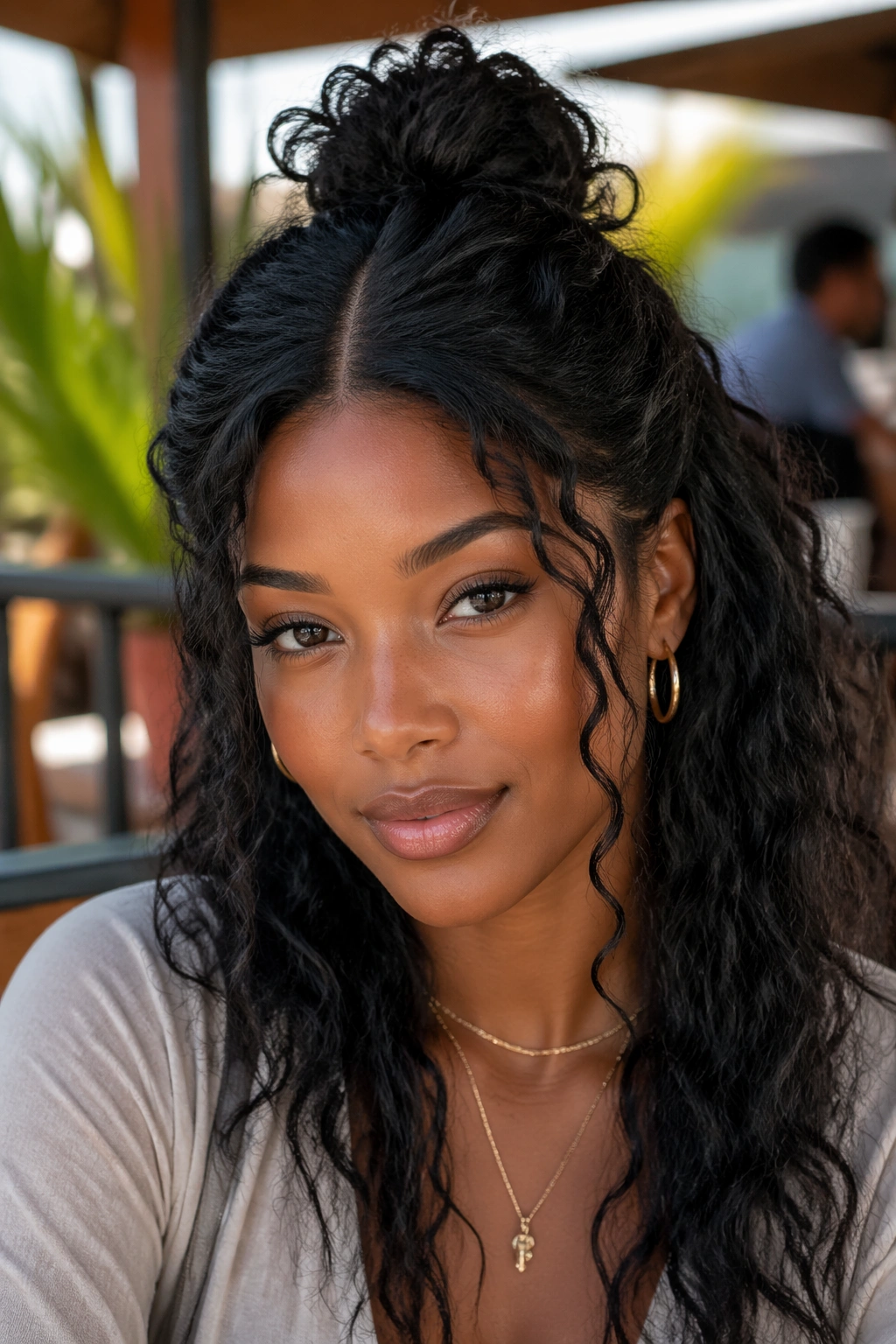
I keep coming back to this one because it works in bad lighting and good lighting. The middle part gives the style a steady center, and the loose tendrils make it feel soft instead of severe.
Split the hair down the middle, gather the top section from both sides, and secure it into a bun at the crown or just behind it. Leave a few slim pieces at the temples and maybe one or two at the nape. Those pieces should look accidental, even if they are placed on purpose. That tiny bit of looseness changes everything.
What Makes It Hold
The center part keeps the style balanced, especially on thicker hair where a side part can shift too much. The tendrils keep the face from disappearing behind all the volume. And because the bun sits on top of a clean part, the style reads as neat even when the texture itself is fluffy.
- Use a rat-tail comb to draw the part straight.
- Smooth only the part line, not the whole head.
- Curl the loose pieces if your hair needs a little extra shape.
- Pin the bun from underneath so the top stays soft.
This style is quietly useful. Not flashy. Just dependable.
18. Mini Top-Knot Half Bun for Shorter Lengths
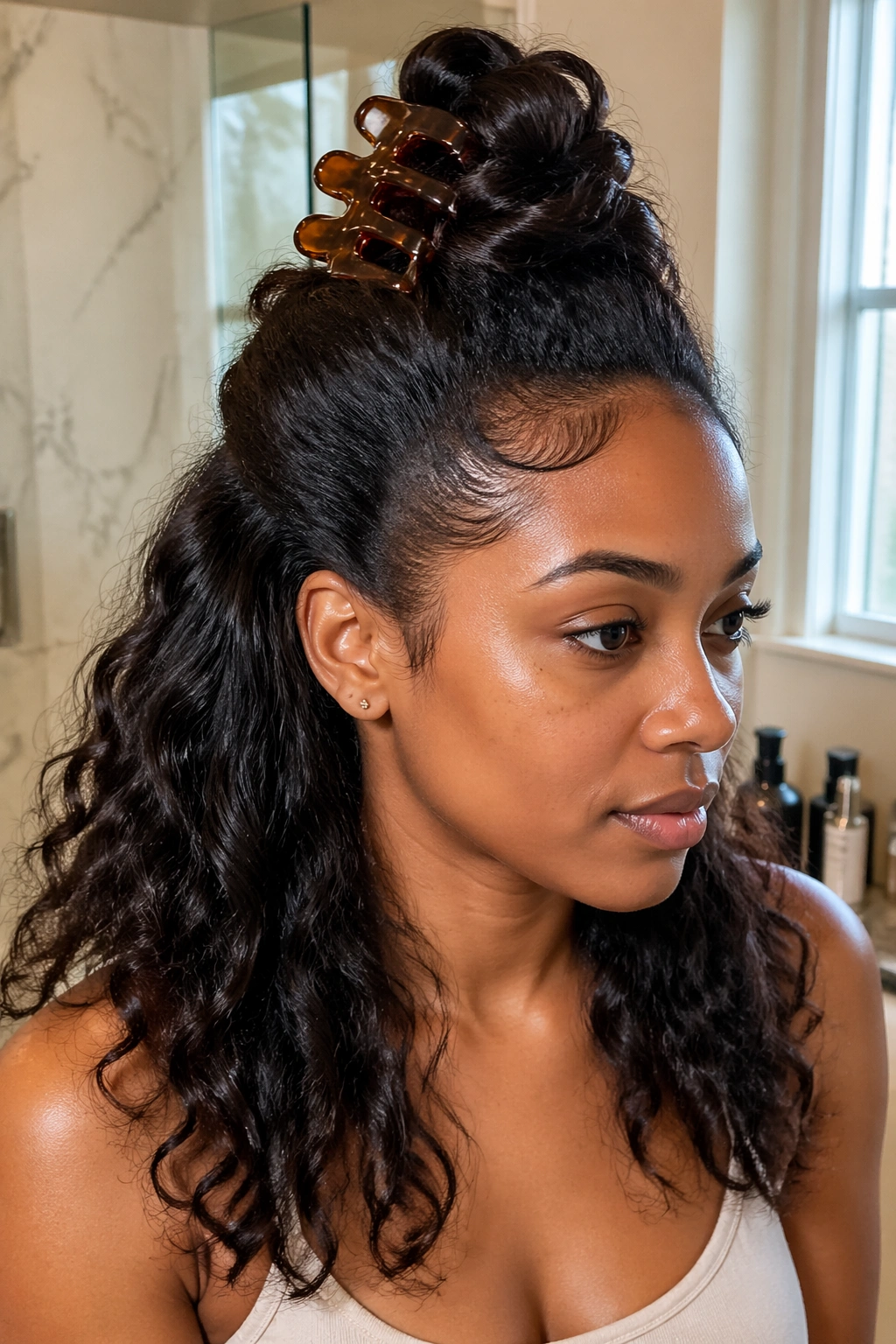
Short hair is not a problem here. If your hair is growing out, cut into a bob, or too short for a full wrap, a mini top-knot half bun still gives you the shape without forcing the ends.
The top section only needs enough length to twist, puff, or fold into a small bun. The lower half stays free and carries the rest of the style. On shorter Black hair, that top knot can be tiny and still look good because the proportions are what matter. A small bun on a short head of hair often looks more intentional than a forced oversized one anyway.
This is one of the easiest half-up styles to keep neat with a few pins and a soft tie. If the ends refuse to stay tucked, don’t fight them into submission. Let them stick out a little. That edge gives the style character.
A mini top-knot half bun is also useful when you want a quick fix between wash days. It asks for less length, less product, and less patience. Some mornings, that is the whole point.
Messy half up half down bun styles for Black women work because they leave room for texture to do its job. You do not need every strand to obey. You need a shape that holds, a crown that has lift, and a lower half that still feels like hair instead of a helmet.
Pick the version that matches your texture first. Then match the mood. Some days call for braid detail. Some days want a claw clip and five minutes. Either way, the style should feel like yours the second you leave the mirror.
