



Straight hair can be brutally honest in a ponytail. Every dent from an elastic shows, every bump from a rushed brush-out shows, and bangs can either soften the whole thing or make it look like you stopped halfway through getting ready. That’s exactly why ponytails for straight hair with bangs work best when the shape is deliberate: a clean base, a clear part, or a little texture where the eye needs it.
Bangs do more heavy lifting than people give them credit for. Curtain bangs loosen a severe high ponytail. Blunt bangs turn a low ponytail into something graphic. Wispy or side-swept bangs can take the edge off a style that might otherwise read too plain on pin-straight hair.
Straight strands have their own habits, too. They shine well, they move cleanly, and they slip out of elastics faster than wavy hair if you don’t give them something to grab. A touch of texture spray at the roots, a clean center part, or a tiny hidden wrap around the elastic can change the whole feel of the style.
Some of these looks are polished enough for work, some feel better for dinner or a night out, and a few are just the kind of quick fix you reach for when your bangs are doing their own thing. The strongest ones make the bangs part of the design, not an afterthought.
1. Low Sleek Ponytail With Curtain Bangs
A low sleek ponytail and curtain bangs are a natural match. The ponytail keeps the profile long and clean, while the parted fringe softens the front so the style doesn’t feel severe.
Why it works
Curtain bangs already want to fall away from the center, which means they echo the shape of a low ponytail instead of fighting it. That’s why this combo looks easy even when it’s carefully styled. Straight hair can go flat fast, so the soft split at the front gives the eye somewhere to land.
The trick is in the finish. Smooth the crown with a fine-tooth comb, keep the elastic low at the nape, and wrap a thin strand around the base so the tie disappears. Leave the bangs with a little bend, not a hard crease.
- Best for oval, heart, and long face shapes
- Use a pea-sized amount of smoothing cream on the top layer
- Keep the bangs loose enough to move
- Wrap the elastic with a 1-inch section of hair for a cleaner finish
Tip: pull the ponytail tight enough to hold, but not so tight that the crown looks pulled back and stiff.
2. High Tight Ponytail With Blunt Bangs
A high tight ponytail is the sharpest partner blunt bangs can have. The two together make a clear, strong line that feels intentional from every angle.
The look works because both parts are direct. Blunt bangs draw a hard horizontal line across the forehead, and a high ponytail lifts everything upward, which keeps the style from feeling boxed in. On straight hair, that contrast is especially strong. You get shine, height, and a face-opening shape without much extra fuss.
Use a boar bristle brush to smooth the sides, then secure the pony as high as your head allows without creating a bump. A tiny bit of gel or styling cream around the hairline helps if your flyaways are stubborn. Keep the bangs flat and full; this is not the place for piecey ends.
This one looks best when the base is clean. No crooked elastic. No loose bumps.
3. Mid-Level Wrapped Ponytail With Side-Swept Bangs
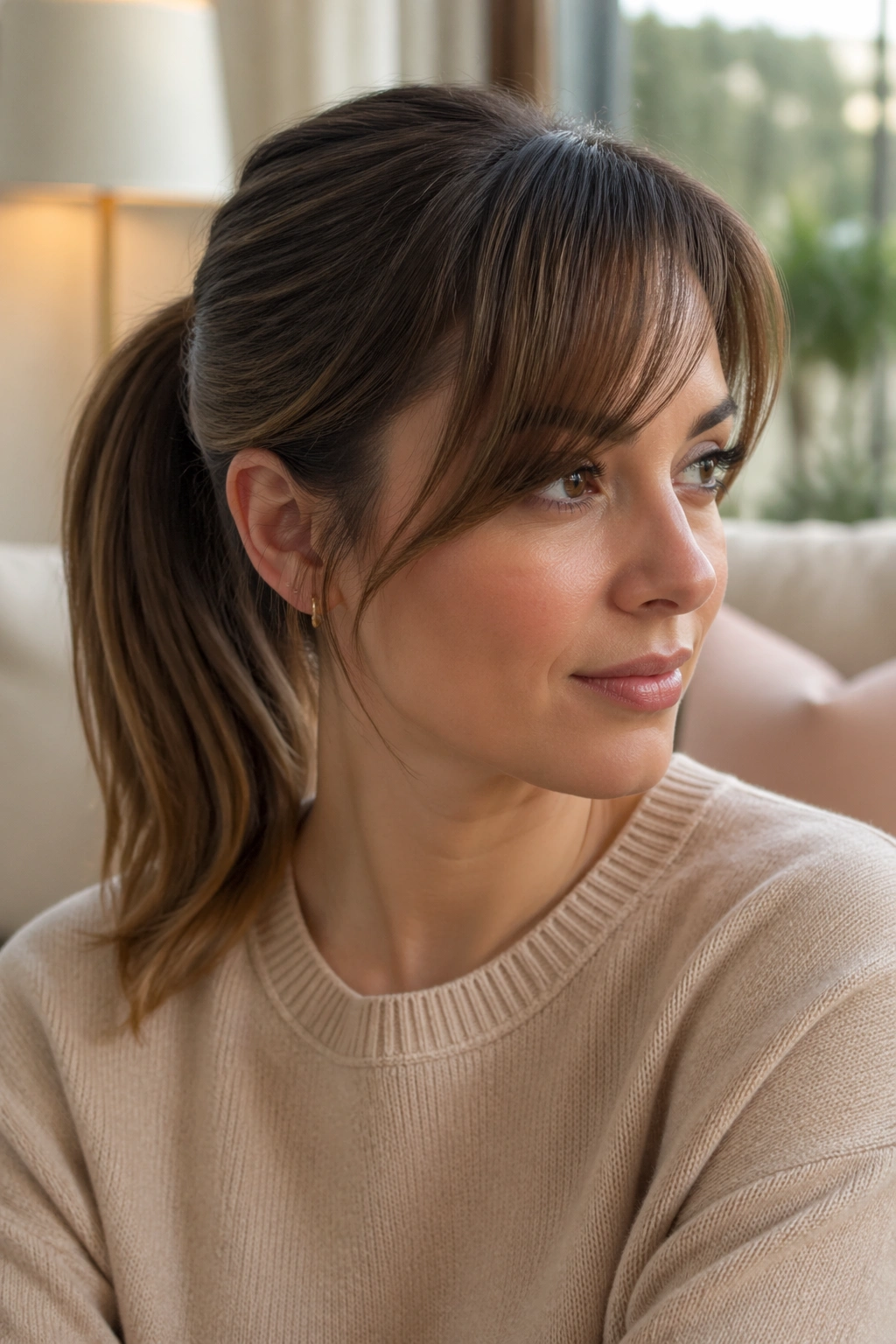
Why does a mid pony look so good with side-swept bangs? Because it sits in the middle ground. It gives you enough lift to feel styled, but it doesn’t pull all the attention upward the way a high pony does.
That balance matters on straight hair. A pony placed between the ear and the crown tends to keep the head shape softer, and the side-swept fringe helps the front of the style feel less rigid. If your bangs are growing out, this is one of the easiest ways to make them look on purpose instead of awkward.
How to wear it
Part the bangs slightly off-center and sweep them across the forehead with a round brush. Then gather the rest of the hair at mid height and wrap the elastic with a thin strand. A light mist of flexible hairspray is enough; you don’t need helmet-level hold here.
This is the ponytail I’d pick for a long day. It stays neat, but it doesn’t feel overworked.
4. Bubble Ponytail With Wispy Bangs
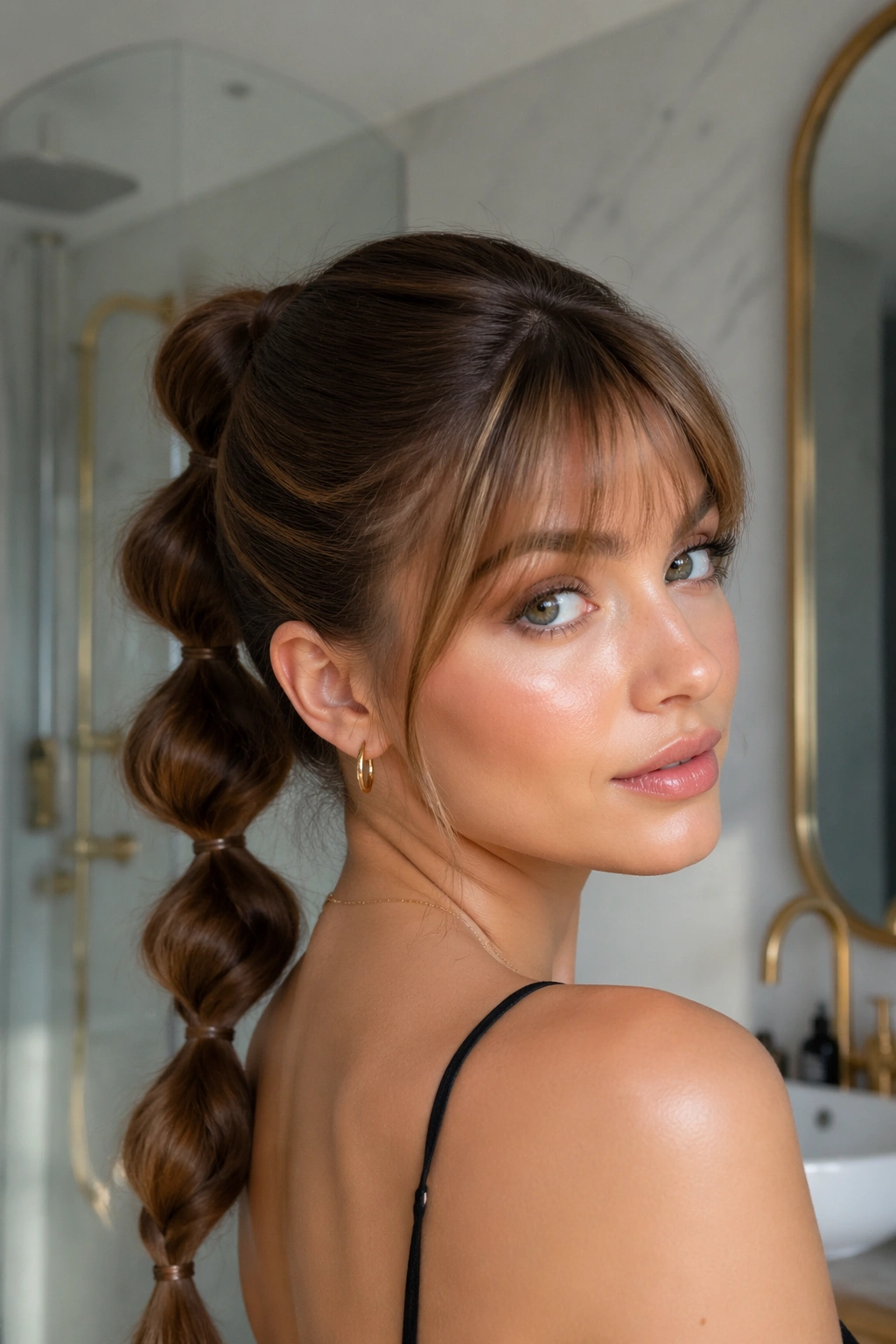
Picture a ponytail that feels playful without turning into a costume. That’s the bubble ponytail, and wispy bangs keep it grounded.
Straight hair is perfect for this style because the bubbles show up clearly. Use small clear elastics every 2 to 3 inches down the length, then gently pull each section outward so the round shapes puff a little. The bangs should stay airy and light, not too full, or the whole look starts to feel heavy at the front.
If your hair is fine, this is one of the easiest ways to fake fullness. A little texturizing spray at the mid-lengths helps the bubbles hold their shape. Do not overload the roots, though. That only makes the top look dusty.
Quick details
- Make each bubble the same size for a clean look
- Tug the sides evenly so the shape stays round
- Keep the bangs piecey rather than blunt
- Finish with a light mist, not a stiff lacquer
Small note: the tighter the first elastic, the neater the whole style looks.
5. Braided Crown Ponytail With Curtain Bangs
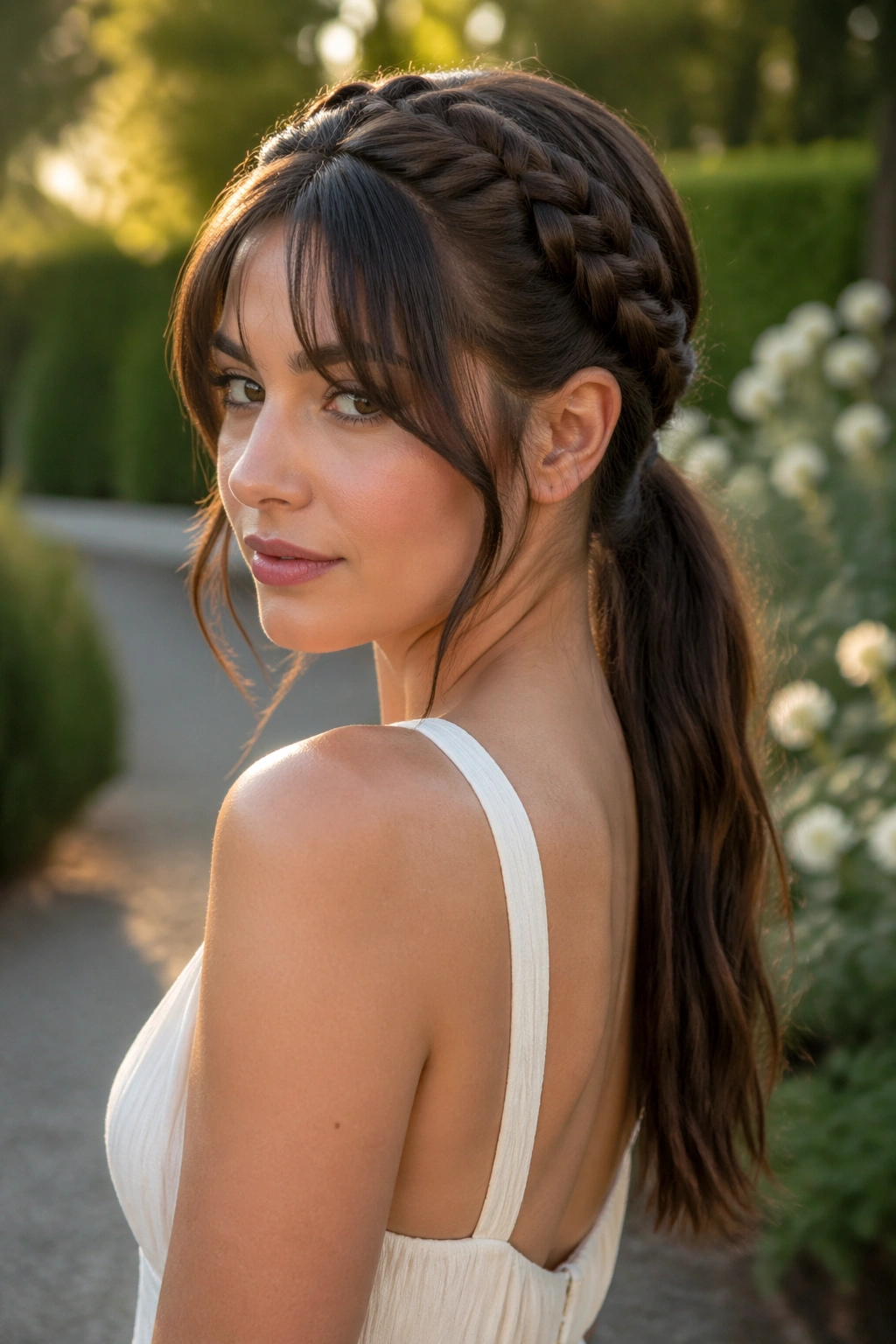
Braids and ponytails can fight each other, or they can work like a neat little system. With curtain bangs, the braided crown version lands on the right side of that line.
Start by taking small sections along the hairline and braiding them back toward the ponytail. It can be one braid on each side or a single braid that feeds into the base. The point is to keep the front interesting while the straight length stays sleek and controlled.
Curtain bangs keep the look soft. Without them, the braid can feel too formal on straight hair. With them, the whole thing gets a bit of movement around the eyes and cheekbones. That makes it easier to wear with plain clothes, which I like. Some styles need a whole outfit. This one doesn’t.
A little shine serum on the ends keeps the braid from looking dry, especially if your hair is naturally fine or on the thinner side.
6. Rope-Twist Ponytail With Long Bangs
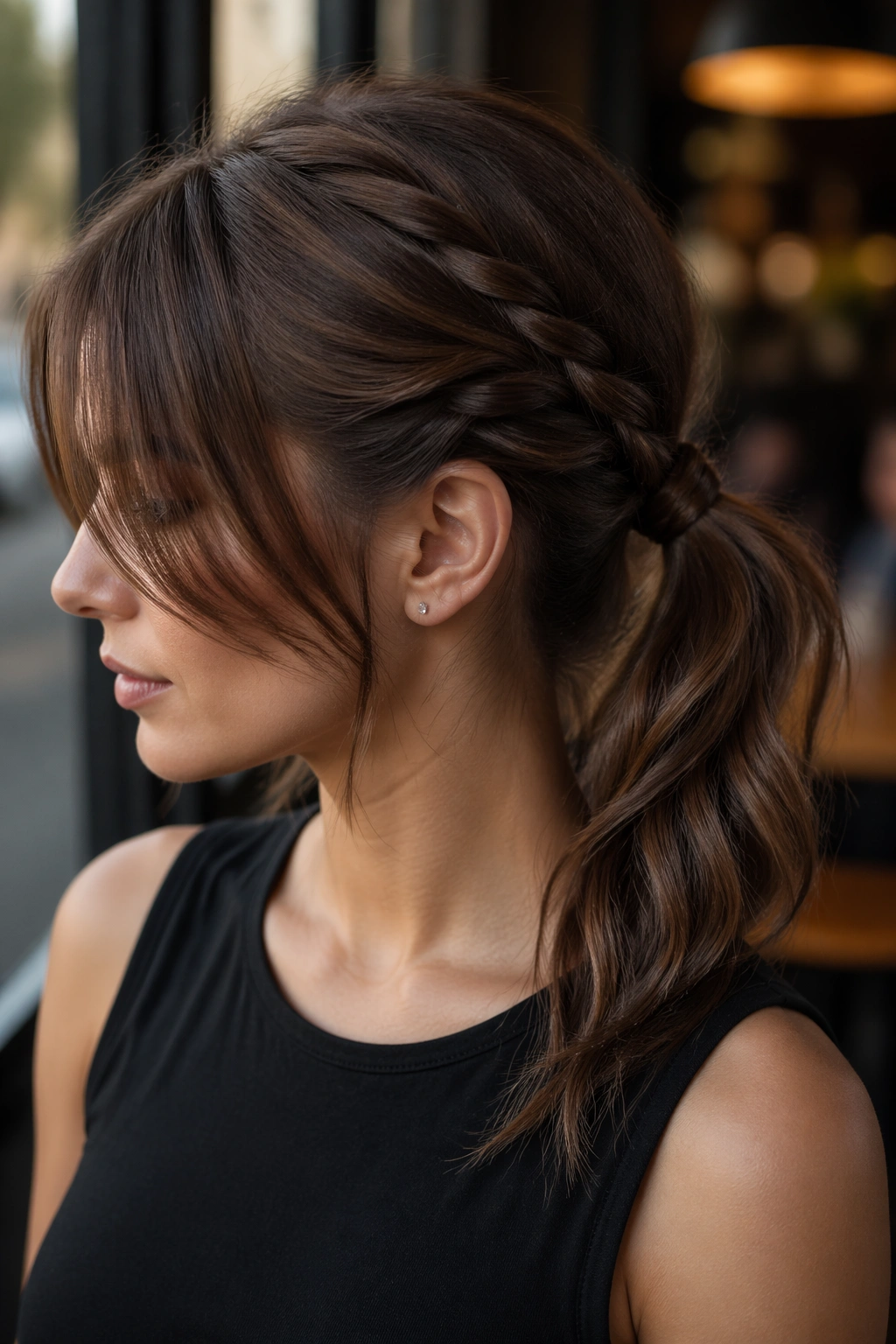
Two twisted strands. One elastic. Done.
That’s the rope-twist ponytail in plain language, and it’s a good choice when straight hair refuses to stay put. Twisting gives the hair more grip than a loose pull-through, so the style holds better through a long day. Long bangs work here because they extend the front line instead of breaking it up too much.
Split the hair into two front sections, twist each one back, and gather them into a low or mid ponytail. If your bangs are long enough to skim the cheekbones, let them fall forward a little. That softness balances the twist, which can otherwise read a bit severe.
The style is useful when you want something polished but not precious. It looks more complicated than it is, which is always a nice bonus. Add a little smoothing cream before twisting, especially if your hair tends to fray at the ends.
7. Sleek Power Ponytail With Micro Bangs
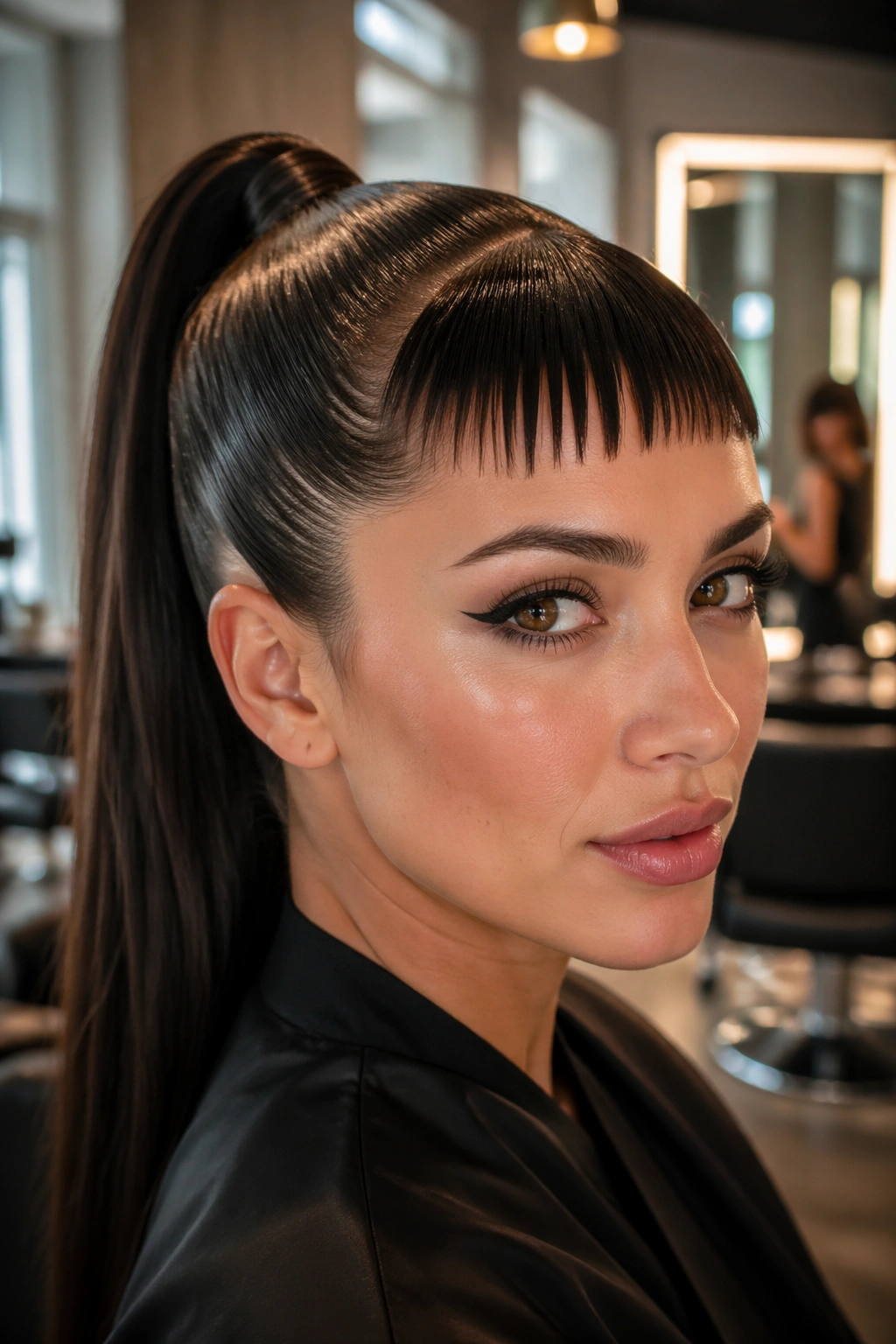
Micro bangs are not shy, and a sleek ponytail is the only sensible partner for them. The combination is blunt, high contrast, and a little fashion-forward in the best way.
A high sleek ponytail pulls the eye upward, while micro bangs stop the front from feeling bare. Straight hair makes the whole shape crisp. There’s nowhere for the style to hide, and that’s part of the appeal. If you like sharp lines and low drama in the back, this one has a lot of personality for very little effort.
Use a flat iron on the bangs first so they sit cleanly, then brush the rest of the hair back with a small amount of gel or wax cream. Keep the pony high and tight. If the crown has bumps, smooth them down with a tail comb and a touch of hairspray on your fingertips.
This is not the softest look in the lineup, and that’s fine. Some days call for a little edge.
8. Low Bubble Ponytail With Full Fringe
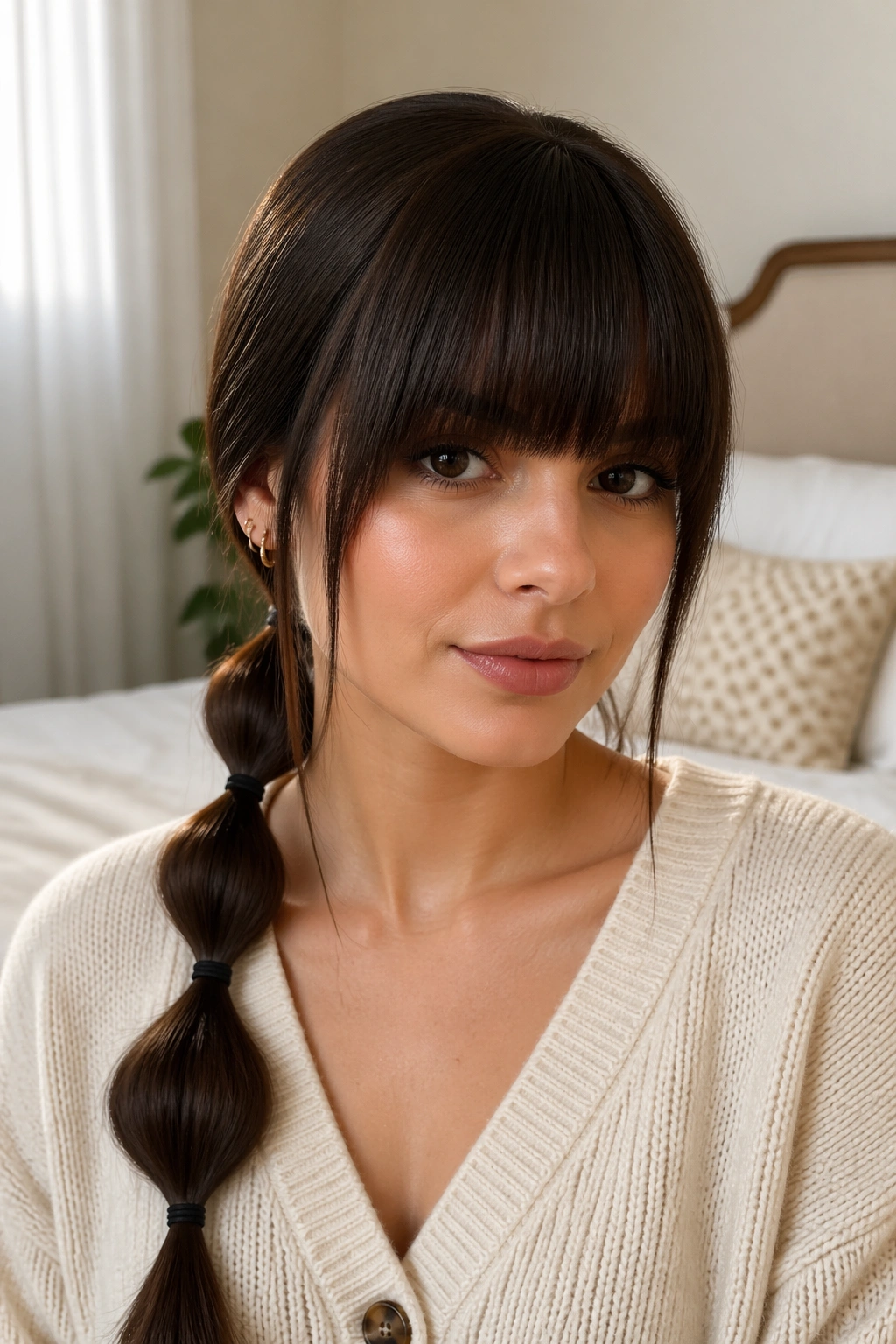
Need something softer than a high pony but more playful than a low knot? The low bubble ponytail is the one I’d point to first.
A full fringe gives the front a solid shape, which keeps the bubbles from looking too cute in a childish way. That balance matters. Straight hair tends to make bubble shapes extra clean, so the fringe stops the style from feeling too segmented. It gives the eye a place to rest before it moves down the length.
What to do
Gather the hair low at the nape, secure it once, then add elastics every few inches down the tail. Gently tug each section to puff it out. Keep the fringe straight and lightly separated at the ends so it doesn’t sit like a block.
If your bangs are thick, this style looks especially good with a bit of dry shampoo at the roots of the fringe. It keeps the front from separating too fast.
9. Half-Up Ponytail With Face-Framing Bangs
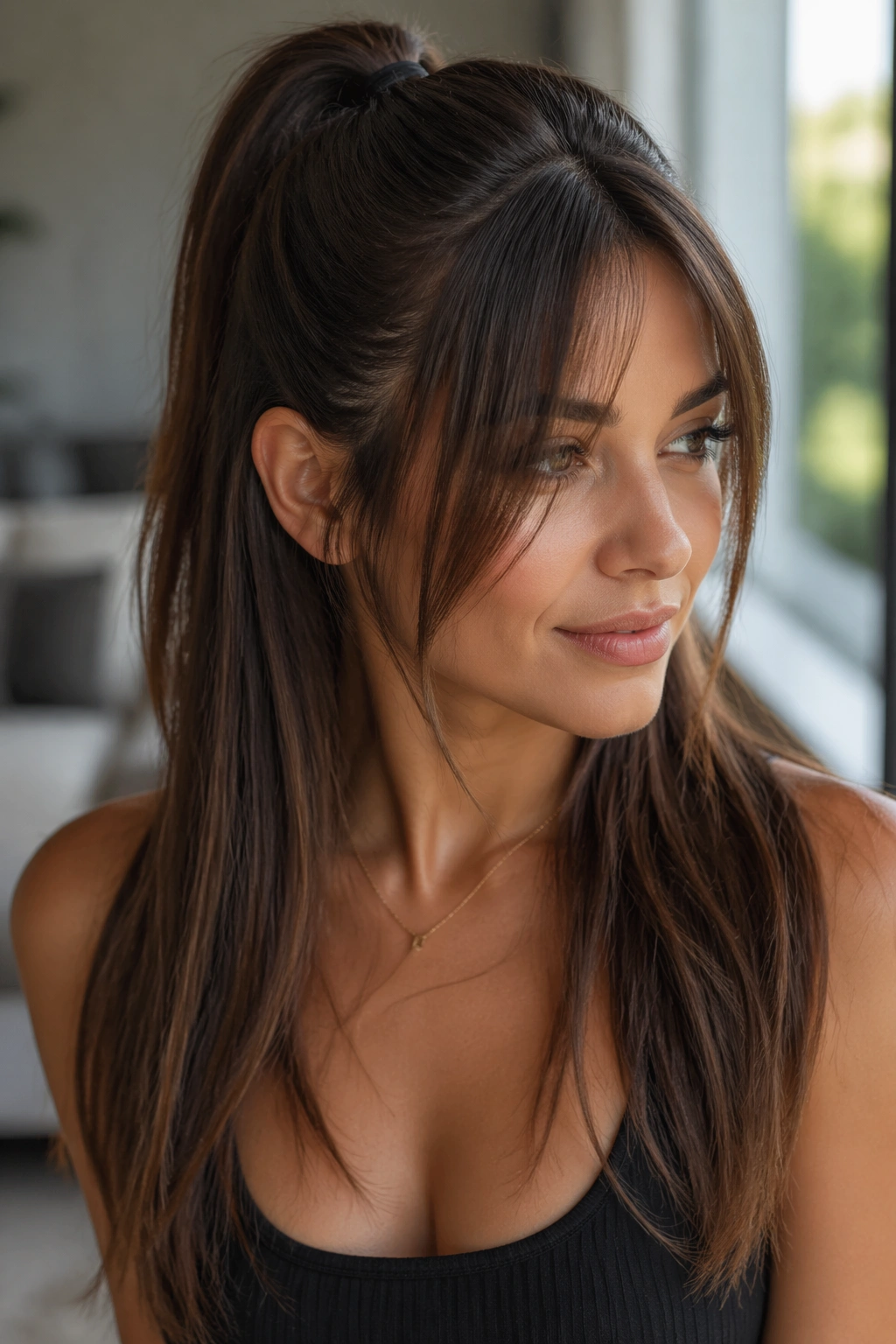
Half-up styles solve the “too much hair in my face” problem fast. With straight hair and bangs, that can be the whole point.
Pull the top half of the hair into a small ponytail at the crown or just below it, then leave the bottom half loose and smooth. Face-framing bangs and short front pieces soften the change from tied hair to loose hair, which keeps the style from feeling abrupt. On straight strands, that little bit of layering does a lot of work.
This is a smart choice when your hair is long but you don’t want the full weight of a complete ponytail. It also lets the ends move freely, which can be nicer than pinning everything down. Use a small elastic and keep the top section neat, but don’t make it so tight that the crown collapses.
A touch of serum on the loose lengths helps the bottom half stay shiny and separated.
10. High Voluminous Ponytail With Feathered Bangs
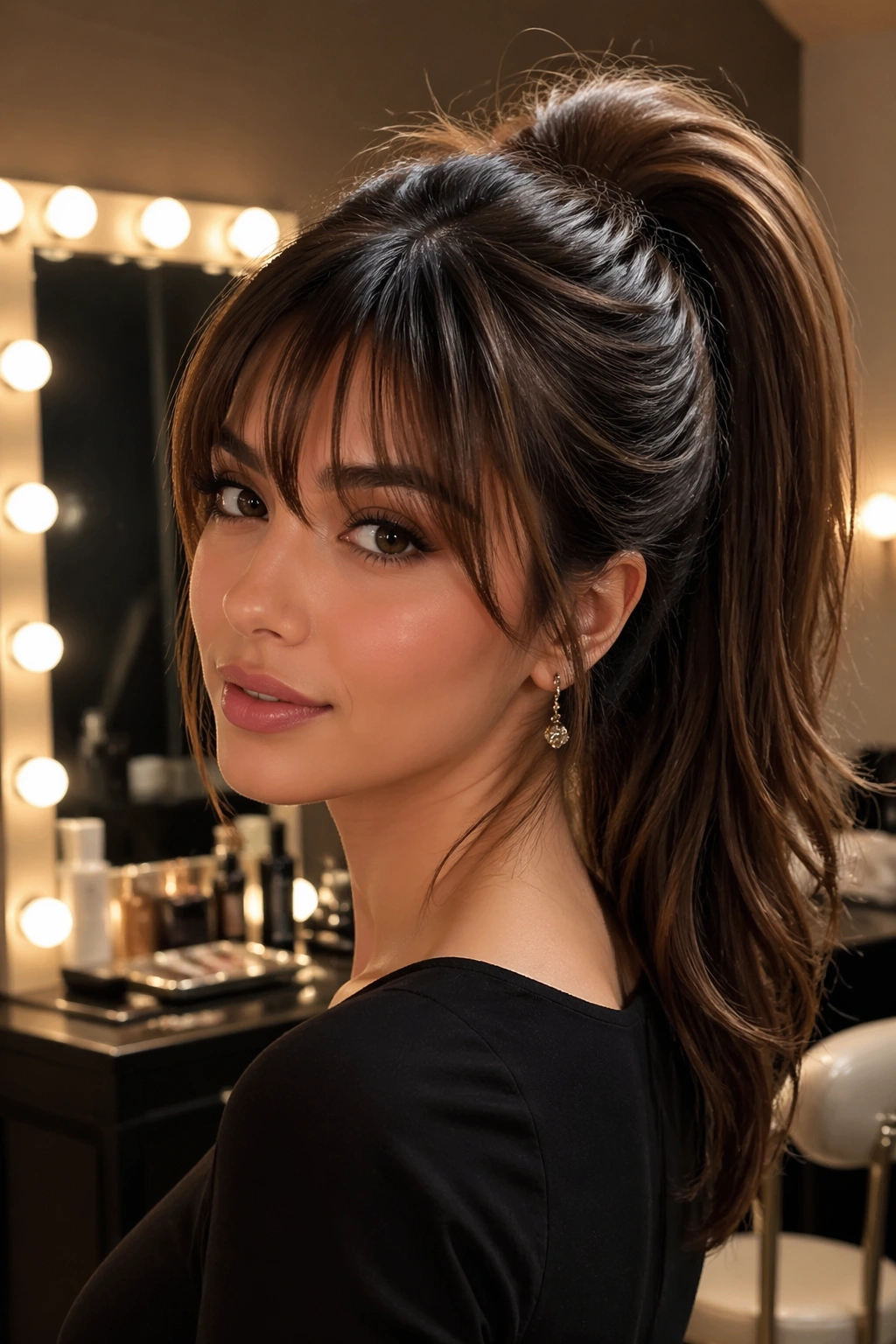
If you want lift without teasing every inch of the crown, a high voluminous ponytail is the move. Feathered bangs make it look lighter and more wearable.
The idea here is simple: keep the base high, but build a little softness at the roots before you tie it off. You can do that with a tiny bit of backcombing under the top layer or by lifting the roots with a round brush while blow-drying. Straight hair needs that support if you want the pony to sit up instead of drooping.
Feathered bangs keep the front from feeling heavy. They break up the forehead area and connect nicely with the height in the back. This is one of those styles that works better when the bangs are slightly airy rather than perfectly flat.
If the ponytail is for a long day, secure it with two elastics stacked close together. That keeps the lift from sinking after an hour or two.
11. Twisted Side Ponytail With Angled Bangs
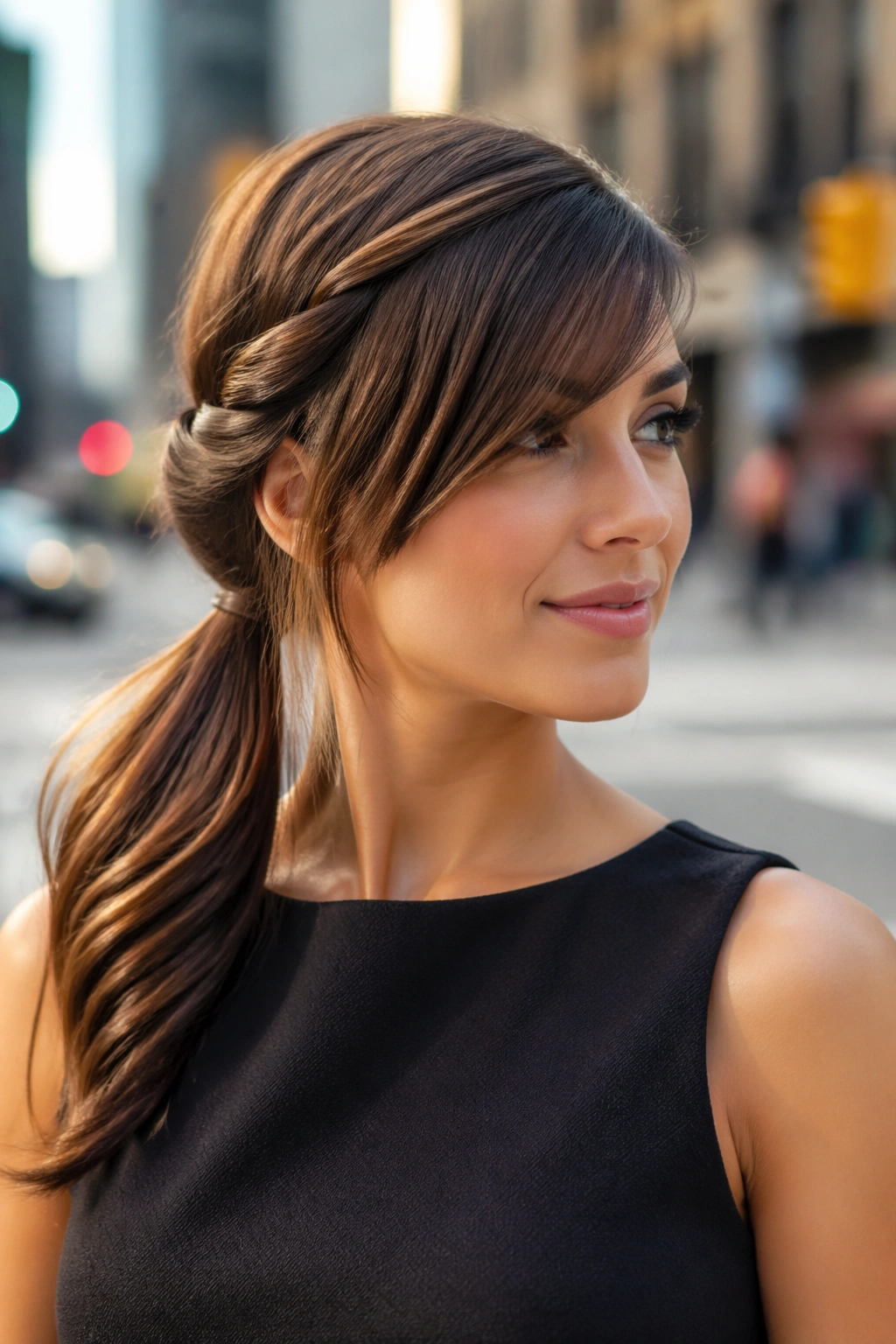
A side pony is not casual by accident. It has to be placed with a little care, or it just looks like the hair slid over on its own.
Angled bangs make sense here because they echo the diagonal line of the ponytail. Twist the front sections back from the temple, gather the hair low and to one side, and secure it just behind the jawline. Straight hair helps the shape read clearly, which is part of the charm. You can actually see the direction of the style.
This one has a softer mood than a centered low pony. It works well with earrings, one-shoulder tops, or anything that already has a bit of visual pull on one side. Keep the twist clean, though. If it gets messy, the style loses its shape fast.
A narrow ribbon or thin elastic on the side can make the whole thing feel finished without adding clutter.
12. Scarf-Tied Ponytail With Wispy Bangs
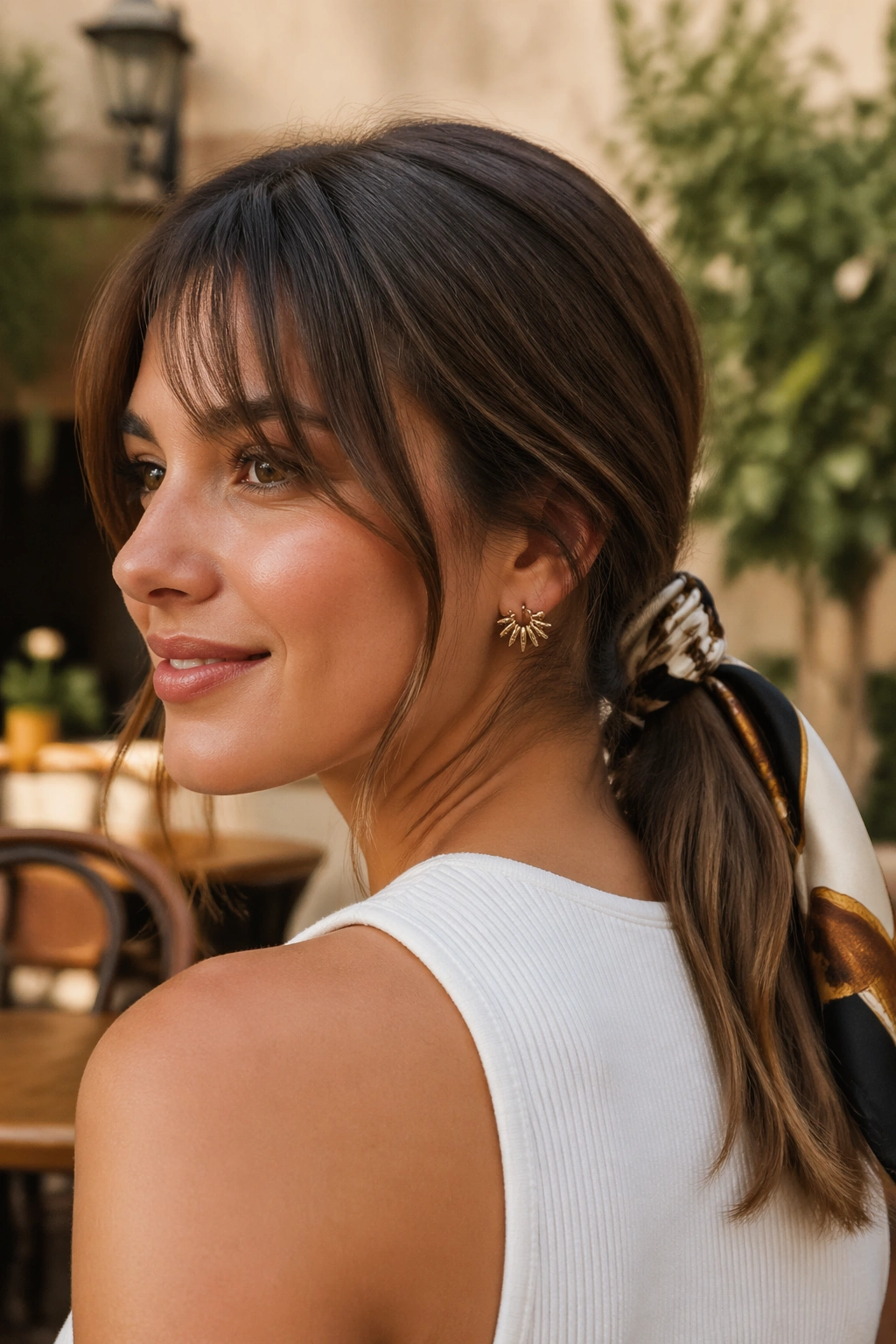
Silk, shine, and a clean elastic line. That’s the whole point of a scarf-tied ponytail.
Wrap a silk scarf around the base of a low or mid ponytail, knot it once, and let the ends hang. Wispy bangs keep the front from feeling too heavy, especially on straight hair, where the scarf already adds enough polish. The result is relaxed but not sloppy, which is harder to get right than people think.
A scarf also gives you another texture to play with. Straight hair can be too uniform from root to tip, so the fabric breaks up that sameness in a good way. Pick a scarf that isn’t too slippery, or pin it underneath so it stays put.
This style is especially nice when your ponytail is clean but the rest of your outfit is simple. It fills in the blank space without asking for much else.
13. Criss-Cross Ponytail With Curtain Bangs
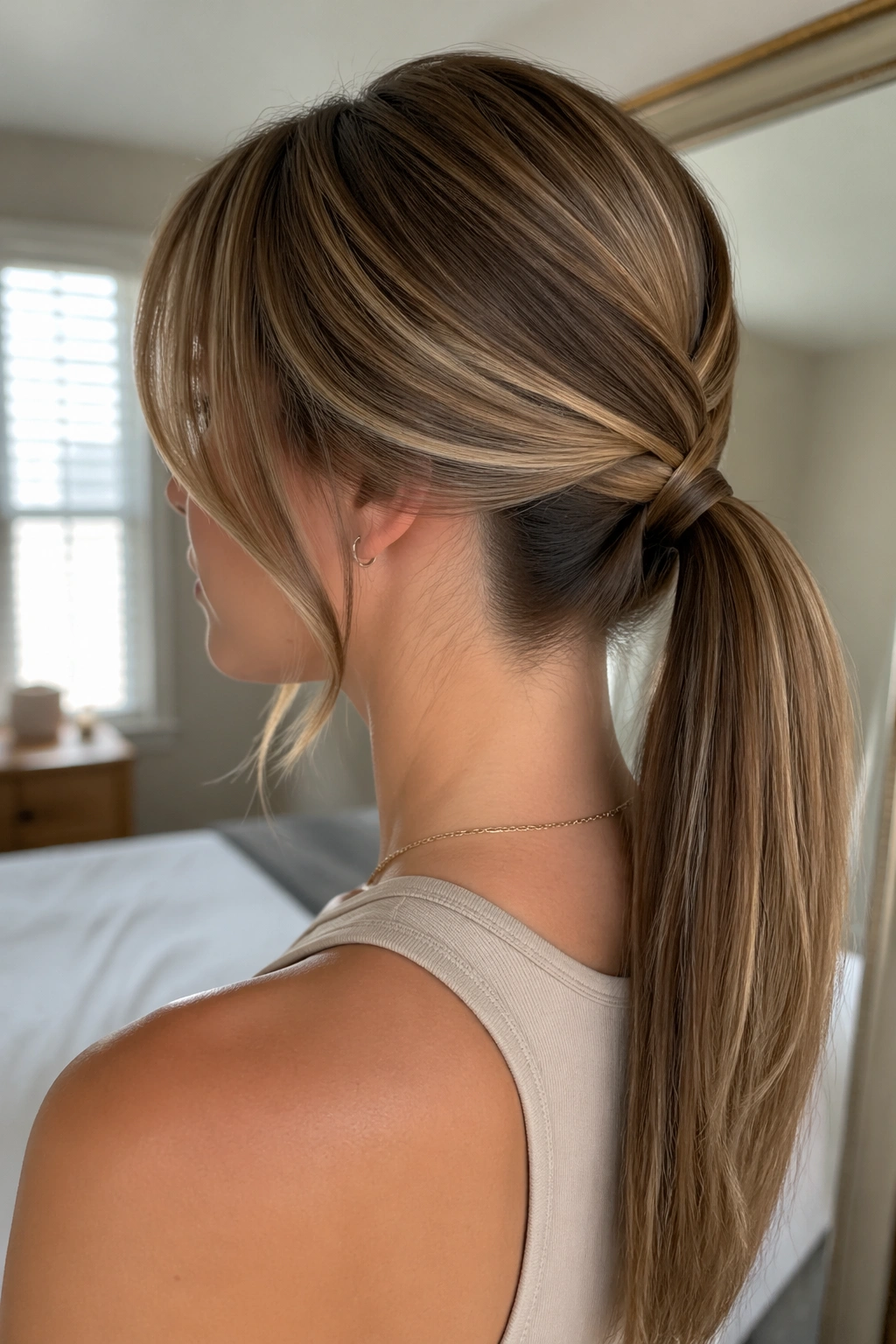
Why bother with criss-crossing the base when a regular pony is easier? Because it hides the elastic and adds a little geometry at the back.
Take two small sections from each side of the head, cross them over the ponytail base, and pin them underneath. The effect is subtle but tidy. Curtain bangs keep the front soft so the detail at the back doesn’t make the whole style feel too engineered. Straight hair benefits from that clean line.
A few things to watch
- Keep the crossing sections narrow so they don’t bulk up the base
- Use bobby pins that match your hair color
- Smooth the top layer before securing the pony
- Let the bangs fall naturally instead of forcing a hard center part
The style works well if you like people to notice the back of your hair when you turn around. It has detail without screaming for attention.
14. Sleek Ponytail With Flipped Ends and Brow-Skimming Bangs
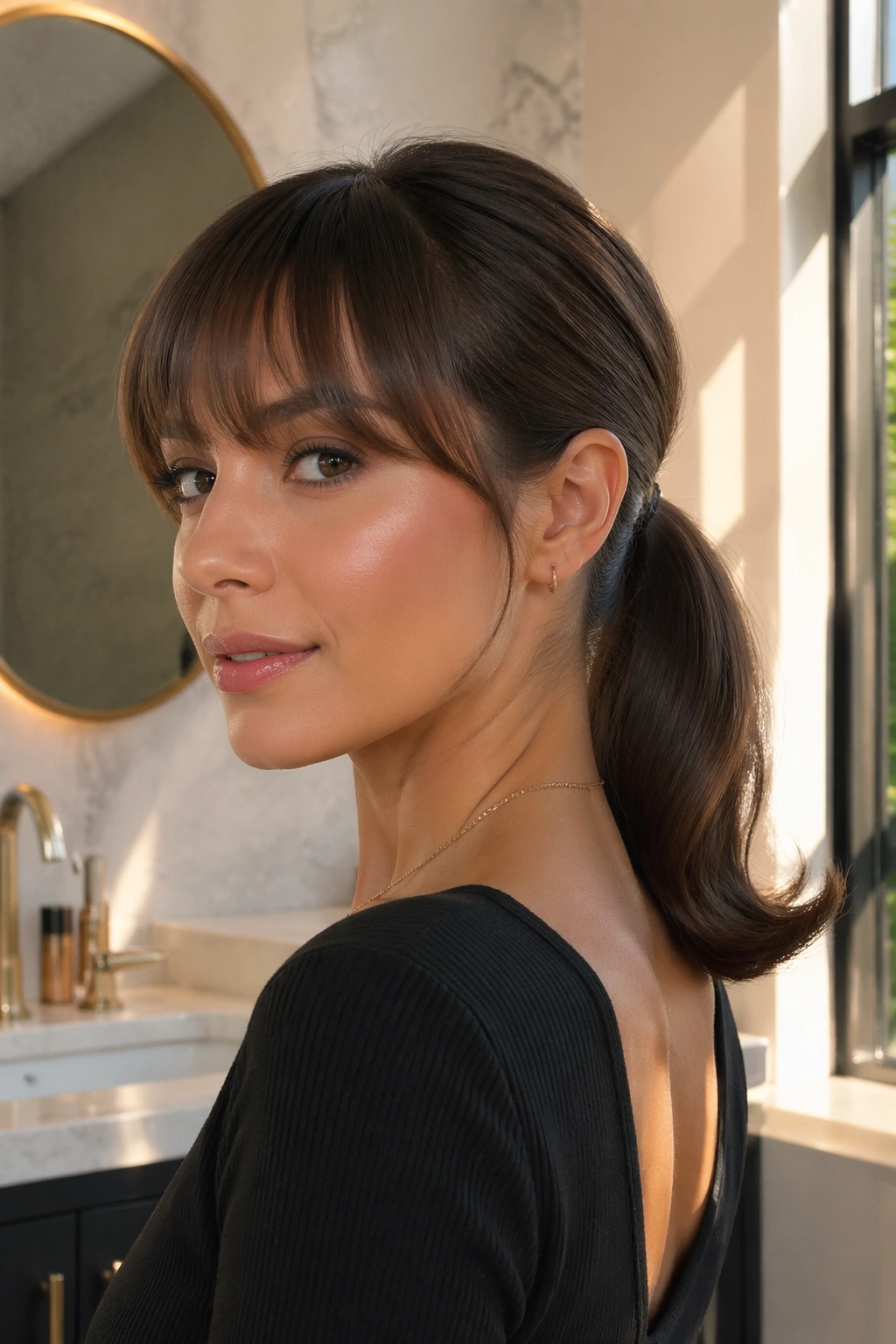
Flipped ends make straight hair look finished instead of flat. That small bend at the bottom changes the whole shape.
Start with a smooth ponytail, low or mid, then turn the ends under and out with a flat iron or round brush so they flick slightly. Brow-skimming bangs help the top half feel connected to the tail. Without that fringe, the style can read a little too plain on straight hair. With it, the shape looks deliberate.
This is a strong choice when you want something neat but not stiff. The flipped end gives the eye a finish point, which sounds small and actually makes a big difference. A tiny bit of shine spray on the last few inches of hair helps the flip hold its shape.
If your hair is very straight and slick, add a little texture spray near the ends first. That makes the bend stay put longer.
15. Double-Elastic Ponytail With Side Bangs
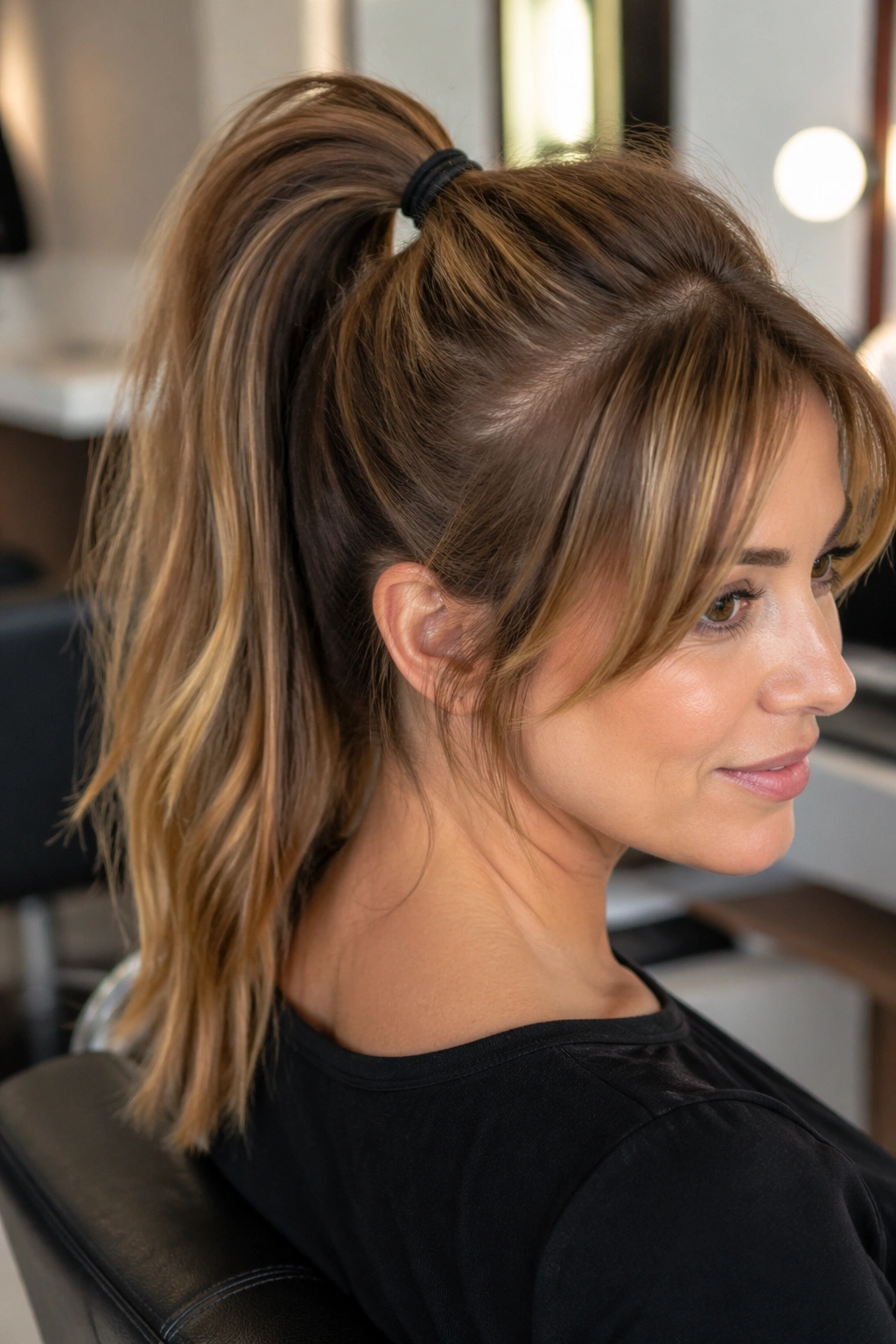
Sometimes the fix for limp roots is not more product. It is more structure.
The double-elastic ponytail uses two ties placed a few inches apart to fake extra lift and support. The first elastic creates the base, and the second helps the length stay up instead of dragging the top flat. Side bangs soften the result so it doesn’t feel too technical.
This trick is especially handy on fine straight hair. A single ponytail can slide down and collapse if the hair is slippery, but two ties give the style more hold without needing a ton of teasing. Keep the top section smooth, then add the second elastic once the pony is set.
Use this when
- Your ponytail keeps sagging by midday
- Your hair is fine or very smooth
- You want extra height without a huge bump
- Your side bangs already give the style some softness
It’s a practical fix, and I’ll always take a practical fix over a fussy one.
16. Mini Ponytail Stack With Straight-Across Bangs
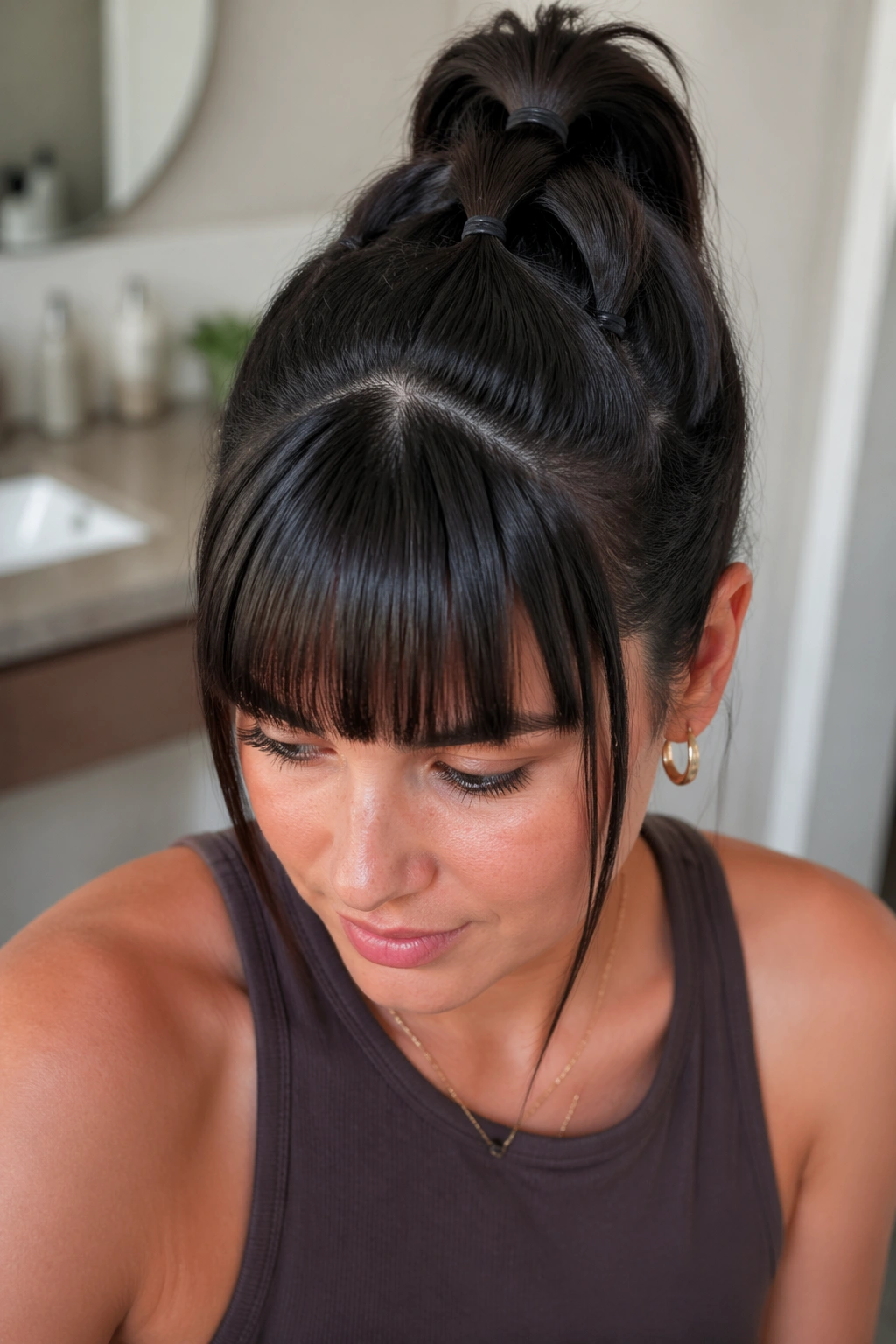
Can a stacked mini-ponytail trick work on straight hair? Yes, if you want extra length and a little visual lift.
Create two or three small ponytails from the crown down toward the nape, then join them into the next section below. The stacked structure gives the illusion of more body, which straight hair often needs. Straight-across bangs make the front feel tidy and contained, so the eye focuses on the shape of the back instead of on any stray flyaways.
Keep the spacing even. That’s the whole game here. If the elastics sit too close together, the style looks clumsy. If they sit too far apart, the illusion falls apart. A tail comb helps you section cleanly, and a bit of smoothing cream keeps the divisions neat.
This style is clever without being loud. That’s probably why I like it.
17. Low Knot-Wrapped Ponytail With Long Layered Bangs
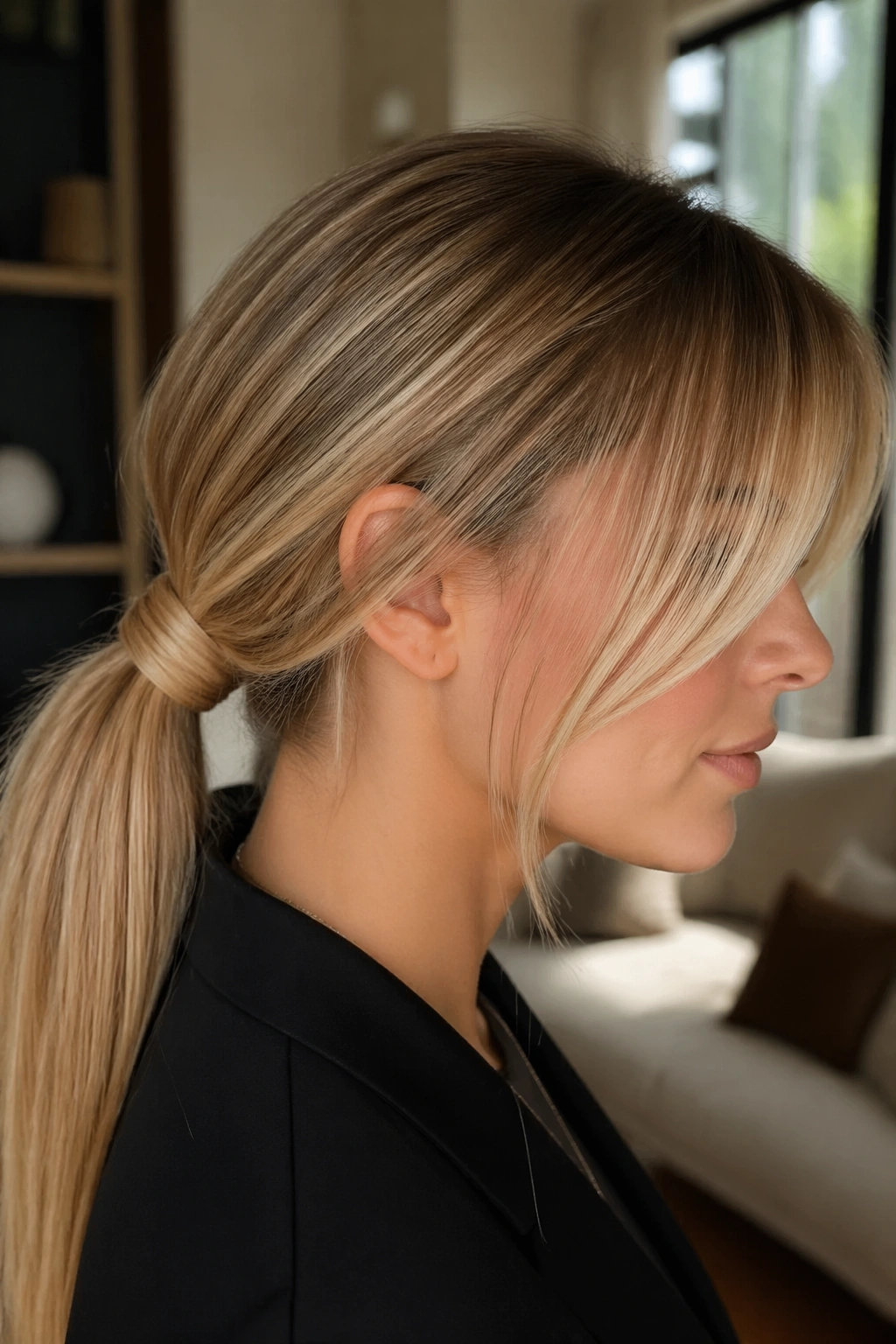
A knot-wrapped pony feels tidier than a loose wrap, and that matters when the hair is straight and every line shows.
Instead of wrapping a strand around the elastic and tucking it under, you can knot a small section around the base and pin it flat underneath. The knot gives the ponytail a little architectural detail without making it fussy. Long layered bangs keep the front moving, so the look doesn’t turn stiff.
What makes it hold
The secret is tension. Pull the wrap snug enough to stay flat, then secure the ends under the ponytail with two crossed pins. If the strand is too thick, the knot gets bulky. If it’s too thin, it slips. A section about the width of a pencil usually works.
This ponytail is the kind of style that looks more expensive than it is. That sounds silly, but you know the type: clean, calm, and a little more finished than the average tie-back.
18. Athletic High Ponytail With Soft Bangs
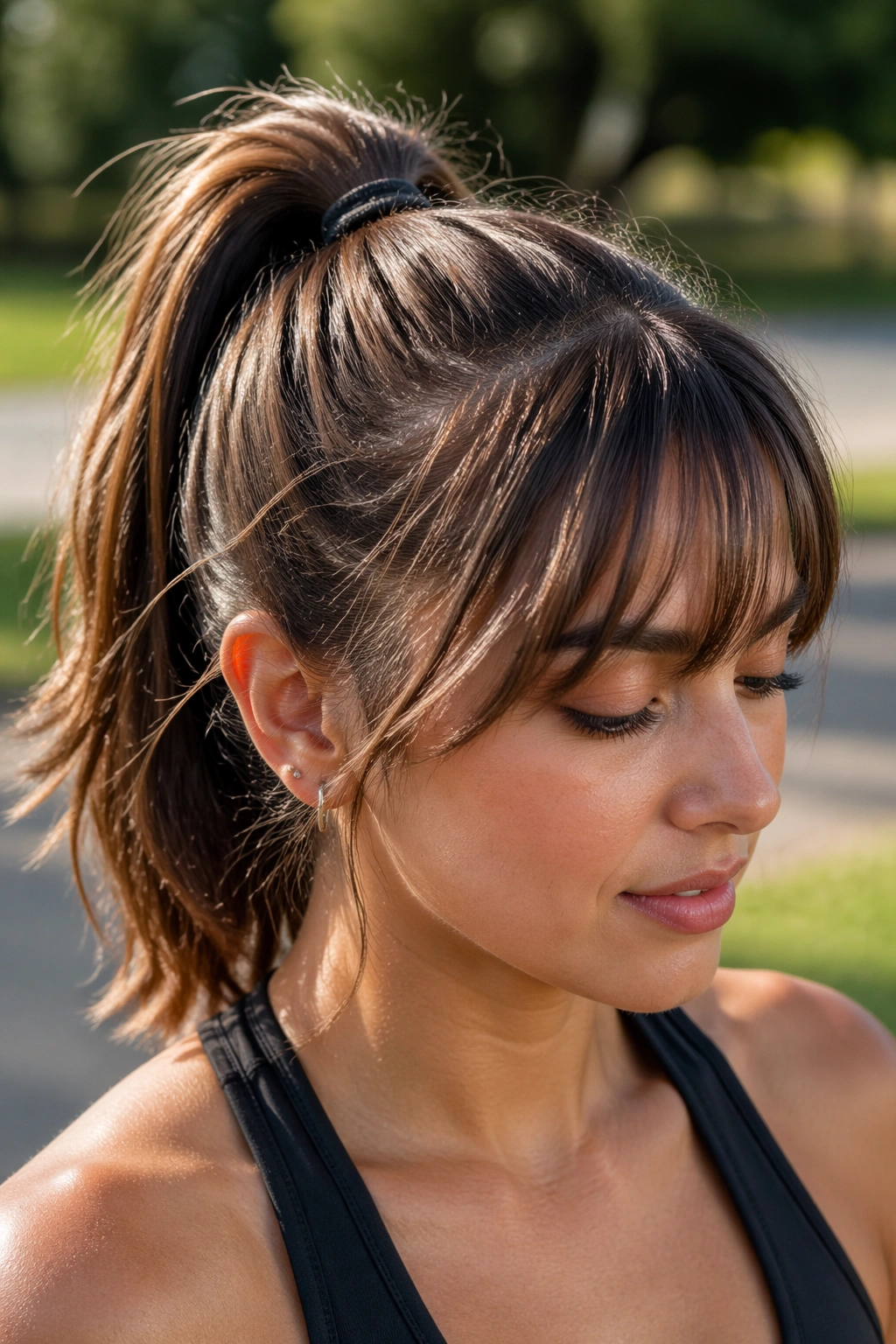
An athletic high pony can still look polished if the bangs are controlled. That’s the main difference between “I worked out” hair and a ponytail that can go anywhere.
Pull the hair up high and secure it with a strong elastic that won’t stretch out after one wear. Smooth the sides hard enough to keep them tidy, but not so hard that the scalp shows every tiny line. Soft bangs, especially curtain bangs or lightly feathered fringe, stop the look from feeling too severe.
This one is practical first. It stays up, it stays out of your face, and it handles movement well. But the bangs are what keep it from looking like a gym-only style. If your fringe gets oily fast, a little dry shampoo at the roots keeps it from collapsing before the day is over.
Use a second elastic if your hair is thick or heavy. It buys you extra support, which is worth it.
19. Side-Swept Low Ponytail With Deep Part
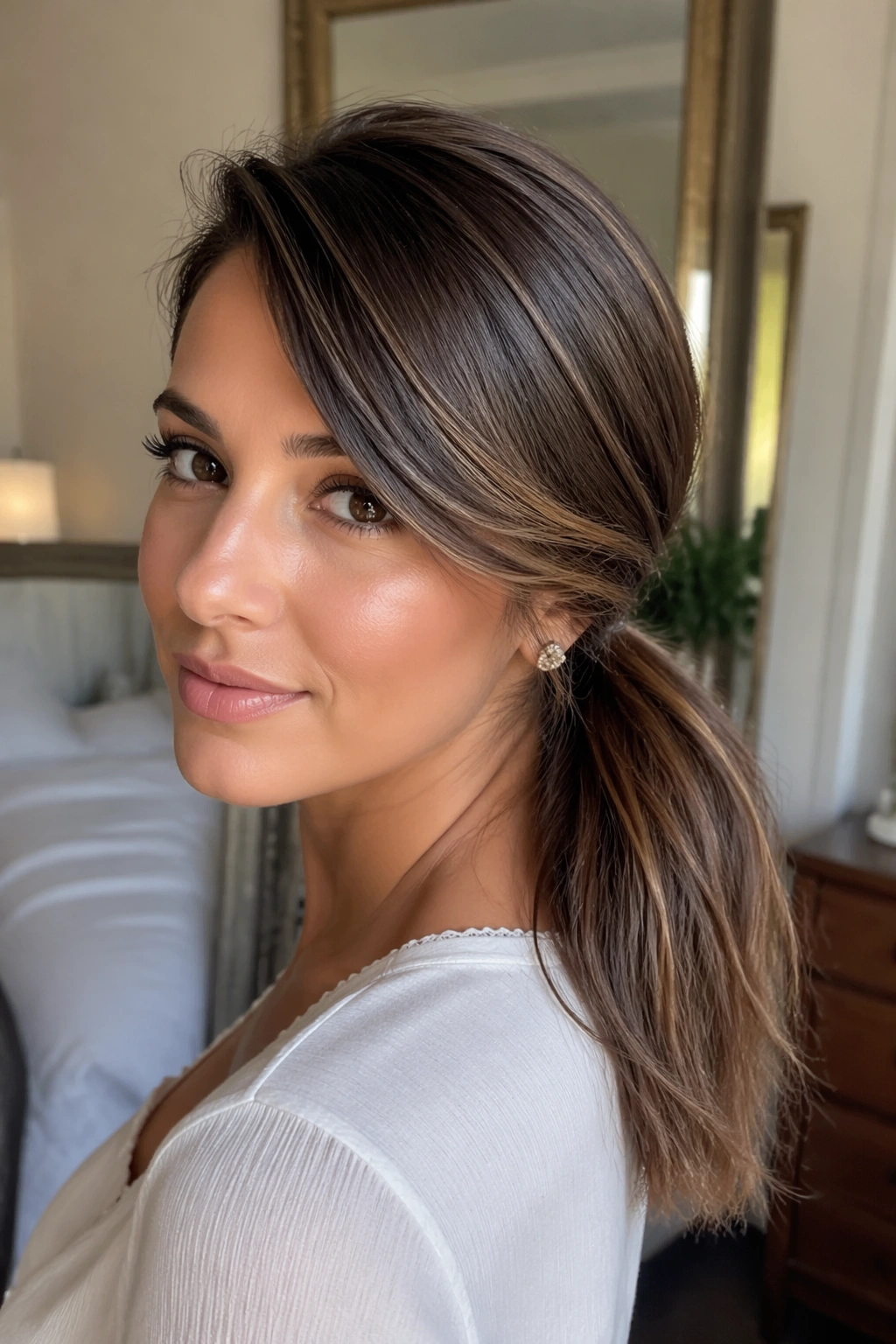
A deep side part changes everything.
It shifts the weight of the hair so the ponytail feels softer before you even tie it back. Add side-swept bangs, gather the rest into a low ponytail, and keep the base slightly off-center. Straight hair makes the clean line along the part easy to see, which gives the whole style a sharper, more polished feel.
This is one of those styles that works well when you want something elegant without a lot of height. The asymmetry does the work for you. A little curl at the bangs’ ends can help, but it’s not required. If your hair is very smooth, a touch of texturizing powder at the roots near the part can give the style more grip.
It’s understated, but not boring. That’s a harder line to hit than it sounds.
20. Braided Detail Ponytail With Curtain Bangs
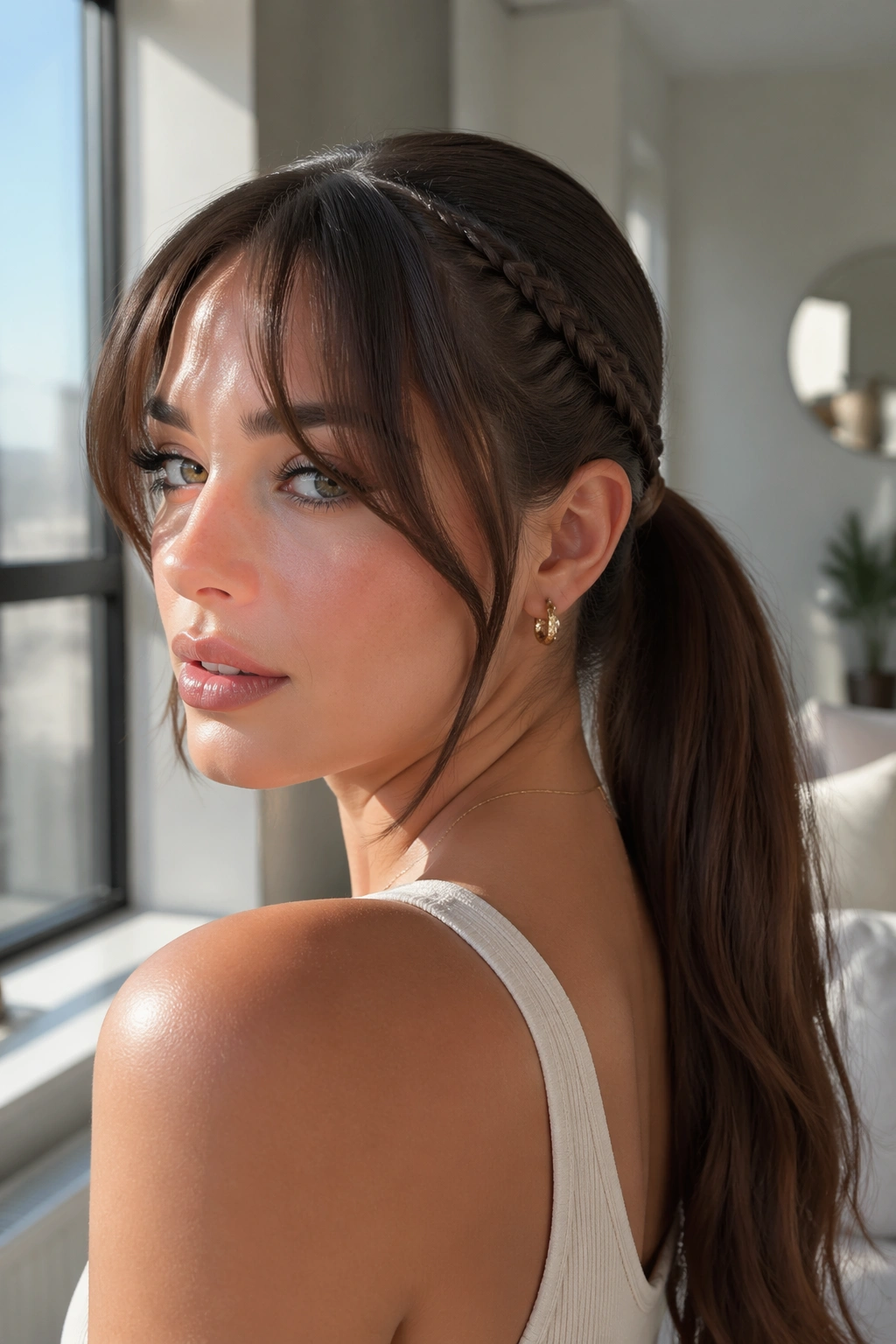
What if one braid could do most of the styling work? That is basically the appeal here.
Take a thin braid from one side or from both temples, then feed it into a mid or low ponytail. Curtain bangs keep the front soft so the braid doesn’t take over the whole look. Straight hair gives the braid a crisp edge, which makes the detail pop even more.
This style is a good choice when you want something that looks thought-out but doesn’t take forever. The braid can be tiny and still do the job. The rest of the ponytail should stay smooth so the contrast between the textured braid and the sleek length feels clean.
A small clear elastic at the end of the braid helps it stay neat before you join it to the pony. If you want a little more polish, wrap a piece of hair around the final elastic too.
21. Sleek Ponytail With Hair Cuff and Blunt Bangs
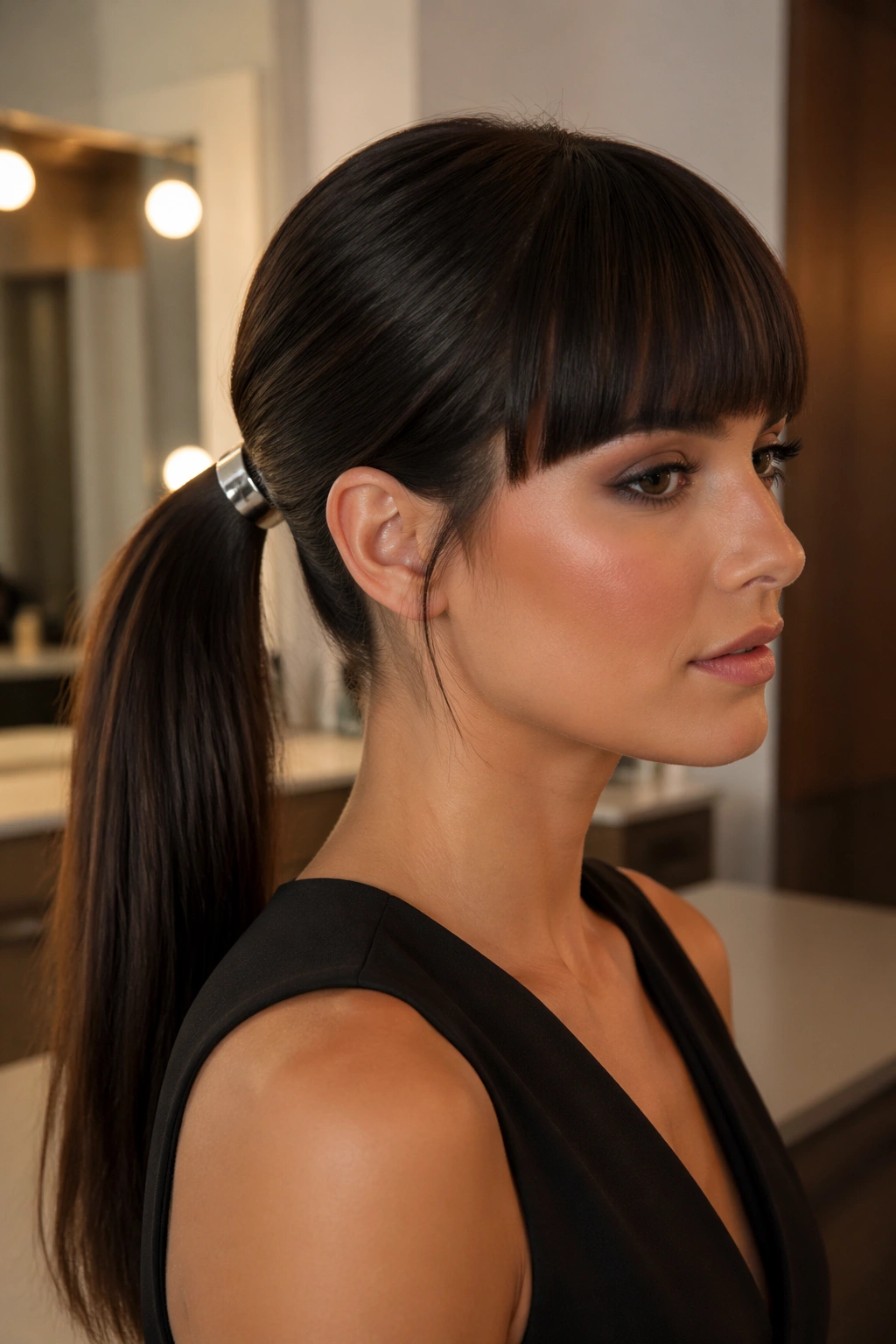
A hair cuff turns a plain ponytail into something sharper. It does more visual work than people expect.
Start with a sleek low or mid ponytail, keep the base clean, and slide a metal cuff or tube over the elastic. Blunt bangs give the front a matching sense of order, so the whole look feels balanced. On straight hair, that kind of clean finish can look almost severe in a good way.
This style is strongest when the rest of the outfit is simple. A crisp shirt, a plain tee, a tailored jacket. The cuff becomes the detail. Without that restraint, the pony can start to compete with too many other things. That’s the only real catch.
If your hair is very fine, secure the elastic first with a second hidden tie so the cuff doesn’t slip. Small detail. Big difference.
22. Low Ponytail With Tucked Ends and Wispy Bangs
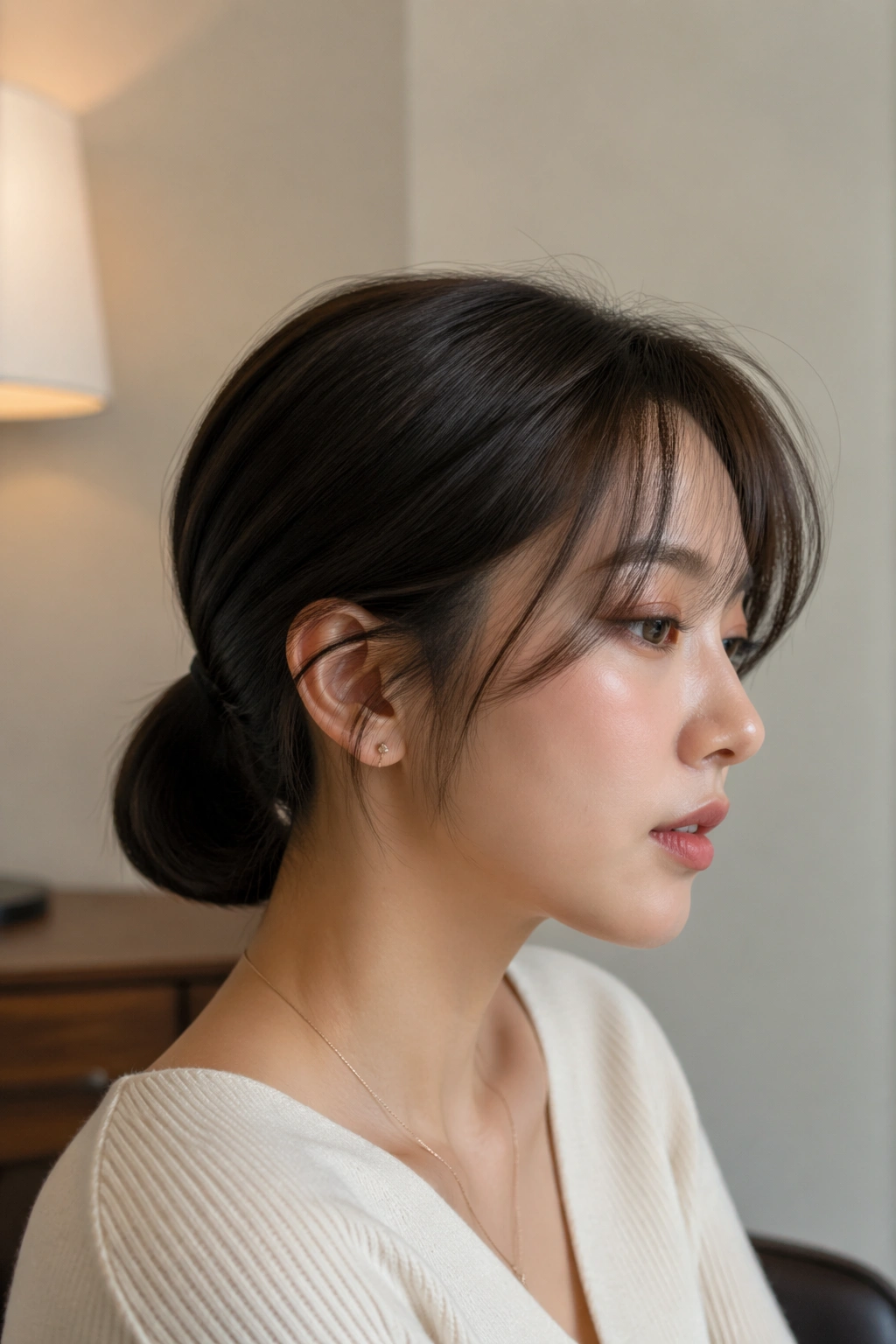
Tucked ends give the nape a clean little curve.
Instead of letting the ponytail hang straight down, fold the length upward and pin it underneath so the silhouette sits closer to the head. It’s a nice option for shorter lengths or for days when you want the neck area to look neat. Wispy bangs keep the top feeling airy, which keeps the tucked shape from getting too strict.
Straight hair loves this kind of precision. The line stays visible, the tucked edge reads clearly, and the whole style looks calm. Use two or three bobby pins hidden under the fold so the tuck doesn’t slide open. A little smoothing cream on the tail helps the curve stay tidy.
This one is quiet in the best way. It doesn’t ask for attention, but it gets it anyway because the shape is so clean.
23. Ribbon-Wrapped Ponytail With Straight Fringe
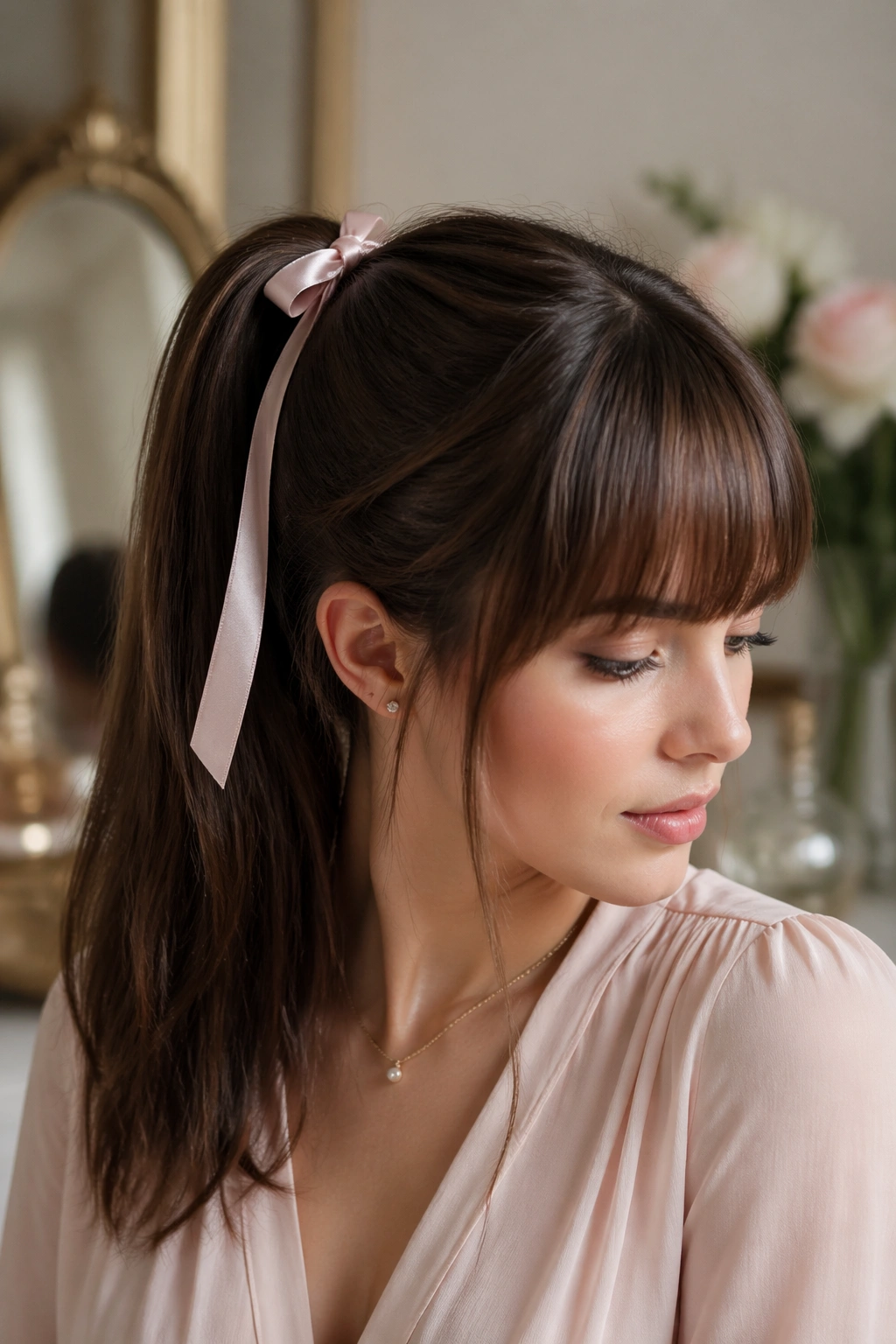
How do you keep a ribbon from slipping off straight hair? Anchor it with the elastic first, then wrap and pin.
Tie the ponytail with a clear or small matching elastic, wrap a satin ribbon around the base, and knot it underneath so the ends hang down. Straight fringe keeps the front symmetrical, which works nicely with the neat line of the ribbon. The result feels soft, a little romantic, and much less fussy than it sounds.
A wider ribbon looks better on thicker straight hair because it balances the amount of length hanging below it. If your hair is fine, a narrow ribbon can be enough. The trick is keeping the ribbon flat as you wrap it, so it doesn’t twist and bunch at the back.
This style is good when you want one small detail to carry the whole look. It’s not loud. It doesn’t need to be.
24. Messy Textured Ponytail With Piecey Bangs
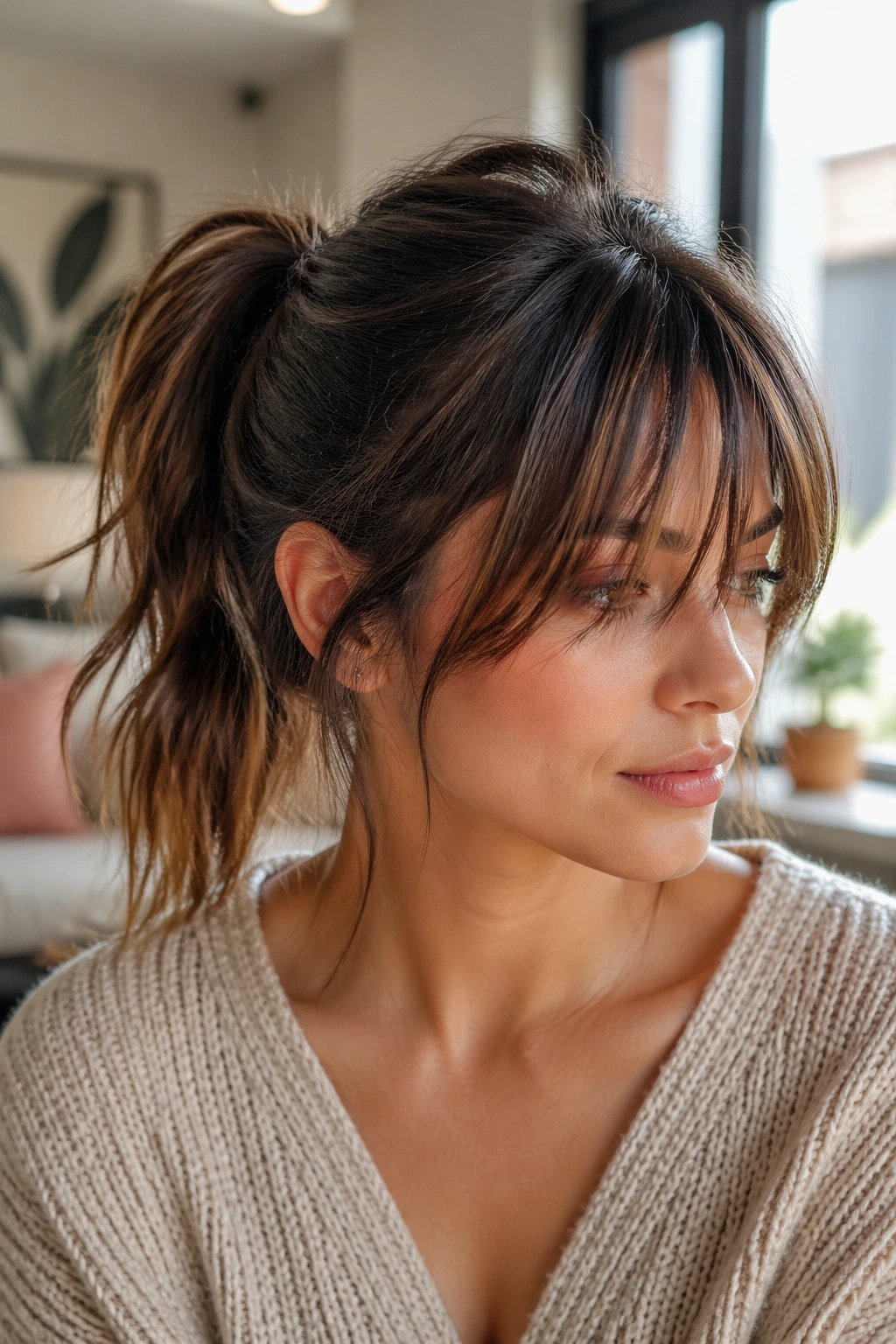
Messy on purpose is harder than it looks.
A textured ponytail with piecey bangs works because the hair is controlled in a few places and relaxed in others. Use texture spray through the crown and mid-lengths, shake the ponytail a bit after tying it, and separate the bangs into soft sections with your fingers. Straight hair can read flat fast, so a little grit gives this style some life.
Do not make the mess too even. That’s the trap. The bangs should be a little separated, the crown should have some lift, and the tail should still have a shape. If every piece gets the same treatment, the whole style turns fuzzy.
This is one of the easiest ponytails to wear on second-day hair. It benefits from a little natural bend, but it does not need perfection. A few loose strands around the temples are enough.
25. Polished Office Ponytail With Soft Curtain Bangs
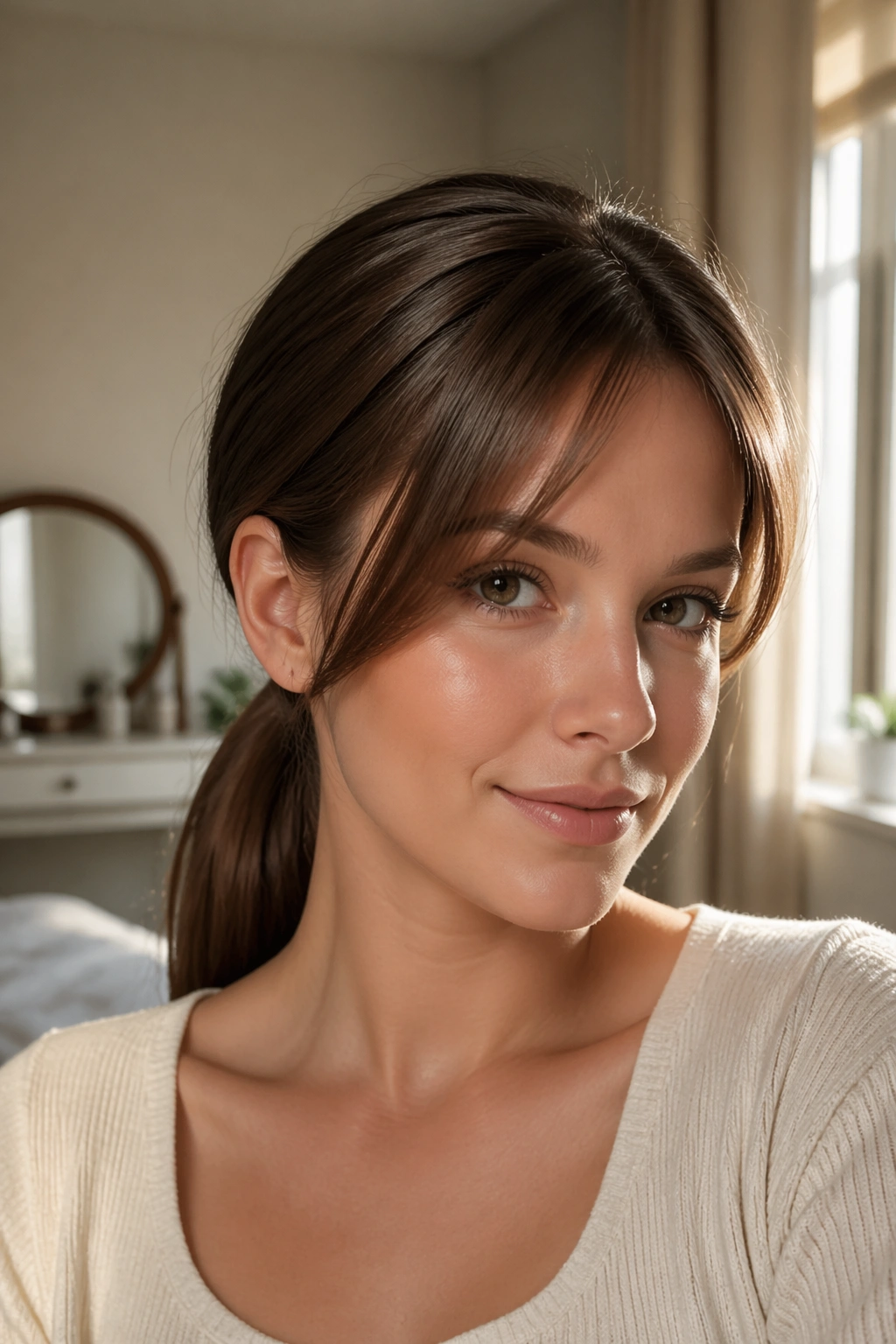
A polished office ponytail is basically the low-stakes version of power dressing for hair. It says you meant to do something, but it never looks overdone.
Keep the ponytail low or mid, smooth the sides with a brush, and leave the curtain bangs soft enough to frame the face. The point is balance. Straight hair gives you a clean canvas, and the bangs prevent it from feeling too strict. If the ends are a little beveled under with a flat iron, even better.
This is the style I’d pick for a day full of meetings, appointments, or anything where you need your hair to stay out of the way without looking dull. A tiny amount of shine serum on the ends keeps the ponytail from fraying, and a quick touch at the bangs in the morning usually buys you the rest of the day.
It’s the kind of look that works because it doesn’t try too hard. That’s a good place to land.
Final Thoughts
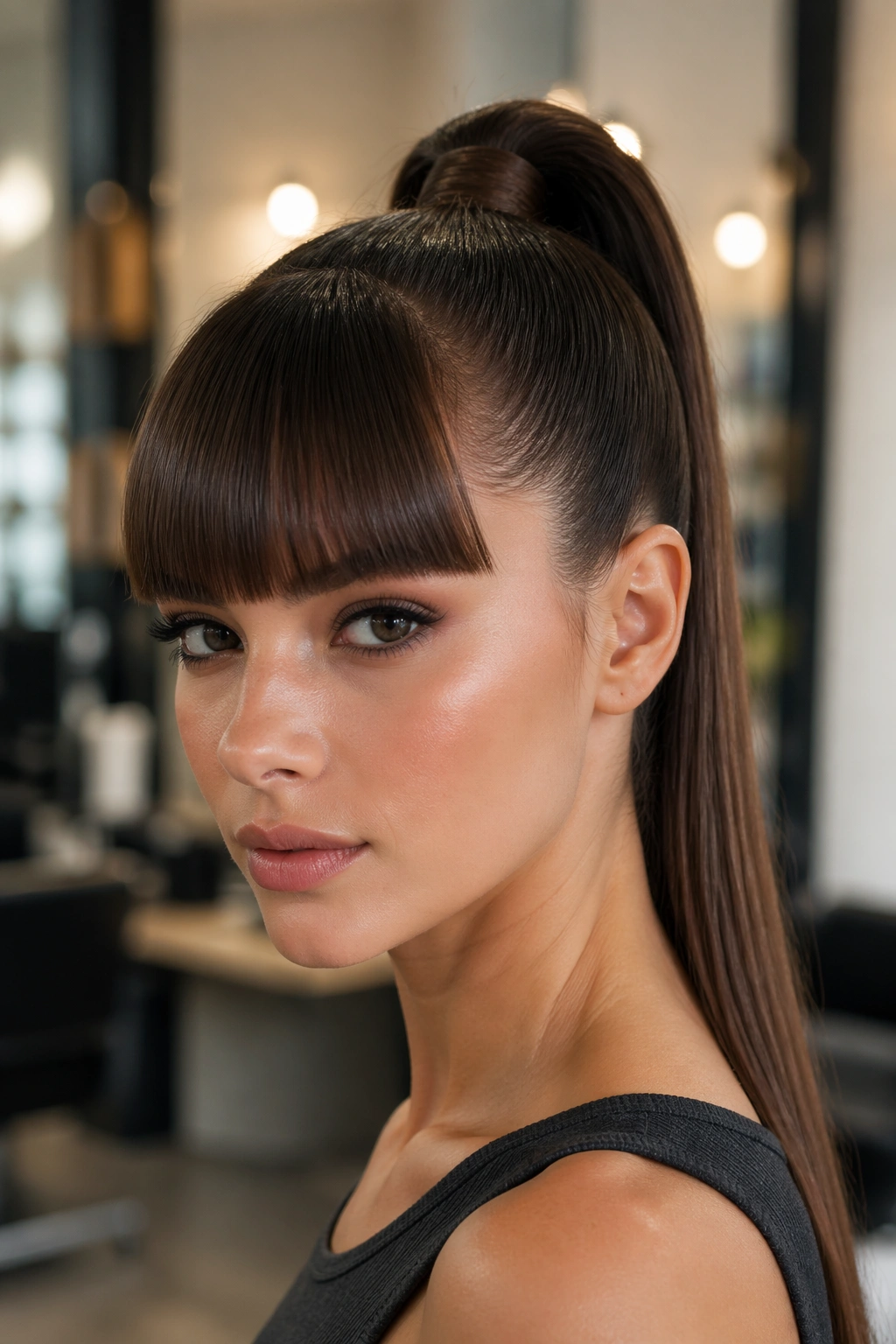
Straight hair rewards precision, and bangs make that precision matter even more. A ponytail only needs one clear idea to look finished: sleek, soft, detailed, or playful. Once you choose that direction, the bangs can support it instead of competing with it.
The most useful habit is small. Smooth the crown before you tie the elastic, shape the bangs first, then decide whether the base needs a wrap, a twist, or a little extra height. That order saves time and keeps the style from looking patched together.
A comb, a couple of bobby pins, and one good elastic can carry a surprising amount of weight here. When the front is shaped well, the rest of the ponytail starts to look intentional on its own.
