



A low ponytail can do more for Afro hair than a lot of people give it credit for.
Placed well, it can look sharp, soft, romantic, playful, or plain expensive-looking in the best way. Placed badly, it turns into that tired halfway style that pulls at the hairline and collapses by lunch. The difference is usually not the ponytail itself. It’s the prep, the tension, and whether the style respects the way coily hair actually behaves.
That low placement matters.
Afro hair has its own rhythm. It shrinks, it bends, it holds shape in one section and puffs in another, and it often looks best when you stop trying to force every strand into the same lane. The smartest low ponytails work with that texture instead of sanding it down into something flat and lifeless. Some stay sleek. Some keep volume. Some bring in braids, wraps, or twists so the ponytail feels finished rather than improvised.
1. Sleek Center-Part Low Ponytail
A center part gives Afro hair a kind of quiet sharpness that never really goes out of style. It draws the eye straight down the face, which makes the low ponytail feel clean and deliberate without needing a lot of extra work.
Why it works
The trick is a stretched base and a very neat part line. Start with moisturized hair, smooth a light gel or styling cream along the roots, then use a tail comb to mark the part while the hair is still a little damp. Brush each side back toward the nape with a soft brush, not a hard one that chews up the cuticle.
Keep the ponytail low and centered, about an inch or two above the neckline. If you want a polished finish, wrap a thin strip of hair around the elastic and pin it underneath. That tiny detail matters more than people think. It turns a basic ponytail into a style.
2. Deep Side-Part Low Ponytail
Why does a side part change the whole mood? Because Afro hair gains shape the second you break that straight-line symmetry and let one side sit heavier than the other.
A deep side part gives the crown lift and keeps the style from feeling too severe. It suits thick hair especially well, since the extra bulk on one side creates a soft swoop before everything drops into the ponytail. Use a little styling gel at the roots, then brush the fuller side back first so the part stays visible.
The ponytail itself can stay smooth or carry some texture. I like this version when the outfit already has strong lines — a blazer, a square neckline, a crisp collar. It keeps the hair elegant without looking stiff. And if your edges are delicate, this is one of the kinder sleek styles. The part does the work; the pull does not need to be aggressive.
3. Stretched Blowout Low Ponytail
You wash your hair, stretch it, and still want to keep the length you earned. That is where a blowout low ponytail earns its place.
This style keeps the natural density of Afro hair visible, but the stretched texture helps the ponytail hang longer and sit more neatly at the nape. Use a heat protectant if you blow-dry, and keep the nozzle moving so you do not roast one section into dryness. A tension method or a low-heat blow-dry works fine if you prefer less direct heat.
The point is not to flatten the hair. It’s to give it enough stretch that the ponytail looks full instead of bulky in the wrong spots. That fuller shape can be beautiful on its own. One of my favorite things about this version is that it still reads as natural hair, which gives it a warmer feel than a highly slicked style.
4. Low Puff Ponytail
A puff at the nape is not a compromise.
It’s one of the easiest ways to let Afro hair stay itself while still looking put together. The root area can be smoothed lightly with leave-in conditioner and a small amount of gel, but the tail should remain fluffy, rounded, and full. Use a satin scrunchie or a soft elastic so the base does not dig into the hair.
Small details that matter
- Gather the hair low, then stop brushing once the perimeter is smooth.
- Fluff the ponytail with your fingers instead of a fine-tooth comb.
- Keep the band loose enough to avoid a dent across the back of the head.
- Pick out the tail only if your hair needs extra shape.
This style is easy to wear on casual days, but it can look polished too if the edges are neat and the puff is shaped on purpose. The whole thing depends on balance. Too much brushing and it loses its softness. Too little and it can look unfinished.
5. Braided-Base Low Ponytail
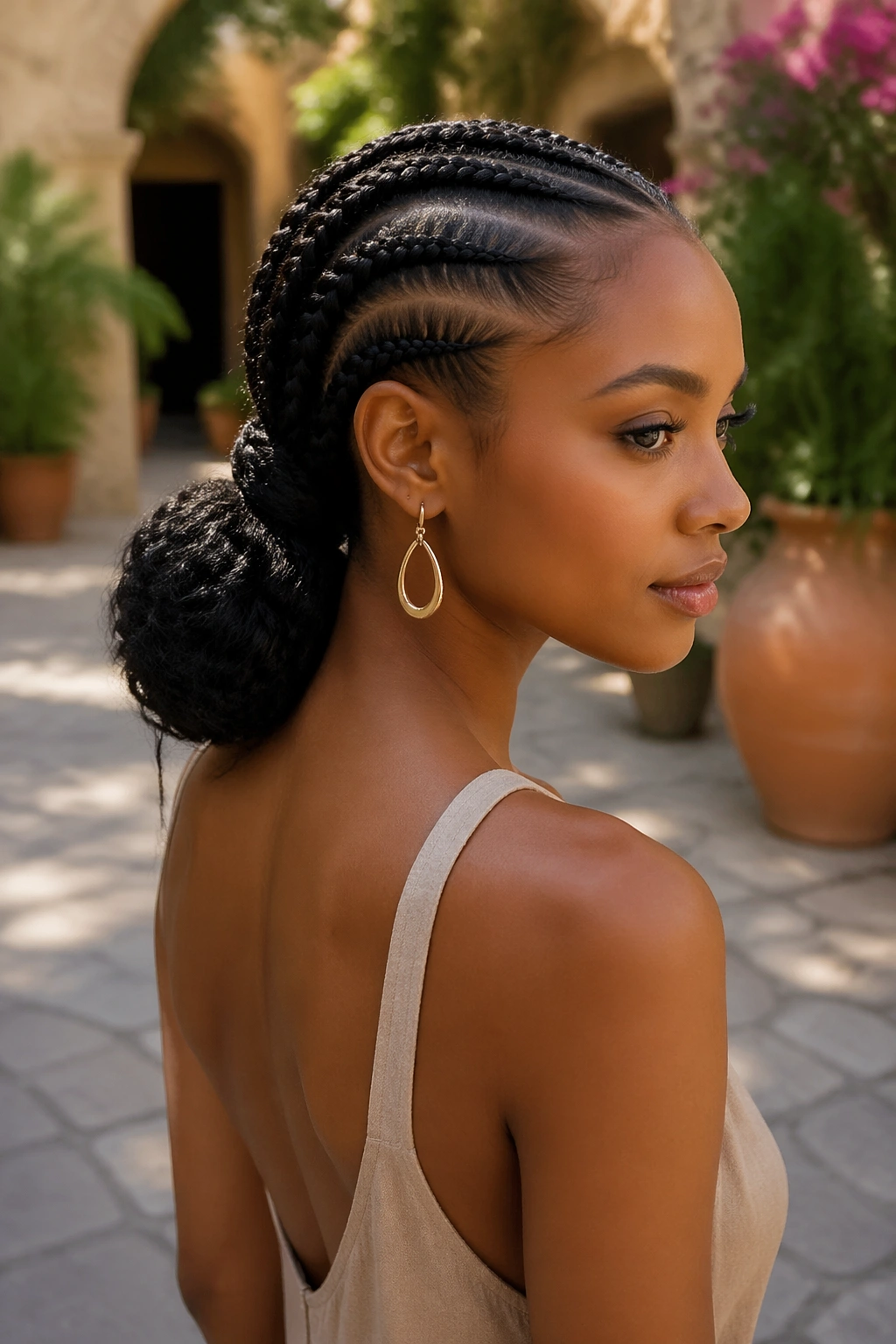
The braid at the base does more than decorate.
It also helps the ponytail stay secure, which matters if your hair is thick, layered, or prone to puffing at the roots. A single braid running into the low ponytail gives the style a built-in anchor. If you want more structure, add two side braids that meet at the nape before the ponytail begins.
How to build the base
- Part the hair into the shape you want first.
- Braid or cornrow the front sections back toward the nape.
- Smooth the remaining hair into a low tie.
- Wrap one small strand around the elastic if you want a cleaner finish.
This is one of those looks that works on a long day because it stays tidy without feeling harsh. The braid gives the style a little edge, but it also keeps things neat when the rest of the hair is full and textured. Small tension. Big payoff.
6. Satin-Scarf Wrapped Low Ponytail
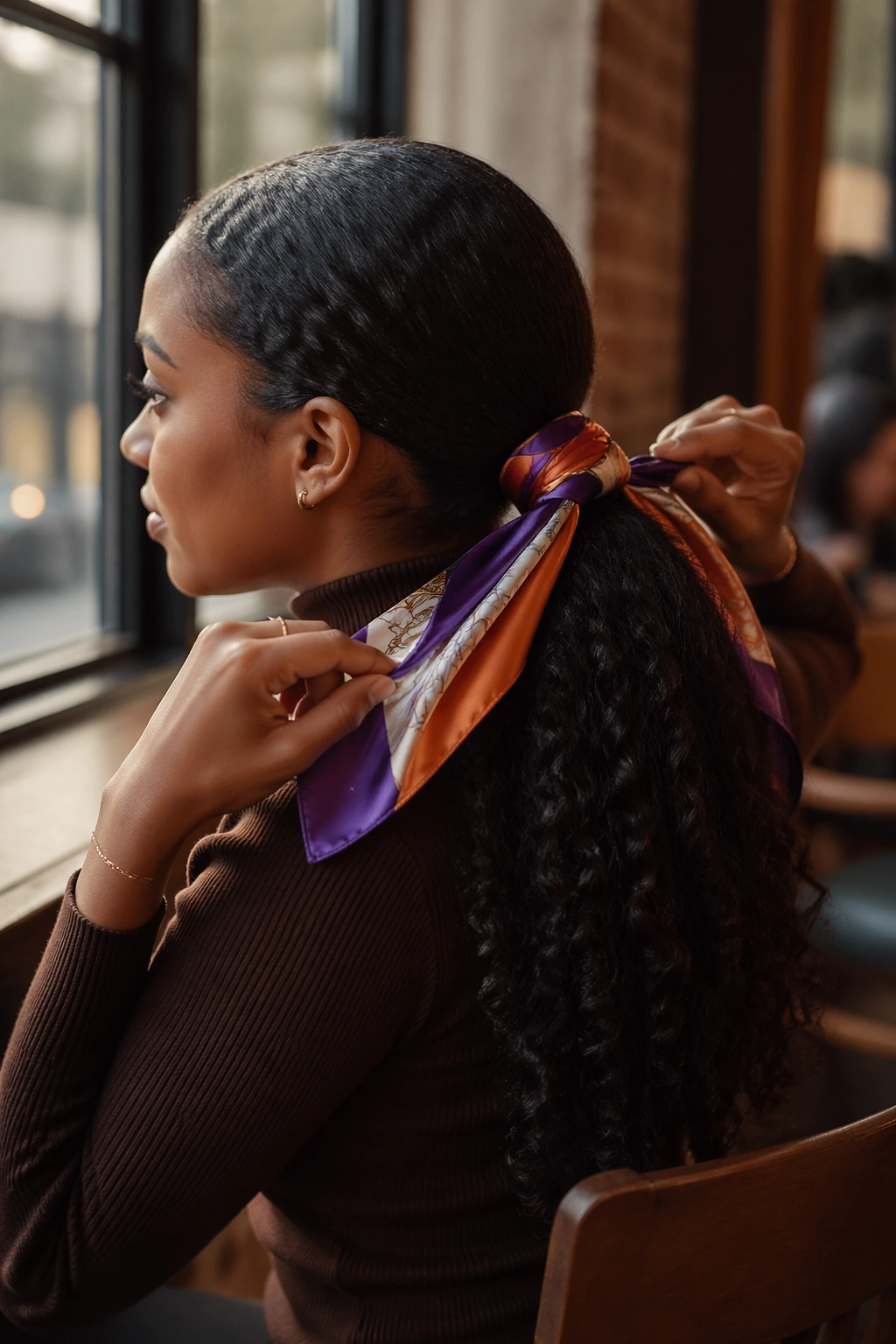
A silk or satin scarf changes the whole read of the style.
Wrap it around the base of the ponytail, knot it to the side, and suddenly the hair feels intentional even if you only spent a few minutes on it. The scarf also hides an elastic, which is useful when the ponytail is more about texture than perfect slickness.
This version works well on second-day hair because the scarf distracts from any little frizz at the crown. Use a scarf that is wide enough to show, not a tiny ribbon that disappears into the hair. Cotton can tug and rough up the strands, so keep the softer fabrics for this one.
I like this style for errands, brunch, travel, and those in-between days when you want something that looks styled without being fussy. The scarf gives you color if the outfit needs it, or polish if the clothes are plain. Either way, it carries the whole look.
7. Two-Strand Twist Low Ponytail
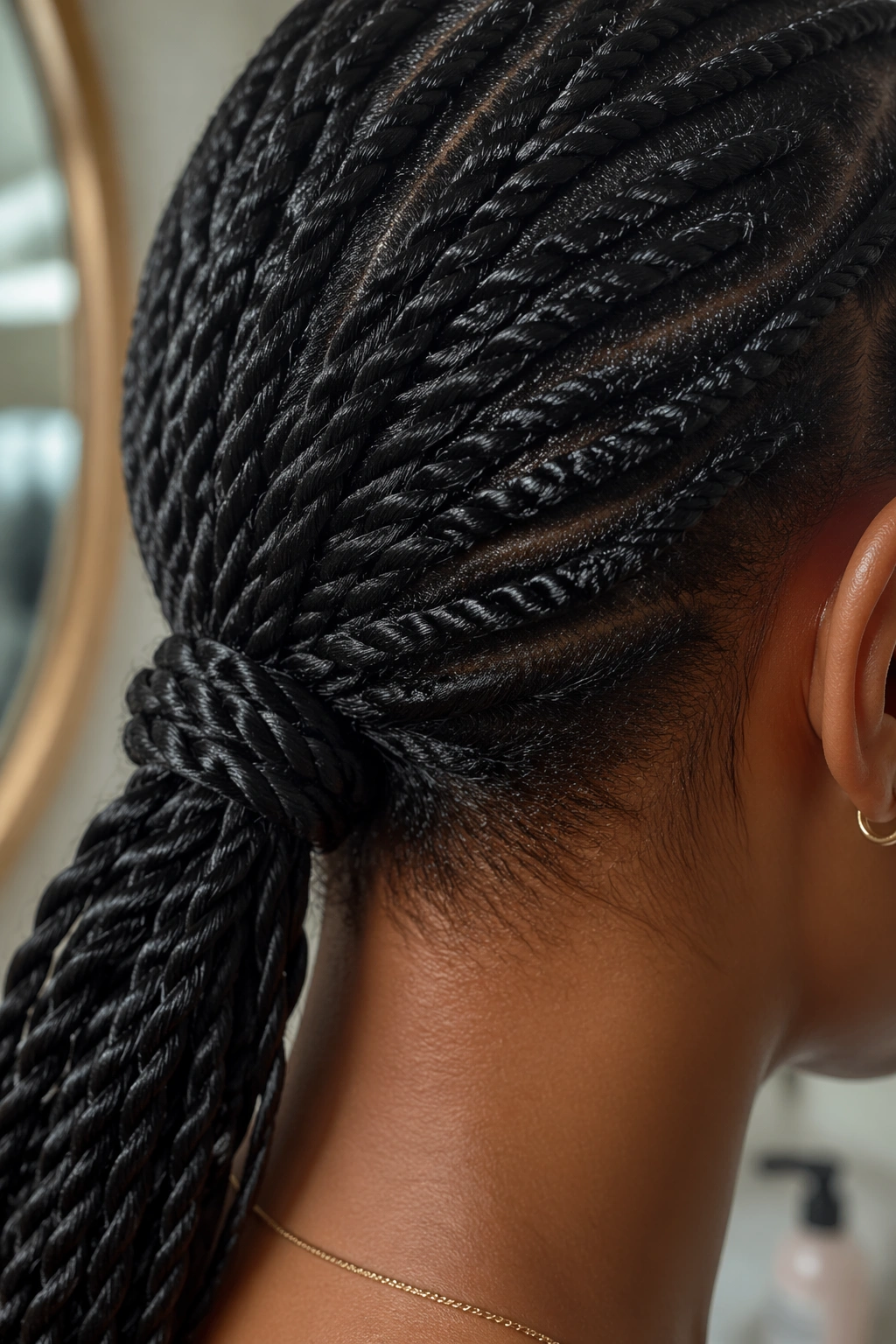
What if you want the texture to stay visible instead of hidden? Two-strand twists do that beautifully.
When the twists are gathered low, the style keeps its pattern and reads as protective rather than slick. You can twist the whole head, gather the lengths into a nape ponytail, and leave the ends loose or tie them off with a covered band. On Afro hair, this works especially well when you want a style that can last a few days without constant restyling.
Where it shines
- Busy workweeks
- Low-manipulation styling
- Hair that needs stretch but not heat
- Days when you want defined texture without a full wash day
If your hair tends to frizz quickly, use a cream with enough slip before twisting, then seal the ends lightly with oil. The ponytail will look neater if the twists are uniform in size, but don’t make them tiny just to chase perfection. That usually creates more tension than the style is worth.
8. Flat-Twist Crown Low Ponytail
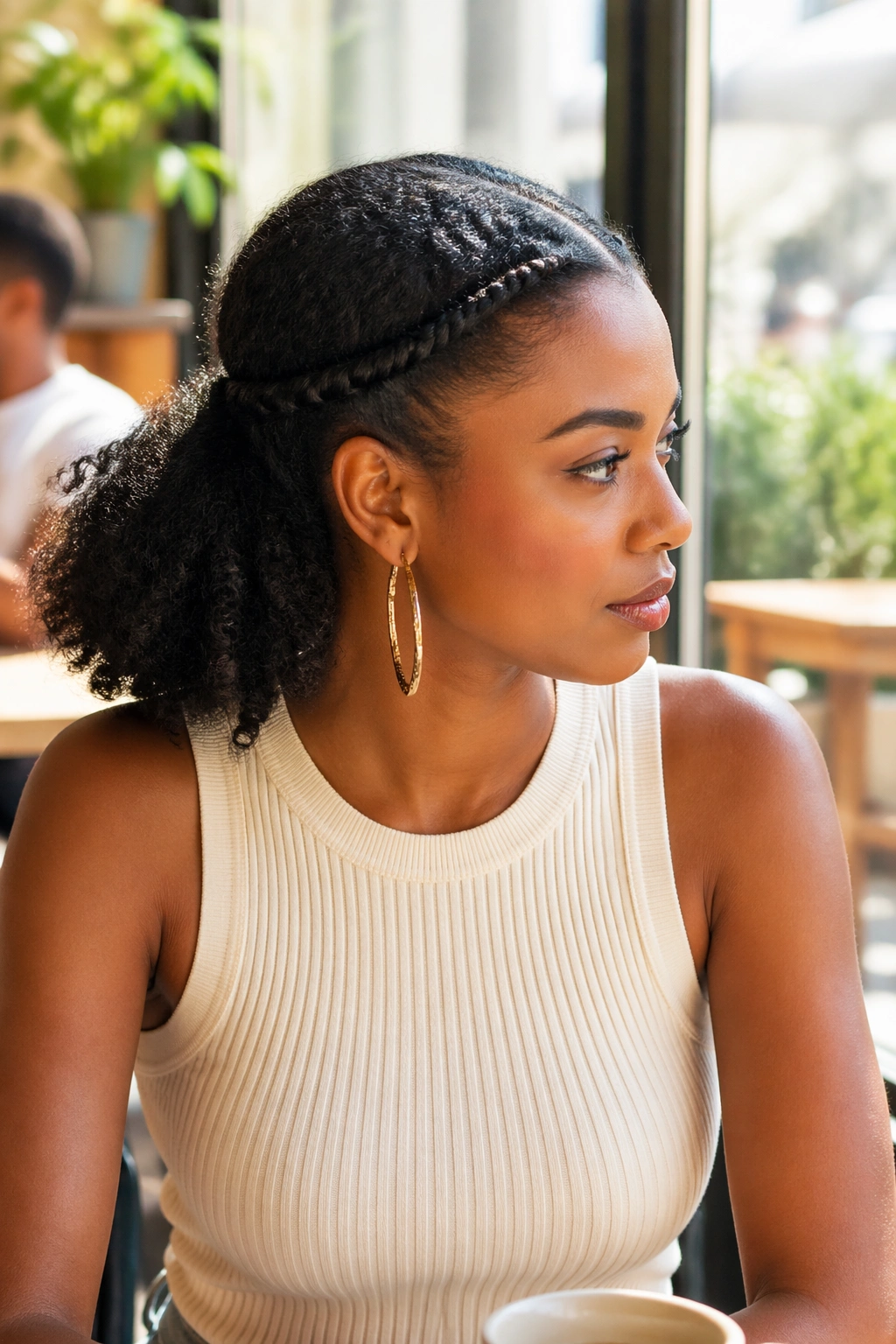
Picture hair swept back from the temples in two flat twists, then gathered low. That’s the whole appeal here.
The crown stays close and smooth while the lower section carries all the fullness. It’s a nice option when you want a low ponytail that feels a little more special than a straight-back tie. Flat twists also sit flatter than braids, so they can feel lighter at the scalp.
This style is handy when your edges need a break from repeated brushing. Use a bit of styling cream on the part lines and keep the sections clean, because messy parting ruins the effect fast. The ponytail itself can stay natural and fluffy, which gives the crown a nice contrast.
The result lands somewhere between protective style and dressy everyday hair. Not too formal. Not too plain. That middle ground is where this one lives best.
9. Cornrowed Straight-Back Low Ponytail
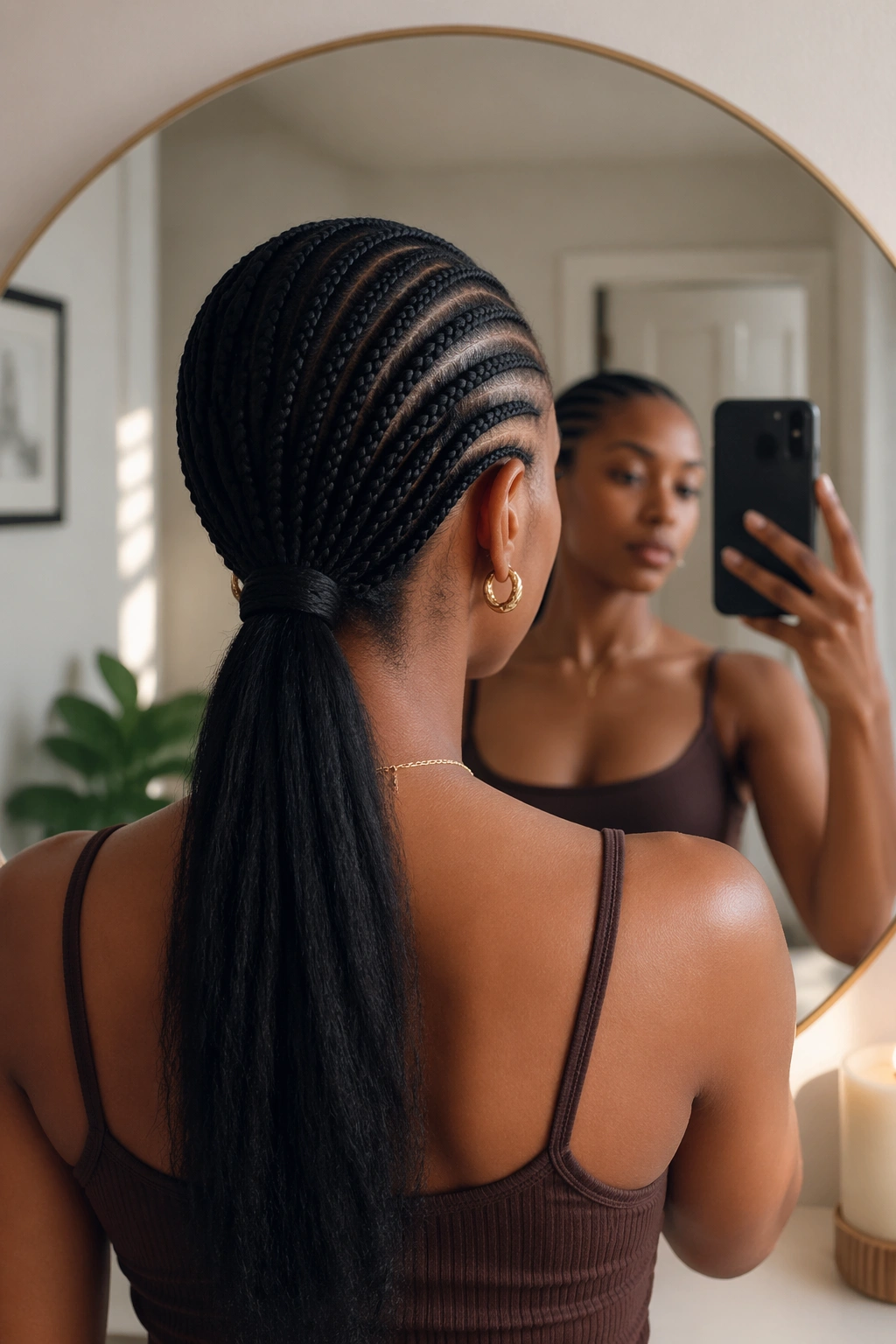
This is the style that stays put when you need it to.
Straight-back cornrows make sense for Afro hair because they keep the roots controlled and move the weight of the style toward the nape. From there, the ponytail can hang loose, braid down, or get wrapped into a bun-like finish if you want it tighter. If you wear this often, keep the braid size even so the scalp does not get stressed in one spot.
What to watch for
- Don’t braid too tightly at the hairline.
- Keep the feed-in clean if you add hair.
- Oil the scalp lightly, not heavily.
- Protect the style at night with a satin scarf or bonnet.
I like this when the week is full and the hair needs to stay in one place. It’s also a clean base for jewelry, cuffs, or a scarf. The cornrows do not have to be tiny to be neat. They just need to be controlled enough that the ponytail has a clear frame.
10. Bubble Low Ponytail
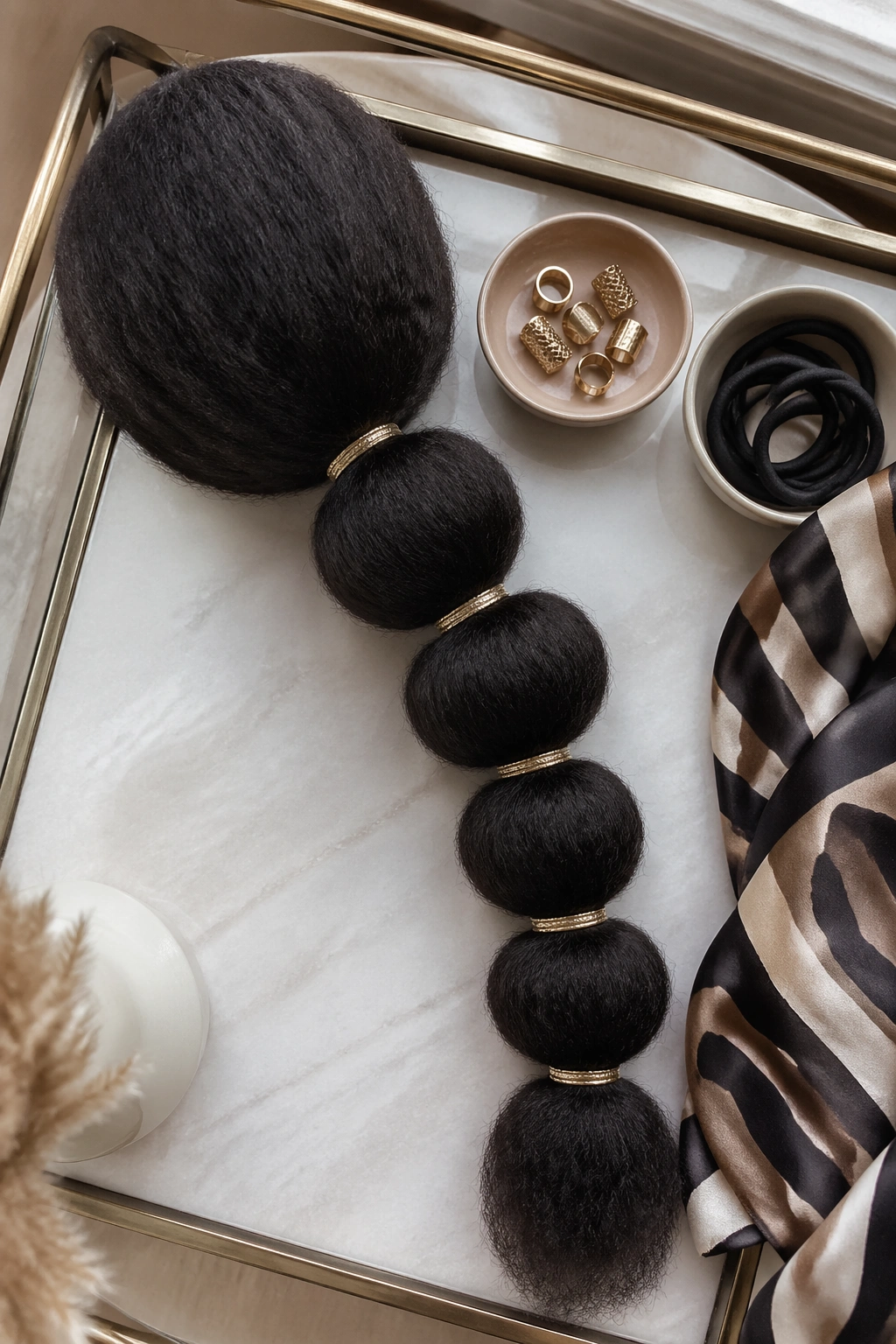
Low doesn’t have to mean flat.
A bubble ponytail breaks the tail into rounded sections with small elastics spaced a few inches apart, and Afro hair makes that shape look especially good because the texture helps each section puff out. If your hair is stretched first, the bubbles sit more evenly. If it’s naturally fluffy, the effect feels fuller and more playful.
Use snag-free bands and space them about 2 to 3 inches apart, depending on the length of the ponytail. Pull each section gently after tying so the bubbles round out without getting lopsided. That’s the part people rush, and it shows.
This style has a little personality without needing much decoration. A plain black elastic, a few cuffs, or even a single scarf knot can shift the mood. It’s one of the few ponytails that looks good when it’s not too perfect.
11. Extension-Added Low Ponytail
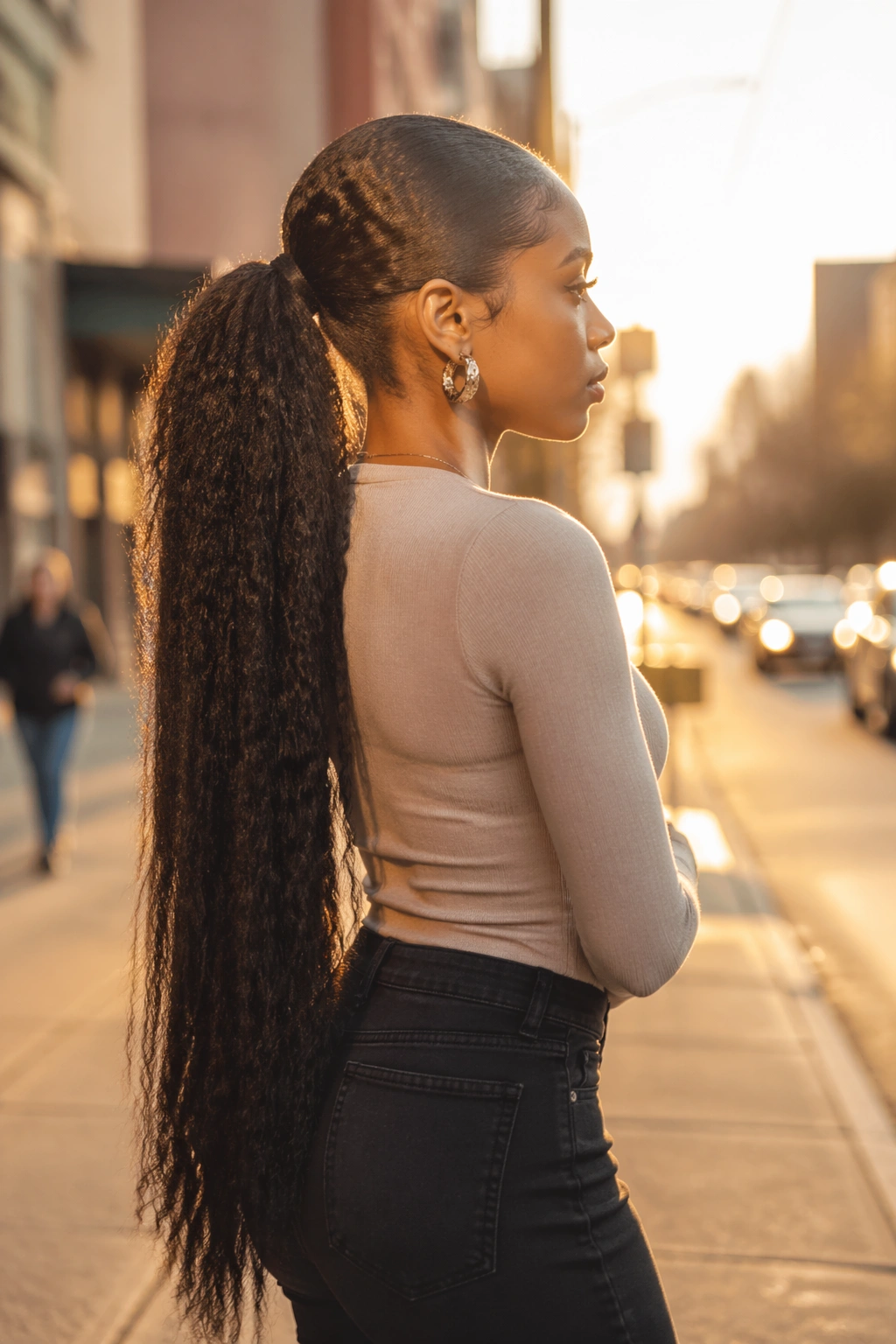
Length is a styling choice, not a requirement.
If you want a long, dramatic tail, adding ponytail extensions or a wrap-around piece can make the low ponytail feel fuller in a way that blends better with Afro hair than pin-straight synthetic lengths. Kinky straight, coily, or textured extensions usually blend more naturally than bone-straight hair, unless you’re intentionally aiming for contrast.
The important part is matching the base texture to the finish you want. A smooth root with a very coarse ponytail can look disconnected, while a stretched natural base with a matching extension feels believable and balanced. Keep the attachment secure, especially if the ponytail carries weight. A weak base turns the whole style into a headache.
This works well for dressy events, photos, or any day you want a longer silhouette without waiting for your own hair to do all the work. It’s not subtle. That’s the point.
12. Curly Leave-Out Low Ponytail
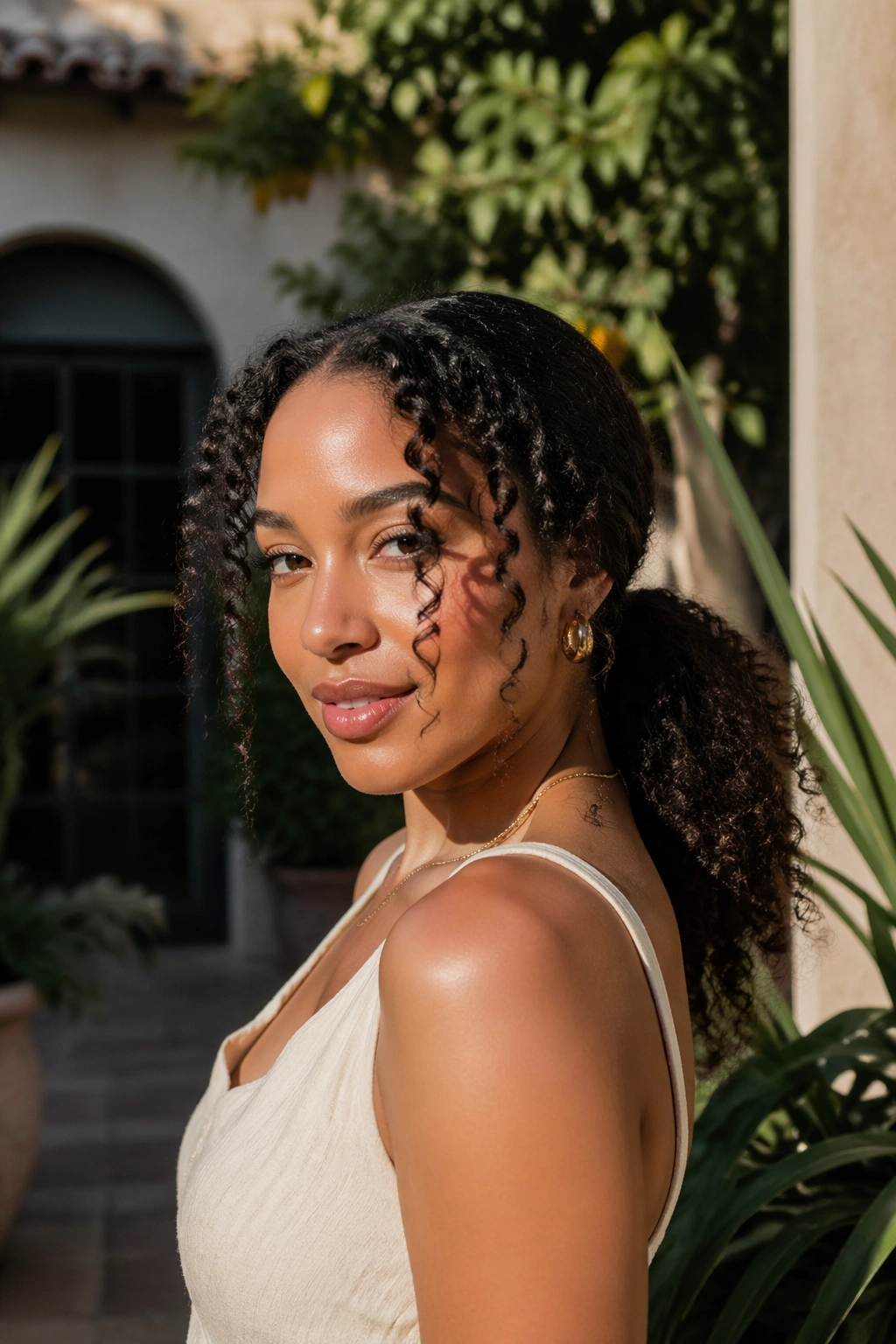
The best part is the ends.
With this style, the roots are gathered low while the tail keeps curls, coils, or rod-set definition at the end. That contrast gives the ponytail movement and helps the style feel softer than a fully smoothed version. It also lets Afro hair show off its texture instead of hiding it behind gel.
If your hair is stretched at the roots, you can set the ends with flexi rods or use a curl cream on a leave-out section for shape. Keep the leave-out small enough that it doesn’t frizz all over the place by midday. Too much loose hair turns into a halo fast.
I like this one when I want something tidy but not severe. It gives you a little swing, which sounds simple, but it changes how the whole style moves when you walk. Hair should move. That’s half the charm.
13. Face-Framing Tendril Low Ponytail
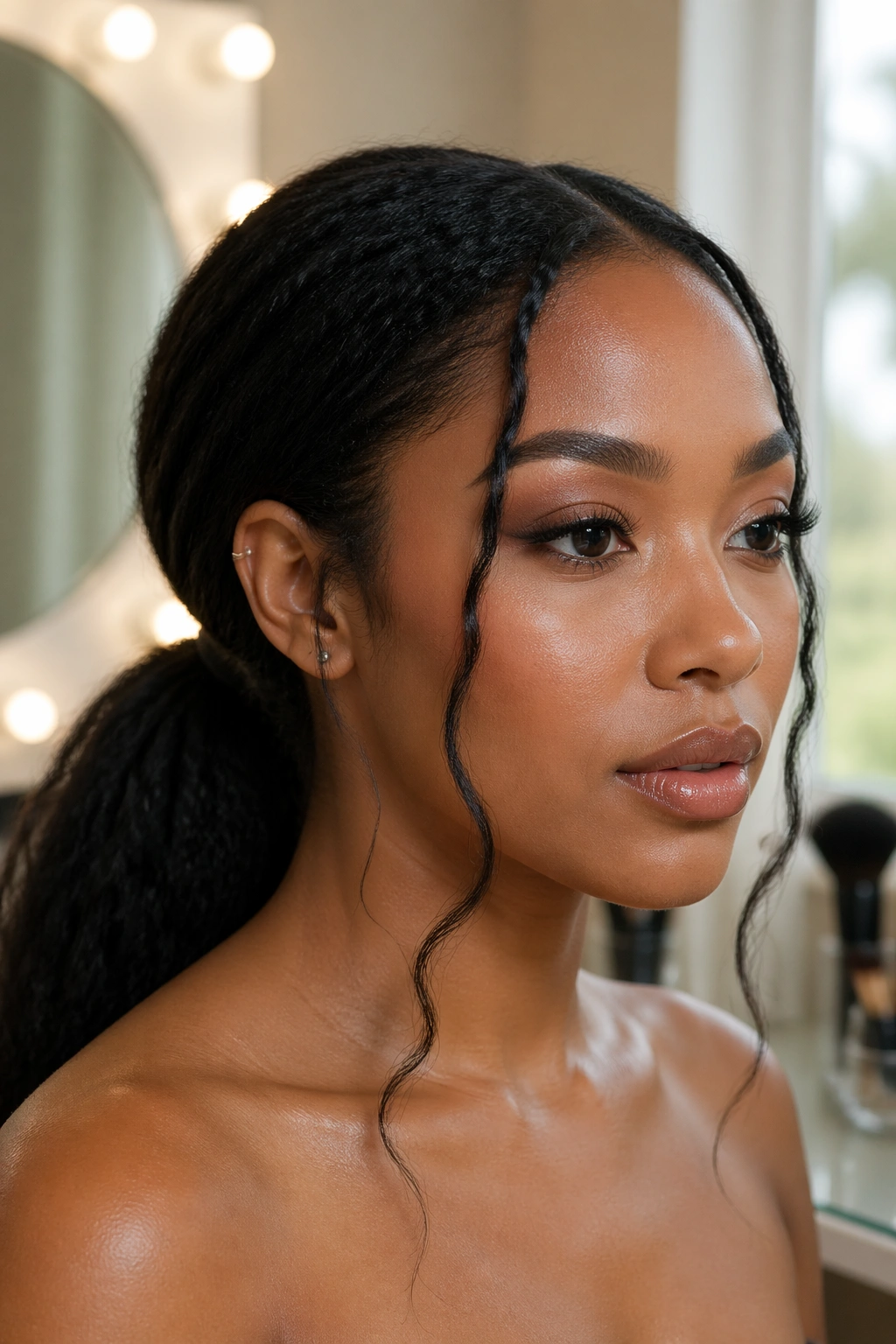
A few loose strands can soften a low ponytail fast.
Instead of pulling everything back, leave two slim tendrils at the front and let them fall along the cheekbones. Curl them lightly or twist them while damp so they keep their shape. On Afro hair, the contrast between the neat base and the soft front pieces can look especially flattering.
The trick is restraint. Keep the tendrils thin enough that they frame the face rather than hide it. If they’re too thick, the style can start to look accidental. A small touch of styling cream helps them stay smooth, and a bit of edge control at the hairline keeps the crown from looking fuzzy.
This is a good choice when you want the low ponytail to feel less formal. It works with earrings, bare shoulders, and simple makeup, because the front pieces do a lot of visual work on their own.
14. Defined Baby-Hair Low Ponytail
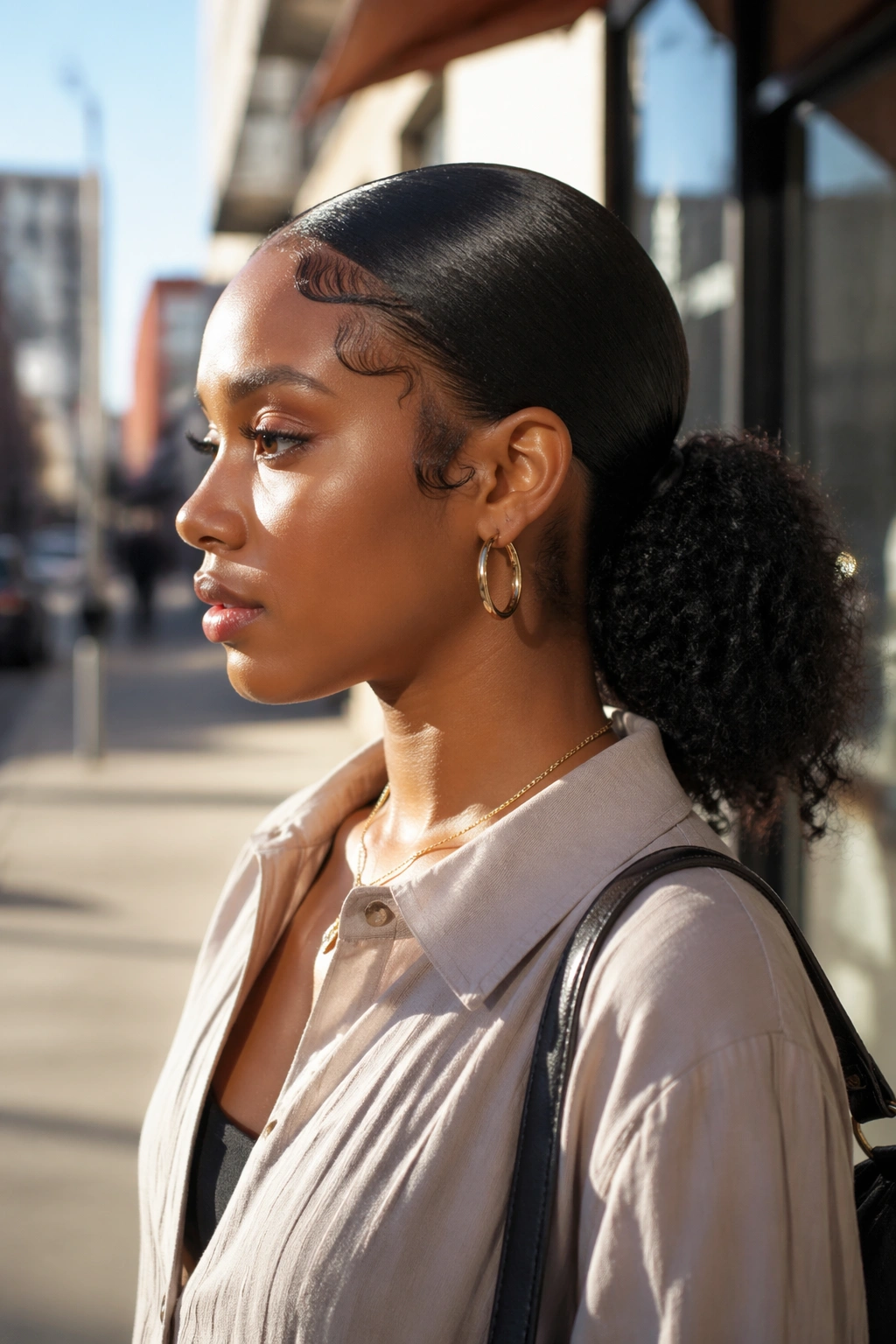
Edges can change the whole shape, but only when they stay light.
Baby hairs are there to soften the hairline, not to carry the entire style. Use a small amount of edge control or gel, a soft brush, and make two or three clean swoops. That is enough. If you keep layering product until the edges are stiff, the style stops looking fresh and starts looking overworked.
The ponytail underneath should still do the heavy lifting. A low ponytail with polished baby hairs feels sharp because the contrast is neat: a smooth crown, a clean hairline, and a tail that can be either sleek or textured. On Afro hair, that balance tends to look better than trying to slick every coil into place.
This is the version to reach for when you want the hairline to look finished on purpose. Not heavy. Not crunchy. Just tidy, with enough detail to read well in person.
15. Hair-Cuff Low Ponytail
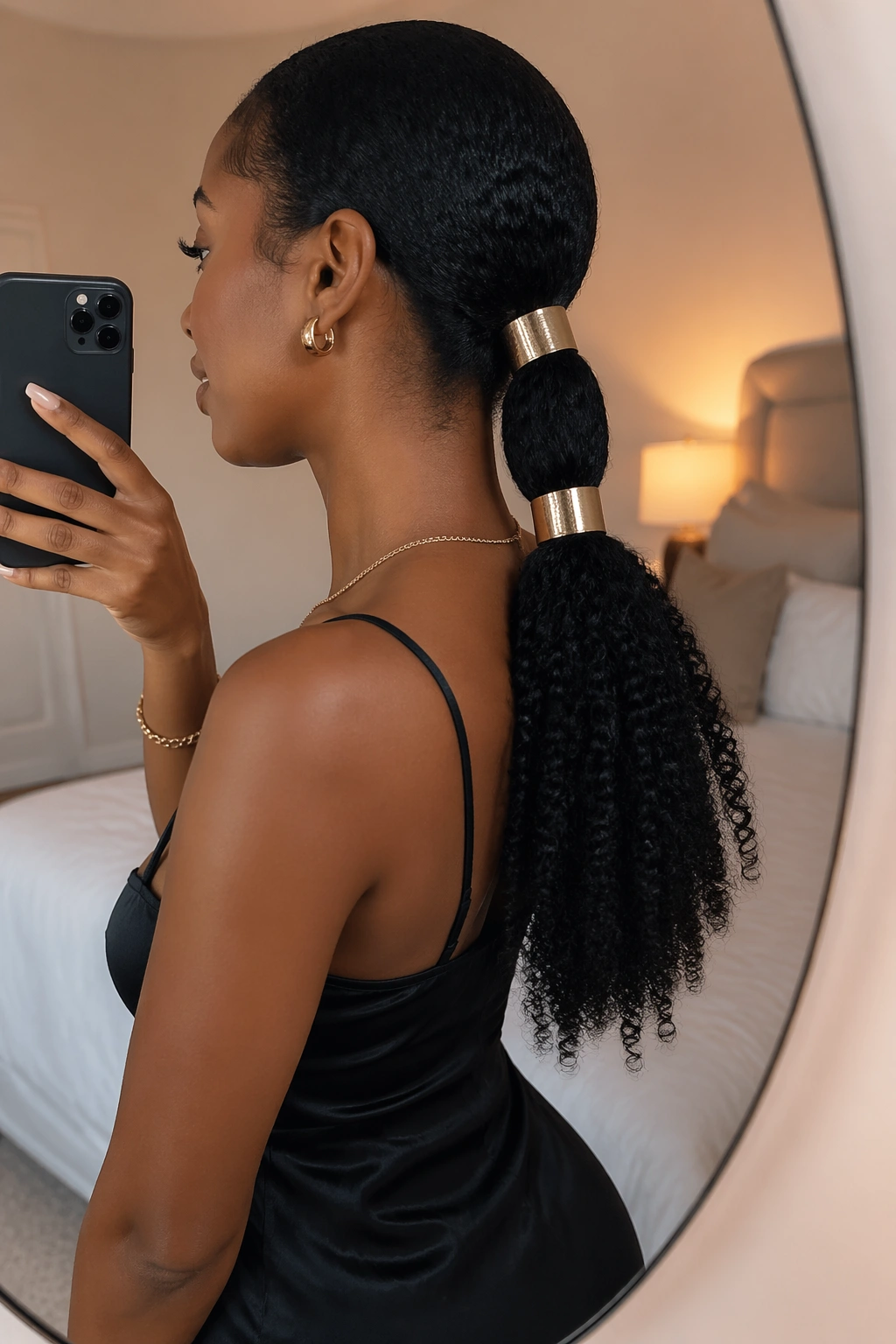
A plain elastic works. A cuff changes the story.
Hair cuffs, rings, or slim metallic bands give a low ponytail a more styled finish without changing the shape of the hair itself. They sit well on braids, twists, or a wrapped base, and they look especially good when the rest of the ponytail has texture. A few well-placed cuffs usually beat a pile of random ones.
How to wear them well
- Place one cuff near the base and one near the tail, not all over the place.
- Choose gold, bronze, or matte black if you want a cleaner look.
- Keep the ponytail secure before adding jewelry so the hardware doesn’t slide.
- Pair cuffs with smooth roots or braids; loose frizz can fight the details.
This style works because it adds visual interest without requiring a whole new construction. If the outfit feels plain, the cuffs pick up the slack. If the outfit is already loud, keep the jewelry smaller so the hair doesn’t compete with everything else.
16. Side-Swept Low Ponytail
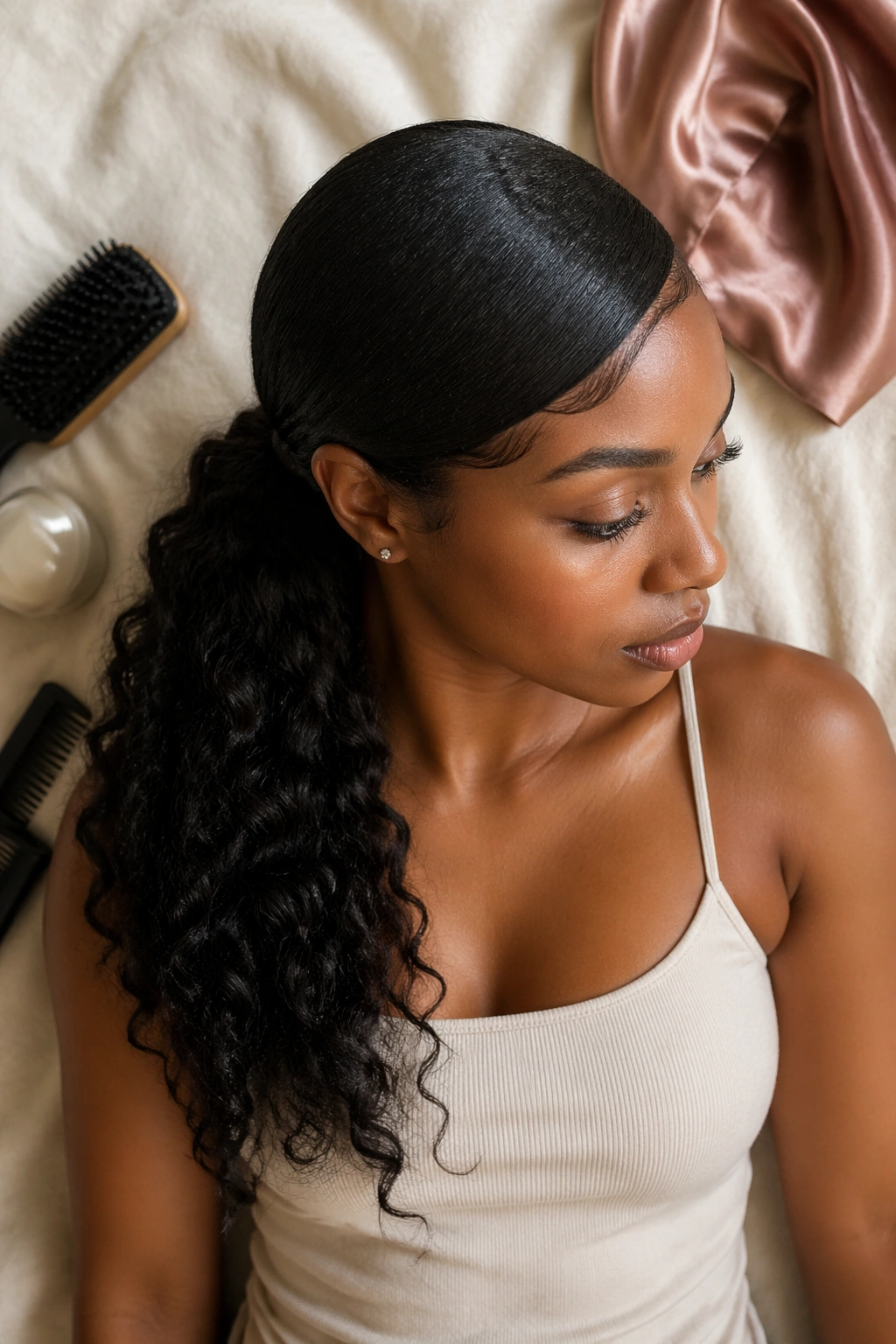
A ponytail doesn’t have to live down the middle.
Pulling the gathered hair over one shoulder changes the whole line of the style. The nape still stays low, but the tail drapes to one side, which feels softer and a little more graceful. On Afro hair, that side sweep can be especially nice when the hair has been stretched a bit, because the length shows more clearly.
This works with side parts, middle parts, or no visible part at all. The important bit is the direction of the tail. If you’re wearing earrings or a one-shoulder top, this ponytail pulls the eye where you want it. It also feels easier to wear when the hair is thick and you don’t want everything sitting straight down the back.
Pin the hidden side close to the head so the sweep stays in place. Otherwise, it slips back to center and loses the whole effect.
17. Locs Low Ponytail
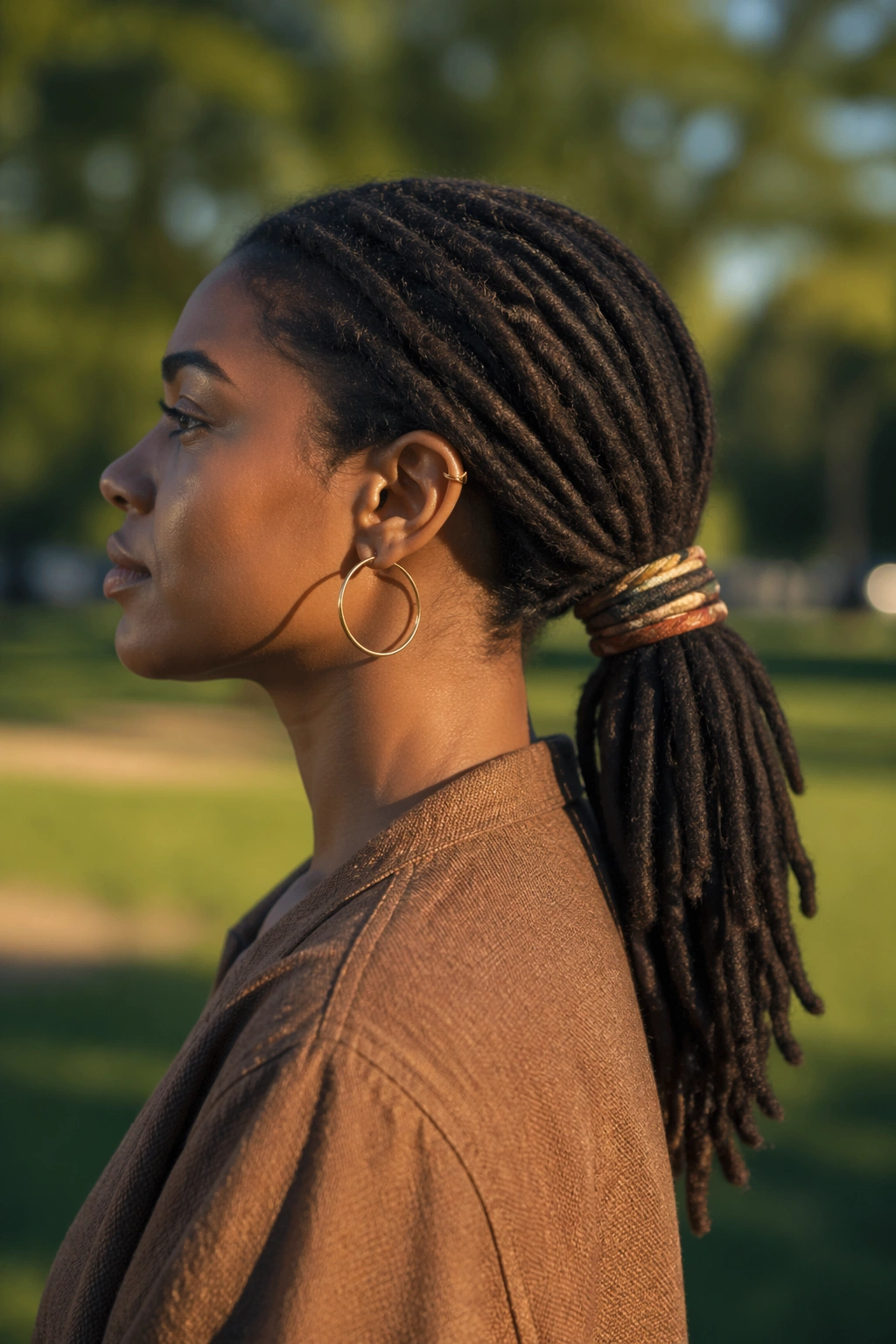
What if your hair already has built-in texture and weight?
Locs make a low ponytail feel effortless in the best practical sense. Gather them at the nape with a wide elastic or a fabric-covered tie, then let them hang long and heavy, or tuck the ends if the length gets in the way. The low position helps keep the style comfortable, which matters because locs can be tough on the neck when they’re worn too high.
A wrap around the base can clean up the shape fast. You can also leave a few locs slightly looser near the front if you want the style to feel less severe. I’d avoid squeezing the base too hard. That causes more tension than the style needs, and locs already carry enough weight on their own.
This is one of those looks that reads calm without trying to be polished. It’s strong, tidy, and practical all at once.
18. Twist-Out Low Ponytail
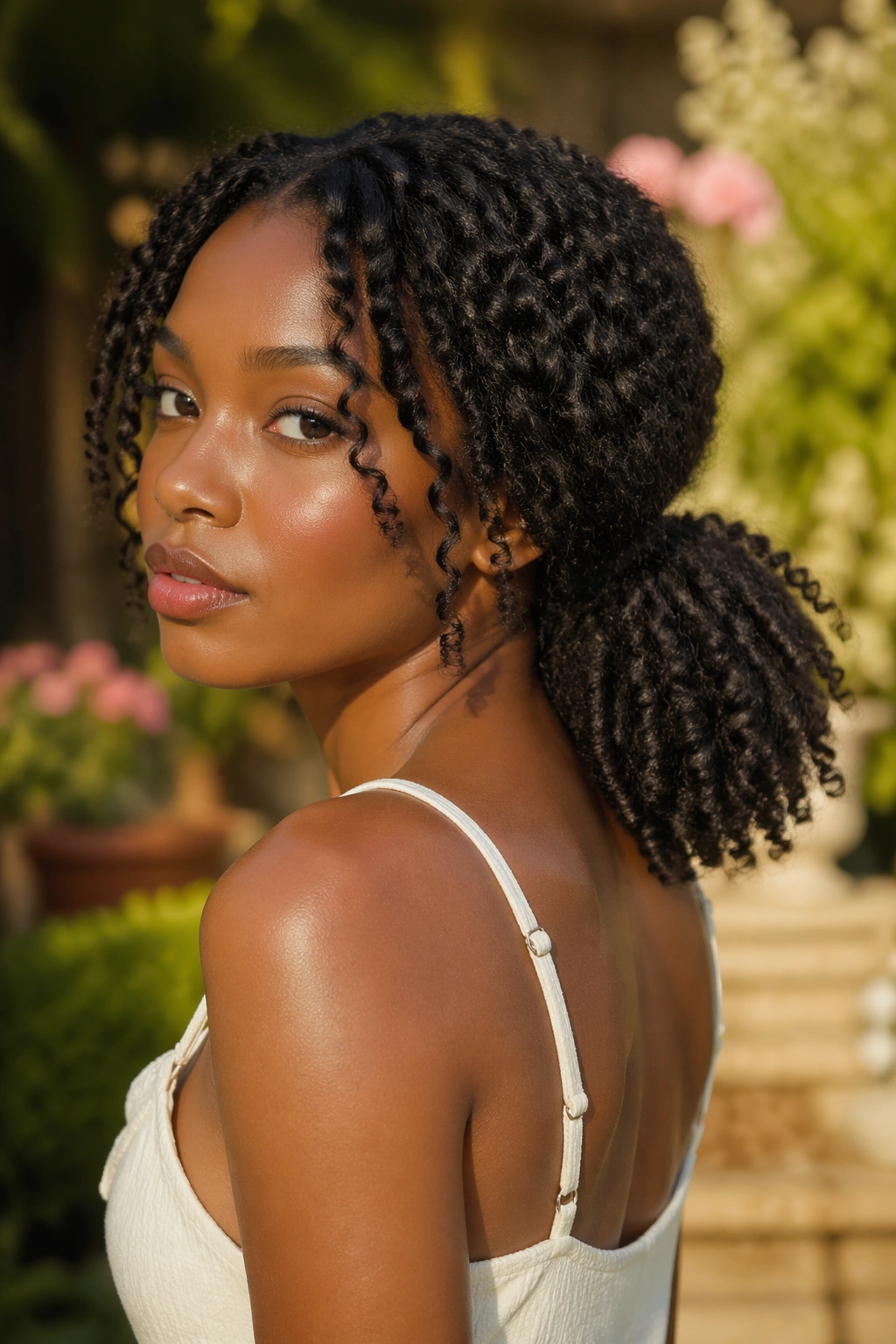
A good twist-out low ponytail gives you softness without losing definition.
The hair has already been twisted and separated, so it carries that fluffy, stretched texture that Afro hair does so well. Gather it gently at the nape, and use your fingers or a wide brush only at the roots if you need to smooth the base. The tail should keep its shape, not get smashed into a flat rope.
That’s the whole appeal here. It looks lived-in but cared for. A little oil on the ends helps the texture stay shiny rather than dry, and a satin scrunchie keeps the gathered section from getting frayed. If the twist-out is fresh, the ponytail can hold a cleaner outline. If it’s a day or two old, it feels softer and more relaxed.
This style is especially good when you want movement. Not a stiff finish. Not a tight sculpt. Just texture doing what texture does best.
19. Criss-Cross Base Low Ponytail
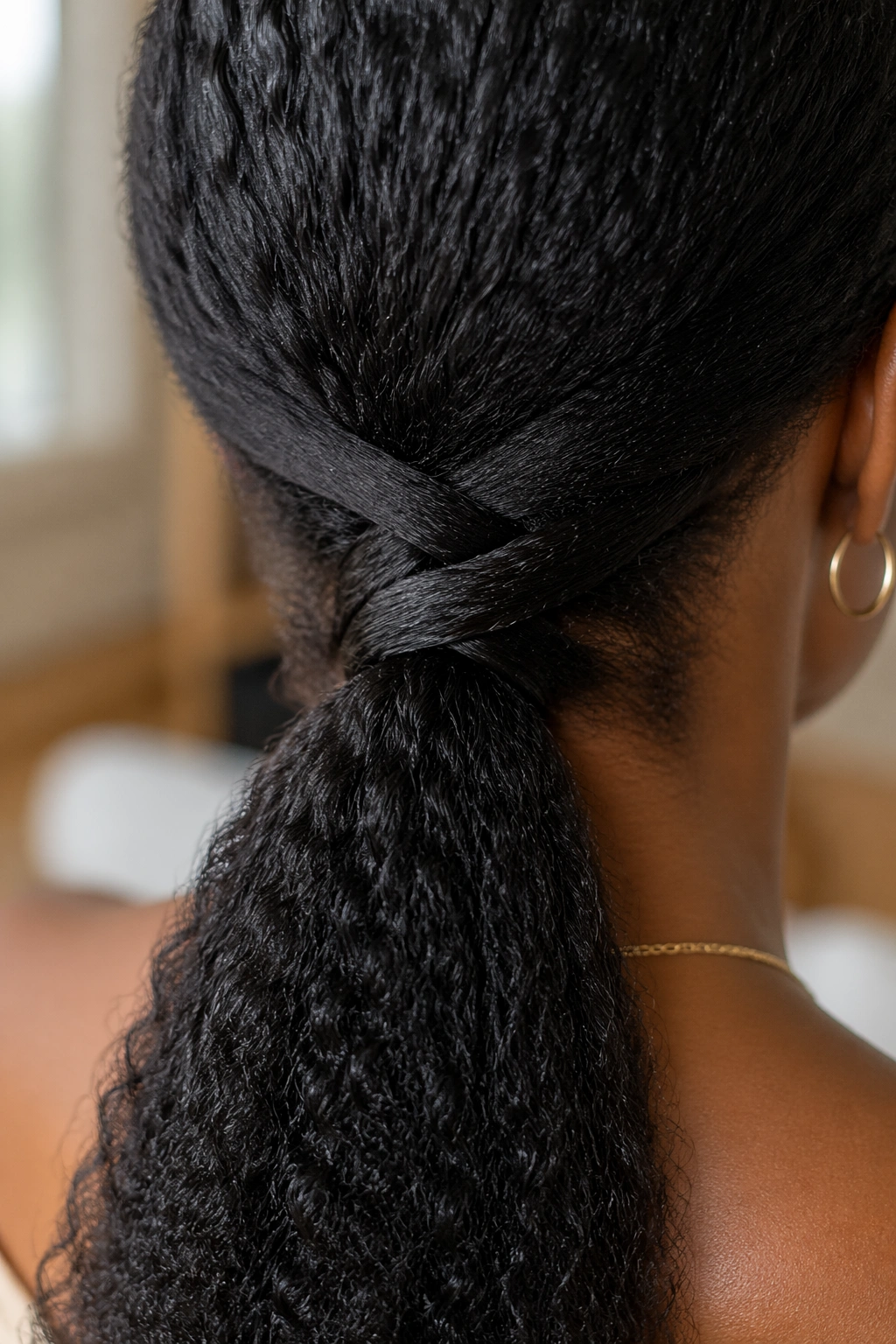
Two small sections crossed over the base can make even a simple ponytail look finished.
This style works by using a bit of the front or side hair to disguise the elastic and add a woven detail at the nape. Cross one strand over the other, pin them flat, then gather the rest of the hair into the ponytail. On Afro hair, the criss-cross shape can bring structure to an otherwise simple look.
It’s a smart move when you want polish but do not want a full braid style. The crossed sections create a neat frame, and they help tame puffiness at the crown without forcing everything sleek. If your hair is thick, use small sections so the pins don’t bulge.
I like this version for dinners, meetings, or any day when a basic ponytail feels too plain. It sits in that sweet spot between casual and dressed up, which is harder to find than it sounds.
20. Braided-Length Low Ponytail
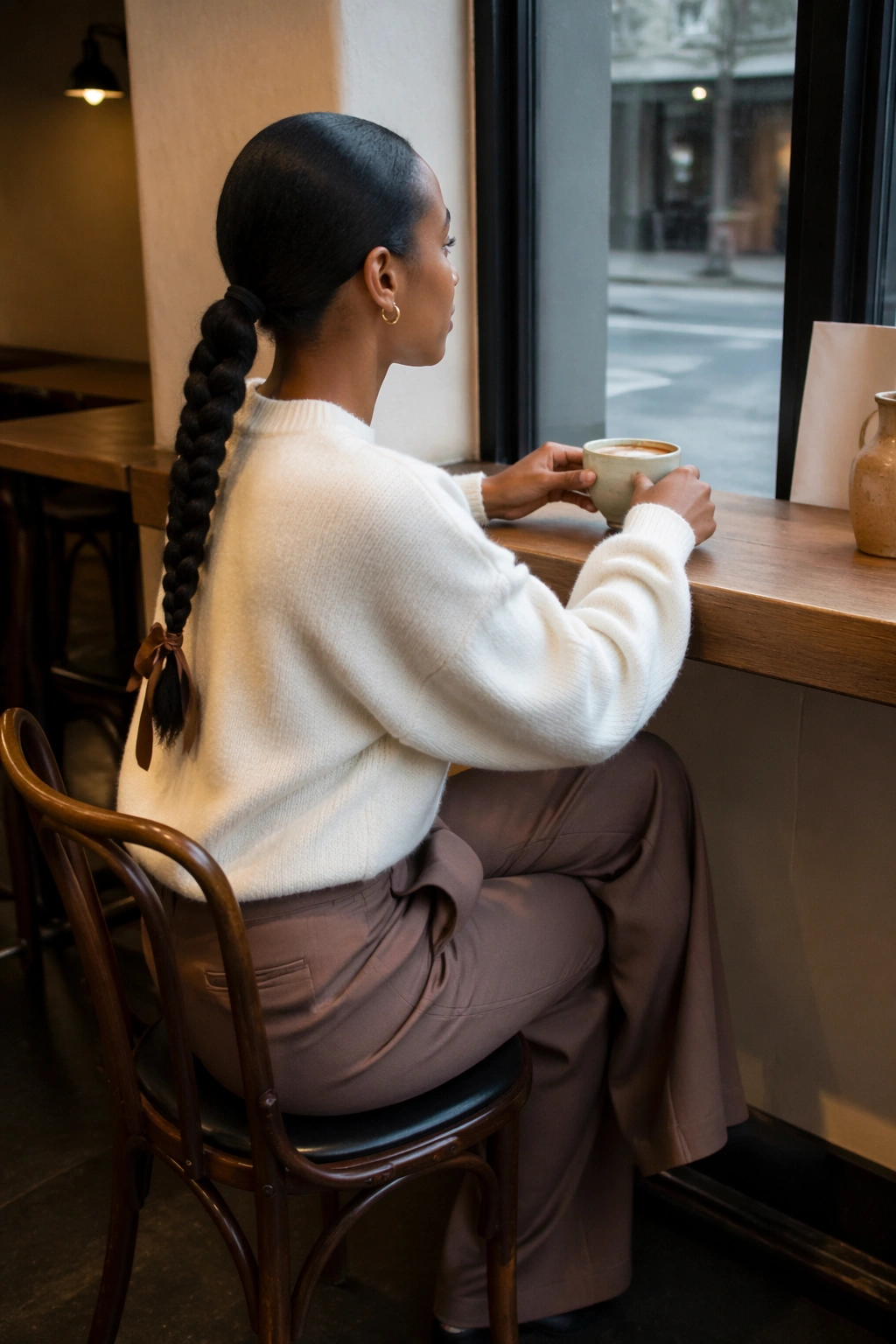
Sometimes the ponytail itself should be the braid.
After securing the hair low, braid the tail into a single plait, rope braid, or loose three-strand braid, depending on the finish you want. A braid protects the ends and keeps the ponytail from spreading out in humidity. It also looks more intentional than a loose tail, which matters when the base is sleek and you want the whole style to match.
Styling notes
- Braid looser if you want fullness.
- Braid tighter only if you need the ends tucked away.
- Use a small elastic at the bottom that matches your hair color.
- Add a cuff or a ribbon if you want more detail.
This style is good when you need the hair out of the way but still want shape. The braid carries its own line, so even a simple ponytail feels more finished. It’s practical, but not boring. Those are usually the best styles anyway.
21. Feed-In Accent Low Ponytail
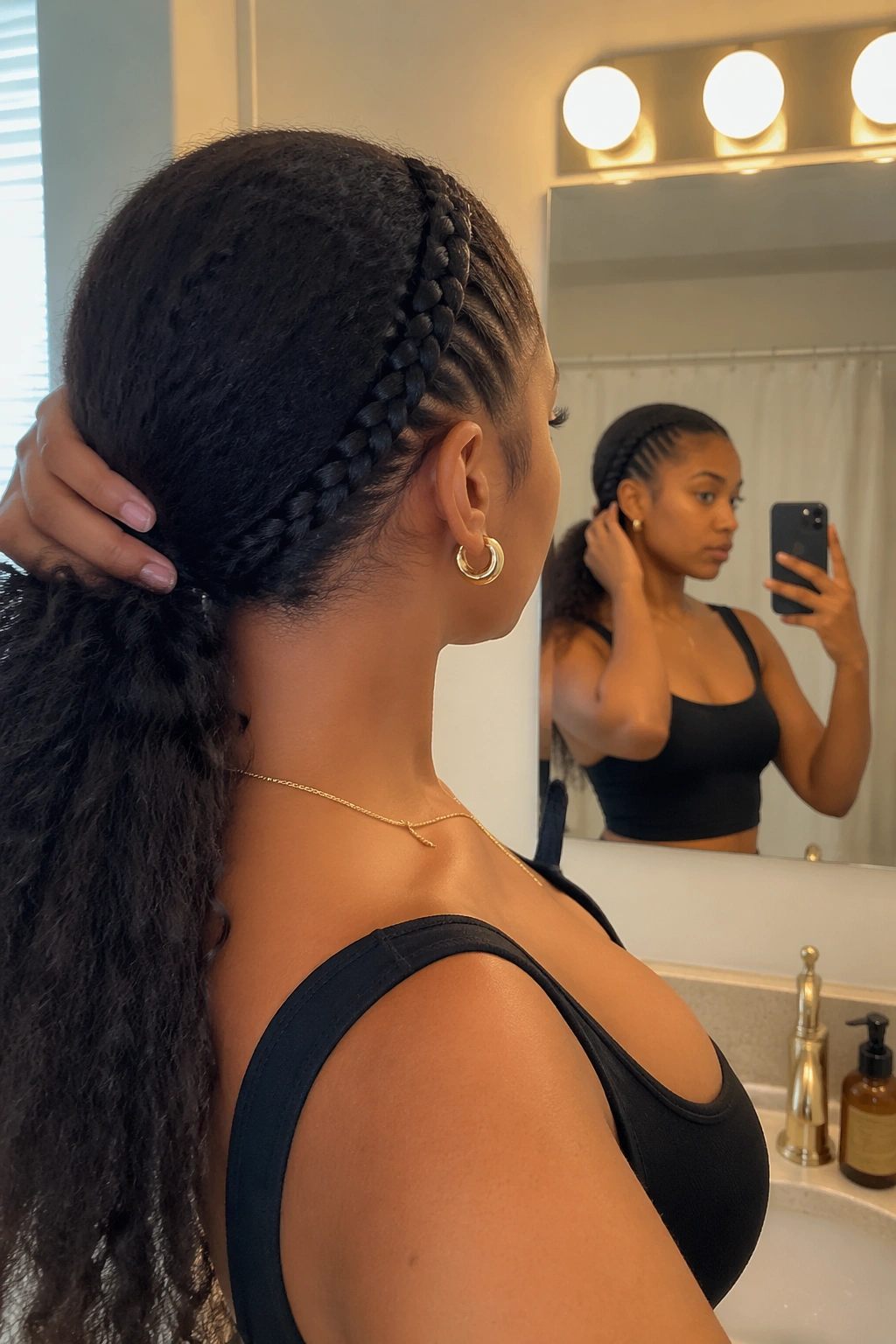
Want detail without turning the whole head into a braid style?
A feed-in accent braid does that nicely. You can braid one side, both sides, or just the front hairline into the low ponytail while leaving the tail itself loose or textured. The feed-in technique makes the braid appear fuller at the start and slimmer at the end, which helps the style look clean and controlled.
This is a good option if you like contrast. The scalp stays neat, the braid adds structure, and the ponytail keeps enough softness to avoid feeling too rigid. On Afro hair, a single accent braid can also help anchor sections that tend to frizz near the temples.
Keep the accent thin if you want the ponytail to remain the main event. Too much braid and the style stops reading as a ponytail. One strong braid is usually enough.
22. Fluffed Natural Low Ponytail
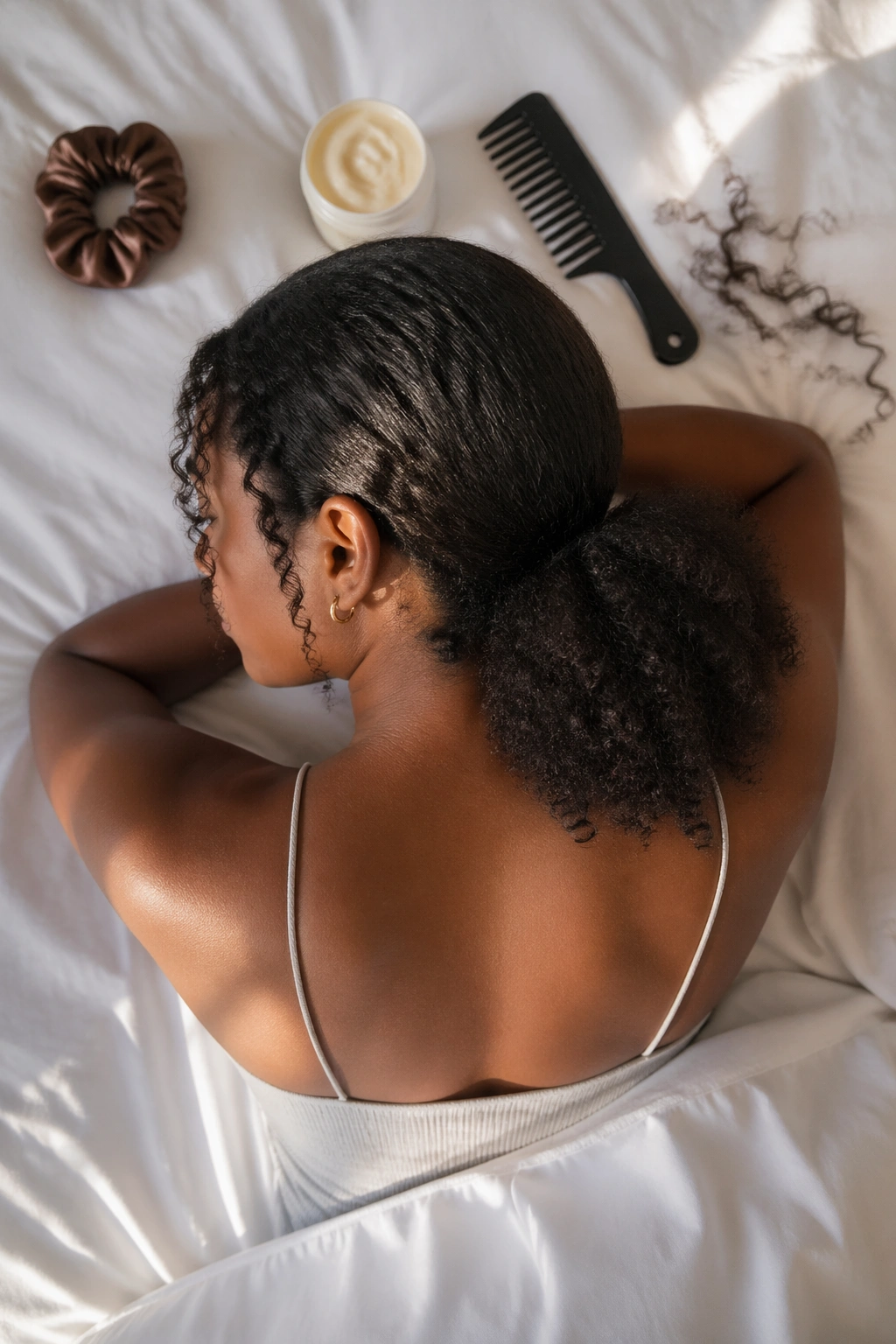
Soft, cloud-like texture at the nape feels different from a slick style.
A fluffed natural low ponytail keeps the crown controlled just enough to sit low, then lets the tail stay airy and full. It’s less sculpted than a puff and less polished than a sleek ponytail, which is exactly why it works so well on Afro hair. You’re not forcing the texture to collapse. You’re shaping it.
Finger-comb the hair into place, smooth the perimeter with a small amount of cream, and stop there. A satin scrunchie helps hold the base without flattening the hair too hard. If the ponytail needs more body, gently pick the tail at the ends and leave the middle alone.
This is the kind of style that looks easy because it is, but there’s still a bit of skill in not overworking it. Leave the texture alone once it looks balanced. That’s when it starts looking good.
23. Side-Bang Low Ponytail
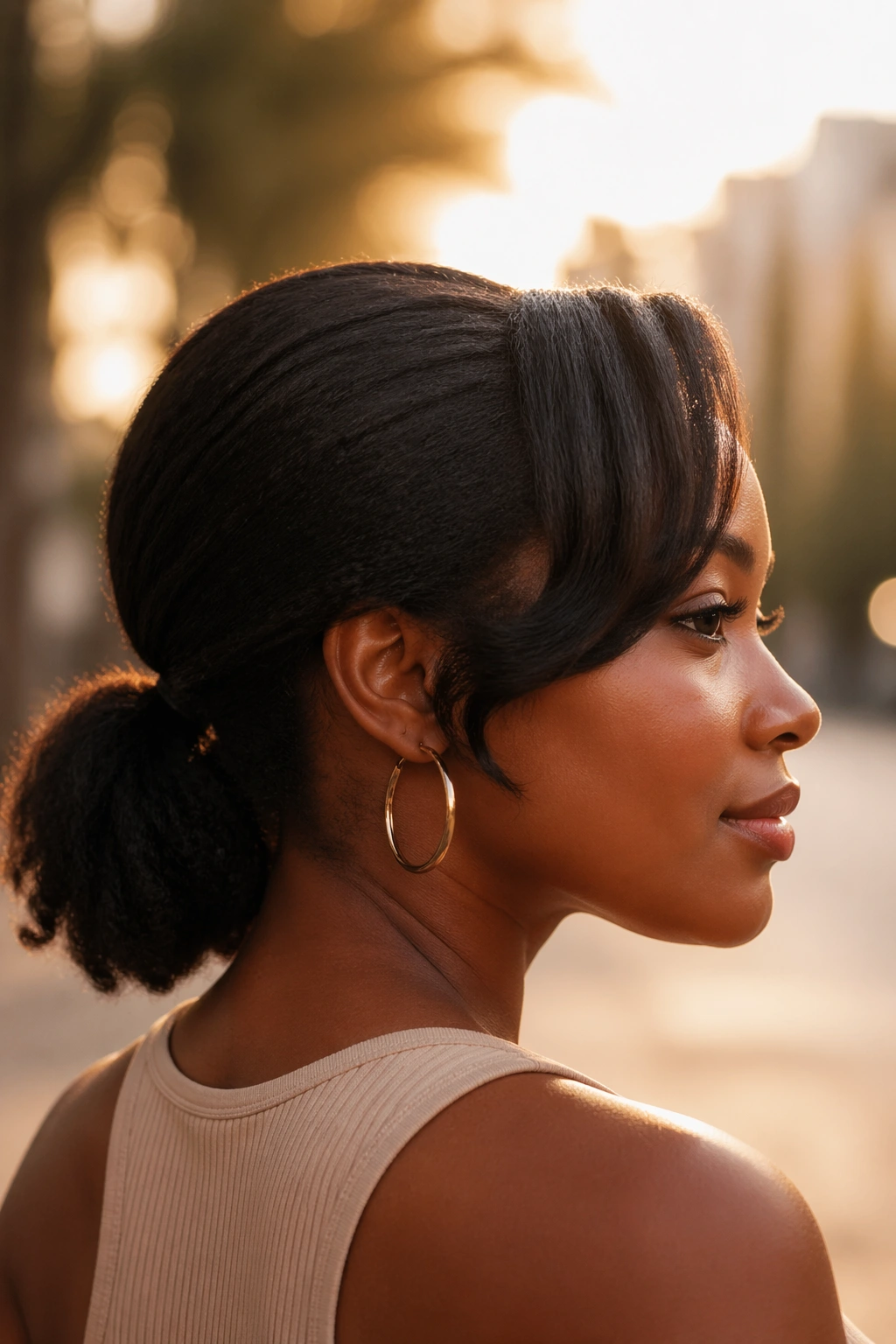
If the forehead is where you like the drama, keep the ponytail simple.
A side bang changes the face shape fast, and it gives a low ponytail a softer, more personal feel. The bang can be a naturally grown section, a stretched piece, or a curled front layer that sits across one side. The rest of the hair stays gathered low and calm so the bang gets all the attention.
This style works especially well if you’re growing out shorter front layers. Instead of fighting them into the ponytail, let them do something useful. Sweep them across the brow, pin the underside if needed, and keep the rest of the style clean so the line stays readable.
The result feels relaxed but not sloppy. It also photographs well in real life, not because it’s flashy, but because the asymmetry gives the face a frame without demanding a lot of volume everywhere else.
24. Knot-Wrapped Low Ponytail
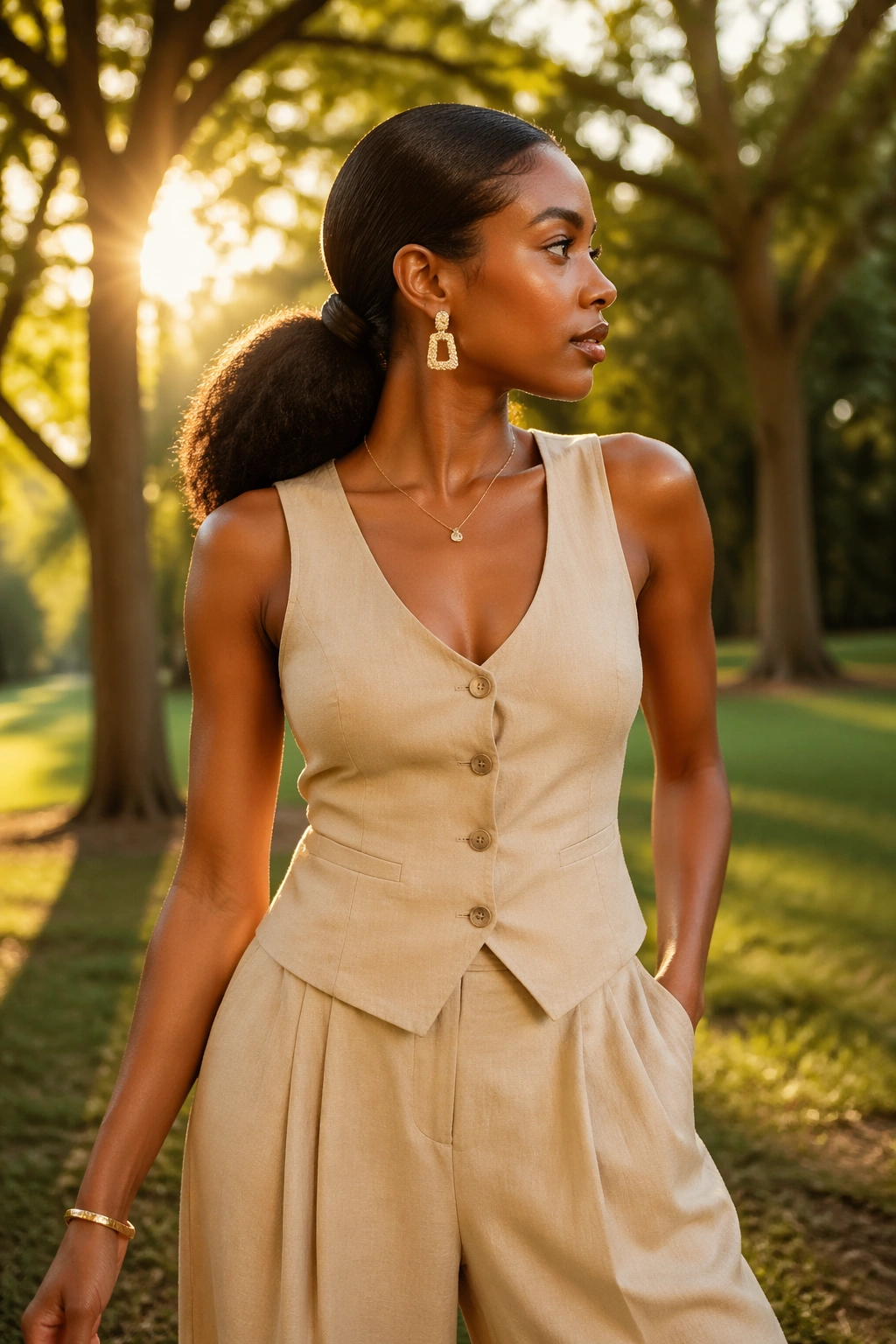
Wrapping the base with your own hair makes the style look more finished than it has any right to.
Take a slim section from the ponytail or from underneath, twist or knot it around the elastic, and pin the end tightly beneath the tail. On Afro hair, this little wrap hides the hardware and gives the low ponytail a smoother finish at the nape. It’s a small move, but it changes the whole shape.
The best part is how flexible it is. You can do it with a sleek ponytail, a puff, or a textured tail. The wrap itself adds polish without needing heat or a special tool. If the hair is thick, use a bobby pin that grips well and doesn’t slide.
One neat detail. That’s all it takes sometimes. The style stops looking like an afterthought and starts looking styled on purpose.
25. Tuck-Under Low Ponytail
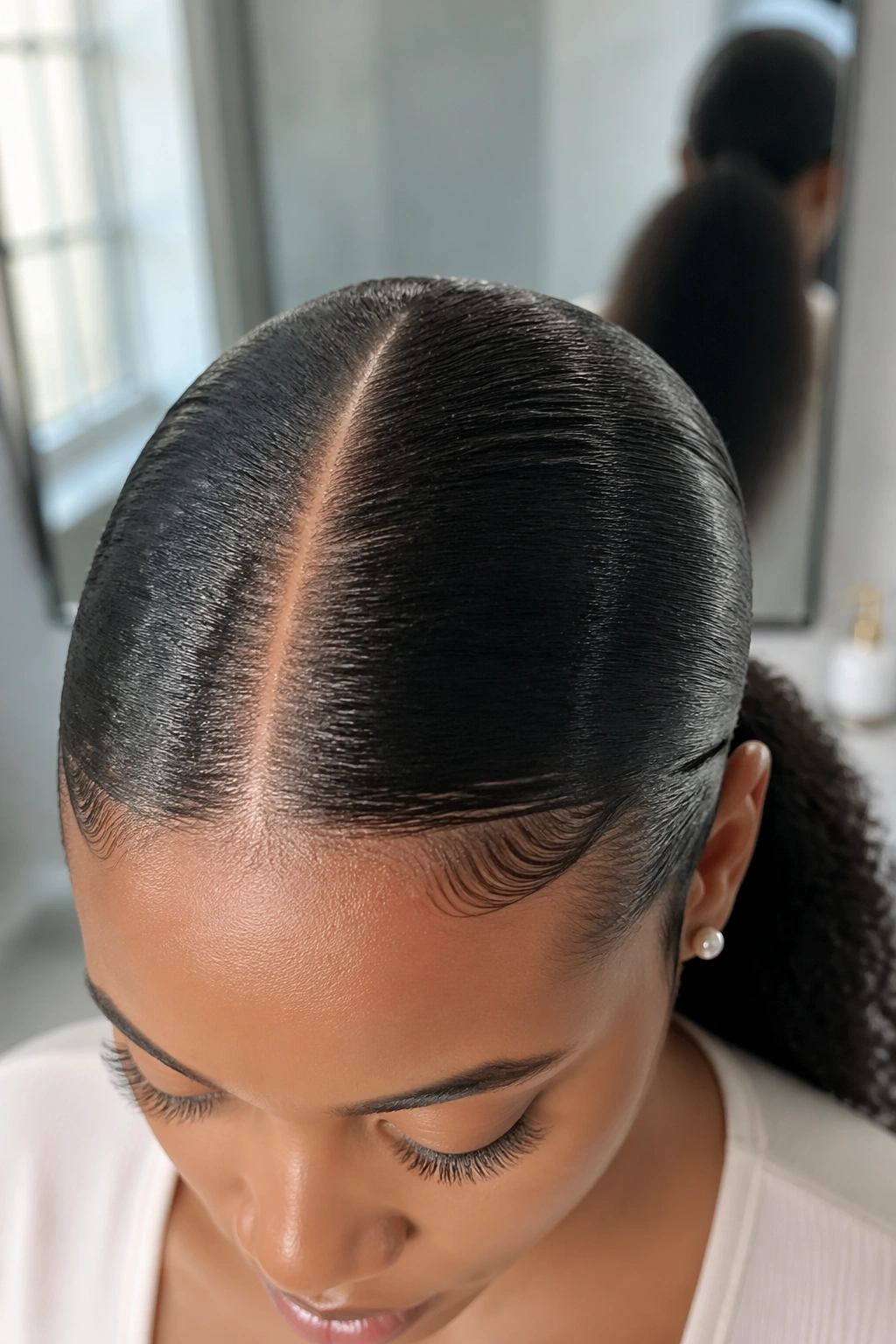
What if you want the ponytail base to disappear entirely?
The tuck-under style hides the elastic and folds the gathered hair inward so the nape looks smooth and sculpted. On Afro hair, this works best on stretched or lightly pressed textures, because the hair can be guided into shape more easily. Use bobby pins that match your hair color, and tuck the ends carefully so nothing pokes out.
This is a good choice when you want a formal finish without doing a full bun. The low placement keeps it gentle on the scalp, and the tucked shape gives the style a clean outline. If your hair is very dense, section it before pinning so the tuck sits flat instead of bunching up.
It has a quieter feel than some of the flashier styles in this list. No cuffs. No scarves. No extra shine. Just clean lines and a neat nape.
26. Mini-Braid Halo Low Ponytail
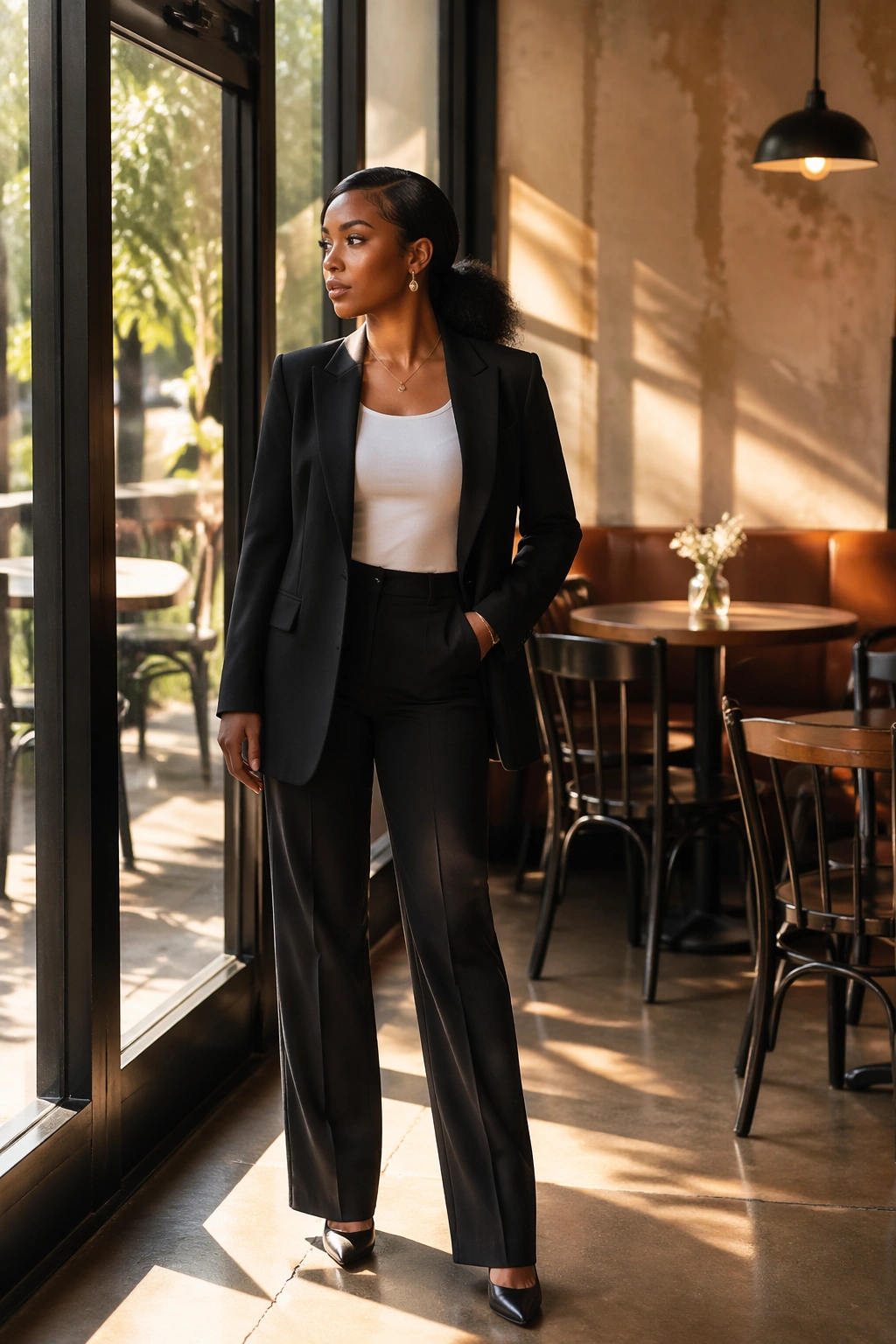
Tiny braids along the hairline can change the entire look of a low ponytail.
The braids make a halo effect around the front and sides, then the rest of the hair drops into a low tail at the back. This style works well when you want something detailed but not heavy. On Afro hair, the small braids can help keep the front controlled while the ponytail stays soft and full.
A few useful details
- Keep the mini braids thin and even.
- Stop the braids before they get too tight at the temples.
- Use a little gel only on the parts, not all over the head.
- Let the ponytail stay textured so the braids don’t overwhelm it.
This style has more visual interest than a plain ponytail, but it still feels wearable. It’s especially nice when you want the hairline to look neat and the rest of the style to stay relaxed. The tiny braid pattern gives the eye something to follow, which makes the whole look feel intentional.
27. Rolled-Ends Low Ponytail
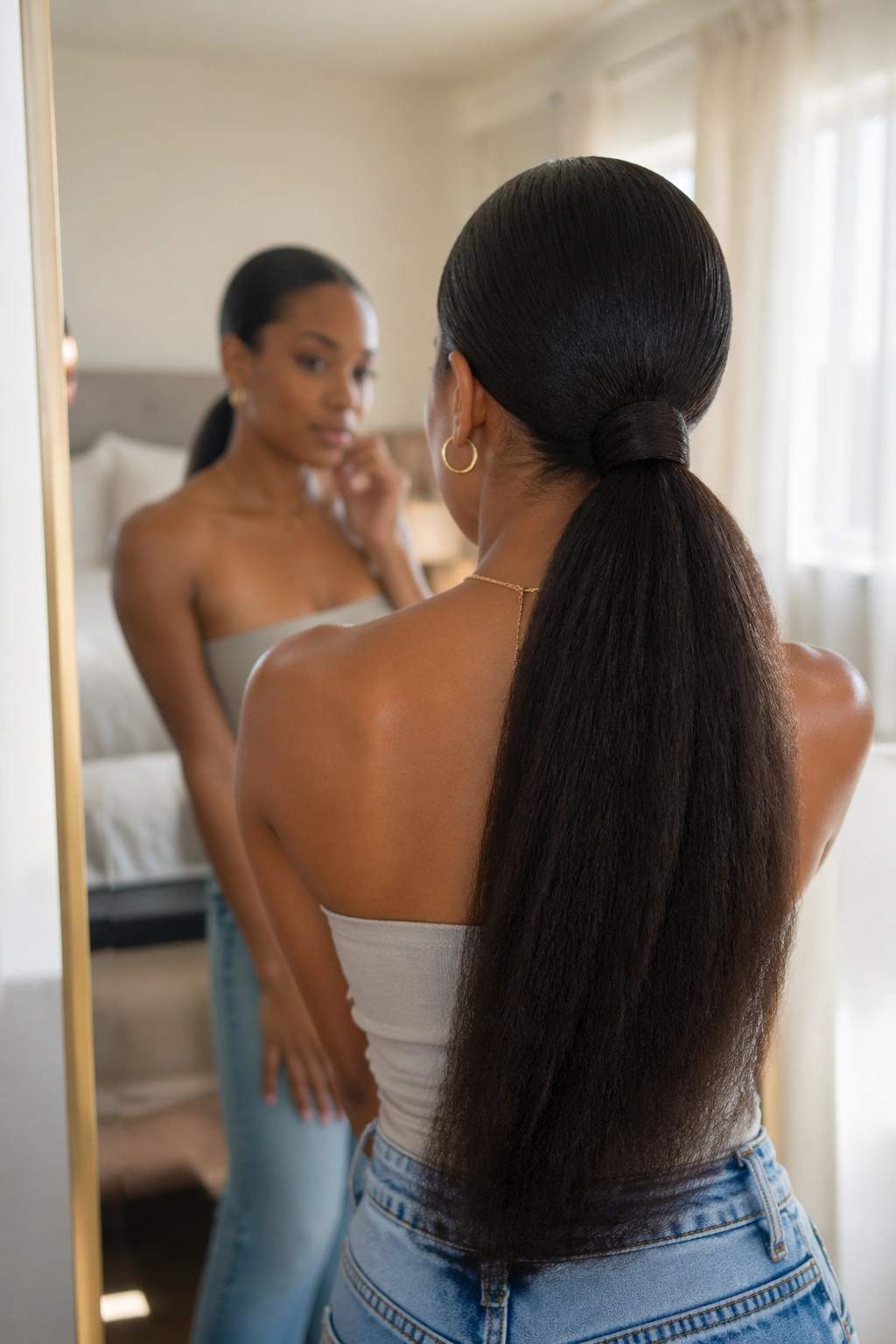
A ponytail with rolled ends has a softer finish than a straight hang.
Set the tail on medium rollers, flexi rods, or even a loose two-strand roll if your length allows it, then let the ends curve under or spring outward with shape. The low base keeps the style calm, while the rolled ends give the ponytail more movement and a little old-school charm. It’s a nice shift when plain straight ends feel dull.
This works especially well on stretched Afro hair because the tail already has enough length to take shape. If the ends are dry, add a little leave-in before rolling. Dry ends frizz faster and can ruin the line. A satin scarf overnight helps keep the curl or bend intact.
I like this one when the rest of the outfit is simple. The ponytail carries the detail, so the clothes don’t have to do all the talking. Clean base. Soft finish. Easy to wear.
Final Thoughts
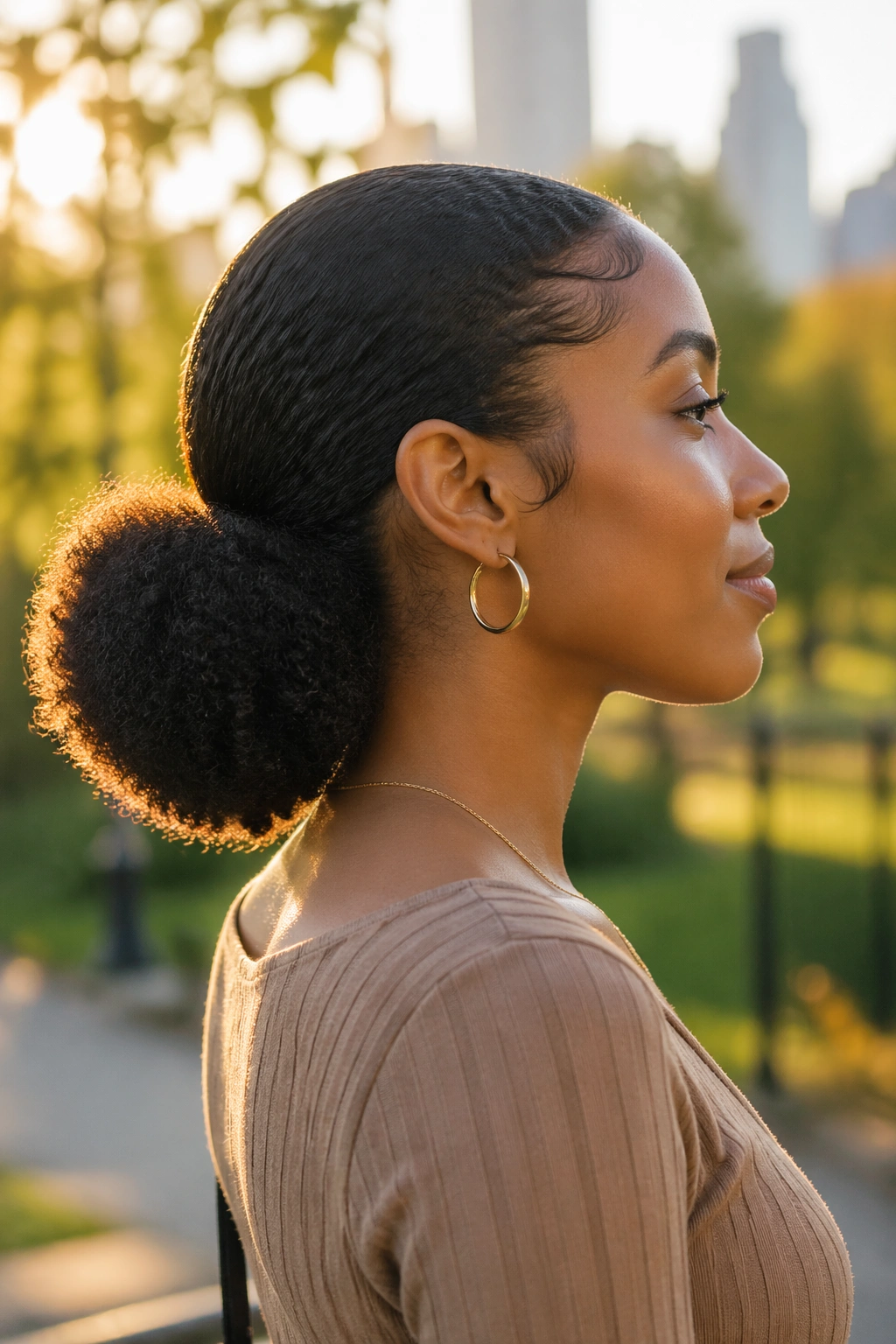
A low ponytail on Afro hair is never just one thing. It can be sleek, full, braided, wrapped, twisted, or softly undone, and the placement at the nape gives you room to decide how much texture you want to show.
The styles that last are usually the ones that respect the hair first. Gentle tension, smart product use, and a shape that works with shrinkage instead of fighting it — that’s what makes the difference between “tied back” and actually styled.
And if one version feels too polished for your taste, loosen it. If another feels too casual, add a braid, a cuff, or a scarf. Afro hair is generous that way. It gives you options, which is half the fun.
