



A flat ponytail has a way of telling on you. The crown collapses, the hairline looks sparse, and the whole style ends up reading as an afterthought instead of a choice.
A double weave ponytail fixes that without needing a ton of products or a mountain of teasing. The structure does the heavy lifting: two woven sections add lift at the front, hide the elastic, and make the ponytail look denser from the first glance. That’s why this style shows up everywhere from clean office hair to dressed-up weekend looks.
The detail that matters most is the base. Too tight, and the weave looks stiff. Too loose, and it slides out of shape before you’ve even left the house. The sweet spot sits in the middle — controlled tension, smart sectioning, and enough softness in the lengths that the ponytail still moves.
That gives you a lot of room to play. Some versions feel sleek and polished, some lean soft and romantic, and some are built for volume first and everything else second. The 19 looks below use the same core idea in different ways, so you can match the style to your hair instead of fighting it.
1. The Sleek High Double Weave Ponytail
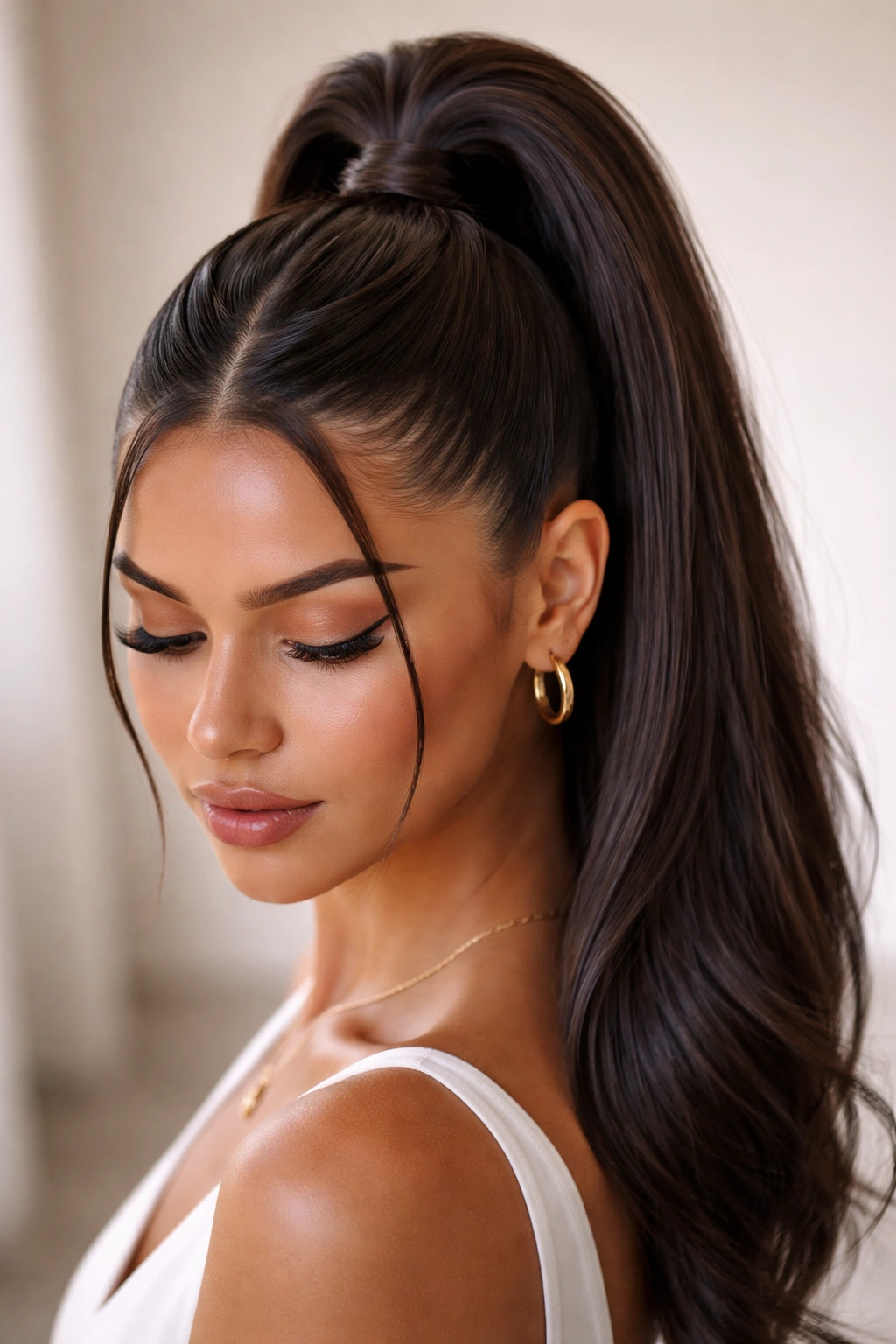
A high double weave ponytail gives you instant height without making the crown look bare. The trick is to pull two slim sections from each temple, cross them over the top, and let them feed into a ponytail that sits near the crown of the head. That little bit of weaving creates a fuller-looking base before the ponytail even starts.
How the lift happens
What makes this version work is the contrast between the smooth top and the thicker ponytail below. The front pieces act like a frame, and the ponytail sits high enough that the hair falls over itself in a way that reads fuller. It’s the style I’d pick for straight hair that tends to lie flat by midday.
- Use a fine-tooth comb to make a clean center or slight off-center part.
- Mist the roots with a light mousse or root spray before you start weaving.
- Keep each front section about 1 inch wide so the weave stays neat instead of bulky.
- Wrap a small strand of hair around the elastic and pin it underneath with a bobby pin.
Best tip: lift the crown with your fingers before the ponytail sets. Don’t over-tease it. A tiny bit of space at the roots gives the style its shape.
2. The Low Double Weave Ponytail at the Nape
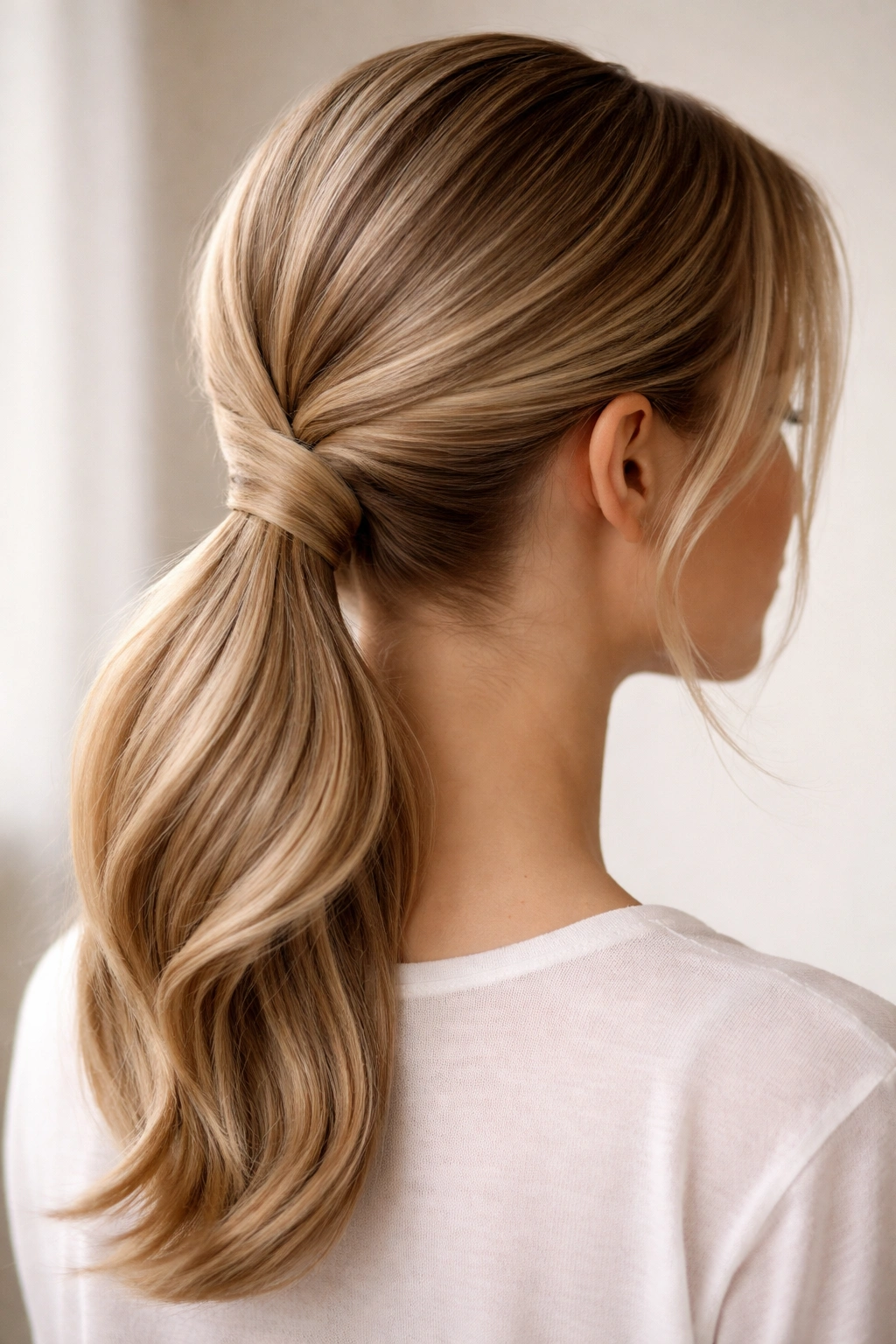
This is the version that looks richer than people expect. A low ponytail tends to hold the weight of the hair in one place, so the fullness reads more clearly, especially if your ends are blunt or your hair is thick. The double weave detail softens the transition from head to ponytail, which keeps the base from looking heavy.
A lot of people assume high ponytails always give more volume. Not true. Low placement can be even better when the goal is a smooth, full silhouette instead of a bouncy one. The shape lands at the nape, where the hair naturally stacks, and that makes the ponytail look denser.
I like this one for second-day hair. A touch of smoothing cream on the surface, a little lift at the crown, and two woven side pieces are enough to make the whole thing feel intentional. It’s tidy, but not severe.
If your hair is thick, this is also kinder to your neck. High ponytails can pull. Low ones usually feel easier to wear for longer stretches.
3. The Side-Part Double Weave Ponytail
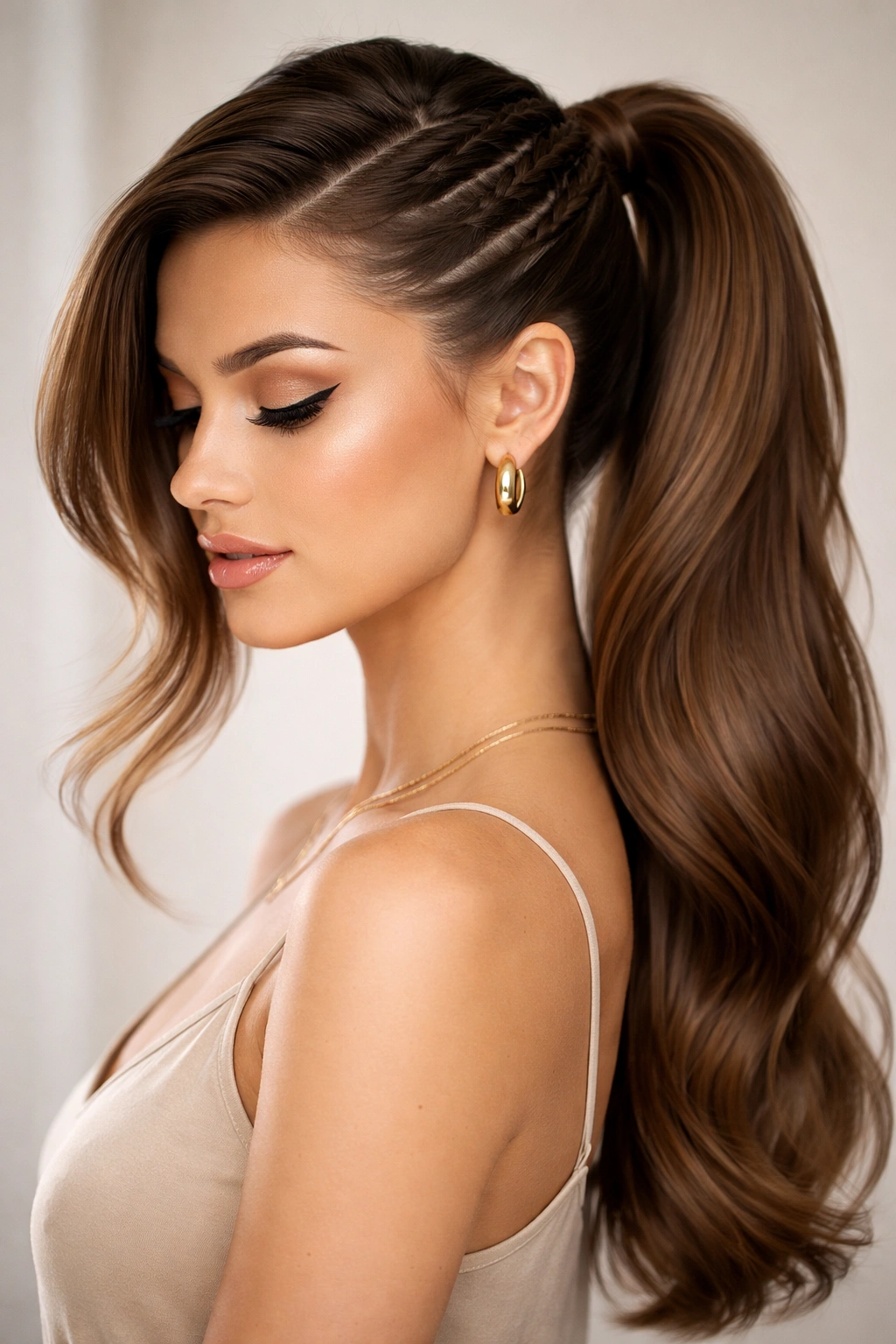
Can a side part make a ponytail look twice as full? Usually, yes. A deep side part creates immediate lift at the roots on one side, and the double weave lets that lift travel into the ponytail instead of collapsing once the elastic goes in.
Why the side part helps
The side part gives the hair a little asymmetry, which is the whole point here. Symmetry can look sleek, but asymmetry gives the eye something to follow. The woven sections make that movement more obvious, so the ponytail feels thicker without needing extra hair.
A good side-part double weave ponytail starts with a firm part line and a soft finish on the heavier side. Keep the part clean, then use the front section from the fuller side to cross over and tuck into the ponytail. If your hair is fine, a dry shampoo at the roots gives the part more grip.
How to keep it from falling flat
- Set the part with the tip of a tail comb.
- Blow-dry the roots in the opposite direction for 20 to 30 seconds.
- Pin the woven section in place before you gather the rest of the hair.
- Leave a few pieces near the hairline soft so the shape does not look frozen.
That last part matters. A side part should feel a little loose around the face, not glued down.
4. The Bubble-Section Double Weave Ponytail
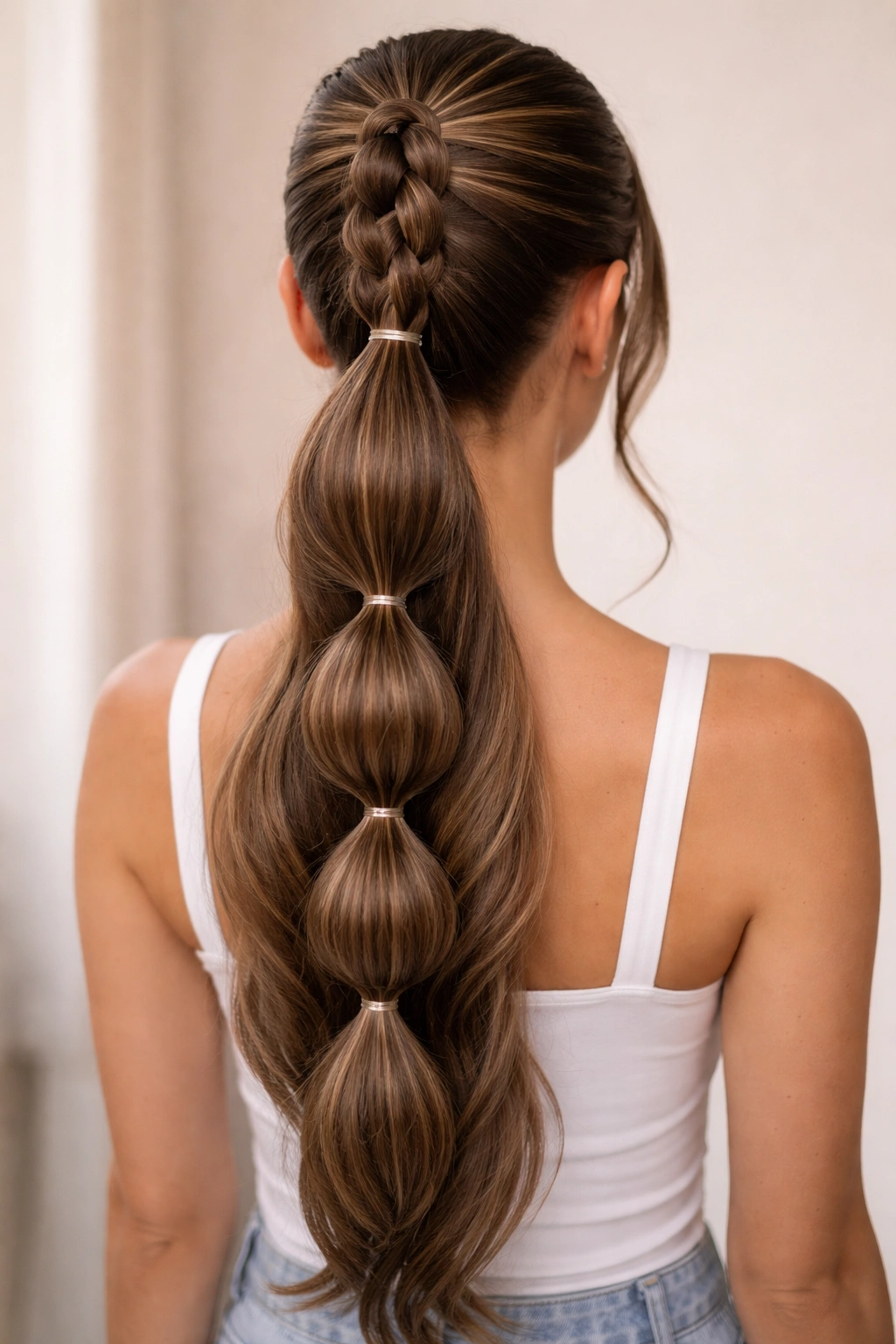
A ponytail that starts full and turns skinny halfway down is asking for bubbles. This style uses the double weave at the top, then adds evenly spaced elastics down the length so the ponytail keeps its shape all the way through. It’s one of the easiest ways to fake a much thicker tail.
The key is spacing. Put the first elastic about 2 to 3 inches below the base, then keep the next one the same distance down. After each section is tied, tug the hair gently at the sides until it puffs into a rounded bubble. Not too much. You want shape, not a mess.
This version works especially well on long hair because the bubbles break up the length. Without that break, the ponytail can look stretched out and thin. With it, each section has a little body of its own.
A few small clear elastics are all you need. If you want a cleaner finish, wrap a thin strand of hair around the first tie at the crown, then let the rest of the sections stay visible. That contrast is what makes the style interesting.
5. The Curly Double Weave Ponytail
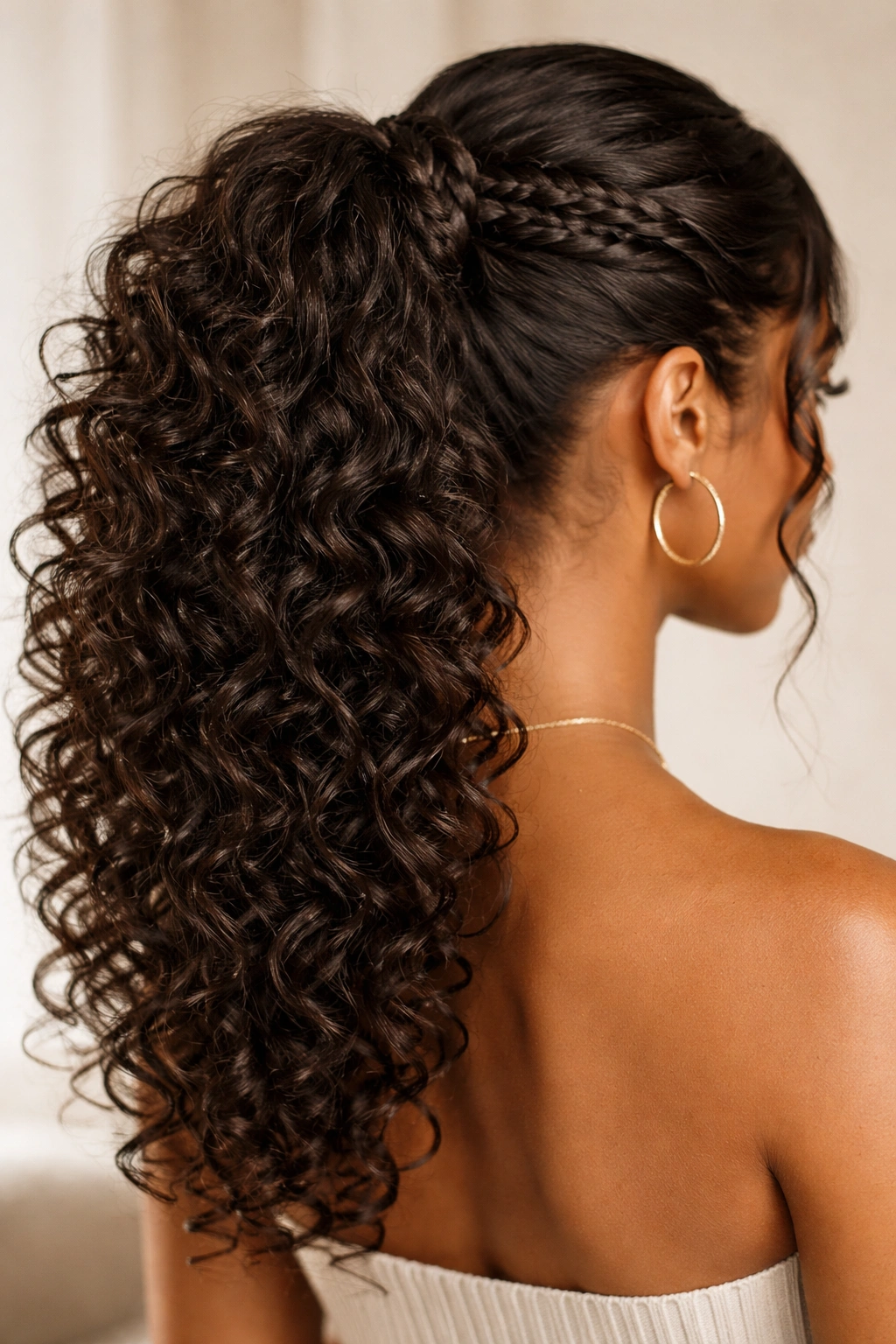
Curly hair and double weave ponytails are a strong match because the style can support the curl pattern instead of flattening it. The biggest mistake people make is brushing curls too hard before tying them back. That kills the shape and leaves the ponytail looking wider at the sides but thinner at the ends.
Keep the curl pattern intact. Use fingers, a wide-tooth comb, or a pick if you need to separate the roots. Then take two woven sections from the front, cross them back, and gather the rest of the curls into a ponytail at the point where your hair still springs naturally. For most heads of curls, that sits between the crown and the upper nape.
A little cream or gel at the front helps the weave stay smooth. The rest of the hair should stay soft. If the ponytail gets crunchy, the curls lose their bounce, and the whole style starts to feel smaller than it is.
One thing I like about this version: the weave gives structure while the curls do the volume work. You’re not forcing fullness. You’re letting it happen.
6. The Rope-Twist Double Weave Ponytail
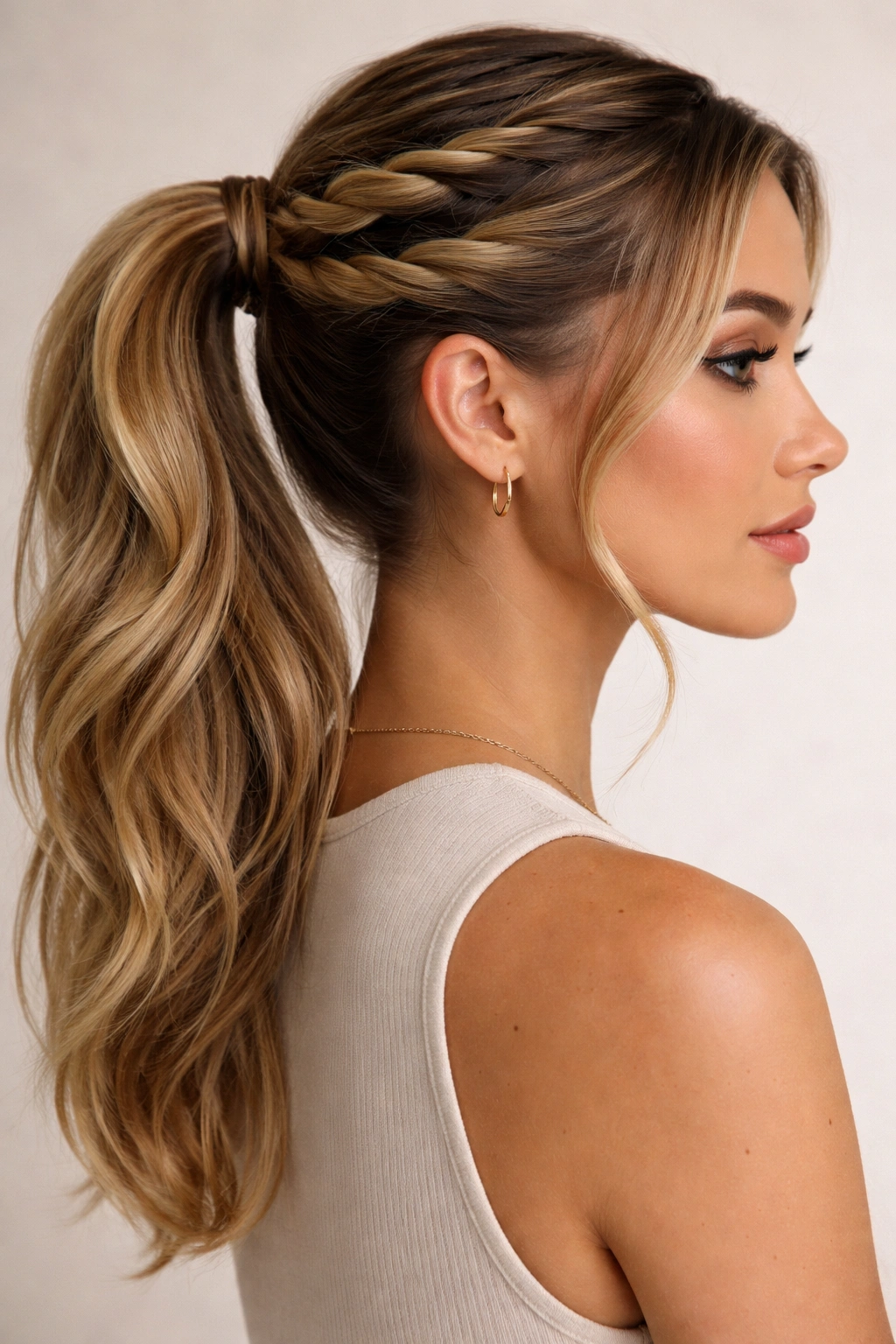
A rope twist gives you the look of a braid with less time and less hand strain. That matters when you want the hair to look layered and full, but you do not want to stand there sectioning strands for ten minutes. Two twisted sections feeding into a ponytail make the base look thicker than a plain tie, and they sit flatter against the head than a chunky braid.
Unlike a three-strand braid, a rope twist keeps the lines clean. That makes it a good choice when the rest of the hair is already textured, because the twist adds shape without competing with every wave and bend. If your hair is medium-length, this one is especially useful. Shorter pieces tend to stay put better in a twist than in a looser braid.
I’d use this for daytime wear or a dinner look that needs polish but not fuss. Twist each front section away from the face, secure it low or mid-height, then gather the lengths into a ponytail. A mist of flexible hairspray helps the twists hold their shape without turning them stiff.
Simple. Fast. Good-looking.
7. The Wrapped-Base Double Weave Ponytail
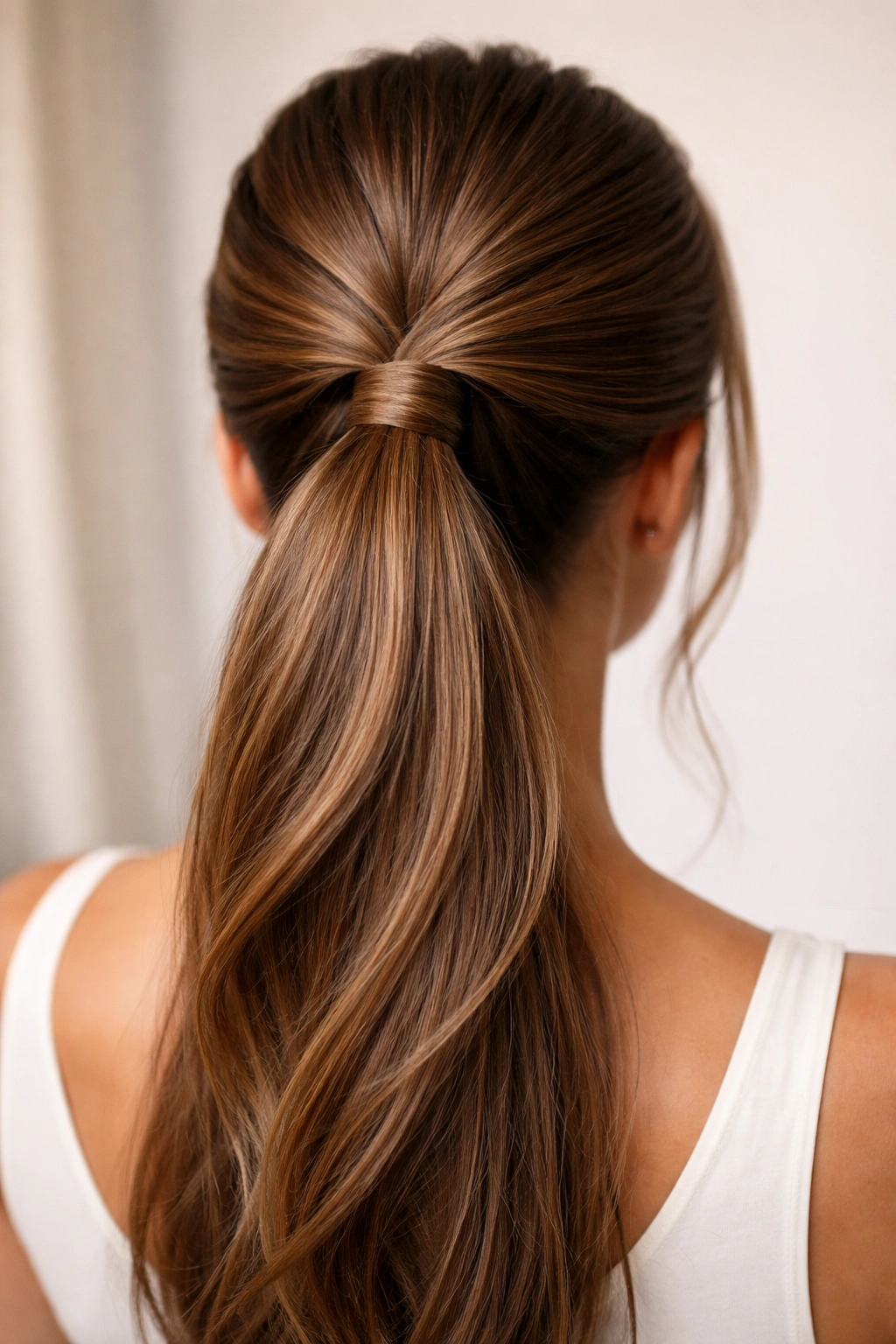
You know that moment when the elastic shows and the whole style feels unfinished? This version fixes that in one move. The double weave pieces do the visual work at the front, then one of them wraps around the base to hide the tie completely.
What makes it worth doing
The wrapped base changes the whole mood of the ponytail. Without it, the style can look like a standard pony with a braid at the front. With it, the finish feels deliberate and much more polished. It also makes the ponytail appear thicker because the eye sees hair covering the elastic instead of breaking around it.
- Use a small, tight elastic for the ponytail itself.
- Leave one woven section a little longer so it can wrap around the base.
- Slide a bobby pin through the wrapped strand from underneath, not the top.
- Smooth the wrap with a tiny drop of serum if flyaways keep breaking loose.
That last bit matters on humid days. A loose wrap is the fastest way for the style to look tired. Keep the strand snug, and it behaves.
8. The Half-Up Double Weave Ponytail
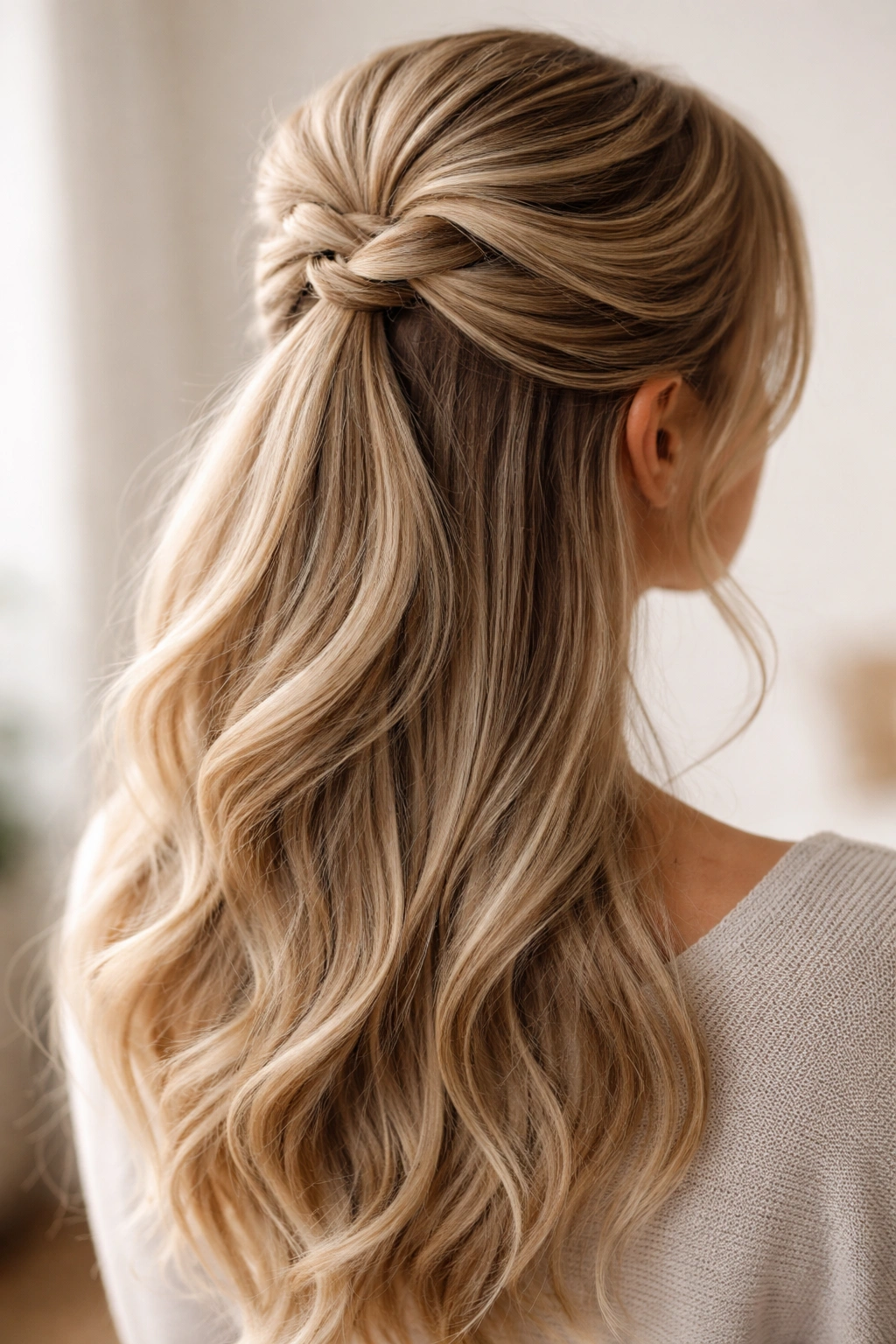
If you want fullness without pulling every strand back, this is the one. A half-up double weave ponytail gives you lift on top while leaving the rest of the hair down, which keeps the style lighter around the scalp and easier to wear for hours.
The shape is flattering because it builds height where the eye first lands. The top section gets the weave, the crown gets a bit of lift, and the lower lengths stay loose. That means the style can handle layers without fighting them. It also works well if the ends of your hair are thinner than the top — a common problem, and one that gets masked nicely here.
I like this version with a slight wave through the loose hair. Straight ends can drag the whole look down. A soft bend through the bottom half makes the ponytail piece feel connected to the rest of the hair instead of separate from it.
This is the one I’d reach for on days when I want structure but not a full pull-back. It has enough shape to feel dressed up, and enough softness that it does not read as strict.
9. The Crisscross Double Weave Ponytail
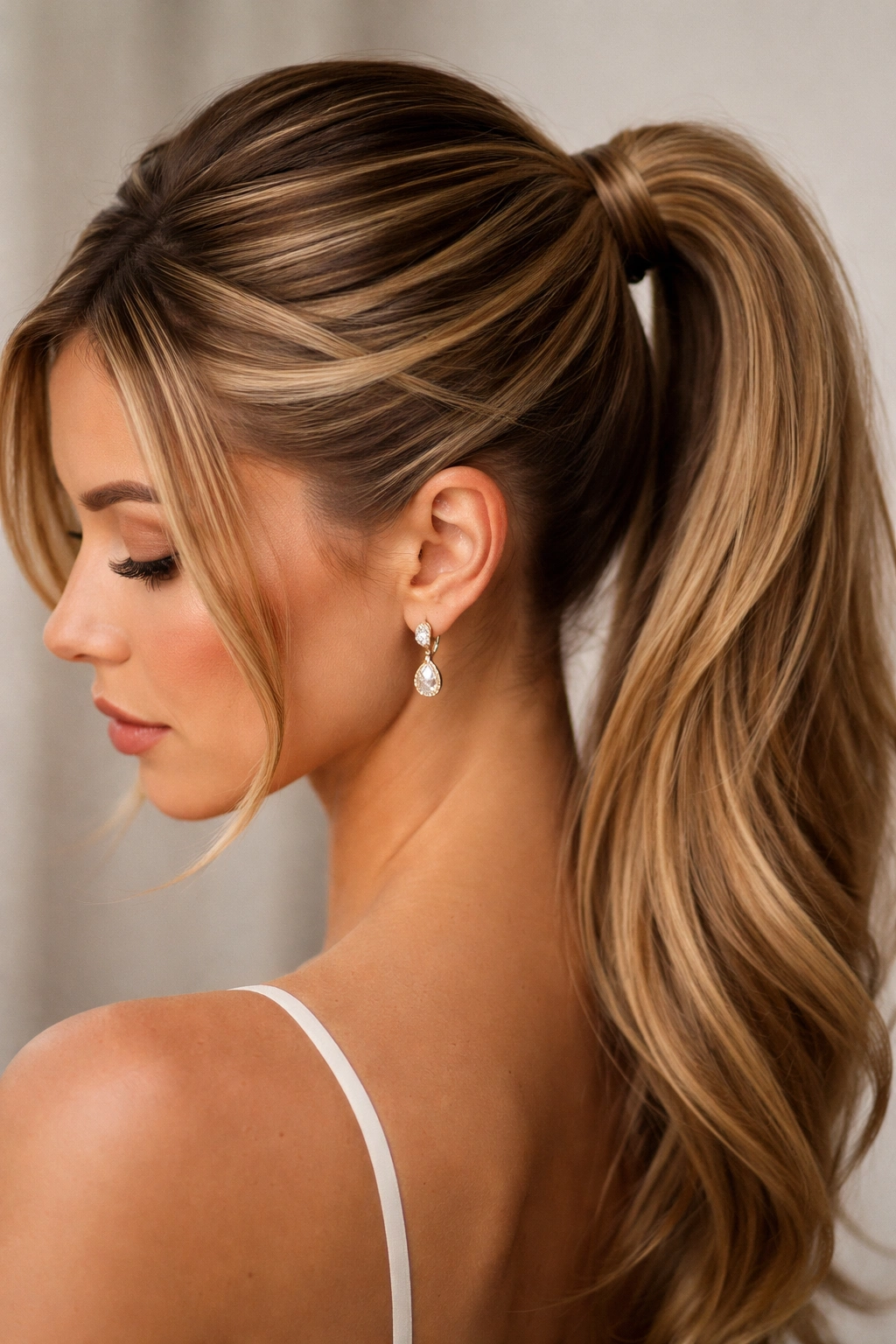
Why does crossing the sections make such a difference? Because crisscrossing creates visible depth before the ponytail even begins. The eye sees overlapping lines, and overlapping lines always read as fuller than a flat pull-back.
What the crossing does
The crisscross pattern gives the front of the style more movement. Instead of two straight sections going back to one elastic, the hair folds over itself in a way that looks denser. On straight hair, that extra layering is a big help. On textured hair, it adds a clean shape without taking away the natural body.
To keep the look tidy, make each crossing section narrow and smooth. Too much hair in the front pieces and the shape turns bulky fast. Too little and you lose the effect. The middle ground is usually the sweet spot: enough width to show the weave, not so much that it competes with the ponytail.
Use this version when you want the ponytail to feel a little architectural. It has a sharper line than the romantic looks, and I think that’s part of its charm. It looks planned, but not fussy.
10. The Braided-Base Double Weave Ponytail
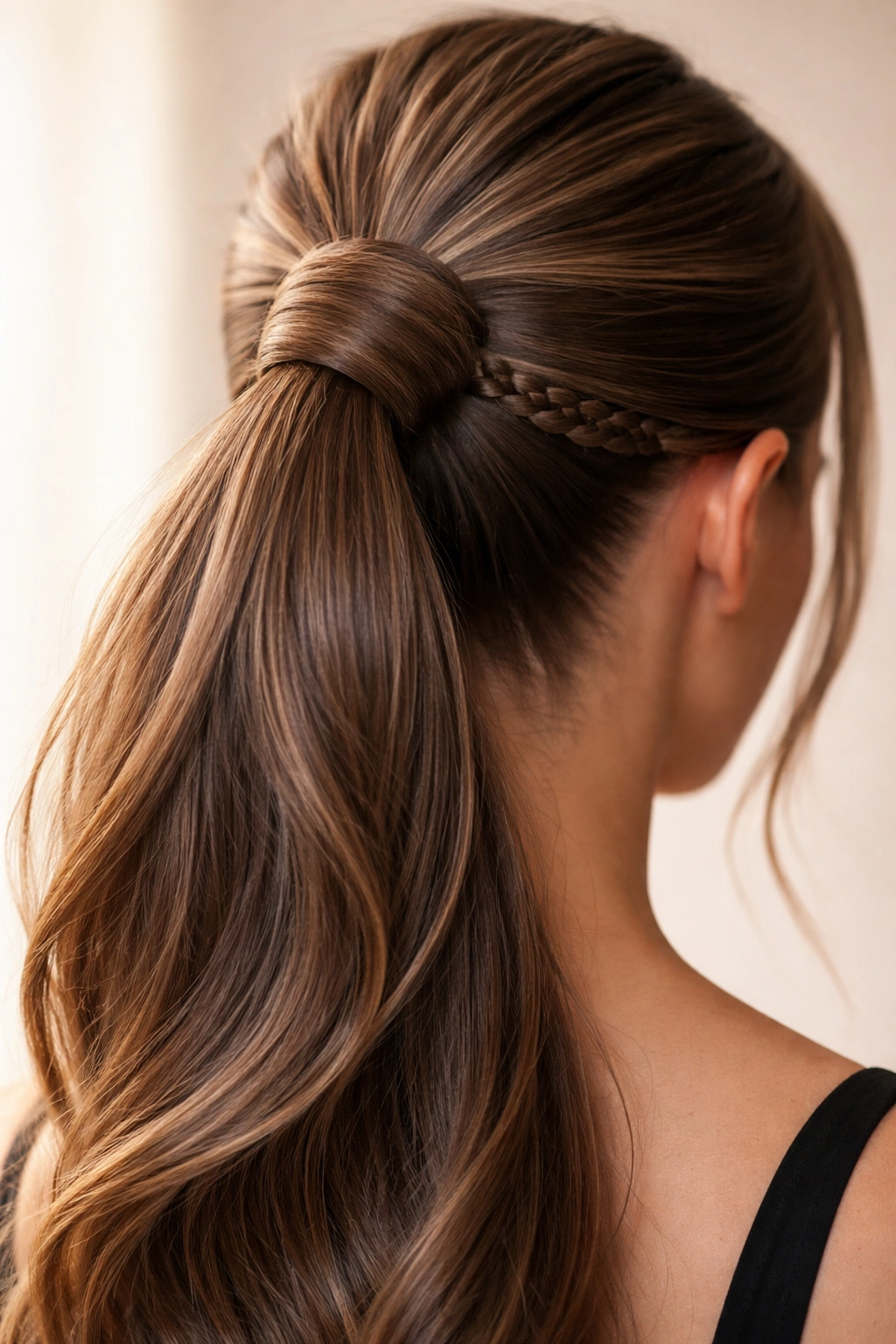
A small braid at the base is the quiet overachiever of this whole set. It gives the ponytail something to sit on, which helps fine hair look fuller and stops the style from collapsing at the crown. Then the double weave sits over it, hiding the braid and making the base look even more layered.
Compared with a plain ponytail, this version holds shape better through the day. Compared with a big braid, it stays lighter and easier to style. That makes it a strong choice for fine or slippery hair, the kind that usually slides out of ties and forgets what volume means after lunch.
I’d braid only 1 to 1½ inches at the base before securing the ponytail. Any longer, and the braid starts to take over the whole style. Keep the front weave smooth, then let the braid disappear underneath. That hidden support is the whole trick.
If your hair is very soft, a little texturizing spray on the braid helps. Not too much. You want grip, not grit.
11. The Deep Side-Swoop Double Weave Ponytail
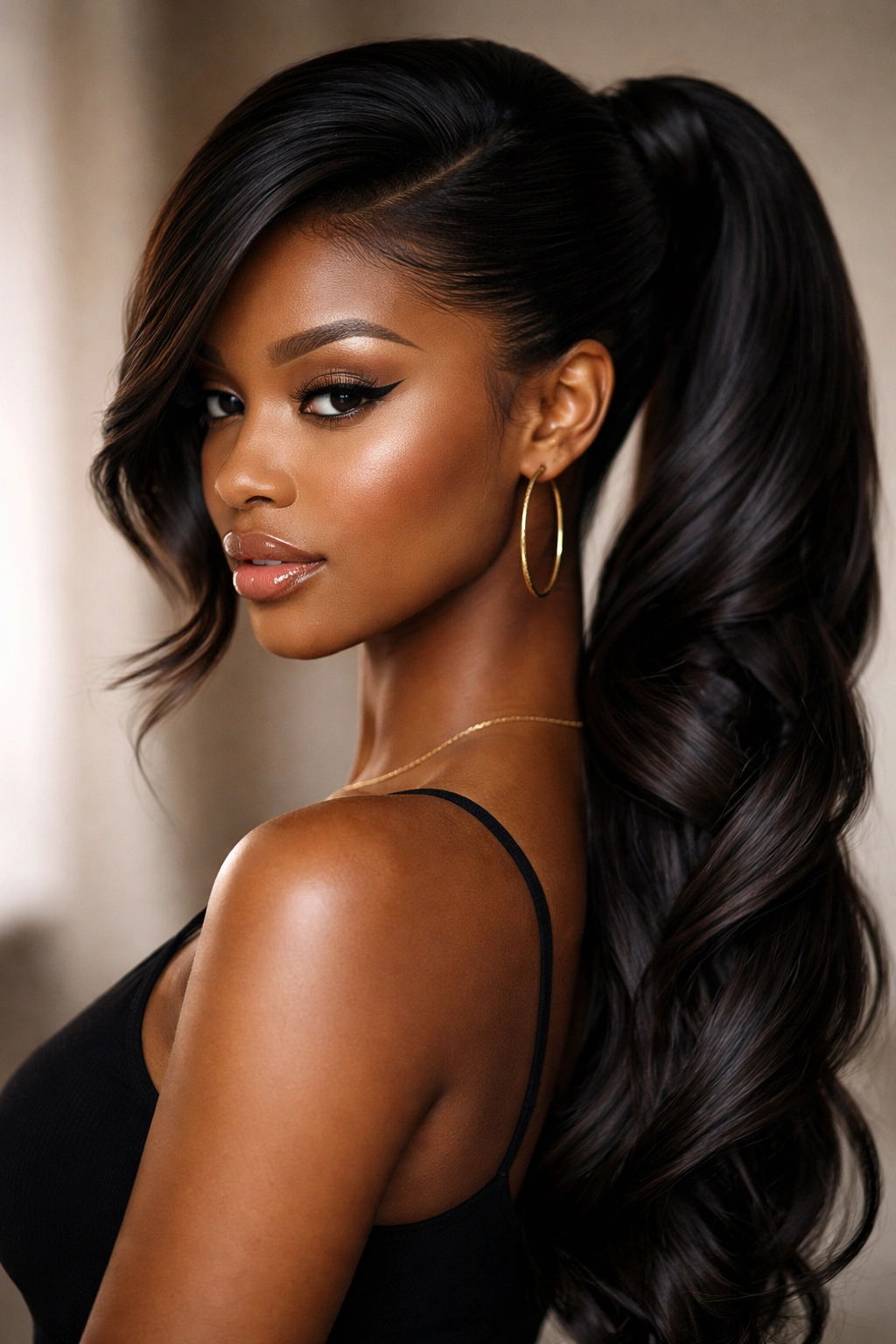
A heavy side-swoop gives the face a soft frame before the ponytail even starts. That’s useful if you like bangs, long layers, or just a front section that does a bit of flattering work around the cheekbone.
The swoop adds volume at the front because it pushes the hair diagonally across the head instead of straight back. Then the double weave keeps that diagonal line visible. On a plain ponytail, the swoop can vanish once the elastic goes in. Here, it stays part of the design.
I like this look best when the front piece is blow-dried over a round brush and cooled in place before it gets pinned. That helps the curve stay lifted instead of collapsing onto the forehead. If the section is too thick, though, the whole thing can start to swallow your face. So keep the swoop generous, not massive.
This is one of those styles that can rescue a haircut with long front layers. The layers don’t have to fight the ponytail. They get to become the ponytail.
12. The Sculpted Blowout Double Weave Ponytail
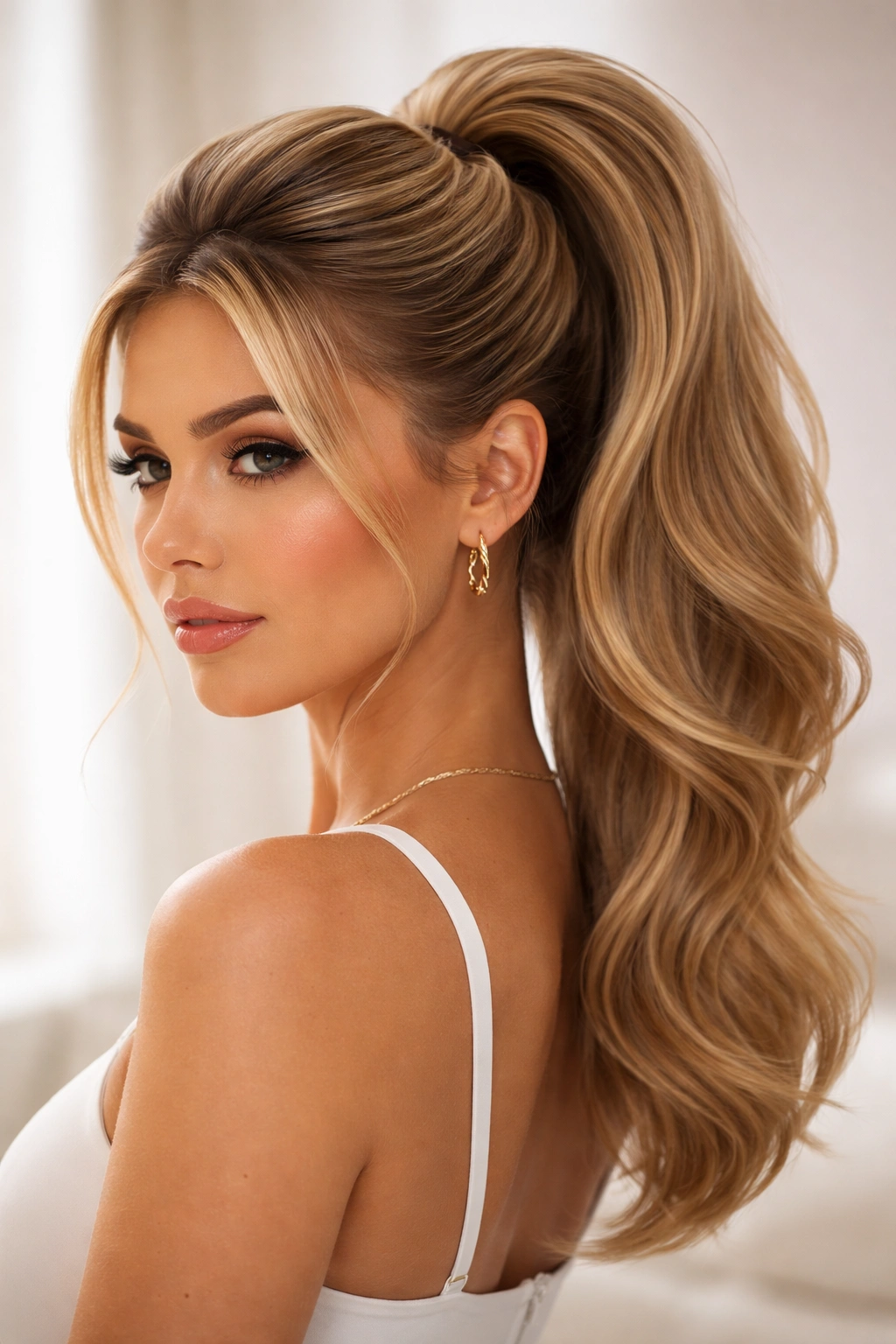
A sculpted blowout ponytail is where the style stops being casual and starts looking expensive, even if it took very little time. The double weave base supports a full crown, and the lengths get a soft bend that makes the hair look airy instead of straight and narrow.
The real work happens before the ponytail goes in. Blow-dry the roots with lift, then use a round brush or large-barrel brush to give the front sections a gentle curve. A 1¼-inch curling iron or wand can add bend to the ponytail ends if your hair dries pin-straight. You do not need tight curls. You need shape.
A lot of people drown this style in product. Bad move. A light mousse at the roots, a smoothing cream through the top layer, and a flexible hairspray at the end is enough. Too much product makes the hair clump, and clumping kills the whole blowout effect.
The finish should move when you turn your head. If it sits like a helmet, you’ve gone too far.
13. The Wrapped-Extension Double Weave Ponytail
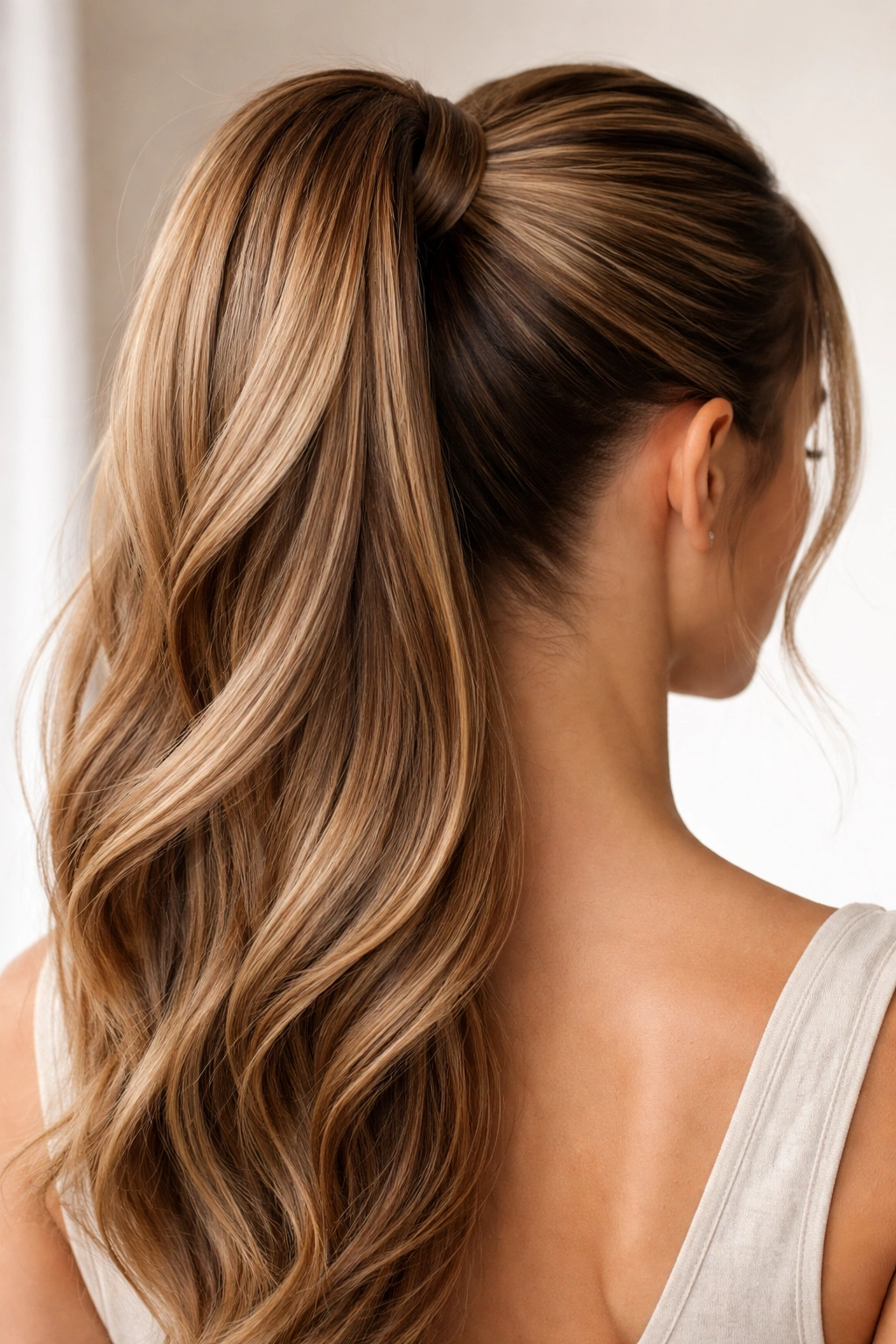
Extensions can make a double weave ponytail look huge, but only if the base is hidden well. That’s the part people rush. They clip in the hair, throw a ponytail over it, and then wonder why the tracks show. The weave should cover the attachment points, not sit next to them like an afterthought.
The best version starts with matching texture as closely as possible. Straight extensions with wavy natural hair usually look off, even if the color match is fine. If the hair is textured, blend the extension hair with a wave or curl pattern before it goes in. That makes the ponytail feel like one piece instead of a stack of parts.
- Place the extension wefts low enough that the top layer can cover them.
- Use the double weave to disguise the seam line across the crown.
- Secure the ponytail base with two pins crossing in an X if the hair feels heavy.
- Finish with a wrap strand around the elastic so the join disappears.
This one is for days when fullness is the whole point. Special events, photos, long nights out. It holds the line.
14. The Sporty Double Weave Ponytail
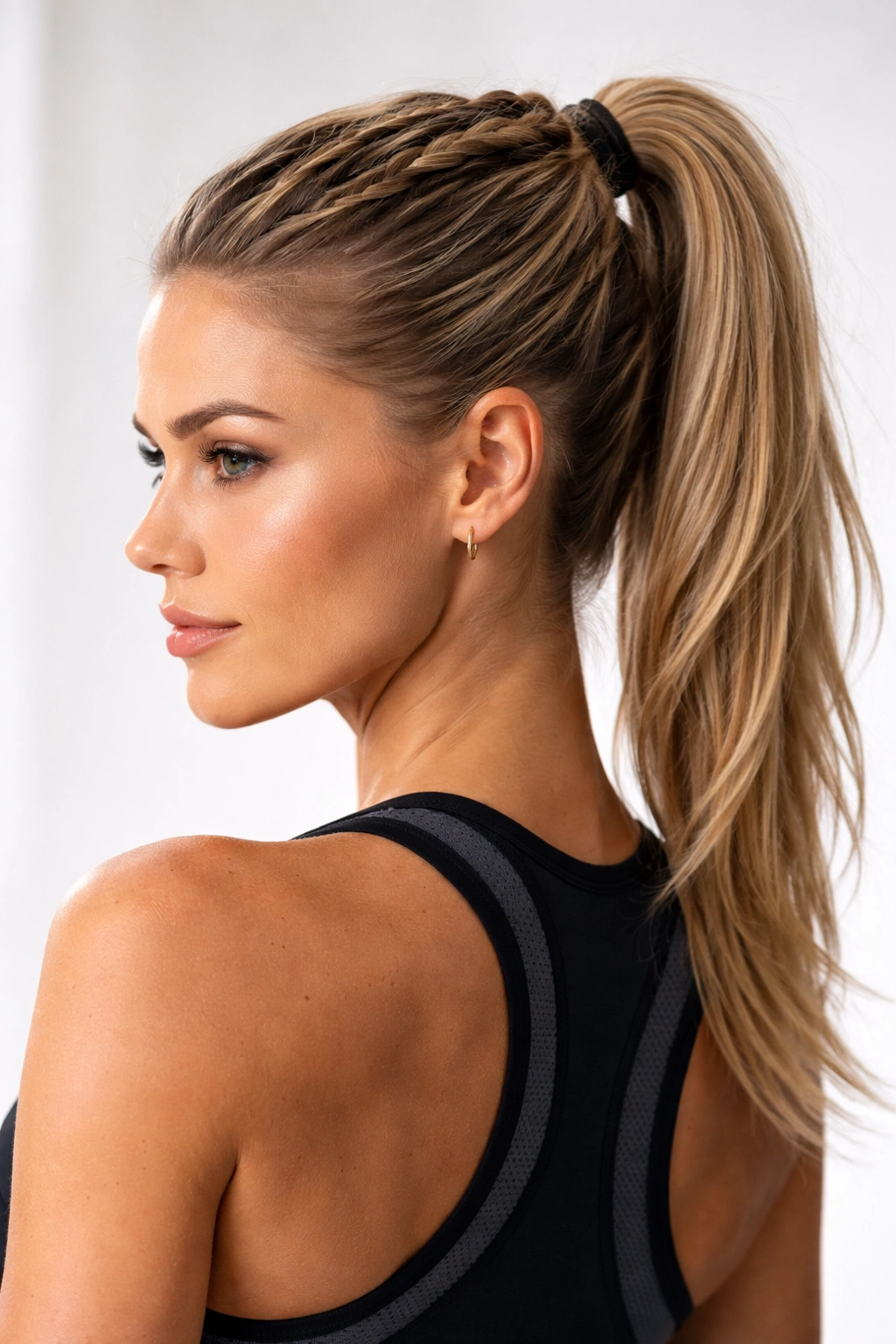
Can a ponytail be secure and still look full? Yes. Keep the weave tight, the crown lifted, and the tie placement clean. That’s the whole job here.
The sporty version works because it stays put. It’s the style you wear for a brisk walk, a training session, or one of those long days when you need your hair off your face and don’t want to fuss with it again. The double weave adds shape at the front, so it still feels styled even when the rest of the look is practical.
Skip heavy oils and glossy serums on this one. They make the hair slide. A bit of dry shampoo at the roots and a small amount of leave-in on the ends is enough. If your hair is fine, use a second elastic underneath the first one for extra hold. Small move. Big payoff.
This is not the prettiest version in the set, and that’s fine. It’s the one that behaves.
15. The Soft Romantic Double Weave Ponytail
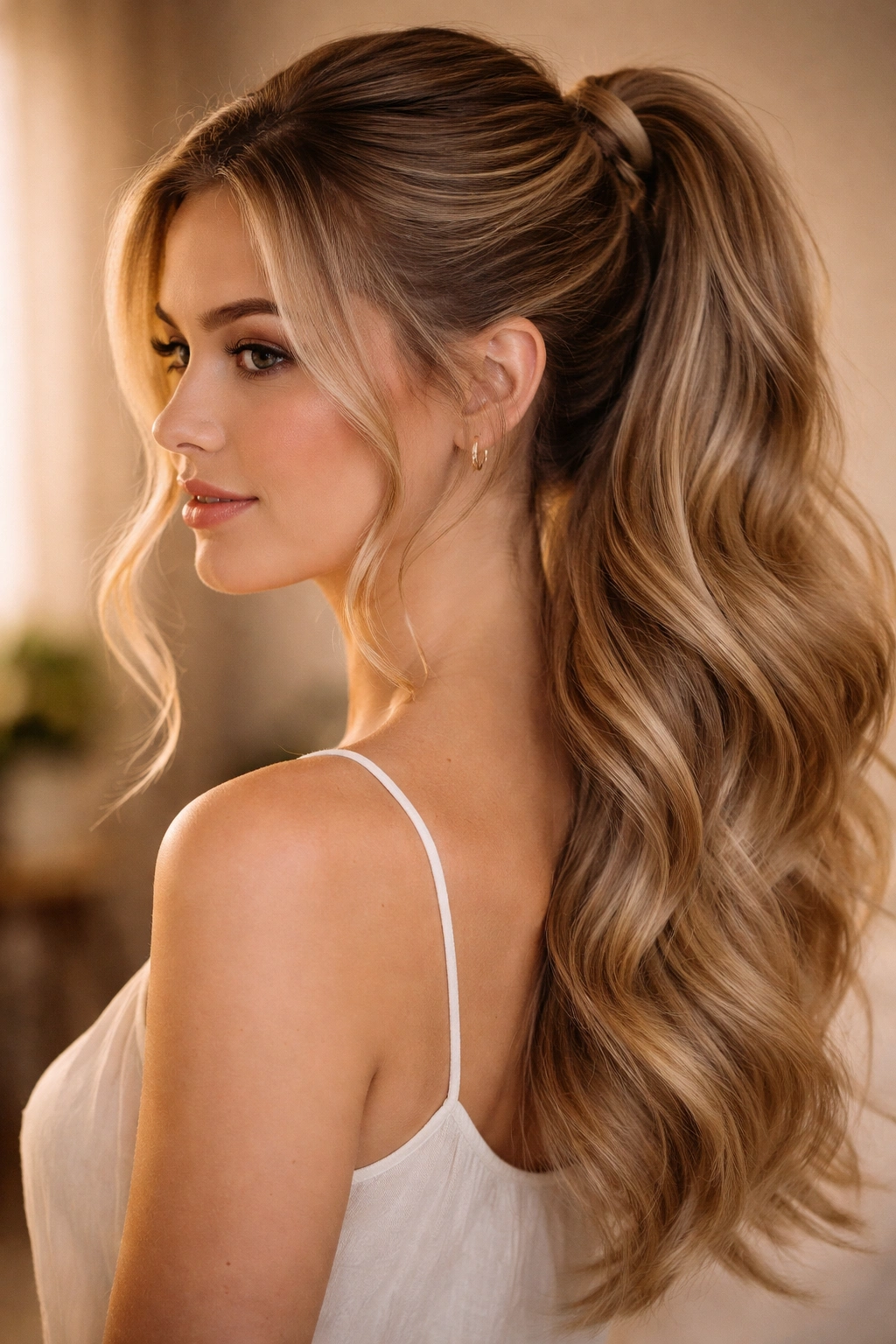
This is the version that looks like you meant to spend a little time on your hair, even when you didn’t. The weave stays loose enough to feel soft, the front pieces frame the face, and the ponytail gets brushed-out waves that make the whole thing feel gentler.
A 1-inch wand works well here. Curl sections away from the face, let them cool, then brush them out with your fingers. That step matters. Brushed-out waves make the ponytail feel fuller because the hair expands a little without losing its bend.
Leave a few face-framing strands out if your haircut allows it. Not too many. Just enough to break the line at the cheek and jaw. If you pin every piece back, the style loses its softness fast.
A light mist of hairspray from about 10 inches away is enough. Closer than that, and the style starts to feel sticky. You want touchable hair, not shellacked hair.
16. The Accessory-Threaded Double Weave Ponytail
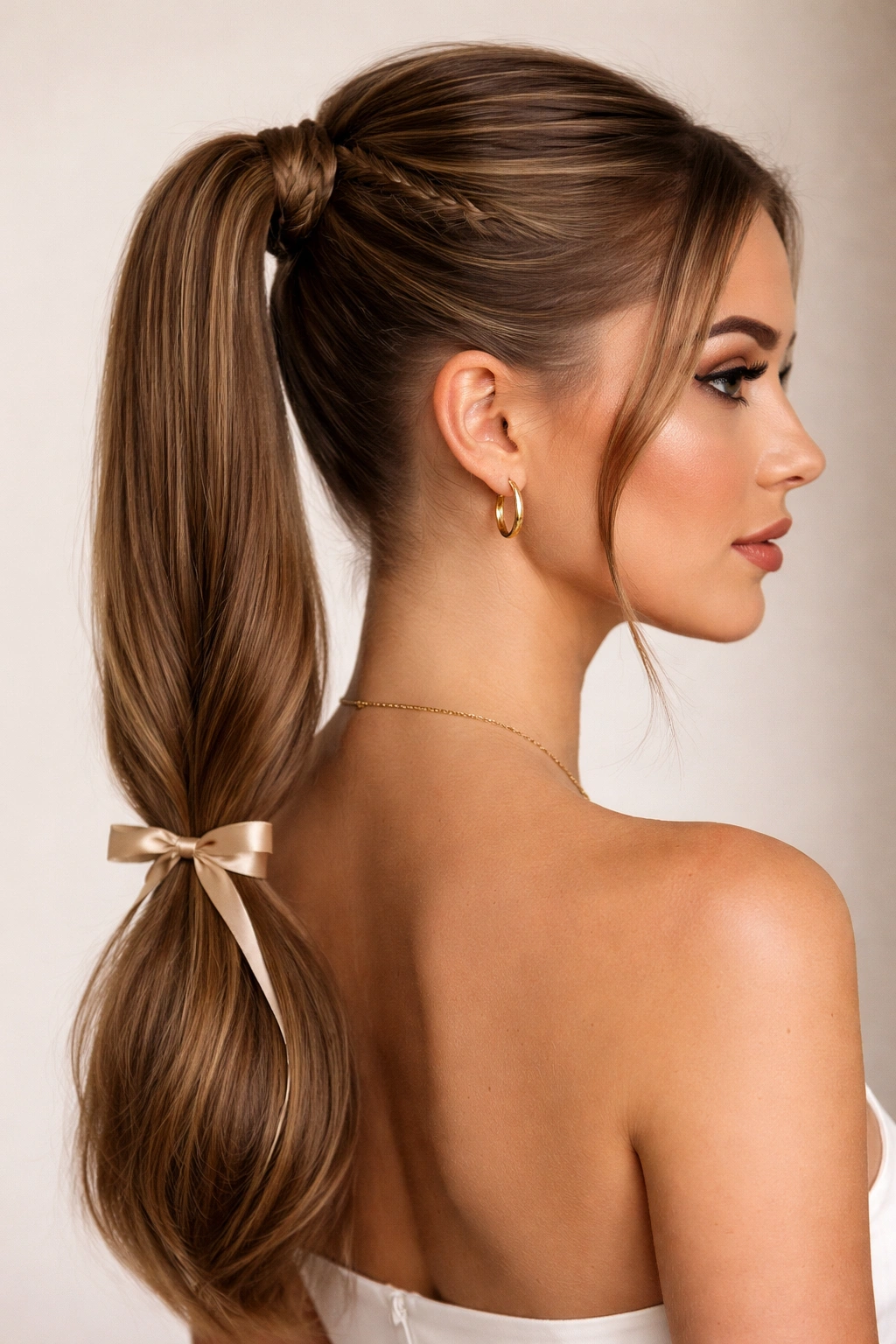
A ribbon, a velvet strip, or a slim leather cord can change the entire mood of a double weave ponytail. The accessory does not need to do much. It just needs to echo the weave and give the base one more layer of detail.
Unlike a plain ponytail, this version benefits from having something visible at the tie. That can be a cuff, a tied ribbon, or even a couple of slim pearl pins placed just above the elastic. The point is not to pile on decoration. The point is to make the woven structure stand out.
I’d keep the accessory to one material only. Ribbon plus pins plus a cuff starts to feel crowded. One clean accent usually looks richer than three small ones fighting for attention. If the hair itself is textured, choose something matte. If the hair is sleek, a satin finish or metal cuff works well.
This is the style I’d pick for a party look that needs personality without going full costume.
17. The Faux-Hawk Double Weave Ponytail
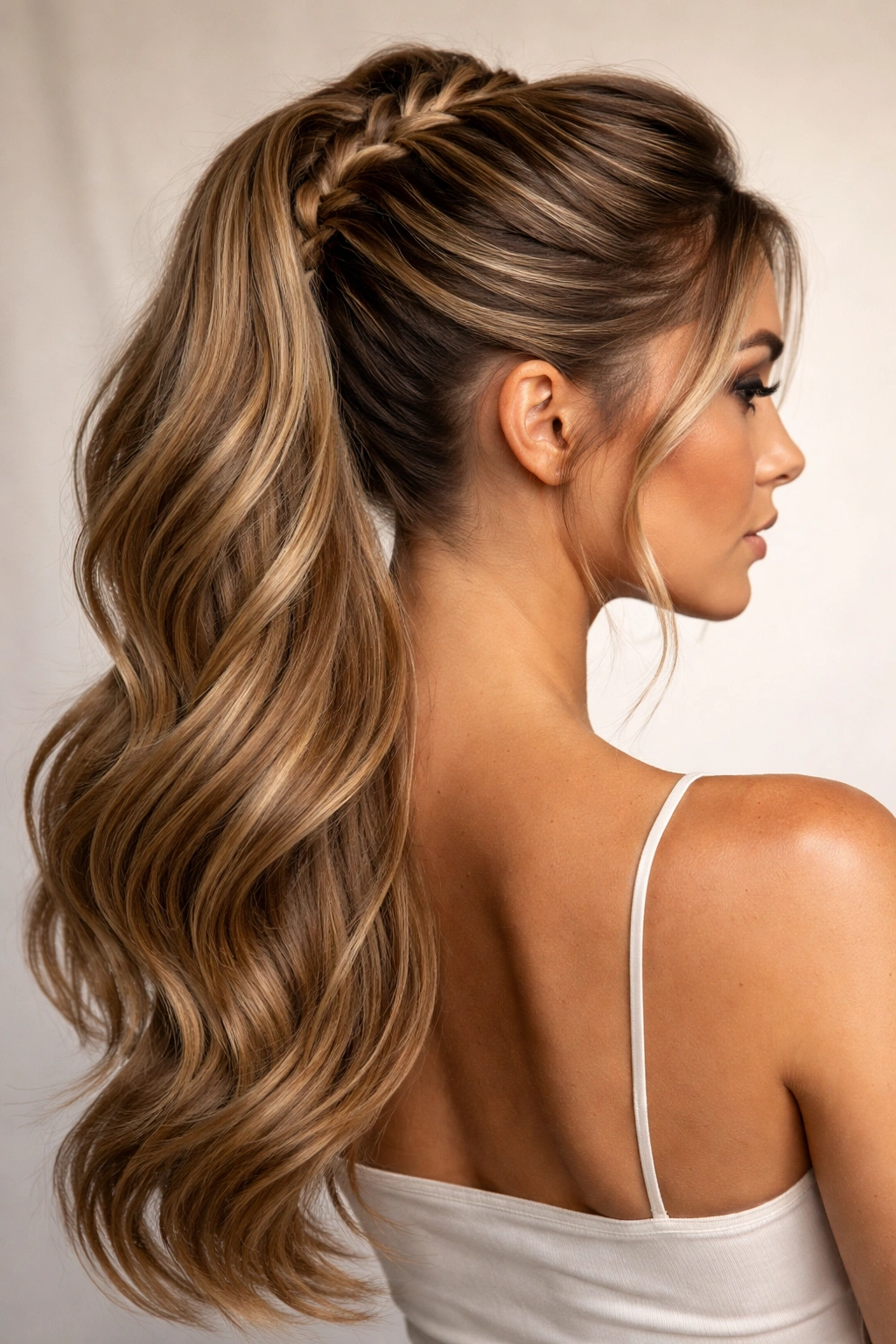
If the crown falls flat no matter what you do, push the sides down and build height through the middle. That’s the logic behind a faux-hawk double weave ponytail, and it works better than people expect.
The two woven sections angle toward the center instead of moving straight back, which creates a ridge of lift down the top of the head. Then the ponytail gathers beneath that ridge, so the whole style reads taller and fuller. It’s especially good for fine hair, short layers, or hair that needs a stronger shape near the root.
What to watch for
- Keep the side sections smooth so the middle lift stands out.
- Use a small amount of texturizing spray at the roots, not all over.
- Pin the weave into place before you secure the ponytail.
- Avoid making the center ridge too wide, or the style turns bulky fast.
This one has edge. Not in a loud way. Just enough to feel sharper than the standard ponytail.
18. The Wavy Double Weave Ponytail for Layered Hair
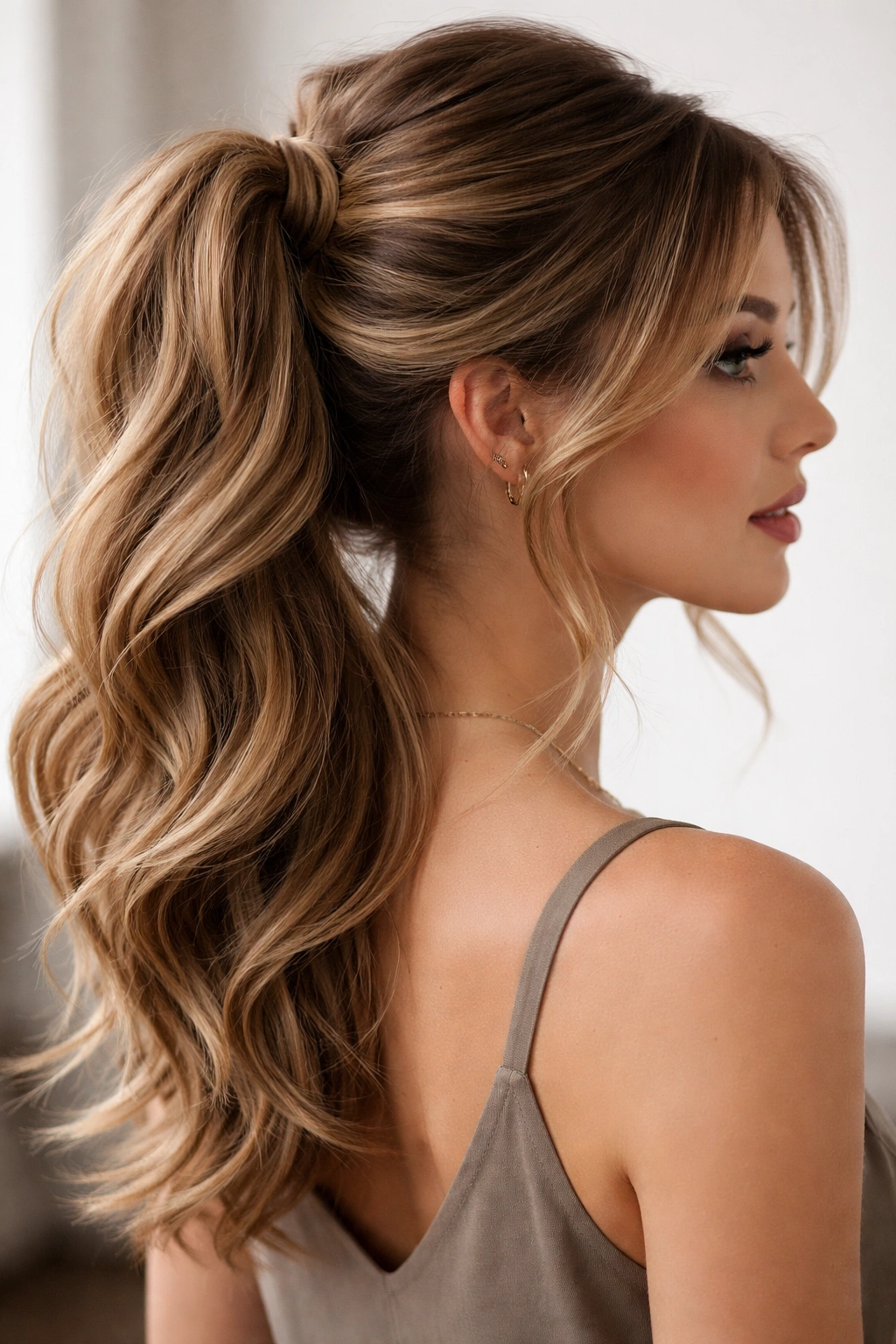
Layered hair tends to escape. That’s the problem, and the reason this style exists. The double weave holds the front in place, while the waves keep the shorter pieces from hanging awkwardly around the face or neck.
The trick is to work with the layers instead of trying to trap every last one. Curl the loose lengths into soft waves, then let a few shorter pieces fall where they want. The style looks fuller when it has that little bit of movement. If you force every layer back, the hair can end up looking thinner, not neater.
This ponytail is also friendly to people with medium-density hair. Layers can be a pain when you want a sleek finish, but they’re useful here because they create internal texture. The woven sections help contain the top, and the waves give the tail a thicker outline.
A light mousse before drying and a small clip while the front pieces cool can make a big difference. Nothing fancy. Just enough hold to keep the layers from flaring out in the wrong places.
19. The Everyday Mid-Height Double Weave Ponytail
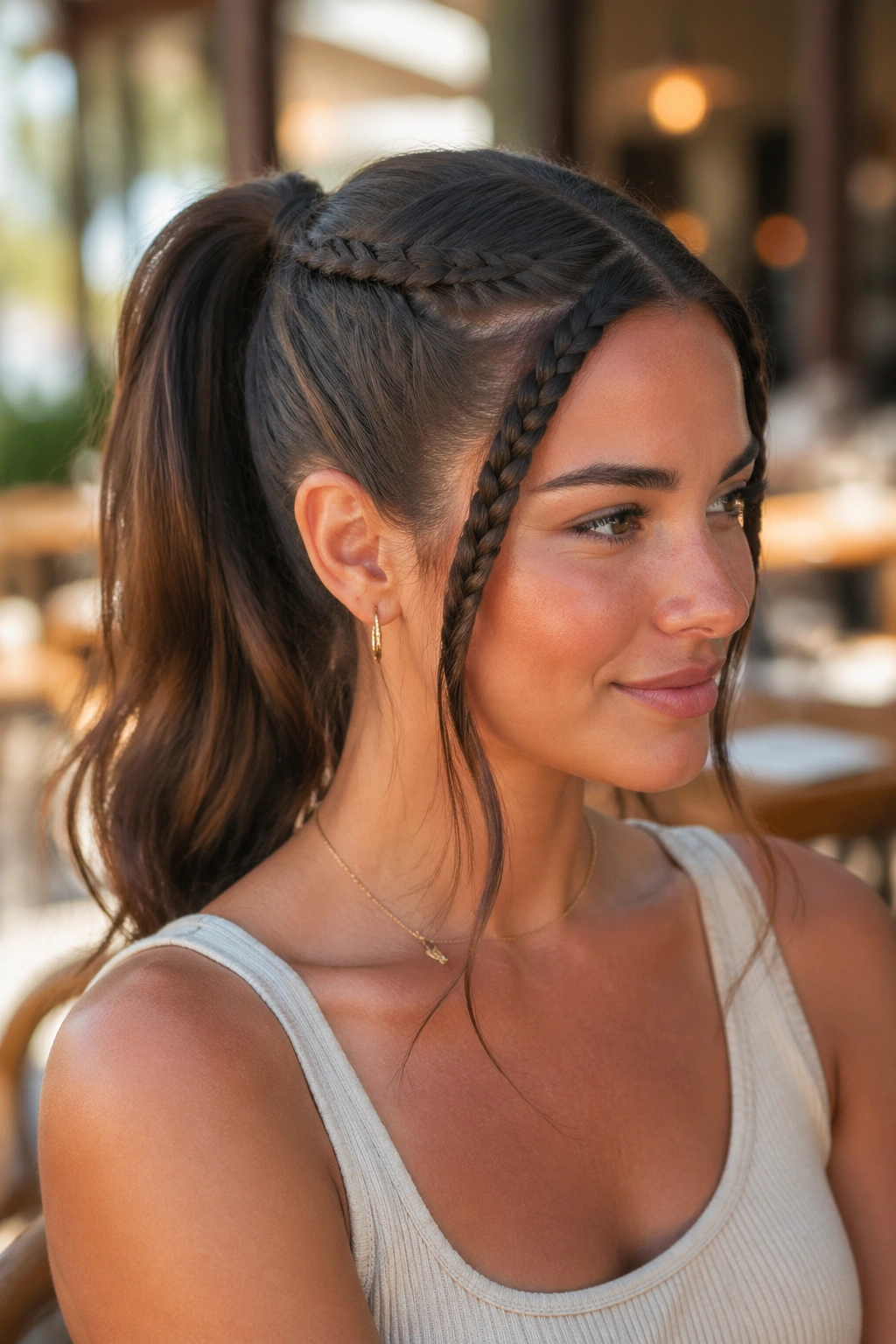
This is the one I keep coming back to. It sits between polished and easy, which is exactly where a lot of real-life hair needs to live. The ponytail lands at mid-height, the double weave gives the front a fuller shape, and the whole style works on a school run, at a desk, or at dinner without needing a touch-up every hour.
Mid-height placement is forgiving. High ponytails can feel too sharp, low ponytails can drag the face down a bit, and this middle zone tends to flatter most hair lengths. If your hair is fine, the weave adds body. If it’s thick, the shape keeps the ponytail from spreading out too wide. If it’s wavy, the style catches the texture instead of flattening it.
I’d keep this version simple: clean part, two woven front sections, one wrapped elastic, and a light mist of hairspray. That’s enough. When a style already has good structure, more product usually makes it worse, not better.
If you only wear one double weave ponytail on repeat, make it this one. It doesn’t ask for a perfect hair day, and it does a good job anyway.
The styles that make the strongest impression usually are not the loudest ones. They’re the ones with a clean base, a little lift, and a finish that looks thicker because the shape was built well from the start.
And that is the real appeal of a double weave ponytail: it gives you room to choose. Sleek, soft, sporty, romantic, high, low, twisted, wrapped — the same basic idea bends to fit the day instead of forcing your hair into one fixed look.
