

Mid ponytails on natural hair have a sweet spot that a lot of styles miss. They sit high enough to feel lifted, but not so high that your scalp starts complaining by noon. That middle placement also gives you room to play with texture, parting, braids, twists, curls, and accessories without making the whole look feel fussy.
And yes, placement matters more than people admit. Too low, and the style can slip into “I needed my hair out of my face.” Too high, and you’re suddenly dealing with tension at the hairline, especially if your edges are delicate or your hair is stretched in only a few spots. Somewhere around the middle of the head — usually between the top of the ear and the cheekbone line — the style starts to behave.
What makes mid ponytails so useful on natural hair is the range. A silk-press-like finish can look sharp and formal. A puffed-up version can feel soft and easy. Braids, twists, locs, wash-and-go curls, blowouts, and extensions all work here, and they each give the ponytail a different personality. That’s the fun part.
Some of these styles are tidy enough for a wedding. Some are plain old practical. A few are the kind you put on when you want your hair to look intentional without spending half the morning fussing with it. The first one is the cleanest place to start.
1. Sleek Center-Part Mid Ponytail
A center part gives a mid ponytail instant shape. It draws a straight line through the middle of the head, which makes the whole style look neat even before you touch the ponytail itself. On natural hair, this works best when the roots are stretched a bit, because tight coils can fight a perfect part if they’re packed too densely.
Why It Reads So Cleanly
The center part does a lot of quiet work. It frames the face evenly, keeps the style balanced, and makes the ponytail sit like it belongs there instead of looking tacked on at the last second. A small amount of gel at the roots and a soft brush are usually enough.
- Use a tail comb to draw the part from forehead to crown.
- Smooth the roots with a firm gel, not a heavy grease.
- Wrap the ponytail base with a small section of hair for a finished look.
- Keep the elastic at mid-head, not at the very crown.
Tip: If your hairline is sensitive, brush in short strokes. Long, hard pulls are not worth it.
2. Side-Part Sculpted Mid Ponytail
A side part changes the mood fast. The style feels softer, a little more flattering around the forehead, and less severe than a dead-center line. If your natural hair has layers, this is one of the easiest ways to make those layers work for you instead of sticking out in awkward places.
The trick is to make the part deep enough to matter, but not so deep that the ponytail starts sagging to one side. I like a part that begins just above the arch of the brow and arcs back toward the crown. That shape gives the front a bit of lift and keeps the ponytail centered at the back.
This version is especially good if you like a brushed, polished finish but do not want the helmet look some sleek styles can give. A little volume near the roots keeps it human. Too much flattening, and the style loses its shape.
3. Curly Wash-and-Go Mid Ponytail
Why do some ponytails look flat while others stay springy and lively? Texture. A wash-and-go mid ponytail keeps the curl pattern visible, which makes the style feel fuller even when the ponytail itself is small.
This works especially well on hair that already likes definition. Gather the hair loosely with a satin scrunchie or a covered elastic so you do not crush the curl clumps. Leave the ponytail high enough to show the shape, but low enough that the front stays controlled.
How to Set the Curls
Use gel or curl cream only where you need hold. The whole head does not need to feel coated. If the perimeter is still wet, wait a little longer before tying it back, because damp roots can puff unevenly and make the ponytail look lopsided.
A wash-and-go ponytail is the style I reach for when I want bounce without heat. It is also forgiving. If one curl goes rogue, it just looks textured.
4. Stretched Puff Mid Ponytail
A stretched puff sits somewhere between a full afro puff and a sleek ponytail. It keeps the natural fullness, but the mid placement gives the style structure. The result feels soft at the ends and tidy at the roots, which is a nice balance when you do not want the whole head compressed.
This version works best when the hair has been banded, blow-dried lightly, or set in large twists so it has some stretch. The goal is not smoothness. The goal is lift. You want the hair to look airy, not packed down.
A few things help this style hold its shape:
- Choose a snag-free elastic that can stretch wide.
- Fluff the puff after securing it so the silhouette opens up.
- Leave a little volume at the crown instead of brushing everything flat.
- Add a wrapped base if you want it to look more finished.
It is the kind of style that looks casual in the best way. Not careless. Just easy.
5. Twist-Out Mid Ponytail
A twist-out ponytail gives you texture that looks planned without being stiff. The twists leave a soft pattern in the hair, and when you gather them at mid height, the ponytail keeps that cloud-like movement. It is one of those styles that looks especially good on 4A through 4C hair, where the twist pattern can show up clearly.
The important part is dryness. A twist-out that is even a little damp will frizz fast once you pull it back. Let the twist-out set fully, separate it gently, and only then gather the hair into the ponytail. If you rush that step, the style loses definition before lunch.
I like this version when the ends need a break from constant manipulation. It still looks styled, but the hair is not flattened into submission. That matters.
6. Braided-Base Mid Ponytail
Unlike a fully sleek ponytail, a braided base gives you grip. That grip is useful on natural hair because it helps the ponytail stay where you placed it without needing a mountain of gel. A simple braid on each side, or a few straight-back braids into the center, makes the base feel secure.
This style is a good pick if your hair slips easily from elastics. It also works well when you want to tuck rough roots without over-brushing them. Once the braids meet, the ponytail can be curly, blown out, twisted, or even left in braids if you want the whole look to stay protective.
Best for: people who want shape without too much smoothing.
Best with: medium to long hair, or added extensions if you want a fuller ponytail.
Best feature: it holds up better than a plain brushed-back style.
7. Flat-Twist Crown Mid Ponytail
The front of this style does the talking. Flat twists across the crown create a neat path back to the ponytail, and the texture keeps the look from feeling too severe. On natural hair, flat twists are kinder than repeated brushing, especially if you prefer styles that do not put all the stress in one spot.
A clean flat-twist crown works best when the sections are even. Tiny sections give a more detailed look. Larger sections feel softer and faster to do. Either way, the twists should lie close to the scalp without feeling tight. If they pull, they are too tight.
Where the Ponytail Should Sit
Right at mid-head, not high on the crown. That placement keeps the twist pattern visible and stops the style from ballooning upward. The ponytail can be puffed, braided, or curly once the twists are secured. I like the mix of structure up front and looseness in the back. It feels balanced.
8. Cornrow Feed-In Mid Ponytail
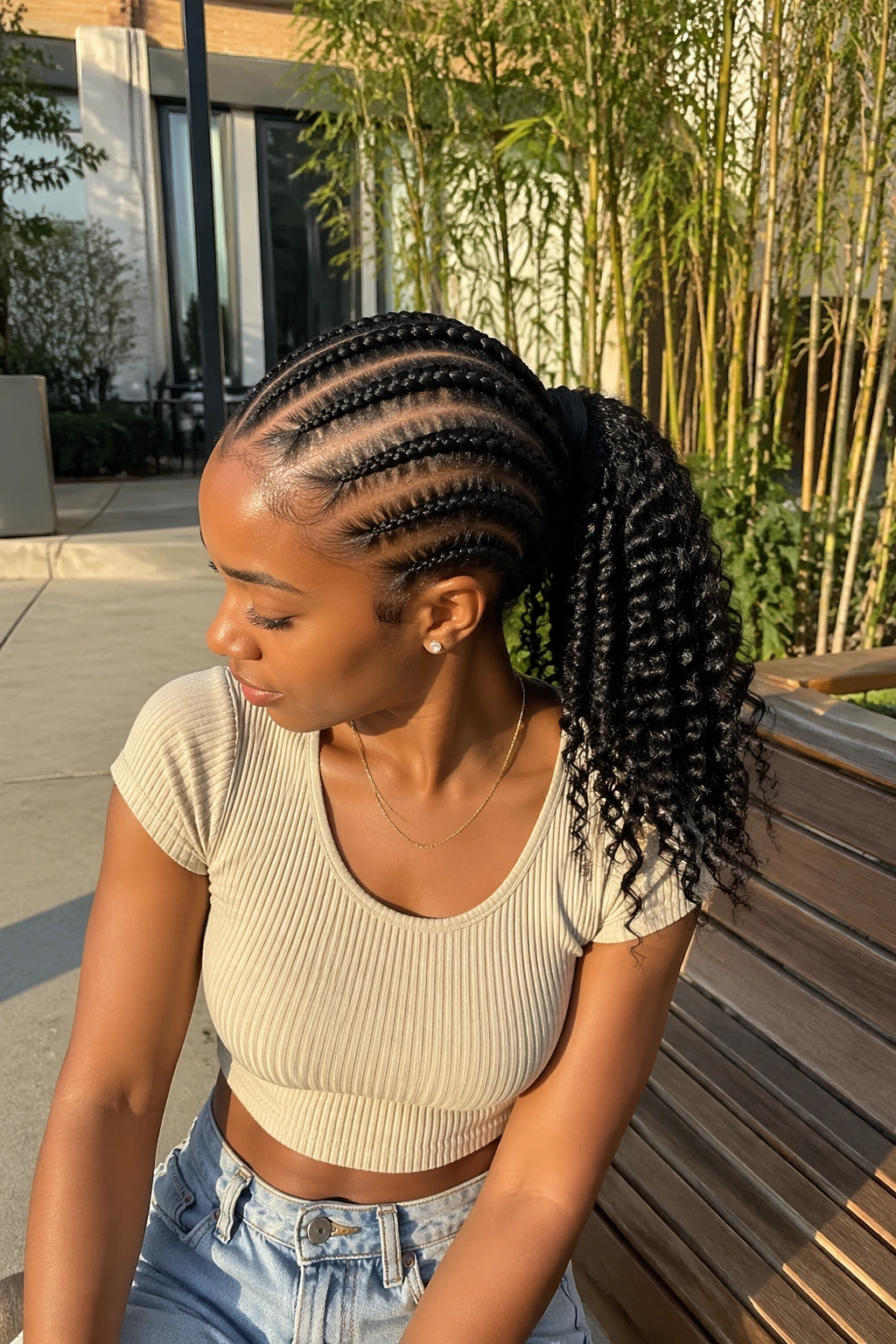
A feed-in cornrow ponytail is one of the strongest choices if you want a style that can last and still look sharp. The braids start small, then gradually add hair, which creates a smooth, neat base. That gradual build matters because it keeps the front from looking bulky or stiff.
This style does ask for a careful hand. Cornrows should feel snug, not sharp. If you feel pulling behind the ears or at the temples, that is your sign to ease up. Natural hair does not need brute force to stay in place.
The ponytail itself can be a bundle of braids, curly extensions, or one thick braided tail. I like it best when the finish matches the energy of the base. A neat base with a wild, fluffy ponytail can look fantastic, but only if the contrast is intentional.
9. Bubble Mid Ponytail
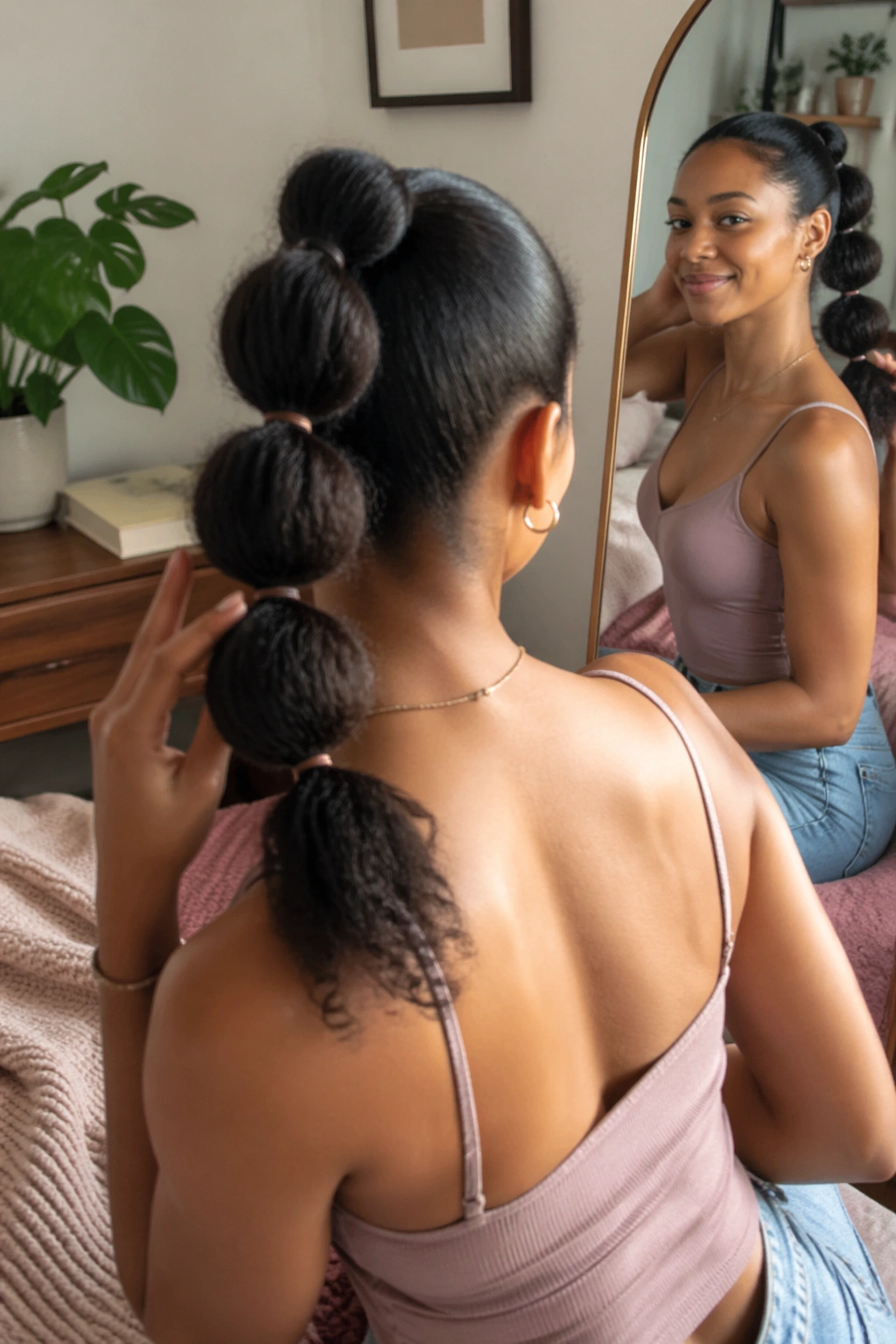
A bubble ponytail turns a basic shape into something more graphic. You start with one mid ponytail, then add elastic bands down the length at even intervals so the hair puffs into round sections. On natural hair, that can be your own texture or a combination of your hair and added length.
If your hair tends to frizz after a few hours, the bubble shape is forgiving. Each section holds its own. You do not need every strand to behave perfectly. In fact, a little texture makes the style look richer.
A good spacing pattern is every 2 to 3 inches, depending on the length of the ponytail. Use clear elastics or ones wrapped in fabric so they do not snag. Then gently tug each section to round it out. Not too hard. You want bubbles, not stress.
10. Rope-Twist Mid Ponytail
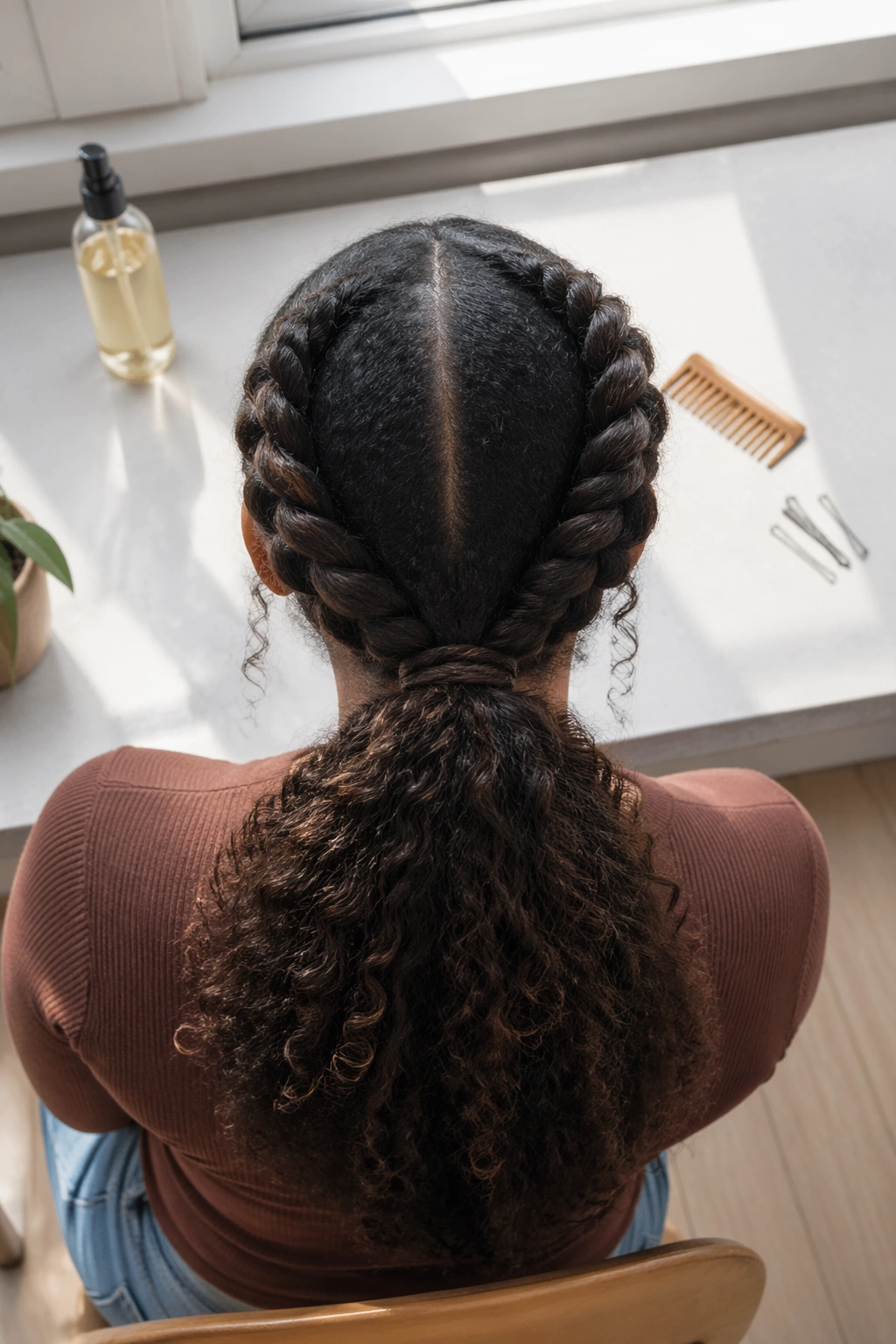
Want polish without heat? A rope-twist mid ponytail is a smart answer. Two sections of hair are twisted around each other until they form a tight, cable-like rope, and that texture looks clean while still showing off natural hair.
This style works well on stretched hair or on blow-dried hair with a bit of grip. If the hair is too silky, the twist can unravel. If it is too dry, it can snag. Somewhere in the middle is the sweet spot. A light leave-in or a tiny bit of styling cream on the lengths helps.
The rope twist can be one thick ponytail or several rope-twisted pieces gathered together. I prefer the thicker version when I want the style to read from across the room. It looks deliberate. It also holds better than people expect.
11. Scarf-Wrapped Mid Ponytail
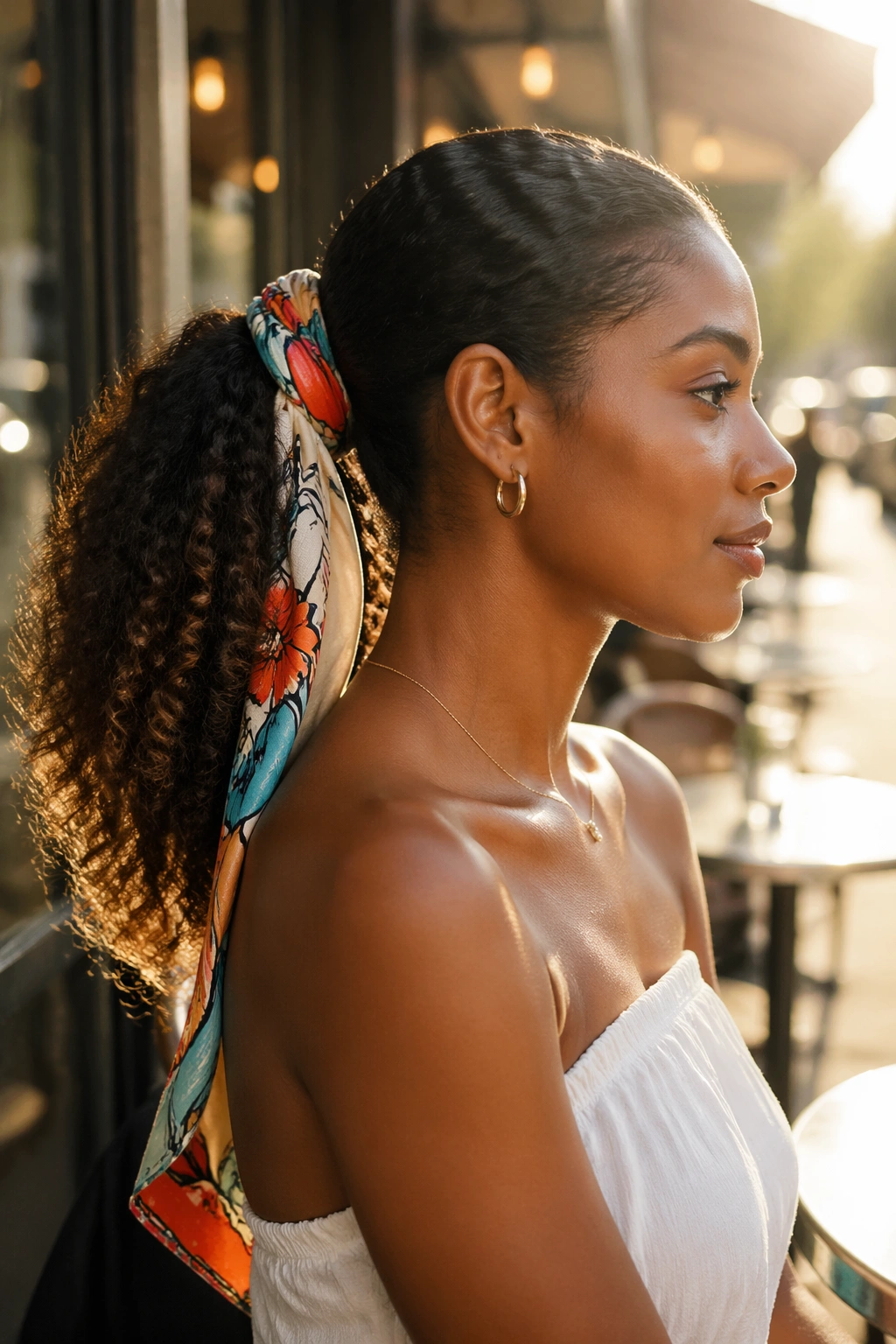
A scarf changes the whole story. Tie one around the base of a mid ponytail and the style suddenly feels more dressed up, more personal, and a little less predictable. On natural hair, that scarf can also hide an elastic that would otherwise ruin the shape.
Silk and satin scarves are easiest on the hair because they slide less and do not tug at the strands. Cotton can work, but it catches more. If the ponytail is sleek, keep the scarf neat and narrow. If the ponytail is fluffy or curly, a wider scarf makes more sense.
The best part is how fast this changes a style you already know. Same ponytail. Different attitude. That is often enough when you want to look put together without starting from scratch.
12. Faux Ponytail Extension Mid Ponytail
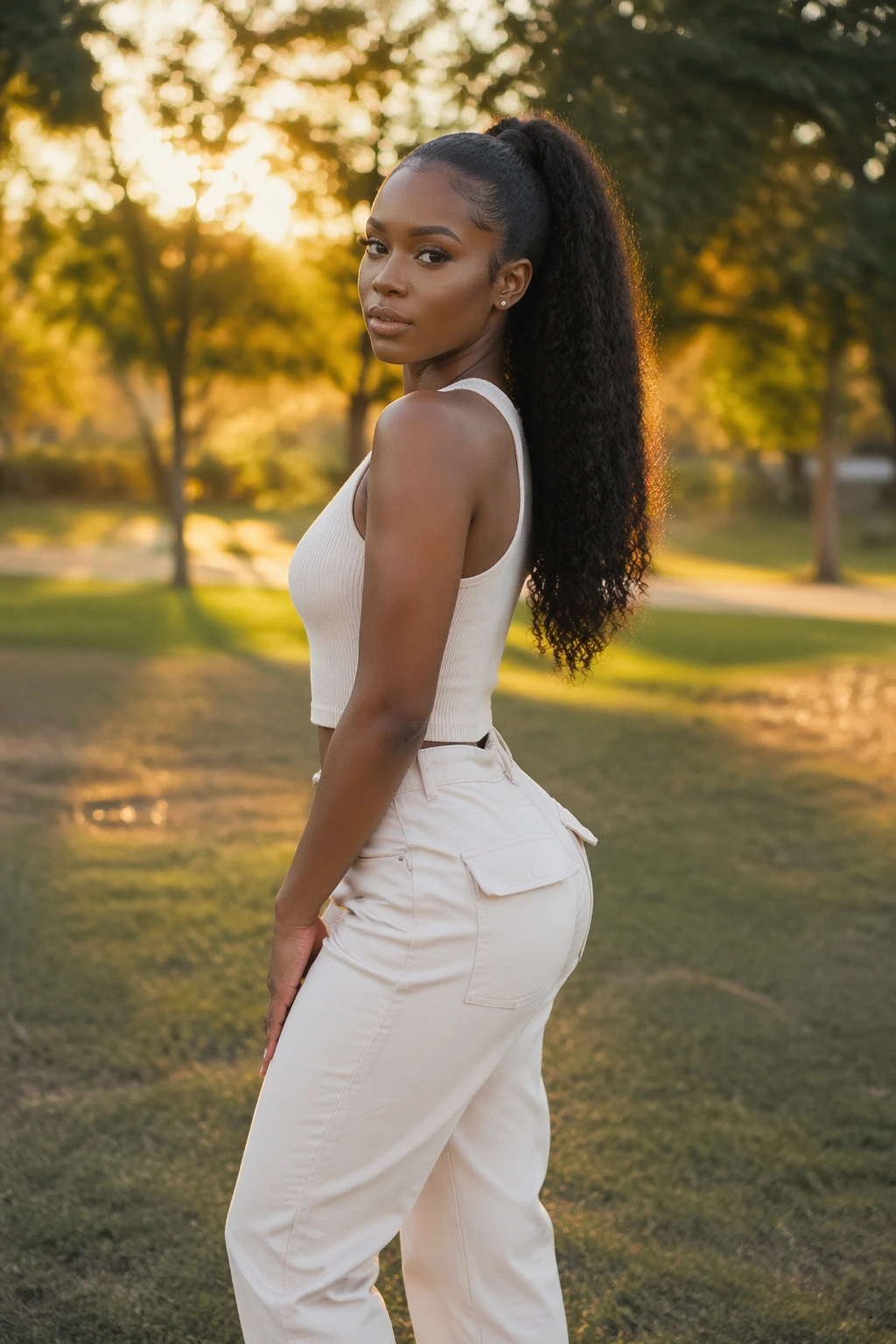
A faux ponytail extension is useful when your own hair is short, when you want extra length, or when you want a fuller silhouette without waiting for your hair to do all the heavy lifting. The natural hair can be tucked into a bun, braided flat, or secured into a small base, then the ponytail piece is attached over it.
The base matters more than people think. If the foundation is loose, the extension pulls in odd directions. A flat base keeps the ponytail sitting in the middle of the head instead of drooping down. I prefer a base that feels compact but not rock-hard.
Match the texture as closely as you can. A curly faux ponytail on kinky roots can look beautiful if the curls are intentional. A mismatched texture, though, can look disconnected. The closer the blend, the better the style reads.
13. Bantu Knot-Out Mid Ponytail
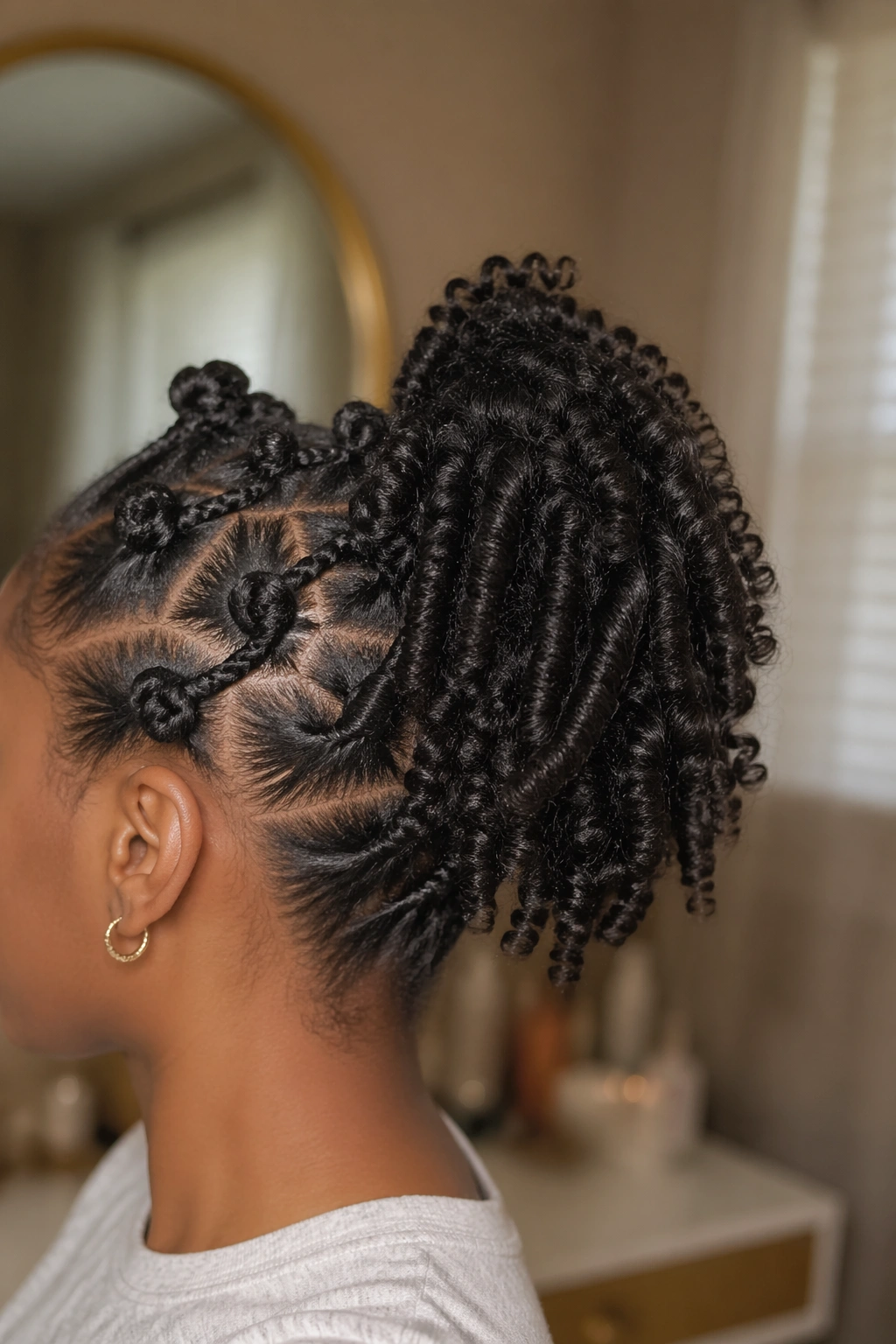
A Bantu knot-out ponytail has a different kind of texture. The curls are springier, rounder, and often more defined than a twist-out. That makes the ponytail feel lively even when it sits at a modest mid height.
The knots need to dry fully before they come down. Half-dry Bantu knots are a recipe for frizz and uneven shape. Once they are out, separate the curls carefully, then gather the hair loosely so the pattern stays visible. Too much brushing kills the look.
What Makes It Stand Out
The finish is bouncy. Not fluffy in the same way a puff is fluffy, but springy and shaped. If you like hair that moves when you move, this one earns its place. It is also a nice choice when your natural curl pattern needs a little help showing up.
14. Blowout Mid Ponytail
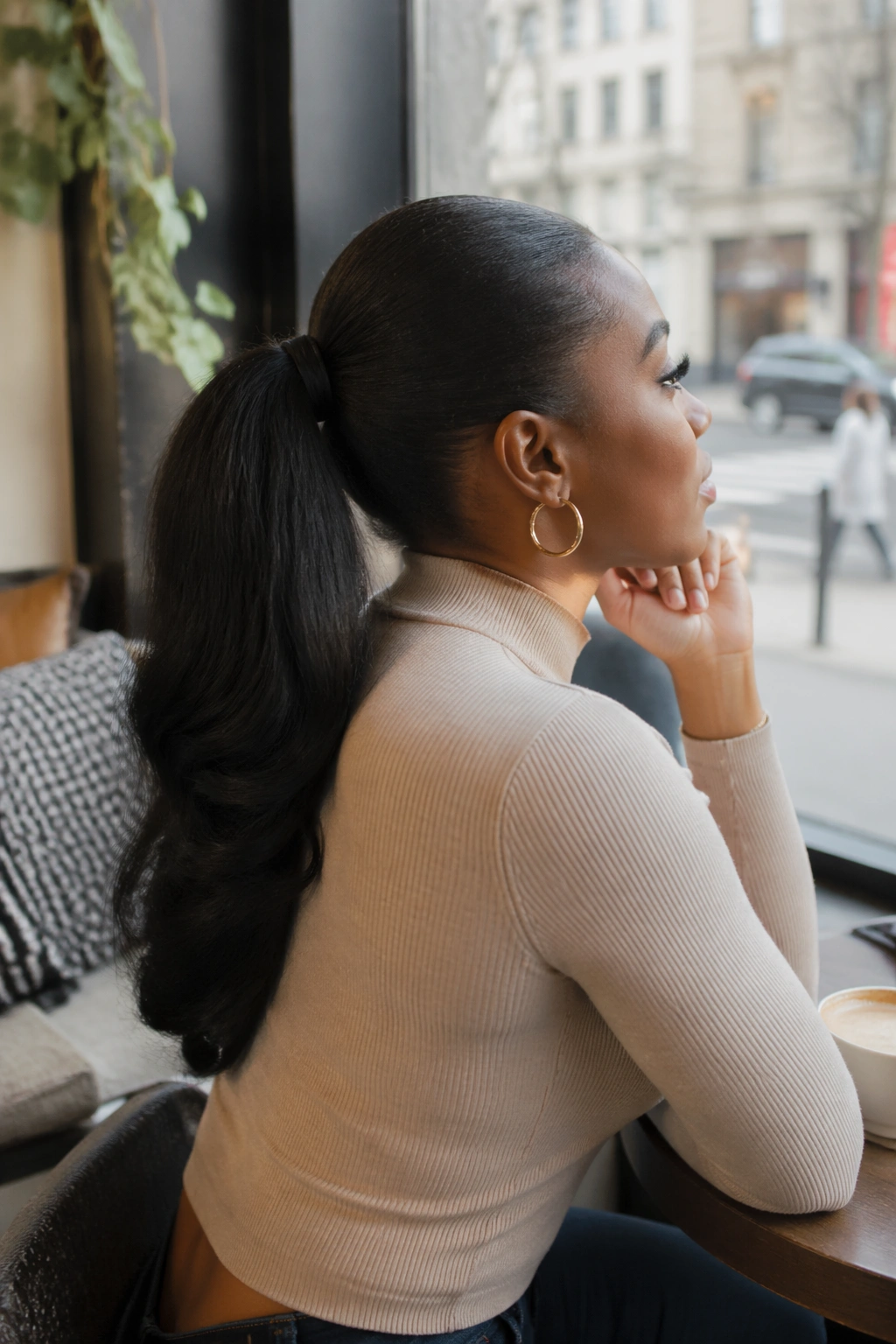
A blowout mid ponytail gives natural hair a longer-looking silhouette without flattening it completely. The texture is stretched, the ponytail is smoother, and the whole style feels a bit cleaner than a puff or twist-out. It is a good middle ground for people who want body but not too much bulk.
You do not need a bone-straight finish here. In fact, a little texture is part of the charm. A blowout that still has some kink or wave looks softer and feels more like natural hair. A light heat protectant and a controlled stretch make a bigger difference than trying to chase perfect smoothness.
I like this style when I want the ponytail to swing. It moves differently than a dense puff. There’s more drape, more length, and less width, which can be flattering on rounder faces or on styles with bold earrings.
15. Locs Gathered Into a Mid Ponytail
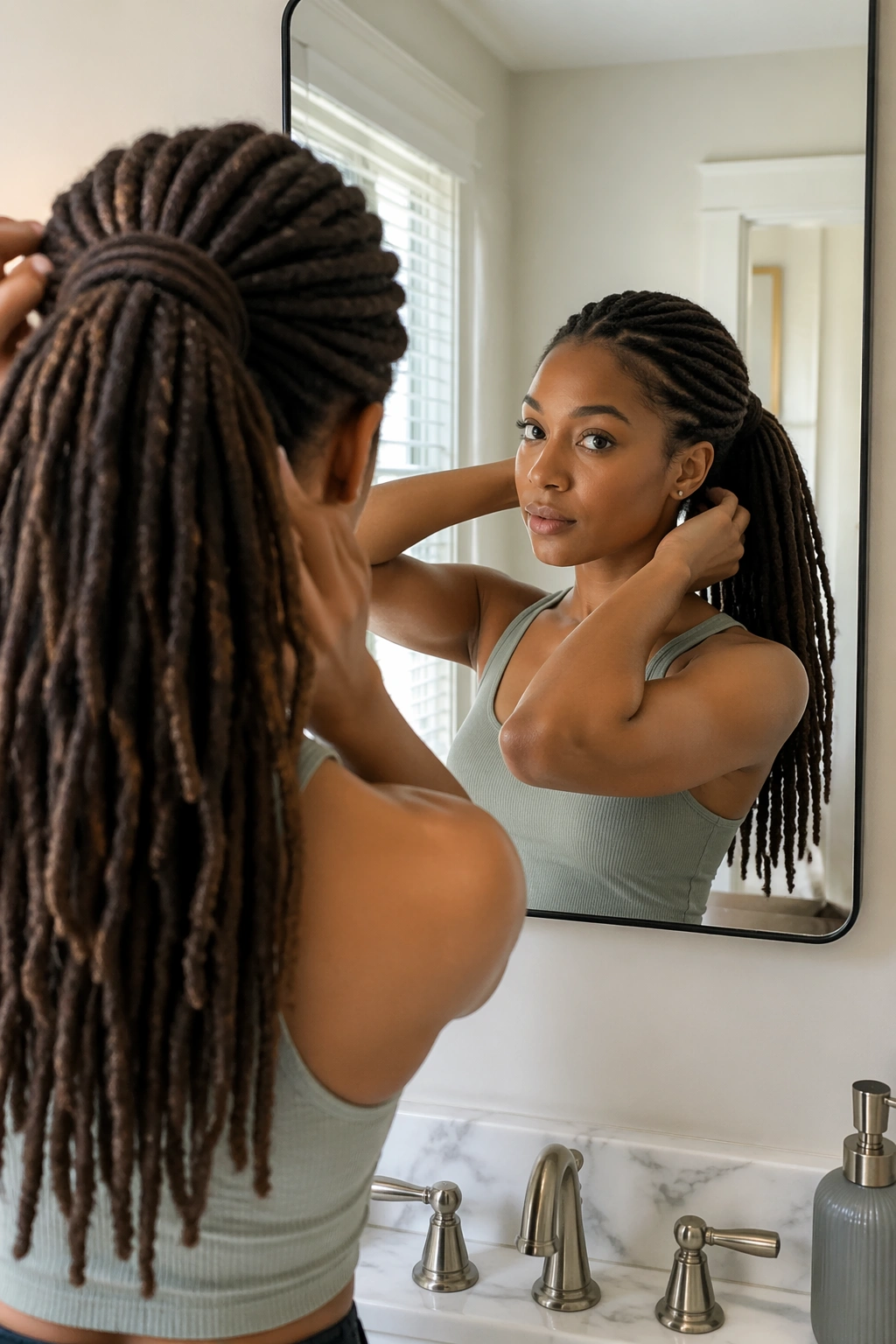
Locs make a mid ponytail easy to love because they already bring shape and texture. Pull them back at mid height, and the style is done in minutes. The challenge is balance, especially if the locs are long or heavy. If the ponytail sits too high, the weight can feel awkward. Too low, and it loses the lift.
A wrapped base keeps the elastic from showing and stops the locs from tugging at one spot. You can also pin a few locs in place near the crown if the ponytail needs a little extra support. That tiny bit of structure helps more than adding another elastic.
This is a style that plays nicely with cuffs, thread wraps, and small beads. Not every loc ponytail needs decoration, but one or two accents can make the style feel deliberate instead of rushed.
16. Box Braids Pulled Into a Mid Ponytail
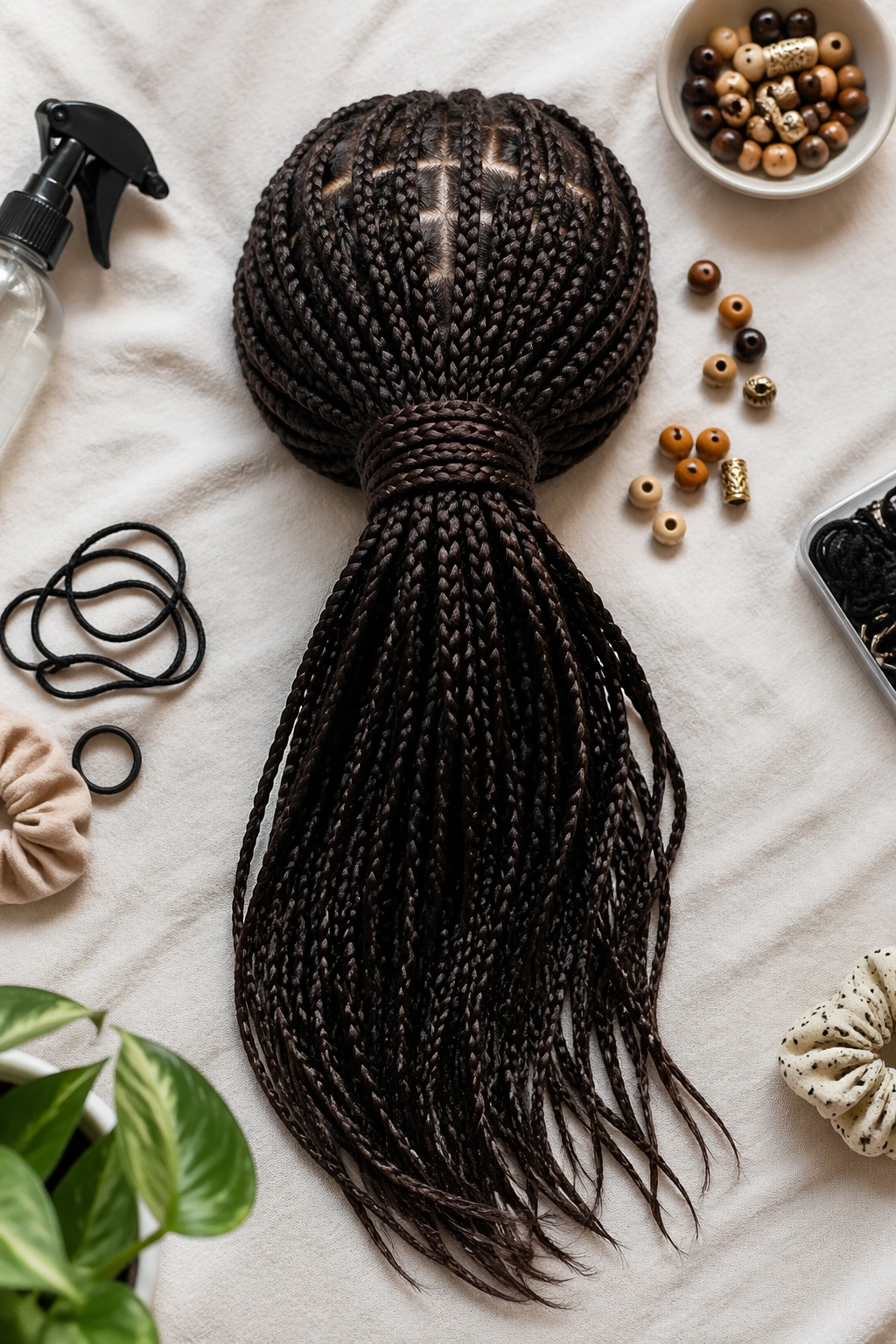
Box braids make mid ponytails almost too easy, which is part of the appeal. The style starts with the braids already done, so the main job is placement. Gather them at the middle of the head, secure them well, and let the length fall where it wants.
The challenge is weight. Too many braids pulled too high can strain the scalp, especially around the edges. Mid placement spreads the tension more evenly and keeps the style wearable for longer stretches. A wrapped base helps again, especially if the elastic wants to show through.
This version can be sleek, playful, or dramatic depending on the braid length. Shorter braids feel neat and tidy. Longer braids swing. Either way, the mid ponytail keeps the hair out of the face without making it feel pinned back.
17. Two-Strand Twist Mid Ponytail
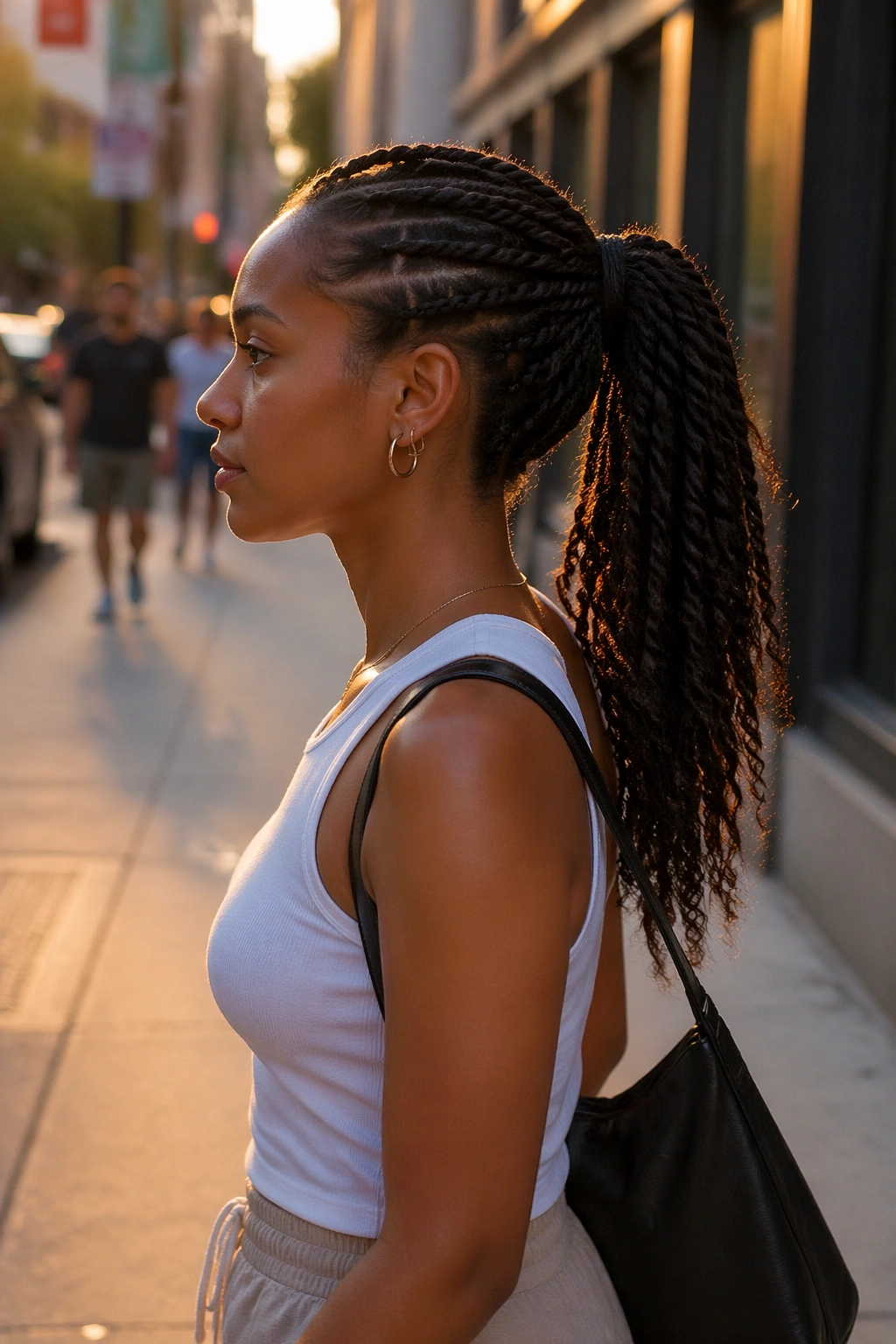
Two-strand twists make a mid ponytail look fuller than it is. Each twist adds visual weight, so even medium-density hair can read as thick and plush once it is gathered. The style also works well when the hair needs a protective break and you still want a shaped finish.
How It Differs From a Twist-Out
A twist-out is loose and expanded. This is tighter, cleaner, and a little more organized. The twists stay visible, which gives the ponytail a rope-like texture that holds up through the day. If you want the style to look crisp, keep the twists medium-sized and line them up neatly before tying them back.
A light edge control on the front helps, but do not overdo it. The charm of this style is the contrast between the defined twists and the relaxed ponytail shape.
18. Mohawk Mid Ponytail
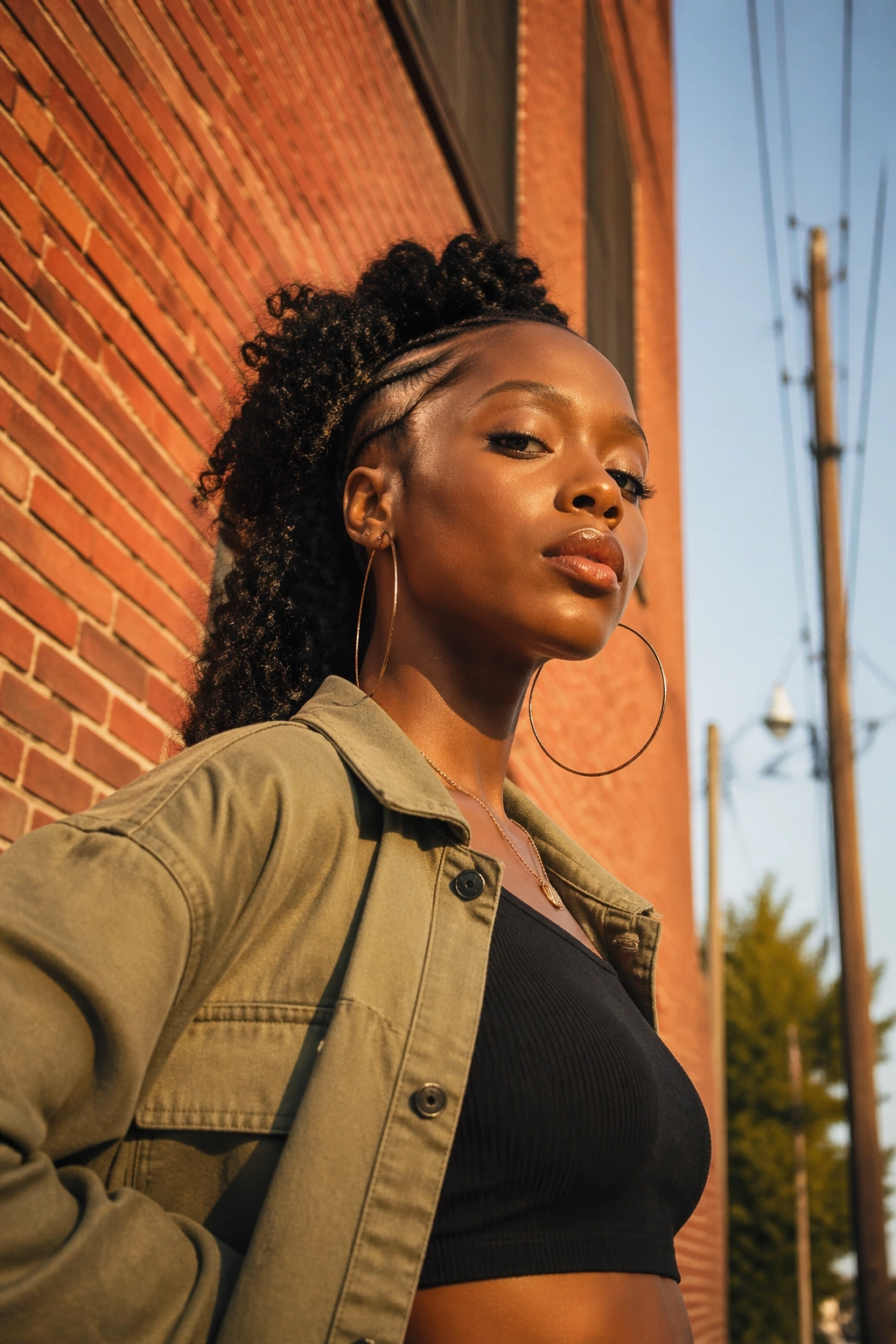
A mohawk-inspired mid ponytail brings attitude without needing a complicated cut. The sides are braided, slicked, or tucked close, while the middle section stays fuller and rises into a ponytail at mid-head. The contrast is the whole point.
This style works especially well when you want height through the center of the head. It draws the eye upward without pushing the ponytail all the way to the crown. If your natural hair has density in the middle and less on the sides, this shape can be very flattering.
The sides do need attention. If they puff out too early, the mohawk effect disappears. Use a bit of gel or cream, but keep the product light enough that the hair still moves. Hard, helmet-like sides can make the style feel stiff fast.
19. Curly Clip-In Mid Ponytail
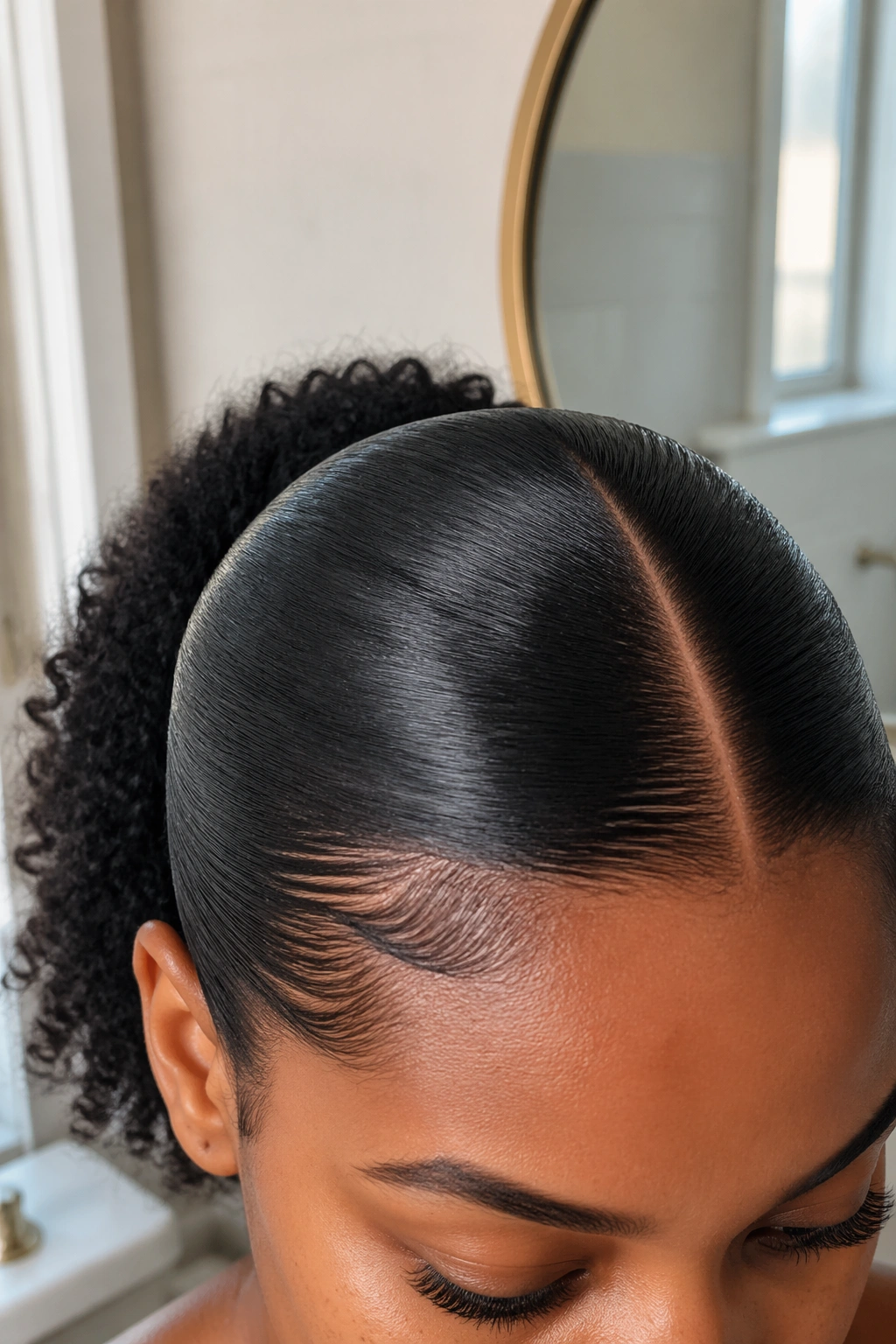
A curly clip-in ponytail is the easy answer when you want fullness without committing to a full extension install. The natural hair can be smoothed into a compact base, then the clip-in or drawstring piece gives you length, volume, and shape in one move.
Texture matching matters here. If your own curls are tight and the added ponytail is loose, the seam will show. You can fix that by leaving a little of your natural texture out at the front or by choosing a piece that sits close to your curl pattern.
The nicest thing about this style is speed. It is fast, but it does not have to look fast. A little wrapping at the base and a quick finger-fluff on the curls can make it look like you spent much longer on it than you did.
20. Wrapped-Base Event Ponytail

A wrapped-base ponytail is one of those small finishing moves that makes a style look expensive without acting like it. You take a strip of hair from the ponytail, wrap it around the elastic, and pin the end underneath. That hides the band and gives the base a clean, polished line.
The wrapped section should be snug, not bulky. If it is too thick, it starts looking like an extra knot sitting on top of the ponytail. A narrow wrap is enough. The base should feel smooth under the fingers and disappear into the style.
- Use one bobby pin that matches your hair color.
- Tuck the pin underneath the wrapped section.
- Smooth the crown before you wrap, not after.
- Finish with a light mist of shine spray if the hair looks dry.
This is the version I’d pick for a dressier event. It knows how to behave.
21. Pineapple-Inspired Mid Ponytail
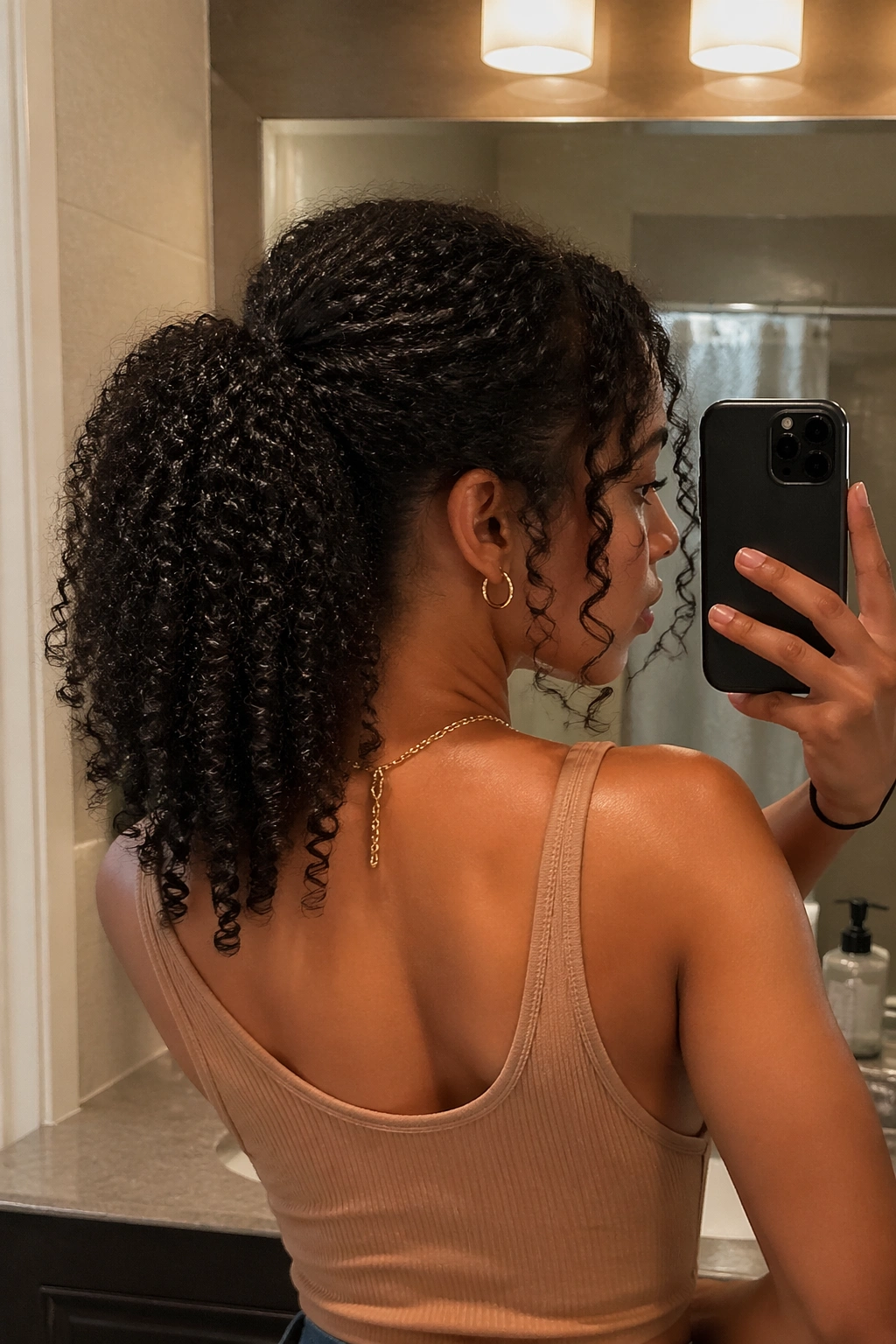
A pineapple-inspired mid ponytail borrows the loose, upward energy of the pineapple method but drops the placement a little lower. The result keeps curl definition while looking more like a deliberate style and less like an overnight reset.
This one works best on curly and coily hair that already has shape. Gather the hair at mid height with a soft band, then let the ends fan out instead of forcing them into a tight bundle. The hair should look lifted, not squeezed.
It is a smart style for second- or third-day curls that still have life in them. If the roots are a little flat, fluff them gently at the crown. If the ends are too stretched, scrunch them with a little water or leave-in. The style forgives small imperfections, which is part of why people keep coming back to it.
22. Deep Side-Sweep Mid Ponytail
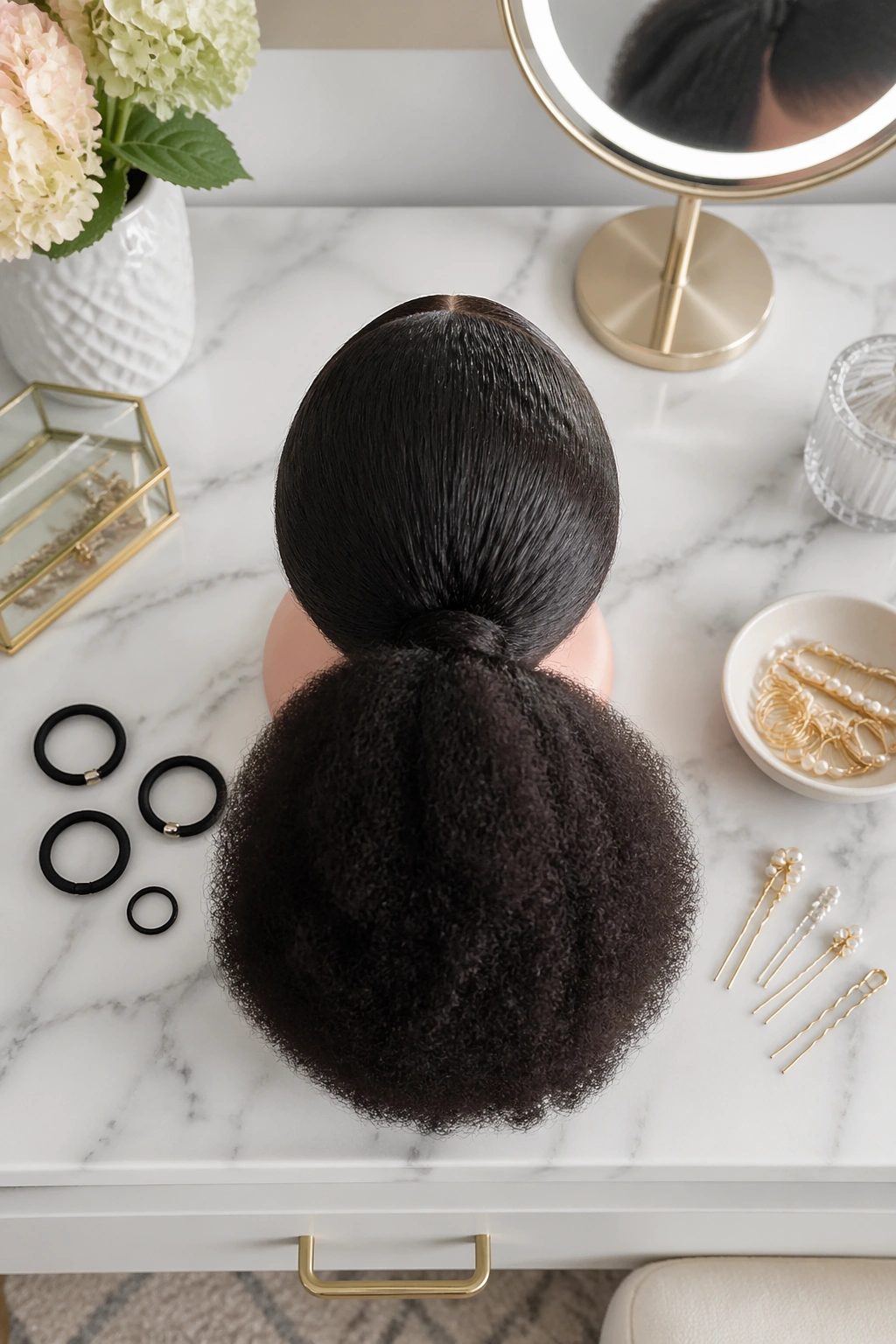
A deep side-sweep mid ponytail shifts the weight of the style to one side, and that one change can make natural hair look much softer around the face. It is a good move if you like asymmetry or if a straight-back ponytail feels too predictable.
The front section should sweep cleanly across the forehead before meeting the ponytail. That means your parting, smoothing, and pinning all matter. If the sweep is loose and vague, the style loses the shape that makes it interesting. A firm brush stroke and a little styling cream usually do the job.
This version is flattering on a lot of face shapes because it breaks up the middle without hiding the face entirely. It also gives room for earrings, which is one of those small things people forget until they put them on and the whole style makes more sense.
23. Braided Ponytail With Cuffs
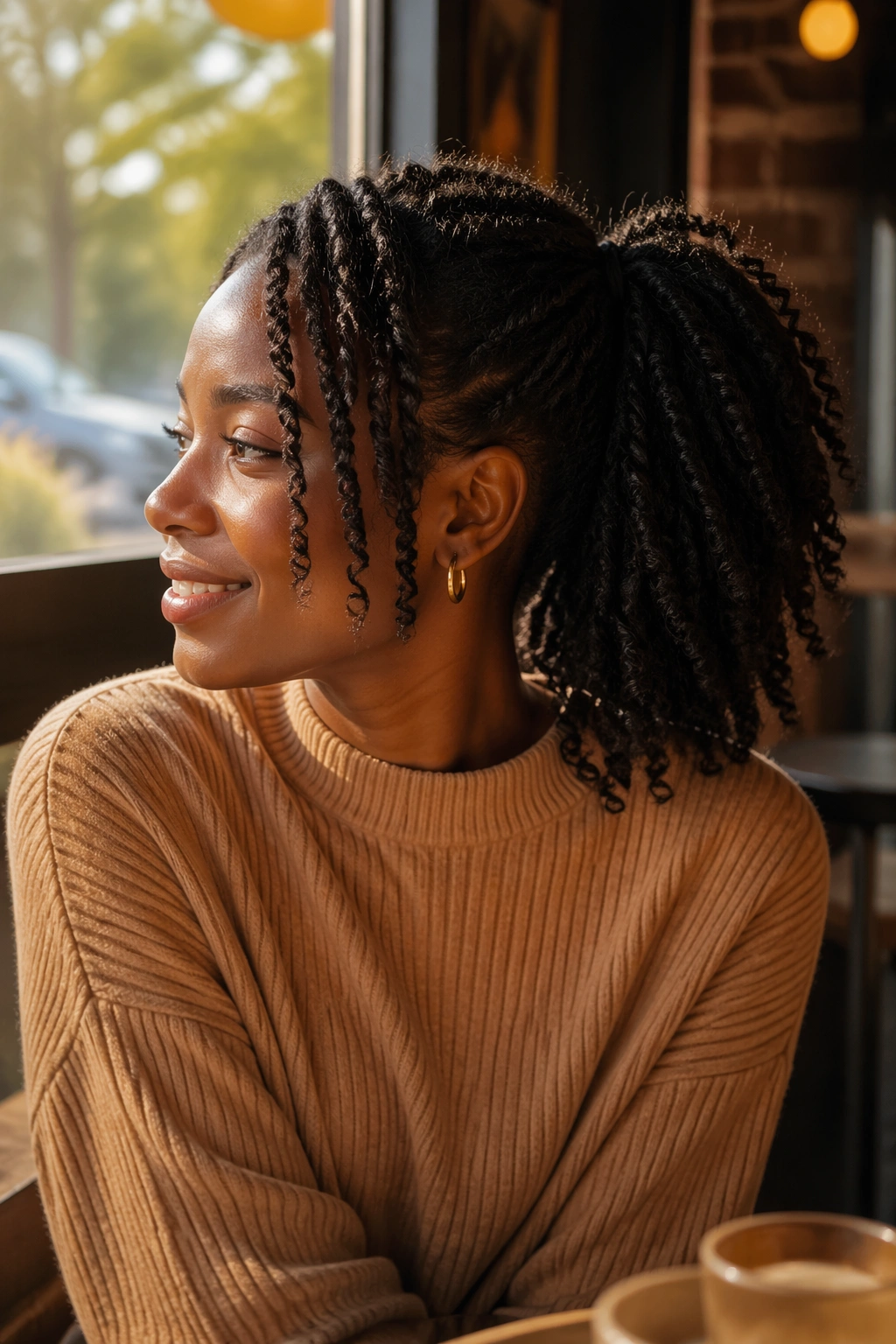
A braided ponytail with cuffs has presence. The braid gives the style a long, clean line, and the cuffs add small flashes of shine along the length. On natural hair, this works especially well when the ponytail is anchored at mid-head and the braid itself is kept smooth but not stiff.
A single braid looks most polished when it is centered and even. If the braid is too loose at the top, it can collapse. Too tight, and the scalp starts to complain. The best version feels snug at the root and soft through the lengths.
Where the Cuffs Belong
Not all over the place. That gets noisy fast. Two or three cuffs placed with space between them usually look better than a crowded row of metal bits. The braid should still be the main event.
24. Low-Stretch Banded Mid Ponytail
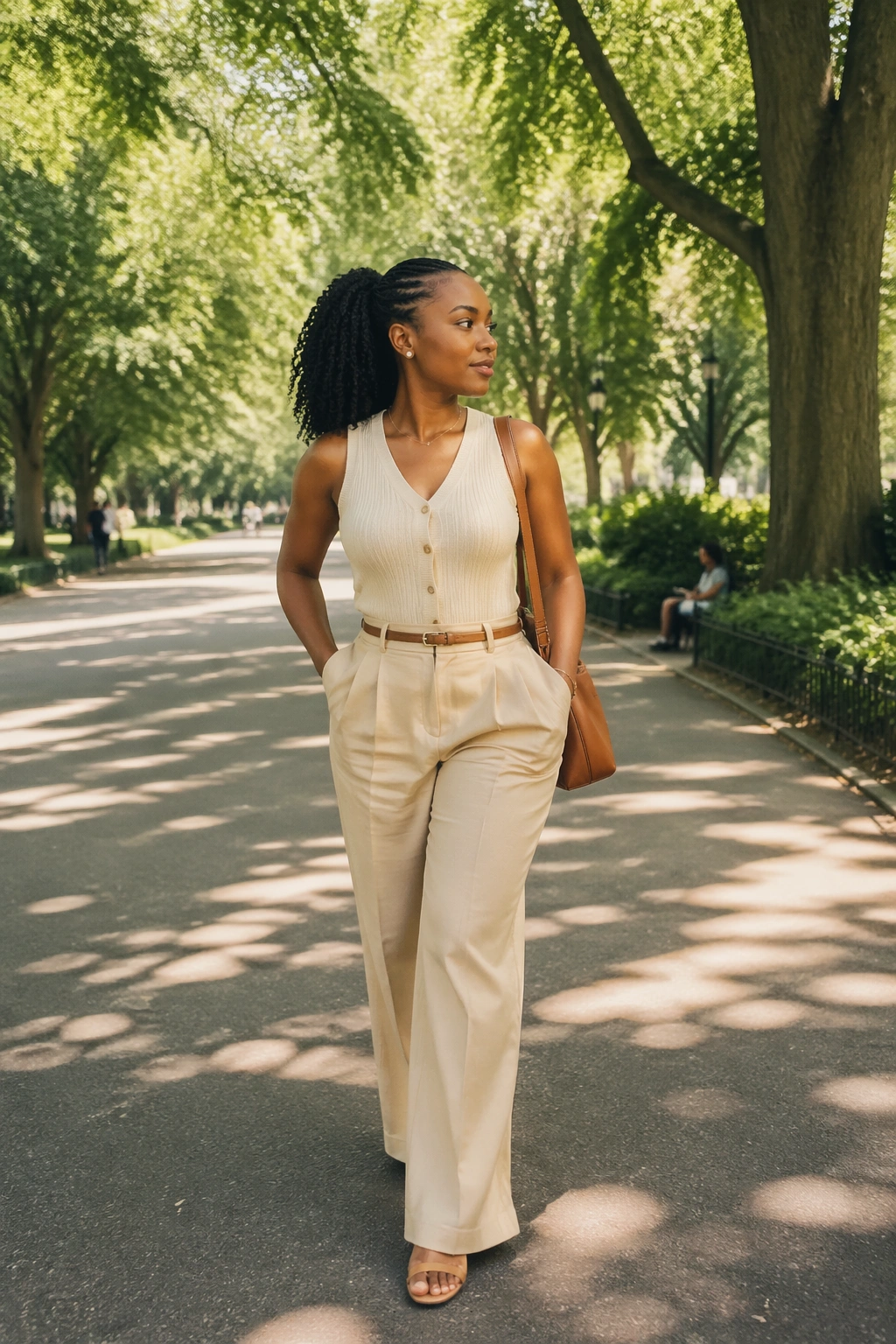
This style is a good fix when the hair has a mind of its own and does not want to sit in one single shape. Instead of one huge ponytail, you create small banded sections from the roots to the mid ponytail, almost like a controlled stretch with a little design built in.
The bands help keep the hair organized without flattening it completely. That makes this style useful for textured natural hair that needs structure but not a ton of manipulation. It also works nicely if you want the ponytail to feel geometric rather than soft and round.
What to Watch For
Use bands that do not snag. Space them evenly. And stop before the hair starts looking over-parted or over-built. The best version is neat, not busy. A few clean sections say enough.
25. Halo-Braided Mid Ponytail
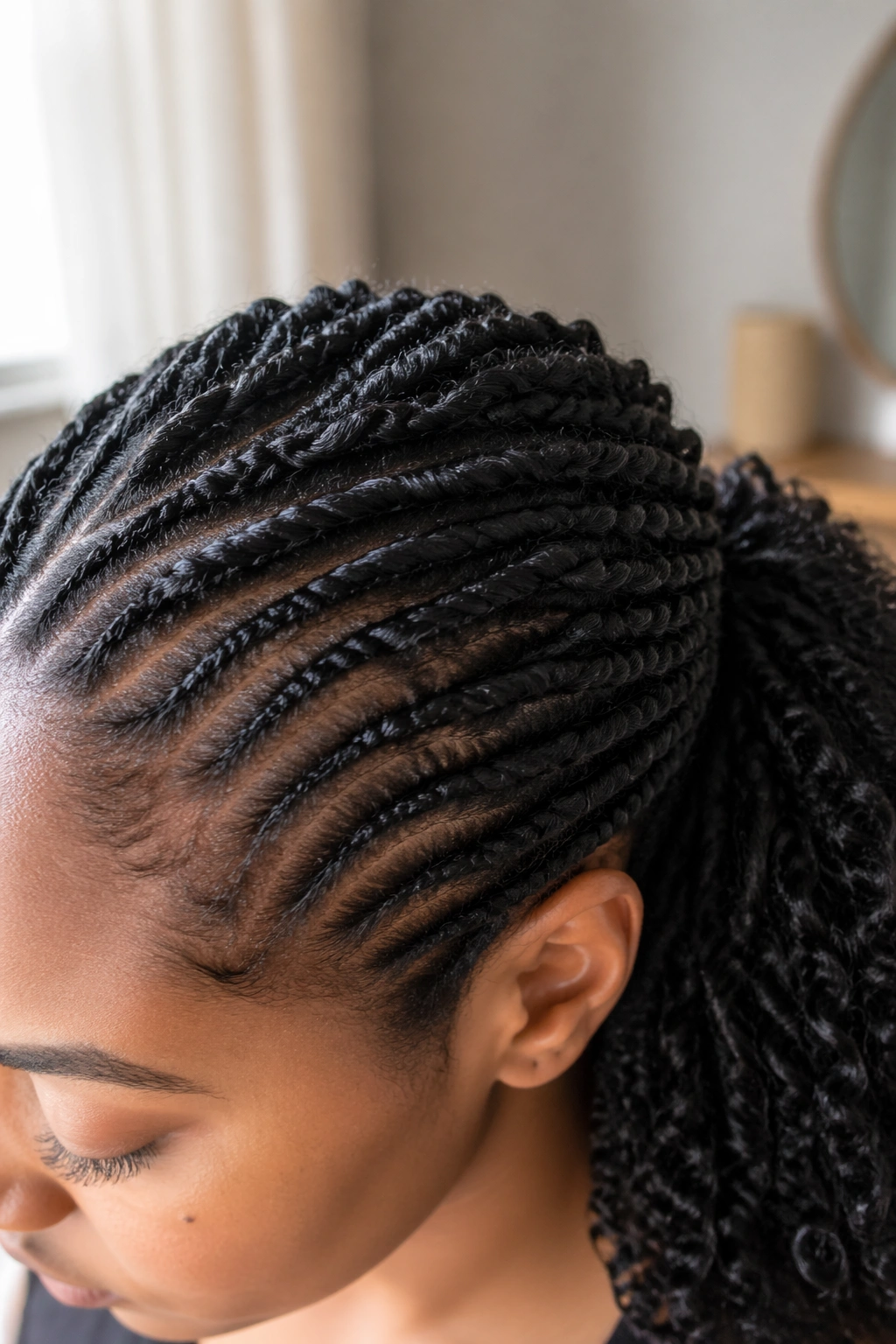
A halo braid leading into a mid ponytail is a polished way to finish this whole category. The braid moves around the hairline or crown, then the rest of the hair gathers into a ponytail at mid height. It gives the front of the style control and lets the back stay fuller.
I like this one because it solves a common problem: the front looks done, but the ponytail still has room to breathe. That balance keeps it from feeling too severe. On natural hair, the braid also helps hold the perimeter in place, which is useful if your edges get frizzy fast.
The ponytail can be curly, stretched, or braided. Honestly, any of the versions above can live at the end of a halo braid. That flexibility is what makes the style worth keeping around. Some days you want clean lines. Other days you want hair that moves. This one gives you both without making a scene.