



Sleek ponytails for kids can look polished without feeling fussy, but only when the hairline is handled gently. If you have ever tried to smooth a child’s hair after breakfast, you already know the real enemy is not the ponytail itself — it’s the frizz, the flyaways, and the 30-second timer they think you have.
I like ponytail hairstyles for kids because they solve a very ordinary problem in a very practical way. Hair stays out of the face, the style survives school, sports, and picture day, and you can still make it feel playful by changing the part, the height, or the finish. The trick is tension. Tight is not neat. Tight is tight.
A soft brush, a rat-tail comb, a light mist of water, and a small dab of gel usually do more than a shelf full of products. Fine hair needs a lighter touch; thick curls often need a little more moisture before they’ll lie flat. And if a child says their scalp hurts, that is not a styling challenge. That is your cue to start over.
Some of the best versions are barely more than a clean part and a smooth tie. Others use braids, ribbons, beads, or bubble sections to keep the look fun. The styles below cover school mornings, dance days, and those rare times when a child actually sits still for the whole five minutes.
1. Classic Low Sleek Ponytail
A classic low sleek ponytail is the style I reach for when I want the hair to look tidy without looking stiff. It sits at the nape, keeps the face open, and has that calm, finished look that works with uniforms, dress-up clothes, or a plain T-shirt.
Why It Works
The low placement makes this style easier on the scalp than a high pull, which matters more than people think. It also hides uneven layers better, especially if a child has growing-out bangs or shorter pieces around the temples.
- Part the hair cleanly down the middle or slightly off-center.
- Smooth the hair back with a soft brush in small sections.
- Use a no-snag elastic and keep the tie snug, not tight.
- Tuck a flyaway with a pea-sized amount of gel on fingertips.
Best move: finish with a tiny wrap of hair around the elastic if the child wants a more polished look.
2. High Sleek Ponytail with a Center Part
A high sleek ponytail with a center part gives the whole face a lifted look without much effort. The center part keeps things balanced, and the higher placement gives the style a sharper outline that reads neat even when the child moves around a lot.
I like this version for picture day and performances because it stays visible. A low ponytail can disappear under a hoodie or jacket collar; this one does not. The base should sit around the crown, not halfway down the head, or the style loses that clean shape.
It works especially well on medium to long hair that holds a smooth finish for a few hours. If the hair has a little puff at the roots, a light mist of water before brushing usually helps more than piling on product.
Quick tip: wrap a thin strand around the elastic and pin it underneath. It takes one extra minute and makes the ponytail look more finished.
3. Side-Part Sleek Ponytail with a Tucked Ear
Why does a side part change everything? Because it softens a simple ponytail without making it look fussy, and on kids that balance matters. A side part can flatter a round face, work around a cowlick, and help shorter front pieces fall in a more natural direction.
This version is especially nice when a child refuses a middle part. Not every head wants symmetry, and forcing one usually shows. A clean side part with one ear gently tucked behind the hair creates a tidy shape that still feels relaxed.
How to Wear It
Start with the part while the hair is damp or lightly misted. Smooth the fuller side back toward the ponytail, then let the front sweep naturally instead of combing it straight back. The goal is control, not flattening.
A small satin bow or plain elastic looks best here. Anything bulky fights the softness of the side part.
4. Bubble Ponytail with a Smooth Crown
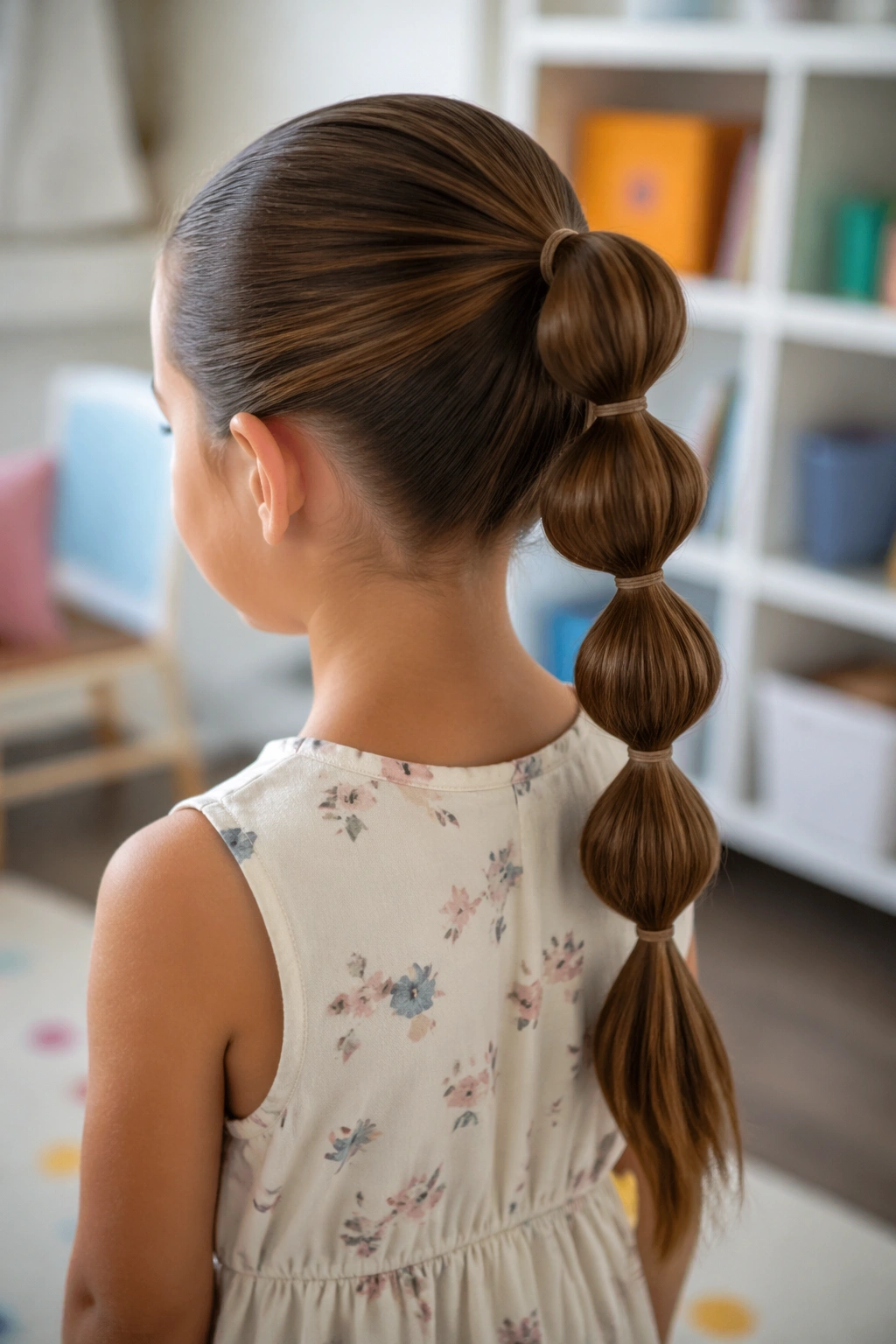
A bubble ponytail is one of those styles that looks more complicated than it is, which is probably why kids like it so much. The crown stays sleek, then the length gets divided into round little sections with elastics spaced a few inches apart. It feels playful without looking messy.
I’ve seen this style save more than one morning. Once the first elastic is in place, the rest is almost mechanical. Pull each section gently until it puffs into a bubble, then keep going down the length. The bubbles should look full, not stretched thin like a chain of sad marbles.
Key Details
- Keep the top section smooth before adding the first tie.
- Space elastics about 2 to 3 inches apart.
- Gently tug each section outward for even fullness.
- Use clear elastics or ones that match the hair color.
Best for: medium and long hair that needs to stay neat but still look fun at school or at a party.
5. Braided Base Ponytail
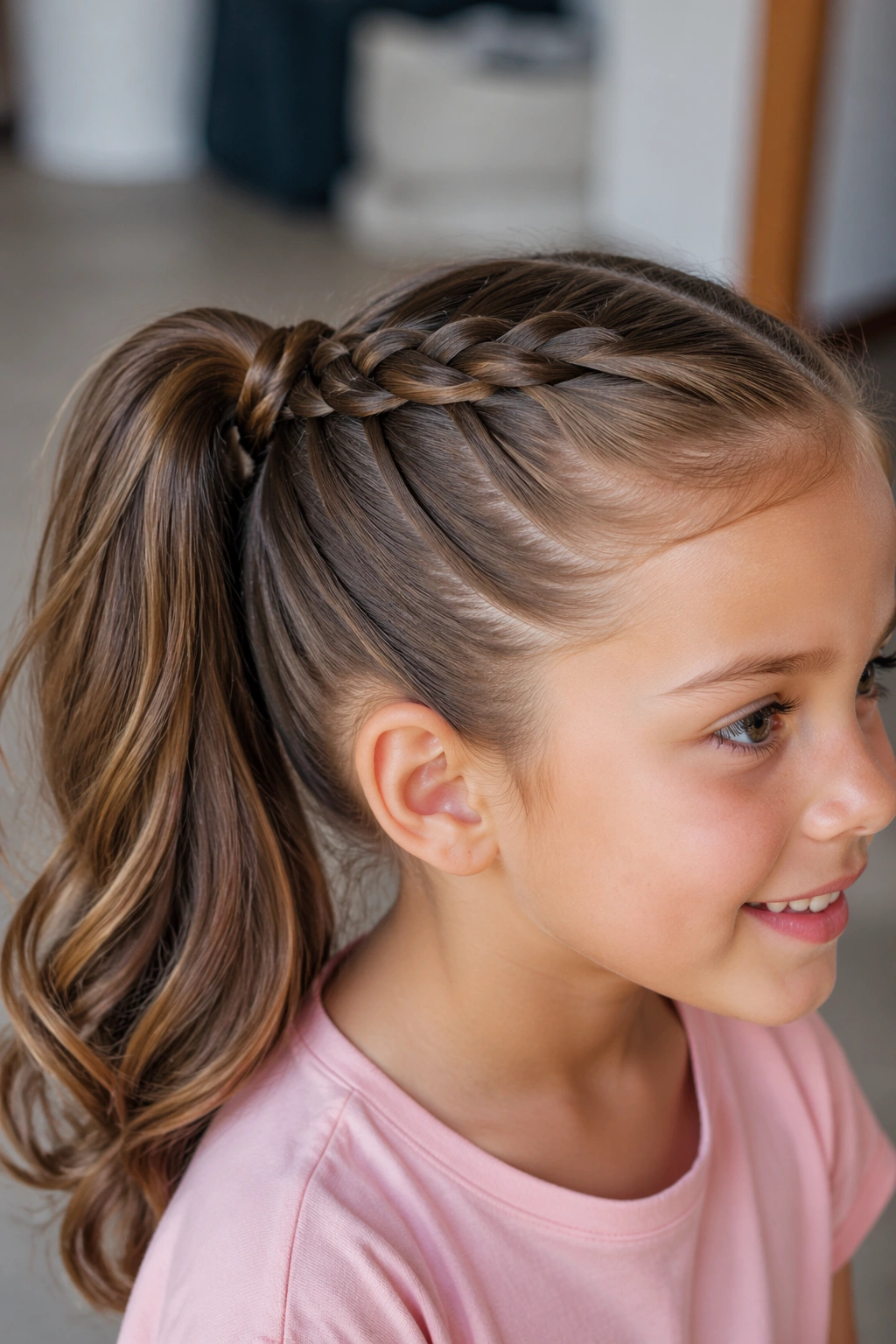
A braided base ponytail is one of those styles that quietly solves a lot of problems. The braid at the front keeps shorter pieces from slipping loose, and the ponytail itself feels more secure because the foundation is anchored before the tail even starts.
I prefer this version for kids with layered hair or soft baby hairs at the hairline. A simple three-strand braid from the front hairline into the ponytail base can keep everything in place for hours. It does not need to be tight. In fact, tight braiding usually makes the whole style look harder than it needs to be.
The nice thing here is flexibility. You can braid just one small section at the hairline, or add two tiny braids from each side and feed them together into the ponytail. Either way, the look is neat, a little sporty, and less likely to collapse by lunchtime.
On busy mornings, this one earns its keep.
6. Wrapped-Base Sleek Ponytail
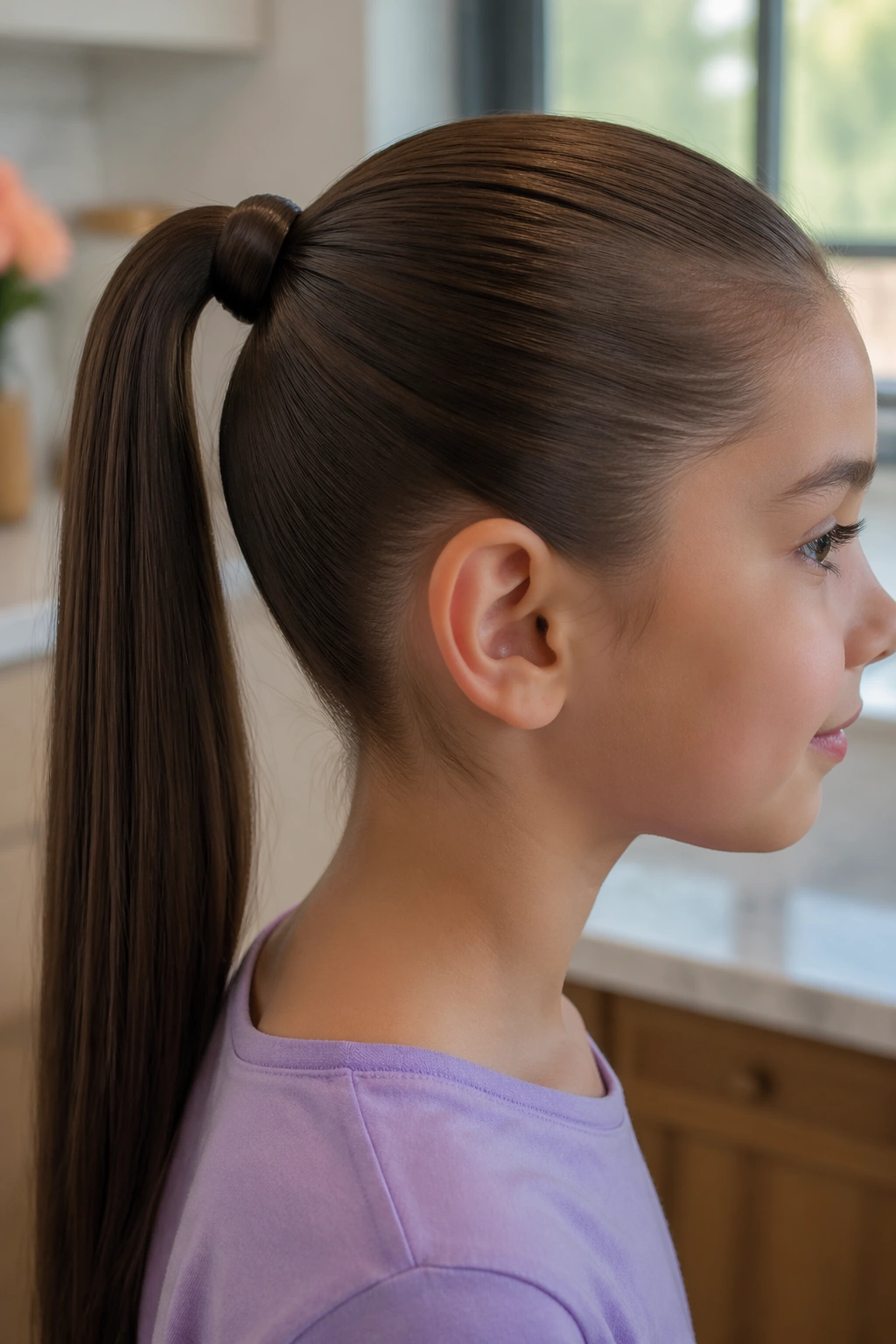
A wrapped-base ponytail is the fastest way to make a basic ponytail look deliberate. Instead of showing the elastic, you hide it with a thin strip of hair from the ponytail itself, and that small detail changes the whole read of the style.
Unlike a plain tie, this version has a cleaner finish around the base. That matters on picture day, for school recitals, or any moment when a plain rubber band would look unfinished. I use it most on medium-length hair because there’s enough length to wrap neatly without the strand slipping out.
What to Watch For
A wrapping strand that is too thick looks bulky. Too thin, and it can snap loose. Aim for a strip about the width of a pencil, then smooth it flat before winding it around the elastic.
If the hair is especially silky, secure the end underneath with one hidden bobby pin. Small pin, not giant clip. Giant clips belong nowhere near a child’s head unless you want complaints in the first ten minutes.
7. Ribbon-Tied Sleek Ponytail
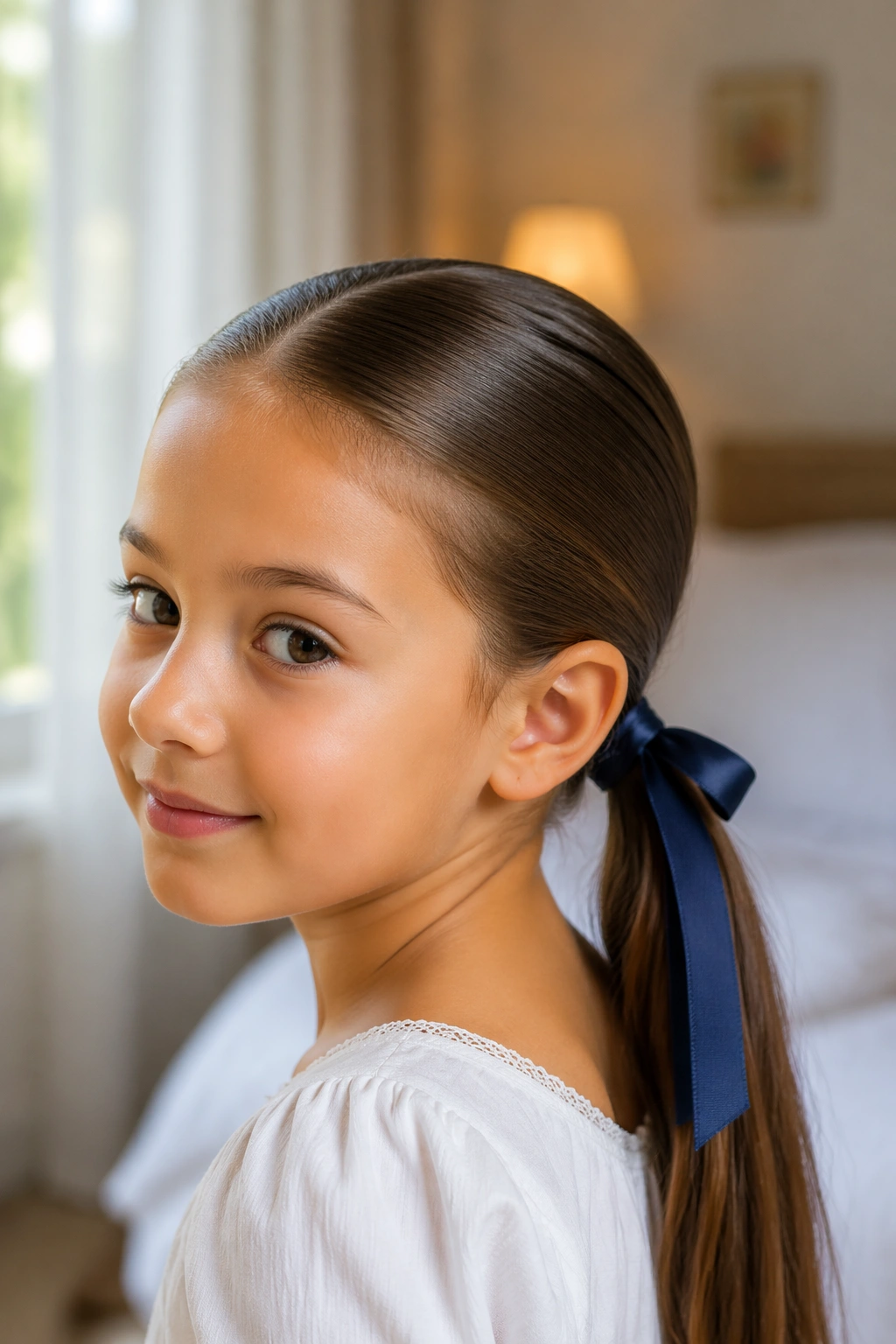
A ribbon-tied sleek ponytail is a small change that adds a lot of personality. The hair stays smooth and simple, but the ribbon gives it a finished, dressed-up feel without turning it into a costume. I like this one for birthday parties, concerts, and family photos when a child wants something pretty but still easy to wear.
Best Ribbon Choices
- Grosgrain ribbon: holds its shape and stays neat.
- Satin ribbon: looks softer and dressier, though it can slide more.
- Cotton ribbon: good for casual wear and less slippery hair.
- Short ribbon tails: safer and easier for younger kids to manage.
Tie the ribbon under the elastic, not too close to the scalp, so it does not dig in or make the ponytail feel bulky. A narrow ribbon usually works better than a wide one. Wide ribbons can overwhelm a small head fast.
My rule: if the ribbon starts asking for attention, it’s too much ribbon.
8. Twin Sleek Ponytails
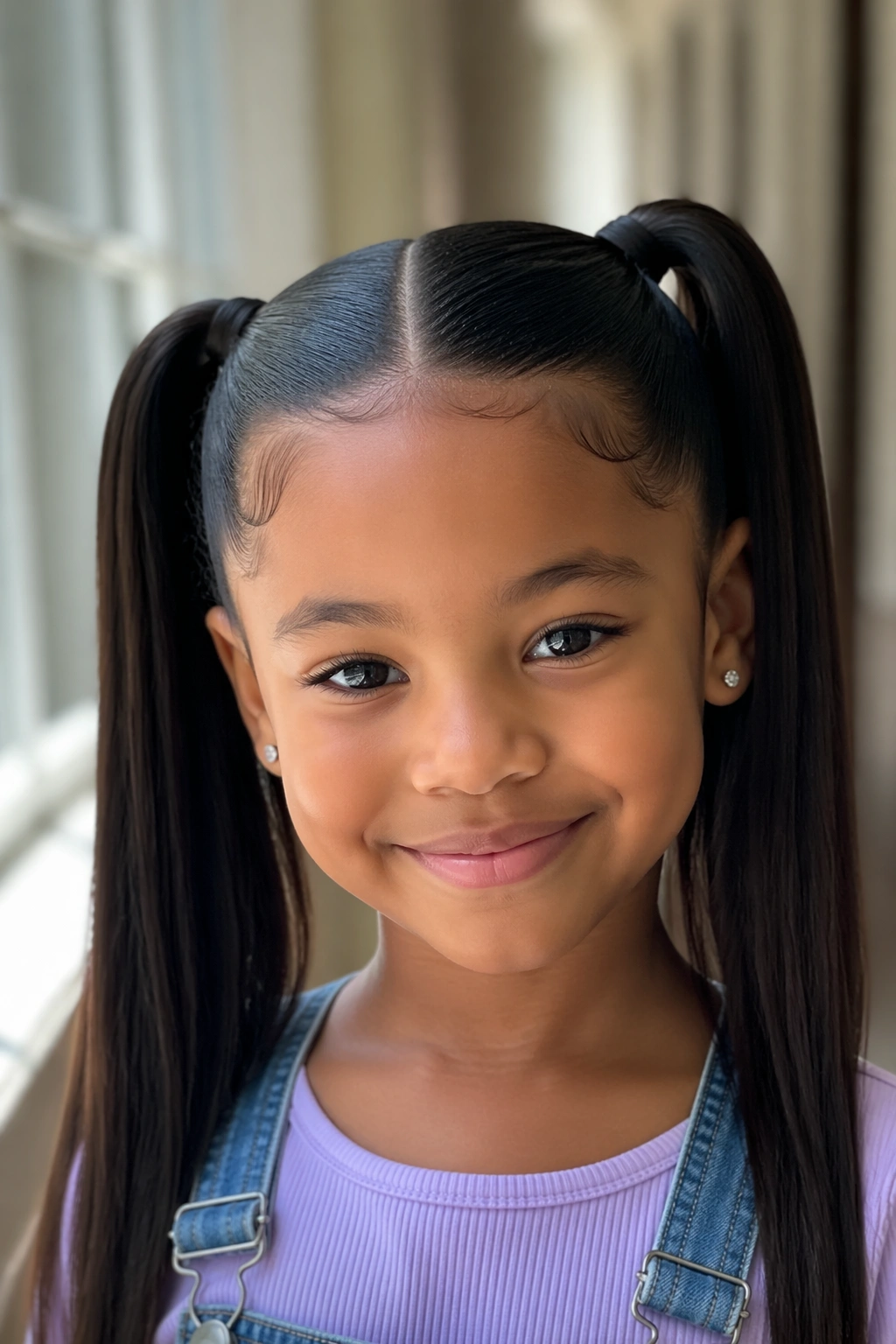
Twin sleek ponytails can be calmer than one big ponytail, especially on thick or dense hair. That surprises people, but it makes sense when you think about weight. Two sections spread the pull out, and that often feels better on the scalp for a child who does not want a heavy bundle sitting at the back of the head.
The clean center part matters here. If the part wobbles, the whole style reads crooked. Take your time on the parting line, then smooth each side back at the same angle so the ponytails sit at the same height. A mirror check from the front helps. So does stepping back and squinting a little.
I like this style when a child wants something playful but still tidy. It has a cheerful look, almost a little sporty, and it works well with uniformed outfits or casual clothes. If the hair is fine, keep the ponytails slightly lower to avoid a strained look. If the hair is thick, a higher placement gives the style more bounce.
9. Cornrow-Front Ponytail
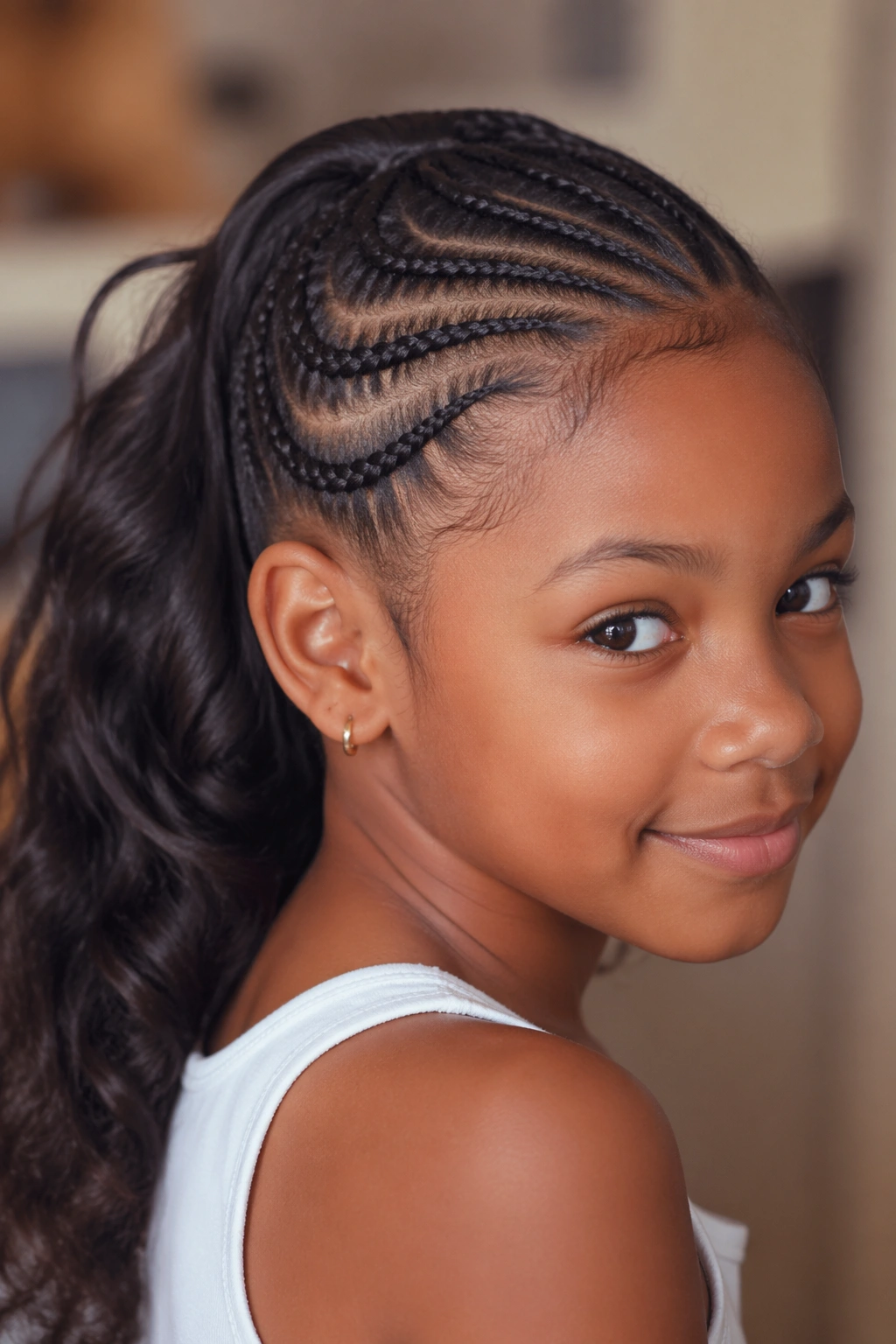
Can a ponytail look sleek and protective at the same time? Absolutely. A cornrow-front ponytail does exactly that by keeping the front hair firmly in place while letting the rest gather into a single ponytail at the back.
This style is especially useful for active kids or for hair that tends to puff up around the hairline. Two, three, or four small cornrows across the front can anchor the style and reduce the need for constant smoothing later. The back can stay free, which keeps the look lighter than a full braided style.
The key is gentle tension. Cornrows should lie flat and neat, but they should never feel sharp or tight at the scalp. That line matters. If you can see red marks after styling, the braids are too tight and need to be redone.
For longer wear, finish with a soft elastic at the ponytail base and a satin wrap or bonnet at night if the style needs to last into the next day.
10. Twisted Sides Ponytail
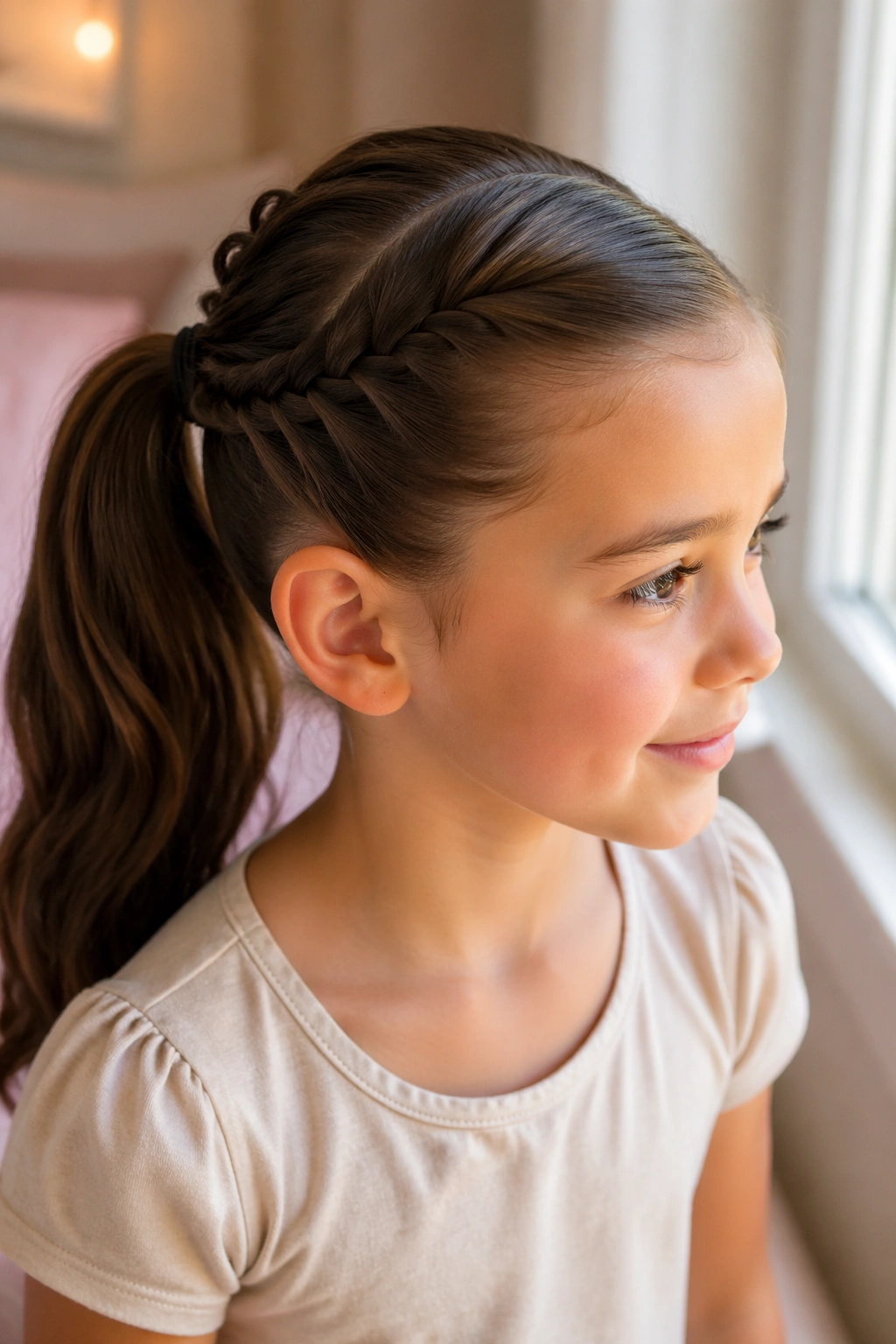
Twisted sides give a sleek ponytail just enough texture to keep it interesting. Instead of braiding the front sections, you twist them back from the temples and feed them into the ponytail, which creates a softer look and takes less time than a full braid.
I like this version for layered hair because the twists help shorter side pieces stay put. They also look nice on hair that is too slippery for complex plaits. You get control without much fuss. Clean part, smooth crown, two twists, ponytail. Done.
What Makes It Different
- Twists lie flatter than loose side pieces.
- They are quicker to redo if one side gets messy.
- They give the style a softer line than braids.
- They work well with medium or thick hair.
A tiny amount of leave-in on the front sections helps the twist hold together. Too much product makes the hair feel greasy, though, so keep it light. This is one of those styles that gets better with restraint.
11. Middle Braid Ponytail
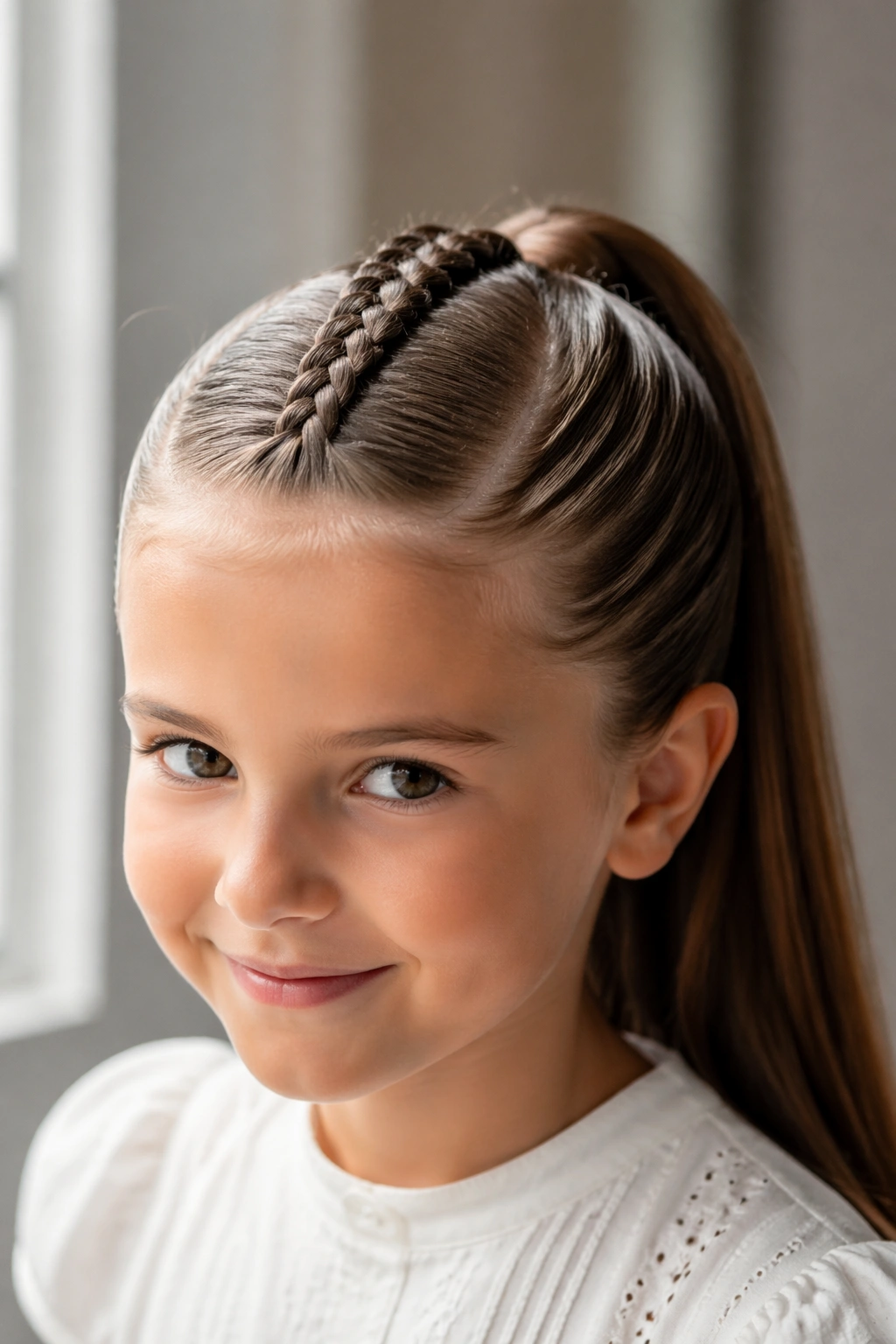
A middle braid ponytail looks especially neat when the hair is growing out of bangs or when the front layers keep splitting apart. The braid runs straight back from the center part and joins the rest of the hair at the ponytail base, so the front stays controlled without a lot of product.
I think this one works best when the braid is clean but not tiny. A braid that is too small gets lost. One that is too thick takes over the whole head. Somewhere in the middle is the sweet spot. The braid becomes the detail, not the whole show.
For school mornings, this is a solid pick because it gives the face a tidy frame while still feeling easy. It also helps on windy days. Hair that has been braided before the ponytail starts is less likely to blow apart and stick to the forehead by recess.
A plain elastic at the end keeps the look simple. If you want it a touch dressier, wrap the base once and leave the braid visible.
12. Zigzag-Part Sleek Ponytail
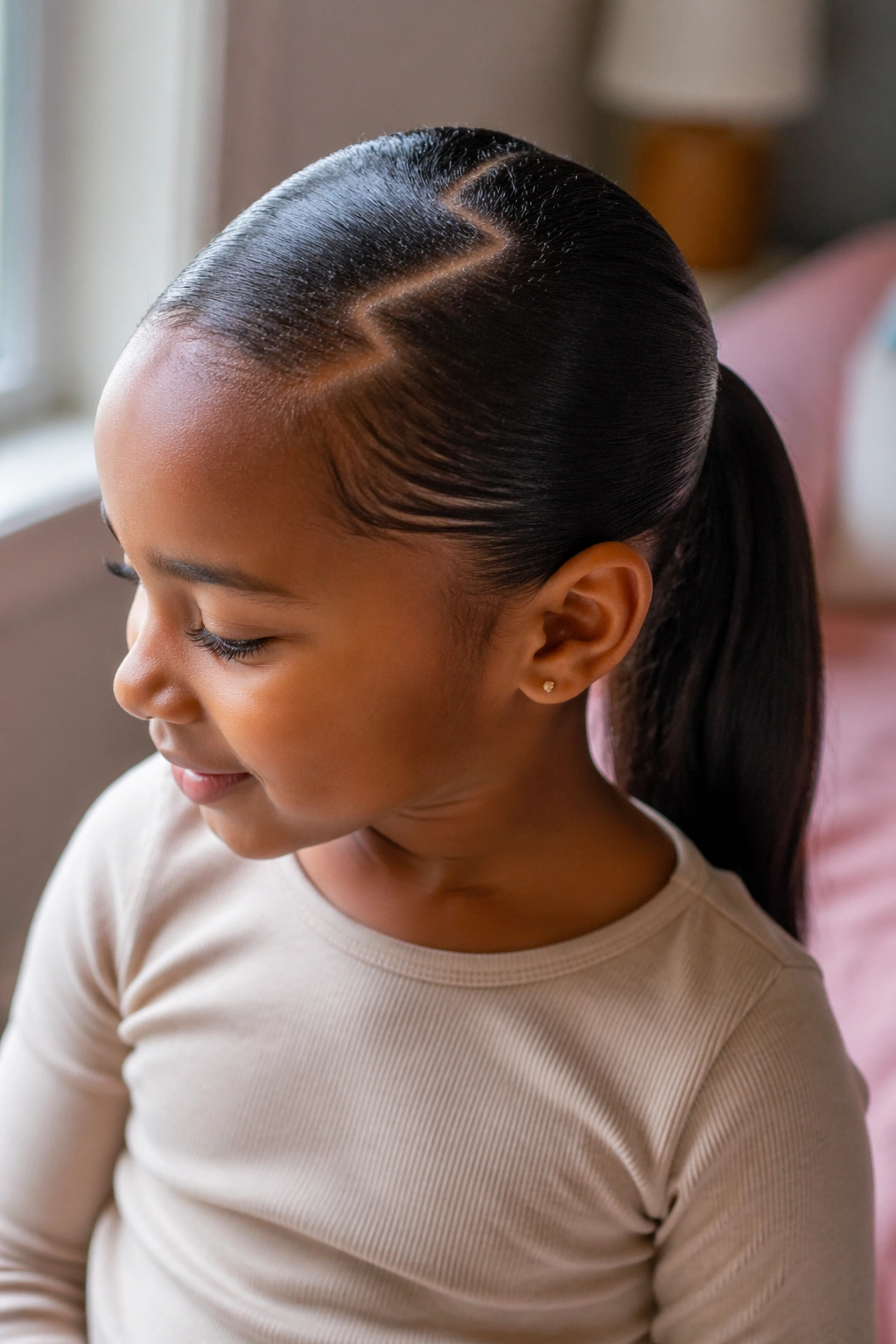
A zigzag part changes the mood of a ponytail immediately. Instead of a straight line down the scalp, the part has a little movement, which makes the style feel playful while still staying neat. Kids notice that. They may not know why they like it, but they do.
Unlike a straight center part, the zigzag draws attention to the part itself. That is the whole point. Use the pointed end of a rat-tail comb to trace the line in short, sharp angles, then smooth each section back before the ponytail is tied. The shape looks best when the zigzag is clean and narrow, not huge and wavy.
This style is useful on flat hair that needs a little lift at the roots. It adds visual detail without adding bulk. For younger kids, keep the angle shallow so it does not take forever to part. For older kids, a deeper zigzag can feel more deliberate.
Recommendation: pair it with a simple low ponytail or a medium-height ponytail. The part already does enough.
13. Curled-Ends Sleek Ponytail
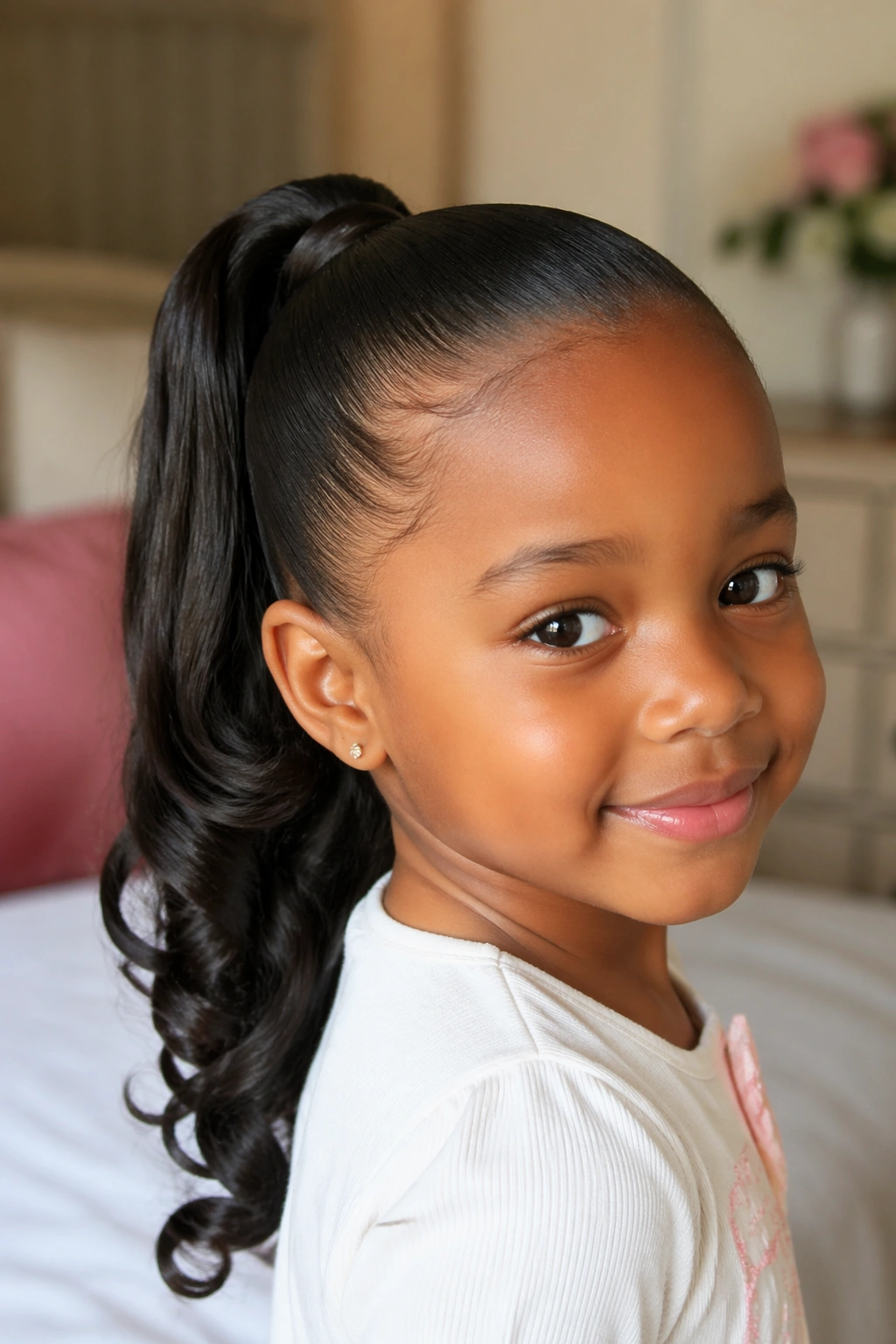
A curled-ends sleek ponytail gives you the best of two moods: smooth at the top, soft and playful at the bottom. The crown stays flat and polished, while the tail finishes with bend or curl instead of hanging straight like a rope.
I like this one for kids who want something a little dressier without a full curl session. Heatless rollers, flexi rods, or a simple braid-out on the ponytail length can all create a softer finish. If you do use heat, keep it low and keep it brief. Children’s hair does not need high heat to look tidy, and honestly, it usually looks better when the curl is gentle rather than overdone.
The transition from smooth roots to curled ends is what makes this style interesting. Keep the ponytail base sleek, then curl only the length. That contrast reads clean in person and holds up well in photos.
A soft brush and a light finishing spray help the top stay smooth while the ends move.
14. Beaded-Ends Ponytail
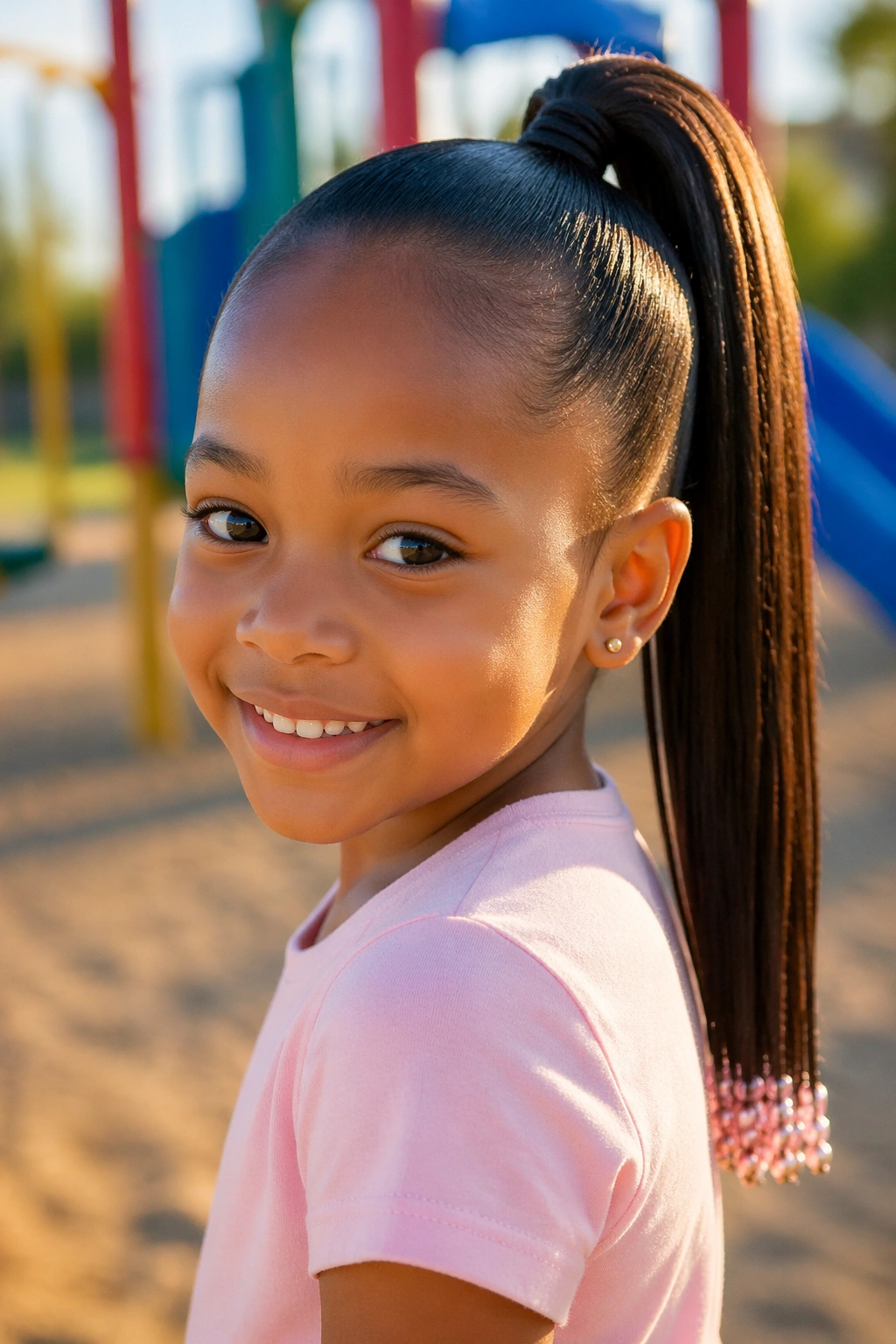
Beaded ends can turn a sleek ponytail into something that feels festive without making the whole style heavy. The top stays smooth and controlled, but the lower section gets a little rhythm from the beads, which is especially nice on textured or braided ponytails.
This style works best when the beads are light and the sections are evenly spaced. Too many beads make the tail clack and swing awkwardly. A few are enough. I prefer small, smooth beads that slide on easily and do not snag the hair. If the hair is fine, keep the bead count low so the ponytail does not droop.
The fun here is in the sound and movement. Beads give the ponytail a little personality every time the child turns their head. They also make it easier to tell one ponytail from another in a class full of similar styles, which matters more than people admit.
Use a secure band at the base and another one near the bottom if the hair is especially slippery.
15. Half-Up Sleek Ponytail
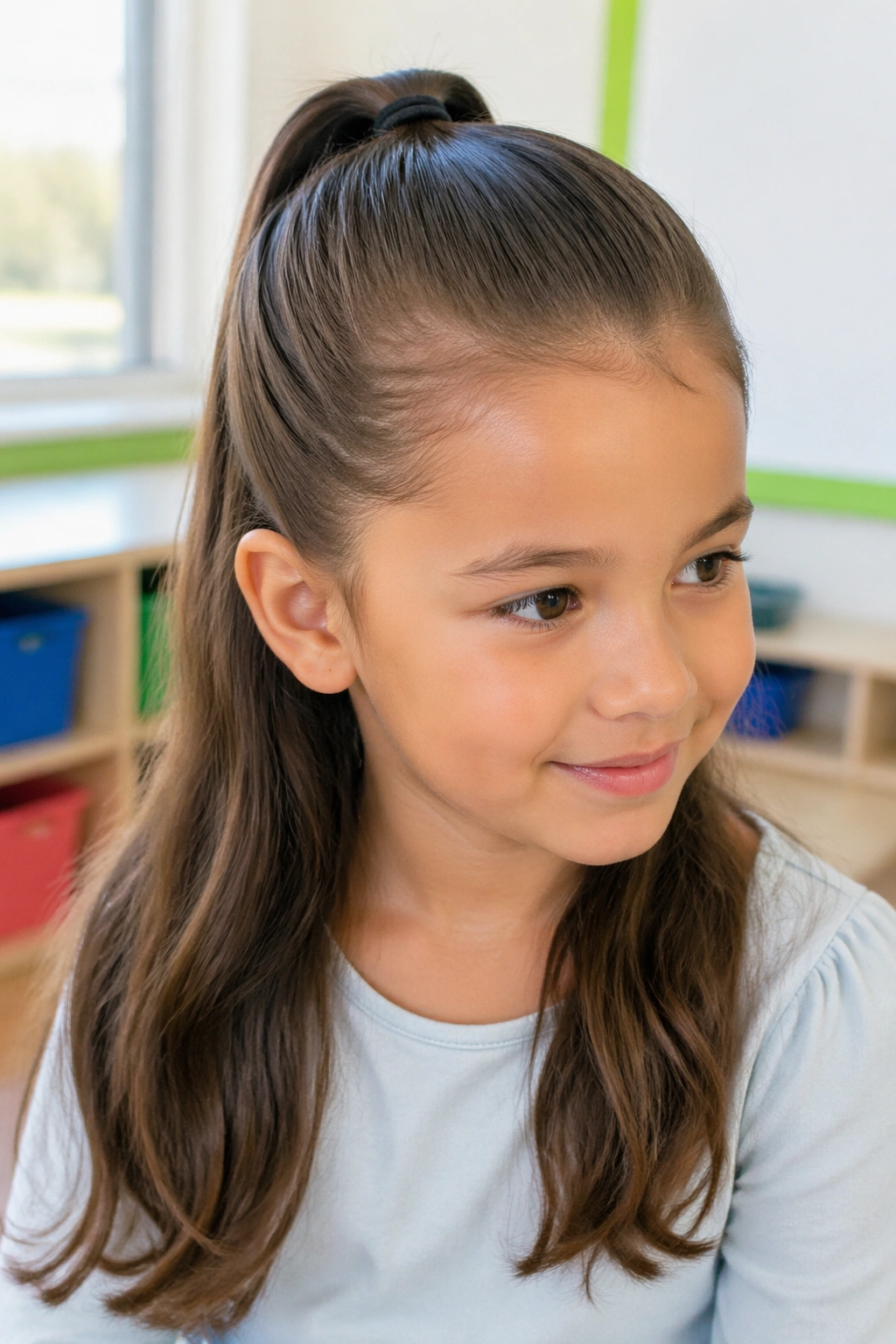
Why do half-up ponytails look so easy on kids? Because they take the hair off the face without asking the whole head to cooperate. That is the charm of the style. The top half gets smoothed back, the bottom stays loose, and the result feels balanced instead of severe.
It is a useful choice for medium-length hair that doesn’t need every strand pulled up. A child can keep movement around the shoulders, which helps the style feel less formal. If the hair is wavy or curly, the contrast between the sleek top and the loose bottom is especially nice.
How to Use It
Gather the top section from temple to temple, or a little higher if you want more lift. Smooth it back with a brush, tie it into a small ponytail, and leave the rest free. A tiny bow or plain elastic works better than anything chunky.
This one tends to be kinder on the scalp than an all-over ponytail, too. Less tension, less complaining.
16. Sleek Ponytail with Soft Bangs
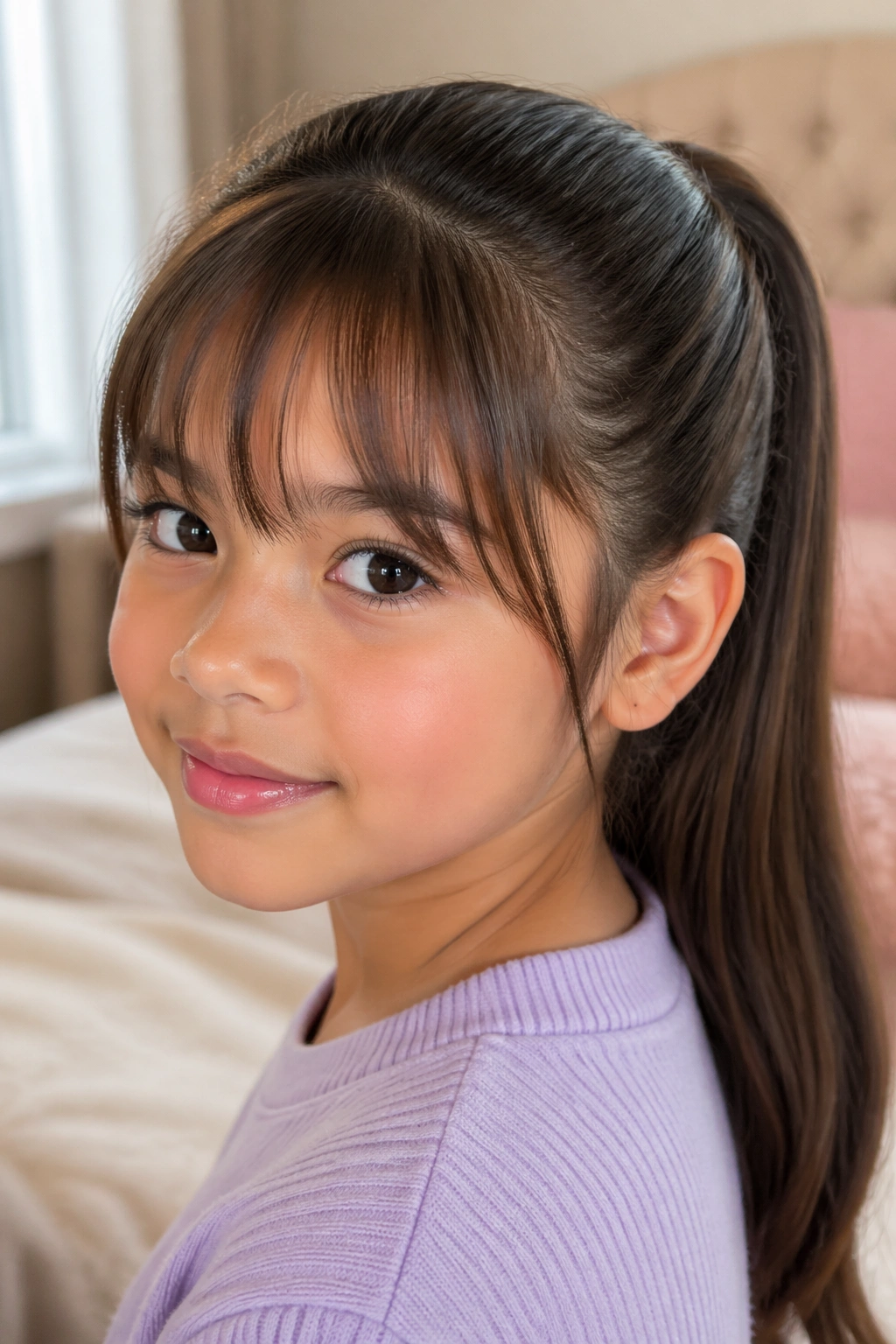
A ponytail with soft bangs is useful when a child has fringe, face-framing pieces, or that awkward in-between stage where bangs are growing out and nobody wants to talk about it. The ponytail keeps the back clean, while the front stays gentle and wearable.
I prefer soft bangs over stiff, sprayed-down fringe. The front should skim the forehead or brush to one side, not look lacquered in place. A little water or leave-in on the fringe is enough to guide it. If you overdo the product, the bangs separate into strings and the whole thing loses its ease.
What to Watch For
- Keep the bangs light and movable.
- Use a soft brush, not a hard comb, on the fringe.
- Avoid pulling the ponytail so tight that the front lifts oddly.
- Let a few tiny pieces fall naturally if that keeps the shape softer.
This style works well for school and casual outings because it looks done without looking overworked. That balance is harder to find than it sounds.
17. Braided Length Ponytail
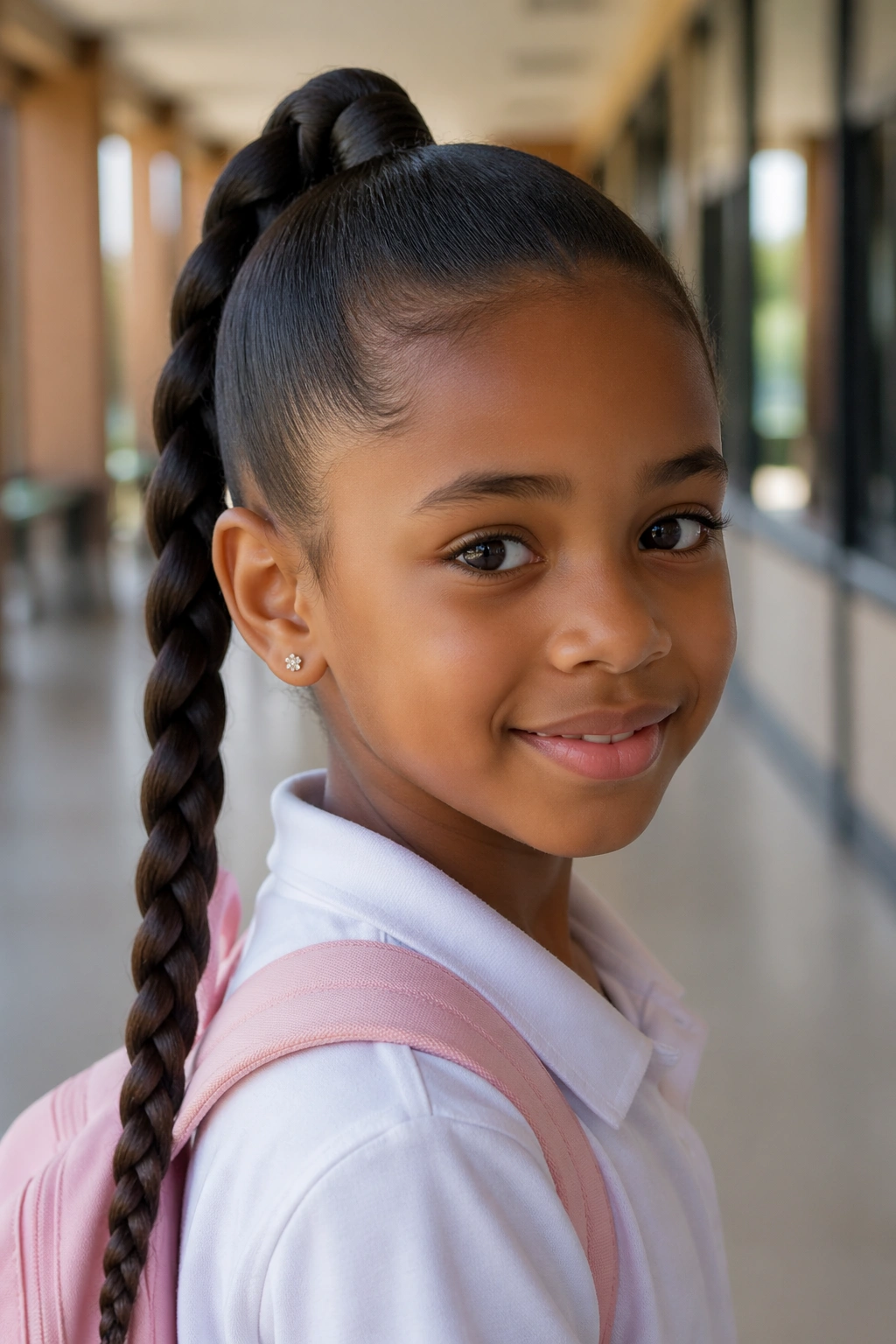
A braided length ponytail starts sleek at the scalp and finishes as a braid down the tail, which makes it a smart pick for kids who move around a lot. The top stays smooth and neat, while the braid keeps the length contained instead of swinging loose every time they turn.
I reach for this when I want the style to survive recess, car rides, and after-school errands. A single three-strand braid is enough. If the hair is very long, a rope braid can be quicker, though it gives a different look. Either way, the end is less likely to tangle than a plain loose tail.
The braid also gives the style a tidier finish when the hair is layered. Loose ends tend to drift out of a ponytail, especially on humid days or after running around. A braid keeps the shape intact and makes detangling later much easier.
Secure the bottom with a small elastic that matches the hair color, or keep it plain if you want the braid texture to do the talking.
18. Heart-Part Sleek Ponytail
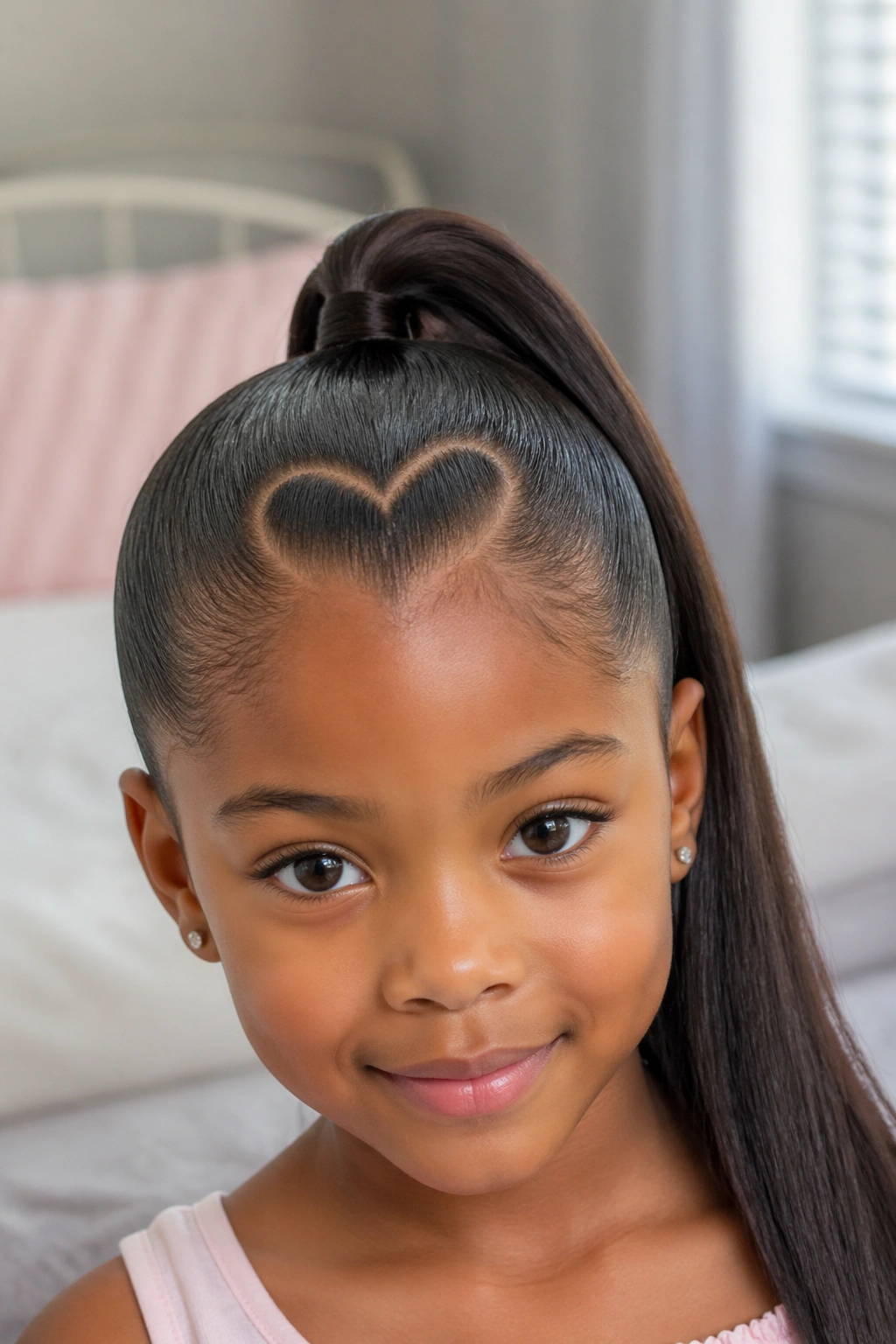
A heart-part ponytail is the sort of style that makes a kid grin when they catch sight of it in the mirror. The part itself is the whole point here. It turns a simple ponytail into something special without needing extra hair, extra tools, or a ton of time.
Unlike a plain center part, a heart part takes a little patience. You shape the top curve first, then bring the line down toward the middle point before smoothing both sides back. The shape does not have to be perfect to work. In fact, a slightly soft heart often looks better than one that is too sharp and rigid.
This version is best for birthdays, school spirit days, or any occasion where the hairstyle can be the outfit’s little surprise. Keep the ponytail itself simple so the part stays the focus. A low ponytail usually lets the shape show best.
If the hair is slippery, a touch of styling cream at the roots helps hold the curved lines while you work.
19. Two-Strand Twist Ponytail
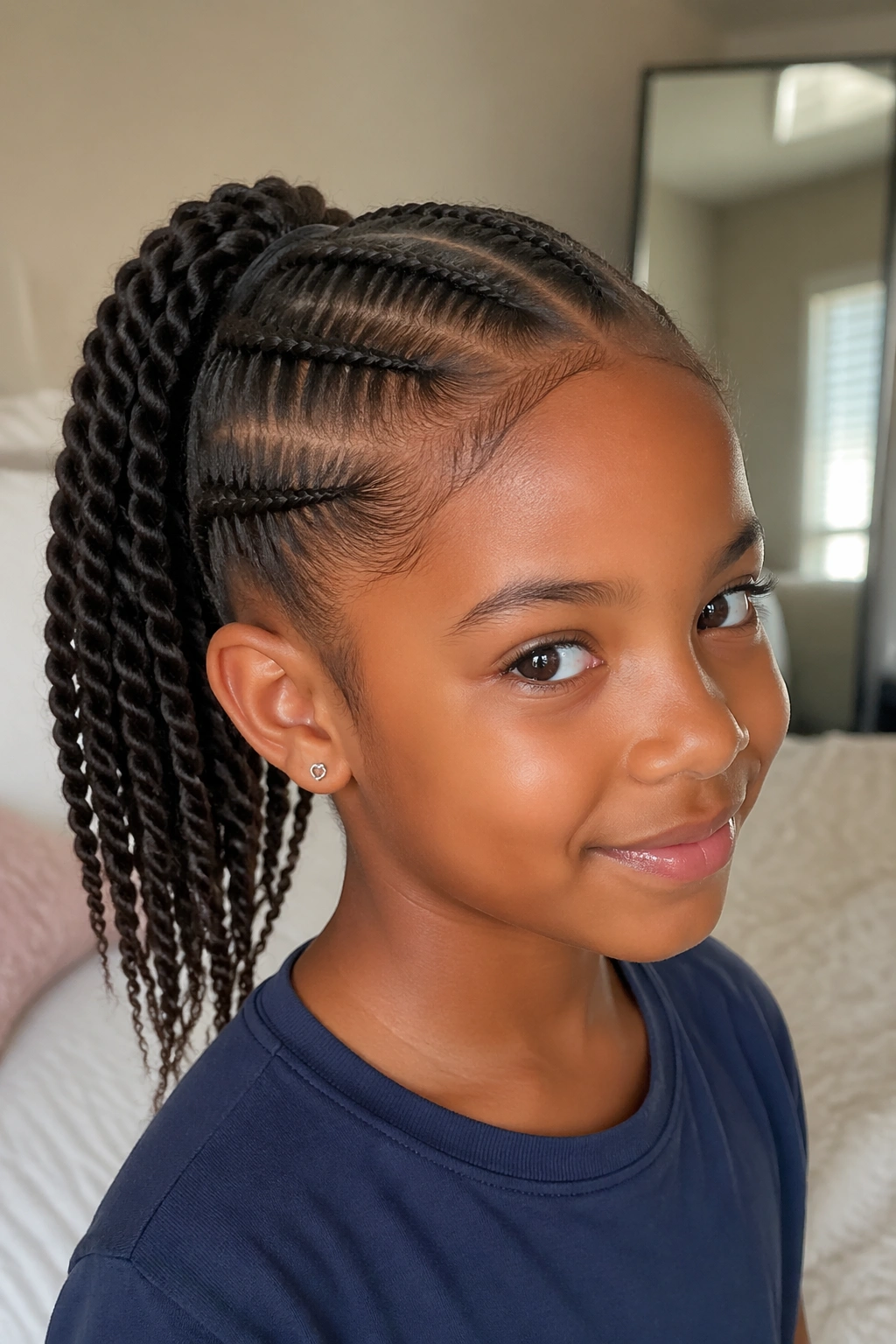
Two-strand twists give a sleek ponytail a softer texture than braids, and that difference matters on textured hair. The twists lie neatly, move a little more freely, and usually feel gentler to redo if a section loosens during the day.
What Makes It Different
Twists are faster than braids for many hands, and they can look more relaxed while still keeping the front controlled. I like them when a child wants a style that looks finished but not overly formal. They also work well if the hair has a little stretch and you want to preserve length without pulling too hard.
A damp or lightly moisturized base helps the twist hold its shape. If the hair is bone dry, the strands can separate before you even reach the ponytail. Keep the twists small enough to stay neat, but not so tiny that they take forever.
How to use it: twist each front section from the hairline back toward the crown, secure them together, then gather the rest into one ponytail. Add a small elastic at the base and leave the length smooth or braided.
20. Sleek Pigtail Ponytails
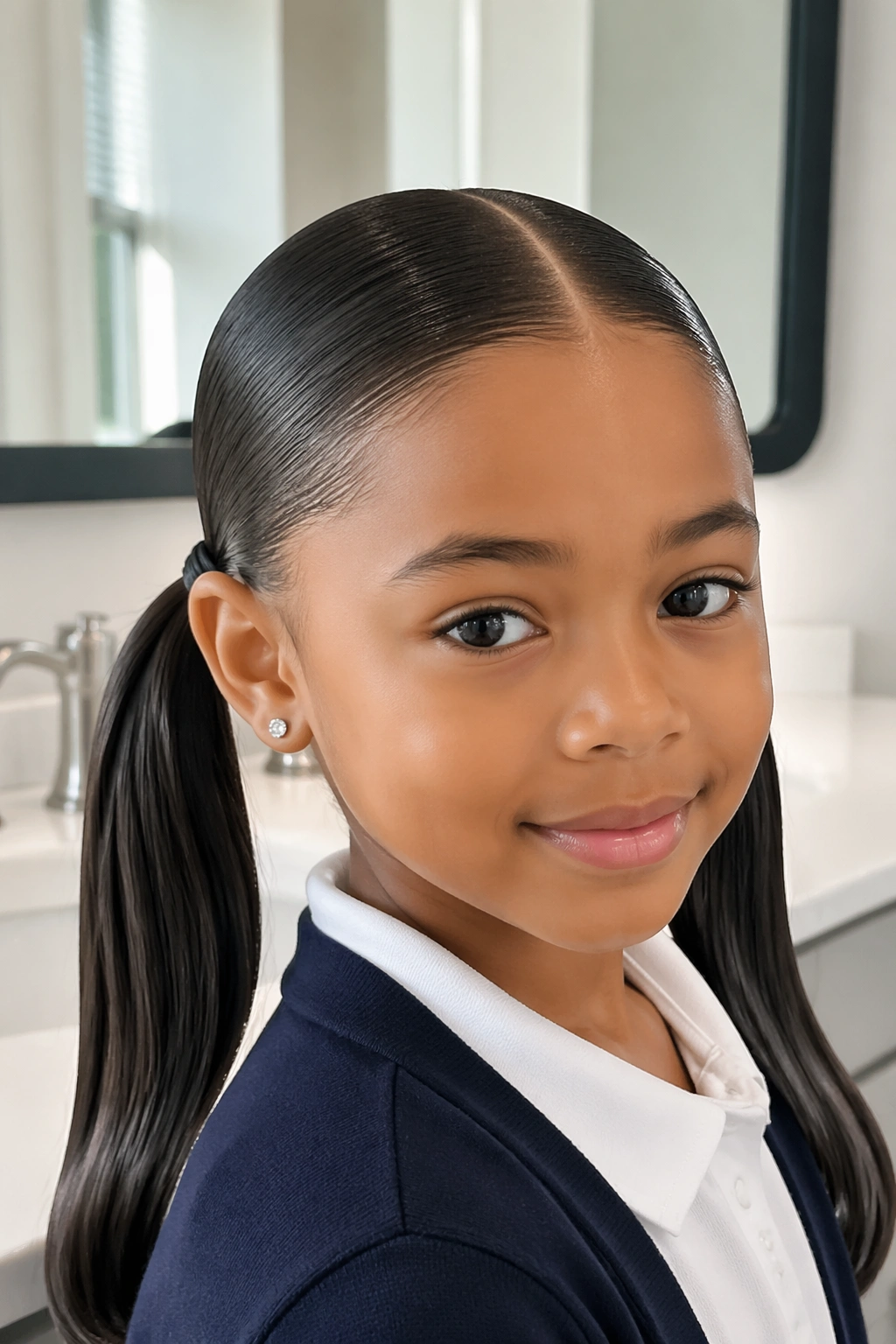
Sleek pigtail ponytails are underrated. People hear pigtails and think of a little-kid look, but a clean, low pair of ponytails can be sharp, tidy, and genuinely practical. They distribute the hair more evenly, which helps on thick or dense hair that gets heavy fast.
The clean part matters more than the height here. A straight part and matching placement on both sides keep the look balanced. If one ponytail sits a half inch higher, it is all you can see. That is one of those tiny things that drives parents a little crazy, so measure by feel if you need to. Match the ears, then check the mirror.
This style is nice when a child wants their hair down but not in their face. It keeps movement at the shoulders and still feels playful. For school days, that can be enough.
Use soft elastics and avoid dragging the brushes through repeatedly. Once the hair is smooth, stop. Overworking it makes the finish frizzy.
21. Swoop-Bang Sleek Ponytail
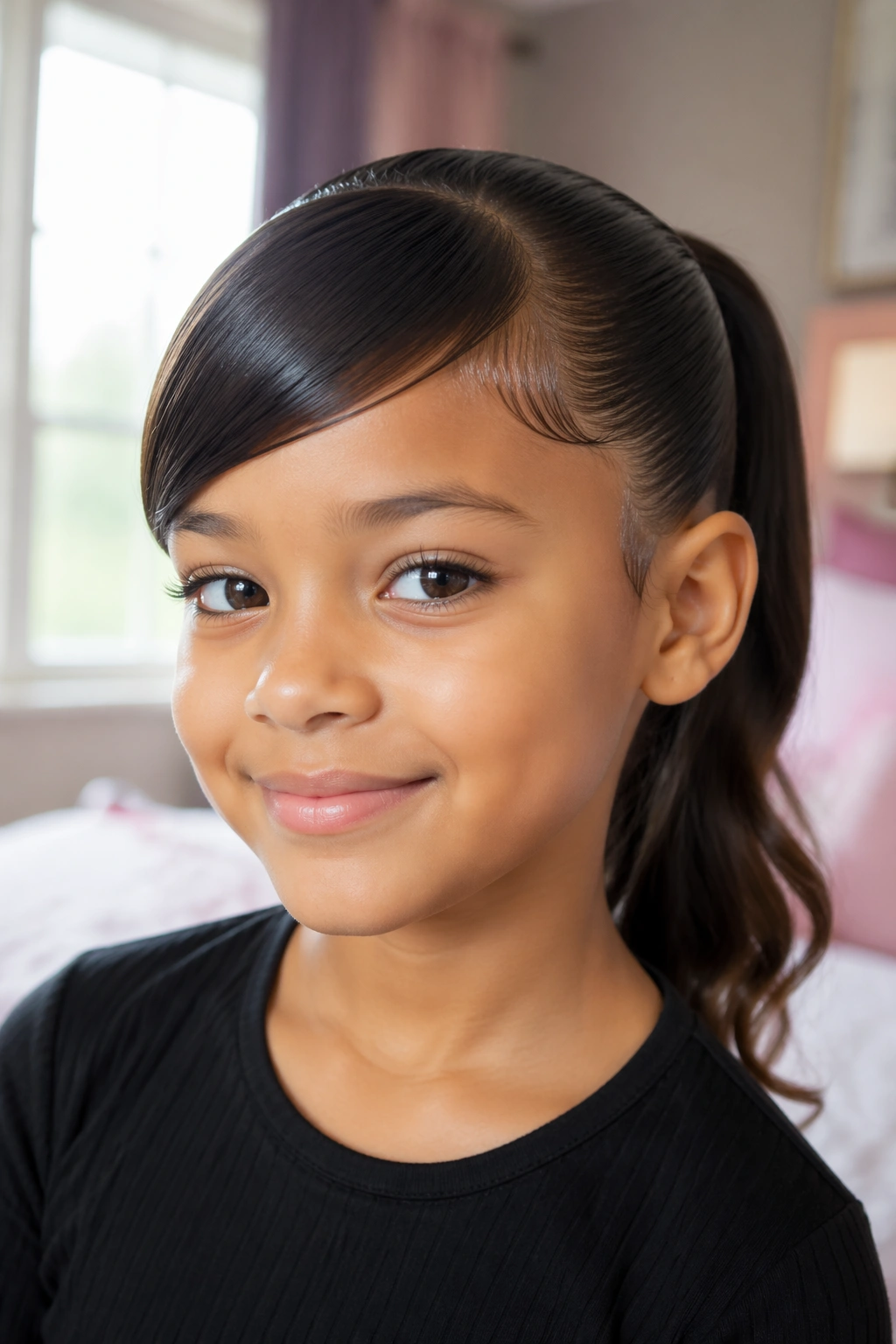
A swoop-bang ponytail gives the front a little motion while the rest stays pulled back and controlled. It is a good compromise for kids who like having something across the forehead but do not want full bangs cut in. The swoop can come from a side part or from one longer front section brushed diagonally.
The shape looks best when the front piece has enough length to curve naturally. If it is too short, it will keep springing loose. In that case, a softer side part is usually better. With enough length, the swoop frames the face and makes a plain ponytail feel more finished.
How to Get the Most From It
Use a light cream or water mist on the front section before brushing it into place. Secure the ponytail first, then refine the swoop so you can see how the rest of the hair sits. That order helps you avoid over-smoothing the whole head just to fix one section.
A flat clip can help while you set the shape, but remove it before the child leaves. Nothing ruins the look faster than a clip that pinches.
22. Wavy-Length Sleek Ponytail
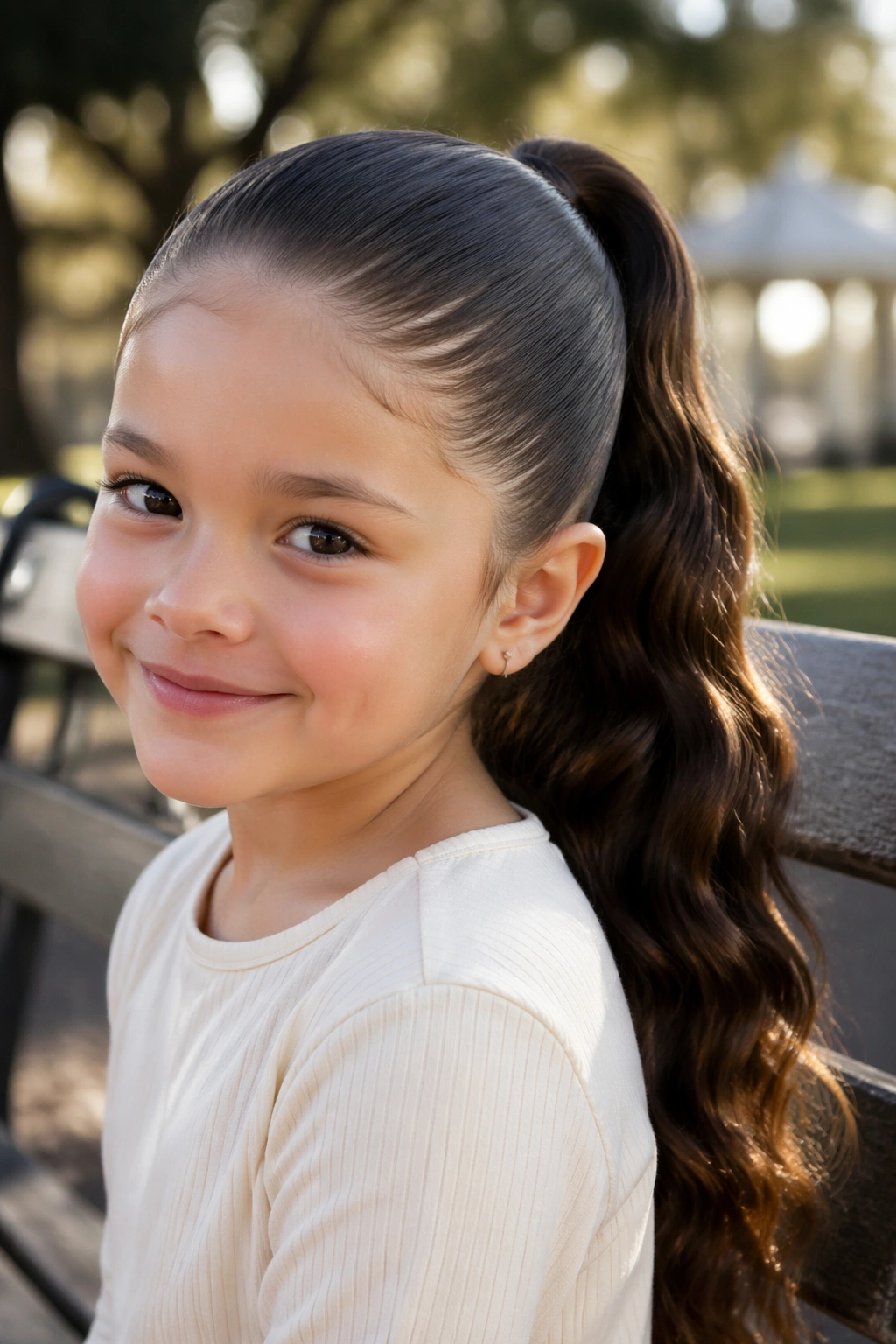
A wavy-length ponytail is what I suggest when a child has natural waves and nobody wants to fight them into a straight line. The roots and crown stay sleek, but the ponytail length keeps its bend and texture. That contrast looks intentional, not lazy.
This style works because it respects the hair instead of forcing it flat. A child with loose waves often ends up with a puffier look if you brush the entire head hard. Leaving the tail slightly textured avoids that. Smooth the top, gather the ponytail, and let the length do its own thing.
Key Details
- Use a brush only on the crown and sides.
- Leave the ponytail length loose, then finger-comb it.
- Add a tiny bit of leave-in to the ends if they frizz.
- Finish with a soft scrunchie or plain elastic.
It is a good choice for casual days, outdoor events, and any time you want an easy style that does not fight the hair’s natural pattern.
23. Criss-Cross Sleek Ponytail
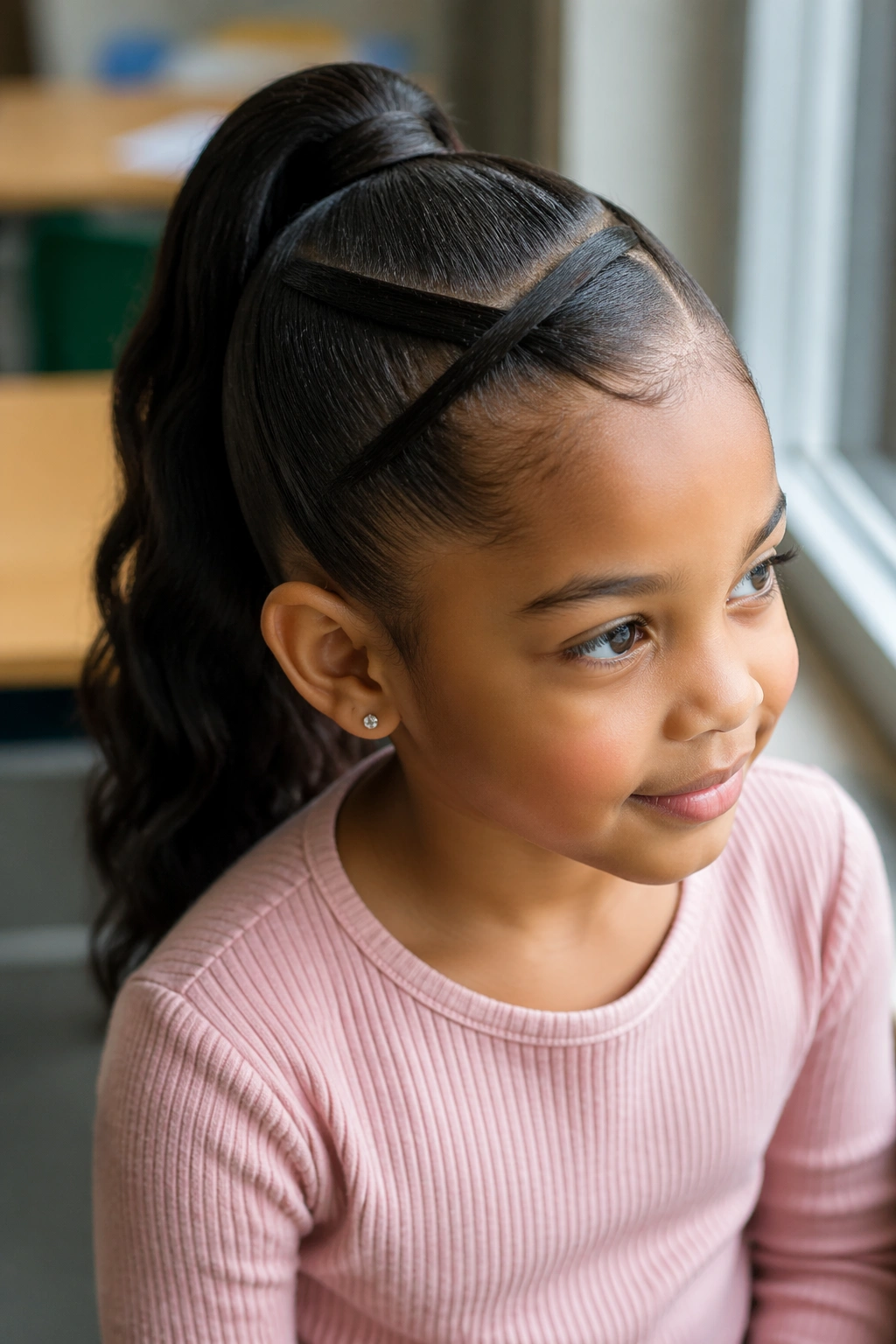
A criss-cross ponytail is one of those styles that looks more elaborate than it really is. You take two small side sections, cross them over each other before they meet the ponytail base, and suddenly the whole style feels more finished. It is a nice way to dress up a basic ponytail without adding braids or extra accessories.
The neat part is the way the crossing creates a little frame around the center. That frame helps if the hairline has shorter pieces or if the child’s hair is fine and needs more shape. It also adds some hold at the front, which means fewer flyaways later.
A small elastic can secure the crossed sections before they join the ponytail, or you can pin them if the hair is very thick. Keep the lines clean. If the sections are too big, the criss-cross gets clunky fast.
My take: this is one of the best options for a child who wants something pretty but still easy to sit in a classroom chair with.
24. Scrunchie-Stack Sleek Ponytail
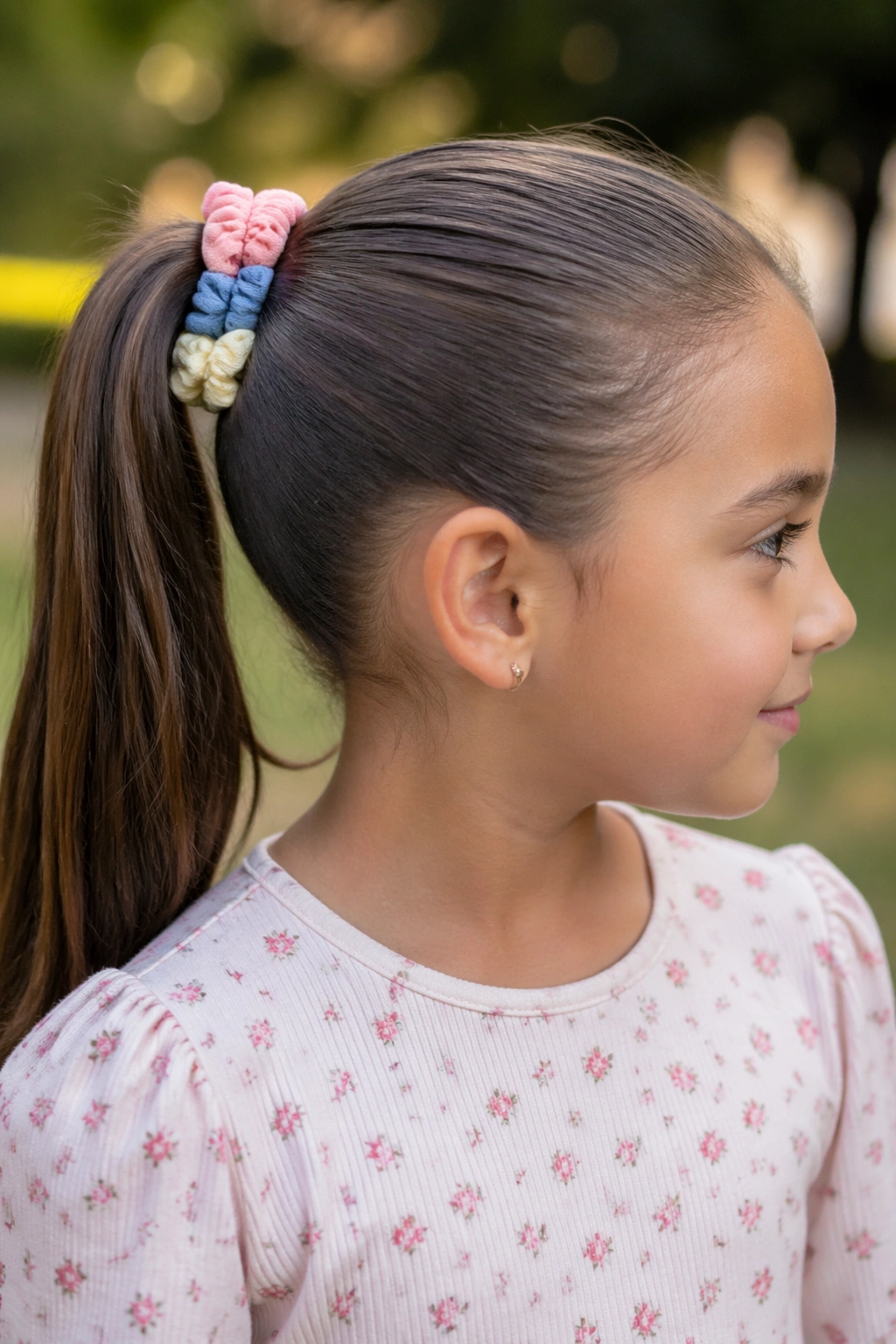
A scrunchie-stack ponytail gives a sleek style a little color and volume without turning it into a giant hair moment. Instead of one elastic, you use two or three fabric scrunchies spaced slightly apart along the base or the length. The result feels playful and soft.
Unlike a plain elastic, a scrunchie adds shape around the ponytail base, which is useful when the hair is fine and the style needs a bit more presence. The stack also makes it easy to mix textures — cotton, velvet, satin — without needing extra pins or clips.
This style works best when the ponytail itself is smooth and the scrunchies are the accent, not the other way around. If the scrunchies are too bulky, the hair can start to look weighed down. Keep the stack tidy. Three small scrunchies usually look better than one giant puff and two extras fighting for space.
I like this for weekends, playdates, and casual family outings when the child wants something cheerful but not elaborate.
25. Thread-Wrapped Base Sleek Ponytail
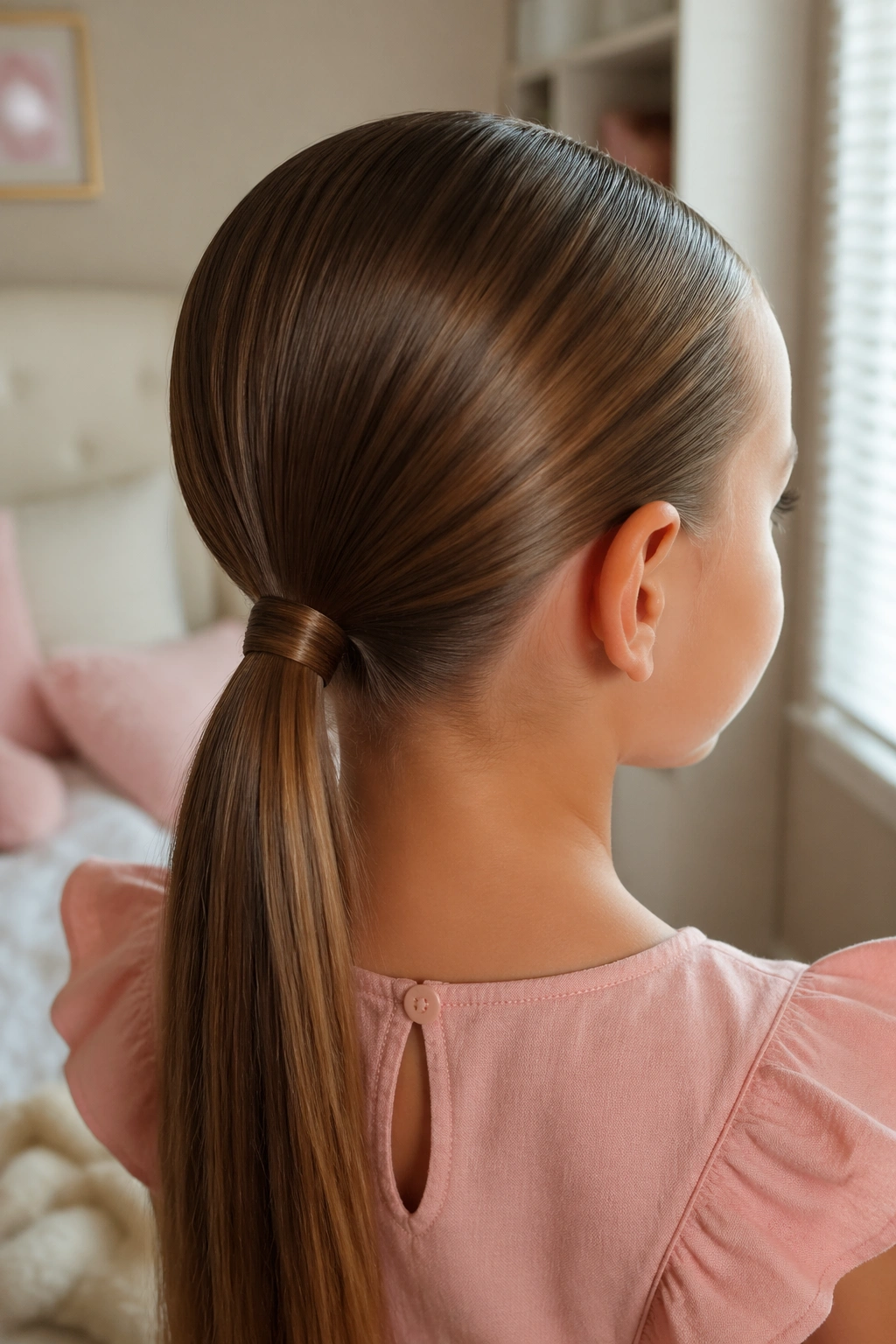
Thread-wrapping the base of a ponytail is a small detail that can make the whole style feel custom. You use a strip of ribbon, yarn, or thread to wind around the elastic and cover it, which adds color and polish without changing the structure of the ponytail itself.
What to Watch For
- Keep the wrap smooth and flat.
- Use a material that does not snag.
- Stop wrapping before the base gets bulky.
- Secure the end underneath with a pin or a tight tuck.
This works especially well on kids who like color but not big accessories. A thin gold thread, a bright ribbon, or even a soft cotton cord can change the mood of the style. Just keep the wrap neat. If it gets lumpy, it starts to look homemade in the wrong way.
The best part is that this style is easy to match to an outfit. School colors, party colors, holiday colors — it all fits without changing the ponytail shape.
26. Minimalist Center-Part Sleek Ponytail
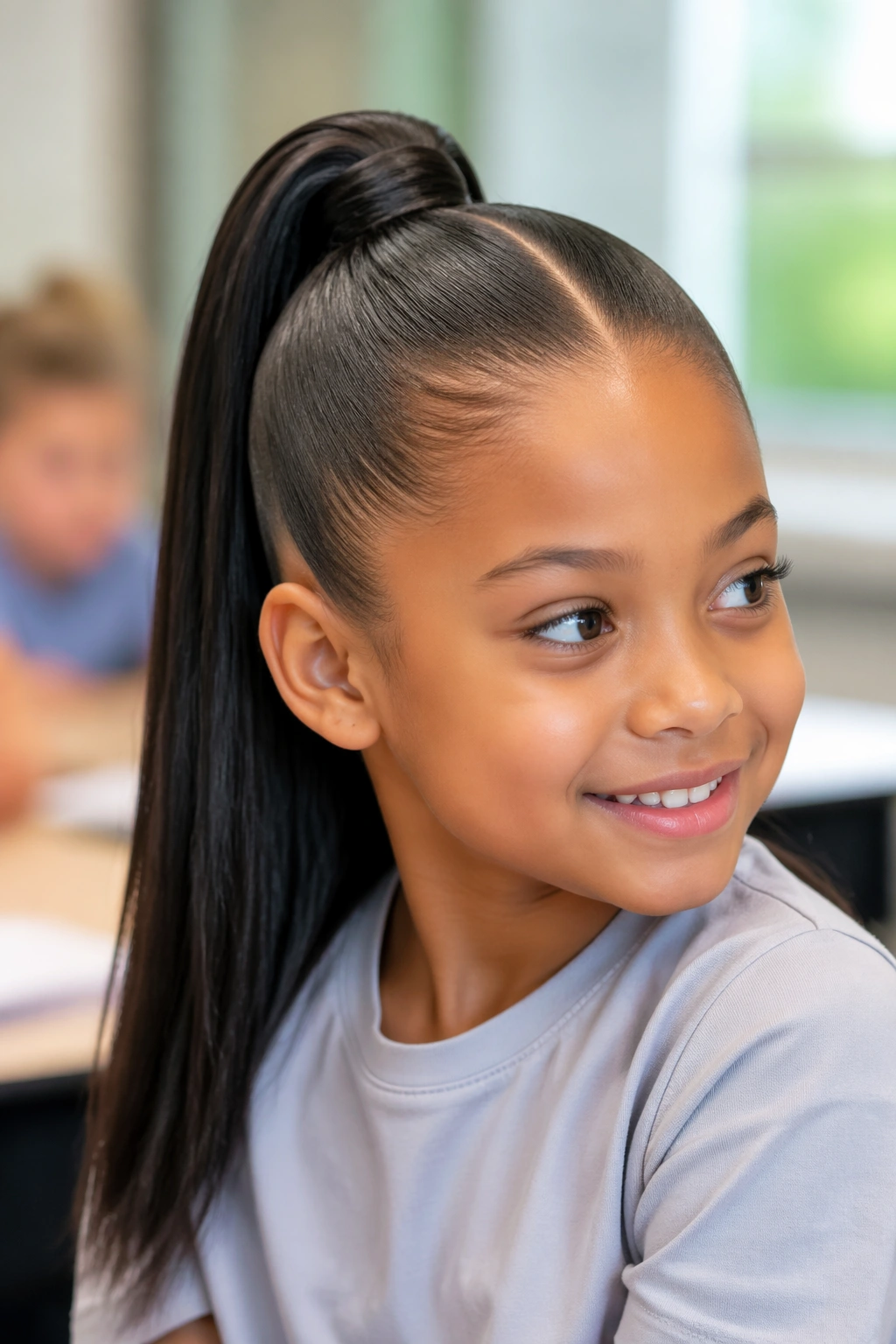
Sometimes the plainest version is the smartest one. A minimalist center-part sleek ponytail strips everything down to the clean part, the smooth crown, and the single tie. No braid. No ribbon. No extra piece around the base. Just a neat line and a tidy finish.
That simplicity is the point. It works for school uniforms, music recitals, and kids who hate “hair stuff” but still need to look put together. It also photographs nicely because the shape is easy to read. When the part is straight and the ponytail sits evenly, the whole head looks calm and deliberate.
The trick is to make the part precise and stop there. If you keep fussing with it, you’ll only create frizz. Brush the hair back in sections, secure the ponytail, then leave it alone. The fewer times you run your hands over it, the better it holds.
I reach for this style when I want the hair to disappear into the background and let the child’s face do the talking.
27. Sleek Ponytail with a Soft Bow Finish
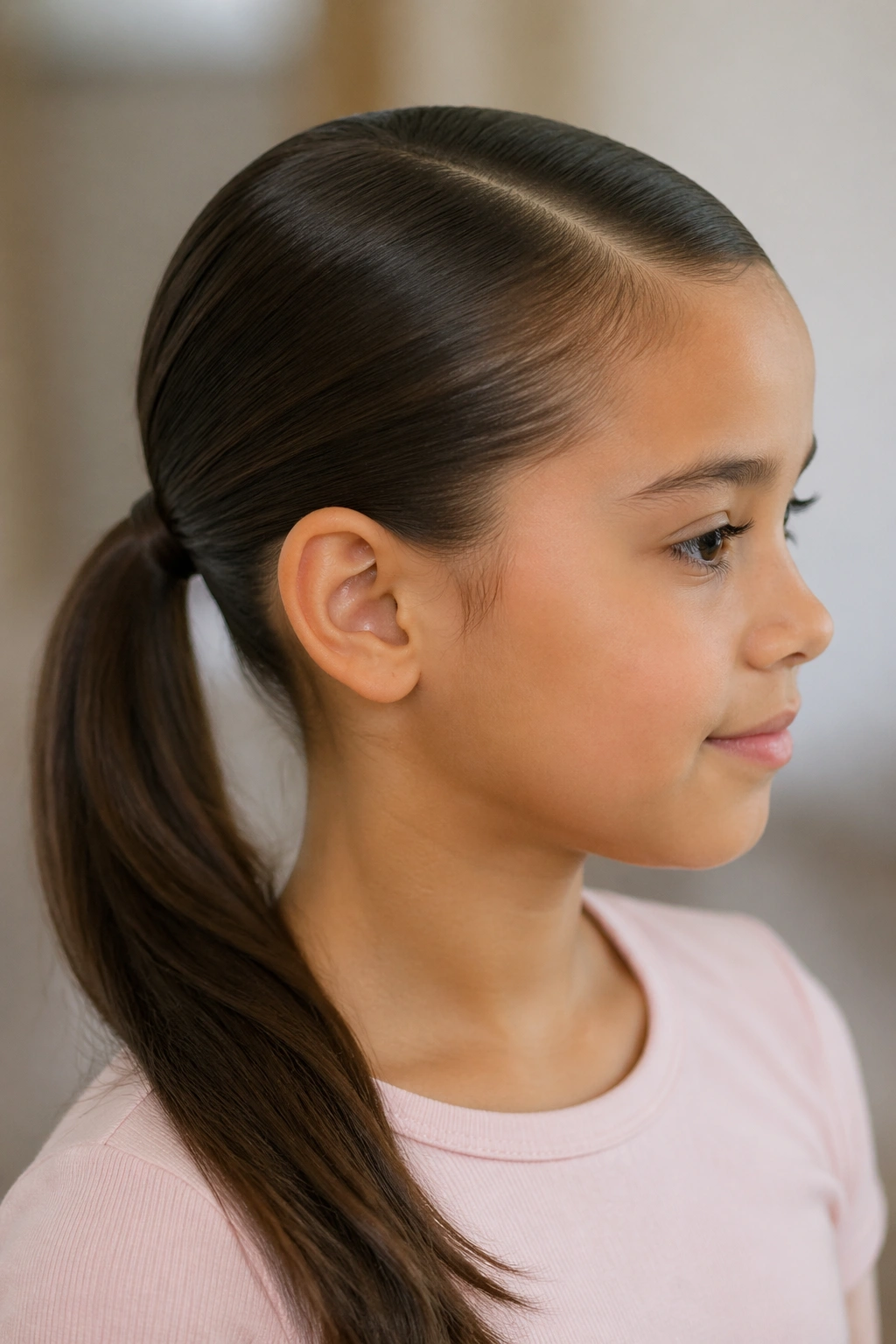
A soft bow finish is how you make a sleek ponytail feel sweet without making it look too young. The bow should be small, fabric, and easy to wear — not oversized, stiff, or noisy. Satin and grosgrain both work well, depending on whether you want a softer sheen or a little more structure.
This style is a strong pick for birthdays, holidays, and family photos because it keeps the base neat while giving the ponytail one final detail. The bow can sit under the ponytail, over the elastic, or slightly off to one side if you want a little asymmetry. I prefer the smaller version. Big bows can swallow a child’s head in pictures.
Keep the rest of the ponytail simple. That is what makes the bow look intentional instead of crowded. If the hair is straight and sleek, the ribbon gets to be the focus. If the hair has texture, the bow gives the whole look a soft finish that feels cheerful and easy to wear.
And that is really the sweet spot with kids’ ponytails: tidy enough to last, gentle enough to wear, and flexible enough to move from a school desk to a birthday cake without a full redo.
