If you’ve been sleeping on curly bob cuts for natural hair, it’s time to wake up — because this style category is genuinely one of the most versatile, face-flattering options out there for Black women with textured hair. The bob has gone through countless iterations over the years, and the curly natural version manages to be simultaneously low-maintenance and high-impact. Whether your coils are loose and springy or tight and dense, there’s a curly bob shape that was practically designed for your hair type.
Why Curly Bobs Work So Well on Natural Hair
Natural hair has a built-in advantage when it comes to bobs: shrinkage. What might look like a chin-length cut on straight hair can actually sit several inches shorter once your curls contract — which means you get major volume and shape without sacrificing length. That natural lift gives the bob a fullness that straight-haired people literally have to blow-dry and curl into existence. You get it for free.
The structure of a bob also works in harmony with the way natural curls grow and fall. Curls don’t hang flat against the skull the way straight hair does — they expand outward, creating a natural “frame” shape that mimics the rounded silhouette most bob cuts are designed around. So instead of fighting your hair’s natural tendencies, a curly bob leans into them.
Volume and shape come standard. You’re not chasing a silhouette — your hair is already building one.
The Face-Framing Factor
Not all hairstyles are equally flattering across different face shapes, but curly bobs have a remarkable track record of working across the board. The key is in the cut’s structure. A well-executed curly bob can be tailored to add width, length, height, or balance depending on what your face shape needs.
For round faces, a bob cut with more volume at the crown and less at the sides creates the illusion of length. For square or angular faces, soft curls at the sides soften the jawline naturally. For longer or more oval face shapes, a fuller, rounder bob with volume at the cheekbones adds width in all the right places.
Talking to Your Stylist
Before you sit in the chair, know your curl pattern and your face shape. Bring photos — not of models with straight hair, but of actual natural hair bobs that excited you. Tell your stylist how much time you’re willing to spend on maintenance, because the cut they give you should fit your real life. A bob that looks incredible in the salon but requires two hours of styling daily isn’t actually serving you.
Pro tip: Ask your stylist to cut your hair in its natural curl state, not stretched. Cuts done on stretched or blown-out natural hair often result in uneven shrinkage once the hair contracts — meaning the shape won’t be what you expected.
Maintenance Reality Check
One of the biggest myths about natural hair bobs is that shorter means easier. Sometimes it does. But it can also mean more frequent trims to keep the shape clean, more effort per styling session because every curl is visible, and more intentional moisturizing because shorter hair can dry out faster.
That said, bobs do eliminate a lot of the detangling work that longer natural hair demands. Less hair means less time in the shower, less product required per wash, and faster drying. For many women, that trade-off is absolutely worth it.
The sweet spot for most low-maintenance curly bobs is a wash-and-go-friendly cut — one where the shape holds up whether you define your curls carefully or just scrunch and go. Not every bob achieves that. The ones that do tend to have weight removed from the interior rather than blunt edges all around.
Product Picks for Curly Bob Styling
Short and medium-length curly bobs actually respond beautifully to lighter products than longer natural hair usually requires. Heavy butters and thick creams can weigh down a bob and kill the shape almost immediately. Instead, reach for:
- Curl-defining gels or custards for hold without heaviness
- Leave-in conditioners in spray form to add moisture without adding weight
- Lightweight oils (like argan or grapeseed) for sealing — not heavier oils like castor
- Curl refresher sprays for reviving the style on non-wash days
The goal is definition with movement. A curly bob should bounce, not sit stiff. If your hair feels crunchy after drying, scrunch out the cast gently with clean hands or a microfiber towel — that gives you soft, defined curls with shape.
1. The Classic Rounded Curly Bob
There’s a reason this shape has stayed popular for so long — it genuinely flatters most face shapes and works on a wide range of curl types. The rounded bob is cut so that it’s slightly longer in the front and gradually shorter in the back, creating a curved, dome-like silhouette when the curls spring up.
This shape thrives on type 3 and 4 curls because the natural curl pattern creates that roundness without the stylist having to do much architectural work. The curls do the heavy lifting.
How to Get It
Ask for a rounded or circular bob with the shortest point at the nape. Request that interior layers be removed (not a layered cut, but rather weight removal from the inside) so the shape stays round rather than triangular. Have it cut dry in your natural curl state for the most accurate result.
Maintain the shape with a wash-and-go using a defining gel, and get a trim every 8-10 weeks to keep the roundness clean.
2. The Asymmetrical Curly Bob
Bold. Edgy. Absolutely stunning on natural hair. The asymmetrical bob features one side cut noticeably longer than the other — and on curly hair, that contrast is even more dramatic because of how shrinkage affects each side differently.
The beauty of the asymmetrical curly bob is that it’s inherently modern-looking without requiring any heat or manipulation. The cut itself creates drama. You show up and the style does the rest.
How to Get It
The key is finding a stylist who understands that both sides will shrink differently depending on your curl pattern in that area. Your nape curls might be tighter than your crown curls, which can affect the asymmetry in ways a stylist unfamiliar with natural hair won’t anticipate.
Pair this cut with a strong curl-defining product and scrunch well. Let air dry or use a diffuser on low heat.
3. The Tapered Curly Bob
A tapered bob keeps more length on top and at the sides while the nape is cut close — sometimes almost like a fade transitioning into the fuller top section. It’s part bob, part tapered cut, and entirely its own thing.
On natural hair, the taper creates a clean, polished look without requiring any straightening or heat styling. The contrast between the close-cut nape and the full curly top is visually striking.
How to Get It
Ask for a tapered nape with the length kept at your desired level on the sides and top. Make sure your stylist blends the taper smoothly into the body of the bob — a harsh line where the taper meets the length looks unfinished.
This style pairs well with a defined wash-and-go or a twist-out for extra definition on the top section.
4. The Bantu Knot-Out Bob
This isn’t a cut — it’s a styling approach that transforms a bob into something textured and sculptural. After washing and conditioning, you section the hair and twist each section into a Bantu knot. Once fully dry, you unravel the knots to reveal a stretched, defined curl pattern with incredible volume.
The Bantu knot-out on a bob is particularly effective because the shorter length means the unraveled curls have maximum spring and bounce. The style holds well throughout the day, especially with a light hold gel applied before knotting.
This method works best on type 4 hair where the natural curl pattern sometimes needs a little help to elongate and define without heat.
5. The Stacked Curly Bob
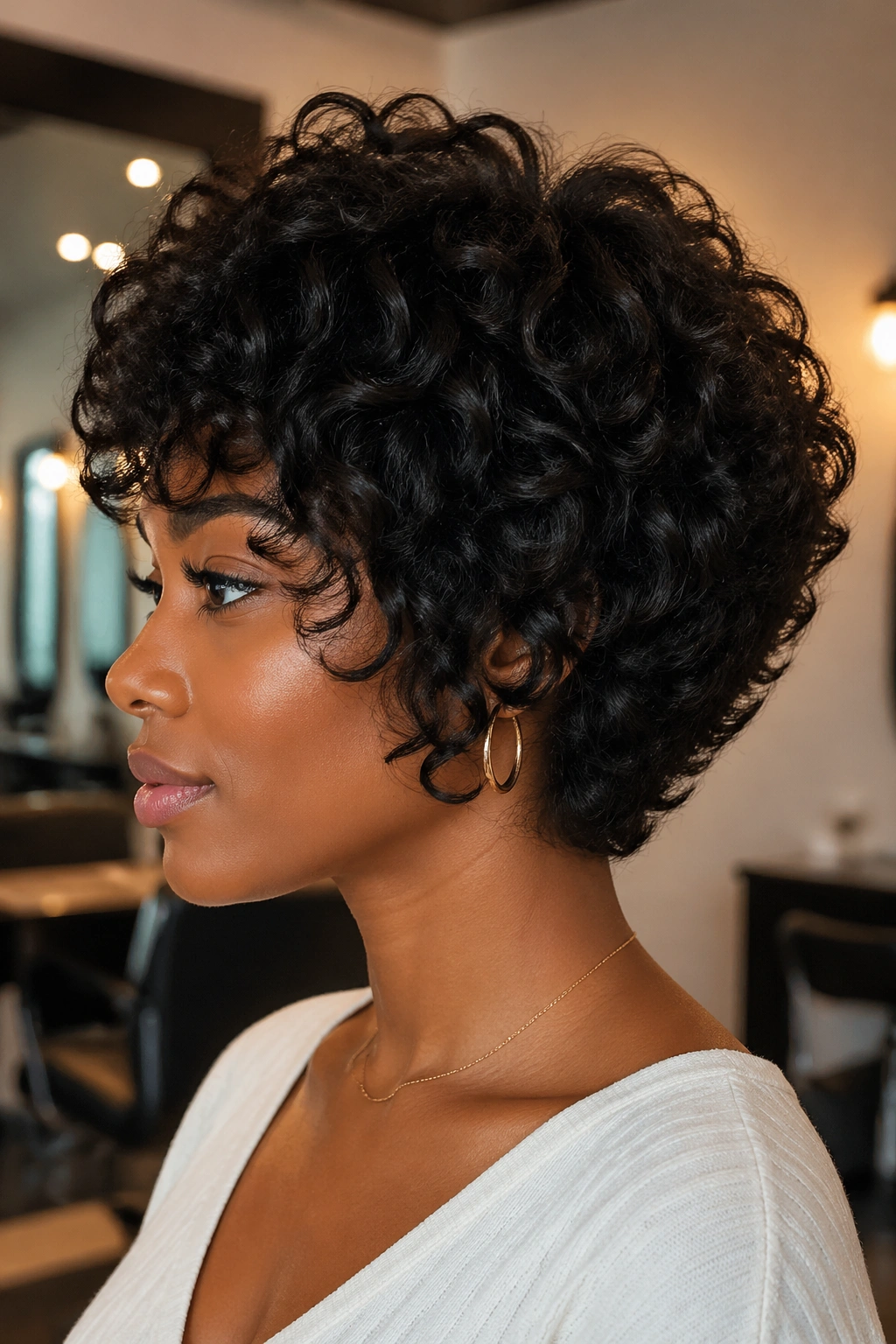
Stacking refers to a cutting technique where the hair in the back is layered in a way that creates height and volume at the crown, with the silhouette “stacking” upward. On curly natural hair, this amplifies the natural lift that curls already provide — the result is a bob with serious presence.
Stacked bobs tend to look particularly good on women with finer natural hair because the layering technique removes some of the internal weight that can make fine curls look flat.
Who It Suits
This style works on most face shapes but is especially flattering for oval and heart-shaped faces where extra volume on top and a tapered bottom complement the face’s natural structure.
6. The Fro-Bob
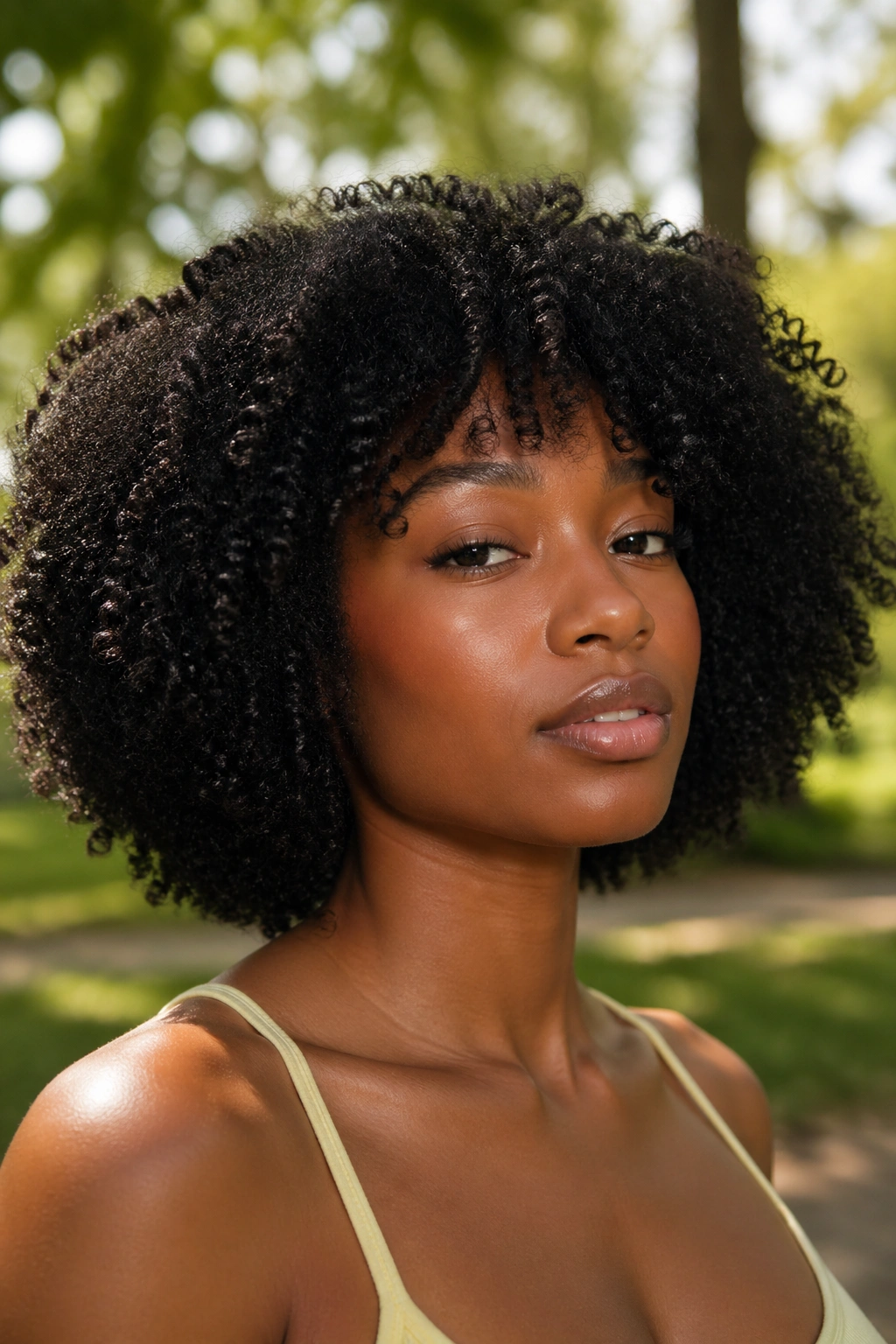
The fro-bob — or “frob” — is exactly what it sounds like: a bob-length afro. Instead of defined curls, the hair is worn in its fully natural state, picked out for maximum volume and rounded into a bob silhouette. No definition products, no curl activation — just your hair doing what it naturally does.
This is one of the most low-effort options on this list, which makes it perfect for natural hair wearers who want shape without spending time defining individual curls. Pick it out, shape it, go.
Works best on type 4a-4c hair where the natural texture picks out into a full, even cloud.
7. The Defined Wash-and-Go Bob
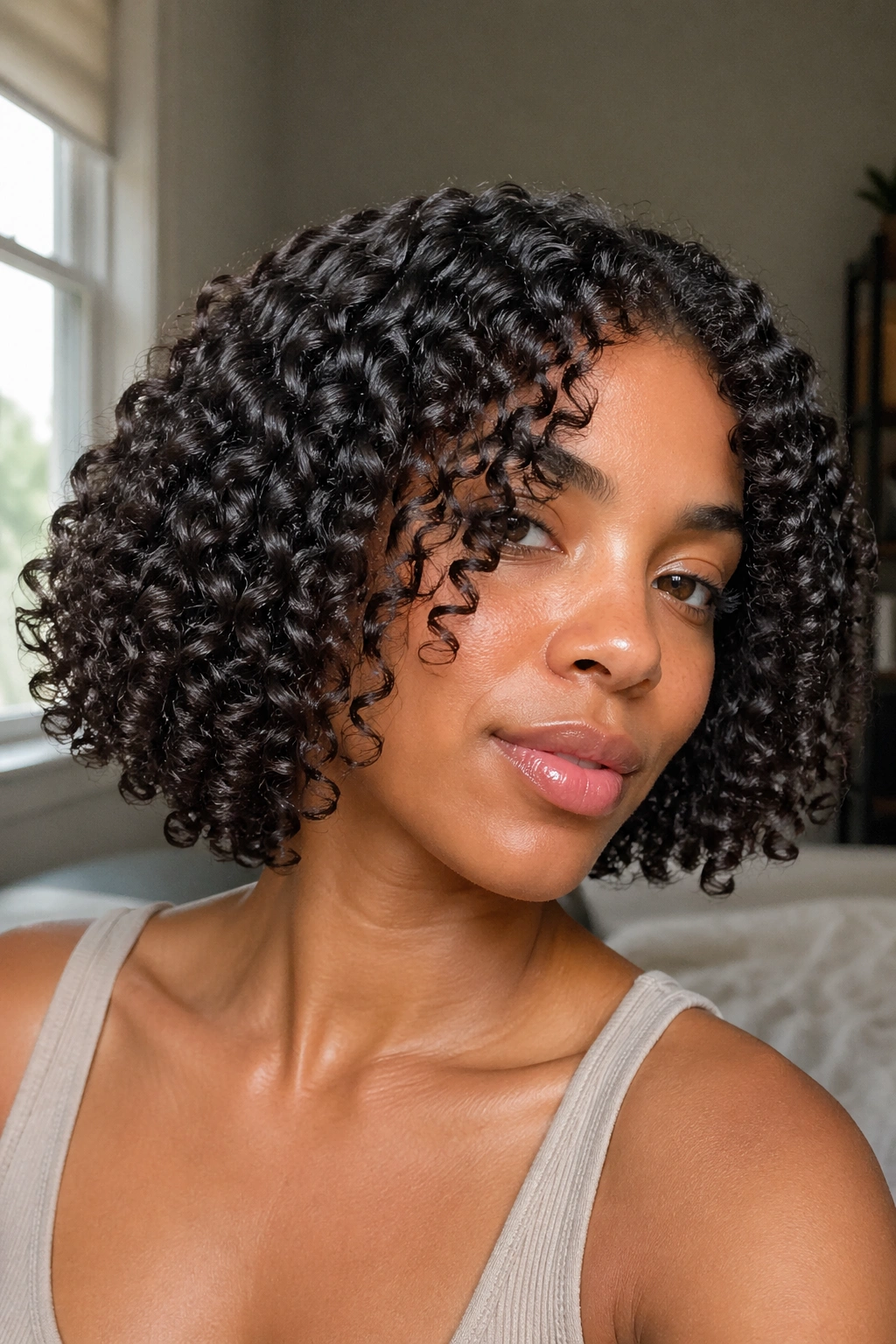
The wash-and-go bob is the gold standard for low-effort, high-payoff curly hair styling. You wash, condition, apply your curl-defining products, and let your natural curl pattern do the rest. On a bob, this results in a compact, bouncy style that looks intentional even when it required minimal effort.
The secret is in the products. A good curl-defining cream or gel applied on soaking-wet hair, followed by a hands-off drying process (diffuser or air dry), gives you the cleanest result. Touching it while it’s wet or damp breaks up the curl clumps and creates frizz.
How to Get It
Wash with a moisturizing shampoo, deep condition, apply leave-in and gel in sections, then diffuse or air dry completely before touching. That’s it.
8. The Lob (Long Bob) on Natural Hair
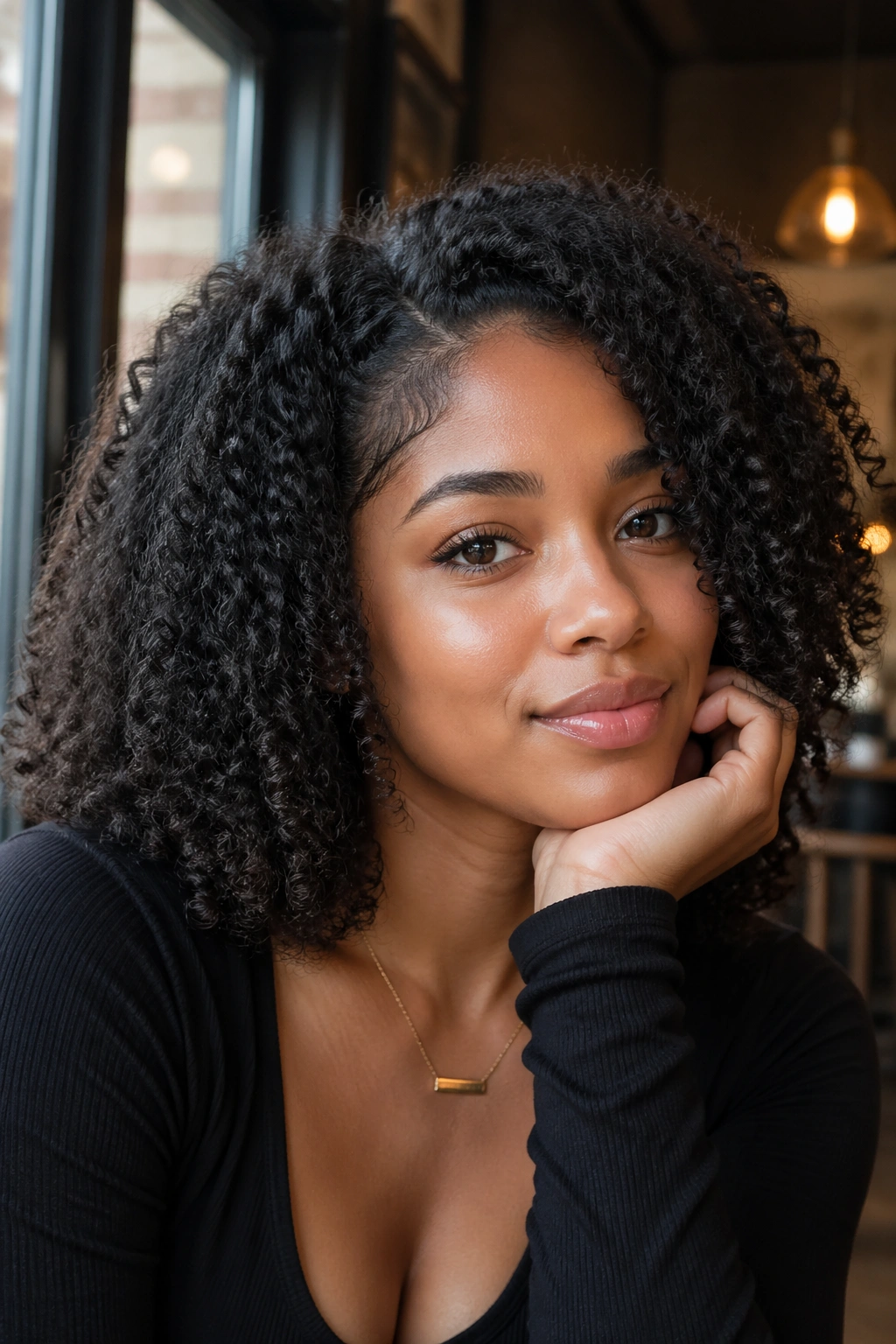
The lob sits between a traditional bob and shoulder-length hair — usually landing somewhere between the chin and the collarbone. On natural hair with significant shrinkage, a lob cut often sits at chin length or just below once the curls contract.
The lob gives you more styling versatility than a shorter bob — you can wear it down, pull it into a small puff, or pin it up in a loose updo. It’s the “choose your adventure” version of the curly bob.
This is a great starting point if you’re nervous about going shorter. You get the bob aesthetic without making a dramatic commitment.
9. The Textured Bob With Highlights
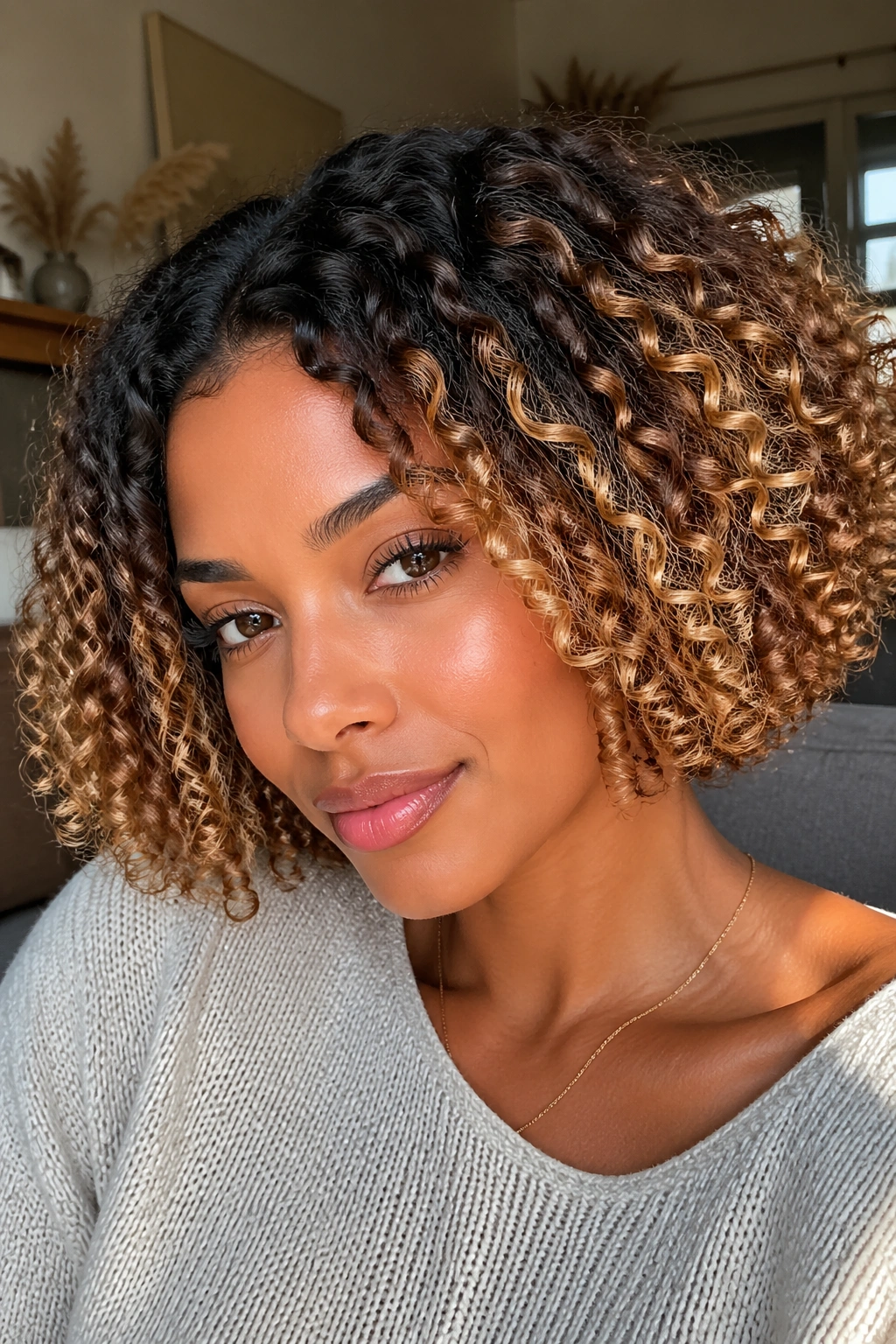
Color changes everything. A curly bob with strategic highlights — whether honey blonde, caramel, auburn, or copper — adds dimension that makes your curl pattern look even more defined and three-dimensional.
The contrast between darker roots and lighter ends creates the illusion of depth in each curl. And because natural curls already have a beautiful coil structure, adding color variation makes that structure even more visually interesting.
Opt for a balayage or hand-painted highlight technique rather than traditional foils, which can create a striped look. Balayage blends naturally and looks more organic with curly textures.
10. The Side-Parted Curly Bob
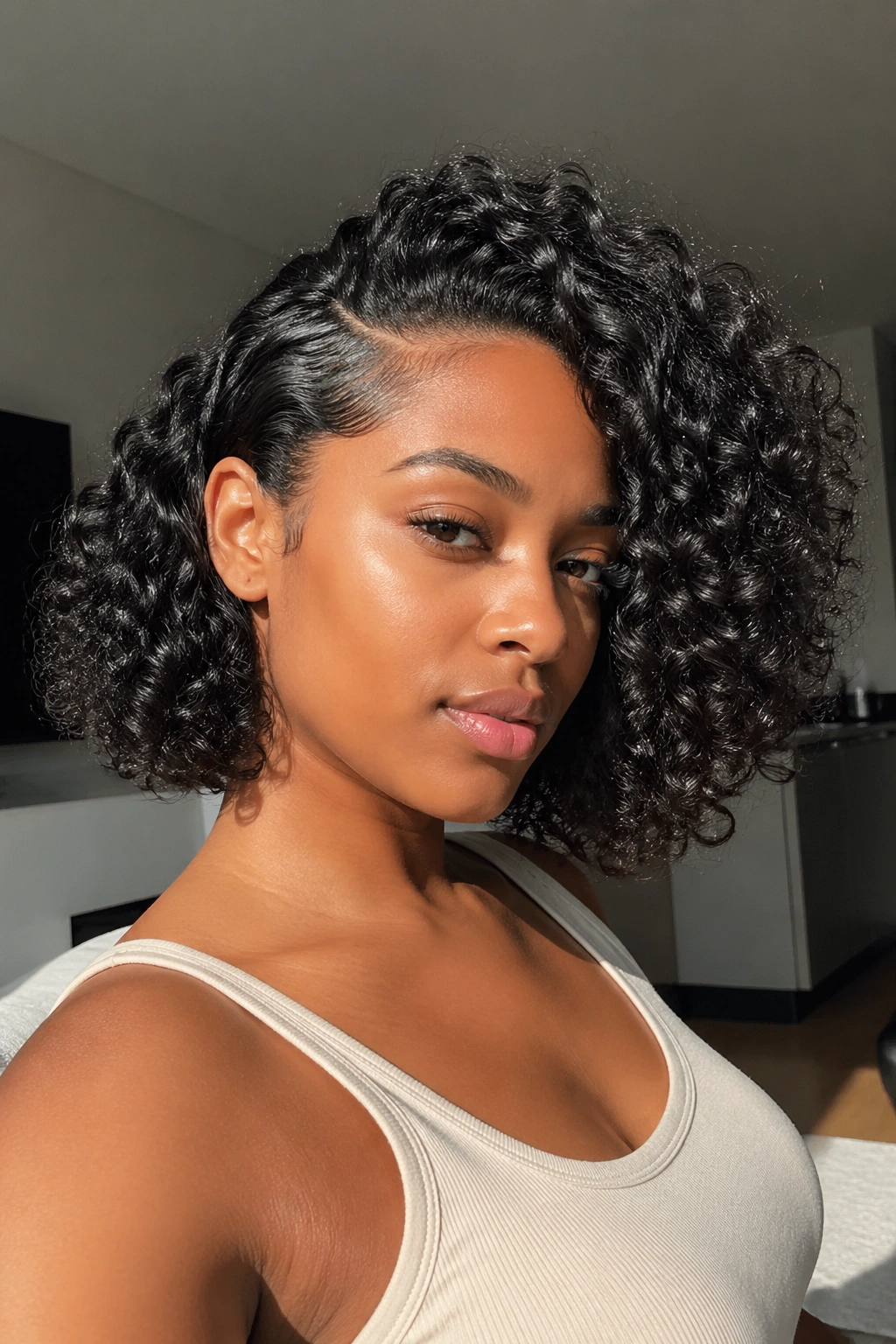
A deep side part completely changes the energy of a bob. One side falls fuller and more voluminous; the other side is swept back, often tucked behind the ear. The result is an asymmetrical, glamorous look that reads as polished without any heat styling required.
On curly natural hair, a deep side part can also help elongate the face — particularly effective for round face shapes where a center part tends to emphasize width rather than length.
11. The Coily Bob With Moisturized Definition
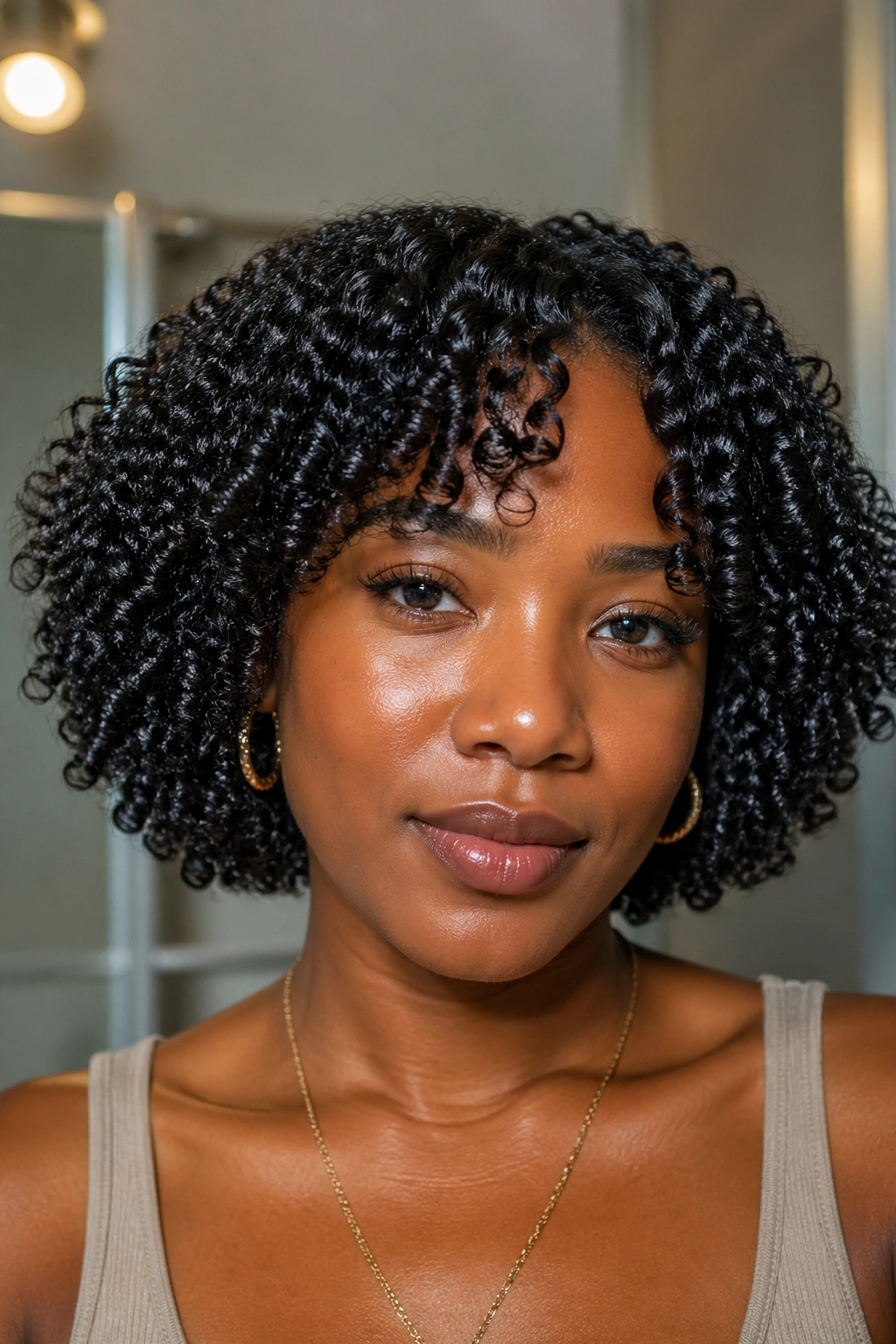
Type 4 coils — whether 4a, 4b, or 4c — are sometimes assumed to be “too tight” for a bob. Not true. A well-moisturized, defined type 4 coily bob is one of the most stunning things you’ll see, full stop.
The key is moisture. Type 4 hair often benefits from a L.O.C. method (liquid, oil, cream) layering approach before styling, which ensures the coils are hydrated enough to clump together and hold definition throughout the day.
12. The Curly Bob With Shaved Sides
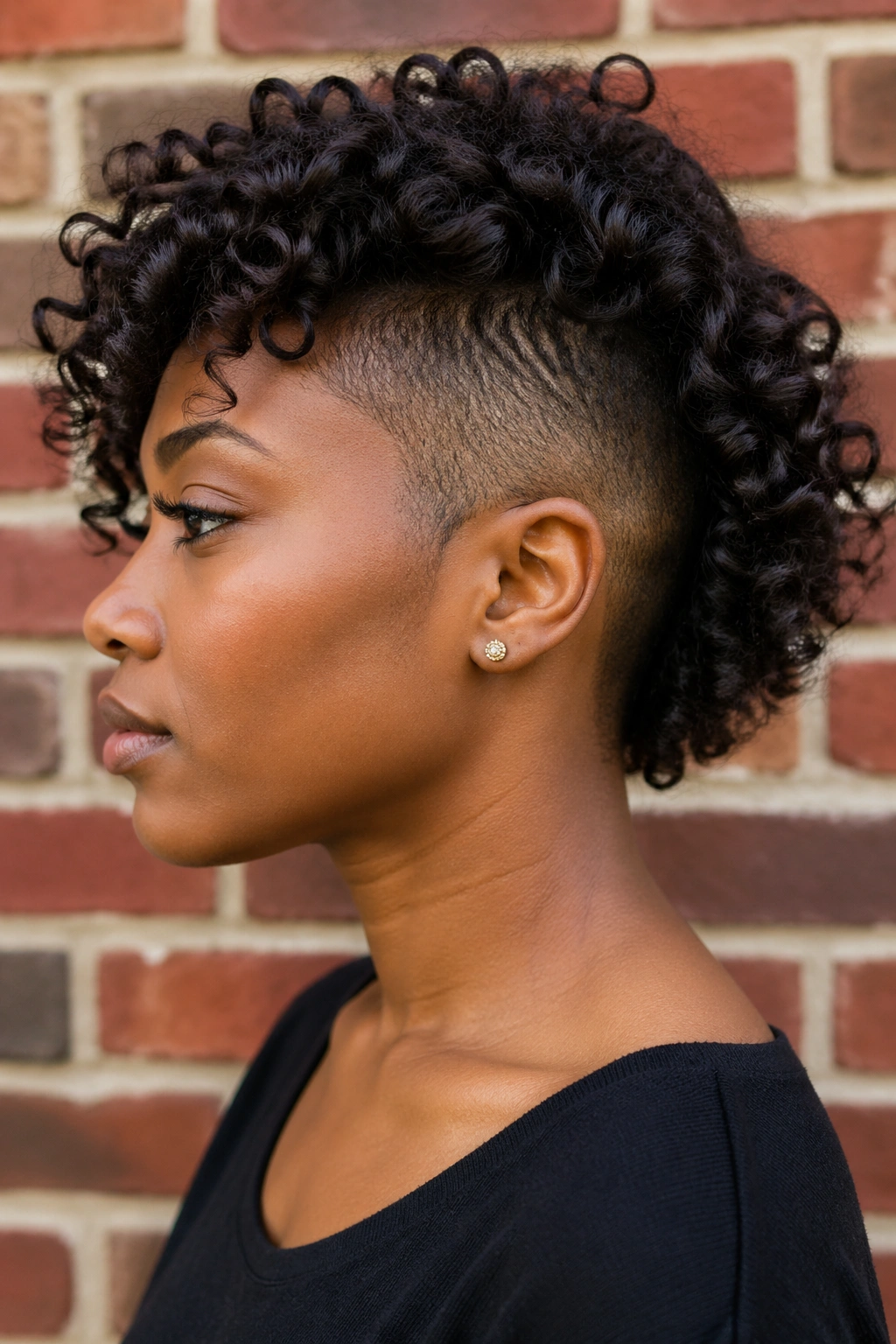
Undercut elements — shaved or closely cropped sides — paired with a full curly bob on top create one of the most striking natural hair looks possible. The contrast between the bare sides and the curly top is dramatic, modern, and unapologetically bold.
This style requires more maintenance than most other bobs because the shaved areas grow out quickly. But for women who love an edgy aesthetic, the upkeep is worth it.
13. The Two-Strand Twist-Out Bob
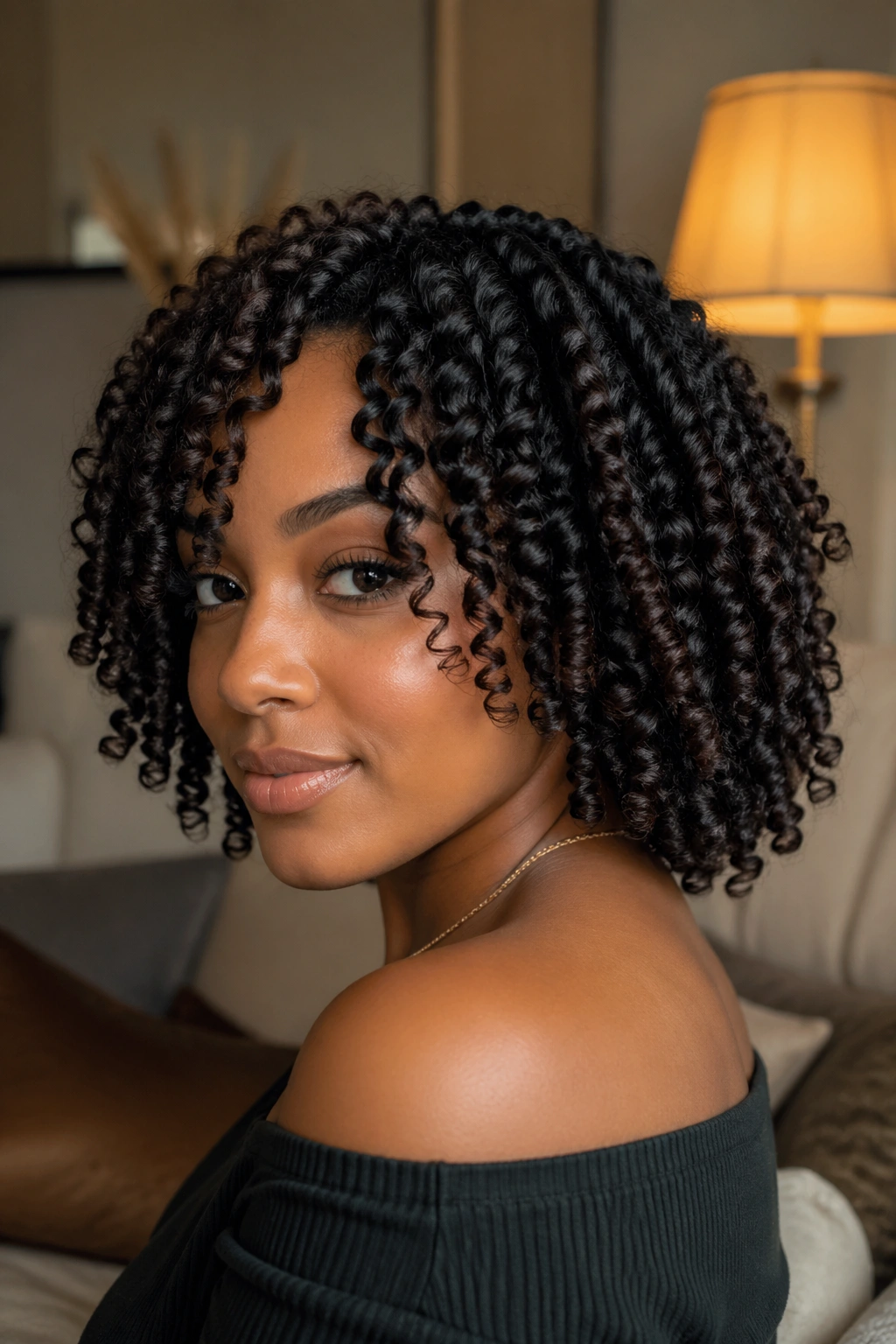
A twist-out on a bob gives you a stretched, defined curl pattern that’s different from your natural wash-and-go texture. The two-strand twist creates a slightly looser, more elongated curl that adds length and definition simultaneously.
Works exceptionally well on type 4 hair where a wash-and-go alone might not produce the elongation or definition desired. The twist-out stretches the hair slightly, making the bob look longer before shrinkage kicks in.
14. The Chunky Curl Bob
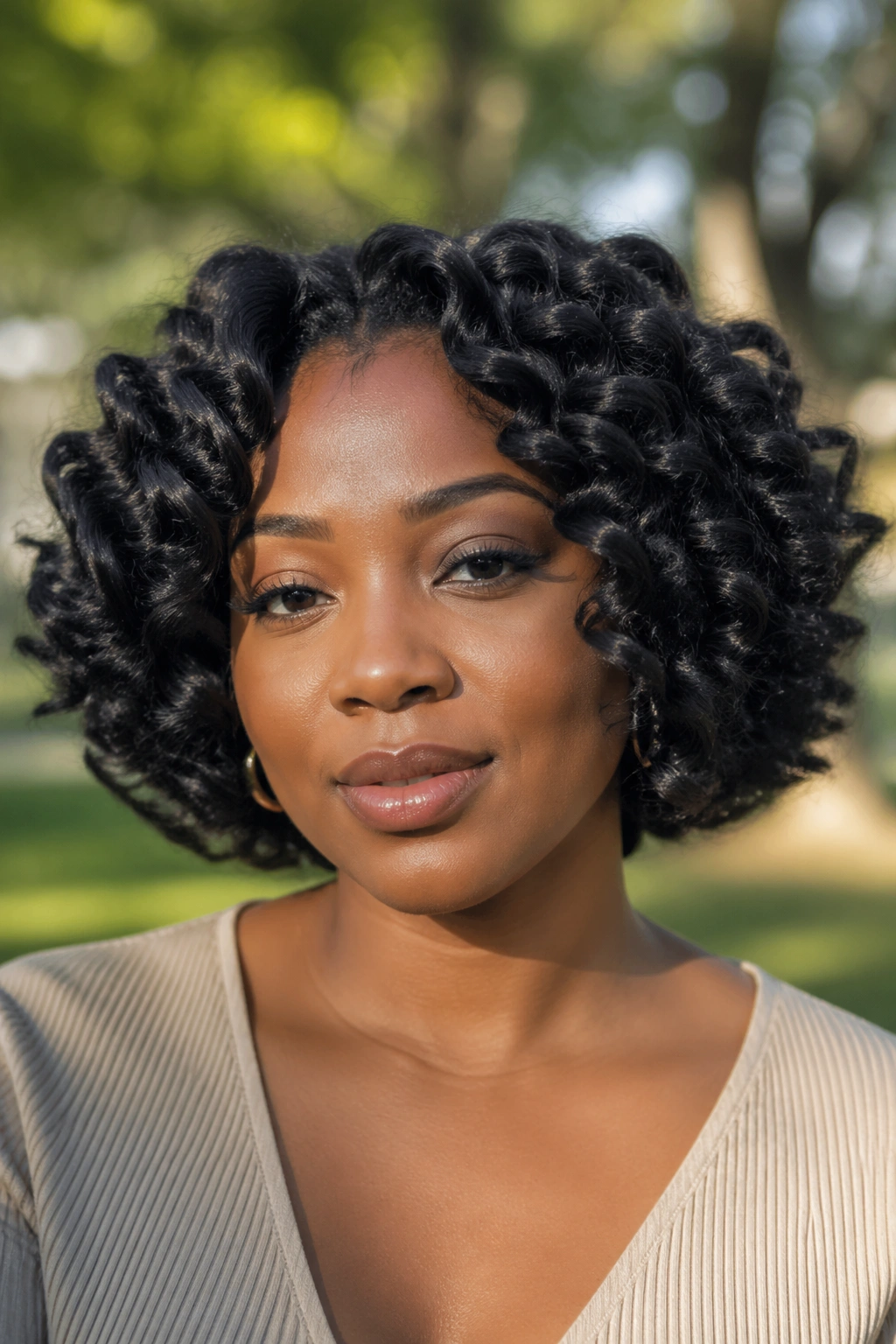
Not all curly bobs are about fine, individual curl definition. The chunky curl bob embraces bigger curl clumps — sections of hair that curl together as a unit rather than each strand defining separately. The result is a bold, graphic silhouette.
To achieve chunky curls, apply your styling product in larger sections and smooth each section to encourage clumping. Avoid raking product through with your fingers in a way that separates curls — instead, smooth from root to tip to keep sections together.
15. The Earring-Length Bob
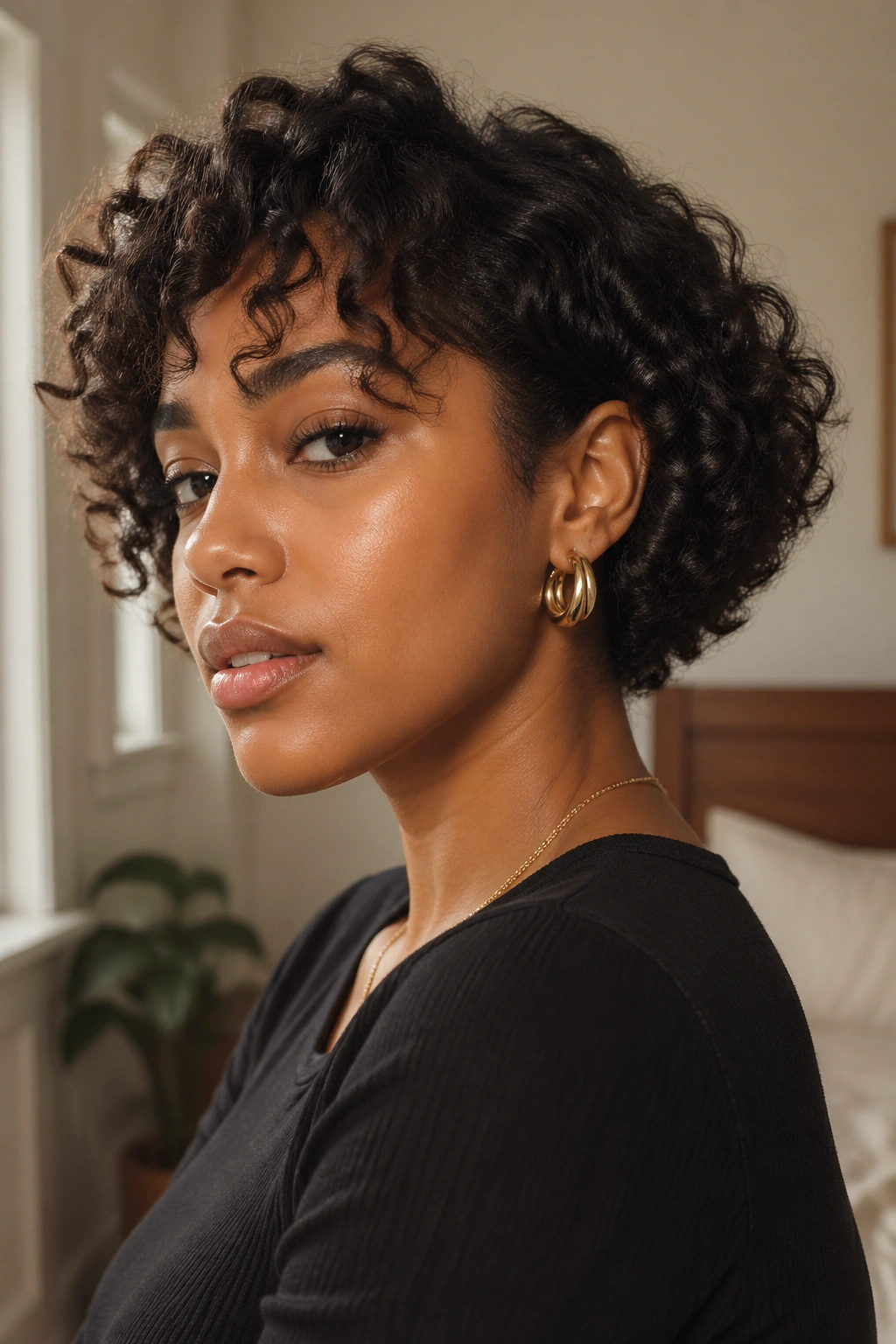
Cut to just graze the earlobes, this is one of the shortest bob lengths that still qualifies as a bob rather than a pixie. On natural hair with significant shrinkage, an earring-length bob cut will likely sit somewhere between the jaw and the ear once the curls contract.
This length is particularly striking because it shows off your ear jewelry — and with natural curls bouncing around your face at that length, the whole look has an effortlessly chic energy.
16. The Collarbone Bob
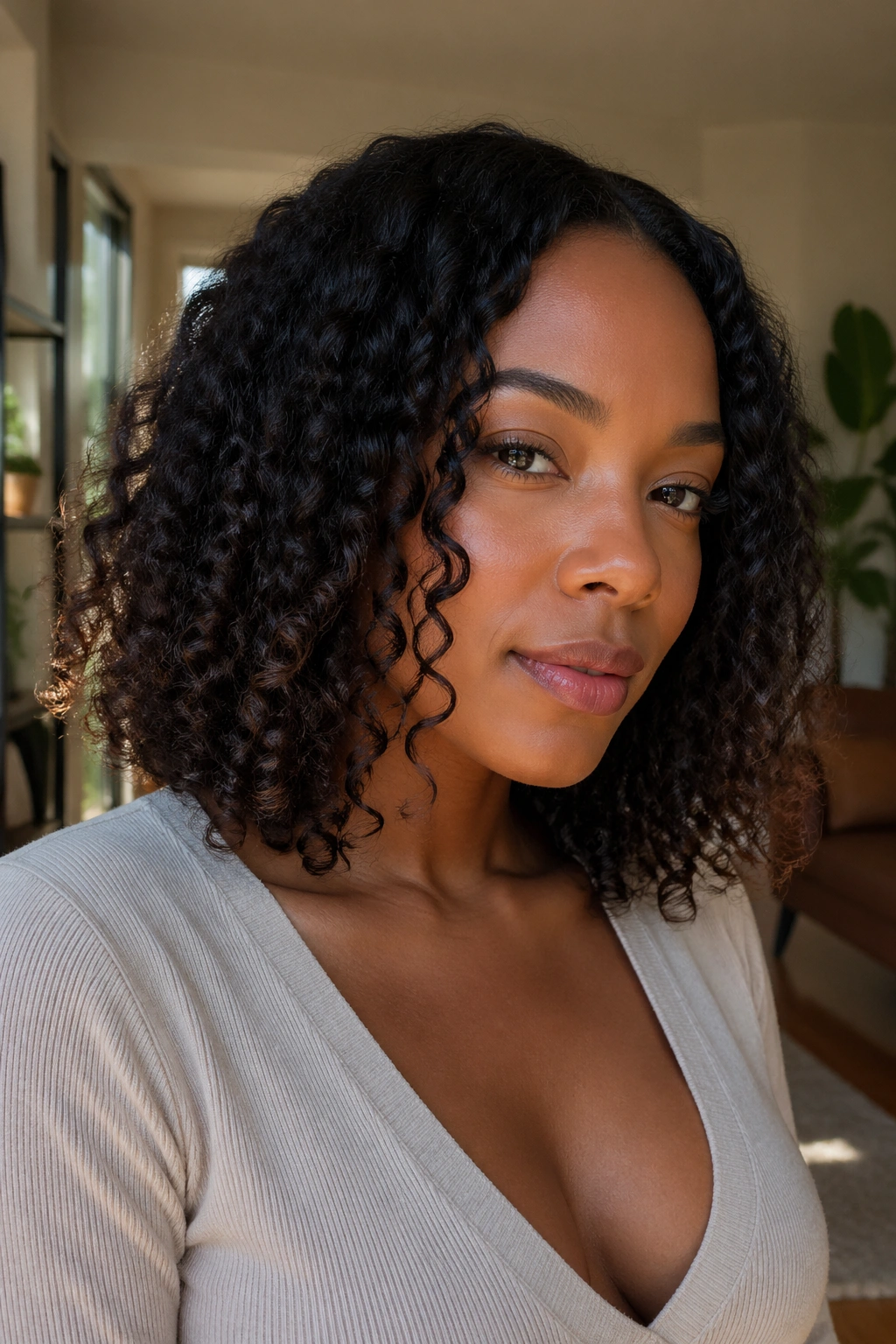
The collarbone-length bob — or the lob’s longer sibling — lands right at or just above the collarbone. For natural hair with shrinkage, this means the actual cut might need to be significantly longer to land at the collarbone once curls spring up.
This length is versatile enough for protective style days (a puff, two-strand twists, or even small braids) and wash-and-go days alike.
17. The Curl-Defined Bob With Flexi-Rods
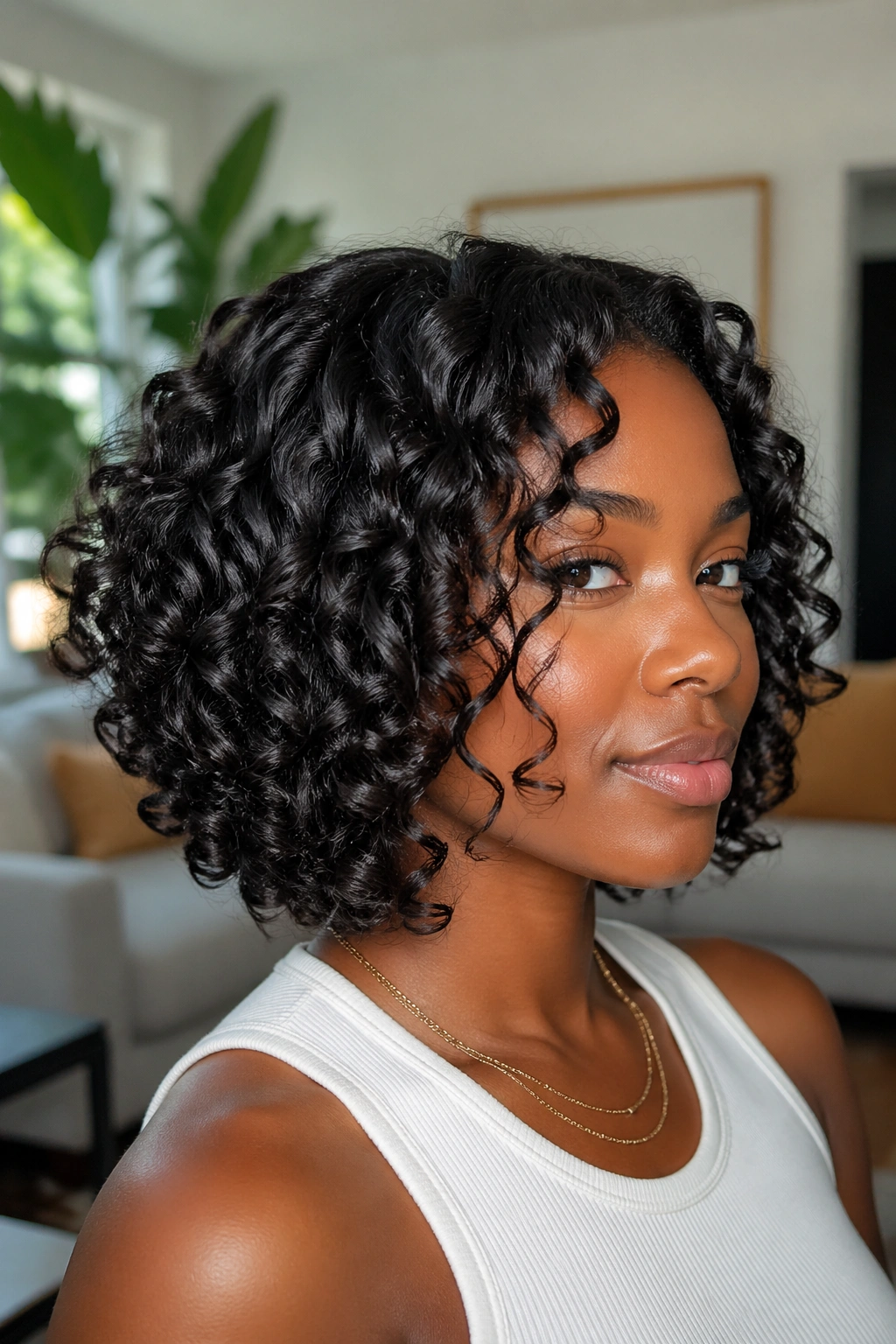
Flexi-rod sets on a bob-length natural hair create uniform, beautifully defined curls that look polished and intentional. Unlike a wash-and-go, flexi-rods give you control over the curl size and shape — you can create tighter ringlets or loose, bouncy spirals depending on the rod size you choose.
Smaller rods = tighter curls. Larger rods = looser, more relaxed waves. On a bob, this styling method creates a full, symmetrical style with serious staying power.
18. The Finger Coil Bob
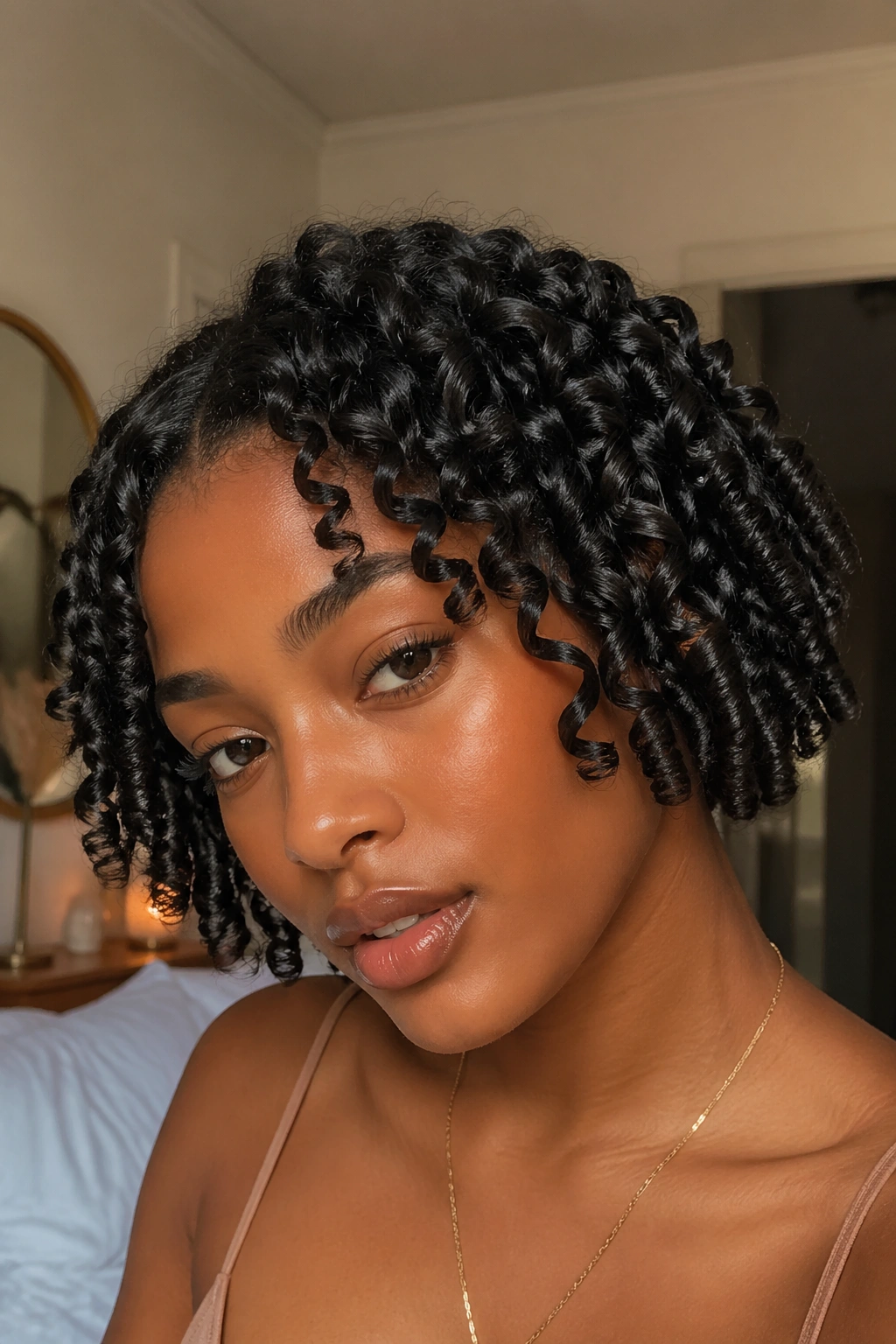
Finger coiling is a technique where you wrap small sections of wet, product-saturated hair around your finger to create individually defined coils. On a bob, this is a time-intensive process — but the results are extraordinary.
Each coil sits perfectly formed, creating a bob that looks like it belongs on a magazine cover. The style lasts several days without refreshing, making the time investment worthwhile.
19. The Pineapple Bob
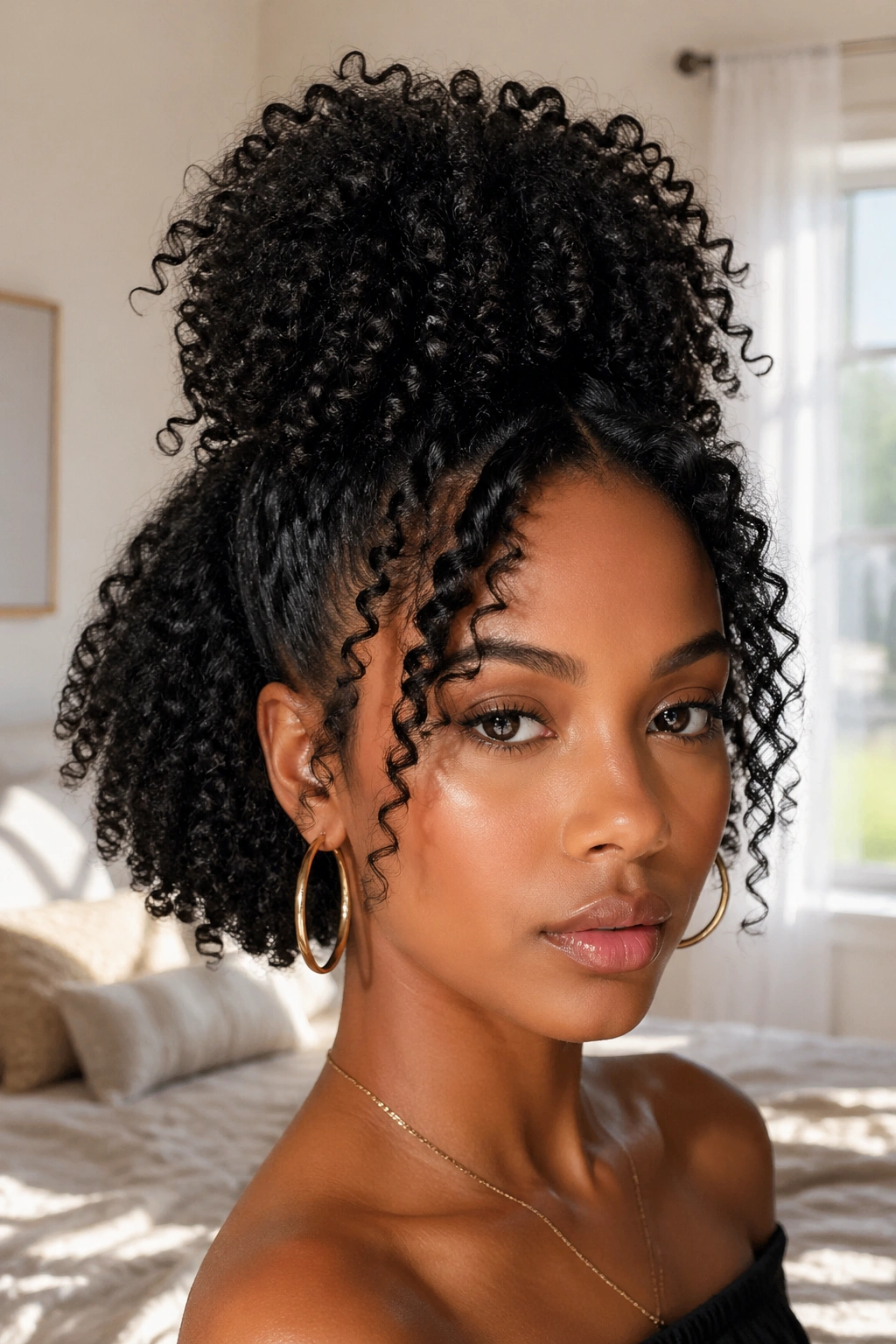
The pineapple isn’t just a sleeping method — it’s also a style. Gathering your curly bob into a loose, high puff at the crown of your head, with shorter pieces framing the face on the sides, creates a fun, youthful look. It’s technically an updo version of the bob.
This works best on bobs with enough length to gather at the top — so a lob or mid-length bob is ideal. Shorter bobs might not have enough hair to gather.
20. The Natural Afro Bob
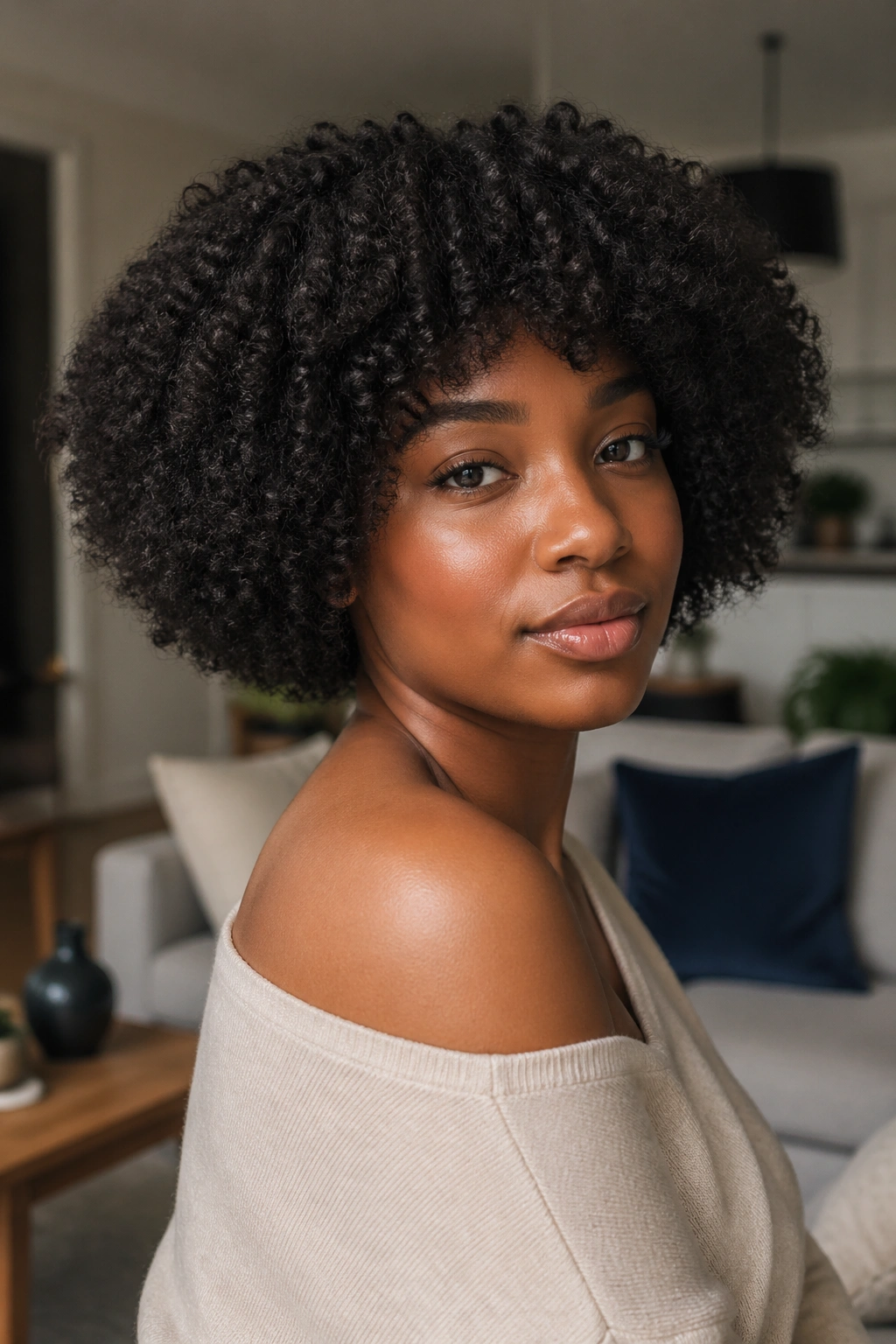
Different from the fro-bob in that it emphasizes shape over volume — the natural afro bob uses picking and shaping to create a deliberate silhouette rather than just maximum volume. Think of it as a sculpted afro that has been intentionally shaped into a bob form.
This requires some practice with an afro pick and a mirror, but the payoff is a style that looks both natural and curated.
21. The Bantu-Bob Hybrid
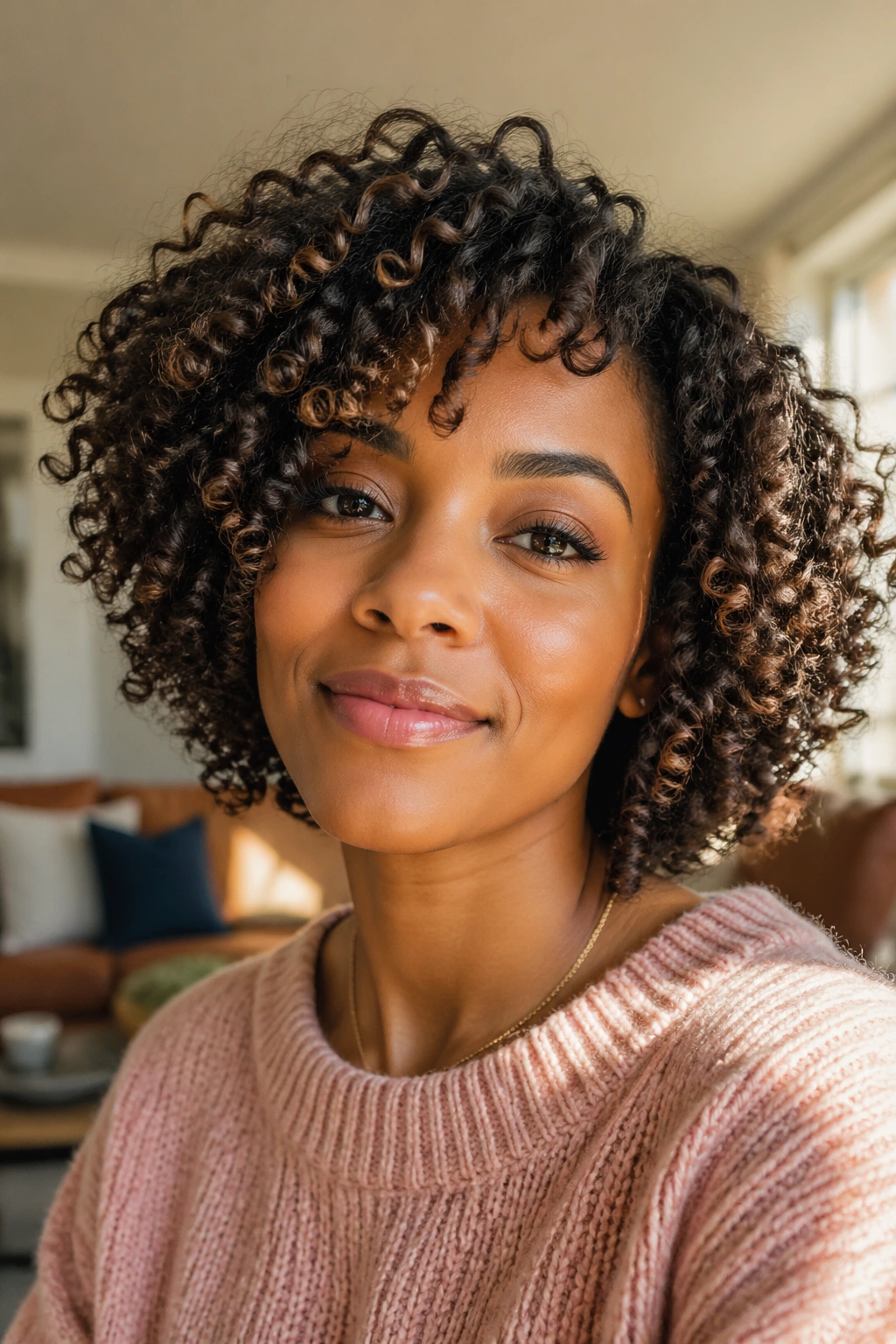
Some stylists actually braid or knot sections of a bob and leave them partially unraveled — creating a style that’s part Bantu knot, part loose curl, and entirely unique. It’s a protective-adjacent style that adds visual texture and dimension to a shorter cut.
22. The Sculpted Curl Bob
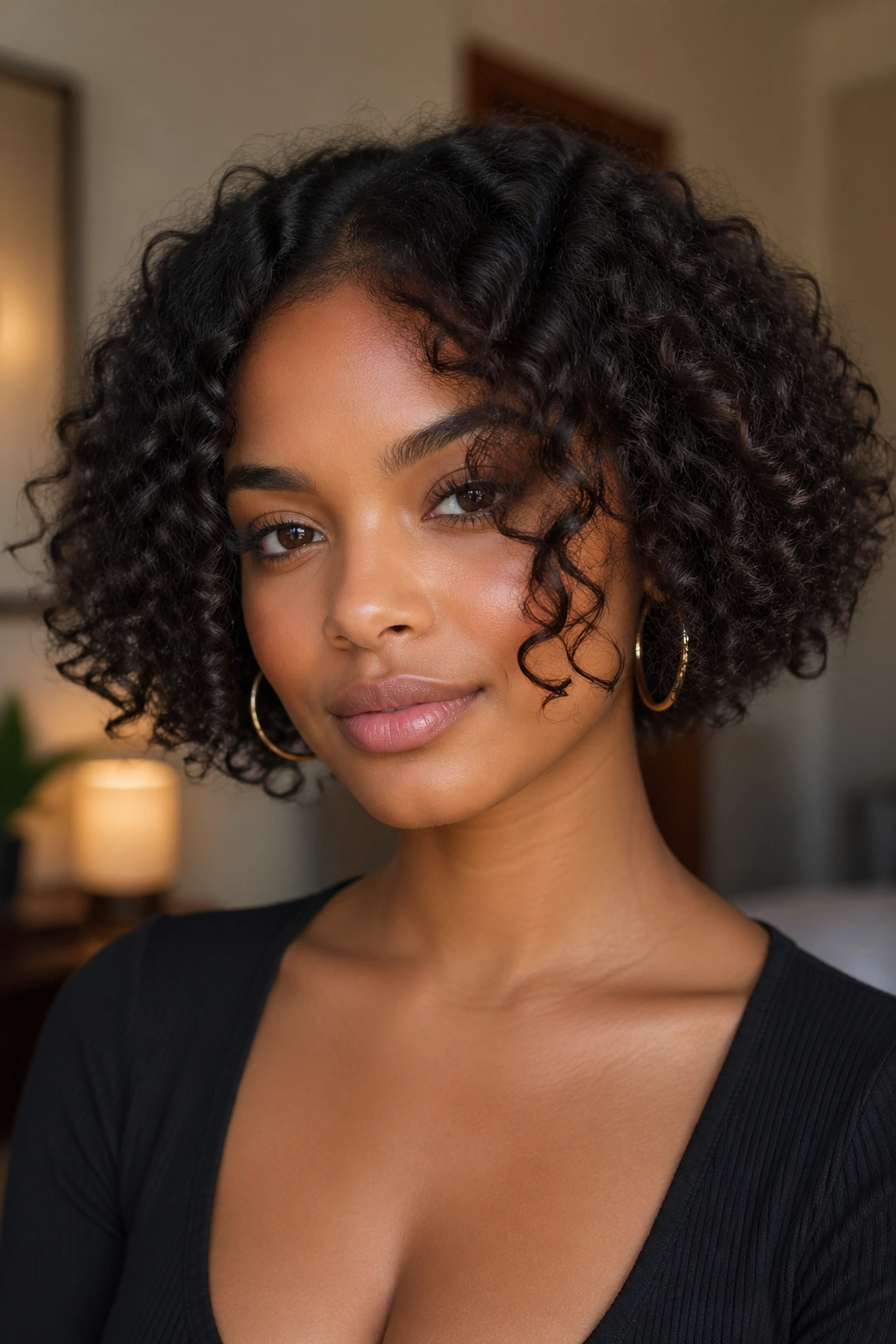
Using a curl-defining cream and your hands, you can literally sculpt your curly bob into a specific shape while wet — then let it dry in that form. Some women sculpt upward for height; others smooth sides down for a sleeker look. The wet hair is malleable and takes the shape you encourage it into.
23. The High-Shine Curly Bob
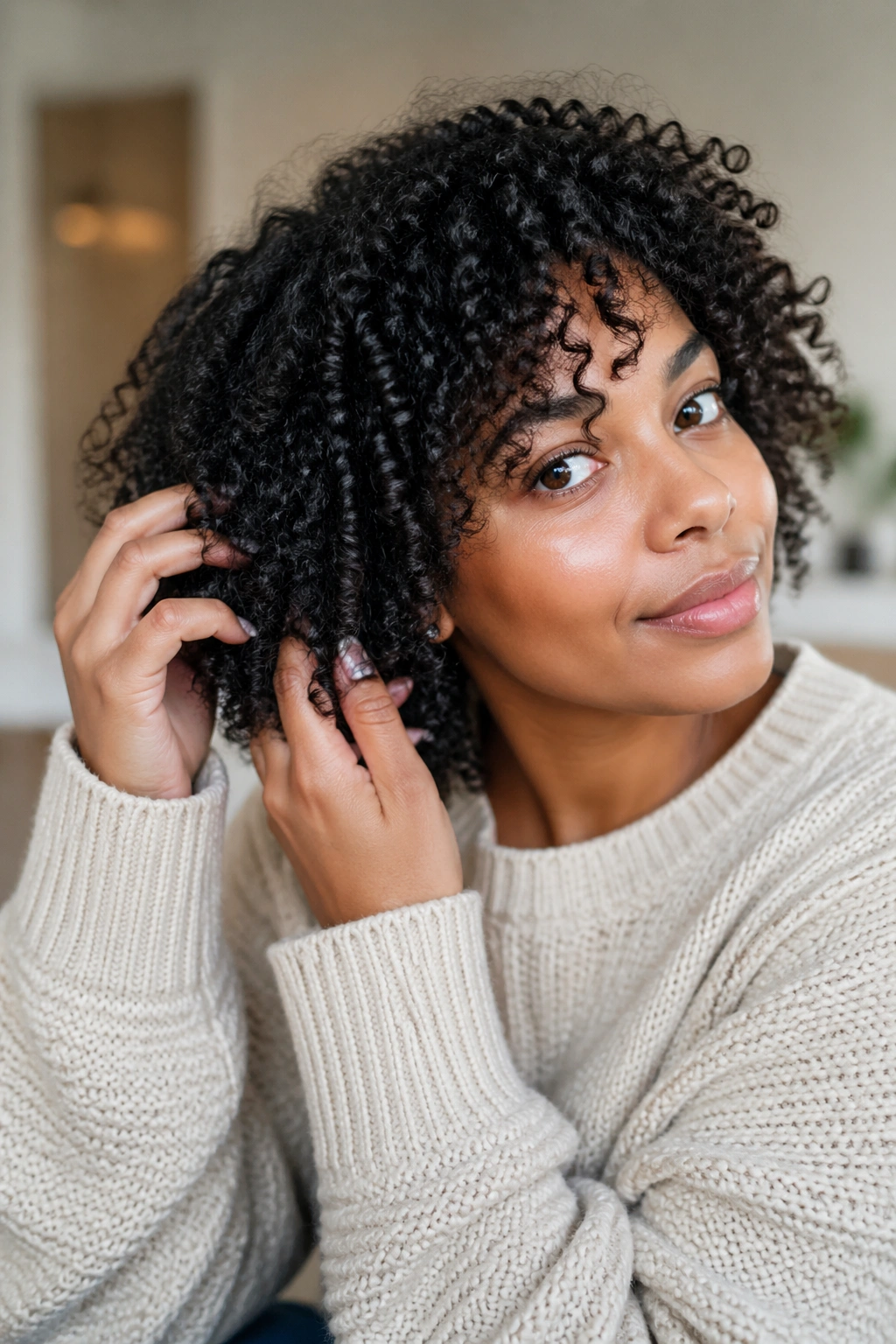
Achieved with a gel that has serious hold and shine, the high-shine bob has a glossy, almost wet-look quality that makes your curls look incredibly healthy and vibrant. It’s a more polished, dressed-up version of the standard wash-and-go.
24. The Voluminous Diffused Bob
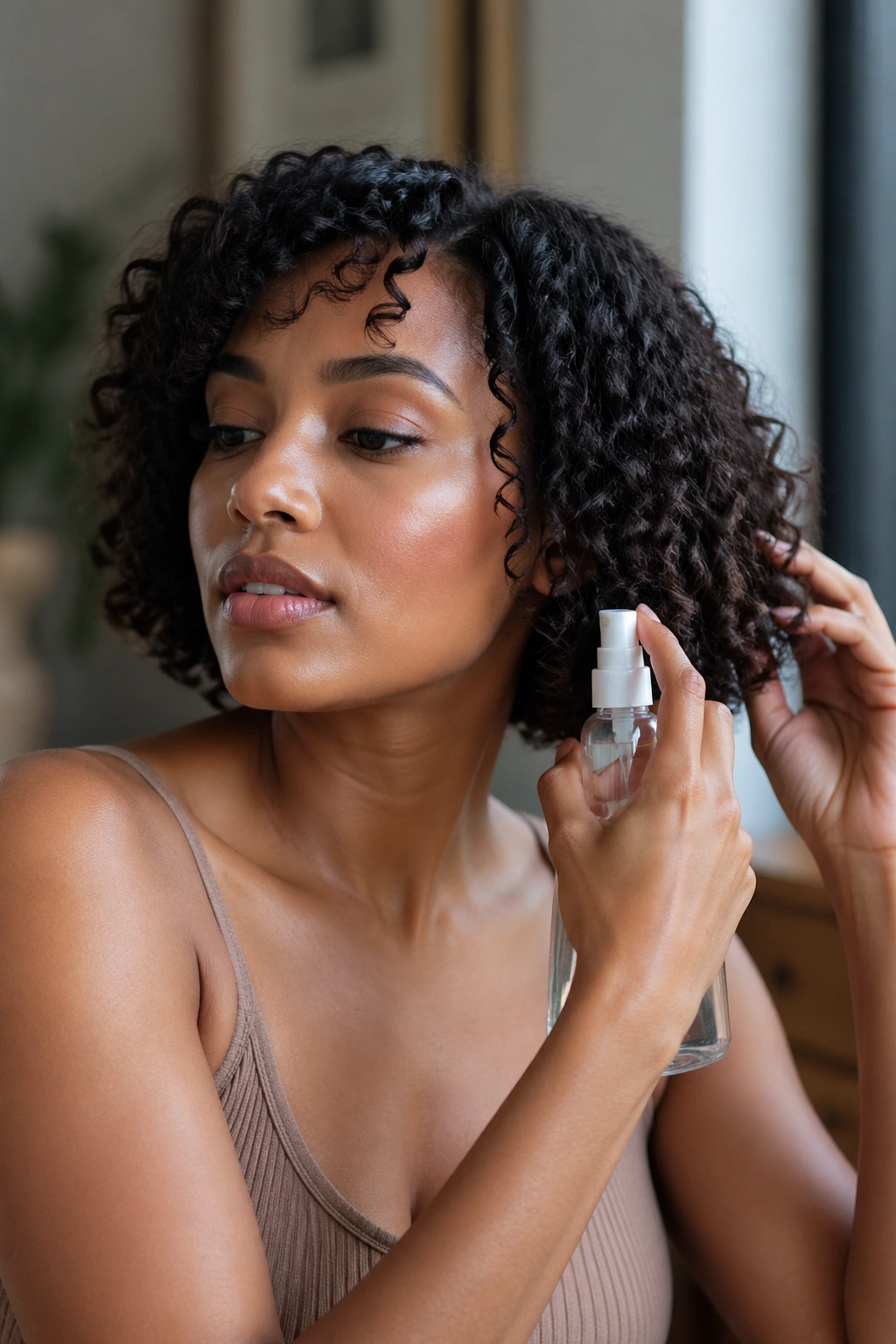
Diffusing — using a diffuser attachment on a blow-dryer set to low or medium heat — speeds up drying time while maintaining and amplifying your natural curl pattern. On a bob, diffusing creates massive volume and lift that air-drying sometimes doesn’t achieve.
The key is to cup your curls in the diffuser basket and hold it in place rather than moving it around, which creates frizz. Work section by section, cup and hold, and let the curls form naturally.
Choosing the Right Bob for Your Lifestyle
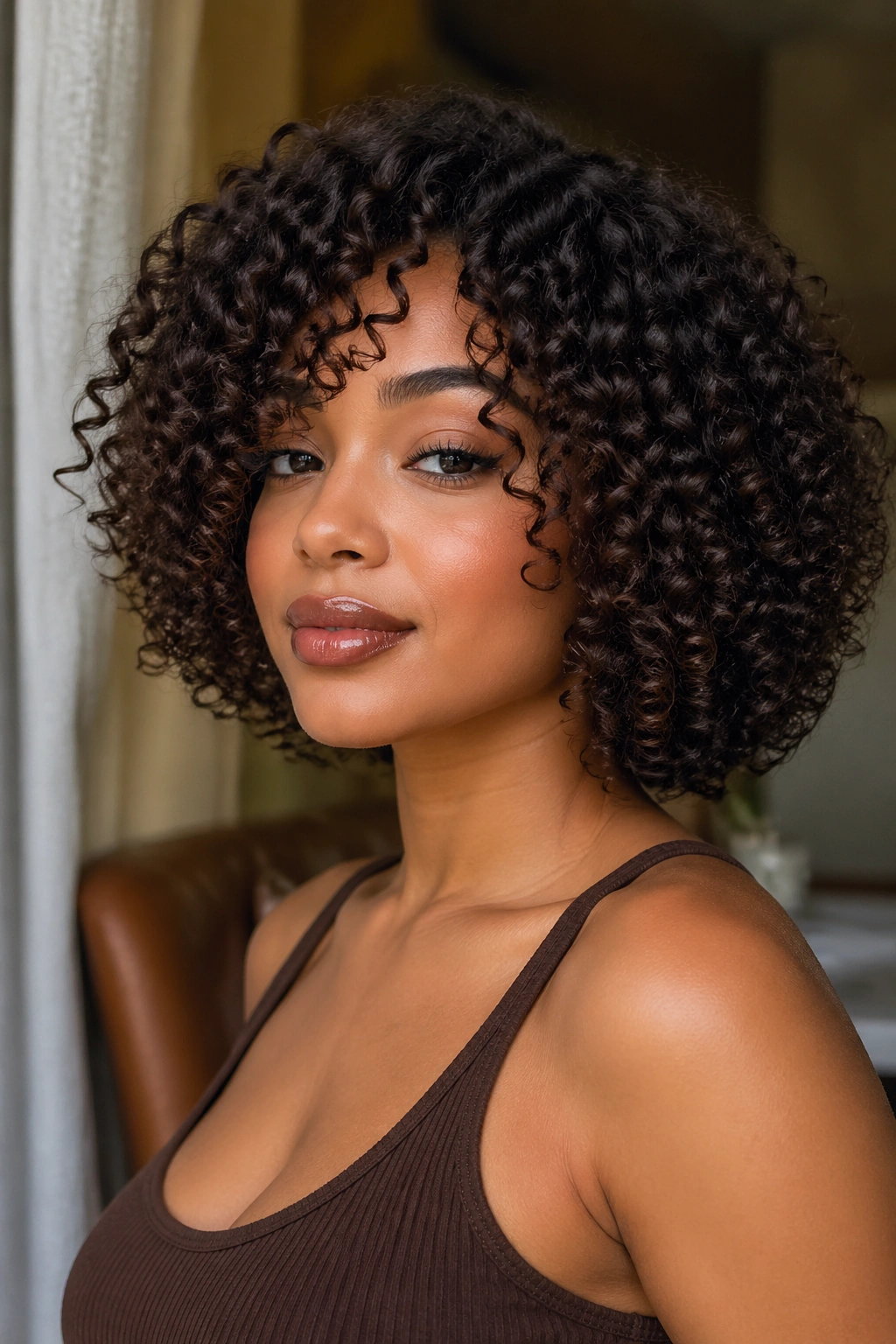
The best curly bob cut is the one that fits into your actual life — not just the one that looked amazing in a photo. Think about how much time you genuinely spend styling your hair on a typical morning. Think about whether you’re in a humidity-heavy environment that might affect how your style holds. Think about your wash frequency and whether you’re a wash-and-go person or a protective styler.
A bob that requires daily manipulation and product layering might not be right for someone who washes once a week and air dries. A very short bob might not be right for someone who relies on puffs and updos on rough hair days. Be honest with yourself.
Finding the Right Stylist
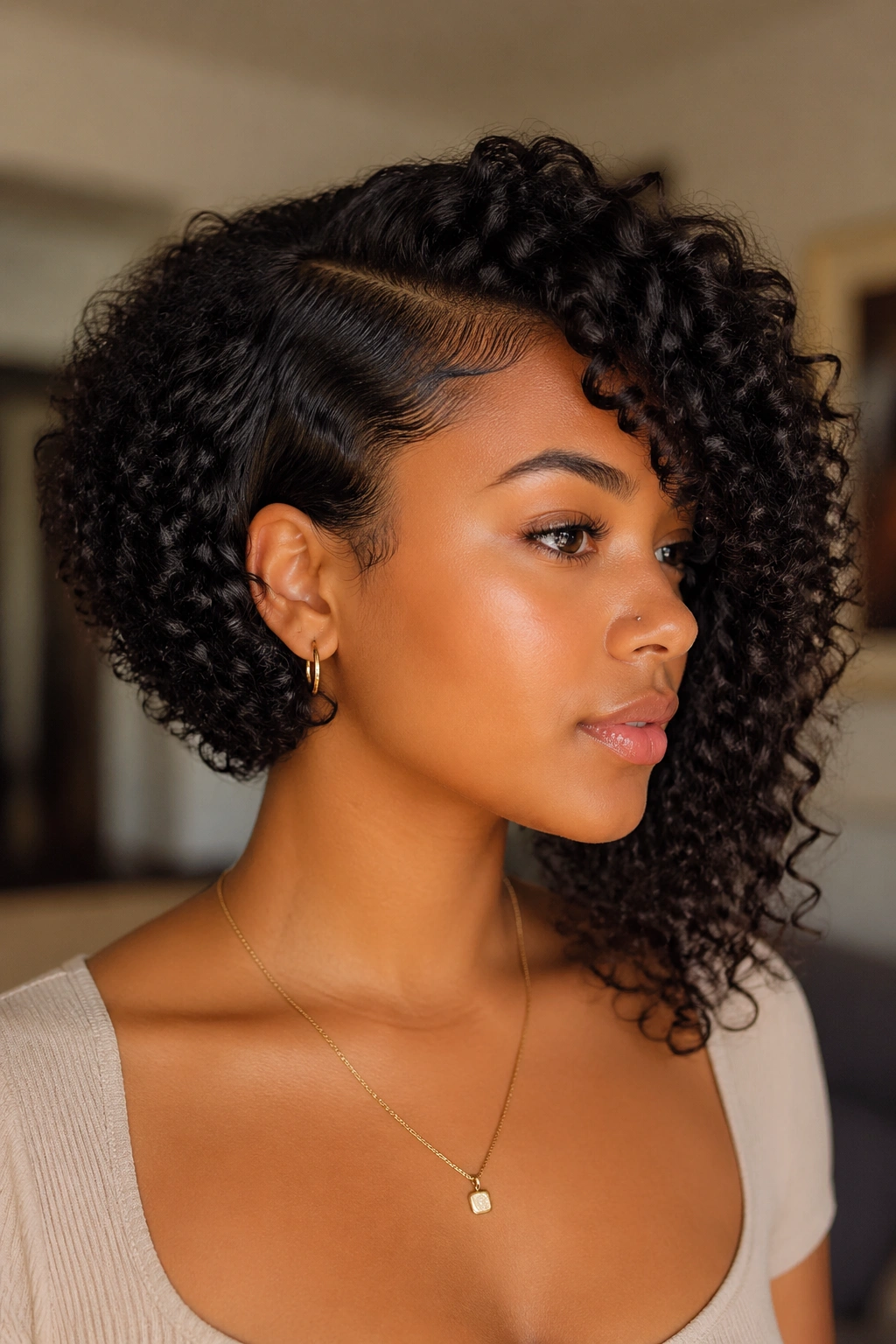
Not every stylist who works with natural hair is skilled at cutting curly bobs. You want someone who:
- Cuts natural hair in its natural state (wet or in its curl pattern, not blown out)
- Can show you photos of curly bobs they’ve personally cut — not photos from Pinterest
- Understands your specific curl pattern and how shrinkage will affect the final look
- Is willing to talk through the style before picking up scissors
A consultation before committing to a cut is absolutely worth the time. If a stylist won’t do a consultation or seems dismissive of your questions, that’s a red flag.
Growing Out a Curly Bob Gracefully
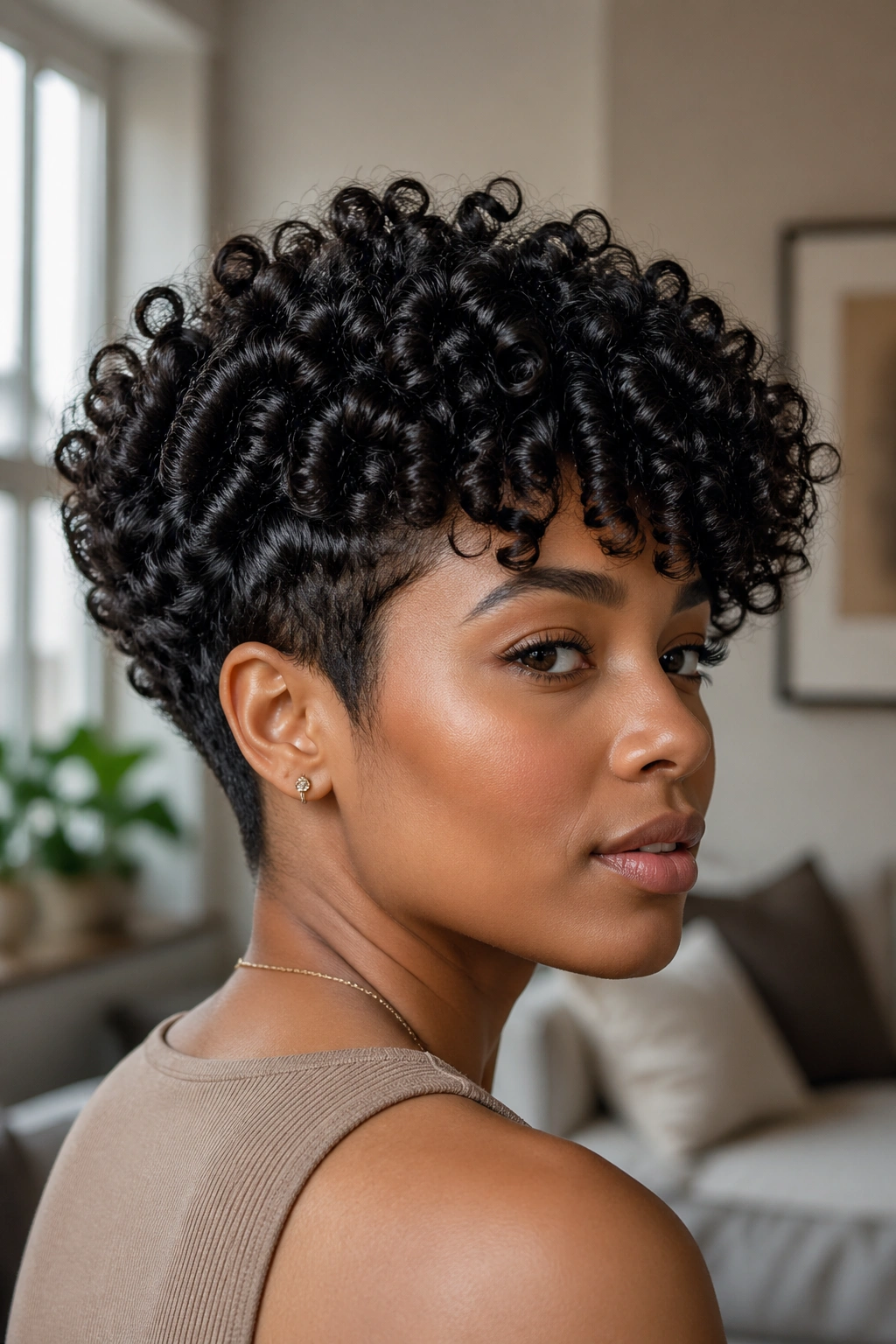
At some point, you’ll probably want to grow your bob out — and that awkward in-between phase is real. A few strategies that help:
- Protective styles like flat twists, two-strand twists, and braids keep the hair contained and looking intentional during the grow-out
- Strategic trims that clean up the shape without taking off significant length help the grow-out look less chaotic
- Hair accessories — headbands, clips, and scarves — become your best friends during this phase
The grow-out is temporary. Every length-goal starts with a phase that feels like you’re “stuck” somewhere you don’t want to be. Keep your hair moisturized, protect the ends, and be patient.
The Curly Bob as a Year-Round Style
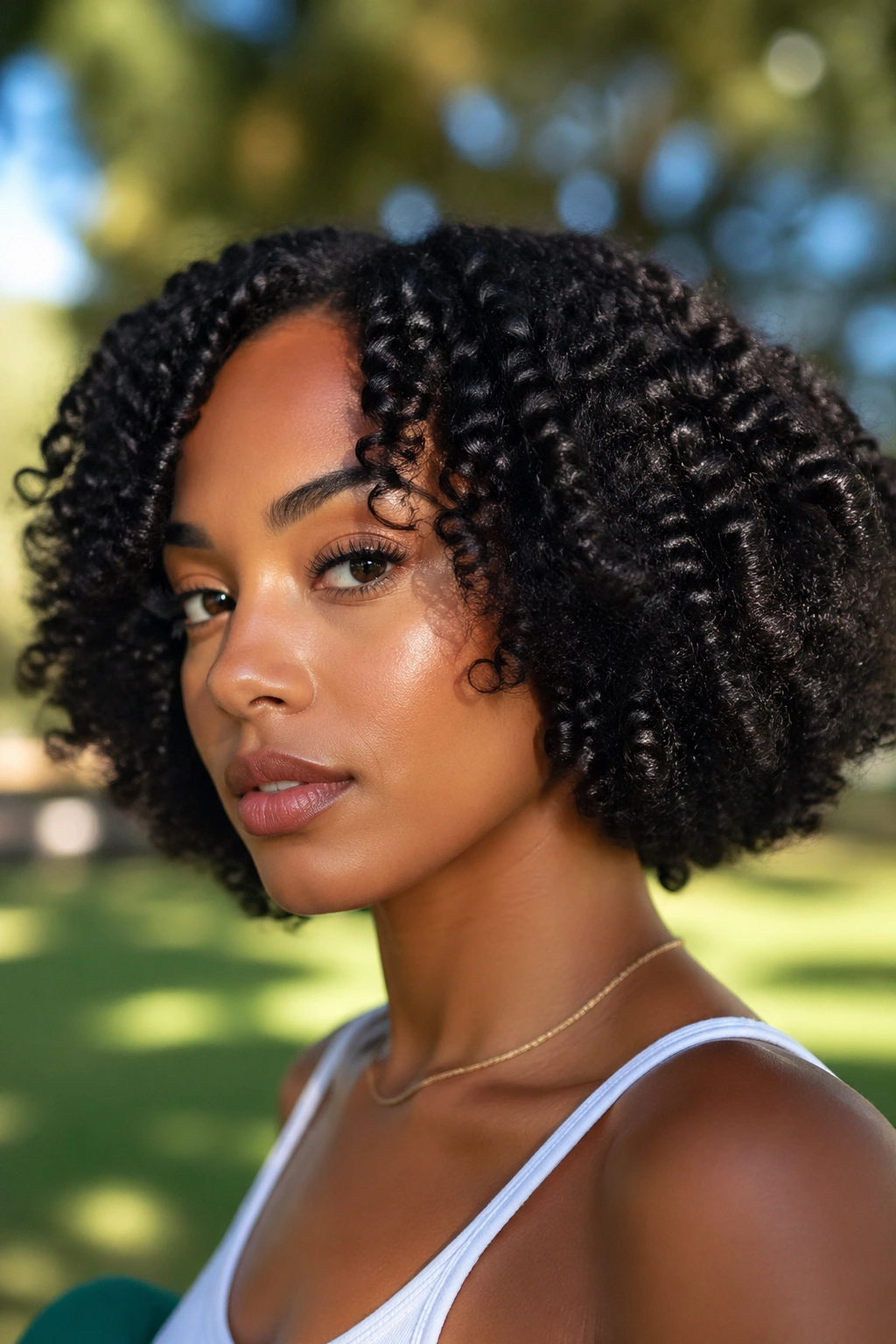
One underrated advantage of the curly bob on natural hair is how well it transitions across seasons. In warmer, more humid months, the natural moisture in the air actually helps your curls stay defined — and a shorter bob means less frizz overall than longer hair that gets weighed down by humidity. In drier, cooler months, the bob requires a bit more intentional moisturizing, but it’s still far more manageable than longer natural hair that loses moisture faster.
The curly bob isn’t just a warm-weather style. It’s genuinely all-year wearable, which is part of what makes it such a practical choice for natural hair wearers who want a consistent look they can rely on.