



There are silk press styles, and then there are silk press styles with curls — and they’re not the same thing. The full sleek silk press is gorgeous, no question. But when you combine the smoothness and shine of a silk-pressed base with deliberately curled sections, you get something richer, more dimensional, and more expressive. Side part silk press styles with curls take this combination and push it further by adding the asymmetry of a deep or classic side part, which creates a framing effect that flatters almost every face shape and gives the whole look a vintage-meets-modern energy that’s genuinely hard to achieve with any other technique.
What Makes a Side Part Work So Well on a Silk Press
The silk press is already a high-drama style. The hair is stretched, smoothed, and polished to a glossy finish — it reflects light, it moves with the body, and it showcases length. Against all of that sleekness, a side part cuts a clean, deliberate line through the crown and creates visual direction: the hair sweeps one way, the volume pools on one side, and the face is framed asymmetrically.
That asymmetry matters. It breaks the formality of a full silk press, which can sometimes look almost severe in its perfect smoothness. A side part introduces softness, dimension, and something that feels more personal — like this particular style was chosen for this particular face, not just applied universally.
The curl element amplifies this effect. When the ends of a silk-pressed style are curled — whether with a curling iron, flexi-rods, or rollers — they add bounce and movement that the hair can’t achieve when left pin-straight. The curls catch light differently, move differently, and create a silhouette that swings and bounces rather than lying flat.
Understanding the Silk Press Process First
A silk press is not the same as a regular flat iron. The “silk” in the name refers to the finish — a smoothness and shine that mimics the look of permanently relaxed hair without any chemical processing. Getting a true silk press requires specific steps: a thorough cleanse with a clarifying or moisturizing shampoo, a deep conditioning treatment, a moisturizing leave-in, a heat protectant applied in sections, blow-drying with a tension method or a round brush, and then flat ironing in small sections at the appropriate heat setting for your hair’s porosity and density.
Skipping any of these steps shows in the result. A silk press done on hair that wasn’t properly conditioned will look frizzy within hours. A silk press done without proper heat protectant risks damage and color change. A silk press that isn’t done in small enough sections won’t have that glassy finish.
The side part is typically established during the blow-drying phase — before the flat iron work — so that the hair falls in the right direction from the start and doesn’t require excessive brushing or manipulation after the iron work is complete.
Choosing the Right Curl Size for the Ends
Once the silk press base is achieved, curls can be added in a range of sizes. Loose, large barrel curls — created with a 1.5-inch or 2-inch curling iron — give a soft, flowing silhouette. Think Hollywood glamour. The curls are more wave than ringlet and move easily.
Medium barrel curls with a 1-inch iron create defined, springy ringlets that bounce when the head moves. These curls are more visible and more dramatic as a contrast to the sleek silk press base.
Tight barrel curls from a smaller iron or rollers create a retro, voluminous look — almost like a classic roller-set finish. These curls sit closer to the head and create a full, rounded silhouette rather than the long, cascading look of larger barrel curls.
Your face shape and the occasion should guide which curl size you choose. For formal events, loose waves create an elegant, flowing look. For editorial or creative settings, tighter defined curls are bolder and more dramatic.
Heat Protectant Is Not Optional
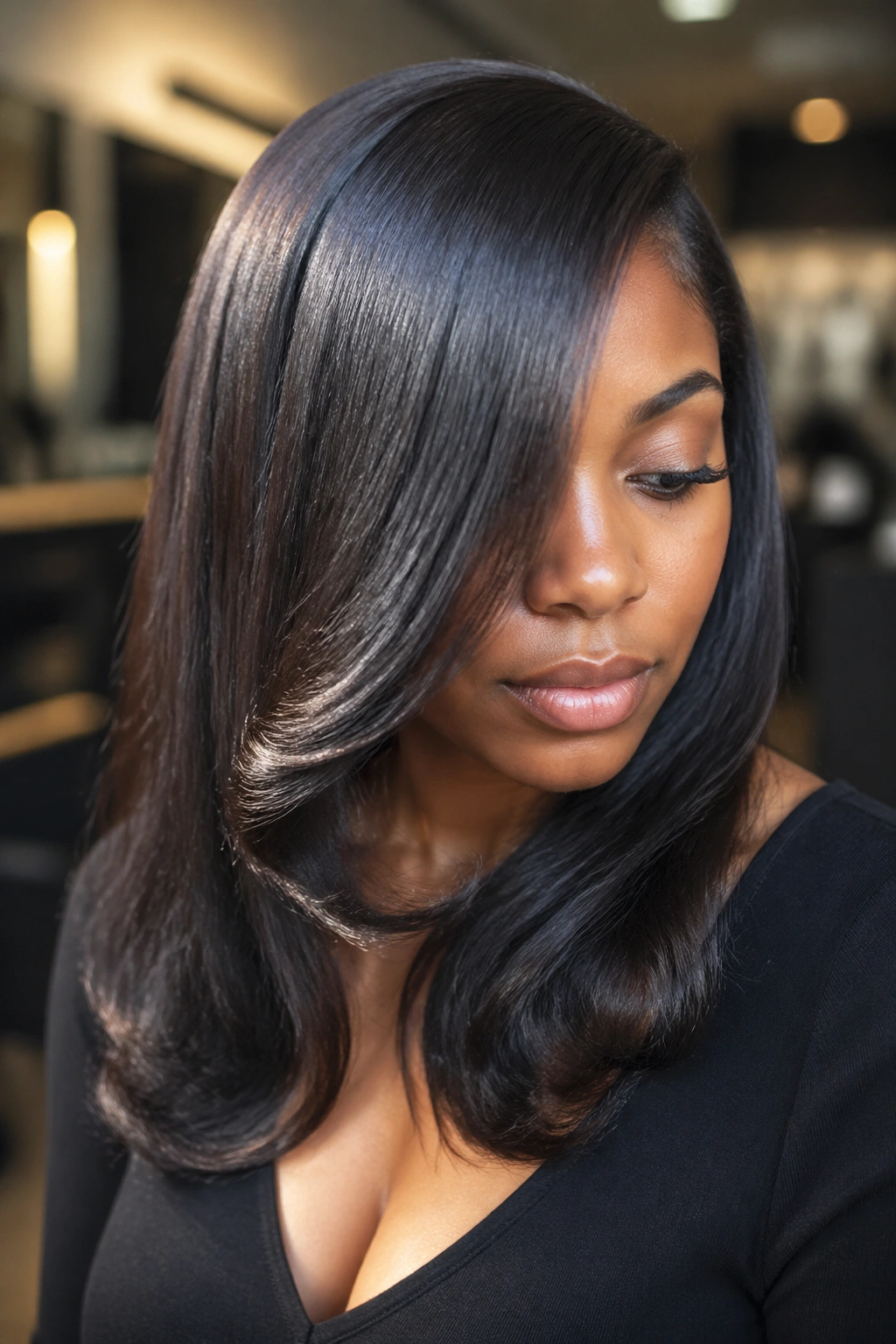
For any style that combines a silk press and curls, heat is being applied twice — once for the silk press base and once for the curl styling. This doubles the importance of heat protectant. Apply a quality heat protectant before each heat application. A leave-in conditioner that also functions as heat protectant is a time saver, but make sure it actually provides thermal protection rather than just moisture.
The ideal heat setting for the curling iron after a silk press is typically 350°F or lower for fine or medium hair. Thick, coarser hair may require slightly more, but exceeding 400°F is generally inadvisable — especially if you care about maintaining the integrity of your natural curl pattern for the next time you wash.
The Right Finishing Products
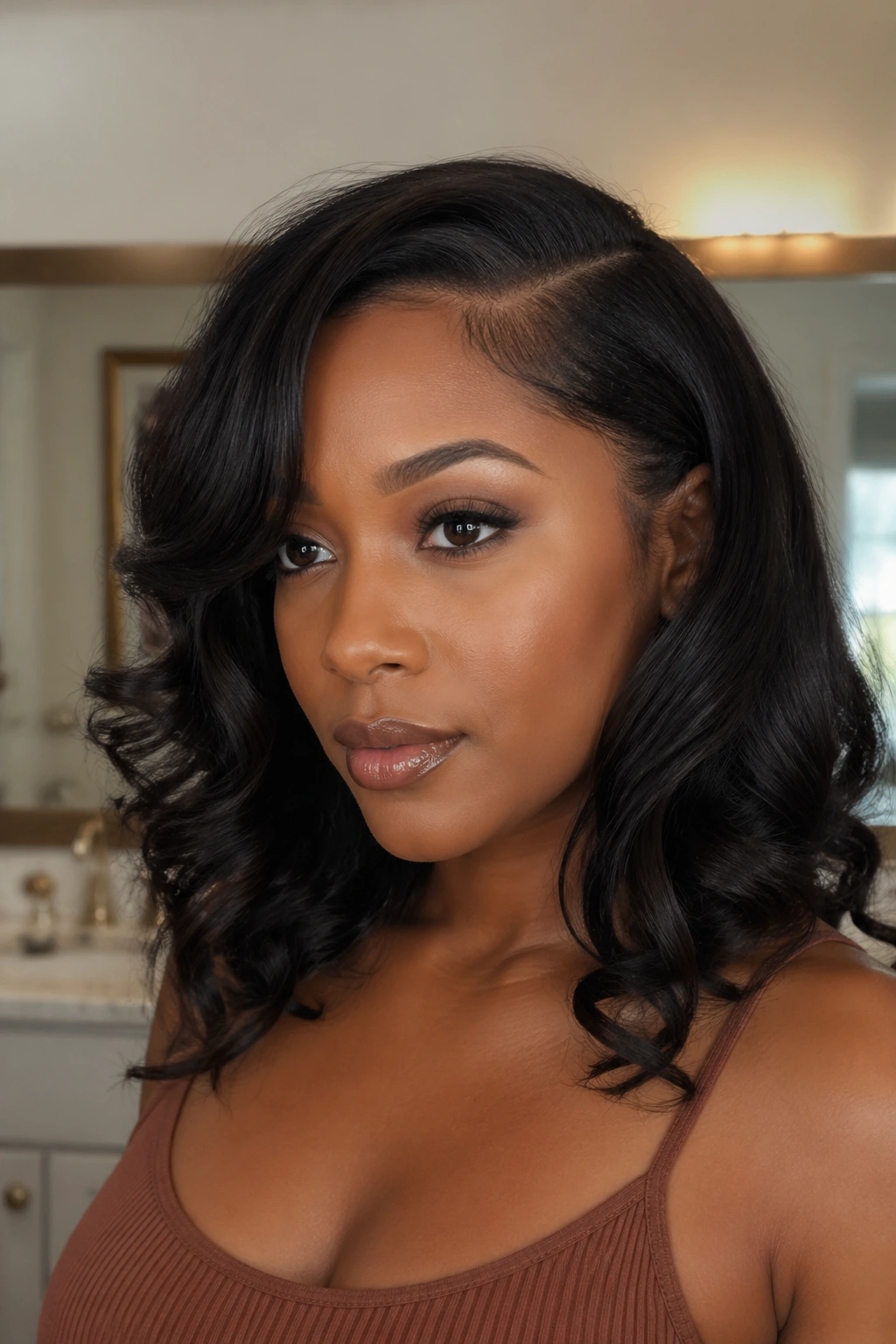
After curling, a light hold spray or lightweight oil is all you need to finish the look. Avoid heavy creams or serums that can weigh down the silk press finish and cause the curls to drop faster. A light shine spray enhances the glossy silk press base without adding grease. A light-hold hairspray can help the curls last longer, particularly in humid environments where silk-pressed hair is prone to reverting.
Edge control at the hairline and along the part creates a clean, polished finish at the front that anchors the whole style.
1. Classic Deep Side Part With Flowing Waves
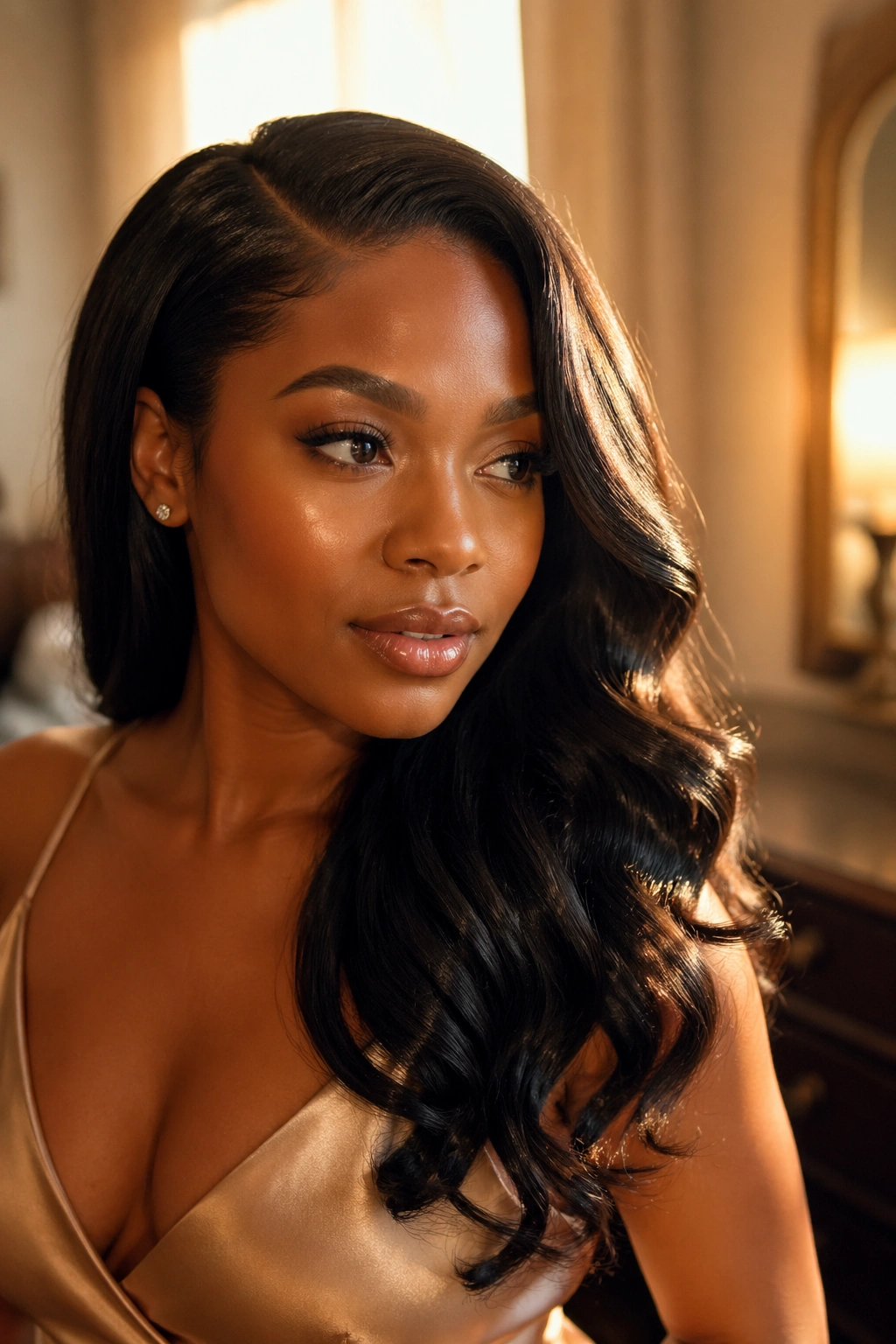
A deep side part — placed well past the center, almost at the temple — creates the most dramatic asymmetry. All that silk-pressed hair sweeps to the fuller side, falls in soft, loose waves past the shoulder, and the shallow side lies flat and glossy against the head.
Use a 1.5-inch curling iron to create the waves after the silk press is complete. Wrap large sections loosely around the barrel for a soft wave rather than a tight curl. Let each wave cool completely before releasing. After all waves are set, use your fingers to tousle them very gently into a flowing, natural-looking wave pattern.
The side-swept volume combined with the glossy silk press base is peak old Hollywood on natural hair.
2. Side Part With Pin Curls at the Ends
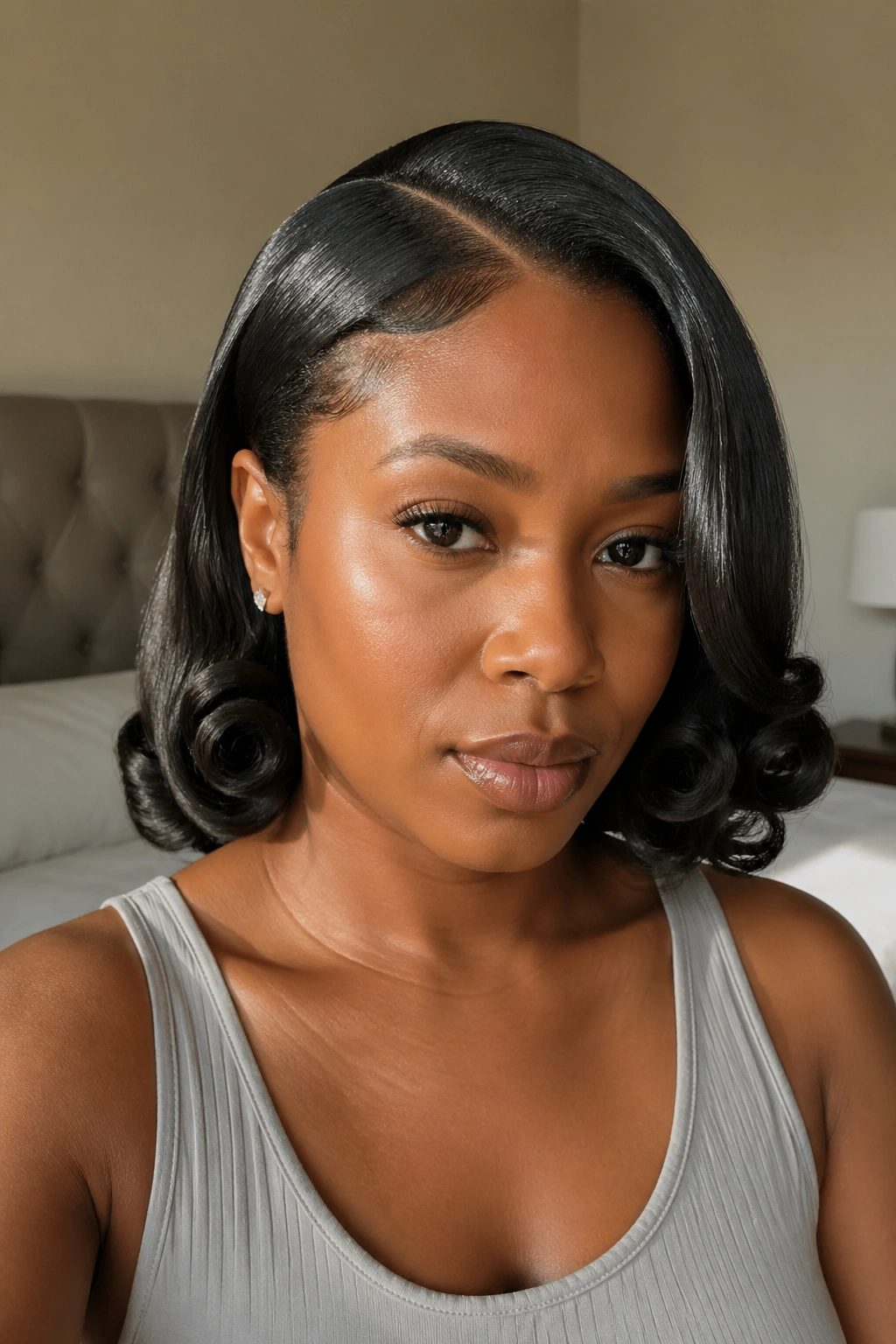
Pin curls are tight, flat curls formed by wrapping hair around the finger and pinning in place while still warm. On a silk-pressed style, pin curls at the ends create a neat, retro-inspired finish where the ends curl inward or outward in precise circles.
After silk pressing, curl small sections with a small barrel iron, immediately coil the warm curl around two fingers while it’s still pliable, and pin flat against the head. Set all ends this way, let cool completely, then release. The pin curls open into defined, bouncy ringlets with a vintage silhouette that pairs beautifully with a deep side part.
3. Sleek Side Part Silk Press With Barrel Curls
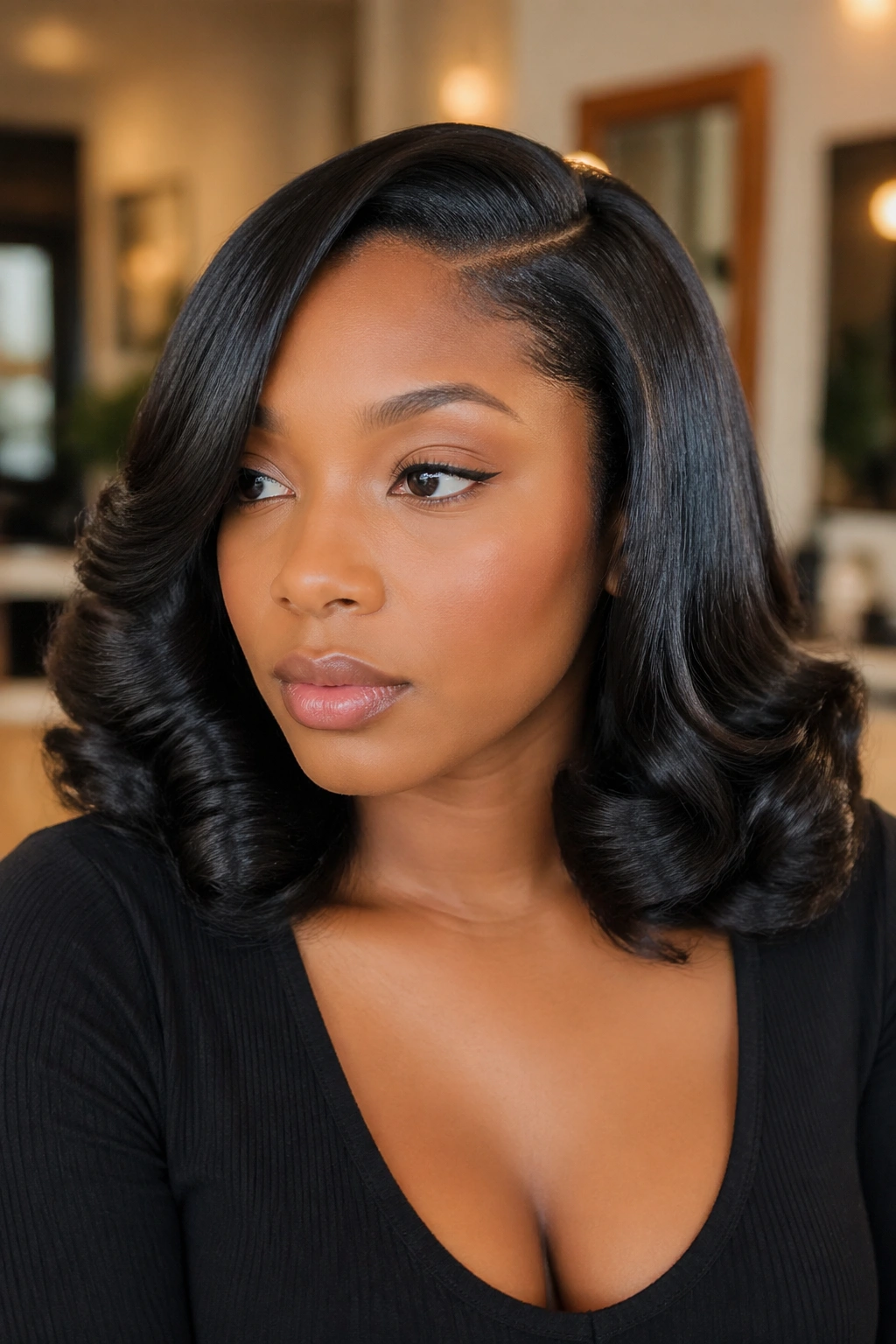
The most classic combination: a perfectly sleek silk press with a clean side part, and the ends curled with medium-sized barrel curls that bounce at the shoulders. The silk press is smooth from root to mid-shaft. The last few inches curl outward in defined ringlets. It’s a look that bridges the gap between straight and curly in one style.
How to Achieve This
- Establish the side part during blow-out
- Flat iron in sections, following the part direction
- Use a 1-inch curling iron on the ends only — approximately the last 3–4 inches of hair
- Curl all sections away from the face on the fuller side, toward the face on the shallow side
This directional curling approach follows the side part and keeps the style cohesive.
4. Side-Swept Silk Press With Soft Finger Waves at the Crown
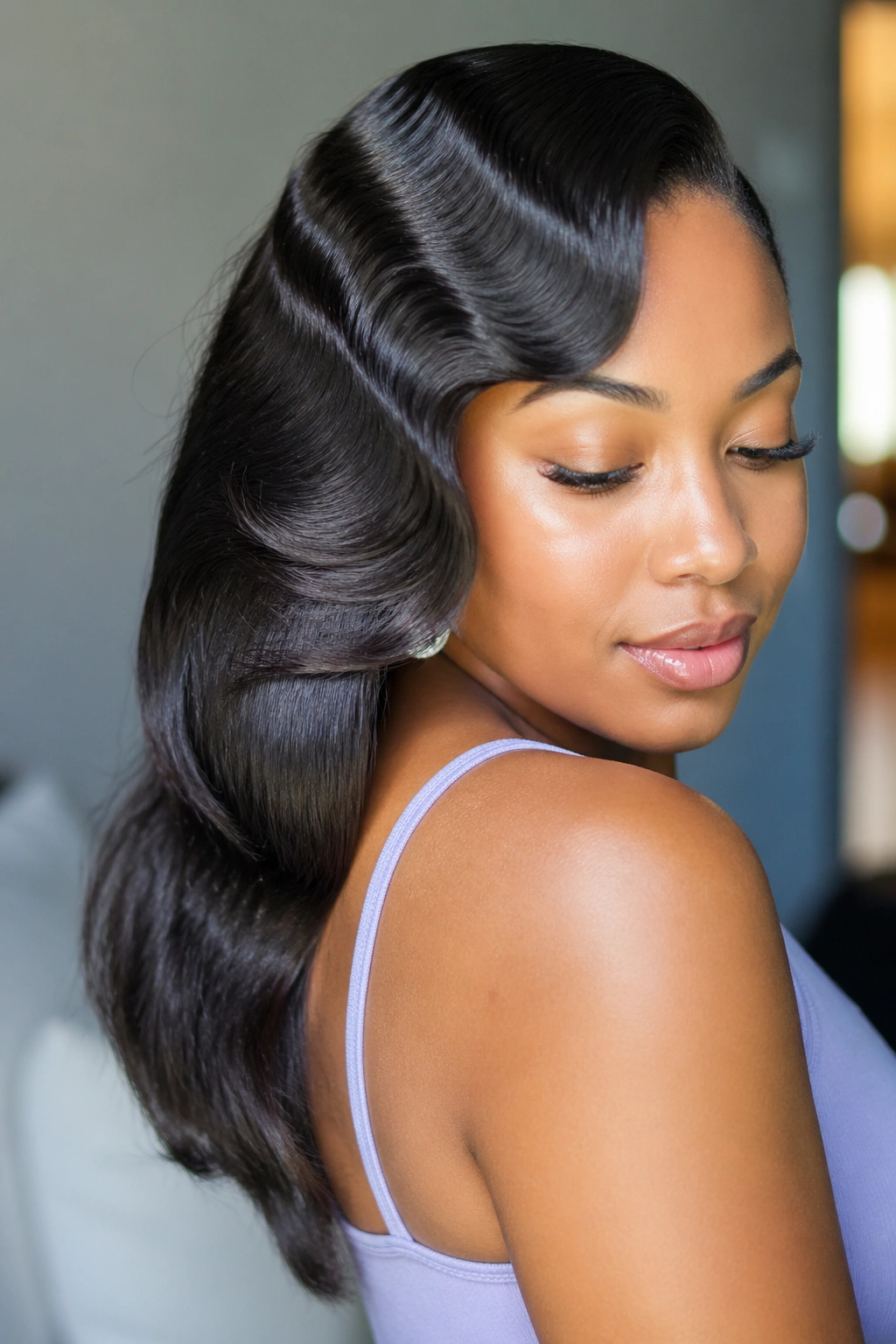
Finger waves are a classic Black hair styling technique — creating S-shaped waves in the hair using fingers, a comb, and gel or pomade. On the crown section of a silk press, near the side part, finger waves add a structured, retro element to what would otherwise be a straightforward silhouette.
Set the finger waves first, near the hairline and crown, then allow the rest of the silk-pressed hair to flow in waves or curls below. This combination — structured waves at the crown, flowing curls below — is genuinely editorial. It requires skill and patience to execute well, but the result is unmatched in originality.
5. Side Part Silk Press With Curtain Effect
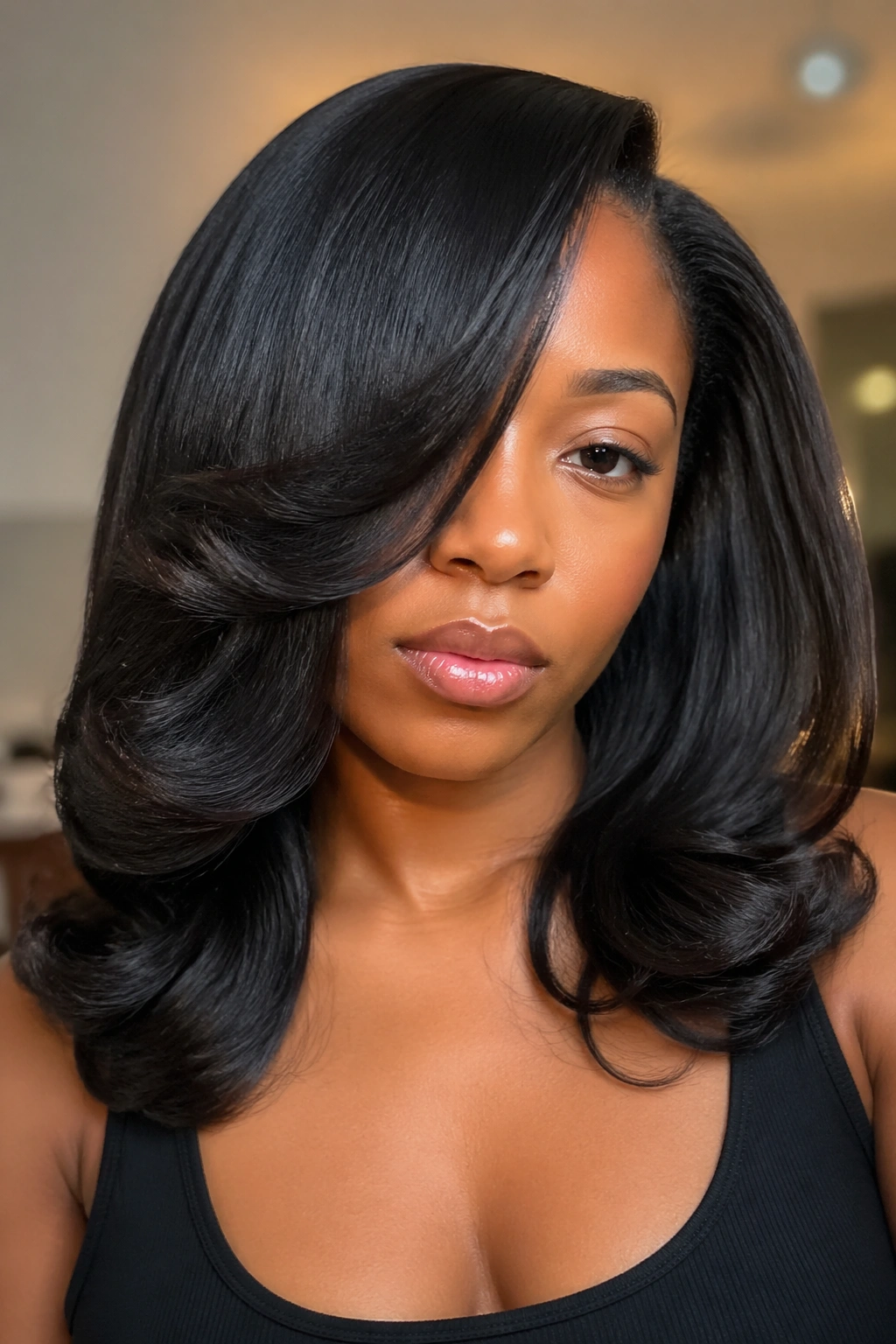
Create a side part just past center. On the fuller side, curl the hair in large, outward waves so it sweeps back and falls behind the ear. On the shallow side, curl the hair forward and let a section fall across the cheekbone in a soft curtain. The two sides create a mirror-image curtain framing the face — asymmetric in parting but balanced in the way the curls frame each cheek.
This is one of the most face-flattering versions of a silk press style. It works for oval, round, heart, and square face shapes because the curls on each side are adjustable — you can pull more hair forward on the cheek that needs softening.
6. Tight Ringlet Silk Press
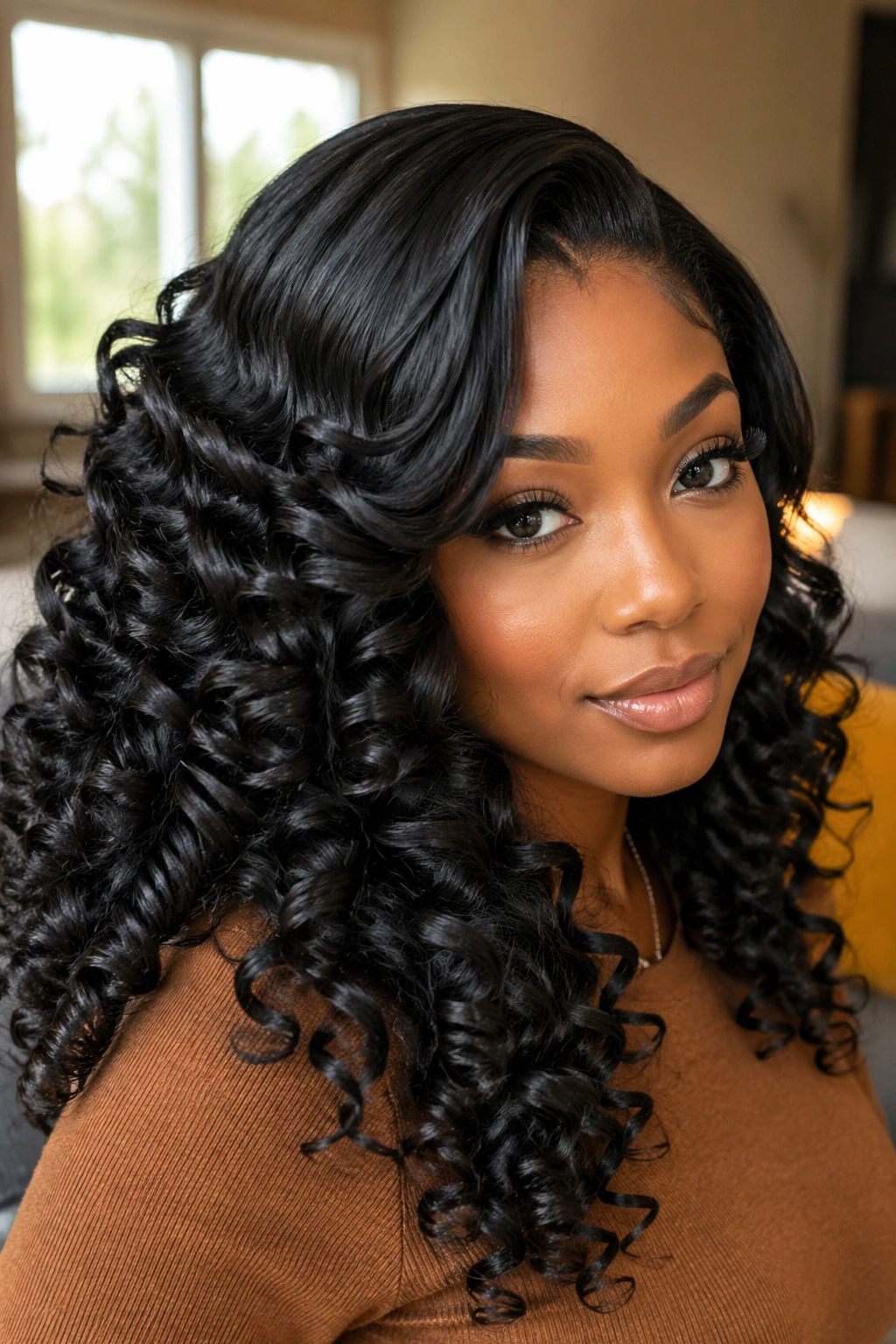
After completing the silk press, use a small barrel curling iron — half-inch or three-quarter inch — to create tight, defined ringlets throughout. The ringlets are distinct from the loose waves in earlier styles; they’re bouncier, more defined, and they add significant volume to the style.
With a side part, the ringlets on the fuller side cascade and stack on top of each other, creating an almost vintage, bouncy silhouette. On longer natural hair, this look is breathtaking — the tight ringlets catch light and move constantly.
This is a higher-maintenance style since the ringlets require more setting time. But they also last longer than loose waves.
7. Side-Parted Silk Press Half-Up Half-Down
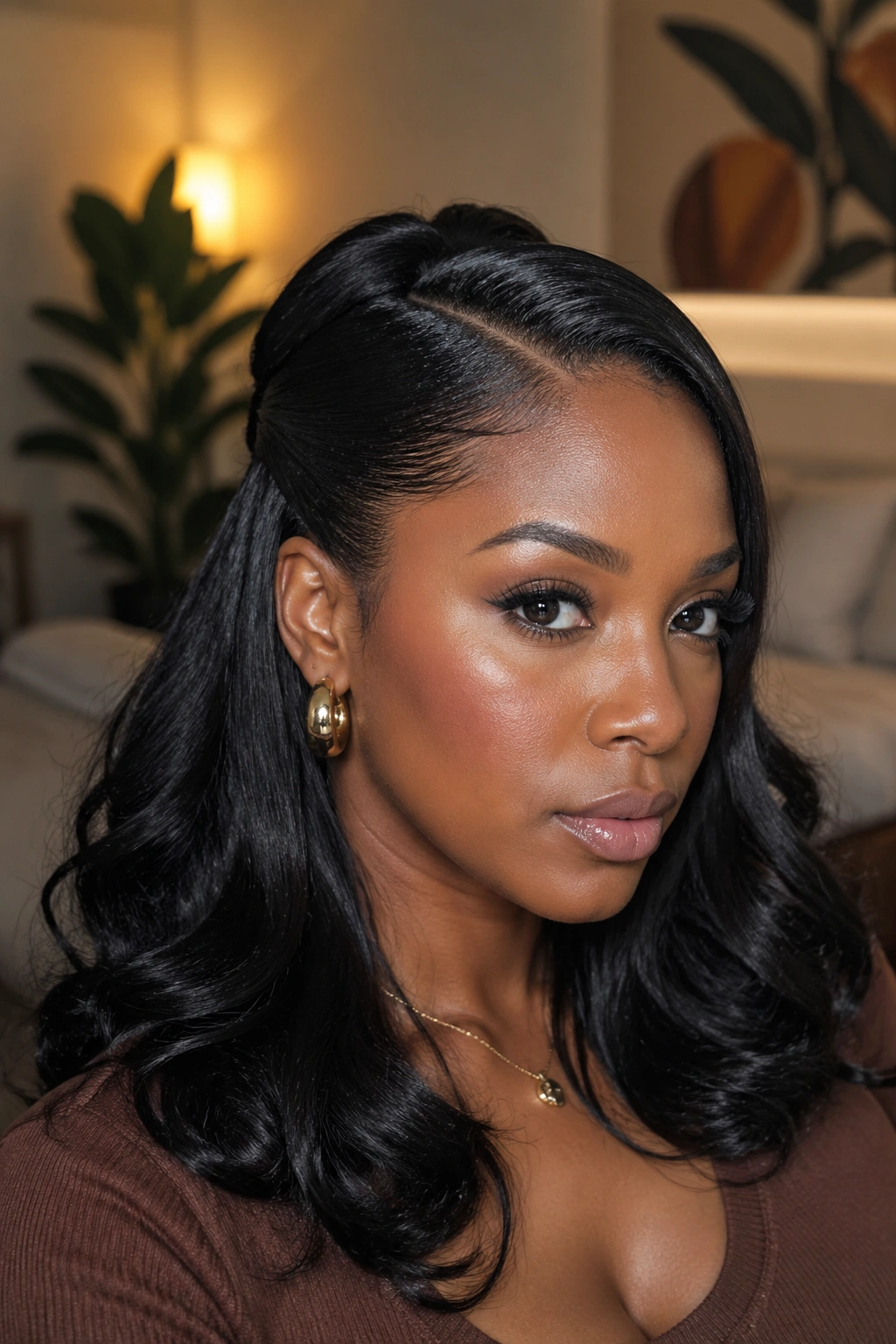
Take the top half of the silk-pressed hair and pull it back into a sleek half-up style — ponytail, bun, or loose twist — at the crown, following the direction of the side part so the pulled-up section sweeps from the parted side toward the back. The bottom half falls free in curls.
The half-up element keeps the side part visible and dramatic at the crown, while the bottom curls provide volume and movement. It’s a versatile choice because you can dress the half-up portion up or down with accessories.
8. Side Part With Asymmetric Curls
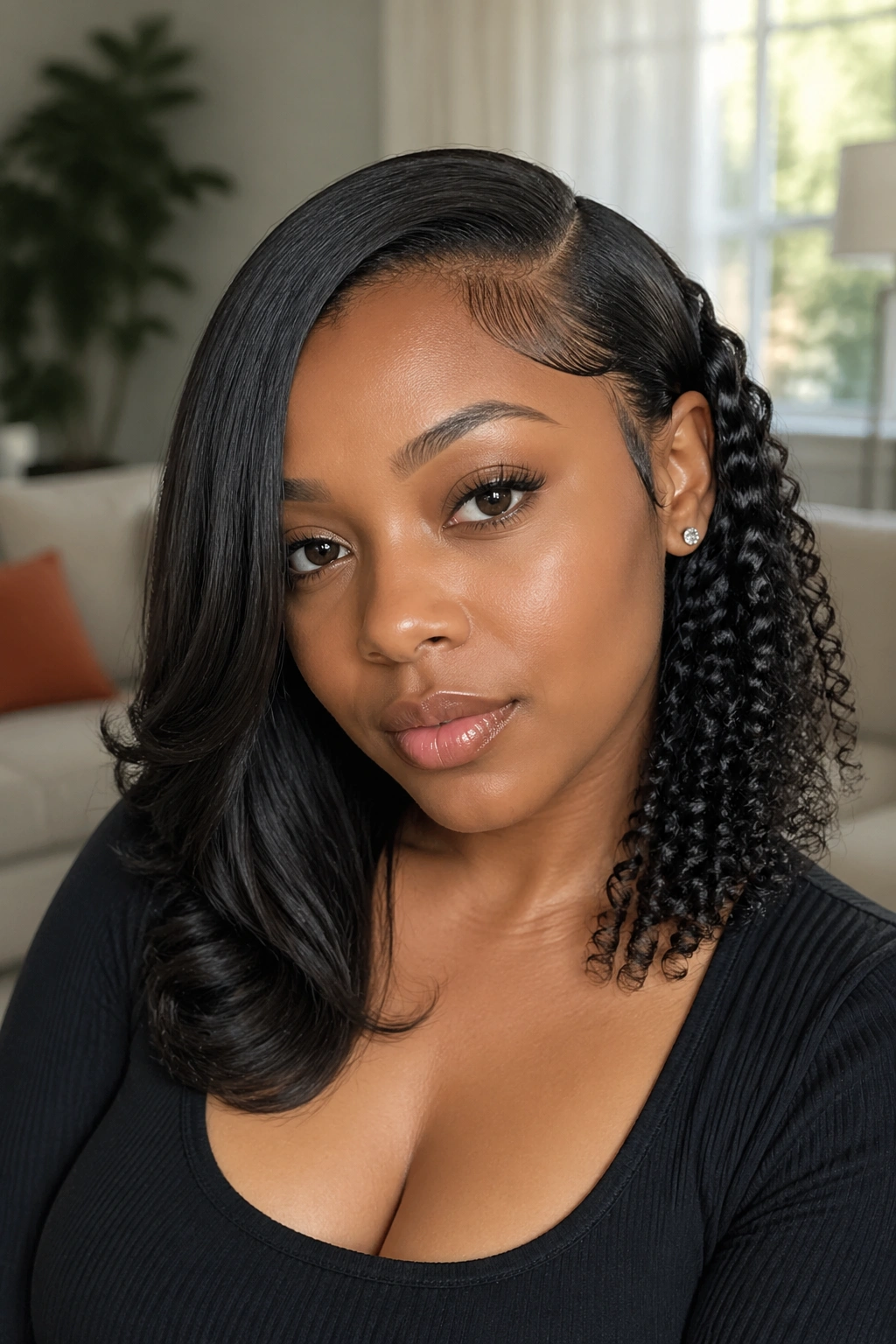
On the fuller side of the side part, leave the silk-pressed hair mostly straight or in very loose waves. On the shallow side, create tight, defined curls. The asymmetry in curl size and density between the two sides creates a bold, fashion-forward look that reads as intentional and styled rather than accidental.
This is not a common look, which is exactly what makes it interesting. The contrast between the straight section and the curly section — divided by the side part — creates a striking visual split.
9. Pinned Side With Curly Volume on the Other
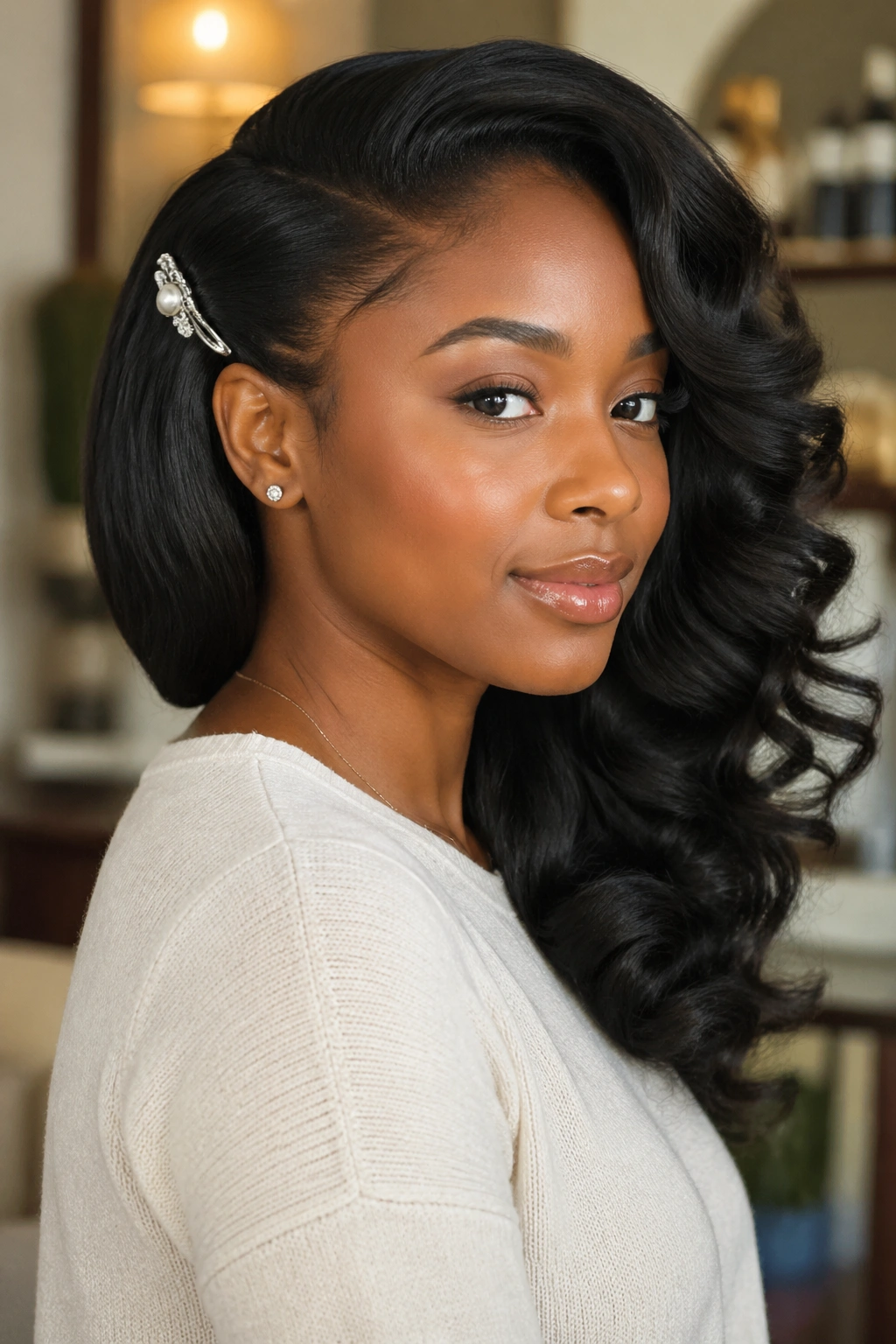
Take the shallow side of the side part and pin it back cleanly — tucked behind the ear or pinned with a decorative clip close to the head. Leave the fuller side completely free to fall in large, soft curls. The one-sided volume is dramatic and romantic.
A large decorative clip or pin on the shallow side becomes a style accent rather than just a functional tool. Choose something ornate — a rhinestone clip, a gold cuff, a floral pin — and let it be seen.
10. Vintage-Inspired Silk Press With Rolls
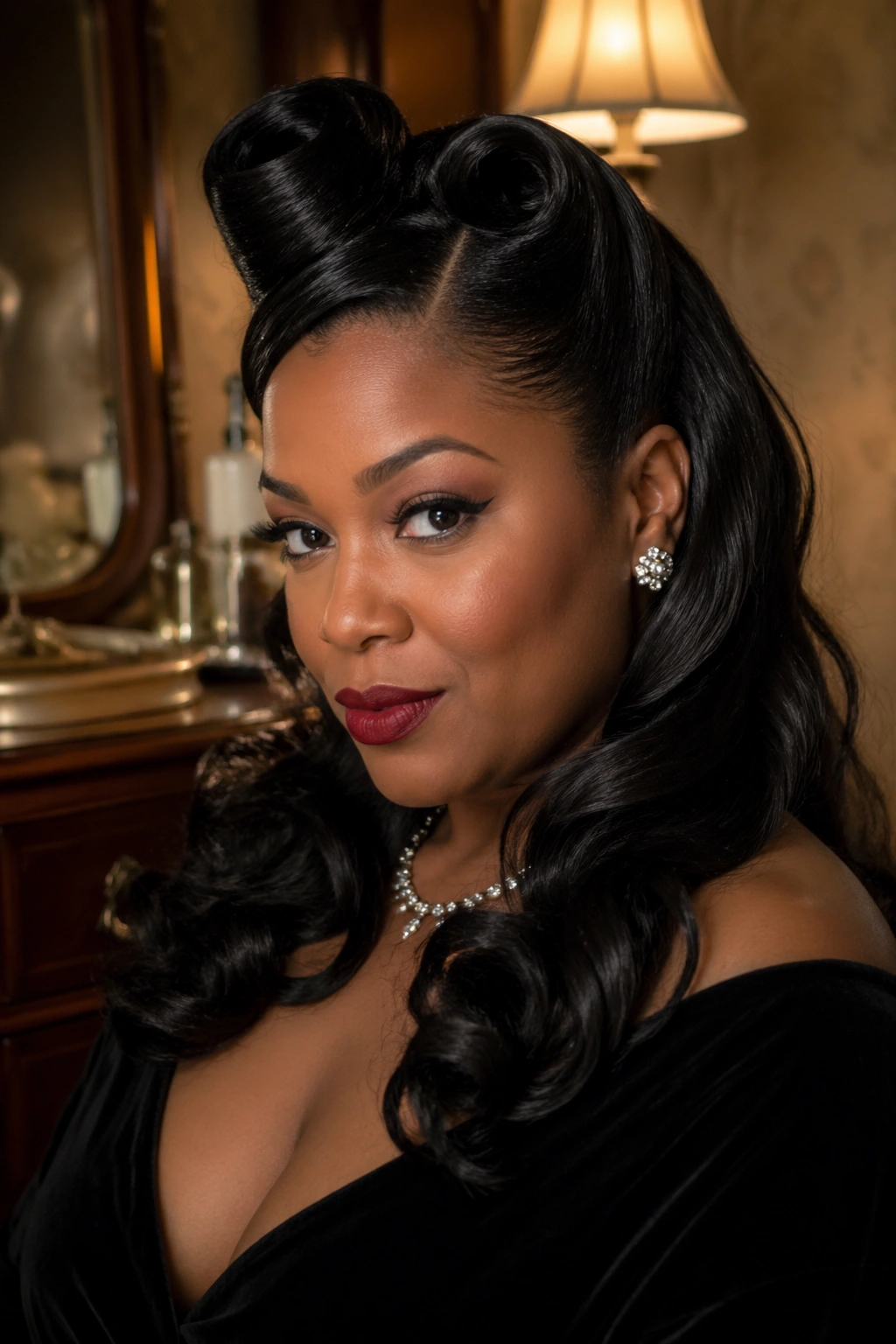
Old-school victory rolls — the signature upswept rolls of classic Black Hollywood glamour — can be incorporated at the crown of a silk press with a side part. The rolls sit at the crown, swept in the direction of the part, while the rest of the silk-pressed hair falls in curls or waves below.
This style is deeply rooted in the legacy of Black women’s hair artistry and carries cultural weight alongside its visual impact. It’s technically demanding but unmistakably beautiful.
11. Side Part Silk Press With Layered Curls
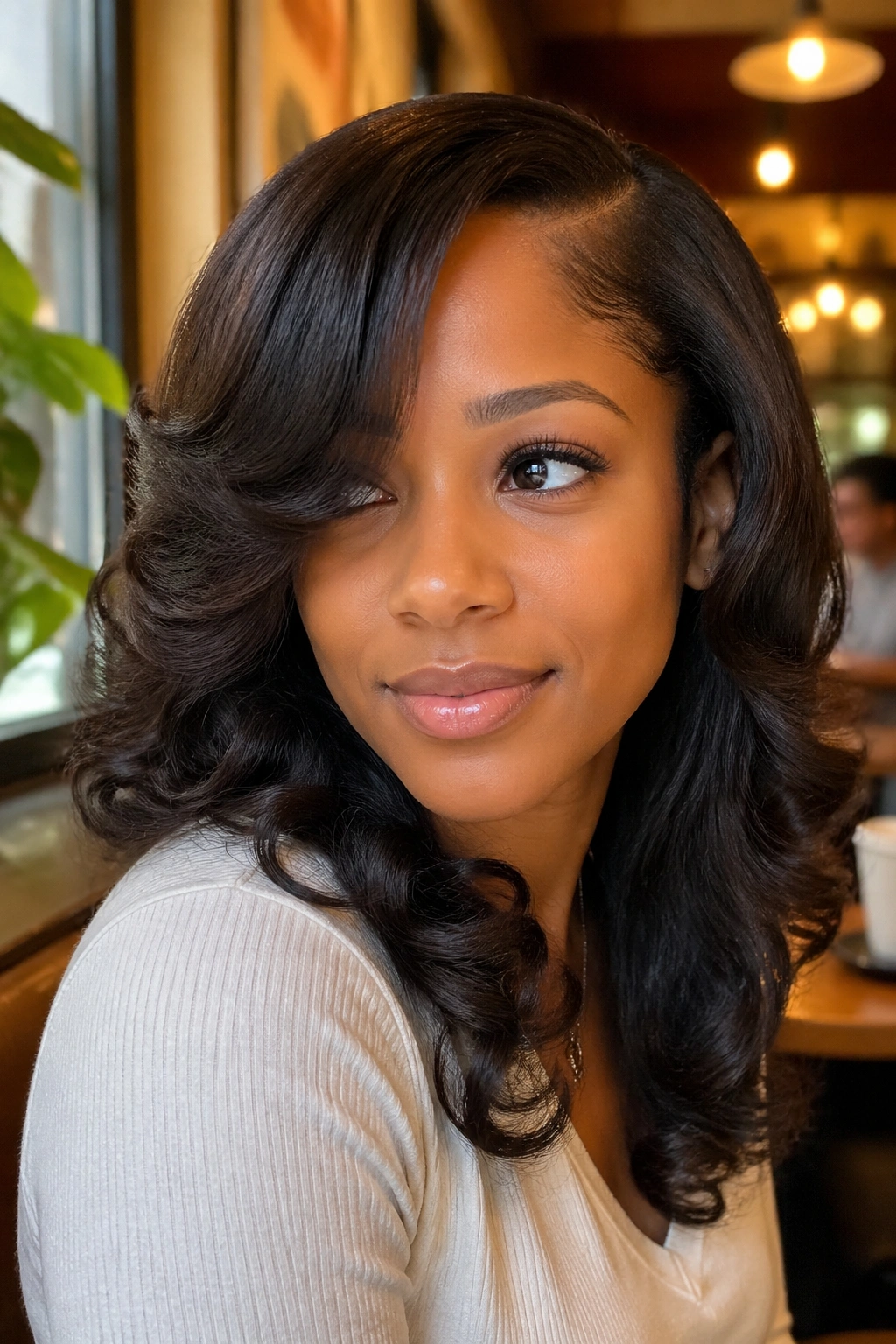
If the silk-pressed hair has layers, curling the ends brings those layers to life. The shortest layers curl into tighter, more visible ringlets closer to the face, while the longer layers fall in larger, looser waves below. Against a side part, the layered curl effect creates visual depth and dimension that a single-length curl style doesn’t have.
Request layers specifically designed to work with curl styling if you’re getting a cut before a silk press — the placement of the layers affects how the curls frame the face.
12. Side-Swept Silk Press Bun With Curly Tendrils
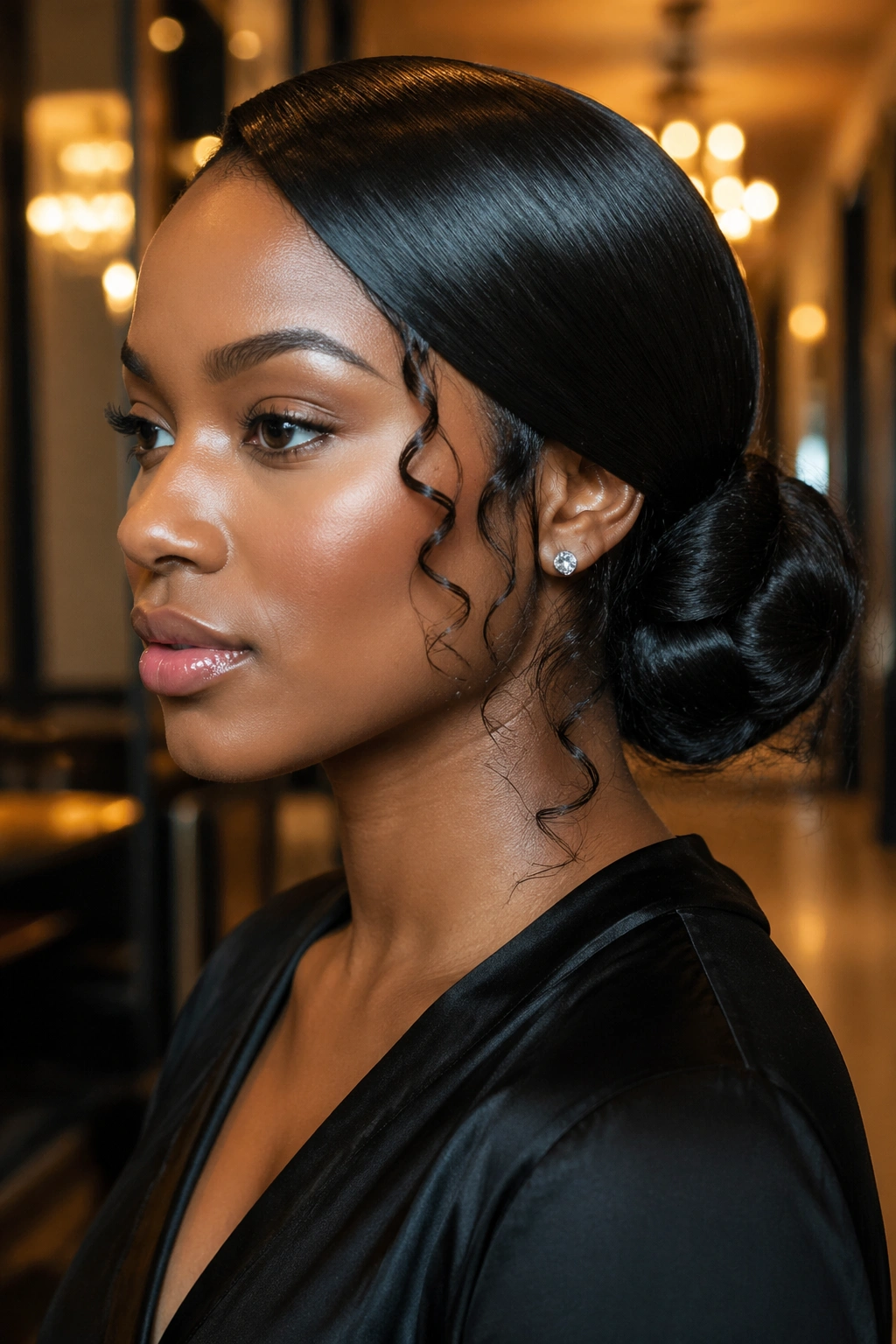
A silk press that gets pulled into a swept side bun at the nape, with curled tendrils left out at the temples and nape. The bun is sleek and smooth from the silk press. The tendrils are small, defined ringlets that soften the look and frame the face.
This is one of the most elegant options in this entire list. It’s versatile enough for both formal and semi-casual occasions, and the tendrils add personality to what might otherwise be a severe updo.
13. Big, Bouncy Blowout Curls With Side Part
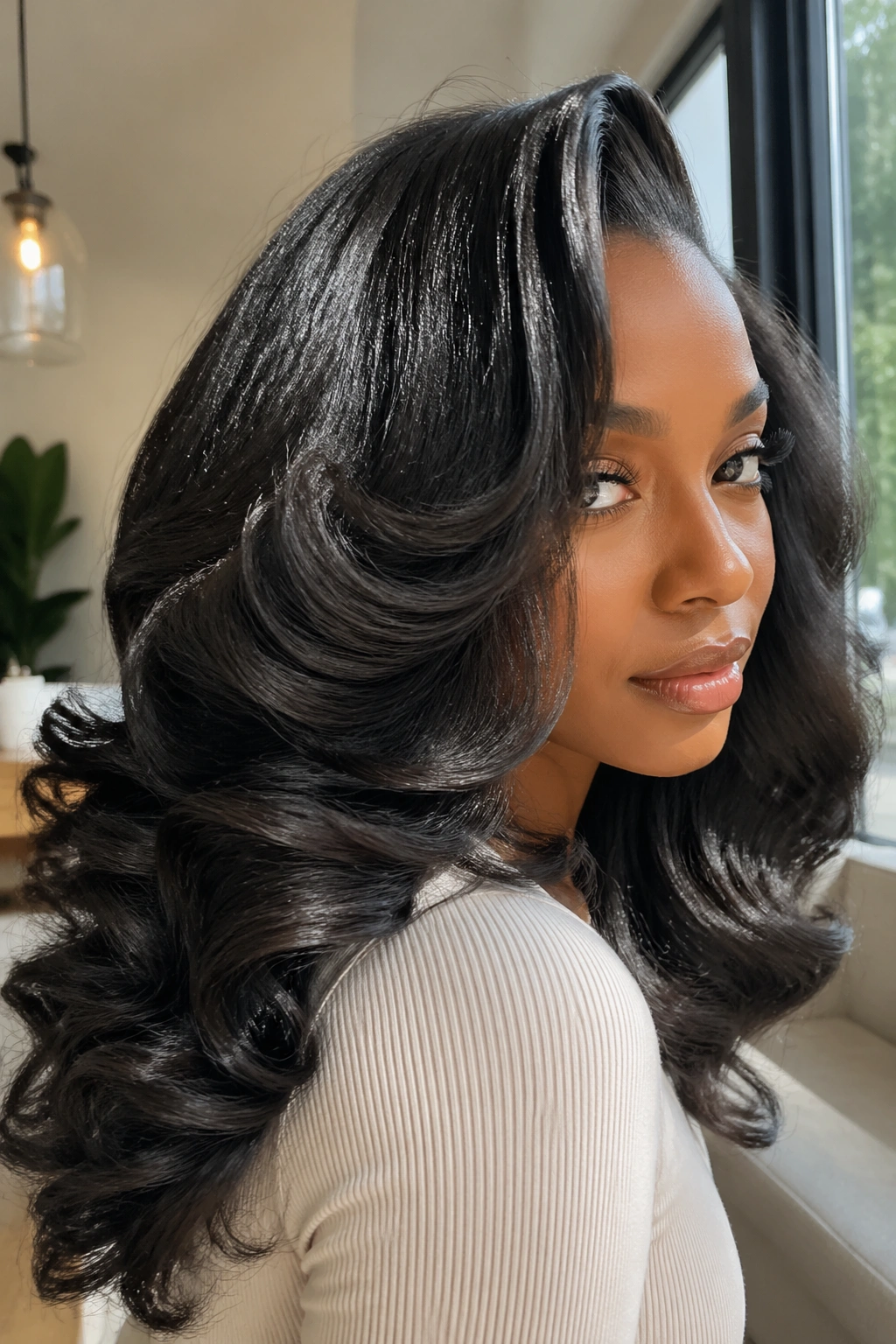
A silk press base with large, bouncy curls — almost a curly blowout — created with a 2-inch curling iron and wrapped loosely around the barrel. The curls are large enough that they’re more wave than ringlet, falling in big, relaxed swoops from the side part. The silk press gives the curls shine and smoothness that a regular blowout doesn’t.
This is maximum volume, maximum movement, maximum glamour. Best worn on days when you want your hair to be the centerpiece of the look.
14. Side Part Silk Press With Flat Twist Front
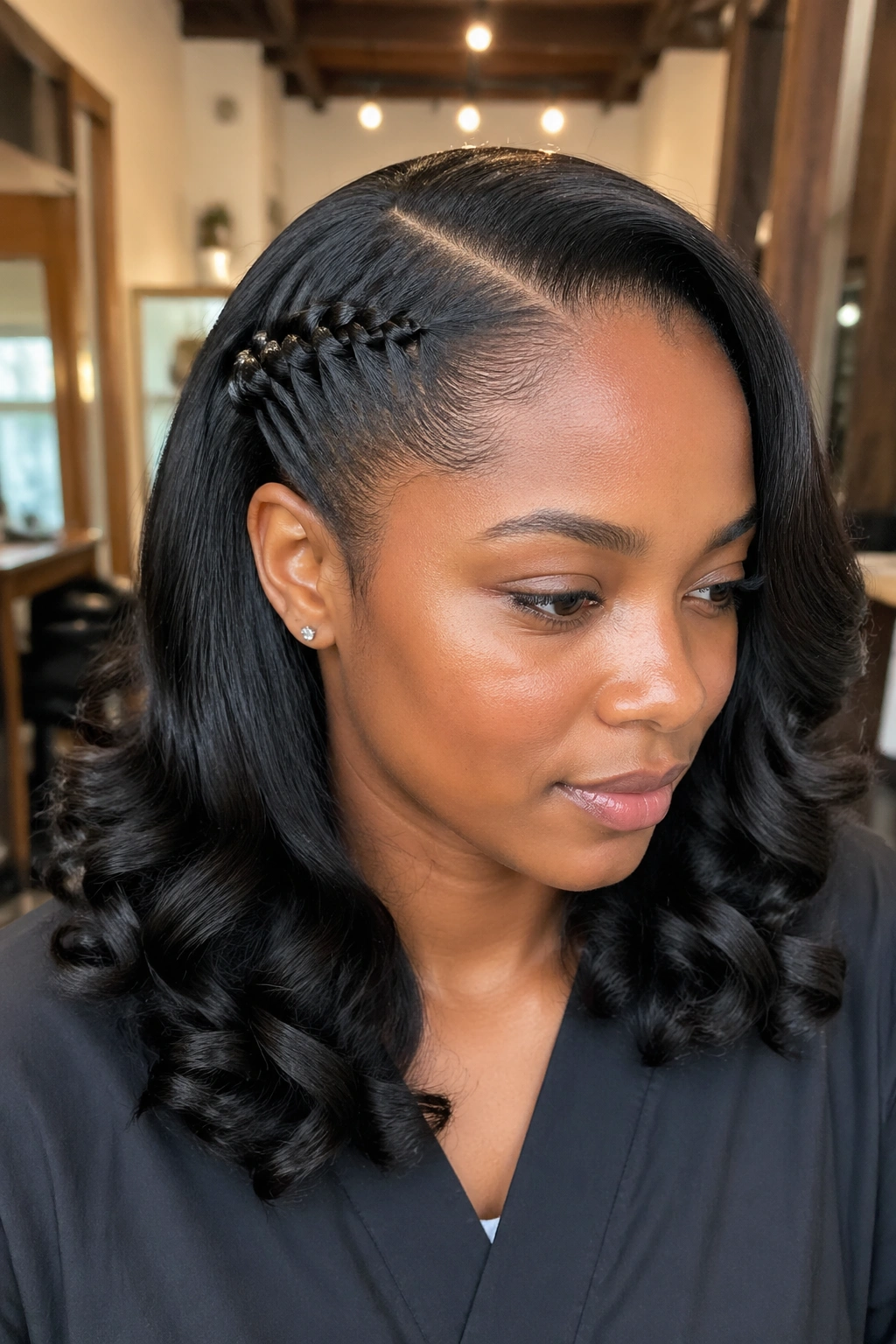
Before silk pressing the rest of the hair, create a flat twist at the front hairline on the side with less hair — the shallow side. The flat twist lies flat against the scalp from the temple to the ear, then releases into the silk-pressed curled hair below.
The flat twist contrasts beautifully with the smooth silk press and creates an interesting transition between texture and sleekness. It also serves as a functional edge control tool, keeping the shallow side flat while the fuller side does the style work.
15. Side Part Bob Silk Press With Curled Ends
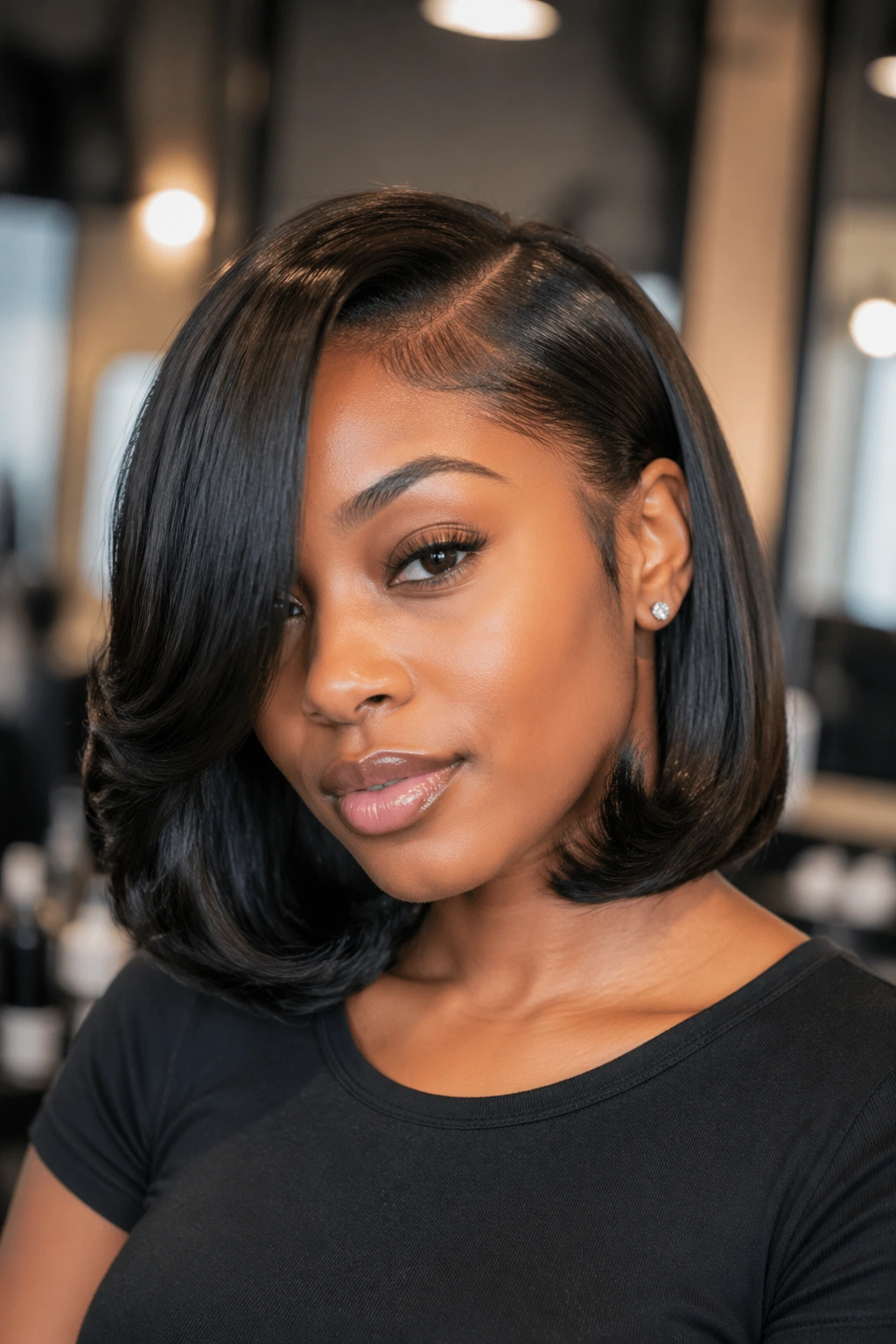
A bob-length silk press with a side part and curled ends that turn under or flip out. The curled ends on a bob create shape and intentionality — without the curl, a bob often just sits flat at the ends. With a side part, one side of the bob is slightly longer (or appears to be, due to the diagonal effect of the part), and the curled ends on each side are more visible.
For naturalistas with shorter hair, this bob silk press is one of the most polished, refined looks achievable — and the curled ends prevent the style from looking too rigid.
16. Cascading Curls Silk Press From a Deep Part
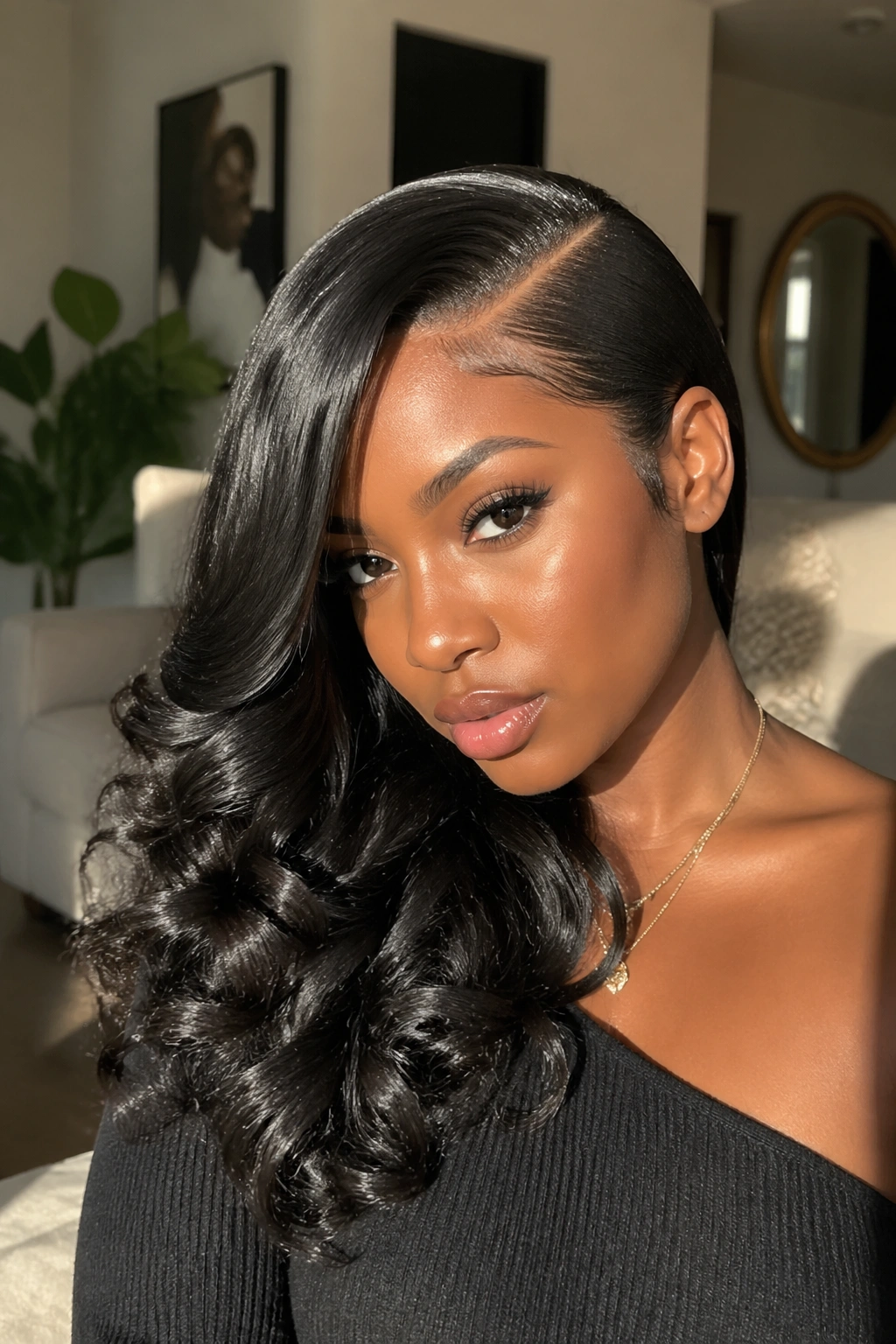
A very deep side part — almost at the ear — creates an extreme sweep where nearly all the hair goes to one side of the head. On that one side, large cascading curls fall over the shoulder in a dramatic, one-sided silhouette. The opposite side is almost entirely smooth and sleek against the head.
This is a bold look. It requires confidence and a face that can hold up to the asymmetry. Women with strong cheekbones and a defined jawline tend to look exceptional in this extreme asymmetric style.
17. Side Part Silk Press With Pearls or Pins in the Curls
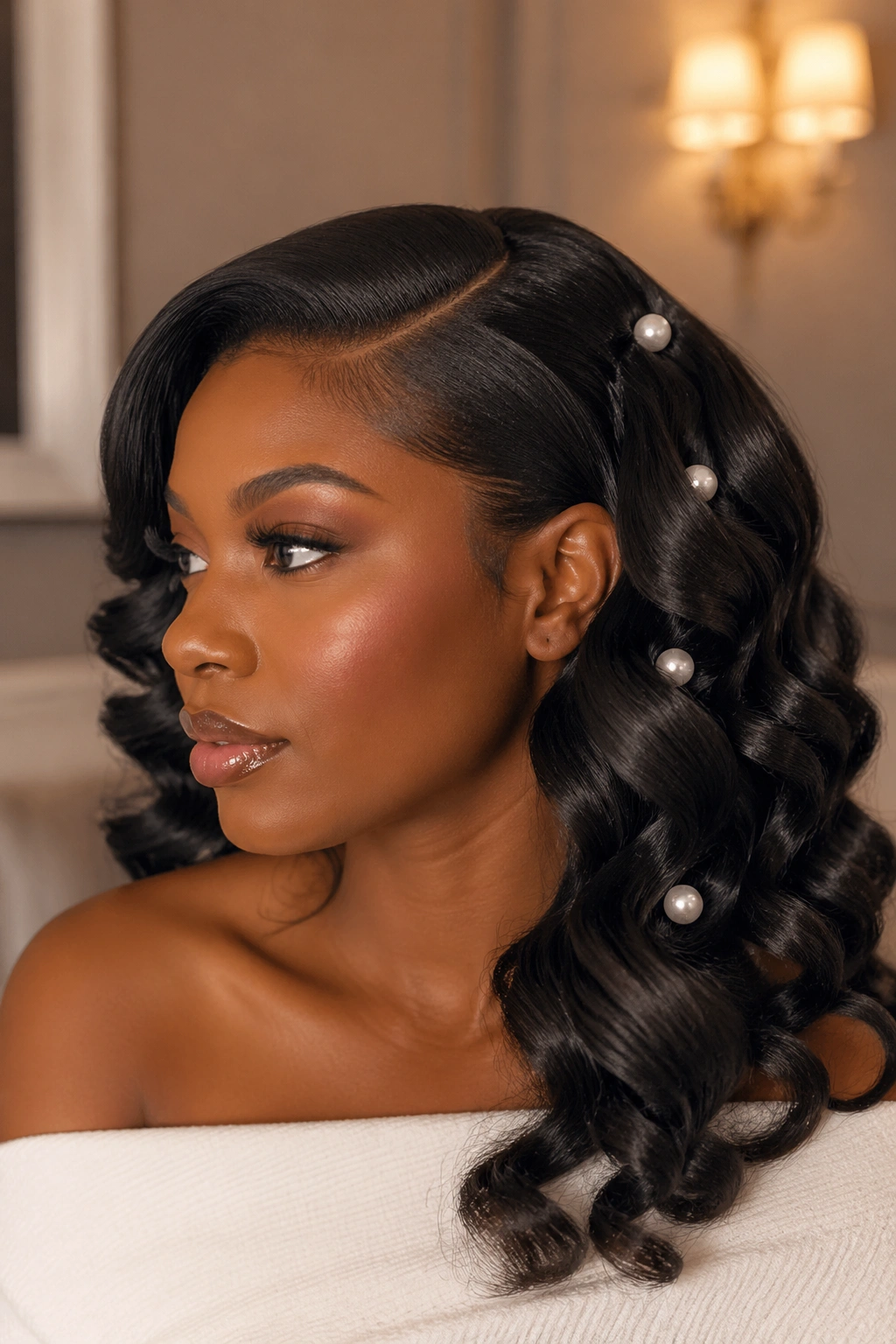
The silk press is finished. The curls are set. Now the styling accessories go in. Pearl pins or small gold bobby pins woven through the curls — particularly the curl clusters on the fuller side of the side part — add a jeweled, editorial element to the look.
Less is more. Three to five pins scattered through the curls look intentional. Too many and it starts to look cluttered. Place pins at the widest sections of the curls for maximum visibility.
18. Silk Press Ponytail With Curly Ends
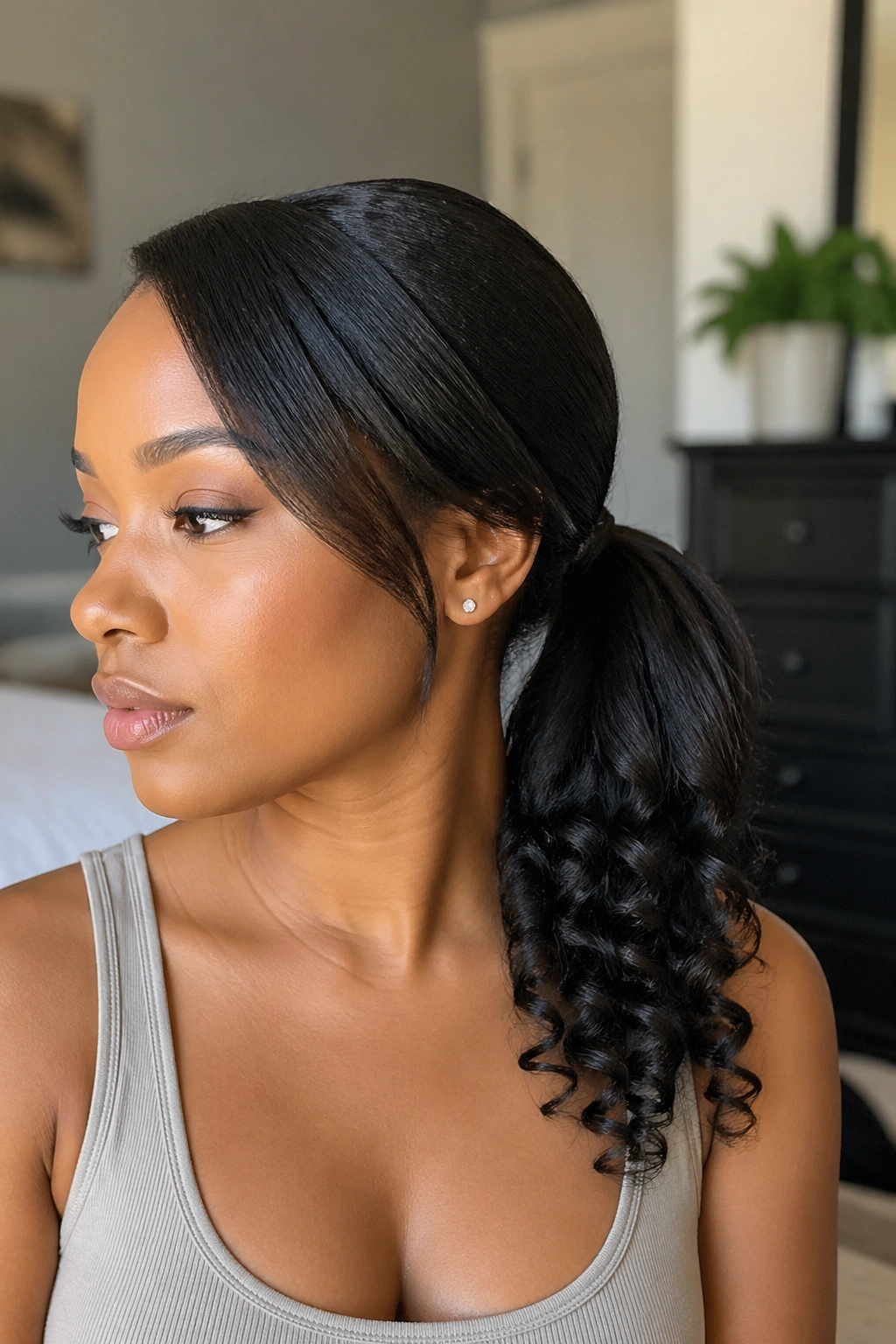
Pull the silk-pressed hair into a low ponytail at the nape, following the direction of the side part. The ponytail should sit slightly off-center — to the opposite side from the part — to maintain the asymmetry of the style. Curl the ends of the ponytail into defined ringlets.
This gives you the elegance of a low ponytail with the texture and dimension of curl detail. Wrap a section of the ponytail around the elastic for a polished base.
19. Glam Side Part With Finger-Curled Front Pieces
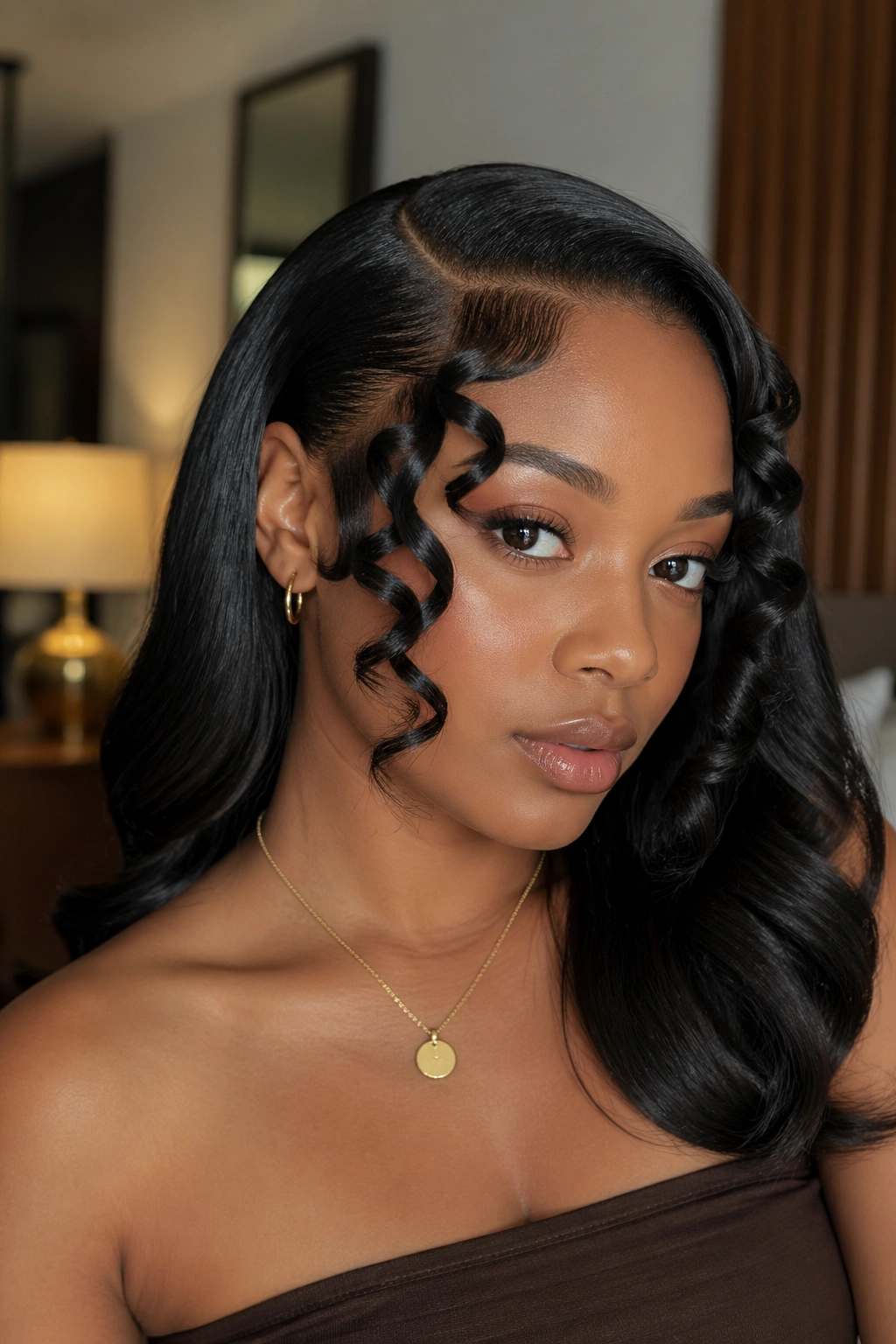
After silk pressing, finger-curl the front pieces — the sections closest to the face — into precise, small spirals by wrapping them tightly around your finger while still warm. Leave the rest of the hair in its silk-pressed state or add loose waves to the rest.
The finger-curled front pieces frame the face with tight, defined ringlets that draw attention to the eyes and cheekbones. Combined with the side part, these front pieces become the focal point of the entire style.
20. Side Part Silk Press With Heat-Free Curl Refresh
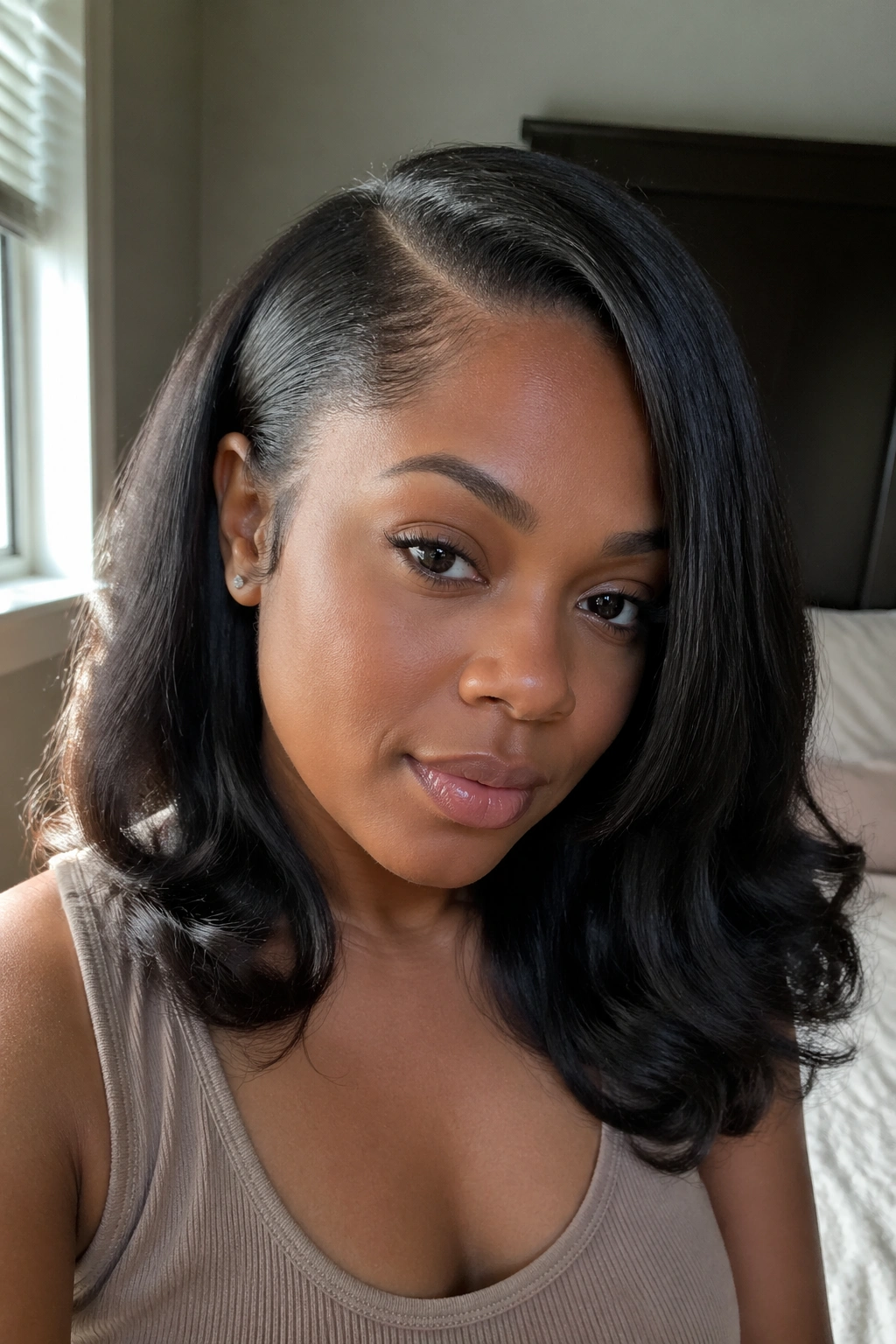
After a silk press, you can add curls without additional heat by using flexi-rods, perm rods, or satin-covered rollers on the ends while the style is still fresh. Wrap the ends around the rods, sit under a hooded dryer or allow to air-set, then release. The curls formed this way are tighter and more defined than iron curls but won’t add additional heat stress to the silk-pressed hair.
This is the best option if you’re concerned about heat damage — you get the curl element without doubling the heat exposure.
Protecting Your Silk Press With Curls Overnight
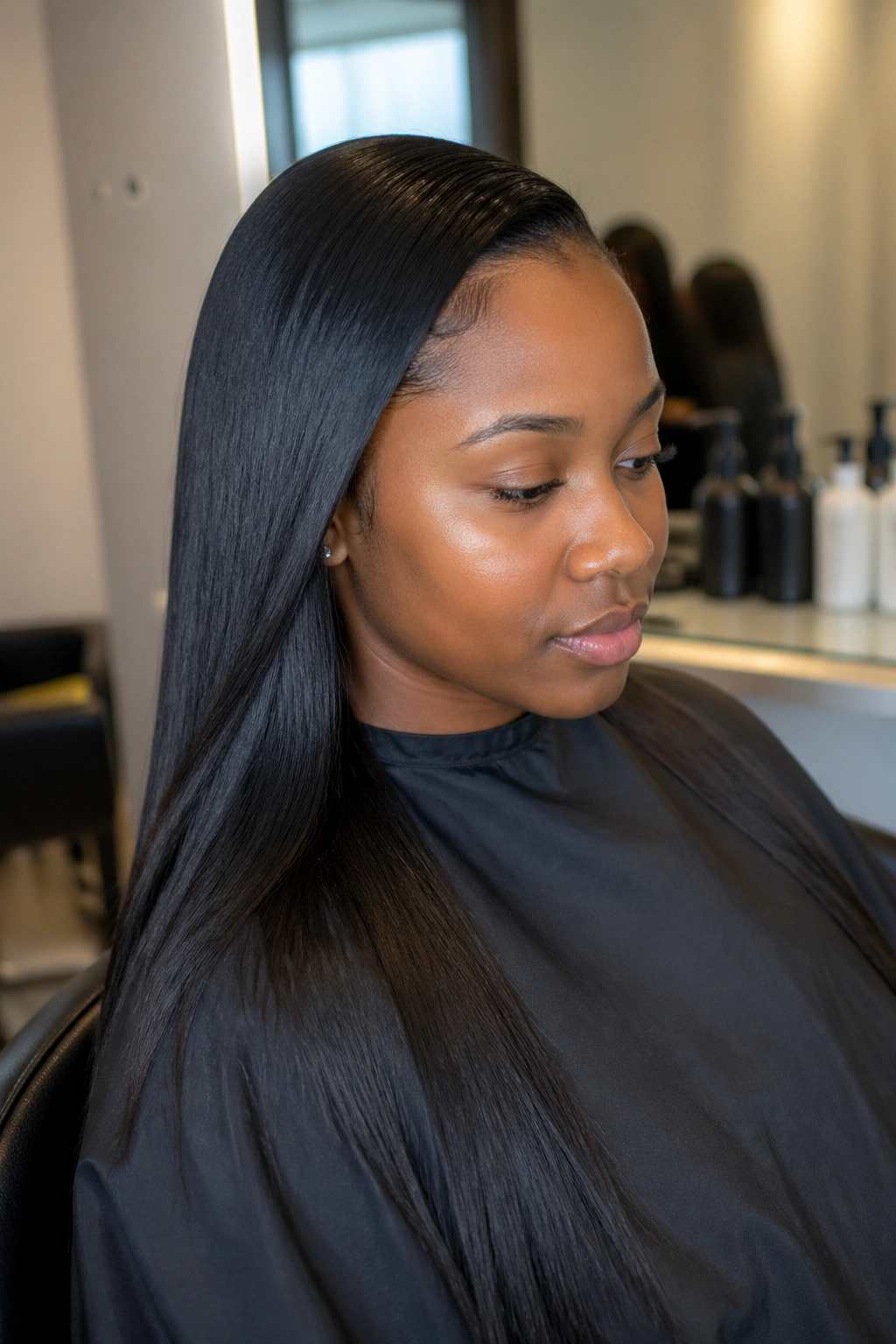
A silk press with curls requires specific nighttime protection. Wrap the style in a satin scarf — starting from the back of the head and bringing the scarf forward to cover the edges and the curls at the front. Sleep on a satin pillowcase as backup.
In the morning, unwrap gently, shake the curls loose with your fingers, and spot-touch any flattened sections with a curling iron on low heat. The silk press base should survive multiple nights with proper wrapping; the curls may need refreshing every two to three days.
When to Schedule Your Silk Press
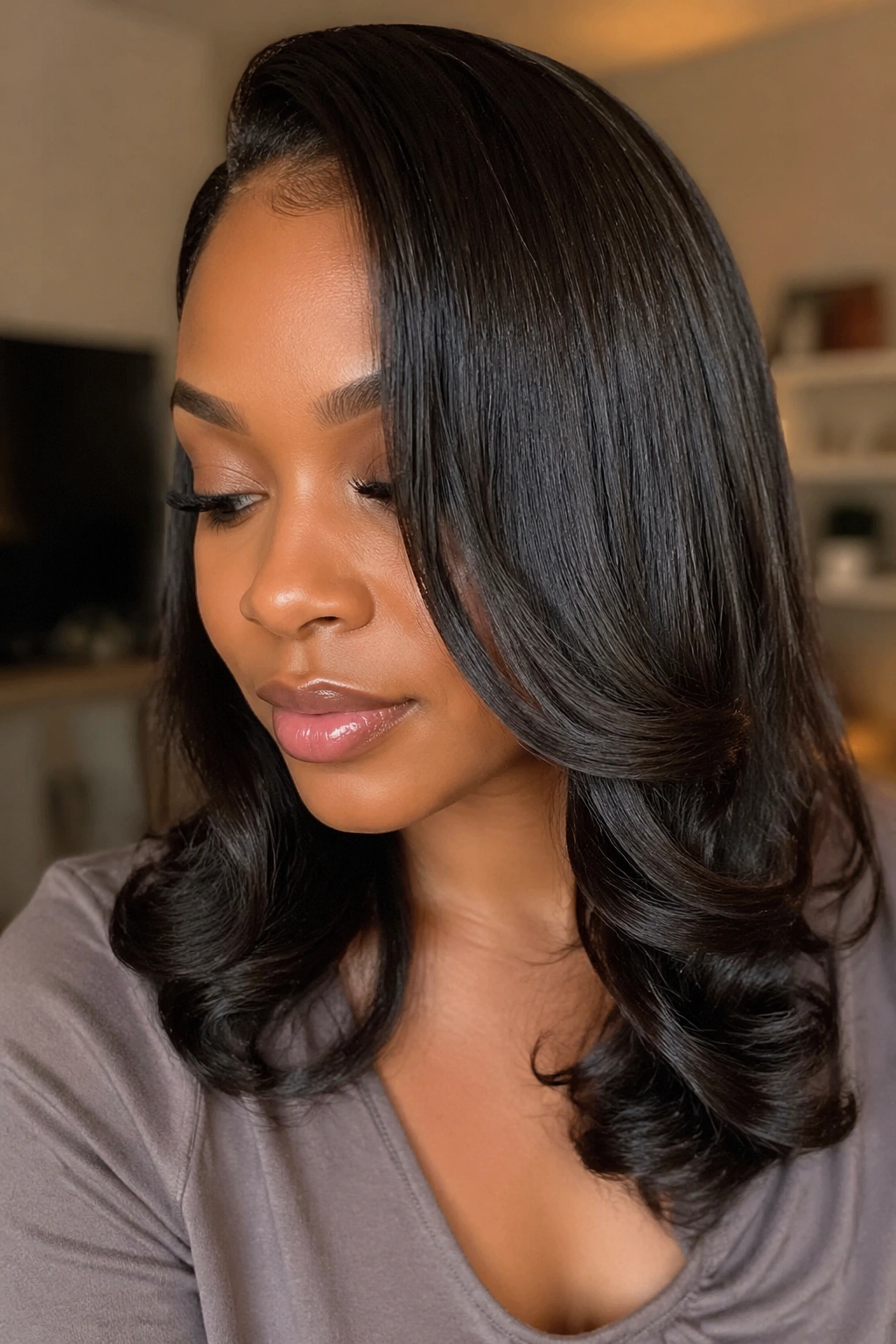
A silk press with curls is a commitment. The style works best on freshly washed, deeply conditioned hair — and the entire process, from wash to silk press to curling, takes several hours. It’s not a style you can rush.
Plan your silk press for a day with plenty of time. If you’re going to a stylist, book the appointment at least a week in advance and discuss the side part placement and curl size you want so the stylist can prepare. A well-executed silk press with curls, done on a good moisture foundation, can last a full week with proper wrapping and minimal humidity exposure.
The style is worth every minute of preparation. A side-parted silk press with curls is one of those rare looks that turns heads without trying to — because the combination of sleekness, movement, and structure creates something that’s genuinely hard to look away from.
