



Blue and white box braids can look icy, crisp, and a little bit fearless when the color placement is right. Get the balance wrong, though, and the white starts to read chalky, the blue loses depth, and the braid pattern stops looking intentional.
The real trick is not just choosing blue and white hair. It’s deciding where each color should live: at the roots, woven through alternating rows, hidden underneath, split down the middle, or faded into the ends. White is unforgiving about buildup. Blue is unforgiving about sloppy parting.
That’s why the strongest blue and white box braids usually feel planned from the first inch. Some sets are sharp and graphic. Some feel softer and more wearable. A few are all about contrast, while others use the colors like a quiet highlight that shows up when the hair moves.
The styles below give you a range, from clean and minimal to bold enough to stop traffic at the checkout line. Pick the one that fits your face shape, your routine, and how much attention you want your hair to pull.
1. Blue and White Box Braids with White-Dipped Ends
The cleanest version of blue and white box braids usually puts the darker color at the scalp and the white at the ends. That gives the braid a clear starting point and a bright finish, which helps the whole style read as one long shape instead of a busy color mix.
The white ends do a lot of work. They catch movement when you walk, swing neatly in a ponytail, and keep the style from feeling heavy near the face. Blue at the roots also hides tiny spacing shifts better than white does, which matters more than people think. A fresh install does not need to look perfect in every row to look good.
Why the dip works so well
The transition from blue to white should feel gradual, even if it is not technically ombré. A soft blend of 24- to 30-inch braiding hair gives you room for that transition, and pre-stretched hair keeps the braid from looking bulky where the colors meet.
- Best on medium to long braids.
- Works well with square parts or neat triangle parts.
- Looks sharp with a center part and sleek edges.
- Needs a careful hot-water set so the ends do not fray early.
My favorite detail: let the white ends stay a little longer than your first instinct says. A tiny white tip can look accidental. A longer dip looks planned.
2. Alternating Blue and White Box Braids Across the Scalp
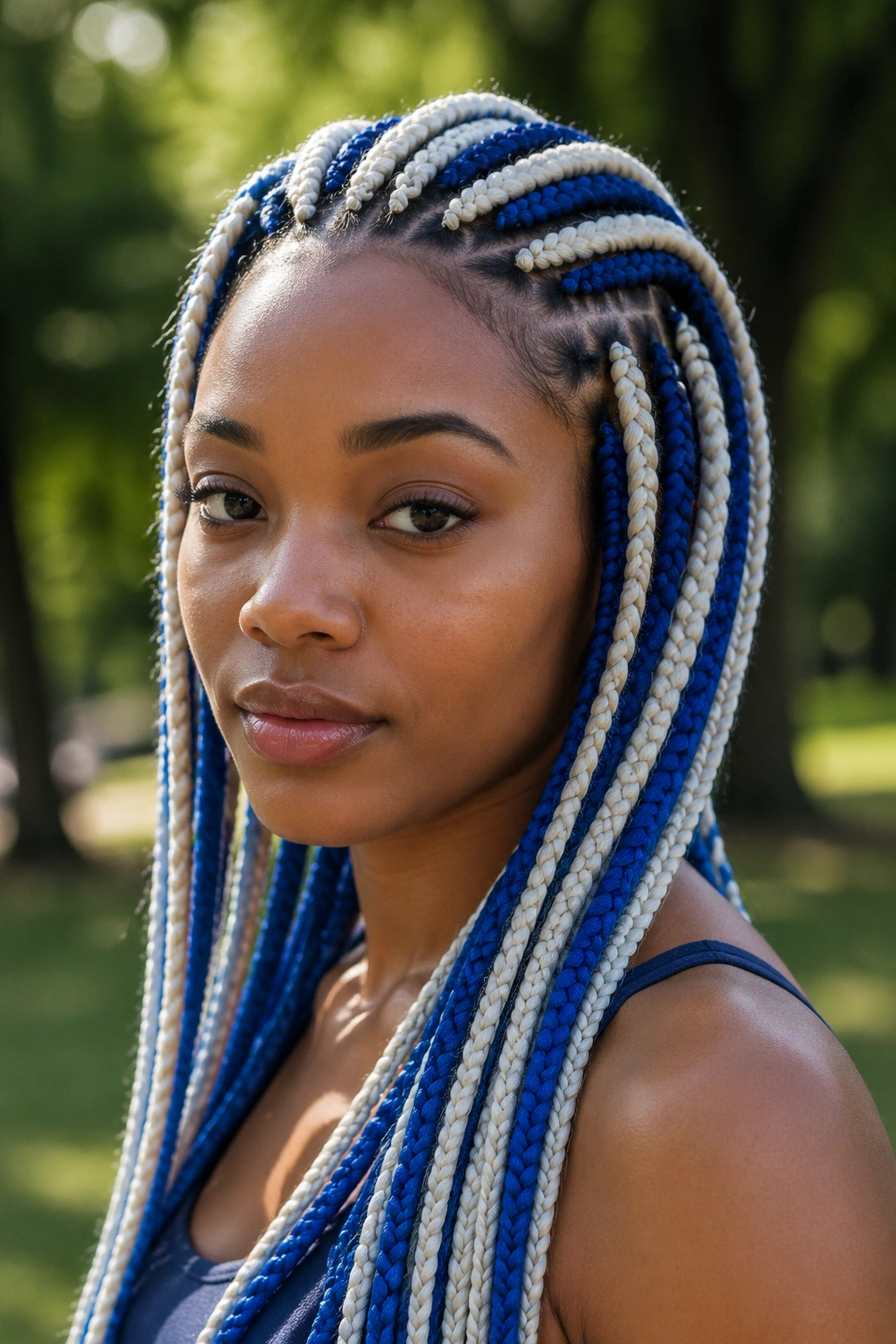
What happens when every other braid changes color? You get a set that feels cleaner than a full split and more interesting than a single solid shade. Alternating blue and white braids create a rhythm across the head, and that rhythm does a lot of the visual work for you.
This style looks best when the parts are consistent. If one row is packed tighter than the next, the alternating color pattern starts to wobble. That is why small to medium sections work so well here. The eye can follow the pattern without getting stuck on one oversized braid that throws the balance off.
How to keep it from turning into a checkerboard
The goal is contrast, not chaos. Use slightly different braid widths here and there so the color repeat feels human instead of mechanical. A few braids can lean thicker near the crown, then taper a touch toward the nape. That small shift keeps the style from looking flat.
White braids should not all sit in the same exact line across the scalp. Stagger them. Let some sit closer to the temples, some near the parting ridge, and a few lower at the back. The pattern gets more depth that way, and the hairstyle looks like it took thought instead of a ruler.
3. Jumbo Blue and White Box Braids with Bold Color Blocks
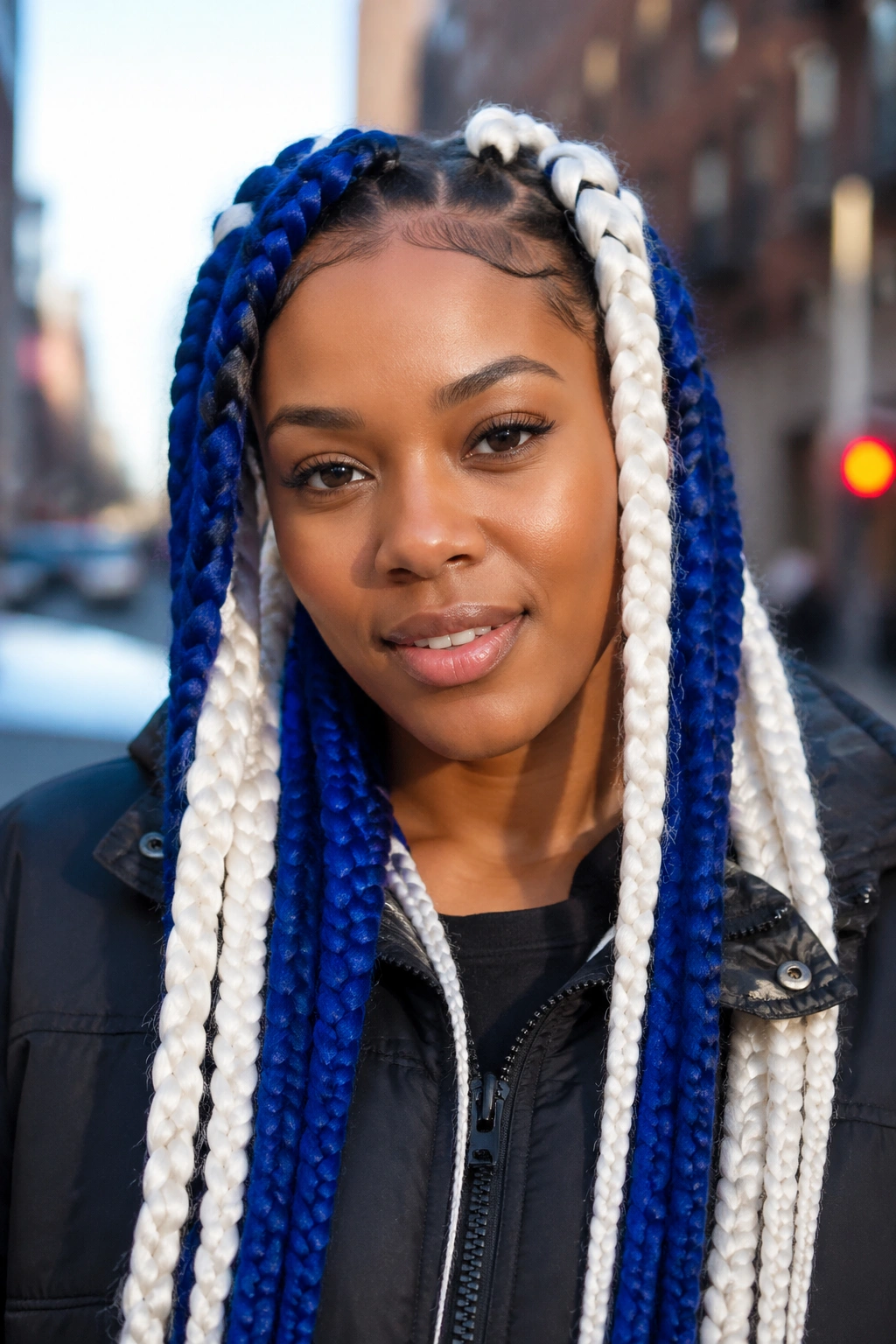
A jumbo set changes the whole mood. Fewer braids means bigger color blocks, and bigger color blocks mean the blue and white read from across a room. If you want the braid pattern itself to do the talking, this is the loudest option in the bunch.
Jumbo braids are also faster to install, which matters if you do not want to sit for tiny sections all day. The tradeoff is weight. Big braids pull more at the edges if they are too long or too dense, so they need thoughtful placement around the hairline. I like this look best when the front rows stay a little lighter and the bulk lives toward the back.
- Use 1 to 1.5-inch sections for a true jumbo finish.
- Keep the front braids slightly smaller if your edges are fine.
- Pair the style with a clean middle or deep side part.
- Choose a blue shade with enough depth to hold next to white.
There is a nice honesty to this style. It does not pretend to be delicate. It gives you two strong colors, bigger braid bodies, and a shape that feels deliberate the second you see it.
4. Knotless Blue and White Box Braids with a Soft Fade
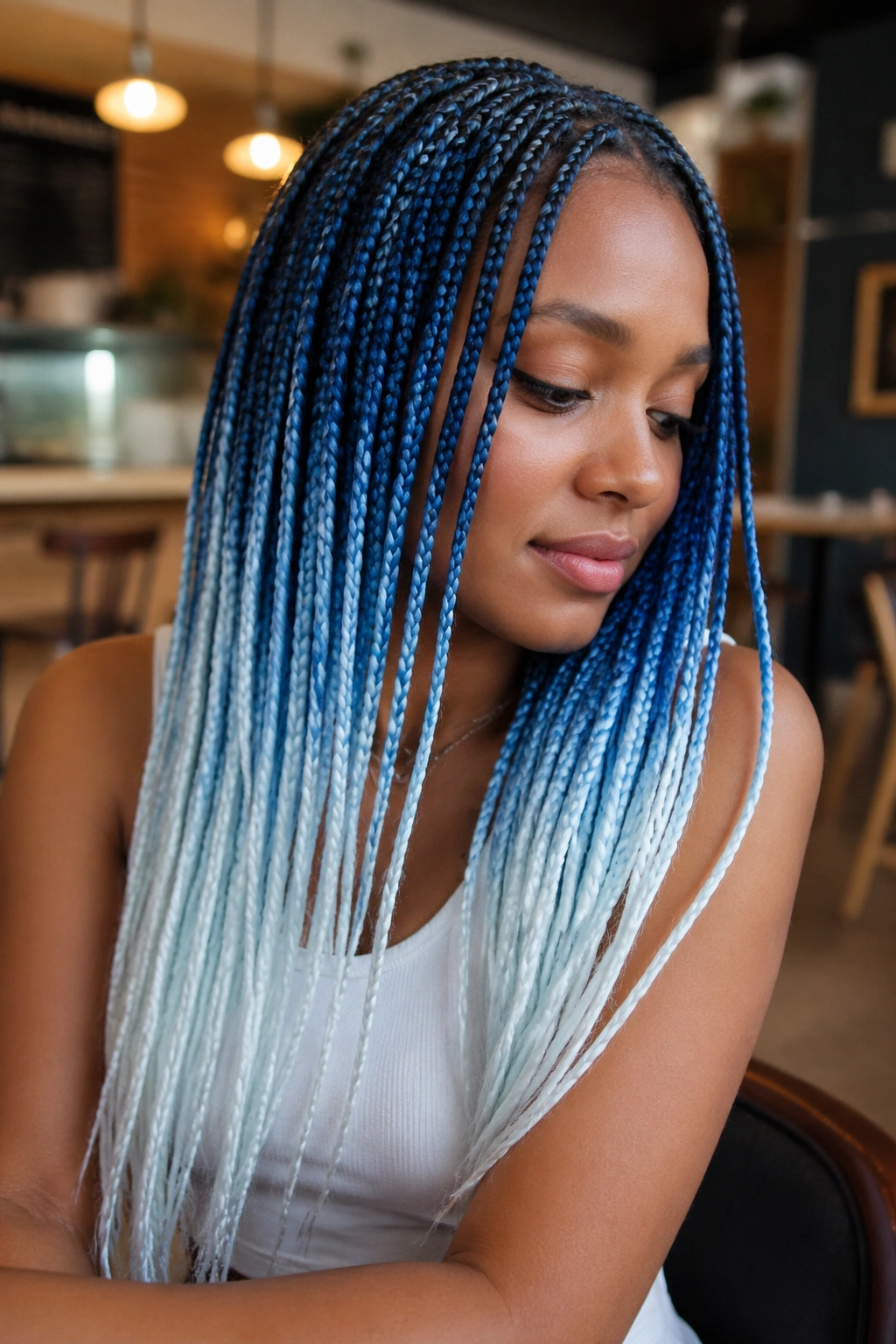
Not every blue-and-white set needs a hard color line. Knotless box braids soften the start of the braid at the scalp, and that makes them ideal if you want the color to shift without looking chopped up. The result feels smoother, lighter, and easier on the head.
Knotless work especially well when the blue begins at the top and the white appears partway down the braid. You get the same contrast, but the transition feels gentler. That matters on long braids, where a blunt color change can dominate the whole look. Here, the fade is part of the braid, not a separate event.
Where the fade should begin
I like the color shift to start a few inches below the scalp, not right at the root. That gives the natural hair a little breathing room and keeps the install looking sleek. A hard switch right at the base can look busy fast, especially if the parts are small and close together.
The best knotless sets also keep the braids slightly flatter at the crown. That flatness lets the color do the talking. White near the ends looks brighter when the top half stays smooth and dark enough to anchor the eye. It is a simple trick. It works.
5. Side-Part Blue and White Box Braids That Frame the Face
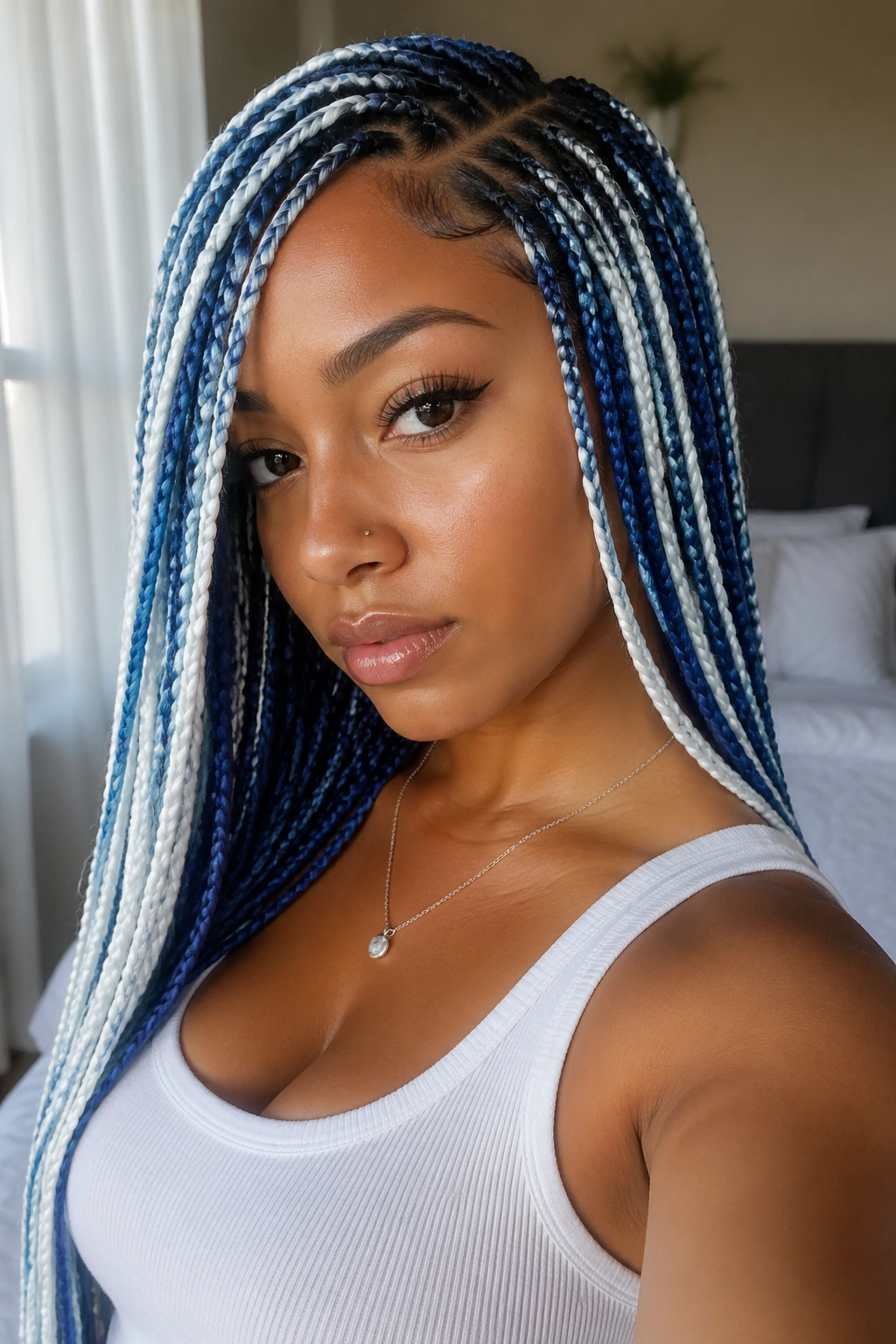
A side part changes everything. It moves the visual weight of the braids off the center line and lets the blue and white play around the face instead of just falling straight down. When the front braids sweep across the forehead, the color starts acting like makeup for the hairstyle.
White is especially strong here because it sits near the cheekbone and temple, where the eye naturally lands first. Blue can live just behind it and add depth without taking over. The whole style ends up feeling tailored, even if the braids themselves are fairly simple.
Why the part matters
A good side part should feel deep enough to be obvious, but not so deep that the style flips awkwardly. The part line should stay clean, and the front section needs to be controlled so the first few braids fall in a soft curve rather than a hard drop.
This is one of the best choices if you wear glasses, hoops, or a sharp brow shape. The braids frame all of it instead of competing with it. And if you like a style that looks different from one side to the other, a side part gives you that contrast without needing extra color tricks.
6. Bob-Length Blue and White Box Braids
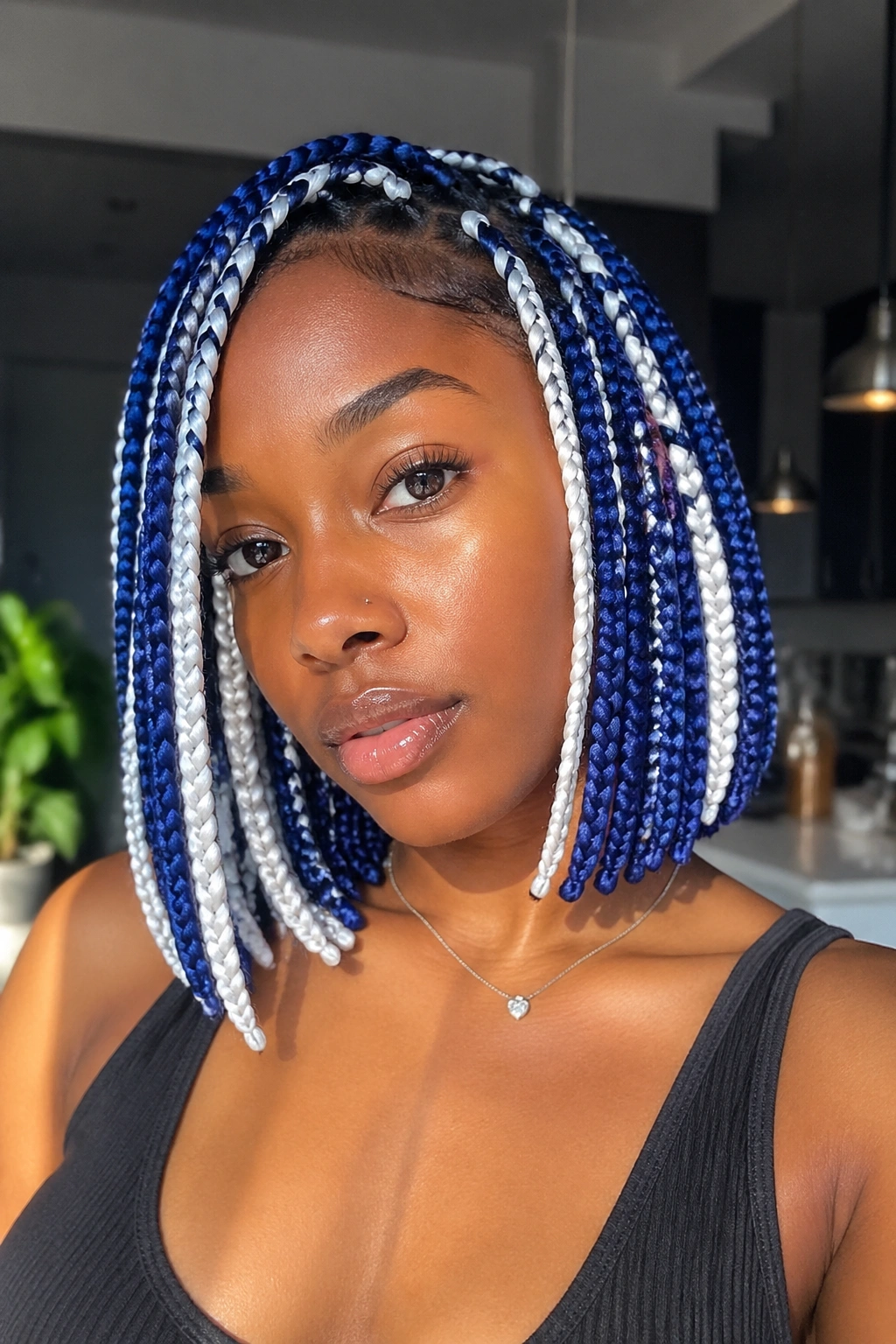
Shoulder-skimming braids change the whole conversation. A bob-length cut makes blue and white look sharper because there is less hair for the colors to hide in, and the shape sits close enough to the jawline to feel crisp. Long braids are dramatic. Bob braids are tidy and direct.
This is the style I like when someone wants color without the weight. A bob is easier on the neck, easier to wash, and easier to wrap at night. It also gives white a cleaner edge, because the ends stop before they start to look stringy. That detail matters. Shorter braids can look expensive when the parts are neat and the ends are sealed well.
One thing: bob braids need fullness. If the braids are too skinny, the shape can look sparse around the bottom edge. I prefer medium sections here, with enough body that the hemline reads as intentional. A little swing at the chin or collarbone makes the whole thing come alive.
7. Half-and-Half Blue and White Box Braids
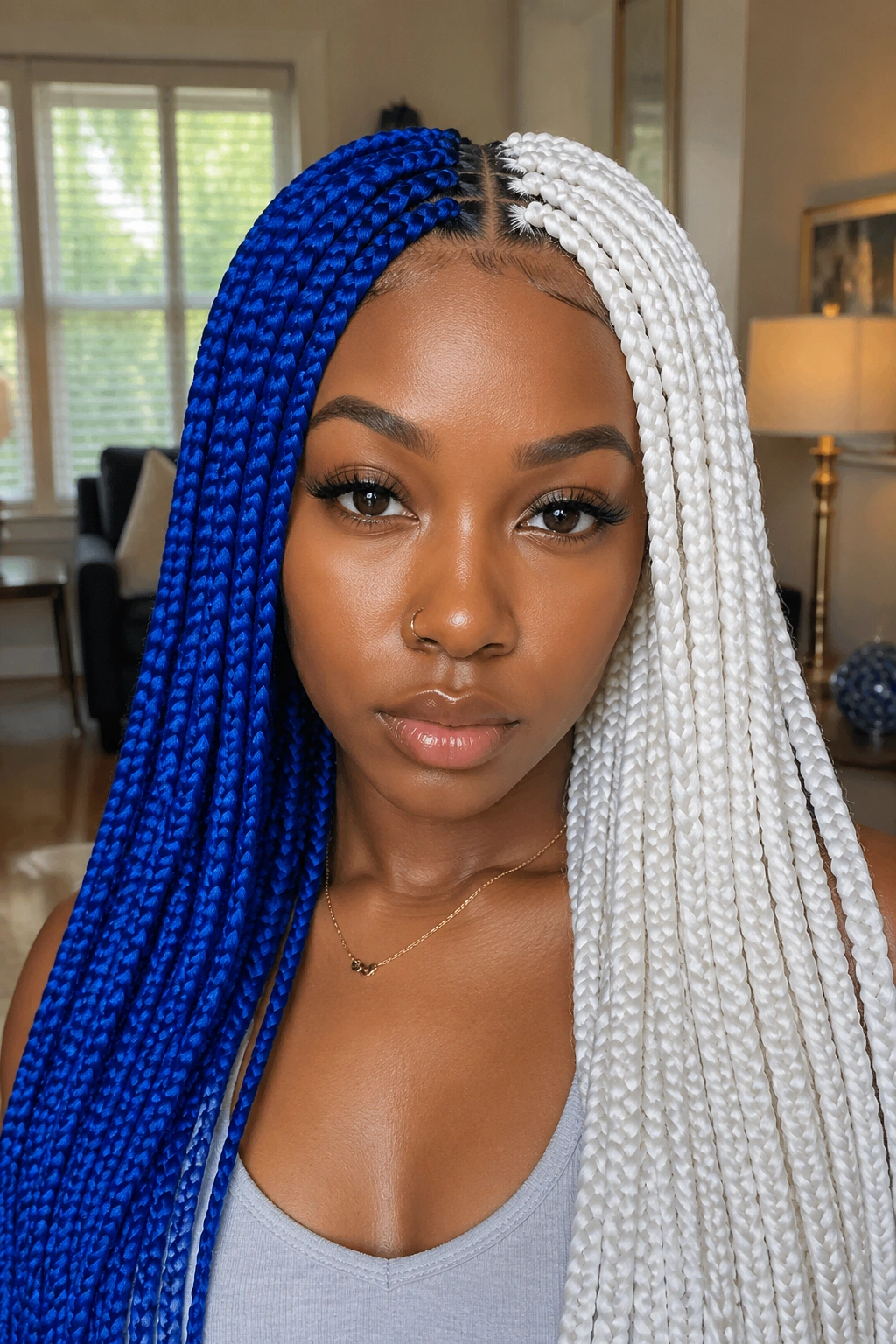
A split-color install is bold, plain and simple. One side blue, one side white. No fading, no soft blending, no pretending the contrast is anything other than the main event. If you want a hairstyle that looks graphic from the front and the back, this is the one.
The secret is the center part. It has to be straight enough to hold the split without wavering. Once that line drifts, the whole idea starts to sag. The best half-and-half sets also use matching braid sizes on both sides, because the symmetry does the heavy lifting. The color split can only look strong if the shape is equally disciplined.
Keeping the line clean
Messy parting ruins this style fast. A clean middle part, matched section sizes, and a careful front hairline make the difference between striking and sloppy. You do not need perfect precision in every braid, but you do need the two halves to feel like they belong to the same head.
This style works best when the blue and white are both saturated enough to stand alone. If the blue leans too pale, it can get lost against the white. If the white is creamy rather than bright, the split can feel muddy. Ask for shades that hold their own next to each other. That tiny detail saves the whole look.
8. Blue-Dominant Braids with White Accent Sections
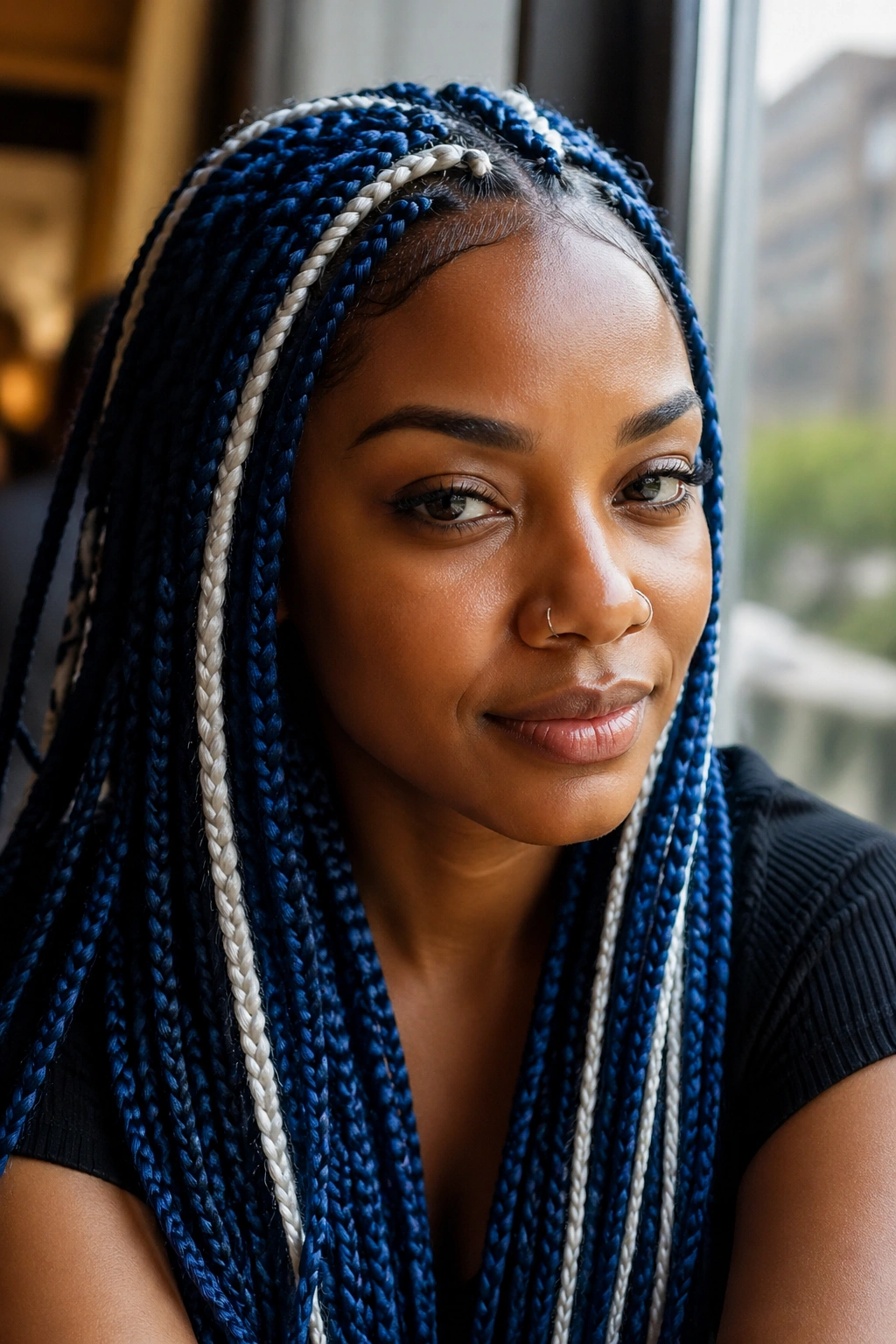
What if you want the color story, but not the full blast of white everywhere? Blue-dominant braids with white accent sections solve that nicely. The base stays moody and rich, while the white shows up in select spots and gives the style a lift.
A few white braids near the temples can open the face. A couple at the crown can break up a heavy blue field. White at the nape is a nice surprise when you throw the hair up. You do not need many accent pieces to make the style read. That is the whole point.
- Place white braids near the front hairline if you want the face to look brighter.
- Put a pair at each side of the crown for balance.
- Add one or two at the nape if you wear high buns.
- Keep the white sections evenly spaced so the style feels deliberate.
This is the easiest version to live with if you want blue to stay dominant. The white acts like punctuation, not a headline.
9. White-Top Blue-Under Box Braids with Peekaboo Contrast
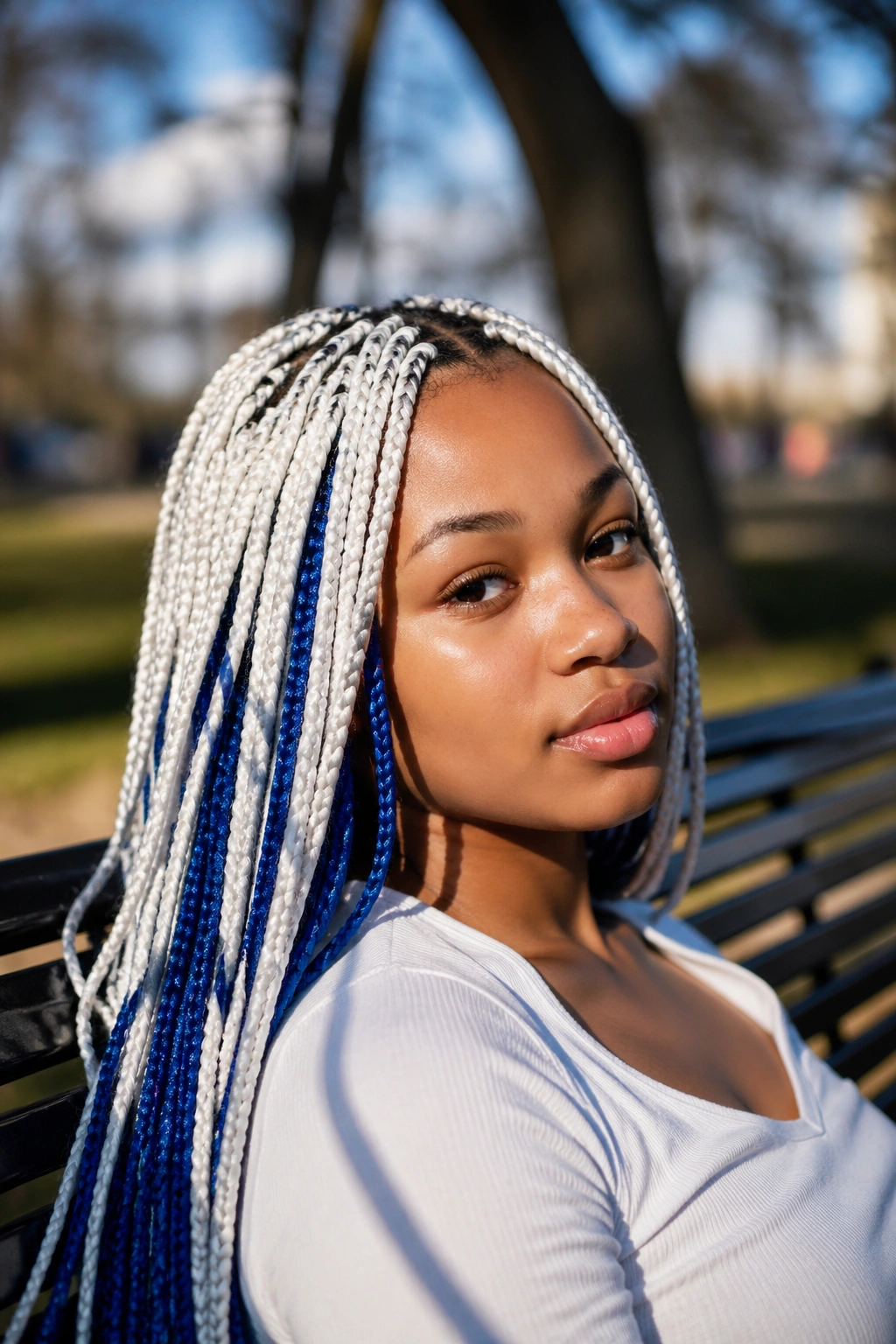
The calmer look is often the stronger one. White on top with blue hidden underneath feels softer at first glance, then gives you a little flash of color when the braids shift or get pulled into a half-up style. It is a good choice if you want contrast without making the whole head look busy.
Peekaboo color works because it rewards movement. Wear the braids down and the white leads. Toss them into a bun or ponytail and the blue underneath shows up like a secret layer. That kind of shift gives the style staying power. It does not get boring fast.
Best when you want surprise color
This setup is especially good for people who wear their hair in different ways through the week. Down, the style looks clean. Up, it looks more playful. The blue can live in the lower rows, around the nape, or in a few hidden middle sections, depending on how much contrast you want.
The other benefit is maintenance. The white braid surfaces are still visible, but they are not covering every single inch of the style. That means the look can stay fresh a little longer before the hidden blue starts to matter visually. It is a smart compromise, and honestly, I reach for it more often than people expect.
10. Triangle-Part Blue and White Box Braids
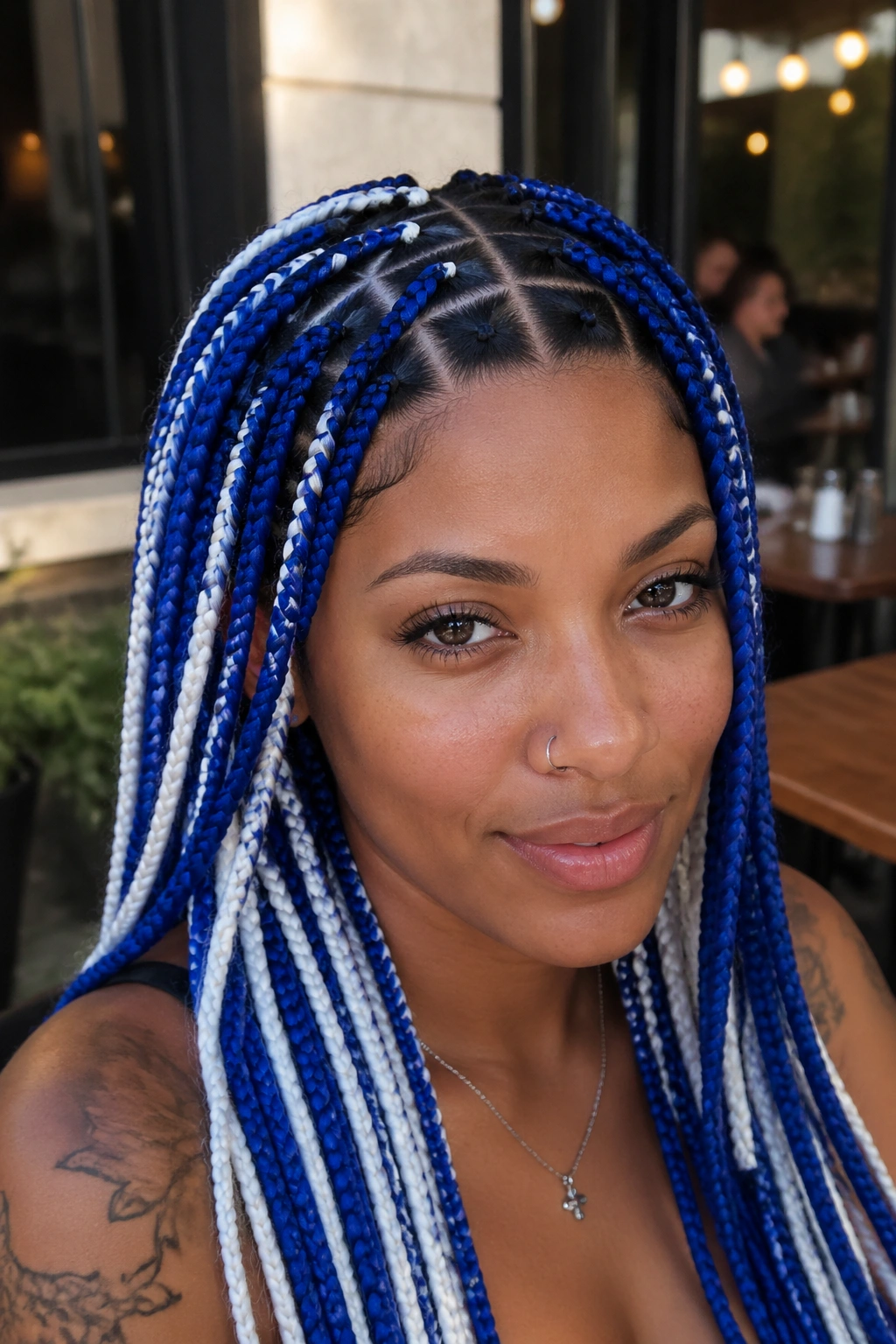
Triangle parts give the whole style a sharper edge. The geometry alone changes how the colors sit on the scalp, and blue and white look especially crisp against those angled sections. If square parts feel too expected, triangle parts make the entire head look more tailored.
This works well on medium-length braids because the parting pattern stays visible without needing huge amounts of length to carry the look. Smaller triangles can make the style feel more detailed, while larger triangles feel cleaner and bolder. Pick one and stick with it. Mixing too many sizes can water down the effect.
- Small triangles create a tighter, more detailed scalp pattern.
- Larger triangles make the style read bolder and cleaner.
- The angles look best when the front rows are lined up carefully.
- White braids stand out more against triangle parts than they do against plain squares.
The real pleasure here is in the scalp design. The color gets attention, sure, but the parting makes the whole style feel built rather than simply installed.
11. Blue and White Braids Finished with Beads and Cuffs
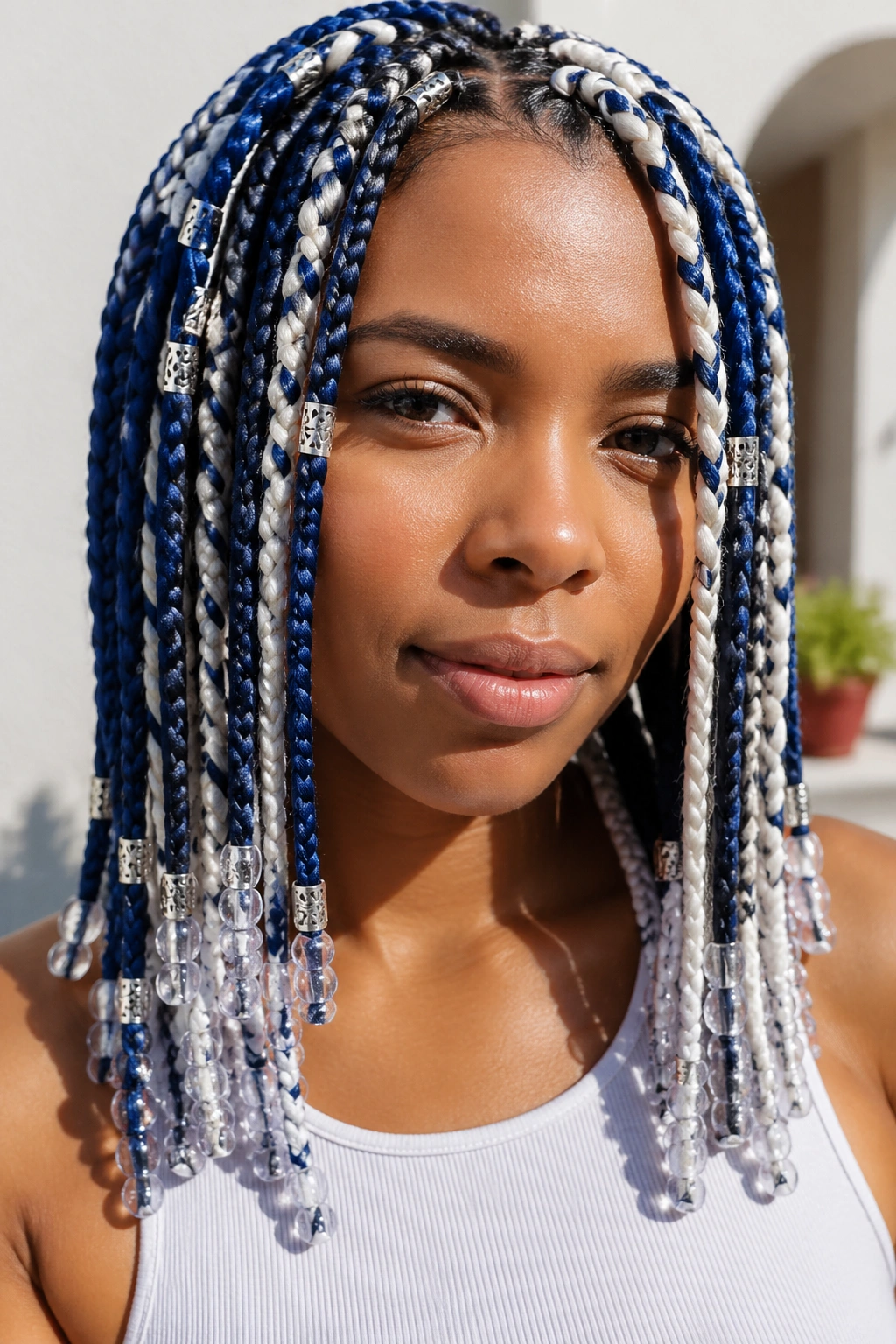
Metal cuffs and beads are not afterthoughts. On blue and white box braids, they can sharpen the color story or soften it, depending on what you choose. Silver cuffs play well with both colors, while clear beads or frosted ones can make the white look brighter and the blue look deeper.
The key is restraint. A cuff on every braid is too much for most heads, and the sound alone can get old fast. A few cuffs near the ends of the front braids, or one bead cluster around the face, gives the style just enough personality without swallowing the color work. I like this especially on longer braids, where the ends need a little visual anchor.
Blue braids with silver hardware feel cool and polished. White braids with clear beads feel lighter. Put the two together and the style gets this tidy, finished look that is hard to fake with color alone. It is one of the quickest ways to make simple box braids look styled on purpose.
12. High-Ponytail Blue and White Box Braids
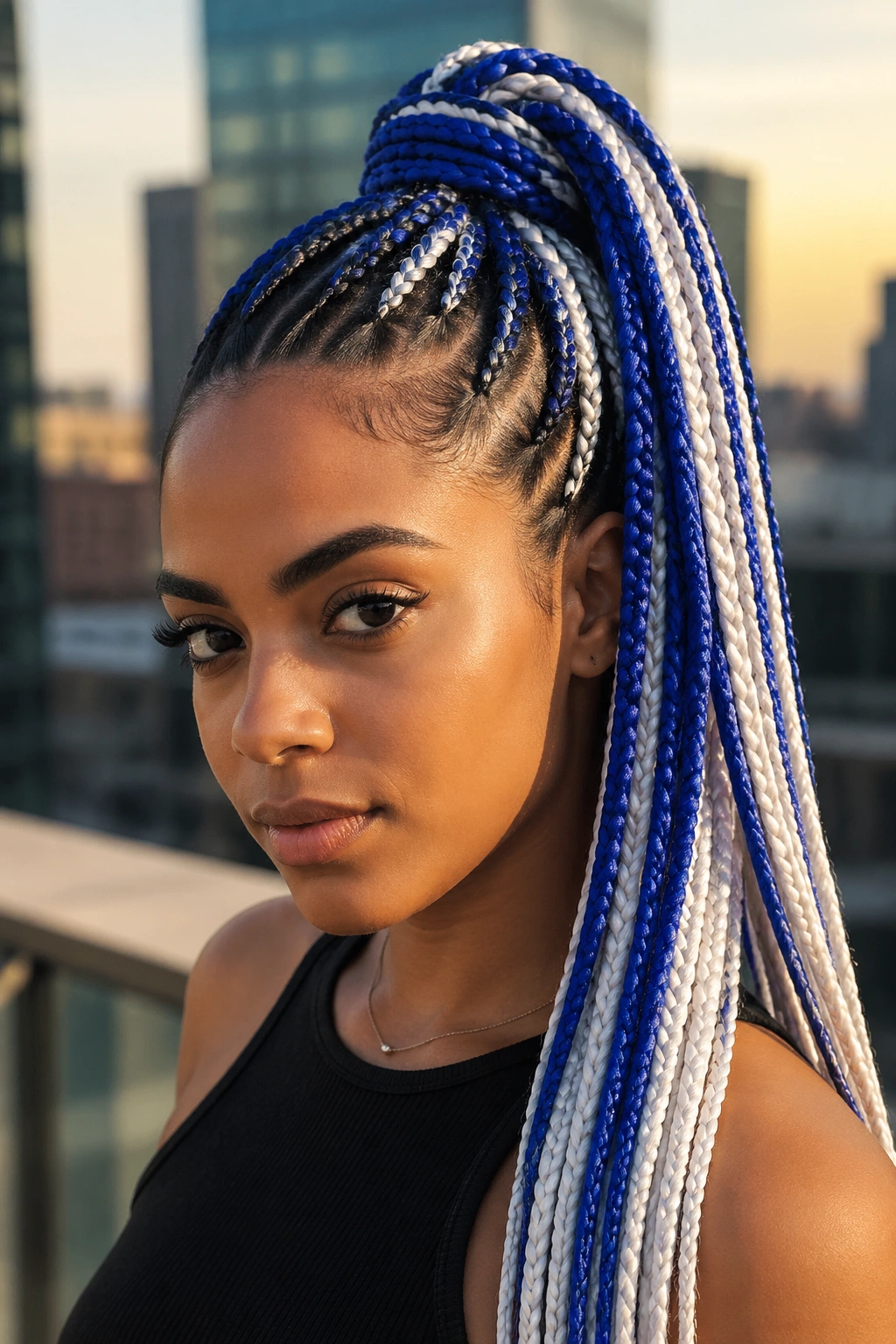
Pulling blue and white box braids into a high ponytail changes the whole shape. Suddenly the crown becomes the focal point, and the color falls in a cascade that shows off both shades at once. If you like hairstyles that move when you move, this one gives you that without needing extra work.
A high ponytail also keeps the face open. That means the color near the front hairline gets seen immediately, and the white braids at the front can brighten the whole look. Blue in the length keeps the ponytail from feeling too bright or too flat. The contrast between the gathered crown and the loose tail is what makes it interesting.
Why the crown matters
The base needs to sit snugly, not painfully tight. A ponytail that pulls at the edges will not look good for long, no matter how nice the color is. A wrapped braid around the base helps hide the elastic and gives the style a cleaner finish. That tiny wrap makes a bigger difference than most people expect.
This style is good for days when you want the braids out of the way but still want them to look styled. It feels sporty, but not plain. And when the white braids swing from the ponytail, they catch attention fast.
13. Slim Stitch-Part Blue and White Box Braids
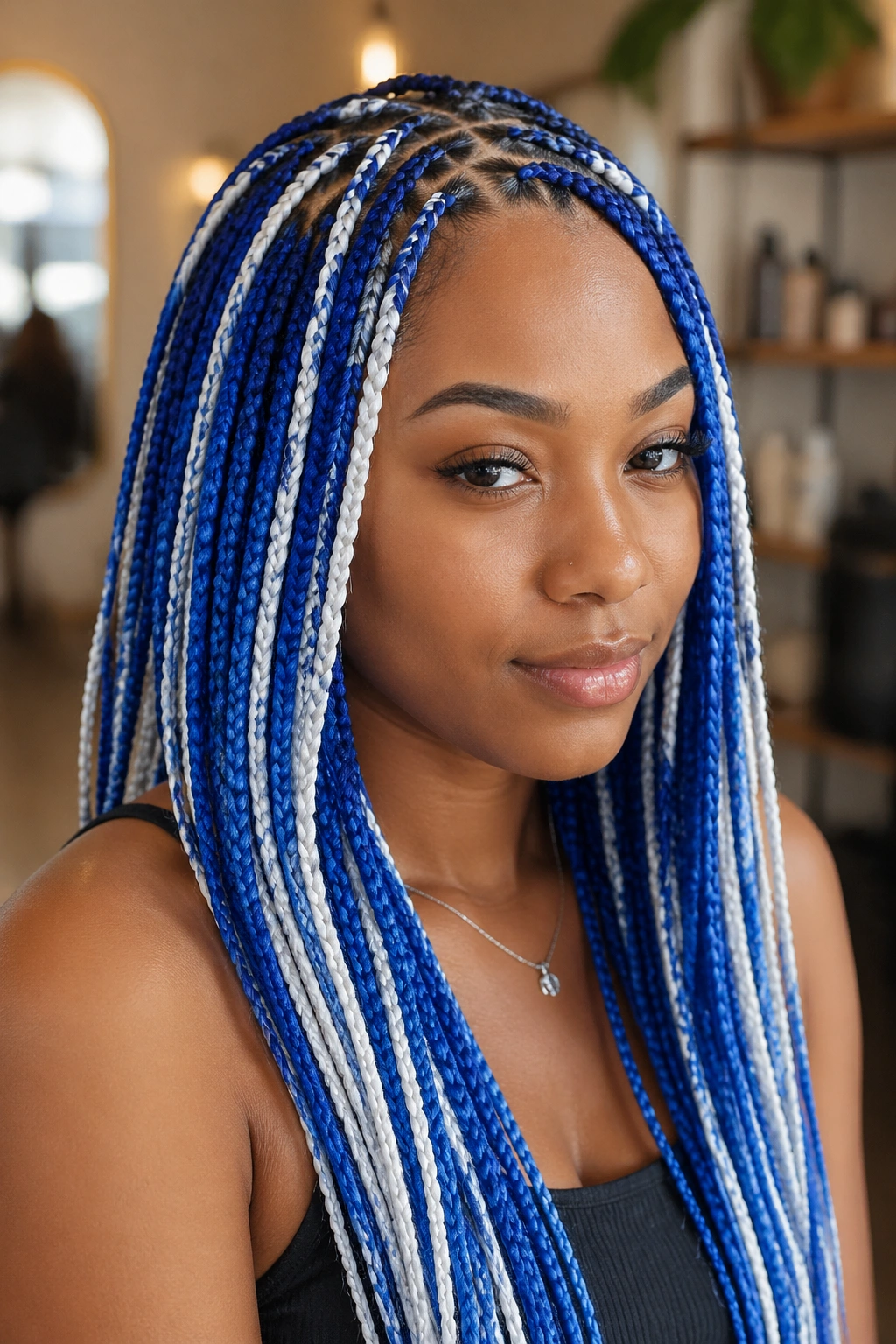
Thin braids can make the color feel softer. That sounds backward at first, but it makes sense once you see it. Slim stitch-like parting lets the blue and white blend across the head in tighter lines, so the color reads as a fine pattern instead of a big block.
This style takes longer to install, and it will ask more of your scalp care because there are more individual braids to keep neat. Still, the payoff is real. The rows sit close, the parting looks sharp, and the color effect feels more refined than loud. I like this version on shorter to medium-length hair, where a lot of tiny braids can still be seen clearly.
You also get more flexibility with styling. Slim braids are easier to tuck, pin, and sweep into half-up shapes. The white doesn’t overwhelm the blue because each braid is narrow enough to let the two shades alternate naturally. It is a patient style, not a rushed one.
14. Blue and White Goddess Box Braids with Curly Ends
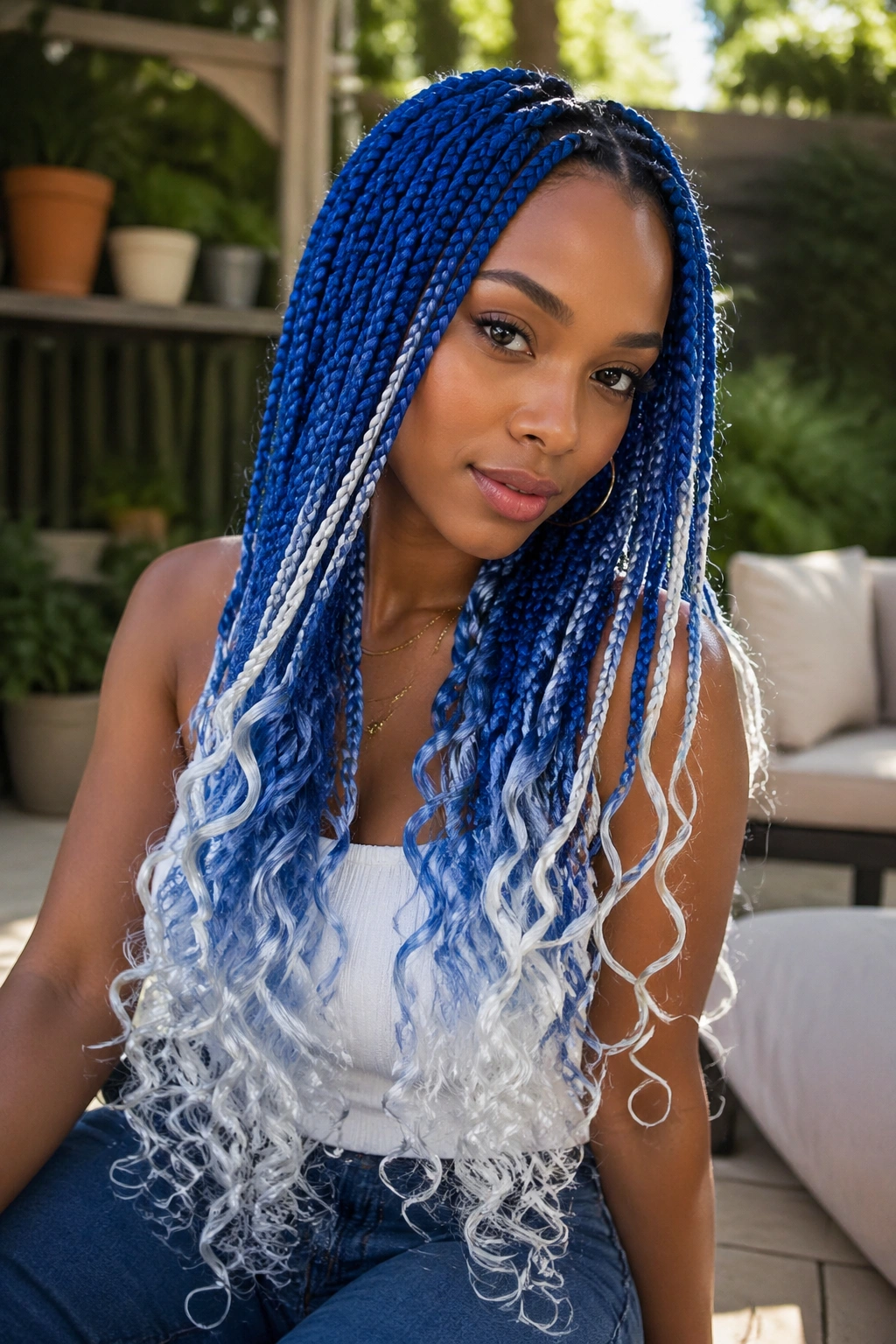
The curly ends change everything. Once you add loose curls to the ends of blue and white box braids, the style stops feeling rigid and starts moving. The braid body keeps the shape grounded, while the curls add a softer finish at the bottom. It is a good mix.
White curly ends are especially pretty because they catch the eye as soon as the hair shifts. Blue lengths above them give the curls a bit of depth, so the whole look does not wash out. If you like hair that looks styled even when it is just hanging loose, this one has a lot going for it.
What to watch for
The curls need care. They tangle faster than braided lengths, and they can look frizzy early if you sleep on them without wrapping them well. A light foam wrap or mousse helps them stay defined, but too much product will make the white ends look dull. Use a small amount and stop there.
This style fits people who want a bit of softness in a two-tone braid set. It is not as severe as a straight-ended install, and that is the appeal. The curls make the blue and white feel less rigid, more lived-in, and a little more flattering around the face.
15. Mixed-Width Blue and White Box Braids with a Ribbon Effect
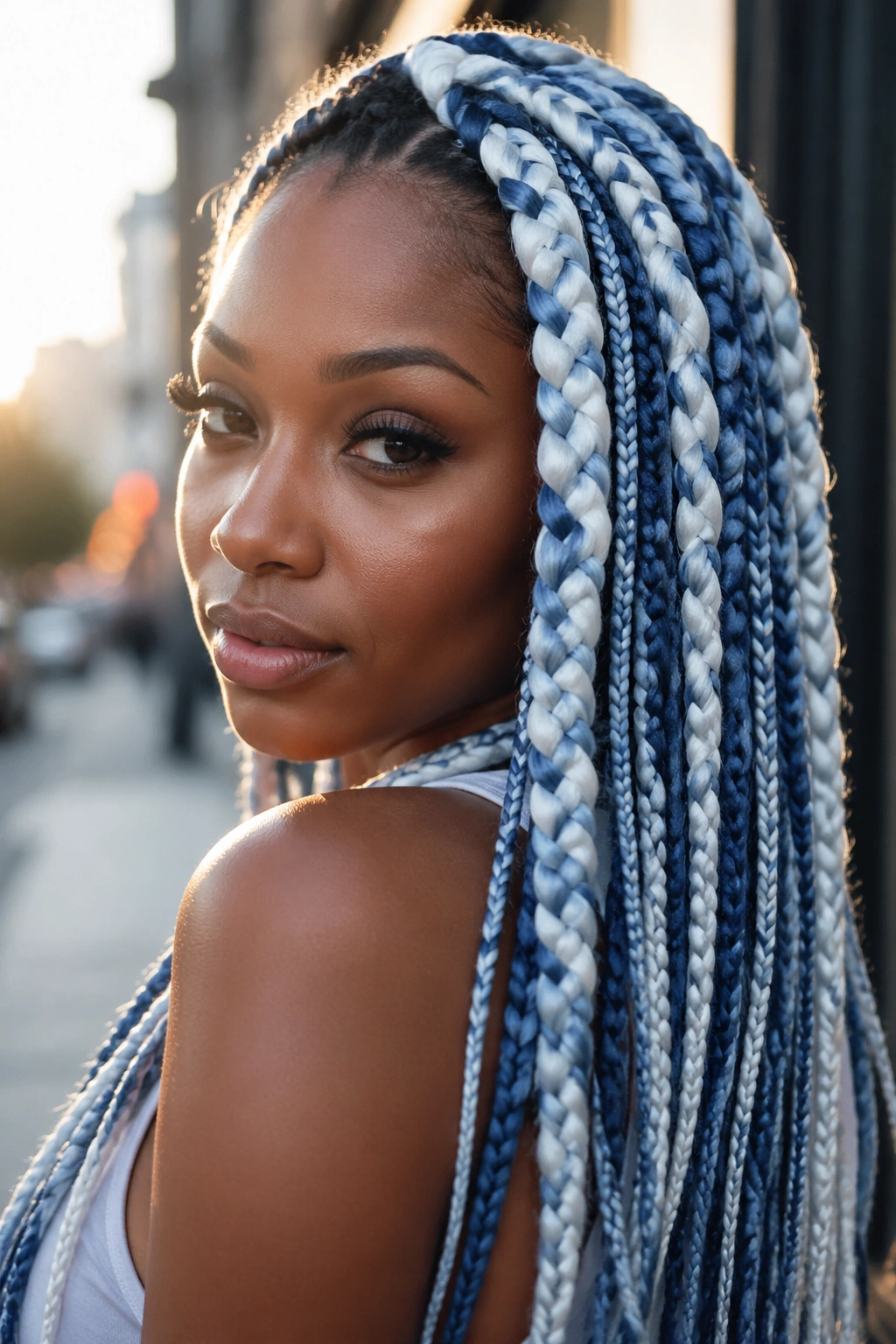
If you cannot choose between chunky and fine, do not. Mixed-width braids can make the blue and white look like woven ribbon, especially when the larger braids sit beside slimmer accent braids. The contrast in size gives the color more movement than a uniform set would.
This style needs a steady hand. Too many size changes and the head starts to look crowded. Too few, and you lose the ribbon-like effect that makes it interesting. The best versions keep the bigger braids around the outer edges and use thinner braids through the middle or near the parting lines. That creates a layered feel without turning into visual noise.
- Use jumbo braids around the crown or back for weight.
- Add slim braids near the part lines to sharpen the pattern.
- Keep the color ratio balanced so neither shade dominates too hard.
- Leave enough space between braids for the shape to breathe.
This is the style for someone who likes texture, detail, and a little bit of edge. It looks especially good when the braids are worn down first, then gathered later into a low bun or ponytail that lets the different widths show off.
Final Note
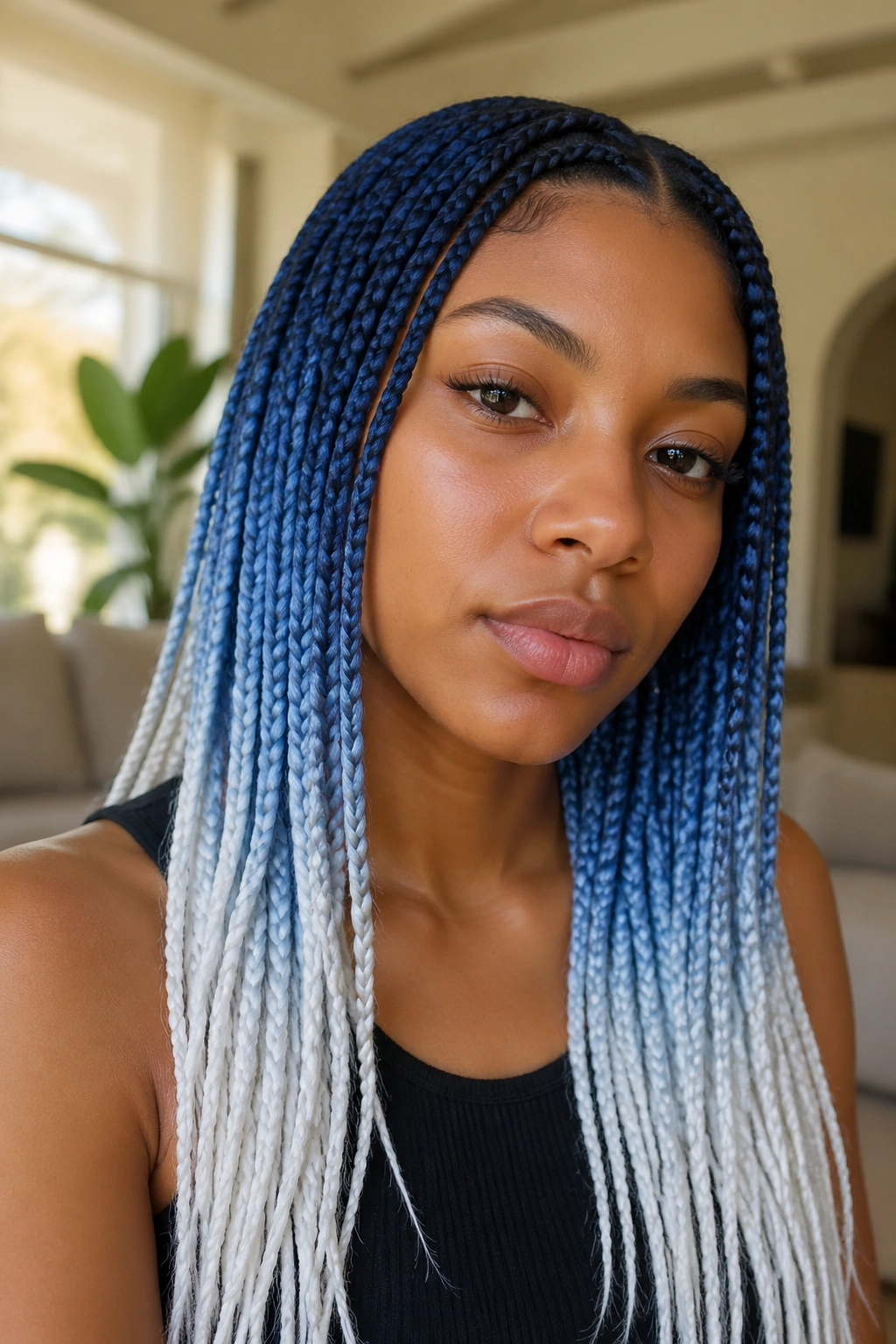
Blue and white box braids do their best work when the shape is as thoughtful as the color. A clean part, the right braid size, and a shade pairing that does not fight itself matter more than people admit. Get those pieces right, and the style starts looking expensive without trying to.
One quick check helps more than most people realize: hold the blue and white hair together before the install and look at it in daylight, not just under warm indoor bulbs. Some whites lean creamier than expected. Some blues read almost black until the sun hits them.
A good set should look sharp even before you style it. If it does that, you’re in good shape.
