



Copper ponytails for Black women can look sharp, soft, glossy, or plain dangerous in the best way, depending on how the shape is built. The color does a lot of work, sure, but the part, the base, and the finish change the whole mood. A sleek high ponytail reads clean and polished; a braided version feels more grounded; a curly one brings movement that a straight ponytail can’t fake.
Copper is a tricky shade in a good way. Burnt copper, ginger copper, auburn copper, and that darker cinnamon-metal mix all sit differently on deeper skin tones, and the wrong finish can make the color look flat. The right finish wakes it up. Shine, texture, and placement matter more than people think, which is why the best copper ponytails rarely look like an afterthought.
A lot of the prettiest versions use extensions, colored bundles, or temporary color on added hair rather than forcing your own strands through bleach and heat. That matters. Black hair has enough to do already; the style should protect the hairline, respect shrinkage, and still give you that warm copper glow that shows up from across the room.
And the fun part is how many directions you can take it. Sleek, braided, curly, wrapped, layered, high, low—there’s room to play without losing the point.
1. Sleek Copper Ponytails for Black Women
This is the look that makes copper feel crisp. A sleek high ponytail with a polished base has a way of turning the color into a statement instead of a background detail. The shine sits on top of the copper and makes the shade read richer, especially when the ponytail is long enough to swing.
The front matters more than the length. A clean center part or a sharp side part, brushed flat with edge control and a firm-hold gel, gives the ponytail that deliberate finish people notice first. If your hairline tends to frizz up, wrap it with a satin strip for 10 to 15 minutes before you walk out the door.
A style like this works when you want your face open and your features front and center. It also pairs well with gold hoops, a bare neck, and a simple outfit—nothing busy competing with the hair. Keep the ponytail itself smooth, not stiff. That difference shows.
One small thing. If the copper bundle is too bright and the base is too dull, the whole style can look split in two. Match the shine level from root to tail, and it all settles into place.
2. Deep Side-Part Copper Ponytail
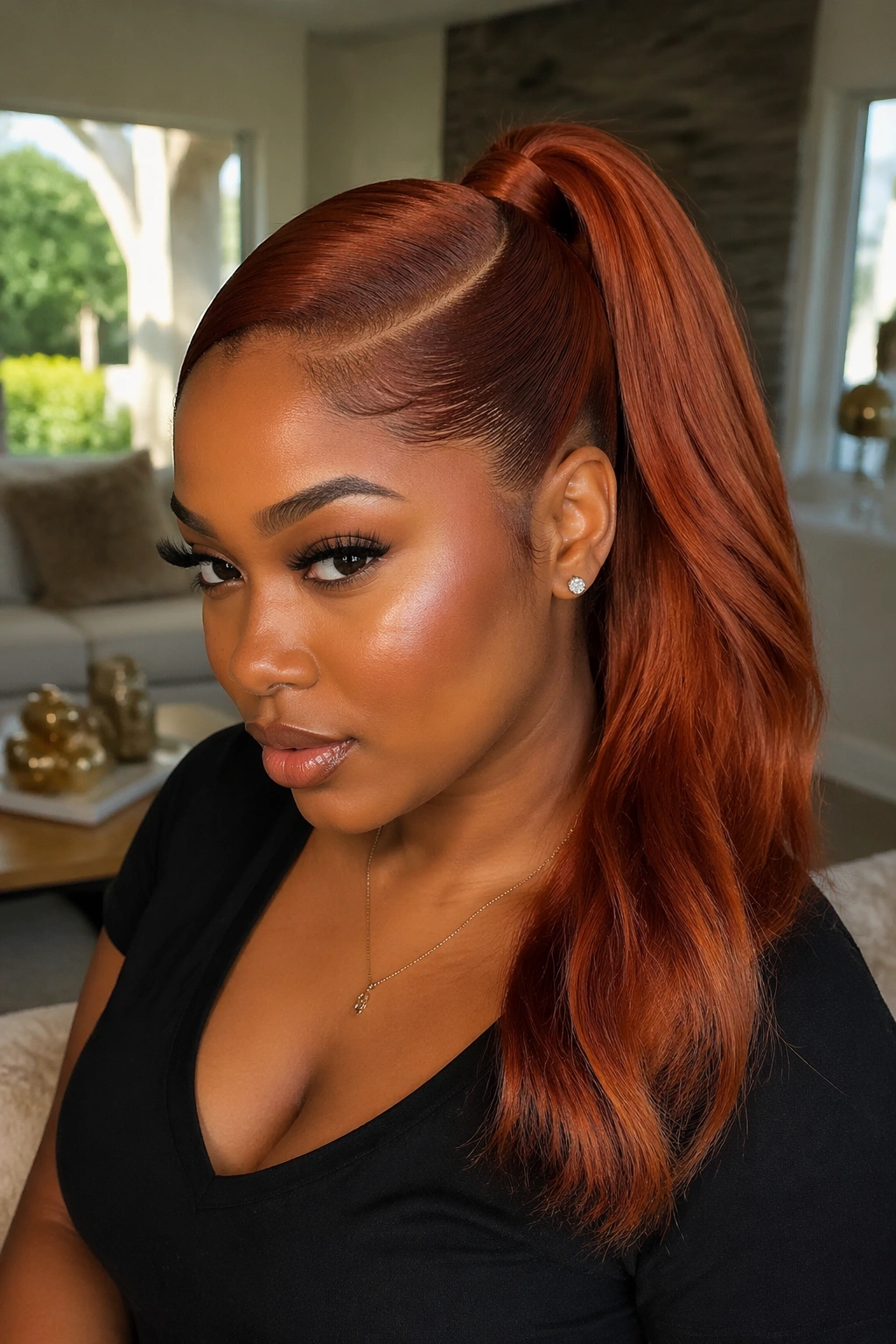
Why does a side part make copper look richer? Because it gives the color shadow and lift at the same time. A deep side part shifts the eye before the ponytail even starts, and that extra angle makes the copper lengths feel softer, not louder.
Where the Part Should Land
A good side part usually starts near the arch of one eyebrow and sweeps back toward the crown. That shape opens the face without making the front look stiff. On Black hair, especially textured hair that has been blown out or smoothed, the part needs to be clean enough to hold its line but not so tight that the scalp looks angry.
Who This Style Flatters
This one is kind to round faces, heart-shaped faces, and anyone who likes a little asymmetry. It also works well if you wear earrings, because the ponytail doesn’t steal every inch of attention. The part and the copper work together; neither has to do all the talking alone.
A side-part ponytail can be sleek, curly, or braided, and that is part of the appeal. The shape gives you room to change the mood without changing the whole structure.
3. Copper Braided Ponytail
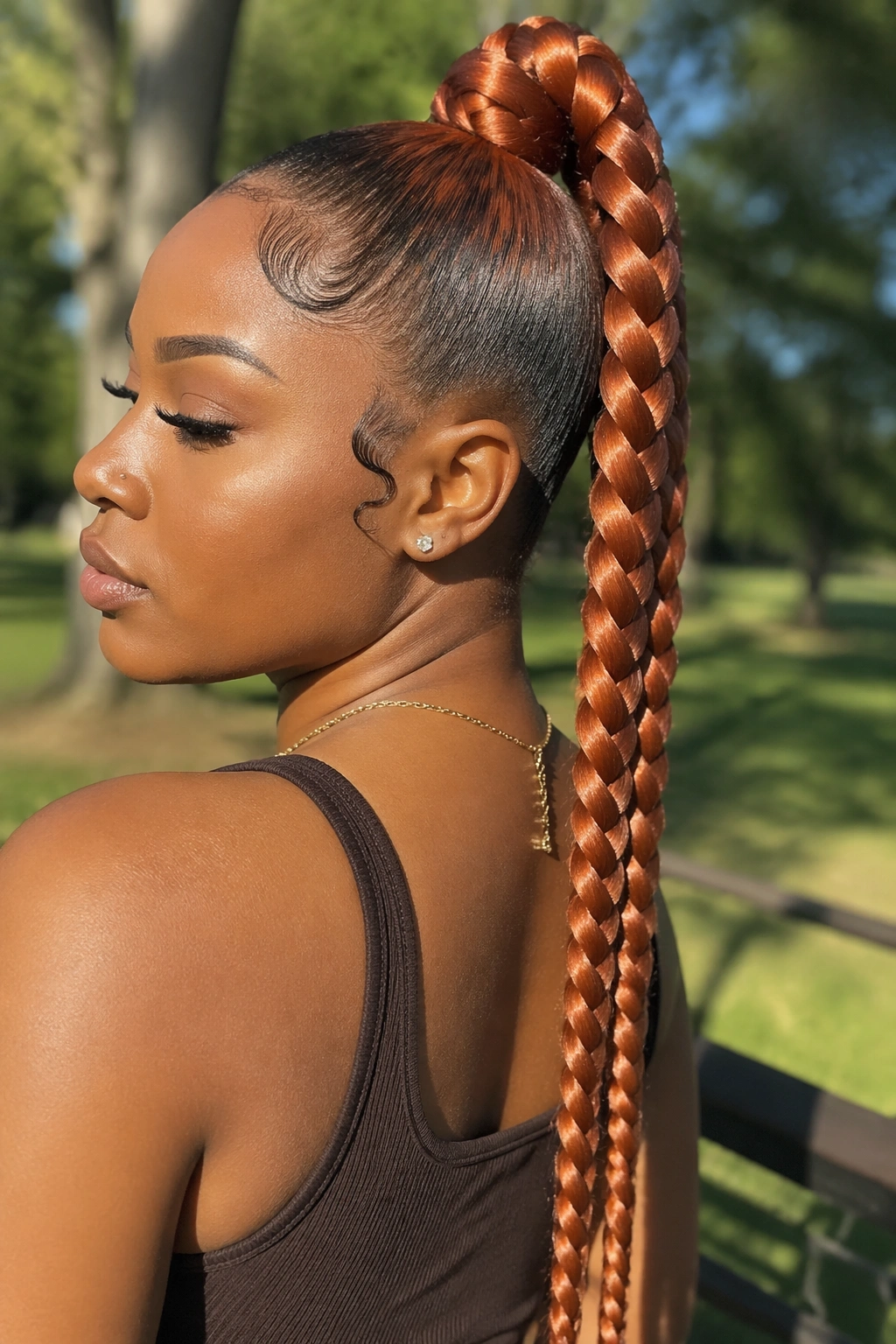
A braided copper ponytail solves a practical problem and a style problem at once. It keeps the length under control, and it gives the copper color more texture than a straight bundle ever could. The braid itself does the visual heavy lifting, so even a simple outfit looks more finished.
I like this style for weeks when you want your hair to stay put. Braids hold up to humidity better than loose curls, and a long copper plait can last through a lot of movement without looking messy. The base can be feed-in, cornrowed, or wrapped into a high ponytail, depending on how neat you want the front to sit.
- Best for long wear: the braid keeps tangles down and cuts down on daily styling.
- Best for busy mornings: one quick shake and you are done.
- Best for color play: copper braid hair catches light in bands, which makes the shade look deeper.
- Best for active days: the weight stays centered instead of flying everywhere.
Pro tip: ask for a braid that is thick enough to show the color but not so huge that it pulls on the nape.
4. Curly Copper Ponytail
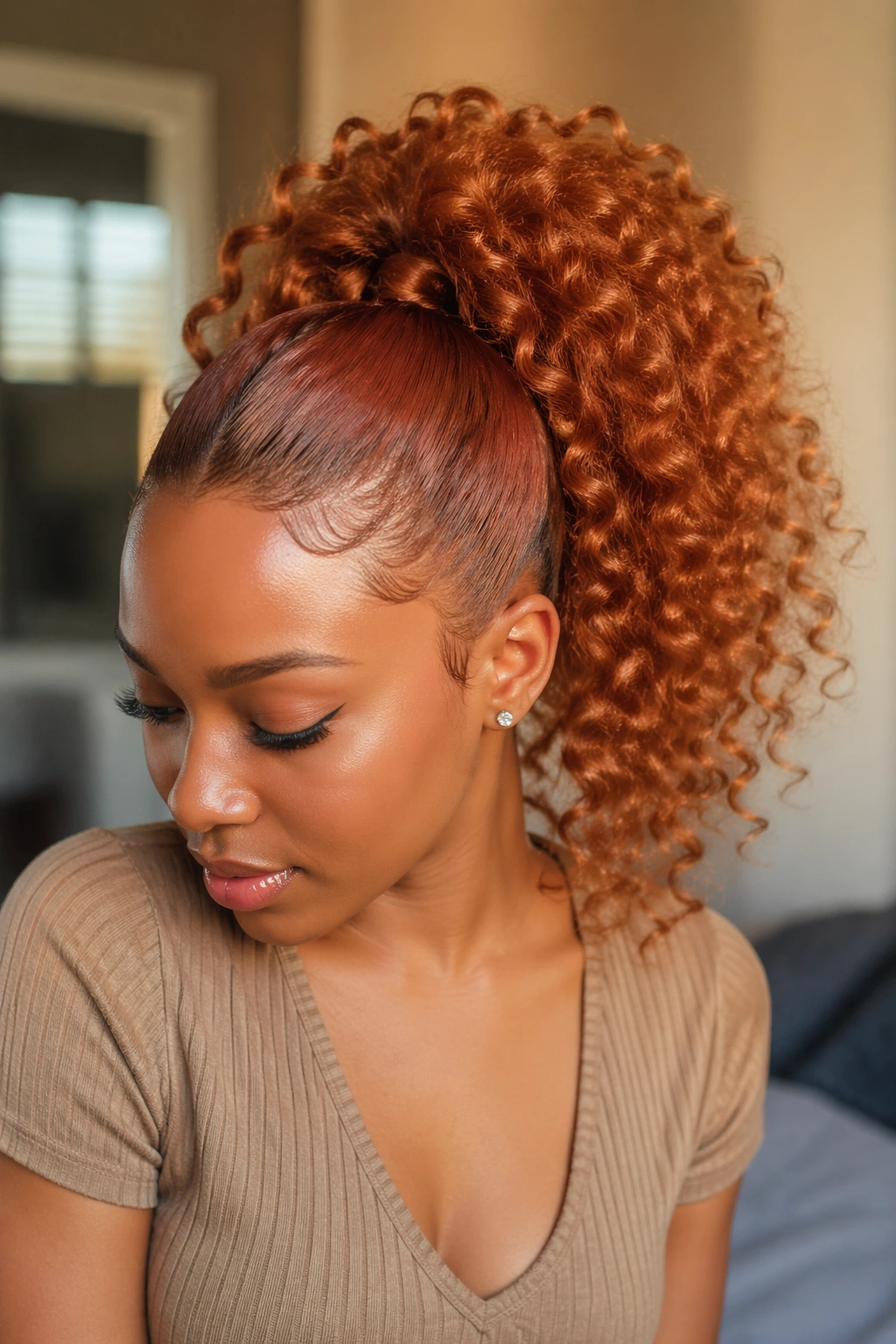
Curly copper ponytails feel warmer than sleek ones. The curls break up the color, so the copper reads in little flashes instead of one solid block, which is exactly why this style can look so alive. On deeper skin tones, that movement makes the shade seem more dimensional.
If you use a wand or flexi-rods, keep the curl size consistent only near the top. The ends can be looser. A 1-inch wand gives a soft curl, while a 3/4-inch wand creates a tighter pattern that lasts longer on extension hair. The trick is to stop before the curl gets too uniform; a little variation keeps it from looking too formal.
Curly ponytails also forgive a bit of fullness at the base. That is good news if your natural hair has density and you do not want to press every coil flat. Let some body stay in the crown, then smooth only the visible top layer. It reads more expensive than a bone-flat finish.
And yes, copper with curls can lean romantic fast. If that is the mood, lean in. If not, keep the part sharp and the curls looser near the face.
5. Bubble Copper Ponytail
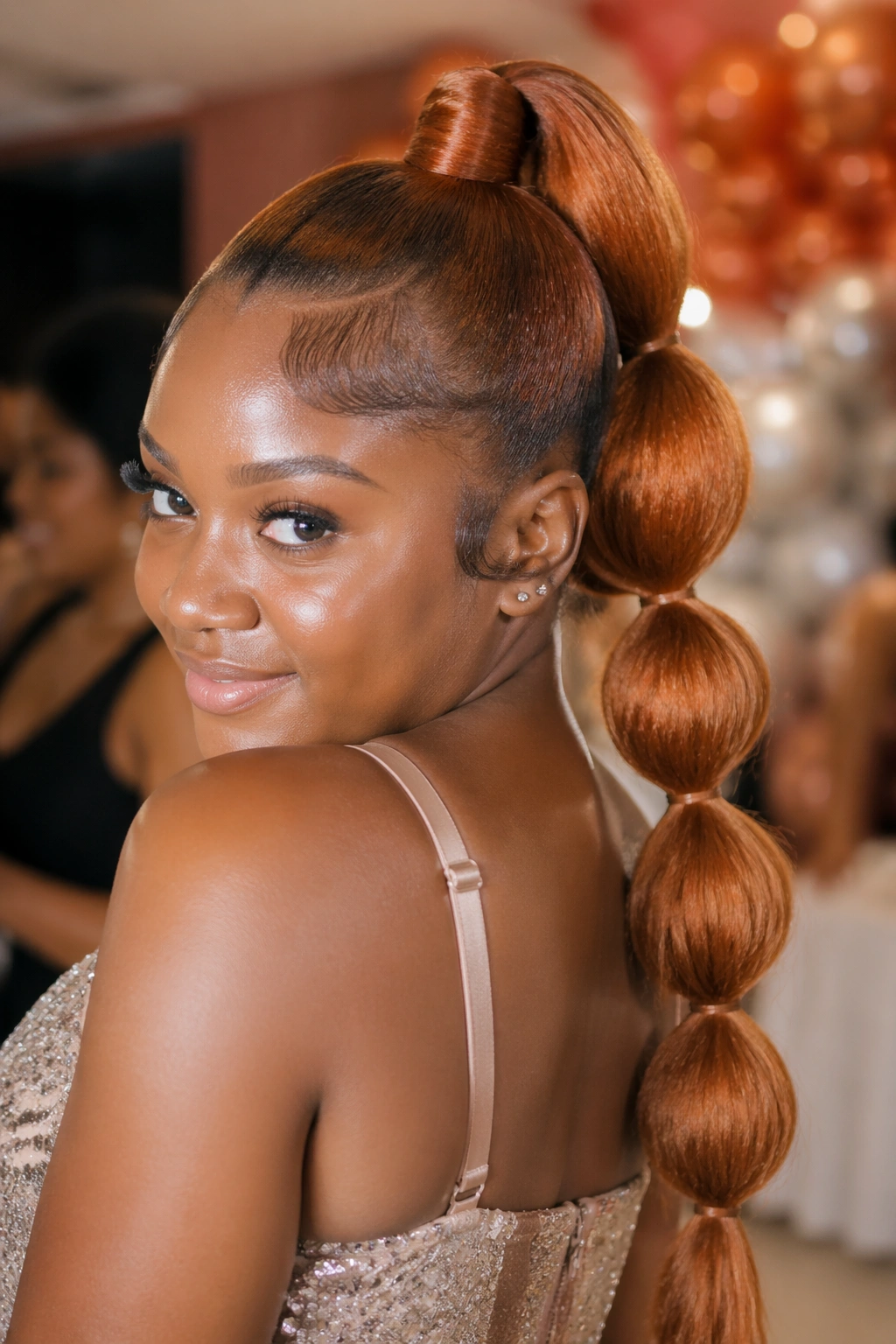
Bubble ponytails are having a moment for a reason. They make copper look playful without turning childish, and the segmented shape gives each section room to show off its own shade. On a long ponytail, the bubbles create rhythm down the back instead of one long fall of hair.
The setup is simple, but the spacing matters. Tie small clear elastics or copper-toned bands about 2 to 3 inches apart, then gently tug each section until it rounds out. Do not yank too hard. You want the bubbles to puff, not break the line of the ponytail.
This style is especially good if your copper hair is mixed with darker lowlights. The sections catch the darker strands in one bubble and the brighter strands in the next, which makes the ponytail look layered even if it is one bundle. That bit of contrast keeps the style from looking flat.
Bubble ponytails also hold up well when you want something fun for a party or a night out but do not want to spend an hour restyling. They look intentional even when they are slightly imperfect. That is a nice thing to have.
6. Low Copper Ponytail with a Wrapped Base
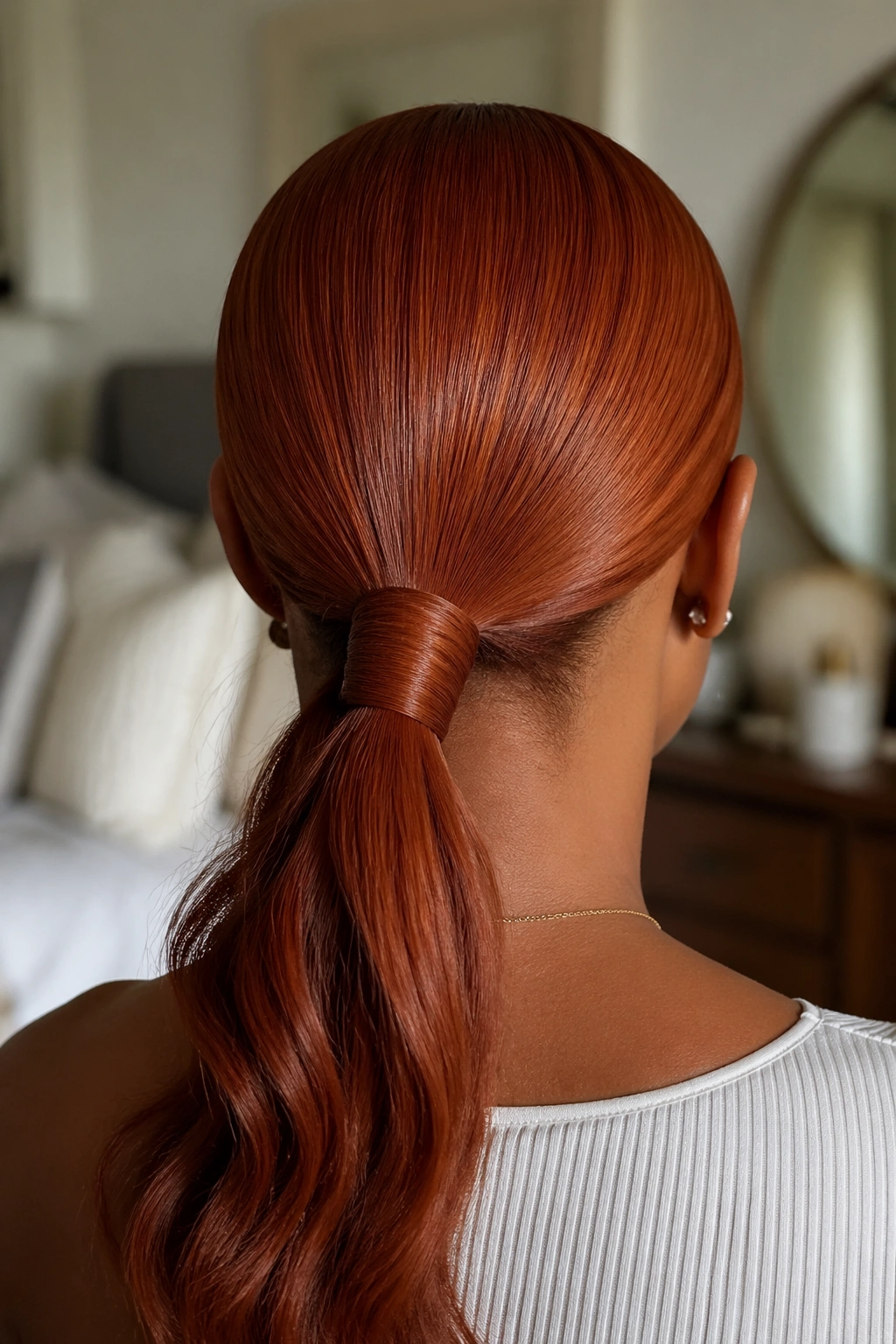
A low copper ponytail with a wrapped base is one of the cleanest ways to wear the color. It sits close to the nape, so the copper length feels elegant instead of loud, and the wrapped base hides the elastic or attachment point completely. That makes the whole style look finished from every angle.
Why It Works
The low placement gives the ponytail a softer line across the back of the head. It is easier on the edges than a tight high ponytail, and it tends to feel less fussy when you wear it all day. If your hair is relaxed, blown out, or tucked into extensions, the base can stay smooth with a boar-bristle brush and a light gel.
What Makes It Clean
A wrap around the base should use a thin strand of hair or a matching extension piece, usually about 1 to 1½ inches wide. Keep it snug. If the wrap is loose, you can see the elastic underneath, and that undercuts the whole point.
- Keep the parting low and neat.
- Pin the wrap on the underside, not the side.
- Smooth flyaways with a soft toothbrush.
- Finish with a shine mist, not a heavy oil.
Small detail, big difference: the lower you sit the ponytail, the more copper looks calm and rich.
7. Copper Feed-In Ponytail
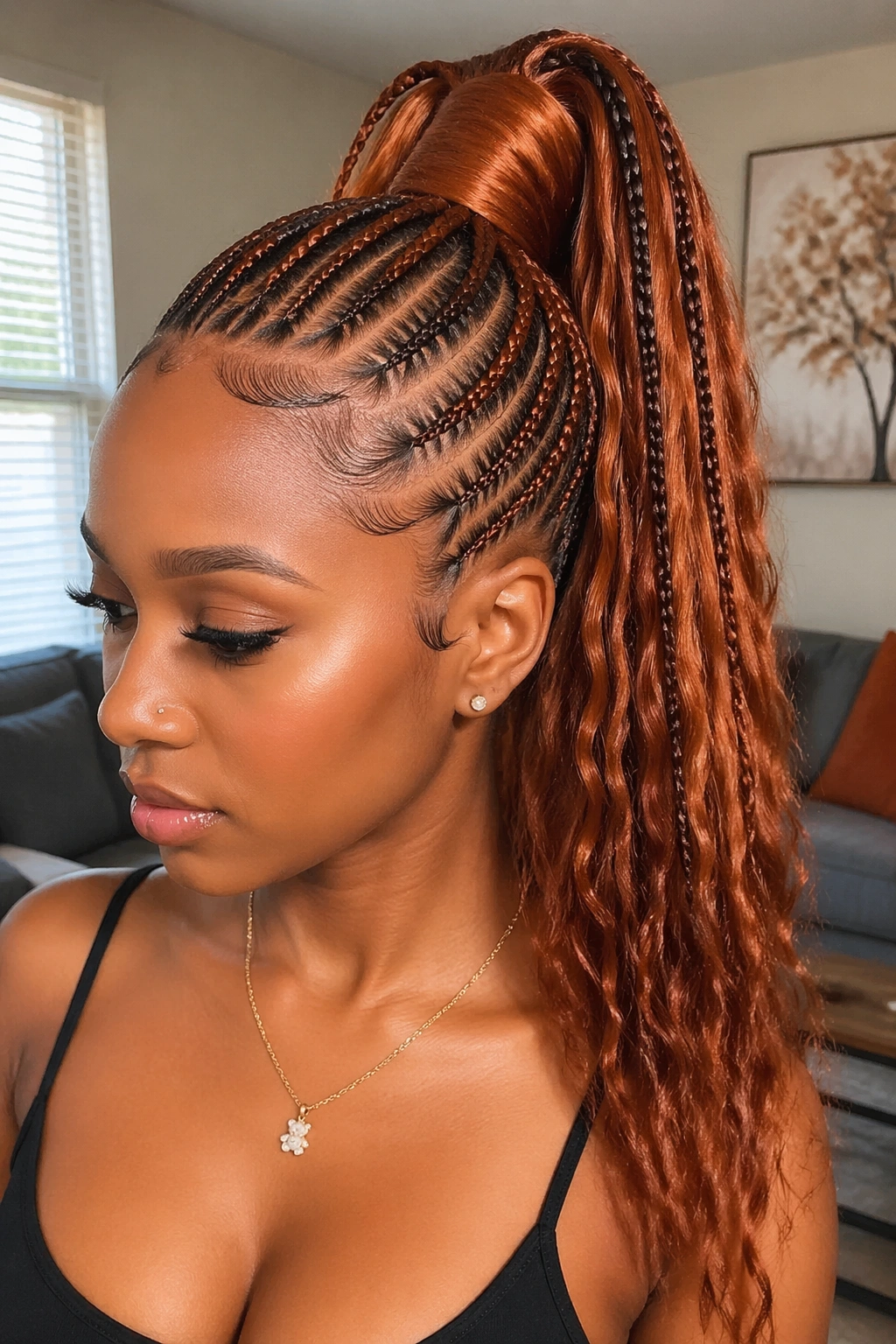
Why do feed-in ponytails stay neat for so long? Because the front is built to lie flat from the start. The braids begin tiny at the hairline and get fuller as they move back, which spreads tension out instead of dumping it in one place. That makes the style feel polished and easier to wear.
How the Front Should Be Built
Feed-in braids usually work best when the lines are crisp and evenly spaced. On Black hair, that means the scalp parting should be clean enough to show the design but not so tight that the roots feel sore after a few hours. A good braider will keep the braid tension balanced and leave the ponytail portion full and smooth.
What to Ask For
If you want copper to pop, ask for added hair that has one main shade and one slightly darker strand mixed in. That tiny bit of depth keeps the braid from looking neon. It also helps the style match warm makeup, glossy lips, or gold jewelry without feeling too flat.
The finish can be straight, wavy, or curled at the ends. I prefer a soft wave. Straight feed-in ponytails can look severe if the color is bright, and copper already does enough on its own.
8. Half-Up Copper Ponytail
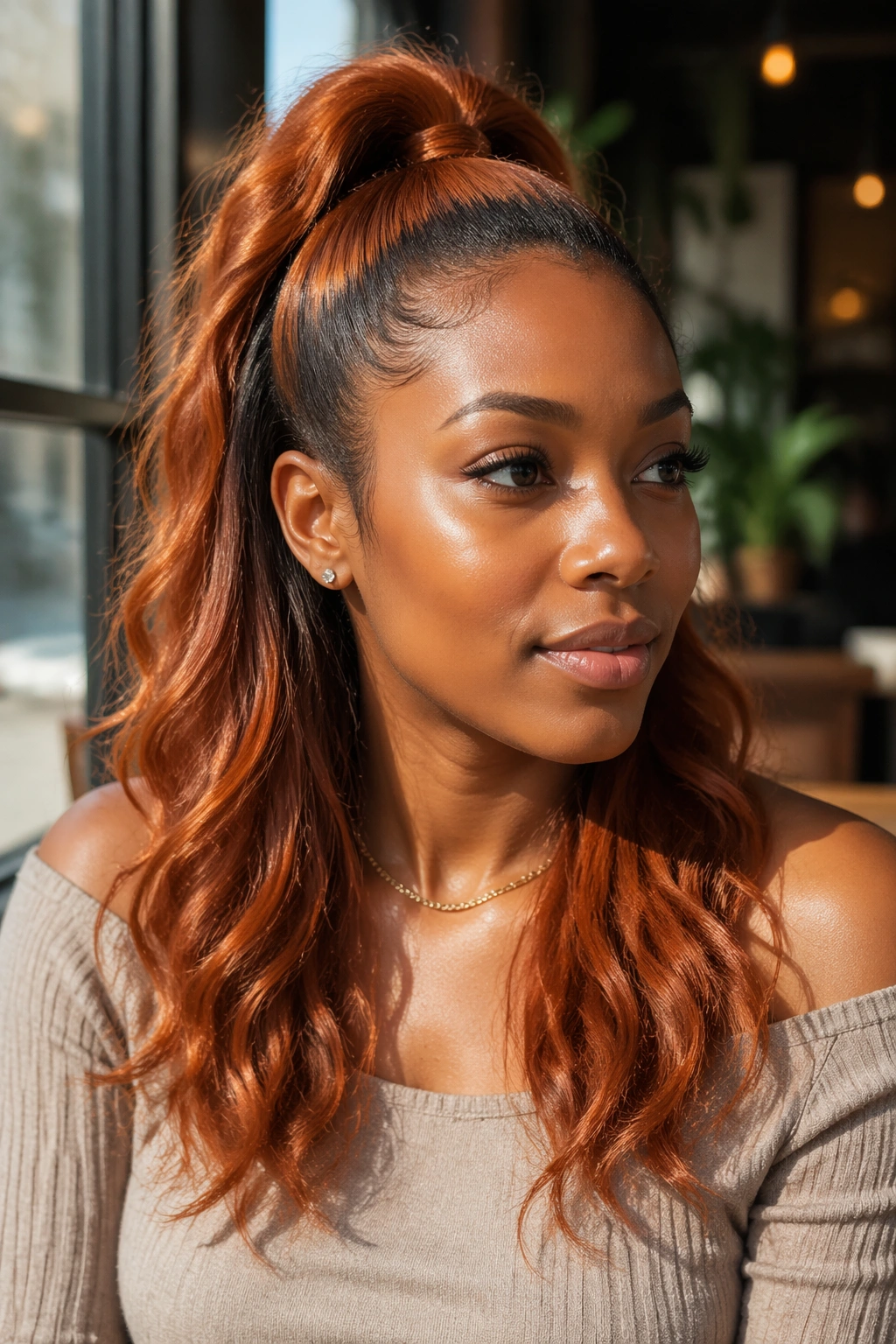
A half-up copper ponytail is for the days when you want your hair off your face but you are not in the mood to commit to a full updo. It leaves the lower length down, which makes the copper feel softer and more relaxed than a high ponytail. The style has a built-in balance that works almost on its own.
This is a good move for layered curls or long extensions, because the top section gives shape while the bottom section gives movement. Pull the top half back from temple to temple, or take a smaller crown section if you want the look to stay light. The smaller the top section, the more hair remains visible around the shoulders.
It can lean sporty or glam depending on the finish. Sleek top, curled bottom? That feels dressy. Looser top, fluffy lengths underneath? That feels easy and a little flirty. Either way, copper gets a chance to show off in two places at once.
There is a reason this style hangs around. It looks intentional without asking for much.
9. Copper Ponytails for Black Women With Boho Curls
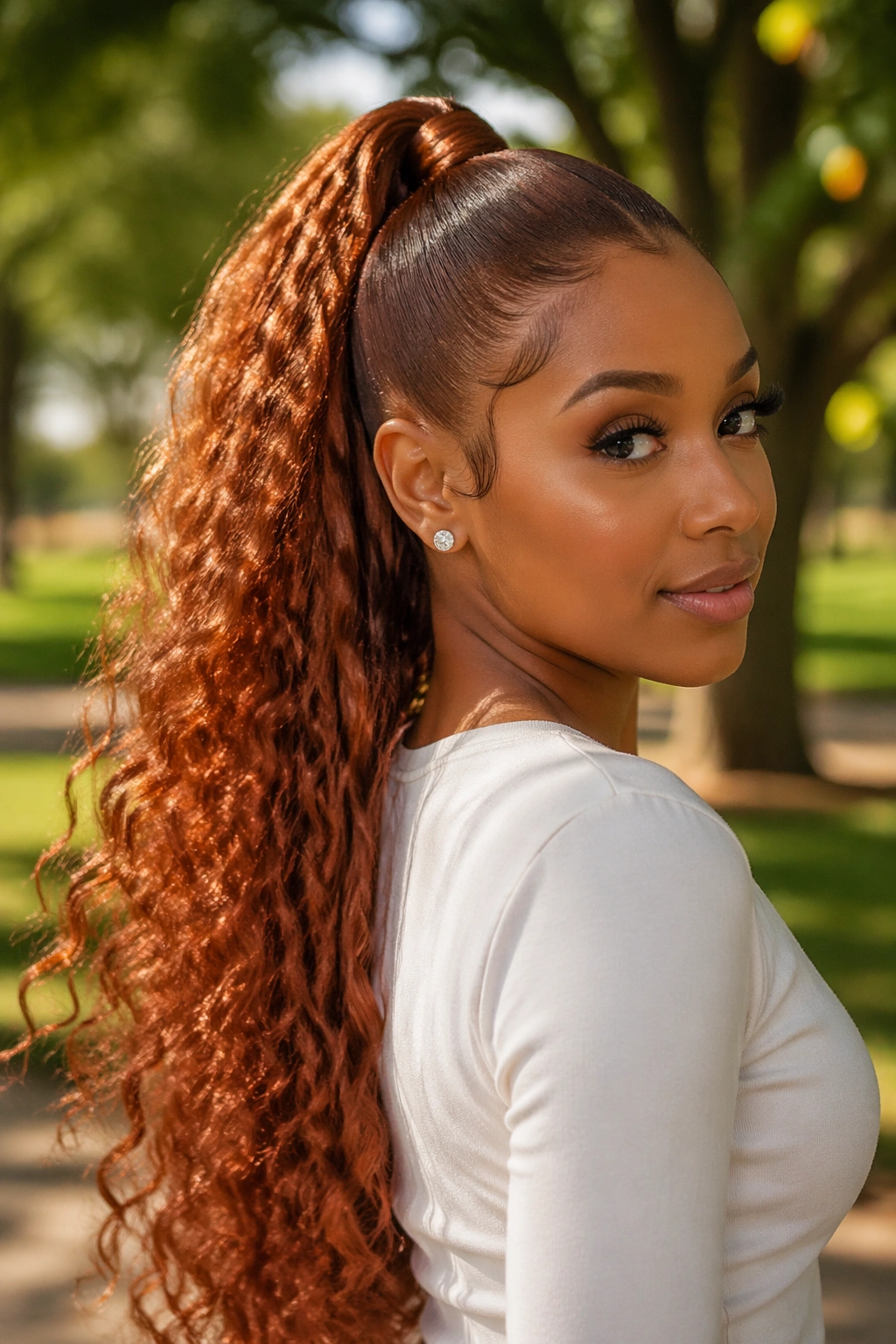
Boho curls make copper feel less structured and more lived-in. The style keeps the ponytail base neat, but the lengths drop into loose, random curls that move when you turn your head. That contrast is the whole point. The top stays tidy; the bottom gets to breathe.
Unlike a rigid braid or a blunt straight ponytail, boho curls leave room for tiny variations in curl size. A few face-framing strands can be curled tighter. Some lengths can stay a little frizzier. That unevenness reads human, not sloppy, which is why the style suits people who like polish without stiffness.
If you want the look to hold, define the curls with mousse or a light setting foam and let them cool before you touch them. Touching them too soon is how you flatten the shape. Once they are set, separate the bigger curls with your fingers, not a brush. A brush will eat the curl pattern alive.
Copper and boho texture get along better than people expect. The color looks warmer when it is broken into soft pieces.
10. Wet-Look Copper Ponytail
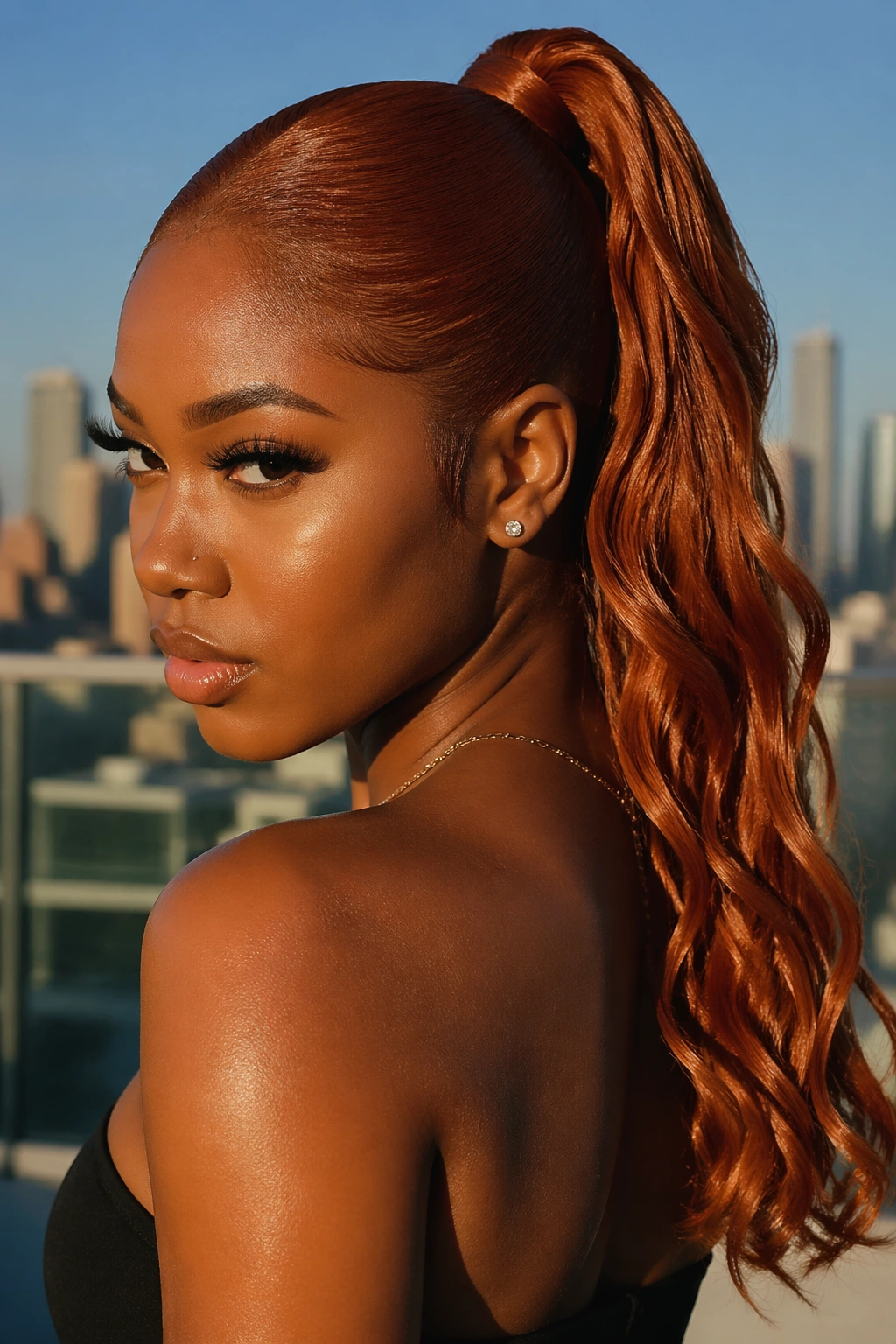
A wet-look copper ponytail has attitude. The hair sits close, shiny, and almost glassy at the crown, which makes the copper lengths look darker and more saturated. It is not about dripping wet hair. It is about that slick, just-combed finish that stays smooth and glossy.
The texture should feel slightly tacky at first, then set. That comes from gel layered with a shine cream or a thin styling mousse. Work it through the top section with a fine brush, then flatten the hairline gently with a scarf for 10 minutes. If you rush this part, the style loses its clean shine and starts to look greasy instead.
The ponytail itself can be straight or curled, but I like it with loose wave so the texture keeps moving below the slick base. That contrast keeps the look from feeling too severe. A wet look with a curled tail has more range. You can wear it with a fitted dress or a bomber jacket and it still makes sense.
Do not overload the hair with product. Copper already shines on its own.
11. Jumbo Braided Copper Ponytail
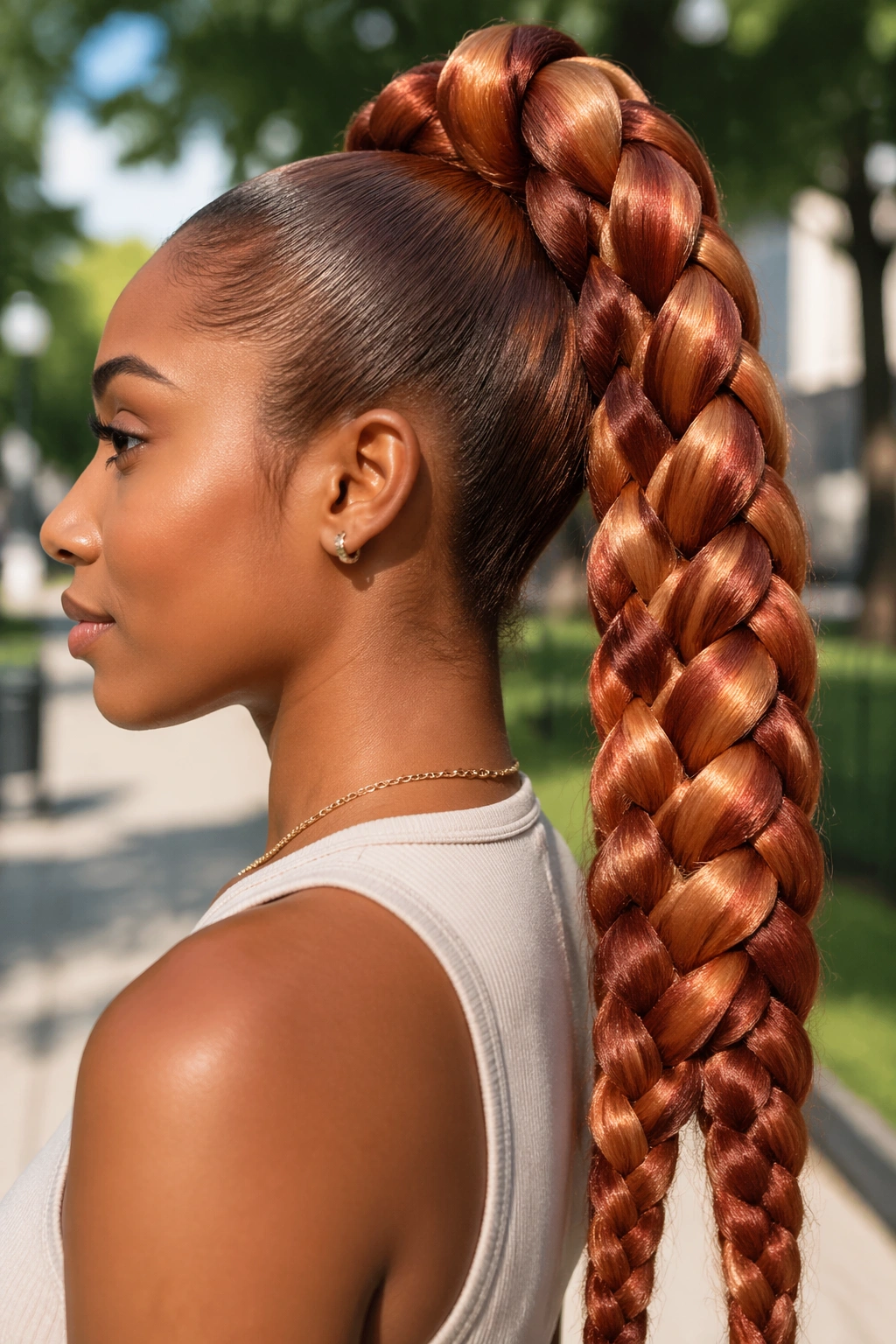
A jumbo braided copper ponytail is not shy, and that is the charm. The size makes the braid feel bold, while the copper color adds heat to every twist in the plait. If you want one style that reads from across the room, this is it.
Braid Size Changes Everything
A jumbo braid shows off color placement better than a skinny one. The weave of the strands is larger, so the darker and lighter copper pieces blend in a slow, visible pattern. That works especially well with extension hair that has a little tonal variation. Flat one-shade copper can look too smooth in a jumbo braid; mixed tones look better.
Weight and Balance
Big braid, big weight. If your neck gets tired easily, ask for a lighter fiber or a slightly shorter length. A braid that hangs too far down the back can pull more than you expect. The best jumbo braids have presence without feeling like a helmet.
Where It Fits Best
This style suits weekends, concerts, brunches, and any day when you want the hair to do the talking. It also photographs cleanly from the side, which is useful if you like a strong profile view.
- Keep the base sleek.
- Pick a braid width that matches your shoulder line.
- Use a satin wrap at night so the braid stays neat.
12. Copper Ponytail with Face-Framing Pieces
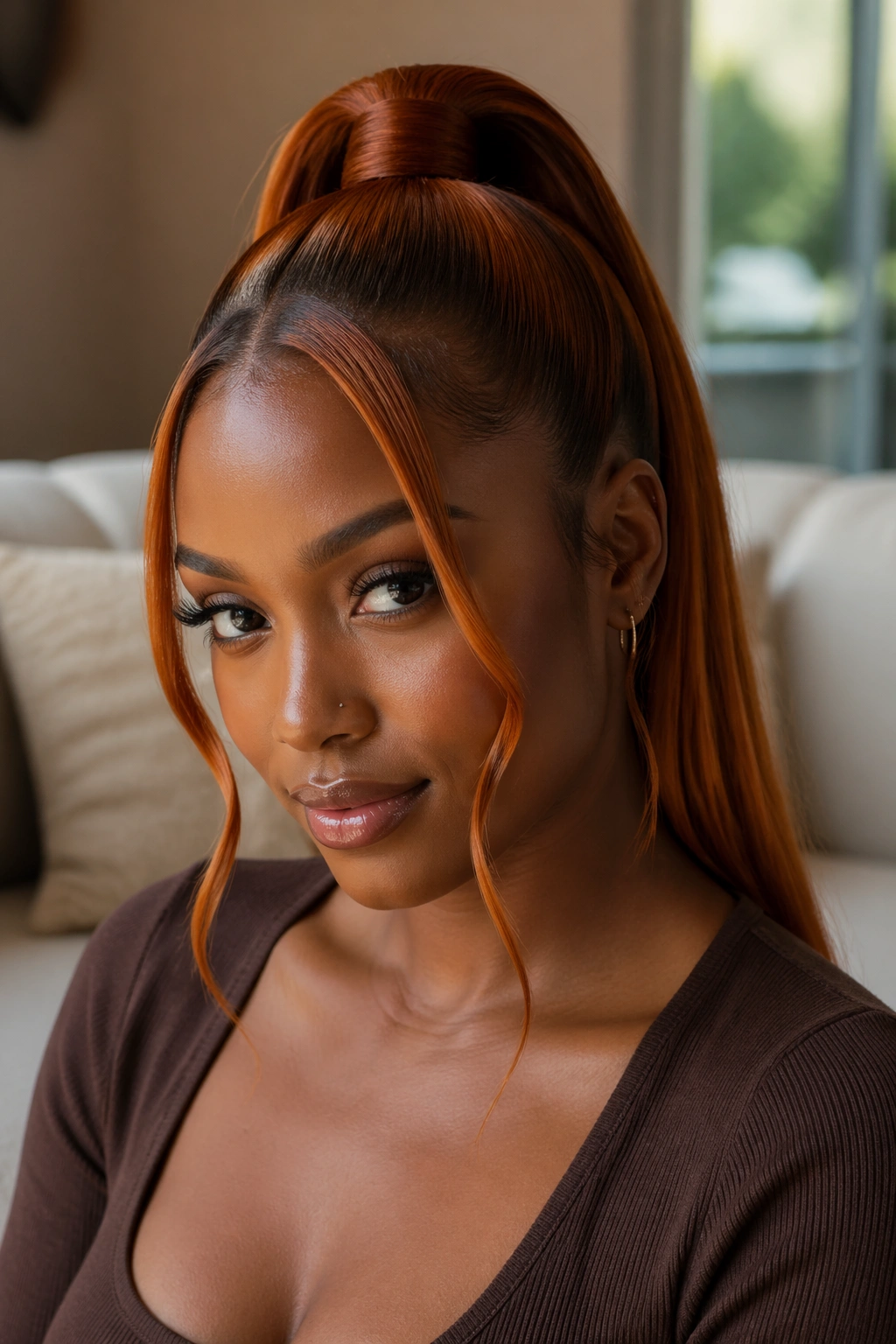
Leaving out a few copper pieces around the face changes the whole ponytail. It softens the style without making it messy, and it gives the color a little movement near the eyes and cheekbones. That tiny change can matter a lot, especially if you wear a high ponytail that would otherwise pull everything back.
The face-framing pieces should not be random. Aim for two slim sections, usually about ½ inch to 1 inch wide, and curl them away from the face so the shape opens instead of closing in. If the pieces are too thick, they start to compete with the ponytail. If they are too thin, they disappear.
This version works well when you want the ponytail to feel more approachable. A high slicked-back ponytail can look stern. Add a couple of soft front pieces and the whole thing relaxes. That does not mean you lose polish. It means the style stops acting like a helmet.
I like this option for photos, date nights, and any setting where you want a little warmth around the face without giving up structure.
13. Copper Ponytail with Bangs
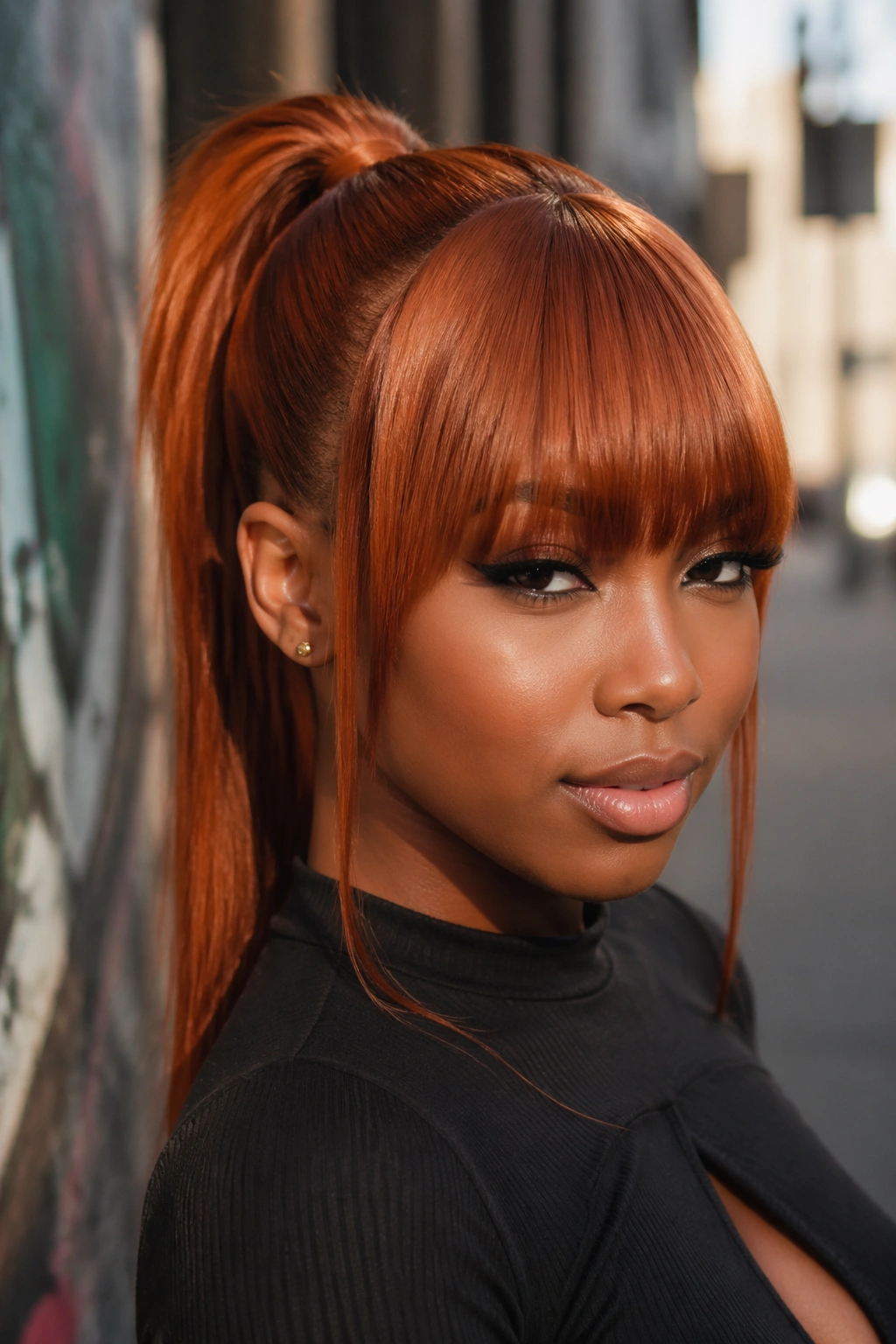
Can a ponytail and bangs coexist without looking confused? Yes, if the fringe is shaped on purpose. A copper ponytail with bangs can soften a long face, bring attention to the eyes, and make the whole style feel more personal. It is one of those looks that seems dramatic until you wear it for real.
The bang can be blunt, side-swept, or curled under in a soft arc. For Black hair, the best version usually has enough bend to move with the rest of the style. Super-stiff bangs can fight the ponytail and make the top look disconnected. A little softness keeps the front from feeling too heavy.
If you are using a ponytail extension, the bangs can be your own hair or a small added piece blended into the front. If your natural hairline is delicate, this style can actually be kinder than a fully slicked-back ponytail because it leaves less tension at the edges. The fringe does some of the visual work.
And yes, copper makes bangs look bolder. That is half the reason to try it.
14. Tapered Copper Puff Ponytail
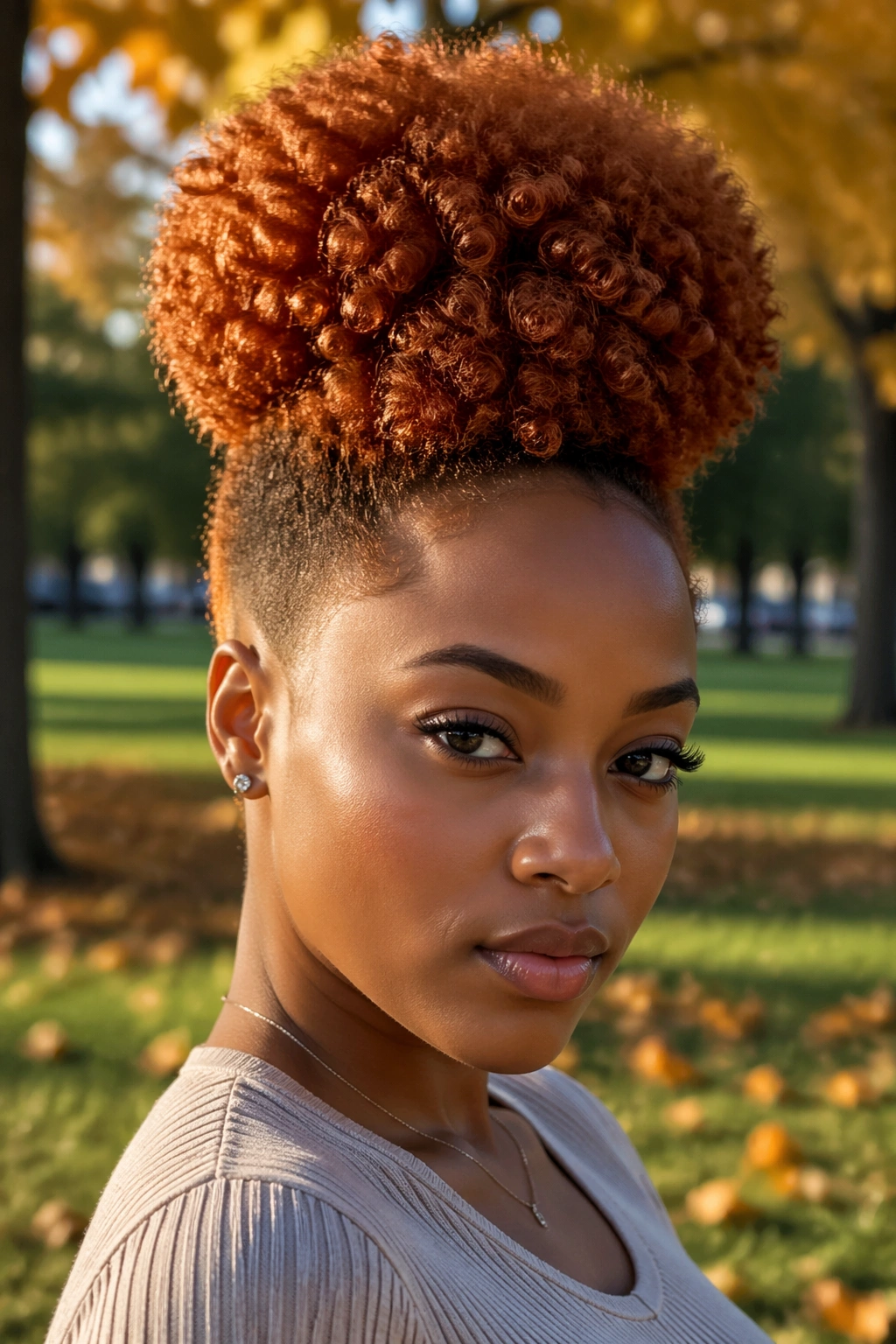
If you have a tapered cut, you do not need to fake length to wear copper well. A tapered copper puff ponytail uses the shape you already have and makes it feel intentional. The shorter sides frame the face, and the puff at the crown gives the style height without stretching it into something it is not.
This look loves texture. A little moisture cream, a soft pick, and a secure puff band are usually enough to build the shape. The copper color helps because it shows every curve in the hair. Dark hair can sometimes hide the puff’s edges; copper makes them visible in a good way.
There is something refreshing about a style that does not try to hide a cut. It uses the cut. If your hair shrinks up, that is fine. If the puff sits high one day and lower the next, that is fine too. The shape still reads on purpose, which is what matters.
This is one of the few ponytail-adjacent looks that feels both low effort and stylized. Hard to beat that.
15. Copper Ponytails for Black Women With Braided Ends
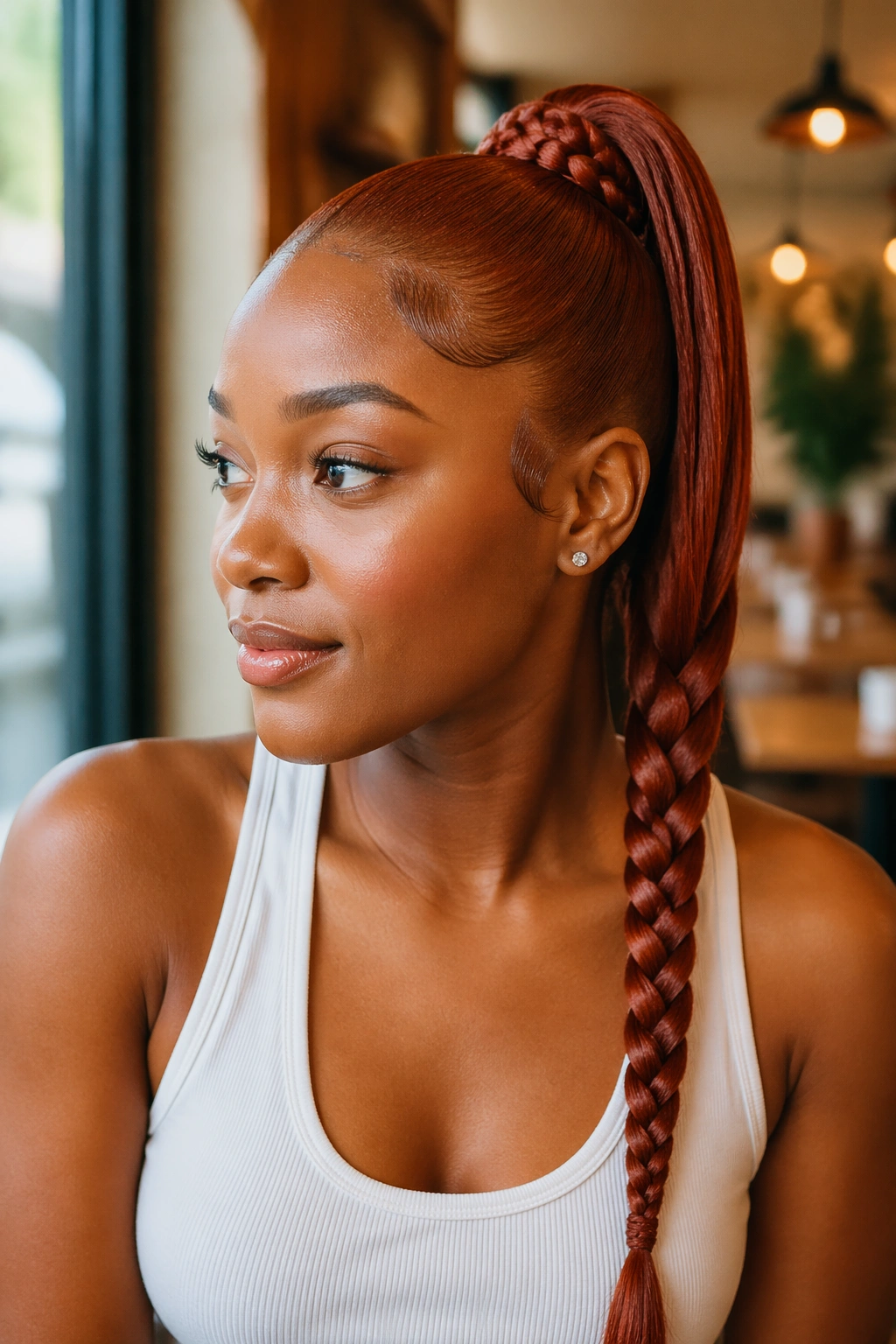
Braided ends are a smart fix when you want a copper ponytail to stay neat at the bottom. Loose curls can fray, especially on longer styles that brush against jackets, chairs, and your own arms all day. A braid at the end keeps the silhouette clean and makes the style last longer between touch-ups.
The trick is not to over-braid the tail. You want enough braid to control the ends, but not so much that the whole ponytail turns into one heavy rope. A mid-length braid, then a small loose tail or curl at the very end, gives you a better shape. The color also shows differently in braided ends; the copper bands look tighter and a little more graphic.
This is a good choice if you like your hair to look neat but not stiff. It works for travel, workdays, and events where you will be moving around a lot. The braid gives the ponytail a grounded finish.
Copper ponytails for Black women do not need to be loud to work. Sometimes the smartest move is the one that keeps the style in place.
16. Flipped-End Copper Ponytail
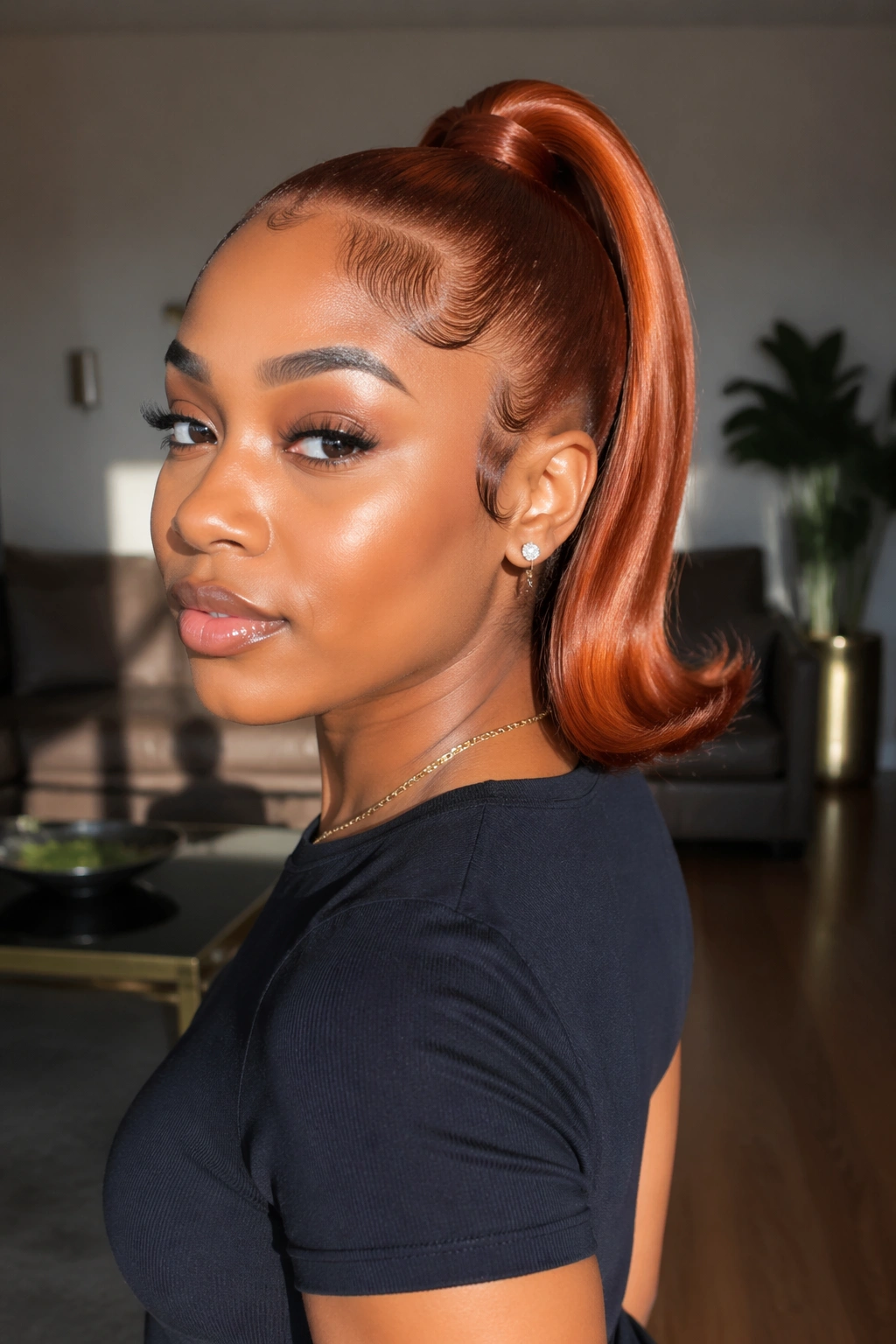
A flipped-end copper ponytail has a little old-school charm, and I mean that in the best way. The tail swings in one direction, then bends outward or under at the last few inches, which keeps the style from hanging dead straight. That tiny flip gives the ponytail energy.
The finish works especially well on medium-length ponytails, where a blunt tail can feel too hard. Curl the last 3 to 4 inches around a flat iron, round brush, or medium roller, then let the shape cool before you touch it. If you skip the cool-down, the flip drops faster than you want.
Copper makes the flip more noticeable because the bend catches light at the ends. That is useful when your hair is layered or extension-based and you want the style to feel deliberate from root to tip. A straight copper tail can look elegant. A flipped one looks lighter and a little more playful.
This style is one of those small changes that gives you a fresh feel without rebuilding the whole ponytail.
17. Copper Ponytail with a Silk Scarf
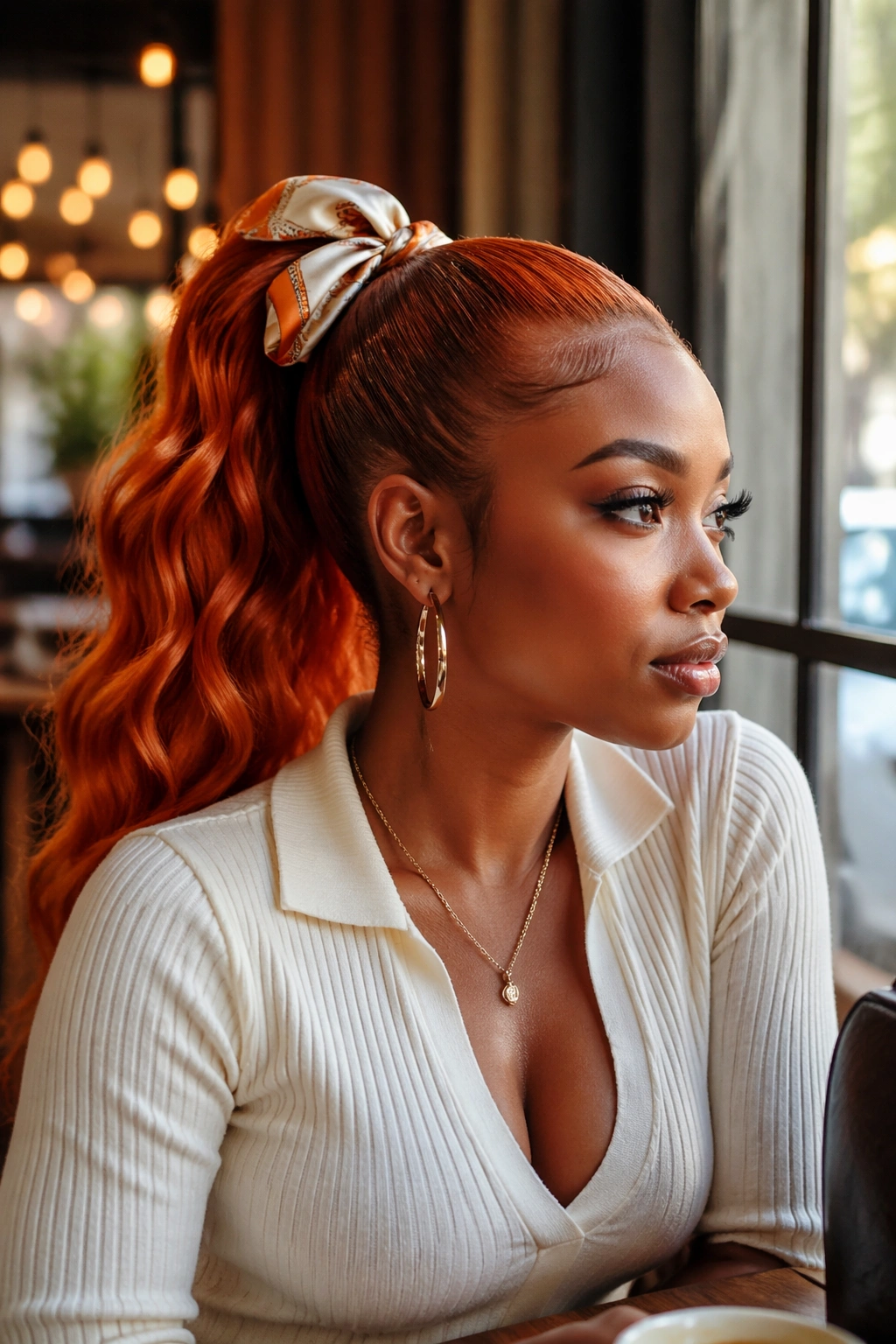
A silk scarf can turn a basic copper ponytail into something much sharper. Wrapped at the base, tied into a bow, or draped as a band, the scarf gives the ponytail a clear focal point and protects the hairline at the same time. That is a useful pairing, not just a pretty one.
How to Tie It
Keep the scarf close to the base. If it sits too high, it can make the ponytail look top-heavy. If it sits too low, it disappears. A narrow scarf works well for a sleek ponytail; a wider one feels better with curls or a braid because it mirrors the fullness of the tail.
What Fabric to Choose
Silk and satin are the obvious choices because they slide easily and do not rough up the hair. Cotton can work if you want a matte, casual look, but it tends to grab at the hairline more than a smooth fabric does.
The best part is how the scarf changes the color story. Copper beside deep navy, cream, or emerald feels rich without needing extra accessories. One small ribbon of fabric. That is enough.
18. Cornrow-Front Copper Ponytail
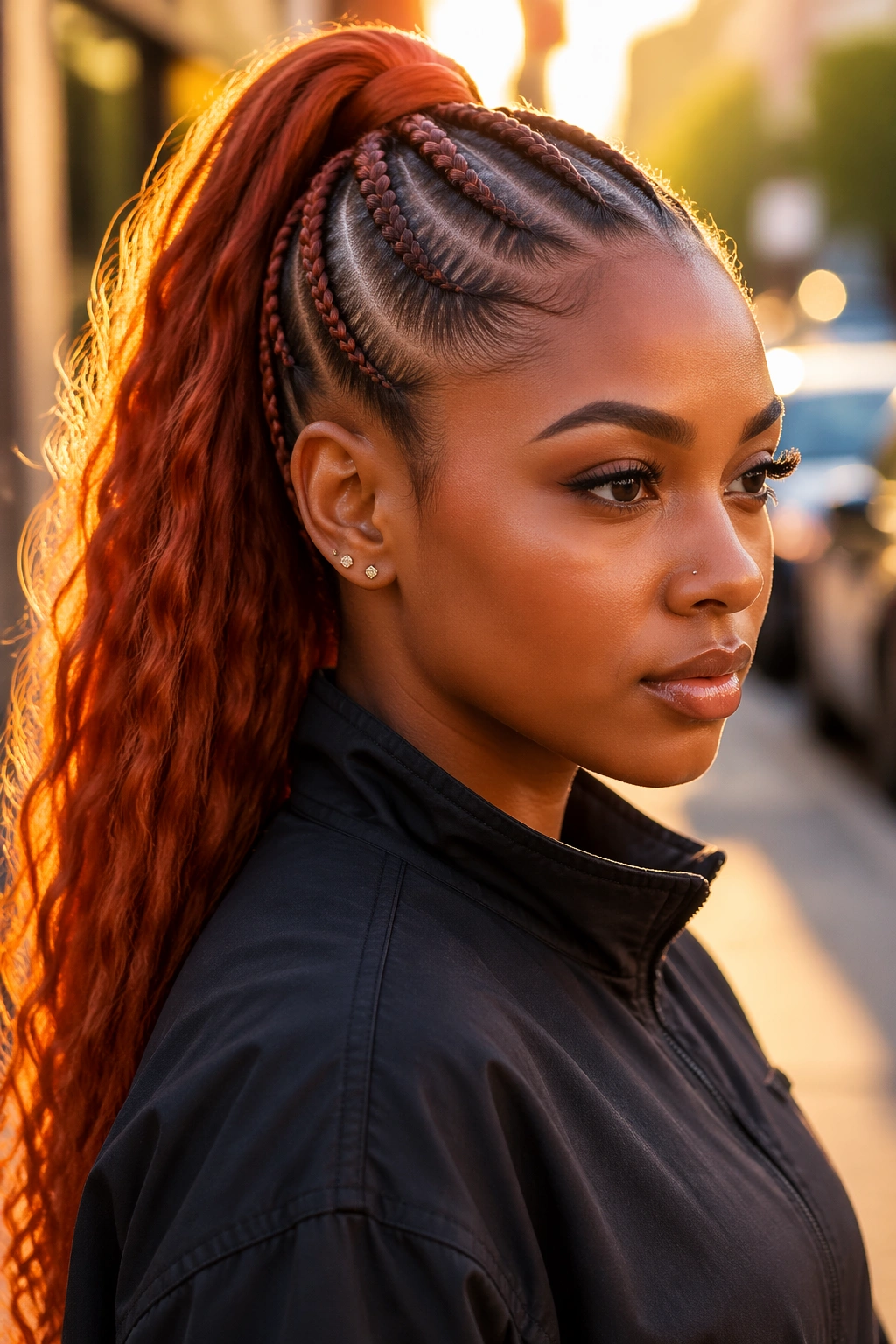
Why do cornrow-front ponytails stay so clean? Because the front is locked down in rows before the ponytail ever starts. That makes the style practical when you want your hair to survive a long day, a humid room, or a stretch of time when you do not want to restyle anything.
A few rows are enough. Four to six cornrows leading back into the ponytail give structure without turning the whole style into a full head of braids. The rows can be straight, curved, or stitched in a slight arc if you want more shape around the face. Copper hair makes those lines easy to see, which is part of why the style looks so crisp.
This is one of my favorite choices for active days. It can be dressed up with a curled tail or kept simple with a straight one. If your edges are sensitive, ask for moderate tension and let the braid lines do the work instead of pulling everything tight. Clean does not have to mean harsh.
And when the copper length falls behind those braids, the contrast is sharp in a good way.
19. Long Wand-Curled Copper Ponytail
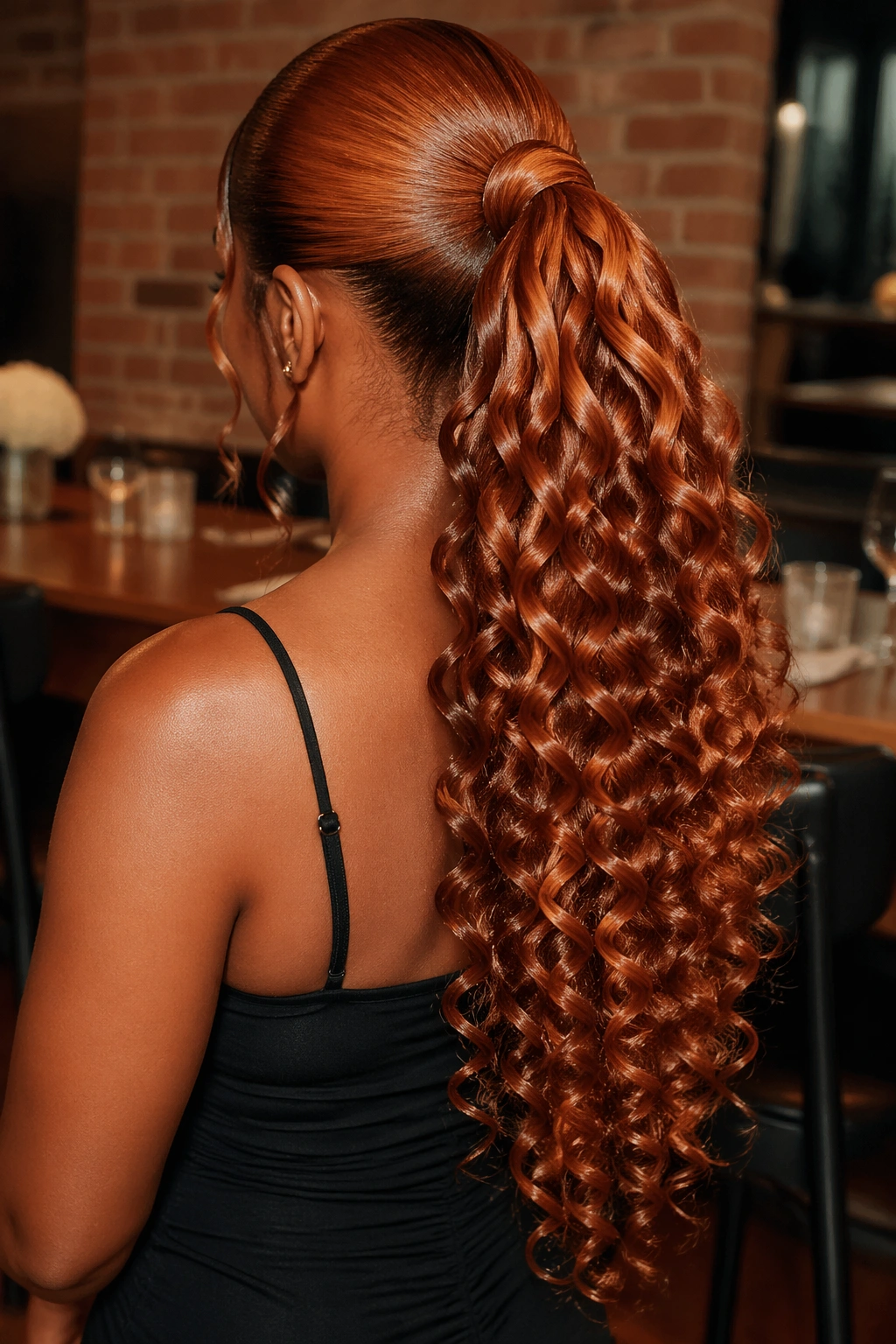
A long wand-curled copper ponytail gives drama without needing extra decoration. The curls stack one after another down the length, so the ponytail looks full even when the base stays simple. Copper helps here because every bend in the curl shows a different flash of shade.
The best version starts with medium sections wrapped around a wand, usually around 1 to 1¼ inches in barrel size. Hold each wrap for about 8 to 10 seconds, then pin the curl to cool if you want it to last. That cooling step matters. Warm curls fall faster, and the ponytail loses its shape before the night is over.
This style suits bigger moments: celebrations, dinner, photo-heavy events, the kind of day when you want your hair to carry some of the outfit for you. It looks especially good when the front is kept simple so the curls can be the focus. Too much detail at the crown can crowd the length.
Long wand curls and copper play off each other beautifully—no, scratch that, they make each other look richer. The color gives the curl more depth, and the curl gives the color motion.
20. Two-Tier Copper Ponytail
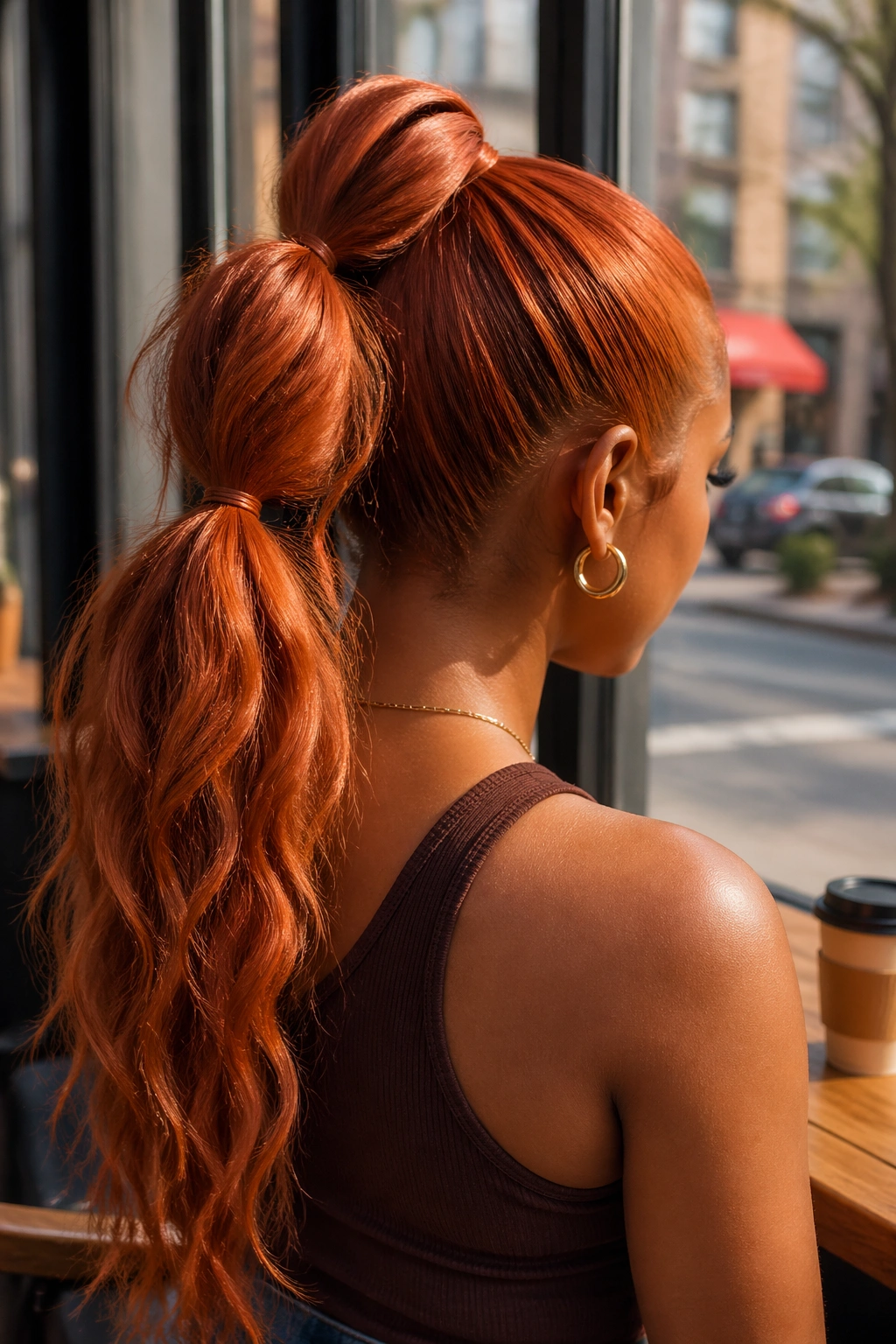
A two-tier ponytail breaks the length into two visible sections, and that alone changes the whole feel. Instead of one continuous fall, you get a top ponytail and a lower ponytail, which adds volume and a little structure. Copper hair makes the tiering easier to read, so the style looks intentional fast.
This works well when you want more body at the crown but do not want a towering high ponytail. The top tier lifts the hair off the scalp, while the lower tier keeps the length long and controlled. It can be sleek, curled, or braided, but I like it with soft waves because the layers separate better that way.
The style also helps if your ponytail is very long and starts to feel heavy. Splitting the weight across two bands can make the whole thing sit more comfortably. It is a small shift, but after a few hours, you notice it.
A two-tier copper ponytail has a bit of attitude. Not loud. Just smart enough that people notice the construction before they notice the product.
21. Copper Ponytail with a Wrapped Swoop
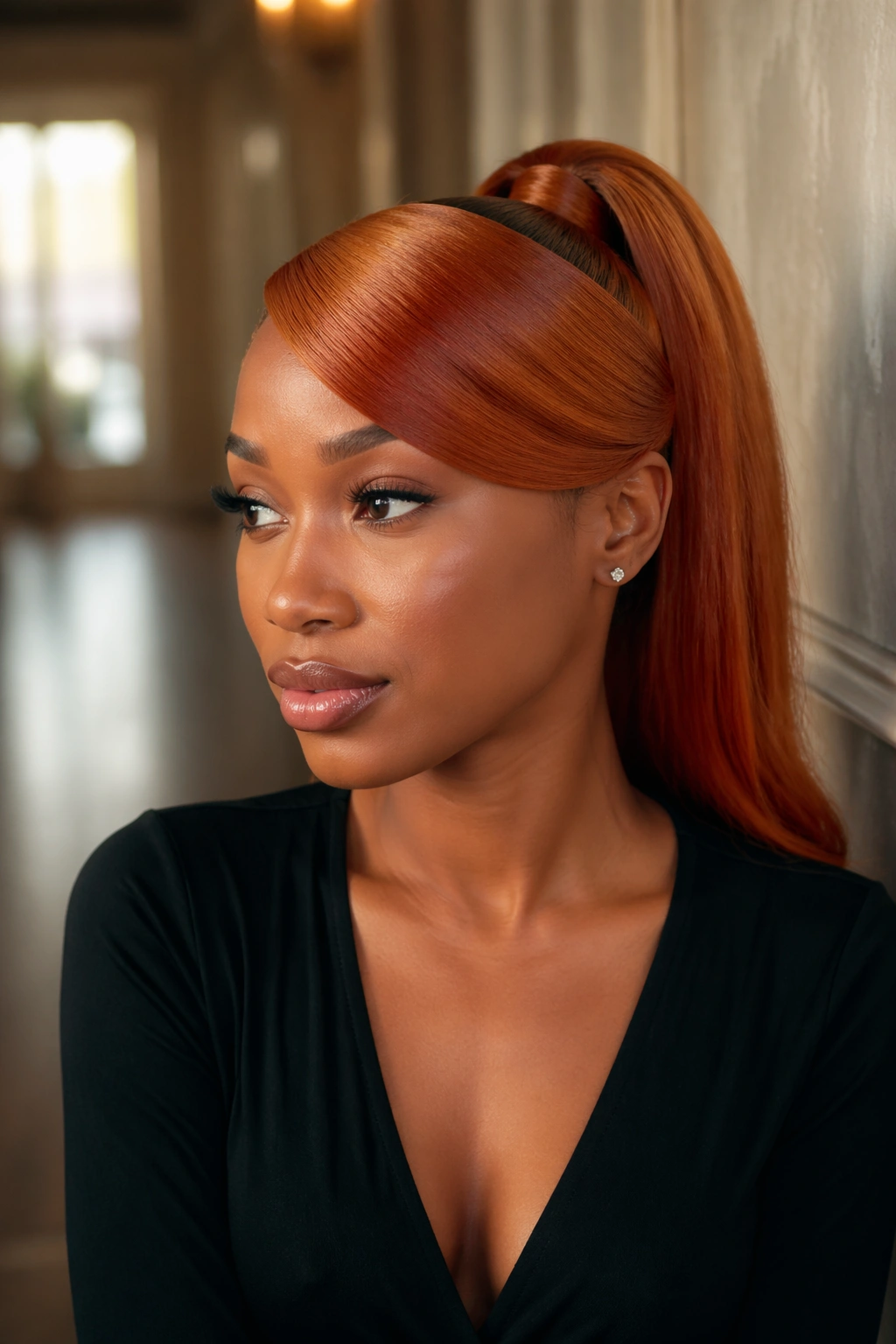
This is the ponytail I reach for when I want the hairline to look deliberate. A wrapped swoop at the front softens the edge, then the copper ponytail pulls everything back into one strong shape. It gives you motion without losing the clean frame that makes a ponytail feel finished.
The swoop should be wide enough to read from the front—usually 2 to 3 inches across—but not so deep that it swallows the face. Brush it smooth, shape it with a light gel, and pin it so it stays lifted instead of collapsing flat against the forehead. The wrapped base ties the whole look together and hides the elastic in a way that feels tidy, not fussy.
This style works for Black women who want a little glamour without piling on extras. The swoop brings softness. The copper brings color. The ponytail carries the length. Nothing has to fight for space.
It is one of those looks that feels polished without acting precious. That is a nice place to land.
Final Thoughts
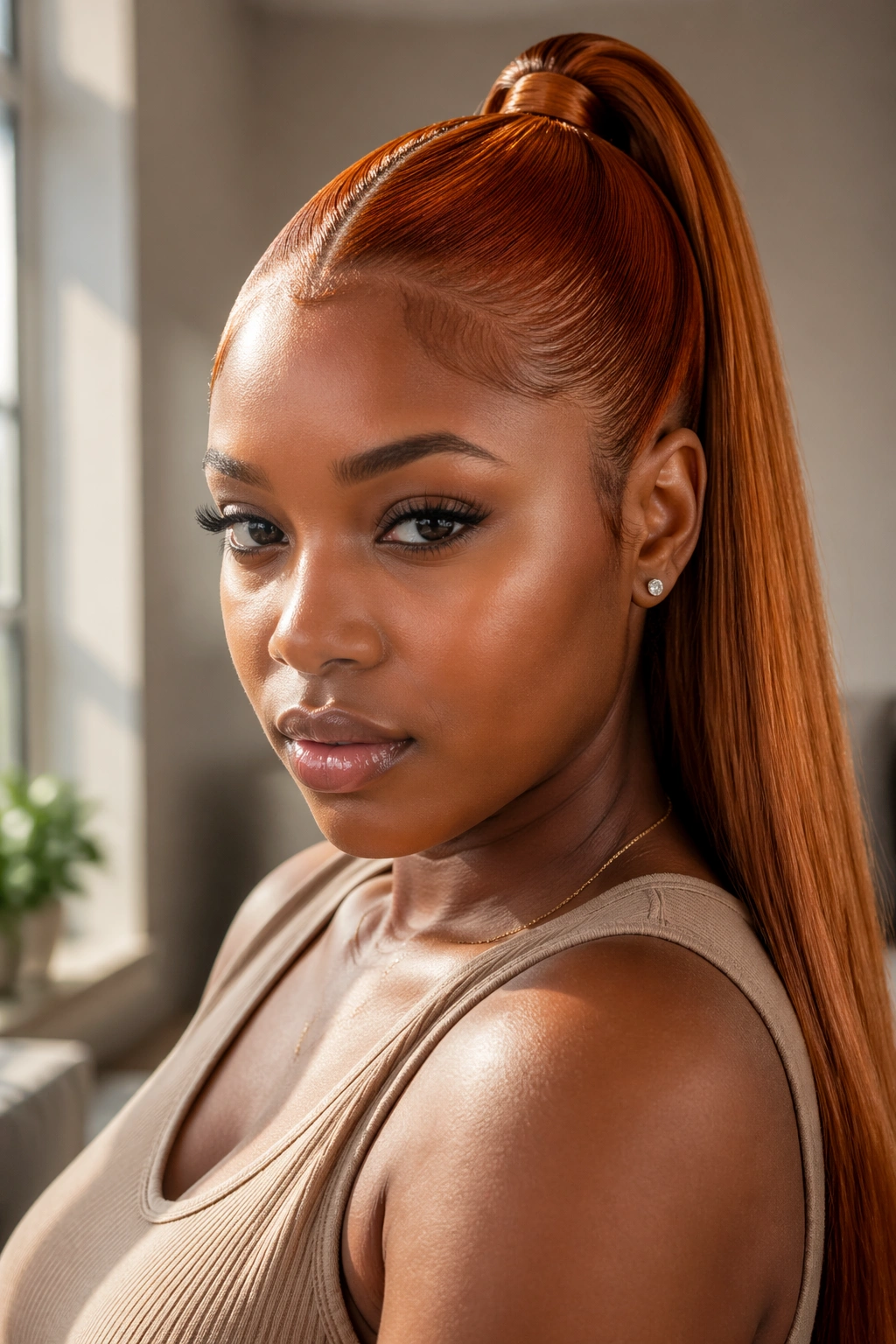
Copper ponytails work because they give you contrast without making the hair feel overworked. The color brings heat, but the shape decides whether the style lands as sleek, soft, playful, or sharp. That is why the same copper bundle can look completely different from one ponytail to the next.
The smartest versions respect the hairline, keep the base clean, and let the length do something interesting. Braids, curls, wraps, parts, and bangs all change the mood fast. Pick the one that matches how you want to move through the day, not the one that looks busiest on a screen.
And if you are torn between two styles, choose the one that feels easiest to wear for six hours, not six minutes. That is usually the one that ends up looking best.
