



Some ponytails are an afterthought. Updo ponytails for Black women are not.
A good one can clean up a whole look without flattening the hair into something lifeless. The best versions keep the crown smooth, protect the ends, and still let texture show somewhere — on the tail, the braid, the puff, or the curls tucked into the base.
Too-tight edges, a tiny elastic, and no plan for the ends are where things go sideways. I care a lot about that last part. A ponytail can be sleek and still respect the hairline.
The cleanest place to start is the classic high ponytail, because everything else borrows from that shape.
1. Sleek High Ponytail With Laid Edges
This is the one people reach for when they want clean lines and instant lift. The shape pulls the eye upward, which makes the face look more open, and the length of the tail can be real hair, added hair, or a mix of both.
The key is not the gel. It is the tension. Smooth the hair with a soft bristle brush, then finish the crown with a firmer brush only where you need it. If the hairline is fragile, leave the tiniest bit of softness at the temples instead of trying to turn every baby hair into a sculpture.
One small trick matters here: wrap a strip of satin or a scarf around the base for 10 to 15 minutes while you get dressed. That pause helps the surface set without feeling stiff.
2. Braided High Ponytail With a Wrapped Base
Why does a braid at the base make a ponytail feel so much stronger? Because it gives the style a spine. The pony sits higher, the attachment point looks neater, and the whole thing holds up better when the hair is thick or stretched.
What Makes It Hold
A narrow braid around the base hides the elastic and keeps the style from looking unfinished. If you add extension hair, the braid also gives the tail more length without making the crown bulky.
- Works well on stretched natural hair or relaxed hair
- Hides a thick elastic band neatly
- Gives the ponytail a clean, polished finish
- Can be worn high, mid-height, or slightly off-center
Best tip: keep the base braid snug, not tight. Snug holds; tight hurts.
3. Bubble Ponytail With Clean, Puffy Sections
I keep seeing this style on people who want drama without losing control of the shape. The bubbles break a long ponytail into little rounded sections, so the eye keeps moving down the length instead of stopping at one blunt end.
How to Build the Shape
Start with a ponytail that sits where you want it, then place small clear elastics every 2 to 4 inches down the tail. Gently tug each section outward until it looks round, not pulled apart. That part is delicate. Too much tugging and it starts to look stringy.
This style is especially nice on braided ponytails, blown-out hair, or extension hair with some body. It feels playful, but it still looks intentional. The best part is that it photographs well from the side because each bubble catches the eye separately.
4. Cornrow-Feed Ponytail
Cornrows feeding into a ponytail solve a real problem: tension spread out across the scalp instead of being dumped in one place. That is why this style can feel lighter than a plain slick-back, even when it looks more complex.
The braids can run straight back, curve toward the crown, or fan into a ponytail base at the top or nape. If the stylist is working too fast and the scalp starts to sting, stop them. A neat part does not have to come at the cost of comfort.
This is a strong choice for long wear, gym days, or travel, because the base stays put. The tail can be a braid, curls, or straight extension hair, depending on how much movement you want.
5. Curly Puff Ponytail
A curly puff ponytail does not apologize for texture. It lets the hair stay soft and full, which is exactly why it looks so good on coily and curly hair types. The shape sits high and airy, almost cloudlike, with the roots gathered just enough to lift the silhouette.
Moisture matters here. If the hair is dry, the puff starts looking dull and tight around the base. A leave-in cream, a touch of oil on the ends, and a satin scrunchie or stretch band usually make the difference between “thrown together” and “done.”
I like this style because it is honest. It shows the hair as it is, just arranged with a little more height and a cleaner frame around the face.
6. Side-Swept Low Ponytail
A side-swept low ponytail softens everything. The part sits off-center, the tail drapes over one shoulder, and the whole look feels less strict than a centered style. It is also a sneaky good option when you want polish without pulling the crown too tightly.
How to Place It
Brush the hair toward the nape, then shift the ponytail just enough to one side that it follows the line of your cheekbone. If the tail is straight, leave it sleek. If it is curled, let the ends bend away from the neck so the style has movement.
- Works well with natural hair pressed straight
- Looks elegant with a satin ribbon or wrap
- Gives rounder faces a bit of visual length
- Can be dressed up fast with pin curls at the ends
There is no need to overthink this one. Side placement does most of the work.
7. Faux Loc Ponytail
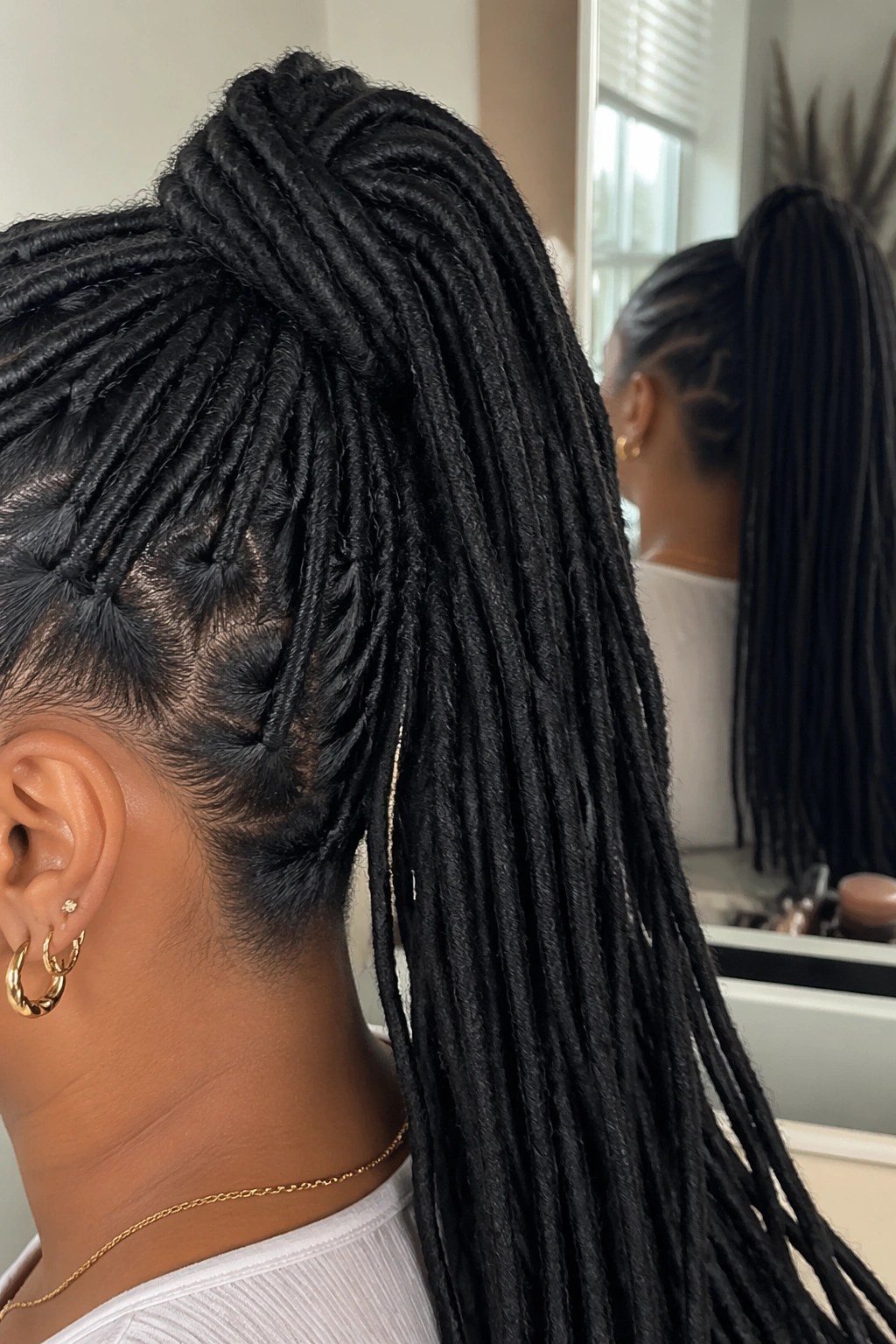
A faux loc ponytail has weight, swing, and a little attitude. It is one of those styles that can look casual or dressed up depending on how neat the base is and how long the locs hang.
The best version starts with a secure anchor at the crown or nape, then gathers the locs so they fall evenly. If the hair is heavy, cross two bobby pins under the elastic before adding the ponytail. That tiny move helps keep the base from sliding down through the day.
What I like here is the texture. Faux locs give you a ropey, lived-in look without the softness disappearing completely. It is a strong style for people who want movement but do not want everything smoothed flat.
8. Rope-Twist Ponytail
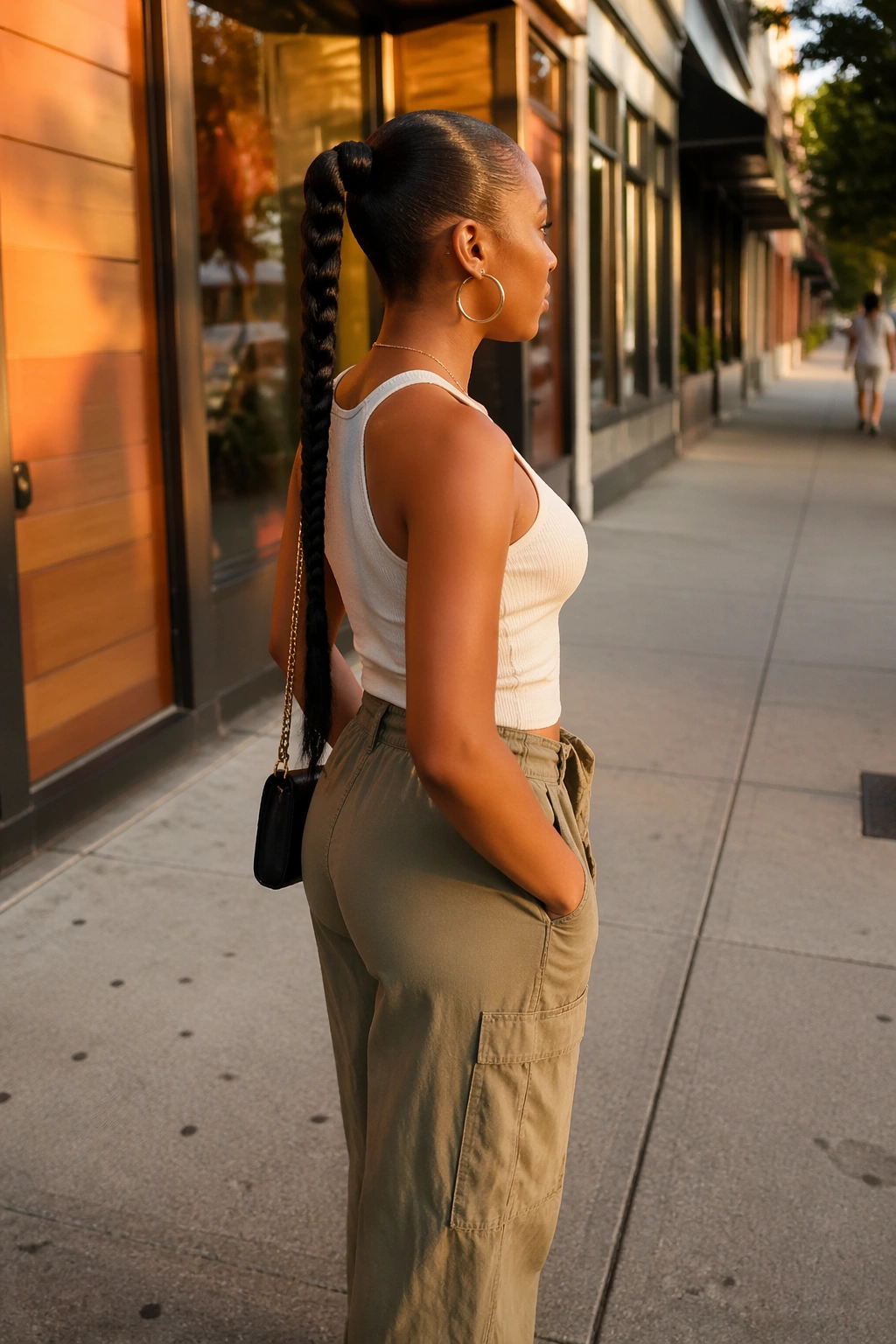
Why does a rope twist look so clean? Because two strands wrapped around each other make a tighter, neater line than a standard three-strand braid. The result feels tidy from root to tip, and the twist pattern reads well even from a distance.
This style works on stretched natural hair and on extension hair. The sections should be smooth before you start twisting, or the whole thing gets fuzzy halfway down. A little mousse on each section helps, but do not drown the hair in product. Too much and the twist loses its grip.
How to Get the Most From It
Twist in the same direction on both sections, then wrap them together in the opposite direction. That keeps the pattern from unraveling. Seal the ends with small flexi rods or a pin curl if you want the tail to bend softly instead of hanging straight.
9. Feed-In Braid Ponytail
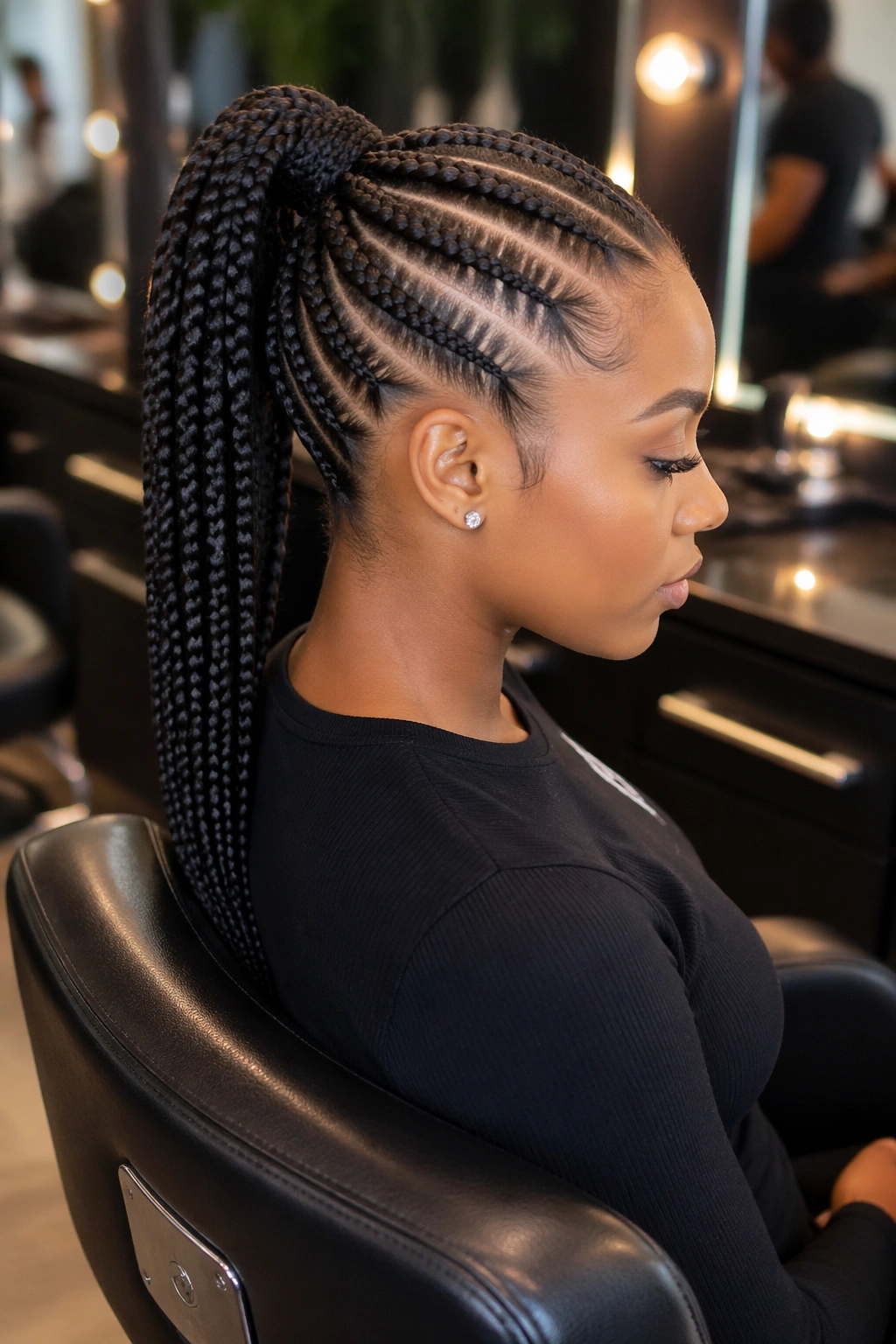
A feed-in braid ponytail has one big advantage: the base looks lighter than it is. The braiding hair gets added gradually, so the braid grows out from the scalp instead of starting with a bulky knot.
That gradual build is why the style feels so smooth. It is especially useful if you want a long ponytail but do not want the crown to look crowded. You can keep it as one large braid, split it into several feeding cornrows, or finish with a thick braid tail.
The cleanest feed-in ponytails are the ones that respect the parting. Straight parts, even tension, and a neat wrap at the base matter more than extra shine.
10. Pineapple Ponytail
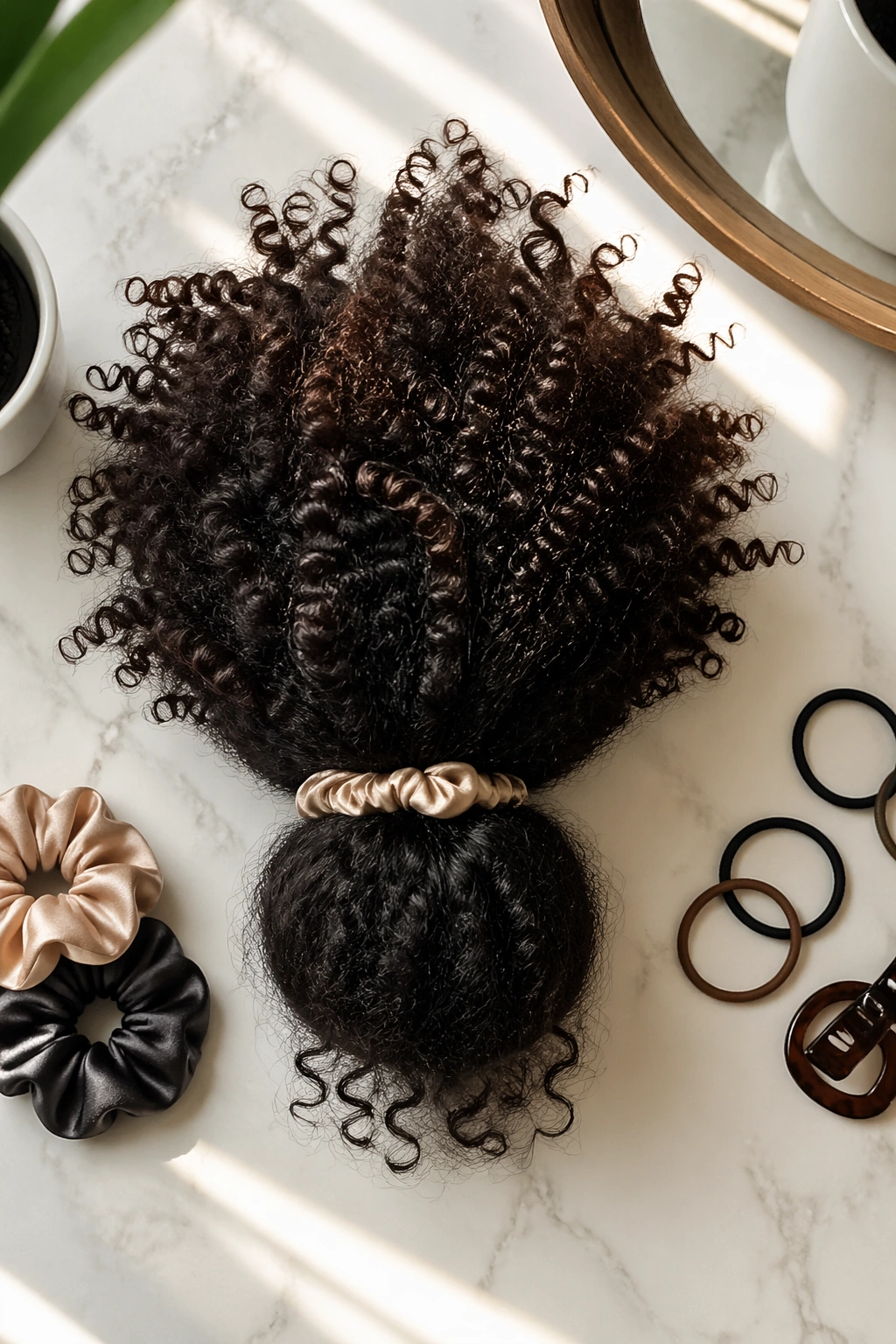
Not every ponytail needs to be flattened down. The pineapple ponytail keeps curls high and loose, which helps preserve the curl pattern while still getting the hair up and out of the way.
This is one of my favorite choices for day-two curls or coils that still have bounce left in them. Gather the hair loosely near the crown with a satin scrunchie, then let the ends flare upward. The shape should look airy, not strained.
If the roots are too polished, the style loses its charm. A little softness around the hairline is part of what makes a pineapple ponytail feel effortless in real life, not just in a mirror.
11. Barrel Curl Ponytail
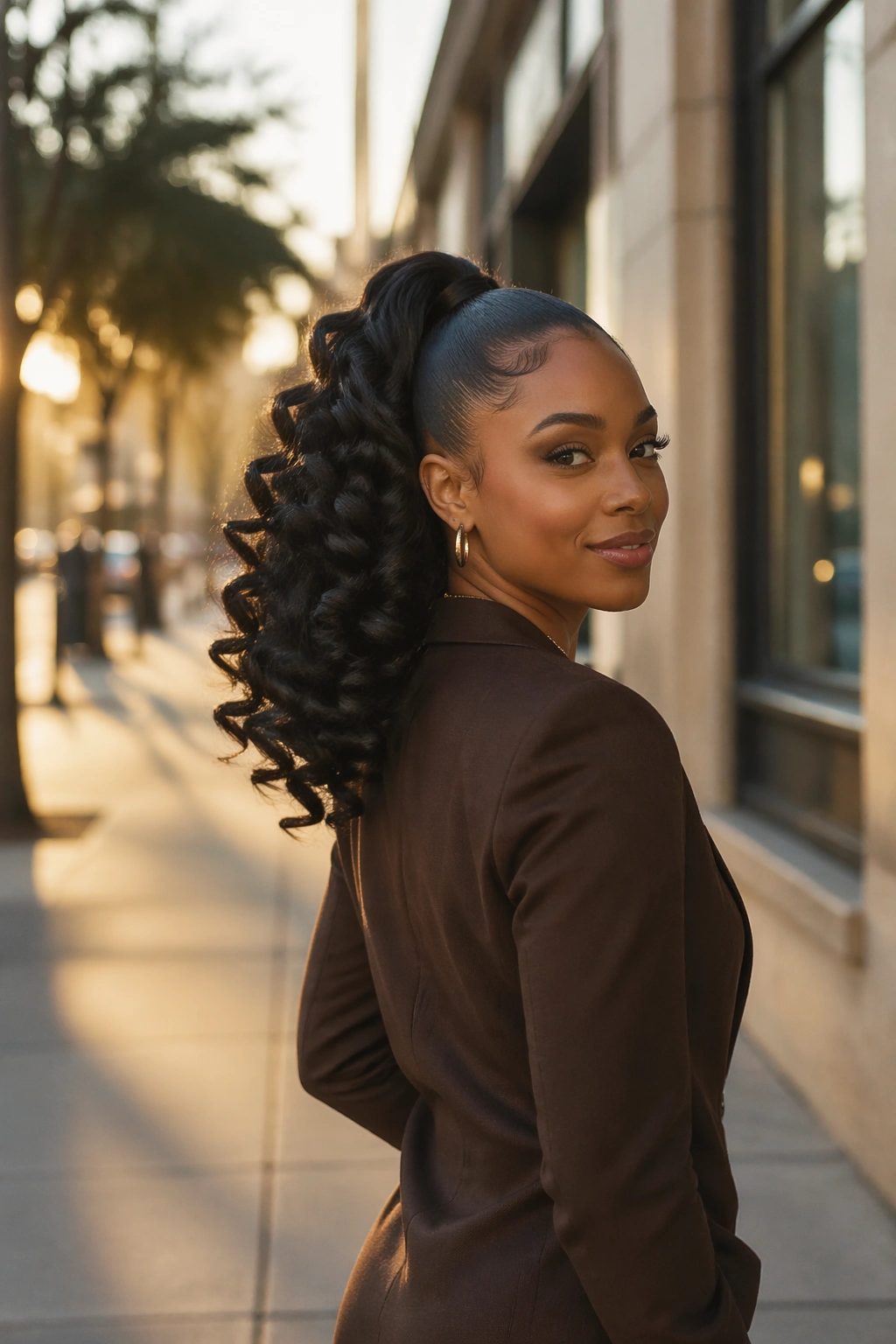
Barrel curls make a ponytail look fuller without asking the base to do all the work. Instead of one long tail, you get several large curls stacked together, which creates movement and a bit of drama.
Why the Curls Matter
The trick is to set each curl properly before you touch it. Use a 1.25-inch or 1.5-inch iron on extension hair, or flexi rods on damp hair if you want a heat-free route. Pin each curl to cool completely. Warm curls collapse fast, and then the ponytail looks flatter than it should.
- Give each curl time to cool before release
- Wrap the base with a narrow strand of hair for a cleaner finish
- Mist lightly with flexible hold spray
- Separate curls with fingers, not a brush
This style has a dressed-up feel without being stiff. It is one of those ponytails that looks like it took all morning, even when it did not.
12. Low Ponytail With a Braided Wrap
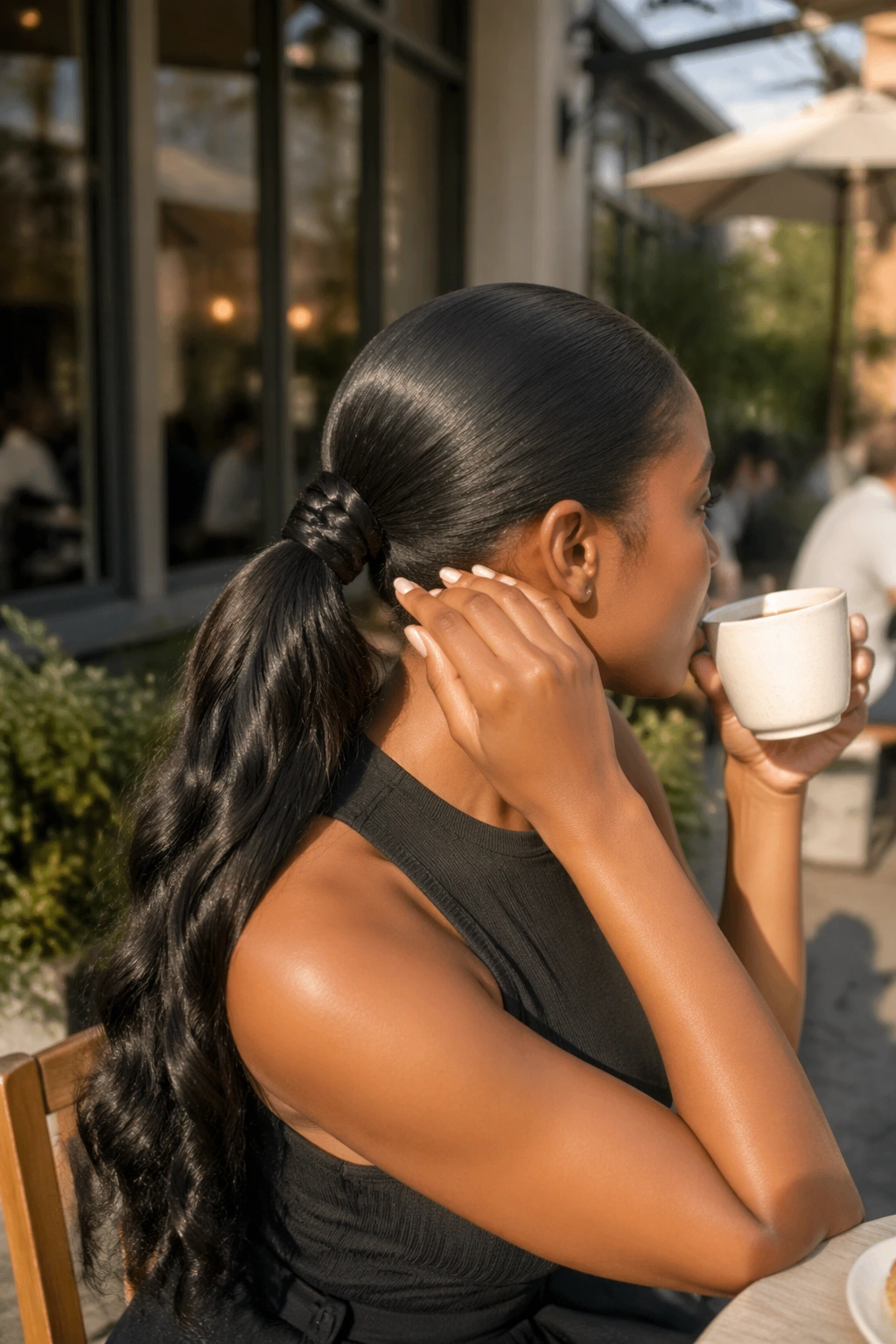
A low ponytail with a braided wrap is calm, neat, and easy on the scalp. The braid wrapped around the base hides the elastic and gives the style a finished edge that plain low ponytails often miss.
This is the kind of style I reach for when I want something quiet but not boring. It works on relaxed hair, stretched natural hair, and silk-pressed hair, and the low placement means the weight sits closer to the neck instead of hanging from the crown.
There is also a practical upside: if your edges are tired, a low ponytail usually behaves better than a high one. Less pull. Less drama.
13. Faux Hawk Ponytail
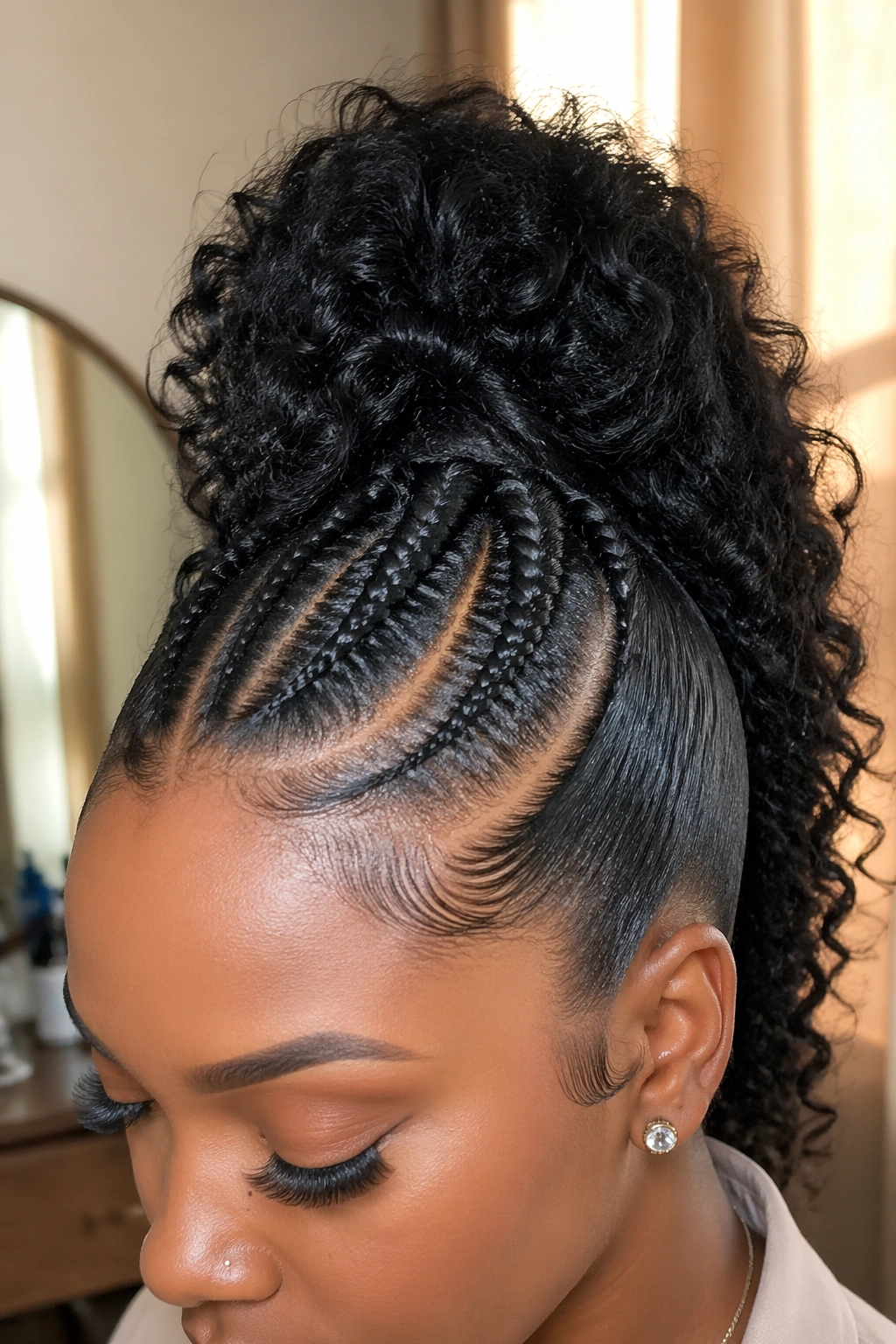
A faux hawk ponytail gives you height in the center and control on the sides. That contrast is the whole point. The sides can be cornrowed, flat-twisted, or slicked close to the head, while the middle section gathers into a ponytail that looks bold without feeling messy.
It is a style with shape. A real shape. The side panels make the crown look higher, and the ponytail becomes the focal point instead of the whole head fighting for attention.
If your hair is thick, this style can be one of the easier ways to manage volume. The sides stay controlled, the top stays lifted, and the tail gets to do the showing off.
14. Crown-Twist Ponytail
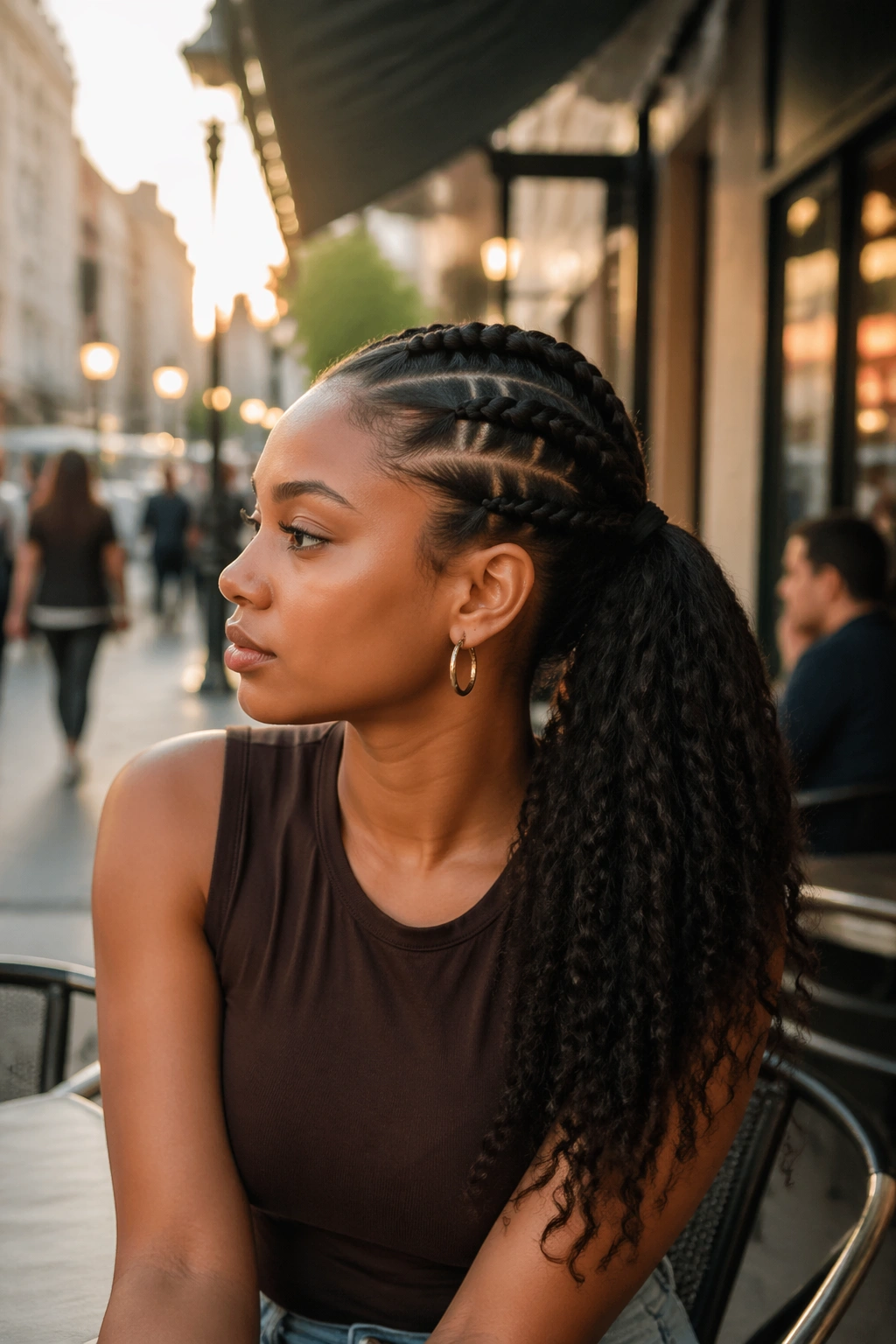
Twists that run along the hairline and feed into a ponytail give the face a softer frame. The style has a kind of built-in halo effect, but without the stiffness that sometimes comes with heavy braiding.
A flat twist works especially well here because it lies close to the scalp and creates a smoother line than a puffier twist. Keep the twists small if you want them to settle neatly into the ponytail base. Big twists can look chunky in a way that fights the shape.
A little mousse along the parts helps the style stay clean. So does patience. Rushing the front twists is usually what makes the whole look fall apart.
15. Knotless Braid Ponytail
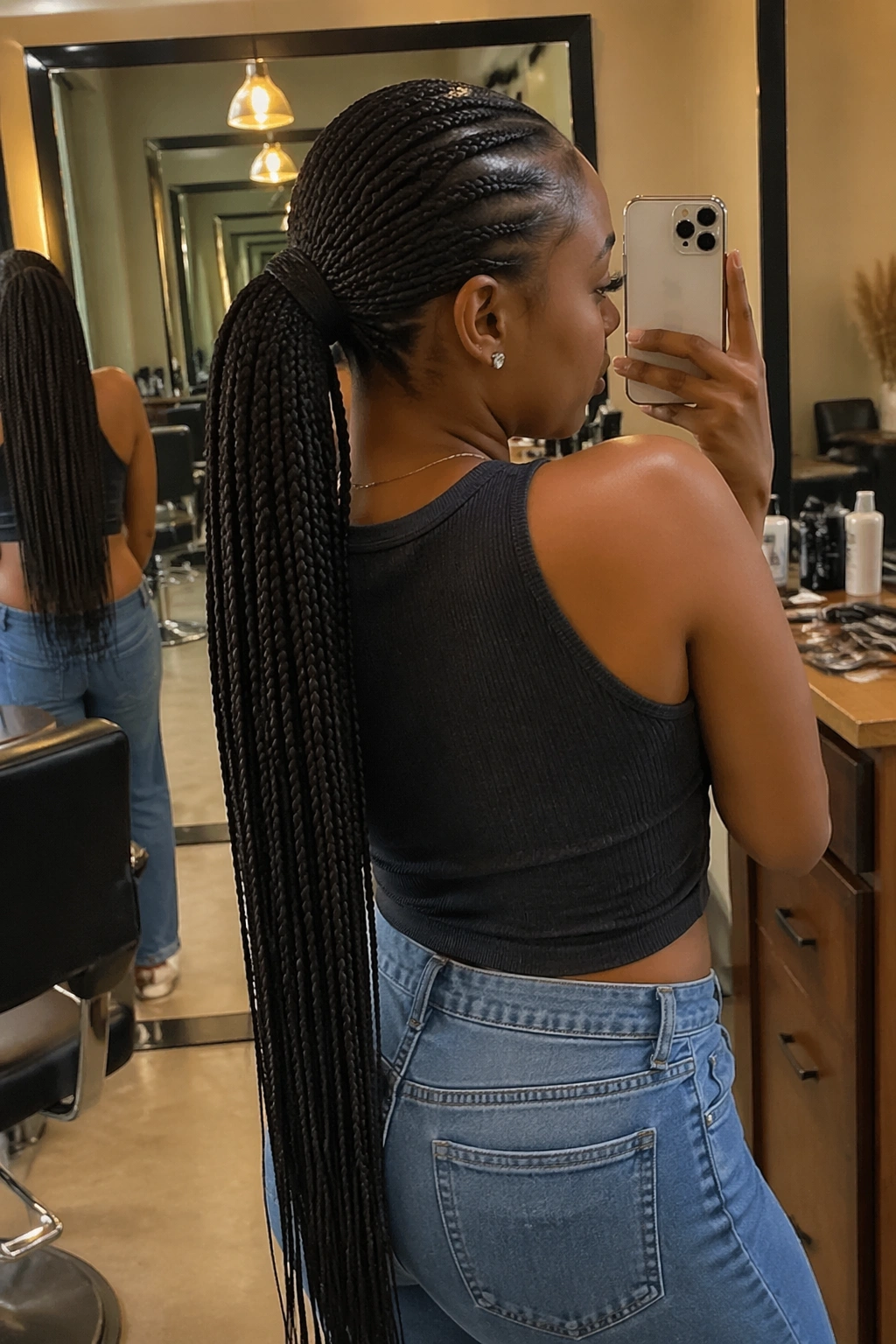
Why do knotless braids feel easier than classic box braids in a ponytail? The top of the braid starts with your own hair, then the extension hair is fed in gradually. That means less bulk at the root and a flatter, lighter base.
For ponytails, that matters a lot. A heavy knot at the crown can make the style pull down through the day, especially if the tail is long. Knotless braids keep the base smoother and usually sit more comfortably for longer wear.
They also look softer around the hairline. That softer start is one reason this style reads as polished without looking harsh.
16. Afro Ponytail With Stretched Roots
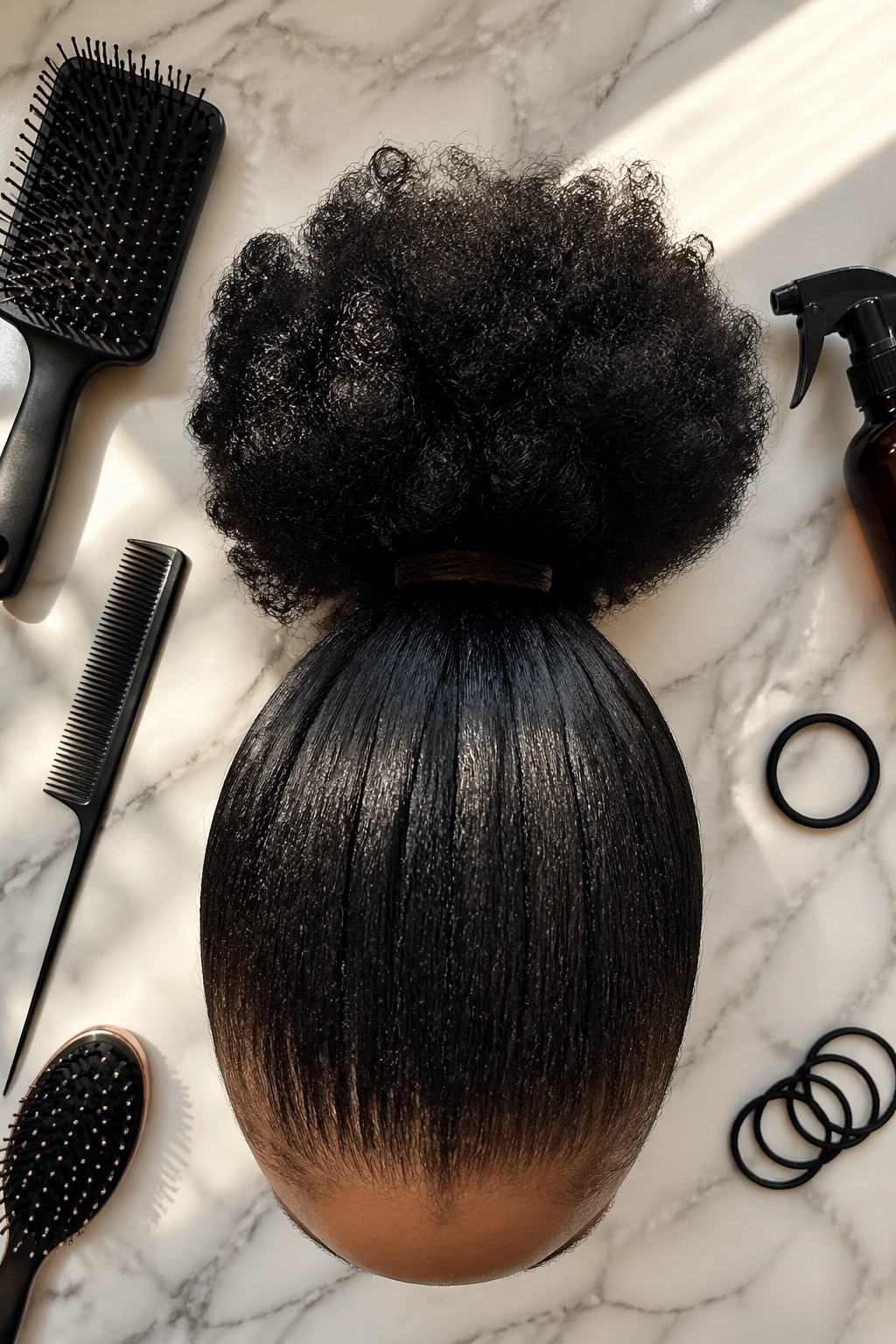
This is the move when you want volume first and sleekness second. The hair is stretched just enough at the roots to gather into a ponytail, but the length keeps its natural texture and fullness.
A low-heat blow-dry, banding, or old-school stretching in sections works here. You are not trying to flatten the pattern out of the hair. You are just giving it a little more length so the ponytail sits higher and the shape looks cleaner.
What I love most is the contrast: smooth at the base, textured through the tail. It feels modern without looking overworked. And if the hair is thick, this style can look almost sculptural in person.
17. Half-Cornrow Ponytail
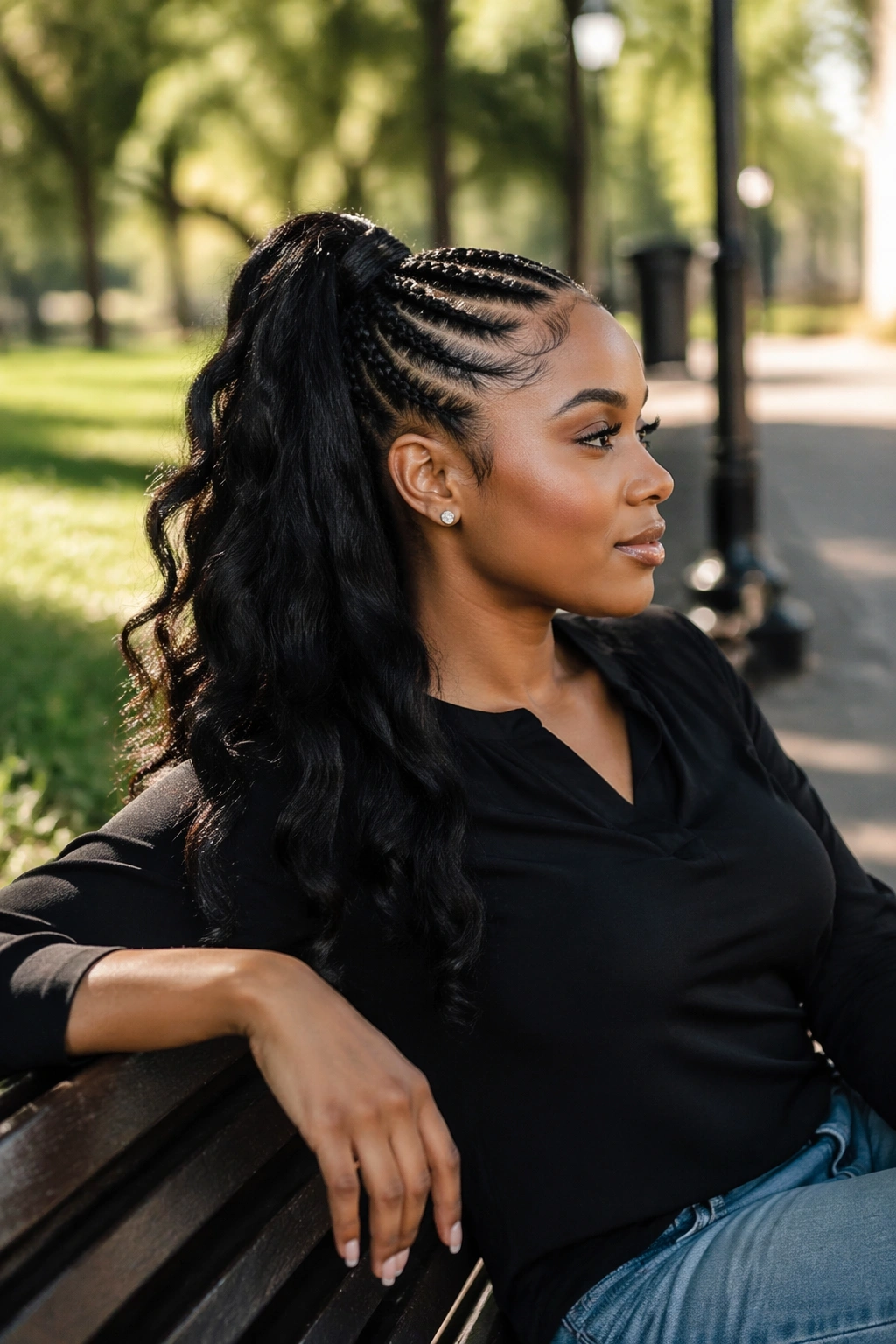
A half-cornrow ponytail gives you structure where you need it and softness where you want it. Usually the front or top section gets braided, then the rest is gathered into a ponytail at the crown or back.
Where It Helps
This is a smart choice if you want your front hair controlled but do not want every inch of the head braided. It also works well when you need the style to last several days without constant touch-ups.
- Keeps the top section neat
- Leaves some length and movement in the tail
- Can be worn high or mid-height
- Works with curls, straightened hair, or added hair
The nice part is that it feels balanced. Not too bare, not too busy.
18. Scarf-Tied Sleek Ponytail
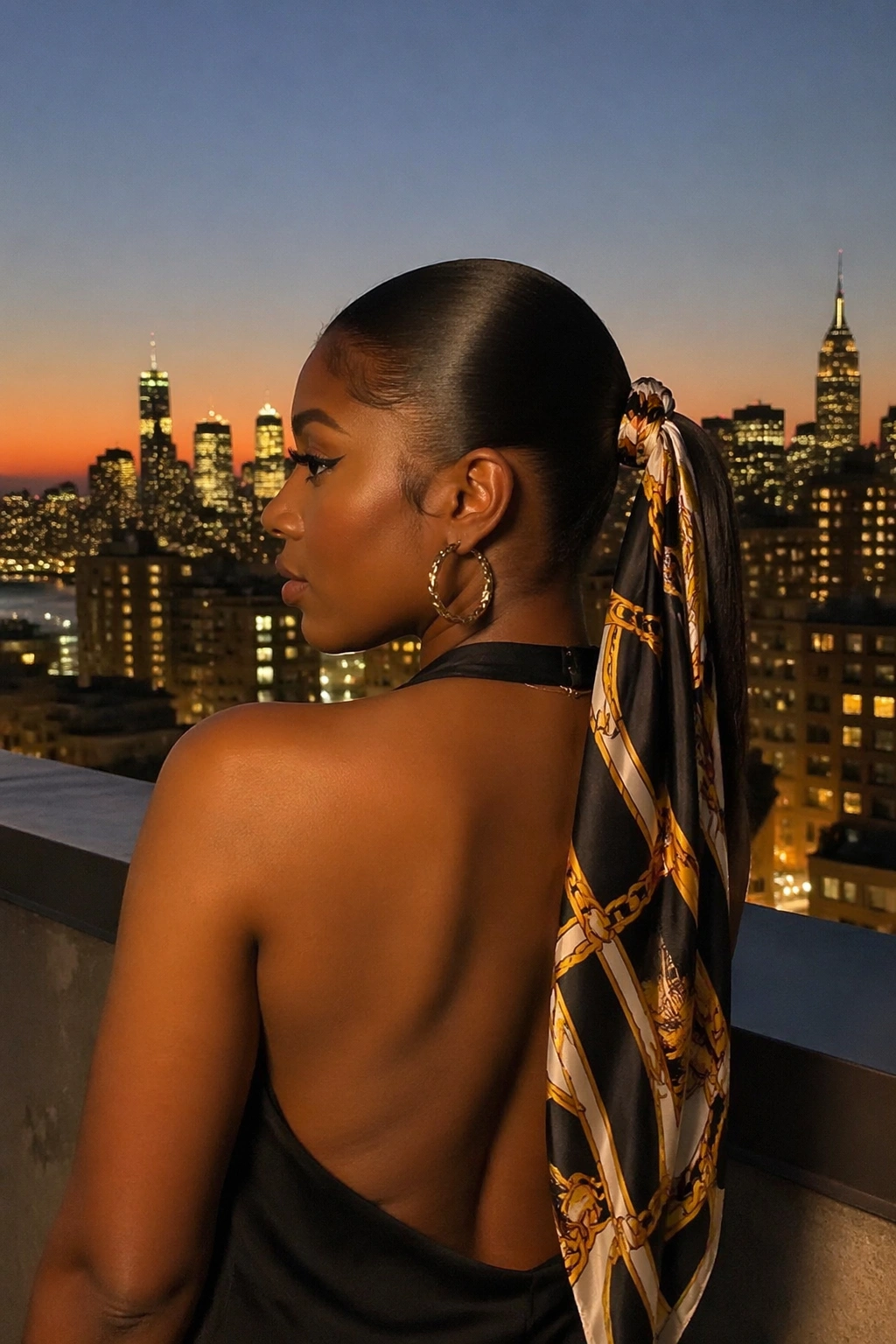
A scarf can do more than decorate a ponytail. It can hide the elastic, cover a less-than-perfect wrap, and add a stripe of color or pattern that changes the whole mood of the style.
Silk or satin is the smart choice here because it does not rough up the surface of the hair. Tie it snug at the base, or wrap it once around the crown and let the ends trail. Either way, the scarf becomes part of the silhouette instead of looking tacked on.
This is one of those styles that looks more intentional when the scarf is chosen with care. A bold print makes the ponytail feel playful. A solid tone reads cleaner.
19. Stacked Double Ponytail
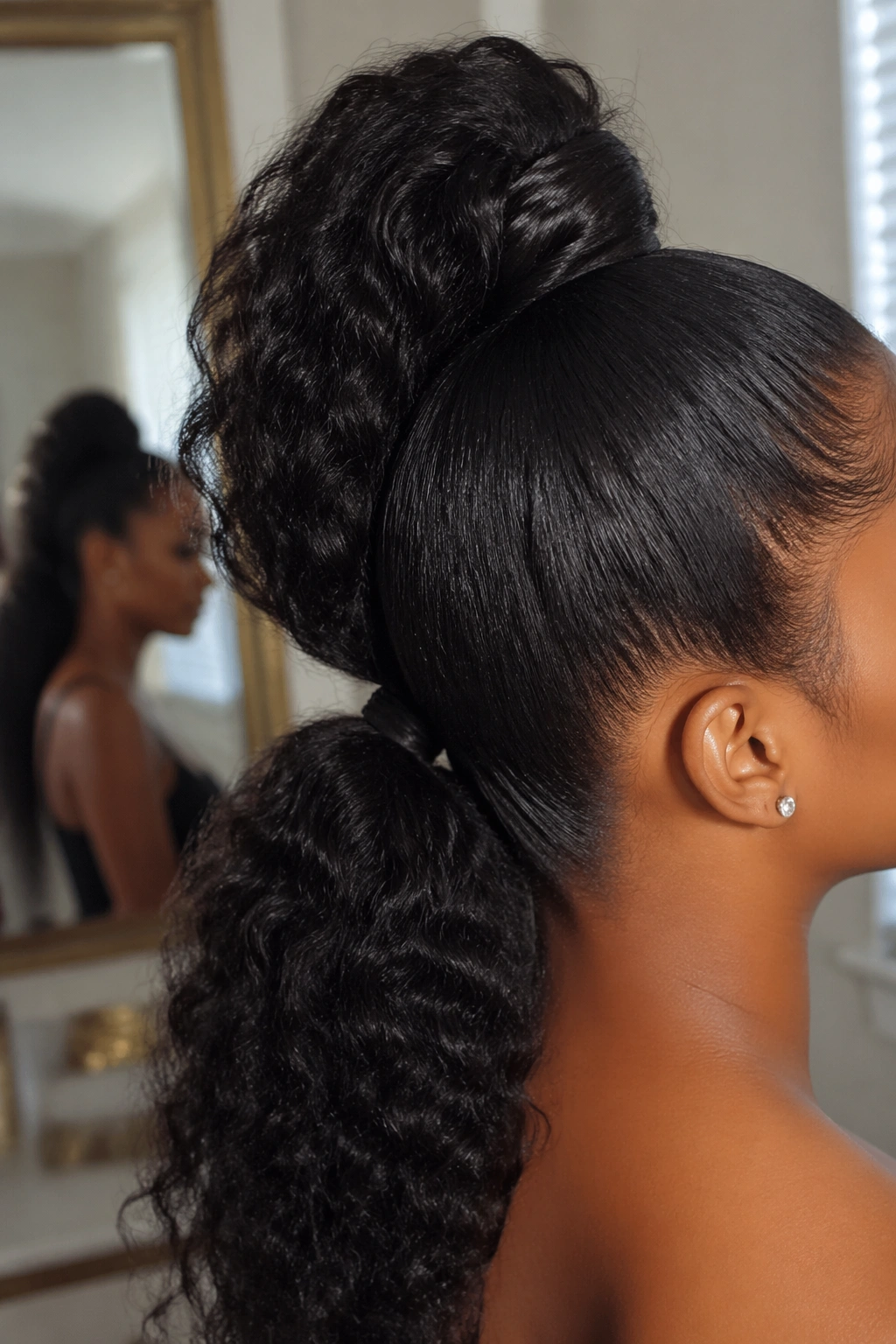
A stacked double ponytail sounds simple, but it creates a lot of lift. One ponytail sits high, and a second one sits just below it, which gives the illusion of more fullness and a longer line.
I like this for extension hair or medium-length hair that needs a little help. The upper ponytail supports the shape, while the lower one hides the join and keeps the tail looking dense. If you place the bands too far apart, the effect gets awkward. Two to 3 inches is usually enough.
It is also a clever fix when you want a big ponytail but do not want one heavy anchor point pulling on the scalp.
20. Curly Extension Ponytail
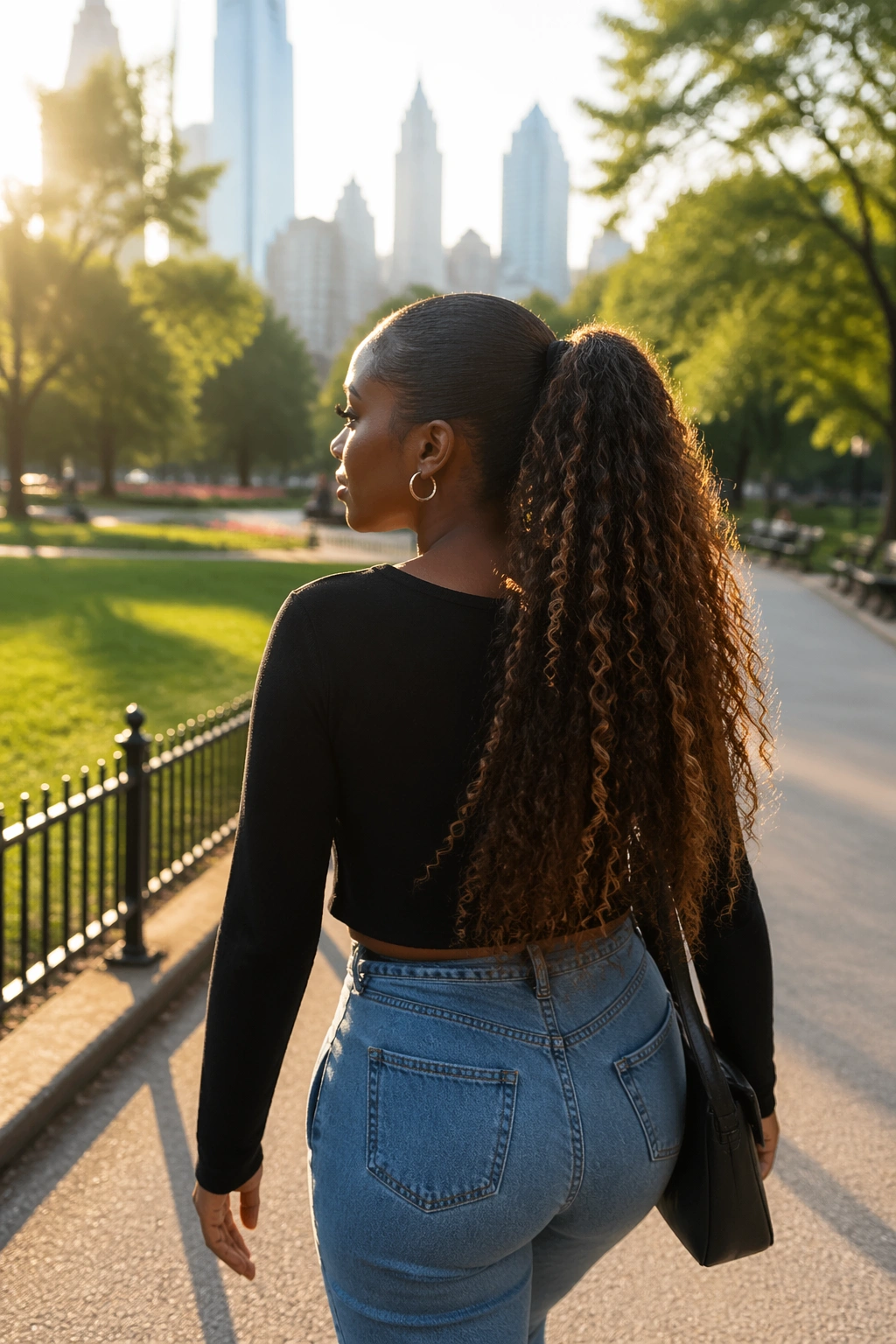
Curly ponytail extensions are the easiest way to get a lot of body fast. The texture does the work for you, and the result can be soft, dramatic, or somewhere in the middle depending on how much you separate the curls.
How to Keep the Curls from Tangling
Use a drawstring base or a secure ponytail holder, then tuck the attachment point so it disappears into the hair. A little mousse on the outer layer helps the curls stay grouped, but avoid brushing the whole ponytail. That is the fastest way to turn good curls into a fuzzy cloud.
- Finger-separate curls only where needed
- Store the ponytail on a hanger or in a loose satin bag
- Mist the ends lightly with water if they start to frizz
- Keep snaggy jewelry away from the hair
The style works because it looks lively, not perfect.
21. Low Puff Ponytail
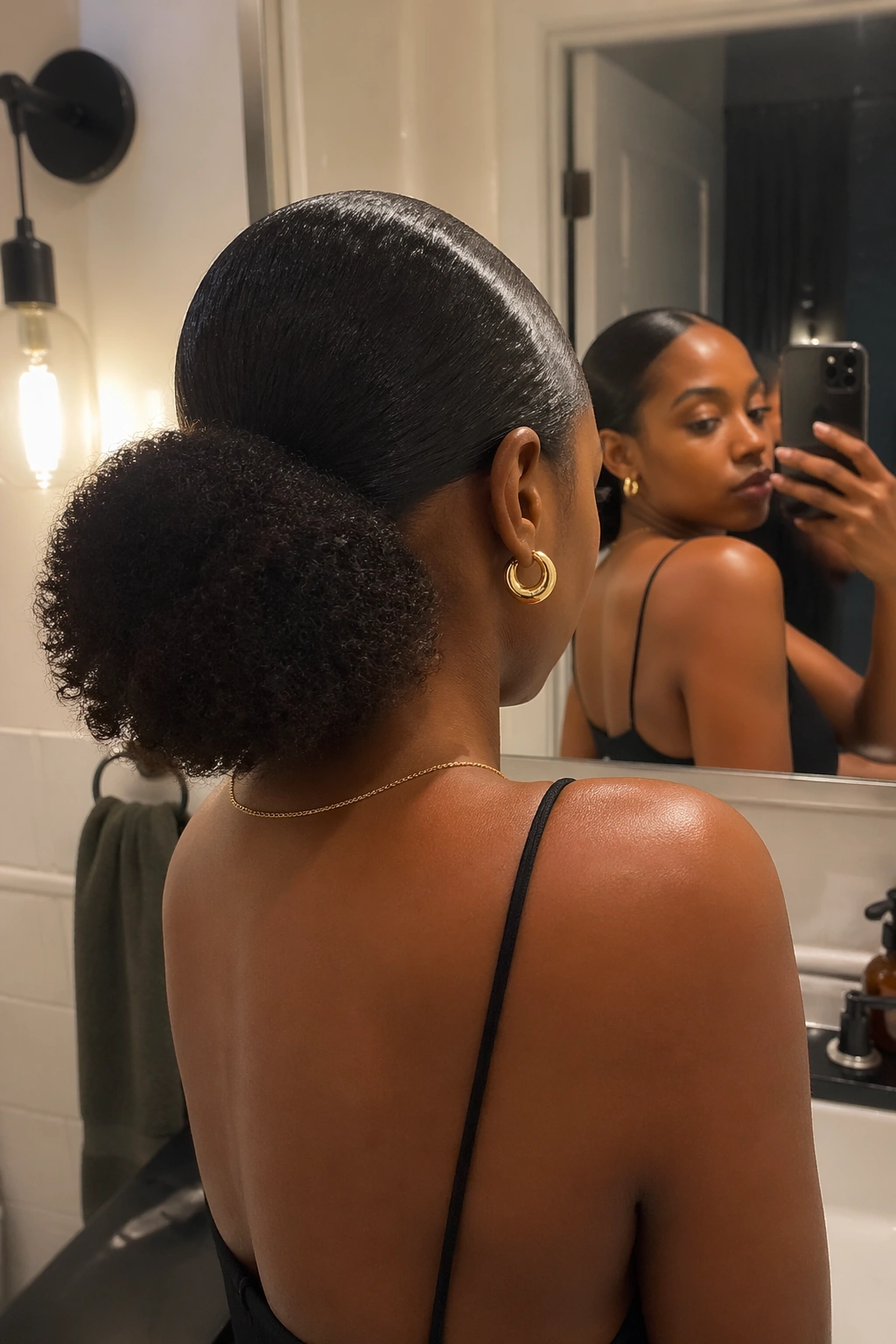
A low puff ponytail sits close to the nape and keeps the texture soft around the head. It is less dramatic than a high puff, but it often feels easier to wear for a full day because the weight stays lower.
This style works especially well when the hair is stretched but still textured. The roots can stay smooth enough to gather, while the tail keeps some body. A satin-covered band is gentler than a tight elastic, and it helps the puff keep its round shape without digging into the scalp.
The low placement also makes scarves, collars, and hoop earrings easier to wear. Small thing. Big difference.
22. Wrapped Braid Ponytail With Cuffs
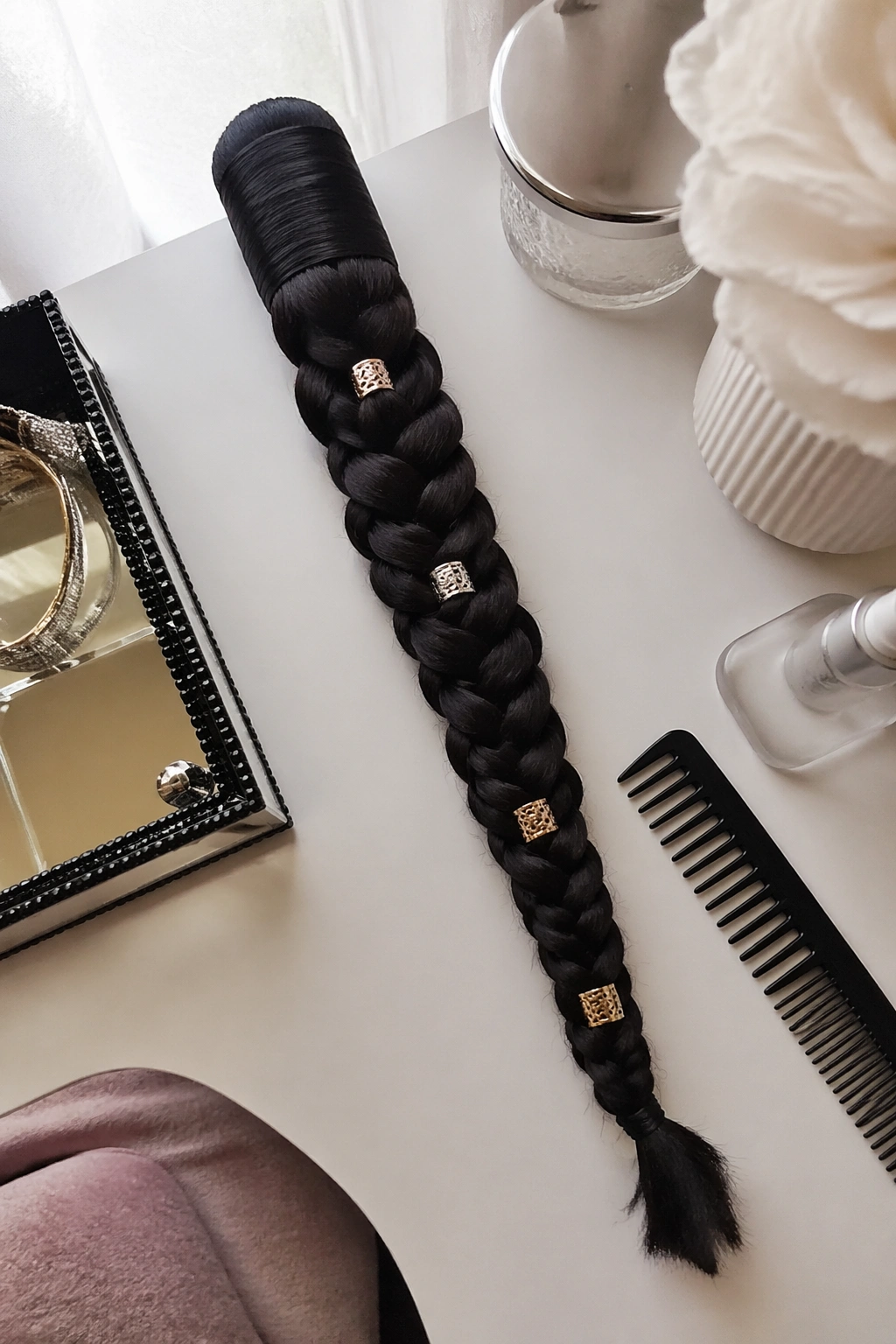
A wrapped braid ponytail with cuffs has a little ceremony to it. The braid itself gives structure, the wrapped base hides the tie, and the cuffs add shine in small doses instead of turning the whole style into noise.
Spacing matters. A cuff every few inches is usually enough; too many and the braid starts looking crowded. If the braid is thick, place the larger cuffs lower down where there is more room. If it is slimmer, stick to two or three accents and let the braid breathe.
I like this style for weddings, dinners, and any day when a ponytail should feel a bit dressed up without turning into a full formal updo.
23. Looped Ponytail Bun Hybrid
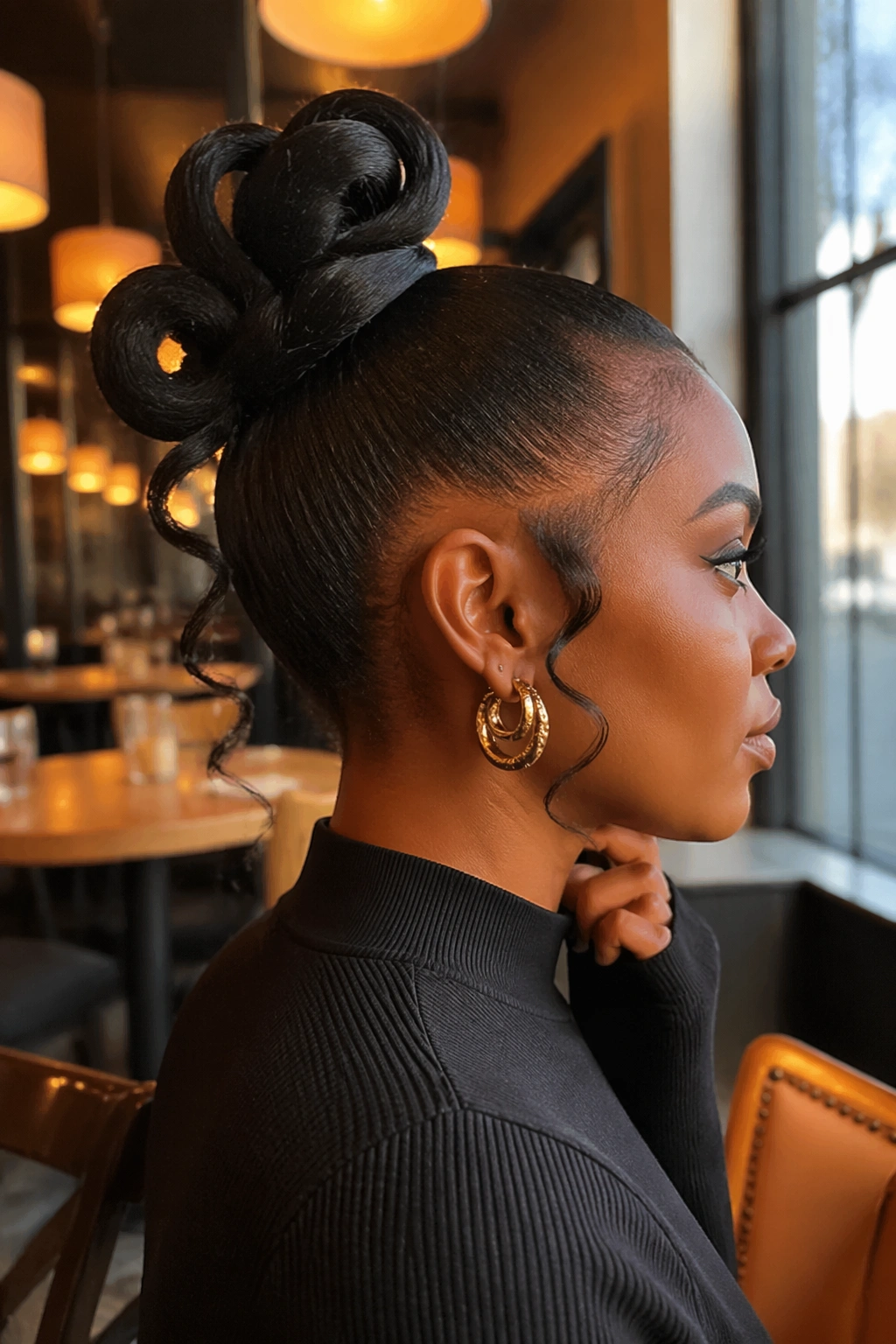
Sometimes the best ponytail starts as a bun. That sounds backward, but it works. Pull the hair into a ponytail, loop the length back through itself, then leave the ends tucked or flowing depending on how much softness you want.
The shape gives you height at the base and a little architectural interest without needing a ton of hair. It is also a useful fix for medium-length hair that does not quite reach the look of a long ponytail on its own.
This style is especially good when you want something neat from the front and a little unexpected from the side. It feels less common than a standard ponytail, which is part of the appeal.
24. Center-Part Sleek Ponytail
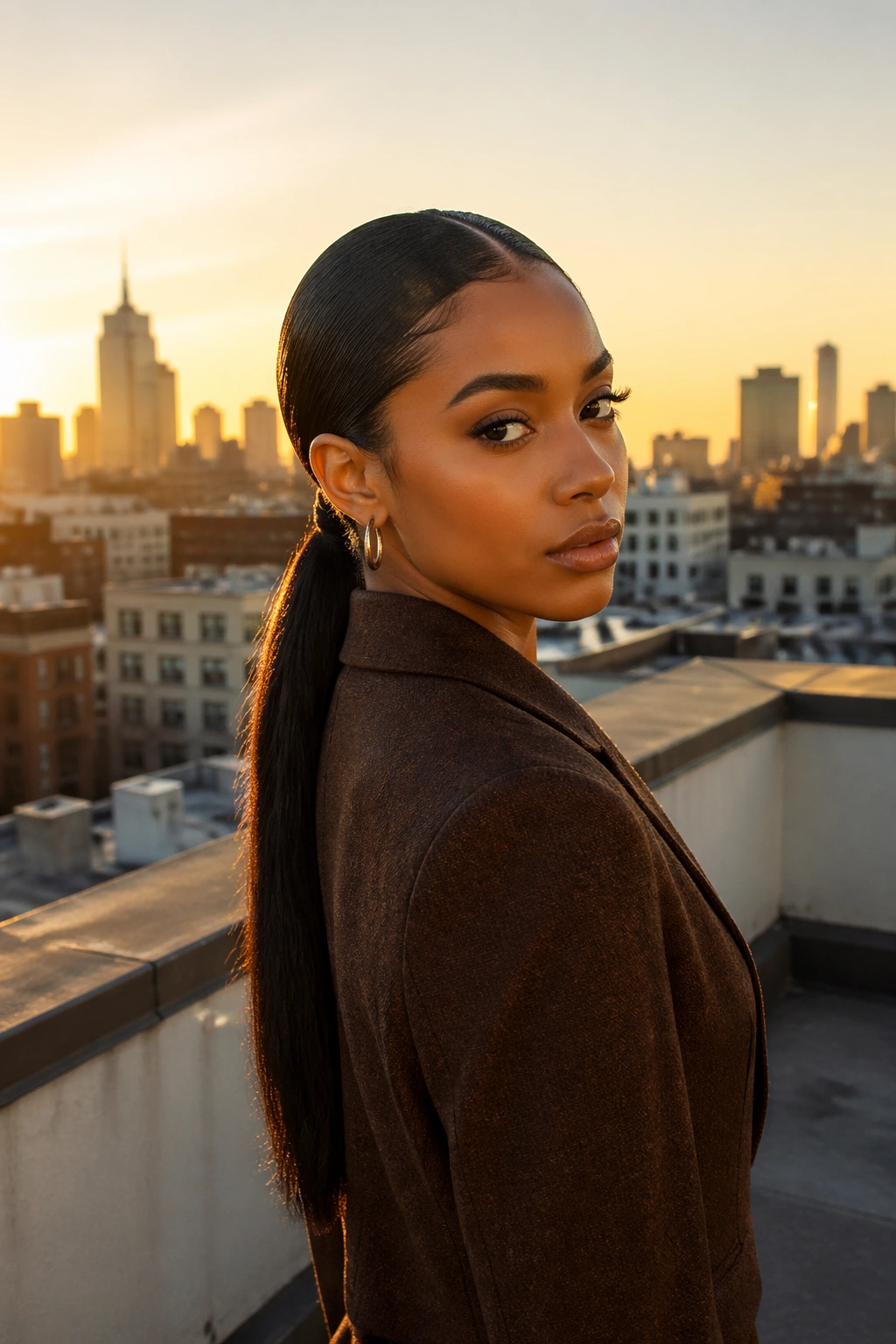
A center part changes the entire mood of a sleek ponytail. It makes the look feel balanced and sharp, and it gives the face a clean frame before the hair even reaches the elastic.
The part has to be straight. Not almost straight. Straight. A rat-tail comb and a mirror are your friends here, because a crooked center part shows fast once the rest of the hair is pulled back. After that, smooth the sides toward the nape or crown, depending on how high you want the ponytail to sit.
This style suits people who like symmetry. It has a quiet kind of confidence about it, and that is usually what makes it work.
25. Zigzag-Part Ponytail
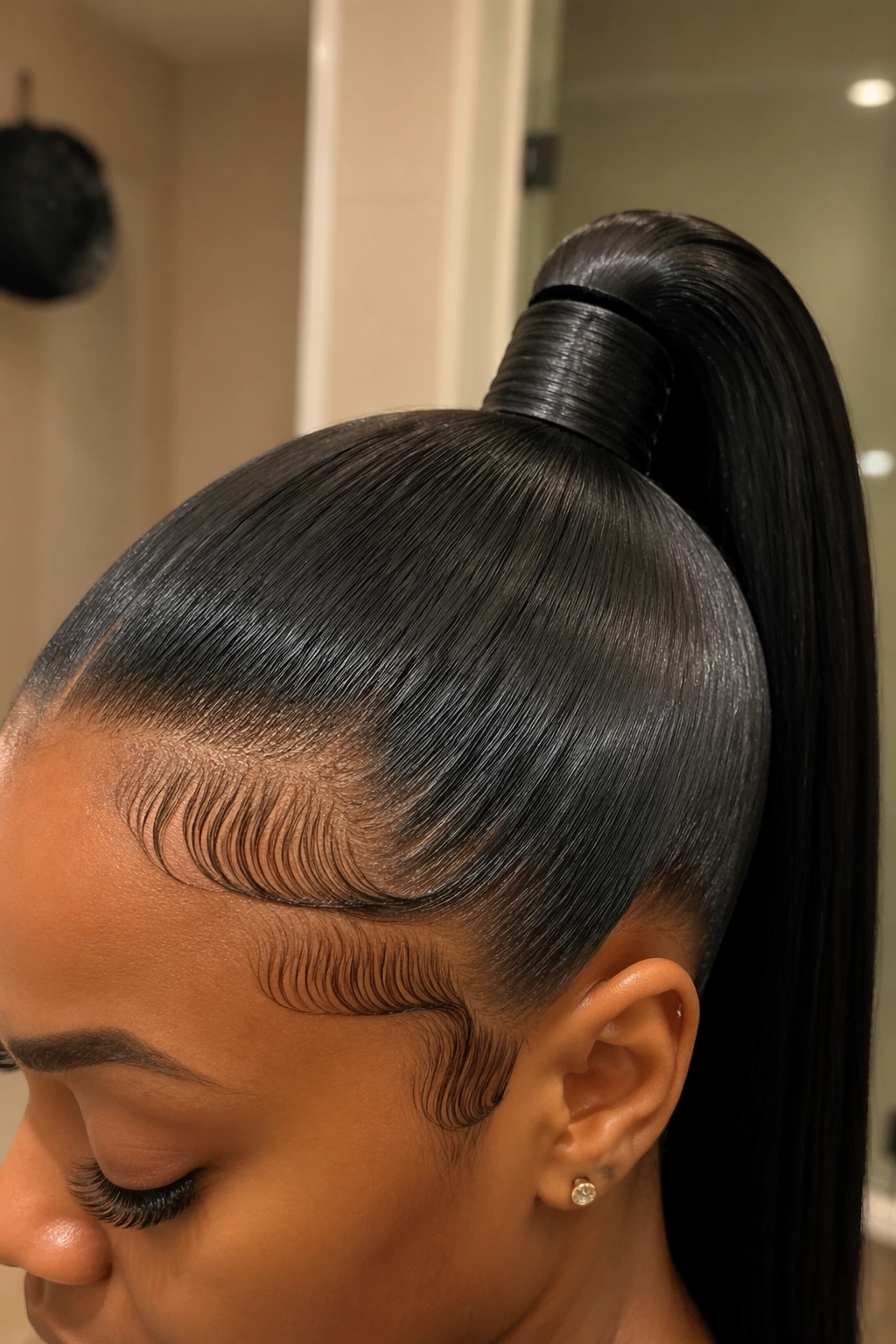
A zigzag part brings a little movement to a ponytail before the tail even starts. It breaks up the center line, hides some regrowth, and adds a playful edge without needing a full braid pattern.
What to Watch For
The zigzag should be shallow and even. If the points are too deep, the part starts looking jagged instead of clean. Use the tip of a rat-tail comb and keep the lines crisp with a small amount of gel or foam.
- Best on straightened or stretched hair
- Looks neat with a high or mid ponytail
- Works well when you want something less strict than a center part
- Needs a steady hand more than a lot of product
This is one of those styles that rewards patience. Rushed zigzags always show it.
26. Side Braid Into Ponytail
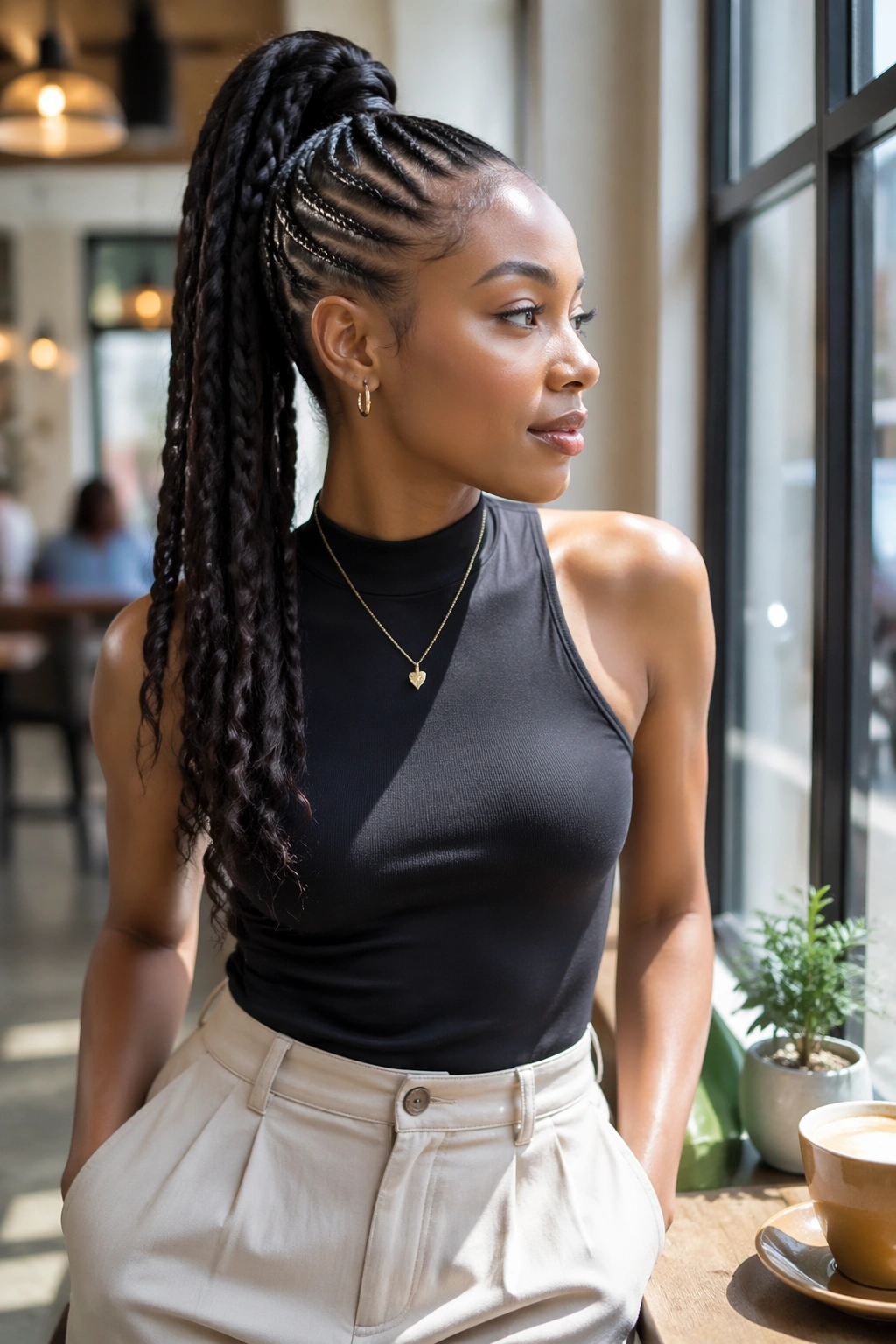
A side braid that feeds into a ponytail gives the style a little asymmetry, which keeps it from feeling too plain. Start the braid near one temple or along one side of the head, then sweep the rest of the hair into a ponytail at the back or just off-center.
It is a smart option when you want one side controlled and the other side free. The braid acts like a built-in detail, so the ponytail does not need extra accessories to feel finished.
This style works on natural hair, pressed hair, and extension hair. If the braid is thick, leave the tail simpler. If the braid is small, let the ponytail do more of the talking.
27. Voluminous Textured Ponytail
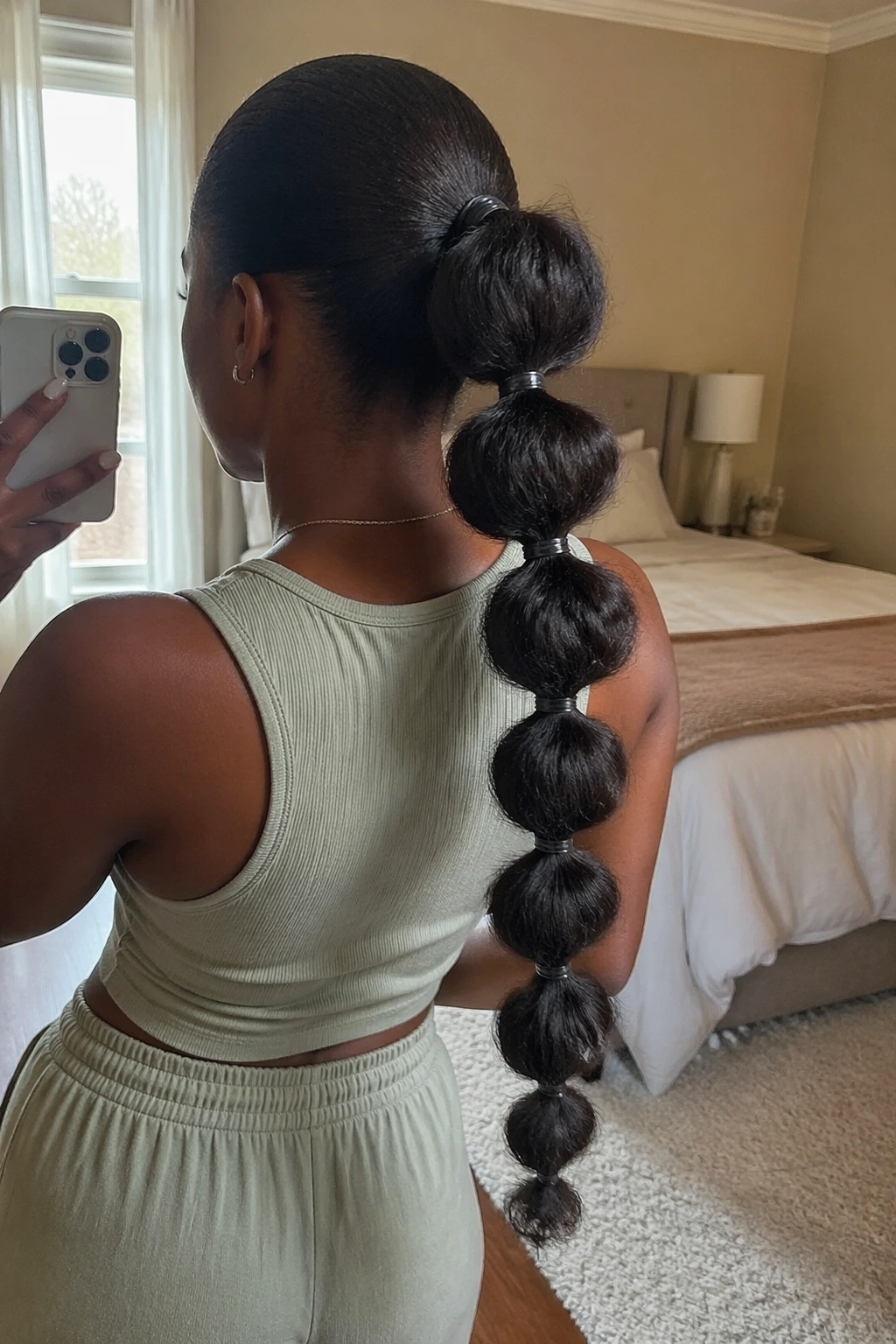
Big hair has its own logic. A voluminous textured ponytail keeps the root area tidy enough to hold, then lets the tail stay airy, full, and touchable instead of overly slicked down.
This style is especially good when you do not want to fight the texture. Stretch the hair lightly, gather it with a firm band, and lift the crown a little before securing it. A gentle backcomb at the root can help, but do not turn the hair into a knot. That only makes removal miserable later.
The best versions look soft from the front and full from the side. Not flat. Never flat.
28. Long Braid Ponytail With Beads
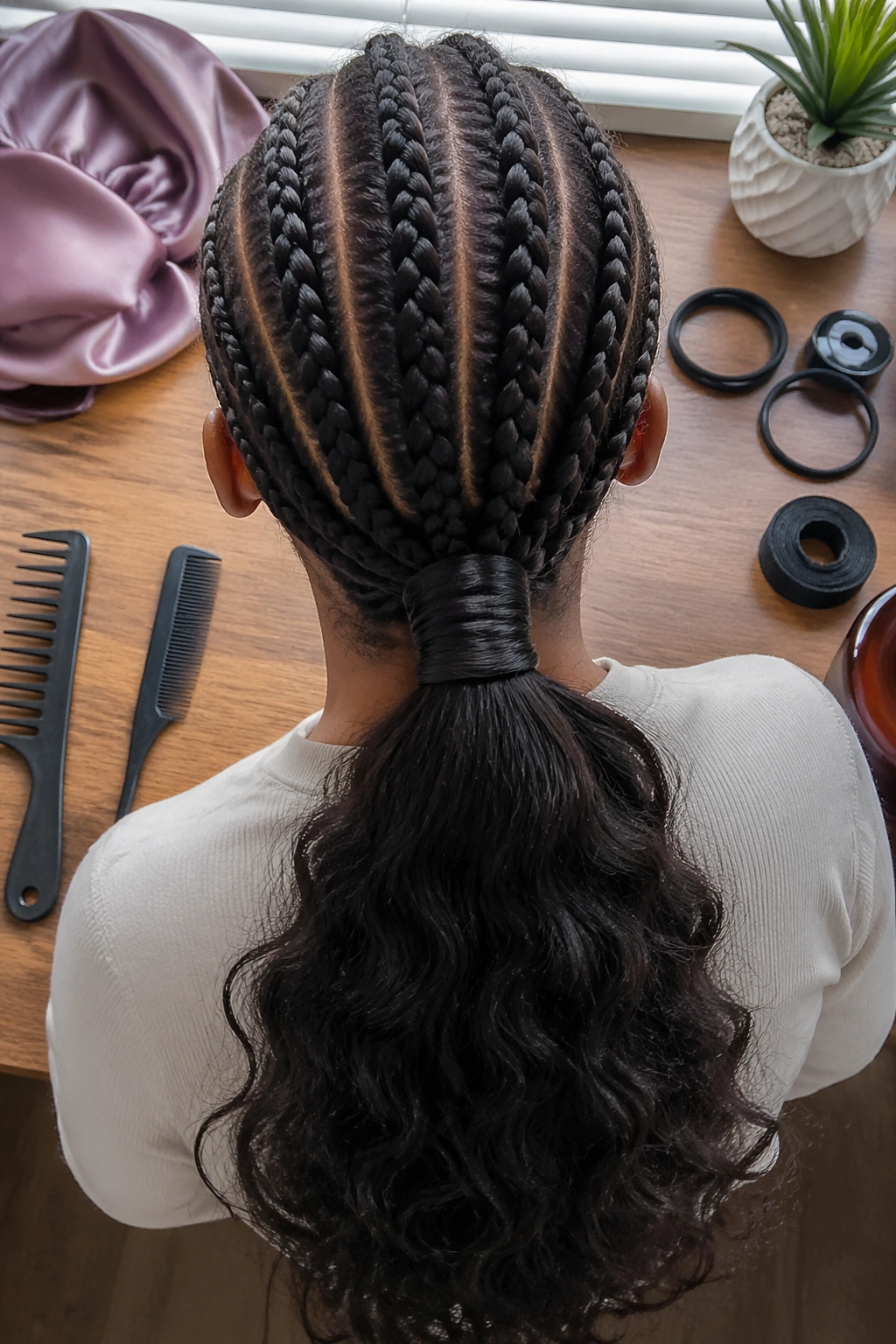
A long braid ponytail with beads brings motion and sound to the style. The braid gives the ponytail length, while the beads turn the ends into the focal point instead of an afterthought.
How to Place the Beads
Keep the bead placement deliberate. A few near the lower half of the braid are usually enough, especially if the braid is long. Heavy beads too close to the root can pull, so save the weight for the lower sections where the braid is already supported.
- Works well on single braids and multi-braid ponytails
- Beads should be secure enough to stay put, but not crammed on
- Gold, wood, and clear beads all read differently
- Pair the braid with a wrapped base for a cleaner finish
I like this style because it has movement even when the person standing still does not.
29. Twisted Crown Ponytail
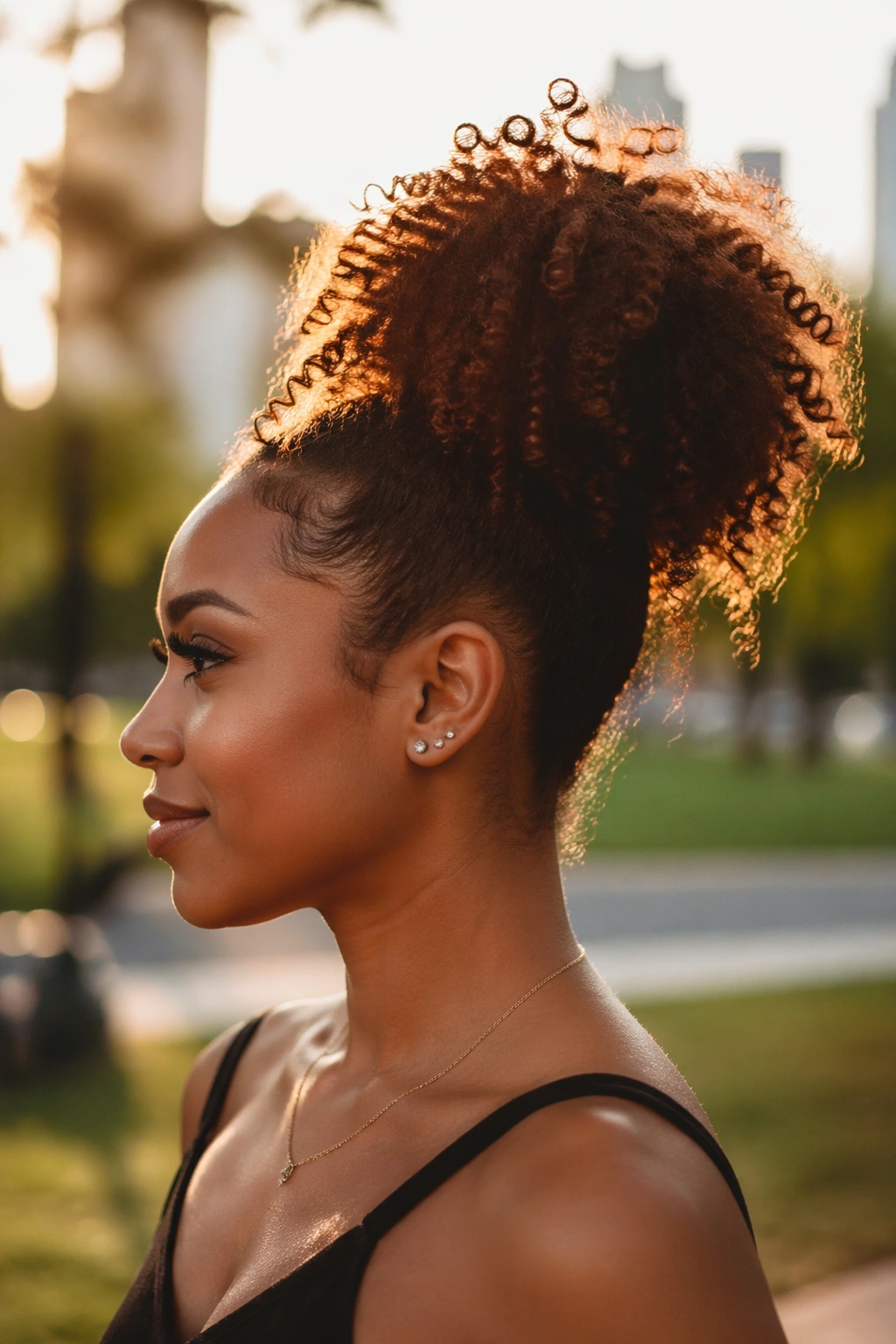
What makes a twisted crown ponytail so appealing is the way it controls the front while keeping the back loose. The twists sweep from the temples or hairline toward the ponytail, creating a crown-like frame that looks soft and tidy at once.
Flat twists usually sit closest to the head, which helps the style look smoother. Two-strand twists give a little more texture if you want the front to feel less rigid. Either way, the ponytail base should be secure and low-profile so the twists feel like part of the style, not a separate piece glued on top.
This is a good pick when you want the front to behave all day. Which, honestly, is most days.
30. Gold-Cuffed Rope-Twist Ponytail
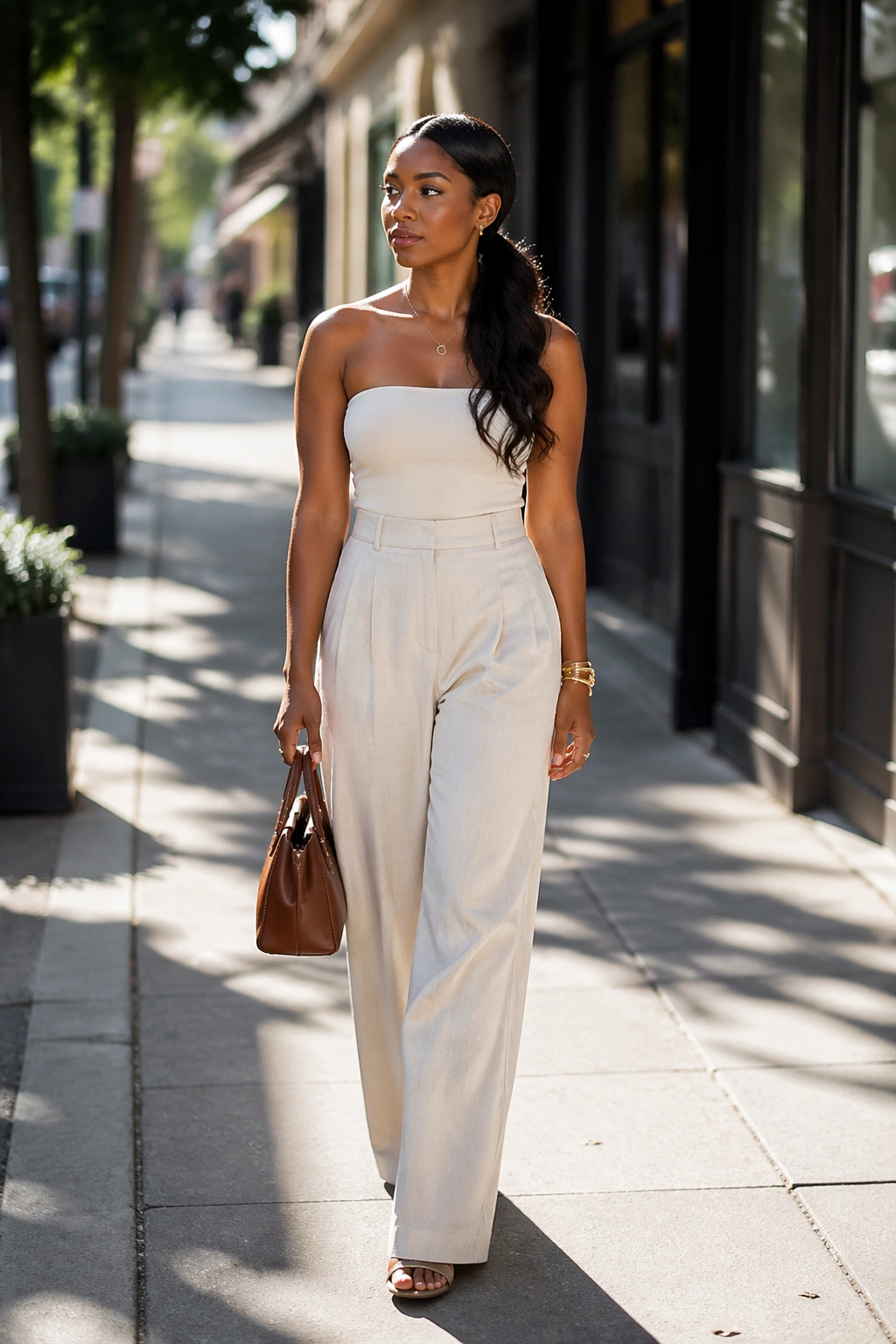
This one has presence without needing a dramatic shape. A rope-twist ponytail already gives you a clean line and a tidy finish; the gold cuffs just push it from everyday into special occasion territory.
The strongest versions keep the base simple and the decoration intentional. Too many cuffs crowd the twist and make it look busy. Two or three spaced along the length is usually enough, especially if the ponytail is long. The hair itself should still be the main event.
If the scalp feels pulled before you even leave the mirror, the style is too tight. A good ponytail should hold its shape, not punish you for wearing it.
