

A sleek double braided ponytail can rescue hair that wants to puff, slip, or frizz before lunch.
The style works because the braids act like rails. They keep the top section locked in place, while the ponytail at the back gives you movement instead of a helmet shape. A rattail comb, a soft brush, and a pea-sized amount of gel at the part make a bigger difference than most people think.
Clean does not have to mean severe. Center parts look sharp. Side parts feel softer. High ponytails feel sporty. Add cuffs, ribbon, or a wrapped elastic, and the same basic structure can look polished for work, a night out, or an event that needs your hair to behave for six straight hours.
The real trick is matching the braid pattern to your hair density and texture, because the version that sits flat on straight hair can look very different on thick curls or long extensions. Choose the shape that keeps the roots smooth, the part line crisp, and the ends controlled, and the rest gets easier.
1. Center-Part Dutch Braids Into a Low Ponytail
Middle parts can be unforgiving, which is exactly why this version works so well. The symmetry makes the whole style feel deliberate, and the Dutch braid ridge keeps the scalp section neat instead of fuzzy.
Why It Stays Neat
Dutch braids sit on top of the hair instead of disappearing into it, so every section reads clearly. That little bit of height gives the style structure without making it puffy, which is a nice trade when you want a sleek double braided ponytail that still shows off the braid work.
A low ponytail at the nape keeps the finish tidy. It also stops the top from tugging upward, which matters if your hair is medium length or layered.
- Best on straightened, stretched, or naturally smooth hair
- Cleanest with a razor-sharp center part
- Looks especially crisp with a matte or shine-free edge product
- Works with a small wrapped strand instead of a visible elastic
Tip: Keep the first 2 inches at the scalp tight, then relax the braid slightly after that. Loose ends are fine. Loose roots are not.
2. Sleek Side-Part French Braids That Land at the Nape
A side part softens the face without messing up the tidy finish. That’s the appeal here: it looks dressed up, but not stiff.
French braids are a little flatter than Dutch braids, which makes them a good choice when you want the scalp to stay smooth. The braid hugs the head, then meets at the nape where the ponytail can sit low and controlled. On layered hair, this shape is forgiving in a way a center part often isn’t.
The key is part placement. A deep side part gives the style more character, while a shallow side part keeps it balanced. If your hair likes to split at the temple, use a small amount of pomade there and brush it down before you start braiding. Clean lines make the whole look.
3. High Boxer Braids With a Tight Crown Pony
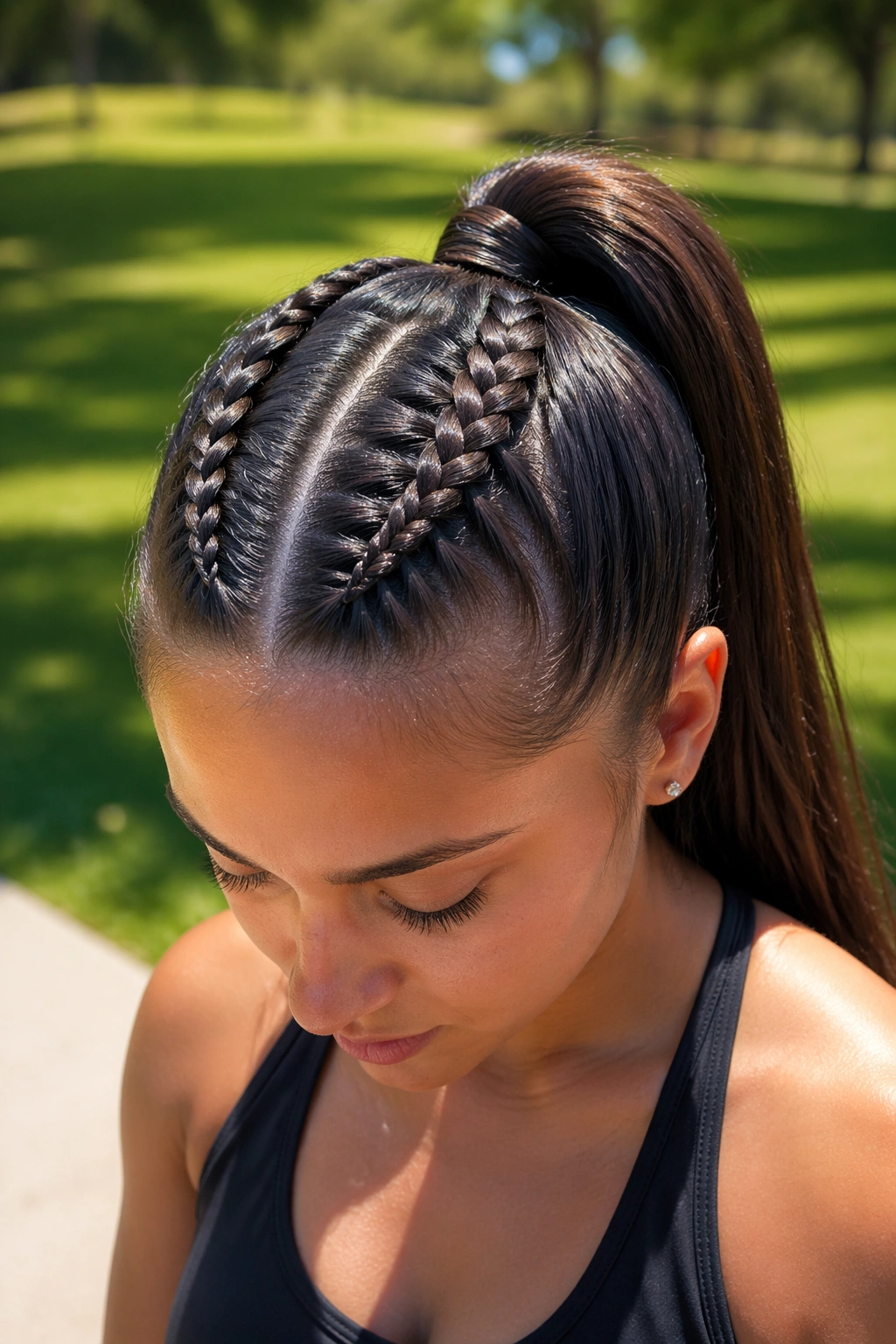
Why does this version read so clean? Because boxer braids pull the hair backward in two firm tracks and leave almost nothing floating around the crown. That alone makes the ponytail feel sharp.
How to Wear It
This is the style I’d pick for long days, humid weather, or any setting where hair has to stay put. The high ponytail adds lift at the back, while the tight braids keep the front from collapsing into your face. It has a sporty edge, but the finish can still look polished if you smooth the part lines well.
Use a fine-tooth comb and a brush with a little grip. If your hair is slippery, a touch of styling cream at the roots helps the braids hold. Do not overdo the product or the whole thing turns heavy and dull. Two small elastics, one on each braid, are enough before you gather the pony.
4. Cornrow Double Braids Into a Clean Mid Ponytail
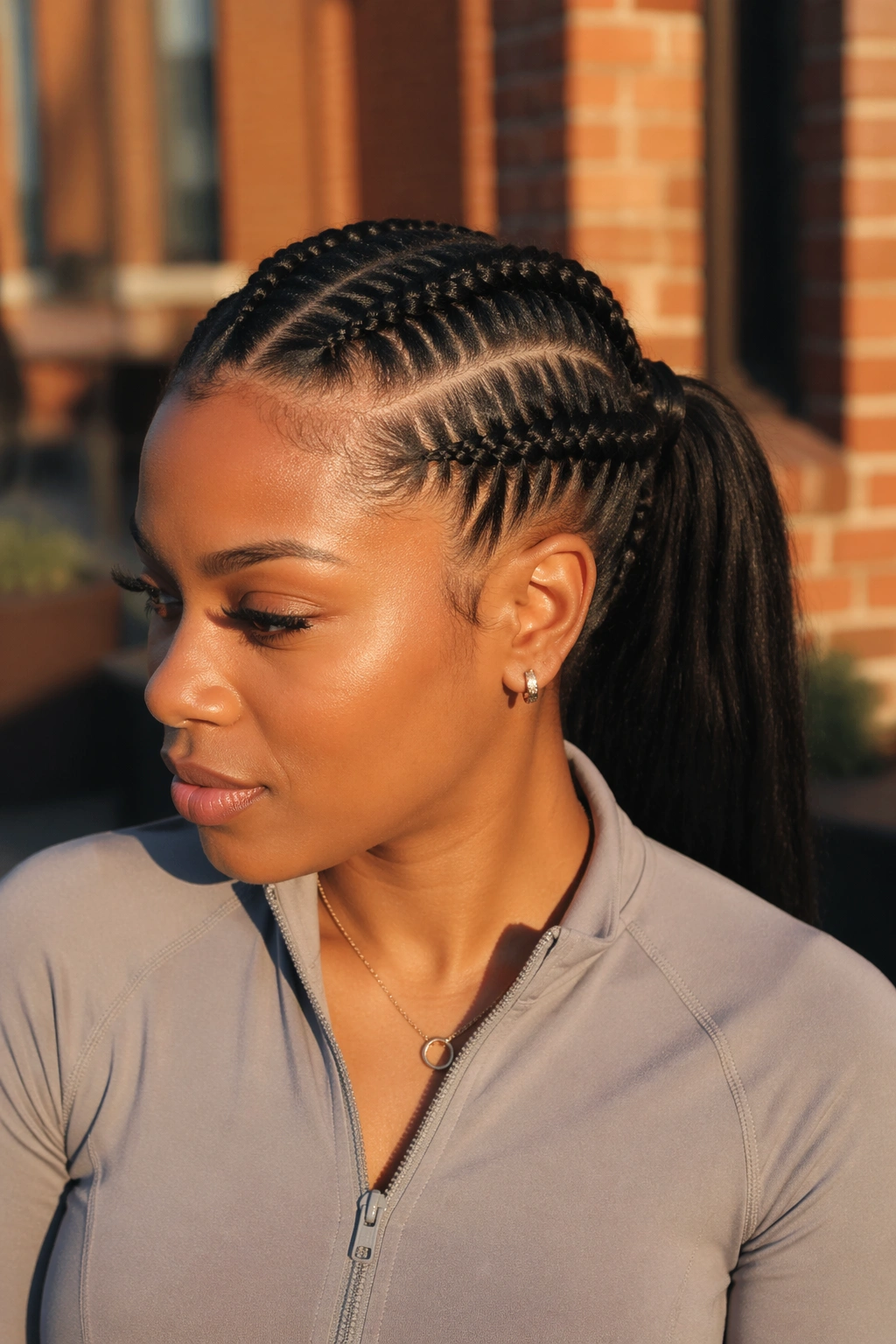
If your hair is thick enough to puff at the roots by lunchtime, cornrows are your friend. They sit flat, they stay close to the scalp, and they give the ponytail a strong anchor point.
The best thing about this style is the balance. Cornrows are precise, so the mid ponytail doesn’t need a lot of extra decoration to look finished. A small wrap around the base is often enough. On natural hair, this can be a very protective option too, because the tension is spread out in neat, narrow rows instead of dumped into one spot.
- Use edge control sparingly along the part lines
- Keep both braids the same width from front to back
- Tie the pony at the middle of the head, not too high
- Finish with shine spray, not a heavy oil
That last point matters. Too much oil makes the braids look stringy instead of clean.
5. Rope Braided Low Ponytail With a Glassy Finish
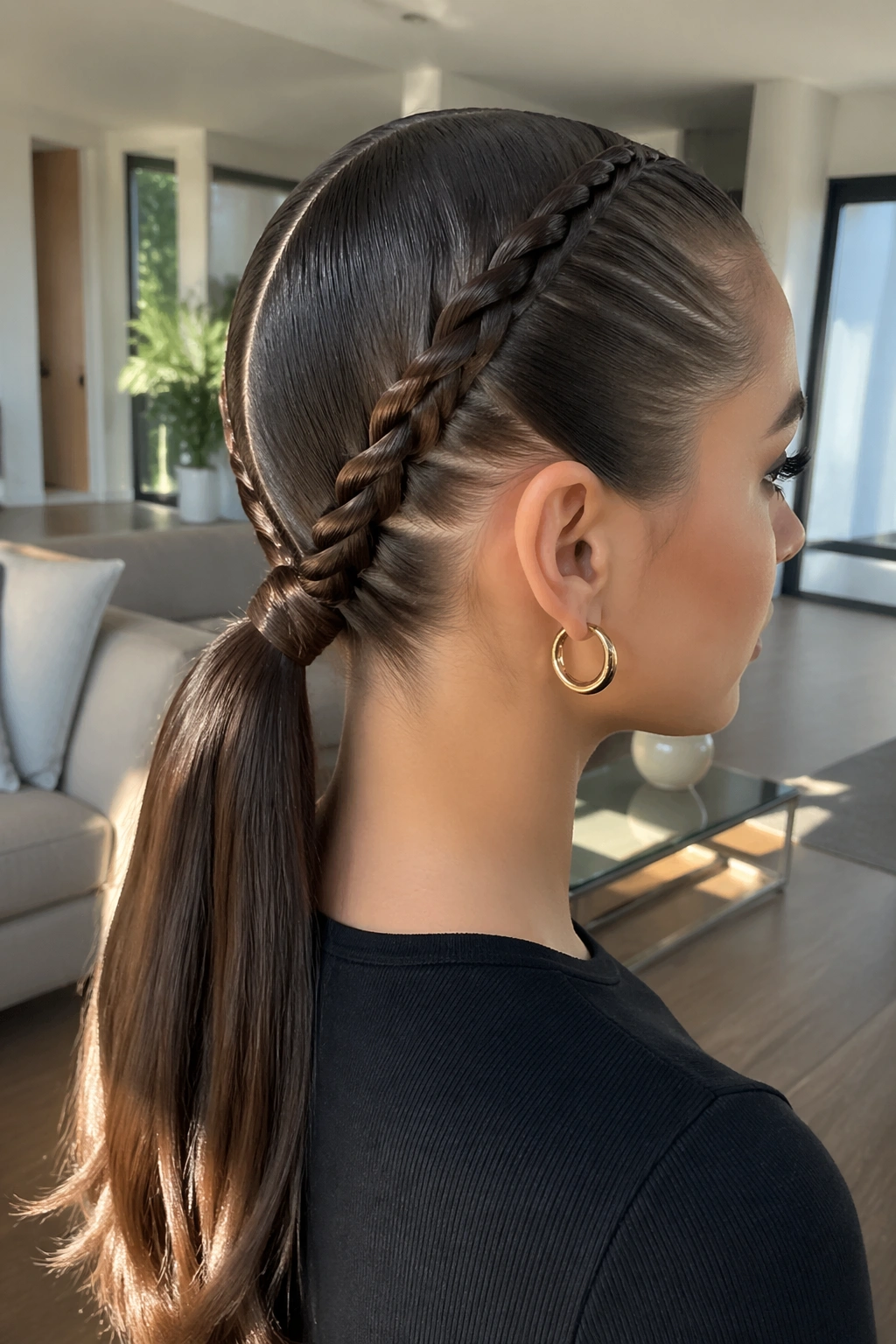
Rope braids are underrated. They look elegant, they’re fast once you get the hand motion down, and they sit very neatly when the hair has been brushed smooth first.
This version works especially well on hair that has been blown out or straightened, because the two rope sections lie flat and reflect light nicely. The low ponytail keeps the style compact, so the braids don’t swell or split apart near the crown. I like this one when the outfit is doing most of the talking and the hair needs to behave quietly.
A light serum on the lengths helps, but keep it off the roots. The front should feel smooth, not slippery. If your hair is fine, use a little mousse at the base before twisting so the sections don’t unravel.
6. Fishtail Double Braids With a Polished Ribbon Tie
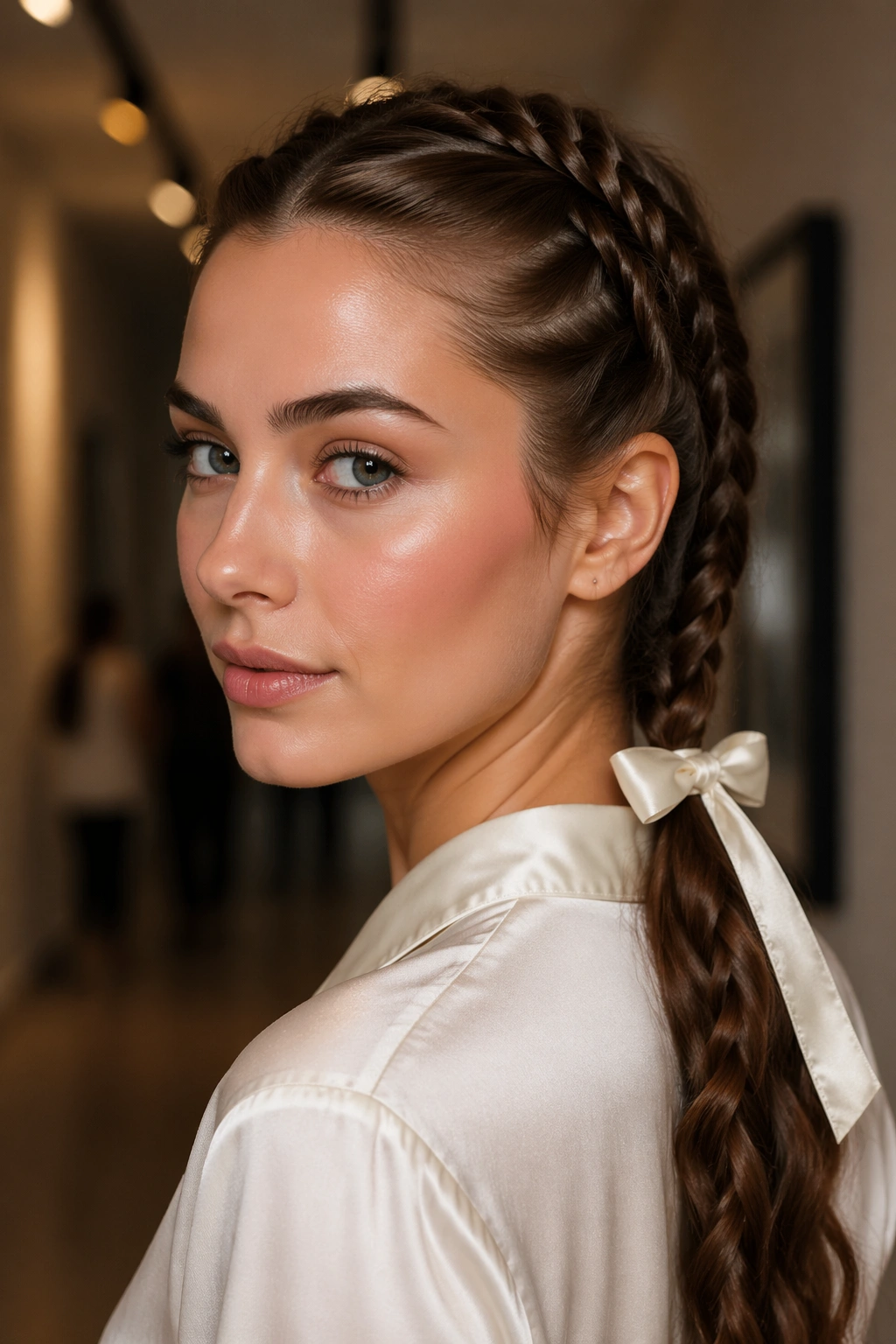
Unlike a standard three-strand braid, a fishtail gives you finer detail without a lot of bulk. That’s why it works so well for a neat ponytail look.
The braid pattern itself is the draw here. Fishtails look intricate from a distance and even better up close, especially when the hair is long enough for the texture to show. A ribbon tie at the base keeps the ponytail from feeling too hard or too athletic. Satin reads dressier. Grosgrain feels more structured. Pick based on the outfit, not just the hair.
This style is a nice fit if your hair is medium to long and tends to hold a shape well once braided. It can look a little overworked if you use too many accessories, though. One ribbon is enough. Two starts to feel fussy.
7. Pull-Through Double Braids for Thick Hair
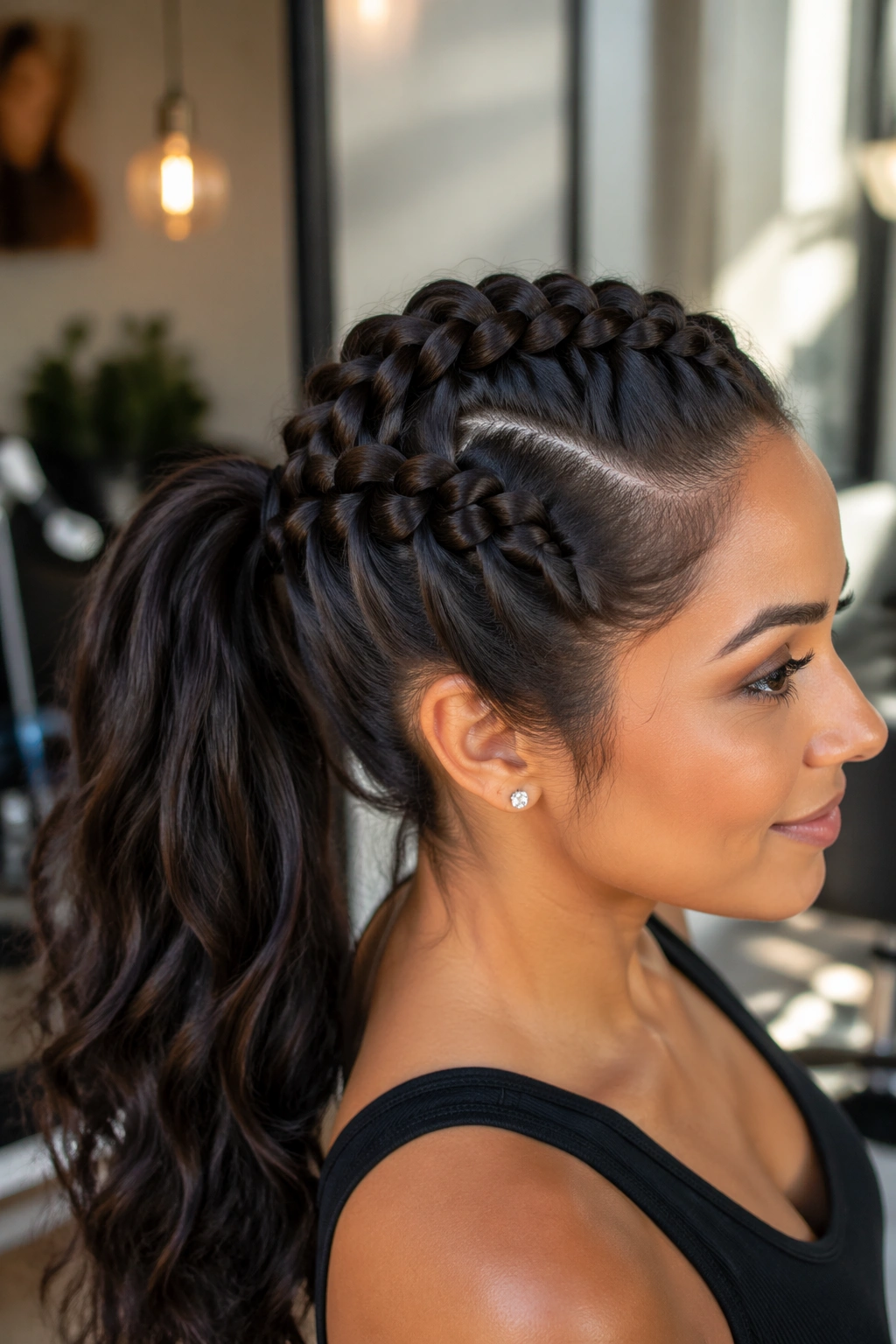
Pull-through braids are not technically braids, and I think that’s part of why they’re so useful. They give the visual of a full, sculpted braid without asking thick hair to do a lot of tight weaving.
Why Pull-Through Works
Each section gets stacked and looped, which keeps the shape tidy and the width even. For dense hair, that matters. Traditional braids can compress too much and make the tail look smaller than the root. Pull-through braids stay bold, but still clean.
How to Style It
- Use clear elastics every 1.5 to 2 inches
- Smooth each section before tying the next one
- Keep the ponytail base low or mid-height
- Hide the final elastic with a wrapped strand
Best tip: If your hair has a lot of volume, flatten each loop with your fingers before moving on. A little control at every step beats fighting frizz at the end.
8. Lace Braids Hugging the Hairline Into a Sleek Pony
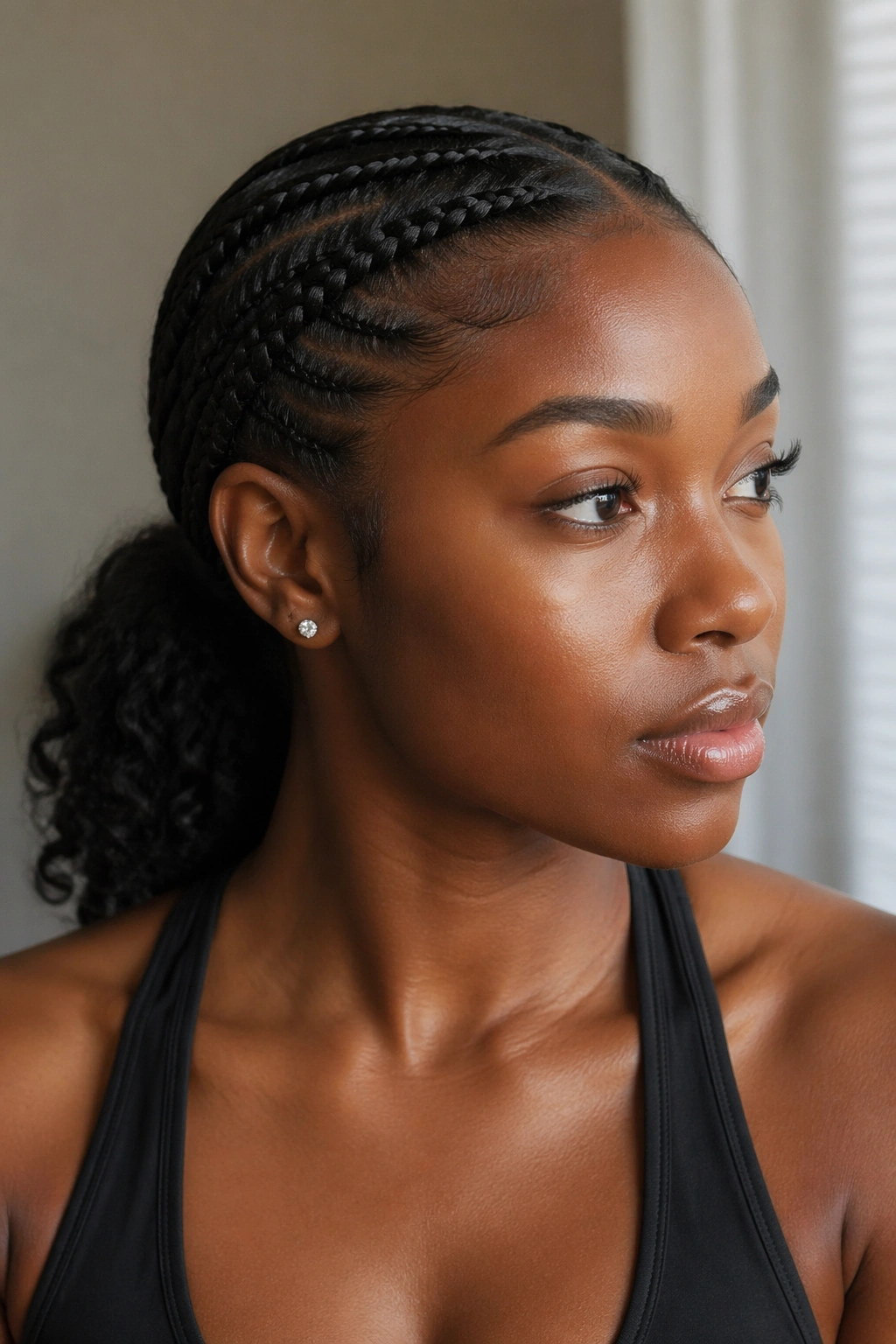
Lace braids are the answer when you want the front of the hair to stay controlled but not look boxed in. They sweep along the hairline and feed in hair as they go, which creates a smooth, neat frame.
This style is especially kind to grown-out bangs or shorter front layers. Instead of forcing those pieces into the ponytail and hoping for the best, the braid captures them. That means fewer flyaways near the temples and less redoing halfway through the day. The ponytail at the back can stay low for elegance or slightly higher if you want a sharper line.
Keep the braid width even on both sides. If one side is thicker, the shape starts to look off fast. A small amount of gel along the front edge helps, but the braid itself should do most of the work.
9. Diagonal Double Braids Into a Side Ponytail
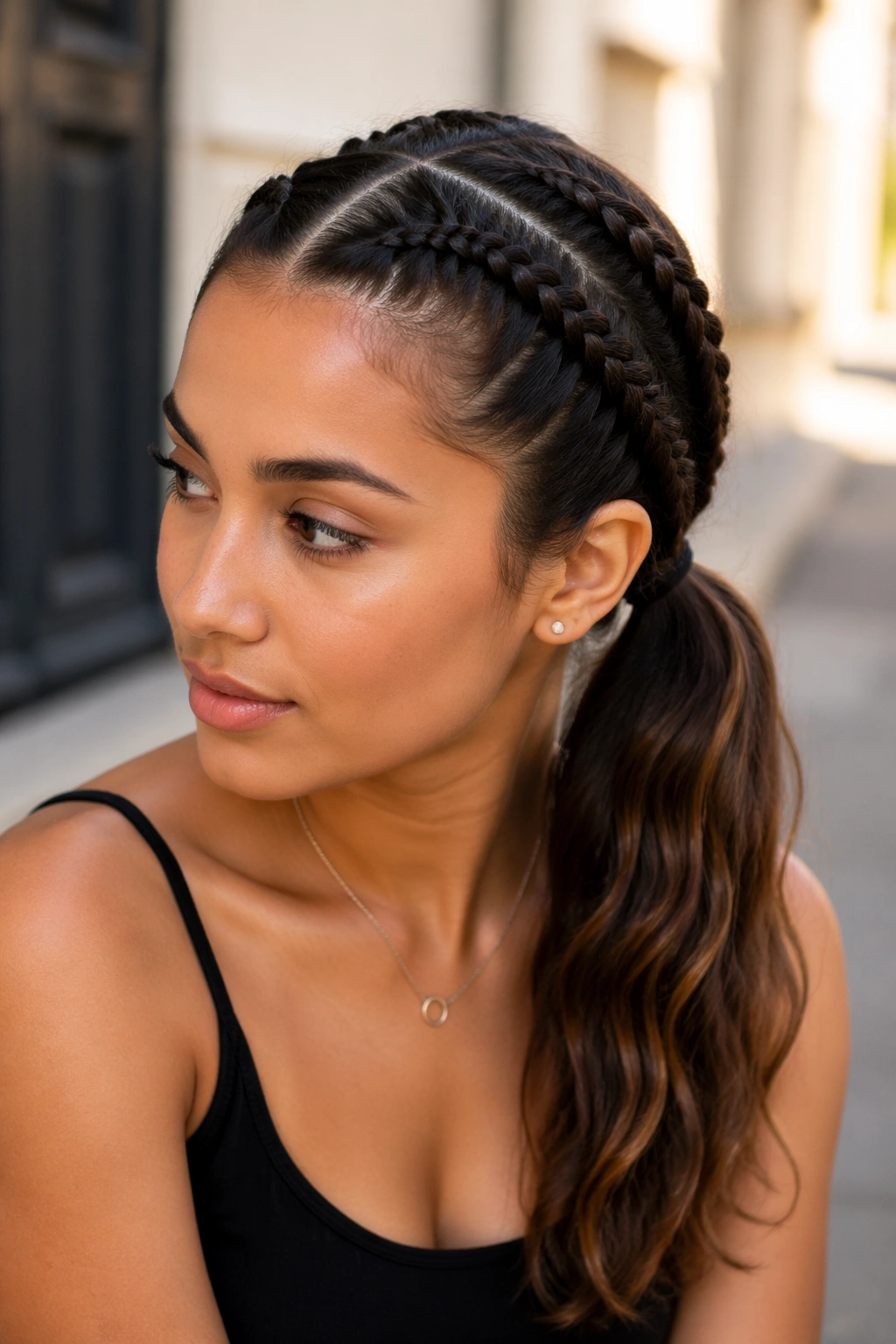
Why do diagonal parts look cleaner on some heads than straight ones? Because they break up the width of the crown and make the hair fall in a more natural sweep.
How to Use It
A diagonal part lets the braids travel toward one shoulder instead of meeting straight down the middle. That changes the whole mood. The style feels a little softer, a little less rigid, and still very tidy. It also helps if your face shape looks better with offset balance rather than strict symmetry.
The side ponytail should sit low enough that the braids can feed into it without pulling. Too high, and the diagonal line loses its shape. Too low, and the pony starts to droop. Somewhere around the ear-to-nape line usually works best.
Watch for this: keep the diagonal part clean all the way back. A wobbly part line is the fastest way to make the style look unfinished.
10. Braided Base Wrap With Twin Side Braids
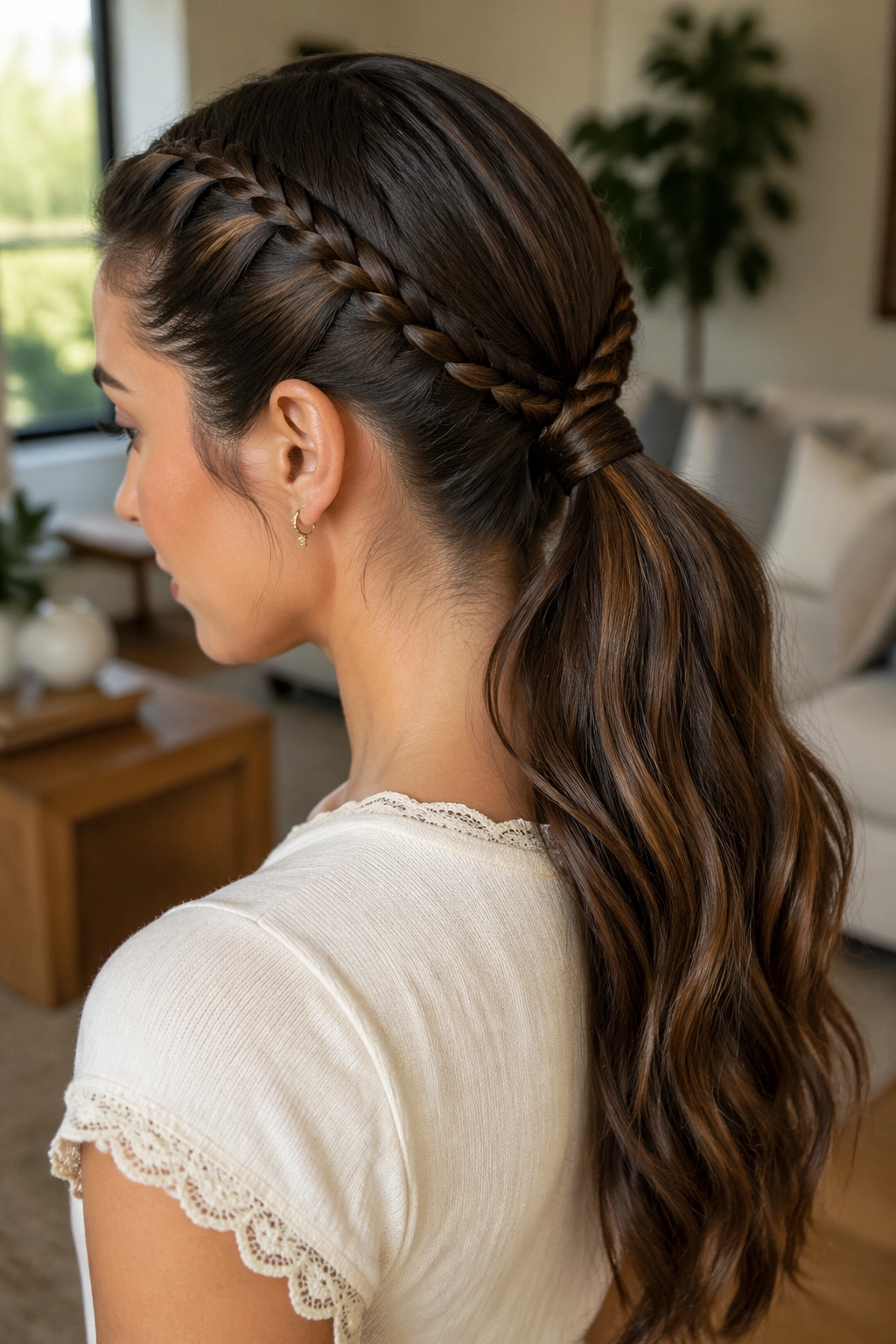
This is the version I reach for when the ponytail itself needs to look finished, not just the braids at the front. The wrapped base hides the boring part, which is often where neat styles fall apart.
Two slim braids come from either side of the head and meet at the back. Then one braid—or a small strand from the ponytail—wraps the elastic until you cannot see the join anymore. It sounds fussy, but it really isn’t. Once the base is covered, the whole style looks more expensive and less like an afterthought.
- Keep the side braids narrow so they don’t dominate the style
- Use a bobby pin under the wrap to lock it down
- Choose a hair match elastic if you skip the wrap
- Smooth the ponytail tail with a light cream or serum
A clean base does more than decorative accessories ever will.
11. Twin Dutch Braids Pulled Into a High Ponytail
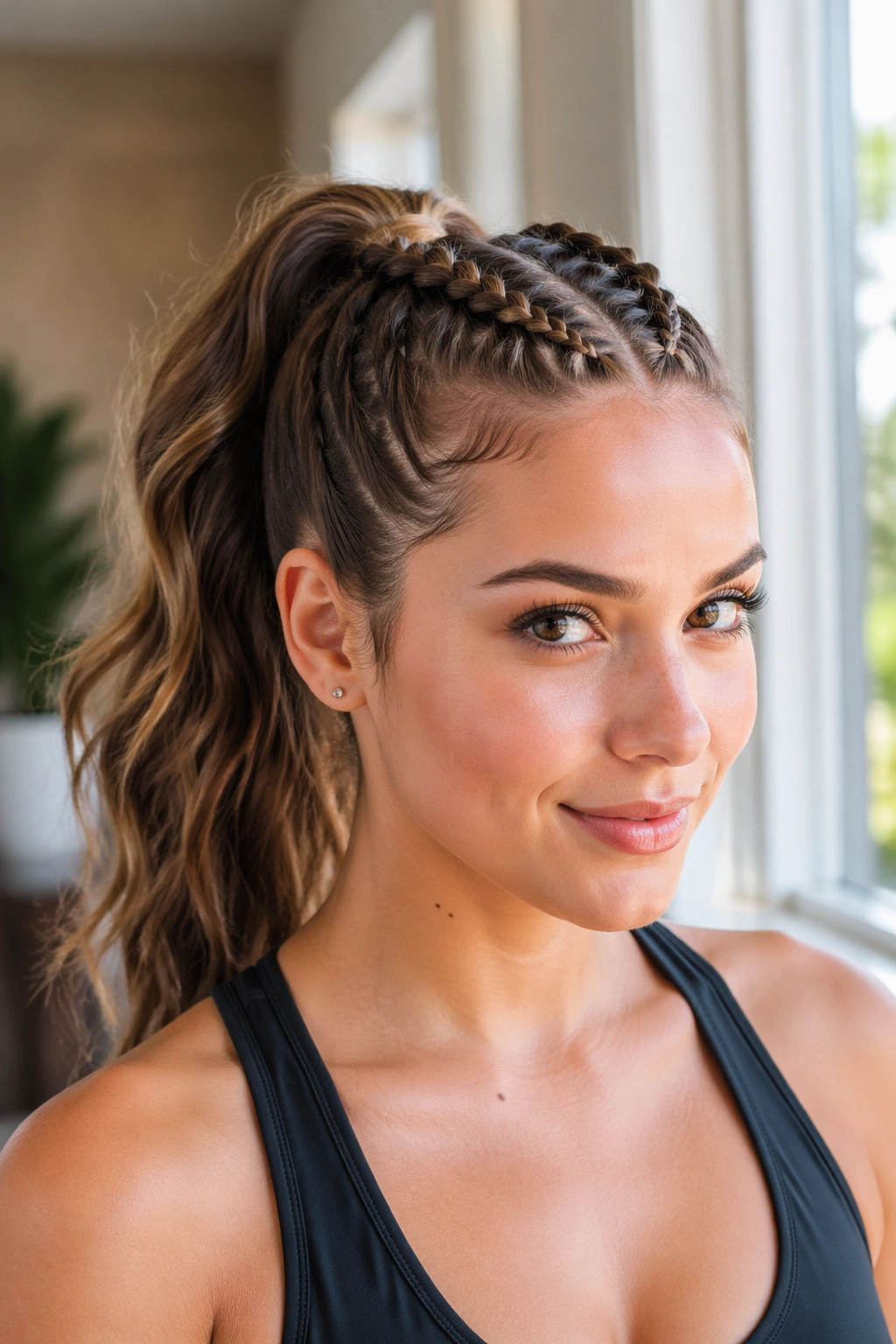
A high ponytail changes the energy immediately. It lifts the face, opens the neck, and makes the double braids look sharper from the front.
The Dutch braid ridge is what gives this version its shape. Because the braids stand slightly above the scalp, they create a strong line leading into the ponytail. That line is what makes the style feel intentional instead of slapped together. It’s also a good move for long hair that tends to collapse at the crown; the height gives it somewhere to go.
This is one of those styles that looks best when the base is smoother than the length. Use a brush and a little styling cream at the roots, then leave the ponytail itself a bit softer. If the ends are layered, tuck the shortest pieces under the elastic or curl them lightly so they don’t stick out like a small argument.
12. Double Flat Twists for Natural Hair
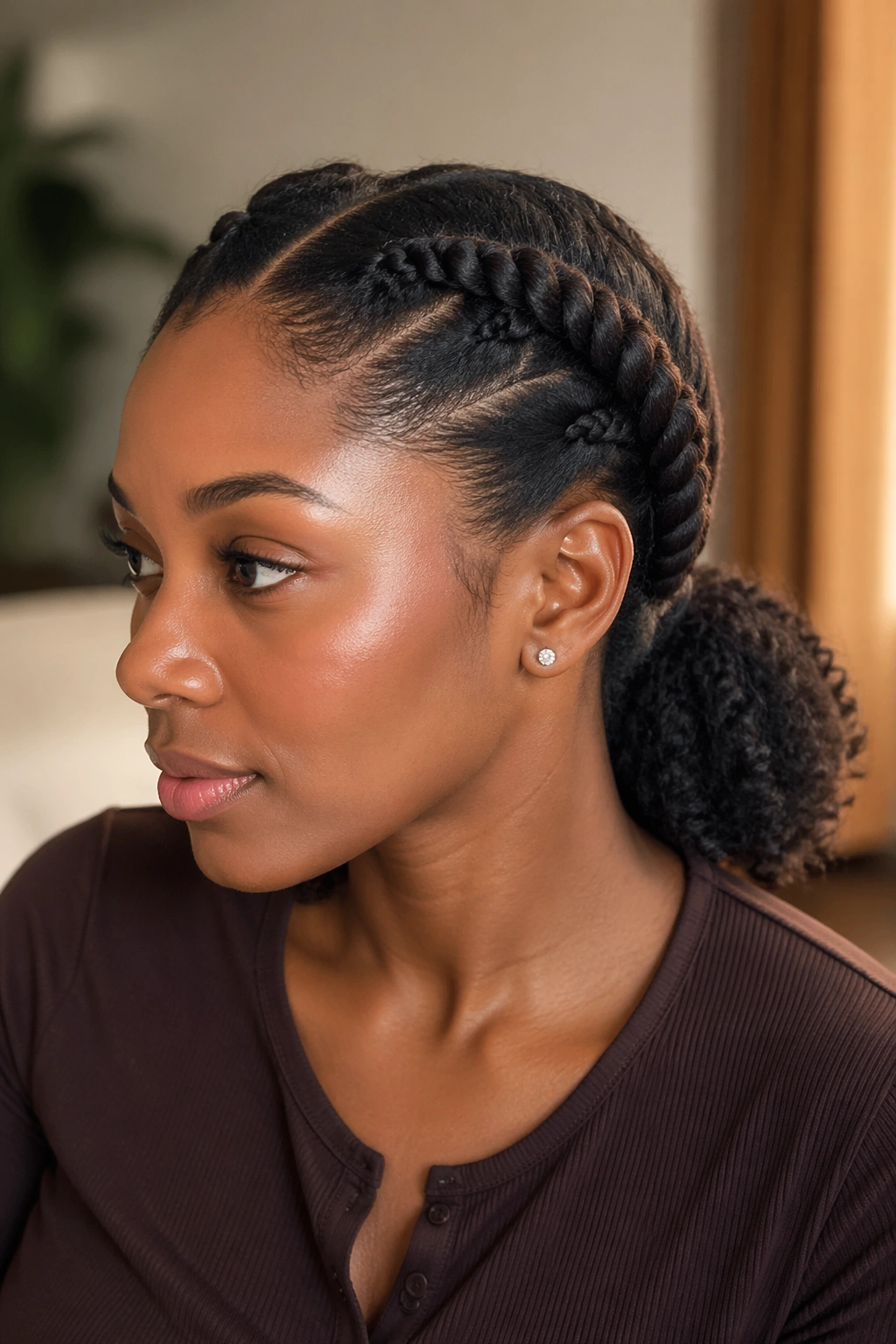
Flat twists are cleaner than many people give them credit for. On natural hair, they can sit closer to the scalp than three-strand braids, and that makes the whole ponytail feel more controlled.
The shape matters here. Flat twists lie neatly against textured hair without needing the same amount of manipulation as tight braids. That’s useful if your hair is prone to shrinking or if you want a style that stays smooth overnight under a scarf. A low ponytail keeps the ends gathered and tidy, while a mid pony can show off more of the twist pattern.
A twisting cream or leave-in with some slip helps. You want the hair to glide as you twist, not snag and puff. If your roots are especially soft, a tiny bit of gel at the part line keeps the sections crisp.
13. Zigzag Part Double Braids Into a Low Ponytail
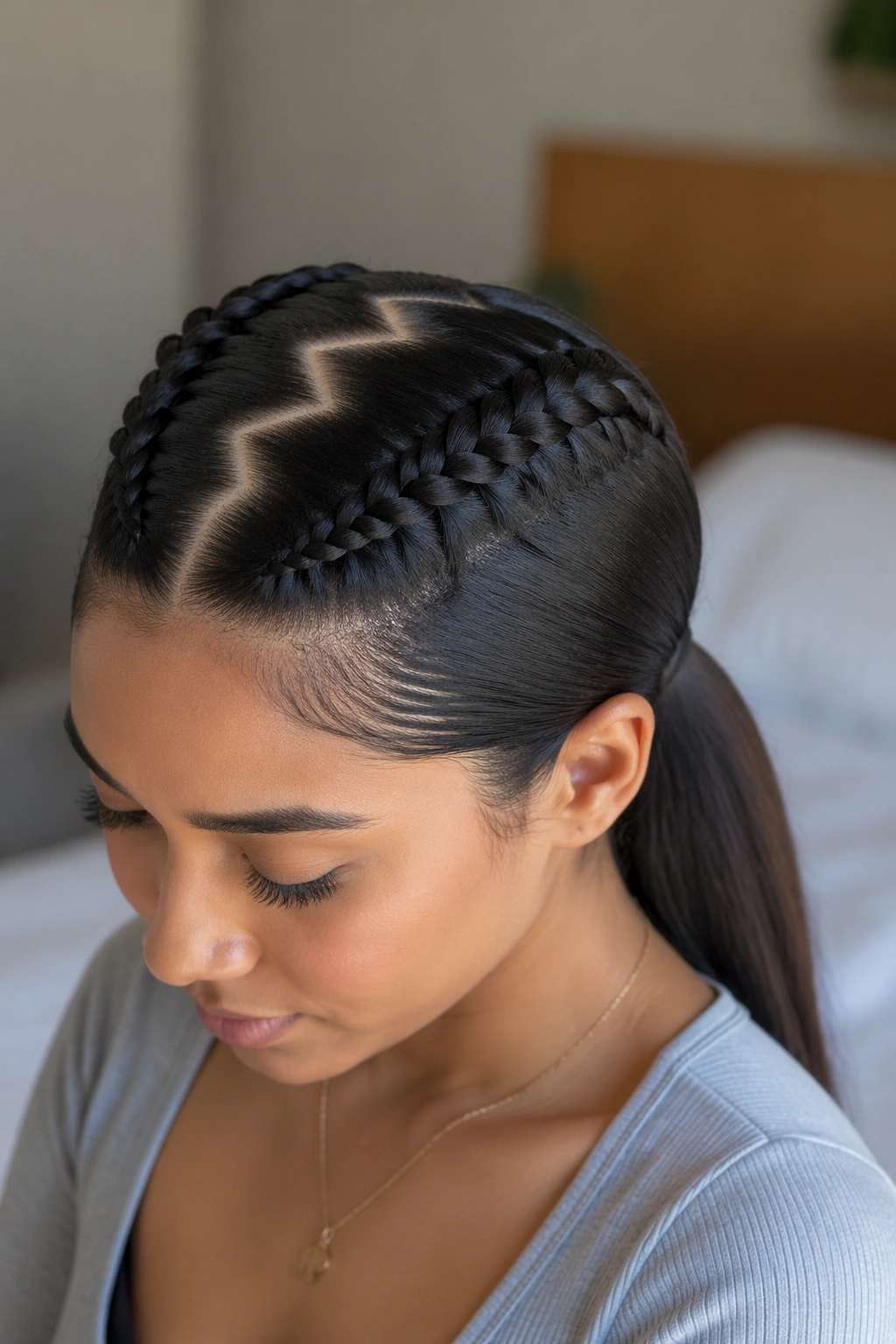
A zigzag part adds detail before you even reach the braids. It breaks up the scalp line just enough to feel deliberate, but not so much that the style starts to look busy.
Why the Part Matters
The zigzag pattern is useful when you want a sleek double braided ponytail with a little personality. It catches the eye right away, yet the rest of the style stays controlled. On straight or stretched hair, the part line holds beautifully. On thicker hair, it adds some visual movement without asking you to change the braid pattern itself.
What to Keep in Mind
- Use the tip of a rattail comb, not a blunt one
- Make each turn of the zigzag small and even
- Keep the two braids close in width
- Sit the pony low so the part pattern remains visible
My opinion: small zigzags look cleaner than big dramatic ones. Big ones can feel cute. Small ones feel sharp.
14. Braided Crown Sides Into a Mid Ponytail
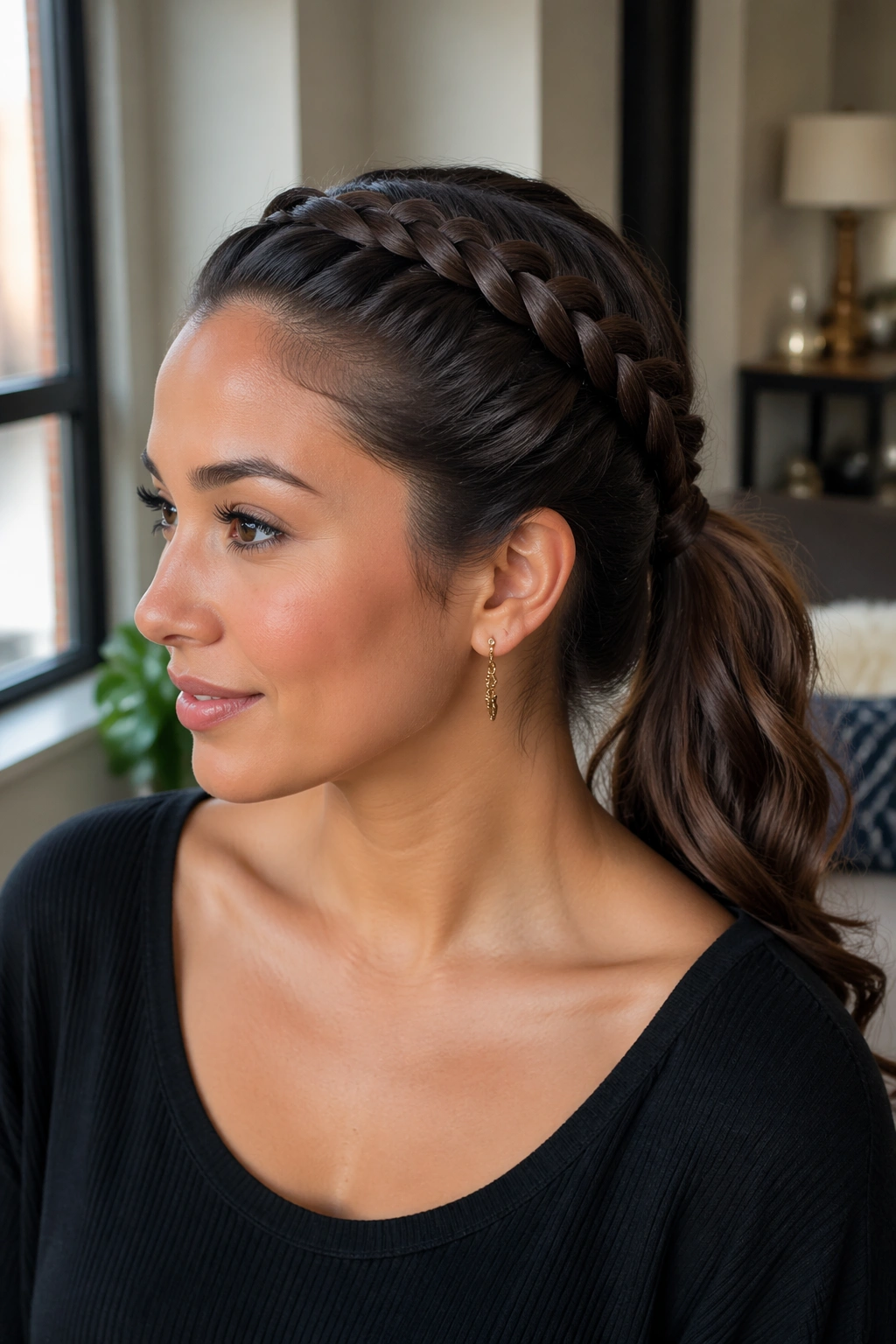
This one is all about the frame around the face. The braids sweep along the crown, then tuck into a mid ponytail that sits neatly between sporty and formal.
What makes it work is the contrast. The top stays smooth, the sides get texture, and the ponytail itself remains simple. That means the style can handle a busy outfit or strong makeup without fighting for attention. It’s also a good choice if you have layers near the front, because the crown braids help pin them down.
A mid ponytail gives you enough height for shape without pushing the style into cheerleader territory. That sounds silly, but you know the look I mean. Mid-height is the sweet spot when you want clean lines and a little softness at the temples.
15. Four-Strand Double Braids With a Straight Tail
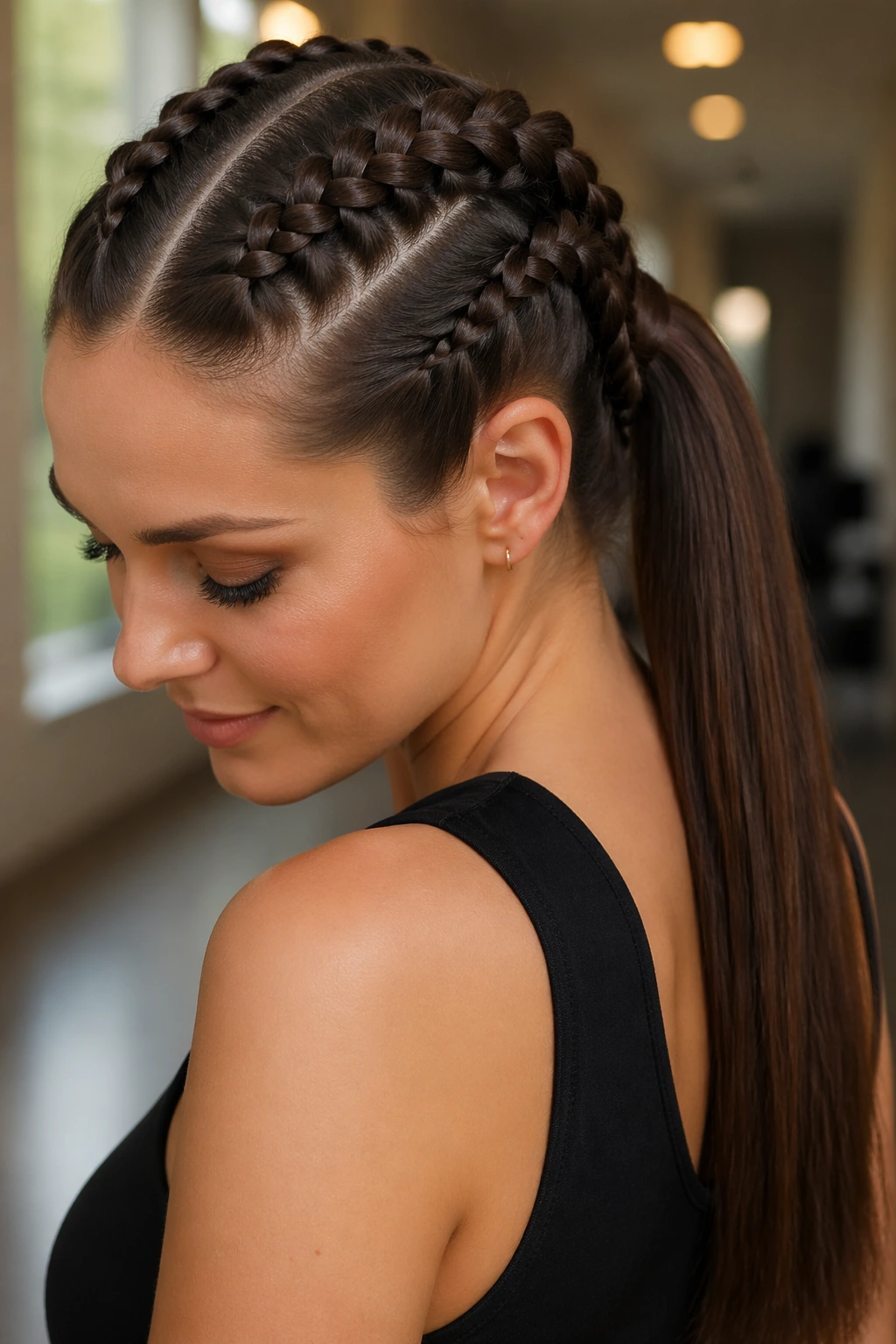
Why bother with four strands when three will do? Because the added strand gives the braid a flatter, more woven look that reads polished fast.
How to Wear It
Four-strand braids are a little more detailed and a little more demanding, so they suit hair that has enough length to show the pattern. The payoff is worth it. The braid texture looks orderly, and the resulting ponytail can stay sleek without feeling plain. I like this one for long straight hair or extensions, where the tail can hang cleanly and not get swallowed by the braid volume.
If you want the style to stay neat, keep the tension even from top to bottom. Uneven pressure makes the braid twist. A straight tail works best here because curls can distract from the braid detail, unless that’s the point. If it is, go for it.
16. Mini Feed-In Braids Into a Sleek Ponytail
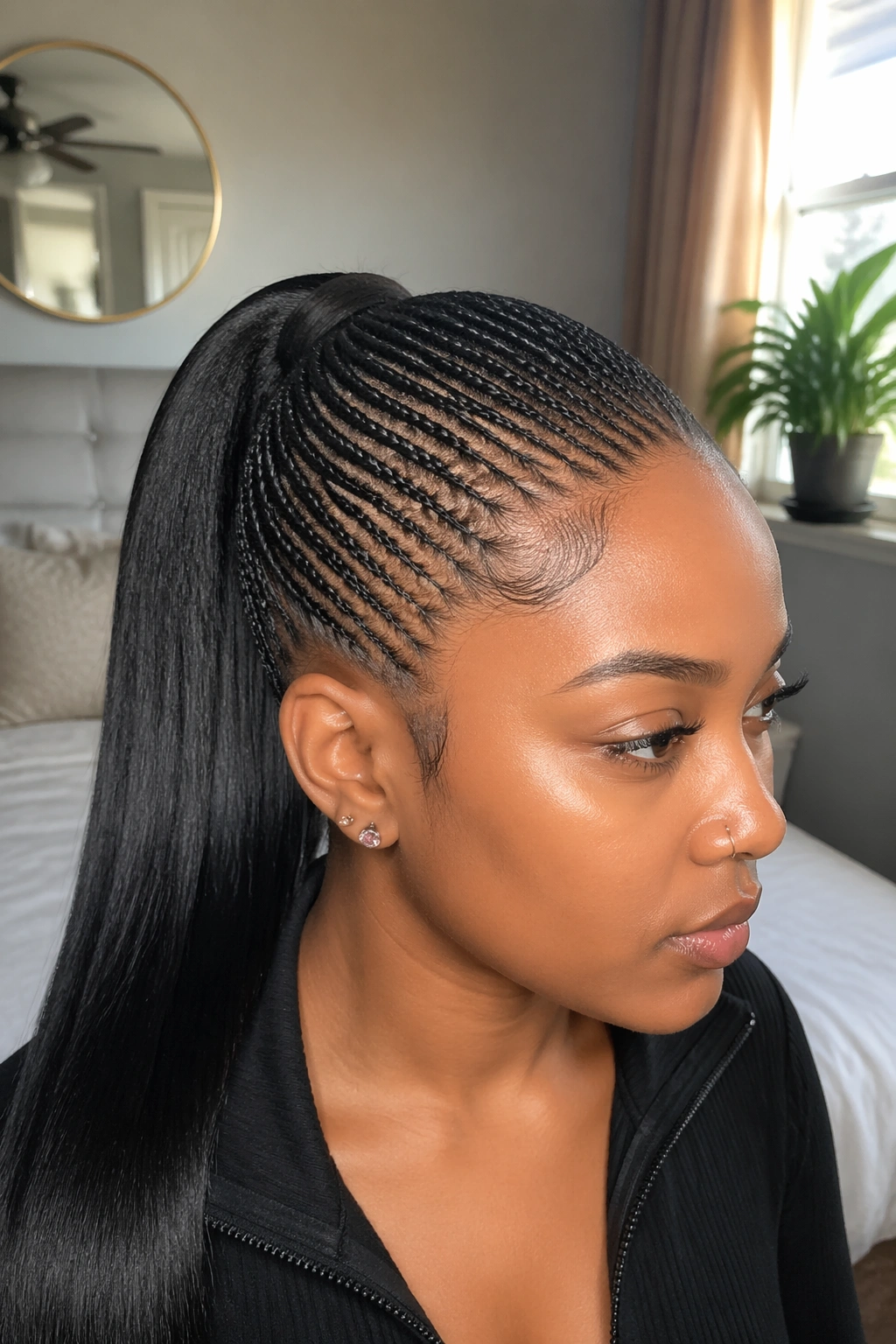
Mini feed-in braids are for the person who wants the front to stay put and the finish to look precise. They start tiny at the hairline, then build gradually, which makes the roots look tidy instead of bulky.
The gradual build is the whole appeal. You never get that sudden lump where the braid begins. Instead, the shape eases into itself, which gives the ponytail a smooth base. This is a strong choice for edges that tend to lift or for hairlines that need a softer transition from scalp to braid.
- Start with very small sections at the hairline
- Add hair evenly as you move back
- Keep the ponytail base low or mid-height
- Use a light finishing mist, not a heavy spray
A style like this can look intricate, but the main job is neatness. Precision matters more than volume.
17. Double Braids With a Bubble-Length Ponytail
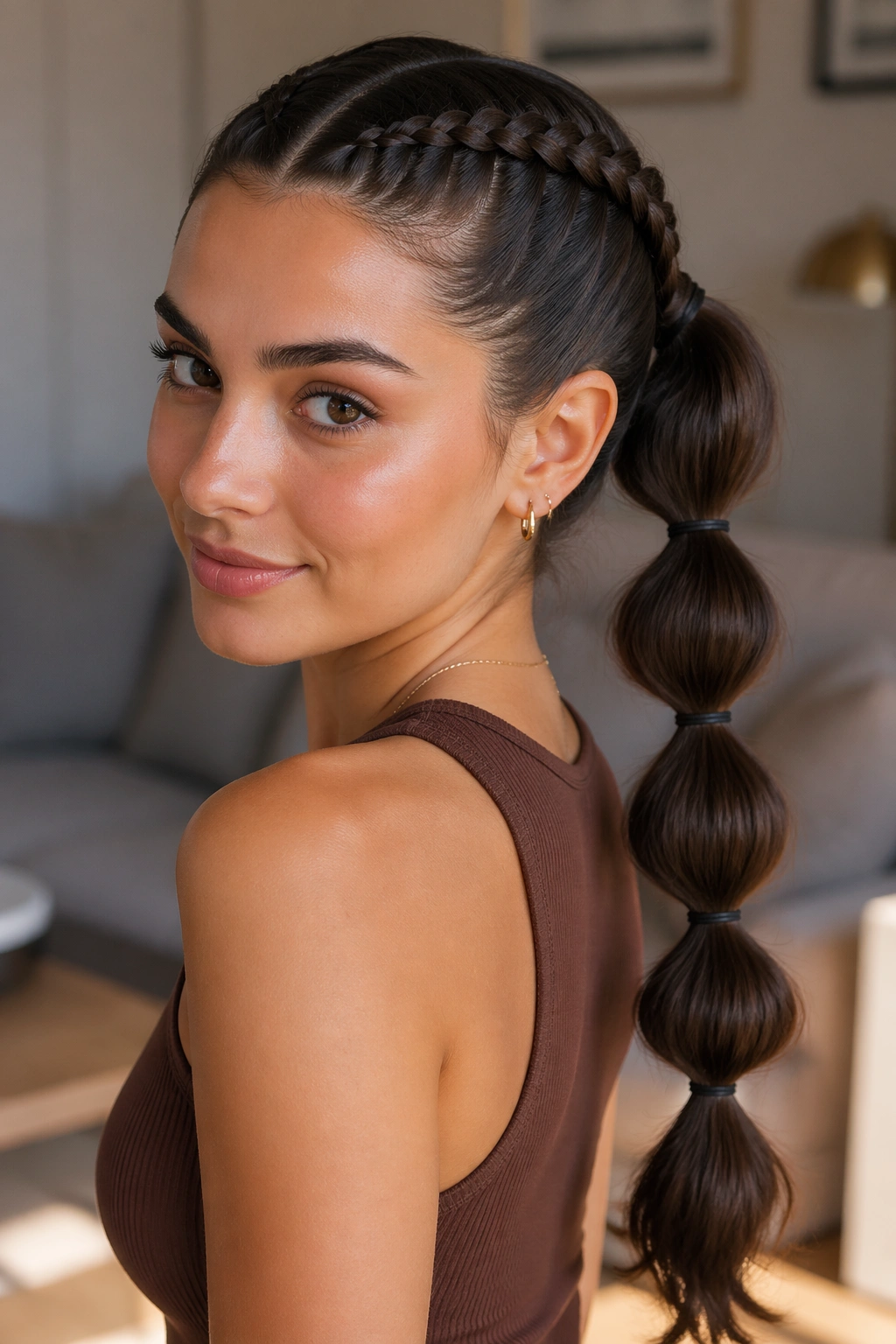
Bubble ponytails have a playful shape, but they can still look neat if you keep the spacing tidy and the sections smooth. The double braids at the front hold the hair in place, while the ponytail length gets broken into controlled pieces.
The trick is to space the small elastics evenly, usually every 2 to 3 inches depending on length. That keeps the bubbles balanced instead of lopsided. If your hair is very long, the bubbles can be bigger. If it’s medium length, smaller bubbles usually look cleaner and less top-heavy. A little tug on each section helps round them out, but do not pull them so far that the style starts to frizz.
This version works well when you want structure but not stiffness. It has shape. It moves. And it still looks like you paid attention.
18. Crisscross Braids With a Hidden Elastic
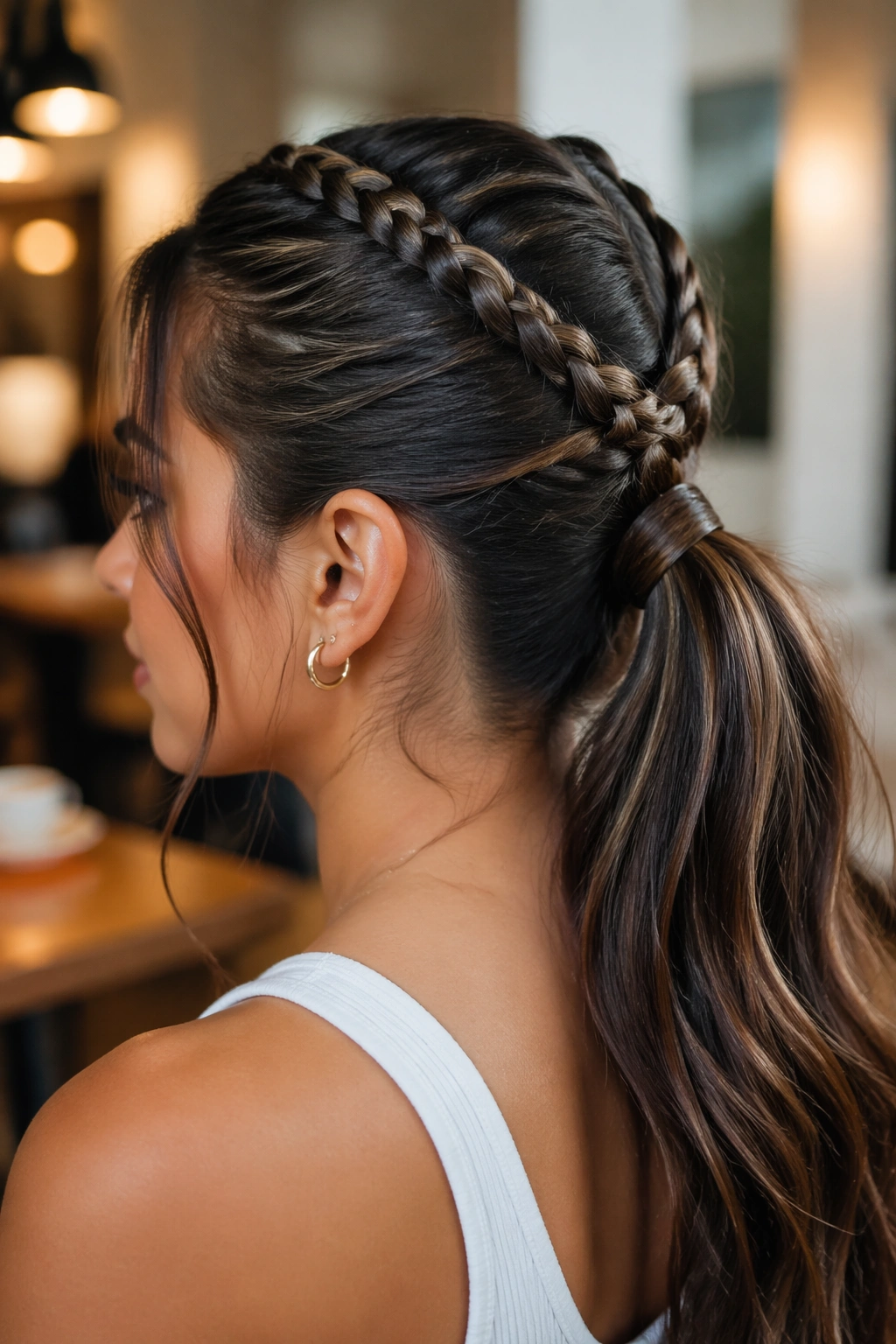
A hidden elastic changes the whole tone of the style. Suddenly the ponytail base looks sculpted instead of simply tied back.
The crisscross detail comes from overlapping the two braids or crossing them over the back of the head before they meet. That creates a neat knot-like center without actual bulk. Then the elastic disappears under a wrapped strand or under the braid ends themselves. The result is very clean, almost minimal, but still visually interesting.
This is one of the better choices for formal settings or sharper outfits, because it doesn’t compete with anything. It just sits there looking orderly. If you like styles that seem expensive without shouting about it, this is a strong pick.
19. Face-Framing Double Braids Into a Sporty Ponytail
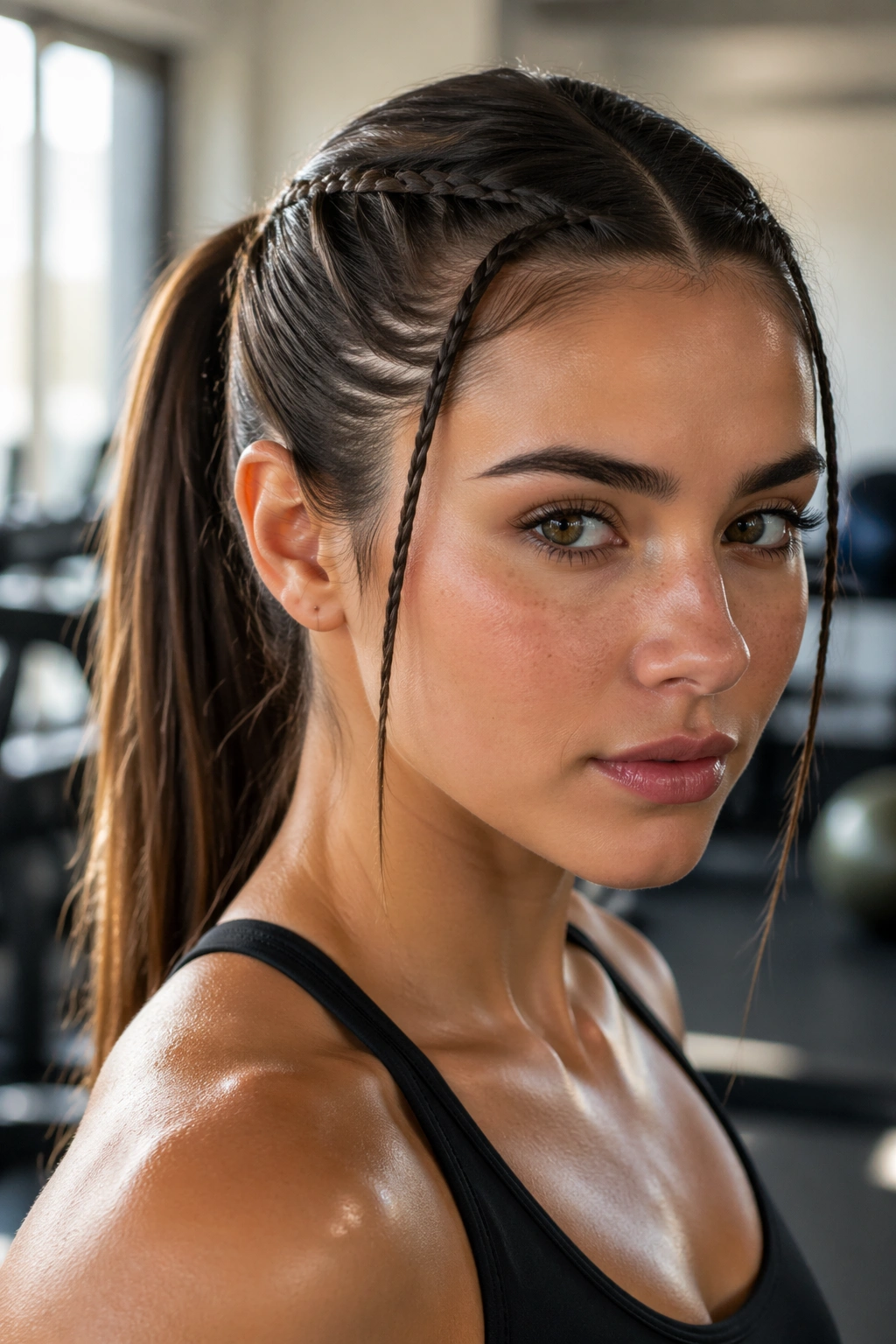
A few slim face-framing pieces can keep a sporty ponytail from looking too severe. The braids do the heavy lifting, and the loose pieces soften the edges.
Why It Works
The front pieces stop the style from feeling sealed off. That matters if your face looks better with movement around the cheeks or if you prefer a less strict hairline. The double braids can start at the temples and move back quickly, which keeps the crown smooth while leaving a little breathing room near the front.
Small Details That Help
- Keep the face-framing pieces narrow, not chunky
- Curl the ends slightly if you want them to bend inward
- Use a light-hold spray so they don’t freeze in place
- Keep the ponytail itself sleek and low-maintenance
Good move: match the part lines on both sides. Uneven front pieces make the whole style feel accidental.
20. Sleek Double Braids With Gold Cuffs
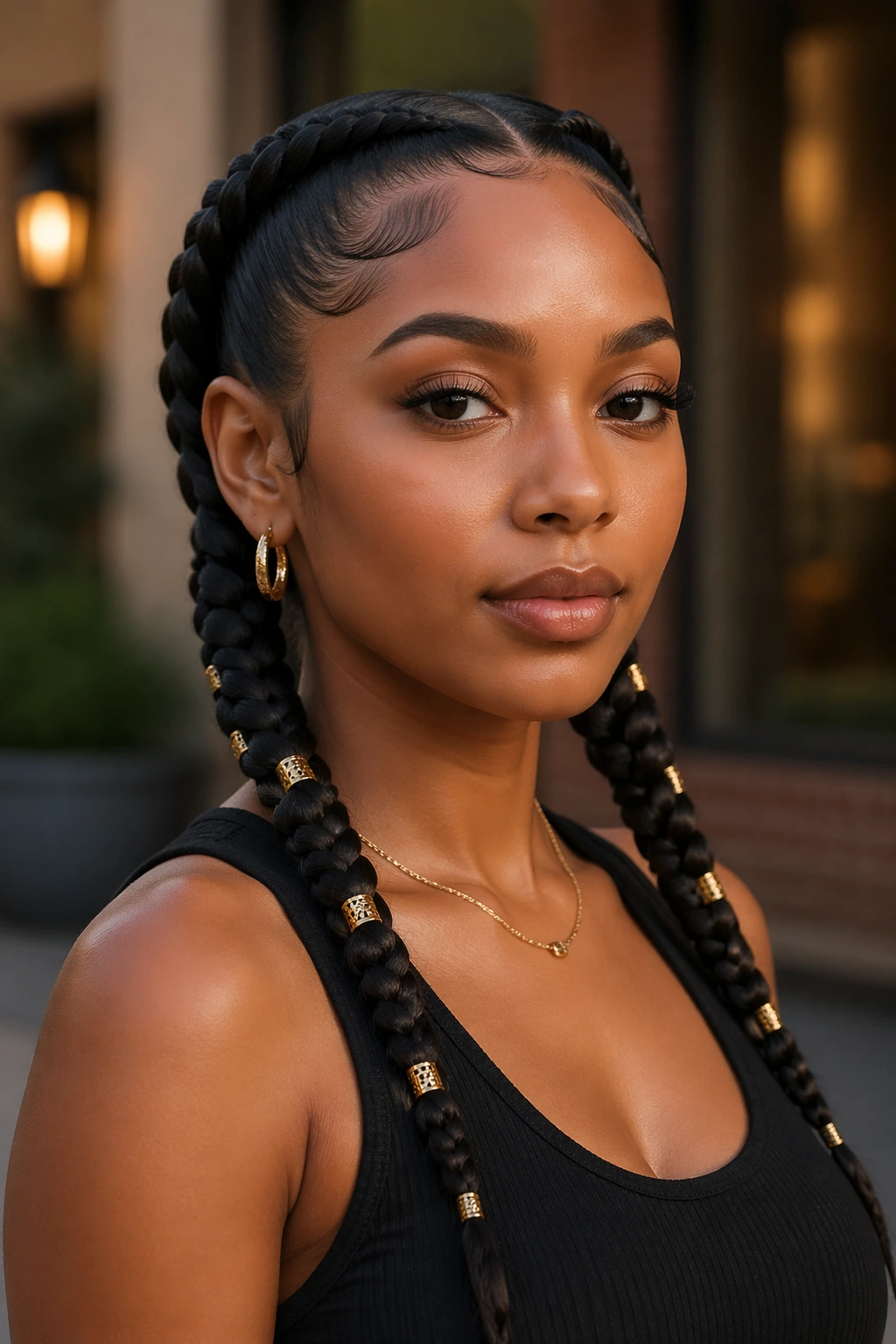
Gold cuffs are a simple fix when you want the braids to look finished without adding more structure. One or two cuffs per braid is enough. More than that starts to feel busy.
The metal adds contrast, especially on dark hair, and it catches the eye in a tidy way. Since the braids themselves are sleek, the cuffs do not need to be large. Small rings along the lower half of the braid usually look better than a cluster at the top. They guide the eye down to the ponytail instead of cluttering the scalp area.
This style is a good example of less-is-more done right. The hair should already be smooth. The cuffs are there to sharpen the look, not rescue it. If the braids are messy, the accessories will only make that mess more obvious.
21. Double Braids and a Wrapped Pony Base
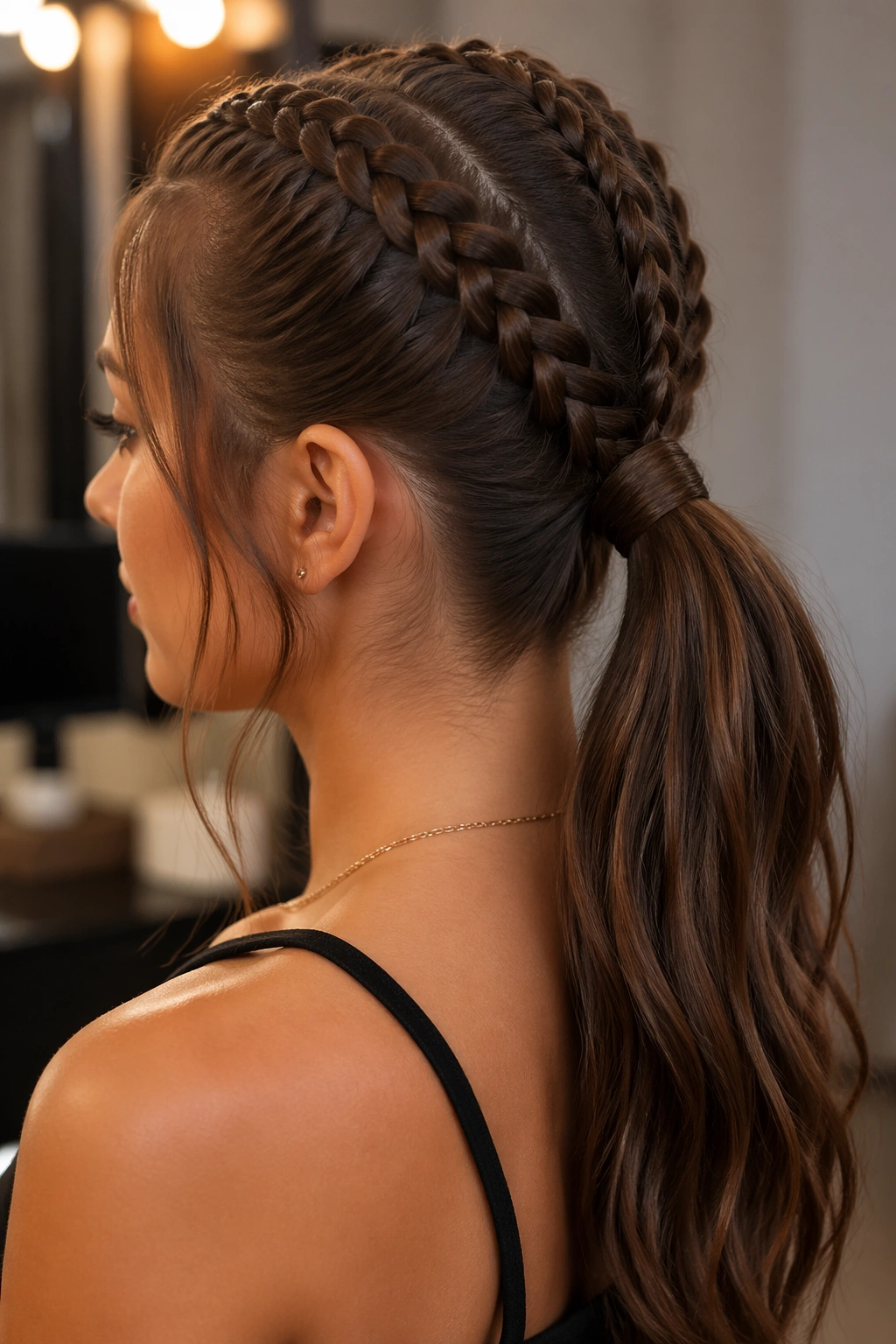
Why does wrapping the pony base matter so much? Because that tiny detail hides the elastic, closes the style visually, and makes the whole thing look more deliberate.
How to Wear It
Start the double braids cleanly, then gather them into a ponytail at the back. Take a small strand of hair from underneath and wrap it around the elastic until the band disappears. Pin the end under the pony or slide it through a second elastic if your hair is slippery. Satin ribbon can do the same job if you want a softer finish.
This version works especially well for dinners, interviews, or any situation where you want the hair tidy but not severe. It is a small fix with a big payoff. The base stops looking like a tie-off point and starts looking like part of the design.
22. Double Braids With Curled Ends
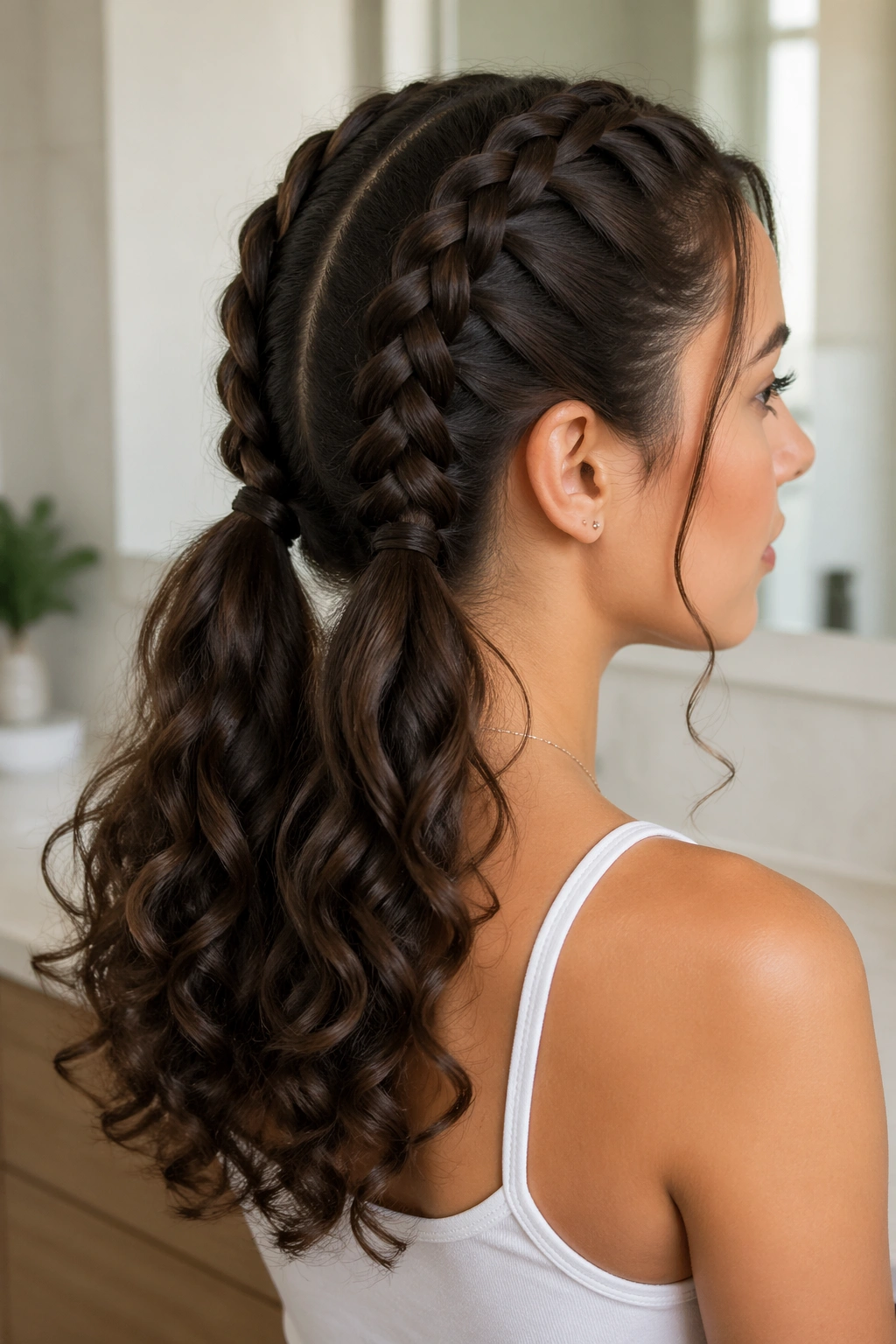
Straight braid lengths can look a little stern. Curled ends soften them up without messing with the neatness at the top.
The contrast is what makes this style interesting. The braids stay taut and smooth from the scalp, then the ponytail length bends into soft waves or curls. That gives the style a more finished shape, especially if the hair is long enough for the curl pattern to show. A curling iron, flexi rods, or even a small roller set can work, depending on the hair texture.
- Keep the braid roots smooth before you curl anything
- Curl only the last third of the ponytail for a clean finish
- Let the curls cool fully before touching them
- Separate the curls lightly with your fingers, not a brush
If you brush them out too much, the ends puff fast. That is the opposite of neat.
23. Half-Scalp Double Braids Into a Long Ponytail
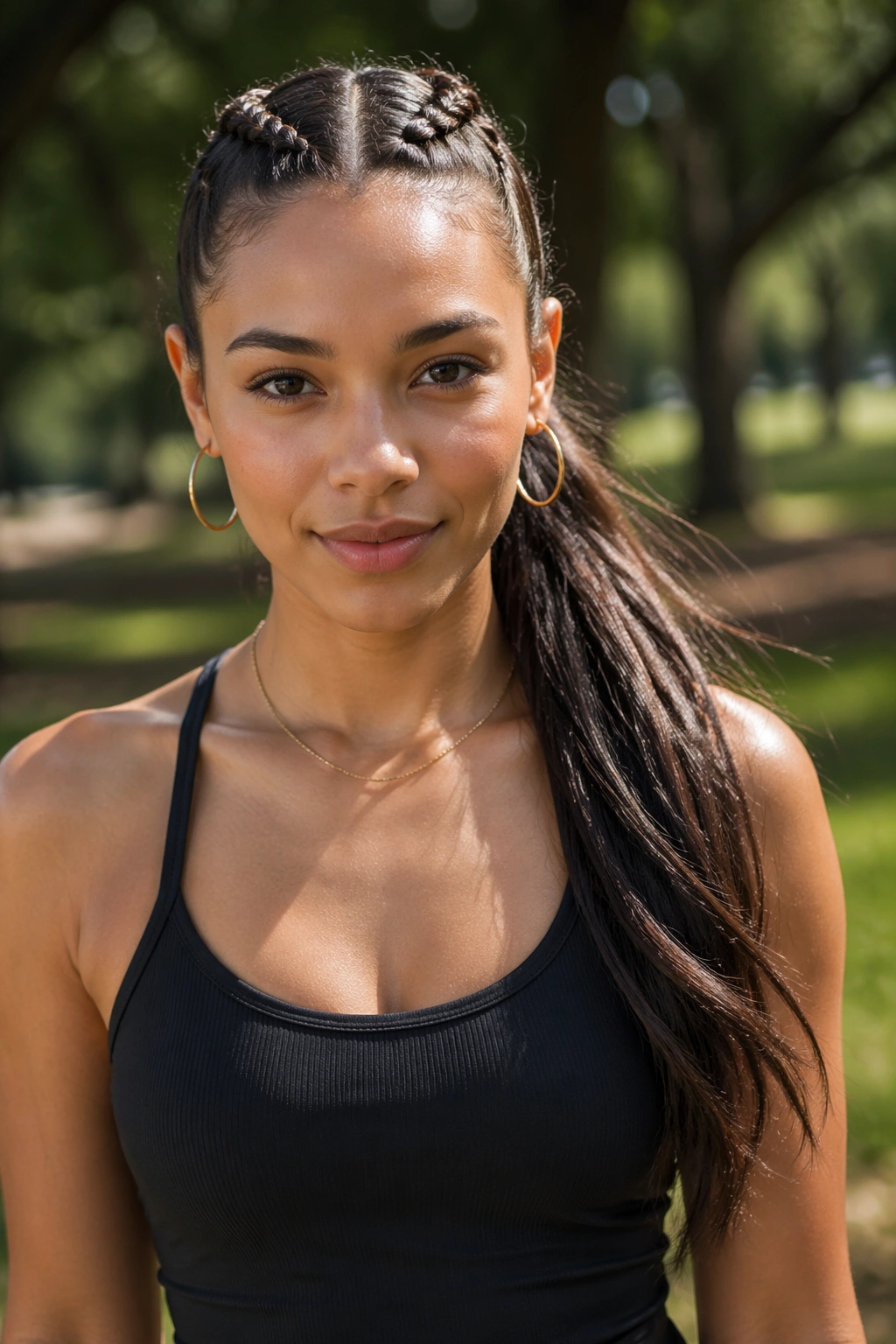
This version keeps the front and crown controlled while letting the back length do more of the talking. It’s a nice middle ground when you want neatness without braiding the entire head.
The double braids travel only across the upper scalp, then feed into a long ponytail that hangs free. That means less time spent braiding and a little more movement in the finished style. It works especially well on long hair, extensions, or layered styles where the ponytail benefits from some swing.
A smoothing cream at the back helps the transition from braided crown to loose length. Keep the ponytail low enough that the half-braids read clearly from the front. Too high, and the separation gets lost. Too low, and the style can look flat. Somewhere in the middle usually feels balanced.
24. Double Braids With a Scarf Woven Through
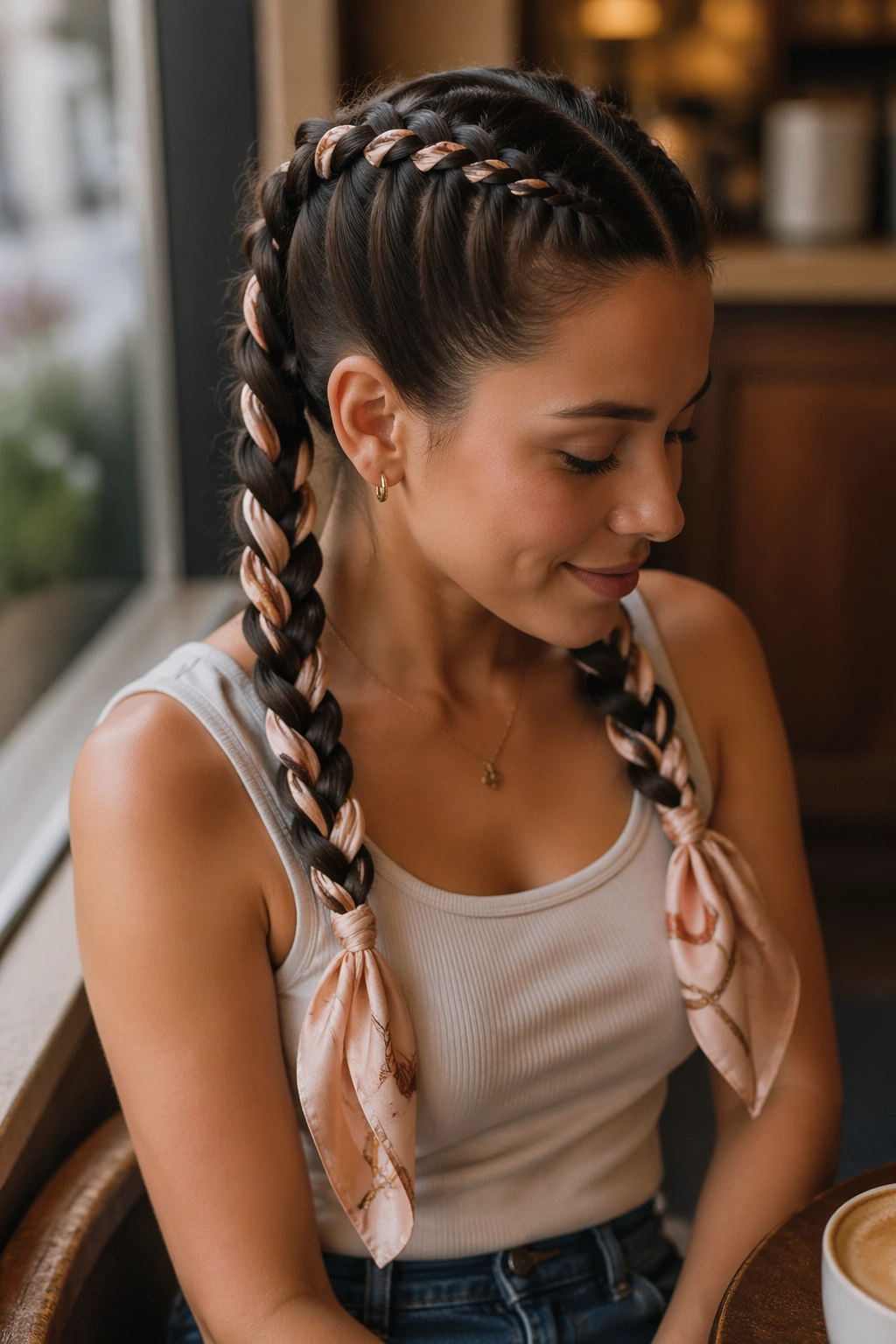
A scarf changes the whole story of the style. It adds color, hides tension points, and makes a simple braid pattern look finished without needing extra hardware.
The best part is how practical it is. A narrow silk or satin scarf can slip through the braid lengths or tie at the base, and the fabric gives the ponytail a softer edge. It is also a good way to cover an elastic that refuses to disappear. Keep the scarf flat as you weave it. Bunched fabric looks clumsy fast.
This style suits hair that is already smooth at the roots and needs one visual accent to feel complete. It’s neat, but not hard. That balance is harder to get than people admit.
25. Tight Double Braids for a Glossy, Minimal Ponytail
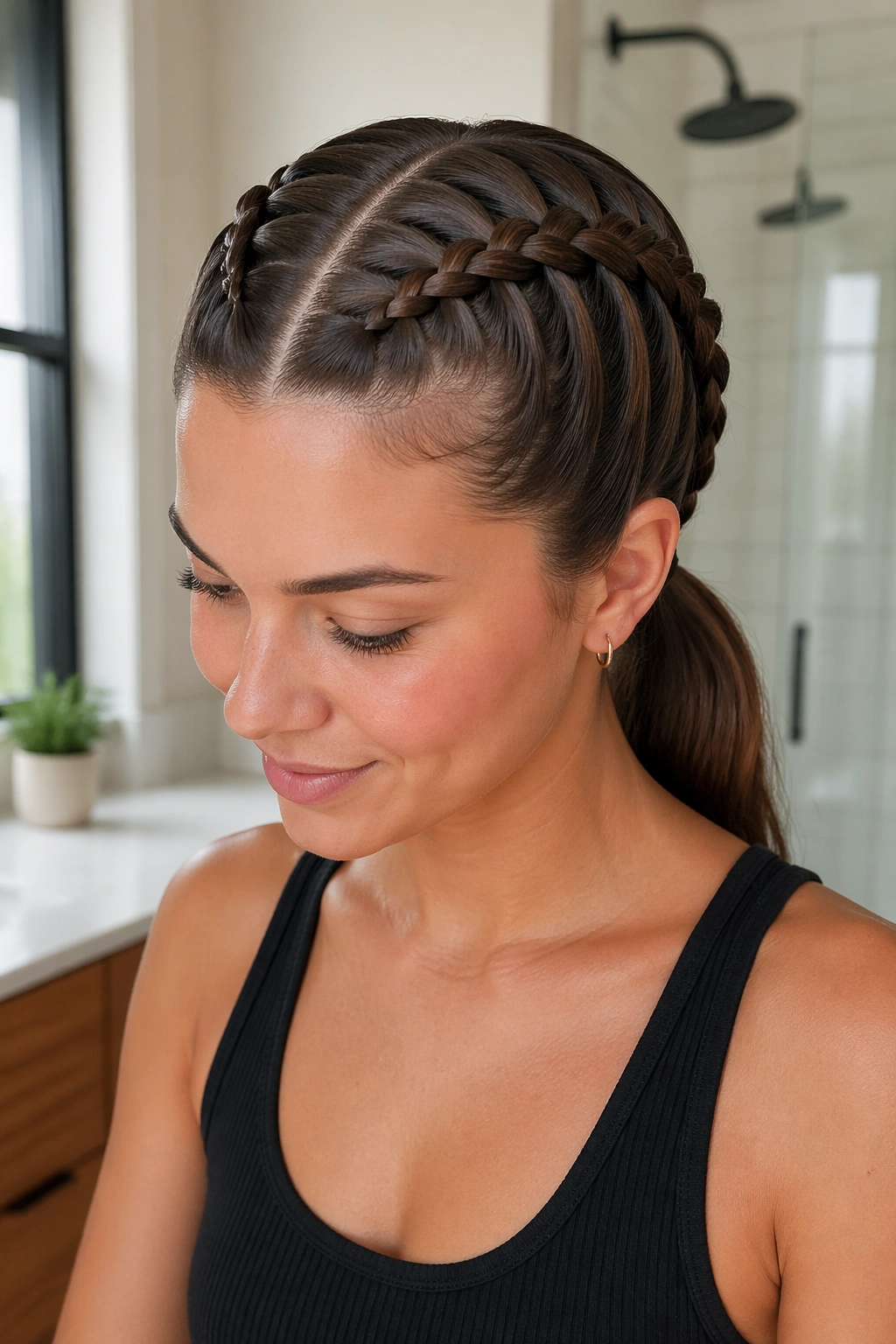
Sometimes the cleanest answer is the plainest one. Tight double braids with a glossy finish can look sharper than a style loaded with cuffs, wraps, and ribbons.
The secret is restraint. Brush the roots flat, keep the part line exact, and use just enough gel or wax stick to settle the flyaways. A fine-tooth comb helps the front lie smooth, but the product should stay light so the hair doesn’t crust up. The ponytail itself can sit high, mid, or low, depending on what the rest of your outfit needs.
If you want one style that plays nicely with bold earrings, structured collars, or a bright lip, this is it. It does its job and gets out of the way. Sometimes that is the smartest move.
Final Thoughts
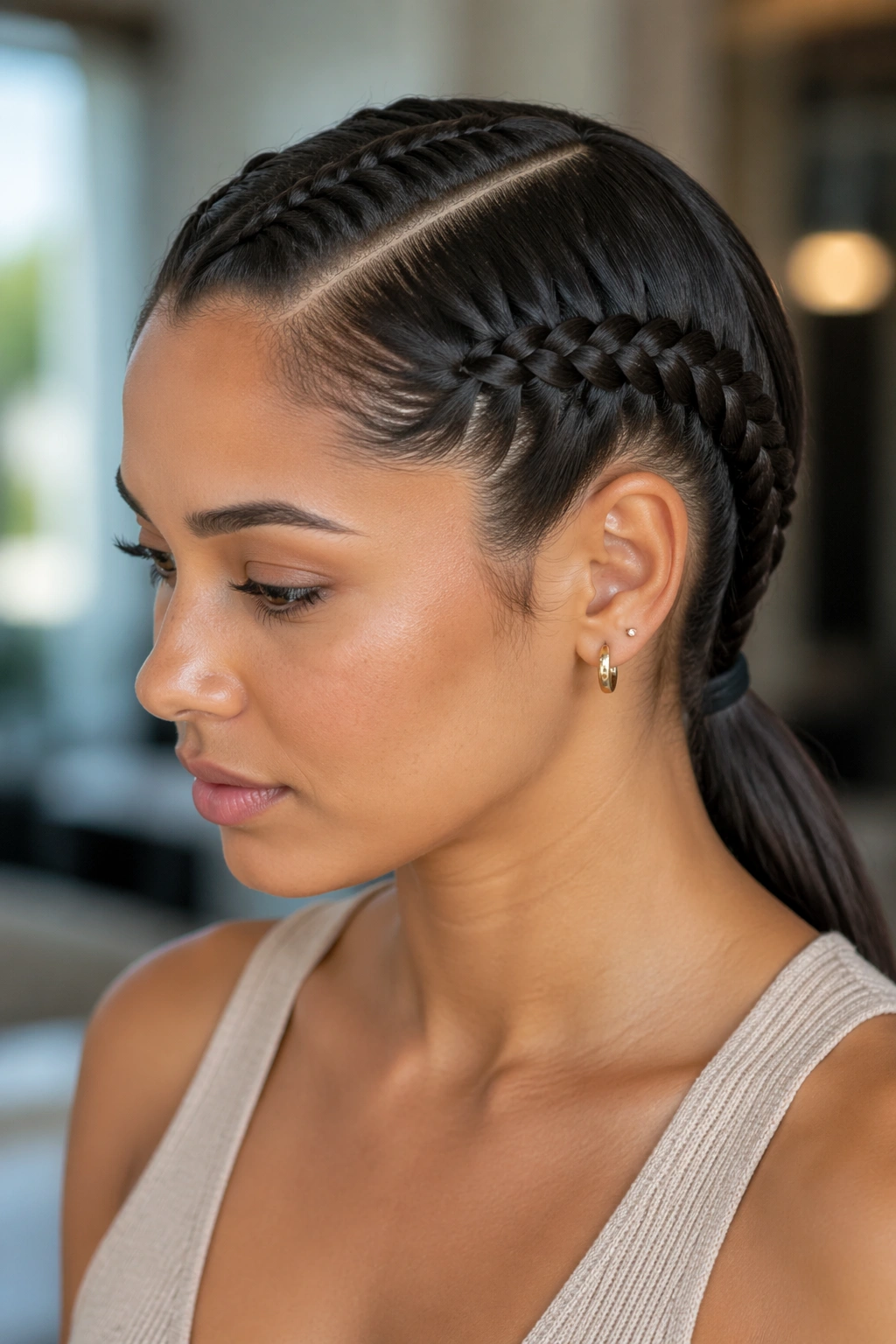
The neatest double braided ponytails usually have one thing in common: the roots are controlled before the braids even begin. Once the part is clean, the braid pattern can do the rest.
I’d start with the version that matches your hair’s natural habits. Thick hair usually likes anchored styles such as cornrows, flat twists, or pull-through braids. Smoother hair often does best with Dutch, French, or rope-braid finishes. The wrong style can still work, but it will take more fussing than it should.
And that is the real test. If a style looks sharp without constant fixing, you’ve picked the right one.