



A good ponytail can do a lot more than get hair off your neck. For teens, it’s one of those rare styles that can handle a rushed school morning, a sweaty practice, a group photo, and still look deliberate by the last bell.
The trick is never just “put it up.” Height, parting, texture, and the finish at the base change everything. A ponytail sitting one inch higher, or wrapped with a thin strand, can go from ordinary to sharp fast. And if you’ve got curly, thick, fine, or layered hair, the shape matters even more than the tie itself.
Ponytail hairstyles for teens also need a little realism. Hair has to survive backpacks, gym classes, windy walks, and the kind of half-rushed mirror check that happens between first period and lunch. Some styles are better for that than others, and a few are only there for days when you want your hair to look like you tried harder than you actually did. That’s the sweet spot.
So here’s the fun part: 25 ponytails that each do something a little different, from neat and polished to soft, sporty, braided, and event-ready.
1. Classic High Ponytail
A classic high ponytail is still the cleanest place to start, and honestly, it earns its reputation. Pulled up at the crown or just above it, this style lifts the face, shows off earrings, and gives you that bright, awake look even when the morning was a mess.
Why It Works
The height is doing most of the work here. A high placement makes the hair look fuller, especially if you tease the crown just a little before you tie it off. If your hair is fine, mist the roots with texturizing spray first; if it’s thick, smooth the top with a brush and a drop of serum.
- Best with straight, wavy, or lightly curled hair
- Looks sharp with a middle part or no part at all
- Takes about 2 to 4 minutes once you’ve done it a few times
- Works for school, sports, and casual plans
Tiny detail, big difference: wrap a 1-inch strand around the elastic and pin it underneath. It looks finished fast.
2. Sleek Low Ponytail
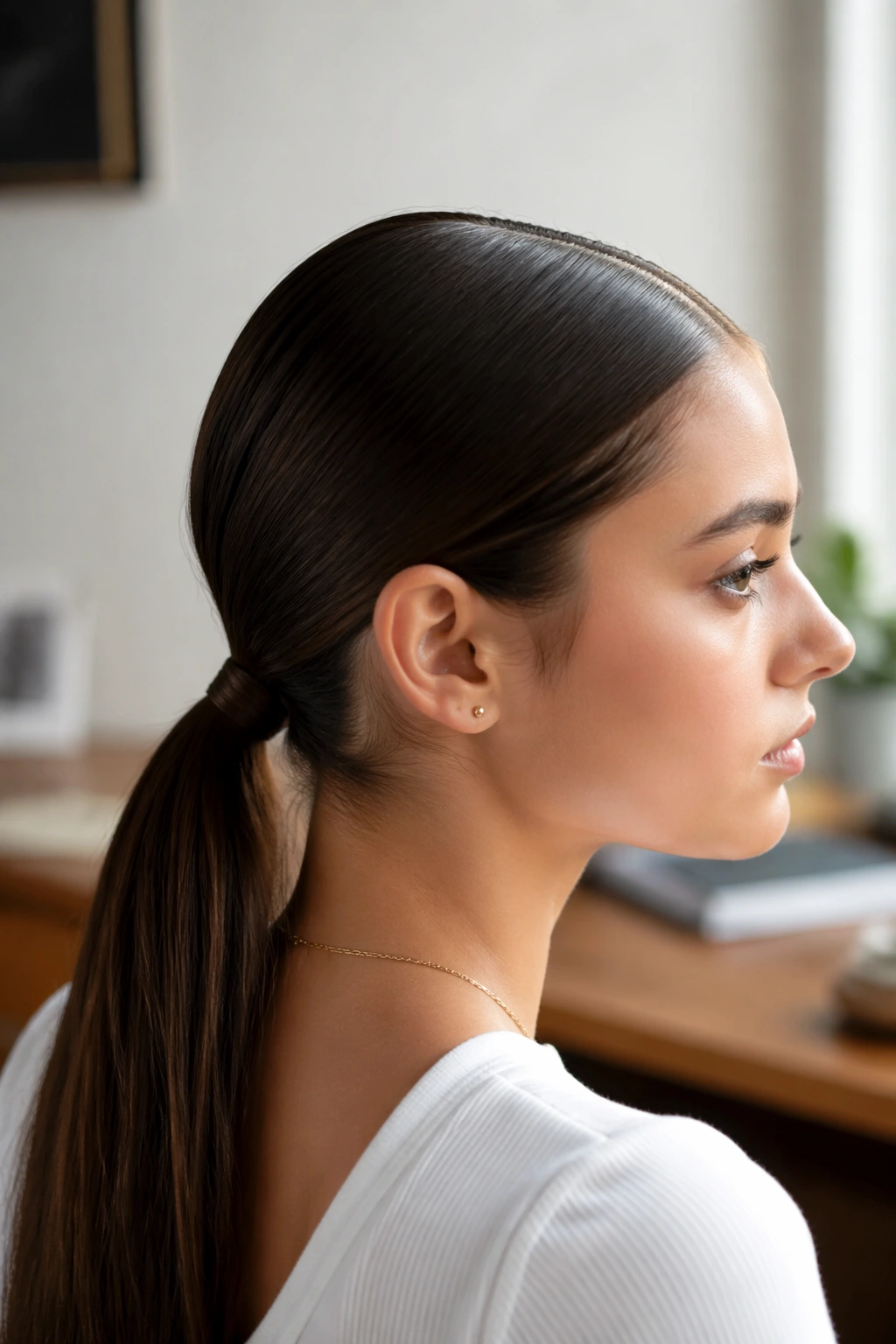
A sleek low ponytail is the one I’d pick when you want clean lines and zero drama. It sits at the nape of the neck, usually with a center part or a deep side part, and it has that neat, controlled shape that never looks messy by accident.
The key is tension, but not too much. Brush the hair flat from the front, smooth a light gel or cream over the top, and keep the base low and tight. If you’re wearing glasses, this style keeps the sides from fighting the frames. If you’ve got layers, a few extra bobby pins at the temples help stop the shorter pieces from slipping out.
It’s also one of the easiest ponytails to dress up. A satin ribbon, a pearl clip, or even a polished middle part changes the mood right away. Not flashy. Just tidy.
3. Bubble Ponytail
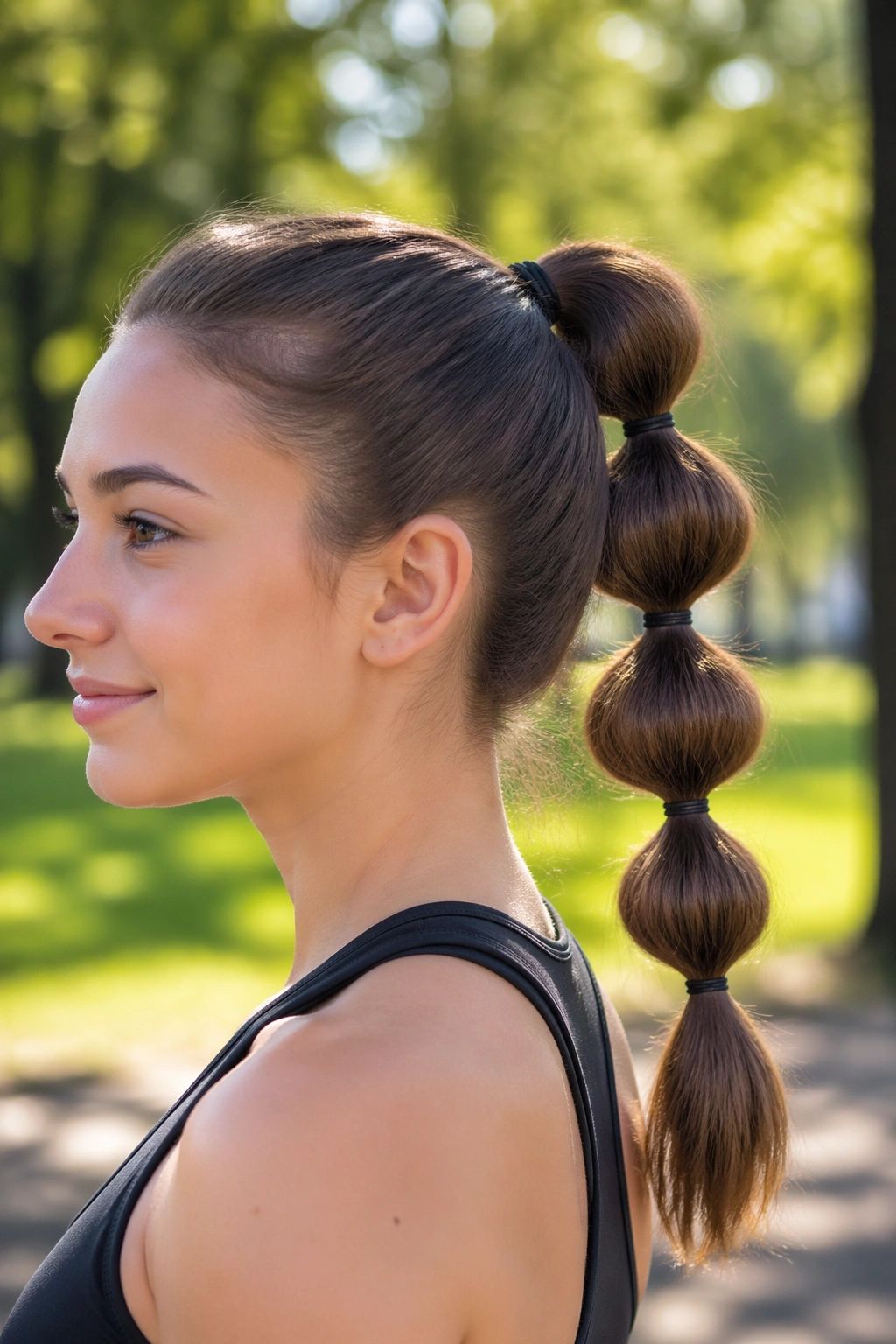
Bubble ponytails look like you spent more time than you did, which is the whole appeal. You tie one ponytail first, then add elastics down the length every 2 to 3 inches and gently pull each section outward to make rounded “bubbles.”
How to Keep the Bubbles Even
The trick is spacing. If the elastics are too close together, the style looks cramped. Too far apart, and the shape gets loose fast. I like using small clear elastics on straight hair and tiny snag-free bands on thicker textures.
- Works best on medium to long hair
- Great for straight hair that needs more shape
- Add a little mousse or texture spray for grip
- Use your fingers, not a brush, to puff each section
One small warning: don’t yank each bubble too hard. You want round, not stretched out.
4. Braided Ponytail
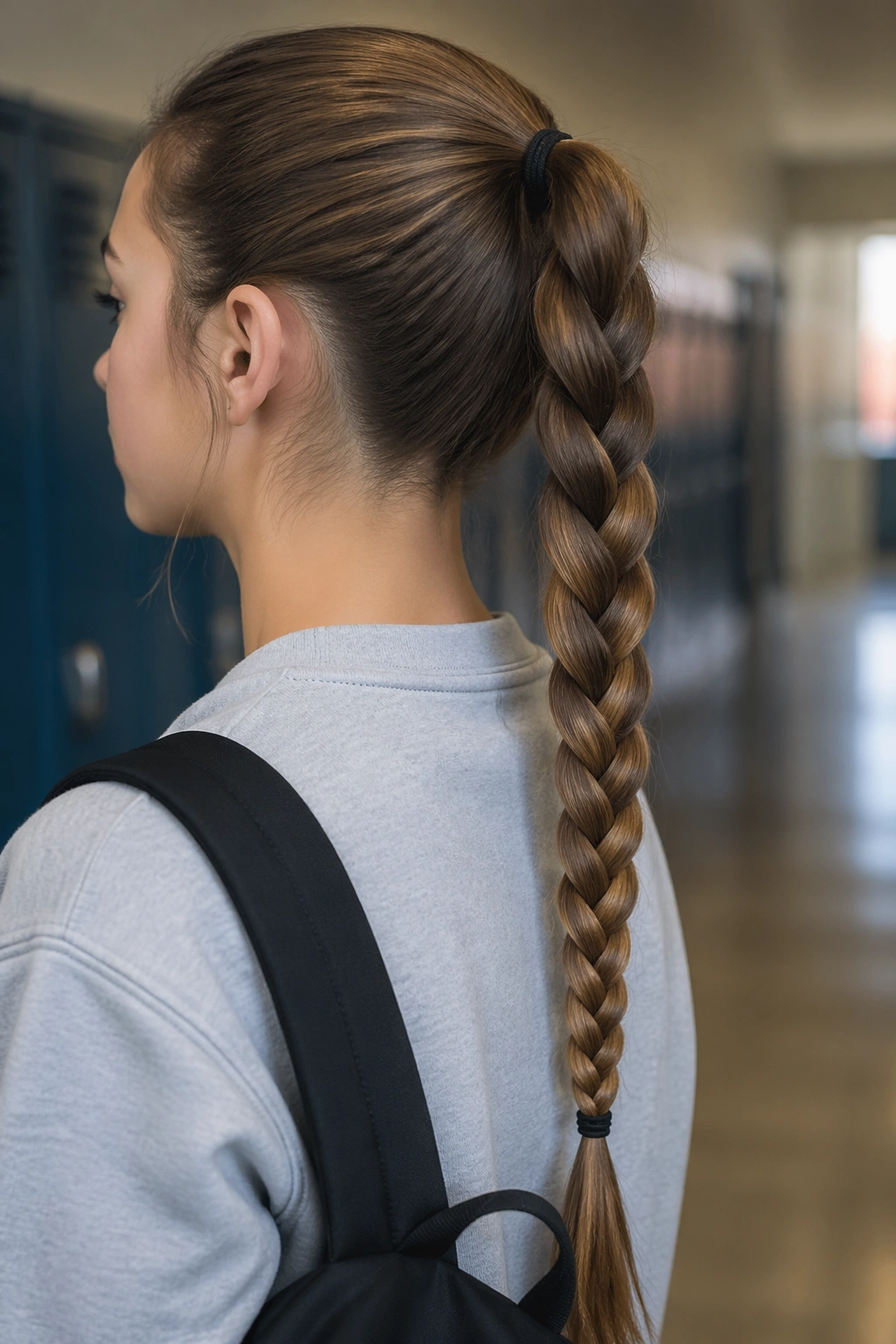
A braided ponytail is the style you reach for when you want hair to stay in place all day and still look intentional. You can braid the entire tail in a simple three-strand braid, or start with a fishtail if you want more detail.
Unlike a loose ponytail, this one controls flyaways better. That makes it a smart pick for school days, dance class, and anything that involves moving around a lot. It also makes layered hair behave, which is not nothing.
If your hair is thick, leave the braid slightly loose so it doesn’t look stiff. If your hair is finer, braid a little tighter and tug the loops apart at the end for more width. Either way, finish with a small elastic at the bottom and a mist of light hairspray.
5. Messy Textured Ponytail
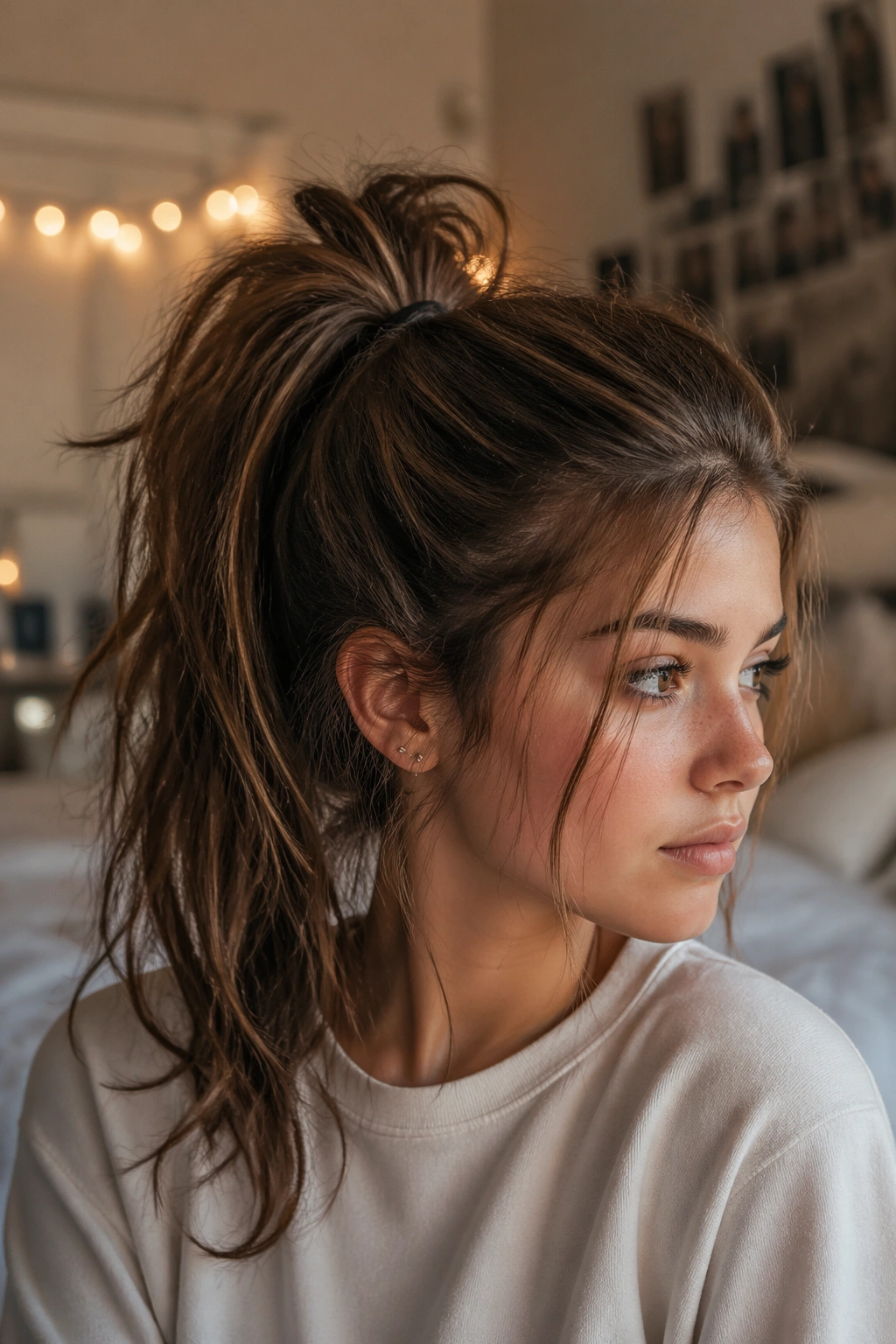
A messy textured ponytail is the opposite of precious, and that’s why it works. It has volume at the crown, a little bend through the ends, and just enough looseness to look relaxed without looking careless.
Start by rough-drying the hair or adding a wave with a large curling iron. Then gather it loosely, leaving out a few face-framing strands if you like that softer look. Don’t over-brush it. That flattens the shape and kills the texture.
This style is especially good when your hair has second-day grip. Freshly washed hair can be slippery, so a bit of dry shampoo at the roots helps. If the ends look too neat, twist random pieces around your fingers for a more lived-in feel. Easy. A little imperfect. That’s the point.
6. Half-Up Ponytail
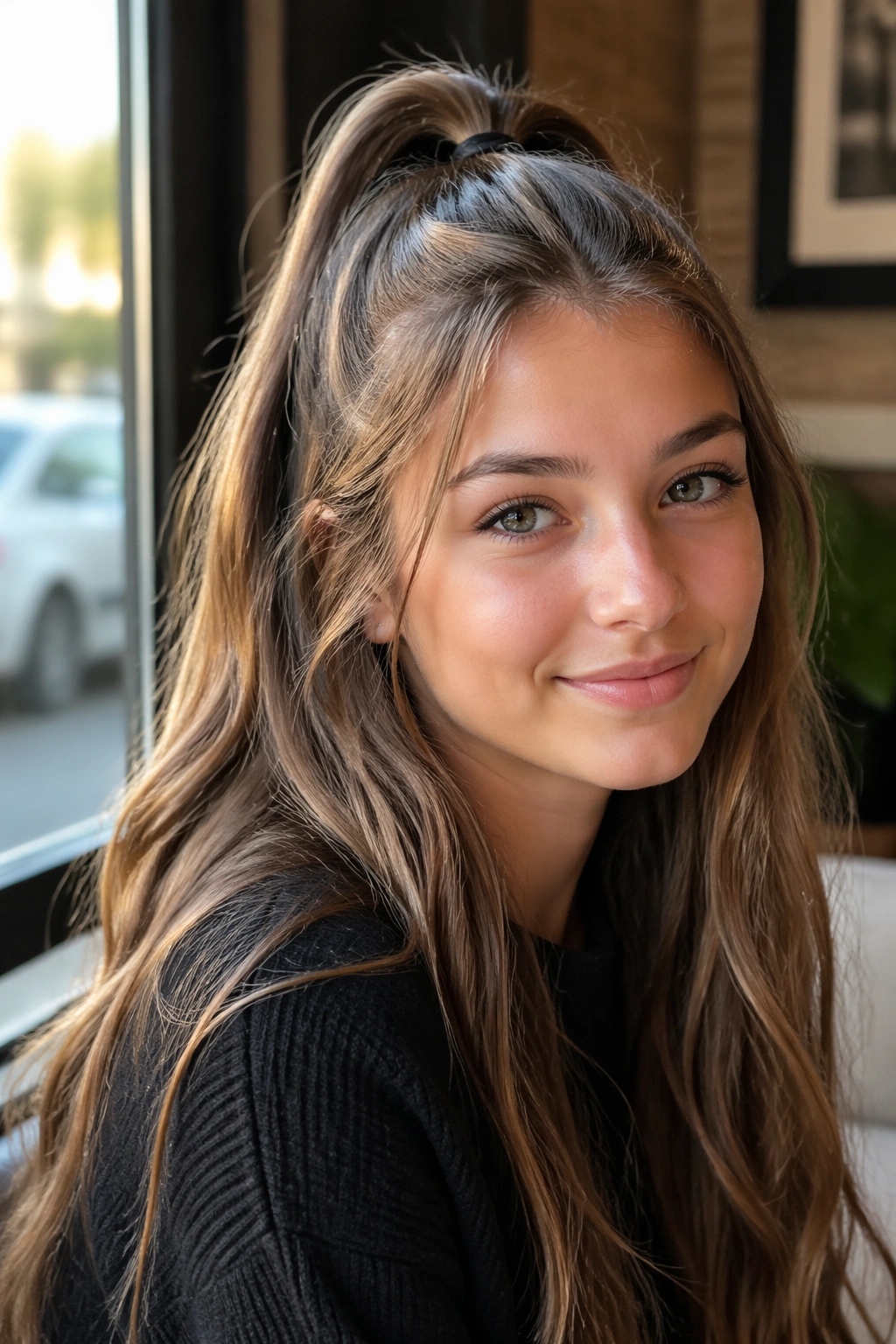
The half-up ponytail is the one that gives you lift without committing to a full updo. You gather the top section only, usually from temple to temple, and leave the rest down. It’s casual, but not plain.
Best When You Want Some Hair Down
This style is especially handy for medium-length hair that feels heavy when pulled all the way back. It keeps hair off the face while still showing length, waves, or curls. If your ends are flat, curl just the bottom half with a 1-inch iron and the whole thing looks more finished.
A few quick notes:
- Great for layered cuts
- Works with straight, wavy, and curly textures
- Use a small elastic so the top section doesn’t sag
- Pair with a claw clip or ribbon if you want a softer finish
It’s not the strongest choice for sports, but for school, photos, or hanging out, it holds up well.
7. Side Ponytail
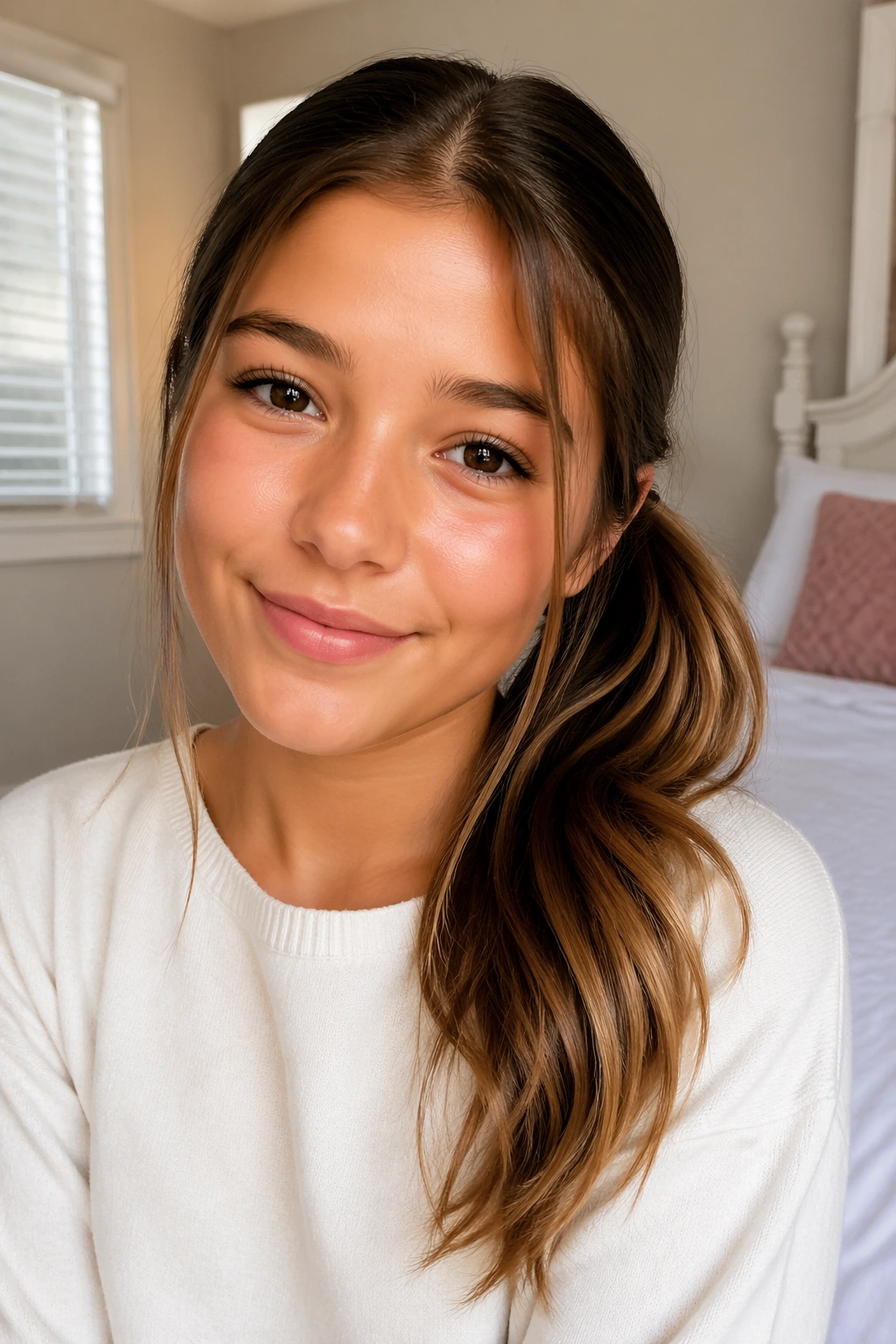
A side ponytail has a softer shape than the usual centered version, and that shift changes the whole mood. Pull it behind one ear or just below it, and suddenly the style feels less strict and a little more playful.
This one works well when you want asymmetry. A deep side part plus a side ponytail can make strong cheekbones stand out and can also help balance a face that feels narrow through the forehead. If you’re wearing statement earrings, even better. The hair doesn’t compete with them.
I’d keep the base low enough that it doesn’t stick out awkwardly. And if your hair tends to puff at the crown, smooth that area before tying it off. One loose tendril near the front is fine. Three loose strands starts to look accidental.
8. Curly Ponytail
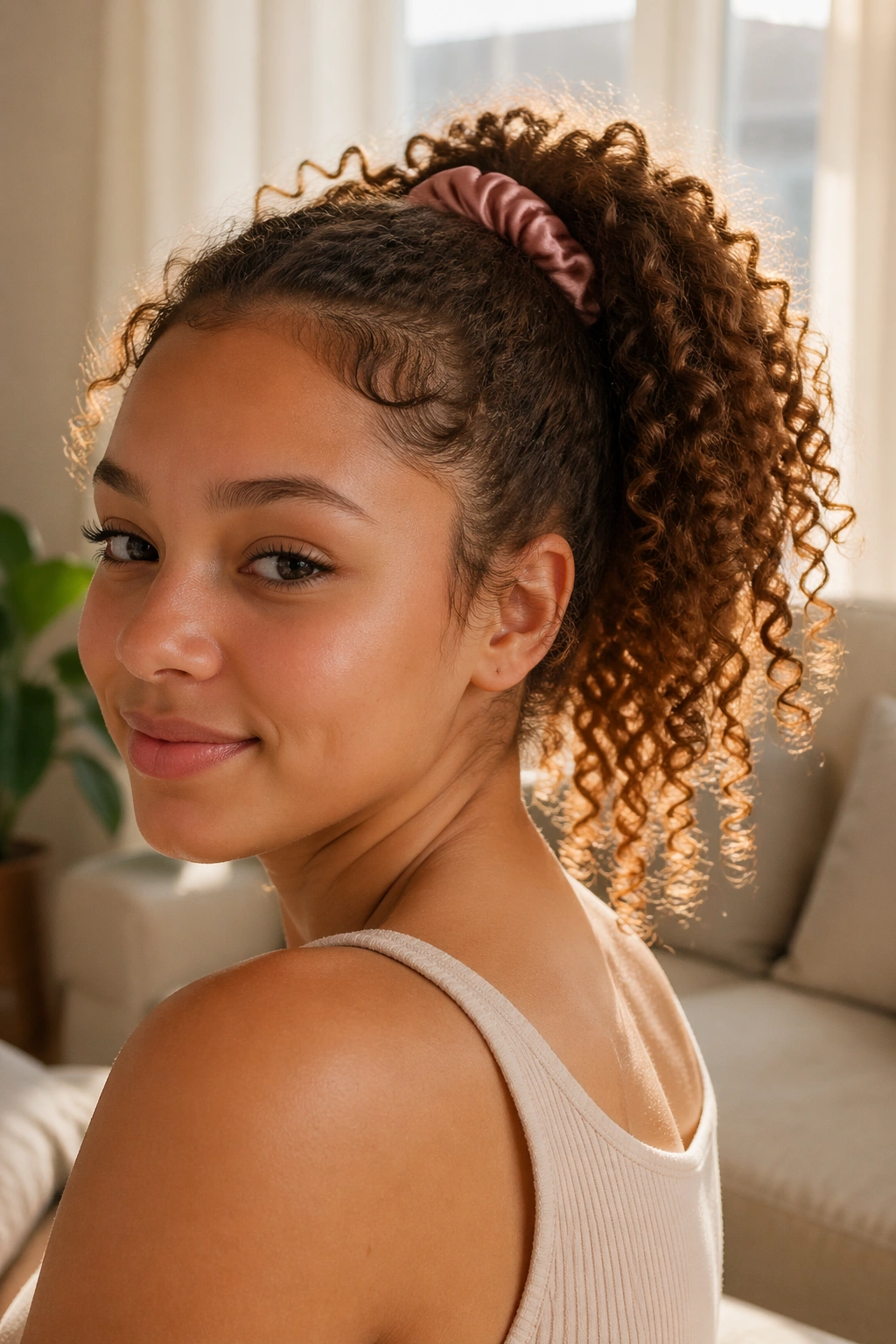
Curly ponytails are best when you stop trying to tame the curls into something else. Keep the curl pattern intact, gather the hair gently, and let the tail keep its shape. If you brush through curls too hard, you usually end up with frizz instead of volume.
A curl cream or leave-in conditioner makes a huge difference here. Apply it while the hair is damp, scrunch upward, and let the pattern set before you tie it back. A satin scrunchie is gentler than a thin elastic and doesn’t snag as badly.
For a cleaner look, smooth only the front hairline and crown, then leave the ponytail itself full and springy. That contrast is what makes the style look polished. Not flat. Not stiff. Just curly and on purpose.
9. Wrapped Ponytail
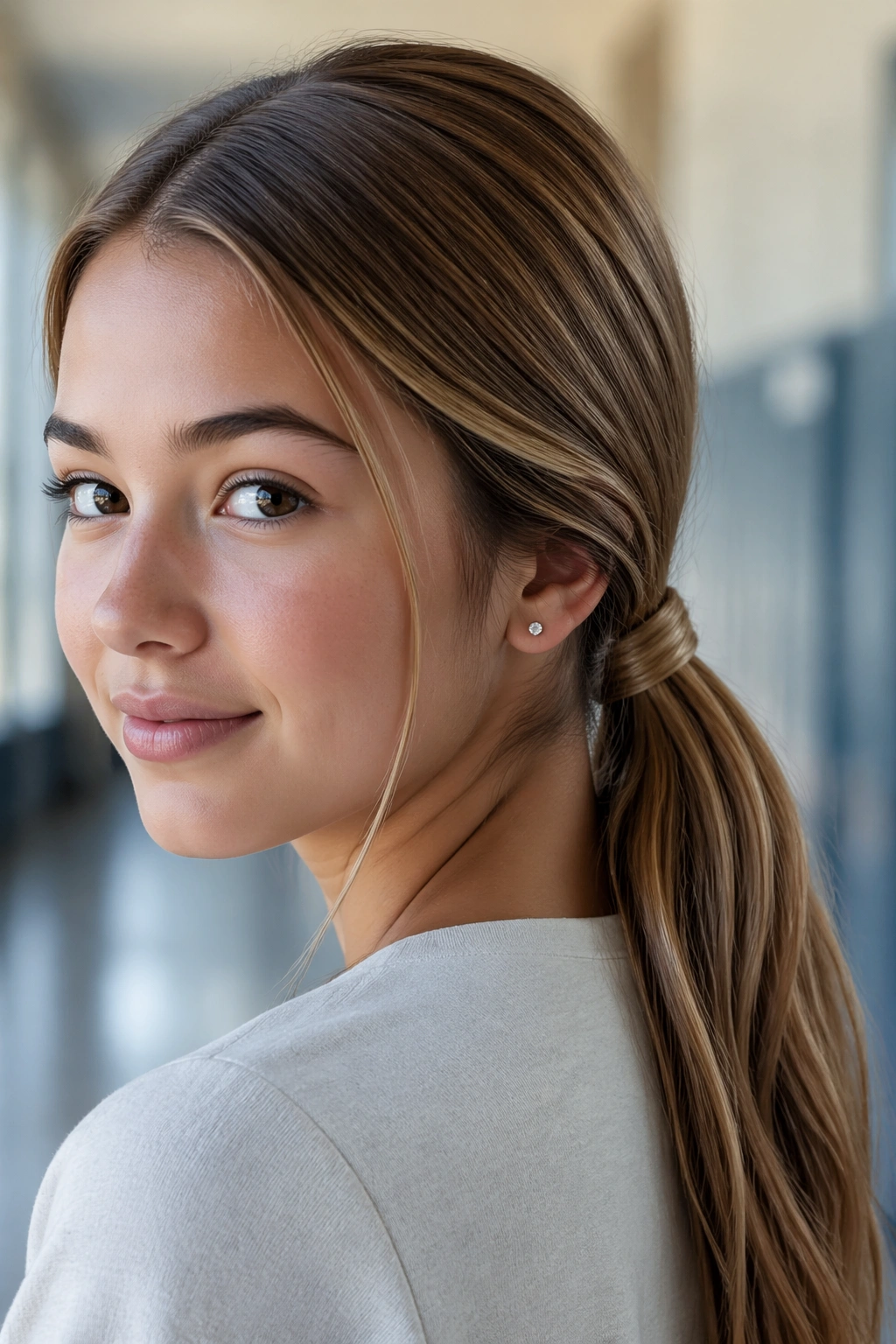
A wrapped ponytail is one of those tiny upgrades that makes people think you spent a long time on your hair. You hide the elastic by wrapping a thin strand of hair around the base, pinning it underneath, and leaving the finish neat.
The detail matters most on simple styles. A low or mid ponytail with a wrapped base looks more finished than one held with a plain band, especially if you’re wearing a blazer, uniform, or anything that leans tidy. It’s a small move, but it changes the whole read.
Use a strand from underneath the ponytail so the wrap blends in. If the hair is slippery, tuck the end under the elastic and secure it with a bobby pin. That little hidden pin is doing a lot of work. Don’t skip it.
10. Sporty Mid-Height Ponytail
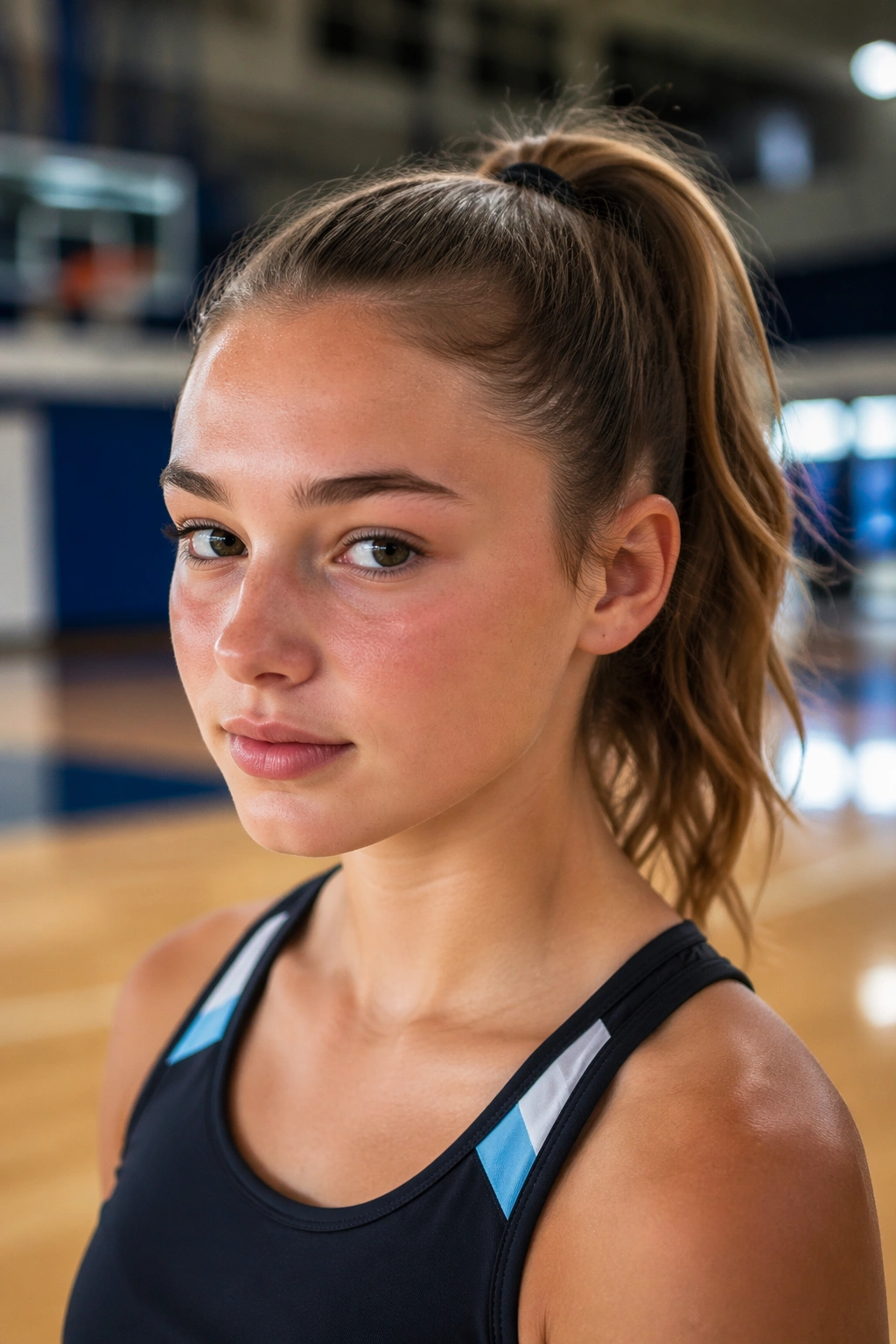
A mid-height ponytail sits right between practical and flattering. It keeps hair off the neck, stays secure better than a high ponytail, and doesn’t pull as hard at the scalp as a super-tight style can.
That makes it a solid pick for school gym days, after-practice errands, and any morning when you need your hair to behave. It also works well for layered cuts because the base sits low enough to catch more of the shorter pieces.
Brush the hair back from the temples, tie it at the middle of the back of the head, and use one extra elastic if your hair is thick. If you want more shape, gently tug the hair above the base for a little lift. Not much. Just enough to avoid that flattened helmet look.
11. Double Ponytail
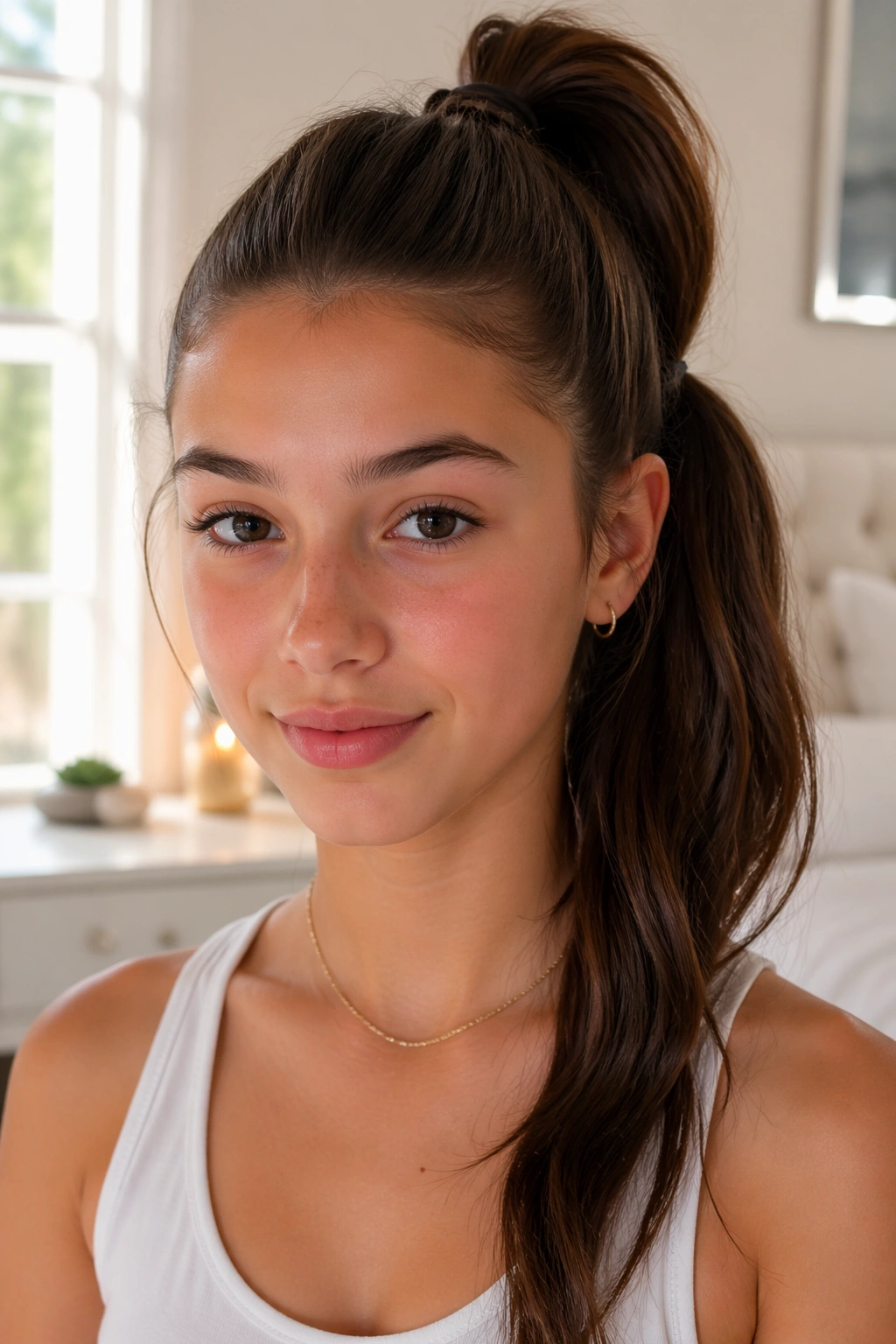
A double ponytail sounds strange until you try it. You make one ponytail near the crown and another just below it, then let the top tail fall over the lower one so the whole thing looks thicker and longer than it really is.
Why It Helps Fine Hair
For fine hair, this is a cheat code. The top section creates lift, and the lower section gives the tail more bulk. The result is a fuller-looking ponytail without stuffing in fake hair or teasing the life out of the roots.
You’ll want to keep the sections clean. A messy split makes the trick obvious, and that’s not the goal. Hide the lower elastic under the upper tail, then smooth the outside layer with a brush. It works best when the top ponytail sits about 2 inches above the second one.
A little patience here pays off fast. The shape looks thick, even when the hair isn’t.
12. Rope-Twist Ponytail
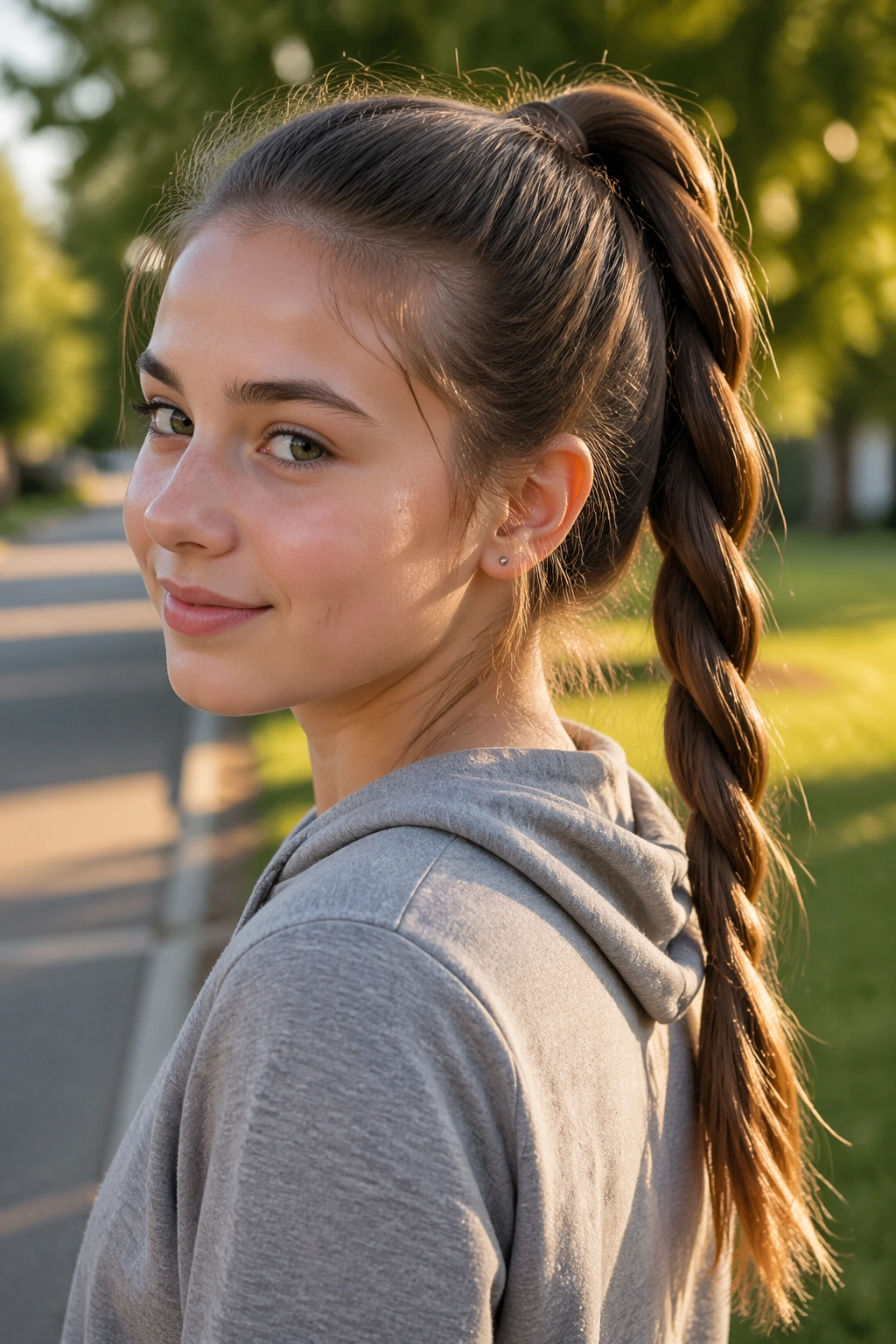
A rope-twist ponytail is one of the fastest ways to make a basic ponytail look styled. Split the tail into two sections, twist each section in the same direction, then twist them around each other in the opposite direction.
That opposite twist is what locks the shape in place. If you twist both pieces the same way and then wrap them together, the rope falls apart faster. It’s a small detail, but it matters.
This style looks especially nice on long, straight hair because the twist shows clearly. If your hair is layered, secure the ends with a tight elastic so the twist doesn’t unravel. You can wear it smooth for school or loosen it a bit at the end for a softer finish. Quick. Smart. Not fussy.
13. Ribbon-Tied Bubble Ponytail
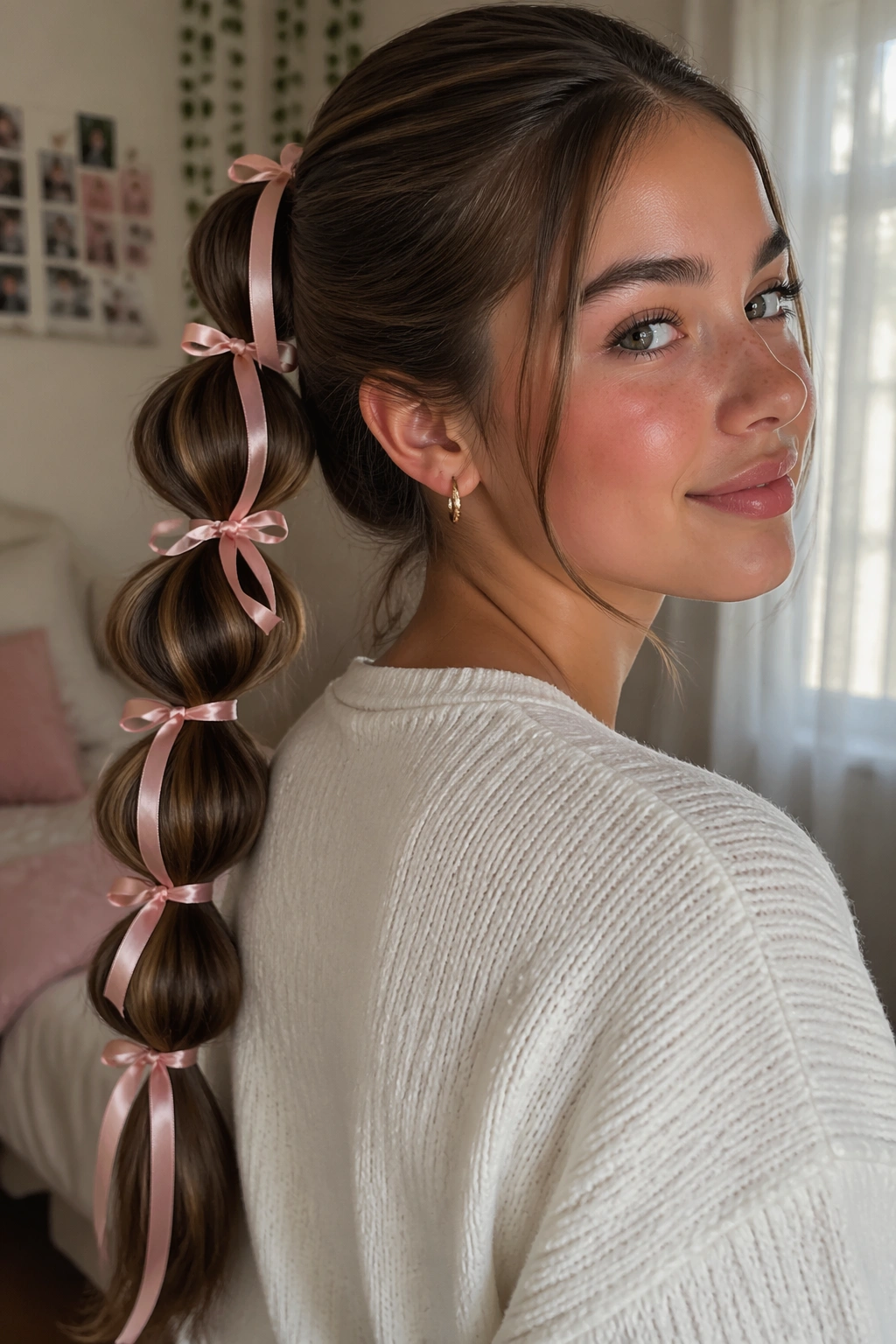
A ribbon-tied bubble ponytail has the same structure as a regular bubble ponytail, but the ribbon changes the feel completely. You can thread the ribbon through each elastic or tie it in a bow at the base and let the ends trail down the tail.
What Makes It Different
Ribbons bring in color without needing clips, pins, or extra hardware. A narrow satin ribbon works best because it sits flat and doesn’t bulk up the bubbles. If you want a neater look, match the ribbon to your outfit. If you want more personality, go for a contrast color.
- Best for longer hair that can hold several bubbles
- Use 1/4-inch or 1/2-inch ribbon to keep the look clean
- Tie the first knot snugly so it doesn’t slip
- Curl the ribbon ends slightly if you want a softer finish
This one leans playful, but not childish. There’s a difference.
14. Middle-Part Low Ponytail
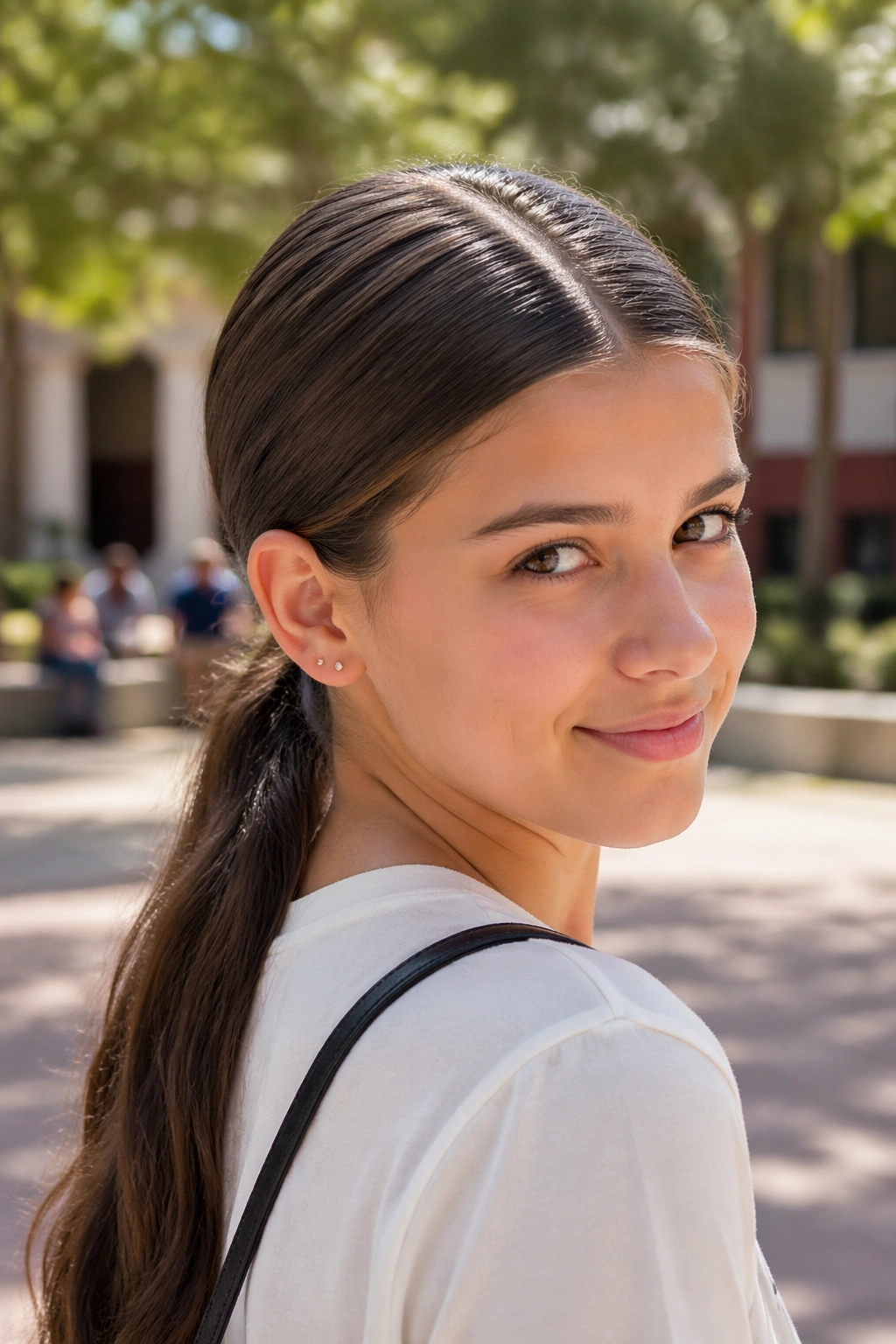
A middle-part low ponytail is clean, balanced, and a little more grown-up than the average school-day style. The center part draws a straight line through the face, while the low ponytail keeps the whole look calm and neat.
It works beautifully with straight hair, but it also looks good on loose waves. If your face is round, the center part can add length. If your face is longer, leave a little softness at the temples so the style does not look severe.
Use a comb, not your fingers, for the part. That small bit of precision makes the whole style feel deliberate. If you want extra polish, smooth a little shine serum over the top and keep the ponytail itself glossy, not crunchy.
15. High Ponytail with Face-Framing Pieces
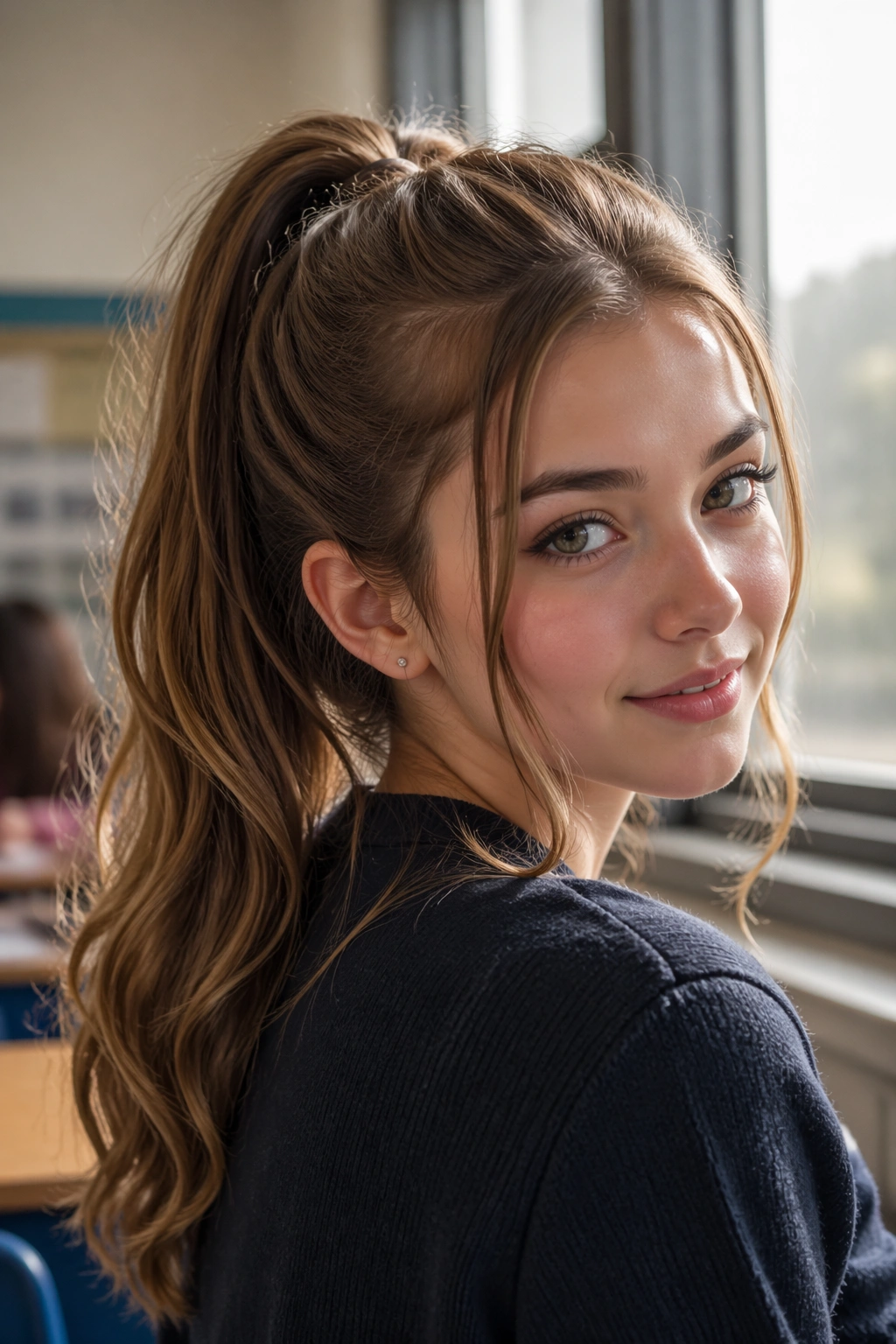
A high ponytail with face-framing pieces gives you the lift of a classic high style without pulling every strand back. Two thin front sections stay out, usually curled slightly or left straight, and they soften the face right away.
The Face-Framing Part Matters
Those front pieces should be thin enough to feel light, not heavy. If they’re too thick, they split the look in half. I usually like one piece on each side, each about the width of a pencil, then I shape them with a quick bend from a flat iron or a small curling iron.
The ponytail itself can stay sleek or a little messy. That depends on the vibe you want. If you’re heading to a school event or taking photos, a smooth crown and curled front pieces look especially good together. It’s one of those styles that feels casual and dressed up at the same time.
16. Faux-Hawk Ponytail
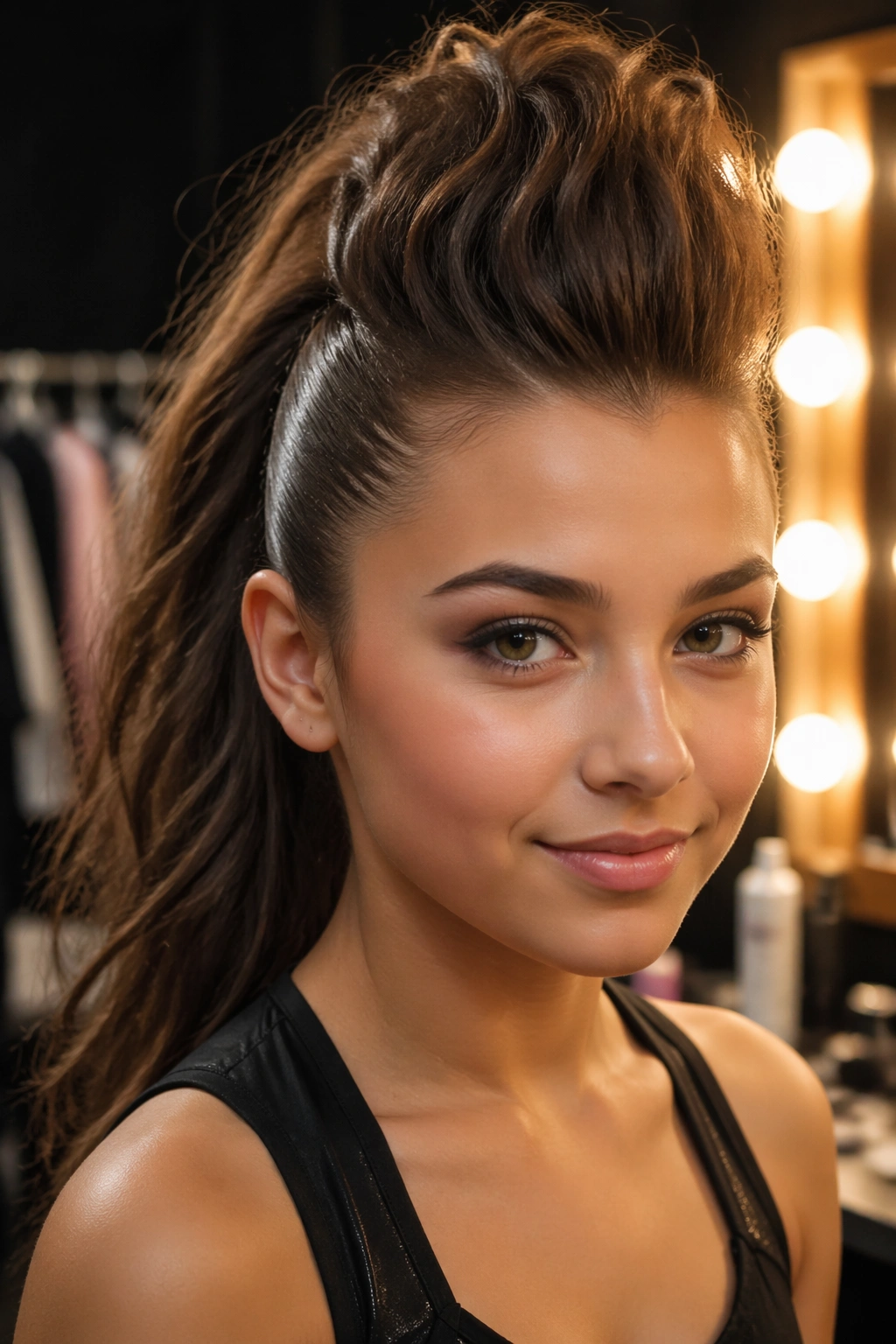
A faux-hawk ponytail has attitude. The hair at the sides stays tighter and flatter, while the center gets more height, so the whole style reads bold without needing a full mohawk cut.
Unlike a regular high ponytail, this one uses the middle strip of hair as the main shape. You can tease the crown a little, slick the sides back, and gather the ponytail closer to the center of the head. The contrast is the point.
It’s a strong pick for concerts, school spirit days, or any time you want your hair to have a little edge. Keep the sides smooth with gel if you want the shape to hold. If you leave them fuzzy, the style loses the clean line that makes it work.
17. Crimped Ponytail
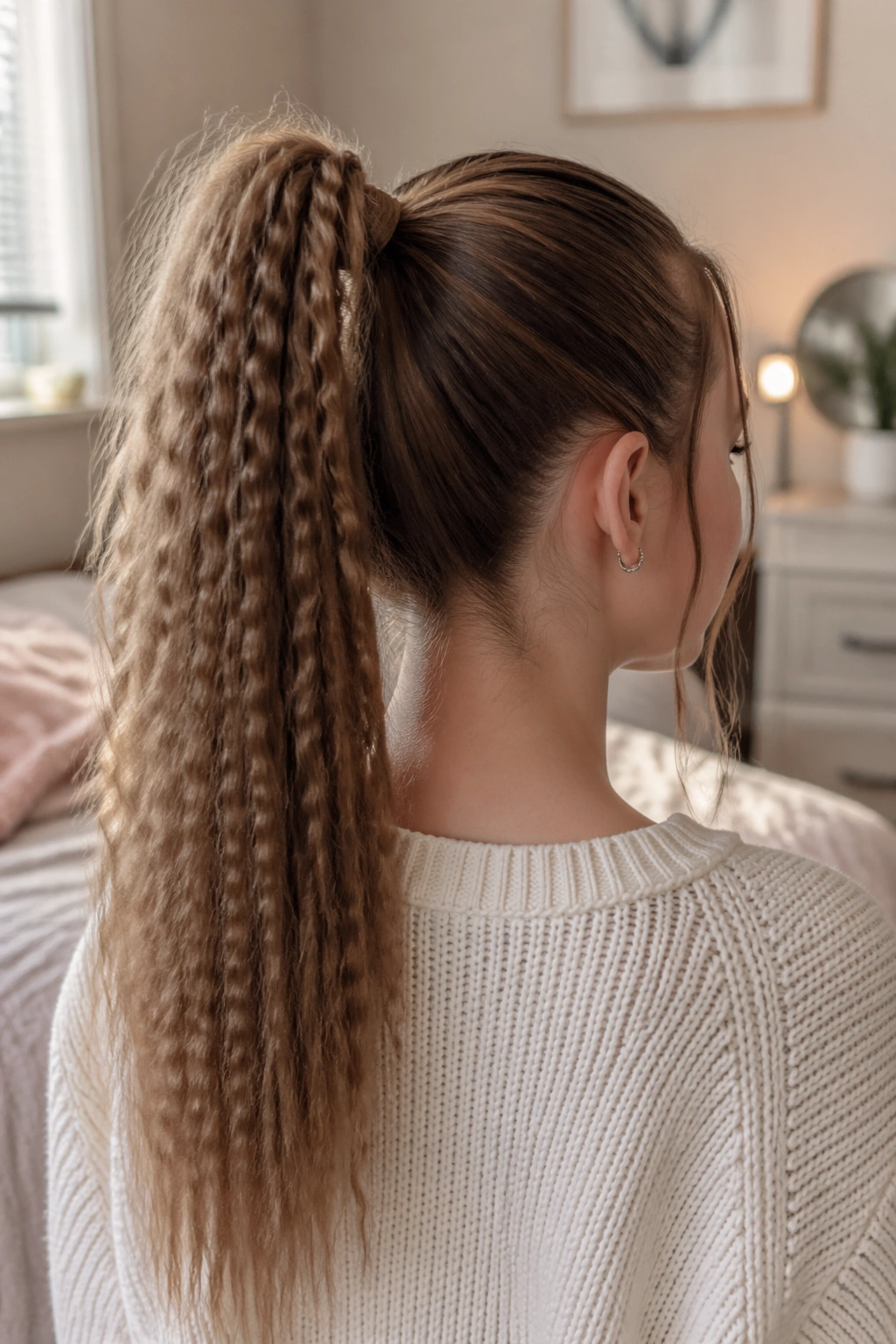
Crimped ponytails are loud in the best way. The texture adds a zigzag pattern through the whole tail, which makes even thin hair look full and gives straight hair a lot more grip.
You can crimp the whole head or only the ponytail itself. If you only crimp the tail, the roots stay smoother and the style feels a bit more wearable. That’s the version I like for teens who want texture without committing to the full throwback look.
A heat protectant matters here. Crimping tools use direct heat, and the hair at the ends can dry out fast if you skip protection. Once the ponytail is crimped, don’t brush it. Use your fingers to separate the sections gently, or you’ll lose the pattern. Crisp texture first. Then a little softness.
18. Braided Crown Ponytail
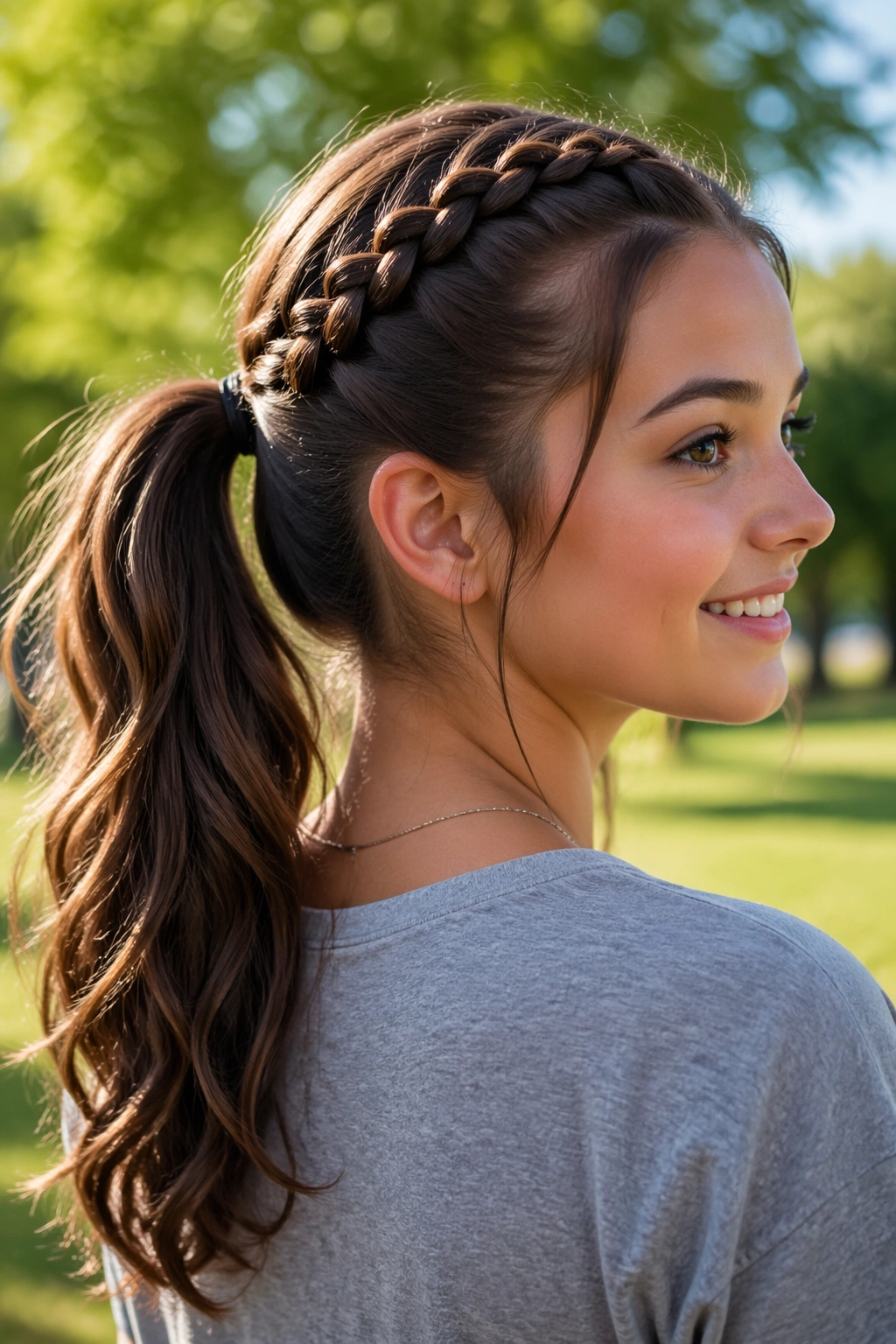
A braided crown ponytail brings braid detail to the top of the head and then gathers the rest into a ponytail. It looks more complicated than it is, which is always a nice place to be with hair.
Start a braid near one temple, carry it across the top or along the hairline, and feed it into the ponytail base at the back. The braid acts like a built-in headband, which keeps the front neat and makes the style feel more finished. It’s especially good for thick hair that needs a little structure.
If you want it to last, pin the braid flat as you go instead of hoping it will stay on its own. That sounds boring. It works. And on a busy day, boring hairpins are your friend.
19. Knotted Low Ponytail
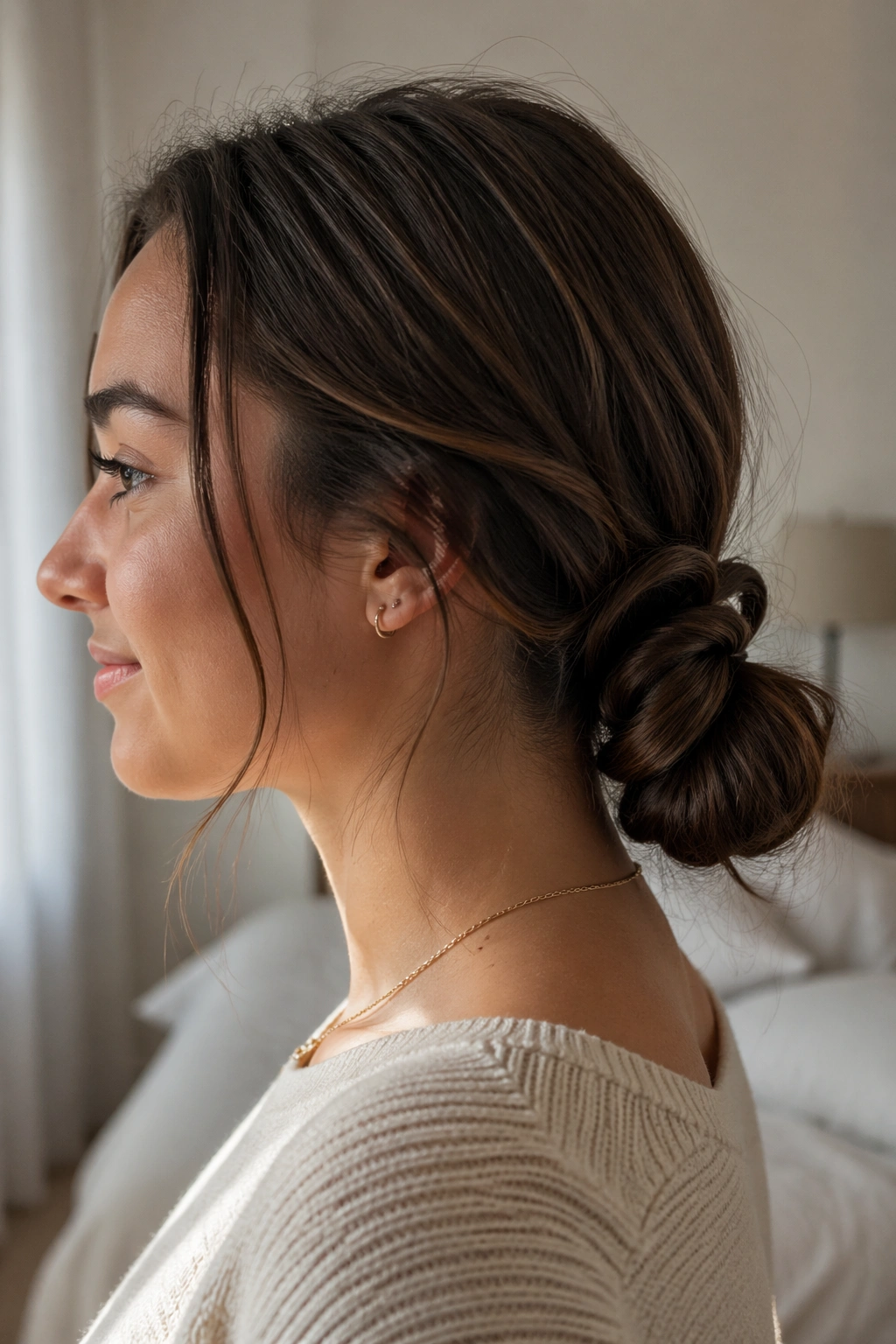
A knotted low ponytail has a softer, slightly artsy look because the base is tied in a knot-like shape rather than just cinched with an elastic. It’s a nice change when a regular low ponytail feels too plain.
The easiest version starts with two loose sections at the nape. Tie them into a simple knot, then secure the ends underneath with another elastic or a few pins. If your hair is slippery, add texture spray first so the knot has something to hold onto.
This style works best on medium to long hair and looks especially good with gentle waves. It’s not the tightest or most athletic option, but for a school presentation, dinner out, or a day when you want your hair to look slightly different without being dramatic, it hits the mark.
20. Sleek Bubble Ponytail
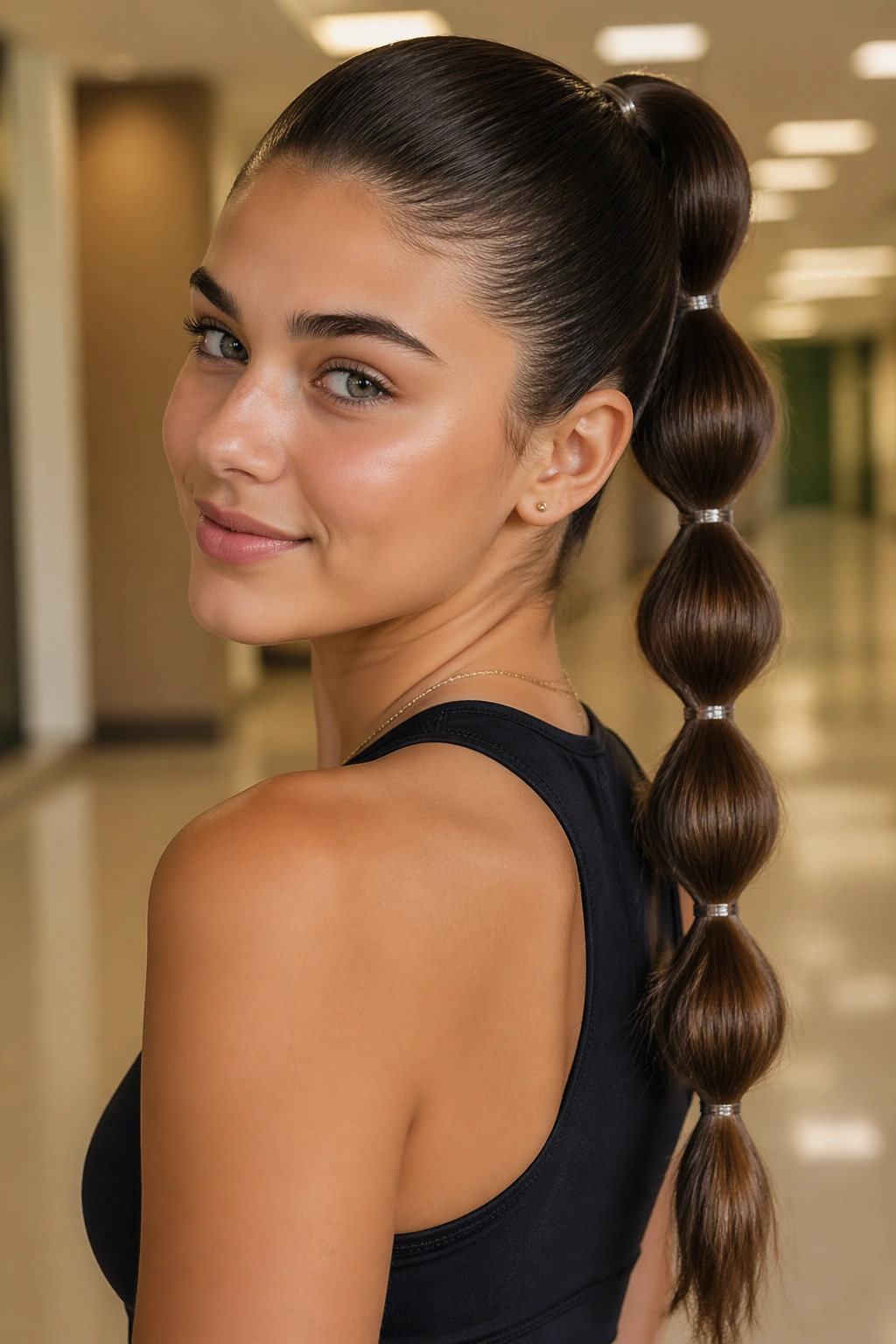
A sleek bubble ponytail takes the playful bubble shape and gives it a cleaner finish. The hair at the crown stays smooth, the base is tight, and the bubbles look more structured than casual.
This one is great when you want shape without frizz. Use a fine-tooth comb to flatten the top, then add small elastics down the tail with even spacing. The difference from the looser bubble version is the polish. Less puff, more line.
If your hair is naturally frizzy, smooth a tiny bit of serum over the tail before tying the elastics. Don’t overdo it or the bubbles collapse. You want the sections to hold their round shape while still looking shiny. That balance is the whole style.
21. Scarf-Tied Ponytail
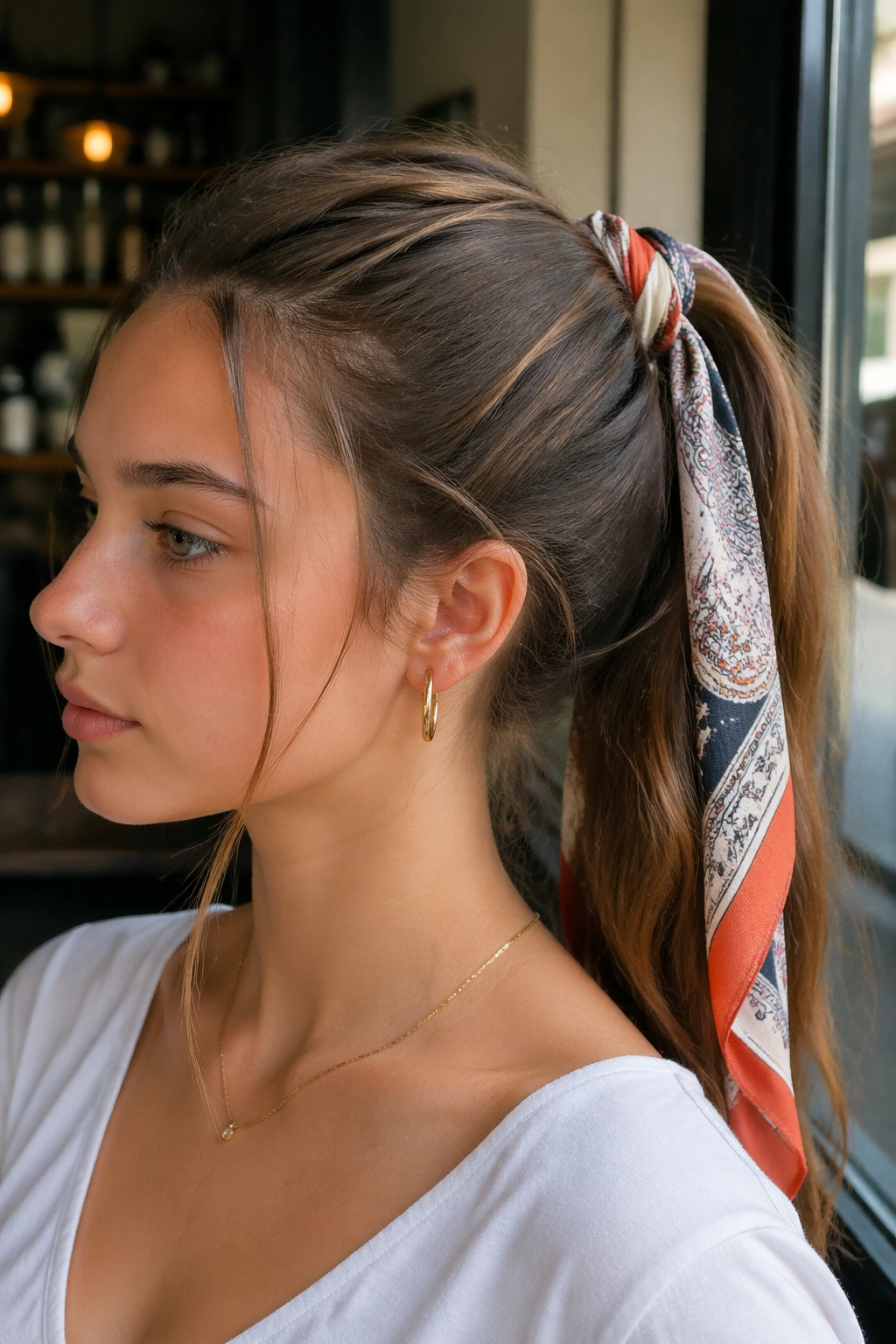
A scarf-tied ponytail gives you instant color and texture, and it solves the boring elastic problem in one move. Tie the hair back first, then knot a thin scarf around the base or weave it through the ponytail for a looser look.
How to Wear It Without Fuss
Choose a scarf that is narrow enough to stay put. Big, slippery scarves fall down and turn into a chore. A silk or satin strip works if you knot it firmly, but cotton has more grip and is easier for beginners.
- Best for low and mid ponytails
- Use a scarf about 1 to 2 inches wide
- Keep the rest of the outfit simple if the print is bold
- Works nicely with straight or lightly wavy hair
It’s one of those styles that looks extra thoughtful without taking forever. A small print near the base does a lot.
22. Waterfall-Braid Ponytail
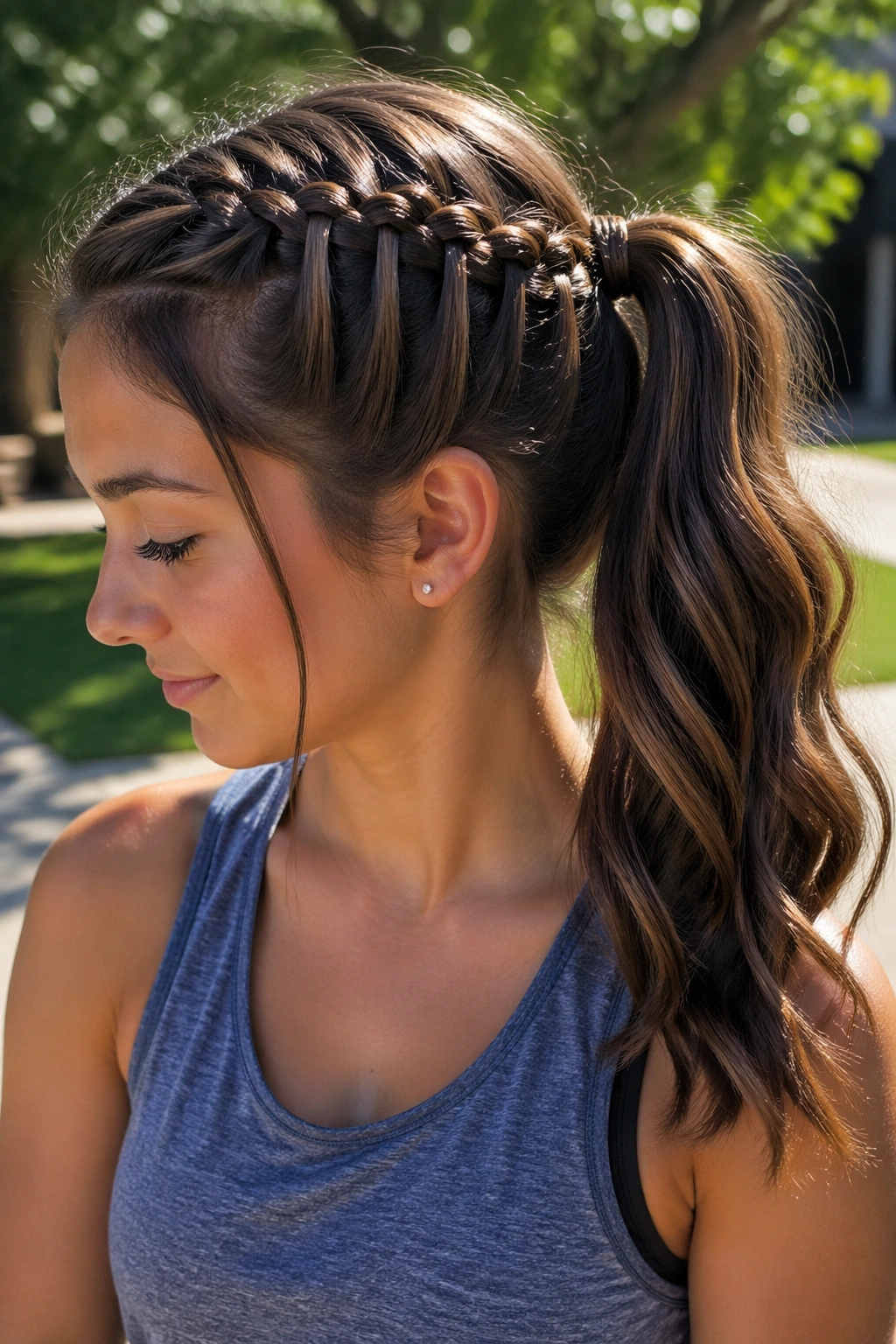
A waterfall-braid ponytail is one of the prettiest ways to blend braid work with a normal ponytail. The braid runs across the top section, dropping pieces through the pattern so some hair falls like a little cascade before the rest gets gathered back.
Unlike a full crown braid, this one keeps things softer and less dense. It’s a good pick if you want detail on top but still want the length to stay visible. The waterfall section looks especially nice with wavy hair because the dropped pieces blend into the rest of the style.
The braid should sit tight enough to hold, but not so tight that the scalp looks pulled. Pin it well at the back before forming the ponytail. If you’re doing this for a school event or a dressy dinner, curl the loose ends lightly. That tiny bit of movement makes the braid stand out.
23. Formal Low Ponytail
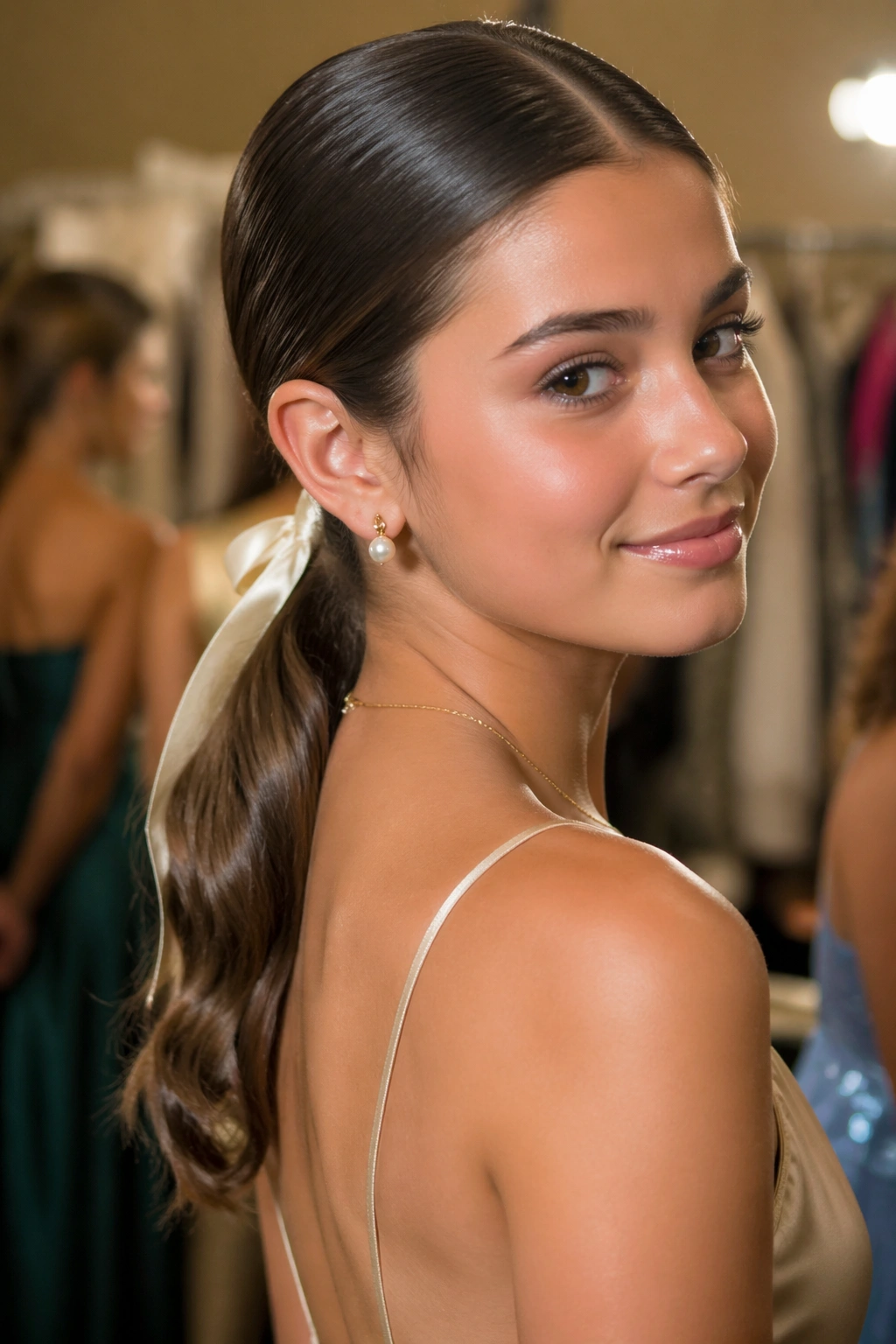
A formal low ponytail is what happens when a basic ponytail gets dressed properly. The shape stays low and smooth, but the finish is cleaner: polished roots, controlled ends, and usually a little curl or bend through the tail.
This style works well for dances, family events, photo days, and any setting where you want hair out of the face without looking casual. A deep side part or a smooth middle part both work here. If you have layered hair, tuck the shorter pieces with pins so they do not break the line.
I like this style with a slight wave at the ends rather than stick-straight hair. It feels more expensive, for lack of a better word, without being fussy. A small satin ribbon or a wrapped elastic also helps. Quietly elegant. That’s the feel.
24. Teased Voluminous Ponytail
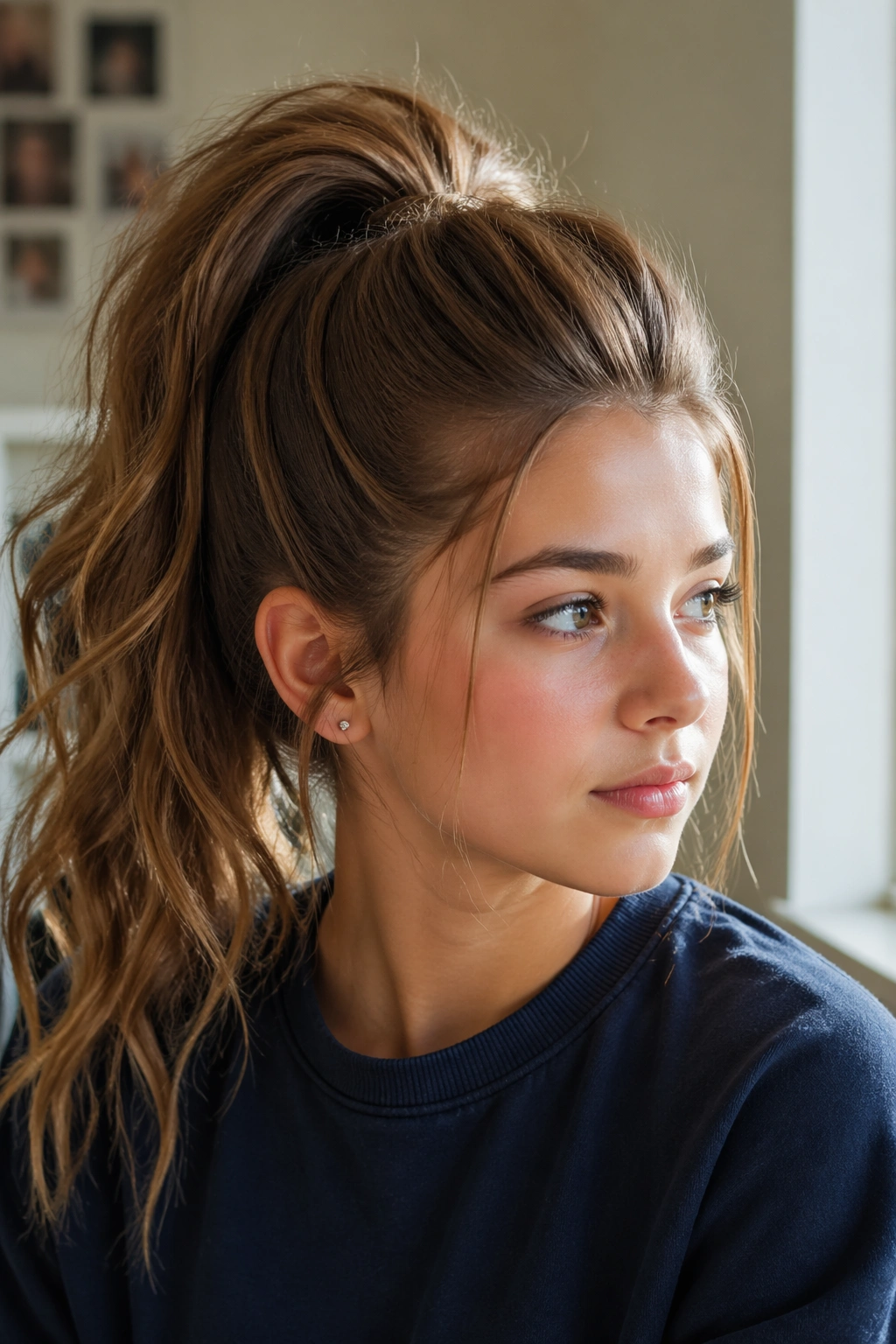
A teased voluminous ponytail is for the days when flat hair is not invited. You backcomb the crown lightly, smooth the outer layer, and let the ponytail sit high enough that the lift stays visible.
The trick is restraint. Over-teasing turns the top into a tangled mess, and that’s a headache to brush out later. Instead, tease 2 or 3 sections at the crown, smooth the surface, and secure the ponytail with a strong elastic. A little hairspray at the roots helps lock the shape.
This style is especially useful for long hair that tends to fall limp by midday. It keeps its shape better than a sleek version and reads bold without needing extra accessories. If you want more drama, curl the tail in big waves. If you want it to stay more school-friendly, leave the ends straight and let the volume do the talking.
25. Feed-In Braid Ponytail
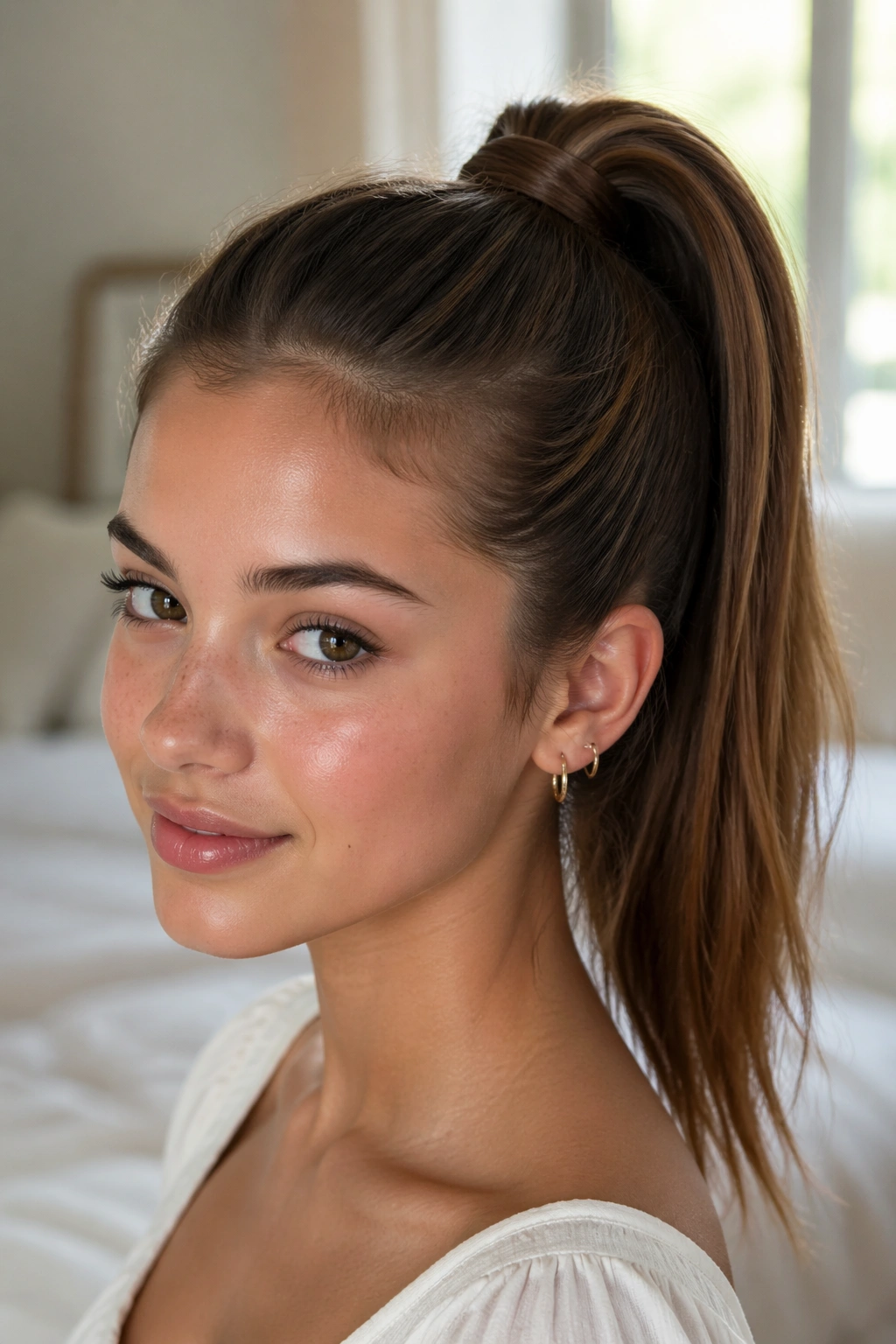
A feed-in braid ponytail is one of the most striking ponytail hairstyles for teens because it blends braid work, length, and control in one style. The braids start close to the scalp, then feed into a ponytail at the back, which keeps the front neat and the tail secure.
This style is especially good for textured hair, though variations can be adapted for different hair types with enough grip and care. The scalp line looks clean, the ponytail stays in place, and the whole style can last well beyond a single school day if it’s installed properly. That longevity matters when you do not want to redo your hair every morning.
A little edge control around the hairline helps keep the finish smooth, but don’t overdo it. Heavy product makes the front look greasy instead of polished. If you want a more casual version, leave the ponytail itself full and fluffy. If you want something sharper, wrap a strand around the base and keep the braids tight. Either way, it’s a strong final pick because it works hard and looks good doing it.
