



Black women have always understood something that mainstream beauty culture is only catching up to: your natural curls, coils, and kinks are already formal. They don’t need to be straightened, pinned beyond recognition, or transformed into something else to belong in elevated spaces. Formal styles for curly hair Black women start with that understanding — and then build on it with technique, intention, and the right accessories to create looks that are genuinely stunning for galas, weddings, corporate events, and every occasion that asks something special of you.
What “Formal” Actually Means for Natural Hair
The category of “formal hair” was built around Eurocentric beauty standards, and it’s worth naming that clearly before moving on to the actual styles. For much of recent history, formal hair meant smooth, sleek, and straight. Natural hair was considered “unprofessional” or “casual” — a categorization rooted in bias, not aesthetics.
Today, more and more people have moved past that framework. Natural curls in their full glory are welcomed and celebrated at events that once would have required a press and curl. But the transition isn’t complete, and some spaces still carry that legacy. The good news is that none of that changes what makes your hair beautiful — and the styles in this article are built to be undeniable in any room.
Choosing a Style That Matches the Event
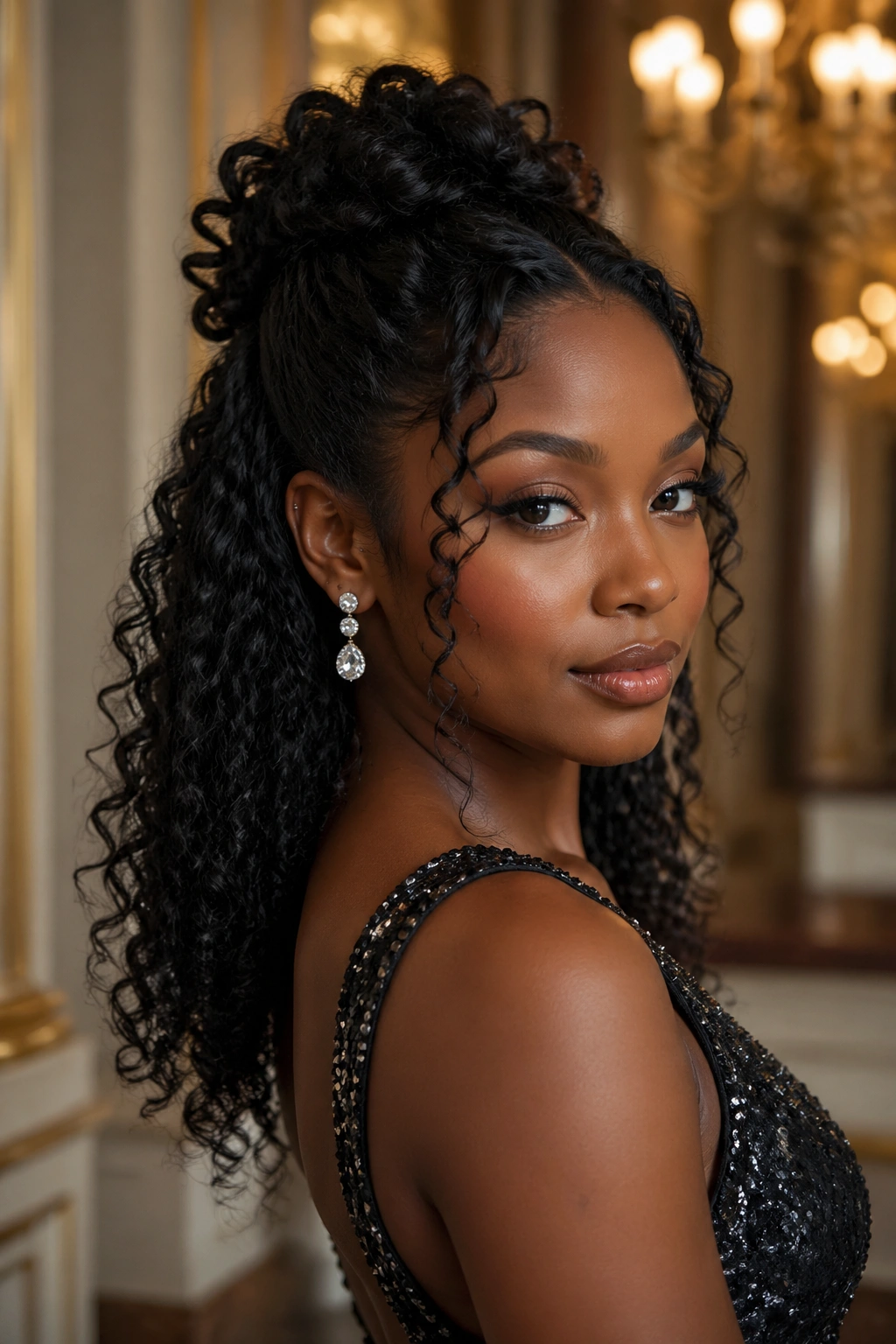
Not all formal events are the same, and your hairstyle should be appropriate for the specific occasion. A garden wedding has a different energy than a black-tie corporate gala. A graduation ceremony has different needs than a prom night. Consider the formality level of the event, the time of day, the likely dress code, and whether you’ll be dancing, sitting through a long ceremony, or moving constantly.
As a general guide: the more traditional and formal the event, the more structure your updo should have. For black-tie events, sleek updos, structured buns, and styles with significant hold work best. For semi-formal events, half-up styles, defined braid-outs, and decorated wash-and-go looks fit the occasion beautifully. For weddings and celebrations, you have the most freedom — this is where the most creative and personal styles shine.
Hair Health Prep for Formal Styling
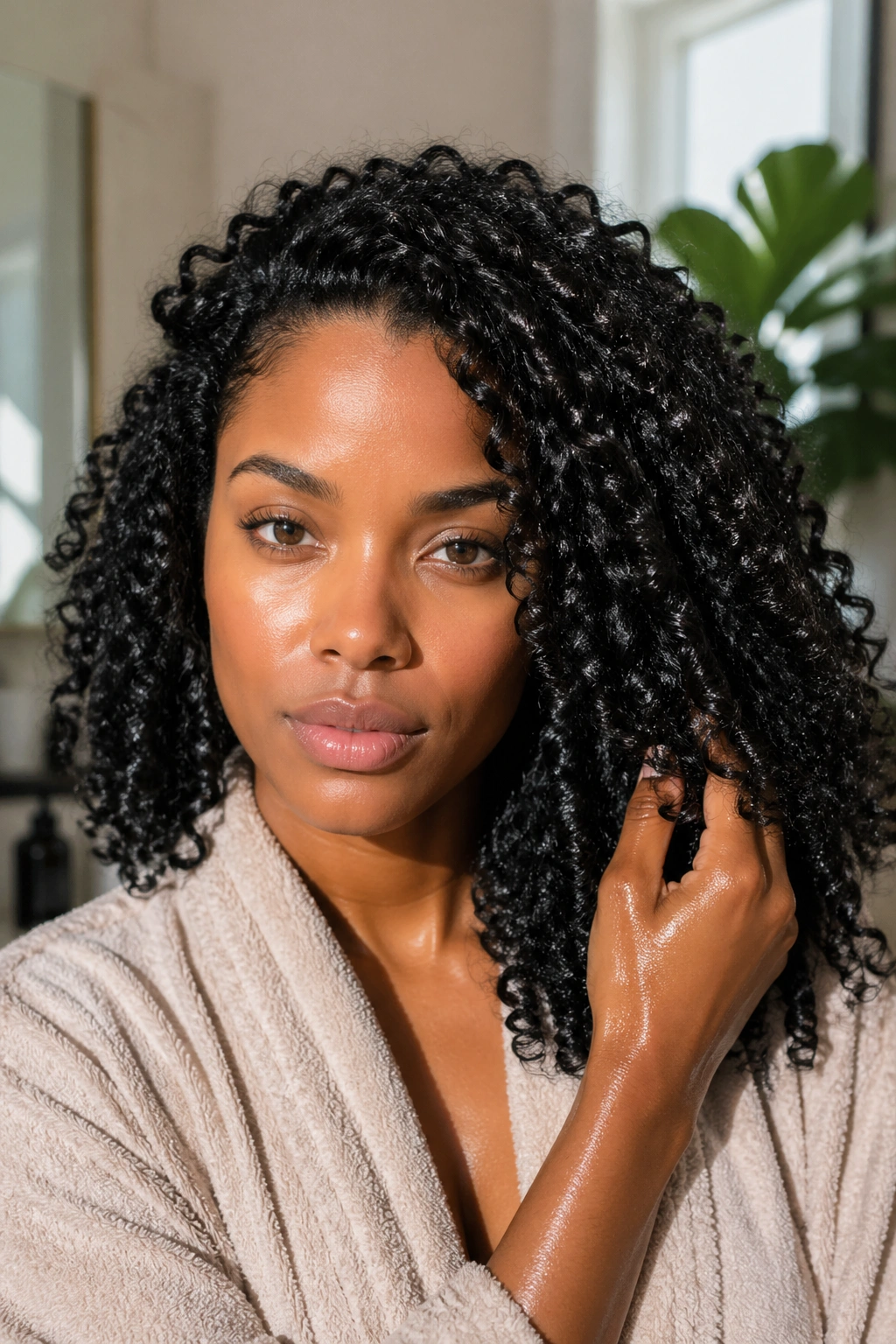
The foundation of any beautiful formal style is healthy, well-moisturized hair. You cannot create a polished, long-lasting formal style on hair that’s dry, brittle, or prone to frizz. The prep window for a formal event should start five to seven days out.
Start with a clarifying wash to remove any product buildup, followed immediately by a deep conditioning treatment. Protein and moisture need to be in balance — if your hair is prone to breakage, include a protein treatment in this pre-event prep. In the days between, keep hair moisturized with a light leave-in and seal with a butter or oil. By the day of the event, your curls should be at their most hydrated, elastic, and ready to hold whatever style you choose.
Working With a Natural Hair Stylist
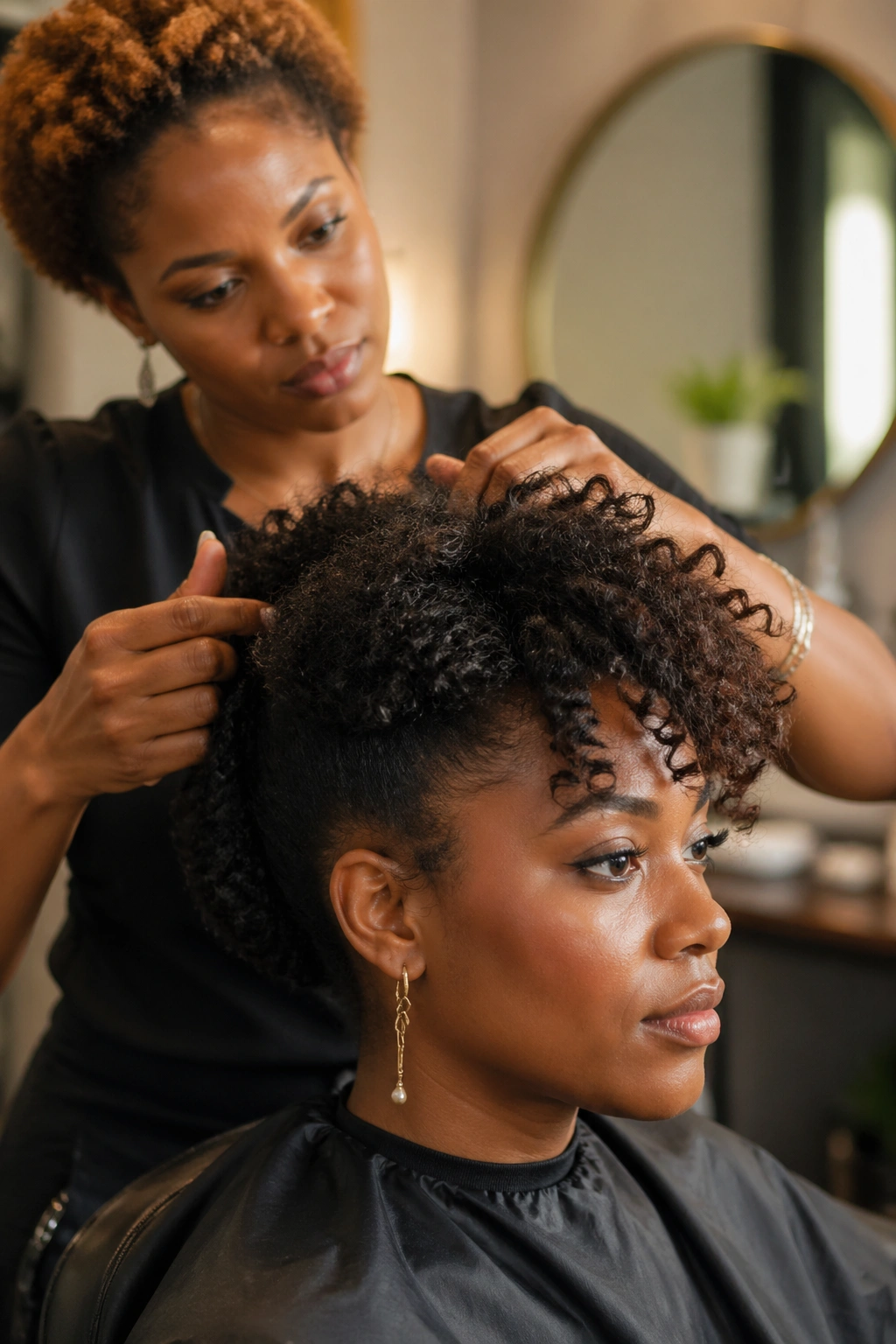
If you’re going to a stylist for a formal event, choosing someone who specifically understands natural hair and Black hair textures is non-negotiable. A stylist unfamiliar with your texture can cause damage, produce an unintentional result, or simply not know how to work with your curl pattern to achieve the style you want. Ask to see their portfolio — specifically images of formal styles done on hair like yours.
Bring your own products if you have a preferred line, and be specific about what you want. Bring three reference photos that show the vibe, not necessarily the exact style. Communicate your texture, your length, and any concerns you have about hold or frizz. A good stylist treats this as collaboration, not a service transaction.
Making the Style Last All Evening
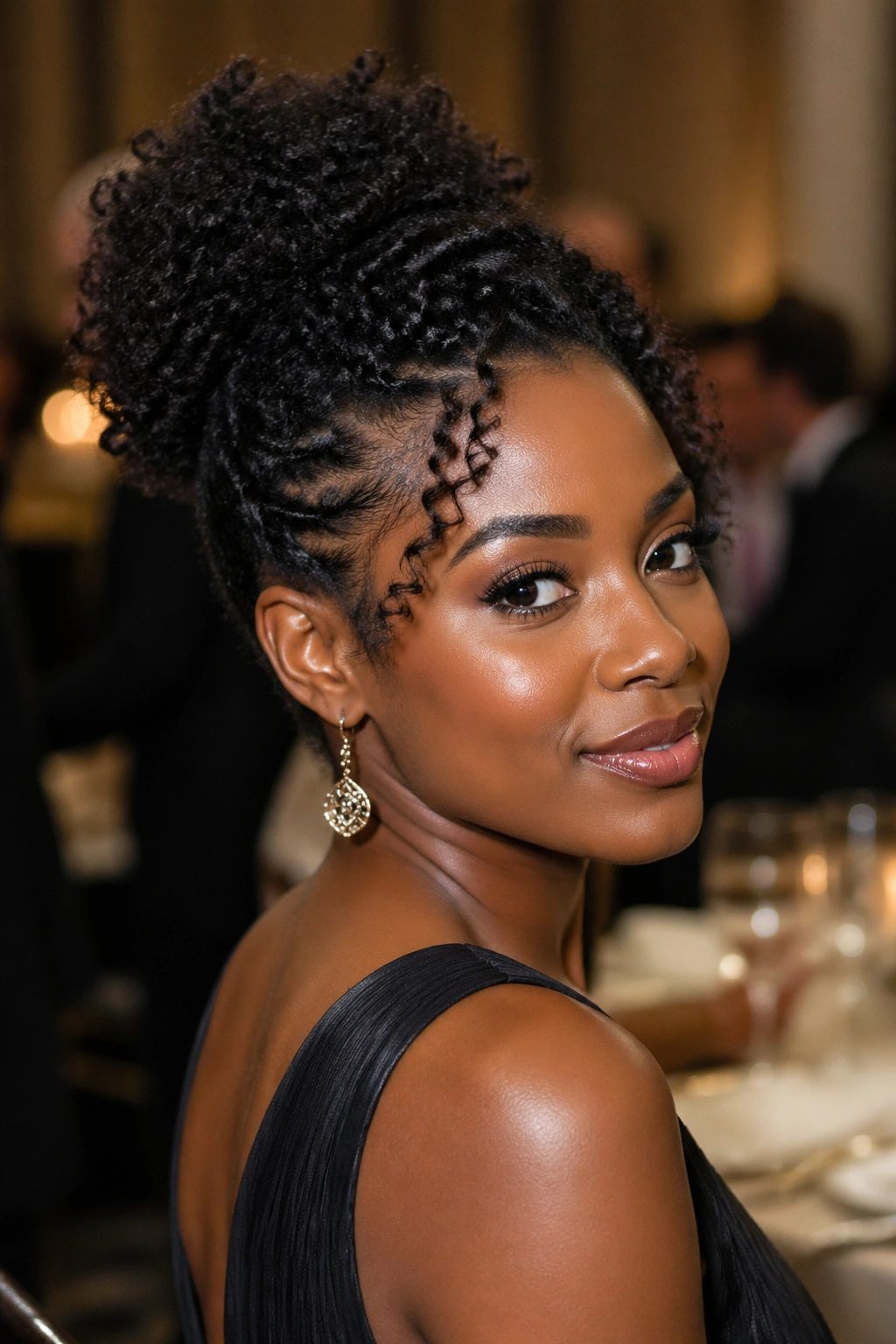
Even the best formal style needs a little support to look great at the end of a long evening. The right products are the first line of defense: a strong-hold gel for updos and pinned styles, a light anti-humidity serum for any styles worn down. For formal events with dancing, secure all pinned sections with bobby pins in an X pattern for maximum hold.
Second line of defense: minimal touching. Every time you run your fingers through your curls, you break up the definition and introduce moisture from your hands. Dance with intention, not with your hands in your hair. And if you have a clutch with you, a small anti-frizz serum, a few extra pins, and a travel-sized mist bottle can handle any mid-event refreshes.
1. Sculptural Flat Twist Updo
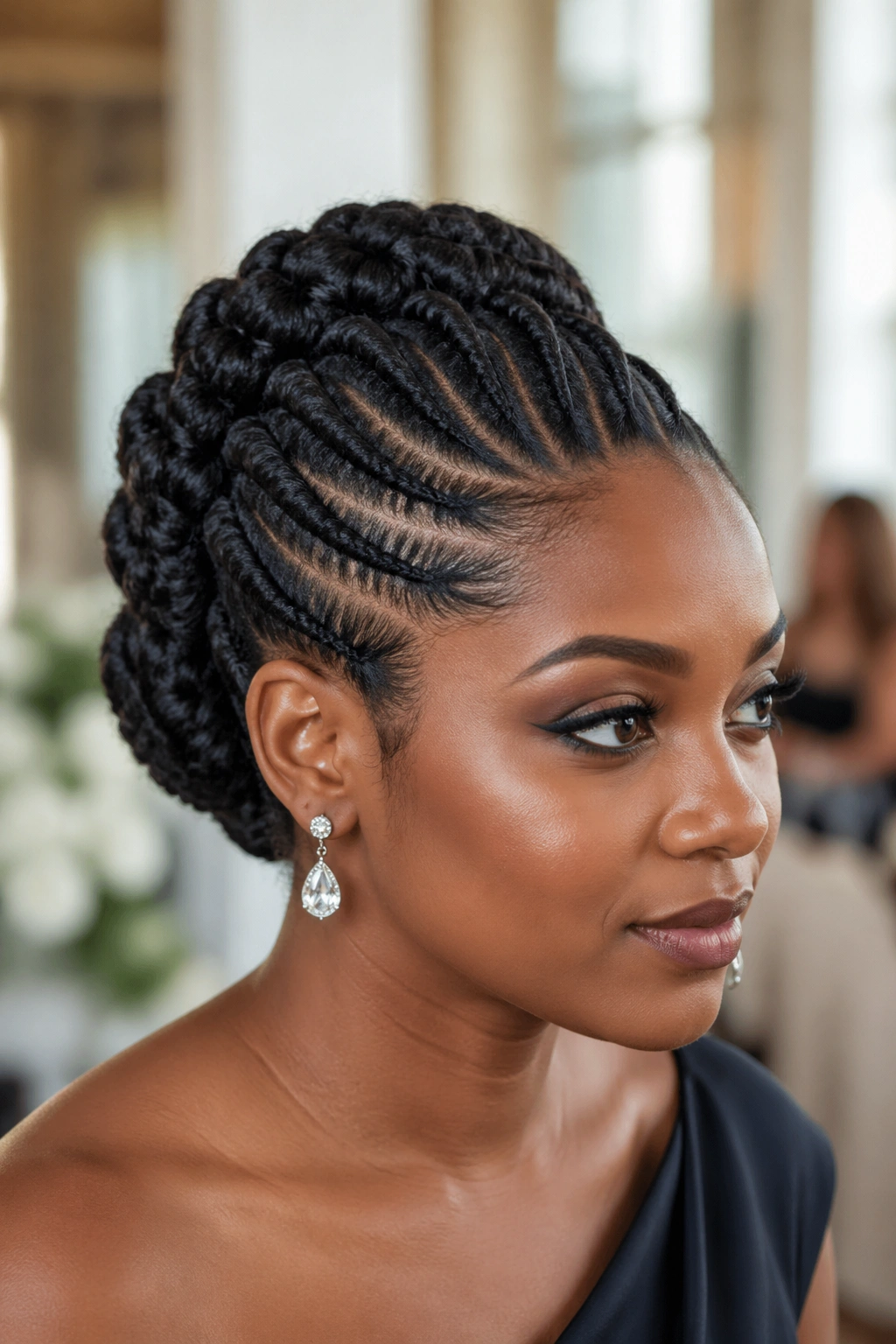
Multiple flat twists — laid directly on the scalp and directed in sweeping, curved patterns — feed into a gathered, structured updo at the crown or nape. The flat twists themselves create linear, graphic patterns across the scalp that are as beautiful as any braid pattern, and the gathered updo gives the overall style a polished, formal finish.
Bold fact: a well-executed flat twist updo can take anywhere from two to four hours to complete — which is why this is a style to plan ahead for, either with a stylist or with ample time at home. The time investment shows in the result.
2. Curly Chignon With Pearl Detail
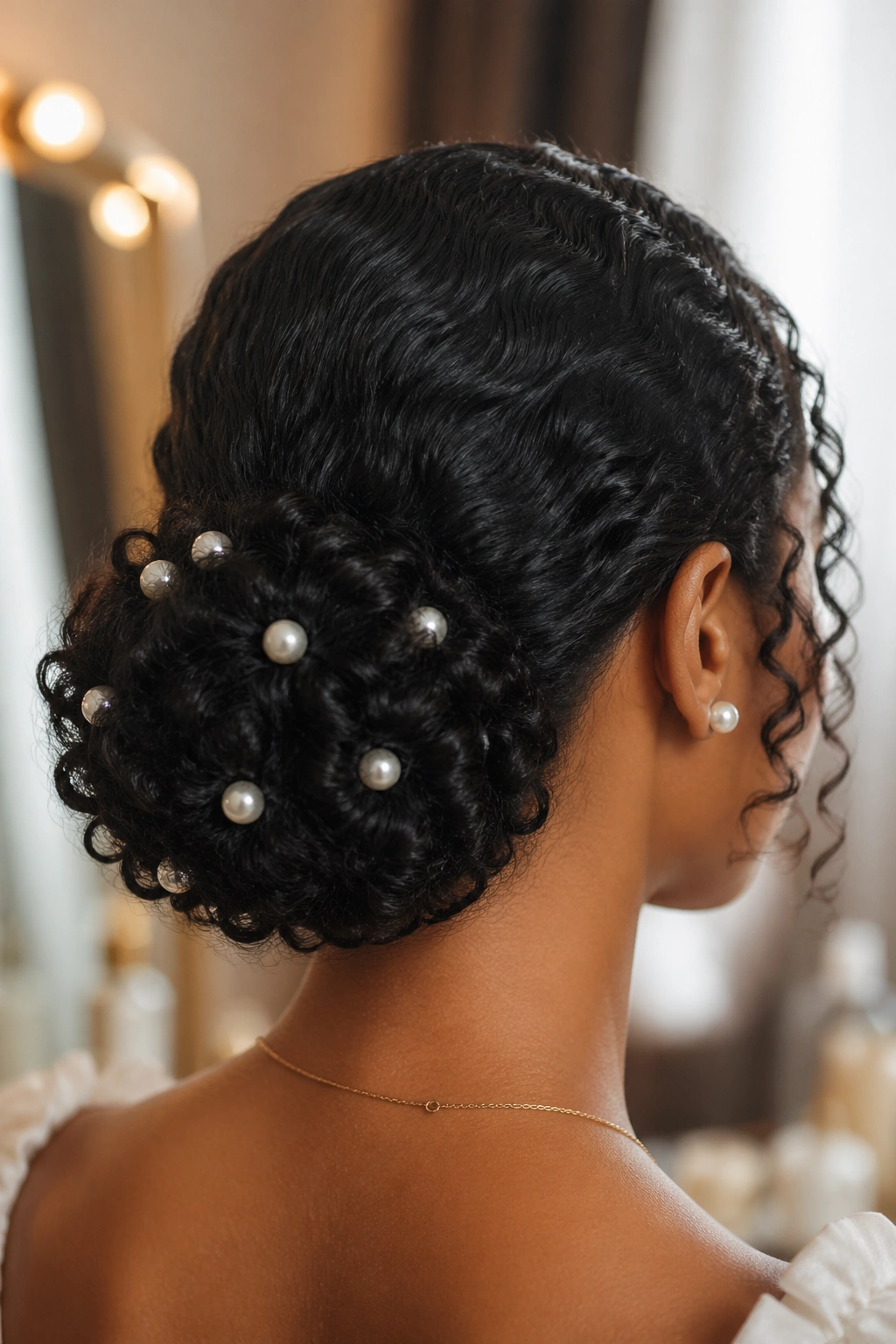
A chignon — that low, gathered style at the nape of the neck — is one of the most enduringly formal hairstyles across any hair type. On natural hair, a curly chignon lets the texture speak while the structure of the gathering communicates intentionality. Add pearl pins throughout the gathered section for a detail that reads as genuinely luxurious.
Use a stretching method before gathering — either a banding method or a blow-dry on low — so the hair gathers smoothly at the nape without excessive bulk. The smoother the base, the more polished the final look.
3. Defined Wash-and-Go With Statement Tiara
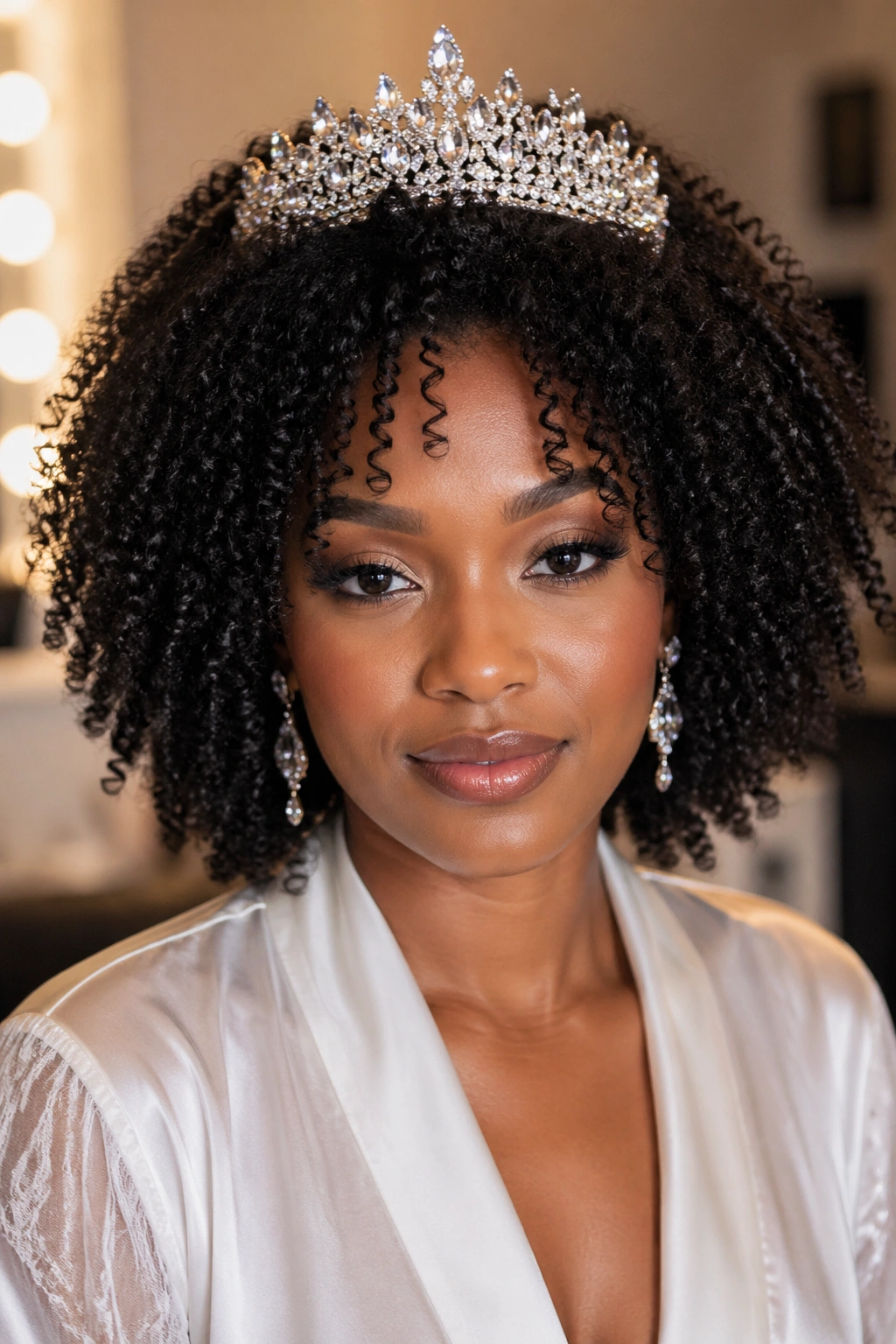
A wash-and-go done correctly — with properly layered products, a diffused finish, and fully dry, separated curls — is one of the most beautiful hairstyles that exists. For formal events, the missing element is usually just one: an accessory that signals occasion. A crystal or pearl tiara placed at the crown of a full, defined wash-and-go transforms it immediately into something unmistakably formal.
How to Achieve This Style
- Wash and condition with a moisturizing routine
- Apply leave-in, then curl cream, then strong-hold gel
- Diffuse on low heat in a scrunching motion
- Once completely dry, separate curls for volume — gently
- Place tiara at the front of the crown and secure with the built-in teeth
4. Braided Mohawk With Decorative Back
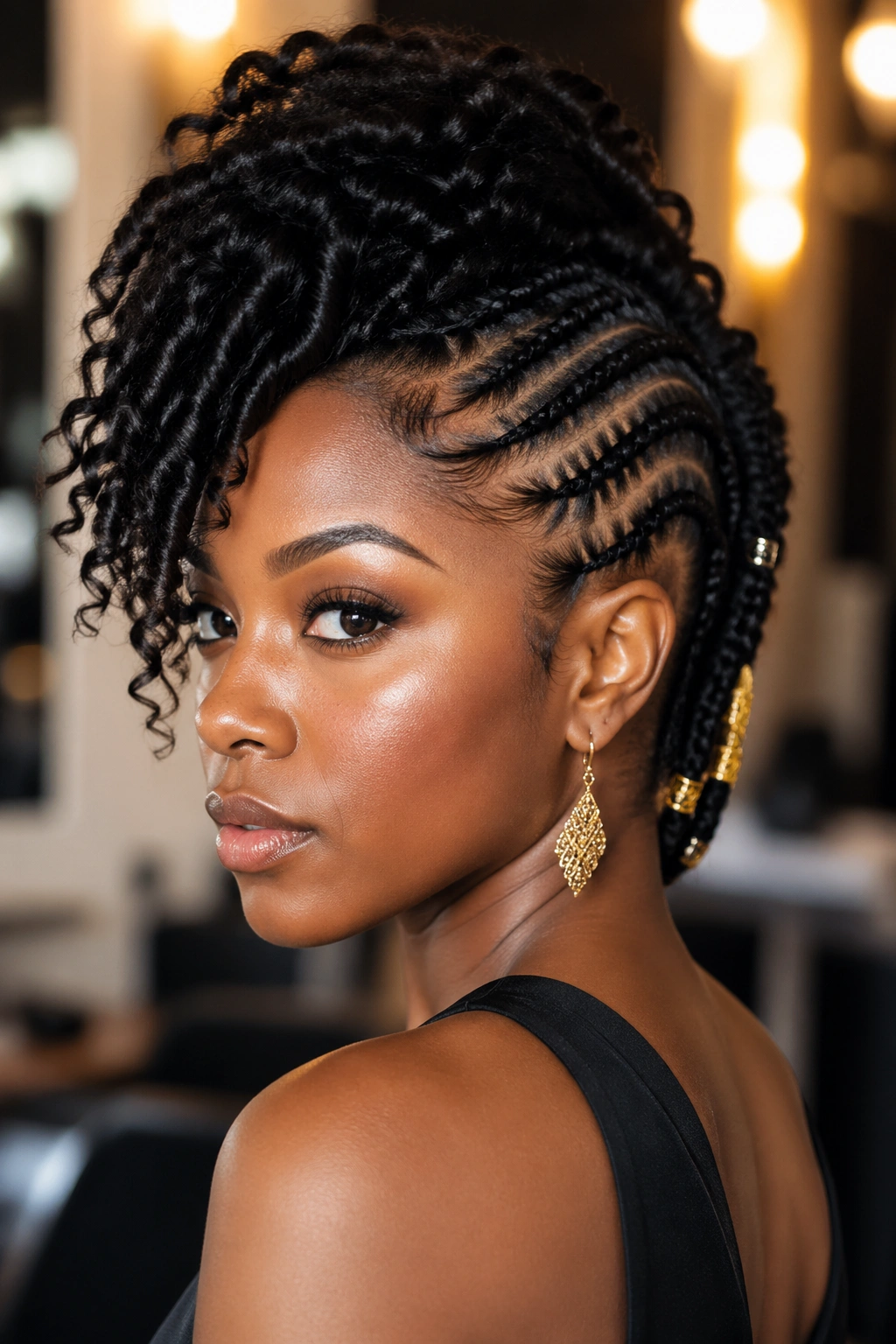
The sides of the hair are cornrowed from the temples toward the nape, while the center strip is left natural and worn in its full, voluminous curl pattern. The braided sides create a clean, structured frame, and the natural center is the dramatic focal point of the style.
For formal events, add gold cuffs at the end of each braid on the sides, and use a strong-hold gel on the center curls for maximum definition. The combination of sleek braid and full curl is the visual tension that makes this look so striking.
5. Low Twisted Ponytail
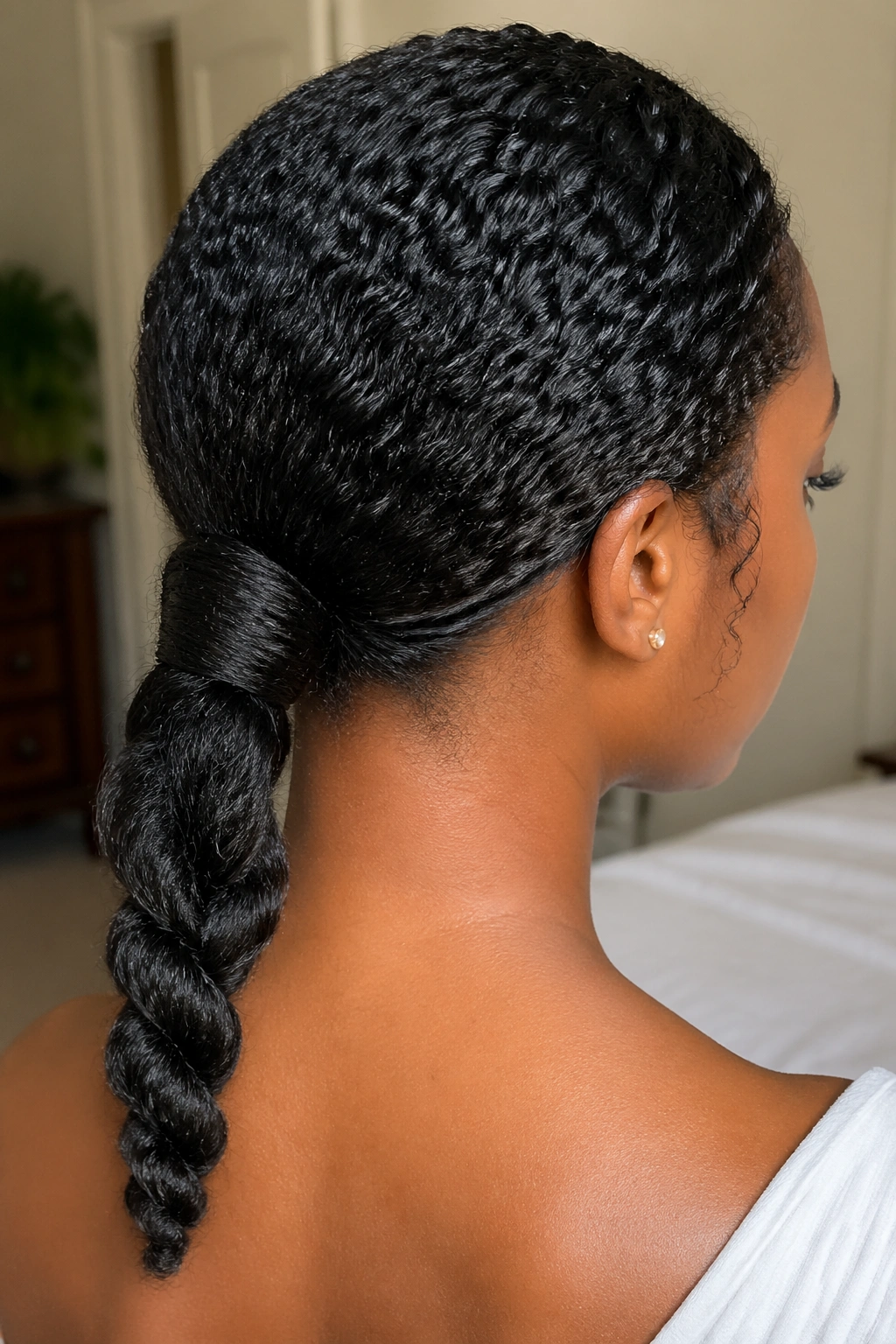
A twisted ponytail isn’t just a simple pull-back — it’s an updo in its own right. Gather your hair at the nape, then twist the ponytail itself (rotating all the hair in the same direction while twisting) before securing the end. The twist makes the ponytail look more structured and polished than a plain gathered tail.
Add a wrapped section around the elastic to conceal it — take a small piece from the ponytail, wrap it around the base, and pin underneath. This single detail separates a polished twisted ponytail from a casual one.
6. Knotless Braids Updo With Metallic Cuffs
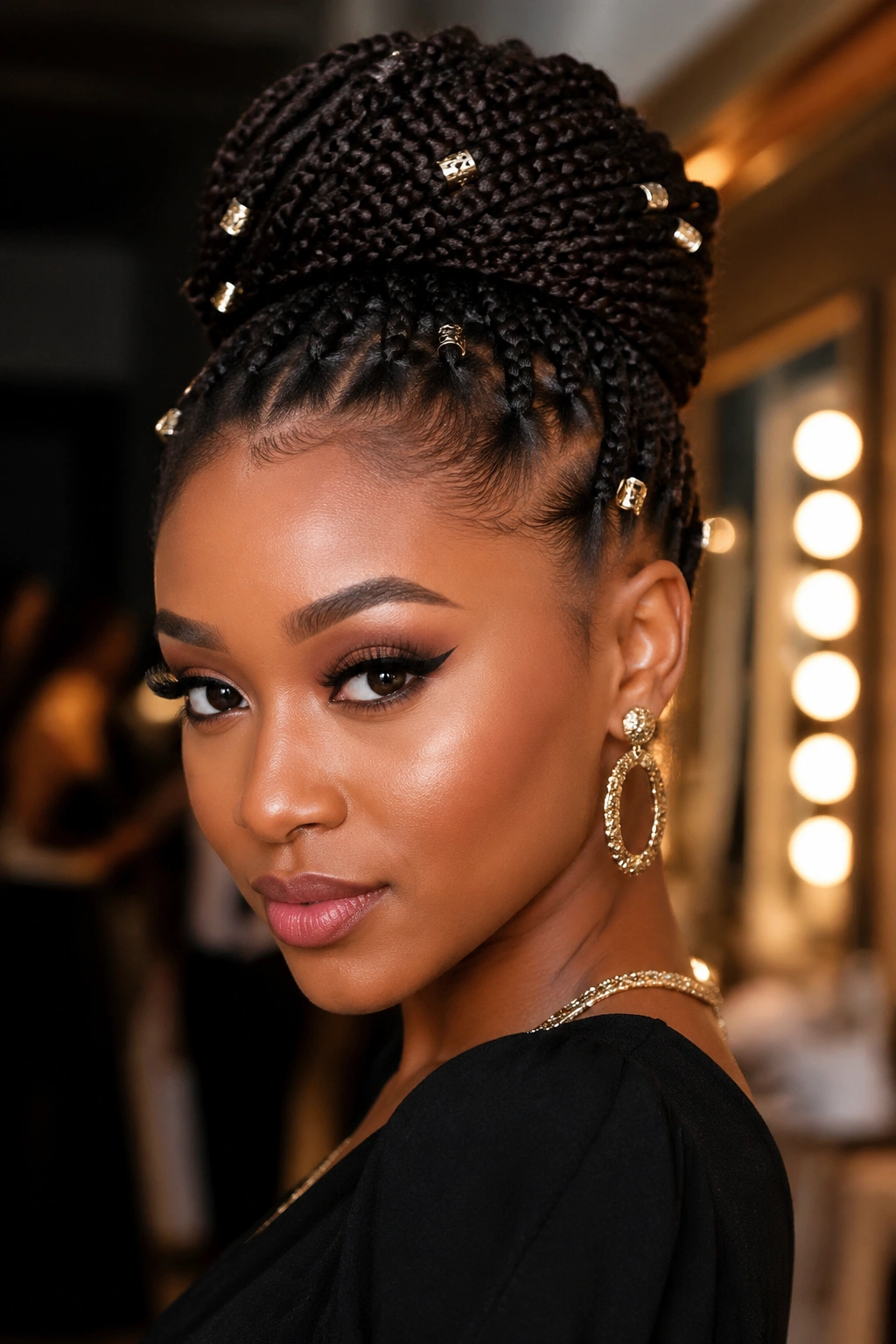
Knotless box braids gathered into a formal updo — a bun, a pinned arrangement, a structured fold — bring texture, weight, and presence that’s hard to achieve with looser hair. The metallic cuffs placed at strategic points along the braids or at the base of the gathered section add a deliberate formal touch.
Knotless braids are one of the best protective styles for formal events because they’re versatile enough for multiple styling configurations throughout the event — or across multiple events if the installation is fresh.
7. Twisted Crown With Curls Cascading Down
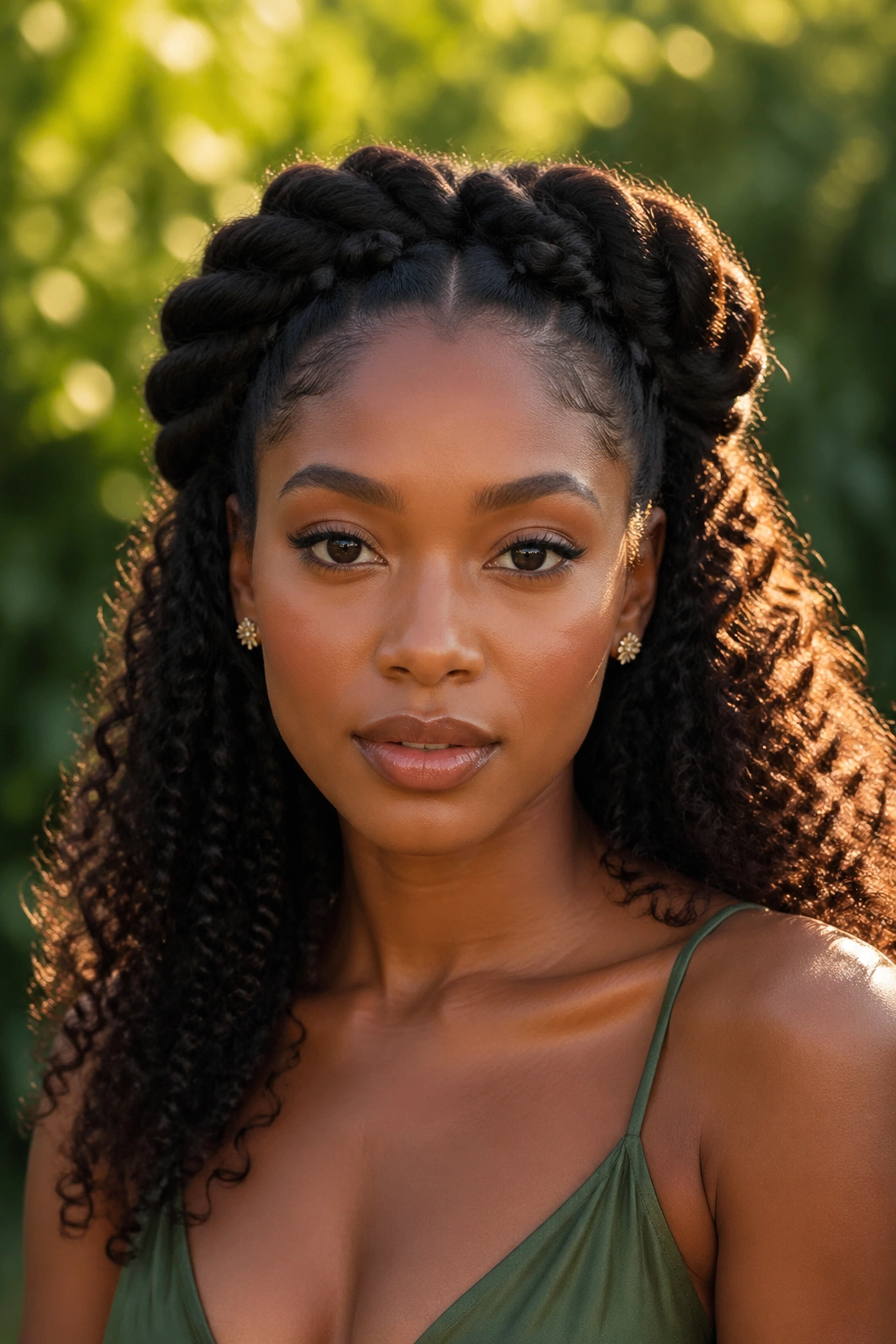
Two large twists travel from the front of each side toward the crown, pinning at the top of the head like a crown. The bulk of the hair falls from the crown point downward in loose, defined curls. Viewed from the front, the twisted crown frames the face and top of the head elegantly. Viewed from behind, the cascade of curls provides drama and volume.
8. Formal Fro With Sculpted Edges
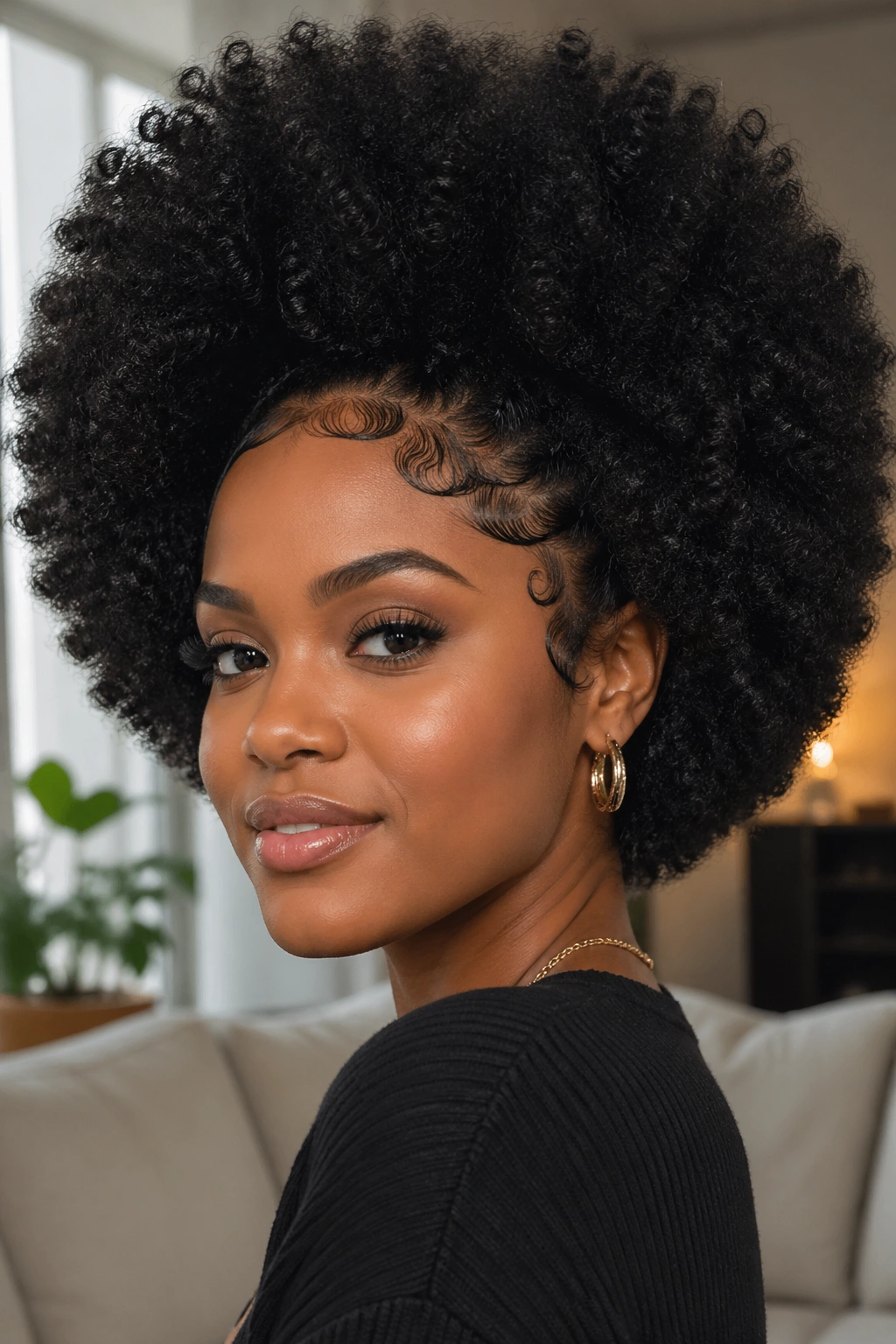
A full, shaped Afro paired with deliberately sculpted edge work is a formal style that communicates exactly how much intentionality went into it. The edge art can be as simple as defined baby hairs following the natural hairline, or as elaborate as small swirls, figure-eights, and wave patterns — either way, the combination of a shaped Afro and detailed edges is unmistakably a formal choice.
The Afro needs to be shaped. Use an Afro pick to lift and even the silhouette from all angles before adding any accessories. A symmetrical, full shape is the difference between a formal Afro and a casual one.
9. Loose Curl Half-Up With Braided Detail
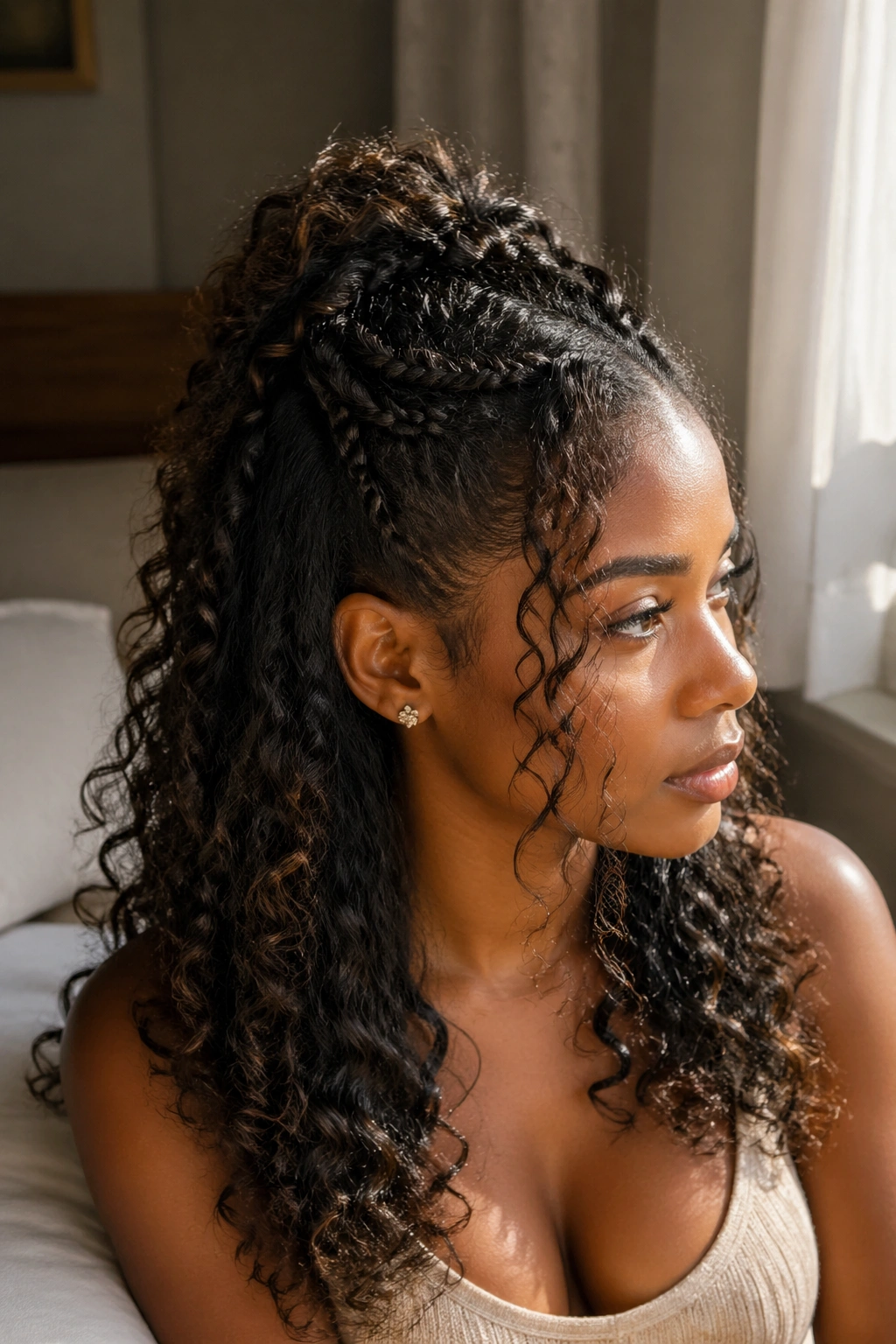
A half-up style where the pinned section includes a braided detail — even one small braid woven through the gathered portion — adds an element of artistry that makes the whole look feel composed. The braid can travel across the top before pinning, or it can emerge from within the puff itself, depending on your hair length and preference.
10. Sculptural Bun With Exposed Nape
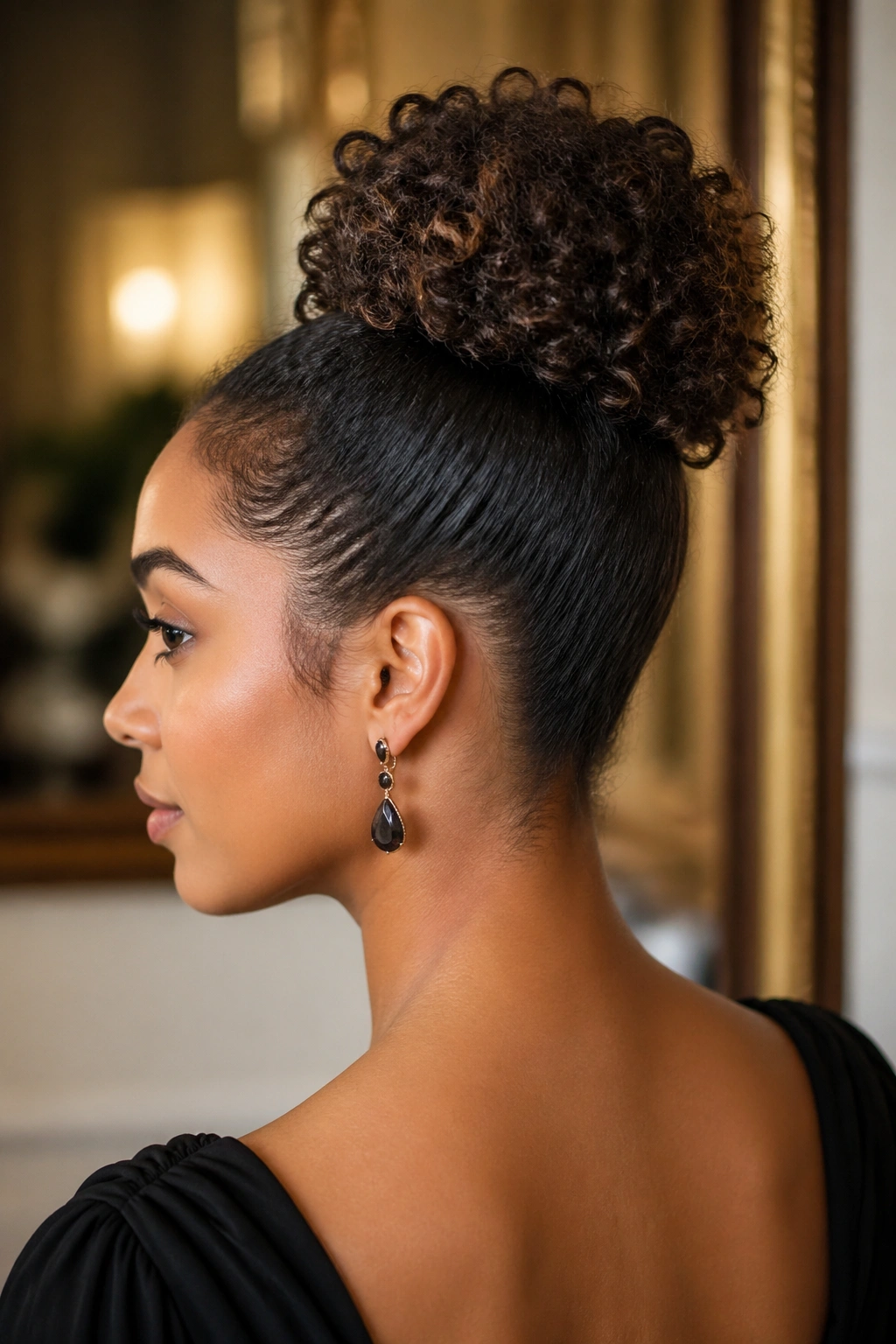
Gather all of your hair high on the head into a bun, but instead of letting the sides smooth down naturally, define the shape of the bun so it sits very deliberately at the crown with a clean, rounded silhouette. Leave the nape completely bare — no tendrils, no flyaways. The exposed nape on a dark complexion is beautiful in its own right, and a clean nape elevates the whole look.
How to Achieve This Style
- Use a small amount of gel on the sides and nape to smooth the base
- Gather all hair at the very top and secure with a strong elastic
- Twist the ponytail and wrap it into a bun shape
- Pin the bun thoroughly to maintain the rounded silhouette
- Edge control at the hairline and nape for final cleanup
11. Side-Pinned Cascade
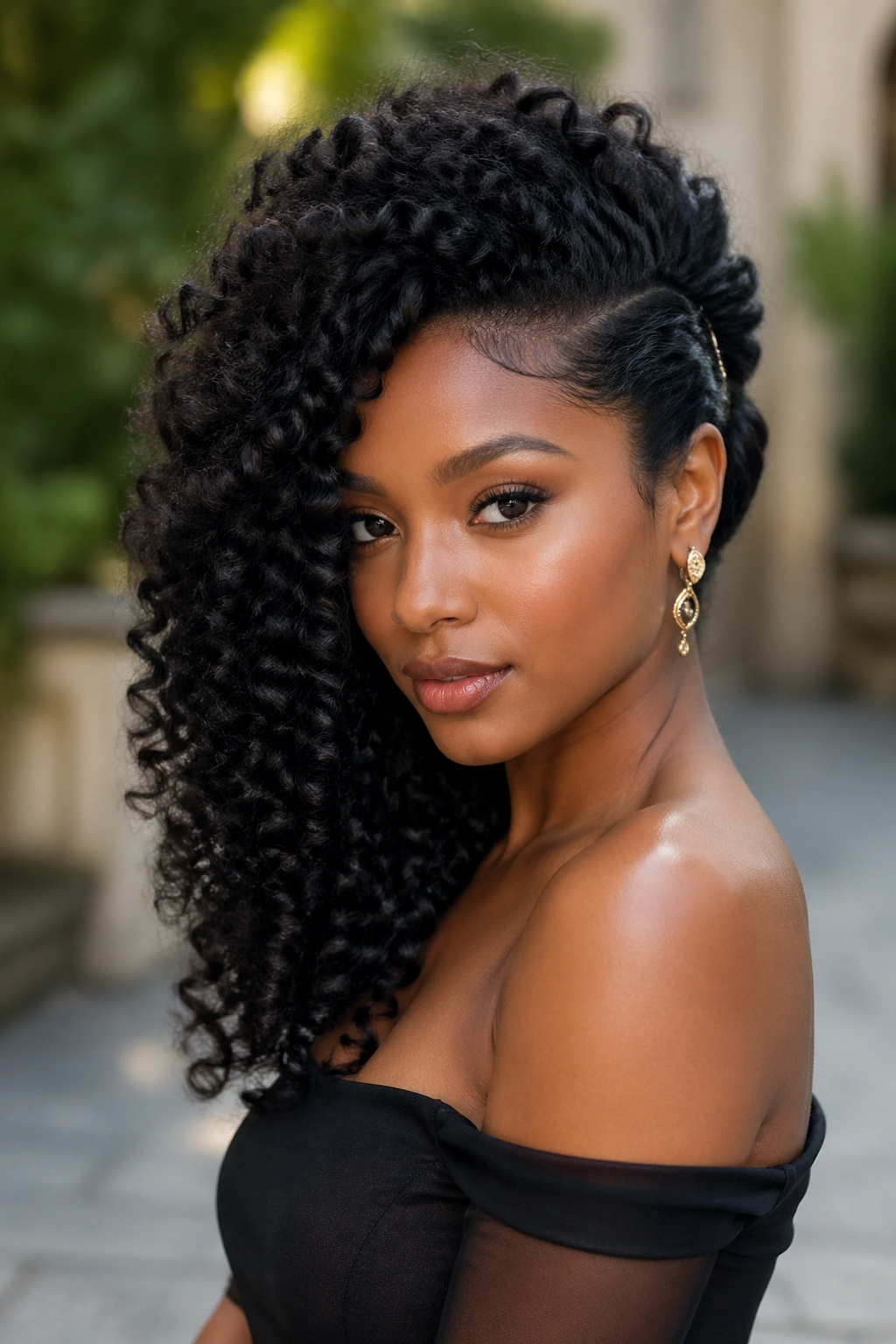
The side-pinned cascade places all of your curls on one side, pinned at the temple or ear and cascading down over one shoulder. It’s asymmetrical, it’s dramatic, and the one-sided nature of it leaves the opposite ear and shoulder completely exposed — perfect for showing off a statement earring or a bare-shoulder dress neckline.
12. French Roll With Textured Finish
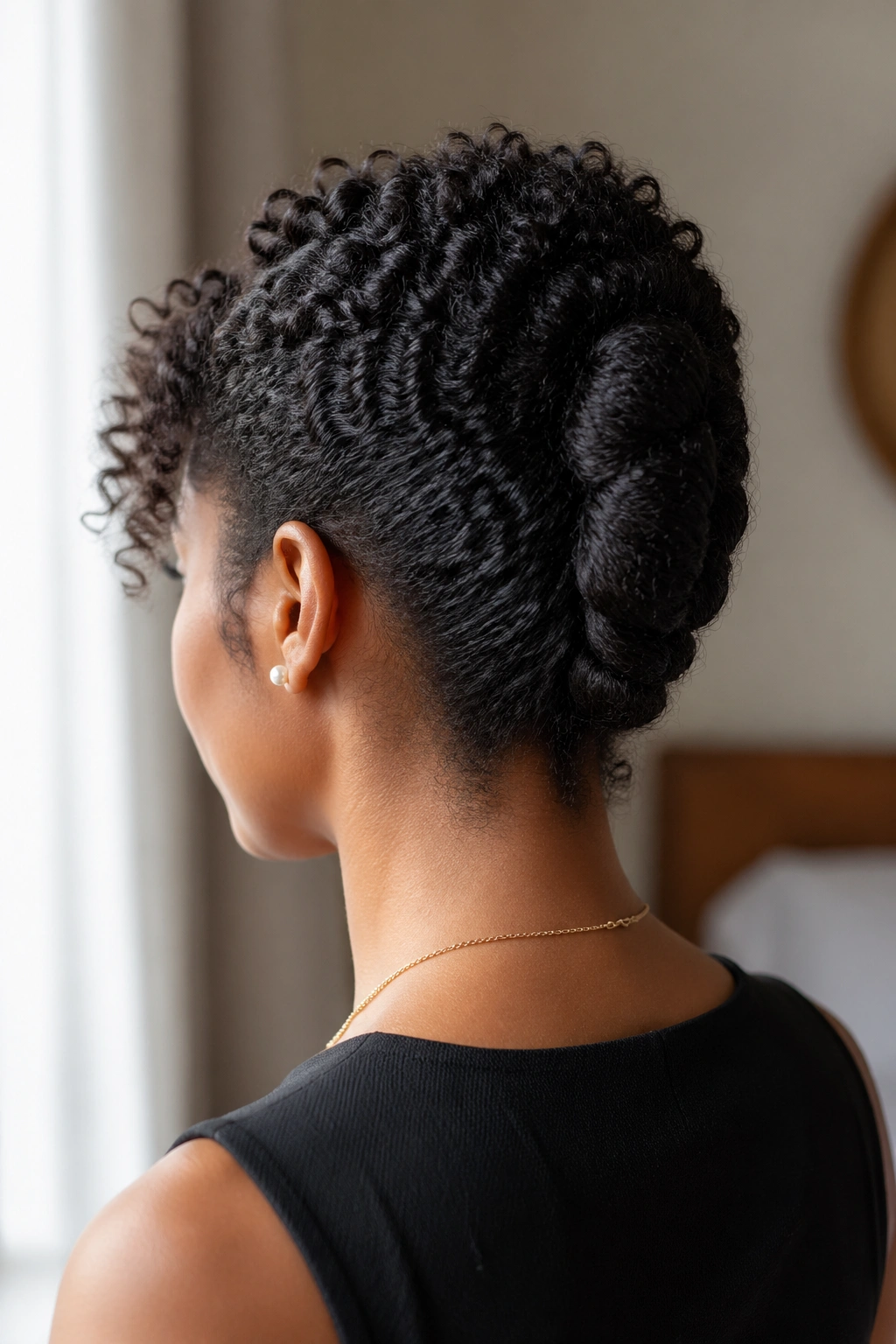
A French roll — the classic tucked-under, vertical roll at the back of the head — works on natural hair when done with a stretched base. The curls on the surface of the roll give it incredible texture compared to a smooth French roll on straight hair. The textured surface is the feature, not a compromise — it photographs beautifully and has dimensional depth.
13. Cornrow Base With Curly Top
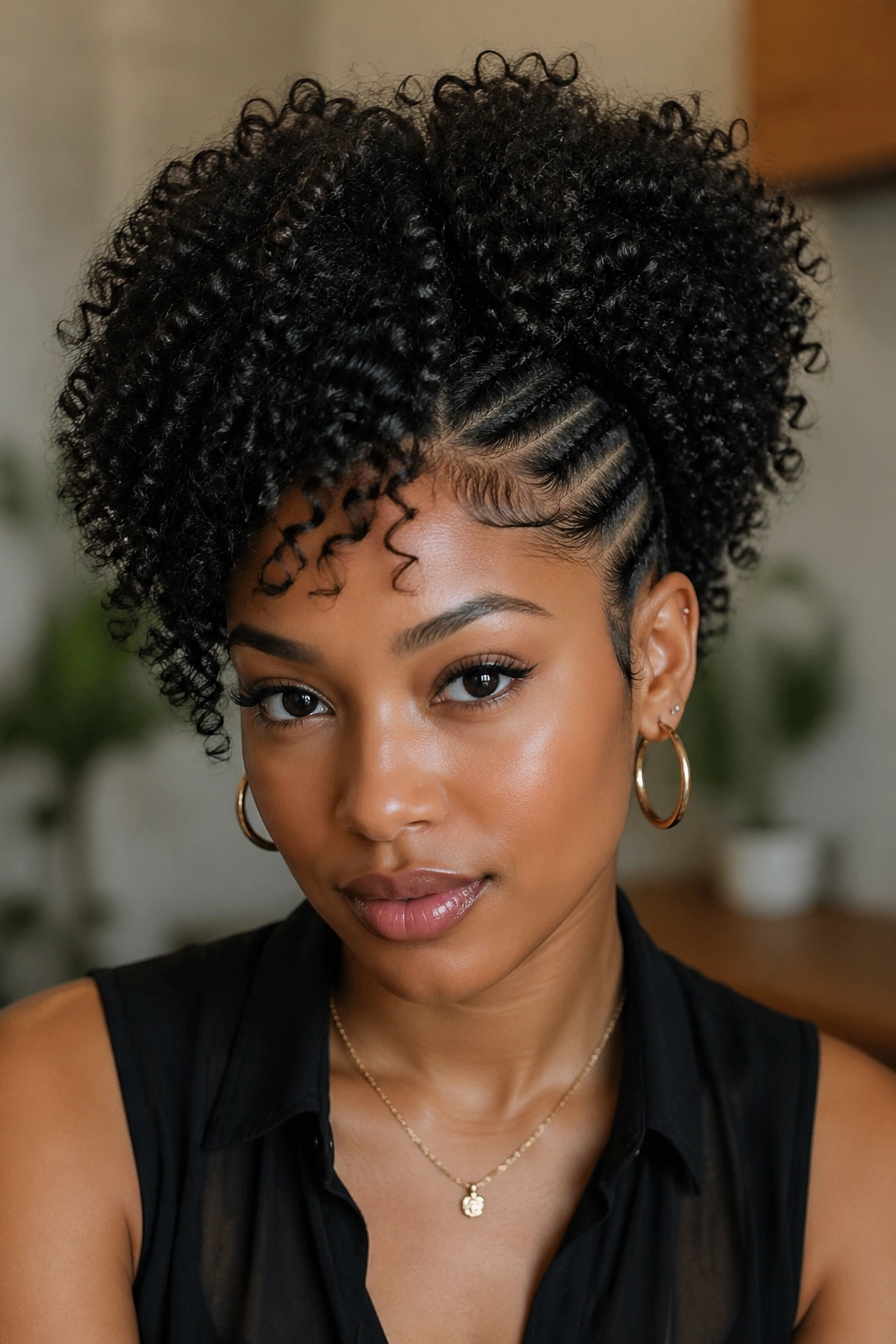
The entire perimeter of the head — sides, back, and nape — is cornrowed flat against the scalp, while the top section is left natural and full. The cornrowed perimeter gives the style a clean, sleek frame, and the natural top provides contrast and volume. It’s a style that visually references both structure and freedom — and the combination is distinctly powerful.
14. Sleek Pull-Through Braid
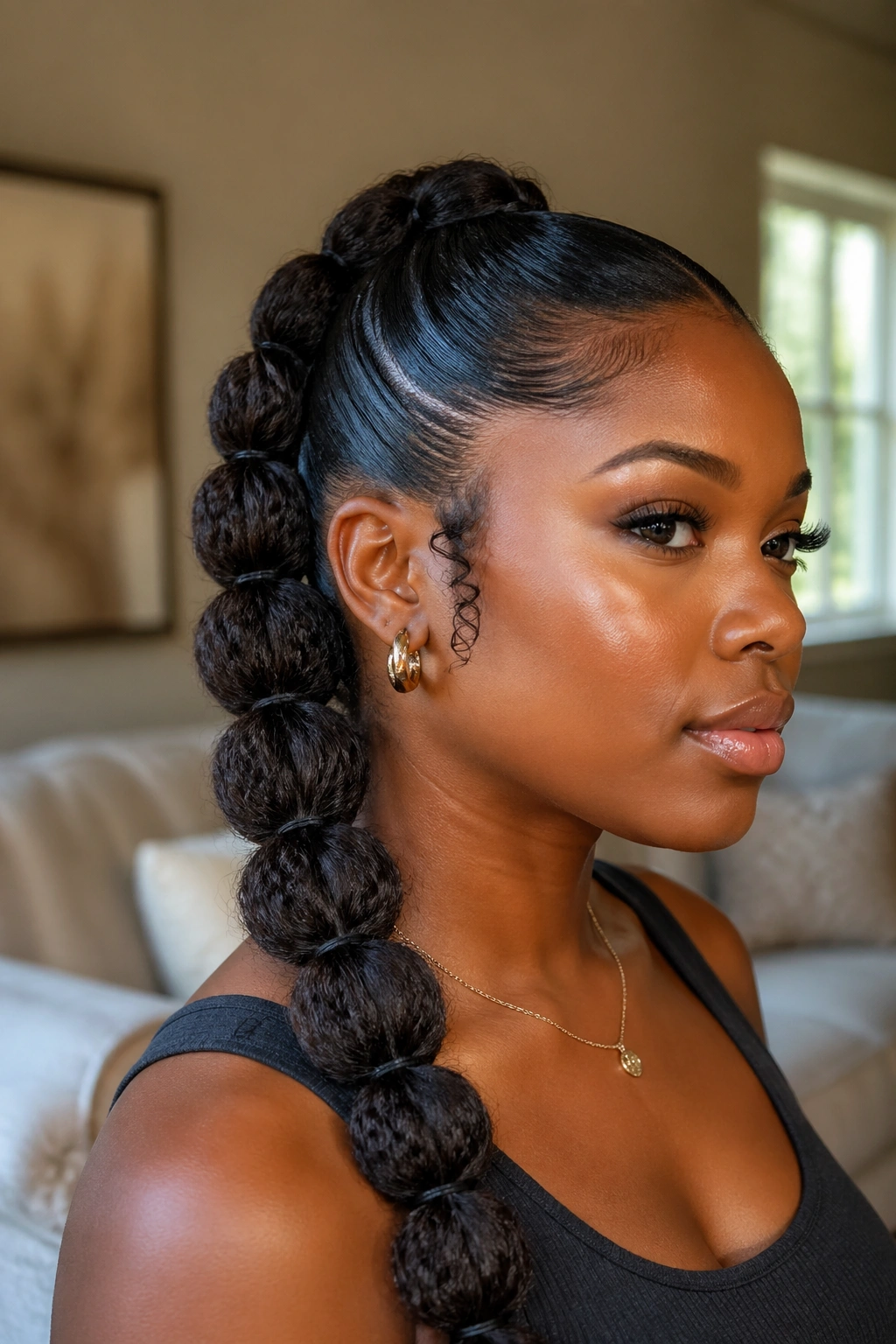
A pull-through braid uses connected ponytails, pulled through each other from root to end, to create a style that looks like a complex braid but is actually achievable without traditional braiding technique. On curly hair, the sections between each pull-through show the curl texture, giving the style incredible depth and dimension.
15. Formal Updo With Natural Locs
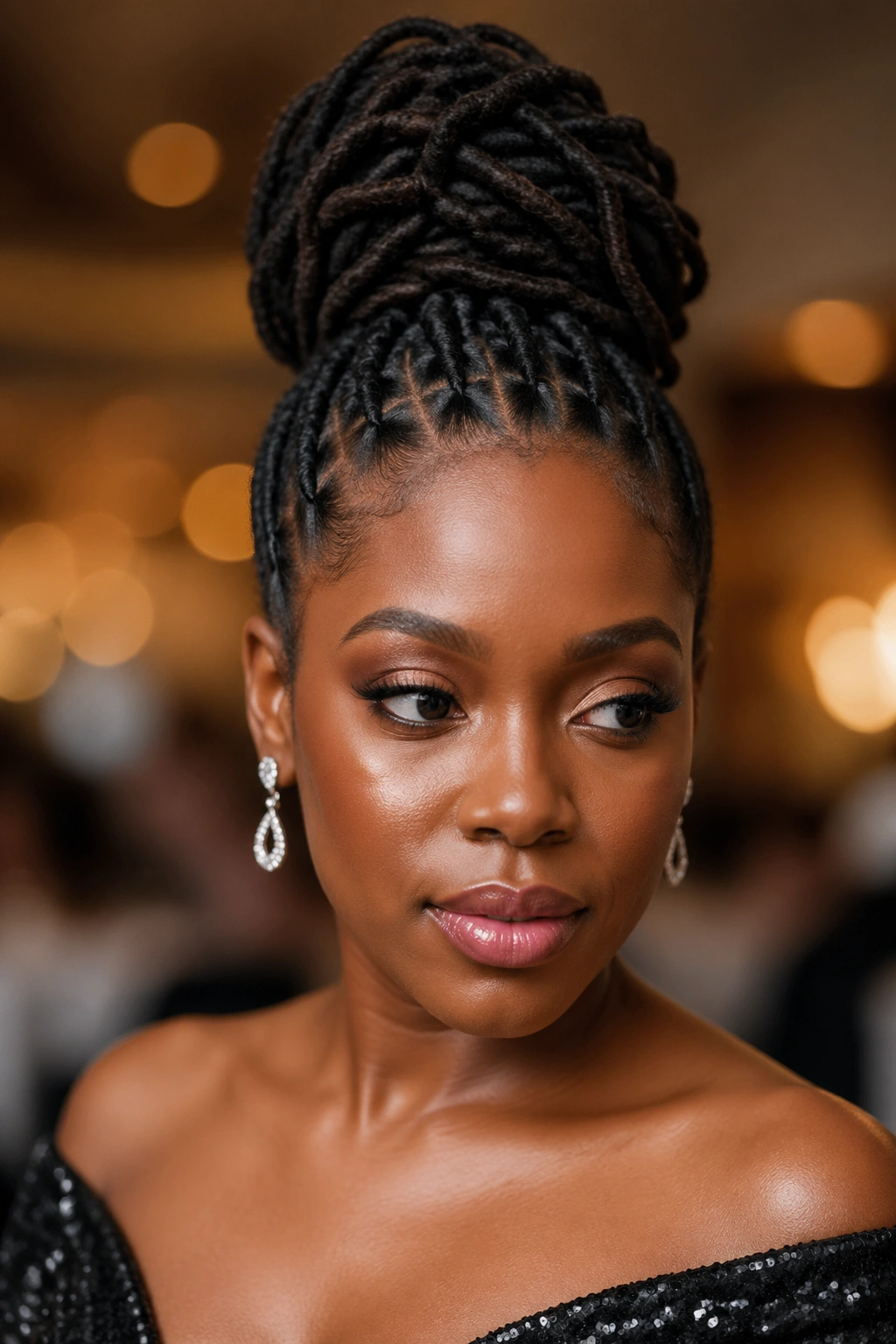
Short to long locs offer their own formal updo vocabulary. Gathered into a high bun, pinned into a chignon, swept to the side and fastened with an ornamental pin, or arranged in overlapping horizontal coils — locs hold formal styles beautifully because of their own structural weight. Locs for formal events need to be clean and well-maintained at the root — a loose or maturing root area will be visible in close-packed formal styling.
16. Bold Side Part Updo
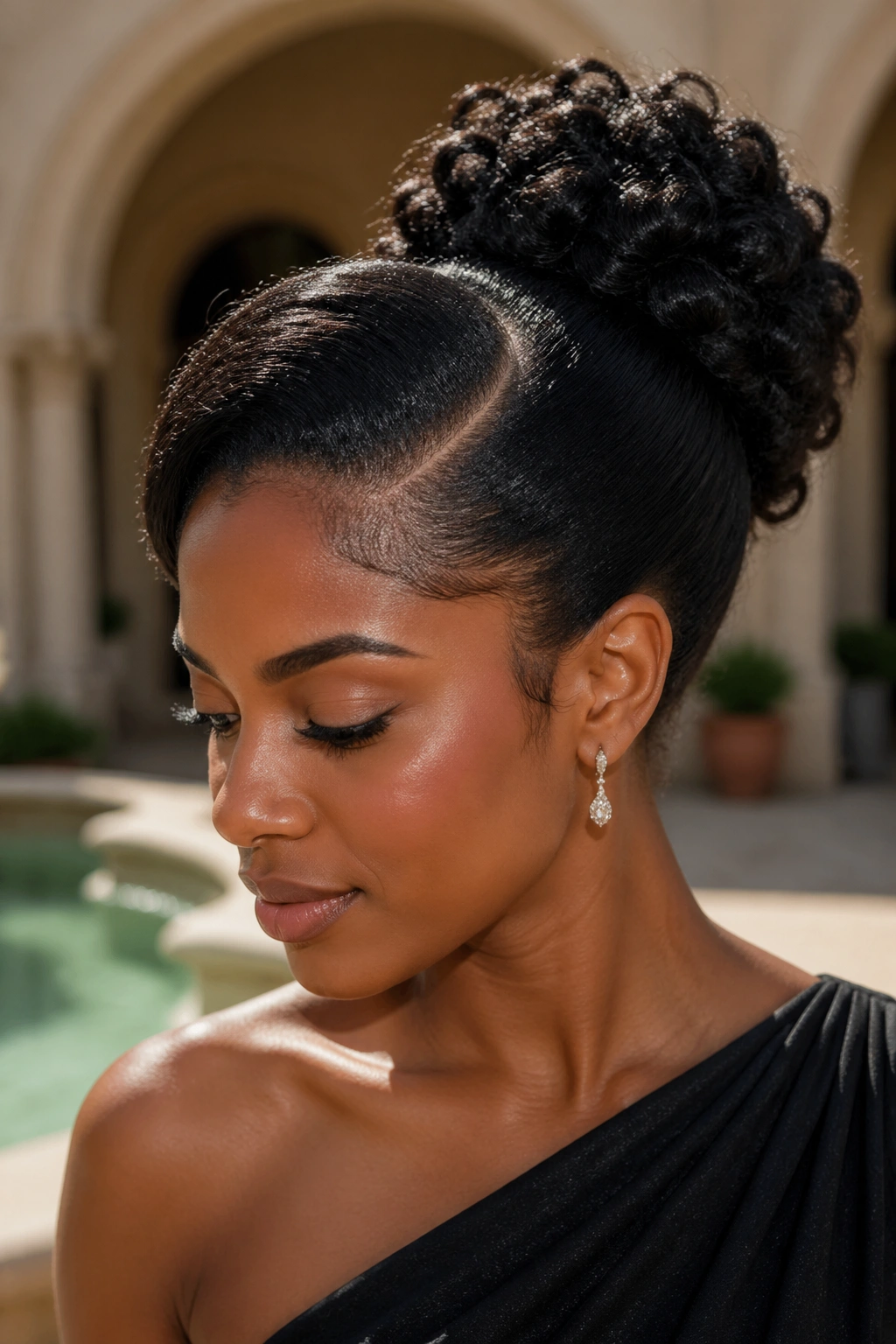
A deep side part — defined with a rat-tail comb and edge control — divides the hair dramatically before it’s gathered into a sleek side-swept updo. The side part itself becomes a design feature, creating a strong asymmetrical line from the front. This gives an otherwise simple updo an architectural quality that reads as fashion-forward and intentional.
17. Two-Tone Protective Style Updo
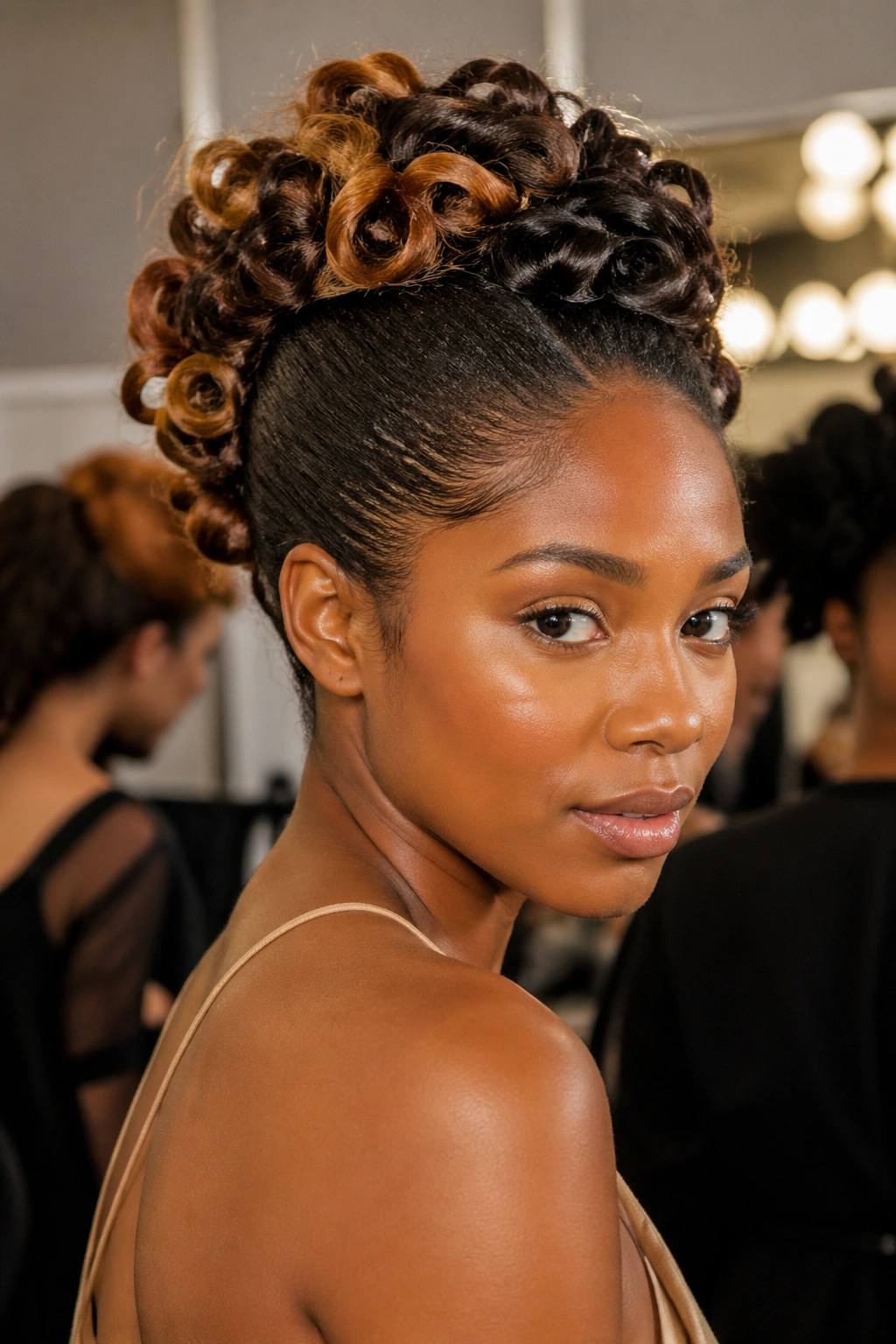
If you wear wigs, extensions, or any protective style with color, this is the formal version: a structured, pinned protective updo in a two-tone color — natural at the roots transitioning to a honey, auburn, or deep red at the ends — that uses the color gradient as a design element in an updo. The color becomes visible as the pinned or gathered sections layer on top of each other.
18. Dramatic Curly Updo With Gold Vine Accessory
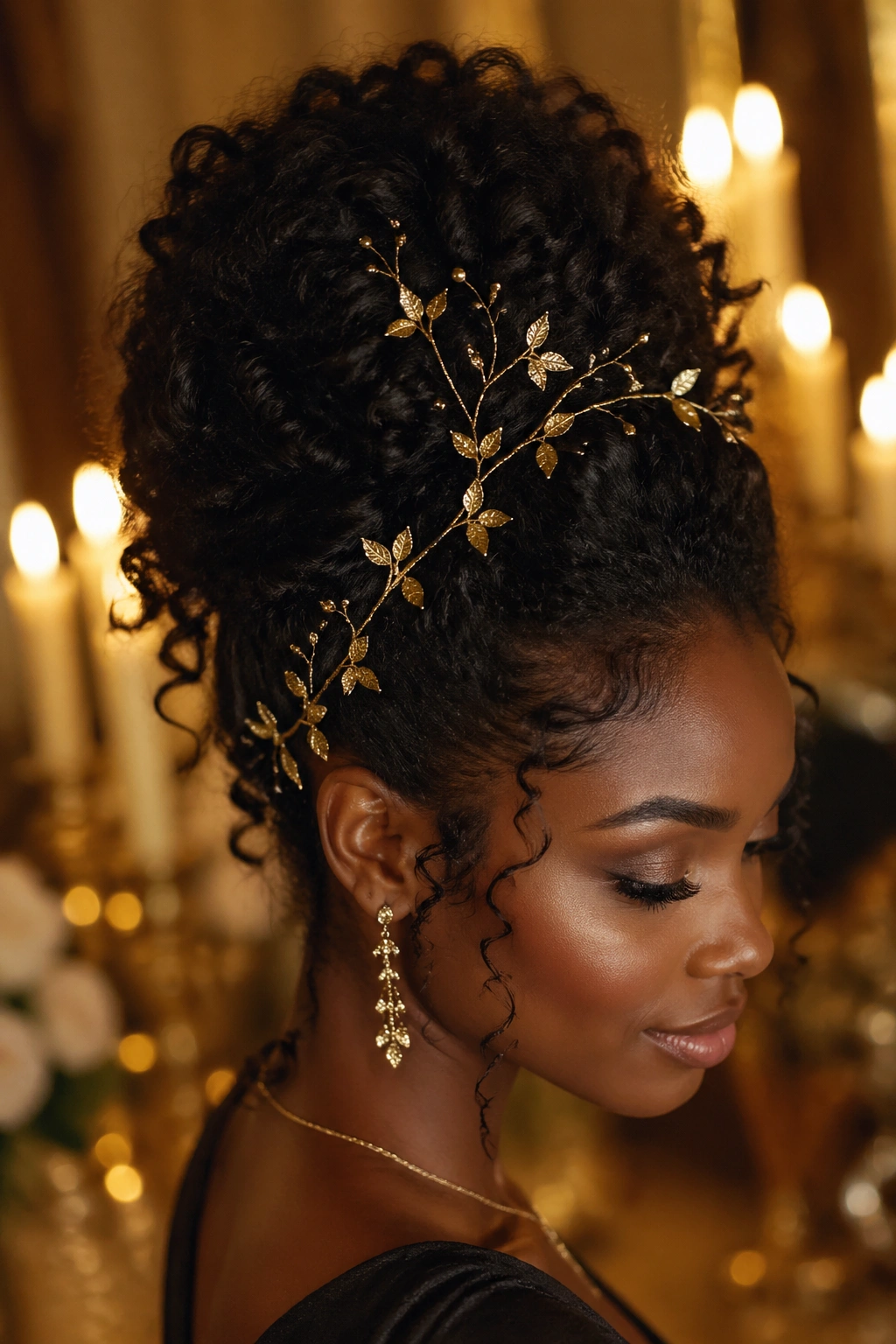
The curly updo — a gathered, textured bun with volume and visible coil texture on the surface — paired with a trailing gold vine hair accessory creates something that belongs in a jewelry catalogue. Gold vine accessories weave through the curls and extend outward slightly, catching light as you move. The movement of the accessory against the curls is particularly beautiful in candlelit or dim formal event settings.
19. Natural Hair With Formal Hat or Fascinator
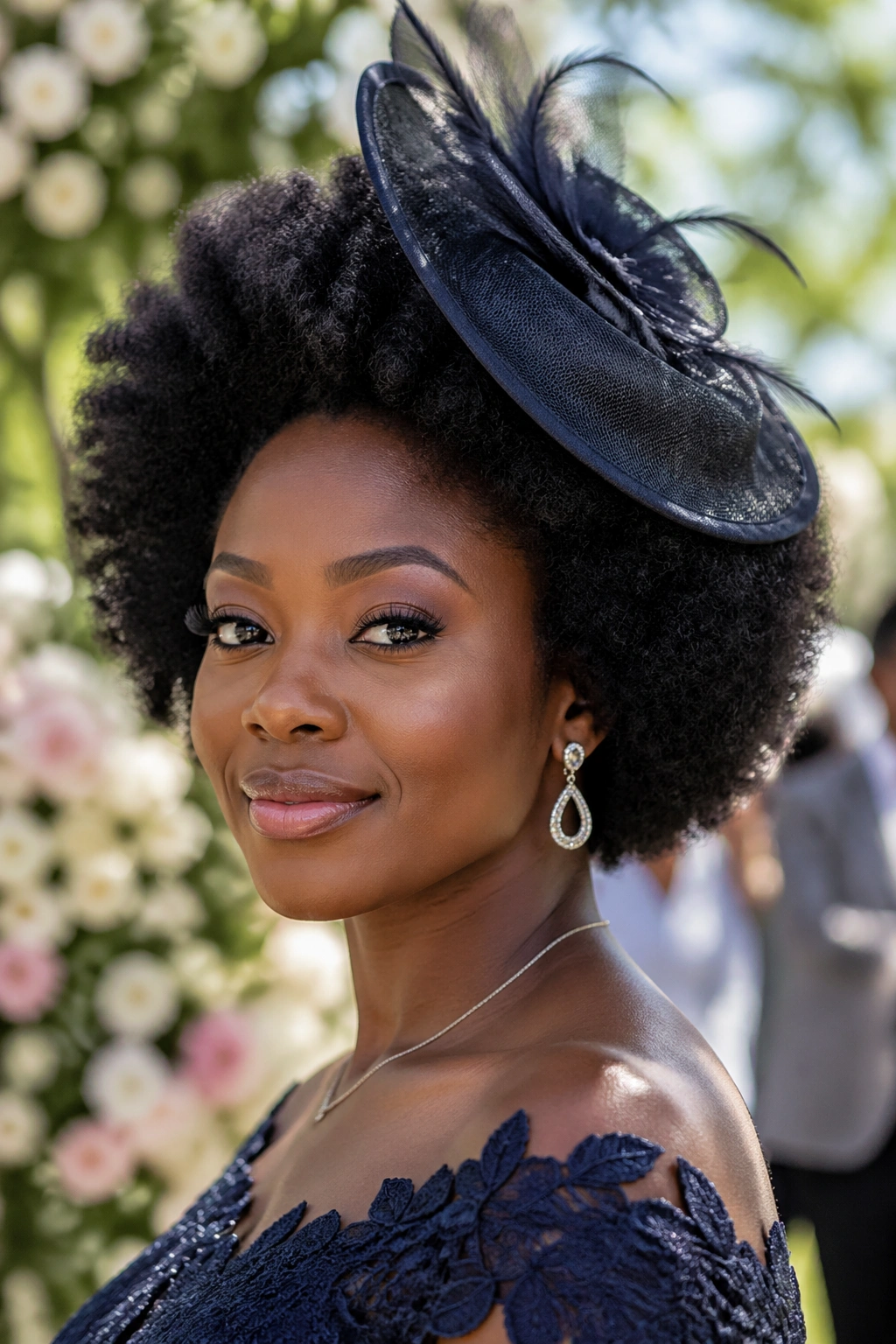
Hat and fascinator styling is underused in everyday formal hair conversations, but it’s a completely valid approach for events where headwear is appropriate — church ceremonies, horse racing events, outdoor weddings, and some gala formats. A fascinator placed to the side of a full natural style, or a formal hat worn over a neatly defined Afro or updo, creates a complete, elevated formal look without requiring any specific styling at all from the hair itself.
20. Defined Braid-Out Worn Fully Down
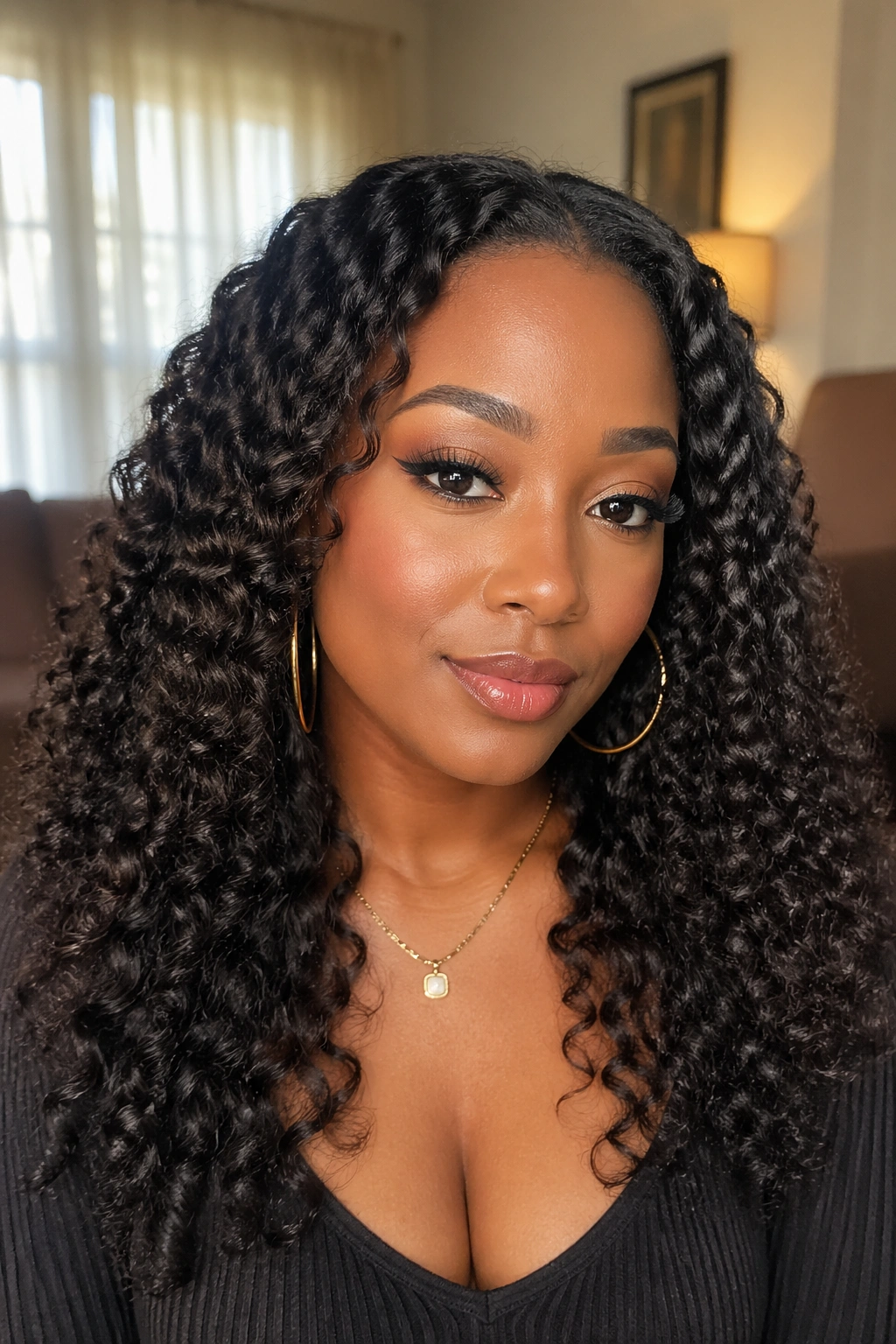
A braid-out worn down isn’t just a casual style. When the braid-out is done with intention — small, even braids set overnight on deeply conditioned hair, released carefully in the morning, separated gently for volume — the resulting uniform, defined waves are genuinely stunning for formal events. The uniformity and movement of a good braid-out give it a quality that reads as styled and intentional rather than natural or undone.
21. Accessory-Led Natural Style
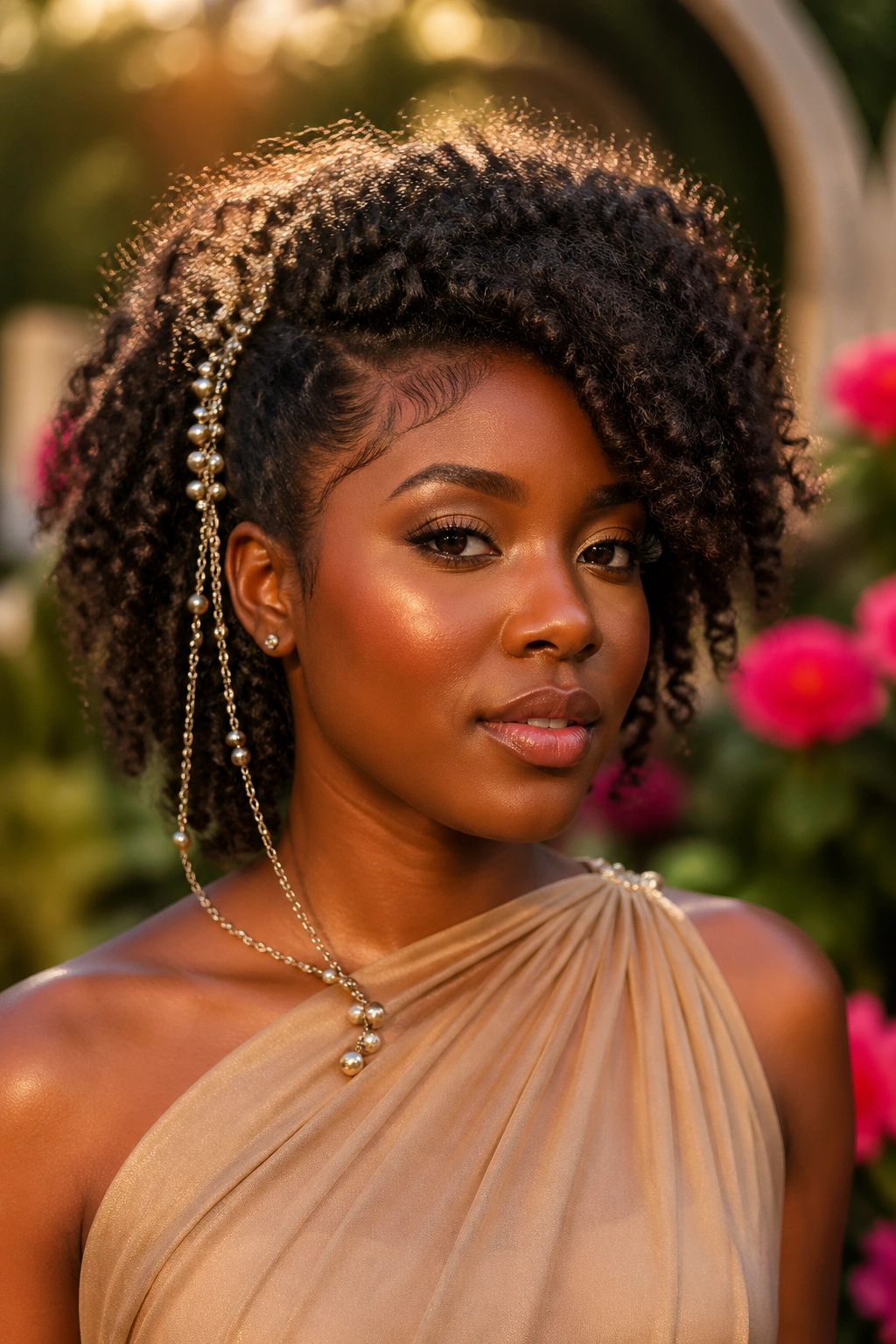
Sometimes the most powerful formal choice is to let the accessories do the heavy lifting. Wear your curls in their natural state — defined, moisturized, and shaped into a clean silhouette — and invest the styling effort into selecting and placing exceptional accessories. A full, beaded hair chain that drapes from one side of the hair down to the shoulder. A cluster of gold and pearl pins arranged in the curls like a constellation. A large, ornate satin bow at the crown. Any of these, done well, transforms natural curls into formal hair without requiring you to alter the texture at all.
This approach requires the most confidence — because there’s no structural styling to hide behind. But it’s also the most authentically celebratory of natural hair at its most natural.
Products Worth Knowing for Formal Natural Hair
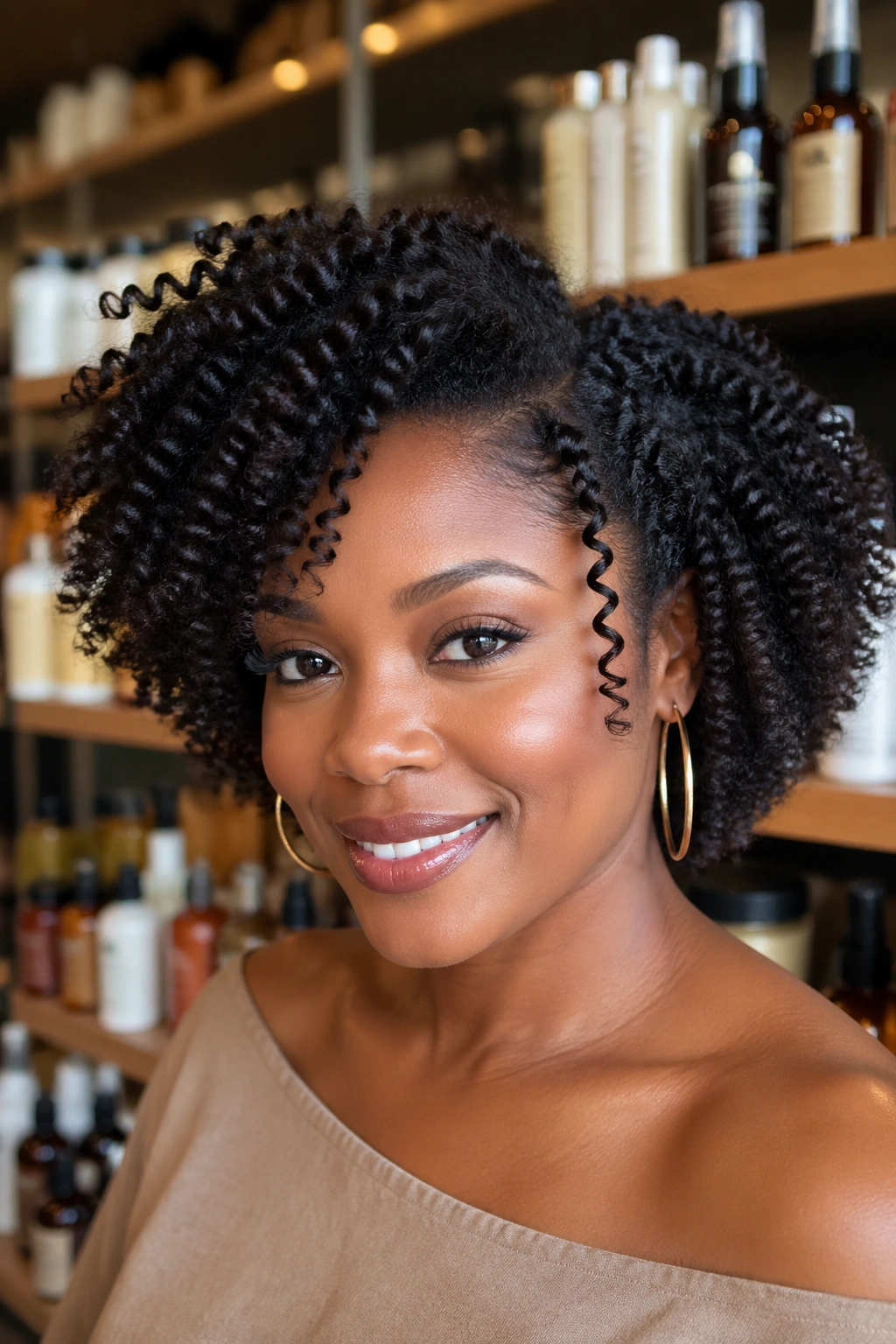
For formal styles, product performance matters more than it does on a regular day. You need products that hold through hours of dancing, humidity, and movement. For updos: a strong-hold gel at the roots and along any flat sections, a firm edge control for the hairline, and U-shaped bobby pins for security. For styles worn down: a curl cream for definition, a medium-hold gel over the top, and a finishing serum or oil for shine.
What to avoid: anything with a heavy butter or oil-only finish for styles that need hold. These feel great on the hair but won’t maintain a formal style through a long event. Save the whipped butters for after-event conditioning.
How to Communicate Formal Hair Standards to Anyone Who Needs to Hear It
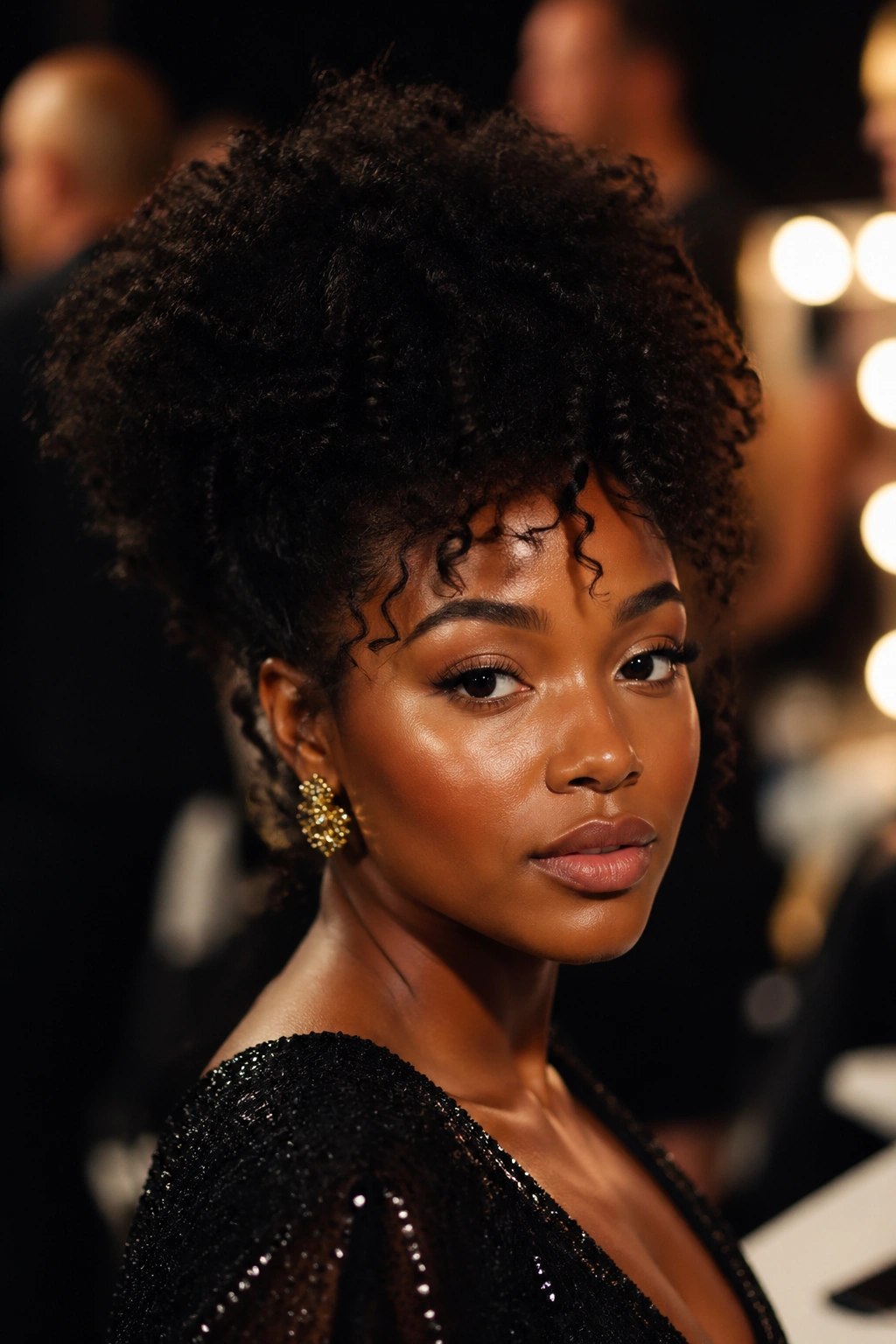
If you’re navigating a space where your natural curls have been questioned in a formal context — a workplace dress code, a partner’s formal family event, an interview — know that natural hair is legally protected in many jurisdictions under CROWN Act legislation and its equivalents. You do not need to alter your natural texture to participate in professional or formal spaces. Your curls are already formal. And these 21 styles are just 21 ways to prove it.
