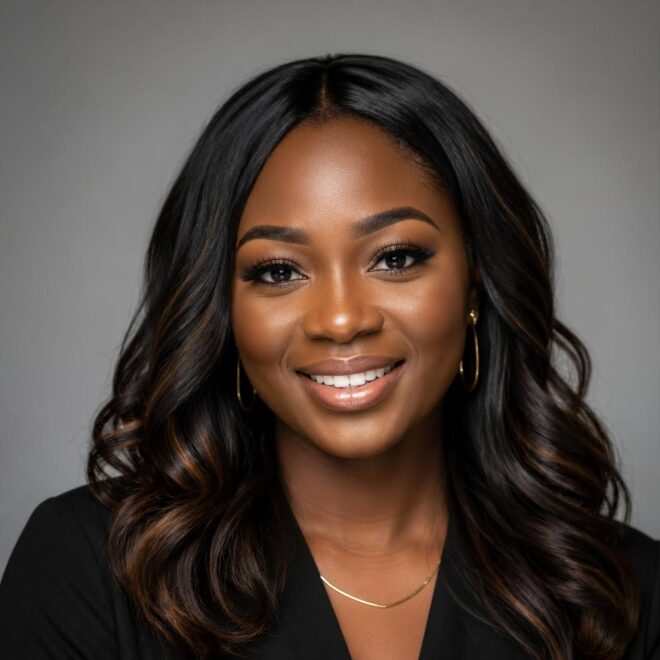


Silk press pin curl styles for women are a combination of two classic techniques that, together, create something more refined and deliberate than either achieves alone. The silk press delivers that smooth, glassy, high-shine foundation — straight, sleek, and luminous. The pin curl adds back structure, shape, and unmistakable artistry. For Black women with natural hair, this pairing has become a powerful way to bridge the gap between the vintage elegance of set styles and the contemporary beauty of a silk press finish. Whether you’re setting an entire head in pin curls or using them as strategic accent details within a pressed style, the result consistently reads as carefully crafted and deeply intentional.
What Pin Curls Are and Why They Work on Silk Press
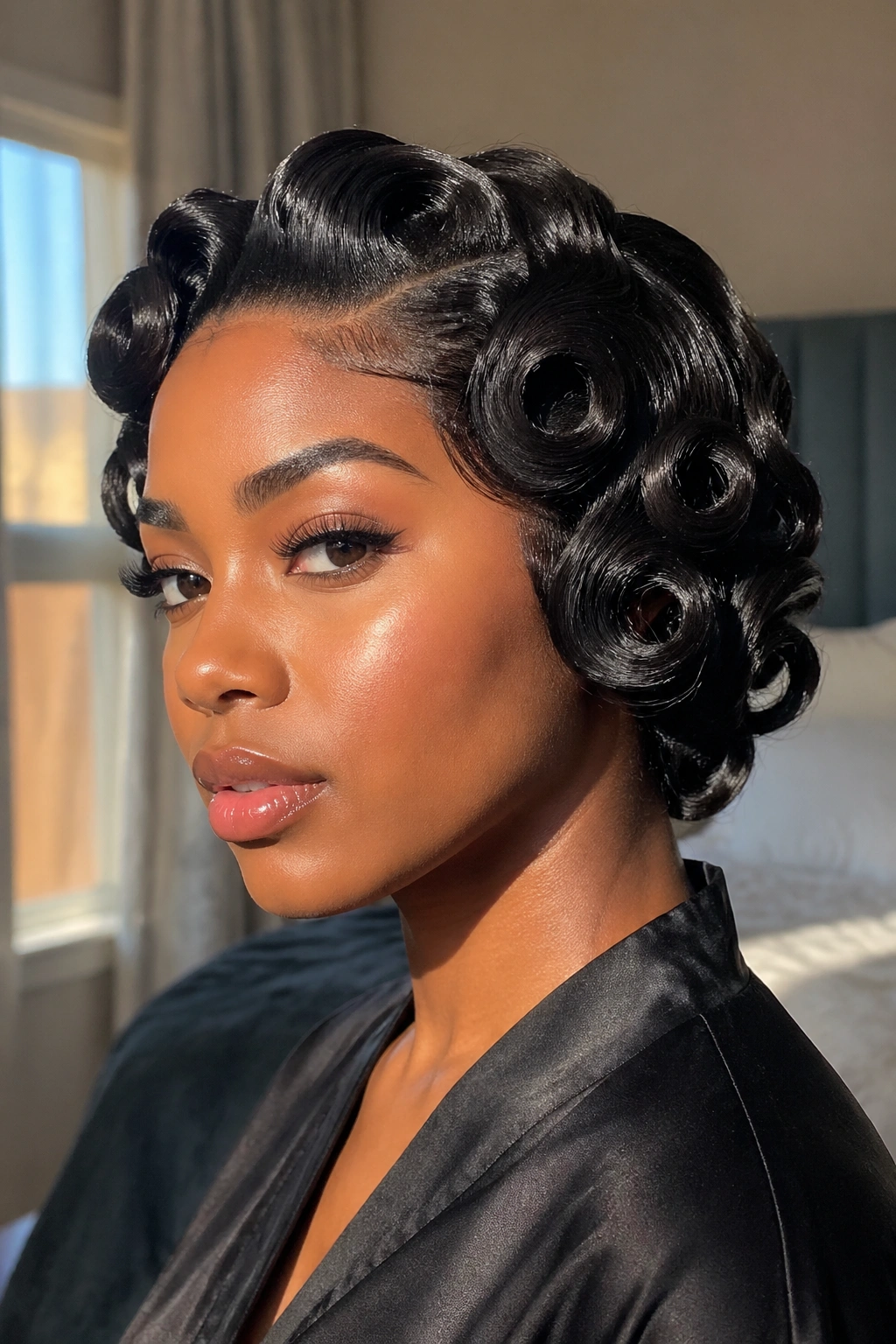
A pin curl is one of the oldest and most reliable curl-setting techniques in the history of hairdressing. A section of hair is wound into a flat, circular coil against the scalp or close to the head, secured with a bobby pin, and then released after setting to reveal a perfectly round, tightly formed curl.
What makes pin curls specifically interesting on silk-pressed hair is the quality of the curl they produce. On hair that hasn’t been pressed, pin curls create textured, sometimes frizzy curls because the hair cuticle isn’t fully smoothed. On silk-pressed hair, where the flat iron has already aligned the cuticle and created that glassy smoothness, pin curls set into glossy, clean, precisely round curls that catch light beautifully and hold their shape with a sculpted quality.
The pin curl on a silk press is the best version of itself. The shine from the pressing process carries through into the released curl — so each pin curl has a luminous quality that you’d otherwise only get from chemically straightened hair. That’s one of the reasons silk press pin curl styles look so polished and high-end even when the technique itself is relatively simple.
Pin curls also offer a level of customization that other curl-setting methods don’t. The size of the curl is determined entirely by how much hair is in each section — a small section creates a tight, detailed curl while a larger section creates a broader, more open curl. The direction the curl is wound determines which direction it falls when released. The height at which the curl is pinned against the head determines whether it sits flat and sculpted against the scalp or stands away from the head with more volume. All of these variables give a skilled stylist enormous control over the final result.
Setting Pin Curls on Silk-Pressed Natural Hair
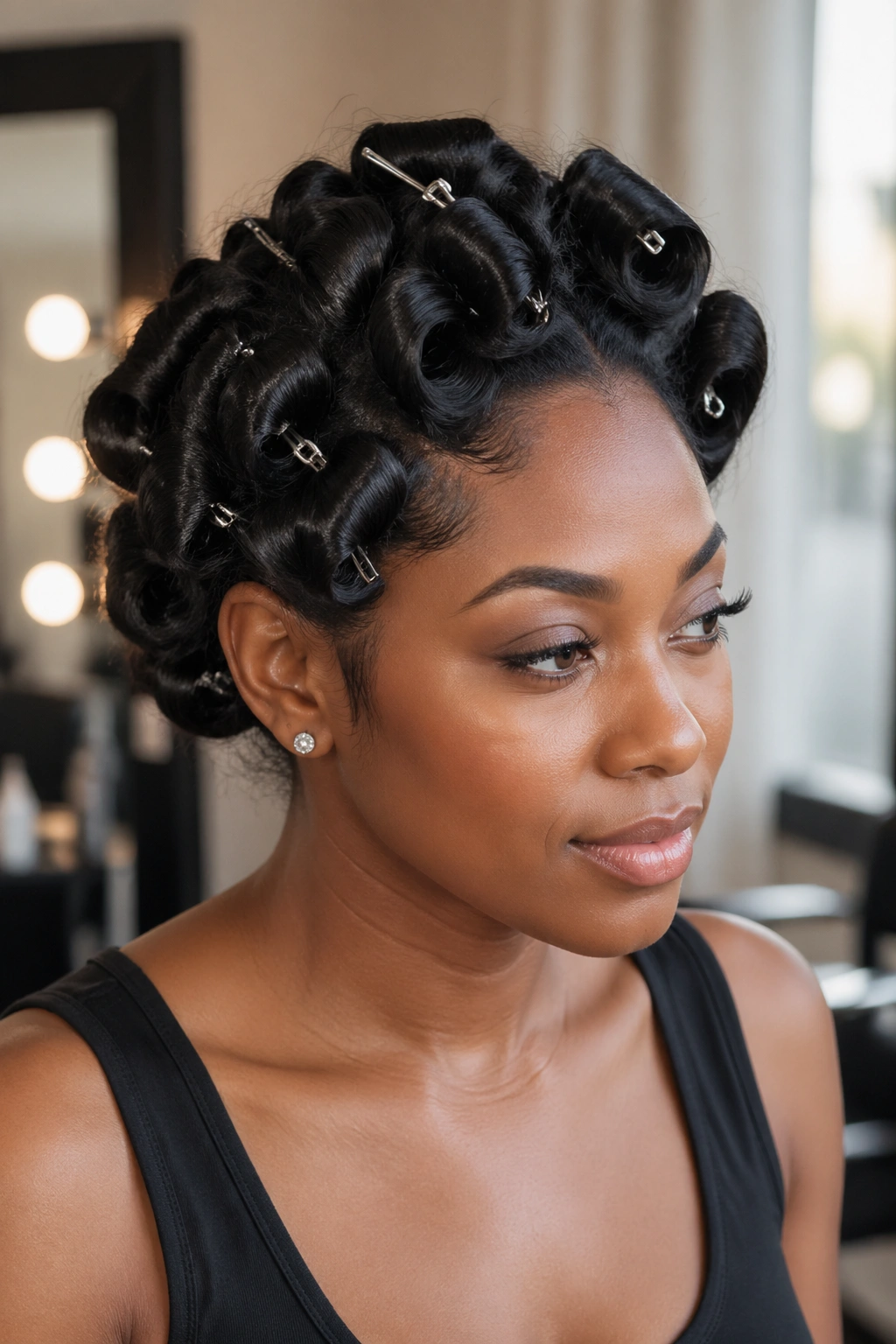
The technique of setting pin curls on silk-pressed hair has a few specifics that differ from setting them on non-pressed natural hair or chemically relaxed hair — and understanding those specifics leads to better results.
Pin curls are typically set while the hair has some flexibility — either while it’s still slightly warm from the flat iron, or after applying a small amount of setting lotion. On silk-pressed natural hair, working quickly after the pressing while each section is still slightly warm from the flat iron gives the pin curl a better chance of setting into a defined shape. Natural hair that has fully cooled and stiffened doesn’t mold into the pin curl shape as cleanly.
A light setting lotion or a small amount of styling cream applied to each section before winding helps the pin curl hold its shape through the setting process. On natural hair especially, a little product provides the memory the curl needs to stay defined after being released. Too much product creates a stiff, crunchy curl — the goal is enough product to define without enough to harden.
When you wind the pin curl, wind it tightly and evenly around your finger, slide your finger out, and place the resulting coil flat against the head. Secure it with one or two bobby pins placed across the coil rather than through it — pins placed through a pin curl can create dents in the finished curl.
Allow pin curls to fully cool and set before releasing. This is the step where impatience causes problems. Pin curls that are released while still warm won’t hold their shape — they’ll open up immediately into a loose wave rather than a defined pin curl. Give them at least 30-45 minutes, or set them under a hooded dryer for 20 minutes for a faster, more thoroughly set result.
The Different Types of Pin Curls and Their Results
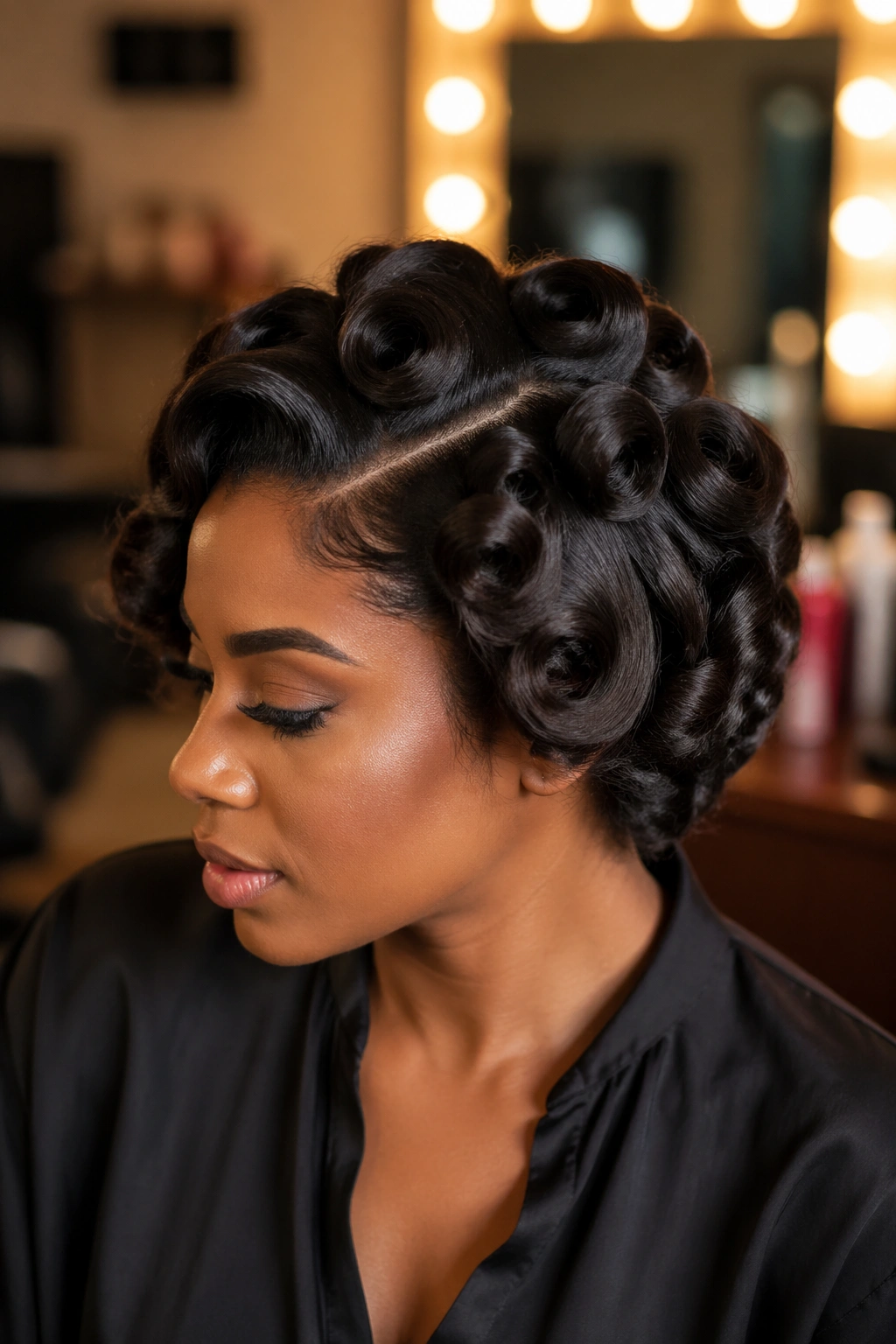
Not all pin curls are the same — the direction, height, and winding technique all create distinct results when the curls are released.
Stand-up pin curls are wound and then pinned away from the scalp, with the base of the coil elevated rather than flat. When released, stand-up pin curls create volume at the roots — they push the curl up and away from the head rather than lying flat. This is the pin curl technique for creating fullness and lift.
Flat pin curls are wound and pinned flat against the scalp. They create a smooth, sculpted effect when released — the curl sits close to the head and contributes to a sleek, close-to-the-scalp style rather than a voluminous one. Flat pin curls on a silk press are what create the vintage, finger-wave-adjacent styles that look most explicitly retro.
Clockwise vs. counter-clockwise winding determines which direction the curl spirals when released. Clockwise-wound pin curls fall in one direction; counter-clockwise in the other. Alternating the winding direction throughout the head creates a natural-looking mix of curl directions that prevents the style from all falling one way.
Barrel curl pin curls are wound around a cylindrical form (a finger, a roller, or even a small barrel curling iron) before being pinned flat. These create a more open, round curl than a tightly wound finger curl — they look more like a classic Hollywood curl than a tight ringlet.
How Long Silk Press Pin Curl Styles Last
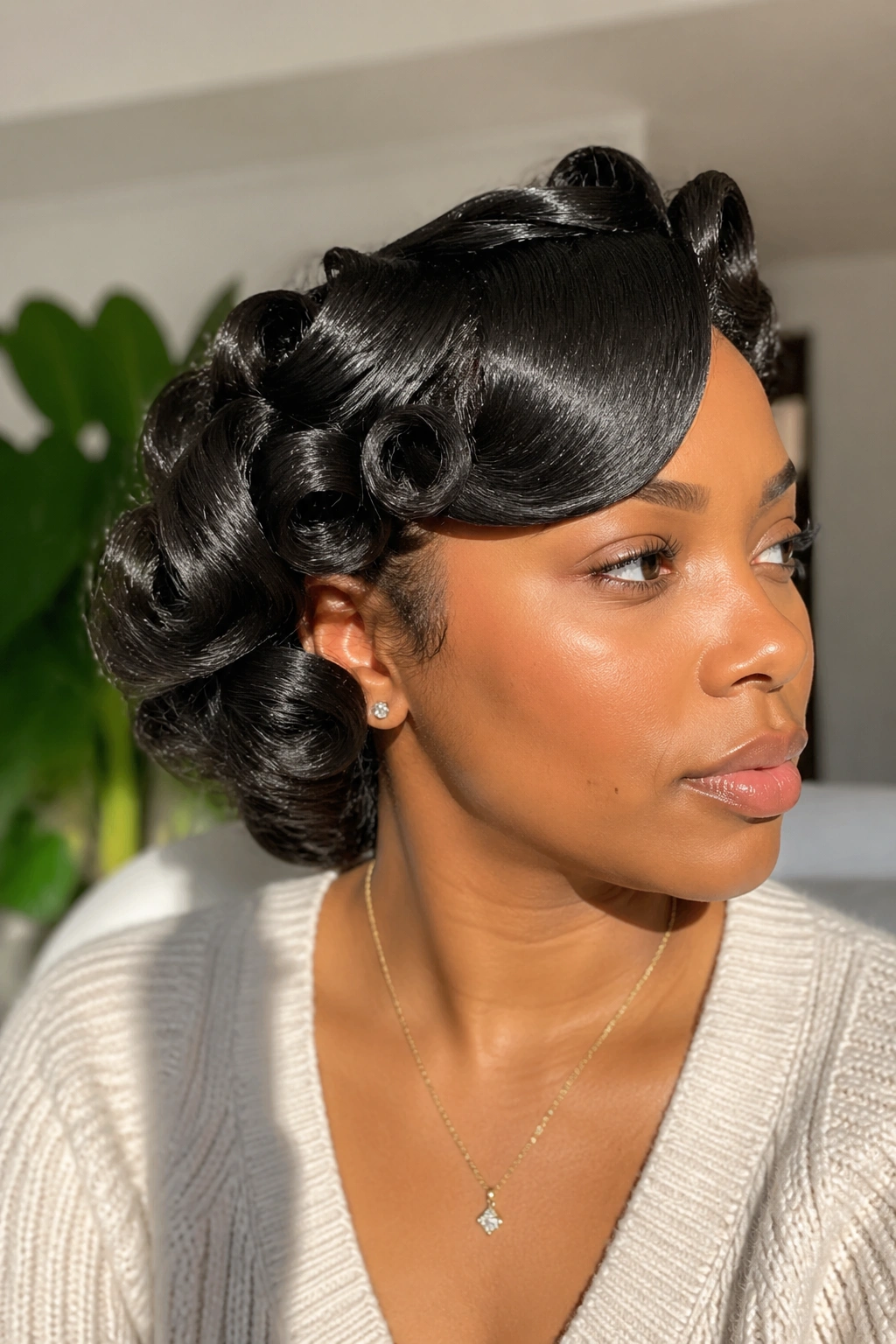
The longevity of a silk press pin curl style depends on several factors — humidity levels, how well the hair was set, and how consistently it’s protected at night.
A well-set, well-protected silk press pin curl style can last 1-2 weeks. The pin curls themselves tend to loosen over time — especially in humidity, which encourages natural hair to revert toward its natural texture. The pressed sections generally hold longer than the curl sections.
At night, re-rolling the pin curl sections and securing them loosely with a satin scarf or bonnet preserves the curl definition through the sleeping hours. In the morning, release the re-rolled sections and the pin curls should regain most of their original definition.
As the style ages, the pin curls develop a more relaxed, boho quality — tighter coils open up into softer spirals, and the overall look transitions from sharply set to beautifully worn-in. Many women find that the style looks best on days 3-5 after a fresh set, when it has relaxed just enough to feel natural and lived-in without losing its character.
Silk Press Pin Curl Styling for Special Occasions
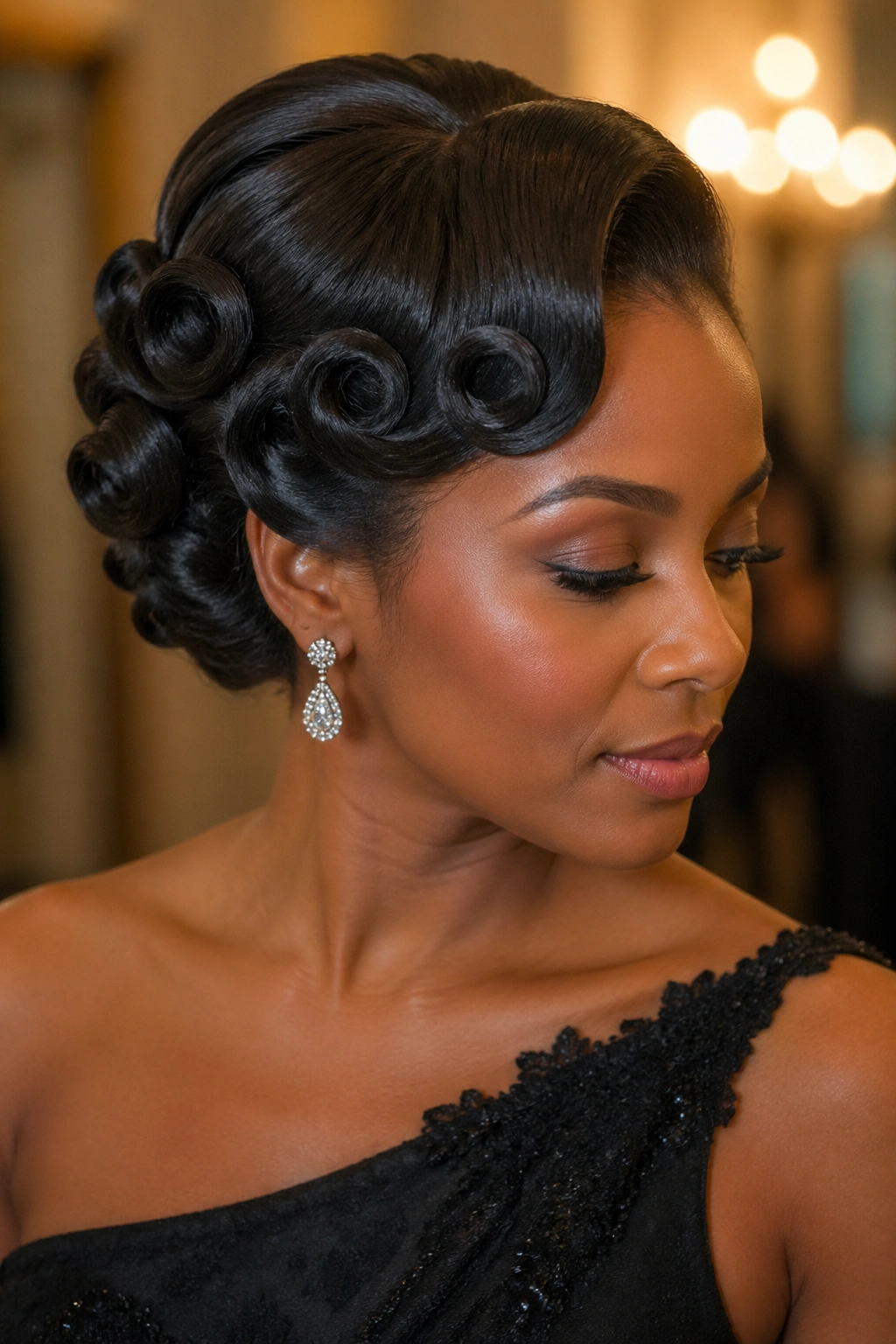
Pin curls on a silk press have always had a relationship with special occasions — weddings, formal events, galas, and celebrations of all kinds. That relationship makes sense: pin curls on a silk press require time and skill to execute, they produce a result that reads as carefully prepared, and they have a timeless elegance that photographs beautifully under any lighting.
For special occasions specifically, the setting process should be extended. Rather than setting the pin curls for 30-45 minutes, allow them to sit for 2-3 hours — or even overnight — for the most defined, long-lasting result. The longer the curl sets, the more thoroughly it imprints the spiral shape into the hair.
Choose pin curl products for special occasion settings that prioritize hold and longevity. A firmer-hold setting lotion applied generously to each section before pinning, followed by a light-hold finishing spray after releasing, creates a pin curl that holds through dinner, dancing, and the inevitable photos at the end of the night.
1. Full Head Pin Curl Set on Silk Press
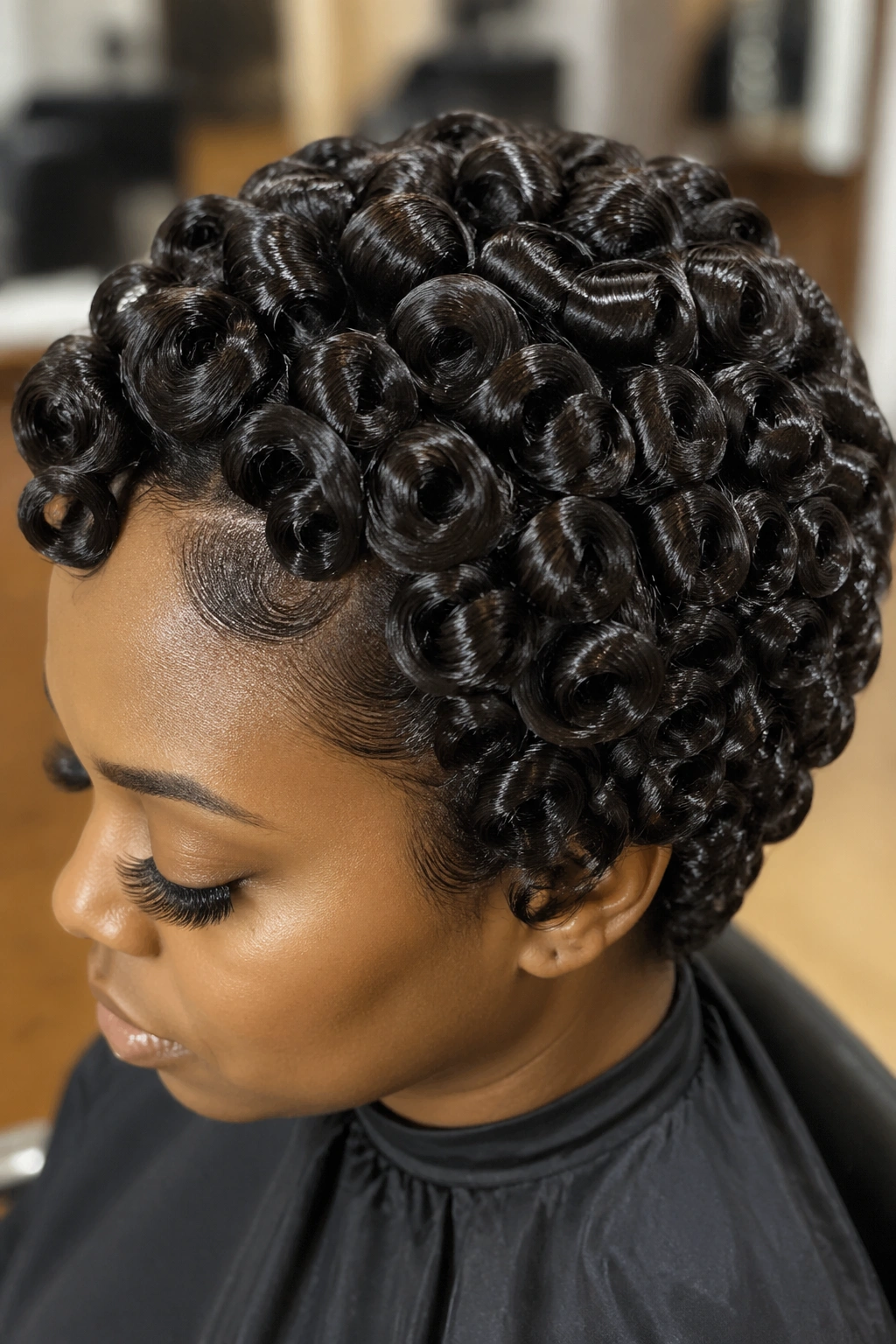
The most traditional and complete expression of this style — every section of the silk-pressed hair is wound into pin curls and the entire head is set.
When the full set is released, the result is a complete style made entirely of pin curls — hundreds of glossy, precisely round coils covering the head in a consistent pattern. The visual effect is dense, rich, and deeply intentional. From a distance, it reads as a textured, bouncy style with high volume. Up close, the individual pin curls are visible in their precision.
How to Achieve This Look
- Work in sections, pressing and immediately pin-curling each section while the hair retains warmth
- Wind all curls in the same direction (or alternate for more natural-looking results)
- Process under a hooded dryer for 20-30 minutes, then allow to cool completely before releasing
Tip: Release pin curls from the bottom of the head upward — this lets the top curls rest on the already-released bottom curls rather than being disrupted as you release the sections below.
2. Vintage Sculpted Pin Curls on Silk Press
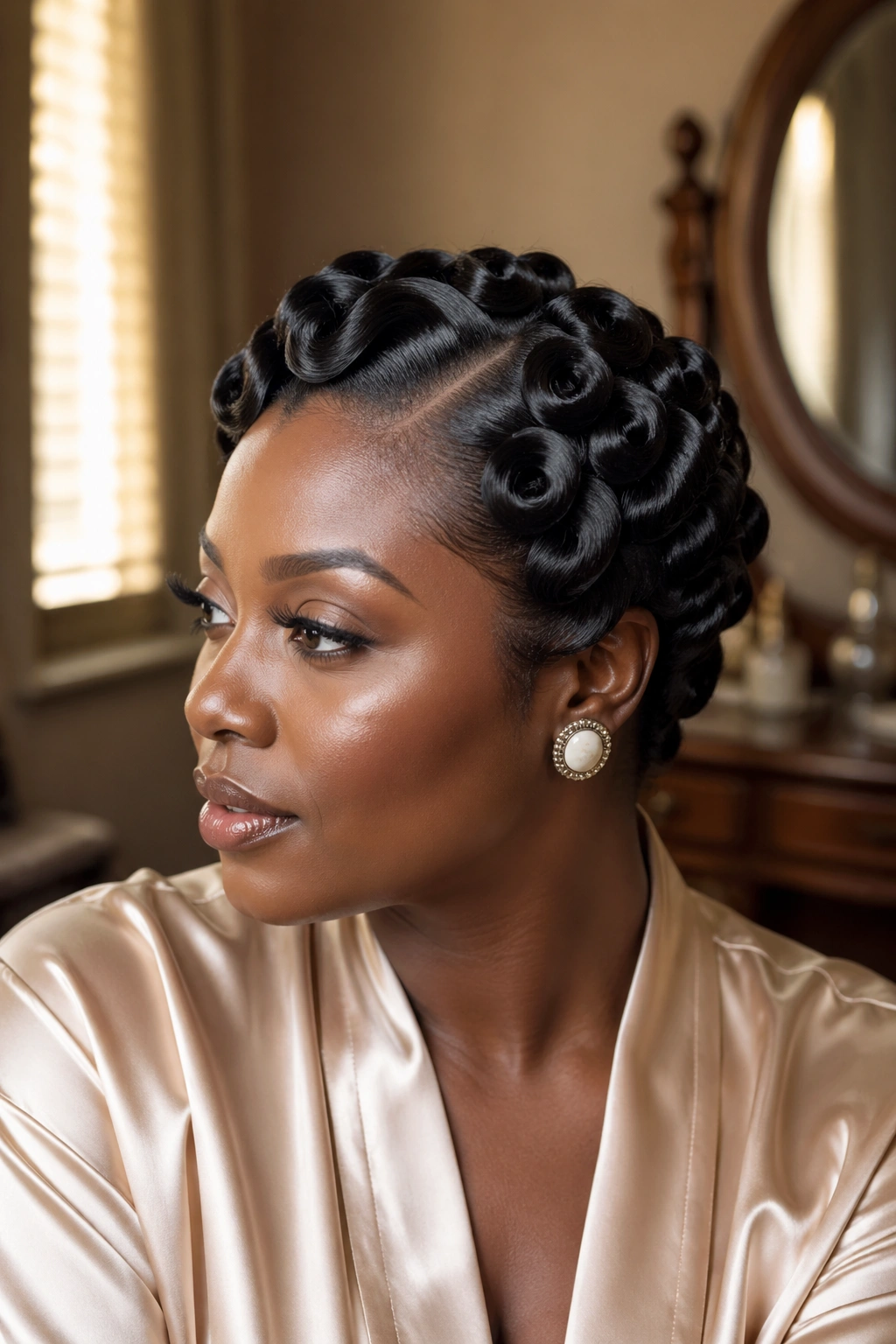
A deliberately retro styling approach — pin curls sculpted close to the scalp in a highly structured pattern that echoes the classic hairstyles of the 1940s and 1950s — is one of the most visually distinct looks achievable with this technique.
Vintage sculpted pin curls require planning. The placement of each curl contributes to an overall pattern — tight rings of flat pin curls arranged in rows, or a sculptural arrangement that follows the head’s natural contour. The result looks like something from a classic Hollywood film — precise, beautiful, and unmistakably deliberate.
For this look, flat pin curls are wound very tightly and set extremely close to the scalp. The finished style is sleek, polished, and close-cropped in feel even on hair of longer lengths — because all the curl is pinned flat rather than standing away from the head.
3. Silk Press Pin Curl Updo
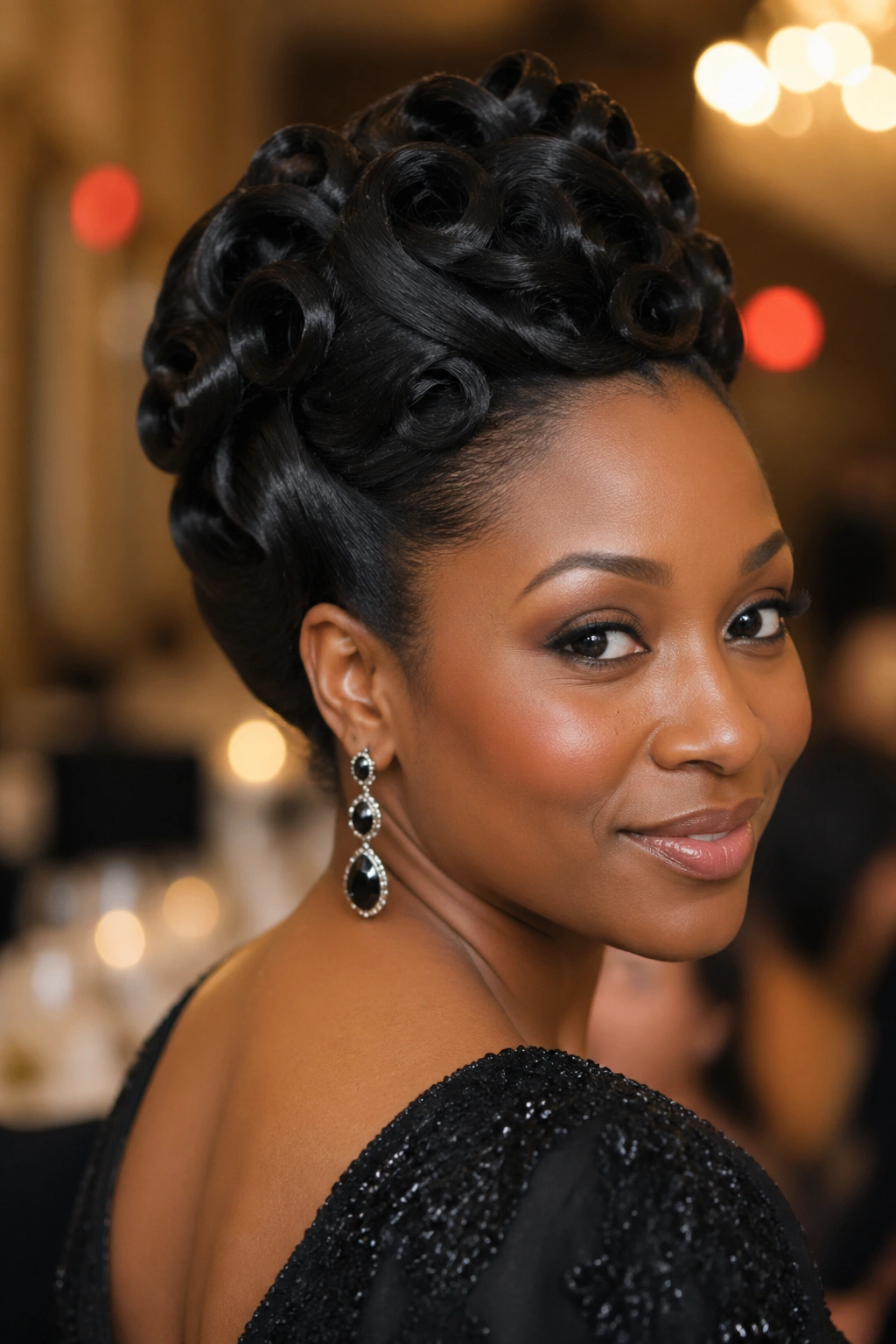
A pin curl updo uses the curls themselves as the structural element of the updo — no bun, no roll, no gathered ponytail, just individually set pin curls arranged into an upswept, elevated style.
Sections of silk-pressed hair are curled, pinned, and arranged to build an upswept look — the curls near the nape and sides are directed upward, and the curls at the crown fill in the top of the style. When all the pins are placed and the curls have set, the bobby pins are removed and the curls hold the structure of the updo through their own set shape.
This is a genuinely formal style — it belongs at weddings, black-tie events, and any occasion that calls for hair that looks like it required real skill to create. Because it does.
4. Half-Up Pin Curl Style on Silk Press
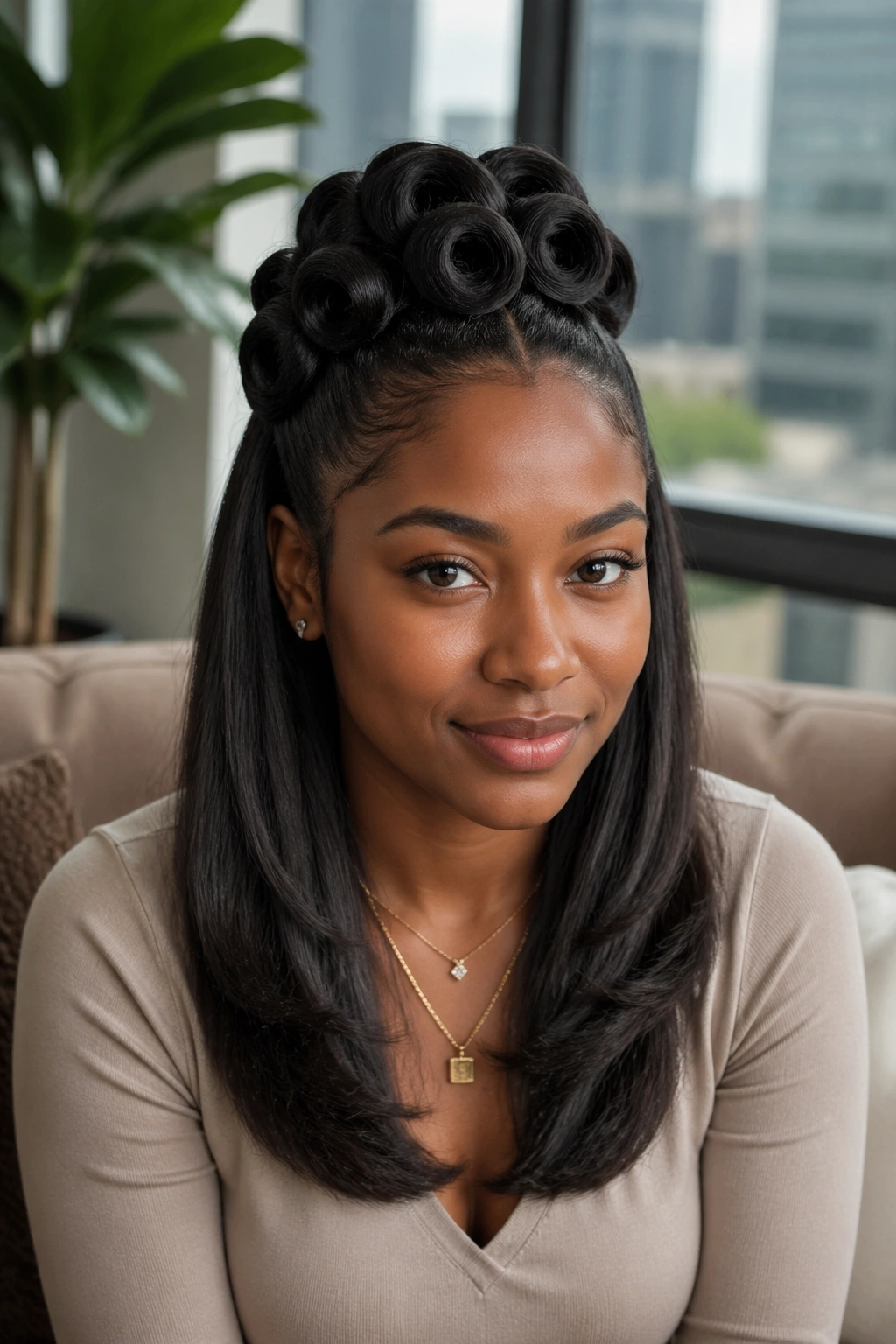
Half of the silk-pressed hair — typically the top and crown sections — is gathered up and set in pin curls while the lower sections fall freely in either pressed or pin-curled form.
The half-up pin curls at the crown create a structured, elevated upper portion of the style, while the lower sections provide movement and length. The contrast between the set curls above and the flowing lengths below is deeply flattering — it shows off the best of both techniques simultaneously.
How to Achieve
- Divide the hair at the ears, separating top from bottom sections
- Press the bottom sections and allow to fall naturally or pin curl at the ends
- Take the top sections and set in pin curls directed backward and upward at the crown
- When the top pin curls are released, they create a lifted, structured crown section
5. Silk Press Pin Curls With Natural Leave-Out Ends
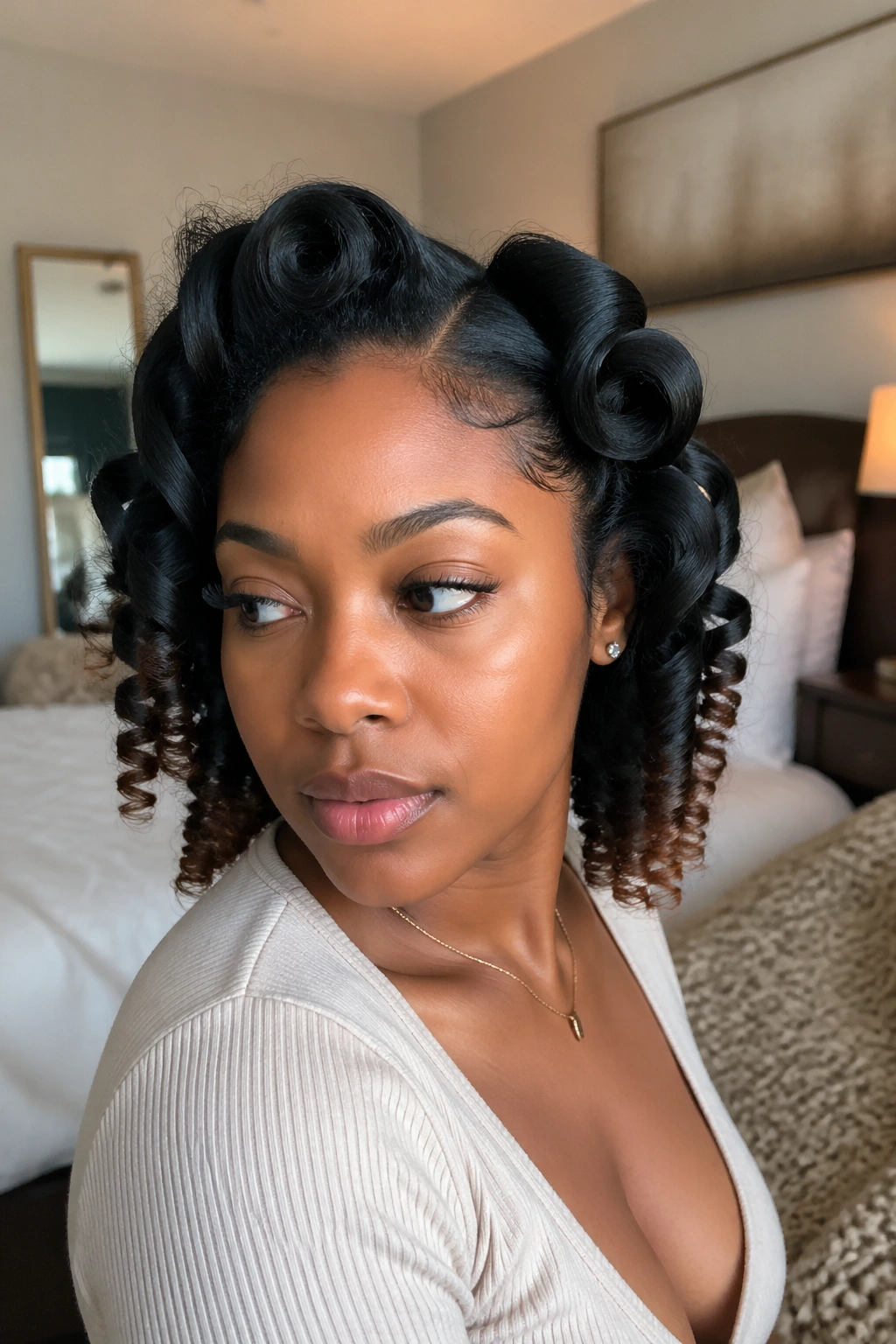
Pressing the lengths and setting them in pin curls, while leaving the last inch or two of each section in their natural, unstraightened coil state, creates a style where the pin curl body is smooth and set while the ends reveal the natural texture.
This is a subtle nod to natural texture within an otherwise fully set style. The natural ends peek out from each pin curl’s tip — a small but visible reminder that this hair is, underneath the press and set, fully and beautifully natural.
On very tightly coiled natural hair, the natural ends add a delicate, textured fringe to each pin curl that’s uniquely beautiful — a combination of the precision of the set curl and the spontaneity of the coil.
6. Face-Framing Pin Curls With Straight Back
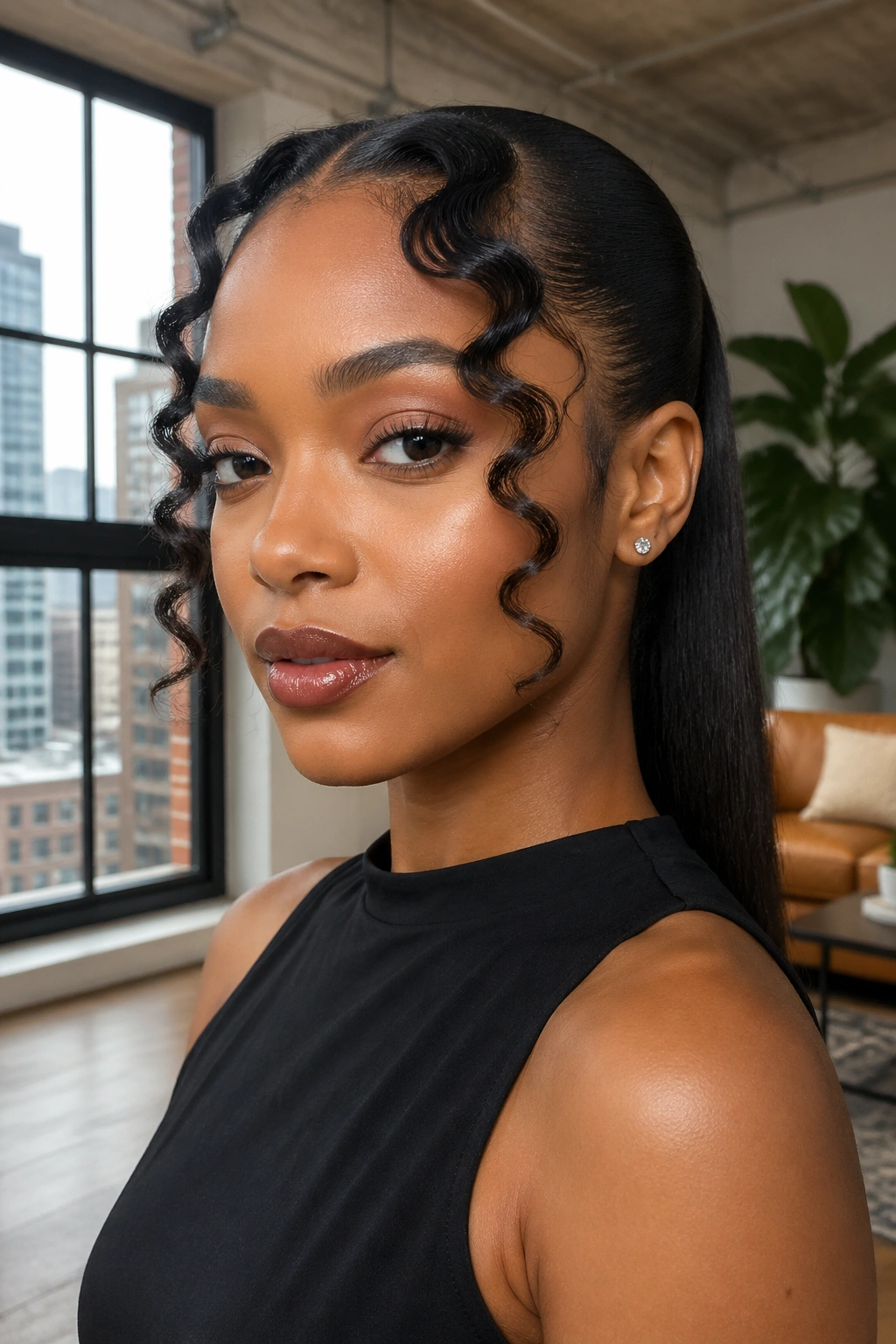
A high-contrast technique where only the front sections — the face-framing pieces on either side of the face and at the hairline — are set in pin curls, while the rest of the silk-pressed hair is slicked straight back or gathered into a sleek style.
The face-framing pin curls do enormous work in this style. With everything else smooth and pulled back, those curled front pieces become the entire personality of the look. They frame the face with deliberate, defined curls while the sleek back section provides structure and elongation.
This works especially well on women who want to show off bone structure — the smooth, straight-back sections emphasize the neck, ears, and jawline, while the pin curls at the front frame the eyes and cheekbones.
7. Pin Curl Silk Press Ponytail
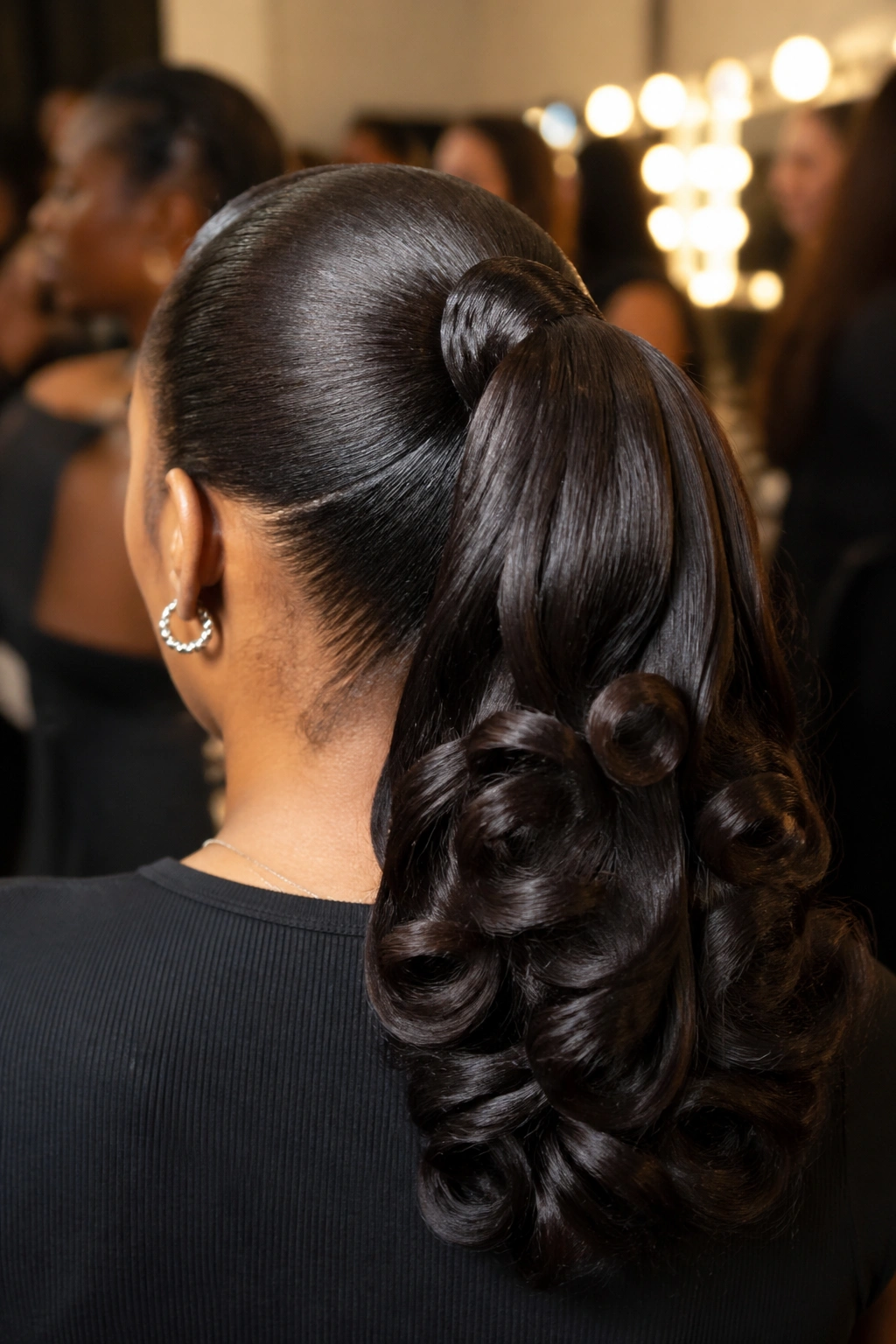
A silk press ponytail where the length of the ponytail is set in pin curls — creating a tail of defined, glossy curls rather than a straight, smooth ponytail tail.
The base of the ponytail is smooth and pressed, gathered and elevated at a high or mid-height point. The tail itself consists of individually wound pin curls that, when released, create a voluminous, textured ponytail tail that bounces and moves with each step.
On long natural hair, a pin curl ponytail tail is spectacular — the sheer volume of defined curls hanging from the elevated ponytail creates a style with undeniable presence and movement.
8. Asymmetrical Pin Curl Silk Press
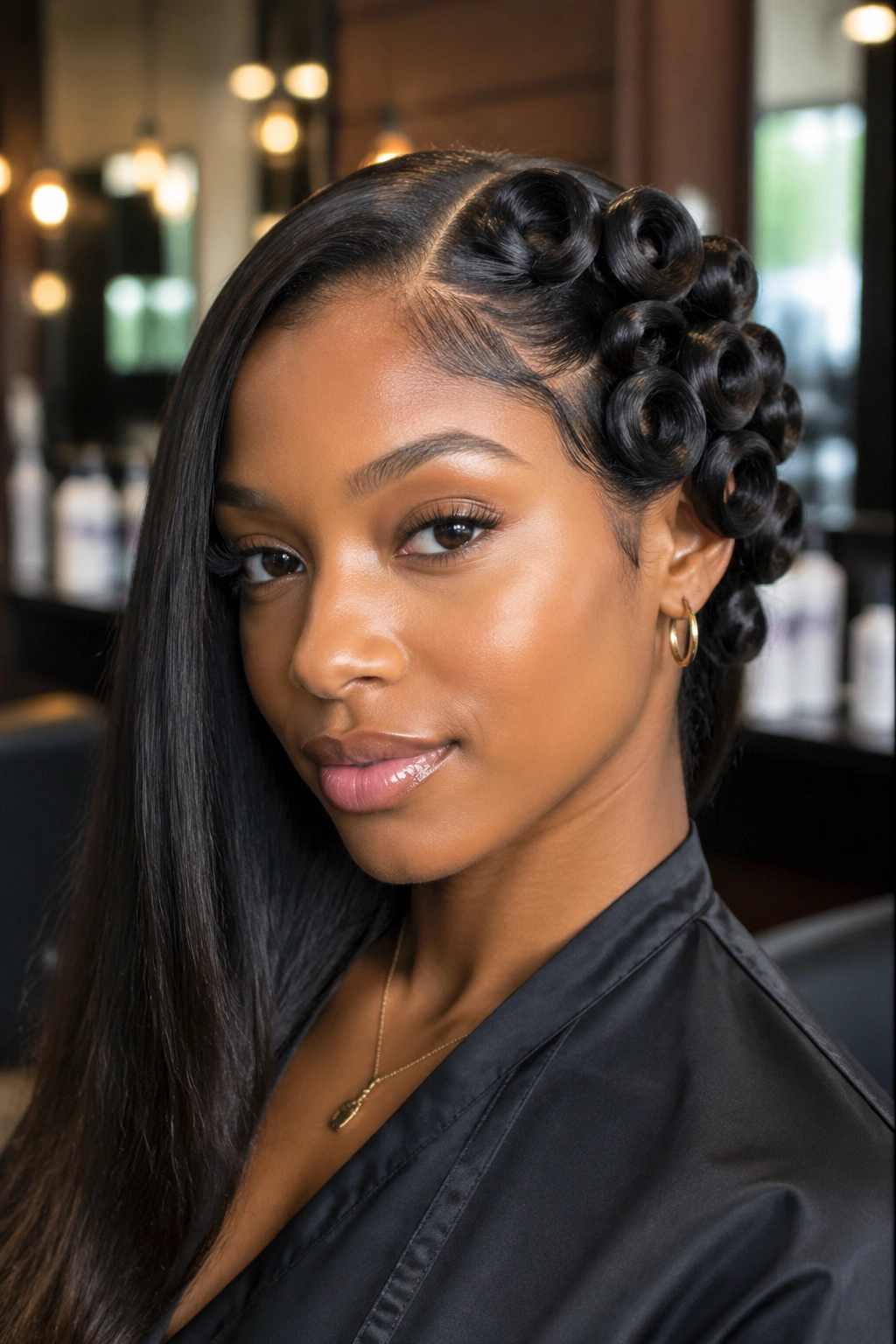
Pin curls placed only on one side of the silk-pressed hair — concentrated at the right temple, right side, and right length while the left side remains straight and pressed — create a deliberately asymmetrical style that reads as fashion-forward and editorial.
The asymmetry of a one-sided pin curl placement is a design choice, not an accident. The contrast between the sculpted, curled right side and the smooth, straight left side creates visual tension that’s interesting and immediately striking.
This style works especially well on center-parted or deep side-parted silk press styles, where the part naturally divides the hair into a heavier and a lighter side — the pin curls on the heavier side give the heavier portion extra textural complexity.
9. Silk Press Pin Curl Fringe
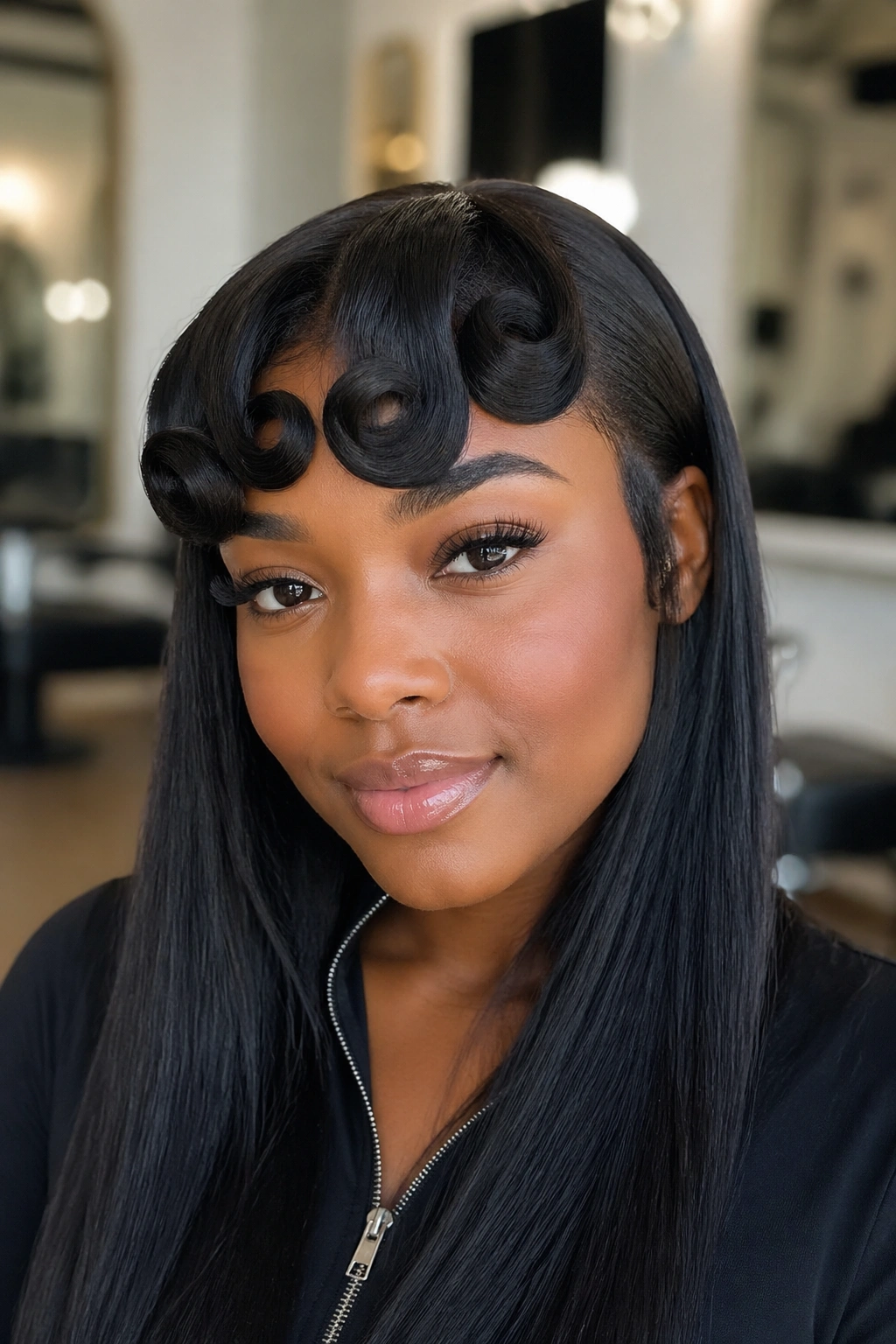
A pin-curled fringe — where the front sections of silk-pressed hair, including those that would typically fall across the forehead, are set in pin curls that sit at the forehead level — creates a textural frame for the face that’s unlike any standard fringe cut.
The pin curl fringe frames the forehead with deliberate, defined curls rather than straight-cut bangs. It’s a soft, sculpted alternative to both a blunt fringe and a plain side-swept section — specific and artistic in a way that reads as fully considered.
Pair the pin curl fringe with the rest of the silk press left straight and smooth for maximum contrast between the textured fringe and the sleek lengths behind it.
10. Silk Press Pin Curls With Defined Rows
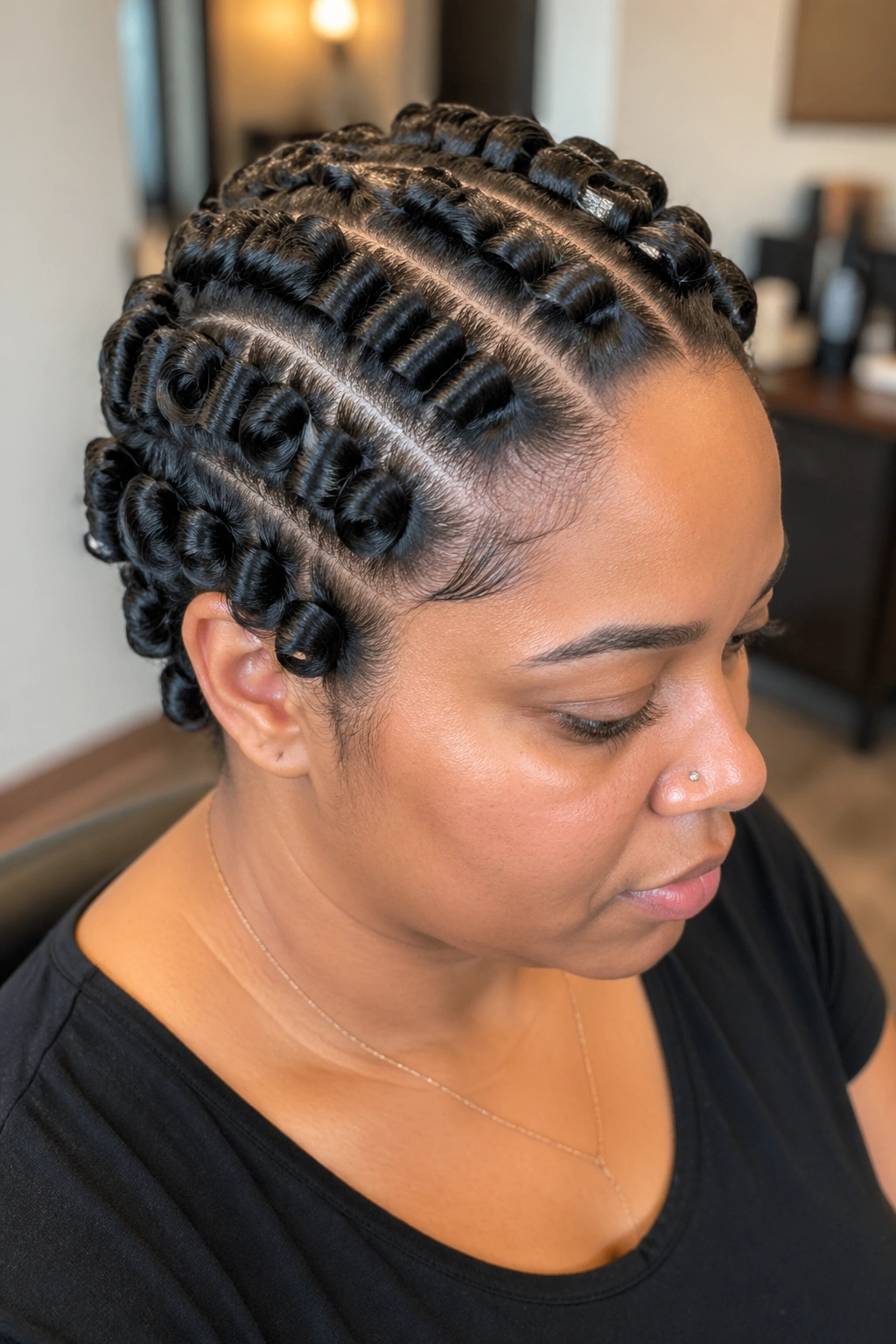
Row-based pin curl placement — where the pin curls are set in organized, evenly-spaced rows across the head rather than randomly or intuitively — creates a patterned, structured quality to the set that reads as highly disciplined and artful.
Each row follows a deliberate path across the head: a row from ear to ear across the front, another row across the crown, another across the back. When released, the rows create a wave-and-curl pattern that ripples consistently across the entire head.
How to Achieve
- Use a rat-tail comb to draw clear, even rows across the head before beginning to set
- Wind all pin curls in each row in the same direction
- Alternate winding direction between rows to create the wave pattern as each row’s curls interact with the adjacent rows
11. Glossy Pin Curls on Short Silk Press
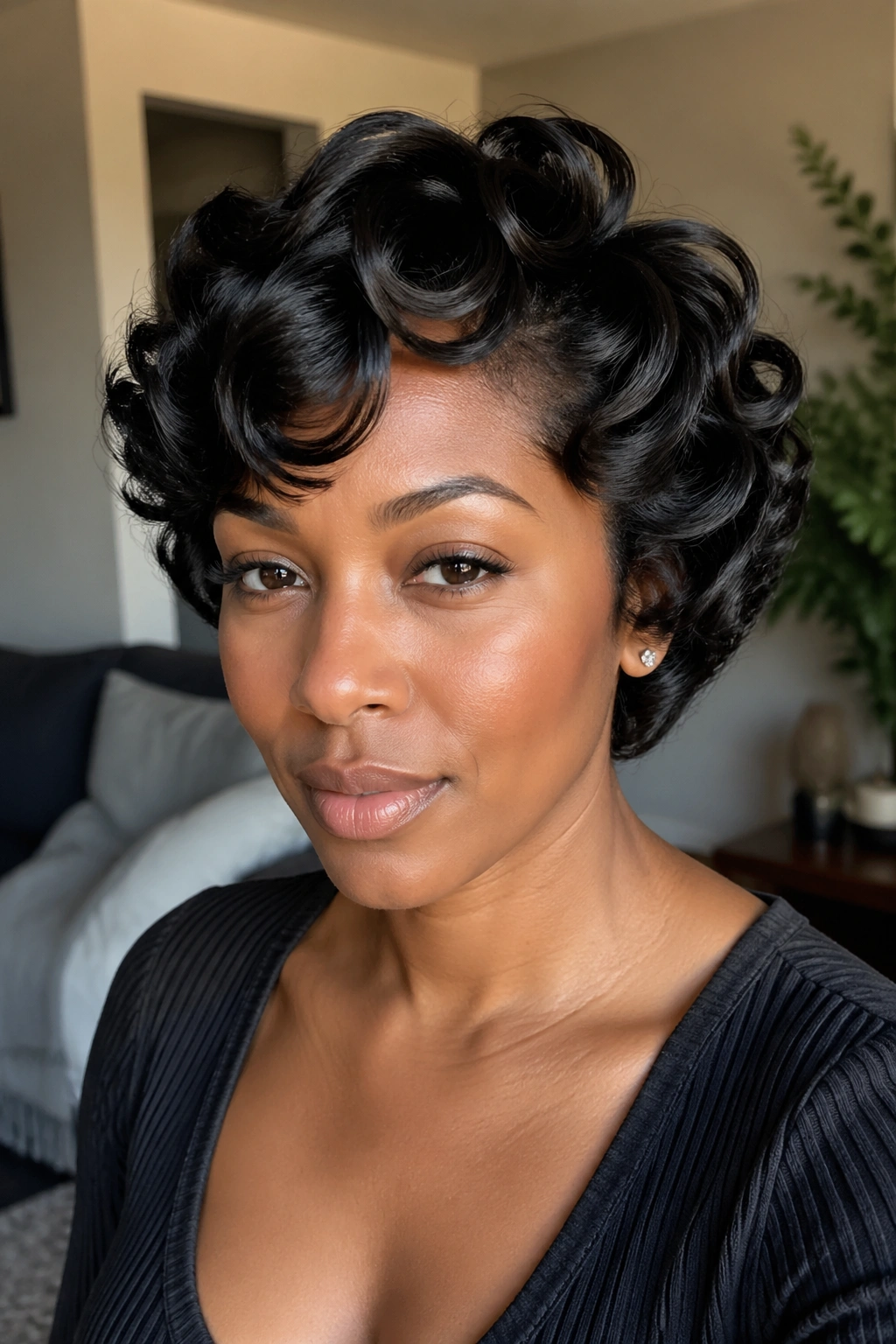
On short silk-pressed natural hair, pin curls create volume and definition that the limited length can’t otherwise achieve. Each pin curl lifts the hair slightly at the base, creating a style that feels bigger than the hair’s length would suggest.
Short hair and pin curls are a classic combination — it’s one of the oldest styling approaches for short hair precisely because it works so well. On a silk press foundation, the pin curls have that extra shine quality that makes short styles look polished and complete rather than sparse.
A full head of pin curls on a short silk press creates a style that can look like a finely detailed afro from a distance — dense, full, and deeply textured — while up close each individual curl is clear and precise.
12. Silk Press Pin Curls With Color Accent
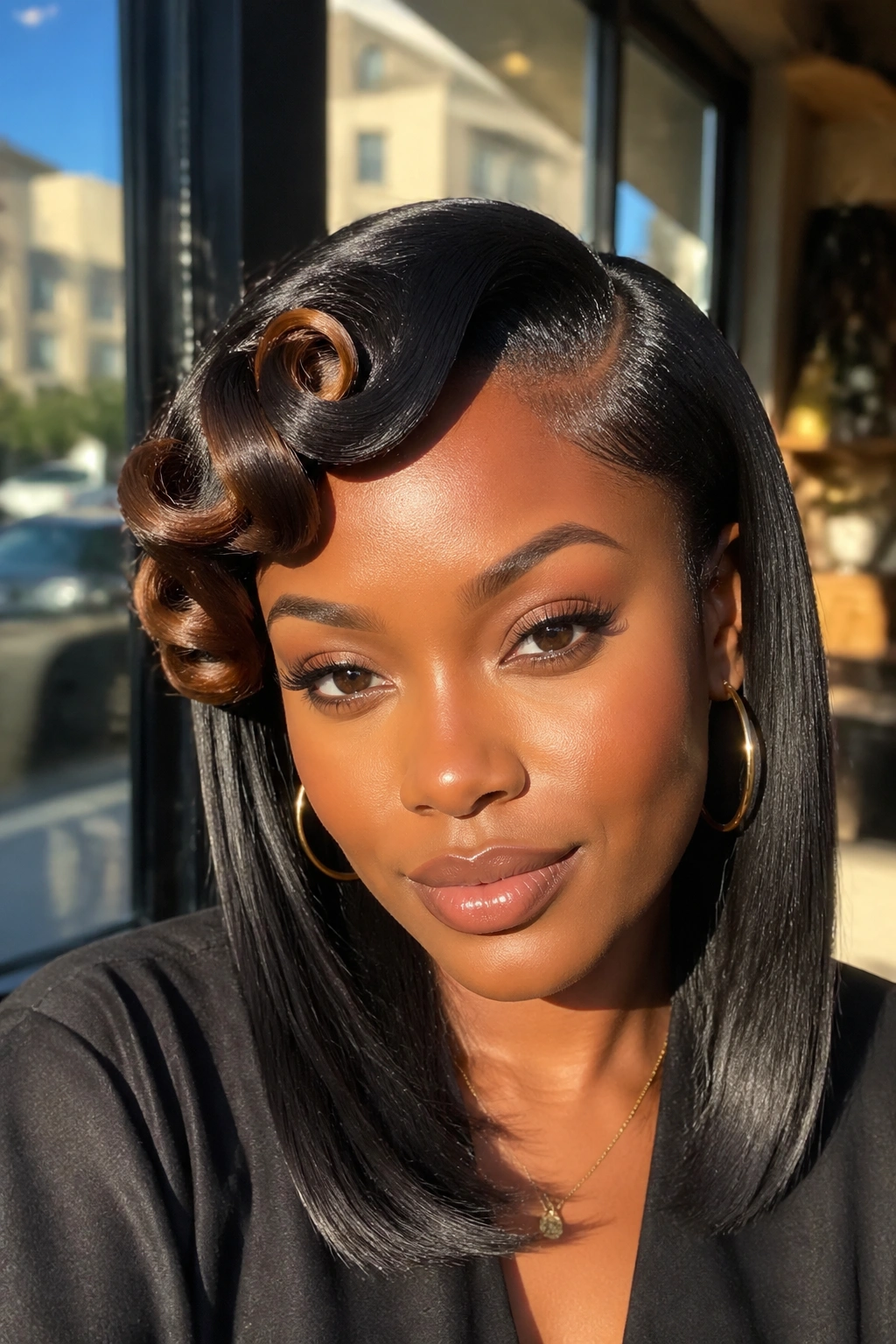
If your hair has any color — highlights, a money piece, or a balayage — setting the colored sections as pin curls while leaving the natural-colored sections straight creates a style where both color and texture work together to create visual interest.
The pin curls in the colored sections catch light differently than straight, colored sections — the curl creates multiple angles and surfaces for light to bounce from, making the color look more dimensional and alive than it would in a flat, pressed section.
This is a particularly effective styling choice for women with honey blonde or copper highlights through dark natural hair — the curled highlighted sections glow visibly against the straight, darker pressed sections.
13. Pin Curl Silk Press Bun
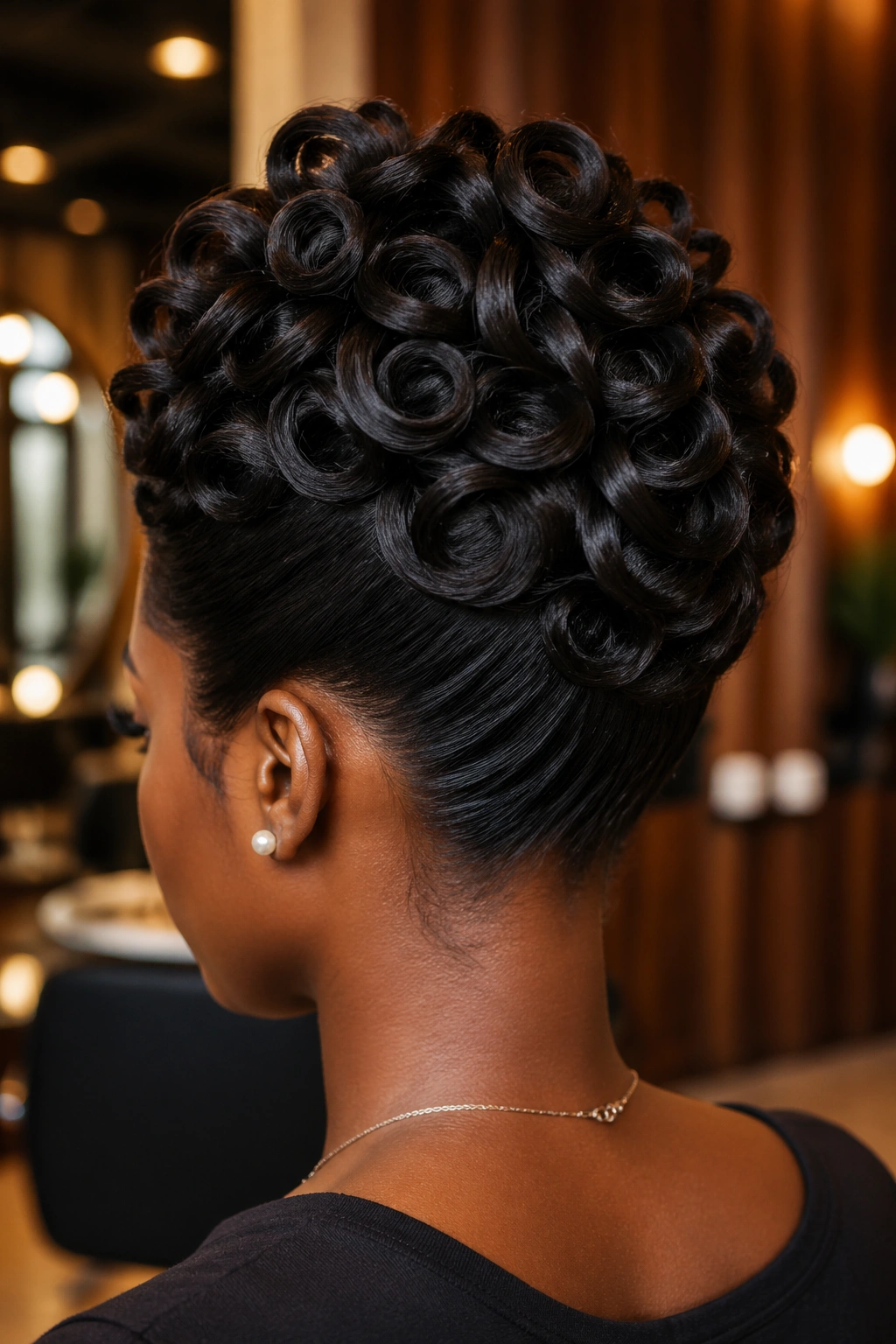
Rather than a traditional bun created by gathering hair and twisting it into a topknot, a pin curl bun is built entirely from pin-curled sections arranged and stacked into a bun shape.
Sections of pressed hair are pin-curled close to the scalp at the back of the head, layered on top of each other in a bun-like formation. When the bobby pins securing the pin curls are removed, the curls hold the bun shape through their set form — no elastics, no twisting, just the architecture of the curls themselves.
The result is a bun with visible curl texture throughout — not a smooth, gathered topknot but a textured, pin-curled crown that reads as a combination of updo and curl set simultaneously.
14. Silk Press Pin Curl Waves
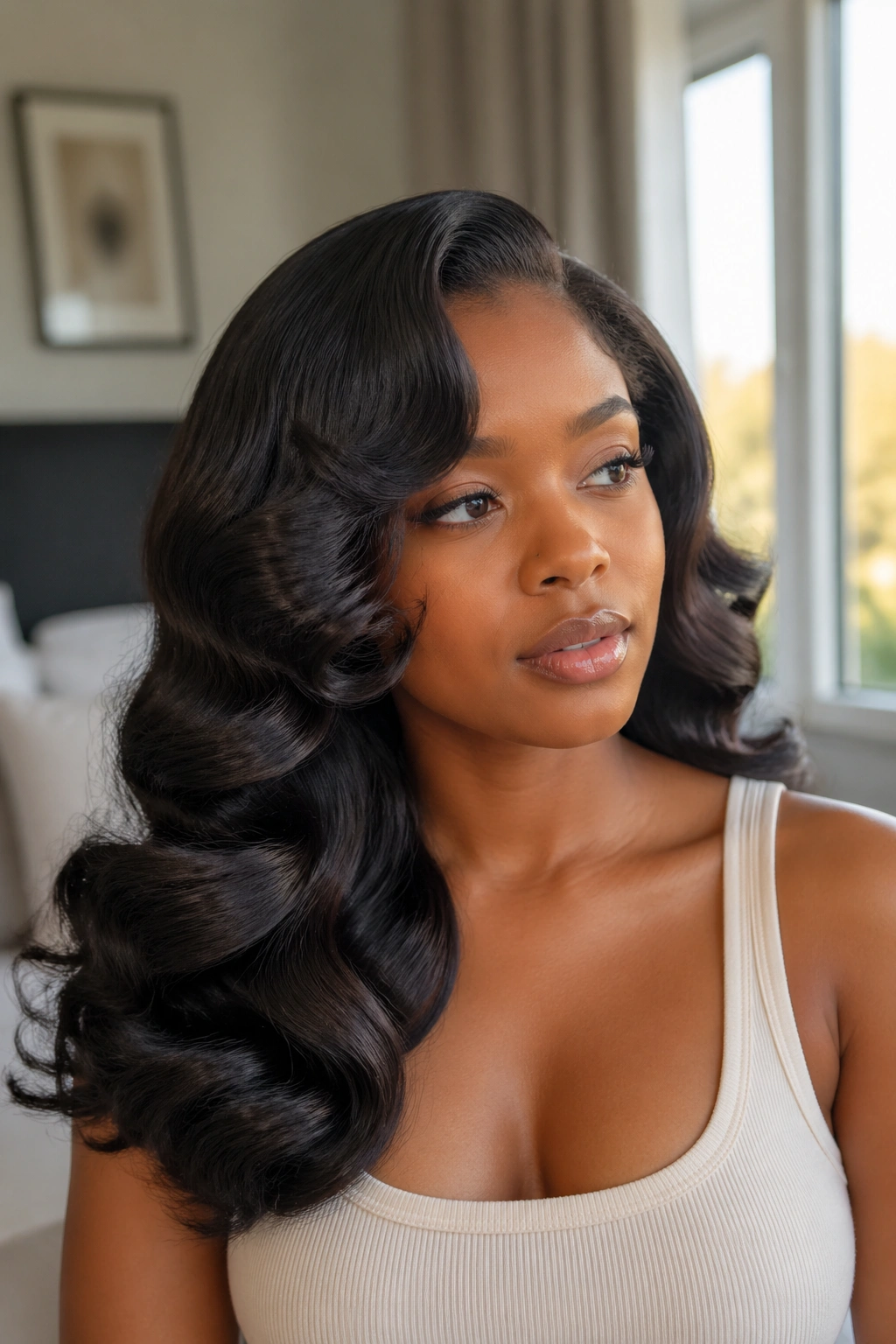
Rather than setting each section into a full, round pin curl circle, a wave-pin technique winds each section into a partial curl — halfway around rather than full — and pins it flat. When released, each section creates a wave rather than a full curl.
Multiple wave-pin sections placed consecutively create a flowing wave pattern through the silk press — similar in feel to a finger wave or a Marcel wave, but achieved through the pinning technique rather than through direct iron manipulation of the wave shape.
On long pressed natural hair, wave-pin techniques create one of the most Old Hollywood-inspired styles achievable — sweeping, smooth waves that cascade down the length of the hair with consistent, beautiful undulation.
15. Silk Press Pin Curls With Tapered Ends
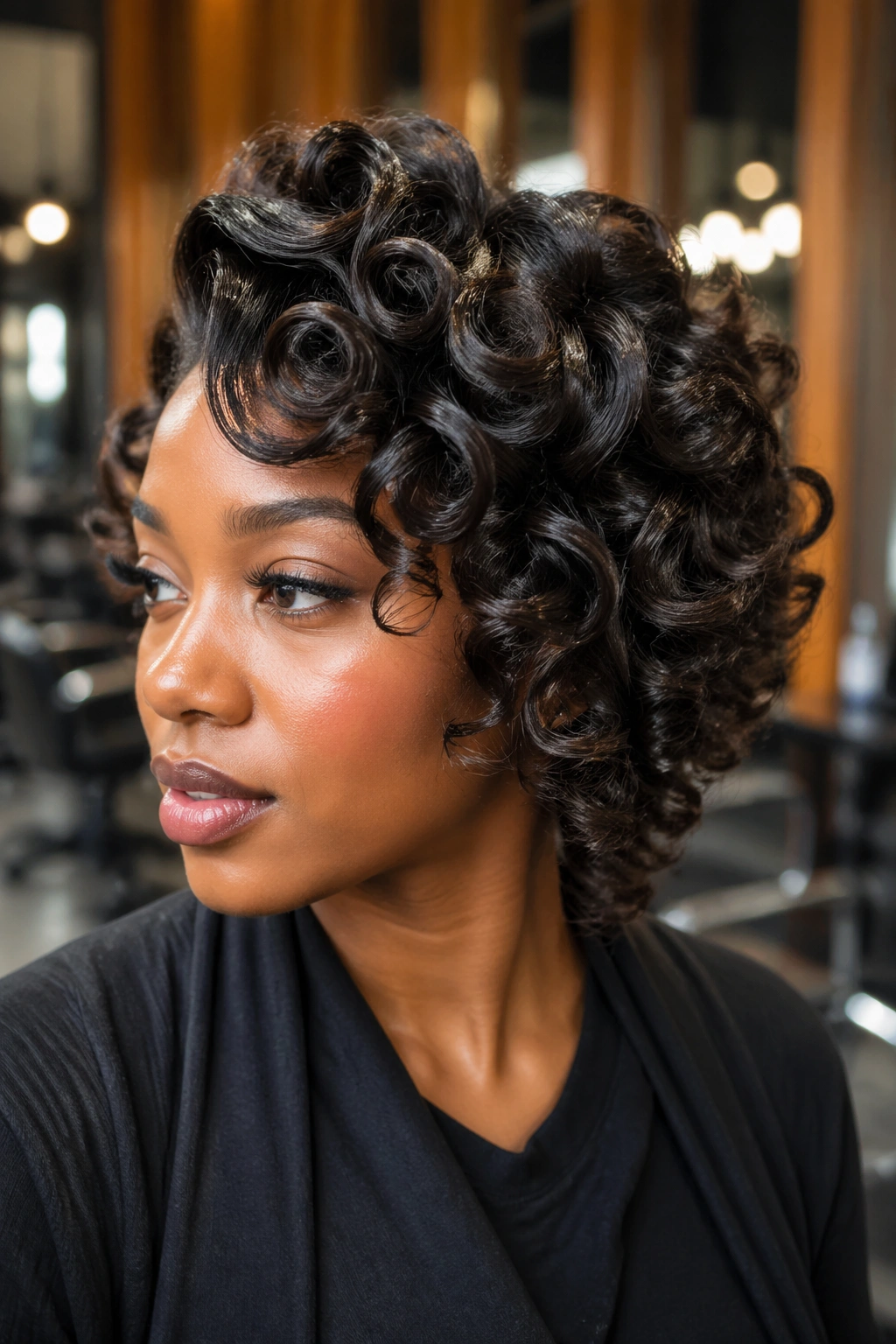
A style where the pin curls are largest and most open at the crown, progressively getting tighter and more defined toward the ends of the hair, creates a tapered curl effect that reads as naturally graded.
The taper is the key design element. At the top, the curls have a more open, rounded quality — almost like large barrel curls. Toward the lengths, the sections get smaller and wound tighter, creating the tight, precise pin curl shape. And at the very ends, the tightest, smallest pin curls create a detailed fringe.
This graduated approach prevents the style from looking uniform and flat — instead, it has visual rhythm and progression that reads as deliberate and sophisticated.
16. Old Hollywood Pin Curl Silk Press
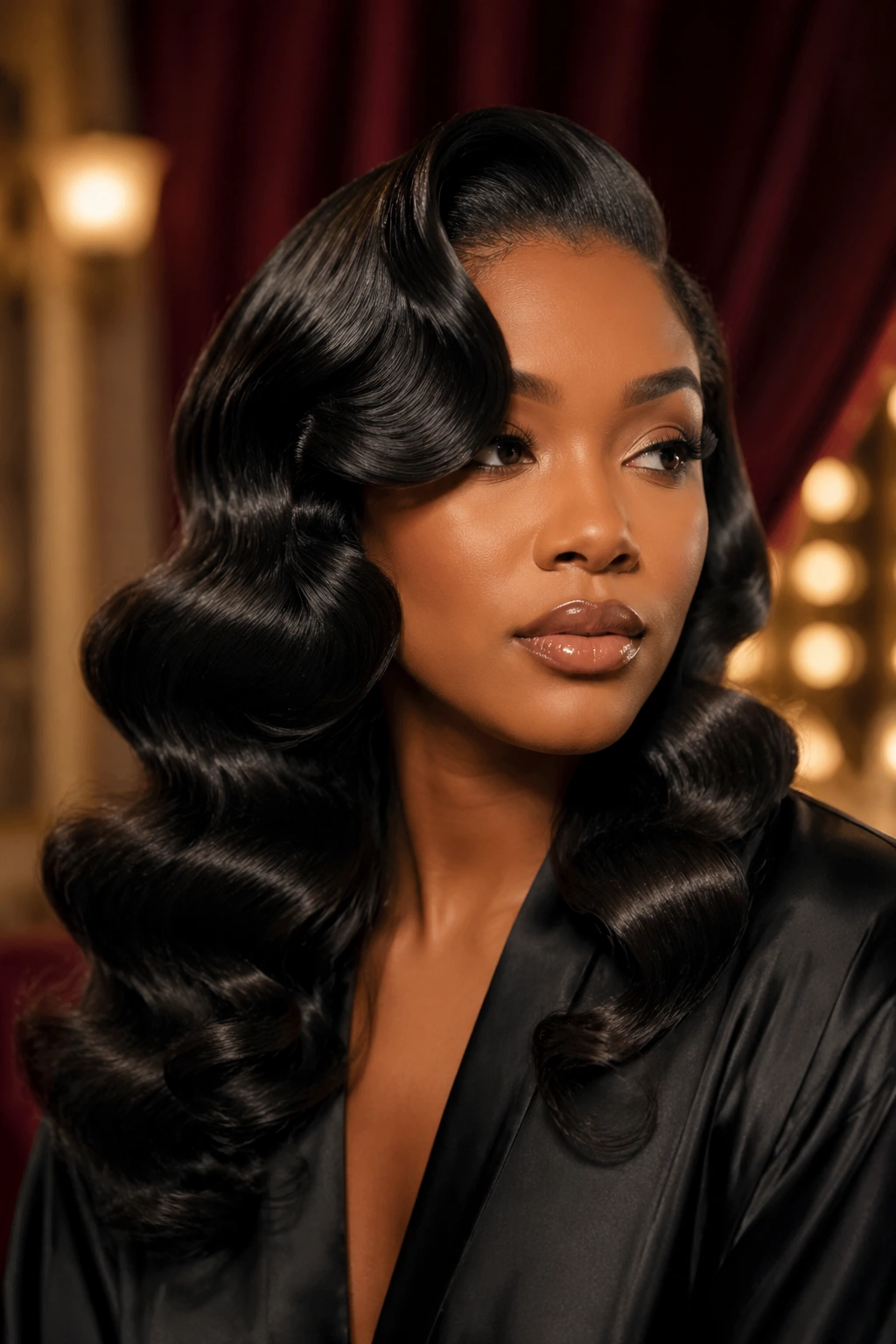
The full Old Hollywood treatment — a silk press, a full head of barrel-wound pin curls set under a hooded dryer, and then released and draped deliberately to create the sweeping, romantic waves of classic Hollywood — is a style that requires time and skill but delivers undeniably stunning results.
The key to an authentic Old Hollywood pin curl look on natural hair is the finishing step. After releasing all the pin curls, don’t shake them out or pick them through. Instead, use a wide-tooth comb or your fingers to very gently coax the curls into waves — encouraging the S-shape by pressing the curls together slightly and letting them fall naturally.
The result should look like a wig from a Golden Age Hollywood film. Smooth, sweeping, voluminous. Gorgeous.
17. Pin Curl Mohawk on Silk Press
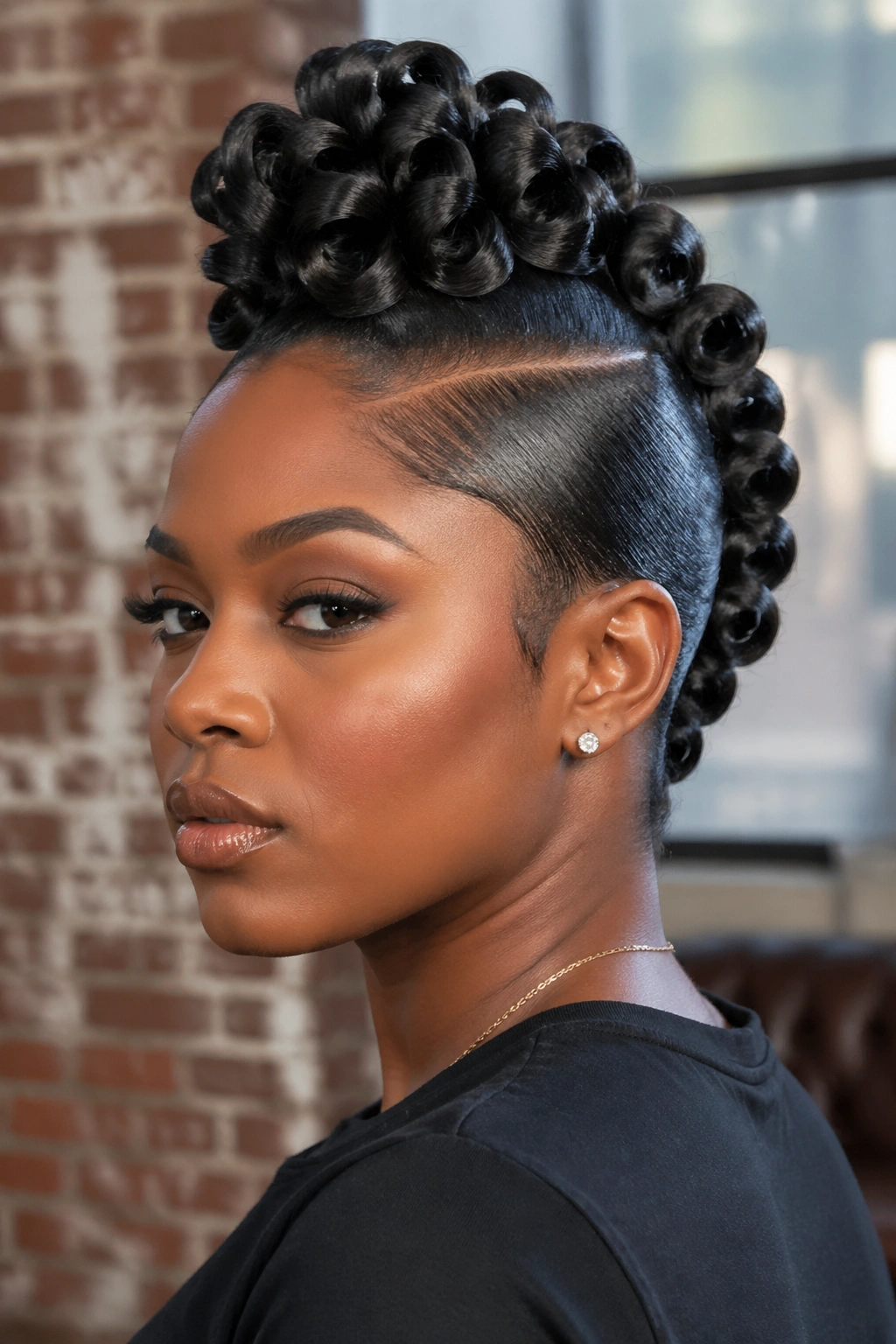
A mohawk-inspired style where pin curls are concentrated along the center of the head from front to back — creating a ridge of curls down the middle of the silk-pressed style — while the sides stay smooth and pressed flat.
The mohawk silhouette in pin curls is a deliberately bold, fashion-forward interpretation of what is otherwise a traditional technique. The structural contrast between the textured center ridge and the smooth, flat sides creates a look that’s architectural and modern, not at all nostalgic or retro despite the classic technique.
This works especially well on women with enough length to create visible pin curl volume along the center section without the sides becoming too thin.
18. Silk Press With Pin Curl Sections Alternated With Straight Sections
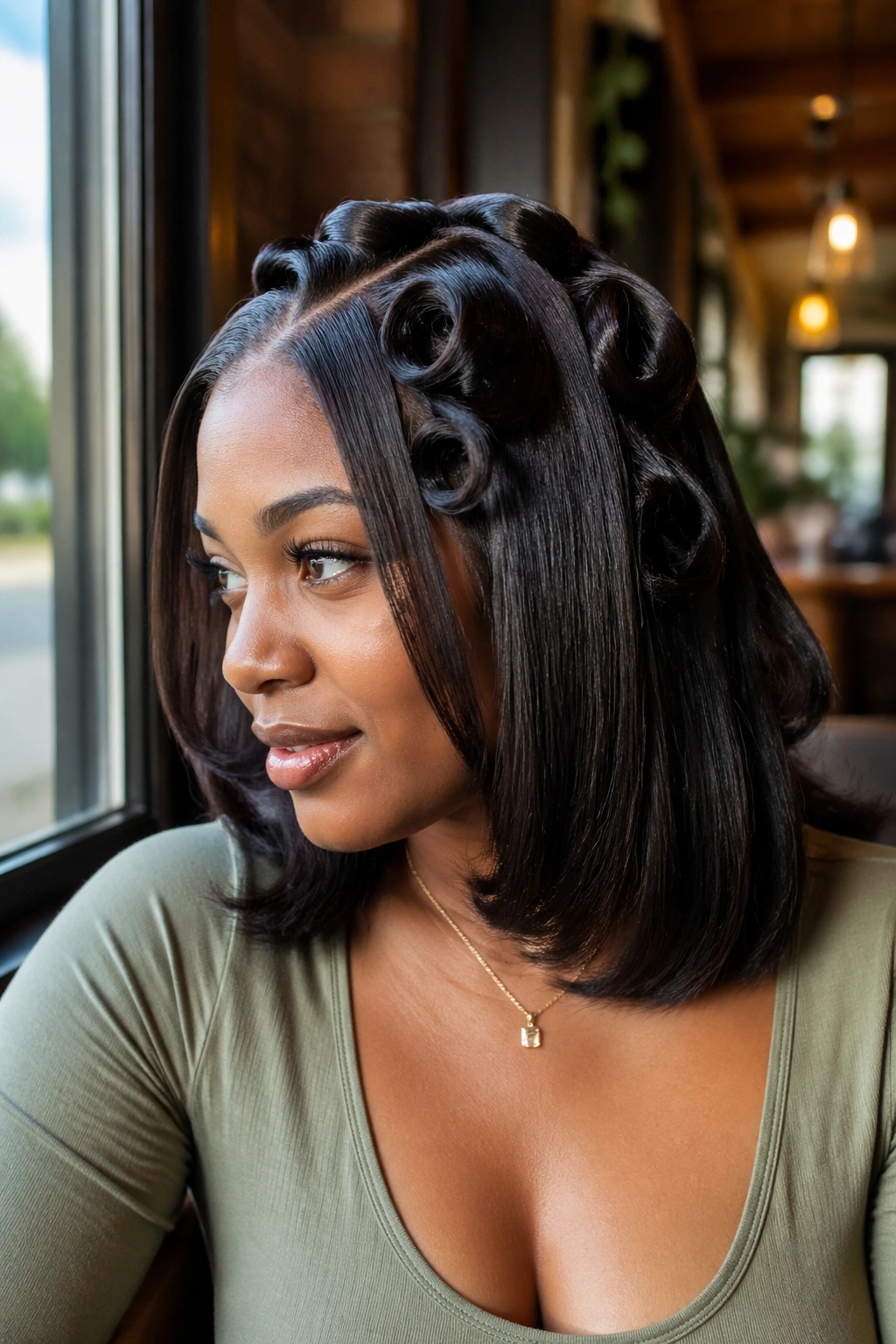
Rather than setting all sections in pin curls, this approach alternates: one section pressed straight, one section set in a pin curl, one section straight, one section pin curled — creating a pattern of alternating texture throughout the style.
The alternating texture creates a striped effect when viewed from a distance — stripes of smooth, straight press alternating with stripes of curled, textured pin curl. It’s a deliberately patterned look that requires planning and precision to execute well, but the result is visually complex and undeniably interesting.
19. Pin Curl Set With Defined Parting
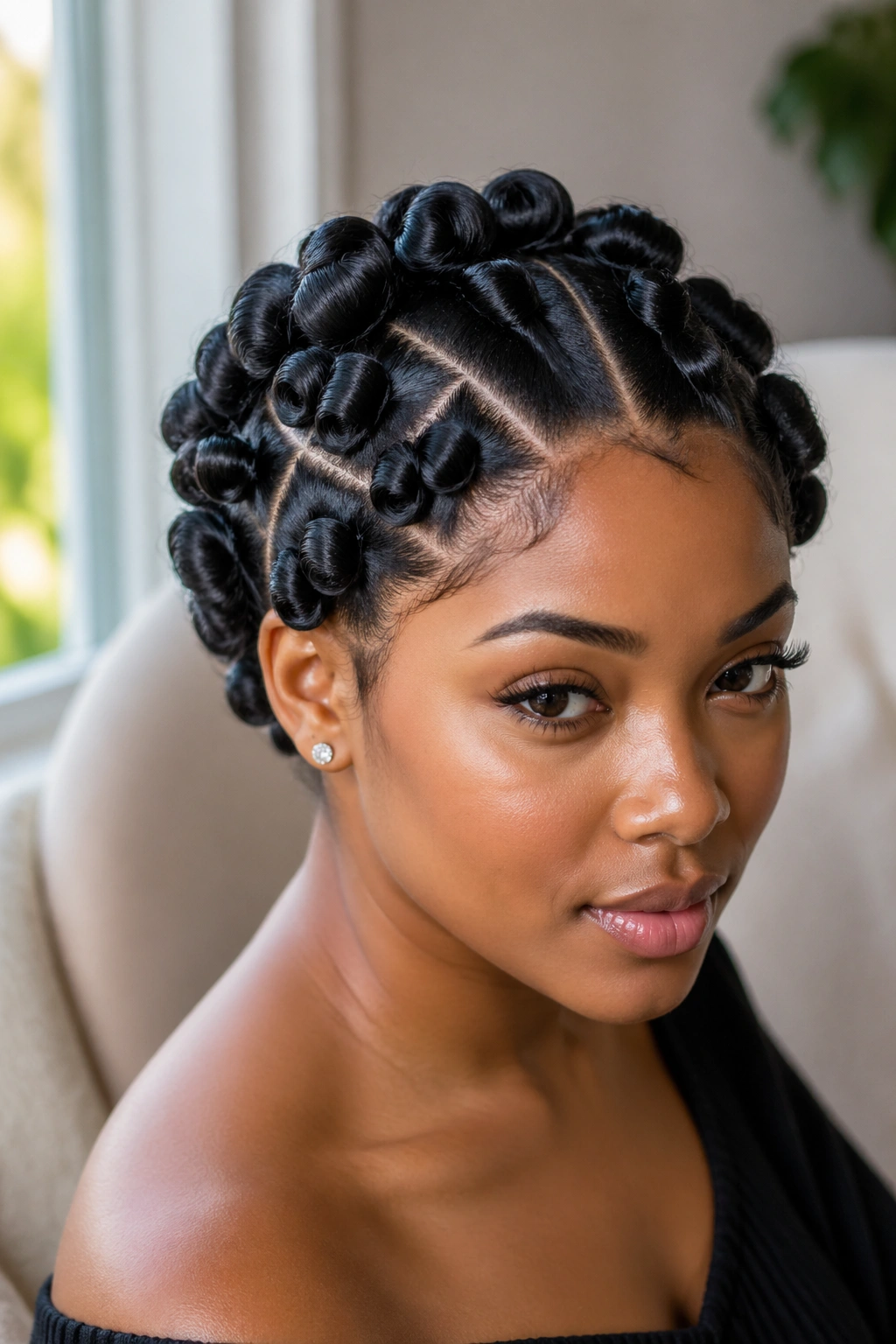
Rather than setting pin curls randomly throughout the silk-pressed hair, this approach creates deliberate, visible partings between sections of pin curls — the part lines are visible even in the finished style, creating a grid-like or row-based visual structure.
The visible partings add to the sculptural, deliberate quality of the style. Rather than pin curls that blend and flow into each other, clearly delineated sections of curls separated by clean part lines create a style that reads as highly structured and architectural.
20. Silk Press Pin Curls Worn Loose
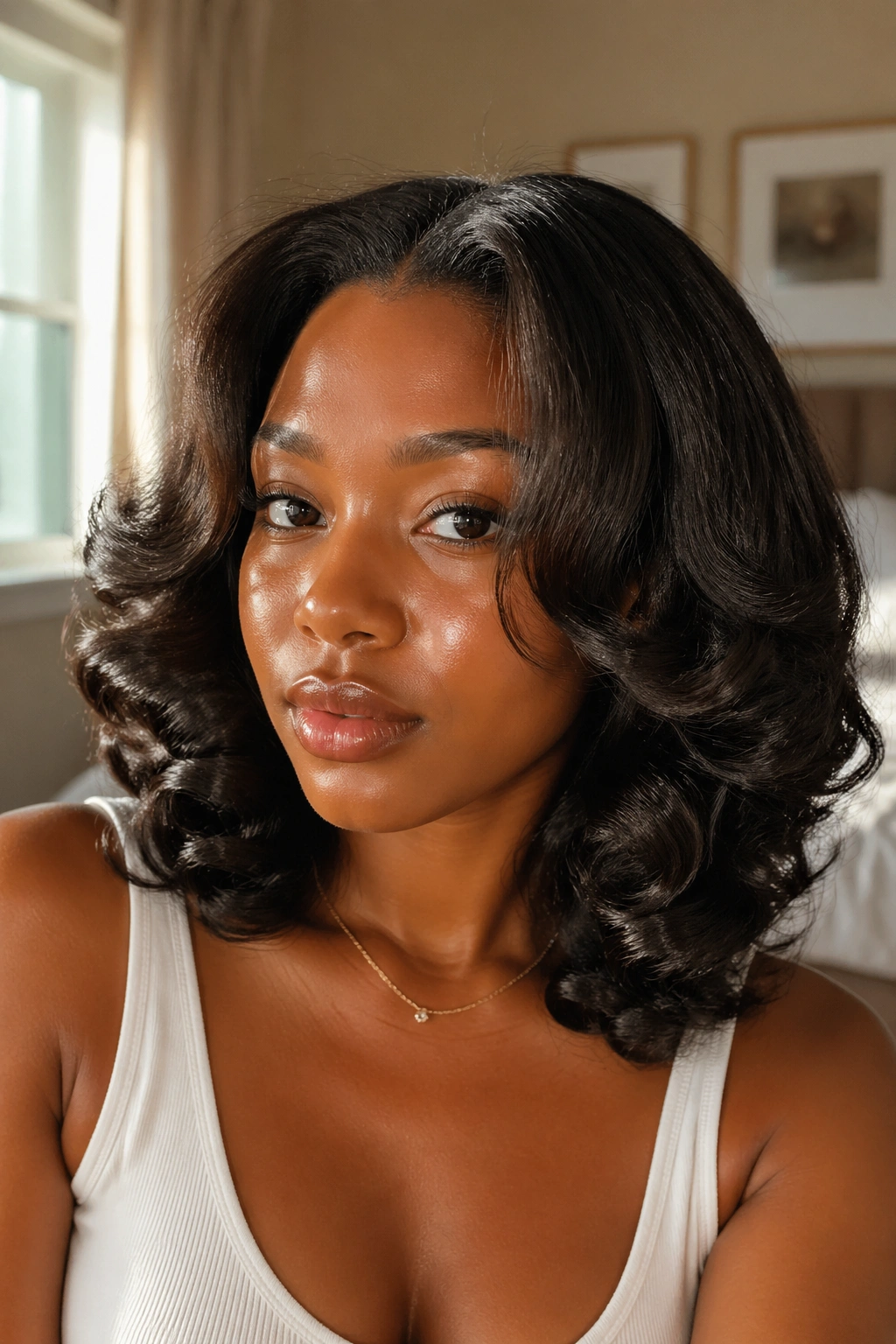
The most relaxed interpretation of silk press pin curl styles — setting the curls as precisely as any other approach, but then releasing them and gently separating them with fingers into a looser, more free-form style that retains the curl definition but loses the tightly structured, close-to-the-scalp quality.
Worn loose, pin curls on a silk press create a style that sits between a traditional pin curl set and a full wash-and-go — it has the defined curl shape and the silk press shine, but the looseness of the release gives it a more relaxed, casual quality that works for everyday wear rather than strictly for formal occasions.
A little shine oil worked through the hands and pressed gently over the loosened pin curls finishes the look with the kind of luminous quality that makes silk press pin curl styles so distinctively beautiful.
The Art of Pin Curl Maintenance
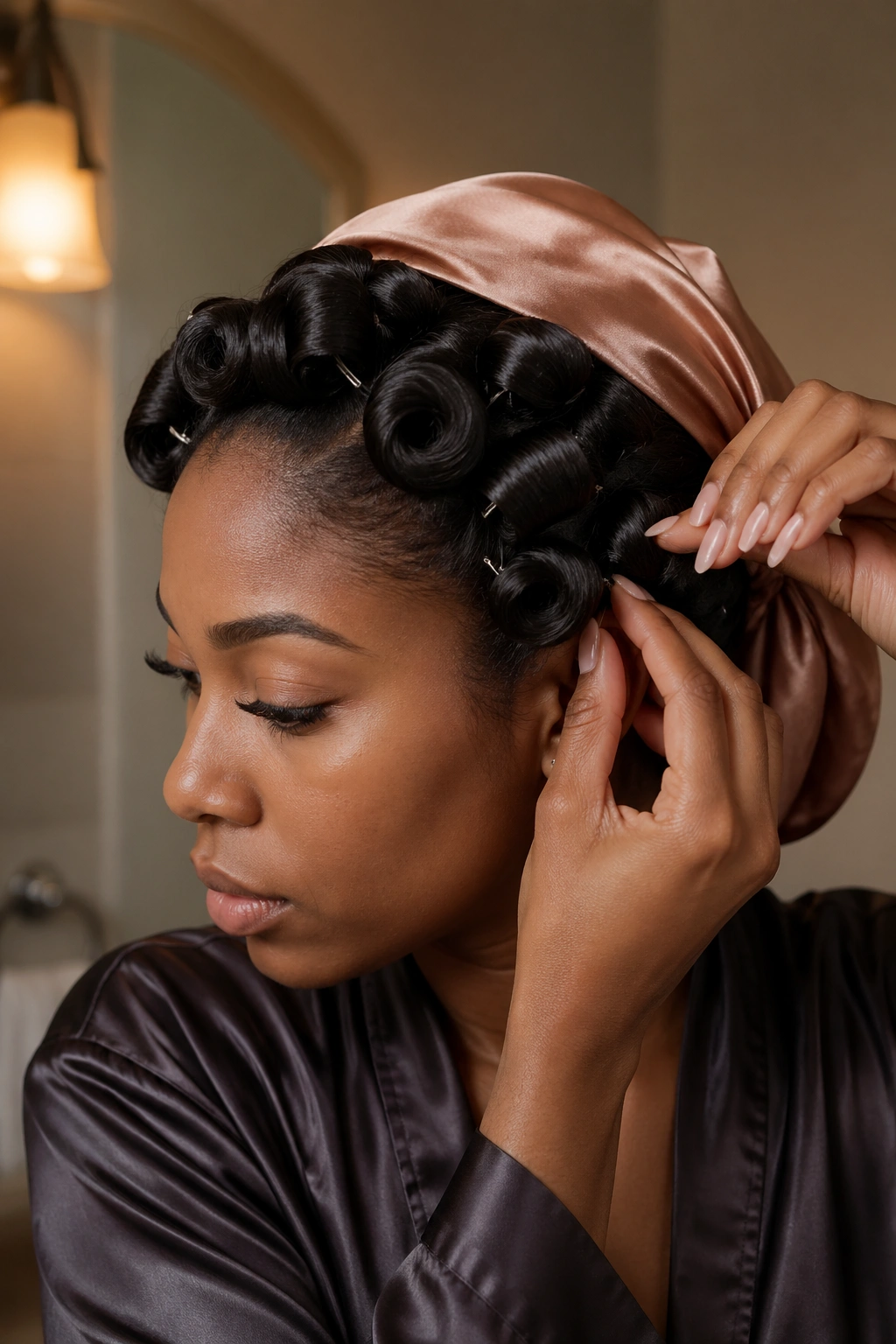
Maintaining a silk press pin curl style through the week is a balance between protecting the pressed sections and refreshing the curl definition in the pin curl sections.
At night, re-roll the pin curl sections back into their curled position and secure with pins or clips before wrapping the entire style with a satin scarf. This is the single most effective thing you can do to extend the life of the style. Re-rolling the curls overnight prevents them from being crushed, distorted, or flattened during sleep, and they release in the morning back into their defined shape.
The pressed sections should be wrapped smoothly in the satin scarf after the pin curls are re-rolled — the smooth sections don’t need the same re-rolling treatment, they just need to be kept away from friction and humidity through the night.
By day 4-5 of wear, most pin curl sections will have loosened naturally into a softer, more open version of their original shape. At that point, refreshing them with a very small amount of setting lotion and re-pinning for an hour while you go about your day brings them back to a defined state without requiring a full re-press. It’s a simple maintenance step that buys the style several more days of wear.
What to Wear With a Silk Press Pin Curl Style
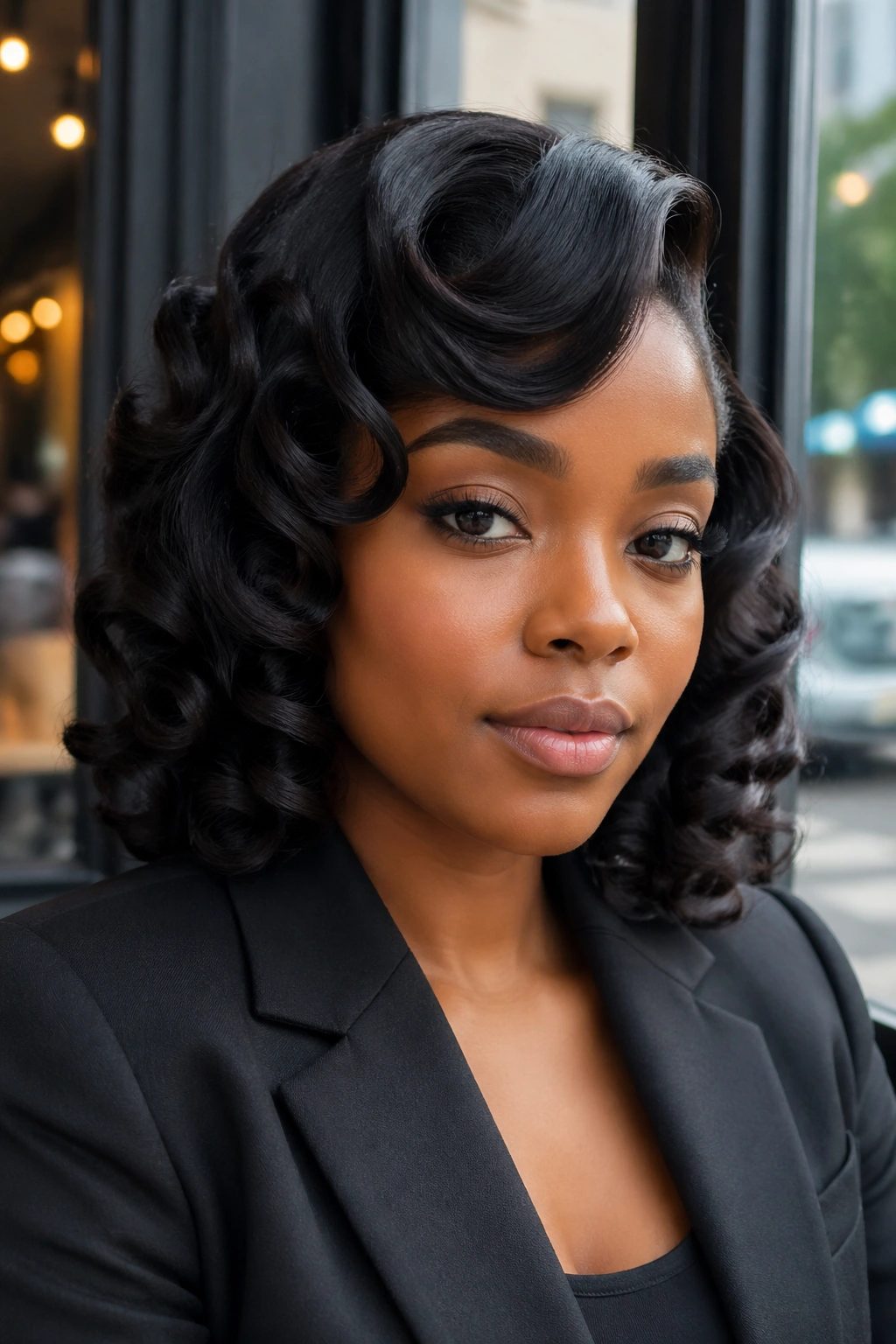
Styling your hair is only one half of the equation — what you wear with a silk press pin curl look can amplify or undercut the impact of the style significantly.
A full pin curl set reads formal. It has that deliberate, set quality that communicates occasion. Matching it with casual clothing creates a contrast that can feel jarring rather than effortlessly chic. A full pin curl silk press wants to be paired with something that respects its formality — a tailored blazer, a structured dress, a sharp co-ord set. Let the sophistication of the hair inspire the rest of the outfit.
Partial pin curl styles — face-framing curls with straight back, or a pin curl updo with a few pieces loose — are more versatile in terms of outfit pairing. A half-pin-curl style works beautifully with elevated casualwear: a good quality sweater and trousers, a midi skirt with a fitted top, or even well-fitted jeans with a beautiful blouse. The formality of the hair adds intentionality to outfits that might otherwise look underdone.
Jewelry choices matter, too. Pin curls reveal the ears, the neck, and the jawline more clearly than many other styles — which makes this the perfect moment to wear statement earrings or a bold necklace. Drop earrings and hoop earrings in particular look spectacular with pin curl styles because the visual space between the curl and the ear is clear and framed. Choose metals that complement your hair color — gold for warmer hair tones (auburn, copper, honey), silver or white gold for cooler tones (burgundy, dark red, dark brown).
How Pin Curls on a Silk Press Differ From Other Natural Hair Curl Sets
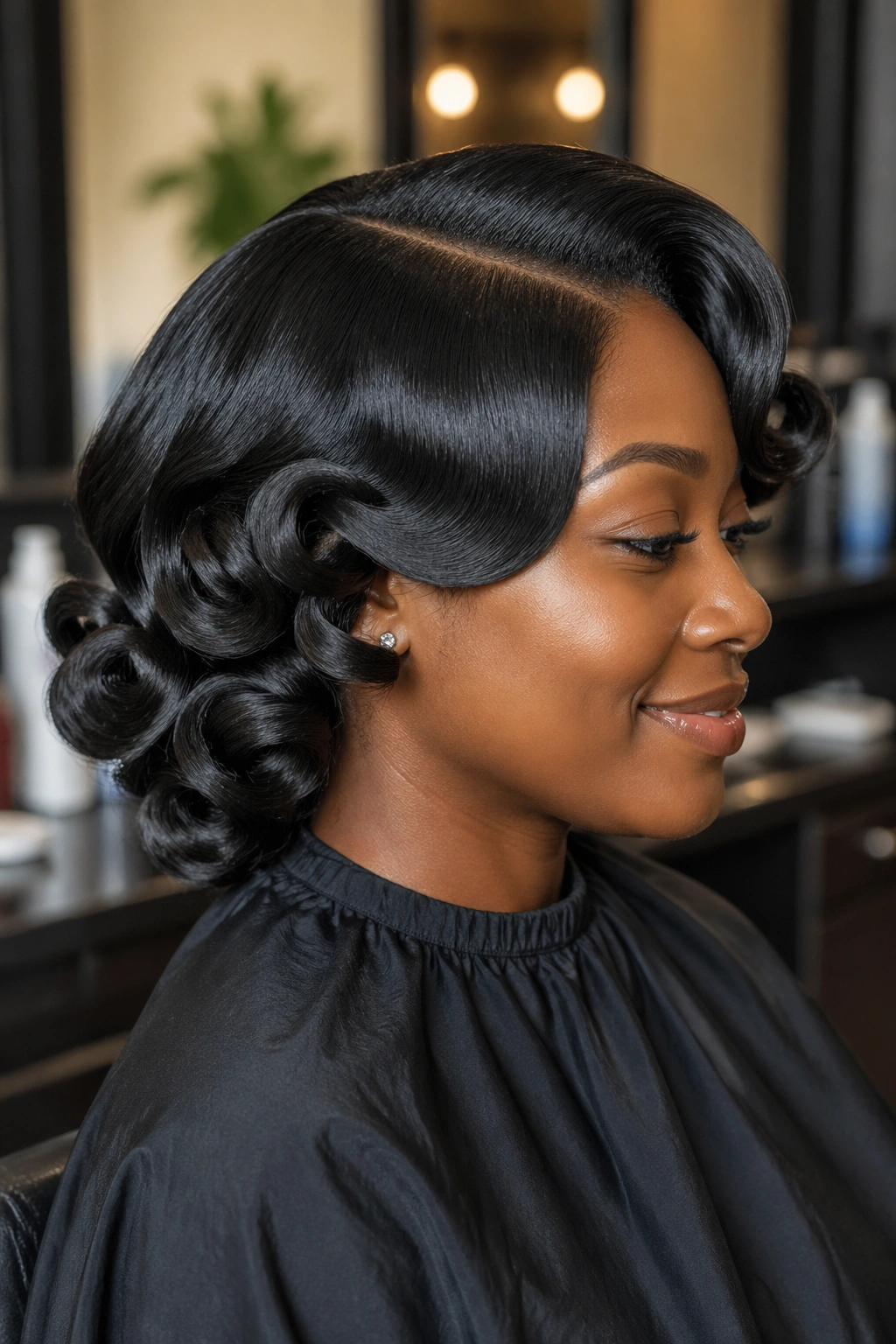
It’s worth understanding how a pin curl set on a silk press differs from other curl-setting approaches on natural hair — because the difference isn’t just aesthetic, it’s functional and practical.
A pin curl on a silk press differs from a twist-out or braid-out curl in a fundamental way: the curl is set after the hair is straightened, which means the curl is formed from a smooth, cuticle-aligned base rather than from the hair’s natural texture. Twist-out and braid-out curls are formed by the natural texture of the hair asserting itself through a stretching and releasing process. Pin curl set curls are formed by imposing a new shape onto already-straightened hair.
The practical consequence of this difference is that pin curls on a silk press have more shine — because the pressed cuticle underneath the curl set is lying flat and reflecting light evenly — but they also have less texture than a braid-out or twist-out curl would. They don’t have that kinky, natural-hair richness of texture that natural curl sets do. What they have instead is a polish and precision that natural curl sets don’t produce.
Neither is better. They’re simply different. Understanding where each approach is strongest helps you choose the right technique for the specific look you’re going for. When you want precision, deliberateness, and high shine — pin curls on a silk press are the answer.
Pin Curls on a Silk Press as a Transition Style
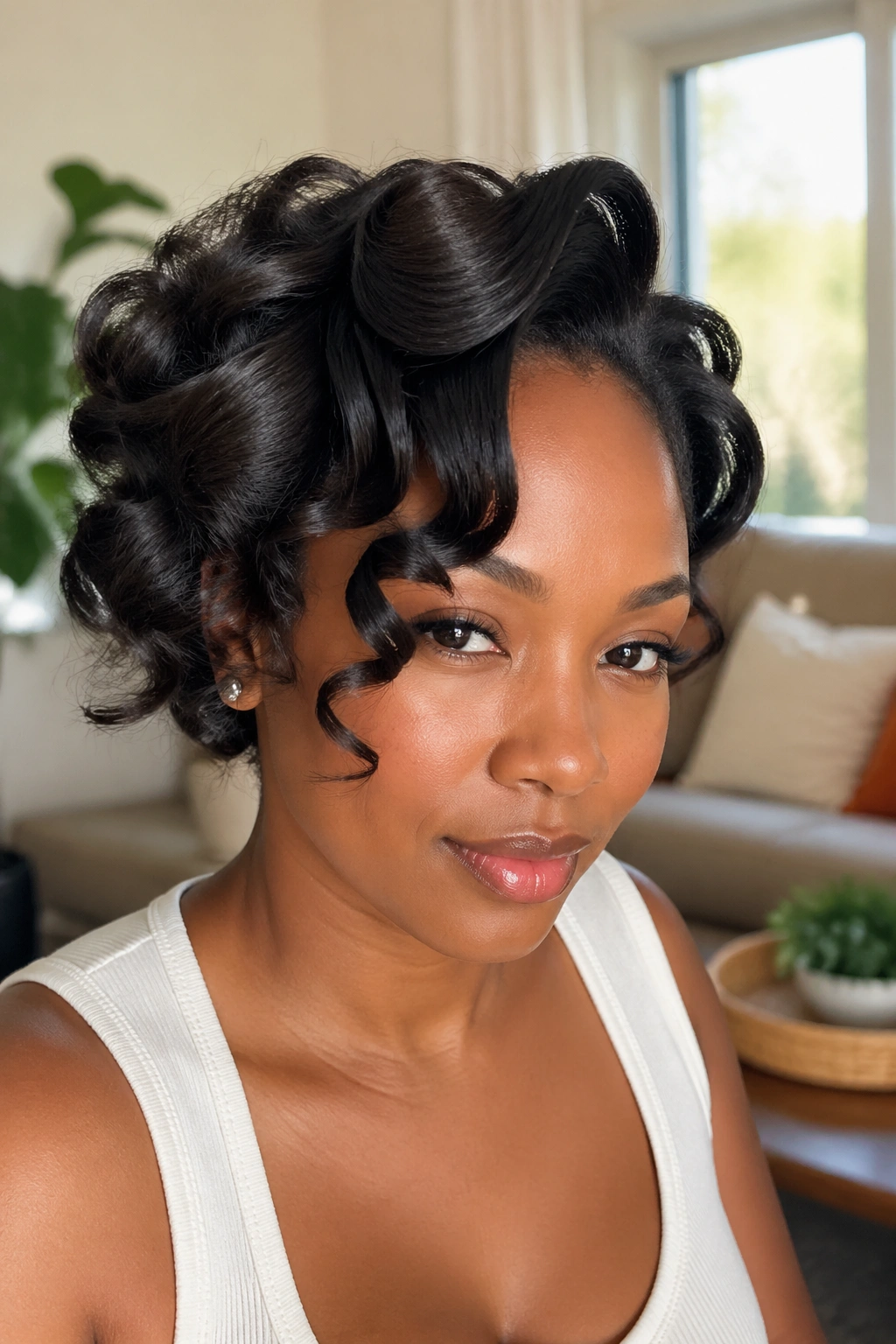
For naturals who are in the early stages of growing out their natural hair after a relaxer or a big chop, pin curls on a silk press can serve as a bridge style — one that looks polished and intentional even while the hair is still in an in-between length.
Short, transitioning hair is actually ideal for pin curls. Pin curls add volume, shape, and definition to hair that might feel sparse or shapeless at a short length. They create the appearance of more hair than there is by organizing it into defined, intentional circles rather than leaving it in a shapeless puff or struggling to create length-dependent styles that the transitioning hair can’t yet support.
Pin curls on a silk press during transition also help you practice protecting short hair, working with heat protectant products, and understanding your curl pattern as it grows in — all of which is valuable knowledge that translates into better natural hair care as length increases.