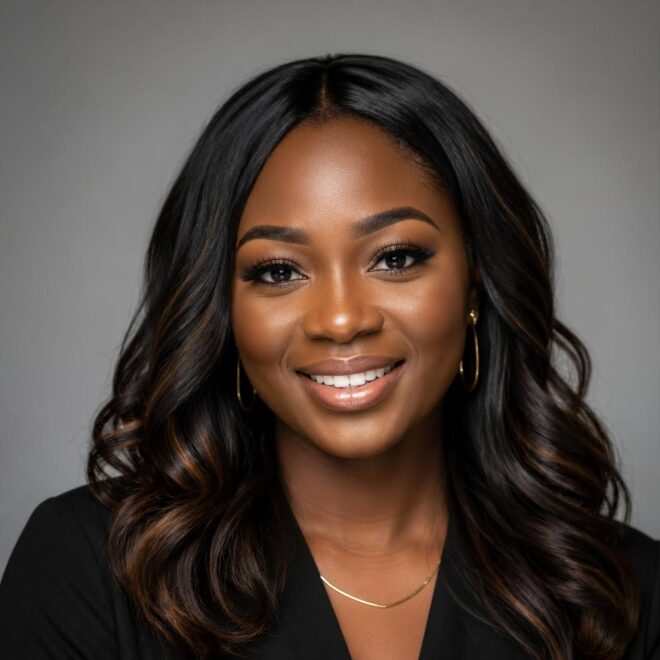

Wearing your natural curls down on your wedding day is one of the most powerful style decisions you can make. Not because it’s dramatic or complicated — but because it’s honest. Natural curls down styles for weddings say exactly who you are before you speak a single word. They say that your hair, in its full, unmanipulated state, is worth celebrating on the most photographed day of your life. And for Black women who’ve spent years navigating a world that preferred their hair straightened, that declaration is something.
Down styles for natural hair aren’t just simple washes and goes, though those absolutely count. They include twist-outs and braid-outs styled free, defined ringlets cascading past the shoulders, half-up configurations that let the majority of the hair flow down, and everything in between. If the hair falls — if it moves freely and surrounds the face — it’s a down style. And there are more options than most brides realize.
What Makes a Down Style Work for a Wedding
Not every wash-and-go is wedding-ready, and the difference comes down to preparation, product selection, and hold. A down style that photographs beautifully in morning light needs to maintain that quality through a ceremony, cocktail hour, and hours of dancing. That requires a deliberate approach.
Moisture is the foundation. Dry curls look dull and frizzy in photographs, and no amount of product layering will fix dehydrated hair on the day of. Start building moisture weeks in advance — weekly deep conditioning, consistent leave-in application, and sealing with a lightweight oil will prime your curls for their wedding day close-up.
Hold is the second factor. A curl that’s defined in the morning but undefined by the ceremony is a style that didn’t account for hold. Use a layered product approach: leave-in first, then a cream or butter for definition, then a gel or mousse over the top for hold. The gel layer is what keeps the style intact. Many brides skip it because they’re afraid of crunch, but a good gel applied correctly and scrunched out once dry leaves no crunch — just lasting definition.
Humidity Planning for Natural Curls Down Styles
If you’re having an outdoor ceremony or reception, or getting married in a humid region, humidity management is not optional — it’s part of the styling plan. Some products perform beautifully in dry conditions and fall apart in humidity. Others, particularly those with a high glycerin content, actually perform better in humid conditions because they absorb atmospheric moisture and refresh the curl rather than letting it frizz.
Know your climate. Research or ask your stylist which products are recommended for your local conditions on your wedding date. And build some insurance into your bridal bag — a small spray bottle of water and leave-in for refreshing, an anti-humidity finishing spray, and a soft pick for lifting volume if it drops. A down style that has a refresh plan is a down style that lasts.
Face-Framing Techniques for Natural Curls Worn Down
The way your curls frame your face matters more in a down style than in any updo, because the hair is the dominant visual element of the look. Working with your stylist on intentional face-framing — which curls fall forward, which stay back, where the volume sits — is the styling detail that separates a great down look from an extraordinary one.
Two or three deliberately placed curls at the temples and forehead can open up the face and draw attention to the eyes and cheekbones. A deep side part shifts the volume to one side, creating asymmetry that photographs beautifully. Pulling a few front sections back and pinning them can create a face-framing effect that’s part down, part controlled — essentially a very soft half-up that reads as almost fully down.
Accessories for Natural Curls Down Styles
Down styles offer different accessory options than updos. You can’t use a comb or pin that requires a gathered section of hair to anchor to, but you have the full visual canvas of flowing curls to work with.
Floral accents tucked into individual curl clusters — a small bloom here, a spray of greenery there — create an organic, garden-inspired bridal look that’s effortless and stunning. Headbands worn across the crown sit on top of natural curls, pushing them slightly back and framing the face. A single oversized jeweled pin placed at the temple, woven into the curls, becomes a focal point without disrupting the style. And earrings on a down-style bride are everything — they’re often the accessory that gets noticed second, right after the hair itself.
Styling Timeline for Natural Curls Worn Down
Down styles generally require more preparation time than they appear to need. The actual styling — applying products and diffusing — might take an hour to ninety minutes, but the hair needs to be completely dry before it can be styled or positioned. Damp curls that get touched become frizzy curls. Completely dry curls hold manipulation well.
Plan your styling to begin three to four hours before the ceremony. This gives time for the wash, the product application, the drying, and the finishing — plus any last-minute touch-ups, accessories, and the buffer time every wedding morning needs. Don’t rush your curls. They repay patience.
1. Full Loose Curls, Untouched
The most powerful of all natural curls down styles for weddings is the one that trusts your hair to do what it naturally does — curl, coil, and spring in every direction. A wash-and-go executed perfectly, dried completely, and left alone is a genuinely stunning bridal look.
The key word is completely. Many brides disrupt their wash-and-go mid-dry by touching, adjusting, or trying to fix perceived imperfections. Every time you touch damp natural hair, you break the curl pattern and create frizz. Apply your products to soaking wet hair, diffuse or air-dry hands-free, and don’t touch until it’s 100% dry.
Once dry: Flip your head upside down and shake gently from the roots to add volume. Flip back up. Done. The result is organic, full, and undeniably you.
2. Defined Ringlet Style
Where the full wash-and-go leans into natural clustering, a defined ringlet style uses finger-coiling or a styling brush to shape each curl individually before drying. The result is uniform, intentional, and distinctly beautiful.
How to Get This Look
After washing and applying leave-in and curl cream to damp hair, take small sections and coil each one around your finger, then release. Work section by section until all hair is coiled. Allow to dry completely without touching — this is critical. Once dry, apply a tiny amount of oil to your fingertips and gently separate individual ringlets to add volume without disrupting the definition.
- Finger-coiling takes time — build in extra preparation hours
- Best for 3b through 4a textures that naturally want to form defined curls
- This style photographs with extraordinary detail in close-up shots
3. Twist-Out Worn Fully Down
A twist-out styled to wear completely down creates a wave pattern that’s unlike any other natural texture. It’s defined but soft, structured but organic. And because it’s stretched from the twisting process, it shows more length than a wash-and-go on the same head of hair.
The night-before set is essential. Twist on freshly washed, conditioned hair using a butter or cream product, then allow to dry completely before unraveling. The next morning, separate the twists with your fingertips — working from ends to roots — and fluff at the base for volume. Lay edges, add a light oil for sheen, and go.
The difference between a mediocre and extraordinary twist-out is complete drying. Unraveled too early, the pattern is loose and undefined. Fully dry, the definition is crisp and lasting.
4. Braid-Out Worn Loose
A braid-out — where the wave pattern is set by braids rather than twists — creates a tighter, more defined wave with more texture variation between sections. It can be achieved with cornrows or individual plaits, set damp and unraveled dry.
Individual plaits create a more uniform, consistent wave pattern. Cornrows create a bolder, more dramatic zigzag texture. Both are beautiful as bridal down styles, depending on your personal preference. Braid-outs also tend to have more volume than twist-outs, because the tighter plait structure creates more stretch.
Who It Suits
Braid-outs work on 3c through 4c textures and are particularly flattering on high-shrinkage hair that benefits from the length-revealing stretch of the style.
5. Big, Voluminous Blowout Curls
A blowout that doesn’t flatten the curls but stretches and volumizes them — using a diffuser and a concentrator alternately — creates a style that’s somewhere between natural and blown out. The curls are bigger, the shrinkage is reduced, and the hair has a bounce and movement that’s genuinely bridal.
This is different from a heat straightening. The goal is not to remove the curl — it’s to elongate it. Use a blow dryer on low heat with a diffuser for most of the hair, then switch to a concentrator for targeted sections you want to stretch further. The result is big, airy, full-of-life curls that fall past where they’d naturally sit with shrinkage.
A minimal amount of heat protectant and a good sealing oil afterward keeps the hair healthy and photographed beautifully.
6. Half-Up, Half-Down With Loose Curls
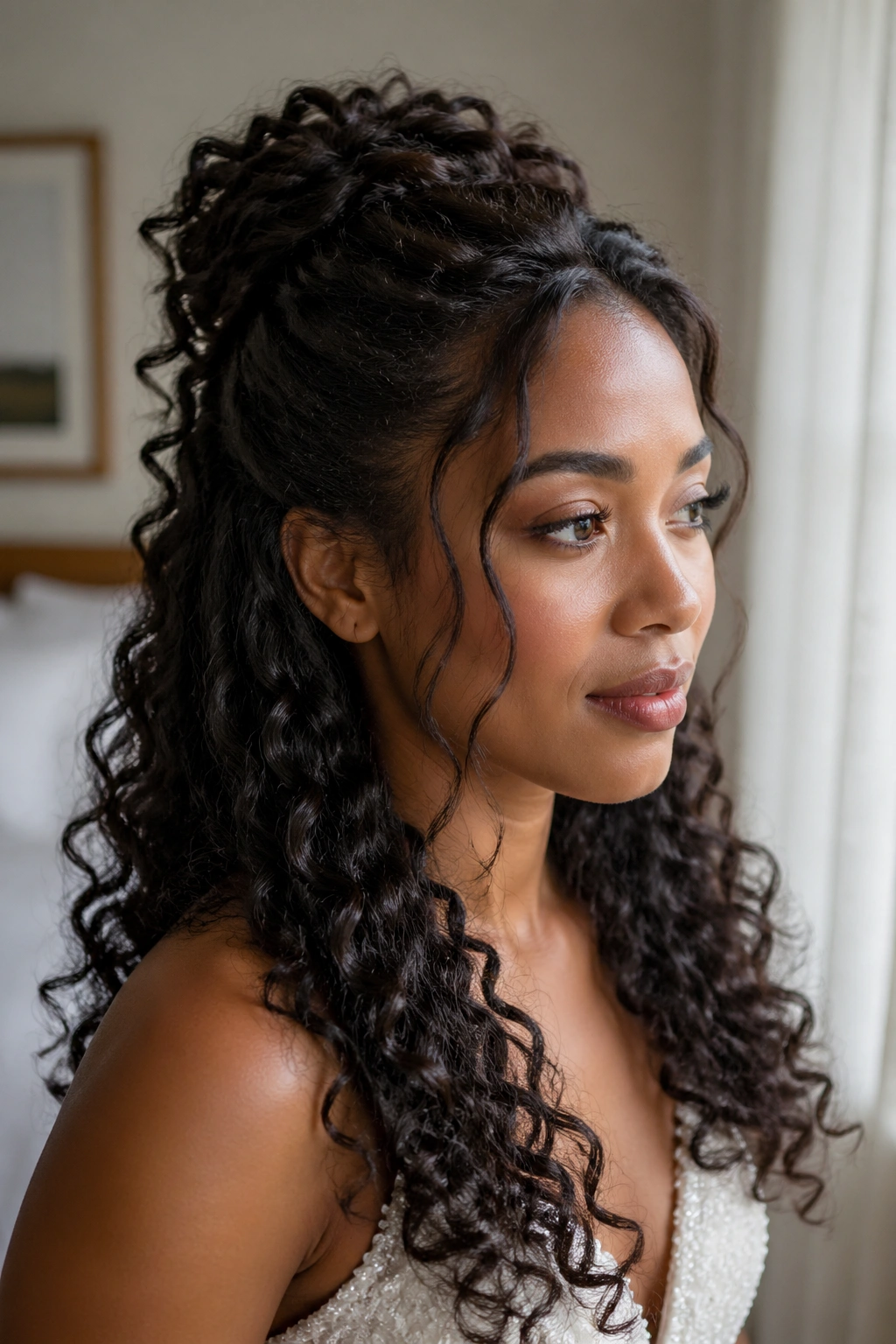
The half-up style is technically a down style because the majority of the hair falls freely. The top section gathered back creates a face-framing effect while the bottom section — all those beautiful curls — flows uninhibited.
For a bridal version, keep the top section gathering loose and organic rather than tight and precise. Secure with a satin scrunchie, a ribbon, or a jeweled elastic, and let a few face-framing pieces fall loose from the gathered section. The result is romantic, practical, and completely wearable for a full wedding day.
- The gathered section keeps hair off the face without a full updo
- Accessories at the gathering point elevate the style effortlessly
- This works on almost every texture and length
7. Natural Curls With a Center Part
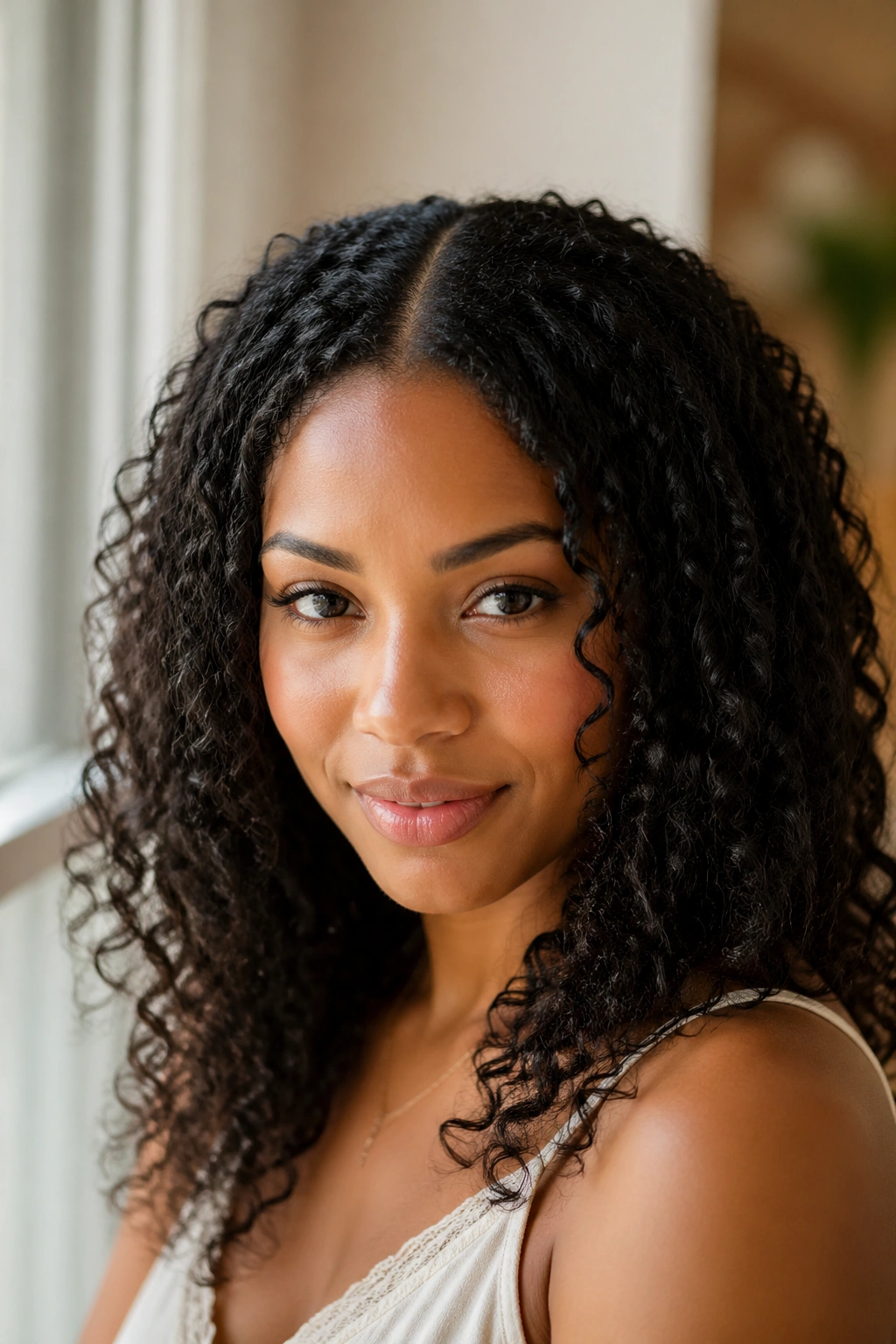
A center part on natural curls splits the hair symmetrically and creates a different energy than a side part — more balanced, more structured, with a quiet formality that suits longer natural hair beautifully.
Part the hair carefully from the center front to the crown, then allow each half to fall naturally. Moisturize and define as usual. The center part creates a clean line that photographs as intentional and deliberate, even when the rest of the hair is completely free-flowing.
Secure the part with a small amount of edge control where the hairline meets the part, so it stays crisp throughout the day.
8. Natural Curls With a Deep Side Part
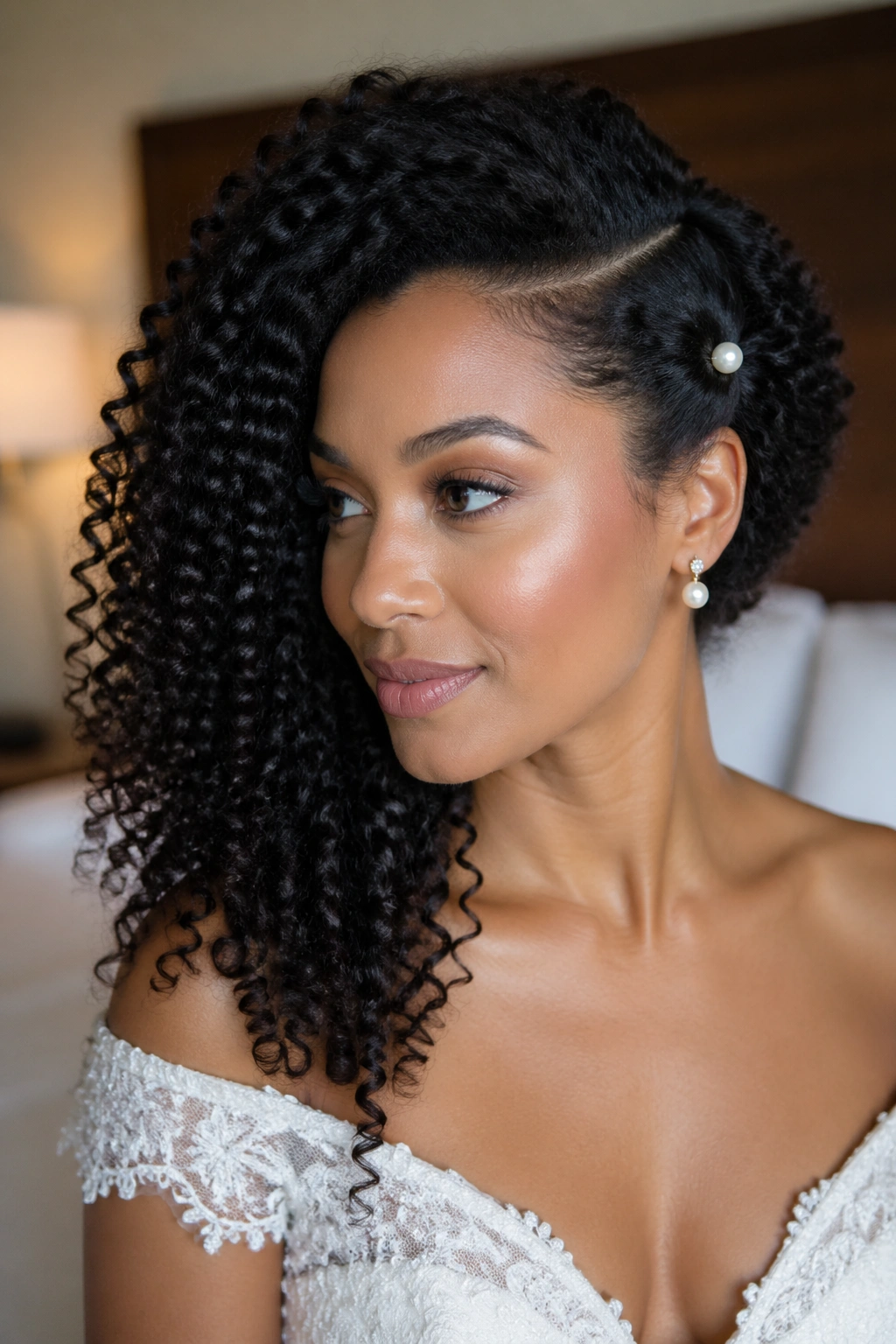
If the center part is balanced, the deep side part is dramatic. Sweeping the majority of your natural curls to one side with a dramatically placed part creates asymmetry, movement, and a visual weight on one side that photographs beautifully in profile shots.
The side with more hair falls in a curtain of curls beside the face. The shorter side reveals more of the jawline and neckline. One pearl or jeweled pin tucked into the shorter side completes the look.
9. Long Natural Curls With Hair Jewelry
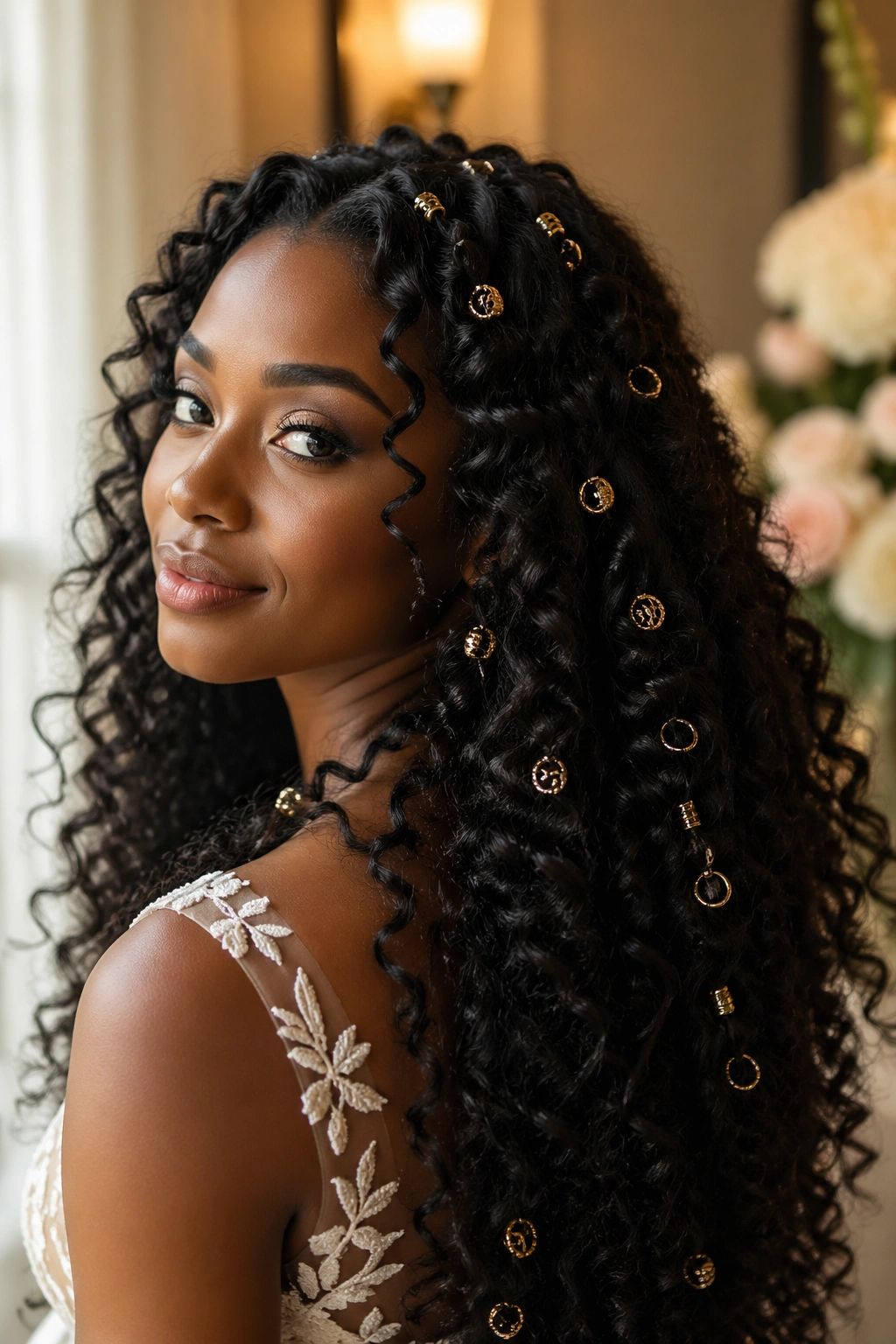
Natural curls worn fully down, accessorized with deliberate hair jewelry — gold rings, small metallic beads, thread-wrapped sections — is an approach to bridal styling that’s deeply rooted in African aesthetic traditions and completely, undeniably beautiful.
Thread gold cuffs onto individual curl sections at various points throughout the hair. Weave small gold beads into sections near the face. The jewelry catches light with every movement, creating a dynamic, living accessory that changes with the curls. No two photos look exactly the same. That’s the magic.
10. Curls Swept Back Over One Shoulder
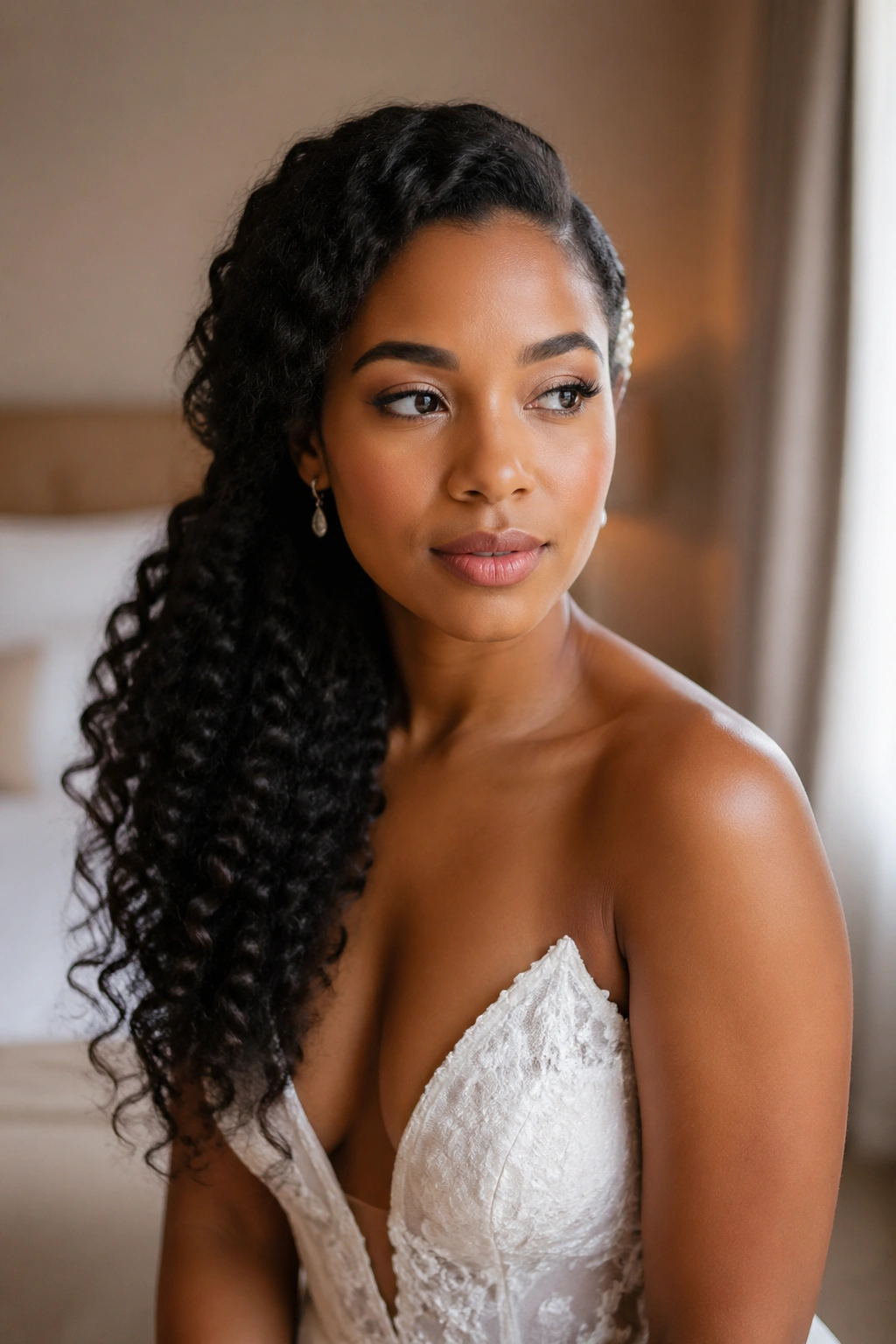
Gather your natural curls and sweep them entirely to one shoulder, allowing them to cascade down that side of the body. The back and opposite shoulder are exposed — whether that’s relevant depends on your gown — and the front profile is dominated by a waterfall of curls.
This style creates a dramatic side silhouette in photographs. It’s asymmetrical, bold, and particularly beautiful with deep necklines or off-shoulder gowns that benefit from the curls’ softening effect.
11. Curly Fringe With Down Curls
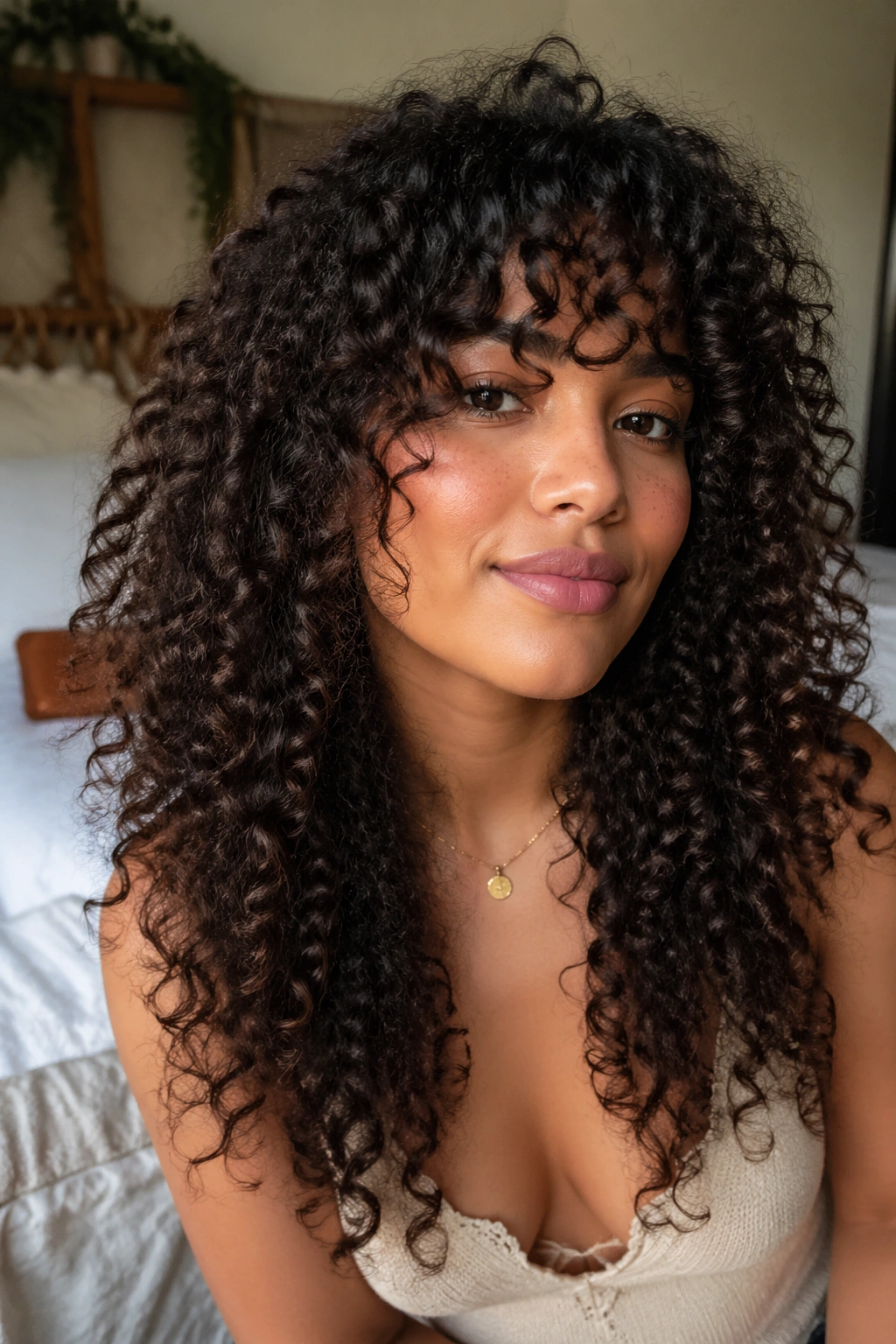
If your natural hair includes a fringe or shorter front sections, styling those sections forward as a soft fringe while the rest of the hair falls back and down creates a layered, dimensional look. The fringe at the front draws the eye upward and inward toward the face, while the down curls at the back and sides create volume and length.
How to Make a Fringe Work on Natural Hair
Apply a curl-defining cream to the front section and allow it to fall forward naturally. You may need to encourage it with a small amount of product and gentle finger shaping, but avoid over-manipulating. The organic placement is what makes it beautiful.
12. Defined Curls With Laid Baby Hairs
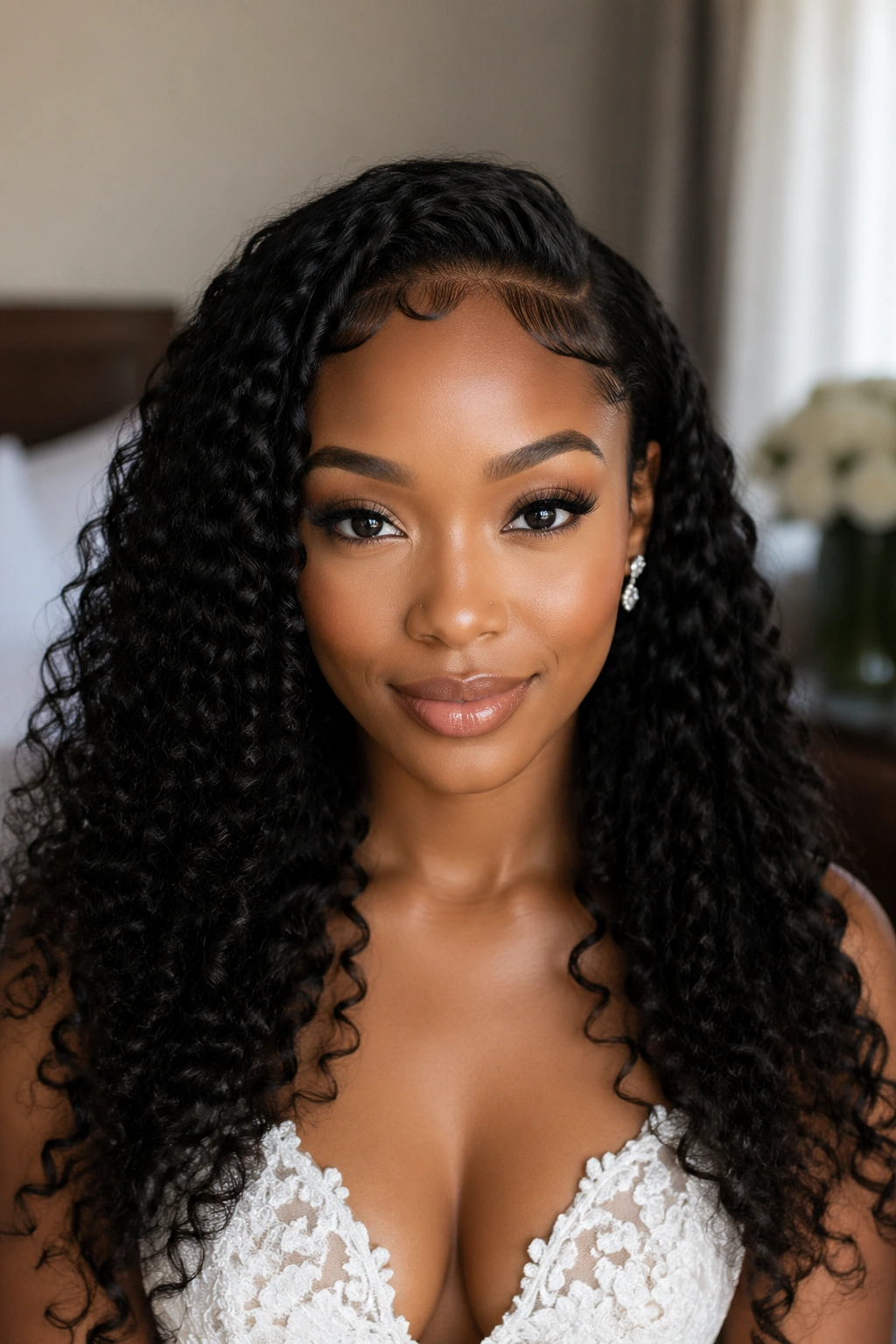
Every element of natural curls down styles for weddings benefits from clean, defined baby hairs — those fine, delicate curls along the hairline that, when laid intentionally, create the most beautiful frame for a face. This isn’t a style on its own; it’s the finishing touch that elevates every other down style.
Use a small brush and a firm-hold gel to define each baby hair individually. Coil them, swoop them, wave them — whatever pattern feels most natural to their growth direction. Allow to dry fully before touching. The result is a face frame that photographs as precise and beautiful as jewelry.
13. Natural Curls With Fresh Flowers
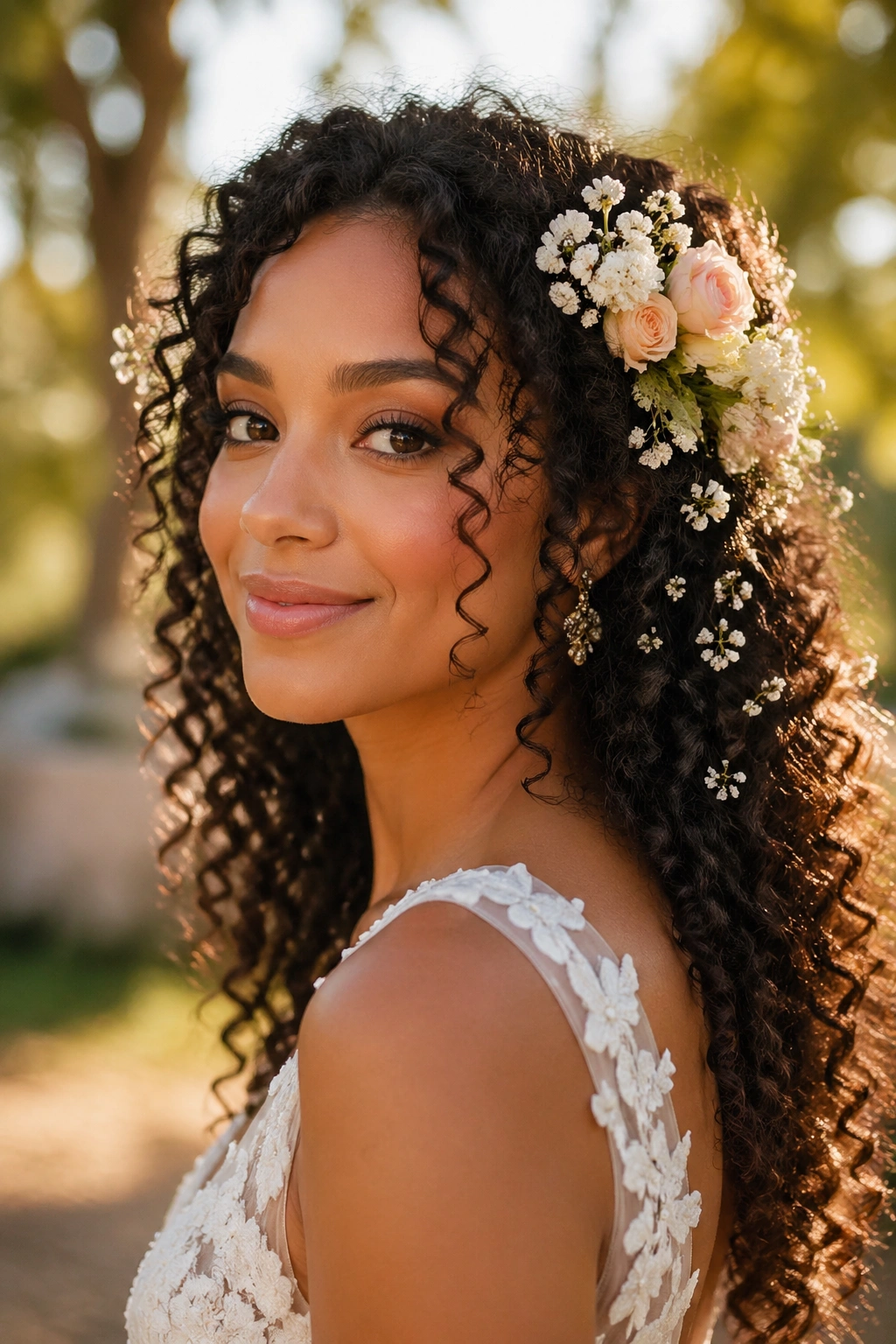
Flowers tucked into the curls — scattered throughout or clustered at the crown and temple — transform a simple down style into something otherworldly. The organic placement of blooms within natural curls creates a garden spirit that’s completely suited to bridal aesthetics.
Choose flowers that will hold their shape for several hours without wilting, or use high-quality silk florals that photograph nearly identically to real ones. Secure each flower by bending the stem and tucking it into a curl cluster, or wire small blooms to hairpins for easier placement and removal.
14. Elongated Curl Pattern With a Flexi-Rod Set
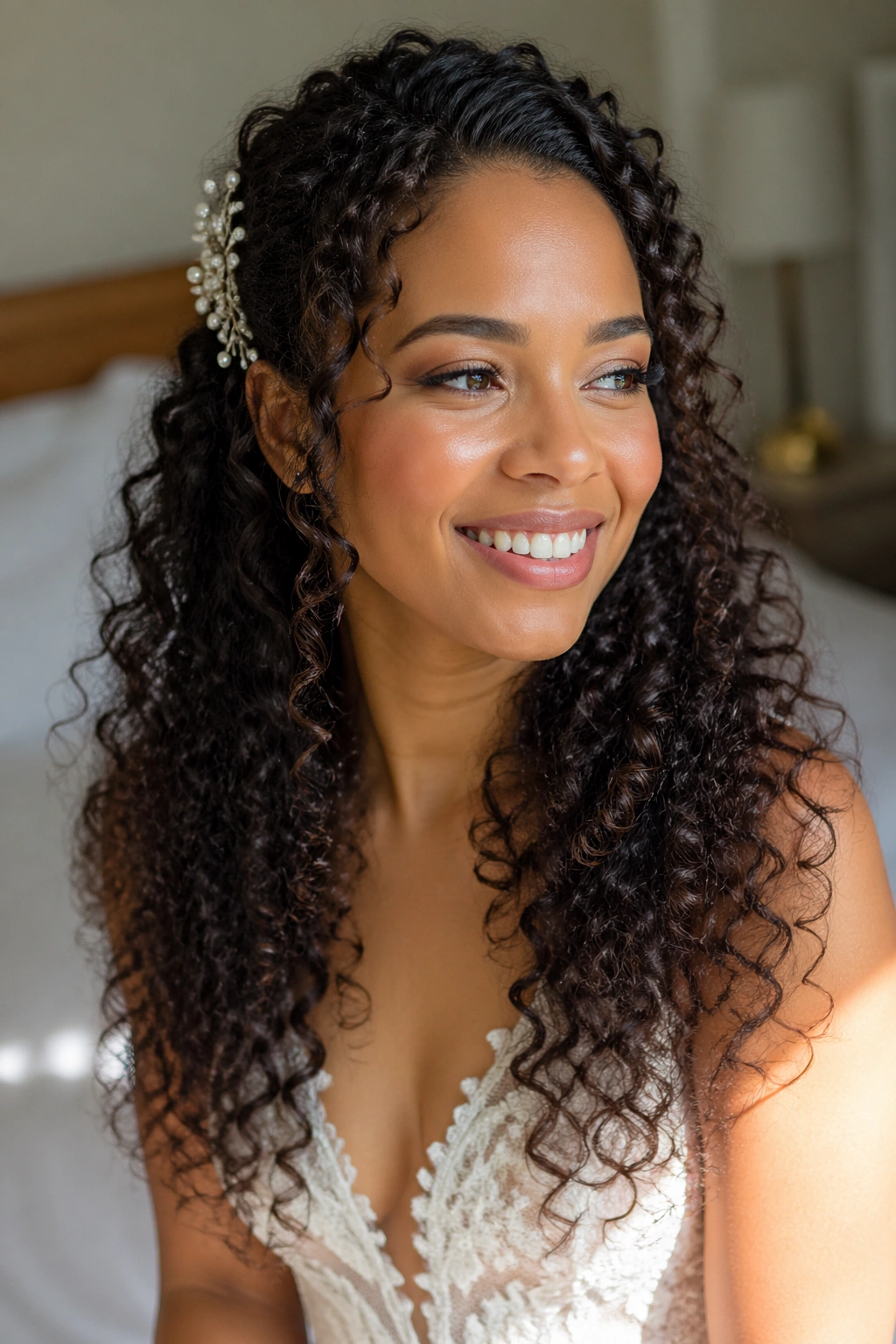
A flexi-rod set creates uniform, elongated curls that are defined, bouncy, and full of movement. Depending on the size of the rods used, the result ranges from tight spiral ringlets to large, soft waves. On a bride, a flexi-rod set worn down creates a lush, consistent curl pattern that photographs as deliberately beautiful rather than accidentally beautiful.
Set the rods on freshly washed, conditioned hair. Allow to dry completely before removing — overnight drying is recommended for maximum definition. Remove gently, pulling the rod out from the end without disturbing the curl shape.
15. Wash-and-Go With Defined Sections and an Accessory
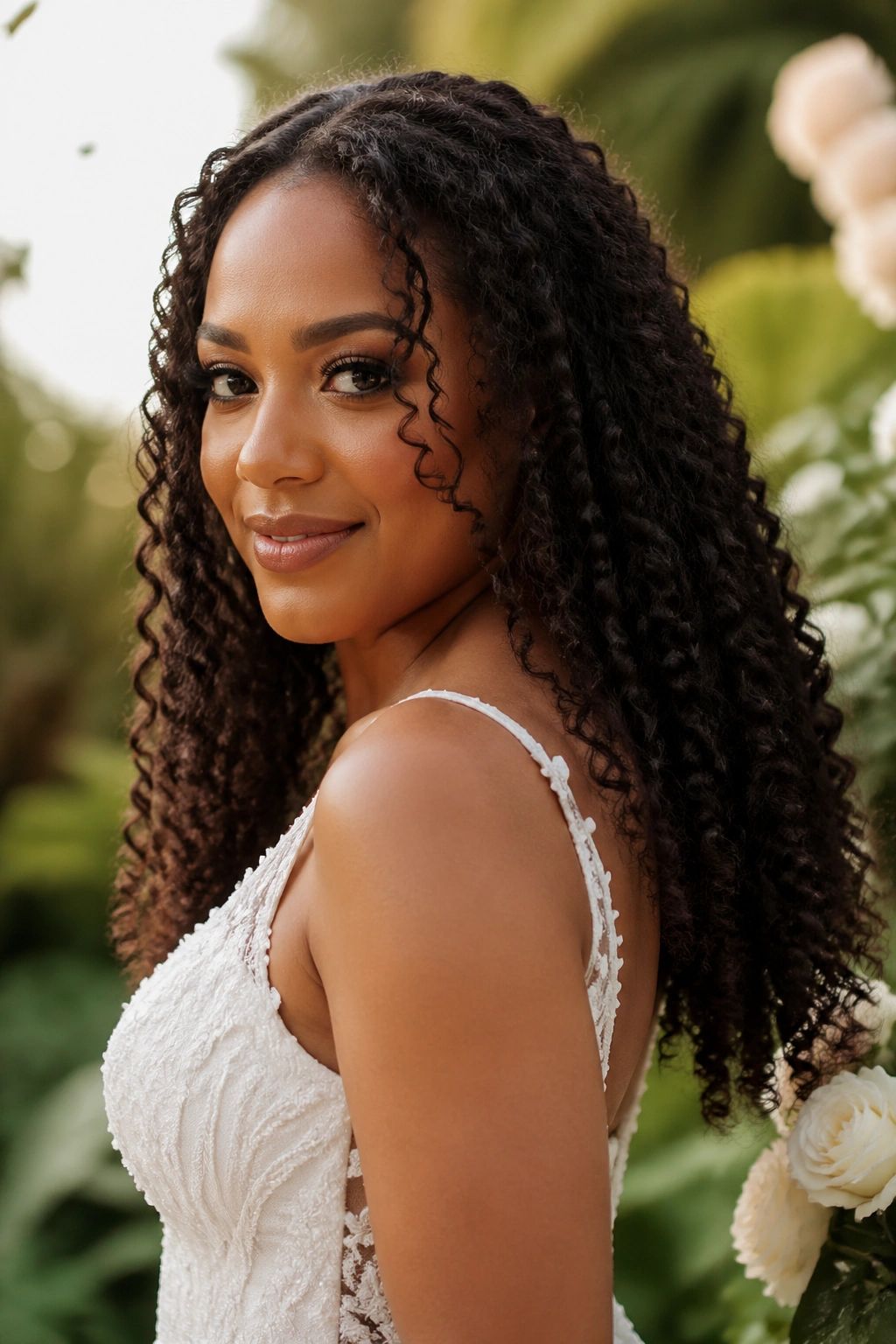
A wash-and-go elevated with one deliberate accessory — a headband across the crown, a single oversized clip at one temple, a delicate hair chain — becomes a bridal style without requiring any additional styling technique. The accessory creates visual focus and signals intention.
Choose an accessory that relates to the rest of your bridal look — pearls if you’re wearing pearls elsewhere, gold if your jewelry is gold, flowers if your bouquet includes blooms. The connection between your hair accessory and the rest of your look is what makes the overall aesthetic feel curated.
16. Curls With Cornrow Accents at the Front
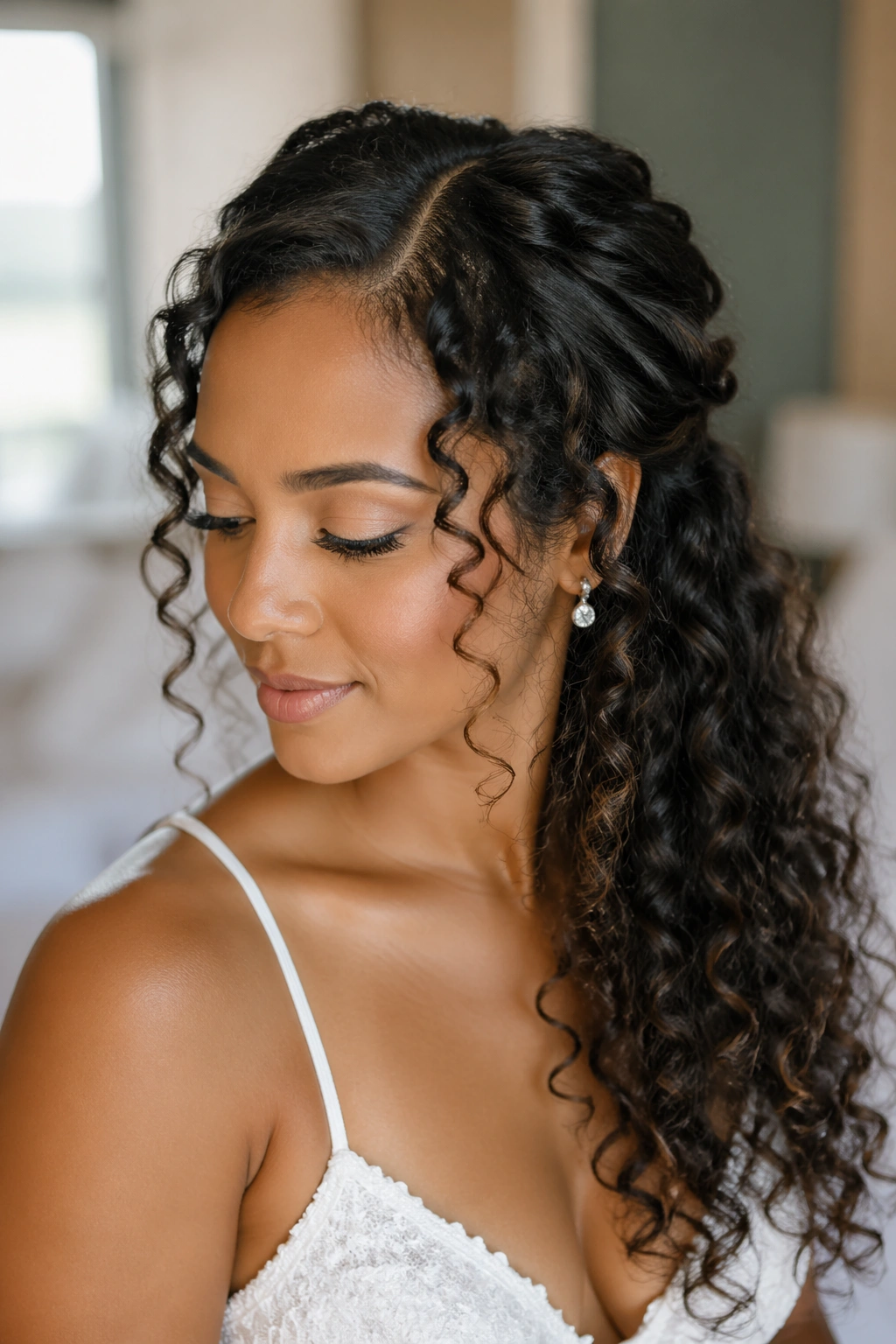
A few cornrow sections at the front of the hair — perhaps two thin rows along the hairline on each side, sweeping back toward the crown — contrasted against the loose natural curls at the back and top create a mixed-texture style that’s controlled at the front and free at the back.
The cornrow accents keep the face unframed by stray pieces while the rest of the hair falls naturally. It’s a detail that requires a skilled braider and photographs beautifully.
17. High-Volume Diffused Style
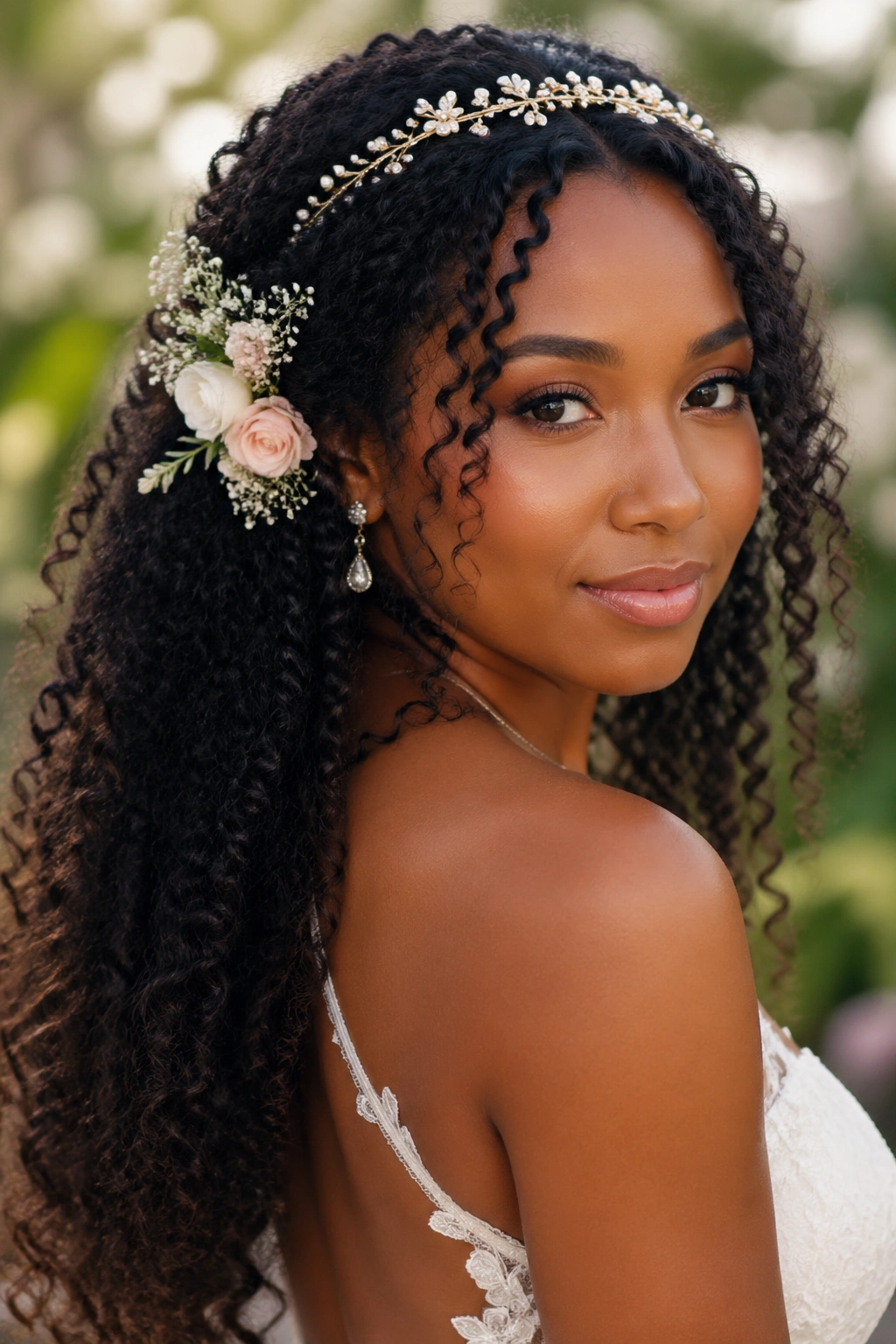
Diffusing hair on the lowest heat setting with a bowl diffuser — where the hair is gathered into the bowl and the diffuser held still against the head — creates maximum volume with minimum frizz. The high-volume result is a style that stands away from the head, radiates in every direction, and creates a halo effect that’s simply gorgeous in bridal photography.
Patience is non-negotiable here. Move the diffuser constantly, diffuse each section from multiple angles, and let the hair cool between passes. The difference between a high-volume diffused style and a frizzy one is the speed at which you work.
18. Naturally Stretched Curls
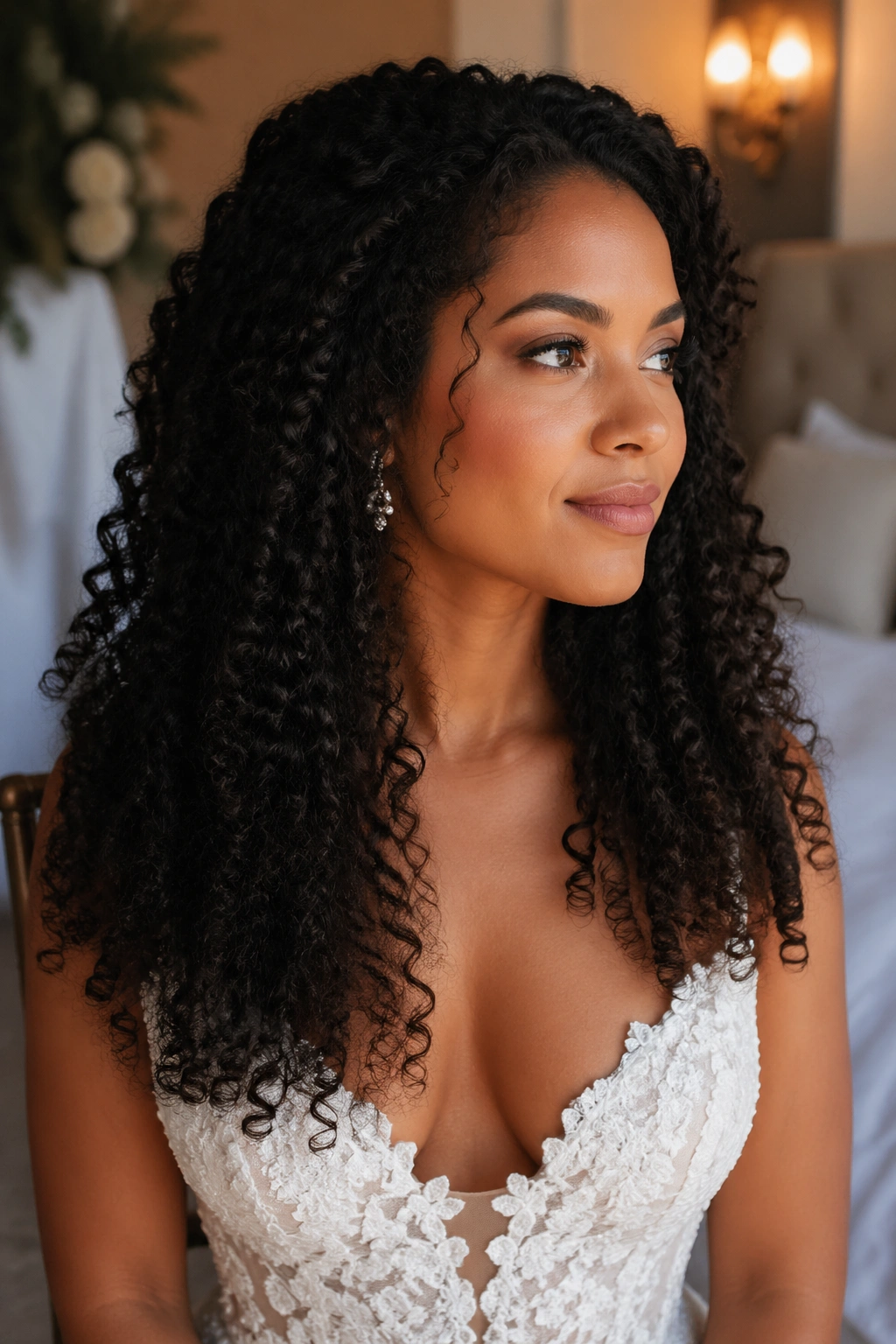
For 4c brides who want length without a full blowout, the banding method — where small sections of slightly damp hair are wrapped with hair bands from root to tip before drying — gently stretches the curl without heat. Once the bands are removed, the hair is longer, fluffier, and has a texture that’s distinctly different from a compressed wash-and-go.
This method works best when done on fully washed hair and allowed to dry completely before the bands are removed. The result is a voluminous, stretched style that shows off length while maintaining the natural texture of the curl.
19. Silk Press Curls (Defined With Heat)
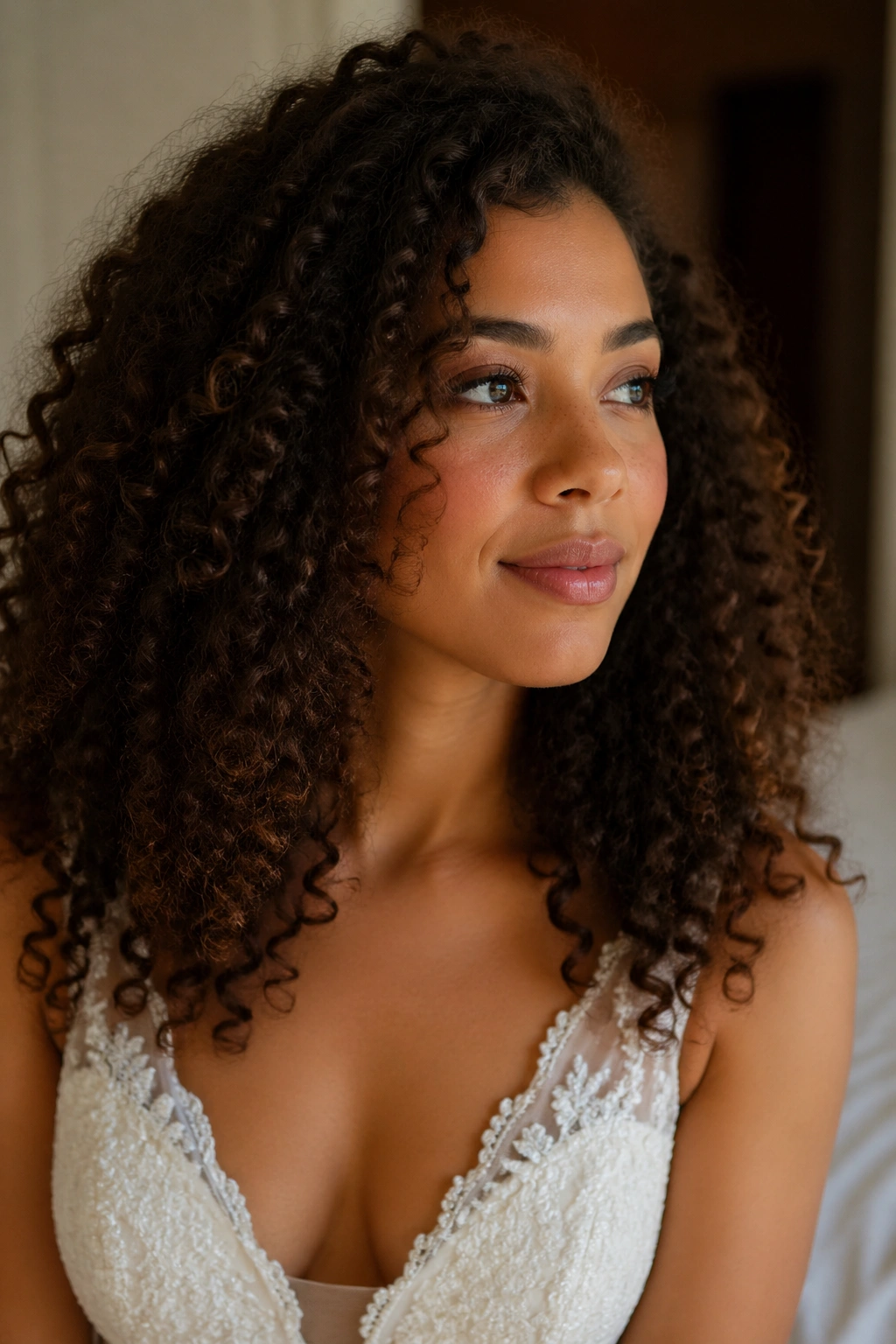
A silk press that’s executed intentionally — not to fully straighten the hair, but to define and elongate the curl while retaining some natural wave — creates a hybrid style that’s silky, polished, and bridal. Done on healthy hair at a low temperature with a heat protectant, a light silk press is not damaging and creates a look that photographs with extraordinary depth.
This is a personal choice, and not every natural-haired bride will want this approach. But for brides who want a polished down style with elongated curls and a smooth finish, a light silk press performed by an experienced stylist is a valid option.
20. Wet-Look Natural Curls
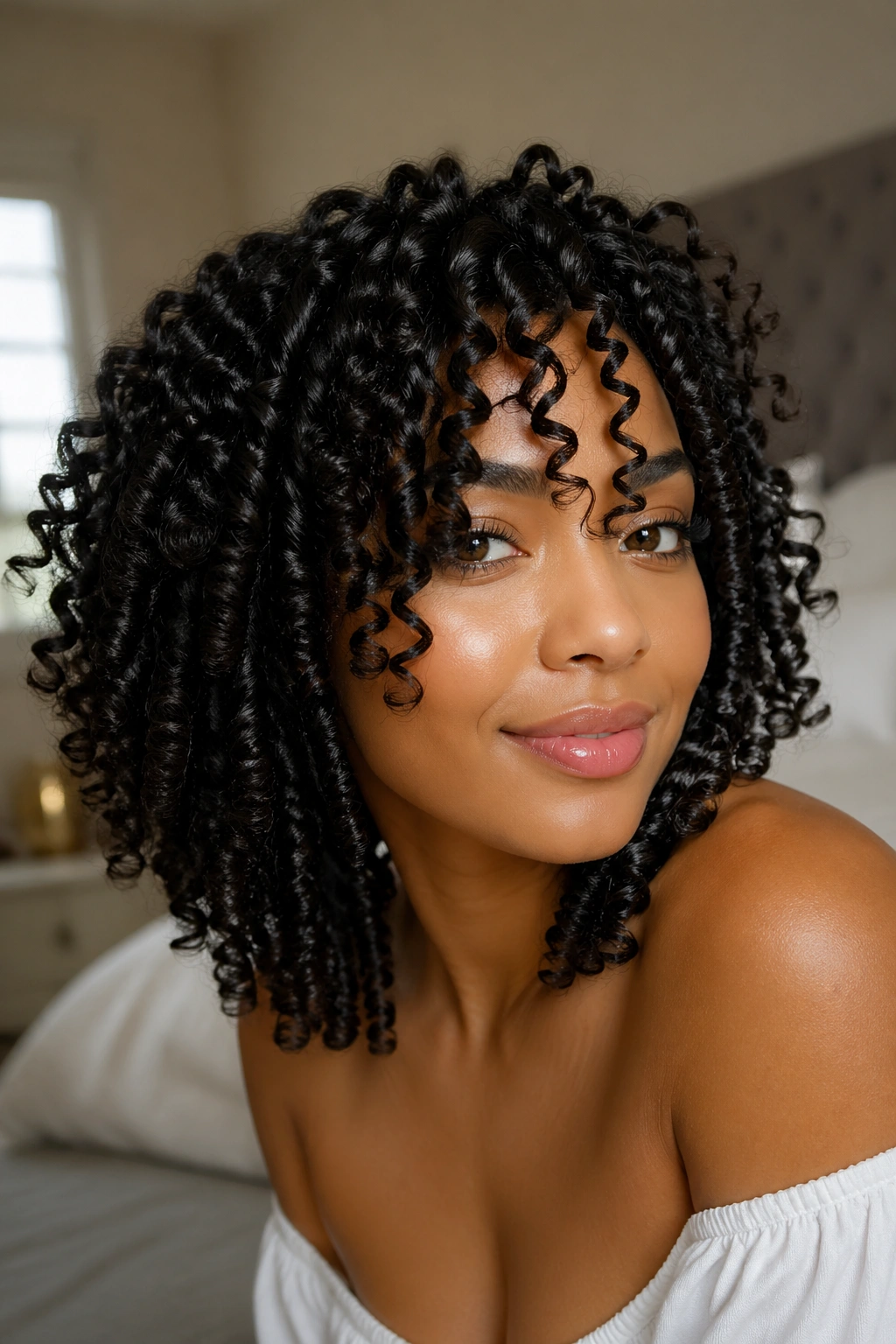
A wet-look style — achieved with a heavy gel or curl custard applied to soaking wet hair and allowed to dry in place without any diffusing — creates a glistening, defined, almost sculptural curl pattern that’s visually striking. The shine is extraordinary. The definition is precise. And the hold, because of the product’s weight, is exceptional.
This style suits 3c through 4a textures most naturally, though with the right gel it can work on a range of patterns. It’s a bold, fashion-forward bridal choice.
21. Natural Curls With a Statement Bridal Headband
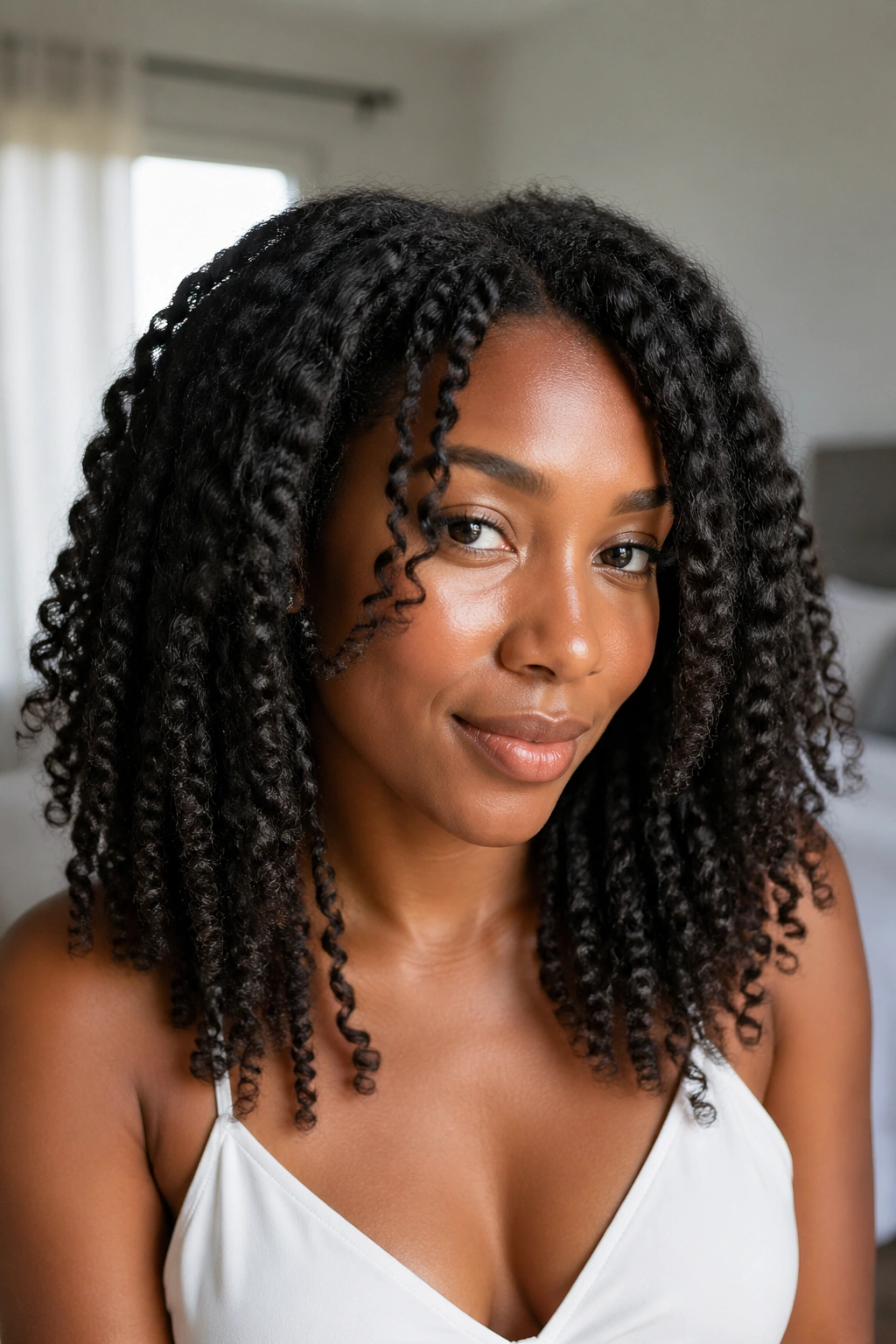
The twenty-first style is straightforward, gorgeous, and completely accessible: natural curls worn fully down, moisturized and defined to their best, crowned with a wide embellished bridal headband. The headband can be pearl-studded, crystal-encrusted, velvet-wrapped, or made from metallic fabric. It pushes the hair back slightly, creates a crown-like effect, and frames the face beautifully.
This is the down style with the least styling complexity and some of the most powerful visual impact. Your curls do the work. The headband marks the occasion. Together, they’re unmistakably bridal.
Keeping Down Styles Fresh Through the Reception
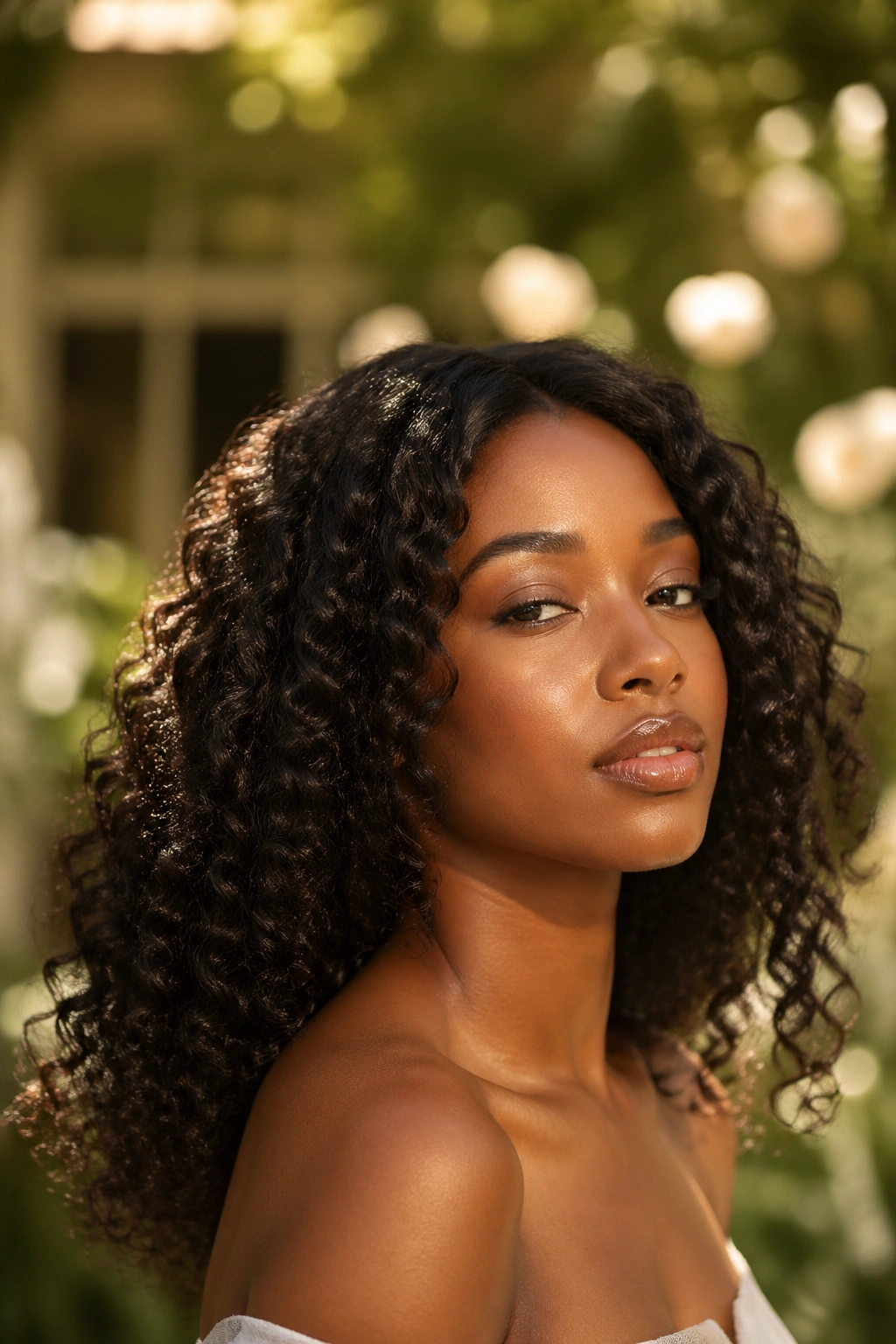
A down style that’s been dancing for three hours looks different than one that was styled fresh. That’s not a problem — it’s life. But having a plan for midday refresh means you can stay in the style confidently from ceremony through last dance.
Keep a small bottle of your curl product or a water-and-leave-in spritz in your bridal bag. Step away from the dance floor briefly, lightly mist the curls, scrunch upward, and shake from the roots. The style won’t return to its morning freshness, but it’ll revive enough to look intentional rather than tired. And honestly? Second-day natural curls that have seen a full wedding day have a warmth and life to them that’s genuinely beautiful.
The Case for Wearing Your Natural Curls Down on Your Wedding Day
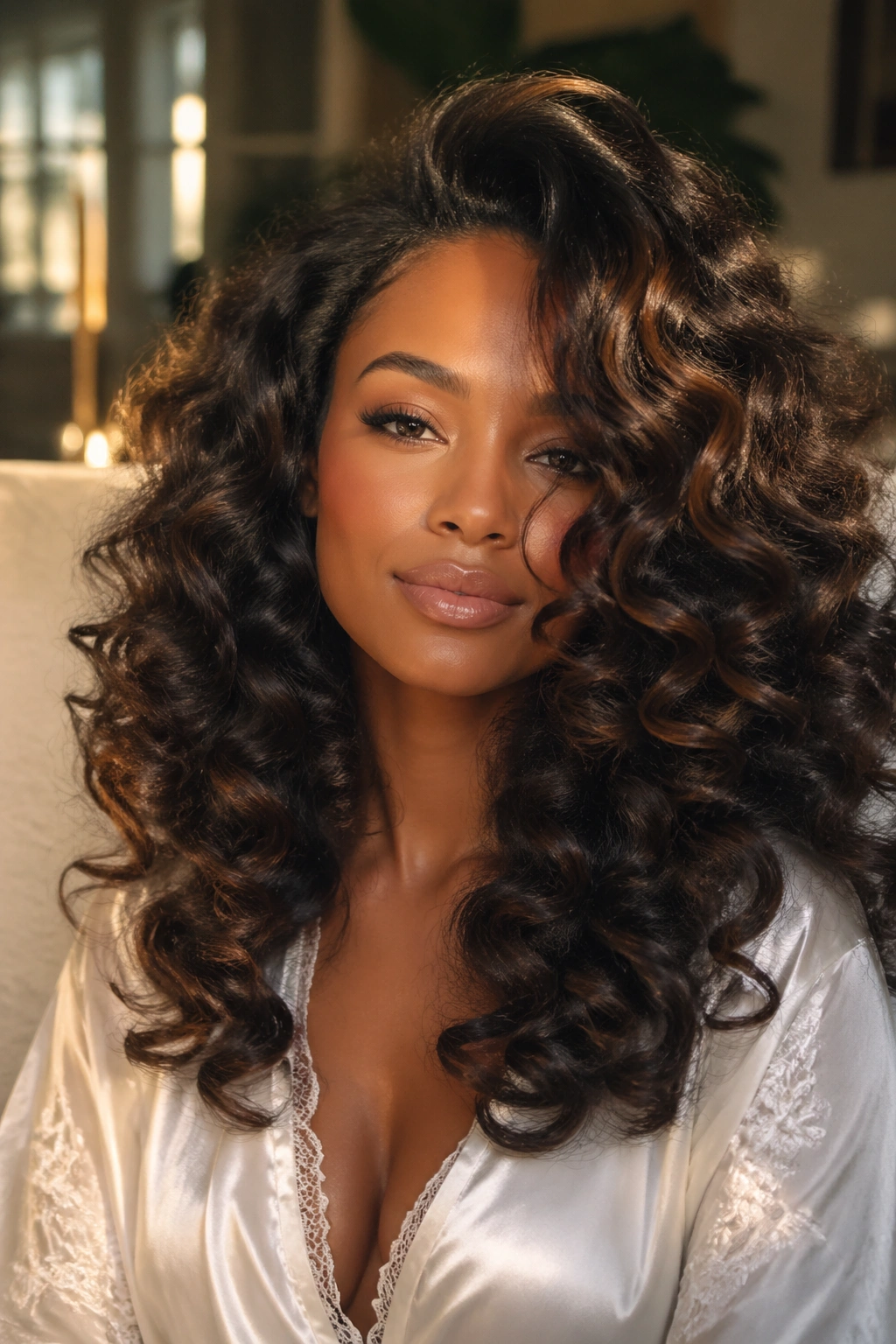
There will be people — well-meaning aunties, overly cautious stylists, nervous mothers — who suggest that wearing your natural curls down isn’t formal enough for a wedding. That it looks undone. That you should consider putting it up, or getting a weave, or at least getting a blowout.
They’re wrong. Not about their taste — their taste is their own. But they’re wrong about what constitutes formal, what constitutes bridal, and what constitutes beautiful. Natural curls down styles for weddings are as formal, as stunning, and as worthy as any other hairstyle. The only question that matters is whether it feels like you. If it does — wear it.