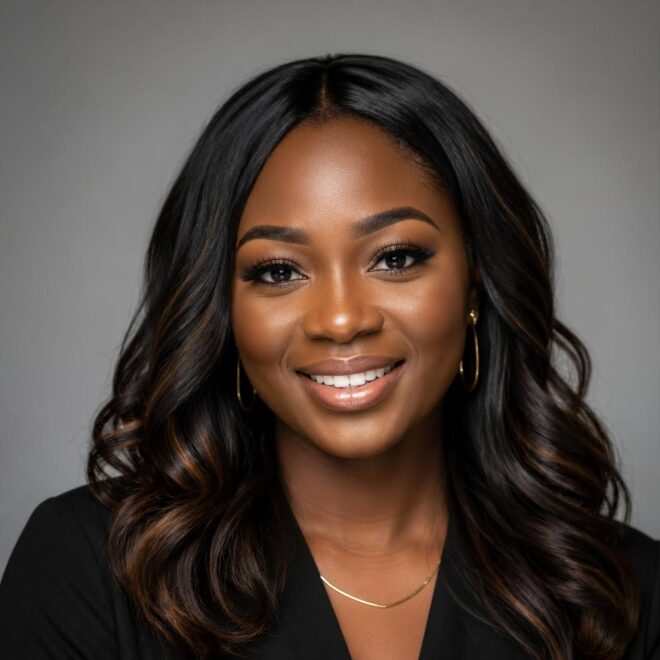


There’s a moment in nearly every bridal consultation when a natural-haired woman looks at a veil and wonders — will that even work with my hair? The answer, every single time, is yes. Natural curls wedding hair with a veil creates some of the most romantic, visually striking bridal looks in existence, because the contrast between a flowing piece of tulle and a full crown of coils or ringlets is breathtaking in a way that pin-straight hair paired with a veil simply cannot replicate. The texture, the volume, the organic beauty of natural hair under and alongside a veil is something to celebrate, not work around.
Why Veils and Natural Curls Work So Well Together
The tension between the delicate, sheer quality of a veil and the bold, dimensional quality of natural curls creates visual magic. One is light-catching and translucent; the other is rich, layered, and full of movement. Together, they complete each other in a way that reads as both classic bridal and deeply personal.
More importantly, veils designed for natural hair are no longer a specialty item you have to hunt for. More and more bridal designers offer veils with combs specifically designed to grip textured hair, wider bands that sit over a puff or updo without pressing it flat, and styles that work with the hair’s natural volume rather than against it. The conversation has shifted — and brides with natural curls are leading it.
Types of Veils That Work Best With Natural Curls
Not every veil works equally well with every natural hair style, so understanding your options before booking a trial makes a significant difference.
Blusher veils — the short, face-covering layer — work beautifully draped over a natural updo or a full Afro, because the hair’s volume holds the veil forward elegantly rather than letting it cling flat to the head. Cathedral veils are dramatic against a curly backdrop; the length sweeping the floor behind you reads as regal and romantic. Birdcage veils attach just at the crown and work particularly well with shorter natural styles, adding a vintage touch without competing with the hair’s shape. Cascading or waterfall veils, pinned at the crown and allowed to flow over loose curls, create a layered effect where the veil and hair appear to flow together.
What you want to avoid is any veil that requires a smooth, sleek surface to stay in place. Those styles were designed for straight or slicked-back hair. Natural hair needs a veil with a strong comb, multiple points of attachment, or a wrapped base that grips textured hair without requiring product buildup.
How to Attach a Veil to Natural Curls
The attachment method matters enormously. A veil that falls out during the ceremony is a nightmare scenario that’s fully preventable with the right technique.
For updos and puffs: Run the veil’s comb through the curl pattern of the updo, then reinforce with two or three extra-long bobby pins on either side of the comb. This creates a cross-pattern of support that holds through movement. For loose natural styles: Attach the comb at the crown, then part the curls over it so the hair covers the comb — this keeps it hidden and increases grip. For half-up styles: The comb attaches to the secured top section, where the gathered hair provides a solid base.
Always test the veil attachment during your hair trial, not just for five minutes — wear it for at least two to three hours to see whether it stays put during talking, dancing, and hugging. Your stylist should know how to test this, but if they don’t mention it, ask.
Choosing a Veil Length Based on Your Hair Style
Veil length and hair style need to be considered together, not separately. A full, voluminous natural Afro or a high puff will naturally shorten a veil’s visual length because it raises the starting point. A veil you measured as elbow-length while wearing it pinned flat might appear shoulder-length once your updo adds six inches of height.
Go veil shopping with your hair already styled in the intended wedding look, or as close to it as possible. This gives you the most accurate sense of how each veil length reads in proportion to your complete look. Some brides find that going one length longer than they initially planned looks better once the hair’s volume is factored in.
Talking to Your Stylist About Your Veil and Hair Combination
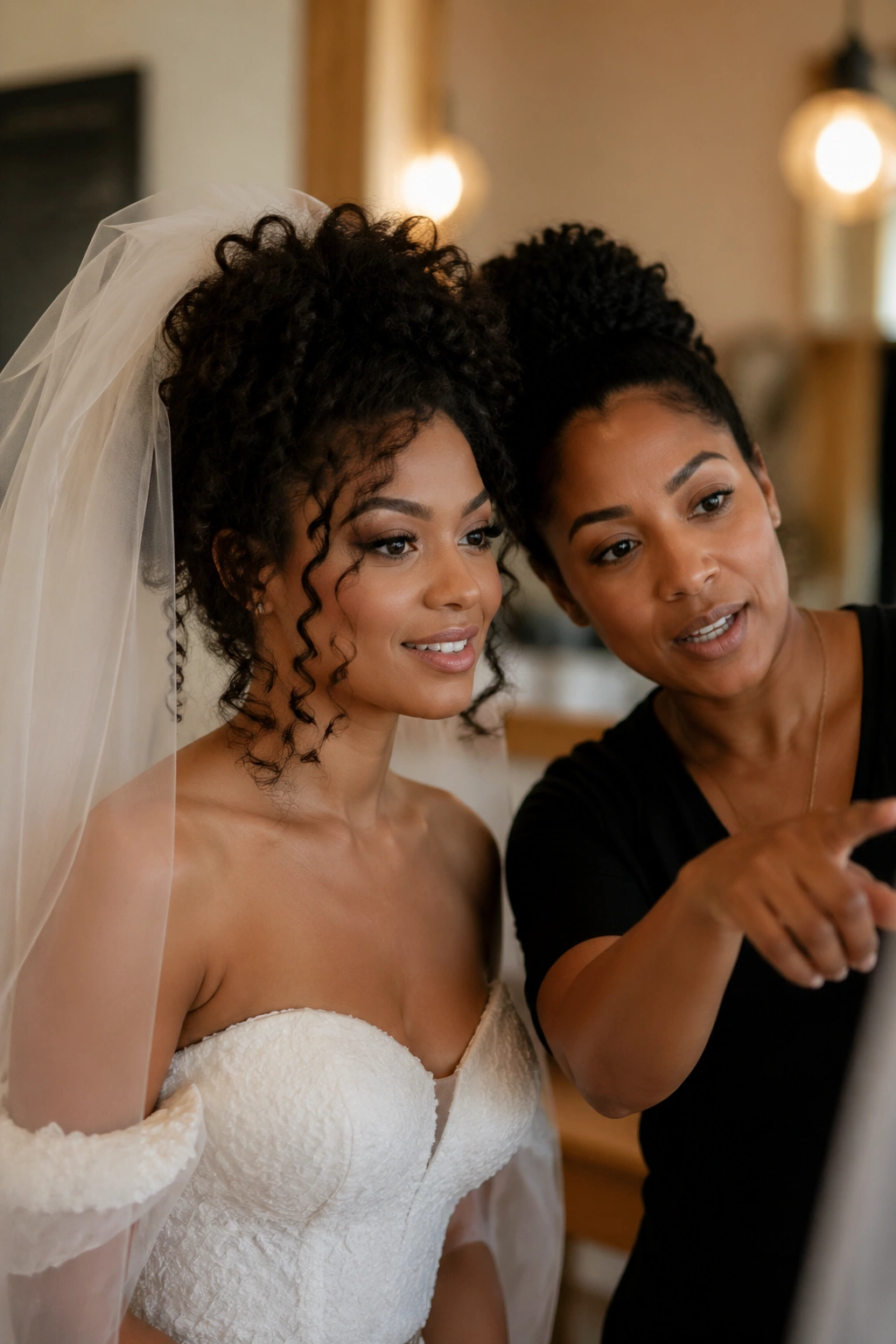
Your stylist and your veil need to be in conversation with each other before the wedding day. Bring your actual veil — or at least a replica — to your hair trial. The stylist needs to see exactly how the comb is shaped, how the tulle flows, and where the attachment point sits relative to your chosen hairstyle. A stylist who’s seeing the veil for the first time on the wedding morning is a stylist who’s making decisions without full information.
Also discuss the veil removal. If you’re planning to remove the veil after the ceremony — a common choice for brides who want full freedom during the reception — your stylist should design the underlying hairstyle to look complete and intentional even without the veil. The style should stand on its own.
1. High Puff With a Cathedral Veil
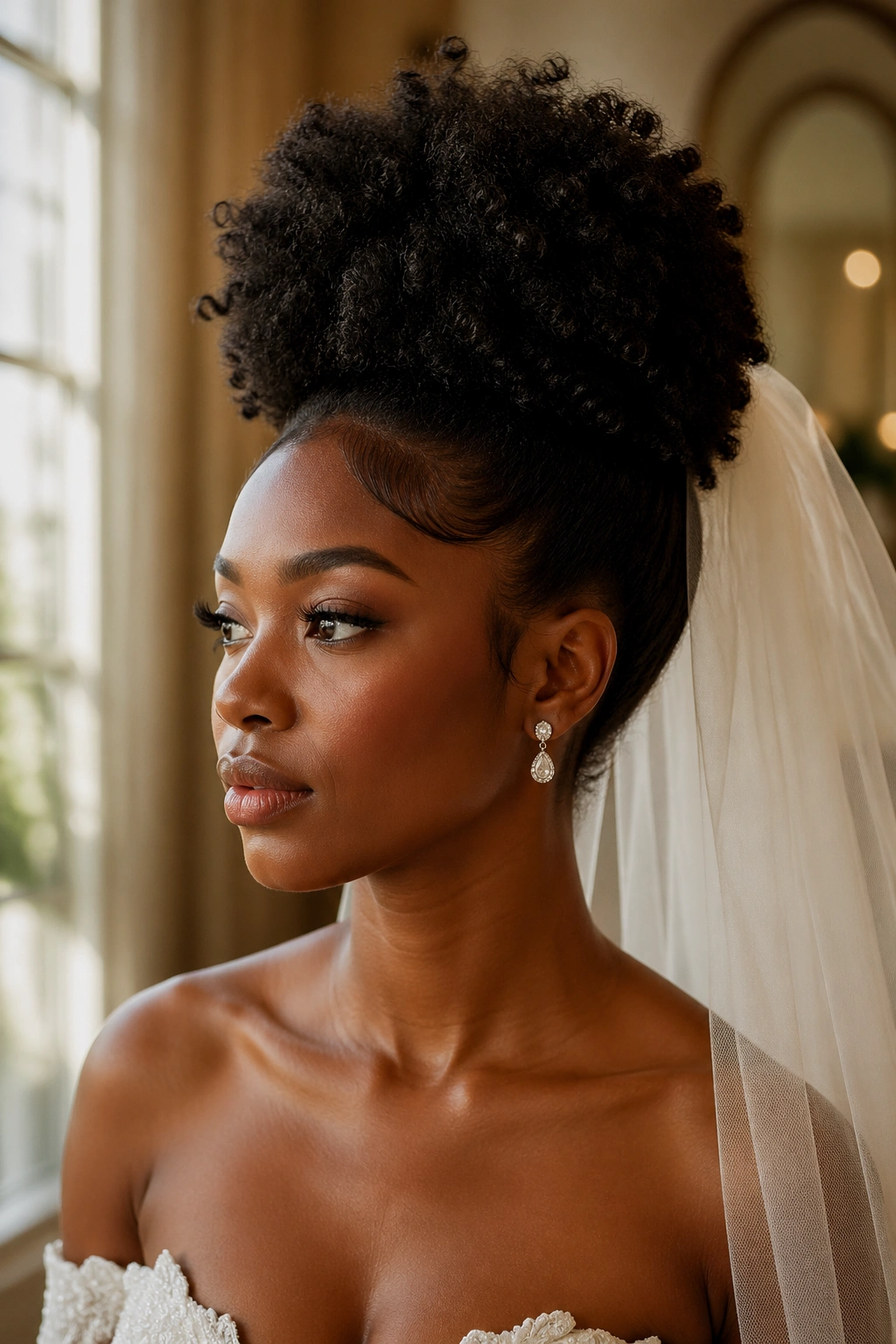
A high natural puff paired with a cathedral veil is an image that stops you cold. The veil attaches at the crown, just behind the puff, and cascades down the back in a sweep of sheer tulle. The puff itself acts as a natural lift point, giving the veil a starting height that makes it appear even longer.
How to Style This Look
Gather your natural curls into a high puff using a soft elastic. Smooth the edges with a light hold product and a small brush. Lay the edge design you want — whether a simple clean line or something more sculptural. Then attach the veil comb just behind and below the puff, reinforcing with bobby pins. The veil flows over the back of the puff and down.
- Use a veil with a sturdy, wide-set comb for a puff
- Keep the front of the style clean — the puff should be the focal point
- A cathedral veil works best with natural hair that reaches at least three inches in height
Bold tip: Let the height of the puff be dramatic. Don’t press it down to accommodate the veil — raise it up and let the veil follow.
2. Loose Natural Curls With a Blusher Veil
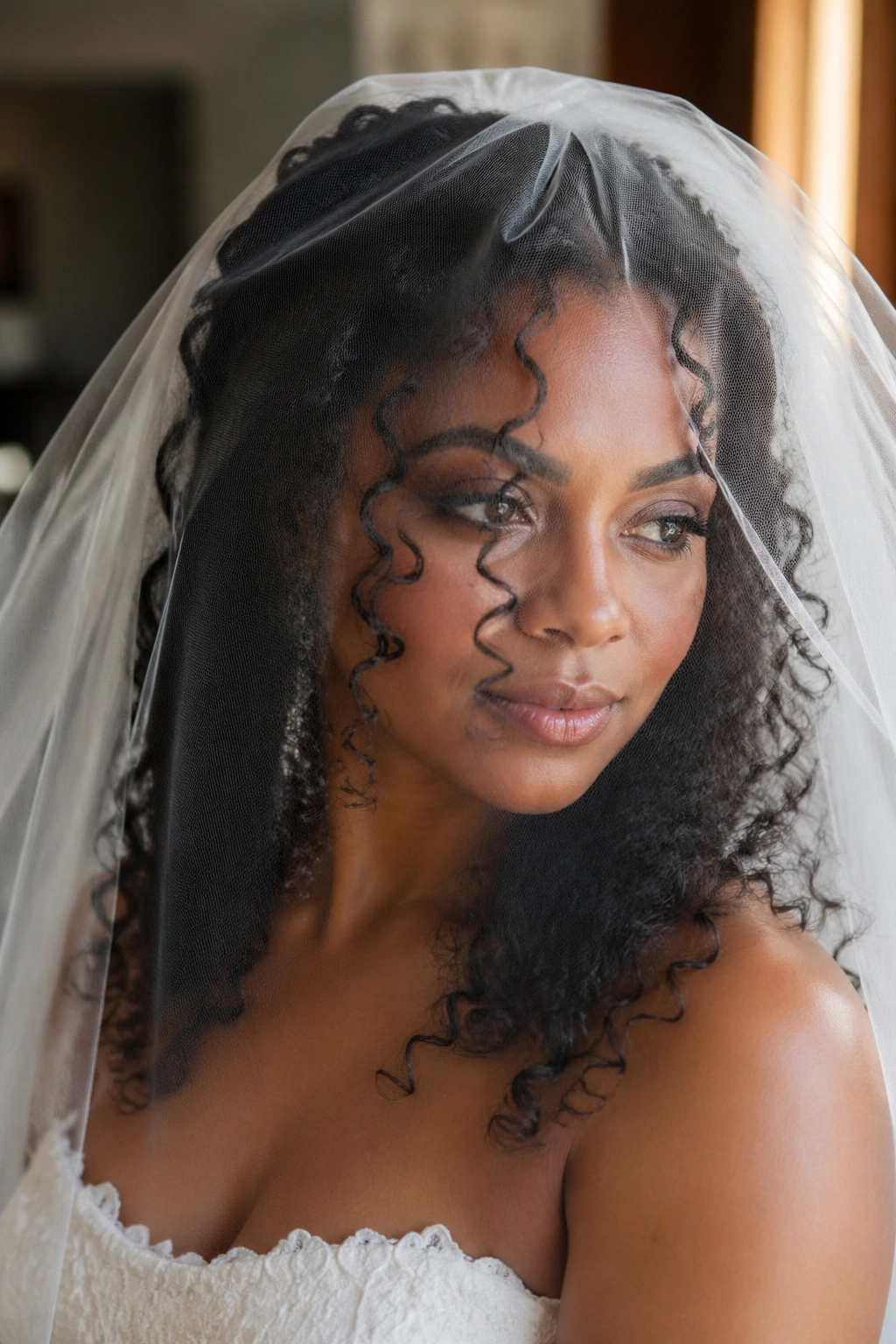
Natural curls wedding hair with a veil doesn’t get more romantic than loose, flowing ringlets with a blusher draped softly over them. The blusher catches in the curls at the front and frames the face before being lifted at the altar — a moment that photographs magnificently when the curls tumble out from beneath.
Attach the blusher at the crown with a comb tucked into the curl pattern. Don’t secure it too tightly — the blusher should sit above the curls, not flatten them. As you walk down the aisle, the veil will sway slightly and catch the light filtering through the curls. Pure magic.
3. Braided Crown With a Long Veil
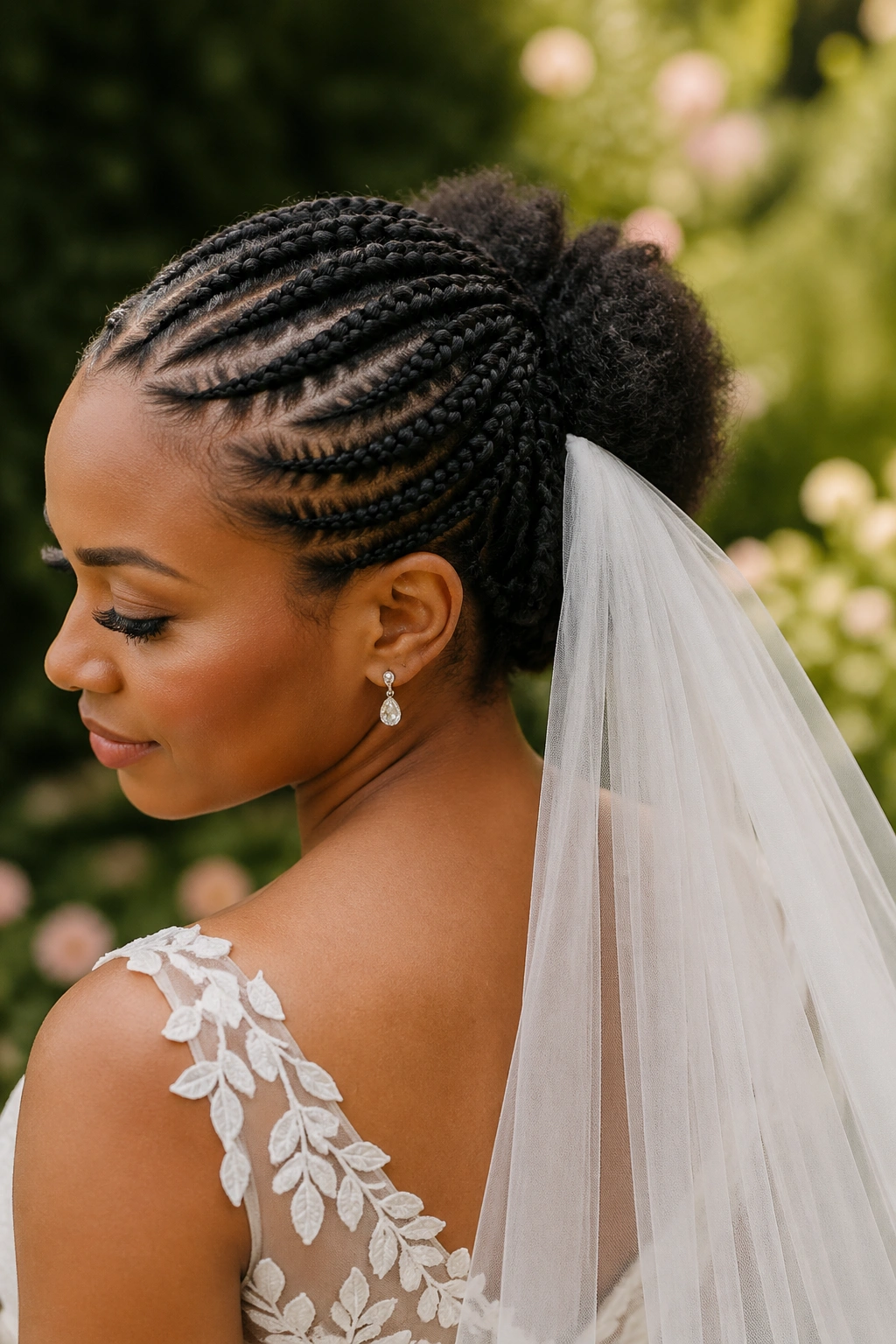
Cornrows or flat braids forming a crown around the head, with the back section left in a natural puff or loose curls, create a structured anchor point for a long veil. The braids provide grip that loose natural hair can’t always offer, making them one of the most practical options for brides wearing heavier or longer veils.
The veil comb can attach to the back of the braided crown, where the plaits converge, or be woven directly into the braid pattern for maximum hold. No slipping, no pinning anxiety — just a secure style that lasts all day.
4. Twist-Out With a Fingertip Veil
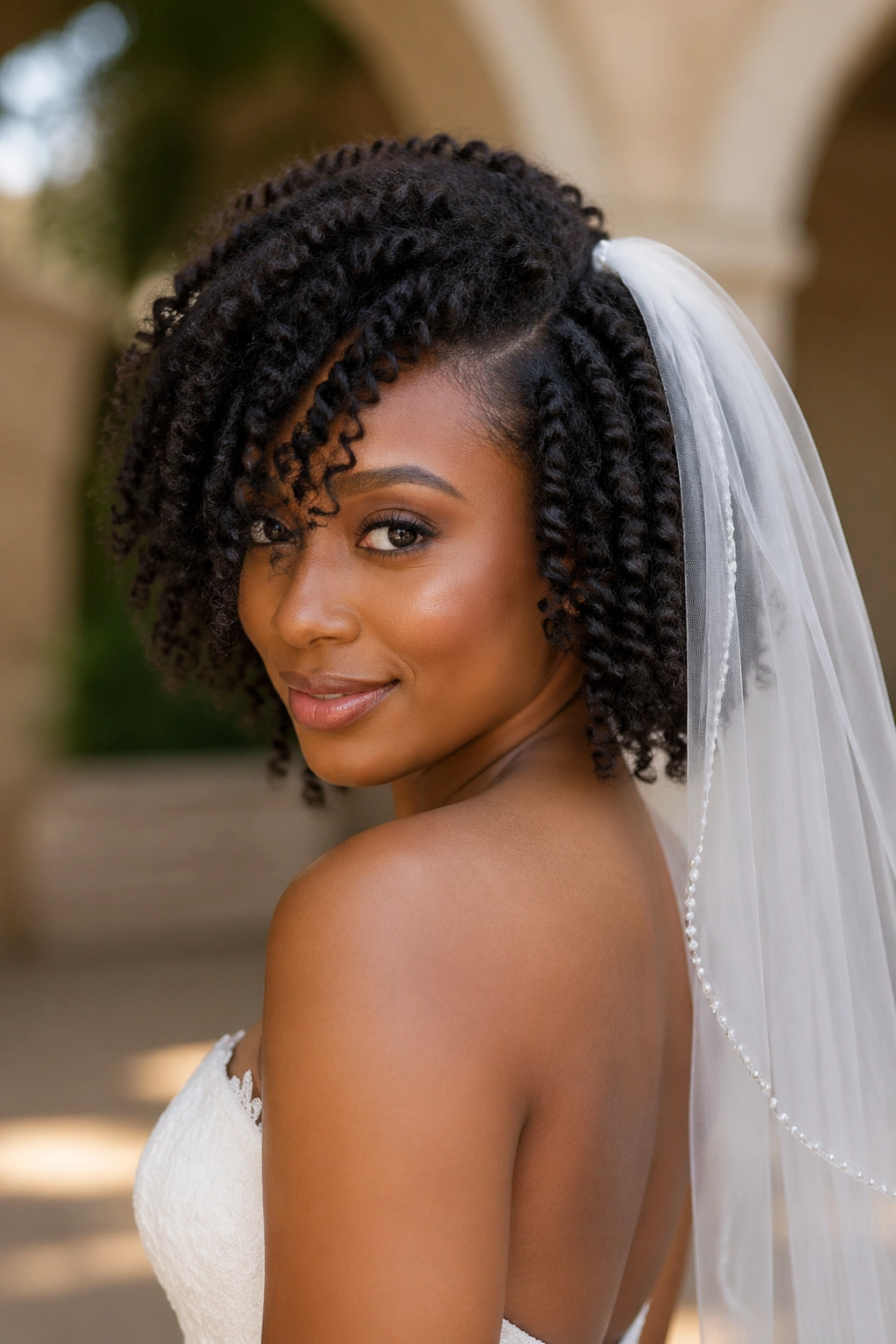
A twist-out’s defined wave pattern catches and holds a veil comb beautifully. The consistent texture gives the comb teeth plenty to grip, and the softness of the twist-out pattern — neither too stiff nor too fluffy — creates a harmonious base for a mid-length fingertip veil.
Attach the veil at the crown of the twist-out, slightly off-center for a more organic look. The fingertip length will sweep across the twist-out as you move, creating a layered visual effect between the hair’s texture and the veil’s sheer fall.
What to Carry
Bring a small tube of your twist-out product in your bridal bag. If any section loses definition during the day, a tiny bit on your fingertips and a light scrunch will revive it without disrupting the style.
5. Curly Half-Up With a Drop Veil
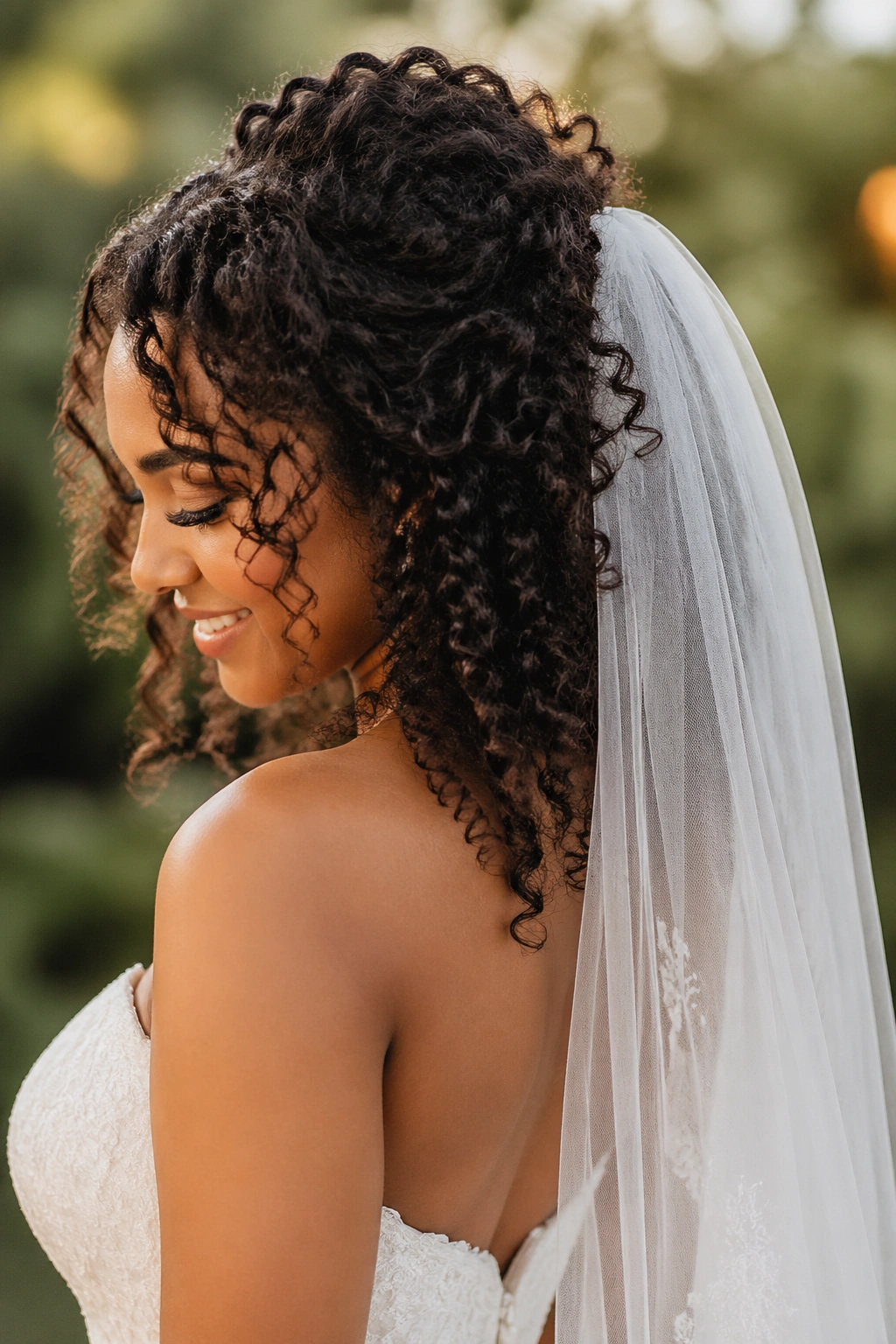
A half-up, half-down natural style with a drop veil cascading from the back of the gathered section is one of the most versatile natural curls wedding hair with a veil options. The top half is secured, providing a clean attachment point for the veil, while the bottom half flows in loose, natural curls beneath and around the tulle.
The combination creates layers — curls visible through the sheer veil, the veil framing the curls below it — that are endlessly beautiful in photographs, particularly in outdoor light.
6. High Bun With a Birdcage Veil
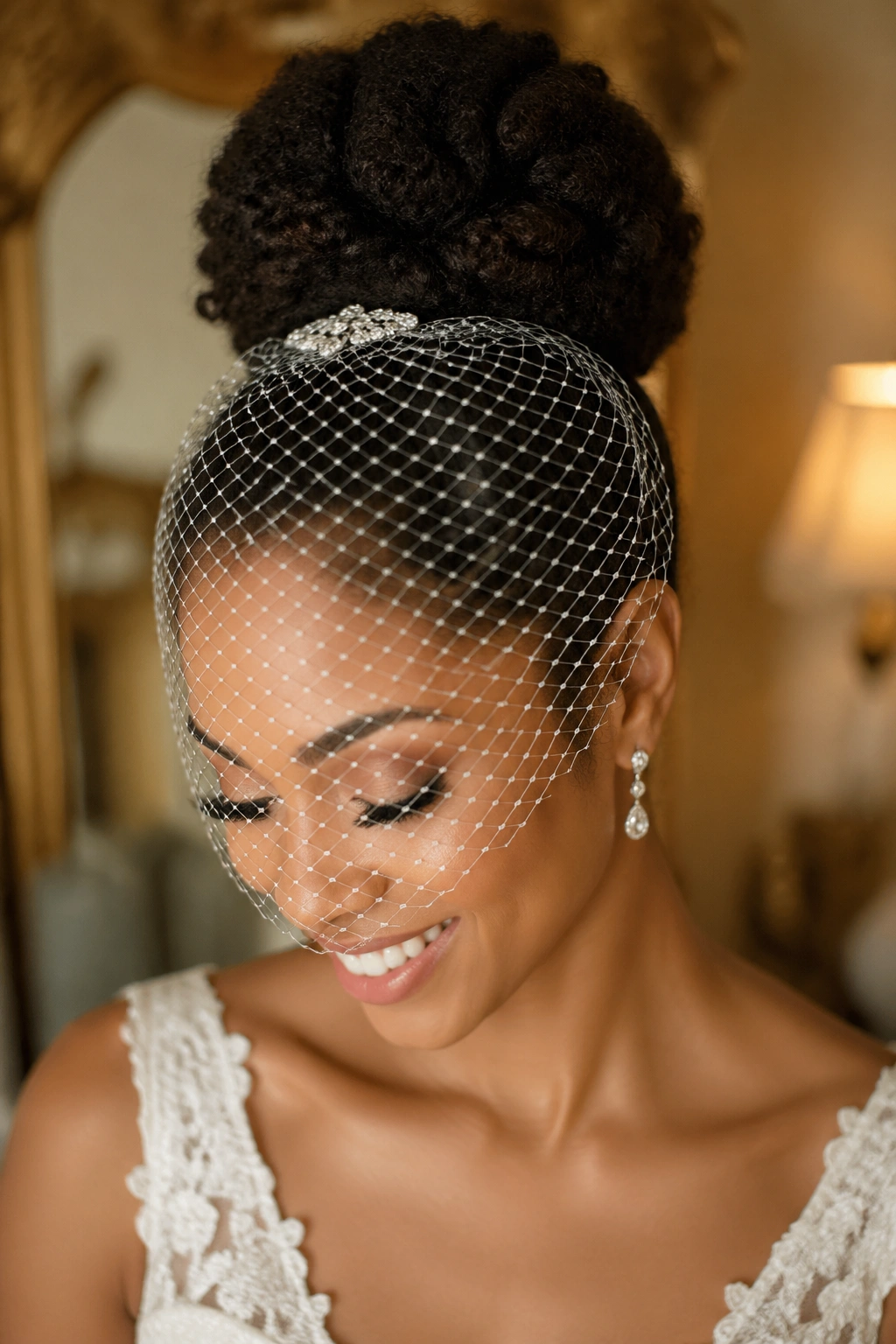
A natural hair bun styled at the crown or slightly back creates an elevated, polished bridal look, and a birdcage veil attached just at the front — angled slightly down over the face — gives the whole look a vintage-glamour quality that’s completely distinctive.
The birdcage veil is ideal for this style because it doesn’t need to cascade over or through the hair. It sits at the front of the head, clipped just above the hairline, while the bun commands the back. Two different textures, two different structures, completely unified.
7. Loose Afro With a Sheer Veil
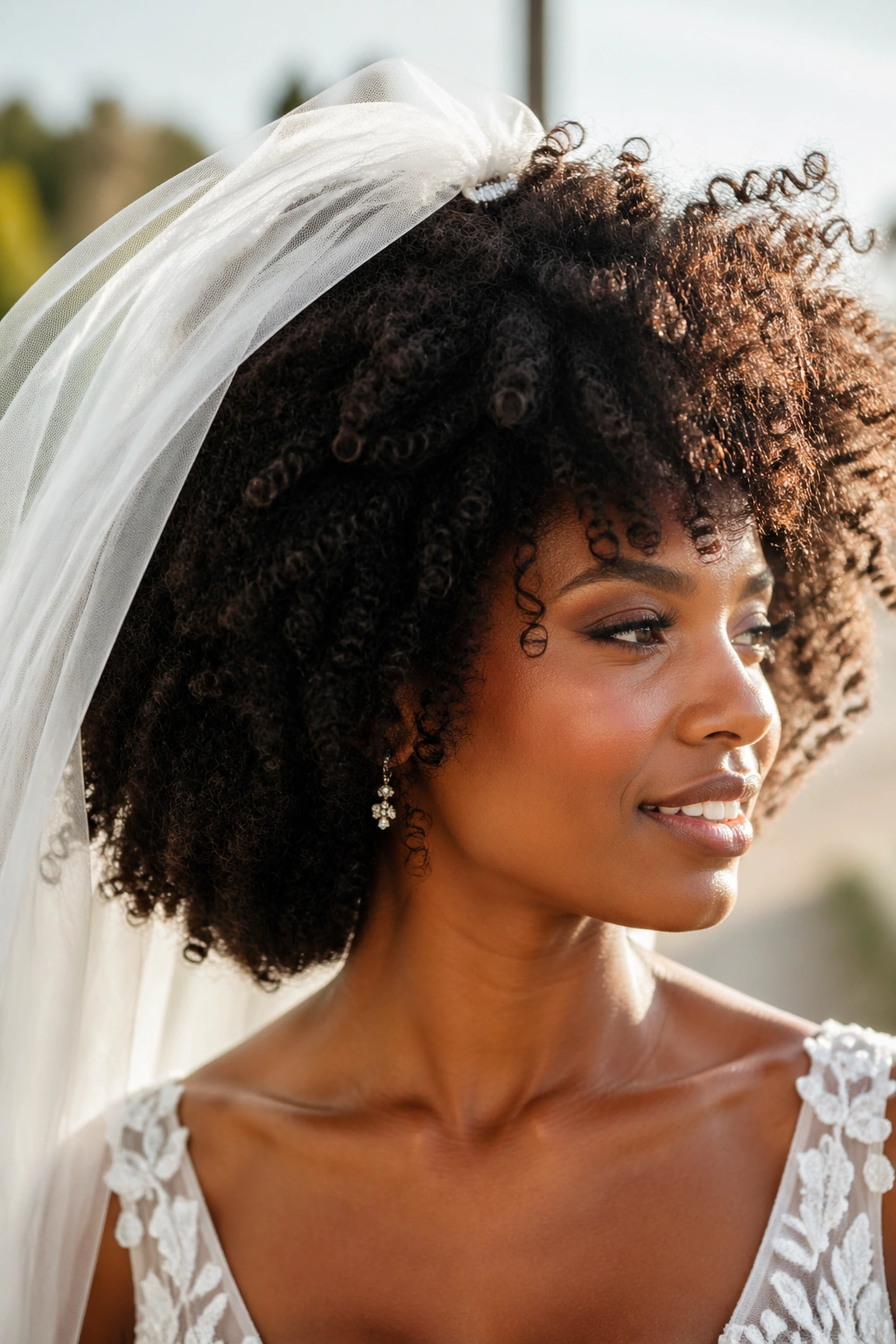
A full natural Afro is one of the boldest bridal choices — and adding a sheer, minimal veil makes it even more striking without domesticating it. A very fine, almost invisible single-layer veil attached at the crown adds a touch of bridal tradition without diminishing the power of the Afro’s silhouette.
The veil should be lighter than average — heavy tulle will press down on the Afro and reduce its volume. Fine, soft tulle works best here.
8. Bantu Knot Accent Style With a Short Veil
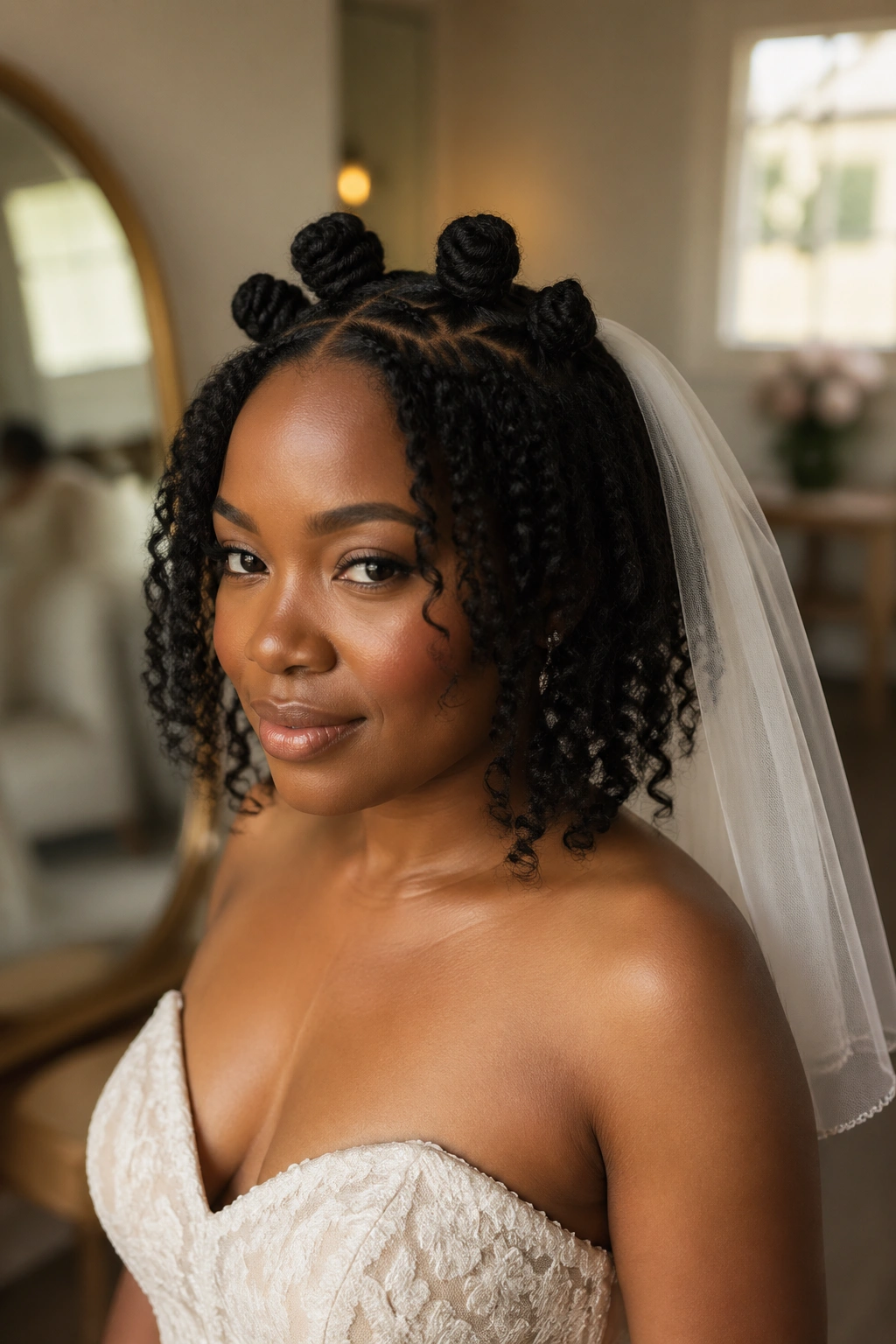
A few Bantu knots at the crown of the head — among loose natural curls at the sides — create a mixed-texture style that’s unique and visually interesting. A short, elbow-length veil attached behind the knot cluster adds a bridal touch without competing with the style’s intricate detail.
Who This Suits
This look works beautifully on 4a through 4c textures with enough length to achieve knots and loose curls simultaneously. It’s playful, artistic, and completely unmistakably bridal.
9. Natural Curls With a Floral Veil
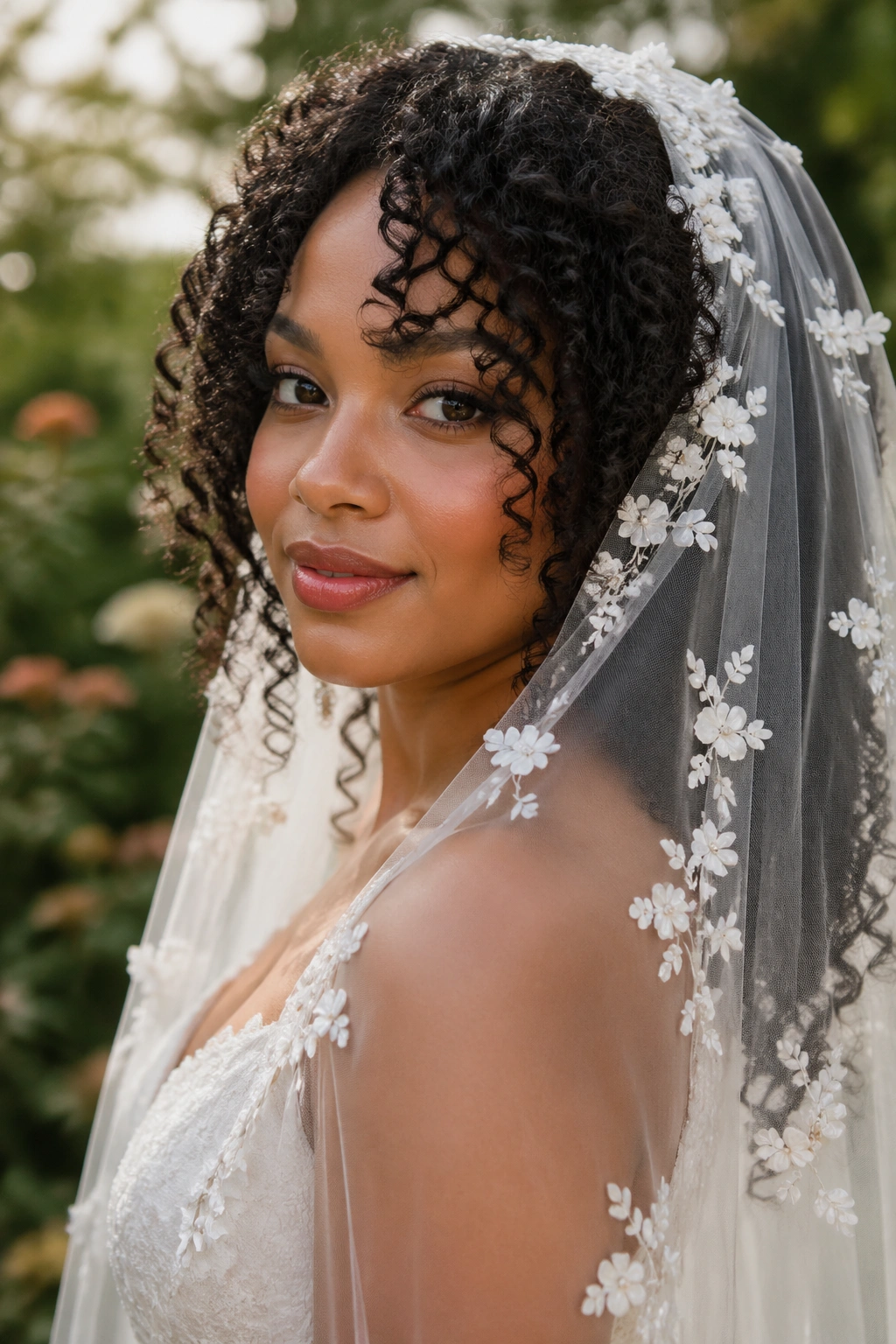
A veil with small floral appliqués — either scattered across the fabric or clustered at the edges — paired with loose, voluminous natural curls creates a garden-party bridal aesthetic that’s soft, dreamy, and incredibly romantic. The floral details in the veil echo any blooms tucked into the hair, creating a cohesive look without requiring a complicated hair style.
Keep the hair simple — a wash-and-go or loose curls with defined edges. The veil’s detailing does the decorative work.
10. Pinned Updo With a Waterfall Veil
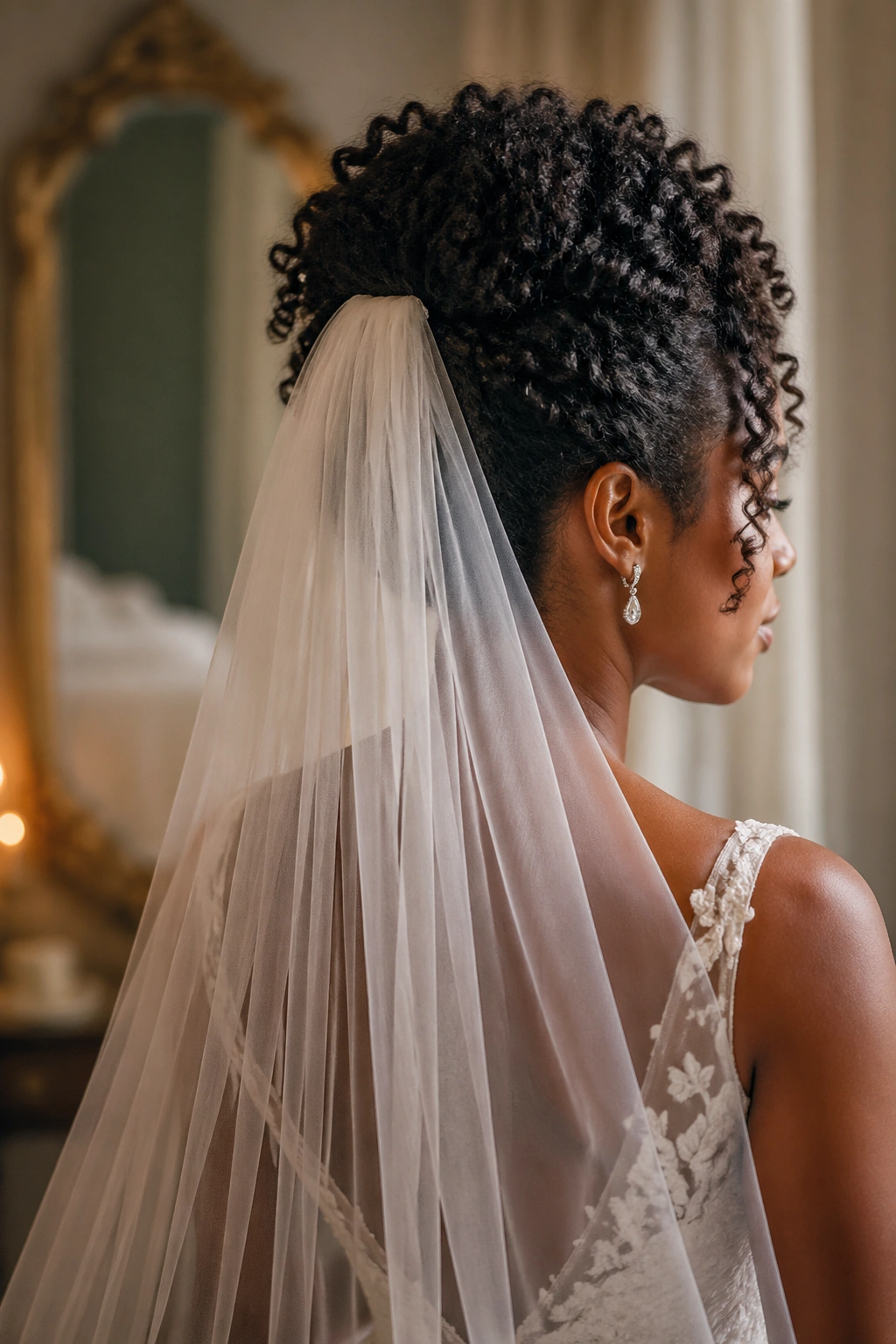
A pinned natural hair updo — where individual curl clusters are twisted and pinned close to the head at the back — provides a sculptural structure that a waterfall veil flows beautifully over and around. The veil should be attached at the crown or just above the nape, so it cascades over the pinned curls and reveals them in glimpses of texture through the sheer fabric.
11. Low Curly Bun With an Elbow Veil
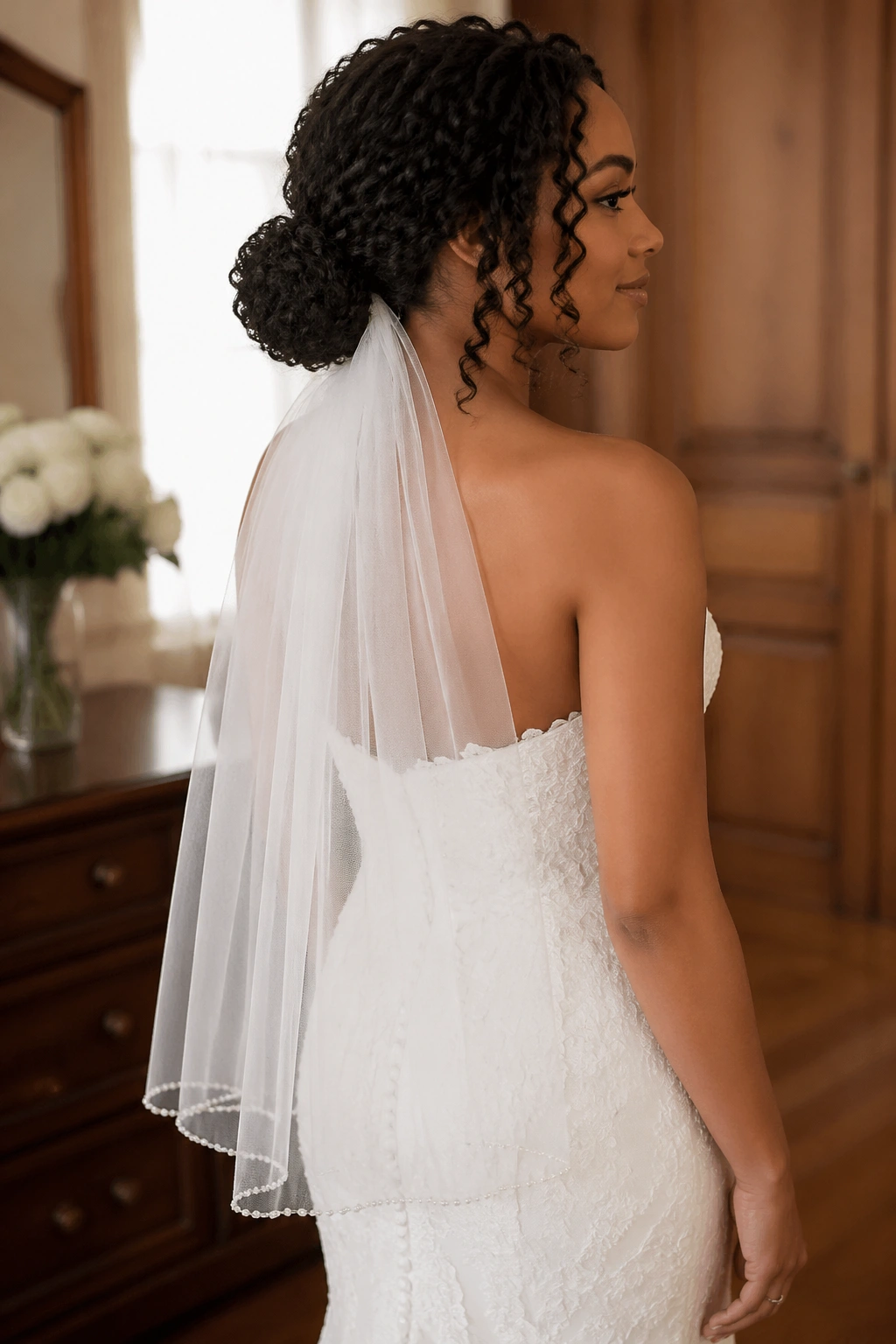
A low bun made from natural curls sits at the nape and provides a perfect anchor for a simple, elegant elbow-length veil. The veil attaches behind the bun, flows cleanly down the back, and adds bridal formality without overwhelming the simplicity of the style.
This is a classic, enduring combination — low bun, elbow veil, statement earrings. It photographs beautifully from behind and creates a clean, uncluttered look from the front.
12. Curly Mohawk With a Side Veil
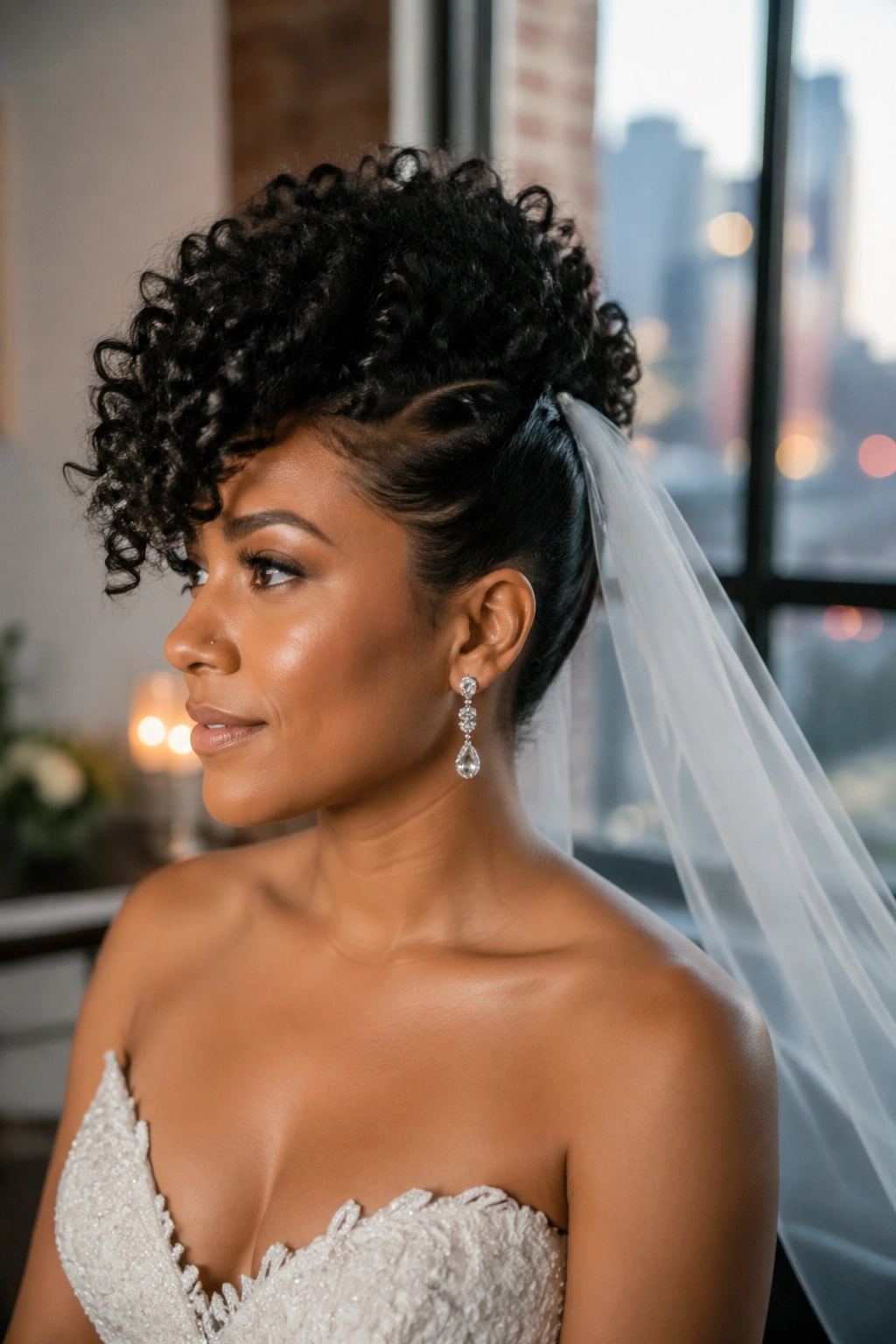
A curly Mohawk style — sides pinned or naturally shorter, center curls in full volume — can carry a single-layer side veil attached to the pinned section on one side. This is an unexpected, editorial approach to the veil that treats it more like an accessory than a traditional element.
The veil sweeps from one side of the head across the back, asymmetrical and striking. It’s the kind of bridal detail that photographers remember.
13. Two-Strand Twist Updo With a Comb Veil
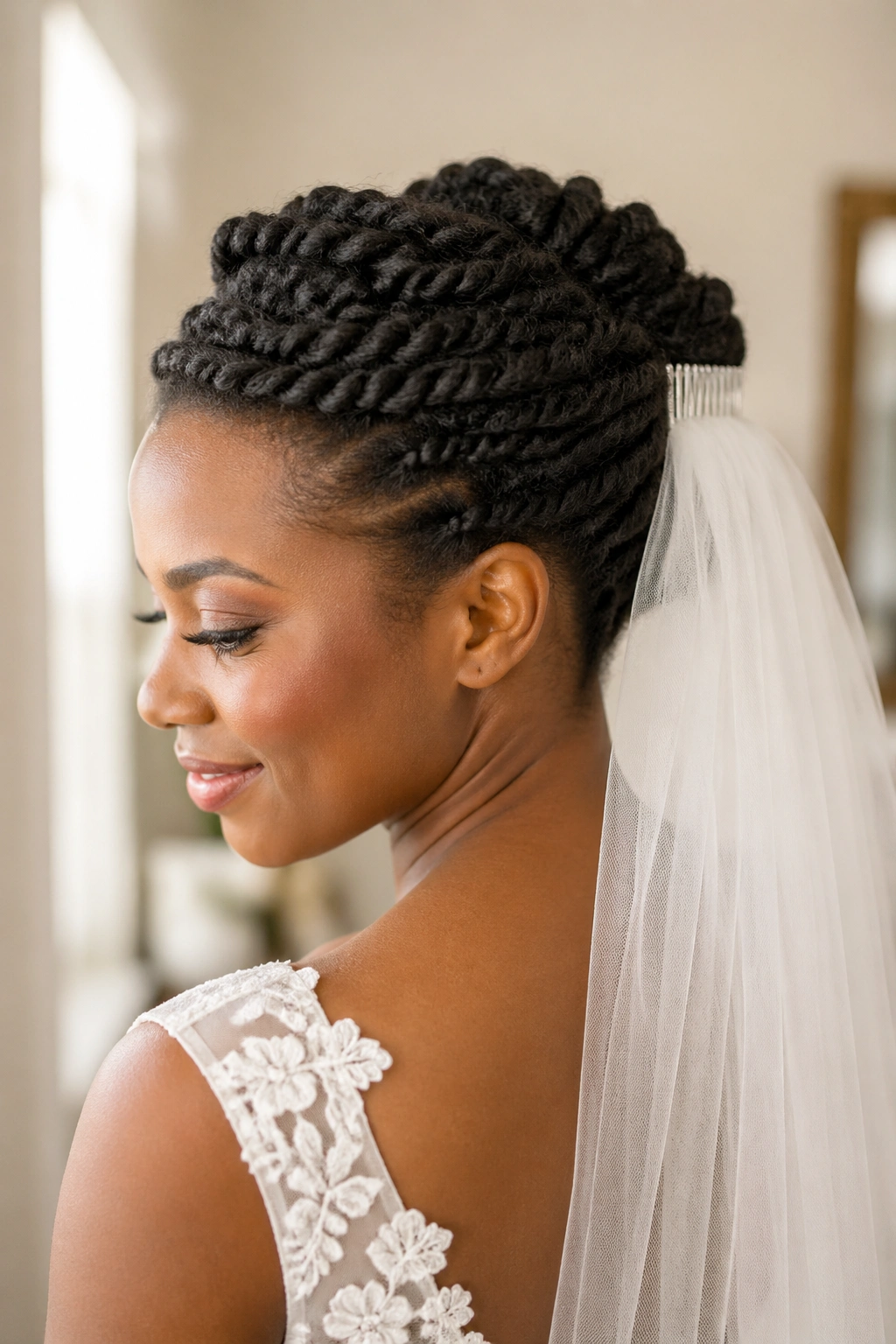
Two-strand twists pinned into an updo provide a textured surface that holds a comb veil exceptionally well. The twists’ structure means the comb teeth have plenty of grip, and the organic texture of the updo means the comb is aesthetically cohesive with the style rather than looking out of place.
14. Short Natural Curls With a Long Veil
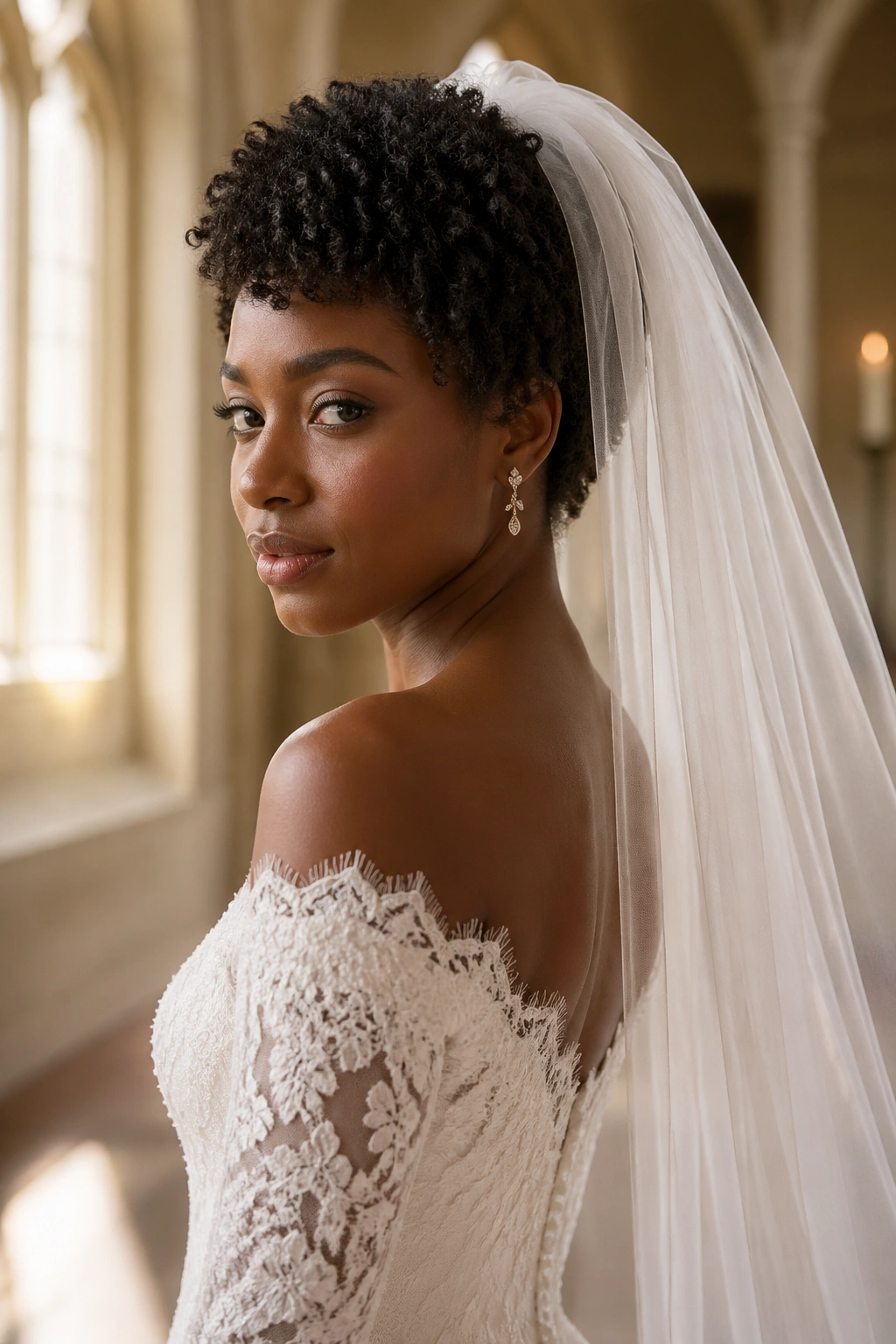
Short natural hair with a cathedral or chapel-length veil is one of the most dramatic contrasts in bridal styling — and it’s spectacular. The veil’s length isn’t diminished by the hair’s shortness; if anything, the juxtaposition makes both elements more powerful.
Attach the veil comb securely at the crown. With short hair, there’s less to anchor into, so use multiple reinforcing bobby pins in a cross pattern around the comb. Test it for several hours before the wedding day.
15. Natural Curls Styled Back With a Dramatic Drape Veil
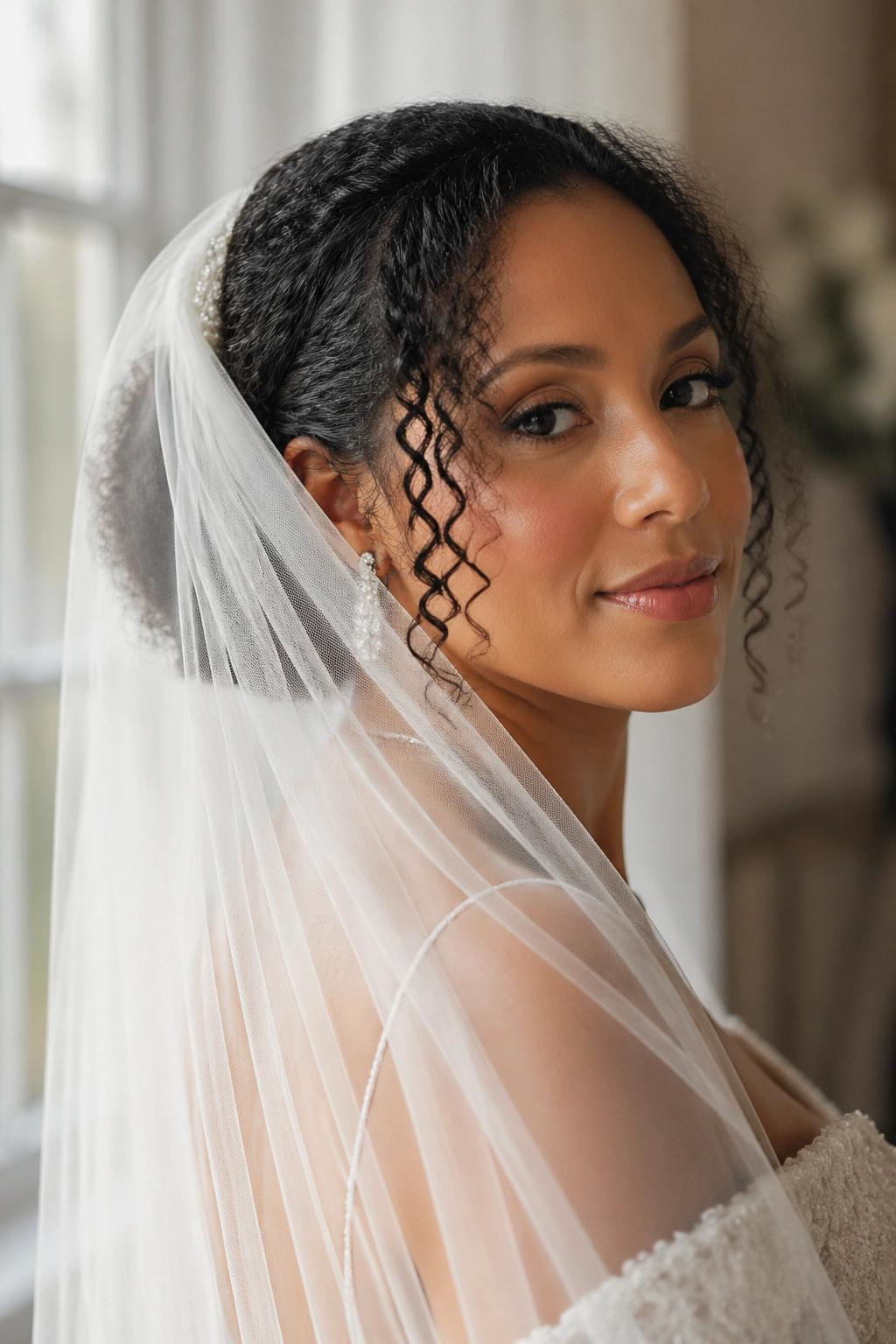
Some veils are designed to drape over the front of the head and be worn over the face before the ceremony — a practice with deep traditional roots. On natural curls, this works when the hair is styled back and secured so the veil has a clear front path without catching on loose curls.
Gather the curls into a low style at the nape or into an updo, leaving the crown smooth and accessible for the veil’s attachment. When lifted, the curls frame the revealed face in a moment that’s purely cinematic.
16. Braided Updo With a Flowy Two-Tier Veil
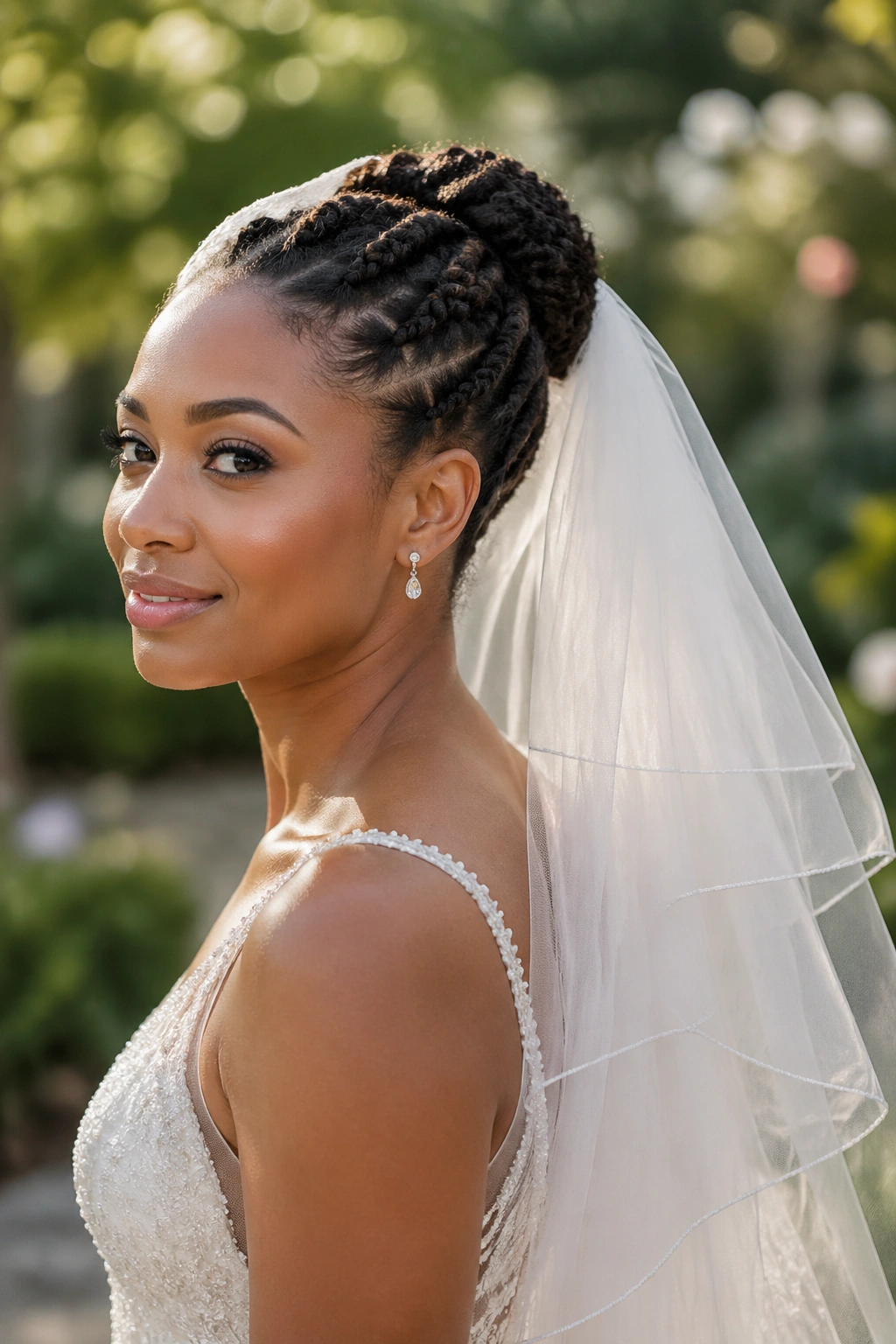
A braided updo — whether cornrows swept back, flat twists arranged in a pattern, or micro braids pinned into a bun — gives a two-tier veil a solid, strong anchor. The braided base doesn’t slip, doesn’t compress, and provides multiple grip points for the comb. The two-tier veil — with its decorative first layer and longer underlayer — adds drama and formality to the structured updo.
17. Curly Side Pony With a Cascading Veil
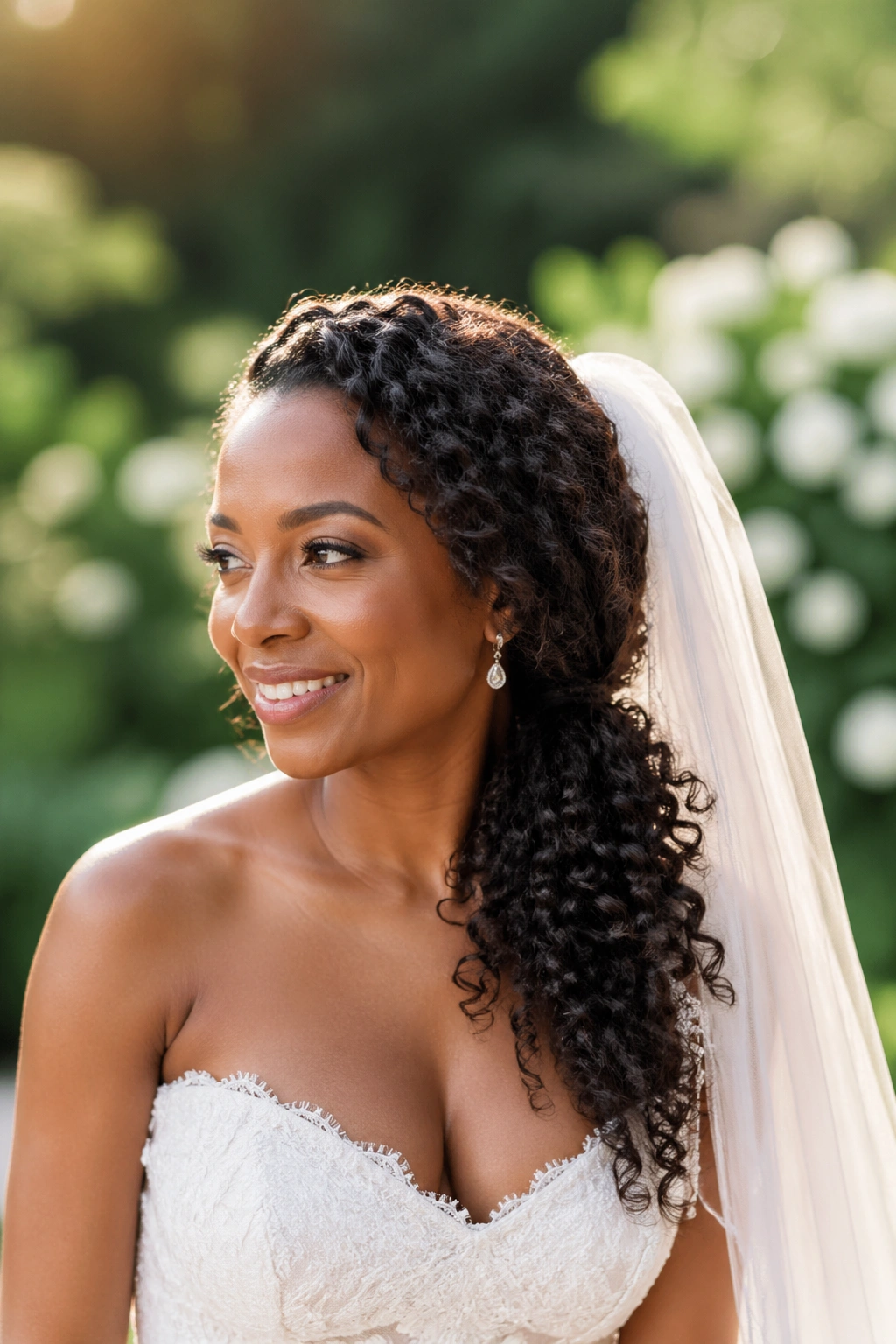
A loose side ponytail of natural curls — gathered at the nape on one side and allowed to spill over the shoulder — paired with a veil attached just behind the ear on the opposite side creates a playfully asymmetrical bridal look. The curls and the veil fall in the same direction on their respective sides, creating movement and balance.
18. Wash-and-Go Curls Secured at the Nape With a Long Veil
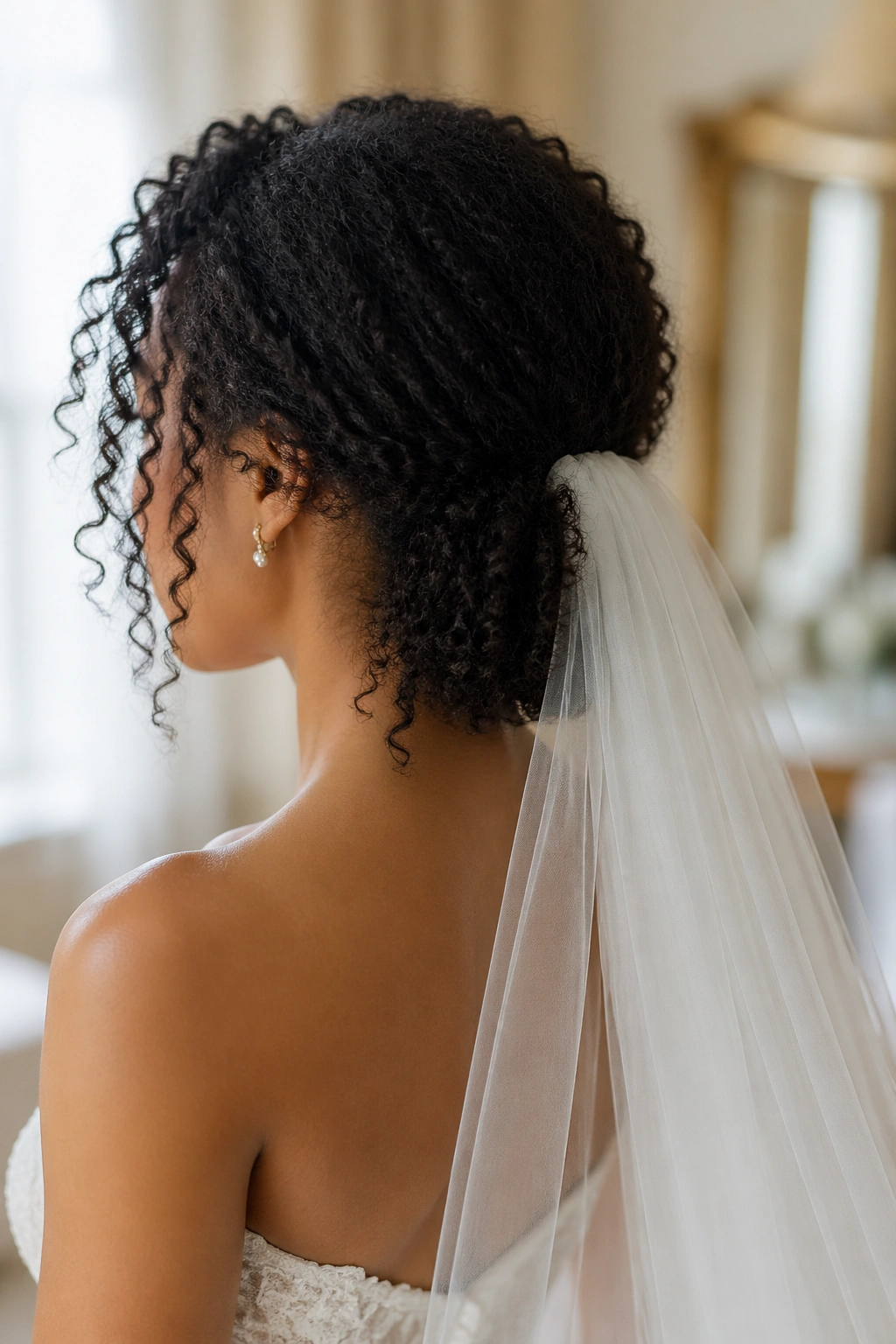
Gathering a wash-and-go style loosely at the nape — not into a ponytail, just swept and loosely secured — creates a soft, romantic low silhouette that allows a long veil to flow freely behind without tangling in loose curls. It’s a style that balances freedom and practicality beautifully.
19. Curly Space Buns With a Mini Veil
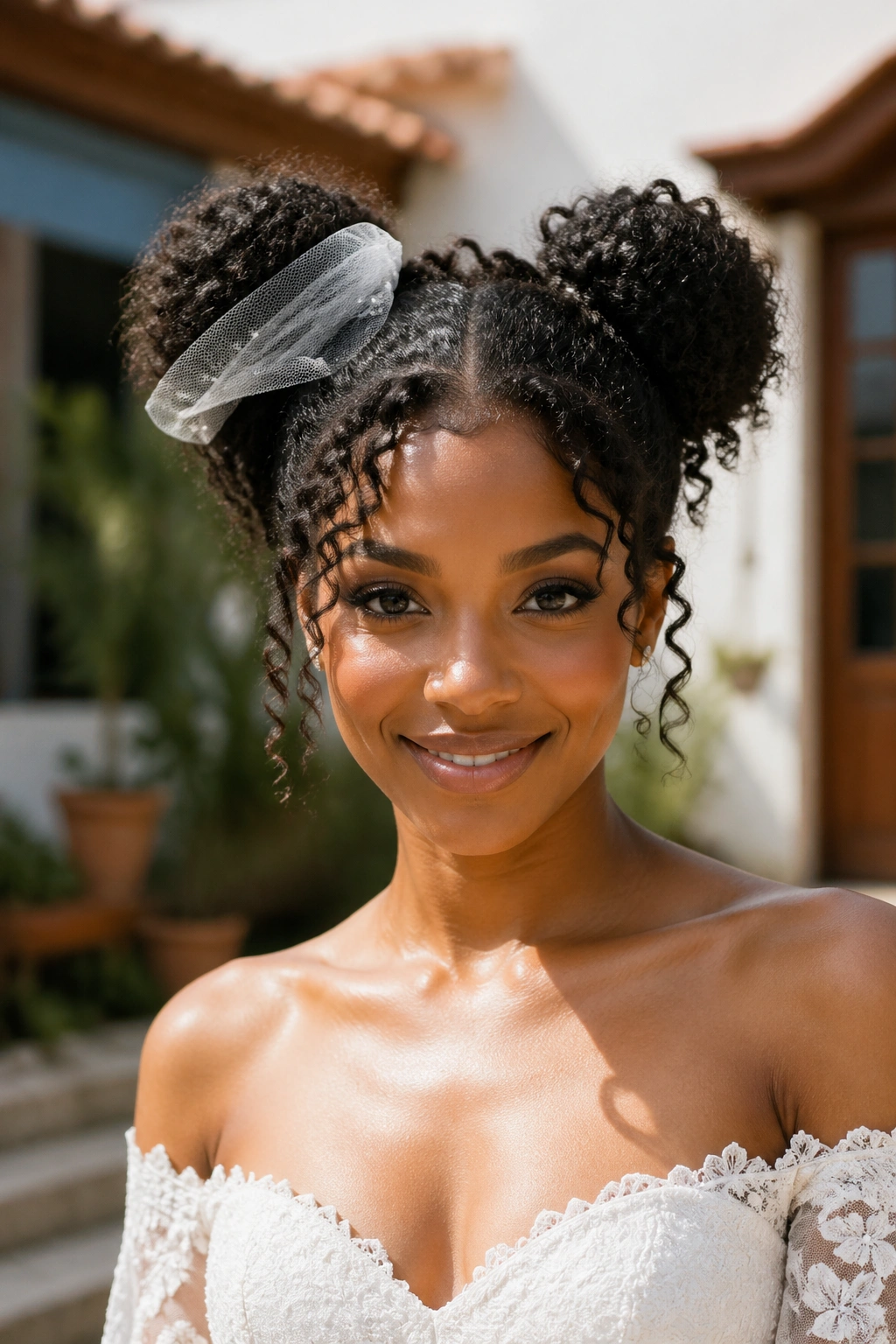
Two natural curl buns, one at each side of the head, with a small, sweet mini veil attached to one of them — slightly off-center — is playful, unexpected, and thoroughly bridal in its own joyful way. This suits brides with a whimsical, fashion-forward wedding aesthetic who want their hair to feel like an extension of their personality.
20. Locs With a Dramatic Long Veil
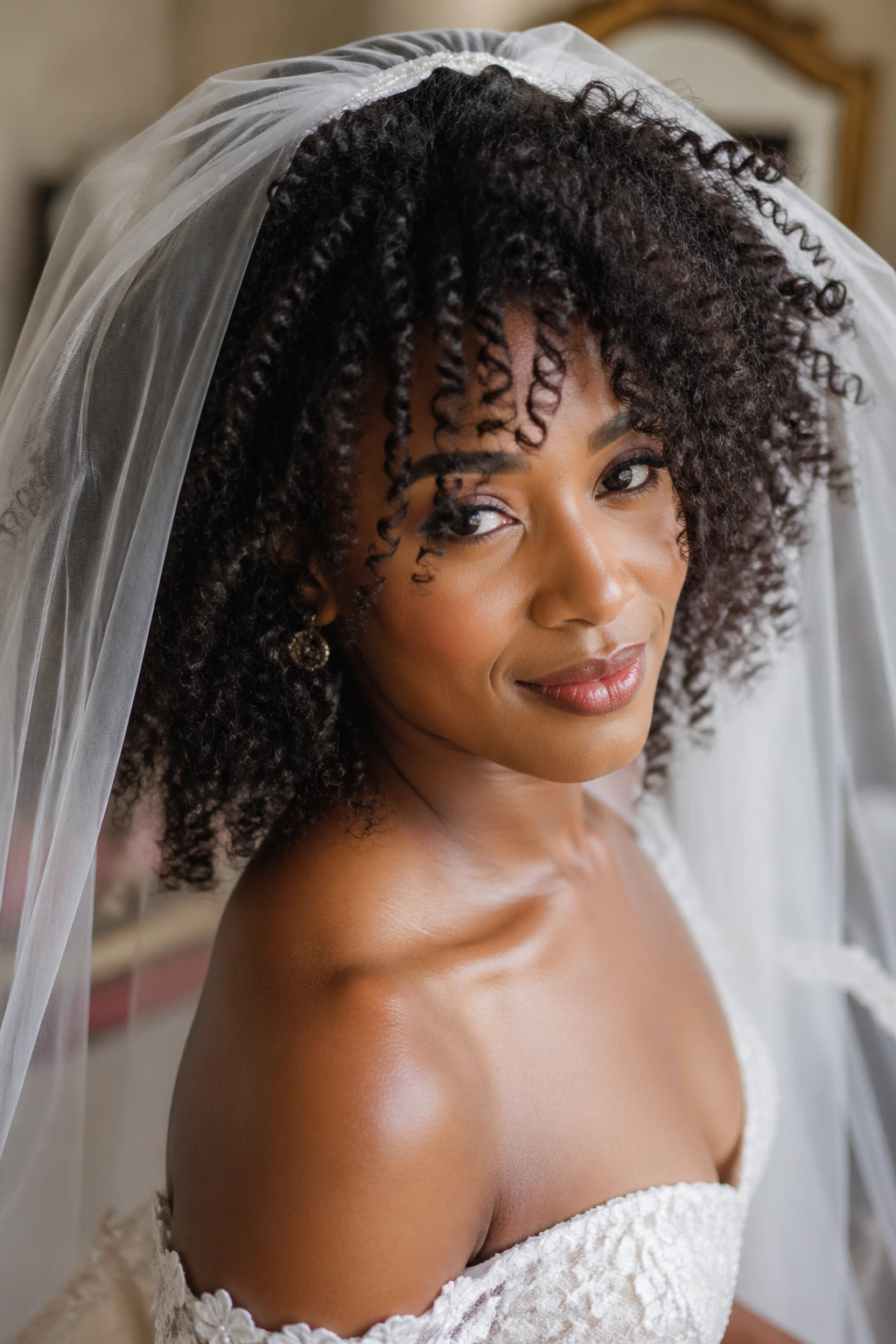
For brides with locs, a long flowing veil attached at the back of an updo — or draped over a gathered loc style — creates a stunning contrast between the loc’s defined structure and the veil’s sheer softness. A skilled loc stylist can arrange the locs into an updo with a clear crown attachment point that holds a veil without any slipping.
21. Cornrow Base With Curly Top and a Veil
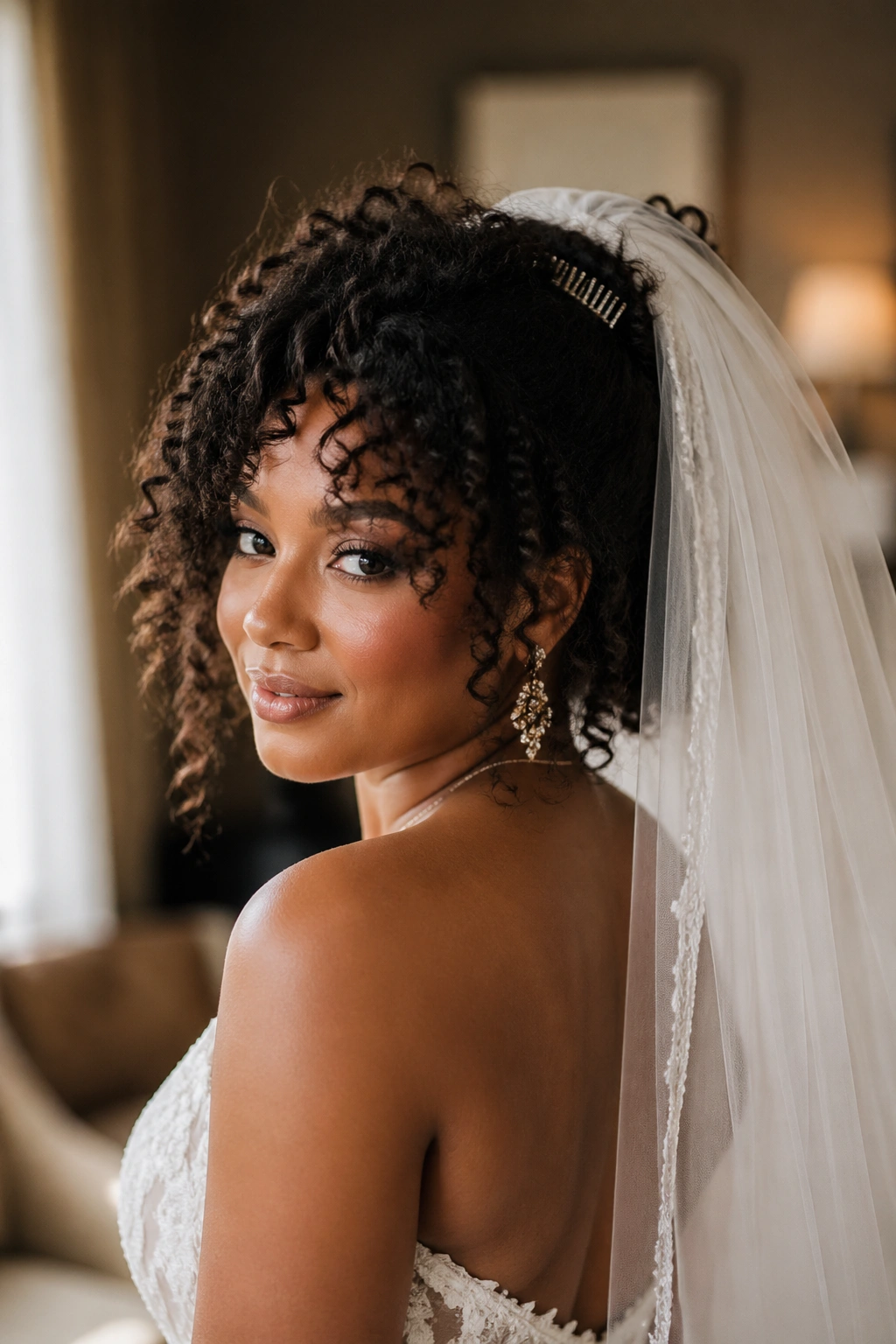
Cornrows covering the sides and back of the head, with a natural curly top section left full, creates a structured base for a veil while maintaining the visual richness of natural texture. The veil attaches at the back of the cornrow section and flows downward, while the curly top section sits forward and upward, creating two distinct layers of beauty.
22. Textured Low Bun With a Mantilla Veil
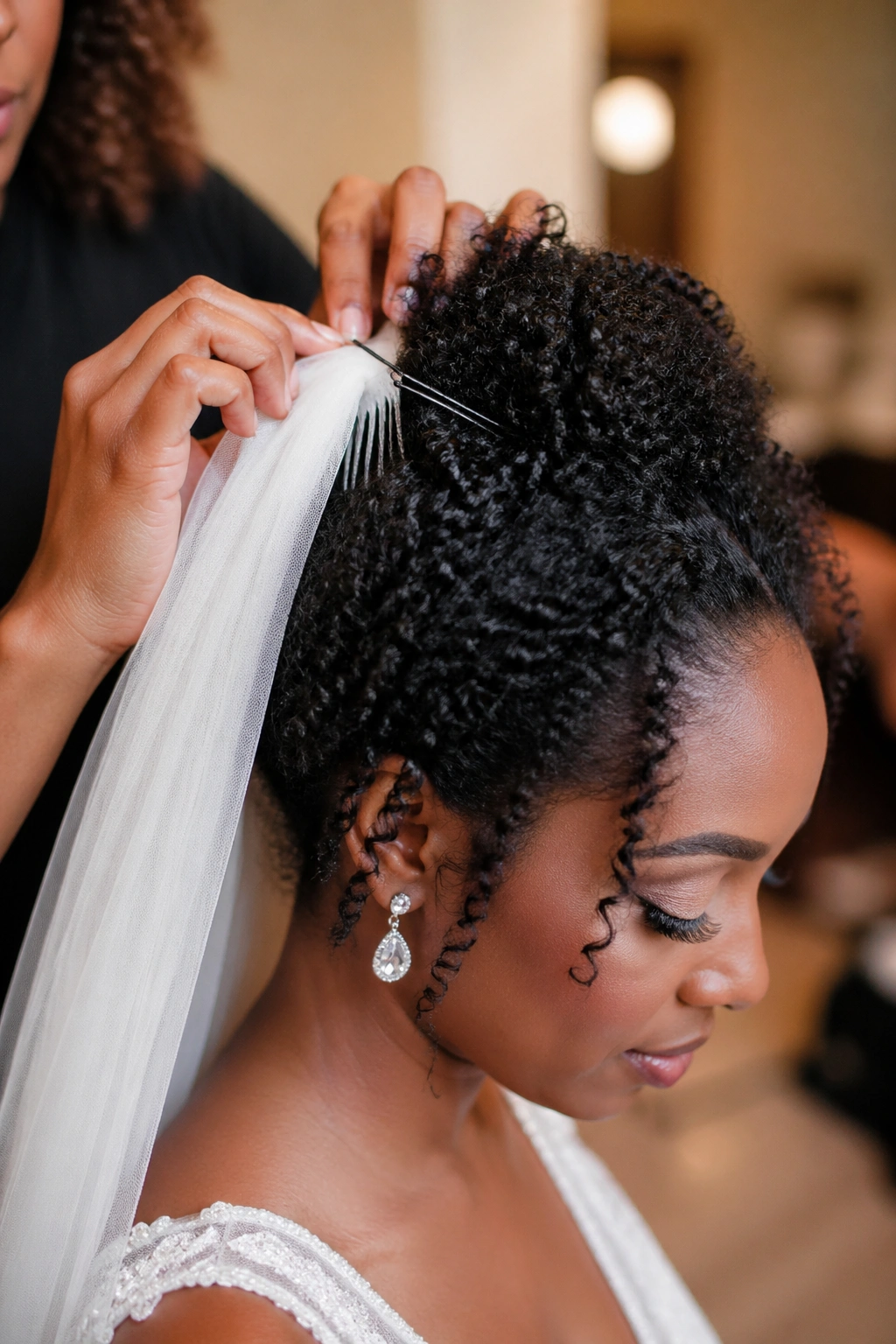
A mantilla veil — lace-edged, worn over the crown of the head — is one of the most traditional bridal veil styles, and it works beautifully with a low textured bun. The lace edge frames the face and flows around the bun, adding a formal, heritage quality to the natural hair style.
Choose a mantilla veil with a wide comb so it sits securely over the bun without tipping forward. The lace detail at the edge frames the face the same way it always has — but now, the curls underneath give it a depth and warmth it never had before.
Making Your Veil and Natural Curls Work Together: Final Thoughts
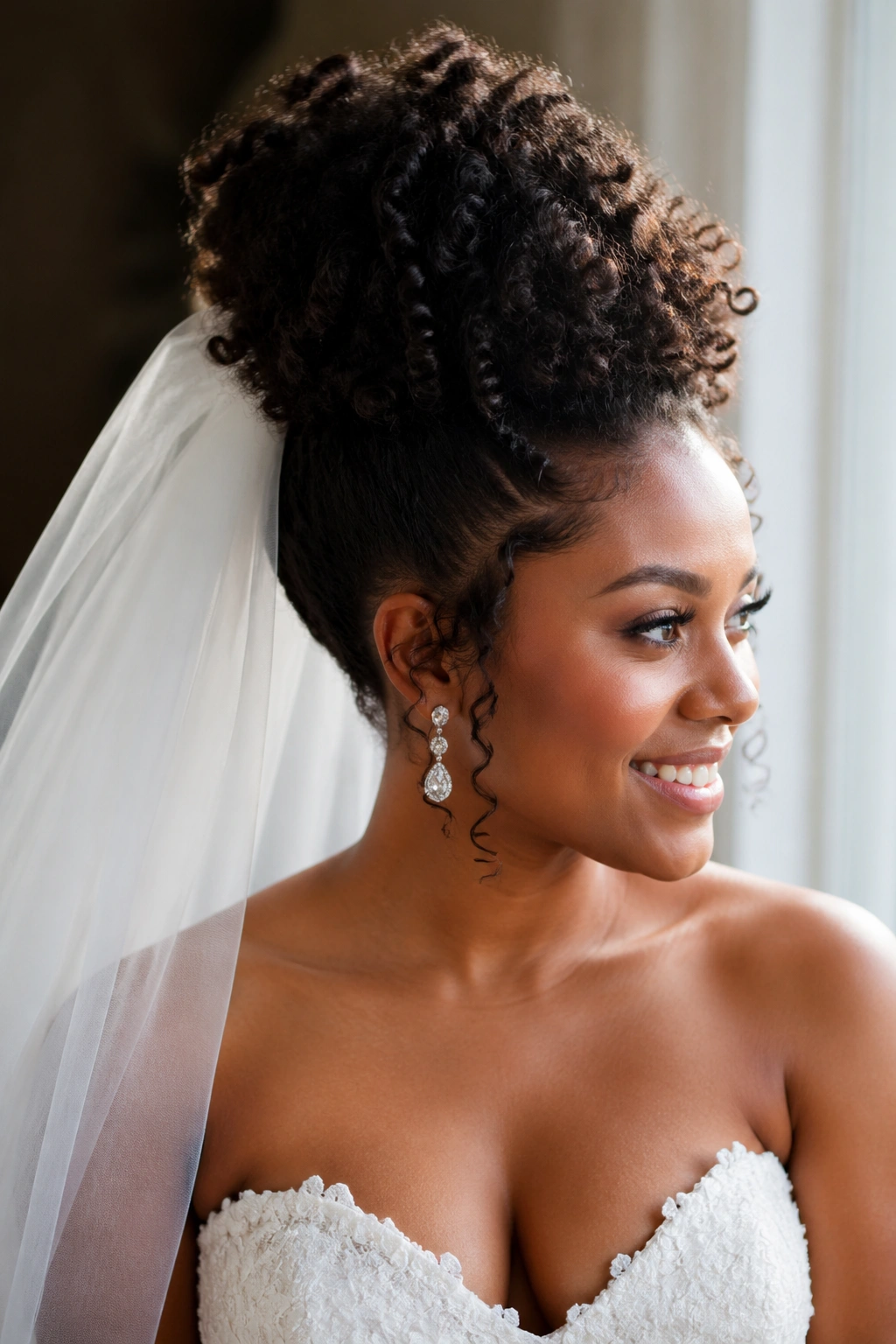
The combination of natural curls wedding hair with a veil is not a styling challenge — it’s a styling opportunity. It’s a chance to pair the most traditional bridal accessory with the most authentic version of who you are. Your curls aren’t an obstacle to wearing a veil. They’re the reason the veil looks better.
Work with a stylist who understands both elements, trial the combination thoroughly, and trust the look you’ve built. On the day itself, your natural curls will move, breathe, and catch the light in ways that no straightened style ever could — and the veil will catch it all in its sweep, making the whole picture something truly unforgettable.