



Cornrow mohawks sit at the intersection of two strong style traditions. The mohawk pulls from a punk-rock past that prized rebellion and visual height. The cornrow pulls from centuries of African braiding craft. Put them together and you get something that’s neither — a hybrid that’s become its own thing entirely. For Black women specifically, the cornrow mohawk is one of the most expressive protective styles available, and it carries more cultural weight than most people give it credit for.
The basic structure is straightforward. The sides of the head are cornrowed flat, pulling all the bulk of the hair toward the center crown. What runs down the middle becomes the focal point — sometimes a strip of larger braids, sometimes a curly puff, sometimes a faux-hawk created from braided sections lifted upward. The variations are endless. The silhouette is unmistakable.
Cornrow mohawks work for everyone from teenagers experimenting with bold looks to grown women who want a low-maintenance protective style with attitude. They photograph dramatically. They feel light. And they signal a certain kind of confidence the moment someone walks into a room.
Twenty-two distinct cornrow mohawk styles are gathered below. Some lean traditional. Some push toward avant-garde. Pick what fits your mood and your life right now.
What Makes a Cornrow Mohawk a Mohawk
The defining feature isn’t the cornrows themselves — it’s the placement. A mohawk style means the sides of the head are pulled back, slicked down, or shaved short, while the central strip from forehead to nape carries all the visual weight. On a cornrow mohawk, the sides are braided flat against the scalp, and the center either remains as a longer braided strip, gets puffed out as natural hair, or rises up into braided extensions.
The mohawk silhouette is vertical. Your eye travels up. That vertical movement is what distinguishes a mohawk from a regular cornrow set, where the eye travels horizontally across the head. Once you recognize that vertical line, every cornrow mohawk variation makes sense.
Some women shave the sides for a more dramatic mohawk. Most don’t. The braided side mohawk is far more common and doesn’t require any commitment beyond the install.
Prep That Makes the Style Last
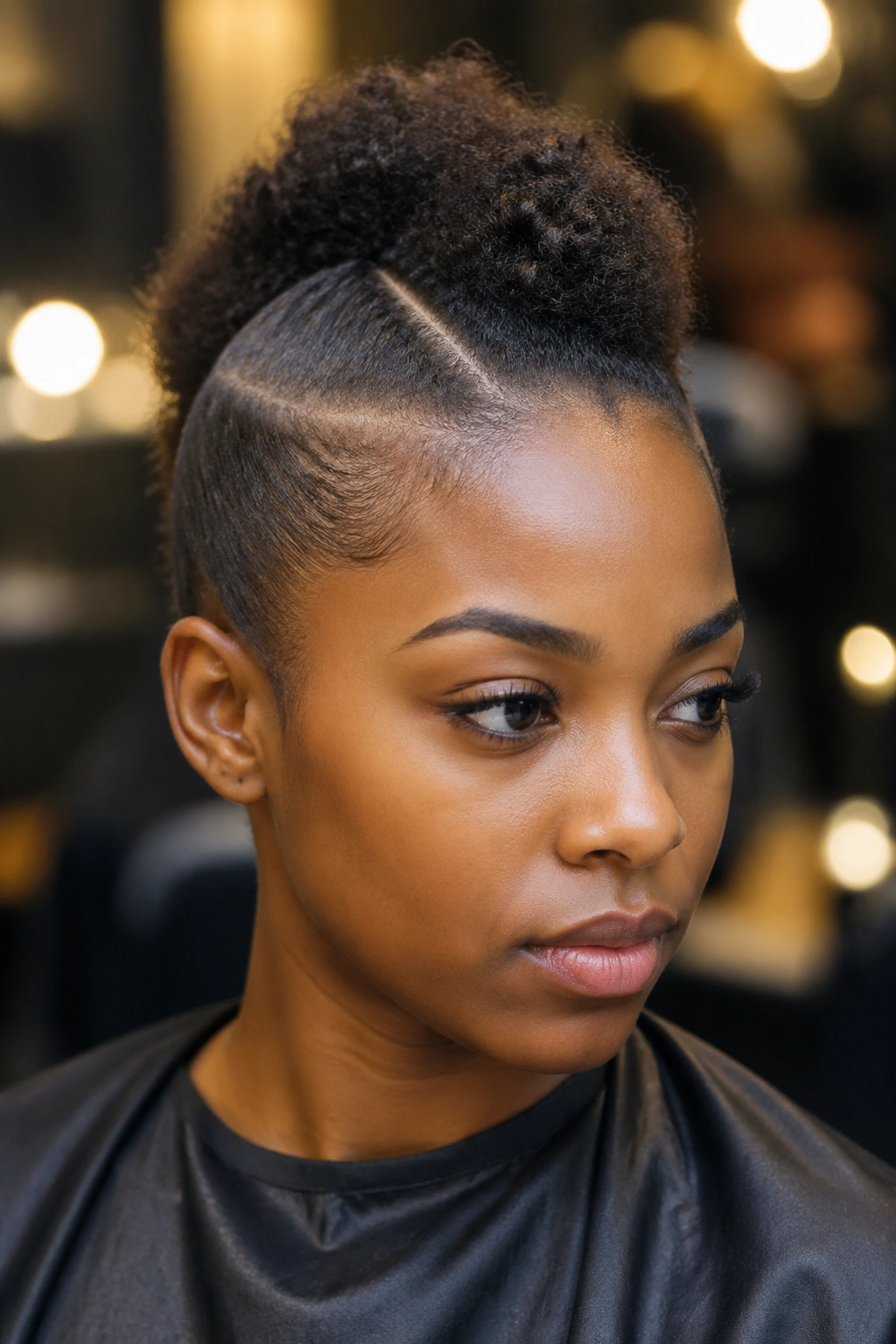
Cornrow mohawks have one technical challenge that other cornrow styles don’t — the side braids are pulled in toward the center, which means more lateral tension at the scalp. That tension can cause issues if your hair isn’t prepped right.
Wash with a clarifying shampoo two days before the appointment. Follow with a deep conditioner. Then a lightweight leave-in. Stretch the hair fully — banding, blow-drying on warm, or African threading all work. Shrunken hair on the sides creates uneven cornrows that pull harder on some sections than others.
Trim split ends. The center strip especially benefits from a clean cut, since the longer it is, the more visible any damage will be.
If your edges are sensitive, mention it before the braider starts. The cornrow mohawk pulls the front hairline back hard, and a heavy hand can leave you with bumps and breakage along the temple area.
Tools You’ll Need for the Install
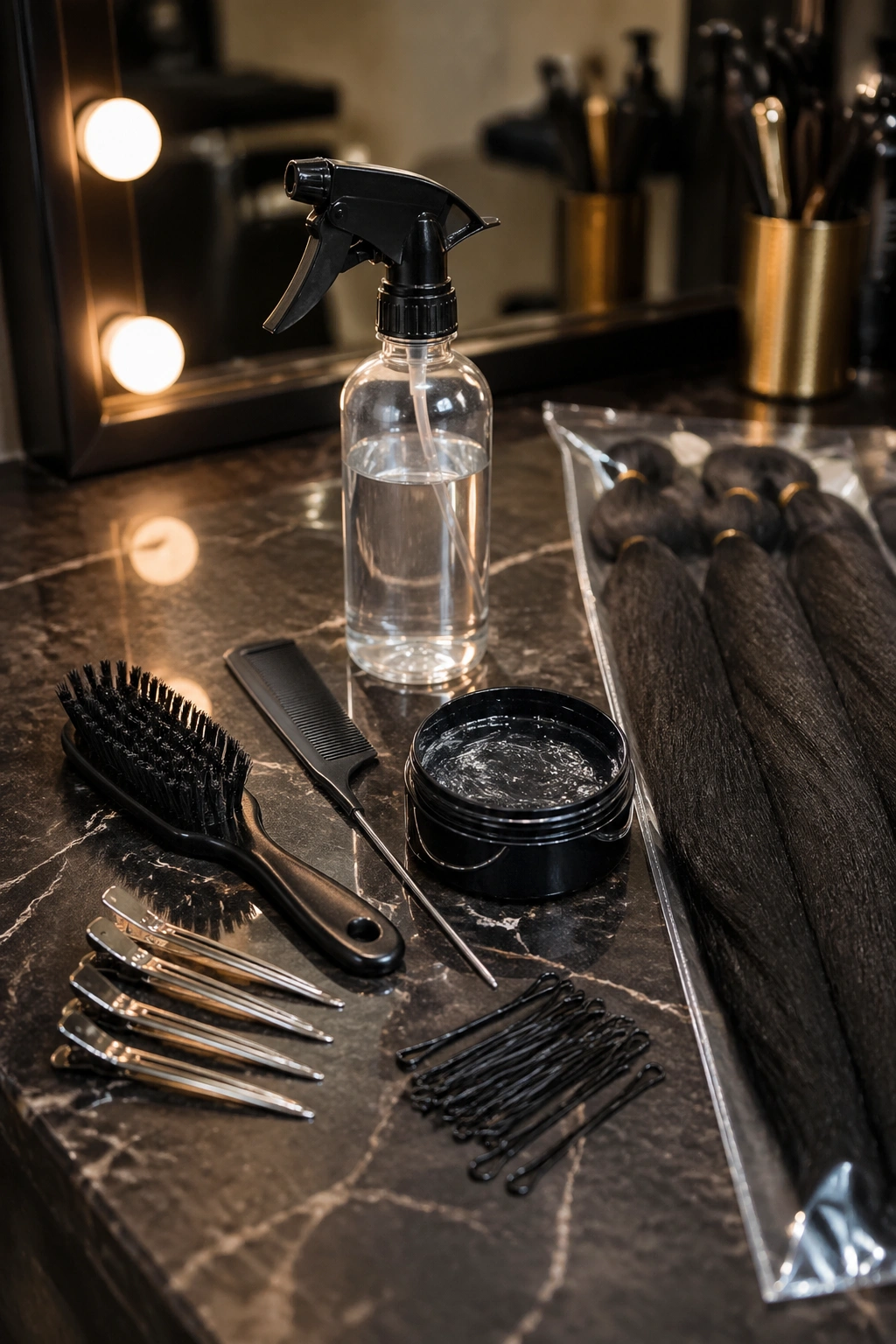
Most of the standard cornrow toolkit applies, with a few additions for mohawk-specific needs.
- A rat-tail comb with a metal tail. Plastic ones bend and lose precision.
- Edge gel that holds without flaking.
- A spray bottle with water and lightweight leave-in.
- Section clips — at least eight, since you’ll be working in distinct zones.
- Pre-stretched kanekalon if extensions are part of the plan.
- A small soft-bristle brush for laying side hair flat.
- Bobby pins or hair pins if the mohawk includes a styled center.
You don’t need an arsenal. You need each tool to be high quality. Cheap rat-tail combs, stiff brushes, and chemical-heavy edge gels will all work against you.
The One Technique That Separates Good From Great
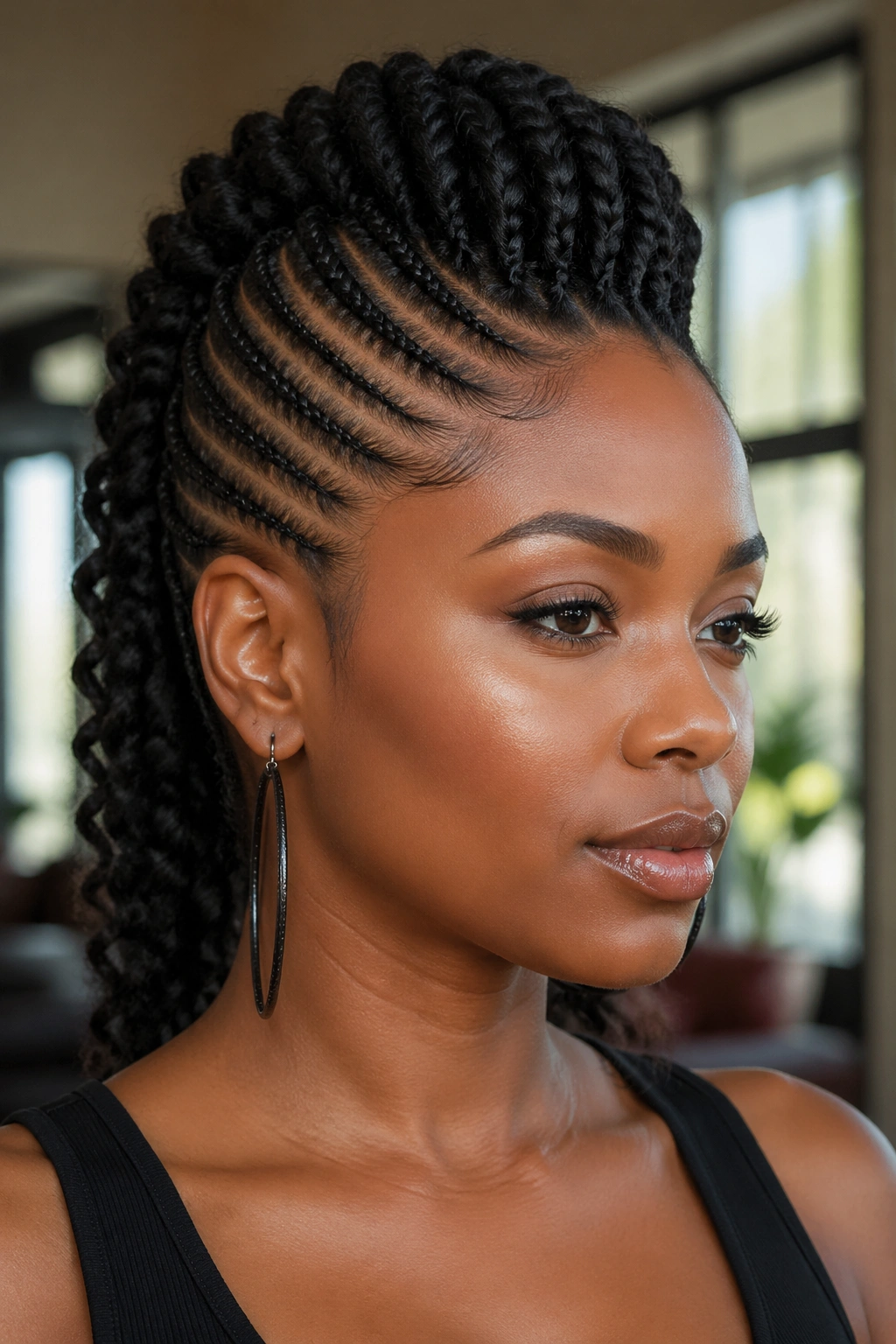
The angle of the side cornrows determines whether the mohawk silhouette reads clean or muddy. Side cornrows that travel at a slight upward angle toward the center crown — rather than flat horizontal — create a gentle lift that emphasizes the mohawk’s vertical line. Side cornrows that travel perfectly horizontal toward the center create a flatter look that doesn’t read as strongly mohawk.
The angle is subtle. Maybe ten or fifteen degrees of upward tilt. But once you’ve seen a side-by-side comparison, you can’t unsee the difference. Ask your braider for upward-angled sides if you want maximum mohawk impact.
If you’re unsure, look at the braider’s portfolio. Mohawks where the side cornrows look like fanning lines toward the crown will photograph dramatically. Mohawks where the side cornrows look like they’re just laying back against the head will look softer.
A Brief Note on Cultural Context
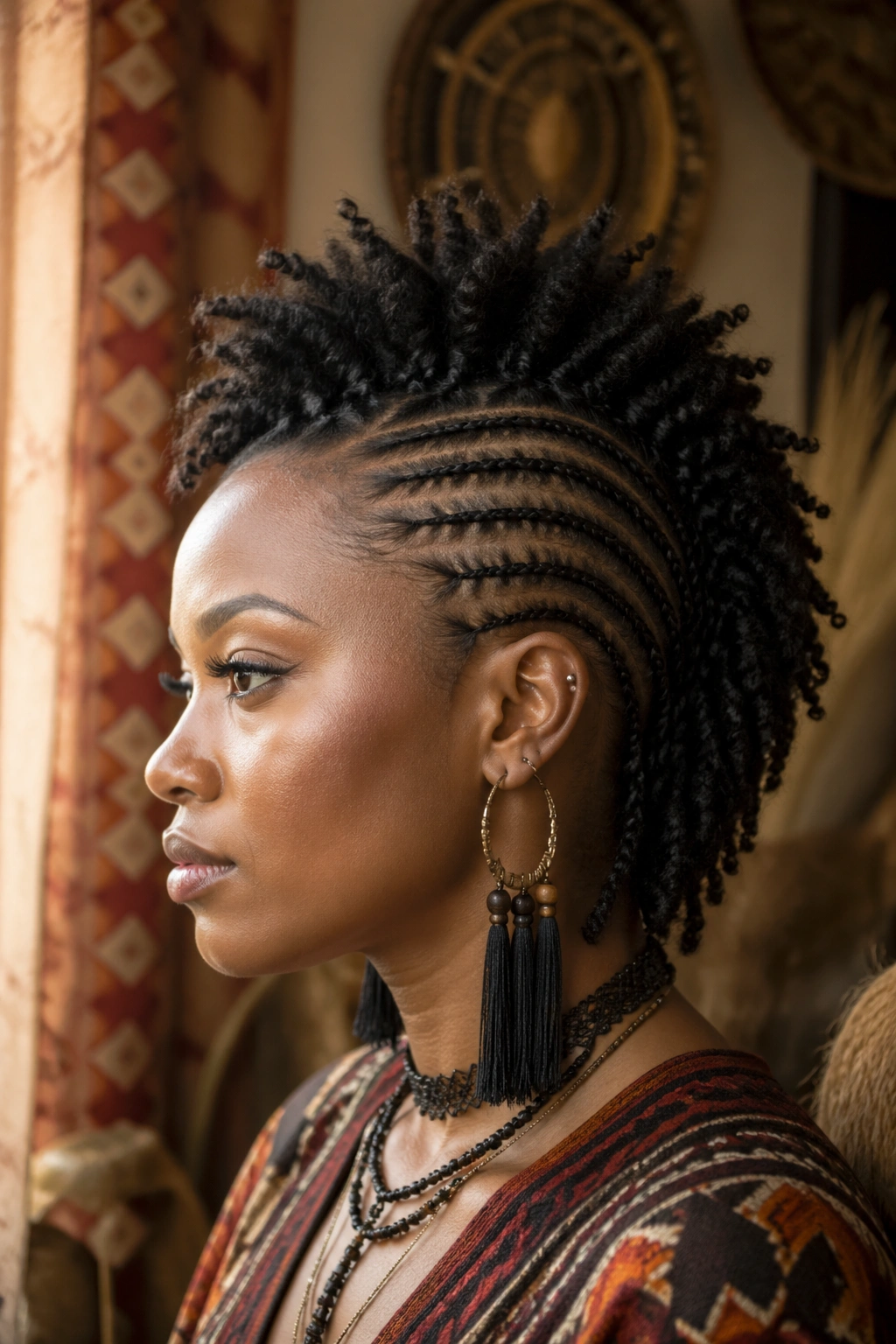
The mohawk silhouette as we recognize it in modern pop culture comes from many sources — Indigenous American haircuts (specifically among the Mohawk and other Indigenous nations), British punk rock in the late twentieth century, and various African ceremonial styles where central braided crests served ritual purposes.
For Black women, the cornrow mohawk synthesizes those threads into something rooted in the African braiding tradition while drawing on the visual language of cultural rebellion. It’s not just a haircut. It carries a lineage of women who’ve used hair to claim space, signal identity, and refuse to shrink. Worth knowing as you choose to wear it.
1. Classic Side Braids With Curly Center Puff
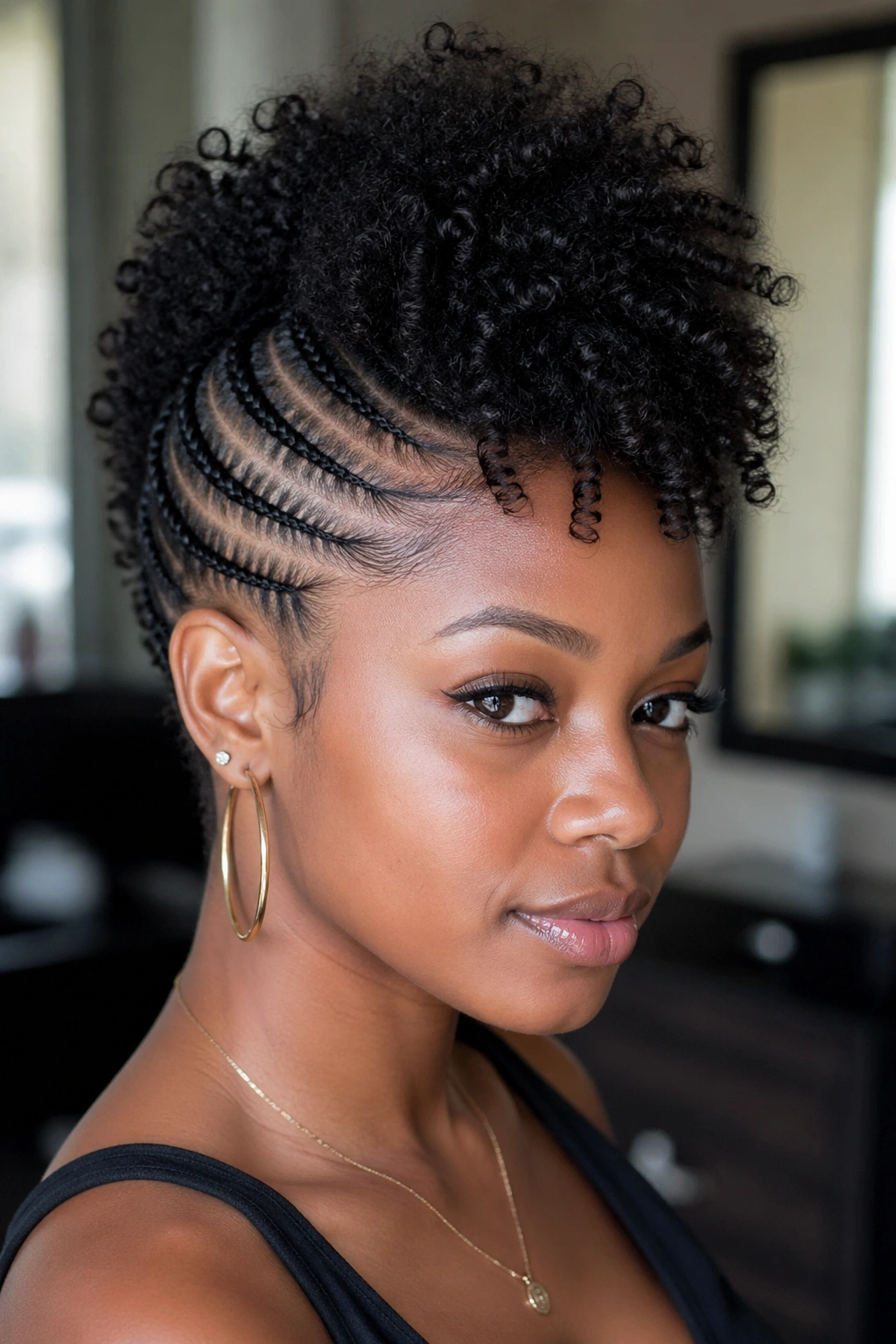
Side cornrows pulled flat against the scalp, with the natural hair down the middle left out and shaped into a soft puff.
Why It Works
This is the most beginner-friendly mohawk variation. The cornrows on the sides are simple — three to five on each side, all angled toward the center — and the puff in the middle requires no special technique beyond your normal twist-out or wash-and-go routine. The contrast between the sleek sides and the textured center creates instant dimension.
- Best for natural hair that’s at least four inches long
- Lasts 2-3 weeks with nightly maintenance
- Takes about 90 minutes to install
- Works for everyday wear, gym, and casual events
Tip: Apply a curl-defining cream to the puff section the night before your install. The curls will be more defined when your braider starts working, which makes the contrast between flat sides and curly center sharper from day one.
2. Feed-In Center Strip With Cornrowed Sides
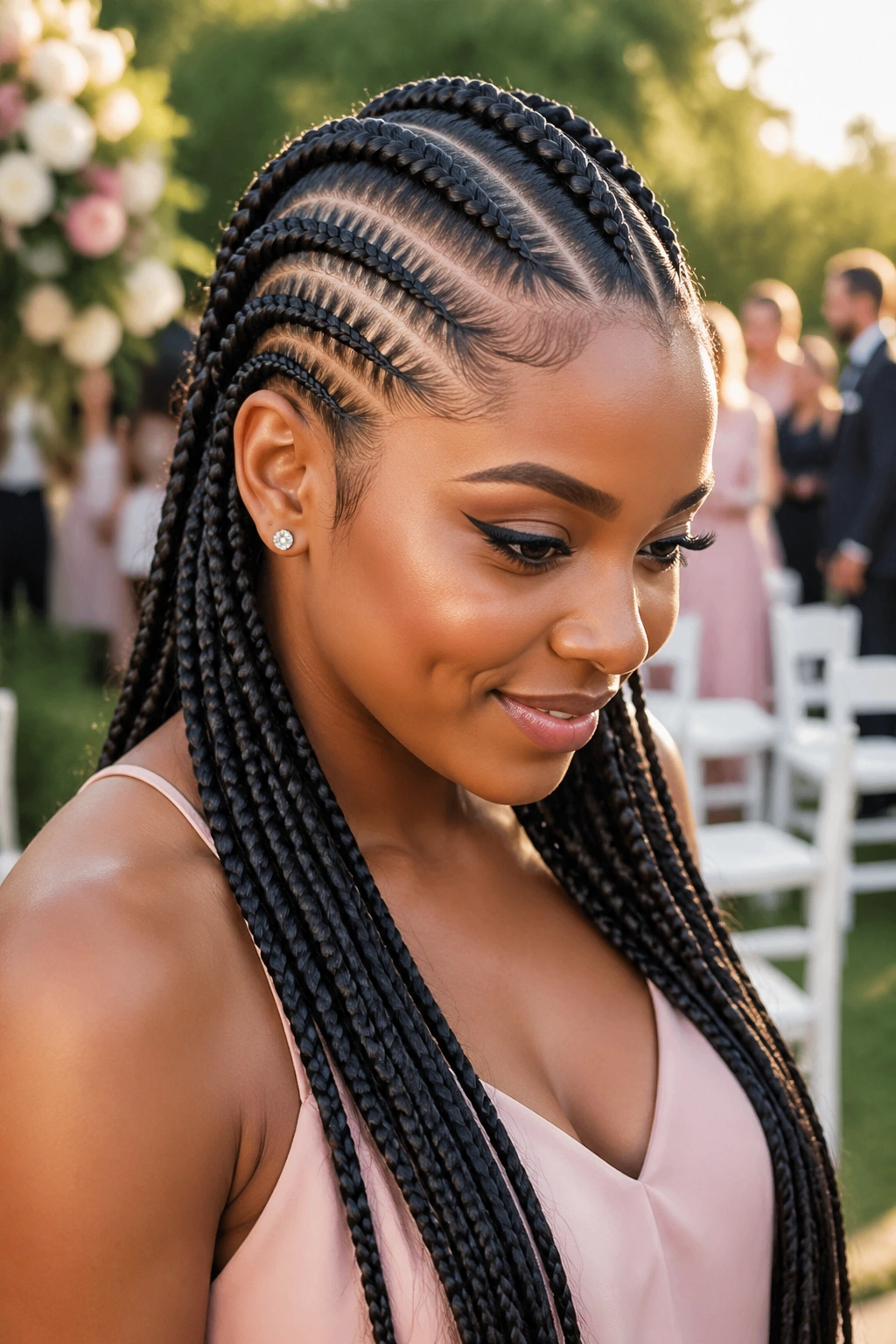
Side cornrows pulled flat. Down the middle, three thick feed-in cornrows running front to back with kanekalon extensions added in.
The feed-in technique on the center strip is what makes this style stand out. Instead of just braiding your natural hair down the middle, your braider gradually adds extensions as the cornrows travel back, creating long tails that flow down past the shoulders. The sides stay clean and tight, which throws all the visual weight into the cascading center braids.
This style is heavy at the back. The weight sits on the nape and crown, which can feel different from a fully extension-free mohawk. Some women love the dramatic weight. Others find it tiring after a few days.
I tried this version once for a wedding. The center tails reached past my mid-back and the side braids felt like a precision-cut frame. Took about four hours to install. Worth every minute for the photos.
3. Mohawk With Braided Crest
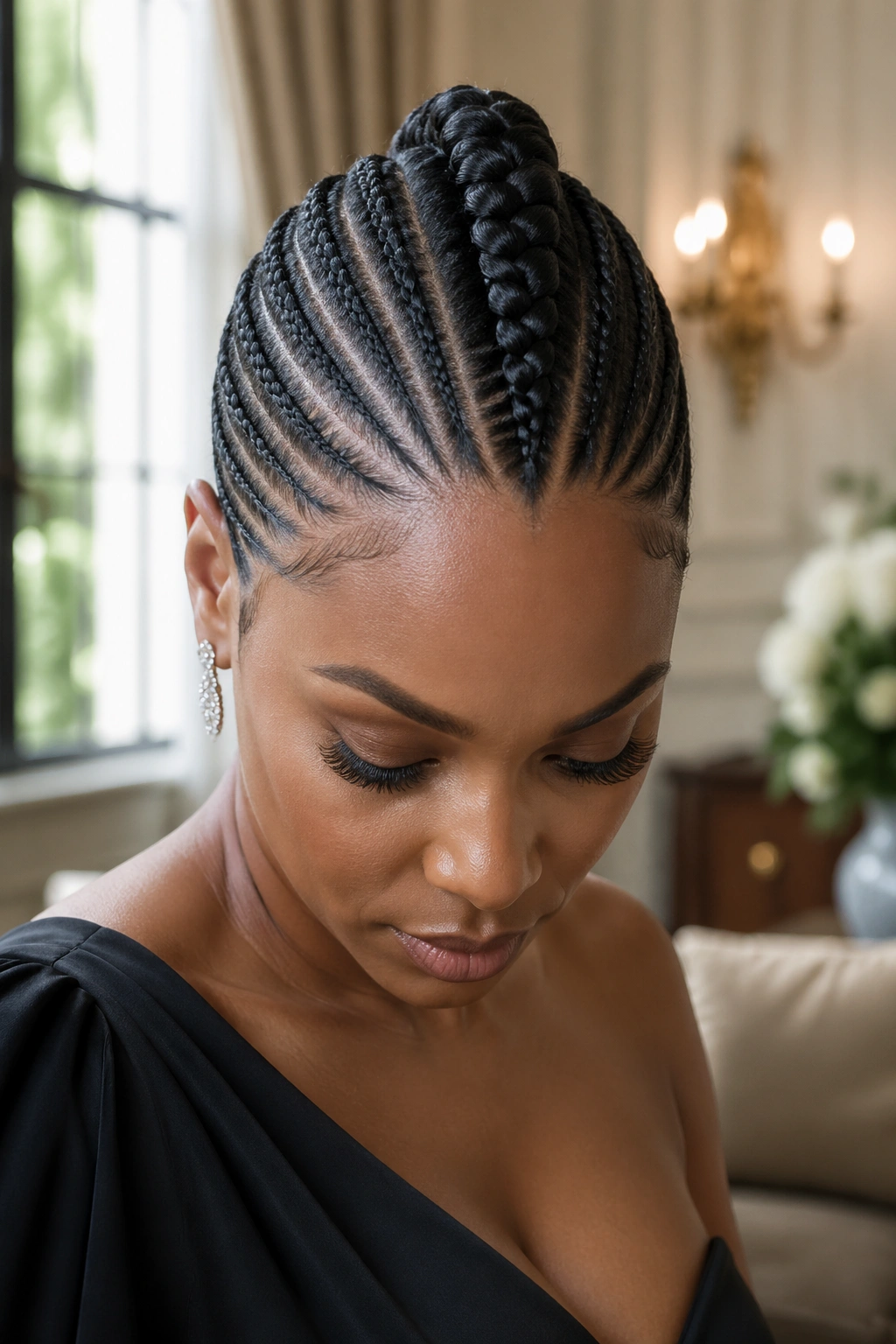
Instead of a loose puff or extensions in the middle, the center strip is braided into one large cornrow that runs from the forehead all the way to the nape.
Picture this — a single thick cornrow forming a raised ridge down the middle of the head, like a rope of hair pinned in place. The side cornrows feed flat against the scalp, leaving the central crest as the dominant element.
The crest can sit completely flat against the head or be lifted slightly to emphasize verticality. Lifting it requires teasing the natural hair underneath before the braider starts the central cornrow, which adds height. Without teasing, the crest stays low-profile.
This style works well for formal events because of its sculpted quality. It also lasts longer than puff-center mohawks because there’s no loose hair in the middle to lose definition.
4. Cornrow Mohawk With Braided Bantu Knots
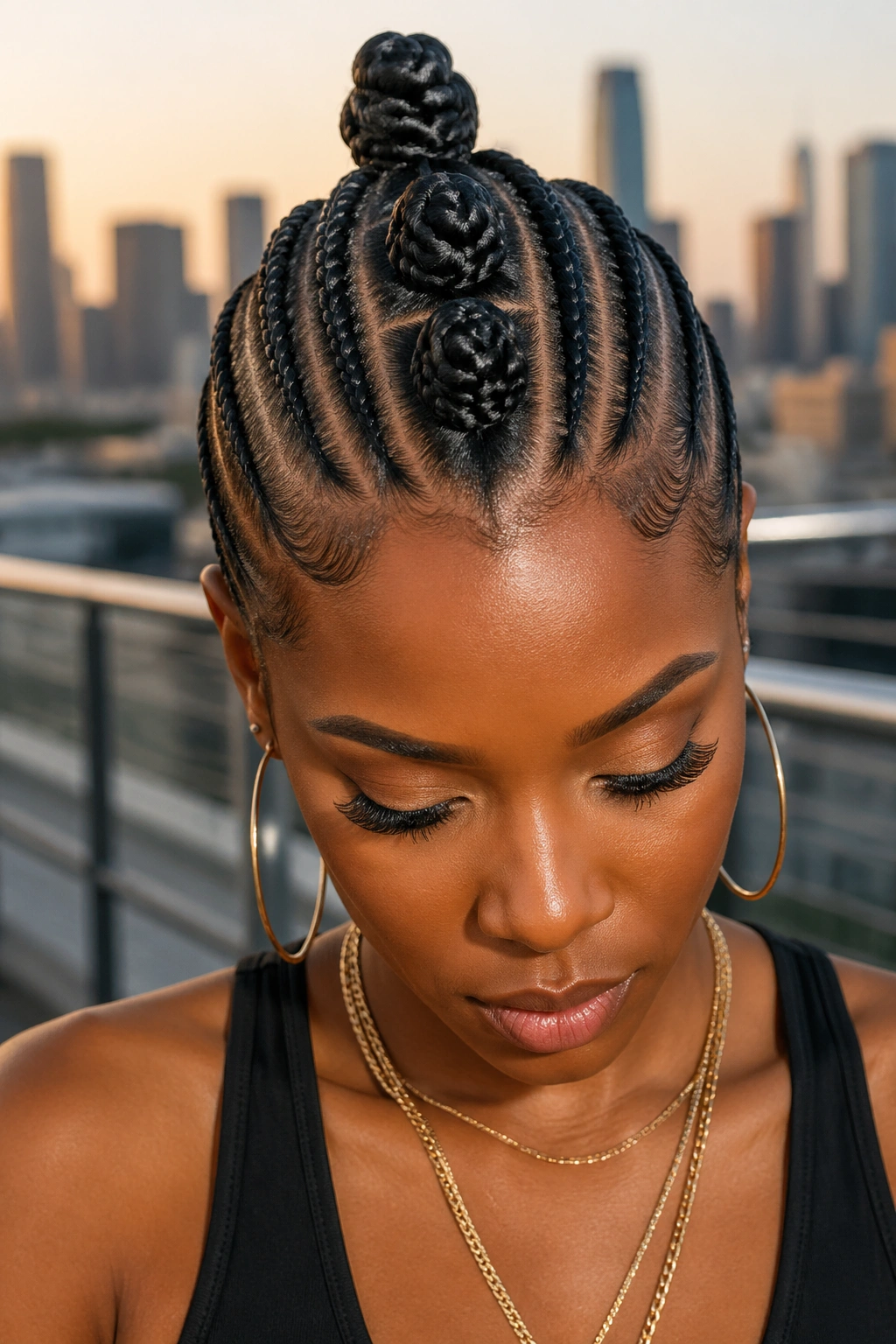
Side cornrows feed in toward a center strip that’s twisted into three or four bantu knots running down the middle.
What’s a bantu knot in this context? Each section of the center strip is divided, twisted tightly, and wrapped around itself into a small coiled bun secured with elastic. You end up with a row of sculpted knots running down the center of the head, surrounded by sleek side cornrows.
How to Style It
The knots can be uniform — all the same size — or graduated, with the largest at the crown and smaller ones moving toward the nape. Graduated bantu knots photograph more dynamically. Uniform ones read more controlled.
For an event-ready version, slide a small jeweled pin into one or two of the knots. The accent metal catches light beautifully against the dark hair.
5. Mohawk With Loose Curls Down the Middle
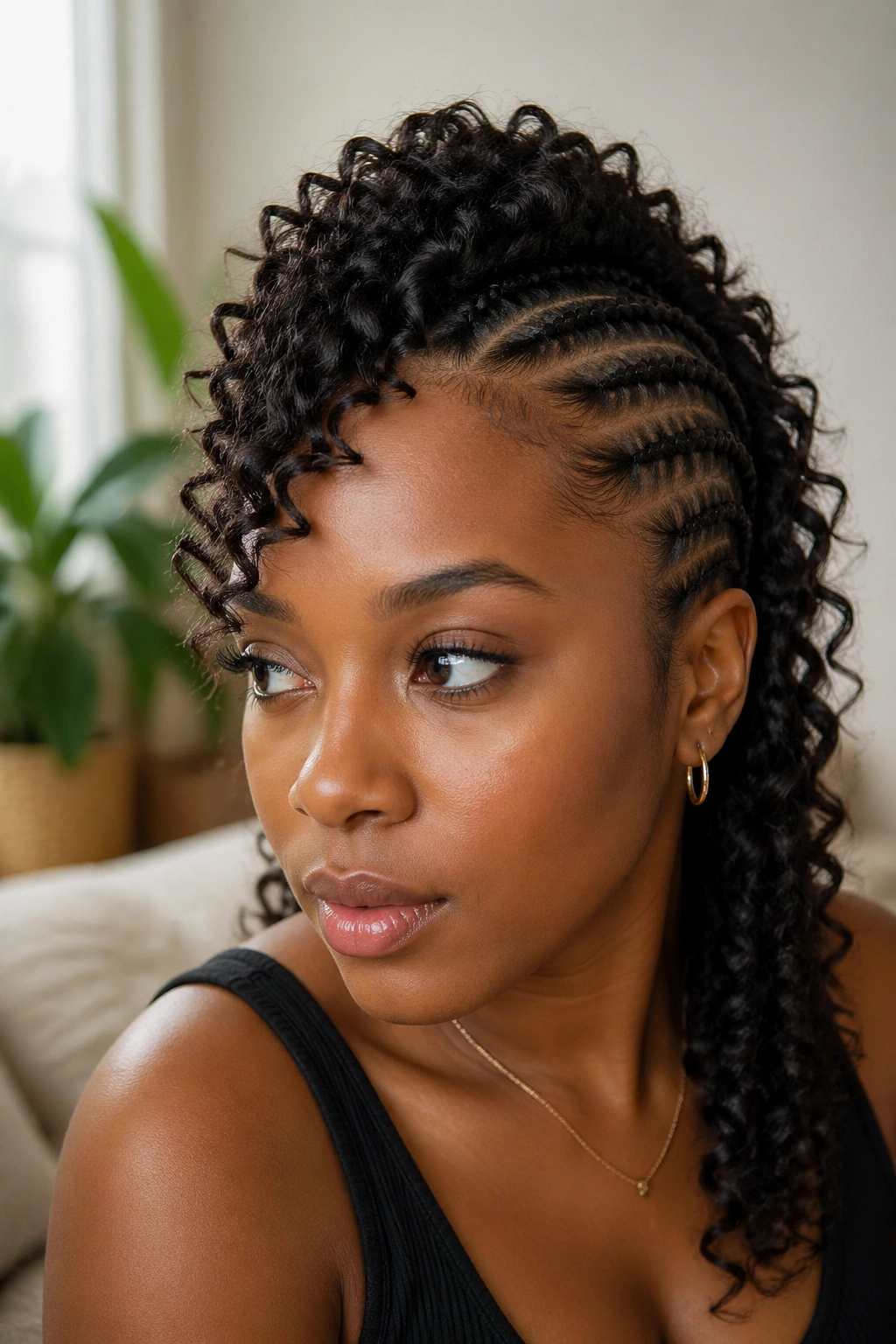
Side cornrows pulled tight, with the entire center strip left loose and styled into defined curls using a curl-defining product.
The looseness of the center is the focus. Unlike the puff style, which keeps the natural hair compact, this version lets the curls hang freely down the middle of the head — sometimes reaching past the shoulders depending on length.
The curls need definition. A curl cream applied wet, followed by air drying or diffusing, gives you the sharpest curl pattern. Skip the curl product and you’ll end up with frizz that fights against the slick sides.
This style suits women with naturally defined curl patterns — typically 3B through 4A. Tighter coils can work but require more product to maintain definition.
6. Sleek Mohawk With High Ponytail Center
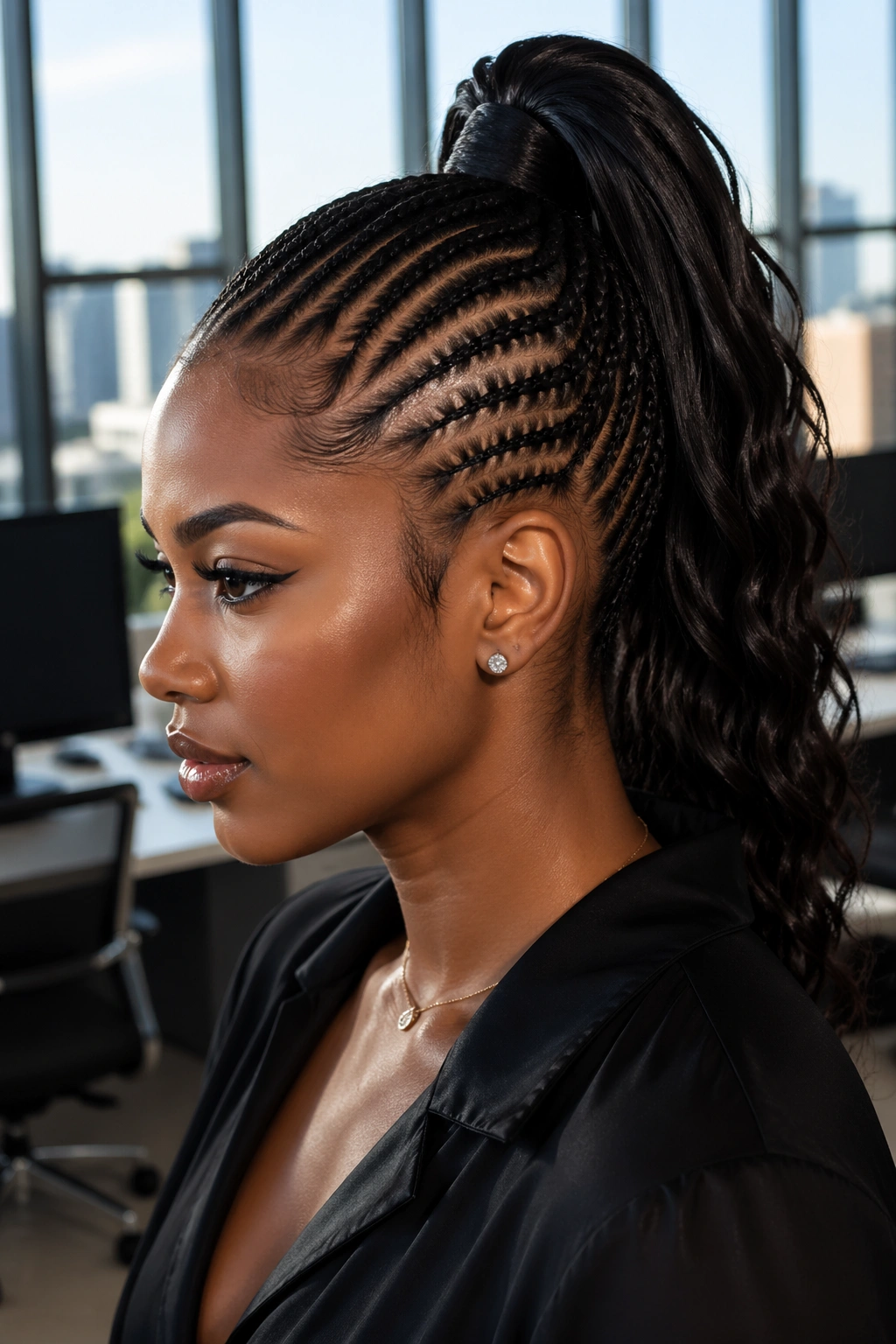
Side cornrows pulled flat, with the entire center strip slicked into a high ponytail at the crown.
This is the cleanest, most polished mohawk variation. There’s no loose hair anywhere — every strand is pulled into either a side cornrow or the central pony. The result is a sculptural silhouette that looks more like a styled updo than a typical cornrow set.
- Takes 90 minutes to 2 hours to install
- Works for formal events, professional environments, and weddings
- Lasts about 1-2 weeks before the slicked sections lose their hold
- Easy to refresh with a quick re-application of edge gel
The pony can be left as natural hair, wrapped with a section of braiding hair, or extended with a clip-in pony piece for added drama.
7. Cornrow Mohawk With Shaved Undercut
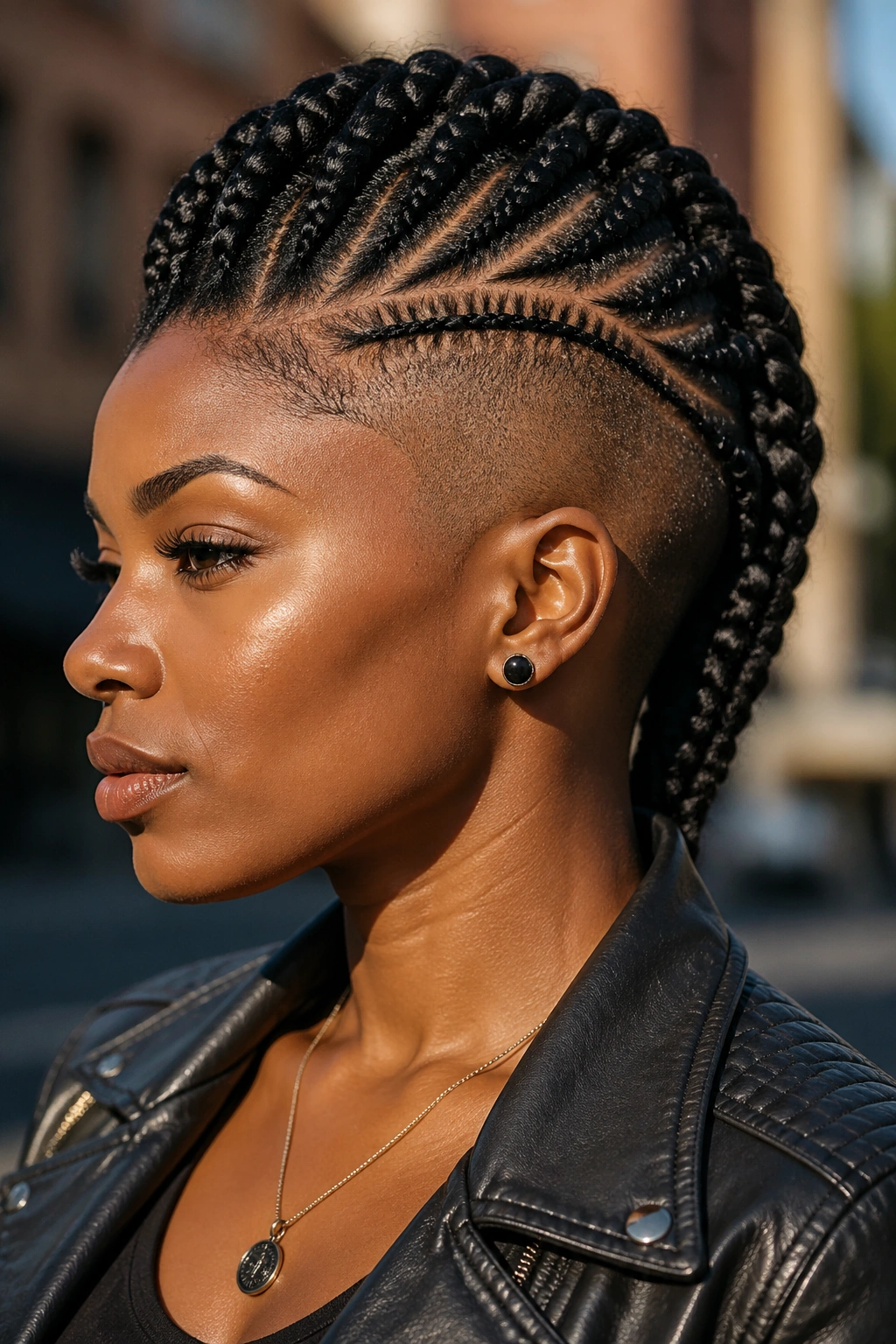
Side cornrows are still part of this style — but underneath, the sides are shaved short or fully bald.
Bold claim: Few hairstyles signal confidence like a cornrow mohawk with a clean undercut. The shaved sides eliminate any softness and put all the focus on the central braid pattern. Whether the undercut is just above the ear or extends up to the crown depends on personal preference.
This is a commitment. The shaved hair takes months to grow back, and you’ll need maintenance trims every two to three weeks to keep the undercut sharp.
For women who already wear faded sides or buzzed undercuts as part of their regular look, adding a cornrow mohawk on top is a natural progression. For women new to undercuts, consider doing a temporary version with a colored gel or scalp ink before committing to the razor.
8. Boho Mohawk With Loose Side Tendrils
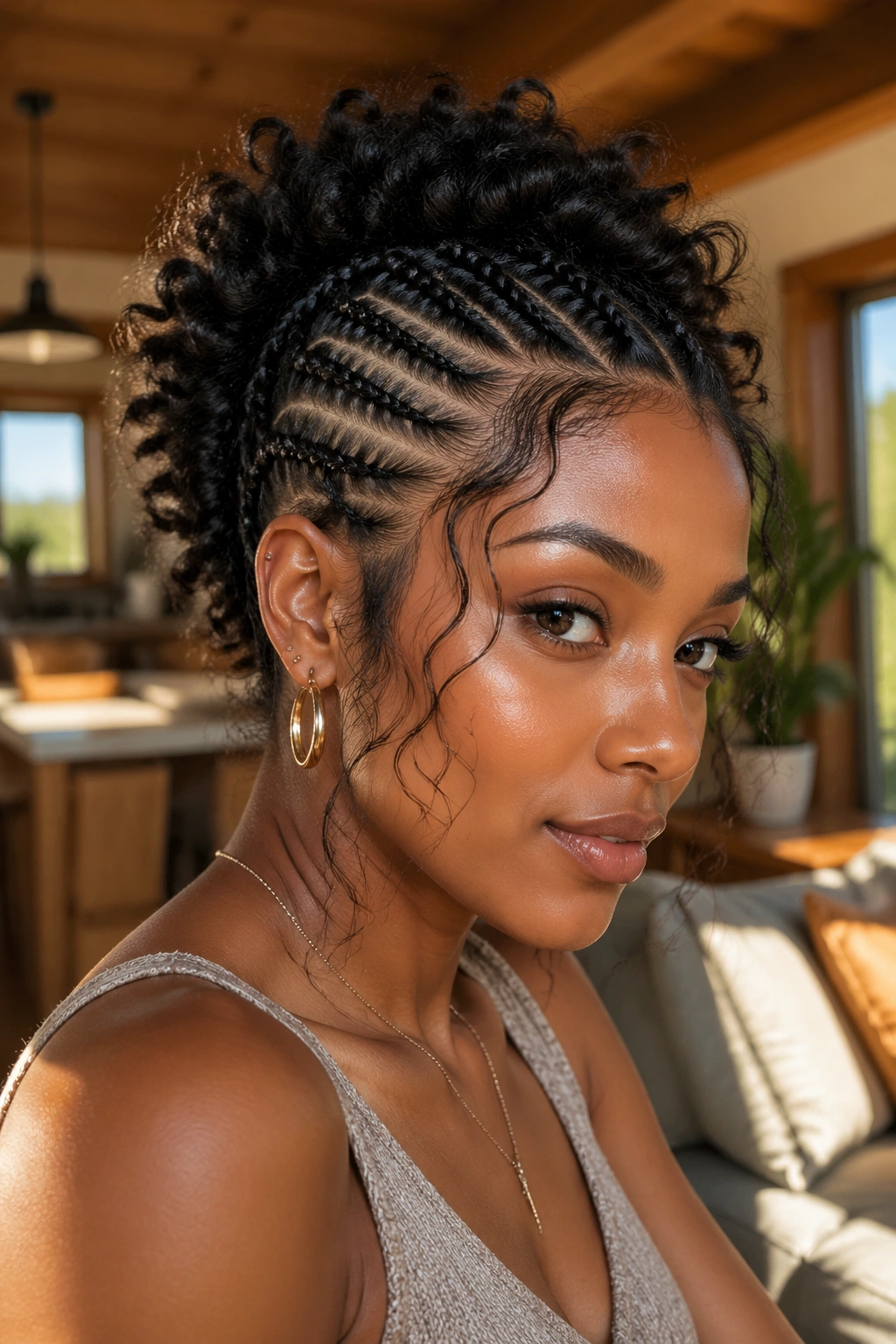
Cornrow mohawk where a few small sections at the temples are left loose, falling around the face as soft tendrils.
The structure is mostly a standard cornrow mohawk — sides braided flat, center strip styled — but with deliberate “errors” near the front. Two or three small sections at each temple are left out and styled into loose curls or waves that frame the face.
The effect softens the severity of a sleek mohawk. It reads as feminine and approachable rather than sharp and edgy. For women who love the mohawk silhouette but find the typical version too aggressive for their style, the boho version offers a middle ground.
9. Cornrow Mohawk With Beaded Center Braids
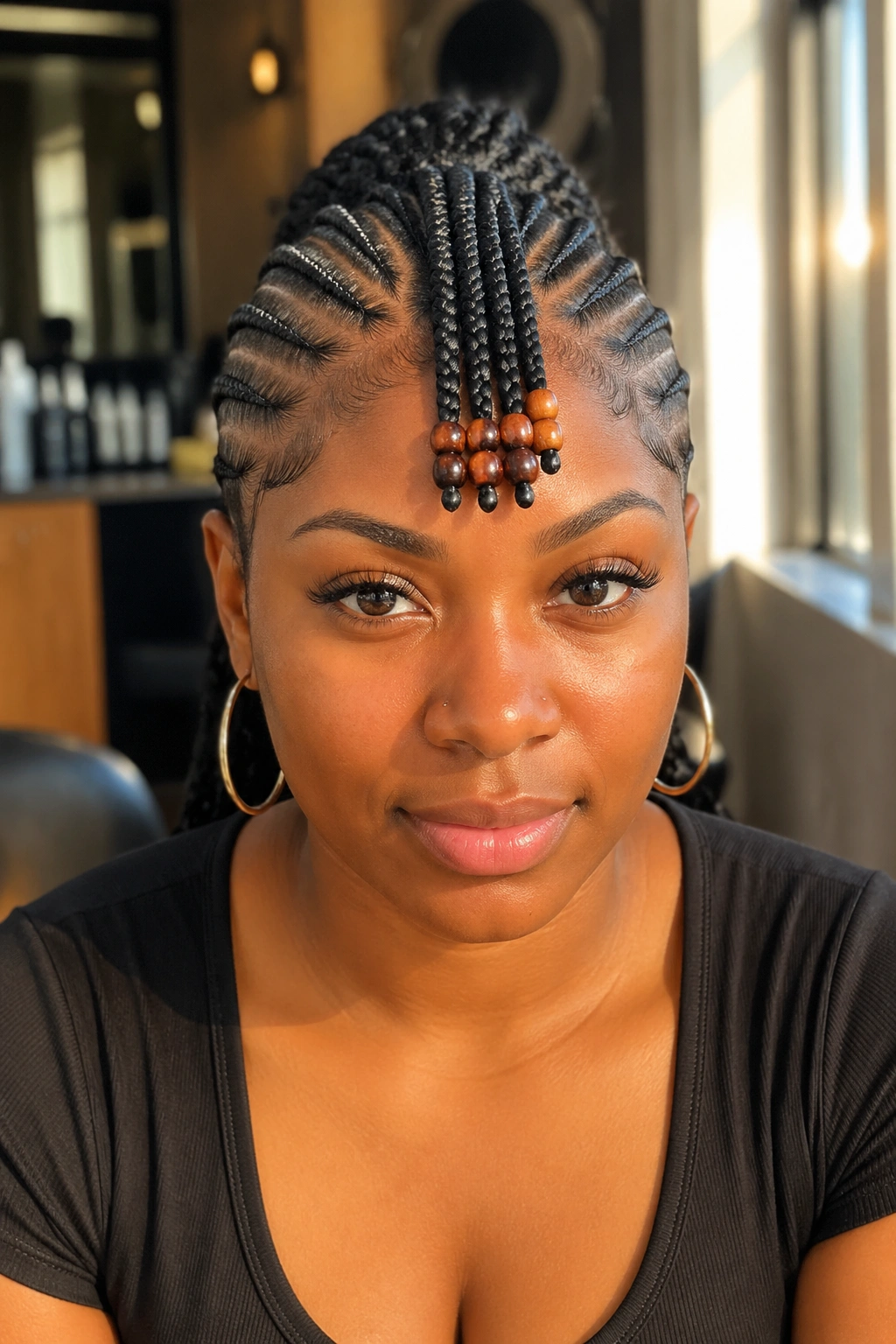
Side cornrows feed flat. Down the middle, several smaller cornrows are braided and finished with wooden or ceramic beads at the tail ends.
The beads add weight and movement to the central braids. As you walk or turn your head, the beads sway against each other, creating a soft clicking sound. It’s a sensory detail that’s hard to describe but unmistakable when you wear it.
Choose beads that contrast with your hair color. Wood beads in honey tones work beautifully against black hair. Brass and copper beads add metallic richness without being flashy. Avoid bright plastic — it cheapens the look.
10. Mohawk With Curved Side Cornrows
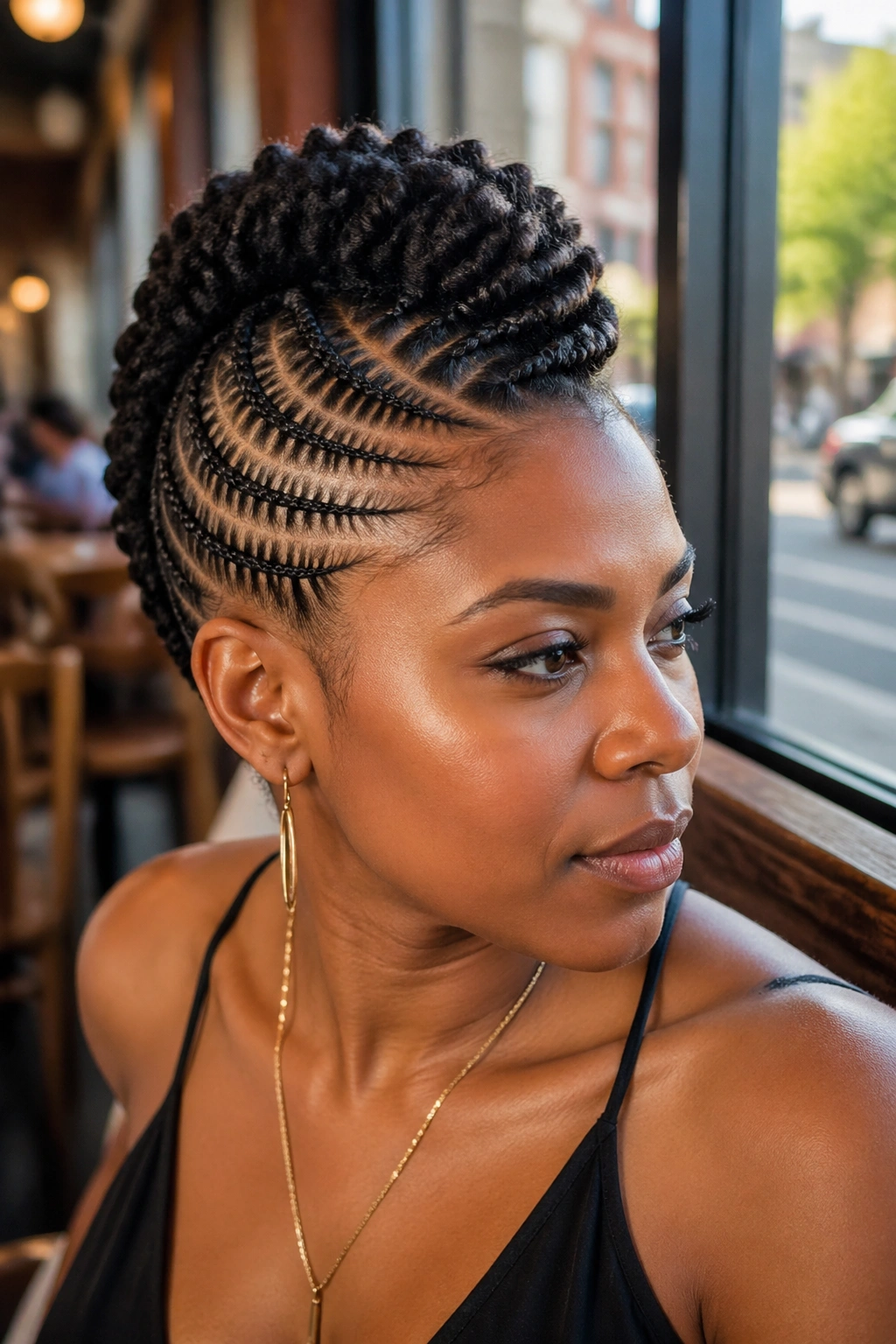
Side cornrows that curve in S-shapes or arcs as they travel toward the center, rather than running in straight lines.
The curves add visual interest to what could otherwise be a structured, geometric look. Each side cornrow follows a different arc — some sweeping forward then back, others undulating in waves — but all of them eventually feed into the center mohawk strip.
Curved cornrows take longer to install than straight ones. Expect 2.5 to 3 hours for a full mohawk with curved sides. The braider has to plan each path before starting, since the curves need to flow naturally without crashing into each other.
The finished look is fluid rather than rigid. Photographs beautifully.
11. Two-Strand Twist Mohawk
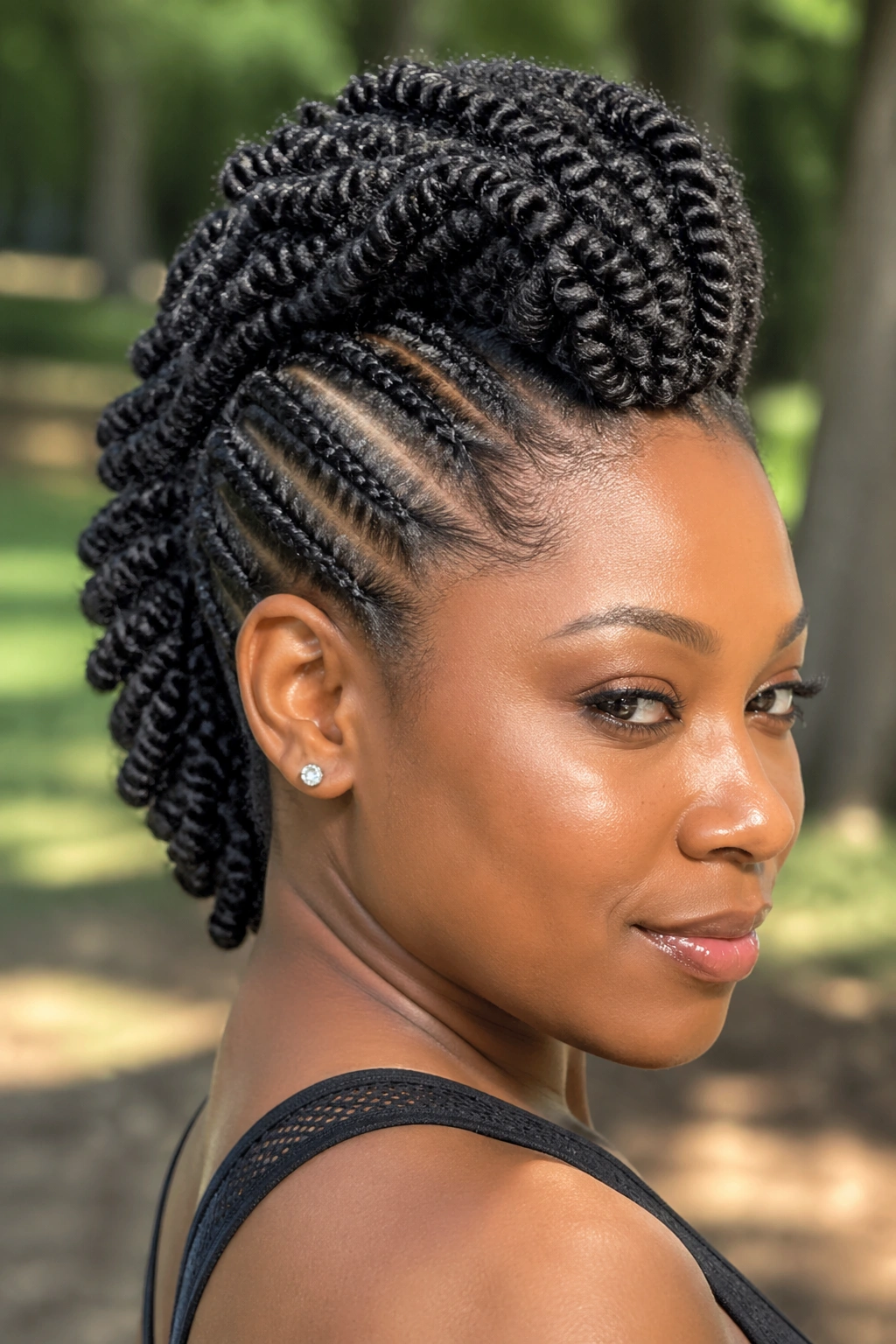
Instead of cornrow side braids, the sides are styled into flat two-strand twists running toward the center. The center is a puff or braided strip.
What Makes It Different
Two-strand twists have a different texture than cornrows — rounder, with a clearer spiral pattern visible along their length. Using twists instead of cornrows on the sides creates a softer mohawk that still maintains the sleek-sides, statement-center silhouette.
This style works particularly well for women whose scalps are sensitive to cornrow tension. Two-strand twists are gentler than cornrows because they don’t grip the scalp as tightly.
The twists should be installed wet with a curl cream for definition. Air-dry overnight, then style the center the next morning.
12. Cornrow Mohawk With Color-Block Center
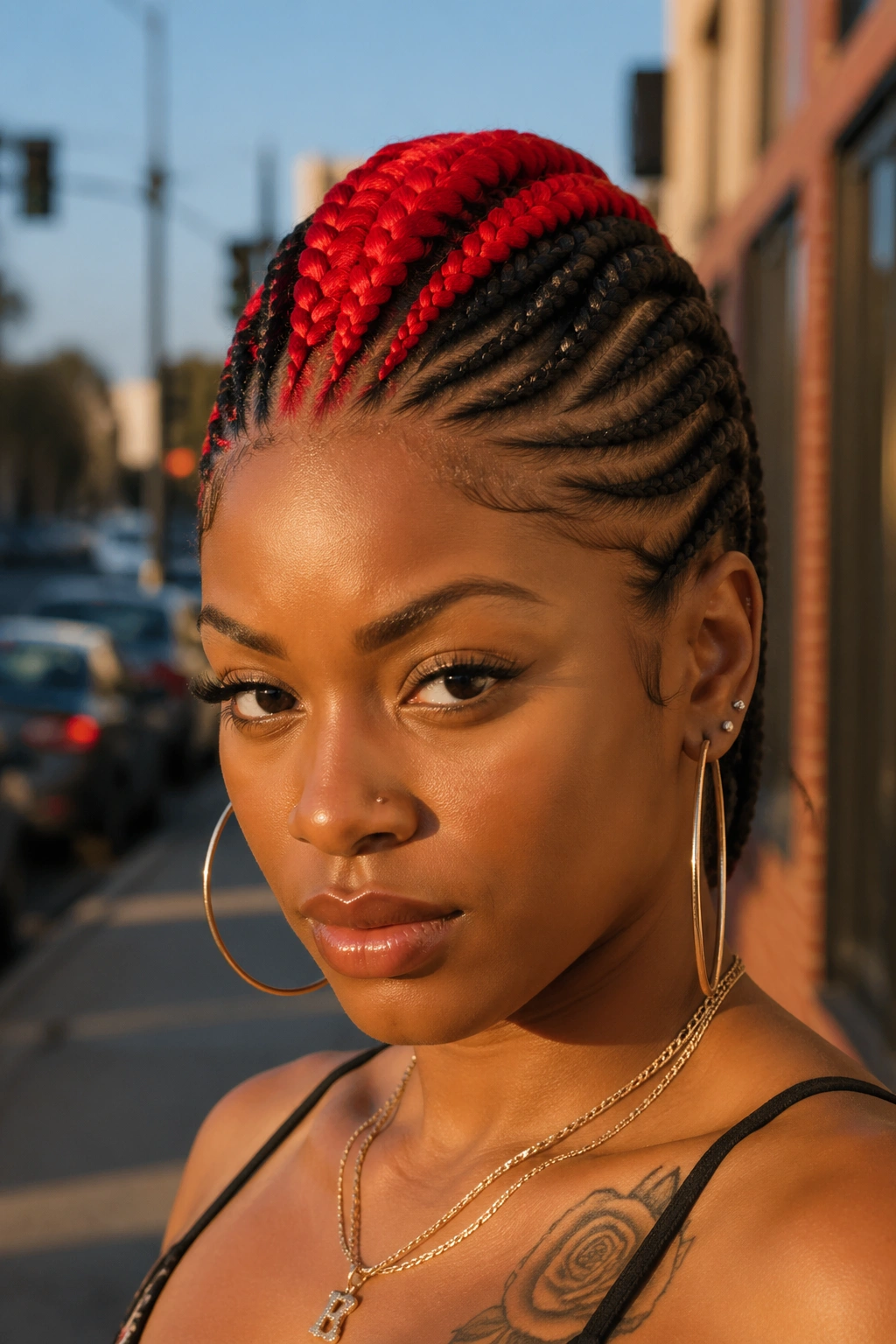
Standard cornrow mohawk with side braids in natural hair color, but the center strip done with brightly colored kanekalon — purple, red, blue, or any bold shade.
The color-block effect makes the center strip look like a separate element entirely. From the side, you see neat black cornrows. From the front or back, you see a bold ribbon of color running down the middle.
For temporary color, this is one of the safest options. The kanekalon is removable. Your natural hair stays its original color. After takedown, you go back to your baseline with no chemical damage.
Pick the color based on what you’ll wear during the install period. Vibrant pink complements warm-toned outfits. Cool blues work with darker, jewel-toned wardrobes. Silver and white-blonde read modern and slightly edgy.
13. Mohawk With Faux Locs Center Strip
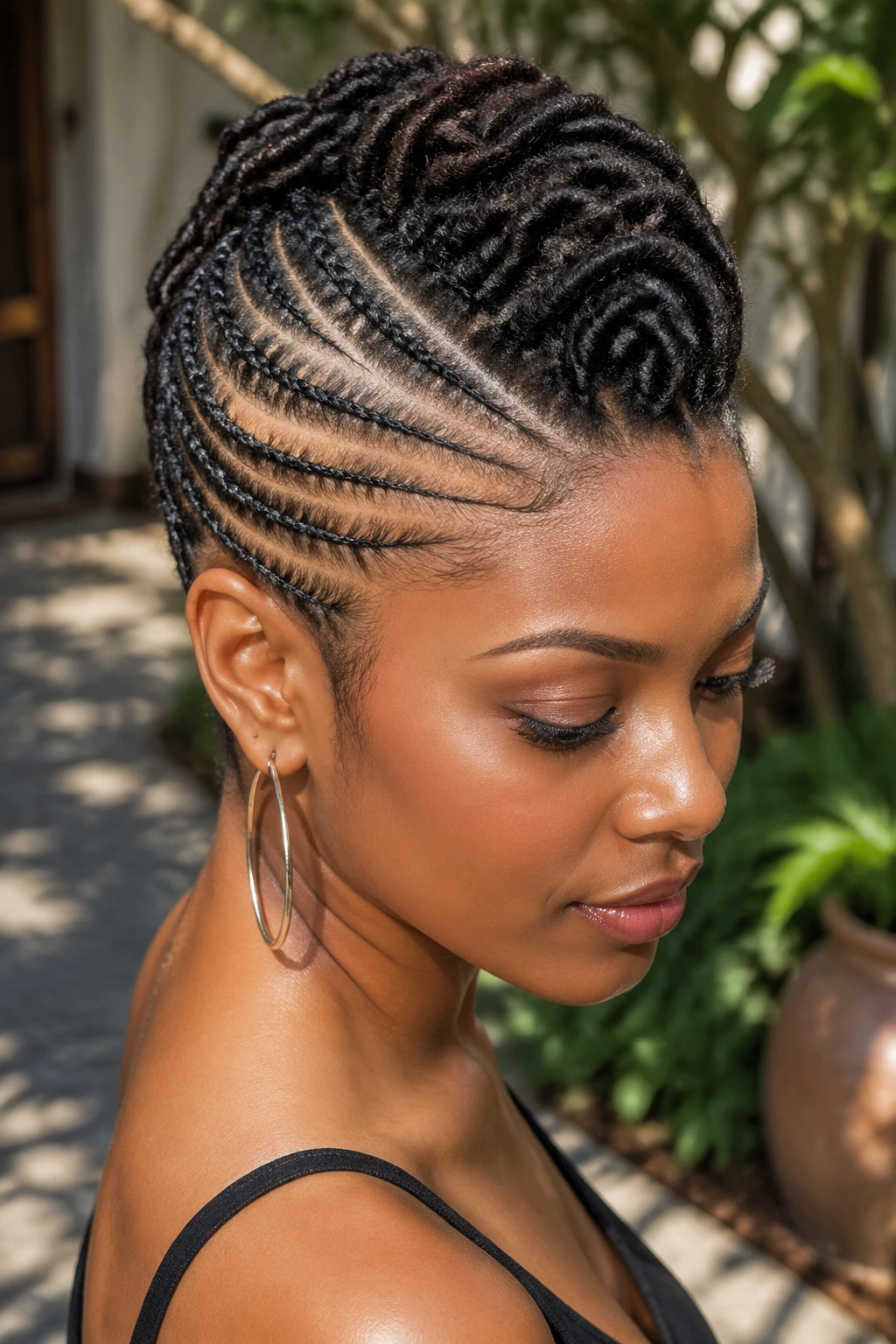
Side cornrows feed flat, with the center strip styled in faux locs — long, rope-like extensions wrapped to mimic the appearance of locs.
Faux locs in the center create a textural contrast that’s striking. The smooth, sculpted sides give way to the rough, organic texture of the locs running down the middle. The locs can be left natural in color or done in shades like burgundy or honey for variety.
The style is heavier than a standard cornrow mohawk because of the loc weight. Plan for 3-4 hours of install time. The result lasts 4-6 weeks if maintained properly.
14. Pinned Mohawk With Multiple Updo Variations
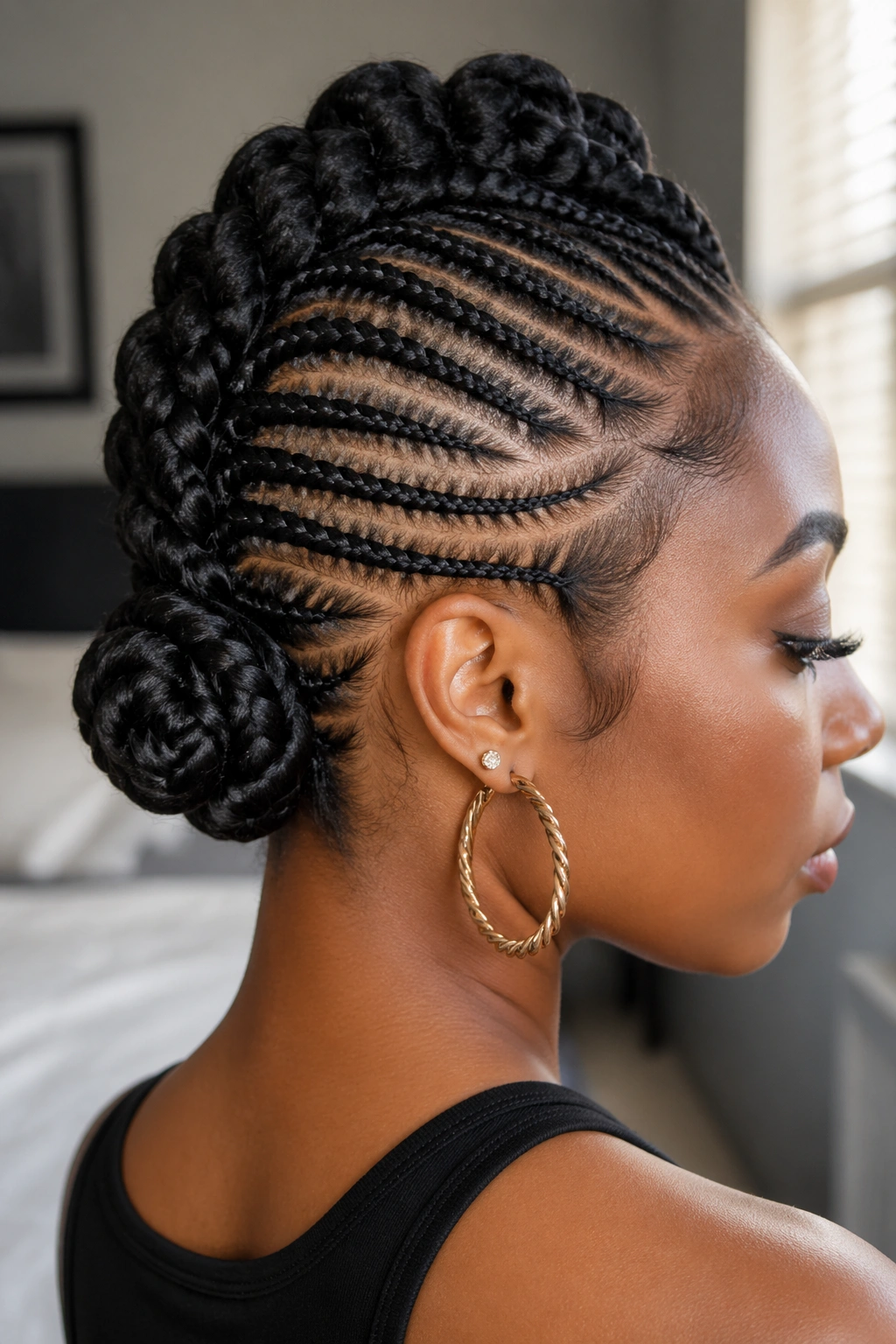
A cornrow mohawk where the center strip is long enough to be pinned into different shapes — a knot, a bun, a roll, a twist — depending on the day.
This is more of an approach than a single style. The cornrow base is consistent, but the center strip is styled fresh each day. Monday it’s a low knot. Tuesday it’s a high puff. Wednesday it’s a side-swept roll.
The flexibility makes this style worthwhile for women who want one install to carry them through multiple looks. Not for everyone — daily styling adds time to your morning routine — but for those who enjoy the ritual, it’s a satisfying way to wear a cornrow mohawk.
15. Mohawk With Geometric Side Patterns
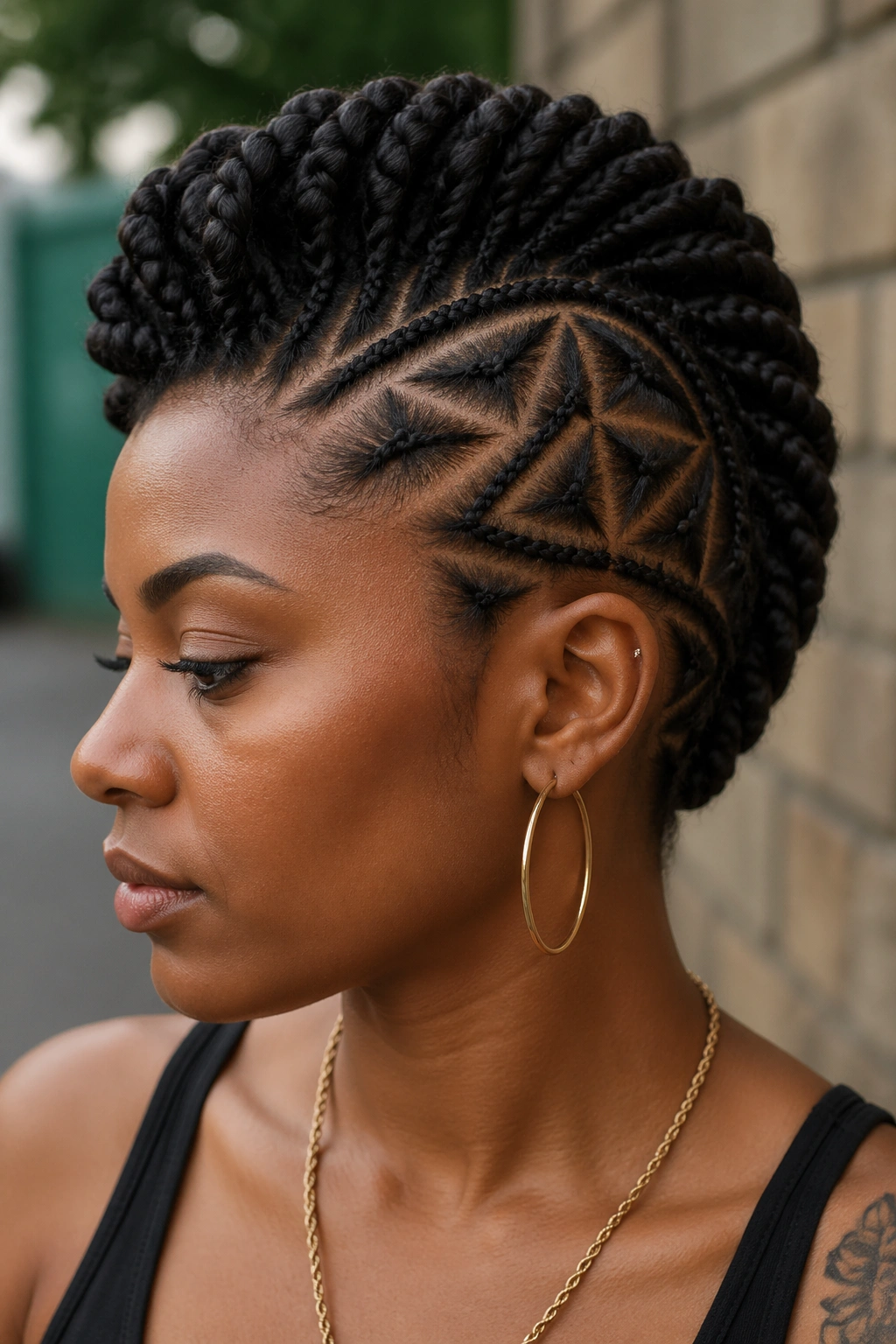
Side cornrows arranged into geometric patterns — triangles, diamonds, or repeating angles — instead of straight lines.
The geometric patterns turn the side hair into wearable art. A triangle pattern might mean three cornrows on each side that meet at a point above the ear, with another cornrow forming the base of the triangle. A diamond pattern repeats the angles in mirror across the head.
This level of design takes a skilled braider. Not everyone offers it. Look for braiders who specialize in pattern work and ask to see specific examples of their geometric side designs.
The center strip remains the focal point, but the patterned sides add a layer of detail that rewards close inspection.
16. Cornrow Mohawk With Cuffed Center Tails
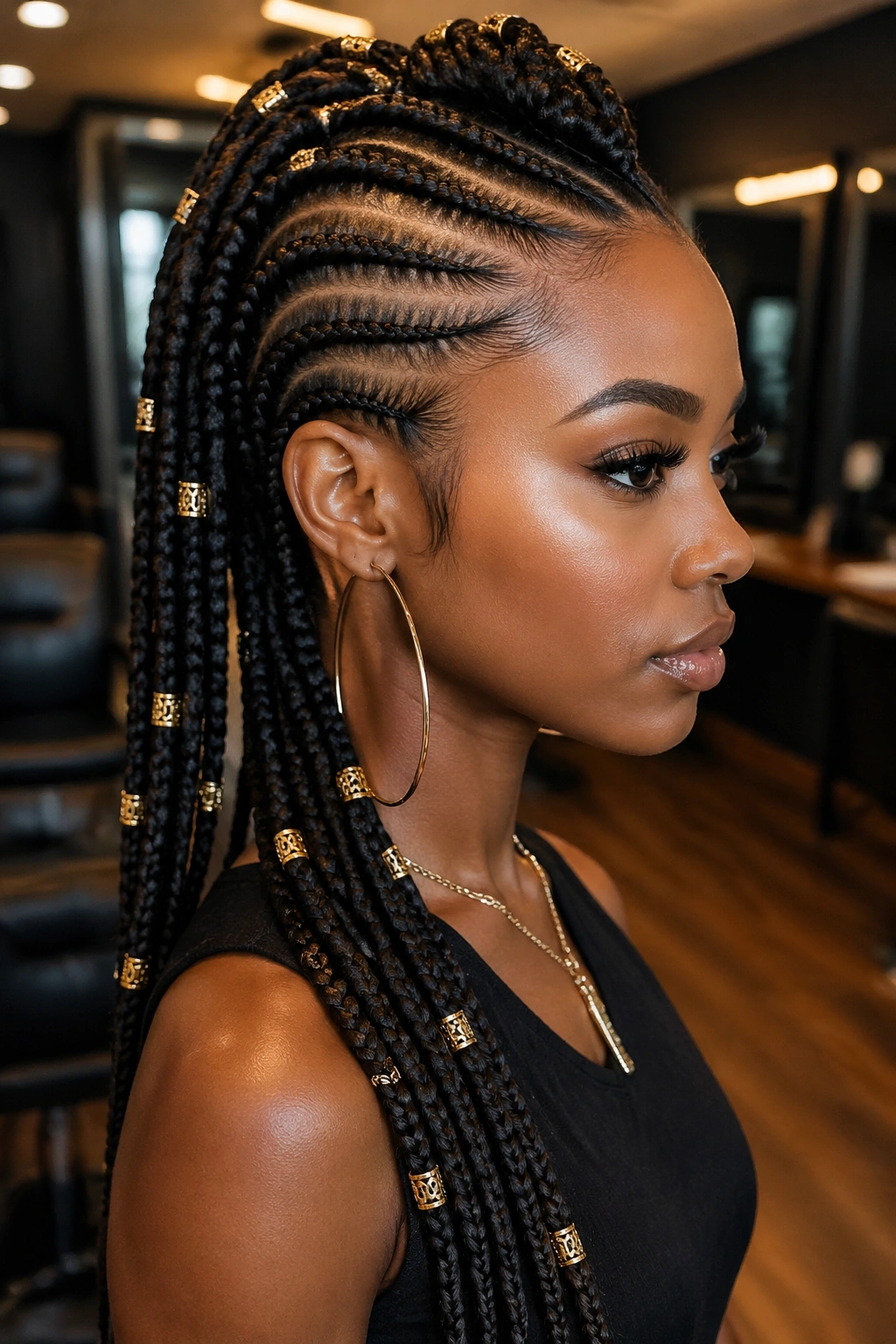
Cornrow mohawk where the center strip is braided into long extensions, finished with metallic cuffs at varying intervals along the tails.
The cuffs add weight, movement, and visual interest to the center braids. Place them at staggered heights — one near the crown on one braid, another near the mid-length on a different braid, another at the tail on a third — so they don’t form a uniform line across the head.
Gold cuffs warm up the look. Silver cuffs cool it down. Mixing both creates a more eclectic feel.
17. Mohawk With Dramatic Front Cornrow
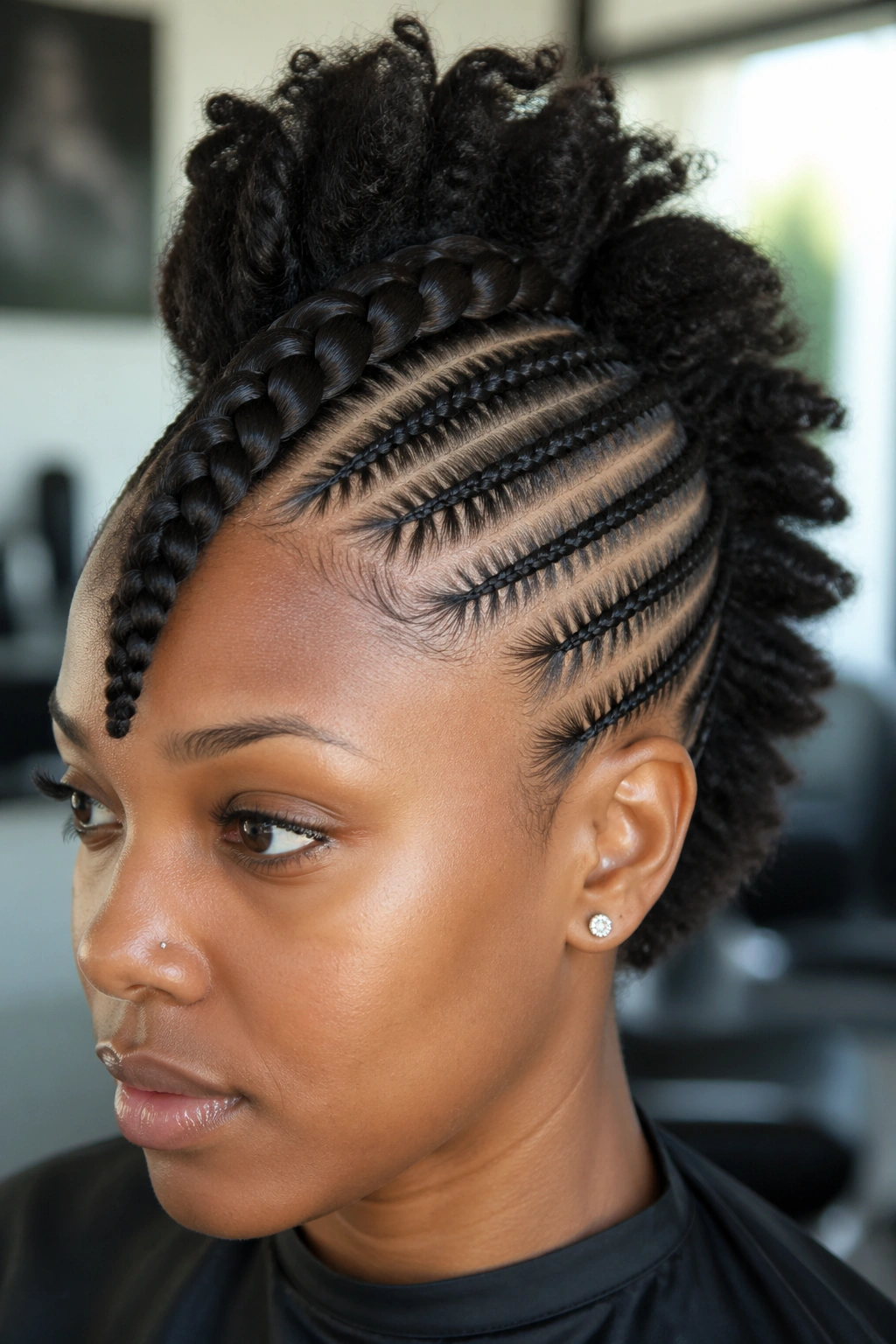
A cornrow mohawk where one of the front cornrows is dramatically thicker than the others, forming a bold central braid that begins at the forehead.
The front thick cornrow acts like a focal point at the start of the mohawk. Your eye lands on it first, then travels down the rest of the center strip. The other front cornrows are normal thickness, creating a graduated feel rather than uniformity.
This style suits women with prominent foreheads or strong eyebrows. The central thick cornrow draws the eye upward and balances the face.
18. Long Pony Tail Mohawk With Wrapped Base
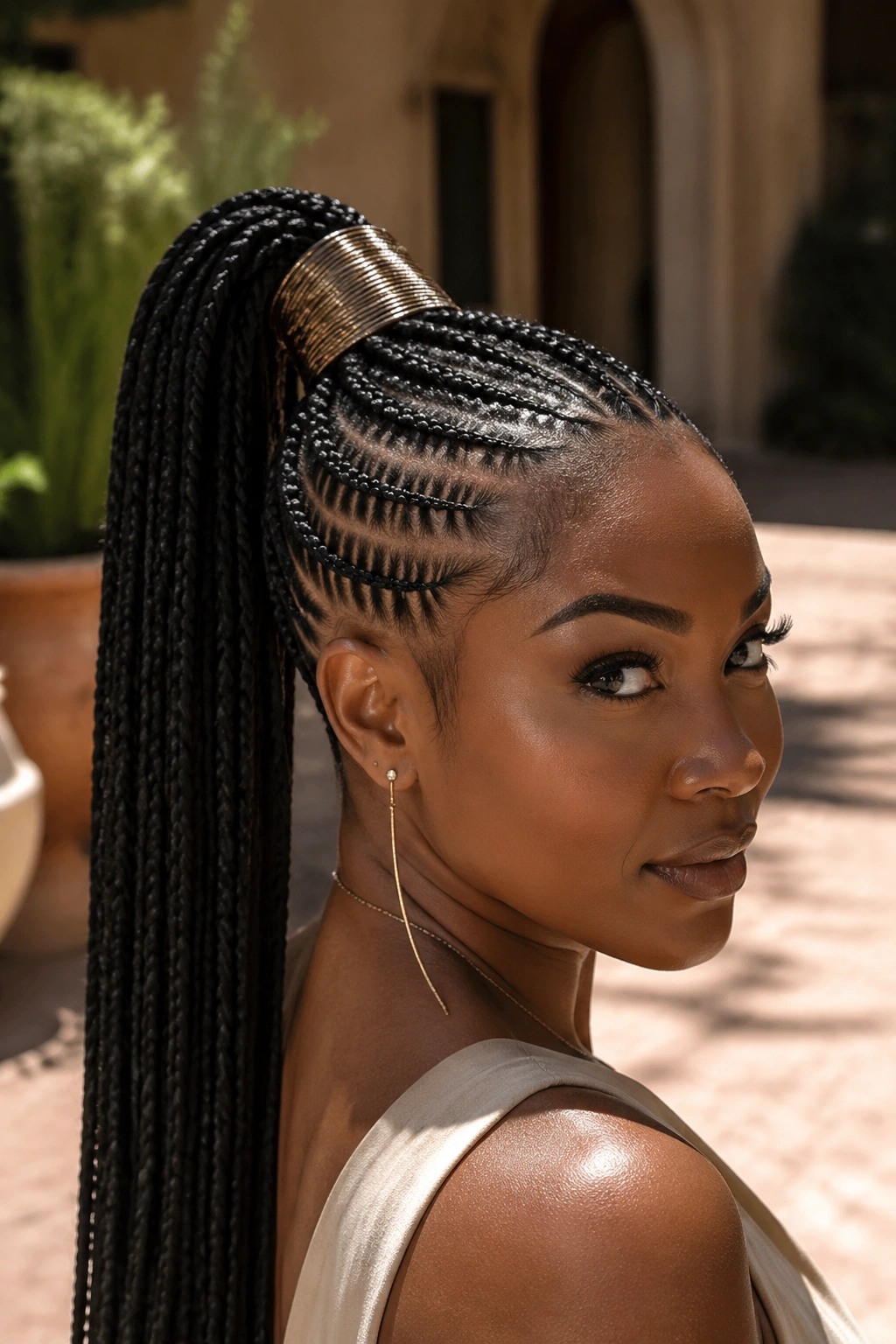
Cornrow mohawk where the center strip is gathered into a single long ponytail at the crown, with the base of the pony wrapped in braiding hair to create a sleek, sculpted look.
The wrap at the base hides any elastic or hair tie. It creates a clean transition from the cornrowed scalp to the loose pony, which can be left straight, curly, or braided into a single thick plait.
For a more dramatic version, the wrap can be done with metallic thread or a contrasting color of braiding hair, turning the wrap itself into an accent.
19. Mohawk With Asymmetric Sides
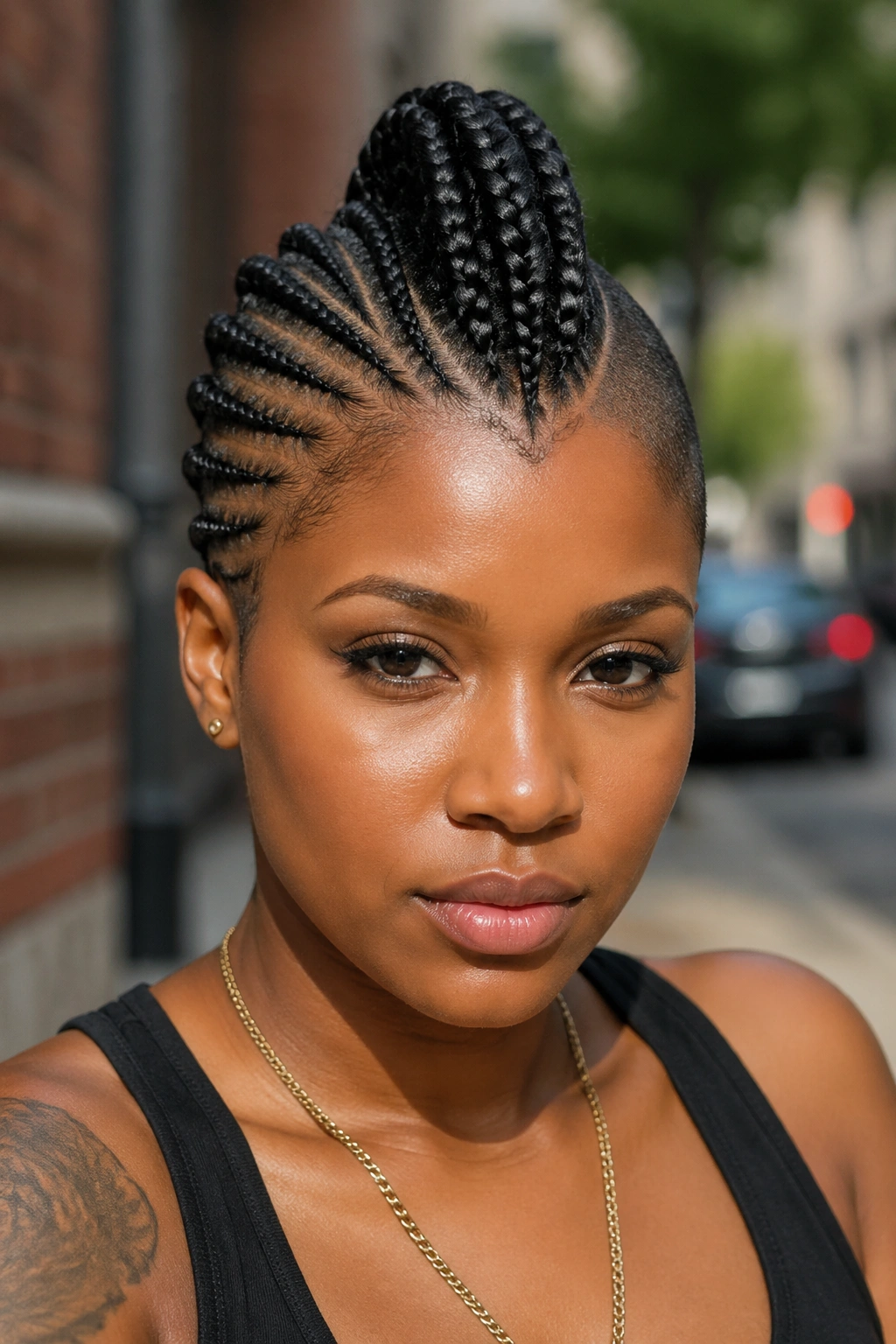
Cornrow mohawk where one side has more cornrows than the other — for instance, four cornrows on the left and two on the right.
The asymmetry feels intentional and modern. It breaks the typical mirror-image structure of mohawks and gives the style an off-balance quality that draws the eye.
Why It Works
Asymmetric cornrow mohawks photograph distinctly because the eye doesn’t land on a centered focal point. Instead, it travels across the face, taking in the heavier side first. This creates movement in the image and works particularly well for portrait photography.
The center strip stays the same — straight down the middle — but the side disparity changes everything.
20. Cornrow Mohawk With Edge Designs
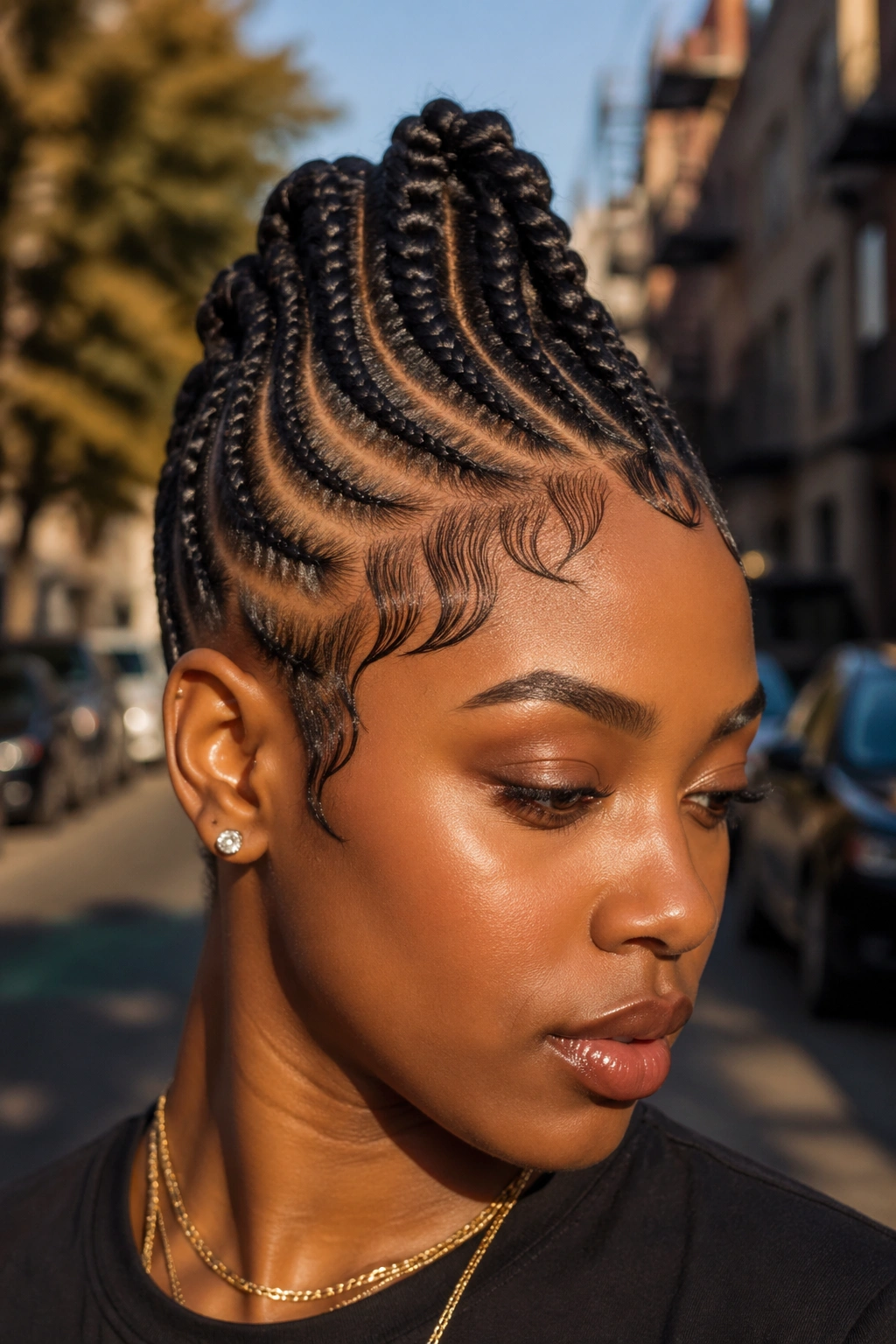
A standard cornrow mohawk paired with detailed baby hair edges that complement the mohawk’s vertical line.
The edges should echo the mohawk silhouette — vertical sweeps, upward swirls, or pointed designs that draw the eye toward the central braid pattern. Avoid edge designs that go horizontal across the forehead, since they fight against the mohawk’s vertical movement.
A skilled edge artist can spend twenty to thirty minutes on this finishing touch. The investment is worth it. Sharp edges turn a good cornrow mohawk into a polished one.
21. Mohawk With Chunky Twist-Out Center
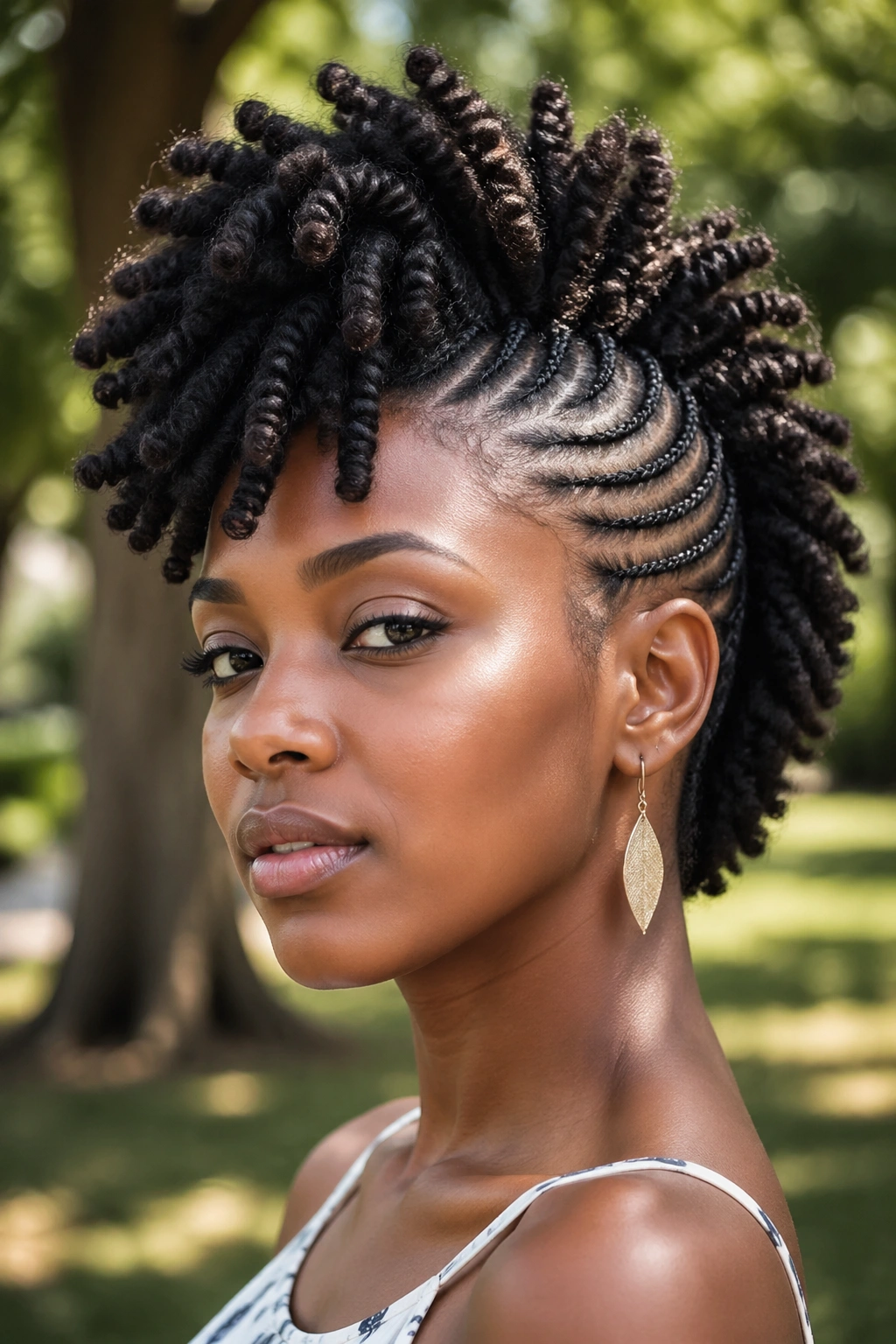
Side cornrows pulled flat, with the center strip styled into a chunky twist-out for textured volume.
A twist-out gives the center more volume than a simple puff. The hair is twisted into thick sections the night before, set with a curl cream, then unraveled in the morning to reveal defined waves and curls. The result is a center strip that’s bigger and more sculpted than what natural hair alone would provide.
This style works best on hair with at least four to six inches of stretched length in the center section. Shorter hair can still twist-out, but the resulting volume is limited.
22. Mini Cornrow Mohawk for Petite Heads
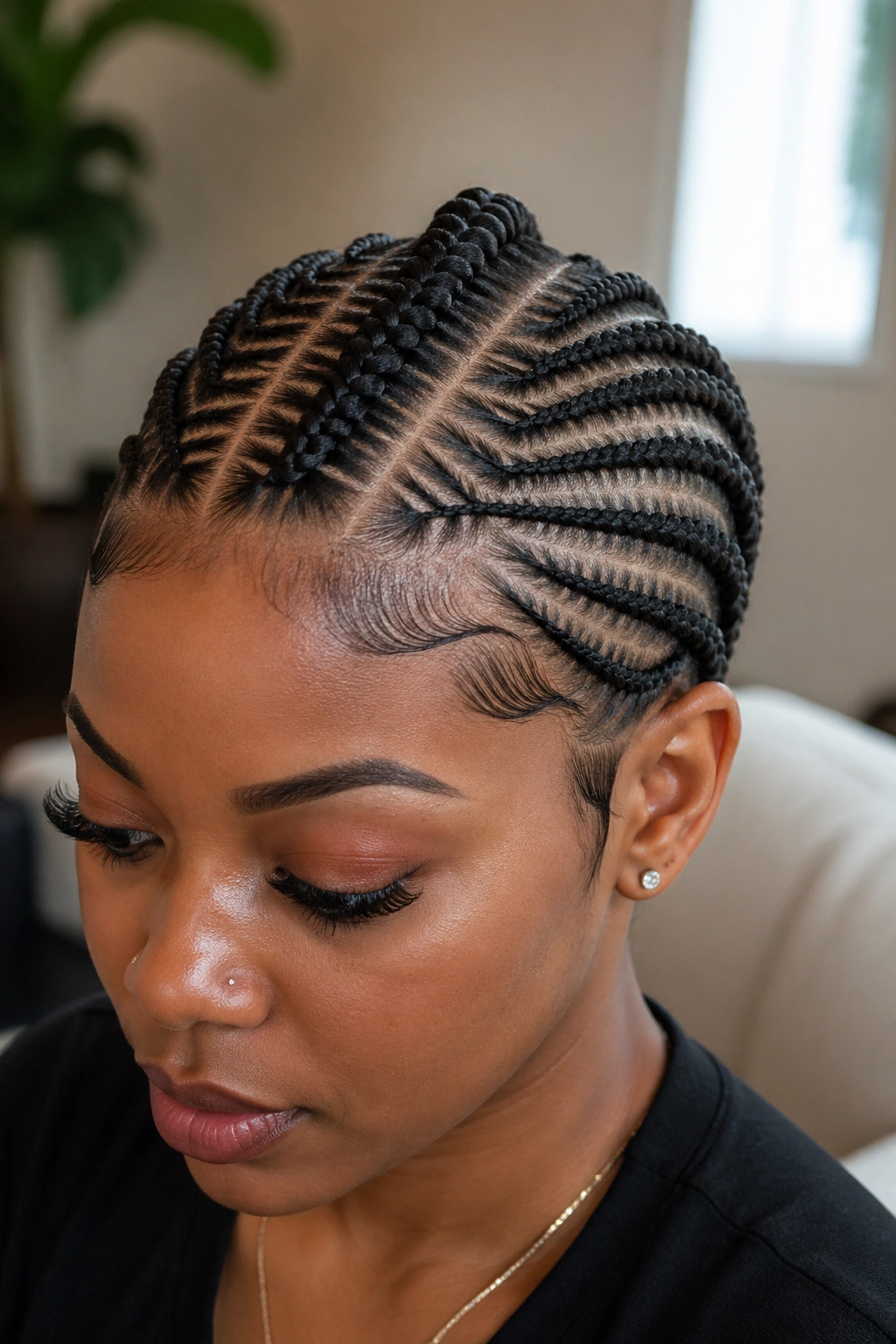
A scaled-down cornrow mohawk specifically designed for women with smaller head sizes or shorter natural hair.
Bold claim: Standard cornrow mohawks can overwhelm a petite frame. Scaling the proportions — fewer side cornrows, a narrower center strip, less dramatic height — creates a mohawk that fits the face rather than dominating it.
A mini mohawk might use only two cornrows on each side and a single small puff or short braided strip down the middle. The whole install can be done in under an hour and lasts about a week.
For women who love the mohawk concept but feel that the typical version is too much, the mini version is a perfect compromise.
Maintenance That Keeps the Style Sharp
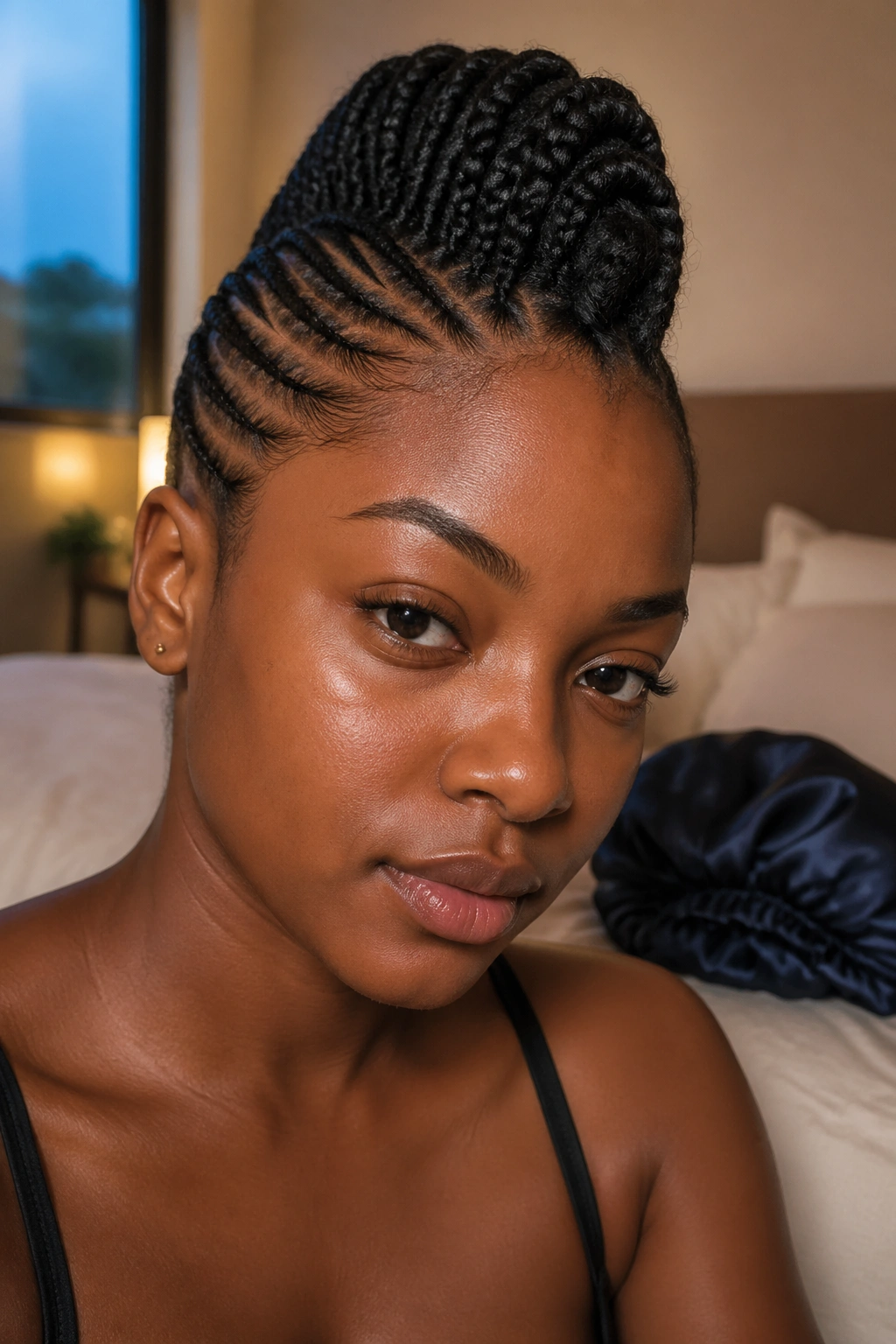
Cornrow mohawks live or die by what you do at night. The center strip — whether it’s a puff, curls, or braided extensions — is the most vulnerable element. It needs to be protected from friction, dryness, and crushing.
Sleep with a satin or silk bonnet that’s loose enough to accommodate the mohawk’s central height. A standard bonnet may compress a tall puff or knot, leaving it flat by morning. Mohawk-specific bonnets exist, but a slightly oversized standard bonnet works fine.
For curly or puffed centers, refresh the curls each morning with a few spritzes of water and a small amount of curl cream raked through with your fingers. For braided centers, smooth any flyaways with a small dab of edge gel.
Scalp Care During the Install
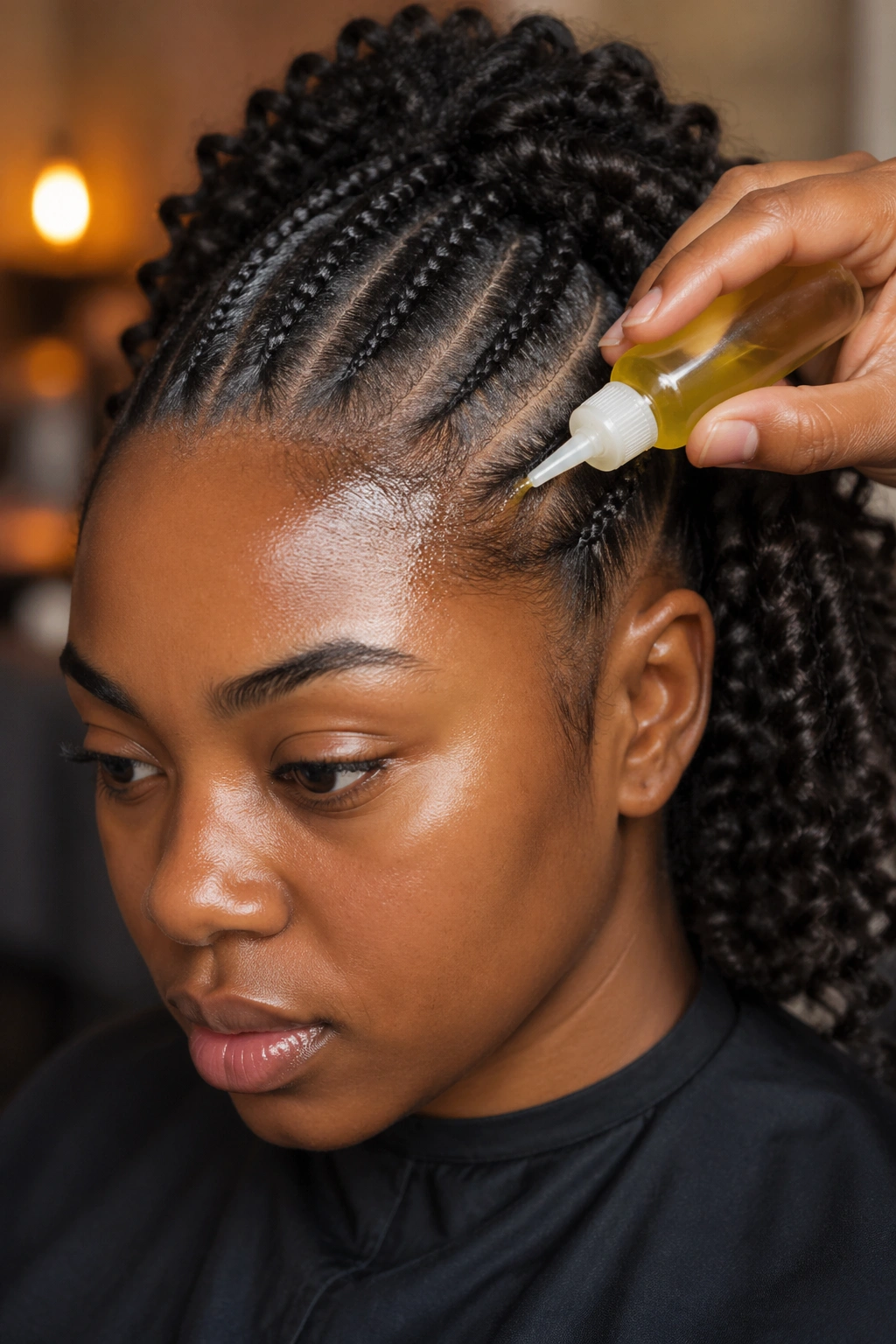
The side cornrows pull tighter than typical straight-back styles because they’re feeding into a central point. That extra tension means the scalp underneath needs more care.
Apply a light oil — jojoba, sweet almond, or grapeseed — to the scalp every two to three days using a pointed applicator bottle. Focus on the temples and the area where the side cornrows meet the center strip. These spots are where tension concentrates, and where dryness will show up first.
Avoid heavy butters or thick creams. They build up under the cornrows and create an itchy, flaky scalp within a week.
If your scalp feels sore for more than three days after the install, the cornrows are too tight. The discomfort isn’t normal and won’t fade — it’s a sign of damage in progress. Consider taking the style down early to prevent traction issues.
Taking Down a Cornrow Mohawk
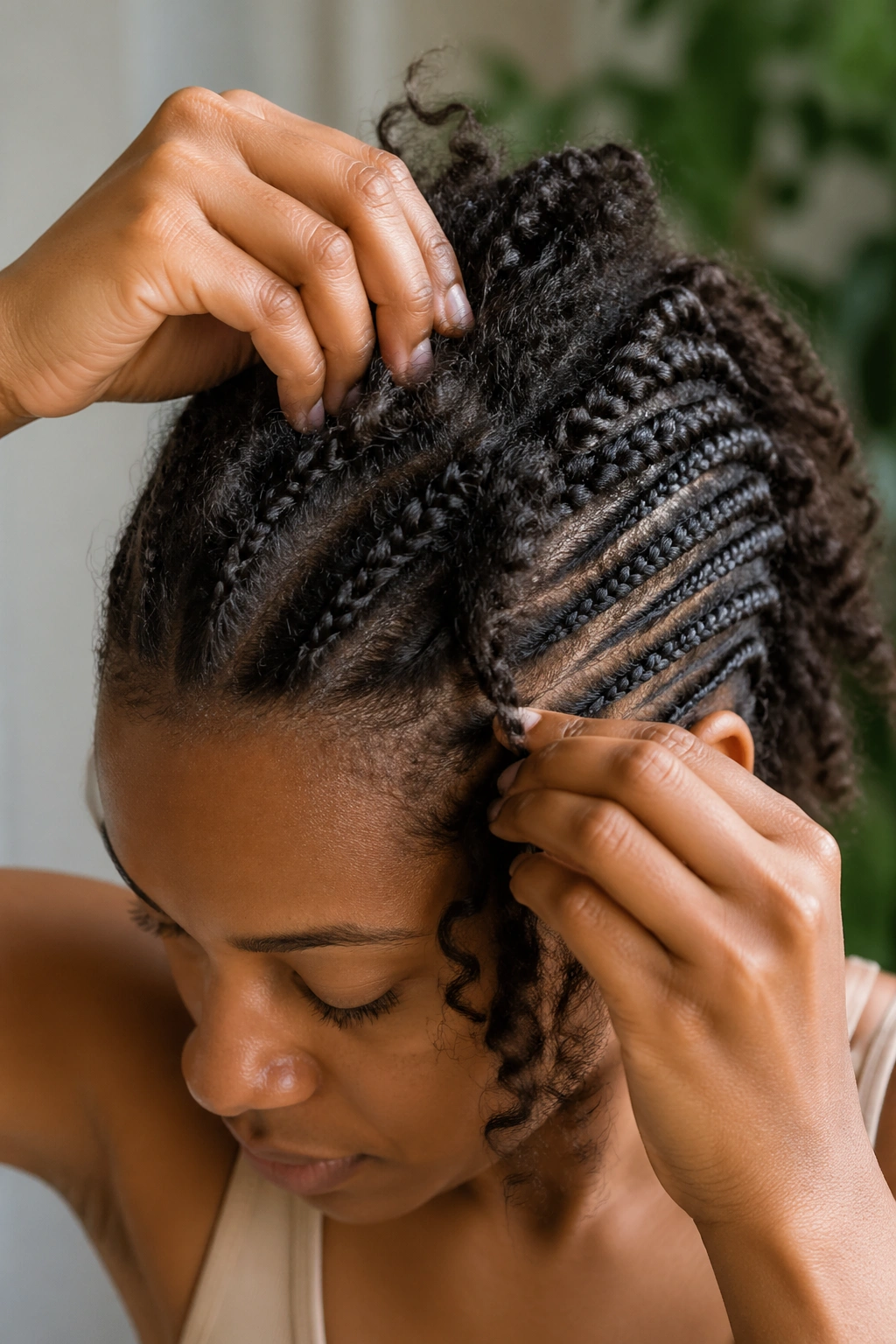
Take-down requires the same patience as any cornrow style, but with one extra consideration — the side cornrows that fed toward the center may have created denser braiding at the meeting points, where shed hair has accumulated.
Mist each cornrow with a water and leave-in mix. Let it sit for ten minutes. Start unraveling from the tail ends, working slowly. When you reach the central meeting points where multiple cornrows converge, slow down even more. The shed hair concentrated there will tangle if you rush.
Finger-detangle each section as it comes free. Don’t combine sections until they’re individually detangled. Once everything is unbraided, do a clarifying wash, deep condition, and let your hair rest a week before the next style.
Picking the Right Cornrow Mohawk for You
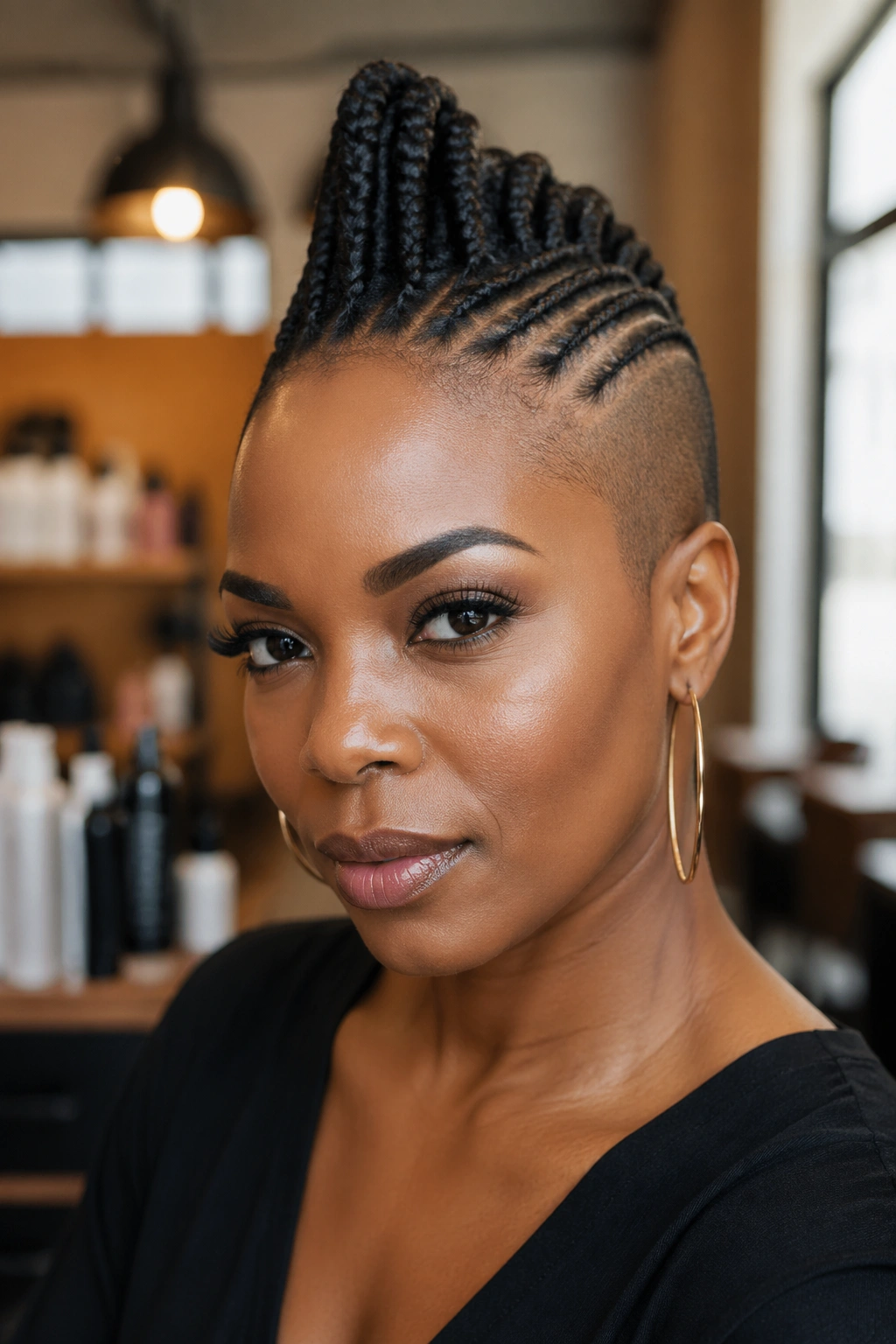
Not every cornrow mohawk works for every face shape, hair type, or lifestyle. A few considerations to help you choose.
For round faces, mohawks add vertical length that elongates the face beautifully. Go for taller centers — high pony, lifted crest, tall puff — to maximize the elongating effect.
For long faces, choose mohawks with softer or shorter centers. A loose curl center or a low pony adds width without adding more length, balancing the face shape.
For thin or sparse density, fewer side cornrows and a fuller center work best. Three cornrows on each side and a thick center puff look more substantial than ten thin side cornrows with a sparse center.
For active lifestyles, simpler mohawks last longer. Skip the cuffs, beads, and elaborate center treatments. A clean cornrow mohawk with a sleek pony or basic puff handles gym sessions and busy schedules better than fussy variations.
Mistakes That Shorten the Style’s Life
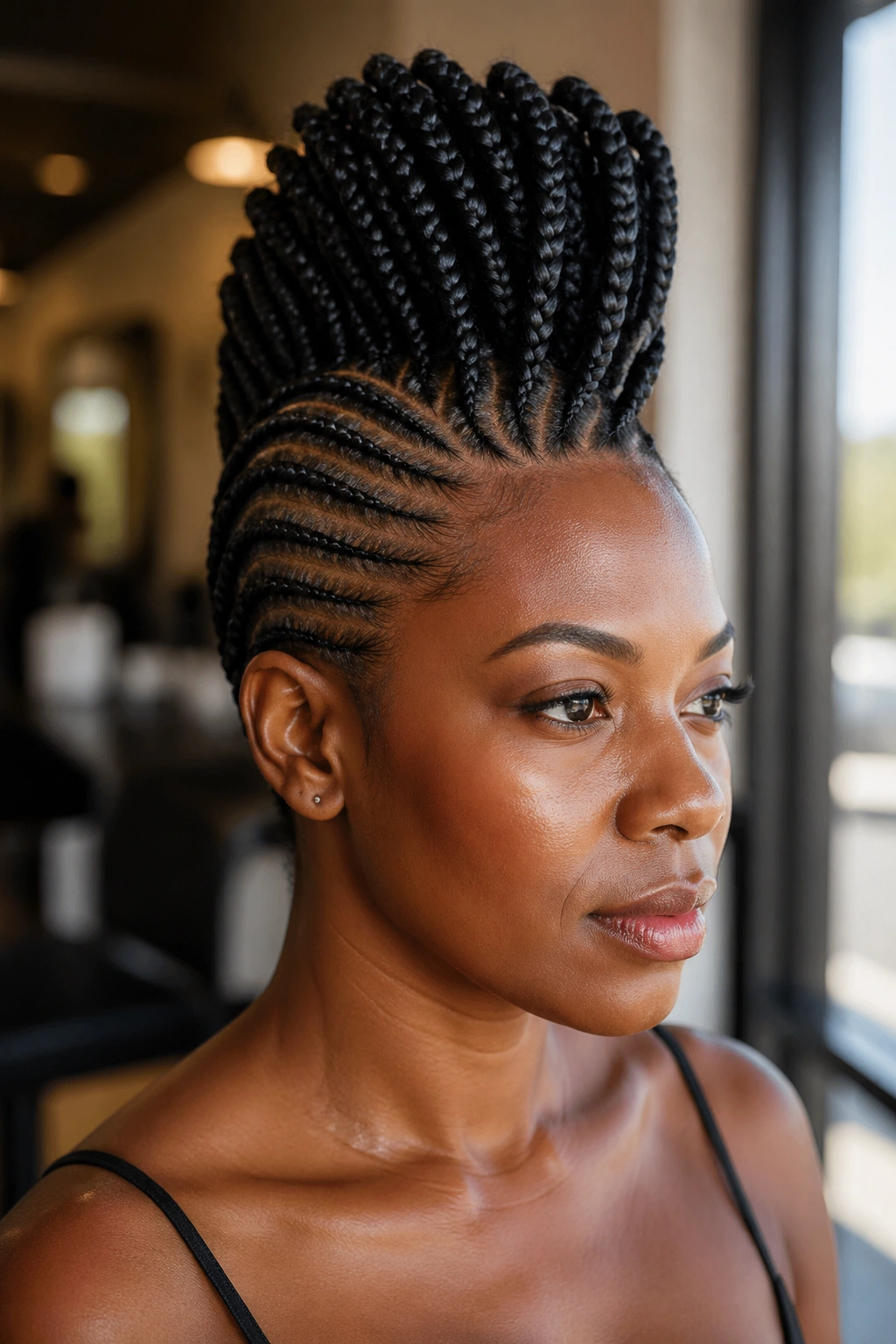
Common pitfalls to avoid.
- Sleeping without a bonnet. Friction destroys the center strip within nights.
- Over-tightening the side cornrows. Causes scalp soreness and edge damage.
- Skipping curl refresh on puff or curl centers. Day-three frizz becomes day-five matting.
- Using heavy oils on the scalp. Buildup turns the cornrow lines murky.
- Wearing the style past four weeks. The center strip starts to mat.
- Picking a mohawk silhouette that doesn’t fit your face. Gentle research saves disappointment.
- Going to a braider who doesn’t specialize in mohawk styles. Generic cornrow braiders often miss the upward-angle technique.
The cornrow mohawk is a confident style choice. It signals presence. It carries cultural weight. Worn well, it photographs like a sculpture and feels light enough for daily life. Worn carelessly, it droops and frizzes within a week. The difference is preparation, technique, and the small daily care habits that protect your investment of time, money, and trust in your braider.
