



Brushed out curl styles for natural hair have been making waves across social media and editorial spreads — and for good reason. The brushed-out technique transforms your standard curl set or twist-out into something softer, bigger, and more romantically voluminous than the defined styles most naturals default to. It’s the technique behind those gorgeous, cloud-like afros that look impossibly fluffy, the dramatic big-hair editorial looks, and the effortlessly tousled celebrity curls that seem almost too good to be real. And yes — it’s achievable on your own natural hair, at home.
What Brushed Out Curl Styles Actually Mean
The term “brushed out” refers to taking a defined, set curl style — a twist-out, braid-out, roller set, or rod set — and deliberately passing a brush or wide-tooth comb through it to separate, expand, and loosen the individual curl clusters into a bigger, softer, more unified texture. Instead of distinct, individual curls, brushed-out styles have a more blended, fluffy, voluminous character where curl definition is visible within the overall cloud of hair rather than as separate, distinct pieces.
The magic of brushed out natural styles is in knowing when to stop. Too little brushing and you’ve barely changed anything from your original set. Too much brushing and you cross the line into frizz. The goal is the sweet spot in between — where the curls are separated and expanded but still retain enough structure and pattern to look intentional rather than accidental.
Different hair types respond to brushing differently. Looser curl patterns (3a-3c) may need minimal brushing before the style is as big as it can go without frizzing. Tighter patterns (4a-4c) can typically handle more aggressive brushing and still maintain visible texture, which is actually one of the reasons the brushed-out look works so spectacularly on 4c hair — the density and tightness of the curl pattern means there’s a lot of texture to expand before things get frizzy.
Tools That Make or Break Brushed Out Styles
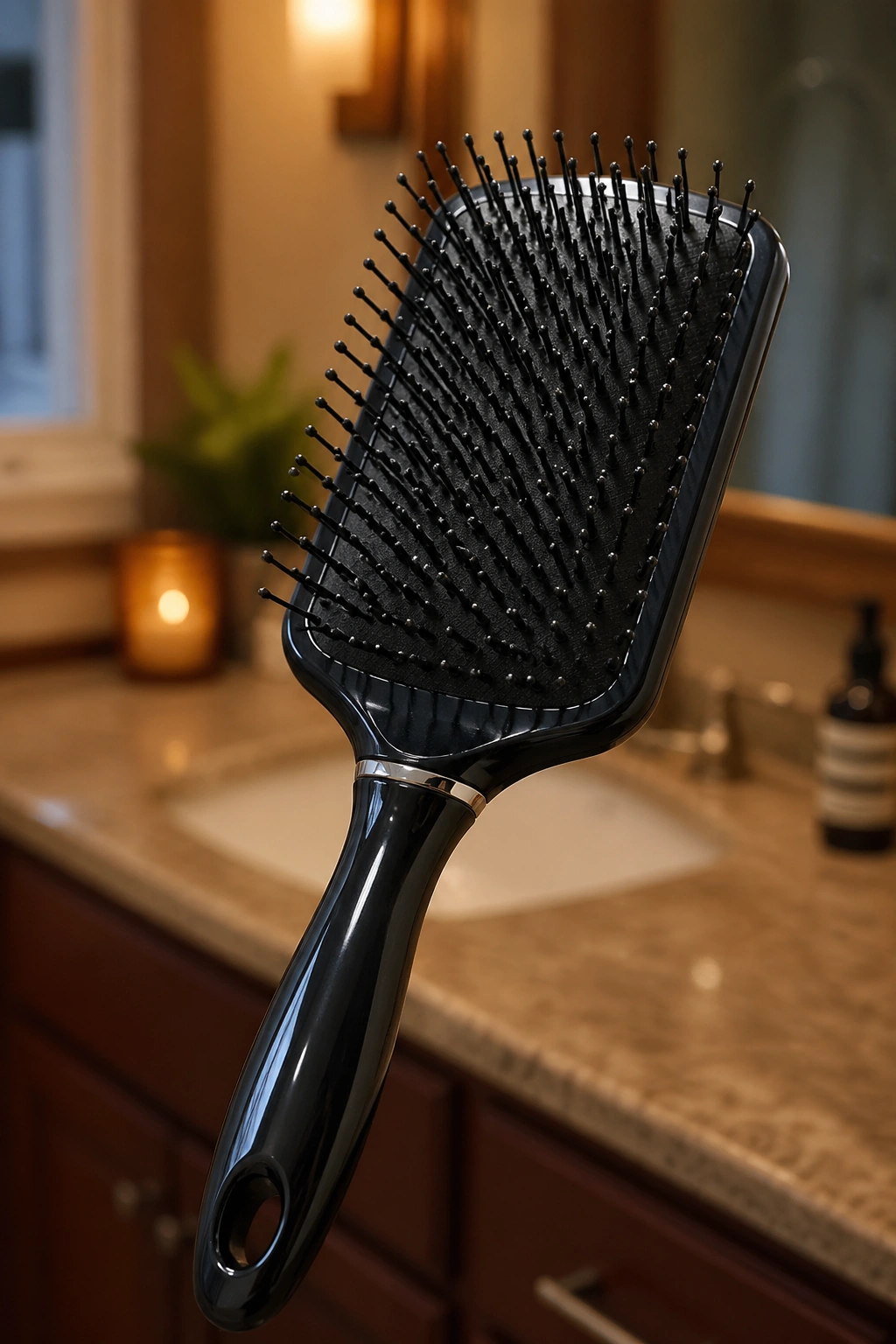
Your brush choice is everything when it comes to brushed out curl styles. The wrong brush will destroy your style completely. A fine-tooth brush, a boar bristle brush, or any brush with densely packed bristles is going to create frizz and disruption rather than soft, expanded volume.
A paddle brush with wide-set, flexible bristles is ideal for brushing out curl sets on natural hair. The flexible bristles bend rather than rip through the curl, which reduces breakage and allows the curl to separate gradually rather than abruptly. A Denman brush with the rows thinned out — removing every other row of bristles — is another popular option that gives you more control over how aggressively you’re brushing.
An afro pick is technically not a brush, but it’s actually the best tool for brushing out 4a through 4c hair in most situations. Rather than running bristles through your curls, the pick lifts from the roots and expands the style upward, which adds volume without the friction that a brush creates. For tighter textures, starting with a pick before a brush often gives better results than going straight to a brush.
The Right Base Style for Brushing Out
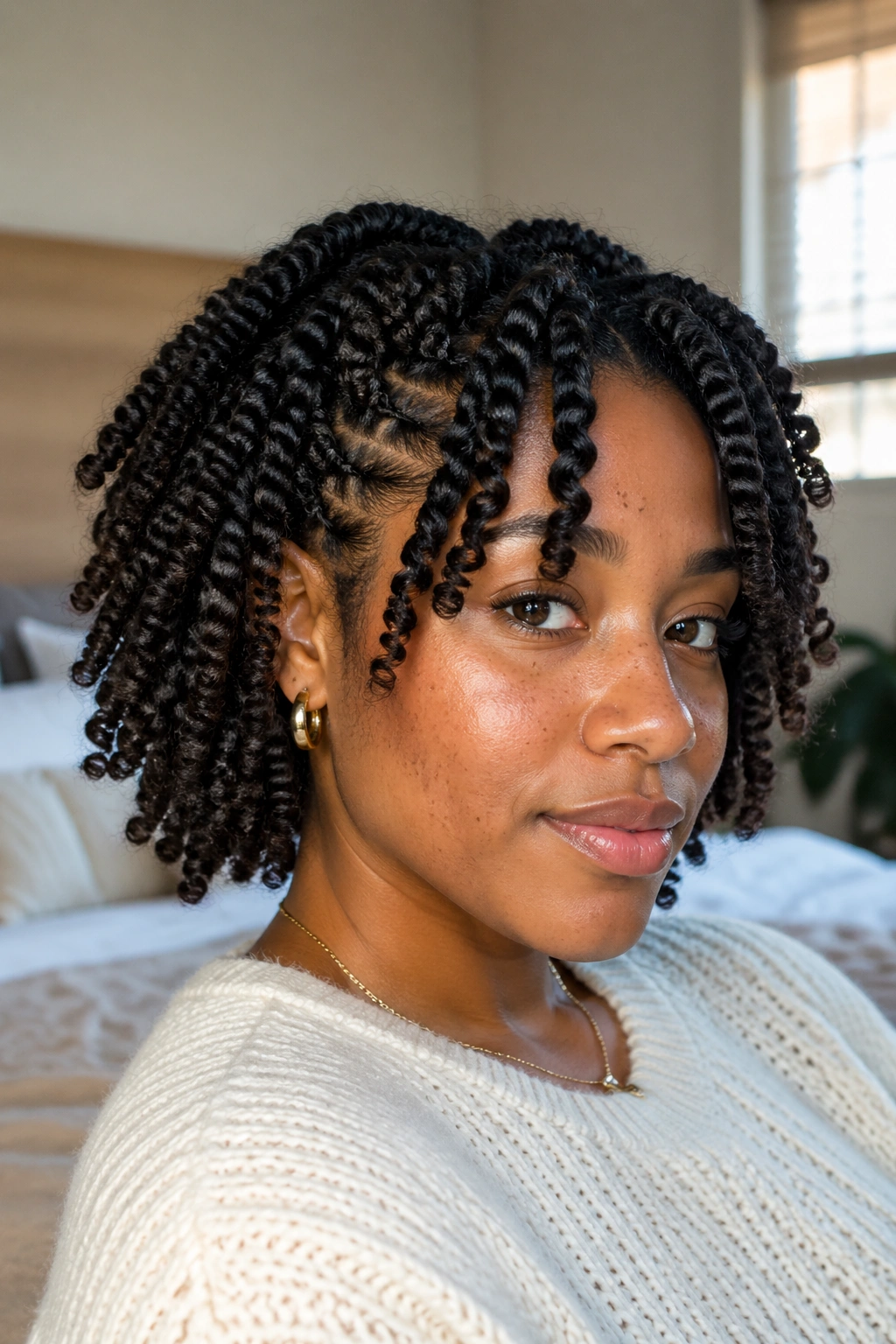
Not every natural hair style brushes out well. Your starting point significantly affects your brushed-out result, and some styles are specifically designed to be brushed out while others are meant to be worn as-is. A brushed-out style can only be as good as the base it starts from.
Twist-outs and braid-outs are the most classic brushed-out bases. They produce enough initial definition that, when brushed out, there’s still visible texture remaining in the expanded style. A twist-out or braid-out that’s been brushed out has a distinctive look — part wave, part curl, all volume — that’s completely different from the original defined style and equally beautiful in its own right.
Rod sets and roller sets also brush out beautifully, especially for a more polished, voluminous result. The round curl shape from the rod gives the brushed-out style a slightly rounder, more even texture than a twist-out or braid-out base would. And because rod sets tend to last longer than twist-outs, you have more days of wear to work with — including those middle days where the style has naturally softened enough to be perfect for brushing out.
Moisture Before Brushing Out
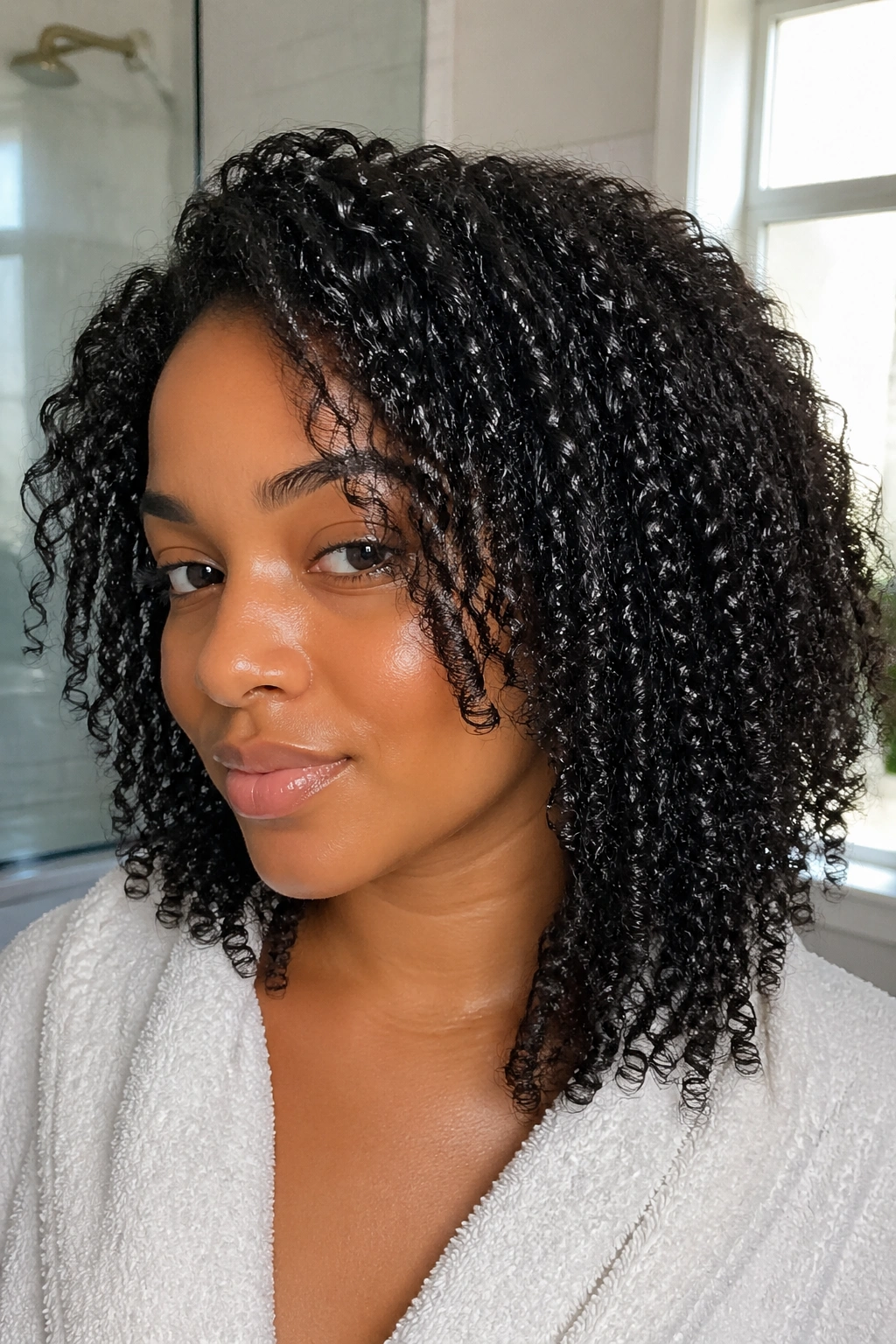
Never brush out a dry, moisture-depleted style. This is where most brushed-out disasters happen. Dry natural hair is brittle, which means brushing through it causes breakage, not just separation. The result looks rough, dull, and frizzy rather than soft and voluminous.
Before brushing out, refresh your hair with a light mist of water and leave-in conditioner. Just enough moisture to make the hair pliable again — not enough to fully wet it and restart the drying cycle. Mist section by section, let the moisture absorb for a minute, and then begin brushing out. The difference between brushing out moisture-refreshed hair and brushing out dry hair is dramatic.
Adding a small amount of oil to your hands or directly to the brush before brushing out also helps. Oil provides slip, which allows the brush to glide through your curl clusters without the friction that causes breakage and frizz. Coconut oil, jojoba oil, and sweet almond oil are all lightweight options that work well for this purpose without leaving your hair looking greasy.
Section Strategy for Brushed Out Styles
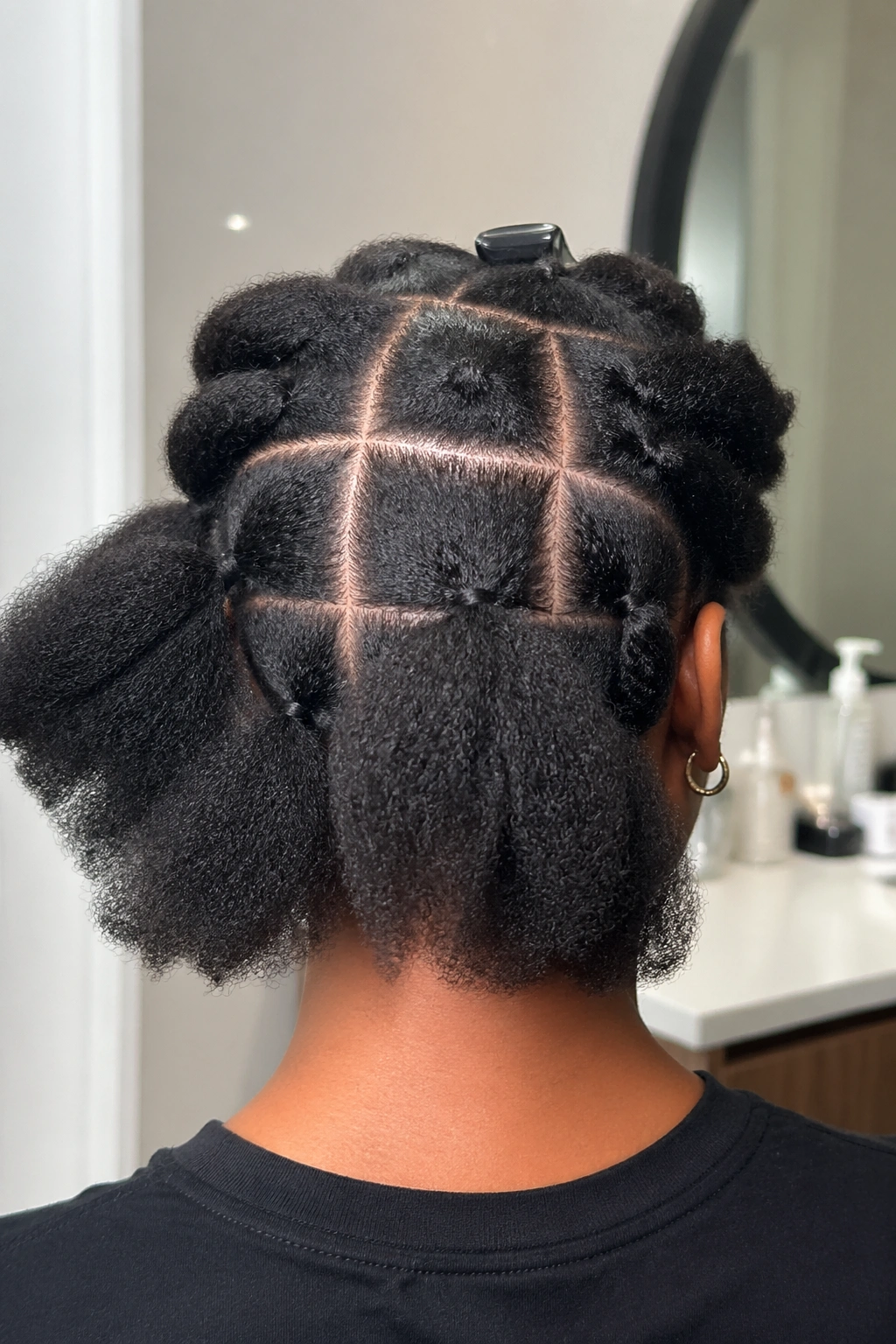
Brushing out your entire head at once, without working in sections, almost always results in an uneven, patchy-looking style with some areas over-brushed and others under-brushed. Working in sections gives you control over the final shape and ensures even volume throughout.
Start at the nape — the bottom sections — and work your way up toward the crown. Brush each section out to your desired level of expansion, then move on to the next. As you work upward, you can see the shape building and make adjustments in real time rather than discovering an uneven silhouette after you’ve brushed out the entire head.
Shape matters with brushed-out styles. You’re not just expanding your curls randomly — you’re building a shape. For a round, symmetrical afro, work to brush each section outward equally in all directions. For a side-swept look, brush in one direction consistently. For a high-volume frohawk, focus your brushing energy on the center section.
1. Brushed-Out Twist-Out Afro
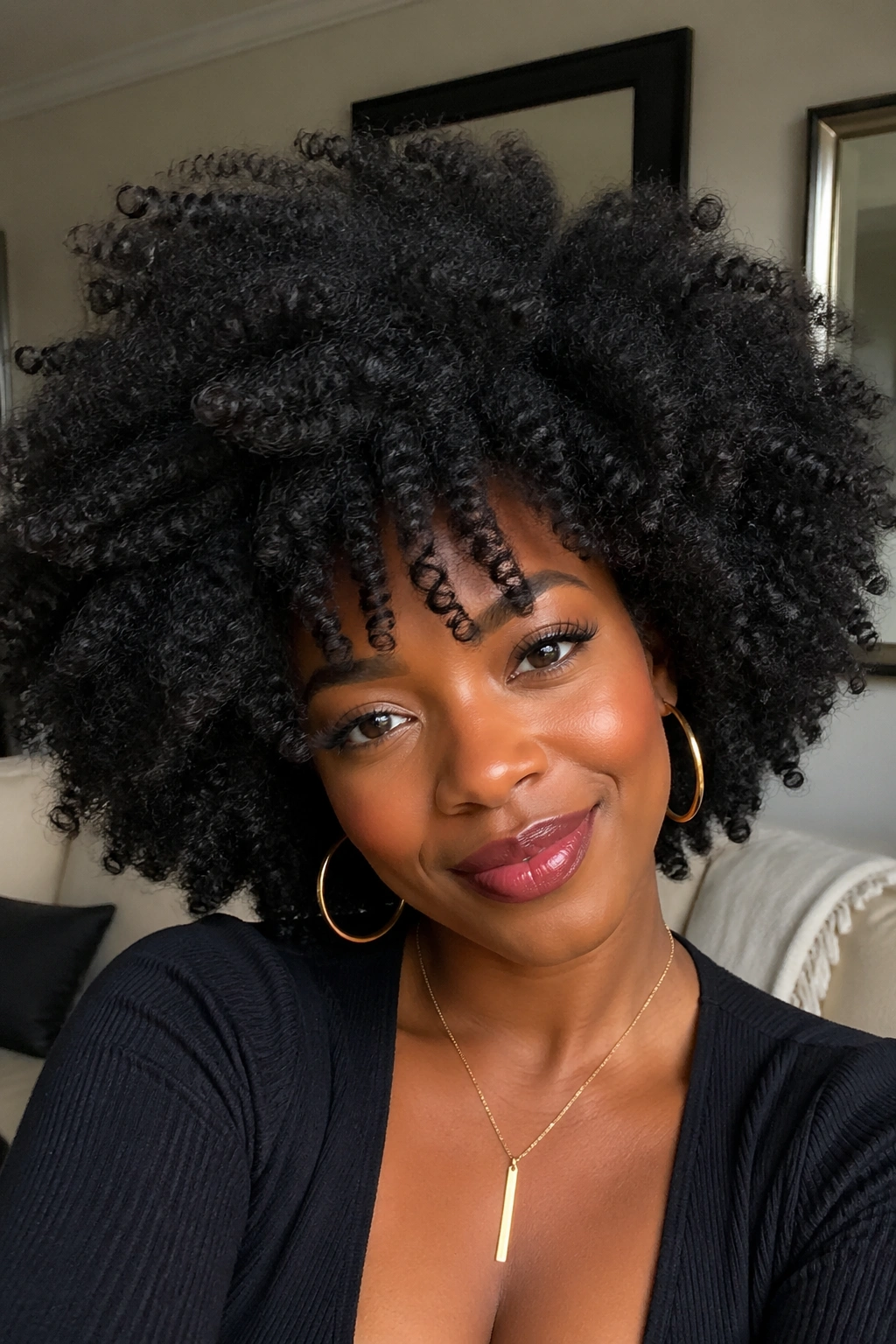
The twist-out brushed out into a full afro is probably the most iconic application of the brushed-out technique on natural hair. You start with the defined structure of a twist-out and deliberately expand it into a round, cloud-like afro using a brush or pick — getting the best of both worlds.
Let your twist-out dry completely before taking it down. Unravel each twist gently, then let them sit for a few minutes without touching. This gives the twist-out its initial shape. Then, mist lightly with a leave-in spritz and begin brushing from the roots upward with a paddle brush or afro pick, working section by section.
Building the Round Shape
- Start at the nape and work upward for a bottom-to-top expansion
- Use circular motions with the pick at the roots for lift without disruption
- Check your silhouette frequently from all angles using two mirrors
- Stop brushing a section once it reaches your desired level of expansion
Finishing touch: A light mist of oil sheen spray adds luminosity to a brushed-out afro and gives it that editorial, polished quality that separates a great brushed-out afro from a just-okay one.
2. Brushed-Out Braid-Out
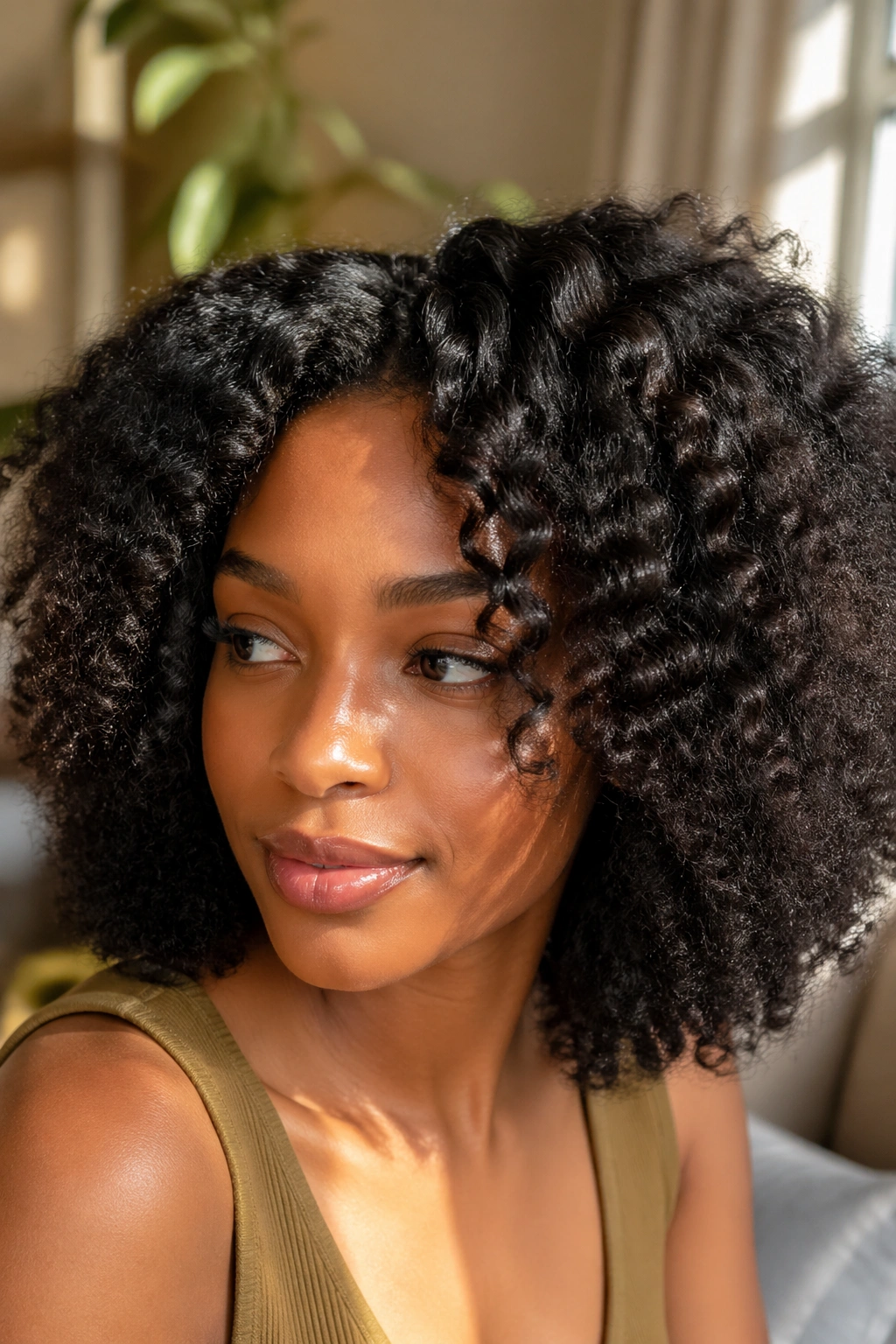
The brushed-out braid-out is the twist-out’s more angular sibling — the braid sets a distinct wave pattern into the hair, and when brushed out, that wave remains visible within the overall volume of the brushed-out style. It has a texture that’s slightly more complex and dimensional than a brushed-out twist-out.
Unravel your braid-out sections, separate briefly with oiled hands, then mist lightly and begin brushing. The wave pattern from the braid will expand and soften but remain visible — creating a style with both volume and texture. Brush upward and outward from the roots for maximum lift, and use a pick to finish the root area for height.
3. Brushed-Out Rod Set Curls
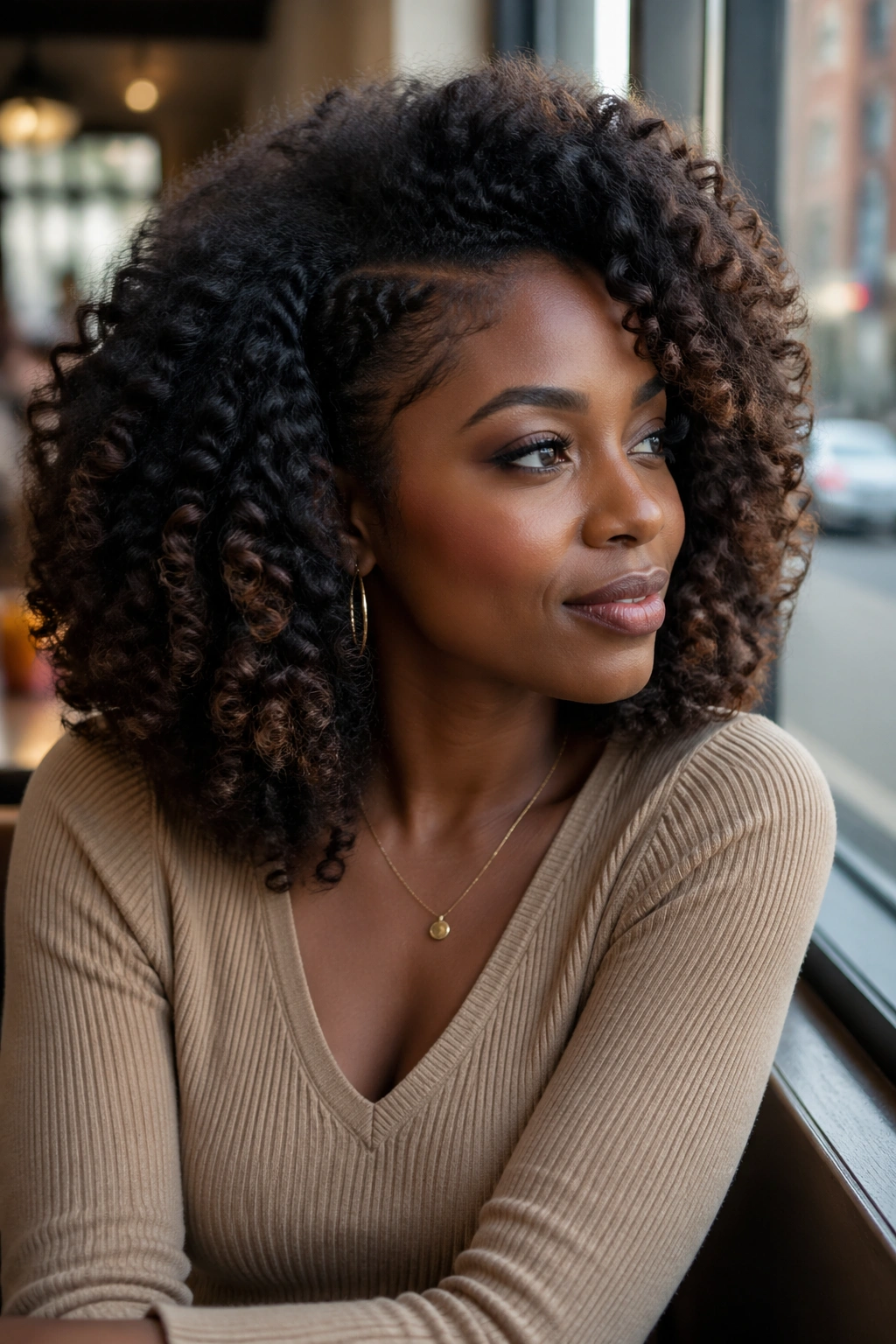
A rod set brushed out gently — just enough to loosen the individual rod curls and blend them together — creates one of the most glamorous brushed-out styles available. The round curl from the rod set remains as the underlying structure, but brushing softens and blends the curls together into something fuller and softer.
After taking down your rod set and allowing it to settle for a few minutes, use a wide-paddle brush and light, gentle passes from the mid-length to the tips. You don’t want to brush through the roots heavily on a rod set — that’s where most of the volume lives, and aggressive root brushing on rod curls creates frizz. The mid-length and ends soften beautifully with gentle brushing while the roots maintain their lift.
4. Brushed-Out High Puff
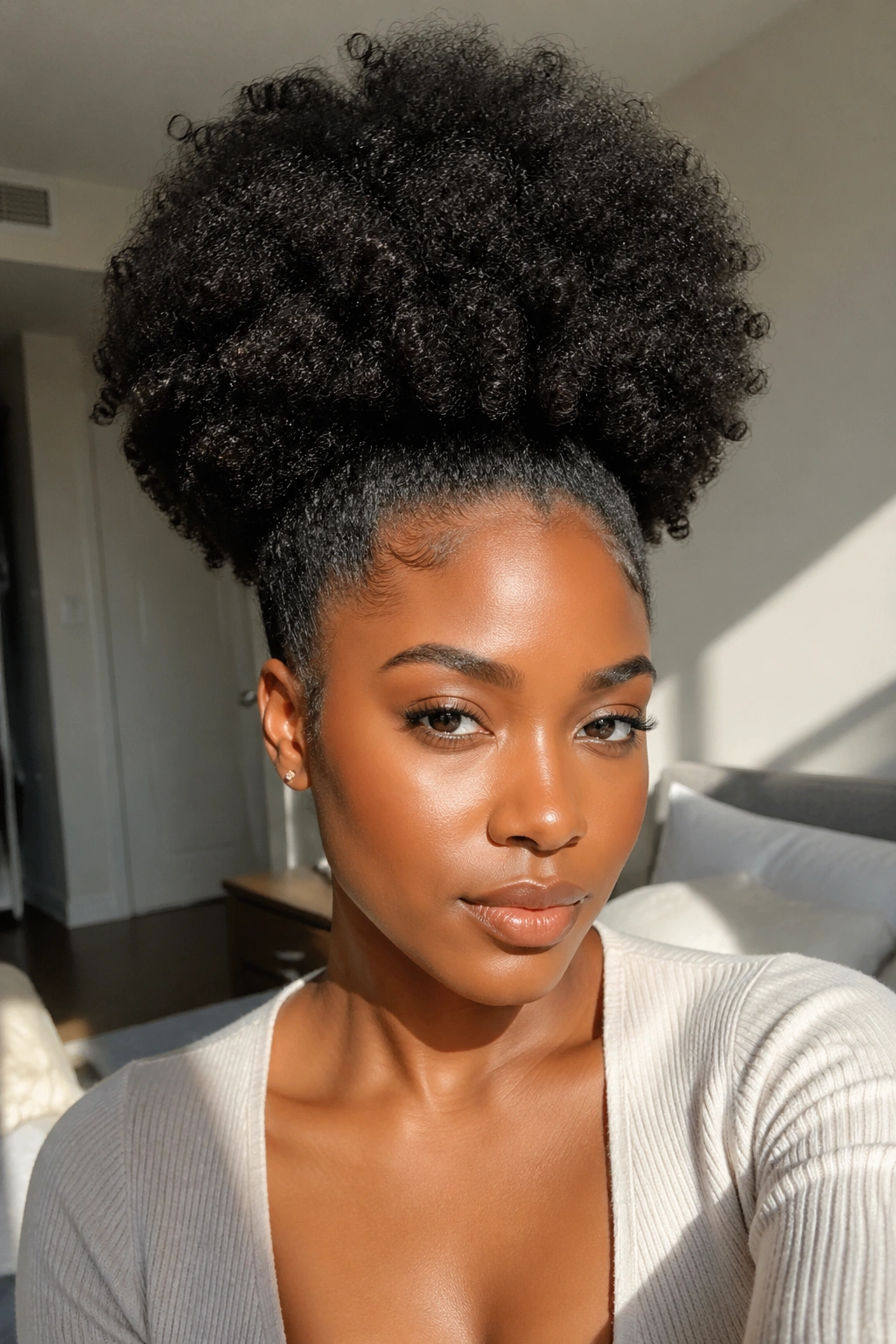
A high puff that’s been deliberately brushed out — rather than smoothed and shaped — becomes a dramatically bigger, more textured version of the standard puff. The volume you can achieve by gathering your hair and then brushing the puff outward in every direction is genuinely spectacular.
Gather your twist-out or rod set into a high puff position, secure with a satin scrunchie, then use a pick or paddle brush to expand the puff outward in all directions from the scrunchie. The goal is a round, cloud-like puff that’s much larger than the standard version — all texture and volume, with visible curl definition throughout.
5. Brushed-Out Frohawk
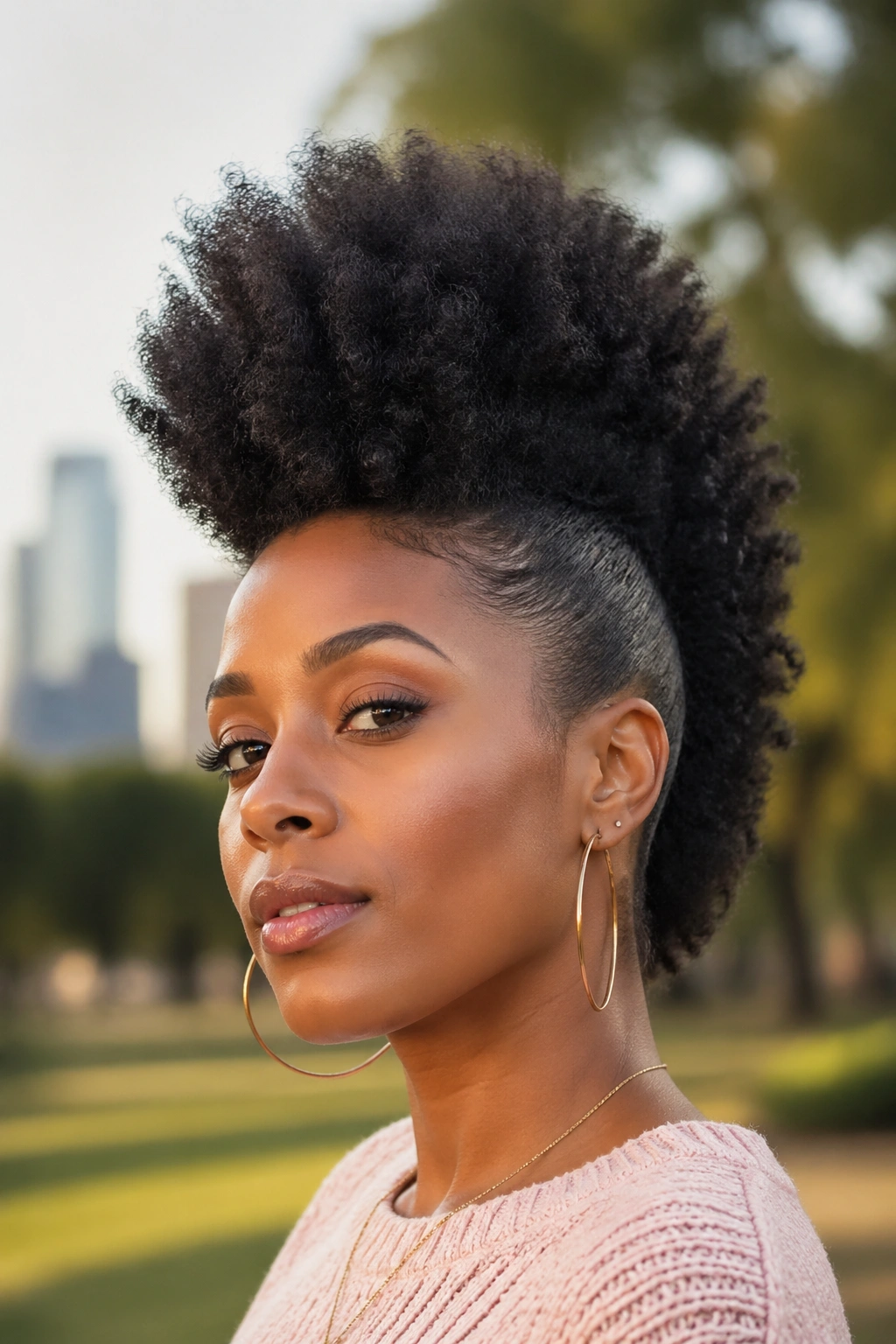
The frohawk’s center section, brushed out to maximum volume, creates one of the most dramatic natural hairstyles possible. While the sides are kept sleek and flat, the center erupts in brushed-out, maximally full texture.
Create your frohawk base — flat-twisting or pinning the sides flat. Then focus all your brushing energy on the center top section, using a pick first to create vertical height and then a brush to expand outward. The center section should be as voluminous and expansive as possible. The contrast between the sleek sides and the big, brushed-out center creates an extraordinary silhouette.
6. Brushed-Out Side Sweep
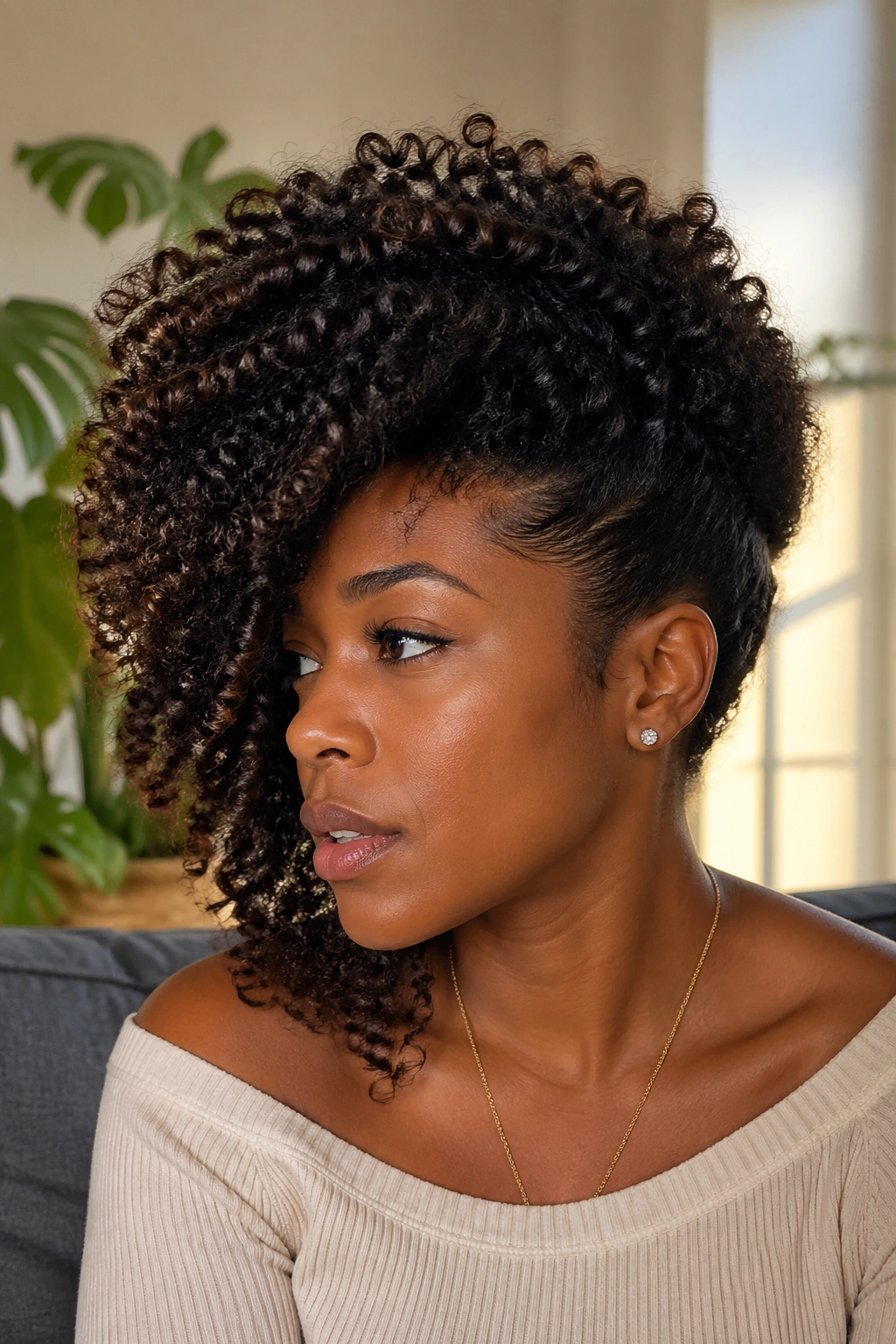
Brushing your curl set out in one consistent direction — toward one side of your face — creates a dramatic, asymmetric brushed-out style that’s incredibly striking and almost editorial in its boldness.
After your base style (twist-out, rod set, braid-out), mist lightly and use a paddle brush to sweep all your curls to one side in long, sweeping motions. The entire volume of your brushed-out hair shifts dramatically to one side, creating a profile view that’s theatrical and beautiful. Clip the opposite side back with a bold barrette for contrast.
7. Brushed-Out Roller Set Waves
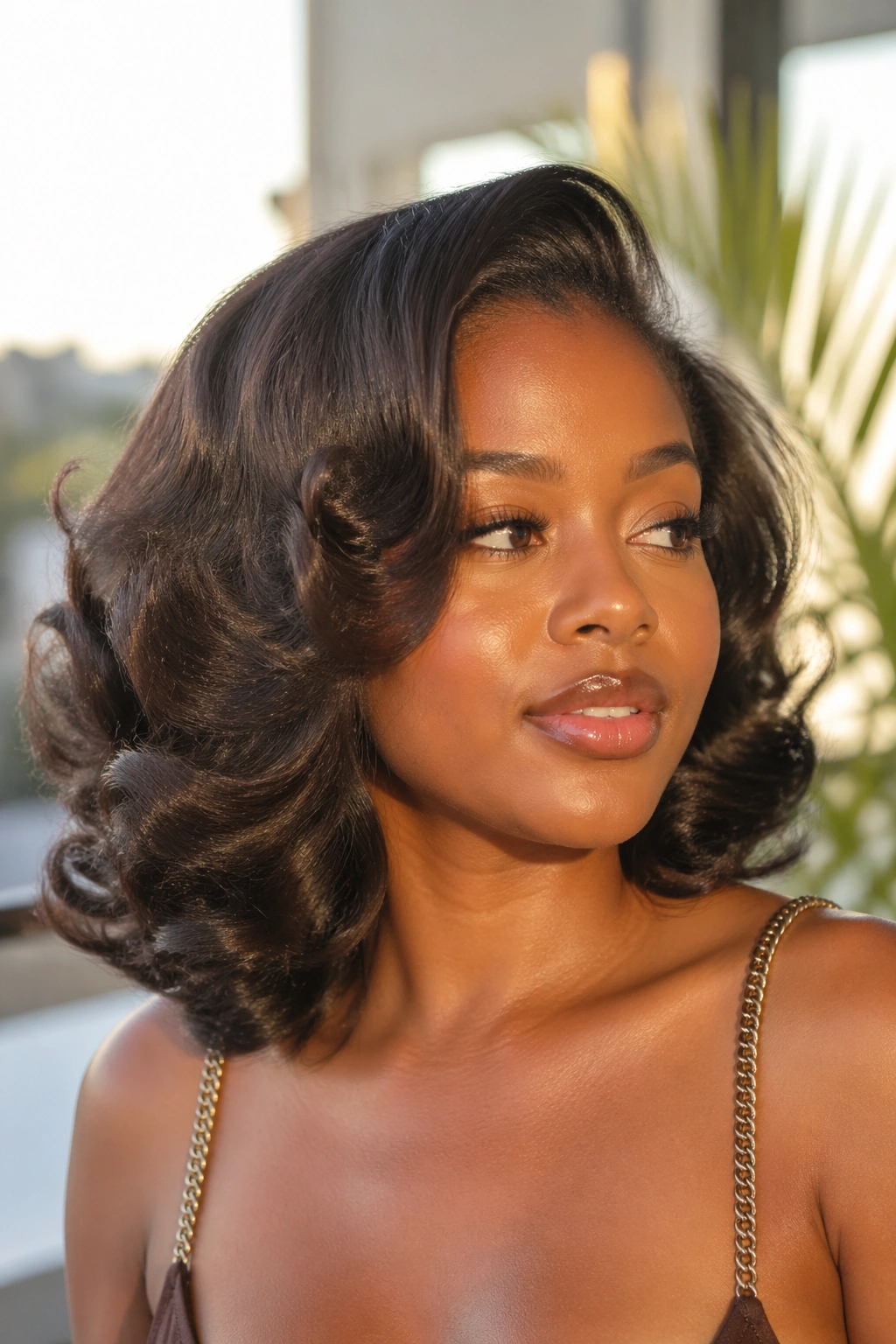
A roller set brushed out produces a different texture than a rod set brushed out — the smooth roller creates a rounder curl that, when brushed, becomes a beautiful, full wave rather than a distinct spiral. This is a particularly elegant brushed-out style.
Take down your roller set and let the curls fall naturally. Then use a wide paddle brush and long, sweeping strokes from root to tip, brushing in the direction you want the wave to fall. The roller’s round shape means the brushed-out result has a smooth, almost feathered quality — incredibly beautiful, especially on medium to longer natural hair.
8. Brushed-Out Crown with Defined Bottom Curls
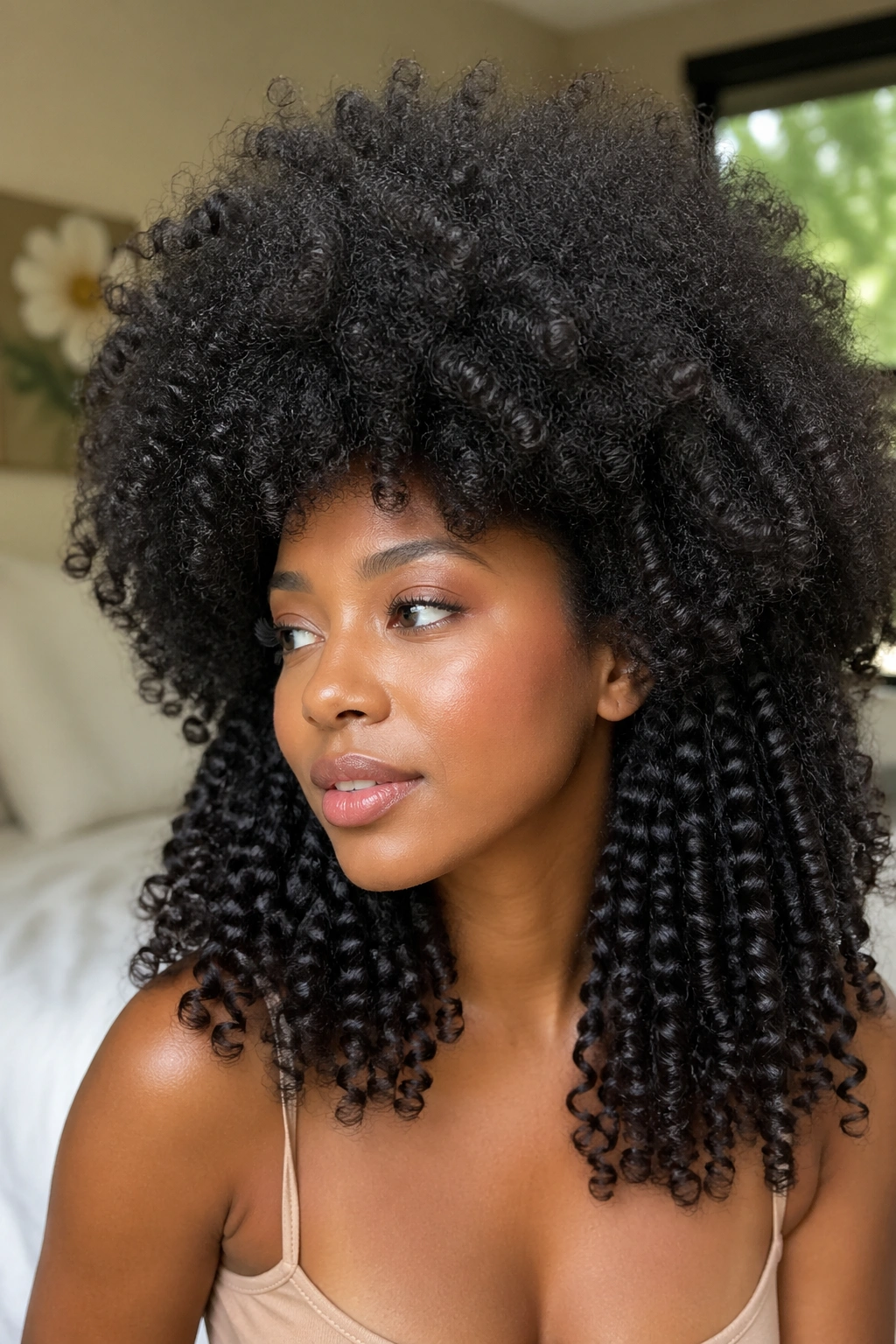
One of the most visually interesting brushed-out styles is a partial brush-out — where only the crown and top sections are brushed out for volume, while the bottom curls are left in their original defined state. The contrast between the big, fluffy brushed-out crown and the defined curls below creates a style with natural dimension.
After your base style, brush out only the top third of your hair — crown, top, and sides above the ear. Leave the bottom sections in their original twist-out or rod set definition. The crown will have big, soft, brushed-out volume, while the bottom retains its structure. The transition between the two textures is visually beautiful and surprisingly complex-looking for a relatively simple technique.
9. Full-Volume Brushed-Out Afro
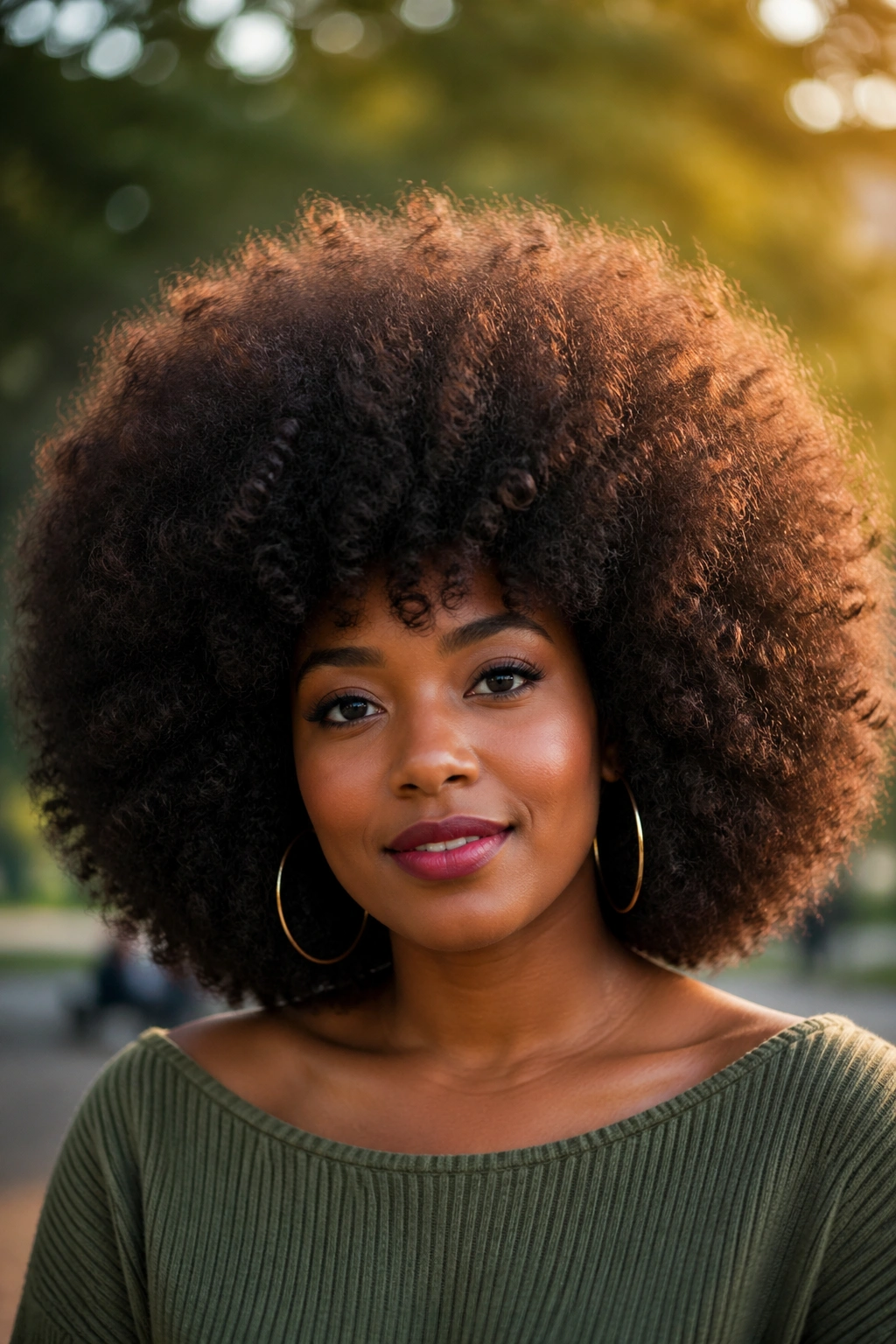
The full-volume brushed-out afro is the maximalist expression of this technique — every section brushed out as fully as possible into a round, perfectly symmetrical, enormous afro. This style celebrates the full potential of natural hair in the most direct and spectacular way.
Use a braid-out or twist-out base on fully moisturized hair. Take down the style, mist generously with a leave-in spritz, and brush out section by section with a paddle brush — working from nape to crown, nape to crown. Use a pick at the roots throughout to build height. Check your shape constantly. When you’ve finished, step back and assess the silhouette — it should be round and full from every angle.
10. Brushed-Out Bantu Knot-Out Curls
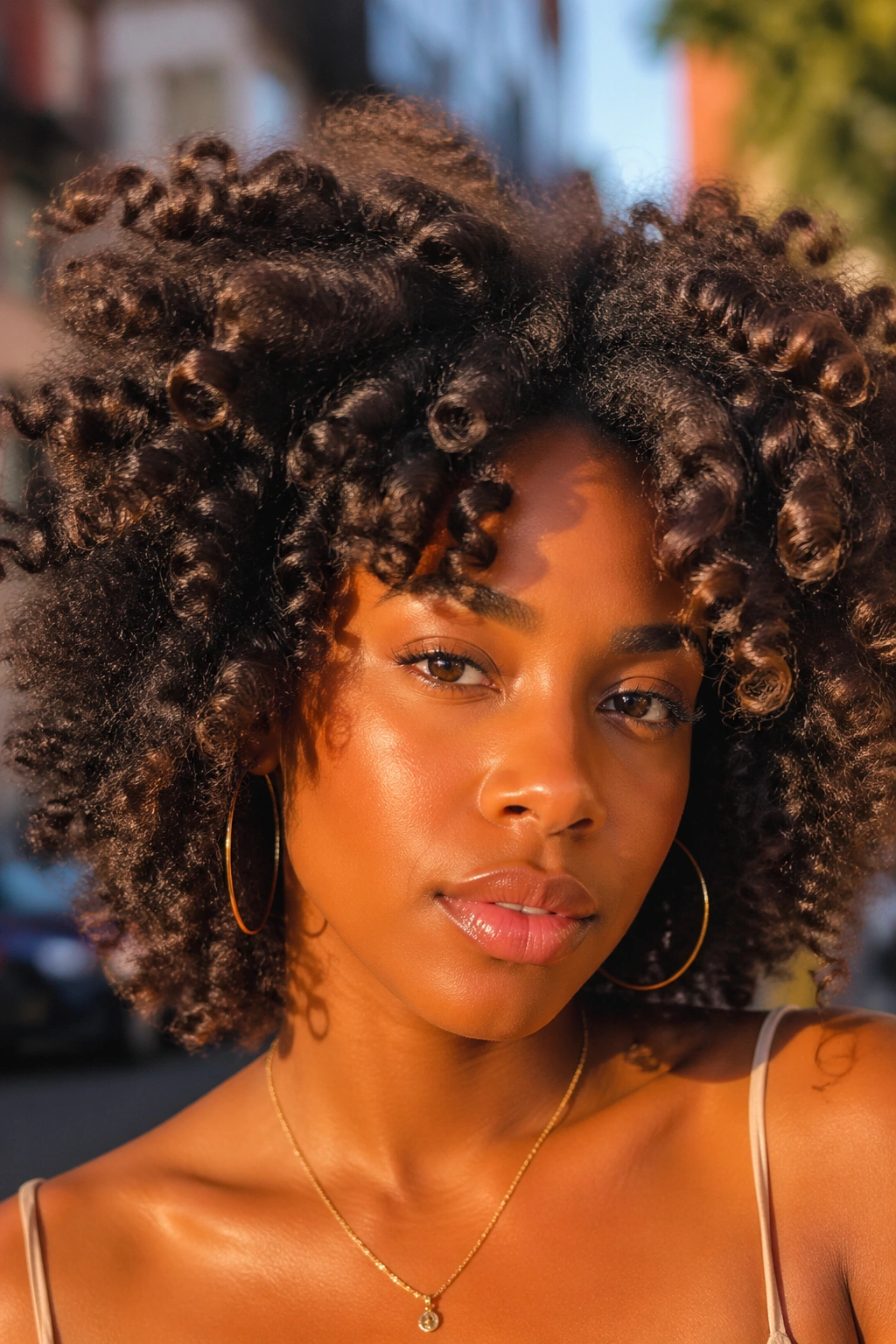
The bantu knot-out brushed out slightly is one of the most romantic natural styles you can wear — the distinctive spiral of the bantu knot-out softens and expands with brushing into something that’s both voluminous and beautifully textured.
Take down your bantu knots and allow the curls to settle for a few minutes without touching. Then mist lightly and use a very gentle brush — or just a wide-tooth comb — to softly expand each knot-out curl into a slightly bigger, softer version. Don’t brush aggressively; the bantu knot-out texture is more delicate than a standard twist-out and benefits from a lighter touch.
11. Brushed-Out Curly Half-Up
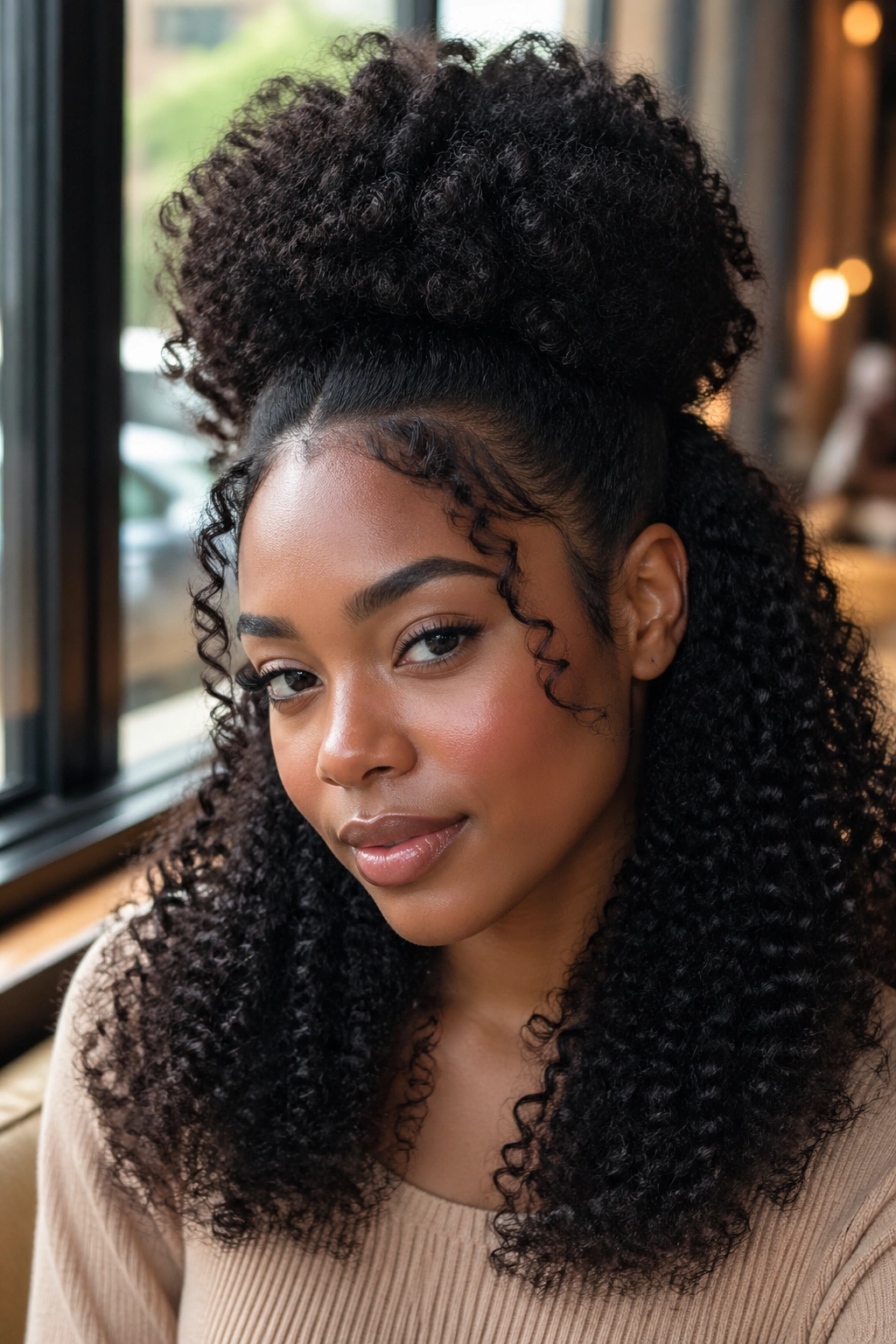
A half-up, half-down style where the top section has been brushed out for big, fluffy volume creates an eye-catching look with two distinct textures — the big, soft, brushed-out crown and the more defined, natural curls hanging below.
Gather the top half of your hair into a loose half-up puff, but before securing, brush the gathered section outward for maximum volume. Secure with a satin scrunchie and continue to expand the puff by pulling individual sections outward from the secured base. Leave the bottom curls in their natural, defined state. The contrast between the two sections is genuinely beautiful.
12. Brushed-Out Curly Updo
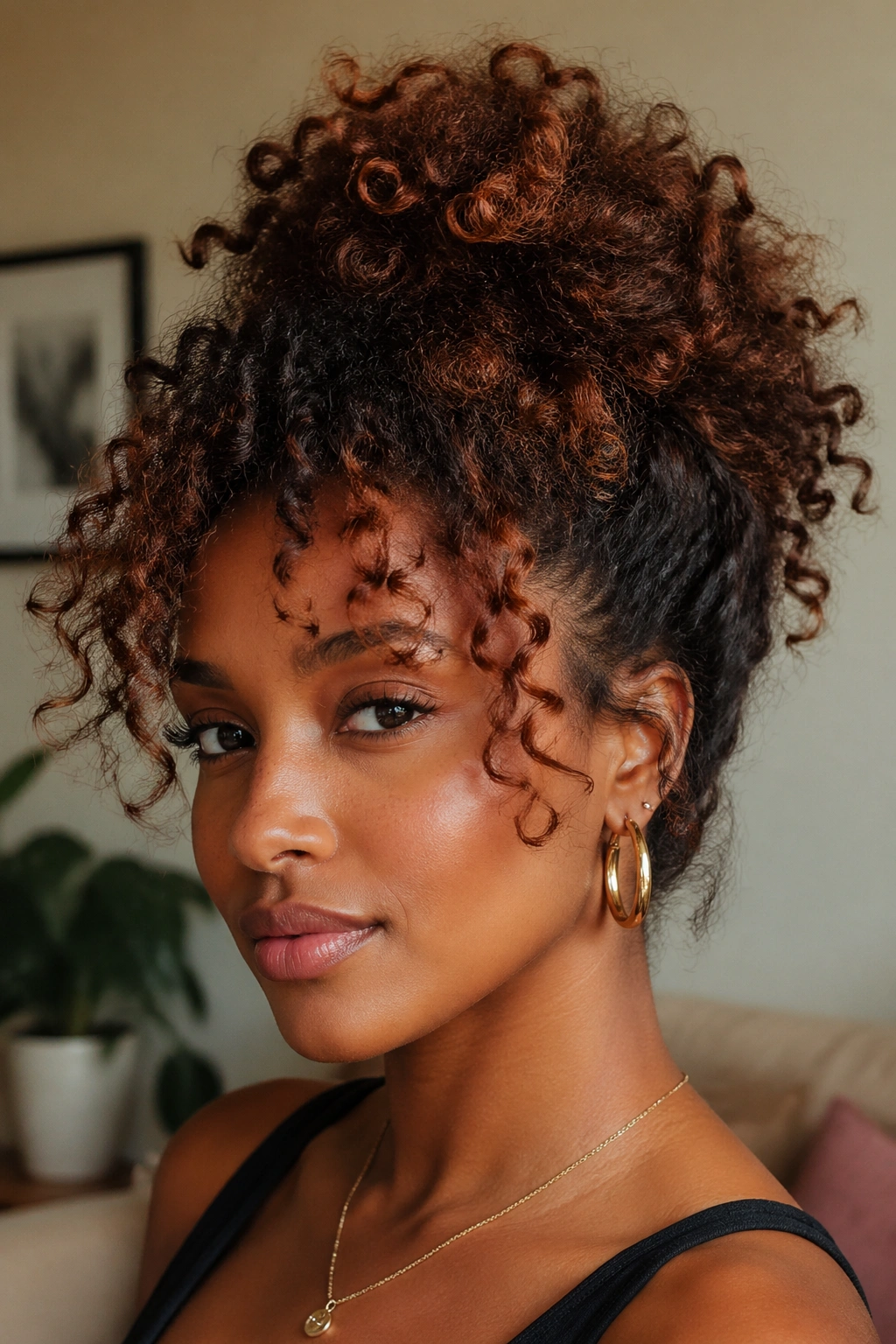
Updos on brushed-out natural hair have a spectacular, romantic quality — the gathered curls are soft and voluminous rather than sleek and tight, creating an updo that feels effortlessly glamorous.
Brush out your base style lightly — just enough to soften the definition — then gather sections into a loose, curly updo at the crown. Pin loosely so curls escape and drape around the updo rather than being contained inside it. The brushed-out texture means the curls are cooperative and pliable for updo construction while still looking full and voluminous rather than flat.
13. Defined-to-Brushed Day Progression
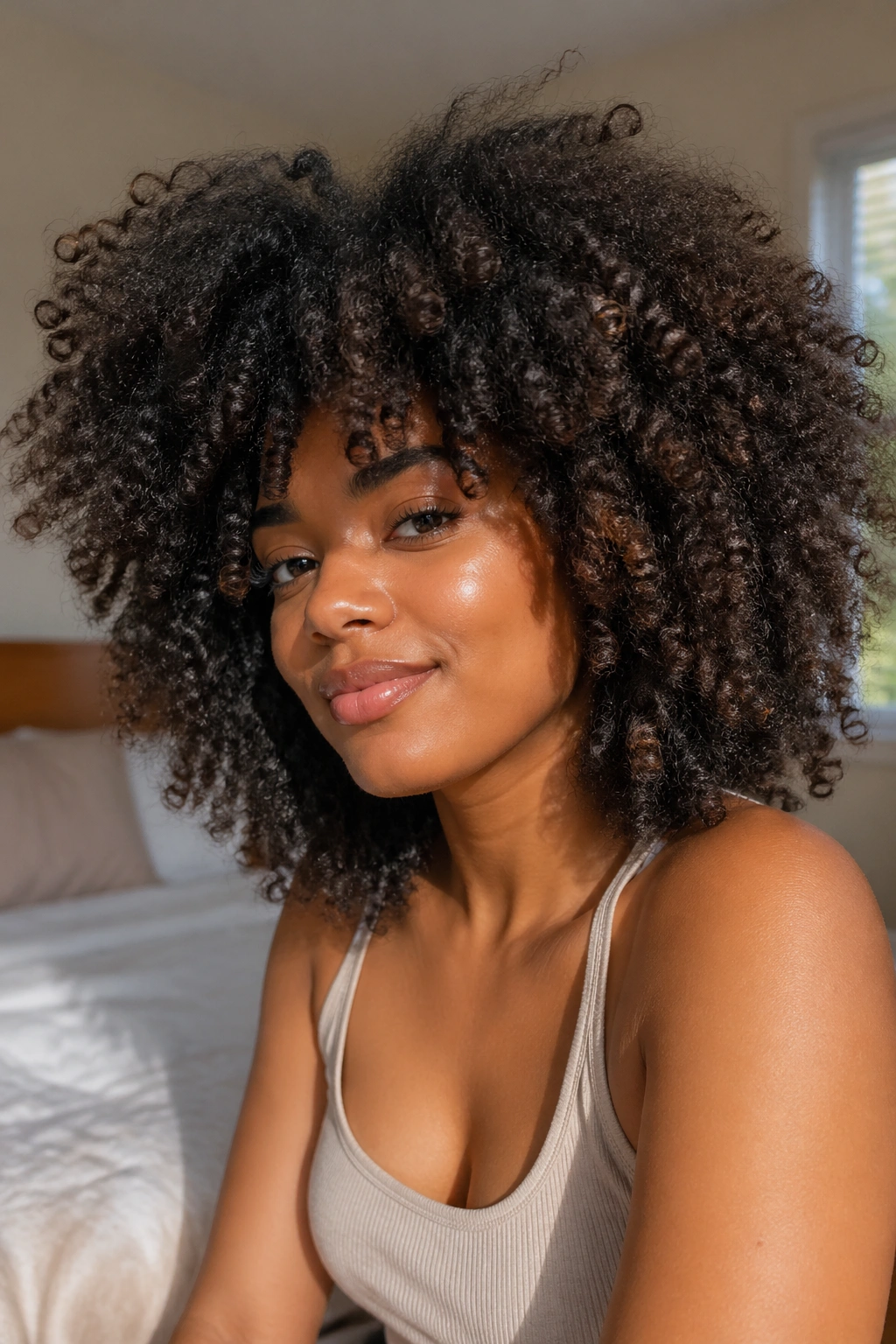
Many naturals have discovered that the best application of the brushed-out technique isn’t on day one of a style — it’s on day two or three, when the original definition has naturally softened a bit and the hair is ready to be expanded without much resistance.
Wear your twist-out or rod set fully defined on day one. On day two, refresh with a light mist and brush out to a medium level of expansion — more than day one, but still with some definition. By day three, brush out fully for a big, fluffy style. This day-by-day progression gives you three completely different looks from one styling session — impressive, practical, and genuinely beautiful at each stage.
14. Brushed-Out Ponytail
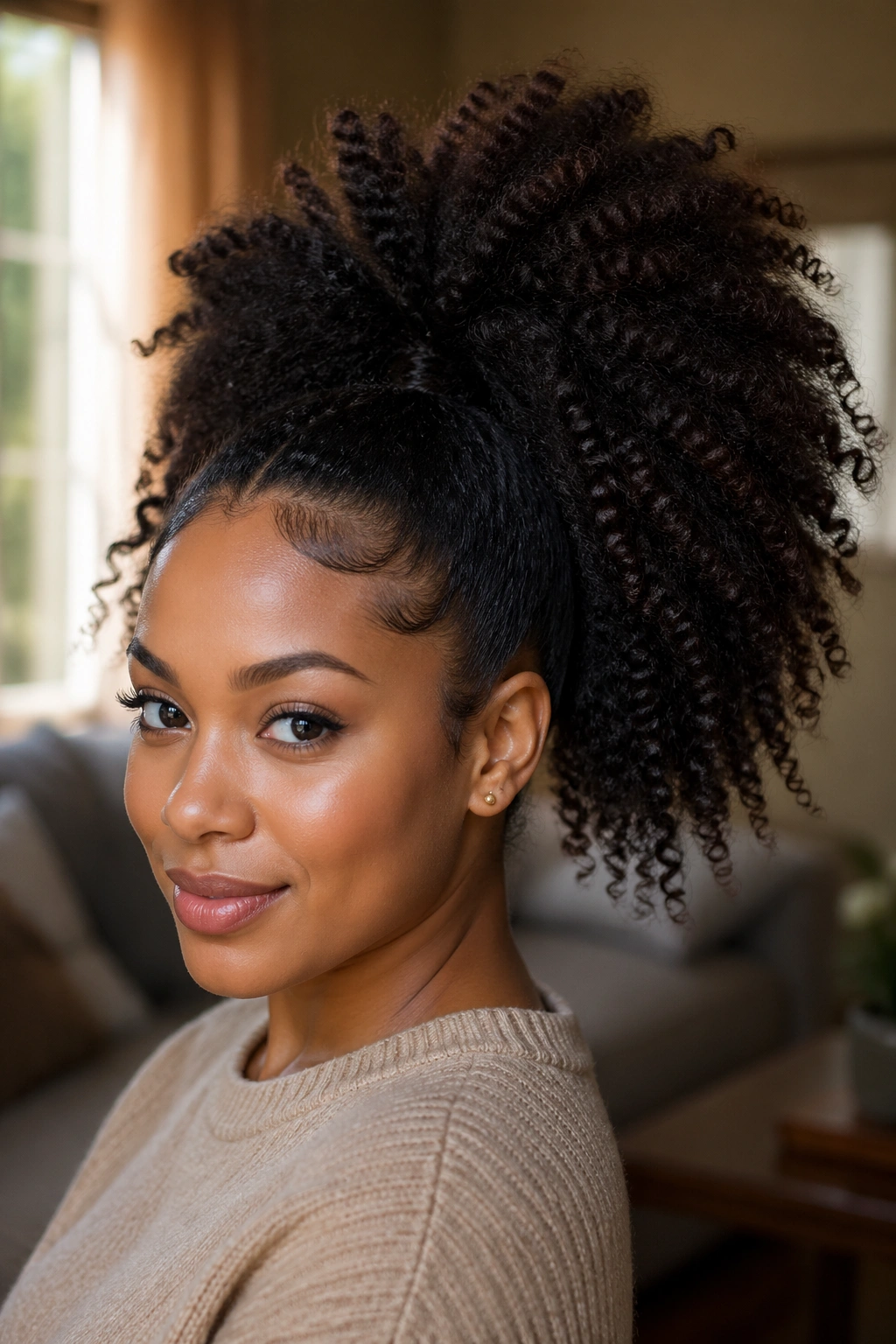
A ponytail created from brushed-out natural hair has an impressive, voluminous quality that a standard gathered ponytail can’t match. The brushed-out texture means the ponytail itself is full and textured rather than smooth and flat.
Brush out your entire style lightly, then gather into a high ponytail, securing loosely. The ponytail should immediately look big and full — the brushed-out texture gives it volume that goes outward rather than hanging flat. Wrap one curl section around the base, smooth your edges, and shake your head gently to see the ponytail at its most voluminous.
15. Brushed-Out Curly Bob Shape
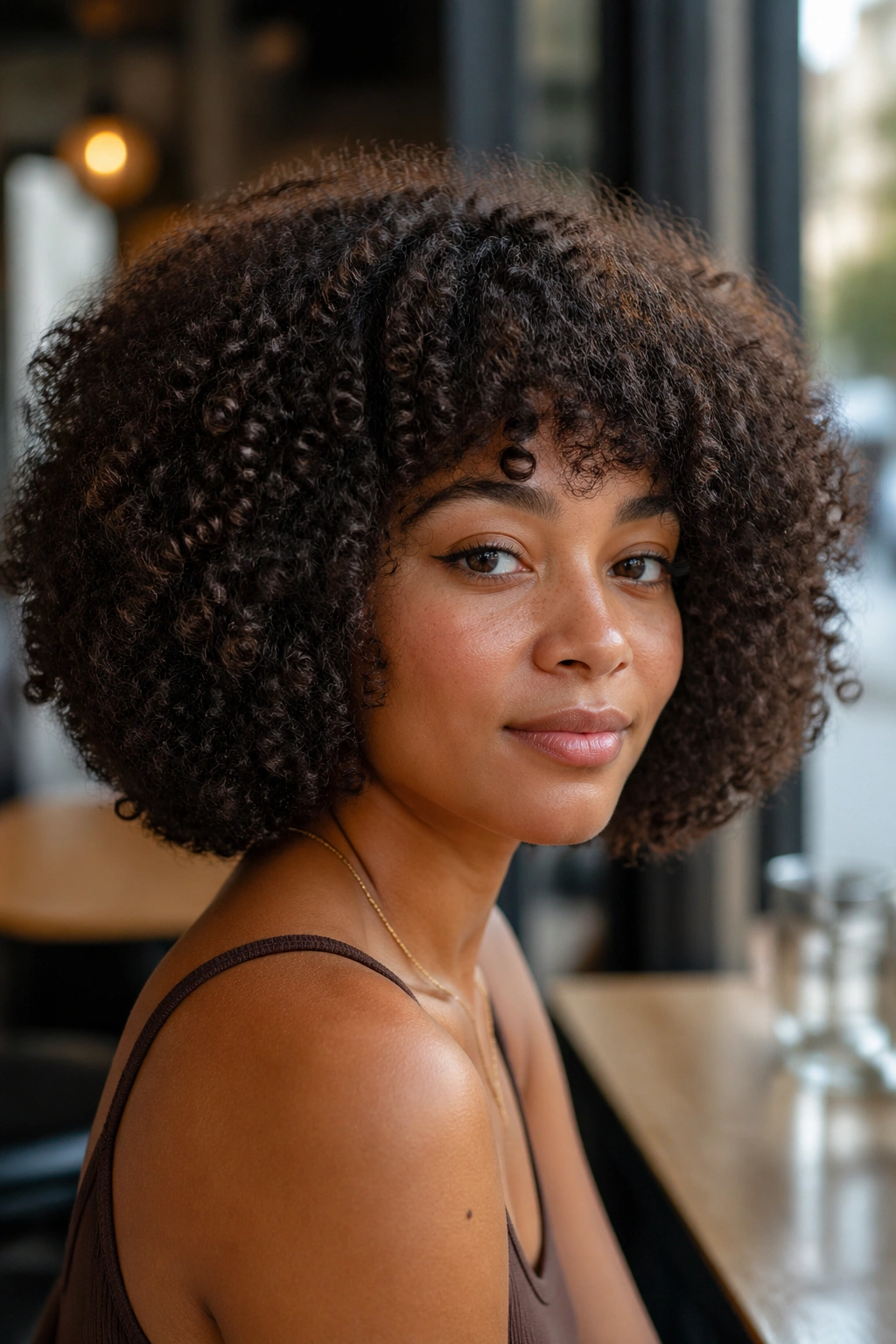
For naturals with significant shrinkage, a brushed-out style at natural length — without stretching — often creates a natural curly bob shape as shrinkage brings the hair to chin or shoulder length. Brushing it out within that shortened length creates a full, round, perfect curly bob.
After your base style, brush out to your preferred level of expansion and allow the shrinkage to bring your hair to its natural shorter range. Shape the bottom of the style slightly — angling inward for a classic bob or keeping it even across for a more blunt look — using scissors or simply by coaxing the shape with your brush. The result is a natural curly bob that’s completely your own.
16. Brushed-Out 4C Texture Afro
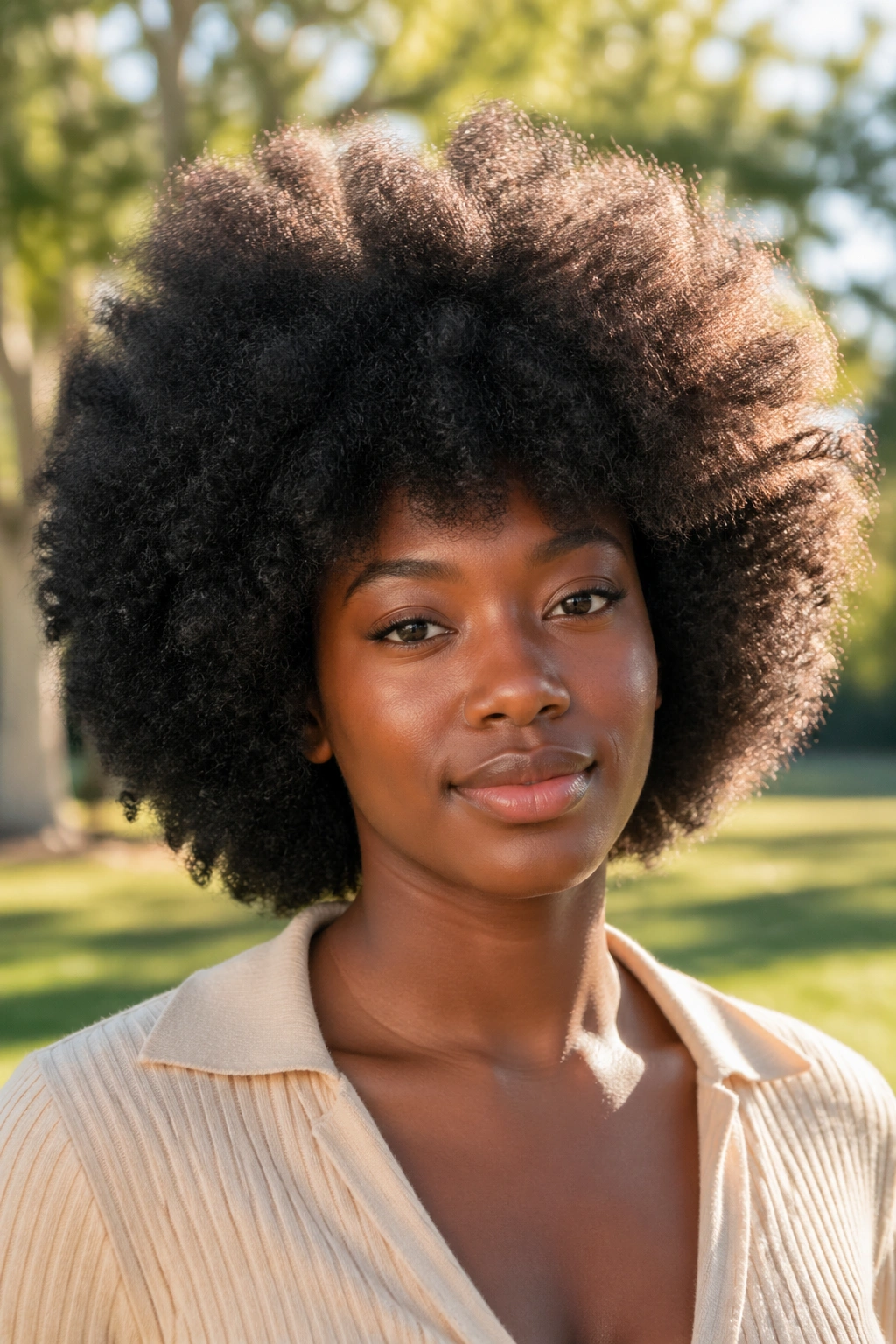
4C hair brushed out achieves something remarkable — a density of texture that no other hair type can produce. Because 4C strands are so fine and tightly coiled, a fully brushed-out 4C afro has extraordinary density, depth, and a full, cloud-like quality that is entirely its own category of beautiful.
The key for 4C hair specifically is maximum moisture before brushing. 4C hair needs more slip and hydration than looser textures to brush out cleanly without breakage. Mist generously, apply a light oil throughout, and use a pick rather than a brush for most of the expansion work. The pick’s teeth are gentler on tight coils than bristles and create lift without the friction that can cause breakage in tightly coiled strands.
17. Brushed-Out Holiday Glam Style
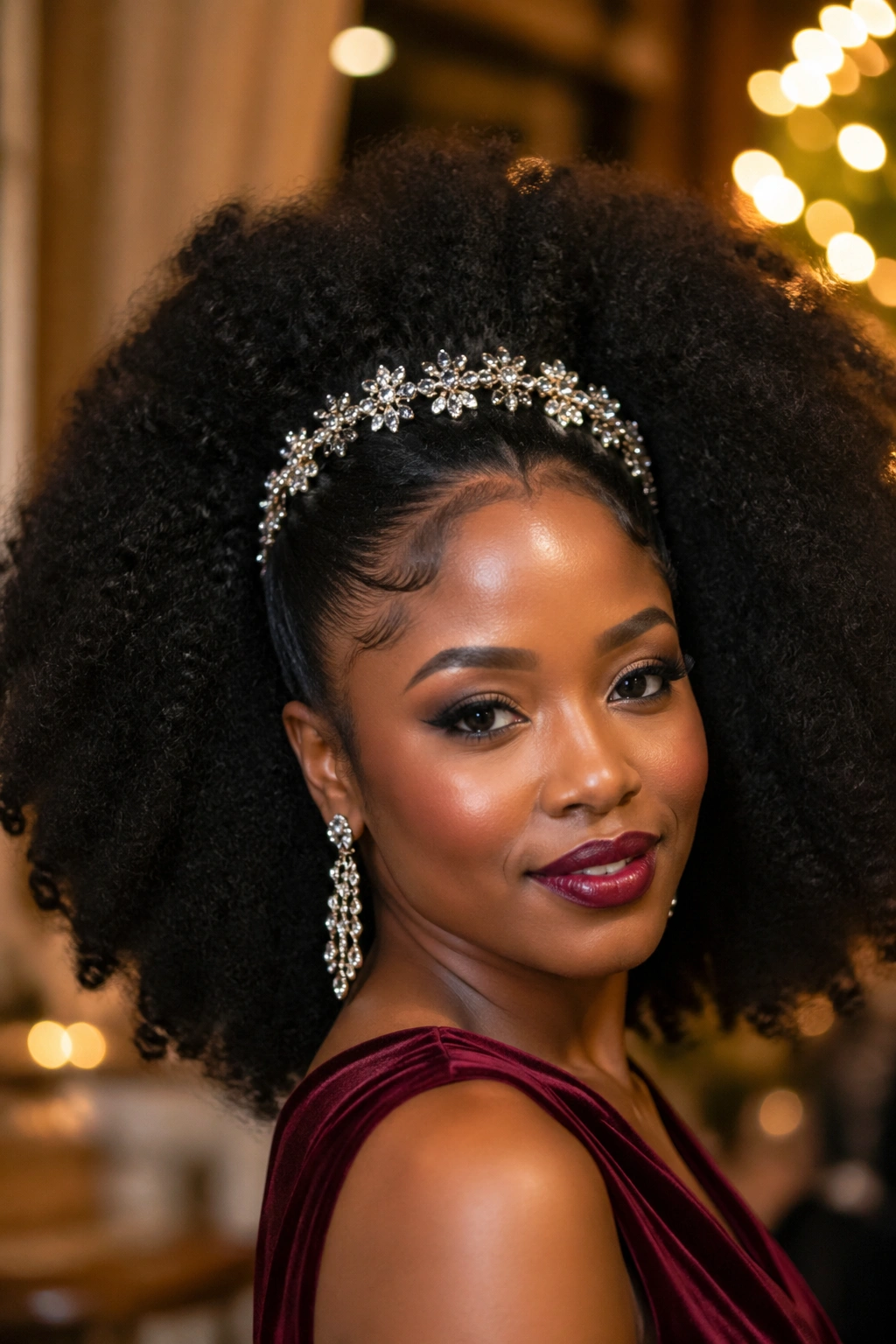
For special occasions, a brushed-out natural style elevated with accessories and edge styling becomes a genuinely glamorous look — the big, soft, voluminous brushed-out hair becomes the centerpiece, and careful finishing details make it look intentional and polished.
Brush out your best base style to your preferred level. Smooth your edges with an edge control and a soft brush — the contrast between brushed-out volume and laid, defined edges is striking. Add a bold accessory — a jeweled headband, satin bow, or cluster of decorative pins scattered through the brushed-out hair. The combination of big natural texture and deliberate finishing details is what transforms a brushed-out style from casual to celebration-worthy.
18. Brushed-Out Curls with Headband
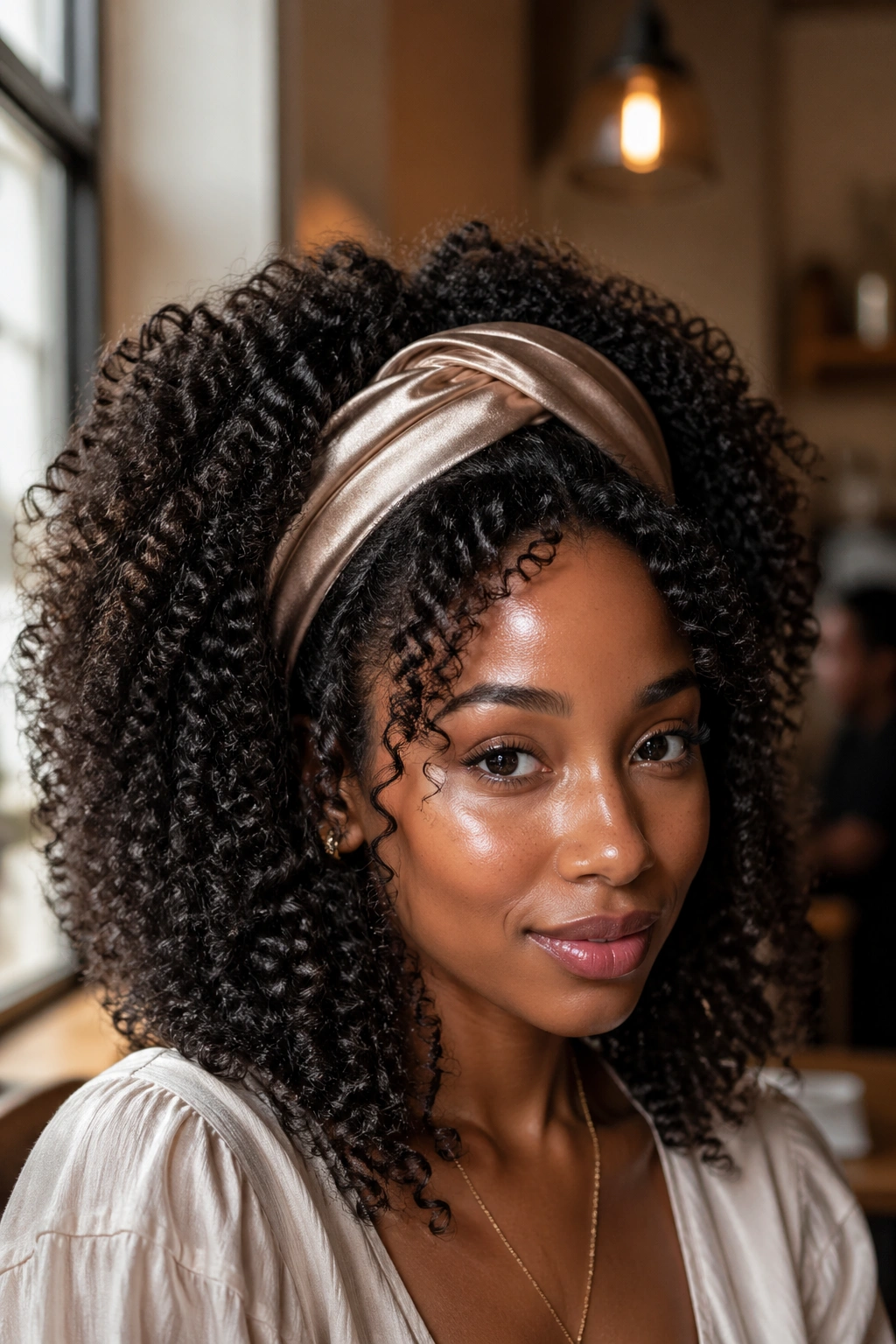
A wide satin or fabric headband placed over brushed-out curls creates a charming, effortless look that requires almost no additional effort but looks genuinely styled and beautiful.
Brush out your twist-out or braid-out to your preferred level of expansion. Place a wide headband at the front of your hairline and push it back slightly so your brushed-out curls cascade up and over the band, creating a natural crown effect. The headband frames your face and gives the overall look a polished, deliberate quality — it’s a genuinely easy style with high visual payoff.
19. Brushed-Out Curly Mohawk
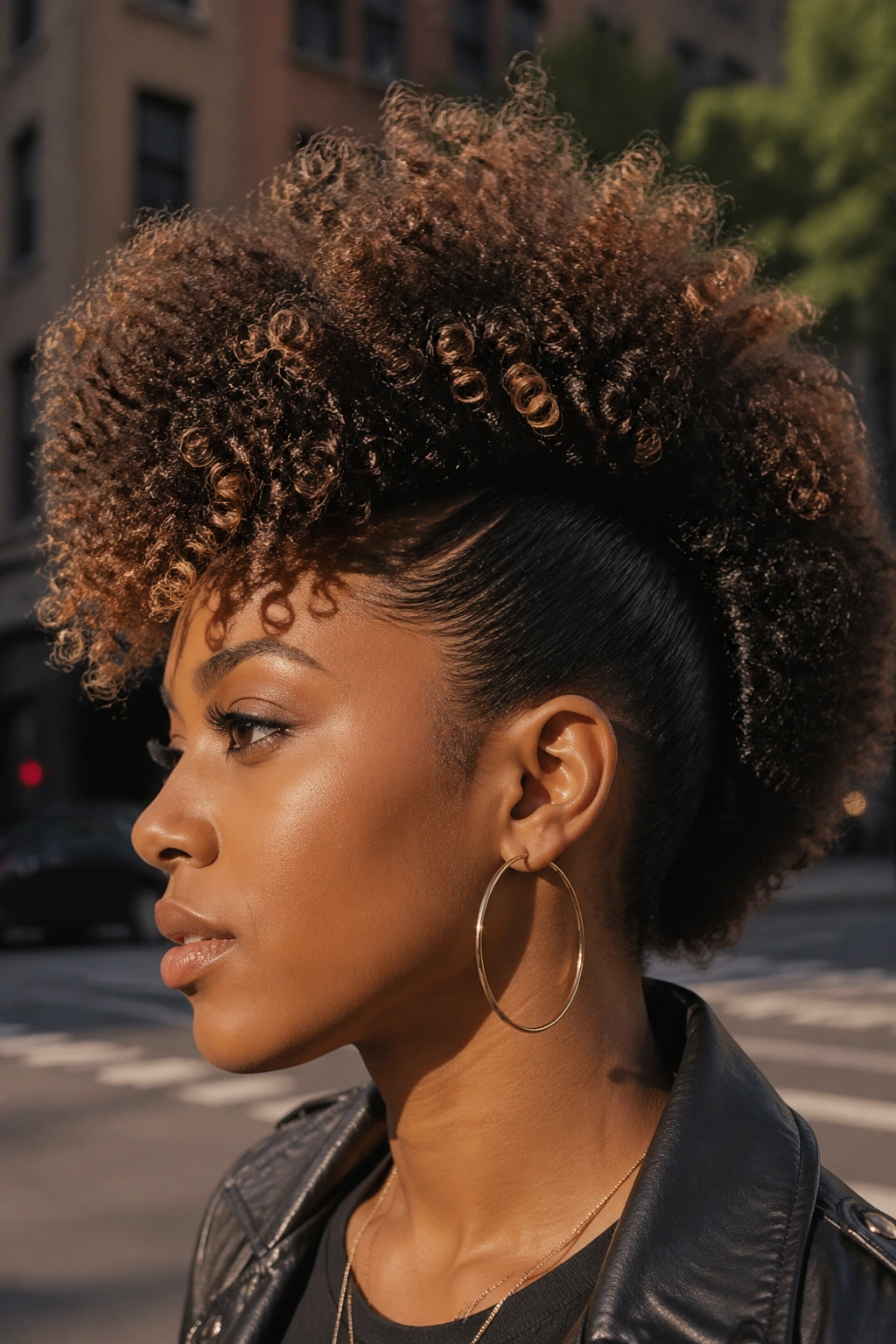
Rather than keeping the center curls of a frohawk defined and tight, a brushed-out mohawk deliberately expands and softens the center curls into a massive, fluffy section that contrasts with the flat, sleek sides.
Create your mohawk base — flat twists or pins along the sides — then brush out the center section aggressively. Use a pick first for root lift, then a paddle brush to expand the curls in every direction from the center line. The center should be as big and fluffy as possible. The contrast between the neat sides and the dramatically big, brushed-out center is one of the most striking silhouettes in natural hair styling.
20. Full Body Brushed-Out Natural Style
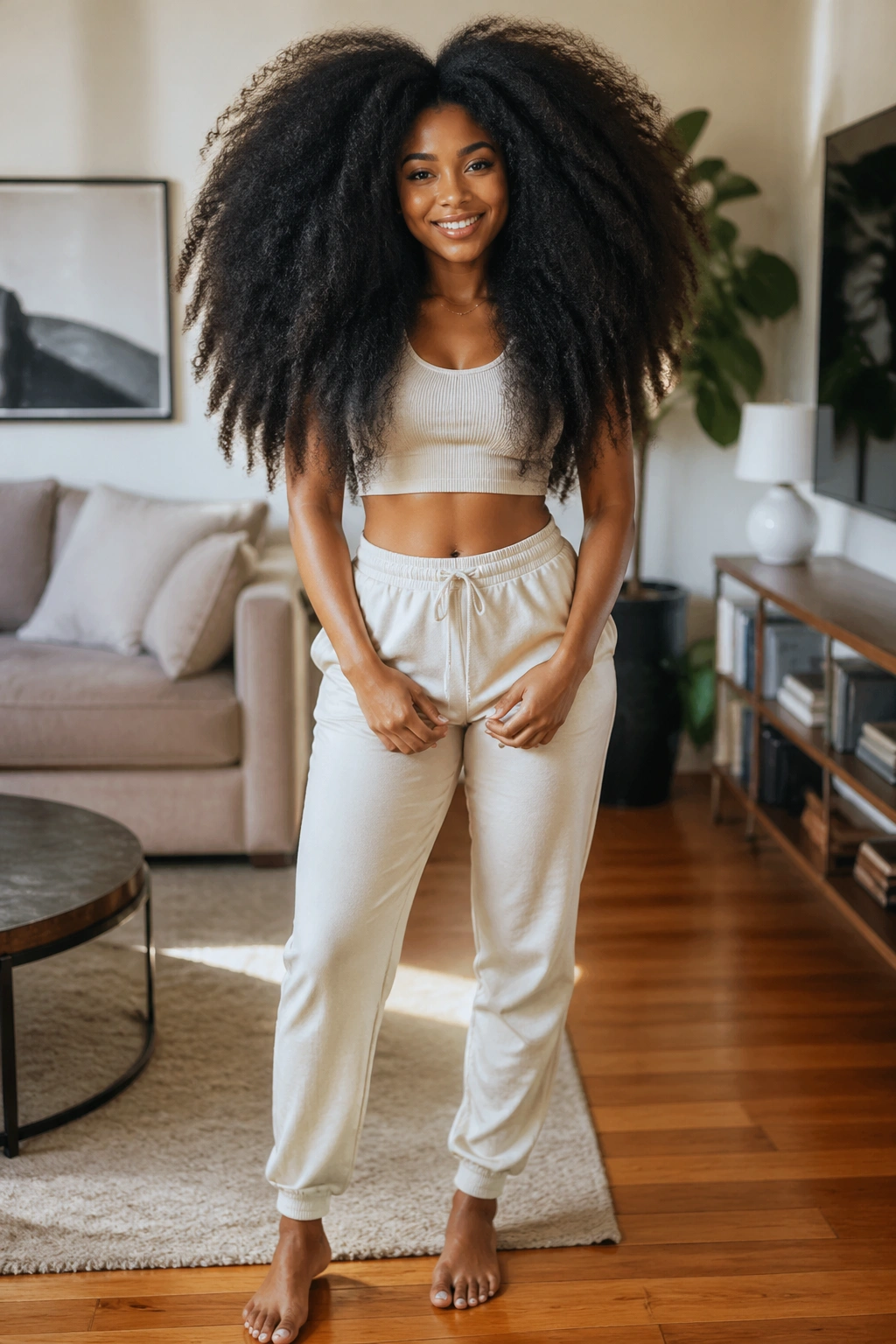
The ultimate brushed-out style doesn’t aim for a specific shape or technique — it just aims for maximum size and volume from your natural hair, whatever that looks like. Every section brushed out as fully as possible, the shape formed naturally by your hair’s own expansion.
Start with a heavily moisturized, well-conditioned base style — your best twist-out, rod set, or braid-out. Mist generously. Then brush out every section, working from the roots upward, letting your hair expand in every direction without forcing it into any particular shape. Step back. Look at your hair’s natural silhouette — the shape it makes when allowed to be fully itself, as big and voluminous as it can possibly be.
That’s not a bad hair day. That’s not a style that needs fixing. That is exactly what your natural hair looks like at its fullest, freest, most uncontained — and it is spectacular.
How to Make Brushed-Out Styles Last
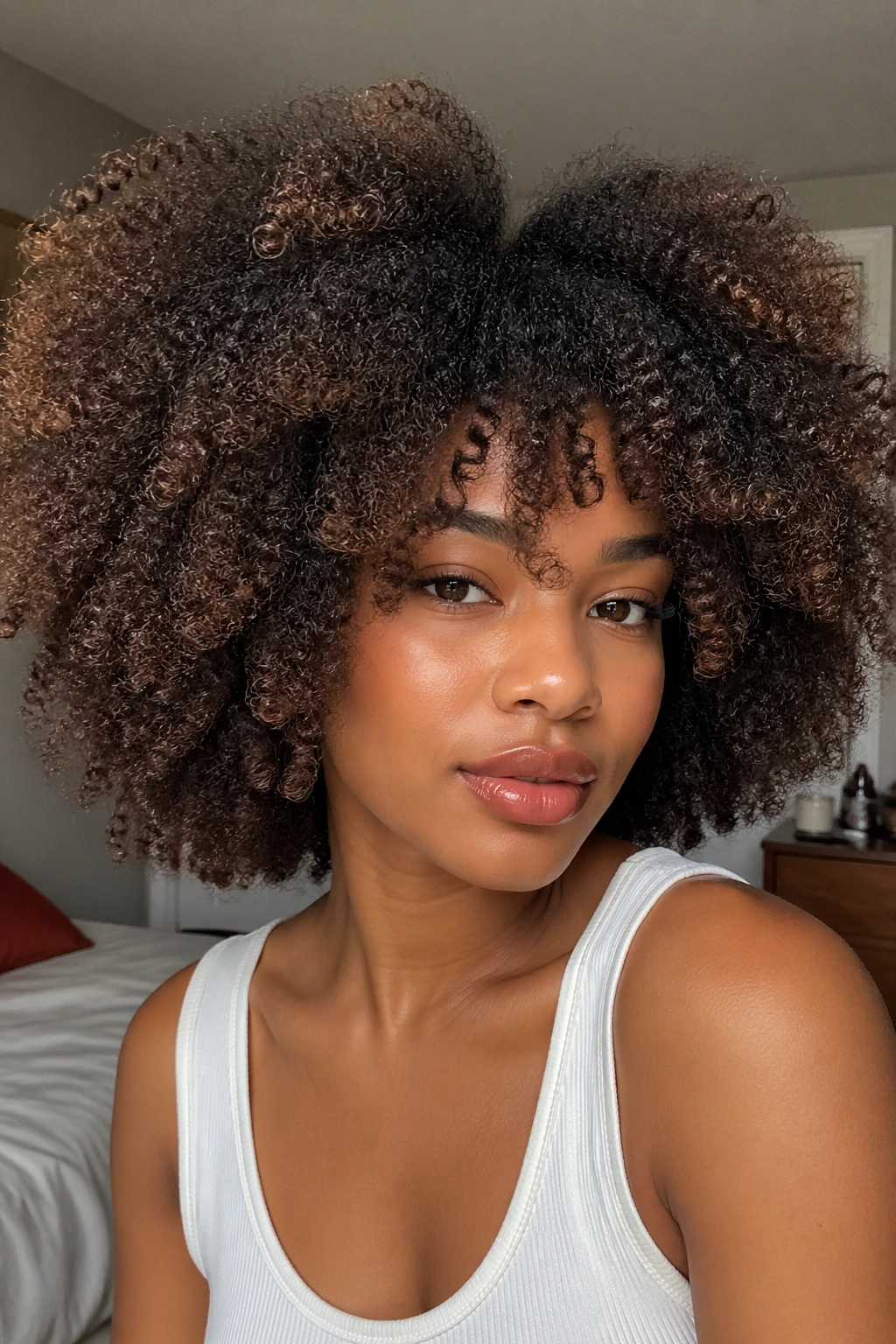
Brushed-out styles tend to have a shorter defined life than their un-brushed-out counterparts — once you brush out a style, you’re committed to wearing it in that expanded, fluffier state because re-defining it means a full restyle. But the good news is that brushed-out styles also tend to look better and more natural as they age slightly, rather than worse.
For nighttime maintenance of a brushed-out style, a very large satin bonnet is essential — you need enough room for all that volume to sit inside without being compressed. The pineapple method can work too, but it may struggle to contain a fully brushed-out afro without flattening it. Some naturals with very large brushed-out styles sleep directly on a satin pillow and adjust the shape in the morning using a pick — skipping the bonnet entirely.
Refreshing a brushed-out style the next morning is simple: mist lightly, use a pick to lift where things have flattened, and shake your head. The original twist-out or braid-out texture beneath the brushed-out surface usually provides enough structure to hold the general shape overnight even without perfect bonnet maintenance.
