



Natural curl hairstyles for Black women span a spectrum so wide that a single article can only begin to cover it — from the tightest 4C coil worn as a TWA to the loose 3A spiral gathered in a sophisticated updo, from protective styles that preserve length to free styles that celebrate volume, from five-minute everyday looks to hour-long event styles that stop conversations. What connects all of them is texture that comes from the inside, growth patterns that belong fully to you, and a styling tradition that has been built, refined, and passed down among Black women for generations.
The Natural Hair Journey for Black Women
The decision to go natural — or to stay natural — carries different weight for different women. For some, it was a deliberate act of reclamation: cutting off chemically processed hair and starting over with the texture that grows naturally from their scalp. For others, it was a gradual shift as protective styles grew out the relaxer. For younger women who have always worn their natural texture, it’s simply how they’ve always known their hair to be.
All of these paths lead to the same place: natural curls that need to be understood, moisturized, styled, and celebrated on their own terms. The natural hair community has built an enormous body of knowledge around doing exactly that — and that knowledge belongs to every Black woman navigating her own hair journey, wherever she is in it.
The styling landscape for Black women with natural curls has expanded dramatically over the years. Brands have multiplied. Techniques have been shared widely through tutorials, community forums, and word-of-mouth. The vocabulary — LOC method, porosity, protective styling, wash-and-go, big chop — has become widely understood. What was once private knowledge passed between family members is now a shared, searchable, constantly growing tradition.
Curl Patterns Specific to Black Hair
Most Black women have Type 4 hair — 4A, 4B, and 4C — though Type 3 (3A, 3B, 3C) is also common, and many women have multiple patterns across different parts of their head. Understanding these distinctions helps in choosing the right products and techniques, but it’s important not to overweight the typing system. Hair texture is more complex than any single classification system can fully capture.
Type 4A has tight, well-defined S-shaped coils that spring back easily when stretched. It has visible curl pattern even without product, holds moisture relatively well, and responds beautifully to water-based styling.
Type 4B has a tighter, more angular coil — the pattern is less S-curve and more zig-zag. It has more shrinkage, responds well to twist-outs and braid-outs for elongation, and often appears to have no pattern when dry without product.
Type 4C has the tightest coil structure — so tight that there may be no visible curl pattern at all in its dry, unstyled state. 4C hair has the most shrinkage (up to 75% of its actual length), the most density in many cases, and produces some of the most dramatic volume when styled. It is also the most prone to dryness and tangles if not properly maintained.
All three types are beautiful. All three require moisture, care, and specific techniques that work with their natural properties rather than against them. The natural curl hairstyles in this guide are designed to work across this full spectrum.
Porosity: The Factor Most Beginners Miss
Hair porosity — how readily the hair absorbs and retains moisture — is one of the most important factors in how natural curls respond to products. Most discussions of curl typing skip over it, which leads to confusion when products that work beautifully for someone else don’t work at all for you.
Low porosity hair has tightly sealed cuticles that resist water and product penetration. It takes longer to get wet in the shower, and products tend to sit on top of the hair rather than absorbing. Low porosity hair benefits from heat during conditioning (a warm shower, a hooded dryer, a steam treatment) to open the cuticle and allow moisture in. It does best with lighter, water-based products that don’t build up on the surface.
High porosity hair has open, damaged, or naturally raised cuticles that absorb moisture readily but also lose it quickly. High porosity hair feels wet immediately in the shower but can dry out within hours of styling. It benefits from heavier, sealant-focused products — butters, oils applied after water-based leave-ins — that trap moisture before it escapes. Protein treatments help temporarily close the cuticle and improve moisture retention.
Medium porosity hair falls in between: it absorbs moisture well and retains it reasonably well without significant intervention. Medium porosity hair is generally the easiest to style consistently.
Knowing your porosity changes how you approach products and techniques for every natural curl hairstyle on this list. A product that absorbs beautifully on high porosity hair might sit heavy and greasy on low porosity hair. A conditioning technique that works for medium porosity might not be enough for high porosity. It’s worth doing a porosity test — dropping a clean, dry strand of hair into a glass of water and observing where it floats — and adjusting your product approach accordingly.
Building a Natural Hair Routine That Supports Styling
Natural curl hairstyles look their best when they’re built on a foundation of consistent care. Not a complicated, expensive routine — a consistent one. The specific products matter less than whether you use them regularly and whether your hair is genuinely moisturized before you begin styling.
The minimum effective routine for healthy, style-ready natural curls includes: washing with a sulfate-free or low-poo shampoo every one to two weeks, deep conditioning with heat on the same schedule, applying a leave-in conditioner after every wash, sealing with a light oil, and protecting the hair at night with a satin or silk bonnet or pillowcase.
Everything beyond this is optional and depends on your specific hair needs. Protein treatments every four to six weeks if your hair needs strength. Co-washing (conditioner washing) between shampoo washes if your hair dries out quickly. Scalp massages with oil for growth stimulation. Stretching techniques for shrinkage management. The foundation stays the same; the additions are personal.
1. Classic Wash-and-Go
The wash-and-go is where most natural hair journeys begin — and where many experienced naturals return again and again because nothing shows off a healthy curl pattern quite like it. Apply leave-in conditioner and curl-enhancing product to soaking-wet hair, scrunch, and let it dry without touching.
The wash-and-go celebrates exactly what your hair does naturally. No manipulation into a different pattern, no setting and unraveling — just your curl pattern, revealed by moisture and held by product. Learning your specific wash-and-go technique — which products, how much water, which application order — takes time but pays off indefinitely.
2. Two-Strand Twist-Out
The twist-out has styled more natural hair than arguably any other technique in the tradition. Set two-strand twists on clean, moisturized hair, allow to dry completely, and unravel. The resulting wave pattern is fuller and more defined than a plain wash-and-go, and the size of the twist determines the size of the resulting wave.
Twist-outs work on every curl pattern but look different across them. On 3C and 4A hair, the twist-out produces clear, defined waves. On 4B and 4C hair, the result is bigger, fluffier, and less individually defined — which is equally beautiful.
3. Braid-Out
Set three-strand braids on damp, product-coated natural hair. Allow to dry overnight. Unravel in the morning and separate gently. The braid-out produces a more angular, crimped wave pattern than the twist-out — with a different texture that works especially well on 4C hair seeking more definition and elongation than a twist-out offers.
4. Protective Box Braids
Box braids are one of the most widely used protective styles in the natural hair community for good reason. They last two to eight weeks depending on your maintenance, keep your natural ends protected and your hands out of your hair, and come in enough sizes and lengths to create dozens of different styling options within the single installation.
Caring for Your Natural Hair Under Braids
- Moisturize your scalp weekly with a lightweight oil or scalp spray
- Avoid braiding too tightly at the roots — tension causes traction alopecia over time
- Wash the scalp with diluted shampoo every two to three weeks while installed
- Remove after eight weeks maximum to allow the scalp and hair to breathe
5. Natural Afro
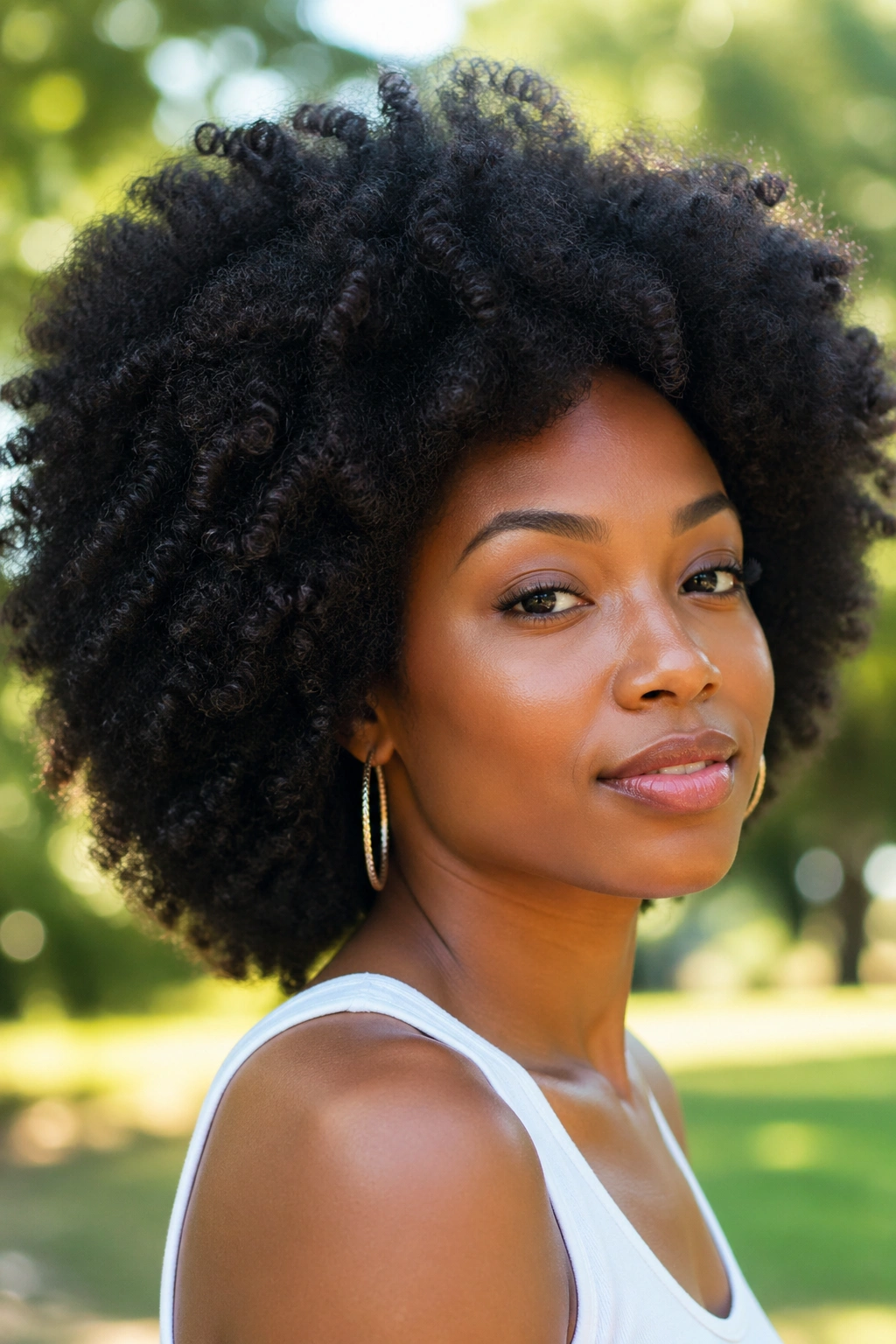
Worn loose, picked out, and fully textured — the afro is the most direct expression of natural hair. Whether it’s a TWA or a full, large fro, the afro requires no setup beyond moisture and an afro pick. It’s also the most demanding style in terms of confidence — because it requires you to show up with nothing except what your hair grows naturally.
6. High Puff
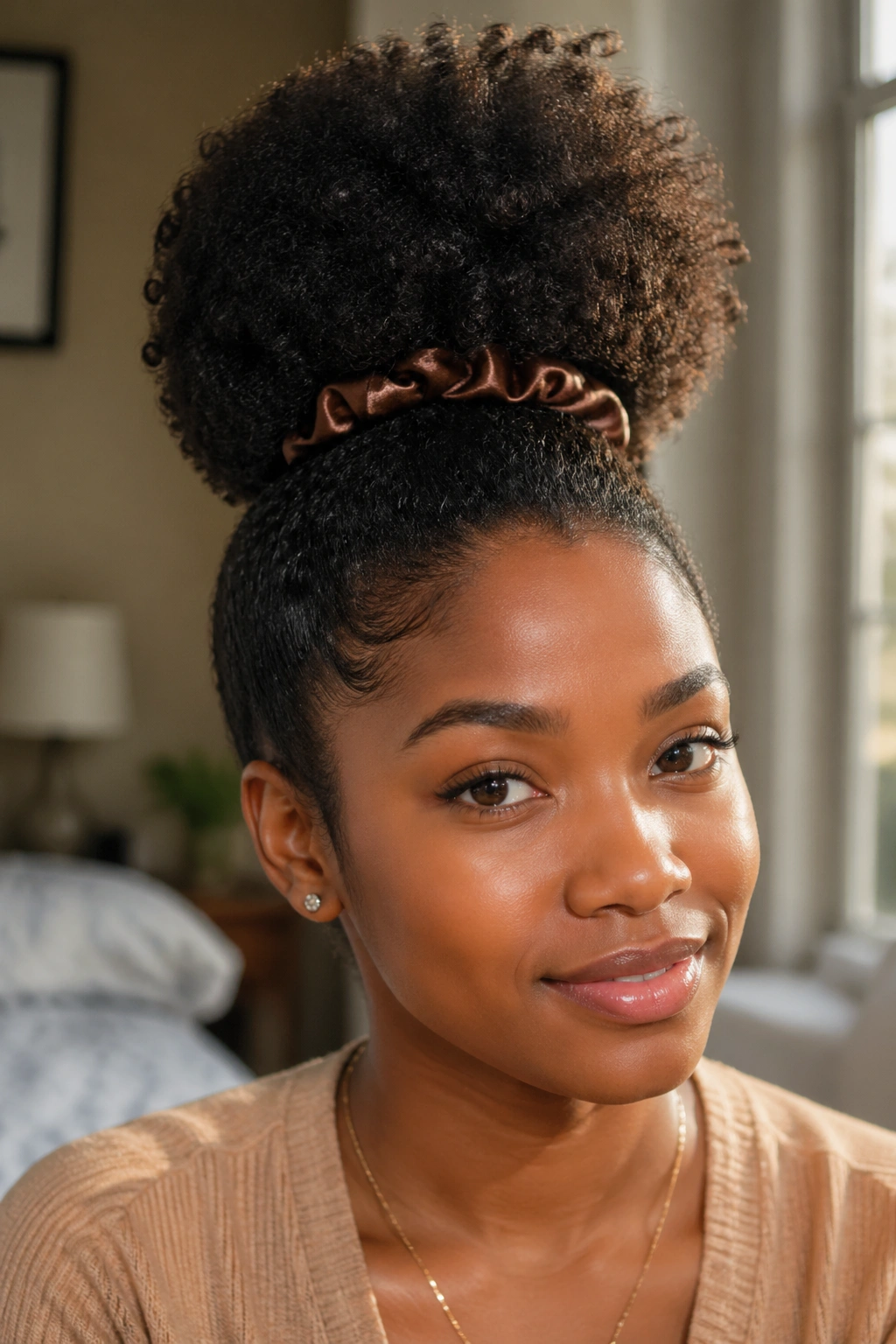
A high puff — gathered at the crown with a satin scrunchie and picked out for volume — is the everyday natural hairstyle. It’s quick, it’s protective of the ends, and it works on day one through day five of a wash cycle. Add an accessory for events; leave it plain for everyday.
7. Twist-Out Puff Hybrid
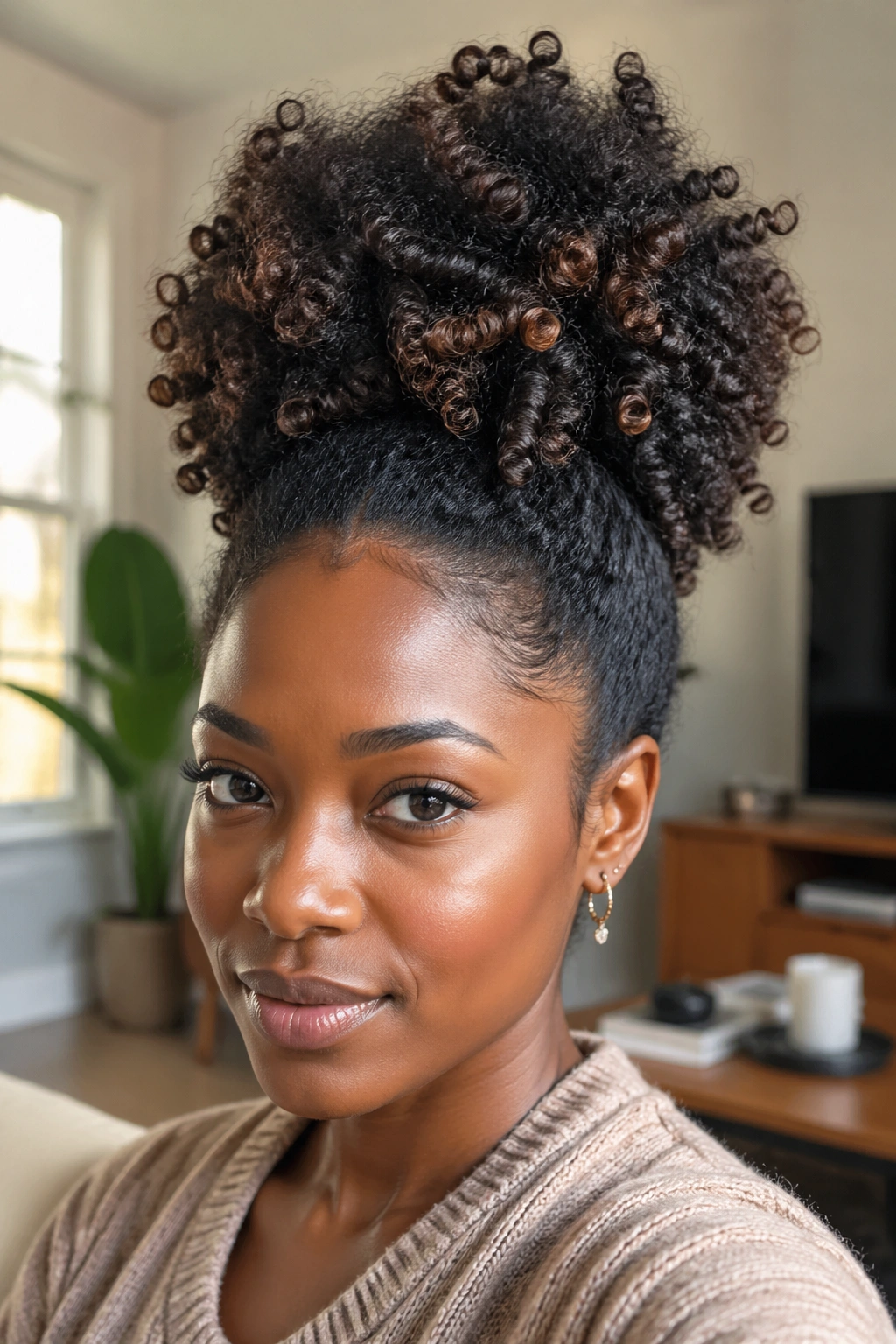
Do a full twist-out, then gather the resulting waves into a high puff rather than wearing them loose. The twist-out definition inside the puff makes it look more interesting than a plain puff — the waves and texture are visible when the puff moves. This style also holds shape better throughout the day than a loose twist-out.
8. Senegalese Twists
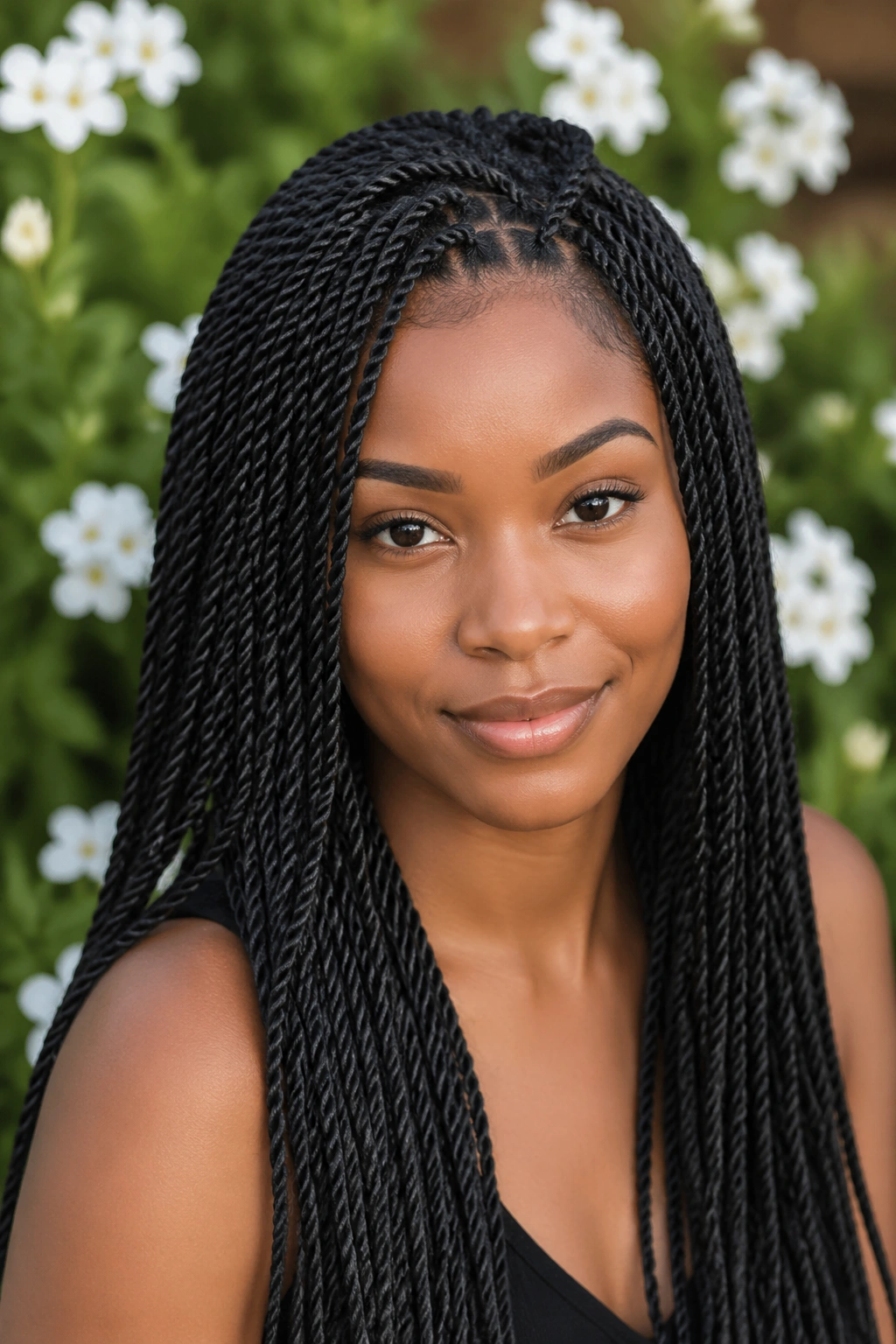
Two-strand twists that are typically thinner and more uniform than casual home twists — usually installed with hair extension fiber or natural hair twisted to a fine point at the end. Senegalese twists are a protective style that can last four to eight weeks, look elegant, and allow daily styling variation.
Wear them loose, in a puff, in a bun, braided together, or half-up half-down. The options are extensive. Senegalese twists on natural hair are a style that does double duty — protecting the natural hair underneath while looking like a fully styled appearance every day.
9. Flat Twist Updo
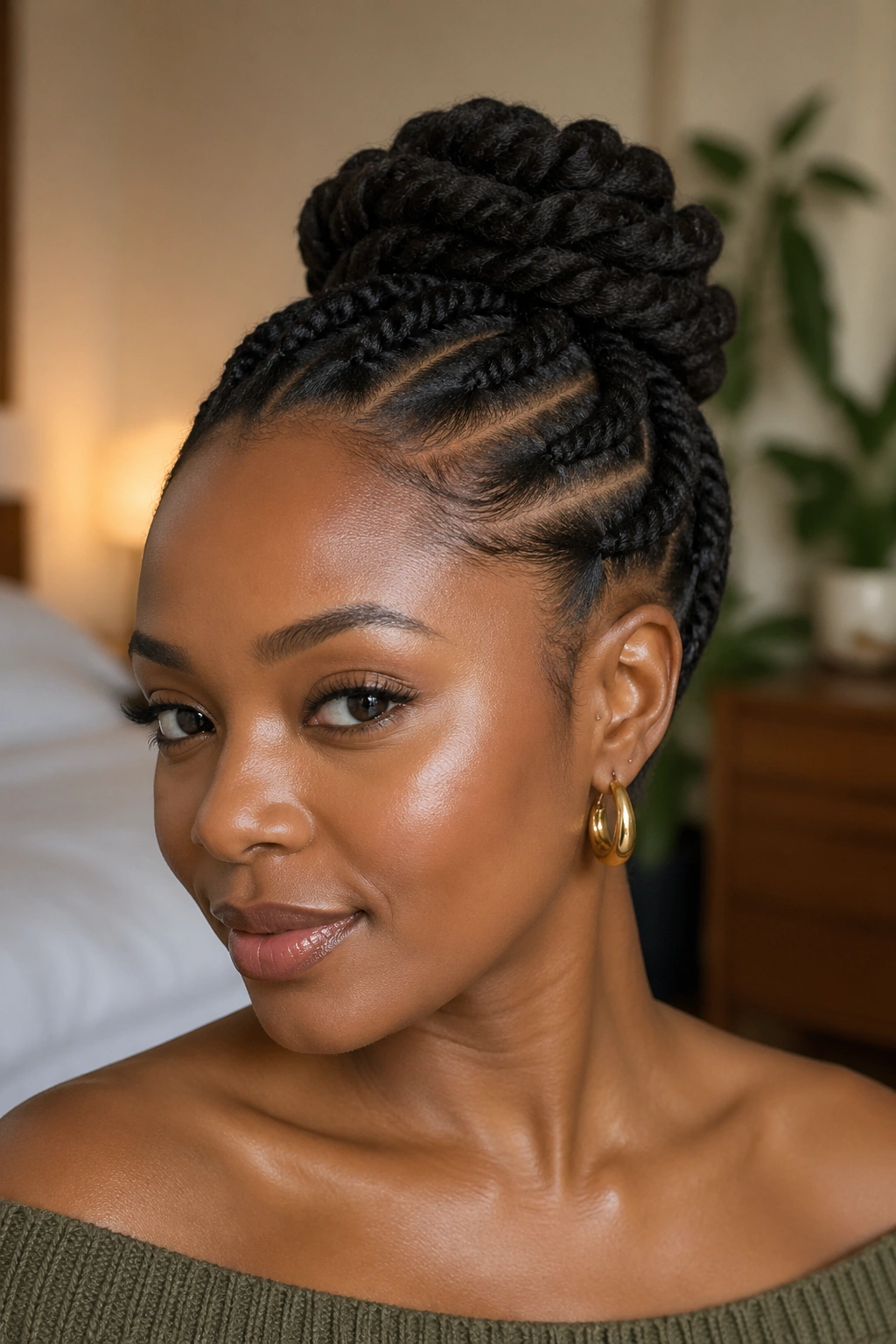
Flat twist each section of your natural hair against the scalp toward the crown or nape, then pin the arriving twists into an updo shape. The scalp-flat twists create clean lines leading into a gathered, textured updo that looks elegant and deliberate.
Flat twist updos are especially good for formal occasions — they read as intentional and polished while preserving your natural texture throughout the style.
10. Defined Coil-Out
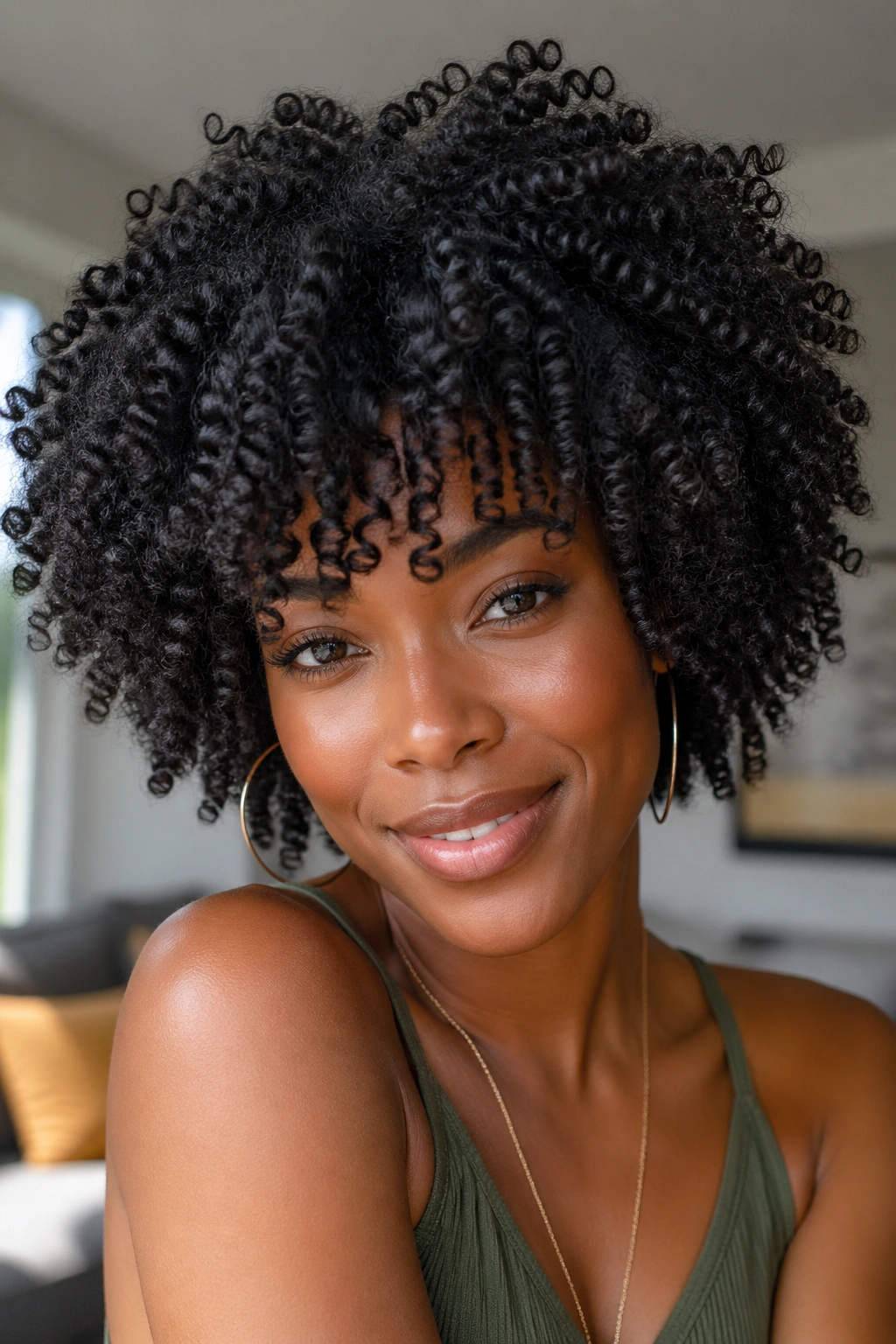
Apply gel to each small section of soaking-wet hair, wind the section around your finger from root to tip, and allow to dry without touching. Once fully dry, gently separate the tops of the coils for volume while keeping the root-to-mid section tightly defined.
Coil-outs give the most defined result of any styling technique on 4A and 4B natural hair. The individual coil structure is visible and consistent, and the style holds its shape well across multiple days.
11. Bantu Knots
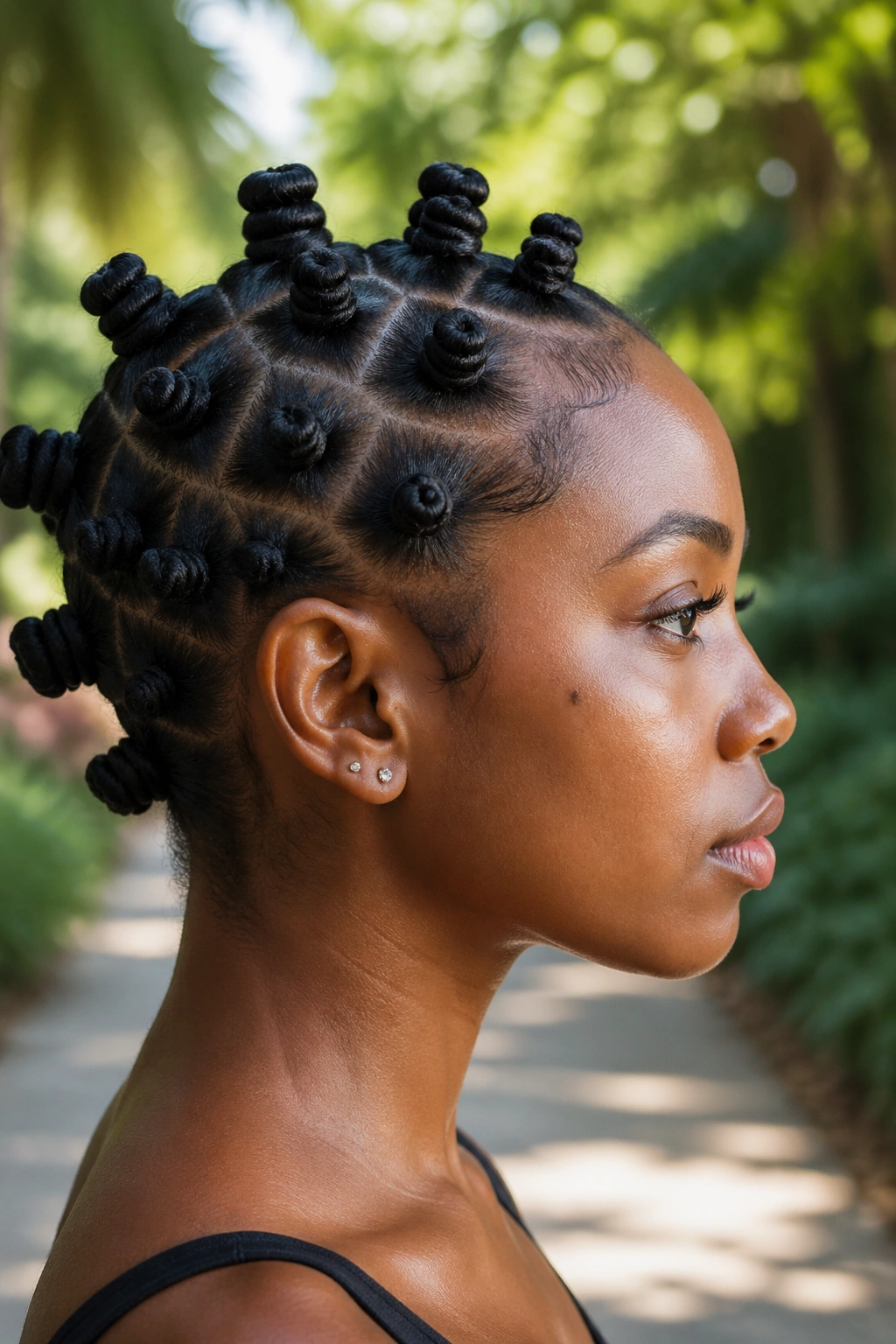
Bantu knots are a styling technique rooted in African culture, where small sections of natural hair are coiled around themselves and tucked into a knot shape. Worn as a style in themselves — not as an overnight set — they’re sculptural, distinctive, and a genuine statement.
As a set for an overnight knot-out, they produce spiral curls that can last several days. Both applications are valid and widely practiced.
12. Halo Braid
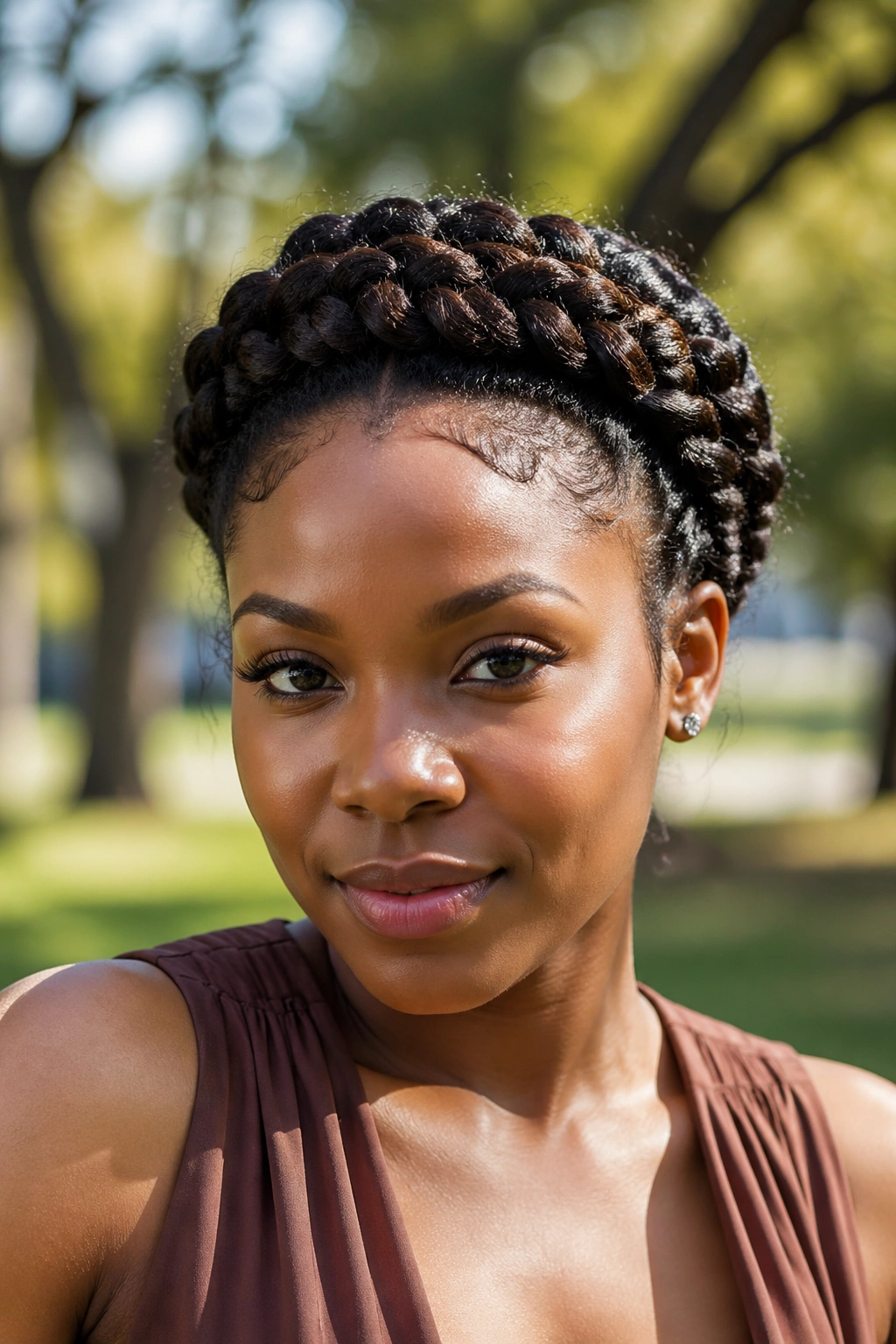
A cornrow or flat twist that travels all the way around the perimeter of the head, sitting at the hairline like a crown. The halo braid on natural hair shows the curl texture within the braid, has visible thickness and body, and creates a striking silhouette.
This style works on medium to long natural hair and requires some practice at the back of the head where the braid meets itself. But the finished result is genuinely beautiful — and holds all day without additional maintenance.
13. Flexi-Rod Set
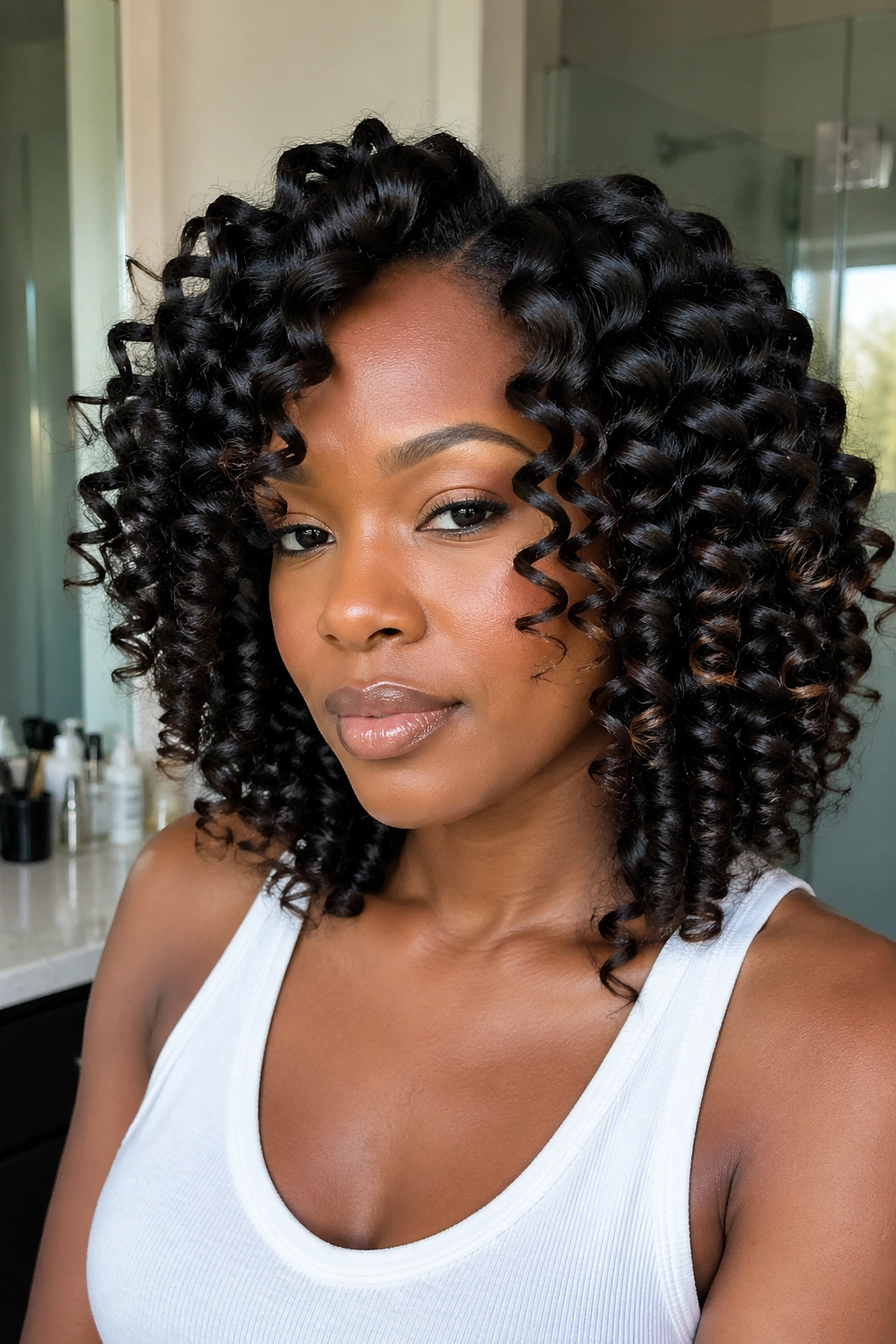
Wrap sections of damp, product-coated natural hair around flexi rods and dry under a hooded dryer. When the rods come out, the result is uniform, defined spirals with bounce and sheen. A flexi-rod set on 4C hair produces ringlets that show visible length and definition — one of the most impactful techniques for demonstrating the actual length that shrinkage conceals.
14. Marley Twists
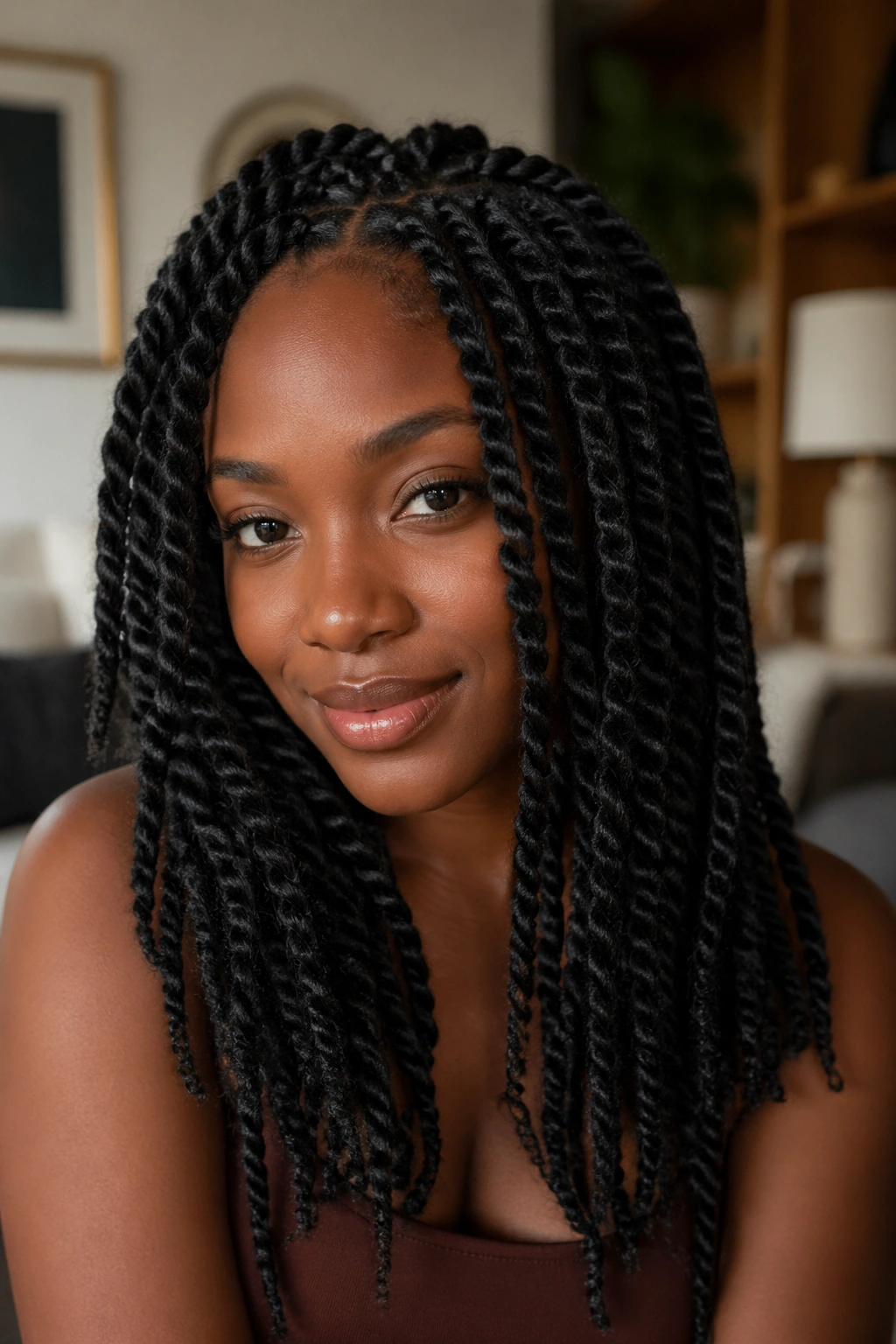
Marley twists use rough-textured Marley hair extension fiber to create twists that look and feel similar to natural, unprocessed hair. The texture of the Marley fiber blends beautifully with natural 4C and 4B textures, making these twists one of the most realistic-looking and popular protective styles in natural hair communities.
15. Passion Twists
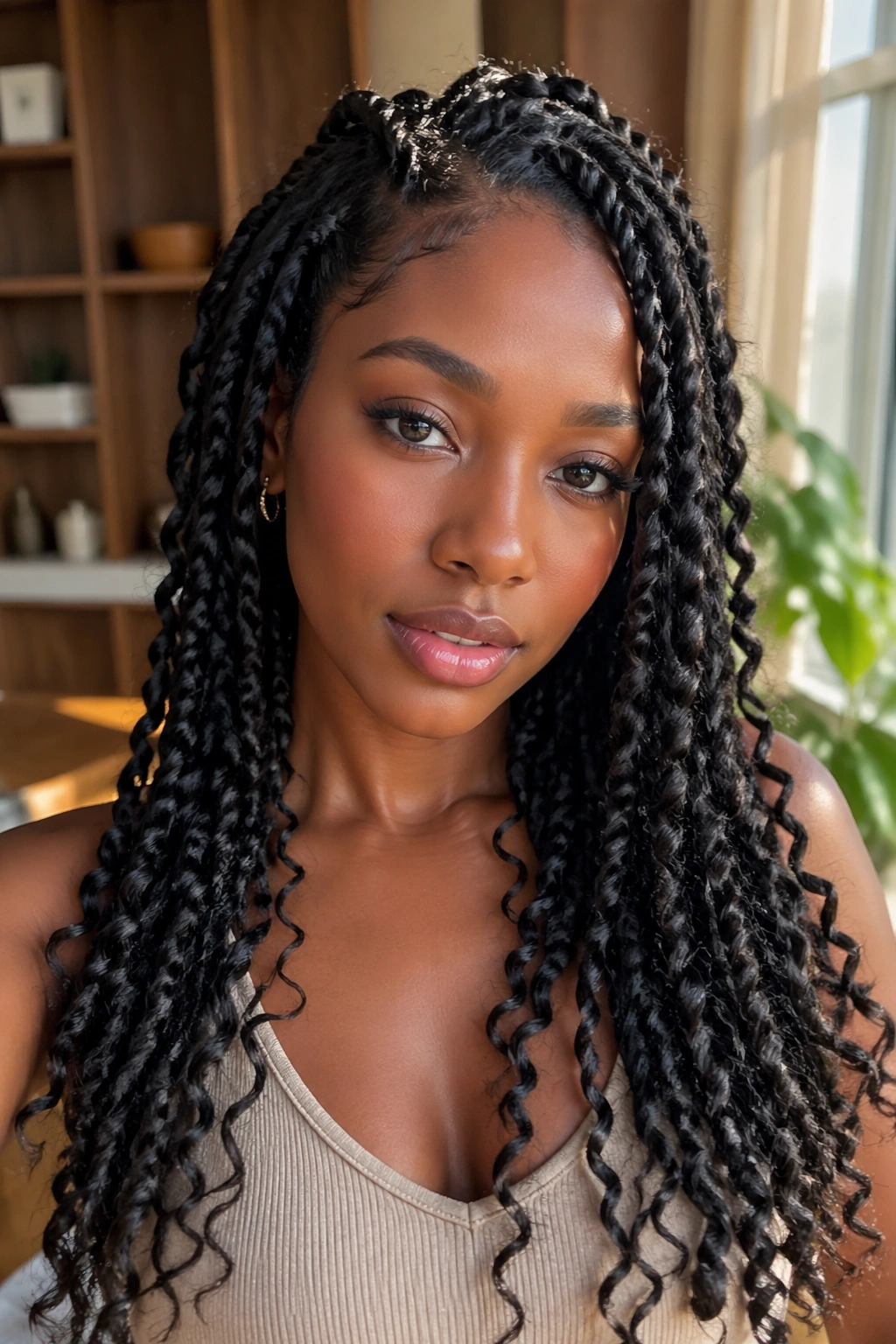
A protective style that uses textured wavy hair fiber to create soft, loose twists with a slightly wavy quality at the ends. Passion twists are softer than Marley twists and have a more romantic, flowing quality — especially popular for events, vacations, and warmer weather.
16. Goddess Braids
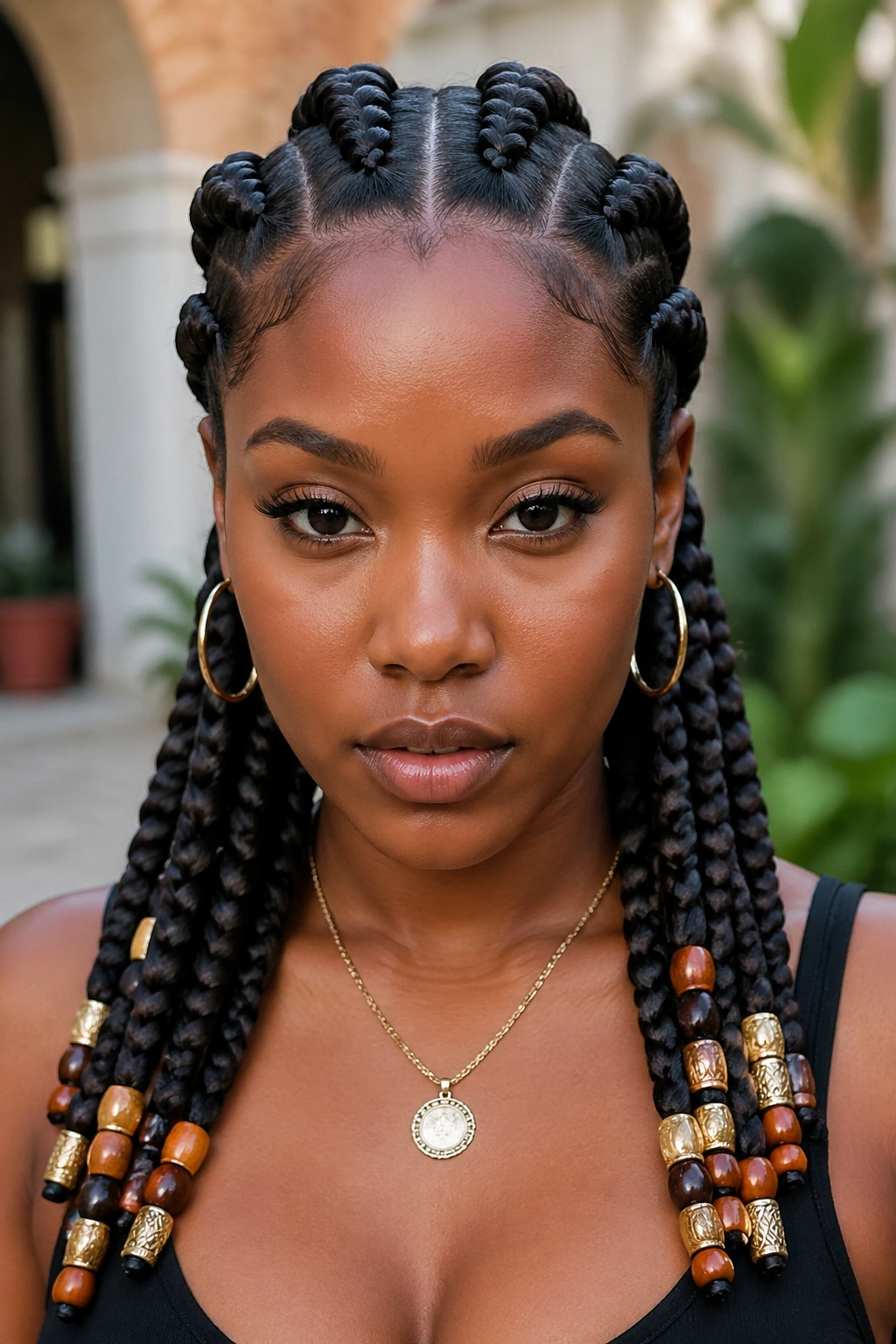
Large, chunky cornrows — whether two large braids, four, or a geometric pattern — installed on natural hair and worn as a complete style. Goddess braids on natural hair have a bold, sculptural quality. They sit close to the scalp in a deliberate pattern, can be accessorized with cuffs and beads, and last several weeks with proper care.
17. Stretched Style with African Threading
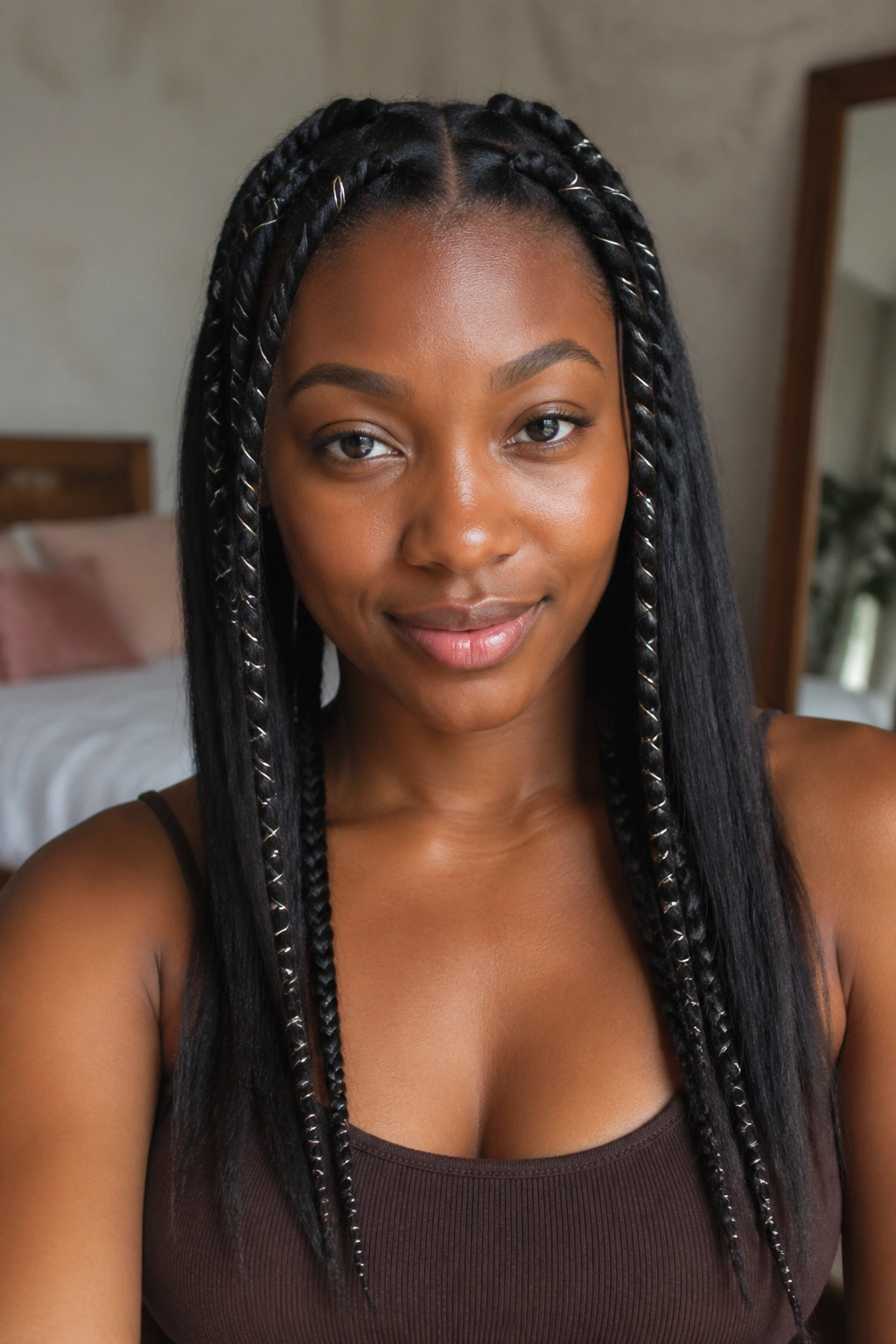
African threading is a technique used across many African countries to stretch and style natural hair without heat. Sections of hair are wrapped in thread from root to tip and left to dry stretched. When the thread is removed, the hair retains its stretched, elongated shape.
Threading can be the finished style itself — thread-wrapped sections are a distinct and beautiful style — or it can be used as a stretching method before a twist-out or braid-out to add length to the final result.
18. Natural Curls with Braided Accents
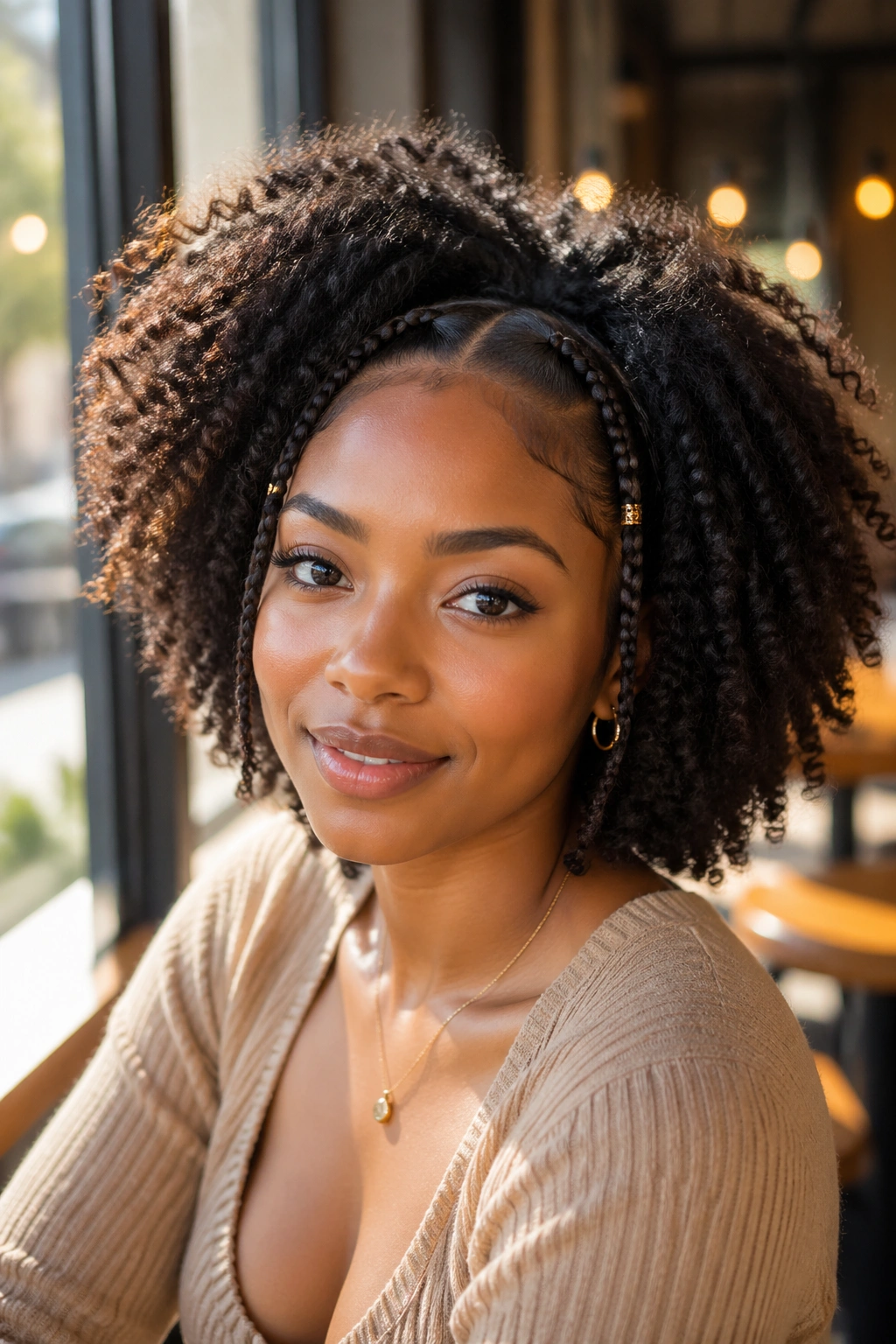
Wear your natural curls loose with one or two thin accent braids placed through the front or top section of your hair. The braided accents add a deliberate element to an otherwise free natural style, providing enough structure to read as intentional without altering the overall look significantly.
This is a style that’s easy to execute and provides a lot of visual interest relative to its simplicity.
19. Half-Up Half-Down Natural Style
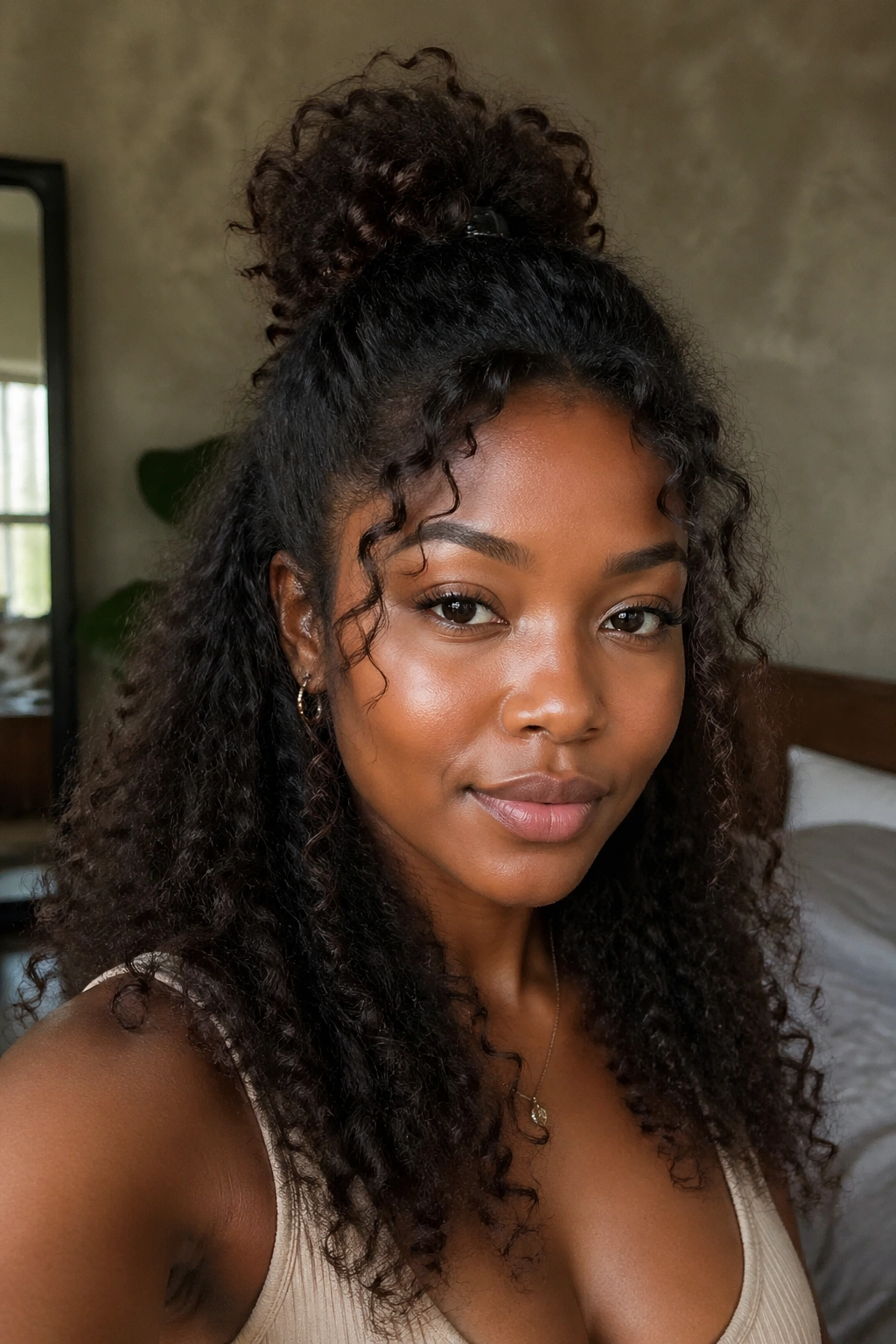
The top half of your natural hair gathered in a clip or scrunchie; the bottom half completely free. As straightforward as it sounds — but the execution matters. Gather loosely rather than tightly, allow the gathered section to have texture and body, and pull a few curls forward around the face.
The half-up half-down is one of the most flattering natural styles for a wide range of face shapes because it frames the face at eye level and allows the natural curl pattern to be visible throughout.
20. Curly High Ponytail
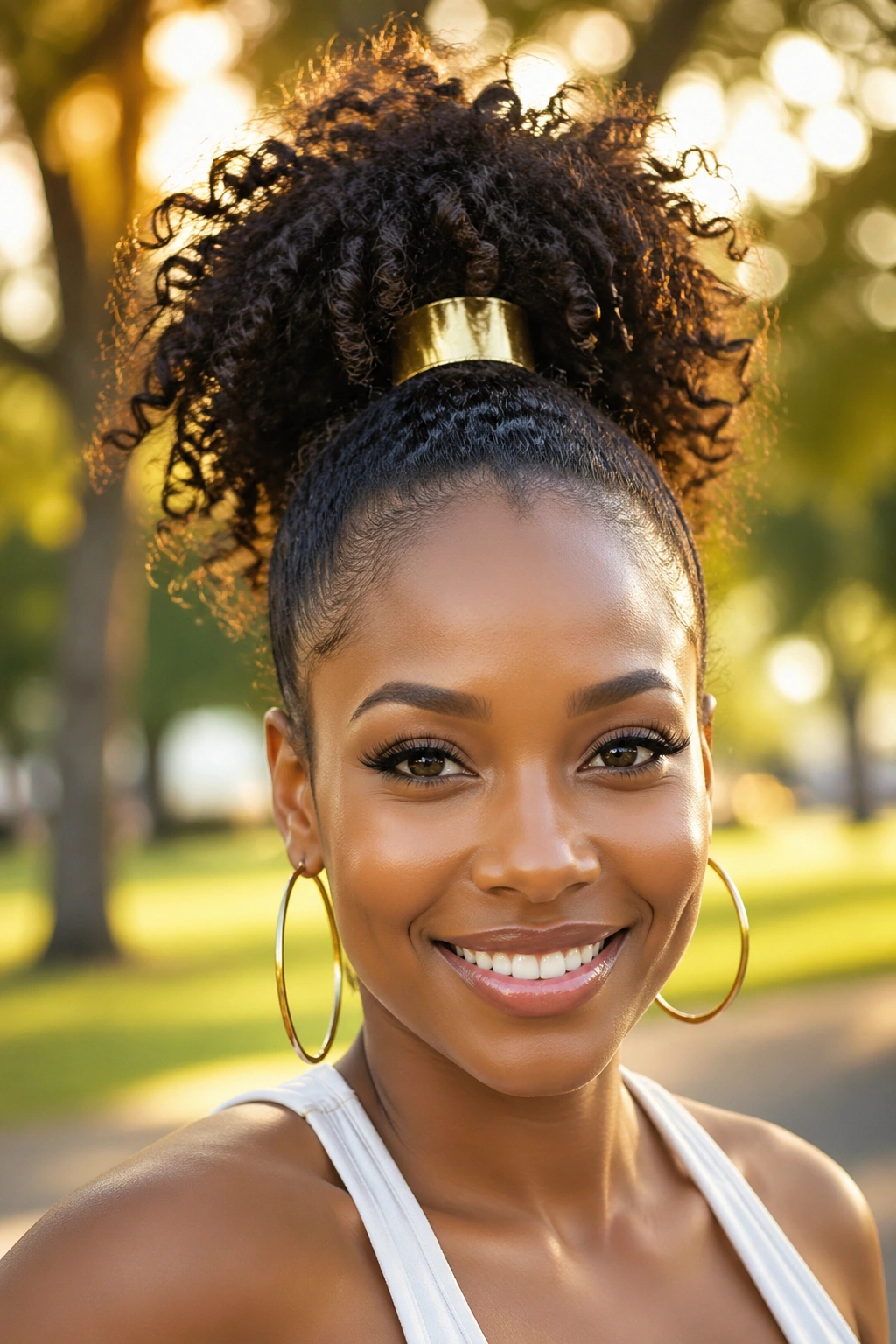
Gather all your natural hair into a high ponytail — not smoothed or slicked, but as textured and natural as it comes. The ponytail on natural hair is substantially different from the same style on straight hair: it has volume at the tail, texture throughout, and a presence that straight-hair ponytails simply don’t produce.
A gold or jeweled hair cuff at the base of the ponytail is the detail that makes this a complete, considered style rather than just gathered hair.
21. Protective Knotless Box Braids
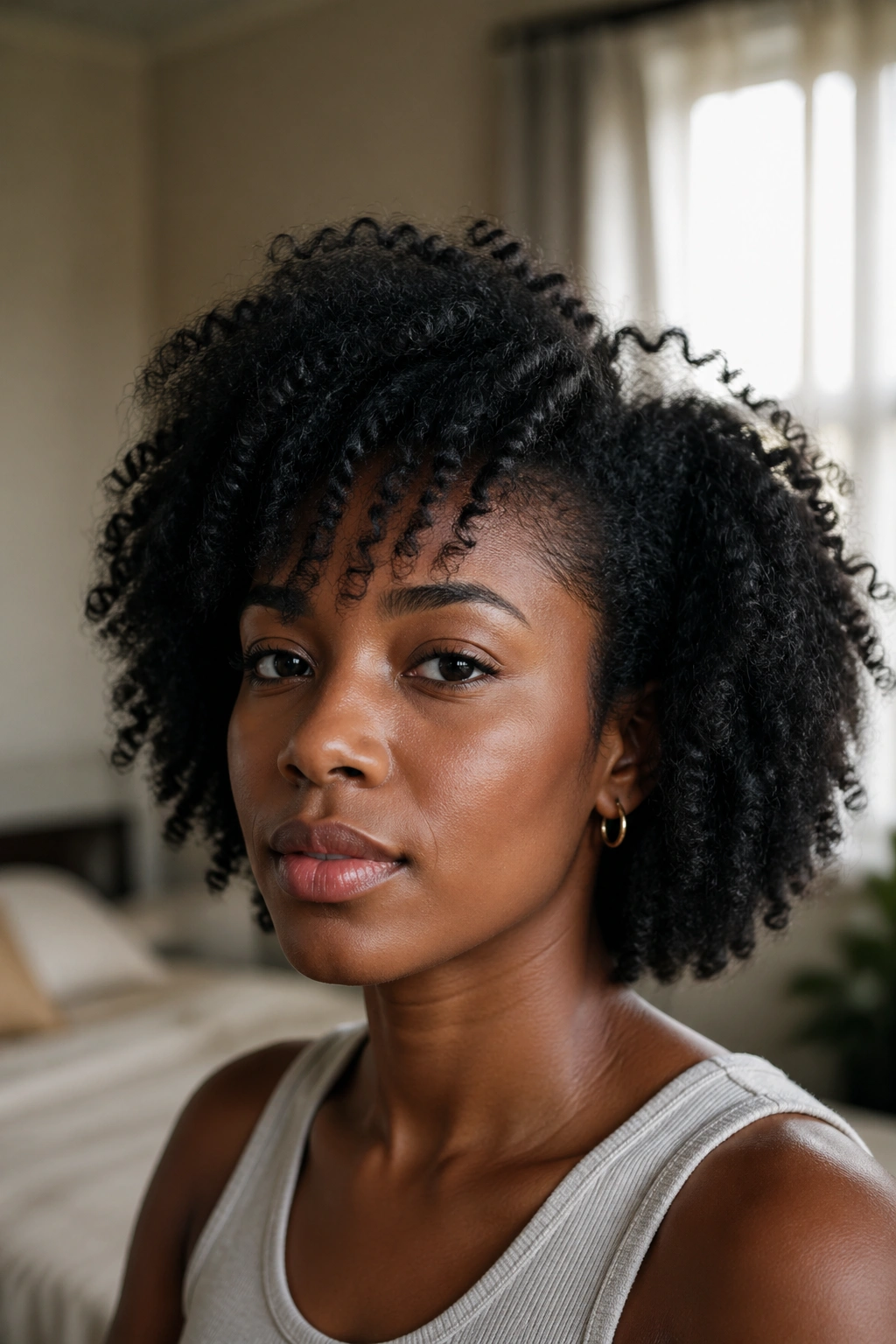
Knotless box braids — a more recent variation on traditional box braids — begin with your natural hair and gradually incorporate extension hair without the initial knot at the root. The result is less tension at the scalp, a more natural look at the part, and a braid that moves more freely because it’s not weighted by a knot at the base.
For natural hair that experiences thinning at the edges, knotless braids are significantly gentler than traditional knotted braids. They’re more time-consuming to install but worth it for the reduced tension.
22. Loc Styles
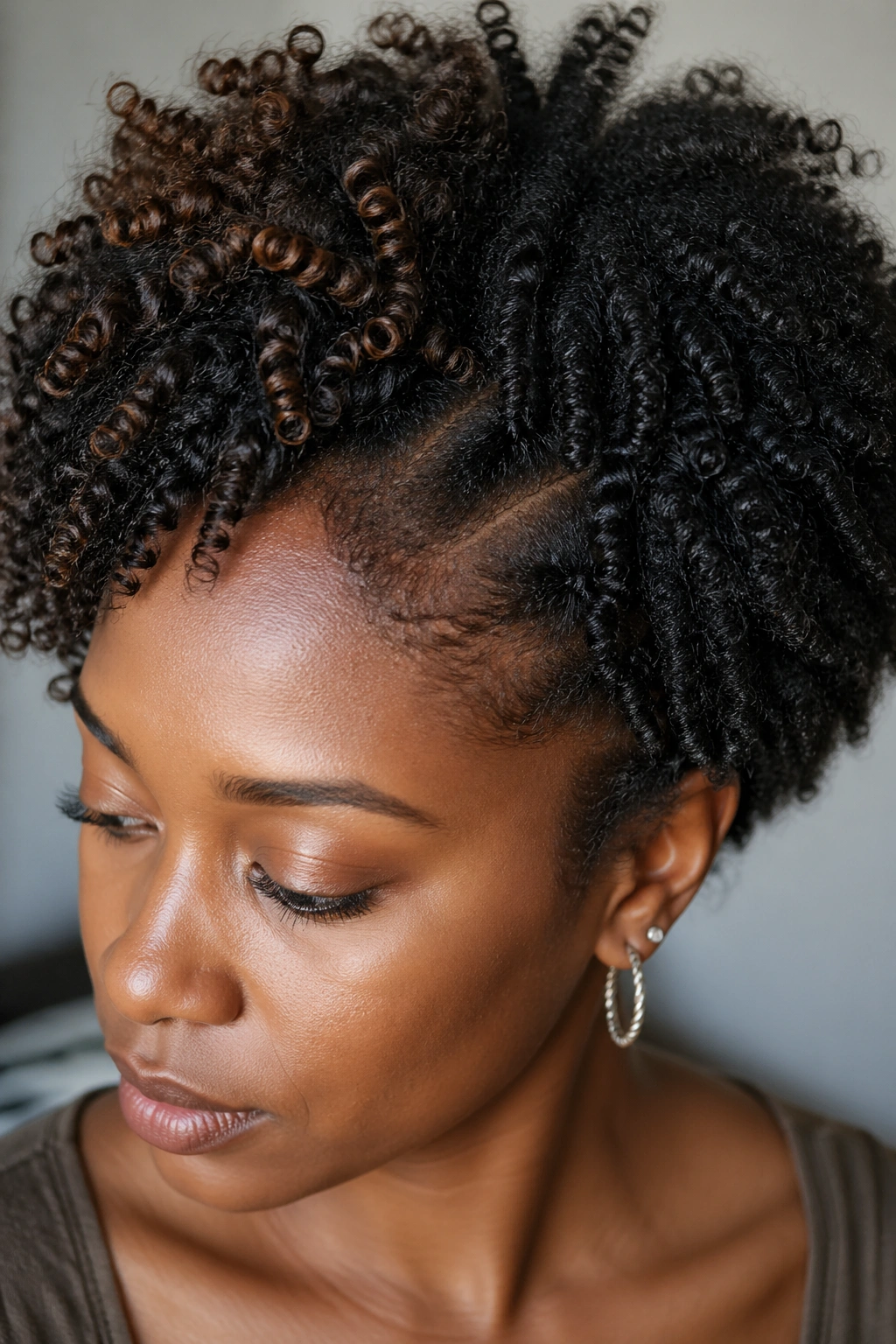
For Black women who wear locs — whether freeform locs, sisterlocks, or cultivated locs at any stage — styling options expand significantly over time. Fresh locs in the starter phase have their own styling options: comb twists, two-strand twists, braids. Mature locs can be gathered into updos, buns, curled on flexi rods for a curly loc set, pinned into half-up styles, or decorated with cuffs and jewelry.
Loc styles are an entire styling tradition within the natural hair world, with their own techniques, products, and community knowledge base.
23. Gypsy Locs / Faux Locs
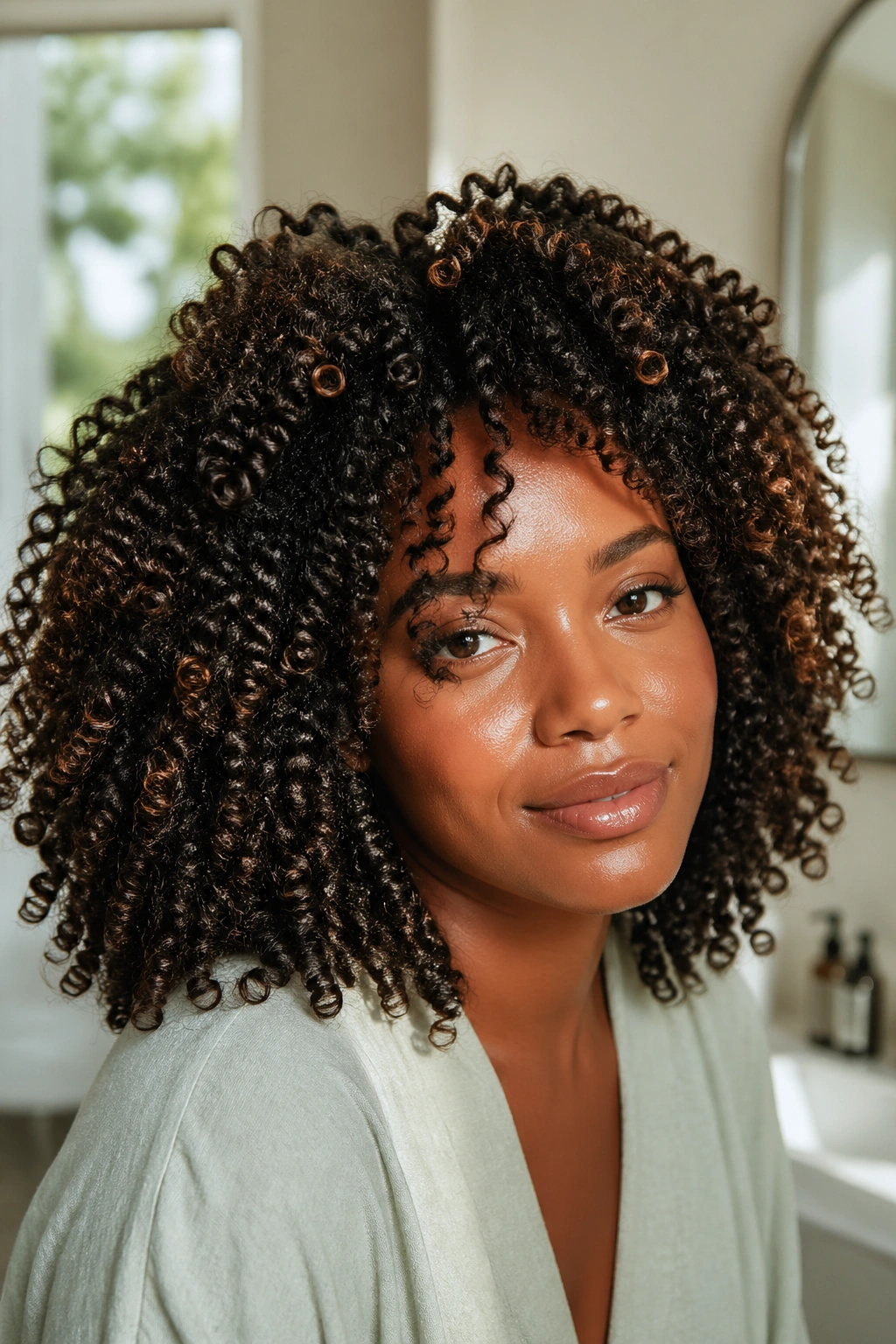
Faux locs are a temporary protective style that mimics the look of dreadlocks using hair extension fiber wrapped around braided or twisted natural hair. They can be styled the same way as natural locs — in updos, buns, ponytails, loose — and last two to four months with proper maintenance.
Gypsy locs are a softer, wavier version of faux locs with a looser, more textured appearance. Both are popular options for natural hair wearers who want the loc aesthetic temporarily or who are in the early stages of growing their own locs.
24. Natural Curls for Natural Hair with Accessories
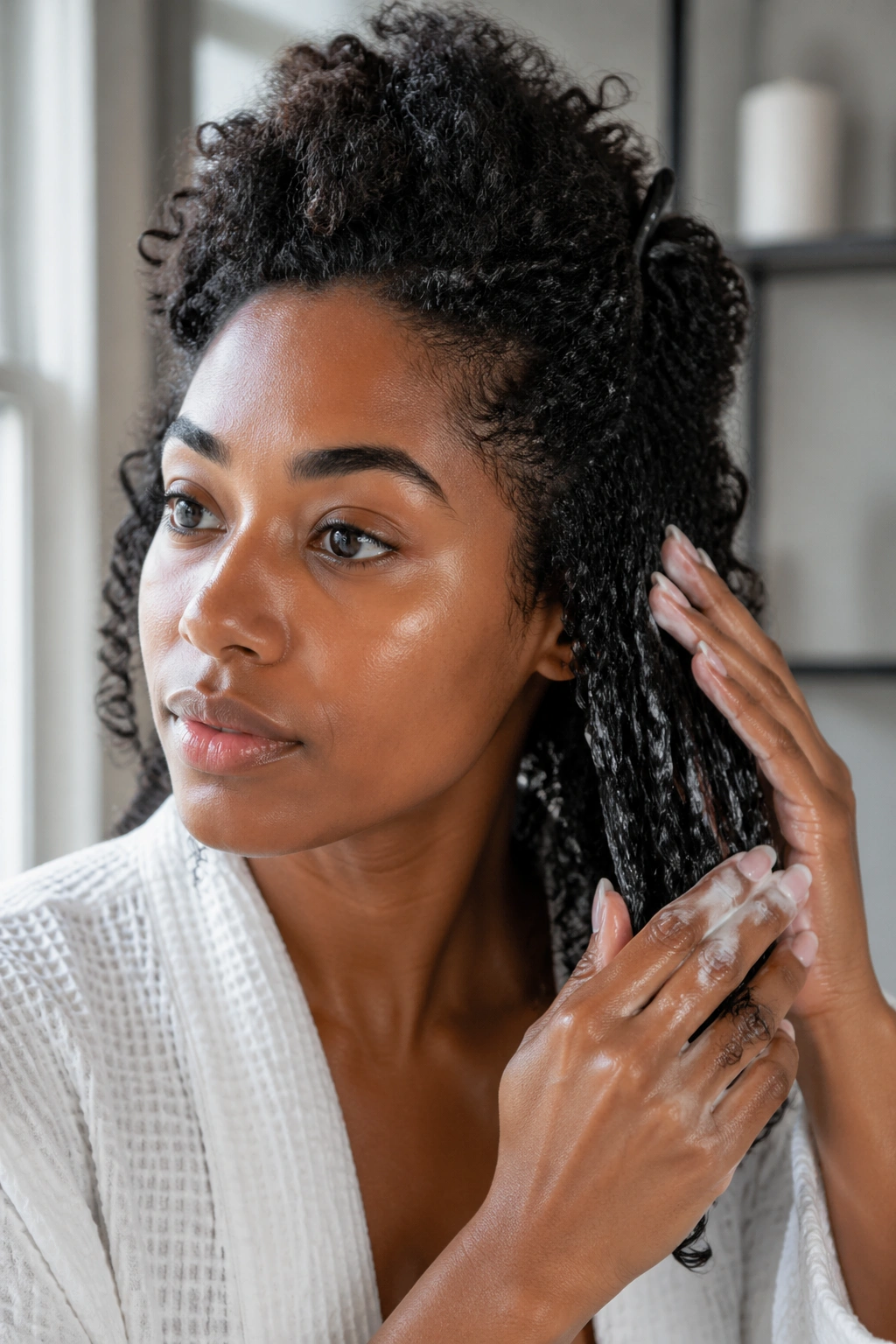
Your natural curls, exactly as they are — whether in a wash-and-go, a twist-out, or a freeform afro — elevated by significant accessories. A large, bold statement headpiece. A multi-strand gold crown piece that sits across the forehead. A cluster of large pins and rings scattered through the hair.
Accessories designed for natural hair — scaled to work with volume, designed to be inserted in curls rather than clipped onto straight sections — have become a genuine product category. When the right accessory meets the right curl style, the combination is striking.
25. Loc Extensions
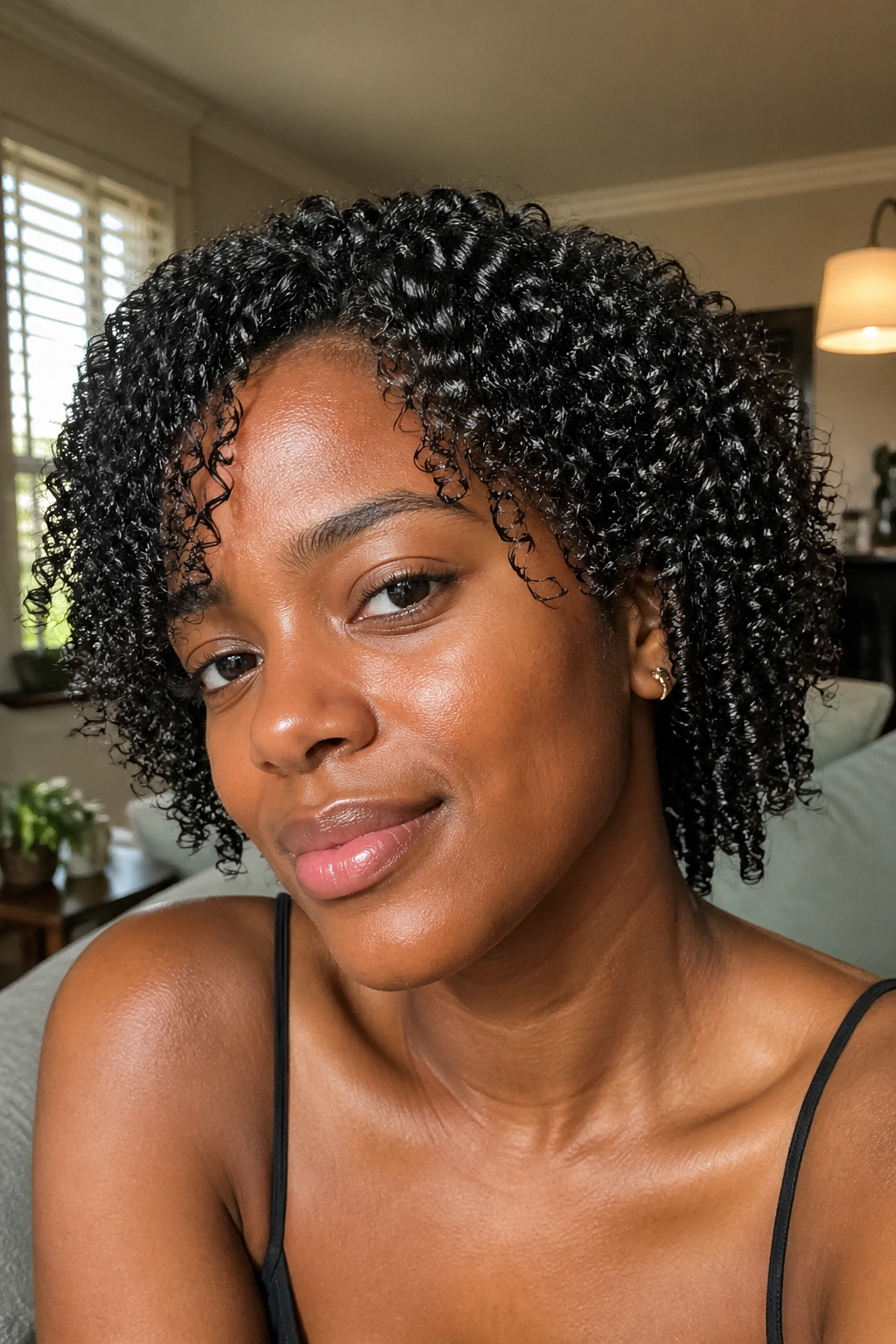
Loc extensions — crocheted or wrapped loc pieces attached to natural hair — give the appearance of mature, long locs without the long growing-out process. They can be attached to natural hair or to the starter phase of beginning locs to add immediate length. Like faux locs, they’re a temporary style that lasts a few months before requiring removal.
26. Natural Curls Under a Wig
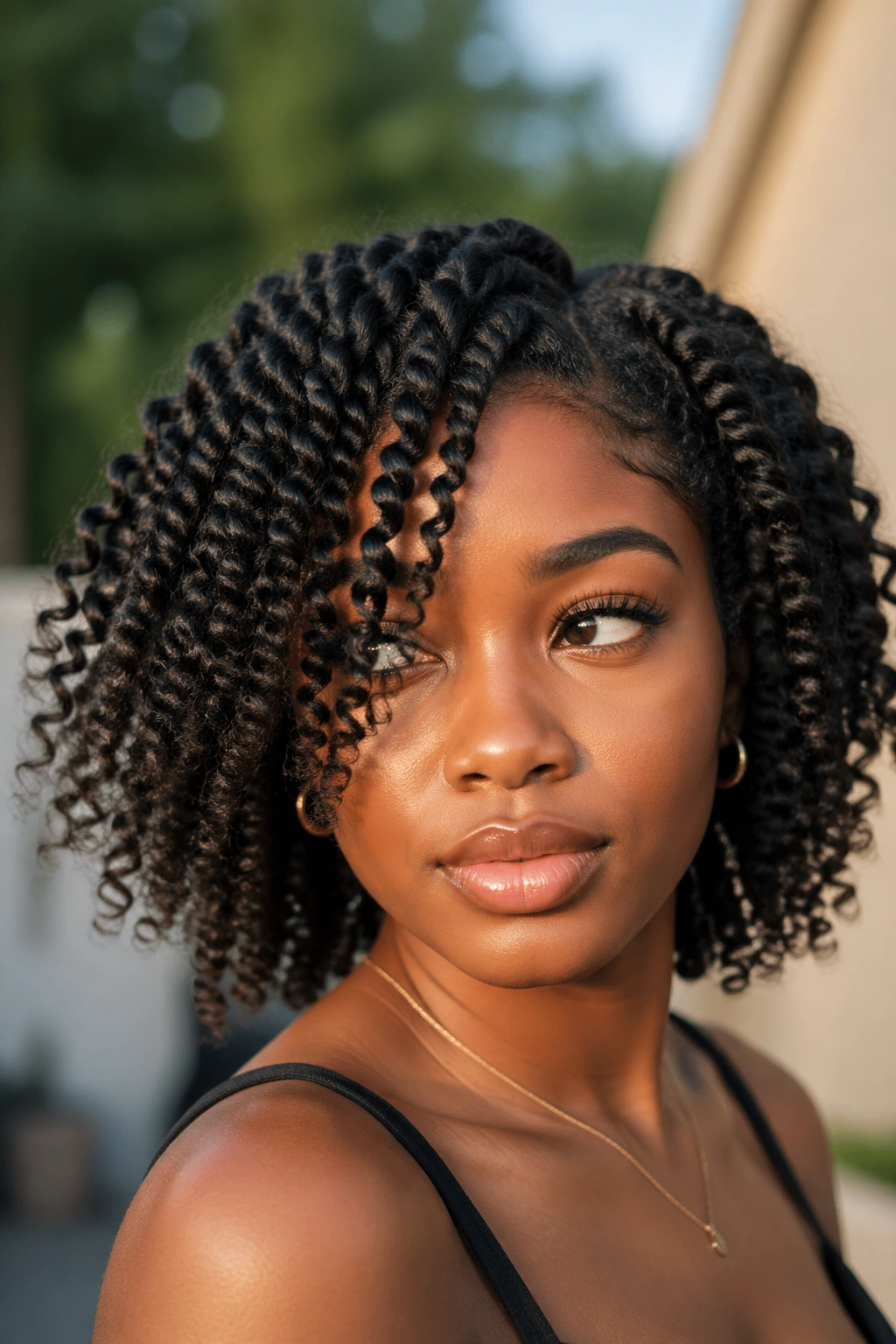
Wearing a wig over natural curls is one of the most flexible natural hairstyle choices available. Your natural curls are braided, twisted, or cornrowed flat beneath the wig for protection, while the wig provides a daily styling variety that doesn’t touch or manipulate your natural hair. The natural curls underneath grow and are protected; the wig provides the surface expression.
The versatility of this approach — being able to switch hair appearance without touching your natural texture — has made wigs increasingly popular in natural hair communities as a protective and styling tool simultaneously.
27. Freeform Natural Curls
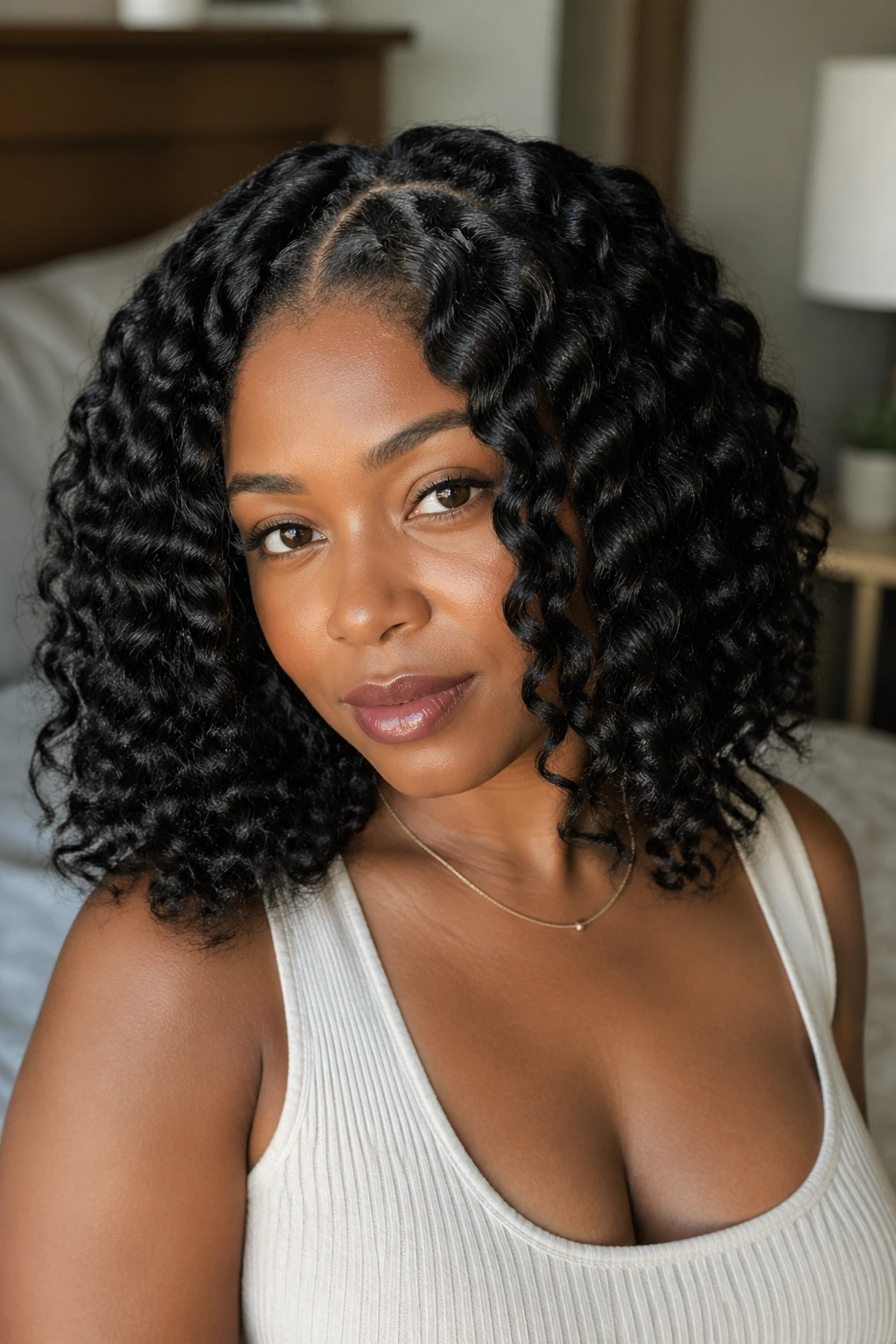
No product. No manipulation. Your hair growing and existing exactly as it wants to — in whatever pattern it naturally forms, in whatever direction it naturally falls, in whatever shape it takes on any given day. Moisturize. Hydrate. Protect at night. And beyond that, let it be.
Freeform styling is the most intimate expression of natural hair because it asks you to trust your hair completely — to see its natural behavior as the finished product rather than as the starting material for something else. It requires a different kind of beauty standard than most styling encourages: one where the hair’s natural form is already enough.
Some women arrive at freeform styling after years of experimenting with techniques and products. Others start there. Both paths are valid. All 27 styles on this list represent different ways of wearing and celebrating natural curl hairstyles for Black women — and freeform is the most essential one, because it’s where every other style begins.
Choosing Styles That Work for Your Lifestyle
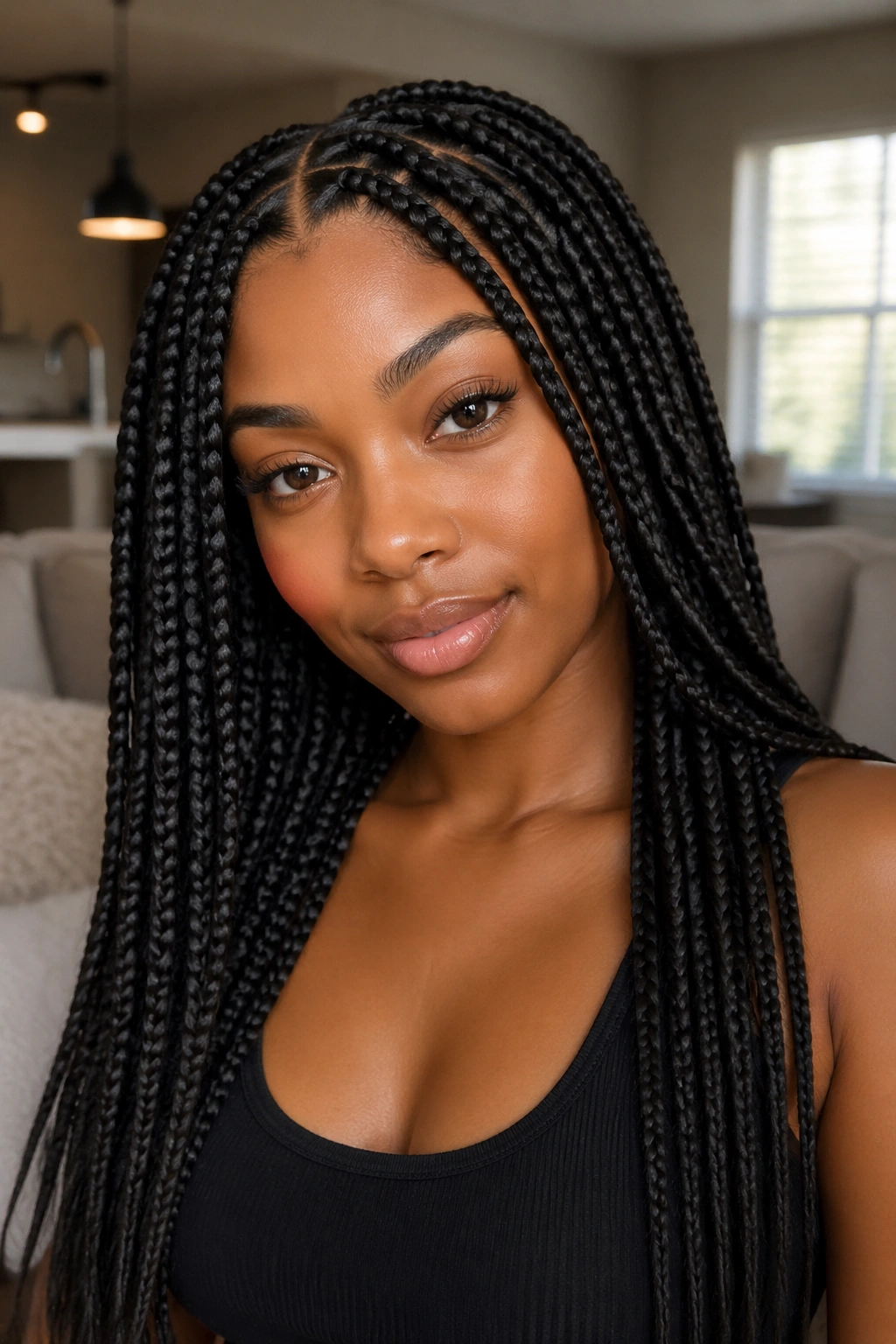
The best natural curl hairstyle for you is the one that fits your actual life. Not the most impressive one, not the one your favorite content creator wears, not the one that got the most engagement on social media. The one that works with your schedule, your hair type, your level of styling experience, and your honest capacity for maintenance.
If you wash your hair on Sundays and need easy weekday styles, build your week around a Sunday wash-and-go or twist-out that can be puffed and refreshed through Friday. If you have an active lifestyle that requires frequent washing, learn quick-definition techniques that look polished with minimal time. If you love styling and consider hair care a genuine creative practice, invest in the longer techniques — flexi-rod sets, finger coils, elaborate protective styles.
Natural curl hairstyles for Black women are not one-size-fits-all, and they were never meant to be. The tradition is too wide, the variety too great, the individual hair properties too specific. Find your version within it and wear it fully, without modification, without apology, and without permission.
The Foundation of Healthy Natural Styling
All of these styles — all 27 — perform better on hair that’s genuinely healthy. Healthy natural hair is moisturized, has the right protein-moisture balance, is handled gently during styling, and is protected from excessive manipulation, friction, and environmental stress.
You build healthy natural hair over time. It’s not a product purchase — it’s a practice. Consistent deep conditioning, gentle detangling, protective nighttime routines, and styles that don’t put excessive tension on the hairline and edges all compound over months and years into natural curls that are stronger, longer, more defined, and more resilient.
Your natural curls are worth the patience. Every length milestone, every style that works, every day you walk out feeling good about your hair — that’s the payoff of a practice built over time. These 27 natural curl hairstyles for Black women are part of that practice. Start with one. Build from there. Make it yours.
The Natural Hair Community as a Resource
One of the most valuable resources for Black women navigating natural curl hairstyles is the community that has formed around the practice — online, in person, and through the styling knowledge that passes between friends, family members, and acquaintances who share hair experience.
Natural hair communities exist in every format: social media spaces where techniques are demonstrated visually, forums where specific product recommendations are compared, local groups where women share space and knowledge, and the informal channel of Black women sharing what works with each other in real time. This community has produced an enormous collective body of knowledge that no single product brand or stylist could provide on their own.
Accessing this community means learning from people who have the same hair you have. Not the general beauty industry, which has historically centered straight or wavy hair as the default. Not stylists trained primarily on other textures. Not tutorials built for curl types that don’t match yours. The natural hair community is built from people with 4C coils, 4A afros, 3C wash-and-gos — people whose hair responds the way yours does, who have already solved the problems you’re currently working through.
Use these resources without shame. Asking for product recommendations, watching styling tutorials, posting your results for feedback — all of this is normal and productive in natural hair spaces. The knowledge you gain shortens your own learning curve significantly.
Passing It Forward
The natural hair knowledge that Black women have accumulated and shared across generations is itself a tradition worth honoring. What your mother knew about moisturizing 4C hair, what your grandmother knew about protective styles, what the women in your community knew about maintaining natural texture before the internet existed — this knowledge is valuable, and it connects directly to the styling practices that are documented, refined, and shared widely today.
For Black women who are mothers, aunts, older sisters, or mentors, passing this knowledge forward to younger girls and women is part of the larger tradition. Teaching a child to care for their own natural curls — with gentleness, with patience, with genuine appreciation for the hair’s properties — gives them something that outlasts any specific style.
It shapes how they feel about their own hair for life. That’s not a small thing. It’s one of the most significant gifts in the natural curl hairstyle tradition — the knowledge that the hair you grow is not a problem to solve, but a gift to learn.
Natural Curl Hairstyles as Creative Expression
Finally: natural curl hairstyles for Black women are creative expression, not just grooming. The decision to try a new style, to wear your hair differently than you have before, to experiment with a technique or an accessory or a product — this is creative practice. It’s you, working in a medium that grows from your own body, making choices that are visible to the world and meaningful to yourself.
Not every style will work. Some experiments fail. Some techniques take multiple attempts before they produce the result you were going for. Some styles look great in the inspiration photo and don’t translate to your specific curl pattern. All of this is part of the creative process — and none of it is failure. It’s iteration. It’s learning. It’s the ongoing work of understanding and working with something that grows from you.
The creativity available in natural curl styling is genuinely vast. Twenty-seven styles in a single list only scratches the surface of what’s possible with textured natural hair — and every style on the list has its own variations, its own modifier options, its own space for personal interpretation. Your version of a twist-out isn’t identical to anyone else’s. Your specific wash-and-go, shaped by your curl pattern, your products, your application technique, and your hair’s own properties — that’s yours alone.
Own it fully. Wear every style on this list and every variation of it with the knowledge that what you’re doing is meaningful, practiced, skilled, and beautiful. Natural curl hairstyles for Black women have a tradition behind them and a future ahead of them — and you’re part of both.
