



Twist styles with curls for natural hair sit in a unique place in the protective styling world — they’re gentler than braids, more structured than wash-and-go styles, and when you add curly elements to them, the combination creates something genuinely romantic and versatile. Black women with natural hair have embraced twists in countless forms over generations, and the addition of curls — whether at the ends, interspersed throughout, or as the defining texture of a twist-out — has expanded what twist styling can do. The key to getting this right is understanding how your curl pattern interacts with different twist techniques, and choosing the curl element that makes the most sense for your hair and your vision.
Why Twists and Curls Work Together So Well
The twist itself — two strands of hair spiraled around each other — already has an inherent curl to it. The spiraling motion creates a pattern that’s related to the coil patterns of natural Black hair. So when you combine a twist with additional curly elements, you’re working with compatible textures rather than fighting against the hair’s natural tendency.
This is part of why twist-outs are so successful on natural hair: you braid or twist the hair while damp, allow it to dry in that pattern, then release it to reveal a curl or wave pattern amplified by the twist formation. The twist has effectively trained the natural hair to hold a specific curl shape. The result is a curl that’s more defined, more elongated, and more consistent than the hair would produce on its own.
Adding curl extensions to twists — whether as the fiber at the ends of two-strand twists, as crochet additions intertwined with natural twists, or as the signature texture of passion twists or water wave twists — layers another dimension onto this already curl-compatible style.
Two-Strand Twists vs. Three-Strand Twists vs. Rope Twists
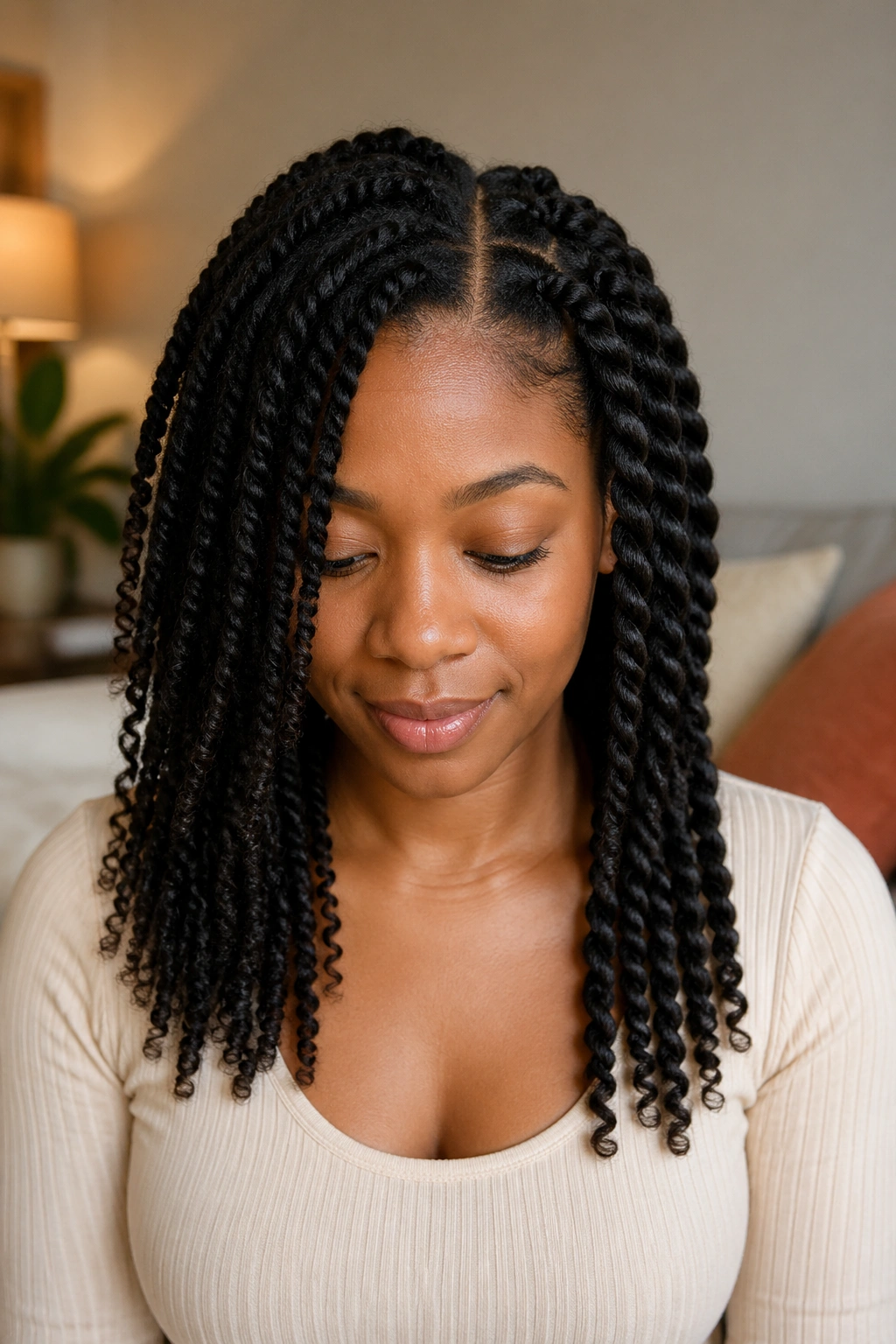
These three techniques produce distinctly different results, and knowing which one you’re working with affects how the curly elements integrate.
Two-strand twists are the most accessible and most common. Two sections of hair spiral around each other in opposite directions. The resulting twist has a loose spiral shape that defines the curl when released. Two-strand twists with curly ends — either natural coily ends or added extension fiber — are the baseline of twist-with-curl styling.
Three-strand twists (which overlap with braiding technique — some people call them twisted braids) use three sections and create a tighter, more defined spiral. They hold more tension and create a more elongated curl pattern when released. They’re less common than two-strand but the definition payoff can be better on certain hair types.
Rope twists — two strands twisted in the same direction rather than around each other — create a very tight, ropy spiral. Rope twists with curly ends have a very specific aesthetic: the braid body is tightly coiled and structured while the end hangs free and curly. The contrast between the tight rope and the loose curl is pronounced and striking.
Curl Textures That Complement Twists
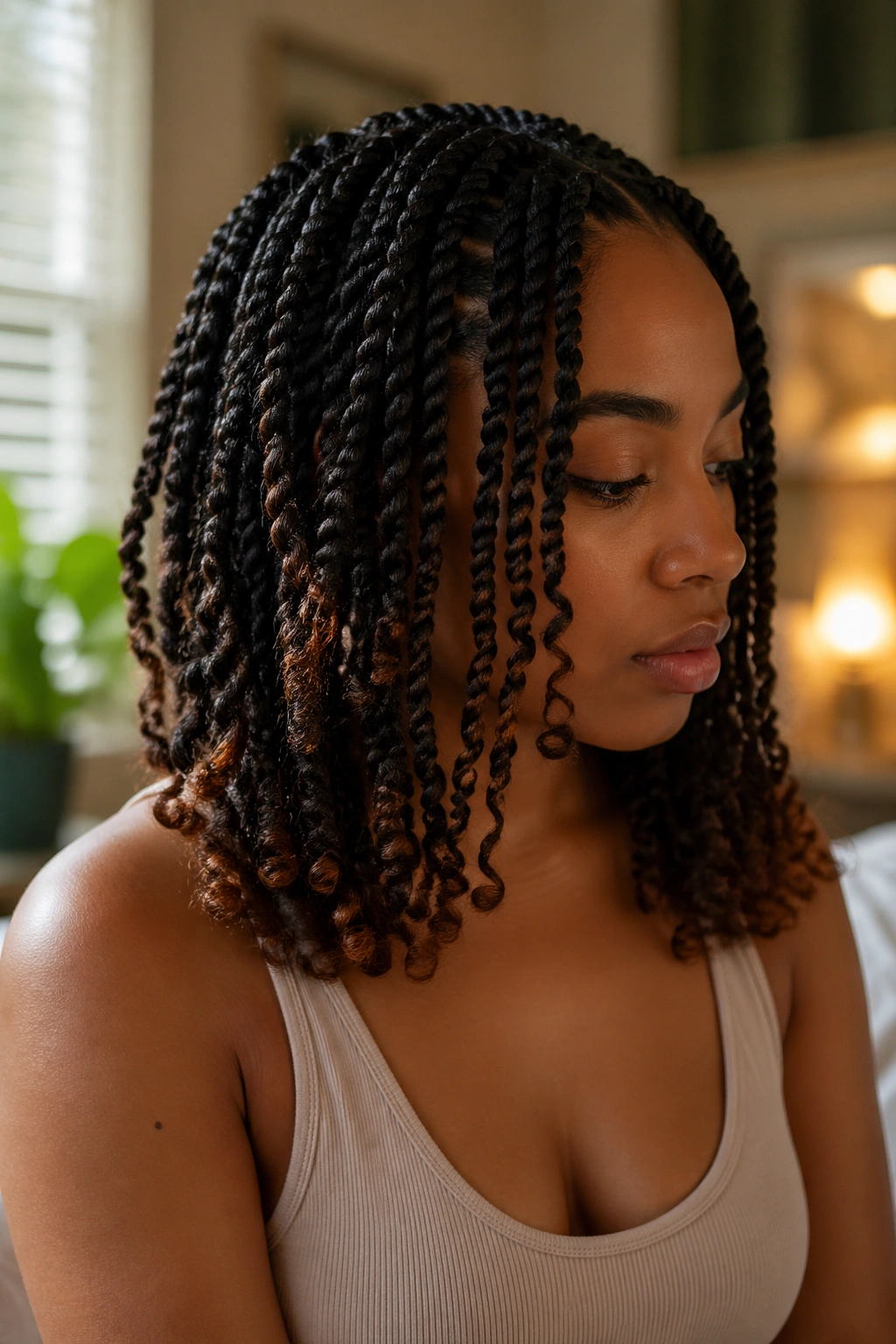
The curl texture you add to or release from twists determines a huge part of the final aesthetic.
Natural twist-out curls — when you release a two-strand twist and the hair produces its own curl — are the most seamless option. The curl matches your own hair texture exactly, because it is your own hair. The results are honest: it’s your hair’s natural potential expressed through the twist pattern.
Kinky braiding hair added to the ends of twists blends easily with 4a-4c natural hair and gives a fuller, longer result without dramatically changing the curl texture aesthetic. Looks like more of you.
Passion twist fiber — a shaggy, multi-textured fiber with loosely defined spirals — has become enormously popular because it adds volume and bohemian texture simultaneously. The fiber itself is the curl; you don’t need to do anything special with the ends because the material does the work.
Water wave and bohemian braiding hair added to twist ends creates a looser, flowing texture contrast. The twist body is tight and organized; the ends flow loosely. Maximum contrast, maximum movement.
Pre-looped crochet extensions can be added to natural twists using the crochet technique to create instant volume and texture that would take weeks to grow naturally.
Prepping Your Natural Hair for Twist Styles
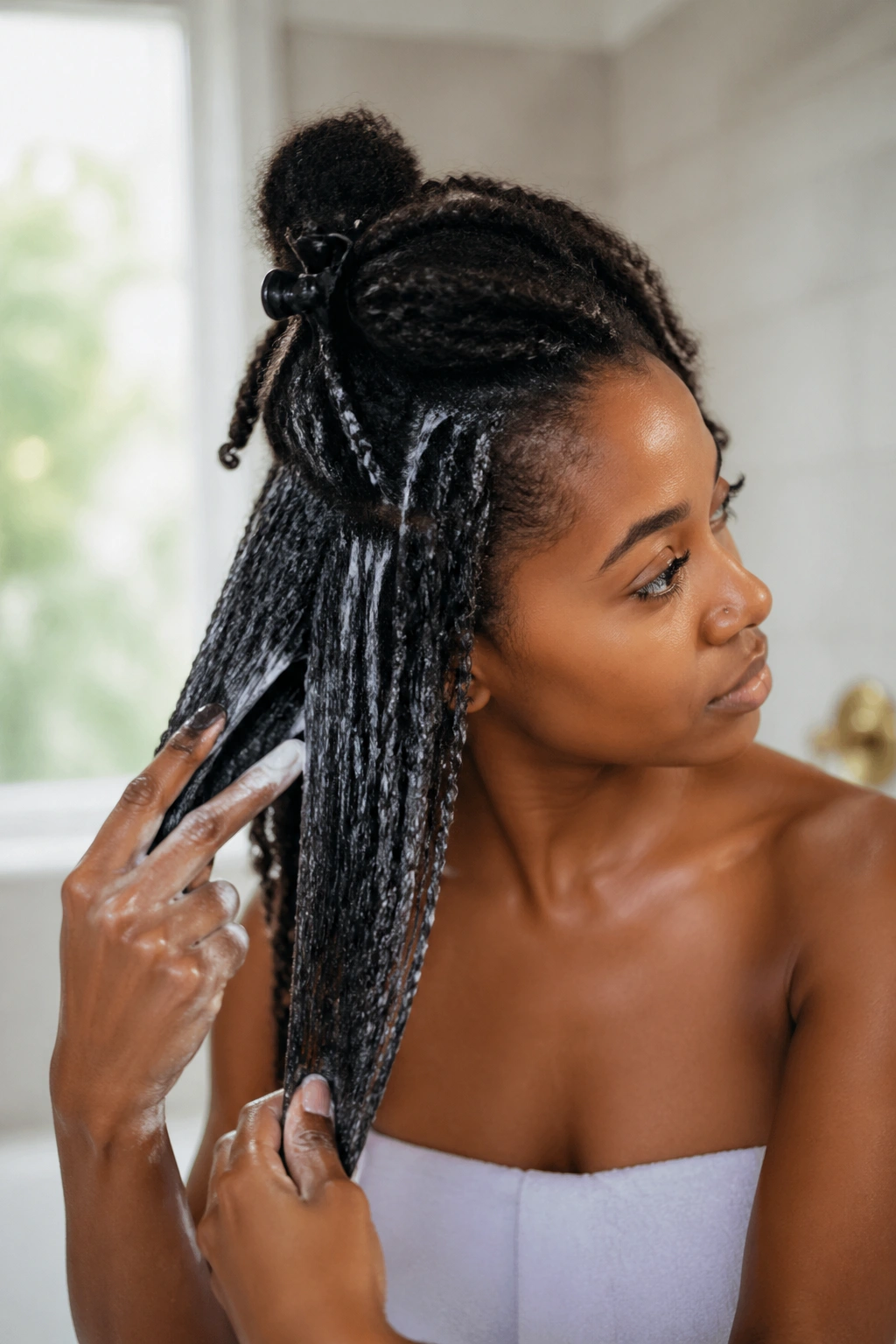
The state of your natural hair before you start twisting determines how well the style holds and how the curl at the ends looks.
Wash thoroughly and condition well. Twists installed on clean, well-conditioned hair hold longer and the natural curl at the ends looks more defined. Deep conditioning is especially important if you’re planning to do a twist-out — the better conditioned the hair, the more responsive it is to the twist pattern and the better the final curl.
Detangle completely before twisting. Any tangles left in the hair will make the twisting process harder and the finished twists uneven. Work section by section with a wide-tooth comb or your fingers, from ends to roots, while the conditioner is still in.
Stretch the hair slightly before twisting if you want longer, more elongated twists rather than tightly coiled shorter ones. African threading or banding on sections before twisting gives you more surface to work with.
Apply a good curl cream or moisturizing styling product to each section before twisting. This is what gives the twist body and helps the curl hold at the ends.
How Long Twist Styles With Curls Last
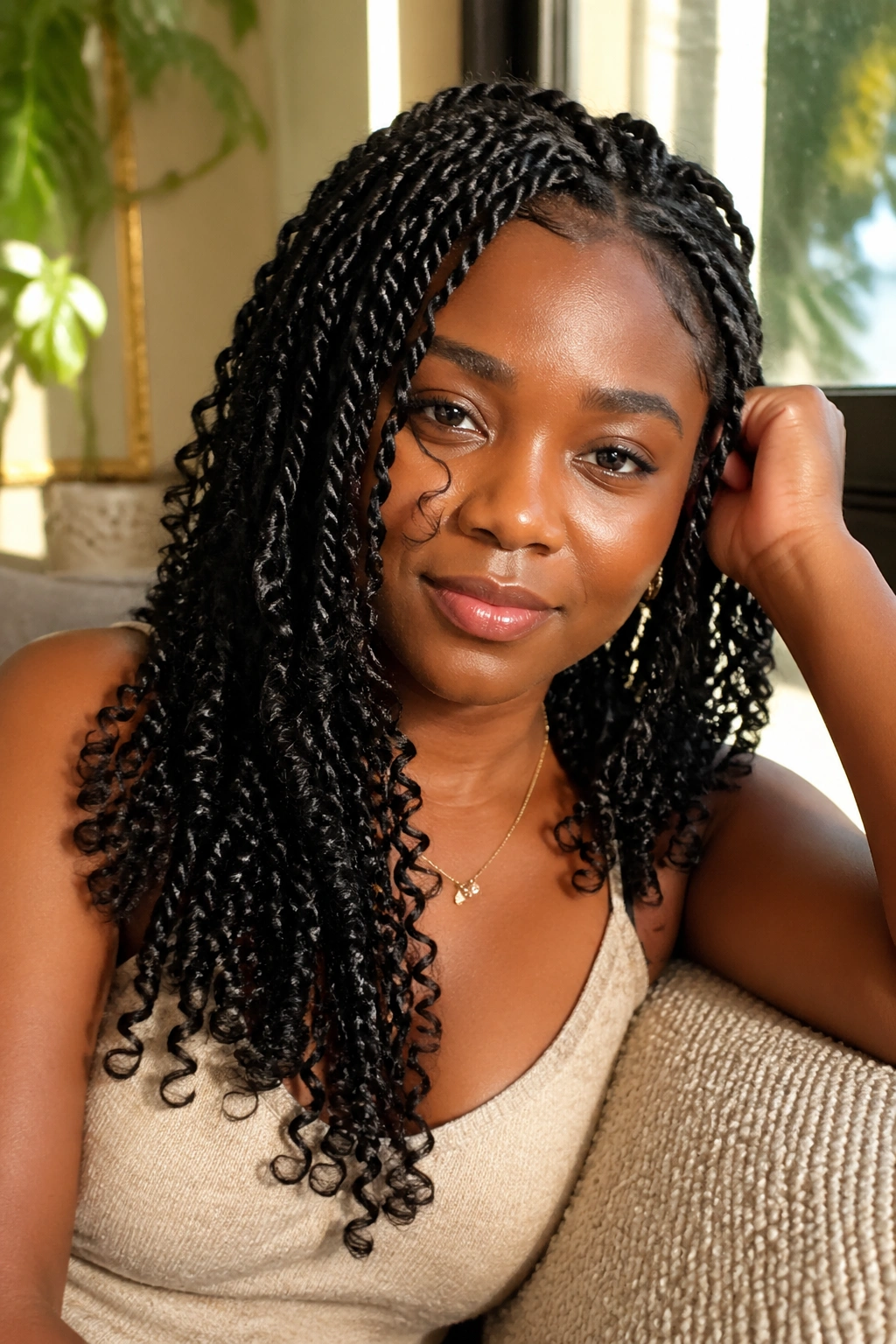
Twist styles with curls generally last longer than loose natural styles but shorter than braids. Two-strand twists with extension can last 3-6 weeks with proper maintenance. Passion twists and water wave twists (which use extension fiber throughout, not just at the ends) can last 4-8 weeks. Natural twist-outs without extension last 1-2 weeks before the definition fades and the hair needs refreshing.
The curly element — whether natural ends or extension — is typically the first thing to lose definition. Natural curly ends need refreshing with moisture and product every few days. Extension curl fiber can be misted with water to revive the curl pattern, though it will gradually lose definition over weeks.
1. Two-Strand Twists With Natural Coily Ends
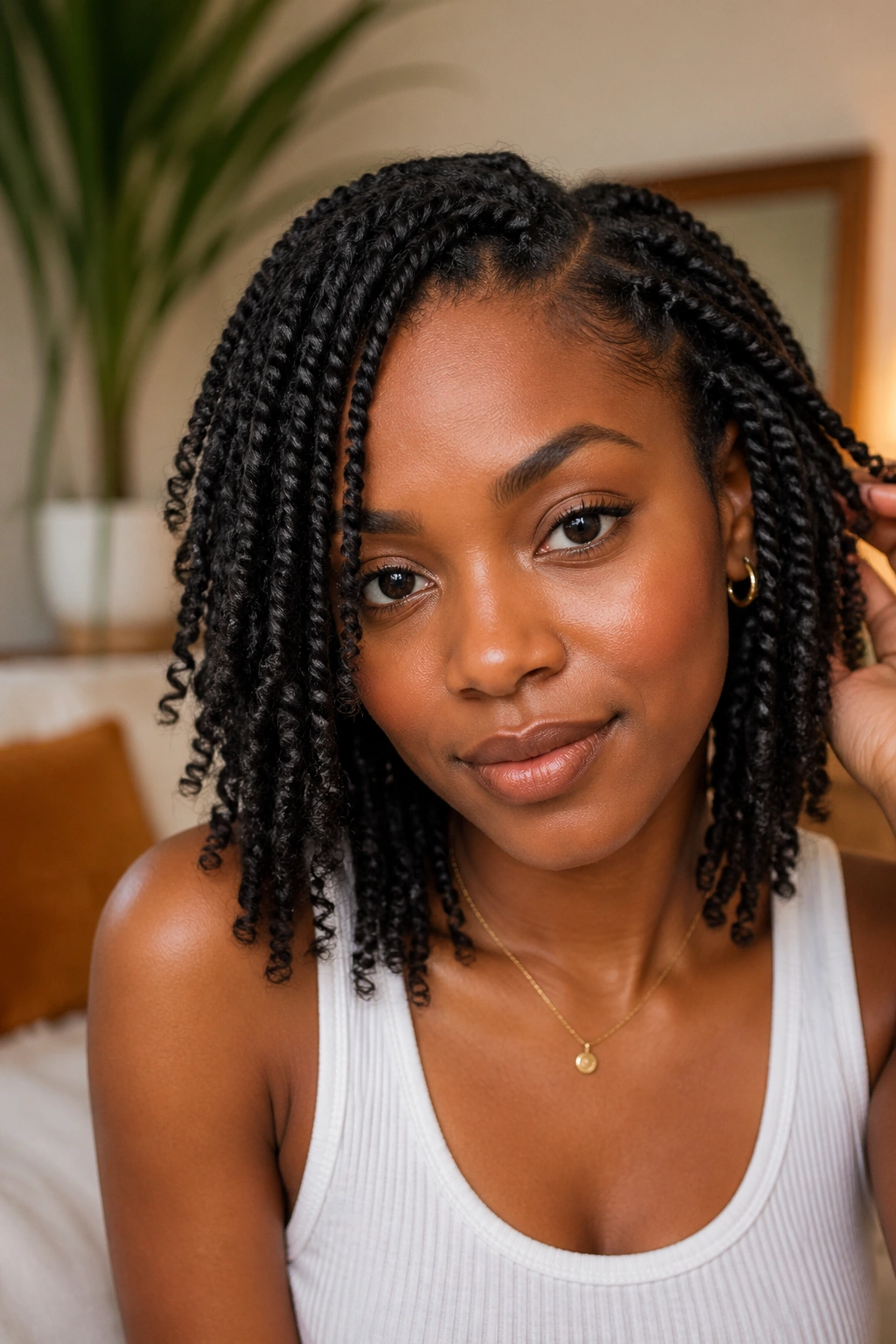
This is where most people start with twist-and-curl styling, and for good reason — it’s genuinely beautiful and completely accessible. Two-strand twists installed with your own natural hair, ending in the natural coil of your own hair texture, create a style that’s authentically yours from root to tip.
The coily ends on two-strand twists have a playful, bouncy quality that straight-ended twists don’t. Each twist terminates in a spring of your own hair — tight on 4c, more defined on 4a — and that spring becomes the focal point of each twist.
How to Get This Look
- Section hair into equal portions (the section size determines the twist size)
- Apply leave-in conditioner and curl cream to each section
- Divide each section into two equal strands
- Twist the two strands around each other, keeping tension consistent throughout
- Stop twisting 1-2 inches before the end and allow the natural curl to coil freely
2. Passion Twists With Voluminous Curl Texture
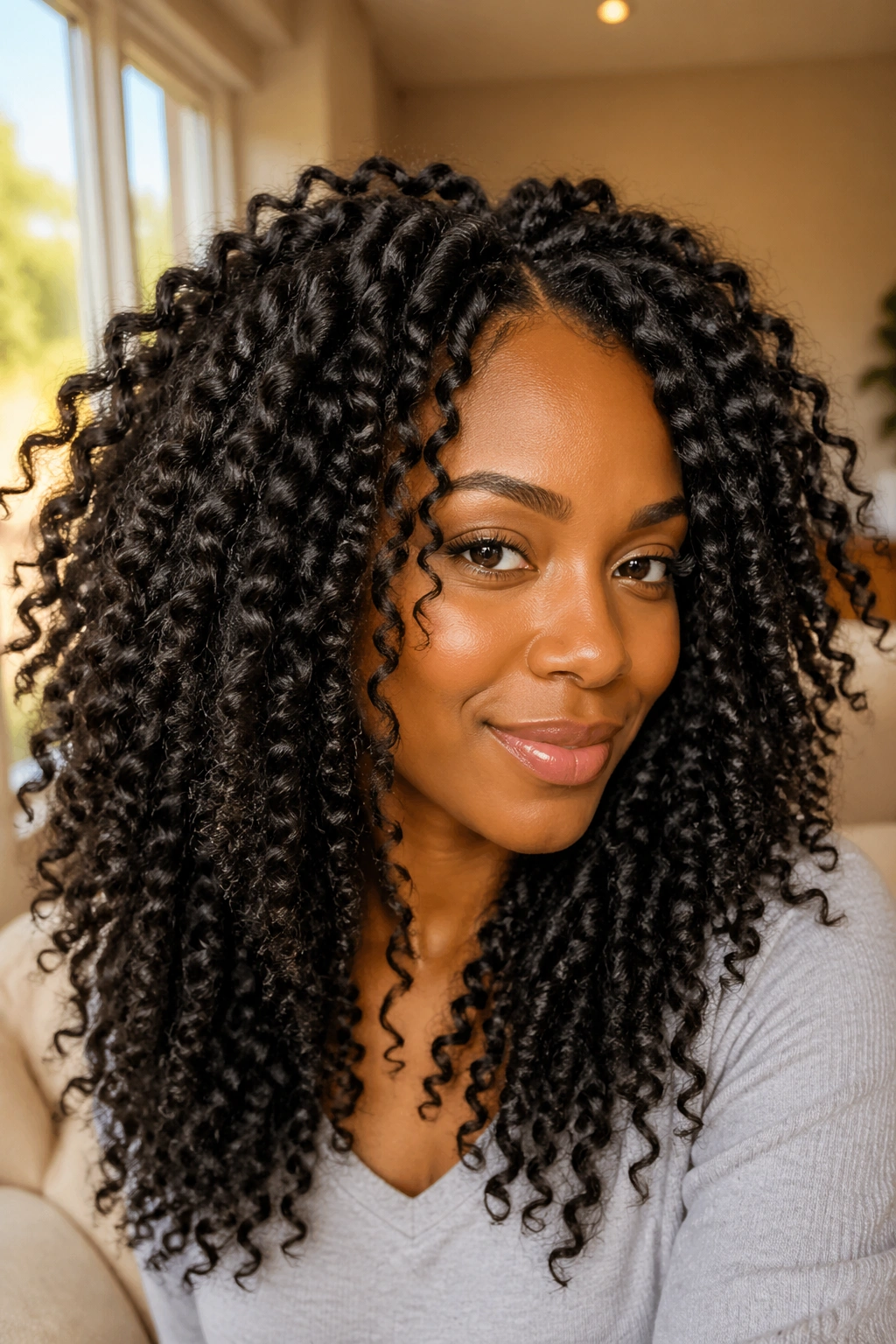
Passion twists have established themselves as one of the most popular protective styles for natural hair — and the reason is obvious the moment you see them in person. The fiber used in passion twists has a specific shaggy, multi-directional curl that adds volume and texture simultaneously. Nothing about passion twists looks stiff or flat.
Installing passion twists involves creating a loose two-strand twist with your own hair as the base, then looping passion twist fiber (typically Water Wave or Bohemian braid hair) around that base twist using a crochet hook or wrapping technique. The result is a twist that’s fully textured from root to end.
The curly quality of passion twists is intrinsic to the style — the passion twist fiber is the curl. This makes them lower maintenance than adding curl extension only at the ends because the entire twist has texture, not just the tip.
3. Flat Twist Out With Defined Curl Pattern
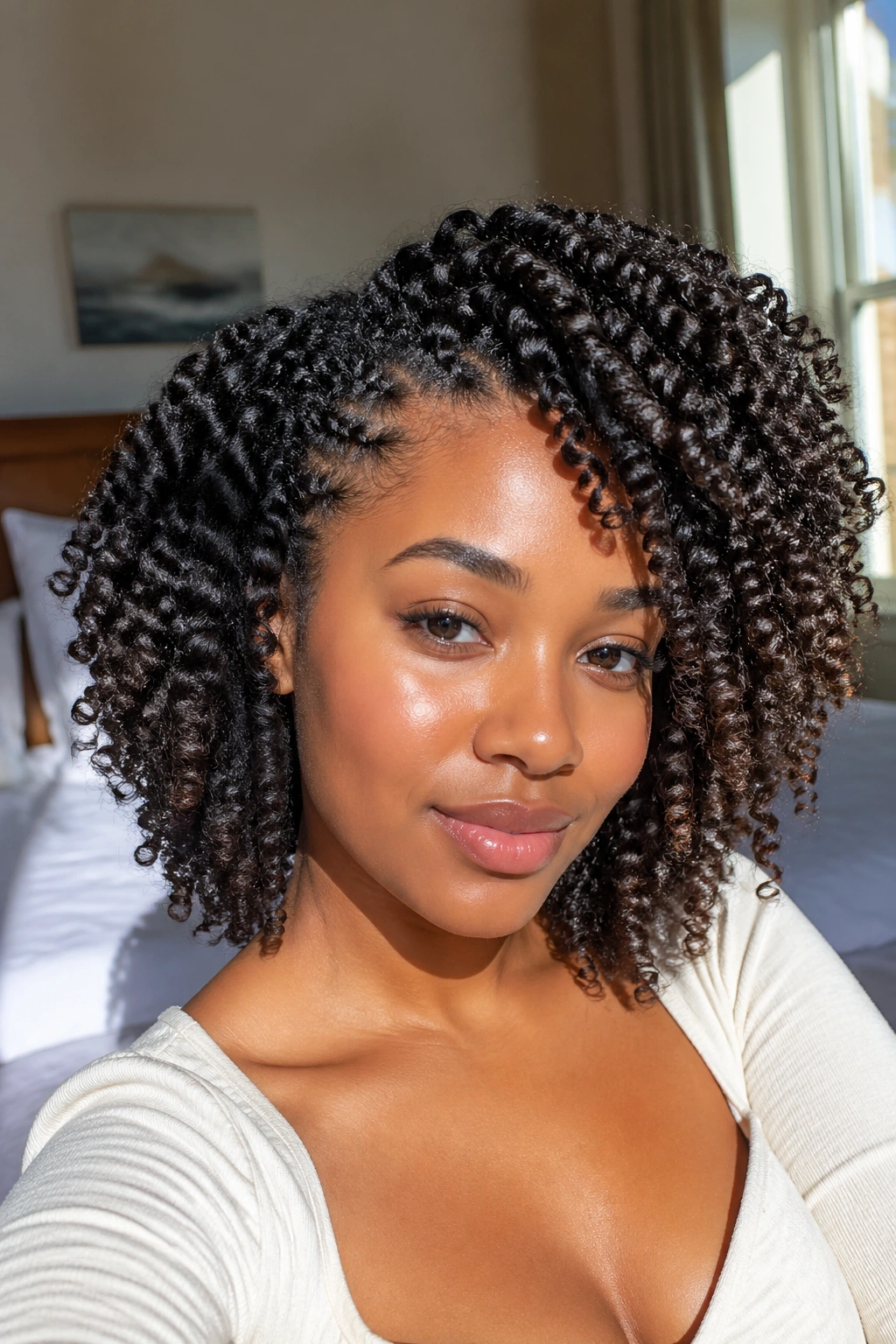
A flat twist out is a technique rather than a final style. You flat twist (cornrow-style twisting that lies against the scalp) the hair in sections while damp, allow it to dry completely, then release the flat twists to reveal the curl pattern the twist has created.
On 4c hair, flat twist outs produce a defined, elongated curl that the hair wouldn’t achieve on its own. The twist has essentially trained the coil to hold an elongated spiral shape. The result is a curl that has visible definition and meaningful length that the natural spring curl often obscures.
The key is drying completely before releasing. Releasing flat twists while even slightly damp produces undefined, frizzy results rather than defined curls. Time and patience here are non-negotiable.
4. Jumbo Twists With Loose Wave Ends
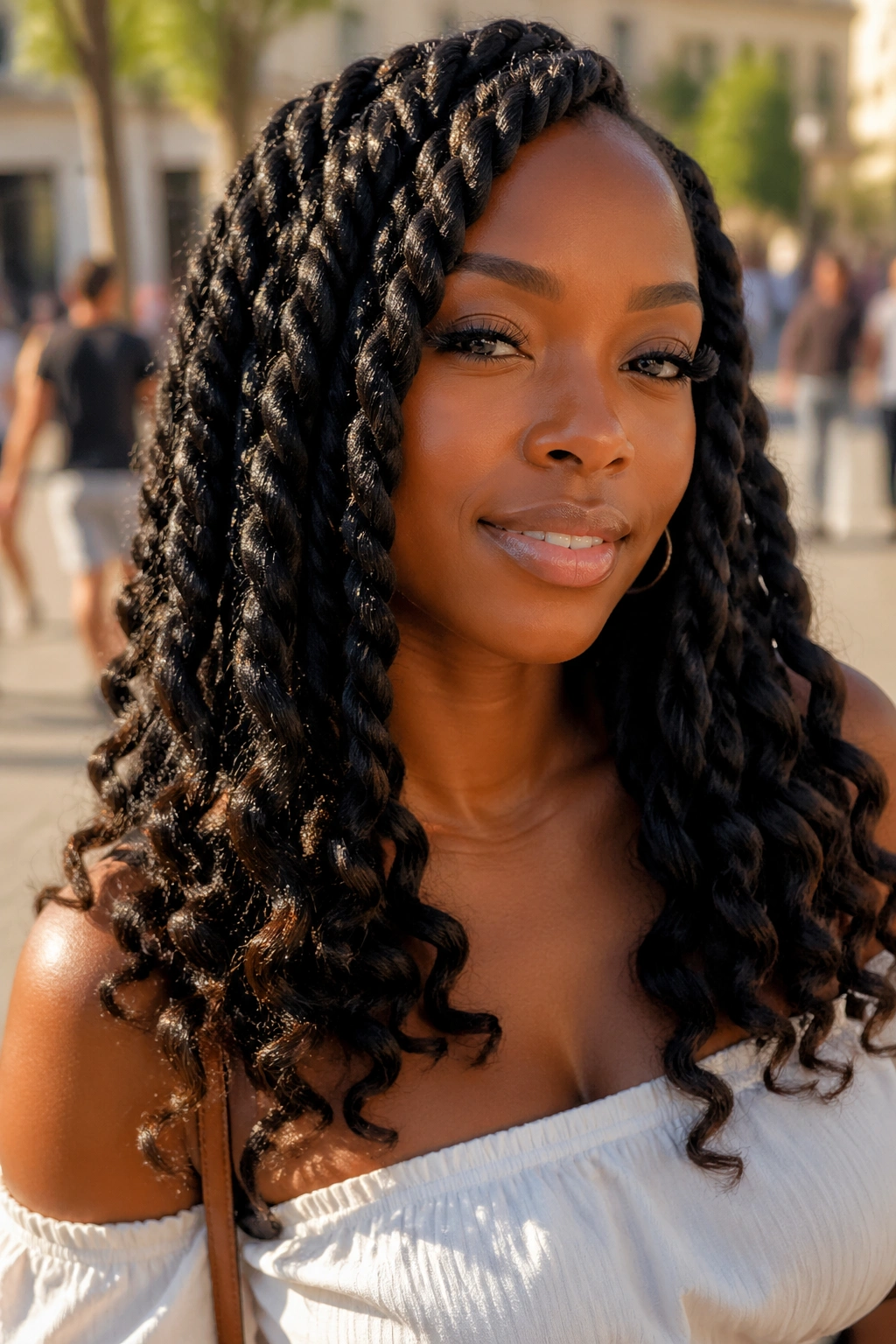
Jumbo twists — thick, large two-strand twists using generous amounts of extension hair — have a substantial visual presence. Each twist is prominent. And when each of those prominent twists ends in loose wave fiber, the combination creates a style with serious volume and movement.
The loose wave at the end of a jumbo twist swings freely with every movement, giving the style a dynamic, active quality that smaller twists with tighter curl ends don’t produce. This is a high-impact style — you’ll feel the movement, and other people will notice it.
Jumbo twists install faster than smaller twists, making this a good option when you want the protective style benefits without spending an entire day on installation.
5. Kinky Twist With Curls Throughout
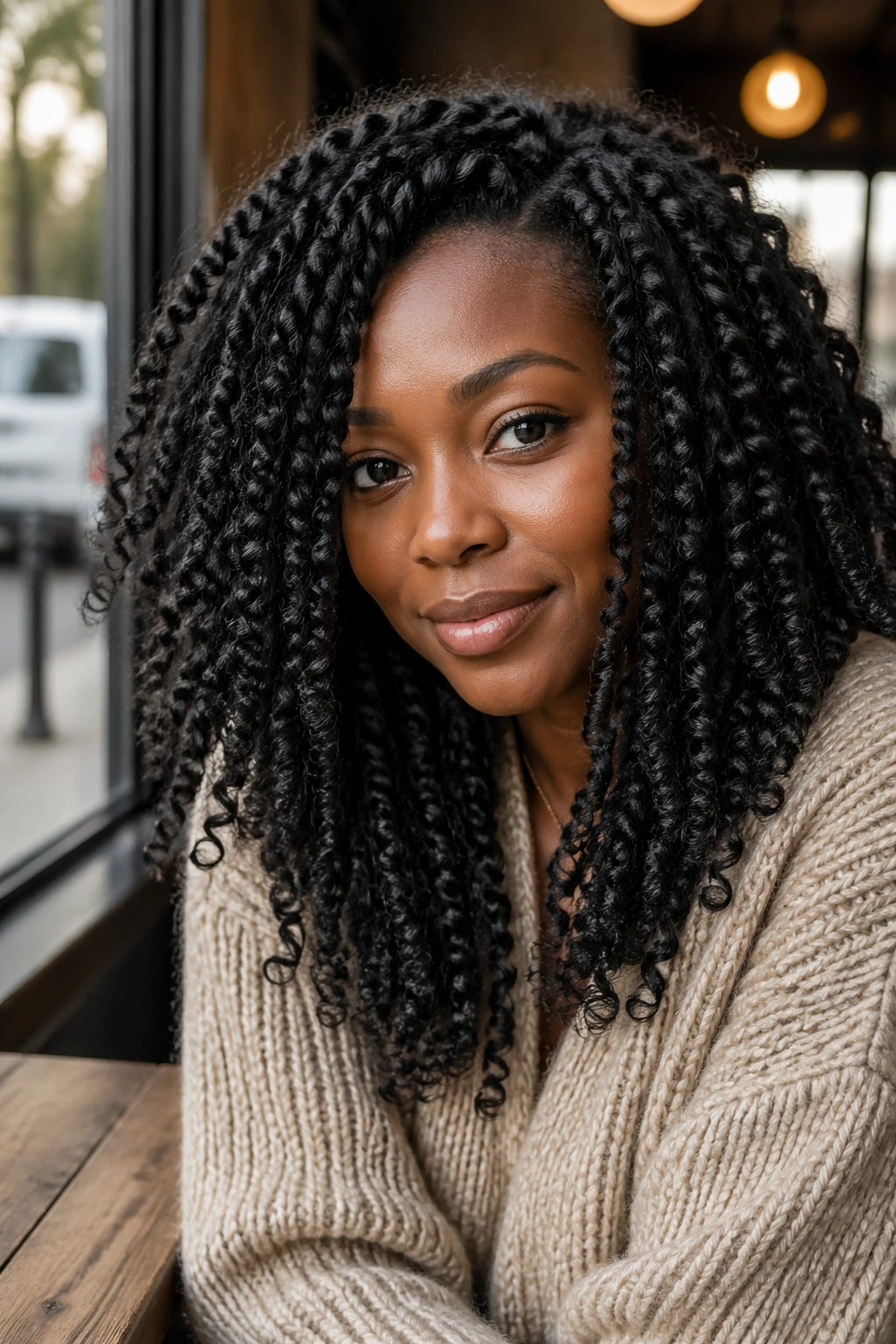
Kinky twists use braiding hair that mimics the texture of natural 4c hair — tightly coiled, dense, with a rough surface texture that blends almost invisibly with natural kinky hair. When kinky twist hair is used throughout the twist (not just at the ends), the entire twist has that coily, natural texture.
The seamlessness of kinky twists on 4c hair is remarkable. From a distance, the twists look like extremely defined natural twists — it’s not immediately apparent that extension hair is involved at all. This is the choice for women who want the length and longevity of extension twists without the obvious extension aesthetic.
6. Senegalese Twists With Curly Boho Ends
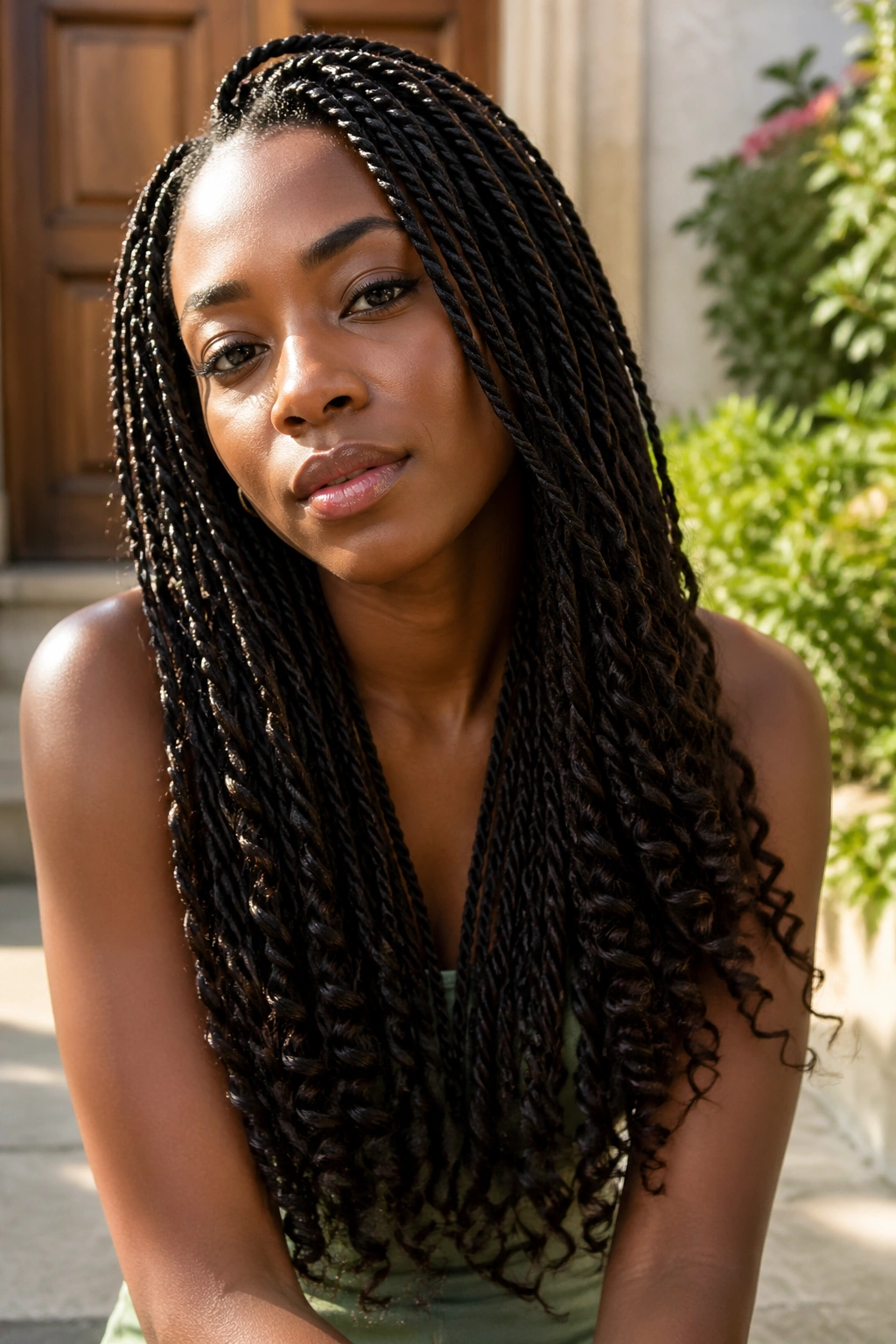
Senegalese twists — smooth, rope-like twists using silky Kanekalon extension — have a sleek quality that’s distinct from most other twist styles. The extension fiber is smooth rather than textured, the twist is tight and uniform, and the overall look is polished.
Adding bohemian or curly fiber at the ends of Senegalese twists creates a striking contrast. The smooth, controlled twist body ends in a loose, romantic curl. The structural and the free meet at the tip of each twist.
This contrast between the sleek braid body and the free curl end is the most visually interesting version of this pairing because the contrast is so pronounced. There’s no ambiguity about whether the end is curly — it clearly, definitively is.
7. Spring Twists — All-Over Curl Volume
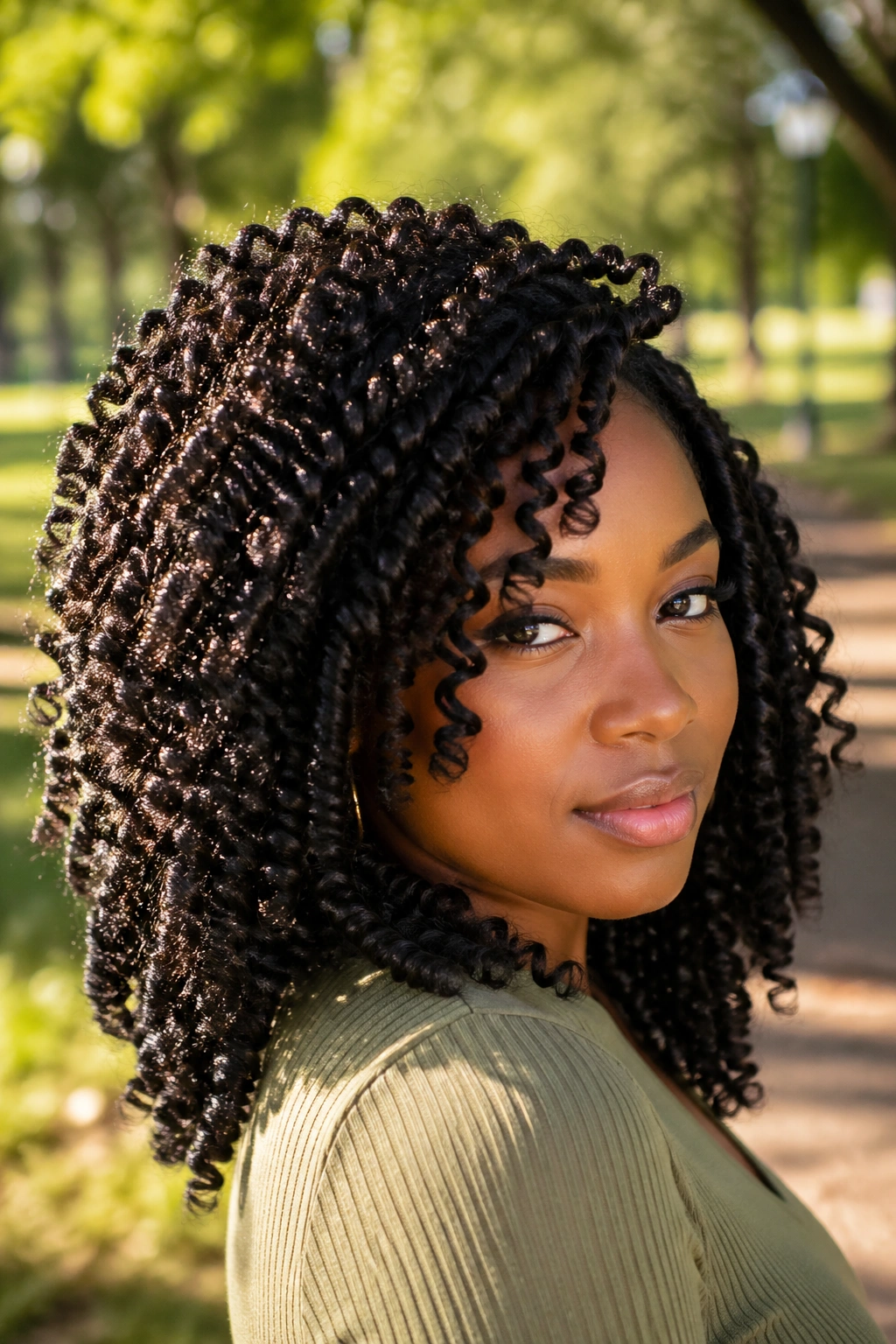
Spring twists are a specific style where the extension hair used is pre-looped in a spring or coil pattern. Rather than a flat two-strand twist, the spring twist bulges and bounces because the extension hair is already set in a spring shape when applied.
The result is a twist that looks permanently buoyant — like each twist has its own internal energy. Spring twists don’t need curly ends added because the entire twist body is already expressing a curly, spring-like energy.
If you want curl volume without much daily maintenance, spring twists deliver it. The spring pattern holds well and the texture looks consistent throughout the life of the style.
8. Half-Up Half-Down Twist Style With Curly Ends
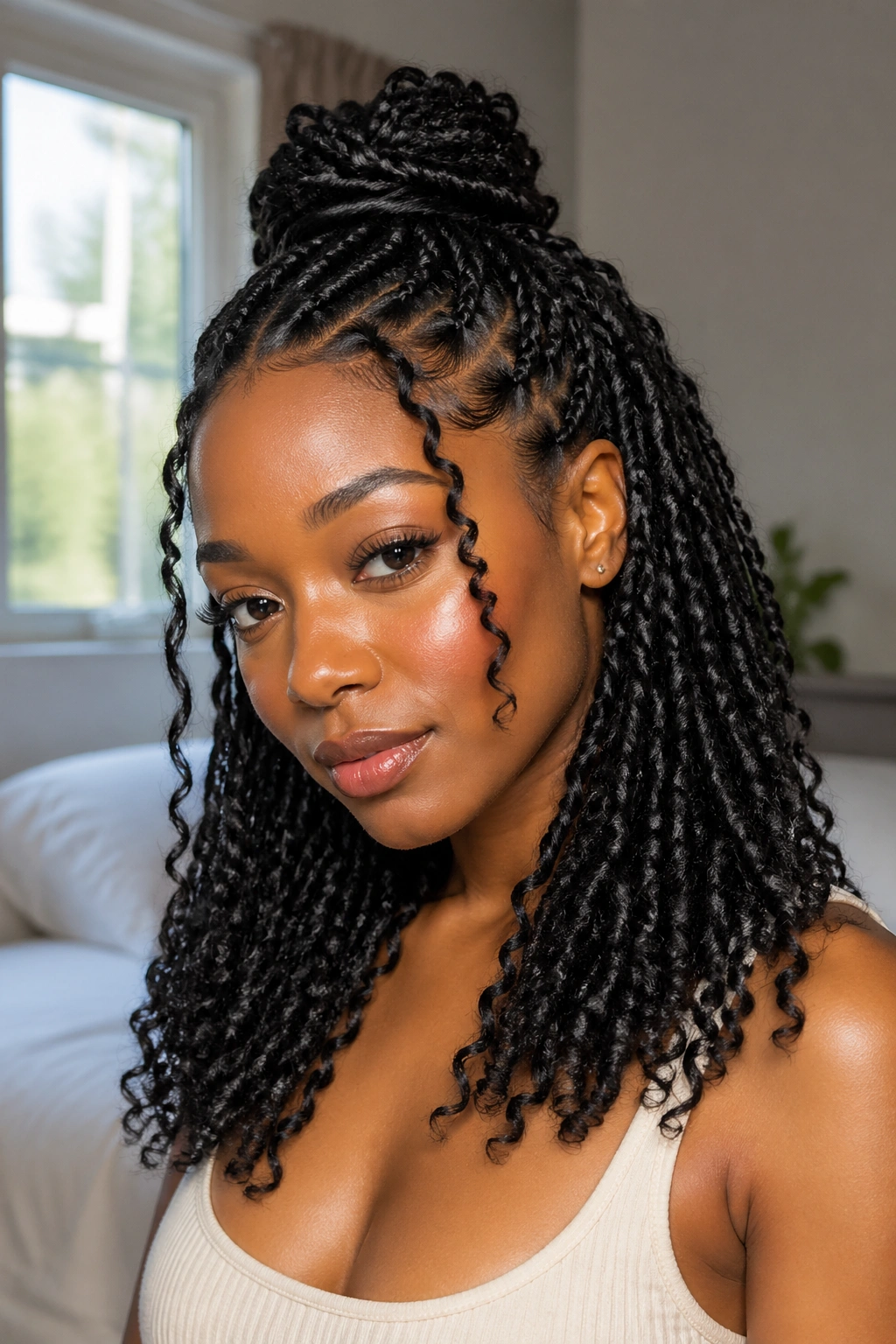
Gathering the top half of your twists into a gathered arrangement while leaving the lower section hanging with curly ends creates one of the most wearable, day-to-day versions of twist-with-curl styling.
The gathered top half can be a loose bun, a simple gathered ponytail, or just twisted sections looped and secured. The hanging bottom half — with its curly ends swinging freely — provides all the movement and texture interest.
This is the working version of twist-and-curl styling. Neat enough for professional settings when gathered; expressive enough for casual settings when released fully.
9. Twist Puff — Natural Curls on Top
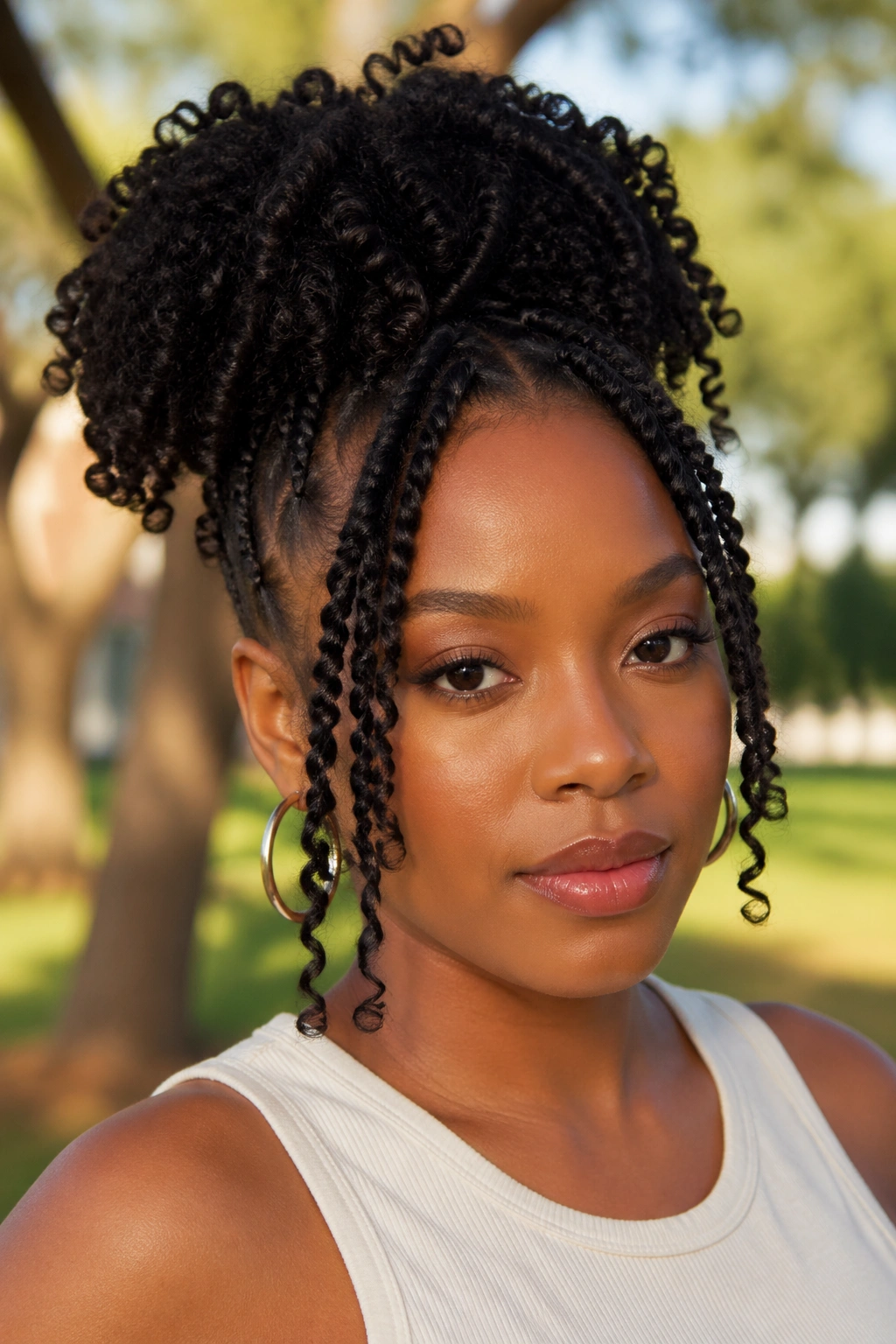
Gathering your twists (or loose natural hair sections) into a puff at the top while leaving some face-framing twists with curly ends loose at the front creates a style that’s equally practical and beautiful. The puff provides a clean silhouette and keeps the bulk of your hair out of your face; the face-framing pieces with curly tips draw attention to your eyes and features.
The best face-framing pieces for a twist puff are the ones at the temples and the hairline — leave 2-4 twists from each side loose and coax the ends into defined coils with a small amount of curl cream applied to your fingers.
10. Crochet Twist Style With Pre-Looped Curl Fiber
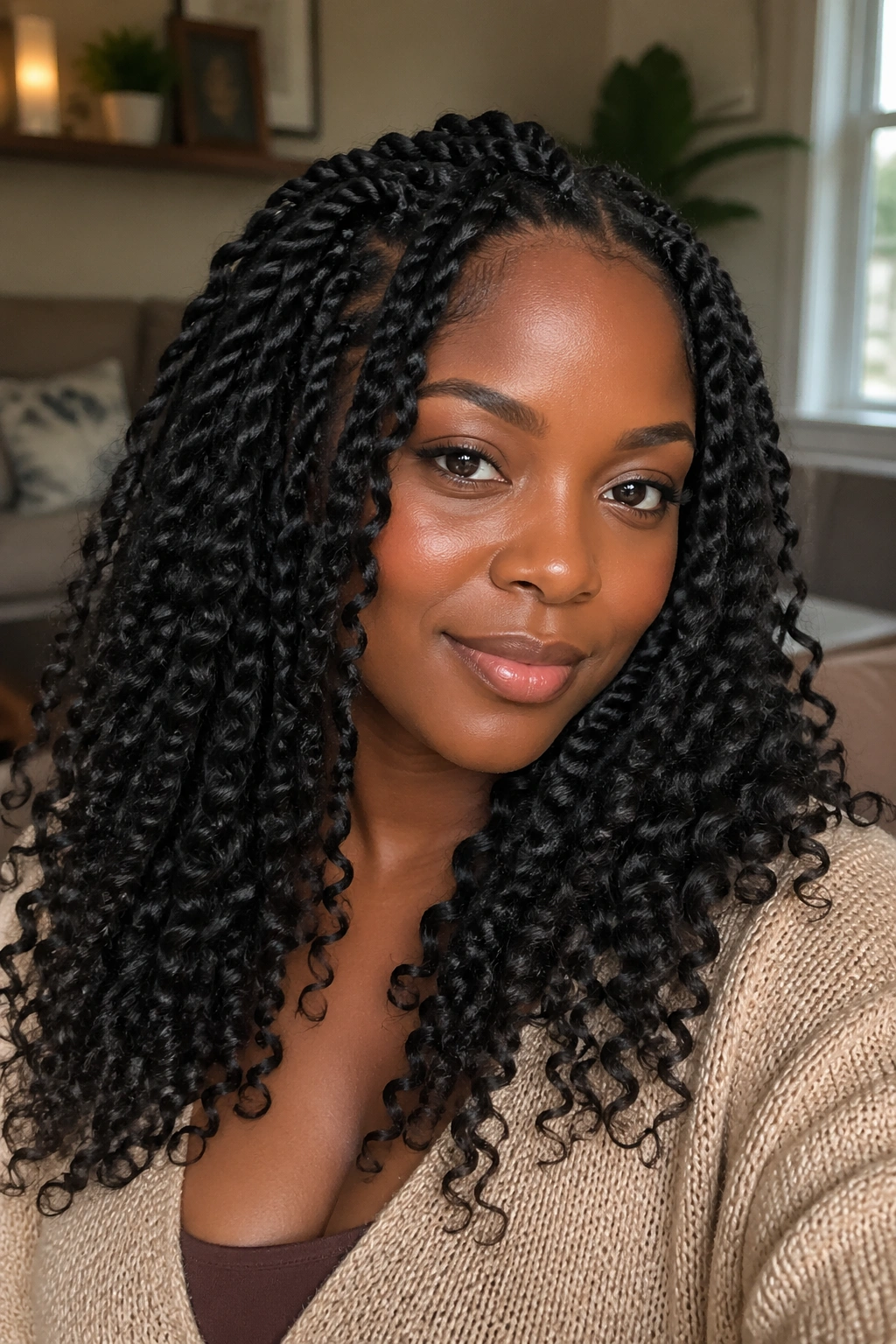
Crochet twists are installed differently from traditional two-strand twists — pre-made twist sections are inserted through the natural hair using a crochet needle rather than braided or twisted from the root. This makes installation much faster than traditional twisting.
The quality of the curl in crochet twists depends entirely on the fiber used. The range is enormous: kinky coily, loose wave, passion twist texture, spring curl, water wave. Each creates a completely different final aesthetic from the same basic crochet installation method.
How to Get This Look
Cornrow the natural hair in a pattern that will support the crochet additions. Using the crochet needle, pull pre-made twist sections through the cornrow base, loop, and secure. The natural cornrow base is hidden beneath the crochet twists, leaving a style that looks fully installed from root to end.
11. Twist Out on Longer Natural Hair
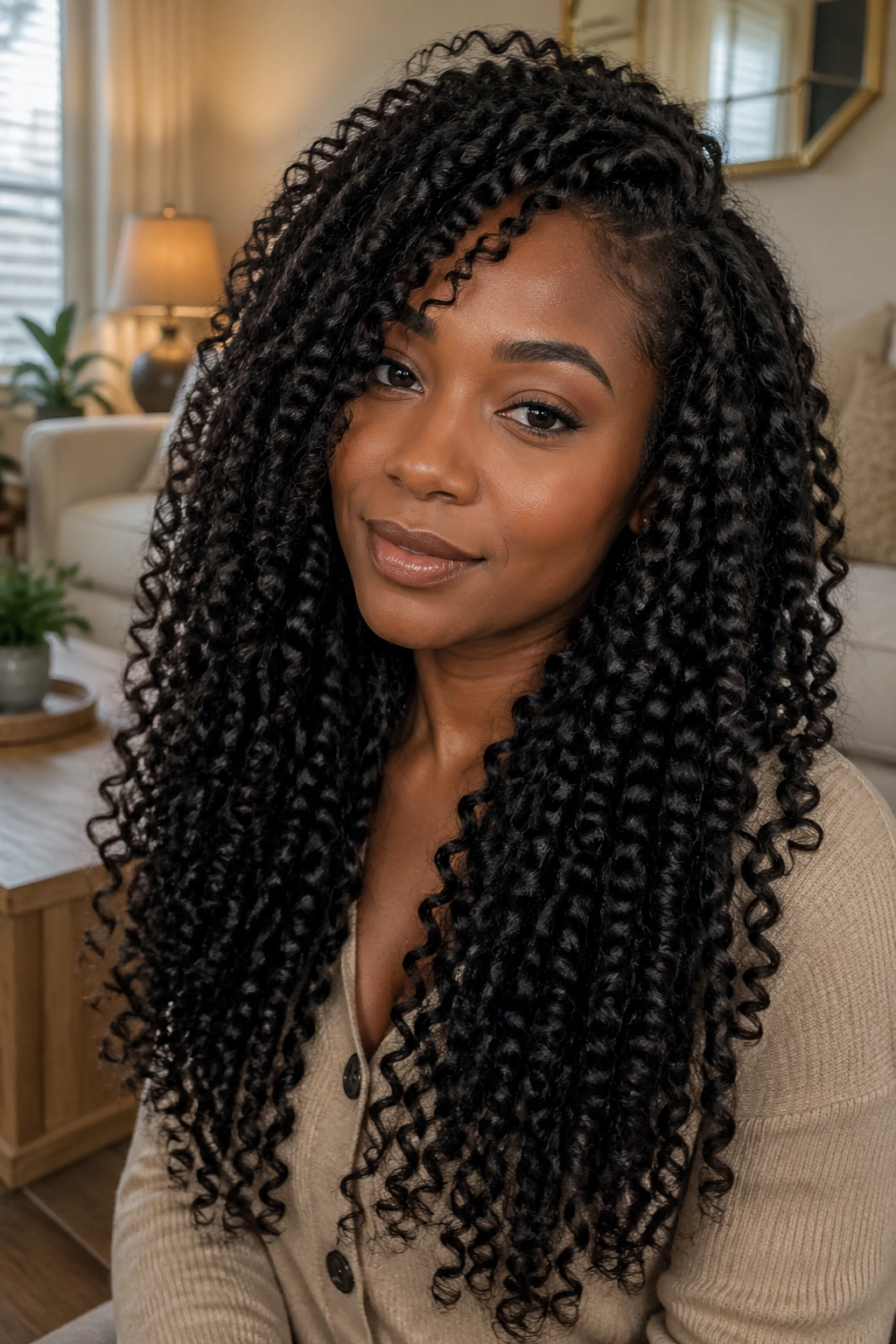
A twist out on longer natural hair — 8 inches or more in stretched length — produces something completely different from a twist out on shorter hair. The longer the hair, the more elongated the resulting curl, and the more the twist-out curl resembles a defined wave pattern rather than a tight coil.
Longer natural hair twist outs have an incredible sweep and flow that shorter twist outs don’t achieve. The curl has room to elongate, to transition from coil to wave to loose curl as it travels down the hair shaft. The result is a style with multiple curl expressions in one head of hair.
Maintaining definition on a longer twist out requires more product and more careful drying time. Larger sections dry more slowly and unevenly if the hair is thick.
12. Mini Two-Strand Twists With Curly Tips
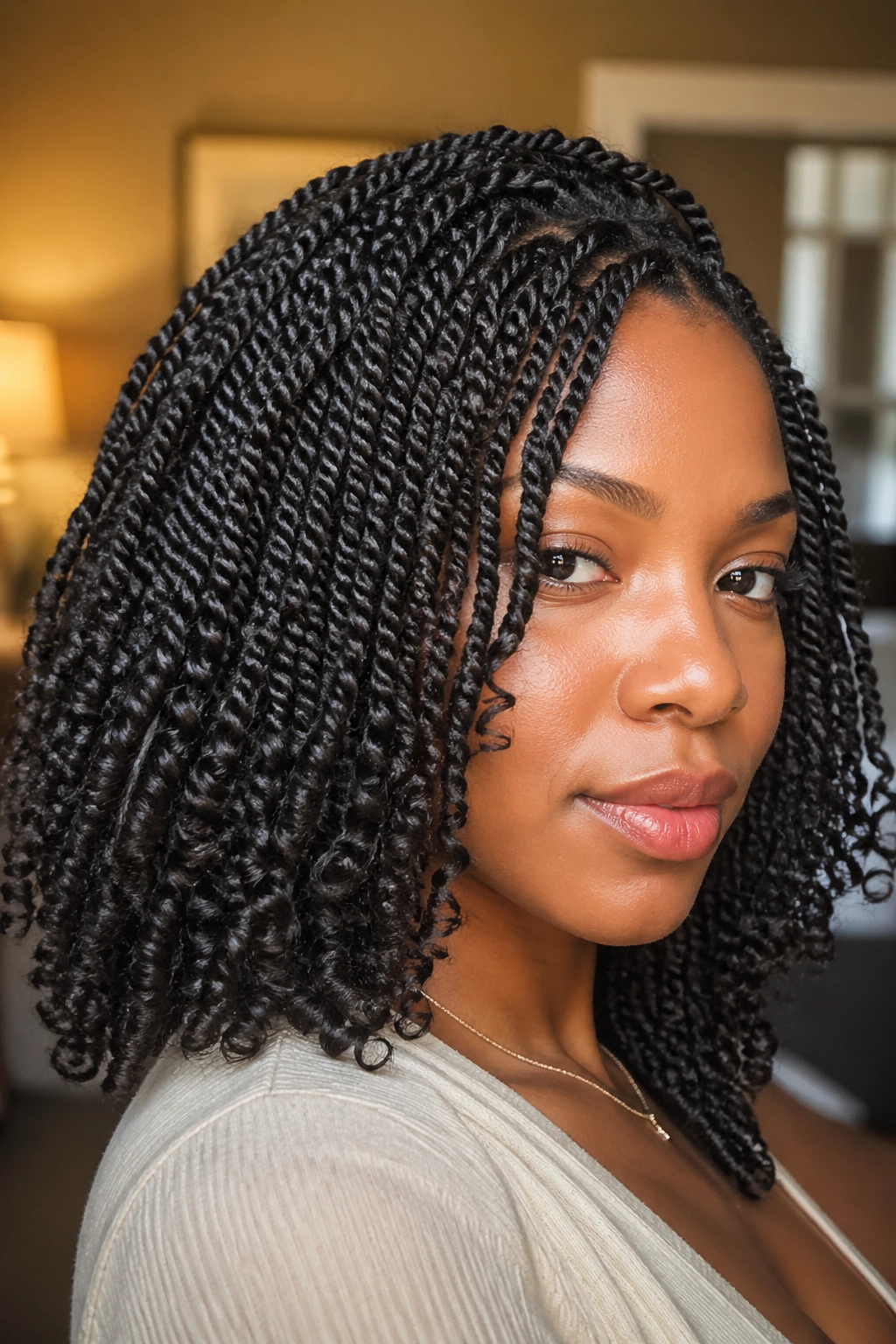
Mini twists — very small two-strand twists, dozens to hundreds of them — create extraordinary density and texture detail. When each of those mini twists ends in its own natural coily tip, the overall effect is a head of hair that looks almost impossibly full and defined.
Mini twists with curly tips are a serious time investment. Even with help, installation can take 5-8 hours. The payoff is a style that lasts 4-6 weeks and provides excellent protection for natural hair during that time.
They’re also one of the most low-maintenance styles during the wearing period — once the twists are in and the ends are curly, the style largely takes care of itself. Daily maintenance is minimal: a light mist of water, a bonnet overnight, done.
13. Flat Twists Cornrowed Back With Curly Ends
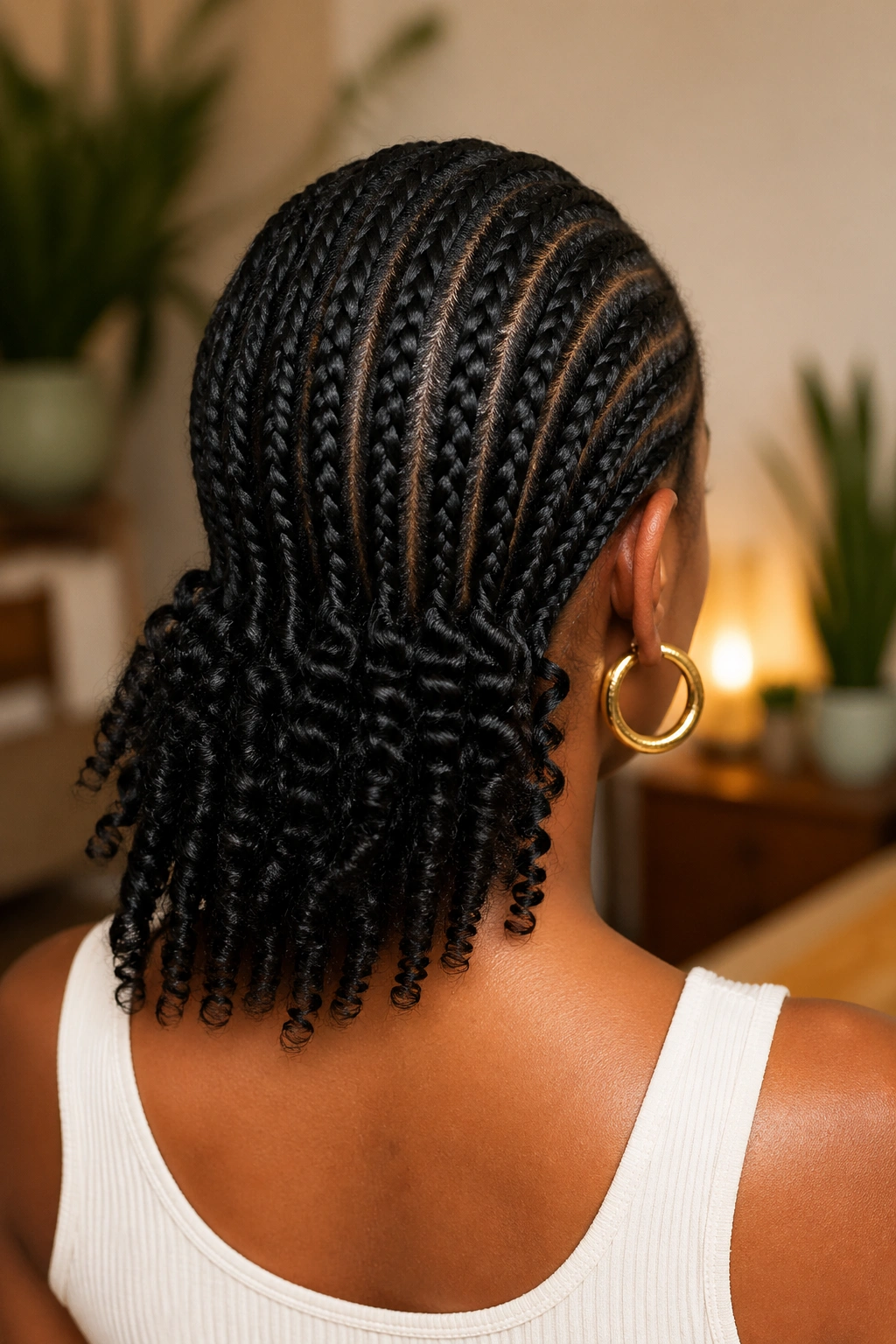
Flat twists — a braiding-adjacent technique where two strands are twisted against the scalp in a continuous, cornrow-like pattern — arranged in rows going straight back create a clean, structured look at the scalp. When the flat twist reaches the nape or stands free at a certain point and ends in curly extension fiber, the juxtaposition of flat scalp work and free curly ends is genuinely striking.
This is a style with clear geometric intentionality at the root and romantic freedom at the tips — the best of both aesthetics in one installation.
14. Twisted Bantu Knots With Released Curls
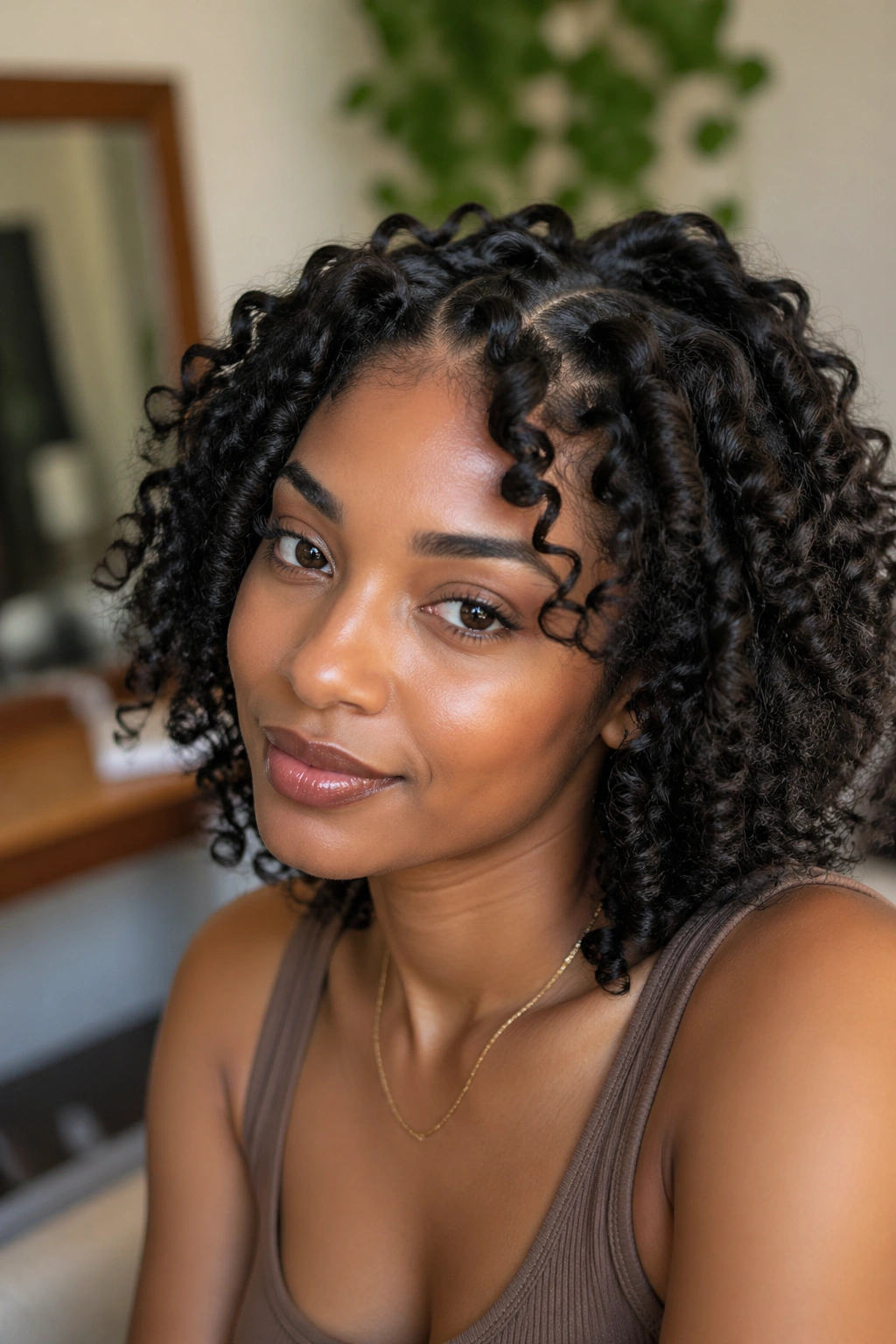
Bantu knots — small, coiled knots formed by twisting sections of hair up against the scalp — are both a style in their own right and a styling tool. When bantu knots are released after the hair has set (ideally overnight), the result is a defined, coily or wavy curl pattern throughout.
The Bantu knot out on natural hair creates a curl that’s deeply influenced by the coil direction of the knot itself. Done on top of two-strand twists or applied directly to dampened, product-loaded natural hair, the released curl has structure and bounce that lasts several days.
This is one of the techniques that natural hair community members return to repeatedly because the results improve with practice and the tool is just your own hands and some styling product.
15. Twist Style With Gold Thread Accents
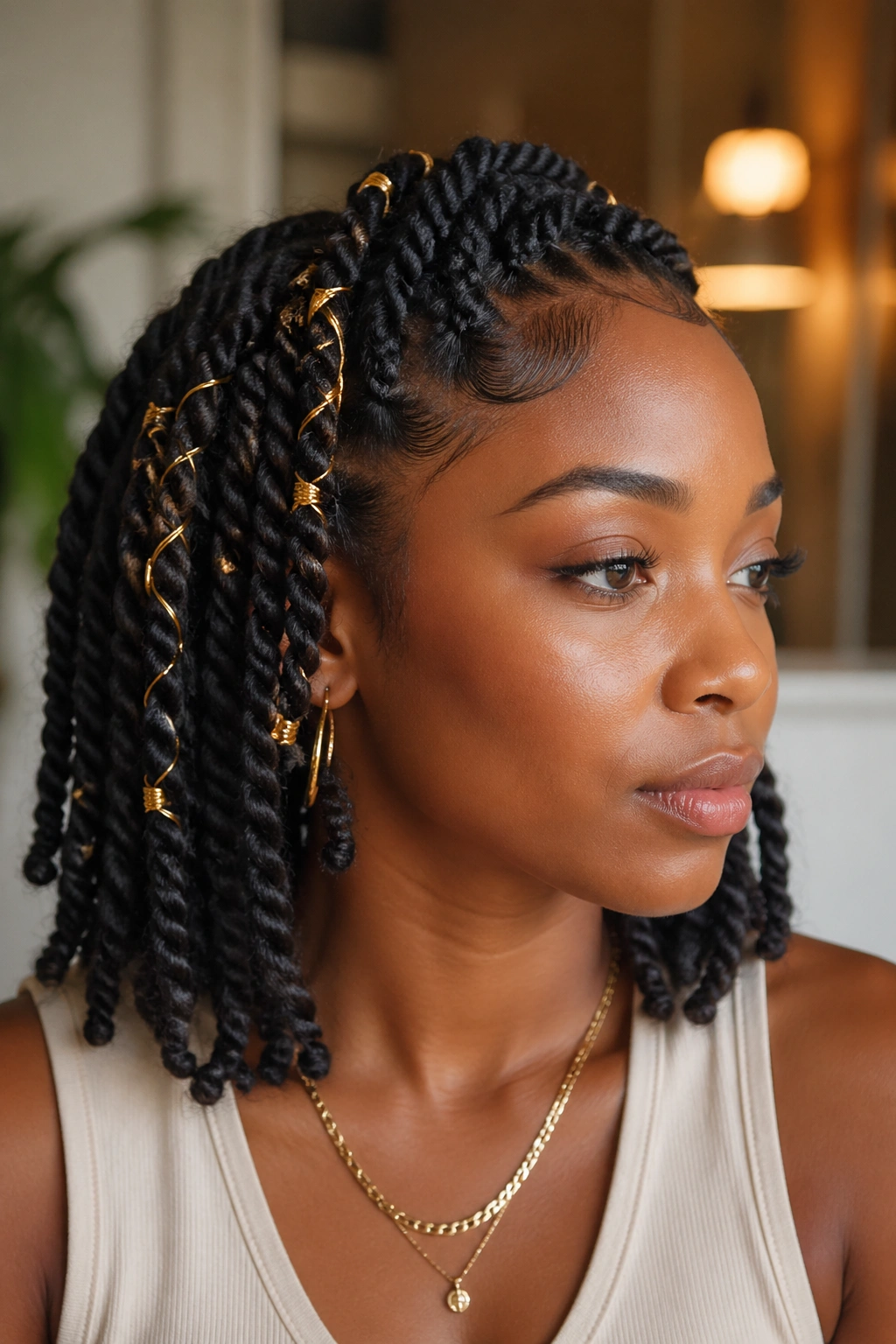
Wrapping sections of twists with gold metallic thread — either throughout some twists or just at specific points along them — adds a luxe, artisanal quality to a twist style that’s hard to achieve with any other accessory.
The gold thread catches light every time the twist moves. Against dark hair, the contrast is stunning. Against lighter, highlighted hair, the thread adds an extra dimension of warmth.
You don’t need to wrap every twist. Two or three thread-wrapped twists scattered throughout a head of plain twists creates enough visual interest without making the style feel overdone.
16. Two-Strand Twist Updo With Curly Ends Framing the Face
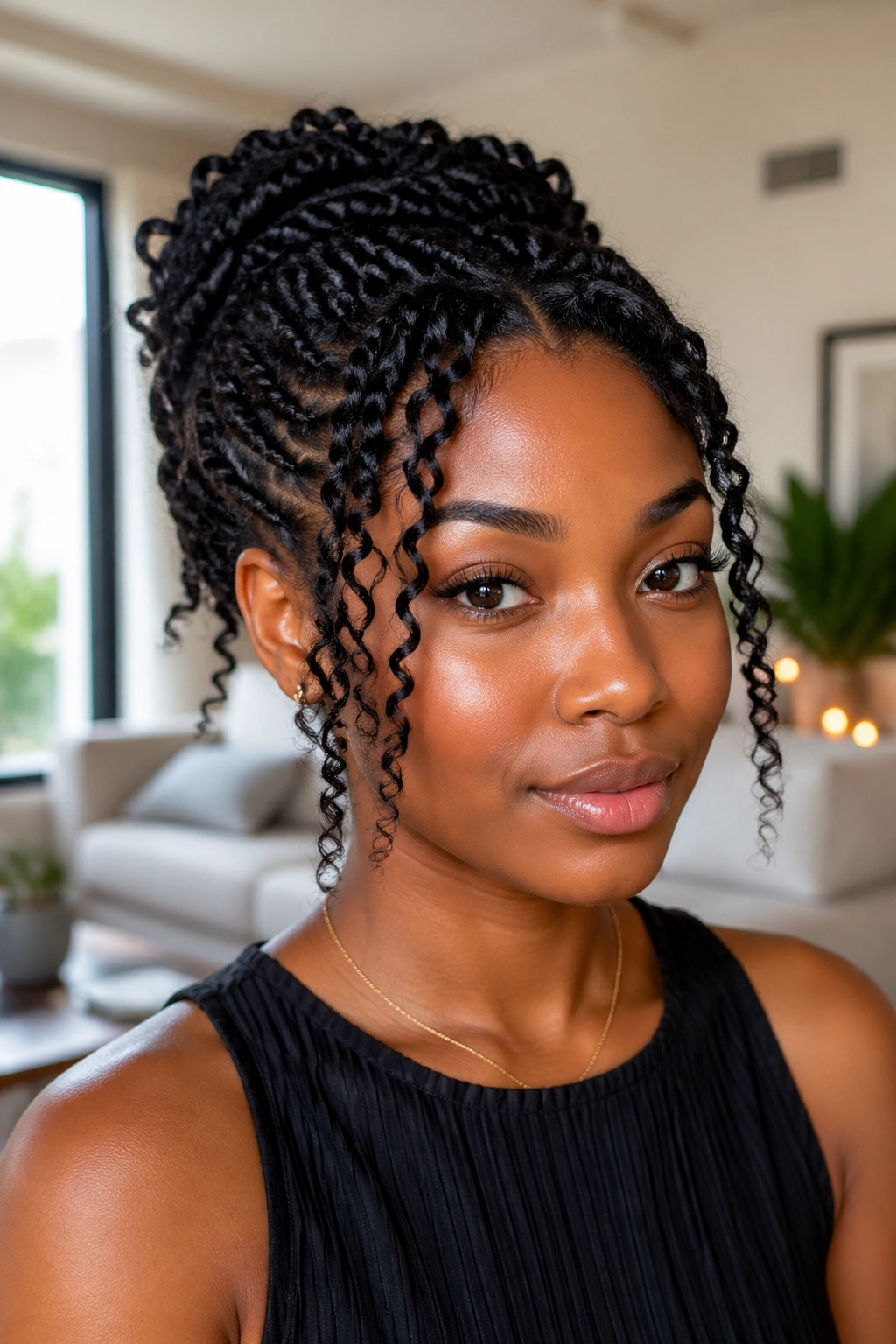
Pinning two-strand twists into an updo arrangement while leaving a few twists with curly ends loose around the face creates an updo that’s elegant without being severe. The pinned arrangement at the back keeps hair neat and polished; the loose, curly-tipped twists at the front add personality and femininity.
This works as a formal style — appropriate for events and celebrations — because the pinned updo is clearly intentional and the face-framing elements are clearly beautiful. Natural hair in this arrangement needs no justification.
17. Twisted Half Bun With Natural Curls Loose Below
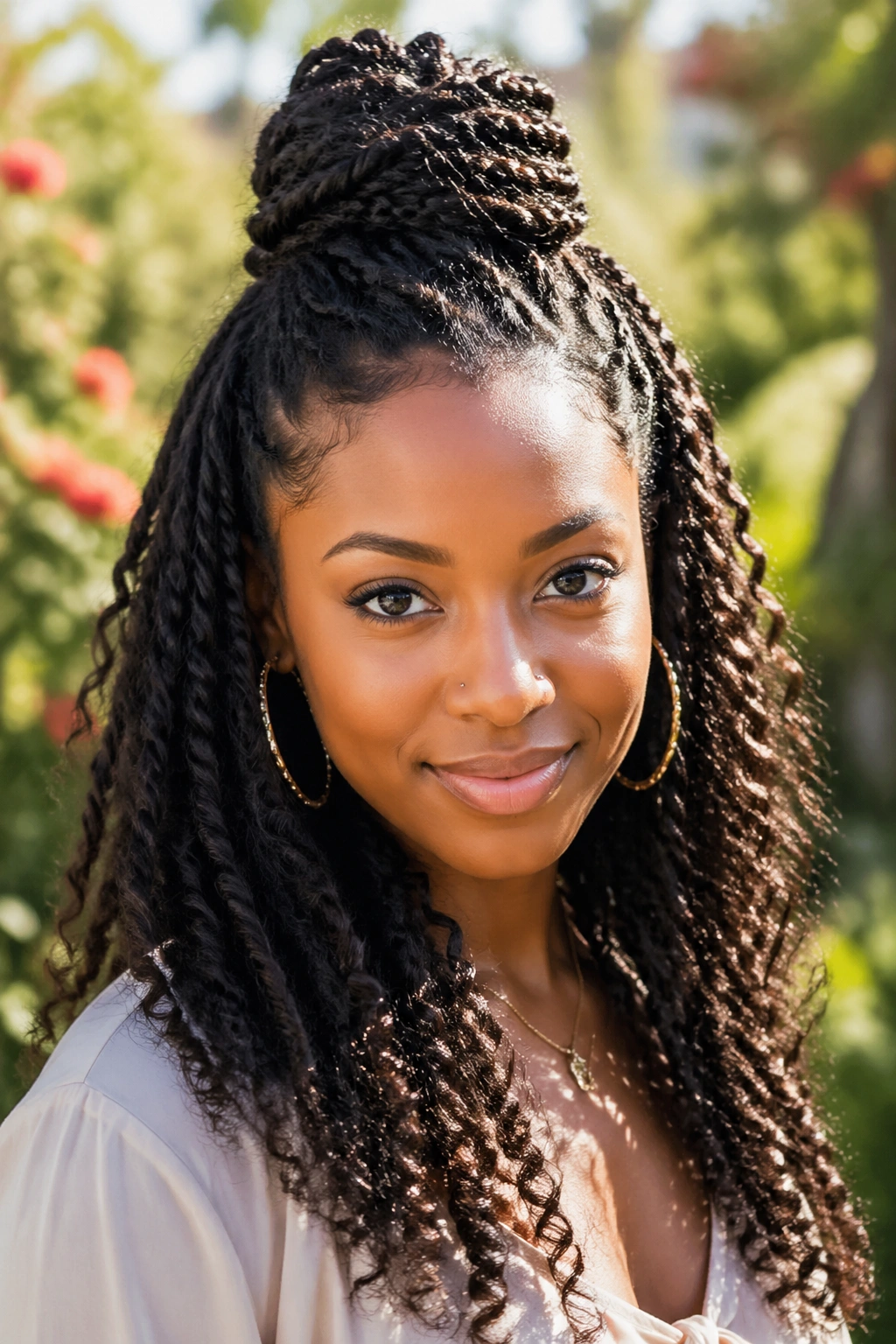
A half bun made from twisted hair sections, with the lower half of the natural hair left loose and free in its wash-and-go or twist-out state, creates a style where two natural hair aesthetics share space beautifully. The twisted half bun provides structure at the top; the loose curly natural hair below adds volume and movement.
This is a particularly lovely style in the weeks after a twist out has been worn for a few days — when the twist definition has loosened and the hair is in that beautiful in-between state of partially defined curls and soft volume. Gathering the top portion into a half bun while leaving the rest loose is the perfect way to wear that transitional texture.
18. Twist Style With a Headband or Scarf
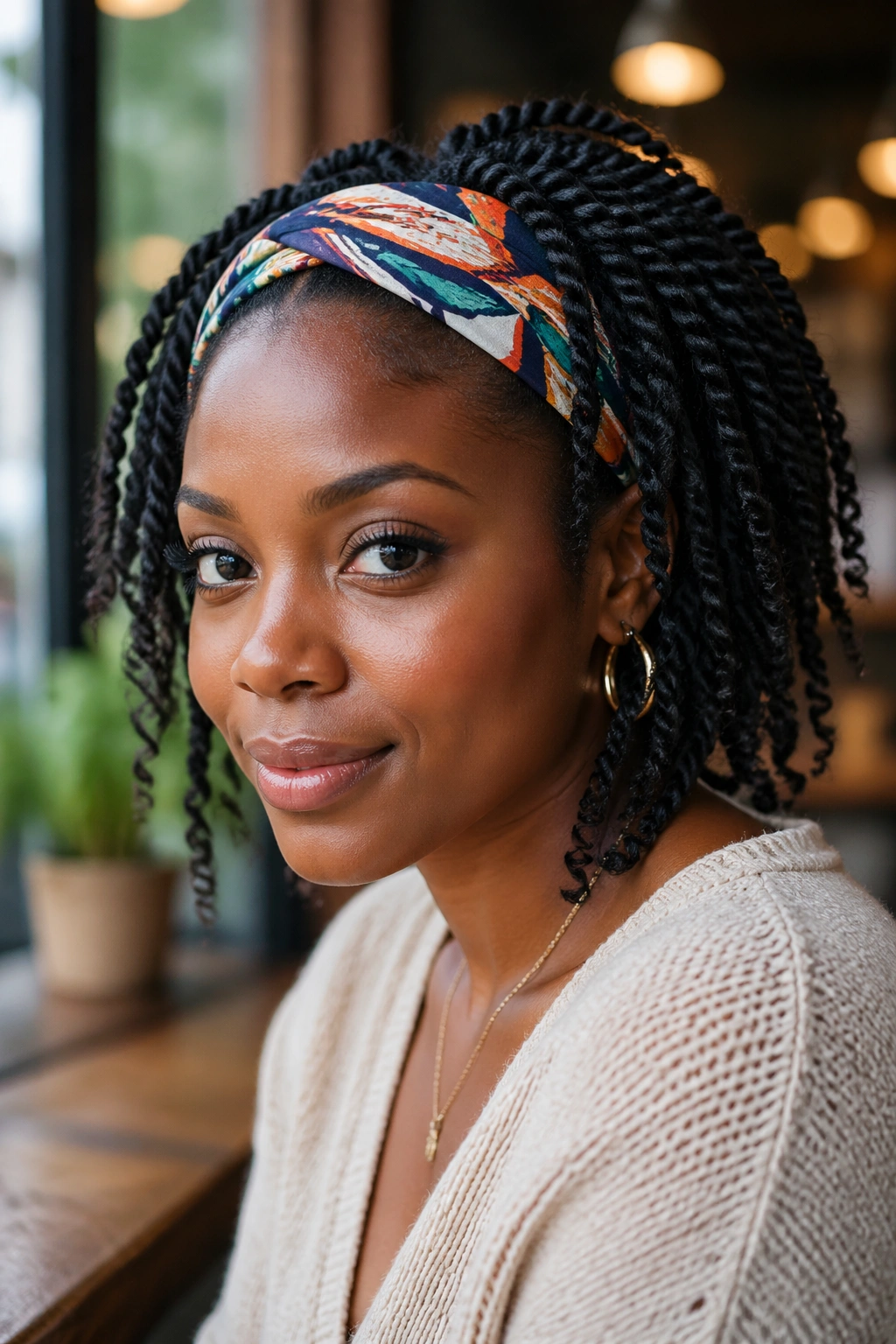
A patterned silk or cotton scarf worn as a headband across the front of a twist style — either lying flat against the hairline or tied back at the nape — adds color, pattern, and visual interest to a twist style without any extra hair manipulation.
The scarf keeps your edges smooth (the scarf lies across the hairline naturally), adds a fashion element, and on days when the twist style needs a refresh, it buys you another day by redirecting the eye away from any frizzing at the roots.
The combination of twists with curly ends and a colorful wrapped headscarf is particularly beautiful because the pattern of the scarf echoes the texture of the curls.
19. Loc-Inspired Twisted Style With Curly Extensions
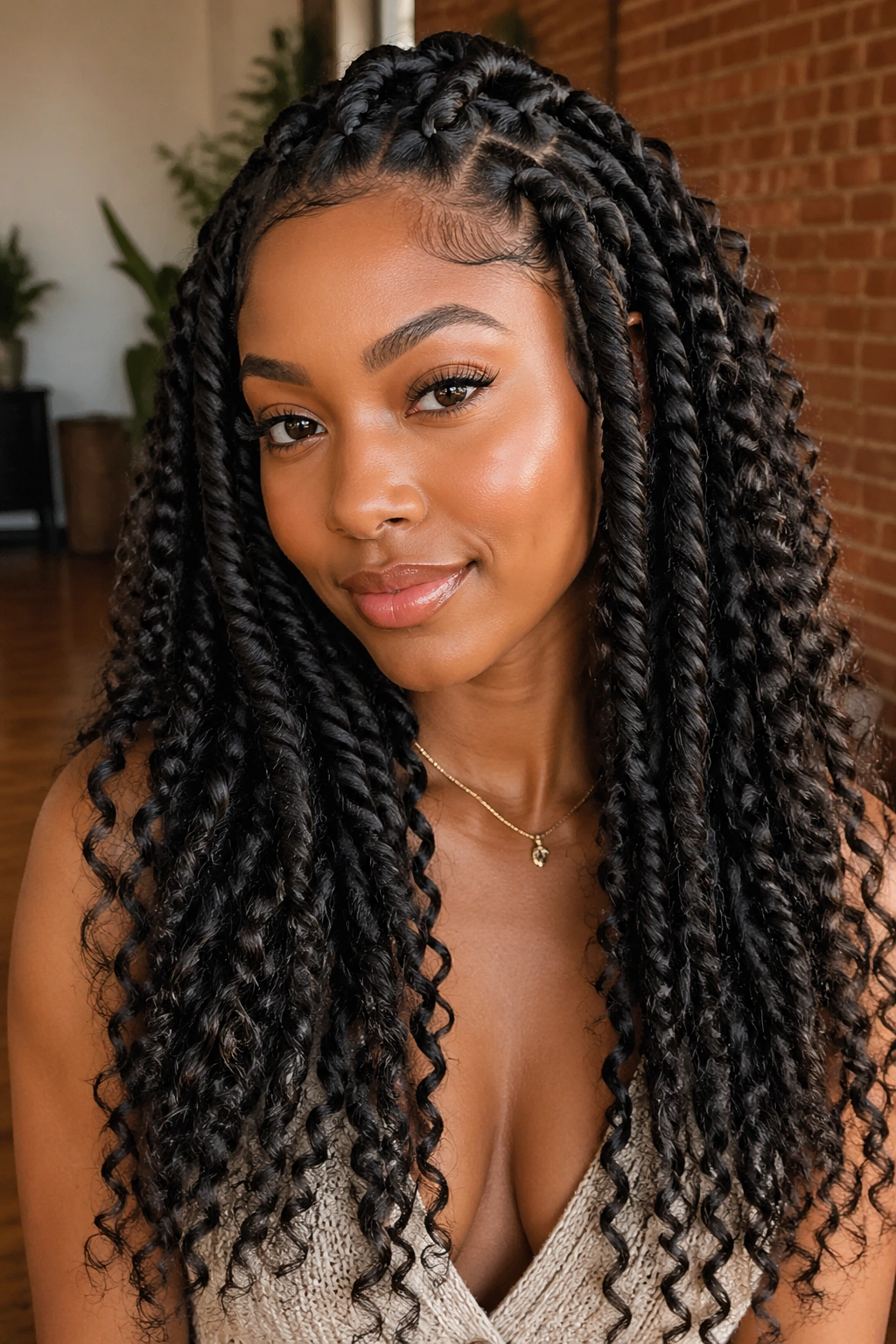
Some women who don’t have locs but love the loc aesthetic use a thick, dense two-strand twist with kinky extension fiber to create a loc-like appearance. When these loc-inspired twists include curly or wavy additions intertwined — mimicking the boho loc aesthetic — the result is a temporary version of a boho loc look.
This is the choice for women who want to try boho locs aesthetically without committing to actually starting locs. The style can be removed and the hair is not permanently changed.
20. Twist and Curl Style for Summer Vacation
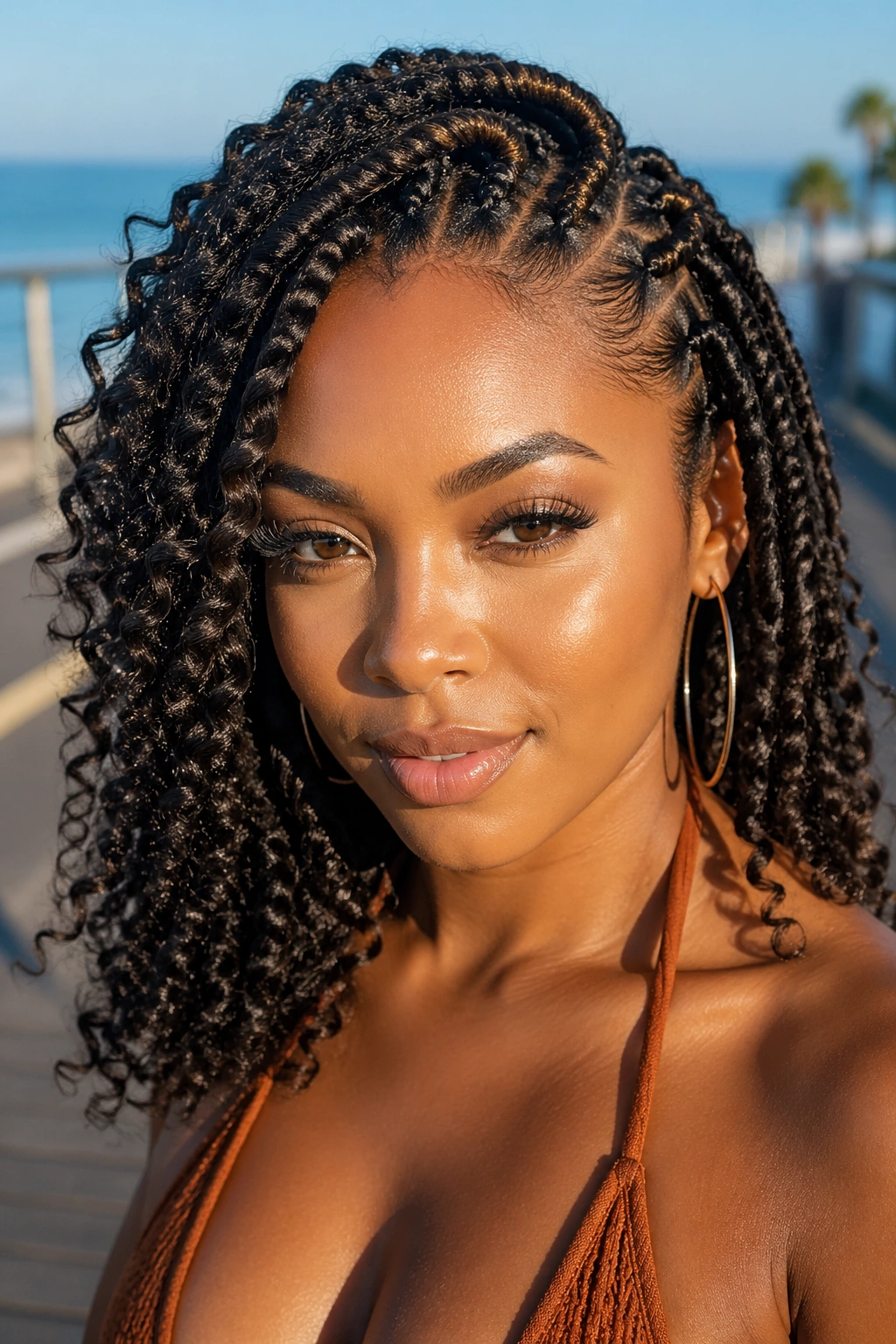
Twist styles with curls are excellent vacation hair for several reasons. They protect your natural hair from sun, salt water, and humidity. They’re low-maintenance once installed — no daily wash-and-go required. And they look genuinely beautiful in bright light and outdoor settings where movement and texture catch the sun.
For vacation: apply a UV-protective hair spray or a light oil with SPF properties to the twists before sun exposure. If you’re swimming, rinse your hair thoroughly afterward and allow the twists to dry completely before wearing a bonnet or allowing them to sit in a wet state.
21. Twist Style With a Defined Side Part
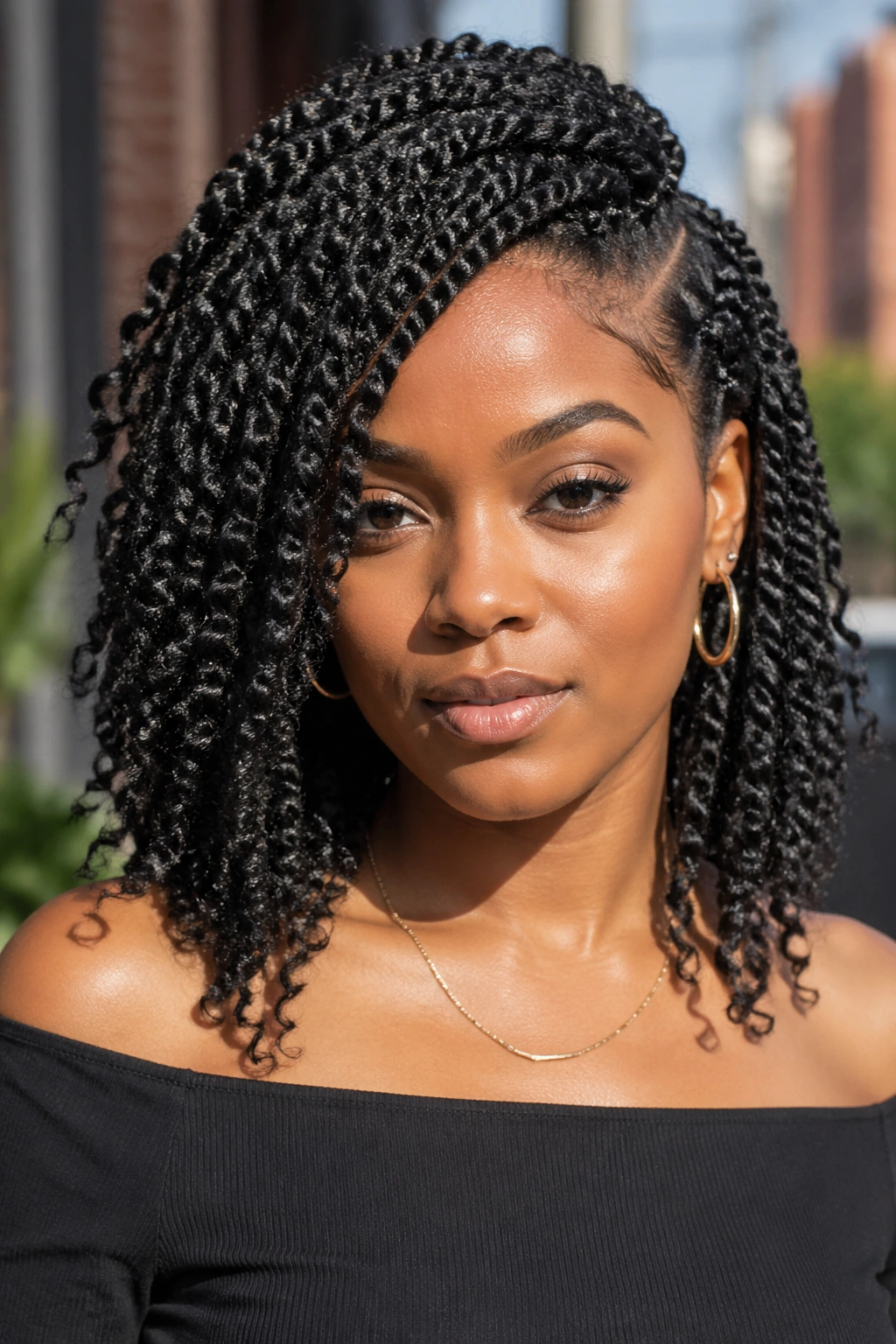
A deep side part in a twist style — parting all the twists to one side so they sweep over one shoulder while the other side is relatively free — creates an asymmetric, editorial look that reads as fashion-forward and deliberate.
The sweeping side with all the twists and curly ends has dramatically more volume and texture than the other side. From the front, the asymmetry is the entire aesthetic — it’s bold, it’s graphic, and it requires confidence to wear. But it pays off.
22. Loose Two-Strand Twists With Maximum Curl Volume
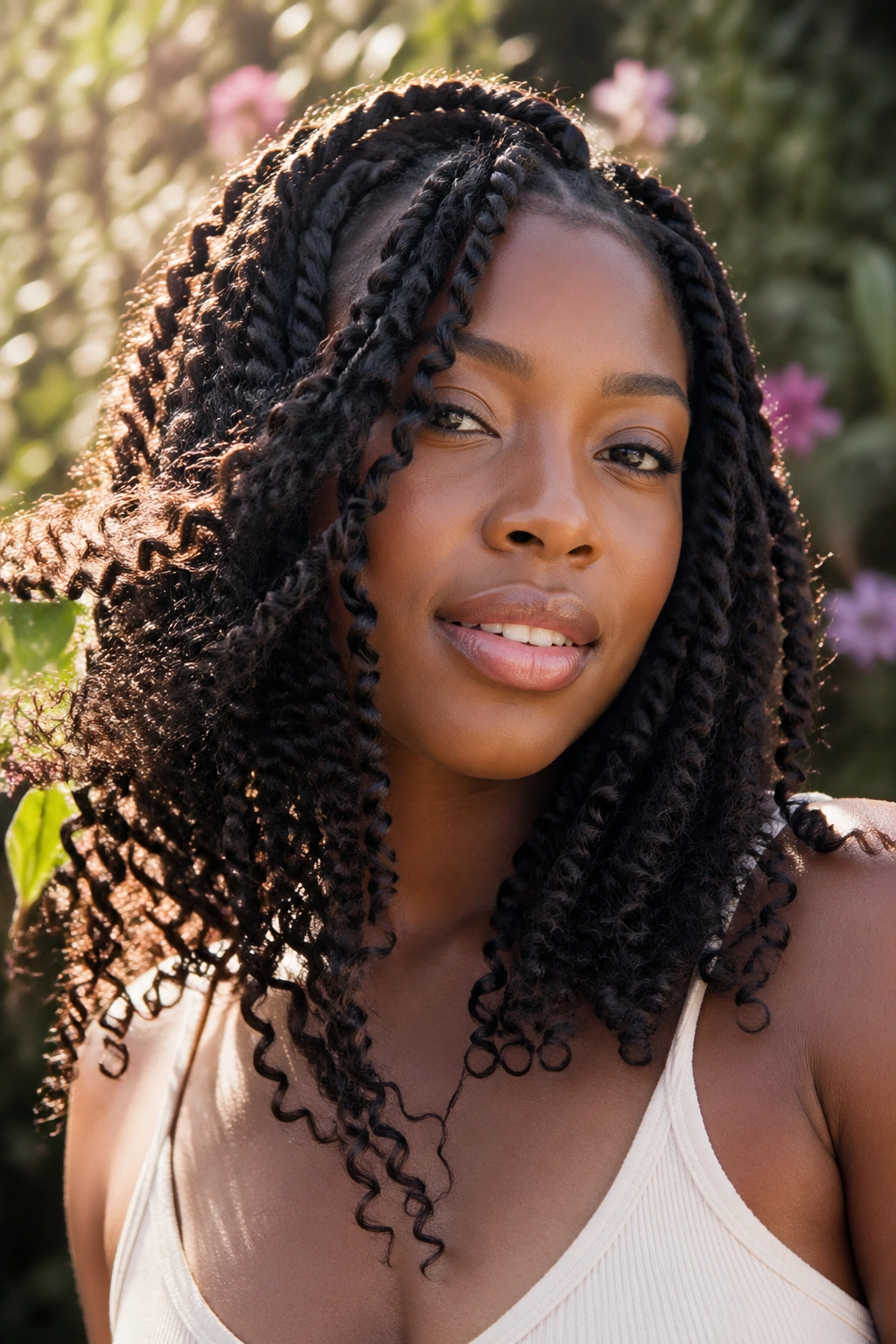
Some women prefer to install their twists very loosely — not tight and defined, but soft and voluminous. Loose twists don’t hold as long as tight ones, but they produce more volume and movement immediately.
When loose twists are paired with equally voluminous curly ends, the total volume of the style can be really impressive. The looseness of the twist means the hair has room to expand around the twist structure, creating a fuller silhouette.
This is not the choice for tight, defined, long-lasting twists. This is the choice for the most voluminous, most free, most expressive version of a twist style — one that prioritizes volume and energy over longevity.
Refreshing Twist Styles With Curls Between Wash Days
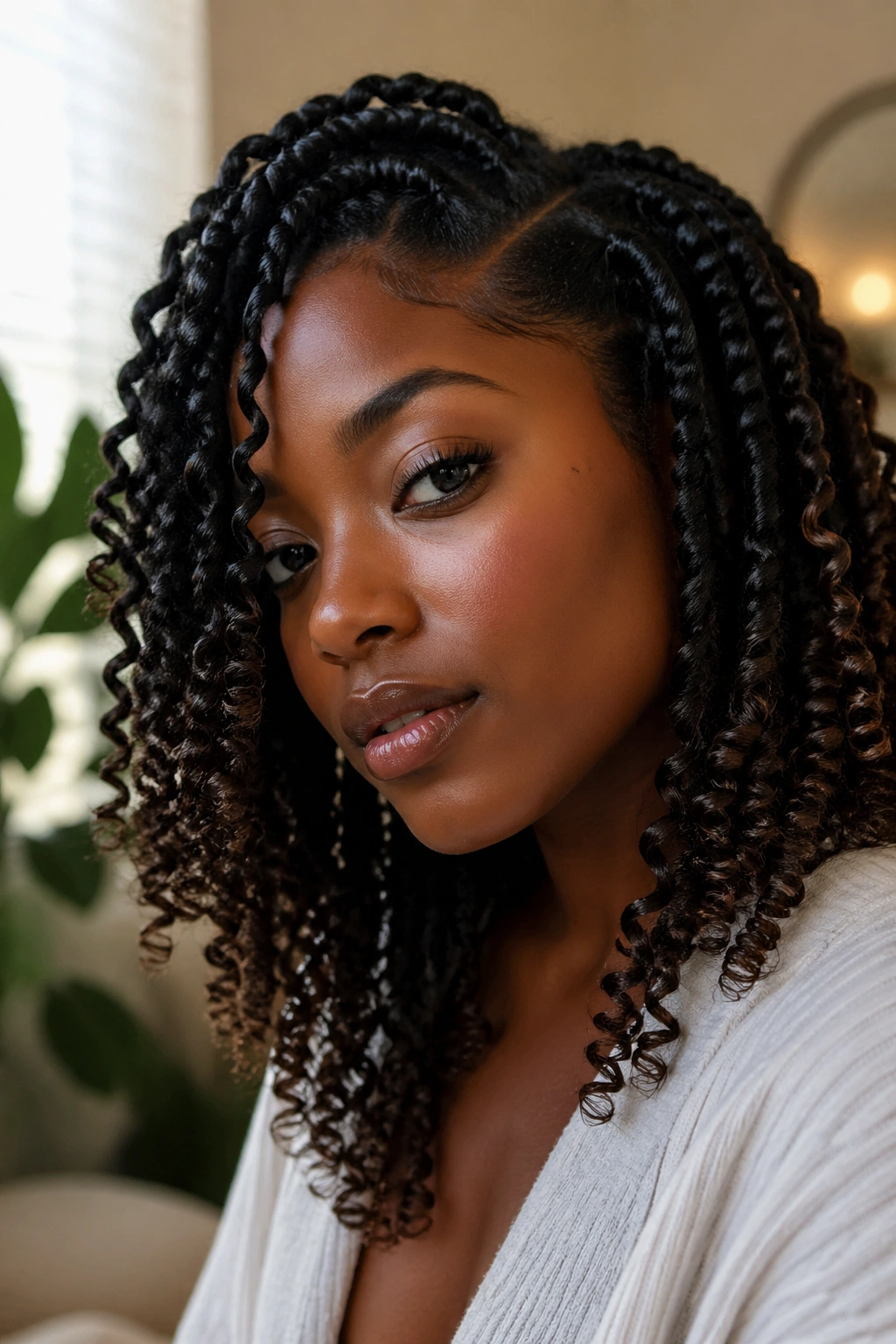
The biggest maintenance challenge with twist styles that have curly ends is keeping those curl ends looking defined as the days go on. Natural curl ends dry out and frizz; extension curl fiber loosens its pattern. Both need periodic refreshing.
For natural curly ends: lightly mist with a spray bottle of water mixed with leave-in conditioner (about 80/20 water to conditioner ratio). Follow with a small amount of curl cream applied with your fingers, scrunching gently to re-define the curl. Allow to air dry fully before gathering the hair into any updo or bonnet.
For extension curl fiber at the ends: mist lightly with water only — no heavy products on extension fiber. Scrunch the fiber gently while wet to reactivate the curl pattern. Allow to dry. If the fiber has lost definition beyond what water can restore, it’s a sign the style is reaching the end of its wearable life.
For the scalp between wash days: use a diluted spray of water, aloe vera, and a light oil to keep the scalp moisturized without building up product on the twist itself. Part the twists periodically to access the scalp directly, especially along the hairline.
