

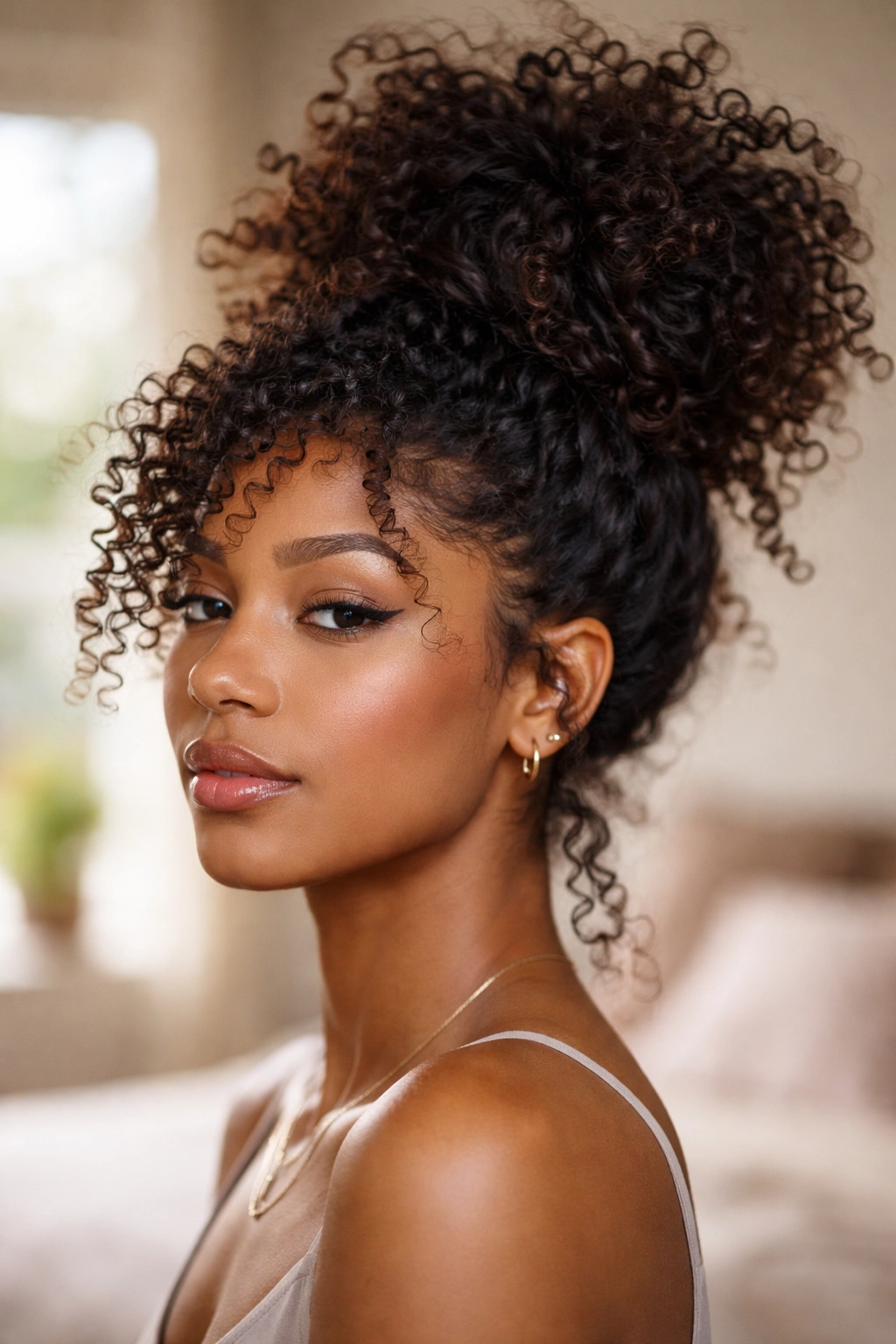
Messy bun styles for curly natural hair are one of those rare cases where your hair’s natural tendencies — the shrinkage, the curl volume, the sections that refuse to lie flat — become the entire point of the style rather than something to manage around. On straight hair, a messy bun requires active effort to create that “undone” effect. On curly natural hair? Your hair produces the messy, textured, voluminous quality automatically. All you’re doing is gathering it and letting it be everything it naturally wants to be. The result is a style that looks simultaneously effortless and gorgeous, which is genuinely the most attractive combination in hair.
What Makes a Messy Bun on Natural Hair Different
The word “messy” is doing a specific kind of work here, and it’s worth defining what it actually means in the natural hair context.
A messy bun on natural hair is not unkempt hair. It’s not hair that wasn’t combed or cared for. It’s a style that embraces the organic, uncontrolled qualities of natural curly hair — the volume at the base, the curls that escape in every direction, the bun that isn’t perfectly round or symmetrically placed — and presents those qualities as intentional aesthetic choices. The messiness is the style.
On straight hair, achieving this requires teasing, back-combing, pulling sections loose, and generally working against the natural sleekness of the hair. On natural 3c-4c hair, you start with texture and volume built in. The gathering technique, the product choices, and the way you settle the bun into place are all that distinguish a great messy natural bun from a not-so-great one.
The visual result is hair that looks like it was styled by someone who’s confident about their appearance — confident enough to not need every hair perfectly placed. That quality of confident ease is universally appealing, and natural curly hair achieves it more readily than any other hair type.
The Secret to a Messy Bun That Looks Intentional
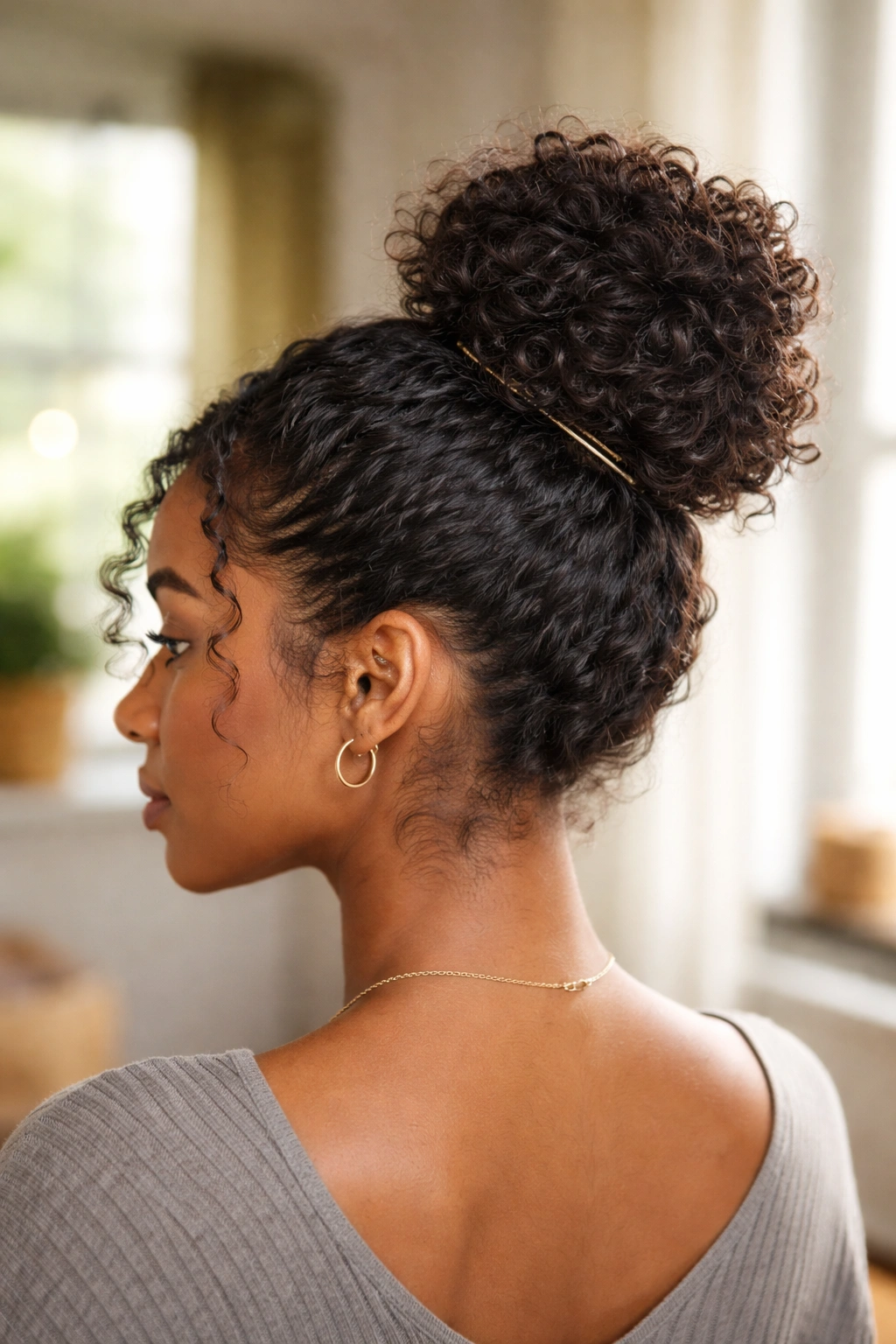
Anyone can gather their hair into a lopsided bundle and call it a messy bun. The skill is in making the mess look like you chose it — like it’s a deliberate aesthetic decision rather than the result of not having time to style your hair properly.
The difference between a good messy bun and a bad one is usually three things: defined edges, consistent texture throughout the gathered section, and at least one deliberate detail that signals intention.
Defined edges — even slightly laid, even just smoothed with a tiny bit of edge control — signal that the bun above them is chosen rather than accidental. The contrast between smooth edges and a voluminous, imperfect bun above them reads as a styling decision.
Consistent texture means the hair in the bun is roughly the same texture throughout — all curly, all natural, all the same level of definition — rather than some sections being defined and others frizzy. You don’t need every curl perfect, but the overall texture should read as cohesive.
One deliberate detail: a wrapped strand around the base, a hair pin placed clearly and visually, a scarf tied at the nape, a flower tucked into the bun. One intentional element transforms the style from accidental to artistic.
Products That Help and Hurt Messy Bun Success
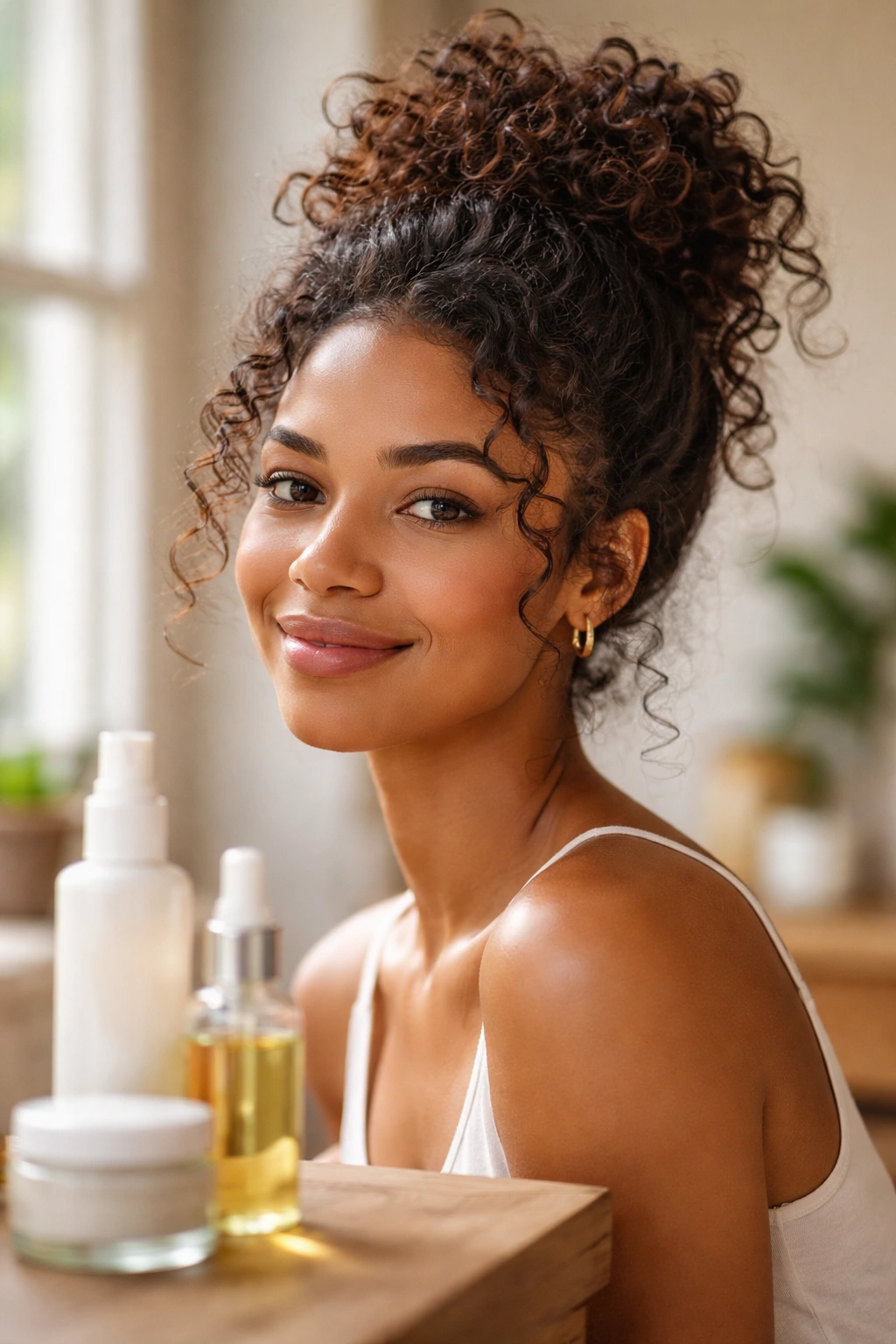
The product question for messy natural buns is genuinely counterintuitive. You might think that a messy style requires no product — and you’d be wrong. Too little product on curly natural hair produces frizz, not the textured mess you want. Too much product produces a heavy, weighed-down bun that doesn’t have any of the lightness and volume that makes this style work.
What helps: a lightweight leave-in conditioner applied to the sections before gathering (keeps the curl definition without adding weight), a light hold gel if your curl pattern needs definition, and a tiny amount of oil worked through the ends for sheen.
What hurts: heavy butters applied throughout the hair before bun styling (they flatten the curl and make the bun slick rather than textured), strong hold gels that stiffen the bun so escaped curls stand stiffly rather than falling softly, and anything that prevents the hair from moving naturally once the bun is gathered.
The goal is moisturized, defined curls that are light enough to spring and fall freely once gathered. Product should enhance the natural curl pattern, not override it.
1. The Classic Messy High Bun
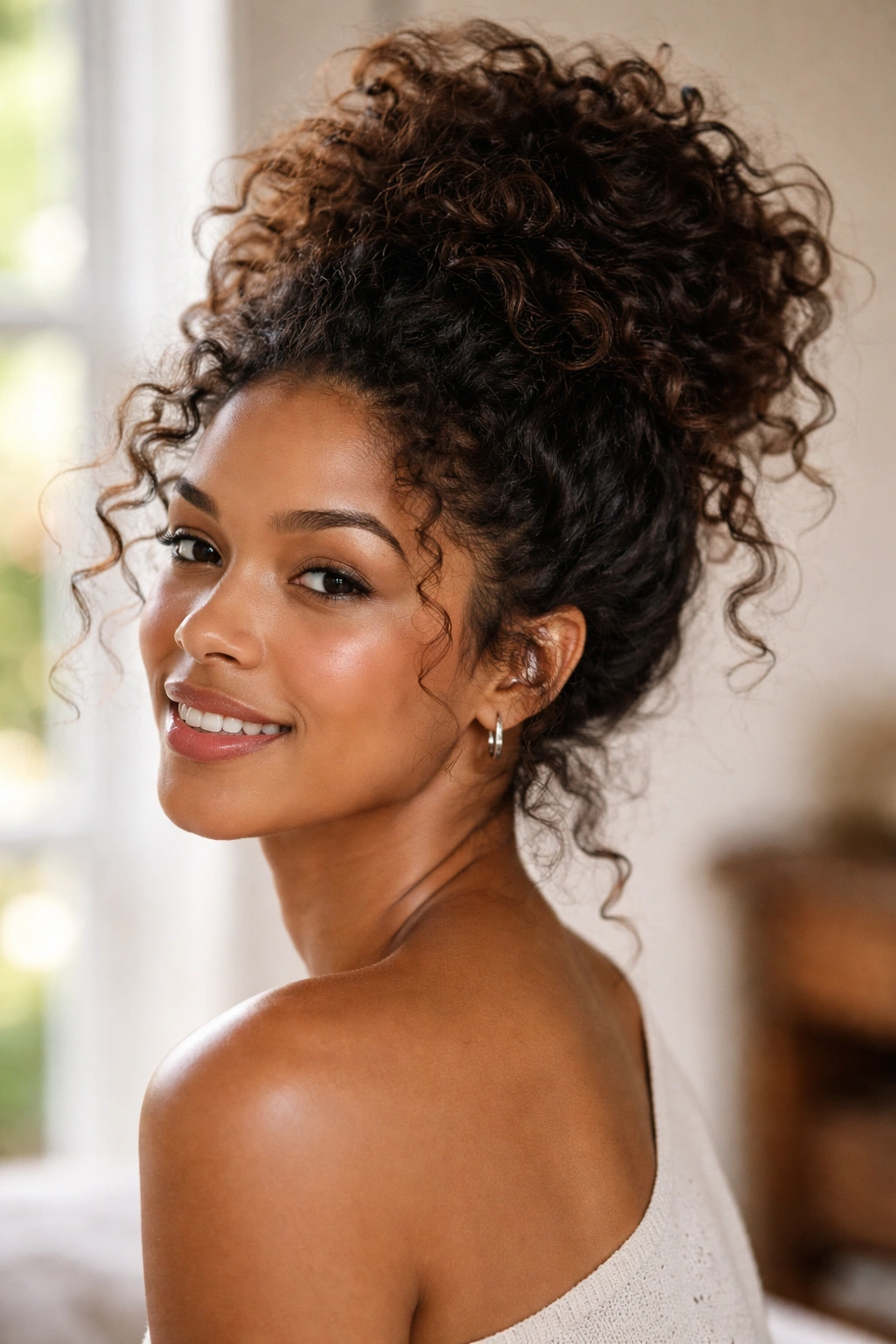
The highest, fullest, least perfect bun you can create — gathered at or above the crown with absolutely no concern about symmetry or uniformity — is the platonic ideal of the natural hair messy bun. Curls escape from every side of the gathering point. The bun itself is round on one day and asymmetric the next. Some days it leans slightly left. Other days it tilts back. That’s the point.
To get the most out of this style: gather quickly and don’t fuss over the positioning. The more you adjust and rearrange, the more you’re working against the natural landing of the curls. Gather once, secure once, done.
The escaped curls around the base of this bun are not mistakes. They’re the best part. Let them fall where they fall and resist the urge to tuck or pin them away.
2. Low Messy Bun at the Nape
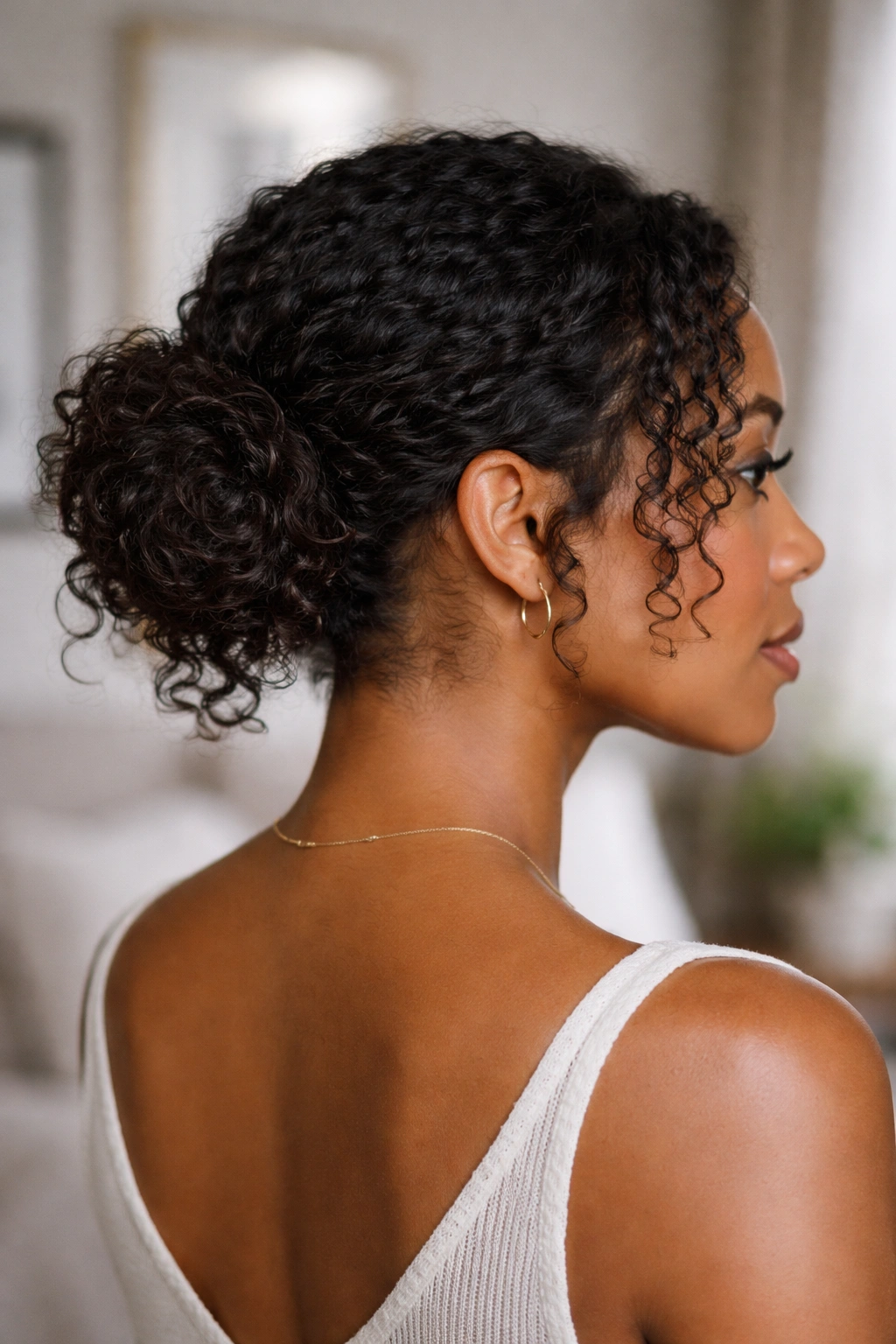
The low version of the messy natural hair bun has a completely different energy from the high version — more classic, slightly more polished, but still with that beautiful natural texture doing its thing. The bun sits at the nape, the gathering is deliberate but the bun itself is allowed to settle imperfectly, and curls escape around the ears and along the hairline.
A low messy bun on natural hair looks elegant in a way that a high messy bun doesn’t quite achieve. There’s something about the nape placement that reads as thoughtful. It’s appropriate in professional settings, beautiful at formal events, and genuinely versatile for everyday wear.
Leave the nape curls completely alone. The little coils or waves that fall below and around the bun at the nape are the defining romantic element of this style.
3. Side Messy Bun With Escaped Tendrils
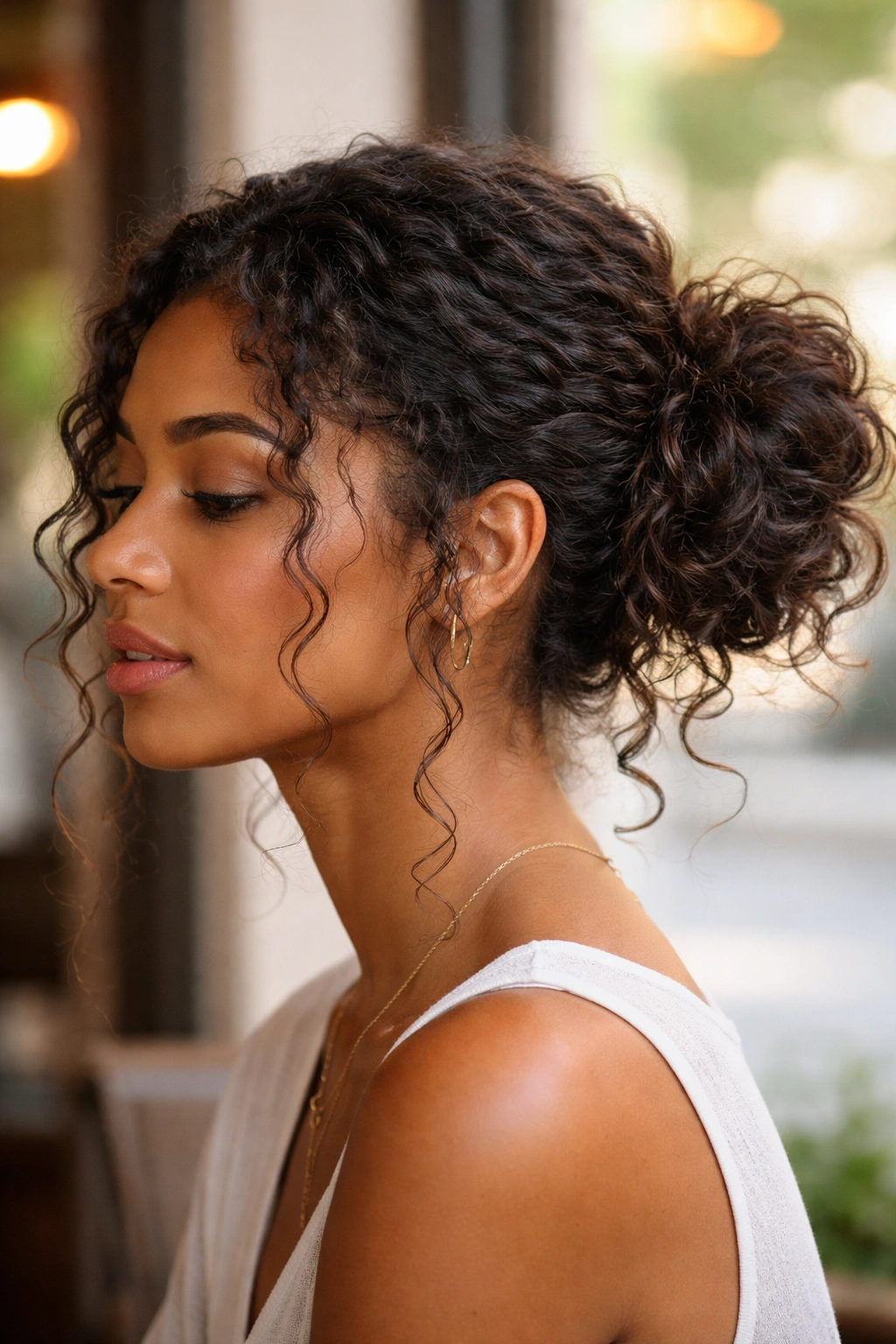
Positioning the messy bun to one side — behind the ear, at the temple, or somewhere along the side of the head — creates an asymmetric style that’s inherently interesting. The side placement exposes the opposite ear and the neck, creating an elegant neckline while all the texture and volume clusters at the bun side.
Pulling a few curly tendrils free from around the bun and letting them trail alongside the face — especially one or two in front of the ear — softens the style and gives it a romantic, slightly undone quality even within the already undone aesthetic of a messy bun.
This is a particularly flattering style for oval and heart-shaped faces because the asymmetric gathering draws the eye diagonally rather than straight up or straight back, which creates a flattering line.
4. Messy Bun With Curly Flyaways as the Feature
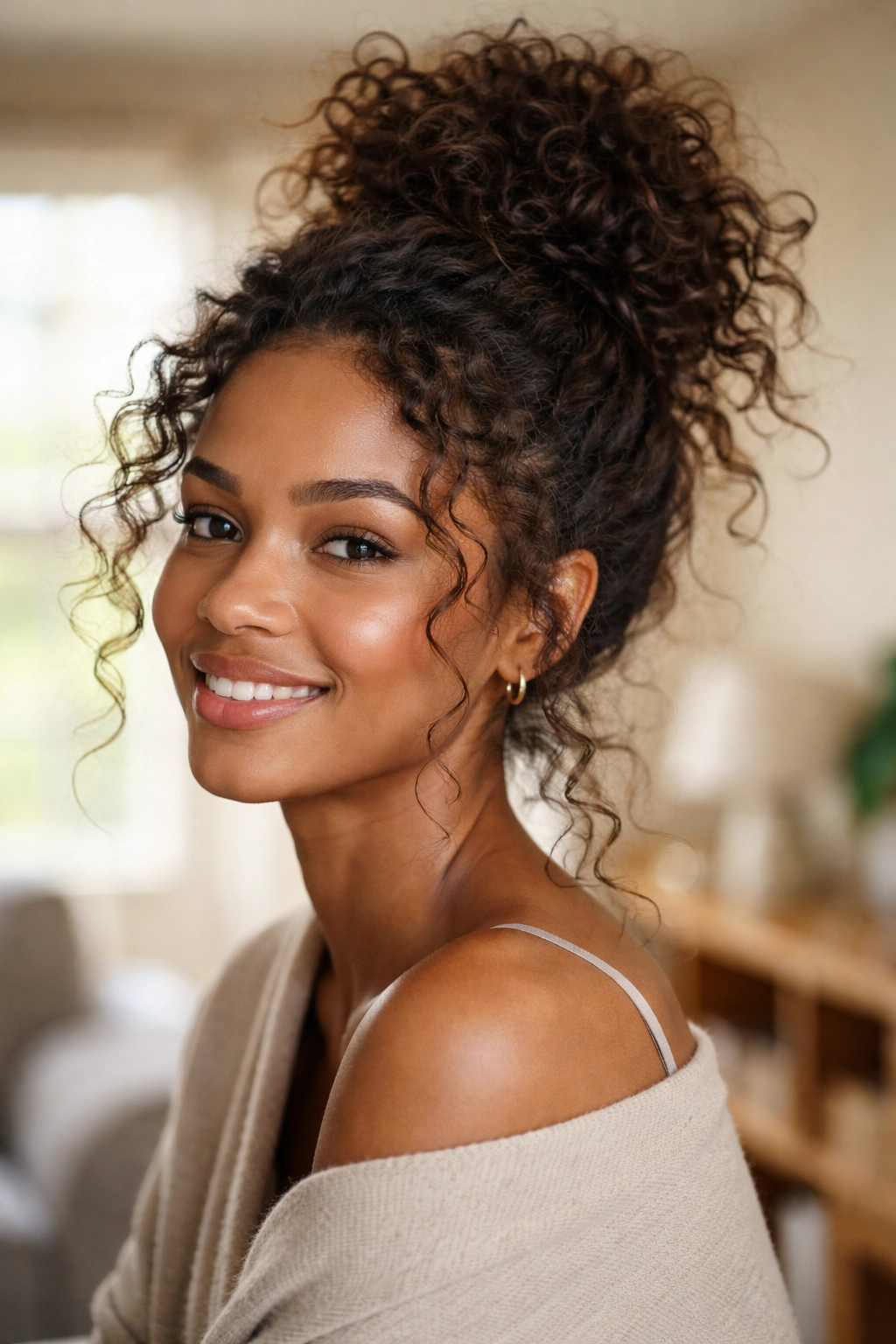
Most bun tutorials tell you to smooth down flyaways. This style does the opposite: the flyaways are the entire point. On curly natural hair, flyaways are escaped curls — and on a good hair day, those curls look beautiful rather than chaotic.
This version of the messy bun involves almost no smoothing at all. Gather the hair loosely, secure it, and then let the curls at the hairline, the nape, and around the ears sit exactly where they land. Apply a small amount of curl cream to those escaped sections with your fingers to define them without controlling them.
The effect is a bun that looks like you’re wearing your hair and your hair is happy about it. That’s genuinely the best version of this style.
5. Textured Puff Bun With Volume
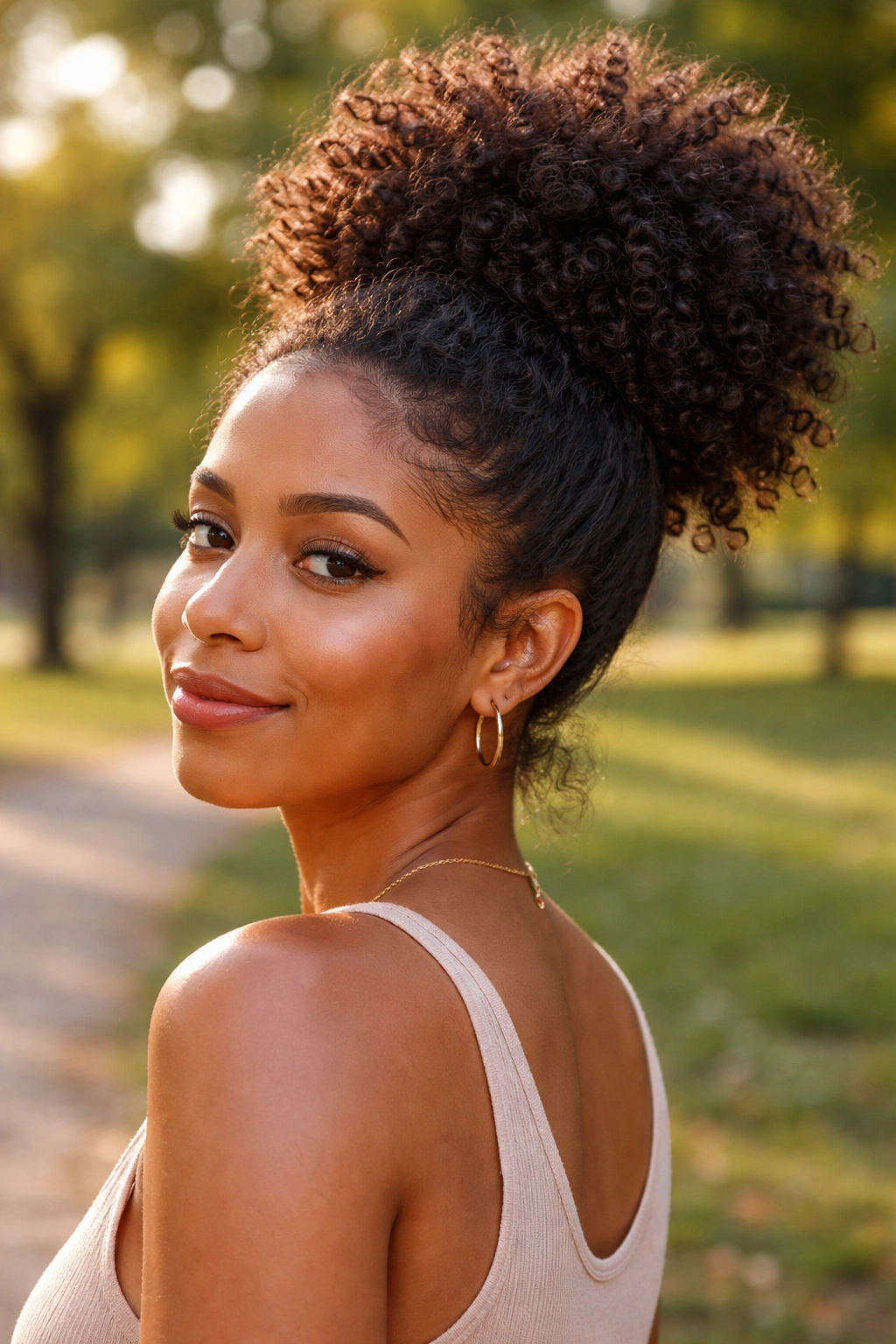
The puff bun prioritizes volume above all else. Gather the hair upward, secure loosely, and then gently pull sections of the hair upward and outward to expand the puff before it settles. The goal is maximum width and height at the gathering point.
On natural hair, the curl pattern will naturally want to expand outward from the hair tie — this style is about letting that expansion happen fully rather than containing it. The result on 4c hair can be a genuinely impressive sphere of hair that sits above the head like a natural crown.
Use minimal product in this style. Heavy products prevent the curl from expanding to its full volume. Light leave-in conditioner to prevent frizz, nothing else.
6. Messy Bun With Scarf Wrap
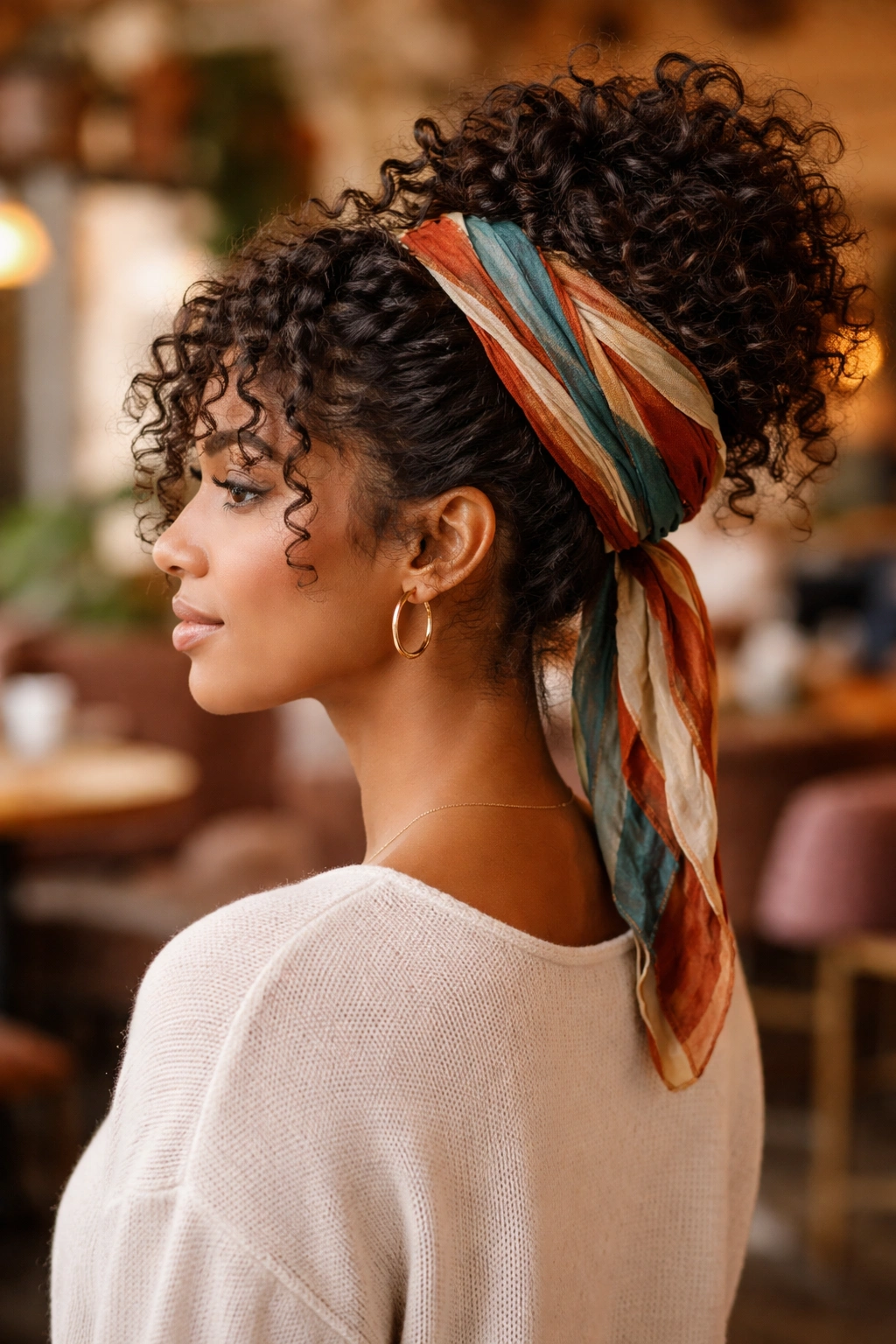
Tying a silk, satin, or cotton scarf around the base of a messy natural bun — so the scarf wraps around the head at the level where the bun sits and the bun protrudes above it — adds a deliberate fashion element to a style that’s otherwise casual.
The scarf is the intentional detail that signals the messy bun is a style choice and not a styling oversight. Choose a scarf in a color or pattern that complements your outfit. Tie it in whatever way feels right — front bow, side knot, behind-ear tuck.
The satin or silk scarf also provides the added benefit of protecting the hairline and reducing friction at the bun gathering point. Practical and decorative at the same time.
7. Braided Crown Into Messy Bun
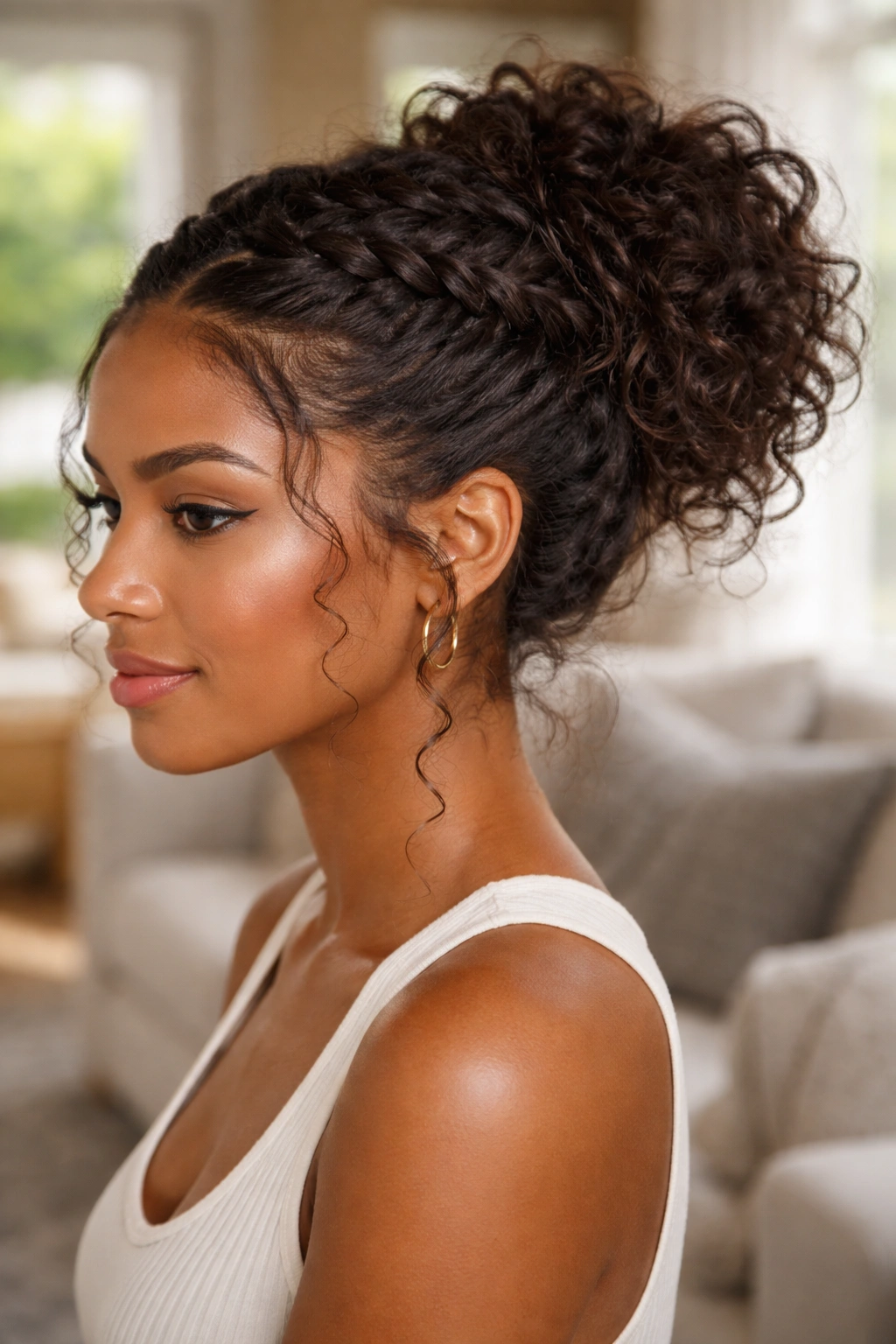
Starting with a single dutch braid or cornrow running from the front hairline backward to the bun gathering point — then incorporating that braid into a messy bun at the back — adds a technical detail to an otherwise casual style.
The contrast works beautifully: the braid from the front hairline is deliberate, precise, structured. The messy bun at the back is its opposite in every way — loose, full, textured, imprecise. The two elements balance each other perfectly.
This is the messy bun for days when you want to look like you made some effort. The braid signals intention; the bun says you know when to stop.
8. Double Messy Buns on Natural Curly Hair
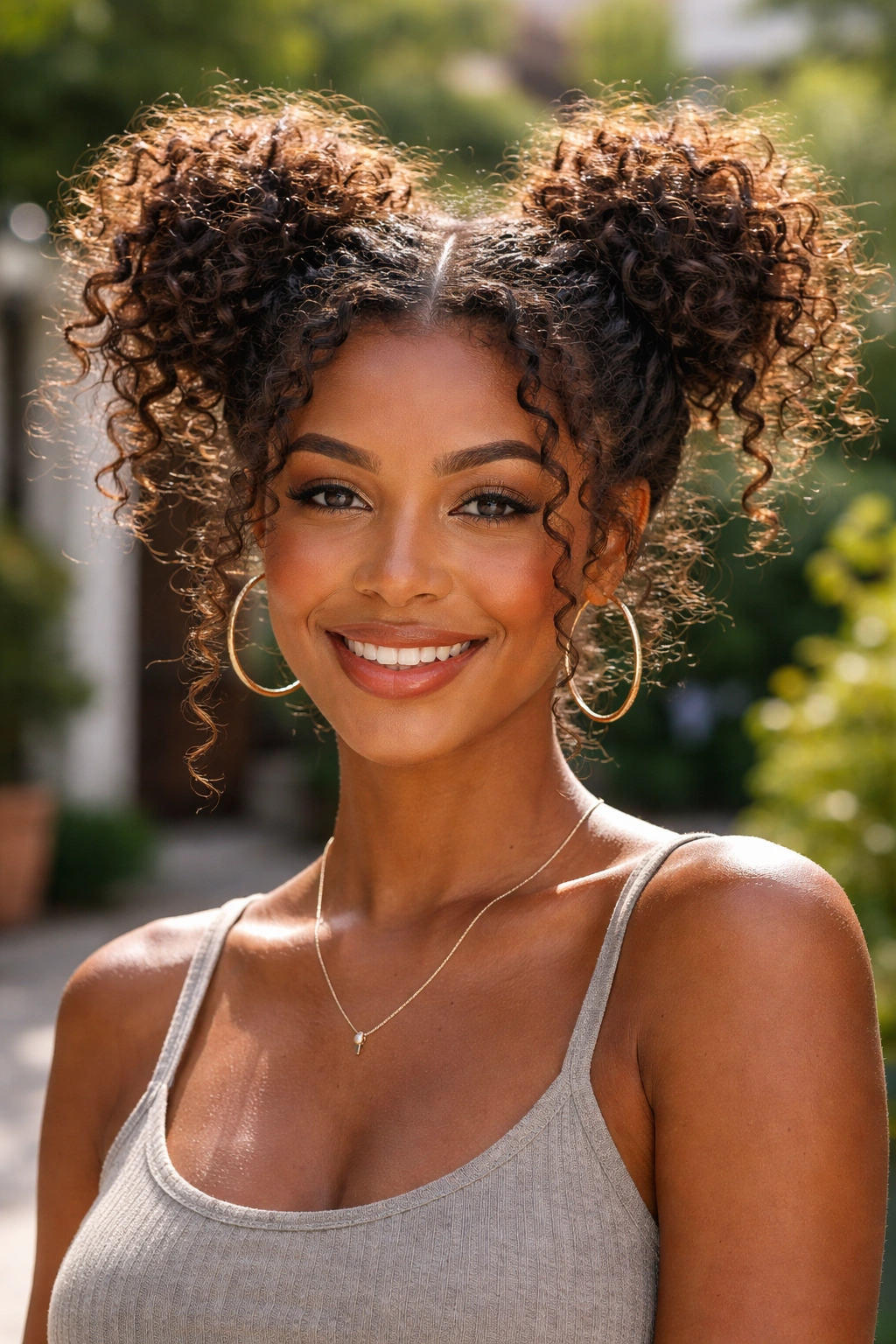
Two messy buns — one on each side of the head — on curly natural hair are genuinely joyful. The coily texture at each bun, the curls escaping from both gathering points, the slight asymmetry between the two sides — all of these qualities make double messy buns on natural hair look creative and full of personality.
Part your hair down the center (roughly — no need for precision) and gather each side into its own bun. Let each bun settle imperfectly. The slight differences between the two sides — one might be slightly higher, one slightly fuller — are charming rather than incorrect.
9. Messy Half-Bun (Half-Up, Half-Down)
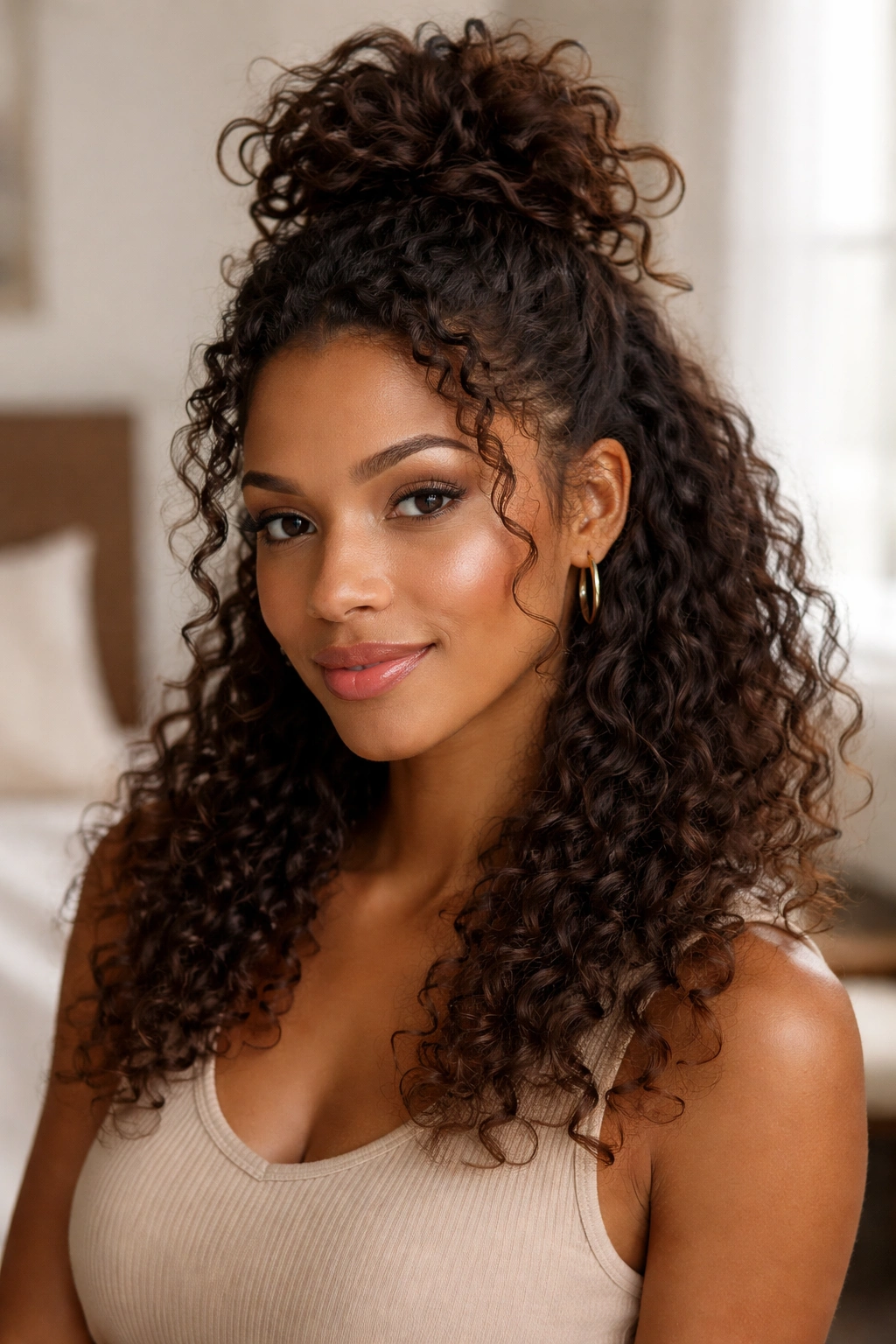
Taking only the top half of your hair — everything from the temples and above — and gathering it into a messy bun while leaving the bottom half fully free creates a style that’s half updo, half free-flowing natural hair. The gathered top section shows off the bun; the free bottom section shows off your curl pattern.
This is one of the most wearable messy bun variations because the free-hanging lower section breaks up any potential formality of the updo portion. It’s always casual, always approachable, always comfortable.
The messy half-bun works especially well for women whose hair has more volume at the crown than at the nape — the crown section becomes the bun while the lighter nape section hangs freely.
10. Messy Bun With Accessory Pins
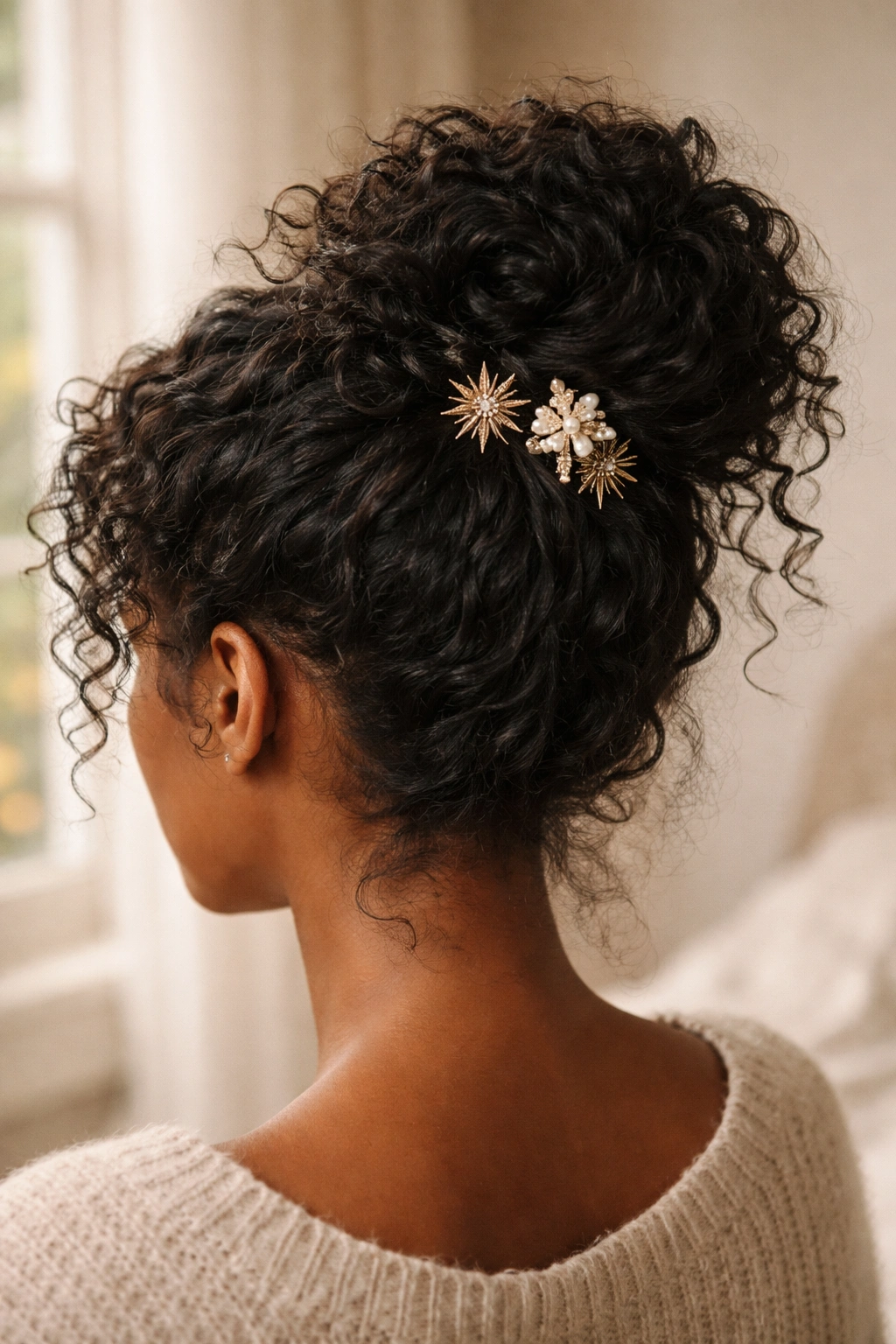
Decorative bobby pins — metallic, jeweled, pearl-tipped — placed into a messy natural bun transform the casual style into something more intentional and special. The pins catch the light when the bun moves and turn an everyday gathering into something that feels considered.
The rule with pins in a messy bun: place them deliberately. A cluster of three or four pins at one spot on the bun creates a focal point. Scattered randomly across the whole bun, they just look like you forgot to take them out.
Metallic gold pins work universally well against dark natural hair. Crystal or rhinestone pins add sparkle for evening events. Pearl pins are bridal and feminine.
11. Messy Bun for Second-Day Curls
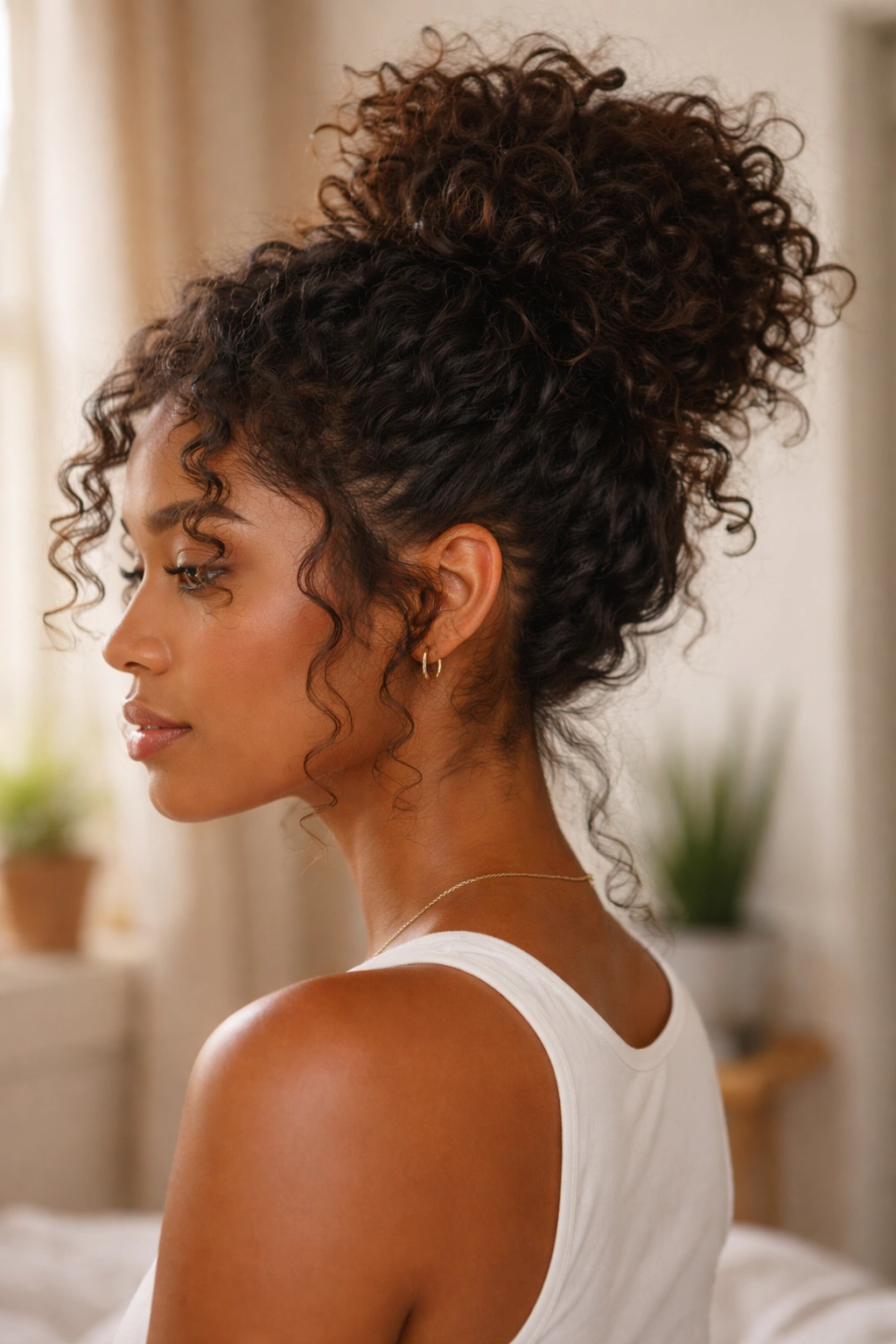
Second-day curls on natural hair — when the wash-day definition has softened slightly but the curl pattern is still visible — are honestly some of the best curls of the week. They’re softer, less product-heavy, and have a natural, lived-in quality. A messy bun on second-day curls captures that quality beautifully.
You don’t need to re-style or add product before gathering second-day curls into a messy bun. The natural settling of the curls from the previous day provides exactly the right texture — not too crisp, not too frizzy, just soft and naturally defined.
Gather quickly, secure loosely, let the second-day curls do their thing.
12. Twisted Into a Messy Bun
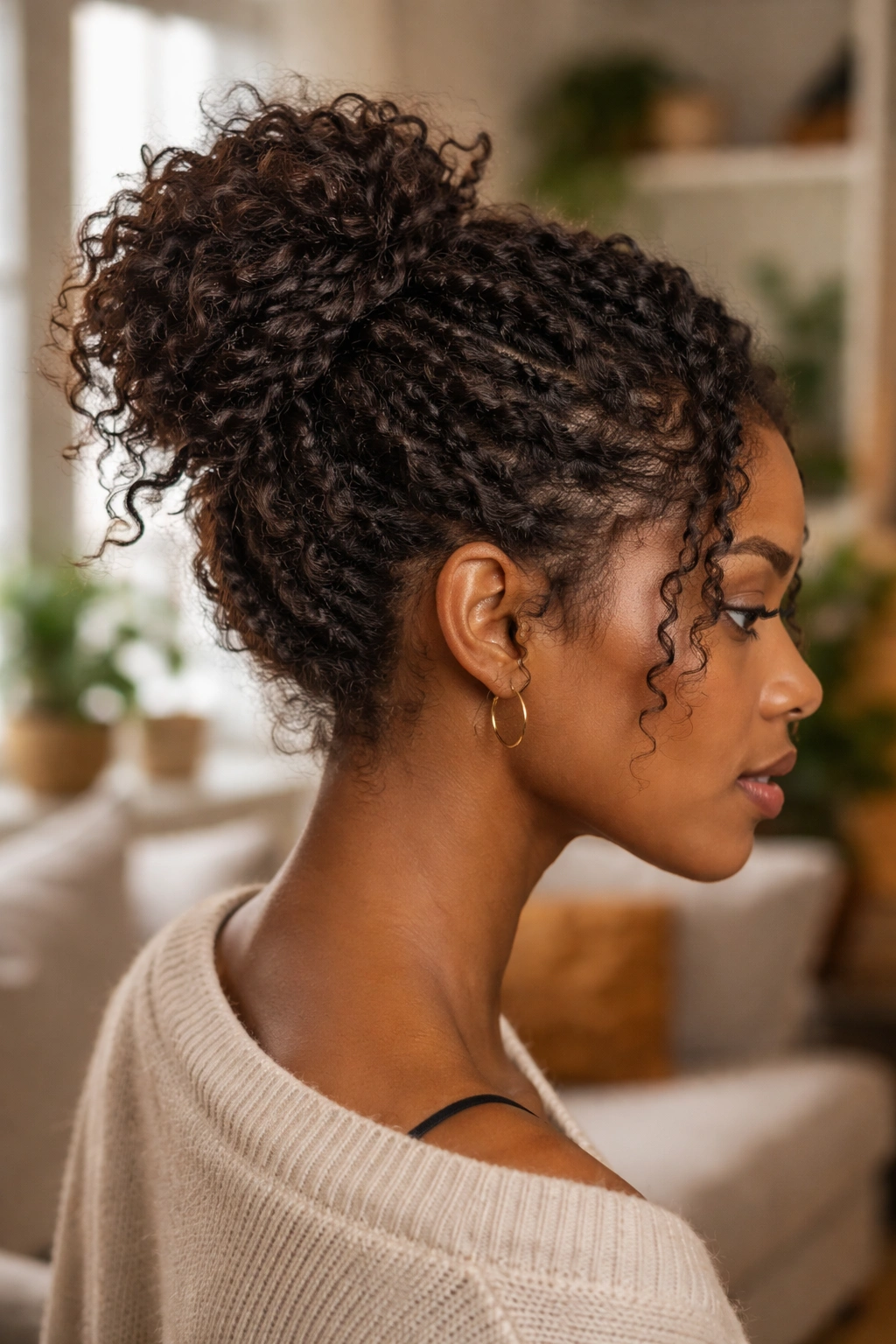
Rather than gathering loose natural hair into the bun, twisting sections of the hair first and then gathering the twists into a messy bun creates more texture and structure within the bun itself. The twists don’t need to be neat — a roughly two-strand-twisted gathering that’s then bundled up and secured produces exactly the right level of textured messiness.
The twists also help the bun hold its position throughout the day because the twisted sections grip each other better than loose curls grip smooth hair elastics.
13. Messy Bun With Natural Hair Color Variation
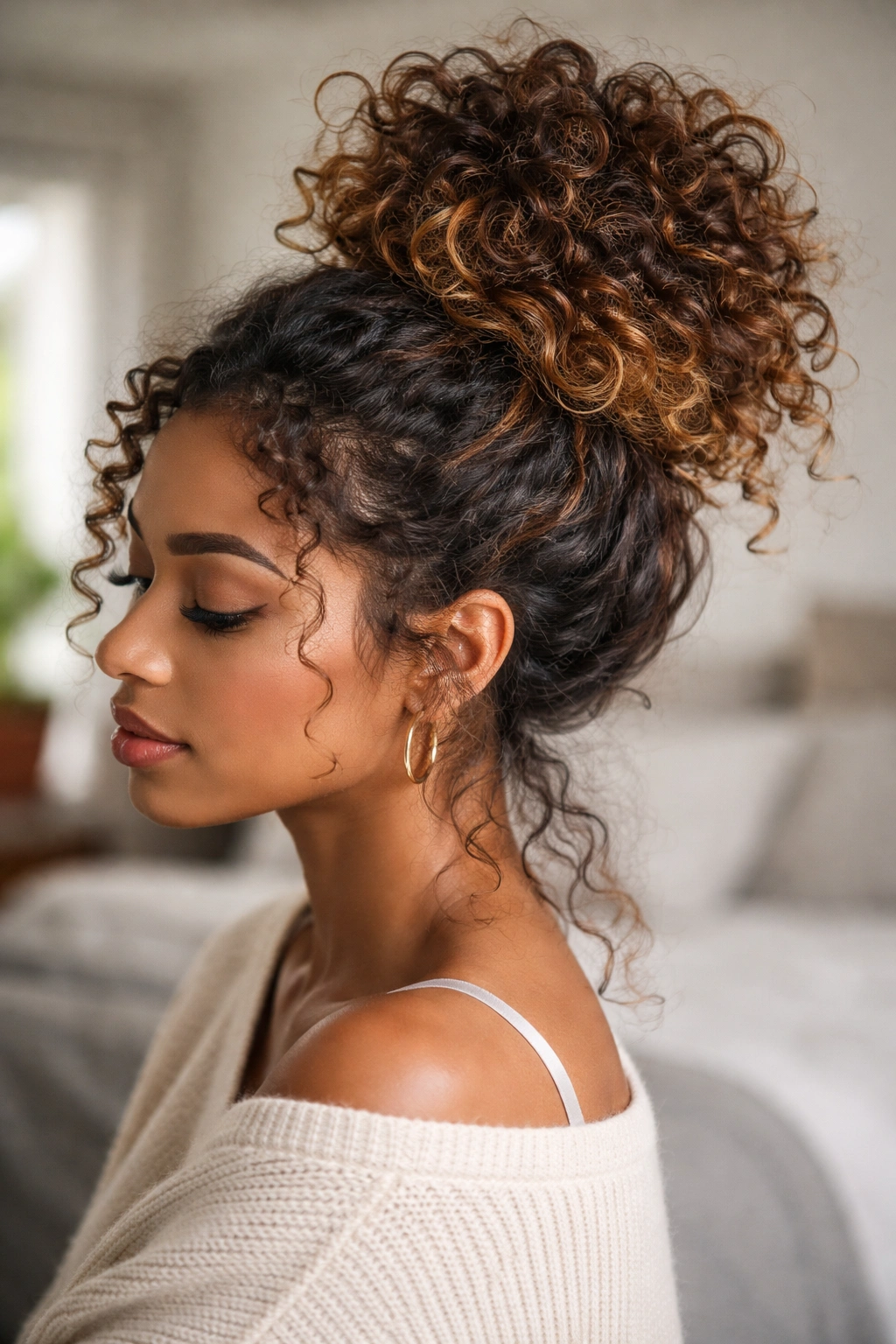
If your natural hair has color variation — whether from natural lightening at the ends, from previous color treatments growing out, or from a deliberate partial color service — a messy bun on that color-varied hair creates a style where the visual interest of the color is amplified by the texture of the curl.
The different colors catch light differently as the bun moves. Darker sections provide depth; lighter sections provide highlights. Together, they create a dimensional color story that looks expensive without being the result of any single dyeing session.
14. Effortless Messy Bun Updo
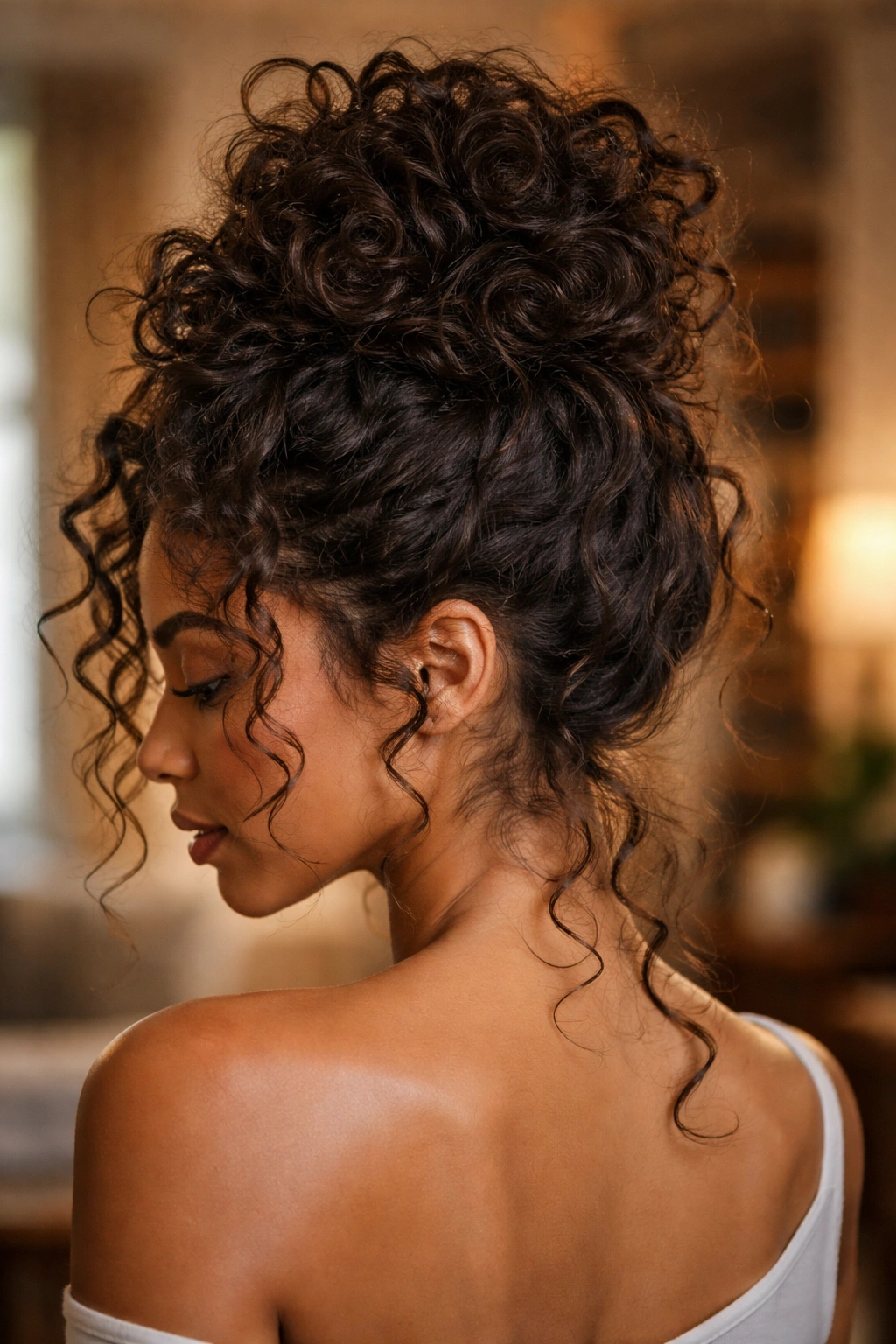
The word “updo” might seem to contradict “messy,” but a messy updo on natural hair is a real and genuinely sophisticated category. Pinning sections of curly natural hair in overlapping arrangements — some tucked, some falling free, none perfectly placed — creates an updo that reads as artistically casual rather than sloppy.
The key is that some parts are secured and some are free. The mix of gathered, pinned sections and deliberately escaped curls creates the impression that you started an updo and stopped at exactly the right moment — before it became formal and after it stopped being just a bun.
15. Messy Bun With Edge Laying
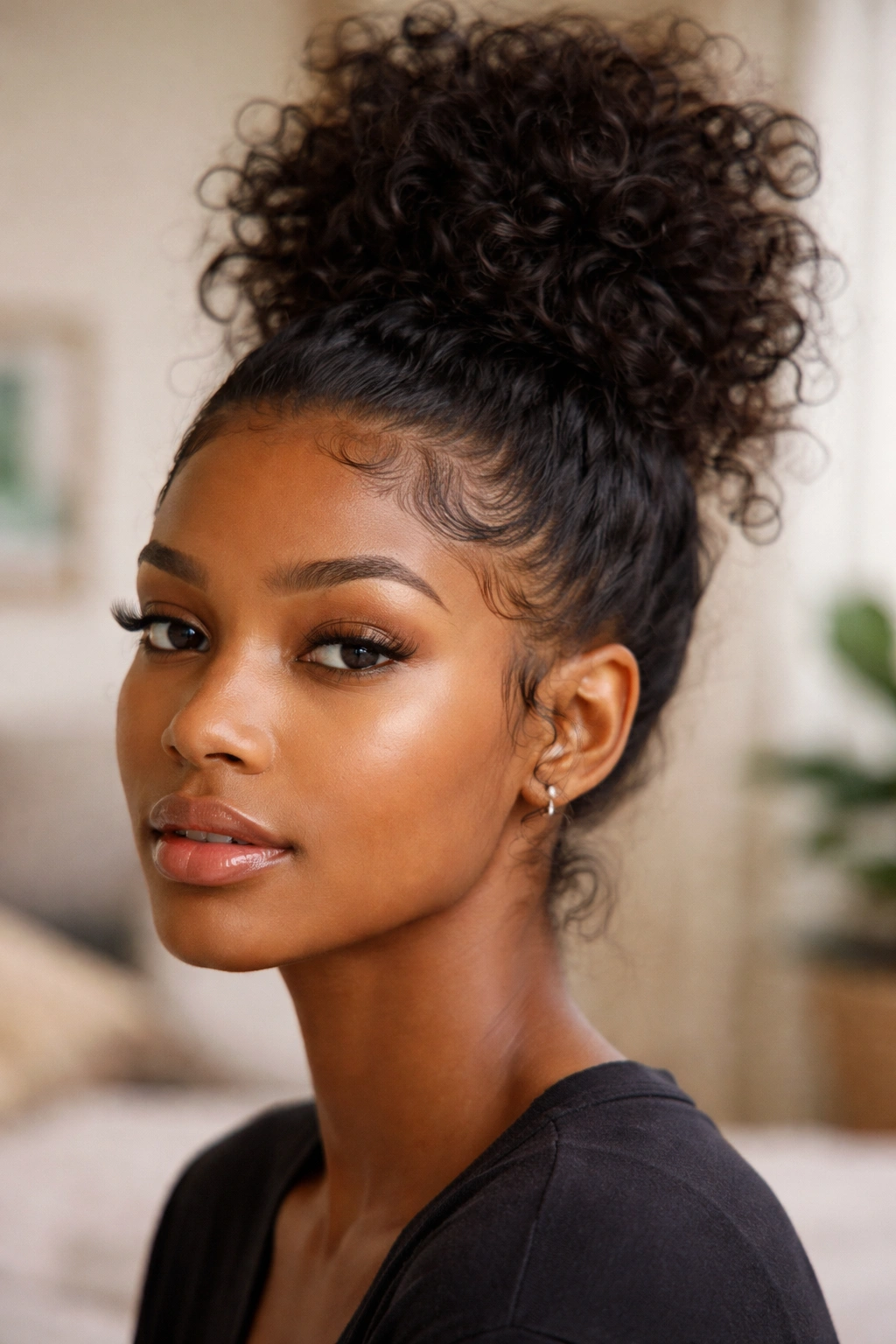
The most striking contrast in natural hair styling is a perfectly laid hairline against a gloriously messy bun. The edges are smooth, defined, crisp. The bun above them is full, wild, textured, imprecise. The two elements exist in productive tension with each other.
Laying your edges before or after creating the messy bun is a five-minute process that transforms the overall effect. Use a medium-hold edge control applied sparingly — just enough to smooth and define the hairline, not so much that it makes the edges stiff or flaky.
The baby hair shapes you choose for your edges are a form of self-expression that goes back generations in Black hair culture. The wave, the swoop, the straight-across lay — choose what feels like you.
16. Messy Bun for Natural Hair at the Gym
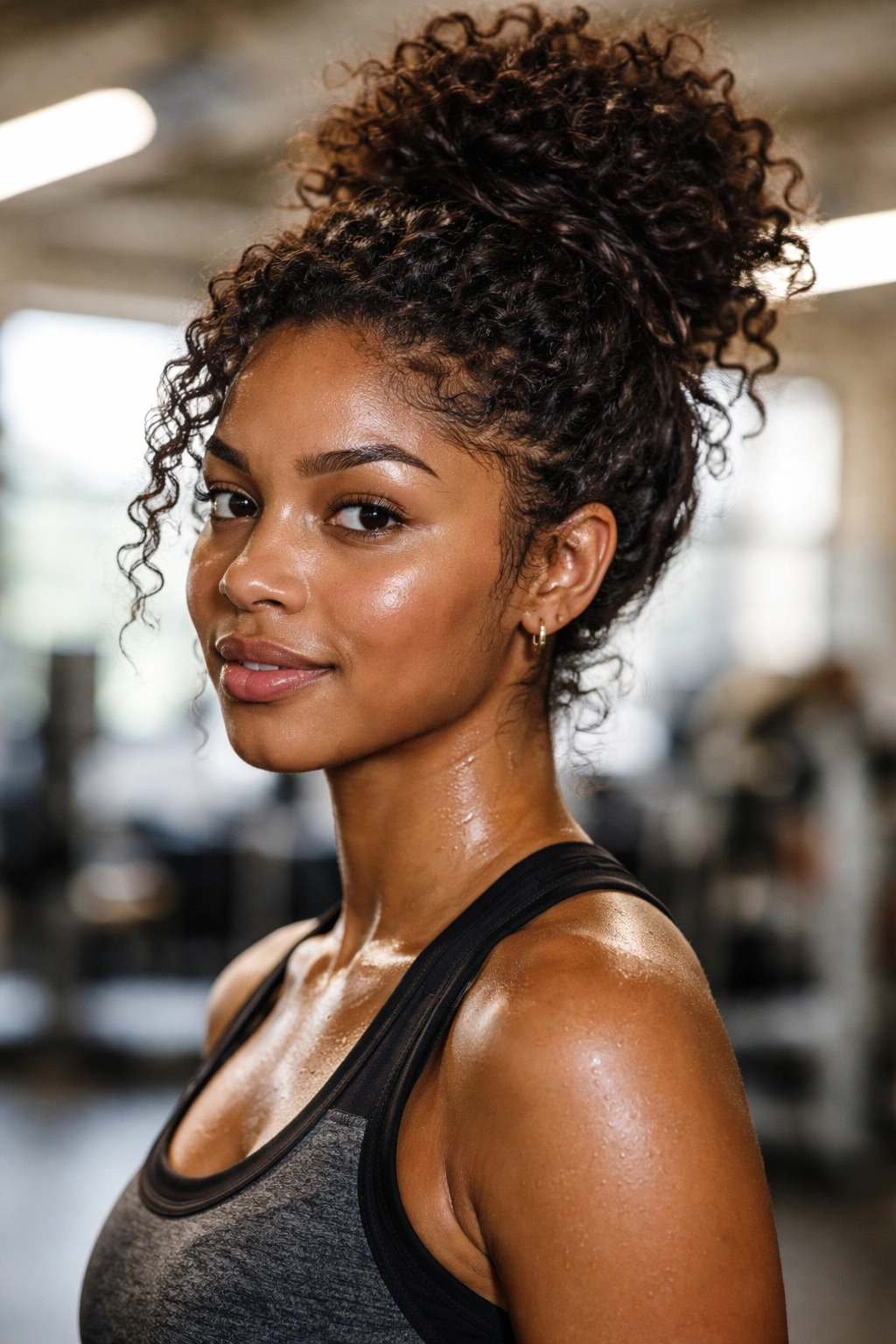
Workout messy buns on natural hair are in a category of their own. You need the style to hold during exercise (sweat, movement, heat), to not pull at the hairline in a way that causes tension headaches, and to look decent when you walk back out into the world.
A few loose twists gathered into a high messy bun is the ideal workout style: the twists provide structure that survives sweat and movement better than loose natural hair, the messy quality means the style still looks intentional after exercise rather than disheveled, and the height keeps the hair off your neck.
Secure with a sport-appropriate elastic — something with grip but also with give — and don’t add heavy styling product before working out. Sweat dissolves most products anyway, and build-up from product plus sweat can cause scalp issues over time.
17. Messy Bun for the Office
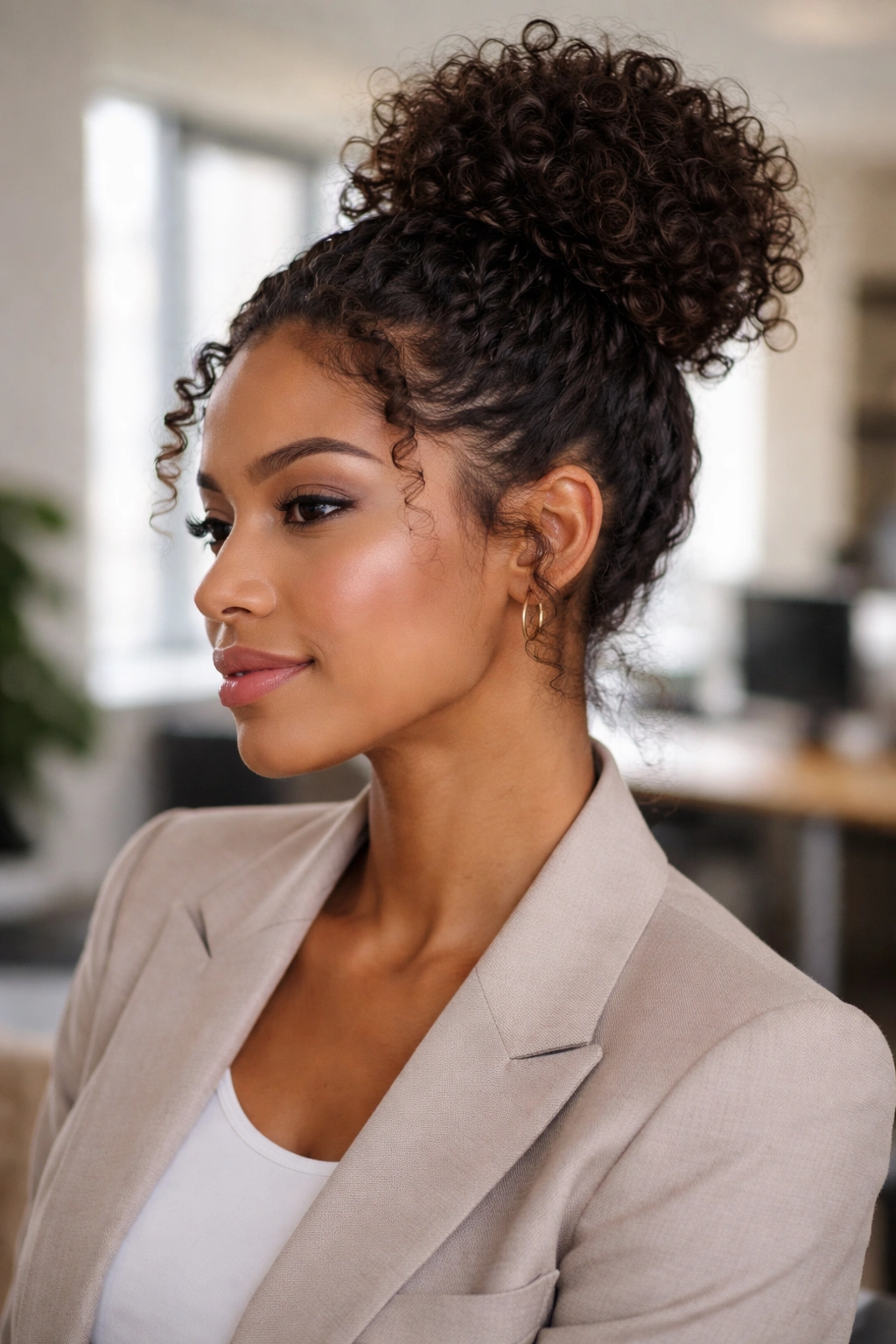
There’s a specific art to the work-appropriate messy bun on natural hair. It needs to look like a style choice — not like you ran out of time this morning — and it needs to read as put-together even in an environment that might scrutinize natural hair.
Two things make this work: defined edges and one deliberate grooming detail. Laid edges signal that you styled your hair. A single additional detail — a wrapped base strand, a hair pin, a small satin scarf — signals that the messy bun is an aesthetic choice.
Natural hair in any state is professional. But these two elements ensure the messy bun reads on its own terms rather than being seen as incomplete styling.
18. Fresh Wash-Day Messy Bun
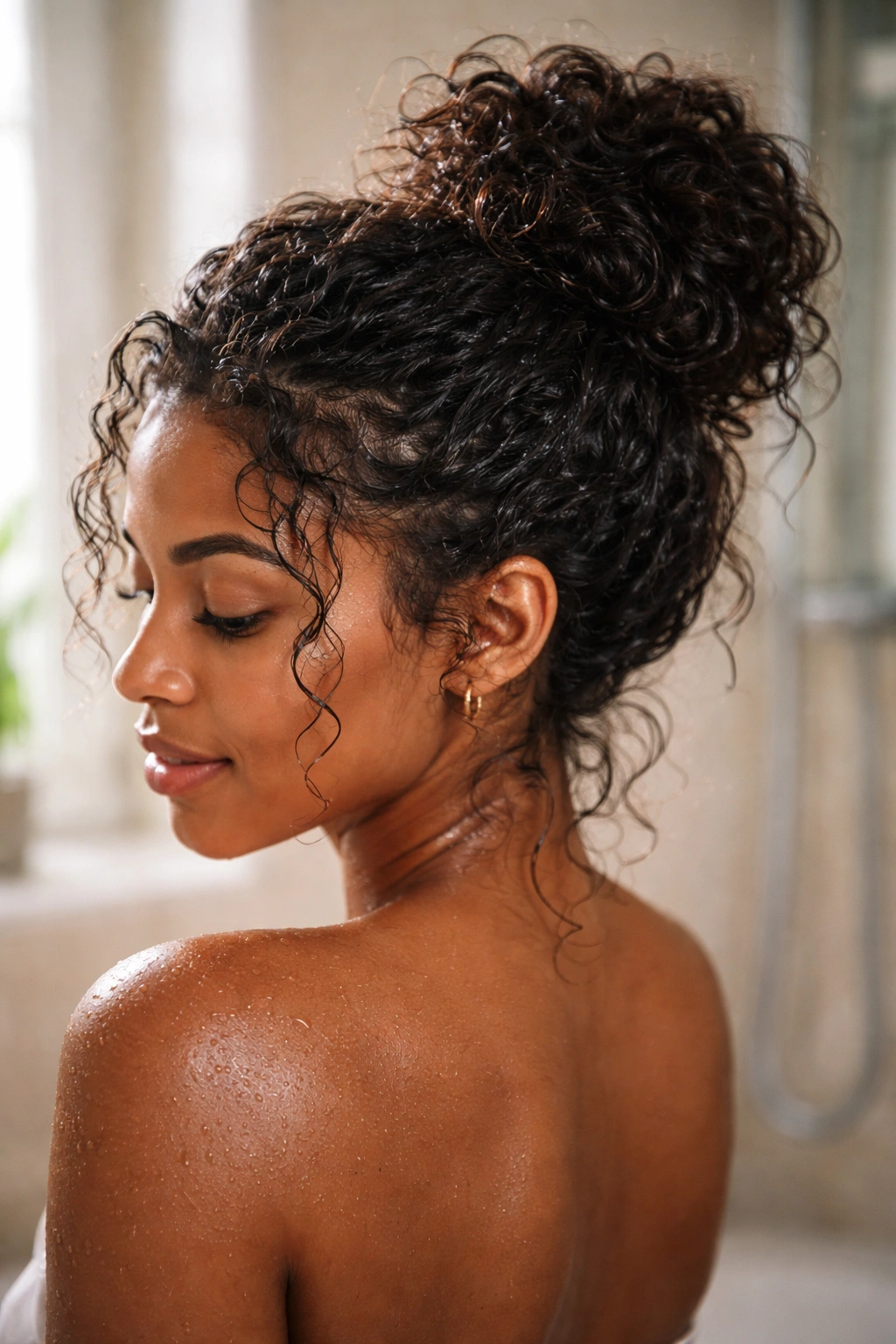
The immediate post-wash messy bun is genuinely one of the most beautiful natural hair moments. Fresh from the shower, hair still slightly damp, curls at maximum definition — gathering that freshness into a loose, messy bun captures all the good and none of the difficulty of wash day.
Apply your styling products to damp sections, then gather loosely before the hair has dried completely. The bun will settle and dry in its gathered shape, and when you release it (or simply wear it in bun form) the curls are at their most cooperative.
19. Messy Bun With Cloth Headband
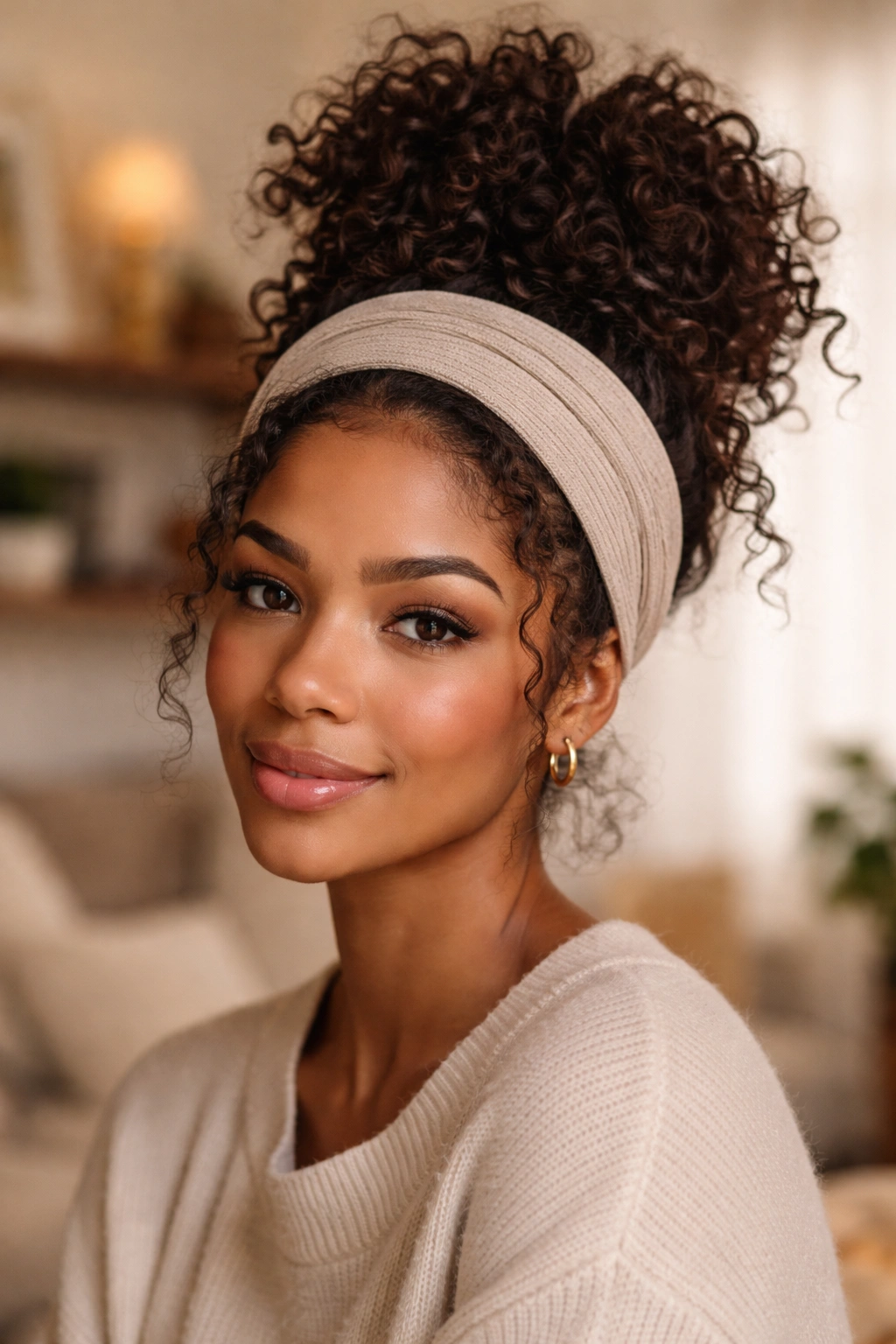
A wide cloth headband worn across the front of the head — positioned at the hairline or slightly above — adds a warm, cozy quality to a messy natural bun that feels particularly appealing in colder months. The headband frames the face, keeps edges flat, and adds texture or pattern in the form of the fabric itself.
Chunky knit headbands on natural curly messy buns look genuinely cute and effortless. Patterned African print headbands add cultural richness and vibrancy. Velvet headbands add a seasonal, sophisticated quality.
20. Messy Bun for Transitioning Natural Hair
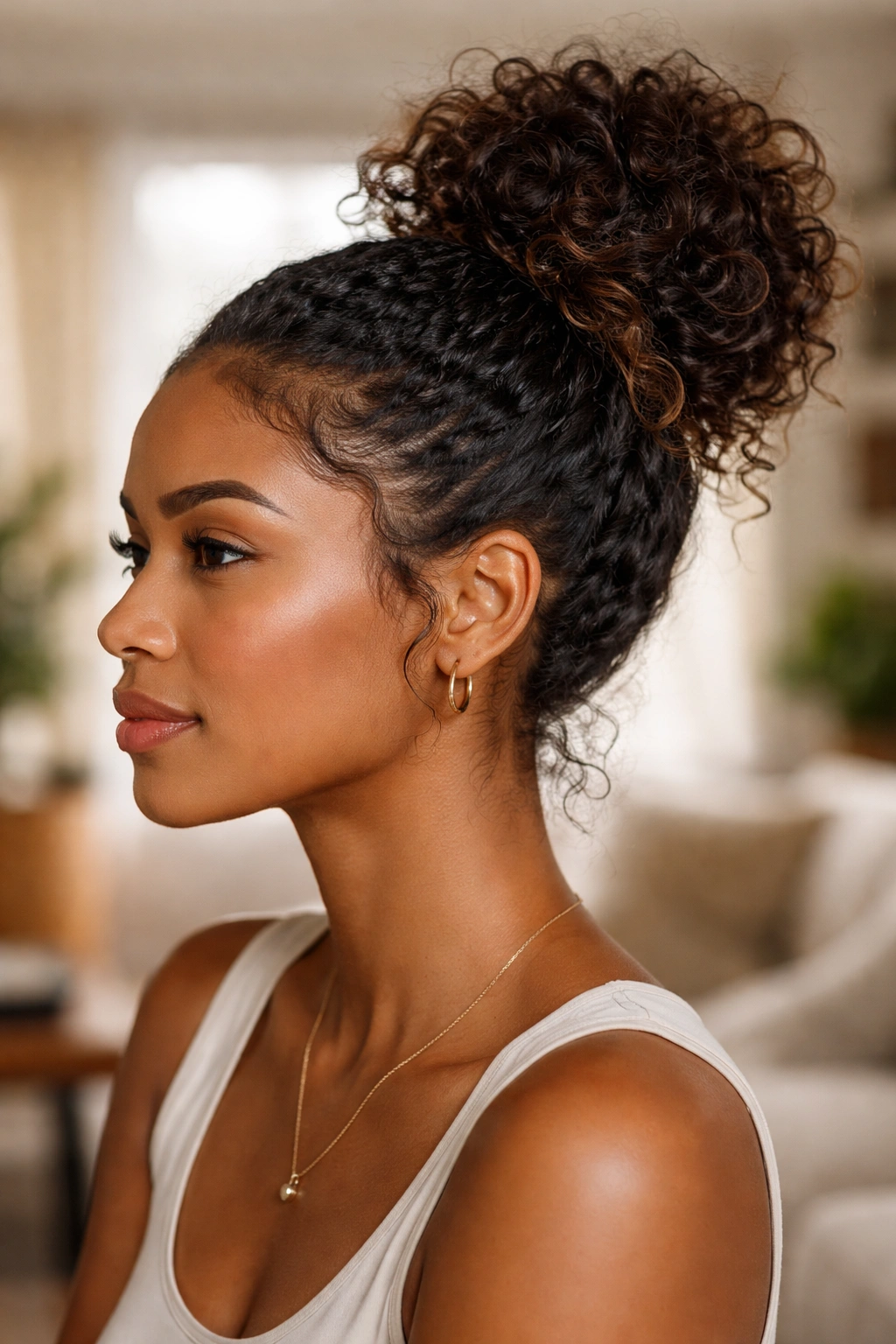
Transitioning hair — growing out chemically treated length while cultivating new natural growth — is notoriously difficult to style because the two textures don’t cooperate easily. The natural new growth coils; the treated length hangs. A messy bun, gathered deliberately to cover where the two textures meet, is one of the most effective transitioning styles.
The mess of the bun actually helps here — when the whole bun aesthetic is textured and imprecise, the inconsistency between two textures becomes part of the visual story rather than a flaw to hide. The bun doesn’t need to look uniform. It just needs to look intentional.
21. Messy Bun as a Final-Day Style
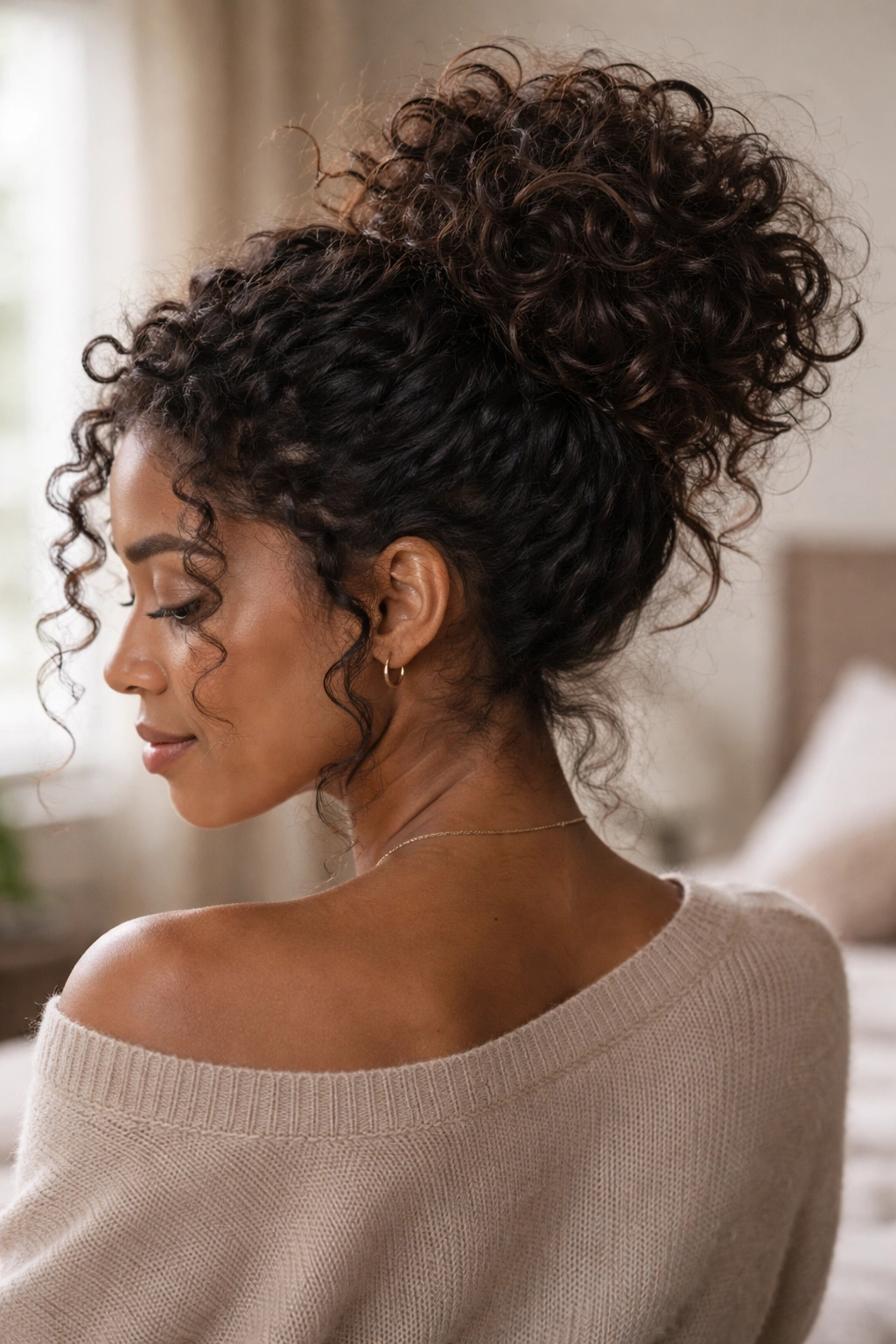
Most natural hair women have experienced this: it’s the last day before wash day, the curls have fully settled, and the hair just isn’t in the kind of shape it was on day one. The messy bun is specifically designed for this moment.
When the curl definition is gone and the hair is in that full, slightly-too-voluminous state that happens on days four or five after a wash-and-go, gather everything into the most free, imprecise, expansive messy bun you can. Apply a light mist of water and a tiny bit of oil to restore some sheen. Lay your edges.
And then let it be exactly what it is: a natural hair messy bun that looks like you’ve been living your life all week, because you have. That authenticity — hair that has been present through your week rather than freshly styled every day — is its own kind of beautiful.
Making the Messy Bun a Signature Look
The women who wear messy buns best wear them the same way every time — with confidence and without apology. The style reads as beautiful when it’s worn by someone who has chosen it, not as a second-best option.
Develop your version of the messy bun. Maybe yours always has a specific edge pattern. Maybe you always add one accessory. Maybe yours is always at a specific height, or always positioned to one side, or always accompanied by a pair of statement earrings that balance the casual style. The specificity of your version is what makes it a signature rather than just a hair tie.
A messy bun on curly natural hair is a declaration: I love my hair exactly as it is, in all its fullness and unpredictability. That message, worn with confidence, is genuinely powerful.