



Hairstyles for 4C natural hair curls occupy a special category in the natural hair conversation — not because 4C hair is harder to style (though people love to claim that) but because it’s the most textured, most densely coiled, most dramatically shrinkage-prone hair type, and styling it beautifully requires understanding what makes it unique rather than trying to force it into techniques designed for looser patterns. When you work with 4C curls instead of against them, the results are extraordinary. We’re talking about some of the most voluminous, most dramatic, most breathtakingly beautiful natural hairstyles in existence.
Understanding 4C Curl Pattern and Structure
The 4C hair type is characterized by tightly coiled strands that often have a zig-zag pattern at the microscopic level. Unlike 4a hair, which has a visible, spring-like coil pattern, or 4b hair, which has a more pronounced S or Z shape, 4C hair tends to have the least visible individual curl clumps and the most shrinkage — often contracting 70-80% of its actual length when wet or in its natural state.
This doesn’t mean 4C hair isn’t curly. It absolutely is. But the tightness of the coil means individual curls clump together and support each other rather than hanging as separate spirals. The result is a texture that, when moisturized and cared for properly, has extraordinary volume, rich density, and a fullness that no other hair type can replicate. The afros, the big curl styles, the dramatic twist-outs — 4C hair produces these in their most spectacular form.
What 4C hair struggles with more than other types is moisture retention. The tight coil pattern means natural scalp oils travel down the hair shaft more slowly and with more difficulty than they do on straighter or looser-coiled hair. This makes deliberate moisturizing non-negotiable — 4C hair simply can’t rely on natural sebum distribution the way other hair types can.
The Moisture-First Approach to 4C Styling
If there’s one principle that governs everything else about caring for and styling 4C natural hair curls, it’s moisture. More moisture than you think you need. More often than you think you need it. Applied more thoroughly than you’re probably currently doing it.
The LOC (Liquid, Oil, Cream) method or LCO (Liquid, Cream, Oil) method is the most reliable moisturizing framework for 4C hair. Begin with a water-based leave-in conditioner as your liquid base. Layer on an oil to seal the moisture from the leave-in before it evaporates. Follow with a cream or butter to provide a final moisturizing and sealing layer. This three-step process dramatically outperforms any single-product moisturizing approach for 4C hair.
Deep conditioning is not optional for 4C hair — it’s the cornerstone of everything. A proper deep conditioning session once a week, using a moisture-focused deep conditioner (not protein) under heat for at least 20-30 minutes, makes the difference between 4C hair that’s cooperative and beautiful to style and 4C hair that fights you at every step. Dry 4C hair is brittle, prone to breakage, and resistant to curl definition — well-moisturized 4C hair is elastic, defined, and capable of some genuinely spectacular styles.
Detangling 4C Hair Without Breakage
The tight, interlocking coils of 4C hair make detangling the most physically demanding part of a wash day — and also the step where most of the breakage happens if it’s done wrong. The single most important rule for detangling 4C hair is to only detangle it when it’s wet and saturated with conditioner. Never on dry hair. Never with a fine-tooth comb. Never by raking through from root to tip in one aggressive motion.
Work in sections — the smaller the sections, the easier the detangling. Start with your fingers to work through the largest tangles, loosening any large knots before a tool ever touches your hair. Then follow with a wide-tooth comb, working from tip to root, not root to tip. This direction matters because you’re removing tangles from the most accessible end first and working your way up, rather than compressing knots further toward the root.
Slip is your best friend during 4C detangling. Leave-in conditioner, regular conditioner, detangling spray, or even just water all improve slip and reduce friction. The more slip you have, the more easily tangles work out without force. Forcing tangles through without enough slip is what causes the snapping and breakage that gives 4C detangling its undeserved reputation for being destructive.
Shrinkage and 4C Natural Hair: Reframing the Conversation
4C hair shrinks more dramatically than any other hair type, and the shrinkage is often brought up as something negative — a problem to solve, a challenge to overcome, an obstacle between you and your “real” length. This framing is worth pushing back on.
4C shrinkage is a sign of healthy elasticity. Hair that springs back dramatically when wet has strong protein bonds and good moisture levels. Hair that doesn’t shrink at all — that stays elongated even when wet — is likely experiencing heat damage or significant protein loss. Shrinkage isn’t a flaw. It’s your hair doing what healthy 4C hair does.
The practical reality is that shrinkage does affect how 4C hair looks and what styles it shows off most naturally. A head of 4C hair that’s eight inches long when stretched might appear to be two to three inches in its natural state. This isn’t hiding your hair — it’s your hair in a different expression of itself. And many of the most spectacular 4C hairstyles specifically celebrate this contracted, dense, voluminous state rather than trying to fight it.
Products Formulated for 4C Success
Not every natural hair product is designed with 4C hair in mind, and choosing products that genuinely work for your texture makes a dramatic difference in your results. 4C hair generally benefits from richer, heavier products than looser textures — thicker creams, butters, and puddings rather than lightweight mousses and light gels.
Shea butter is a staple for 4C hair for good reason. It’s rich enough to seal moisture effectively in tight coils, but it doesn’t feel heavy or greasy on properly moisturized 4C hair the way it might on looser textures. Coconut oil — despite being controversial in some natural hair circles — is genuinely beneficial for 4C hair when used as a pre-poo treatment before washing, because its molecular structure allows it to penetrate the hair shaft rather than just sitting on the surface.
Hold products for 4C styling — gels and custards — need to have enough grip to encourage curl definition without being so stiff that they create that crunchy, helmet-like finish that’s impossible to separate without frizz. A medium-hold gel or a strong curl pudding often produces better results for 4C wash-and-gos than maximum-hold gel, because the softer hold allows for the gentle separation that enhances volume without creating frizz.
1. The 4C Afro
The natural 4C afro is arguably the most iconic natural hairstyle of all time — and for good reason. Big, round, full, and undeniably beautiful, the 4C afro celebrates the full potential of tightly coiled hair in its most natural form.
The most beautiful 4C afros start with a well-moisturized wash day followed by a twist-out or braid-out base. Take the style down after it’s fully dry, separate generously with oiled hands, then use an afro pick to shape the hair into a full, round silhouette. Work section by section from the nape upward, lifting each section with the pick and refining the shape.
Shaping the Perfect Round Afro
- Lift from the roots rather than pulling through from tip to root
- Work all the way around the head for even fullness
- Check your shape from the front, side, and back using two mirrors
- Use a light mist of oil sheen for shine and sheen before finishing
The 4C afro can be any size — from a small, tight TWA (teeny weeny afro) to a dramatic, full-grown, crown-touching big afro. Every size is its own distinct beauty.
2. 4C Twist-Out
The twist-out on 4C hair requires a slightly different approach than on looser textures. Because 4C hair has less natural curl definition on its own, the two-strand twist needs to be installed with more care and more product to ensure there’s enough definition in the set pattern to show up when the twists are taken down.
Apply your curl cream or butter generously — more than you’d use on looser hair. Small sections give more definition; larger sections give bigger, more voluminous waves. Twist tightly and consistently from root to tip, making sure the product is distributed evenly throughout each section. Let the twists dry completely — this is non-negotiable for 4C hair, where damp hair will frizz immediately on contact with air and hands.
Unravel slowly, oil your hands before separating, and use an afro pick at the roots for volume. The 4C twist-out may look more like defined waves than individual spirals on some sections — and that’s completely beautiful and appropriate for this hair type.
3. 4C Braid-Out
Many naturals with 4C hair find that the braid-out outperforms the twist-out for definition because the braid pattern sets more firmly into tight coils than the two-strand twist does. The angular wave of a braid-out on 4C hair has a texture that’s completely distinctive and beautiful.
Use medium-to-small braids for the most definition. Apply your styler before braiding, braid from root to tip, and secure the ends. Let dry overnight. Unravel carefully and separate with oiled hands. The resulting braid-out on 4C hair has a rich, textured wave pattern that looks full and dimensional when separated — a genuinely stunning style.
4. 4C Wash-and-Go
The 4C wash-and-go is a divisive topic in the natural hair community — some swear it’s impossible, others have perfected it and love it. The truth is that it requires more technique and product than a wash-and-go on looser hair, but it absolutely can be done beautifully.
The shingling technique works best for 4C wash-and-gos. Work in tiny sections on soaking wet hair, applying your leave-in and gel to each section and smoothing it from root to tip in a downward motion, encouraging the hair to clump. Work around each section from all angles to coat every strand. Diffuse on the lowest heat setting or air-dry undisturbed. The result is a big, defined, soft afro with visible curl texture throughout — not the same as a 3c wash-and-go, but its own distinct and beautiful version of the style.
5. 4C Perm Rod Set
A perm rod set on 4C hair produces some of the most extraordinary results of any hair type — because the tight natural coil of 4C hair grips the rod and sets the curl pattern deeply and firmly. The resulting curls are defined, long-lasting, and full of spring.
Use small to medium perm rods for the most definition on 4C hair. Apply a heavy setting cream or mousse to small, damp sections. Roll from tip to root, pressing gently to ensure the hair is wrapped evenly. Sit under a hooded dryer for 45-60 minutes or air-dry overnight. The 4C curl set in a perm rod position produces an almost perfectly round, tightly defined spiral — beautiful beyond description.
6. 4C Finger Coils
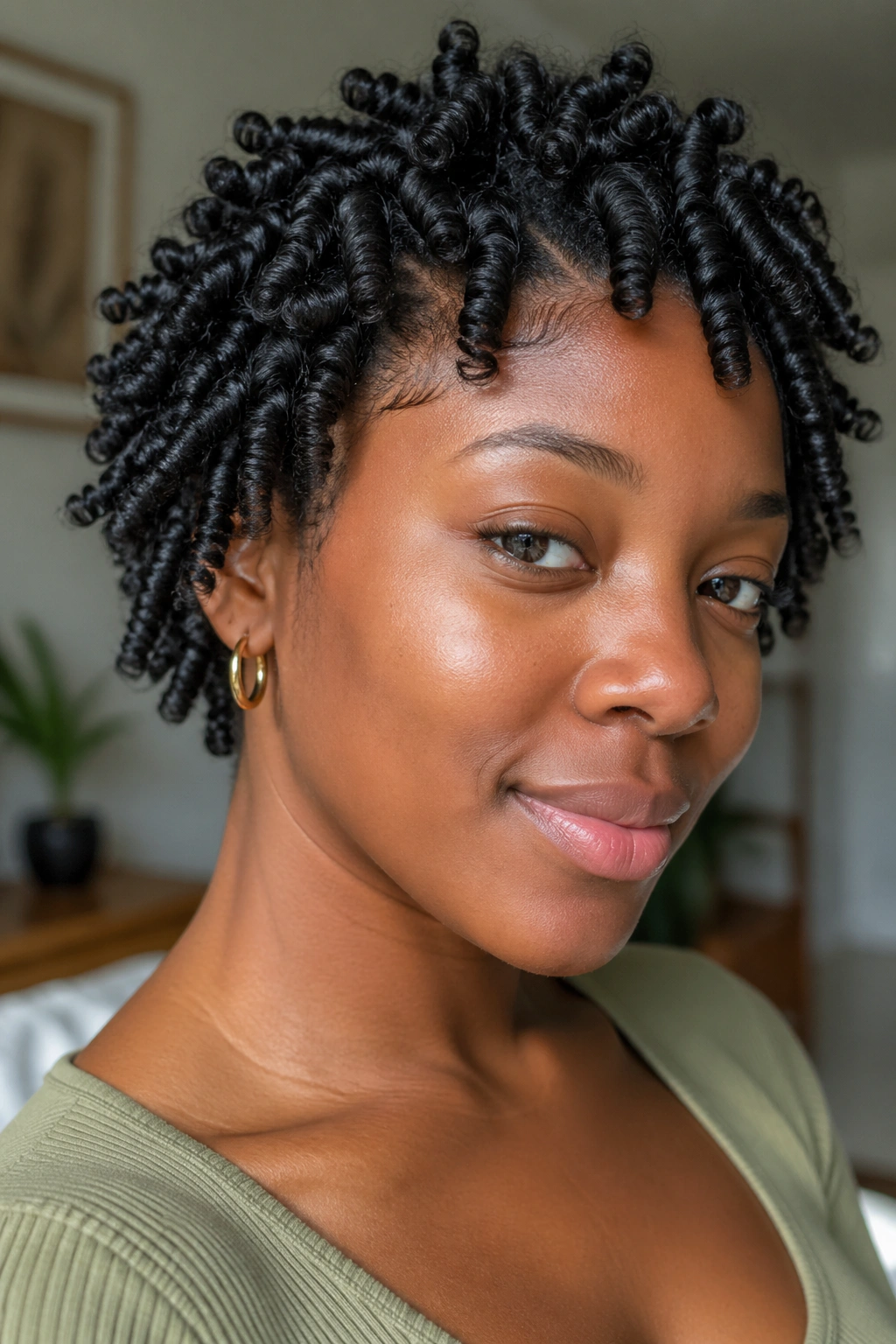
Finger coils on 4C hair are extraordinary. The natural tight coil of 4C hair seems almost designed for this technique — the hair grips around the finger easily, holds its coil shape strongly, and produces spring-like spirals that cluster together in stunning density.
Apply a generous amount of defining gel or pudding to small damp sections. Coil each section around your pointer finger from root to tip, sliding your finger out as you go. Work across your entire head consistently. Air-dry or diffuse on low heat. The result is a head of perfectly round, defined finger coils that hold their shape for days. Separate minimally for maximum definition, or pull apart for a fluffy, full style.
7. 4C High Puff
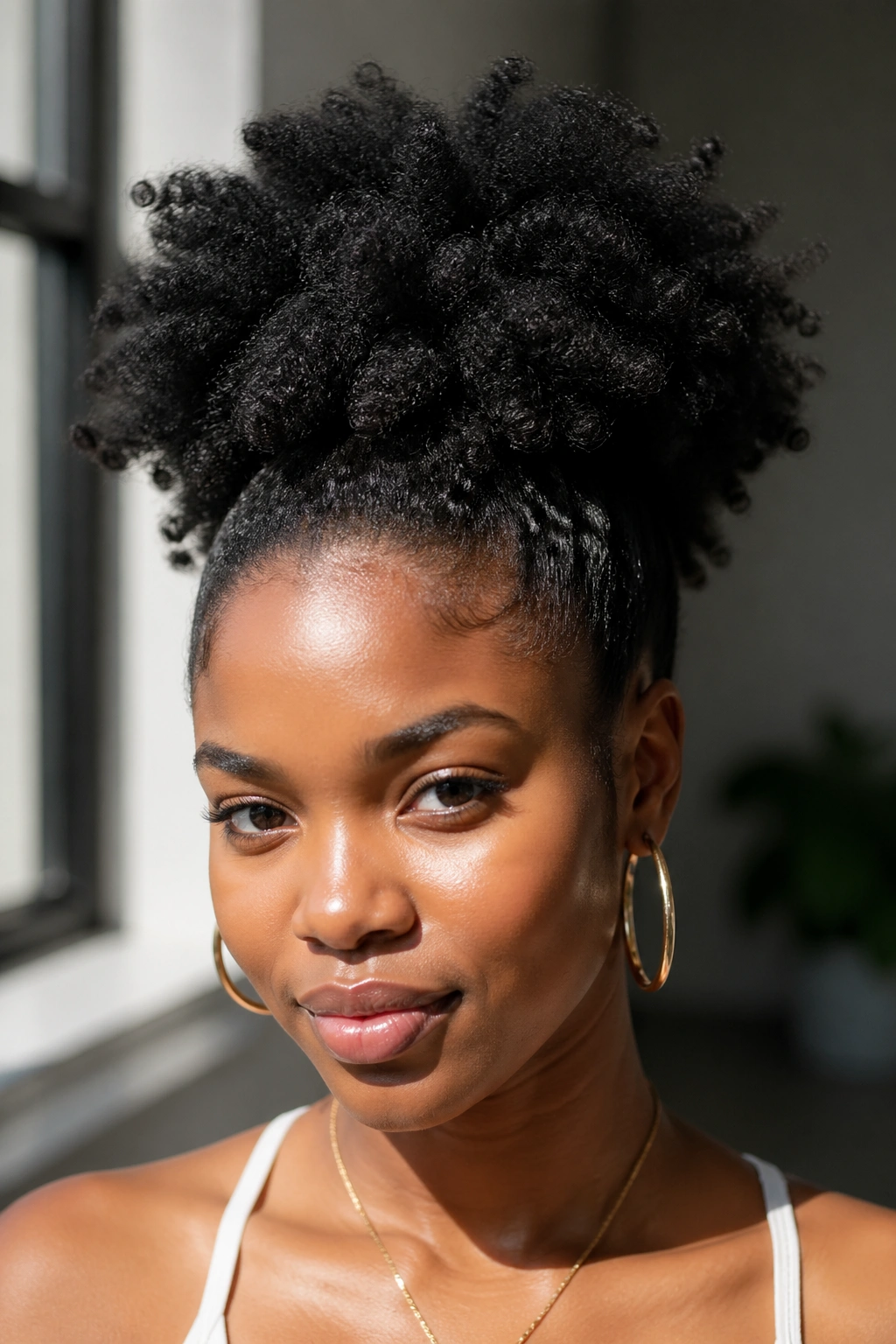
The 4C high puff is one of the most effortlessly stylish natural hairstyles there is — quick, versatile, and showing off the volume and density of 4C hair in the most direct way possible.
Gather your 4C hair into a high puff using a large, soft satin scrunchie. Before securing fully, pull the gathered hair upward and outward in every direction to create maximum volume. The density of 4C hair means the puff will be notably full and textured — an impressive silhouette that takes about two minutes to create. Smooth your edges for a polished contrast, or leave them natural for a more relaxed look.
8. 4C Protective Braids
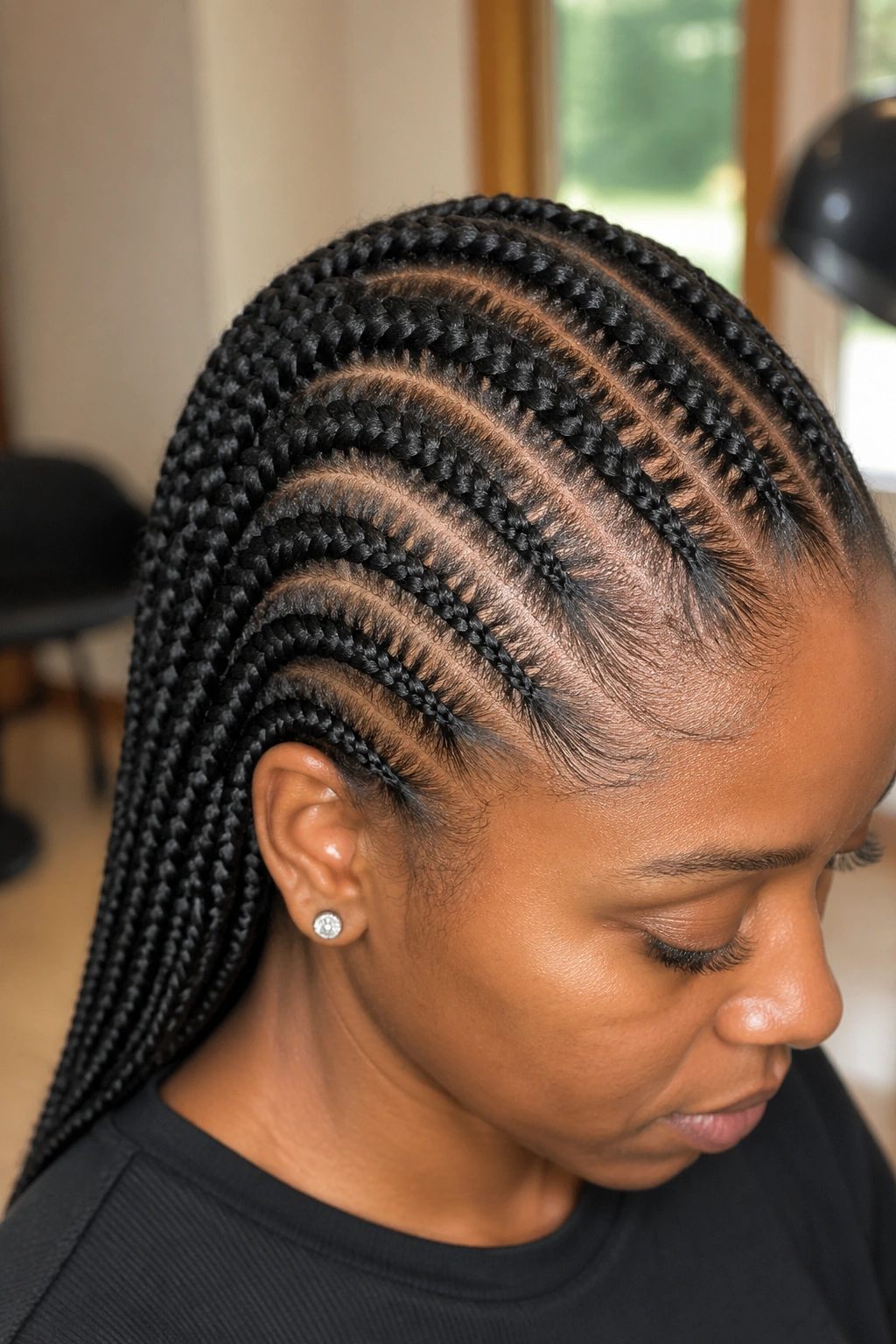
Braids as a protective style are one of the most important tools for 4C hair health — giving the hair a chance to rest, retaining length, and reducing daily manipulation for weeks at a time. Box braids, individual braids, or goddess braids all work beautifully on 4C hair.
Tension matters. Braids that are too tight at the root put stress on the hairline and can cause traction alopecia over time. Braids that are installed with appropriate tension — firm but not pulling — protect without damaging. Moisturize your scalp regularly while in braids, don’t leave them in longer than 6-8 weeks, and take them down carefully and gently to avoid breakage.
9. 4C Two-Strand Twists as a Style
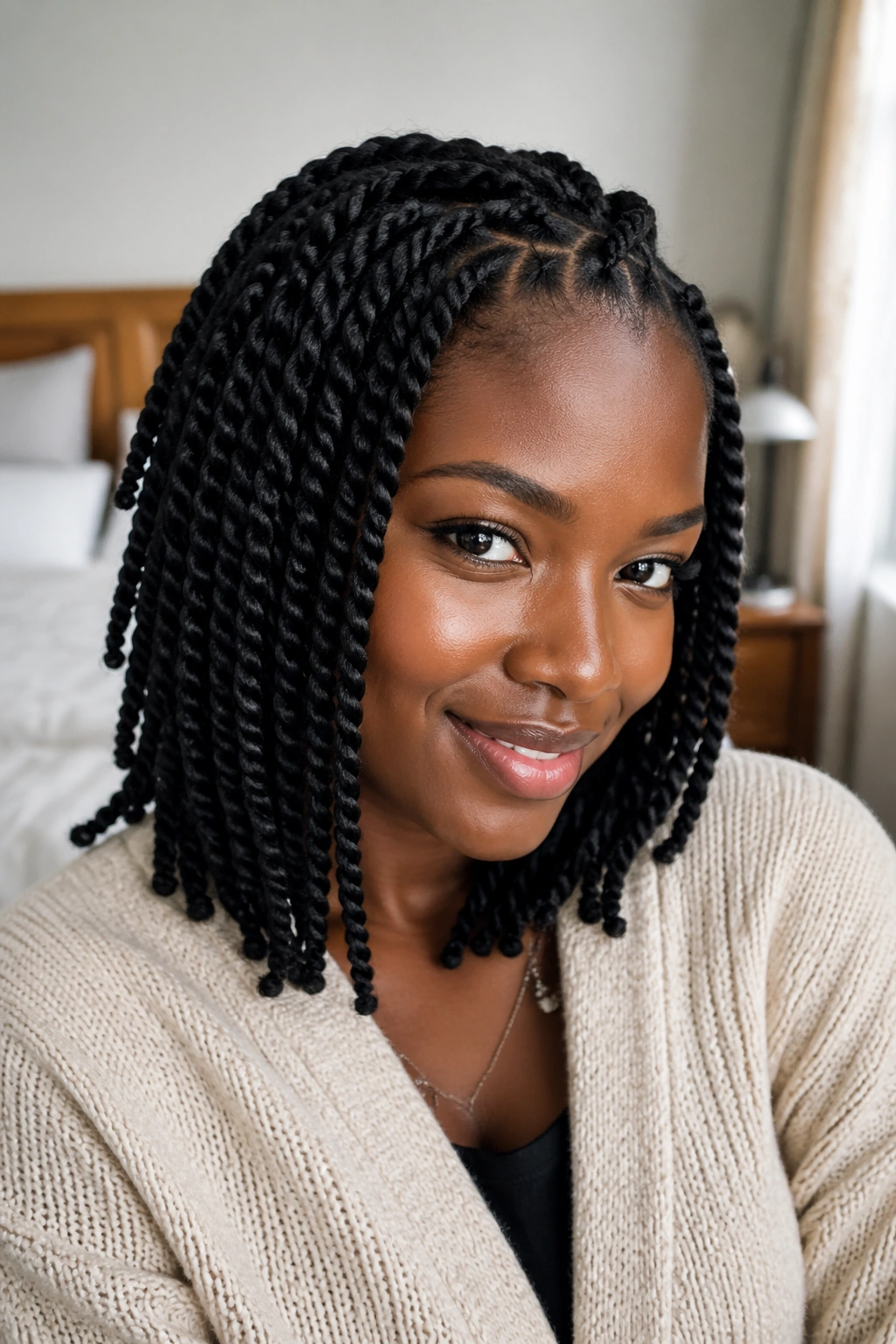
Two-strand twists worn as a style rather than as a set for a twist-out are a clean, elongating, beautiful option for 4C hair. They reduce shrinkage, show the hair in a more elongated form, and create a neat, polished look that can last for one to two weeks.
Install your twists on freshly washed, deeply conditioned hair with a cream or butter for moisture and hold. Part your hair in even sections throughout — the evenness of the sections creates a more polished finished look. Twists that are consistent in size, tension, and direction look professional and intentional. Wear them for a week, then take them down for a twist-out as a bonus second style.
10. 4C Flat Twists
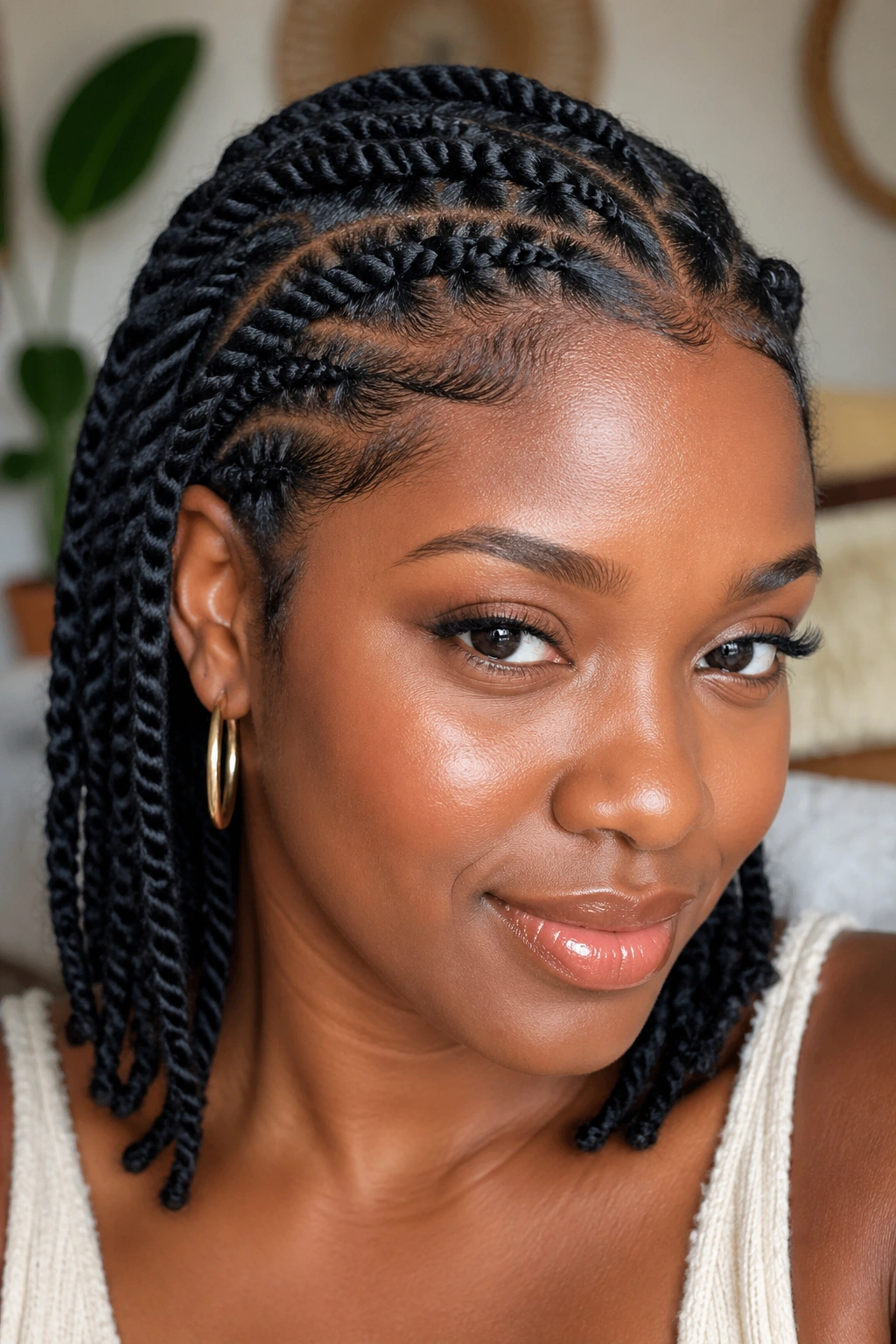
Flat twists lie close to the scalp in a similar way to cornrows but use a two-strand technique rather than a three-strand braid. They’re a beautiful styling option for 4C hair that shows off the shape of the head and the texture of the hair simultaneously.
Part your sections cleanly, apply your styling product, and flat-twist along the scalp in your desired direction — toward the front, toward the back, or in geometric patterns. Flat twists look particularly beautiful in crown patterns (starting at the hairline and spiraling inward) or in straight-back configurations that frame the face. Leave them as the style itself, or take them down after setting for a flat-twist-out.
11. 4C Bantu Knots
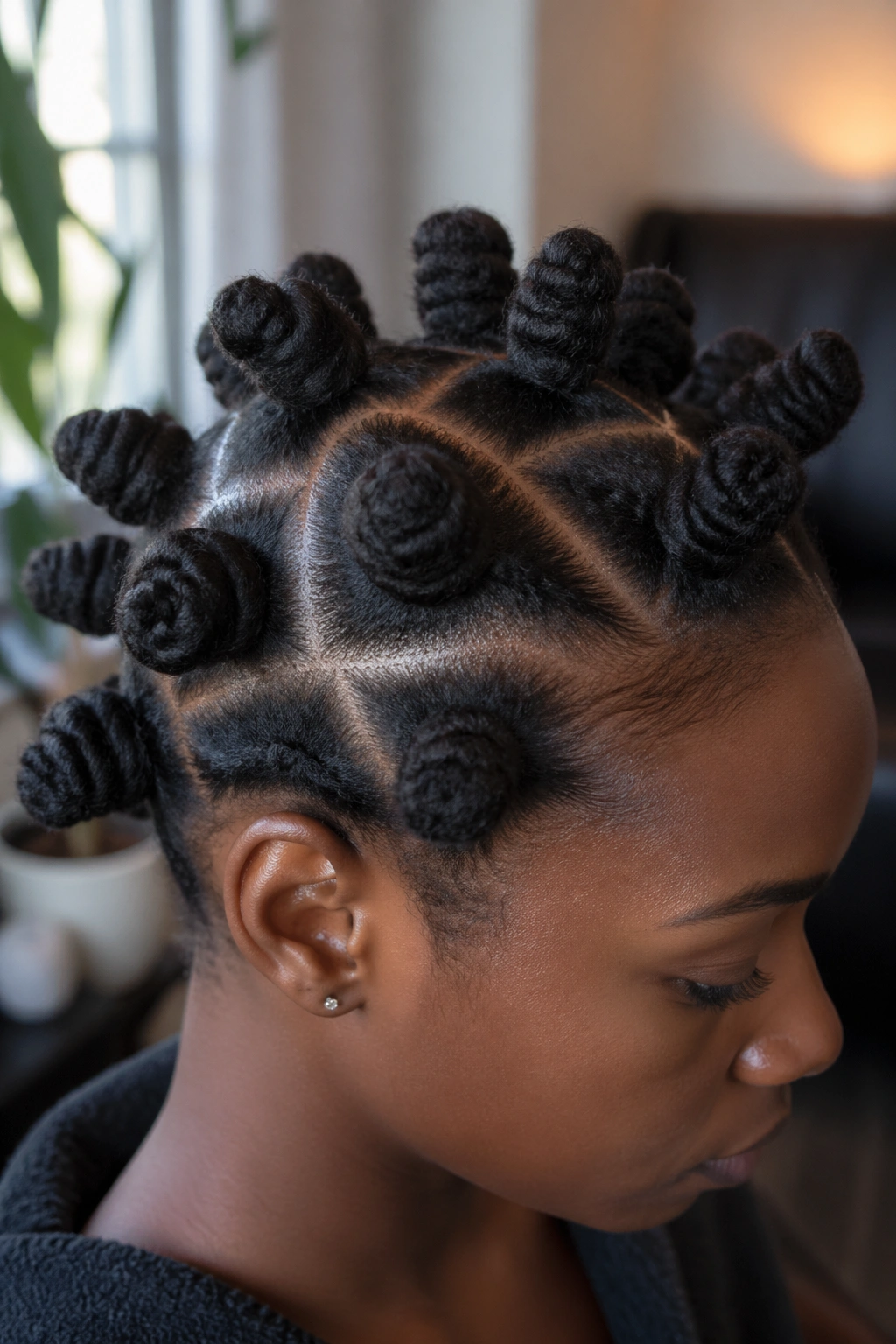
Bantu knots on 4C hair are a two-for-one deal — you get a beautiful, sculptural style from the knots themselves, and a gorgeous curl pattern when you take them down. The tight natural coil of 4C hair actually makes bantu knots particularly easy to install because the hair holds itself in the knot position without as much resistance as looser textures.
Section your hair, apply your cream or styler, briefly two-strand twist each section, then coil around itself at the base into a flat knot. Tuck the end under the knot and secure. 4C hair typically grips so well in bantu knots that you may not even need pins to hold them in place — the natural curl tension does the work.
12. 4C Flexi Rod Set
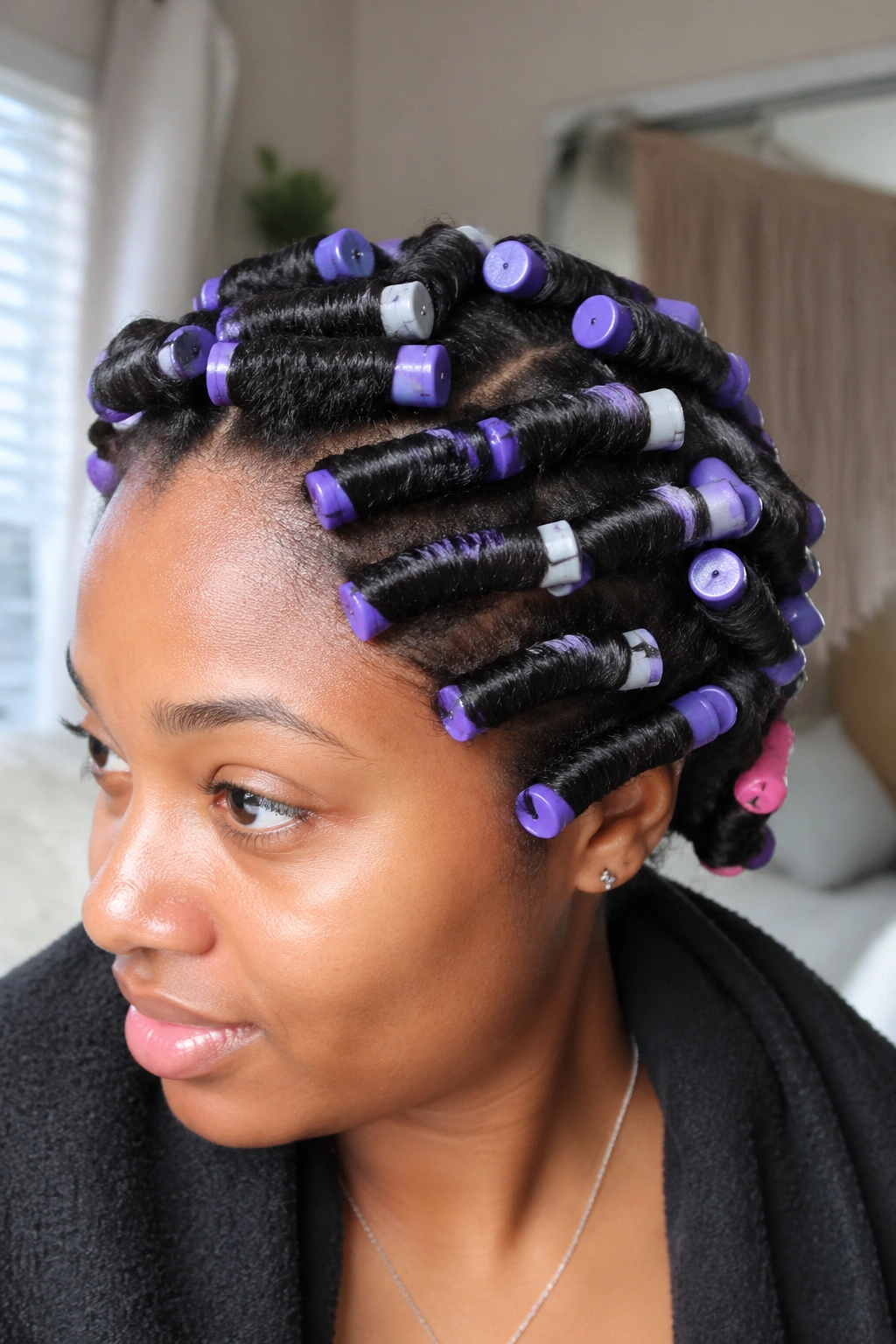
Flexi rods on 4C hair produce big, bouncy, defined curls that are genuinely stunning. The flexibility of the rod accommodates the tight natural coil pattern beautifully, and the resulting curls have more spring and bounce than those produced on looser textures.
Apply a rich setting cream or mousse to small, damp sections before rolling. Roll consistently from tip to root, bending the rod to secure. For 4C hair specifically, rolling in the direction of your natural curl pattern (rather than against it) improves definition. Let set overnight or under a hooded dryer until completely dry. Separate carefully and use an afro pick at the roots for lift.
13. 4C Curly Updo
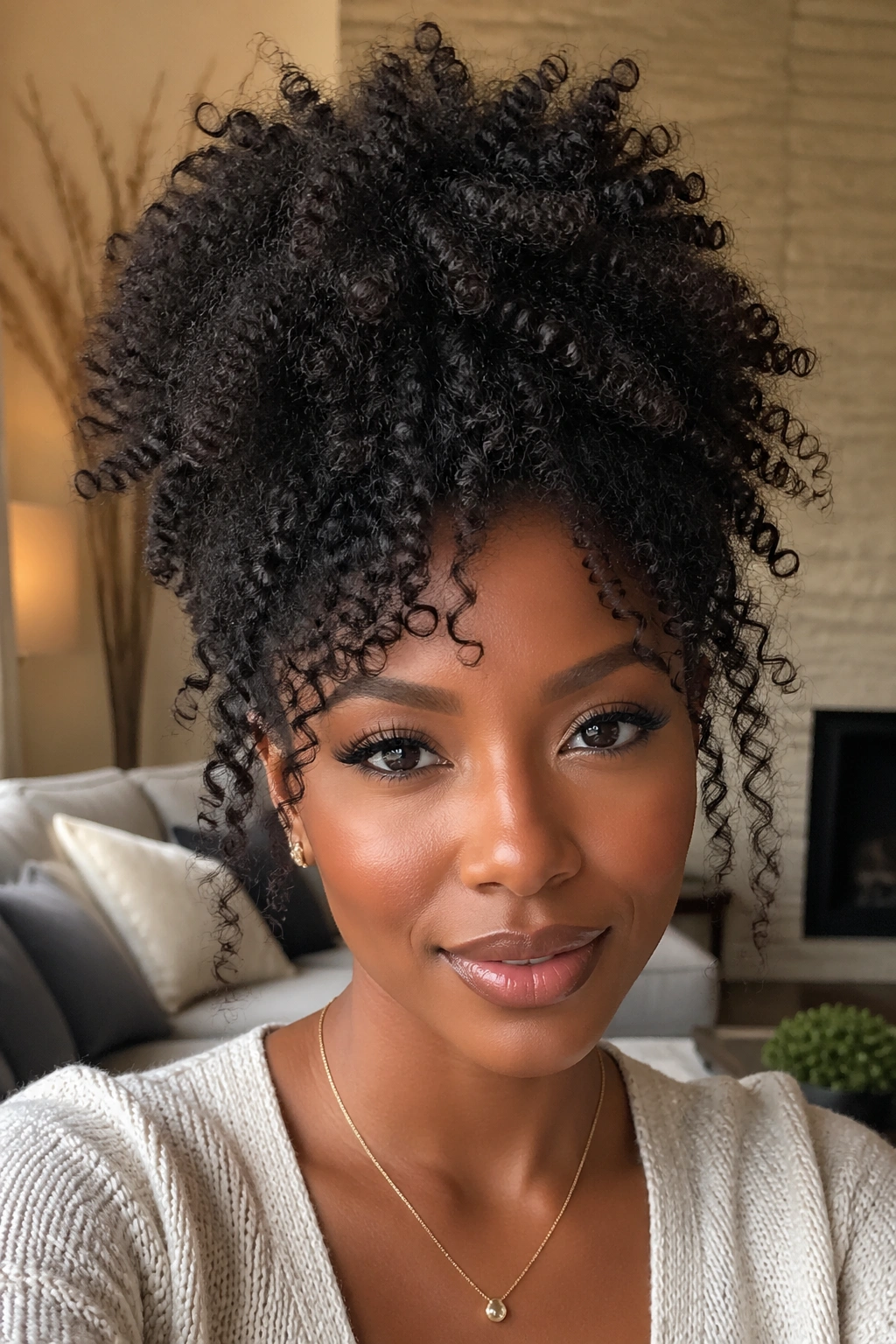
An updo for 4C natural hair doesn’t have to mean sleek or tamed. A loose, curly updo that gathers your 4C hair into a bun or crown while allowing individual sections to escape and maintain their texture is elegant, unique, and unmistakably natural.
After your twist-out or wash-and-go, gather sections into an updo shape — a loose bun, a crown of gathered sections, or a high topknot — pinning loosely so curls escape and drape rather than being compressed. Release tendrils around the hairline for softness. A 4C updo should look full, voluminous, and richly textured — the opposite of flat and sleek.
14. 4C Stretched Style with Banding
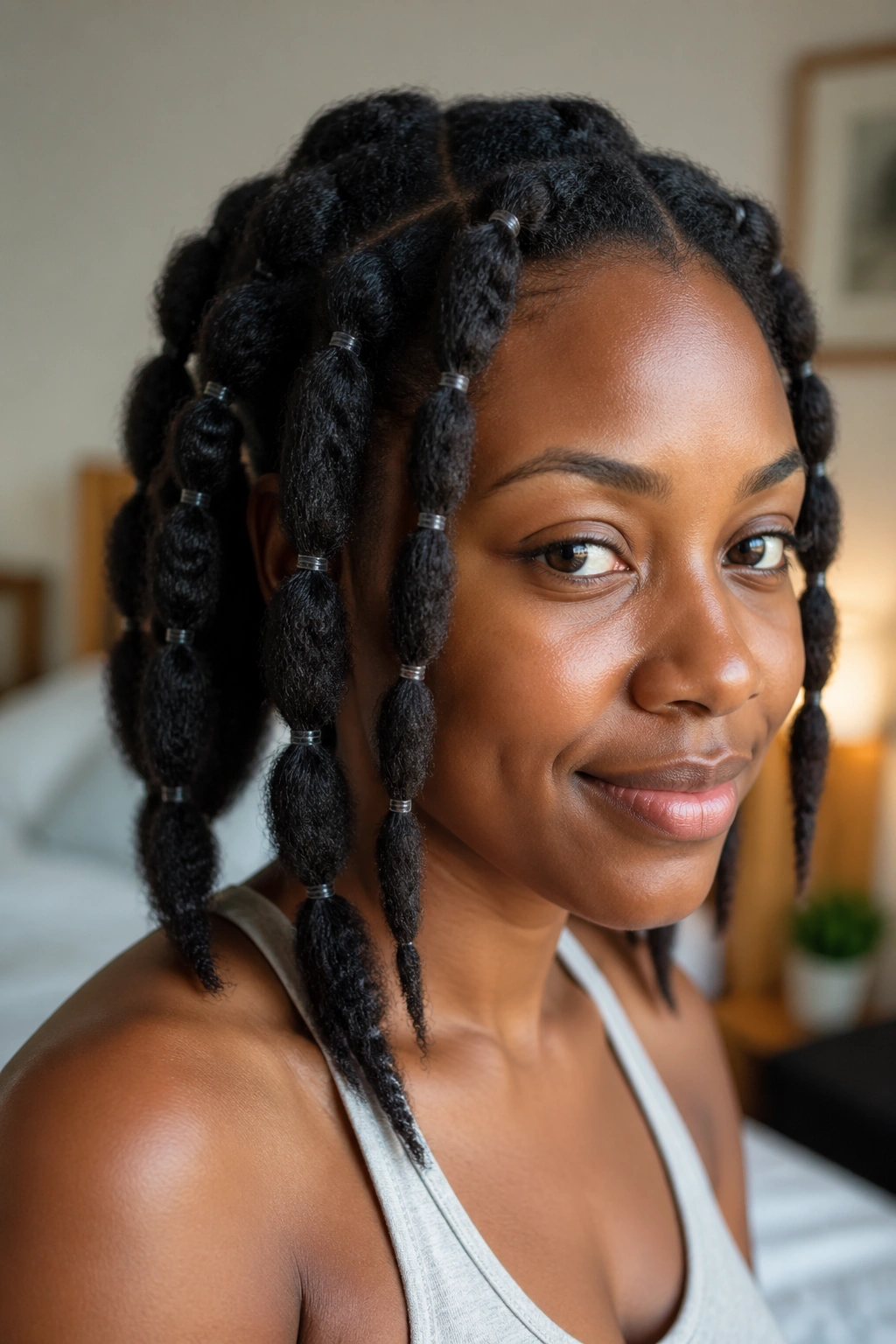
Banding 4C hair during drying reduces the extreme shrinkage and allows your 4C curls to show significantly more length than they do in their fully contracted state. This is one of the most important techniques for 4C naturals who want versatility in their styling.
After washing and applying your products, wrap small hair elastics around each section at one-inch intervals from root to tip. Let your hair air-dry completely in the banded state. Remove the bands to reveal stretched, elongated 4C hair that retains its natural texture while showing more length. Style from this stretched foundation — twist, braid, or leave as a stretched wash-and-go.
15. 4C Straw Set
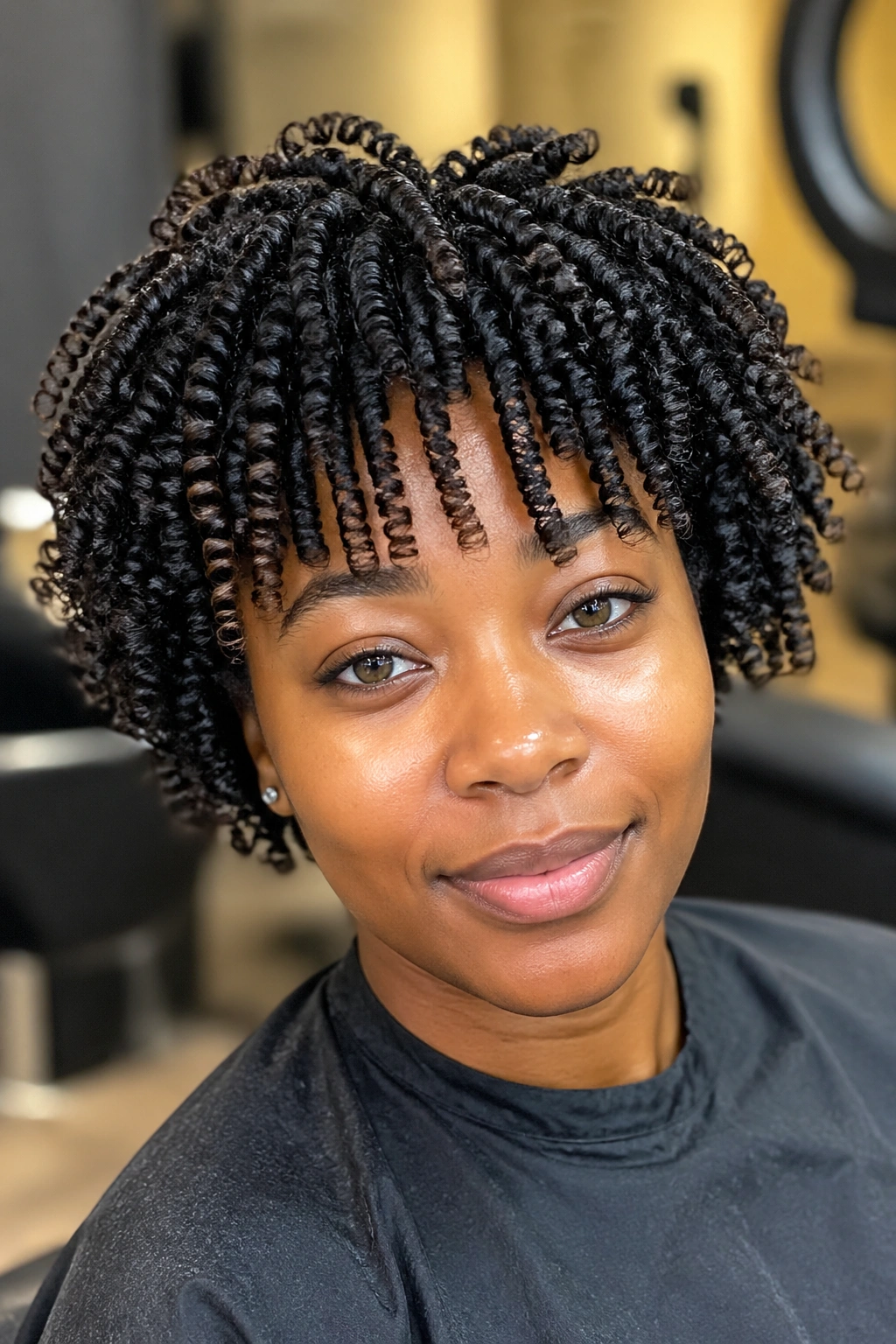
Straw sets on 4C hair produce stunning, pencil-thin spirals that cluster together in extraordinary density. The tight natural coil grips the straw perfectly, and the resulting set stays remarkably well-defined for days.
Apply setting mousse or lotion to small sections of damp hair before wrapping around individual drinking straws from tip to root. Secure each straw by folding the ends. Work quickly across your entire head. Dry under a hooded dryer for the most consistent results. Remove straws very carefully — 4C straw curls are particularly beautiful but delicate when first taken down.
16. 4C Defined Coil Wash-and-Go
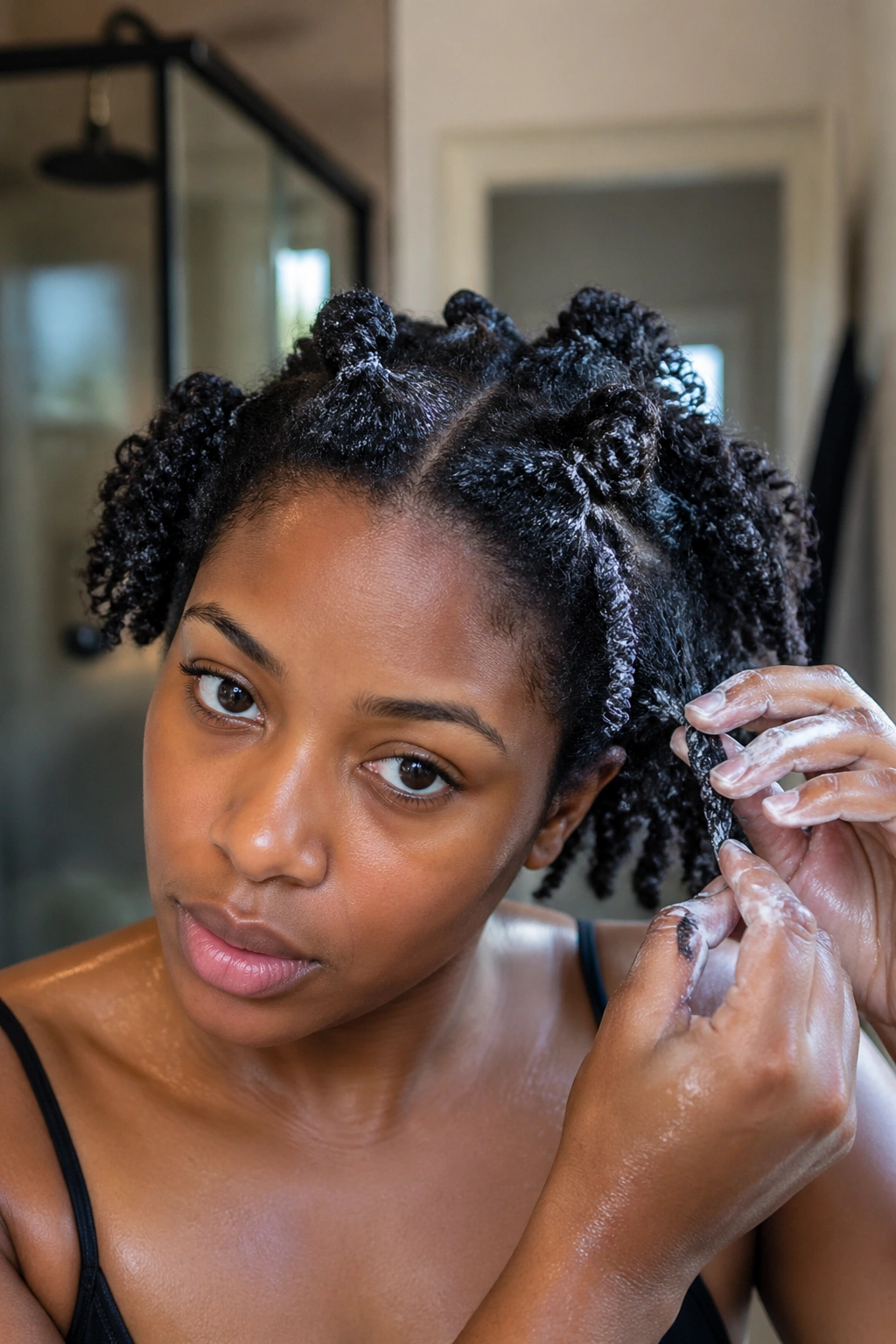
A 4C wash-and-go where every curl cluster is defined and coiled rather than simply air-dried in an unsectioned state is a style of extraordinary beauty — dense, full, and with visible curl definition throughout that showcases the 4C pattern at its most spectacular.
Work in very small sections on soaking wet hair. Apply your leave-in and curl pudding, smoothing and shingling through each section thoroughly. Then use your fingers to coil each section in your hands — not as individual finger coils but as a cluster coil, encouraging each group of strands to form a visible curl cluster together. Diffuse gently on low heat or air-dry undisturbed for the most defined result.
17. 4C Pineapple Puff
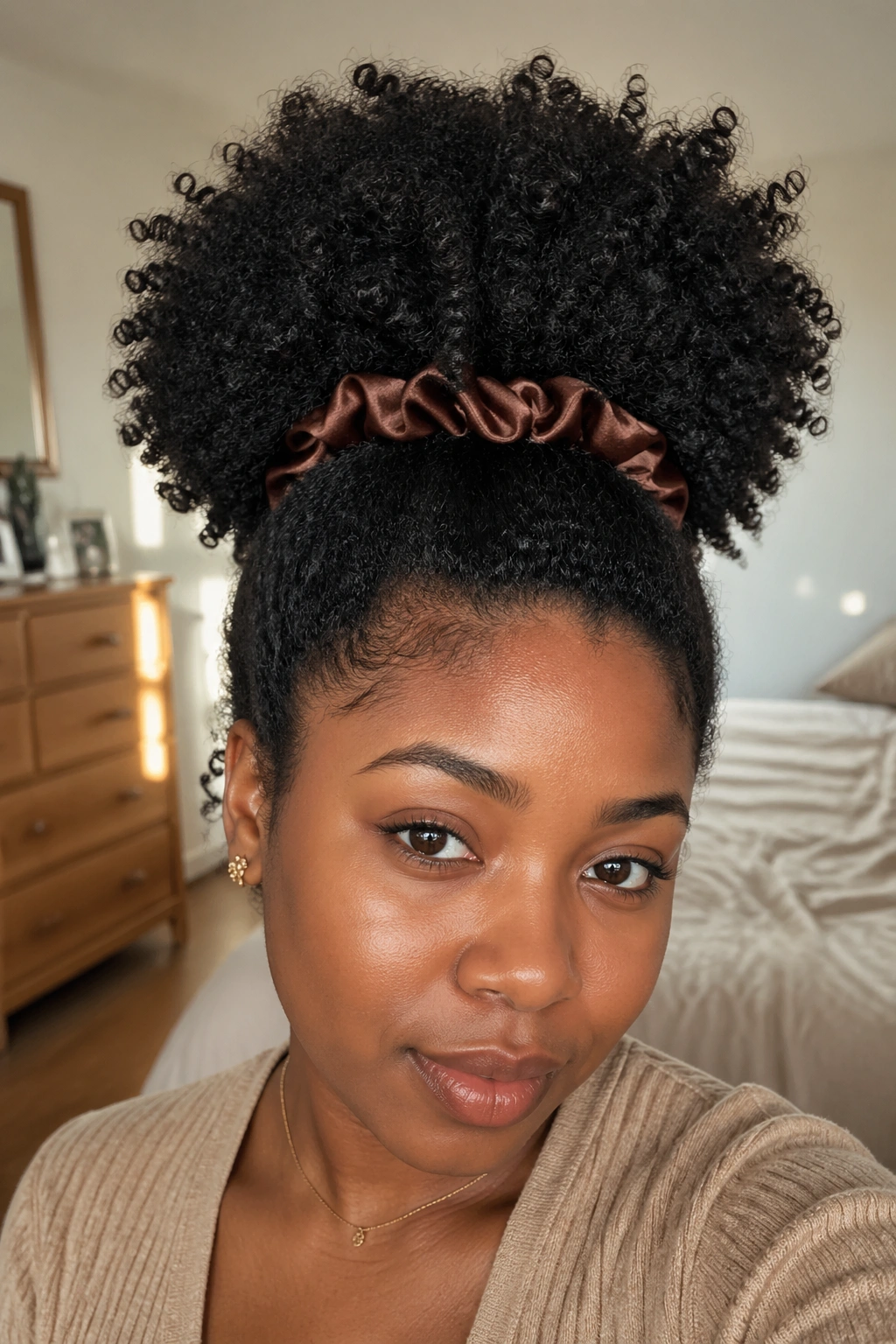
The pineapple puff — gathering your 4C hair at the very top of your head in a loose puff — works as both a nighttime maintenance technique and a standalone daytime style. As a style, it’s one of the simplest and most effective for showing off the full volume of 4C hair.
Gather all your hair loosely to the very top of your head and secure with a large satin scrunchie. Before and after securing, pull the puff outward in all directions to maximize volume. 4C hair’s density means the pineapple puff will be notably large and full — a genuinely impressive silhouette that announces itself boldly. Add some edge styling for a more polished version.
18. 4C Goddess Locs
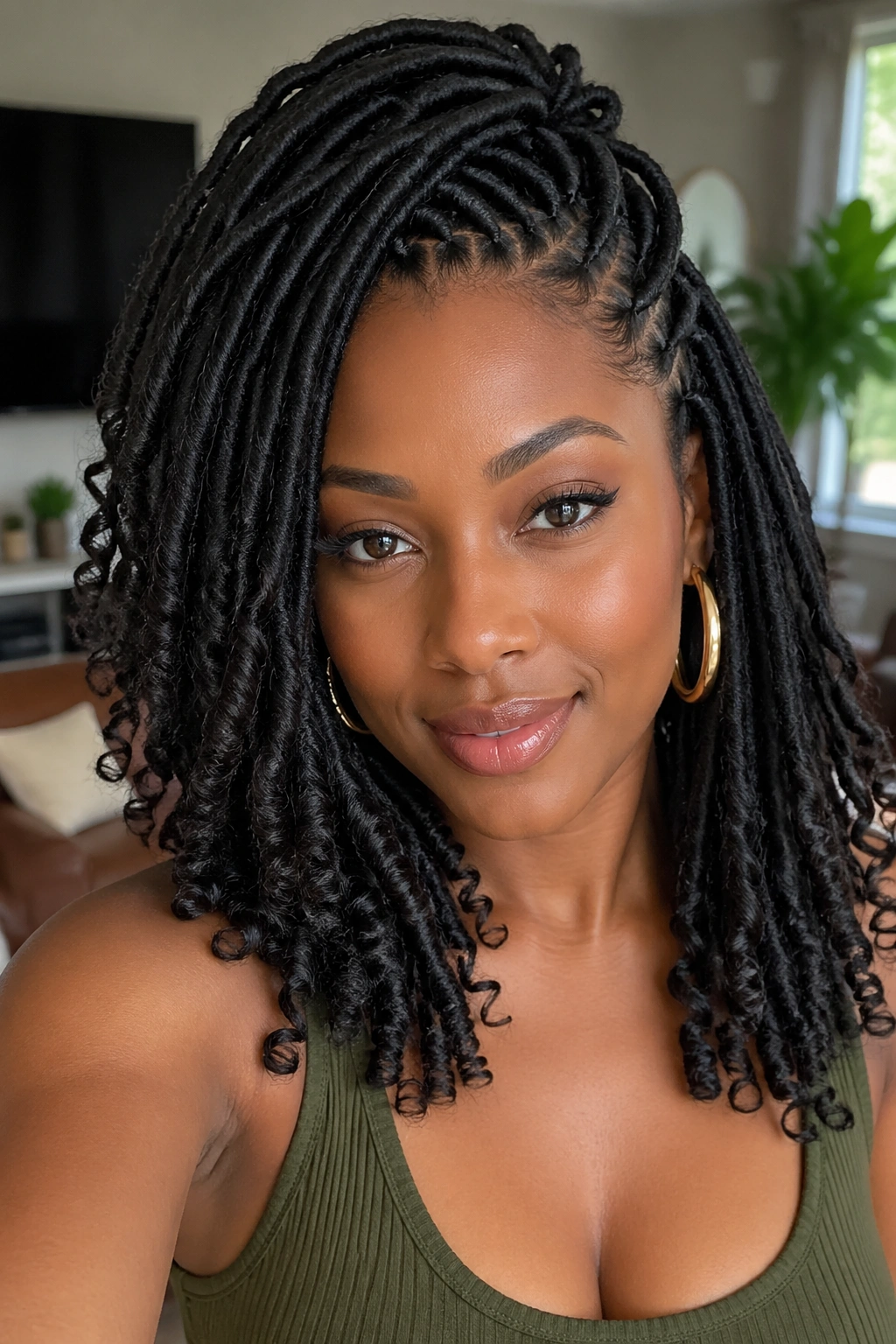
Goddess locs on 4C hair use the natural texture of 4C hair to create beautiful, naturally textured locs with loose, curly ends that look like they grew that way. The 4C base hair blends seamlessly with the loc extensions because the texture is closely matched.
Because 4C hair grips braiding and twisting so firmly, goddess locs on 4C hair tend to stay neater and hold their position better than on looser textures. They can be installed in a variety of sizes — small, medium, or large — and styled upward, downward, or in partial updos for versatility throughout the weeks of wear.
19. 4C Curly Frohawk
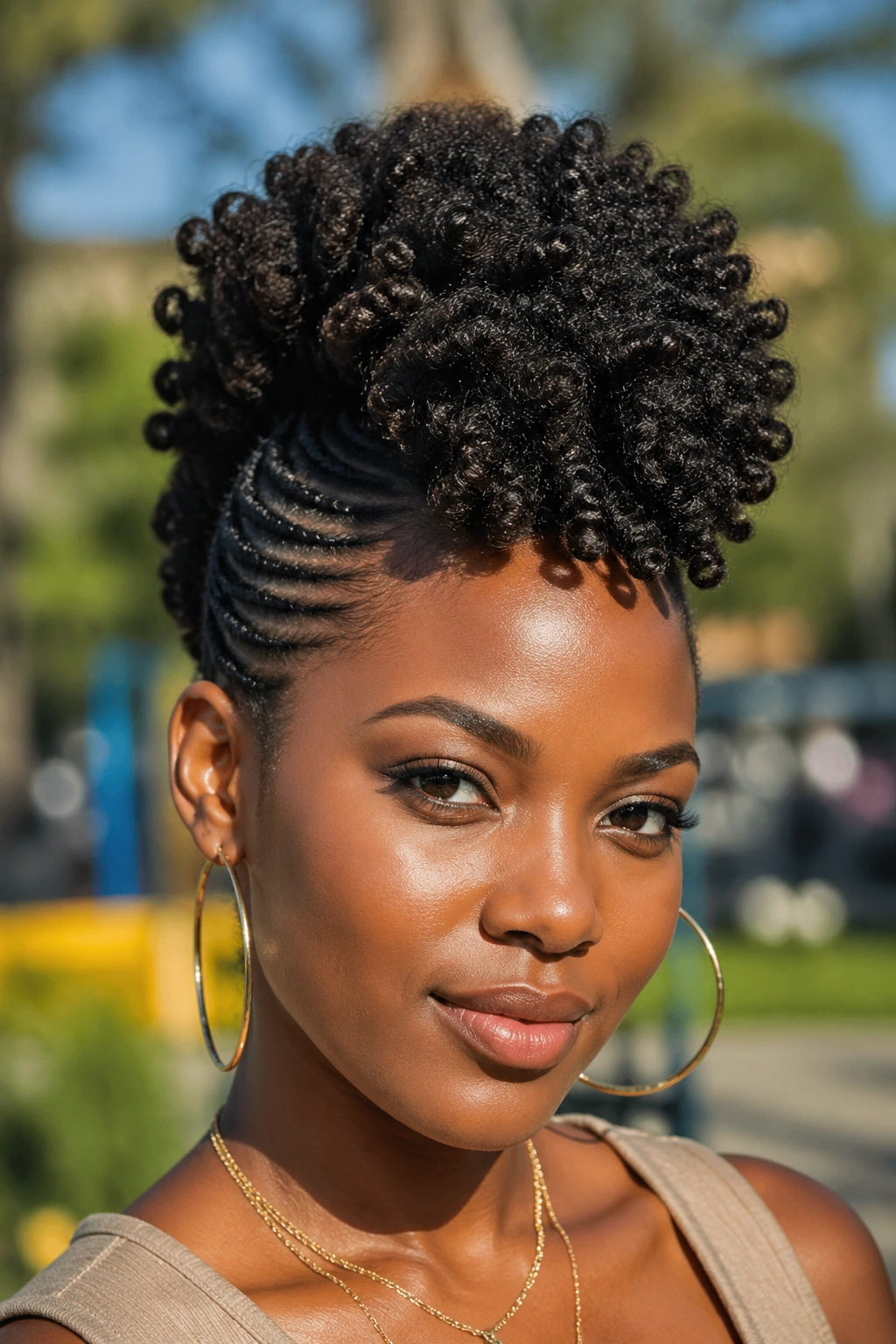
The 4C frohawk is one of the boldest, most striking natural hairstyles possible — the density and volume of 4C hair in the center of the frohawk creates a silhouette that is genuinely dramatic and spectacular.
Smooth or flat-twist the sides close to your scalp, directing all focus to the center. The center section of 4C hair — freshly twist-outed or rod-setted and then picked out — has the kind of volume that few other hair types can produce. Use an afro pick to create maximum height in the center. The contrast between the flat sides and the enormous, picked-out 4C curls in the center is one of the most beautiful things in natural hair styling.
20. 4C Cornrows
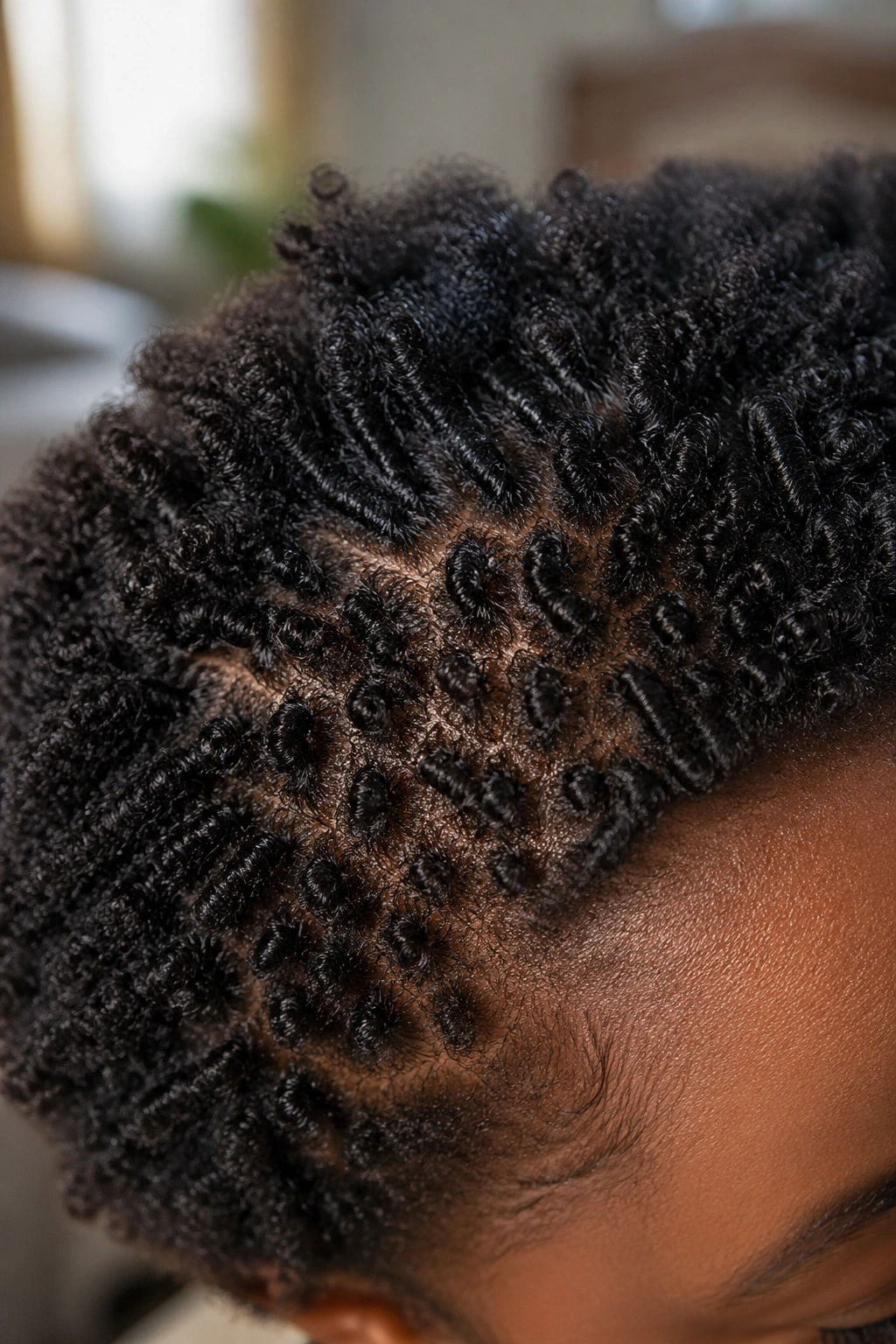
Cornrows on 4C hair are a timeless protective style that works beautifully with the natural grip and texture of tightly coiled hair. Because 4C hair holds braids so firmly, cornrows on 4C hair tend to stay neat and well-defined for weeks.
Size and pattern variety is what makes cornrows interesting — you can do simple, straight-back cornrows for a clean look; geometric patterns for something more intricate; or large, chunky cornrows for a bold statement. The key is gentle tension — firm enough to keep the braid in place but not so tight that you’re stressing the hairline.
21. 4C Crochet Natural Hair
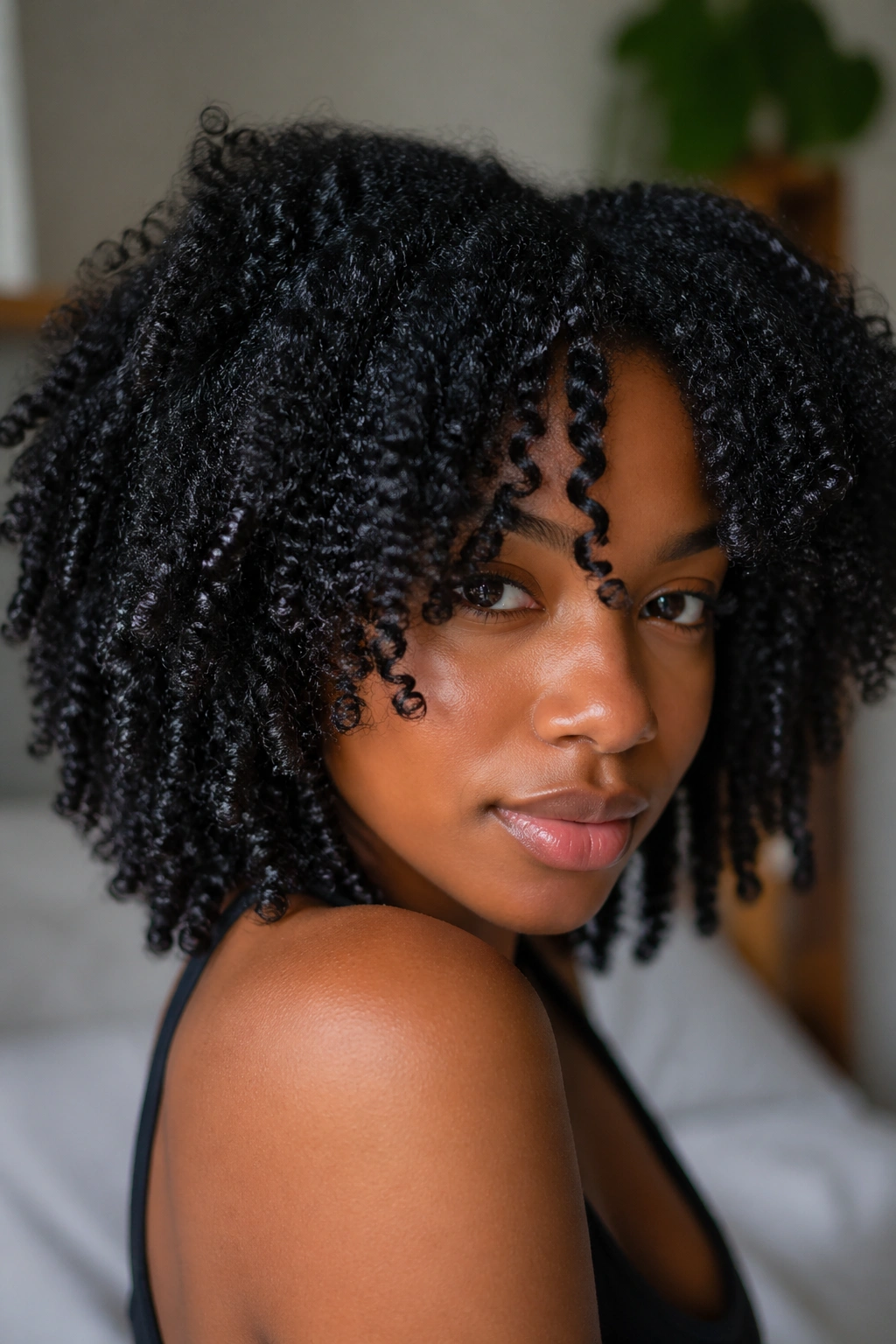
Crochet styles on 4C hair allow you to add volume, length, and versatility while completely protecting your natural hair beneath. Crochet curly hair extensions installed on a cornrow base give you the appearance of big, defined curls without any heat on your actual 4C hair.
The base cornrows should be neat, relatively flat, and installed with consistent tension. The crochet extensions loop through the braids and hang down in whichever curl pattern you’ve chosen. Look for crochet hair in afro-kinky or loose curl patterns for the most natural-looking blend with 4C hair — hair that matches your natural texture looks most seamless and most beautiful.
22. 4C Havana Twists
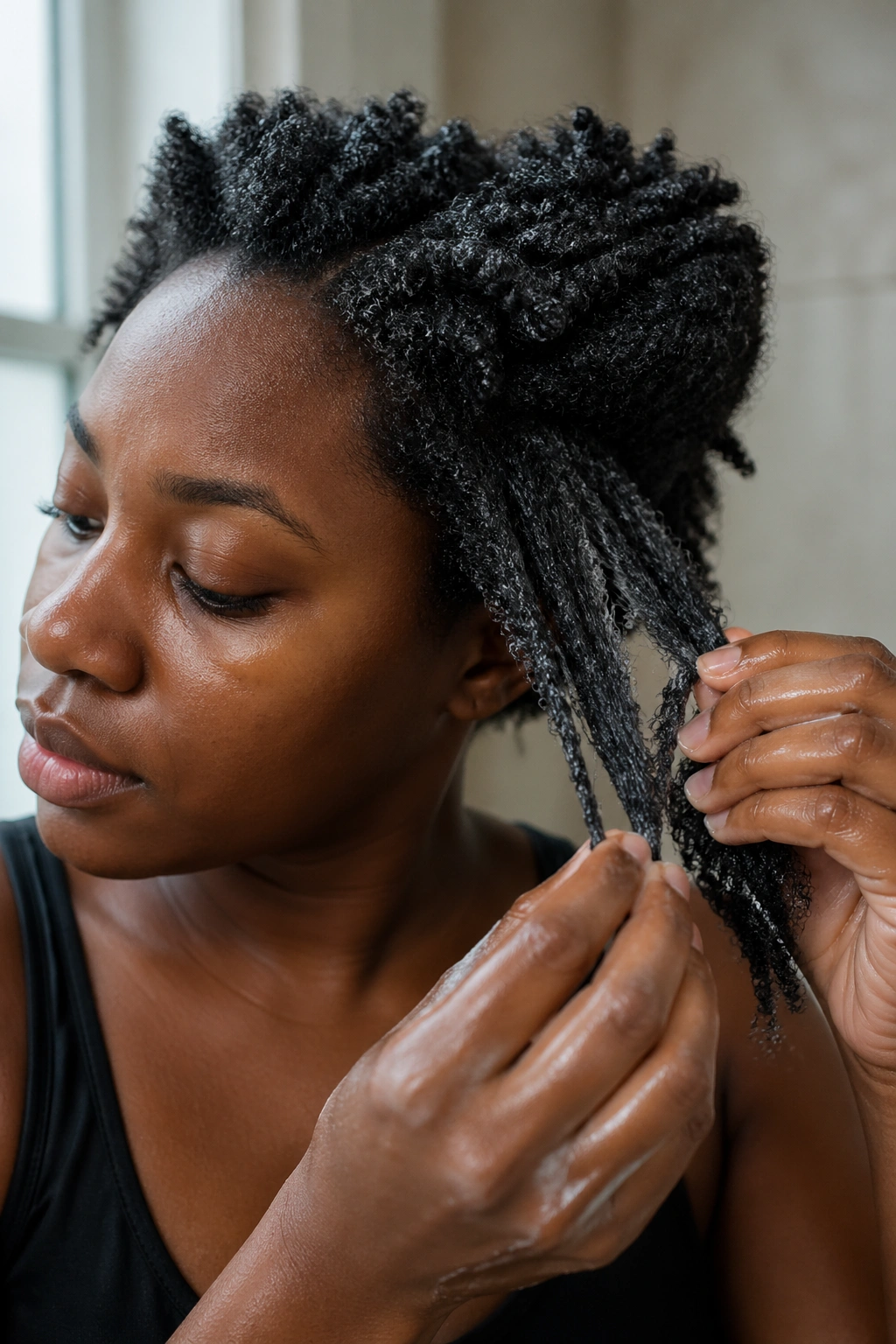
Havana twists on 4C hair are a full, voluminous protective style that uses Havana Marley hair to create large, textured twists. The chunky size of Havana twists makes them one of the most dramatic and beautiful protective styles available.
The Marley hair used for Havana twists closely matches the texture of 4C hair, which means the extensions blend almost seamlessly. Install on a small number of large cornrow sections, then add Havana hair using the crochet or two-strand twist method in whatever size you prefer. Larger twists create a big, bold statement; smaller twists create a denser, more uniform look.
23. 4C Loc Journey Starter Styles
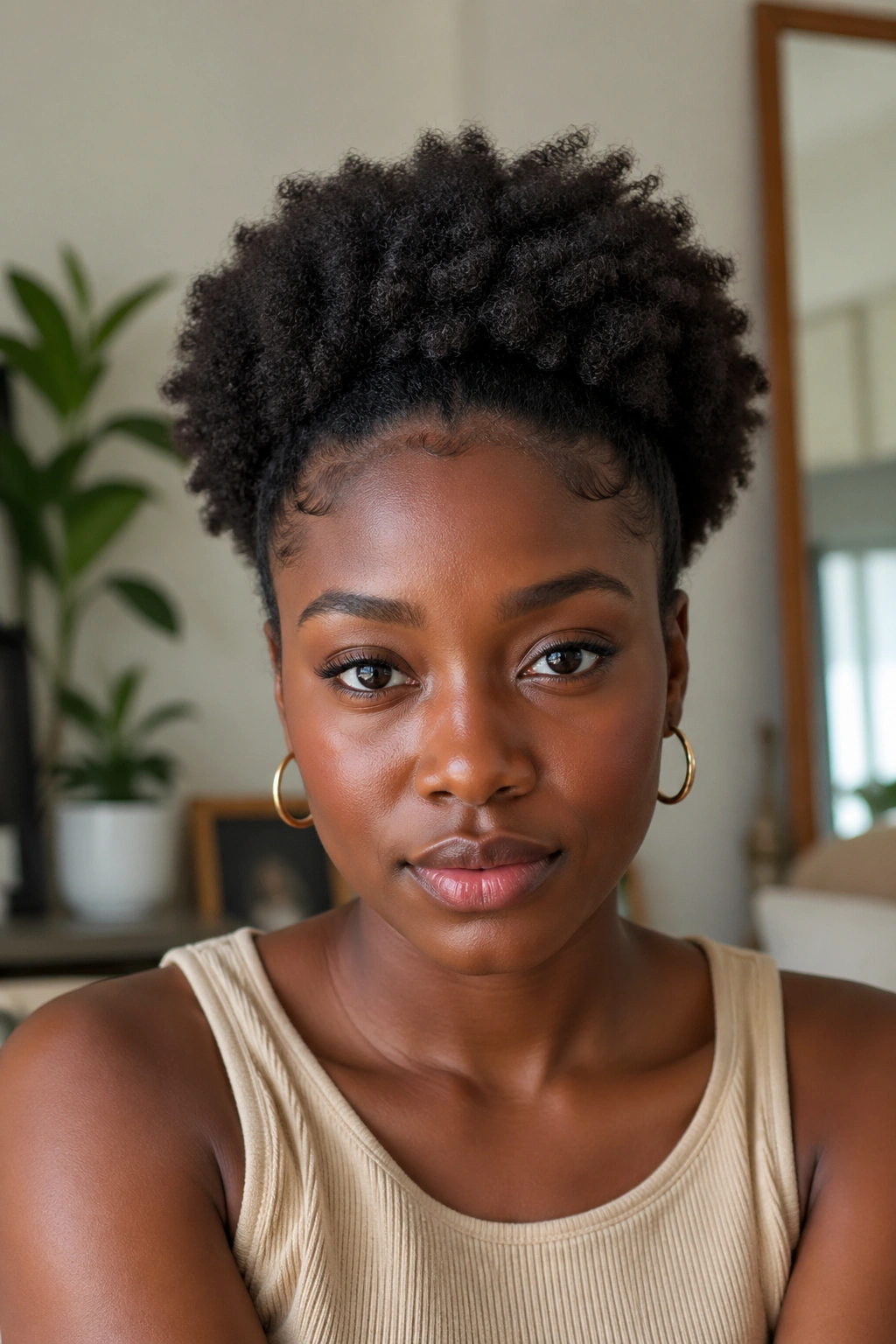
For 4C naturals who are beginning or considering a loc journey, the starting styles — particularly two-strand twists or interlocked locs — are themselves beautiful hairstyles that look intentional and polished even at the very beginning of the process.
Starter locs on 4C hair take beautifully because the tight coil structure grips and holds the loc formation easily. Two-strand twist starter locs create a rounder loc shape. Interlocking creates a tighter, neater root. Both look beautiful, and both benefit enormously from 4C hair’s natural grip and density.
24. 4C Side-Parted Big Curls
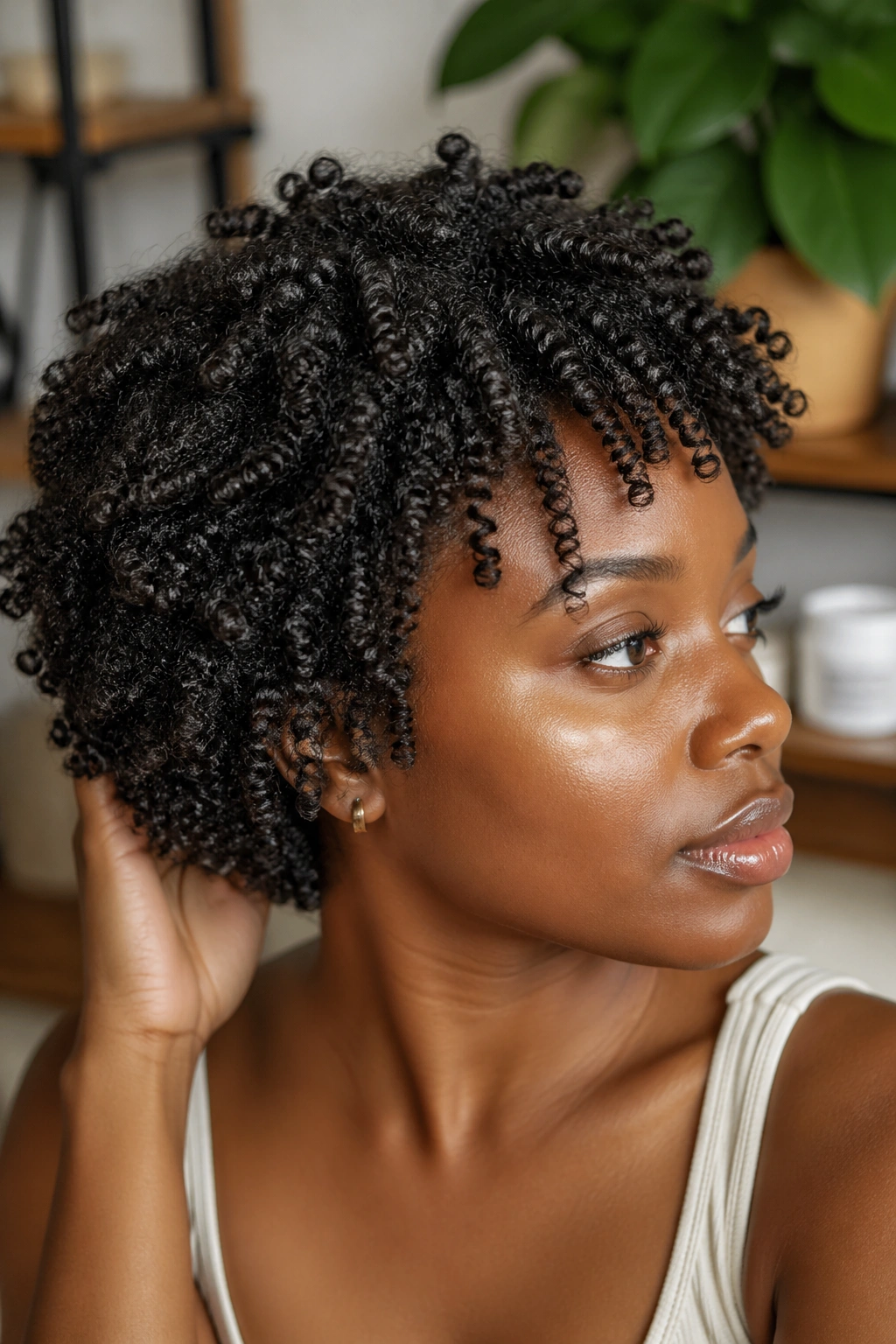
A deep side part through a 4C twist-out or rod set creates an asymmetric silhouette that completely changes the character of the style. All the volume and density of 4C hair shifts dramatically to one side, creating a profile that’s bold and incredibly flattering.
Use a rat-tail comb or the tip of a styling brush to create a clean, deliberate part after your set has been styled. Allow all the volume on the larger side to fall forward toward your face, and keep the smaller side closer to the head. The dramatic asymmetry of 4C hair’s full density on one side versus a more contained look on the other is genuinely striking.
25. 4C Defined Afro Puff Crown
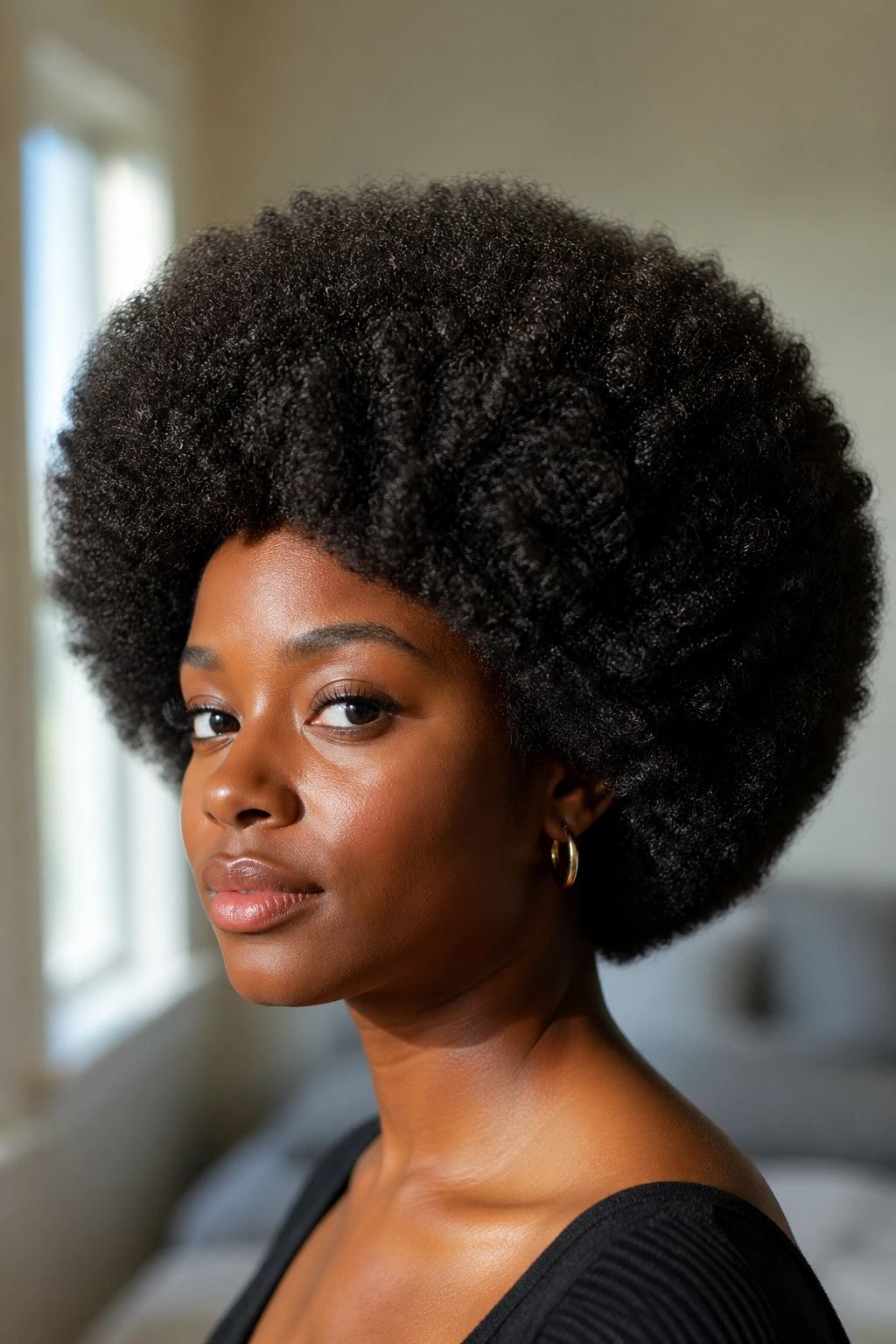
A defined afro puff with a crown of flat twists or cornrows along the hairline creates a style that’s both protective and beautiful — the styled edges frame the voluminous 4C puff in a way that looks intentionally regal.
Create two or three cornrows or flat twists along the front hairline, leading toward the top of your head. Gather the rest of your hair into a full, voluminous afro puff at the crown, allowing the cornrows to disappear into the base of the puff. The structured cornrow crown and the free, voluminous 4C puff above it create a style with real complexity and beauty.
26. 4C Wash Day Protective Style Rotation
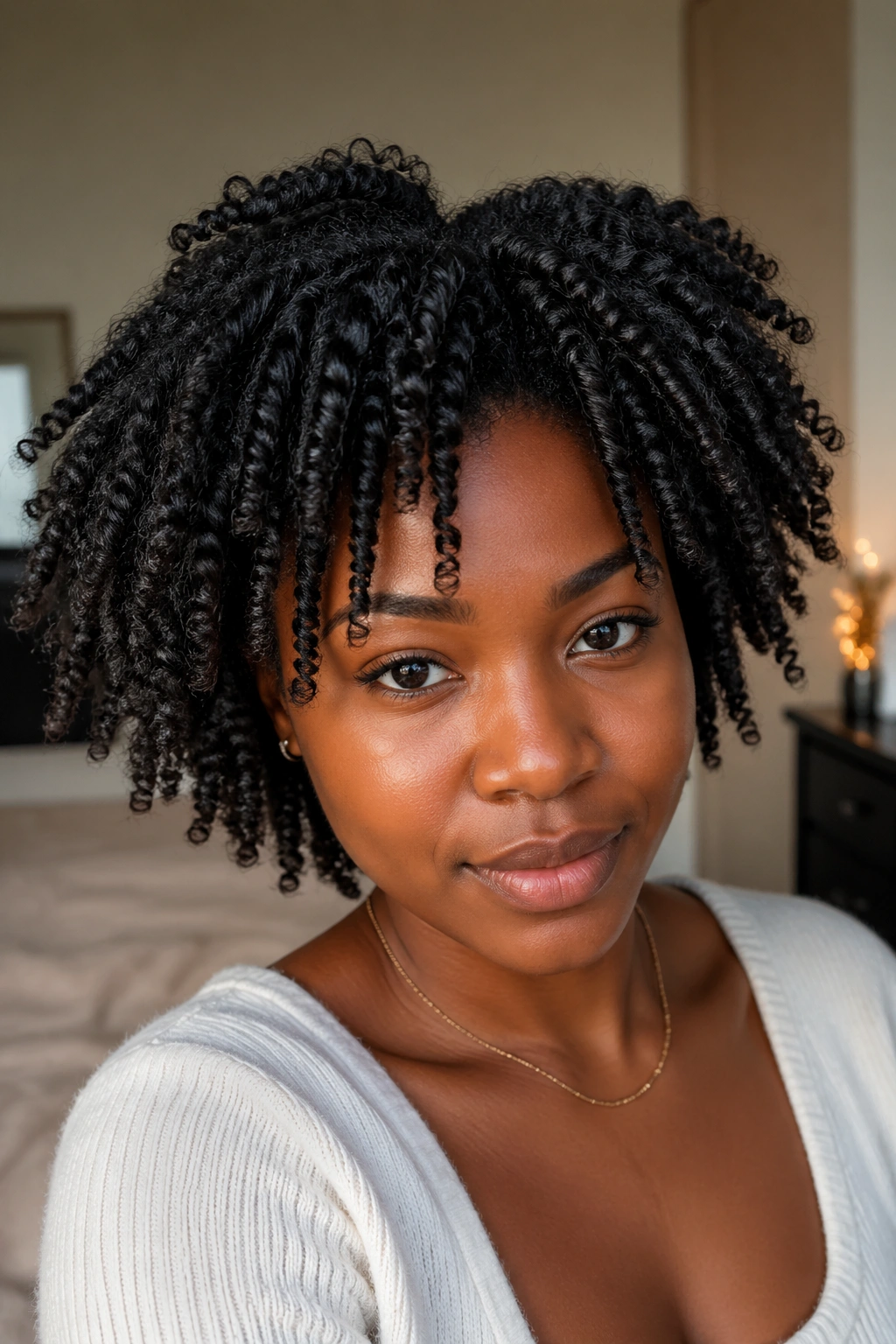
Building a consistent protective style rotation — a cycle of styles that keeps your 4C hair protected, moisturized, and growing without the same style becoming monotonous — is one of the most powerful strategies for 4C hair length retention and health.
A practical rotation might look like: wash day wash-and-go or twist-out for week one, transitioning to a twist updo or puff for week two, then installing cornrows or individual twists for weeks three and four before starting the cycle again. This rotation protects your hair during the weeks you’re not wearing it out, while still giving you regular opportunities to show off your natural 4C curls and celebrate your texture.
27. 4C Curly Full Lace Styles
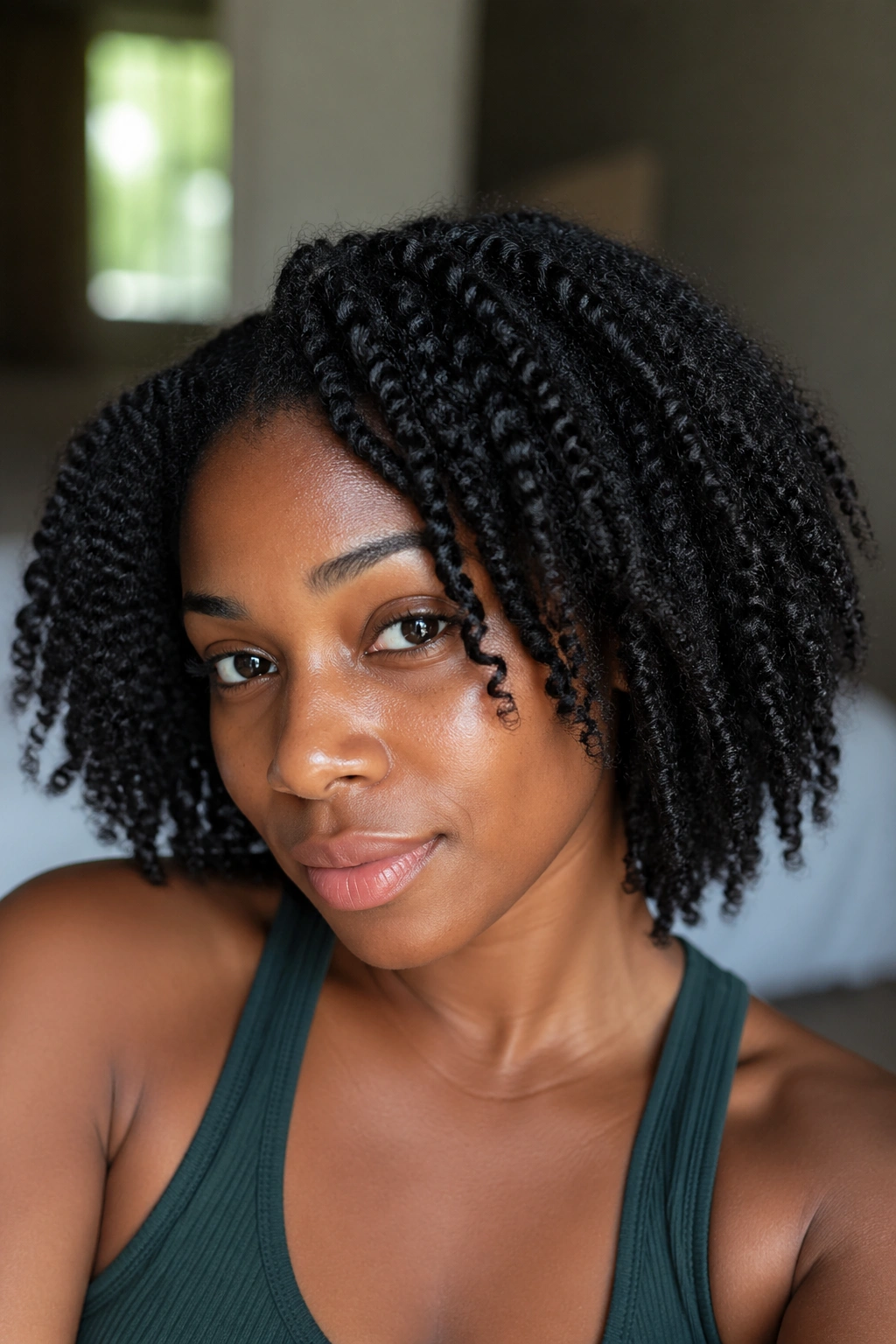
Full lace wigs and lace-front units designed for 4C natural hair — either styled in curly or afro patterns — give 4C naturals the option to experiment with length, color, and variety while their natural hair remains fully protected underneath. This is particularly valuable during growth phases, length retention periods, or times when your 4C hair needs extra protection.
Choosing a lace unit that matches your 4C texture — kinky curly, afro curl, or tight coil patterns — creates a seamless, natural-looking style. And because your natural 4C hair is protected in braids or twists underneath, you’re simultaneously wearing a stylish, versatile unit and actively retaining length.
28. Embracing 4C Natural Hair Curls
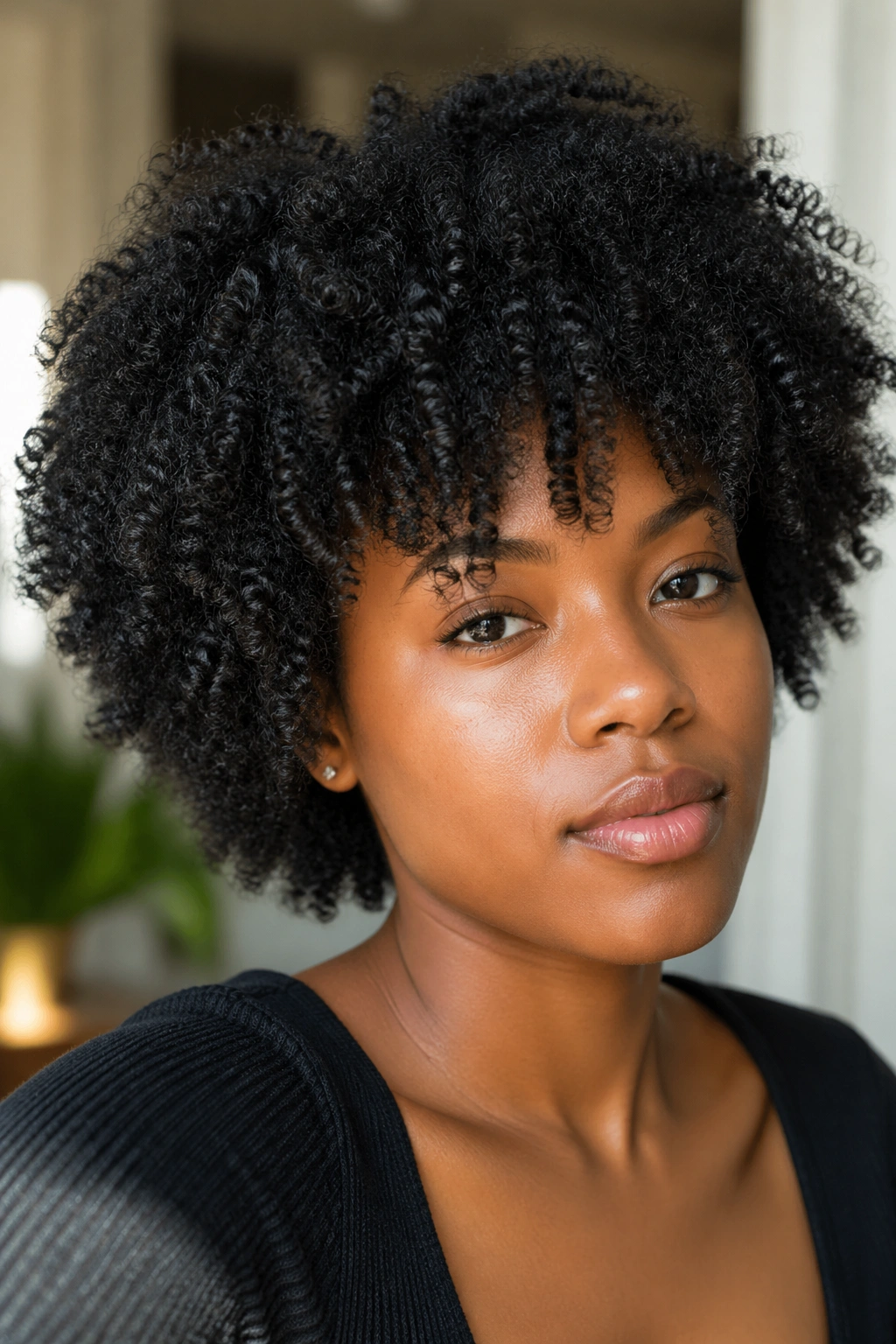
Perhaps the most powerful hairstyle choice a 4C natural can make is simply wearing their hair in its natural state — freshly washed, well-moisturized, and completely unstyed beyond basic care — and recognizing that as a fully valid, genuinely beautiful hairstyle in its own right.
The natural 4C texture, left to contract to its most characteristic shrunken state and worn with confidence, is spectacular. The density is unmatched. The volume is extraordinary. And the statement it makes — that this hair, in this state, needs no alteration or apology — is one of the most powerful things a person can put on their head.
4C hair doesn’t need to be stretched to be beautiful. It doesn’t need to be defined to be beautiful. It doesn’t need to be in a particular style to be beautiful. It needs to be healthy, moisturized, and worn by someone who knows its worth.
Long-Term Care Strategy for 4C Hair Curls
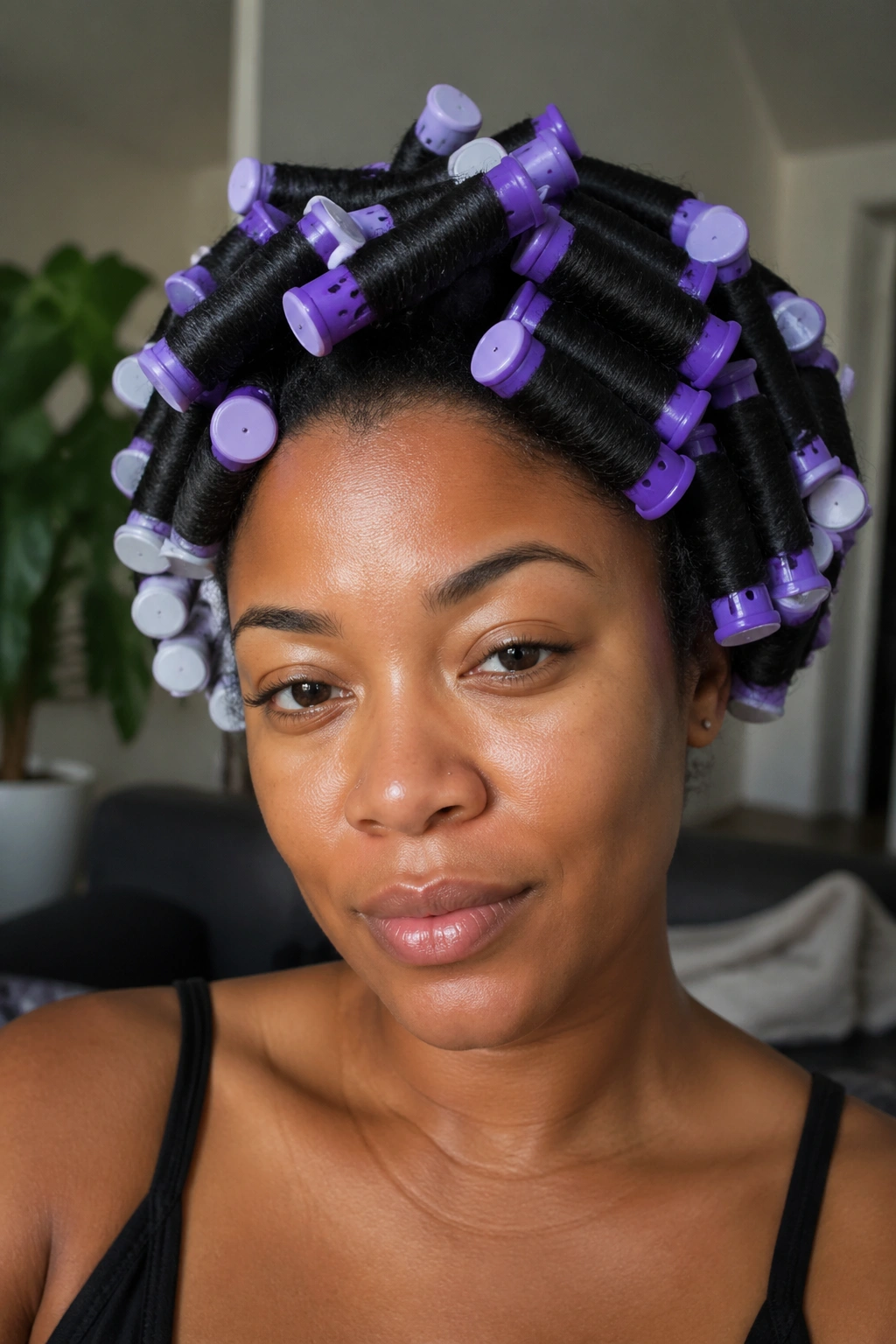
The most important thing you can do for your 4C hair long-term is establish a consistent care routine and then stick to it. Not perfectly — life happens and wash days get skipped — but consistently enough that your hair has a reliable foundation of moisture, gentle handling, and regular care.
Weekly or bi-weekly deep conditioning is the cornerstone. Regular moisturizing between wash days — using your LOC or LCO method — keeps 4C hair from drying out between washes. Gentle detangling on wet, conditioned hair prevents the breakage that 4C’s tight coils can be vulnerable to. Protective styling between more manipulative styles gives your hair regular rest periods.
And nighttime care — satin bonnet, satin pillowcase, pineapple method — protects your styles and your hair health with minimal effort every single night. These habits, practiced consistently, allow 4C natural hair to reach its full potential: healthy, long, strong, and styled in ways that honor exactly what it is.
