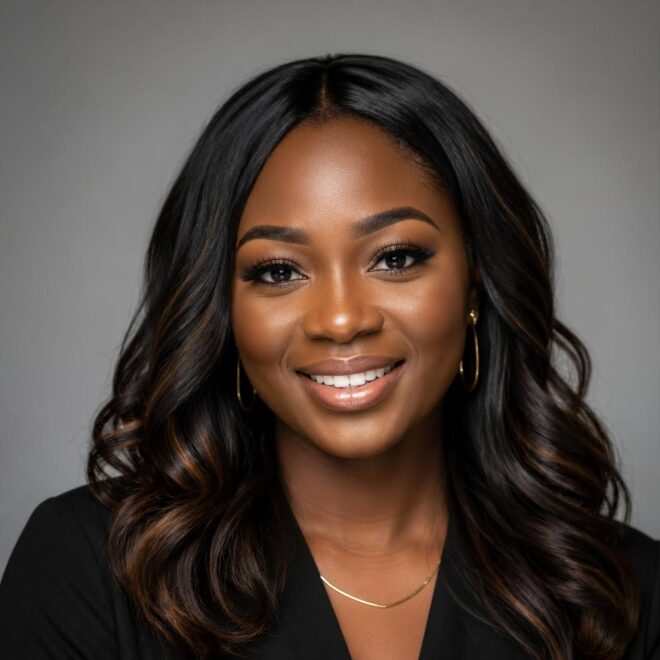


Braided mohawk ponytails for Black women hit that rare middle ground between sharp and soft. They can look polished enough for a dress-up moment, but they still feel practical enough to wear when you want your hair up, out of the way, and still doing something interesting.
What makes the style work is shape. The sides are pulled close, the middle has lift, and the ponytail gives movement without flattening everything down. On coily and kinky textures, that contrast looks especially good because the braids give structure while the ponytail keeps the whole style from feeling stiff.
Clean parts matter. So does tension. A mohawk braid style can be gorgeous from the front and a headache by lunch if the braids are yanked too tight at the temples, which is why the smartest versions are built around balance instead of force.
And that balance gives you options. You can go sleek, curly, chunky, beaded, low-slung, high and dramatic, or soft enough to wear with hoops and a hoodie. The styles below cover the range, and each one brings a different kind of energy to the same basic silhouette.
1. Classic Cornrow Mohawk Ponytail
The classic version is the one people come back to when they want the shape to do the talking. Straight cornrows on the sides, a defined middle ridge, and one ponytail at the crown or back of the crown. Clean. Simple. It works because nothing is fighting for attention.
Why the shape lands so well
With this style, the braids act like framing lines. If the center section has five to seven neat cornrows, the top looks lifted without needing a lot of extra hair. That makes it a strong choice for medium-length natural hair or added hair when you want a fuller finish.
- Best braid size: medium, about 0.25 to 0.5 inch parts
- Ponytail placement: high crown for drama, mid-crown for a softer look
- Finish: a wrapped base keeps the ponytail looking clean
- Texture match: stretched 4B and 4C hair holds the pattern nicely
Tip: Ask for the side braids to stop before the hairline gets too thin. The style should look crisp, not strained.
2. Feed-In Braided Mohawk with a High Wrapped Ponytail
Feed-in braids make the whole thing feel softer at the scalp. The braid starts tiny, then builds as hair gets added, which gives you that smooth, clean line people notice from across a room. With a high wrapped ponytail, the style reads elegant instead of harsh.
The wrapped base is doing more work than people give it credit for. It hides the band, hides the join, and makes the ponytail look intentional instead of attached at the last minute. That small detail changes the whole mood.
This one is a good fit if you like a lifted look without the heavy feel of thick cornrows all the way back. It also suits long faces well because the height adds balance. If your hairline is tender, ask your braider to keep the first inch soft and slow. That tiny request matters.
3. Stitch-Braid Mohawk Ponytail with Glassy Parts
Why do stitch braids look so neat? Because the parts are controlled. The rows have that narrow, almost carved look, and on a mohawk ponytail they make the center strip feel sharper and more modern than loose, wide cornrows do.
How to ask for it
Tell your stylist you want clean stitch lines across the side panels and a centered ponytail that sits high enough to show the parting. If they use extension hair, the feed-in should stay smooth so the braids do not balloon at the roots. That’s the whole trick.
A little shine spray goes a long way here. So does a good rat-tail comb during prep. The parts should be visible but not so skinny that they disappear once the hair settles. On dense hair, this style can stay neat for a long stretch because the braid pattern itself helps hold the shape. It’s a favorite when you want precision.
4. Goddess Braided Mohawk Ponytail with Curly Ends
This is the one that softens all the edges. You still get the mohawk structure, but the ponytail ends spill into loose curls, which keeps the style from looking too severe. It feels romantic without getting fussy.
A lot of women choose this when they want a braid style that can move between casual and dressy with almost no effort. The curls do the talking at the end, especially if they’re left a little loose instead of brushed into a perfect ringlet. Perfection would ruin it, honestly.
What makes it work
- Keep the braids on the sides tight enough to hold shape, but not so tight that the style pulls at the temples.
- Use human hair or a good curling extension if you want the ends to stay soft longer.
- Mousse and a satin scarf help the curls settle overnight.
- A little layered edge styling keeps the front from feeling too hard.
If you like a bit of softness near the face, this is a strong pick.
5. Jumbo Braid Mohawk Ponytail for Quick Styling
Jumbo braids change the pace. Instead of spending forever on tiny sections, the style uses larger braids across the side panels and crown, which cuts install time and gives you a chunkier, bolder result. There’s no pretending here — it’s a statement style.
Because the braids are larger, the mohawk shape shows up fast. You do not need a lot of decoration for it to read well. The ponytail can be one thick braid, a wrapped puff of extensions, or a few large plaits gathered together. Either way, the bulk becomes the feature, not the problem.
This style is practical if you want less sitting-in-the-chair time and you still want something that photographs strongly in real life, not just in staged pictures. It also tends to feel easier on the scalp than very small braids, though the weight can add up if the extensions are too heavy. Keep the length reasonable. Seriously.
6. Side-Swept Braided Mohawk Ponytail with Deep Cornrow Angles
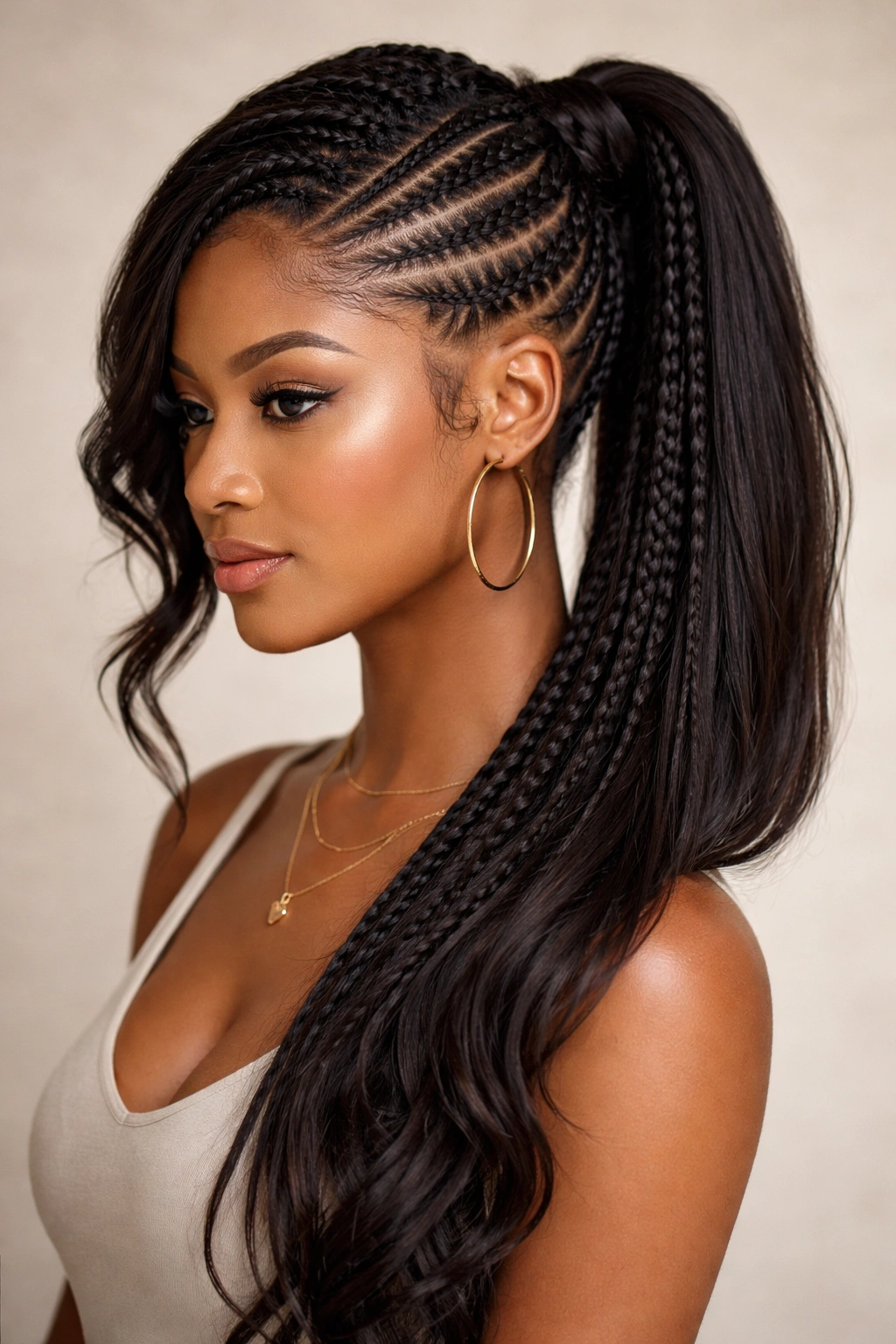
Unlike a straight-back mohawk, the side-swept version pulls the eye diagonally. That tiny shift changes the whole shape of the face. It’s especially nice if you want a little movement around the forehead and cheekbones instead of a straight center line.
The braids on one or both sides angle toward the ponytail instead of running perfectly parallel. That makes the style feel tailored. Not stiff. Tailored. There’s a difference, and you can see it the second the braider finishes the last row.
Best for
- Oval and round face shapes that benefit from diagonal lines
- People who like a softer front hairline
- Medium to long lengths of added hair
- Events where you want something polished but not severe
A side-swept mohawk ponytail works best when the parting is intentional. If the lines look rushed, the angle loses its charm. If they’re neat, the whole style looks like it took a lot more planning than it probably did.
7. Braided Mohawk Ponytail with Bubble Sections
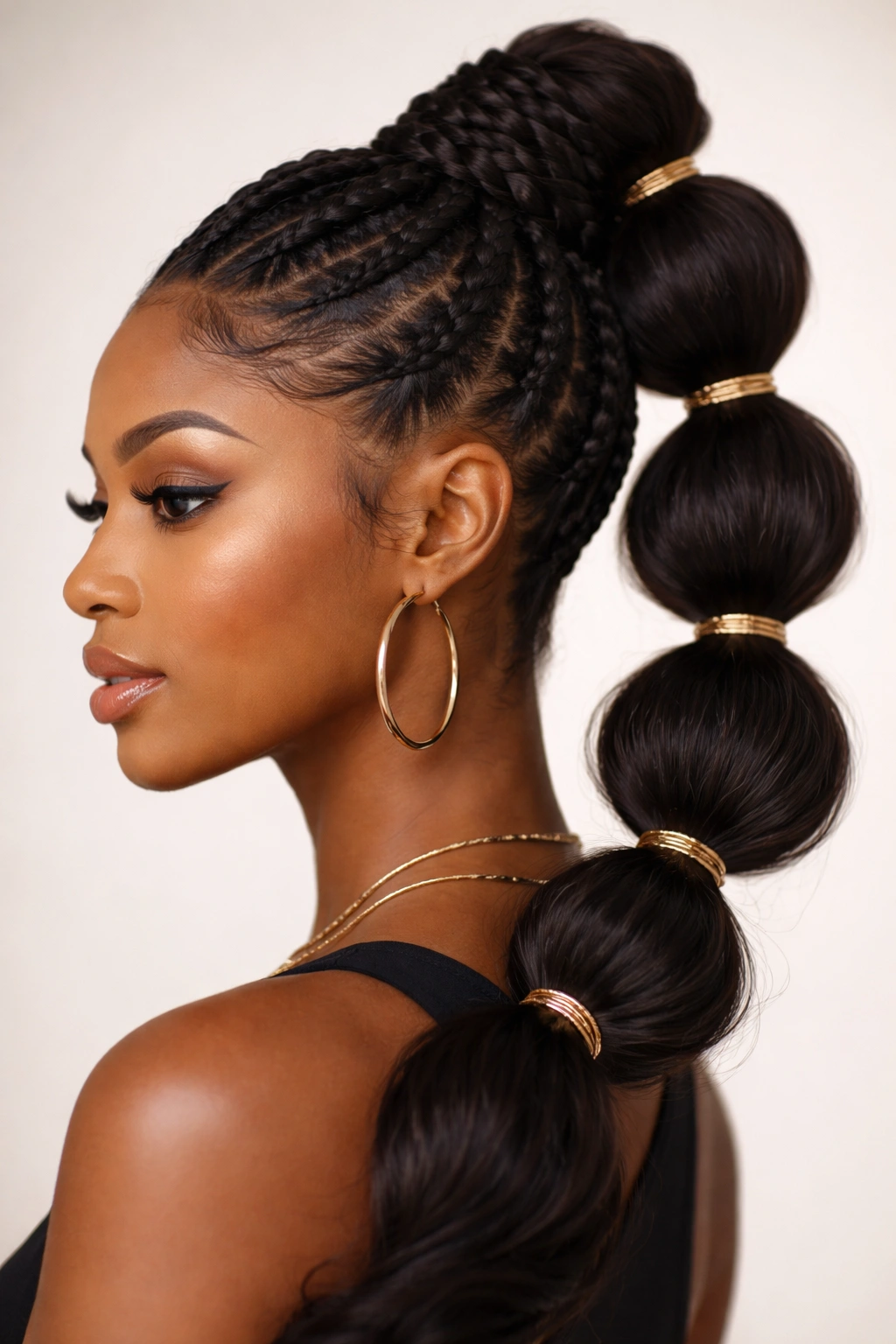
Bubble ponytails are playful, and they’re much easier to wear than people think. Once the braided base is in place, the ponytail gets tied at intervals so each section puffs between bands. The result is structured but not boring.
The bubble trick
The spacing matters. If the ties are too close, the bubbles look cramped. Too far apart, and the ponytail loses its shape. A gap of about 2 to 3 inches between bands usually gives a clean look on shoulder-length to long extensions.
You can keep the braids simple and let the ponytail carry the style, or you can add beads or cuffs at every second bubble. I like the second option better because it breaks up the length. One long braid can drag visually. Bubbles keep it lively.
Use snag-free bands if you can. Small elastic bands with rough edges can tear at the extension hair. That’s the kind of thing nobody notices until the style starts frizzing at the exact wrong spots.
8. Mohawk Ponytail with Crisscross Cornrows
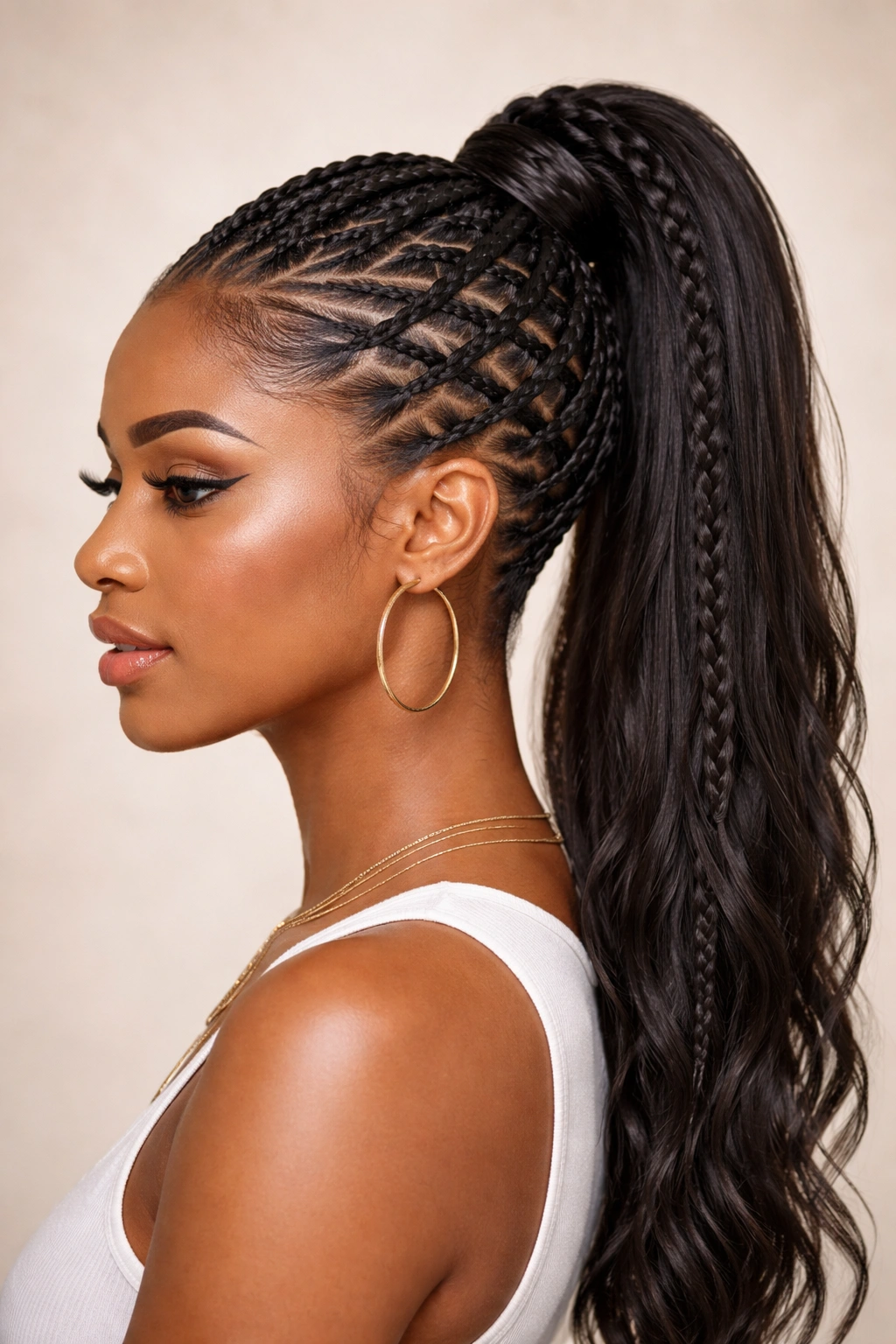
A crisscross pattern gives the sides a little geometry, and geometry is underrated in braided styles. The crossed lines create texture before the ponytail even starts, which keeps the look from going flat across the scalp.
This version is good when you want the mohawk shape to feel a little busier and more detailed. It has a handmade look that straight rows can’t match. The trade-off is time. Crisscrossing takes patience, and sloppy crossing looks messy fast.
The best approach is to keep the crossings even and let the middle ponytail stay simple. That contrast makes the pattern stand out. If both the base and the ponytail are overloaded, the style starts to feel crowded. One strong detail is enough here.
9. Braided Mohawk Ponytail with Curly Afro Puff Ends
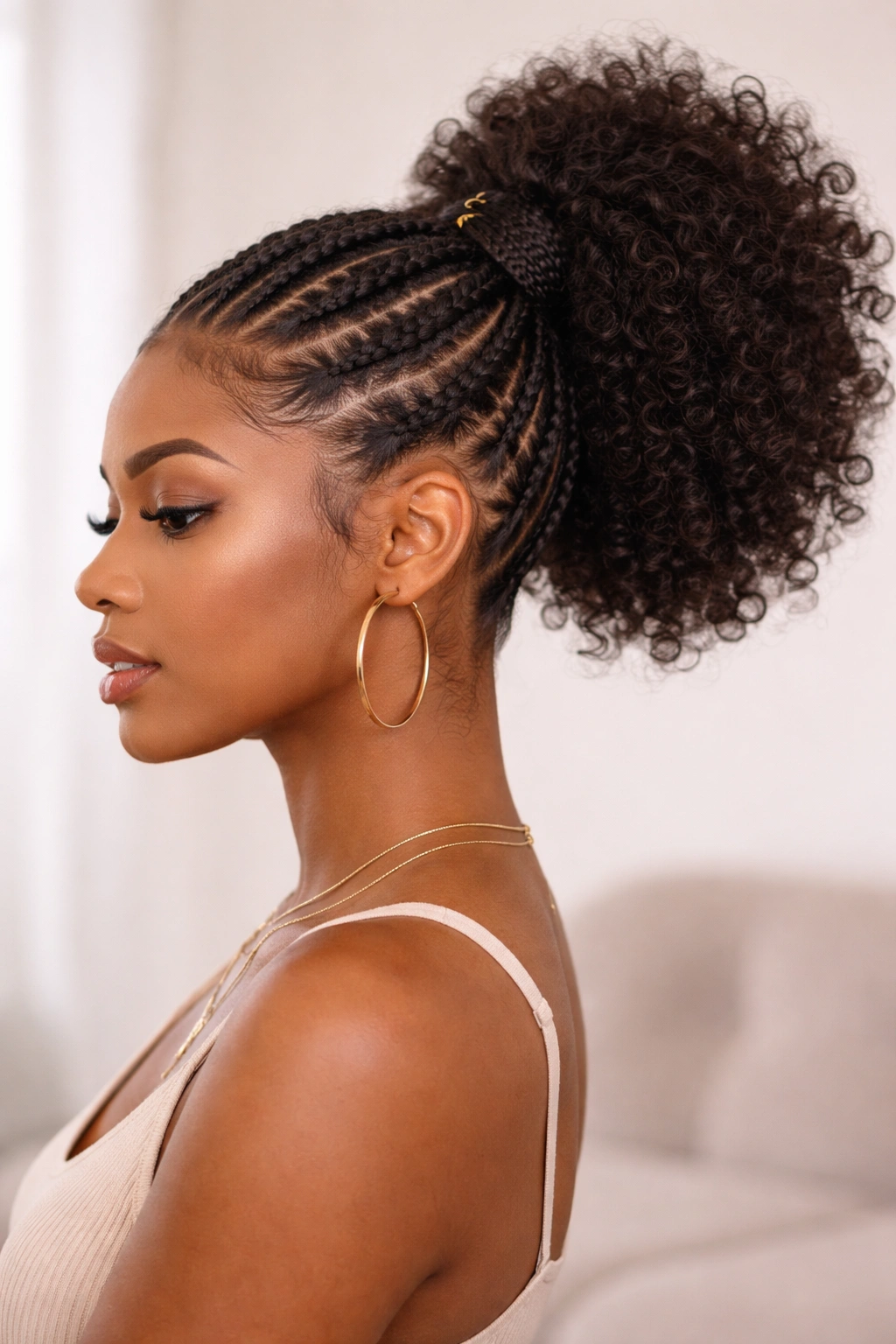
Can a mohawk ponytail stay playful and still look neat? Absolutely. The trick is the contrast between the braided sides and the rounded, curly finish at the back. You get structure up top and softness at the end.
How to get the shape right
The ponytail should be gathered high enough that the puff sits above the nape, not hanging low like a loose pony. The curls should be full enough to read as a puff, not so stretched that they lose their bounce. If you’re using extensions, choose a texture that blends with your own hair’s curl pattern, or the mismatch will show.
This style suits women who like volume but do not want a heavy braid hanging down their back. It also works beautifully when you want something fun for a birthday, a brunch, or just a regular day that deserves a little lift. The puff changes the mood fast. It feels young, but not childish.
10. Braided Mohawk Ponytail with Beaded Ends
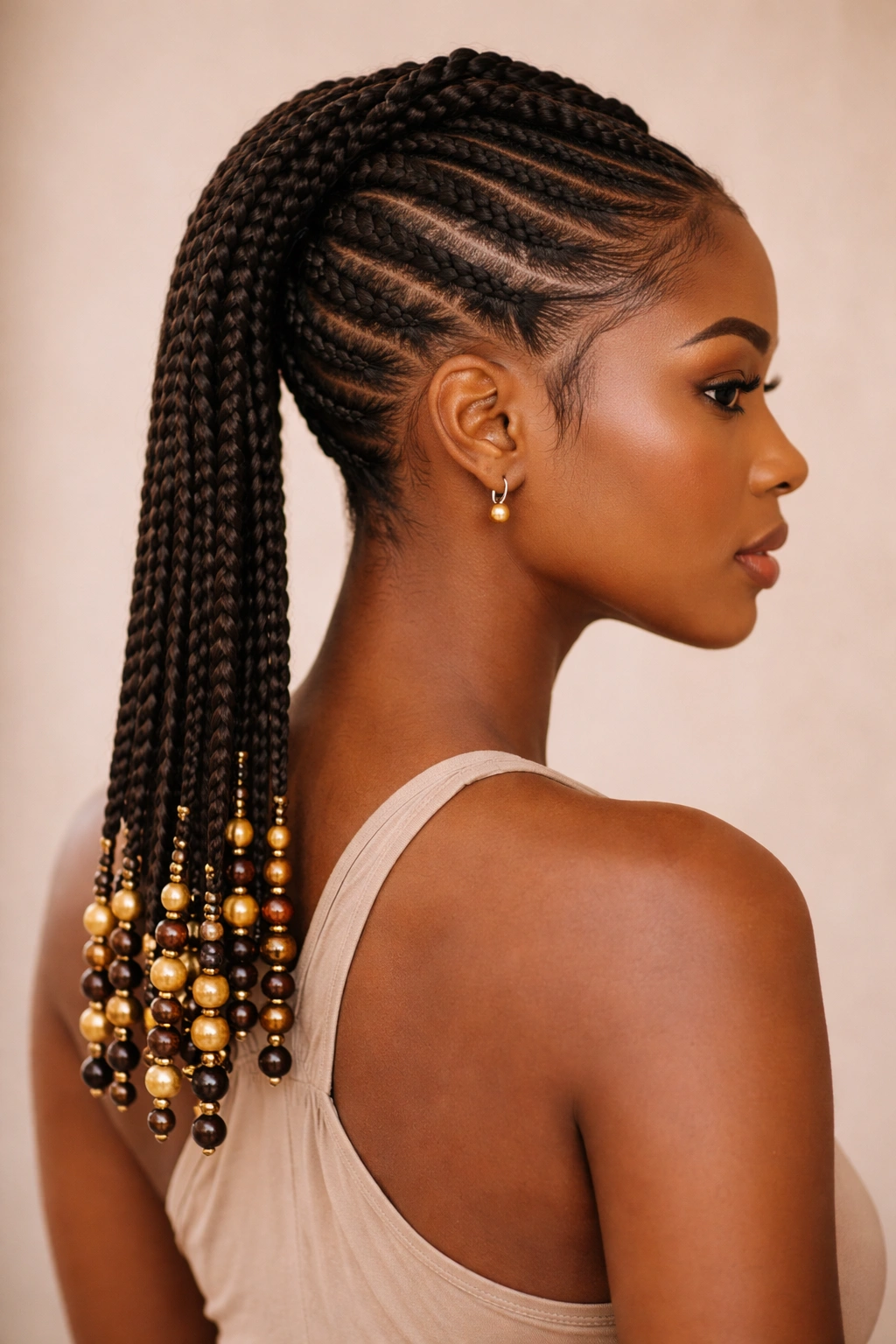
Beads at the ends add sound, weight, and a little drama. When you move, you hear the style. Some people love that. Others don’t. I’m in the first group when the beads are chosen with some care.
The braid base should stay clean and fairly slim so the beads don’t look crowded. Wooden beads give a warmer feel, clear or gold-toned beads feel dressier, and matte black beads keep the look grounded. Weight matters here. Too many beads, especially on very long braids, can tug on the ends in a way that gets annoying by the end of the day.
- Use small to medium beads for comfort.
- Keep the ponytail length balanced with the bead size.
- Add beads only to the outer braids if you want less noise.
- Secure the ends well so the beads do not slip.
This is one of those styles that looks expensive when the finish is tidy and a little chaotic when it isn’t. The line between the two is narrower than people think.
11. Low Braided Mohawk Ponytail for a Softer Silhouette
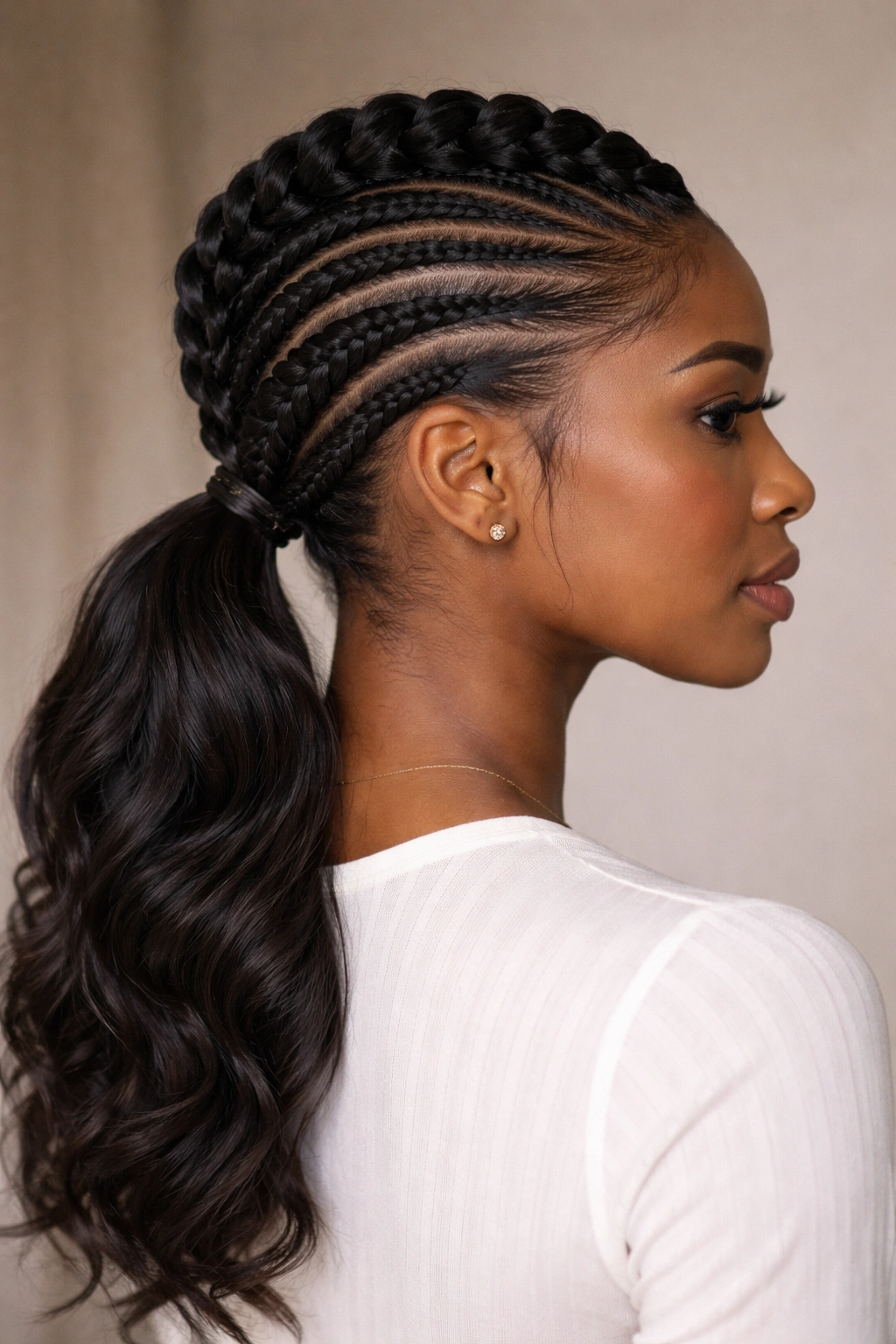
Not every mohawk has to reach for the ceiling. A lower ponytail softens the whole effect and makes the style feel more grounded, which can be a relief if you like braided looks but do not want a lot of height.
The lower placement also changes how the face reads. Instead of pushing everything upward, it lets the braids frame the crown and gives the back more presence. That can be especially nice on longer necks or when you want the style to sit under a hat or hood without fighting it.
This version tends to age well through the week because it puts less stress on the crown. The braid pattern still gives shape, but the ponytail is less likely to feel top-heavy. If you’re wearing it for work or travel, this is one of the smarter choices. It’s calm, but not boring.
12. Braided Mohawk Ponytail with Heart Parts
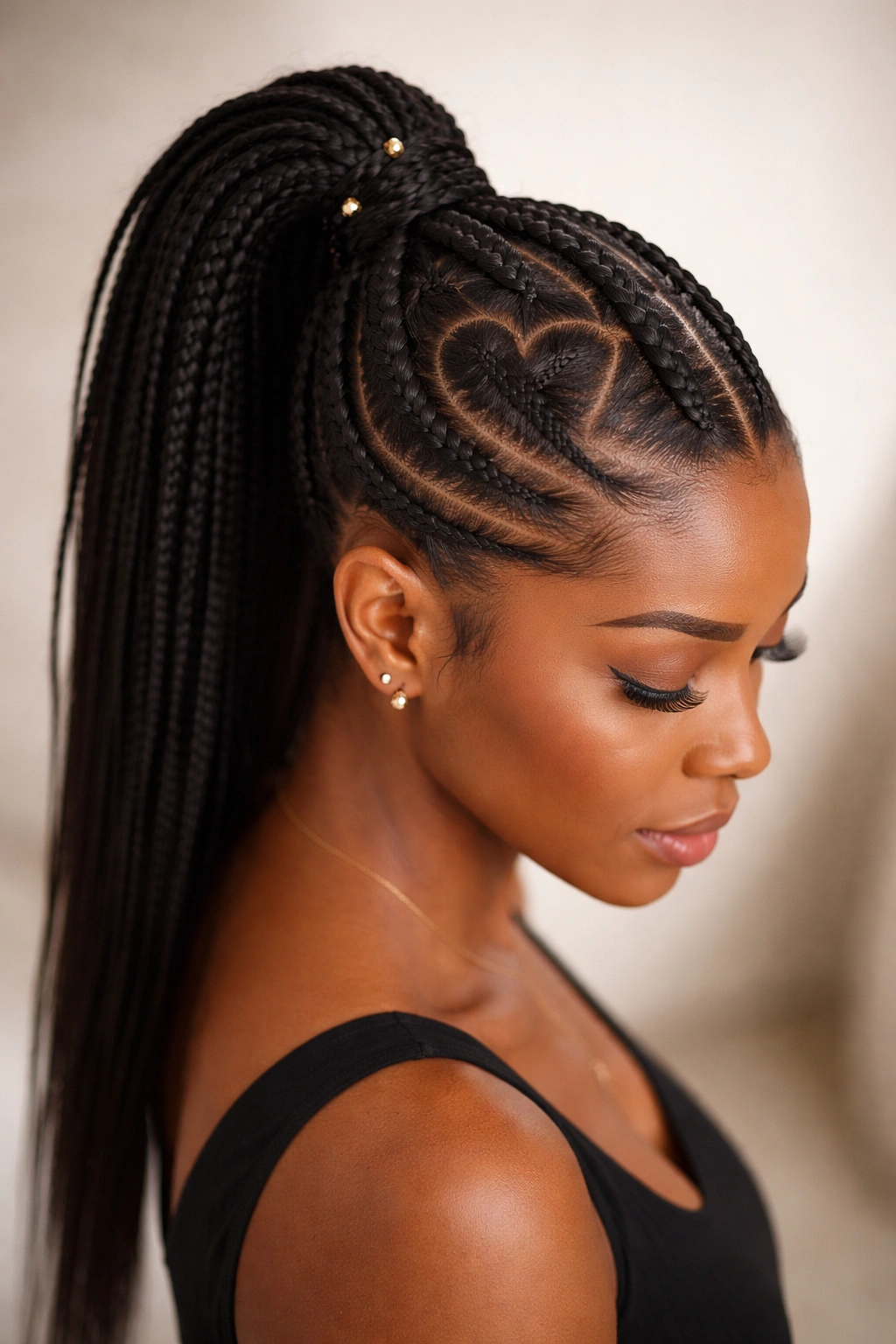
Heart parts are one of those details that sound extra until you see them done well. Then they make sense. They add a little personality to a style that can otherwise lean very strict, and on a mohawk ponytail that touch of softness is welcome.
Compared with straight or curved parts, the heart shape makes the scalp design part of the outfit. It’s a visual accent, plain and simple. That makes it a strong pick for birthdays, graduations, or any day you want people to notice the parting before they notice the ponytail.
The downside is obvious: the design takes more time, and a rushed heart part looks awkward. If the shape is uneven, it shows. So this is one of those styles where a skilled hand matters more than a box full of accessories. The parting is the decoration.
13. Mohawk Ponytail with Two-Tone Extension Color
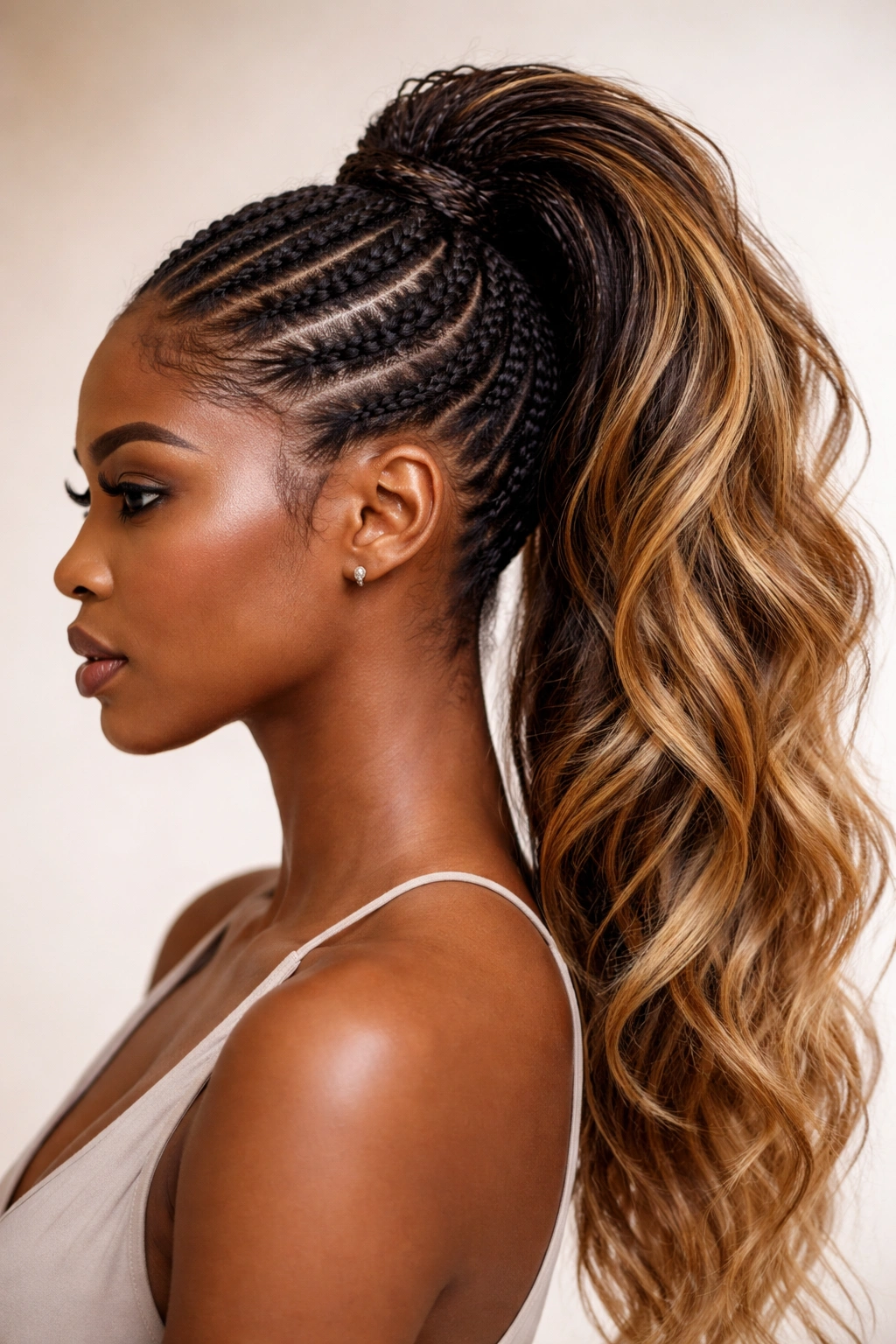
Color changes the mood fast. A two-tone mohawk ponytail can keep the braid base dark and grounded while the ponytail brings in honey, burgundy, copper, or blonde tones. The contrast gives the style depth without needing a lot of extra styling.
Choosing colors that read clean
The easiest color setups are close relatives: black with brown, dark brown with auburn, or honey blond mixed with a darker root. Those combinations blend instead of shouting. If you want a bolder result, keep the color change mostly in the ponytail so the scalp still looks neat.
- Dark roots make the braid pattern look sharper.
- Lighter ends show the ponytail shape better.
- Oily shine sprays can make color shifts look smoother.
- Avoid too many shades in one style unless you want a loud finish.
I like two-tone versions because they solve a simple problem: the mohawk shape can look heavy in one solid color. A color change breaks it up. That’s all.
14. Braided Mohawk Ponytail with a Sleek Scalp Base
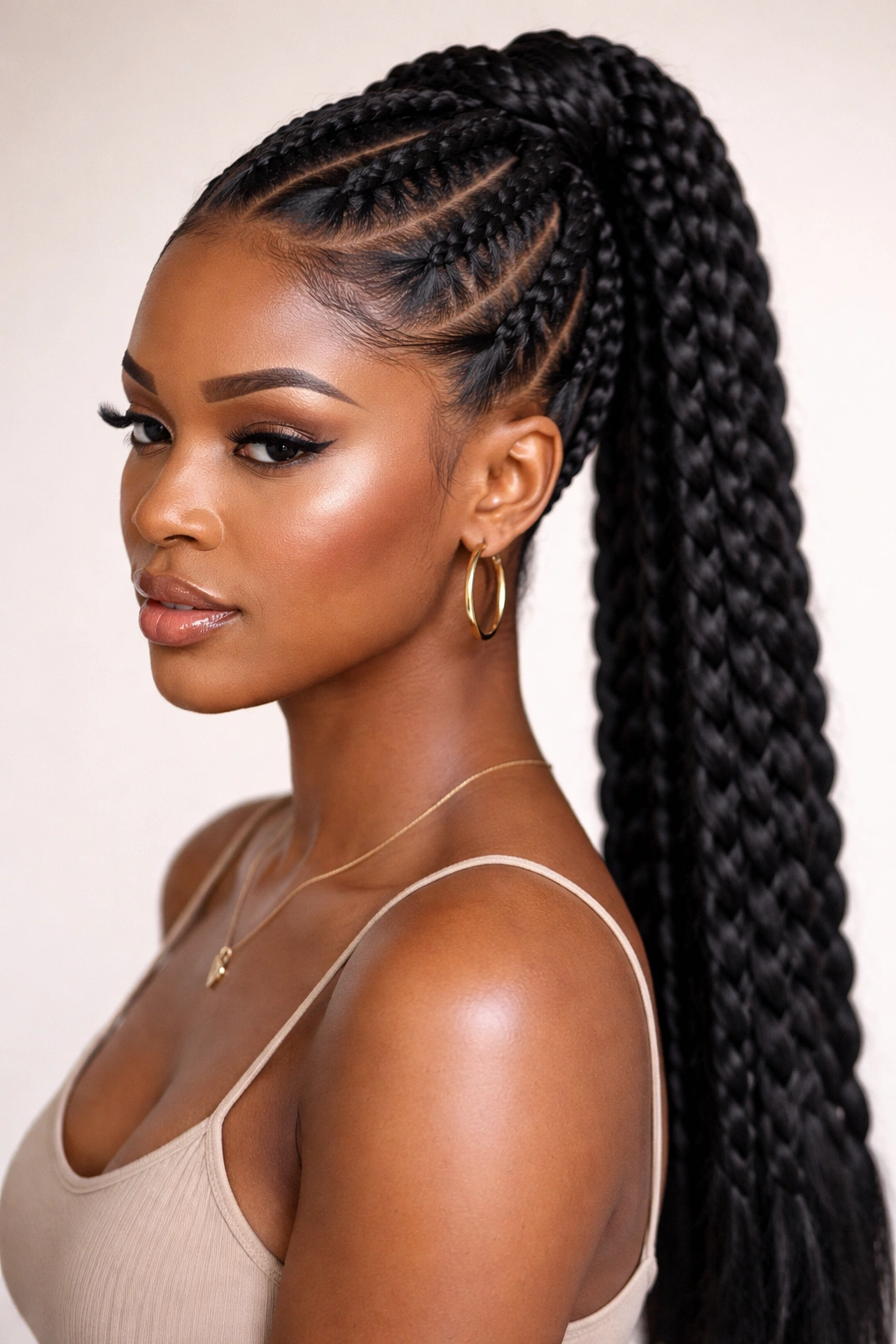
A sleek scalp base is the style’s best friend when you want polish. The roots are laid flat, the parts are clean, and the braids sit close to the head before they feed into the ponytail. That kind of neatness gives the whole style a sharper outline.
A little gel goes a long way. Too much and the hair turns stiff, flaky, and dull-looking by the time you leave the house. Too little and the flyaways start doing their own thing. The middle ground is what you want — enough hold to smooth the base, not enough to glue the scalp shut.
This version works especially well when the ponytail itself is full. The clean base makes the volume at the back feel earned instead of random. It’s also a good choice if you wear bold earrings, because the scalp design stays quiet and lets your face shape, jewelry, and makeup carry some of the load.
15. Mohawk Ponytail with Swirl Cornrows
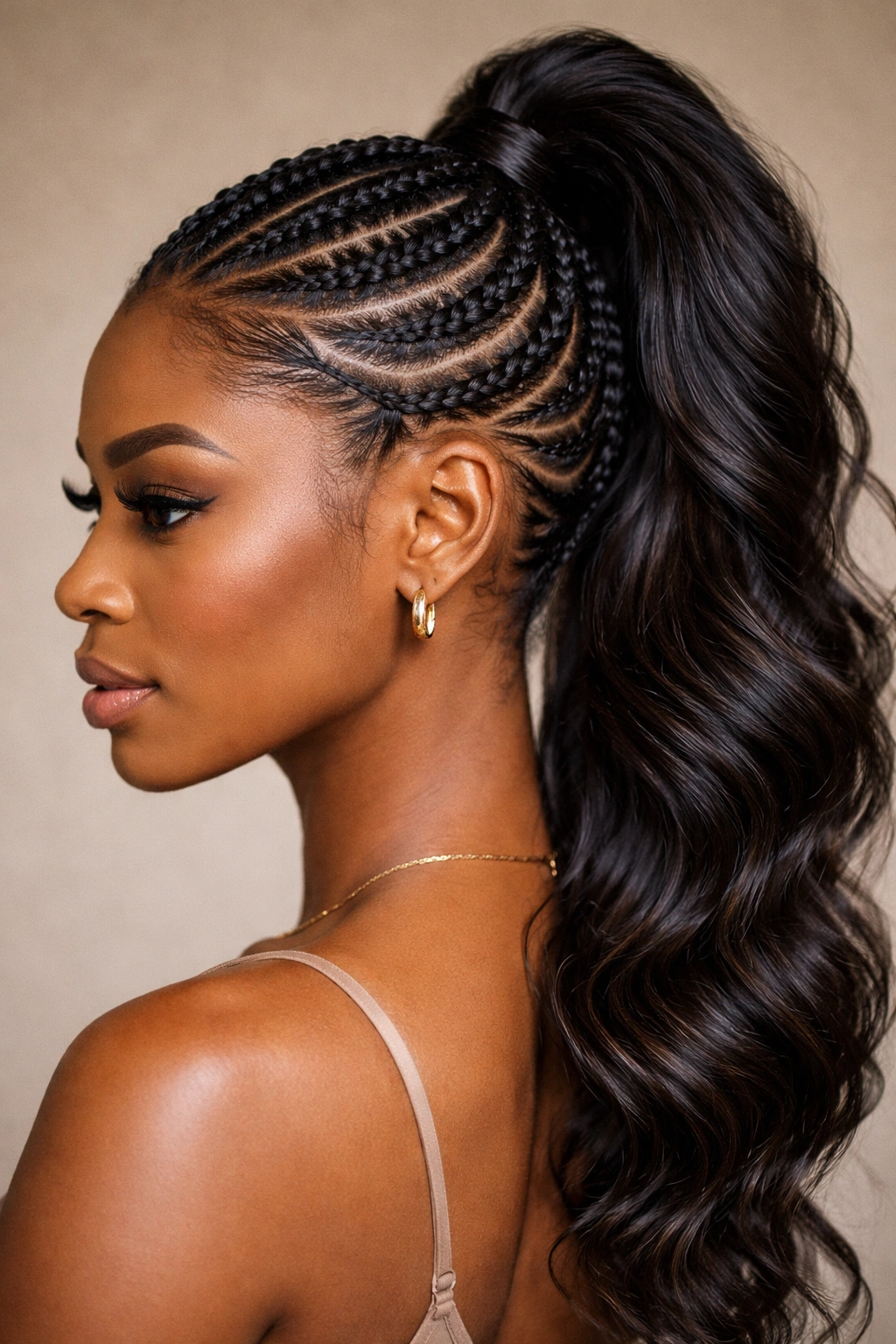
Swirl cornrows are pure motion. The lines curve around the head instead of going straight back, and that curve gives the mohawk a sense of flow before the ponytail even starts. If straight rows feel too severe, swirl braids are the answer.
How the swirl sits
The best swirl pattern follows the head shape, not the parting chart in somebody’s imagination. You want the arcs to move naturally toward the ponytail anchor. If they fight the shape of your head, they’ll look forced. If they follow it, the style feels almost sculpted.
This is one of my favorite options for women who want something different but still wearable. It keeps the style elegant without asking for extra length or heavy accessories. A swirl design does not need help. It already has motion built in.
16. Braided Mohawk Ponytail with a Braided Wrap Around the Base
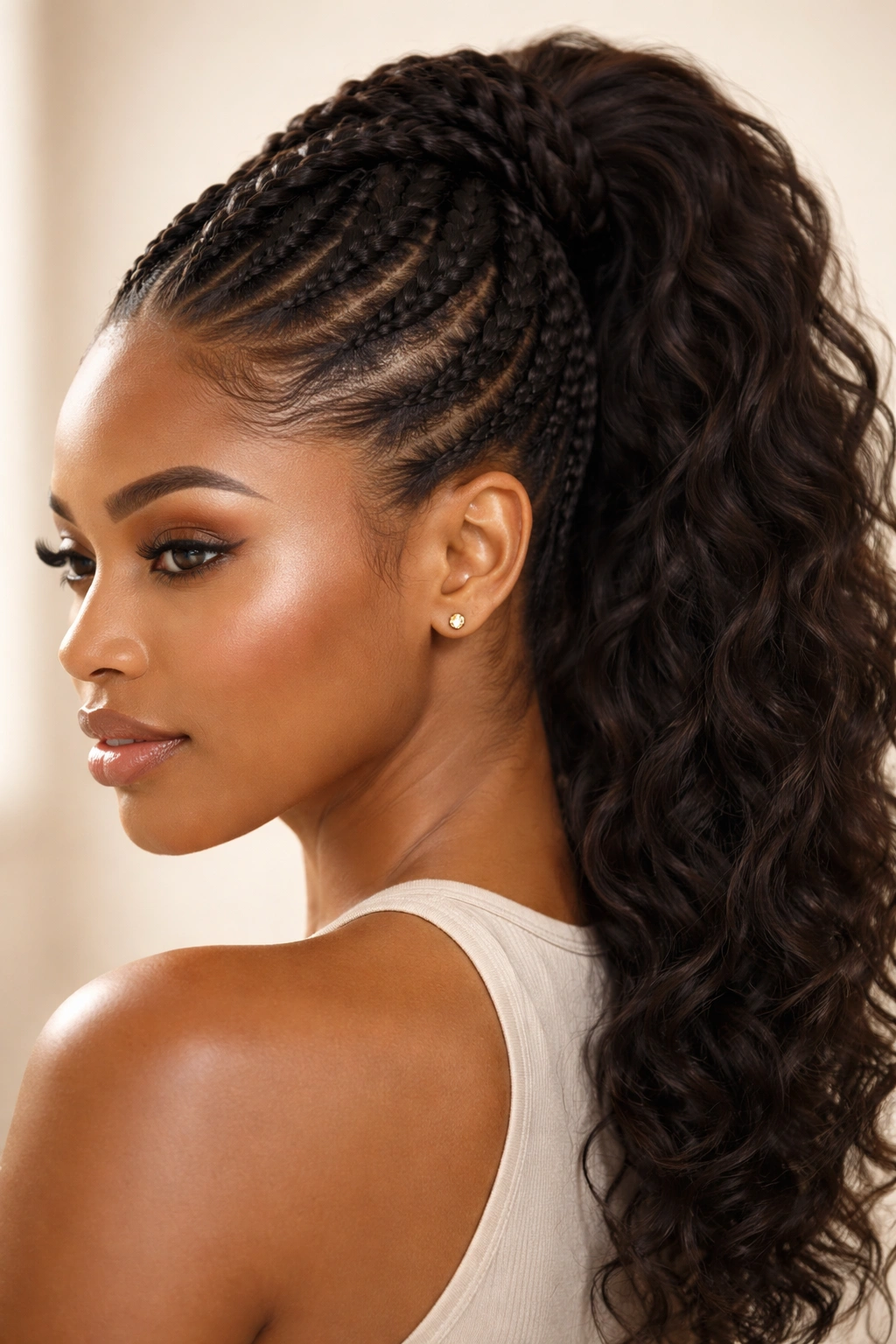
A wrapped base is one of those small details that makes the whole style look finished. Instead of a visible hair tie or a rough join where the braids stop and the ponytail starts, you get a braided band circling the base like a little frame.
What to ask for
- A ponytail anchor at the crown or upper back of the head
- One braid or wrap piece large enough to cover the band
- Tight wrapping only at the base, not along the whole length
- A secure pin or tucked end so the wrap does not loosen
This style is useful when you want the back view to look as clean as the front. That sounds obvious, but too many braided ponytails forget the rear angle. A wrapped base fixes that. It makes the hairstyle look deliberate from every side.
17. Mohawk Ponytail with Micro Braids in the Center
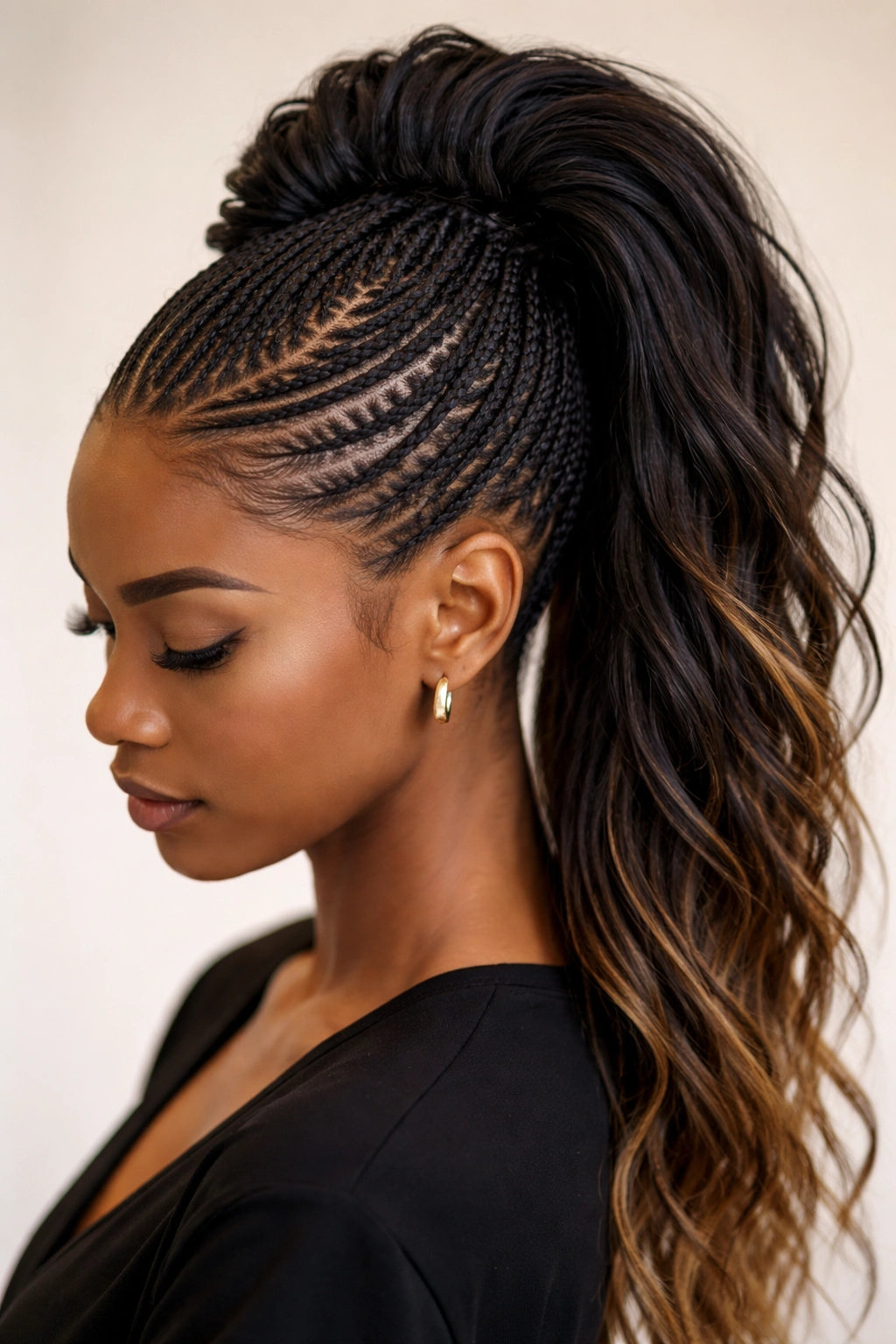
Micro braids in the center give the style an intricate, almost lace-like feeling. The sides can stay smoother and more graphic, while the middle section carries the detail. The effect is delicate, but not fragile.
This style takes time. A lot of time, if we’re being honest. The payoff is that the center ridge looks fuller and more textured than a standard set of medium braids. It’s a strong choice when you want the mohawk shape to feel refined instead of bold for the sake of boldness.
Micro braids also move differently. They sway more, which can make the ponytail look lighter. That’s a plus if you don’t like heavy braid styles that feel like a weight belt by the end of the day. The only catch is maintenance. Tiny braids need careful moisturizing at the scalp and a gentle touch when you’re refreshing them.
18. Braided Mohawk Ponytail with Side Feed-In Braids
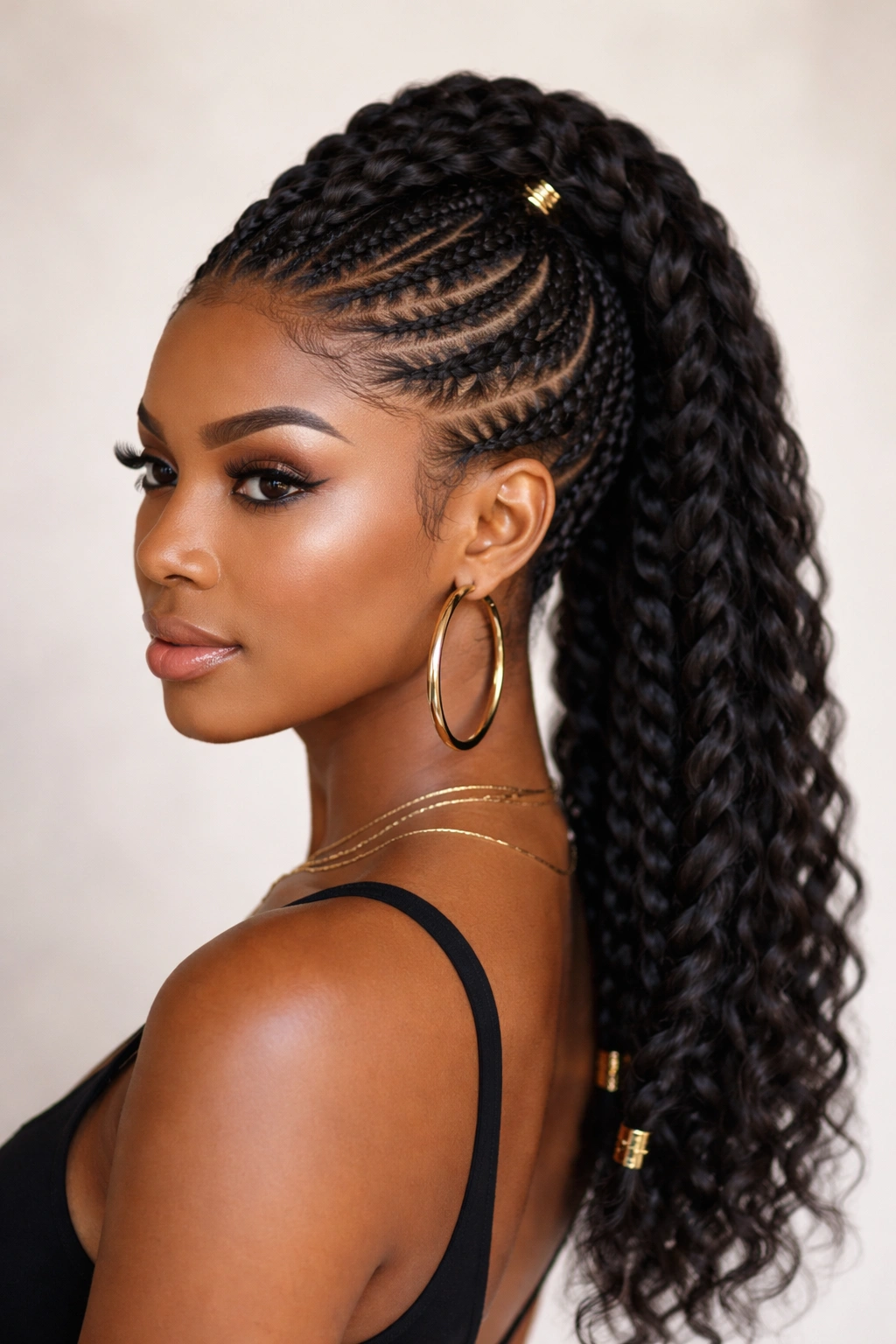
Side feed-in braids let the mohawk widen just a little before it meets the ponytail. Compared with a tighter, straighter feed-in design, this one gives the sides more presence. The style feels fuller and a bit more fashion-forward.
It’s a smart pick if you want the side panels to matter as much as the center ridge. Some mohawk ponytails make the sides feel like an afterthought. This one does the opposite. The side braids become part of the design language, which is why the shape looks balanced.
Best use? Long faces, strong cheekbones, or any setting where you want the braid work to be visible from across the room. Keep the ponytail base clean so the side detail doesn’t get lost in too much hair.
19. Mohawk Ponytail with Curved Braids and Loose Curls
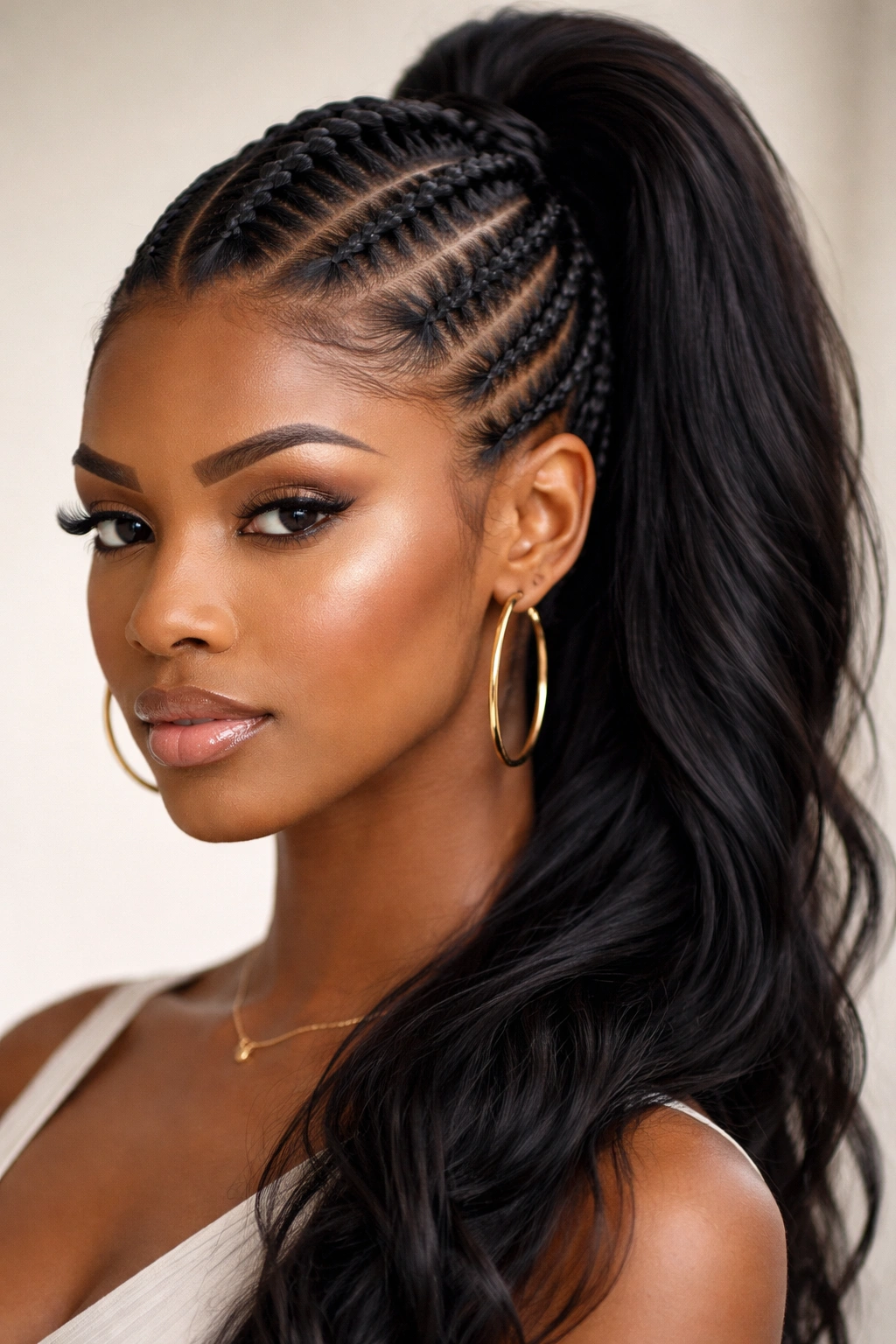
A curved braid pattern softens the mohawk without flattening it. The lines arc toward the center instead of running hard and straight, and that curve gives the style a more relaxed personality. Add loose curls to the ponytail, and the whole thing starts to move.
Getting the curve right
The curve should look intentional from the scalp. If the angle changes too much between sections, the style gets uneven fast. A good braider keeps the parting smooth so the eye travels naturally from the sides into the ponytail.
This is a strong choice when you want your braid style to work with softer clothing — knit sets, satin tops, flowy dresses. Hard lines can fight those outfits. Curved braids and curls don’t. They meet in the middle.
You can wear this one with middle-size hoops or a clean neckline and let the hair do the rest. It does not need much extra help, which is part of the appeal.
20. Braided Mohawk Ponytail with Short Knotless Braids
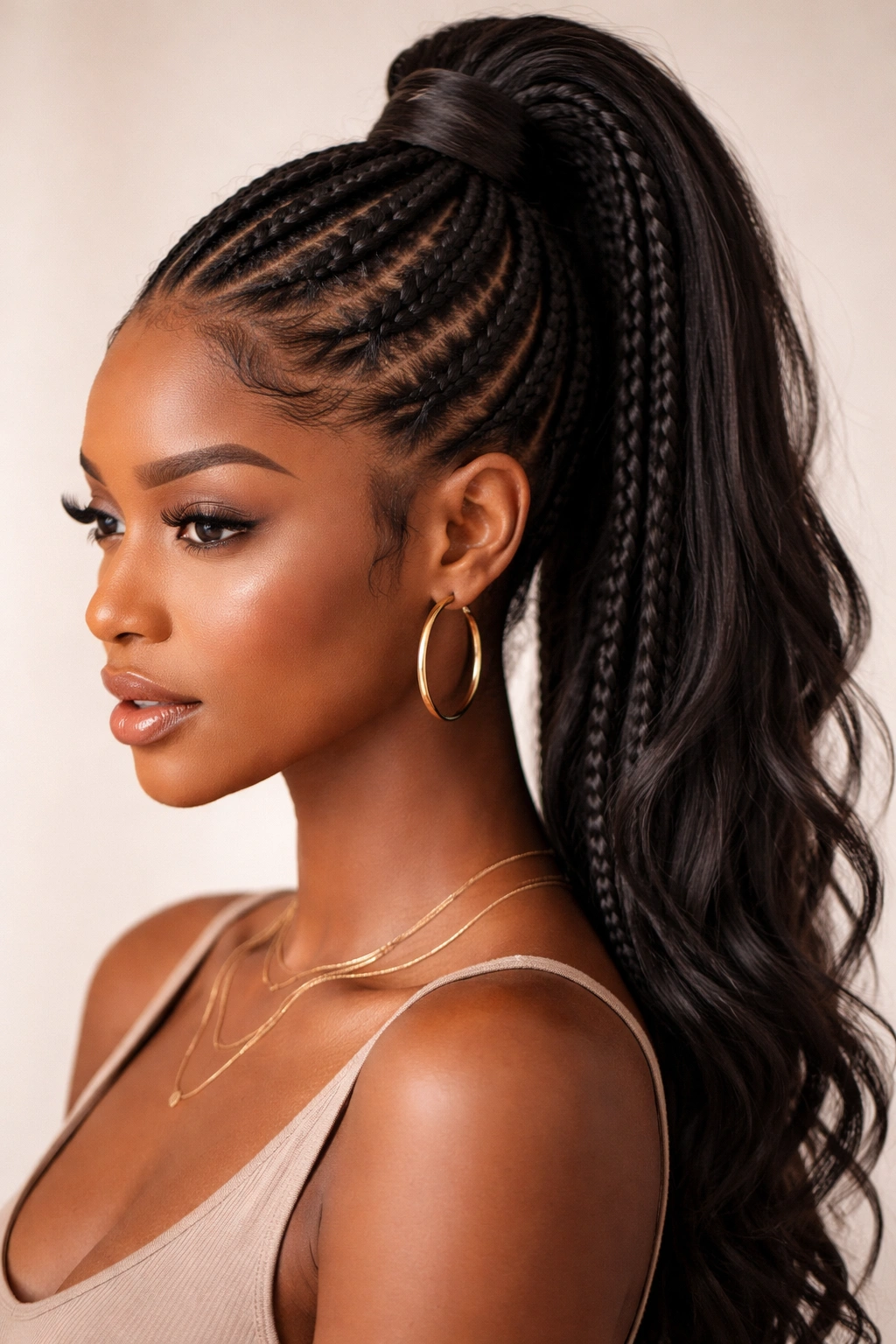
Knotless braids in a mohawk shape are a relief if you care about comfort. The braid starts without that thick knot at the root, so the scalp sits flatter and the style feels less bulky at the crown. That matters more than people expect.
The short length keeps the weight down. You still get the braid texture and the lifted center line, but you do not carry a long tail hanging from the back. That makes this version easier to wear during busy days, especially if you do a lot of driving, moving, or leaning back in a chair.
Short knotless braids also age well because the shape stays tidy even as the hair grows out a little. The base is less likely to look lumpy. If you want a mohawk ponytail that feels light on the head and easy on the eyes, this is a good one to keep on the list.
21. Braided Mohawk Ponytail for Natural Hair Without Extensions
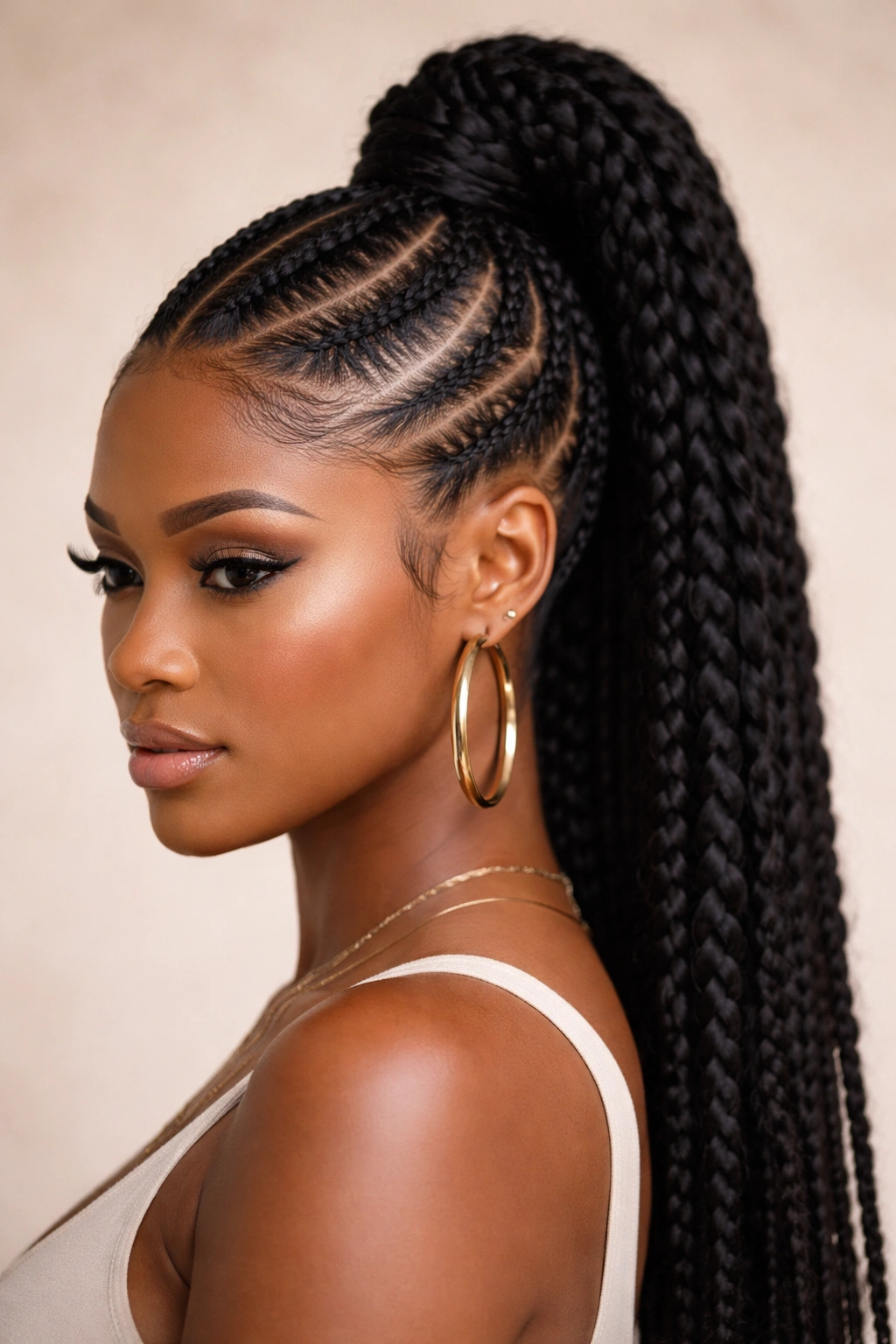
Yes, it works without extensions. You just need enough length and stretch in the hair so the braids can hold their shape. On natural hair, the result is usually smaller, lighter, and more close-to-the-head, which can be a plus if you want less bulk.
When to skip extensions
- Your hair is already long enough to gather securely
- You want a lighter protective style
- Your scalp gets irritated by heavy added hair
- You prefer a more natural finish with less volume at the back
The key is prep. Blow-dried, band-stretched, or well-stretched twist-out hair braids more cleanly than hair that is freshly shrunk. A little leave-in and oil on the scalp can help, but don’t overdo product or the braids will slip.
This version doesn’t try to fake fullness. That’s why I like it. It respects the texture you already have and still gives you the mohawk shape. Clean, honest, and easy to live with.
22. Braided Mohawk Ponytail with a Faux-Hawk Lift
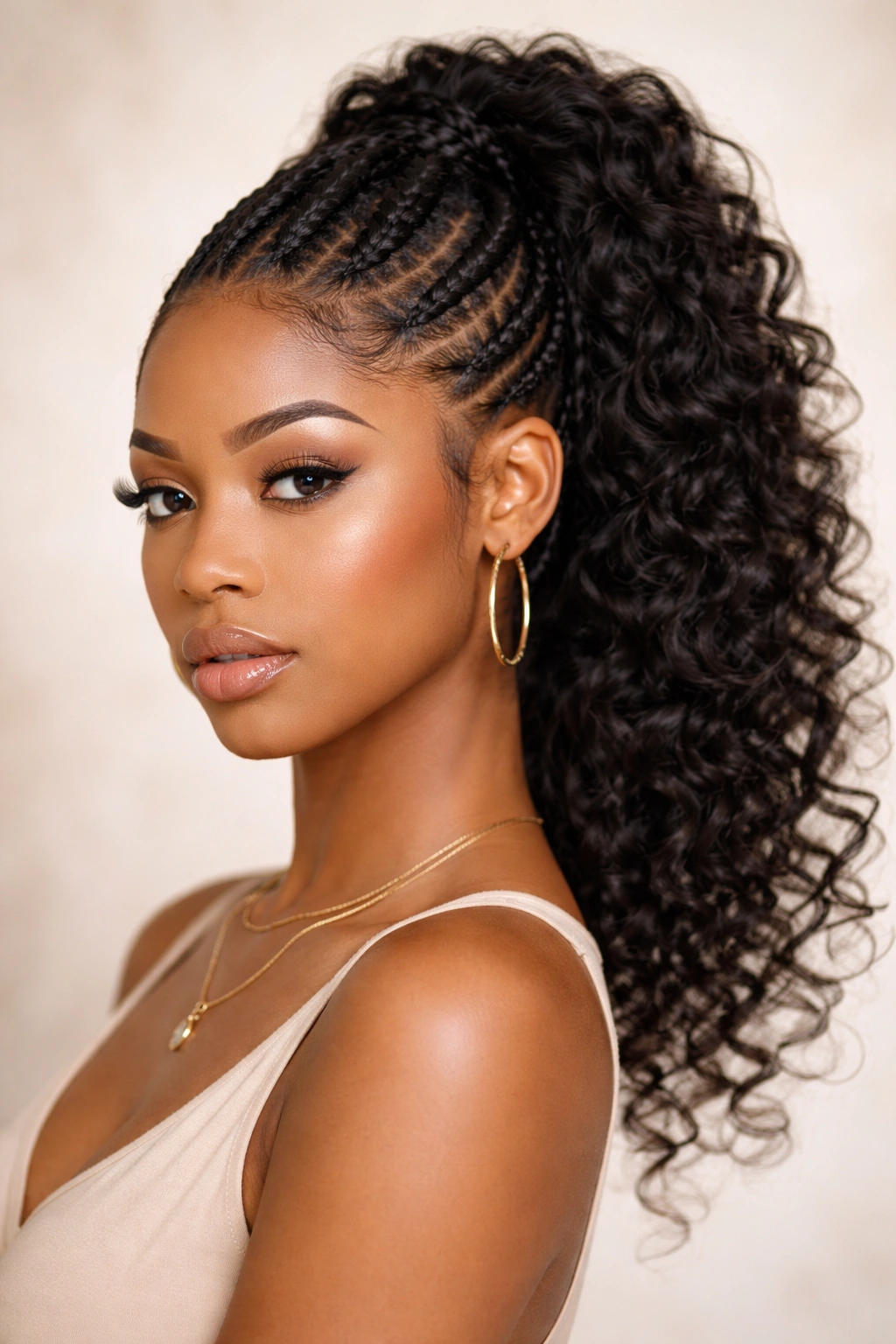
Want the mohawk look without braiding every side section flat? A faux-hawk lift gives you that raised middle ridge by pinning or braiding the center upward and letting the surrounding hair support the shape. It feels a little looser, a little softer, and very wearable.
What to watch for
The lift works best when the crown has enough structure to stay upright. If the base is too soft, the style collapses by the afternoon. If it’s too tight, it loses the faux-hawk feel and starts behaving like a regular braided ponytail. That middle point is where the style lives.
A few tiny accessories can help here — a braid cuff, a gold thread wrap, maybe one decorative barrette near the ponytail anchor. Keep the add-ons limited. If the lift is already doing a lot, the extras should stay in the background.
This is a good choice when you want something playful for events but not so dramatic that you feel dressed for a stage show.
23. Braided Mohawk Ponytail with Statement Accessories
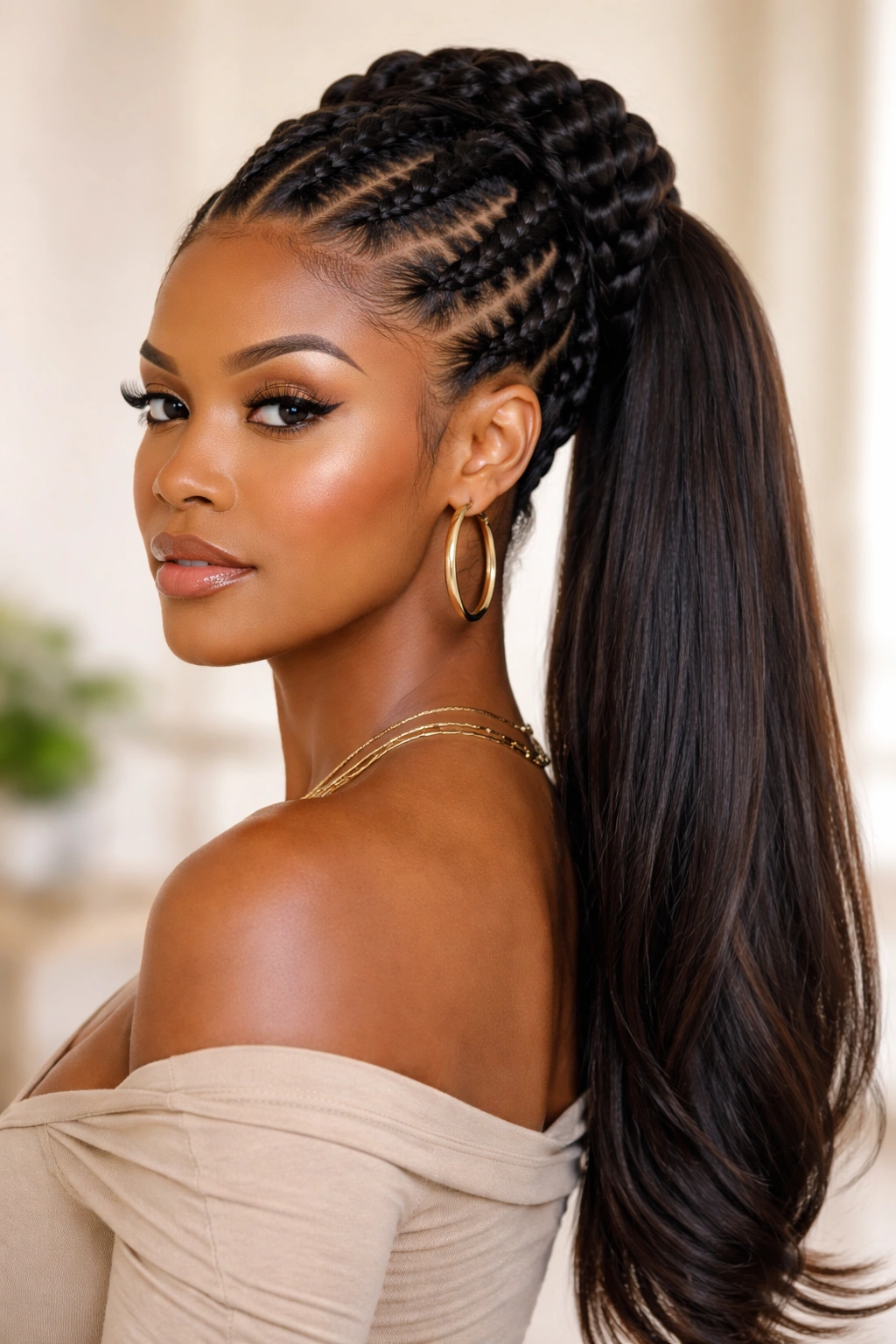
Accessories can save a style that feels a little flat. A set of cuffs, a few rings, a wrapped thread detail, or a line of beads along one side braid can change the whole mood without making the ponytail heavier than it needs to be. The trick is picking one main accent and stopping there.
A single strong detail usually beats five competing ones. Gold cuffs on dark braids look crisp. Cowrie shells give the style a rooted, earthy feel. Pearls make it softer and dressier. Colored thread can pull in the shade of your outfit without needing a full color change in the hair itself.
The style should still be the star. Accessories are seasoning, not the meal. If the braid pattern is already strong, a small amount of decoration gives it lift. If the braid pattern is plain, too many extras only call attention to that. A good mohawk ponytail knows where to stop, and that restraint is part of what makes it look finished.