



A good drawstring ponytail for Afro hair can save a rough hair day fast. A bad one can tug at the edges, sit too flat, or look like it arrived from a different head entirely. The sweet spot is somewhere more practical and more flattering: a secure base, a texture that makes sense next to your own coils, and enough body to look intentional without feeling heavy.
That balance matters because Afro hair does not need to be bullied into looking “sleek” to look polished. It just needs the right base work and the right ponytail shape. Once the foundation is tidy, drawstring ponytails for Afro hair can go in a dozen directions — soft and fluffy, long and dramatic, braided and bold, or glossy and neat enough for a dress-up moment.
Texture choice makes a bigger difference than people think. Kinky straight, yaki straight, coily curls, water waves, faux locs, and braids all read differently on natural hair, and the best pick depends on whether you want the ponytail to echo your own texture or contrast with it. The styles below lean into that range, which is exactly why this hairstyle stays useful instead of feeling repetitive.
1. High Sleek Drawstring Ponytail for Afro Hair
A high sleek ponytail is the one that gives you instant lift without needing a full salon appointment. On Afro hair, it looks strongest when the base is smooth but not painfully tight, and the ponytail itself has enough density to balance the height at the crown.
Why It Works
The shape pulls the eye upward, which gives the face a cleaner frame and makes the whole style feel sharper. You get height, swing, and a little drama all at once. That is a rare combination.
For this version, the base matters more than the length. Flat braids or a low-tension molded foundation help the drawstring sit securely, while edge control should be used like seasoning, not frosting. A little goes a long way.
Best for: oval faces, round faces, and anyone who likes a lifted silhouette.
Best texture match: kinky straight, yaki straight, or a thick coily ponytail.
Best mood: dressy, clean, and slightly fierce.
Pro tip: wrap a small section of hair or extension around the ponytail base so the drawstring hardware disappears. That tiny move changes the whole finish.
2. Full Curly Drawstring Ponytail for Afro Hair
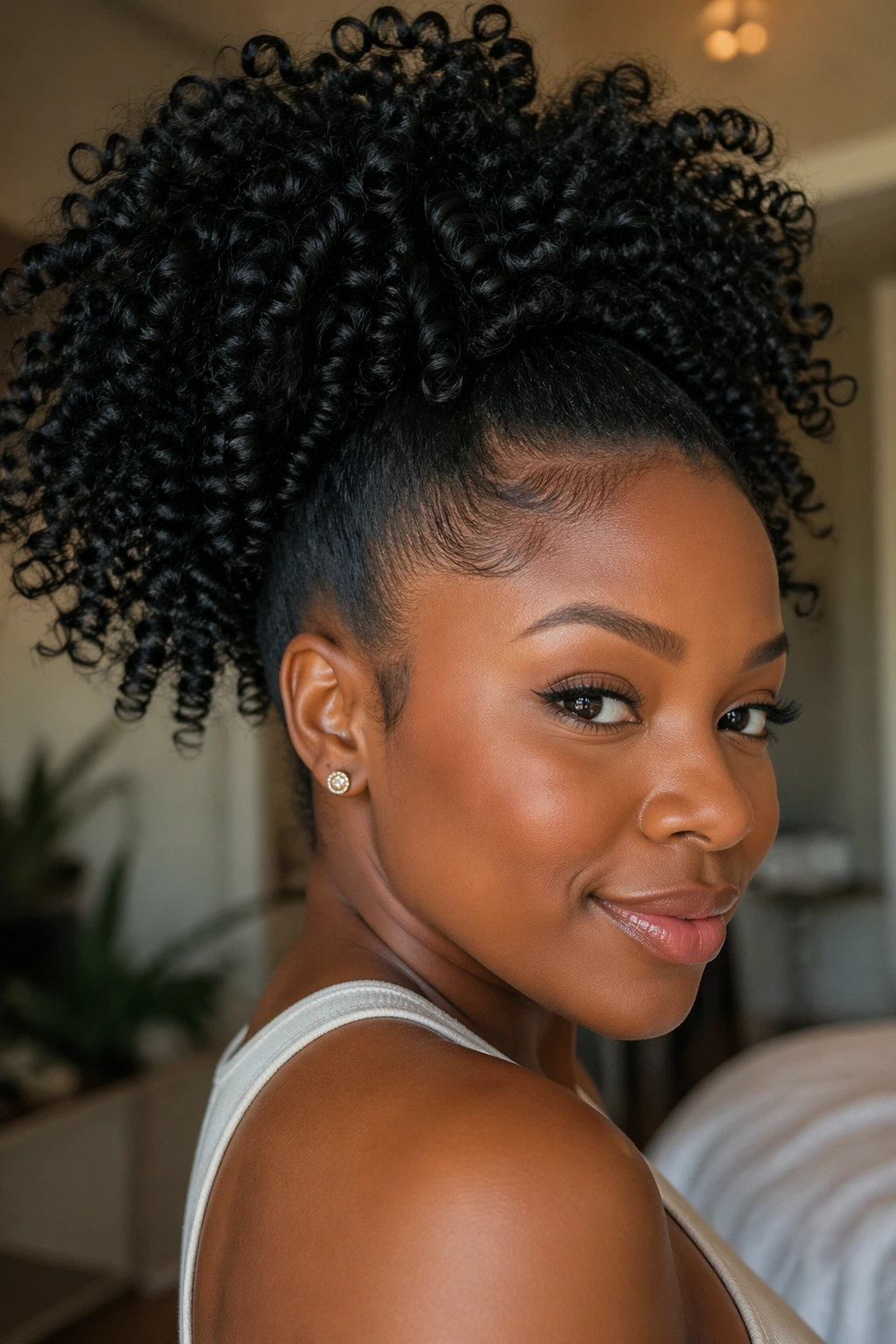
Want volume without fighting your texture? A curly drawstring ponytail is the easiest place to start. It gives Afro hair the kind of fullness that feels familiar, not forced.
The best curly versions have spring, body, and some separation in the strands. Too much uniform curl can look stiff. A little frizz at the ends is not a problem here — it often makes the style look more real and less helmet-like.
What Makes It Look Better on Natural Hair
The curl pattern should echo your own hair’s density. If your hair is thick and tight, a dense curly ponytail keeps the proportions right. If your hair is stretched and lighter around the edges, a softer curl can work better.
You can wear this with a middle part, side part, or no part at all. The ponytail does most of the work. That is the beauty of it.
3. Kinky Straight Drawstring Ponytail
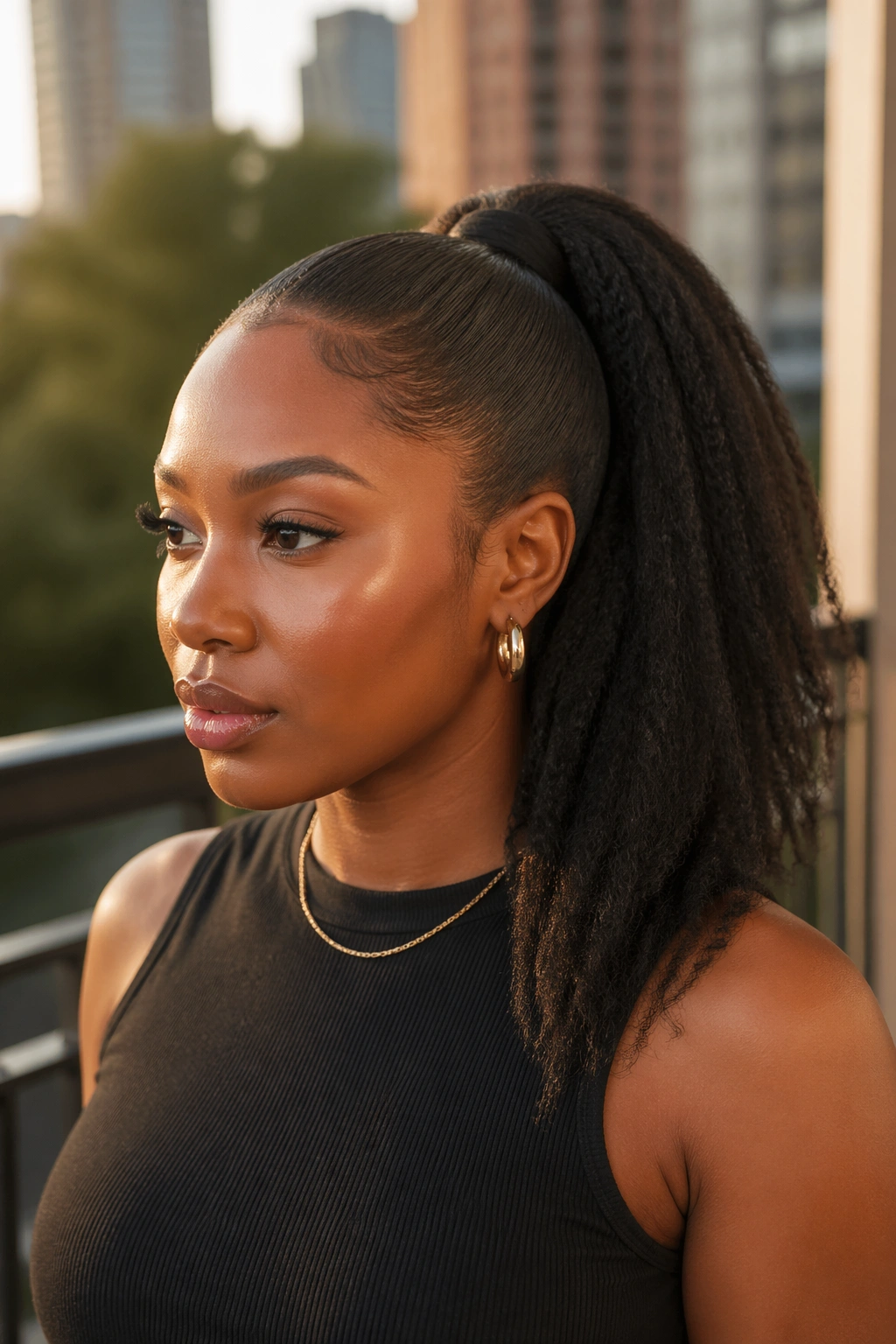
Kinky straight is the style I’d point to if someone wants “my hair, but longer and better behaved.” It sits right between blown-out texture and pressed straight, which makes it one of the easiest matches for Afro hair.
The texture has enough grit to blend with natural strands at the hairline. That matters. A pin-straight ponytail on coily hair can look off unless the base is immaculate, and even then it can feel like a costume piece.
This one works especially well when you want movement without losing the look of natural hair. It swings nicely, catches a breeze well, and does not demand the same careful upkeep as a silky straight ponytail. If you wear your hair out sometimes and want a ponytail that still feels like you, this is a smart pick.
Tip: use a light mist of water and a tiny bit of mousse on your leave-out or blended front pieces so the contrast is softer.
4. Side-Swept Drawstring Ponytail with Face-Framing Pieces
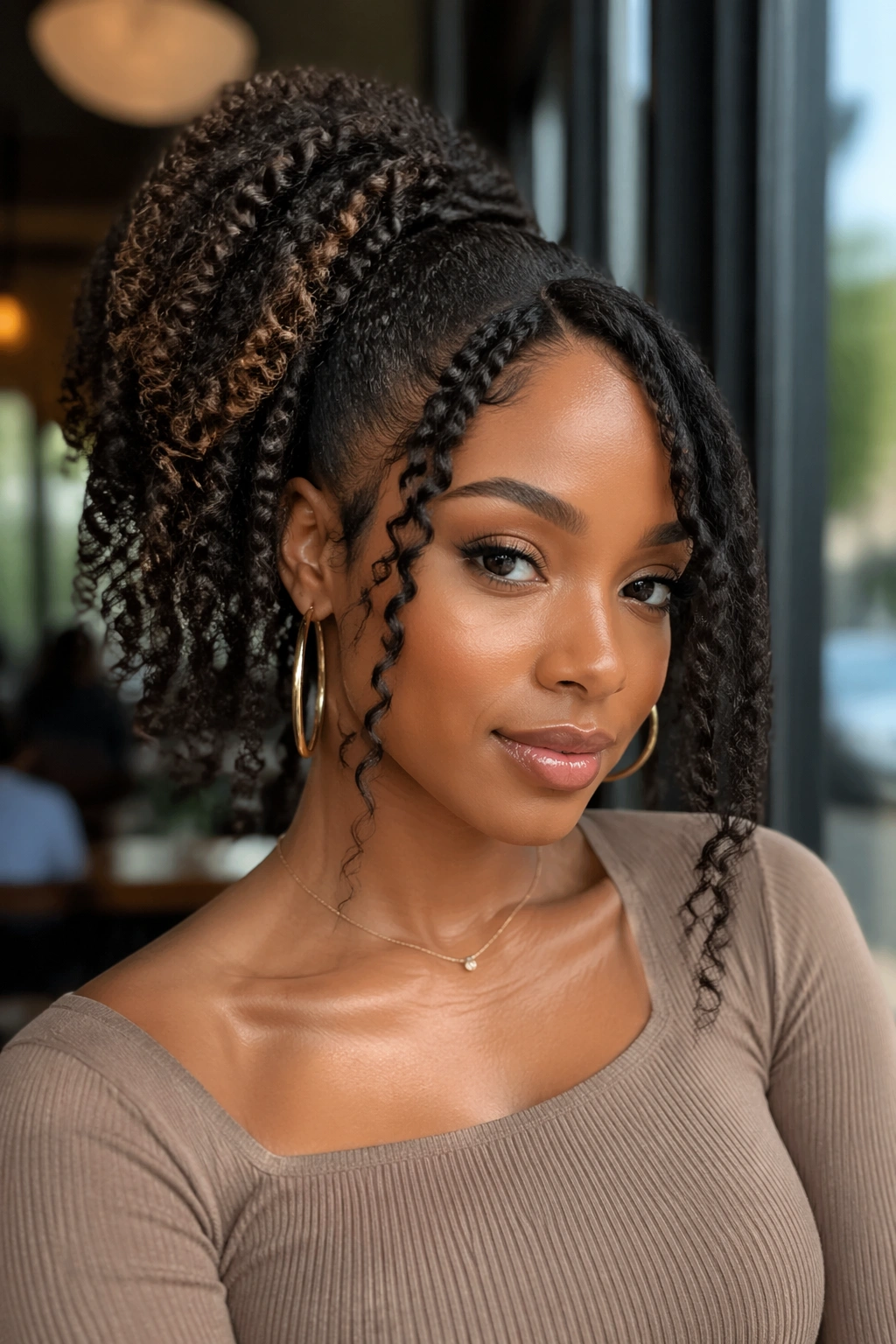
A side-swept ponytail gives Afro hair a little attitude. Not loud. Just enough. The off-center placement makes the face feel softer, and the front pieces can do a lot of flattering work without much effort.
The Shape That Changes Everything
A deep side part shifts the weight of the ponytail, which makes the whole style feel more styled than plain pulled-back hair. That asymmetry is the point. It also helps if one side of your hairline is easier to smooth than the other — and let’s be honest, that happens.
Face-framing pieces should be placed on purpose. Too short and they look accidental. Too long and they fall into your gloss or your collarbone in a way that feels fussy. The sweet spot usually sits between cheekbone and jawline.
- Keeps volume away from the center of the face
- Works well with curls, waves, or yaki straight texture
- Plays nicely with earrings
- Feels polished without looking severe
Try this: curl just the front pieces with a small wand so they bend instead of hanging flat.
5. Low Braided-Base Drawstring Ponytail for Afro Hair
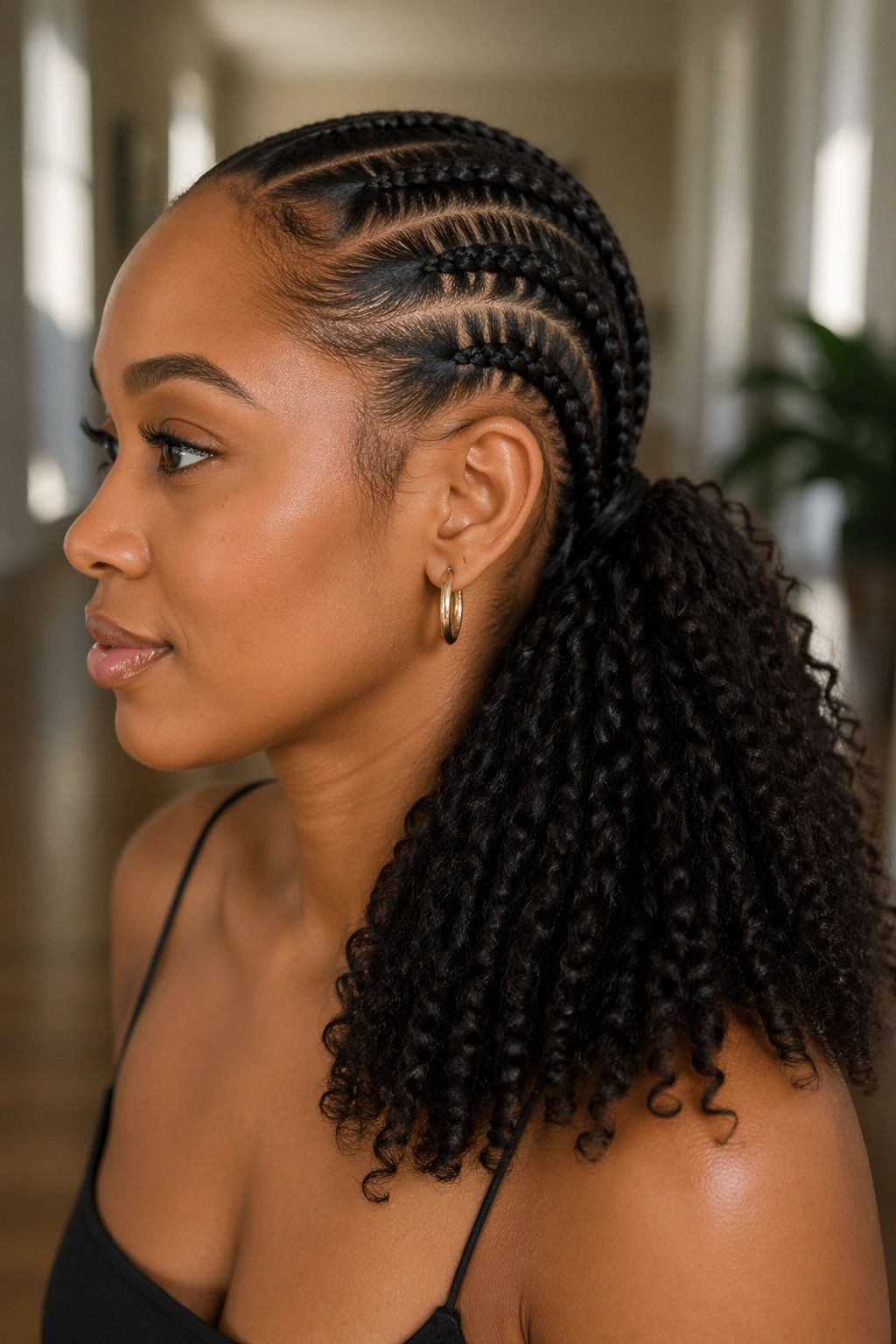
A low braided-base ponytail is one of the most practical drawstring ponytails for Afro hair, and I mean that in the nicest way. It lasts, it stays neat, and it does not ask your scalp to do too much.
The foundation is usually a set of flat braids or cornrows feeding into a low attachment point. That base keeps the style secure and spreads tension more evenly than a high pull. If your scalp likes to complain after tight styles, this is the one to try first.
The look itself can go many directions. You can keep the ponytail straight, choose curls, or go for a textured braid. The low placement makes all of them feel a little calmer and more elegant.
One thing I like about this style is how easy it is to hide any unevenness. The nape of the neck does a lot of forgiving work.
6. Smooth Nape-Set Drawstring Ponytail
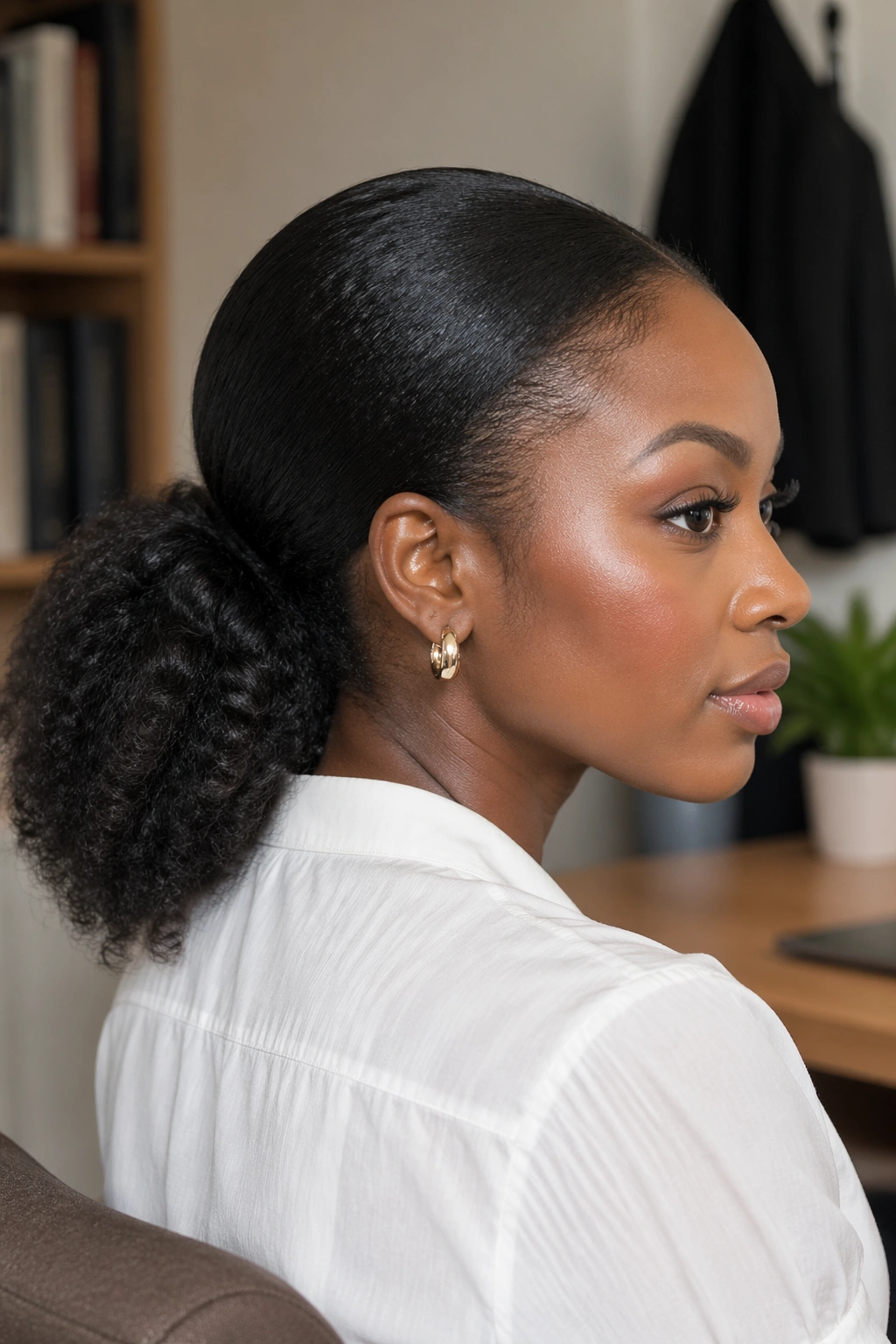
A ponytail placed low at the nape feels quiet in the best way. It is neat, grown-up, and easy to pair with collars, jackets, and statement earrings without competing for attention.
The slicked-down top section should be smooth, but not glued to the scalp. There is a difference. You want control, not crust. On Afro hair, this style often looks strongest when the ponytail texture has a little softness so the whole look does not turn severe.
Where It Shines
This shape is good for office settings, dinners, interviews, and any day when you want your hair to behave. It is also kinder to the hairline than a high ponytail, especially if you wear it often.
A narrow base looks cleaner here than a bulky one. The ponytail should sit like it belongs there, not like it was dropped on top of the head at the last minute.
Small detail, big payoff: brush the top with a boar bristle brush if your hair can handle it, then seal the look with a satin scarf for 10 to 15 minutes before you head out.
7. Bubble Drawstring Ponytail
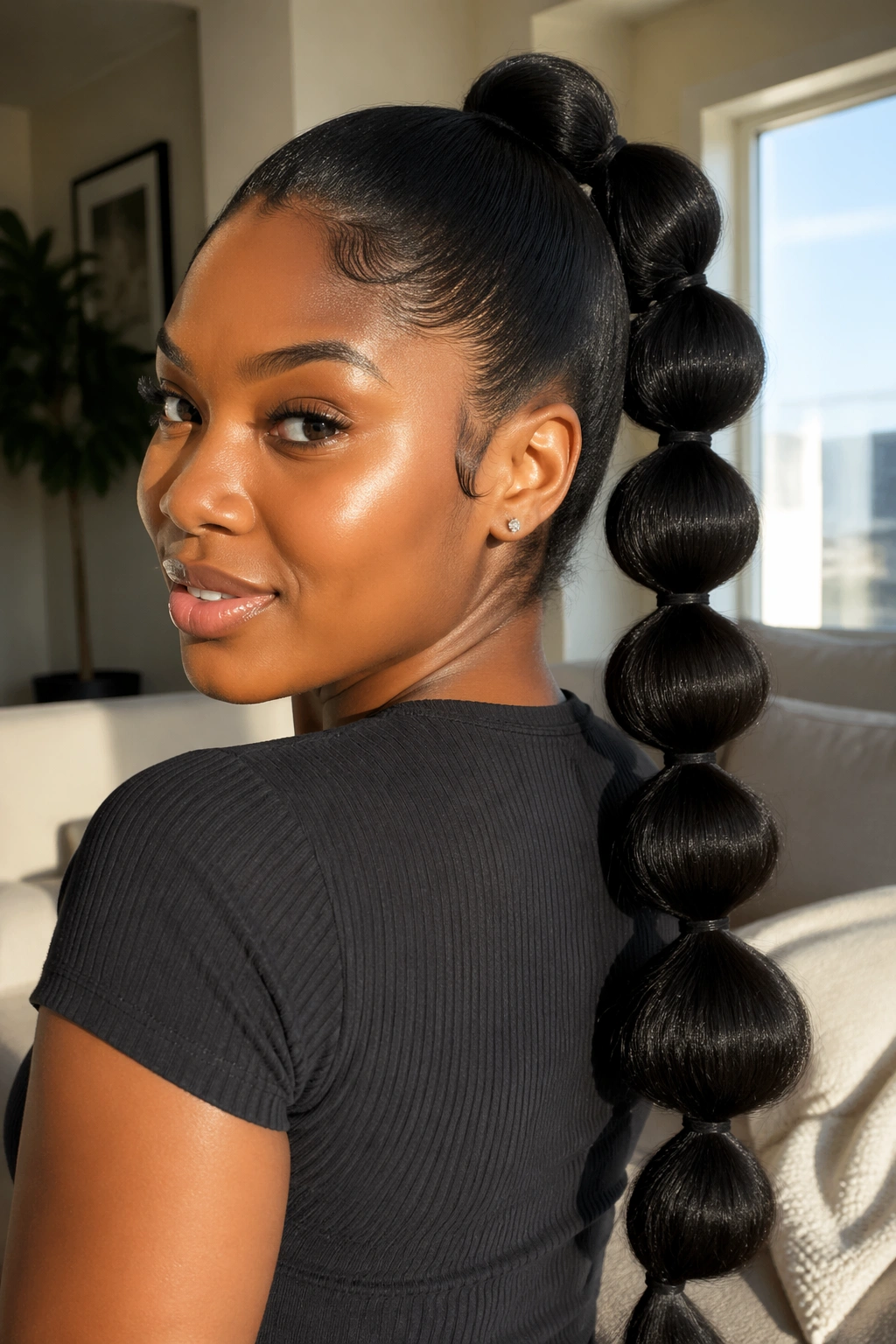
Bubble ponytails look playful, but they are also practical because they let one long ponytail do more visual work. The elastic sections break up the length and give the style shape.
On Afro hair, the bubble look lands best when the base is smooth and the ponytail has enough fullness to puff out between the bands. Thin extensions make the bubbles look sad. Thick ones hold their shape and feel much more lively.
How to Get the Look Right
Use clear elastics or small bands that blend into the hair color. Space them evenly, then gently tug each section to create rounded “bubbles.” Don’t yank too hard. You want volume, not a stretched-out mess.
This style is good for parties, concerts, weekend brunch, and any day when a regular ponytail feels too plain. It also photographs well because the shape gives the eye something to follow.
- Works with straight, wavy, or kinky textures
- Needs a thick ponytail for best volume
- Can be done high or low
- Looks especially good with gold cuffs or tiny clips
8. Half-Up Drawstring Ponytail
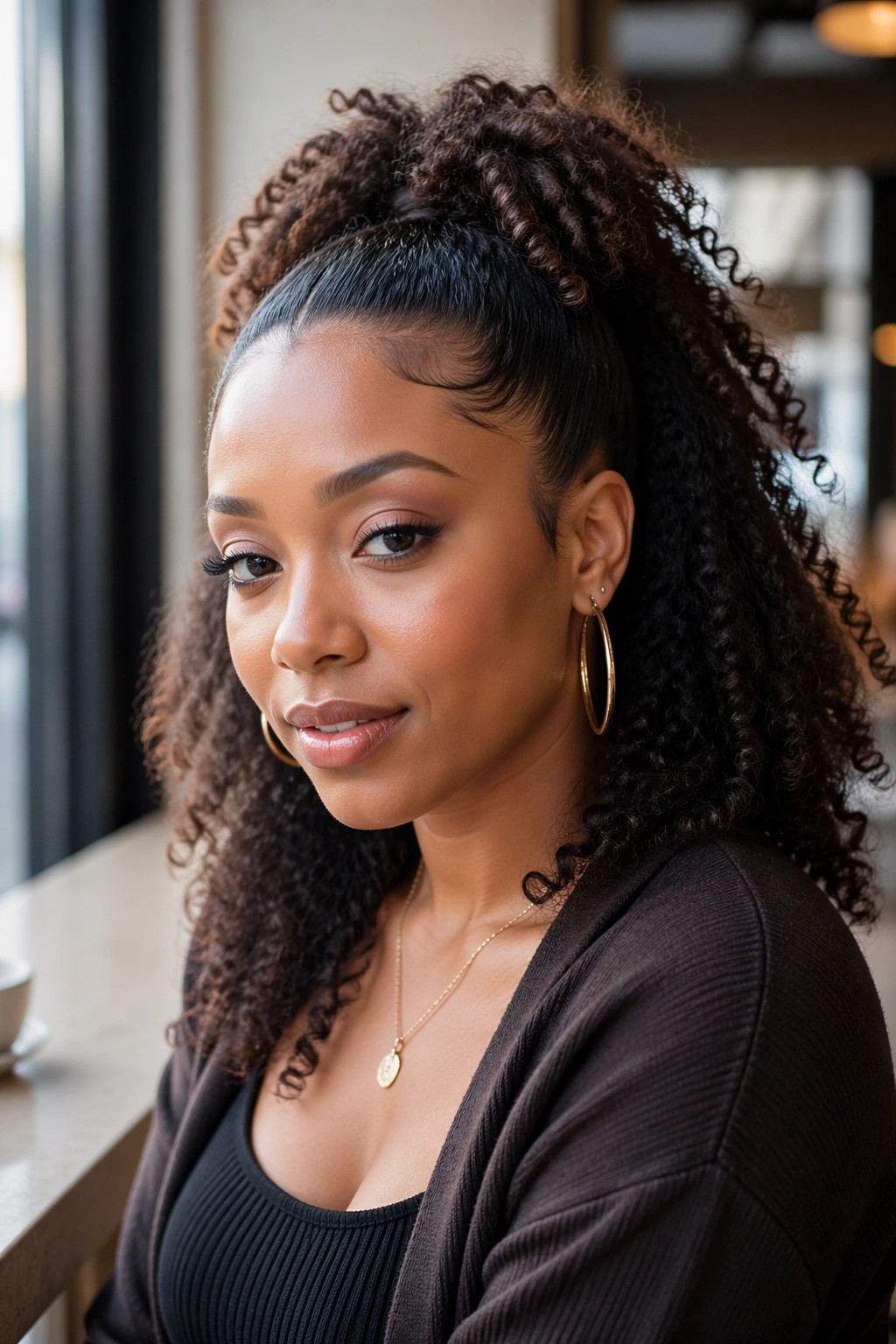
Half-up styles are underrated. They give you height on top, movement at the back, and a bit of softness around the face without committing to a full pullback.
For Afro hair, this style works well when the top section is cleanly gathered and the remaining hair stays textured or softly brushed out. The contrast is part of the appeal. It feels less strict than a full ponytail and more relaxed than an updo.
You can keep the top pony high and crisp or let it sit a little looser for a softer look. Both work. The key is balance. If the top is too tiny and the back is too bulky, the shape feels off.
This is one of those styles that can swing casual or polished depending on the outfit. A knit sweater makes it easygoing. A sharp blazer makes it sharp without trying too hard.
9. Honey Blonde Drawstring Ponytail
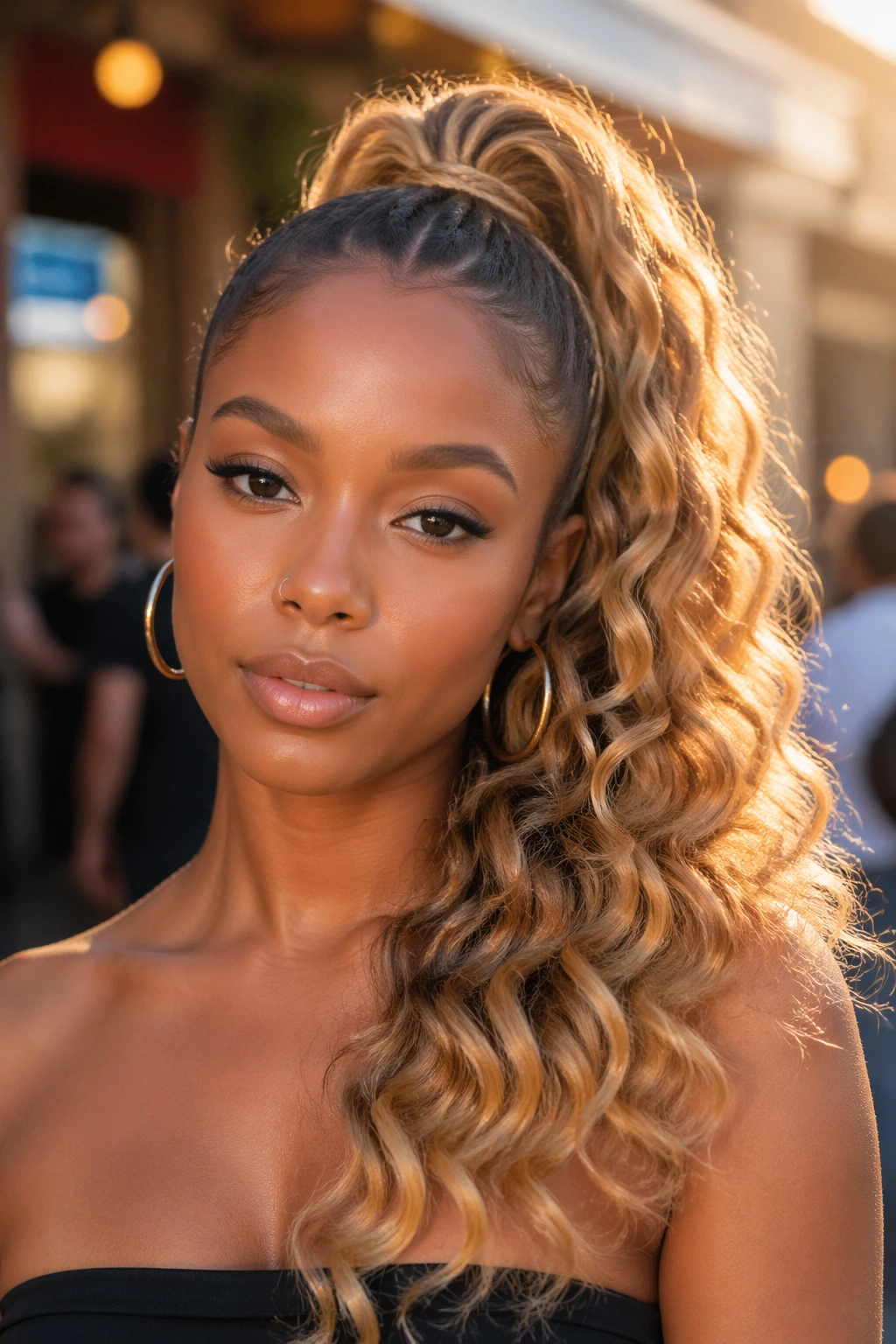
Color changes the mood fast. A honey blonde drawstring ponytail brings warmth to Afro hair and gives the texture a brighter, more visible finish.
The color works especially well when the curl pattern is loose enough for light to move through it. That does not mean tight textures cannot wear it. They can. It just means the shade looks a little richer when the ponytail has some separation and bounce.
Why It Feels Different
Blonde on natural hair can look edgy, soft, or glam depending on the tone. Honey blonde sits in a friendly middle ground. It is lighter than brown, warmer than ash, and easier to wear than a super pale shade if you want something that still feels grounded.
Best pairing: golden jewelry, brown makeup tones, and warm-toned clothes.
Best texture: waves, curls, or kinky straight with depth.
Watch out for: overly bright roots that clash with the base color.
If you want a change without bleaching your own hair, this is one of the easiest ways to get visual drama.
10. Faux Locs Drawstring Ponytail
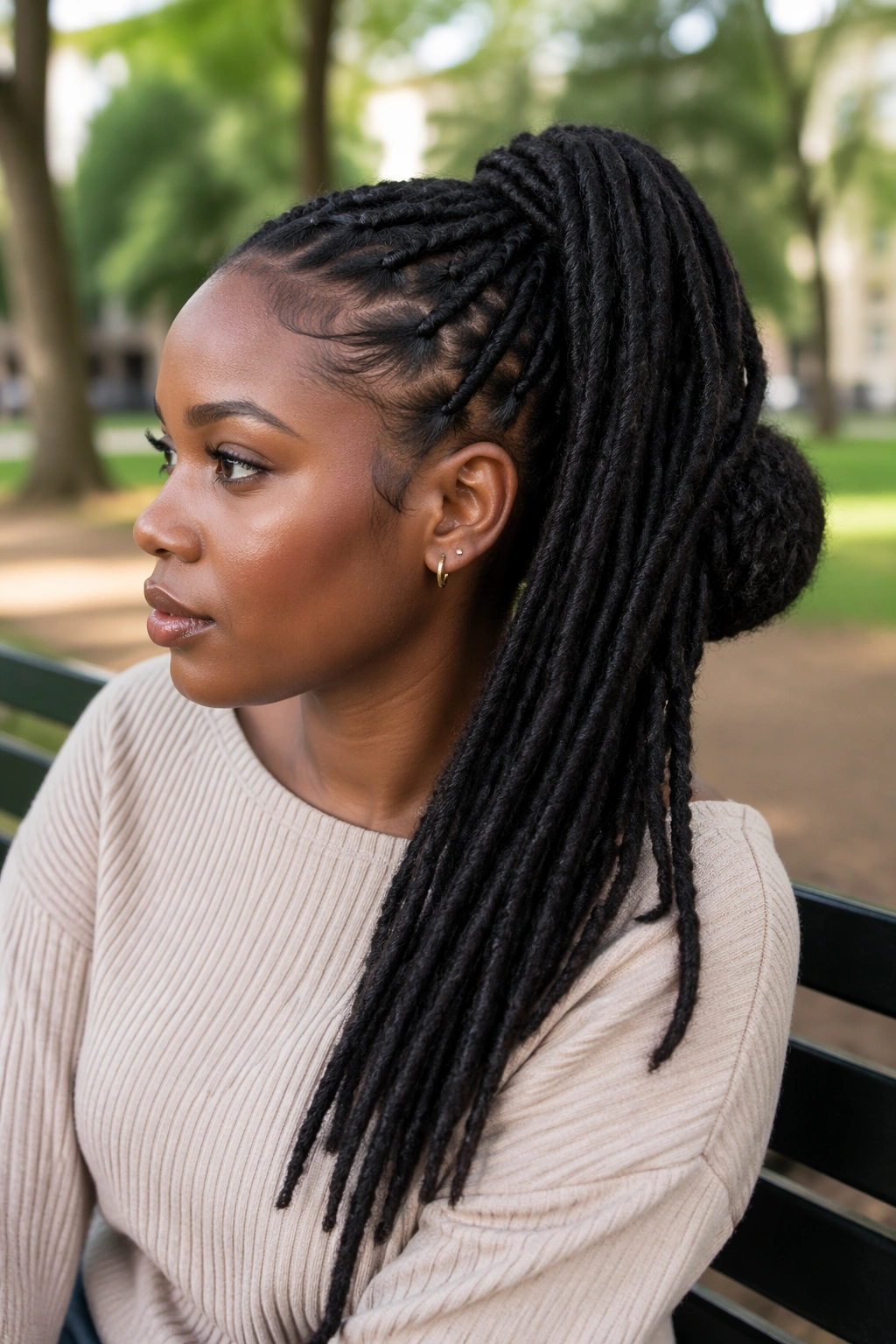
Faux locs in a drawstring ponytail form give Afro hair instant texture and a more sculpted feel. The style reads protective, bold, and intentional all at once.
The weight is the first thing people notice. A loc ponytail has more presence than a fluffy curly one, and that can be a good thing if you want a style that feels anchored. It also tends to stay visually neat for a long time because the loc pattern hides minor frizz.
A low bun base with a loc ponytail attached gives the cleanest finish. A high base works too, but the locs can feel heavier up top, so the fit matters more. If your neck gets tired from heavy styles, ask for a lighter bundle or a shorter length.
This is the look I’d choose for someone who wants a strong silhouette and does not mind a little extra weight for the sake of texture.
11. Water Wave Drawstring Ponytail
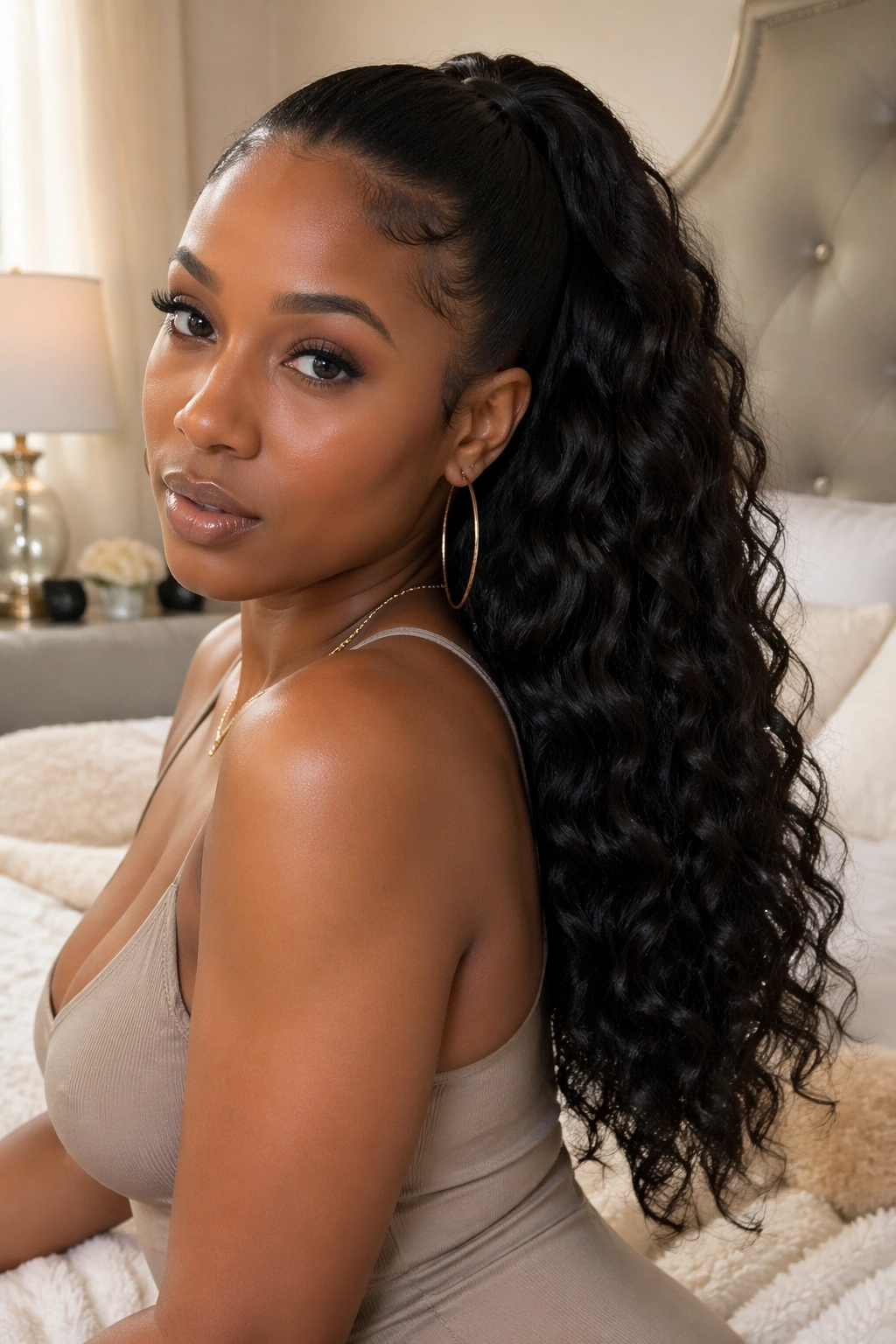
Water wave texture brings a softer kind of glamour. The pattern is loose, glossy, and a little undone in a way that feels expensive without trying to be precious.
What It Does Better Than Straight Hair
A water wave ponytail moves differently from straight or kinky textures. It has bends instead of lines, which makes it look fuller at mid-length and lighter at the ends. That shape is useful if your face looks best with some softness near the jaw.
The texture also hides a bit of everyday wear. If the ponytail gets tossed around a little, it still looks good. Straight hair can start to show every bump. Water wave is more forgiving.
- Better for romantic or dressed-up looks
- Easy to pair with side parts
- Works well when pinned over one shoulder
- Gives thickness without looking heavy
If you like hair that seems to float instead of sit rigidly in place, this one is worth a try.
12. Jumbo Braided Drawstring Ponytail
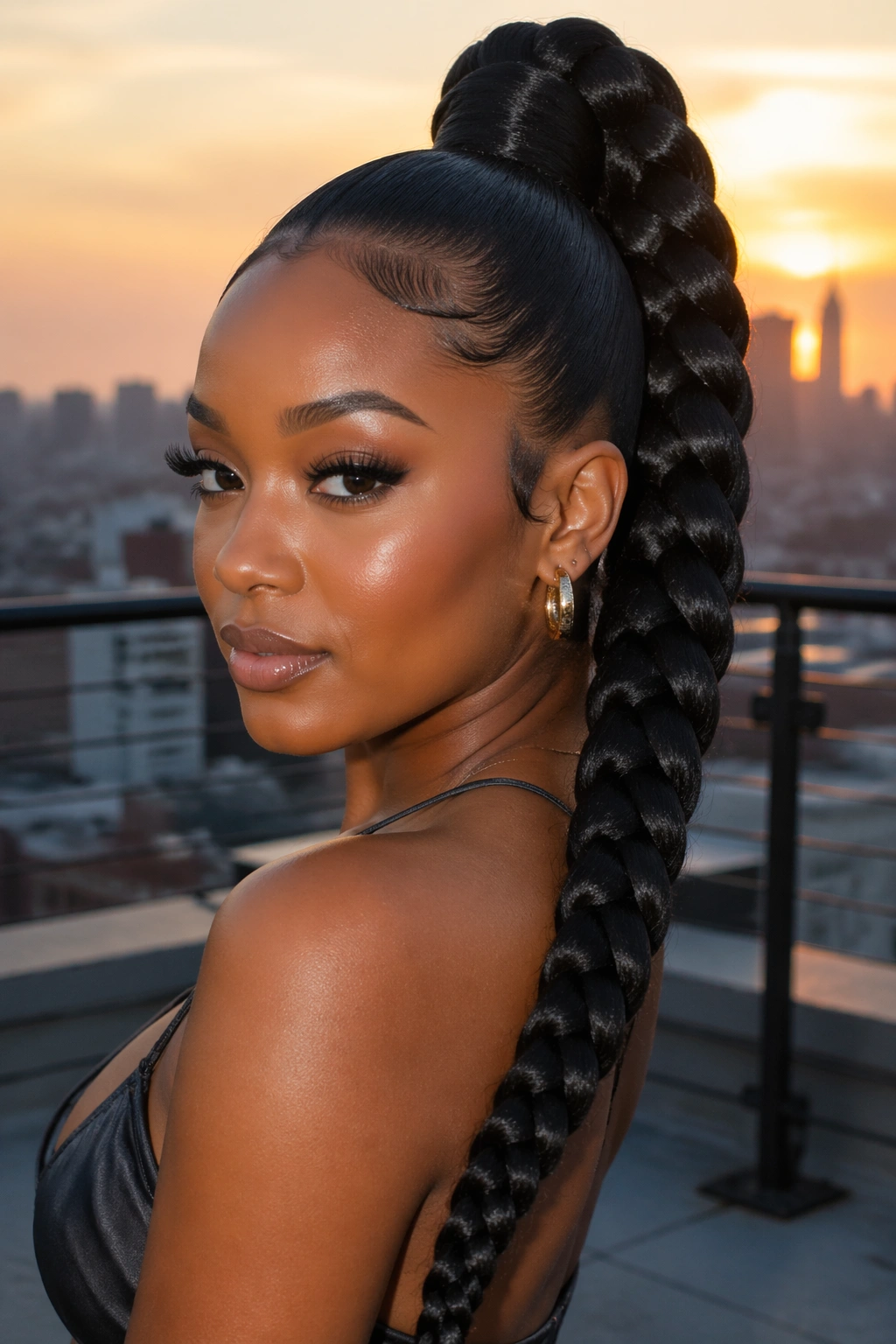
A jumbo braid is bold in the most straightforward way. It is one thick, visual line, and that simplicity is part of the charm.
This style looks especially strong on Afro hair because the braid shape echoes the logic of protective styling. It feels rooted in the hair’s structure instead of hiding it. The base can be cornrowed down and wrapped, or kept in a smooth ponytail foundation depending on how clean you want the top to look.
The Best Part
A jumbo braided ponytail does not need much else. You can wear it plain and let the size do the talking, or add cuffs, thread, or a wrapped section at the base. It still reads clearly.
It is also one of the easier styles to keep neat on busy days because the braid does not tangle as fast as loose textures. If you want something that can take a little life without going fuzzy, this is one of the better options.
13. Yaki Straight Drawstring Ponytail
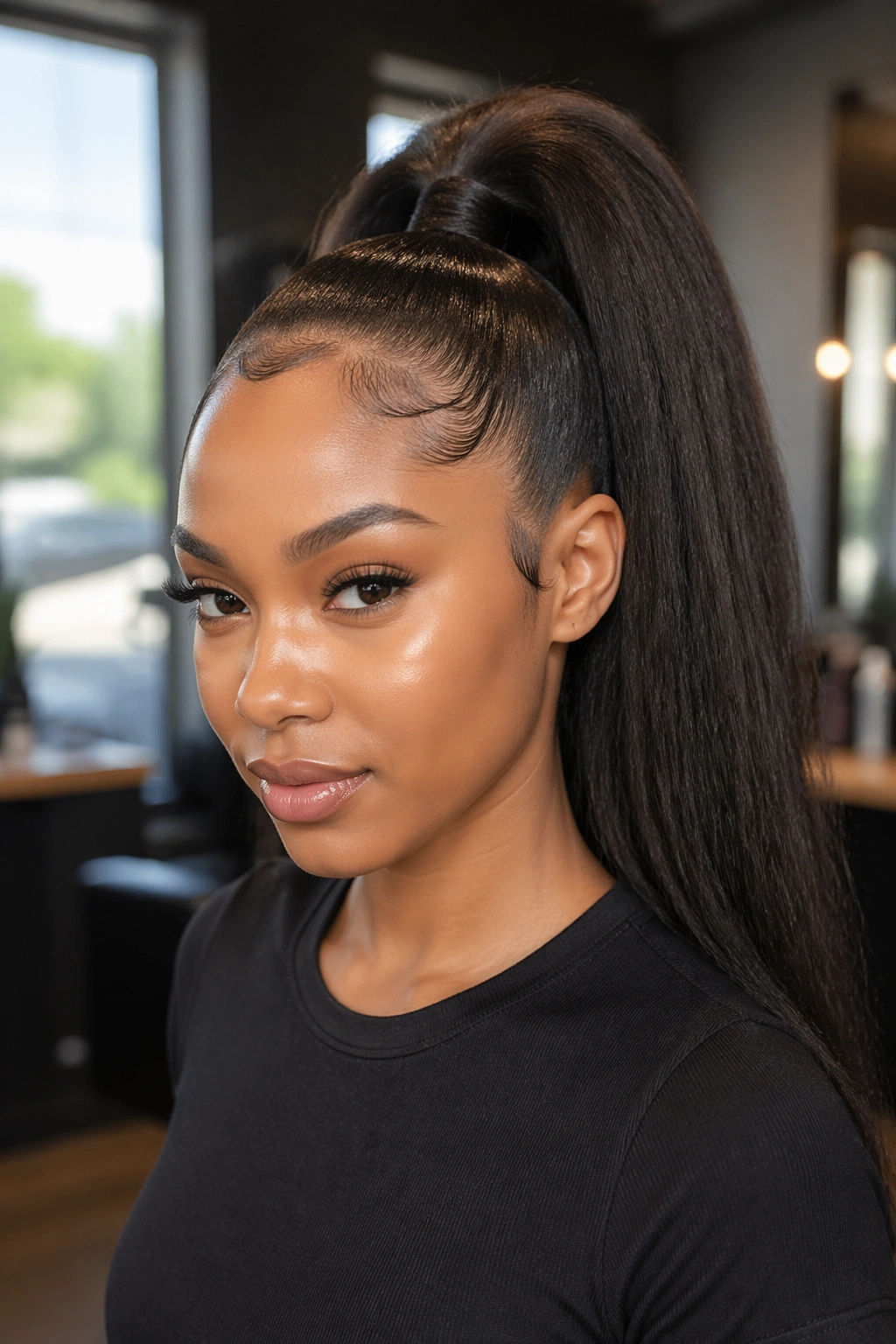
Yaki straight sits in a sweet middle zone. It is straighter than kinky straight, but it still has enough texture to blend with Afro hair without looking overly silky.
That matters more than people admit. Bone-straight hair on coily natural hair can look a little too polished unless the whole style is committed to that direction. Yaki hair keeps some grip and depth, so the finish feels more believable.
The style works well for work days, events, or any moment when you want length with a calm surface. It also tends to hold accessories well. A side clip, a barrette, or a simple hair cuff stands out nicely against the texture.
Best use: sleek ponytails, low ponytails, and long wrap-around styles.
Best match: relaxed, pressed, or blown-out natural hair.
Best note: keep the ends trimmed-looking, not stringy.
14. Deep Side-Part Drawstring Ponytail
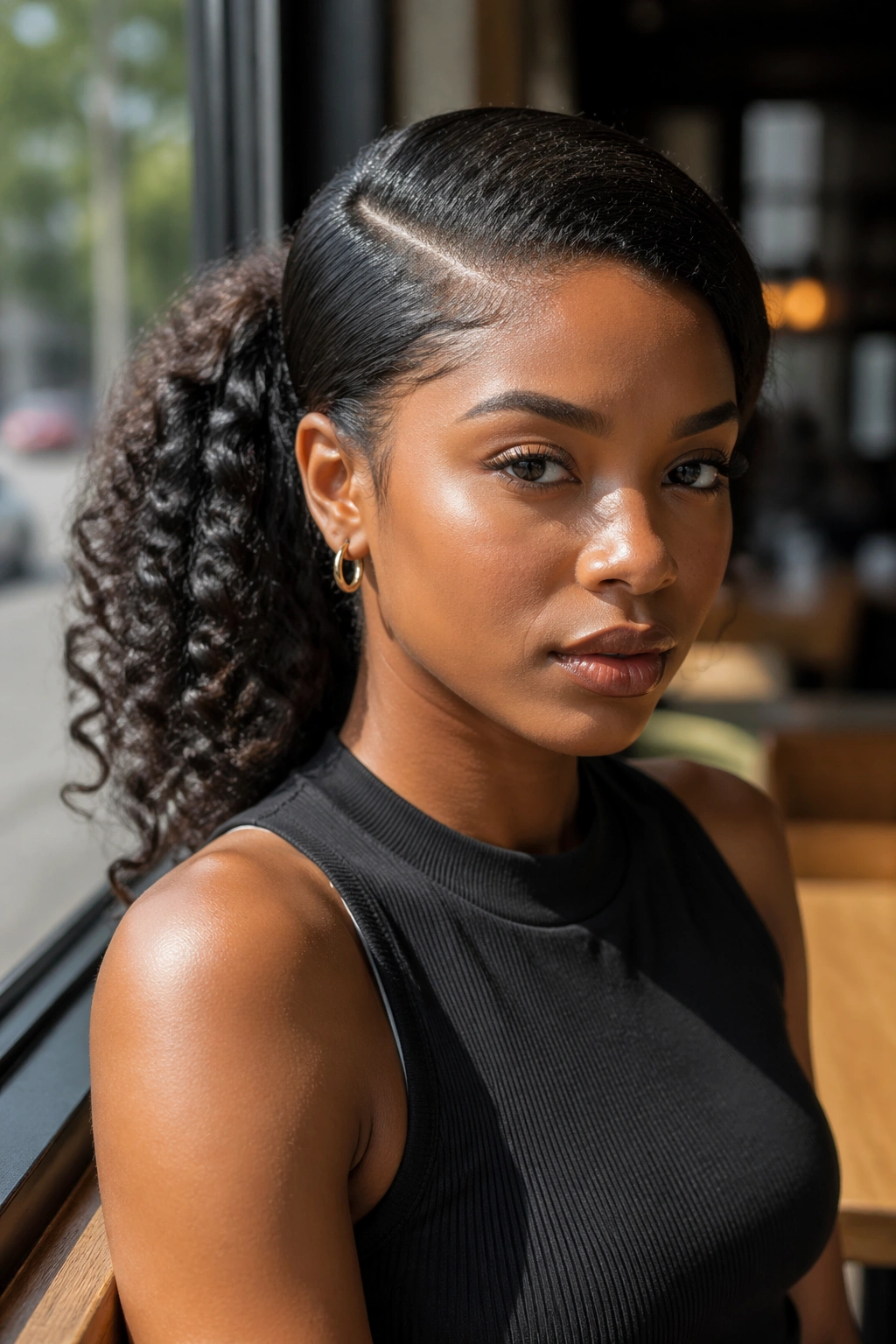
A deep side part changes the whole personality of a ponytail. It turns something basic into something styled, and it does it fast.
The part should be clean enough to read from a few feet away, but not so sharp that it looks like a line drawn with a ruler. Afro hair often looks best when there is a little softness at the root and more structure at the part itself. That balance keeps the style from feeling stiff.
Why the Angle Matters
A deep side part moves volume to one side, which can flatter the cheekbones and soften a strong forehead. It also lets the ponytail fall with more drama, especially if it is curly or wavy.
This is a good pick when you want a hairstyle that looks deliberate but not overworked. It can be dressy, but it does not have to be. Even a simple outfit starts looking considered when the ponytail tilts across the head in the right way.
15. Coily Texture Drawstring Ponytail
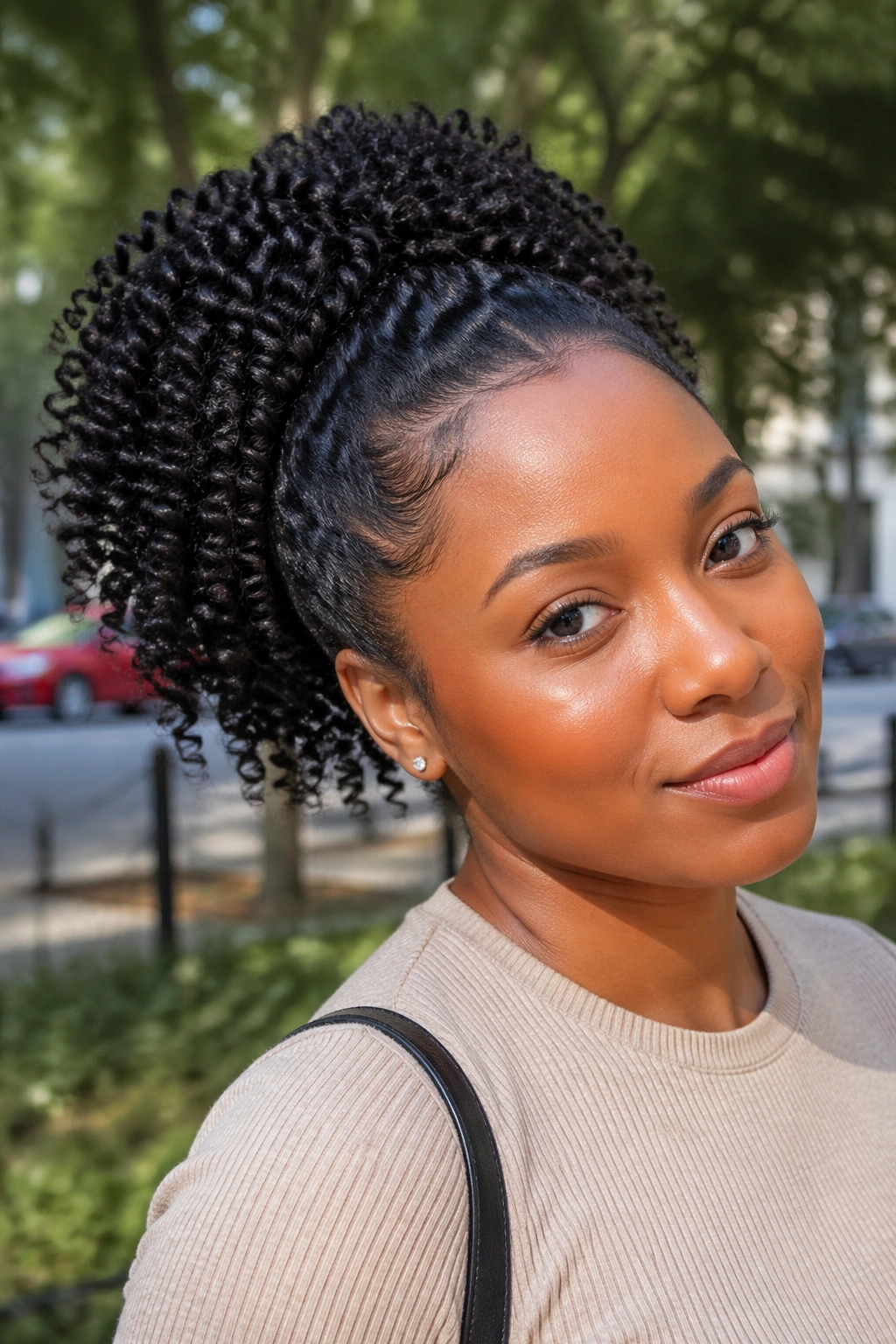
Coily texture is the closest visual cousin to many natural Afro hair patterns, and that is exactly why it works. It does not fight the hair. It extends it.
The best coily ponytails have tight springs, dense fullness, and enough bounce to hold shape without falling limp by midday. Loose curl patterns can be pretty, but they do not always blend as cleanly if your natural hair is very tight. Coily texture solves that problem.
How It Feels in Real Life
This style feels familiar. That is the nicest thing I can say about it. It looks like an upgraded version of a blown-out puff or a stretched coil style, which makes it easy to wear without feeling like you stepped into somebody else’s hair.
If you want a ponytail that still reads as natural hair from a distance, this is one of the strongest picks on the list. It is also a good choice for people who like a little volume near the roots and a lot of shape through the tail.
16. Twin Drawstring Ponytails
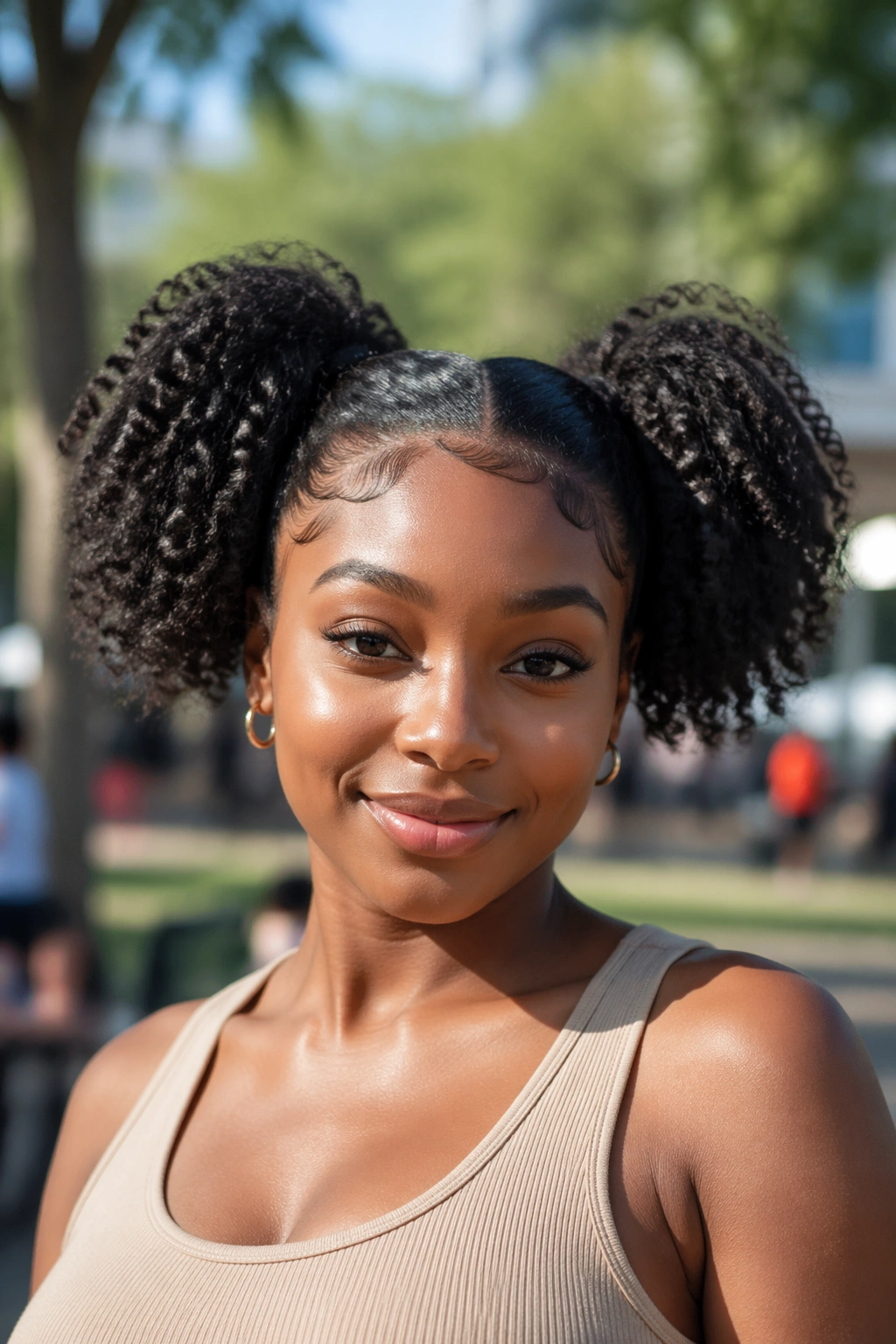
Two ponytails can look playful, sporty, and surprisingly chic when the parts are clean and the ponytails have enough body. On Afro hair, this style gives you symmetry without making the head look too crowded.
How to Keep It Balanced
The trick is equal placement. If one pony sits higher or farther back than the other, the style starts to feel lopsided in a way that is hard to ignore. A middle part or two angled parts can both work, depending on your face shape and how much height you want.
- Great for youthful, fun styling
- Works with curls, straight textures, or braids
- Can be dressed up with bows or cuffs
- Easier to wear than a full head of heavy extensions
This is not the first style I’d reach for at a black-tie event, and that is fine. It shines when you want personality, movement, and a little edge.
17. Curled-Ends Drawstring Ponytail
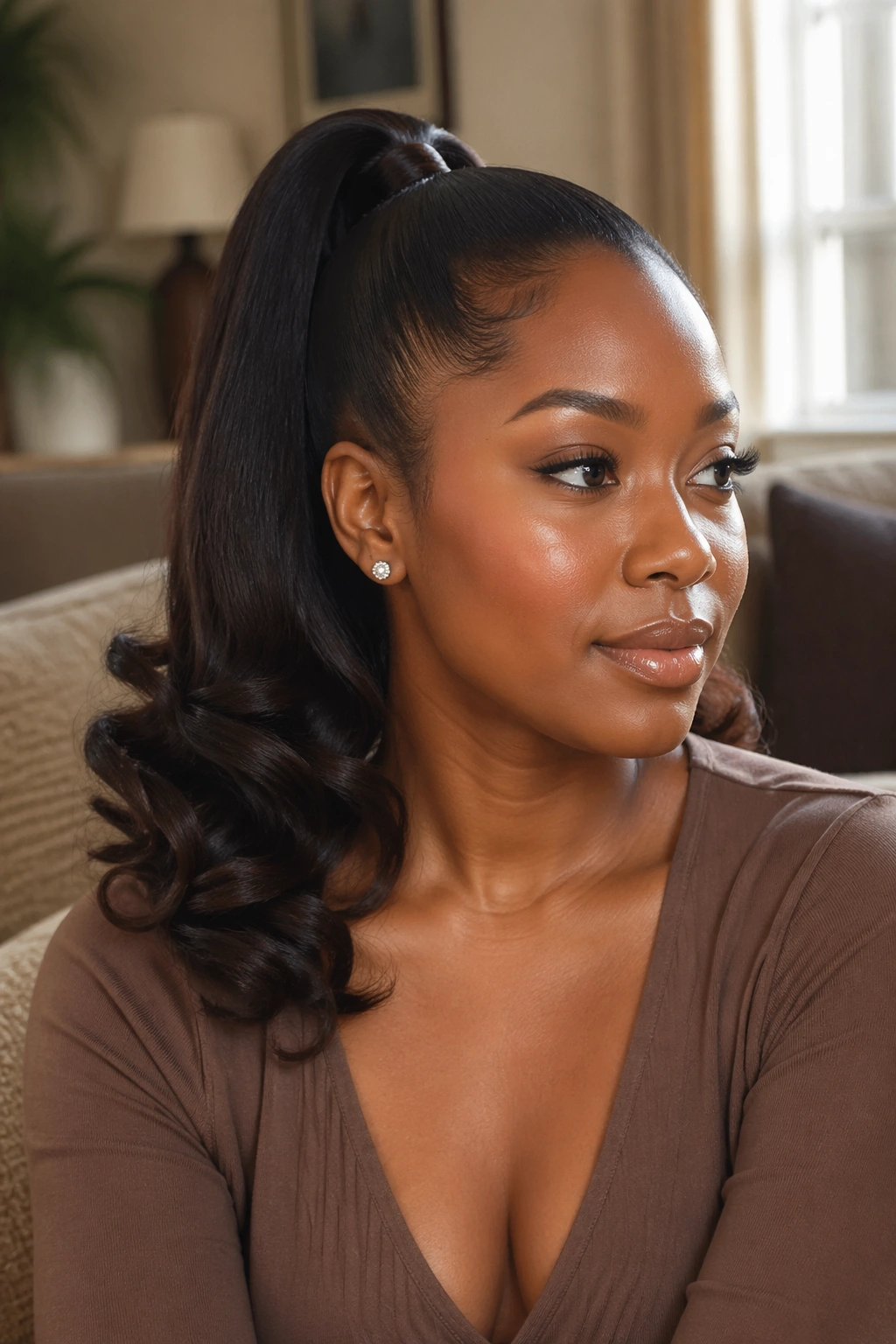
A straight ponytail with curled ends gives you structure up top and softness at the bottom. That contrast is what makes the style feel finished.
The ends can be curled under, flipped out, or given loose barrel curls depending on how formal you want the result to feel. The base should stay clean and smooth so the curls can do their job instead of fighting with a busy top section.
This style is one of my favorites for people who like a neat look but do not want their ponytail to fall flat. It also works nicely with Afro hair because the curled ends add movement near the shoulders, where a straight ponytail can sometimes feel a little severe.
A middle part gives it a classic finish. A side part makes it feel softer. Either way, the curls at the end keep the style from reading plain.
18. Scarf-Wrapped Drawstring Ponytail
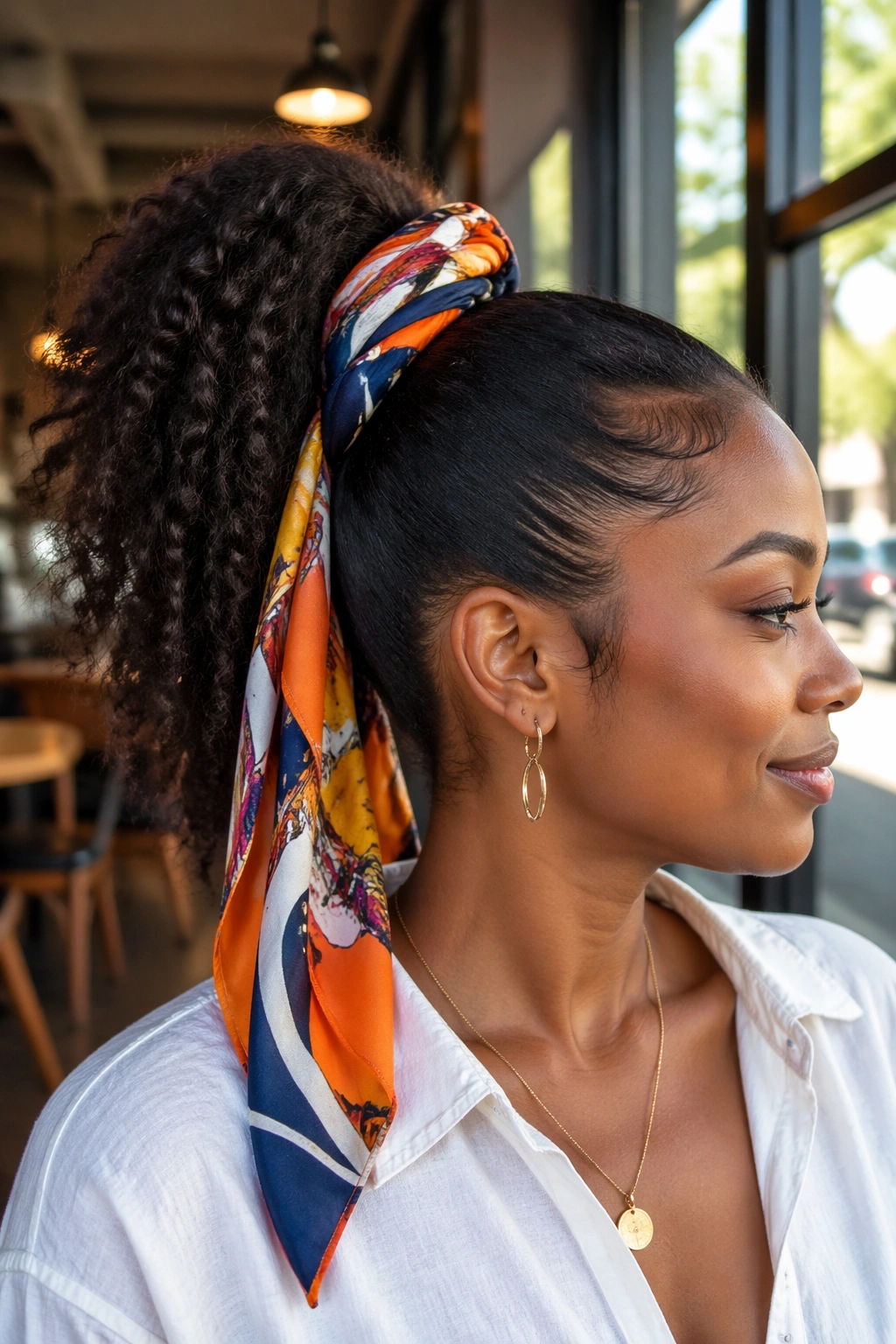
A scarf changes a ponytail fast. Wrap one around the base, tie it off neatly, and the style suddenly looks more styled, more personal, and less like a grab-and-go moment.
On Afro hair, scarf-wrapped ponytails are useful because they let you cover the base while adding color or pattern. If the ponytail texture is simple, the scarf gives it more personality. If the ponytail is already bold, the scarf pushes it a little further.
Small Styling Moves That Matter
Choose a scarf that is long enough to tie securely without bulk. Silk or satin feels better against the hair and looks cleaner at the knot. Cotton can work too, but it often adds more friction and can puff up in a less controlled way.
This is also one of the easiest ways to dress up a ponytail you already own. You do not need a whole new unit. Sometimes you just need a good print and a neat wrap.
19. High Puff Drawstring Ponytail
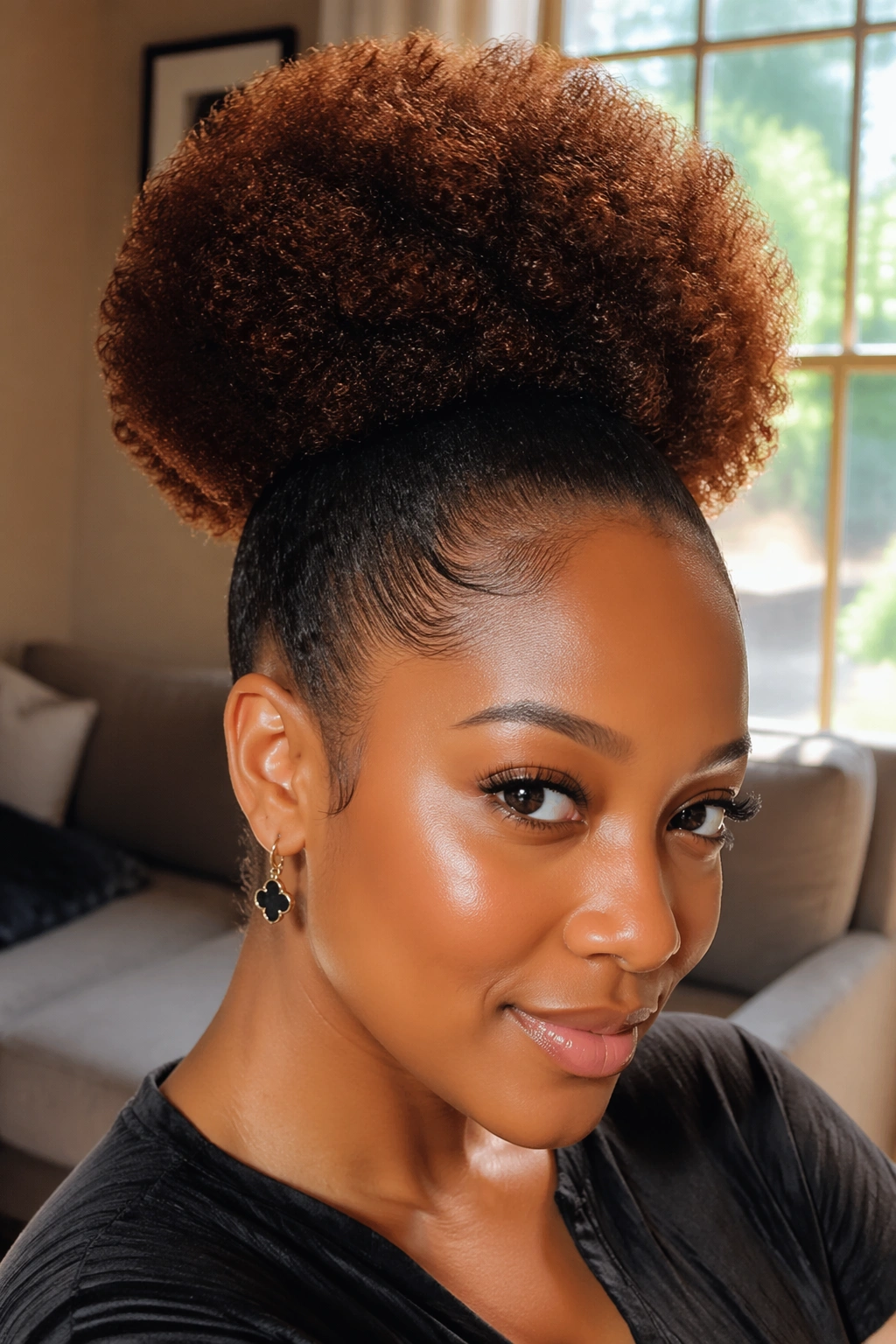
A high puff drawstring ponytail gives you the shape of a puff with the ease of an extension. It is the closest thing to “big hair, but make it fast.”
The best versions are round, airy, and full at the crown. They should look soft rather than stiff. If the base is too tight or the puff is too stretched, the style loses its charm and starts feeling like a forced version of natural hair.
When It Makes Sense
This is the style for days when you want to celebrate volume instead of smoothing it away. It works with casual clothes, statement earrings, and faces that look better with height above the forehead.
It also pairs well with a slightly undone texture. A puff that moves a little in the wind often looks better than one that sits in a perfect sphere. Perfection is not the point here. Fullness is.
20. Cornrow-to-Ponytail Feed-In Style
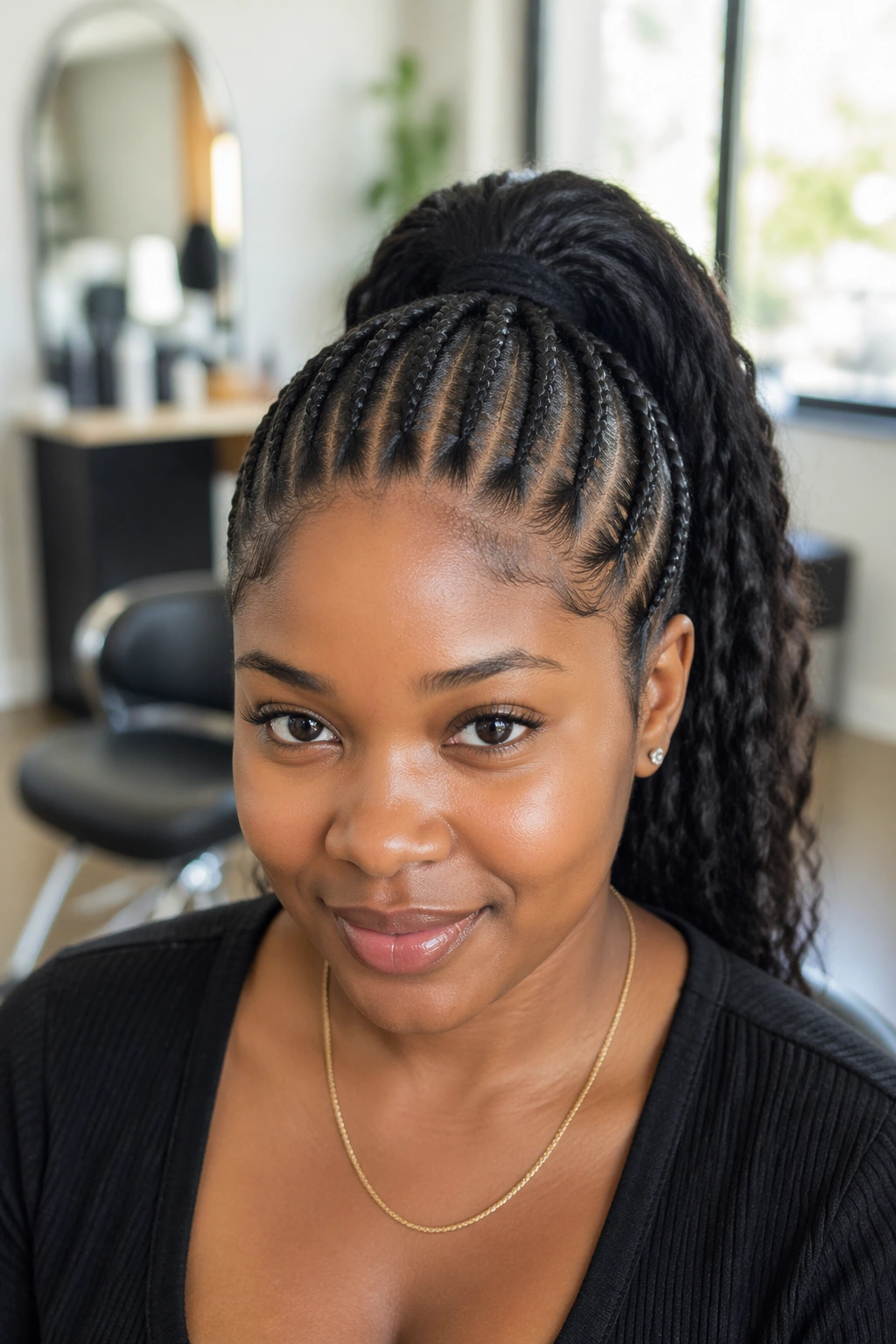
A feed-in cornrow base leading into a ponytail is clean, secure, and built to last. The braids create structure from the front all the way to the ponytail attachment, which makes the final look feel anchored.
This style is especially useful if you want your natural hair protected and tucked away. The front rows can be simple or intricate, but the result should still flow cleanly into the drawstring ponytail without a chunky break in the middle.
Because the braids are doing so much of the work, the ponytail texture can be almost anything you want. Curly, straight, braided, loc-like — the base supports all of it. That flexibility is part of the appeal.
It is one of the smartest choices for a long wear period because the base stays neat while the ponytail itself can be swapped out or refreshed.
21. Crimped Drawstring Ponytail
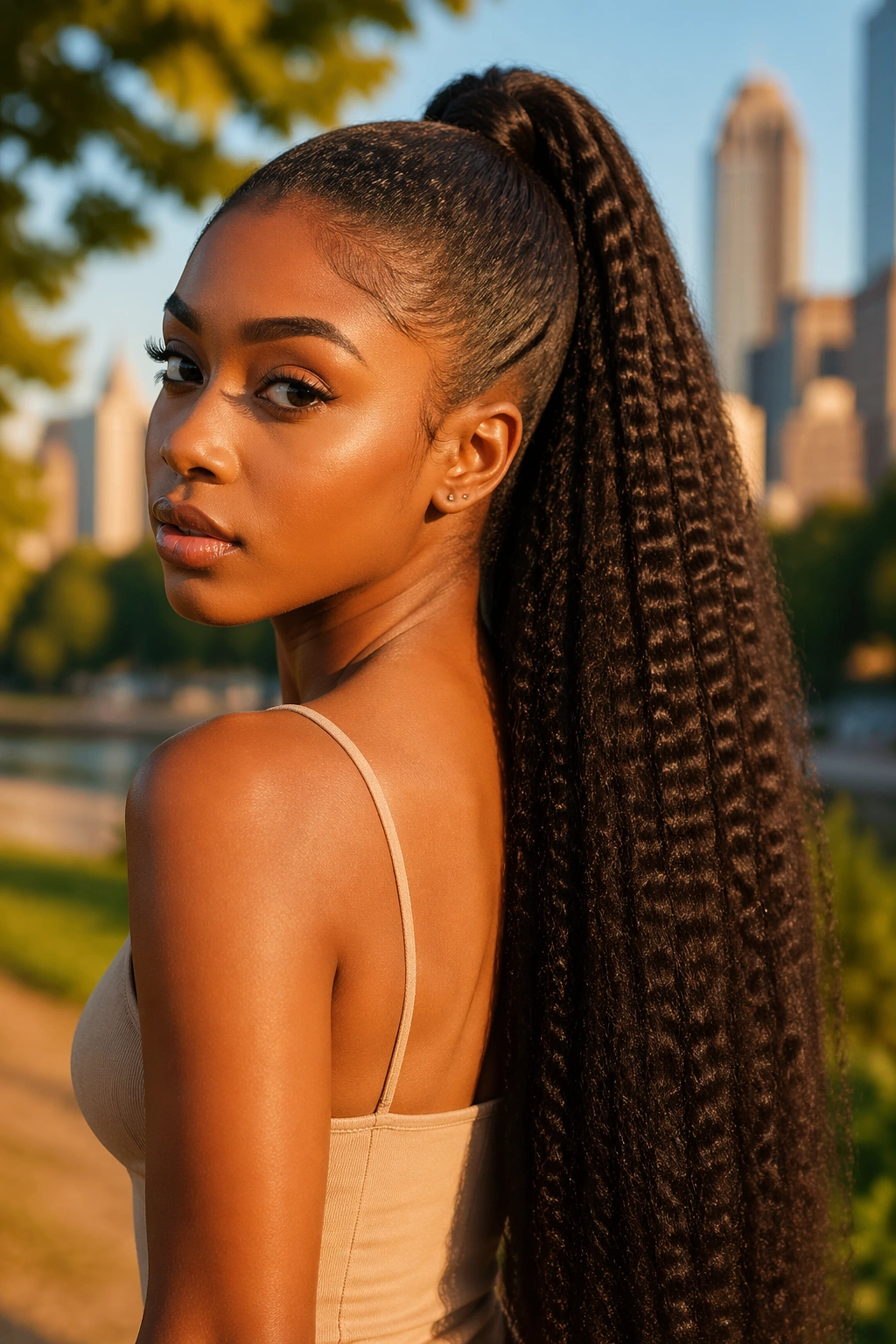
Crimped texture has a slightly retro feel, but it looks fresh on Afro hair because the pattern adds instant body. Every bend catches the eye. Every section looks fuller than it would if it were straight.
The style works best when the crimping is even from root to end, though a little variation can make it feel more natural. A ponytail with this texture also holds shape well, which means it does not collapse as fast as some softer wave patterns.
The Sensory Bit
Crimped hair has a dry, textured feel that reads bold in a photo and fuller in person. It can look almost architectural when it is long and dense. That is the appeal.
If you want a ponytail that feels a little different without stepping into something too extreme, this is a solid middle ground. It gives you body, pattern, and a bit of edge without needing extra decoration.
22. Wet-Look Curly Drawstring Ponytail
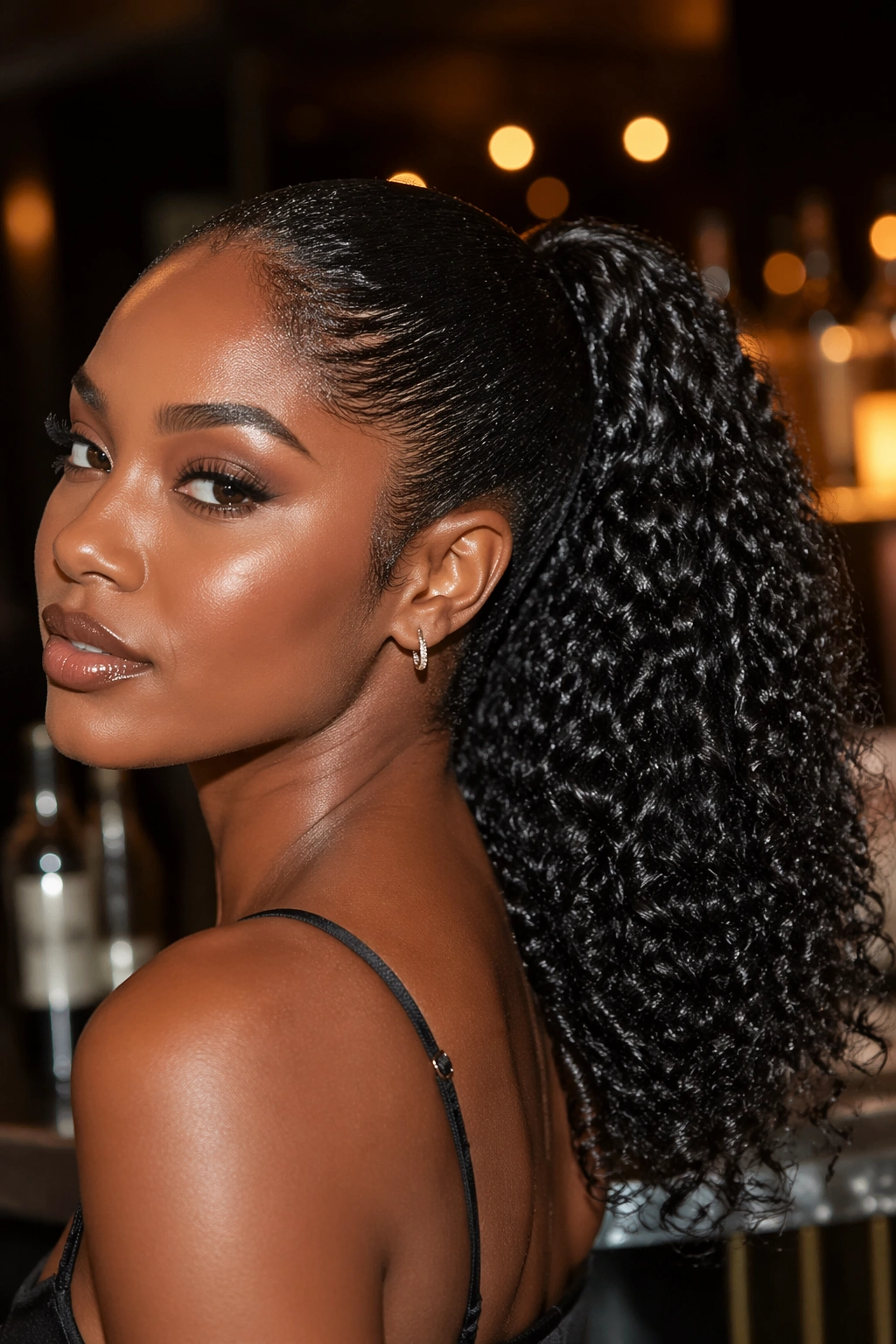
A wet-look curly ponytail is glossy, defined, and a little dramatic in a way that works especially well on Afro hair. The shine makes the curls stand out, while the tighter finish at the roots keeps the style feeling controlled.
How to Keep It From Looking Greasy
The point is shine, not heaviness. Use enough product to define the curls and smooth the top, but stop before the hair looks weighed down or sticky. A wet-look style should still have movement when you turn your head.
- Best for nights out and special events
- Works well with deep side parts
- Looks stronger on dense curl patterns
- Needs careful product choice so the base stays neat
This style can look luxe without being fussy. That is what makes it useful. You get shine, curl definition, and a polished shape in one move.
23. Low-Key Everyday Drawstring Ponytail
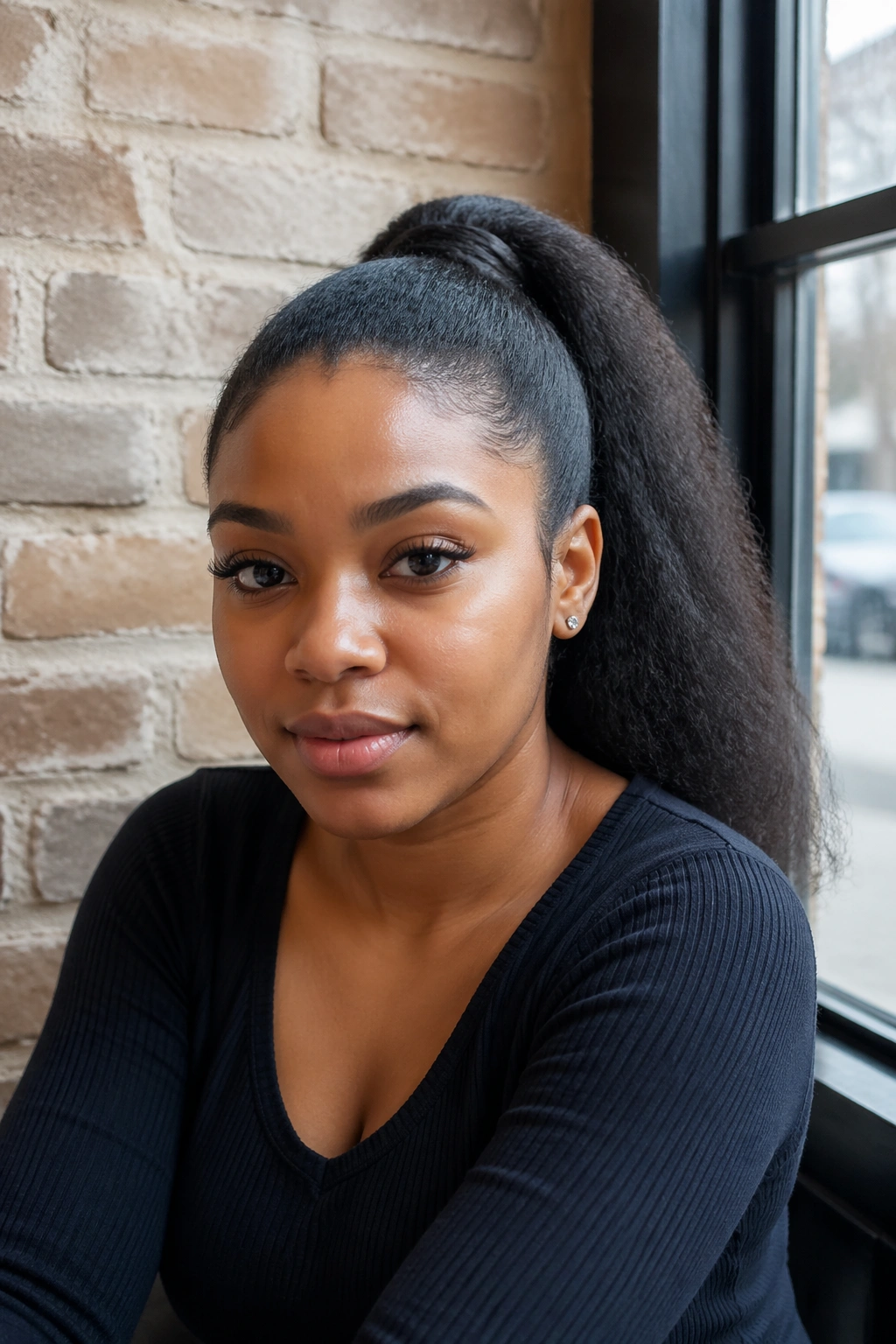
Sometimes the best ponytail is the one you can reach for without thinking twice. A low-key everyday drawstring ponytail keeps the finish clean, the texture believable, and the whole routine manageable.
This version should not feel precious. It should fit under a coat collar, survive a full day, and still look decent when you pull it over one shoulder at the end of the day. A soft kinky straight or coily texture usually works well because it blends easily and does not demand constant adjustment.
The styling is simple, but not sloppy. A neat base, a ponytail with enough fullness, and a texture that matches your own hair are enough. Add a small hoop earring or a bold lip and the whole look changes shape.
That is the real power of drawstring ponytails for Afro hair: they can be practical and still look like you meant every part of it.
Final Thoughts
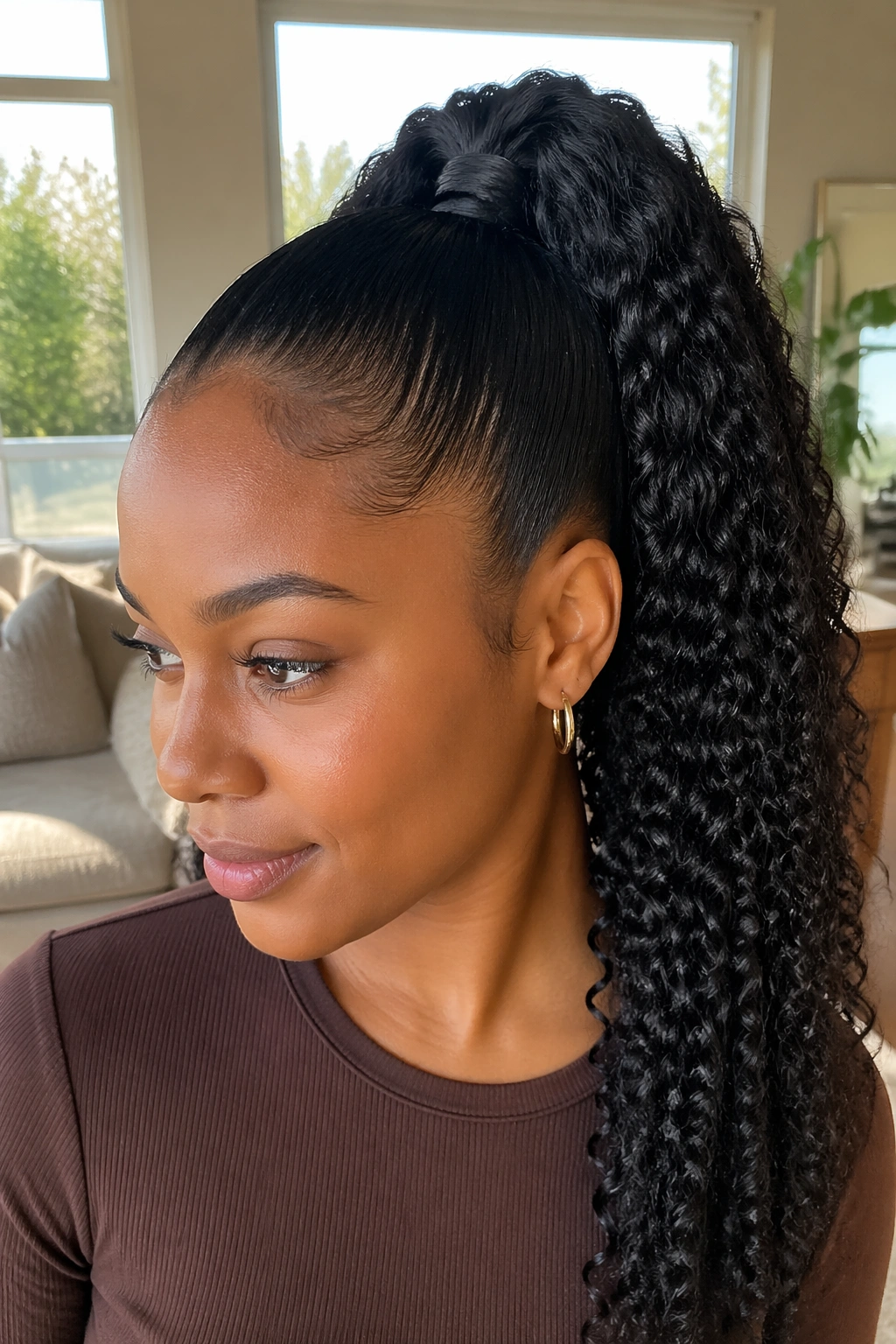
The strongest ponytail styles are the ones that respect the hair underneath. When the base is secure and the texture makes sense, the style stops looking borrowed and starts looking like a smart choice.
Afro hair gives these looks more life than straight hair often can. Volume helps. Texture helps more. The trick is picking a ponytail that works with your own pattern instead of pretending it is not there.
A good drawstring ponytail should feel like a shortcut, not a compromise. That is the standard worth keeping.
