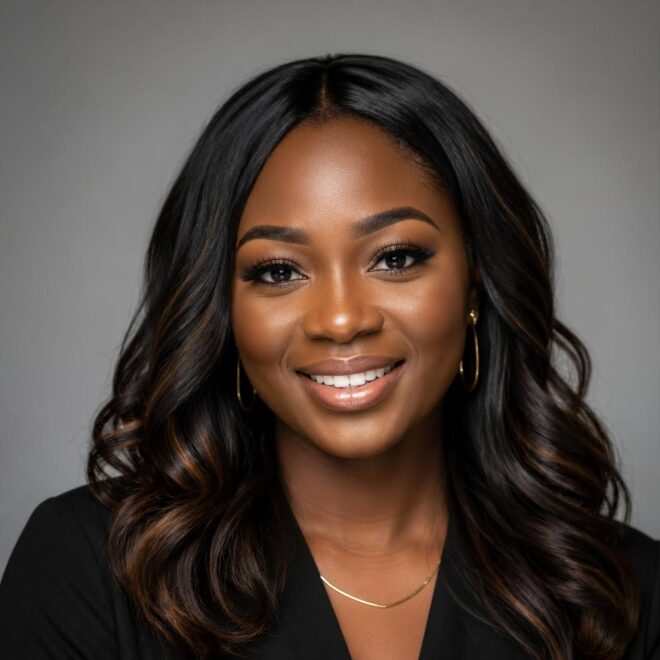


A good ponytail can do more than keep long hair off your neck. On Black women with long wavy hair, it can sharpen the face, show off movement, and make the whole look feel pulled together without stripping away softness.
Long waves are a funny thing. They look easy from the outside, but they ask for some care at the root. Too much brushing and the shape goes limp. Too much gel and the hair turns stiff. Too much tension and your hairline complains by lunchtime. The sweet spot is somewhere in the middle, where the base stays neat and the length still has room to move.
That balance is why ponytail hairstyles work so well here. A silk press, a wand set, stretched natural hair, or bundles blended into your own texture all change the finish a little, but the same rule keeps showing up: clean the root, protect the edges, and let the waves do their job. Once you get that part right, the ponytail stops being a backup style and starts feeling like the main event.
1. Sleek High Ponytail for Long Wavy Hair
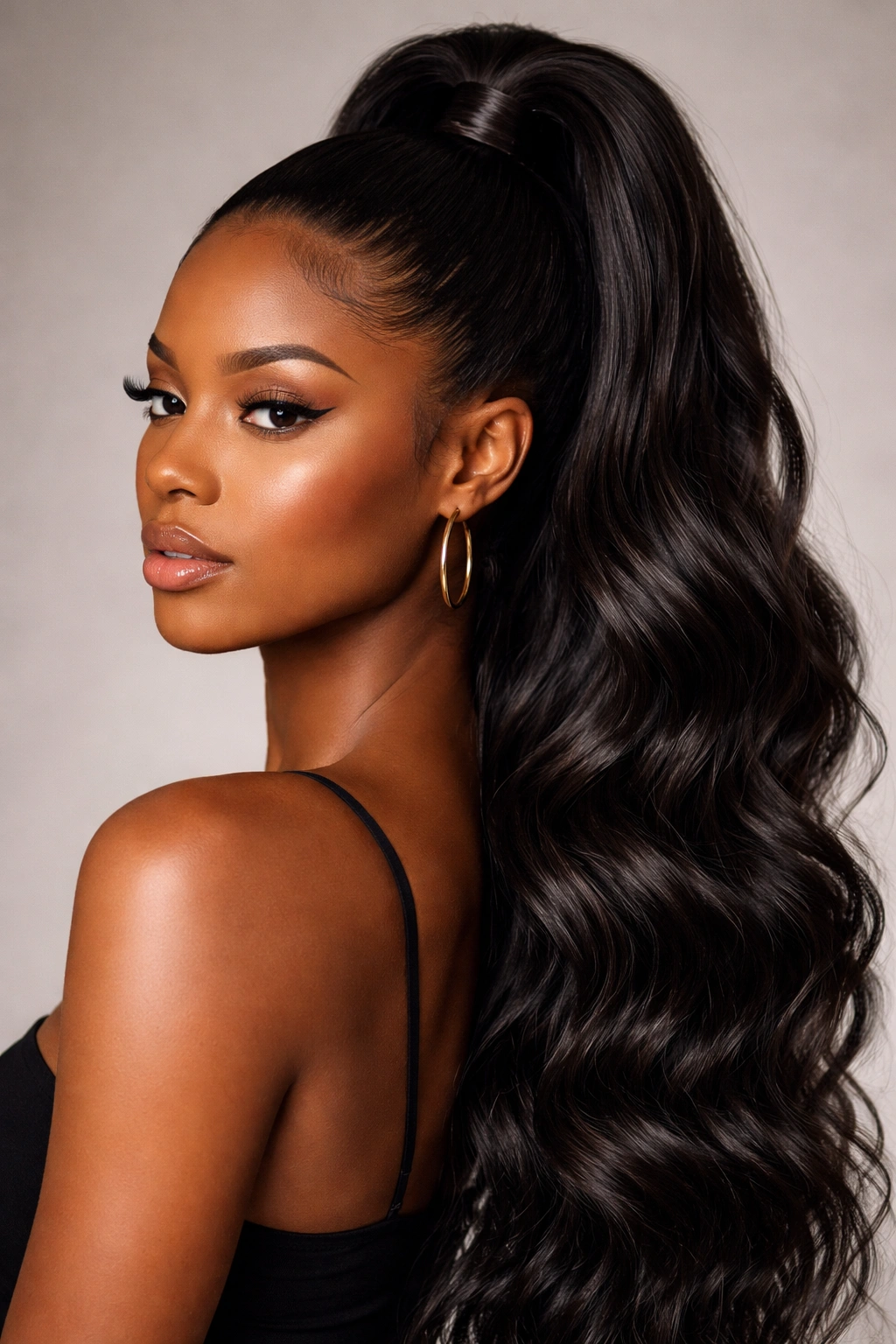
A high ponytail changes the whole mood in one move. It lifts the face, shows off the cheekbones, and gives long wavy hair that crisp, pulled-up shape that reads as polished fast.
Why the crown placement matters
Set the elastic about 1 to 2 inches above the highest point of the head if you want drama, not a sagging bump. That small difference matters more than people think. A ponytail placed too low loses the lift. Too high, and the base can feel strained.
- Smooth the roots with a boar-bristle brush before tying.
- Use a thin elastic first, then a second one if the hair is dense.
- Wrap one small strand around the base so the band disappears.
- Finish the lengths with a light serum, not a heavy cream.
Keep the front neat, not tight. A sleek ponytail should sit flat at the scalp without making your temples feel pulled.
2. Low Center-Part Ponytail
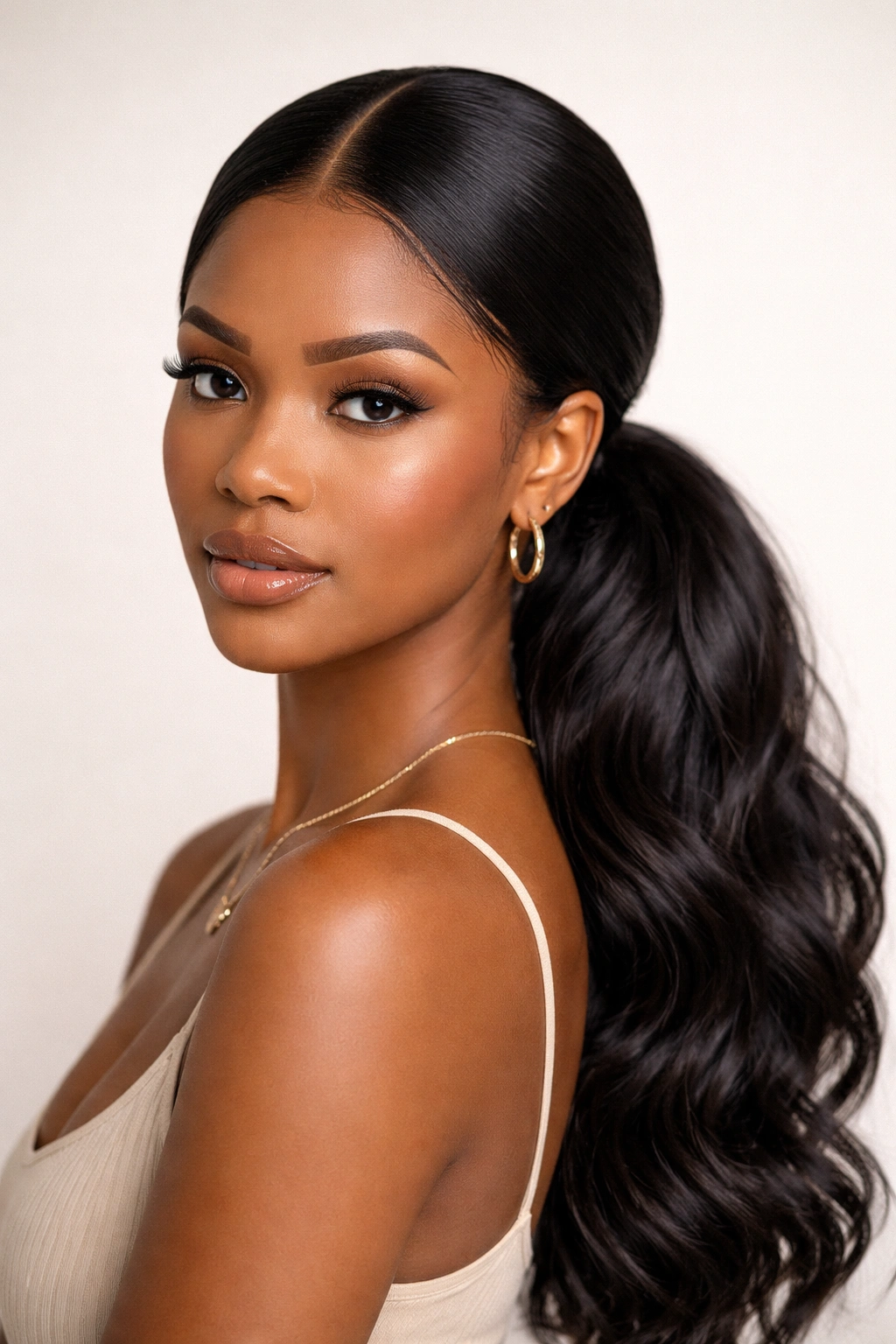
A low center-part ponytail is one of the cleanest ways to wear long wavy hair. It looks calm, controlled, and a little severe in the best way, which is exactly why it works.
The middle part should be straight and intentional, running from the hairline back to the crown. If the part wanders, the whole style looks soft in a sloppy way instead of soft in a chic way. The ponytail itself sits at the nape, where the waves can hang with weight and movement.
This style is especially good when the hair already has a strong wave pattern. You don’t need to fight that texture. You just need to make the front neat enough to frame it.
A small flat iron pass on the top section can help if the roots puff up easily. Don’t flatten the lengths. That would kill the point.
3. Deep Side-Part Ponytail
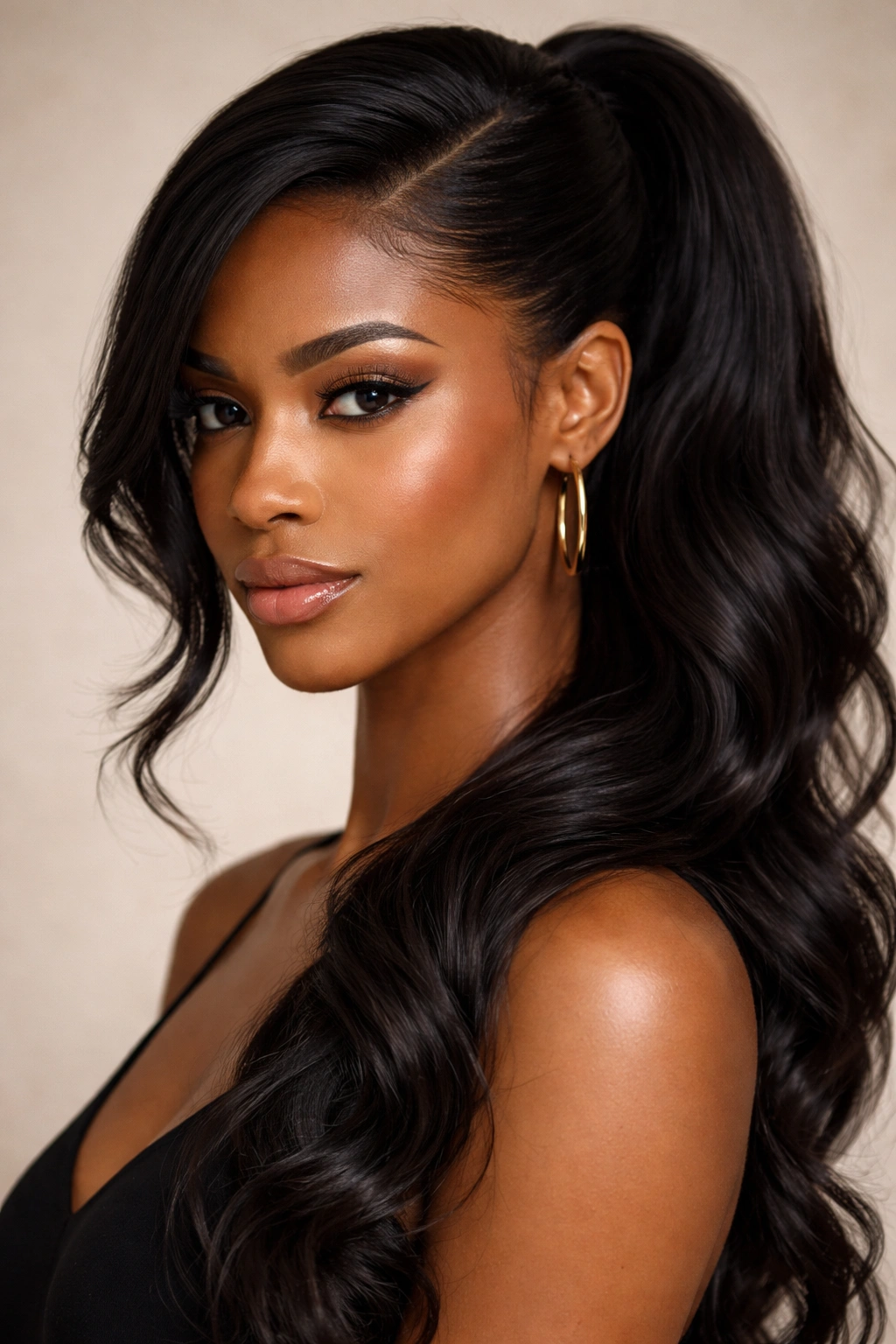
Why does a side part change everything? Because it creates instant asymmetry, and asymmetry is flattering on long hair. It gives the face one strong line to follow instead of splitting the look down the middle.
How to use it
Sweep the part about 2 to 3 inches off center if you want a bold side fall. Go a little softer if you want the ponytail to stay everyday-friendly. The tail can sit low or mid-height, but the part should do the heavy lifting.
A deep side part also gives you room for a little root volume on the heavier side. That volume keeps the style from looking flat against the scalp, which can happen with long waves if you brush too hard.
This is one of those styles that works with minimal extras. A clean elastic, a little edge control, and a soft bend through the tail are enough.
4. Side-Swept Ponytail Over One Shoulder
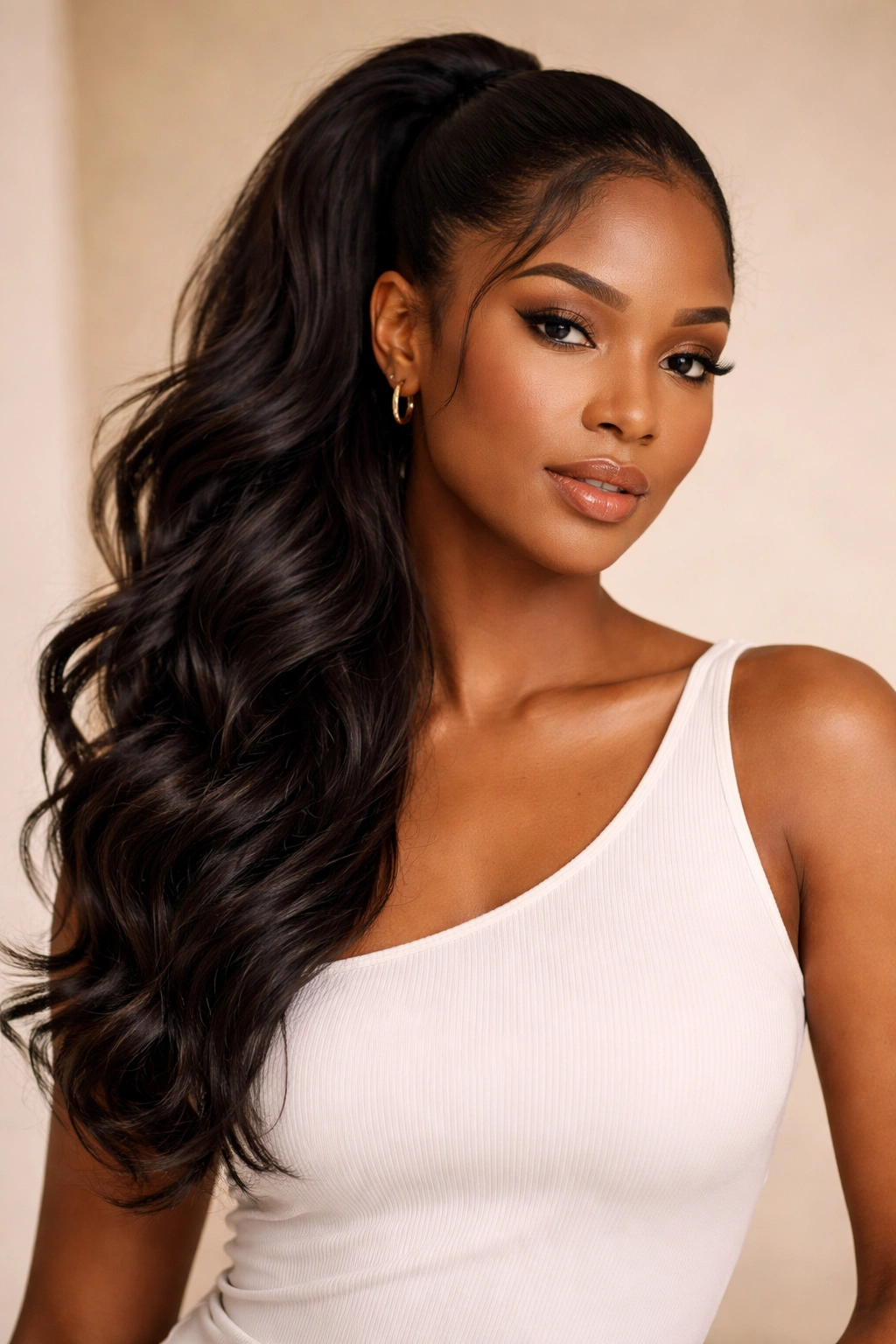
If you want the length to stay visible, toss the ponytail over one shoulder. Simple. That one move turns a basic tie-back into something with shape and attitude.
The best version starts with a low or mid-height base, then the tail is drawn forward so it rests against the collarbone. Long wavy hair loves this position because the movement shows. The waves can pool over the shoulder instead of disappearing down the back.
What makes it look finished
- Keep the base smooth and the tail loose.
- Add one curled face-framing piece if the front feels too severe.
- Use a medium-hold spray so the style moves but doesn’t frizz out.
- Leave the ends soft; bluntly straight ends can look out of place here.
This is the ponytail I’d pick for a dress, a blazer, or a simple fitted top. It does enough without asking for a lot.
5. Bubble Ponytail With Long Waves
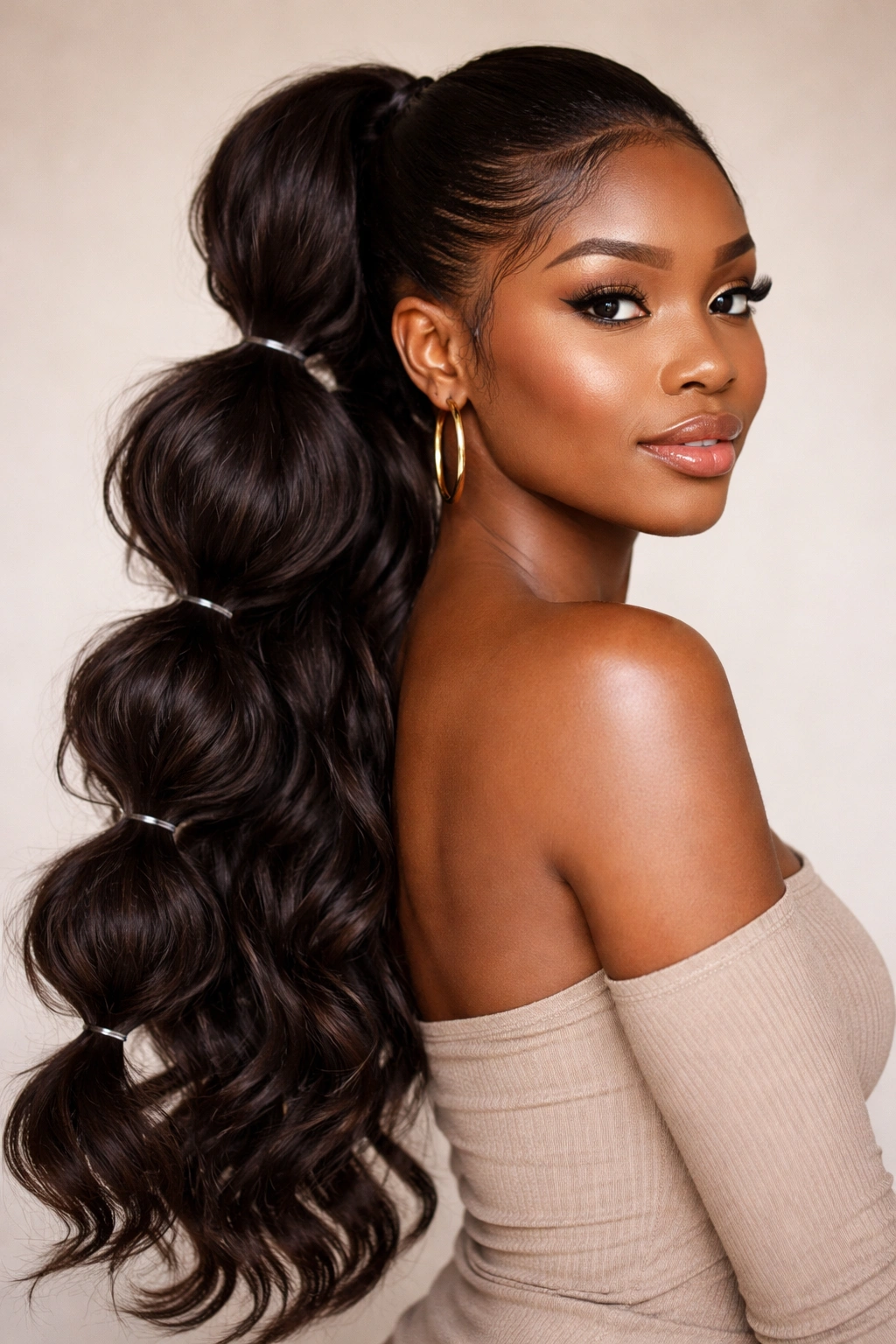
Bubble ponytails have a playful rhythm that works especially well on long hair. The trick is spacing. Too close together and the bubbles collapse. Too far apart and the shape looks accidental.
After the base ponytail is secured, add small elastics every 2 to 3 inches down the tail. Then gently tug each section outward until it rounds. Don’t overdo it. The shape should read as full, not puffed into a balloon.
A wave pattern makes this style better. The curves in the hair soften the hard lines of the elastics, so the whole thing feels less costume-like. If the hair is very silky, a little dry texture spray at the ends helps the bubbles hold.
The cleanest bubble ponytails always keep the top section smooth. That contrast is the whole point.
6. Wrapped Ponytail With Hidden Base
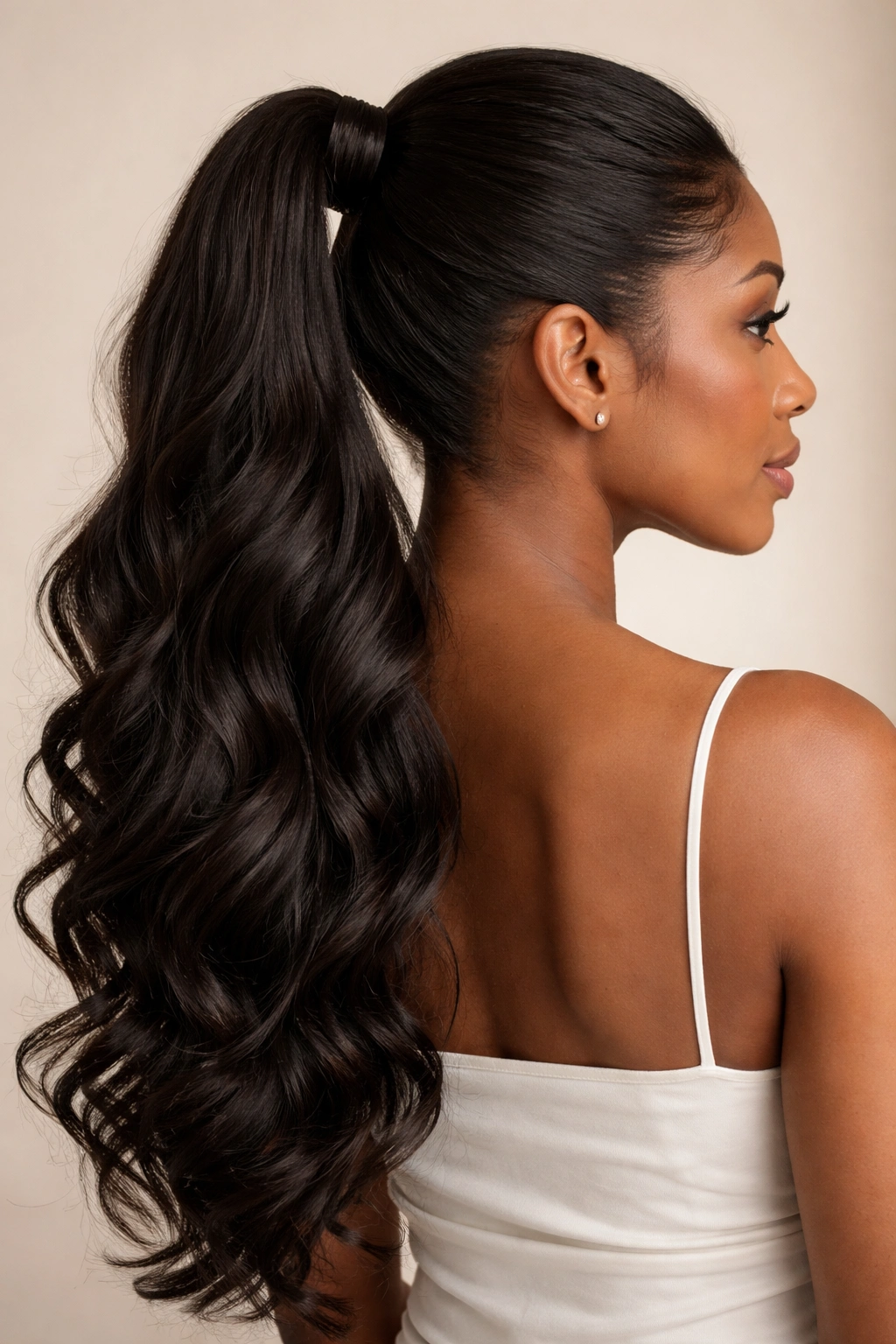
Unlike a ponytail with a visible elastic, a wrapped base hides the mechanics. That tiny detail can make even a simple ponytail feel more considered.
Take a slim strand from underneath the ponytail and wind it around the band until the elastic disappears. Secure the end under the base with a bobby pin pushed upward, not sideways. Sideways pins slip faster than people expect.
A wrapped ponytail is especially useful when the hair is long and wavy because the tail itself already carries enough texture. You do not need accessories fighting for attention. The wrap gives the style a clean finish and lets the waves stay in charge.
This is a smart choice for work, dinner, or any day when you want the hair to look intentional without looking stiff. It’s tidy. That’s the appeal.
7. Half-Up Ponytail With Loose Waves
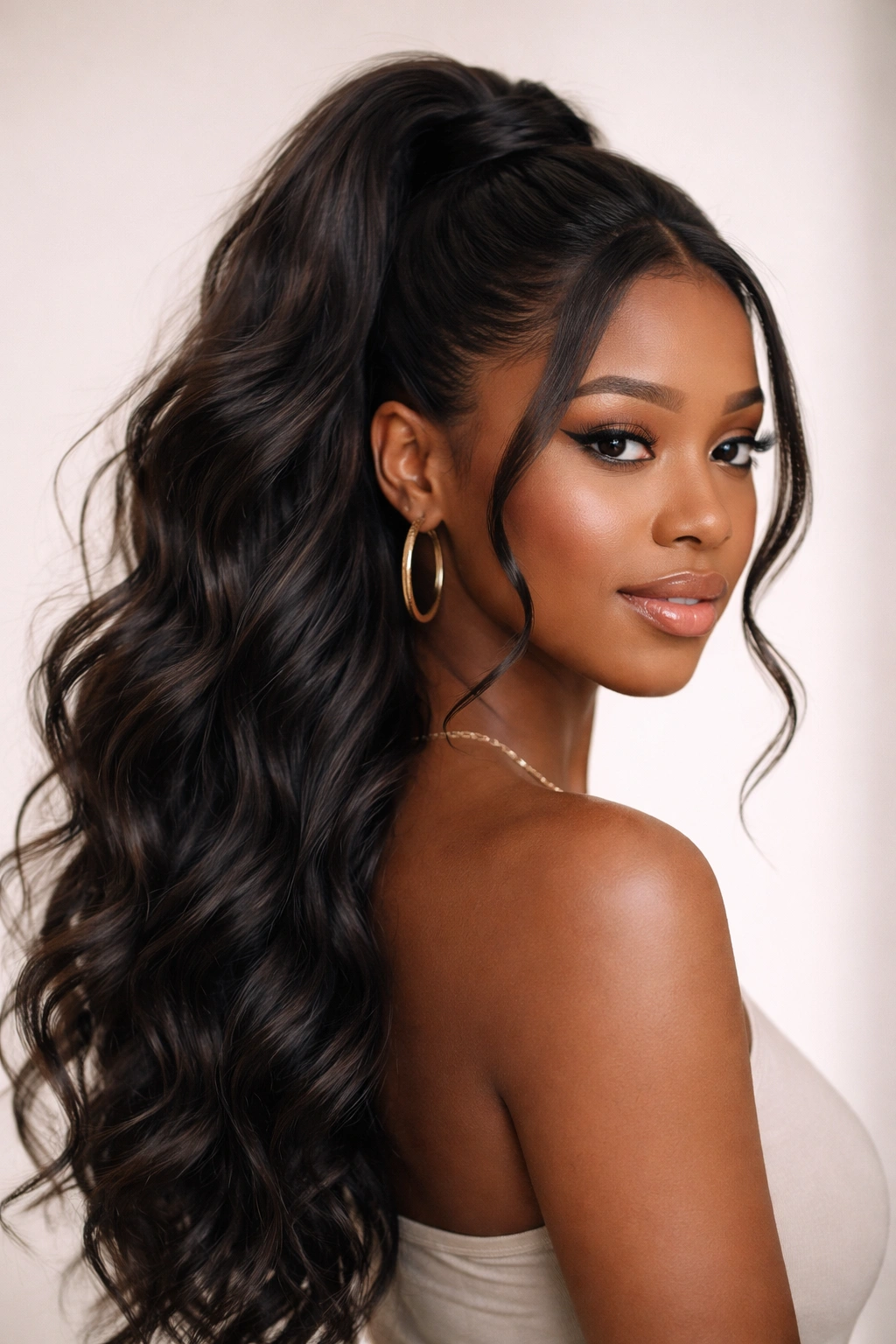
Half-up ponytails are the easiest way to clear the face and keep the length visible at the same time. On long wavy hair, that matters. You get lift at the crown and movement everywhere else.
Why it works so well
The top section gives you a little structure, but the lower half keeps the softness. If the hair is heavy, leave out more from the bottom than you think you need. A half-up style can look cramped when too much hair is pulled into the top tie.
A small clawless section at the crown, around the width of your temples, is usually enough. Pull it back, secure it, and let the rest fall. The result feels easier than a full ponytail but more polished than wearing it down.
This style is also kind to waves that start dropping by midday. Since only the top is tied, the lower lengths can keep their curve longer.
8. Feed-In Cornrow Ponytail
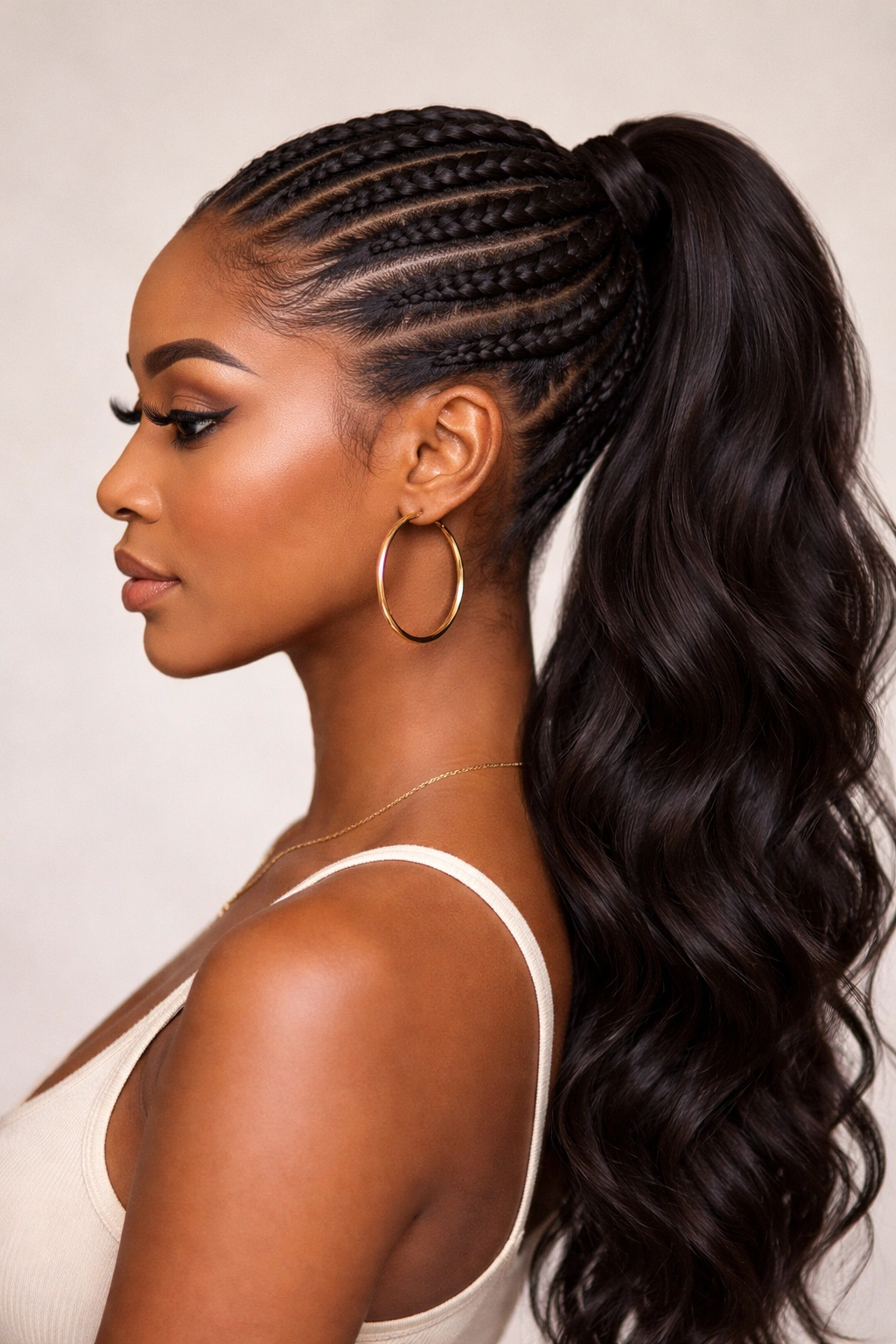
What makes feed-in cornrows such a smart ponytail base? Longevity. The braids keep the front neat, and the ponytail comes from a base that already looks finished.
Feed-in braids start small and build gradually, so the scalp line looks cleaner than a thick braid dropped in all at once. Four to six braids is a common sweet spot for this kind of ponytail, though the exact number depends on how much hair you want visible at the front.
- Moisturize the scalp lightly before braiding.
- Ask for tension that feels snug, not sharp.
- Tie the ponytail low, mid, or high depending on how much face lift you want.
- Let the wavy tail stay loose so the style doesn’t become too rigid.
This one is for the days when you want structure. A lot of it.
9. Two-Tier Stacked Ponytail
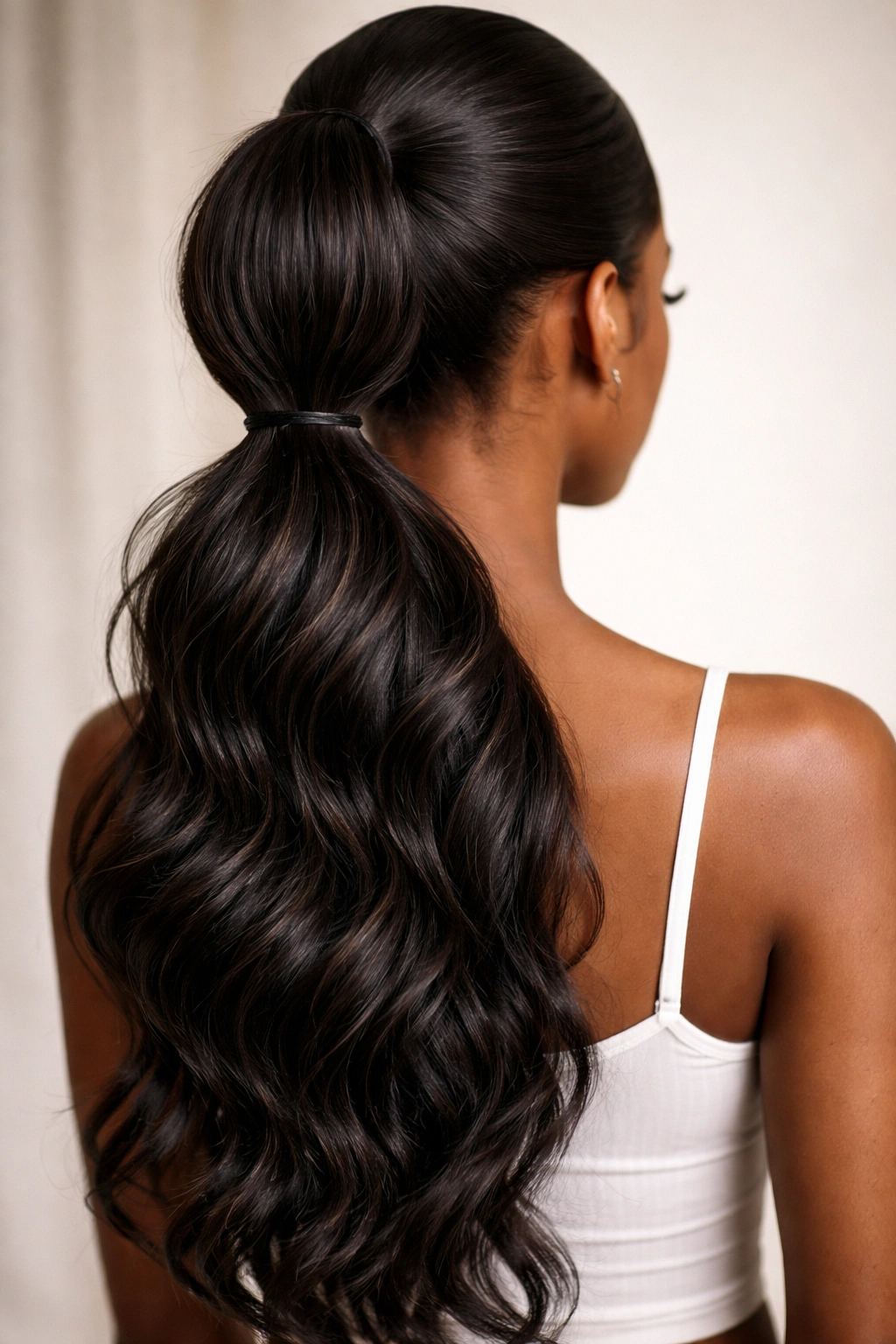
A stacked ponytail gives you two focal points instead of one, and that changes the silhouette fast. The top section sits at the crown, then a second tie secures the lower section a few inches beneath it.
The effect is longer and fuller than a single ponytail, especially on long wavy hair where the lengths already have some body. It also helps if the hair is thick. One elastic can feel like too much weight on its own. Two points of support spread that out.
You can keep the stacks sleek or let them sit slightly looser for more volume. The style lands somewhere between playful and sharp, which is why it works for both casual clothes and dressier outfits.
Place the second tie about 3 to 5 inches below the first. Closer than that, and the shape gets cramped.
10. Braided Crown Ponytail
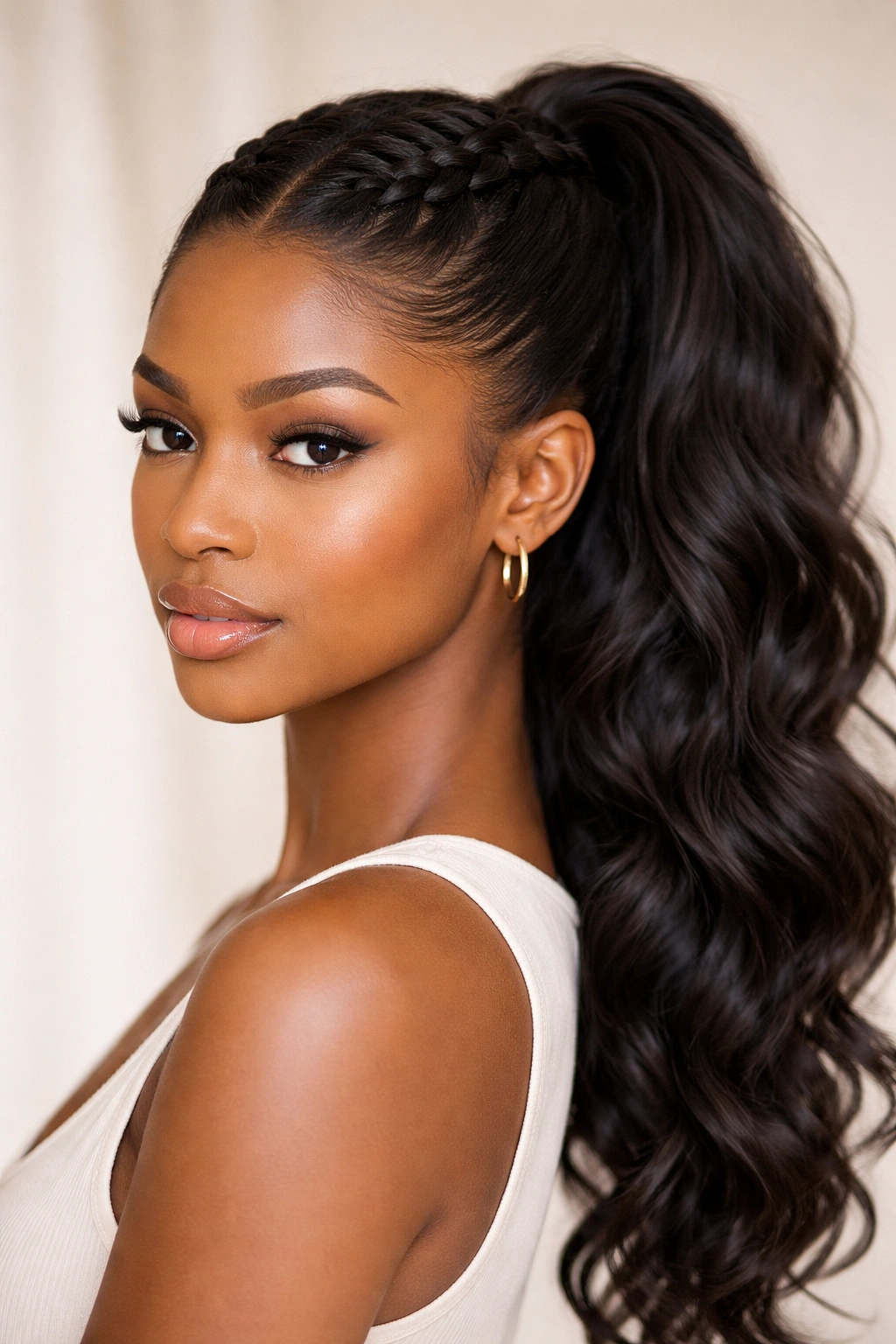
A braided crown ponytail gives the front enough detail to feel special without turning the whole head into a braid-heavy style. That balance is nice.
The crown braid can run along the hairline from one temple to the other, then disappear into the ponytail base. A single braid is enough. If you add too many, the look starts feeling busy and the waves in the tail lose their place.
What to ask for
- A braid that sits flat enough to keep the front clean.
- A ponytail base hidden just below the crown line.
- A tail left wavy, not brushed into submission.
- A light hold product so the braid doesn’t frizz out at the sides.
This is a smart look for long days when you need the front secure but still want a soft finish through the lengths. It has control without the hard edge.
11. High Ponytail With Swooped Bang
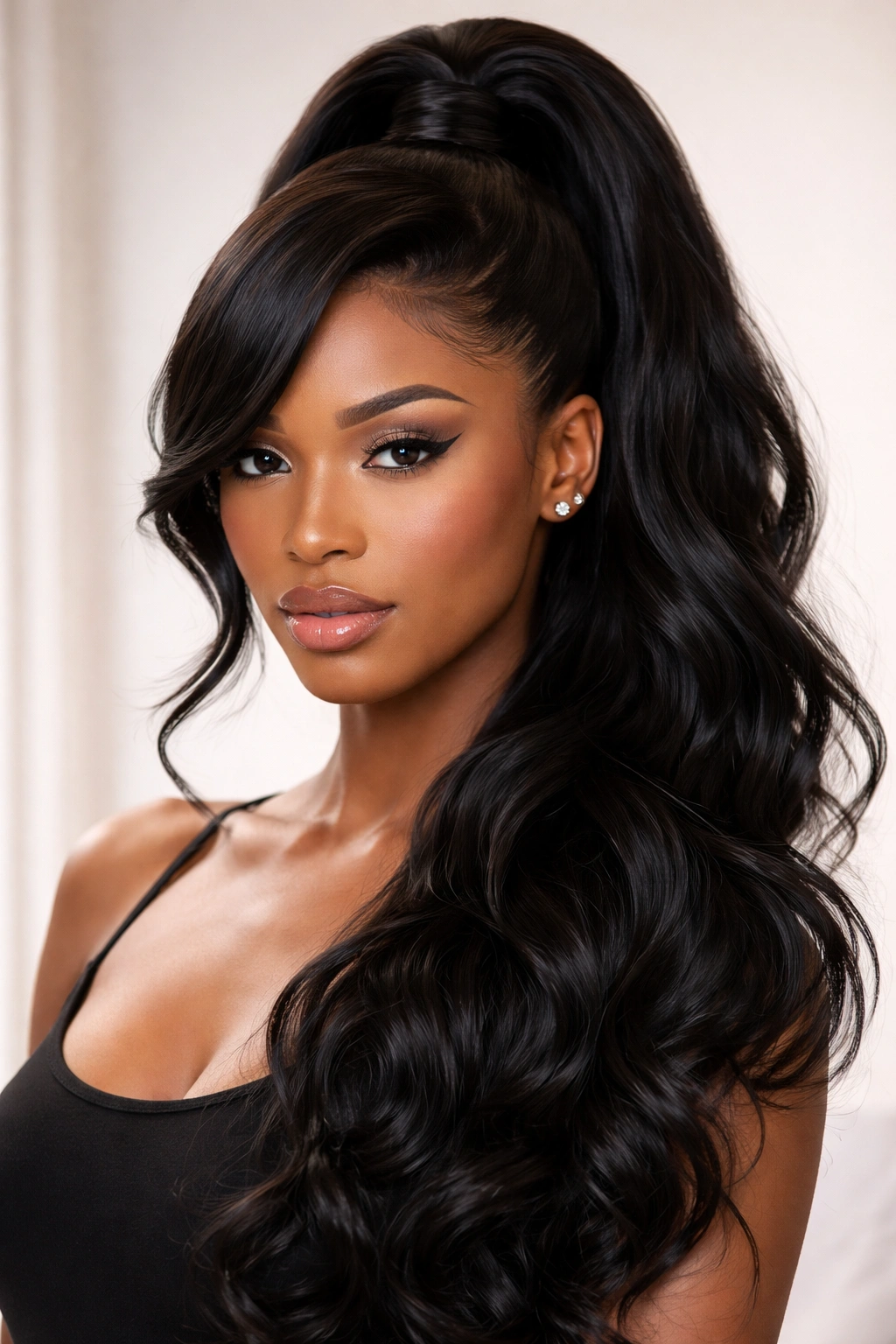
A high ponytail with a swooped front piece can change the whole balance of the face. It pulls the eyes upward, but the bang keeps the look from feeling severe.
The swoop should be deliberate, not thin and wispy by accident. Leave enough hair out at the front to create a clean curve from the side part into the ponytail. If the front piece is too small, it tends to separate and frizz faster.
The tail itself can be glossy and smooth, then left wavy from the middle down. That contrast looks good on Black women with long hair because it frames the features and keeps the style from reading flat.
I like this one when the outfit is simple. The hair does the talking.
12. Low Nape Ponytail With Face-Framing Tendrils
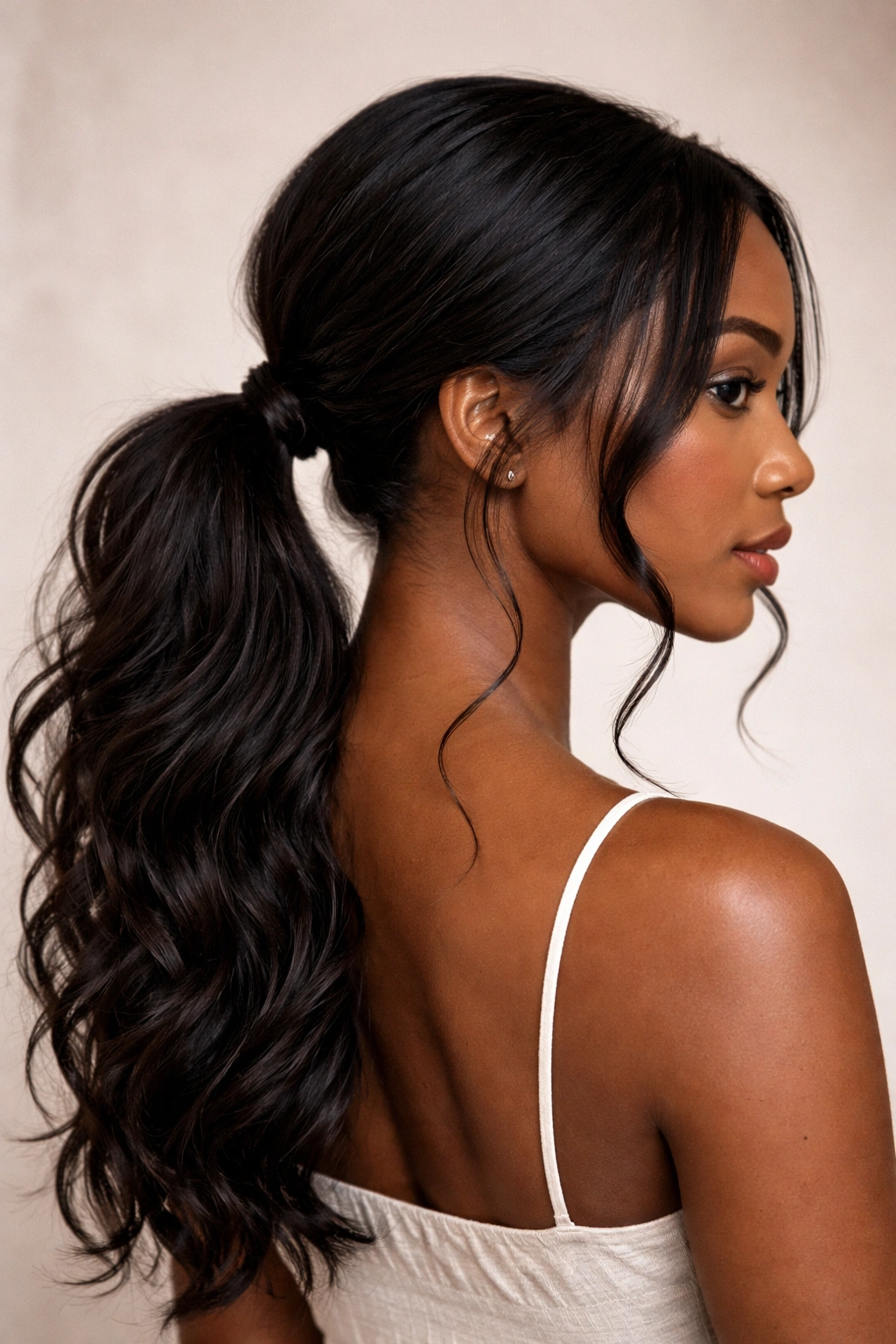
A low nape ponytail with loose tendrils is softer than the stricter center-part version. It feels relaxed, but not lazy. There’s a difference.
The front pieces should be thin enough to curl, around the width of a pencil or a little wider, but not so thin that they disappear into the face. One piece on each side is often enough. If you want more softness, leave two on one side and one on the other. That unevenness can look more natural than perfect symmetry.
Because the ponytail sits low, the waves get a chance to fall with weight. This is a good match for long hair that already has a silky bend. A little curling wand work on the tendrils helps, but the tail itself can stay loose.
13. Twisted Temple Ponytail
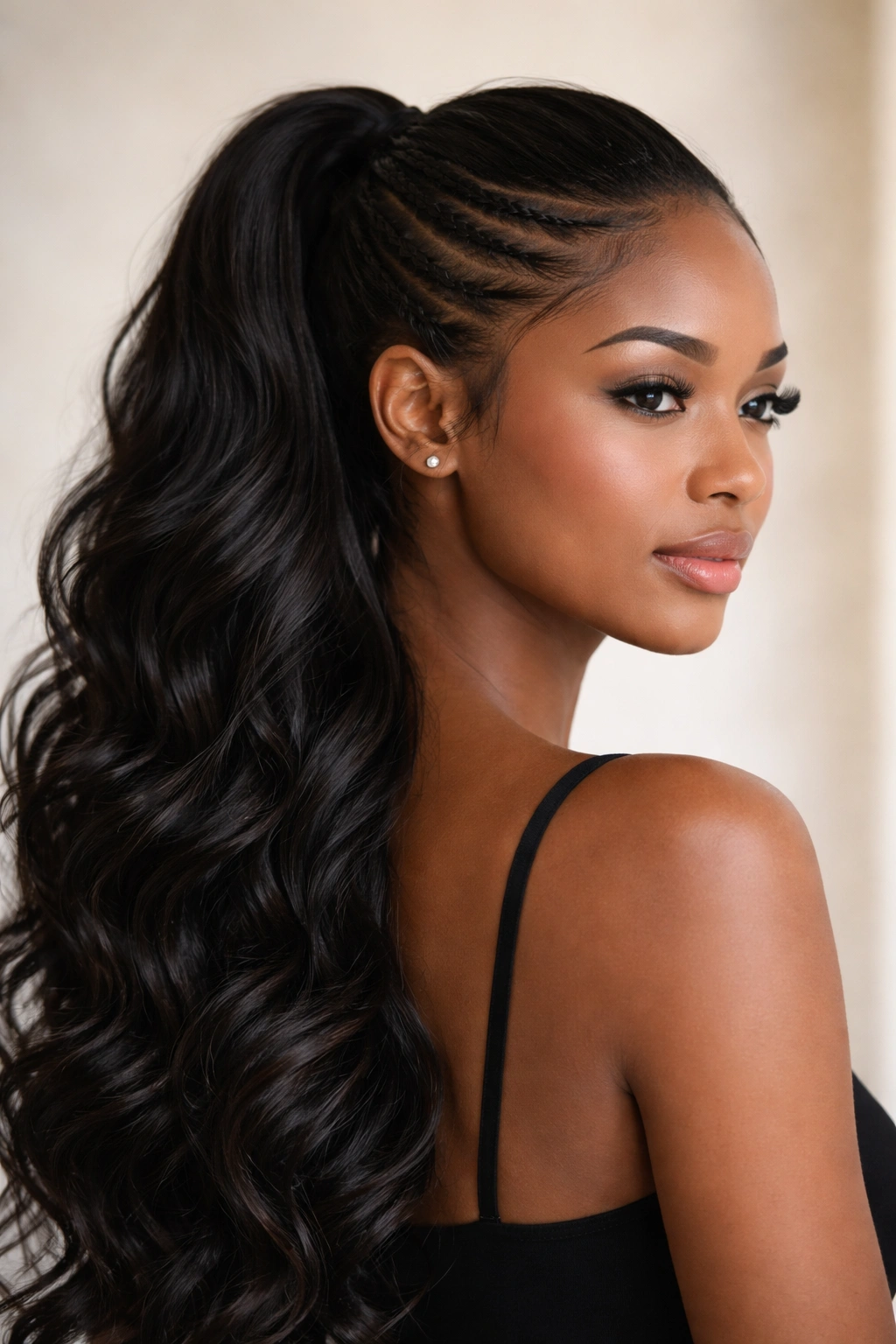
Flat twists at the temples give a ponytail a stronger front without making it feel overdone. That’s the charm here. Small details, real payoff.
Why twists make sense here
Twists keep the hairline tidy and create clean lines leading into the base. They also help if the front layers tend to puff or separate. A pair of flat twists from the temples back into the ponytail gives the style a neat shape before the tail even starts.
The rest of the hair can stay wavy and loose. That mix matters. If everything is twisted or slicked, the look loses the softness that makes long wavy hair shine.
A good version uses two to four twists total, depending on how busy you want the front to feel. More than that, and the style starts to compete with itself.
14. Wet-Look Ponytail
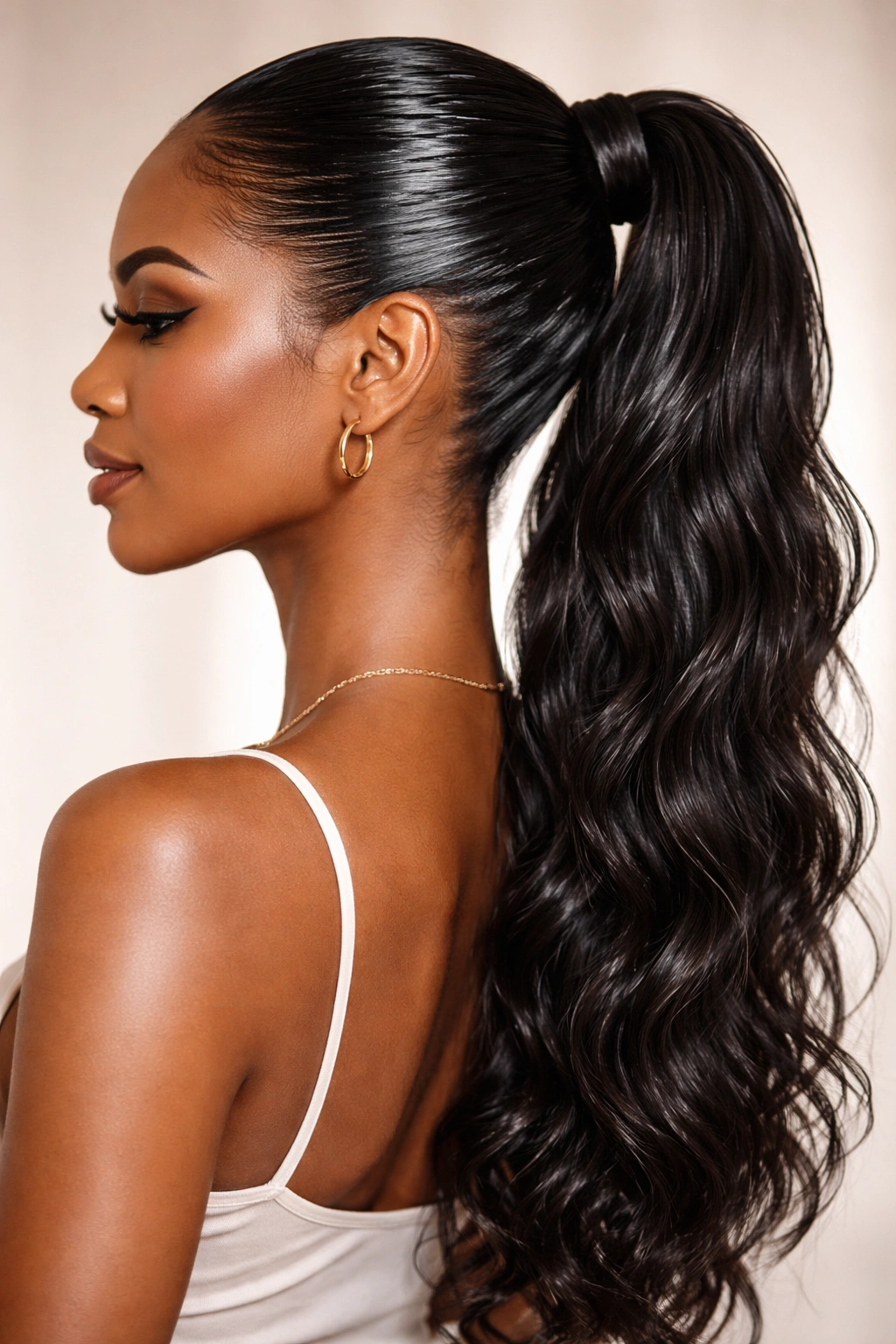
The wet-look ponytail is all about shine. Not grease. Shine. There’s a line, and you want to stay on the clean side of it.
Use gel at the roots, then smooth a light layer of mousse or styling cream through the top section so it lays flat without turning crunchy. The ponytail itself should look damp and glossy near the base, with the lengths still holding wave and movement. If the whole tail is flattened out, the style loses depth.
The key is the contrast between slick roots and textured ends. Black women with long wavy hair can wear this look beautifully because the texture keeps the ponytail from feeling too severe. It has shine, but it still has life.
Flaky gel ruins it fast. Choose a formula that dries clear and keeps the scalp looking clean.
15. Flipped-End Ponytail
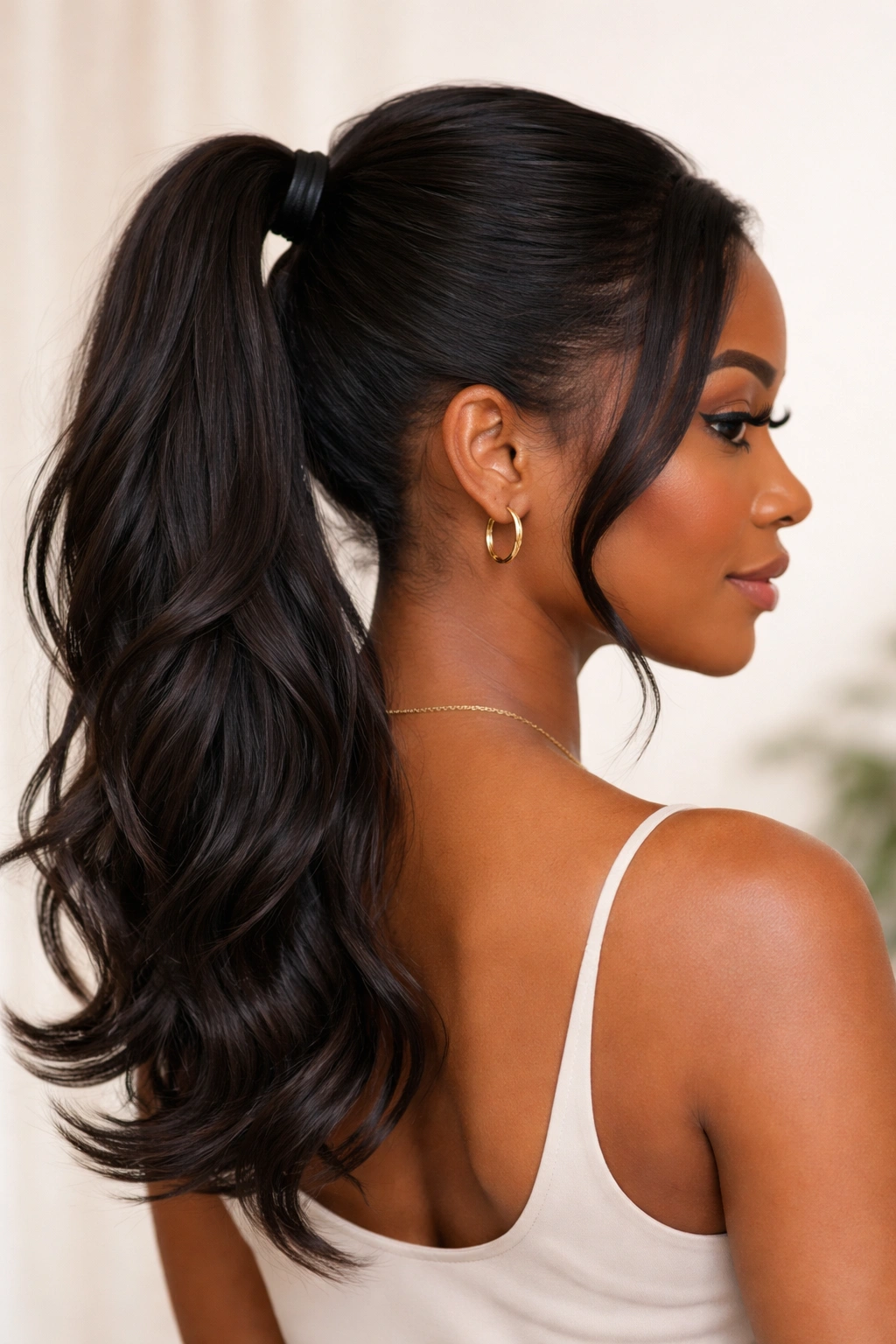
Why do flipped ends feel fresh? Because they give the ponytail a little lift at the very bottom, which makes the whole shape feel lighter.
The easiest way to get the effect is with a medium-barrel curling iron or wand on the last 2 to 3 inches of the tail. Curl the ends outward rather than under. If the waves are already there, a quick brush-out and a light bend at the ends can be enough.
This works especially well with mid-height and low ponytails, where the tail hangs in clear view. It’s a small detail, but it keeps the style from looking heavy or overly straight. And on long hair, heavy is the enemy.
I’d call this one quietly stylish. It doesn’t shout. It doesn’t need to.
16. Textured Low Ponytail With Loose Volume
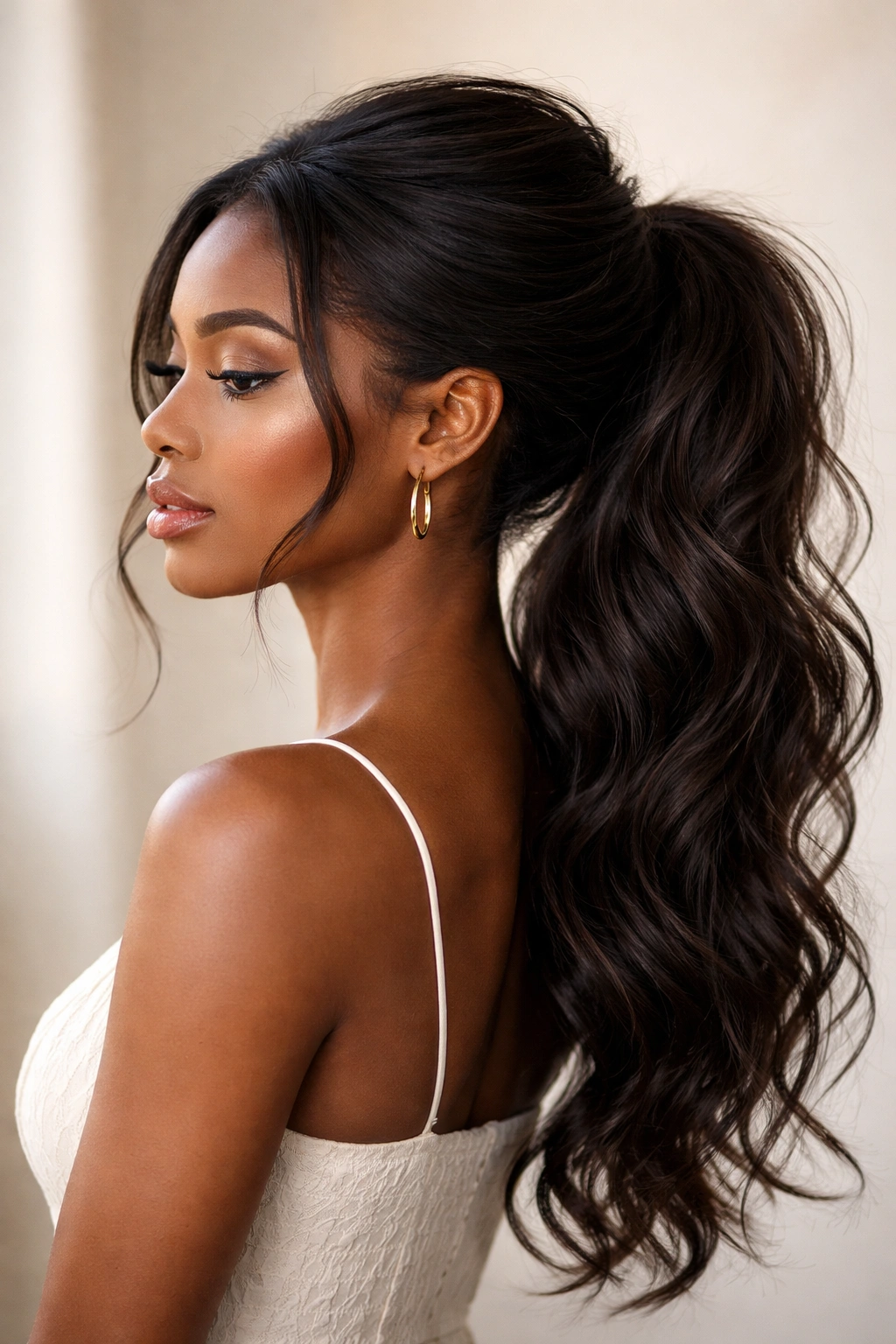
A textured low ponytail is what happens when you stop trying to make every strand obey. The root stays controlled, but the crown has a little body, and the tail keeps its natural-looking wave.
A tiny bit of backcombing at the crown — just enough to create lift, not a nest — helps the style avoid collapsing. Then smooth the outer layer over that base so the volume stays hidden. A texture spray at the mid-lengths can keep the waves from falling flat by midafternoon.
This one works when you want a softer finish than a tight sleek ponytail. It reads more relaxed, more lived-in, and a little more romantic. That doesn’t mean messy. It means the hair keeps some air in it.
The crown should feel full, not puffy. That’s the line to watch.
17. Braided Base Ponytail
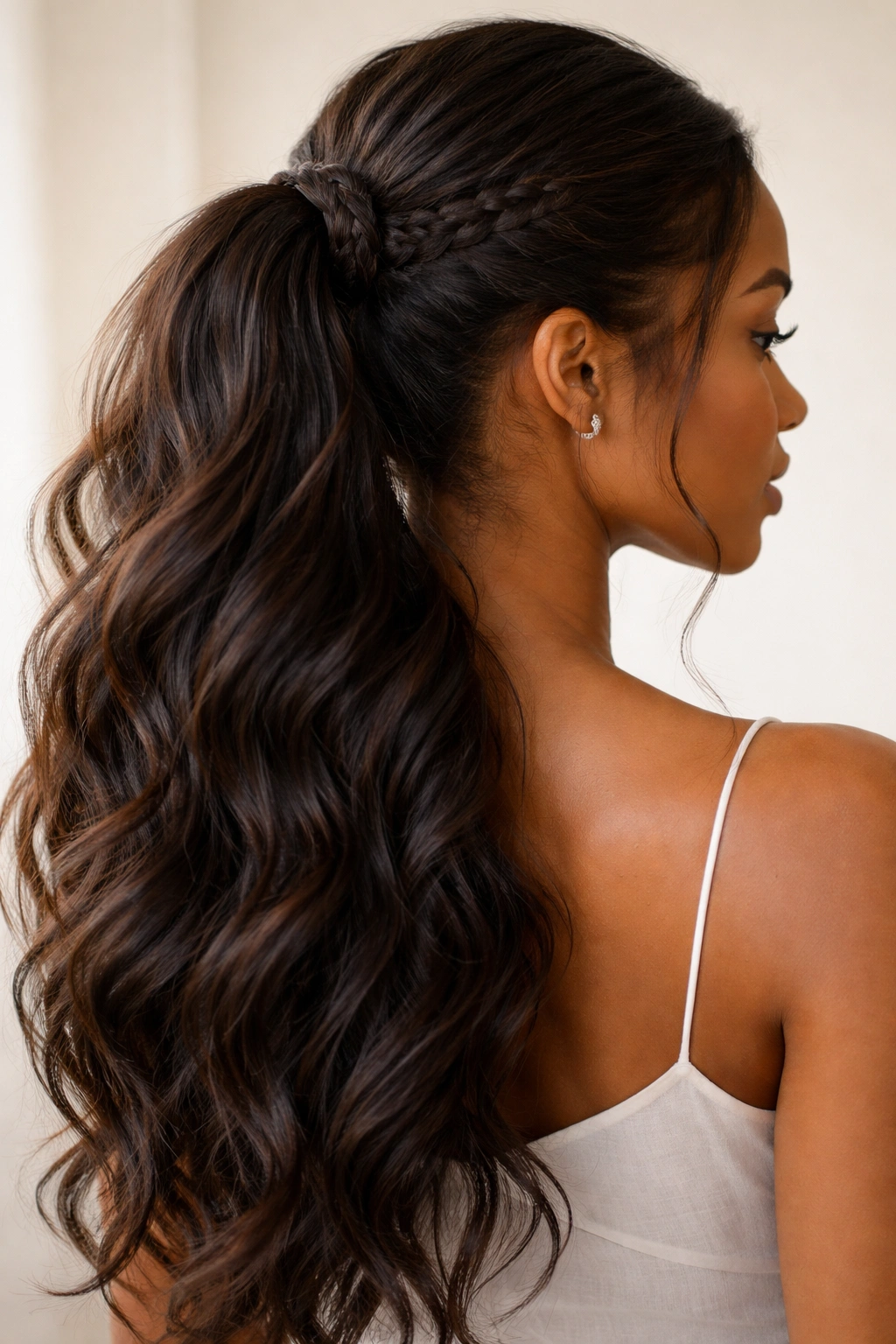
A braided base ponytail starts with control and ends with movement. The first few inches are braided, then the rest of the length falls into waves. Clean at the top, loose at the bottom.
This is a smart move if your ponytail tends to slip. The braid gives the elastic something firmer to hold onto. It also adds a nice visual break, which can be useful if the hair is very long and one solid sweep feels too plain.
The braid doesn’t need to be large. A simple three-strand braid, just long enough to anchor the base, does the job. Then let the remaining hair flow. The contrast is what makes it work.
This style sits in a sweet spot between casual and dressed-up. It’s easy to wear, but it doesn’t look basic.
18. Ponytail Tied With a Scarf
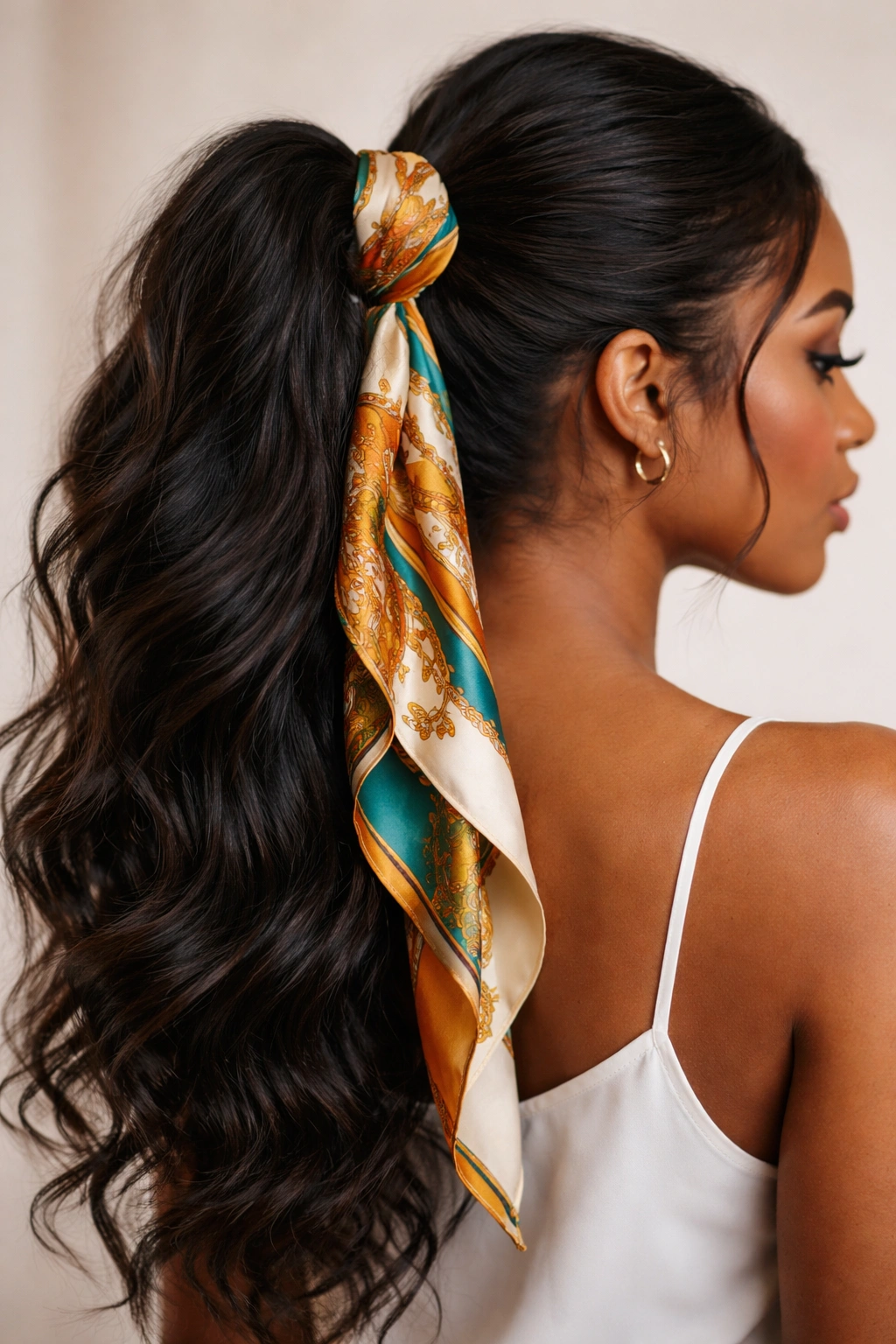
Unlike jewelry-heavy styles, a scarf adds color and texture without clutter. That’s why it works so well on long wavy hair. It gives the base something interesting to do.
Use a silk or satin scarf about 2 to 3 inches wide if you want a neat wrap. A wider scarf reads more dramatic and casual. Tie it around the base, let the ends trail a little, and keep the knot off-center if you want the look to feel less stiff.
Choosing the right scarf
- Satin gives the smoothest finish.
- Cotton looks more casual and matte.
- A narrow scarf keeps the ponytail shape visible.
- A printed scarf works best when the outfit stays simple.
This is one of those styles that can fix a plain ponytail in 30 seconds. Fast. Easy. Useful.
19. Ponytail With Gold Cuffs
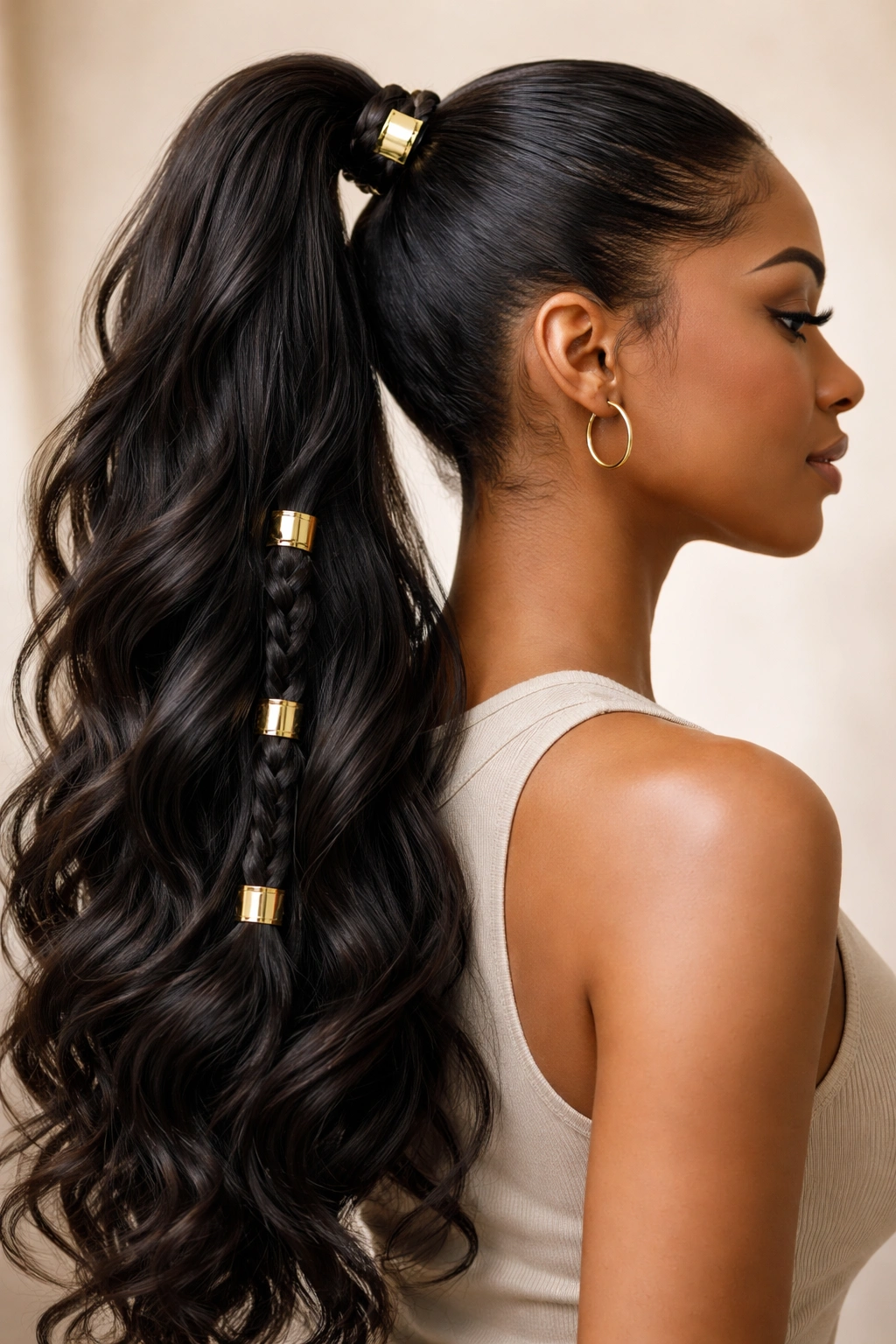
Gold cuffs can make long waves feel deliberate in a single glance. Not flashy. Just finished.
The cuffs work best when placed on a small braid or along the wrapped base, not scattered all over the ponytail. Three cuffs is usually enough. Four if the braid is long. More than that, and the accessories start fighting the hair instead of supporting it.
How many is enough?
A good rule is one cuff near the base, one in the middle section if the tail has a braid, and maybe one near the end. That spacing keeps the eye moving down the style without making it look crowded.
This ponytail is a nice option when you want a little shine and don’t want to touch the wave pattern itself. The accessories bring the detail. The hair brings the shape.
20. Faux-Hawk Ponytail
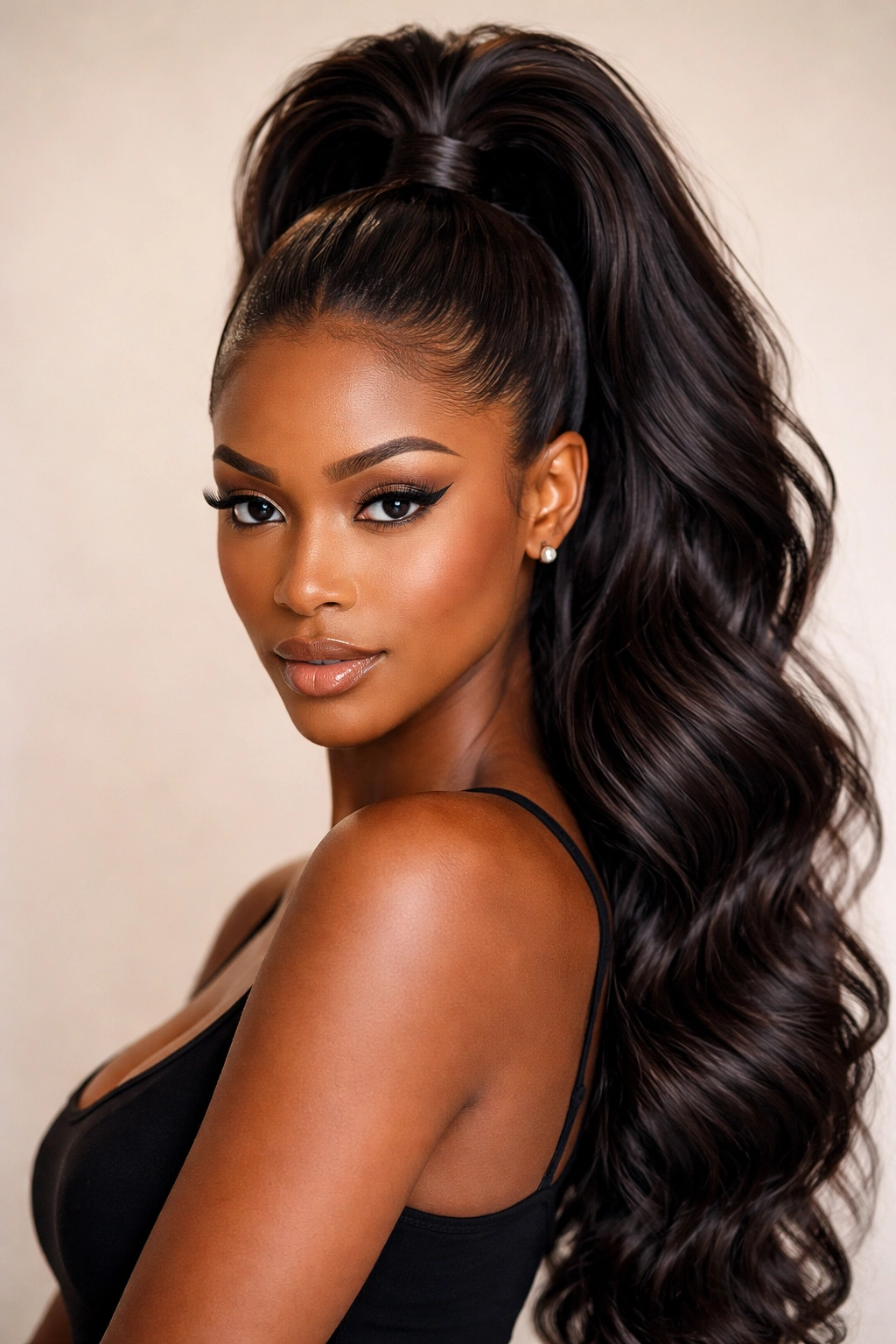
Can a ponytail feel sharp and soft at the same time? Yes, if you build it like a faux-hawk.
The sides stay slicked or braided close to the scalp, while the center strip is gathered into a high or mid ponytail. The result creates height through the middle of the head, which gives long wavy hair a bolder outline.
A center strip about 2 to 3 inches wide is enough for most versions. Wider than that, and the faux-hawk gets bulky. Narrower, and the shape loses strength. Keep the ponytail tail loose and wavy so the top doesn’t feel too hard.
This is one of the stronger styles on the list. It’s not shy. It looks best when you commit to the shape.
21. Double Bubble Ponytail
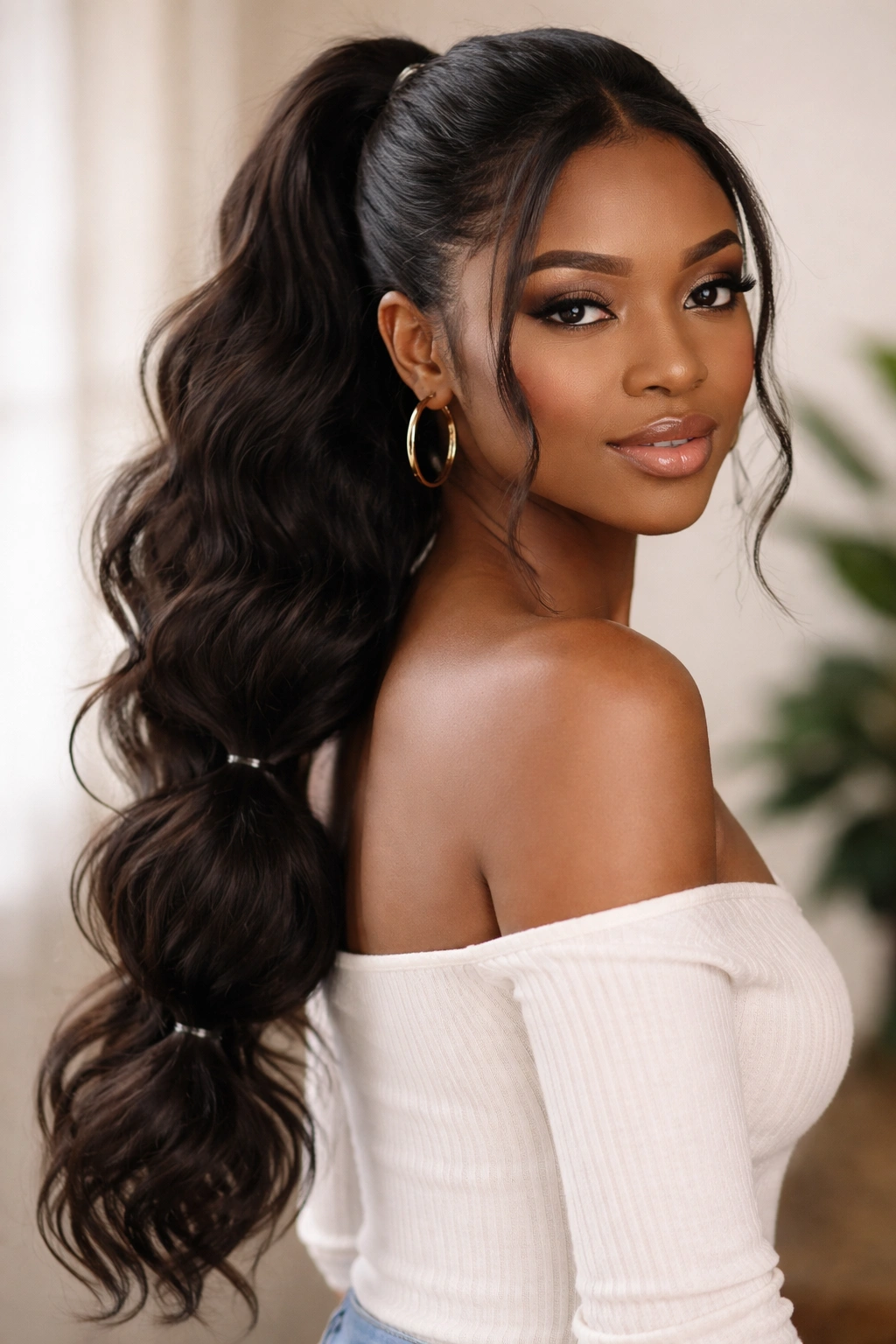
A double bubble ponytail gives you two rounded sections stacked down the length, and the spacing is what makes it work. The top bubble should be fuller than the lower one. That creates balance instead of repetition.
Start with one ponytail, then tie a second elastic several inches below it. Puff the first section gently, then repeat with the lower section. Long wavy hair helps here because the wave pattern softens the round edges and keeps the bubbles from looking stiff.
Bubble spacing that looks right
- Leave 2 to 3 inches between elastics.
- Pull each section outward evenly on both sides.
- Keep the crown smooth so the volume stays intentional.
- Use small clear elastics if you want the bands to disappear.
This style has a playful side, but it still works on grown-up outfits. That mix is the fun part.
22. Side Braid Accent Ponytail
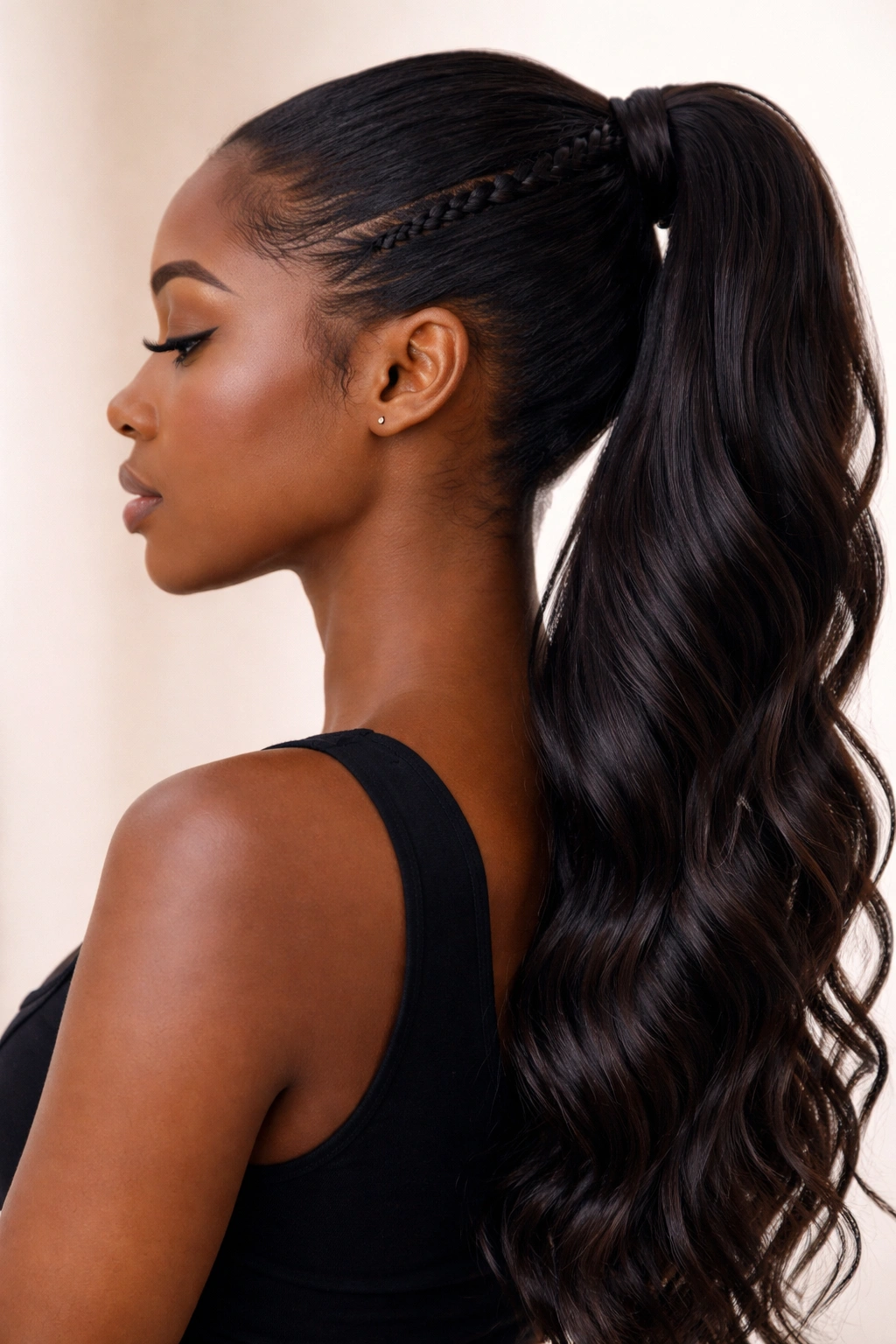
A small braid feeding into the side of a ponytail gives the style a quiet point of interest. It’s not loud. It just keeps the eye moving.
The braid can start at the temple, disappear behind the ear, and then join the ponytail base. You can keep it thin or make it a little wider if you want it to stand out. With long waves, the accent braid helps the front look planned without taking over the whole style.
I like this one for days when the ponytail needs a detail but not a full makeover. A braid of only a few inches can make the difference between “hair tied back” and “hair styled.”
Place the braid where the ponytail will naturally sit. That keeps the join clean.
23. Segmented Elastic Ponytail
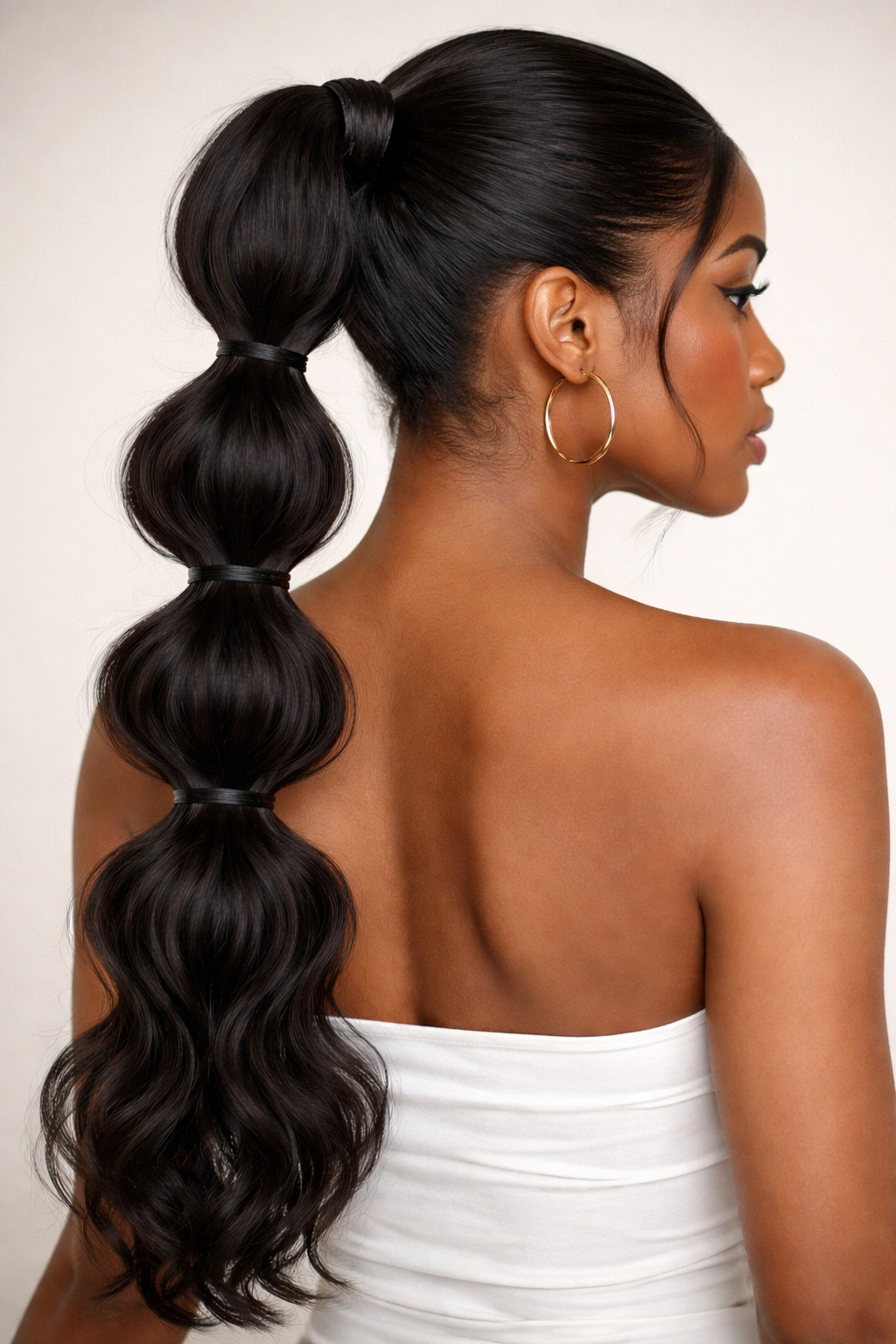
A segmented ponytail looks related to the bubble ponytail, but the feel is different. The sections stay more defined and less puffed, almost rope-like in places.
Instead of tugging each section outward, keep the lengths sleeker and use elastics to mark the divisions. This works well when the hair is long and wavy but not overly thick. The shape stays tidy, and the waves still show through the open spaces between the ties.
The spacing can be tighter than a bubble style — about 1.5 to 2 inches between bands is often enough. That gives the tail a neat, structured rhythm without making it bulky.
This is the sort of ponytail that looks better in person than it does in a rushed mirror photo. The lines matter.
24. Voluminous Cloud Ponytail
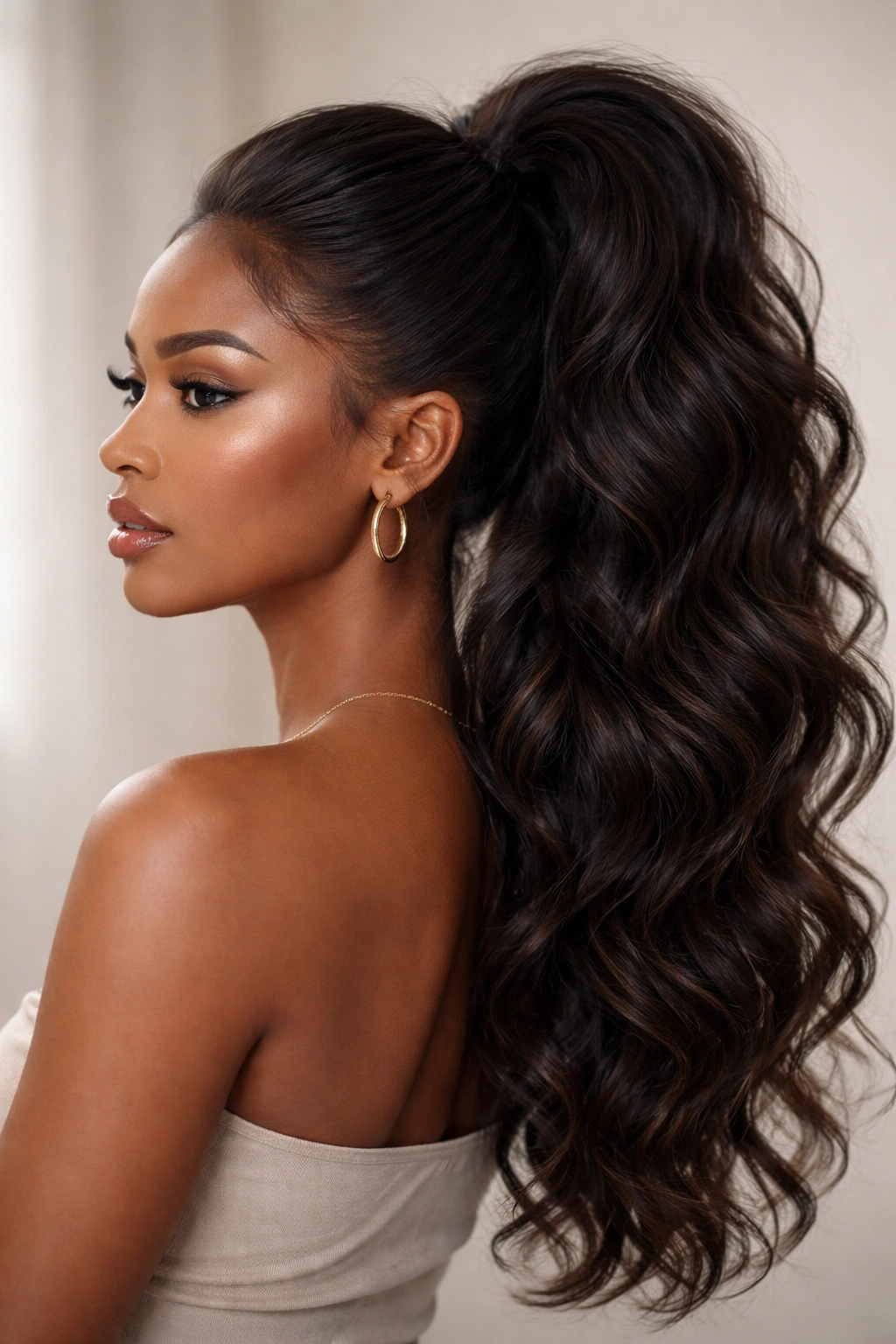
A cloud ponytail is for people who want body first and polish second. The crown has lift, the tail stays full, and the wave pattern gets to stay a little wild.
A light teasing at the roots gives the ponytail height, but don’t go back over it with a hard brush. That’s how the volume collapses. Smooth the top layer gently, set the elastic, then loosen the crown with your fingers. The goal is soft fullness, not helmet hair.
Where the lift should sit
- Highest at the crown, not the front hairline.
- Softer at the temples.
- Full through the mid-lengths.
- Loose at the ends so the waves can move.
This style is a little dramatic in the best way. It has presence. It also pairs well with long earrings because the hair stays high enough to show them off.
25. Soft Romantic Ponytail
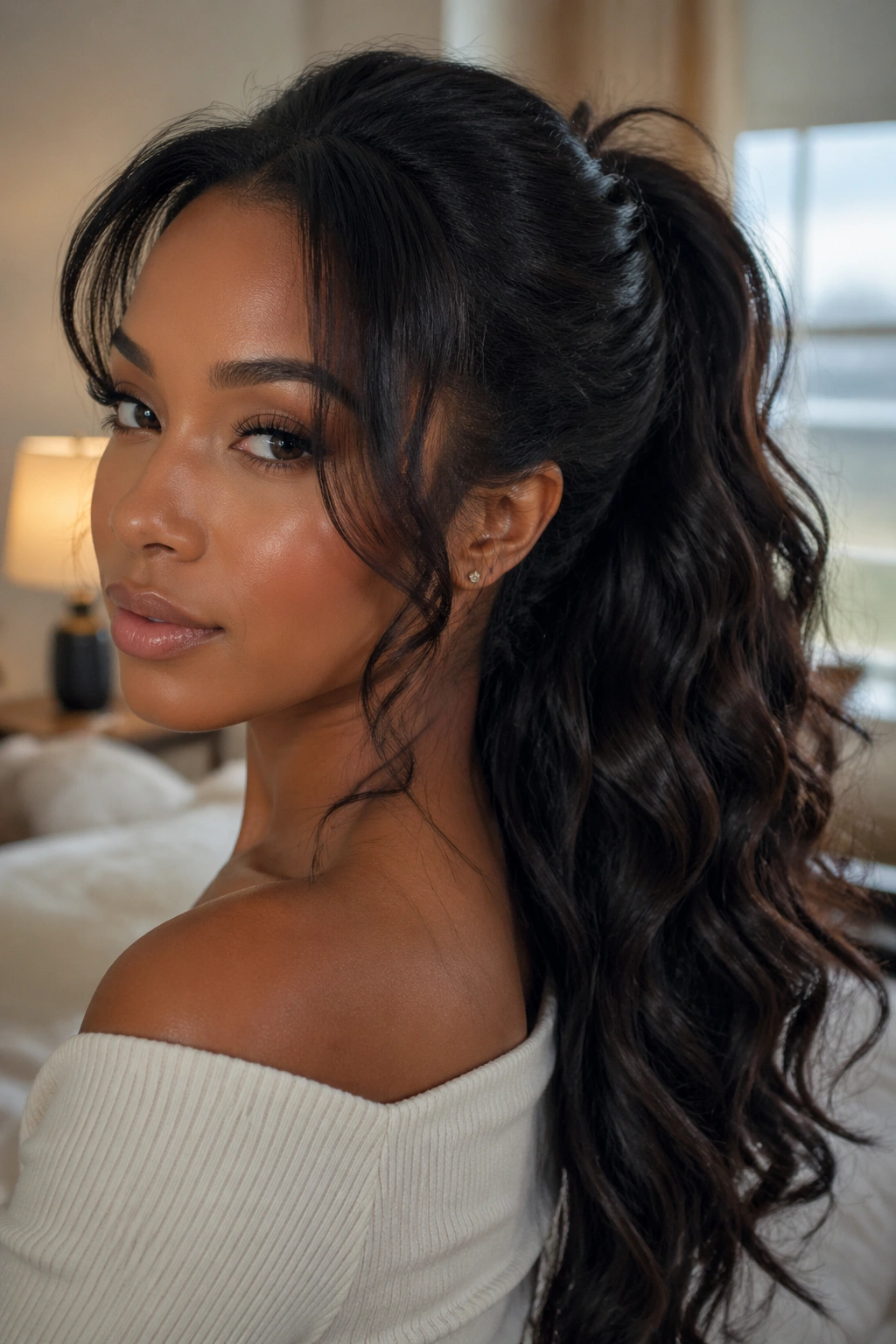
A soft romantic ponytail is the one that looks easiest and still somehow wins the room. The front stays loose enough to frame the face, the base sits neat, and the waves do most of the work.
Leave a couple of tendrils around the temples if the face needs softness. Pull the rest back without flattening every ounce of texture. The tail should fall in big, visible waves, not broken-up little bends. If the ends need help, wrap them loosely around a 1.25-inch wand and let them cool before touching them.
This style works because it respects the hair instead of forcing it into a hard shape. Long wavy hair already carries movement. The ponytail just gives that movement a frame.
A good romantic ponytail doesn’t try too hard. It doesn’t need to.