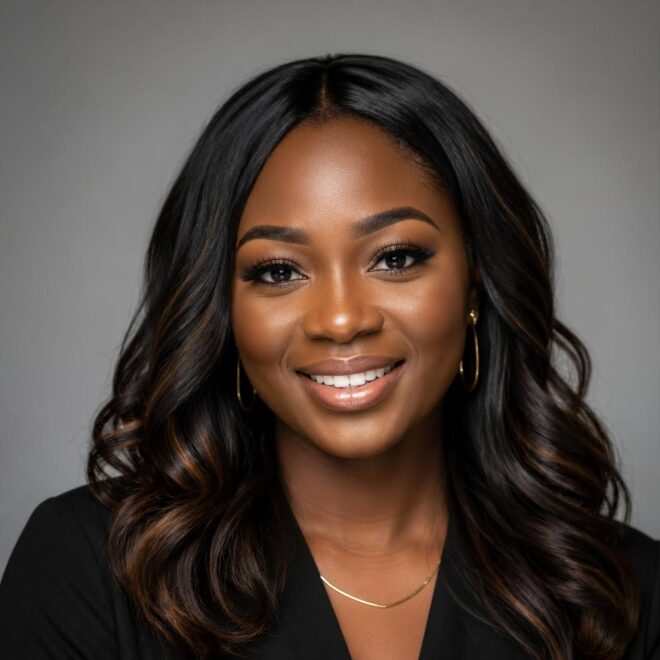


Faux ponytails for locs solve a familiar problem: you want height, swing, and a little drama, but you do not want to drag your roots through a tight, punishing style just to get there.
That balance matters more than people think. With locs, the shape of the ponytail is only half the story; the other half is where the weight sits, how the base is anchored, and whether the style feels secure without making your scalp complain by lunch.
I keep coming back to the same thing when I look at good loc ponytails: the best ones are not overloaded with tricks. They use a clean base, a smart wrap, and one or two details that make the whole style feel finished. A cuff, a scarf, a braid, a bit of curl at the end — those small moves do a lot of heavy lifting.
Some of the styles here are sleek. Some are playful. A few are more polished and a few lean loose on purpose. All of them work because they respect the locs first and the look second.
A quick rule before you pick one: if the style pulls hard at your hairline, it is too much. A good ponytail should feel like support, not a tug-of-war.
1. High Wrapped Faux Ponytail
A high wrapped ponytail gives locs instant lift, and it does it without needing a complicated setup. The shape sits up near the crown, so your face opens up right away. That alone can change the whole mood of a look.
Why It Works
High placement works best when your locs have enough length to drape without fighting the elastic. If the hair is dense, anchor the base with a strong snag-free band first, then add a second elastic a half-inch below it. That little extra step keeps the ponytail from sliding down by noon.
The wrap matters too. Take one loc, or a small section of wrapping hair, and coil it around the base until the elastic disappears. Keep the wrap snug, not tight. Tight wraps make the base bulge. Snug wraps look smooth.
A small metal cuff near the base finishes it off nicely. One cuff is enough. More than that and the style starts to feel busy.
Best When You Want Height Without Fuss
This is the style I reach for when I want the face to look lifted and the neck to stay clear. It works especially well with medium to long locs, and it looks sharp on locs that are already fairly uniform in thickness. If a few locs are heavier than the rest, tuck them toward the back of the ponytail so the front line stays neat.
- Best for medium-to-long locs
- Use two elastics if the locs are heavy
- Wrap with one loc for a clean finish
- Add one cuff, not three
Tip: flip your head upside down only long enough to gather the hair. Do not overdo the tension while you’re there.
2. Sleek Low Nape Ponytail for Locs
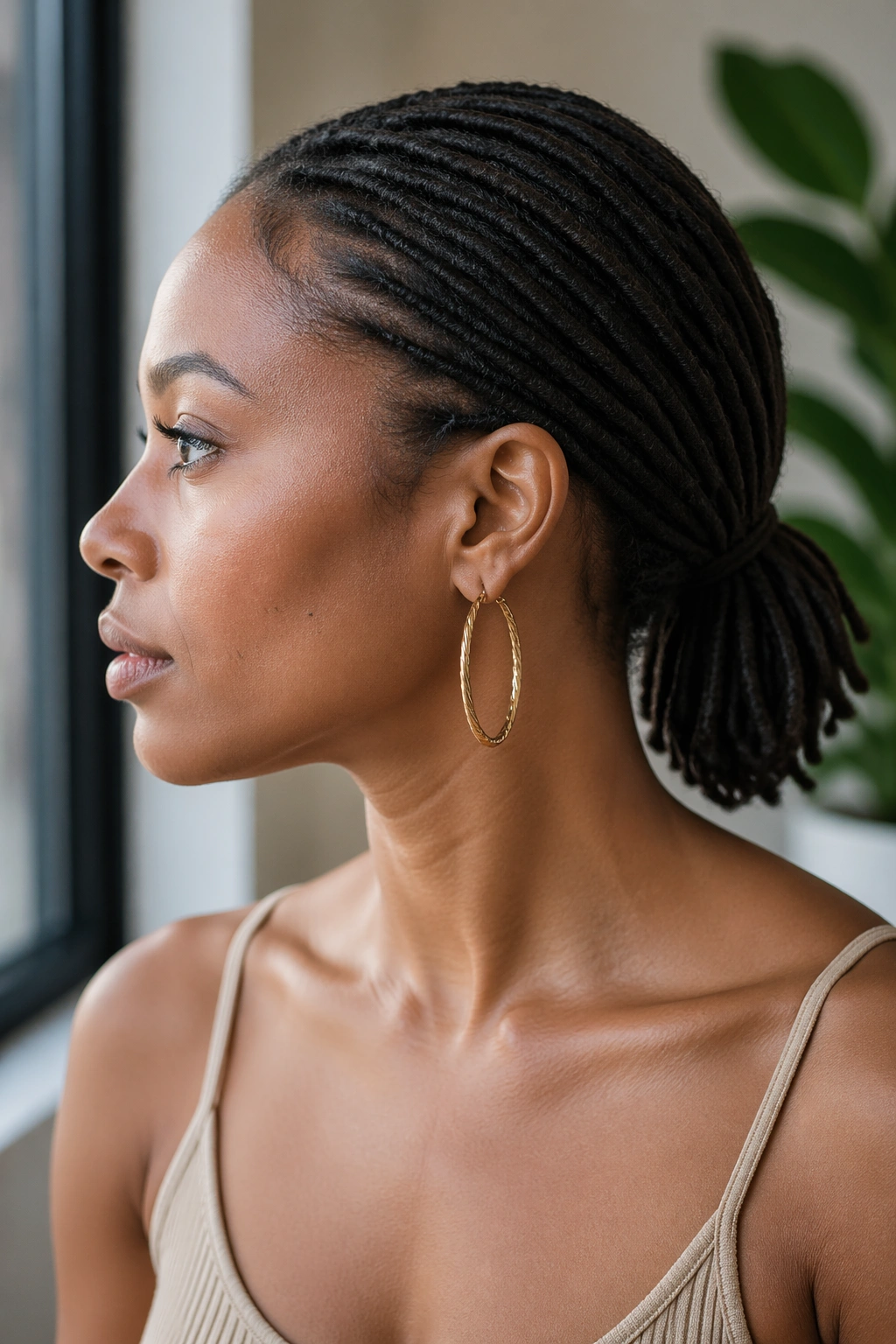
The low nape ponytail is the one I trust when the hairline needs a break. It sits close to the neck, which spreads the weight out in a calmer way than a high style does. On locs, that difference is not small.
This version can be as neat or as soft as you want. A clean center part gives it a sharper shape. A side part makes it feel a little looser and more relaxed. Either way, the key is the same: smooth the roots just enough to look finished, but do not flatten everything into a helmet.
A thin strip of edge control around the front can help, but go easy. Too much product on locs tends to collect dust and create that sticky look nobody asked for. A light mist of water or a small amount of lightweight mousse is usually enough.
What I like most here is the posture of the style. It sits back, stays calm, and lets the locs do the talking without shouting over them.
3. Bubble Ponytail for Locs
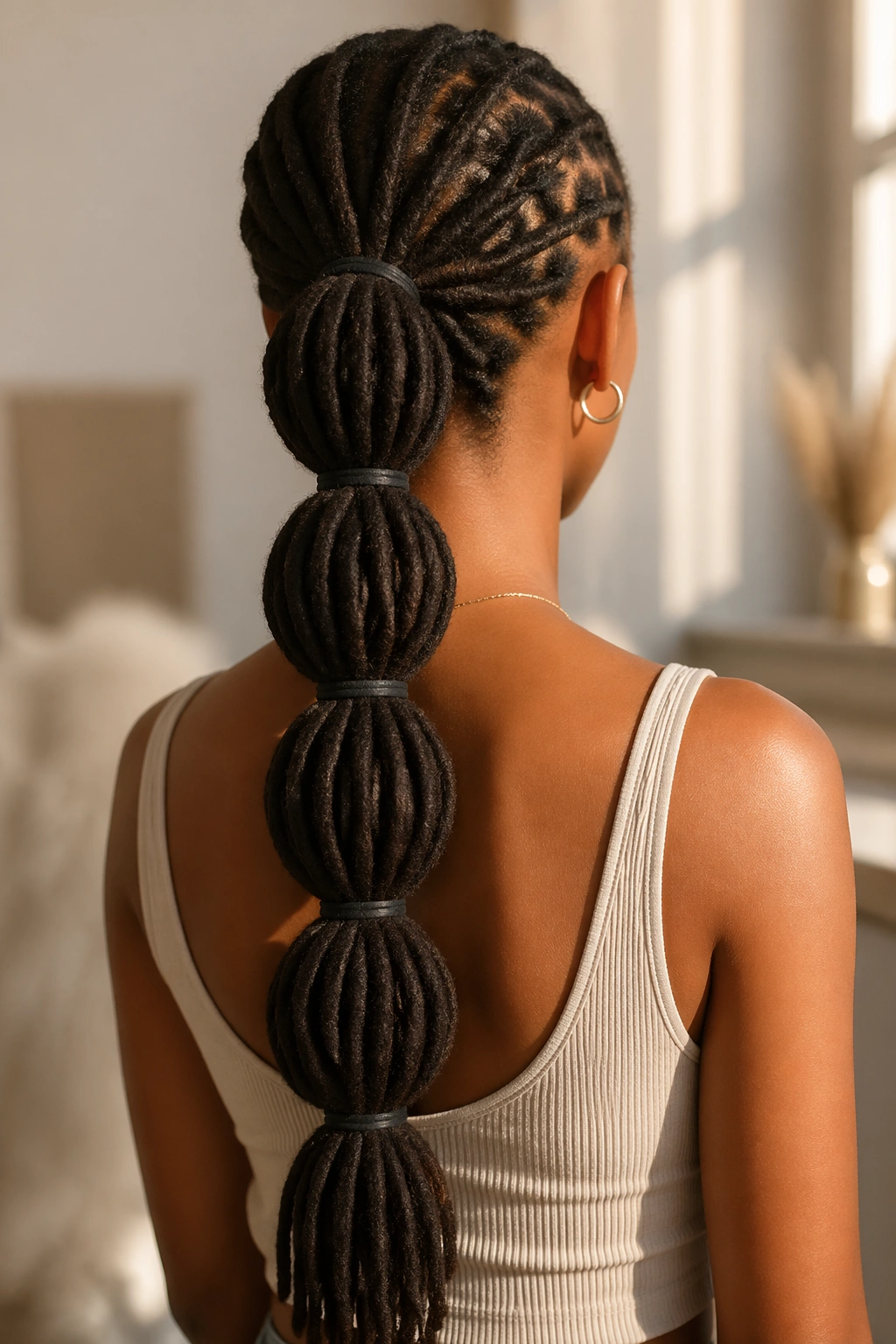
Why do bubble ponytails work so well on locs? Because the style likes texture. Locs already have structure, so the bubble sections look intentional instead of fussy. You are not fighting the hair shape. You are using it.
The trick is spacing. Tie the ponytail first, then place small elastics every 2 to 3 inches down the length. After each band, pull the locs gently outward to puff that section into a rounded bubble. If your locs are very thick, you may need wider spacing so the bubbles do not look cramped.
How to Get the Shape Right
A bubble ponytail on locs looks best when the base is smooth and the lower sections stay a little loose. If you pull each bubble too hard, the style turns stiff. If you leave too much slack, the whole thing collapses.
- Place 3 to 5 bands depending on length
- Use snag-free elastics or small satin ties
- Puff each section evenly with both hands
- Add cuffs between bubbles if you want more structure
A few people try to make every bubble the same size. That usually looks too rigid. Let the sections vary a little. It reads more natural that way.
Tip: if the ends feel heavy, tuck a small bend into each bubble with your fingers before you move to the next one.
4. Side-Swept Faux Ponytail
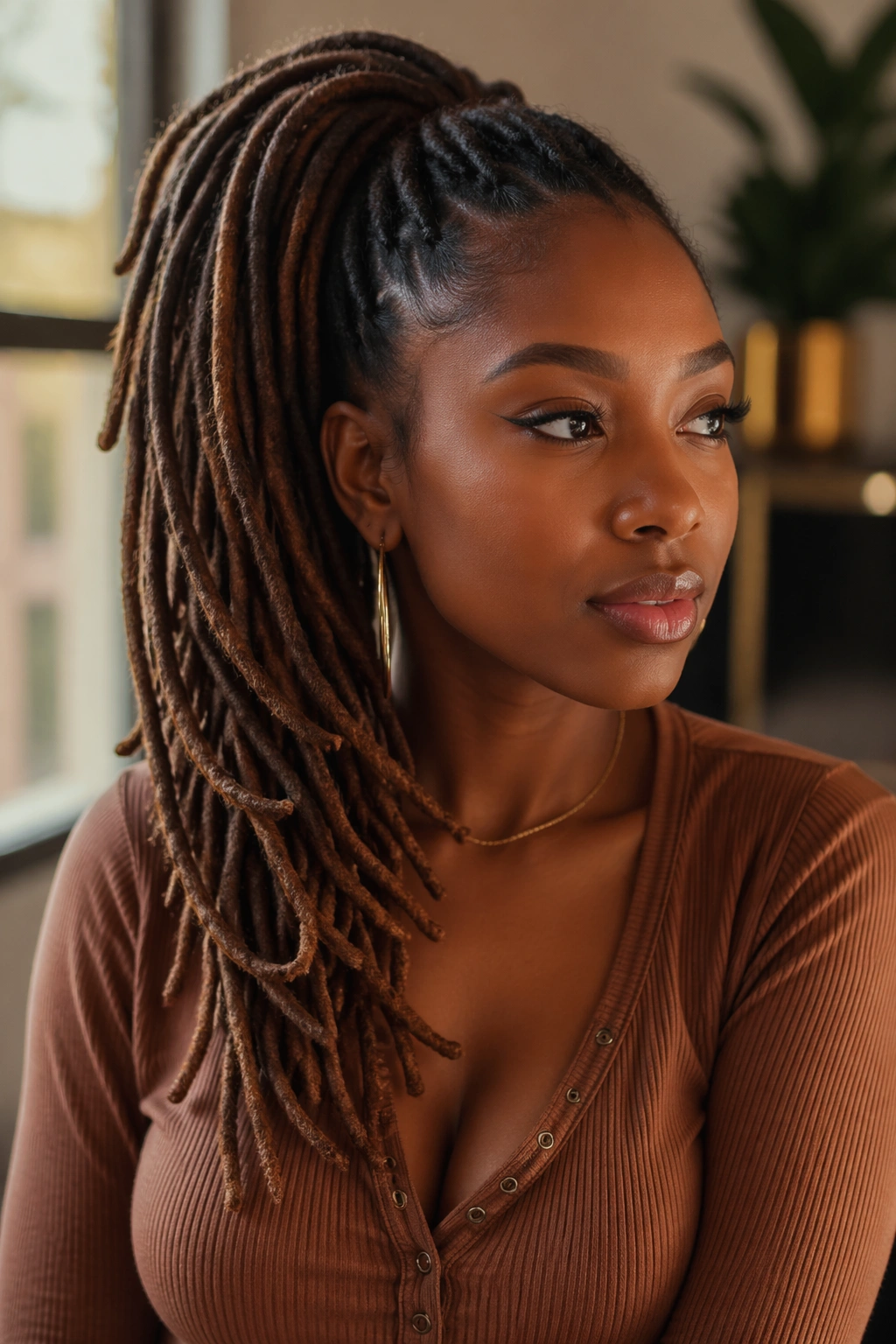
Picture a ponytail sliding over one shoulder and landing there with a bit of movement. That is the appeal of a side-swept faux ponytail on locs. It softens the face and gives you a shape that feels deliberate without looking overworked.
This style is especially handy when one side of the head needs less tension. You can place the anchor a little lower and guide the locs across the back, then pin them toward the shoulder side. It is not tricky, but the angle matters. If the ponytail sits too high, you lose the sweep. Too low, and it starts looking like an ordinary side tie.
The side-swept shape also gives you room for earrings, which sounds small until you try it. Big hoops and locs can fight each other when the hair is piled in the same space. A side ponytail makes both work.
A few loose locs near the temples can make the style feel softer. Do not overdo it. One or two is enough.
5. Half-Up Faux Ponytail
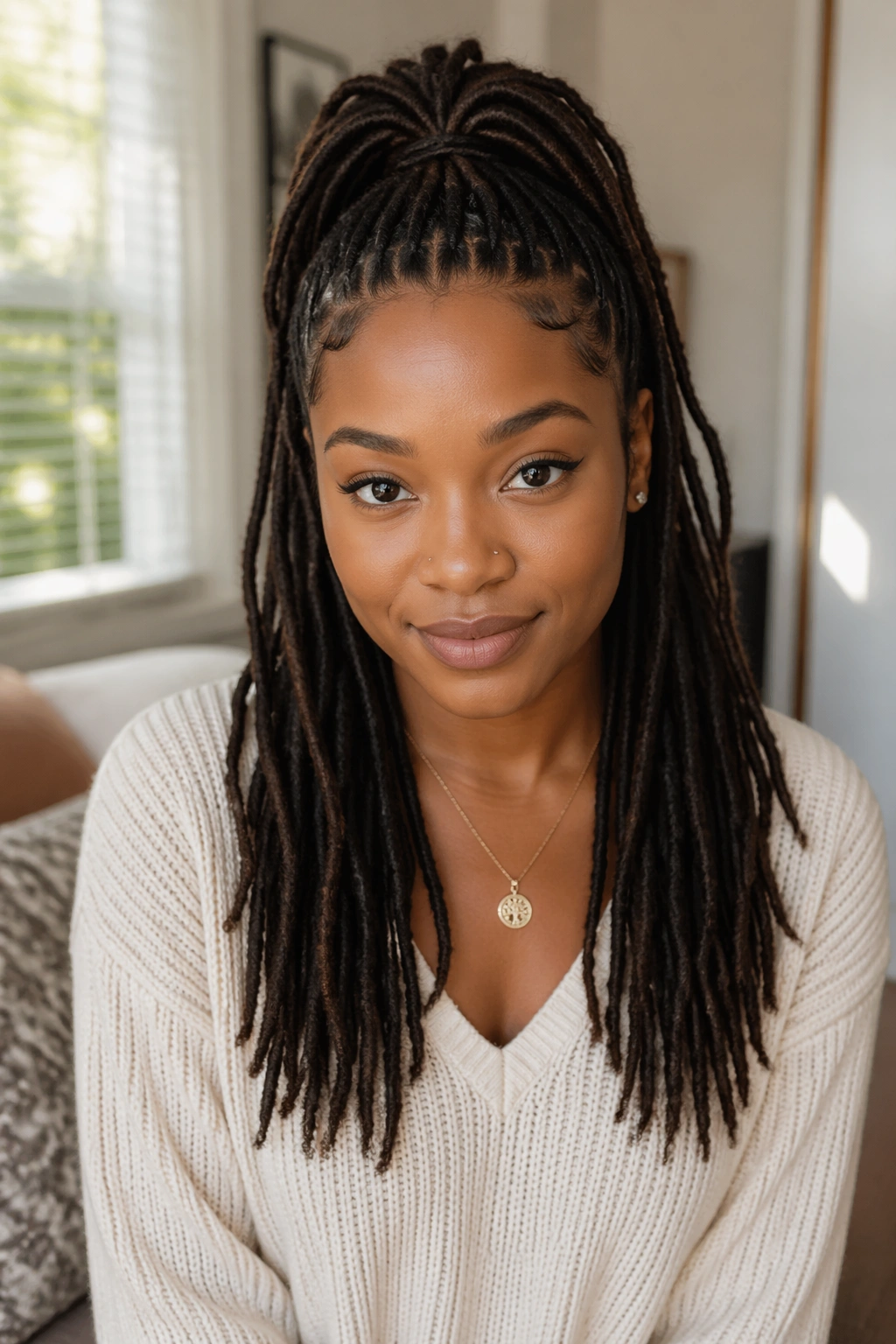
Half-up faux ponytails are the quiet achievers here. They give you lift at the crown and keep the length visible, which is handy when you want the locs to move but not all of them at once. The style feels lighter on the scalp too, since only part of the hair is gathered.
This one works best when the top section is no wider than temple to temple. Wider than that, and the ponytail starts to get bulky fast. Narrower sections give you more control and make the front line easier to smooth.
You can leave the lower locs straight, curl the ends, or add a soft wrap around the base of the upper ponytail. The style has enough structure to hold a little extra detail, but not so much that it needs it.
I like this shape for medium-length locs because it gives the illusion of height without stealing all the movement. That matters on days when you want your hair to feel present but not heavy.
6. Braided-Base Ponytail
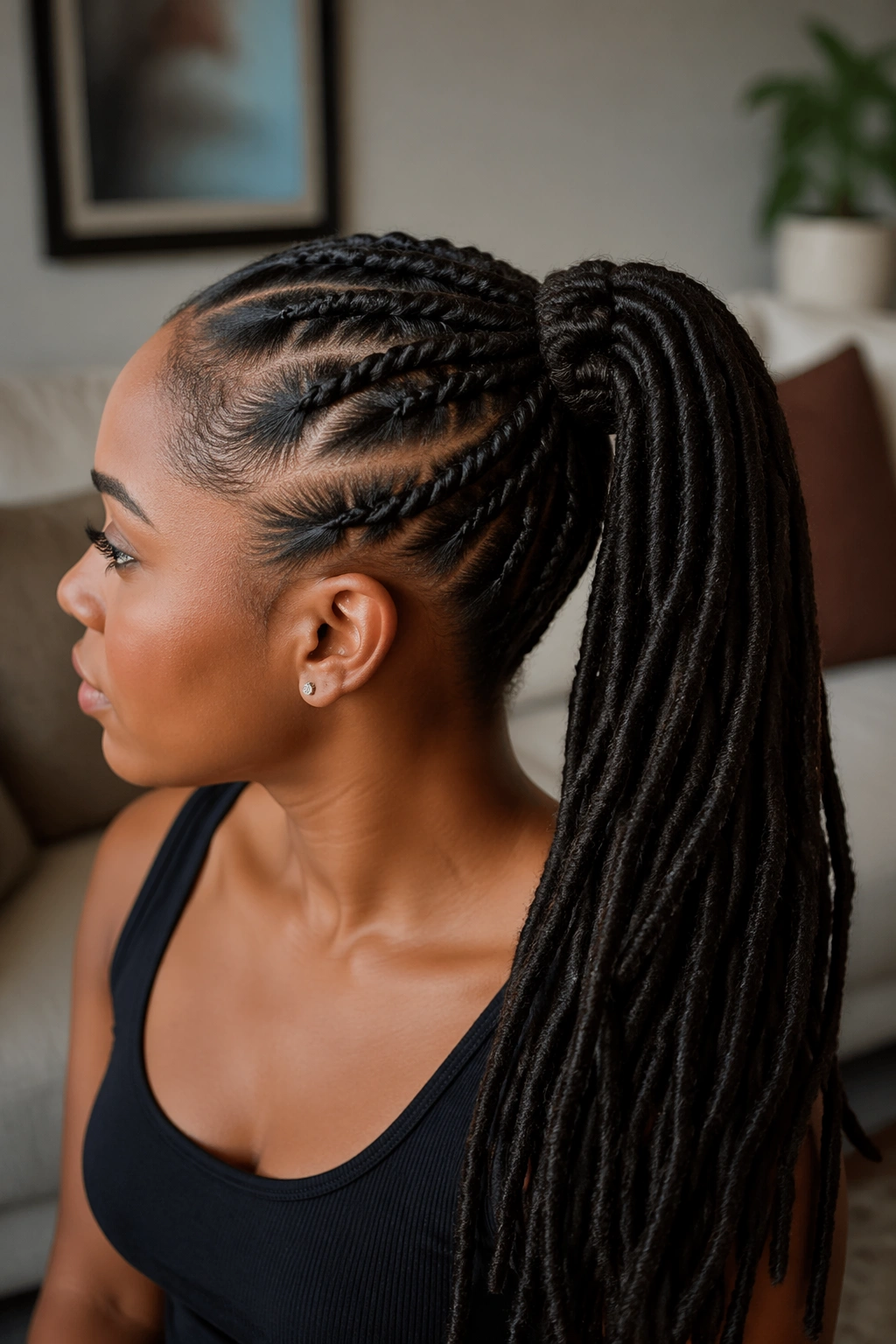
A braided base changes the whole shape of the ponytail. Instead of letting an elastic do all the work, you braid the top or front section first and let that braid act like a rail. It keeps the base flatter, cleaner, and less likely to slip.
This is one of the better choices for thick locs. The braid spreads tension across a wider area, so the ponytail does not hang off one tiny point. It also helps if you are adding a faux ponytail piece, because the braid gives the attachment somewhere solid to sit.
When to Reach for It
If your locs are dense, long, or a little uneven in thickness, the braided base can save you some frustration. A plain elastic on heavy locs tends to loosen over time. A braid holds shape longer.
The only catch is time. This style takes longer than a simple gather-and-go ponytail, and it is not the one I’d choose if my scalp felt tender. Still, when you want a base that looks clean from every angle, it earns its keep.
Tip: braid with a little mousse or light cream, not a heavy gel. Heavy product makes the braid look waxy.
7. Crown-to-Pony Transition
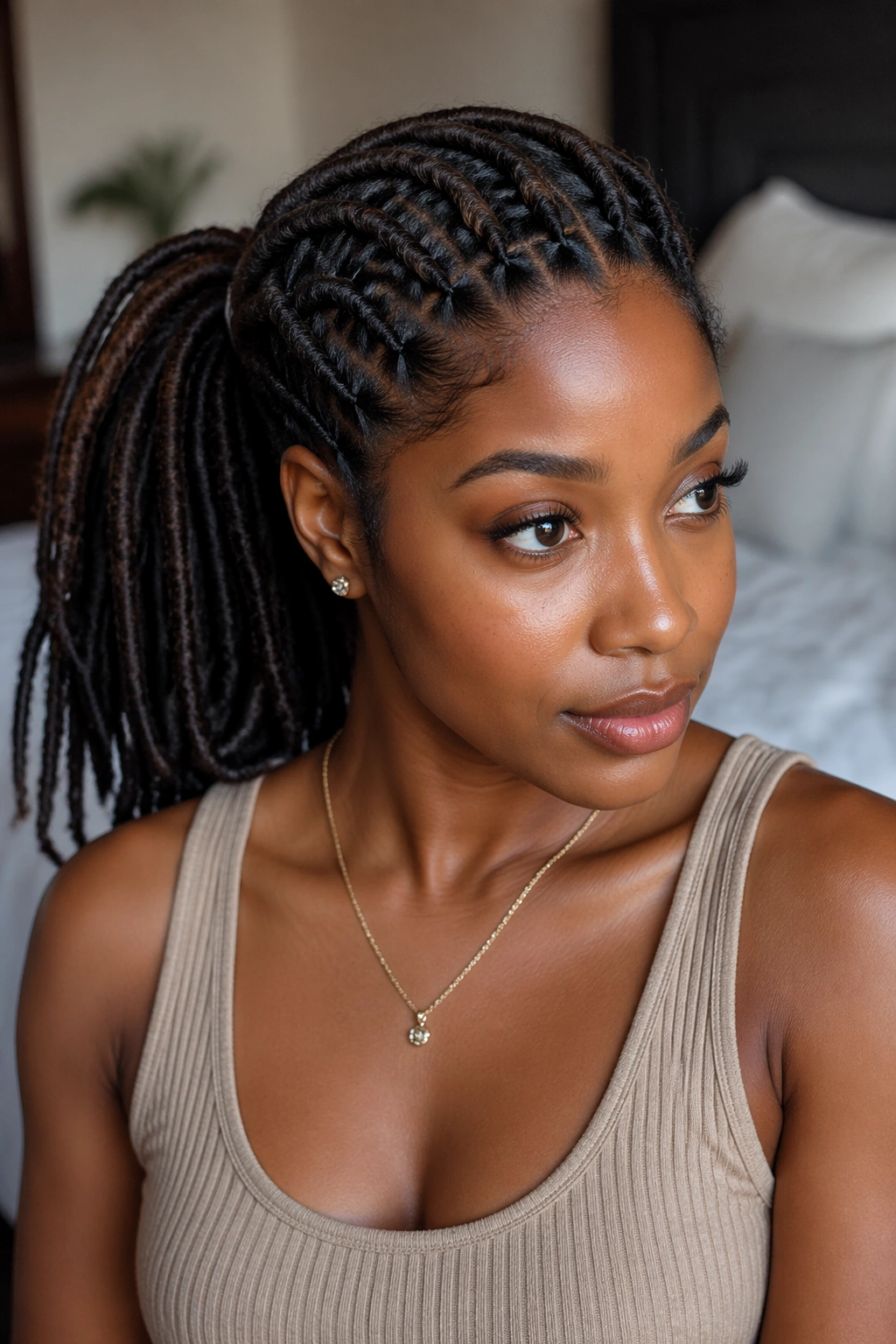
I keep coming back to crown-to-pony styles when I want polish without a stiff finish. The front of the hair is braided, twisted, or smoothed back in a curved line that follows the crown, then it drops into a ponytail at the back. It looks like more work than it is.
The path across the head matters more than the exact pattern. Some people do a single braid. Others use two twists meeting at the back. Either way, the front section frames the face and pulls the eye upward before the ponytail takes over.
What Makes It Different
This shape is one of the nicest ways to deal with locs that are slightly uneven in length. The crown section hides the rougher pieces, and the ponytail gives the style its clean ending. It is also a good option when you want to show off a strong part line without having the whole head pinned tight.
Pins help here, but keep them hidden under the braid or twist. If you can see every pin, the style loses its charm. A neat finish should look calm, not fussy.
8. Faux Hawk Ponytail
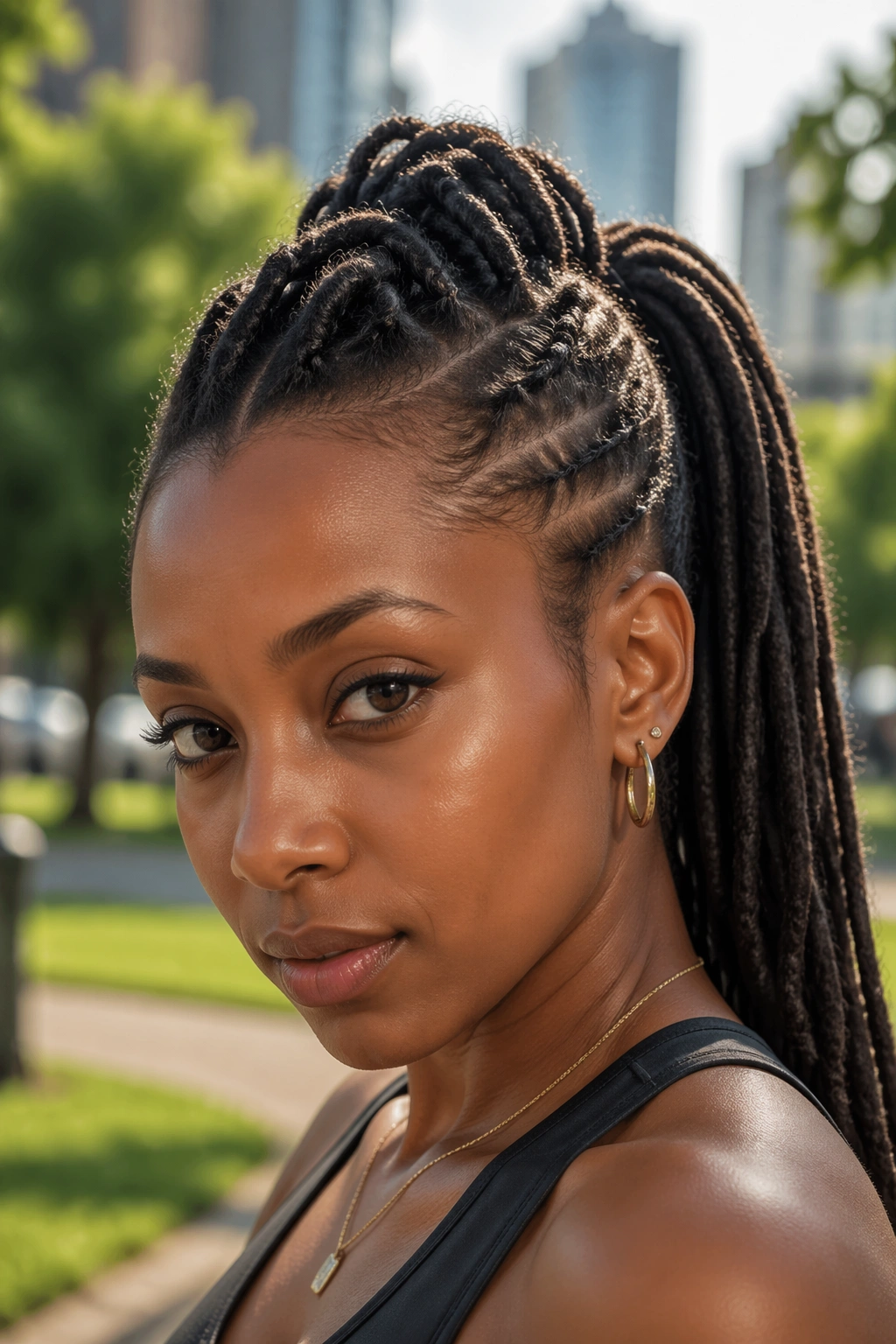
A faux hawk ponytail does not whisper. It gives height right down the middle and keeps the sides tighter or flatter, which creates a strong shape fast. On locs, that center line can look especially good because the texture adds some edge to the silhouette.
The style is built by gathering the hair in raised sections along the center of the head, then tying or pinning those sections into one ponytail. You can make the lift dramatic or keep it more controlled. Either way, the point is the same: you get shape without doing a full high ponytail that drags on every strand at once.
This one works well for dense locs because the volume becomes part of the design. If your locs are fine, the style can still work, but you may want a little added hair to build the ridge. Heavy locs should be anchored at the center and the temples kept smooth.
Tip: leave the sides flatter than you think. If the sides puff up too much, the faux hawk loses its line.
9. Ribbon-Tied Ponytail
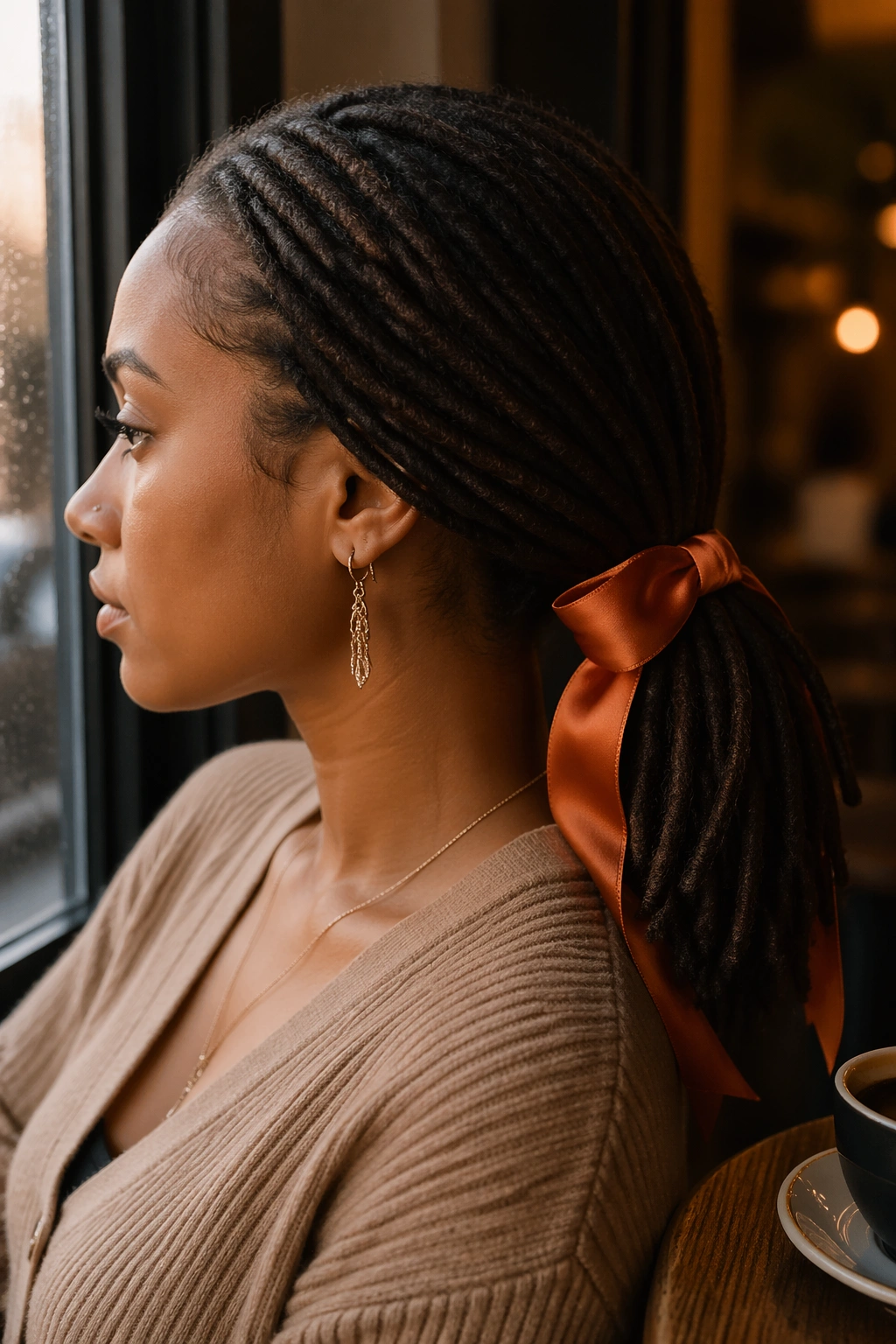
Can a ribbon handle loc weight? Not by itself. But as a finish, a ribbon does a lovely job of softening a ponytail that might otherwise look too strict.
A wide satin or grosgrain ribbon tied over a secure elastic gives the style a clean, readable finish. I like this look when the locs are gathered low and the ends are either straight or softly curled. A thin ribbon tends to disappear. A wider one gives you a better visual line.
Best Fabrics and Widths
- Satin feels soft and slides well
- Grosgrain holds a knot more firmly
- A ribbon around 1 to 1.5 inches wide usually reads clearly
- Avoid very thin curling ribbon on heavy locs
The ribbon should sit where the eye can see it, but it should not be doing the job of a structural tie. That job belongs to the elastic underneath. If the ribbon is carrying weight, the style will slip.
A ribbon also gives you room to match a dress, a shirt, or even just your mood. That may sound small. It is not. A little color near the base changes the whole ponytail.
10. Beaded Ponytail
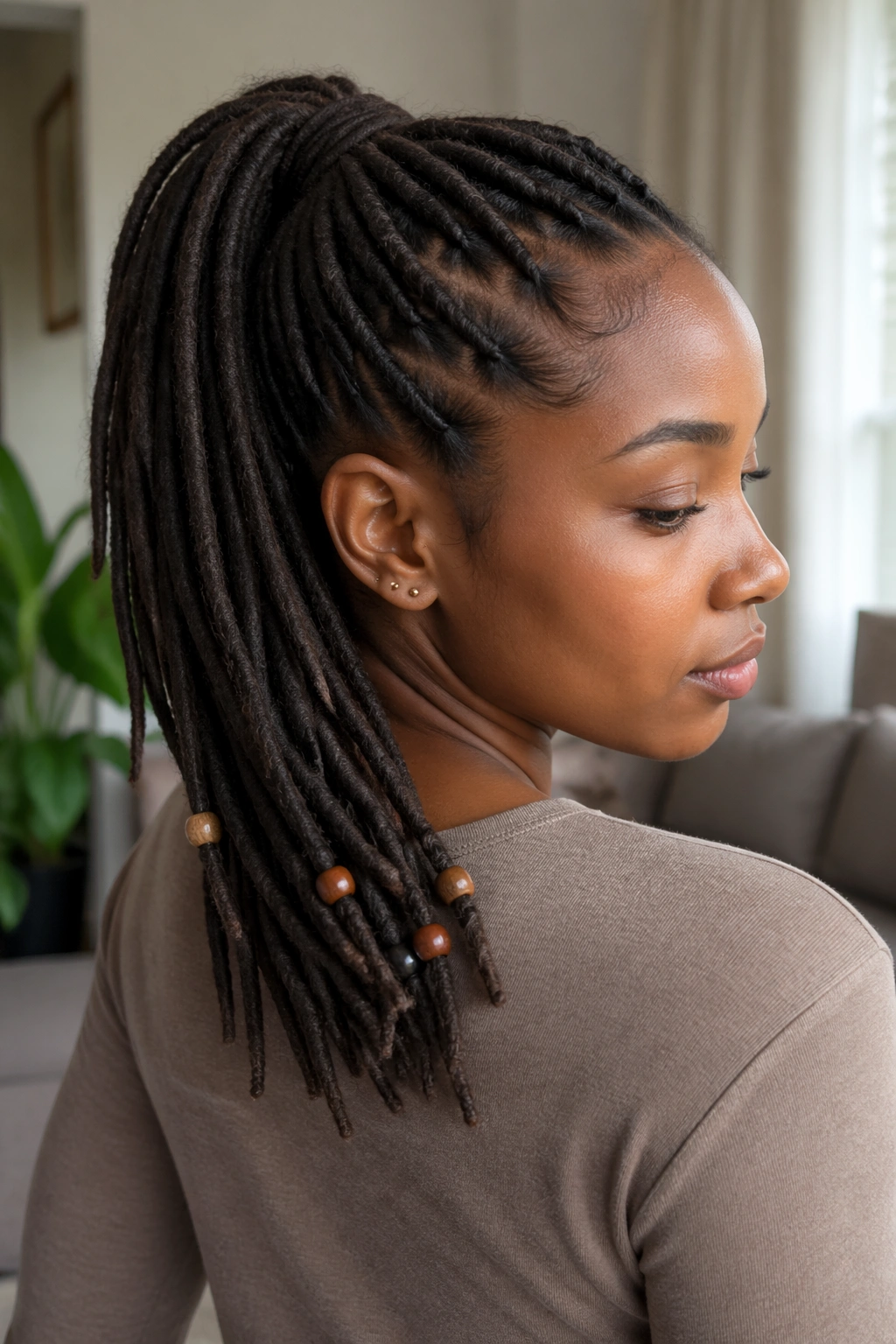
The first time you add beads to a ponytail, you notice the sound before the look. It is a small thing, but it gives the style a little rhythm. On locs, beads work best when they are placed with restraint.
Too many beads make the ponytail feel crowded and heavy. A few well-spaced ones near the ends can be enough. You can also cluster them on one side if you want the style to lean playful instead of symmetrical.
How to Place Them
- Put beads on the lower third of the ponytail
- Use 3 to 7 beads unless the locs are very long
- Choose wood, acrylic, or metal based on the weight you want
- Leave enough space so the beads can move a little
If the ponytail is thick, use larger bead holes or bead cuffs that slide easily over the locs. Tiny holes are a waste of time. They snag, drag, and turn a simple style into a chore.
Beads are not for every day, and that is fine. They shine when you want movement and a little sound, not when you need a no-nonsense style that stays quiet against a collar.
11. Twist-Wrapped Ponytail
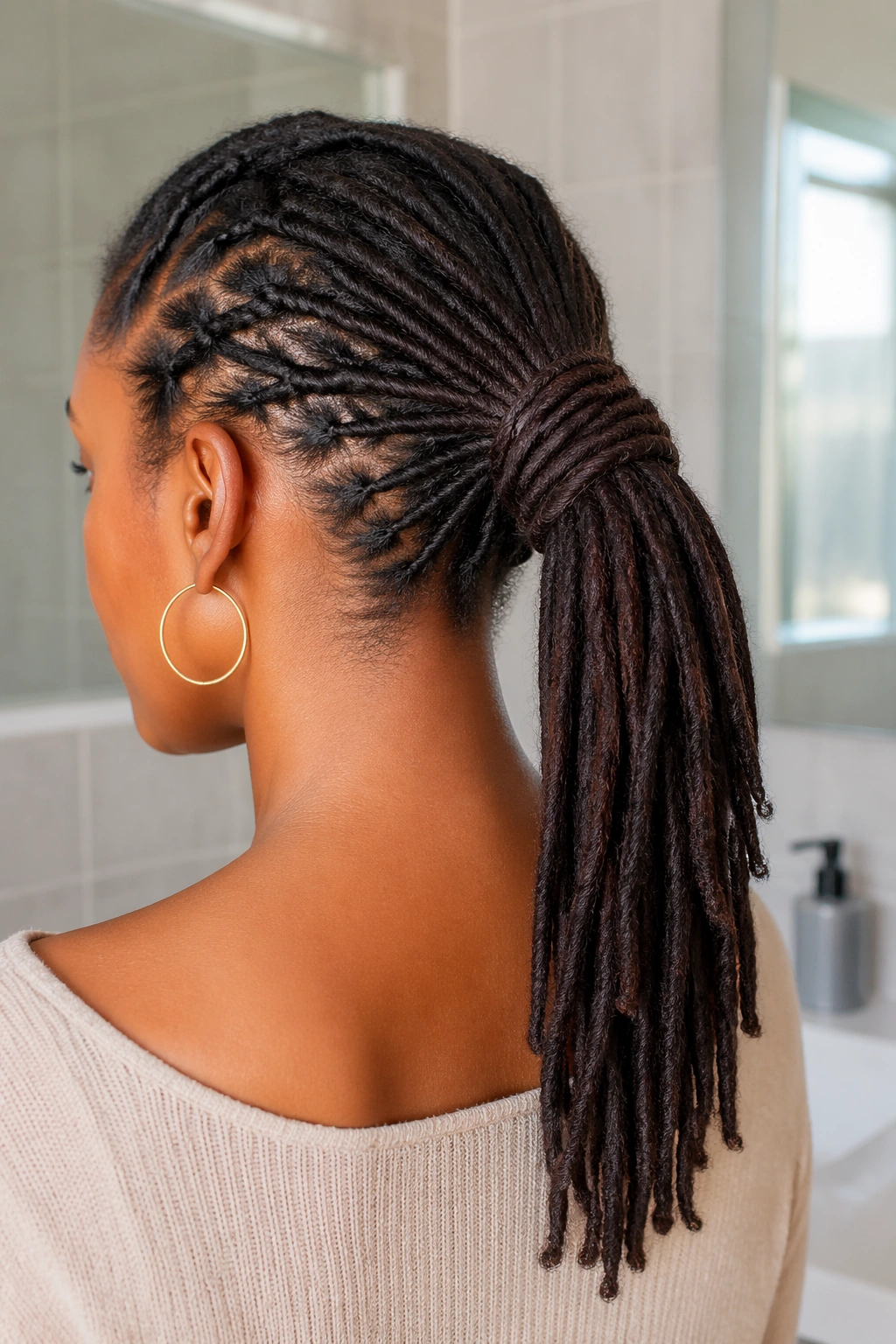
Twist-wrapped bases take longer than a plain elastic ponytail, and that is the point. The twist hides the tie, smooths the transition, and makes the style look hand-finished instead of rushed. On locs, that extra bit of wrapping can make the whole ponytail read cleaner.
The easiest version uses two locs or two small sections of wrapping hair twisted around the base until the elastic disappears. Keep the tension even as you wind. If one side pulls harder, the wrap starts to tilt and the ponytail shifts.
A small crossed bobby pin at the end of the wrap helps lock it in place. I like to tuck the pin under the twisted section where it won’t snag. You do not need a dozen pins. You need one or two placed well.
This style is good when you want the ponytail to look intentional from the back, not just the front. That matters more than people admit.
12. Double Ponytail with Stack
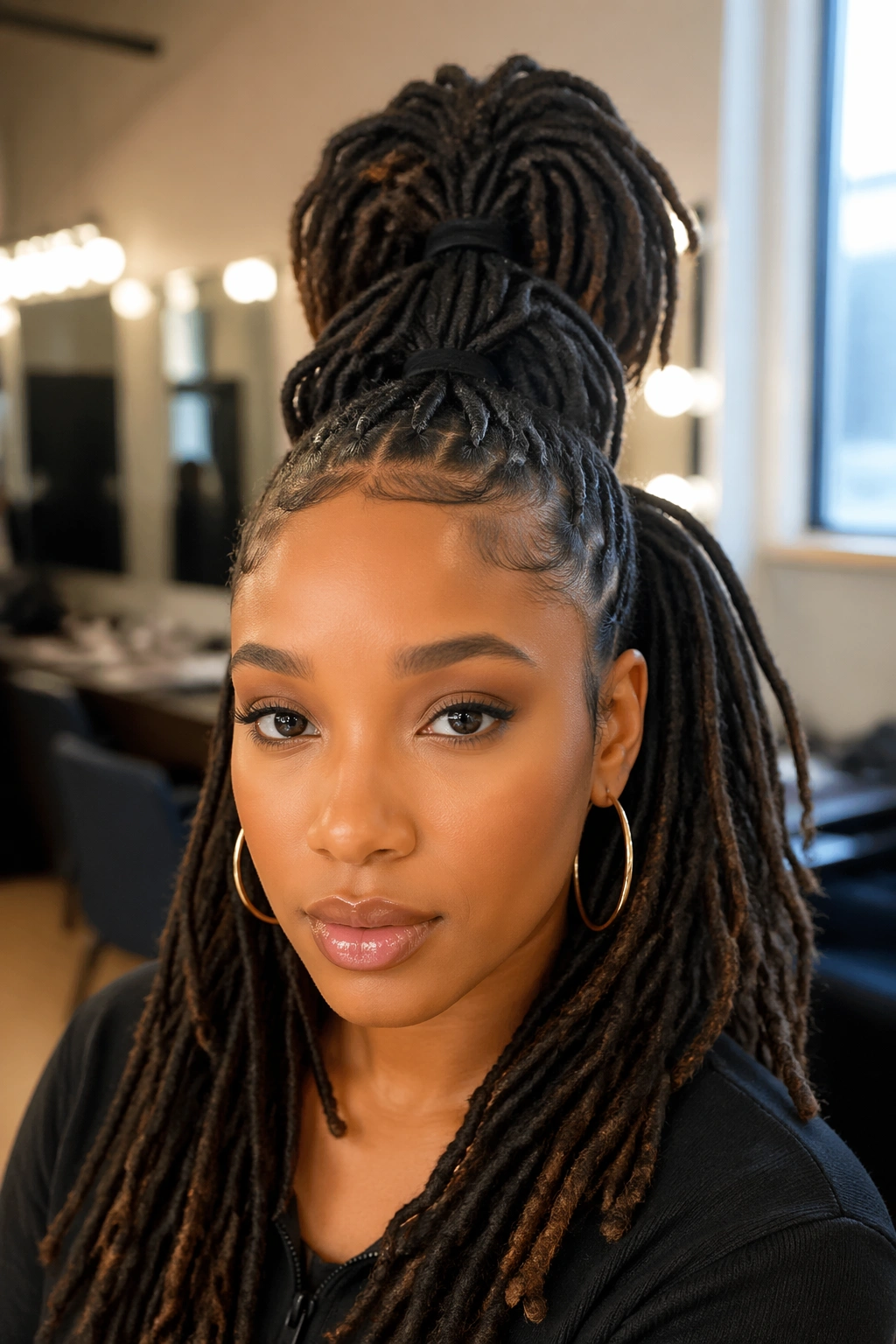
A double ponytail changes the balance immediately. Instead of asking one anchor point to hold all the weight, you split the look into two sections — usually a smaller upper ponytail and a fuller lower one. The stack gives the hair more lift and makes thick locs easier to manage.
This is not the same as wearing two pigtails. The two sections are centered one above the other, so the eye reads one long style with extra dimension. It is especially handy if your locs are dense and one giant ponytail starts feeling heavy after an hour or two.
The upper ponytail should stay smaller than the lower one. If you make them equal, the shape gets awkward fast. A little size difference keeps the stack looking deliberate.
I like this option for layered locs or mixed-length installs because the top section can hide some of the length mismatch. It also gives you more places to add cuffs or wraps without overloading one spot.
13. Curly-Ended Faux Ponytail
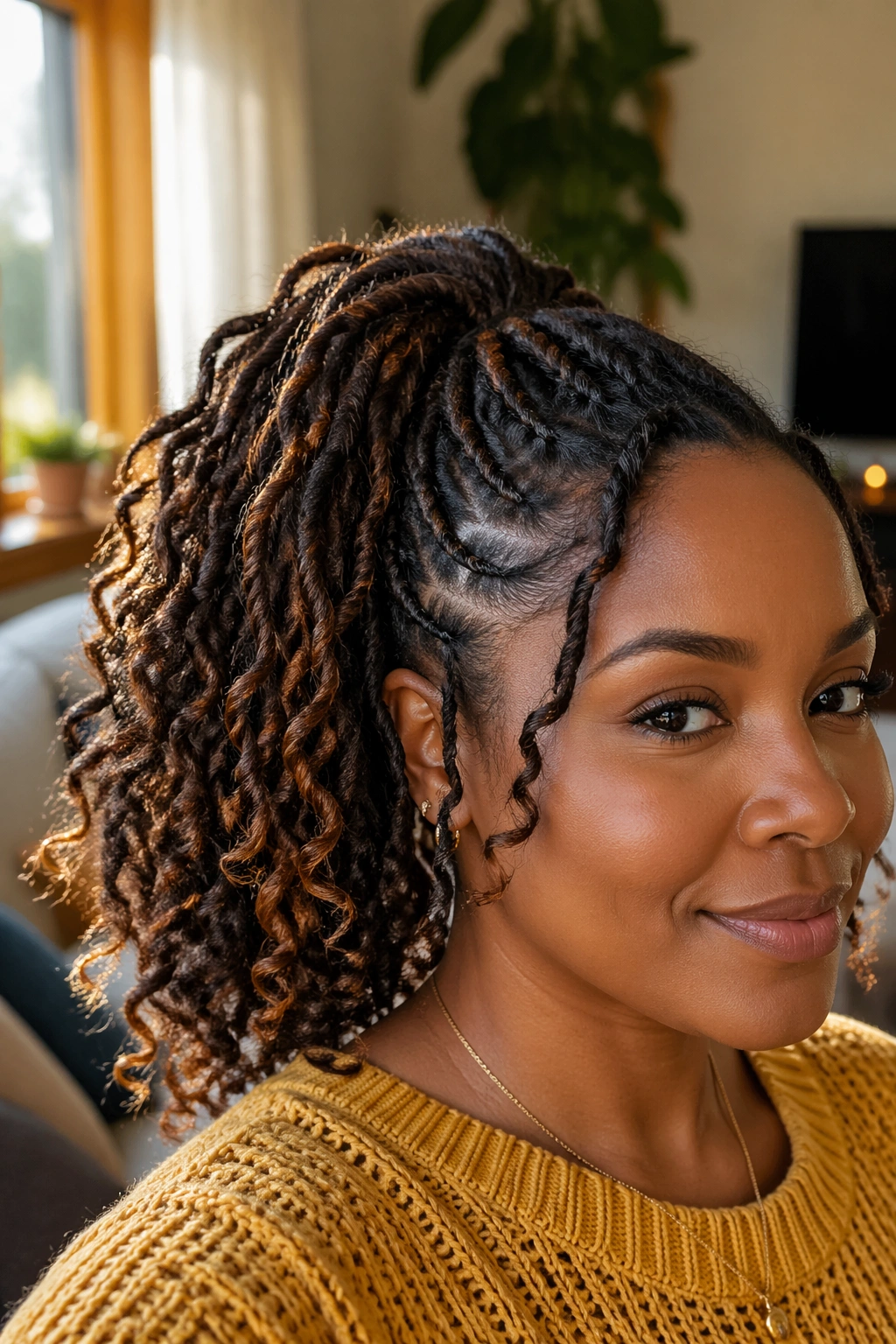
Curly ends change the mood of a ponytail in a way that straight ends never quite do. The root stays neat, then the ends loosen into bounce, and the contrast keeps the style from looking too heavy. On locs, that soft finish can be a relief.
Getting the Curl to Hold
The curl can come from flexi rods, braid-out sections, or curly extension ends. The method matters less than the dryness. If the ends are even a little damp when you take them down, the curl falls early and turns frizzy at the wrong moment.
- Set the ends on small rods or rollers
- Let them dry fully before separating
- Use a light hold product, not a stiff one
- Finger-separate the curls instead of brushing them out
That last part is where people often go wrong. A brush can flatten the curl into puff, and then the whole style loses its shape. Fingers are enough.
Curly ends work well on formal styles, sure, but they also make casual ponytails look softer. If your locs have a little fuzz, the curl at the ends distracts the eye in a nice way.
14. Knotted Scarf Ponytail
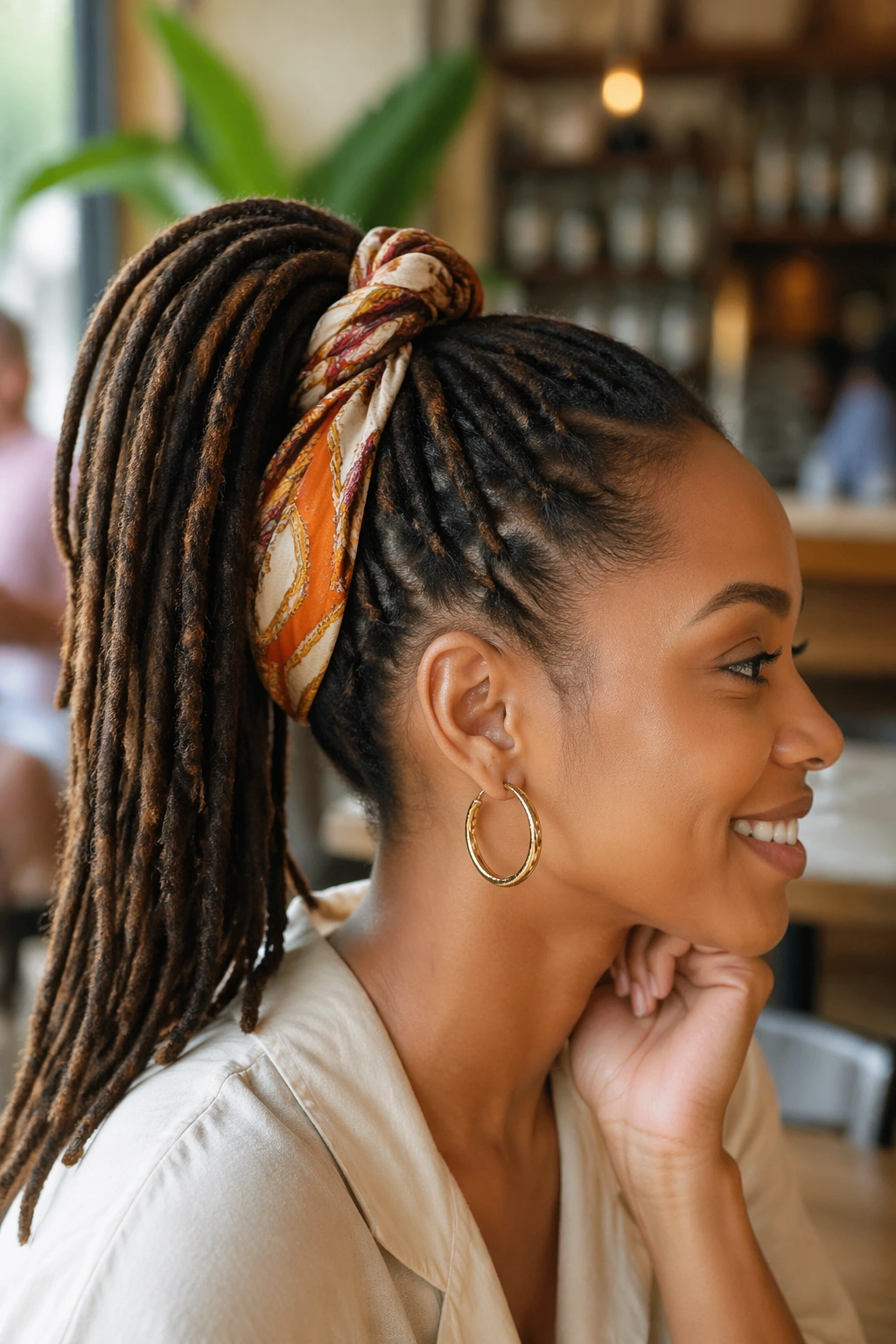
A scarf tied right can do more than decoration. It can finish the base, soften the line of the ponytail, and give you a style that feels complete without needing extra hardware.
I like a scarf ponytail when I want the locs to stay the star and the accessory to stay in the supporting role. The scarf should be wide enough to show, but not so thick that it makes the base lumpy. A square scarf folded into a long strip usually works well.
Fabric Choices That Make Sense
- Silk or satin slides easily and feels smooth near the hairline
- Cotton can work, but only if you tie it loosely
- A 27-inch square scarf gives enough length for a secure knot
- Keep the knot off the very top of the crown if the locs are heavy
The scarf should be layered over a true elastic, not replacing it. That is the part people miss. A pretty knot is not a substitute for actual hold.
A knotted scarf ponytail looks especially good when the rest of the outfit is simple. A plain shirt, a neat collar, maybe one pair of earrings — the scarf does the rest.
15. Cornrow Feed-In Ponytail Base
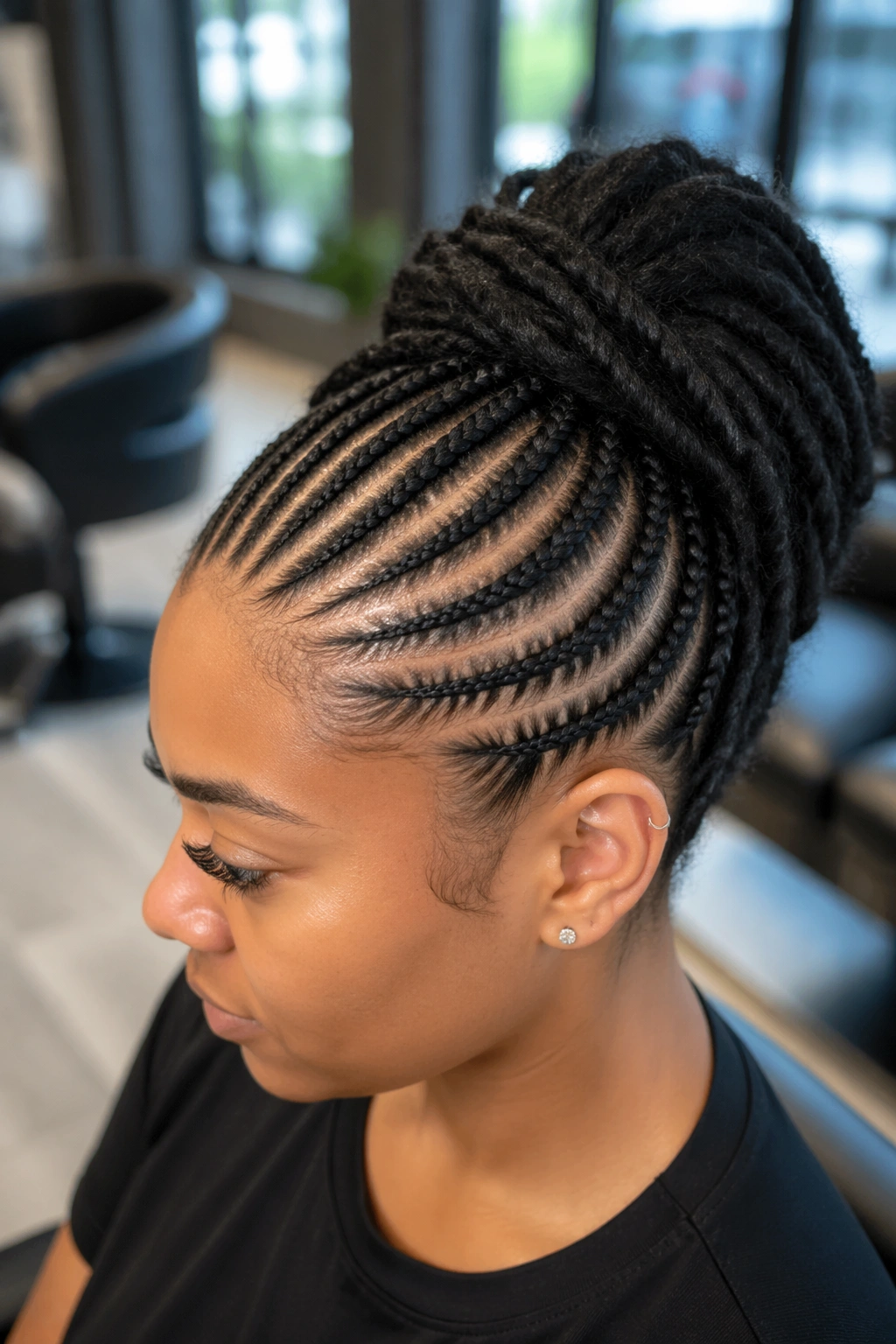
What gives a ponytail a clean lifted base? Feed-in cornrows do a lot of the work. They funnel the locs upward in neat lines, which keeps the root area flatter and the ponytail itself more controlled.
This style is especially useful when the locs are thick or when you want the front to stay smooth for longer. The cornrows create a path, almost like rails, so the ponytail does not have to fight its own bulk. That makes the final shape look polished without needing a mountain of product.
Where the Parting Matters
The parting should be clean and even before the braids start. If the sections are sloppy, the style keeps showing that mess from the front. Start with a rat-tail comb and take your time. It sounds boring. It matters.
A feed-in base also helps with styles that use added ponytail hair, because the attachment sits more securely behind the braids. Just keep the braids snug enough to hold and not so tight that the scalp protests.
This one takes patience, but it wears well. A lot of people want the finished look without the setup, and I get that. Still, when the base is right, everything else looks easier.
16. Messy High Ponytail
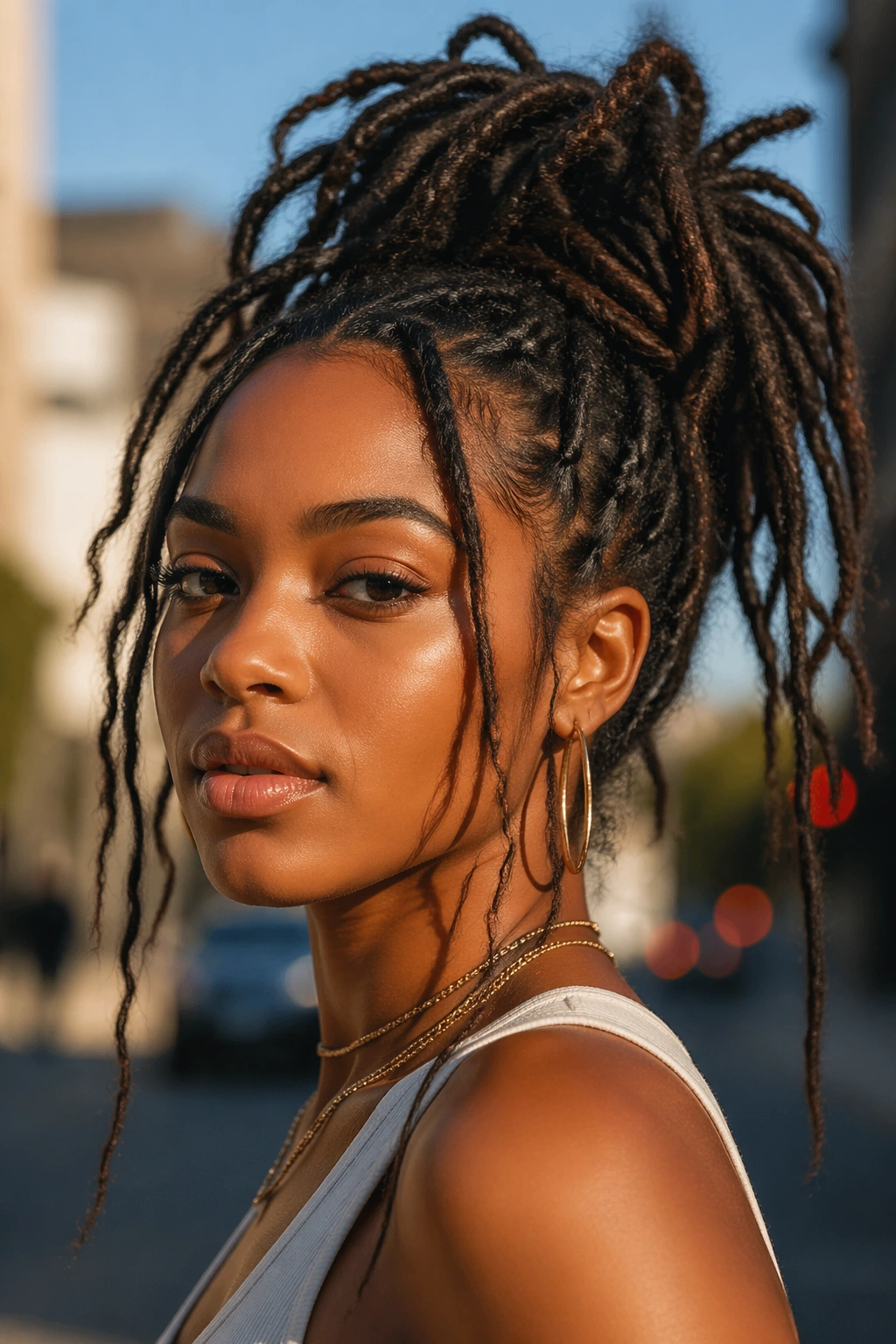
Some days, polished is too much. A messy high ponytail gives locs shape without making every strand behave, and that can be a relief. It is still a style. It just does not pretend to be pristine.
The trick is to keep the overall silhouette high and the edges soft. Pull the locs up, leave a few pieces looser at the front, and let the ends have their own little attitude. You want movement, not chaos, so the mess has to look chosen.
This style is especially good when the locs have some natural fuzz or when the lengths are not perfectly even. Instead of hiding those things, the messy ponytail uses them. That is a better move than fighting the texture all day.
A matte wrap or a plain elastic works better here than anything shiny. The whole point is easy energy. Too many accessories and the style starts arguing with itself.
17. Asymmetrical Low Side Ponytail
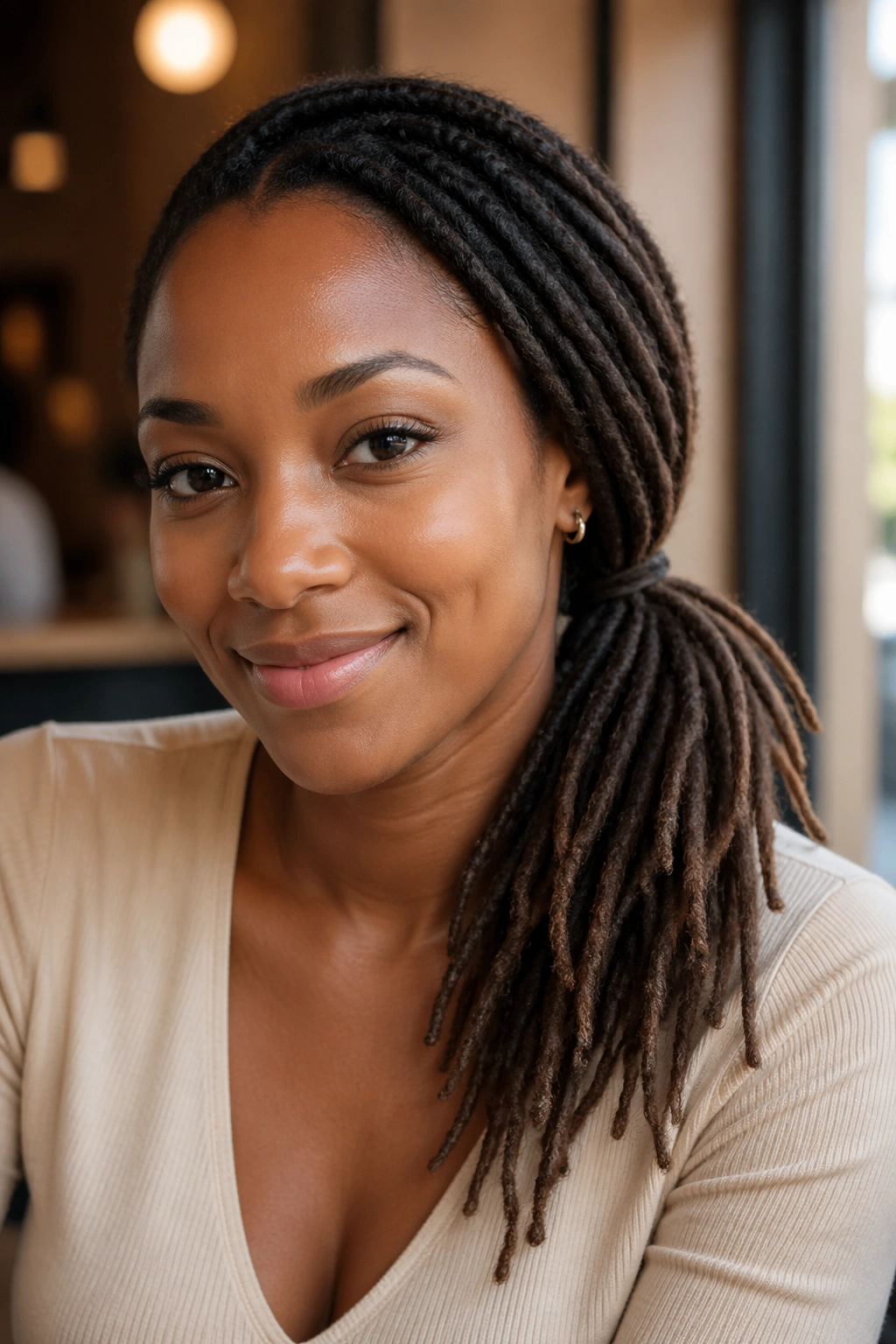
An off-center ponytail changes the face shape fast. It draws the eye to one side, softens strong lines, and gives locs a little movement even when the base itself is simple. I like it a lot with glasses and statement earrings.
The ponytail sits low and to one side, usually near the collarbone. That placement keeps the weight manageable and gives the style a calm, draped feel. If one side of your locs is fuller than the other, this is a smart way to balance that out instead of pretending the hair is perfectly even.
The part can be deep or slight. A deep side part creates more drama. A shallow one just shifts the mood a little. Either way, the key is to keep the base smooth so the eye goes to the sweep, not to frizz around the crown.
This is one of those styles that looks more expensive than it is. Not because of price. Because it knows where to stop.
18. Wrapped Cuff Ponytail
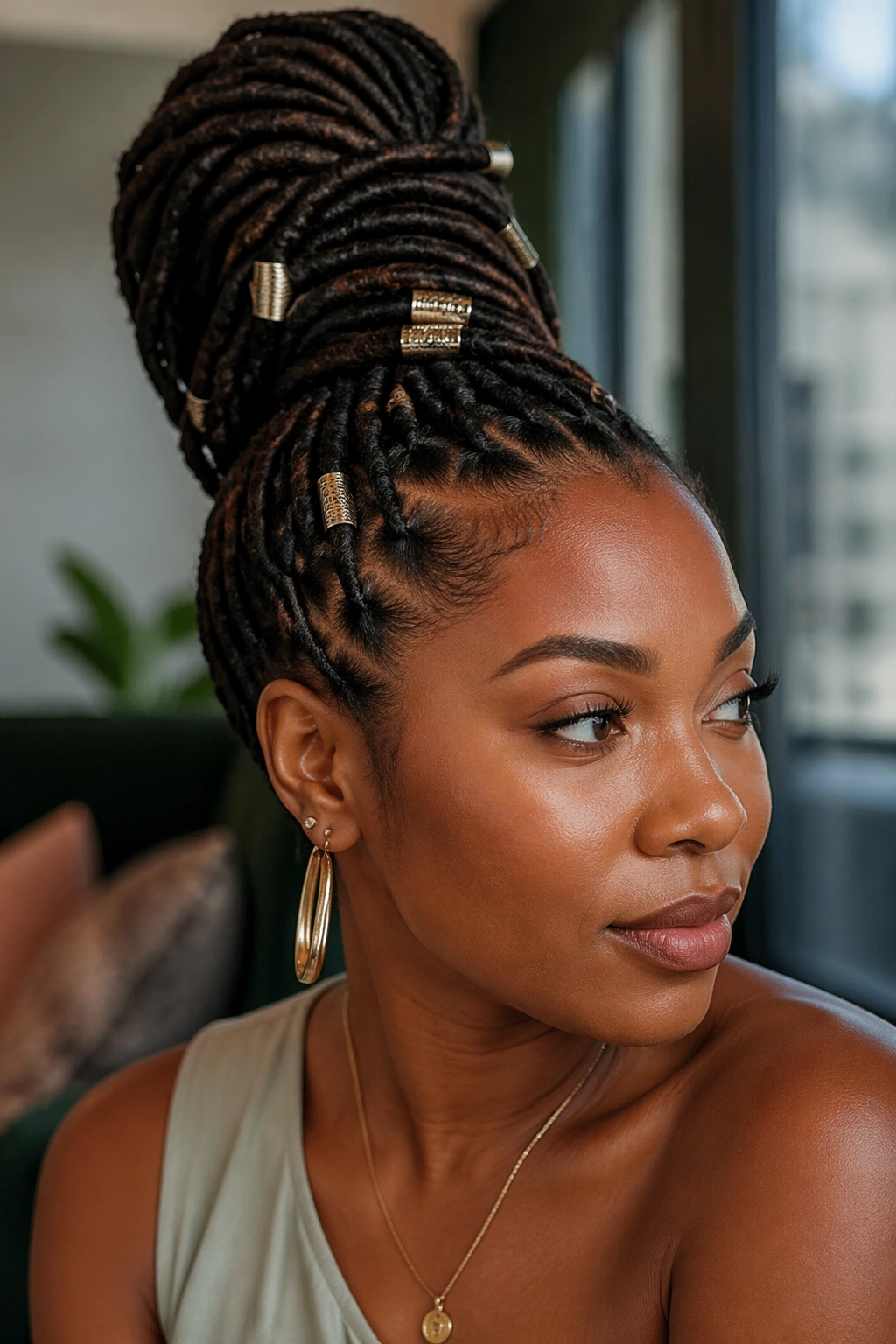
Metal cuffs feel stricter than ribbons. That is why they work. A cuffed ponytail has a cleaner, more exact finish, and locs handle that kind of detail well because the texture keeps it from looking sterile.
You can place one cuff at the base or space a few along the wrap. Three is usually enough. More than that can look crowded, especially on medium-density locs. The cuffs should frame the ponytail, not swallow it.
A wrapped cuff style is a smart choice when you want the ponytail to feel dressed up without adding softness that the rest of the outfit does not need. It pairs nicely with a smooth nape, a center part, or a low side sweep. The metal gives structure. The locs give texture.
If your scalp gets irritated by heavy accessories, choose light cuffs with rounded edges. Sharp edges catch hair and turn a neat style into a fidget.
19. Layered Length Ponytail
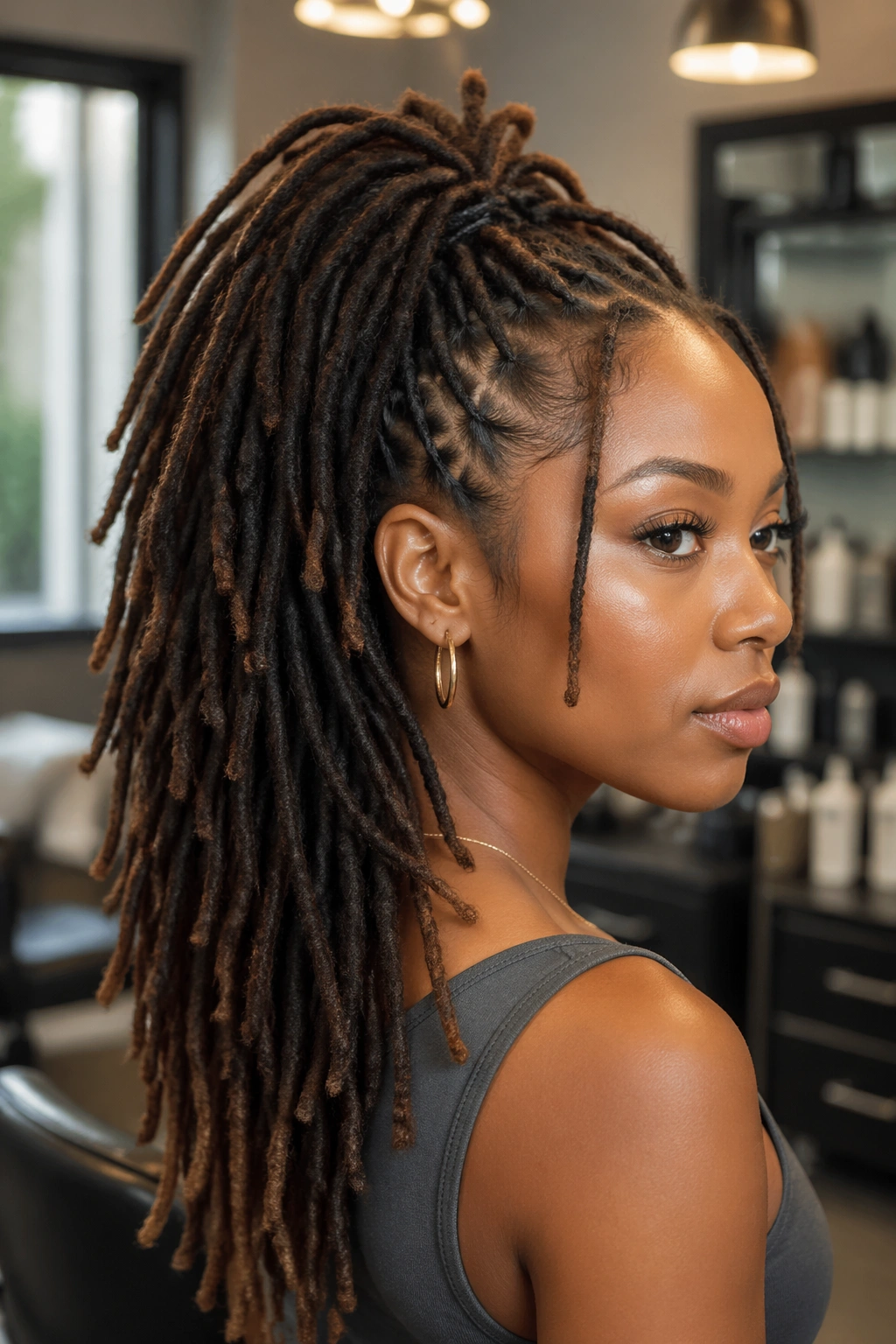
Long locs can look like one heavy rope if they all end at the same place. Layering fixes that. A layered-length ponytail staggers the fall of the locs so the style has movement, depth, and a little lift at the ends.
The Small Adjustments That Matter
- Place shorter locs toward the top of the ponytail
- Let some lengths drop 2 to 4 inches lower than others
- Use a second elastic lower down if the top feels too bulky
- Hide uneven tips with curls, wraps, or a few loose strands
That sounds like a lot, but it is really about distributing weight. The goal is to make the ponytail feel lighter on the head while still showing off the length. A blunt finish can look harsh on locs; staggered lengths soften the line.
This style works especially well when you are blending natural locs with added hair or when the lengths are not perfectly uniform. You are not trying to erase the difference. You are making it look intentional.
20. Center-Part Sleek Ponytail
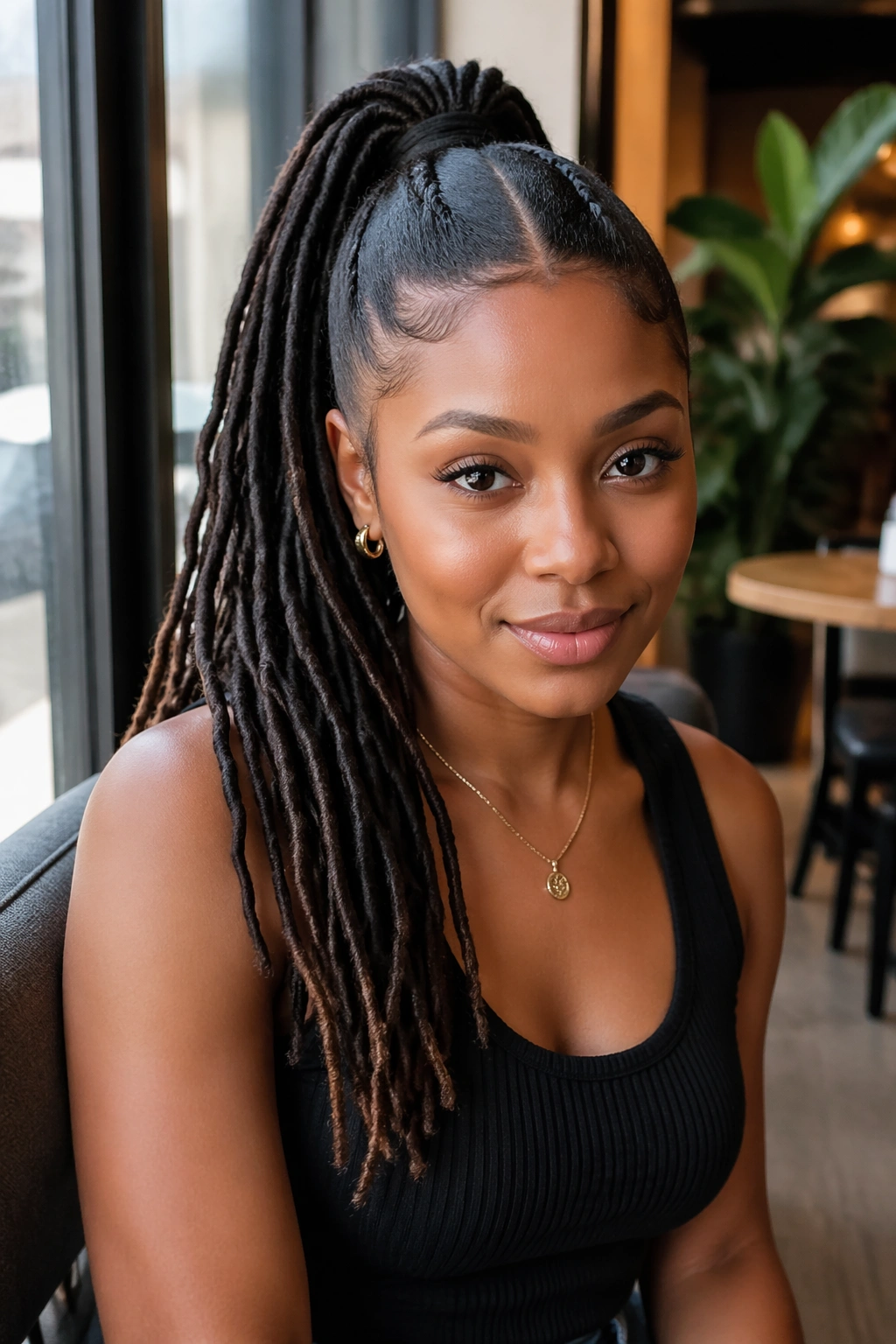
A center part is unforgiving, and that is why people love it. There is nowhere to hide a crooked line, which means the style lands with a clean, direct look. On locs, that can be gorgeous when you want symmetry and control.
The base should be flat enough to show the part clearly, but not slicked down so hard that the roots look stiff. A rat-tail comb, a little product on the fingers, and a steady hand usually do more than heavy gel ever will. If the part is off by even a small amount, you will see it from the front. That is the charm and the challenge.
This style suits a low or mid-height ponytail best. A very high center-part pony can look severe unless the locs have enough fullness to soften it. Add one wrapped loc around the elastic and you get a cleaner finish without loading the style with extras.
It is a sharp look. Not cold. Just direct.
21. Pull-Through Ponytail
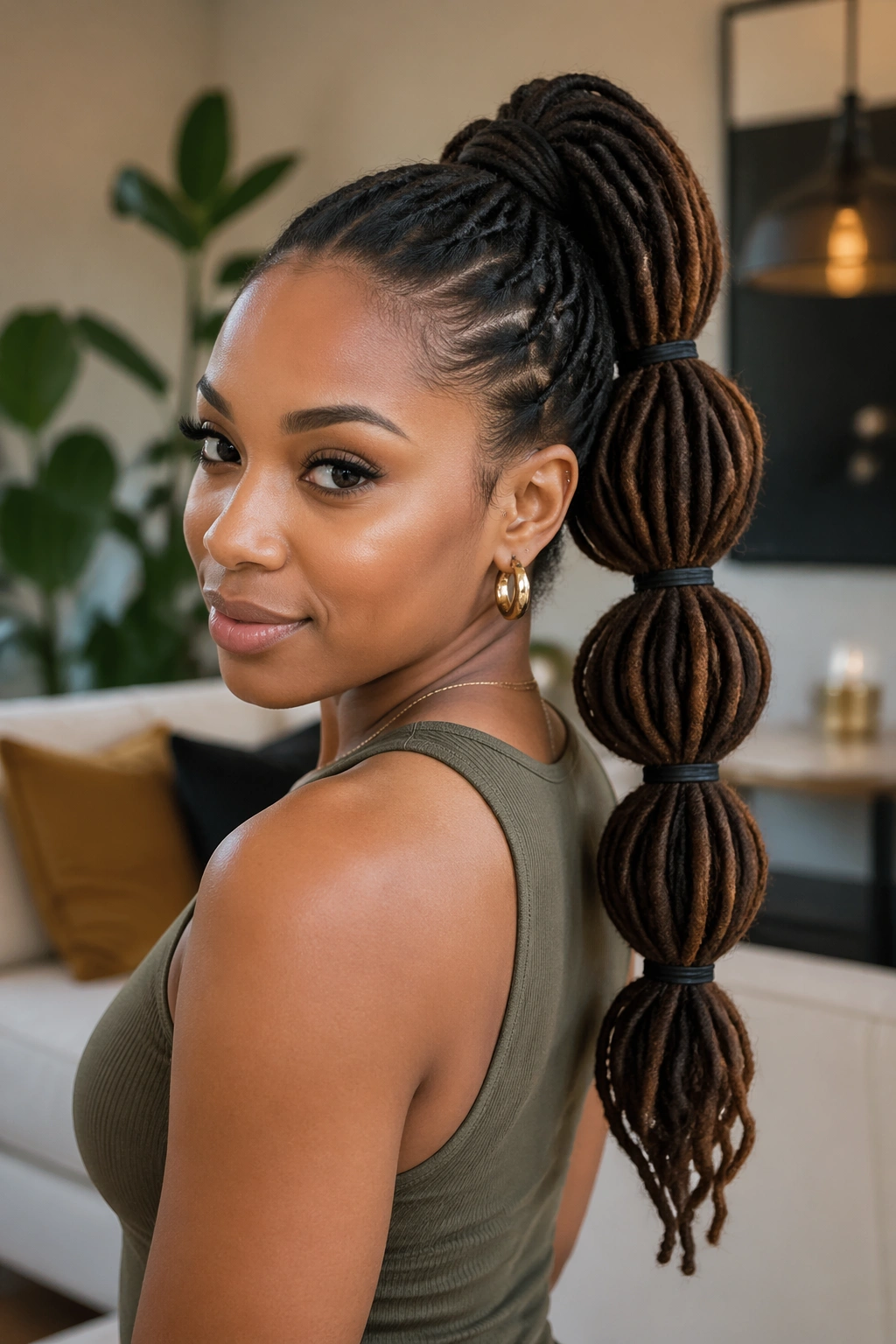
Pull-through styling looks complicated until you watch the sections stack. Then it makes sense. You gather a section, secure it, split it, pull the next section through, and repeat until the ponytail has built-in fullness.
On locs, this can be a clever way to create volume without asking one elastic to hold every strand at once. The structure breaks the weight up into smaller parts, which can make the style feel easier to wear. It also gives a nice rhythm down the length.
How to Keep It Even
Use small clear elastics or slim satin ties. Make each segment about the same size, or slightly larger as you move downward. If the first section is huge, the whole shape starts looking top-heavy.
- Keep each pull-through section gently puffed
- Secure loose ends under the next tie
- Add cuffs only after the shape is set
- Stop before the ponytail gets too bulky
This style is good when you want a fuller finish but do not want curls or beads. The structure itself does the work.
22. Voluminous Topknot Ponytail
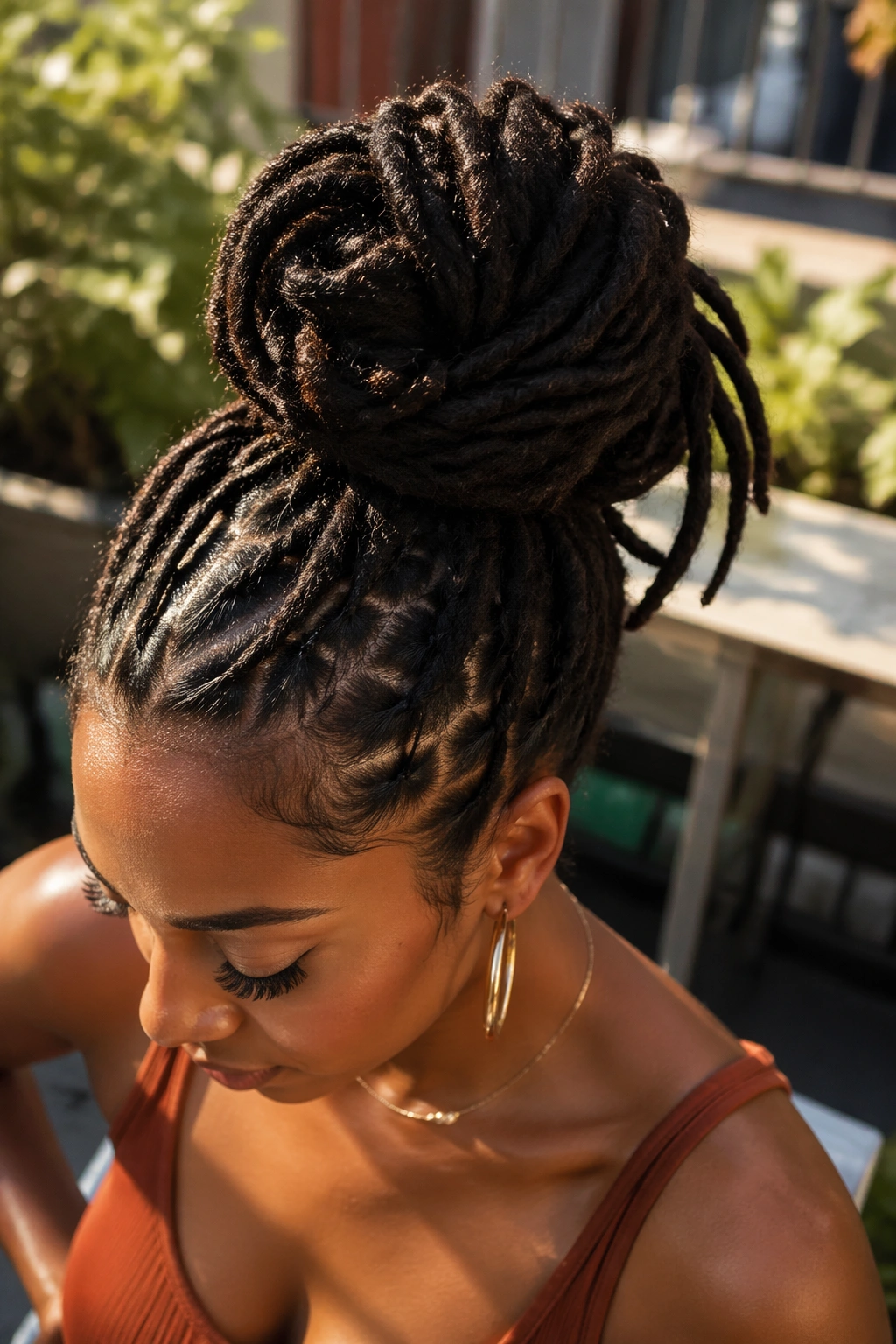
Topknots pull the eye upward fast. On locs, that lift can look strong and elegant, especially when the knot is full and the tail is still visible underneath. It is not a tiny bun. It is a ponytail that gets gathered and shaped into a knot on purpose.
Why It Works on Locs
The texture of locs gives the knot body, so you do not need to tease or rough up the hair to get volume. That is a nice change. The base should be secure, though, because all that height concentrates the weight in one place. Two elastics and a few well-hidden pins usually do the job.
If the locs are very long, leave a portion of the length out so the style does not look cramped. If they are medium-length, tuck the ends into the knot and let a few pieces peek out. Either way, the shape should feel lifted, not squeezed.
When to Skip It
If your scalp is tender or the crown feels sensitive, this is not the style for that day. Topknots ask a lot from one area. Save it for when you want height and do not mind a firmer hold.
A little shine on the knot is enough. You do not need extra decoration unless the rest of the look is minimal.
23. Clean Low Ponytail Finish
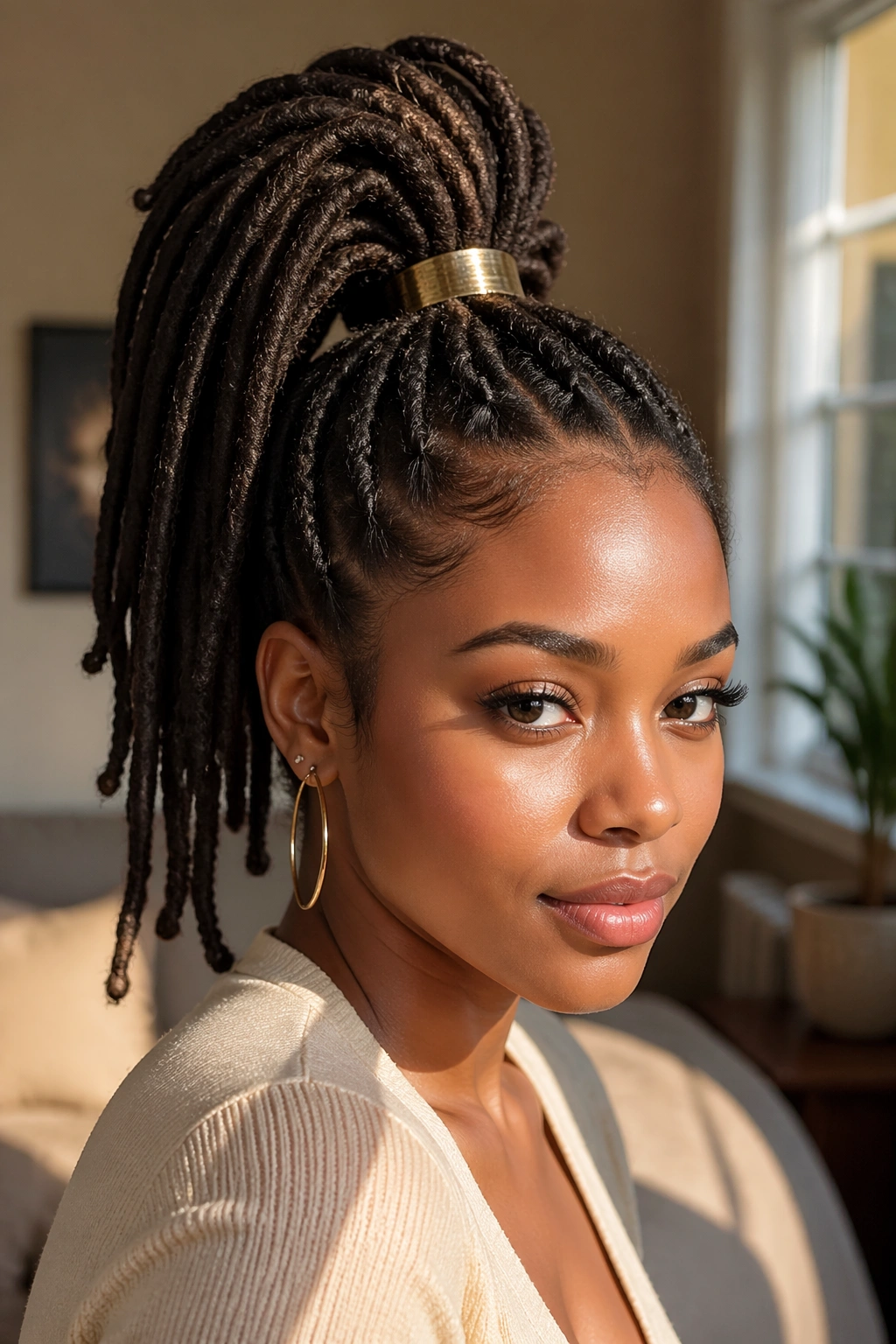
The clean low ponytail is the style that never tries to win an argument. It simply works. It sits near the nape, keeps the locs together, and leaves the face open without asking for a long installation time.
That simplicity is the reason I keep it in the rotation. A well-done low ponytail can look more polished than a style with twice the accessories, especially when the parting is neat and the base is wrapped cleanly. One elastic, one wrap, maybe one cuff. That is enough.
It is also one of the easiest shapes to adjust during the day. If the locs start feeling heavy, you can loosen the base slightly and shift the ponytail a touch lower. If you want a little more finish, add a scarf or a small metal tie. No big rebuild needed.
For me, this is the style that proves a point: loc ponytails do not need extra noise to look good. They need balance, a calm base, and a finish that respects the hair you already have. When those three things are there, the rest is just preference.