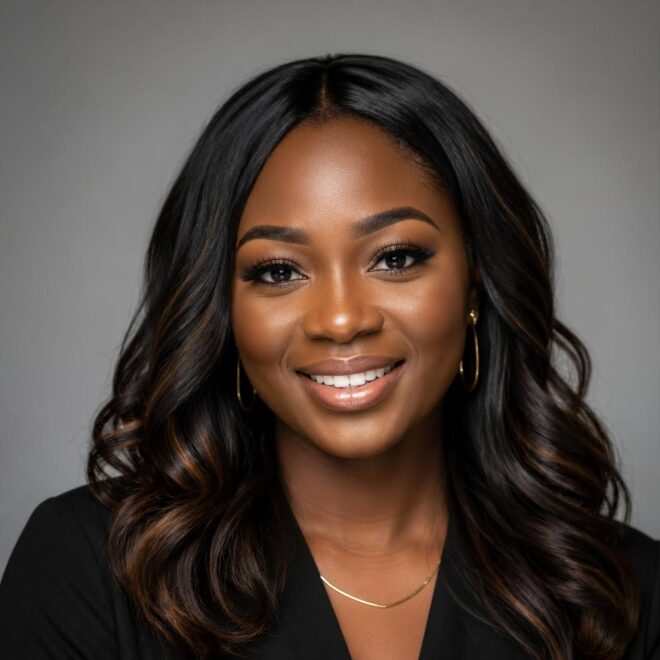


A low V part ponytail does a quiet kind of work. The V near the crown gives shape; the low anchor keeps it believable. That combination is why this style keeps showing up in real life, not just in polished photos.
The part matters more than people think. Too wide, and the V starts to look sharp in a bad way. Too shallow, and it disappears into the hair. The sweet spot is a clean point at the top with two neat diagonals, then a ponytail that sits low enough to follow the head instead of fighting it.
What makes low V part ponytails so useful is how easily they adapt to different textures. Straight hair, blown-out curls, silk presses, braids, stretched coils, clip-ins — the shape works when the finish matches the hair instead of trying to erase it. I like that. A style doesn’t need to look stiff to look intentional.
Some versions here are sleek, some are soft, and some lean protective. All of them have the same backbone: a clear V, a low ponytail, and enough natural movement to keep the style from feeling overdone.
1. Center V Part Low Ponytail
This is the version I reach for first. A center V part at the crown reads clean without looking severe, especially when the ponytail sits right at the nape and the roots stay smooth instead of slicked flat to the skull.
The trick is keeping the V narrow. Think two diagonal lines that meet in a point, not a giant triangle carved into the top of your head. A small V blends into the hairstyle; a big one starts stealing attention.
A thin strand wrapped around the elastic finishes it off nicely. Keep the wrap neat, but don’t chase perfection so hard that the hair loses movement.
2. Soft Off-Center V Part Low Ponytail
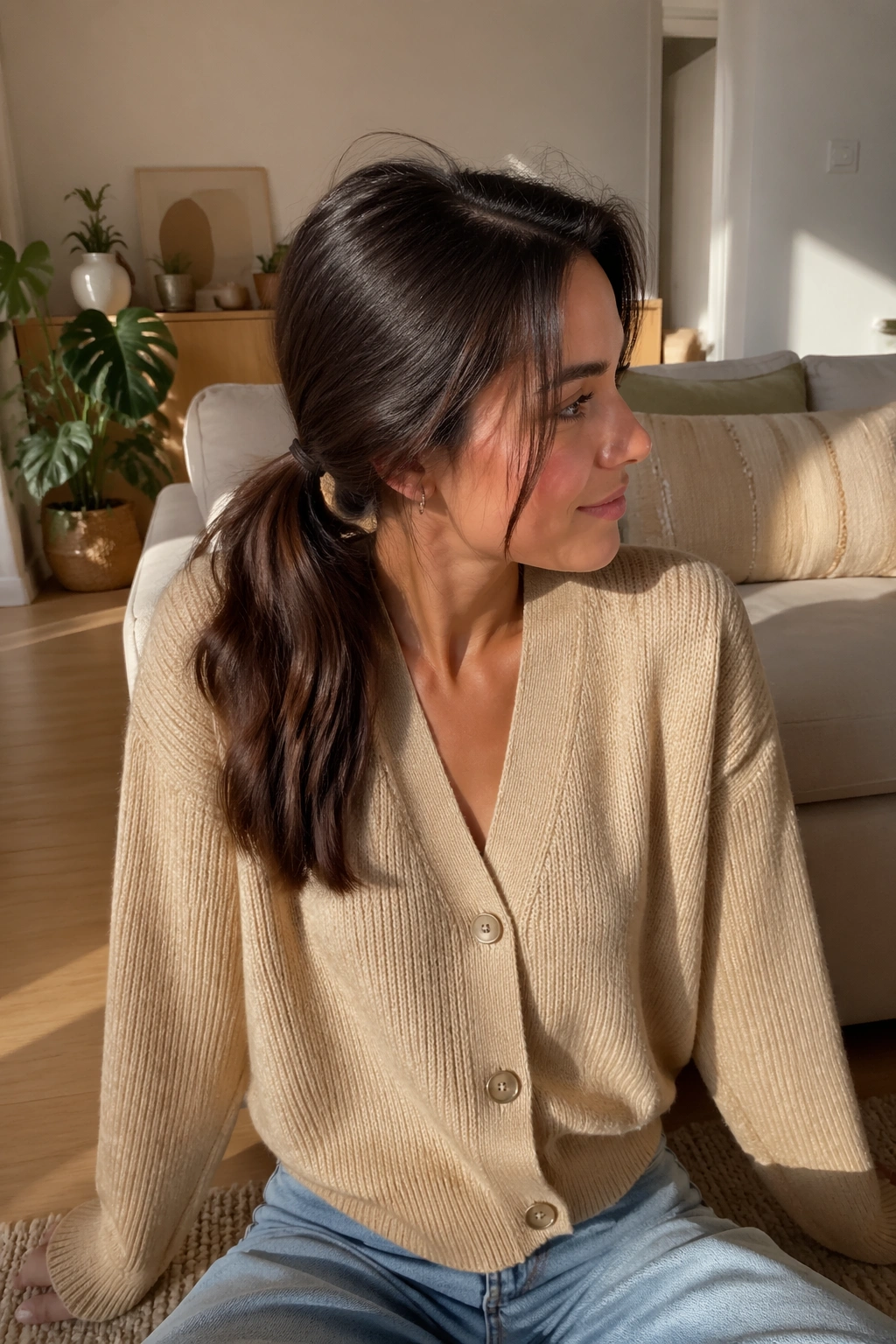
Can a V part look more natural when it isn’t dead center? Absolutely. A slight off-center point softens the whole style and works especially well if one side of your hair has a stronger cowlick or a little more density than the other.
How to Wear It
- Shift the point of the V about half an inch off center.
- Let the fuller side sit closer to the part line.
- Smooth the crown with a soft brush, not a hard one.
- Keep the ponytail low and loose enough to move.
The off-center version is one of those styles that looks like you didn’t try too hard, even though the parting still took a careful hand. That’s the appeal. It feels a little less formal than a true center part, and that tiny difference can matter a lot.
3. Silk Press Low V Part Ponytail
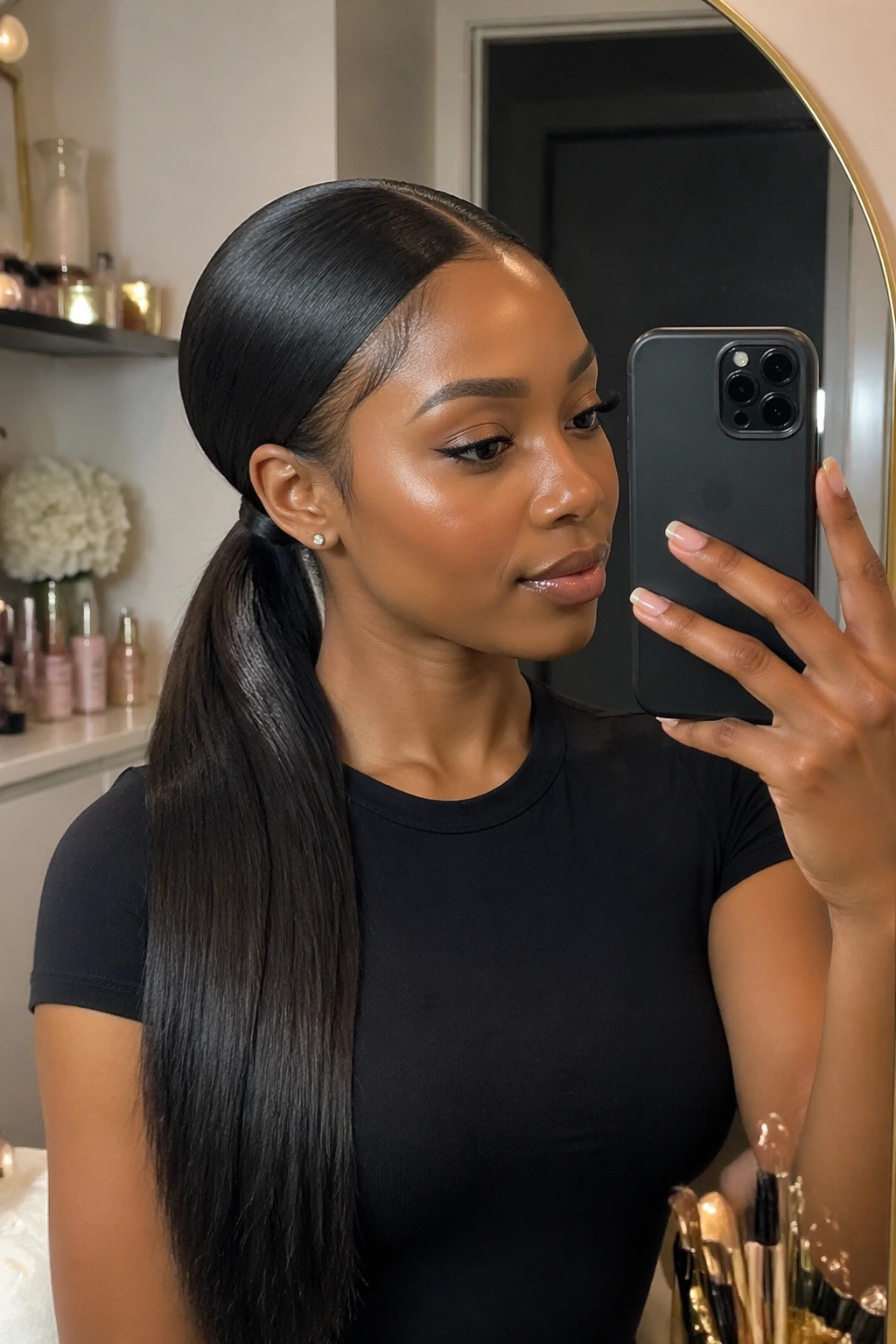
Freshly pressed hair loves this style. The shine runs from the roots down into the ponytail, and the V part gives the top enough structure so the style does not just slump.
Keep the part narrow and the base smooth. If you flood the hair with heavy oil, the roots can separate and the V loses its clean shape. A light serum on the mid-lengths is enough. More than that usually backfires.
I also like this version with a very small lift at the crown. Not a bump. Just enough body so the style doesn’t sit like it was glued down by a grudge.
4. Curly Leave-Out Low V Part Ponytail
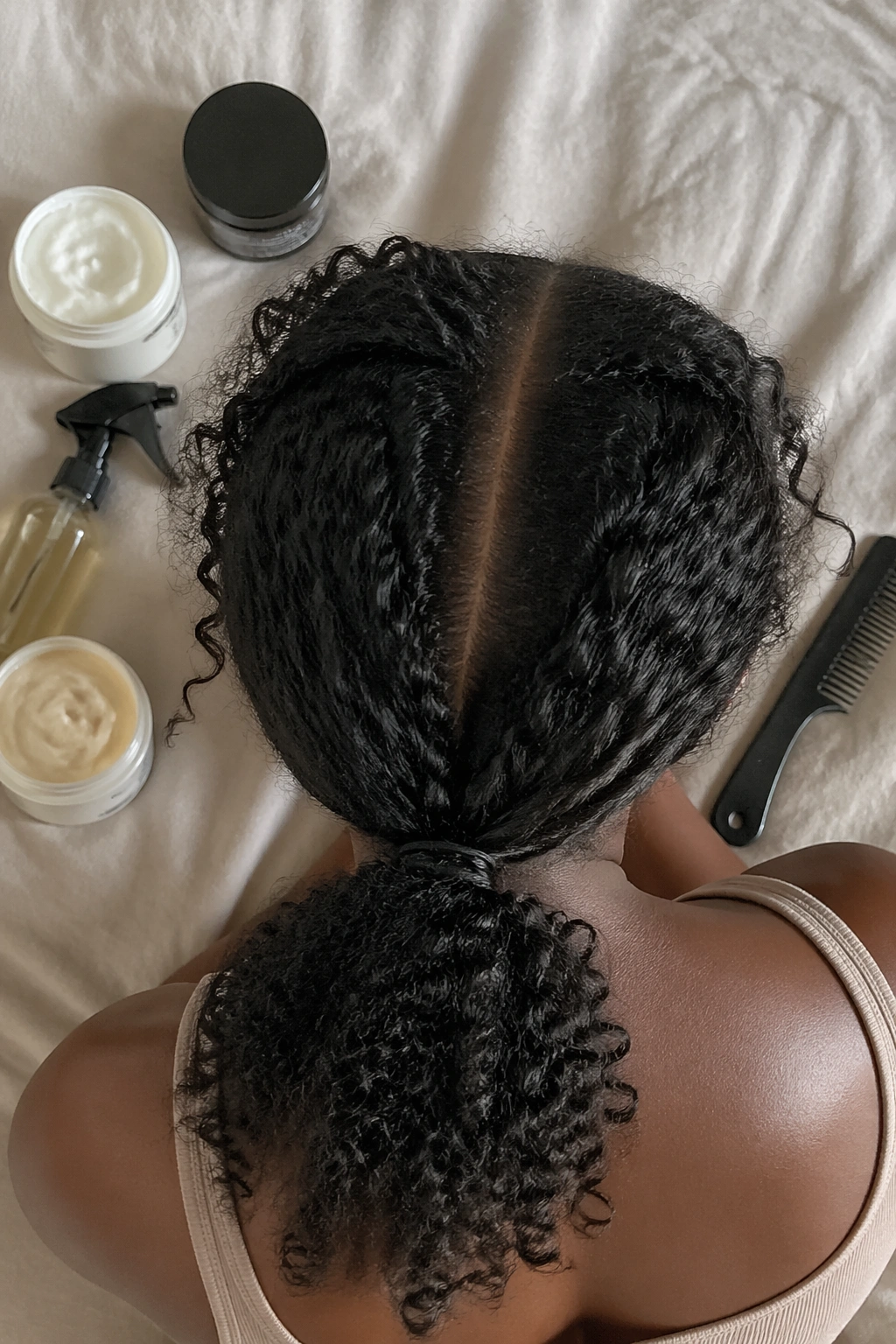
A curly leave-out version feels softer than a fully slicked ponytail, and that softness is what keeps it looking natural. Leave a small triangle of curls around the V so the part blends into your texture instead of sitting on top of it like a label.
The ponytail itself can stay gathered low and loose. If your curls are tighter, use a curl cream or foam that defines without making the hair crunchy. If they’re looser, a little water and leave-in is enough. The point is to keep the curl pattern visible.
No need to flatten every strand. A few flyaways near the crown make the whole thing feel real.
5. Braided Base Low V Part Ponytail
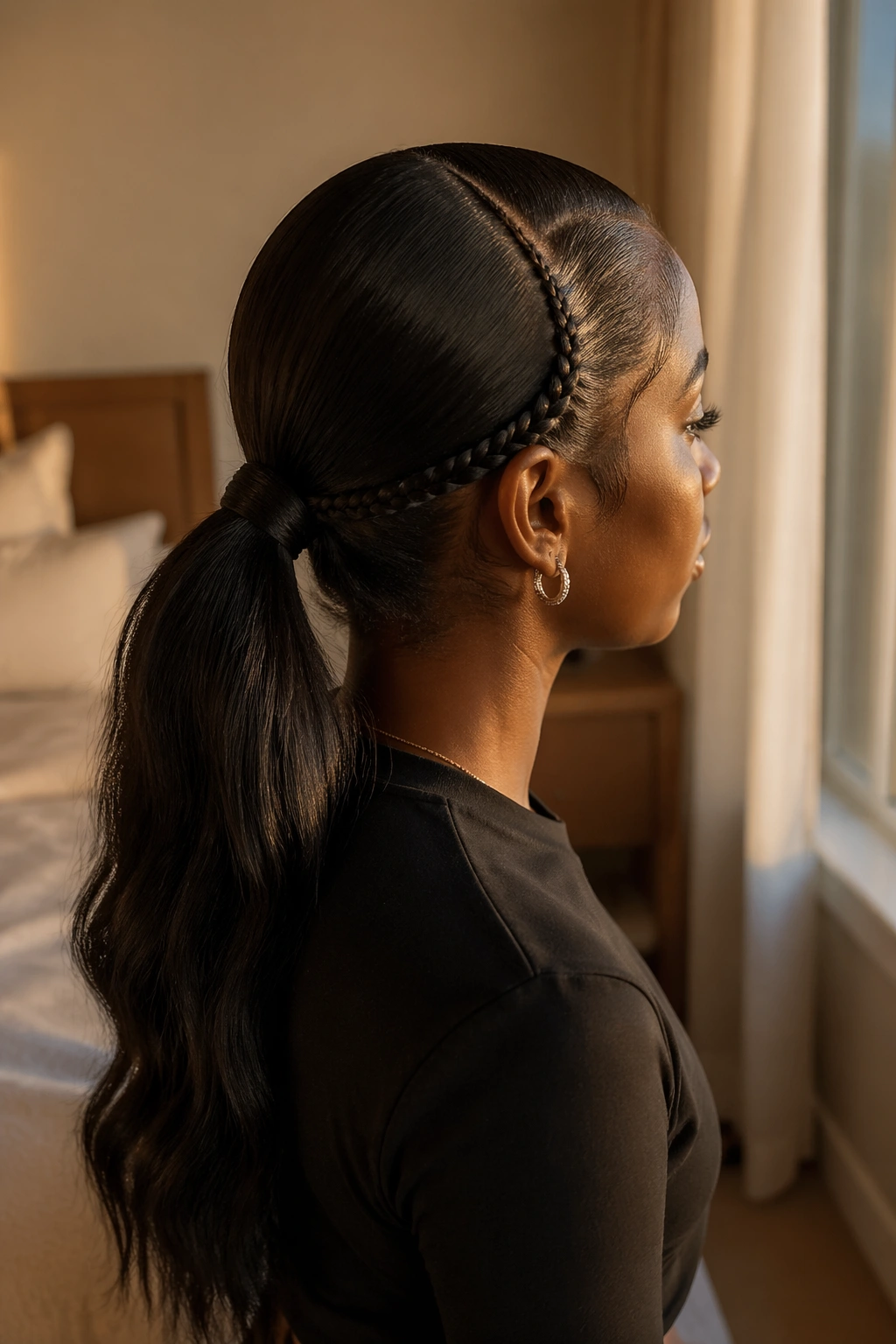
A braided base is the version that lasts. If you want your low V part ponytail to stay neat for more than a few hours, feed the top into flat braids or cornrows that disappear into the ponytail.
Why It Holds Up
- The braid base keeps the crown smooth.
- The low placement reduces pulling on the hairline.
- Extensions blend better when the anchor is flat.
- Humidity has less to grab onto.
The important part is tension. Tight braids near the front will age the style fast, and they can hurt before they even look good. Keep the braid path clean, but gentle.
6. Wrapped Low V Part Ponytail with a Hidden Elastic
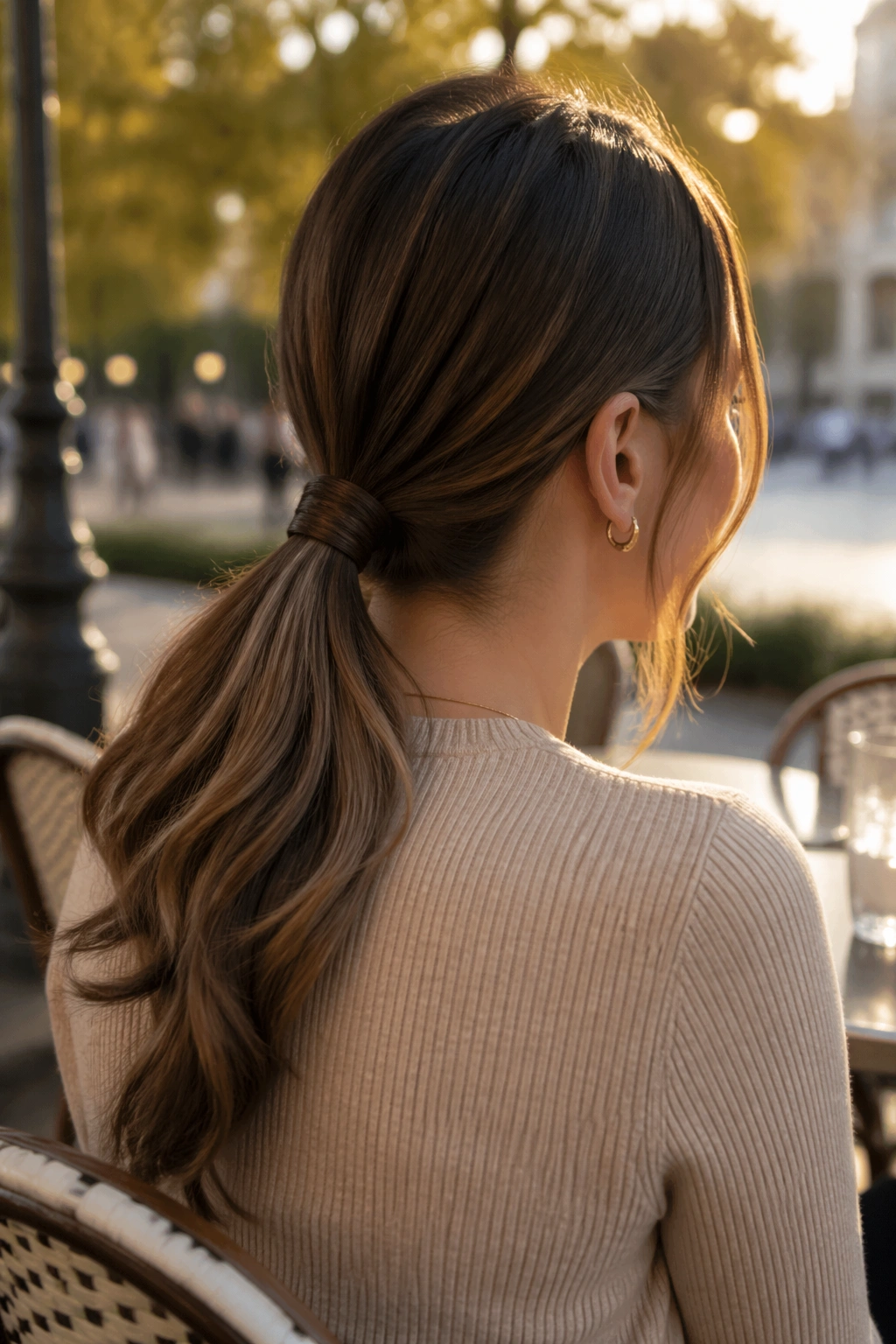
This version looks clean because the elastic disappears. Instead of leaving the hair tie visible, wrap a thin strand of hair around the base and pin it underneath.
That tiny wrap changes the whole mood. A visible elastic can make even a good ponytail look rushed. A hidden one makes the style feel finished, even when the rest of the hair stays soft.
I prefer this on days when the outfit is simple and the hair needs to do a little more work. It’s subtle, but not boring. A neat wrap is one of those details people notice without knowing why.
7. Bubble Low V Part Ponytail
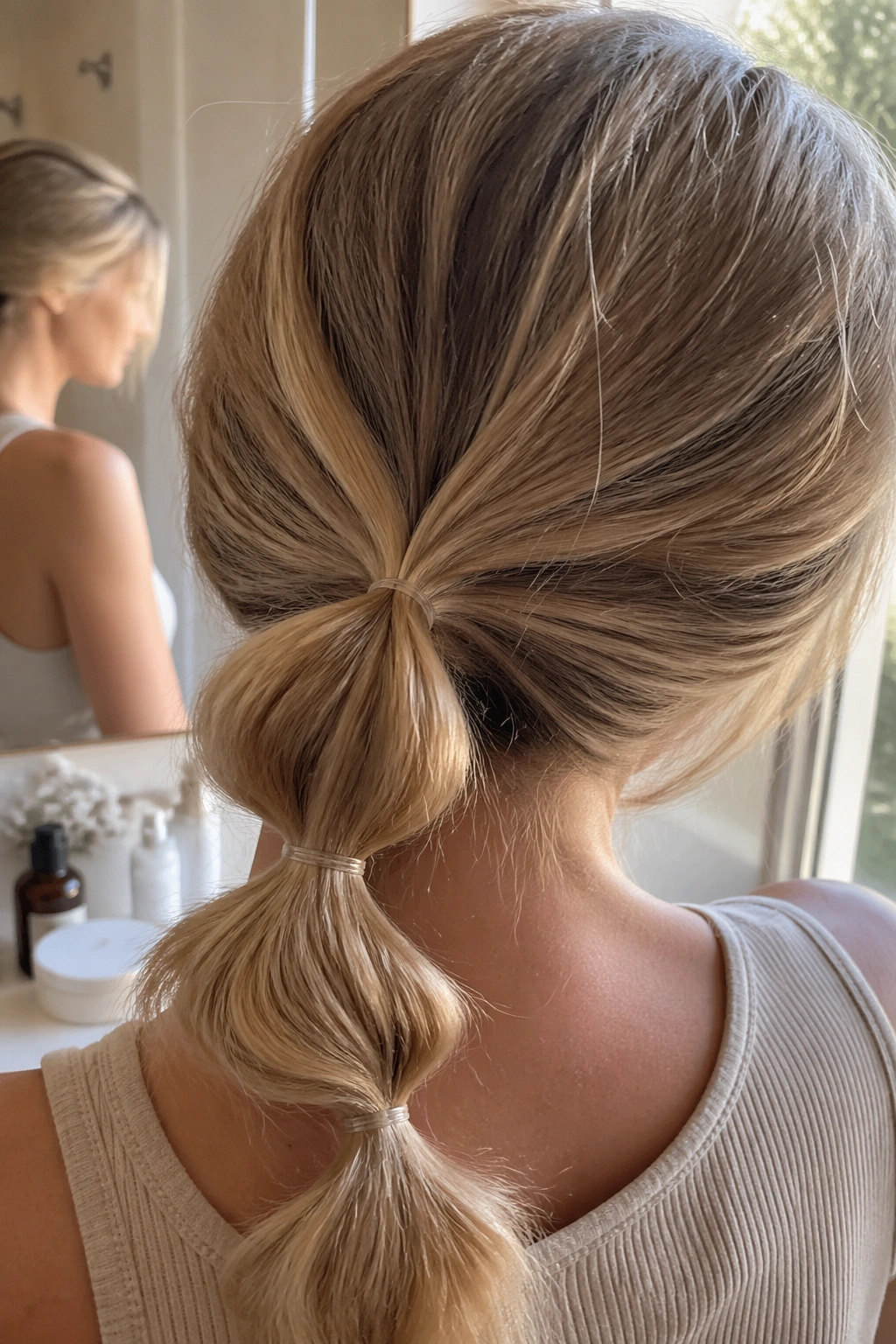
The bubble ponytail sounds playful, but in a low V part version it can read surprisingly natural if the bubbles are loose and the sections aren’t identical. That matters. Perfectly even bubbles can look staged.
Start with the V part, gather the hair low, then place small elastics every 2 to 3 inches down the length. After that, gently tug each section so it rounds out. Don’t yank. A soft shape is better than a puffy one.
This style is good when you want texture without curls. It gives the ponytail movement and volume, and it still keeps the front of the hair neat enough to feel polished.
8. Thick Clip-In Low V Part Ponytail
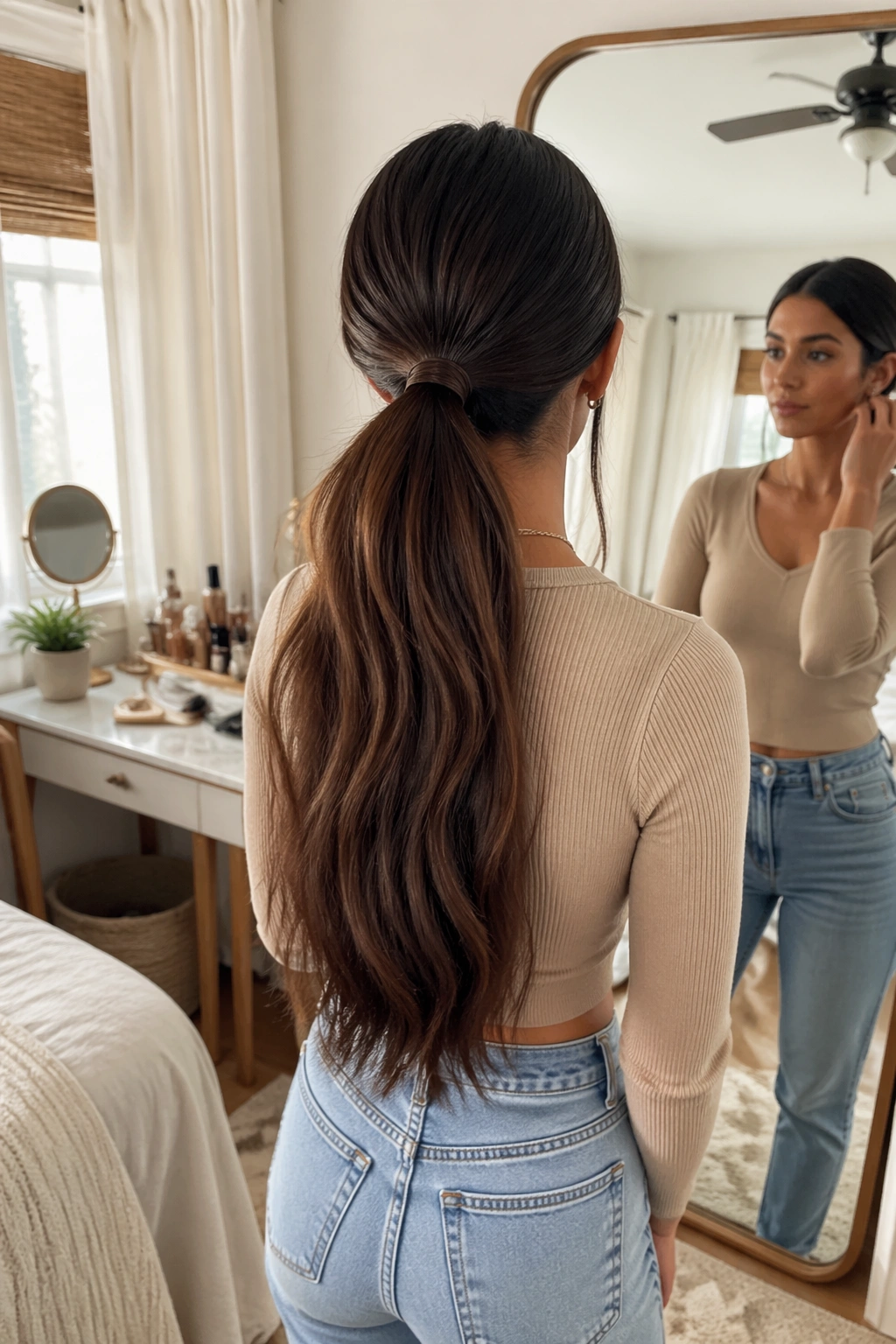
Can clip-ins still look natural in a low V part ponytail? Yes, but only if the density makes sense from root to end. The biggest giveaway is usually a crown that’s too flat for the amount of hair hanging down.
How to Avoid the Giveaway
- Match the clip-in texture to your real hair.
- Keep the crown sleek, not stretched tight.
- Don’t choose a length that feels wildly heavier than your own.
- Blend the ends with a bend or soft wave if needed.
I like this option when the ponytail needs more body than the natural hair can give on its own. Just don’t go so long or so full that the style starts looking costume-like. The whole point is to keep the illusion calm.
9. Natural Coily Low V Part Ponytail
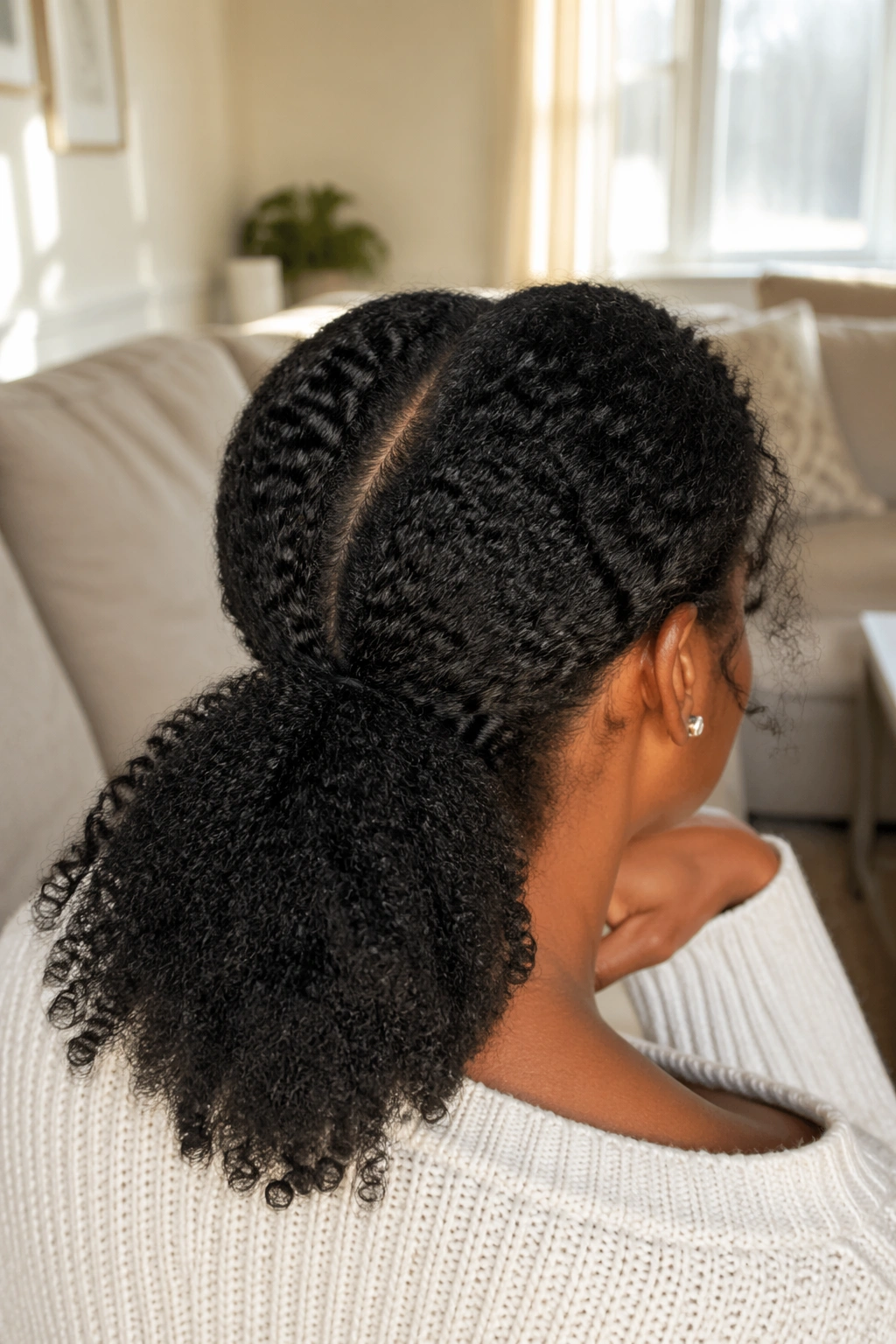
On coily hair, the V part should be narrow and clean, not deep and dramatic. A small point at the crown keeps the style neat while letting the texture do the talking in the ponytail itself.
Stretch the roots a little if needed, either with banding or a gentle blow-dry on low heat. Then gather the hair low and let the coils keep their shape. A touch of edge control can help around the hairline, but a heavy hand usually makes the style look stiff.
A little frizz is fine here. Honestly, it helps. Coily hair looks best in this style when it still looks like coily hair.
10. Twisted Low V Part Ponytail
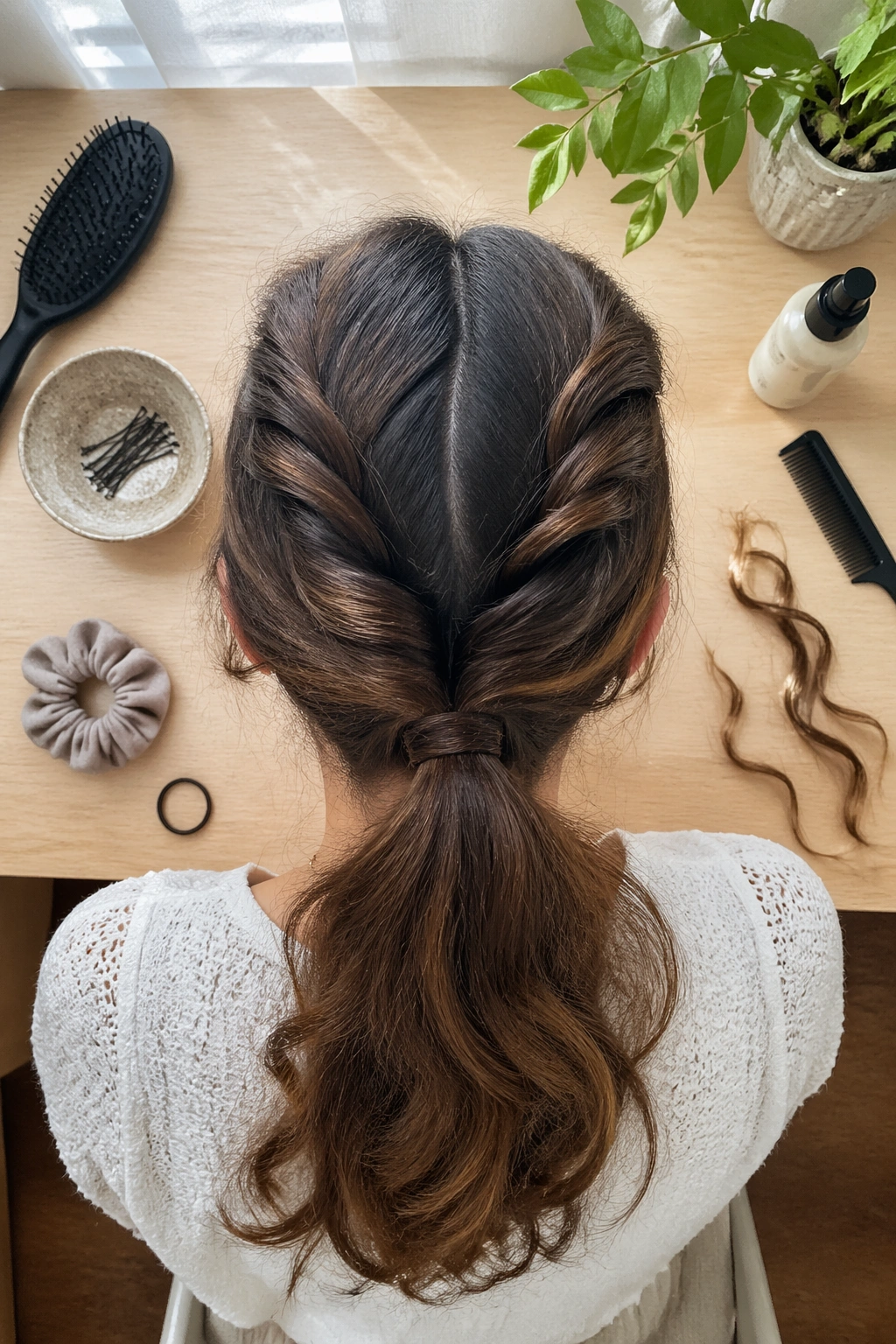
Twists give this ponytail a softer outline than braids do. Two flat twists from the front can meet at the low ponytail and create a gentle path that looks neat without feeling strict.
The good part is speed. Twists are usually faster to install than cornrows, and they have a little more give if your scalp is sensitive. That makes them practical as well as pretty.
You can leave the ponytail itself twisted too, or let it fall as one gathered section. Either way, the texture does half the styling for you.
11. Low V Part Ponytail with Face-Framing Pieces
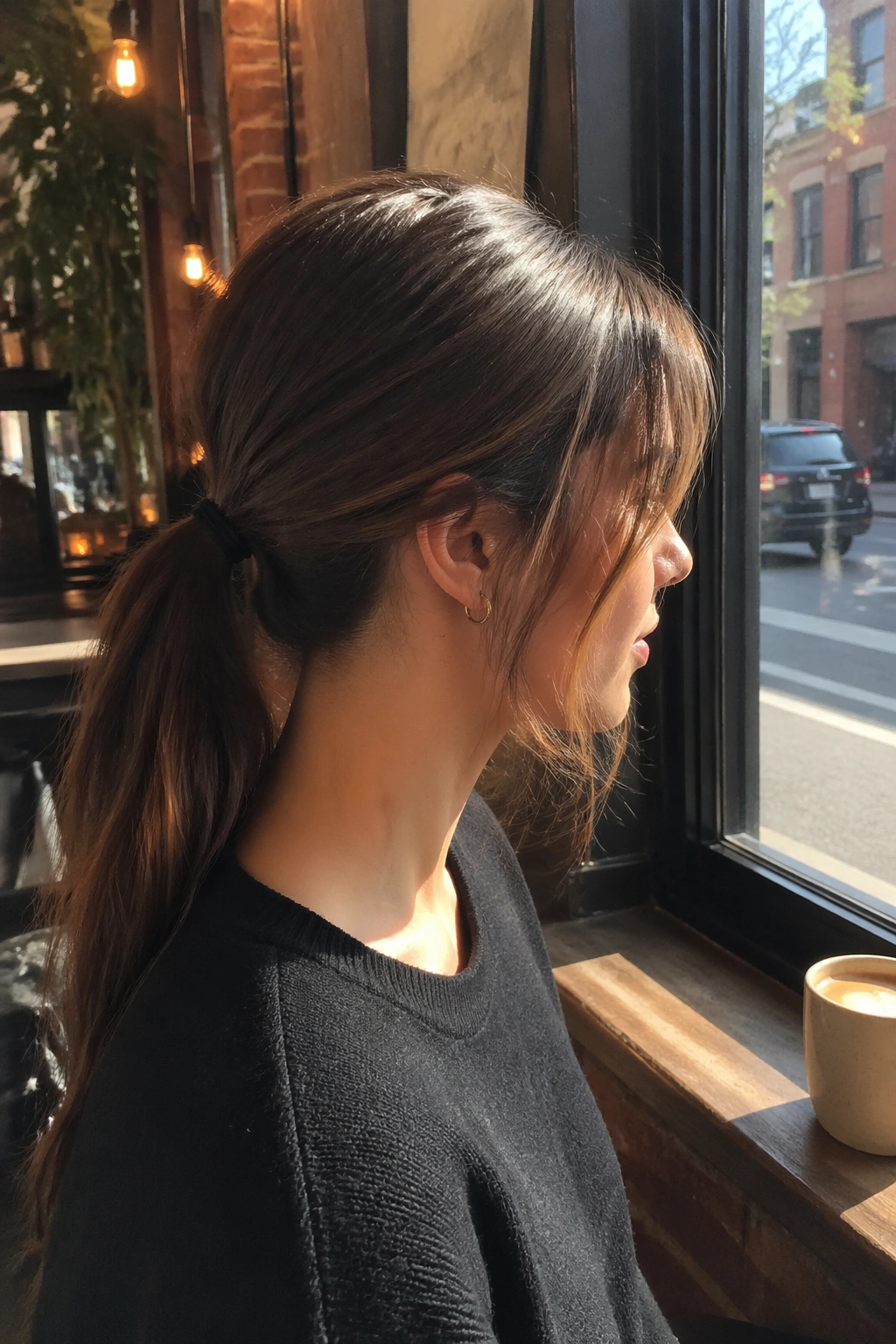
A few face-framing pieces can make a low V part ponytail look softer in seconds. The pieces take the edge off the part and keep the style from feeling too pulled back.
What to Leave Out
- Shorter pieces around the cheekbone soften the front fast.
- Jawline-length pieces create a slower, more elegant line.
- Collarbone-length pieces work when you want movement near the neck.
- Uneven ends look more natural than matching layers cut to the exact same spot.
The key is restraint. You only need a couple of pieces, not a curtain. Too much leave-out and the whole style starts losing the shape that makes the V part useful in the first place.
12. Side-Swept Low V Part Ponytail
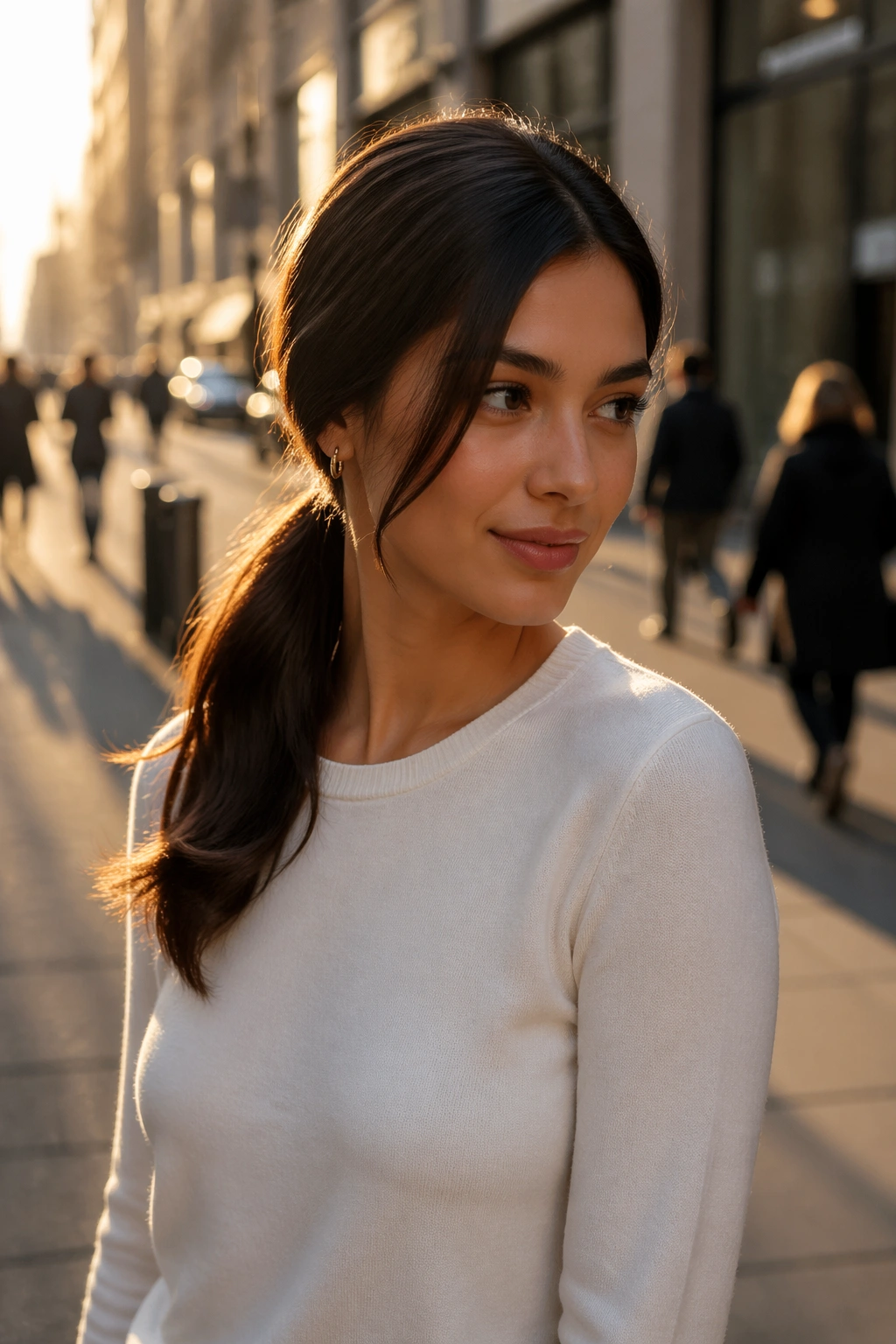
A side-swept V part is the version I like when a center part feels too strict. The point still sits near the crown, but the part leans slightly to one side, which makes the whole style feel a little softer and a little less predictable.
It also helps if your hair naturally wants to fall left or right. Fighting a strong growth pattern is one of the fastest ways to make a hairstyle look forced. Let the hair behave a bit, and the ponytail usually looks better for it.
This version pairs well with minimal makeup, gold hoops, or a simple collarbone necklace. It has enough shape to stand alone.
13. Wet-Look Low V Part Ponytail
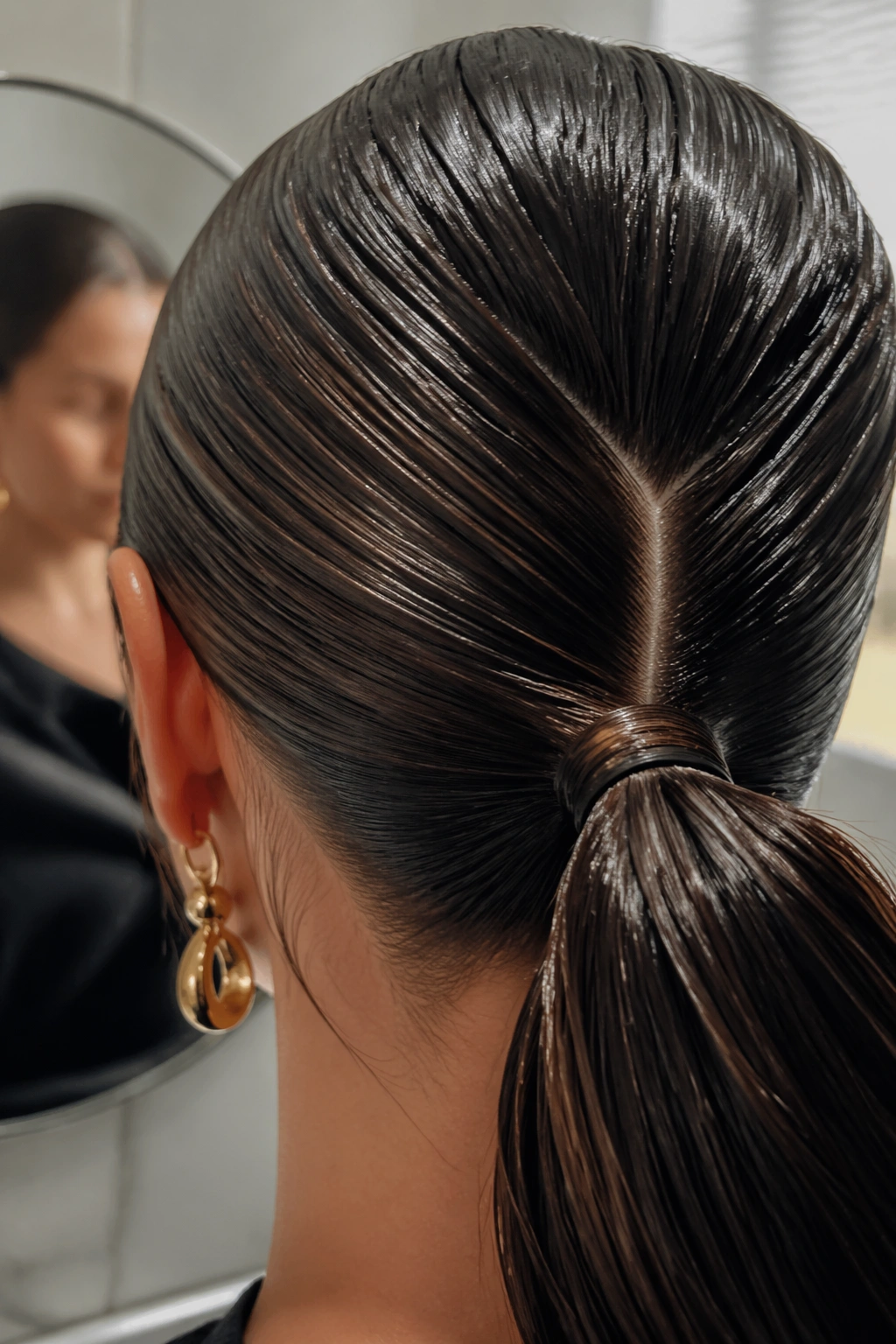
Wet look does not have to mean crunchy. That’s the mistake people make. The best version keeps the roots glossy and flat, while the ponytail itself still moves a little when you walk.
Use gel sparingly at the top, then smooth it with a fine-tooth comb. A little shine spray over the finished ponytail gives the surface that sleek look without turning the hair into a helmet. The ends should still have some bend.
I like this style for nights out, sure, but it also works on short hair that wants more structure. It’s bold in a controlled way.
14. Low V Part Ponytail with a Braid Accent
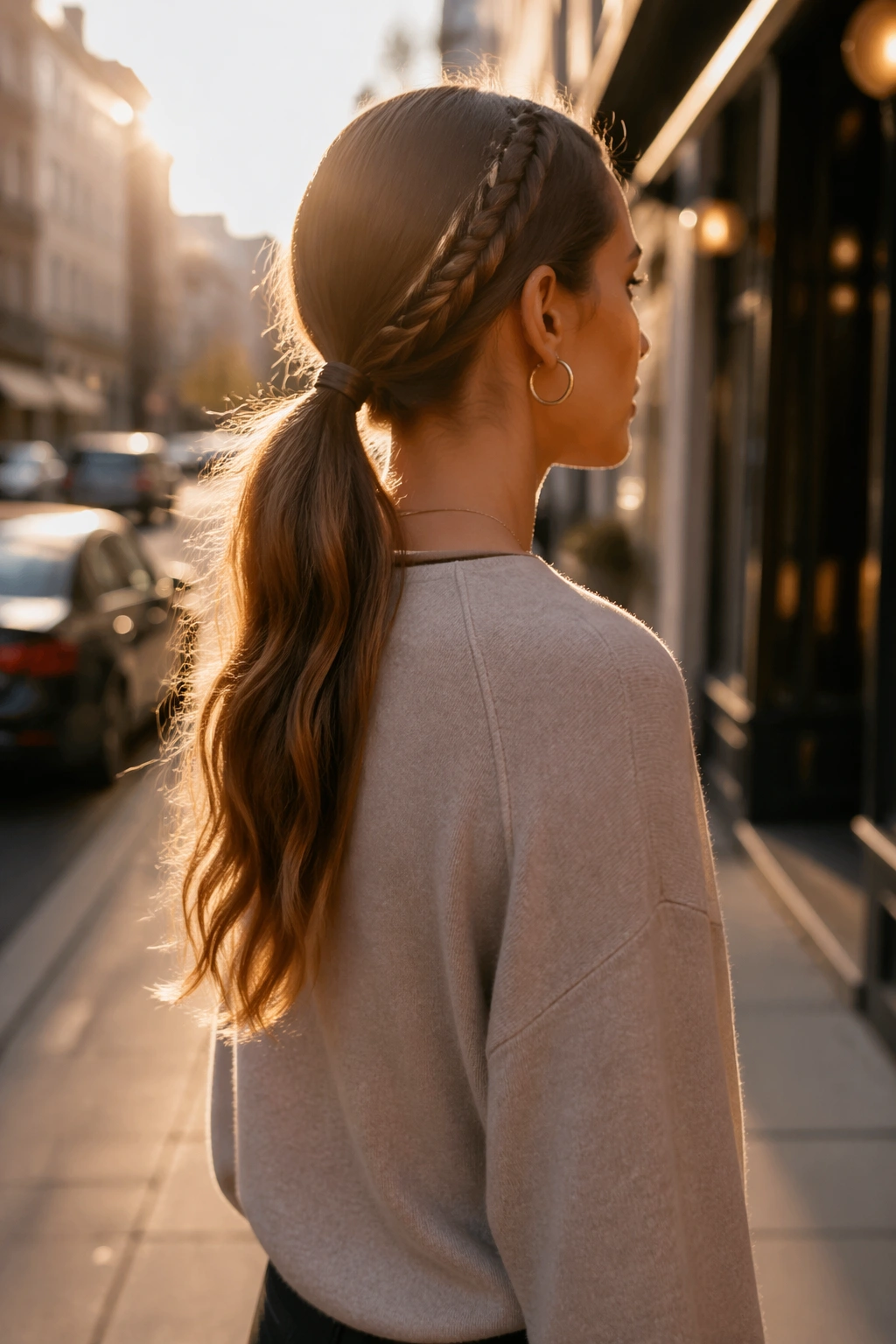
One braid can change the whole read of the style. A thin braid along one side of the V, or a single braid tucked into the ponytail base, gives the hairstyle just enough detail to feel finished.
Keep It Subtle
- Use one accent braid, not three.
- Keep the braid slim so it blends with the ponytail.
- Let the rest of the hair stay smooth and simple.
- Match the braid direction to the V, so the shapes work together.
If the braid gets too wide or too busy, the natural look disappears fast. One quiet accent is enough.
15. Twist-Out Low V Part Ponytail
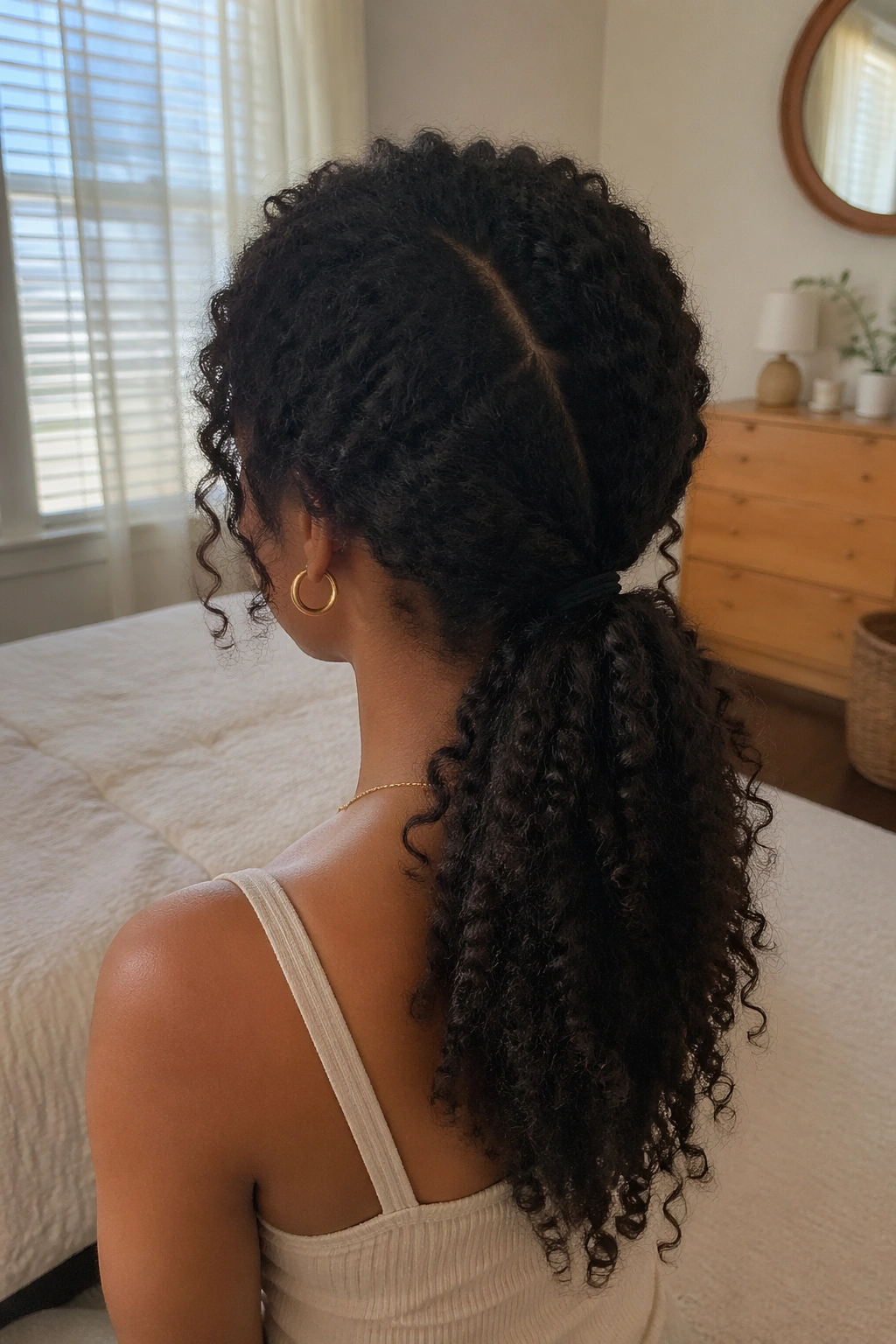
A twist-out ponytail has a more lived-in feel than a freshly straightened one. The texture shows through, which is exactly why it looks so good when the goal is something natural rather than overly styled.
The V part still frames the top, but the ponytail itself carries that soft, separated texture twist-outs are known for. A little fluff at the roots is fine. It keeps the style from feeling too controlled.
This is a strong choice for second- or third-day hair. You already have the texture; the ponytail just gathers it into something cleaner.
16. Minimal Low V Part Ponytail for Fine Hair
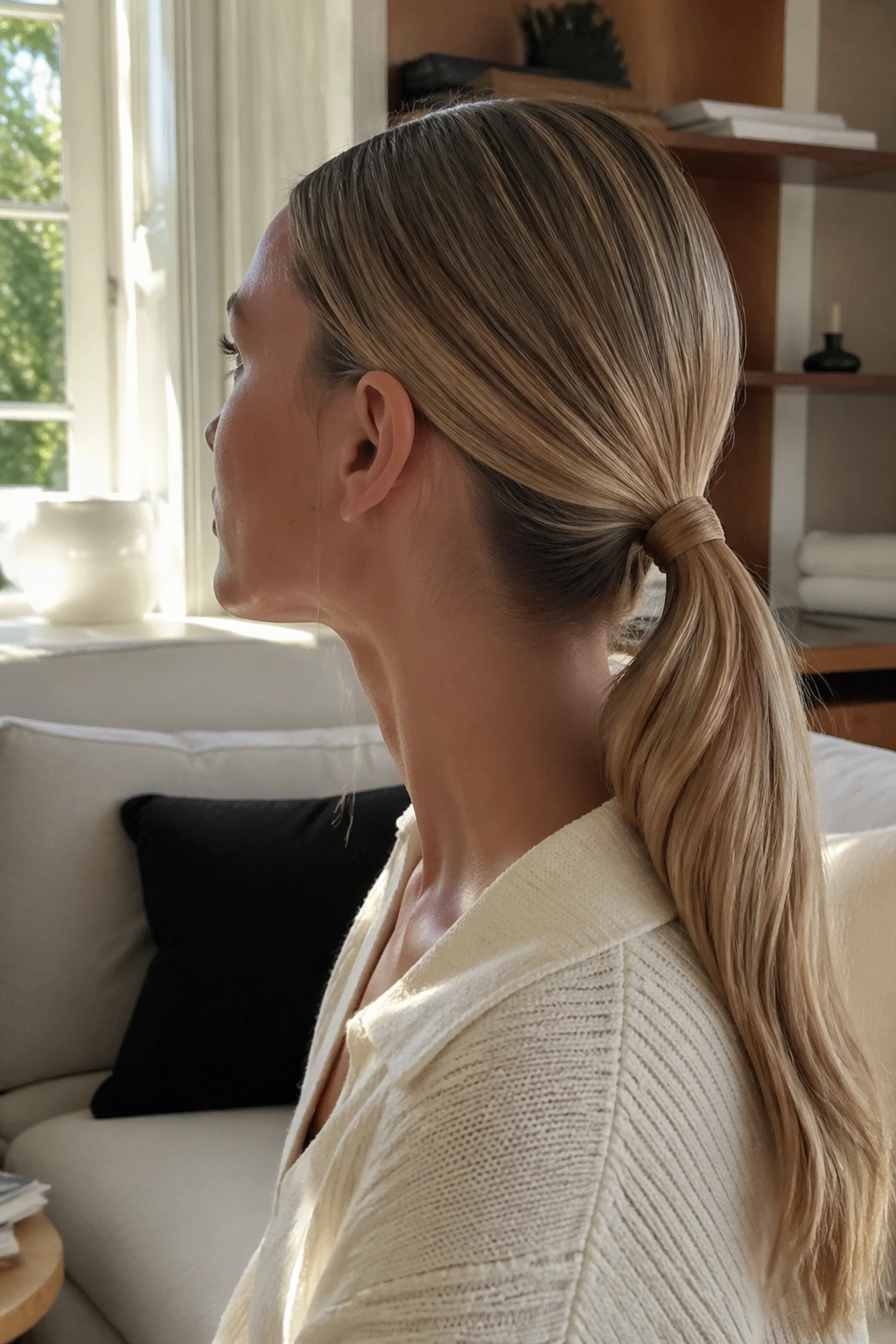
Fine hair hates being overworked at the crown. If the V part is too wide or the base is too tight, the style can start looking sparse instead of sleek.
Keep the part small and the ponytail low. That gives the hair more visual density. A light mousse at the roots can help hold the shape without weighing everything down, and a matte finishing spray often looks better than anything shiny on this texture.
I’d skip heavy creams here. They make fine hair collapse faster. The cleaner, lighter version usually wins.
17. Low V Part Ponytail with a Ribbon Tie
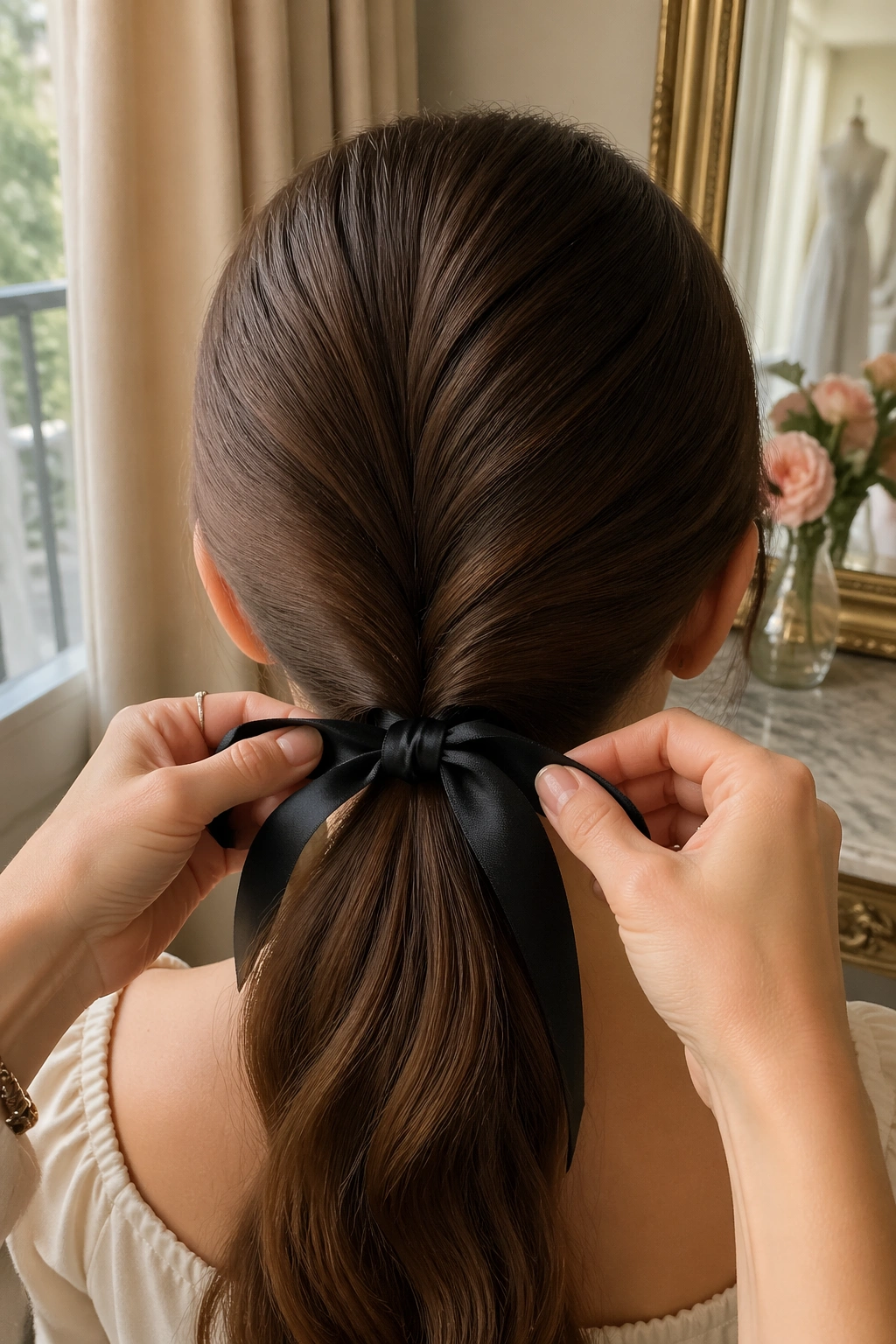
A ribbon can soften the whole ponytail fast, especially when the color stays close to the hair or echoes something in the outfit. It’s a small change, but it gives the style a finished feel without adding height or bulk.
Ribbon Choices That Work
- Satin ribbon feels smooth and light.
- Velvet ribbon adds a richer finish.
- Skinny grosgrain keeps the look neat.
- A 3/8-inch ribbon reads delicate; a 1-inch ribbon reads more deliberate.
Tie it under the ponytail if you want the ribbon tails to hang cleanly. That keeps the base tidy and lets the knot stay part of the design instead of taking over the style.
18. Boho Low V Part Ponytail with Soft Waves
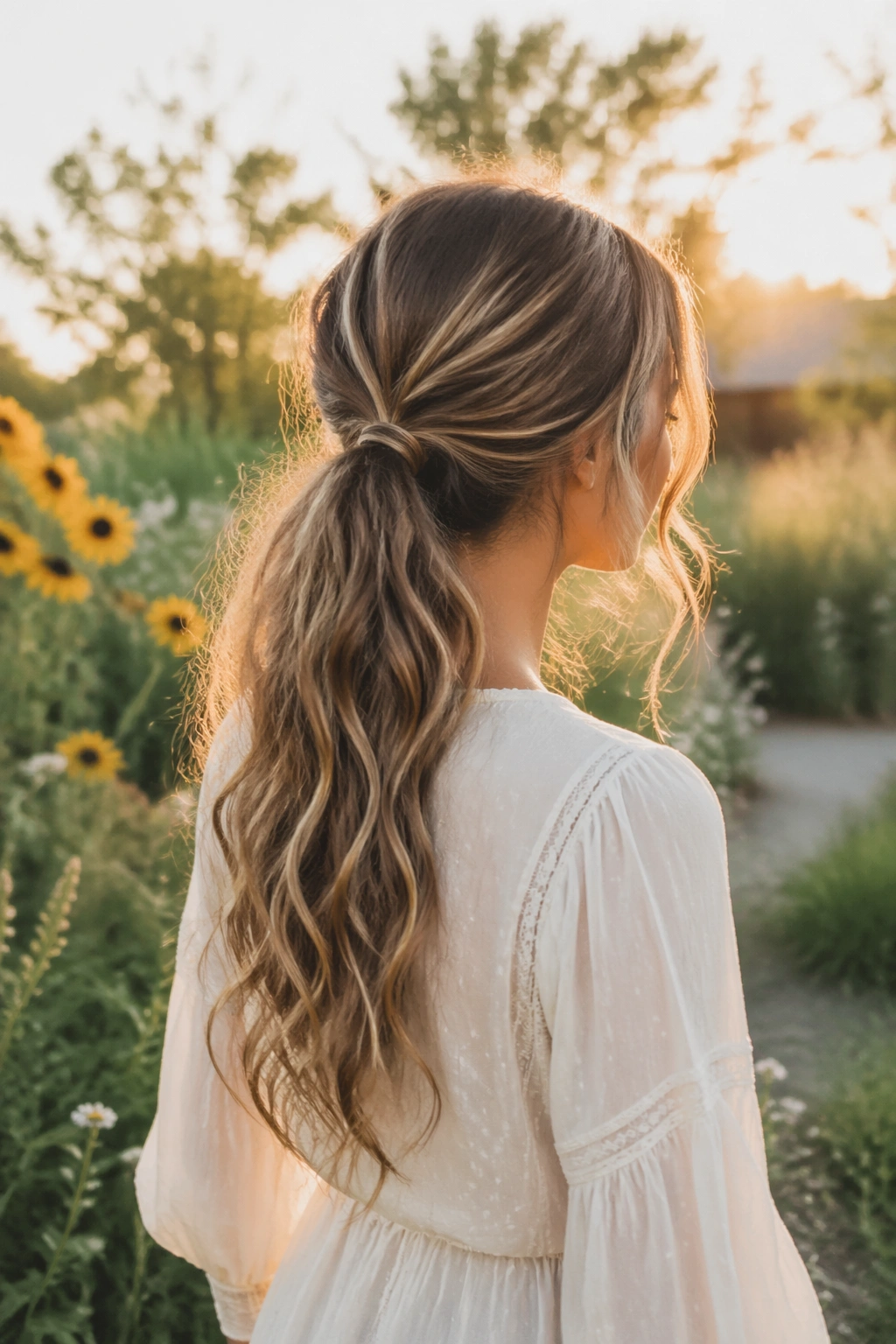
This is the version for people who want the ponytail to move. Soft waves give the hair a relaxed bend, and the V part keeps the top from looking too loose or unfinished.
Unlike a straight sleek ponytail, the boho version is allowed to breathe. The crown stays neat, but the lengths can have bends, texture, and a little unevenness. That’s the charm.
A 1-inch curling wand works well if you want loose waves that brush out easily. The goal isn’t tight curls. It’s bend, softness, and hair that doesn’t look overhandled.
19. Protective Low V Part Ponytail for 4C Hair
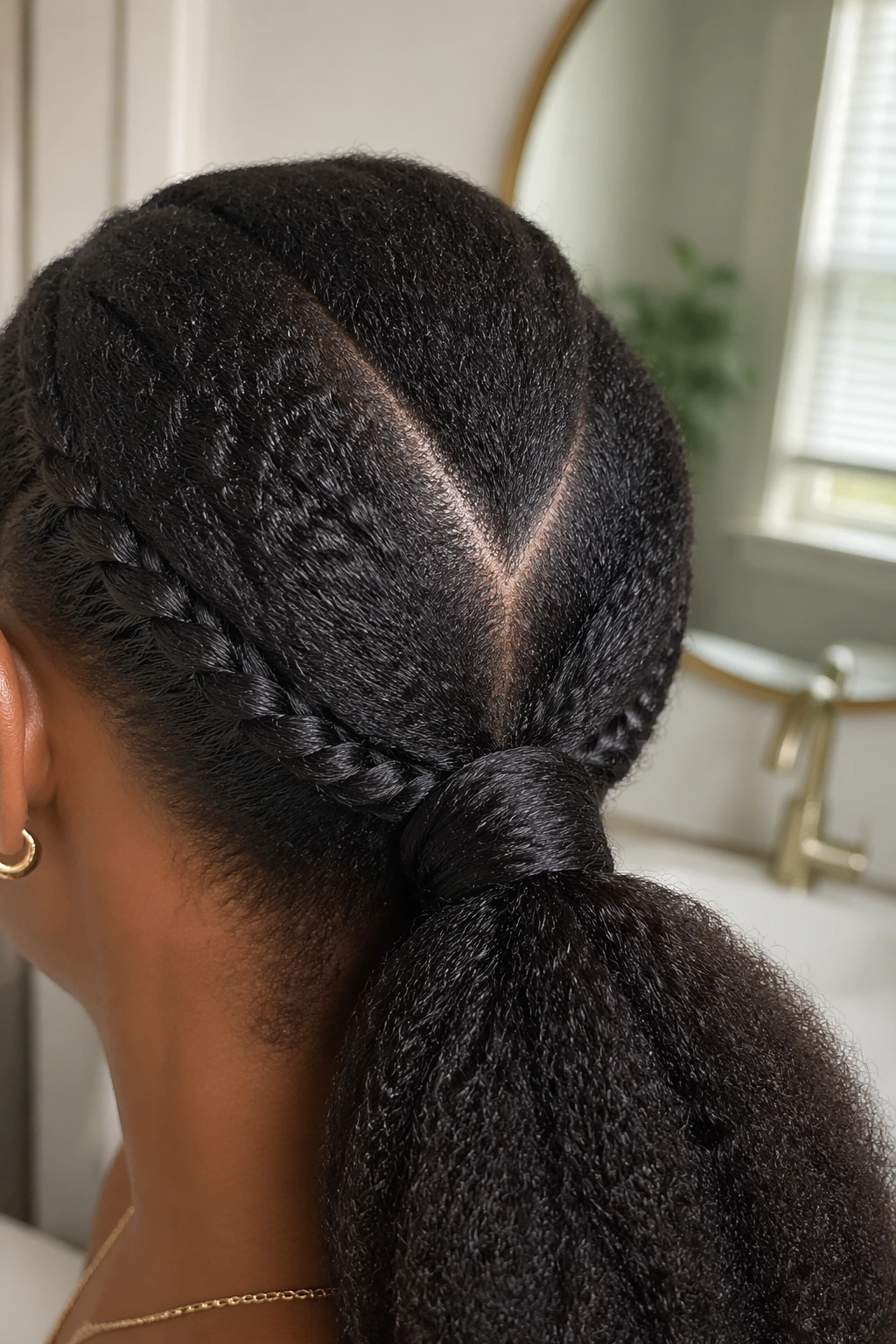
Protective here means low strain and smart styling. On 4C hair, the best low V part ponytail keeps tension off the front, uses a narrow V, and lets the hair stay stretched enough to blend smoothly.
What Makes It Protective
- The base sits low instead of pulling upward.
- The V stays small, which keeps the front section manageable.
- Flat twists or braids can anchor the style without constant retouching.
- A satin scarf at night helps the shape last.
If you’re adding extensions, blend them carefully so the ponytail doesn’t get bulky near the base. Too much weight at the nape can make the style feel heavy fast.
20. Low V Part Ponytail for Work or School

Need something that holds up through a long day? This is the version that earns its keep. It should look tidy at 8 a.m. and still look like hair by late afternoon.
Keep the crown smooth, but don’t overdo the gel. A little movement at the hairline helps the style stay natural, especially if you’ll be taking off and putting on glasses, headphones, or a hat. A hidden elastic and one thin wrap strand finish the job.
I like this version because it doesn’t demand constant fixing. You can toss it over one shoulder, tuck it back, or leave it centered and it still behaves.
21. Low V Part Ponytail for a Night Out
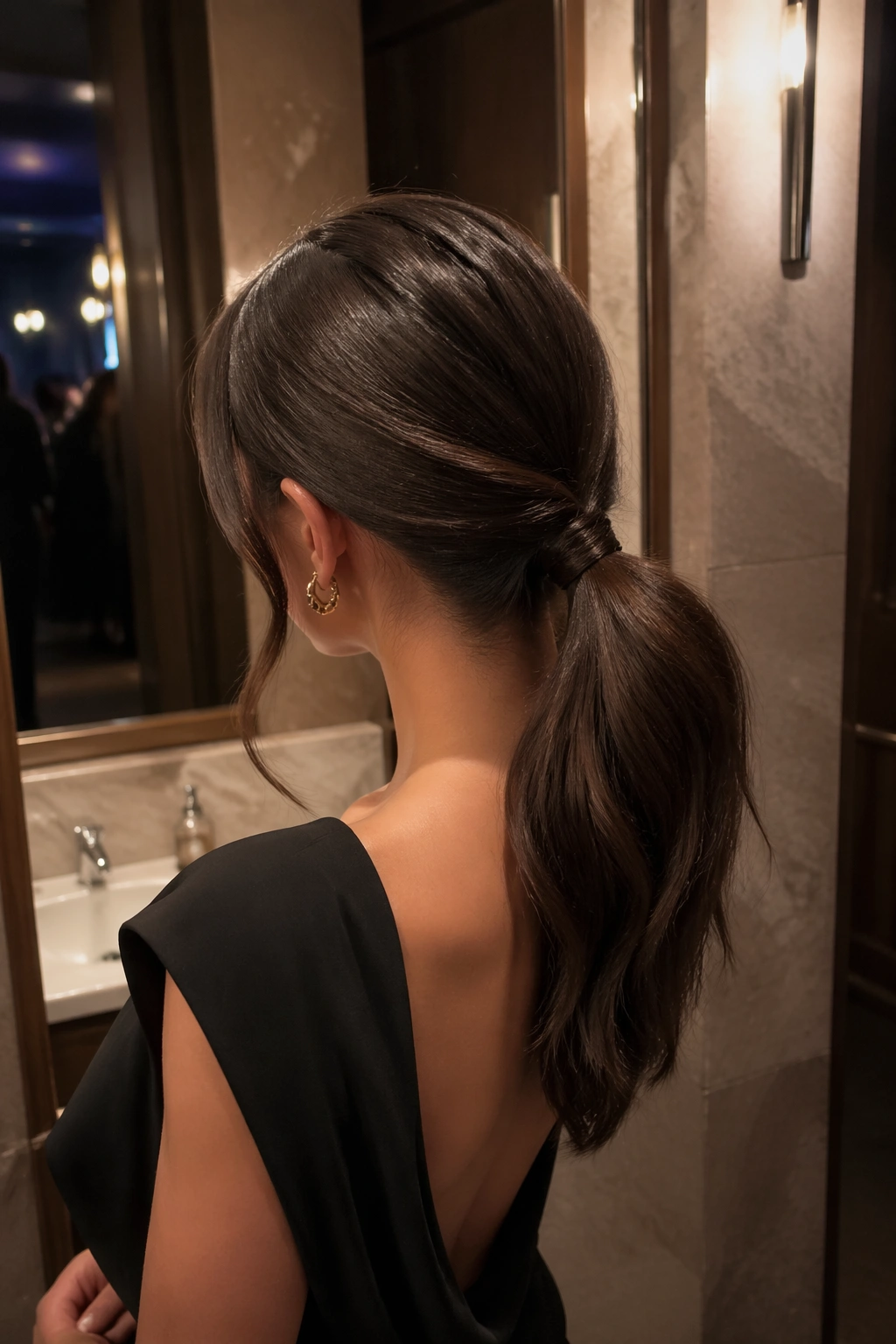
A night-out ponytail needs shine, shape, and a bit of attitude. The V part gives you the shape. The low base keeps it wearable. The rest is about the finish.
Gloss spray works better than a second round of heavy gel. Too much product can make the hair look stiff under indoor light, and that’s rarely flattering. Keep the ponytail smooth, then let the ends have some body.
A small side swoop or a metallic pin can make sense here, but only if the hair itself stays simple. The style should support the outfit, not compete with it.
22. Low V Part Ponytail for Special Events
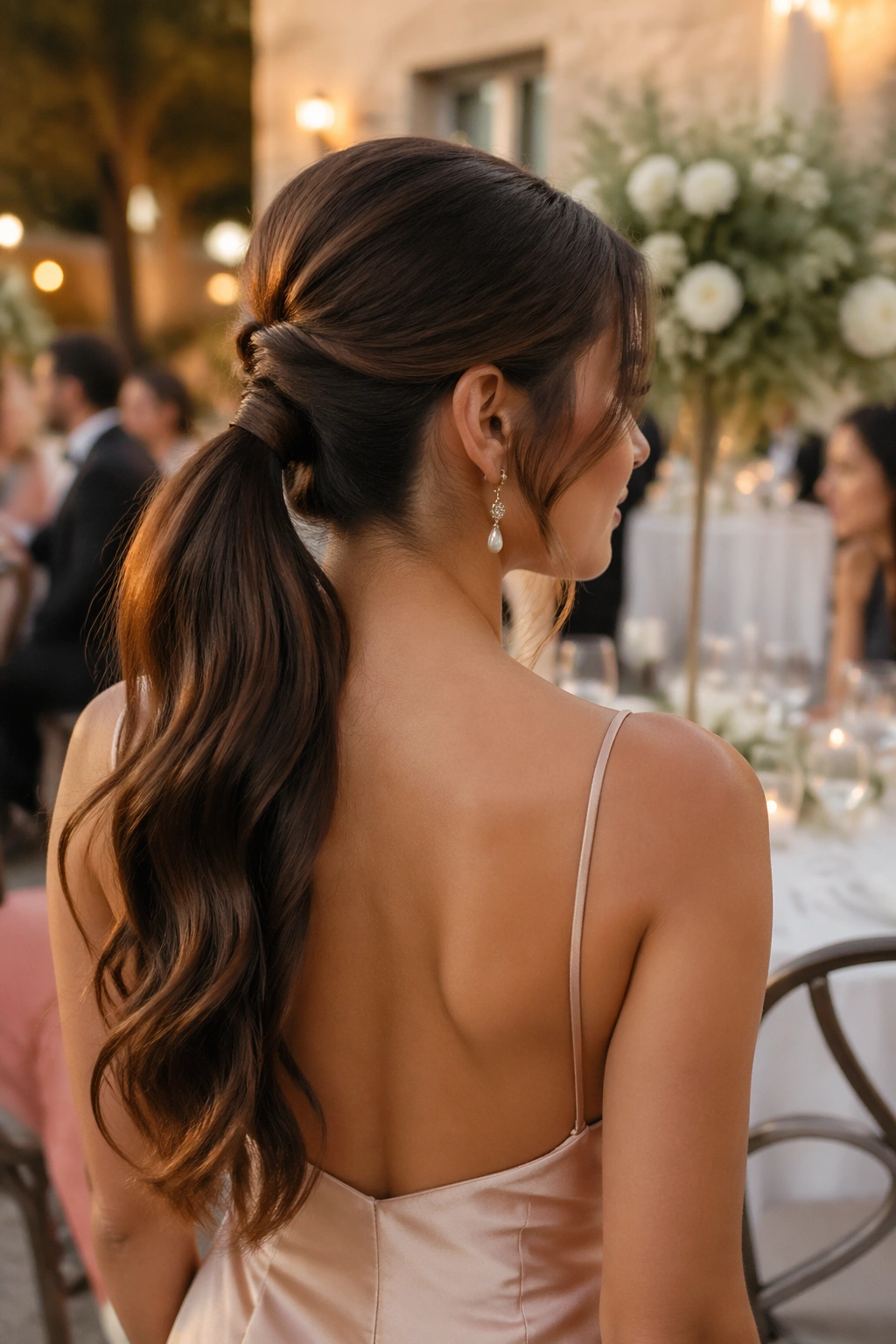
For weddings, graduations, or photo-heavy days, the low V part ponytail needs to strike a balance. It should look neat from the front and soft from the side. That’s the whole job.
A small amount of volume at the crown helps the style read well in pictures, especially when the hair is pulled low and the neckline is open. If you’re using extensions, blend them from mid-length down so the base still feels believable.
This is also the place for earrings. A low ponytail clears the neck and jawline, which makes statement earrings look even better than they would with a fuller hairstyle around the face.
23. Everyday Low V Part Ponytail That Barely Looks Styled
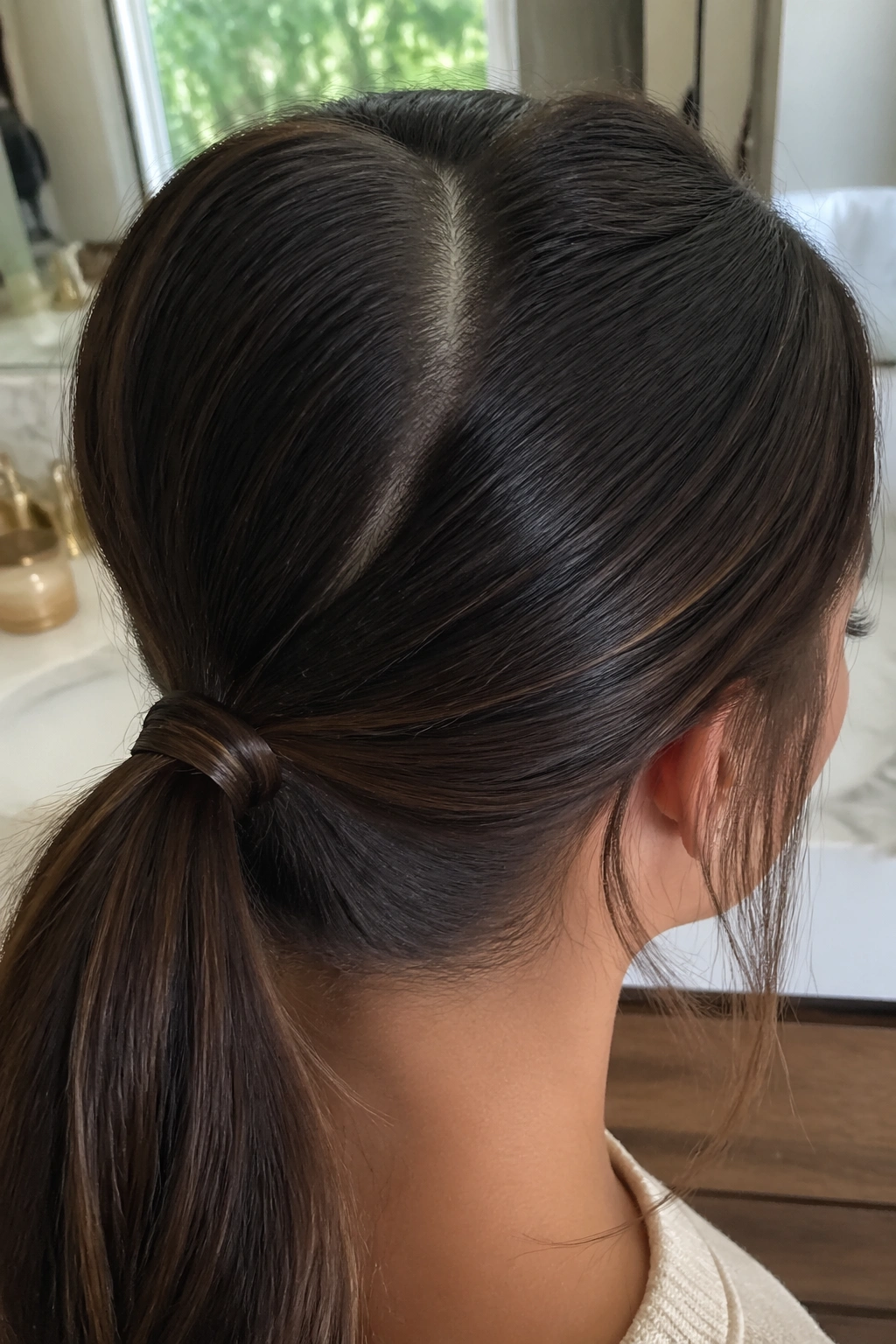
Sometimes the best version is the one that looks like you only fixed what needed fixing. A narrow V, a low ponytail, and a little softness around the hairline can turn a regular hair day into something that feels finished without looking dressed up.
The No-Fuss Formula
- Keep the V small and centered.
- Gather the ponytail at the nape.
- Leave a touch of texture near the temples.
- Wrap one thin strand around the base if you want a cleaner finish.
That’s the version I trust when the hair is clean but not cooperative, or when there’s no interest in wrestling with a complicated style. It still looks intentional. It just doesn’t look interested in showing off.
If you want the safest place to start, make the V narrow, keep the ponytail low, and let your own texture stay visible. That usually looks better than trying to force the hair into something else.