



A curly ponytail should never look like an emergency exit.
Too many people treat it like a quick fix: brush, yank, tie, done. That’s how you get flattened roots, frizz halo, and curl ends that look annoyed with you. A loose ponytail for curly hair works better because it leaves the curl pattern room to breathe, keeps the crown from collapsing, and gives the whole style a little movement.
The trick is restraint. Use a soft tie, stop smoothing once the shape looks balanced, and let a few pieces live their own lives around the face. A satin scrunchie, a coil tie, or even a wrapped strand can make the difference between “I gave up” and “I meant to look easy.”
Some of these styles lean polished. Some look soft and romantic. A few are deliberately messy, which is often where curly hair looks best anyway. Start with the low versions first, then work your way up when you want more lift or more drama.
1. The Soft Low Ponytail
A soft low ponytail is the one I keep coming back to because it never fights the hair you already have. Sit it at the nape, leave a little slack at the base, and let the curls fall in one full, springy shape instead of squeezing them into a hard line.
Why it works
This style keeps the crown calm and the ends visible. That matters on curly hair, because the texture does most of the work for you. If your hair frizzes easily, smooth only the top layer with your hands or a soft brush, then stop. Over-brushing is where the shine goes to die.
- Best for medium to long curls
- Works on second-day hair with a little water mist
- Stays comfortable all day if you use a snag-free elastic
- Looks better with two face-framing pieces left out
Tip: keep the tie just tight enough to hold the shape, not so tight that the curl pattern gets kinked at the root.
2. The High Puff Ponytail
A high puff ponytail is the fastest way to make curls look awake. Lift it toward the crown, let the roots rise, and don’t flatten the sides into submission. The whole point is volume, not control for its own sake.
It looks awake.
What I like about this version is the balance: the top gets height, but the lengths stay soft and fluffy. If your curls shrink a lot, stretch the hair just enough with your fingers before tying. Pull too hard and the style starts looking tight. Pull too little and it can sag. That middle ground is where it lives.
Use a wide elastic or a silk tie so the base holds without snapping at the hairline. If you want a sharper shape, smooth the perimeter with a tiny bit of gel, then leave the ponytail itself alone.
3. The Side-Swept Curly Ponytail
Why does a side part make a ponytail look easier to wear? Because it breaks up all that symmetry. Curly hair usually has its own built-in volume, and a side-swept ponytail lets that volume lean into the shape instead of pretending the head is perfectly even.
Move the part low and deep, gather the ponytail just behind one ear, and let the front fall across the forehead in a soft curve. The result feels a little romantic, but it also hides the spots where curls decide to frizz. That’s the useful part. Not the pretty part. The useful part.
How to wear it
Keep one side slightly fuller than the other. Don’t smooth both sides the same way. A little asymmetry makes the style look intentional, and it gives the ponytail a better line from the cheekbone down to the shoulder.
4. The Half-Up Curly Ponytail
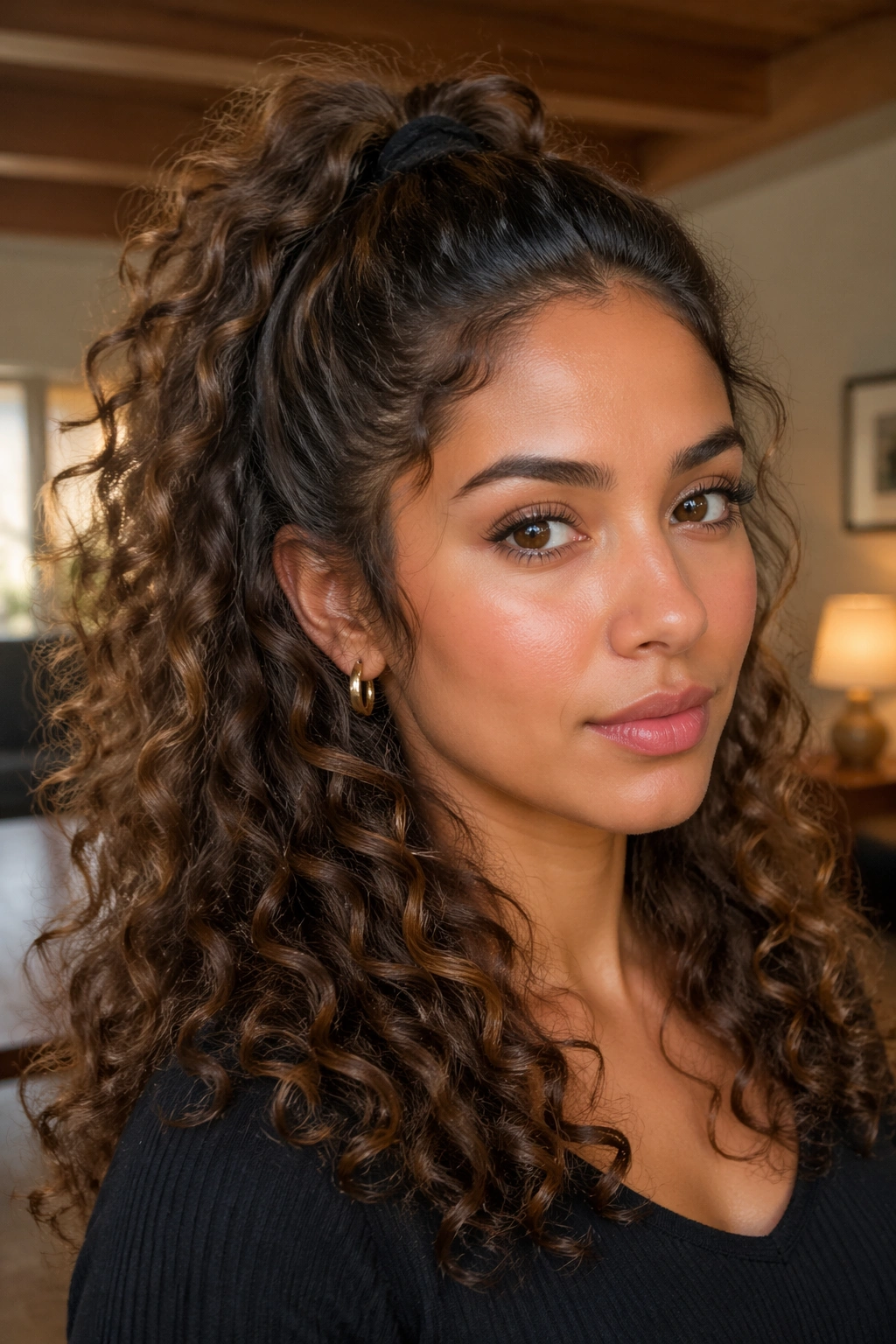
A half-up ponytail solves a problem curly hair creates all the time: you want the face clear, but you do not want to bury the rest of the texture. Gather the top third of the hair, leave the bottom section loose, and the style suddenly has shape without losing length.
The sweet spot
The half-up version works best when the top section is loose enough to keep some puff at the crown. If you pull it too tight, the top looks flat and the bottom looks disconnected. If you leave it too loose, the elastic slips and the whole thing falls apart before lunch. A small claw-style tie or a narrow elastic usually does the job.
- Great for layered curls
- Handy when the front pieces get in your eyes
- Easy to dress up with a ribbon or clip
- Better with a little root lift at the crown
Watch this: keep the bottom curls defined. That contrast is the whole charm.
5. The Bubble Ponytail With Curls
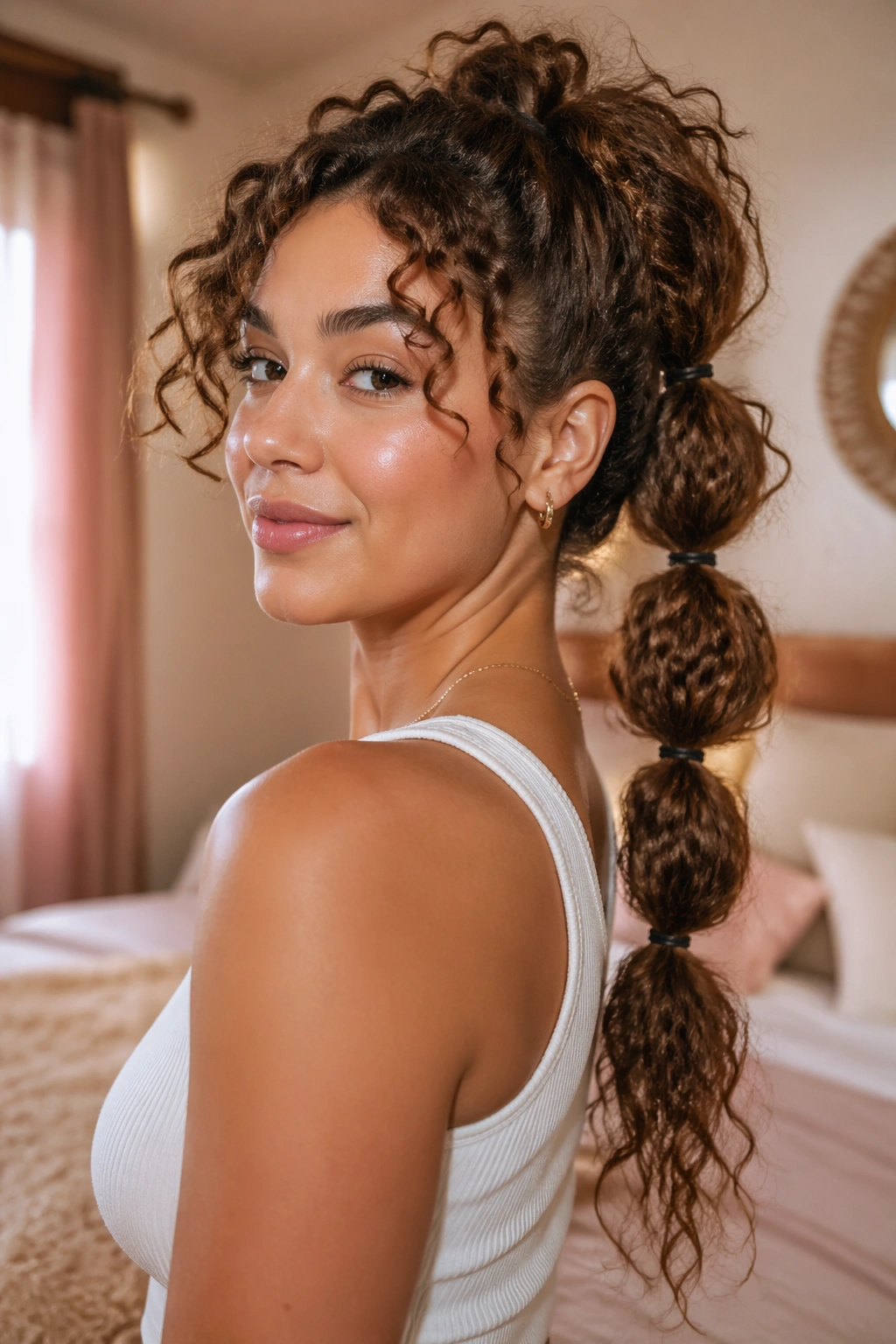
The bubble ponytail is a curly-hair cheat code. You do not need bone-straight lengths for it to look good. In fact, curls make the bubbles look fuller and less toy-like.
Start with one ponytail, then add small elastics every 2 to 3 inches down the length. Gently puff each section outward with your fingers until it looks rounded. Keep the spacing even, but not perfect. A little irregularity makes the style feel softer and less stiff.
The best part is how forgiving it is. If one section frizzes, it blends right in. If your ends are layered, the bubbles still hold shape because the volume does the visual work. Use soft ties so you do not create dents where the elastics sit.
6. The Wrapped-Base Ponytail
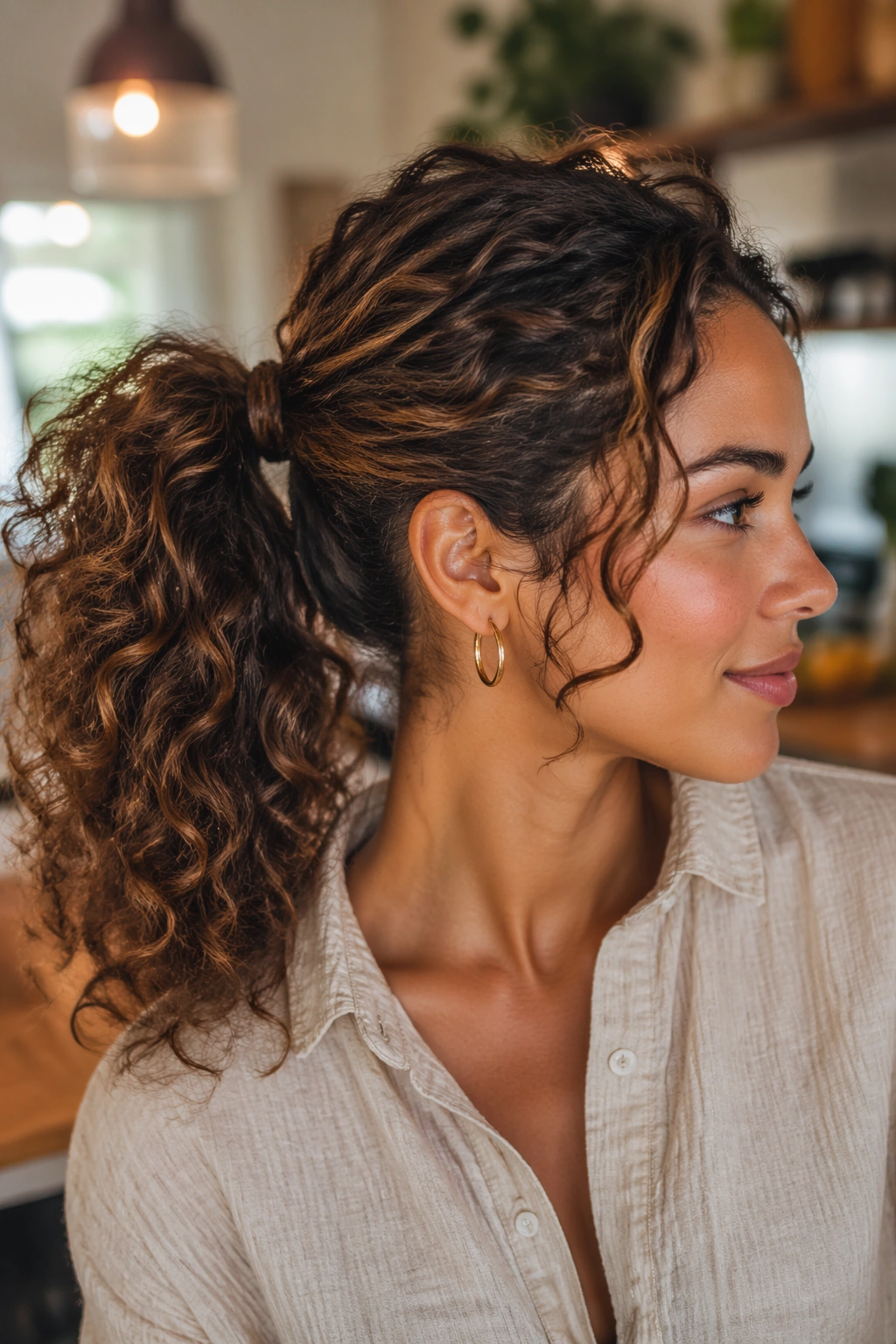
A wrapped base changes everything. A plain elastic is fine, but a wrapped base makes the ponytail look finished in a way that matters on curly hair, where the texture already gives you plenty to look at.
Take one small strand from the underside, wrap it around the elastic once or twice, and pin it underneath with a bobby pin. That little cover hides the hardware and makes the ponytail look cleaner without making it stiffer. If your hair is shorter, use a small braid from the underside instead of a single strand. It holds better and looks neat even when the rest of the style gets a little soft.
This is the style I’d pick for a dinner out, a work meeting, or any day you want the ponytail to feel deliberate. It’s a small step. It makes a big difference.
7. The Deep Side-Part Ponytail
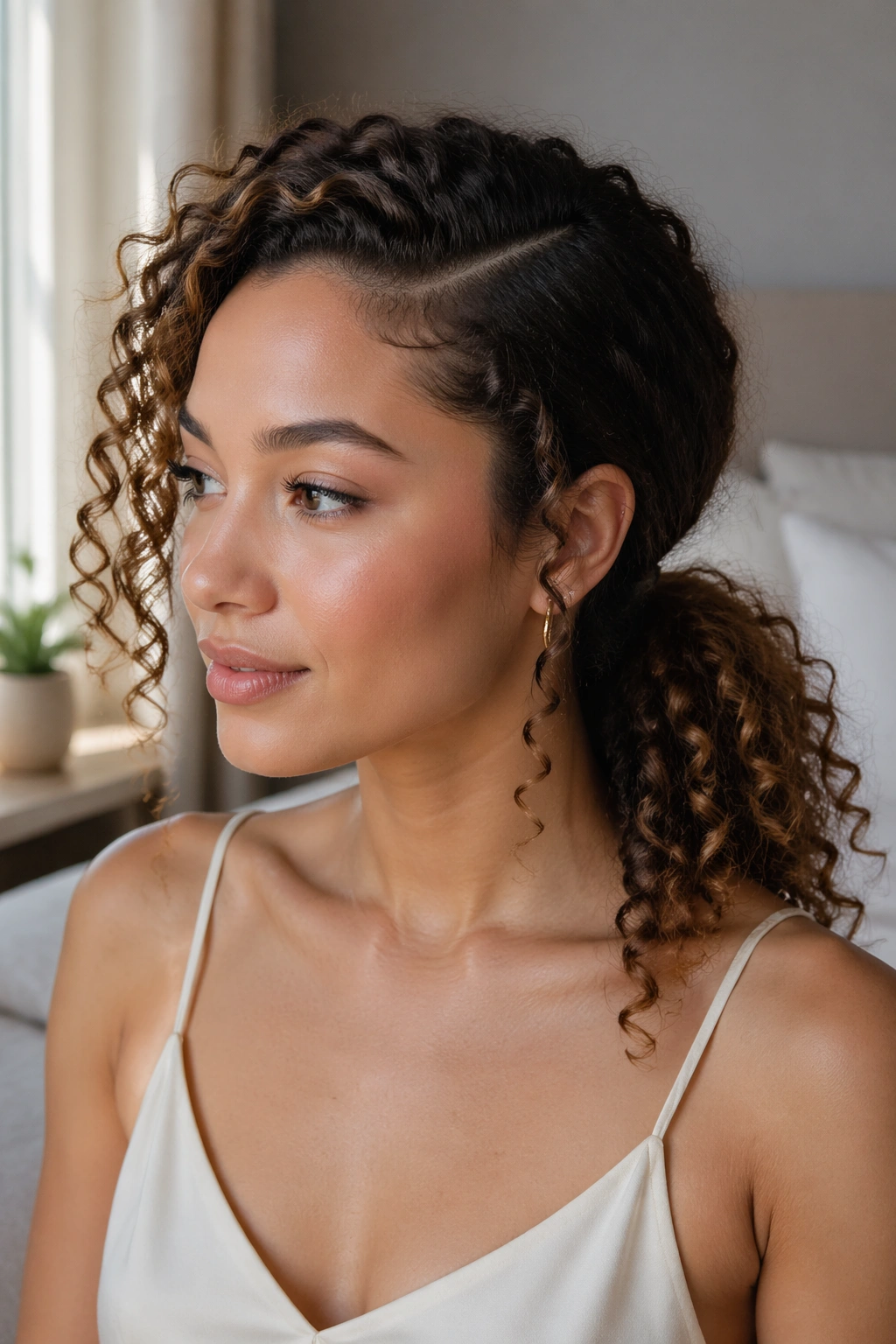
What makes a deep side part so forgiving on curly hair? It gives the front sections a place to land. Instead of forcing every curl to behave the same way, you let one side carry more of the shape.
The ponytail itself can sit low or mid-height. The part is the main event. Use the heel of your hand or the end of a comb to draw the part cleanly, then rake the top back with your fingers so the surface stays soft. A deep side part tends to flatter almost everyone because it creates lift near the crown and a little sweep across the face.
If your curls tend to puff at the temples, leave them alone. A few flyaways are not the enemy here. They are part of the look.
8. The Crown-Volume Ponytail
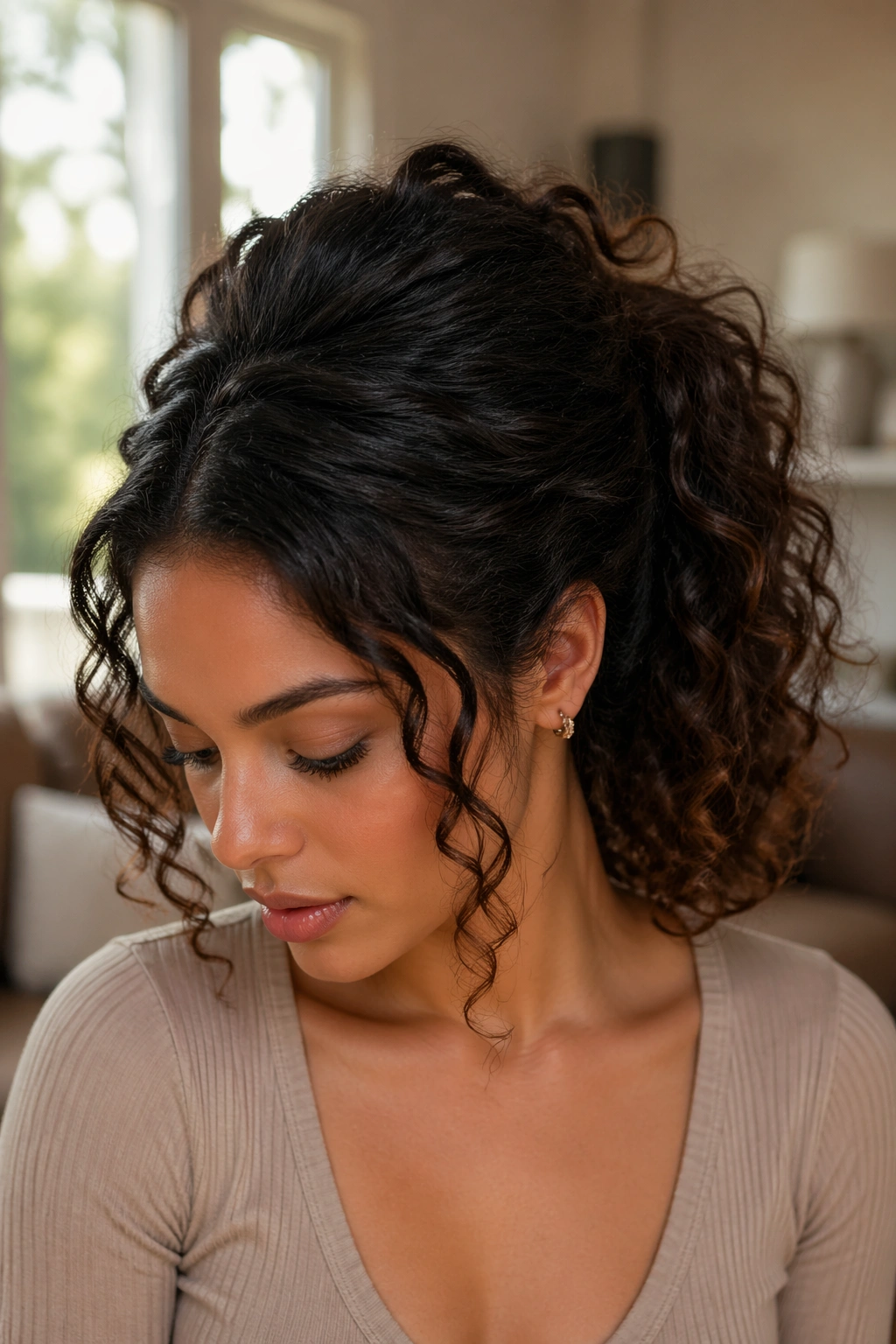
There’s a specific kind of lift at the crown that curly hair does best when it’s not being bullied. A crown-volume ponytail uses that lift instead of fighting it, which is why it can look so full even when the actual ponytail is simple.
The trick
Flip your head slightly forward, gather the hair loosely, then stand upright and adjust the top with your fingertips. You want the roots to sit high, but not helmet-flat. If needed, clip the crown for a few minutes while the hair cools in place after diffusing. That small bit of support helps the volume stick.
- Works well on diffused curls
- Helps fine curly hair look fuller
- Avoids that pulled-back, tight look
- Looks best with a soft middle or off-center part
My preference: keep the base loose and let the crown carry the shape. That’s where the style gets its character.
9. The Twisted-Front Ponytail
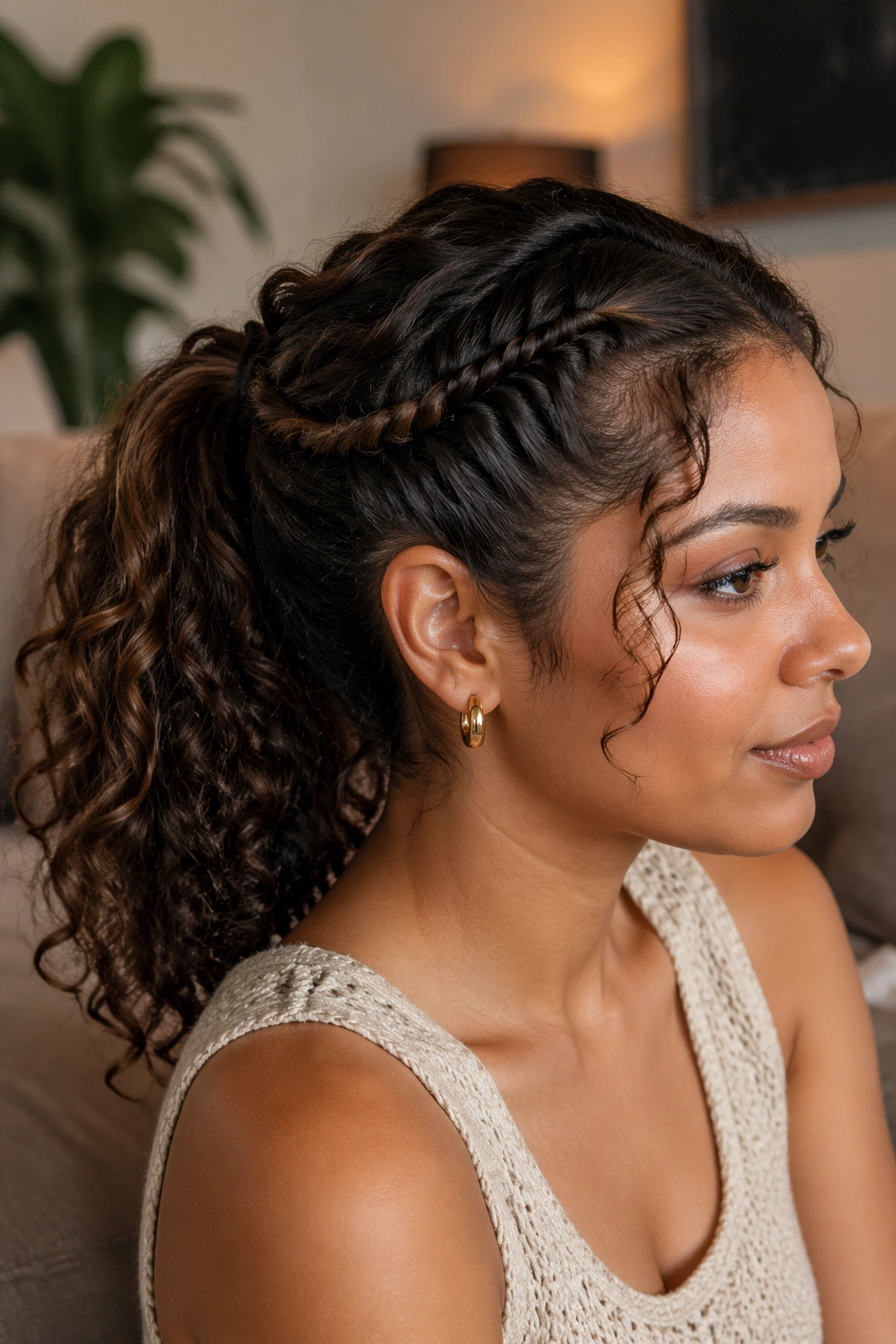
A twisted-front ponytail is a good answer when the front curls are doing too much. Twist small sections from the temples back toward the ponytail, then pin or tuck them into the base. The rest stays loose and springy.
This style is useful on humid days because the front stays controlled while the lengths still look natural. It also handles uneven curl patterns well. If one side is flatter than the other, the twist hides it. If your bangs are growing out, the twist gives them somewhere to live.
Keep the twist relaxed. Tight twists pull the hairline and make the whole thing feel formal in the wrong way. Loose is the point.
10. The Scarf-Tied Ponytail
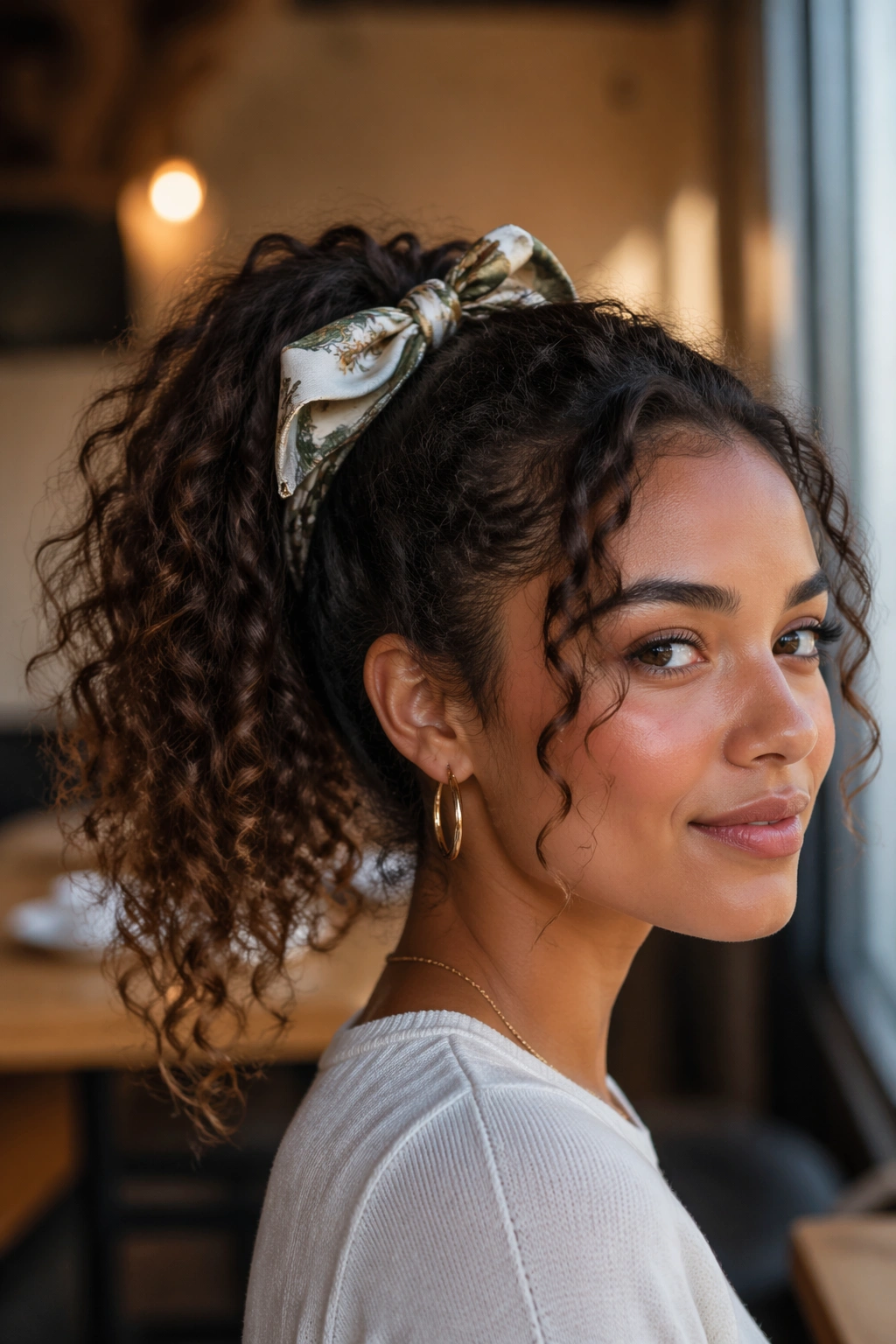
A scarf can do more than decorate. It can soften the base, hide a rough tie, and add a little color without making the style feel busy.
Choosing the scarf
Use a silk or satin scarf if your hair slips easily. A scarf that’s about 1 to 1.5 inches wide at the folded tie point usually sits well around a ponytail without overwhelming it. Tie it under the elastic first, then loop the ends into a bow or a knot.
- Narrow scarf tails look neater
- Wider scarves give more visual volume
- Best tied above the elastic, not over the whole ponytail
- Works on low, mid, and high placements
The nice thing here is that the scarf changes the mood fast. Same ponytail. Different attitude.
11. The Braided-Front Ponytail
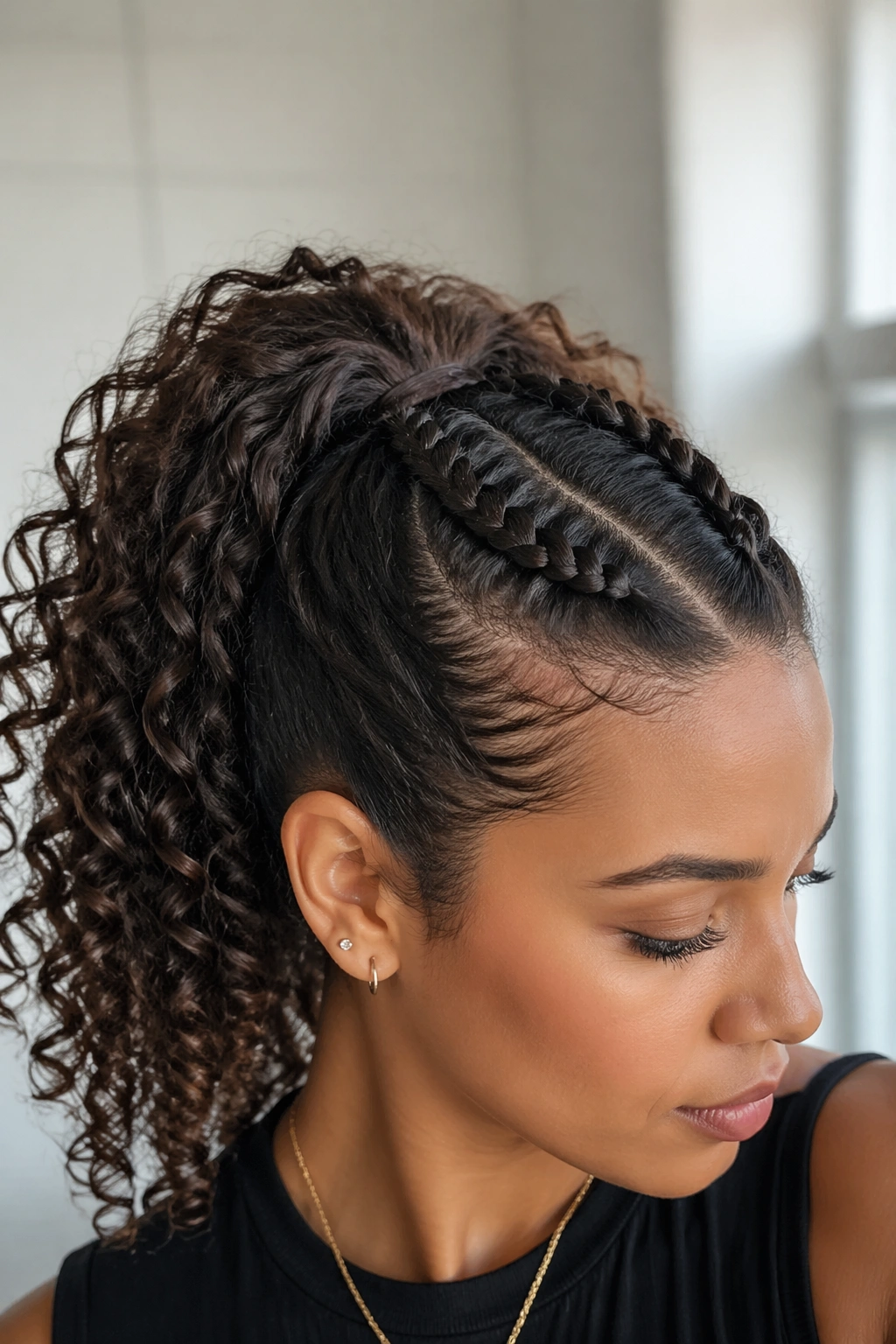
Two small braids from the front hairline can turn an ordinary curly ponytail into something with shape. They keep the front pieces from wandering and give the style a little structure without flattening the rest.
I like this version when the hairline wants to frizz or when you need the top to stay put for a long day. Braid each front section back toward the crown, then join them into the ponytail. Leave the back loose and let the curls do what they already want to do.
It’s a nice balance: tidy at the front, soft everywhere else. That contrast is doing a lot of work here.
12. The Pineapple Ponytail
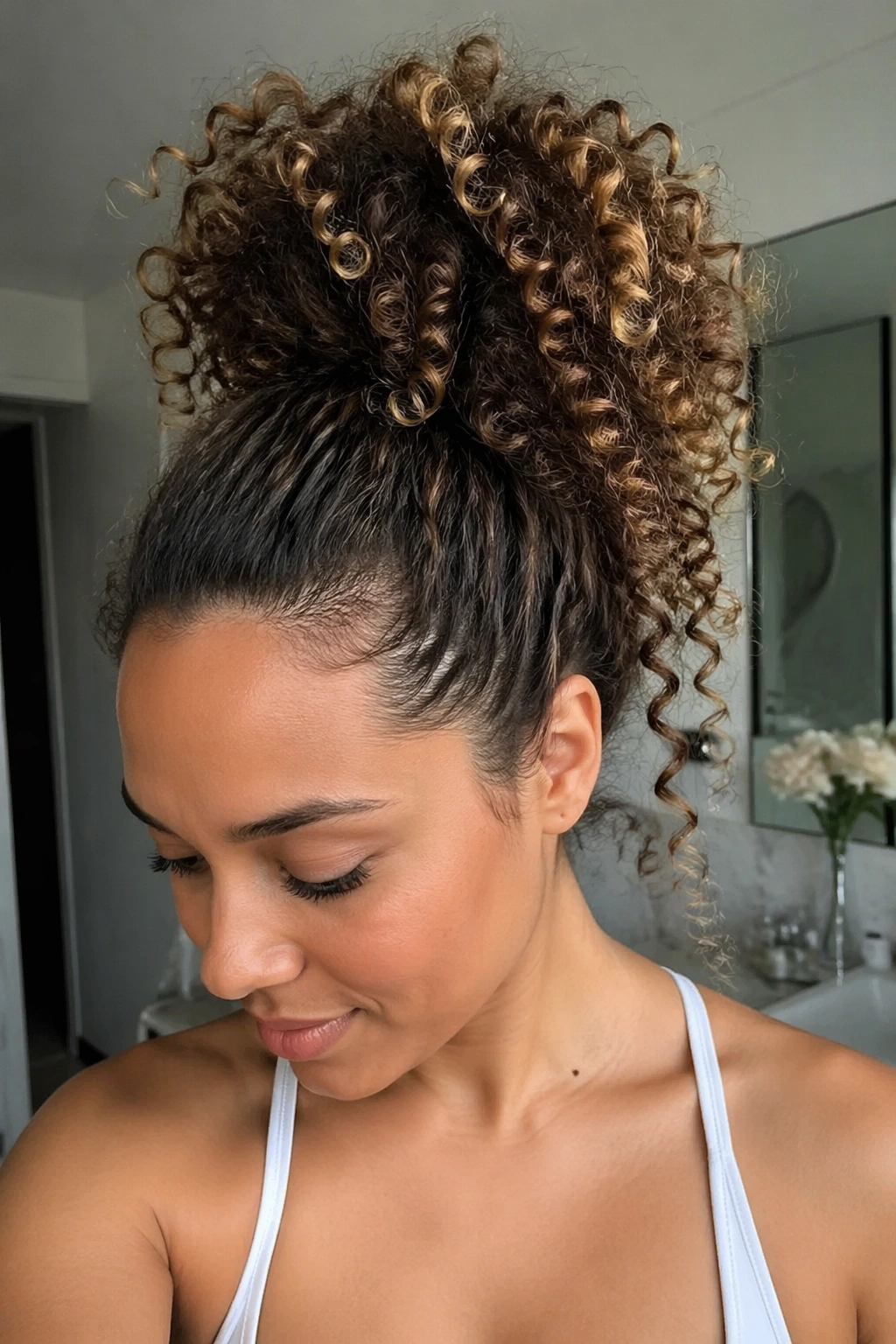
A pineapple ponytail is basically a high, loose gathering point for curls, and it works because it respects curl shape instead of compressing it. The hair sits on top of the head, the base stays soft, and the lengths keep their spring.
This style is especially kind to long curls. It keeps them from rubbing against clothing and makes the whole silhouette look light. If your hair is dense, the pineapple shape can get wide fast, which is not a problem unless you tie it too tightly. Use a satin scrunchie and leave room for the curls to expand.
No hard edges. No crushing the roots. That’s the rule.
13. The Low Nape Ponytail With Tendrils
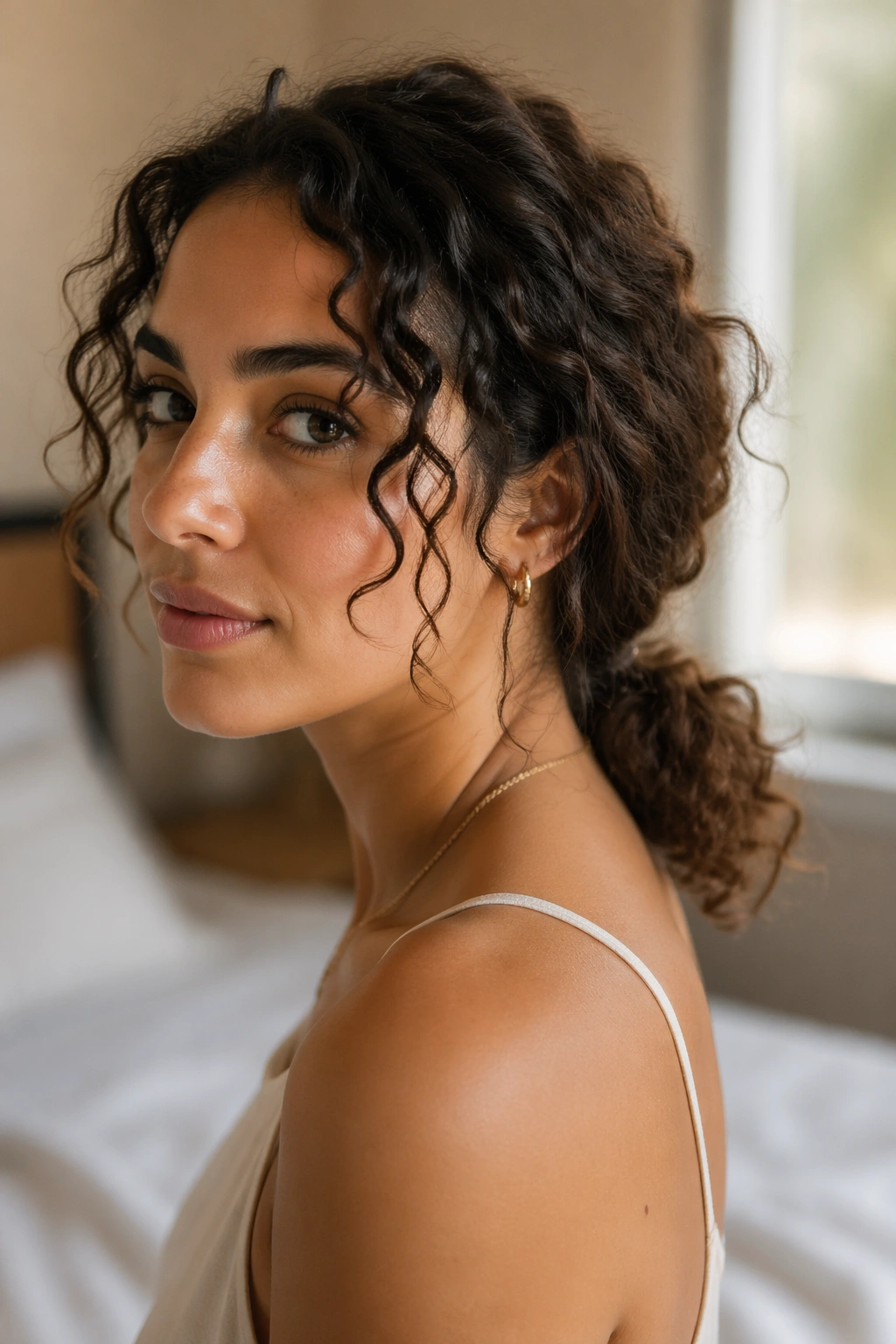
A low nape ponytail with tendrils is one of the easiest ways to make curly hair look soft instead of severe. Gather the hair at the base of the neck, but leave a couple of pieces in front of the ears and along the cheekbones.
Those tendrils do a lot of face-framing work. They break up the outline of the ponytail and keep the style from looking too neat. If your curls are medium or loose, the face pieces can be almost wispy. If they’re tighter, let them be a little fuller. Don’t force them flat.
I usually think this is one of the prettiest curly ponytail styles because it feels calm. Nothing about it is trying too hard.
14. The Flipped Ponytail
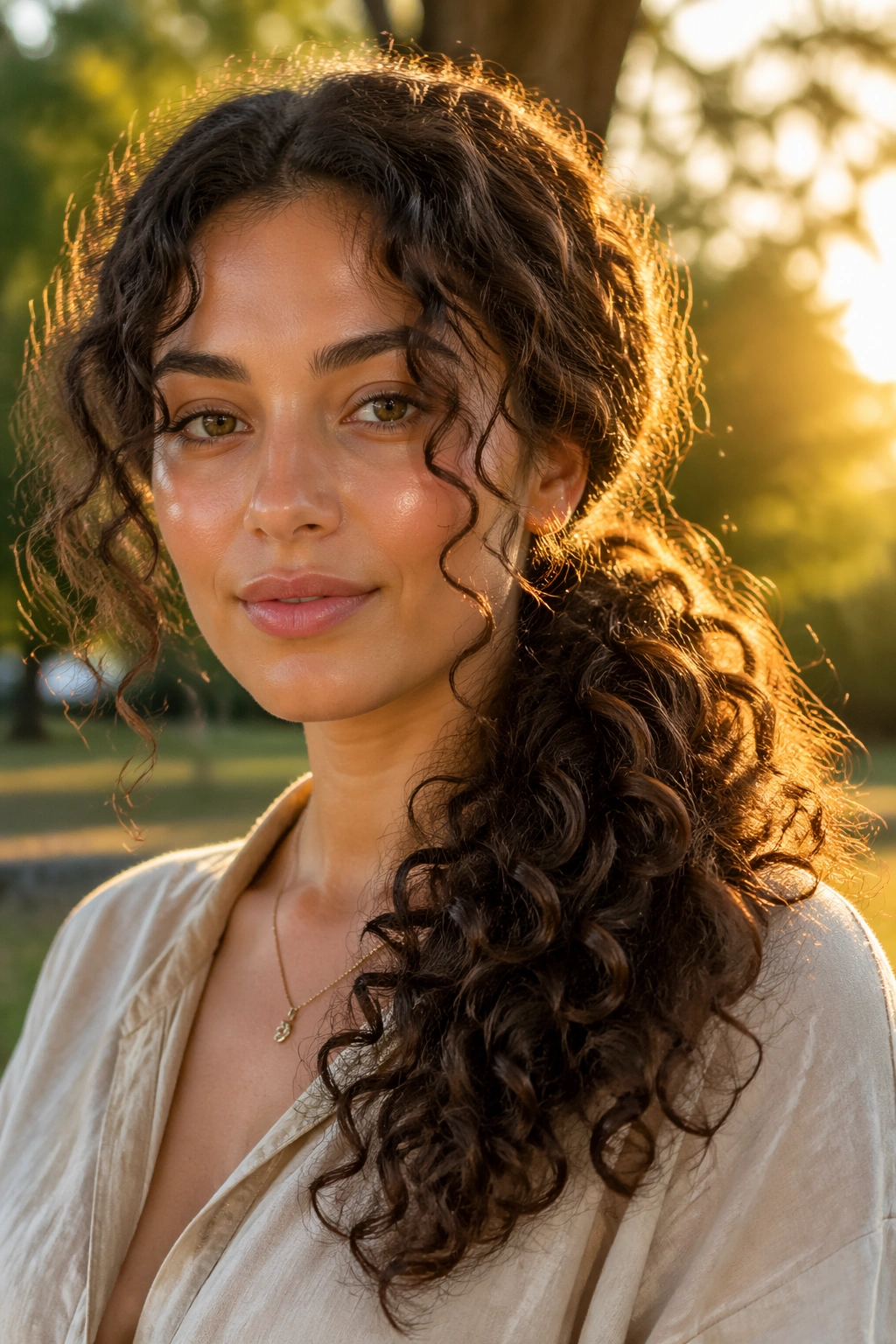
The flipped ponytail is what happens when you let the lengths move over one shoulder instead of hanging straight down the back. That shift changes the whole mood. It feels softer, a little more relaxed, and it shows off layers better than a straight drop ever could.
Start the ponytail low or mid-height, then gently bring it over to one side after tying. If the curls have a natural bend, let that bend decide the direction. Don’t wrestle it straight. The flip should feel like it happened on purpose, not like the style escaped.
This one works especially well with long layers because the ends have somewhere to fan out. A blunt-cut ponytail can look boxy here; layers make it move.
15. The Knotted Ponytail
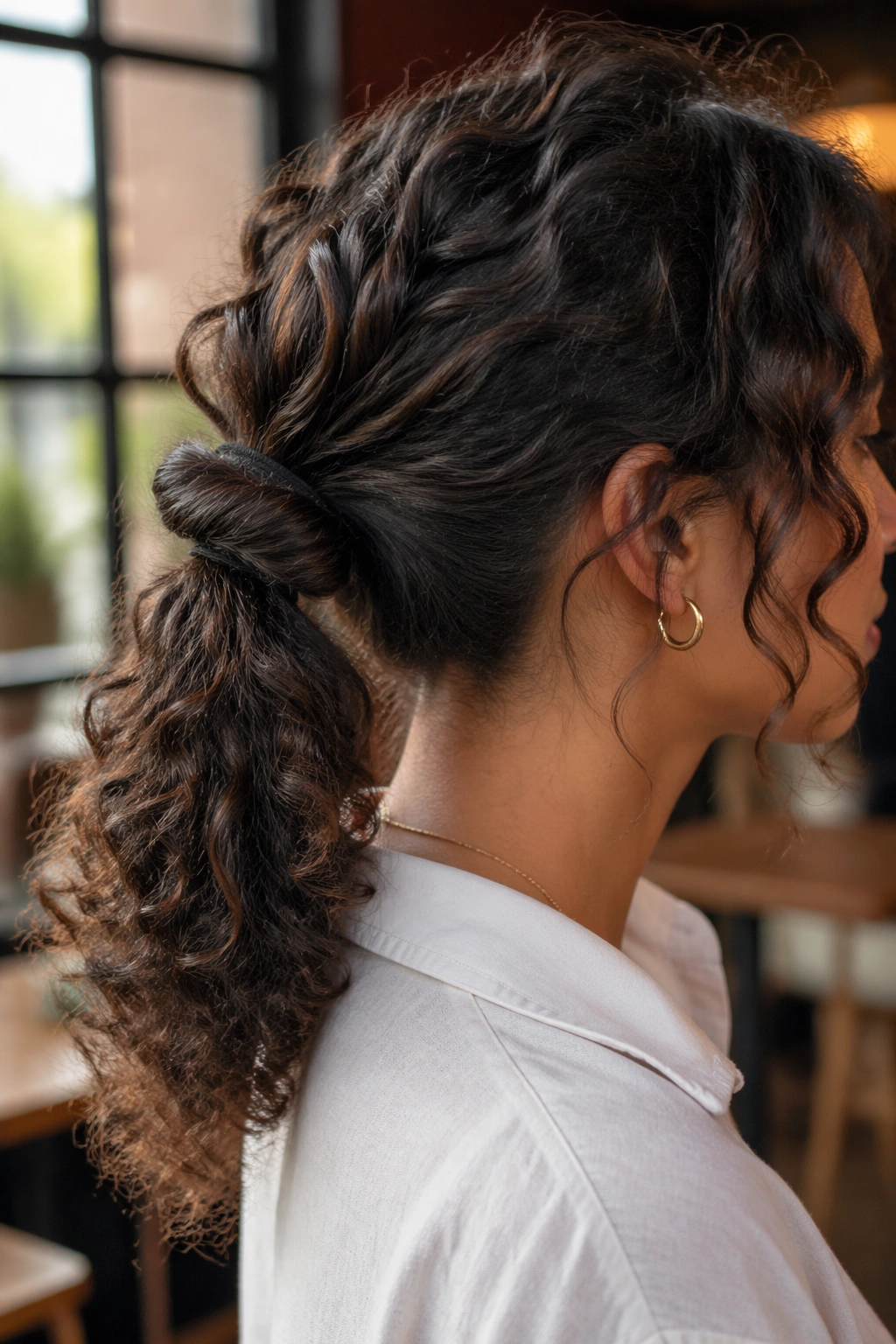
A knotted ponytail looks more complex than it is. Split the hair into two sections, tie them into a loose knot near the base, then secure everything underneath with an elastic or a pin.
It’s a good choice when you want something a little different but not fussy. The knot gives the top of the style a built-in focal point, and curly hair helps hide the construction. That matters. If you can see too much of the tie, the style starts feeling homemade in the wrong way.
Keep the knot loose. Tight knots can flatten the curls around the base and make the head feel pulled back. Soft tension is the whole trick.
16. The Pearl-Pin Ponytail
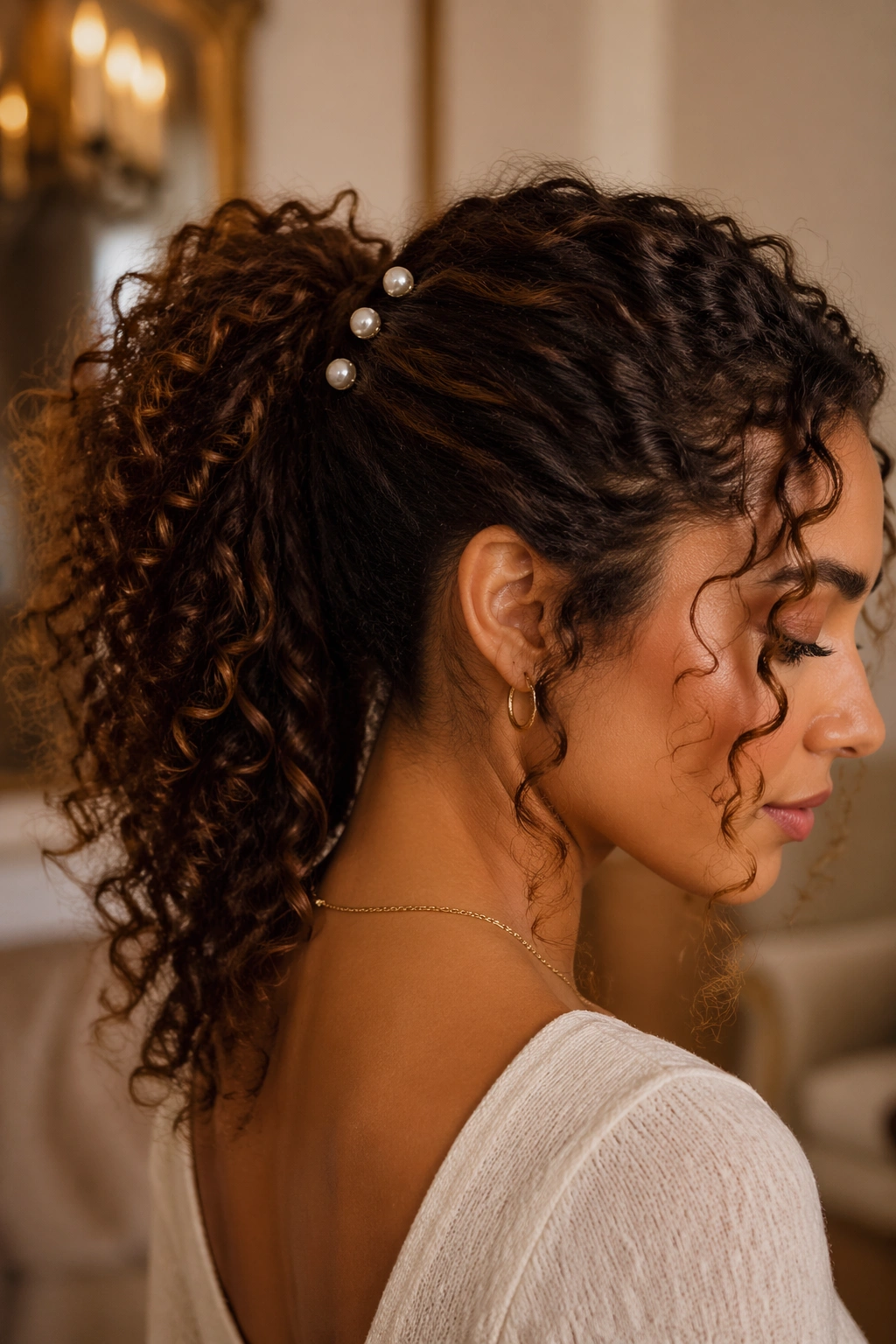
Pearl pins can make a curly ponytail feel dressed up in a way that regular clips never quite manage. Place them around the base in a small arc, or tuck a few into a twist near the crown if you want the decoration to stay subtle.
This works best when the ponytail itself is simple. The ornament should not compete with the curls. Let the texture do the heavy lifting, then use the pins to mark the shape. Three pins usually look cleaner than seven. Cluster them too tightly and the style starts feeling crowded.
I like this for events because it keeps the hair off the neck while still looking soft. No stiff bun energy. Just a ponytail that got invited somewhere nicer.
17. The French-Braid-to-Ponytail
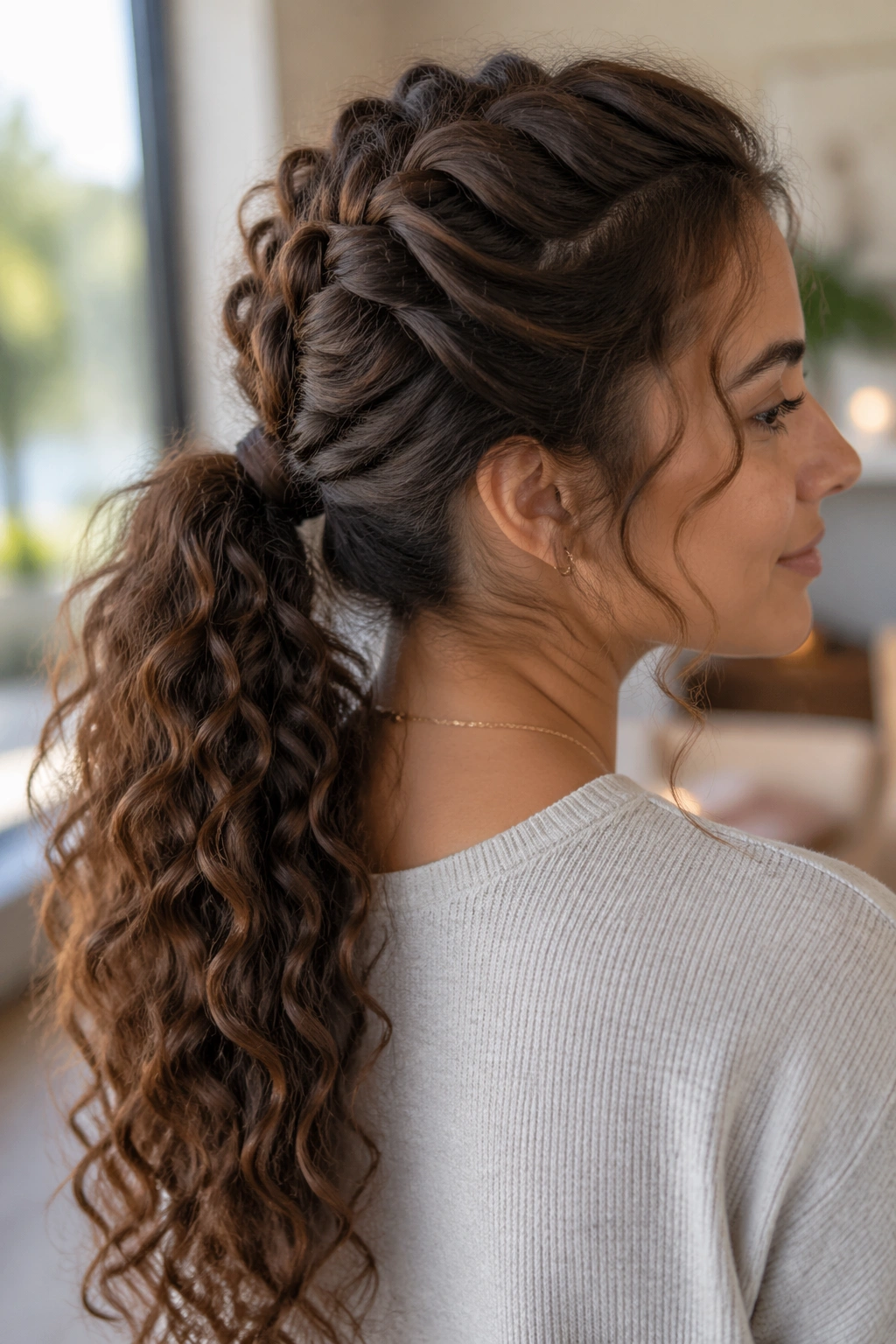
A French braid that stops at the crown and turns into a ponytail gives curly hair a good mix of control and freedom. The braid holds the front, the ponytail keeps the length loose, and the transition between the two looks better when the braid is not too tight.
Keep the braid soft
Braid only until the crown or the upper back of the head. Then secure the rest into a curly ponytail with a gentle tie. If you braid all the way down, you lose the looseness that makes this style worth wearing. The braid should guide the hair, not squeeze it.
It’s a nice option when you want the top to stay neat through a long day. A braid also gives fine curls more visual body, which helps the ponytail feel fuller than it really is.
18. The Mini-Cornrow Ponytail
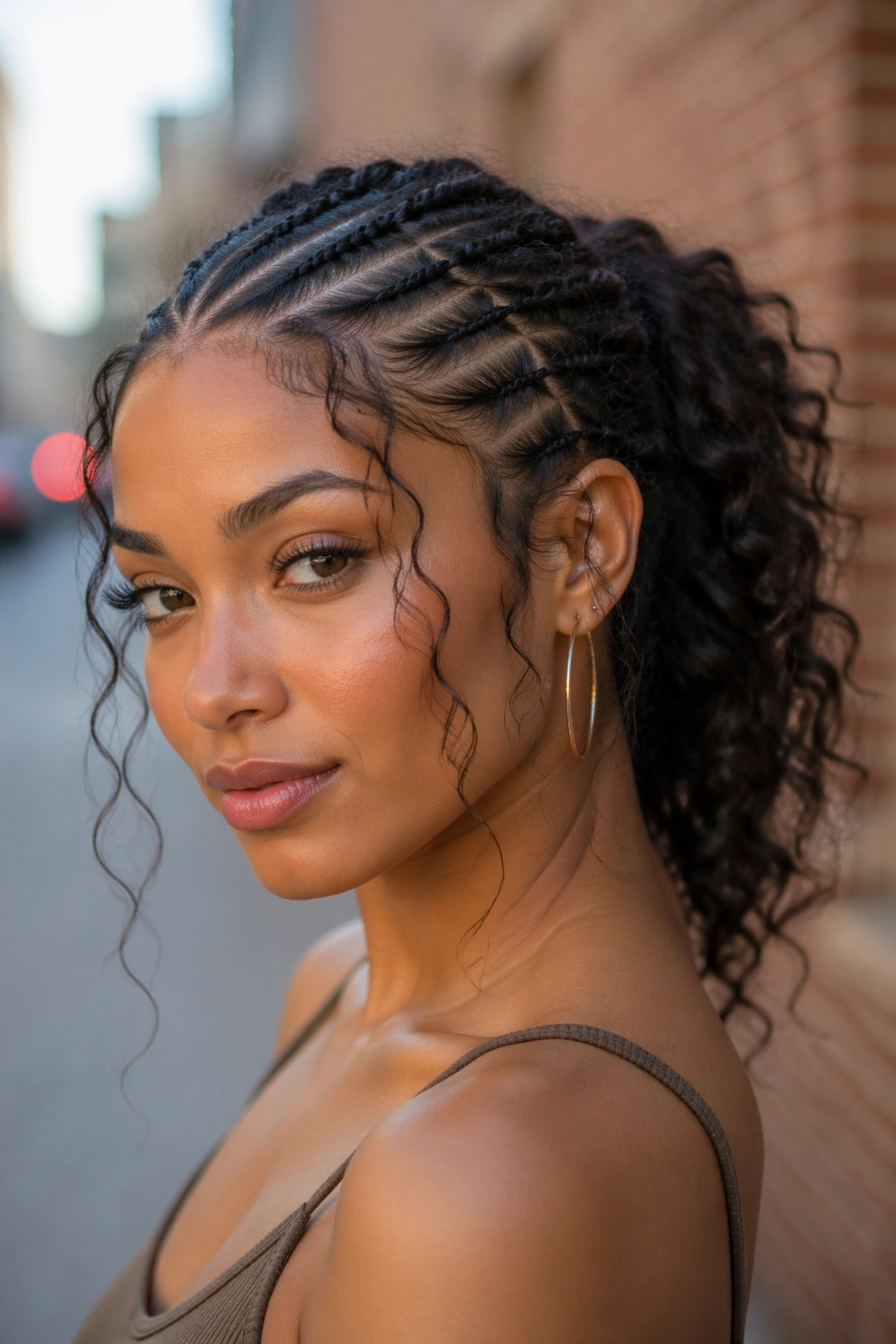
Mini cornrows along the front give curly hair a clean frame without stealing the softness from the lengths. You only need a few thin braids—two, three, maybe four depending on the hairline and the look you want—before gathering the rest into a ponytail.
This style is practical. It keeps the front pieces from slipping, makes the edges feel calmer, and gives the ponytail a stronger base. It also works well when your curls are dense enough that the front likes to puff out before the rest does. The braids hold that area in place.
Let the ponytail itself stay loose. If the front is structured, the back should stay free. That contrast is the whole point.
19. The Sleek-Top Curly Ponytail
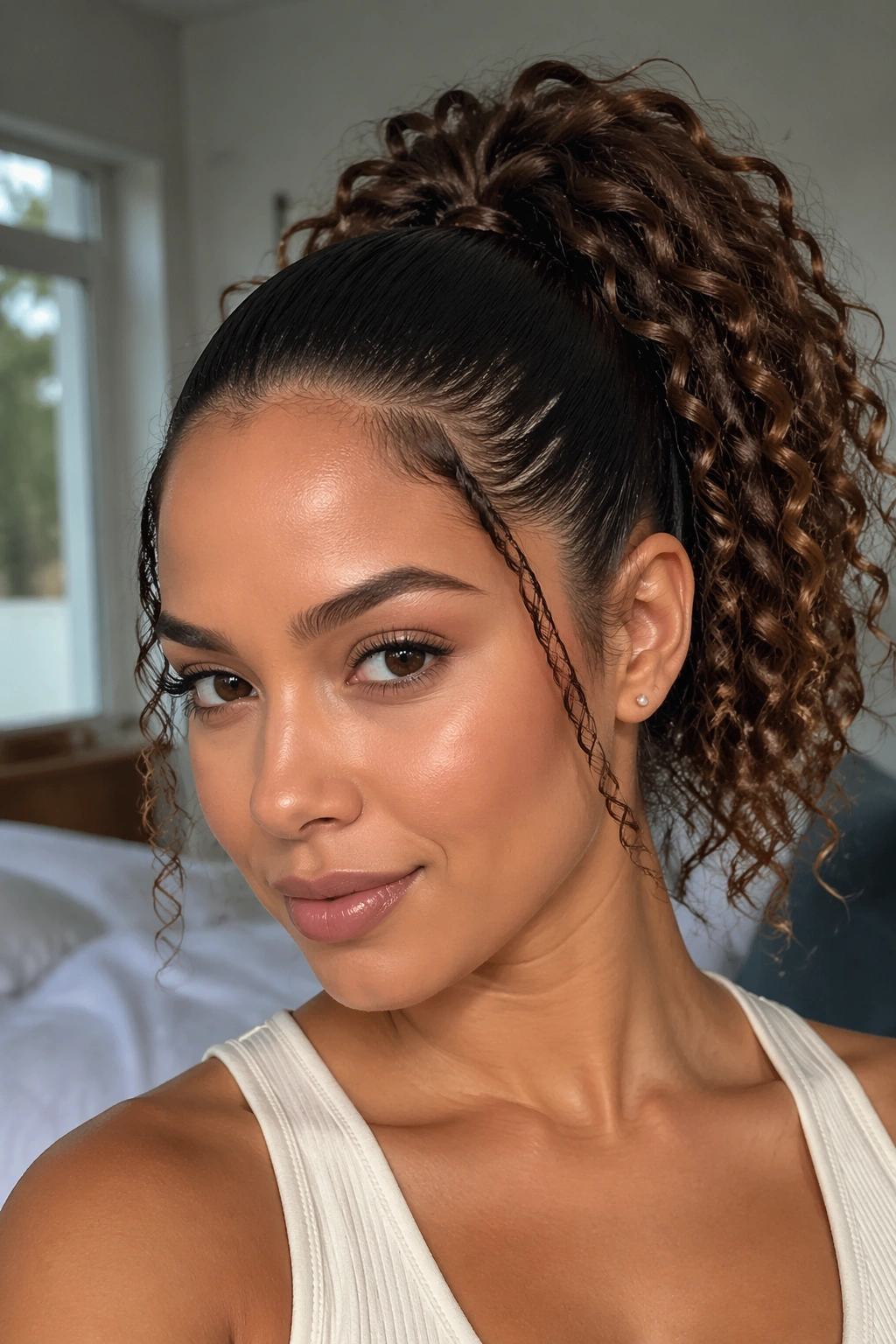
A little sleekness on top can help curly hair. A lot of sleekness can make it look harsh. The sweet spot is a smooth crown with a full, curly ponytail behind it.
Use a small amount of gel or cream at the hairline, brush only the top section, and stop before the lengths start losing their texture. Then gather the rest into a soft ponytail and leave the ends alone. The style looks sharper at the top and still has enough body to feel like curly hair.
I prefer this version when the roots are frizzy but the curls themselves are in good shape. It keeps the style from looking sleepy. Just do not chase perfection all the way down the shaft. That rarely ends well.
20. The Workout Ponytail
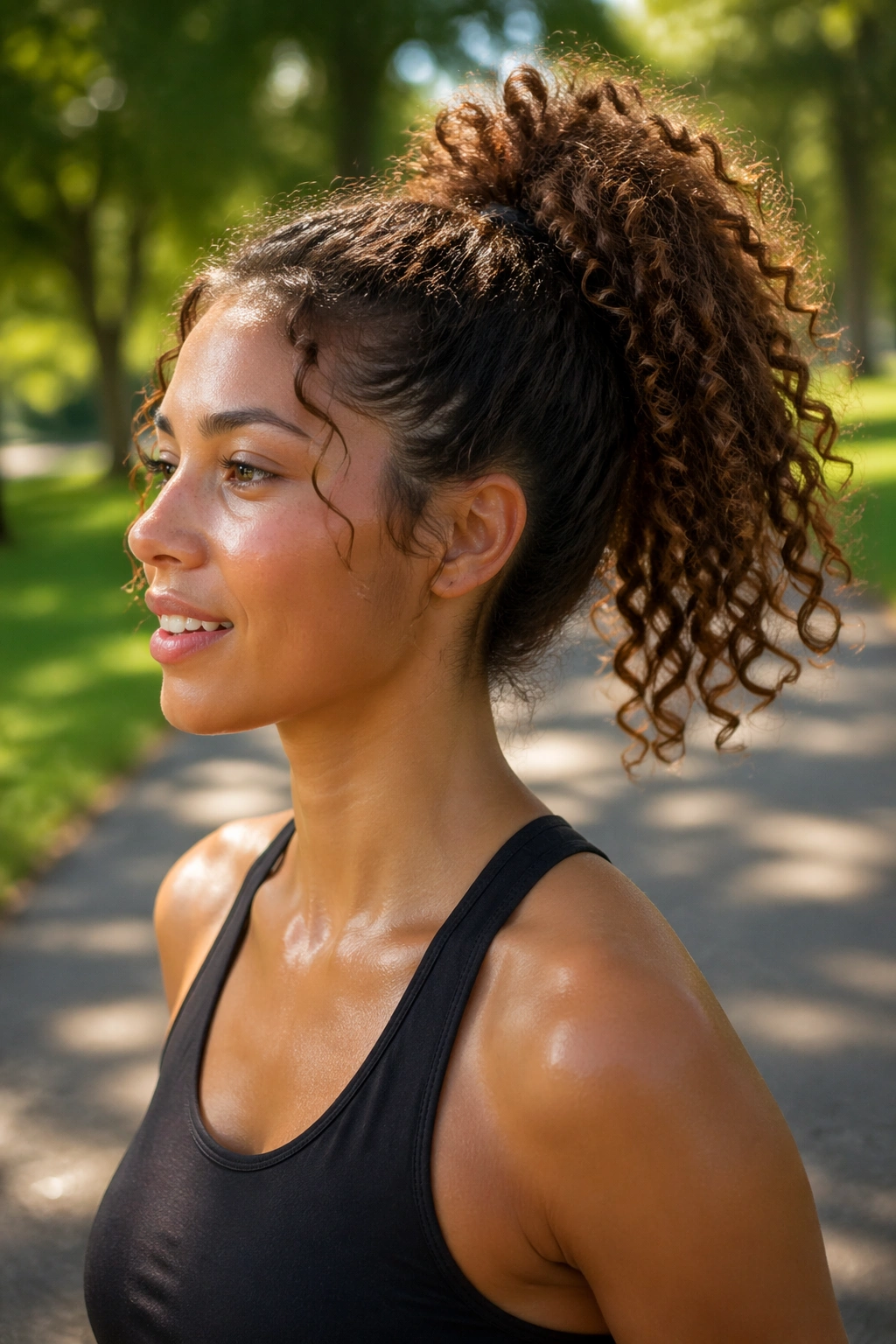
A good workout ponytail on curly hair has one job: stay put without turning the head into a pulled-back tightrope. That means soft tension, a strong elastic, and enough room for the curls to bounce.
What matters most
- Use a coil tie or spiral elastic if your hair slips
- Place the ponytail high enough to clear the neck
- Leave the front slightly loose to avoid tension
- Secure flyaways with a small amount of cream, not a heavy layer of gel
A workout ponytail should look alive, not frozen. If the curls move a little, that’s fine. If the base hurts by the end of the session, it’s too tight. Simple as that.
21. The Curtain-Bang Ponytail
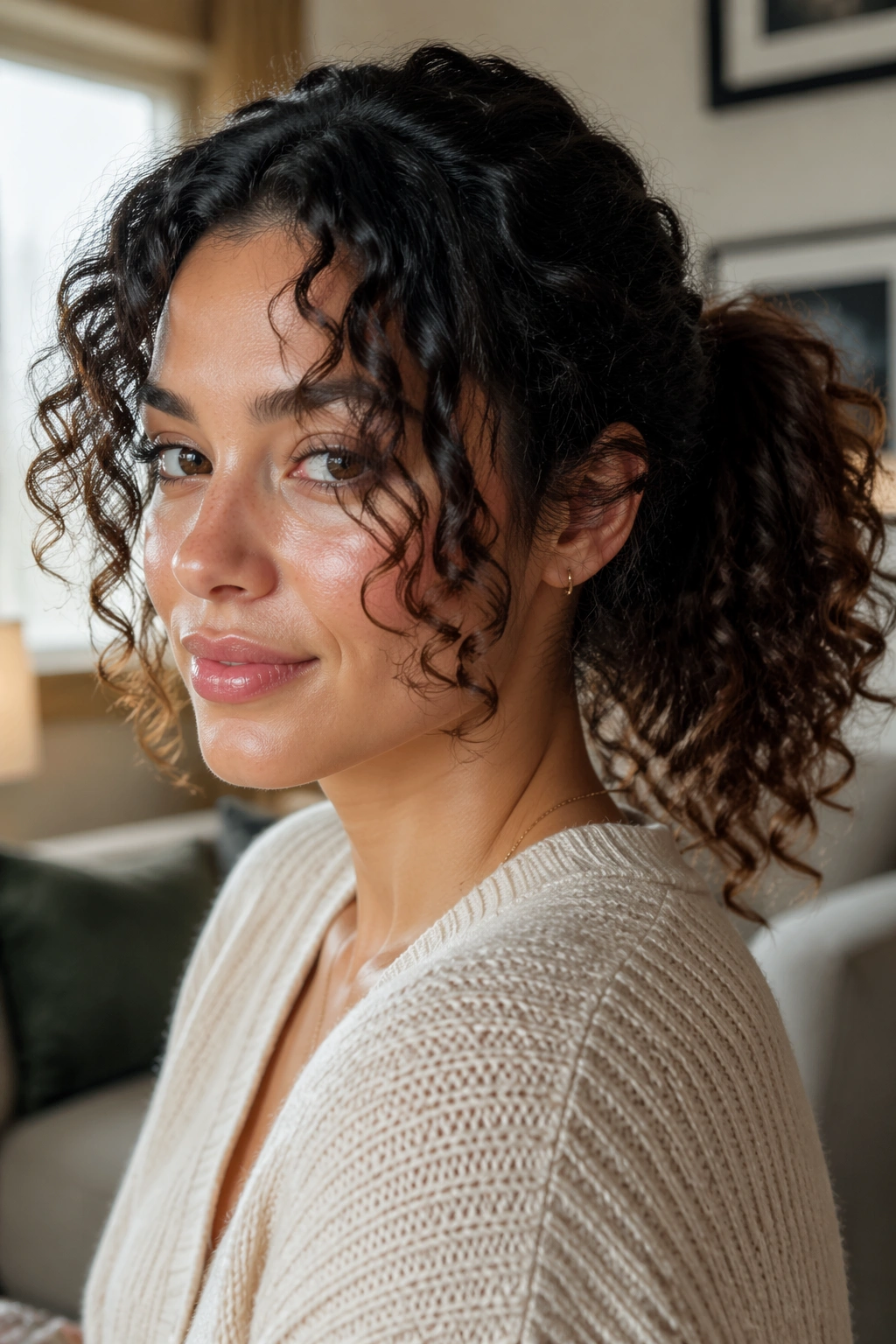
Curtain bangs change a ponytail fast. Leave the fringe out, tie the rest back, and the style suddenly has softness around the eyes and cheekbones. That framing matters on curly hair because it stops the ponytail from feeling like it starts too abruptly.
The bangs can blend into the ponytail or sit apart from it, depending on how much shape you want. If they’re shorter, let them puff a little. If they’re longer, they can fall into the face in one loose wave. Either way, don’t pin them too hard. Their job is to soften, not disappear.
This is one of those styles that looks casual without looking unfinished. That’s a useful line to know how to walk.
22. The Ribbon-Bow Ponytail
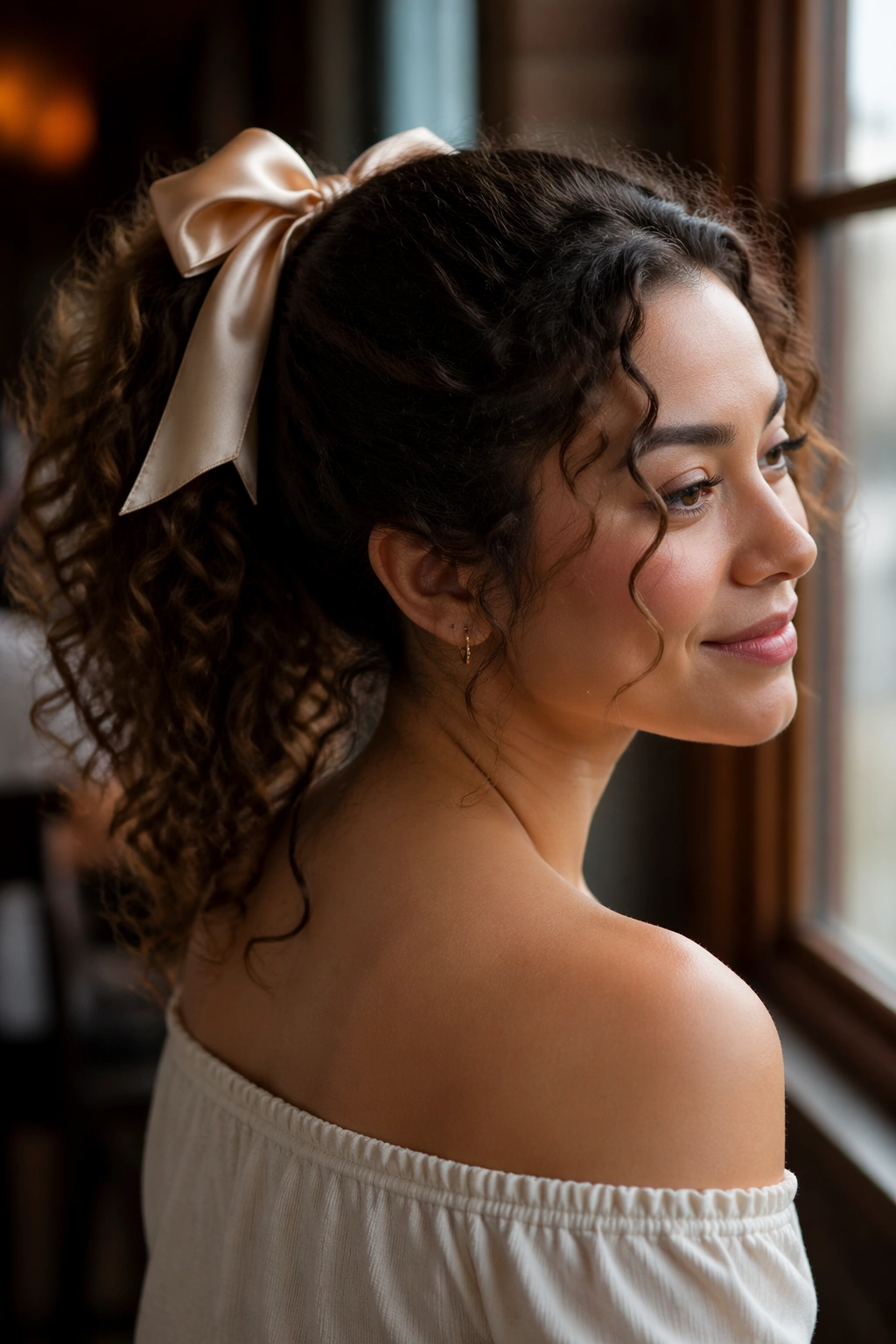
A ribbon-bow ponytail gives curly hair a little charm without making it childish. Use a wide ribbon—about 1 inch is a good starting point—and tie it around the base after the elastic is in place.
The ribbon works best when it matches the texture of the style. Satin feels smoother, velvet feels richer, grosgrain feels crisp. Pick the one that suits the outfit and let the ponytail stay loose underneath. The curls should remain the main visual piece. The ribbon is the frame.
I like this version because it solves a practical problem too: it hides a tie that might not be pretty. That’s honest styling. Nothing wrong with that.
23. The Double-Twist Ponytail
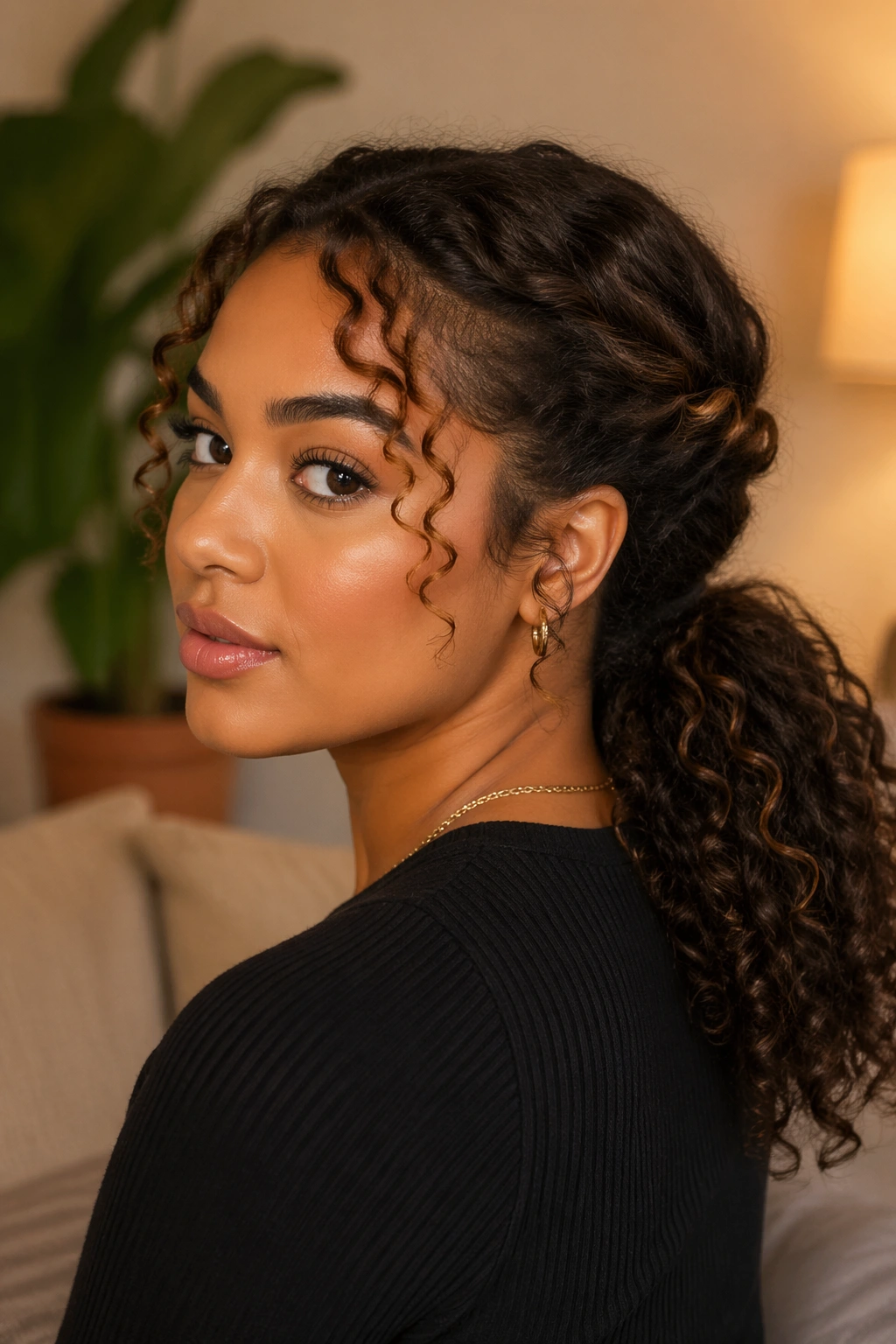
The double-twist ponytail takes two side sections, twists them back, and joins them at the nape or mid-crown. It gives curly hair a little architecture without flattening the whole head.
Twists are helpful when you want the front to stay under control but don’t want the stiffness of a full braid. They also make layers behave better. Curly layers can kick out in odd places, and twisting the front back gives them a path to follow. Keep the twists loose enough that they still look soft. Tight twists can look severe fast.
This is a nice in-between style. More shaped than a plain ponytail, less formal than a braid.
24. The Crisscross Ponytail
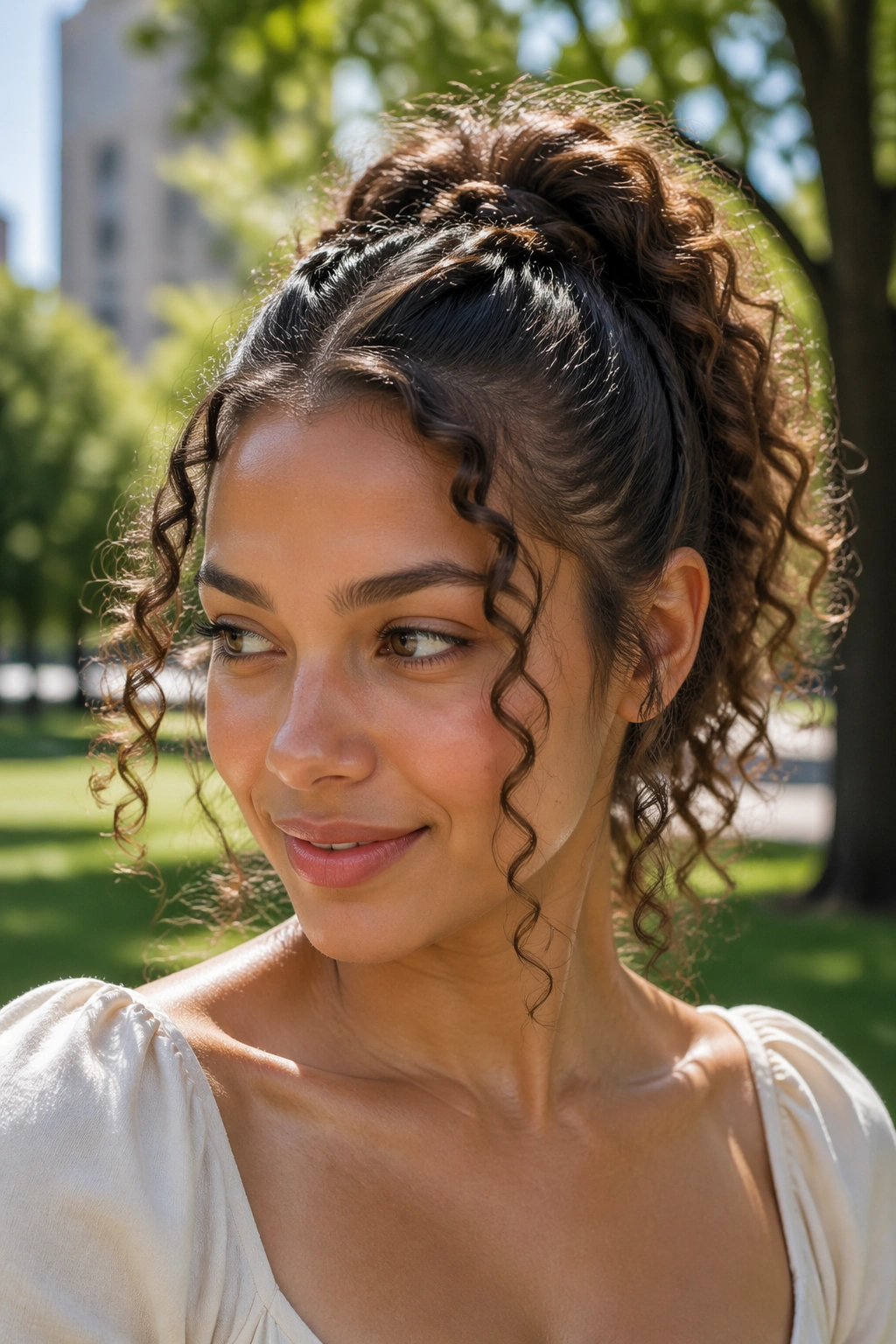
A crisscross ponytail uses two front sections that cross over each other before joining the rest of the hair. That little woven detail gives the base more interest and helps the top stay lifted.
Why does it work so well on curly hair? Because the texture makes the crossing look full instead of fussy. You do not need perfect sections. Slight irregularity actually helps. If the hair is layered, leave the shortest pieces out of the crossing and let them fall naturally around the face.
This style looks good when the ponytail itself is plain. The crisscross at the top is enough. Anything more starts to compete with the curls.
25. The Braided-Wrap Ponytail
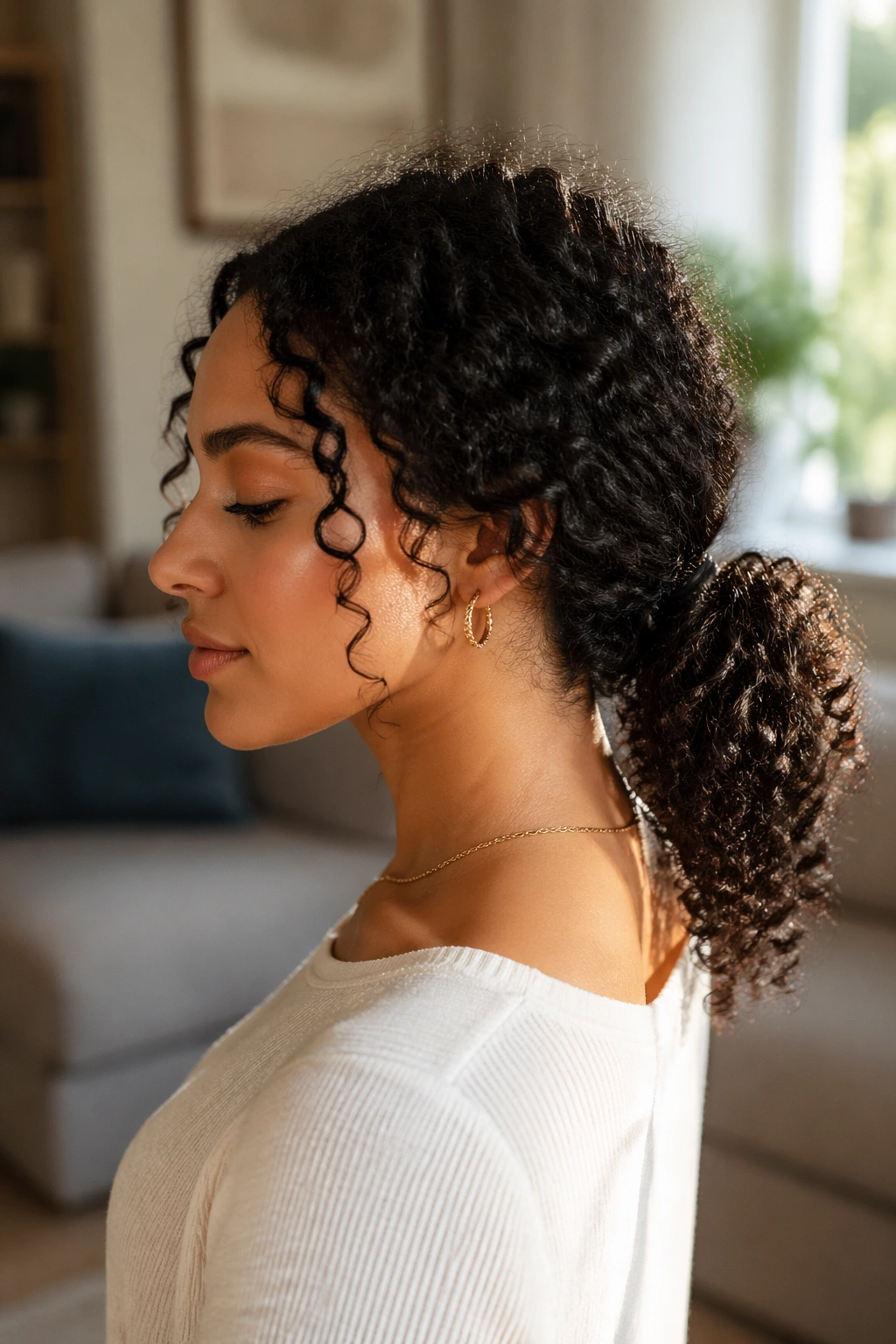
A braided wrap is sturdier than a simple strand wrap and usually looks cleaner, especially on thicker curls. Take a small section from under the ponytail, braid it, then wind the braid around the elastic and pin the end underneath.
That tiny braid does two jobs. It hides the tie and gives the base a more finished edge. It also lasts better than a single strand if your hair is slippery or fine. I reach for this one when I want the ponytail to look polished but not overworked.
Keep the braid slim. A chunky braid can overpower the style and make the base feel heavy, which is the opposite of what a loose ponytail should do.
26. The Faux Hawk Ponytail
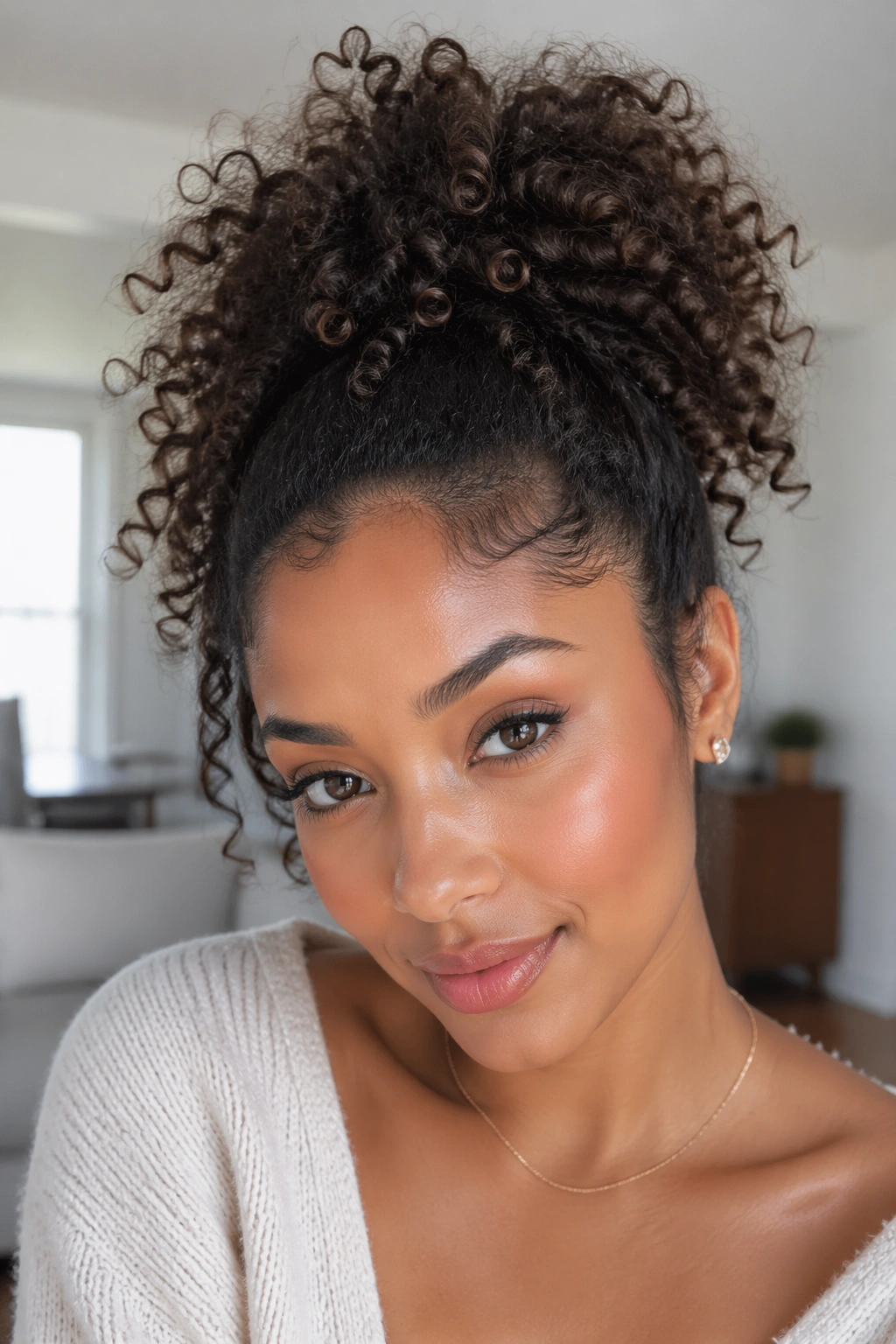
A faux hawk ponytail is the bold one in the group. Pin sections along the center line of the head, let the sides stay flatter, and gather the main ponytail high enough to show off the lift.
How to keep it wearable
The trick is keeping the sides soft. If you slick them down too much, the style gets costume-like. If you leave too much loose at the temples, you lose the shape. Aim for a controlled center ridge and a curly ponytail that fans out behind it.
- Best with medium to thick curls
- Works well when you want height without a full updo
- Needs a few hidden pins, not a mountain of them
- Looks strongest when the ends stay loose
It’s a statement, sure. But it still belongs in the loose-ponytail family.
27. The Loop-Through Ponytail
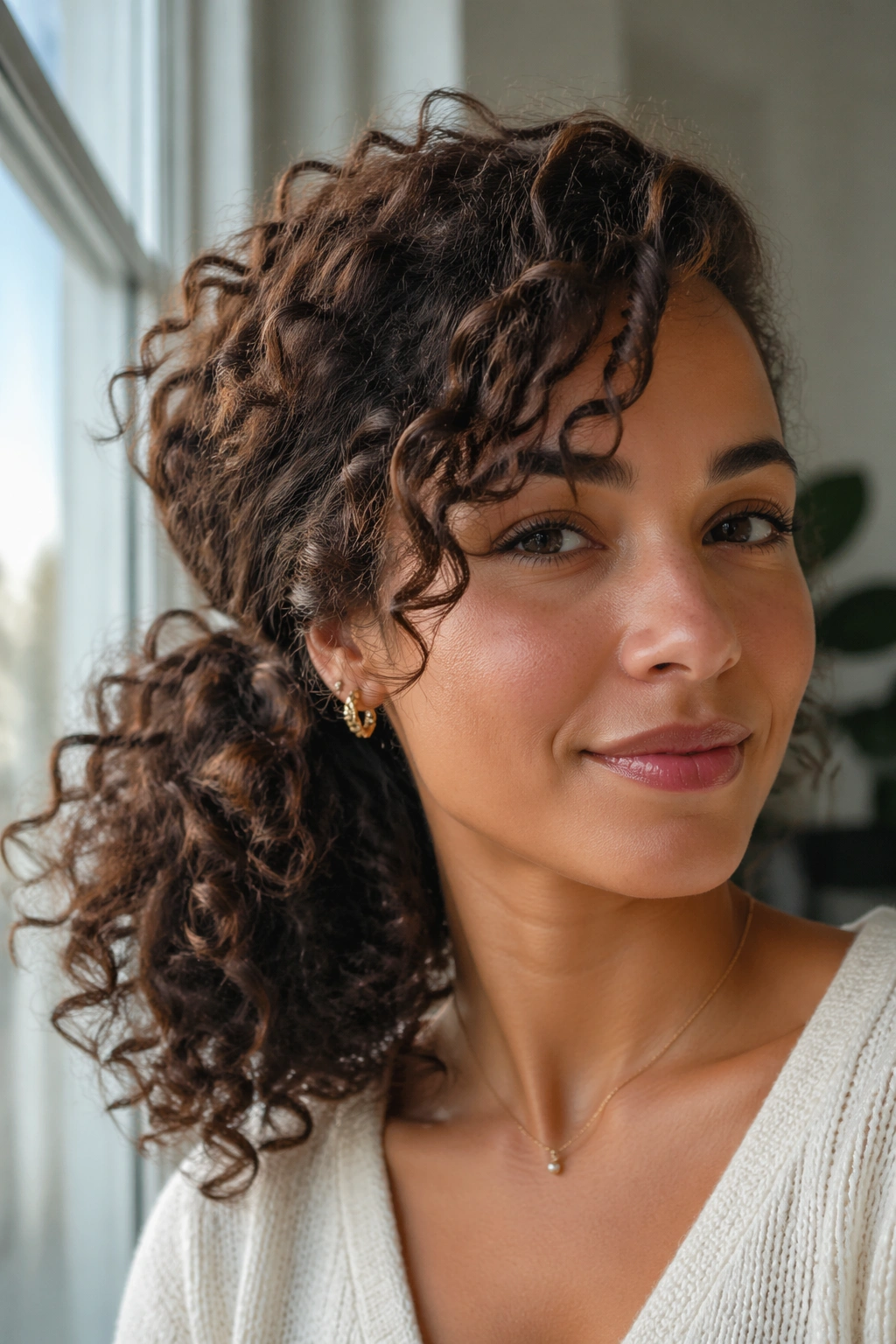
The loop-through ponytail is the one I’d pick when I want volume without making a big production of it. Pull the hair partway through on the final wrap so the ponytail forms a soft loop instead of hanging straight down.
That shape gives curly hair a bit of lift at the base and keeps the length from looking heavy. It also works well when the ends are a little uneven, because the loop shifts attention upward. Use a soft elastic and stop before the final pull gets tight. If the loop is too small, the style loses the whole point.
A good loose ponytail respects the curl pattern. That’s the whole game. Keep the tension light, keep the front soft, and let the hair keep some of its own shape. Curly hair looks best when it still feels like curly hair.
