



A retro high ponytail can look polished in five minutes or full-on starlet-level in twenty, and that range is exactly why it never gets old. Put the elastic in the wrong place, though, and the whole thing sinks into regular-day territory fast.
The trick is not just height. It’s where the crown lifts, how the front is shaped, and whether the tail has enough movement to feel intentional instead of stiff. A vintage look usually lives in those tiny choices: a little tease at the roots, a flipped end, a wrapped base, a ribbon, a wave near the hairline. Small details. Big payoff.
I’ve always liked ponytail hairstyles that do more than hold hair back. A good retro version can read pin-up, mod, bombshell, rockabilly, or soft old-Hollywood depending on the finish, and that flexibility is why this style keeps showing up in salons, on runways, and at every event where somebody wants to look done without looking overworked.
Start at the crown. Everything else falls into place after that.
1. Teased Crown High Ponytail
A teased crown is the fastest way to give a retro high ponytail some real backbone. Without that little lift at the roots, the style looks modern and flat; with it, the whole shape shifts into something much more vintage and far more flattering from the side.
Why It Feels Like the Classic Version
The magic is in the silhouette. You want smoothness around the temples, a soft bump at the crown, and a tail that starts high enough to show off the cheekbones. That combo gives you the late-50s, early-60s mood without making the hair look helmet-stiff.
- Backcomb the crown in 2-inch sections instead of attacking the whole head at once.
- Mist each section with a light-hold spray before teasing so the lift holds.
- Smooth only the top layer; leave the padding underneath alone.
- Use a tail comb, not a brush, or you’ll flatten the shape right back out.
Best tip: pin the crown in place before you gather the ponytail. If you wait until the elastic is already in, the lift tends to slide and the shape gets lopsided.
2. Sleek High Ponytail With Bardot Volume
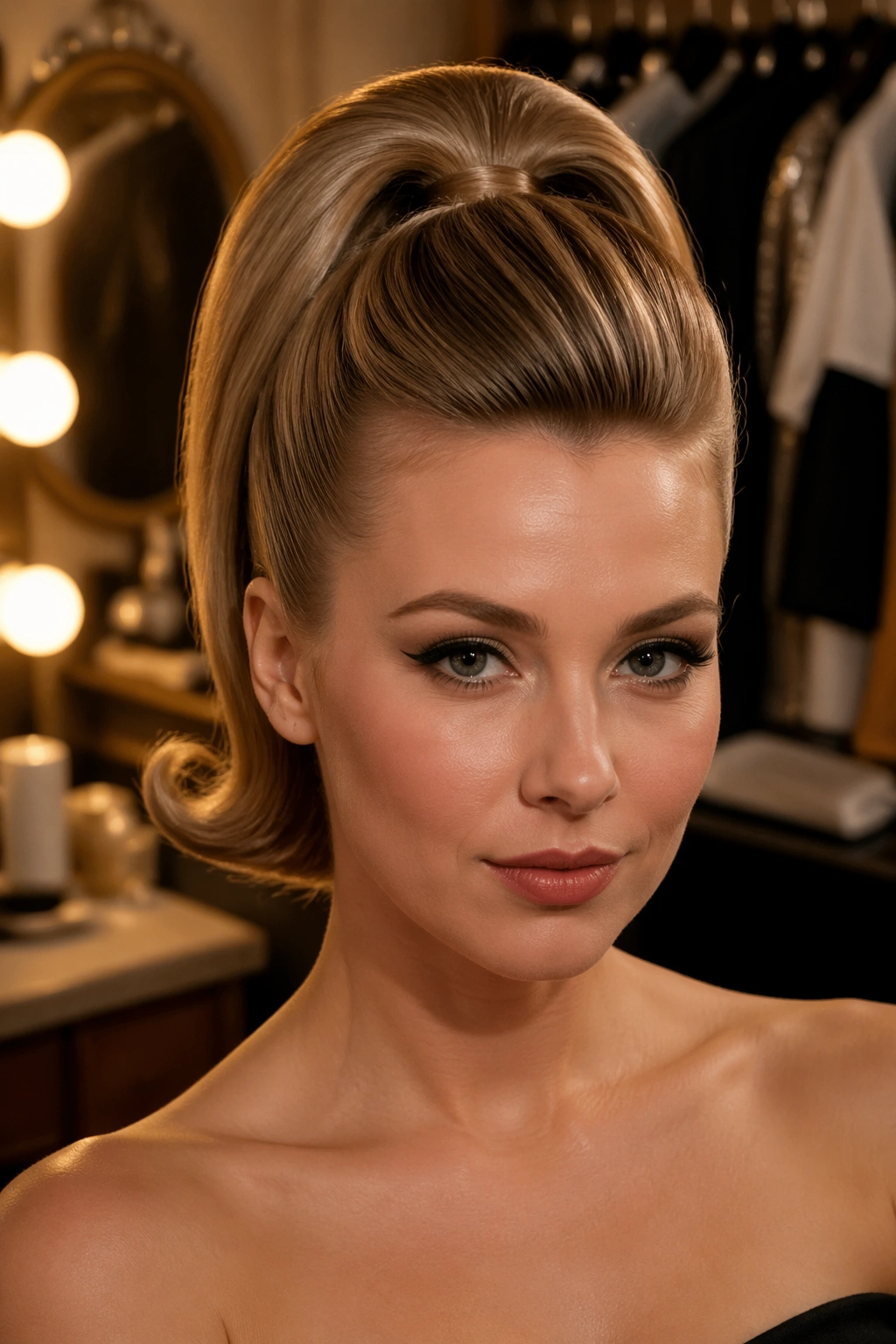
This one works because it keeps the front polished while letting the crown carry the drama. The result is elegant, but not bland. If the top is too flat, the style starts reading gym pony. If the crown has a soft rise and the tail is glossy, it feels much more like a vintage evening look.
The best version uses a fine-tooth comb, a touch of smoothing cream, and a quick blast of heat at the roots if your hair refuses to lie down. Keep the sides tight, then let the ponytail hang with a little bend through the mid-lengths. Straight to the ends can look harsh here. A soft curve feels richer.
This style is especially good when you want old-school glamour without a lot of visible work. It suits a clean neckline, a bold earring, or a high collar. And if your hair is on the finer side, this is one of those styles that benefits from a hidden clip or a bit of padding under the crown.
3. Victory-Roll High Ponytail
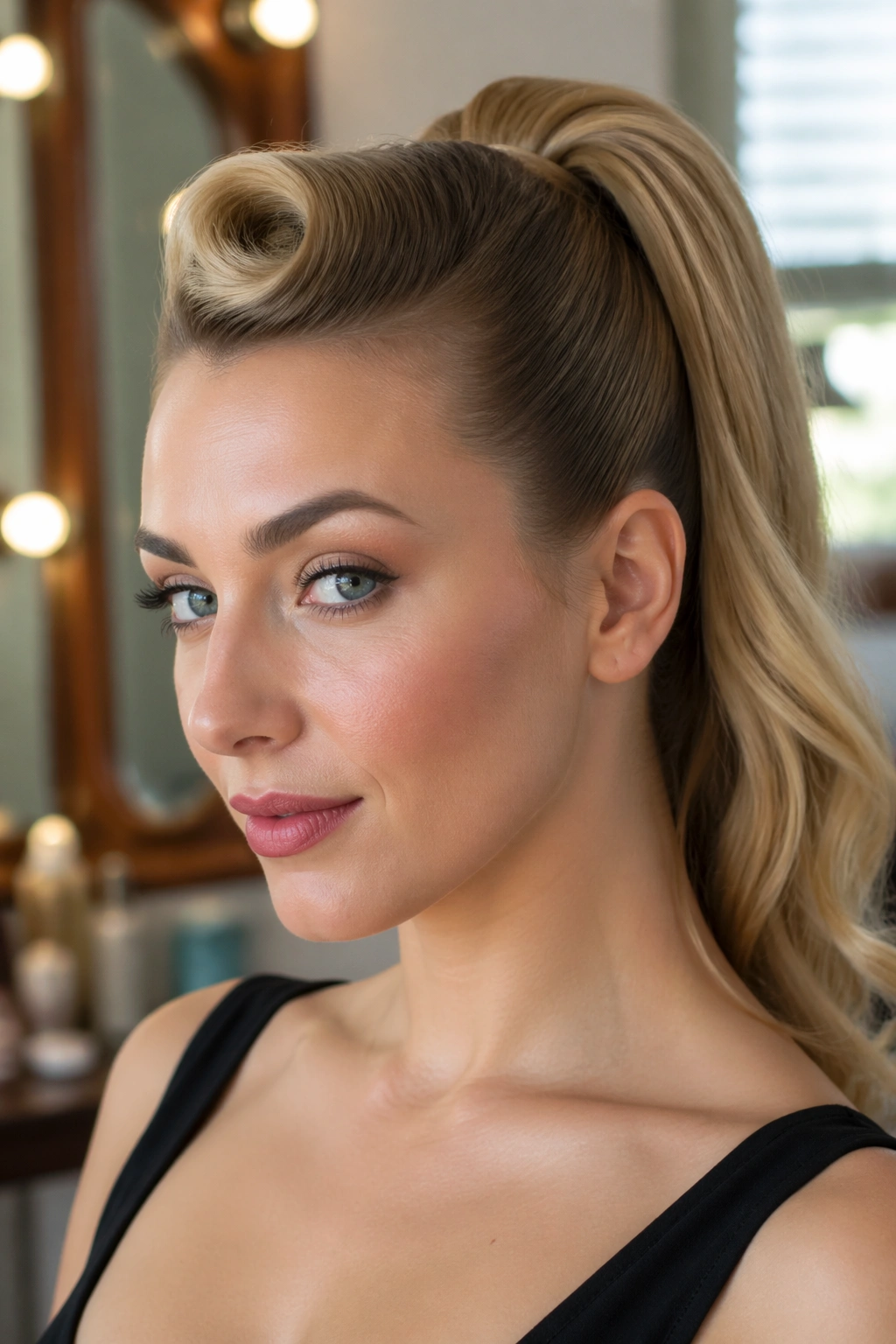
Why does a victory roll change everything? Because it gives the front of the hair a shape the eye can actually follow. The ponytail becomes the second act, not the whole show, and that’s what makes the look feel rooted in the pin-up era instead of just “hair tied up high.”
The roll doesn’t need to be huge. In fact, a small, clean one often looks better than a big, fussy twist. Roll a front section back over two fingers, pin it with crossed bobby pins, and let the rest of the hair stay sleek enough to show the shape. The ponytail can be curled or left smooth, depending on how dramatic you want it.
How to Style It
Use a medium-hold gel or pomade on the front section, then set the roll before you move on to the tail. The texture should feel firm but not crunchy. If it’s slipping, the section is too wide, or you’ve used too much product.
4. Flipped-Ends High Ponytail
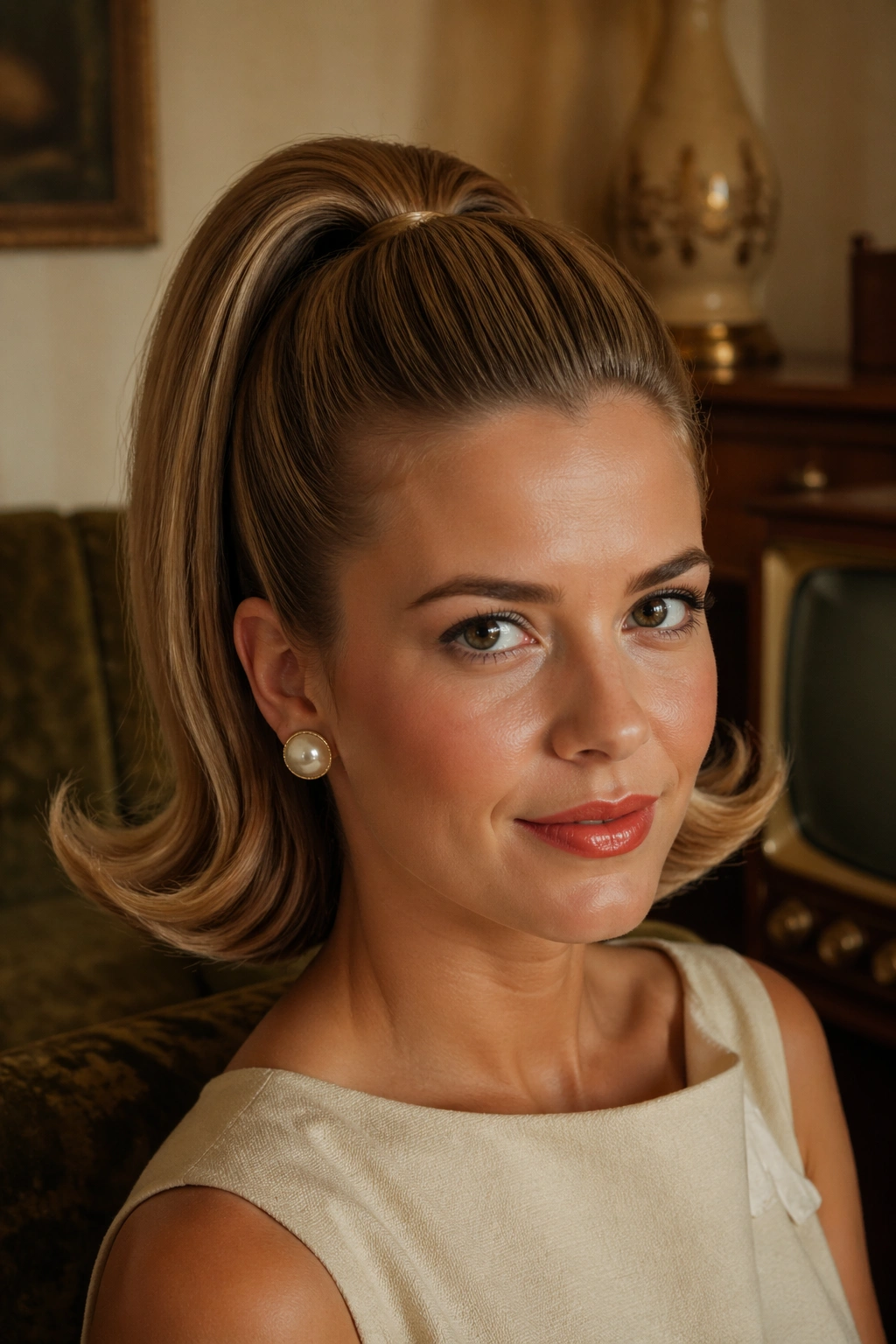
A flipped tail gives the whole style a little swagger. It reminds me of old movie stills where the hair looks like it’s in motion even when the person standing still. That tiny outward bend at the ends is what makes the ponytail feel period-correct.
The mechanism is simple: smooth the roots, secure a high ponytail, then curl the last 2 to 3 inches of the tail outward with a 1-inch iron or round brush and blow-dryer. Don’t curl the whole thing into a ringlet unless you want a softer, more pin-up result. The flip should be clean and decisive.
- Keep the crown smooth, not puffy.
- Wrap a small strand around the elastic for polish.
- Set the flipped ends with a cool shot before touching them.
- A little shine spray helps the bend read from across the room.
That final flick at the bottom is doing more work than people think.
5. Satin-Ribbon Wrapped High Ponytail
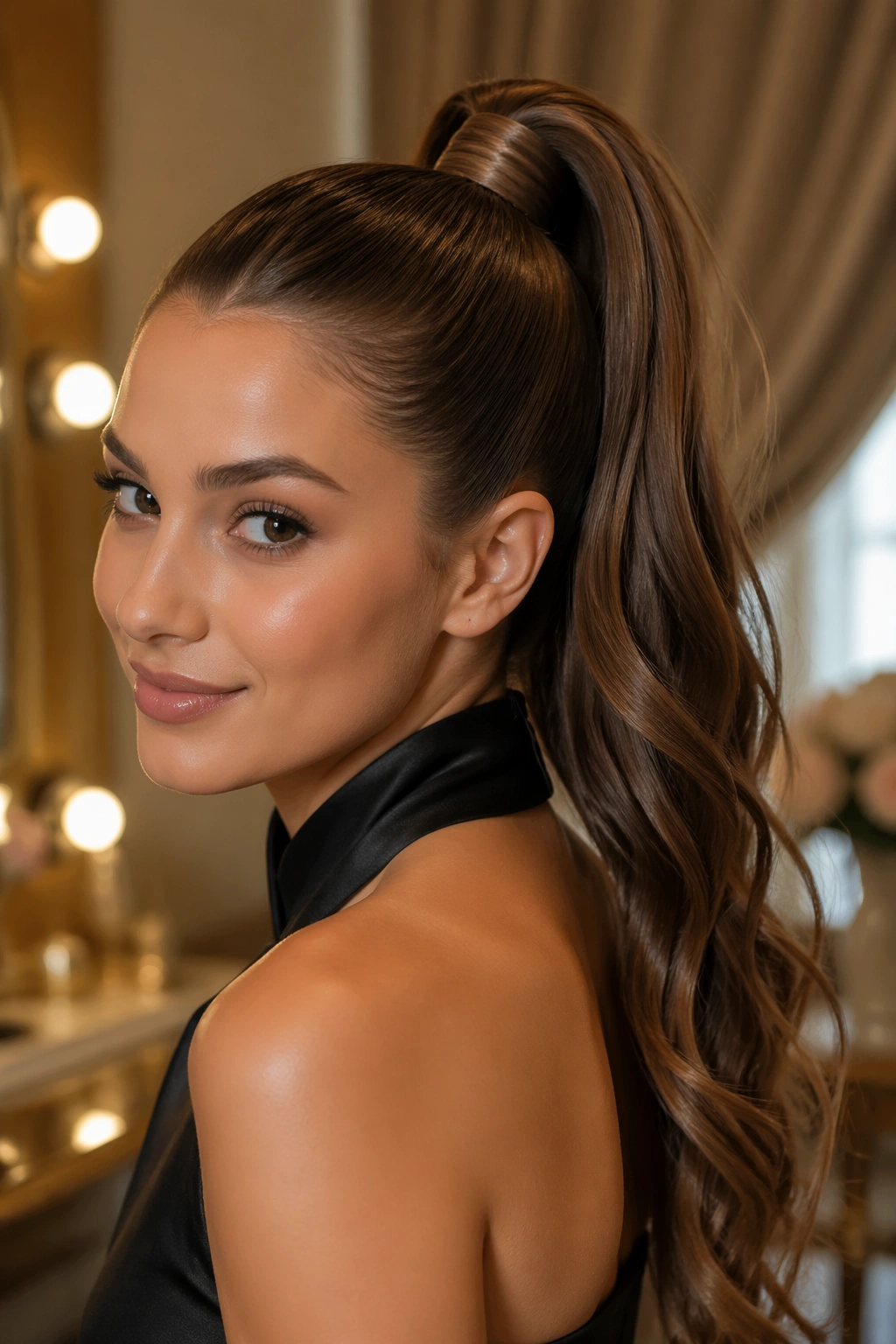
A satin ribbon changes the mood fast. Suddenly the ponytail isn’t just practical; it feels deliberate, a little sweet, and slightly dressed-up in that old-fashioned way that never looks forced. Wide ribbons lean playful. Narrow ones feel more delicate.
This style works especially well with hair that already has some shine, because satin reflects light and amplifies the finish you’ve got. Black, ivory, navy, and deep red are the safest choices if you want a classic vintage feel. If the ribbon is too stiff, though, it can sit awkwardly on the elastic and look like an afterthought. Soft ribbon with enough body to tie into a neat bow usually behaves better.
Tuck the knot under the ponytail or slightly off to one side if you want the look to feel less school-uniform and more evening-ready. A ribbon also gives you a sneaky advantage: it hides imperfect elastics, which is half the battle on a long day.
6. Scarf-Tied High Ponytail
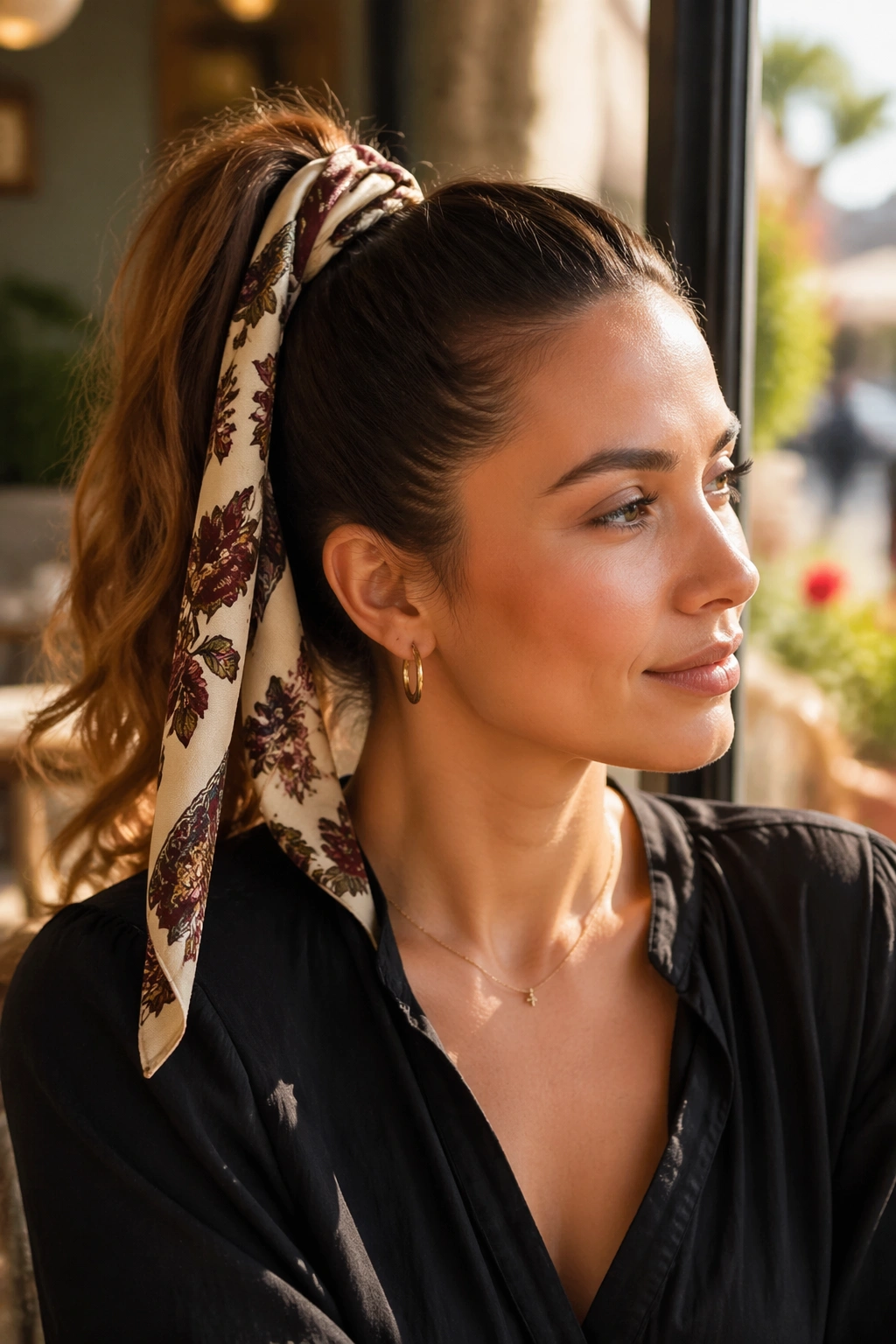
Unlike a ribbon, a scarf gives you pattern, movement, and a little bit of personality all at once. That makes it a better choice when you want the ponytail to feel more playful than polished. The scarf can be silk, cotton, or a light satin square, but the key is keeping it narrow enough that it doesn’t overwhelm the hair.
Fold it into a long strip and tie it around the base after the elastic is secure. Leave the ends long if you want that breezy, retro feel, or tuck them under the knot for a cleaner shape. A scarf also helps balance hair that’s freshly washed and too slippery to hold a complicated shape.
Best part? It works on second-day hair without much fuss. If the roots are a little flat, the scarf gives the eye something else to look at, which is handy when your hair is being cooperative in only the most basic way. A plain black scarf can look surprisingly chic, too.
7. Bouffant High Ponytail
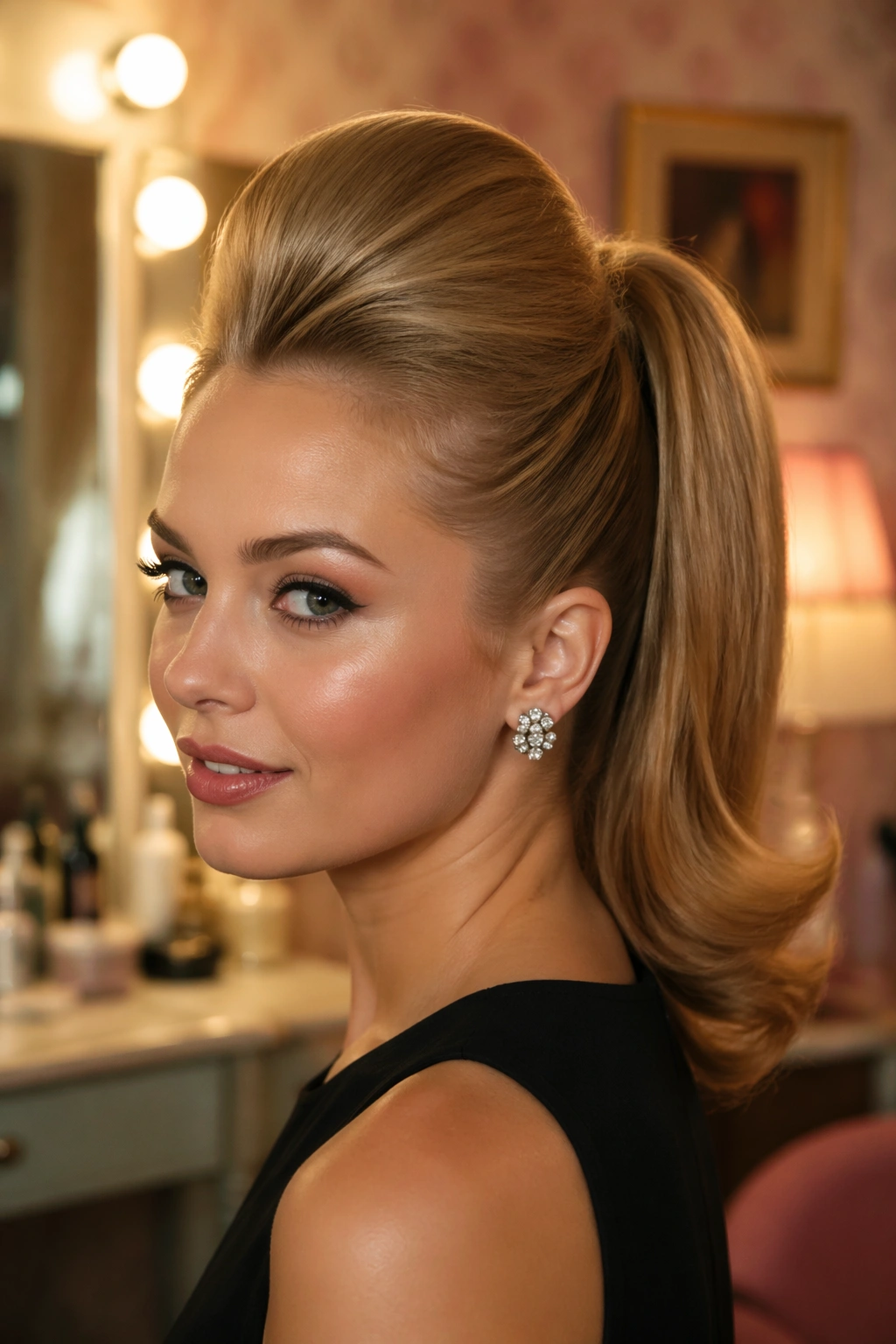
A bouffant ponytail is not shy. It is all about height at the crown and a smooth drop into the tail, which means the head shape matters as much as the hair itself. If you want that unmistakable vintage lift, this is one of the strongest versions to try.
Keep the Height Controlled
The biggest mistake is teasing the crown until it turns mushy. You want structure, not fluff. Section the top, tease from mid-length to root in small strokes, then smooth only the outer layer with a brush so the surface stays neat. A little serum on the ends helps keep the ponytail from looking dry against the fuller top.
- Use a strong elastic and anchor it with a second one if your hair is heavy.
- Pin the underside of the crown if the lift starts sliding.
- Leave the tail soft; too much wave can make the top look disconnected.
- If you have thick hair, split the ponytail in two before securing it.
This style loves volume, but it also needs restraint. That balance is the whole point.
8. Pin-Curled High Ponytail
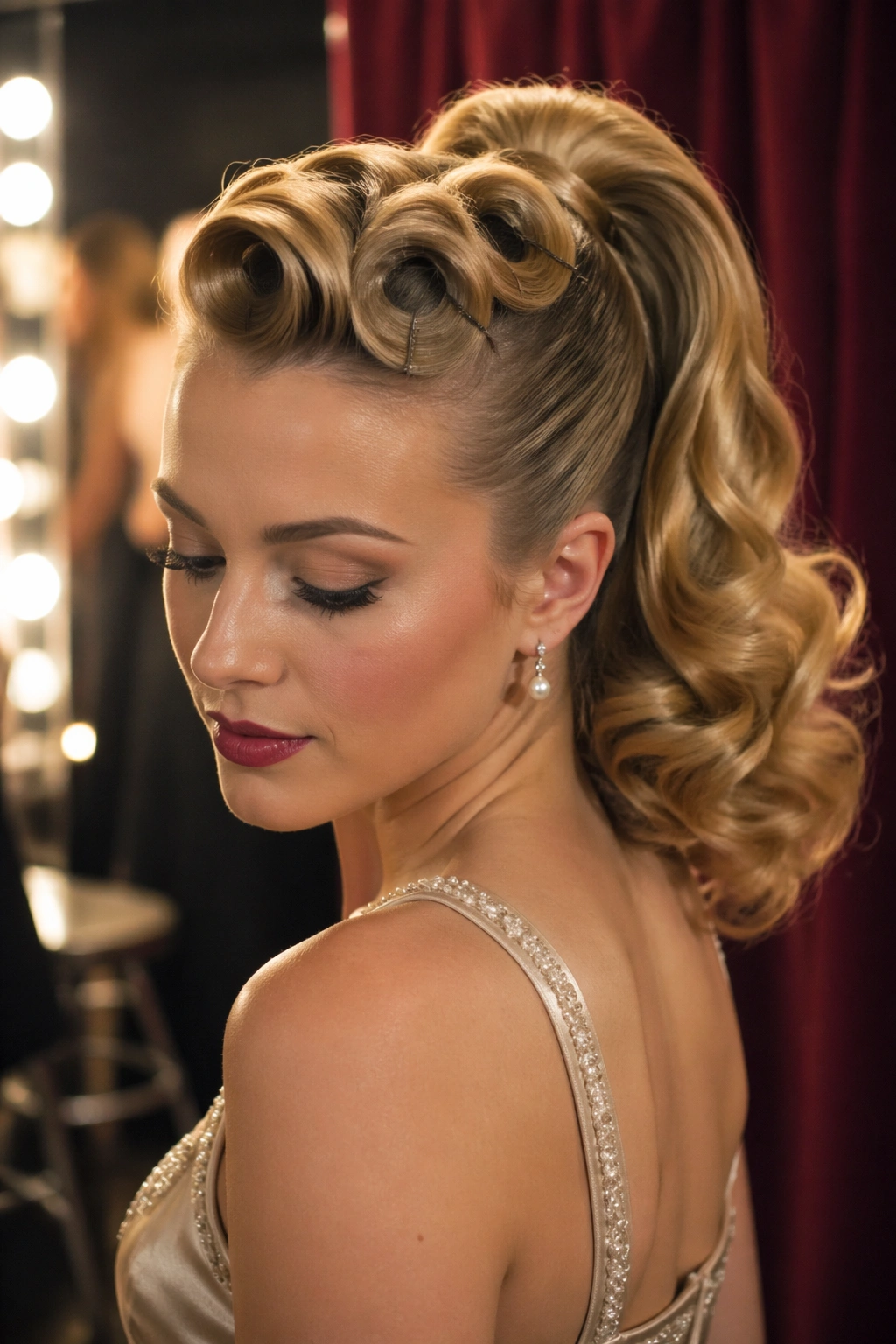
Pin curls bring a kind of old-Hollywood order to a high ponytail. The style looks romantic, yes, but also very controlled, which is why it works so well for formal events where you want the hair to feel finished from every angle.
Set the front and tail sections in curling iron waves or traditional pin curls, then let them cool fully before touching them. That cooling part matters more than most people realize. Warm curls collapse. Cold curls hold shape. Once the curls are loose, gather the hair high and let the tail fall in soft spirals instead of brushing everything straight.
If you’re wearing this for an evening event, pin a few curls around the face rather than sweeping every piece back. The little loose bits soften the profile and keep the ponytail from feeling severe. It’s a gentle look, but not a plain one.
9. Finger-Wave High Ponytail
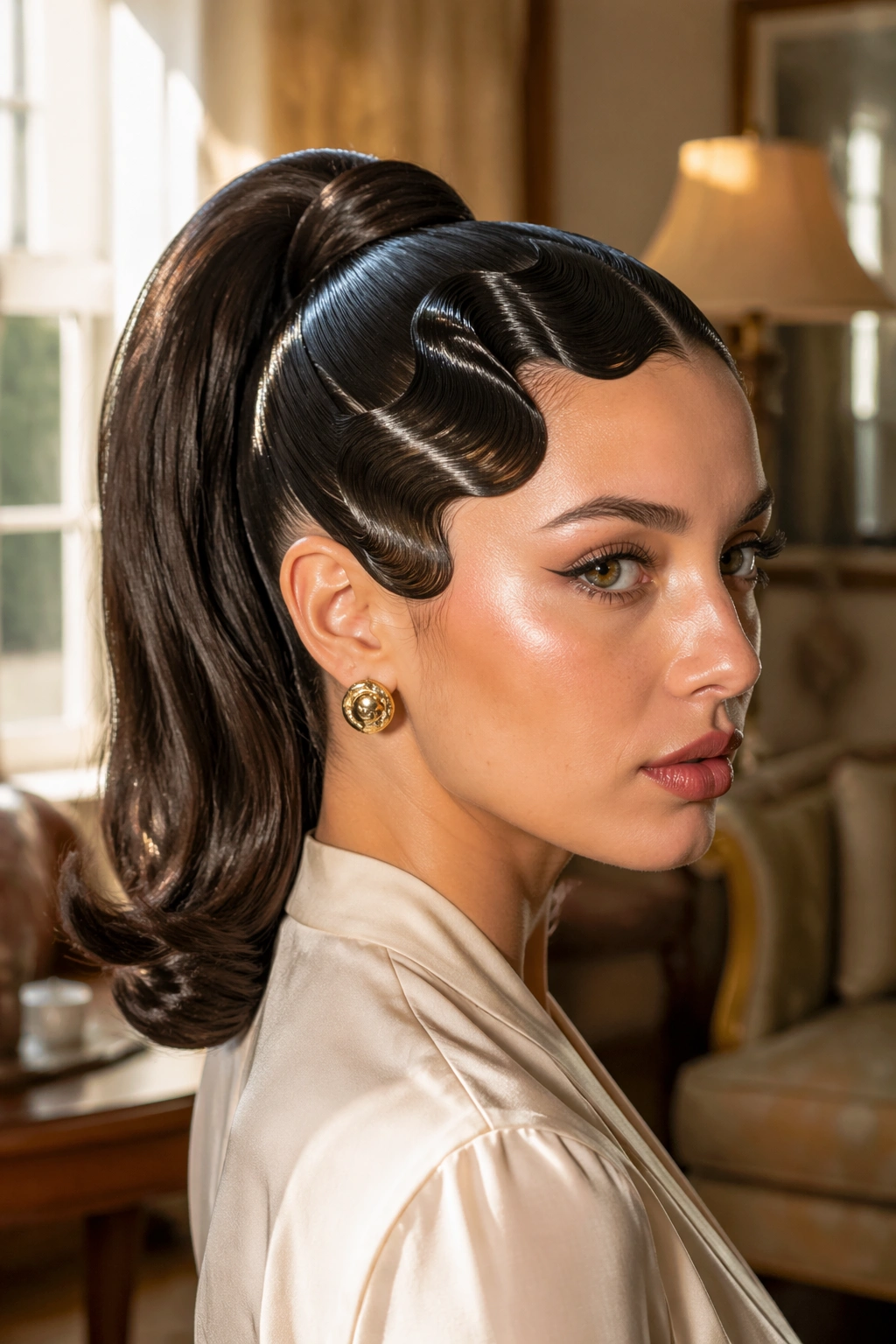
Can a ponytail look sculpted instead of bouncy? Absolutely. Finger waves are the reason. They bring that glossy, shaped front that makes the rest of the hair feel more expensive, even if the tail itself is simple.
This style works best when the front section is combed with gel and set into soft S-shaped waves before the ponytail goes in. You don’t need a full head of waves. Just enough to frame the hairline and temples. That front detail changes the whole mood. The tail can stay sleek, or you can bend the ends slightly with a large barrel iron if you want a little movement.
When to Reach for It
Choose this when you want something formal, neat, and a little dramatic. It pairs especially well with straight hair that tends to fall flat, because the wave pattern gives it visible shape right away. Keep the ponytail high and the waves close to the head. If they spread too far out, the look loses its clean vintage line.
10. Bubble High Ponytail
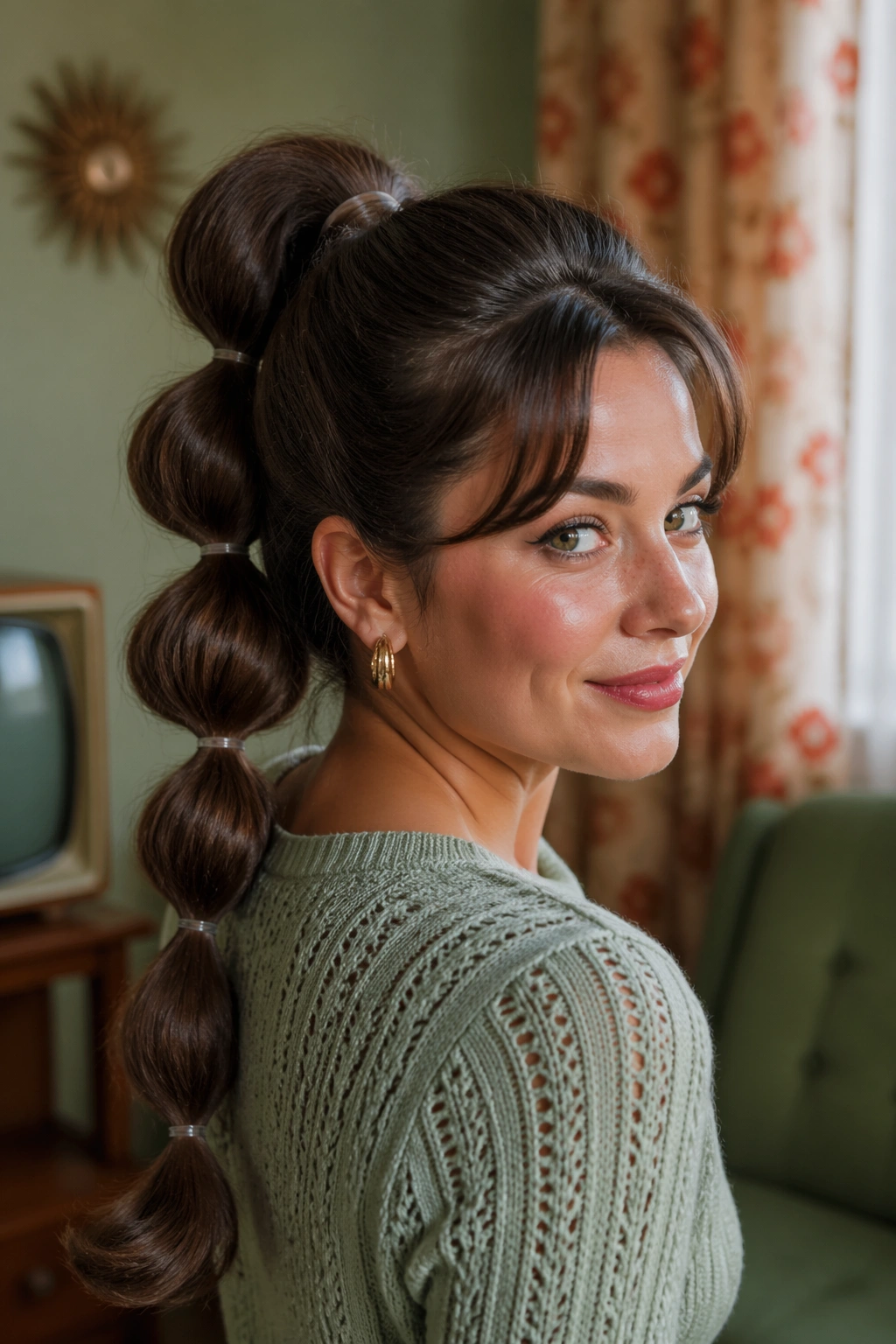
A bubble ponytail sounds playful because it is. It also has a retro streak that feels very right when you want the hair to look styled without pretending to be delicate. The bubbles create sections of volume, almost like little puffs along the tail.
Start with a high ponytail, then add clear elastics every 2 to 3 inches down the length. Gently tug each section outward until it rounds into a bubble. Don’t overpull. A soft bubble looks chic; an overstretched one looks odd and thin.
- Use clear elastics if you want the shape to lead.
- Lightly mist each section before tugging so it keeps its form.
- Wrap a thin strand of hair around the top elastic for a cleaner finish.
- Curl the ends under or out, depending on whether you want it softer or sharper.
It’s a good choice when you want something that reads vintage-adjacent rather than straight pin-up. Fun, but not silly.
11. Scrunchie Power Ponytail
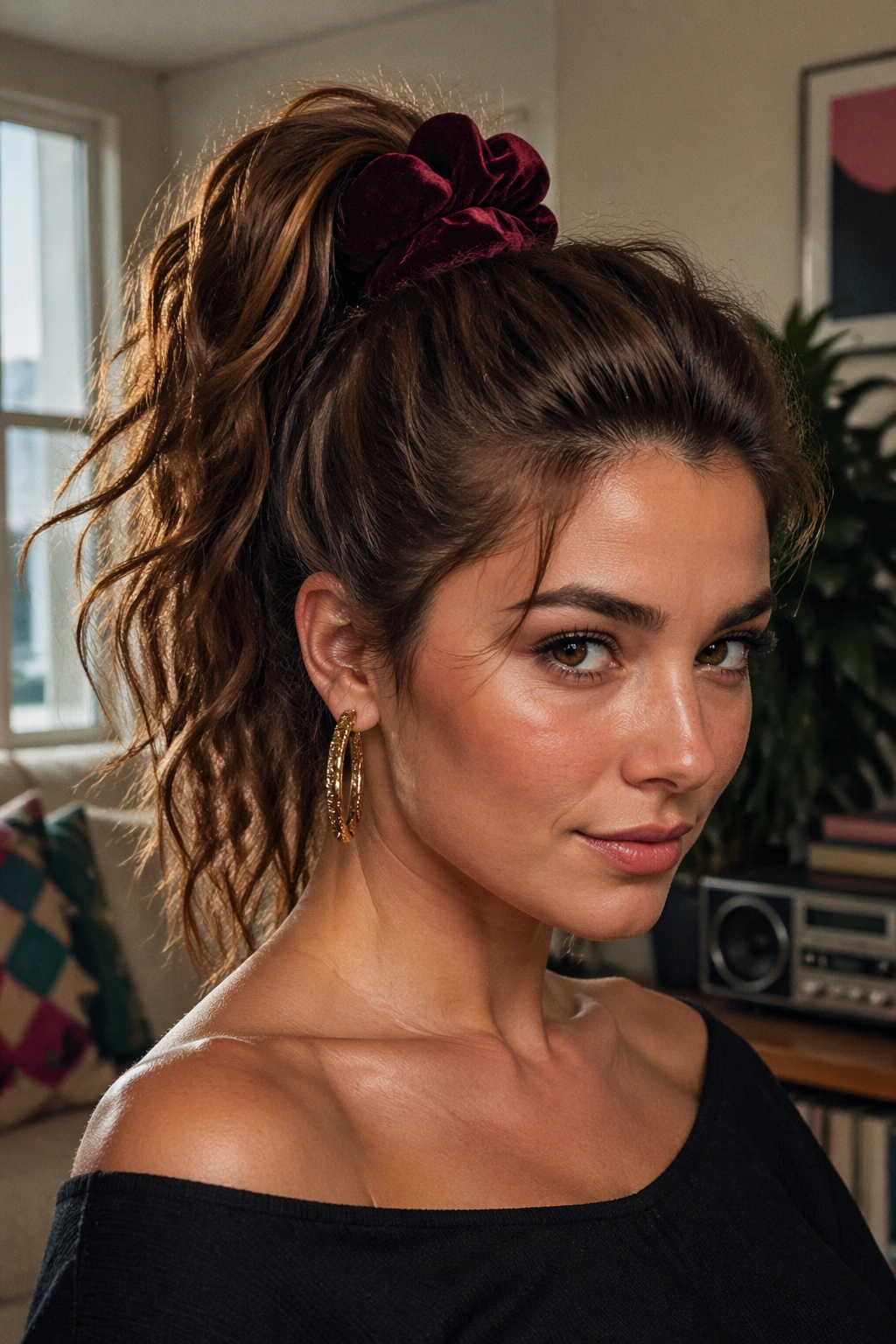
A scrunchie can go badly in a ponytail if the fabric is flimsy or the size is wrong. Pick the right one, though, and the whole style suddenly feels like a deliberate nod to 80s glamour instead of a shortcut. Velvet, satin, and ribbed cotton all have their place.
This version loves volume at the top and a ponytail that doesn’t mind a little roughness. In other words, it’s better when the hair has some texture. A scrunchie makes a high ponytail look softer around the base, which is useful if you don’t want the elastic to slice into the hairline or if you’re trying to hide a messy tie.
I like this one most with a loosely curled tail and a slightly lifted crown. It feels easy in a good way. If you want the look to lean dressier, choose a darker fabric and keep the top smooth. If you want casual retro, go bigger and a bit fluffier. The scrunchie does a lot of the mood-setting for you.
12. Side-Swept High Ponytail
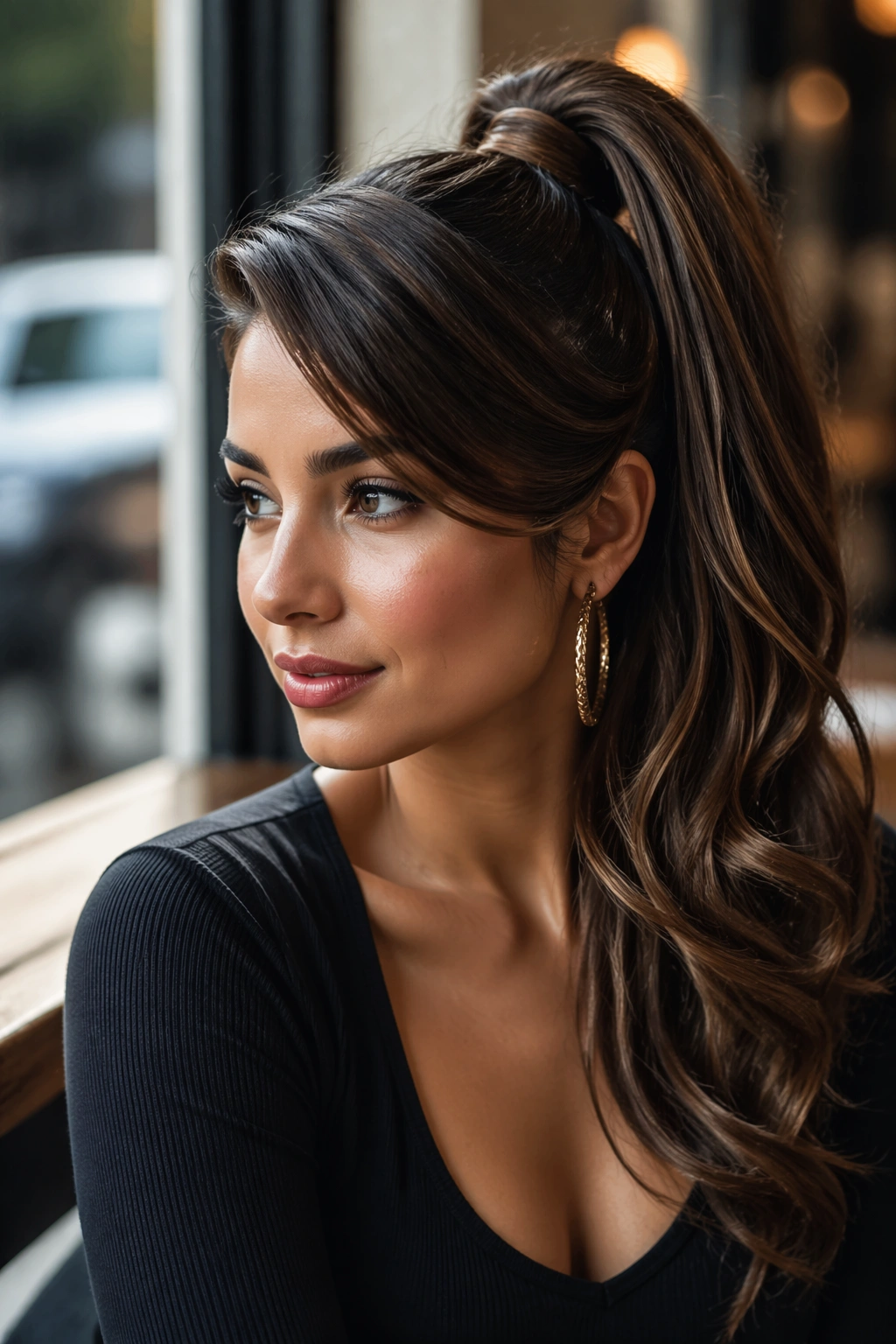
Unlike a dead-center ponytail, this one leans into asymmetry, and that shift makes it feel softer right away. The side part gives the front hair a little drama, while the high placement keeps the look from drifting into low, everyday territory.
The best side-swept version starts with a deep side part and a sleek sweep across the forehead. Gather the tail slightly off-center, then let it fall over one shoulder or directly behind the ear, depending on the shape you want. If the tail is too far to the side, the style can look accidental. Just a slight offset is enough.
This is a smart choice for strong jawlines, round faces, or any outfit that already has a lot going on around the neckline. The asymmetry helps the eye move. It also photographs well from the three-quarter angle, which is one of those practical details people only notice after a few tries. Not glamorous, exactly. Just useful.
13. Pompadour High Ponytail
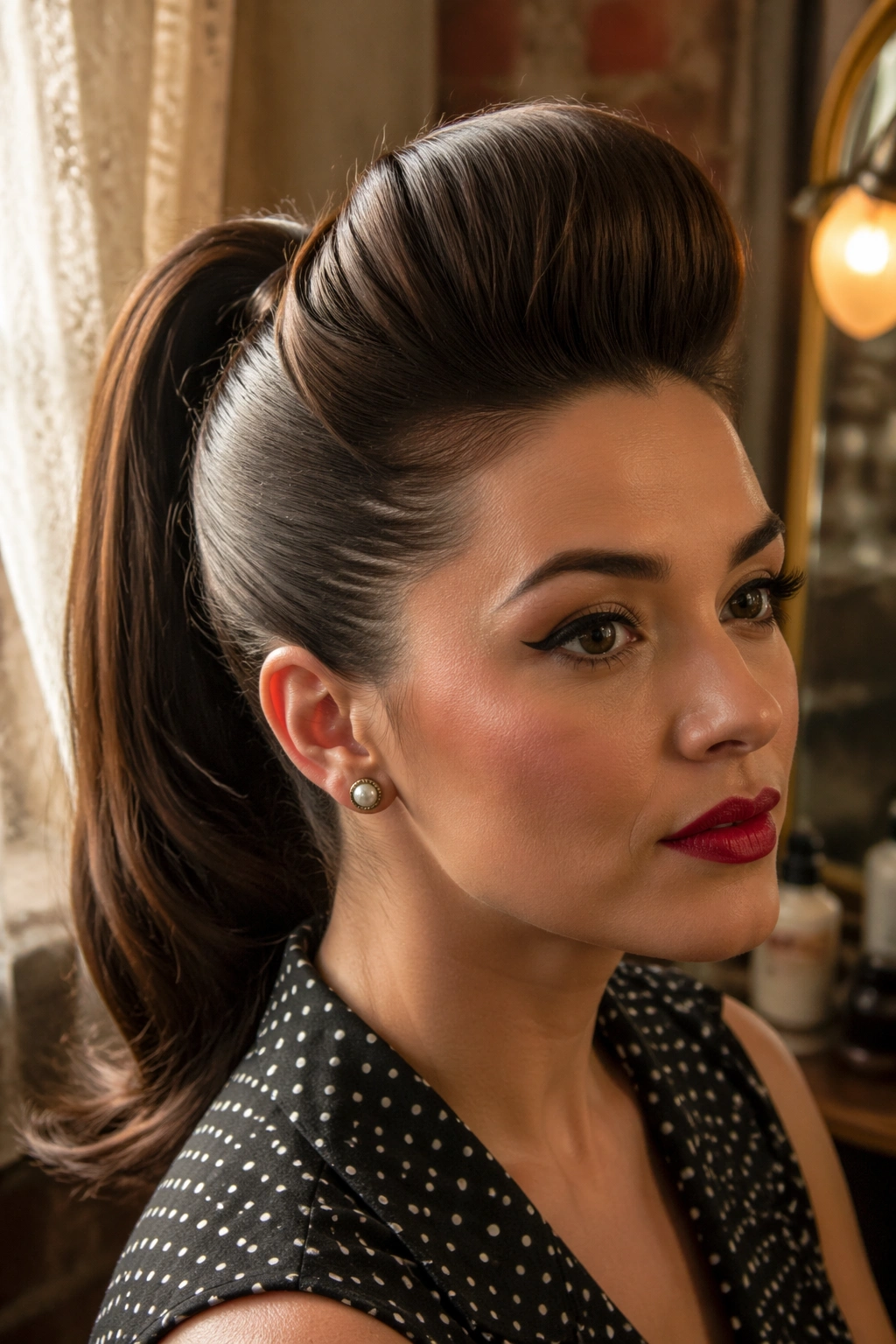
A pompadour ponytail gives you height with attitude. It’s the rockabilly cousin in this whole group — a little sharper, a little louder, and a lot more confident at the front.
Keep the Height Under Control
The front section should rise, not balloon. That means teasing underneath, smoothing the top layer carefully, and pinning the lift before you gather the rest into a high ponytail. If the front sits too far forward, the style can tip into costume. If it stays compact, it looks crisp.
- Work with a narrow front panel first, about 3 to 4 inches wide.
- Tease from the inside only.
- Use a firm-hold spray while the lift is still pinned.
- Smooth the sides tight so the height has somewhere to live.
This style loves a bold lip, a tucked-in blouse, or a jacket with structure. The ponytail itself can stay straight, curled, or slightly waved. What matters is that front roll or lift. That is the whole personality of the look.
14. Rolled Bangs High Ponytail
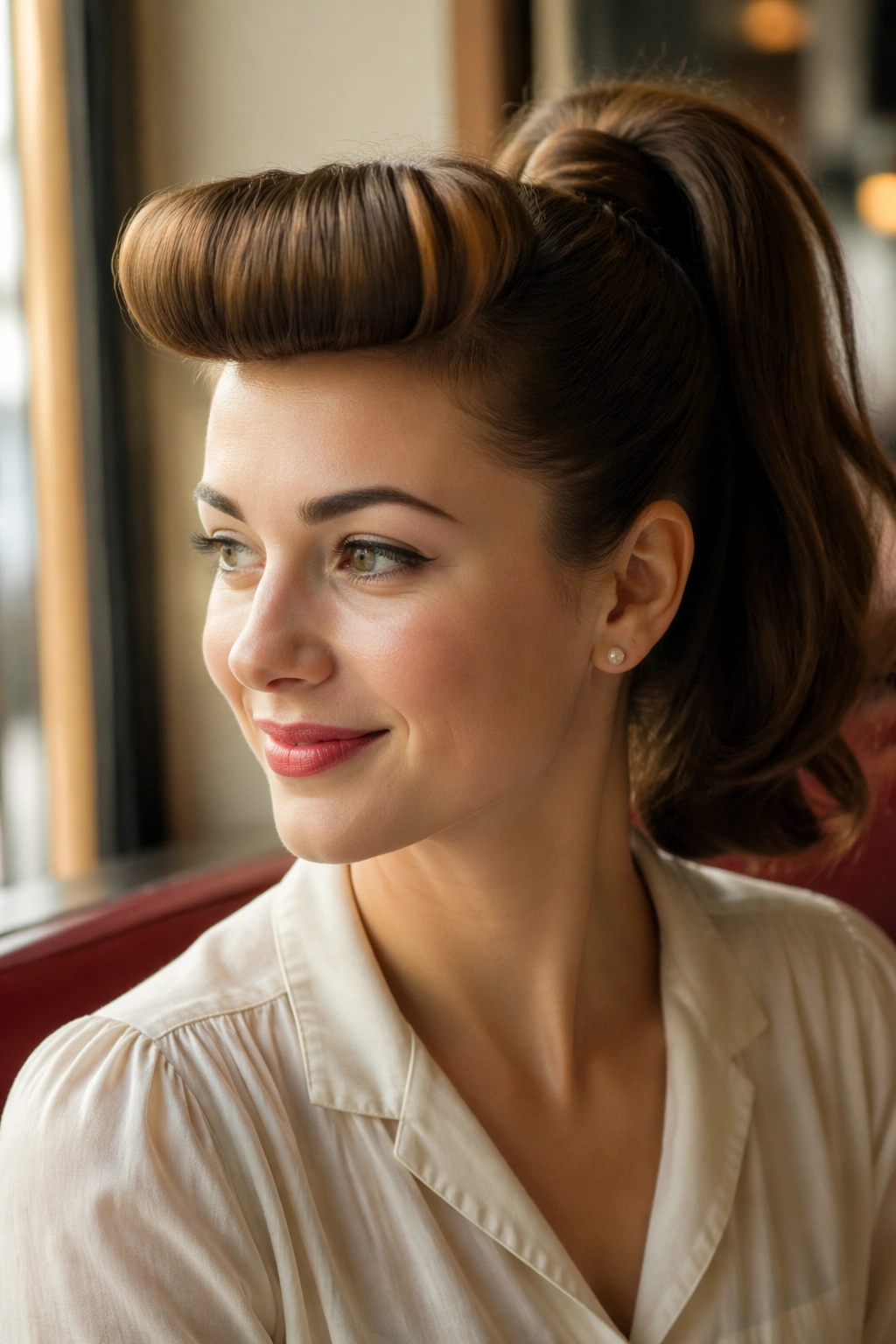
Rolled bangs give a high ponytail a very specific vintage flavor. The rest of the hair can be simple, but the fringe says you know exactly what era you’re borrowing from. That’s useful when you want the style to feel styled rather than generic.
If your bangs are long enough, roll them back over a small round brush or your fingers, clip them to cool, then pin them in place with hidden bobby pins. Shorter bangs need a smaller iron and a little patience. The curl should be neat and visible, not floppy. Once the bangs are set, pull the rest of the hair into a high ponytail with a smooth crown.
This version works best when the roll is balanced by a clean tail. Too much going on below the bangs makes the whole thing feel busy. Keep the rest of the hair restrained and the front becomes the star. Simple. Strong. A little glamorous.
15. Wrapped-Base High Ponytail
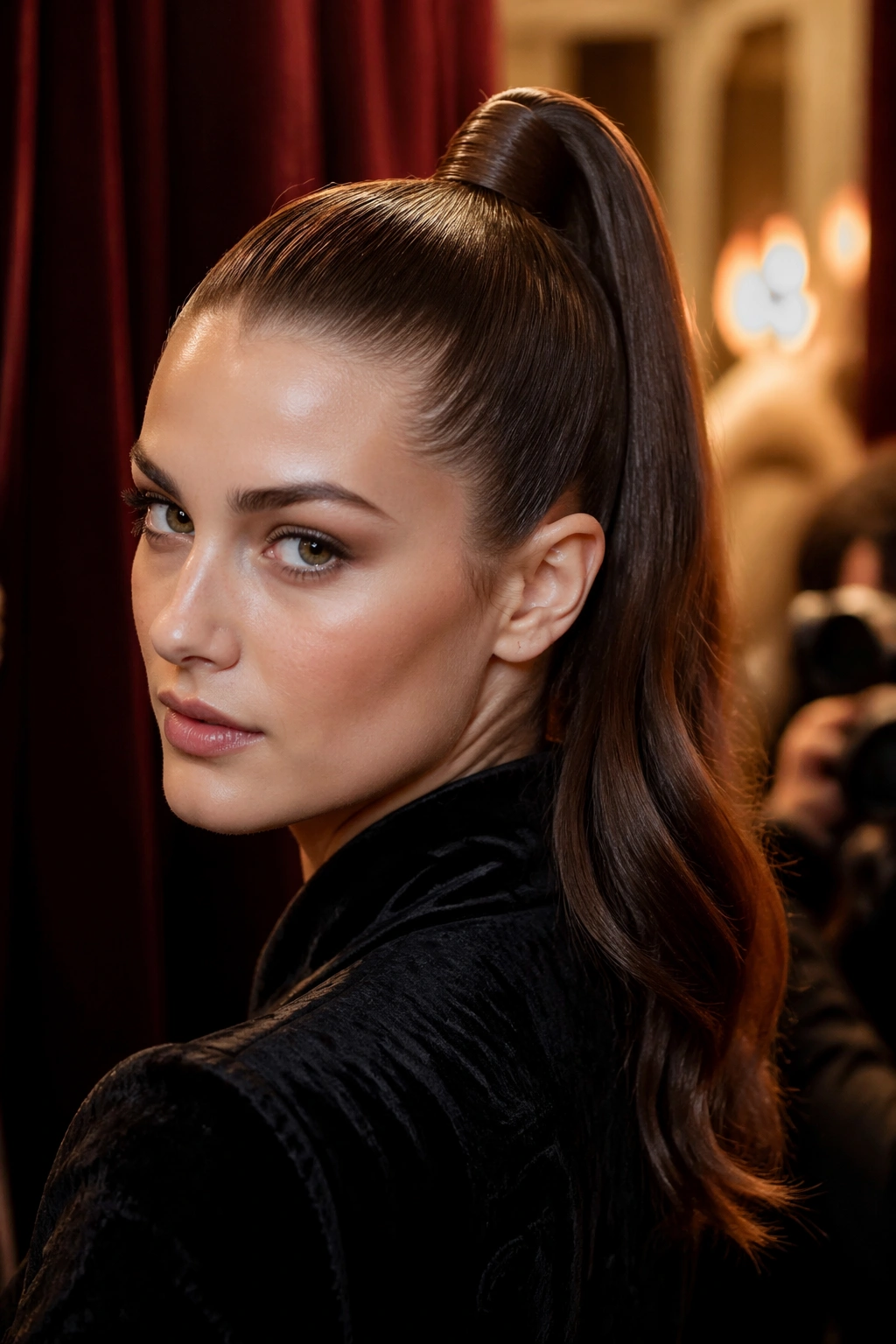
Why do wrapped bases look cleaner than a plain elastic? Because they hide the hard line of the tie and turn the ponytail into one continuous shape. It’s one of those tiny fixes that makes the style look more expensive without changing the whole structure.
Take a thin strand from underneath the ponytail, smooth it with a dab of serum if needed, and wrap it around the elastic until nothing shows except the sleek hair itself. Secure the end with a bobby pin tucked under the base or under a neighboring section so it disappears. The finish should feel tight and neat, not fuzzy.
The Small Detail That Changes the Finish
This style is best when you want a polished retro look without an obvious accessory. It sits well with straight hair, softly curled hair, and even textured hair that’s been blown out. The wrapped base gives you that neat, put-together line you see in a lot of classic studio portraits. No fuss. Just a cleaner silhouette.
16. Feathered Fringe High Ponytail
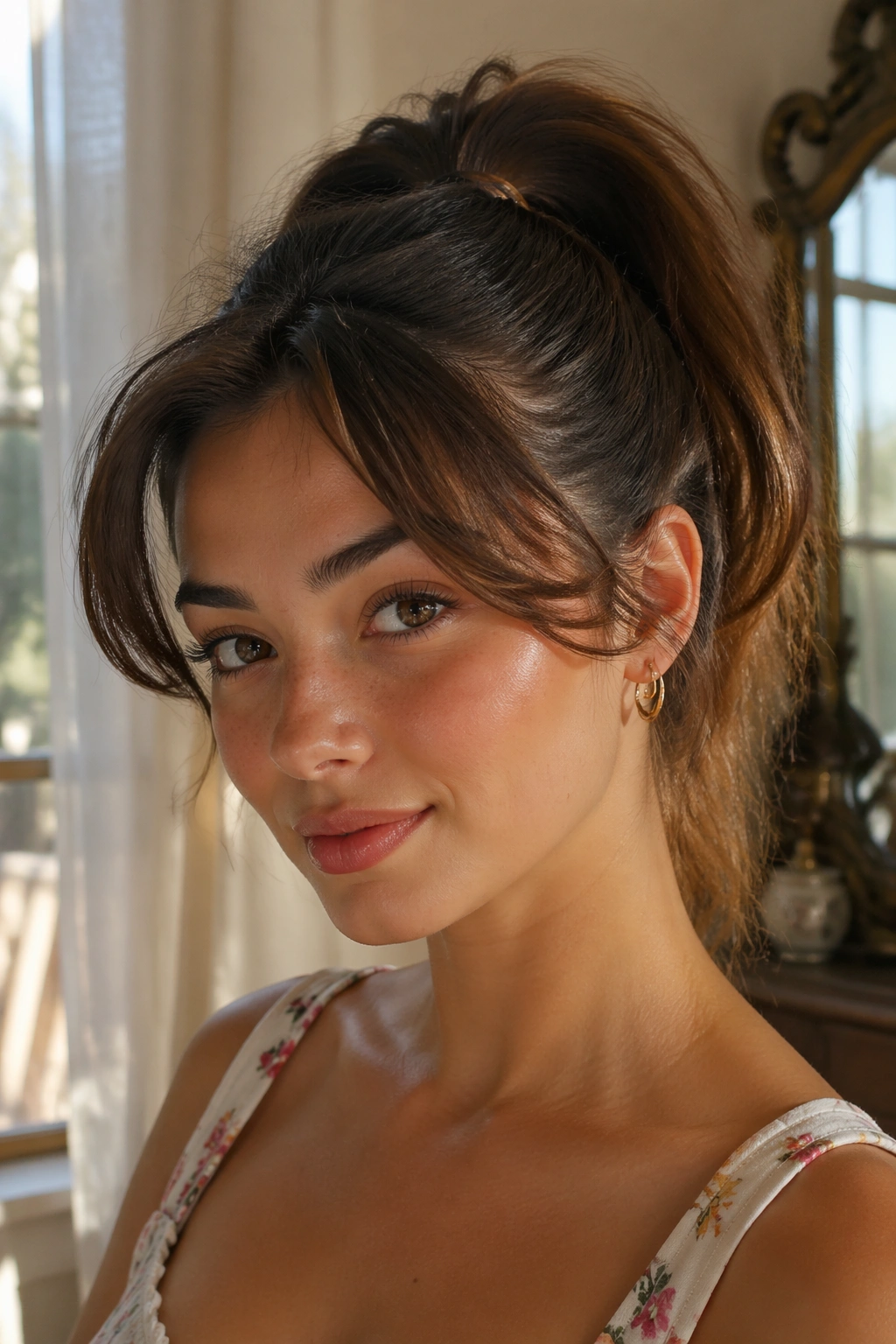
A feathered fringe brings softness that straight, blunt front pieces never quite give. The ponytail can still sit high and dramatic, but the face frame keeps it from looking too severe. That combination makes the style feel easy, almost breezy, even when the crown has some height.
This is one of those looks that works beautifully with layered cuts. Blow-dry the fringe and face-framing sections with a round brush, pushing the ends away from the face so they curve instead of sit flat. The ponytail itself can be smooth or loosely waved. If the tail is too tight, the feathering up front loses some of its charm.
- Keep the fringe light and movable.
- Use a medium barrel brush for the front pieces.
- Bend the tail ends slightly outward for a softer shape.
- Add a little shine serum only to the last third of the hair.
It has a 70s feel without going full costume, which is a useful line to walk.
17. Braided-Crown High Ponytail
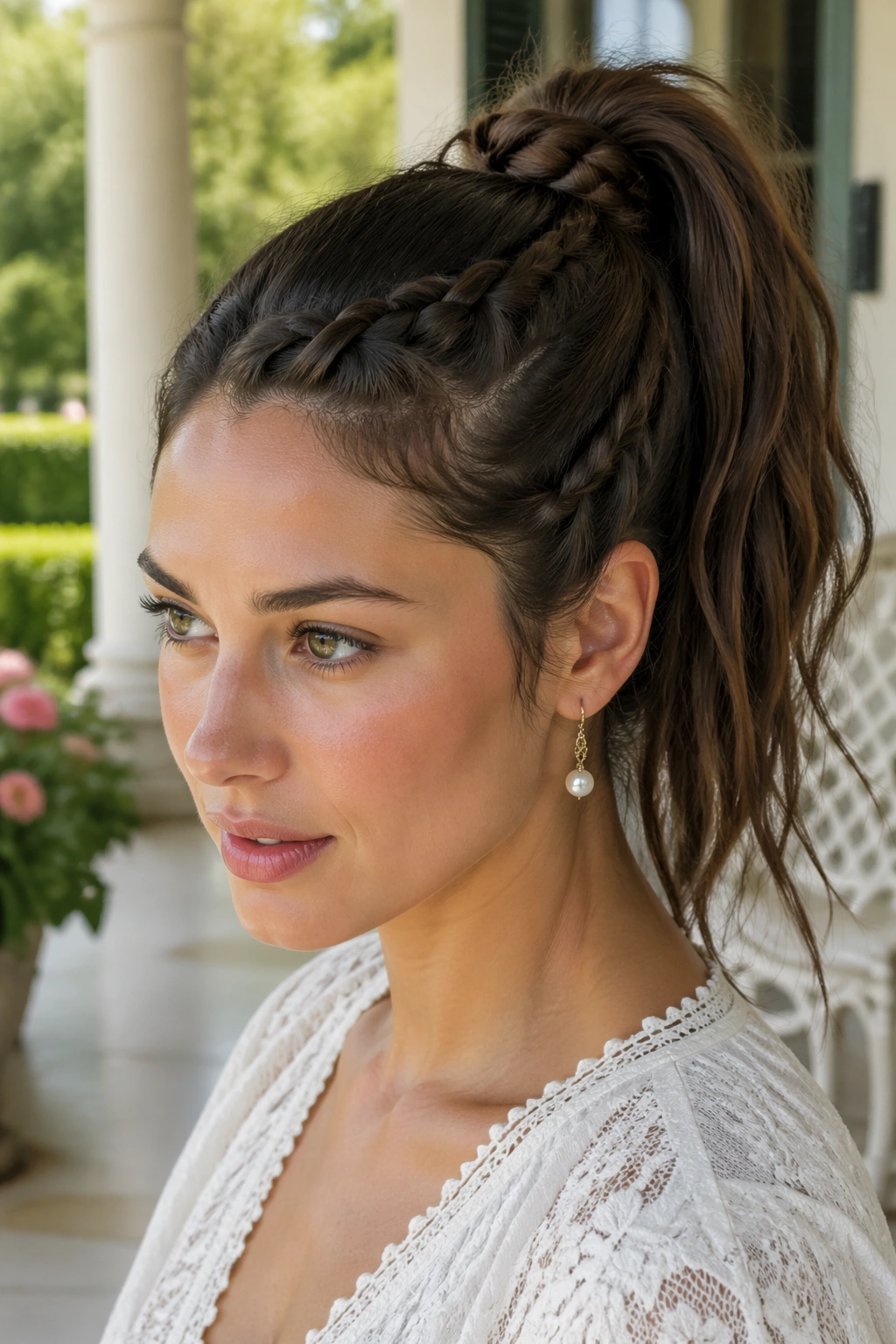
A braided crown feeding into a high ponytail gives you a retro shape with a little texture built in from the start. It’s softer than a pompadour and less formal than a beehive, which makes it a good middle ground when you want vintage energy but not too much height.
Take one or two slim sections from the temples, braid them back, and secure them into the base of the ponytail. You can keep the braids tight for a cleaner line or tug them gently for a fuller, more lived-in look. The thickness of the braid changes the whole feeling. Thin braids read delicate. Thicker ones feel bolder and more bohemian.
This style is handy on second-day hair because the texture helps the braids hold. A little dry shampoo at the roots also gives the crown something to grip. If your hair slips easily, cross two bobby pins through the base in an X before tying the elastic. Cheap trick. Works.
18. Beehive-Base High Ponytail
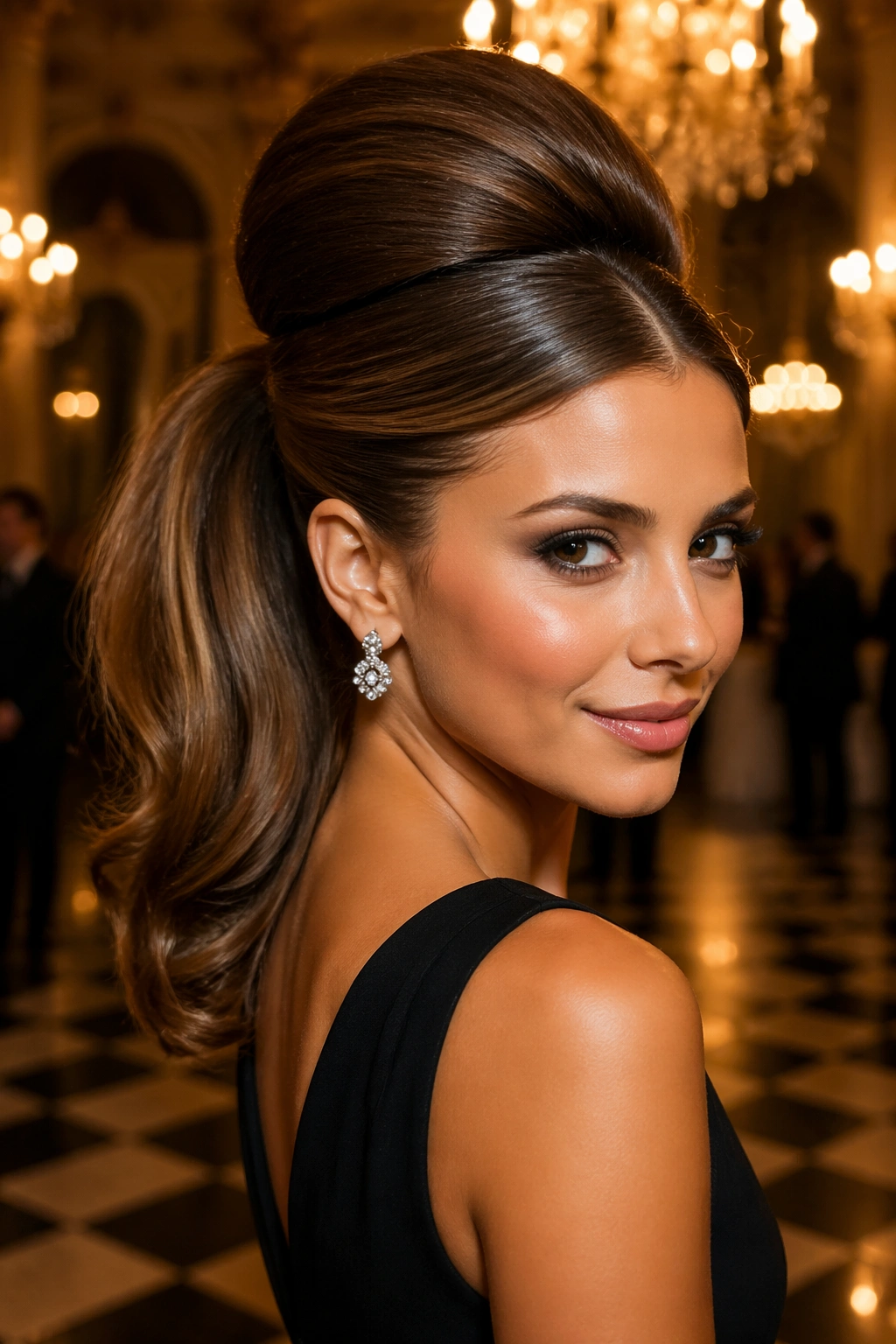
A beehive-base ponytail is bouffant’s more sculpted sister. The difference is subtle at first, then obvious once you compare them side by side. Bouffant volume tends to spread softly; a beehive stacks a bit more vertically and keeps the top more contained.
You build it by teasing the crown, smoothing the outer layer, and shaping the lift into a more rounded mound before gathering the ponytail. A small padding insert can help if your hair is fine or if you want the height without spending forever backcombing. Keep the sides sleek so the top reads as one clean structure.
This is the style I’d pick for formal dressing, especially when the neckline of the outfit is plain and needs something to balance it. It’s a little dramatic, but not loud. The hair has shape from the front, profile, and back, which is more than you can say for a lot of modern ponytails that only look good from one angle.
19. S-Wave High Ponytail
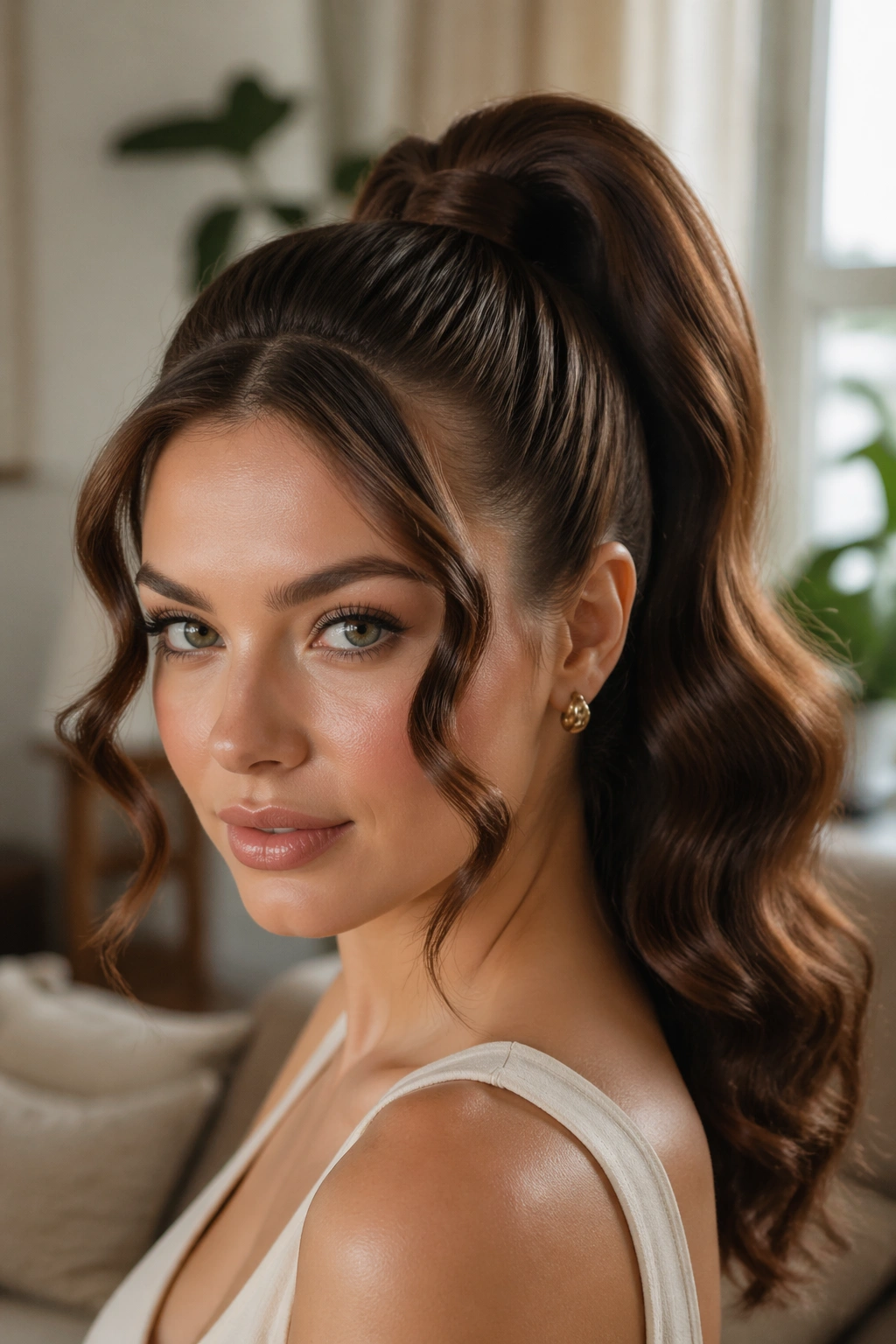
Gloss matters here. The S-wave ponytail depends on smooth, shiny lengths and a face frame that curves rather than falls straight. When the waves are done right, the style feels polished and a touch old-Hollywood, even though the ponytail is pulled high.
Start by curling the front sections away from the face with a 1.25-inch iron, then brush them lightly once they cool so the bend becomes a soft wave. The tail itself can be curled in the same direction through the mid-lengths, but leave the ends a little loose. Too much uniformity makes the hair look stiff. You want motion.
What to Watch For
The wave pattern should sit close to the head near the front, then loosen as it moves down. Heavy curls at the top can make the style look bulky, especially if the crown is already lifted. A light shine spray on the lengths, not the roots, keeps the texture sleek without flattening the shape. This is a quietly fancy ponytail. It doesn’t need much else.
20. Oversized Bow High Ponytail
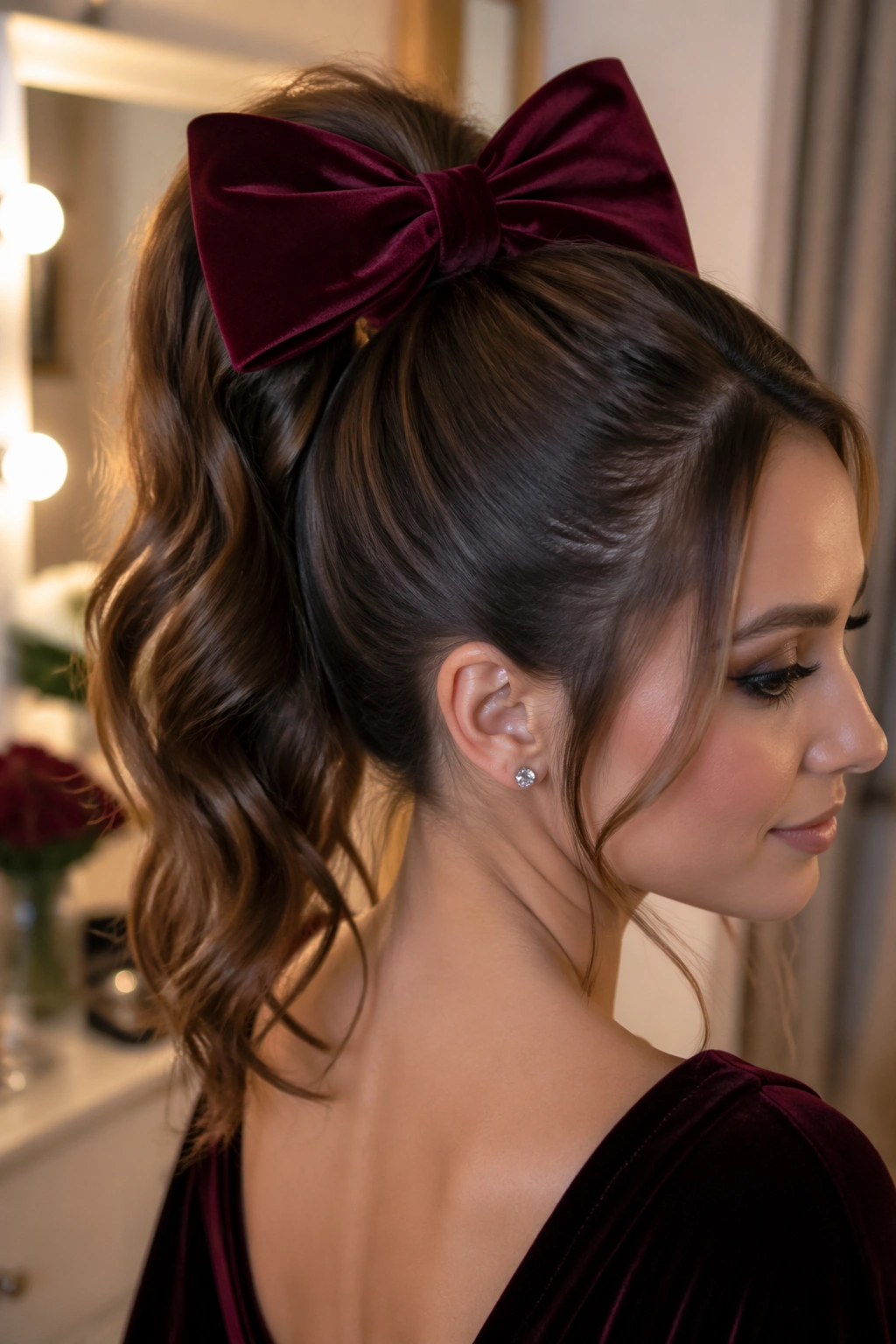
An oversized bow changes the scale of the whole hairstyle. The ponytail stops being just a base for the accessory and becomes part of a much bigger visual shape. That’s why this version can look playful, formal, or a little theatrical depending on the fabric and size.
Velvet bows feel richer and more winter-ready. Grosgrain feels crisp and structured. Satin leans softer and more romantic. Size matters more than people think, too. A bow that’s about 5 to 7 inches wide usually reads clearly without swallowing the ponytail completely. Smaller than that, and the effect can disappear.
This style works best when the ponytail itself stays neat. If the tail is frizzy or the crown is uneven, the bow draws attention to the flaws instead of hiding them. Place the bow just above or just below the elastic and let it sit centered unless you want a purposely offbeat finish. Either way, it gives vintage charm fast.
21. Curly-Texture High Ponytail
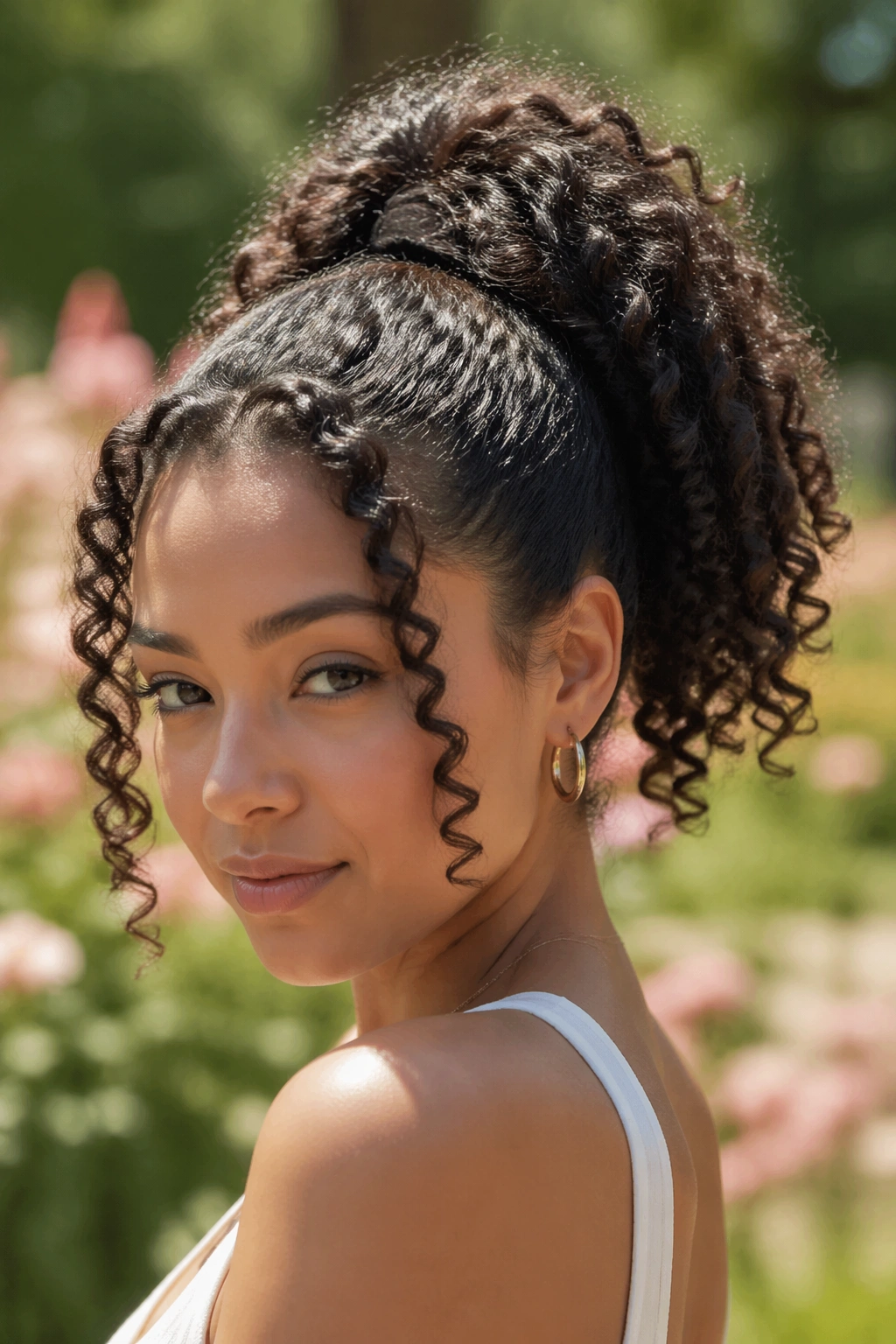
Can curly hair do a retro high ponytail without being forced into something it never wanted to be? Yes. And the best version leaves the curl pattern intact instead of flattening it into submission.
Lift the roots first, then gather the curls high enough to show the cheekbones and the jaw. A pick at the crown helps build shape without wrecking definition. If the hair is very dense, split the ponytail into two sections under the elastic so the weight doesn’t pull the front down. That tiny move makes a big difference on curly textures.
The vintage feel comes from balance, not from straightening everything. A smooth front and a shiny, defined tail can still read retro, especially when the edges are laid neatly and the hairline is tidy. This style is generous. It lets the texture do the work while the shape stays controlled. That’s a nice combination, and not nearly enough people trust it.
22. Clip-In Retro High Ponytail
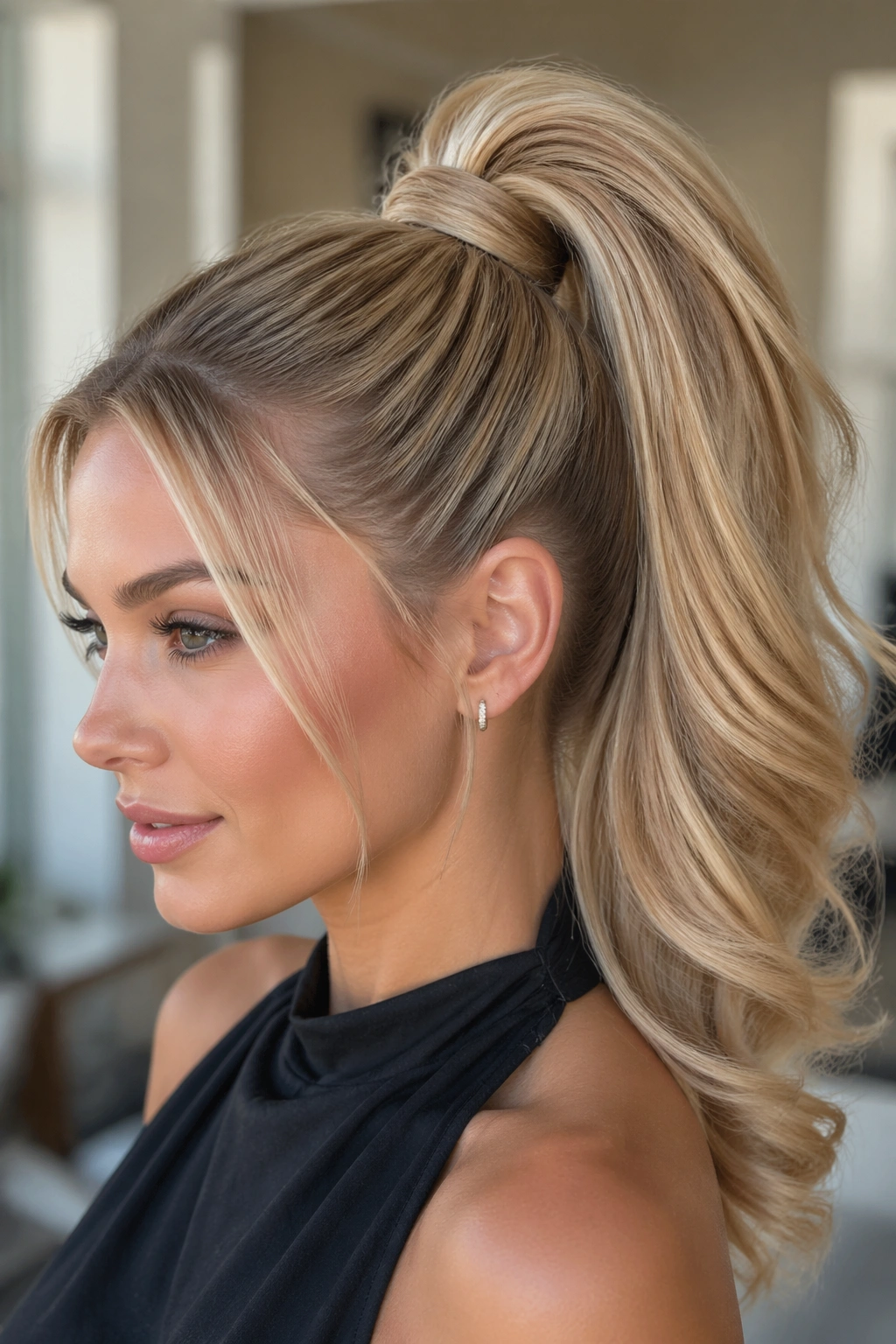
If your own hair stops at the shoulders or just below, a clip-in ponytail can open the door to the whole vintage look without a fight. The trick is to make the attachment invisible and the blend believable. Once that happens, the style behaves like real hair.
Anchor your natural hair into a tight high ponytail or small braided base first, then attach the clip-in piece just above or around that base depending on the system. Smooth your own hair over the join so the seam disappears. A touch of heat on both your hair and the extension helps the textures match better, especially if the piece has a straighter finish than your natural hair.
- Pick a clip-in that matches both color and density.
- Wrap a thin strand around the base for a cleaner line.
- Curl your own hair and the extension together if the ends need blending.
- Use pins under the base if the attachment feels loose.
This is the easiest path to drama when you need length for a flipped end, a full wave, or a bow that needs something to sit on.
23. High Ponytail With Swung Bangs
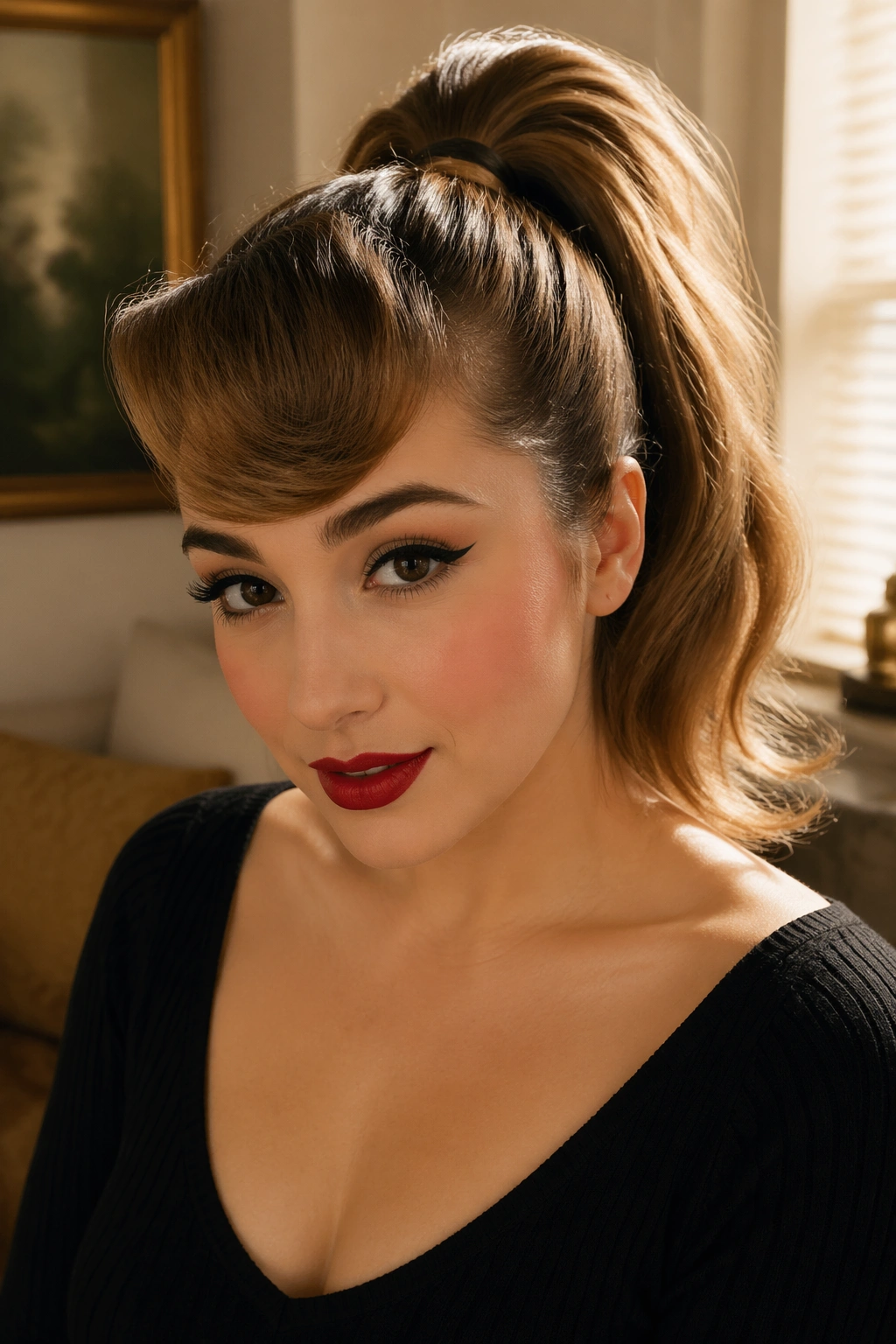
If you like your retro looks a little flirty, this is the one. Swung bangs soften the whole ponytail and make the height feel less severe, which is handy when you want a vintage look that still feels wearable on an ordinary day.
The bangs can sweep from one side or curve lightly across the forehead. Keep them loose enough to move, but not so loose they collapse into your eyes by noon. The ponytail behind them should stay high and clean, with enough volume at the crown to support the fringe. If the tail is curled, the bangs can echo that shape and make the style feel pulled together.
This version works especially well with face-framing layers. It gives you that old-glamour softness people often want from retro ponytail hairstyles, without needing a ton of teasing or pins. A little hairspray on the bangs and a quick touch of shine on the tail are usually enough. That restraint is part of the appeal.
Final Thoughts
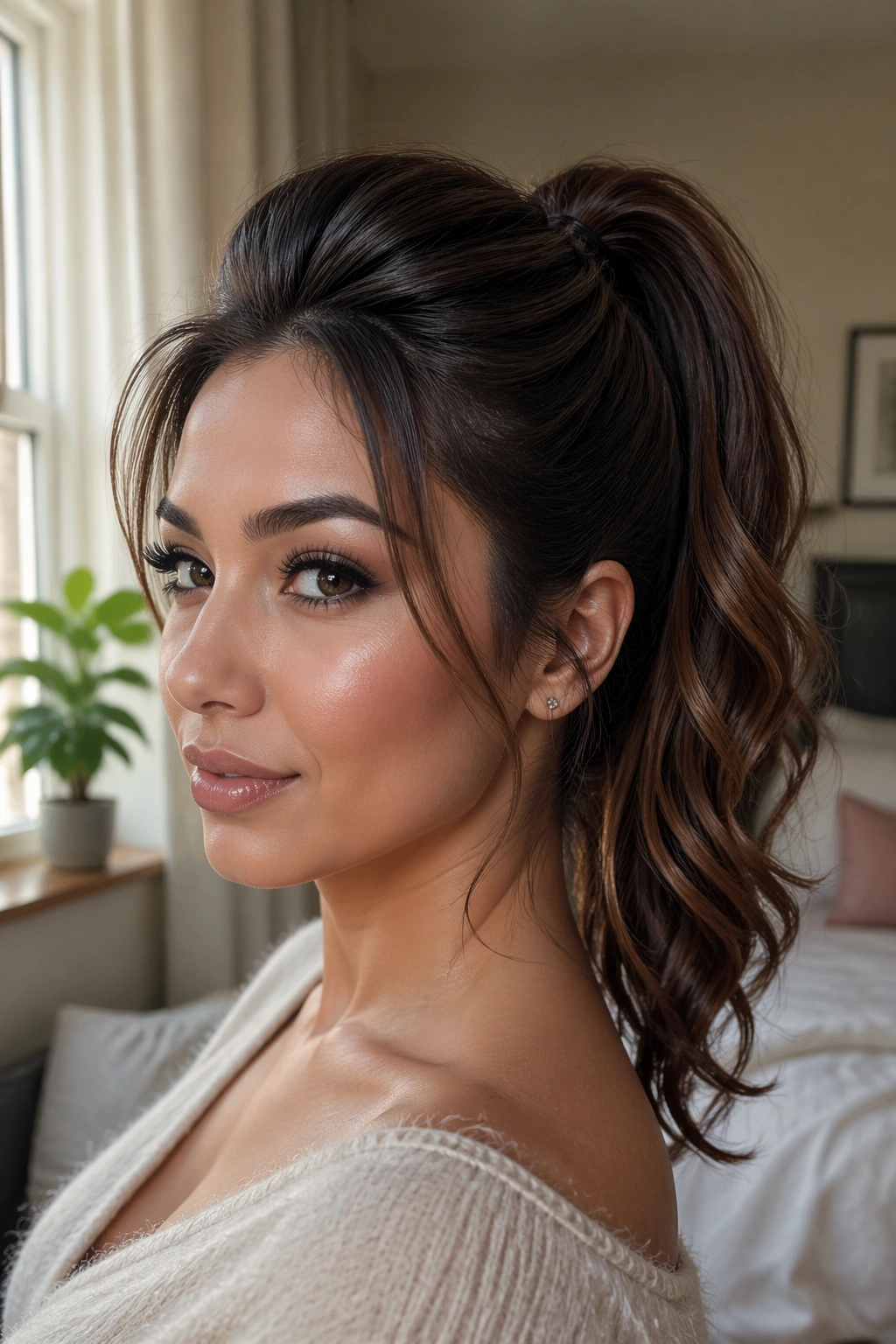
The best retro high ponytails all do the same basic thing: they give the crown some shape, keep the base clean, and let the tail carry a little personality. Once you understand that, the rest is taste. A ribbon makes the style sweeter. A roll makes it sharper. A wave or flip makes it feel expensive.
If you only try one version first, start with the flipped-ends ponytail or the wrapped-base style. Both are forgiving, and both look better than a plain high pony once you add that one extra detail. Keep a tail comb, a handful of bobby pins, and a strong elastic nearby. That’s usually enough to make the whole thing behave.
