



Feed-in braid ponytails for kids can keep hair neat through school drop-off, recess, and the ride home when the snacks are gone and nobody has the patience for a redo. The trick is not piling on more hair or pulling tighter. It’s building the style in small sections so the braid starts flat, sits close to the scalp, and doesn’t turn the front of the head into a sore spot by lunchtime.
That matters more on children than adults. A neat part is nice, but a tender scalp will ruin the whole idea fast. When a style is done well, the child should be able to nod, run, and lean back against a seat without wincing every five minutes.
Some of these ponytails are soft and simple. Others bring in beads, ribbons, zigzags, or curls at the ends. The point is to match the look to the child, not the other way around — and that usually means comfort first, sparkle second, and a heavy braid last.
1. Classic High Feed-In Ponytail
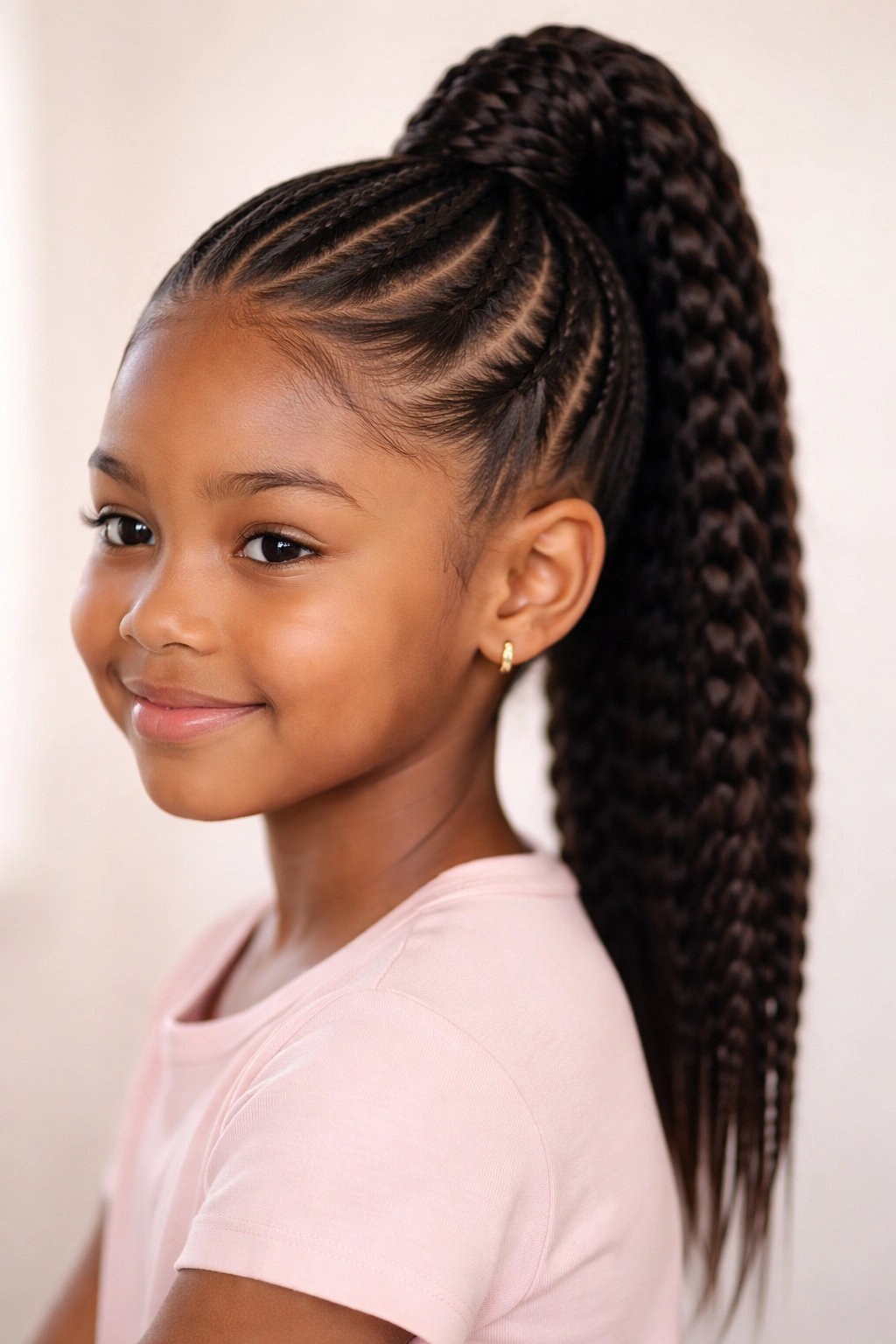
A classic high feed-in ponytail is the style people come back to when they want hair off the face and out of the way. It sits high enough to feel lively, but not so high that it turns into a tug-of-war at the crown. The braid starts small, then grows as hair is fed in, which keeps the base neat and flatter than a chunky braid started all at once.
Why It Works So Well
The shape is clean. The crown stays smooth, the ponytail swings, and the whole thing still looks tidy after a full day of movement. That’s the real win here.
For kids with thick hair, this style can feel lighter than a giant single braid. For kids with finer hair, the feed-in method helps the base look fuller without needing a ton of extension hair.
- Start with a clean center or slightly off-center part if the hairline is uneven.
- Keep the first braid stitches small so the base stays flat.
- Use a snug but not tight ponytail holder at the top.
- Finish with one wrapped braid if you want the elastic hidden.
Pro tip: a little braid wrap around the base makes the whole style look finished without adding weight.
2. Center-Part Feed-In Ponytail With Beads
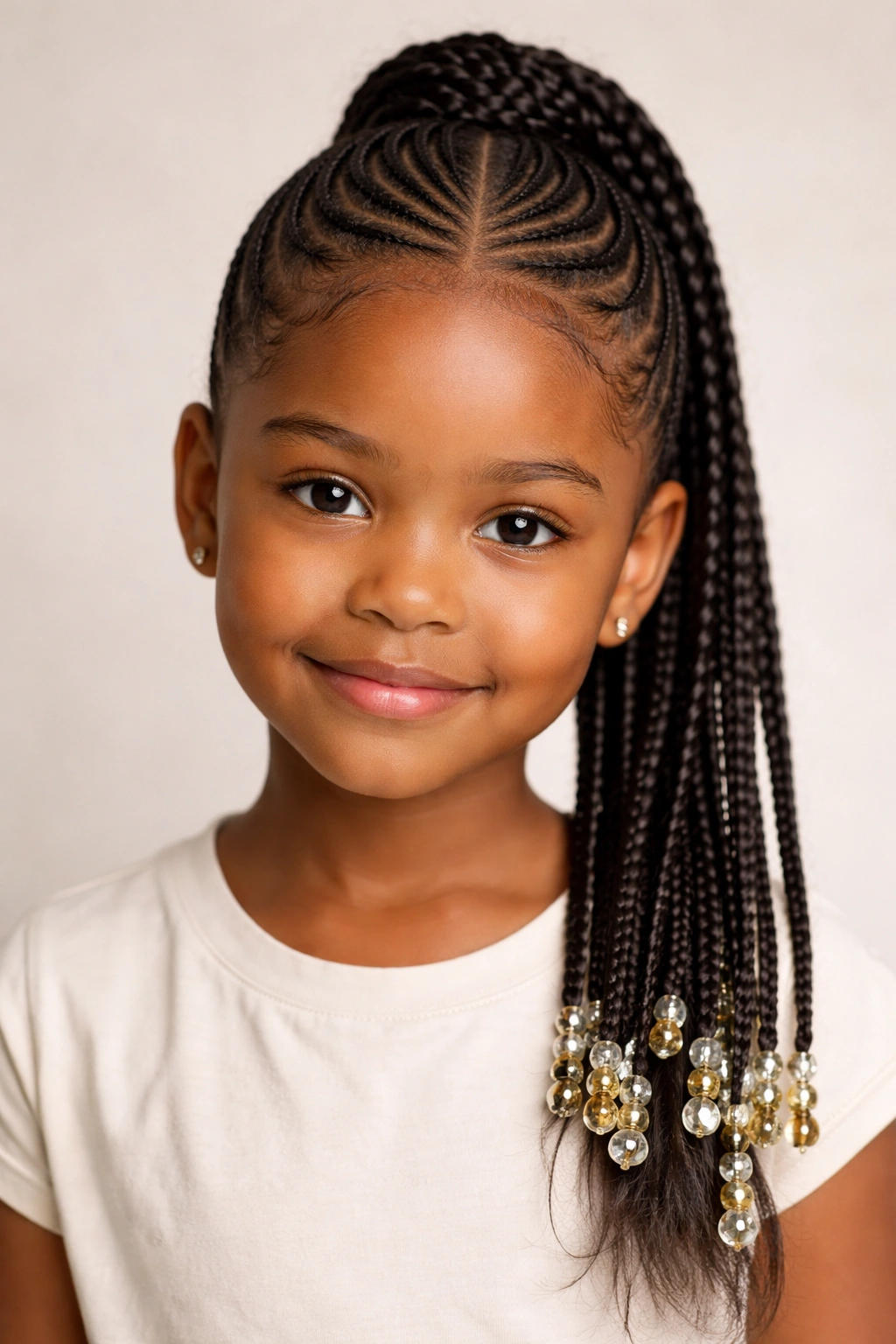
A center part gives this style its backbone, and the beads do the rest. The look is neat and balanced, which is part of why it works so well on kids who want something playful but not fussy. It’s also easy to scale up or down, depending on age and hair length.
Beads are the part that can go wrong if you’re not paying attention. Too many heavy beads pull the ends down and make the ponytail feel busy in the wrong way. Lighter beads, spaced near the lower half of the braid, keep the movement bouncy.
A few clear rules help here. Keep the part straight. Keep the braids even. Keep the bead count modest if the child is small or sensitive.
And yes, the sound of beads tapping together is part of the charm. Just not too much of it.
3. Side-Swept Feed-In Ponytail
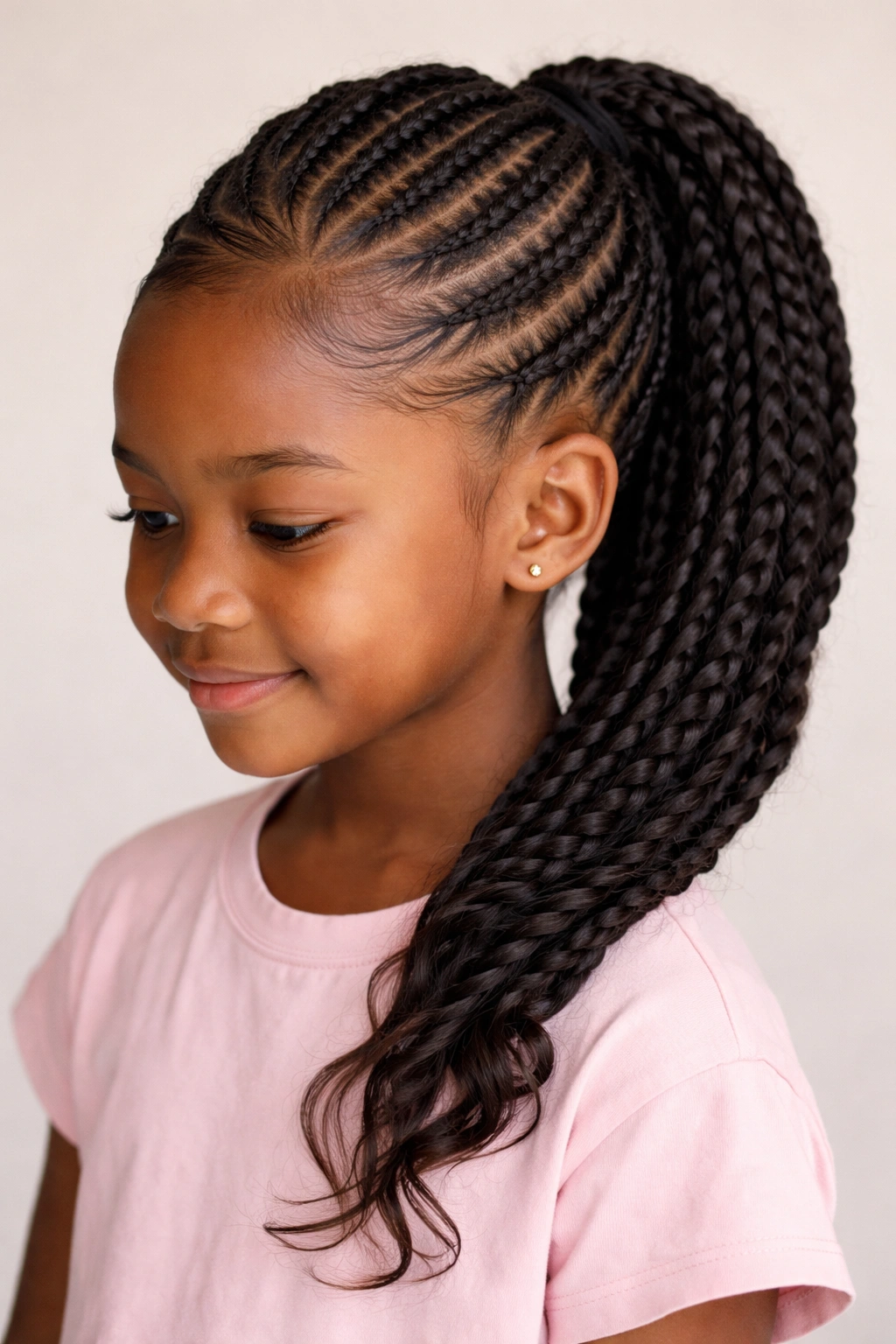
What if a child hates a center part? Use a side sweep. It softens the whole face shape and keeps the style from feeling too formal, which can matter a lot if the child has glasses, a sensitive hairline, or simply doesn’t like hair falling straight down the middle.
Best Little Fix for Tender Hairlines
A side-swept feed-in ponytail usually starts with braid rows angled across the scalp instead of marching straight back. That small change makes the ponytail feel less rigid and gives the style a bit of movement before the tail even starts.
The nice part is how forgiving it is. A little asymmetry looks deliberate here. A braid that lands slightly higher on one side can still look clean.
- Keep the front section smooth, not stretched.
- Angle the feed-ins toward the stronger side of the head.
- Use one accent braid near the part if you want a little detail.
- Finish low or mid-height so the sweep stays visible.
Small truth: this one is quiet, but it never looks boring.
4. Bubble Ponytail With Braided Base
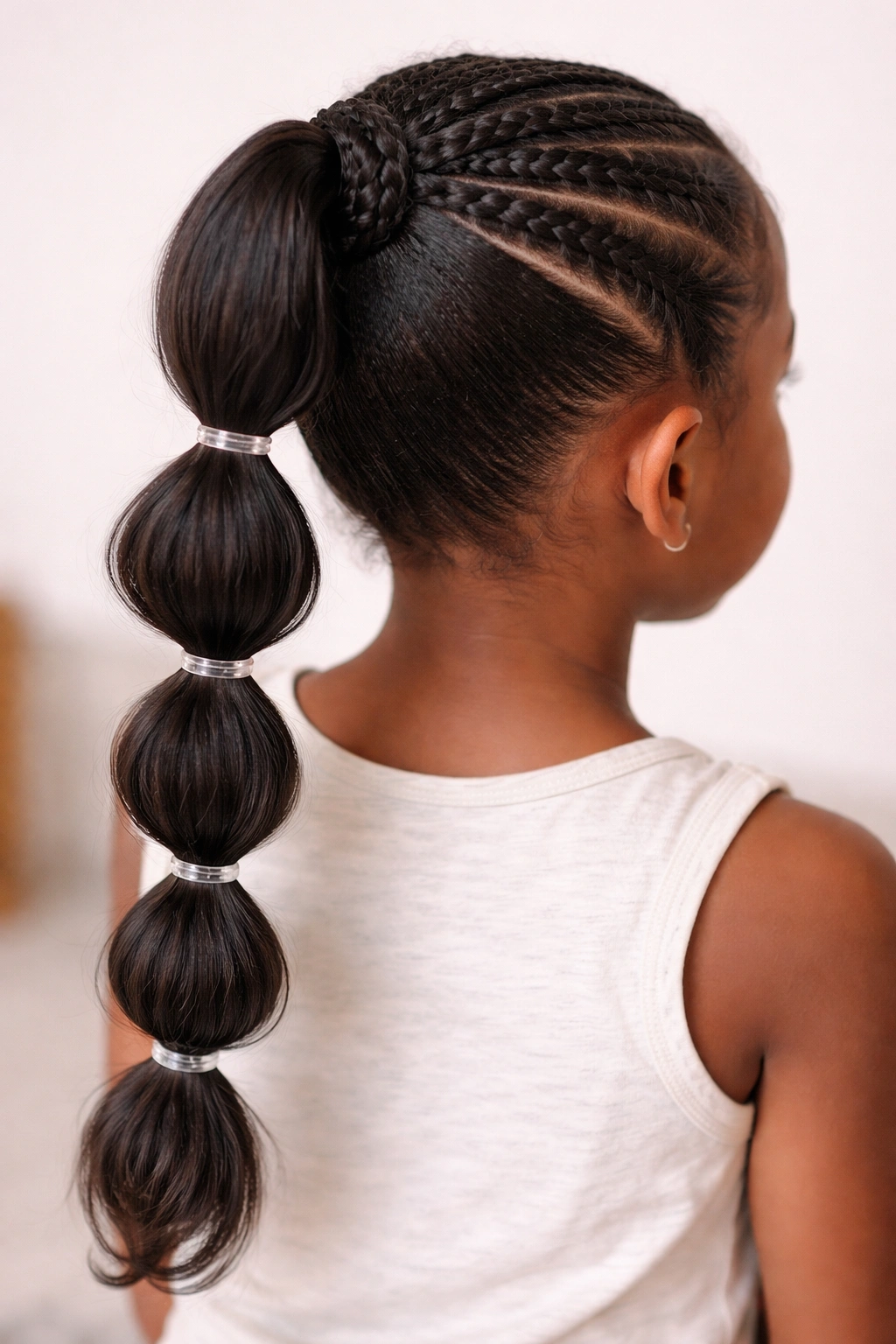
A bubble ponytail with a braided base feels playful without being childish in a messy way. The feed-in braids build the top, then the ponytail turns into a row of soft bubbles down the back. It’s the kind of style that survives recess better than people expect.
Picture a neat braided start, then a series of sections puffed out with clear elastics every couple of inches. That’s the whole thing. Simple idea. Good payoff.
Key Details That Make It Work
- Use clear or matching elastics spaced about 1½ to 2 inches apart.
- Gently tug each section outward after tying to make the bubble round.
- Keep the bubbles even, but not rigid.
- Add ribbon only if the child can tolerate a little extra fuss.
The base braid matters because it keeps the front polished while the rest of the style gets to be fun. If the braid is loose or patchy, the bubbles look less intentional. If the base is tidy, the whole ponytail reads as polished from the start.
5. Low Nape Feed-In Ponytail
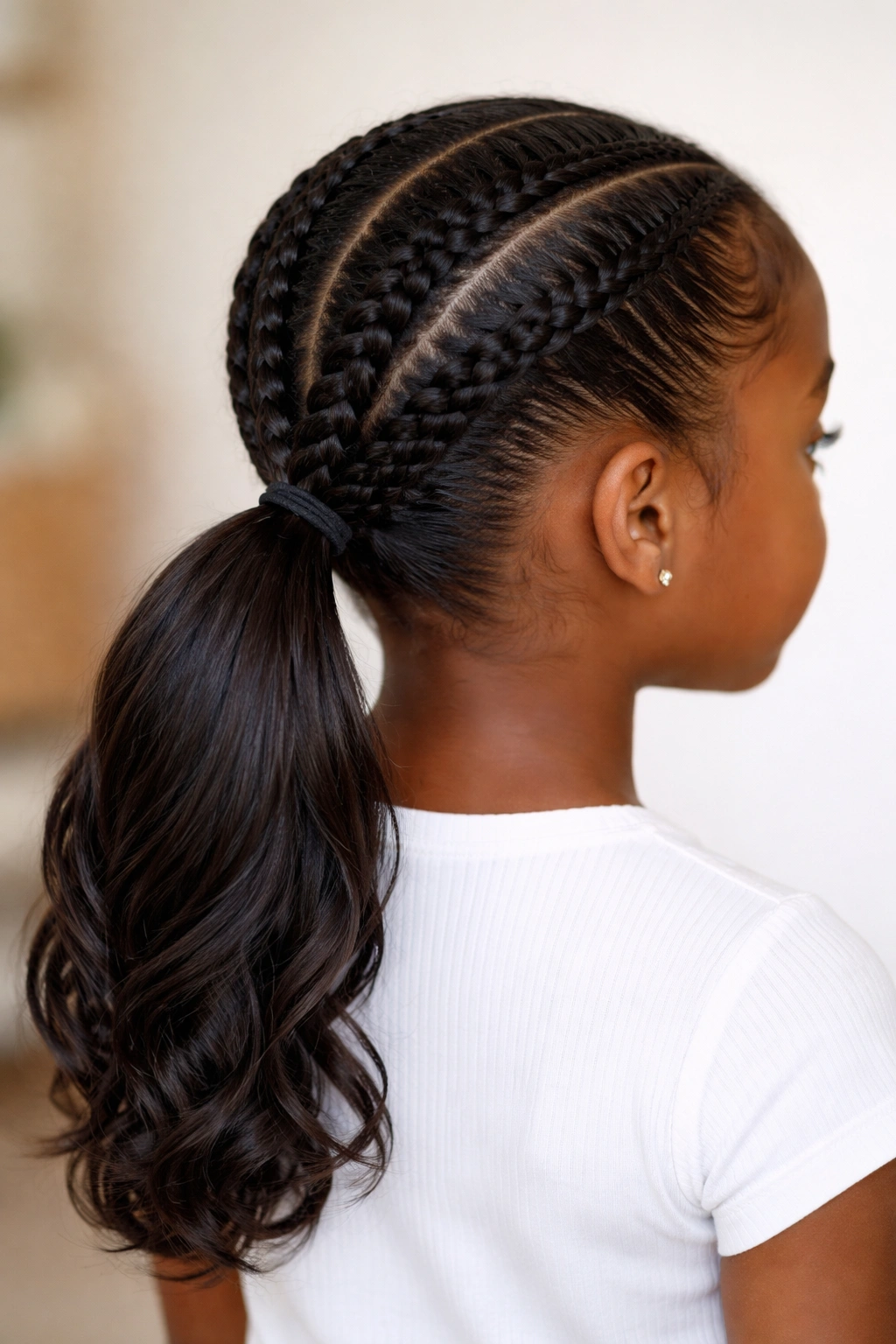
Low styles deserve more credit than they get. A ponytail sitting at the nape takes pressure off the crown and usually feels kinder during long school days, car rides, or nap-heavy afternoons. It also works well for younger kids who don’t like hair bouncing around high on the head.
This style has a softer shape than a high ponytail. The braids can sweep straight back, curve slightly downward, or tuck into a low tail that brushes the neck. All three look calm and easy to wear.
A low nape ponytail is also one of the best choices when you want the hair to stay neat without shouting for attention. It holds bows well. It handles ribbons well. And if the braid tail is finished with a small curled end, it picks up a little extra charm without getting complicated.
Low is underrated.
6. Heart-Part Feed-In Ponytail
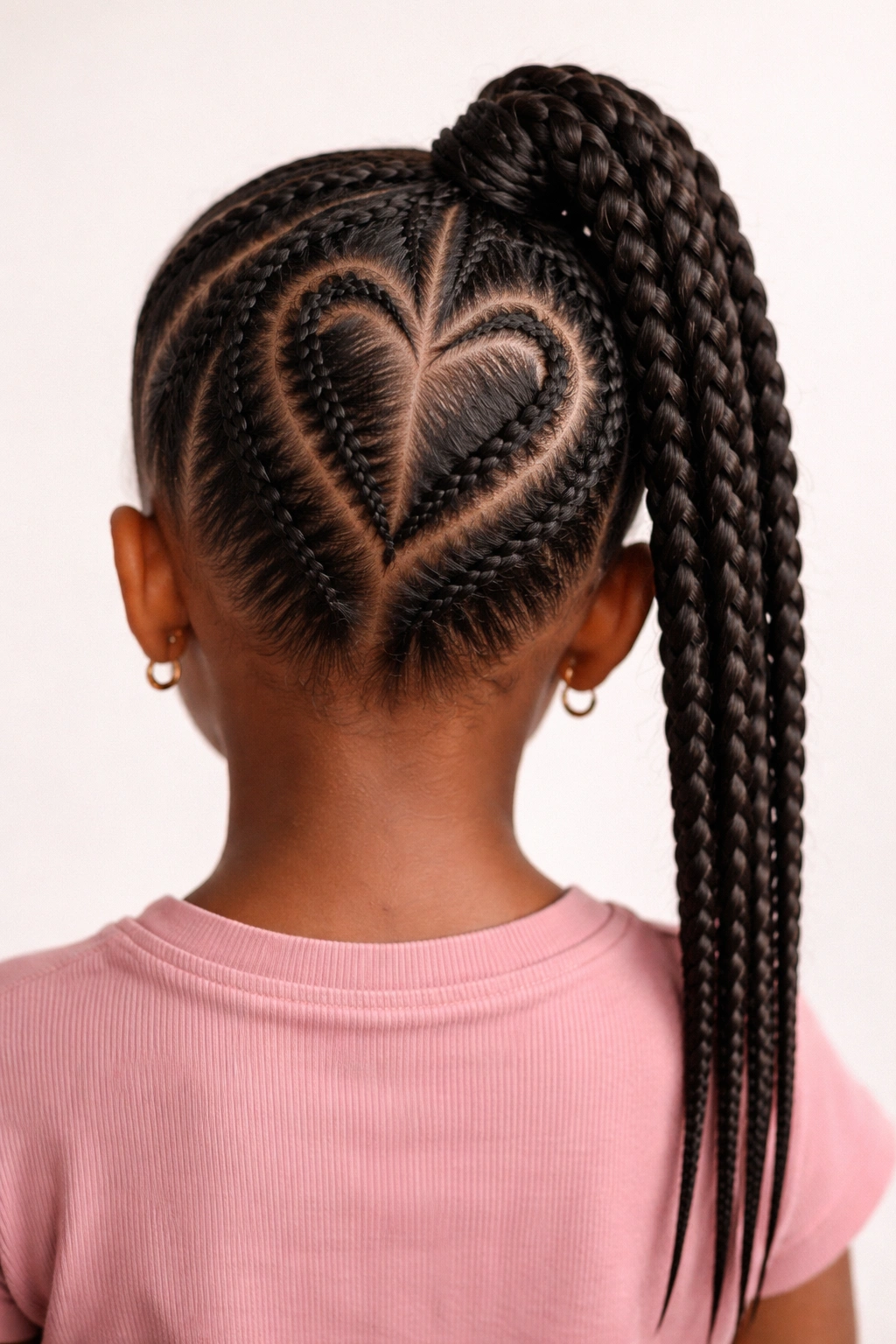
Unlike a plain straight part, a heart part turns the front of the style into the main event. It’s the sort of detail kids notice right away, which is why it works so well for birthdays, picture day, or any day when the hair needs to feel special without going overboard.
The trick is shape, not size. A heart that’s too tiny disappears once the ponytail is done. A heart that’s too large can look lopsided unless the braids are very even. Somewhere in the middle usually works best.
Use a rat-tail comb and draw one side first, then mirror the other side slowly. Fill in the ponytail after the heart is clean and visible.
If you keep the rest of the style simple, the heart part gets to be the star. That’s enough. It doesn’t need extra decoration to do its job.
7. Curly-Ended Feed-In Ponytail
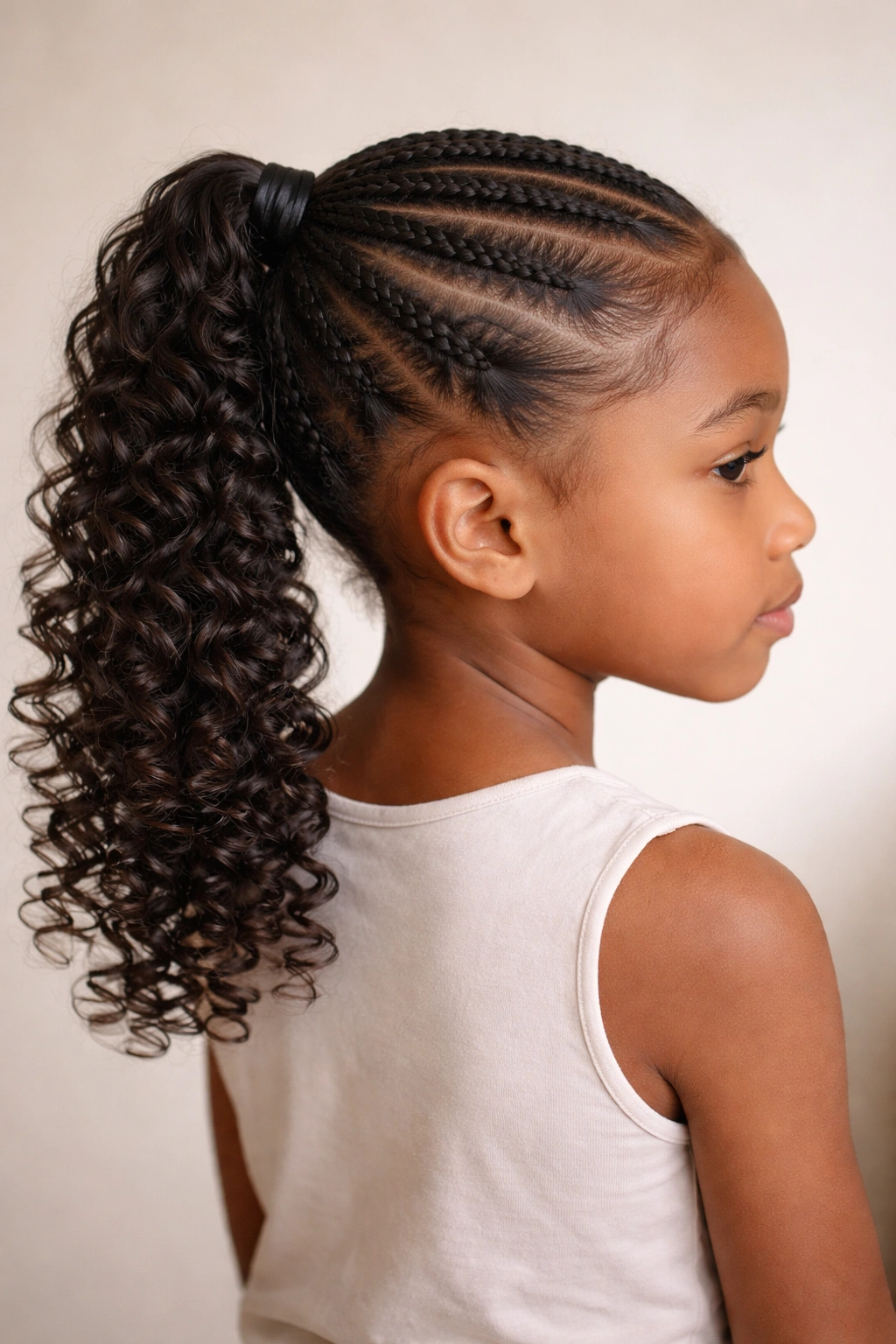
A feed-in ponytail with curly ends gives you the neatness of braids and the softness of loose texture at the bottom. That contrast is what makes it cute without looking stiff. Kids tend to like this one because the ends move, bounce, and feel less heavy than a long straight tail.
How to Keep the Curls Bouncy
The cleanest way to finish the ends is with flexi rods, perm rods, or a small two-strand twist set overnight. Heat is not necessary, and honestly, it is often too much for a child’s hair routine anyway.
A little mousse can help the curl set, but don’t soak the ends. Wet, heavy hair takes forever to dry and tends to puff up in the wrong way later. Light moisture is enough.
- Set the ends in small, even sections.
- Let them dry fully before taking them down.
- Separate curls with your fingers, not a comb.
- Smooth the braid-to-curl transition with a tiny bit of styling foam.
The result feels soft and finished. Not stiff. Not crunchy. Better.
8. Jumbo Feed-In Ponytail
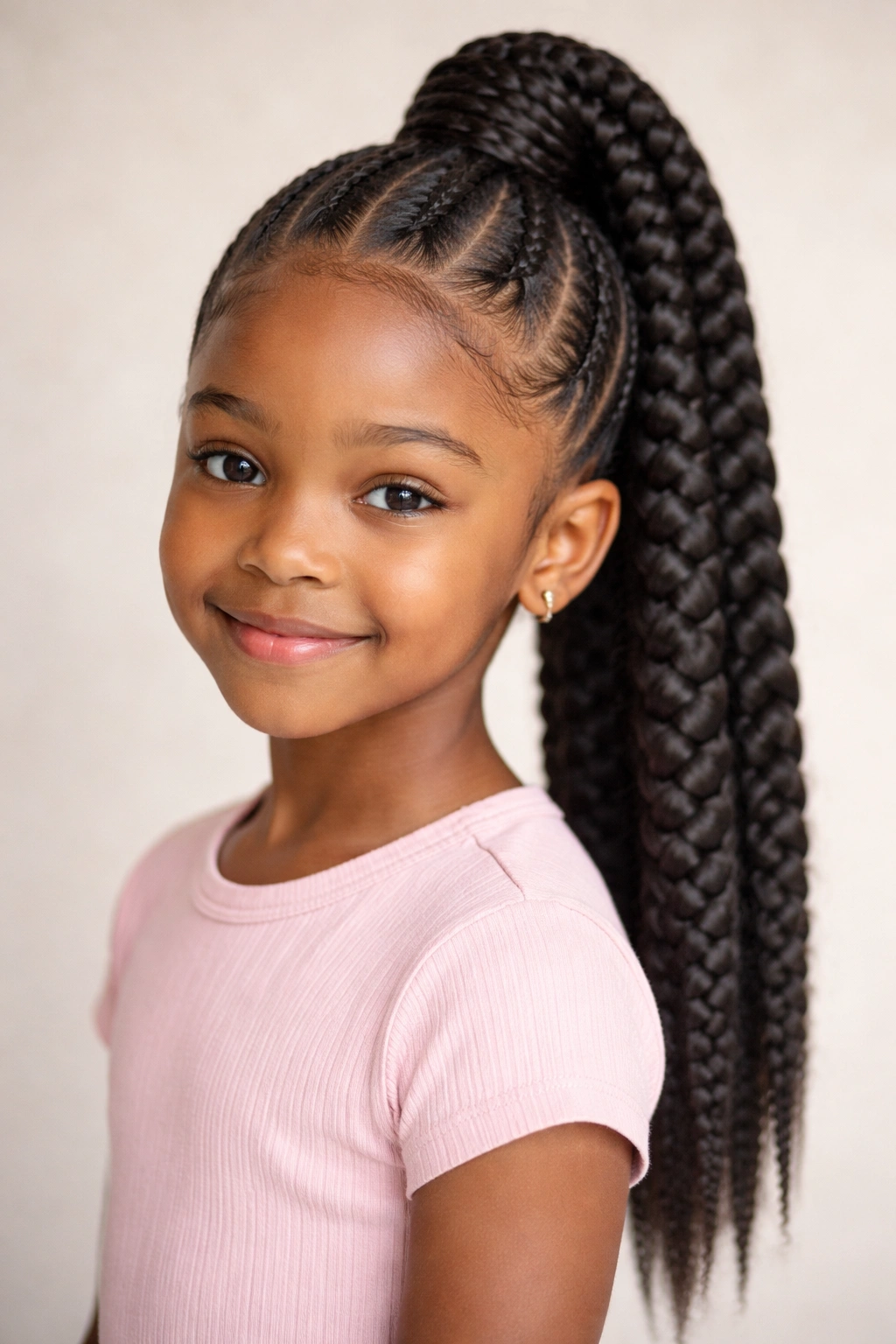
A jumbo feed-in ponytail is the faster cousin in the group. Fewer braids, larger sections, less time sitting still. That matters on younger kids, or on any day when patience is running thin before the first braid even starts.
The style still needs care, though. Big braids show every part line, so the sections have to be clean and the tension has to stay even from root to tail. Messy jumbo braids look messy fast.
Why Parents Reach for It
- It cuts styling time because there are fewer individual feed-ins.
- It gives thick hair a bold shape without dozens of tiny braids.
- It looks neat with one wrap, one bead cluster, or nothing at all.
- It holds up well if the ponytail sits high or mid-height.
This is one of those styles that feels strong and simple at the same time. If your child likes a bigger braid look but hates long appointment times, this is the one to try first.
9. Four-Braid Ponytail With Ribbon
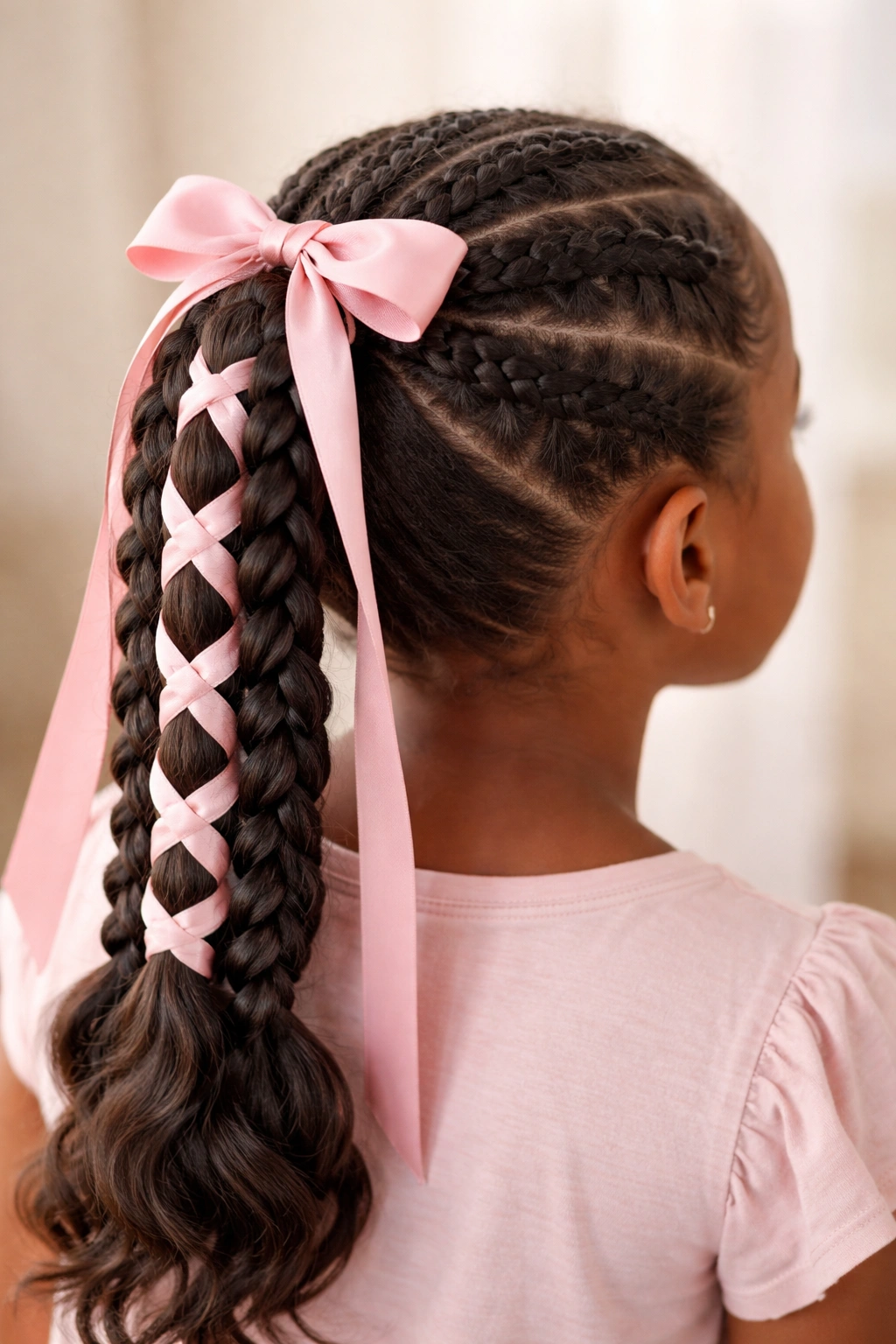
What happens when you want movement, color, and a little softness all at once? You weave ribbon through the braids. A four-braid ponytail gives a nice base for that because the structure is already strong, and the ribbon can thread through without getting lost.
Choosing the Ribbon
Satin ribbon looks pretty, but it can slide a bit if the braid is very smooth. Grosgrain has a little more grip. A ribbon between ¼ and ½ inch wide is usually enough for a child’s style without taking over the braid.
Keep the color simple if the outfit is already loud. Keep it bright if the clothes are plain. That’s usually the cleanest way to think about it.
The ribbon should feel like part of the style, not a separate craft project attached to it. If it’s curling, twisting, or folding over itself, it’s probably too wide or too stiff. A neat ribbon thread can make a basic ponytail look special in a very low-effort way.
10. Zigzag Part Feed-In Ponytail
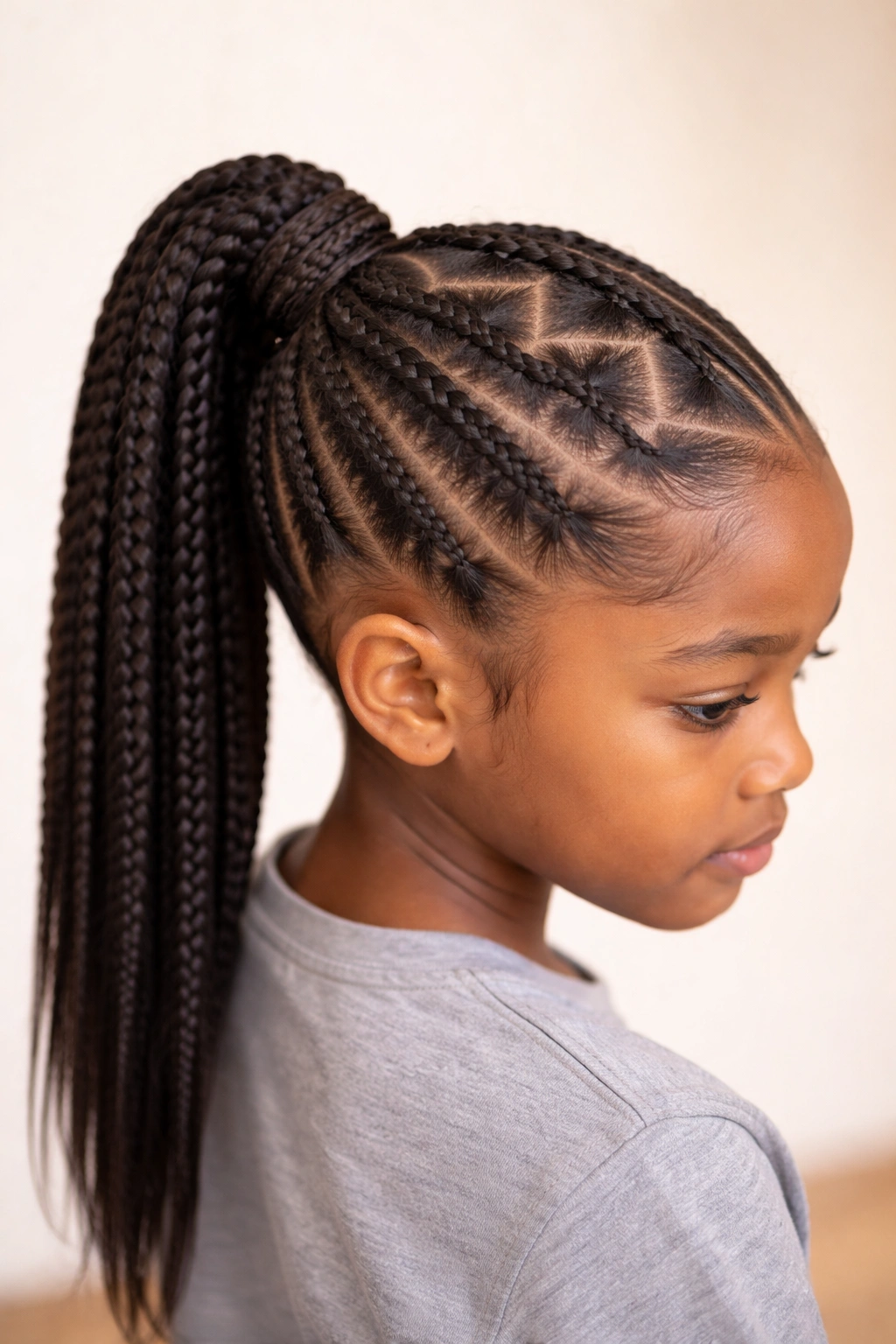
A zigzag part can wake up a plain ponytail fast. The shape is fun, but it also hides a few uneven spots better than a rigid straight part, which is useful if the child’s hairline is not perfectly symmetrical. Hair rarely is.
The best way to keep this style clean is to make the zigzag wide enough to see. Tiny, scribbly parts can look accidental. Wider angles look deliberate and easier to maintain.
What to Watch For
- Use the tail of the comb to draw each angle slowly.
- Clip each section after parting so the lines stay sharp.
- Keep the zigzag the same size on both sides.
- Pair it with a simple high or mid ponytail so the part stays visible.
This style looks especially good when the rest of the hair is kept smooth and the accessories stay minimal. The part is already doing a lot. It doesn’t need a crowd.
11. Braided Mohawk Feed-In Ponytail
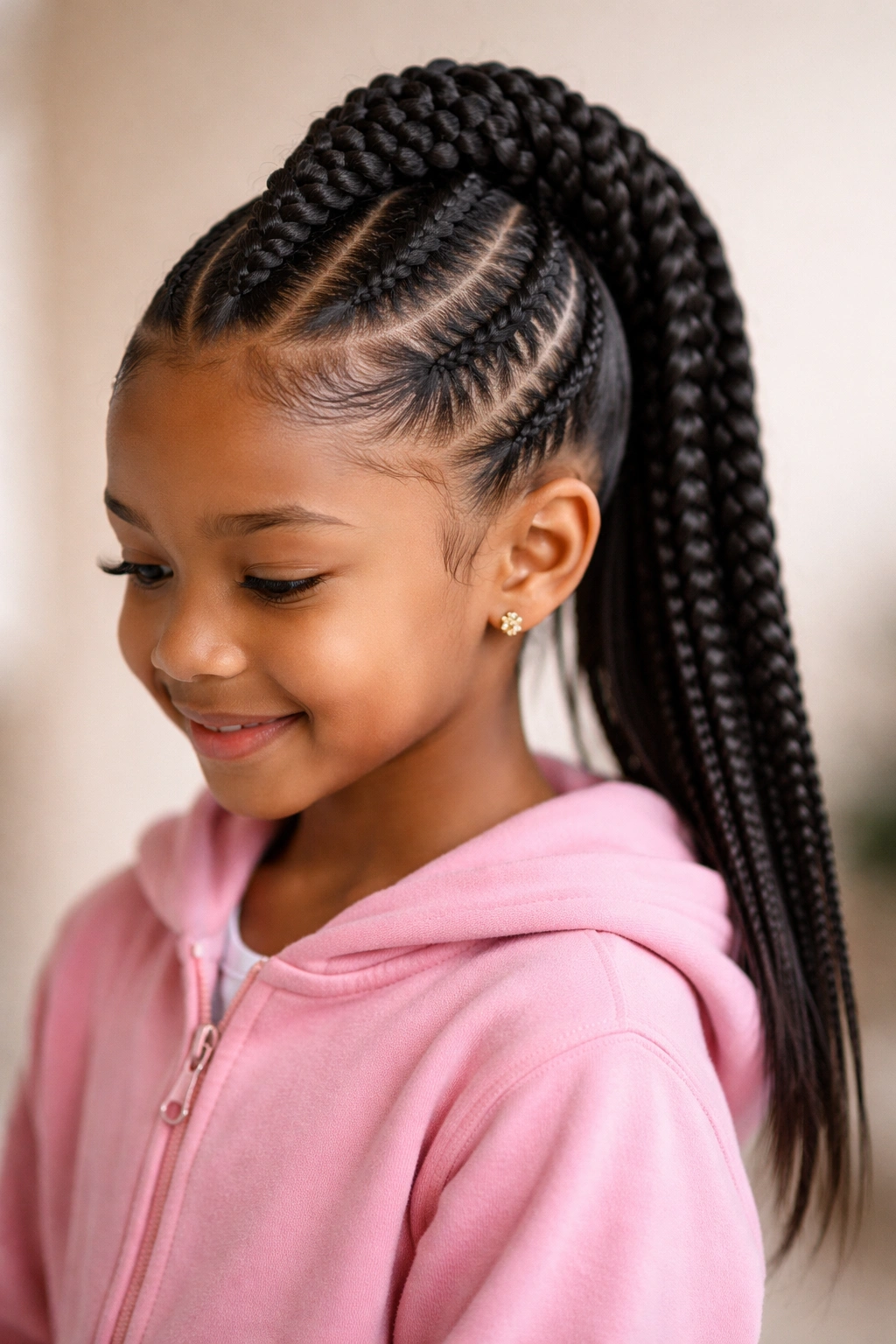
A braided mohawk ponytail has a little more attitude, but in a kid-friendly way. The center braid ridge runs from the front to the crown, and the sides are usually braided back or kept sleek so the shape stays strong. It’s a good choice for a child who likes a style that feels bold without being overly busy.
The height of the middle section matters here. Too low, and it loses the mohawk shape. Too high, and the braid can start to feel stiff. A medium lift usually gives the cleanest line.
This style also handles active days well. The sides stay close, the ponytail stays centered, and there’s less hair swinging into the face during movement. That makes it practical, which I always think matters more than people admit.
If you want a style that looks a little fearless but still school-friendly, this is a smart pick.
12. Stitch Feed-In Ponytail
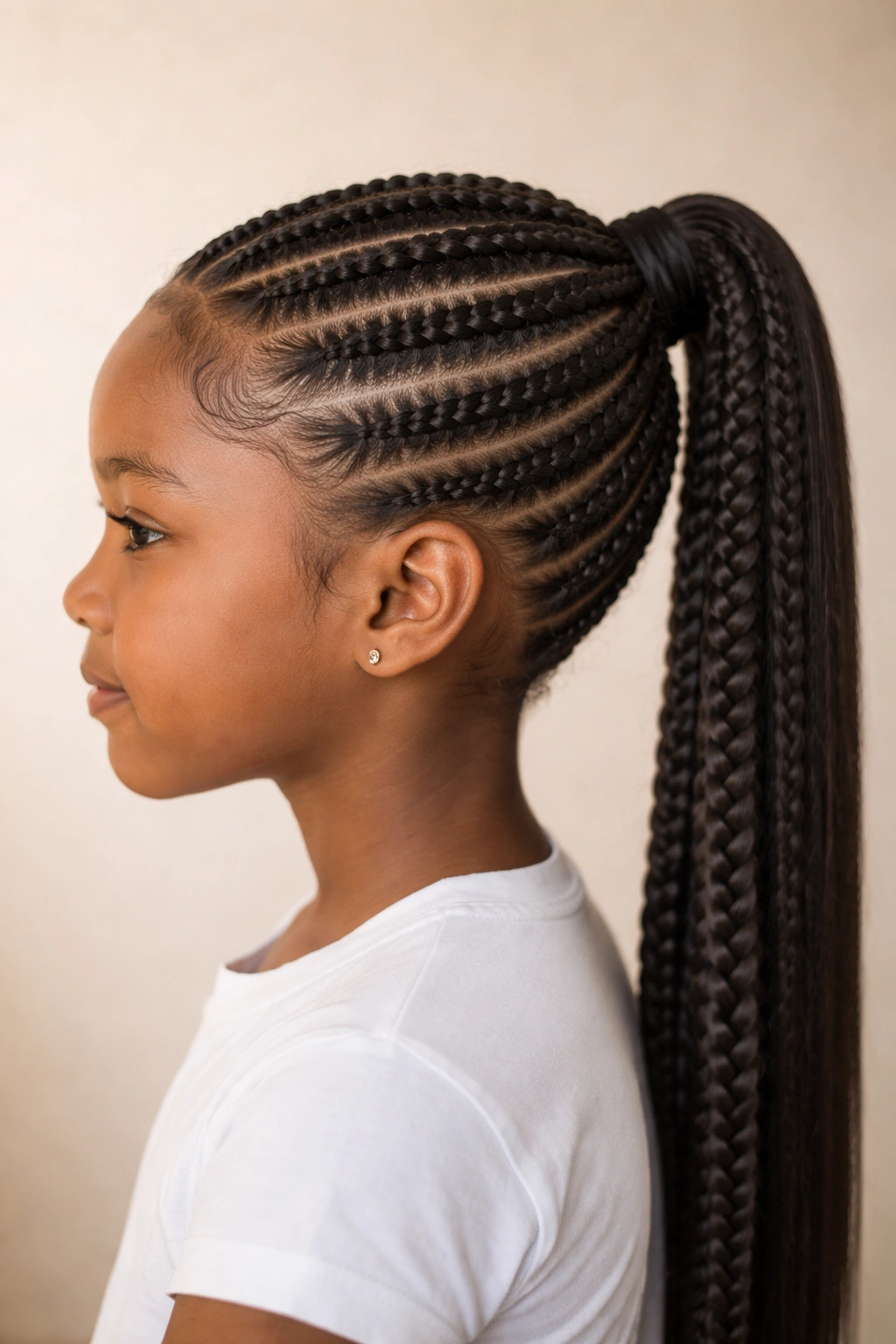
A stitch braid ponytail has a different energy from freestyle braiding. The rows look sharper, the sections feel more deliberate, and the whole style has a clean lined-up look that kids often notice right away. It’s neat in a way that feels almost architectural, but without being fussy.
The “stitch” effect comes from small, visible sections taken horizontally as the braid moves back. That’s why the parting has to stay even. If the sections get uneven, the lines start to wobble, and the finished style loses its crisp shape.
Who It Suits Best
This is a good option for kids who like tidy hair and don’t mind a more structured finish. It also works well when you want the ponytail to sit snugly and last through a full day without the front pieces drifting loose.
I like this style for school pictures because the lines stay clear from the front and the side. It looks finished. That’s the whole point.
13. Half-Up Feed-In Ponytail
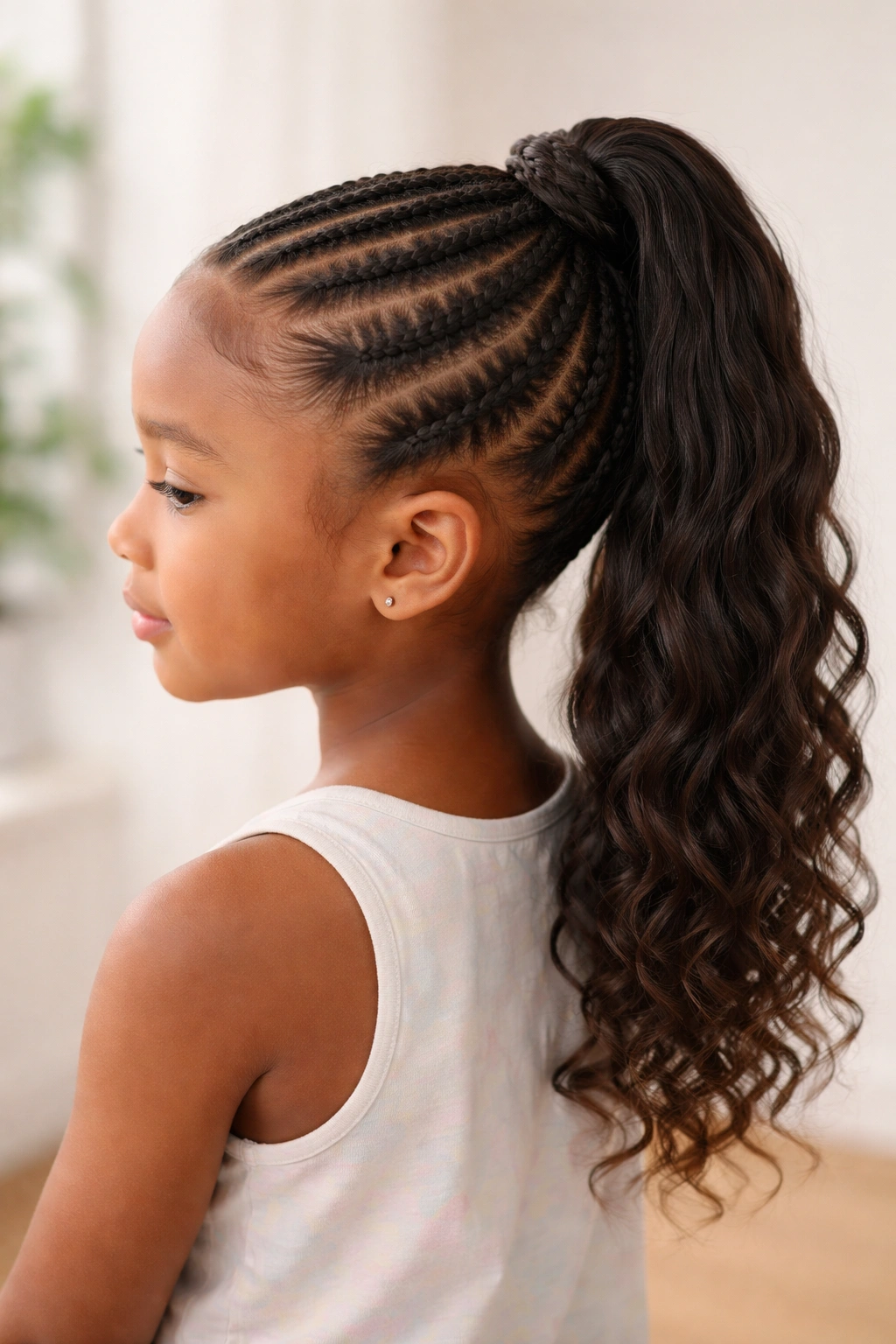
A half-up feed-in ponytail is one of the easiest ways to keep hair out of the face while still letting some length show. That balance matters for kids who don’t love having all of their hair gathered into one full ponytail. Some children want the comfort of a pulled-back front, but they still like the feeling of hair swinging at the back.
Why Younger Kids Like It
The half-up section uses less hair, so the top of the head feels lighter. That can make a big difference for children who get tired of heavy styles or who tend to tug at the crown after a few hours.
- Keep the top section snug, not tight.
- Let the lower hair fall naturally or add a few soft curls.
- Use fewer extension pieces than you would in a full ponytail.
- Add one bow at the join if you want a finished look.
The nice part is how flexible it is. You can make it playful for weekends or simple enough for a classroom morning. It’s one of the few styles that really can do both.
14. Color-Pop Feed-In Ponytail
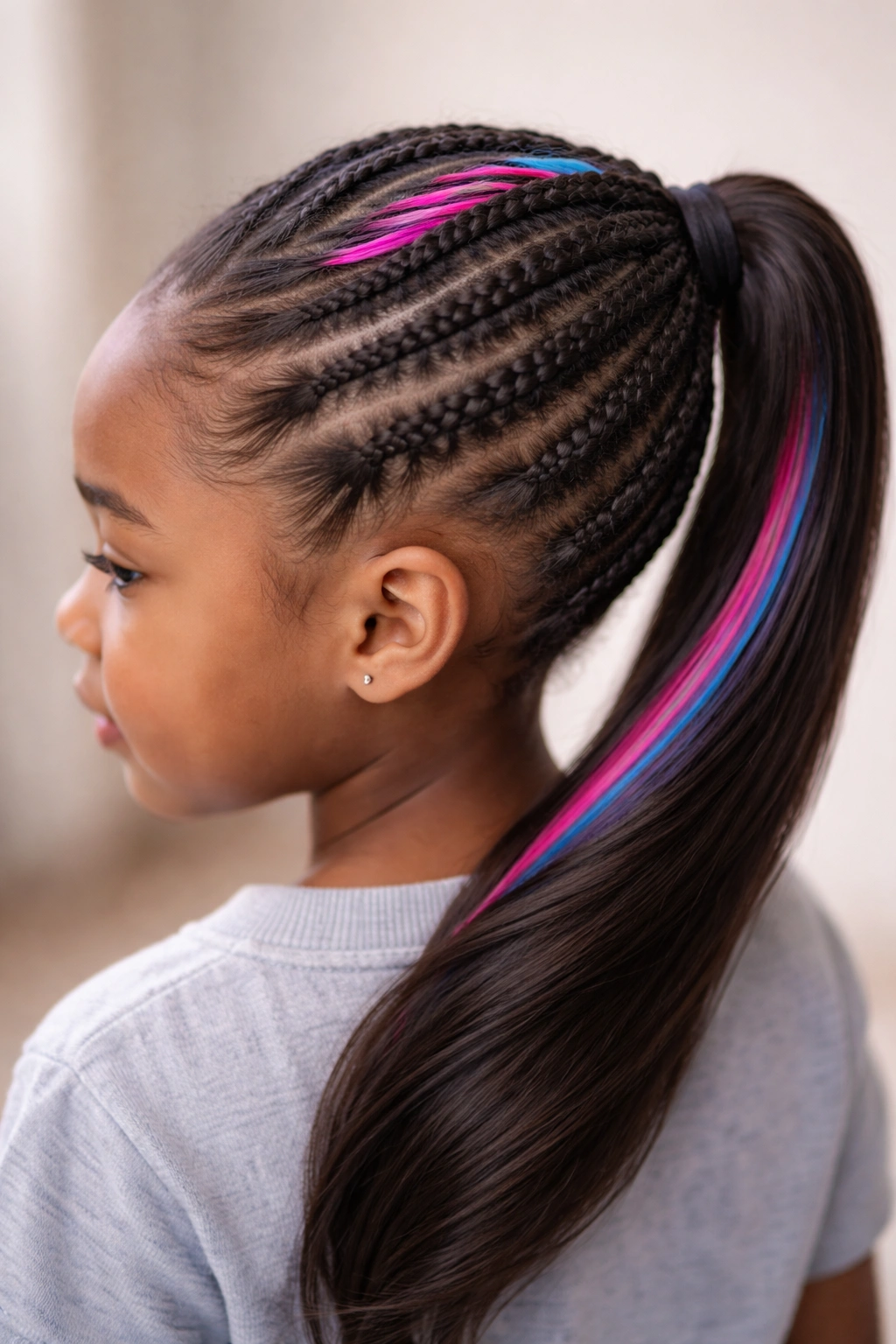
A tiny strip of color changes the mood of a feed-in ponytail fast. That’s the whole appeal. You do not need a full rainbow or a loud mix of tones. One bright accent strand, or one set of colored braiding hair, can give the style enough personality all by itself.
The smartest color choice is usually the one that contrasts with the base hair without fighting it. Deep burgundy, honey blonde, blue, purple, or even a soft pink can work, depending on the child and the occasion. If the school has strict dress rules, a tone close to the natural color is the safer choice.
The braid should still be the main focus. Color should support the shape, not drown it. If the shade is loud enough to distract from the parting, it’s too much.
A little color goes a long way here. That’s the part people often miss.
15. Triangle Part Feed-In Ponytail
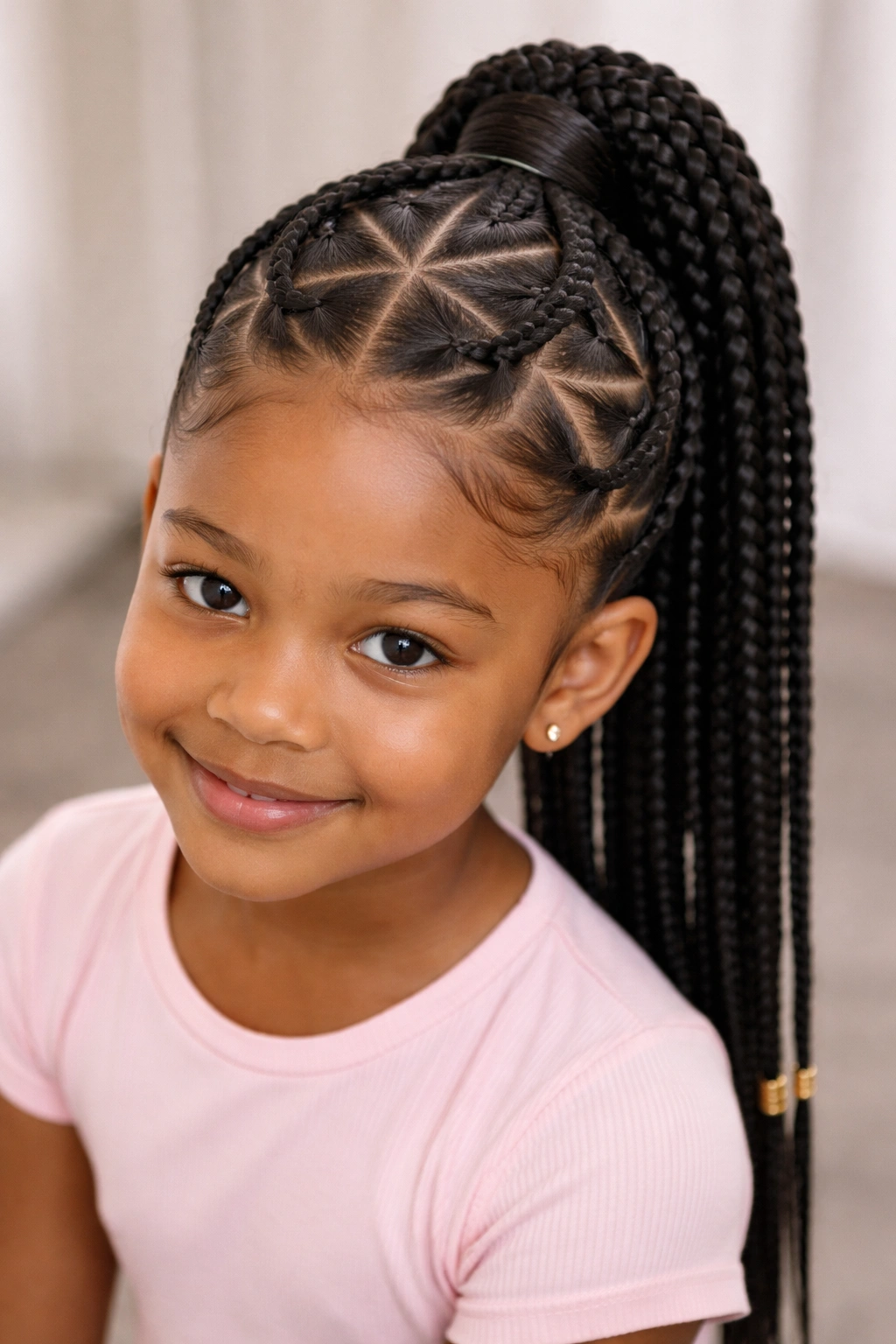
Why use triangle parts instead of squares? Because the geometry looks softer. Triangle sections make the scalp pattern feel less rigid, and on a child’s head that can be a nice change from the usual straight rows and boxy divisions.
How to Keep the Sections Even
Start from the front or crown and let the points of each triangle stay clean. The sides don’t have to be perfectly identical, but they should look intentional. If one triangle is huge and the next is tiny, the pattern breaks down fast.
This style works especially well for thick hair because the triangle sections can distribute volume in a way that feels balanced. It also gives you a little visual interest without needing extra beads or cuffs.
The ponytail itself can sit high, mid, or low. I like it best when the braid base stays smooth and the tail is left simple. The parting already has plenty to say.
16. Wrapped-Base Side Feed-In Ponytail
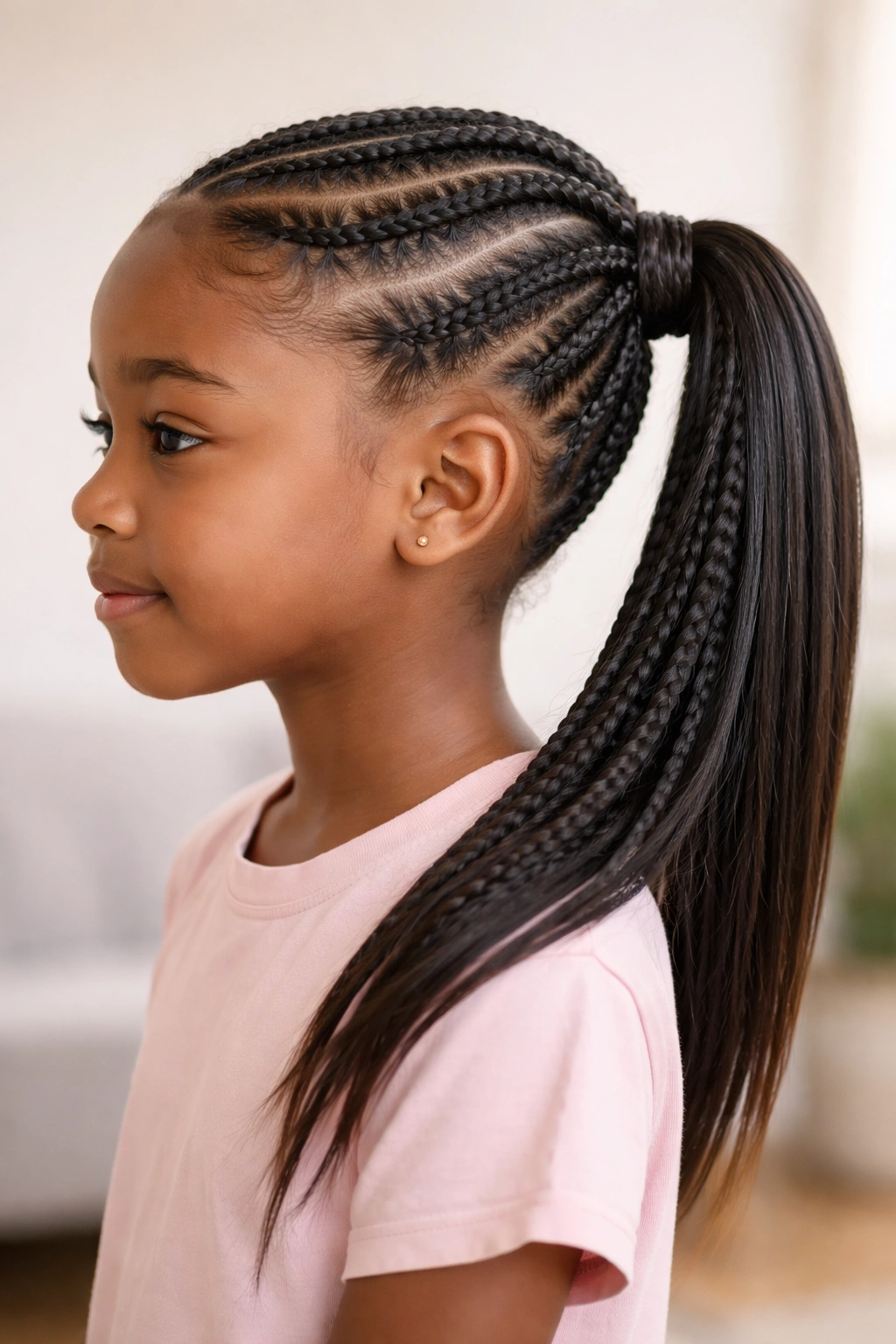
A side ponytail with a wrapped base is one of those styles that looks easy once it’s done, which is a good sign. The ponytail sits off to one side, and a thin braid or extension piece wraps the elastic so the base looks polished instead of plain.
This works well for toddlers and younger children because the side placement takes pressure off the center of the head. It also helps if a child tends to sleep in the car or lean against a seat, since the ponytail lands away from the flattest part of the back.
Quick Things to Keep in Mind
- Sweep the ponytail toward the side with the most hair.
- Use a small wrapped braid to hide the elastic.
- Keep the tail long enough to move, not so long that it drags.
- If the hair is slippery, secure the base with two small elastics before wrapping.
The style is gentle, neat, and easy to pair with a bow. That combination is hard to beat.
17. Crown-to-Ponytail Feed-In
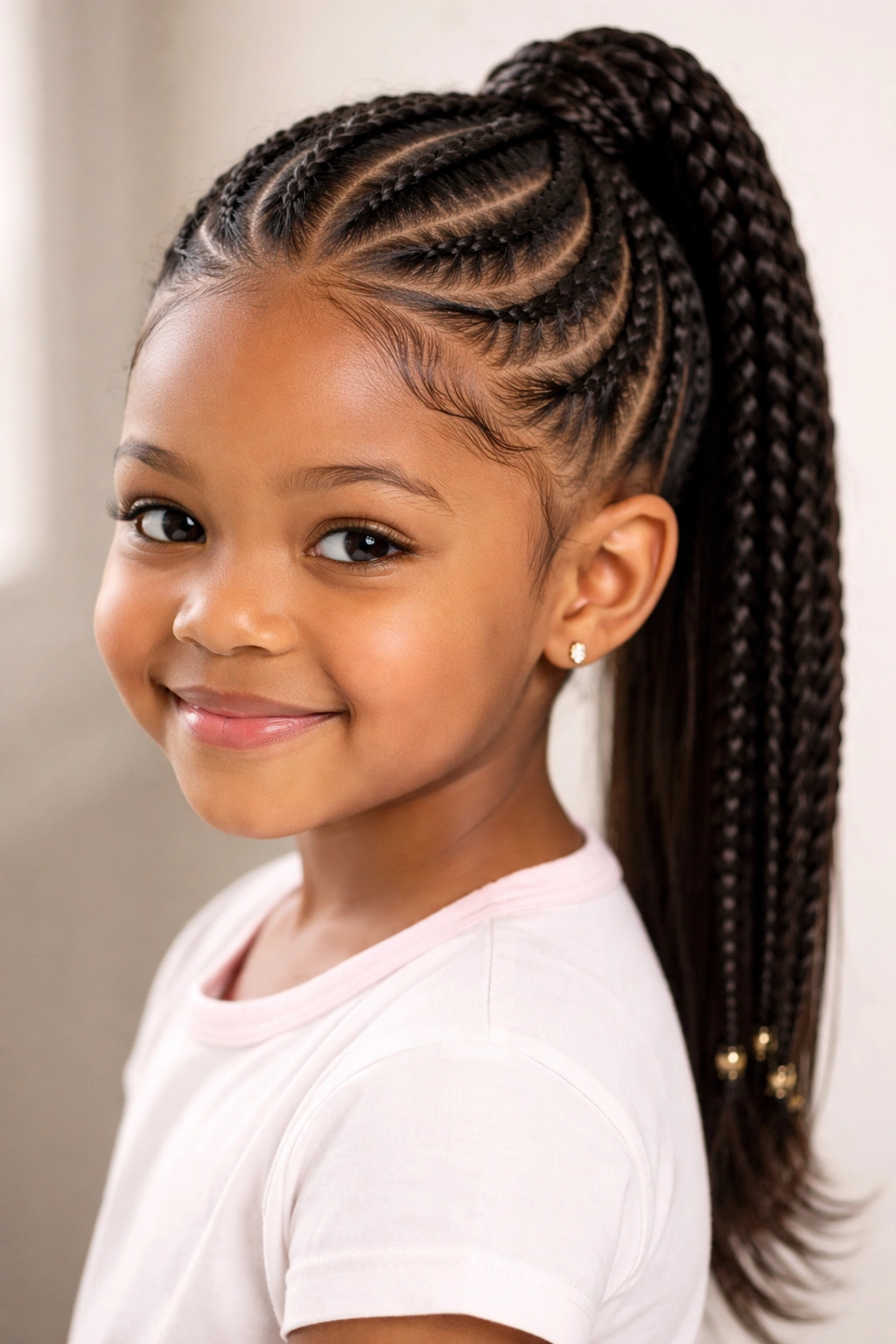
A crown-to-ponytail feed-in ponytail follows the hairline like a soft frame before gathering everything into one tail. It has a neat, almost regal shape, but it still feels like a child’s style when it’s done with a light hand. The braid pattern makes the head shape look tidy from the front, which is why this one often shows up for special events.
The danger here is tension. Because the braids travel along the hairline, it’s easy to pull too hard in the name of keeping the parts clean. Don’t. The cleanest version is the one that lies flat without making the child squint or flinch when the braids move.
A few loose baby hairs are fine. A screaming-tight crown is not.
This style shines when the ponytail itself is kept smooth and the front detail gets room to breathe. If you want elegance without making the hair look stiff, this is a good place to land.
18. Gold-Cuff Accent Feed-In Ponytail
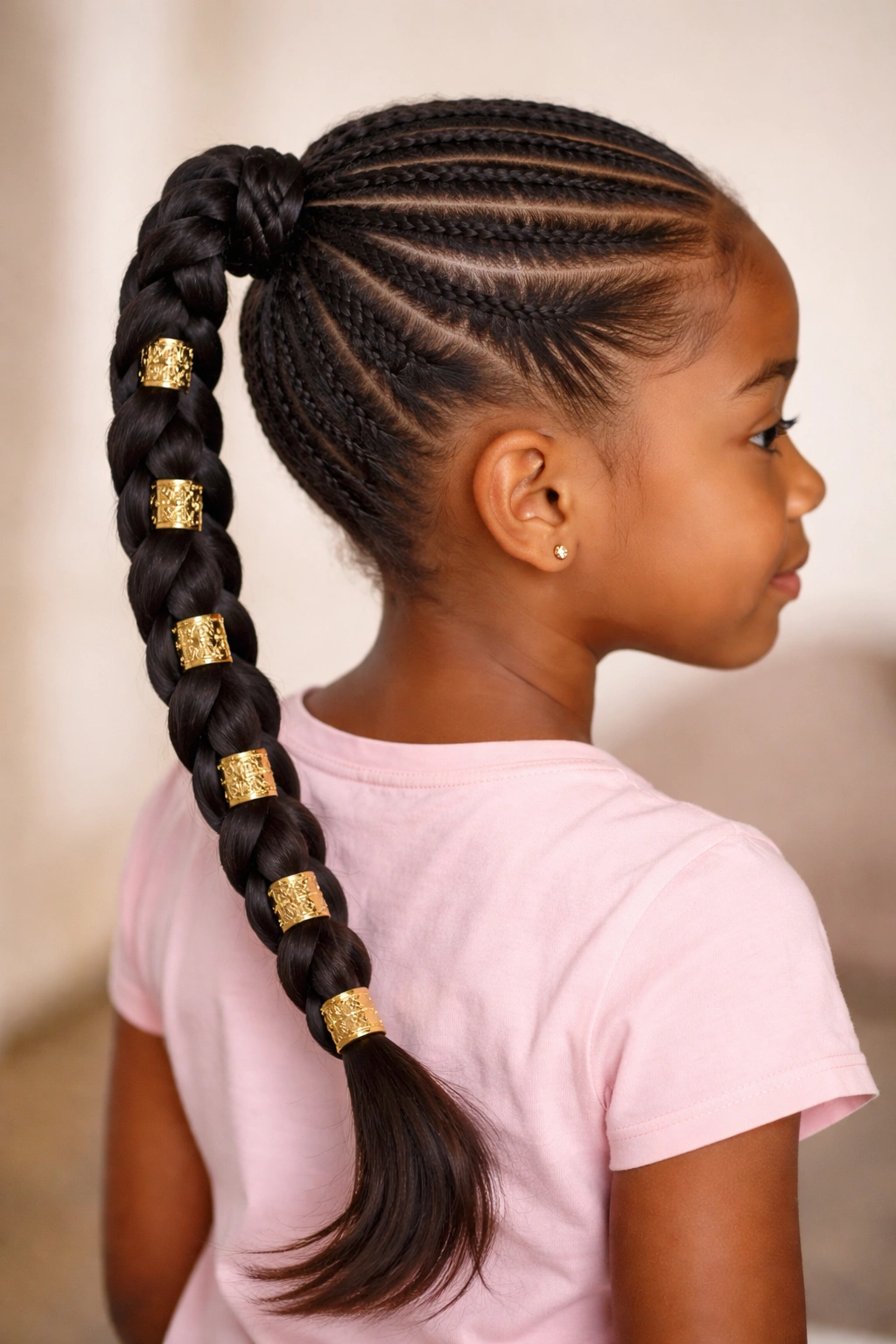
If beads feel too busy, cuffs are the cleaner answer. Gold cuffs, in particular, give a ponytail a small flash without taking over the whole look. They work best when spaced out, not clustered in one spot like spare change.
Cuffs look nicest on a braid that already has good shape. If the braid is uneven, the metal accent only draws more attention to the problem. So the parting and the braid tension matter first. The decoration comes second.
- Place cuffs about 1 to 2 inches apart along the braid.
- Use fewer cuffs on smaller heads.
- Mix one or two cuff sizes, not five.
- Choose gold, silver, or black depending on the rest of the outfit.
This is a strong choice for older kids who want something a little sharper and less playful than beads. It feels neat, grown-up, and still very much age-appropriate.
19. Asymmetrical Feed-In Ponytail
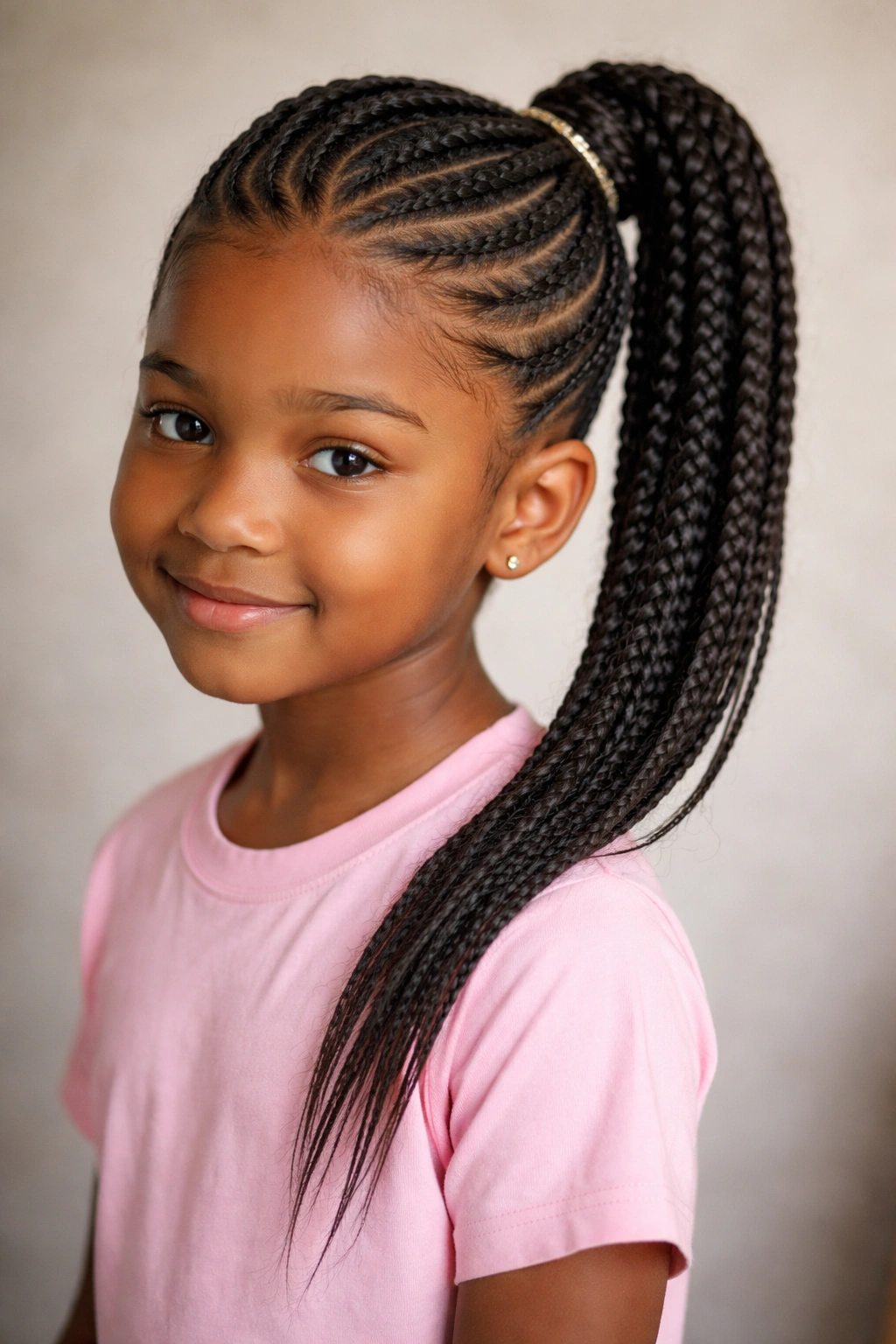
An asymmetrical feed-in ponytail leans into unevenness on purpose. One side can carry more braid detail, or the ponytail can sit slightly off-center instead of lining up straight down the back. That tiny shift changes the mood right away.
Why the Uneven Line Works
The style feels fresh because it doesn’t try to be symmetrical for the sake of it. A strong side part, one thicker braid path, or a ponytail positioned just a little to one side gives the whole look motion.
This is a smart pick for kids who already like side parts or who want something different from the standard school braid. It still keeps the hair under control, but it has a little personality baked in.
The asymmetry should look planned. If the braids are unintentionally uneven, the style reads as rushed. If the weight is shifted with intention, it reads as stylish. That difference is small, but you can see it immediately.
20. Low Double Feed-In Ponytails
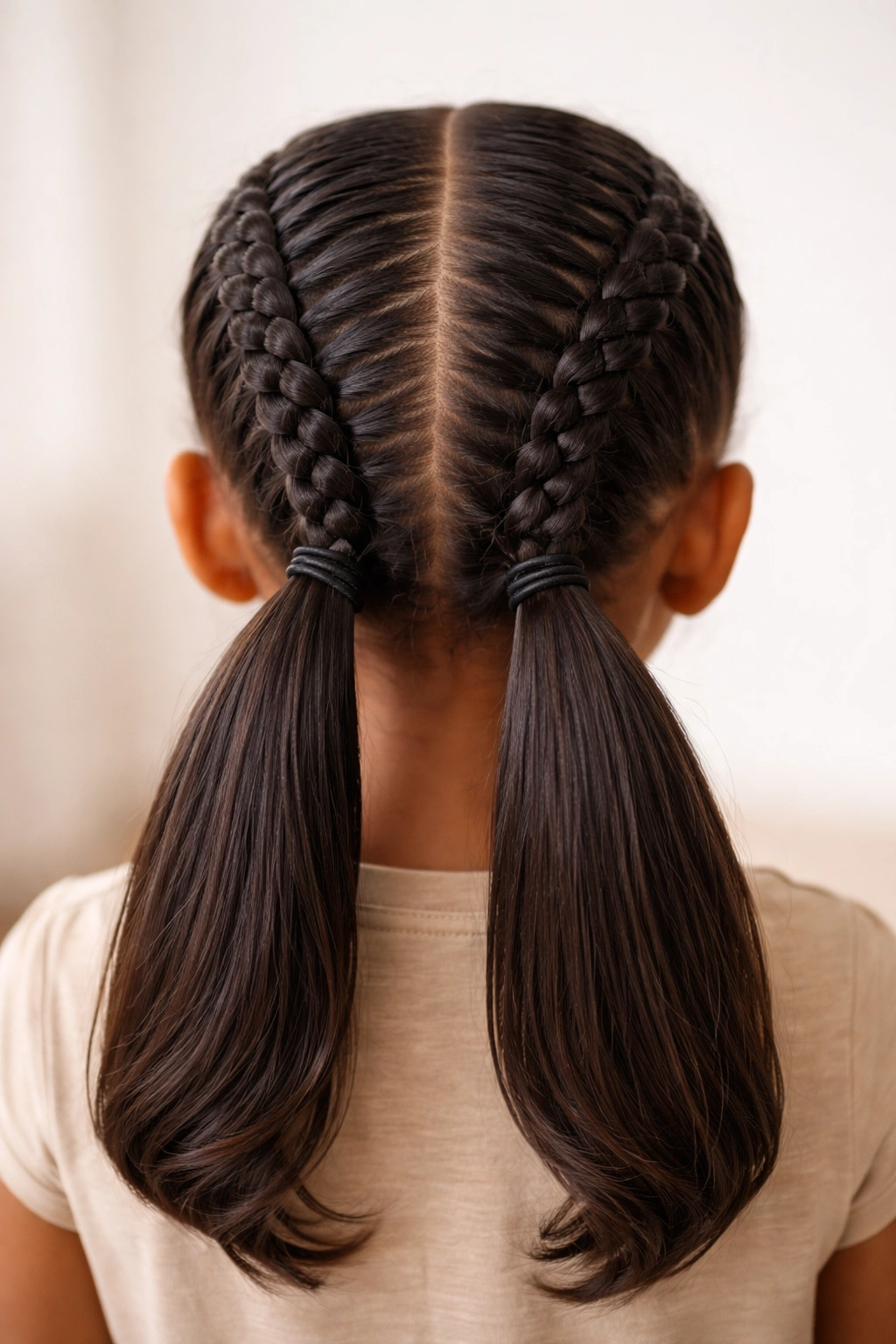
Two ponytails can feel lighter than one heavy tail, and that is exactly why this style works so well on younger kids. Low double feed-in ponytails keep the hair split into two sections near the nape, which can reduce the pull on the scalp and make the whole style easier to wear.
The shape is playful, but not childish in the wrong way. It looks neat enough for school and fun enough for a weekend outing. If the hair is thick, the two tails help spread the weight out instead of loading everything into one spot.
The parting matters here. Keep the center clean, the braids balanced, and the base of each ponytail about the same height. If one sits noticeably higher, the look loses its rhythm.
This is a useful style when a single ponytail feels too heavy. Not every kid wants one big tail hanging down the back.
21. Long Tail Feed-In With Loose Ends
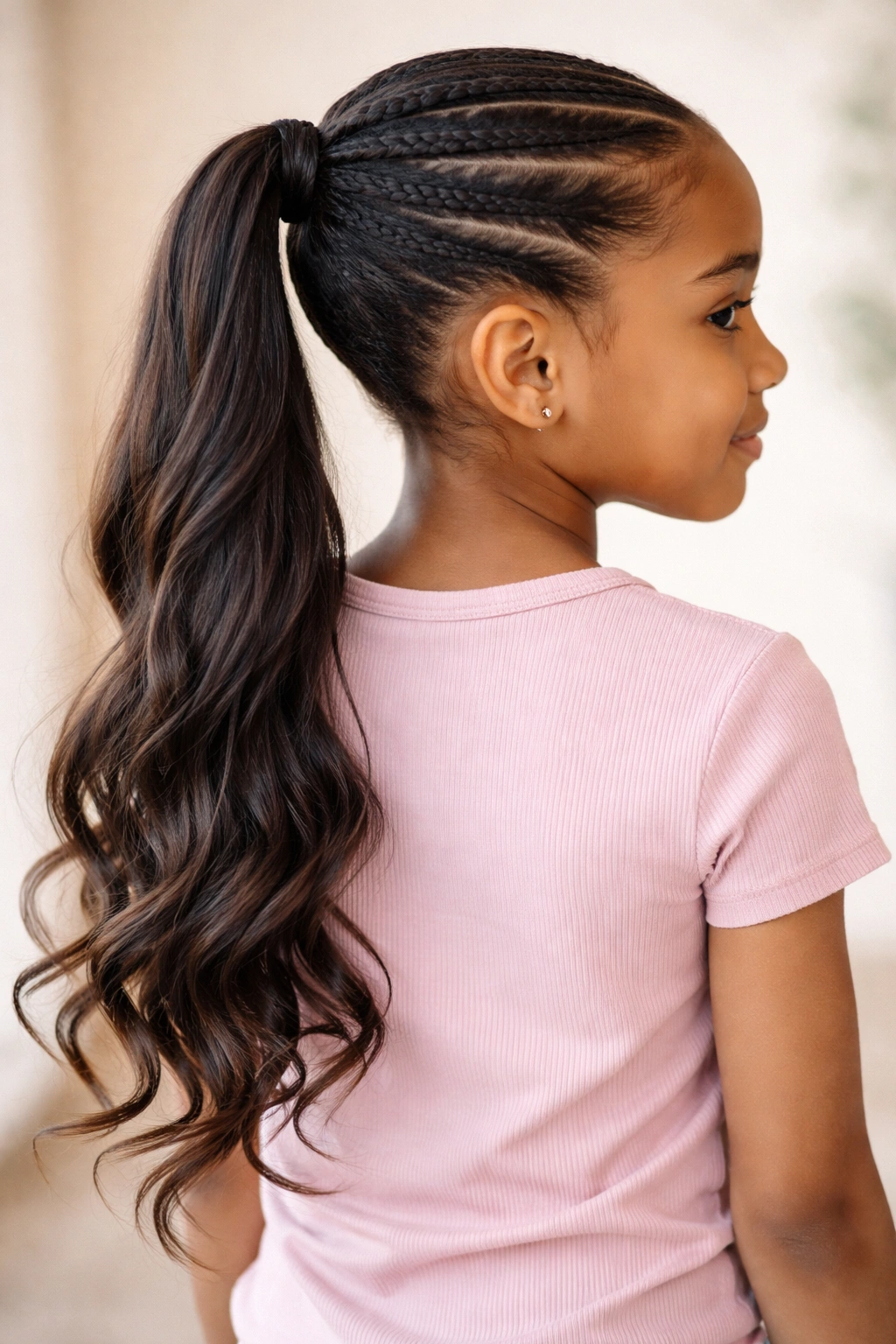
What if the braid is only the start? That’s the charm of a long-tail feed-in ponytail with loose ends. The front stays neat, but the tail is left long and flowing, sometimes straight, sometimes lightly curled, sometimes finished with a few tiny bands for shape.
This style suits kids who like motion. It swings when they walk. It moves when they turn their head. It looks less rigid than a fully braided tail, which can be a nice change when the goal is a softer finish.
Best Way to Finish the Tail
Loose ends work best when they’re not neglected. A quick pass with mousse, a set of flexi rods, or a soft blow-dry on a low setting can keep the tail from puffing out too much. You want movement, not frizz.
If the child likes to touch the ends, keep them simple and smooth. If she likes texture, a few curls at the bottom can make the whole style feel more complete.
22. Birthday-Ready Feed-In Ponytail With Beads
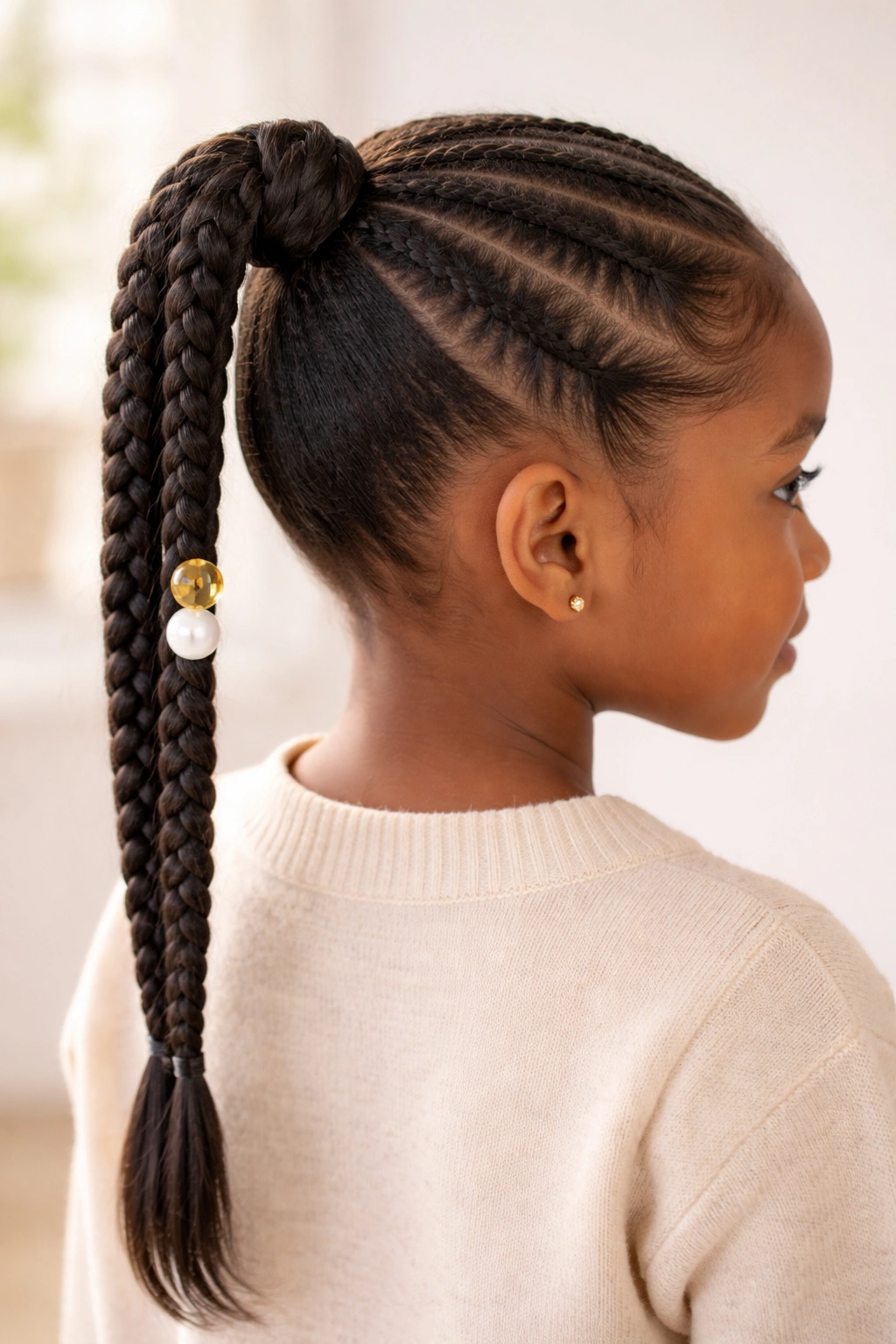
Birthday hair can be fun without becoming a project that eats the whole morning. This style leans into that idea. A feed-in ponytail dressed with a few bead accents looks festive, and the ponytail base keeps everything secure while the rest of the style gets to show off a little.
The key is restraint. One accent color is enough. Two at most, if the outfit is plain. When the beads are mixed with too many colors, the style loses focus and starts to feel noisy.
What Makes It Party-Friendly
- Choose beads that are light enough to move without dragging.
- Keep the heaviest pieces below the ear line.
- Match the bead color to the outfit or shoes.
- Use a firm elastic at the base so the added weight doesn’t slip.
This is a good time to lean into a little sparkle. Just keep the shape clean. The braid should still look like the grown-up part of the style, while the beads handle the celebration.
23. School-Ready Simple Feed-In Ponytail
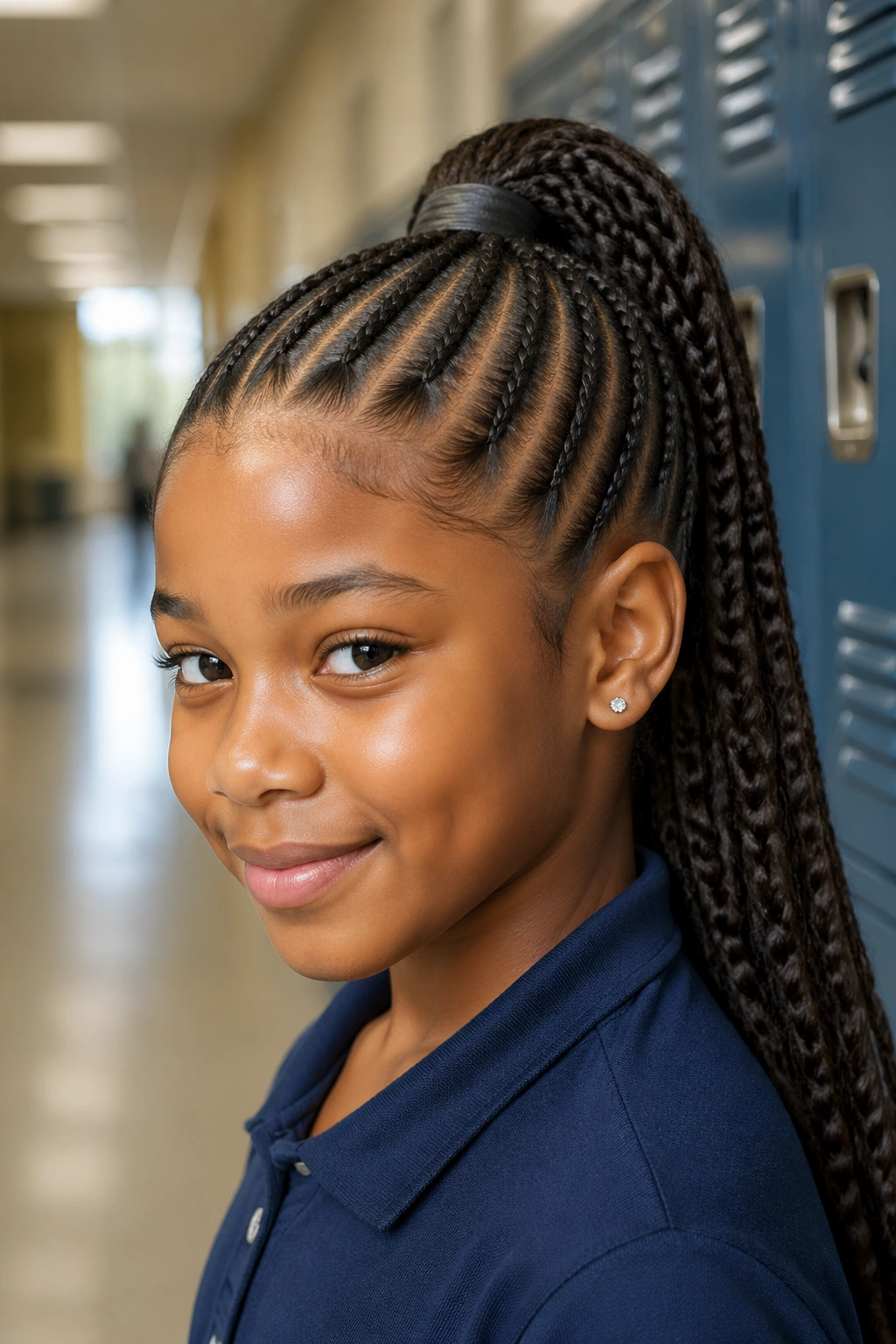
Sometimes the plainest version is the smartest one. A school-ready feed-in ponytail does the job without extra beads, without bright ribbon, and without parts so fancy they need constant checking. Clean braids. Smooth base. One ponytail that stays put.
That simplicity matters on busy mornings. It also matters for kids who are sensitive to too much hair on the scalp. The fewer extras you add, the lighter the style usually feels. A tidy high or mid ponytail is often enough to carry the day.
If you want this one to last, focus on the basics: clean sections, even tension, a secure but gentle elastic, and a satin wrap at night. That’s the whole routine, really. Not glamorous. Very effective.
Comfort wins. And when the scalp feels good, the style usually lasts better too.
