

Locs change the rules.
A high ponytail on loose hair and a high ponytail on locs are not the same hairstyle, not even close. Locs carry weight, texture, and length in a way that can make a ponytail look sculpted one minute and feel like a brick the next if the base is pulled too tight or set too low.
That’s why high ponytails for locs need a little more thought than a quick tie-up. The sweet spot sits high enough to lift the face and show off your neckline, but not so high that the roots feel yanked by lunch. A good style respects the shape of the locs, the thickness of the parting, and the fact that a clean finish usually comes from wrapping, pinning, or anchoring, not from squeezing harder.
Some days you want sleek and sharp. Some days you want full, fluffy, and a little dramatic. And sometimes you want a style that can survive work, a long drive, or a night out without turning into a frizzy mess halfway through. The styles below cover all of that, with enough range that you can match your mood, your length, and how much time you actually want to spend in the mirror.
1. Sleek Wrapped-Base High Ponytail for Locs
This is the cleanest version of the look. Pull the locs to the crown, smooth the roots with a small brush, and wrap one loc around the base so the elastic disappears. It reads polished fast, and it works especially well when your parts are fresh and your locs fall in neat rows.
The trick is keeping the crown flat without crushing the rest of the style. Use a light hand with gel or edge control, then secure the ponytail with one strong elastic and a second hidden band if your locs are heavy. That extra band matters more than people think.
If you like a crisp silhouette, this is the one to start with. It gives you height, shine, and a base that looks intentional instead of rushed.
Best for: clean outfits, formal events, and days when you want the face completely open.
2. Pineapple High Ponytail with Full Volume
Why make the ponytail small when the locs want to fan out? A pineapple high ponytail lets the lengths spread in a soft, round shape, which is especially nice if your locs are medium to long and have a bit of natural bounce. It feels less строгly styled and more alive.
The key is placement. Gather the locs loosely at the crown, then let the lengths fall upward and outward instead of forcing them straight back. If the roots are tight but the tail is loose, you get lift without that pulled, stiff look.
How to wear it well
- Use a wide elastic so the base does not bite into the hairline.
- Flip the locs up and pin only the heavy pieces.
- Leave a little frizz alone; it gives the style shape.
A pineapple ponytail works when you want softness but still want height.
3. Braided-Base High Ponytail
A braided base gives the whole style more grip, and that’s the part most people underestimate. Instead of relying only on one band, braid a short section near the crown or twist the first few inches before tying the ponytail. The result feels anchored.
This is a smart choice for heavier locs because the braid spreads tension out better than a tight tie at one exact point. You still get the lift of a high ponytail, but the style sits more securely and usually lasts longer through the day.
I like this version when the locs are freshly moisturized and a little slippery. The braid gives the base some teeth. Without it, the ponytail can slowly slide if the hair is smooth or the locs are especially long.
4. Side-Part High Ponytail
Not every high ponytail has to sit in the exact center. A side part shifts the whole mood, and on locs that change is easy to see. The part draws the eye first, then the ponytail follows, so the style feels softer even though the shape stays lifted.
This one works best when the front is neat and the rest of the locs have room to move. A deep side part can frame one temple and open the face in a way a middle part never does. It’s a small shift. Big payoff.
If your edges are sensitive, keep the front smooth but not tight. That parting line should look clean, not carved into the scalp. A lot of people chase sharpness and end up with tension they do not need.
5. Bubble High Ponytail on Locs
The bubble ponytail is playful, but it is also practical. Instead of one long tail hanging straight down, you cinch the length at intervals with small elastics so the locs puff into rounded sections. On locs, the effect looks bold because each segment keeps its own shape.
Use matching elastics if you want the bubbles to blend in, or choose a contrasting color if you want the bands to show. I prefer the hidden version for everyday wear. The visible one leans more styling-heavy and can feel fussy if the bands are too bright or too tight.
What makes it work
The sections do the work for you. Each elastic gives the locs a little lift, and the spaces between them create movement even when the hair is thick. If your locs are long, this is one of the easiest ways to keep the tail from looking flat or dragging down your back.
6. Scarf-Wrapped High Ponytail
A scarf can save a high ponytail that feels too plain. Wrap a silk or satin scarf around the base, tie it off to one side, and let the ends hang if you want extra motion. It turns the style into something a little more intentional, even if the ponytail itself is simple.
The scarf also helps hide an elastic that isn’t doing you any favors. That matters when the base is bulky or the locs are thick enough to make the band look clunky. Choose a scarf that is wide enough to cover the tie cleanly.
This style has a nice side effect too. It can soften a very strong ponytail shape and make the whole look feel less severe. That’s useful when you want height, but not a hard finish.
7. Beaded High Ponytail
Beads at the ends of locs change the sound, the swing, and the whole visual rhythm of the style. A high ponytail with a few beaded locs feels lively before you even move. The beads catch the eye in a way a plain tail never will.
Keep the bead placement selective. Too many beads can make the ponytail heavy and clunky, especially near the crown. A better move is to place them on the outer locs or along the longest pieces so they frame the shape instead of swallowing it.
A small detail like this can shift a simple ponytail into a statement style. That’s the part people notice from across the room.
8. Curled-End High Ponytail
Straight locs are classic, but curled ends bring a different kind of energy. Set the ends on flexi rods, perm rods, or small rollers after dampening them slightly, then let them dry fully before taking them down. The tail gets a soft bend instead of a blunt drop.
This works especially well if the crown is sleek and the ends need a little movement to keep the style from feeling too severe. The curl adds bounce at the bottom, which balances the clean lift at the top.
A small warning: do not rush the drying. Half-dry locs lose the shape fast, and the curl can collapse into a frizzy bend that looks more tired than styled. Give it time.
9. Twisted Crown High Ponytail
A twisted crown around the hairline gives a high ponytail a more finished shape. Take two sections from the front, twist them back toward the crown, and let them feed into the ponytail base. It feels softer than a strict slick-back, but it still looks pulled together.
This style is a good middle ground when you want some detail without piling on accessories. The twists frame the face, break up the front, and make the ponytail feel custom instead of basic.
I like this option on days when the locs need a little disguise at the roots. A twist pattern can hide uneven growth or a fresh retwist better than a fully flat style, and that can be a relief.
10. Extra-Long High Ponytail
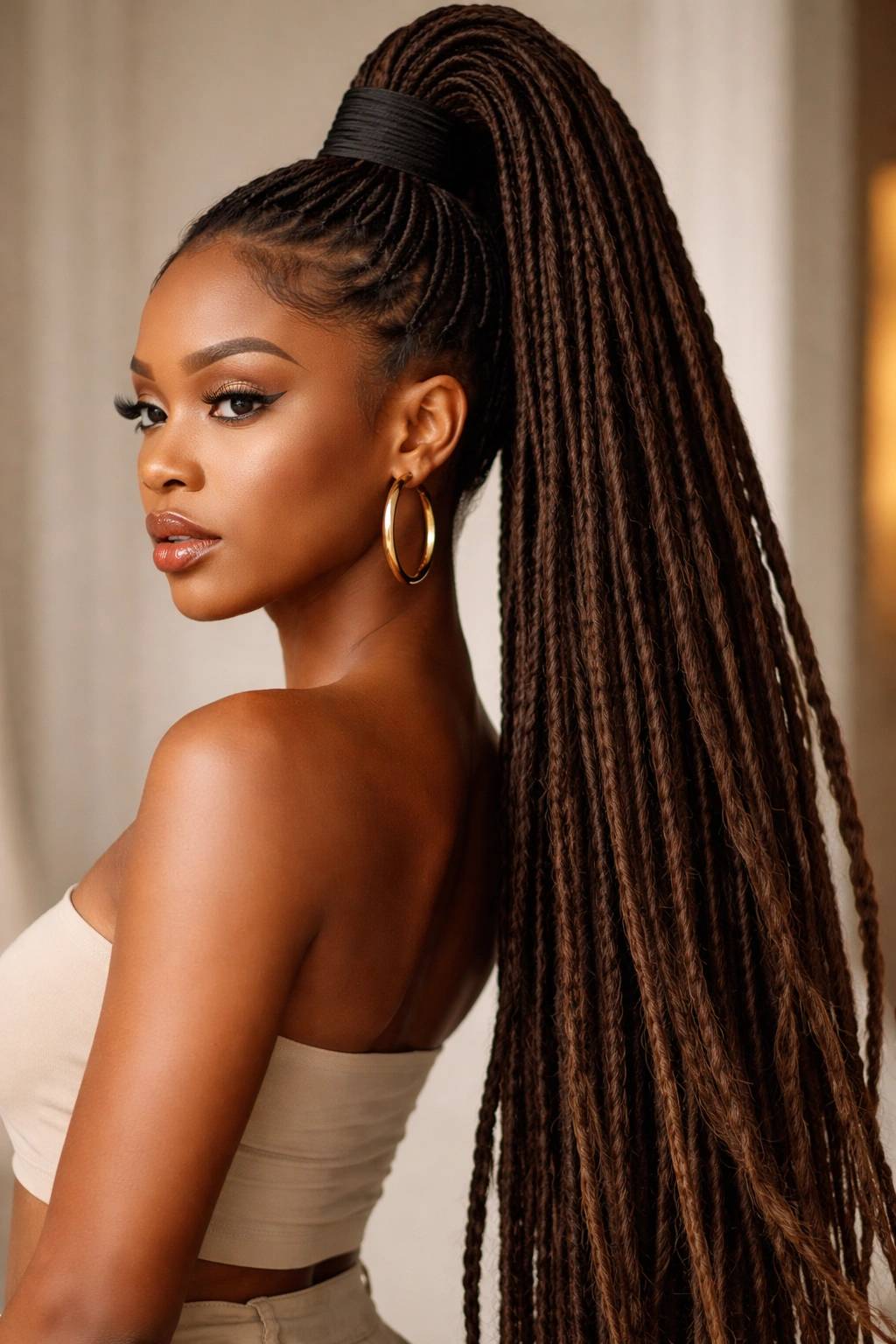
A lot of people talk about length like it is only about drama, but with locs it also changes the weight and movement of the ponytail. Extra-long locs need stronger anchoring, a wider base, and usually a second point of support if you want the style to stay lifted.
This is the look that gives you a dramatic line from crown to tip. The tail hangs lower, swings more when you walk, and makes the height at the top feel even taller by contrast. It is especially striking with thick locs.
What to keep in mind
- Use two elastics if the locs are dense.
- Wrap the base with one loc or a small strip of hair.
- Pin the underside if the ponytail starts to pull backward.
Long locs look gorgeous in a high ponytail. They just need respect.
11. Messy High Ponytail with Soft Texture
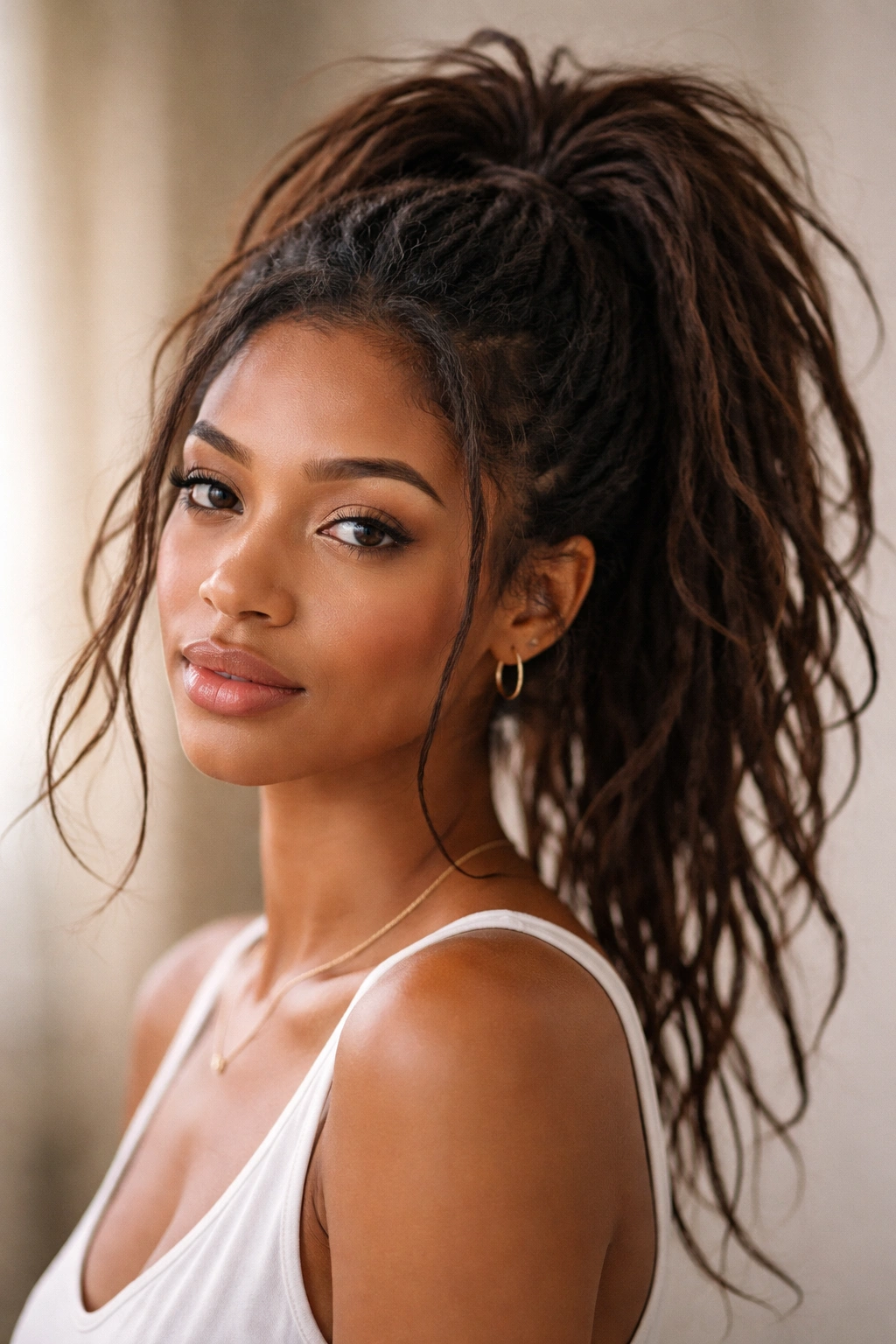
Not every high ponytail needs perfect lines. A slightly messy version can look better on locs than a super slick one, especially if the locs have lived-in texture and you don’t want the style to feel stiff. Pull the hair up, leave a little volume at the crown, and stop chasing every flyaway.
The beauty of this style is that it wears well. It can handle a little frizz and still look on purpose. In fact, a bit of looseness gives the ponytail a fuller shape that hard slick styles sometimes lose by the afternoon.
This is the one I reach for when I want ease. No drama. No overthinking. Just a high ponytail that still has personality.
12. Middle-Part High Ponytail
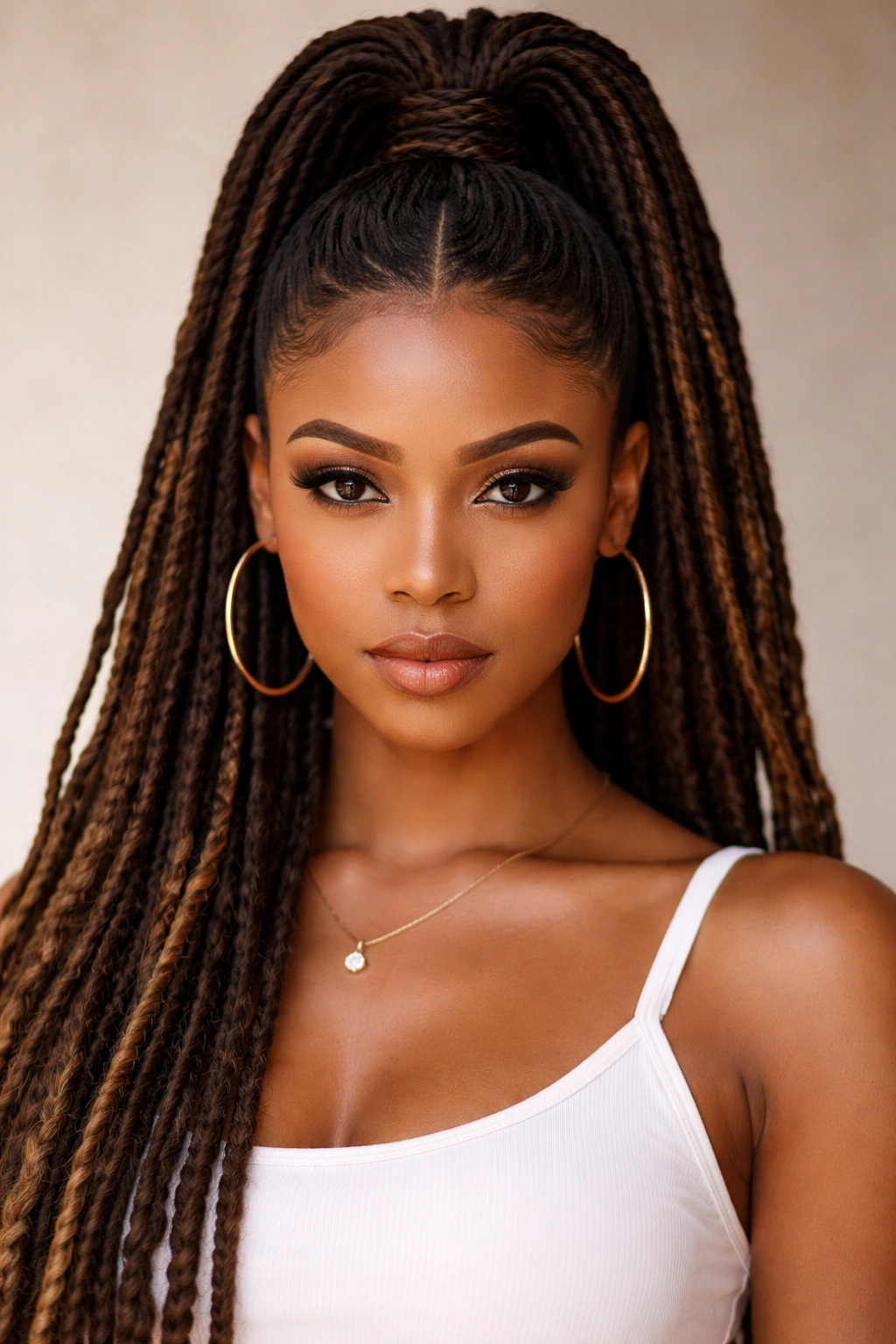
A clean middle part changes the whole face shape. On locs, it can make a high ponytail look sharper and more structured because the part creates a straight line before the hair even reaches the crown. That line matters.
This style shines when the locs are reasonably even in size and the front sections can sit flat without buckling. It gives a balanced look, which is why it’s one of the easier versions to dress up with earrings or a bold neckline. The symmetry does the work.
If you like a neat finish but do not want the ponytail to look too severe, keep a few baby locs loose around the temples. Tiny detail. Big difference.
13. Face-Framing High Ponytail
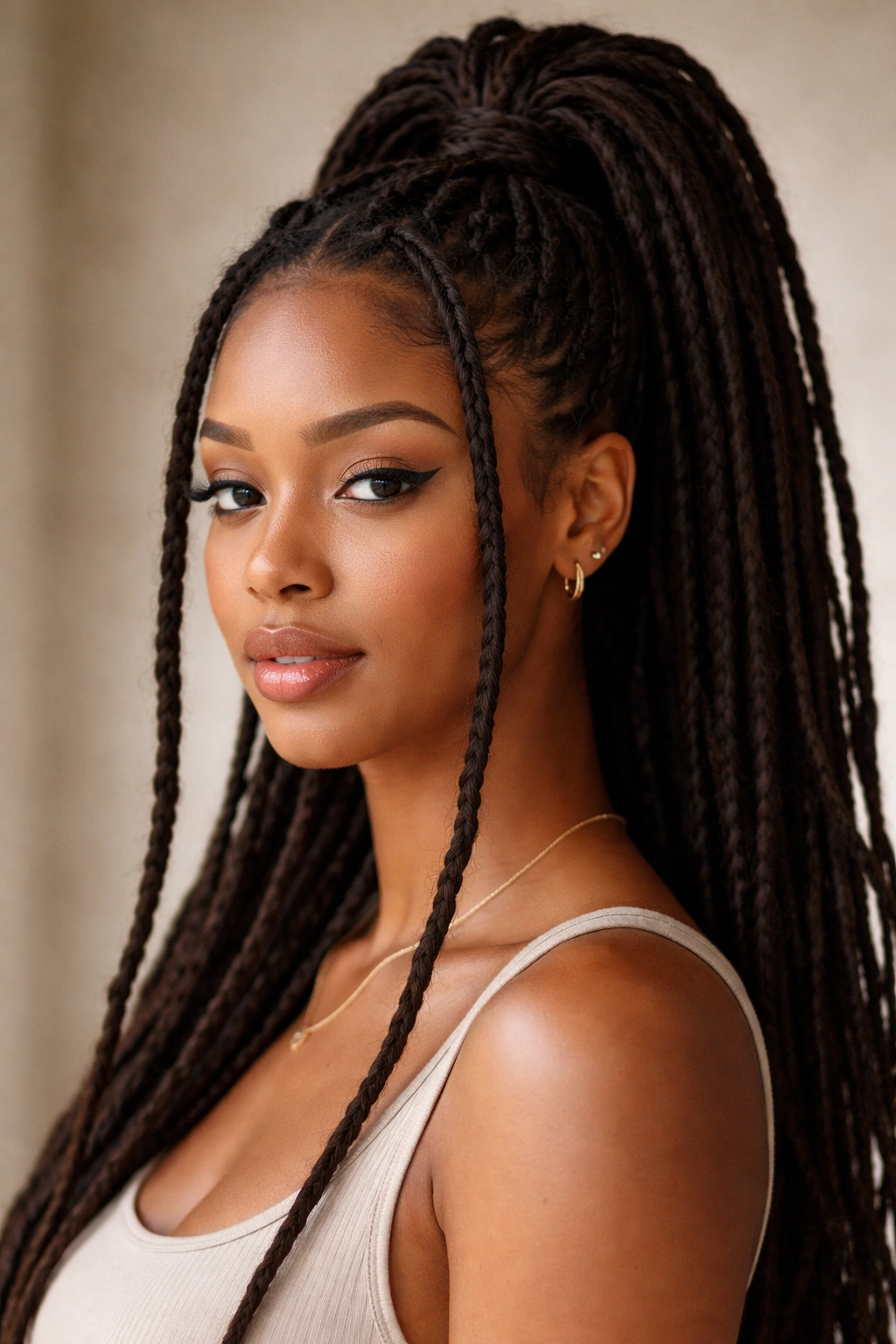
A high ponytail with face-framing locs has a softer mood because the front pieces stay out instead of getting pulled back with everything else. Those strands break up the shape around the cheeks and jaw, which helps if you want lift without a totally open face.
The locs you leave out should be chosen on purpose, not by accident. Pick two or four pieces that fall nicely on each side, and let them hang naturally. If they are too short, they can stick awkwardly; if they are too long, they can overwhelm the style. So check the shape before you tie everything up.
This version feels easy to wear with hoop earrings, a collared shirt, or a bare neck. It does not need much else.
14. Cuffed High Ponytail
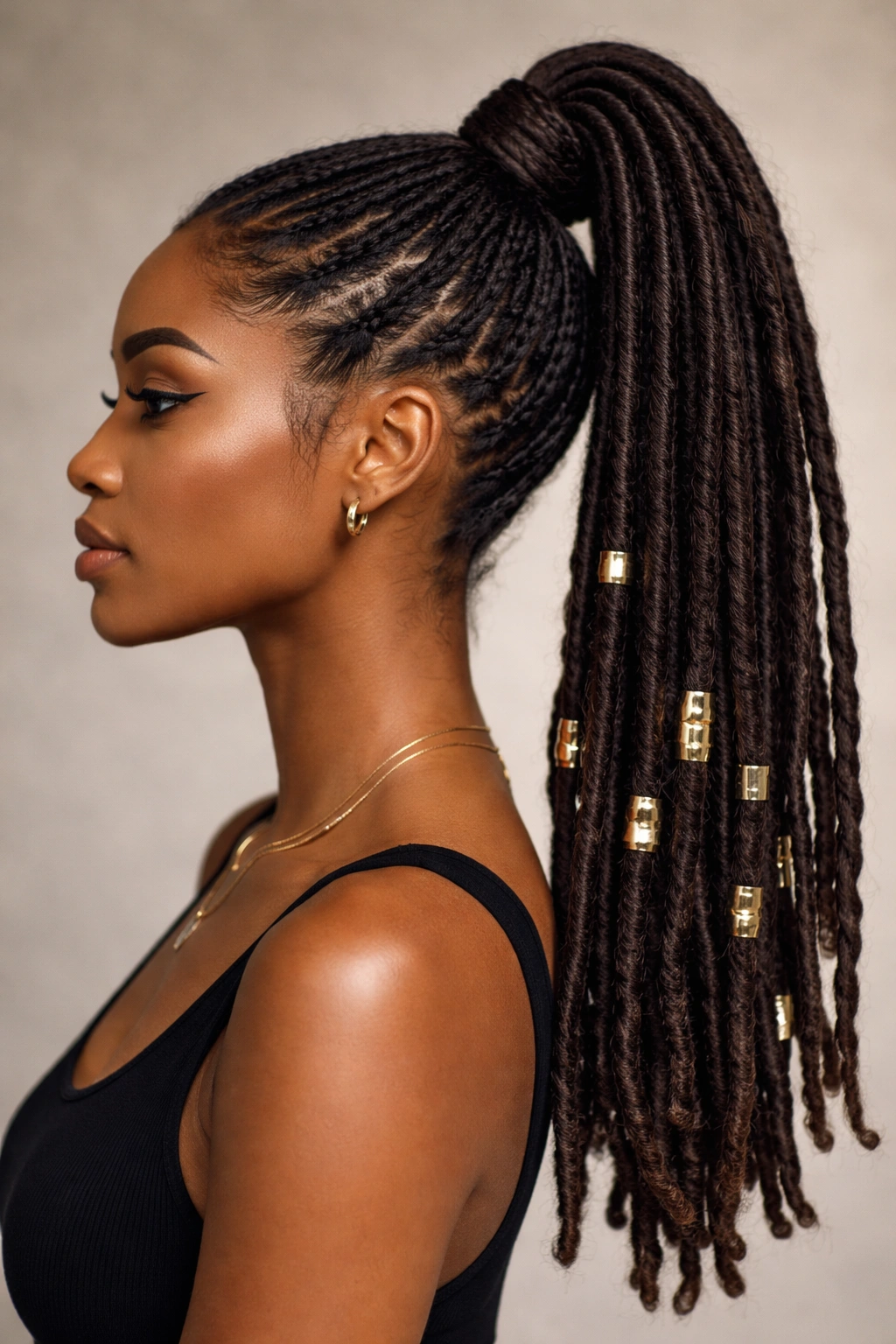
Metal cuffs make locs look even more sculptural, and a high ponytail gives you the perfect place to show them off. Slide cuffs onto a few visible locs near the tail, or cluster them near the ends if you want the look to feel more concentrated.
The nice thing about cuffs is that they add shine without changing the shape too much. That matters if you already like the ponytail itself and just want a little extra edge. You are not rebuilding the style. You are dressing it.
How to keep it balanced
- Use cuffs on every third or fourth loc, not every single one.
- Put them where the ponytail naturally fans out.
- Check the weight if your locs are fine or very long.
Too many cuffs can tip the style into costume territory. A few well-placed ones are enough.
15. Thread-Wrapped High Ponytail
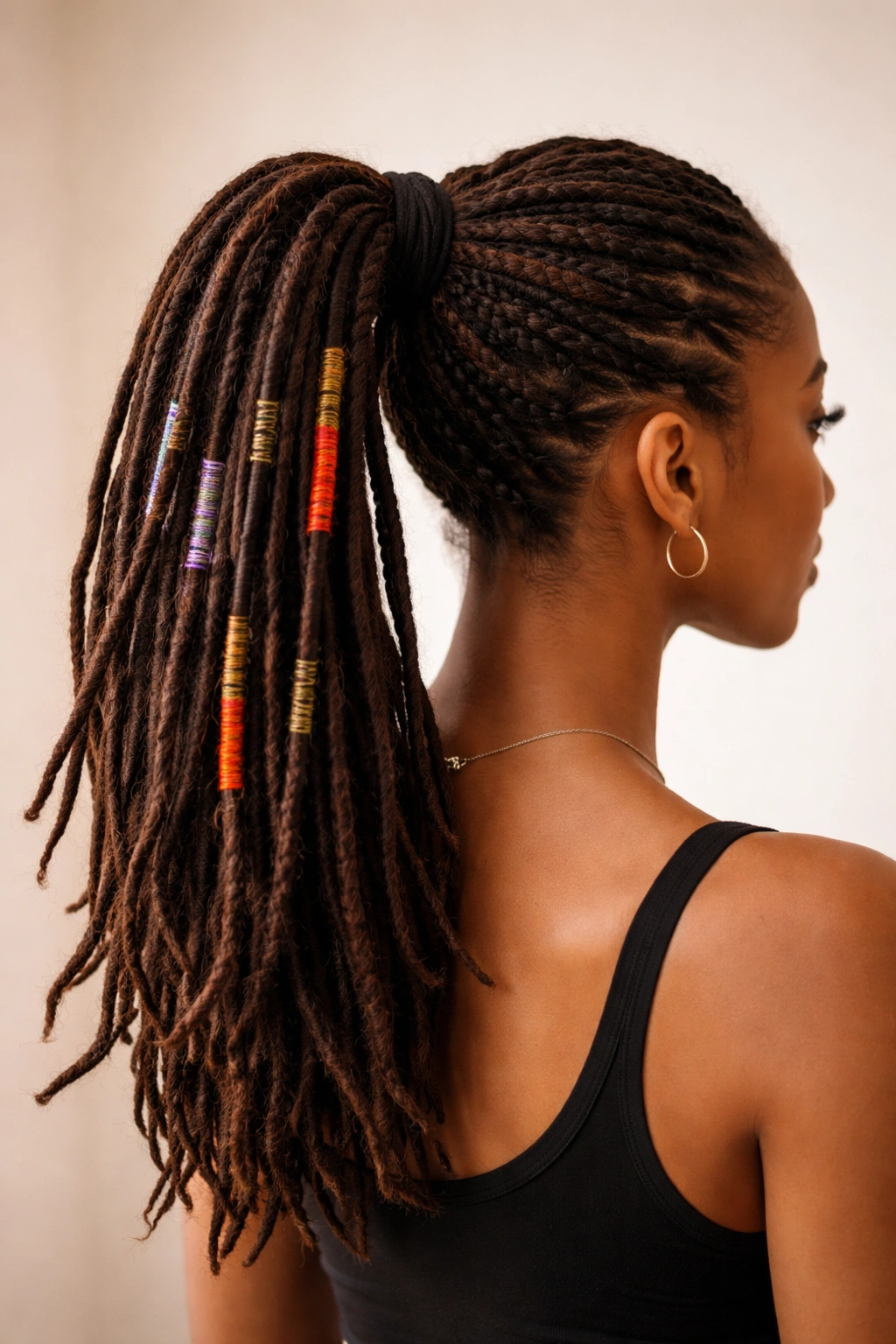
Thread wrapping brings color into the style without making the whole look loud. Wrap a few locs with embroidery thread, yarn, or thin cord in repeating bands, then gather them into a high ponytail so the wrapped pieces peek through the tail. The result looks handmade in a good way.
This works best when the colors echo something else in your outfit. A red thread against black locs, or a gold thread near warm-toned jewelry, can pull the whole look together. The wrapping does take time, so pick locs you want to feature rather than wrapping every single one.
It is a nice style for anyone who likes detail. Not flashy. Just deliberate.
16. Polished Formal High Ponytail
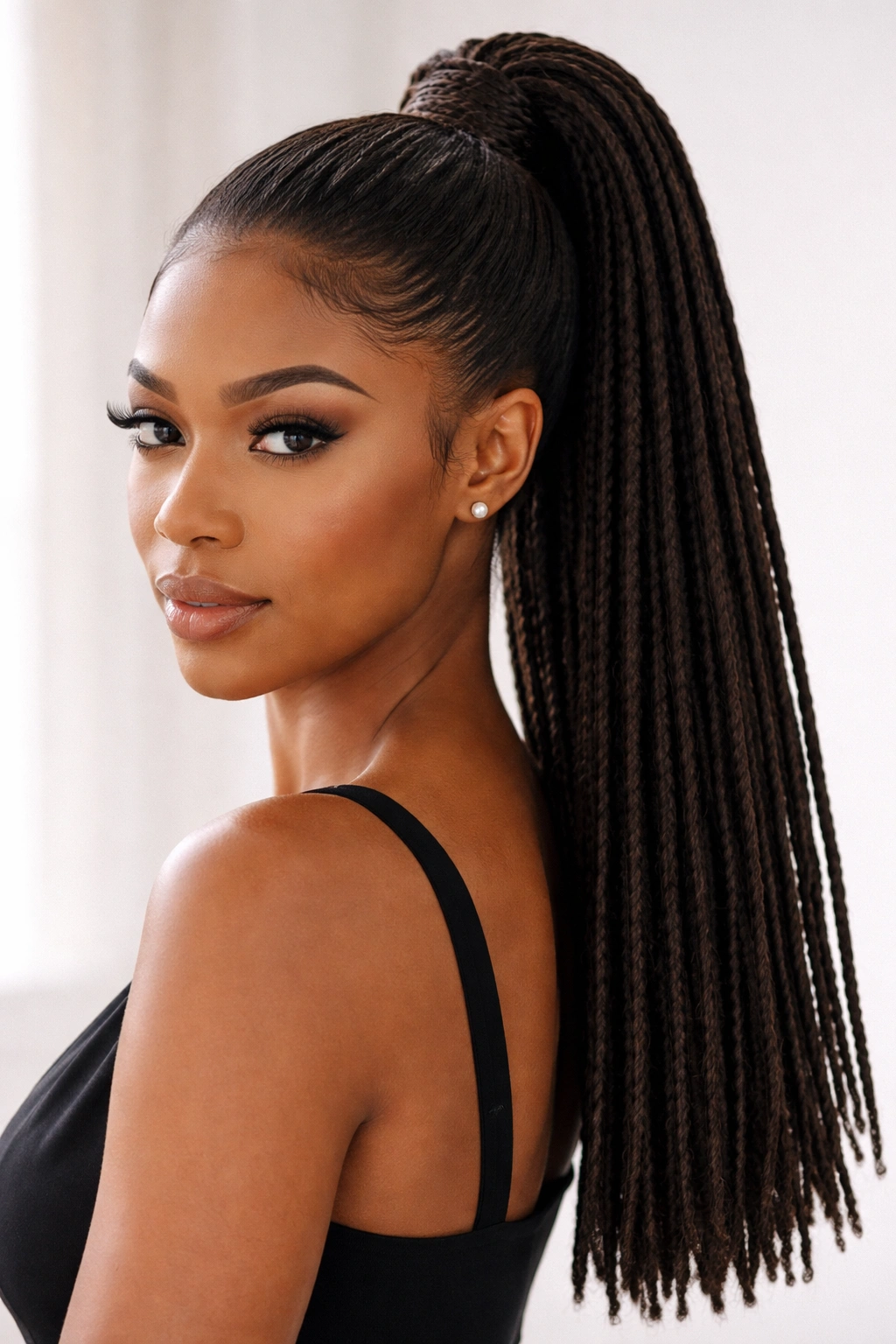
Some high ponytails are built for movement, and some are built for clean lines. This one is the second kind. Smooth the front, tighten the crown, hide the elastic, and keep the tail orderly so the whole style reads elegant instead of casual.
The secret is restraint. Do not pile on too many accessories or let the base get bulky. A formal ponytail on locs should look controlled from the front and tidy from the side. That is where it wins.
Best finishing touches
A little shine spray goes a long way here. Use it lightly, then smooth with your palms rather than soaking the locs. Heavy product can make the style look dull under indoor light, which is the opposite of what you want.
17. Athletic High Ponytail
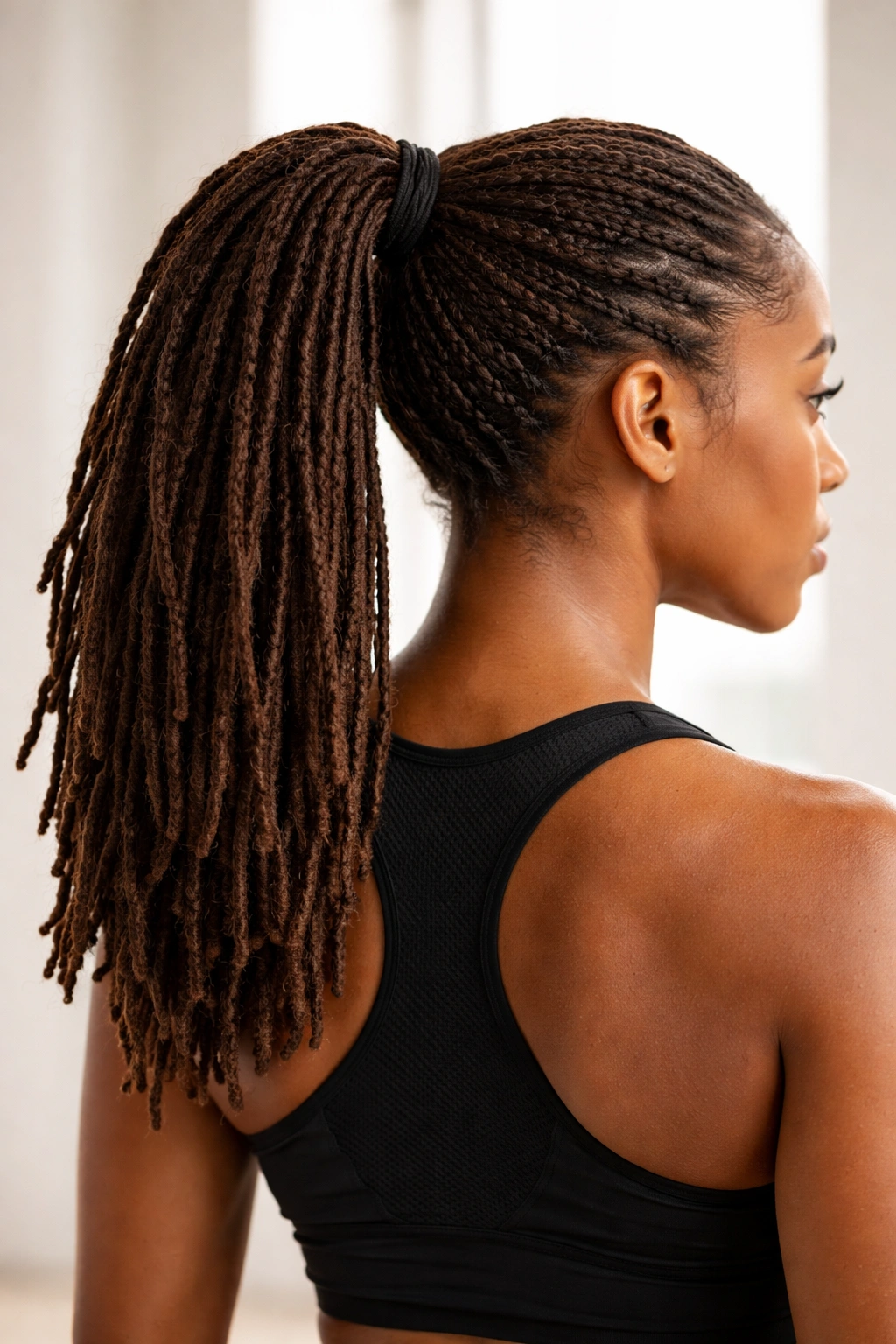
This is the ponytail that stays put when the day gets busy. It is high, tight enough to hold, and simple enough to handle movement, sweat, or a long errand run without falling apart halfway through. No extra drama. Just security.
What makes it different from a dressier version is the base. Use a sturdy band, secure the locs in two passes if needed, and keep accessories out of the way. If the roots tug too hard, you will notice it by hour one. Better to set the style with firm support and avoid that headache.
I reach for this shape when I want my locs off my neck and my face open. It is plain in the best sense.
18. Wrapped-Braid High Ponytail
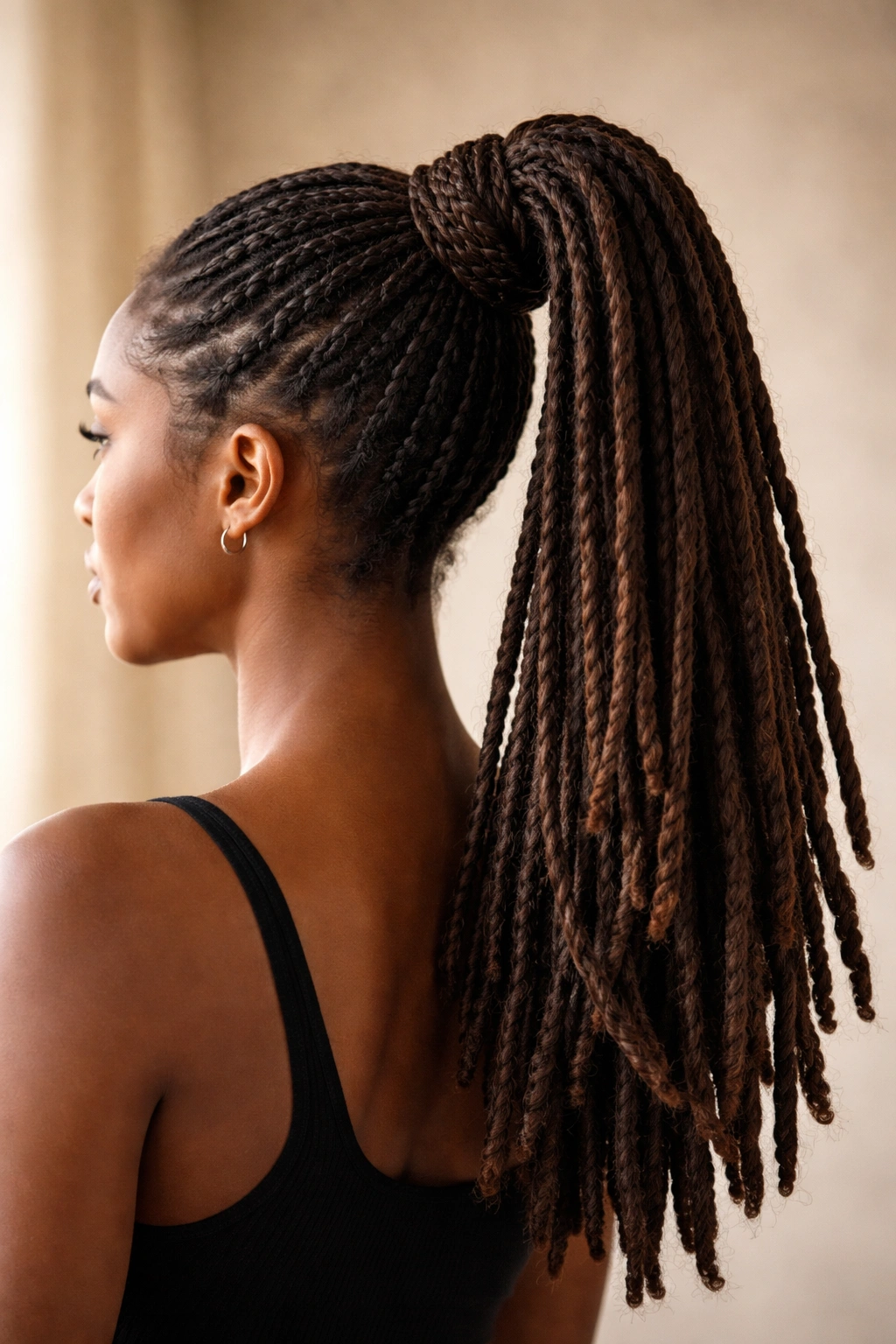
This style starts like a braid and ends like a ponytail, which gives it more texture right away. Braid a section from the front or side into the base, then tuck or wrap the braid around the ponytail holder. You get detail at the crown and a clean lift all at once.
Compared with a plain wrapped base, this version looks more layered. The braid adds a visible pattern, and that pattern helps the style feel fuller even when the locs are not extremely thick. It is a good choice if you like structure but want something a little less formal than a sleek tie-back.
A little patience pays off here. If the braid is loose, the style will look soft; if it is too tight, the front can feel harsh. Aim for the middle.
19. High Ponytail with Curved Side Swoop
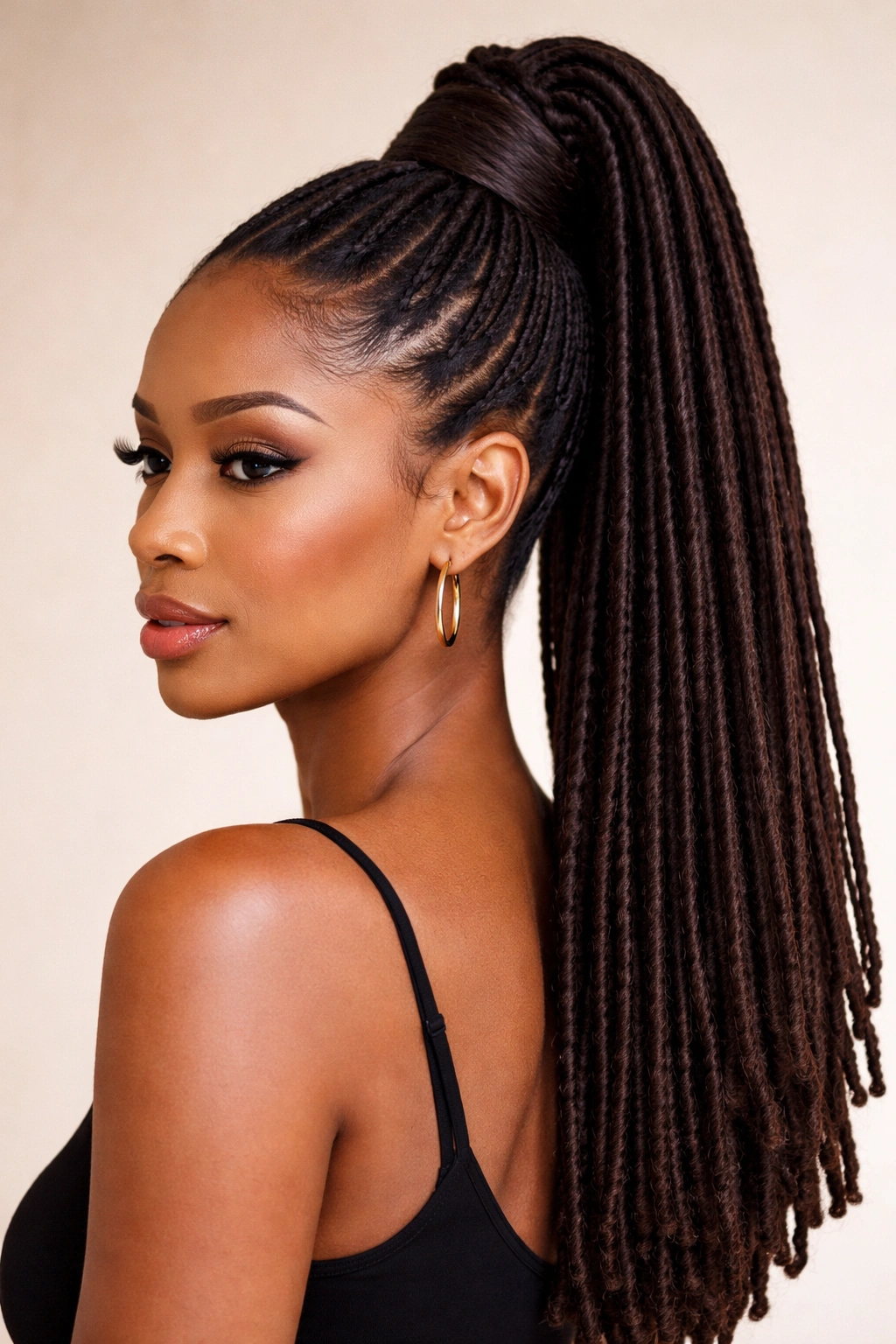
A curved side swoop can soften the front of a high ponytail in a way that feels polished without being stiff. Brush one front section across the forehead or temple, pin it gently, and let the rest of the locs rise high behind it.
This style gives you shape near the face, which can be useful if your forehead feels more open than you want. It also works well when you want a little motion at the front but do not want loose locs hanging everywhere.
The swoop should look like part of the hairstyle, not a separate piece pasted on top. Keep the surface smooth, then let the ponytail stay full. That contrast is where the style gets interesting.
20. High Ponytail with a Beaded Base
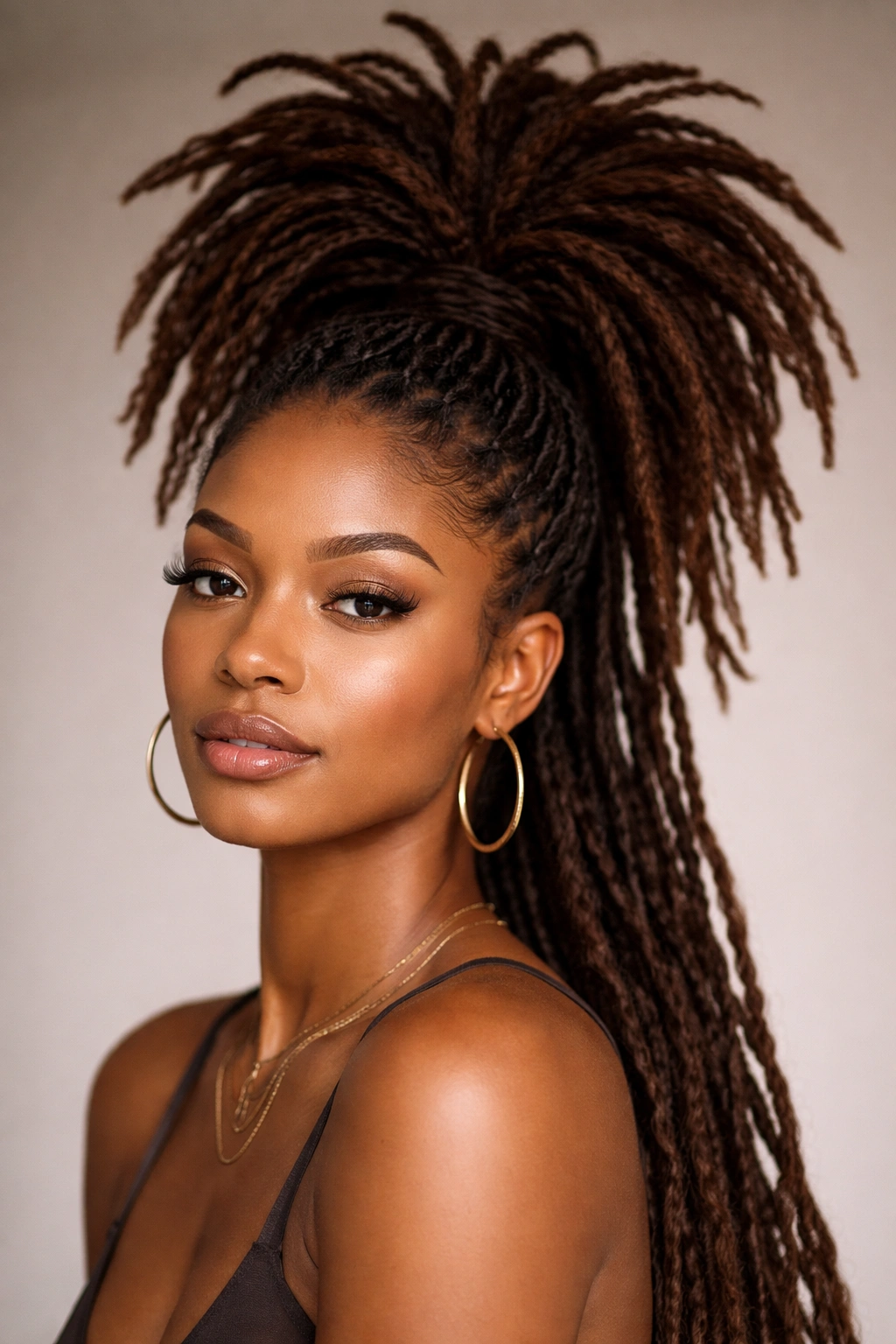
Sometimes the base deserves the spotlight, not the tail. Add beads, cuffs, or small wrapped accents near the elastic so the crown itself becomes the focal point. This is a neat trick for locs because the thickness of the hair gives the details something sturdy to sit on.
I like this on days when the ponytail is simple but the outfit needs a little extra. The base becomes the jewelry. The rest can stay calm.
A small tip: place the accessories slightly off-center if the ponytail feels too symmetrical. That tiny shift can stop the style from looking too stiff.
21. High Ponytail with Tapered Ends
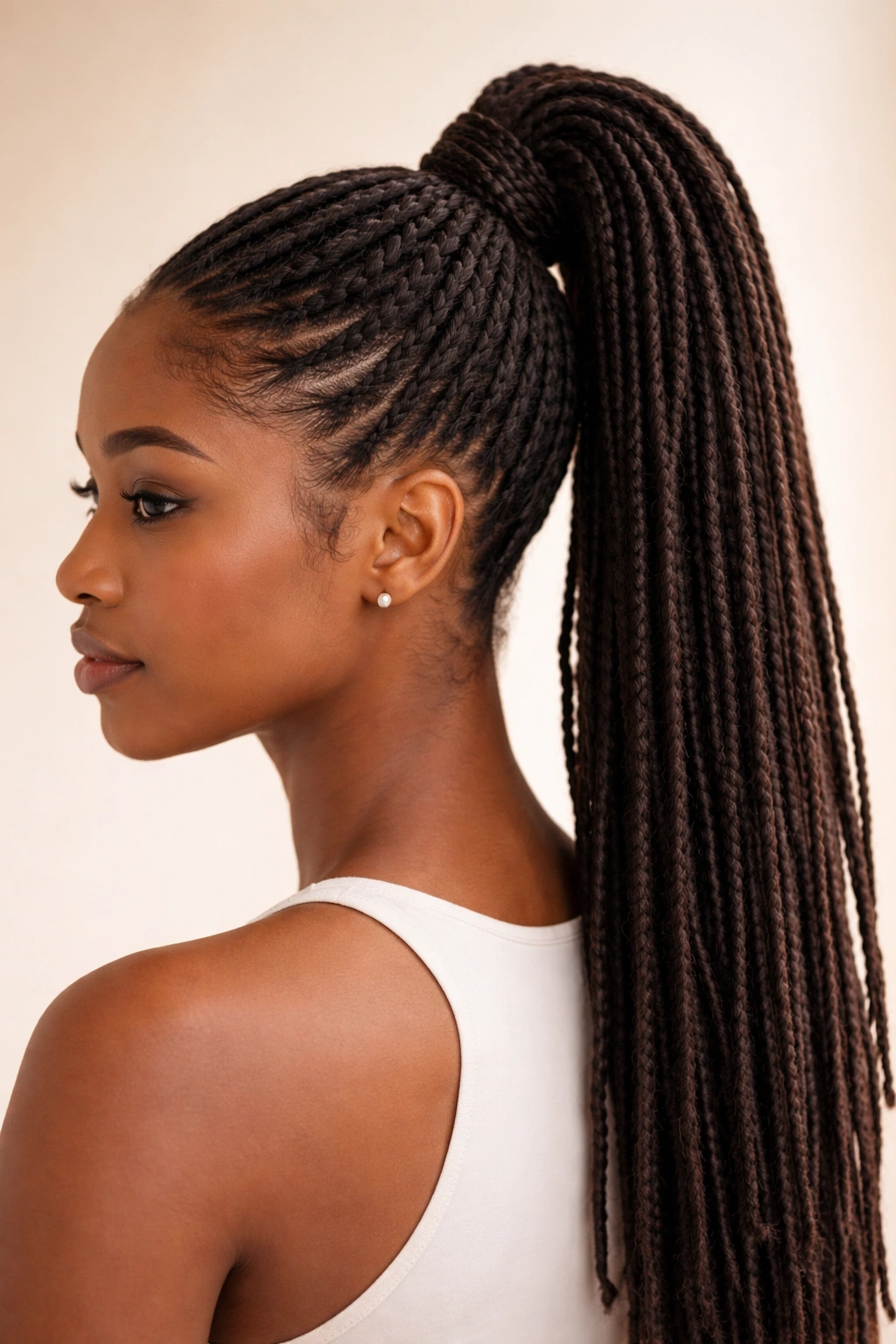
What makes tapered ends look so good in a high ponytail is the shape contrast. The crown sits full and lifted, then the tail narrows as it drops, which makes the whole style feel lighter. If your locs already taper naturally, this is easy. If they do not, you can still mimic the effect by bundling the ends more tightly near the bottom.
That shape is especially nice on medium-length locs because it keeps the ponytail from looking heavy at the bottom. It also gives the eye a clean line to follow, which helps the style feel neat even when the locs themselves are textured.
A tapered finish is one of those small choices that changes the whole read of a hairstyle. Quiet, but effective.
22. High Ponytail with a Wrapped Loc Collar
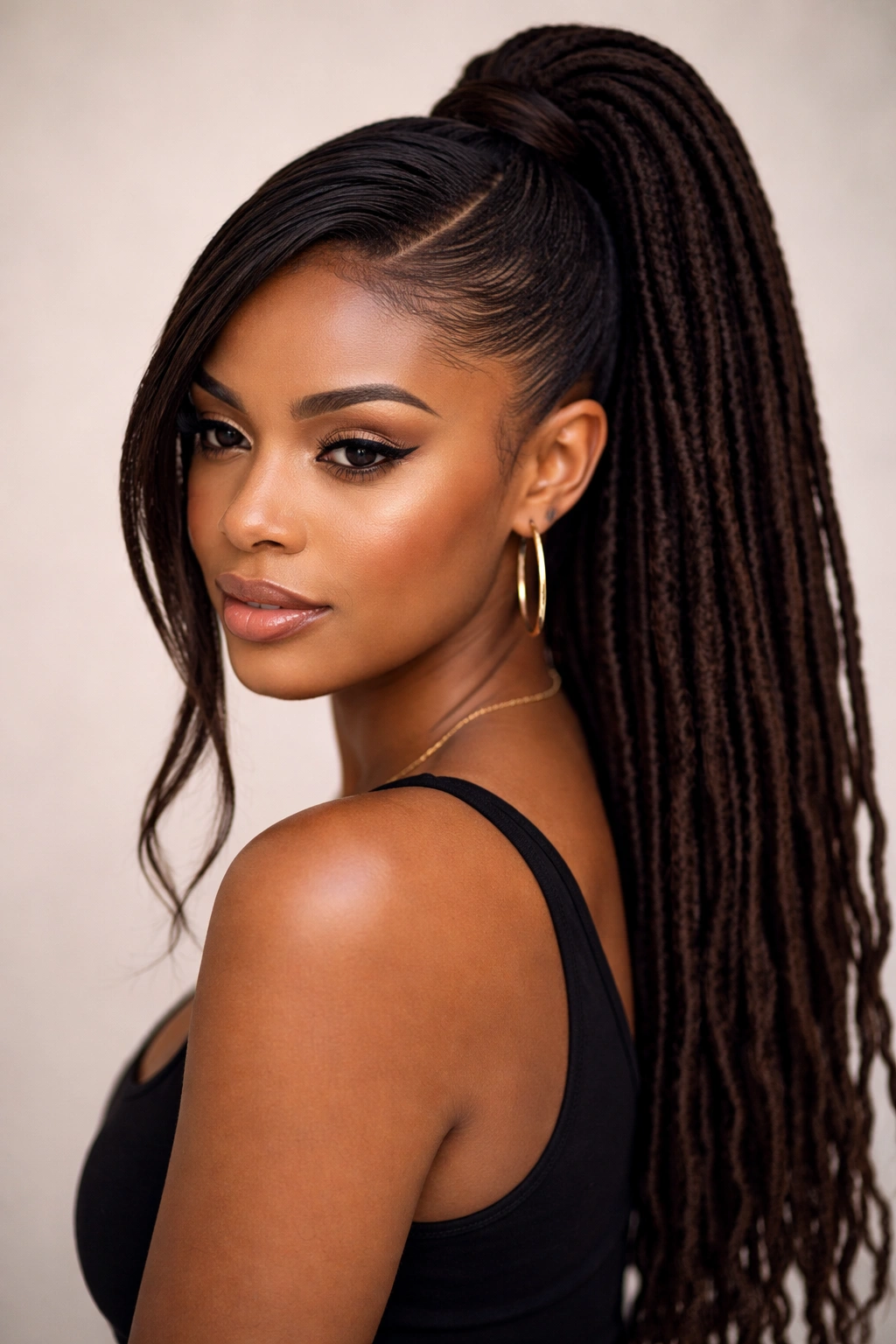
Instead of wrapping only the elastic, wrap a short section of locs around the entire base so it looks like a collar. The ponytail ends up with a smoother transition from crown to tail, and the base looks fuller without extra bulk.
This style is useful when you want a little more coverage around the tie. Maybe the band is bulky. Maybe the roots are uneven. Maybe you just want the ponytail to look finished from every angle. The wrap solves all three.
You do need enough length at the front or underside to make the wrap secure. If the loc is too short, pin it with a discreet bobby pin and tuck the end underneath. A loose wrap will slide.
23. High Ponytail with Bright Color Accents
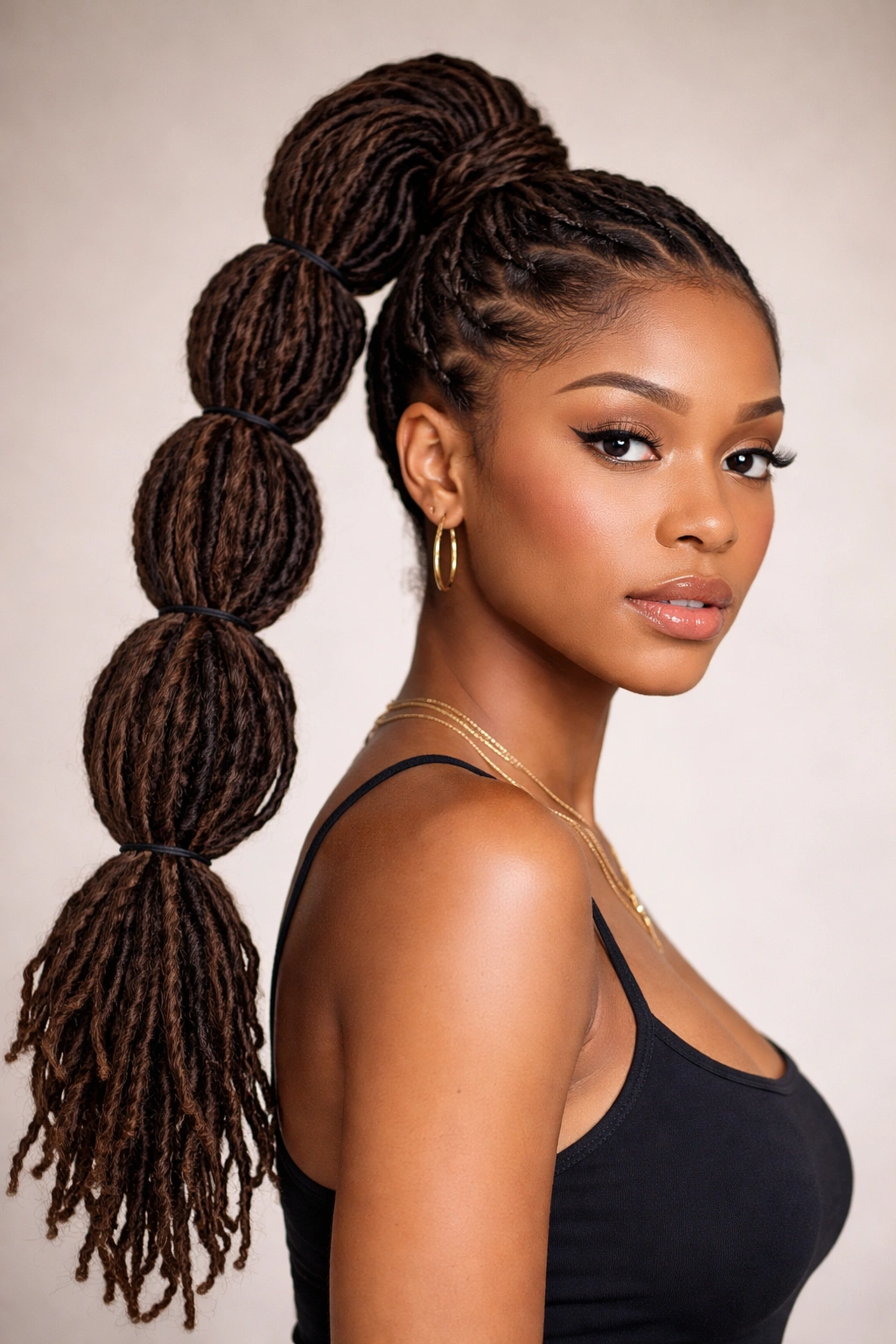
Color accents change the tone of locs fast. A few dyed ends, colored wraps, or small ribbon threads can make a high ponytail feel sharper and more personal without changing the whole structure. It is a good lane if you want personality without a full color commitment.
The strongest versions of this look use one or two accent shades, not five. Too many colors fight each other. One accent can be enough to pull the eye upward and make the ponytail feel intentional.
Where color works best
- On the outermost locs near the face.
- At the ends, where movement shows it off.
- Around the base if you want a subtle ring of color.
A little goes a long way here. That’s the whole point.
24. High Ponytail with Ribbon Tie
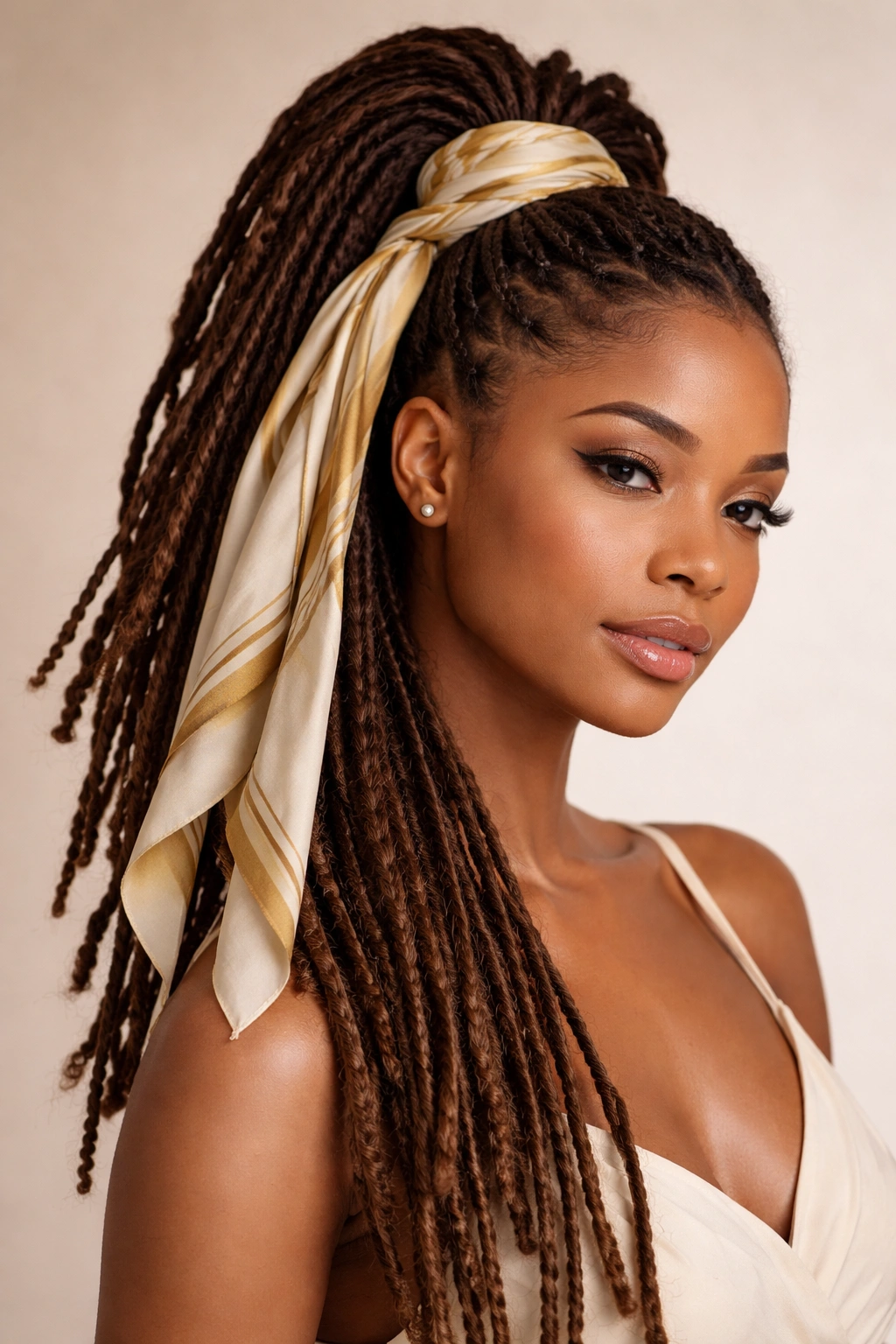
A ribbon tie is softer than a scarf and a little more structured than a wrap. Tie it around the base in a bow, let the tails fall, and keep the rest of the ponytail clean. The contrast between the strong loc texture and the soft ribbon is what makes this style stand out.
This one leans feminine in a classic way, but it does not have to feel delicate. Use satin for shine, velvet for texture, or grosgrain if you want the bow to hold its shape. The ribbon itself becomes part of the silhouette.
I’d save this for days when the outfit already has one soft detail somewhere else — sleeves, shoes, a neckline. It ties the whole look together without overworking it.
25. Towering High Ponytail with Major Height
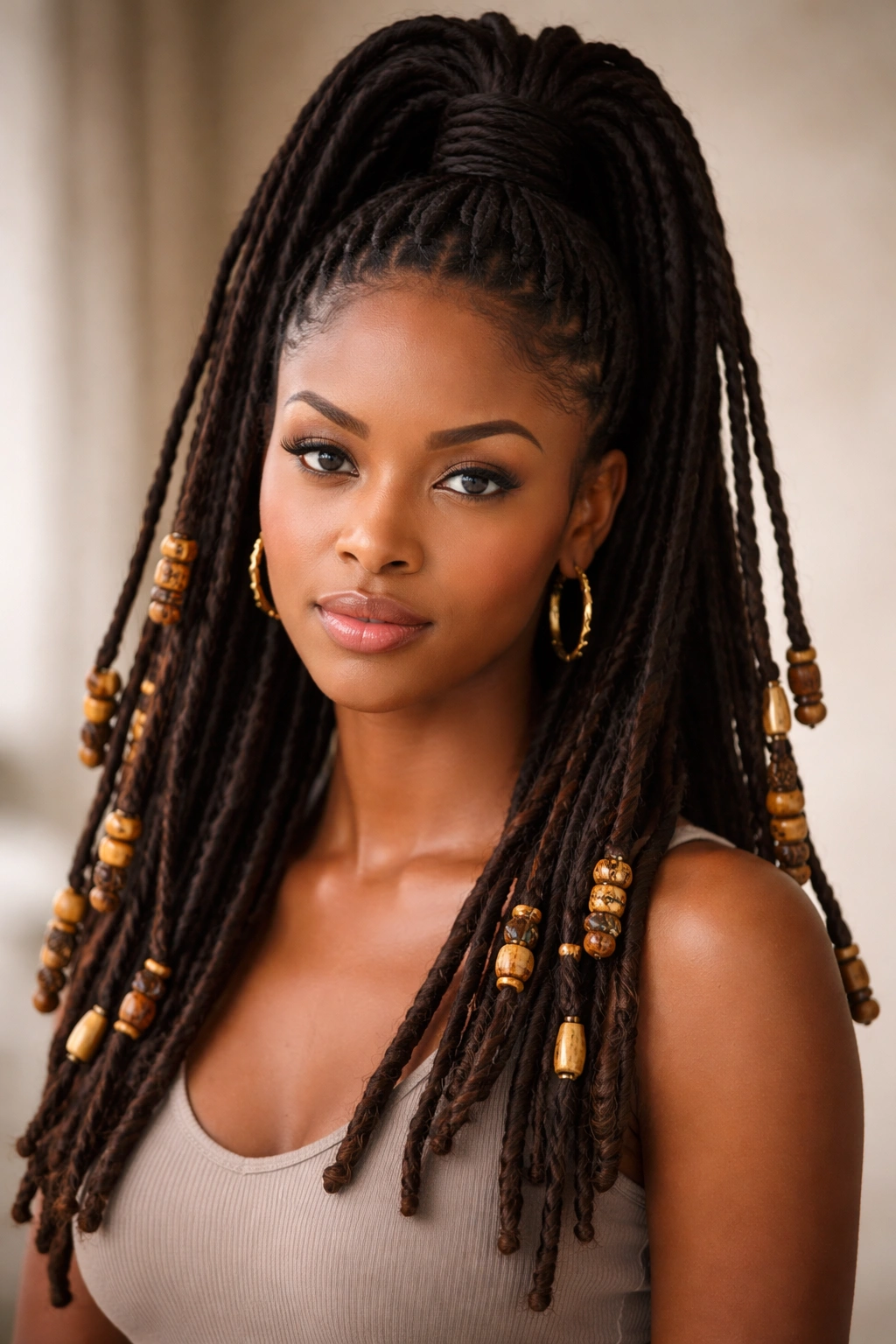
Sometimes the point is height. Real height. This version sits high on the crown and gives the locs room to rise before they fall, which makes the face look lifted and the profile look sharper. If you want presence, this is the style.
The challenge is balance. The taller the ponytail sits, the more the weight pulls backward, so the base has to be firm. Use a strong elastic, smooth the crown, and anchor the locs so they do not start sliding down after an hour.
A few things that help
A rat-tail comb for parting. A firm brush for the roots. A satin scarf for setting the front if you have time. Those three tools do more than most people admit.
26. Soft-Framed High Ponytail for Shorter Locs
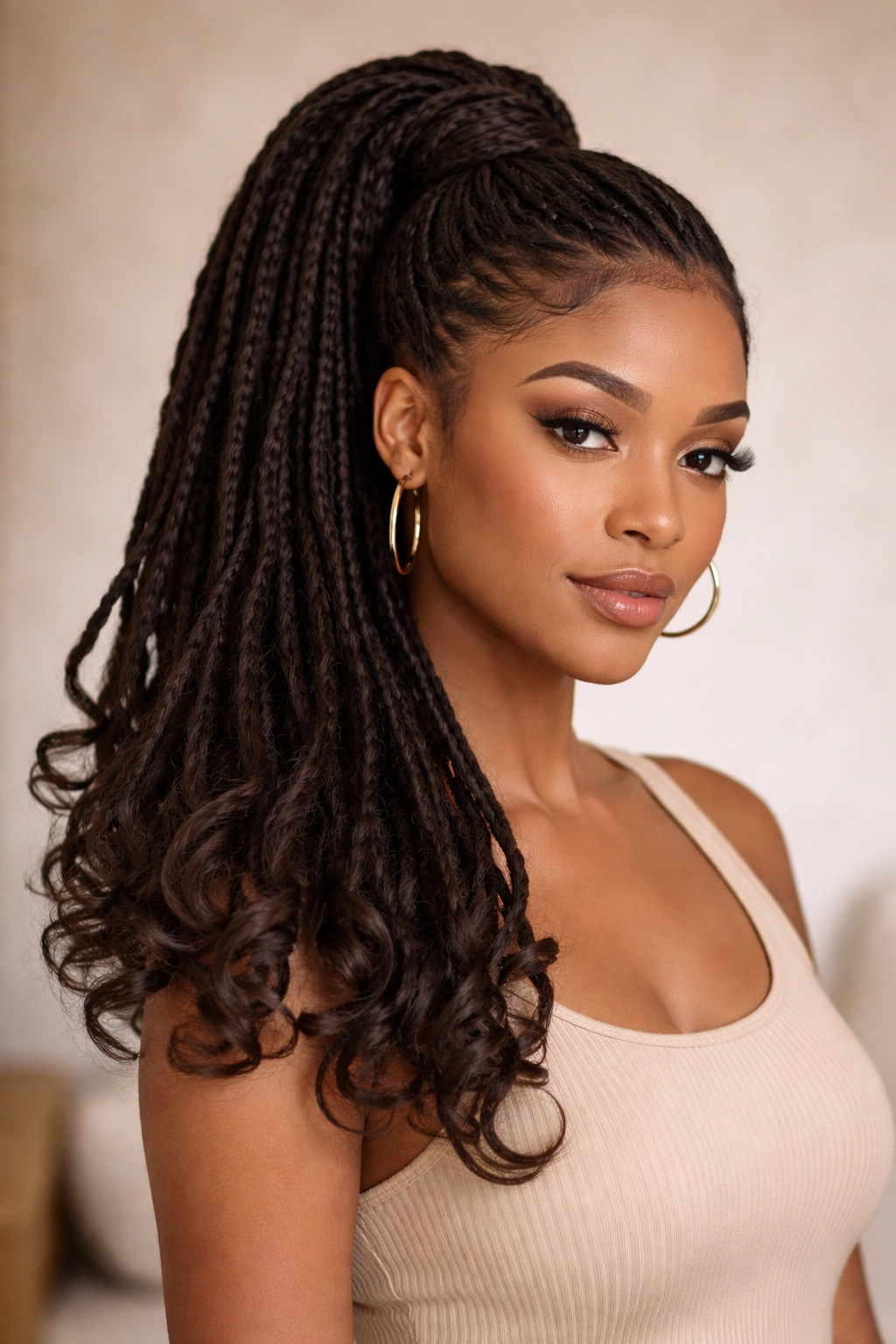
Can shorter locs still do a high ponytail? Absolutely. They just need a different shape. Instead of trying to mimic the dramatic length of long locs, keep the ponytail compact and let a few pieces frame the face or sit around the crown.
This style works because it respects the length you have. Shorter locs can look tidy and strong in a high ponytail, especially when the base is neat and the front is smooth. You do not need a giant tail to make the style read well.
Best move: keep the ponytail closer to the crown and use small pins to guide stubborn pieces into place. Fighting shorter locs into a long-tail shape usually ends badly. A compact version looks better.
27. Statement High Ponytail with Full Body
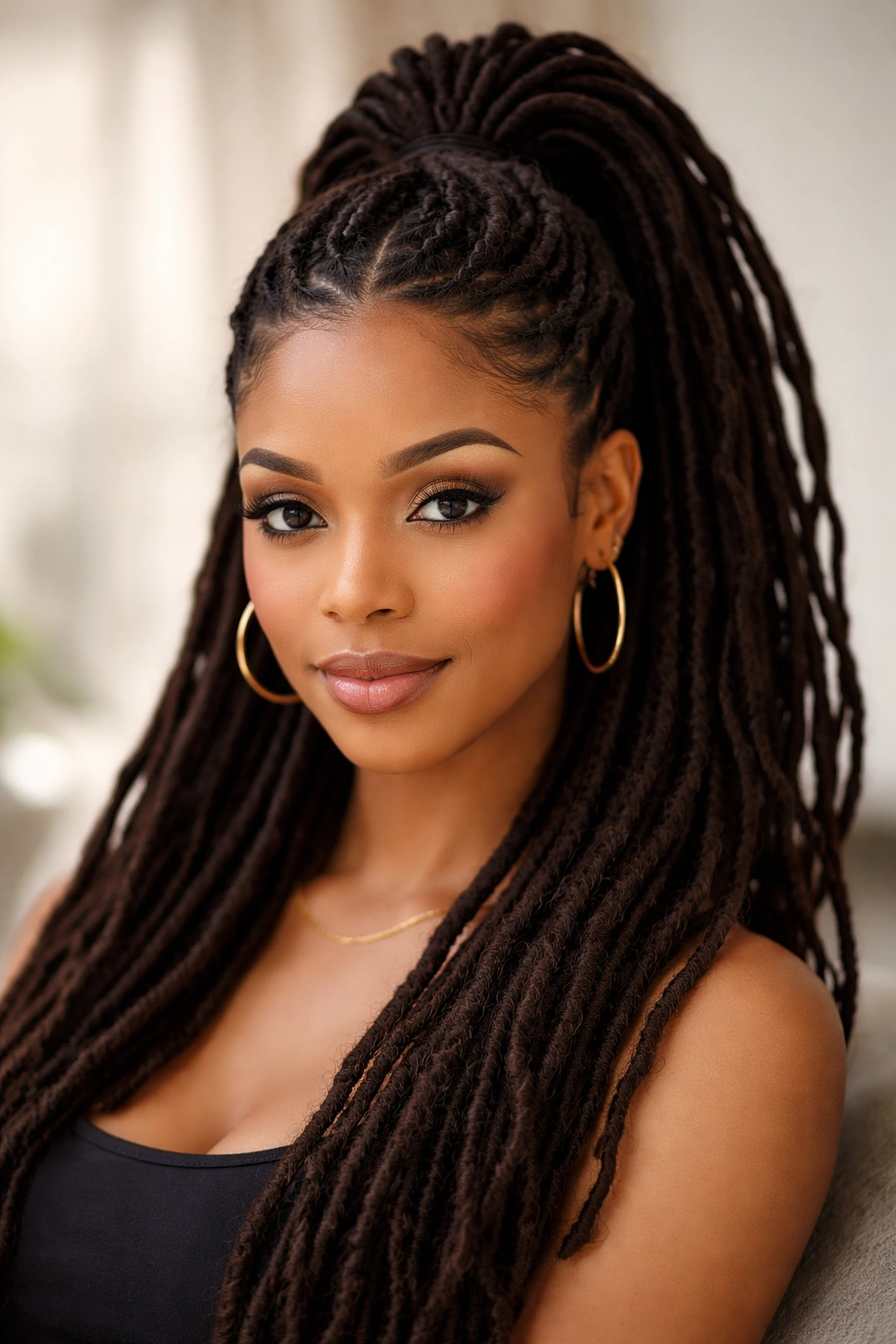
This is the loud one. The locs sit high, the tail stays full, the texture shows, and the whole style feels like it owns the room. If the rest of your outfit is simple, this ponytail carries the weight. If your outfit is already busy, it can tip the balance in a good way — or a lot, depending on how you wear it.
What makes it a statement is not one accessory. It is the shape. Big crown. Strong base. Full tail. A few careful details, maybe cuffs or a wrapped loc, but not so many that the volume gets lost.
The best part is how little it needs beyond confidence and a decent hold. Keep the roots secure, let the locs breathe a little, and stop before the style gets overworked. The ponytail should look like it belongs there, not like it fought for the space.