
You have probably experienced the specific, throbbing ache of a ponytail that was installed just a little too tight. It’s the kind of tension that makes you wish you could just cut the hair off right at the scalp. When you opt for traditional box braids, the knot at the root anchors the weight of the extension directly onto your natural hair follicle, creating a leverage point that pulls, tugs, and eventually leads to that unmistakable soreness.
The knotless method changes the physics of the entire installation. By starting with your natural hair and feeding the extension in as you go, you bypass the bulky knot entirely. The weight is distributed evenly across the braid rather than being concentrated at the root. When you pull these braids up into a high ponytail, the difference is immediate. You get the sleek, dramatic aesthetic of a lifted, high-tension style without the actual scalp trauma that usually accompanies it.
It isn’t just about comfort, though that is a massive benefit. It’s about longevity and health. Because there is no bulky knot, the braid sits flat against your scalp, mimicking the natural flow of your own hair. This allows for a more versatile, fluid style that moves when you move. Whether you are dealing with fine, delicate strands or thick, coarse textures, the high knotless ponytail offers a way to achieve a “snatched” look without compromising the hairline you are trying to protect.
1. The Classic Sleek High Ponytail
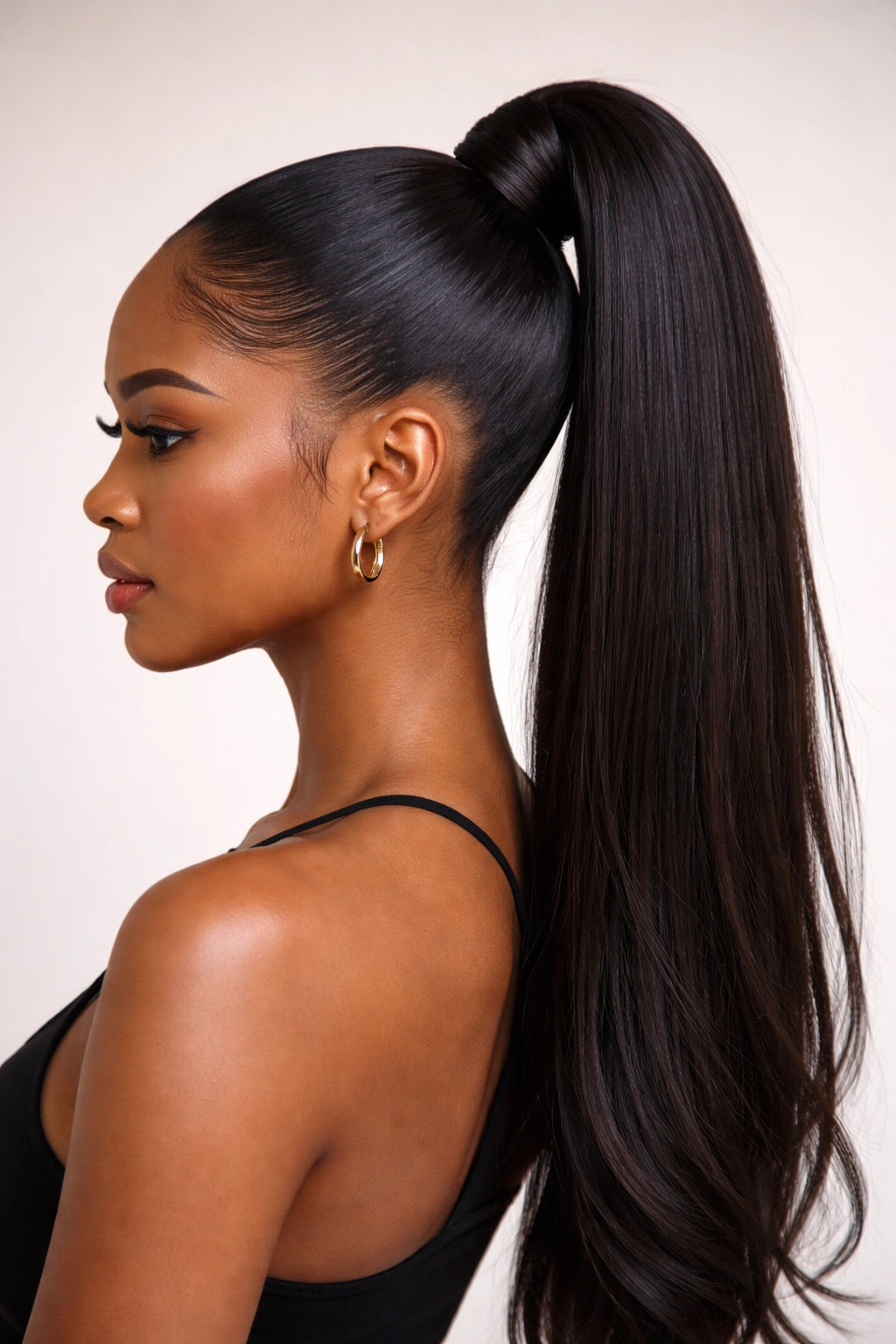
This is the baseline, the standard against which all other high ponytails should be measured. It relies entirely on the precision of the parting at the base and the smooth, tension-free integration of the extensions. You want your braider to gather the hair toward the crown of the head, ensuring that the braids are fed in with enough slack to allow for easy movement.
Why It Works for Daily Wear
The beauty of this style lies in its simplicity. It is an “everything” look. You can wear it to the gym, the office, or a formal dinner, and it fits seamlessly. Because it lacks the bulk of traditional knot-based braids, the ponytail doesn’t feel heavy or stiff. It swings naturally, and you can pull it into a bun if the weather gets too hot or you just want a change.
Pro tip: Focus on the base tension. Even if the braids are knotless, if they are gathered too tightly into the final ponytail band, you defeat the purpose. Use a soft, non-snag scrunchie to secure the ponytail rather than a tight rubber band that cuts into the hair.
2. The Curly-End Bohemian Style
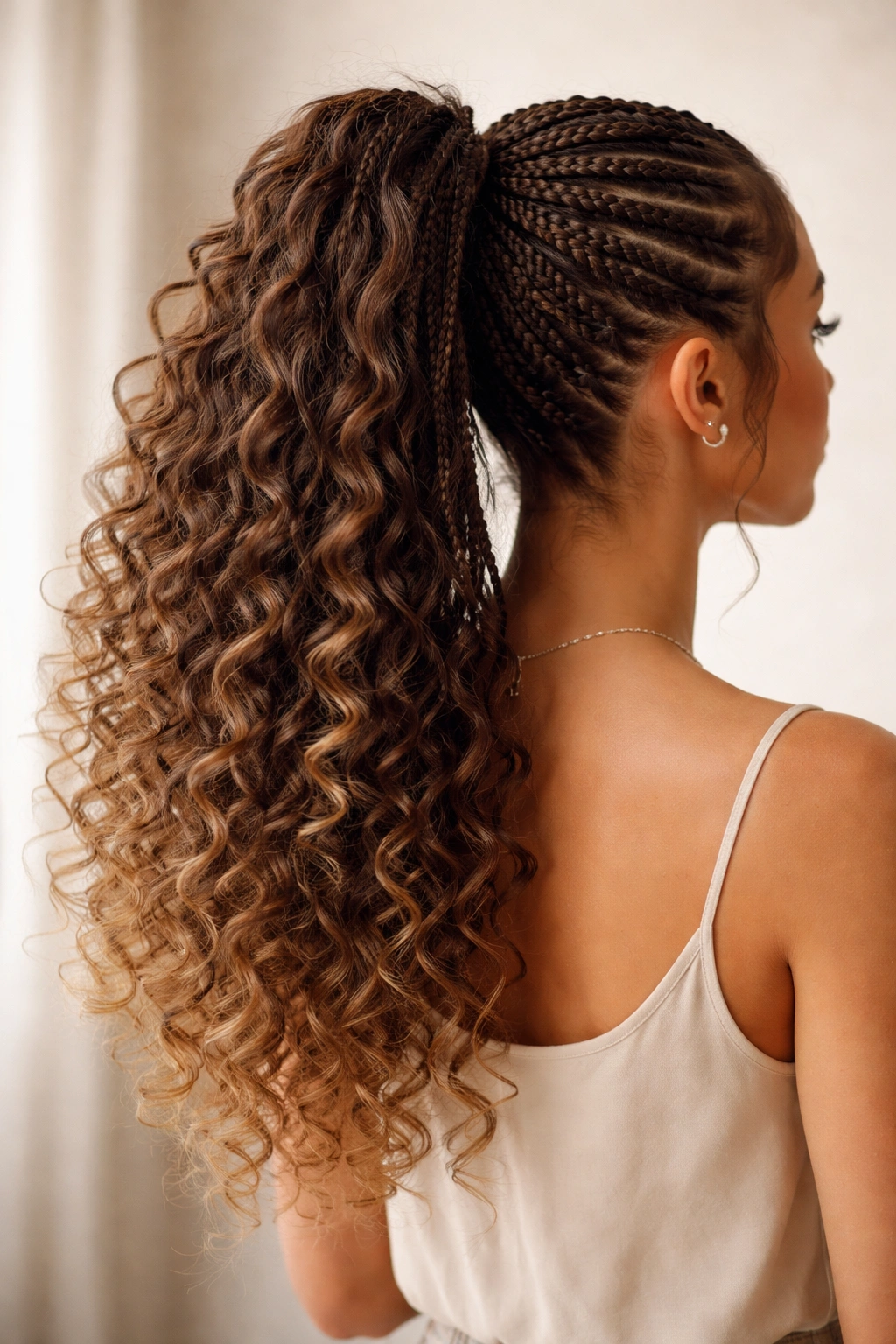
If you want the structure of a braid with the softness of a curly style, this is the go-to. The braids themselves stop about midway down the length, transitioning into loose, flowing curls. When pulled into a high ponytail, these curls cascade down the back, creating a voluminous, romantic silhouette that feels far lighter than a full-length braided ponytail.
Managing the Curls
You will need to maintain these curls differently than the braids. Since the hair is loose, it is prone to tangling if neglected. A light spritz of water and a leave-in conditioner spray are your best friends. Run your fingers through the curls every morning to separate them and prevent matting. If the curls lose their definition, wrap them around a flexi-rod for a few hours.
3. The Triangle-Part Base
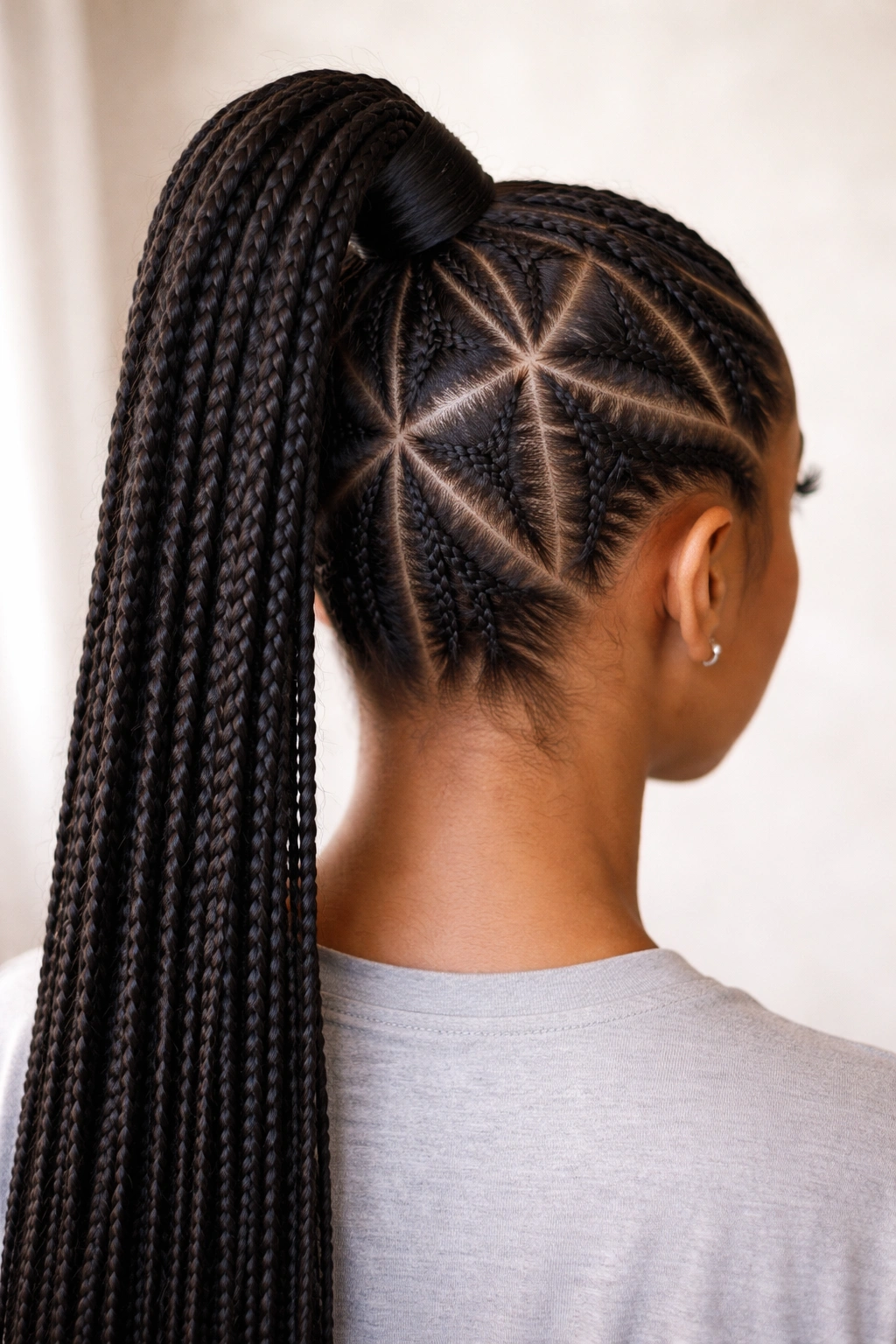
The base of your ponytail is the first thing people see. Instead of the standard square box parts, ask for triangle sections. This adds an immediate layer of visual complexity without adding any extra tension to your scalp. The geometry of the triangles breaks up the visual weight of the hair, making the base look clean and intentionally styled.
Why This Style Lasts
Triangle parts are surprisingly sturdy. Because the triangles distribute the tension differently than squares, the hair often stays neater for longer. When you gather these into a high ponytail, the patterns create a nice directional flow toward the center of your head. It’s a subtle detail that makes the whole installation look like a deliberate piece of art rather than just a protective style.
4. The Deep Side Part
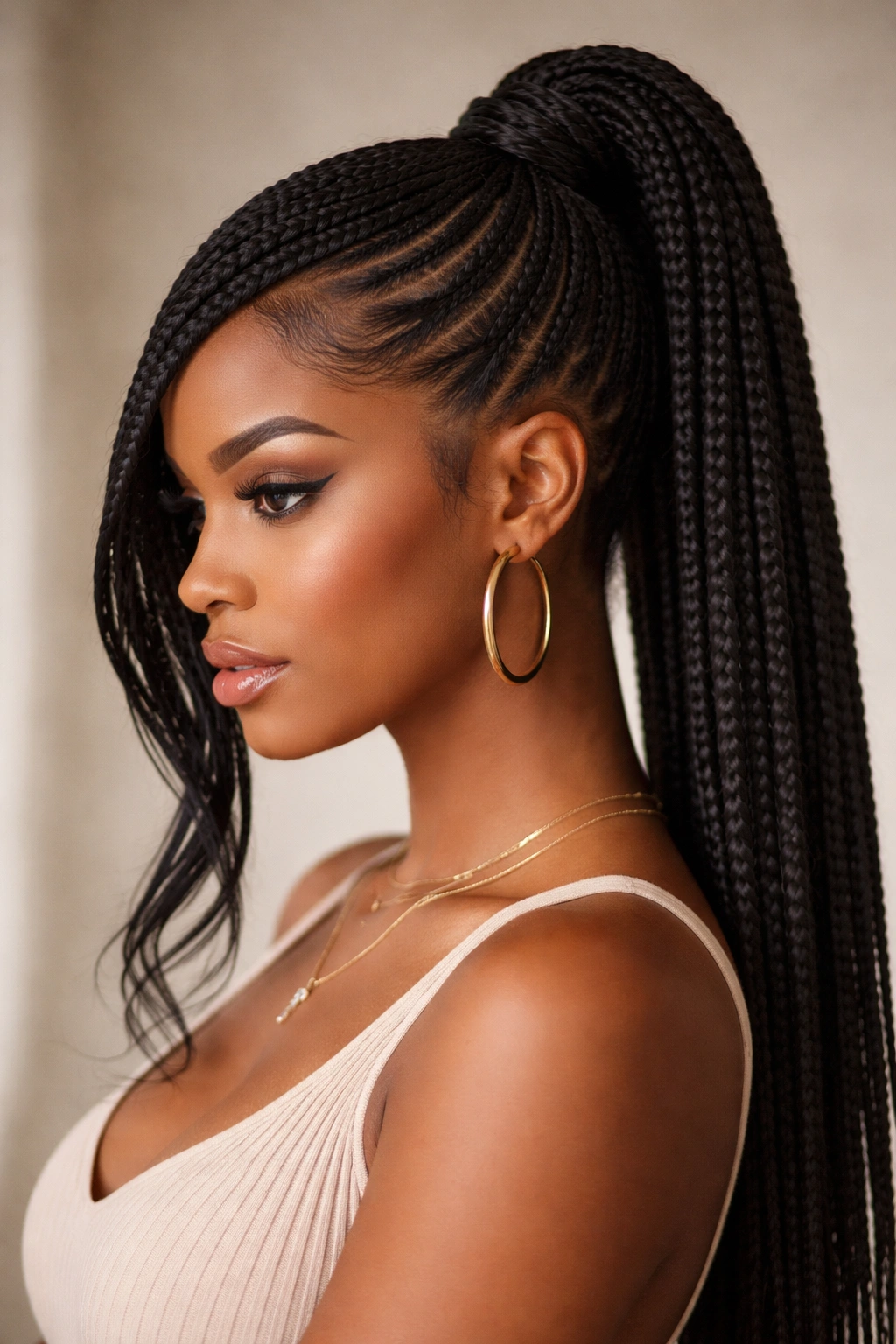
Most high ponytails are gathered from a center-point perspective, but a deep side part changes the entire frame of your face. By sweeping the braids across the forehead before pulling them into the high ponytail, you create a side-swept bang effect. This is particularly flattering if you have a rounder face shape, as the diagonal line breaks up the symmetry.
Styling the Sweep
The key here is the direction of the braids. They need to be directed toward the side before being pulled up. If you try to force a side part into a standard back-pulled ponytail, the braids will bunch up awkwardly. Ensure your braider understands the directional flow before they begin the first section. This style feels sophisticated and mature, moving away from the more athletic look of a standard center-pulled ponytail.
5. The Ombré Color Block
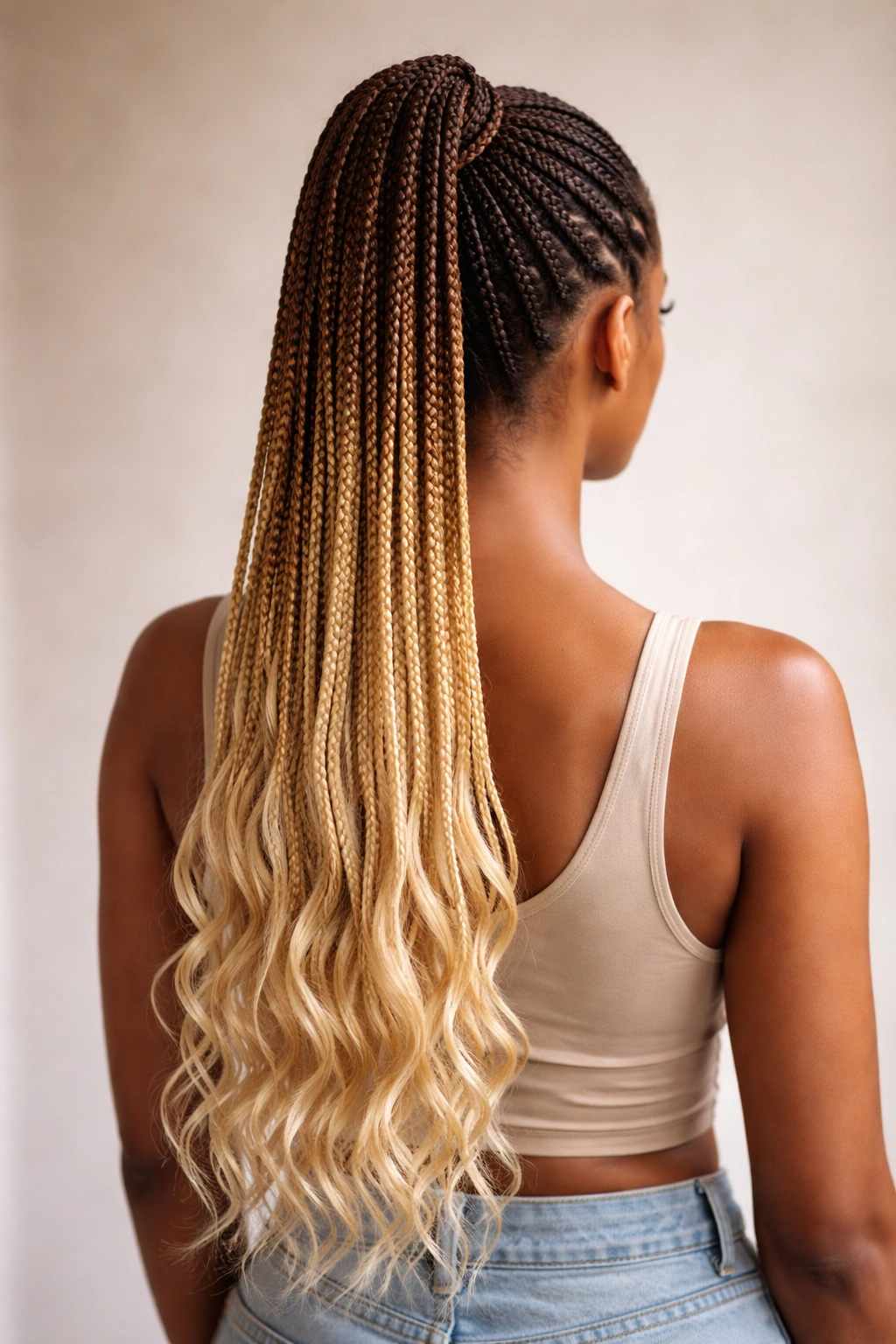
If you are hesitant to dye your natural hair, the high knotless ponytail is the perfect canvas for experimenting with color. You can use lighter shades, bright neons, or deep burgundies in the extensions. When pulled into a high ponytail, the color concentration changes. The roots will be your natural color, and as the ponytail cascades down, the lighter or bolder color becomes the dominant feature.
Choosing Your Contrast
For a subtle look, go with a honey-brown or caramel ombre. For high drama, try platinum blonde or a vibrant cobalt blue. Because the knotless braids lie flat, the color transition looks more natural and less “stuck on.” It mimics the way hair lightens naturally in the sun, creating a gradient that looks soft and intentional rather than harsh.
6. The “Goddess” Tendril Look
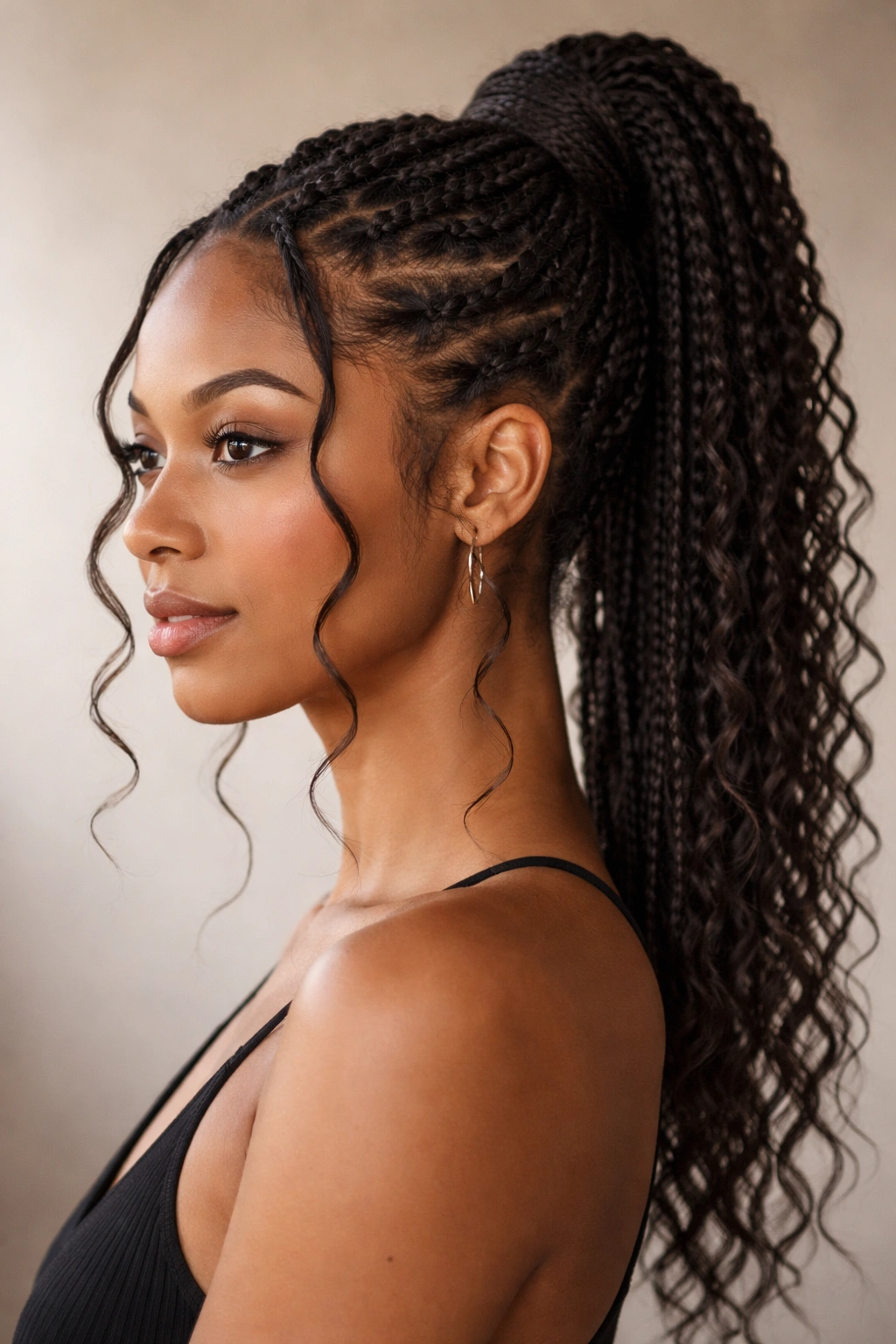
This style is all about the face-framing pieces. You leave out specific, thinner strands of hair—often curly or wavy—near your temples and the nape of your neck. When you pull the braids up into the ponytail, these tendrils hang down, softening your features. It’s a very popular aesthetic because it gives you the sleekness of an updo without the harshness of a pulled-back hairline.
Maintenance Note
These loose pieces are the first to get frizzy. Keep a small travel-sized bottle of mousse in your bag. If the tendrils start looking a little wild or dry, a quick application of mousse can restore their shape and shine. Do not over-manipulate these pieces, or they will break or lose their curl pattern entirely.
7. The Zig-Zag Parting Detail
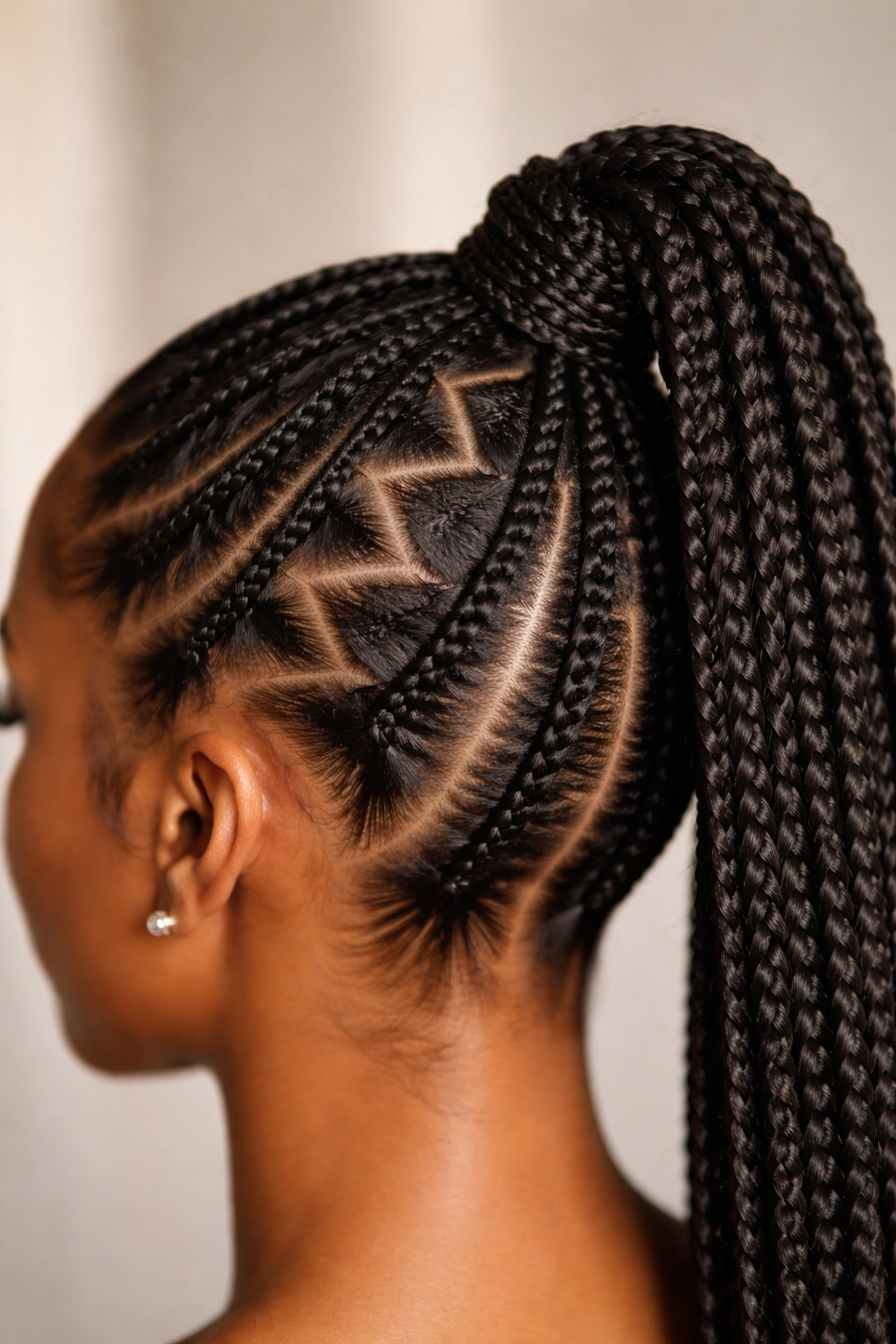
Remember the zig-zag parts from the 90s? They are back, but with a refined edge. Instead of sharp, messy lines, a skilled braider can create precise, interlocking zig-zags that lead the eye directly to the center of your high ponytail. It creates a seamless look where the parts feel almost like they are weaving into each other.
Why It’s Unique
This style is fantastic if you find standard box parts a bit boring. It adds a sense of movement to the scalp. Even when you are just standing still, the parting pattern suggests dynamic energy. It’s a conversation starter, and it looks exceptionally clean when paired with sleek, straight-ended braids.
8. The Extra-Long Dramatic Length
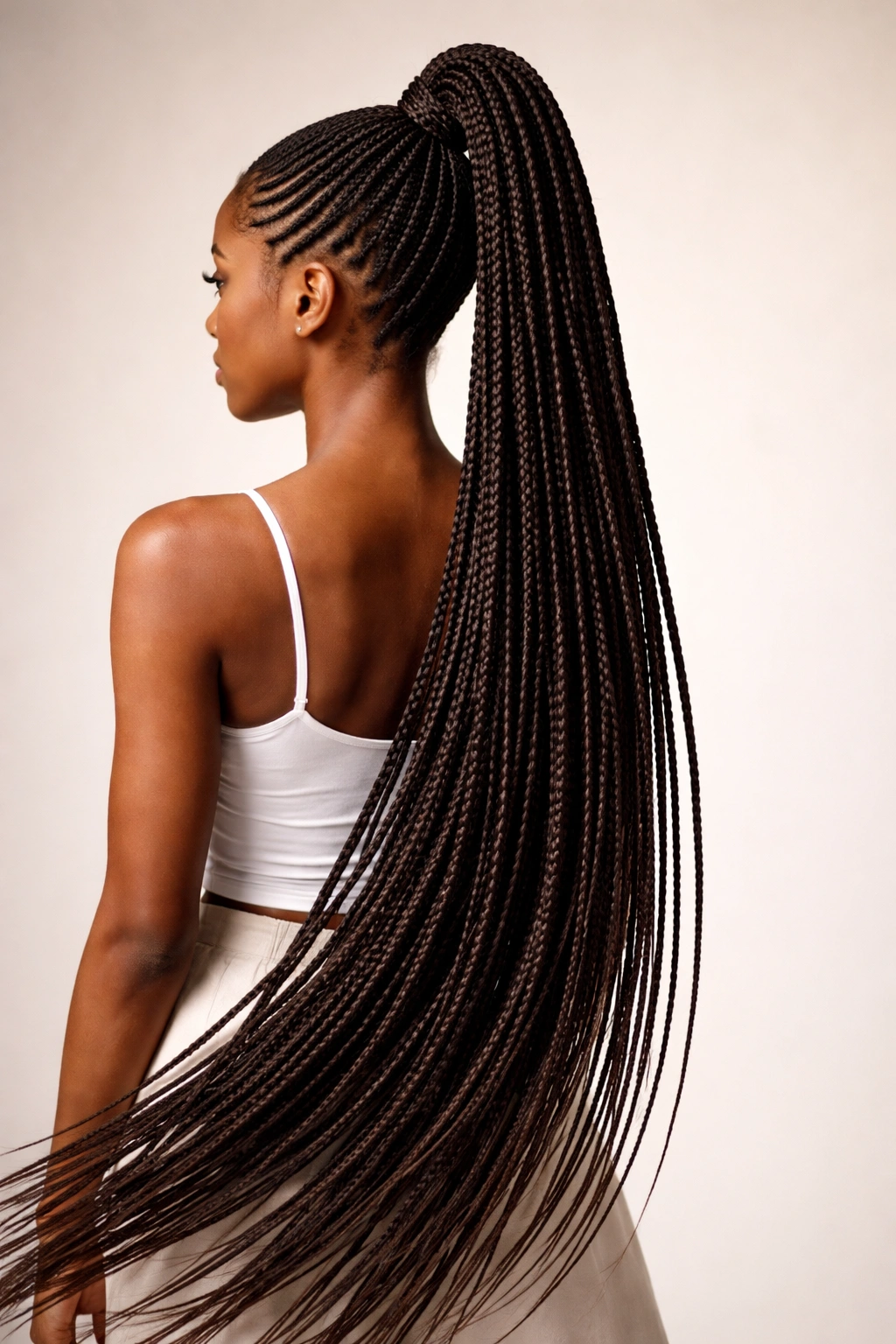
Sometimes, you just want the drama of hair that grazes your lower back. Knotless braids are ideal for this because the lack of knots means the weight is manageable. When you pull this extreme length up into a high ponytail, you get a fountain-like effect. It looks regal, powerful, and undeniably cool.
The Trade-off
There is a trade-off with length: maintenance. The longer the hair, the more it will tangle if you aren’t careful. You should sleep with a large silk bonnet or a silk pillowcase. If you don’t wrap the hair, the friction against your bedding will cause the braids to fray and get fuzzy within days. Invest in a bonnet designed for extra-long styles to keep that length looking crisp.
9. The Cuff-Accessorized Style
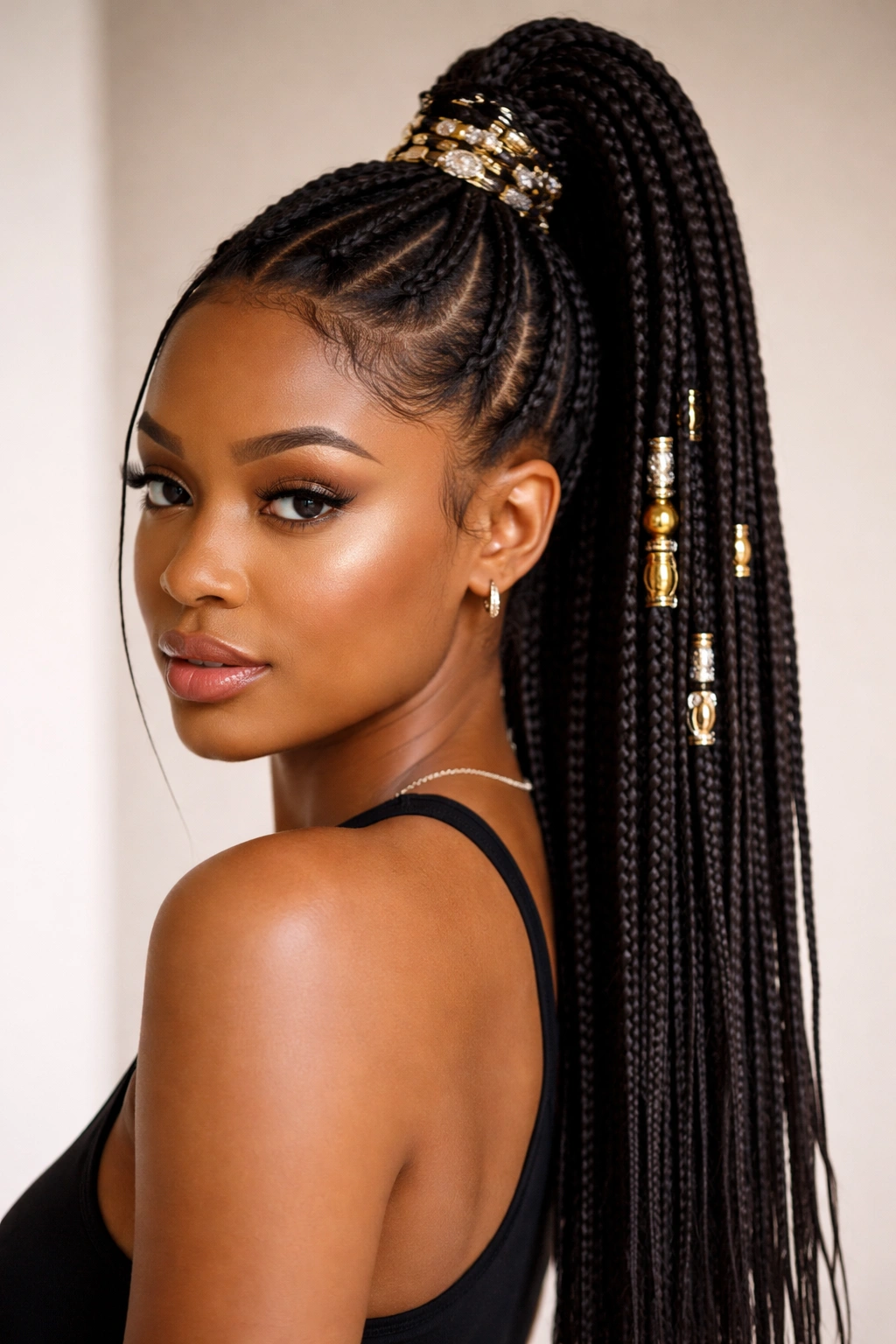
Gold and silver cuffs are an easy way to elevate a standard knotless ponytail. You don’t need to put them on every single braid. In fact, it often looks better if you only place them on the braids that face forward or on the braids that make up the “wrap” around the base of the ponytail.
Placement Matters
Use the cuffs to hide the band you are using to hold the ponytail together. If you use a hair tie, wrap one or two braids around the base to cover the tie, then secure those braids with a gold cuff. It hides the mechanical aspect of the style and turns the accessory into part of the structure. It’s a functional trick that doubles as a stylistic choice.
10. The Deep Wave Texture
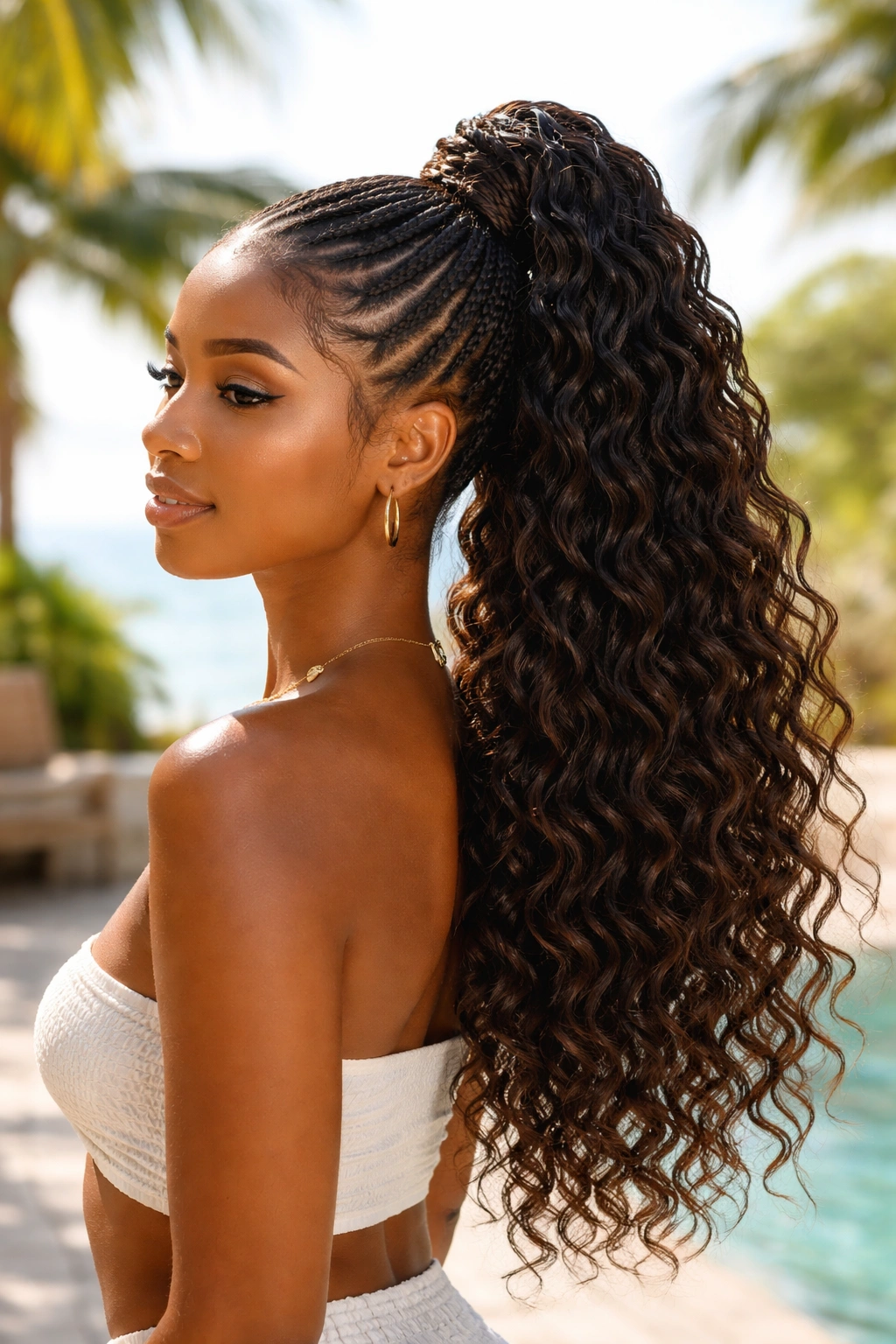
Not all braiding hair needs to be sleek and straight. Using deep-wave or water-wave texture hair for your knotless braids creates a completely different vibe. It is soft, voluminous, and mimics a natural, textured blowout. When pulled into a high ponytail, it looks like a thick, luxurious mane.
Managing the Volume
This style takes up space. If you are used to sleek, straight braids, be prepared for this style to feel “bigger.” It’s perfect for vacation or summer months because it looks effortless and beachy. You don’t need to stress about keeping it perfectly straight; the beauty of the deep wave is that a little frizz actually adds to the aesthetic.
11. The Wrapped-Base Detail
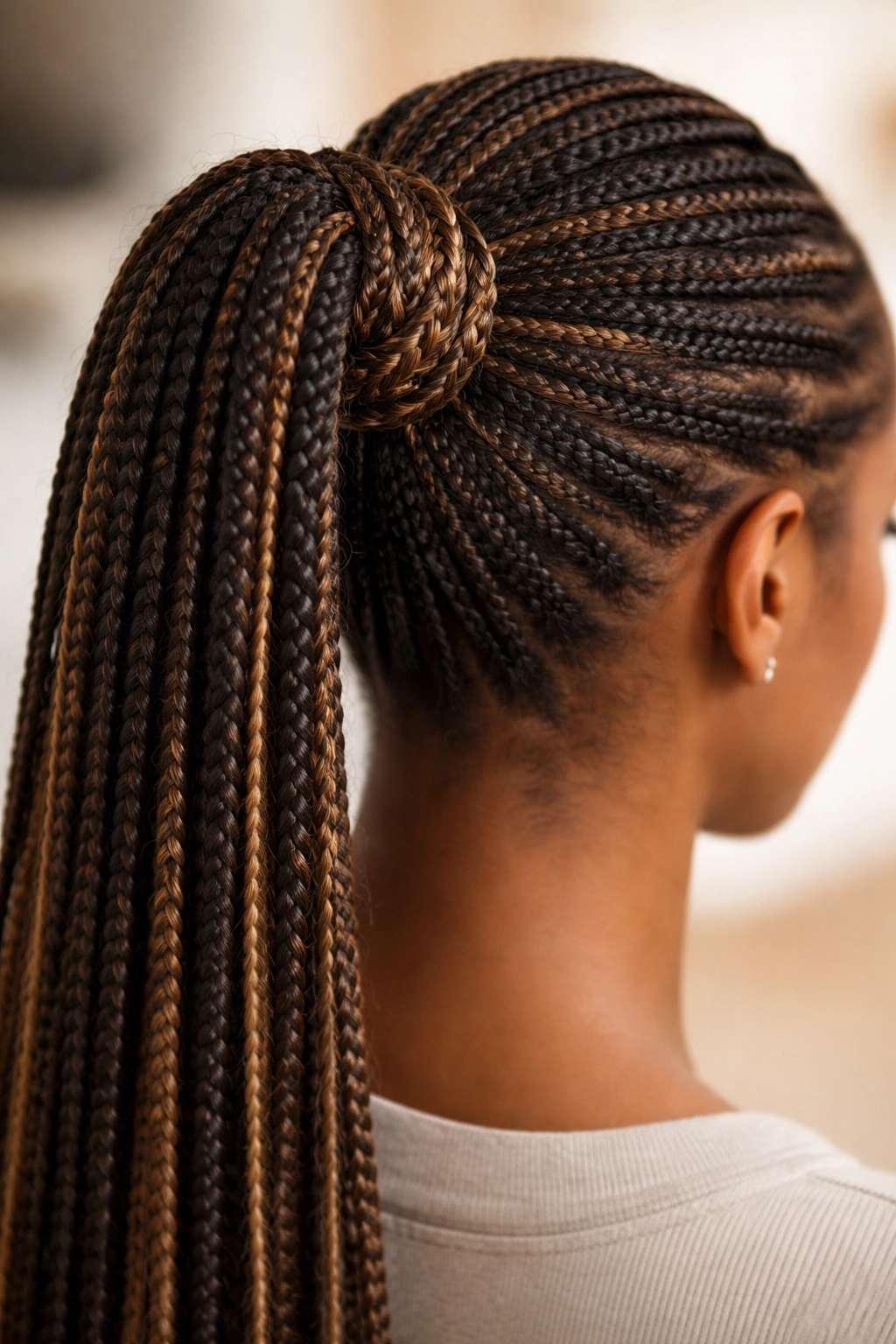
One of the most common complaints with ponytails is the visible hair tie. You can fix this by taking a few braids from the underside of your ponytail and wrapping them around the base. It creates a thick, braided “scrunchie” effect that looks intentional and polished.
Securing the Wrap
Don’t use a rubber band to hold this wrap in place. Instead, use a hair pin or a small bobby pin. Tuck the ends of the wrapping braids into the base of the ponytail, sliding the pin in horizontally. This keeps the look clean and avoids creating tension points at the very base where your scalp is already holding the weight of the ponytail.
12. The Two-Tone Blonde and Black
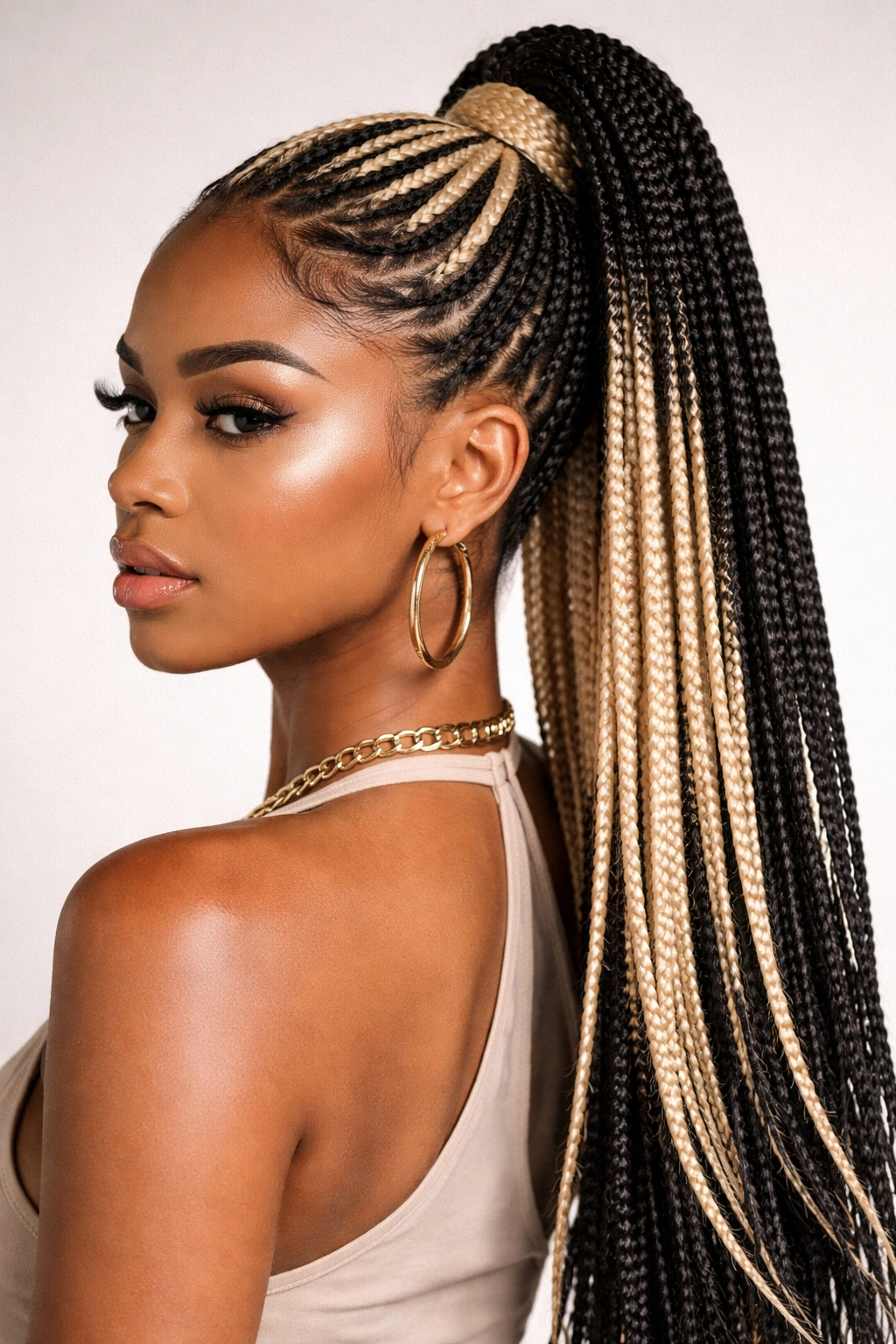
High-contrast hair is a bold statement. Whether it is a full “Skunk Stripe” vibe with blonde braids at the front and black at the back, or an interwoven mix, the high ponytail highlights this contrast beautifully. When you pull the hair up, the colors mix as the ponytail cascades down.
Why This Works
The high ponytail naturally blends the colors because the strands are gathered from all around the head. If you place the blonde braids strategically—such as around the hairline—the ponytail will have a dominant blonde highlight. It’s a great way to test out if you want to bleach your real hair without the commitment.
13. The Half-Up, Half-Down Hybrid
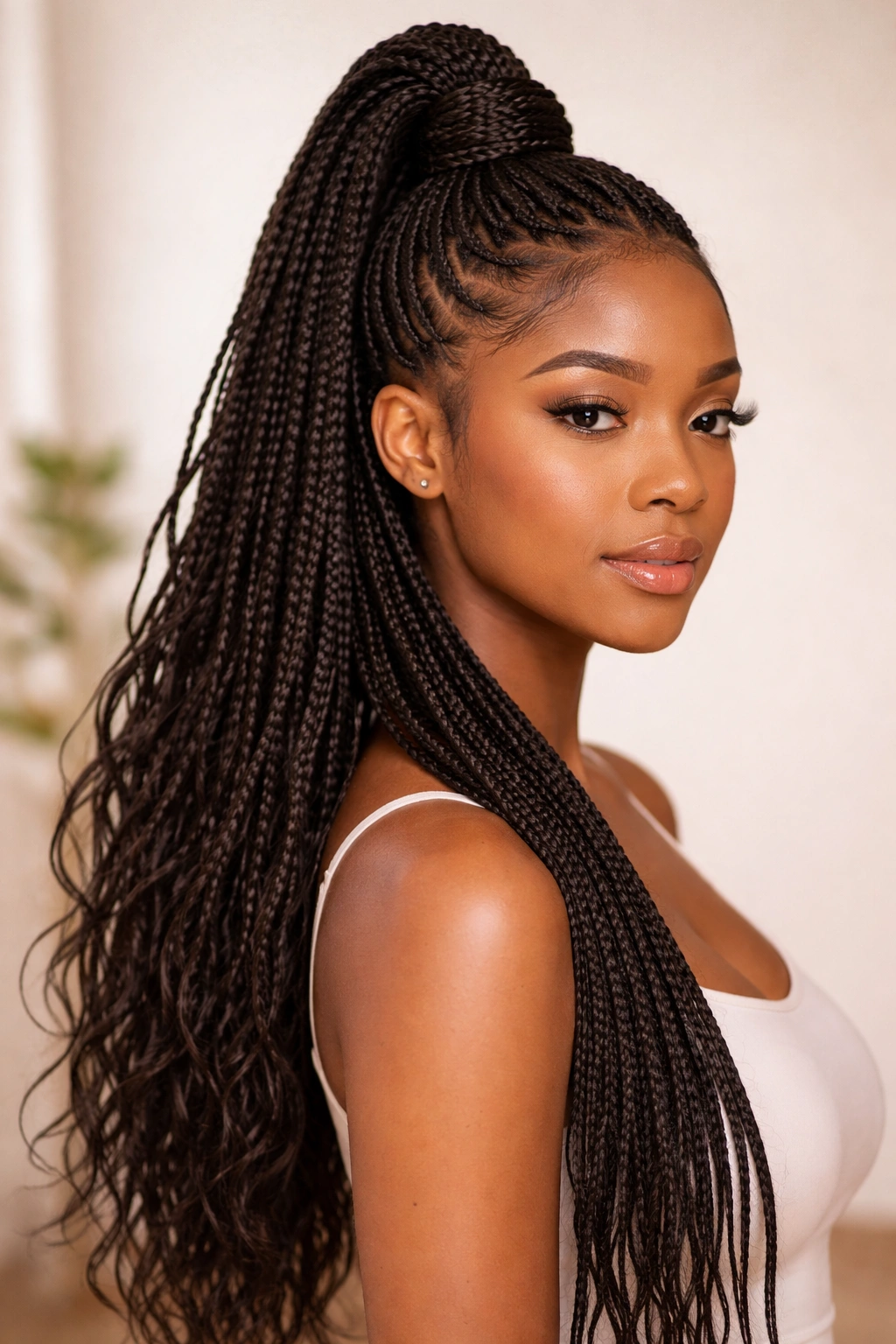
Okay, this isn’t a full ponytail, but it is the cousin of the high knotless ponytail that deserves a mention. You pull the top half of your braids into a high, secure ponytail and leave the bottom half flowing freely. This gives you the height and the “lift” of a ponytail without having to manage all that hair in one place.
The Comfort Factor
This is arguably the most comfortable way to wear your braids. It puts less stress on your hairline because the bottom half of the braids is carrying its own weight. It’s a very youthful, playful style that works well with shorter or medium-length braids.
14. The Chunky Feed-In Base
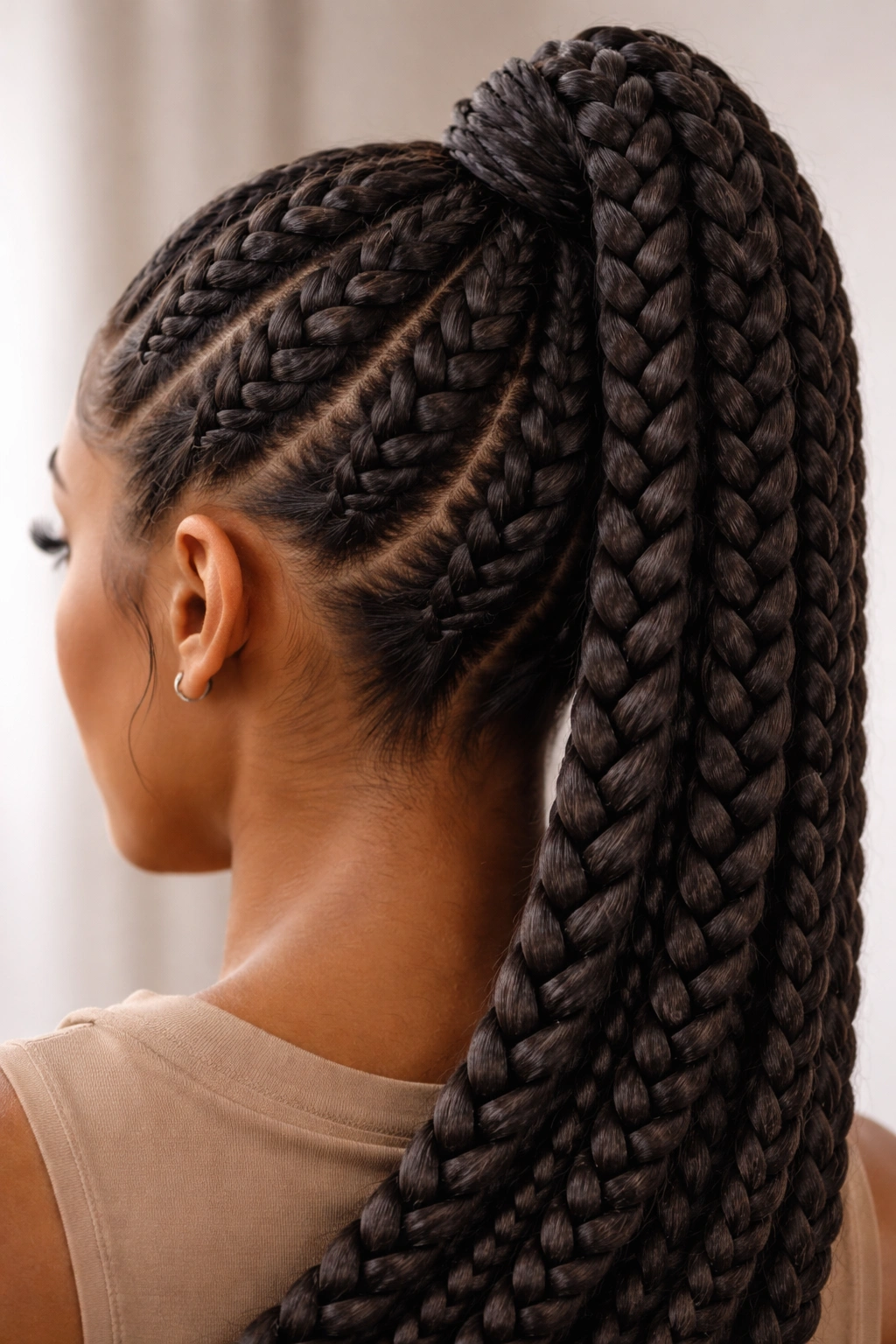
Sometimes the braids themselves are thick, but the base—where the braid starts—is the focal point. By making the feed-in sections slightly larger or more defined, you create a pattern that stands out against the scalp. When pulled into a ponytail, this gives the base a “sculpted” appearance.
Why Go Chunky?
Chunky braids often mean less time in the chair and less overall tension on the scalp. Because there are fewer braids to install, there are fewer places for the hair to pull. It’s a faster installation process that still delivers a high-impact, sleek look.
15. The Flipped-Ends Variation
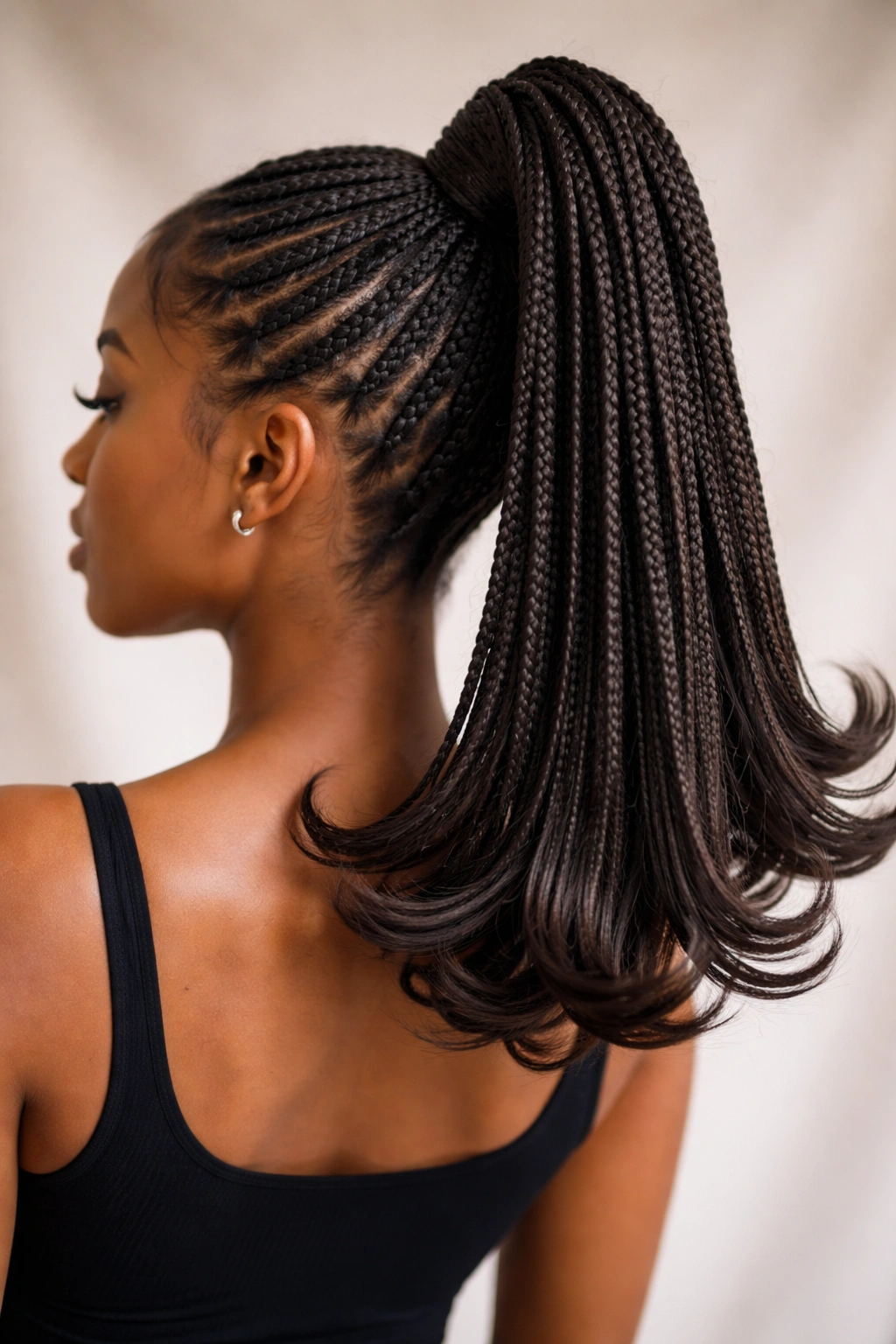
This is a styling technique rather than a specific braid type. After you have your knotless braids installed, you take the ends and curl them under using hot water or a curling iron, creating that vintage “flip” look. When you pull these into a high ponytail, the ends all flip outward, creating a fun, retro silhouette.
How to Achieve the Flip
If you are using synthetic hair that can handle heat, use a large-barrel curling iron. If you are using hair that requires the boiling water method, roll the ends of your braids onto large perm rods, dip them in hot water, and let them set. The result is a clean, finished look that makes the braids feel like a styled garment rather than just a set of extensions.
16. The Minimalist Accessory-Free Look
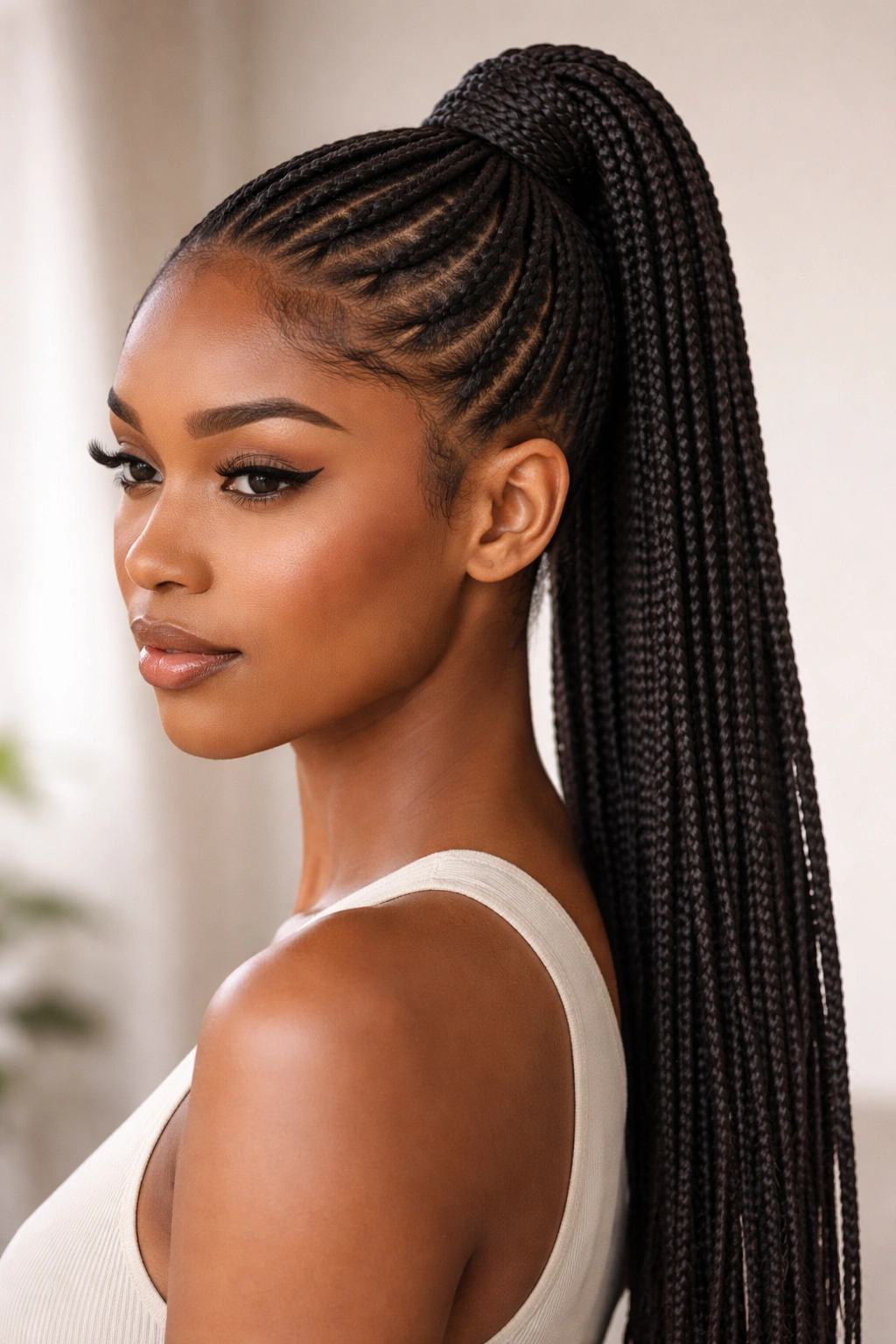
There is power in keeping it simple. Sometimes, the cleanest look is one where the braids are perfectly parted, the hair is high and tight, and there are absolutely no beads, cuffs, or clips. It relies entirely on the health of your natural edges and the precision of the braid technique.
The Focus on Edges
Without accessories to distract the eye, your focus shifts to the hairline. This is the style where you want your edges to be laid to perfection—not aggressively glued down, but neatly groomed. Use a lightweight edge control that doesn’t cause flaking or buildup, which can ruin the “clean” aesthetic.
17. The Waterfall Braid Pattern
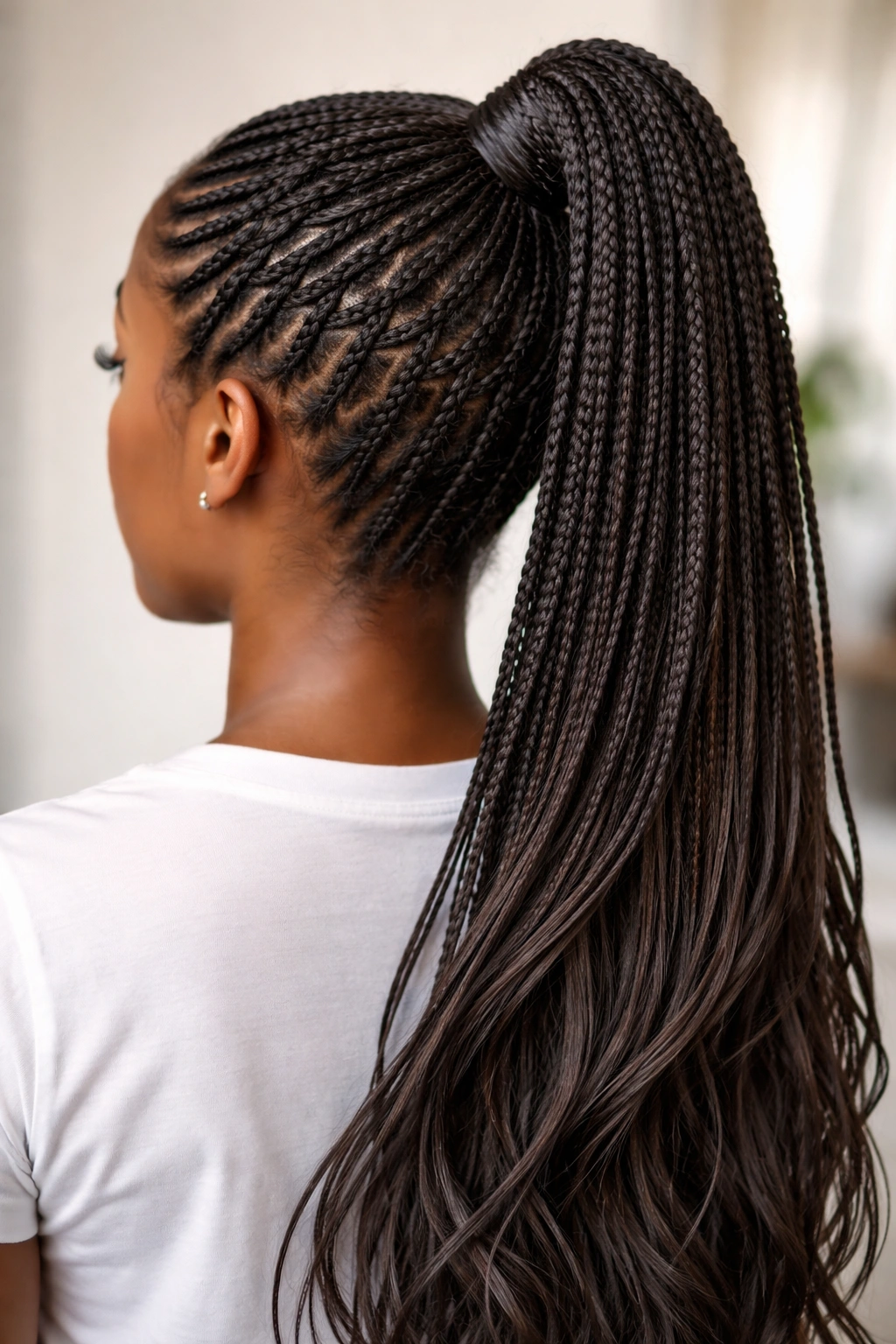
This is an intricate variation where the base braids are woven in a way that suggests a waterfall. It’s much more labor-intensive, but the payoff is a base that looks complex and high-end. When you gather these into a high ponytail, the lines from the scalp all converge into the center.
When to Choose This
Choose this style for events, weddings, or times when you want a “wow” factor. It’s not necessarily a low-maintenance style, as the complexity of the pattern can make it harder to oil your scalp between the braids. It is a style for when you want to feel put-together and styled.
18. The Beaded Ends
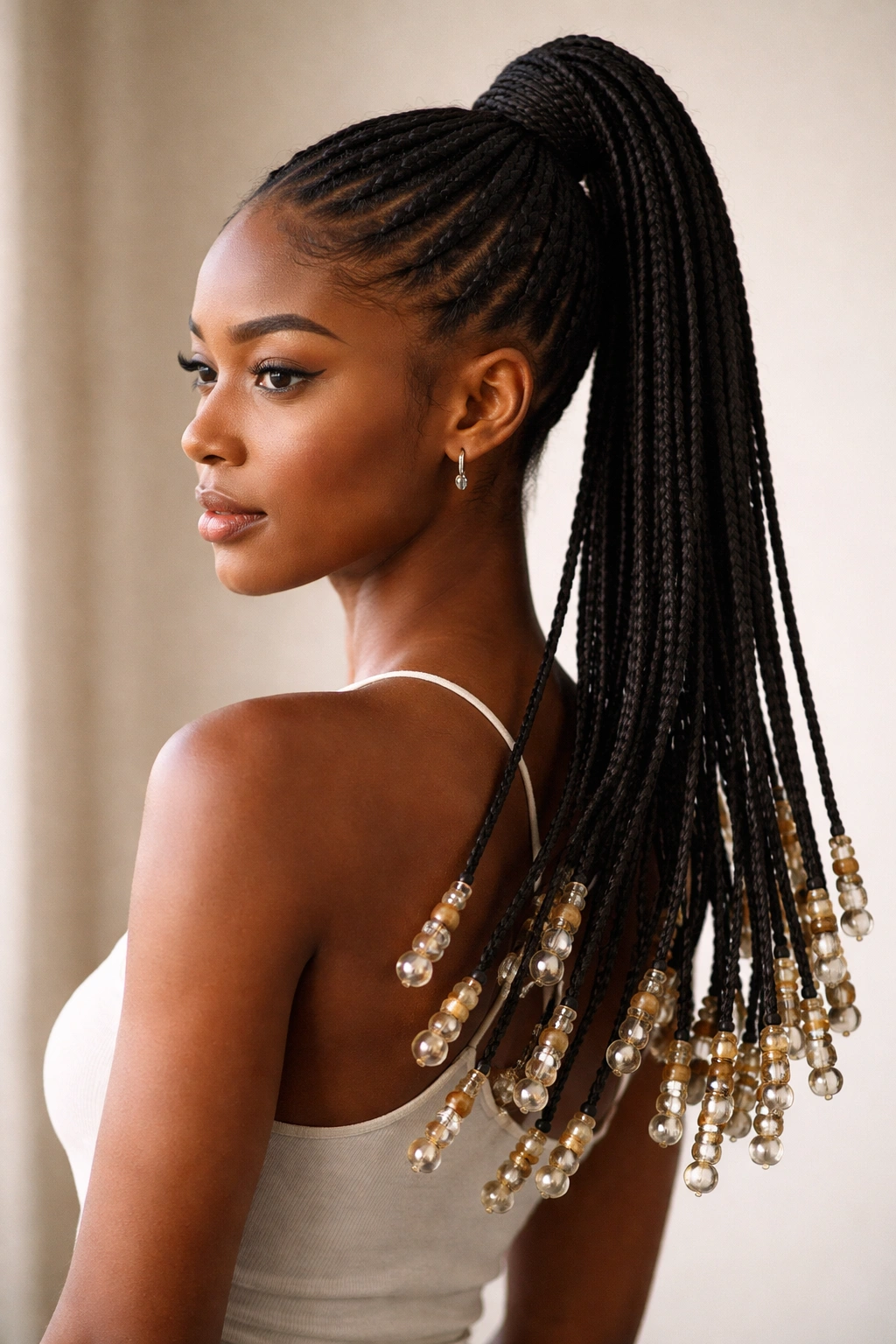
Beads are a classic accessory, but the way you place them matters. Instead of putting them on every single braid, try placing them only on the braids that sit on the perimeter of the ponytail. When the ponytail moves, the beads will chime and swing, adding a sensory element to your hair.
Weight Considerations
Beads can get heavy. If you have 50 braids and put 3 beads on each, that is 150 beads pulling on your hair. Limit the number of beads to keep the ponytail feeling light. Stick to wooden, clear, or gold beads to keep the look cohesive rather than cluttered.
19. The Kinky-Straight Textured Ends
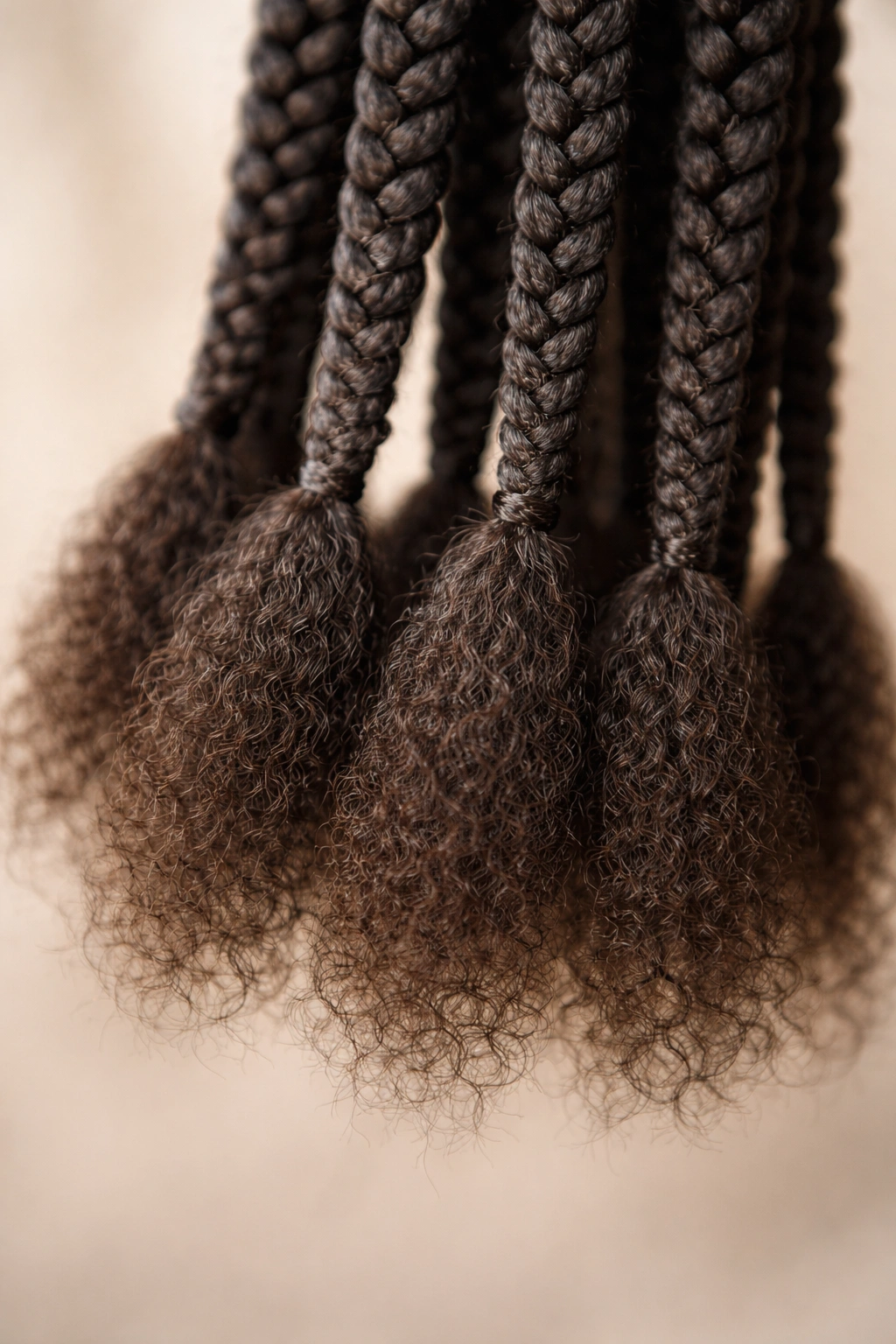
If you have naturally textured hair, you might want extensions that match. Kinky-straight braiding hair is less slippery than standard silky braiding hair. It holds a curl better and feels more like a natural blowout. When pulled into a high ponytail, it looks like you spent hours flat-ironing your natural hair.
The Benefit of Texture
The “grip” of kinky-straight hair means your braids are less likely to unravel at the ends. It’s a very practical choice if you want a style that lasts for a long time. It feels substantial and looks incredibly realistic.
20. The Braided Bun Hybrid
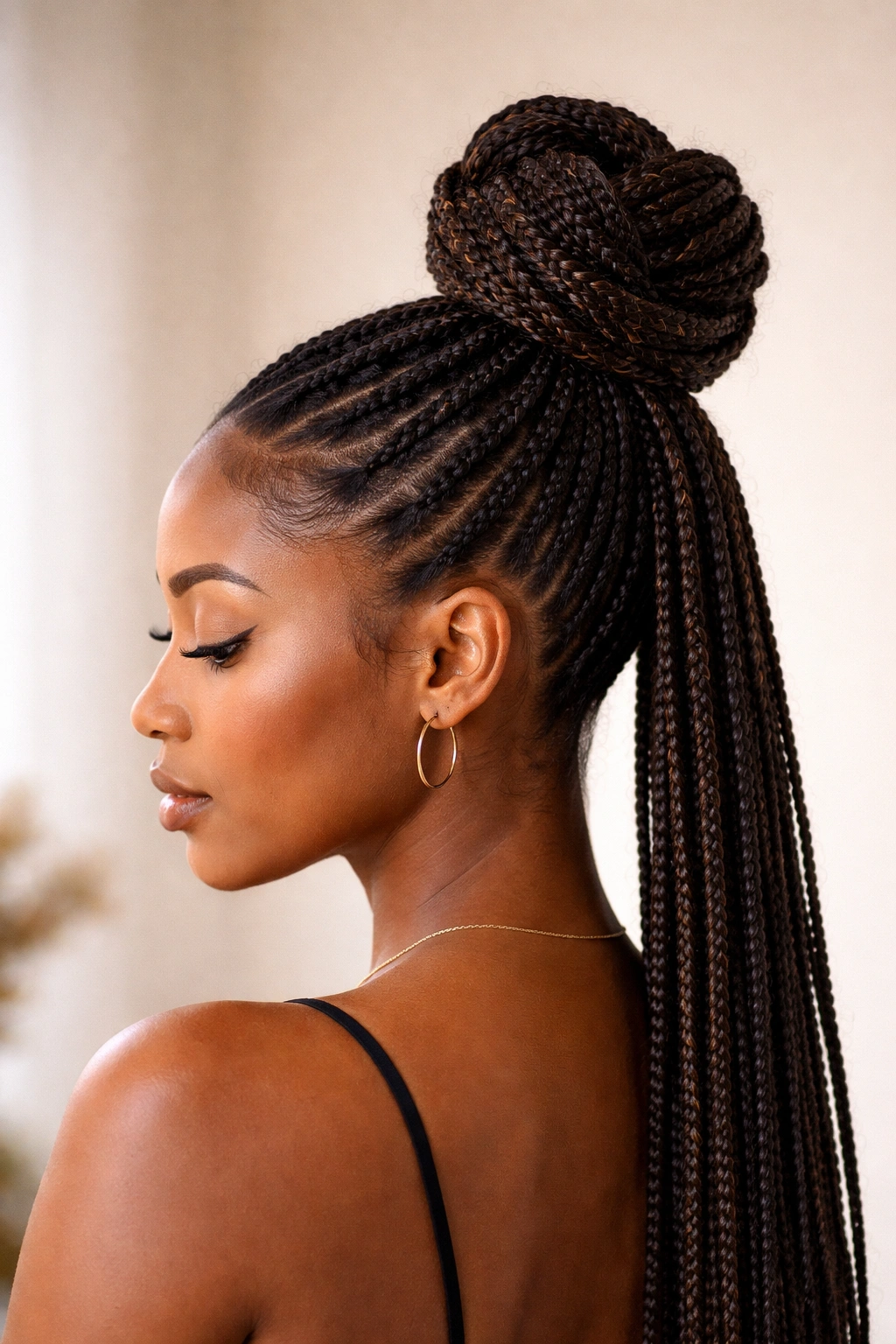
Can’t decide between a ponytail and a bun? Do both. Pull your knotless braids into a high ponytail, and then twist the length of the braids around the base to create a top knot or a loose bun. It keeps the hair off your neck while showing off the neatness of your knotless base.
Securing the Style
Use a large claw clip or a set of heavy-duty hair pins to secure the bun. Do not tie it with a rubber band, as you risk causing breakage at the mid-shaft of the braids. A claw clip is much gentler and allows you to take the bun down whenever you want without worrying about snagging your hair.
21. The “Space Braid” Base Detail
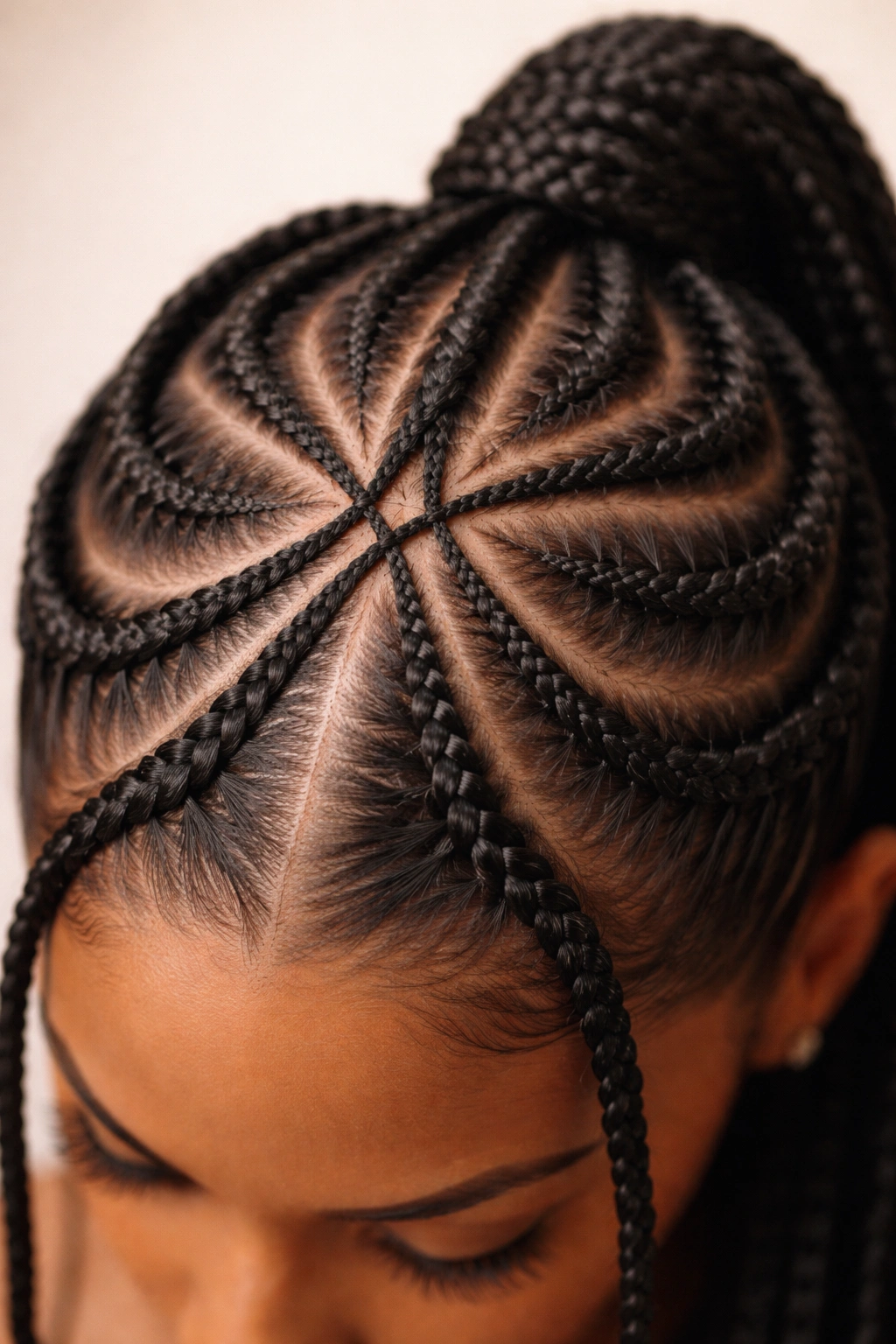
This is a fun, creative parting style where the base creates a pattern that looks like space or star-like intersections. It’s very popular for festivals or summer events. The lines are not just straight—they curve and intersect, creating a unique map on your scalp that looks cool even before you pull it into a ponytail.
Why This Style Is Popular
It breaks the monotony of the traditional box part. If you have a braider who is artistic, ask them for “curved” or “freeform” parts. It turns your scalp into a canvas and makes the ponytail look like it has more volume because the parts are directing the hair in different, multidimensional ways.
22. The Honey-Brown Highlights
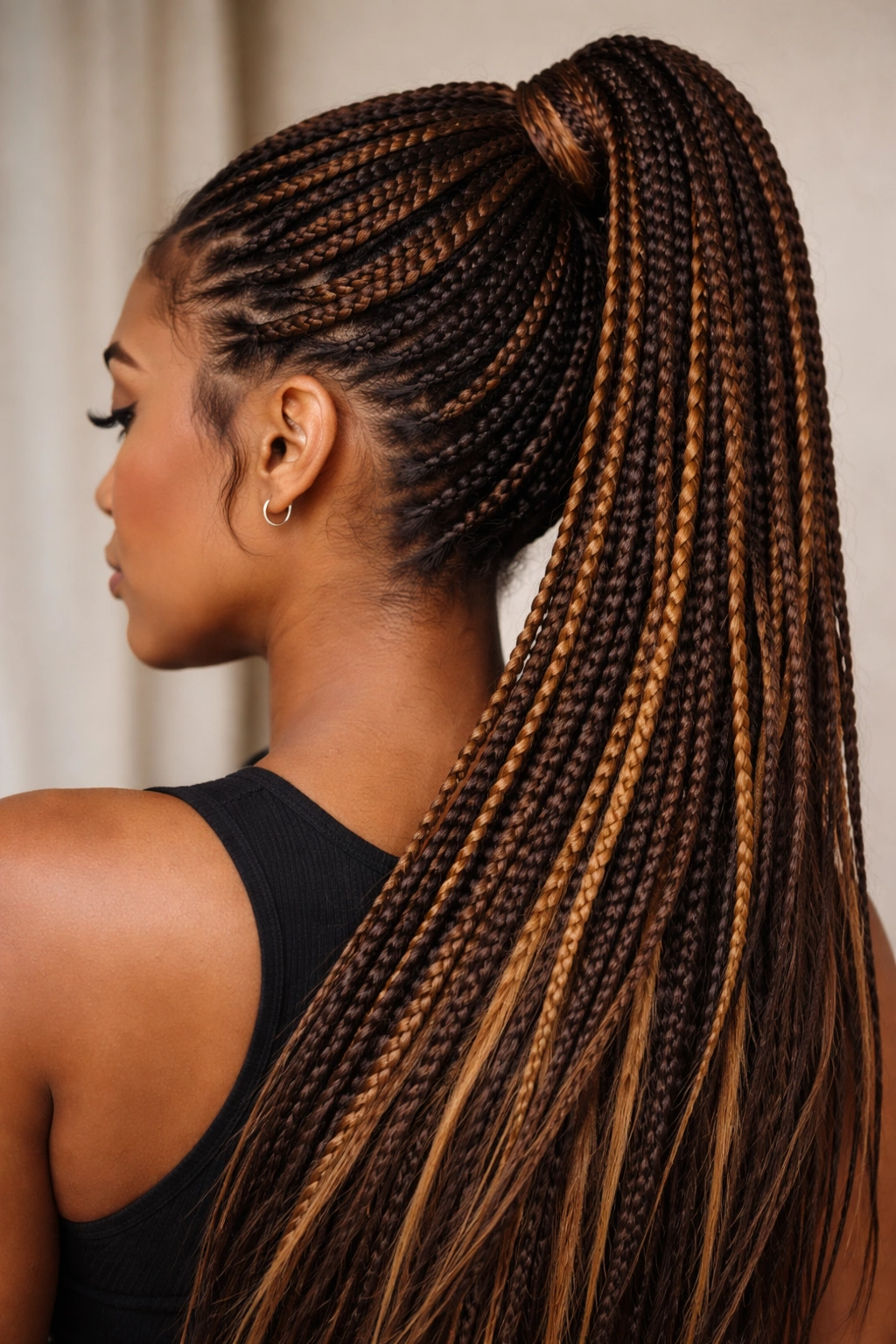
This is a variation of the color theme, but focused specifically on the “Honey-Brown” shade, which is universally flattering. It warms up the complexion. When you have this color integrated into your knotless braids, the ponytail looks dimensional even from a distance.
The “Sunkissed” Look
The honey-brown color looks best when it’s mixed in with a darker natural shade at the root. It creates a “lived-in” color look. If you pull it into a high ponytail, you get that lovely blend of light and dark that makes the hair look expensive and well-cared-for.
23. The Sculpted Baby Hair Finish
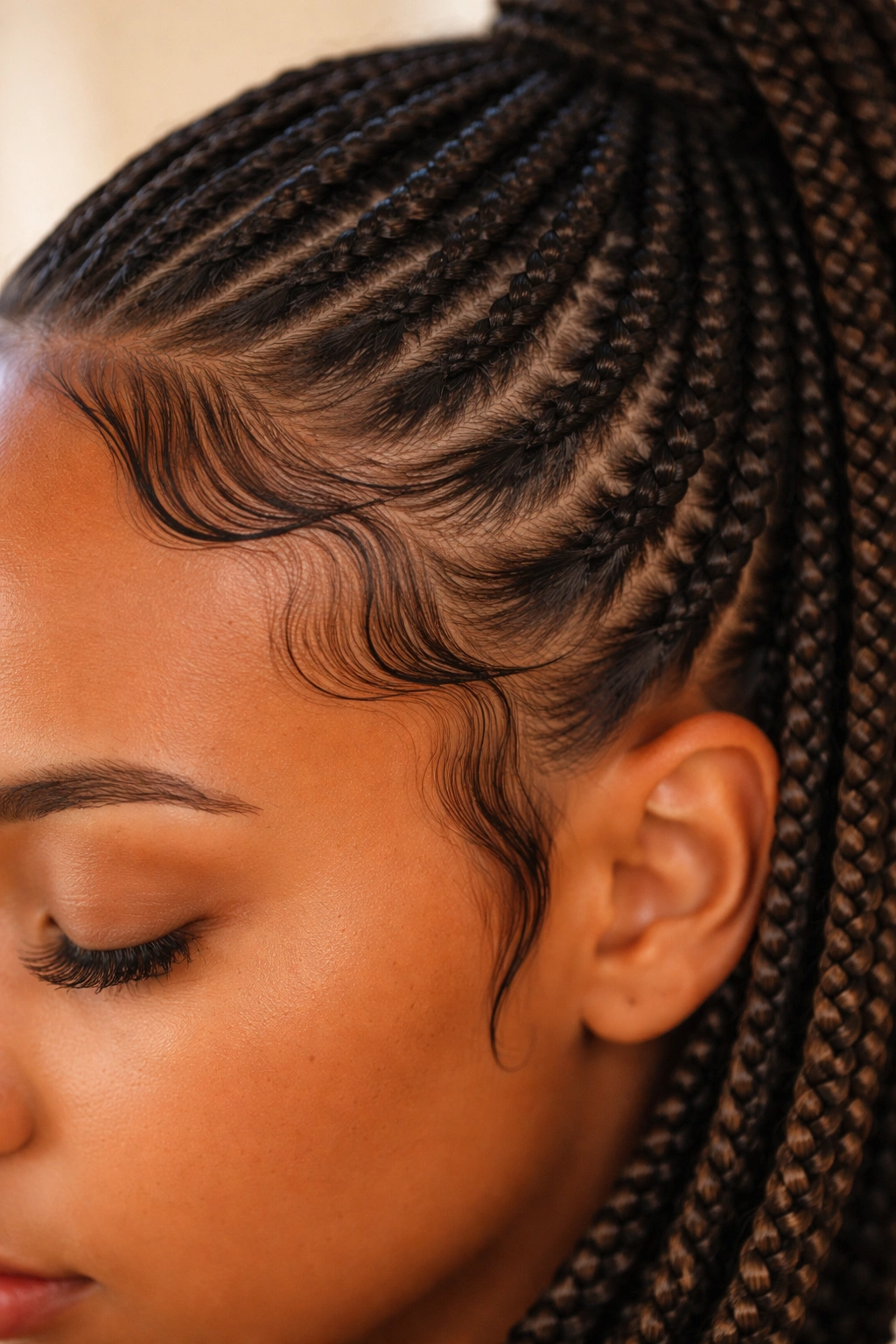
Finally, the finishing touch that ties every knotless high ponytail together is the edge work. You don’t have to go overboard with the “swoops.” Sometimes, a simple, straight brush-back of your edges is more modern and sleek than an over-sculpted look.
Tools of the Trade
Use a soft-bristle toothbrush and a light-hold pomade to smooth your edges. The goal is to make the transition between your natural hairline and the braided base invisible. If you have thinner edges, be very gentle—don’t pull them tight. The ponytail should look like it is floating off your head, not dragging your hairline back with it.
Maintaining Your Knotless Ponytail for Longevity
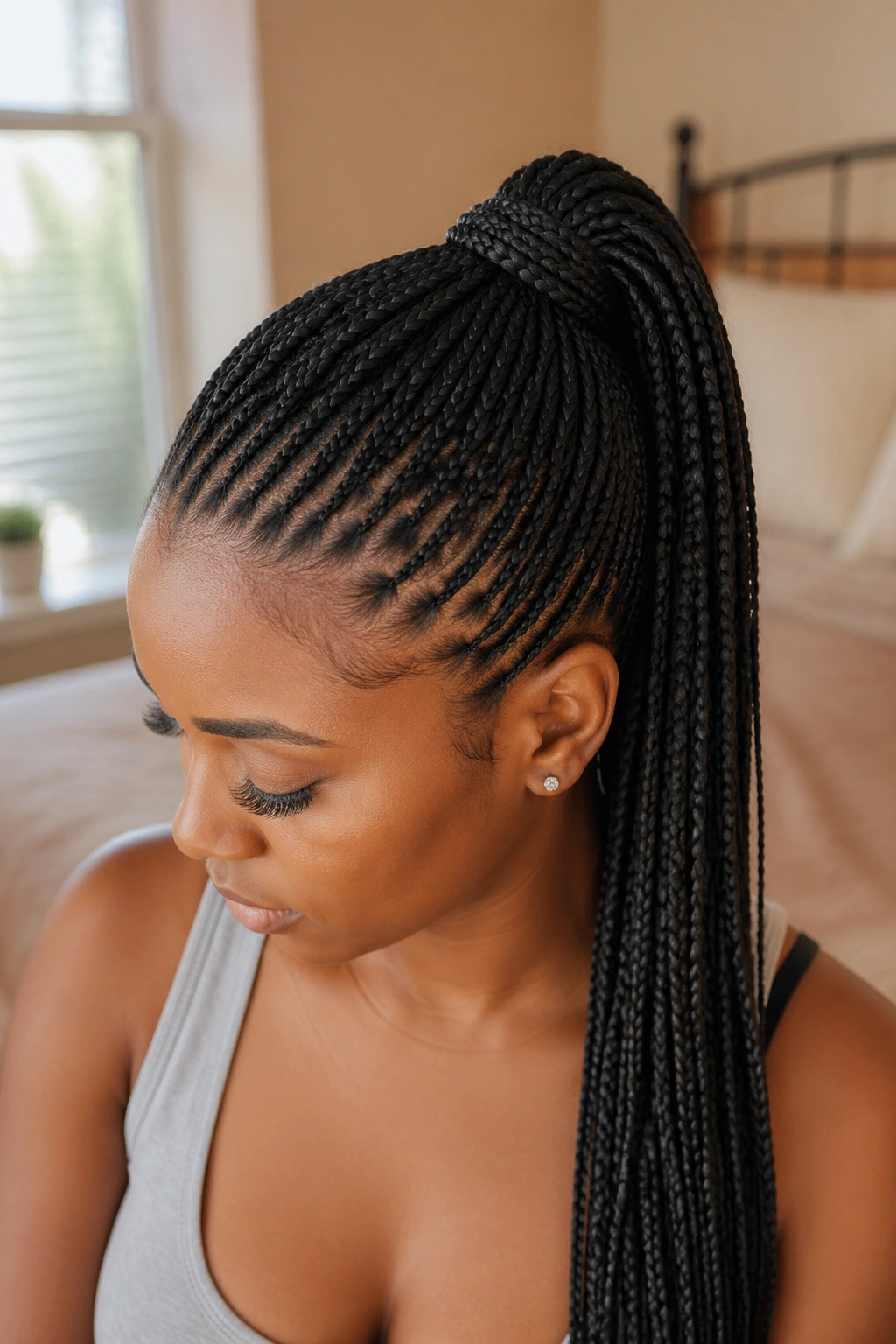
The beauty of a knotless ponytail is that it starts off comfortable, but you have to keep it that way. Because there is no knot, the braids have a tendency to shift more easily than traditional braids. You need to be mindful of how you handle them.
Sleeping and Wrapping
The absolute most important thing you can do for your style is to protect it while you sleep. A high ponytail is prone to getting frizzy or “wild” at the crown if it rubs against a cotton pillowcase all night. Invest in a large silk or satin bonnet. When you put it on, gather all the hair into the bonnet. Do not twist the ponytail into a tight bun inside the bonnet, as this will create tension.
Keeping the Scalp Clean
With a high ponytail, your scalp is fully exposed. This is great for oiling and cleaning, but it also means you need to be consistent. Every few days, use a light scalp oil—jojoba or sweet almond oil work well—on your fingertips and gently massage the scalp between the braids. This prevents the dreaded itch that usually signals it is time to take the braids down.
Managing Tension Over Time
Even though knotless braids are less stressful, they are still heavy. After a few weeks, the weight of the extensions can start to pull on your roots. If you feel that familiar ache returning, take the ponytail down. Let your hair flow freely for a day or two. There is no shame in wearing your hair down or in a loose, low style to give your hairline a break. The best protective style is one that recognizes when it’s time to give the hair a rest.