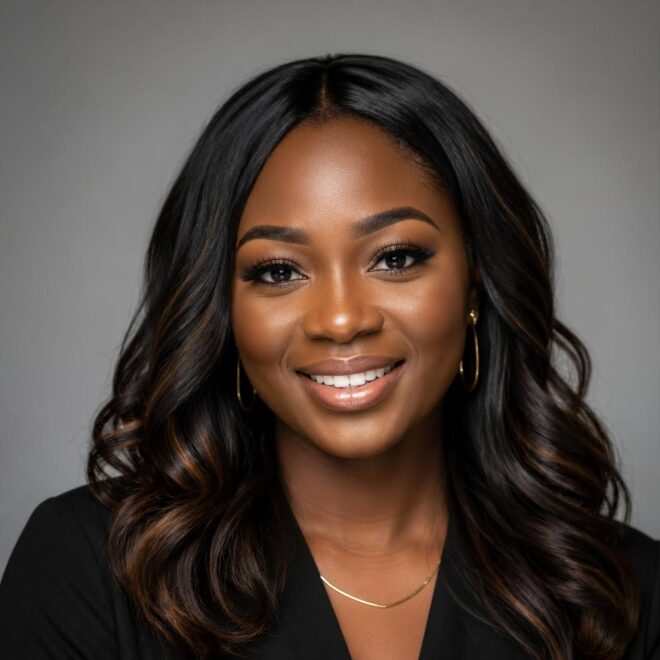


Side ponytails for curly hair work because they stop fighting the shape of the hair. A pony pulled to one side gives coils somewhere to fall, stack, and spread out, which is why the style can look fuller than a straight-back pony ever does.
Placement is the whole game. Too high and the curls lose some of their weight; too low and the style can sink into the neck and look heavy. The sweet spot sits somewhere between the jawline and the upper shoulder for most curl patterns, though tighter coils and longer lengths need a slightly different hand.
I also love how many directions this style can go. You can make it soft, sharp, sporty, dressy, a little retro, or very undone without changing the basic shape. Curly hair does not need a severe style to look polished. It needs a shape that respects the curl pattern, and a side ponytail does that with very little drama.
1. Loose Low Side Ponytail with Face-Framing Curls
A low side ponytail is the easiest place to start because it lets the curls do the talking. Pull the ponytail just below the ear on the heavier side of your part, and leave two front pieces out if you want that soft, lived-in feel. The result looks relaxed instead of forced, which is why this version works on almost every curl type.
Why it flatters curly hair
The low placement keeps the curl pattern from stretching out under its own weight. That matters more than people think. Once curls are pulled too high, the top can flatten fast, and the whole style starts looking top-heavy.
Use a soft brush only on the roots, then stop. The tail should stay in clumps, not turn into a frizzy cloud.
- Gather the hair with a satin scrunchie so the base does not dent the curls.
- Smooth the top with a pea-sized amount of curl cream or gel.
- Leave the face-framing pieces loose if your curls are tighter than a 3A pattern.
- Tuck one small curl around the elastic and pin it underneath for a cleaner finish.
Best tip: keep your hands out of the tail once it is secured. Every extra touch breaks up the curl clumps.
2. High Side Ponytail with Crown Lift
Why does a higher placement change the whole mood? Because it gives the curls bounce before they even start hanging. A high side ponytail lifts the crown, pulls the cheekbones upward a bit, and makes the style feel more energetic than a low version.
This works best if your curls have some spring to them. If they are very long and heavy, the pony may need a second anchor underneath to keep it from slipping. Use one elastic at the base, then a second one just below it if the ponytail feels loose by lunchtime.
For the crown, flip your head over for a few seconds and gather the hair from underneath rather than brushing it flat. That keeps the top from getting too polished in a bad way. You want lift, not helmet hair. A little mess is the point here.
3. Deep Side-Part Side Ponytail
A deep side part does more work than people think. It creates a strong sweep at the front, which gives the ponytail a shape before you even touch the elastic. On curly hair, that side part can make the style feel intentionally sculpted instead of just pulled over.
The trick is to set the part where your curls already want to fall. Fighting the natural bend usually leads to frizz at the root line. A rat-tail comb helps, but only if you use it gently. Dragging it through dry curls too hard is how you get that puffed-up line along the scalp.
I like this version for medium-length curls because it looks finished without needing a pile of accessories. The side sweep does the visual work. The tail can stay simple.
4. Braided Base Side Ponytail
Braids solve the most annoying part of a side ponytail: the section near the temple that never wants to stay put. A small braid feeding into the ponytail keeps that side clean and gives the style a little structure before the curls start.
What makes it different
You can do a Dutch braid, a French braid, or even a flat three-strand braid along the hairline. Any of those will hold better than a loose twist if your curls are thick or slippery. Stop braiding once you reach the area behind the ear, then secure everything into the side ponytail.
A braid base works especially well on wash-day hair that still has definition. The braid gives one side a neat frame, while the ponytail stays soft and curly. That contrast is what makes it interesting.
- Start the braid with damp hair if you want a tighter hold.
- Use a small elastic that matches your hair color.
- Pancake the braid gently only if you want a wider, more visible shape.
- Leave the tail loose and let the curls be the main event.
5. Sleek Roots and Curly Ends
Sleek roots plus curly ends sounds fussy. It is not. This version is one of the cleanest side ponytails for curly hair because it keeps the top controlled and lets the length keep its texture. The whole style looks deliberate, which is handy when your curls are doing three different things at once.
The clean root section takes a little patience. I usually smooth it with a boar-bristle brush and a small amount of gel, working from the hairline back toward the ponytail. The goal is a flat, neat top without crushing the curls below the elastic. If the front is wet with product, stop there. More product often means more flaking later.
The curl tail should stay glossy and separate. That means no brushing it out after it is tied. If you want more shine, scrunch in a touch of light oil only on the ends.
6. Half-Up Side Ponytail
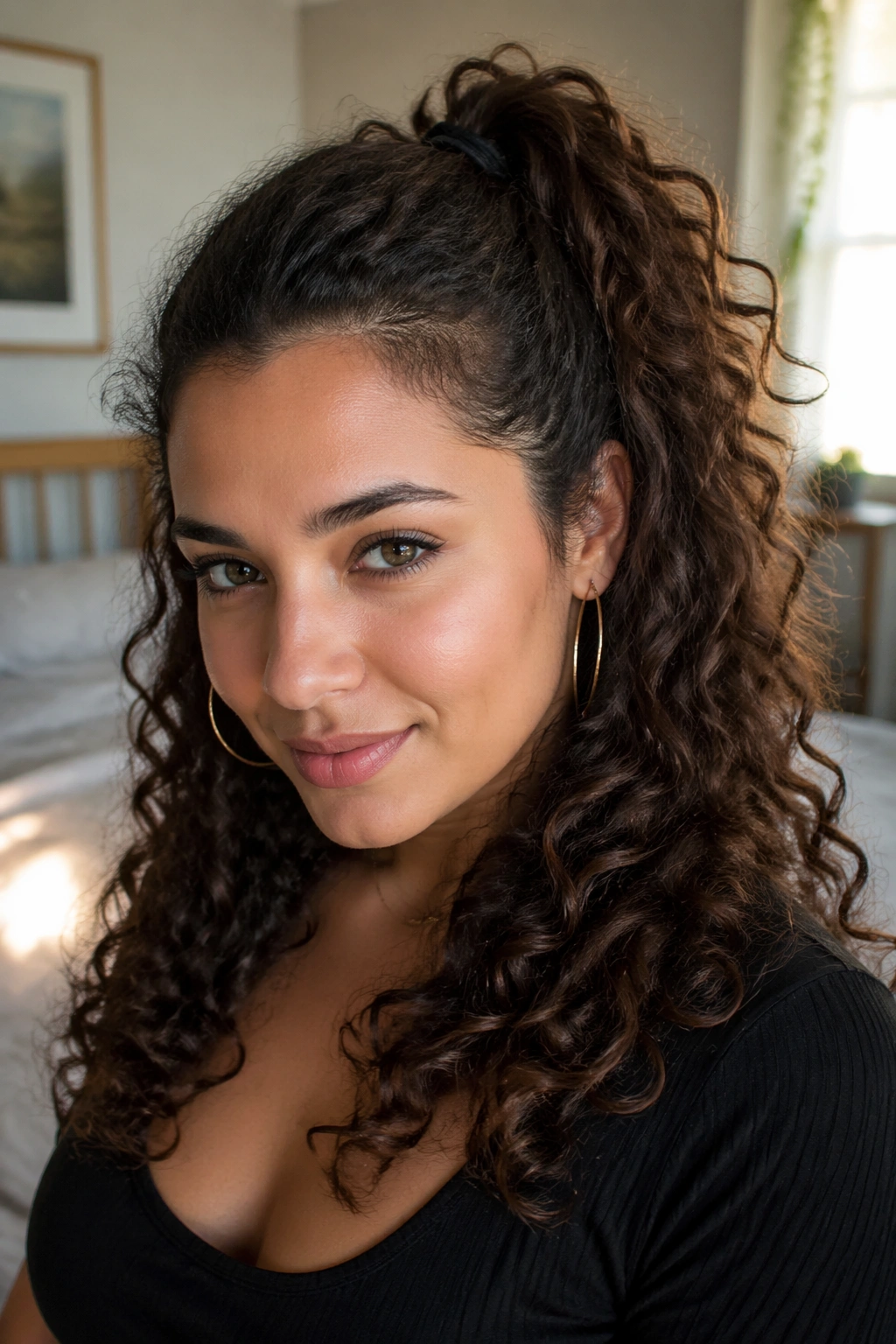
A half-up side ponytail is the middle ground between “I want my hair up” and “I refuse to lose all my volume.” It keeps the front and crown controlled while leaving the rest of the curls free, so the hair still looks big and alive.
This is a smart choice for tighter curls, especially if the lower half of your hair shrinks a lot when tied back. By keeping some length down, the style avoids that compact, all-or-nothing look that full ponytails can get. You also get a nicer silhouette from the side, since the ponytail sits over a curtain of loose curls.
I like this with a small twist on each temple. It takes ten extra seconds and keeps the top from looking too plain.
7. Scarf-Wrapped Side Ponytail
A scarf changes the whole thing in ten seconds. It gives a side ponytail color, shape, and a little personality without making the curls work harder. On curly hair, that matters, because the hair itself already brings plenty of texture.
Why the scarf works
The fabric helps hide the elastic, which is useful if your curls are fine and the base looks skinny. It also adds some grip around the ponytail, so the style stays put better than you might expect. Cotton works for a casual look; silk or satin gives a smoother finish and is kinder to the curls.
Tie the scarf around the base, then let the ends hang with the tail or knot them under the pony for a tidier shape. If the print is bold, keep the rest of the style simple. If the scarf is plain, a few loose front curls make the whole thing feel softer.
- Fold the scarf into a strip before tying it.
- Place the knot just above the ear for the cleanest profile.
- Leave one or two tendrils loose around the face.
- Match the scarf width to the thickness of your curls.
8. Bubble Side Ponytail
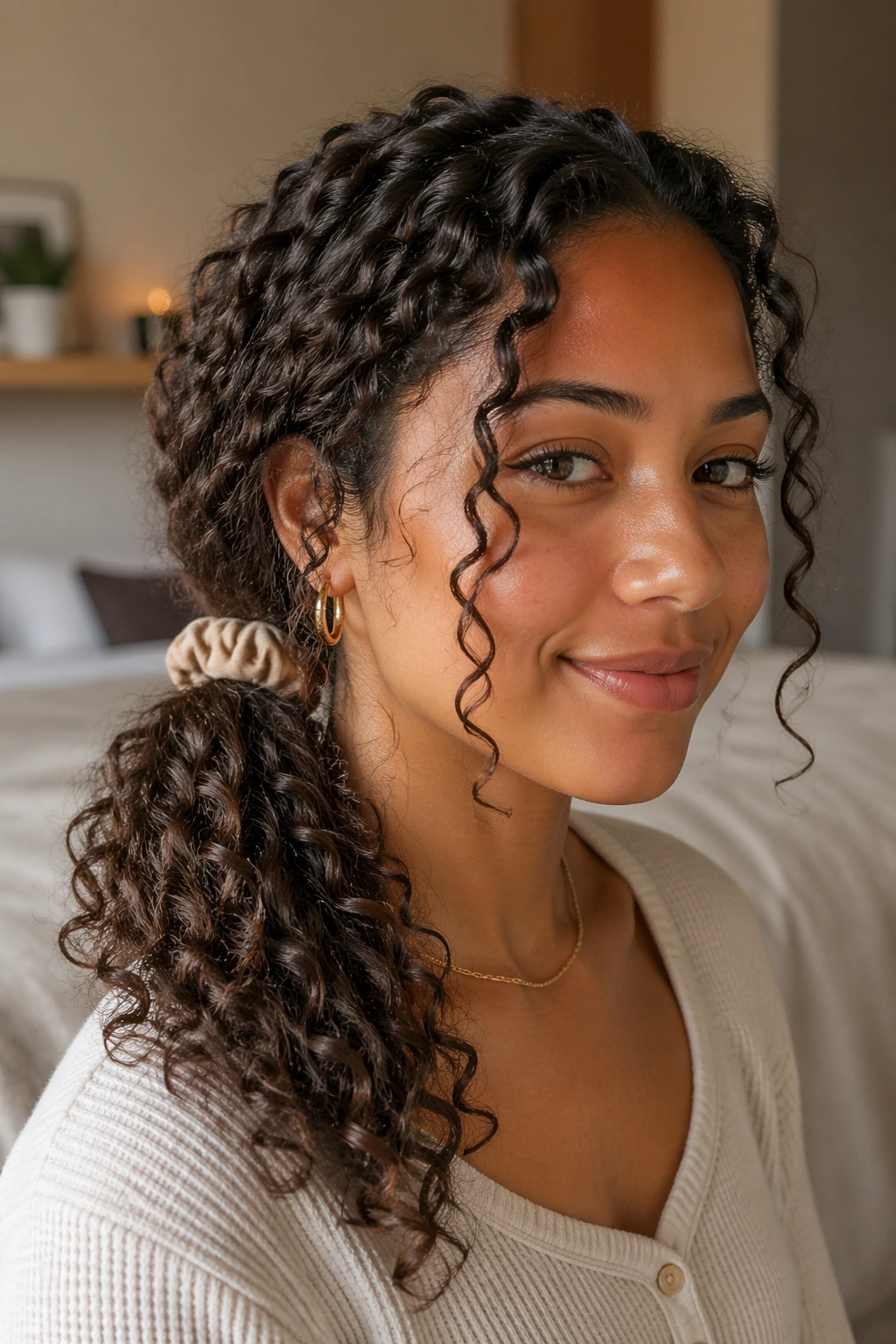
Bubble sections look playful on curls because each puff holds its own shape. You do not need pin-straight hair for this style to work, and that is half the charm. Curly texture makes the bubbles feel fuller and less stiff.
The basic setup is simple. Gather the ponytail to one side, add small elastics every 2 to 3 inches, and gently pull each section outward until it rounds out. Do not yank. A light tug is enough. If you pull too hard, the curl pattern breaks apart and the bubbles start looking uneven in a bad way.
This version suits longer curls best, though shoulder-length hair can still handle it if the elastic spacing is tight. It is also one of the easiest side ponytails to dress up with colored ties or tiny cuffs.
9. Twisted Temple Side Ponytail
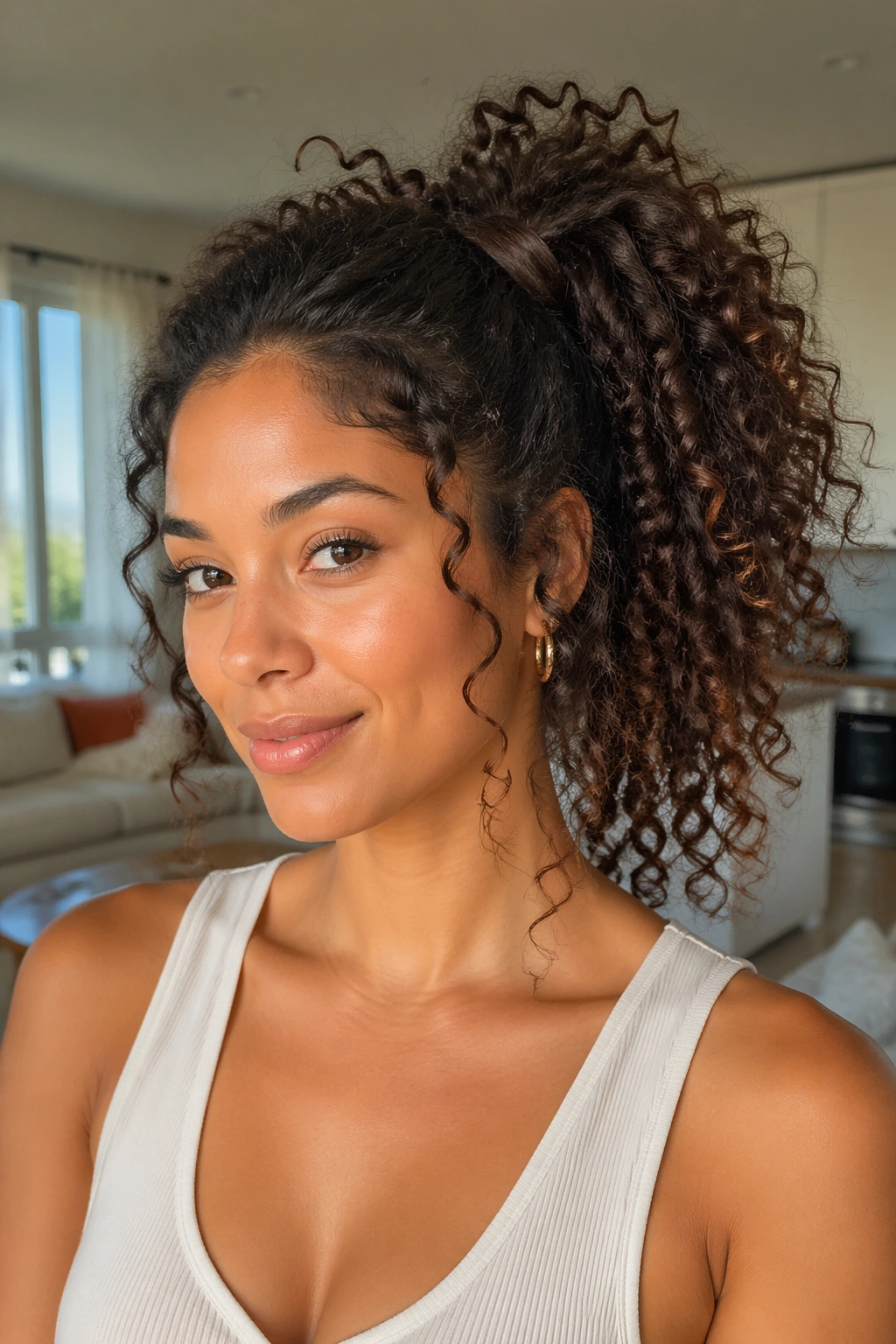
Twists at the hairline keep short front pieces from escaping, and that is the real reason this style works so well. A simple two-strand twist on each side can guide curls back into the ponytail while still leaving the front soft.
Do the twist on damp hair if your edges are slippery. If your curls are dry and fluffy, a little water plus leave-in conditioner gives enough slip to shape the section without frizzing it out. Pin the twist behind the ear, then gather the rest of the hair into a side ponytail.
This style is one of my favorites for busy mornings because it looks more involved than it is. The twists make the front look intentional, and the ponytail can stay loose and easy.
10. Clipped-Base Side Ponytail
A claw clip can anchor a side ponytail without smashing the curl pattern. That is the appeal here. Instead of using one tight elastic and creating a hard dent, you use a clip at the base and let the curls sit with a little more lift.
This works best on medium-density curls. If your hair is very thick, use the clip as a helper and add one small elastic underneath. A big banana clip can handle more hair than a standard claw clip, especially if the curls are dense or long.
I reach for this style when I want the ponytail to look casual but not sloppy. It has a sort of “I tossed it up, but I knew what I was doing” energy. Which, honestly, is the sweet spot for a lot of curly hairstyles.
11. Side Ponytail with Laid Baby Hairs
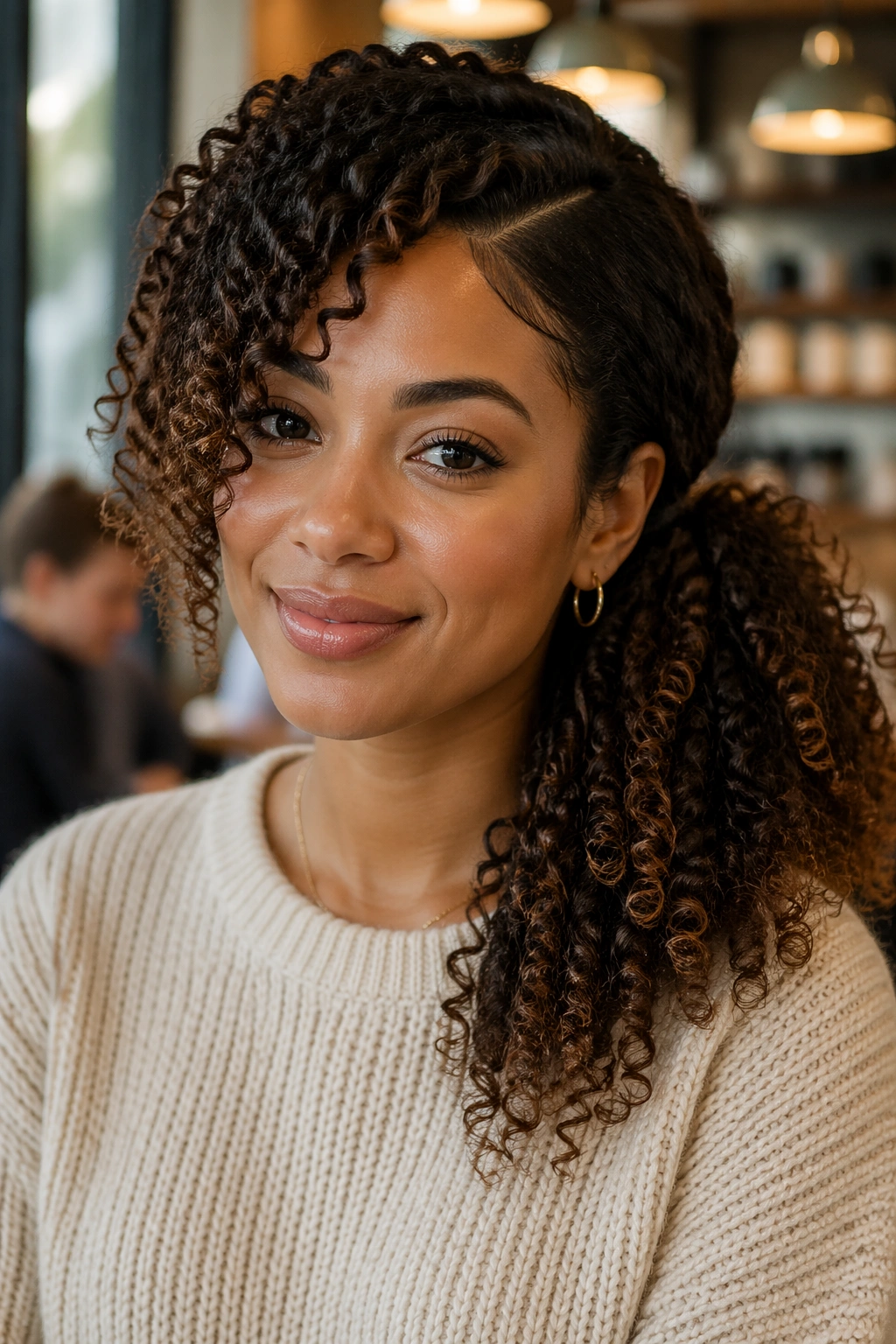
Baby hairs are not decoration here—they are structure. On curly hair, a few laid edges can soften the line where the side ponytail starts and keep the style from looking too severe around the temple.
A tiny edge brush and a dot of gel are enough. I would not paint the whole hairline down unless that is the look you want. The better move is to shape only the front corners and let the rest of the curl line stay natural. That contrast keeps the style from feeling stiff.
This version suits a neat side part and a low ponytail especially well. The sleek front gives the curls more punch when they spill over one shoulder. It also photographs well in real life, not just on a phone screen, because the hairline looks finished.
12. Side Ponytail for Short Curly Hair
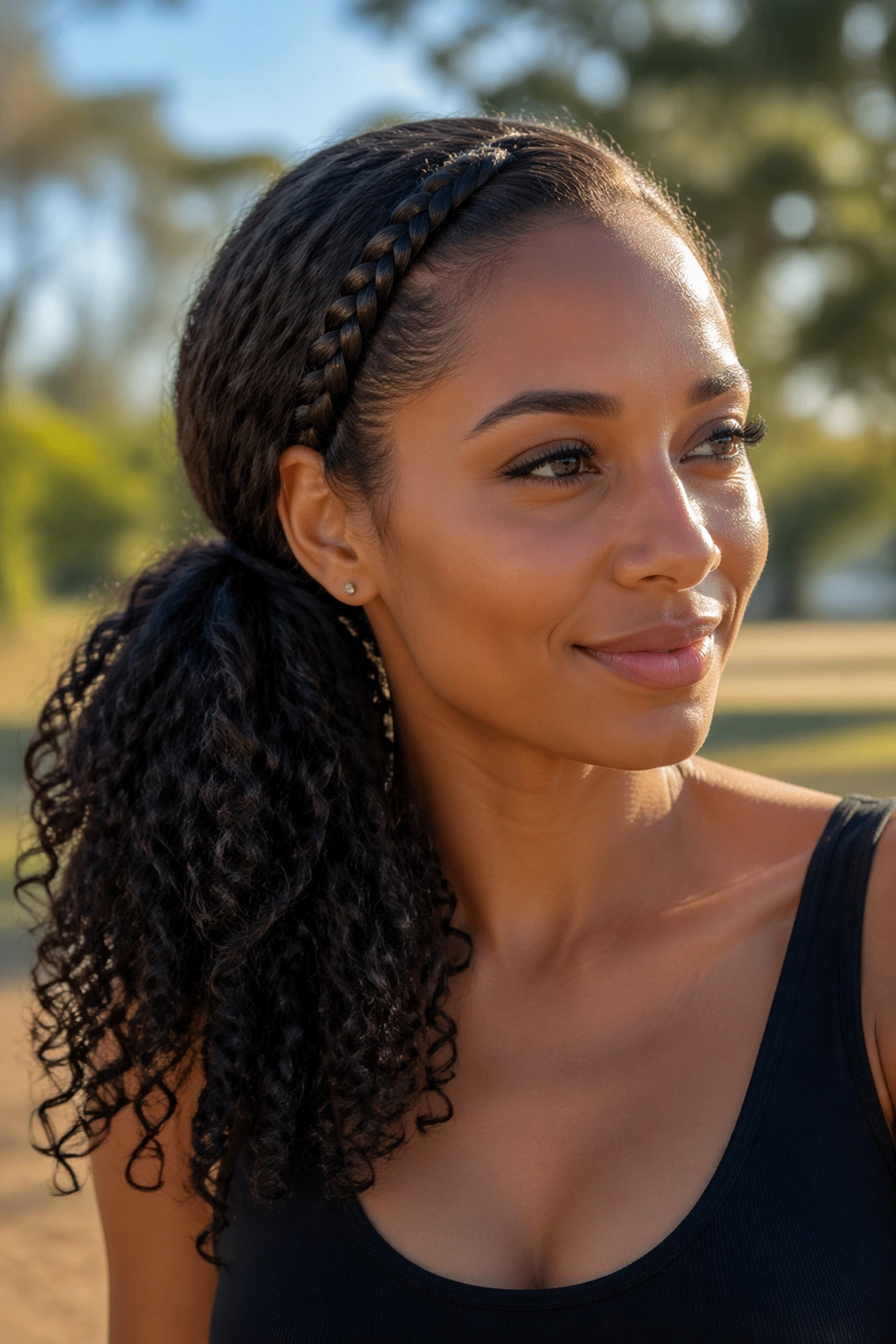
Short curls can handle a side ponytail better than people expect. You just have to stop pretending the ponytail needs to be long. With shoulder-length or above-shoulder curls, the goal is a compact side gather that shows off the shape rather than forcing length it does not have.
A small side pony at the nape or just behind the ear works best. Leave enough volume on top so the style does not collapse. If your hair is layered, use a few pins to guide shorter pieces toward the elastic instead of fighting them loose.
This is a good place to use a small ribbon or a narrow scrunchie. Big accessories can overwhelm short curls fast. The style should look balanced, not like the hair is wearing the accessory.
13. Side Ponytail for Long Thick Curls
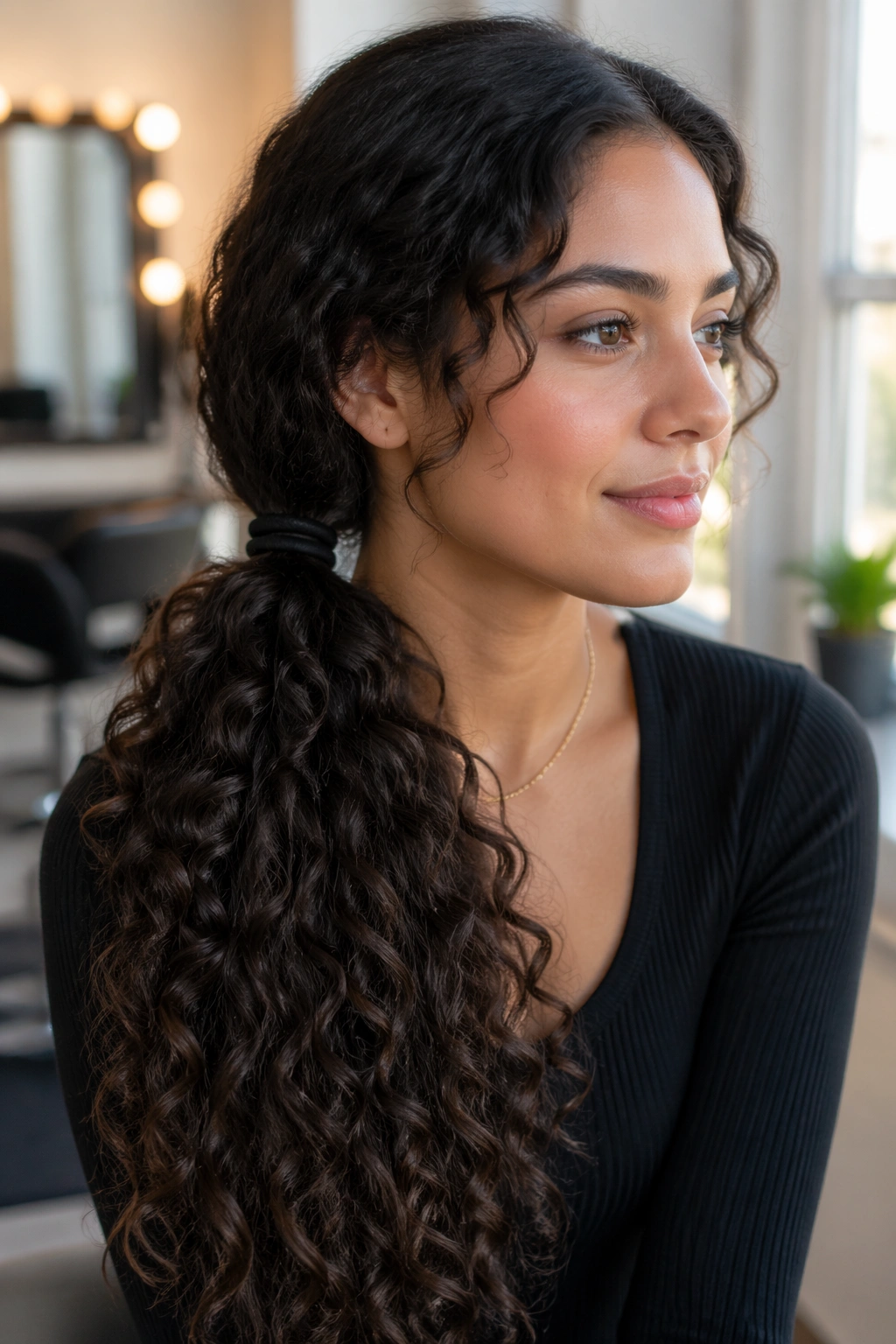
Long, thick curls need a different approach. A single elastic often is not enough, because the weight pulls the base down and the ponytail starts sliding toward the neck. Two elastics placed close together usually solve that.
How to keep the weight under control
Start by gathering the hair with your head tipped slightly toward the side you want the ponytail to sit on. That helps you catch the lower layers without making the crown too flat. Then secure the first elastic, add a second one half an inch below it, and pull the tail gently into place.
Thick curls look best when the base is clean and the tail is big. If you try to over-control the length, the style gets bulky at the root and flat at the ends. Better to let the curls spread naturally.
- Use a stronger elastic with good grip.
- Pin any extra bulk underneath the base.
- Keep the ponytail low enough that the weight rests on the shoulder.
- Refresh the ends with a little water mist and scrunching.
14. Side Ponytail with Braid Accent
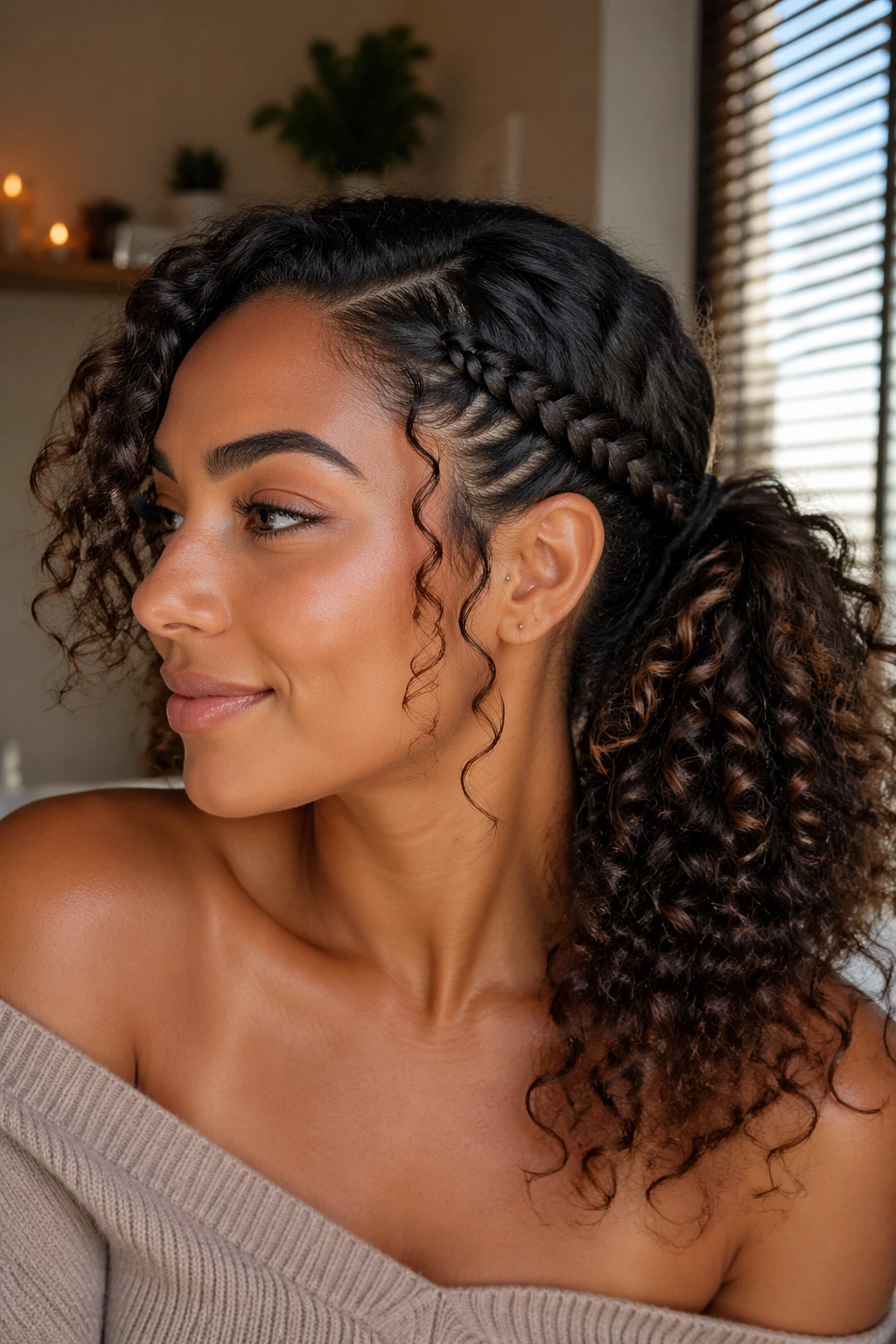
A braid accent gives the style something to do while the curls stay loose. That is the whole point. Instead of turning the entire side into a braid, you weave just one small section from the temple or crown into the ponytail.
Unlike a full braided pony, this version keeps the curl pattern front and center. The braid becomes a detail, not the whole story. It is a nice choice if you want a style that feels more intentional than a plain pony but less formal than an all-braided look.
I like to braid just the top layer and leave the lower curls untouched. That keeps the side ponytail soft. It also keeps the braid from disappearing into the rest of the hair, which happens more often than people admit.
15. Second-Day Curly Side Ponytail
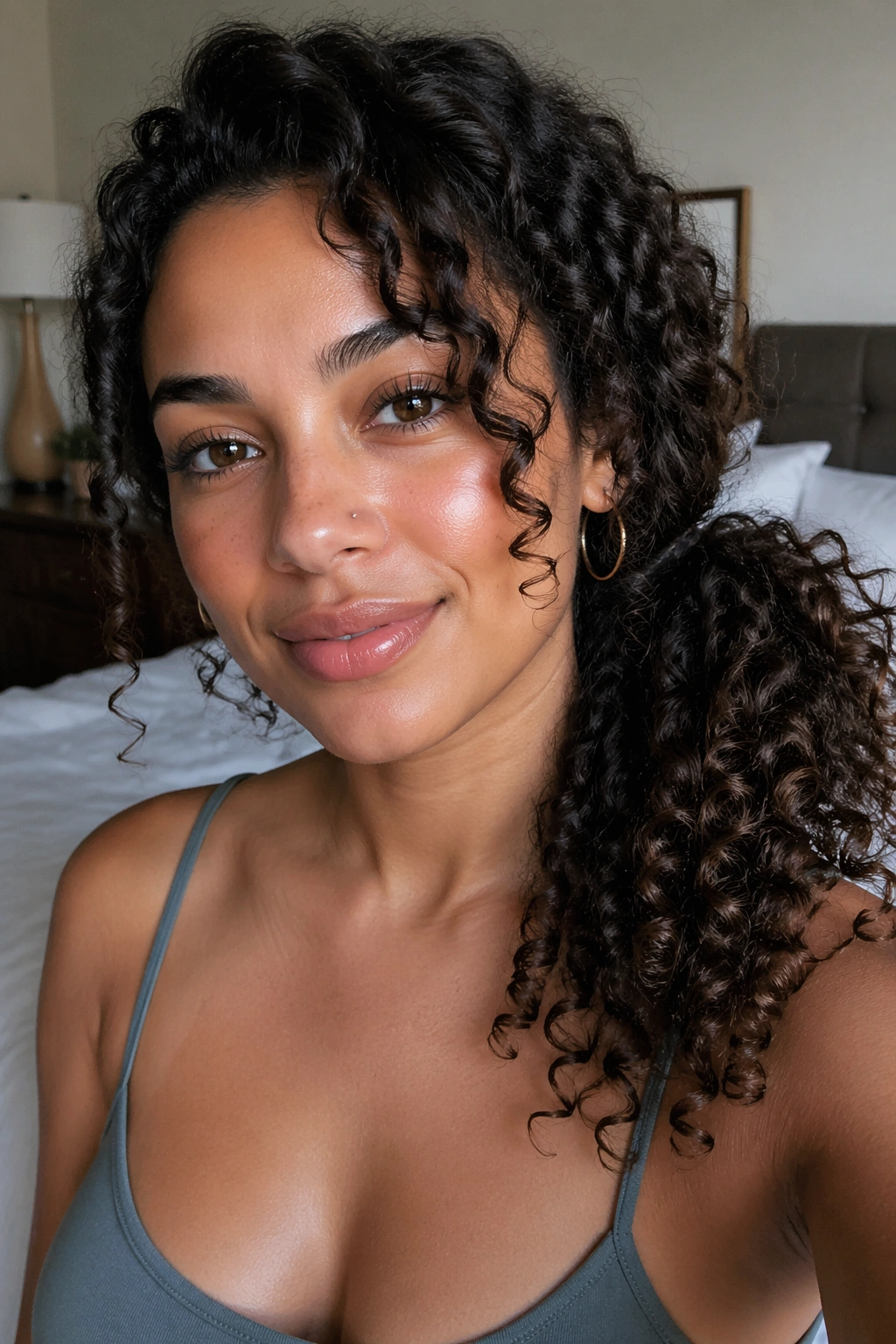
Second-day curls actually make this style easier. They have a little less slip, a little more grip, and usually less puff at the root than a fresh wash day. That means the ponytail base tends to stay put without needing a lot of product.
The trick is refreshing only the parts that need it. Mist the front lightly with water, smooth in a dime-size amount of curl cream, and scrunch the ponytail ends until the curls wake back up. Do not soak the whole head unless you want to restart the drying process all over again.
This version is especially nice for side ponytails because the curls often look fuller on day two. The shape feels lived-in in the best way. A small side part and a low elastic are usually enough.
16. Wet-Look Root Side Ponytail
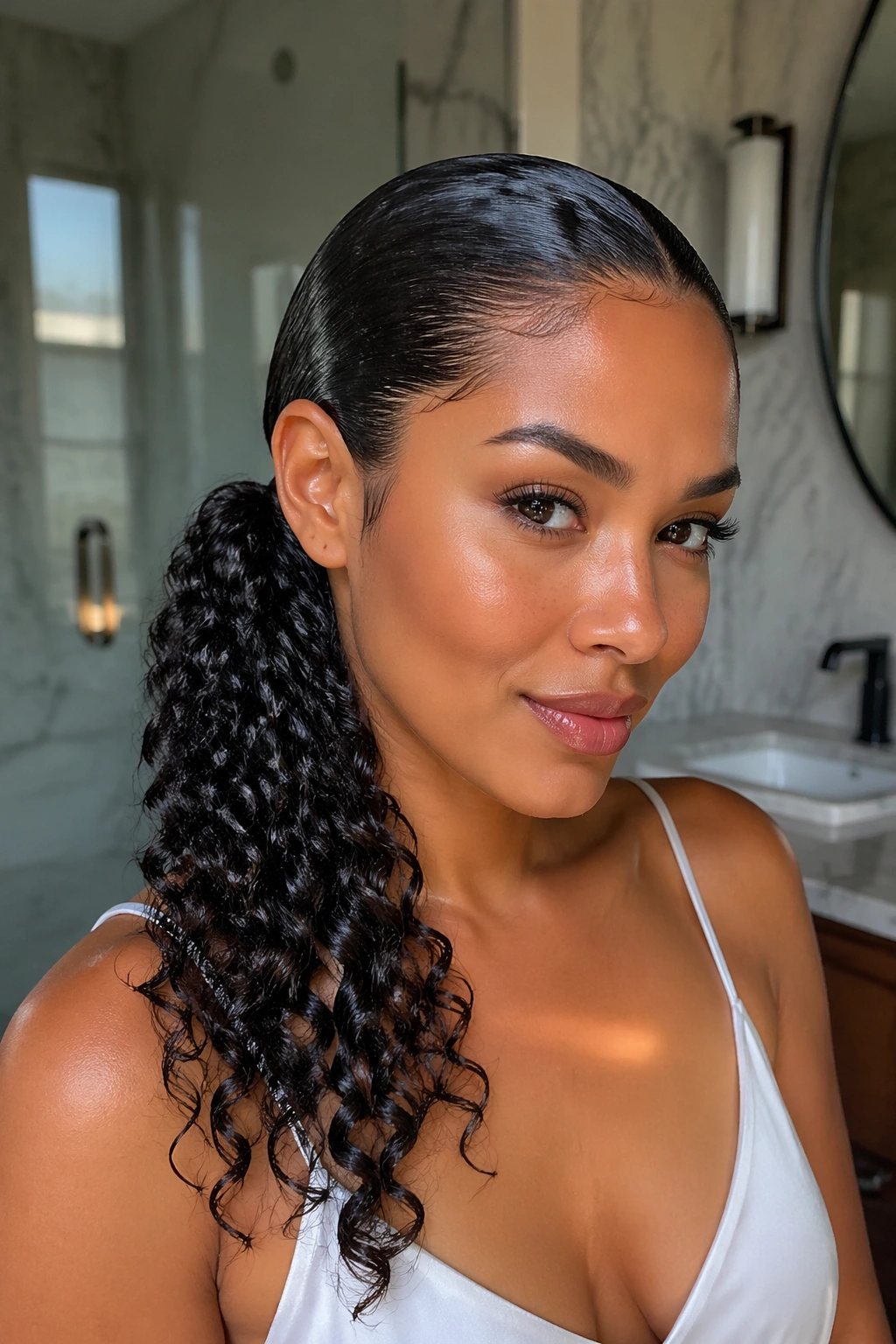
Wet-look roots are not the same as greasy roots. Not even close. The style uses gel and water to create a sleek, glossy top while keeping the curls in the tail defined and springy.
A wide-tooth comb or smoothing brush helps here, but only at the root section. Work the gel from the hairline back, then stop where the ponytail begins. If you drag the product through the whole tail, you lose the soft curl texture that makes the style worth wearing.
This one has a sharper feel than the softer side ponytails above. It works when you want the face open and the curls to act like a statement at the shoulder. The shine on top makes the shape look very deliberate.
17. Crown-Puff Side Ponytail
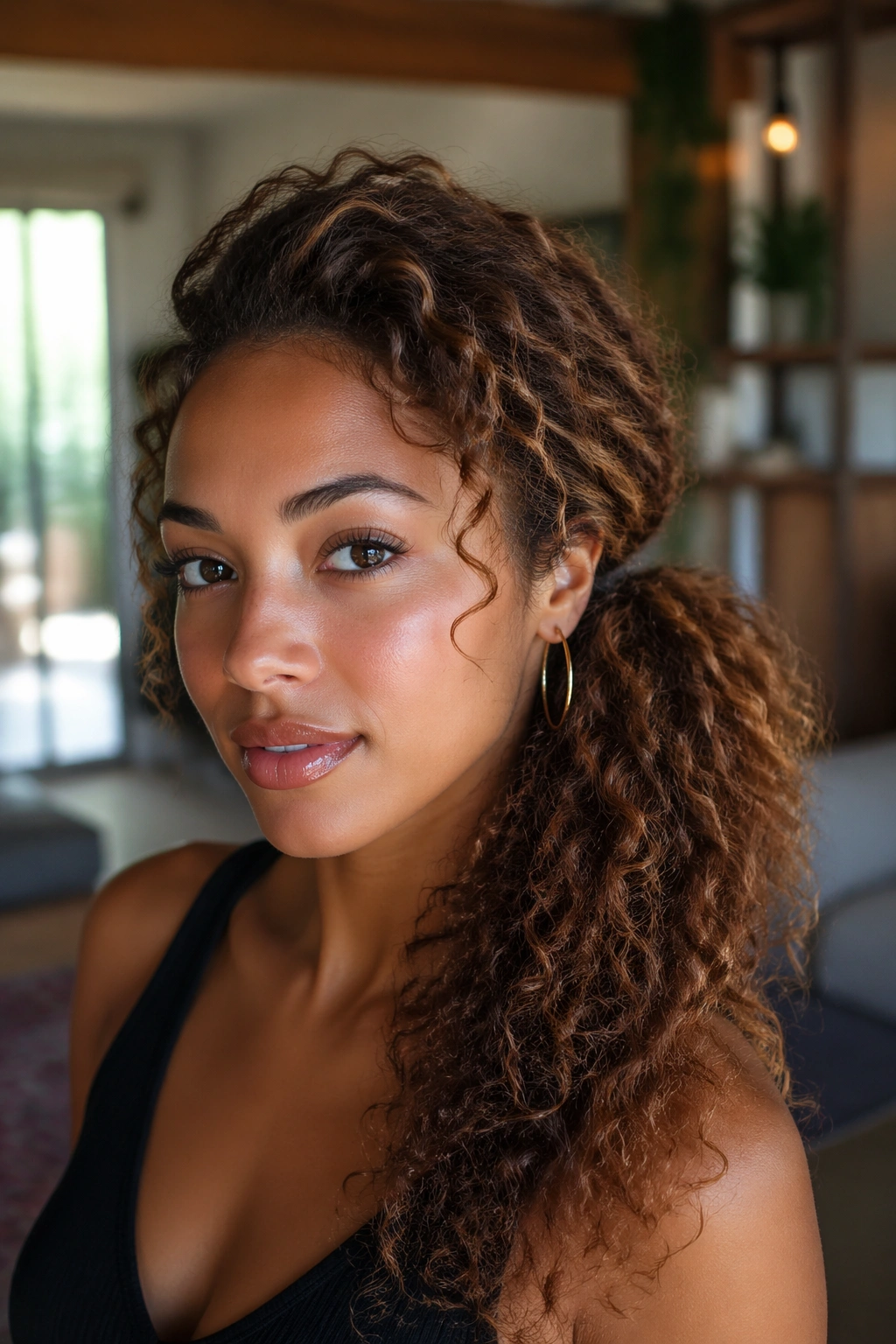
A little crown puff keeps the profile from going flat. That is all it takes. Curly hair already has volume, but the top can still get pressed down by hats, humidity, or a rough sleep night, and a small lift at the crown solves the problem fast.
Use a pick or your fingers to raise the hair at the roots before you gather the ponytail. If you want more hold, diffuse the roots for a minute or two with your head tipped sideways. That creates lift without turning the hair frizzy. The tail can stay loose and soft.
This style is a good match for wider face shapes because the crown lift adds height without adding harshness. It also feels a little retro in a way that I happen to like.
18. Formal Side Ponytail
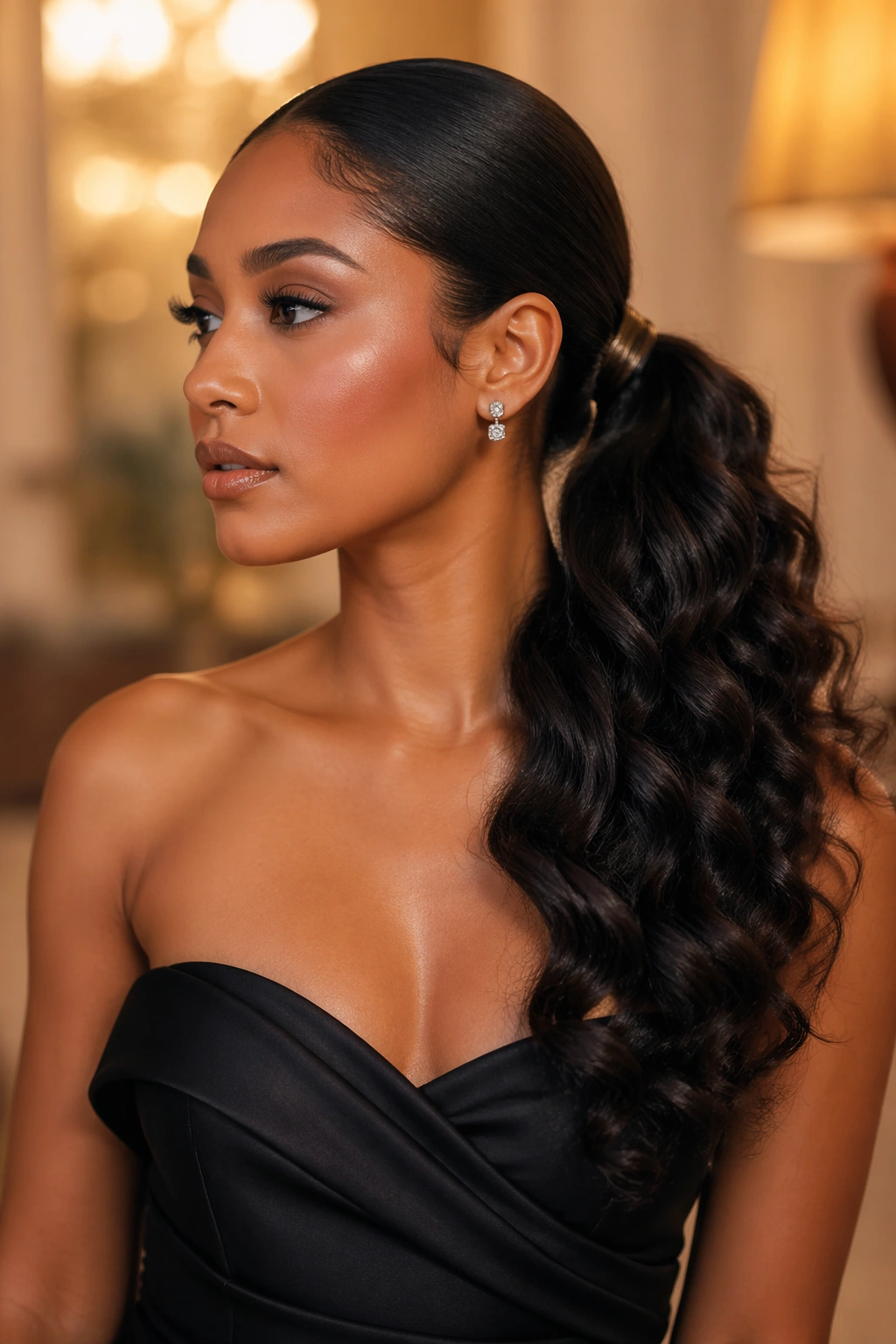
Formal side ponytails work best when one detail feels intentional. A sleek base, a polished braid, or a wrapped section at the elastic is usually enough. If you pile on too many extras, the style starts looking busy.
I prefer a low side pony for dressier settings because it holds shape longer and sits neatly over one shoulder. Curl the tail with a bit of definition, then separate the front section into one soft wave instead of several tiny pieces. That gives the look a cleaner line.
A pearl pin, metallic cuff, or narrow ribbon can finish it, but only if the rest of the style is calm. The accessory should look chosen, not pasted on at the last second.
19. Pinned-Back Side Ponytail
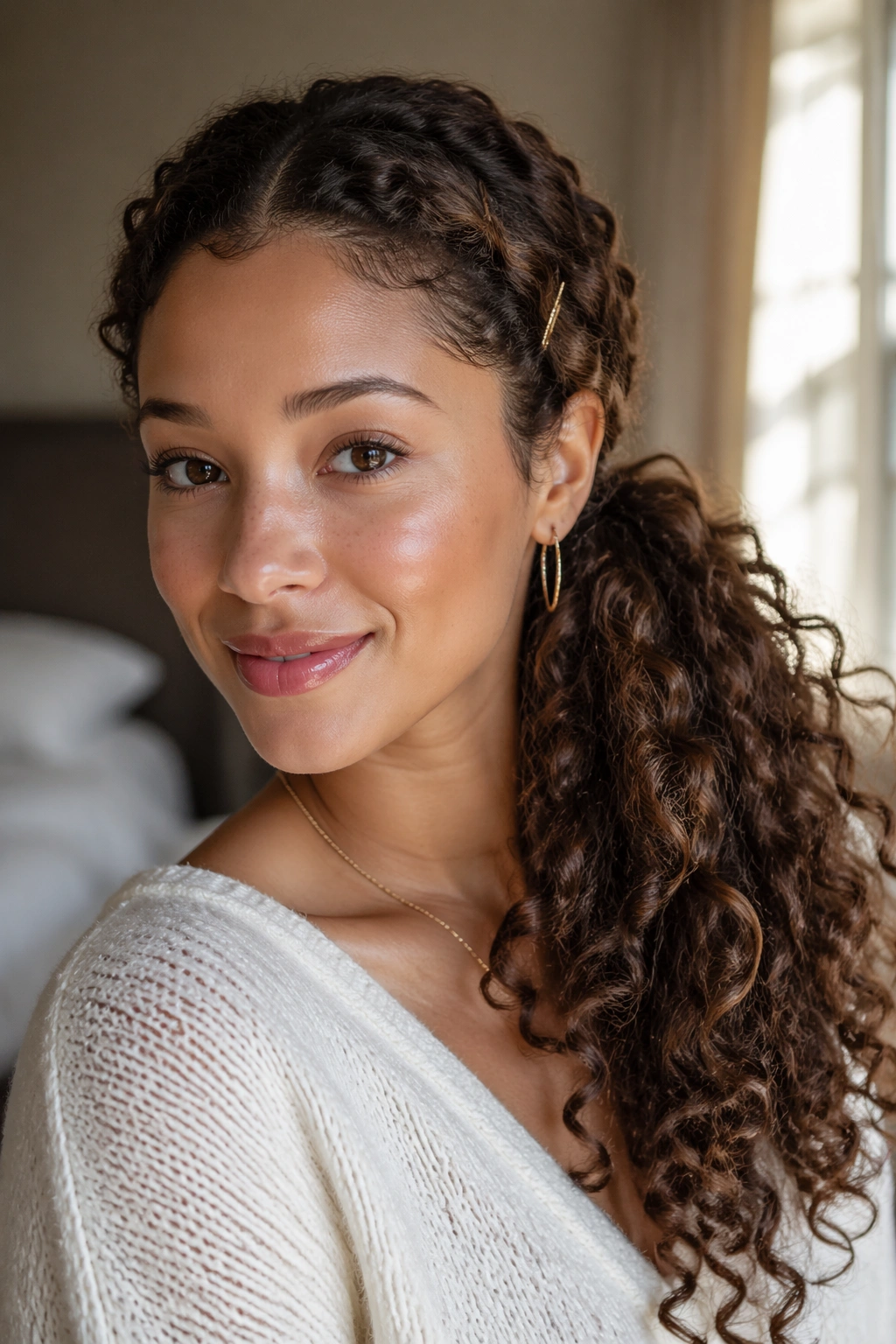
Pinned sides stop the front from collapsing. That sounds small, but on curly hair it changes the whole silhouette. A few hidden bobby pins placed behind the temple can keep the front section lifted while the ponytail hangs freely.
What to pin and what to leave loose
Pin the section that wants to fall into your eyes. Leave the bulk of the curls alone. That way the style keeps movement and does not turn into a tightly controlled shape. You want the front to behave, not the entire head.
I like this method for layered curls because the shorter pieces around the face often need help. A pin or two solves the problem without turning the style rigid. Use pins that match your hair color, and slide them in with the wavy side down so they grip better.
20. Side Ponytail for Layered Curls
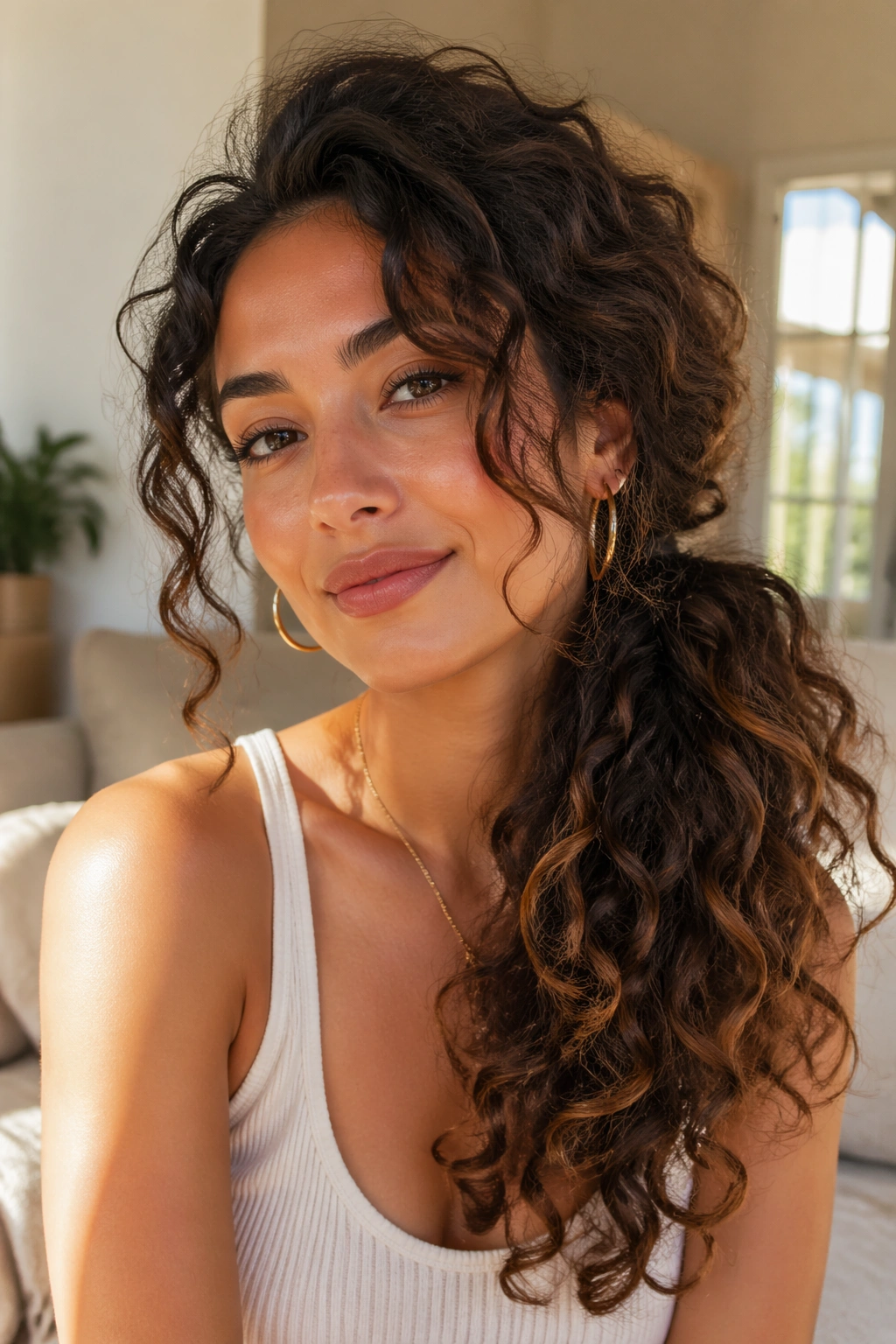
A side ponytail on long layers can look almost sculpted. The layers create shape on their own, so the ponytail lands in steps instead of one heavy block. That is especially nice if your curls are dense and tend to puff outward in one giant shape.
The placement matters here. Put the elastic low enough that the longest layers can hang, but high enough that the shorter pieces still feed into the side sweep. If the base sits too low, the layers can separate in awkward little pieces. Too high, and the style loses its weight.
I like this version with a side part and a few defined front curls. It gives the hair movement from the front all the way to the ends, which is hard to fake if the cut is heavily layered.
21. Pony-Cuff Side Ponytail
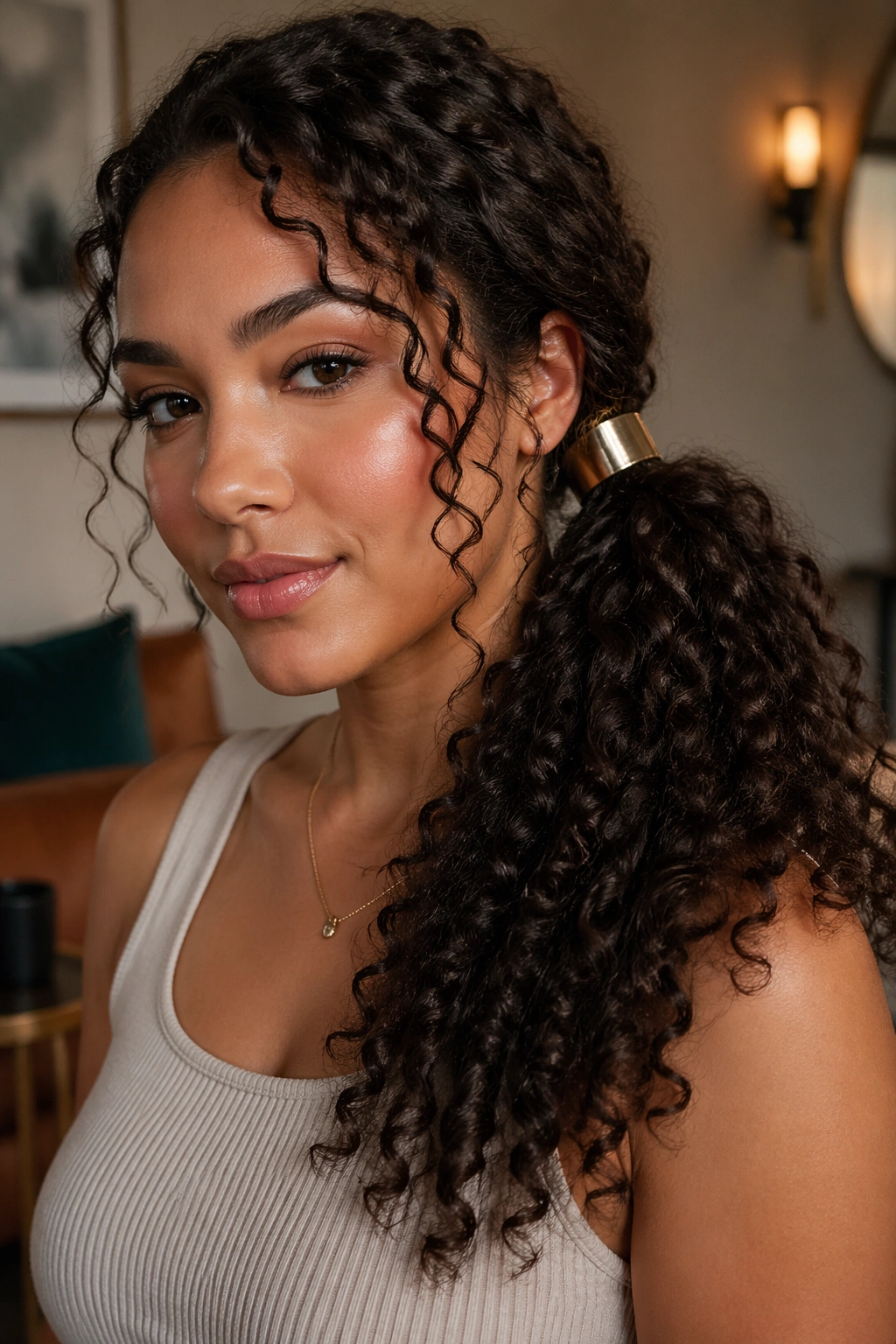
A pony cuff is the quickest way to make a simple style feel finished. It sits over the elastic and turns a basic side ponytail into something that looks a little sharper, a little more polished, without changing the shape at all.
This works especially well on curls that are medium to thick, because the cuff needs enough hair around it to look balanced. If your curls are fine, choose a narrower cuff or one with a small opening so it does not swallow the base. Metal, resin, and matte finishes all read differently, so pick one that matches the mood you want.
The rest of the style can stay plain. That is the nice part. One clean accessory does more than five fussy ones.
22. Invisible-Elastic Side Ponytail
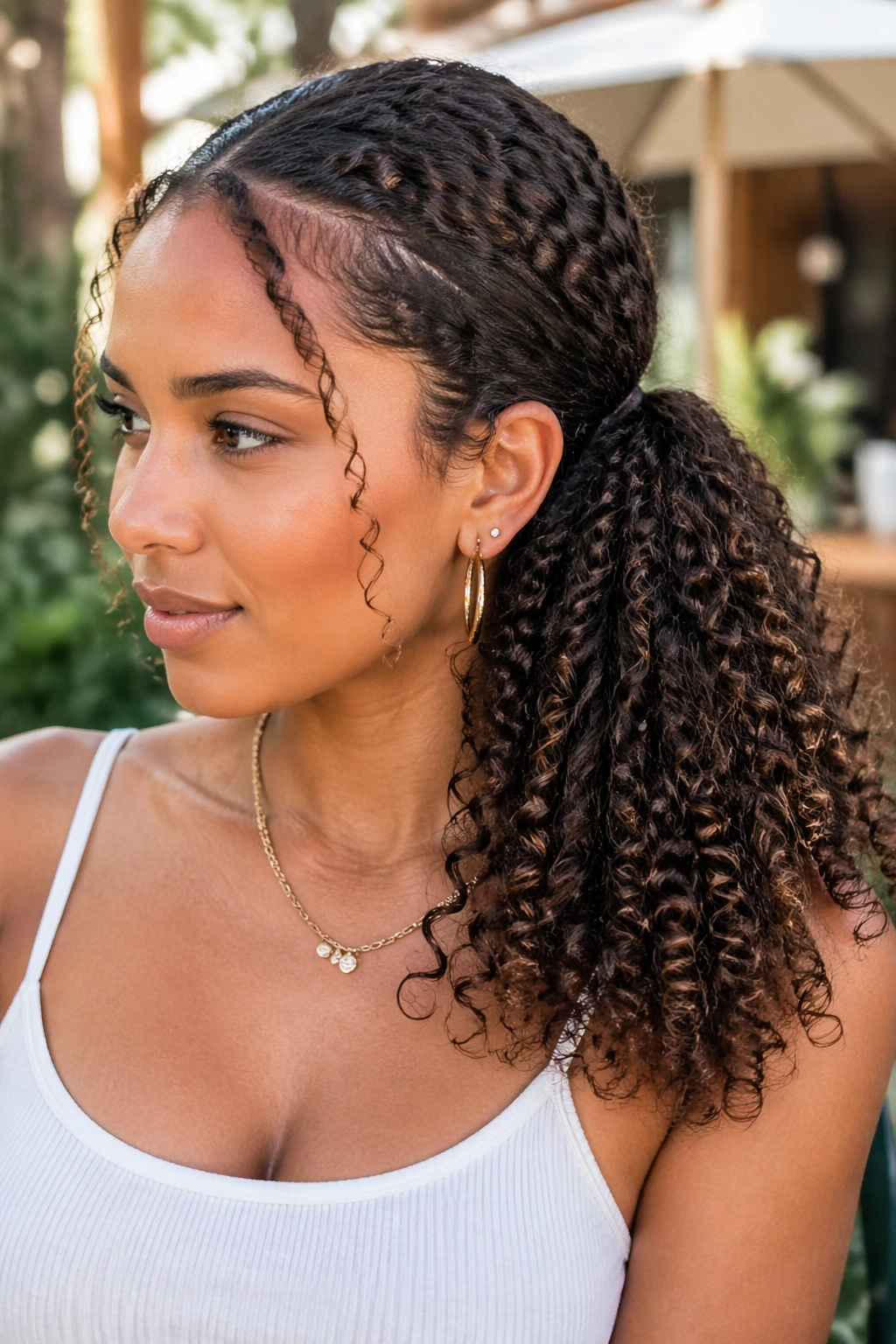
Invisible elastics are underrated on curly hair. Tiny clear bands or thin hair ties can secure mini sections without adding bulk, which matters if you want the side ponytail to look light rather than crowded at the base.
This style is useful when you want to divide the ponytail into two or three soft sections while keeping the root line clean. It also helps with smaller curls that tend to slip out of larger elastics. A little tension goes a long way here, so do not over-tighten. The curls should still move.
I reach for this version when I want a neat side ponytail that does not call attention to the tie itself. The elastic disappears, which leaves the curls to do the visual work.
23. Workout-Ready Side Ponytail
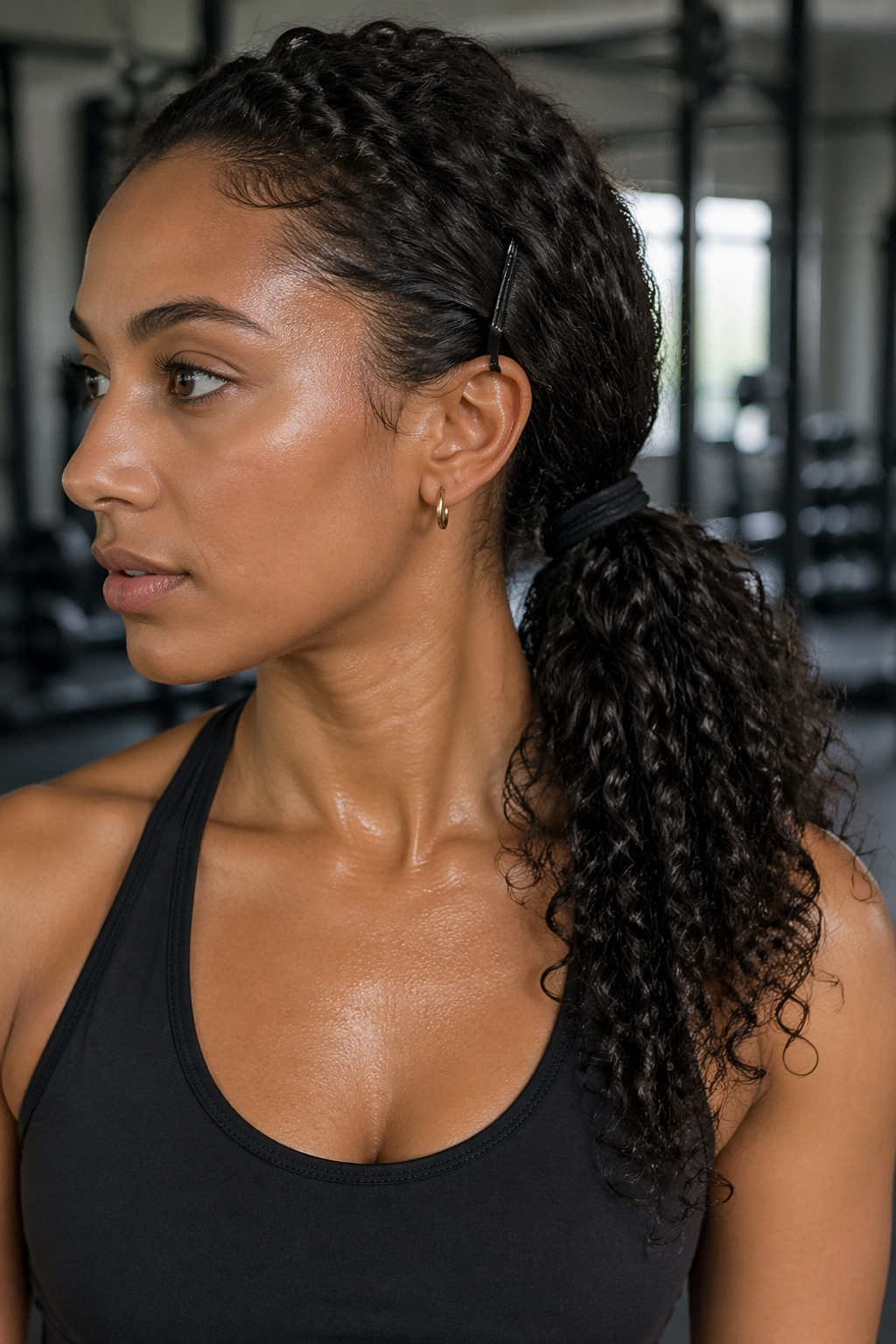
For workouts, a side ponytail should stay put without turning the back of your head into a tangle. That means a secure base, controlled flyaways, and not too much loose length swinging around while you move.
A firm elastic near the lower side of the head works best, and a second pin behind the ear can keep the base from shifting if your curls are heavy. Keep the front smooth with a little water and gel, but do not overdo the product. Too much gel can leave the hair sticky once you start sweating.
This version is less about romance and more about survival, which is fine. If you want extra comfort, braid the tail into a loose three-strand braid after securing the pony. It keeps the curls from knotting up during movement.
24. Accessorized Side Ponytail
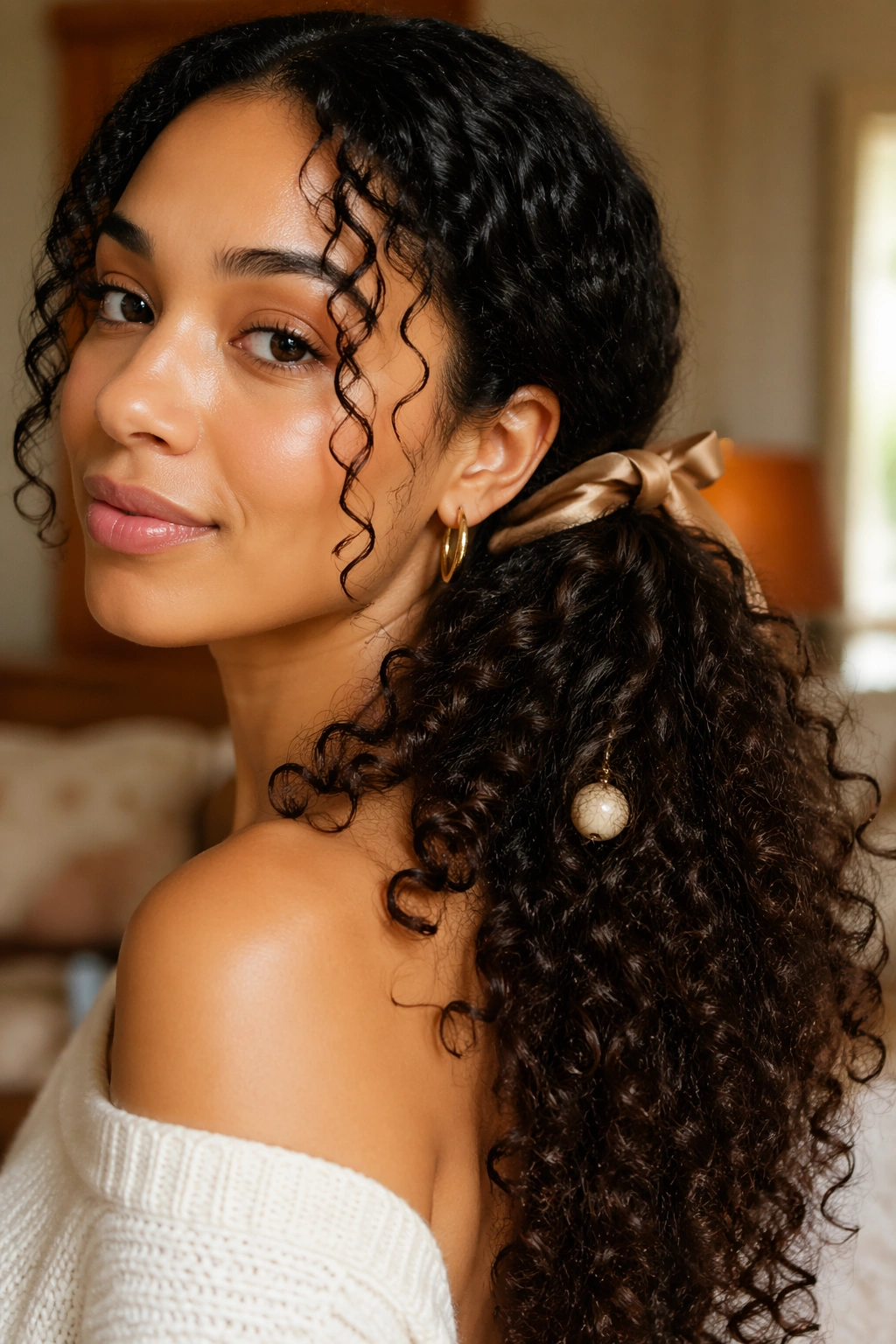
Accessories can save a side ponytail that feels too plain. Small clips, beads, thread wraps, cuffs, and narrow ribbons all change the tone without forcing a full restyle. On curly hair, the trick is choosing one accent and stopping there.
A row of tiny clips along the side part can add a playful feel. One ribbon wrapped around the base gives a softer look. Beads work best on longer curls or braids feeding into the ponytail, where they can hang without crowding the shape. If the accessory is loud, keep the curl definition simple. If the hair is already big, use one small accent and let it breathe.
I like this section for parties, photo days, or any moment when the hair needs one more decision. Not five. One.
25. Minimal Side Ponytail with a Clean Finish
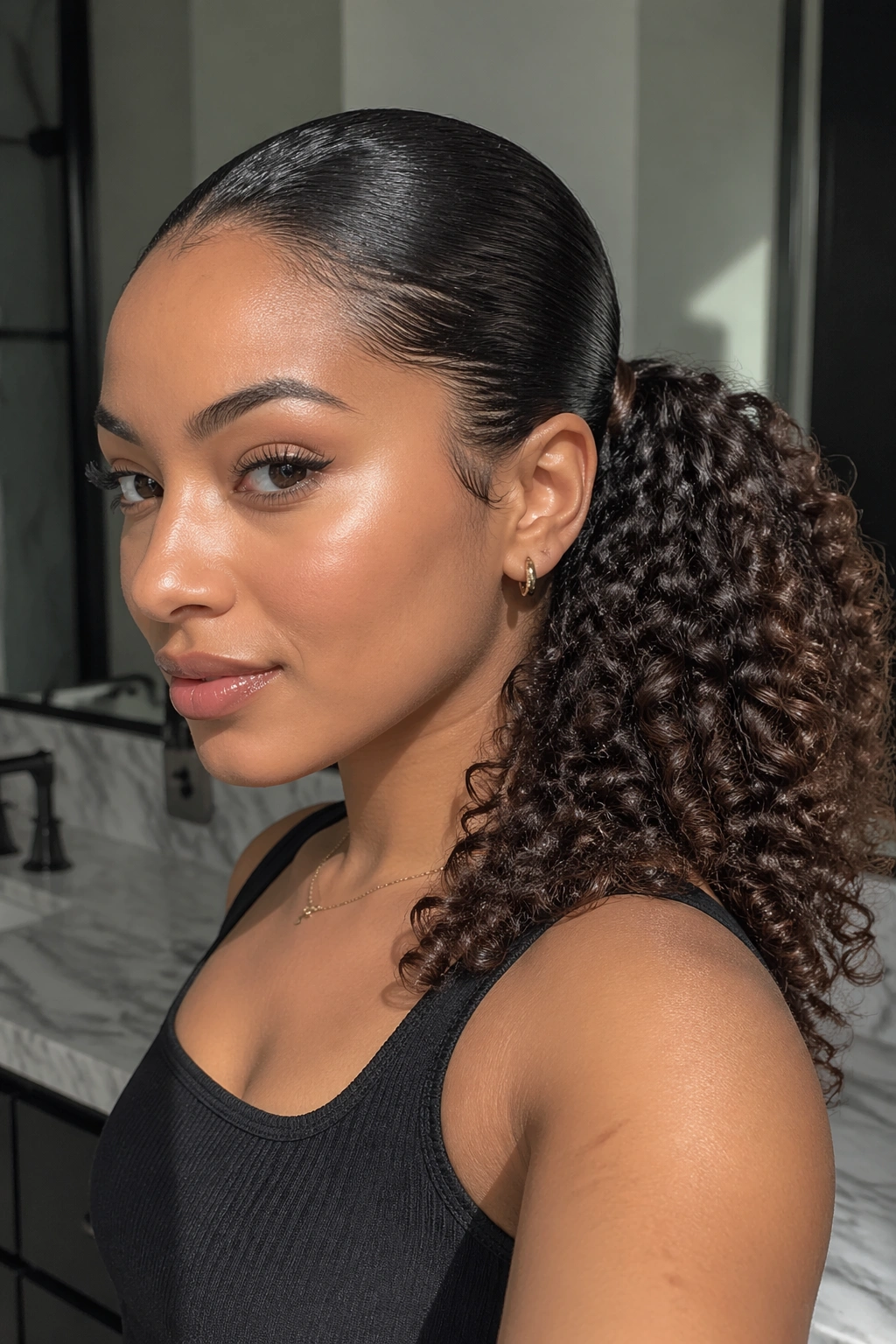
The cleanest side ponytails often skip the fussy extras. A deep side part, a smooth base, and a full curly tail are enough when the texture is strong and the cut is doing its job. This version is the one I’d pick when I want the style to look neat without looking overworked.
Use a small amount of gel at the roots, gather the hair low and to one side, then stop touching it. That is the part people mess up. They keep fixing the curls, and the style gets bigger in all the wrong places. A good side ponytail should look arranged, not fussed over.
If you only keep one rule in your head, make it this: shape the base, then leave the curls alone. That is usually enough.