



A twist ponytail can do more for natural hair than a plain ponytail ever will. It can look polished, keep your ends tucked, and still let your texture show up instead of disappearing under gel and a tight elastic.
That balance is the appeal. A twist ponytail can read neat, soft, bold, dressy, or sporty depending on the base, the parting, and how thick you make the twists. The same general idea can sit low at the nape, sit high on the crown, or swing to one side like you meant to make a little trouble. I’m a fan of styles that do more than one job, and this is one of them.
The details matter more than people think. A clean section line, a moisturized root, and a ponytail holder that doesn’t pull the hairline can change the whole look. Skip those pieces and the style starts puffing up in the wrong places by the end of the day.
These 25 twist ponytails for natural hair cover the polished, the playful, the quick-fix, and the extra. Some lean sleek. Some lean chunky. A few are the kind of styles that make you reach for a satin scarf before bed and then leave the house feeling like you planned the whole thing.
1. Sleek High Two-Strand Twist Ponytail
A high twist ponytail sits up on the crown and gives the face a clean lift without needing a full blowout. I like this one when the goal is sharp roots and a long, ropey finish that still feels like natural hair, not a stiff mold of it.
Why It Works
The height does a lot of the work for you. It stretches the silhouette, shows off the twist pattern, and keeps the ends out of the way, which is useful if you want a style that can make it through a packed day. The trick is keeping the base smooth and the twist lengths soft enough that they move.
- Use a rat-tail comb for a crisp center or side part.
- Smooth the roots with a light gel, not a heavy fistful of product.
- Secure the ponytail with a snag-free elastic.
- Twist the loose hair in 2 or 3 sections for a fuller finish.
Pro tip: If your edges feel tender, move the ponytail back half an inch and skip the urge to pull the front too tight. A neat style should still feel wearable by hour three.
2. Low Side-Part Twist Ponytail
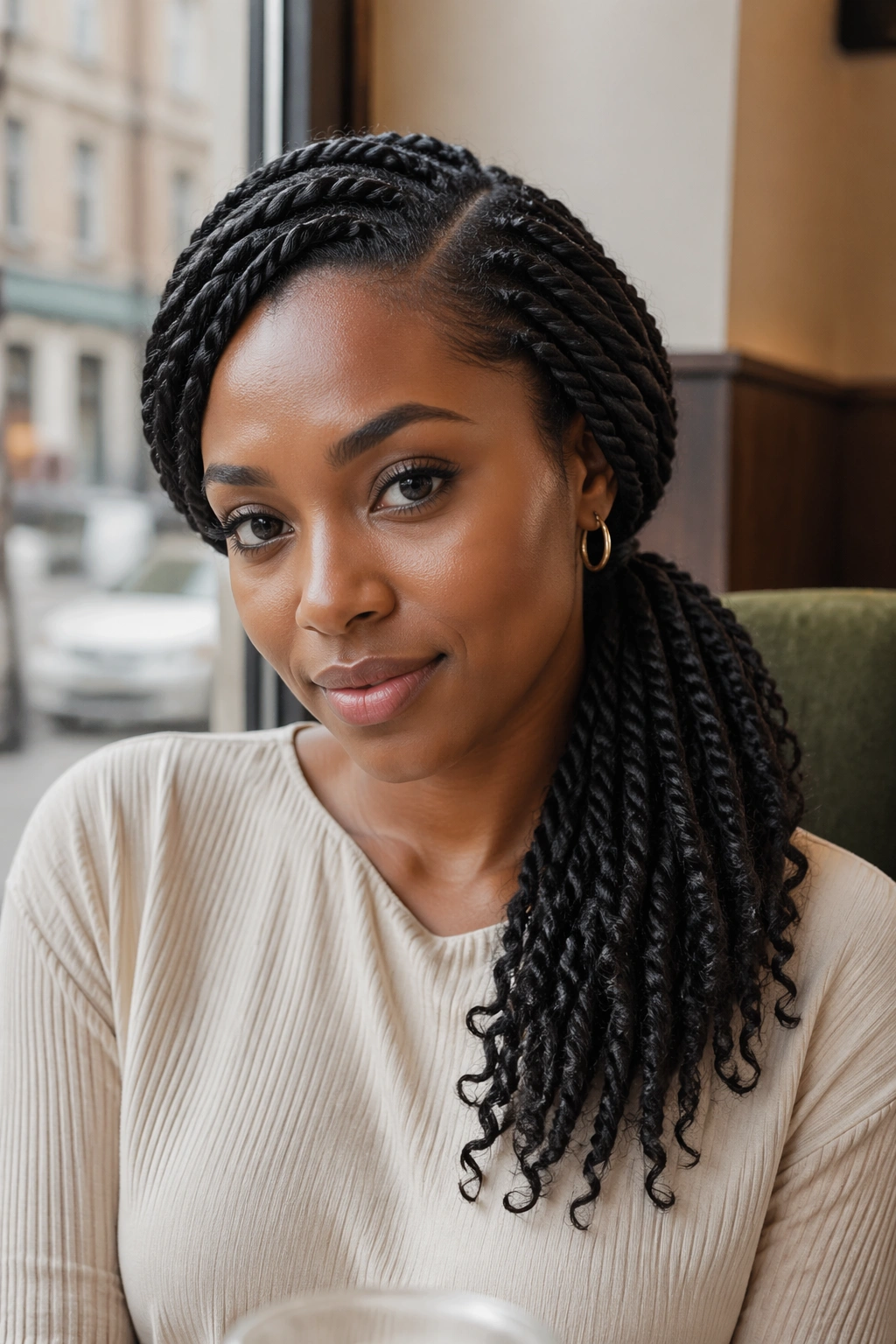
A deep side part makes a twist ponytail look dressed up with almost no extra effort. The style lands low near the nape, and that lower placement keeps it soft instead of severe.
This is the kind of look that works on days when you want your hair controlled but not overworked. The side part gives the front shape, while the ponytail itself can be twisted into medium sections that fall over one shoulder. I especially like it on medium-length natural hair because it doesn’t need a ton of added length to look finished.
A low side-part ponytail also gives you room to play with the root texture. You can smooth only the top inch of hair and leave the rest with a little bend and body, which keeps the style from looking flat. It’s neat. Not fussy.
3. Feed-In Cornrow Twist Ponytail
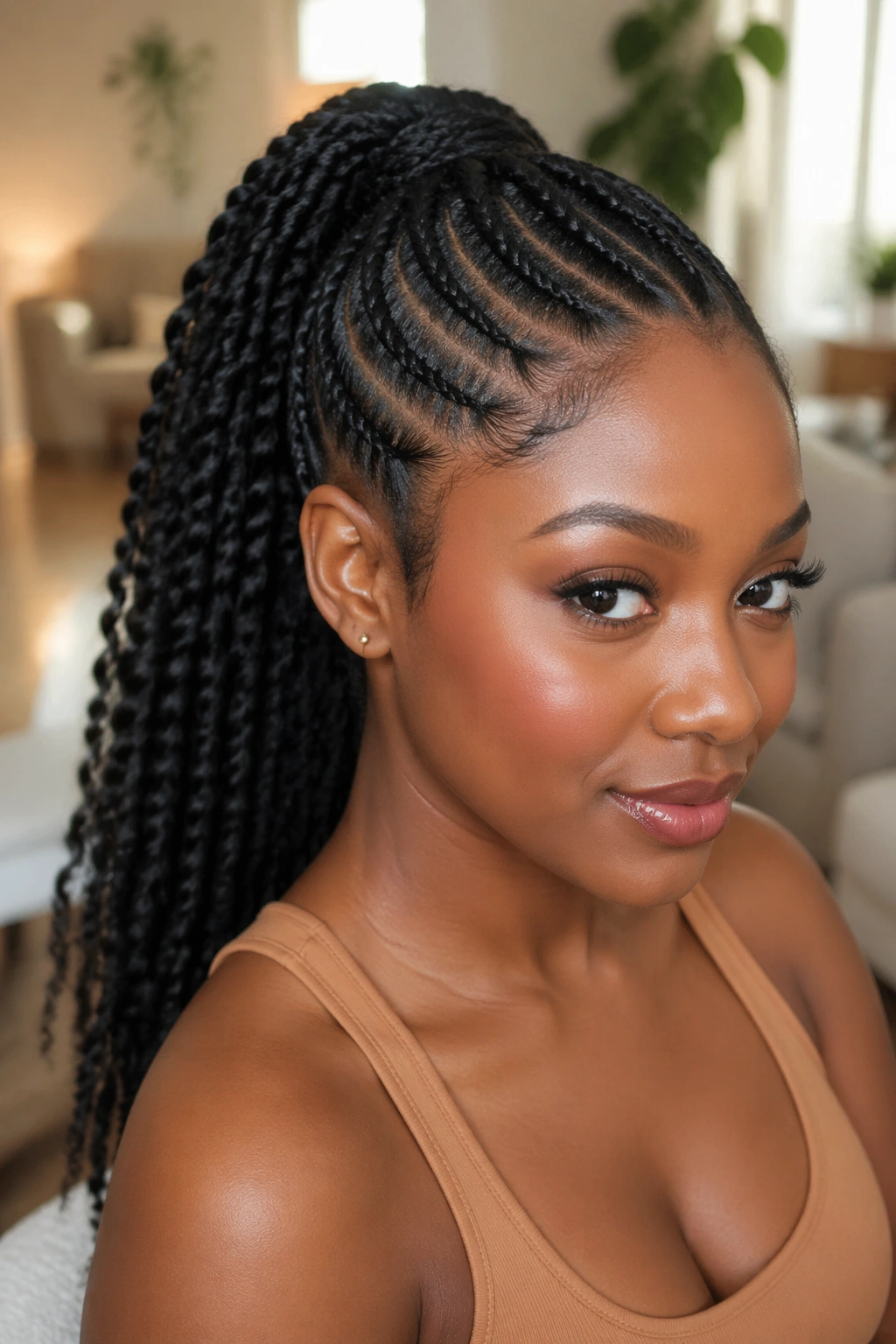
Why does this style last so well? Because the front is anchored with feed-in cornrows, and that base keeps the ponytail from puffing up too fast.
Once the braids meet at the back, the twist tail takes over and gives the style movement. The braid-to-twist transition is what makes it feel polished instead of boxy. If you’ve ever wanted a ponytail that can survive a long week, this is one of the stronger picks.
How to Wear It
- Add 2 to 4 cornrows from the hairline toward the crown.
- Keep the feed-in sections neat, but not too tight at the temples.
- Join the braids into a ponytail and twist the loose hair from there.
- Finish with a little mousse along the length so the twists lie flat.
A style like this is best when you want hold, shape, and a little structure. It’s one of those looks that can handle humidity better than you’d expect, as long as the base is clean and the ponytail isn’t overloaded with product.
4. Rope-Twist Ponytail with a Wrapped Base
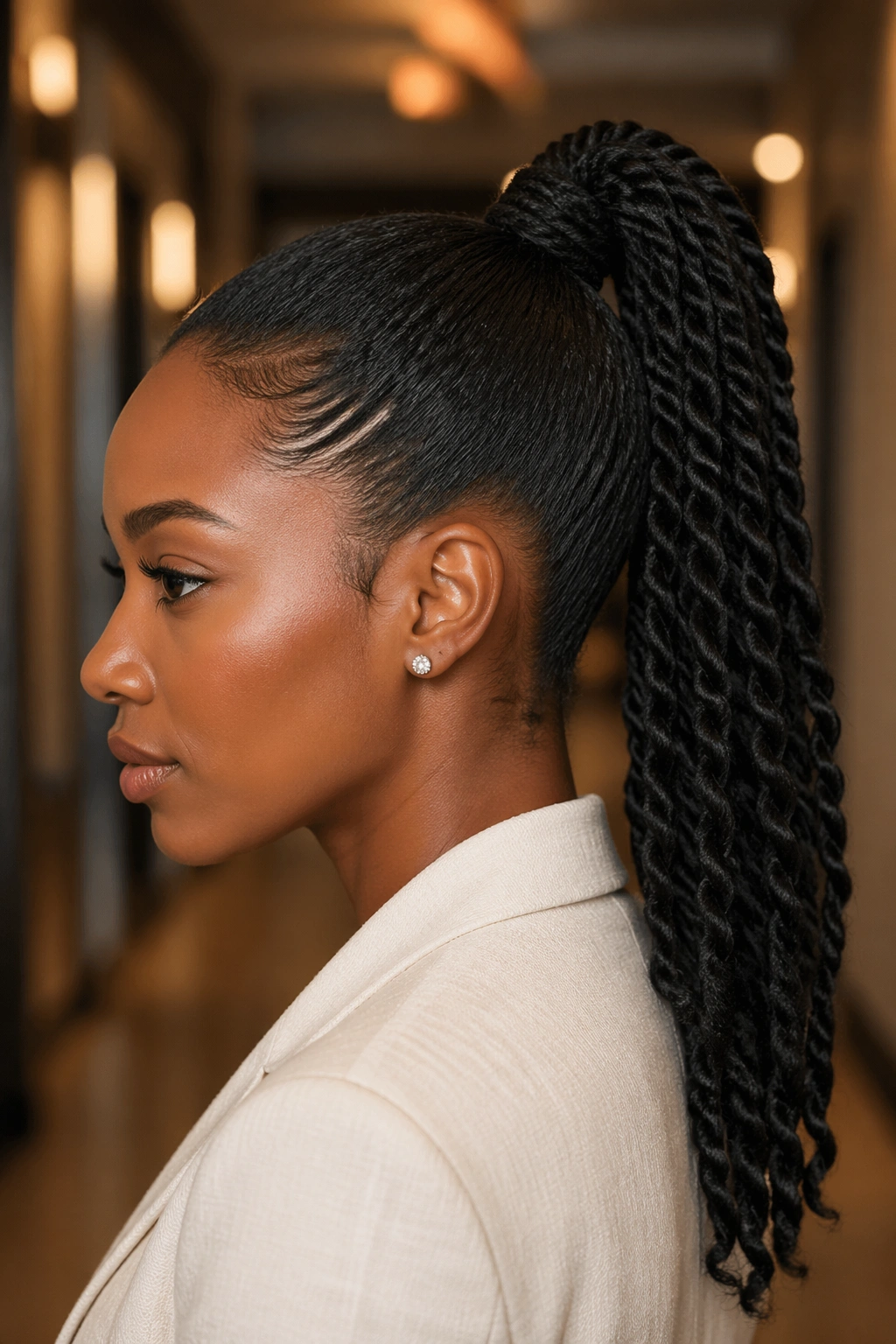
Some styles look finished only after you hide the elastic. This is one of them.
The wrapped base gives the ponytail a cleaner start, which matters when the twist length itself is simple. You take a slim section of hair, twist it tightly, and wind it around the ponytail holder until the band disappears. That small move changes the whole mood of the style. It feels more intentional, more put together, and a little less like “I threw my hair up and hoped for the best.”
- Best on low or mid-height ponytails.
- Works well with medium-thickness hair.
- Keep the wrap section smooth so it doesn’t unravel.
- Pin the end underneath the ponytail if your hair is slippery.
The base is the star here. The rest can stay fairly plain. That’s part of why I like it; you do not need a complicated braid pattern to make the style look finished.
5. Half-Up Twist Ponytail
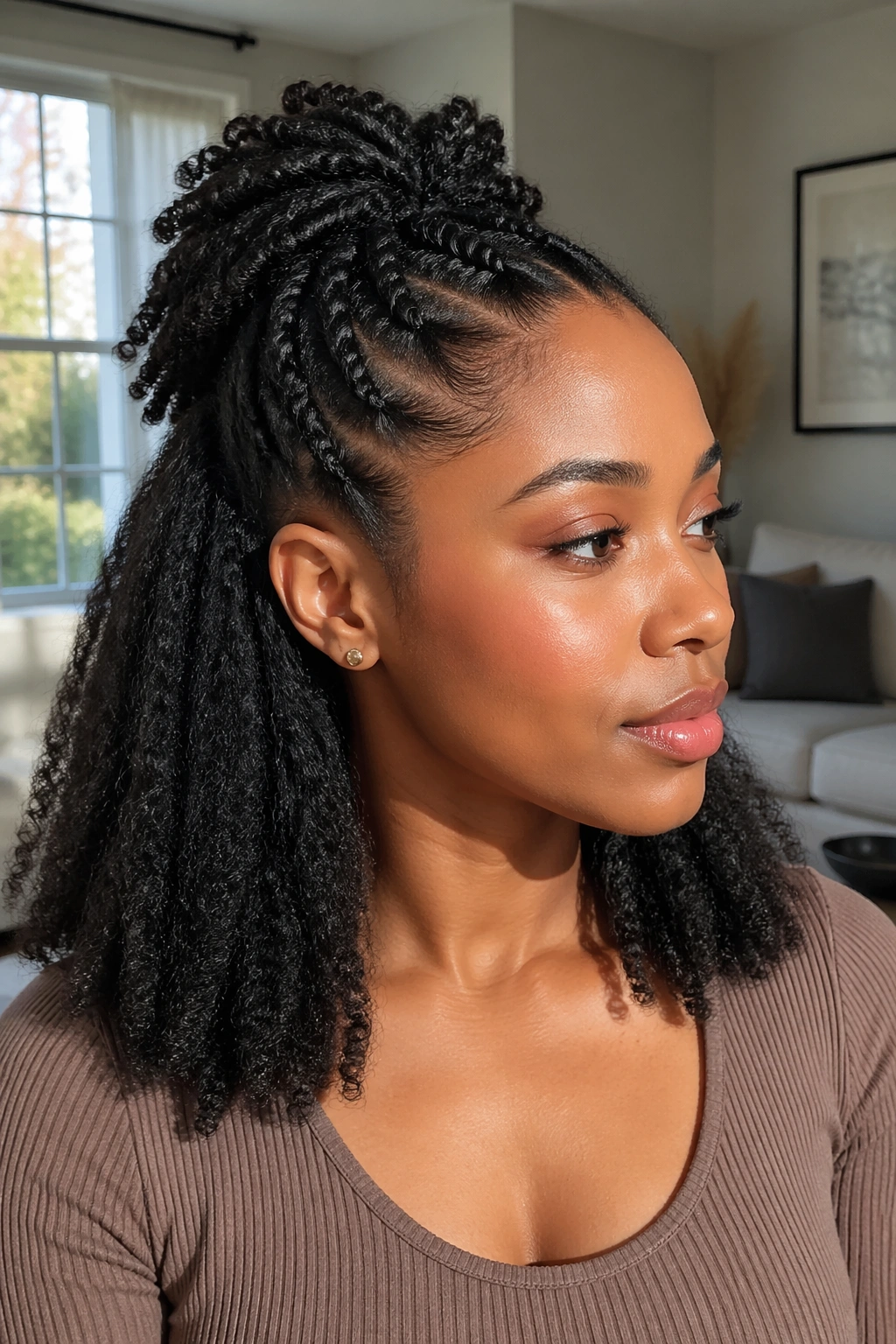
The half-up twist ponytail is for the days when you want your hair out of your face but you still want the back to move. It gives you control at the crown and freedom everywhere else.
That balance matters on natural hair because it keeps the style from feeling too severe. You can twist the top half into a ponytail, leave the lower half loose, and suddenly the whole look has shape without losing softness. On shoulder-length hair, it can be especially flattering because the lower section fills out the silhouette.
I like this style with stretched curls or lightly brushed-out twists. Freshly washed coils can work too, but the lower half may shrink more than you want by midday. If you want a smoother finish, stretch the hair first with bands, twists, or a gentle blow-dry on low heat. The style still looks natural either way. It just reads cleaner when the hair has a little length to work with.
6. Jumbo Chunky Twist Ponytail
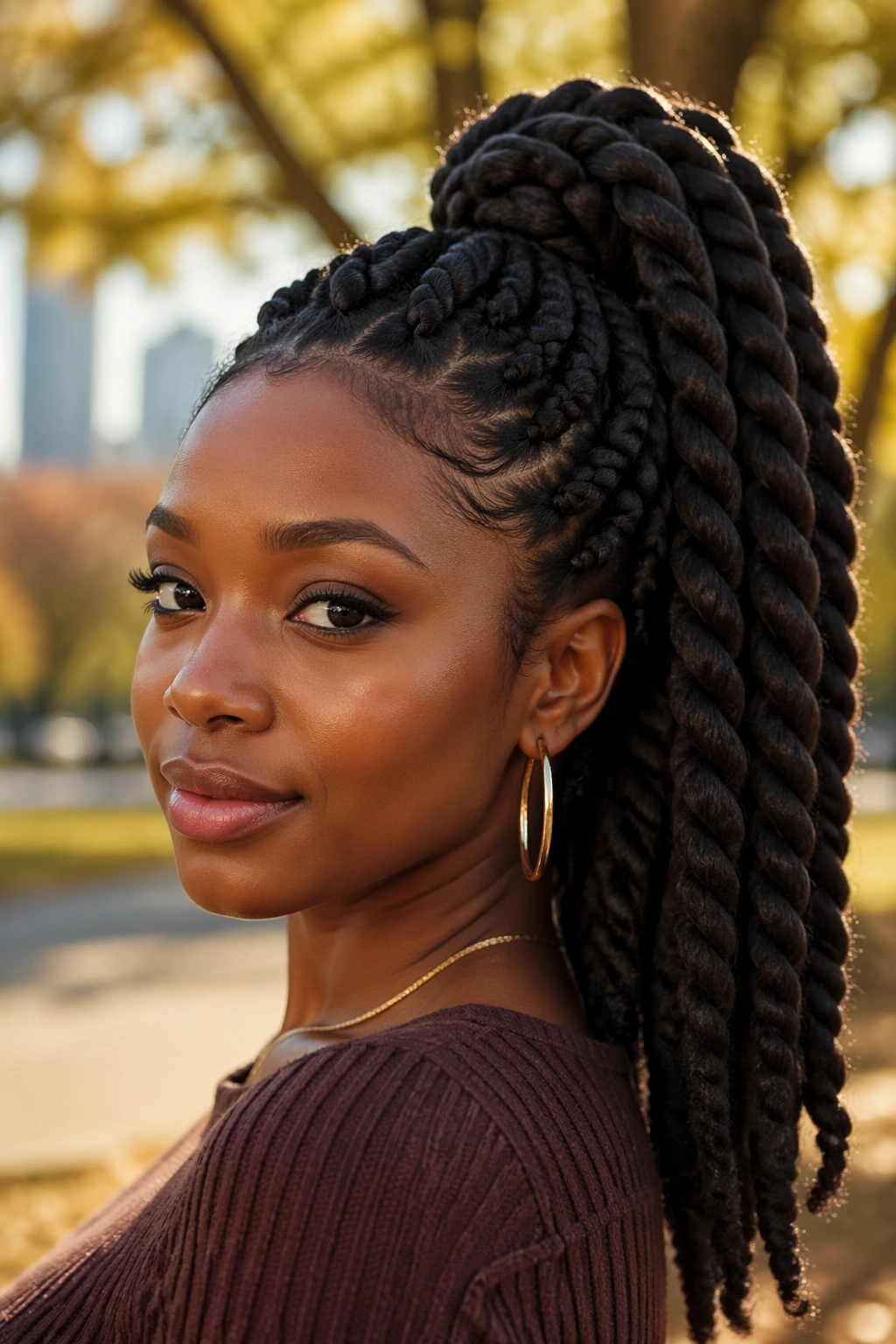
Jumbo twists make a ponytail look fuller in half the time. That’s the main reason people keep coming back to them.
The bigger sections give you more volume at the base and more visual texture through the length. They also cut styling time, which is a gift when you don’t want to spend the whole afternoon parting tiny sections. The trade-off is weight. Chunky twists can feel heavier on fine hair, so it helps to keep the ponytail at a comfortable height and avoid overloading the style with accessories.
This version looks especially good when the hair has been stretched first. The parts stay cleaner, the twists look more defined, and the final ponytail hangs with a little more swing. If you want a bold shape without a lot of small-detail work, this is the one I’d reach for.
7. Flat-Twist Crown Ponytail
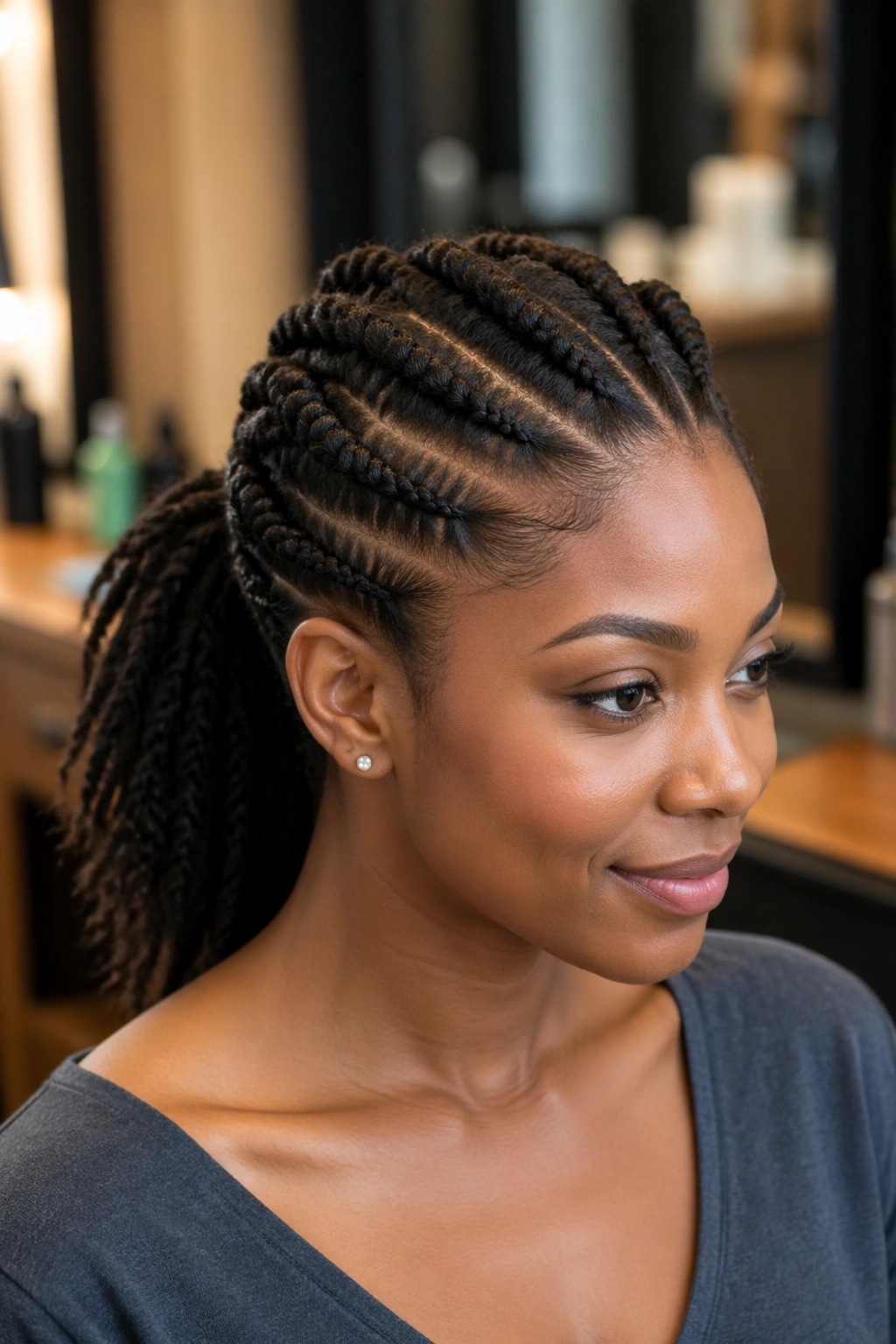
A flat-twist crown changes the whole shape of the head before the ponytail even starts. The front gets sculpted, the sides stay close, and the ponytail becomes the payoff at the back.
What Makes It Different
The crown section directs the eye upward and back, which gives the style a nice lift without needing teased roots or a stiff finish. It also works well when the hairline needs a break from constant brushing. A few flat twists across the top keep tension spread out, which is kinder than yanking everything into one tight point.
After the flat twists, the remaining hair can be gathered into a medium ponytail and twisted as long or short as you like. A satin scarf pressed over the front for 10 minutes helps the crown settle down and keeps the parts looking clean.
The best part is that this style can be dressed up or down fast. Swap a plain elastic for a gold cuff, and the whole thing changes.
8. High Puff Twist Ponytail
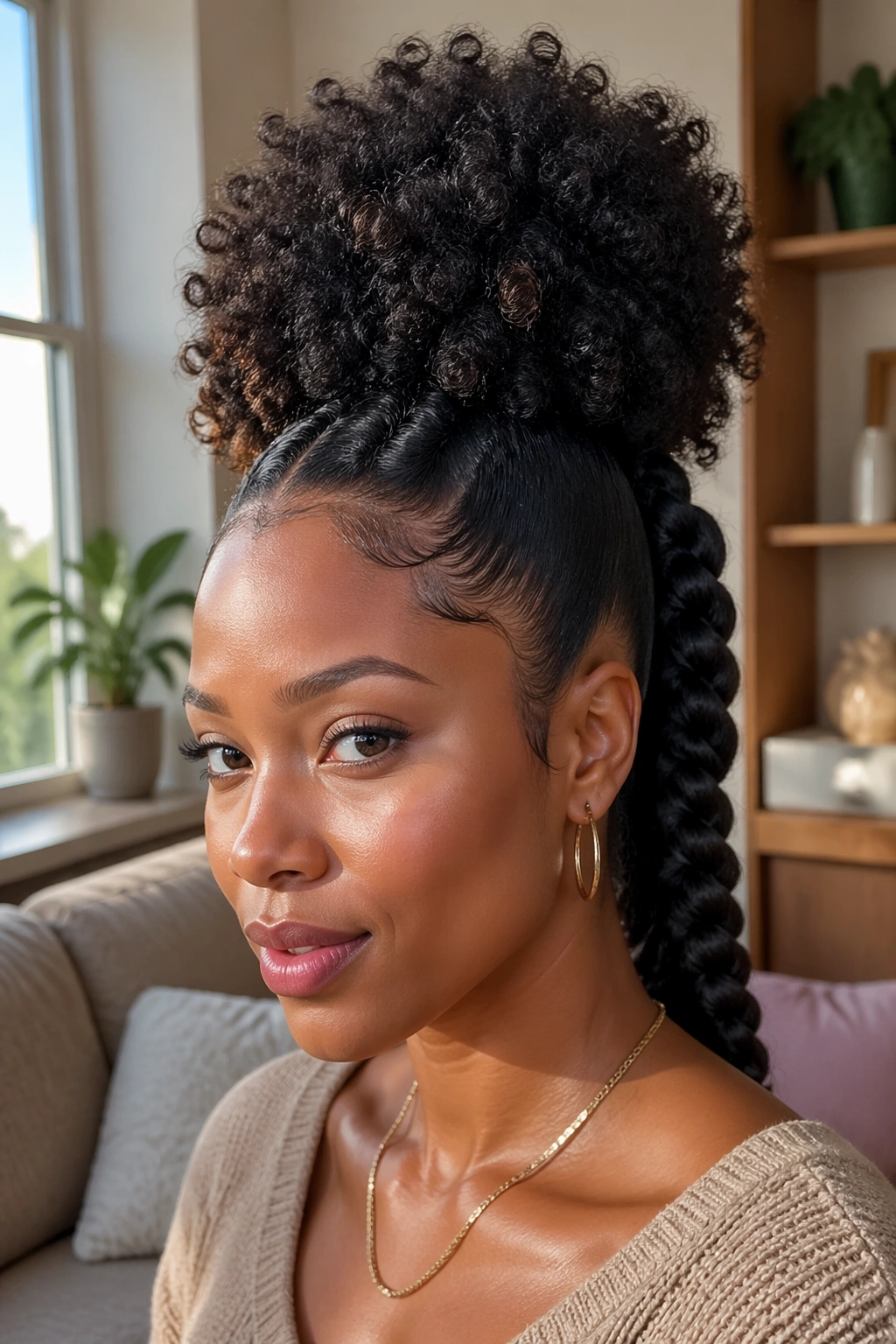
This is the style I’d pick when you want height without fighting your shrinkage. The top stays full, the sides can be smoothed, and the ponytail itself keeps enough texture to feel like natural hair.
A high puff twist ponytail works best when the hair has some stretch and a little moisture sealed in. If the strands are too dry, the puff gets fuzzy at the base. If they’re soaked in product, the style can collapse. The sweet spot is clean hair, a light cream, and a small amount of gel around the perimeter.
This one is especially nice for coily hair that loves volume. You’re not forcing it into a sleek shape it does not want. You’re guiding it. That difference shows.
9. Side-Swept Twist Ponytail
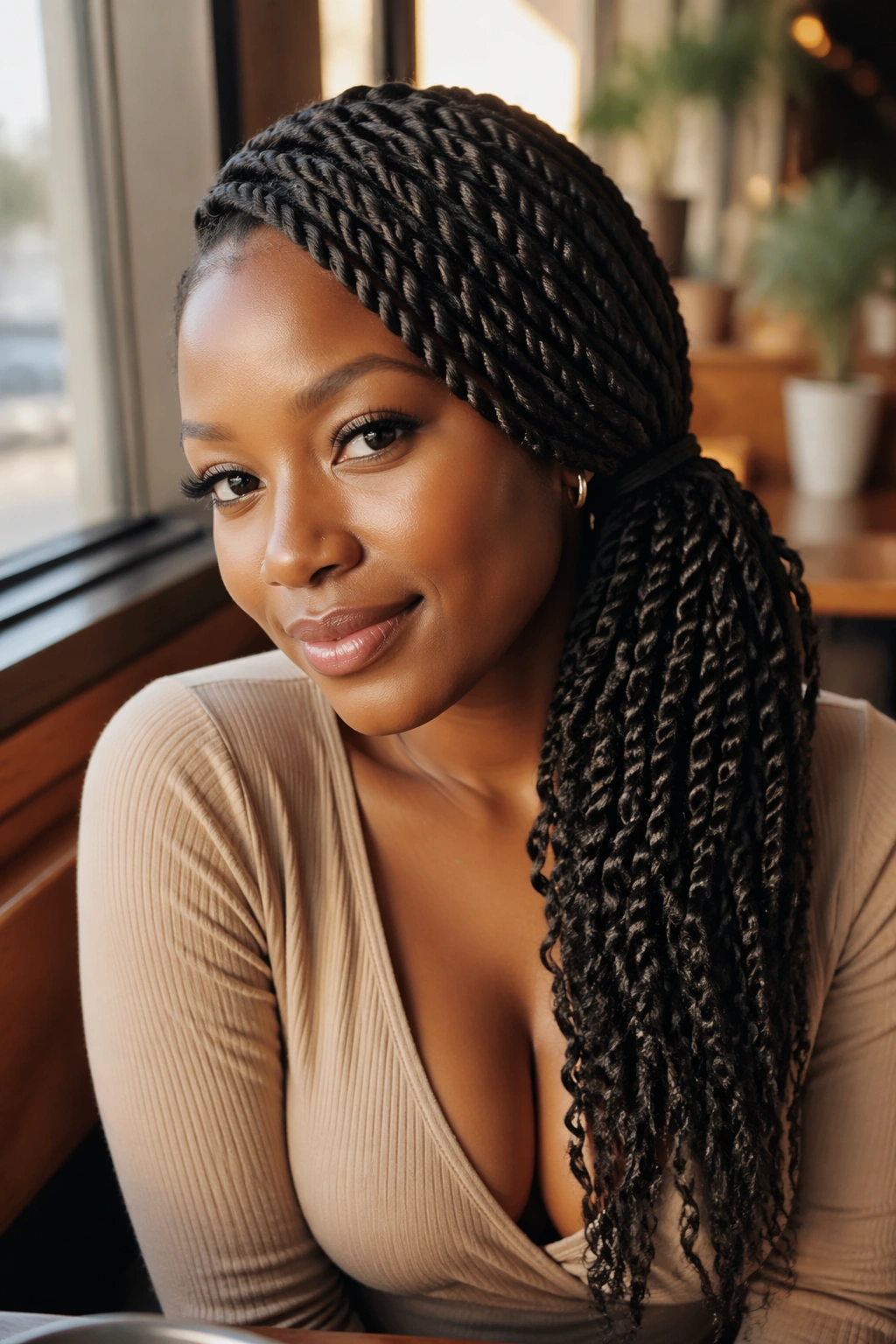
Why does a side-swept ponytail feel softer than a centered one? Because the whole style leans into the natural curve of the head instead of fighting it.
The deep side part does the setup work, then the twists fall across one shoulder with a little more movement. It’s a good choice when you want something feminine without being overly polished. I also like it for medium to long hair, since the asymmetry helps shorter lengths look intentional rather than unfinished.
How to Keep the Front Smooth
Use a narrow brush or your fingertips, not both, to lay the front down. Too much brushing can make the roots frizzy. Keep the part clean, tuck the shorter pieces behind the ear if needed, and let the twist tail do the talking.
A side-swept ponytail looks best when the twists are different sizes, not identical. That tiny irregularity makes it feel lived-in in a good way.
10. Twisted Bubble Ponytail
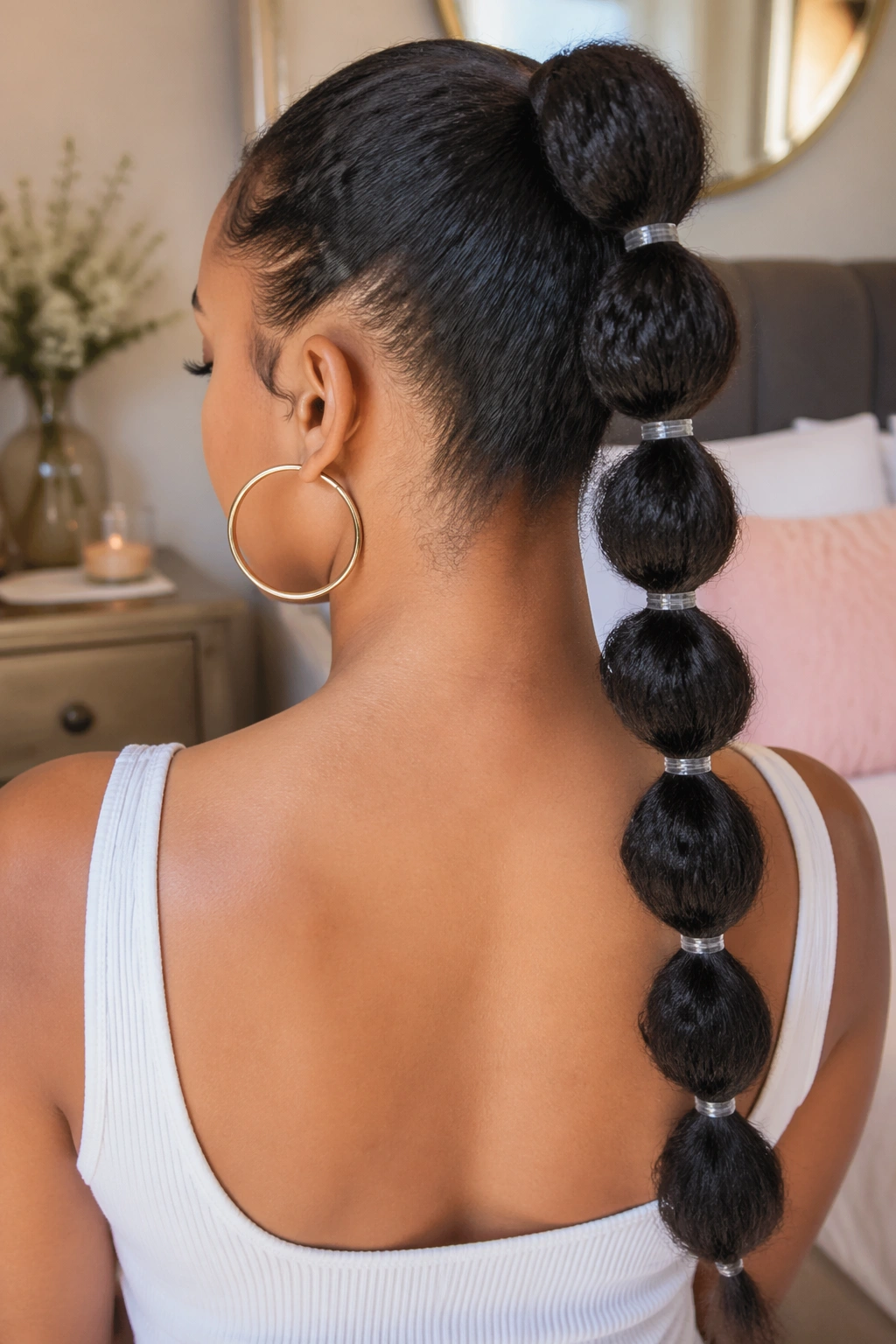
A twisted bubble ponytail is what happens when you want shape and rhythm in the same style. The ponytail gets divided into sections with small elastics, then each section puffs slightly between the bands.
That spacing gives the style a playful look without taking away the twist pattern. It works especially well on longer hair or added hair because the “bubbles” need enough length to show. On natural hair, the trick is placing each elastic 2 to 3 inches apart, then gently pulling the sections wider with your fingers until they round out.
- Use clear elastics or bands that match your hair color.
- Add a drop of oil to your fingertips before shaping each bubble.
- Keep the first section near the base tight so the style stays secure.
- Wrap one twist around the final elastic if you want a cleaner finish.
This is a fun one. Not childish. Just fun.
11. Mini Twist Ponytail
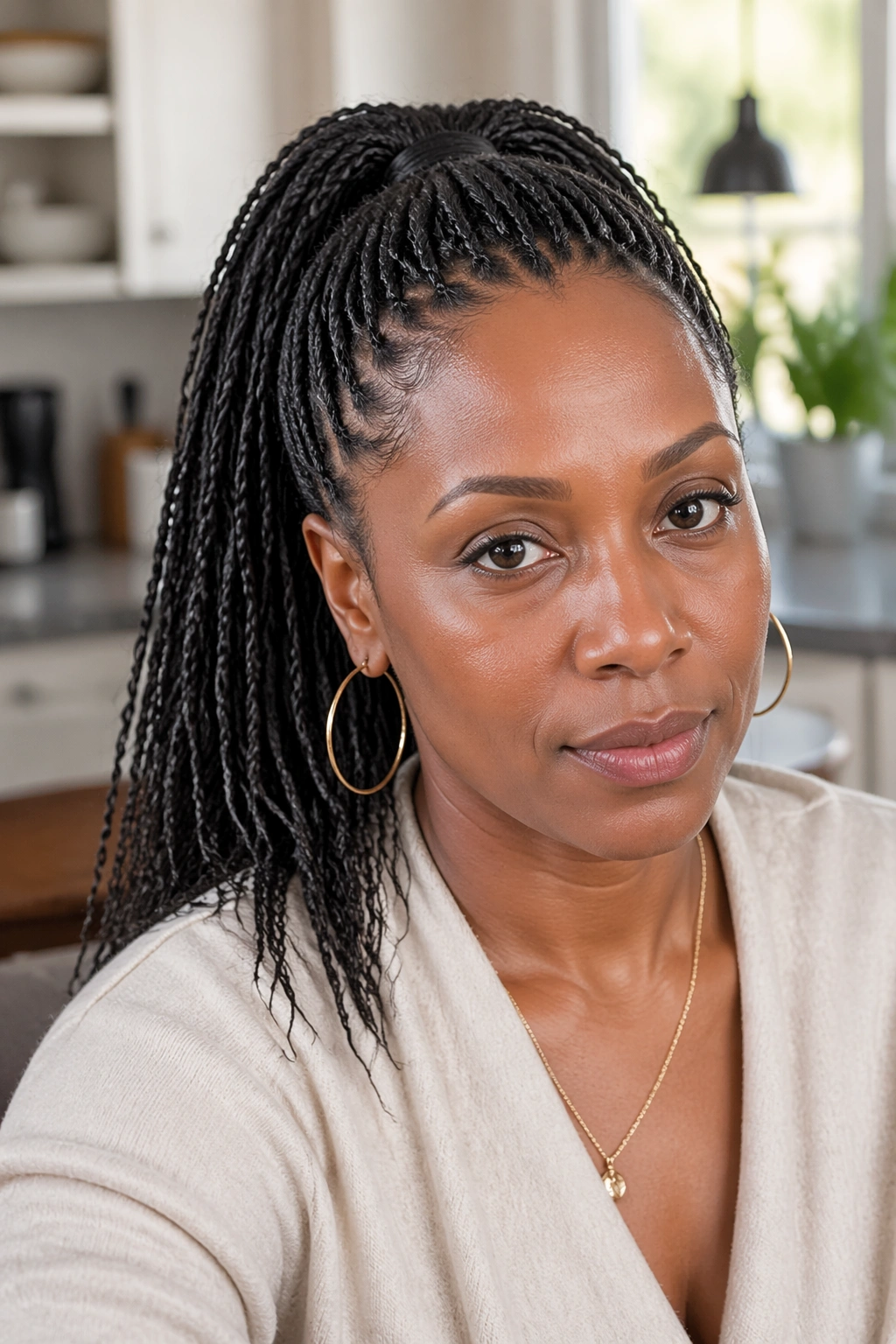
Mini twists give a ponytail a finer, more textured look than chunky sections do. They’re smaller, lighter, and easier to tuck into a low or mid ponytail without creating too much bulk at the base.
This style is good for people who like detail. You can see every twist, but the overall shape still feels neat. Mini twists also make the ponytail more flexible because the hair falls in a softer curtain instead of one heavy bundle. If your natural hair is dense, this can be a relief. If your hair is finer, the smaller twists keep the style from looking overloaded.
The main downside is time. Mini twists ask for patience. Lots of it. But once they’re in, they give you several styling options, and a ponytail is only one of them.
12. Twisted Mohawk Ponytail
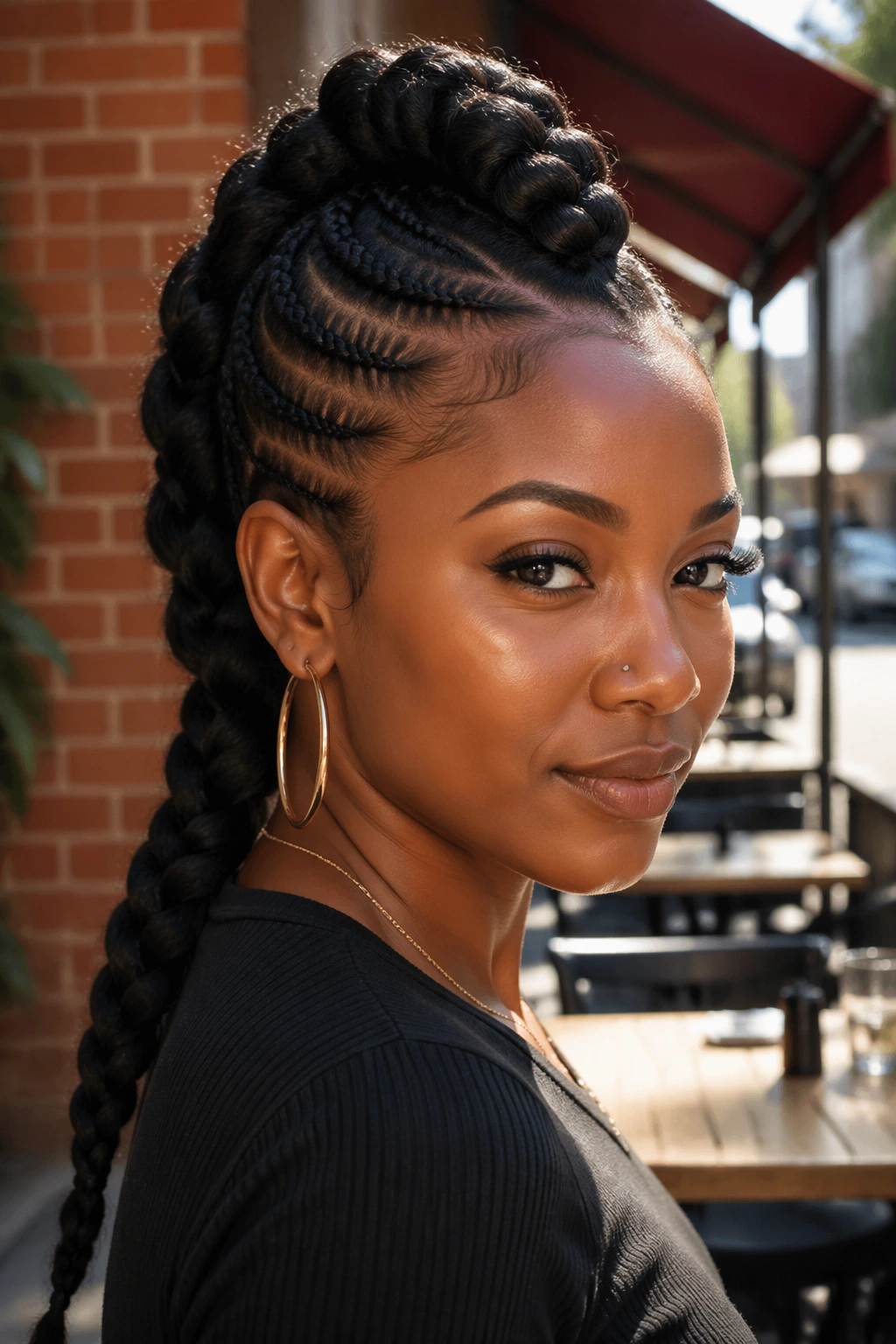
If a regular high ponytail feels too safe, this one gives you the same lift with a little more edge. The sides stay flat or braided down, while the center gathers into a twist ponytail that runs from front to back.
That shape gives you the mohawk line without needing a cut. It’s a smart option for natural hair because it protects the sides and puts the visual focus where you want it. I like it on thick, coily hair because the center section has enough body to stand up on its own.
It also frames the face well. The tucked sides make the cheekbones stand out, and the ponytail can be as long or as short as your hair allows. If you want drama without too many moving parts, this is one of the better choices.
13. Marley Twist Ponytail
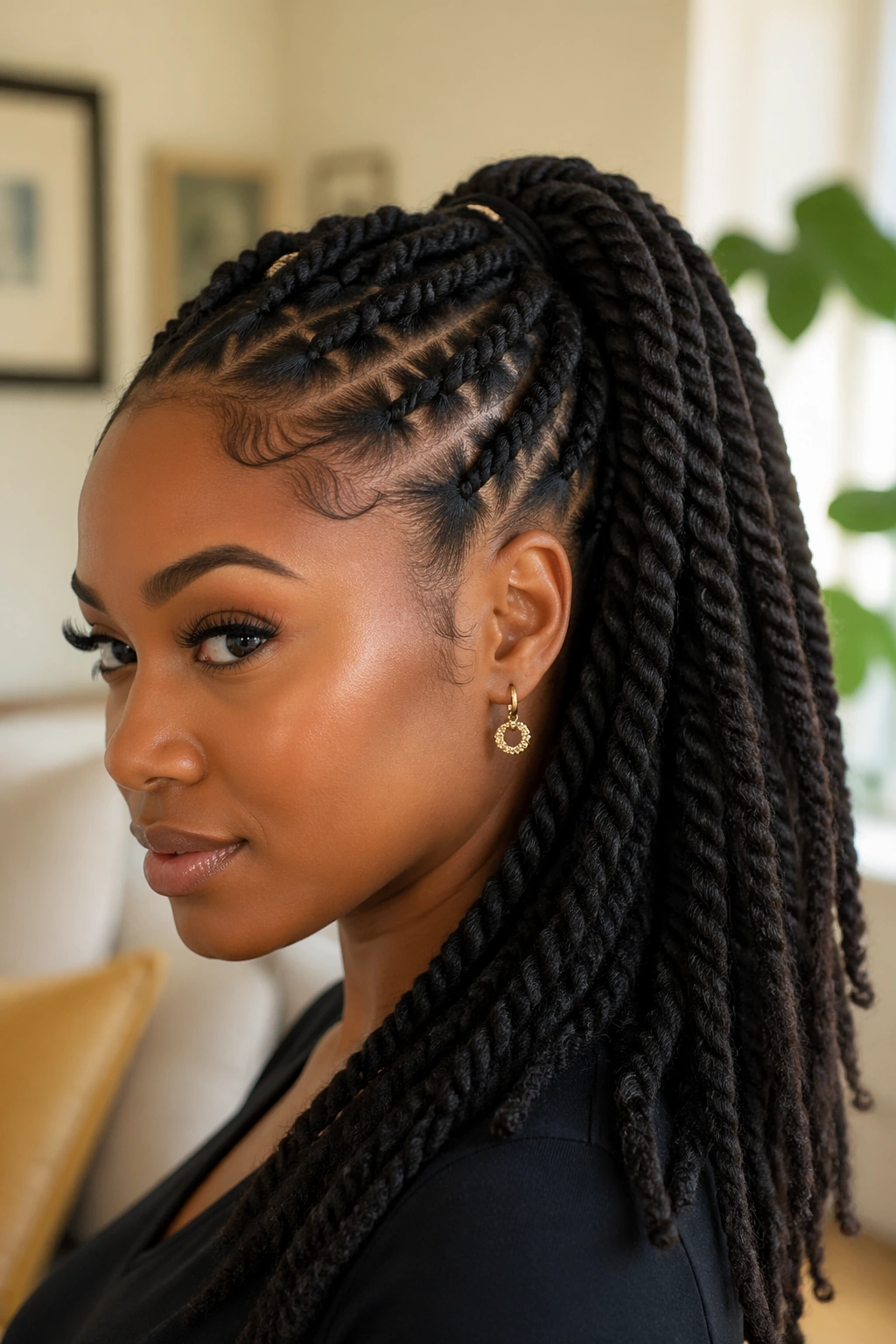
Marley twists bring a matte, slightly fuzzy texture that blends beautifully with natural hair. When you gather them into a ponytail, the style looks fuller and heavier in a good way.
What to Know Before Adding Extensions
- Marley hair adds weight, so keep the base comfortable.
- Pre-fluff the extension hair before twisting so the texture looks even.
- Use medium sections if you want a balanced finish.
- Seal the ends well, since loose Marley fibers can unravel if you rush.
I like Marley twist ponytails for people who want shape more than shine. The texture reads earthy and bold, not slick. That can be a nice change if you usually wear styles that are too polished for your taste. Just don’t make the ponytail too dense at the root. A heavy base can pull more than it should.
14. Low Nape Twist Ponytail
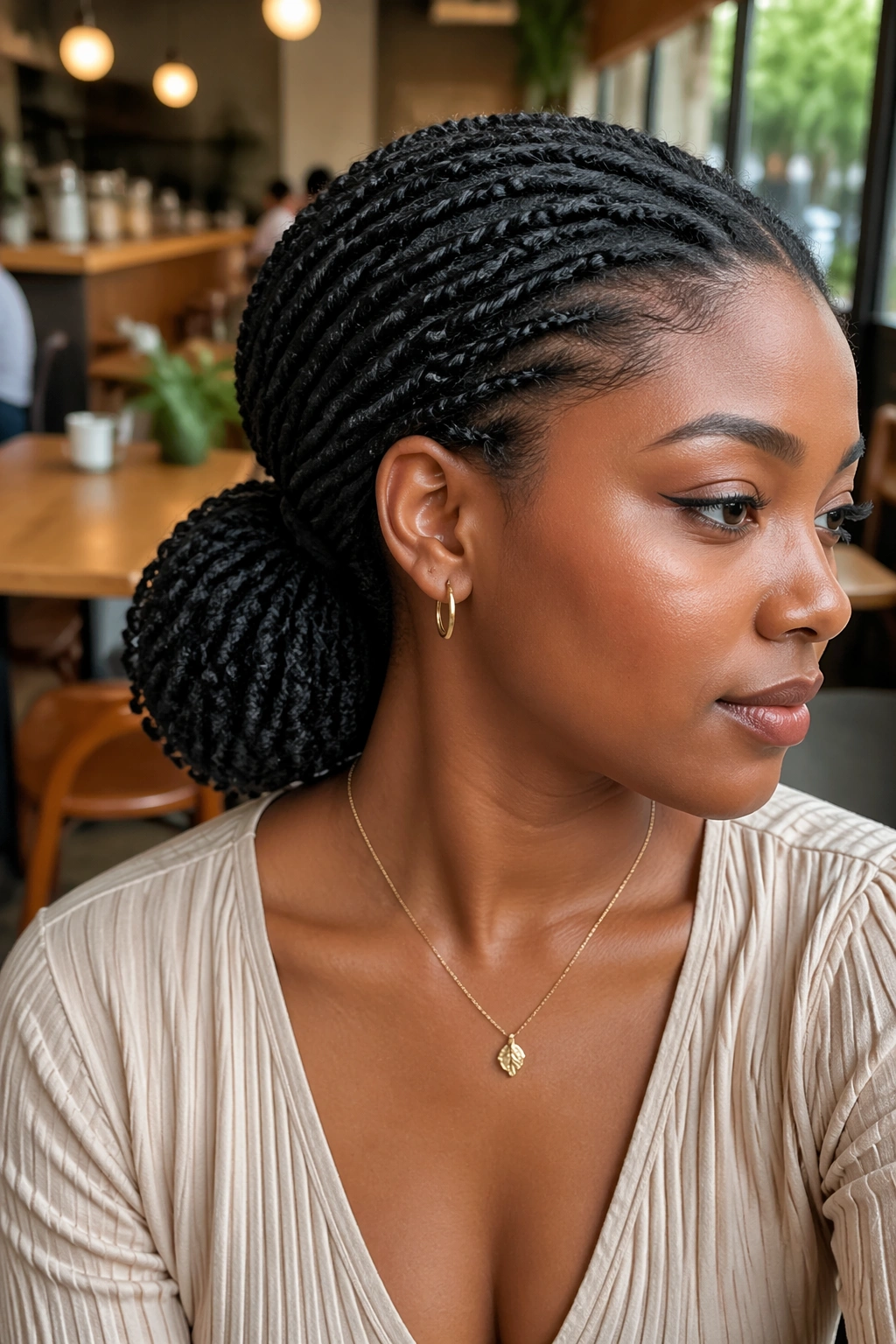
This may be the most forgiving twist ponytail on the list. The low nape placement keeps the weight down and spreads the tension in a way that feels easier on the scalp.
The look is calm, tidy, and useful for almost any setting. Work, errands, dinner, even a dressier event with the right accessory. The twist tail can be tucked neatly or left long, but the base stays close to the neck, which gives the style a softer profile than a high ponytail. I also like it for colder weather, when a high ponytail can rub against collars and jackets.
There’s a quiet elegance to a low nape ponytail, but I won’t use that phrase. It’s just a clean style that behaves well.
15. Criss-Cross Twist Ponytail
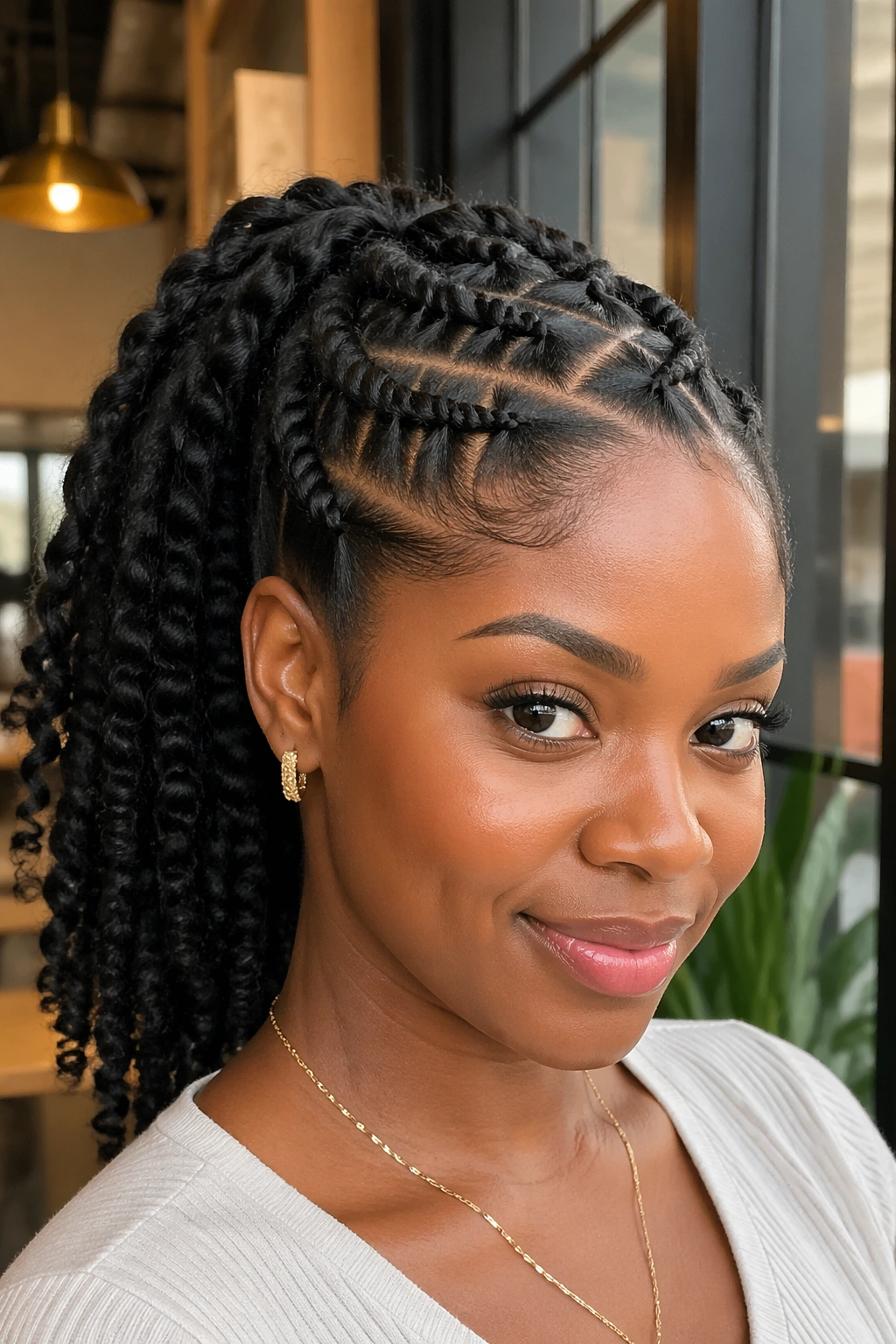
How do you make a ponytail look detailed before the twists even begin? You criss-cross small sections at the front.
That overlapping pattern gives the root area movement and keeps the style from looking like one straight line from hairline to ponytail holder. It works well on stretched hair because the sections lie flatter and the pattern shows up more clearly. Once the criss-cross pieces meet at the back, the rest of the hair can be twisted into a medium ponytail.
Where It Shines
The style looks especially good when the front section is parted cleanly and the crossovers are pin-secured. A little mousse helps the pieces stay together without making them crispy. If you want a twist ponytail that reads a little more intricate than a basic gathered style, this one earns its place fast.
16. Scarf-Wrapped Twist Ponytail
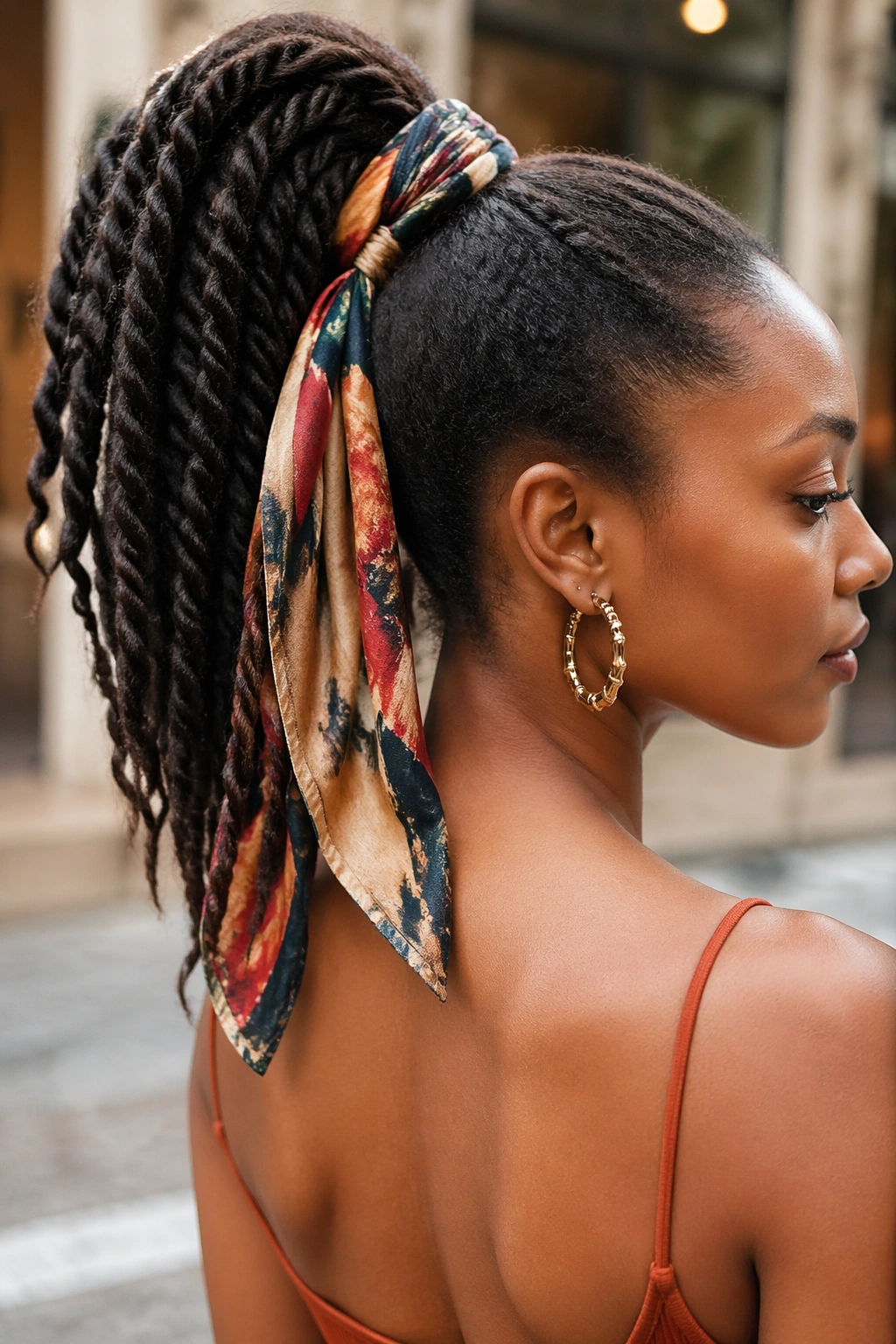
A scarf-wrapped twist ponytail is a smart fix when the base needs help or when you want to bring in a color that isn’t on your head. The scarf hides the elastic, softens the shape, and adds a little movement near the crown.
This is the style I’d grab on a morning when the hair is cooperating only halfway. Tie the scarf snugly around the base, leave the tails hanging or knot them off to one side, and let the twists fall behind it. It looks deliberate even when the rest of the routine was not.
- Choose a scarf that is long enough to tie securely.
- Use satin or silk if you want less friction.
- Keep the knot off the center if you want the style to feel softer.
- Match the scarf color to your outfit or earrings for a cleaner finish.
The scarf does the styling heavy lifting here.
17. Beaded Twist Ponytail
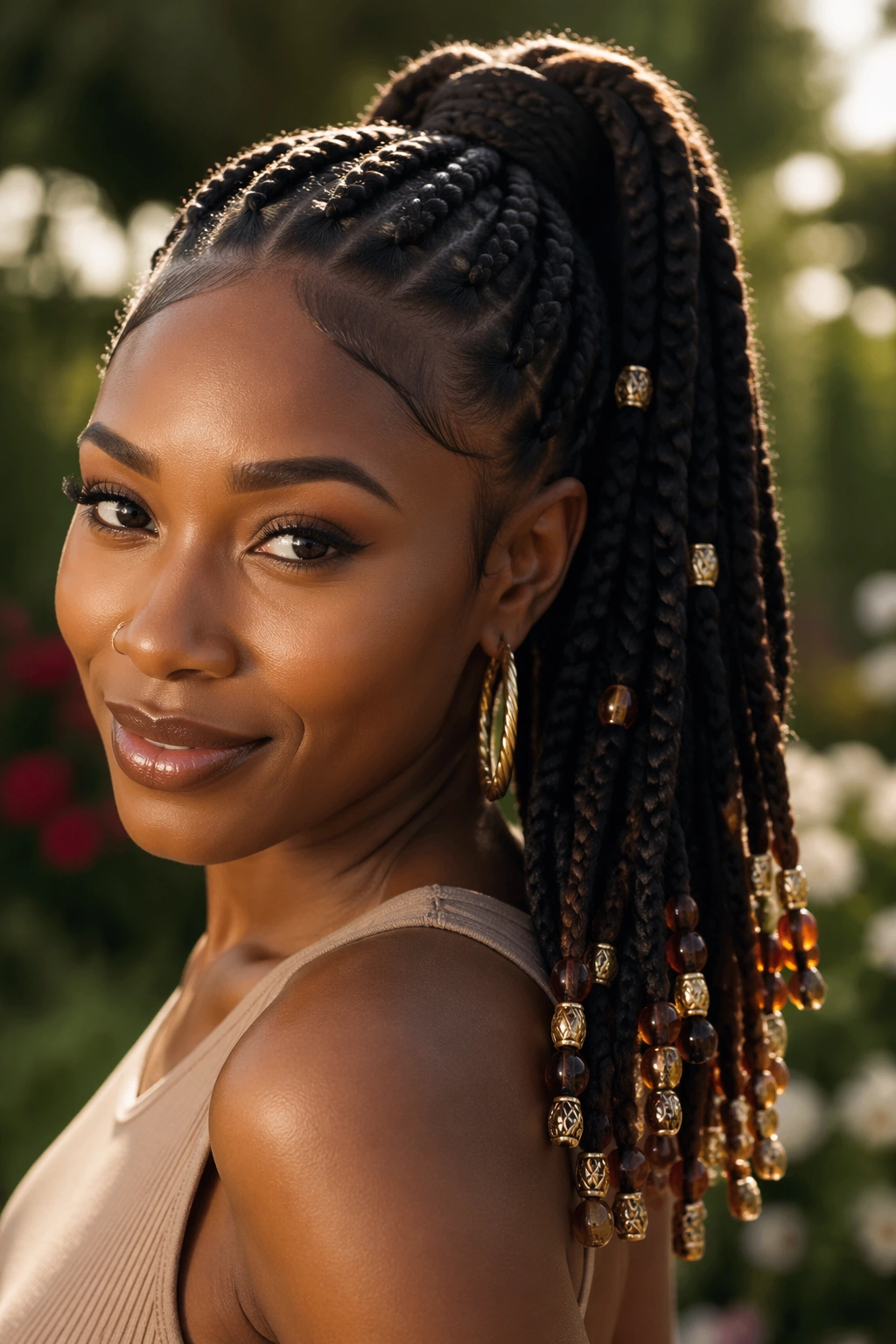
Beads change the sound and the swing of a ponytail, and that’s part of the charm. A twist ponytail with beads feels playful, but it can also feel polished if you keep the bead count under control.
The key is balance. Too many beads and the ends get heavy fast, especially on smaller twists. A few at the tips, spaced evenly, usually look better than loading every section. Wood beads give a warmer, softer feel. Clear or metallic beads lean sharper and catch the eye more quickly.
I like this style when the ponytail is long enough for the beads to move as you walk. That tiny bit of motion gives the whole look personality. If you’ve ever worn beaded styles before, you know exactly what I mean. They announce themselves.
18. Two-Tone Twist Ponytail
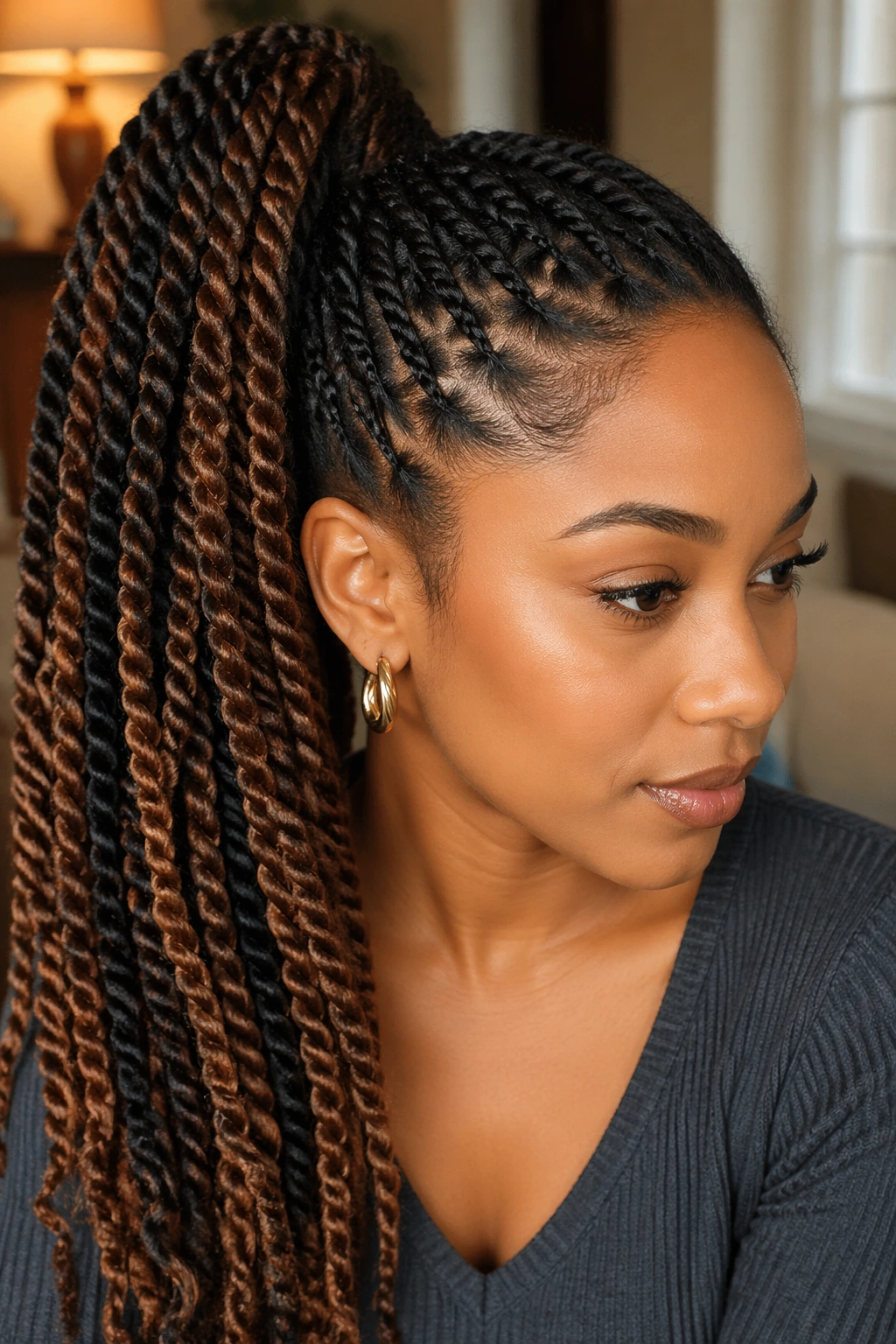
Unlike a single-color ponytail, this one uses contrast to show off the twist pattern. The difference can be subtle — dark roots with warm brown lengths — or stronger, with two shades that stand apart clearly.
The point is not to look loud. The point is to make the twists read in layers. Color helps the eye follow the rope shape, especially on longer ponytails where the pattern can disappear if everything is one tone. If you wear extensions, choosing two colors in the same warmth level keeps the result from looking patchy.
This is a nice choice for people who want the style to show up in photos and in real life. Sunlight, indoor light, even a plain office lamp will pick up the contrast. That matters more than people admit.
19. Curly-Ends Twist Ponytail
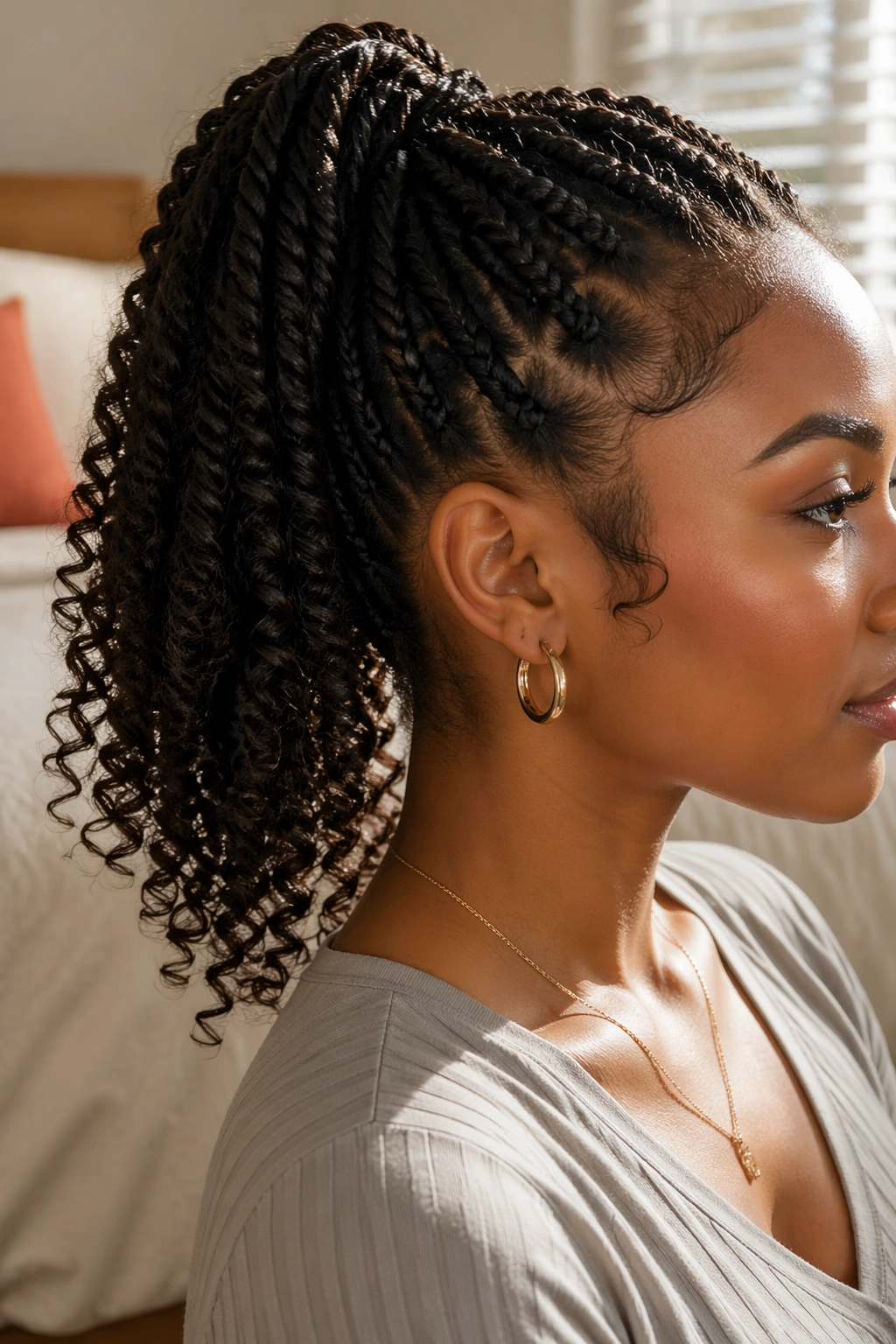
Curly ends make a twist ponytail feel softer right away. The twist gives you structure, and the curl at the bottom breaks it up just enough to keep the style from looking too rigid.
Why the Ends Matter
The last 3 to 4 inches of the ponytail can change the whole read of the style. If the ends are tightly sealed, the look leans neat and controlled. If the ends are set on flexi rods or a curling wand, they bring bounce and a little shape. I prefer the looser finish because it gives the eye somewhere to land.
- Set the ends while they are damp for a smoother curl.
- Use medium rods if you want shape without tiny ringlets.
- Let the curls cool fully before touching them.
- Separate the curls once, gently, if you want more volume.
This style is one of the easiest ways to make twists feel less severe. It has movement. That’s the whole point.
20. Pineapple Twist Ponytail
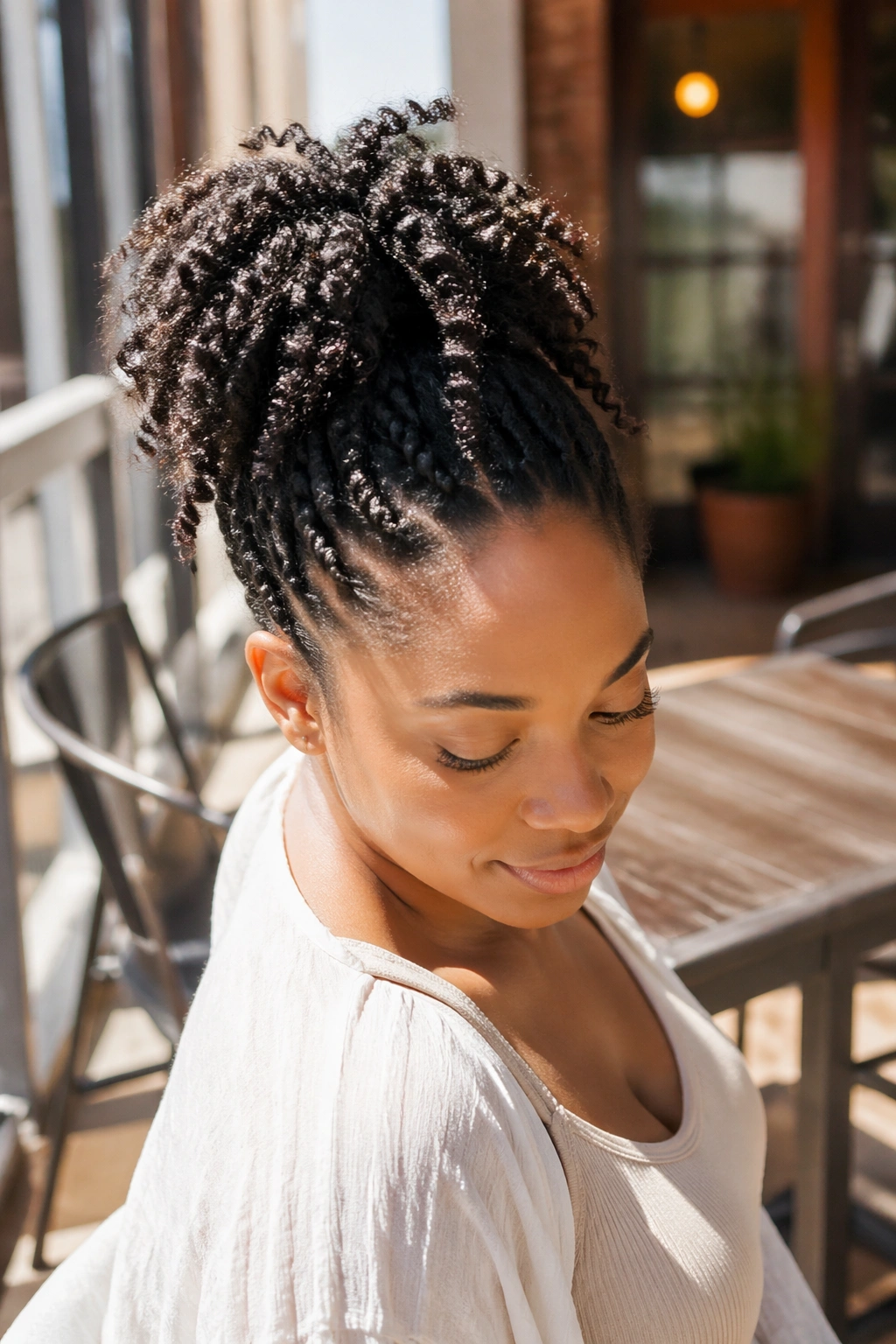
A pineapple twist ponytail is a fast way to keep length high and texture soft. The hair gets gathered on top, but not scraped so tight that it loses its shape.
This style works well on stretched curls, twist-outs, or older twist sets that still have good definition. The high placement keeps the ends away from your neck, and the loose gather preserves some of the natural fluff. I like it most on days when I want my hair up without making it look overdone.
A satin scrunchie works better than a hard elastic here because it leaves less of a dent. If the ponytail is too tight, the style starts reading like a regular high ponytail. Keep it loose enough to hold shape, not so loose that it falls apart. That line is thinner than people think.
21. Twist Ponytail with Swooped Edges
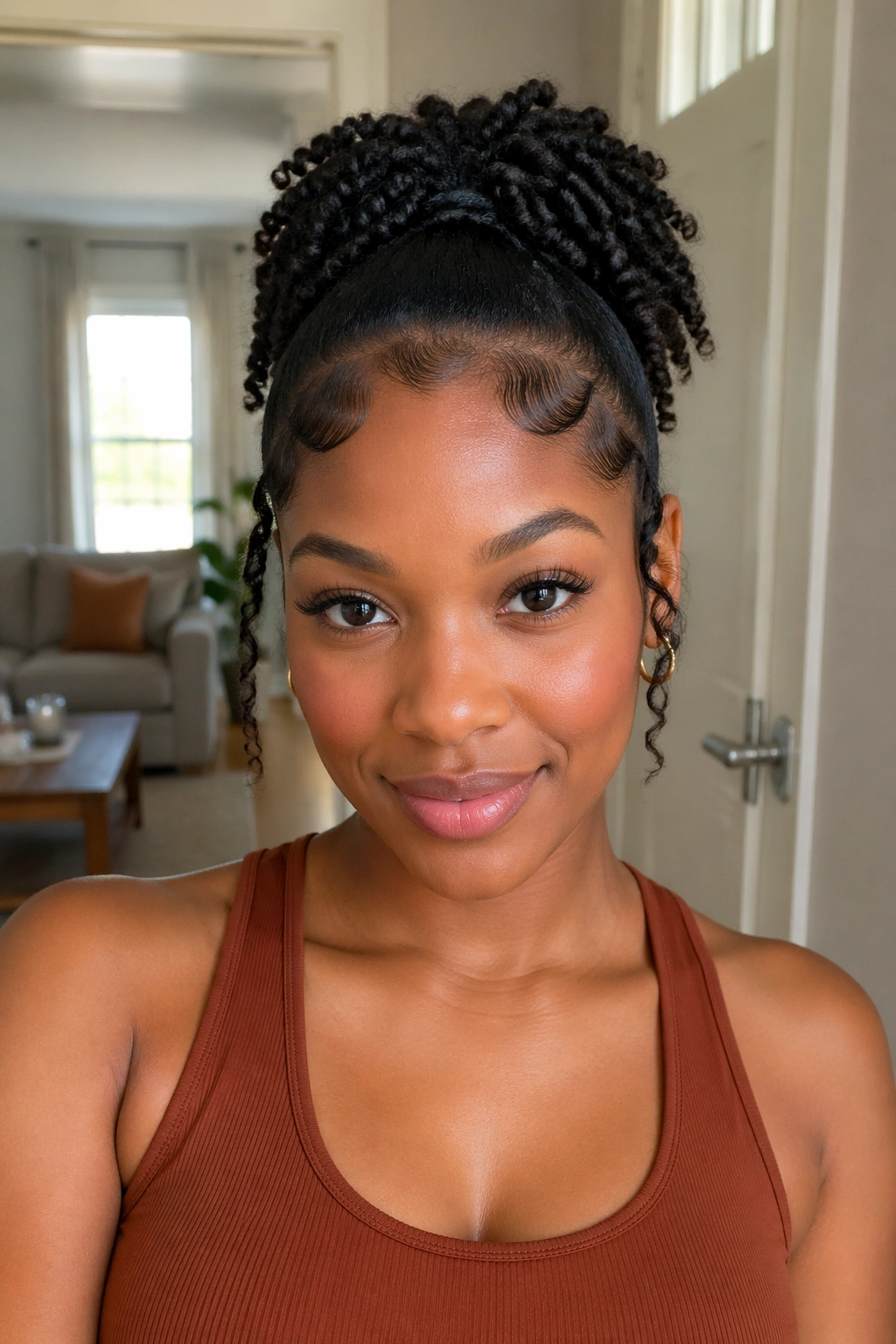
What makes this style stand out is the front. The swooped edges give the hairline a curve, and that curve softens the whole ponytail before the twists even start.
The rest of the hair can stay plain or lightly braided back. The swoop does the visual work. I like this one when the face framing matters more than length. It has a polished, styled feel without needing a full head of extra detail.
Keep the Swoop Soft
Use edge control sparingly and lay the hair in one direction with a small brush or fingertip. Too much product turns the front stiff. Too much brushing breaks the curl pattern. The middle ground is the sweet spot. Once the edges settle, gather the rest into a twist ponytail and let the contrast between soft front and textured back do its thing.
22. Braided-Back Twist Ponytail
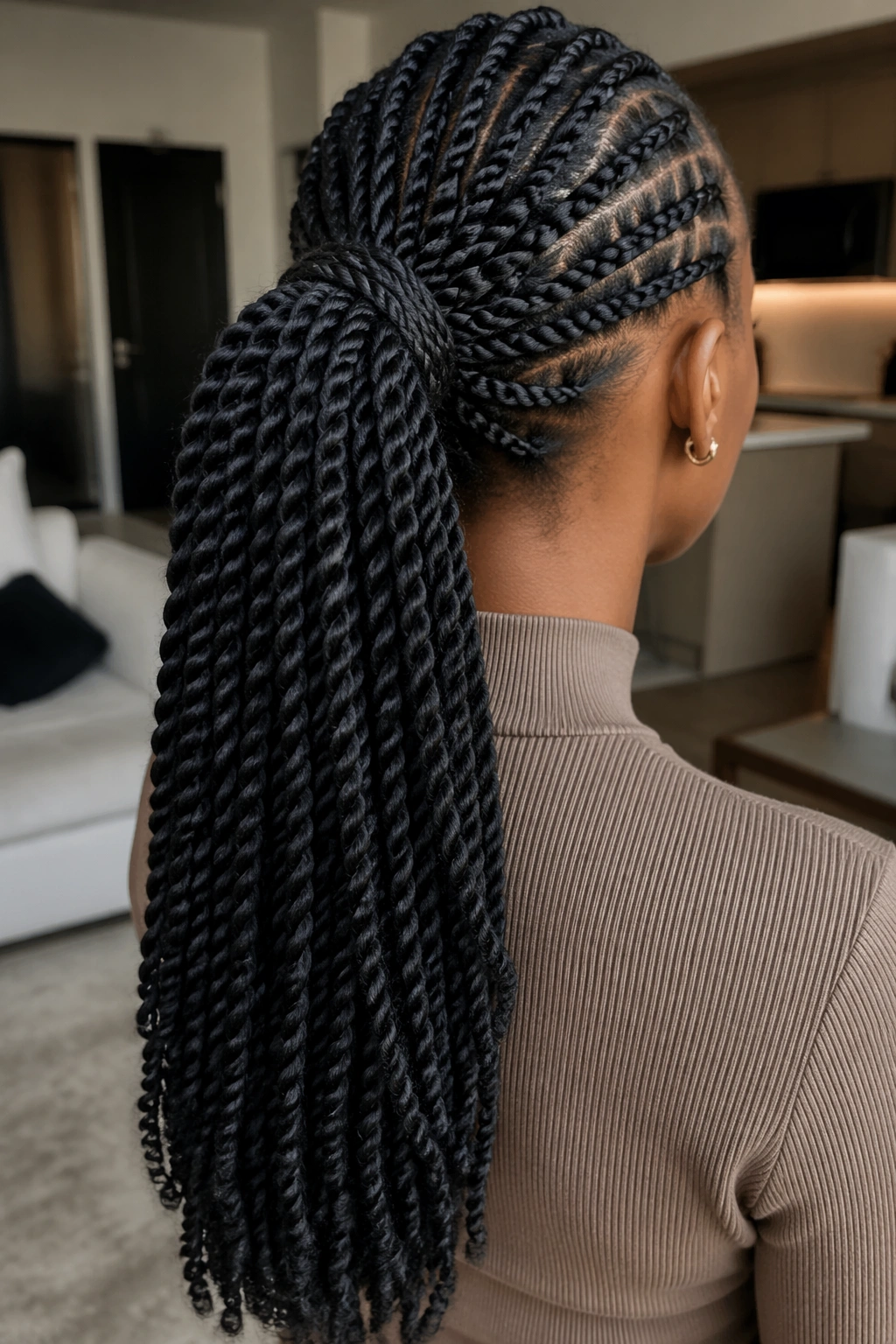
A braided-back base is useful when you want the neck clear and the crown smooth. It feels especially practical on busy days because the style sits close to the head and stays out of the way.
The back braids can be small or medium, depending on how much detail you want. Once they meet at the ponytail point, the twist length adds softness so the style does not look too severe. That mix of structure and movement is what makes it work. It’s neat at the scalp and relaxed at the ends.
- Use 2 or 3 braids if you want a clean, simple base.
- Keep the braid tension even so one side does not pull harder.
- Add a little shine oil to the ponytail only, not the scalp.
- Let the twist lengths hang free for contrast.
This is one of the easiest styles to wear under collars, jackets, and scarves.
23. Shoulder-Length Twist Ponytail
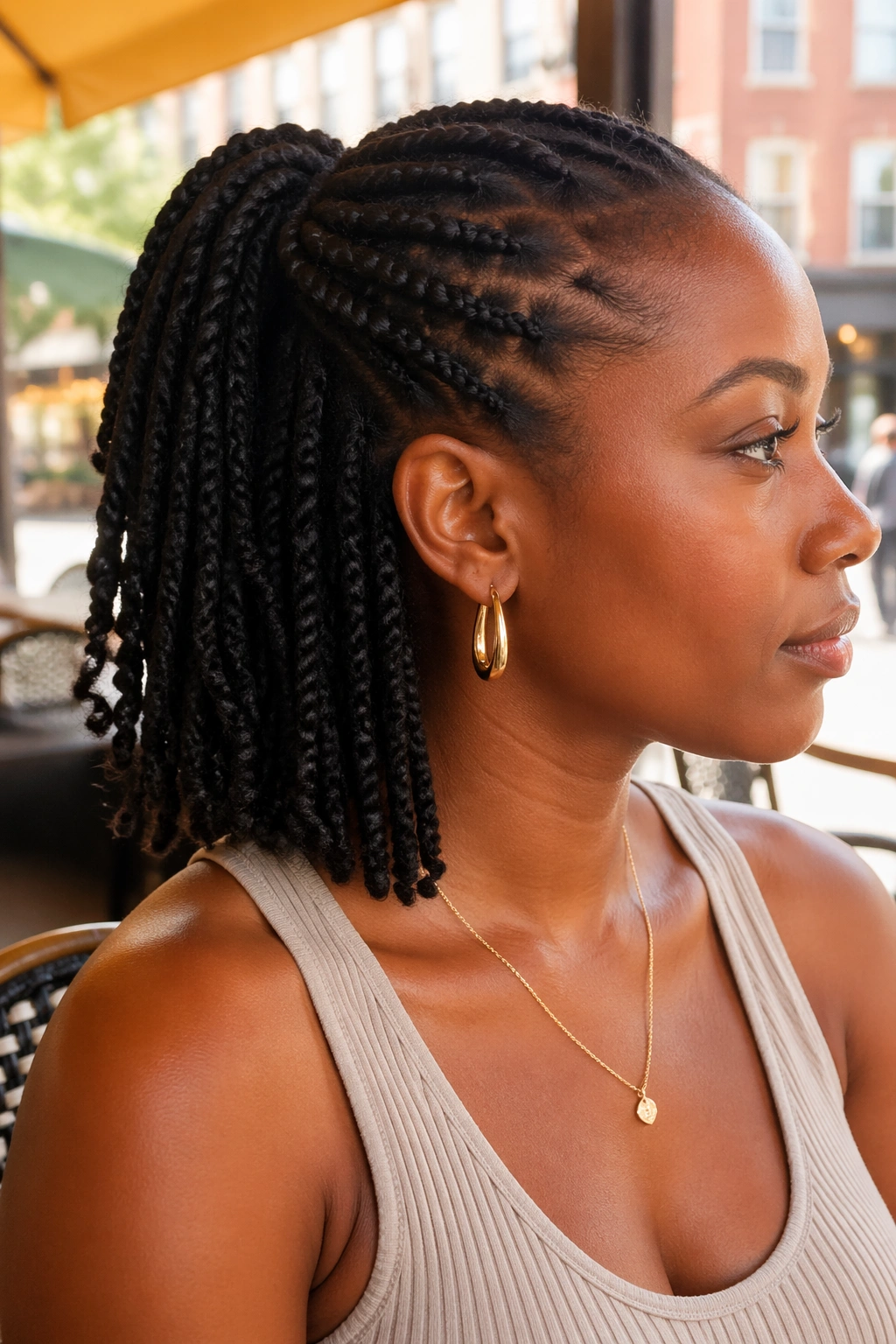
Not every twist ponytail needs waist-length hair or long extensions. A shoulder-length version can look sharp, modern, and easier to manage than a heavy long set.
The shorter length puts the focus on the shape at the back and the cleanliness of the base. That’s a good thing. It means the parting matters more, the twist ends sit neatly, and the style can feel lighter on the scalp. For people with dense natural hair, this can be a relief. For people with finer hair, it keeps the ponytail from swallowing the head.
I also think shoulder-length twist ponytails age well in the sense that they do not chase a single dramatic silhouette. They just work. Sometimes that’s enough, and honestly, that can be the better look.
24. Wrapped-Base Twist Ponytail with Cuffs
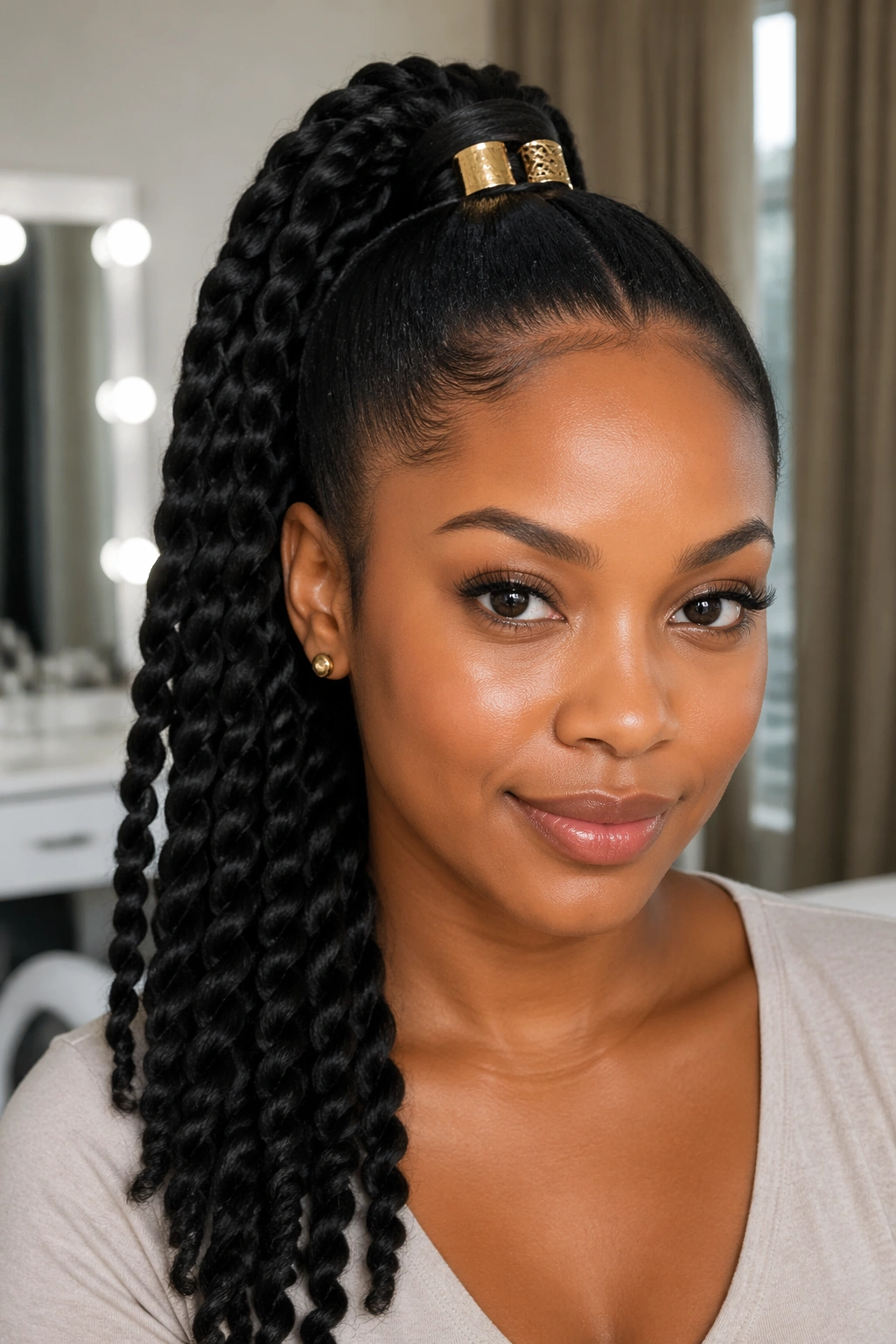
A plain elastic gets the job done. A wrapped base with cuffs looks finished. That extra hardware gives the ponytail a cleaner start and makes the twist lengths feel more styled.
The wrap can be thread, a slim twist of hair, or a small decorative piece that matches your earrings. Then the cuffs step in near the base or along the first few inches of the ponytail. I like keeping the metal pieces spaced out, not crowded together, so the style does not turn into a shiny mess.
This is a strong pick for dressier events, but it can work on an ordinary day too if you like accessories that stand out. The key is restraint. One or two cuffs are enough. After that, the hair starts competing with the hardware, and that’s not the look.
25. Festival Accent-Twist Ponytail
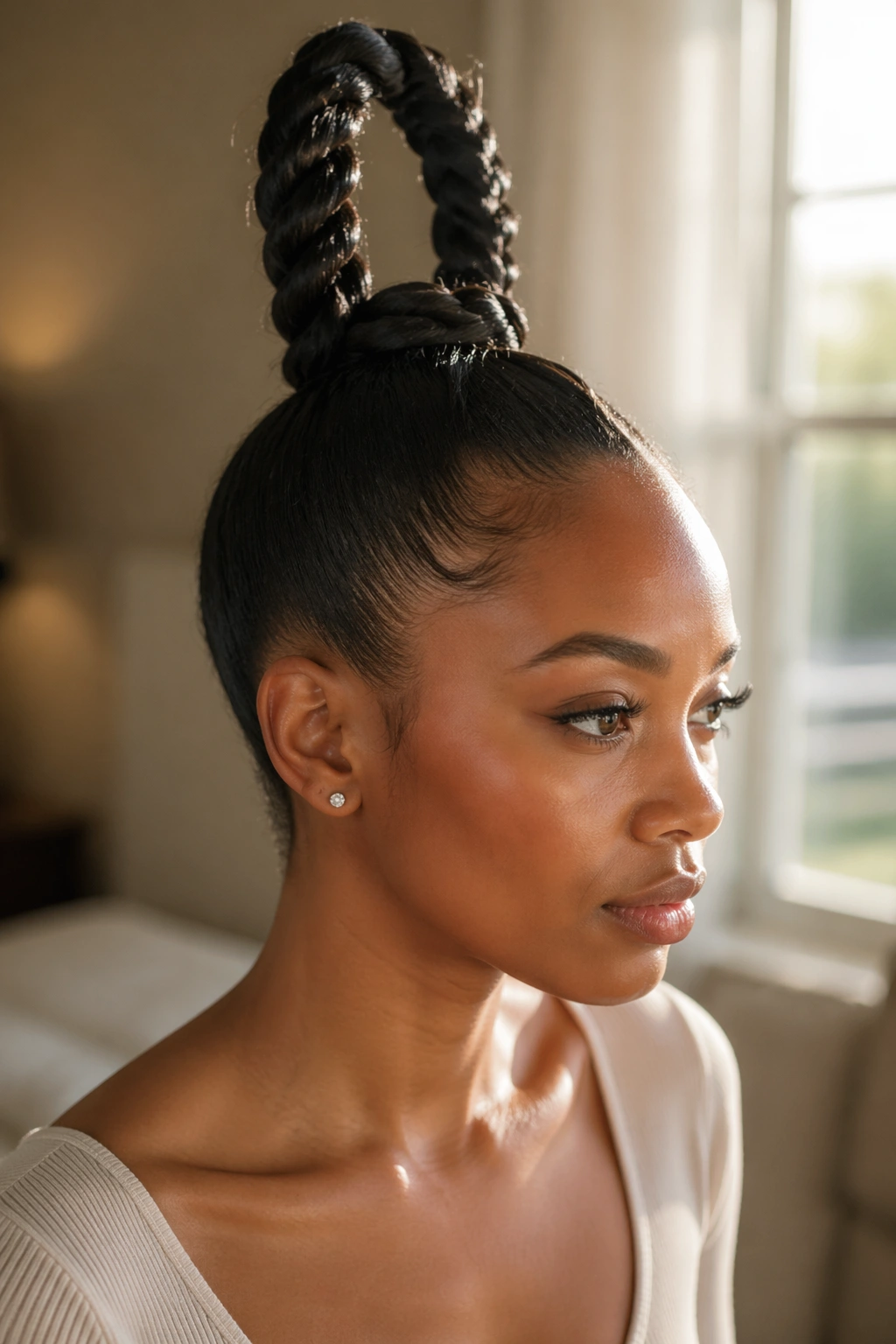
A simple twist ponytail becomes a whole mood once you add a few accent pieces. Tiny braids mixed into the base, a few colored wraps, a shell or two, maybe one bright thread woven through a side twist — that’s enough.
The style works because the accents travel with the ponytail instead of sitting on top of it like a costume. Keep the base neat, keep the twist sections distinct, and let the extras show up in small doses. If you overdecorate it, the shape gets lost. If you use just enough, the ponytail starts to feel personal.
Small Details That Make It Sing
- Add accents only to 2 or 3 twist sections.
- Keep the rest of the ponytail plain so the eye has rest.
- Match the accent color to one item in your outfit.
- Use lightweight pieces so the ponytail still swings naturally.
This is the style I’d choose when I want the hair to have a little personality before I even put on earrings. It’s playful, but not random. And that’s the difference that matters.
