



Curly hair and ponytails can look polished fast, or they can look like an afterthought in five minutes. The difference usually comes down to the front: a V part ponytail gives your curls a natural place to sit, so the style looks deliberate instead of yanked back. That small opening changes the whole mood.
A good V part is not just a gap at the top. It’s a shape that lets your own texture blend into the ponytail without fighting the rest of your hair, which is why it works so well on curls, coils, and fluffy second-day bends. Too wide, and the style starts looking sparse. Too narrow, and the front can look stiff, like the hairline has been asked to do too much.
The trick is matching the ponytail to the curl pattern, the density, and the level of shine you actually wear in real life. A 3B curl behaves differently from a 4C coil, and a high ponytail behaves differently from a low one when shrinkage kicks in. That’s where the fun starts. The same basic shape can feel sporty, glam, soft, sharp, or a little dramatic depending on where you place it and what you do at the base.
1. High Sleek V Part Ponytail
A high sleek V part ponytail is the one people notice first. The crown sits tight, the lift is strong, and the curls drop with a clean line that makes the whole face look a little more awake. It works especially well when you want your curls to be the star but don’t want loose hair sticking to your neck.
Why it works so well on curly hair
The high placement pulls the eye upward, which helps balance volume at the cheeks and jaw. It also gives the ponytail a bounce that lower styles can’t always match, especially if your hair has a lot of shrinkage. Keep the front smooth, but do not flatten it into a helmet.
A narrow V-shaped leave-out near the crown blends best when the ponytail is dense enough to match your natural texture. Use a small brush and a light gel at the base, then wrap one curl section around the elastic. That little wrap matters. It hides the hardware and keeps the style from looking rushed.
- Best for medium to thick curls
- Works well with 14- to 24-inch curly extensions
- Needs a strong hold gel or mousse at the roots
- Looks sharp with gold hoops or a plain tee
Tip: keep the slicked section small and the ponytail full. That contrast is what makes the style look clean.
2. Mid-Height Curly V Part Ponytail
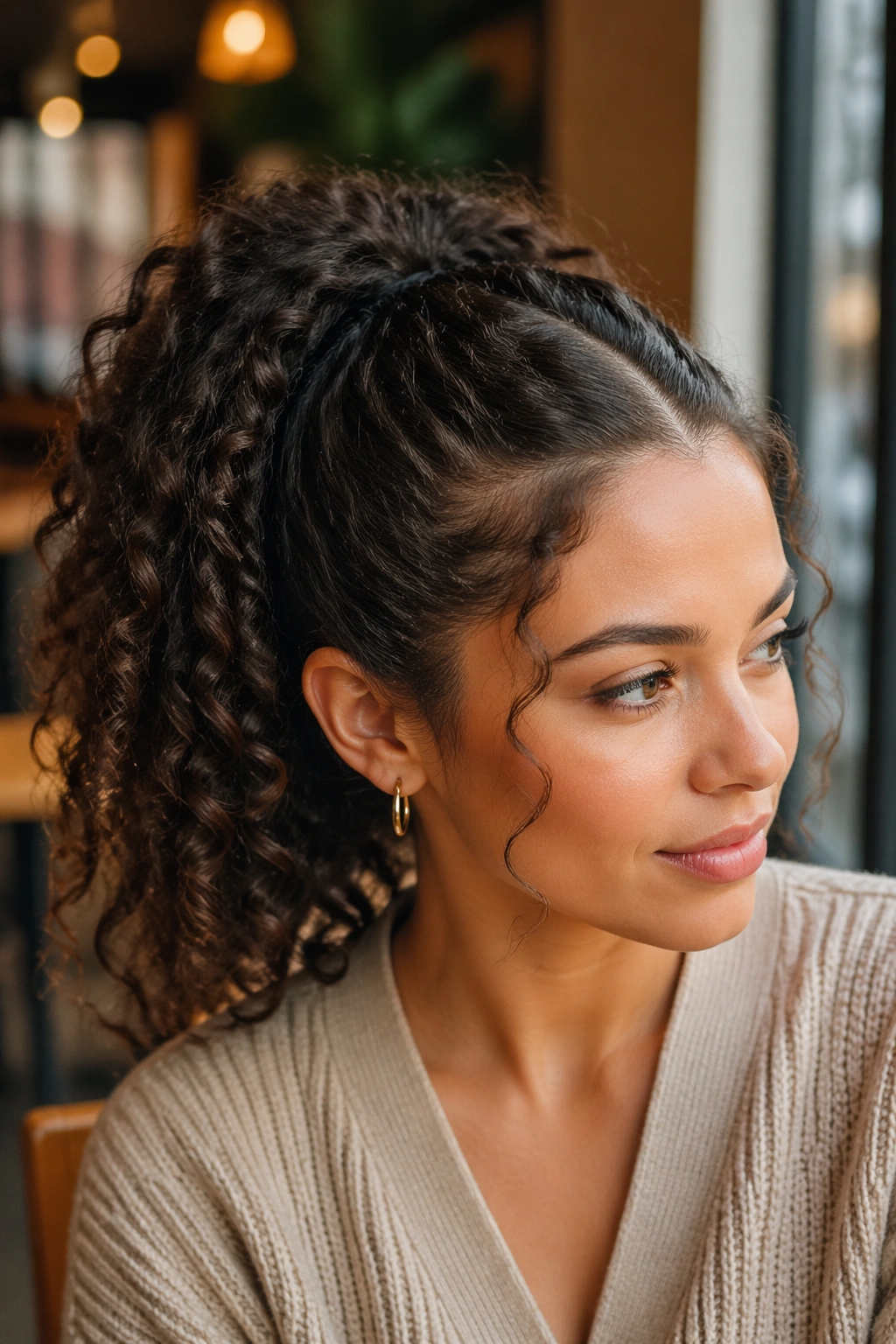
Mid-height is the sweet spot when you want something wearable and not too precious. The ponytail sits around the top half of the ears, which makes it easier on your scalp and less likely to pull at your edges. It also gives curly hair room to move without collapsing into the neck.
The shape feels relaxed in the best way. Not sloppy. Just less formal than a sky-high ponytail and less serious than a low one. If your curls frizz a bit at the root, this placement hides more of that than a slick high style would.
I like this one for day-to-day wear because it handles texture honestly. The front can stay soft, the ponytail can stay full, and you do not need every curl to behave. A satin scrunchie works well here, especially if you want the base to look a little softer than a regular elastic.
3. Low Nape V Part Ponytail
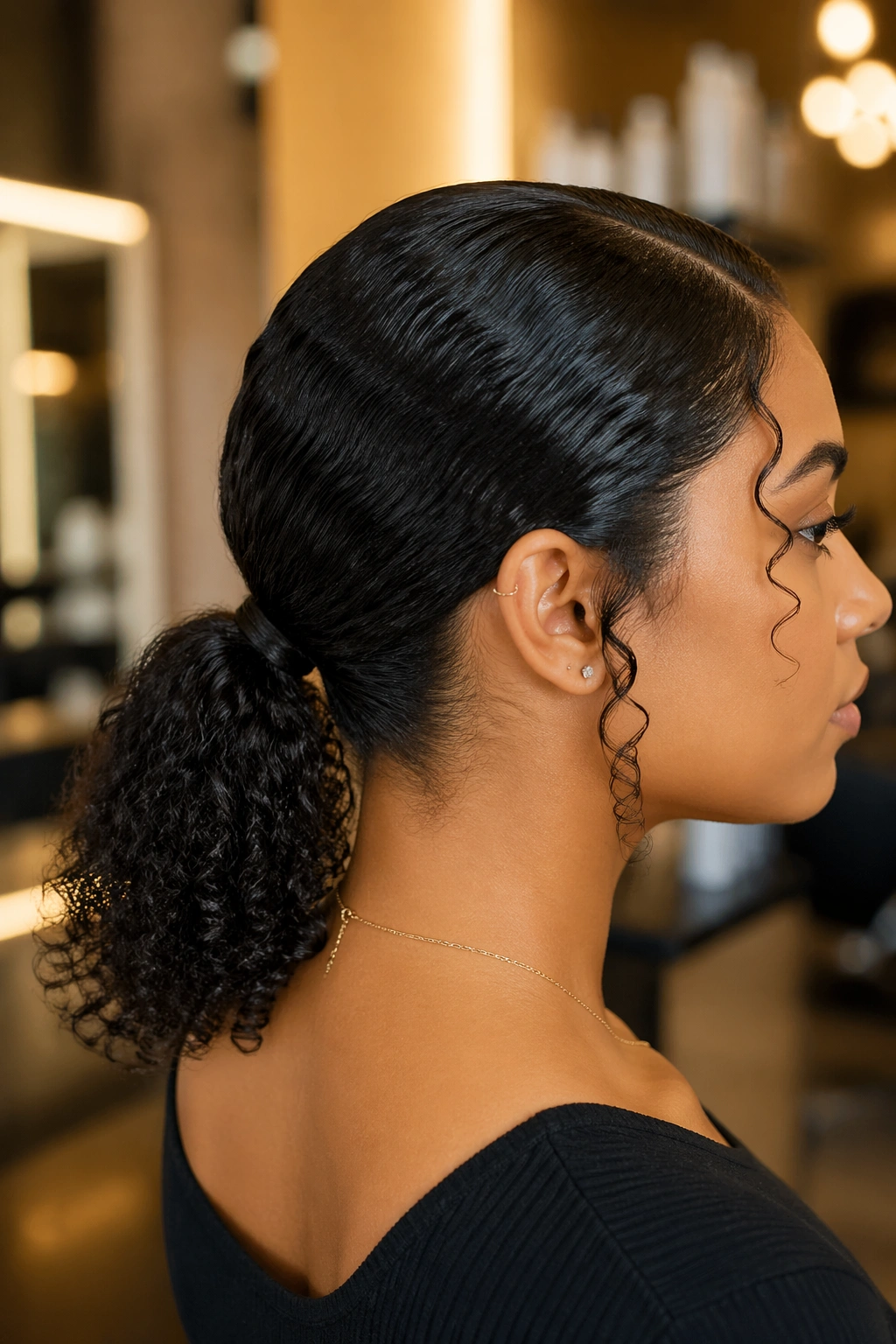
Why do low ponytails keep showing up in good hair photos? Because they give curly hair a place to settle. A low nape V part ponytail looks calm, smooth, and a little expensive without asking your curls to sit up too high all day.
Where the softness comes from
The base sits close to the neck, so the style does not fight the natural shape of your head. That means less tension and fewer awkward bumps near the crown. If you have thick curls, this placement also helps the ponytail lay flatter before it fluffs out at the tail.
A few face-framing pieces can soften the front, but keep them intentional. Two thin curls around the temples are enough. Three starts to feel messy.
How to keep the base neat
- Use a soft brush or boar-bristle brush for the roots
- Anchor the ponytail with two small elastics if your hair is dense
- Wrap a short curl section around the base
- Finish with a tiny touch of edge control, not a heavy coat
This style is the one I’d reach for when the goal is clean, not flashy.
4. Side-Swept Glam V Part Ponytail
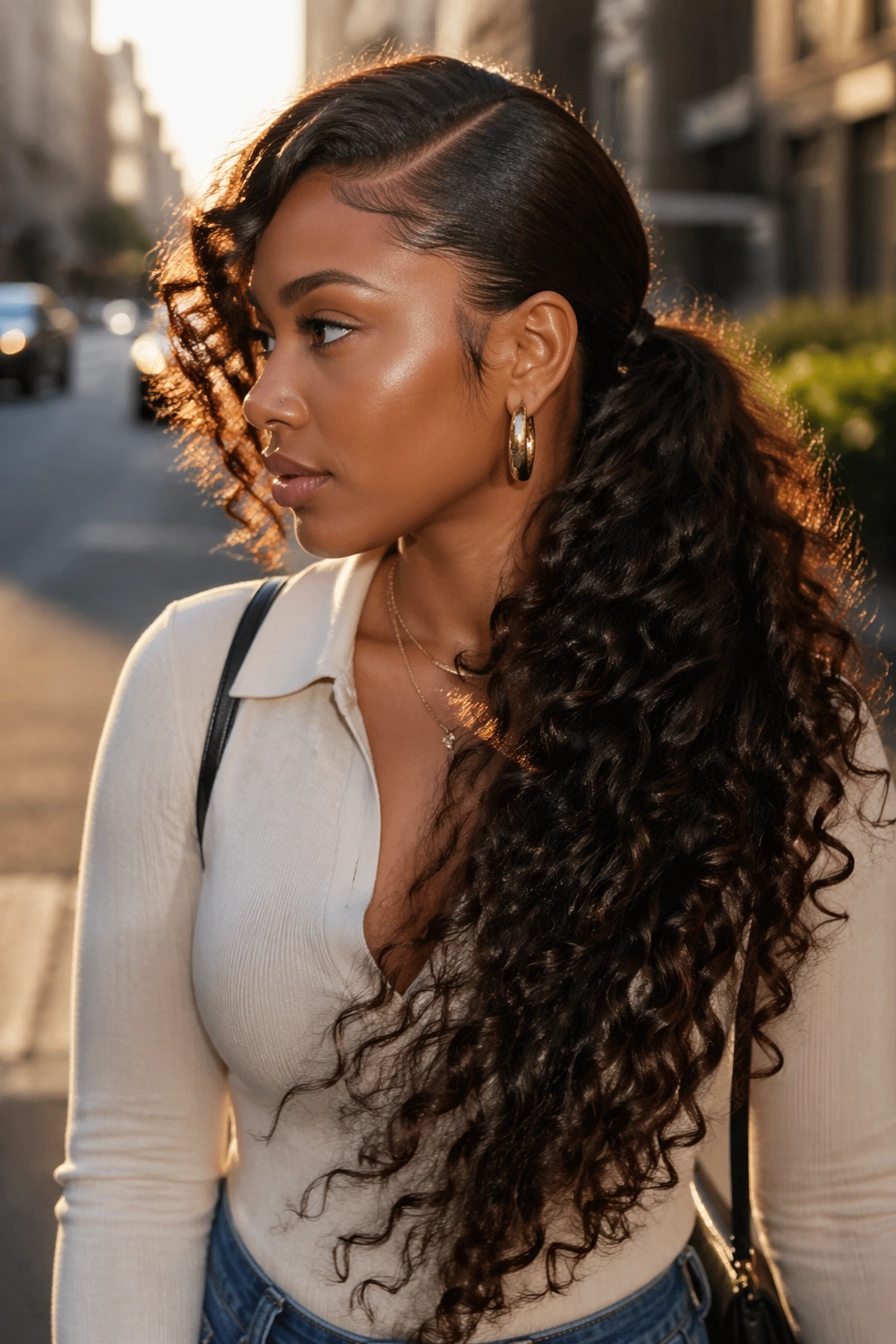
Picture this: one shoulder, a deep side part, and curls dropping across the chest instead of hanging straight down the back. That’s the charm of a side-swept V part ponytail. It has more movement than a centered style, and the angle gives the face a softer frame.
The side placement is especially useful if your curls have a mix of tight and loose pieces. The ponytail can still be full, but the top line feels less rigid. It also photographs well from the side, which is useful if you tend to wear hoops, shoulder-baring tops, or anything with a strong neckline.
Keep the front sweep clean for the first inch or two, then let it loosen. If the part looks too sharp, the whole style can read stiff. A curved part and a little root lift help this one land in the glam zone instead of the prom-photo zone.
5. Braided-Base V Part Ponytail
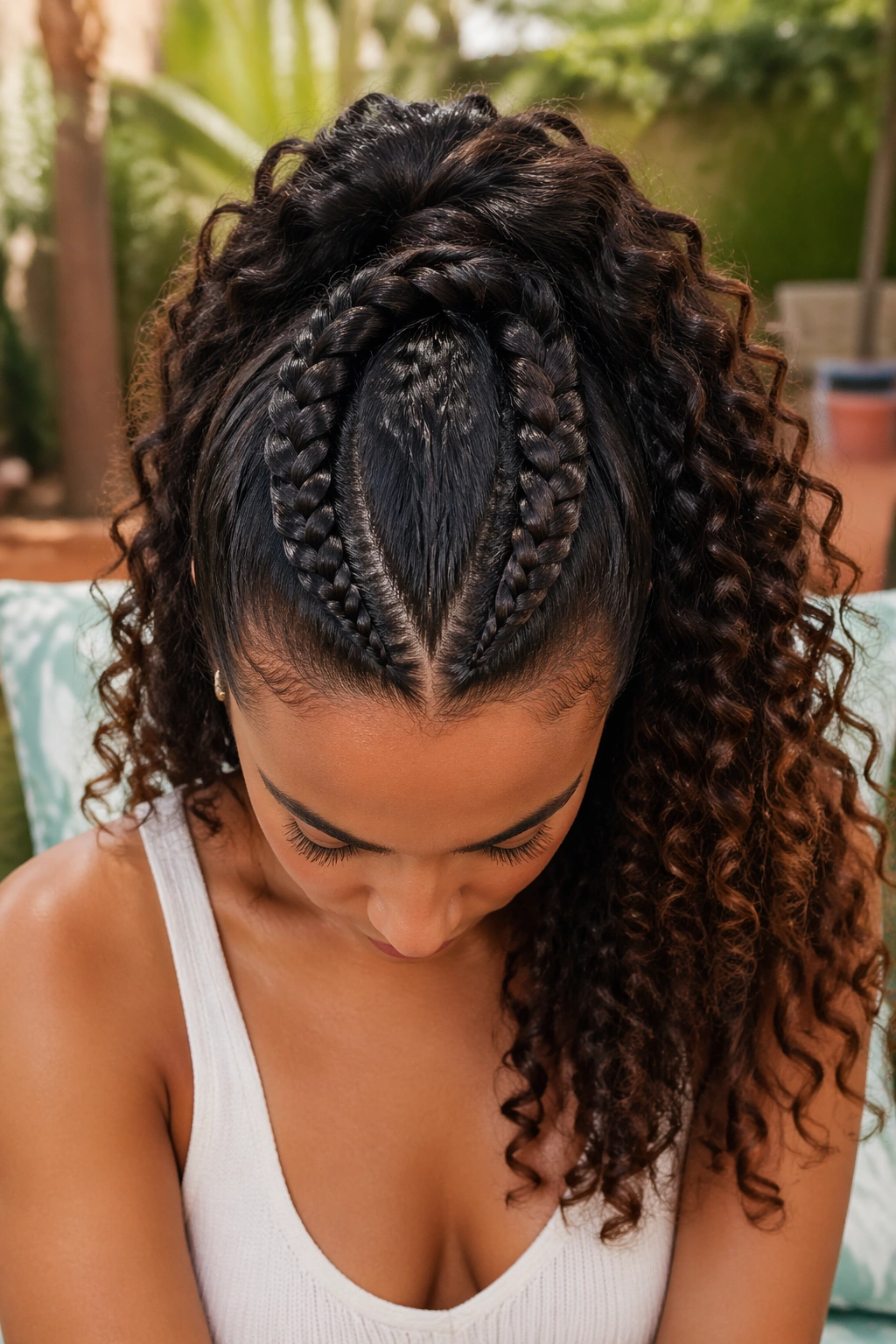
A braided base changes the whole character of a ponytail. Instead of a simple tie-back, you get texture at the scalp and a stronger anchor for the curls hanging below. It also keeps the style from sliding around, which is a real issue with heavier curly ponytails.
The braid can be a single French braid leading into the ponytail, or a small cornrow along the crown before the curls are gathered. Either way, the texture at the base makes the V part look more intentional. It gives the eye something to follow before it reaches the ponytail.
This is the style I’d pick for long wear. It handles a workday, a dance floor, and a humid room better than a plain elastic base. And if your leave-out is only medium density, the braid helps make the front look fuller without needing extra hair everywhere else.
6. Rope-Twist V Part Ponytail
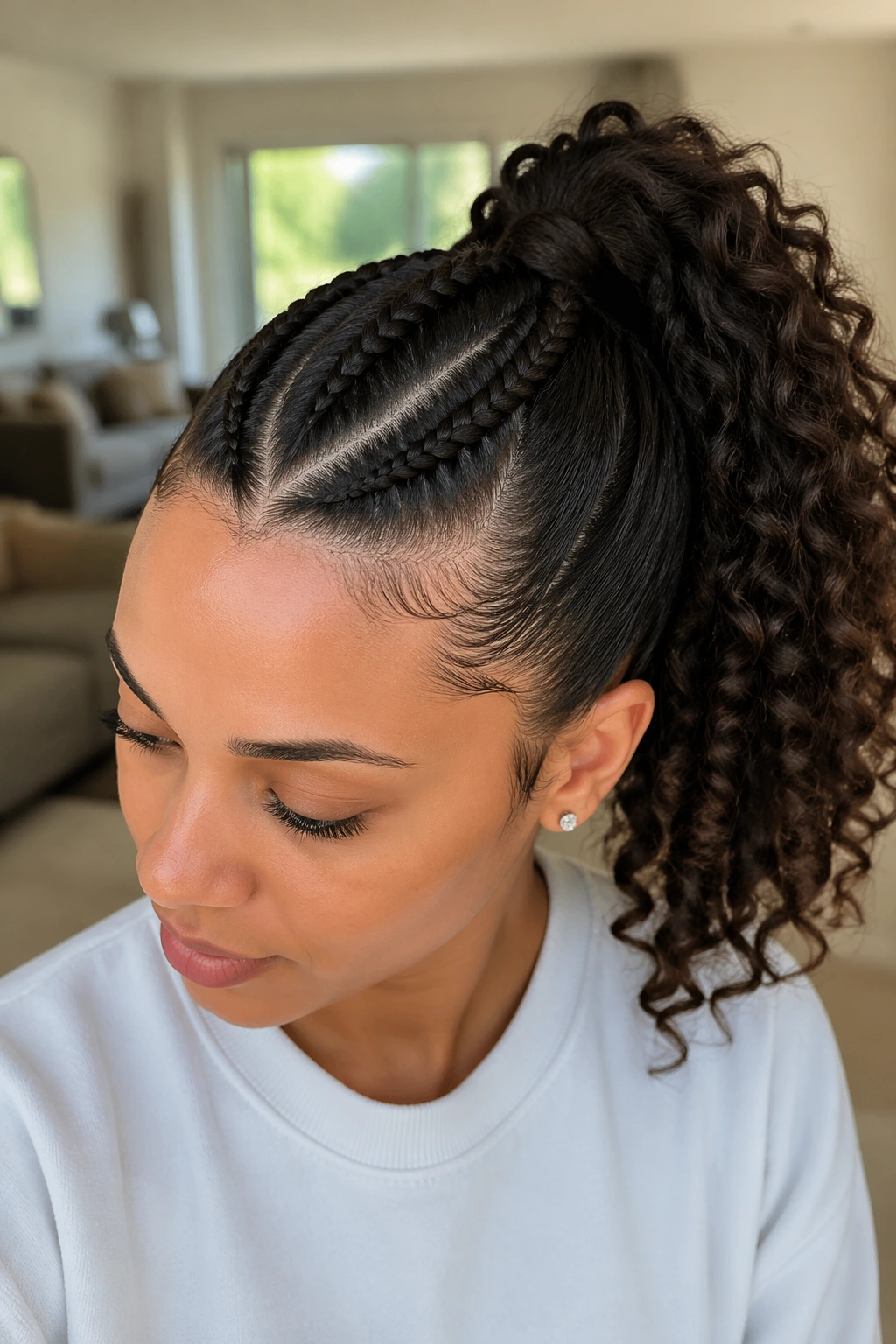
A rope-twist base does something a flat ponytail cannot. It adds a little movement before the curls even start. That’s why this style works so well when you want the front to feel finished but not overworked.
What the twist changes
Two strands twisted around each other give the base a slim, tidy look. The twist can travel from the V part into the ponytail, or it can just frame the base and stop there. Either way, it makes the style look more detailed without adding a lot of time.
This works best when the hair is slightly damp or stretched, because the twist grips better and stays smooth. Use a cream with a little hold, then twist firmly enough that the strands sit close together. Loose twisting looks soft at first and frizzy later.
A rope twist ponytail is one of those styles that looks more complex than it is. I like that. It gives you texture without needing a basket of clips or ten separate steps.
7. Bubble V Part Ponytail
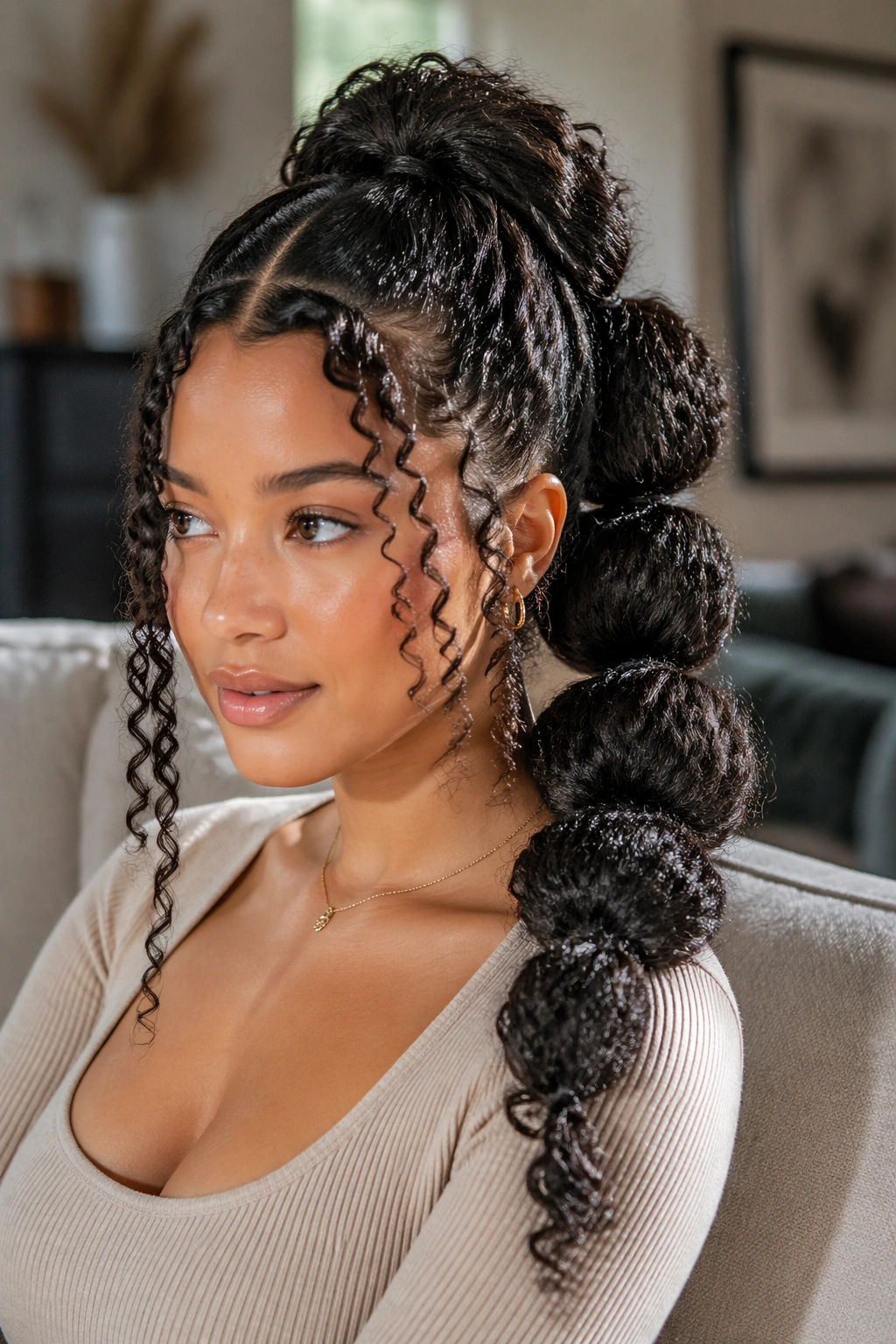
Want something playful that still works on curly hair? A bubble ponytail is a solid answer. The curls get broken into sections with small elastics, so the style keeps its shape instead of stretching into one heavy drop.
The bubbles look best when each section has a little puff. Tight, tiny bubbles can make curly hair look cramped. Leave about 2 to 3 inches between each elastic, then gently pull each section outward so it rounds a bit. That softens the shape and keeps the style from feeling too graphic.
Small details that help
- Use snag-free elastics
- Cover each elastic with a small curl wrap if you want a cleaner finish
- Keep the first bubble slightly larger than the others
- Finish with a light mist, not a soaking spray
This style has a bit of personality. That’s the point. It feels young, but not childish, which is harder to pull off than people think.
8. Scarf-Wrapped V Part Ponytail
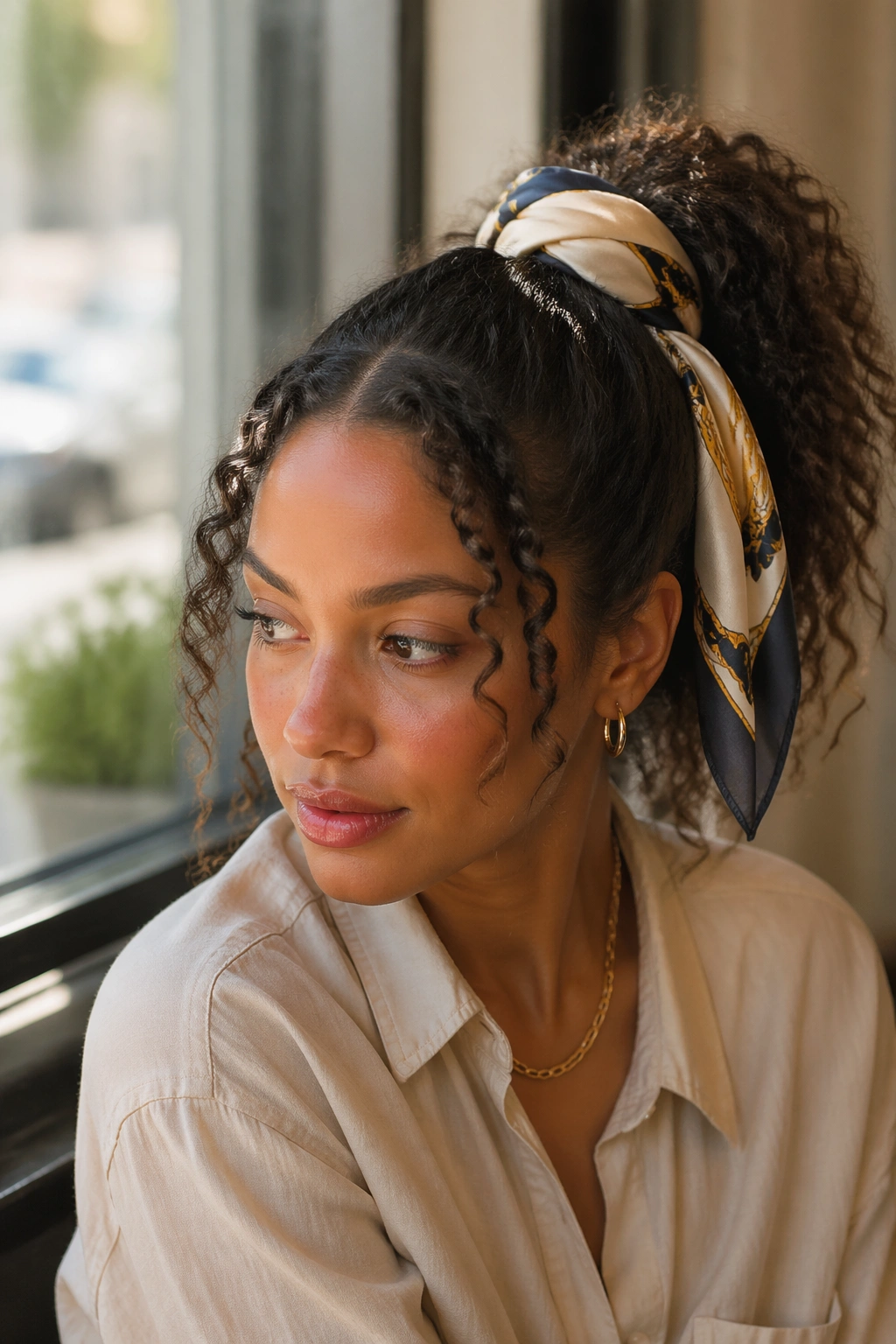
A scarf around the base can change a plain ponytail into something you’d actually pause to look at. The fabric softens the line where the hair is tied, and it also gives the style a little color without making the curls compete with too many extras.
Silk or satin works best if you want a smooth finish. Cotton feels more casual and holds better if the scarf needs to stay put all day. Tie it around the base once, then knot it off to one side so the ends fall naturally. A bulky knot at the back can flatten the ponytail and make the whole style sit awkwardly.
I like this one for curly hair because it hides the elastic while also protecting the front from too much friction. The V part stays visible, but the eye is drawn to the scarf first. That makes the style feel styled, not scraped together.
9. Extra-Long Curly V Part Ponytail
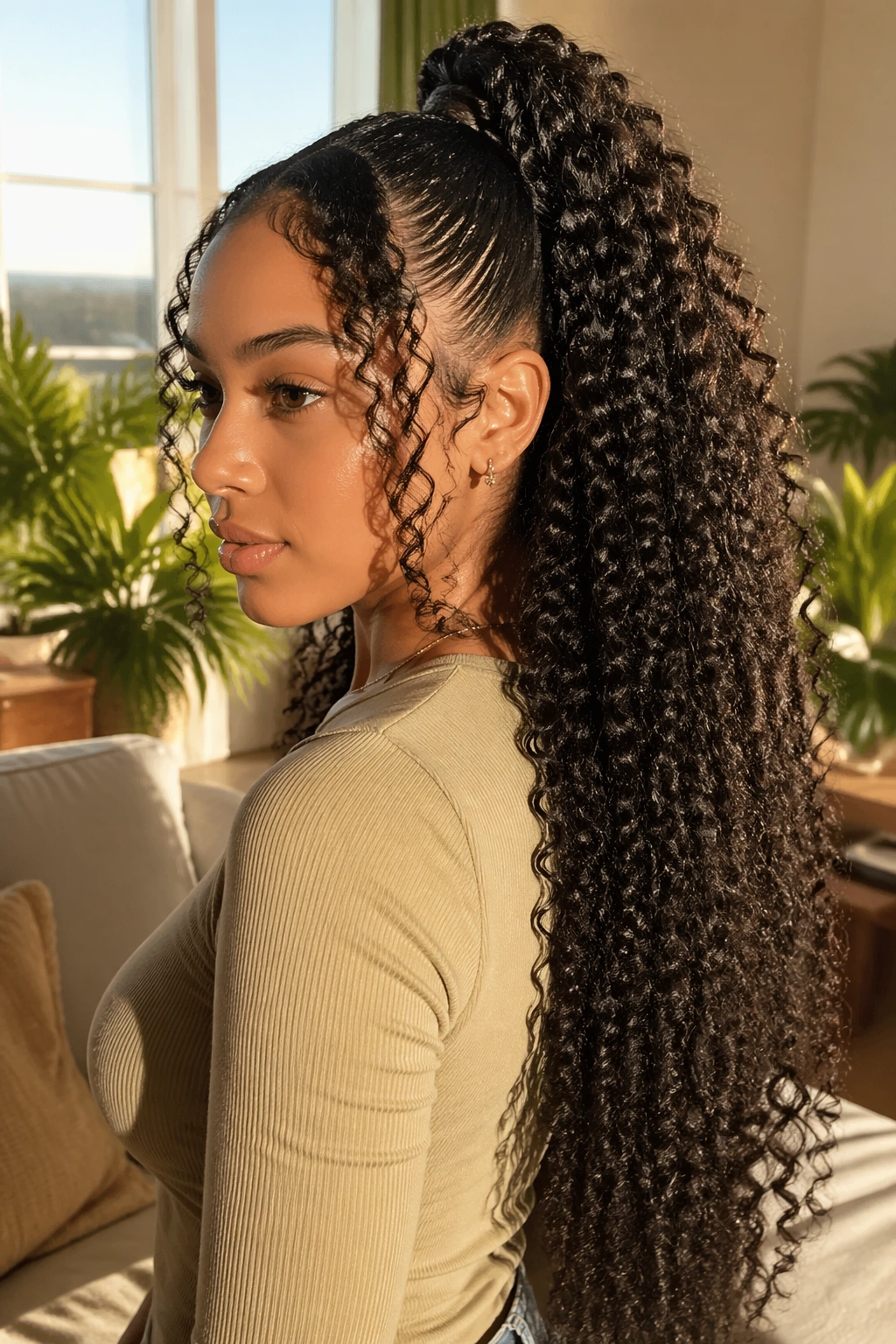
Extra-long ponytails are not subtle, and that is the appeal. Curly hair looks especially good in long lengths because the texture keeps the ponytail from looking flat or costume-like. The body of the hair does the work for you.
The important part is balance. If the ponytail is too long for the amount of hair at the crown, the base starts to look thin. If it is too dense, the style can feel heavy after a few hours. Matching the extension texture to your own curl pattern matters here more than almost anywhere else on this list.
How to keep the weight believable
- Choose a length that makes sense next to your own hair
- Layer the extension if the ends look blocky
- Secure the base with a strong elastic and a pin or two
- Keep the leave-out blended, not stretched flat
A long curly ponytail is a statement. No need to over-explain it.
10. Wet-Look Defined V Part Ponytail
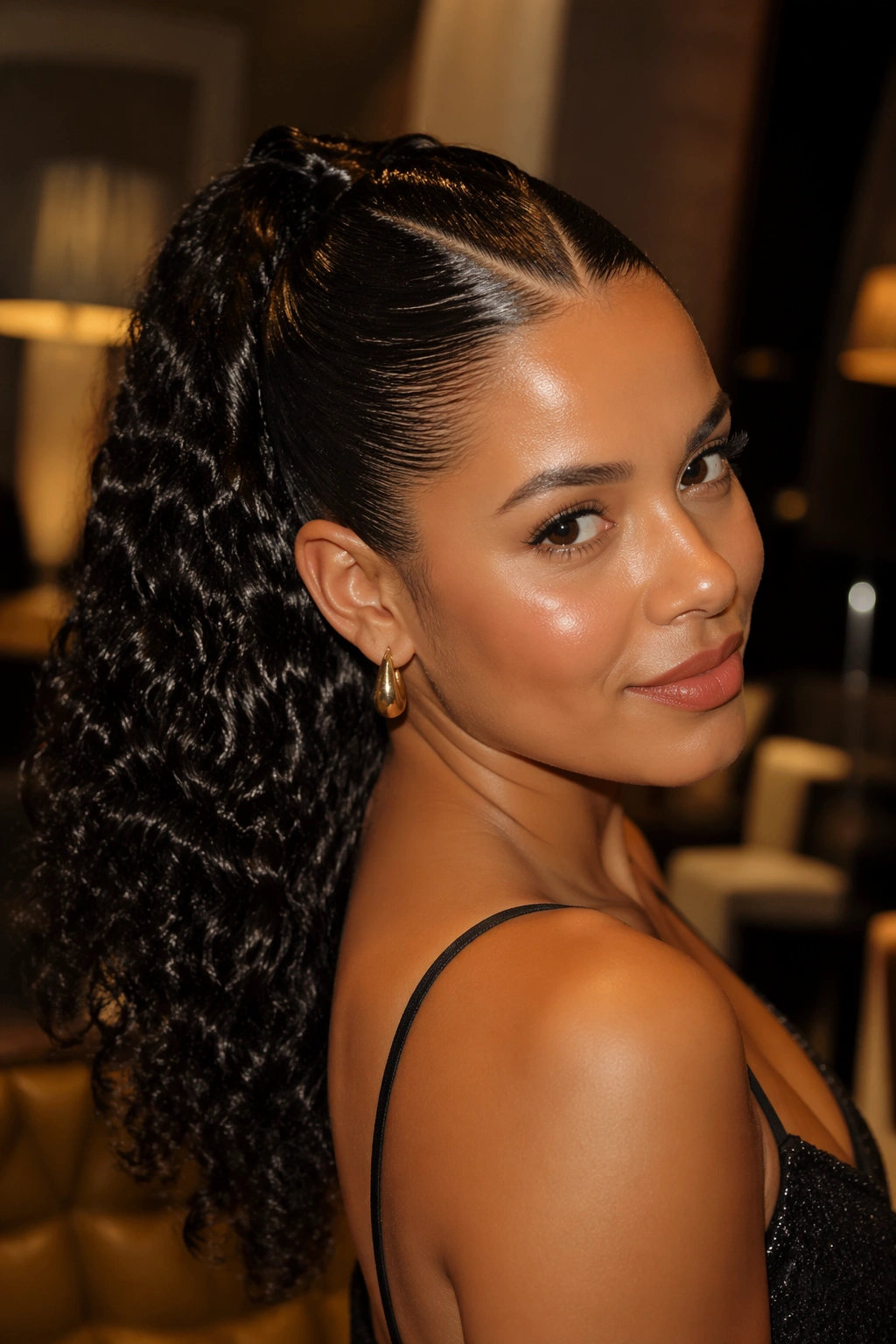
The wet-look ponytail has a sharp edge that some curly styles never quite reach. Gel on the roots, high definition on the lengths, and a glossy finish at the front make the whole thing feel deliberate. It’s not soft. That’s why it works.
The key is restraint. So many people load the entire head with product and end up with crunchy roots and dull curls. Better to keep the front smooth and the ponytail defined, then let a little shine sit on the surface of the curls. A tiny bit of oil on the ends can help if the hair looks thirsty.
This version suits evenings, events, and days when you want the style to look a little more dressed up. It also photographs differently than a fluffy ponytail. The shape is cleaner, the outline is darker, and the curls read as polished instead of airy.
11. Half-Up V Part Ponytail
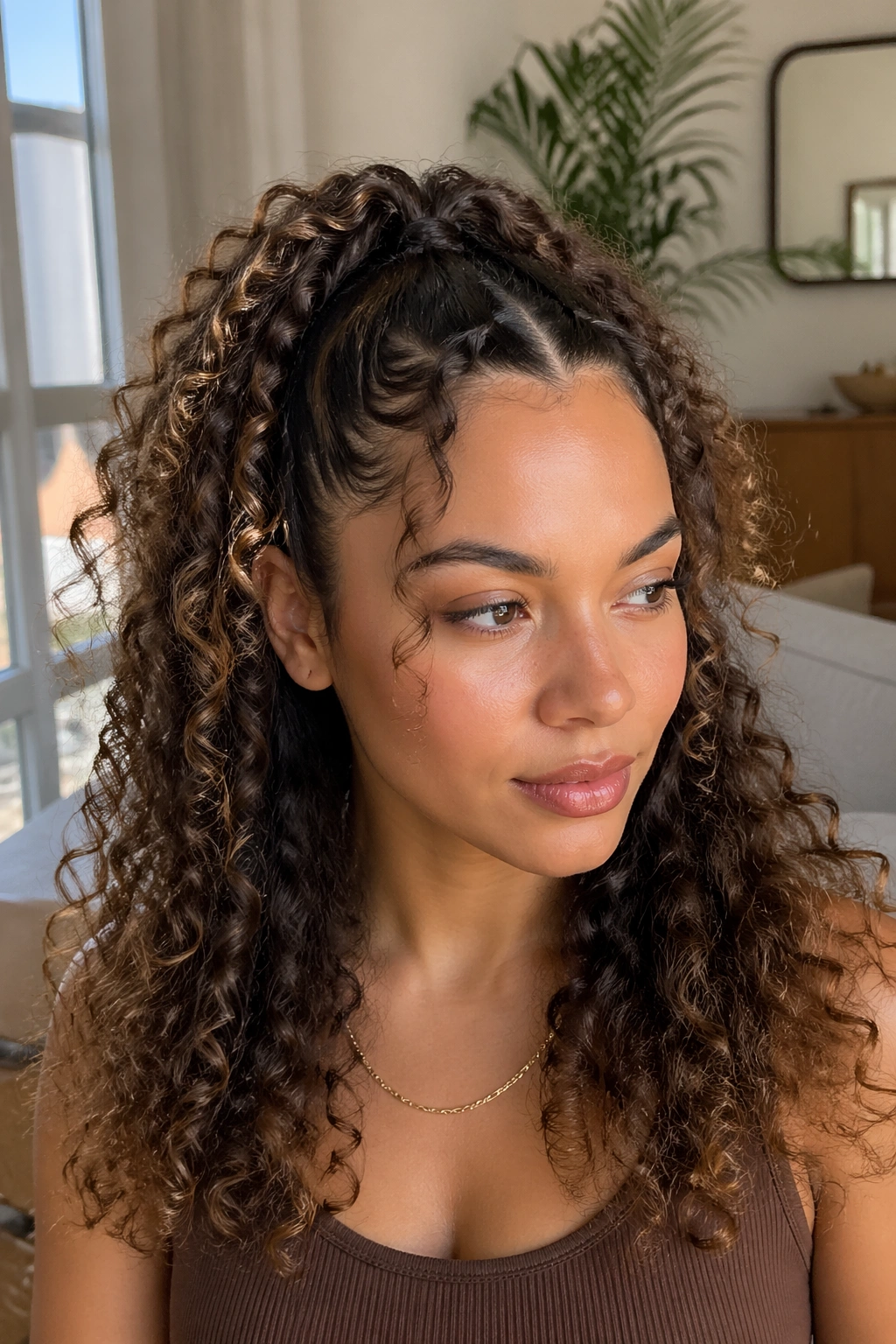
Half-up styles are a gift for curly hair because they keep the crown controlled while leaving the rest of the texture free. With a V part at the top, the look feels even more natural. You get lift without committing to a full pullback.
That balance matters when your curls are thick or your ends are dry. A full ponytail can put all the tension in one place. Half-up spreads the weight out and lets the lower curls keep their shape. It also helps if the back of your hair is doing its own thing and you’d rather not fight it.
A clean half-up V part ponytail works especially well on second- or third-day curls. The top has enough hold to look neat, and the bottom keeps enough movement to keep the style from feeling overdone. It is one of the easiest ways to look put together without starting from scratch.
12. Crown-Volume V Part Ponytail
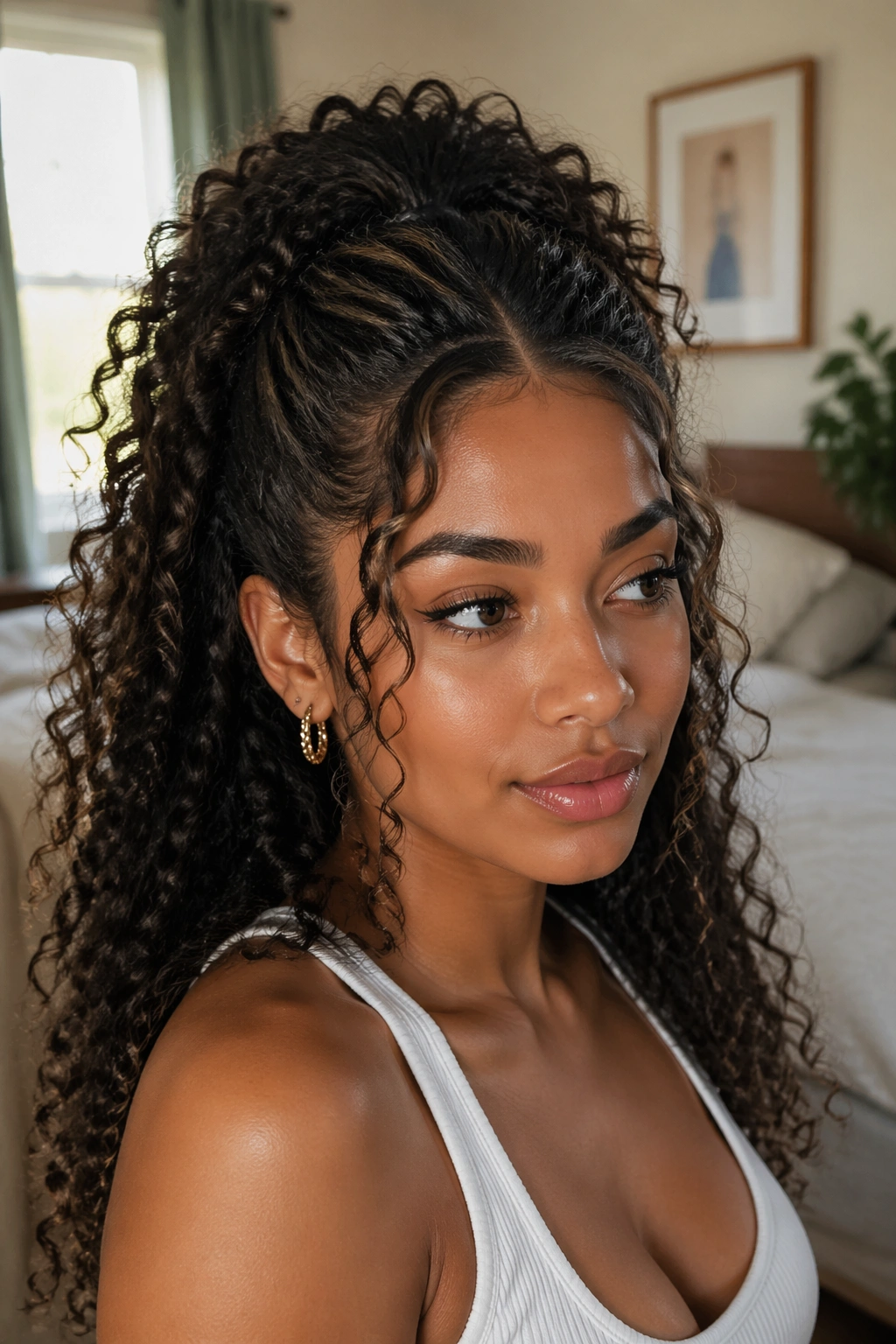
Big roots are the whole point here. A crown-volume ponytail keeps the top full and slightly lifted, so the style feels soft instead of slick. Curly hair loves a little height, especially when the shape at the base of the ponytail is otherwise simple.
You can get there by gently lifting the roots with your fingers after the ponytail is secured. Don’t backcomb aggressively. That makes curly hair frizzy in a way that is hard to calm down later. A light tease with a tail comb, plus a few spritzes of flexible hairspray, is enough for most textures.
How to stop the crown from collapsing
- Secure the ponytail close to the crown
- Let the top sit slightly loose before smoothing the front
- Pin the base from underneath if the ponytail feels heavy
- Keep the front curls separated, not mashed together
This one feels especially good when you want the face to stay open but the top to have some drama.
13. Pearl-Accented V Part Ponytail
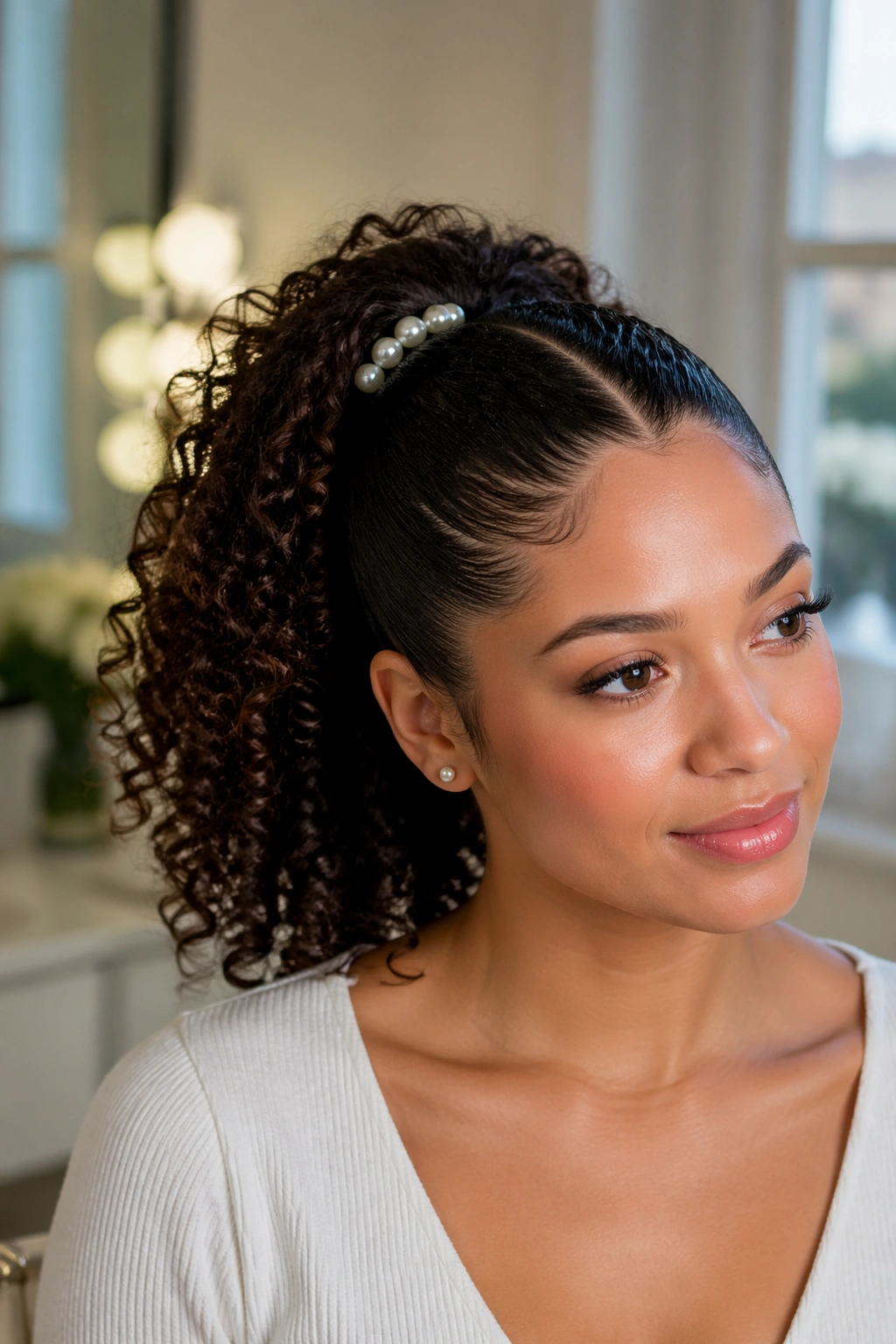
Accessories can easily get tacky, so the trick is using fewer of them. A pearl-accented V part ponytail works because the pearls add focus without taking over the whole style. One or two pins near the part is often enough.
The cleanest versions use pearls at the base or along one side of the ponytail. That way the texture of the curls still matters. If you scatter pearl pins everywhere, the hair starts to lose its shape and the accessory becomes the main event.
This is the sort of ponytail I’d wear with a simple neckline and a plain earring. Let the pearls do their job, then stop. Too much decoration around curly hair can make the style feel busy, and the curl pattern deserves room to breathe.
14. Short Puff V Part Ponytail
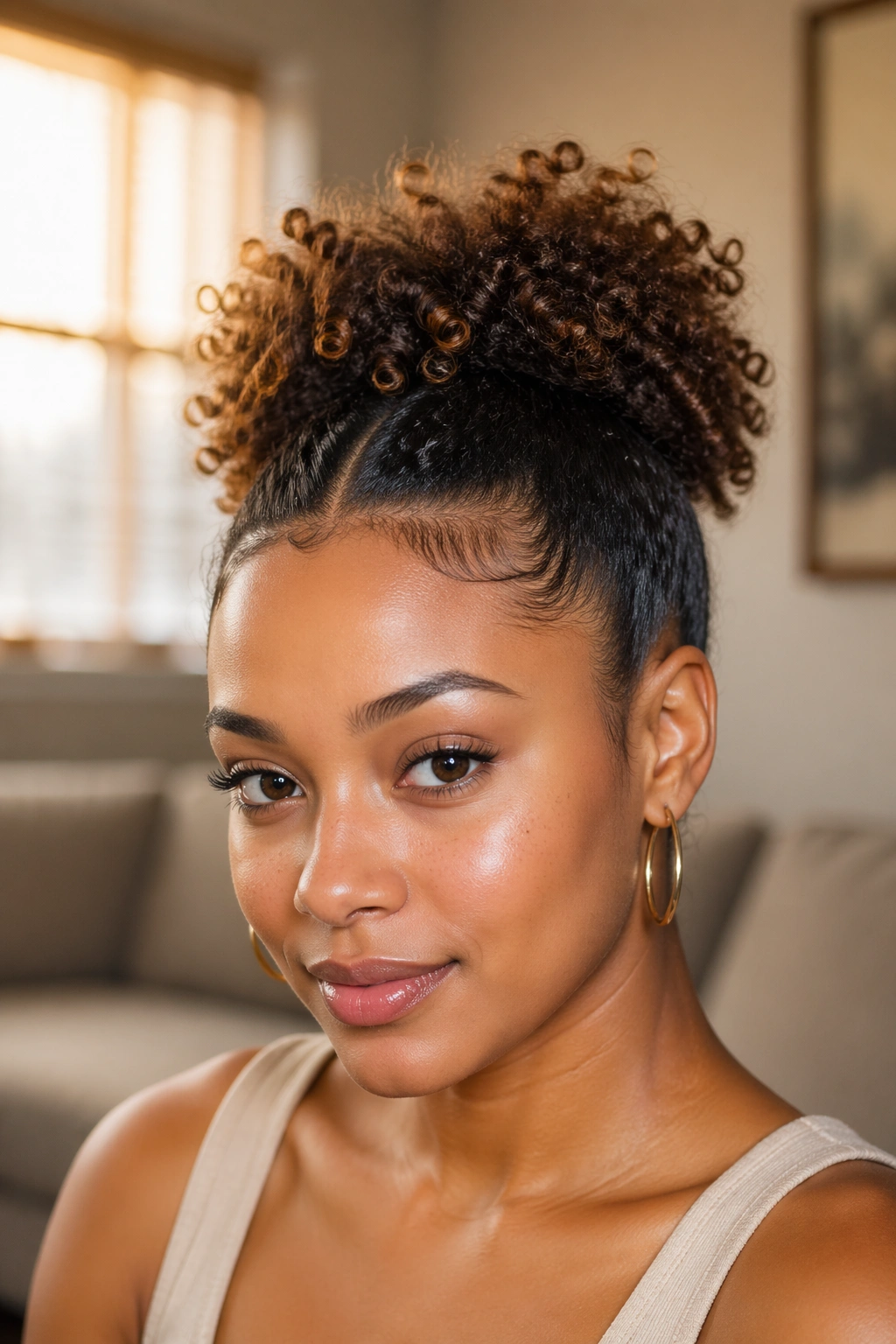
Not every ponytail has to be long to count. A short puff-style V part ponytail looks especially good on curly hair that shrinks a lot or sits in a tighter texture family. The shape stays neat, and the puff gives the style personality without needing extra length.
This is also one of the kinder options for fragile ends. Less pulling. Less weight. Less drama at the scalp. If your hair is shoulder length or shorter when stretched, a short ponytail can look more believable than a long extension that outweighs the front.
The V part helps keep the top clean while the puff lets the texture stay honest. It’s a practical style, sure, but it doesn’t have to look plain. A curl cream with light hold and a soft elastic can make the whole thing feel finished.
15. Crisscross Elastic V Part Ponytail
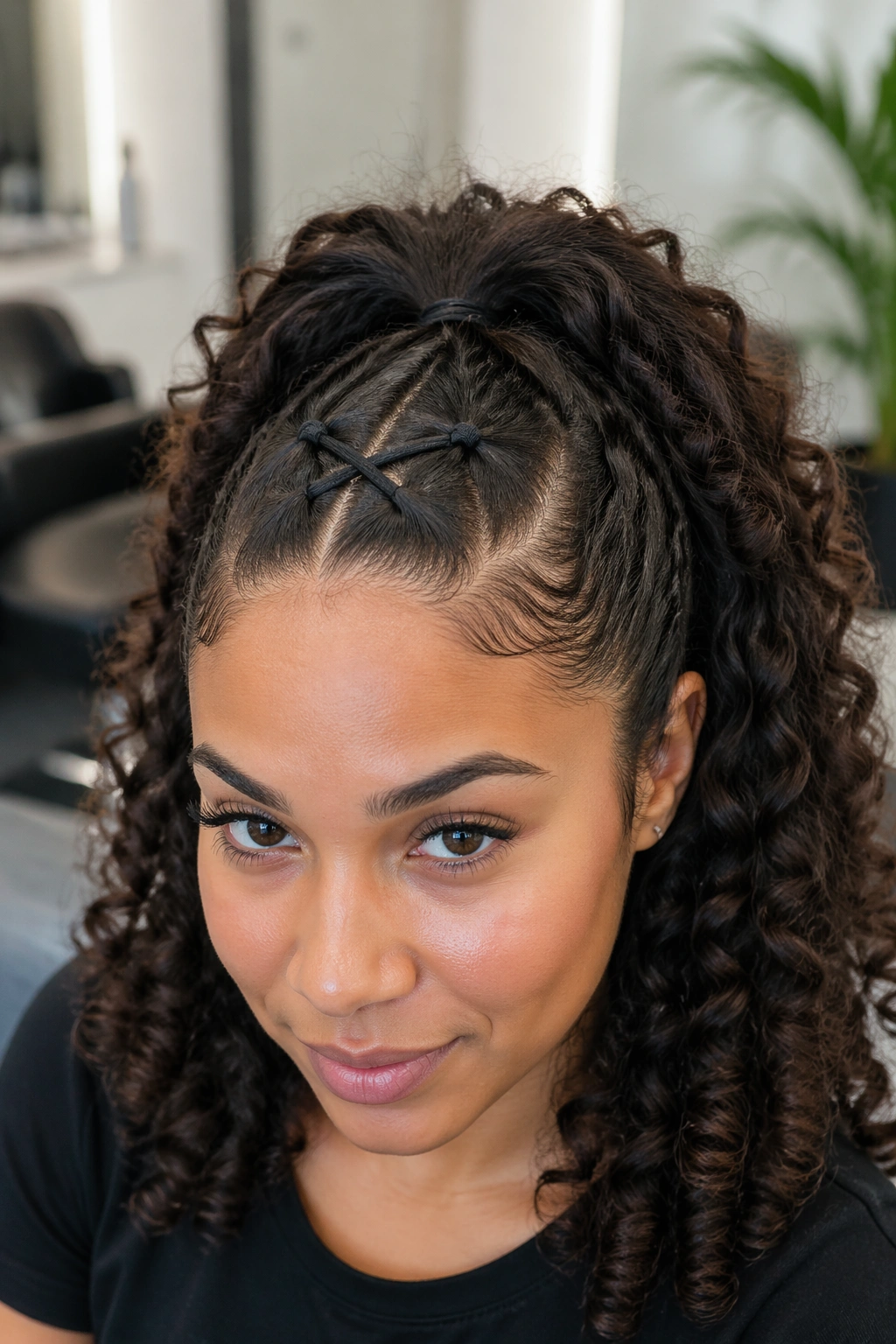
A crisscross elastic base gives the ponytail structure before the curls even begin. It’s one of those styles that looks more technical than it really is. The lines at the base pull attention toward the part and make the ponytail feel locked in.
Use two or three small elastics, crossing them over each other so the base forms an X or ladder shape. Keep the tension even. If one side is tighter, the whole style tilts and the ponytail sits oddly. A few bobby pins underneath can keep the shape from shifting during the day.
This works well for sporty curly hair or any day when you want the front secured but still need movement through the tail. It has a practical edge. I like that. It looks intentional without pretending to be fancy.
16. Feed-In Braided V Part Ponytail
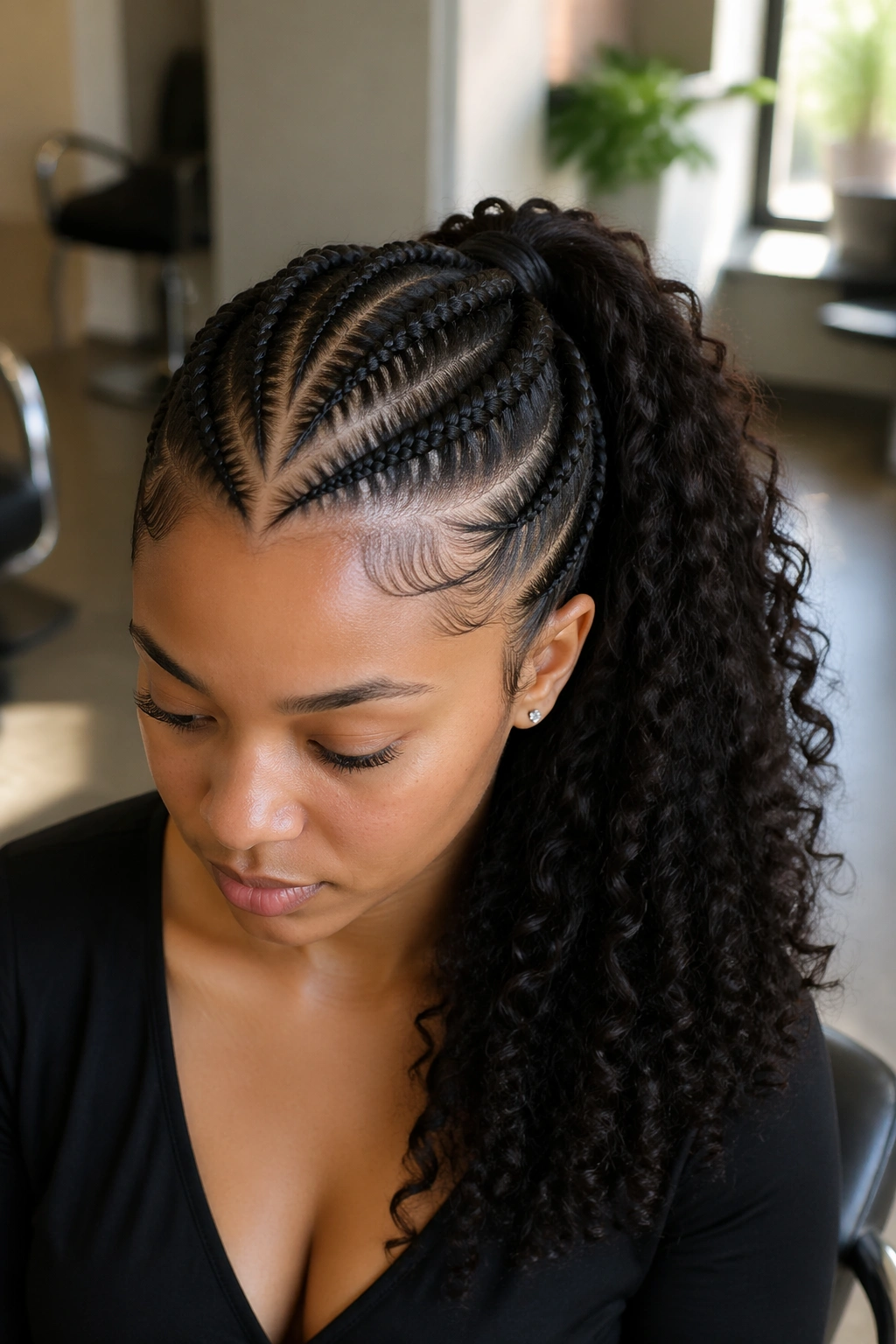
A feed-in braided ponytail is a sharper, more sculpted version of the braided base. Small sections are added gradually, so the braid lies close to the scalp before feeding into the ponytail. That makes the front look smooth and the transition into the curls feel seamless.
This style is a strong choice when you want longer wear and less daily fussing. Once the braid is set, it stays put better than a loose slick-back, especially if your hairline tends to puff up. It also protects the front from constant combing.
Best when you want control at the front
- Use small parts for a cleaner braid line
- Keep the braid direction consistent on both sides
- Blend the ponytail curls with the braid by wrapping one strand around the base
- Avoid overloading the hair with heavy cream near the scalp
The style is structured, yes, but not stiff if you leave the ponytail itself full and soft.
17. Face-Framing Tendril V Part Ponytail
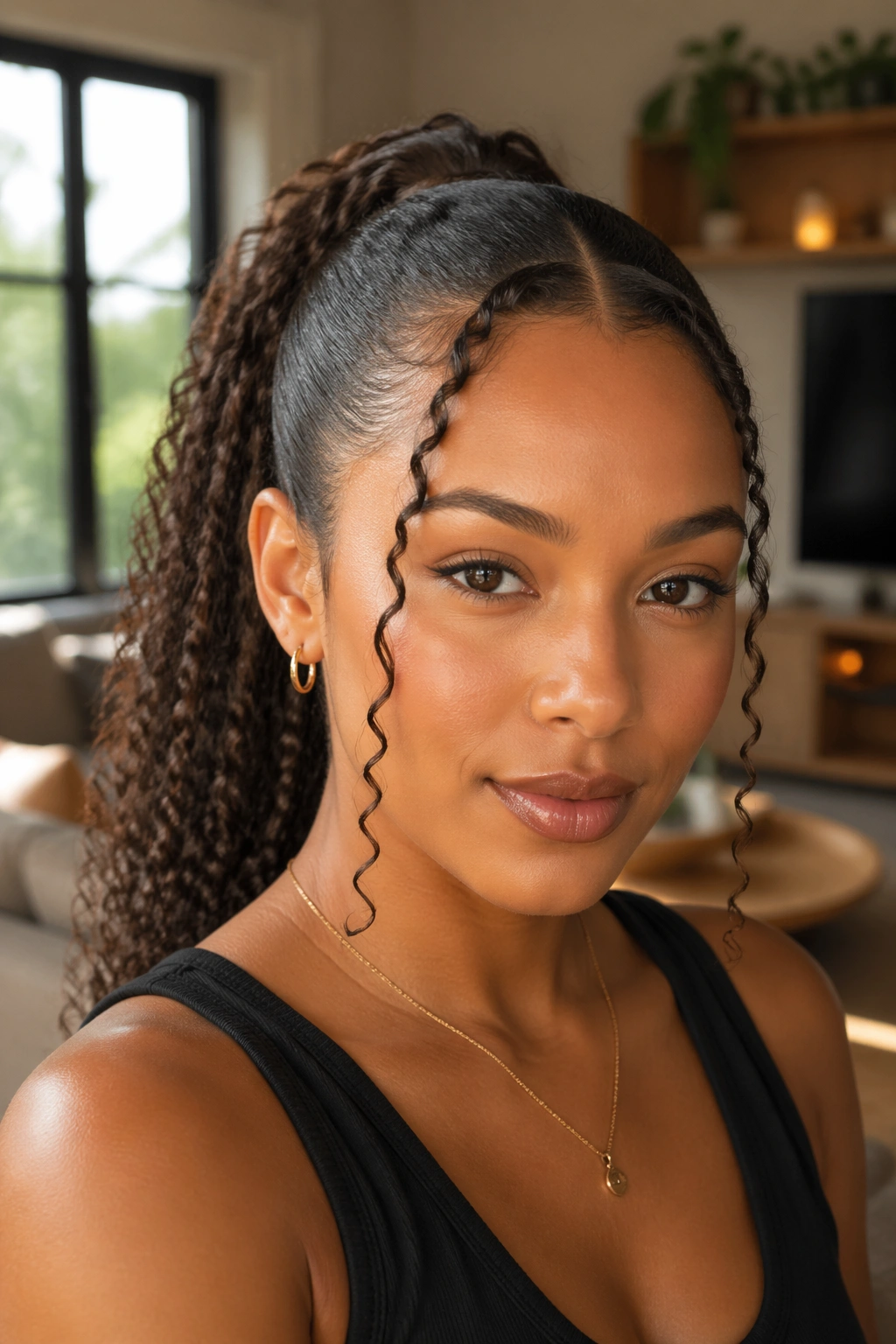
What if you want the ponytail to look softer? Leave out tendrils. Two slim curls near the temples can change the whole mood of the style, especially on square or heart-shaped faces. They soften the front without wrecking the clean line of the V part.
The trick is to make the pieces look deliberate. Roughly 1/4 to 1/2 inch each is enough for most hair textures. Too much leave-out turns the style into a half-finished updo. Too little, and the effect disappears.
Use a small curling wand only if your natural curl pattern needs help matching the rest of the style. Finger-coiling the pieces often works better on curly hair because it keeps the tendrils from looking separated from the rest of the texture. Soft, not stiff. That’s the target.
18. Gym-Ready High V Part Ponytail
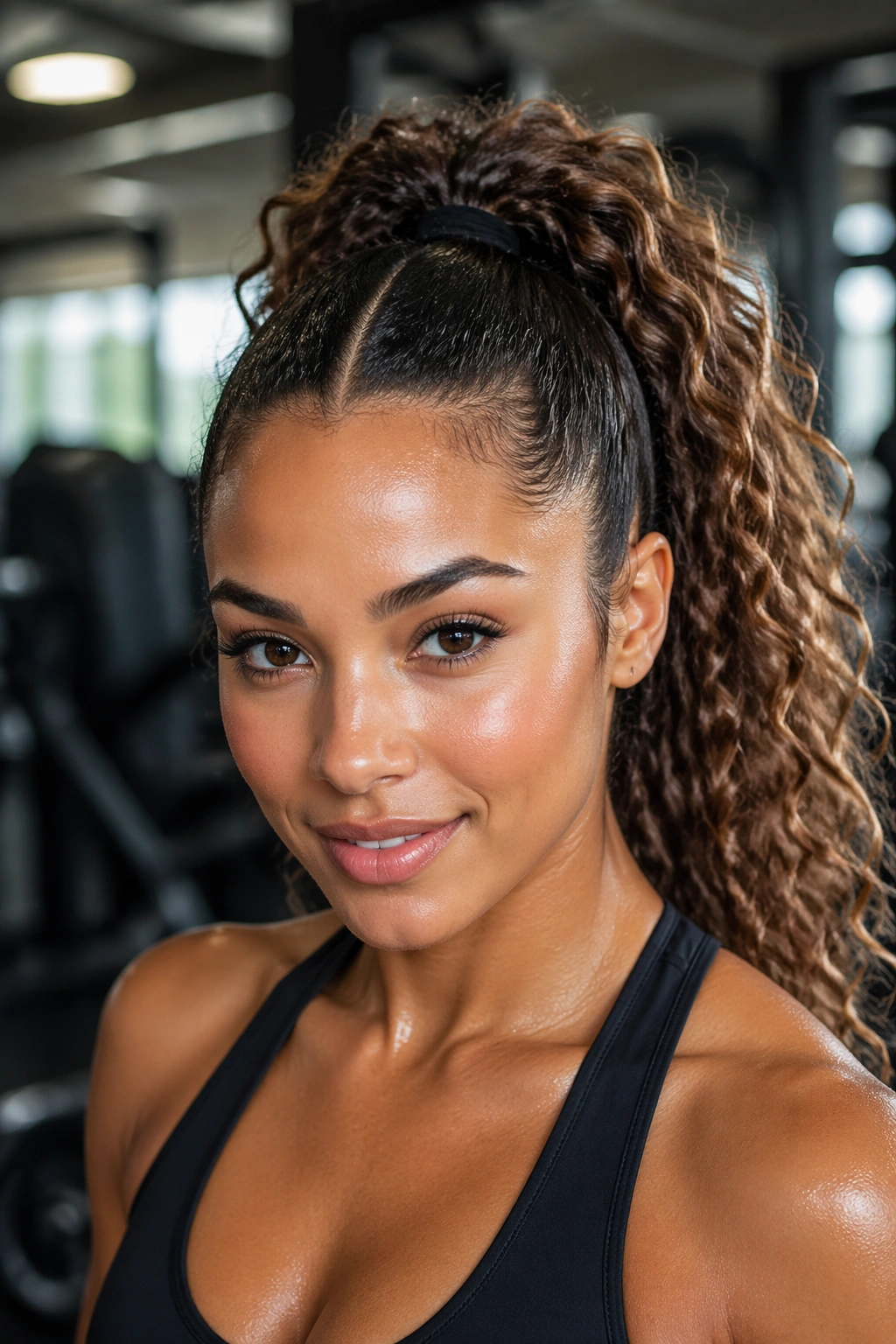
A gym-ready ponytail has one job: stay in place. Curly hair can handle that, but the base has to be secure and the tension has to be even. A high V part ponytail does that better than a loose mid-back style that bounces around and pulls at the scalp.
Double up the elastics if your hair is dense. One elastic can slip when curls get sweaty and heavy. Two gives the base more grip, and a couple of pins underneath can keep the front from lifting. Keep product light at the root so the style does not feel greasy after movement.
The best part is that this style does not have to look purely functional. A tidy front, a strong ponytail, and a little shine through the curls is enough. It can go from the gym to errands without needing a full reset.
19. Old-Hollywood Side V Part Ponytail
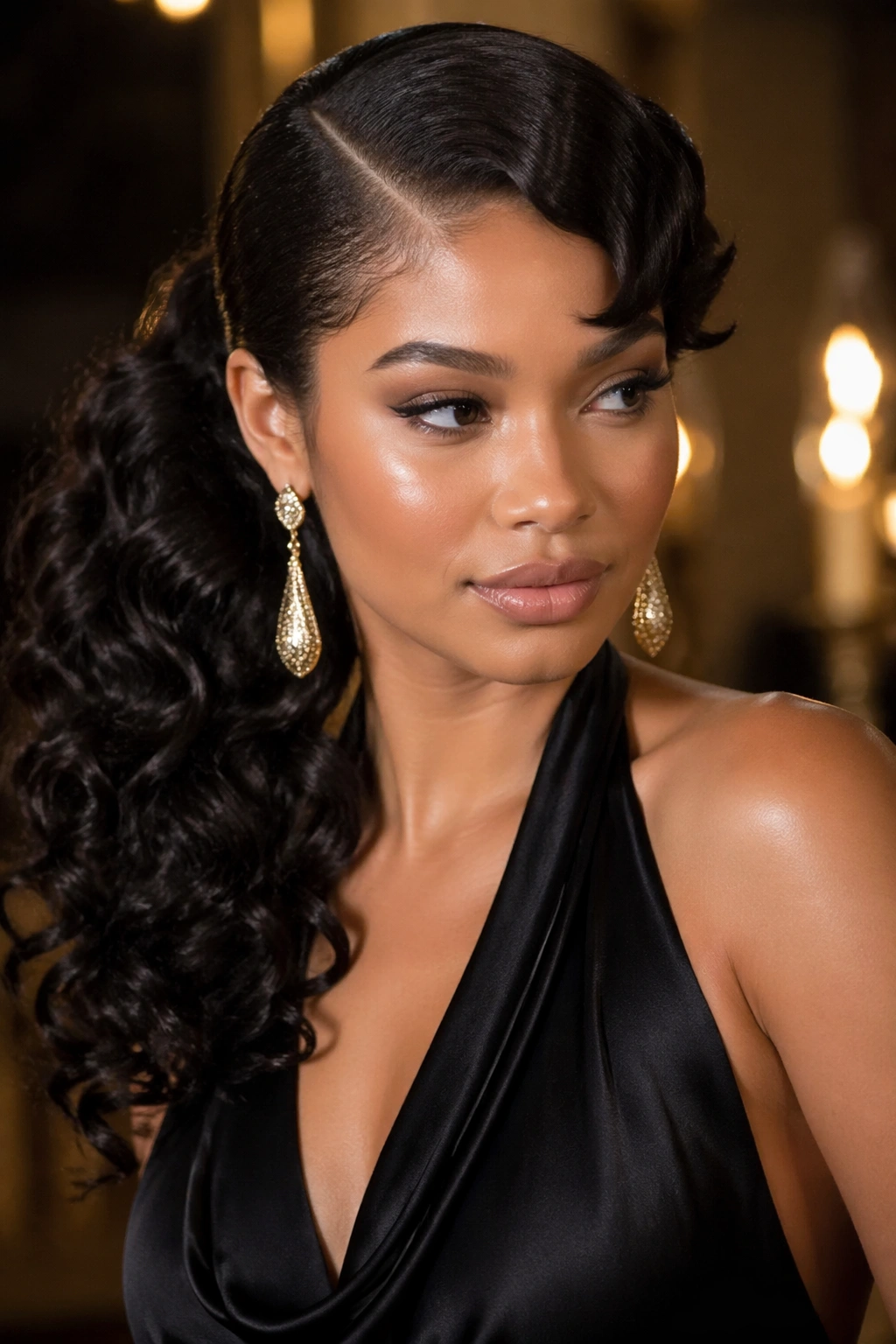
There’s a reason side-swept hair keeps coming back. It gives the face a long line and makes the ponytail feel more dramatic, especially when the curls are brushed into soft waves or stretched spirals. The V part adds modern structure, while the side placement gives the style that older, movie-star feel.
This version works best when the curls are glossy and the shape is controlled. Not shellacked. Controlled. A wide side part and a smooth crown help the ponytail slide over one shoulder in a way that feels graceful instead of accidental.
I’d pick this for an evening event or any outfit with a strong shoulder line. It has a little theater in it, which is half the point. If the base is neat and the curls are evenly shaped, the look lands fast.
20. Bow-Tied V Part Ponytail
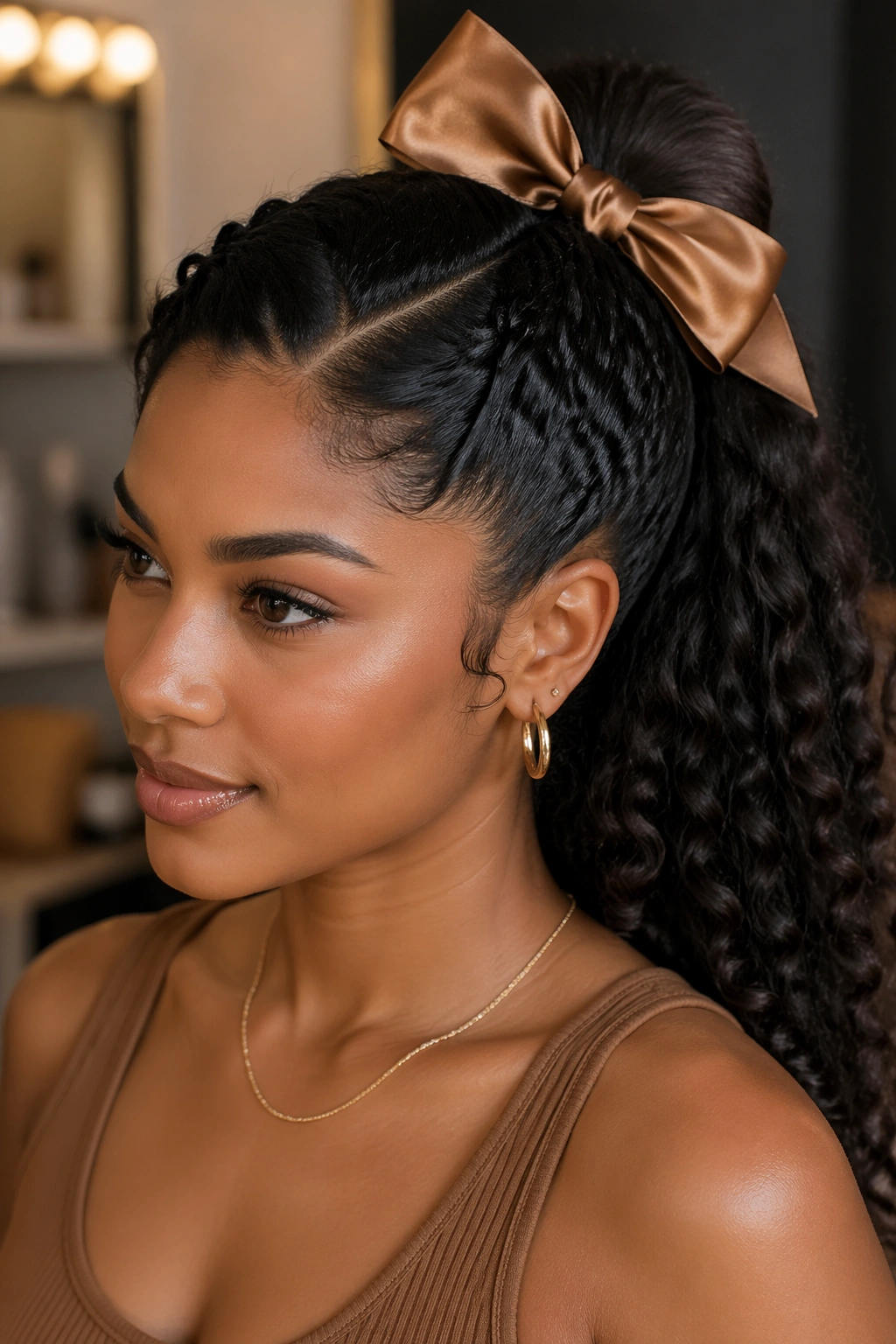
A bow can be sweet, but it can also be sharp if you choose the right fabric. Satin gives the style a dressier finish. Grosgrain feels more structured. Velvet gets heavy fast, so use it when the ponytail itself is dense enough to carry the look.
The size of the bow matters more than people think. A 1- to 2-inch ribbon width is usually enough for a ponytail that already has texture and volume. Bigger bows can swallow the curls and make the style feel costume-like. Small and neat is safer.
How to keep it from slipping
- Tie the ribbon over the elastic, not around loose hair only
- Use a hidden bobby pin if the knot wants to slide
- Keep the bow slightly off-center for a softer line
- Let the tail ends of the ribbon fall alongside the curls
This one has a playful streak, and curly hair can carry that better than straight hair ever could.
21. Sleek-Top Curly-Ends V Part Ponytail
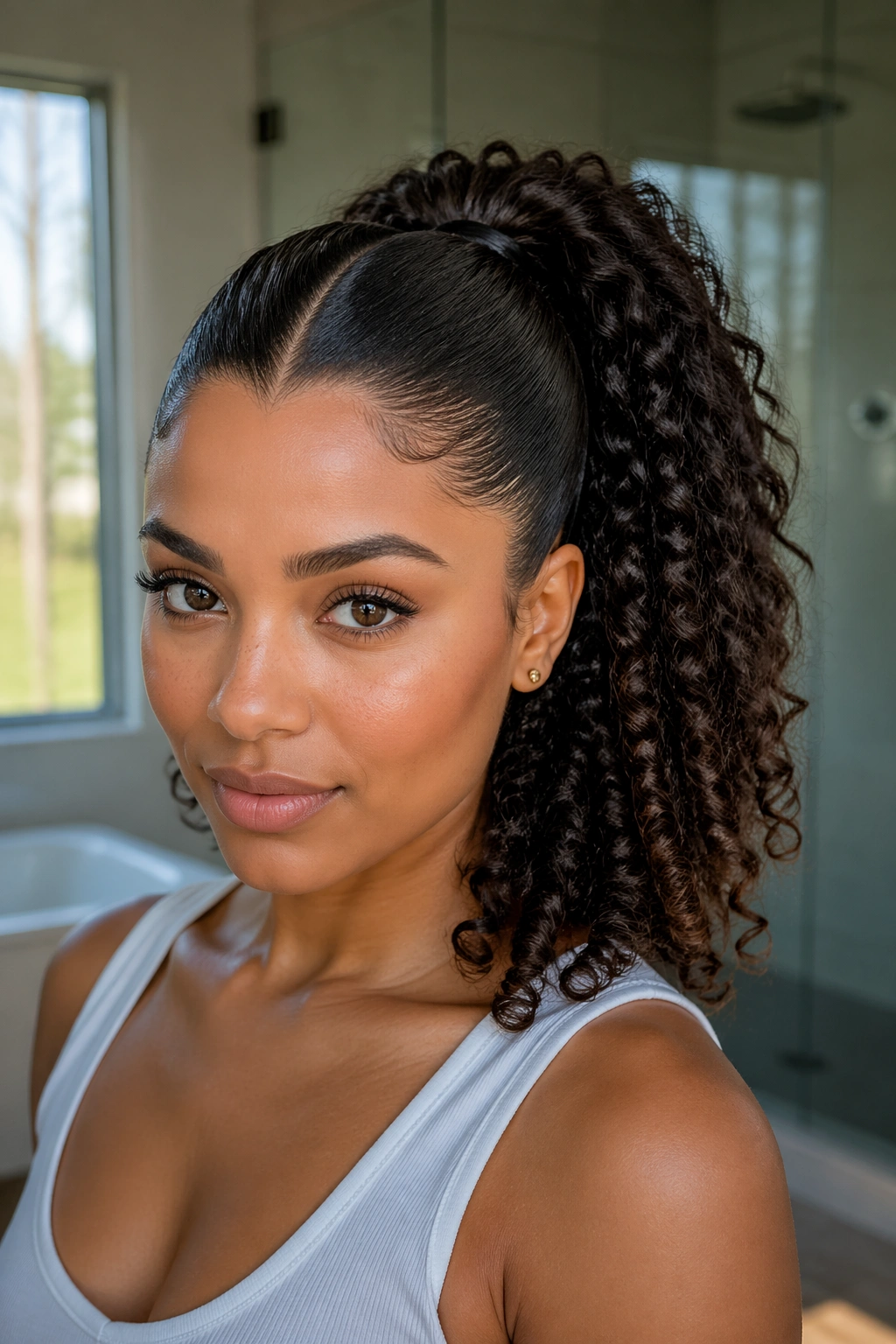
I like this combination because it solves a common problem: frizzy roots and pretty ends do not always match. A sleek-top ponytail smooths the crown and front, then lets the curly lengths stay full and lively. That contrast looks fresh without being fussy.
The top should be controlled with a gel or smoothing cream, but only at the root and hairline. The ponytail itself should stay flexible. If you pull product all the way through, the curls lose their shape and start to look coated. Better to keep the top polished and the length free.
This style is smart for curly hair that gets rough near the scalp by midday. The sleek top hides that. The curls at the ends do the fun part. Easy win.
22. Pinned-Back V Part Ponytail
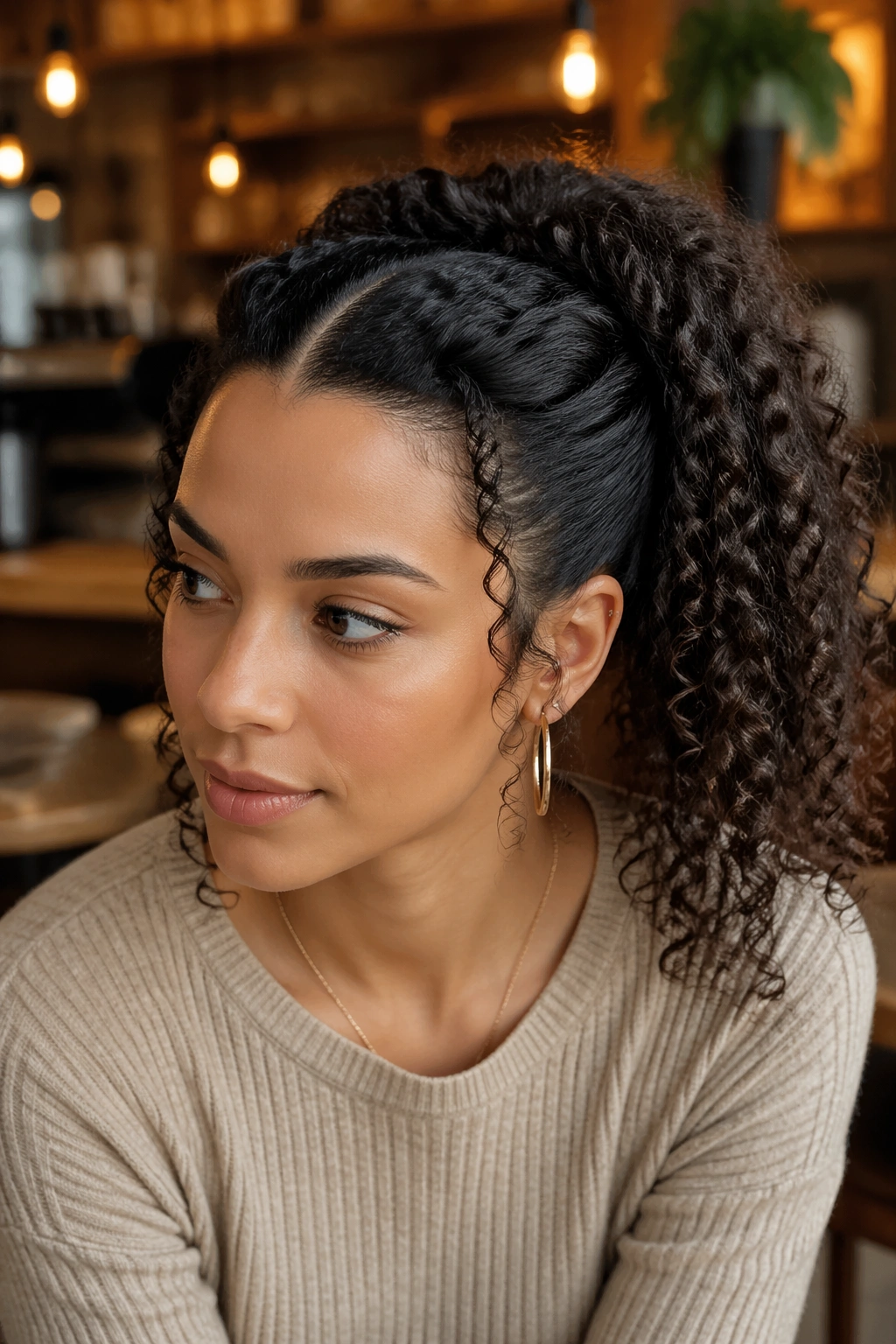
A pinned-back ponytail uses the hair at the temples almost like a built-in accessory. Twist or smooth each side back, then pin it before gathering the rest into the ponytail. That gives the V part room to stay visible while the sides feel neat and secure.
It is a useful style when the front pieces won’t cooperate. Instead of forcing them flat, you tuck them back with intention. A pair of matching pins or slim clips works better than one giant barrette because the shape stays cleaner and the scalp feels less crowded.
This version also gives curly hair a nice frame near the ears. The face stays open, but the style doesn’t look bare. I reach for it on days when I want the front out of the way but still want the texture to be seen.
23. Low Wrapped Finish V Part Ponytail
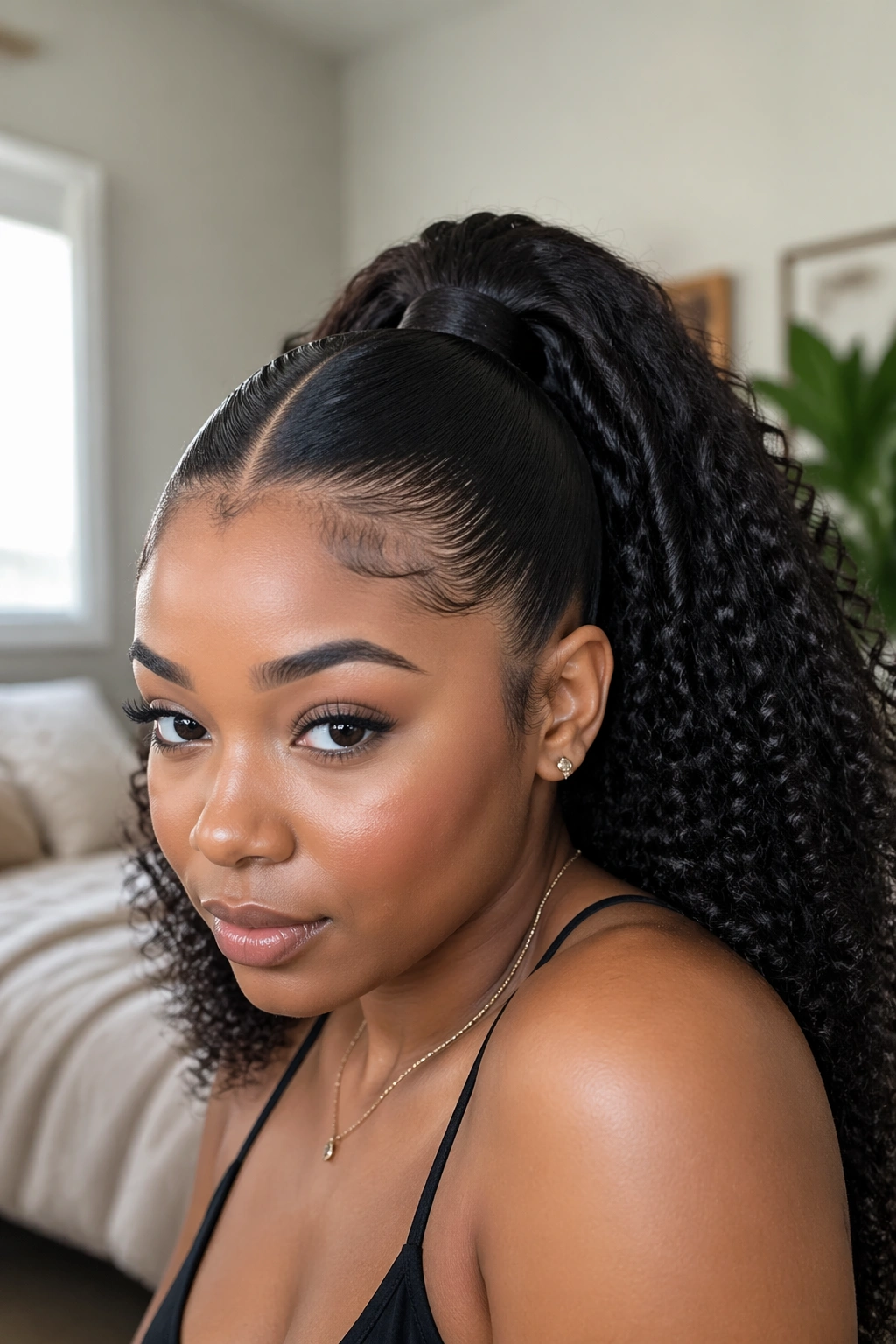
The low wrapped finish is the most forgiving version of the whole list. The ponytail sits at the nape, the base gets covered with a wrapped curl or extension piece, and the V part stays soft enough to blend with almost any curl pattern. It’s elegant, but it also behaves.
That’s why it works so well after a long day. If the crown has started to puff up a little, a low ponytail hides the tired spots and lets the length do the talking. You can keep the leave-out narrow, smooth the front with a light brush, and wrap the elastic with one clean section of hair. Nothing fancy. Just tidy.
If you only try one V part ponytail on curly hair, make it this one or the high sleek version. They’re both useful, just in different ways. One gives lift. The other gives calm. And curly hair, honestly, needs both.
