



Medium hair is the awkward length that can behave itself or flip on you halfway through the commute. Long enough to fall flat. Short enough to refuse a big, swoopy updo. That is exactly why work ponytails for medium hair matter so much: they give you a shape that feels finished, stays put, and does not look like you grabbed it with five seconds to spare.
The best office ponytails are not the same as gym ponytails. A work version needs cleaner lines, a little control around the crown, and some thought about where the elastic sits. On medium-length hair, those details matter even more because a ponytail that sits too high can look stubby, while one that sits too low can disappear into the collar of a blazer.
I have a soft spot for styles that look polished but not fussy. If I can make one with a brush, a light mist of smoothing spray, and one good elastic, I am interested. If it takes twelve pins and a prayer, I’m out. Medium hair is actually a gift here, because it holds shape well without dragging the ponytail down the way very long hair sometimes does.
So here are the styles I reach for when the day calls for something neat, quick, and a little more thoughtful than “tie it back and hope.” The first one is the safest starting point, and it is hard to beat.
1. Sleek Low Ponytail With a Center Part
A clean center part and a low ponytail are the bread-and-butter move for medium hair. They make the whole head look deliberate in about two minutes, which is a very good trade when your calendar is already loud.
The trick is to smooth the crown first, then gather the hair right at the nape instead of sitting the elastic high on the back of the head. That keeps the length from poking out awkwardly and gives medium hair a more elegant line. A tiny bit of serum on the ends helps too.
Why it works
A center part gives symmetry, and symmetry reads as tidy fast. On medium hair, that matters because the length usually lands around the shoulders or upper back, where every bump shows.
- Brush the part clean with a fine-tooth comb.
- Use a light smoothing cream on the top section only.
- Wrap a small strand of hair around the elastic for a cleaner finish.
- Keep the ponytail low enough that it grazes the collar, not the shoulders.
Best for: straight, wavy, and lightly layered hair.
2. Mid-Height Wrapped Ponytail
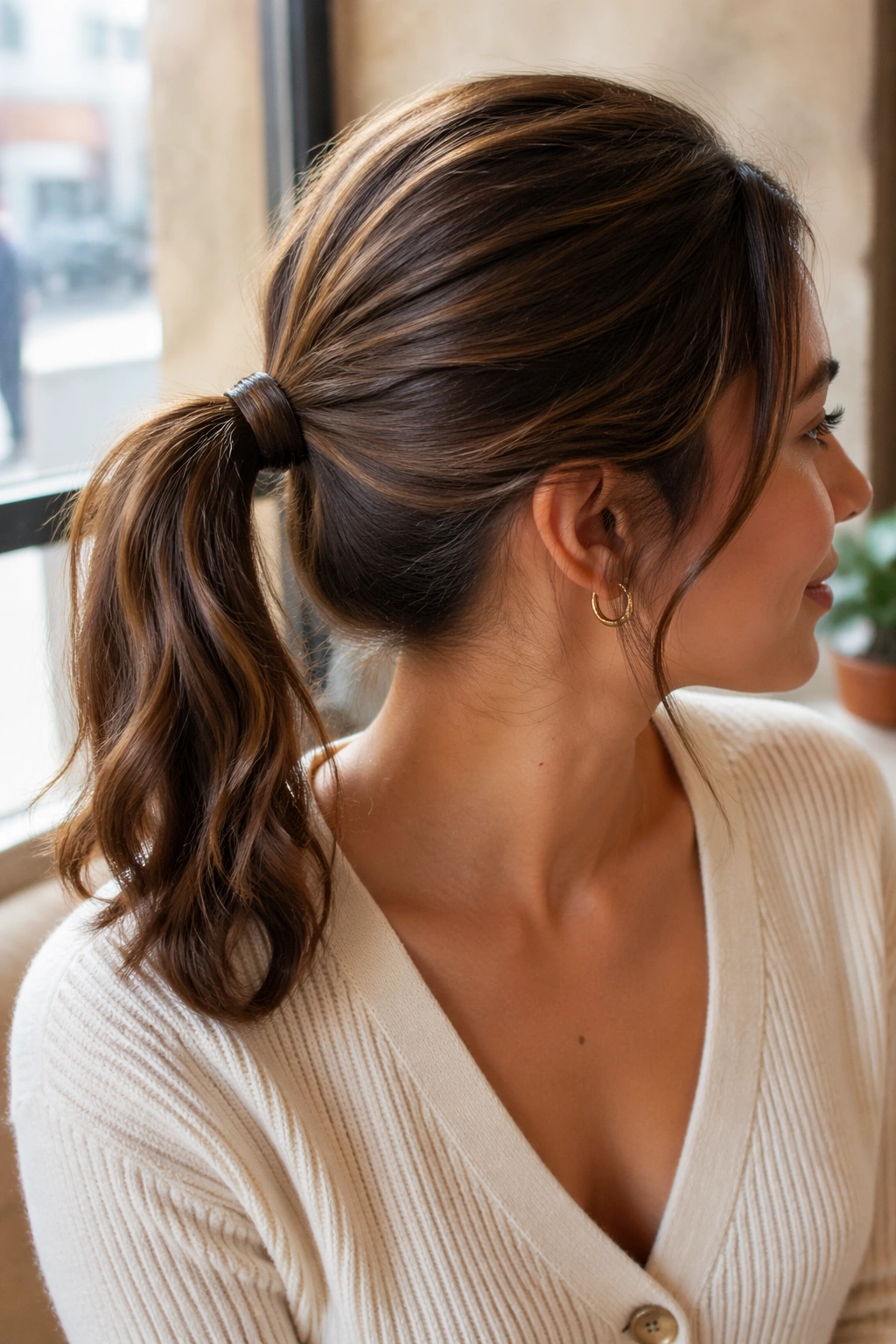
This one sits in that useful middle zone between a low ponytail and a high one. It lifts the face a bit, but it does not scream “workout” the way a sky-high tail can.
I like this style on medium hair because it gives the illusion of extra length. The ponytail sits at the point where the back of the head starts to curve away, so the shape looks intentional from the side. A wrapped elastic is non-negotiable here; it cleans up the whole look.
If your hair tends to puff at the crown, brush it upward with tension before securing it. Not too much. You want smooth, not tight. Tight hair at mid-height can pull the face and make the whole style look stern.
3. Side-Part Low Ponytail
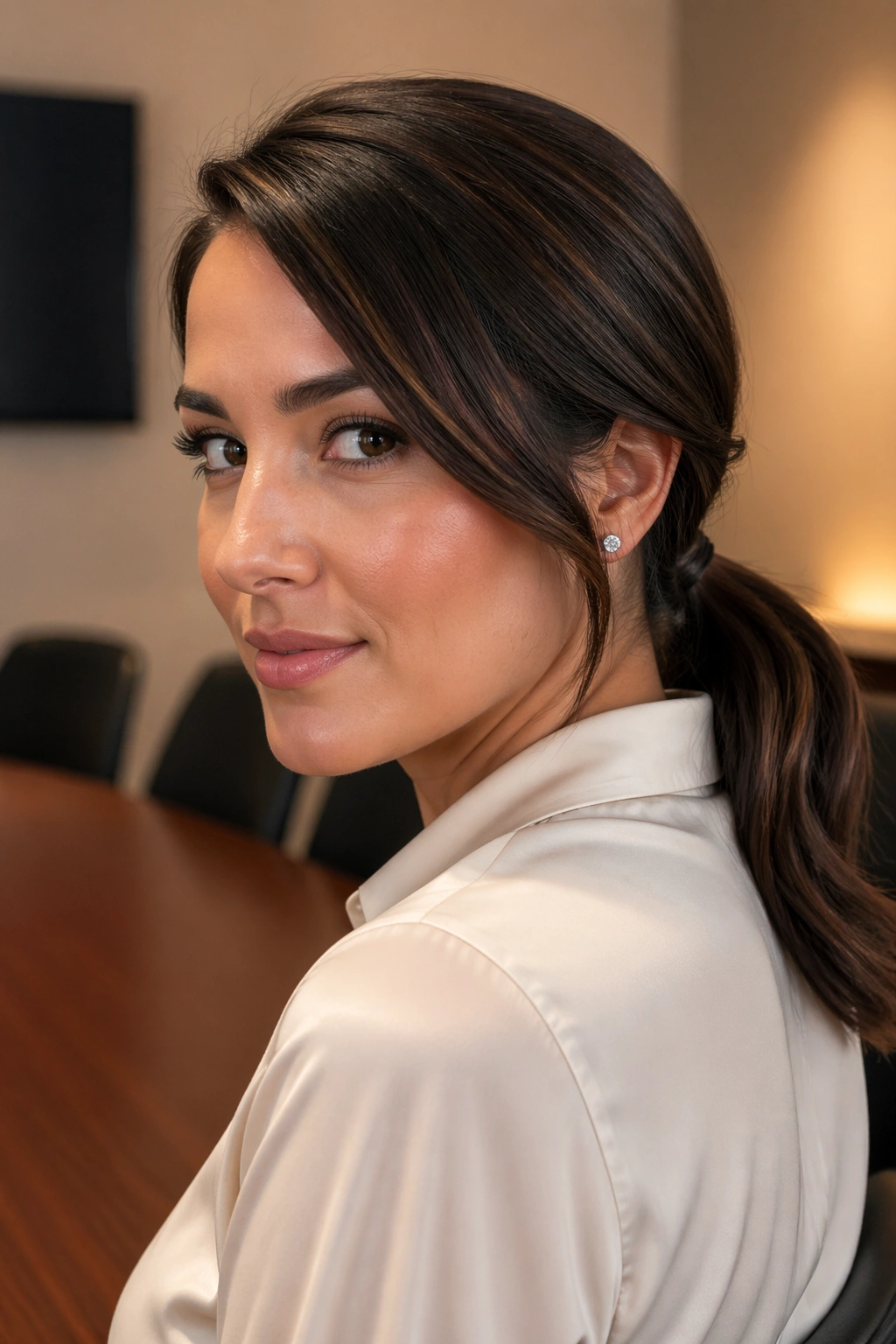
A side part changes the mood immediately. It softens the face, gives a little movement near the front hairline, and makes a basic ponytail feel more styled without adding any real work.
Why a side part helps
For medium hair, a side part also solves one annoying problem: flatness at the roots. The heavier side gives the ponytail a little lift, while the lighter side keeps the style from looking boxy. If your hair is cut with layers, this version helps the shorter pieces fall in a flattering way instead of sticking out near the elastic.
How to wear it to work
Keep the ponytail low and smooth at the base. Then let one side sit a touch looser near the temple. That tiny bit of asymmetry keeps the style from feeling stiff.
- Best on round, square, or heart-shaped faces.
- Works well with side-swept bangs.
- Looks neat with small hoop earrings or a simple stud.
One small thing: do not overdo the side sweep. If the front is too dramatic, the style starts leaning evening rather than office.
4. Bubble Ponytail With Tight Spacing
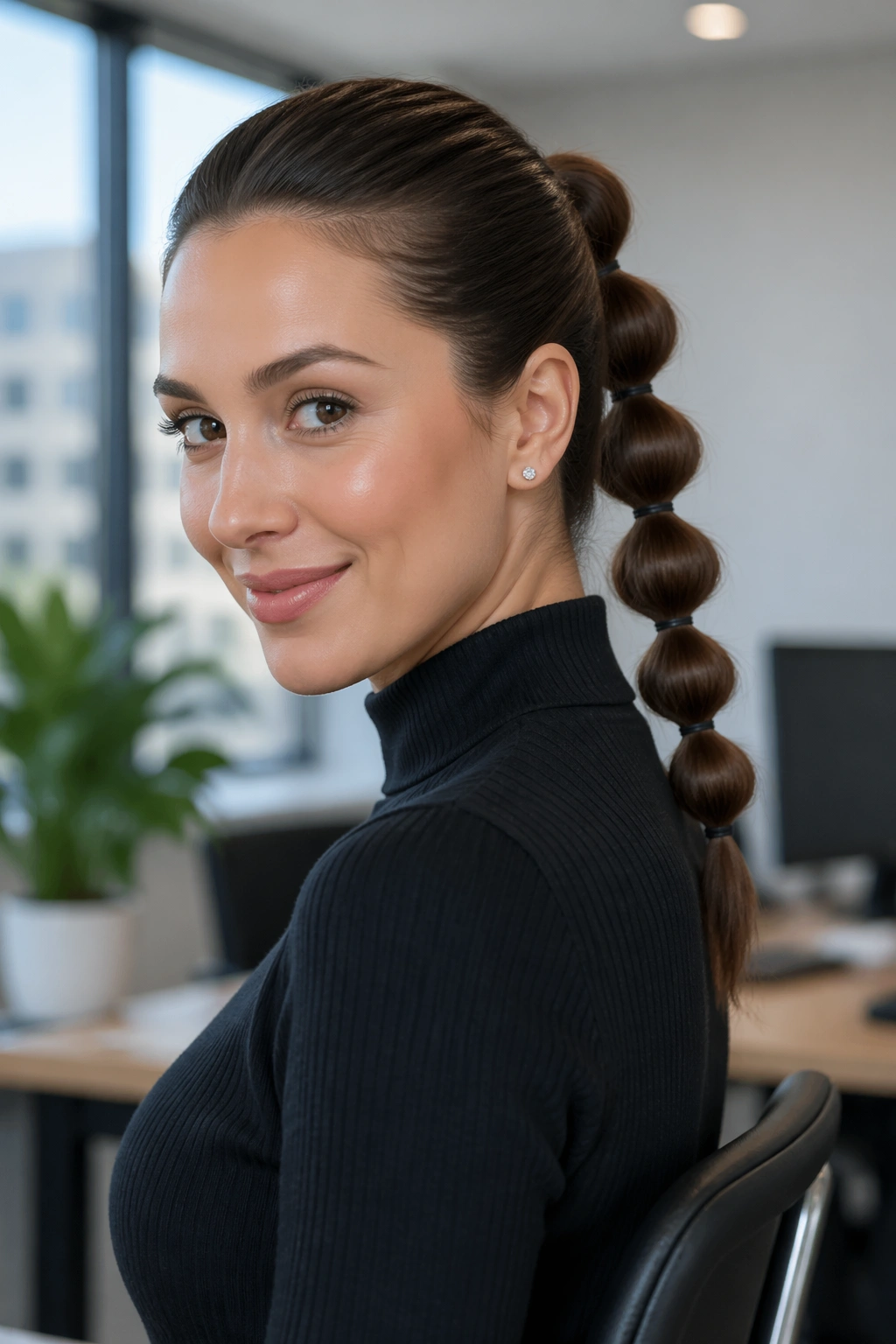
Bubble ponytails are underrated for work because they look structured, not childish, when the spacing is neat and the elastics match your hair color. Medium hair is a sweet length for this one because you can usually fit three or four bubbles without the tail getting too skinny.
Start with a low or mid ponytail, then add small clear elastics every 1½ to 2 inches. Gently pull each section outward so it rounds into a bubble. That’s the whole trick. The tail should still look controlled, not puffy in every direction.
What makes it office-friendly
The clean spacing gives it order. The bubbles add interest without needing curls, braids, or a lot of texture. It also holds up better than a plain ponytail when you have to keep adjusting it all day.
- Use clear or hair-matched elastics.
- Keep the crown smooth.
- Leave the bubbles even.
- Add a small wrap around the first elastic if you want it to look sharper.
Pro tip: three bubbles often look better than five on medium hair. More than that can start to look busy.
5. Twisted Nape Ponytail
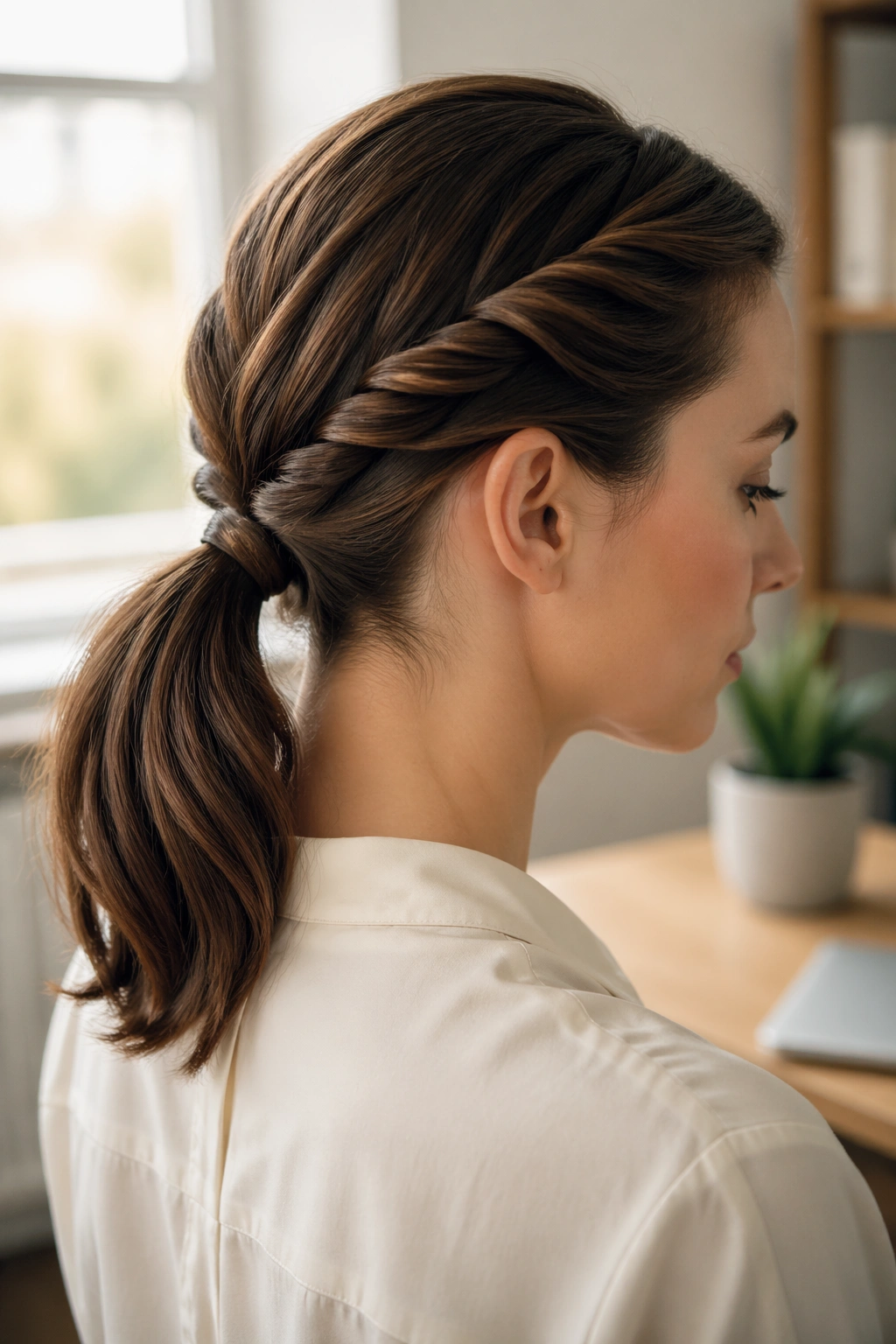
This is one of those styles that looks harder than it is. You take a section from each side, twist them back toward the nape, and then gather everything into a ponytail. Done well, it looks neat and almost tailored.
I like it because it gives medium hair a little architecture. A plain ponytail can flatten out by lunchtime. Twists at the sides keep the style anchored and help hide shorter layers that would otherwise slip out near the ears.
It’s also kind to hair that’s been in a few too many elastics. The twisted sections let you use less tension, which is a relief if your scalp gets sensitive. Leave the twists snug but not pulled tight, and you get a clean finish without the headache.
6. Braided Base Ponytail

A braid at the base of the ponytail does two jobs at once: it hides the elastic and adds texture right where the eye lands first. That makes this style a favorite when you want your hair to look finished but not overly styled.
Unlike a full braid, this one stays compact. You can make a small three-strand braid from the front or side section, wrap it around the base, and pin it underneath. The result is subtle. It does not announce itself from across the room, which is exactly why it works so well for office wear.
This style is especially good for fine medium hair, because the braid gives the illusion of thickness. If your ends are a little dry, smooth them with a pea-sized amount of cream after you secure the ponytail. Small detail. Big difference.
7. Rope-Braid Ponytail
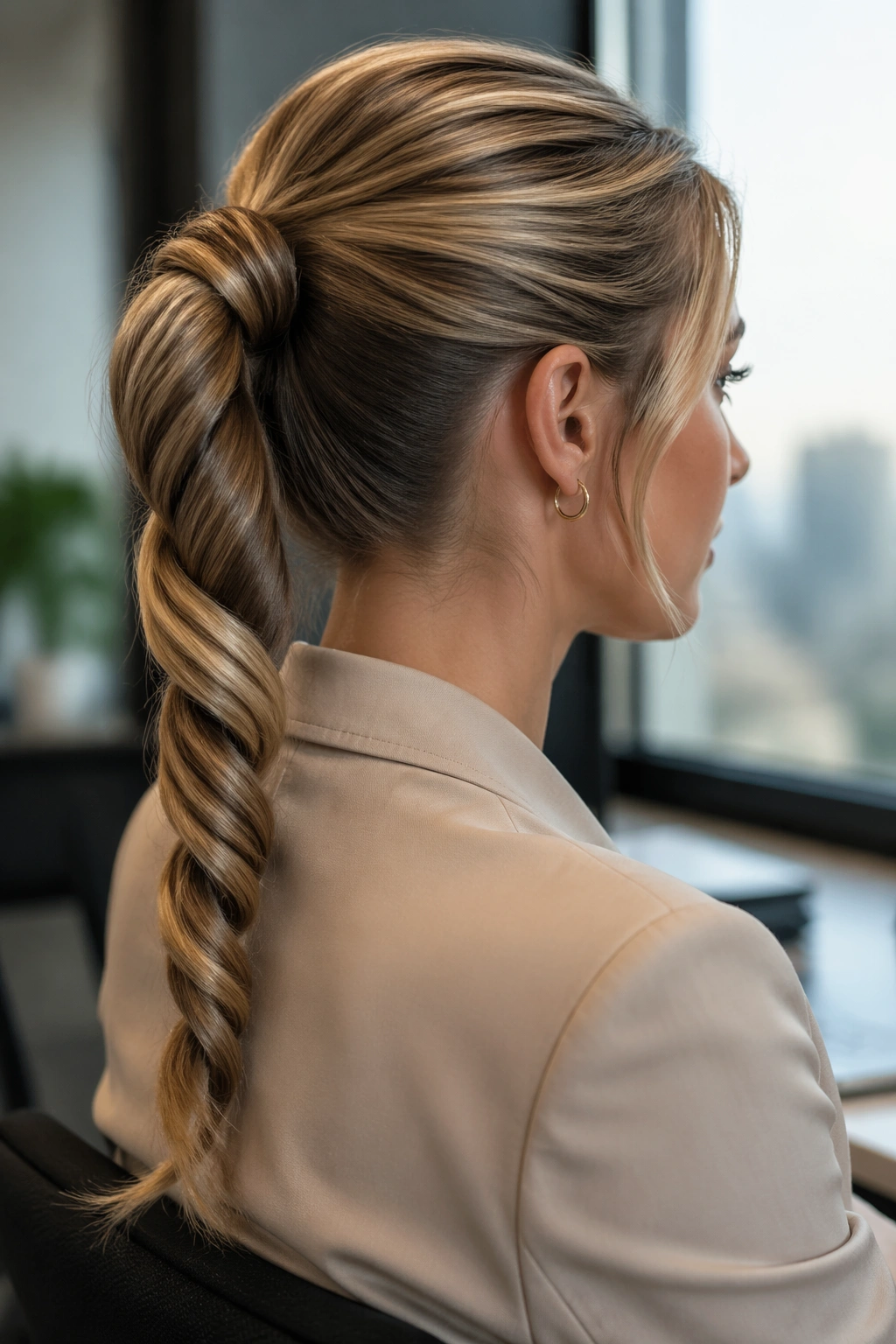
A rope-braid ponytail is one of my favorite answers for slippery hair. It starts as a regular ponytail, then the length is split into two sections, twisted in the same direction, and wrapped around each other in the opposite direction. The result looks polished and a little more interesting than a standard braid.
The nice part is how secure it feels. Medium hair usually has enough length for the rope braid to show shape without unraveling into fuzz by midday. If your hair is layered, you may need a little gel or spray at the tail ends, because shorter pieces like to escape.
This style reads as neat from a distance and quietly detailed up close. That’s a good work-hair balance.
8. Half-Up Ponytail for Wavy Medium Hair
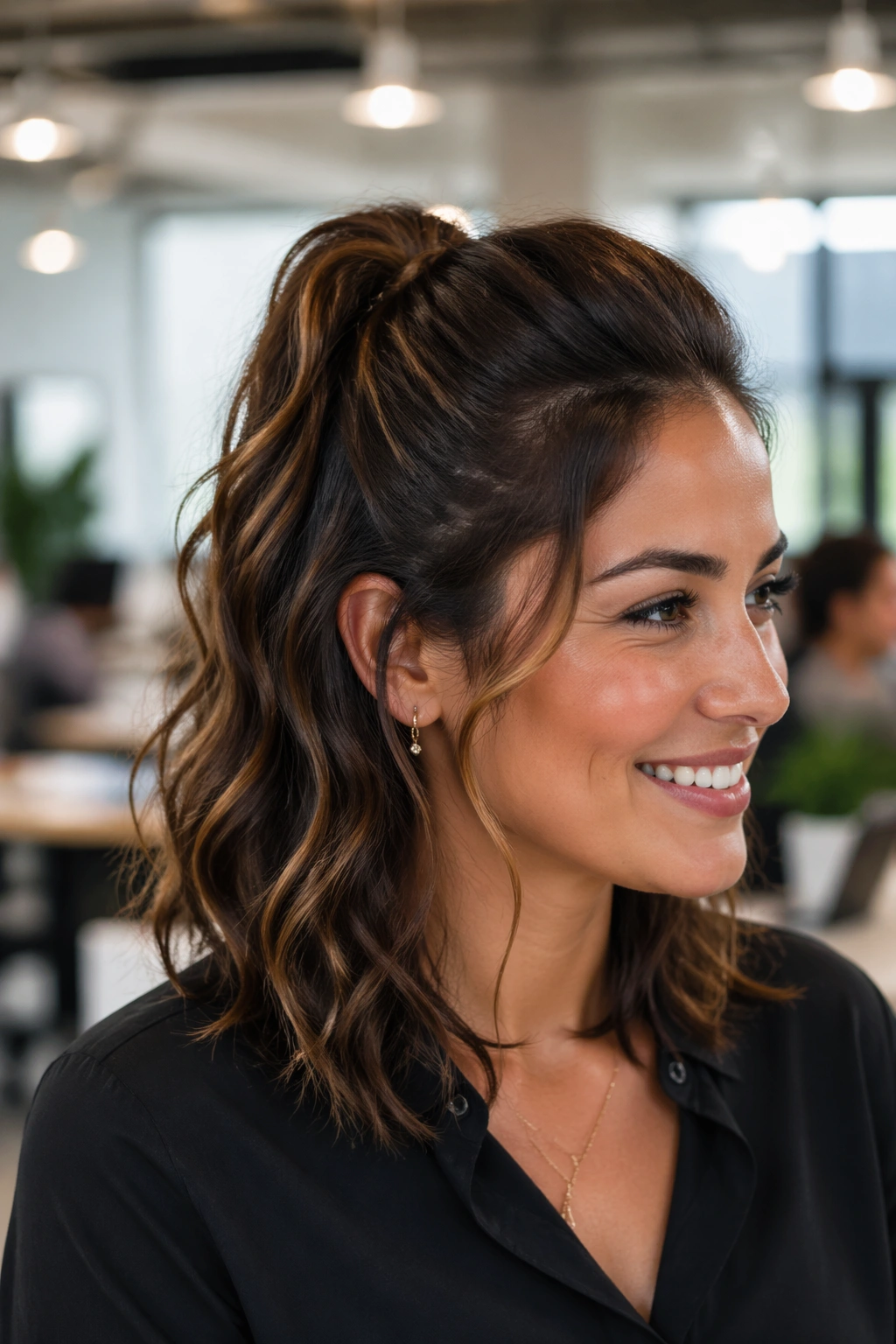
If your medium hair has a natural wave, a half-up ponytail can be the smartest office move in the room. It keeps hair away from your face while letting the lower section keep its shape and movement.
I prefer this version when the wave pattern looks good on its own and I do not want to fight it. Pull the top half back at the crown, secure it with a small elastic, then smooth the sides so the front does not balloon. The lower half should still move when you walk. That movement is the point.
One-sentence truth: this style saves time.
If your hair is layered, leave a few pieces loose around the ears so the half-up section blends into the rest of the cut instead of sitting on top of it like an afterthought.
9. Flipped-End Ponytail
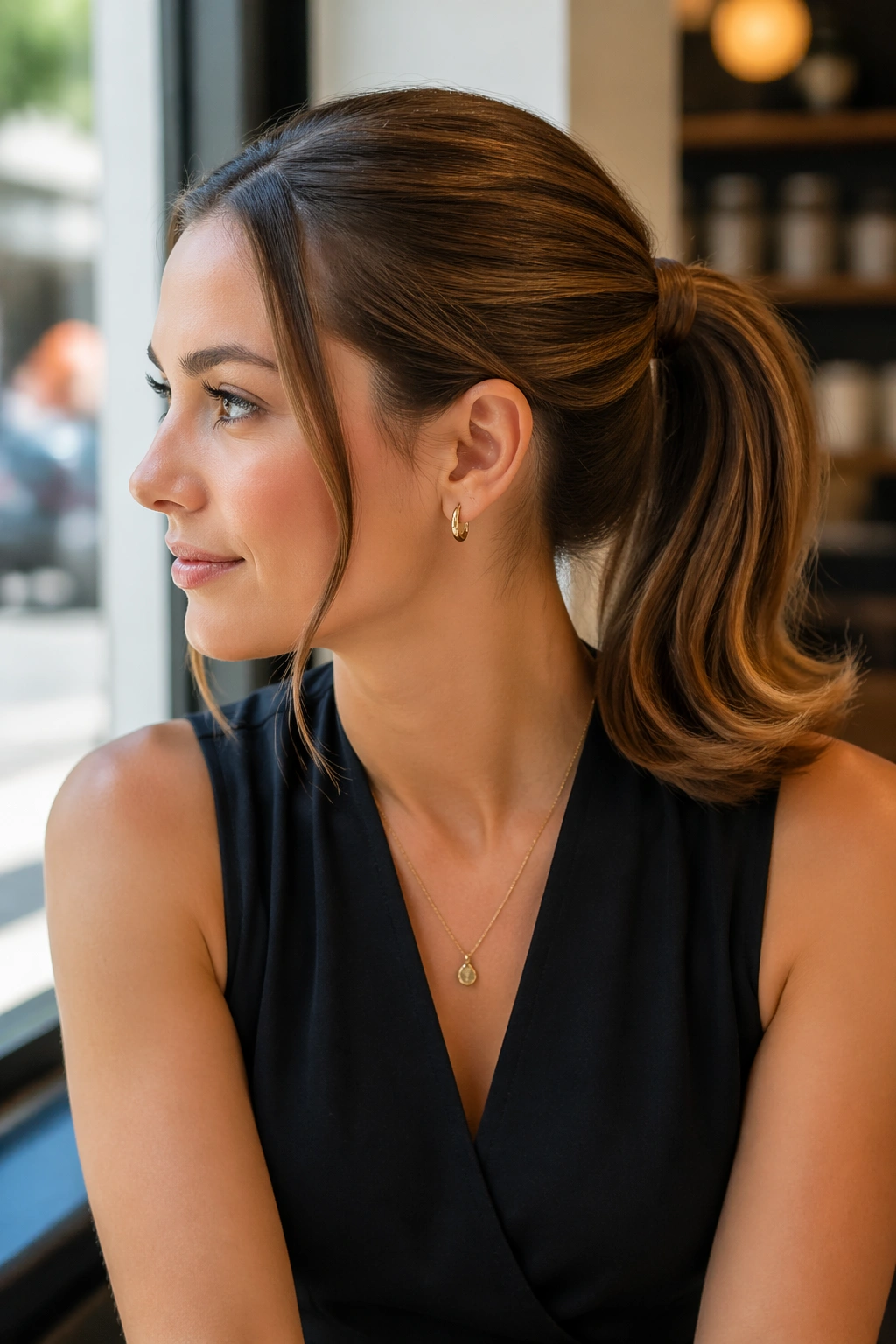
A flipped-end ponytail has a little retro energy, but it can still feel work-appropriate if the crown stays sleek. The ends are curled outward with a round brush, flat iron, or blow-dryer, so the tail kicks out instead of hanging straight.
Why bother? Because medium hair can sometimes look heavy when it falls in a straight line. A flip at the ends gives the ponytail shape and keeps it from feeling too plain. It also looks especially good when the hair hits just below the shoulders.
How to keep it polished
Keep the flip soft, not crunchy. A sharp curl at the bottom can feel too dressed up for daytime. A gentle bend is enough.
- Smooth the top with a brush and light spray.
- Flip only the last 2 to 3 inches of the tail.
- Use a medium-barrel round brush if you want a rounder finish.
- Leave the base sleek.
My opinion: this one looks best when the flip is subtle enough that people notice the shape before they notice the styling.
10. Polished High Ponytail
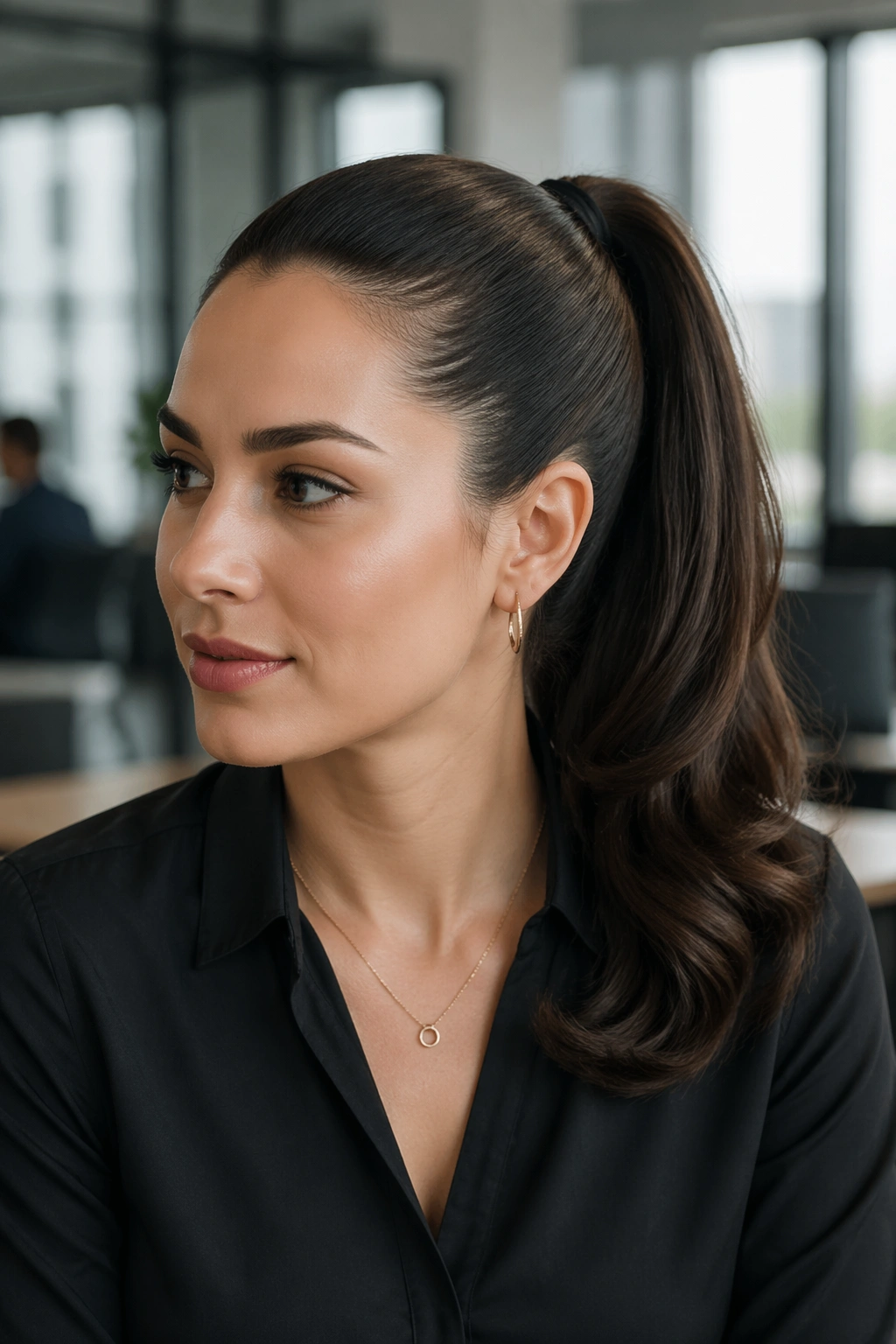
A high ponytail on medium hair can be excellent if you want lift without committing to a full bun or a complicated updo. The key is controlling the crown so the style looks purposeful rather than bouncy.
Start by brushing the hair upward from the temples and back of the head, then secure it at the crown or slightly below. If your hair is layered, use a little hairspray at the roots and smooth the shorter pieces toward the elastic. The tail itself can stay straight or be lightly curled at the ends.
A medium-length high ponytail has a nice shape when the tail is thick enough to swing but not so long that it droops. That balance is why this style works so well at work: it feels awake, clean, and a little sharper than a low ponytail.
11. Loose Low Ponytail With Face-Framing Pieces

Some days you want tidy hair, not severe hair. A loose low ponytail with a couple of face-framing pieces gives you that middle ground.
Keep the ponytail low and the crown smooth, then leave out two slim front pieces — about the width of a pencil on each side. Those pieces should skim the cheeks, not hang in your soup at lunch. If your hair is naturally wavy, let them keep a bend. If it’s straight, add a soft curve with a small iron.
What makes it work
The loose front pieces break up the outline of the face, which can be useful when you wear glasses, a blazer, or both. The style also flatters medium hair because the length doesn’t get swallowed by the back of your shirt.
It’s the kind of ponytail that looks good with a soft knit top or a crisp button-down. Not fussy. Not flat.
12. Criss-Cross Ponytail at the Crown
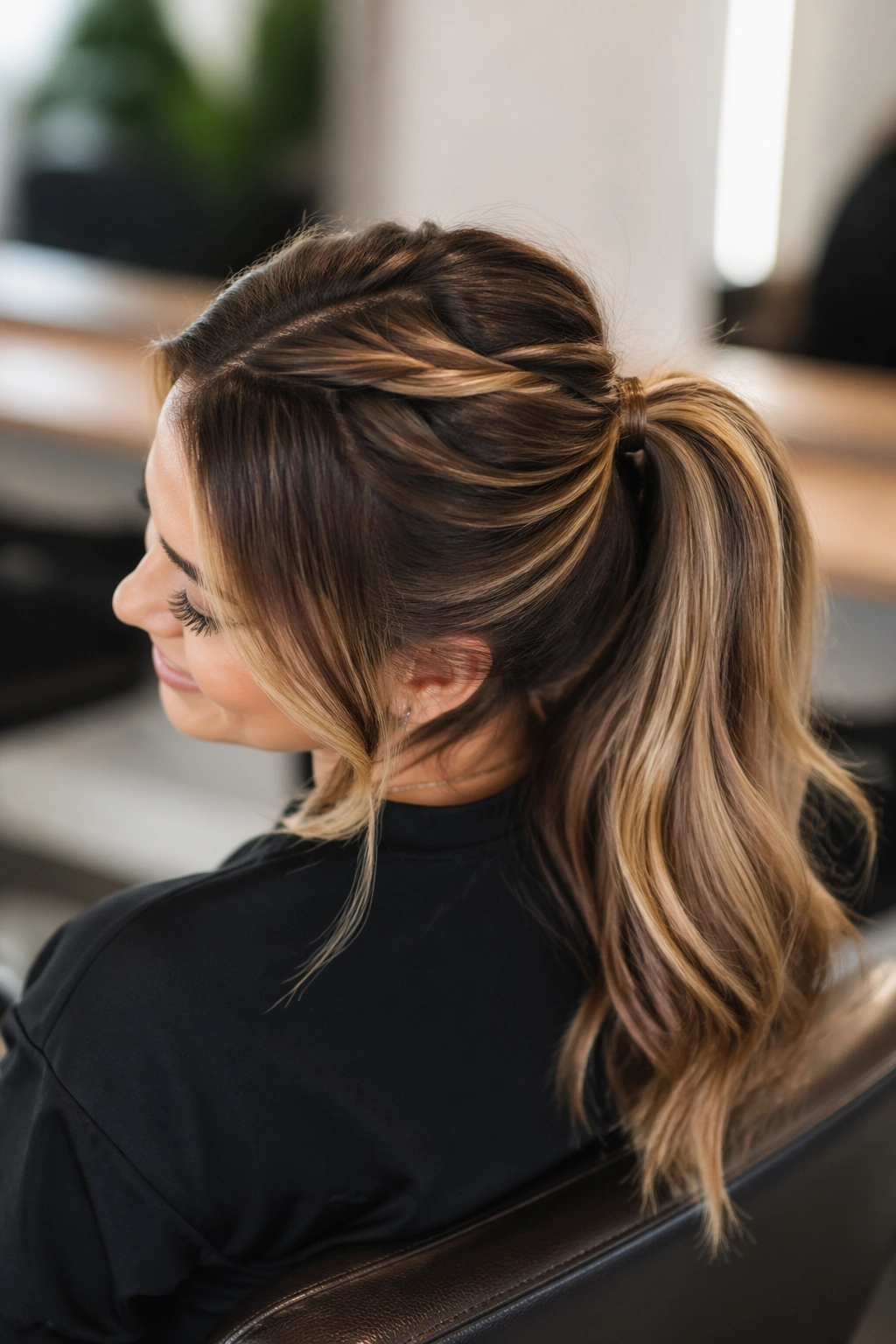
A criss-cross ponytail adds just enough detail to make people think you spent more time on it than you did. Two small sections from the front are pulled back, crossed over each other, and pinned or tucked before the rest of the hair is gathered into a ponytail.
The clean part here is the crossing itself. It gives the crown a little lift and hides the elastic at the same time. On medium hair, that detail matters because the style can otherwise look plain too quickly.
I like this one for days when the front of the hair needs help but the rest still looks fine. You’re basically editing the top half and leaving the length alone. Smart move.
13. Scarf-Tied Ponytail
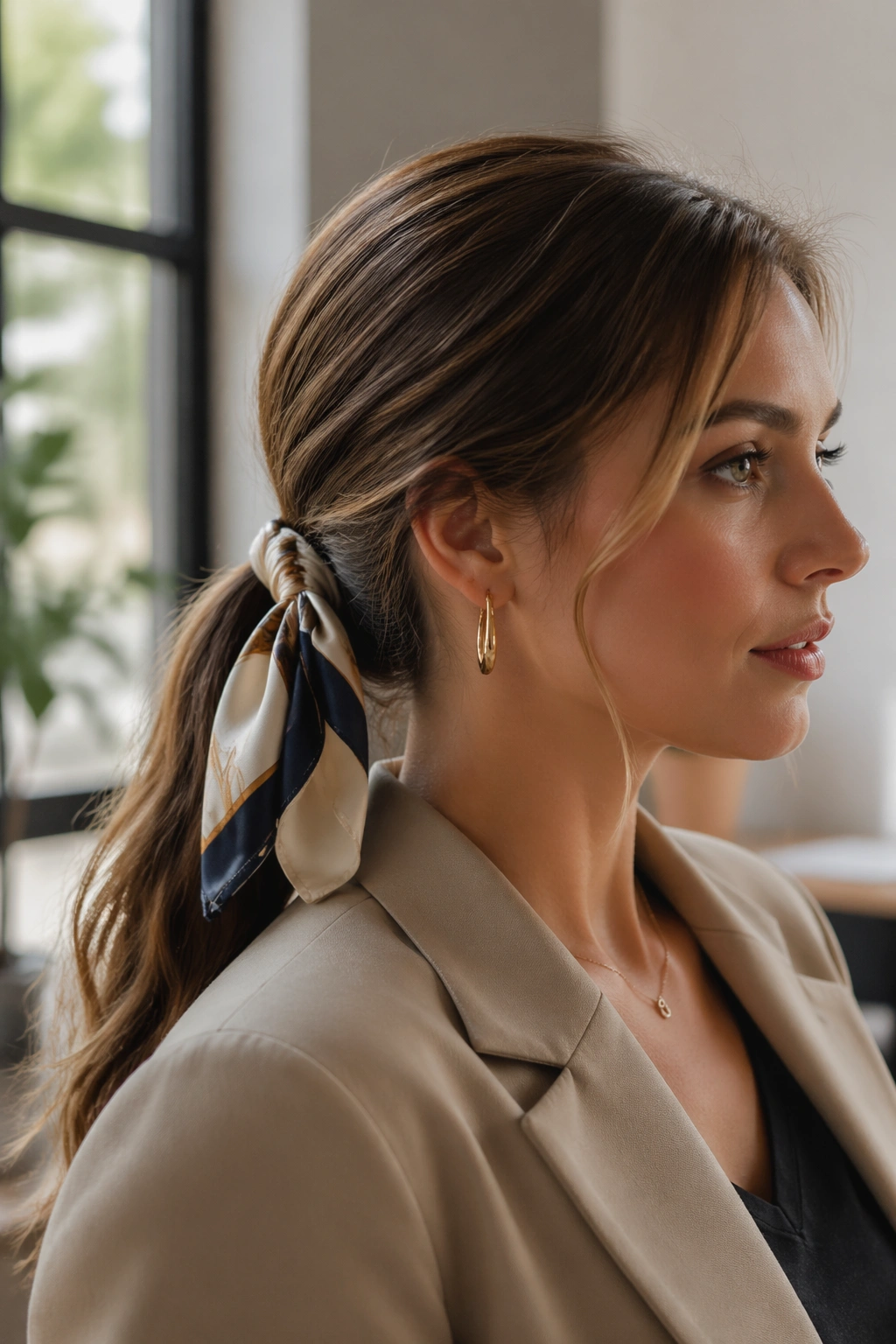
A slim scarf can turn a plain ponytail into something that looks styled on purpose. The best version for work uses a narrow silk or satin scarf in a solid color, tied around a low or mid ponytail.
The scarf should not swallow the hair. That’s the mistake. You want it to act like an accent, not a costume piece. Stick with colors that already live in your wardrobe — navy, black, camel, deep green, or a muted print if the rest of your outfit is plain.
Quick notes
- Tie the scarf underneath the elastic first if it slips.
- Keep the knot off-center for a softer look.
- Use it with straight, wavy, or lightly curled hair.
- Leave the tail sleek so the scarf stays the focal point.
A scarf is a nice fix for a ponytail that feels too bare. It also helps if your hair accessories have started to feel boring.
14. Double-Elastic Lifted Ponytail
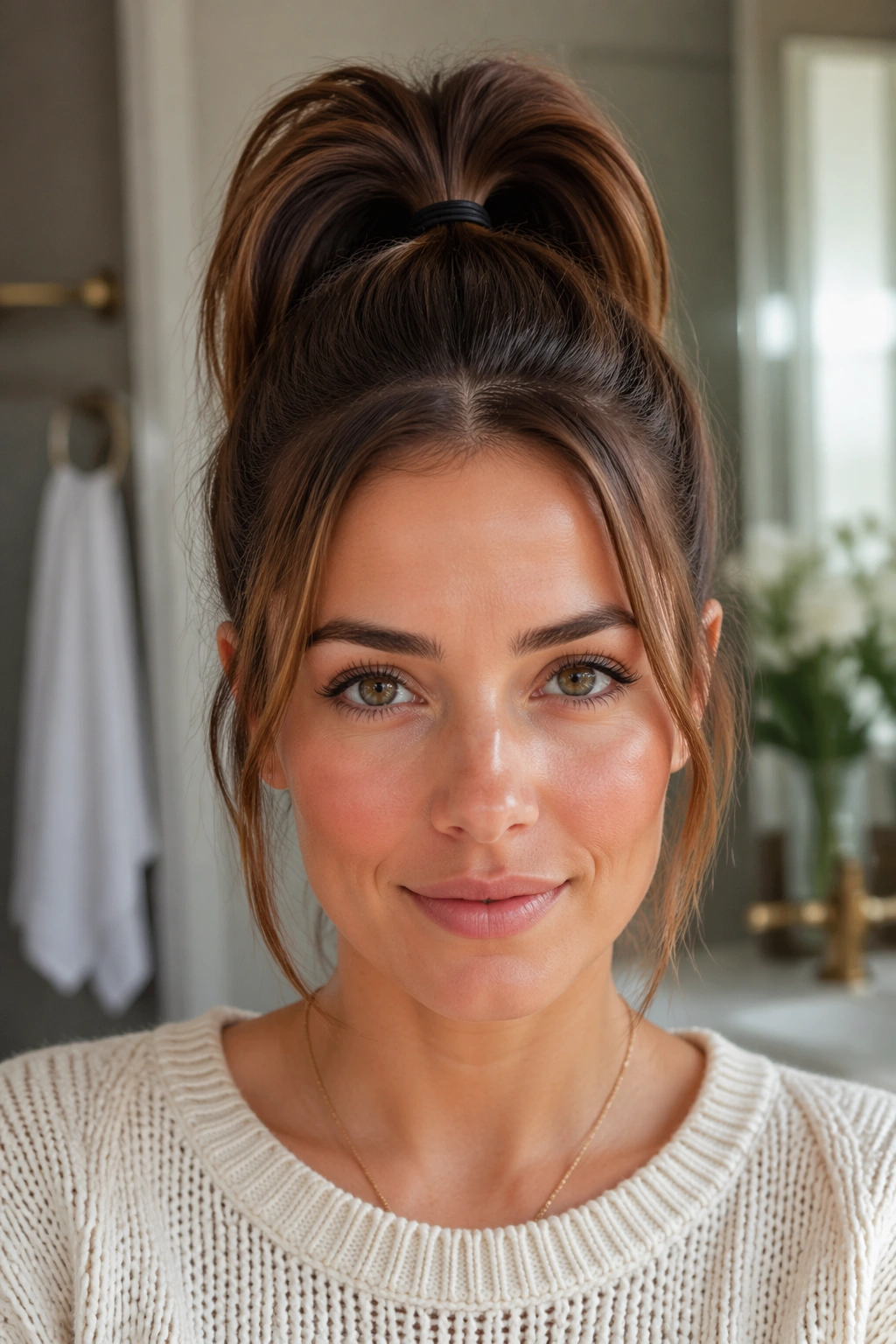
This is one of the best tricks for medium hair that collapses too fast. You make one ponytail, then place a second elastic a couple of inches below the first to support the length and create a lifted shape.
The result is more volume at the top without teasing the hair into a rough mess. It works because the upper elastic takes some of the weight off the crown, which helps the ponytail sit higher and look fuller.
If your hair is medium-thick, this style can give you a much better silhouette than a single elastic alone. If it’s fine, the second elastic helps the tail look intentional instead of limp. A quick wrap around the top elastic finishes it off.
15. Soft Curl Ponytail
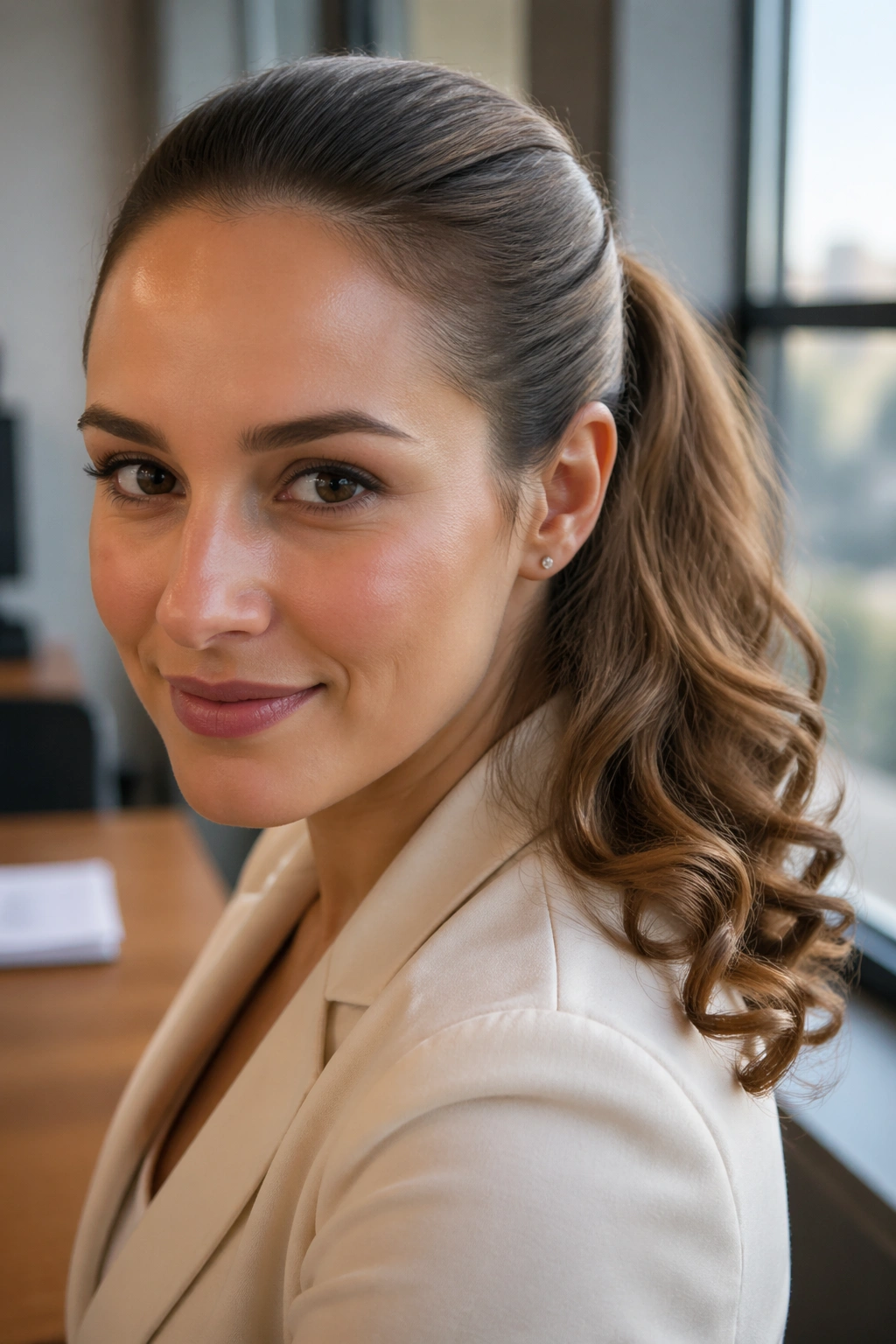
Soft curls in the ponytail length make medium hair look fuller without making the style feel dressed up in a loud way. The trick is to keep the crown smooth and reserve the curl for the tail itself.
You do not need tight spirals. A loose bend from a 1-inch curling iron or a big hot brush is enough. In fact, too much curl on medium hair can make the tail spring upward and lose that work-friendly shape. A few soft waves through the ends are enough.
This version is useful when your hair needs a little life but you still want to look like you belong in a meeting. It’s polished. It has movement. And it avoids the stiff look that some curled ponytails get.
16. Tucked-Under Ponytail
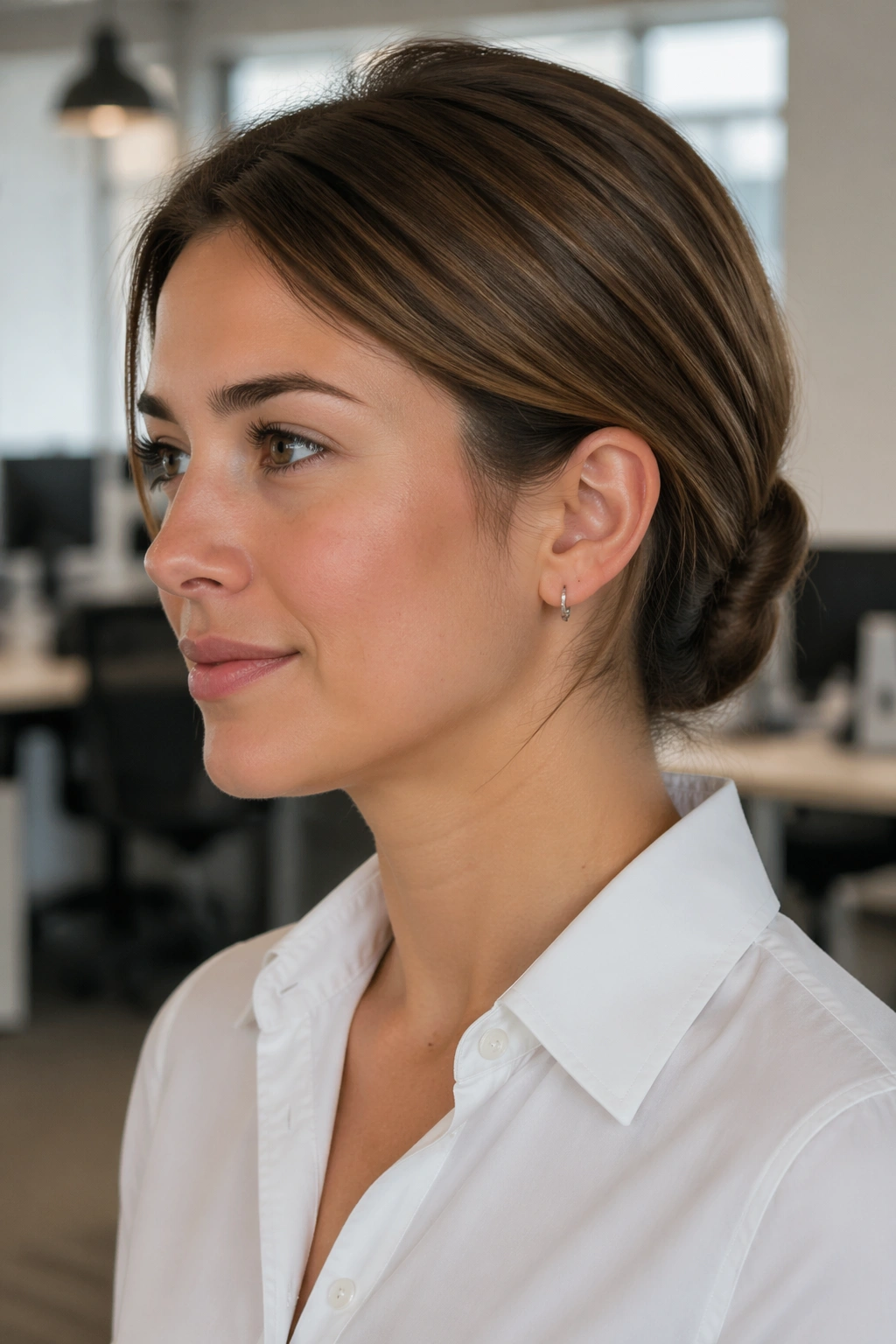
A tucked-under ponytail has a neat, almost tailored feel. You secure the ponytail low, then loop the length under itself and pin it so the ends are hidden or partially hidden.
The shape sits close to the neck, which makes it useful with collared shirts, turtlenecks, and structured jackets. Medium hair is long enough for the tuck to hold, but not so long that it becomes bulky at the nape. That is part of why it works so well.
Things to watch
Use one or two flat pins that match your hair color. If the tuck is too big, it starts to look like a rolled bun. If it’s too loose, the whole thing slips.
- Best with straight or lightly waved hair.
- Keep the top smooth.
- Finish with a light mist of flexible spray.
- Leave one soft piece out if you want it less formal.
17. Minimalist Barrette Ponytail
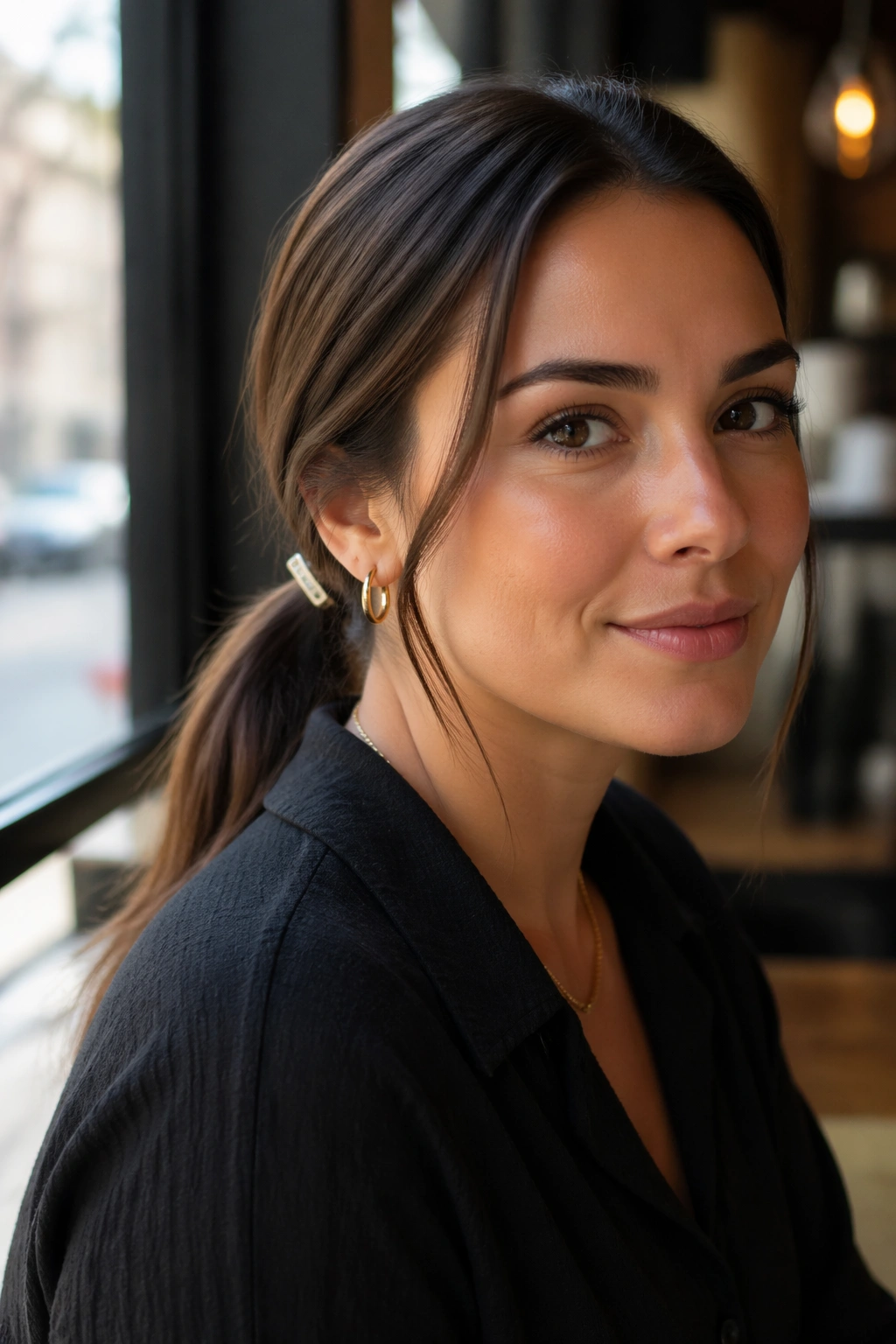
A small barrette can do more than people give it credit for. Paired with a low ponytail, it can hide the elastic, hold the base in place, or pin back one side for a clean, understated finish.
I prefer simple metal, tortoiseshell, or matte clips here. Anything too sparkly starts leaning cocktail-hour. The point is not to decorate the ponytail until it turns into an accessory display. The point is to make the hair look intentional with one small detail.
This style is especially handy when your medium hair is clean but a little too soft to stay in place on its own. A barrette keeps the sides under control and gives the look a neat edge. Small tool. Useful result.
18. Braided Crown Into Ponytail
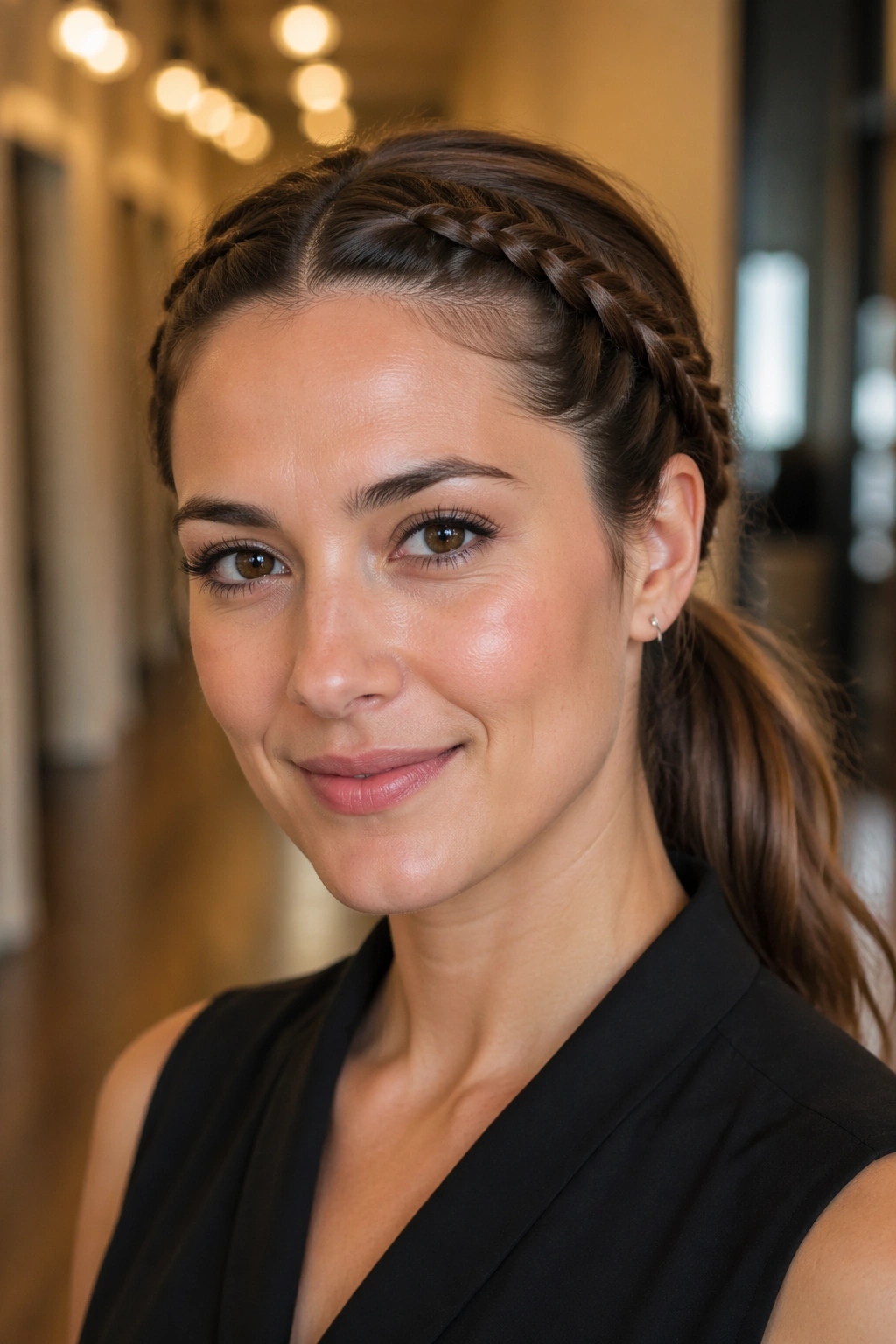
A braided crown into a ponytail is what you reach for when you want the front of your hair to stay put all day. Pull two small sections from the temples or just above the ears, braid them back, and connect them into a ponytail at the nape or mid-height.
It sounds more elaborate than it is. The braids can be loose and narrow, which keeps the style light enough for medium hair. They also solve the problem of grown-out layers slipping loose around the face.
How much braid you need
Not much. A braid that’s too thick can take over the style and make the ponytail feel small. Keep the braid narrow, then let the tail stay smooth or lightly curled.
This is one of the nicer choices when you want a hairstyle that looks calm and controlled. It also photographs well in a practical sense — the lines are clean, and the face stays open.
19. Wet-Look Ponytail for Straight Medium Hair
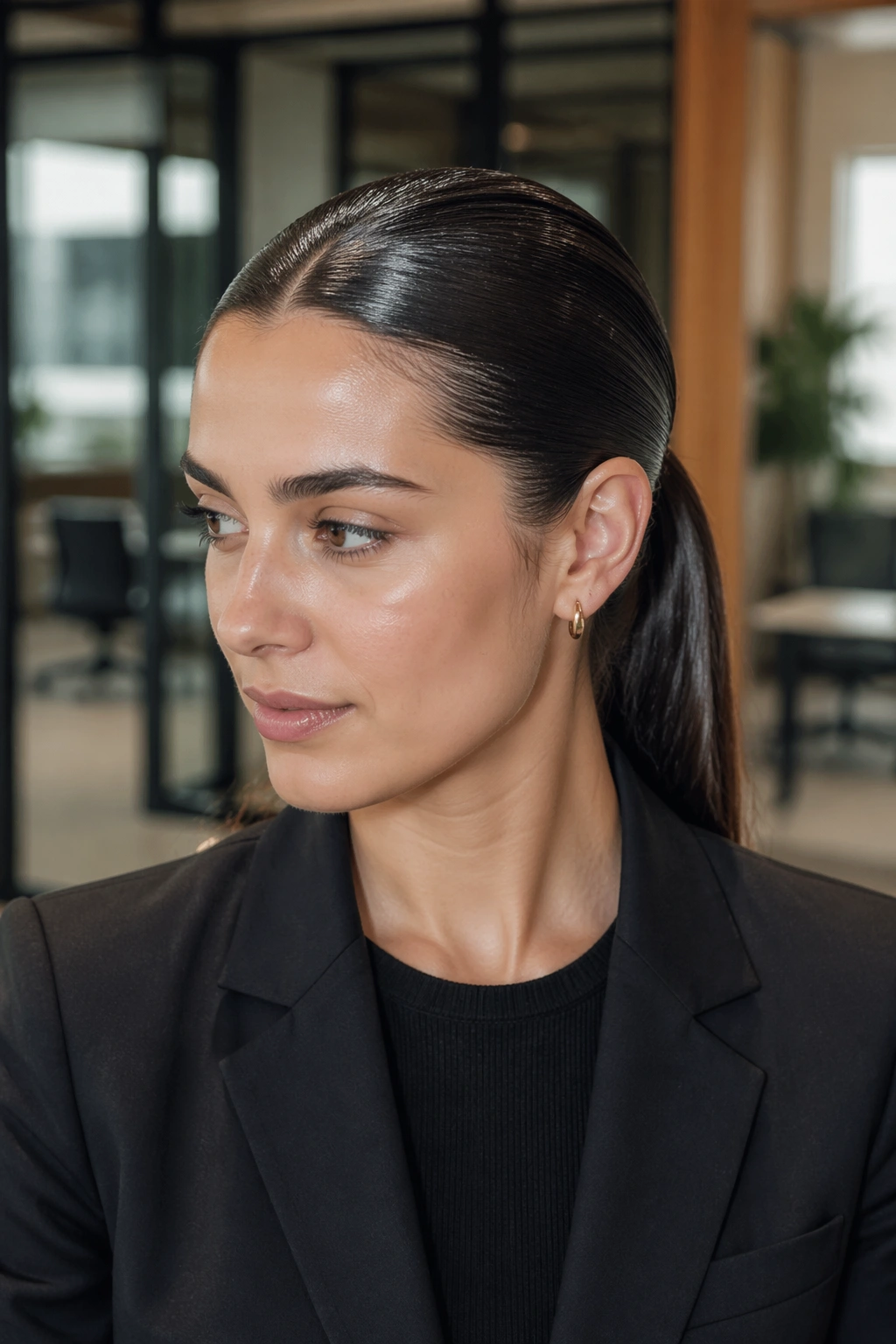
A wet-look ponytail can be office-friendly if you keep it sleek and restrained. The finish should look glossy, not greasy. That distinction matters more than people think.
Straight medium hair takes to this style especially well because the length already lays flat. Work a styling gel or cream through damp hair, comb it into place, and secure a low ponytail with a clean center or side part. The tail can stay straight, or you can add a slight bend near the ends if you want it less severe.
This is one of those styles that either looks sharp or looks like you skipped washing your hair. Product control is the whole game. Use less than you think, and keep the shine concentrated near the top half.
20. Volume-Preserved Low Ponytail
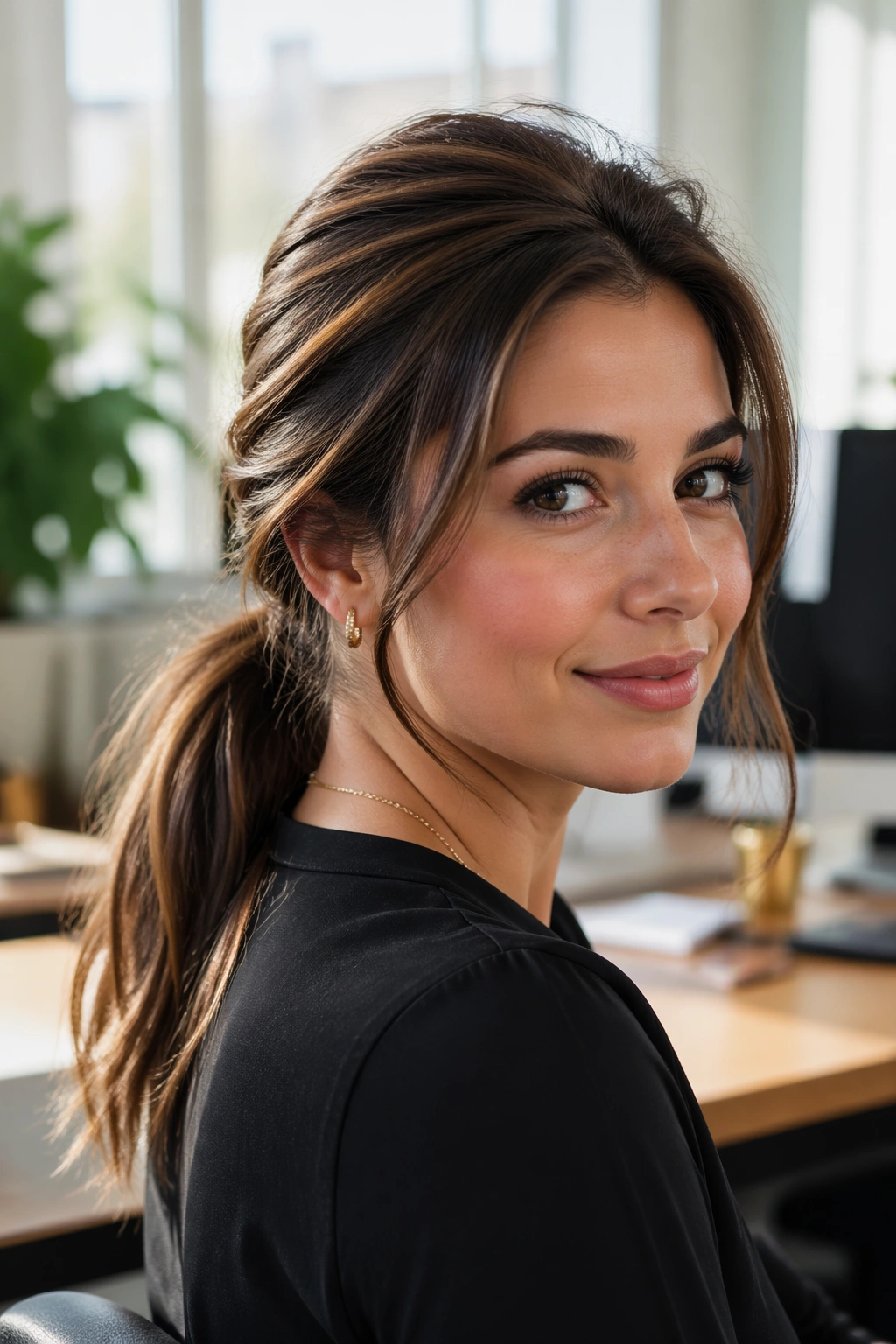
Flat roots are the enemy of medium hair. A volume-preserved low ponytail solves that by keeping some lift at the crown before the hair is gathered low.
The trick is to lift the roots gently with your fingers or a round brush, then secure the ponytail without dragging the top section tight. You want softness at the crown and fullness through the tail. A bit of texturizing spray at the roots helps the style stay airy instead of collapsing by noon.
What to do if your hair flattens fast
- Avoid heavy creams at the roots.
- Use dry shampoo on clean hair if it slips easily.
- Pinch a little lift at the crown after tying the ponytail.
- Keep the elastic low and hidden.
That’s it. No drama. Just a low ponytail that still has shape at lunch, which is more than many styles can say.
21. Side-Swept Low Ponytail
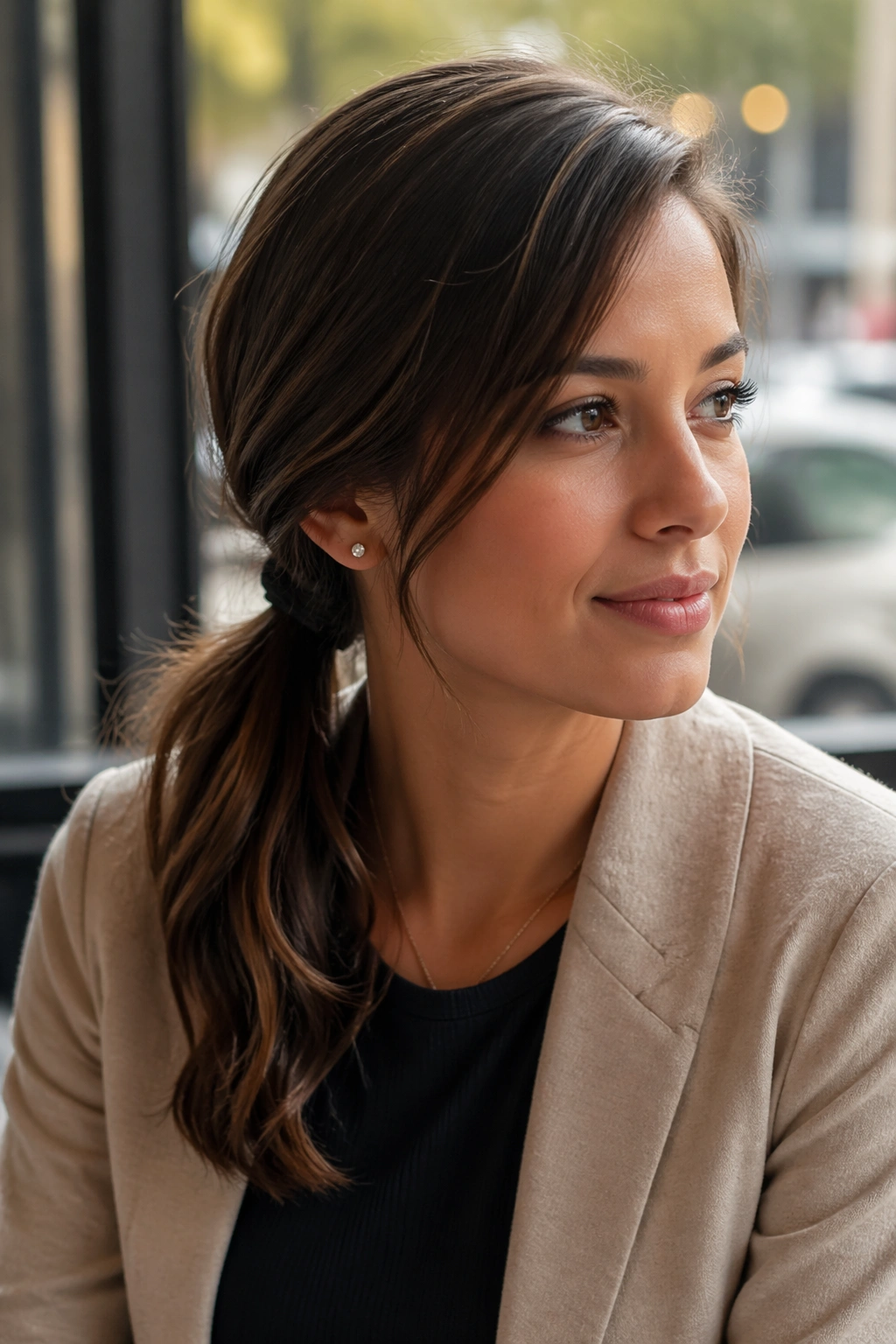
A side-swept low ponytail gives medium hair a softer, less rigid line. Instead of pulling everything straight back, you sweep the hair slightly to one side before gathering it at the nape.
This creates a diagonal shape that feels more relaxed, and it’s useful if your face looks better with a little asymmetry. It also works well with a deep side part, especially when you want to keep the hair away from one side of the face and let the other side fall naturally.
The style is simple, but not bland. The angle changes the whole read of it. On days when a centered ponytail feels too sharp, this one is a good detour.
22. Low Ponytail With a Wrapped Braid
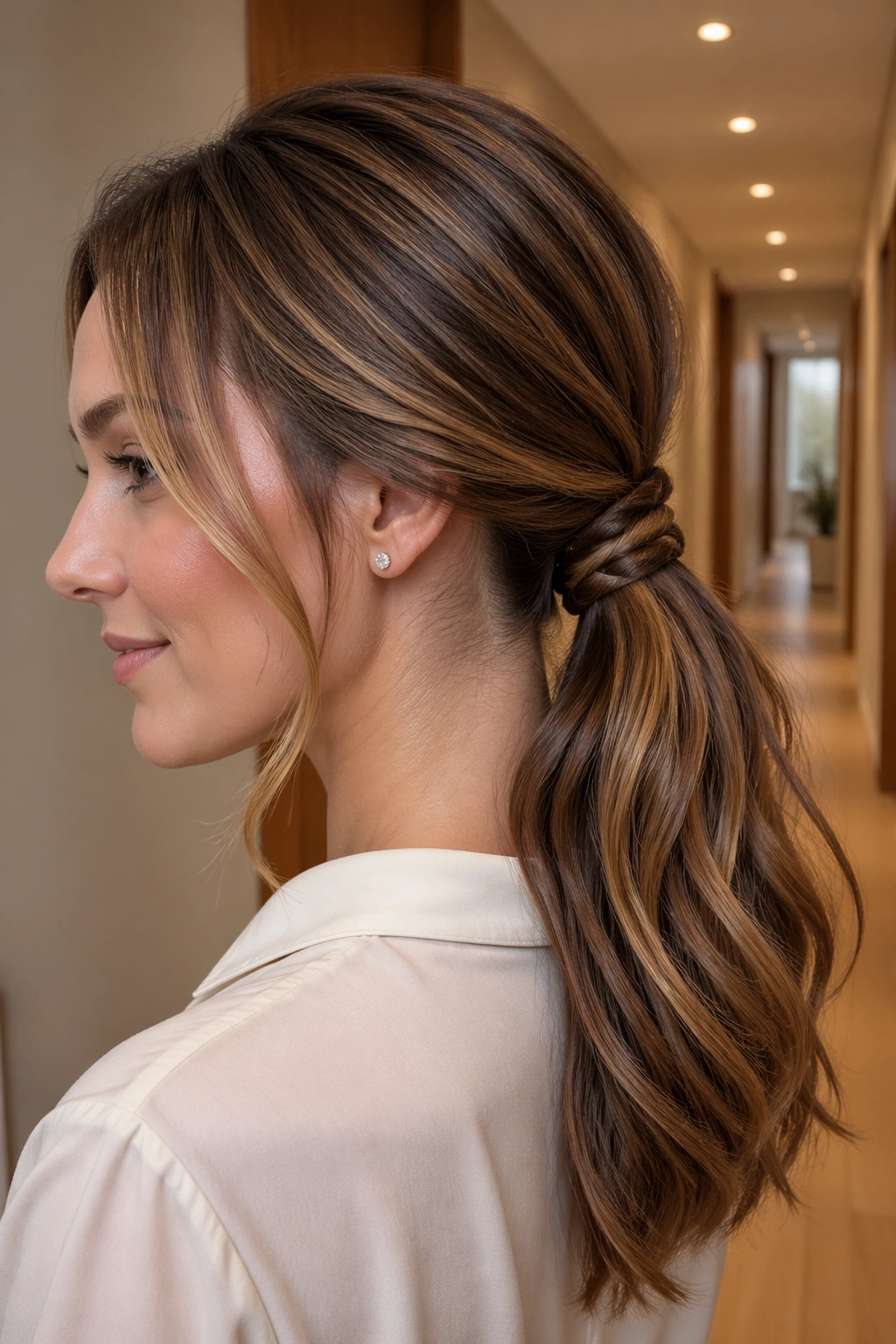
This is a more detailed version of the classic wrapped ponytail. Instead of wrapping a plain strand around the elastic, you braid that strand first, then coil it around the base. The braid gives the wrap texture, so the detail stands out a little more.
It works well on medium hair because the length is usually enough to show the braid without making it bulky. I like it for hair that has a few layers around the front, since the braided wrap keeps the base looking neat even if the rest is soft.
A small detail like this can pull the style together when the outfit is simple. It’s a quiet upgrade. Nothing loud. Just a better finish.
23. Polished Ponytail With Swooped Bangs
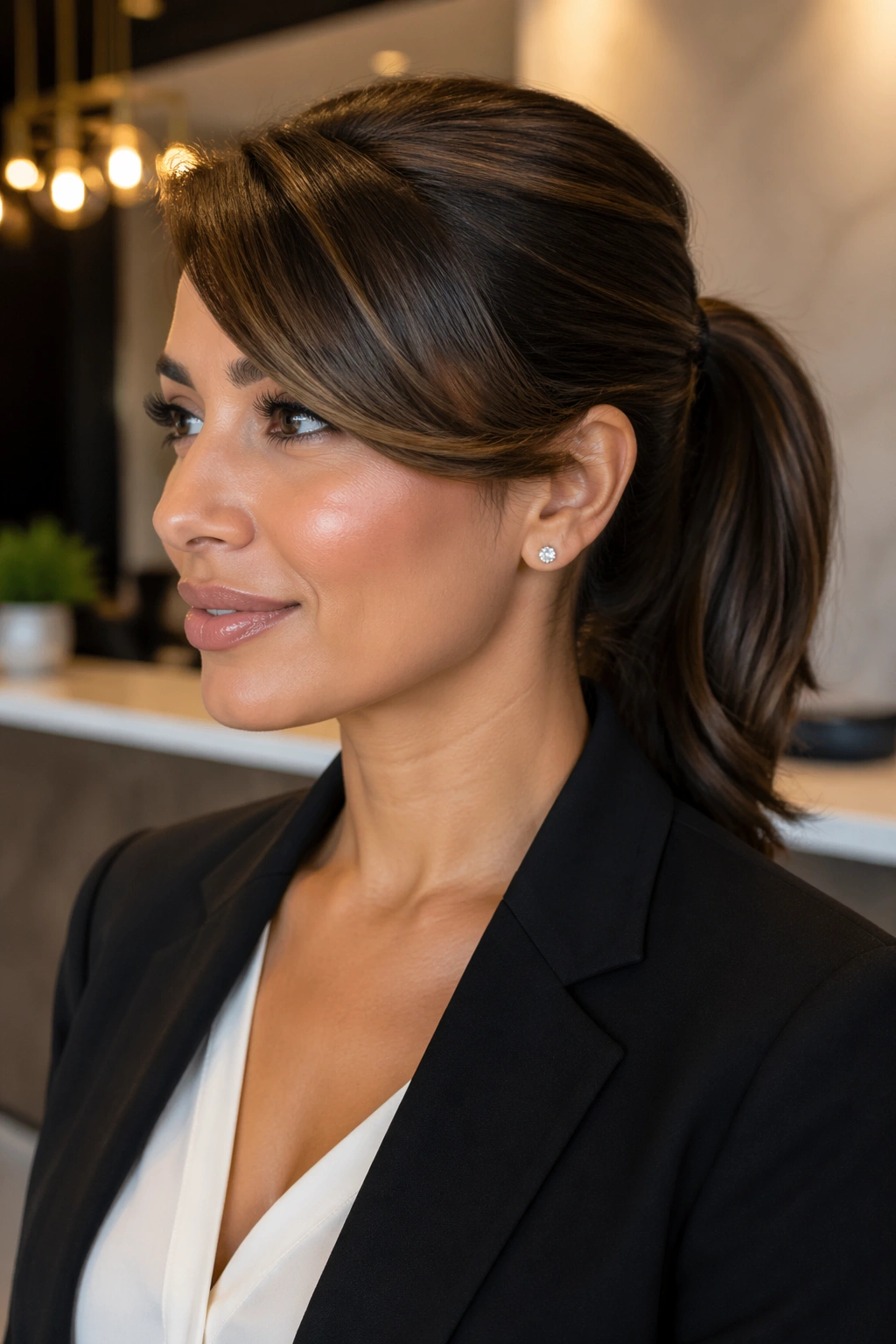
If you wear bangs or a long fringe, a swooped front section can make a ponytail feel finished fast. The rest of the hair stays smooth and gathered, while the front is directed gently to one side.
This works especially well for medium hair because the length in the ponytail balances the shape of the fringe. Too much volume at the front can fight the tail. A soft swoop gives the face movement and keeps the whole style from looking rigid.
You do not need a perfect curl here. A round brush, a small brush, or even a quick pass with a flat iron can shape the front section. The goal is a bend, not a wave that steals the show.
24. Messy-But-Intentional Work Ponytail
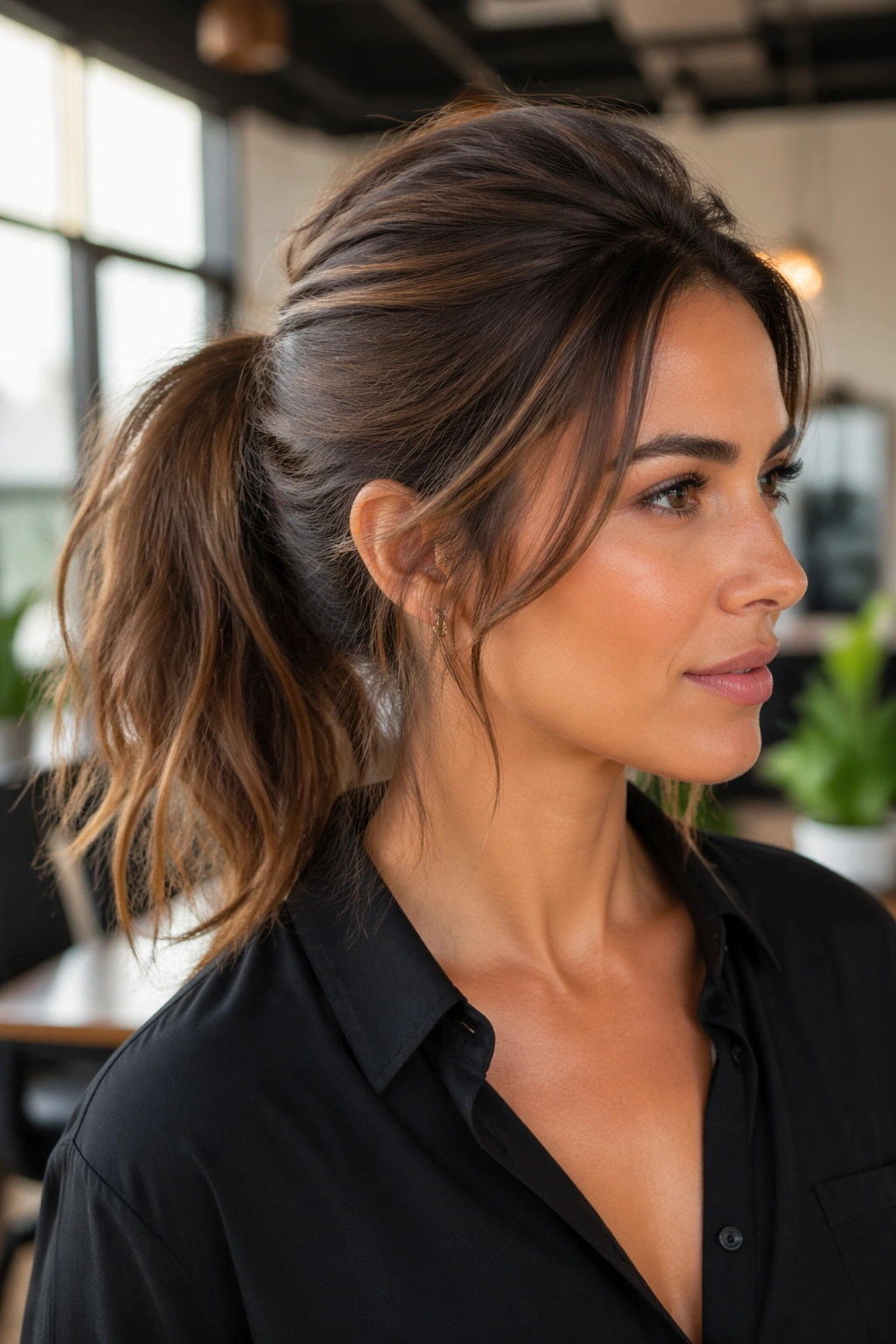
There’s a huge difference between “messy” and “I gave up.” This style lives firmly in the first camp. It keeps the shape of a ponytail, but loosens the crown and tail just enough to feel relaxed.
Medium hair is good at this because the length can hold a little texture without collapsing. Start with a low or mid ponytail, then gently tug the crown for softness. Add a bit of dry shampoo or texture spray if the hair is too slippery. The result should look lived-in, not fuzzy.
I like this version on thicker medium hair or hair with natural wave. It keeps the volume, which is half the battle. If the office dress code is not ultra-formal, this can be one of the most wearable styles on the list.
25. Curled Ends With a Sleek Crown
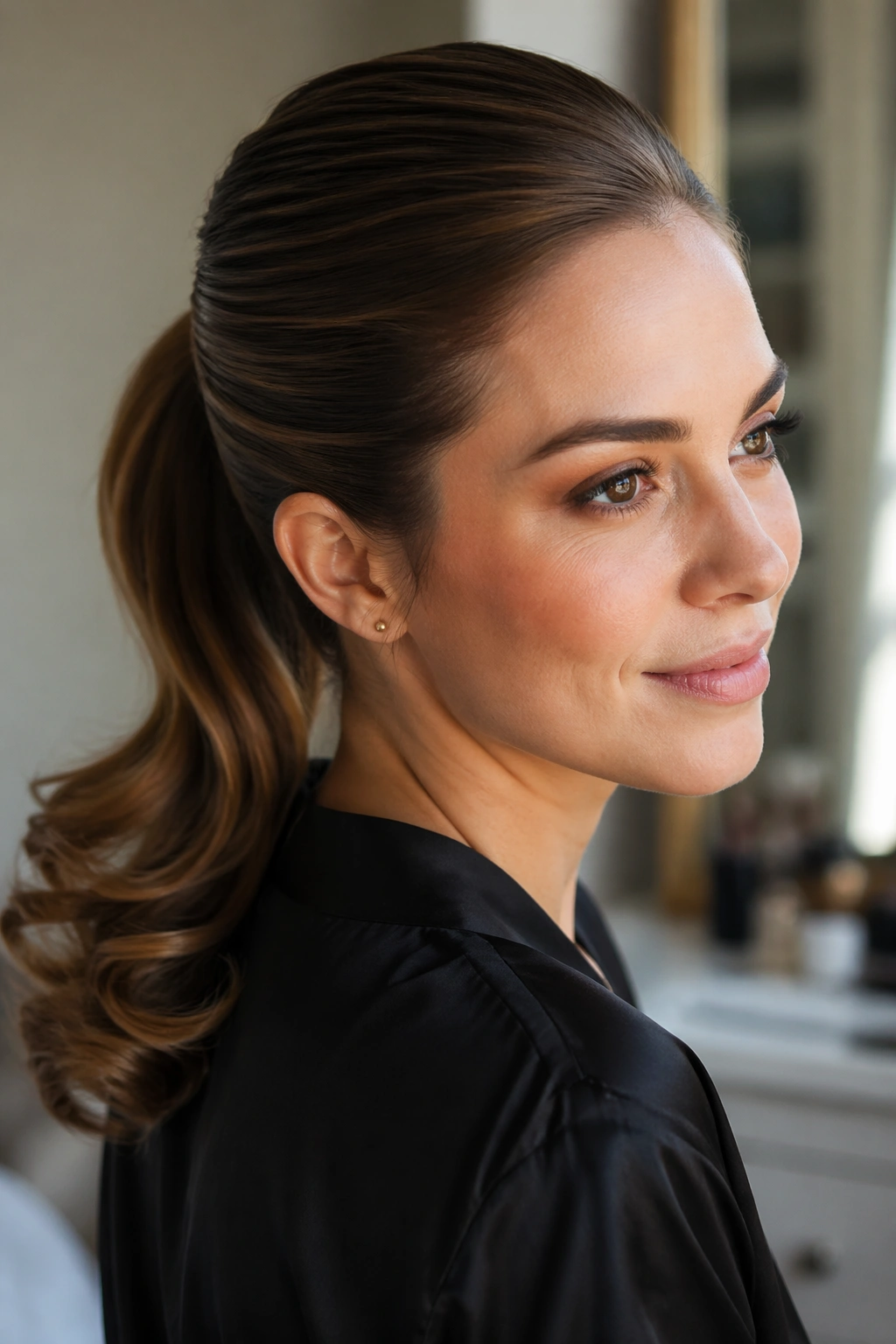
This one is a good compromise when you want polish at the top and a little softness at the bottom. The crown stays smooth and controlled, while the ends are curled under or outward for shape.
Medium hair loves this balance. The ponytail is long enough for curl to show, but not so long that the curl gets dragged down and flattened. A 1-inch iron or medium round brush gives the best result. Keep the curl loose; tight ringlets look too dressed up for most workdays.
The style is especially useful when your hair has been freshly blown out and you want to extend that finish into a ponytail. It reads as neat from the front and a little more relaxed from behind.
26. Double-Twist Low Ponytail
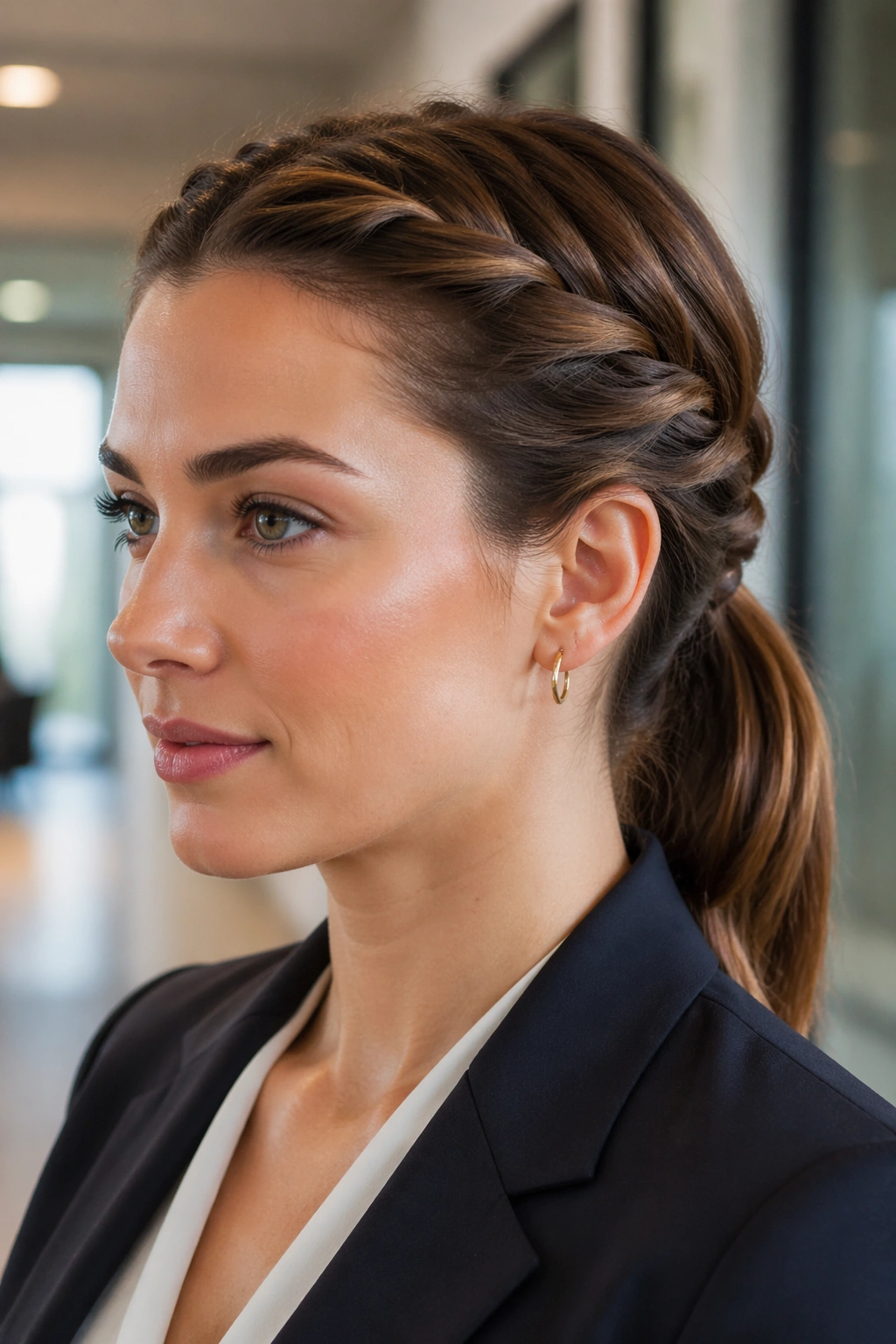
A double-twist low ponytail starts with two sections from the front or temples, each twisted back and secured into the ponytail. It gives the style a clean frame and keeps the sides under control without needing a full braid.
This is a smart choice for medium hair because twists are faster than braids and sit flatter against the head. If your hair is layered or has shorter front pieces, the twists help corral those ends so they do not drift loose during the day.
How to keep the twists neat
Twist each side in the same direction and secure them tightly enough to hold, but not so tight that the hair puckers near the scalp. Once the ponytail is in, smooth the tail with your fingers and leave it sleek.
It’s a tidy little style. Nothing flashy. That is the appeal.
27. The Low Ponytail You Can Wear From Desk to Dinner
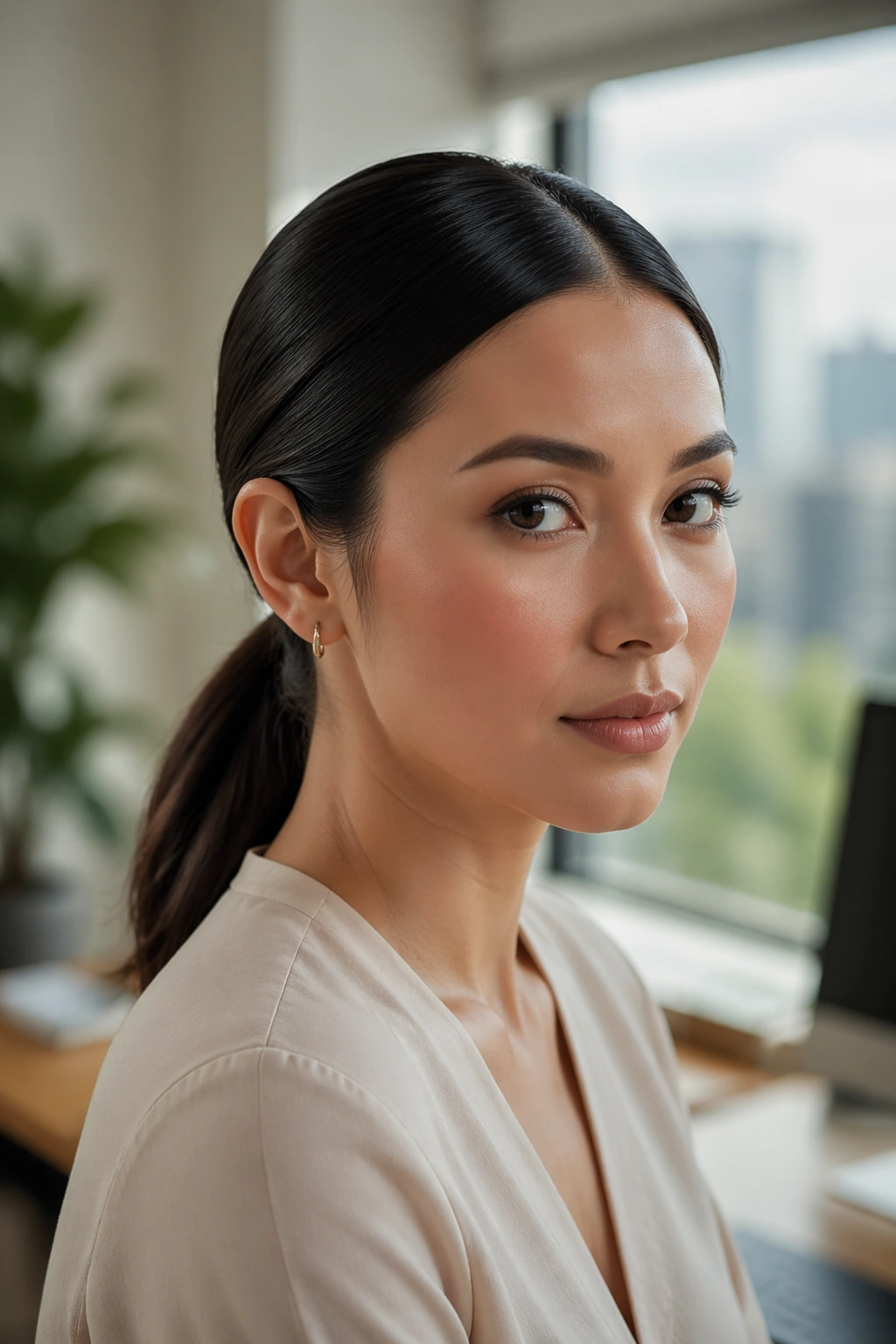
The best work ponytail for medium hair is often the one that does the least drama. A clean low ponytail with a smooth crown, a wrapped elastic, and ends that still move a little can get you through a long day without asking for a touch-up every hour.
I like this style because it respects the hair you already have. If your texture is straight, keep it sleek. If it waves a little, let the movement show. If your layers are shorter, let them be soft around the face instead of forcing everything into a helmet. That kind of control looks more expensive than aggressive styling ever does.
And that’s the real sweet spot with medium hair. You want enough structure to look finished, not so much that the style feels stiff.
A ponytail that survives the workday and still looks fine at dinner is doing its job. That’s the whole game.
