



A good ombre ponytail does two jobs at once. It gives you height, shape, and movement, then slides in color without making the whole style feel loud or busy.
On Black hair, that balance matters. Coils, curls, stretched natural hair, braids, and sew-ins all take color differently, and the ponytail has to respect the texture instead of fighting it. A clean root, a smooth base, and a color melt that makes sense can do more than a flat, single-tone pony ever will.
The sweet spot is usually not the brightest shade in the room. It’s the one that looks expensive because the blend is smart: dark at the root, warmer or lighter through the mid-lengths, and finished with ends that move. That’s why ombre ponytails for Black women keep showing up in so many forms — sleek, curly, braided, twisted, wrapped, puffed, and everything in between.
Some looks lean soft. Some are sharp. A few are dramatic in a way that still feels wearable. The trick is picking the version that fits your texture, your routine, and how much attention you actually want to deal with later.
1. Honey Blonde High Ponytail
A honey blonde high ponytail has a built-in lift to it. The height at the crown opens the face, and the warm blonde melt keeps the style from looking severe. It’s one of those looks that can read polished at brunch and still feel dressed up enough for a night out.
Why the high placement works
The higher the ponytail sits, the more the eye goes upward. That matters on textured hair because a high base can balance fullness through the back and make the whole silhouette look longer. With ombre color, the movement is even better — dark roots at the top, then honey through the lengths, then lighter ends that swing.
Use this style when you want instant shape without too much fuss. A sleek crown, a wrapped base, and 24- to 30-inch extensions are the usual sweet spot. If your natural hair is thick, the base should be smooth but not scraped flat. That’s a fast route to tension, and tension is not worth it.
- Best when the top is laid neatly with a firm hold gel or mousse
- Looks strongest with a deep side part or a clean center part
- Works well with silky straight extensions or a soft body wave
- Needs a wrapped strand around the elastic so the base looks finished
Tip: Keep the honey tone warm, not yellow. Yellow blonde on dark hair can look harsh fast.
2. Caramel Low Ponytail
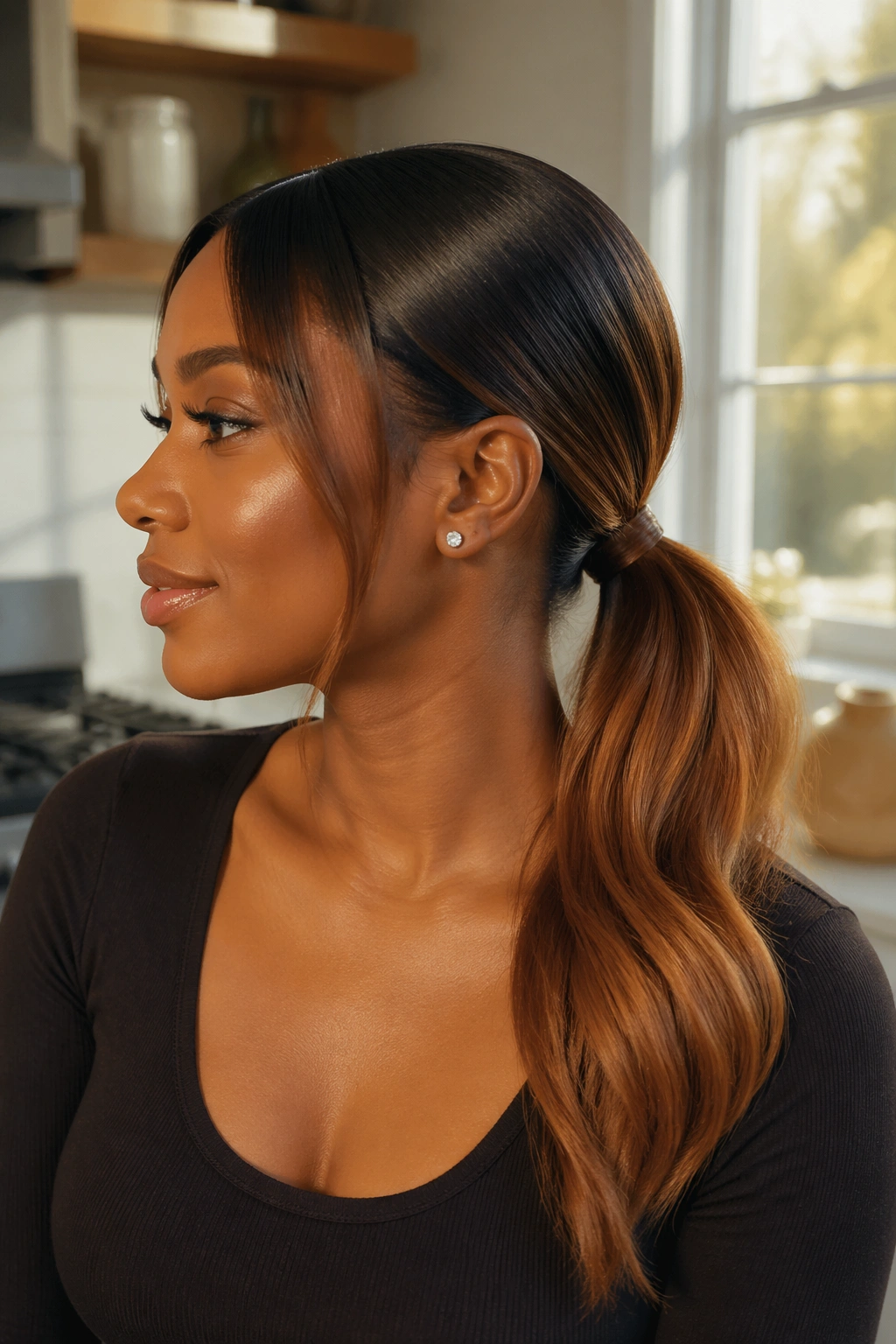
A low ponytail with caramel ombre is the quiet one that still gets compliments. It sits close to the nape, which gives it a softer feel than a sky-high style, and the caramel fade adds warmth without shouting for attention.
What I like about this look is how forgiving it is. The base does not need to be razor-perfect, and the color can start lower on the shaft so the transition feels smooth. That makes it a smart choice if you want something wearable every day, not just for a polished event look.
The best version usually has a clean middle part, a little shine at the crown, and ends that curve under just a bit. If you use a drawstring ponytail or a wrap ponytail, keep the root color close to your own shade so the ombre feels intentional instead of patchy. Subtle works here. Loud would be a mistake.
3. Burgundy Curly Drawstring Ponytail
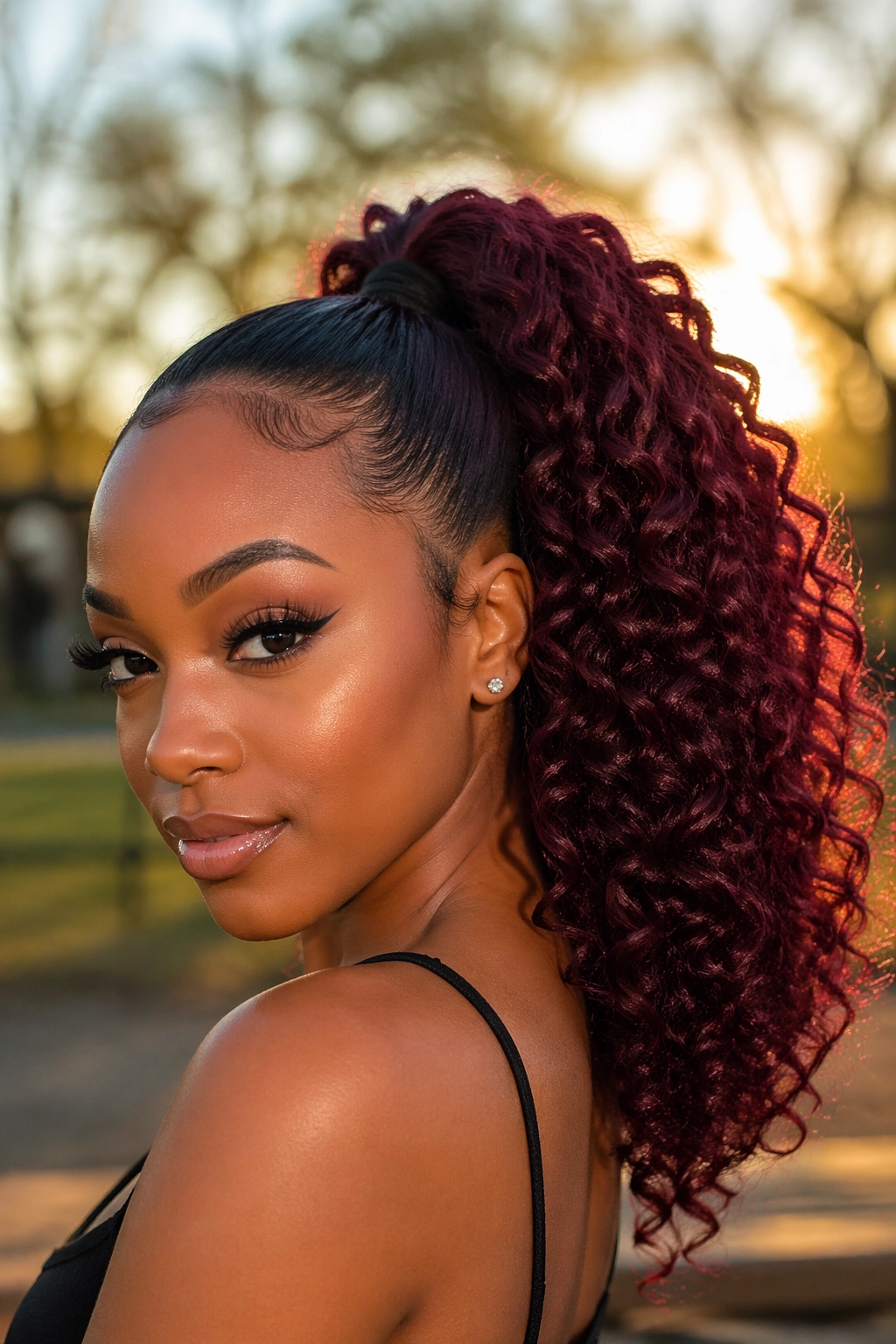
Burgundy curls have a way of looking rich before you even get close enough to study the color. On Black women, that deep red-violet shade usually lands beautifully because the darker base lets the burgundy show without fighting the skin tone or the curl pattern.
Picture a dense, springy ponytail with a dark root and wine-colored ends that bounce when you move. That’s the whole appeal. It feels playful, but it does not lose shape the way some lighter ombre colors can on curly hair.
How to wear it so it looks full
The curl pattern matters more than people think. A looser curl can look glam and airy, while a tighter curl gives more volume and makes the ombre shift read in layers. If the ponytail is too shiny and too uniform, it can look stiff. A little separation in the curls keeps it alive.
This style is good when you want color without bleaching your own hair. Drawstring ponytails make the switch easy, and they also let you pull the style off at the end of the day without a long detangling session. That alone is worth something.
4. Copper Mid-Height Ponytail
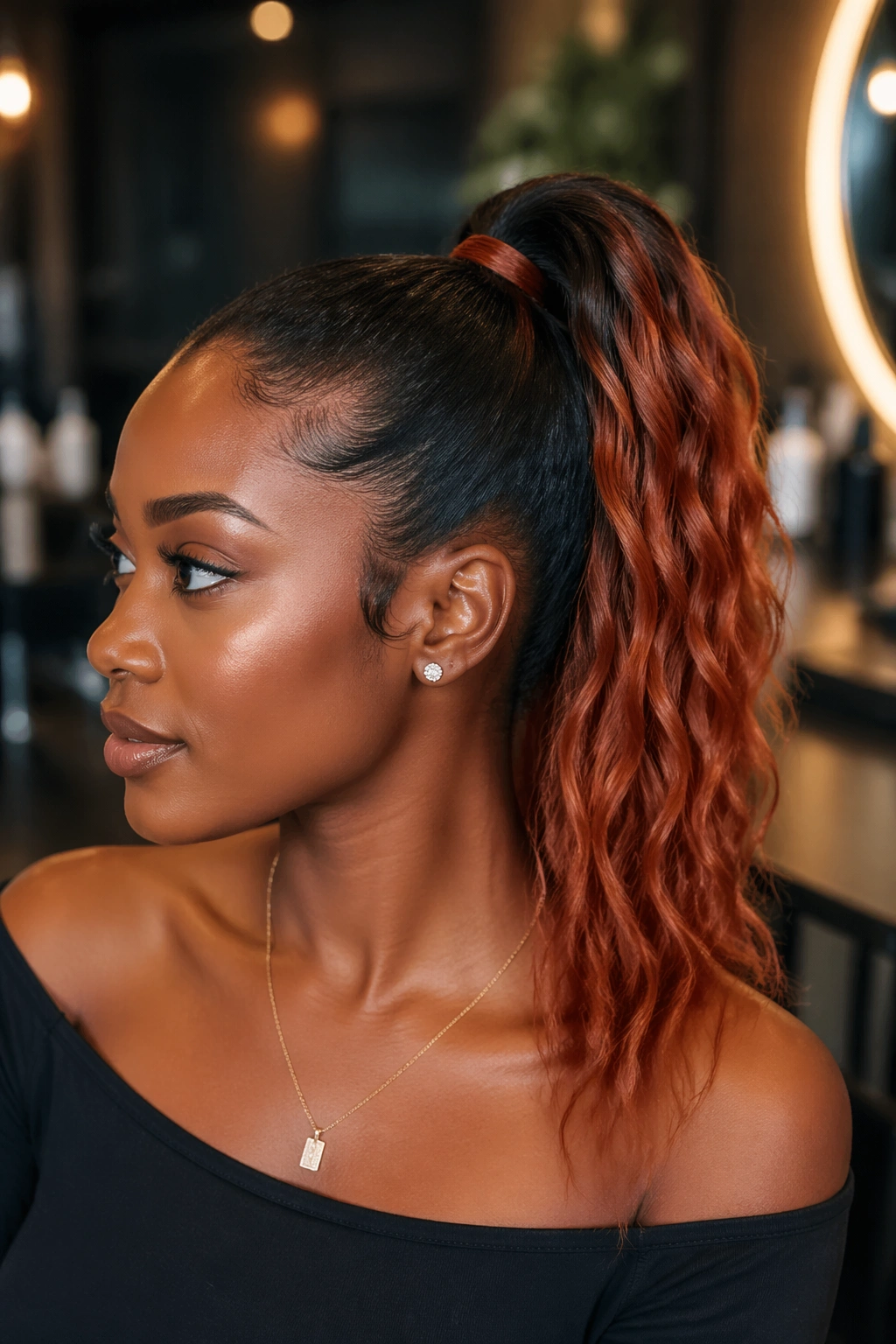
Copper is warm, bright, and a little more daring than caramel without tipping into neon territory. Put it in a mid-height ponytail and it lands in that nice middle space: noticeable, but still easy to wear.
The mid-height placement is part of the charm. It keeps the ponytail from looking too formal, and it lets the copper blend start where the eye naturally follows the line of the hair. On textured hair, especially with a blown-out base or extension pony, this shape shows off the gradient better than a very low style would.
What to ask for
- A root shade that stays close to espresso or deep brown
- Copper through the mid-lengths, not just on the ends
- A soft bend in the ponytail so the color changes catch each curve
- Light layering if you want the tail to move instead of hang flat
Copper can be gorgeous, but it can also go flat if the tone is too orange. Aim for a burnished, warm-metal look, not pumpkin. That small difference changes everything.
5. Ash Brown Braided Ponytail
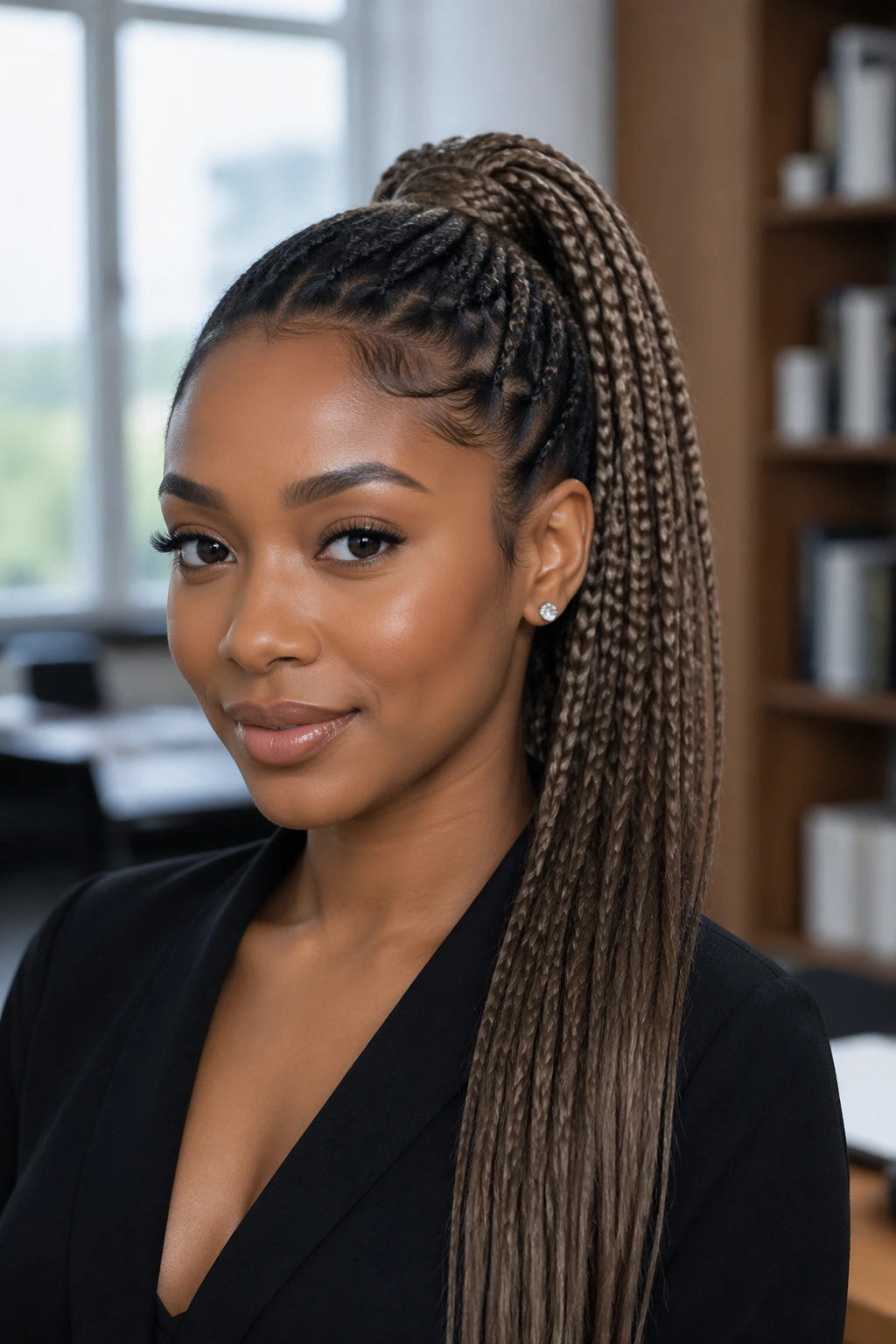
Ash brown is for people who like cooler color stories. It sits farther away from golden blonde and caramel, which gives this braided ponytail a sleeker, more muted finish. There’s something crisp about it.
Braids make the ombre feel structured. Instead of a big soft color melt, you get defined plaits that shift from a darker root into ash brown lengths, then maybe a slightly lighter tip. That works especially well if you want the style to stay tidy for a while without needing a full glam routine every morning.
Unlike warm blonde looks, ash brown doesn’t pull the eye quite as hard. That can be a good thing. It’s an easy pick if you want something neat enough for work, but still rich enough to feel styled on purpose.
6. Platinum-Dipped Ponytail
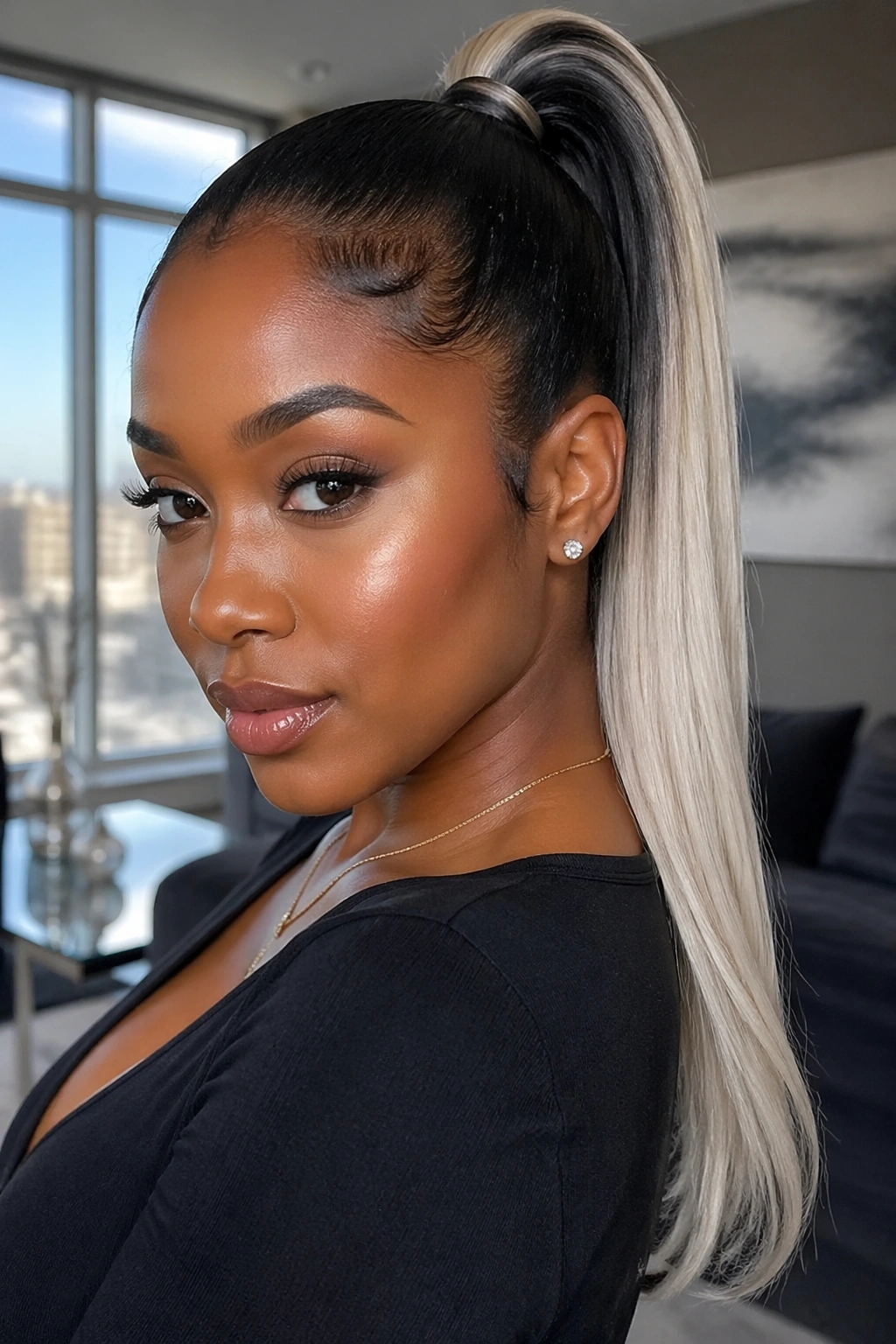
Platinum at the ends is not shy. It’s the ponytail that says it knows exactly what it’s doing, and honestly, that confidence is part of the appeal. With a dark root and bright platinum finish, the contrast is sharp in the best way.
Harsh? It can be. Beautiful? Also yes. The trick is keeping the melt gradual enough that the light ends feel like part of the story instead of an afterthought. A straight ponytail makes the color read harder, while a soft wave or slight bend keeps the platinum from looking too severe.
If you choose this style, the extensions need to be toned cleanly. Any yellow cast will show up fast. And because platinum is unforgiving, the base should be sleek, smooth, and precise. There is no hiding sloppy parting under this one.
7. Auburn Wavy Ponytail
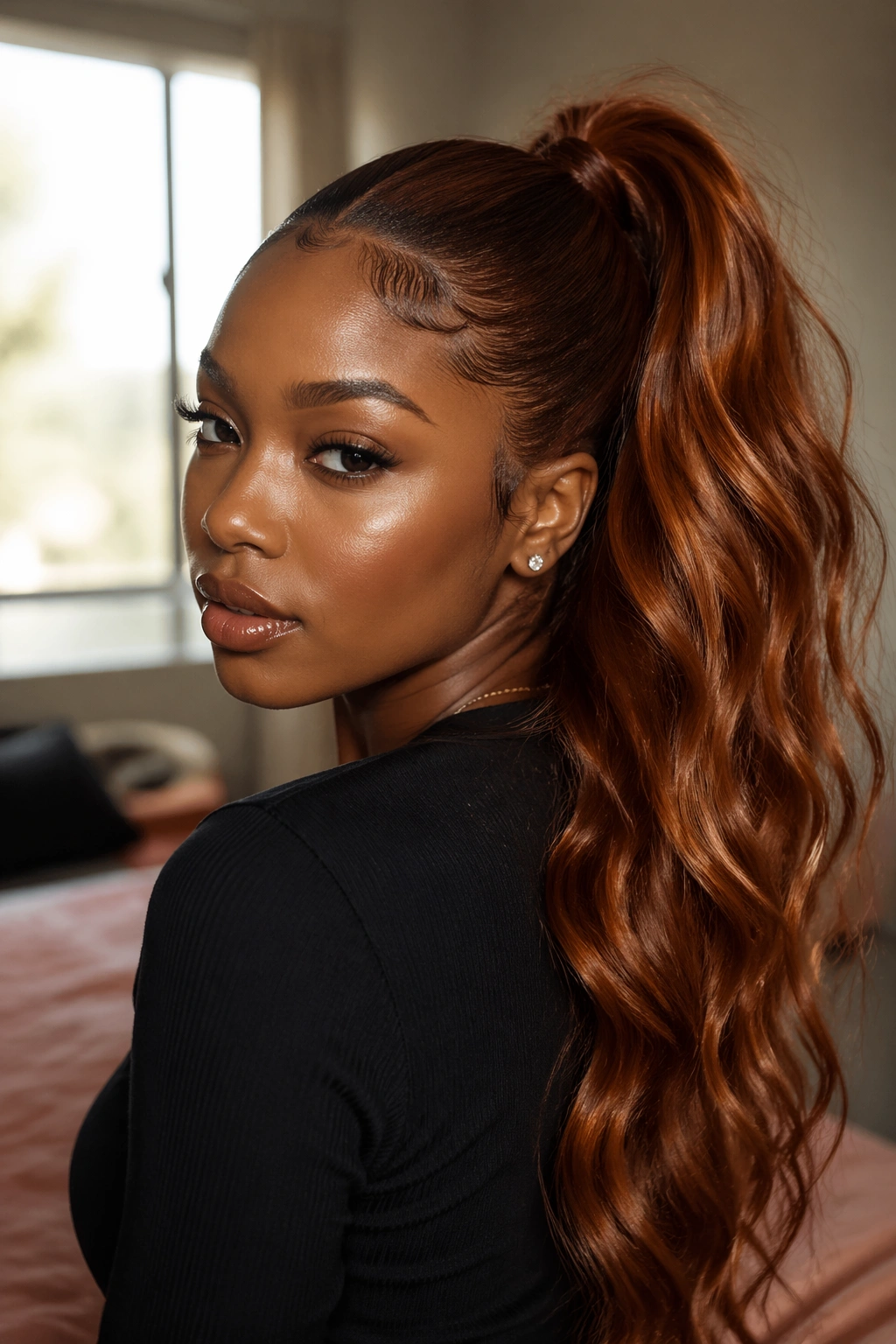
Auburn has a softer mood than red-red, which is why it works so well in a wavy ponytail. The color sits somewhere between brown and copper, and that in-between feel makes it flattering without becoming loud.
Why does it work so well? Because waves create little shifts of shade across the length of the ponytail. The auburn blend shows up on every bend, and that keeps the style from looking one-note. It’s especially nice if you want something romantic without drifting into overly formal territory.
How to keep the waves from falling flat
Start with extensions that already hold a loose wave or bend. If you have to heat-style the hair, keep the curl pattern big and soft, not tight. Tight curls can fight the color by making the ponytail look smaller than it is.
Auburn also suits face-framing pieces. A few loose tendrils near the front soften the whole style and keep the ponytail from feeling too buttoned-up. That little bit of movement changes the mood fast.
8. Espresso Bubble Ponytail
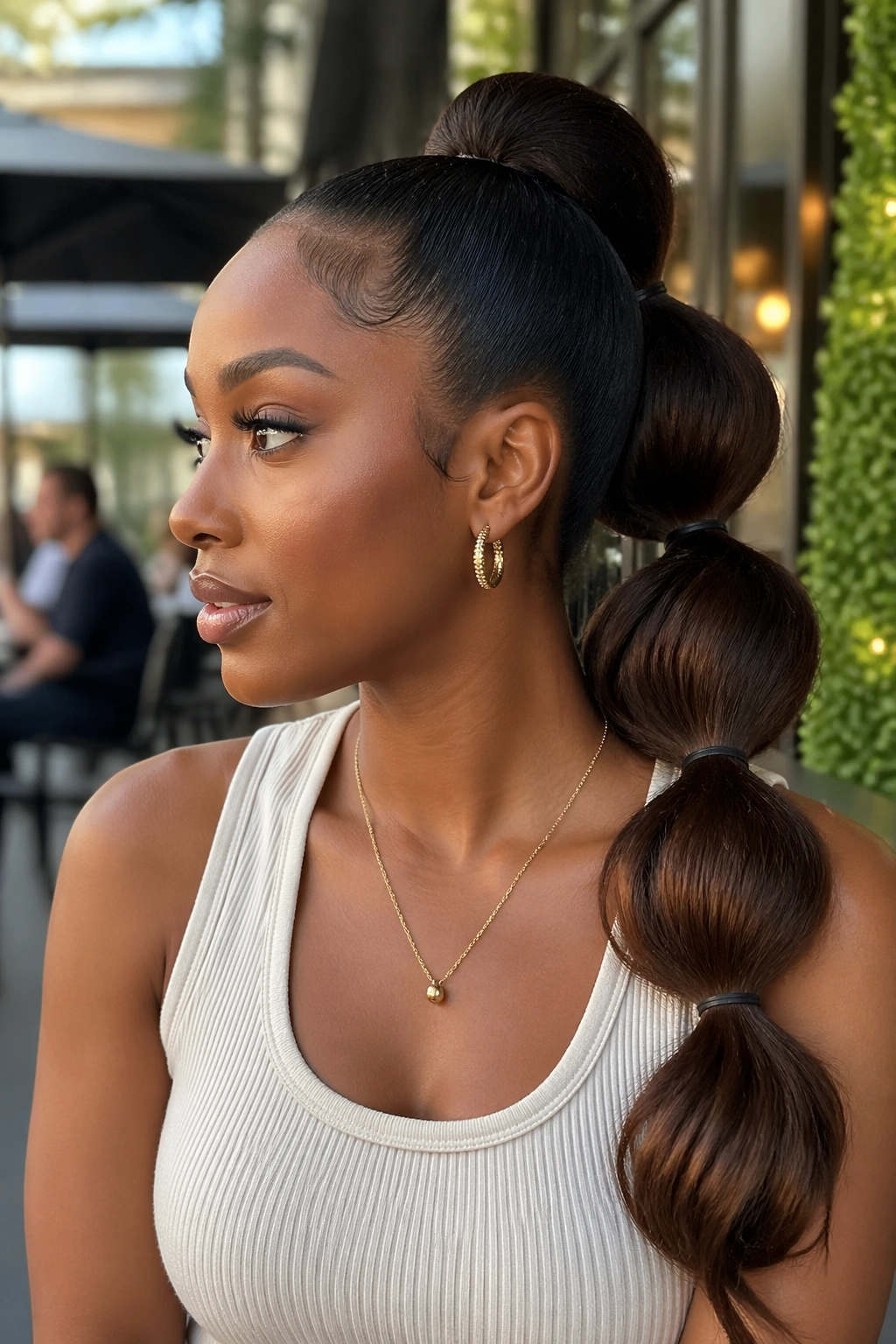
A bubble ponytail gives structure without needing complicated styling, and espresso ombre makes it feel richer. The dark-to-lighter finish is broken into sections by elastic bands, so the color shows up in little pockets instead of one long block.
That’s the appeal. It looks deliberate. Every bubble adds a small shape change, and the ombre makes each section stand out a little more than it would in a single shade. On Black hair, that can look especially polished when the crown is smooth and the bubbles are evenly spaced.
Use clear elastics or color-matched bands, and space them about 2 to 3 inches apart depending on the length of the ponytail. The sections should puff slightly, not collapse. If the hair is too stiff, gently tug each bubble wider after tying it off. Small move. Big difference.
9. Rose Gold Side-Swept Ponytail
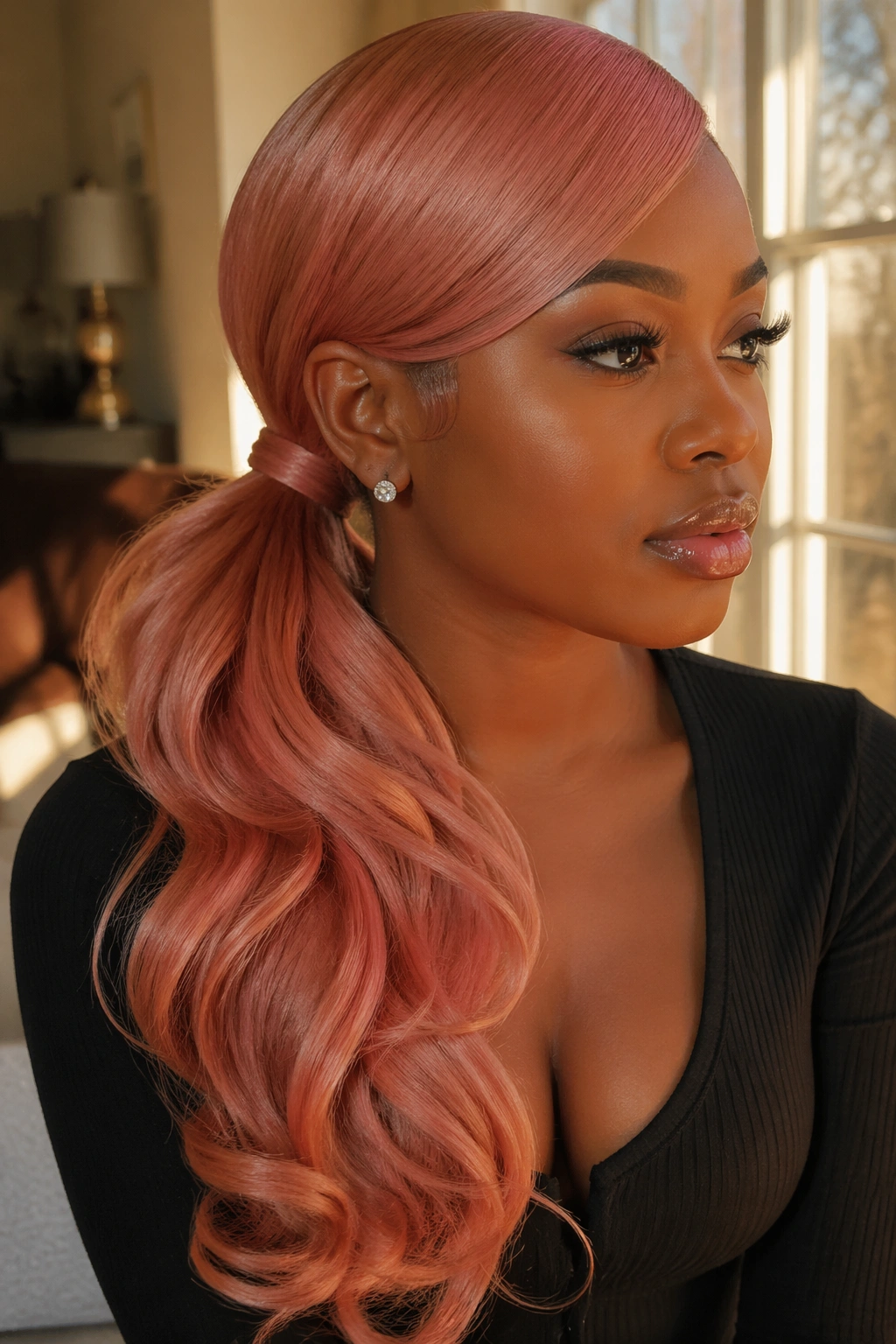
Rose gold is softer than people expect when it’s done right. In a side-swept ponytail, the color has room to feel romantic instead of sugary, and the side placement keeps the whole look from feeling too symmetrical.
This is one of the few pink-toned ombre styles that can still read grown-up. The darker root grounds it, and the rose gold through the ends or mid-lengths adds warmth without turning the ponytail into costume hair. If your style leans feminine but you still want edge, this is a nice lane.
The side part is doing a lot of work here. It breaks the shape just enough that the ponytail feels softer at the face and fuller through the tail. A little wave through the length helps too. Flat rose gold can go dull fast; movement keeps it alive.
10. Golden Brown Stitch Braid Ponytail
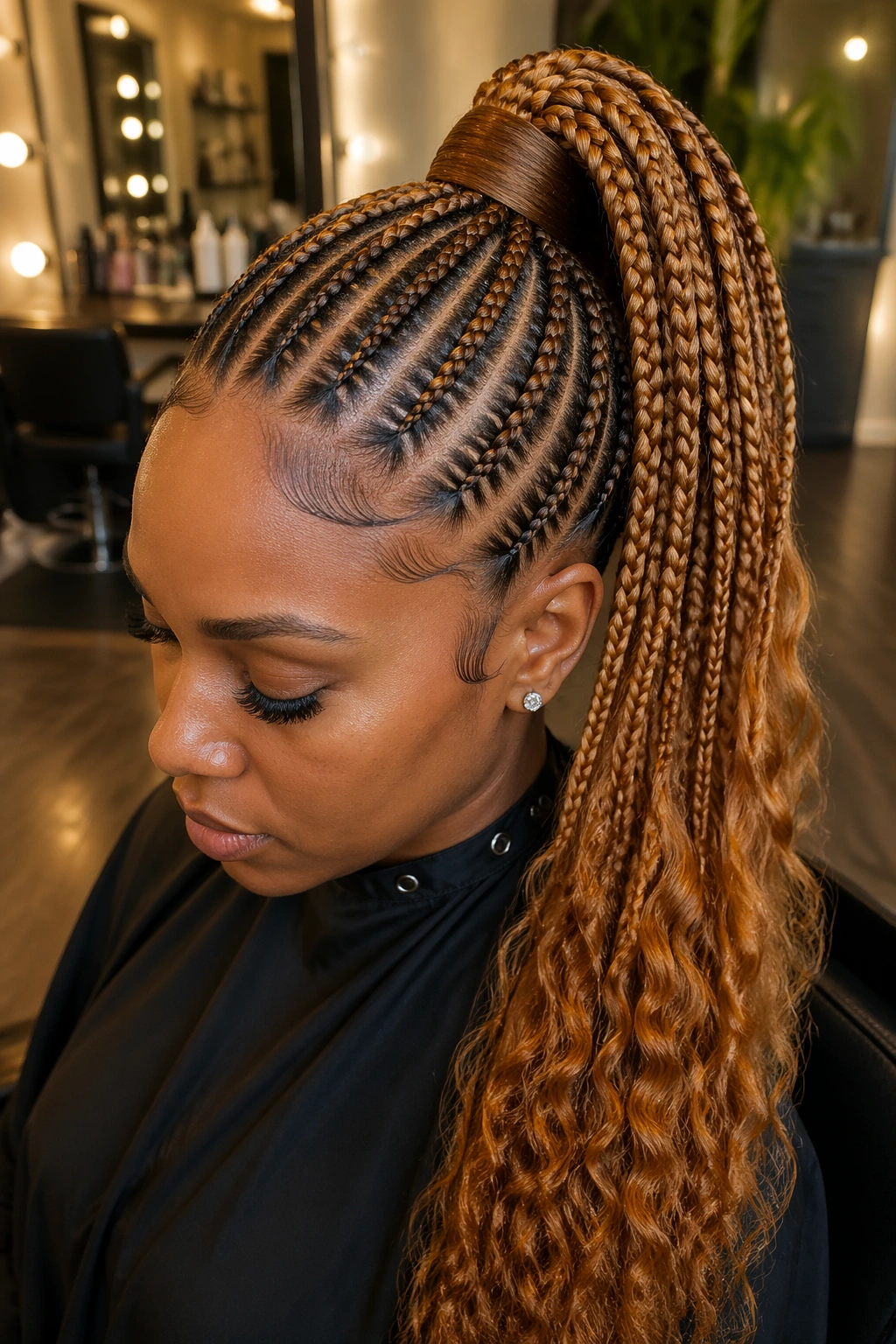
A stitch braid ponytail is clean in a way that never gets old. Add golden brown ombre, and the style gains warmth without losing that sharp braid structure. It is one of the best choices if you like the look of defined parts and crisp lines.
What makes it different
The stitch pattern creates visible lanes in the scalp, so the ponytail looks intentional from every angle. Golden brown in the lengths softens all that structure and keeps the style from feeling severe. That mix — neat base, warm tail — is what makes it work.
A good version should have snug but not painful braids. If the tension is too high, the style stops being protective and starts becoming a problem. Keep the braid size consistent, and ask for the ponytail to be anchored securely without pulling the edges. The finish should look smooth, not stretched to the point of stress.
If you like a clean look that still has color, this one is hard to beat.
11. Bronde Curly Ponytail
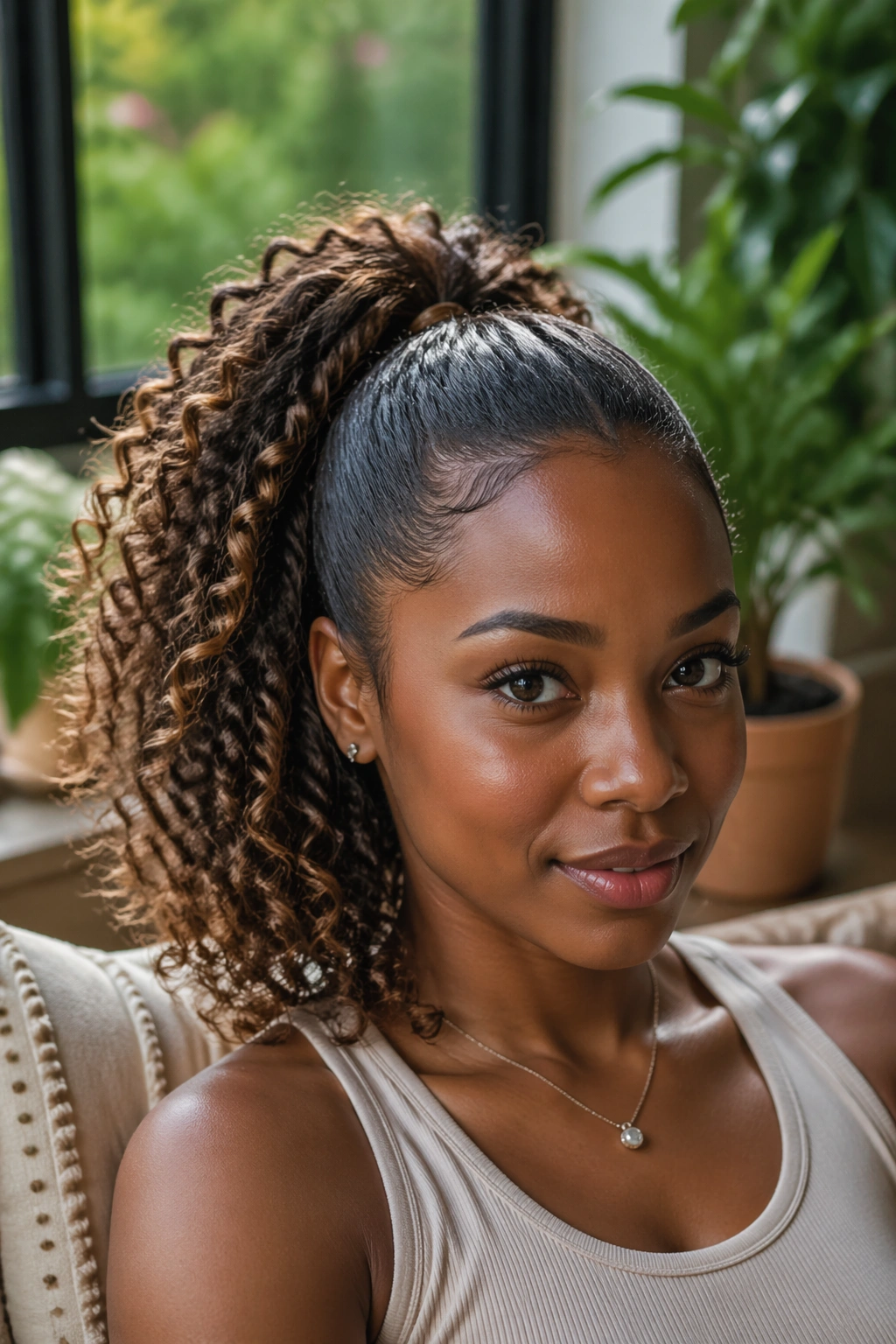
Bronde is the in-between shade that sits right between brown and blonde, and honestly, that balance is part of why it looks so easy on textured hair. A curly bronde ponytail gives you brightness without losing depth, which is often the most flattering formula.
Unlike a pure blonde look, bronde keeps the root area from feeling disconnected. Unlike a deep brown ponytail, it still gives you visible dimension. That middle ground makes the whole style feel softer, and it is especially nice if you want color that does not dominate your face.
Curly texture helps bronde a lot. The bends in the hair create tiny shifts in tone, so the ombre shows more naturally than it would on a pin-straight tail. If you want a ponytail that looks expensive without looking overdone, this is one of my favorites.
12. Blue-Black Sleek Ponytail
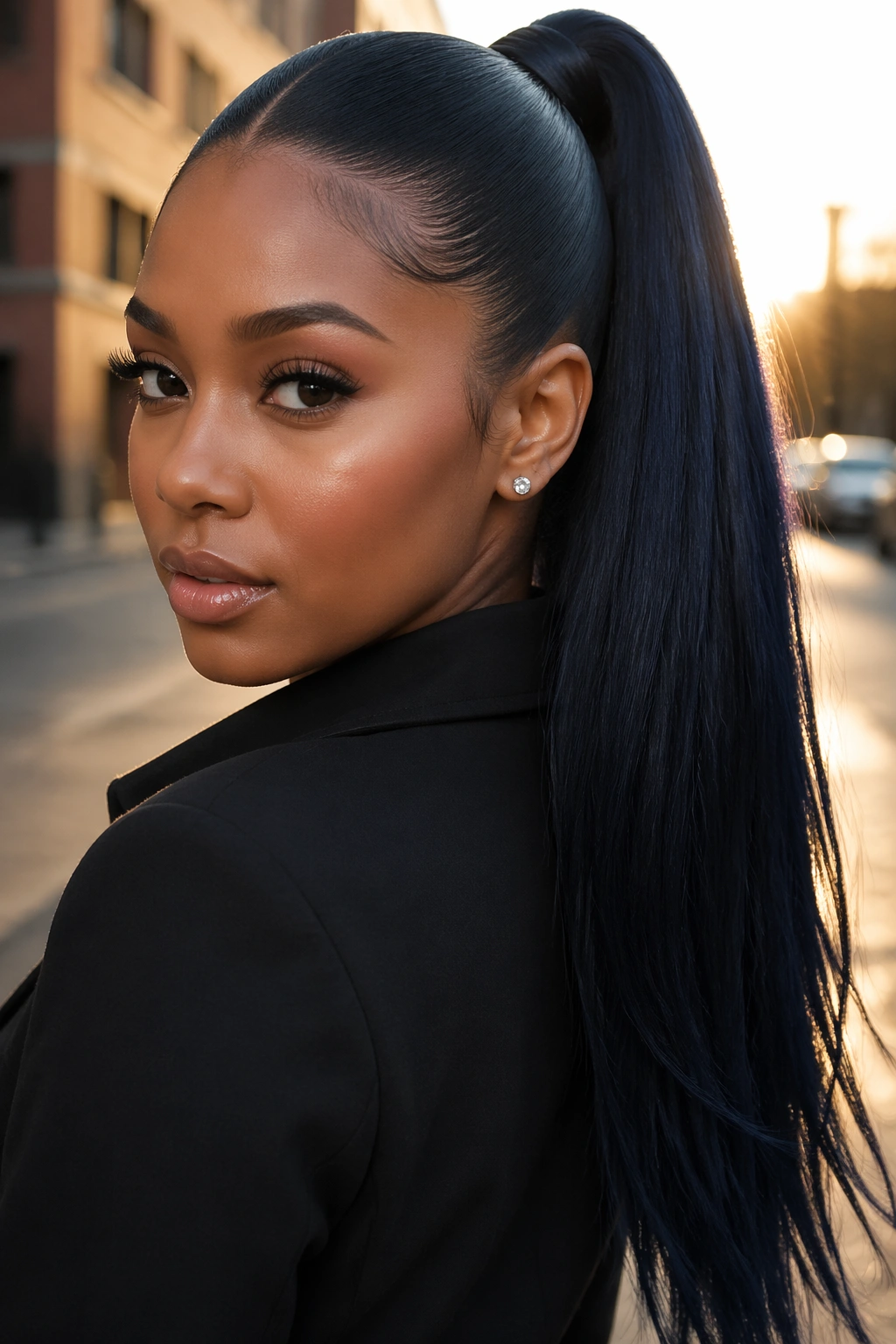
Blue-black is the shade people underestimate. It is not just black with a hint of color; it has that cool sheen that makes a sleek ponytail look sharper and more polished. On darker skin tones, it can be stunning because it stays close to natural while still giving the eye something extra.
The sleek finish matters here. A smooth crown, a tight wrap, and a clean part let the blue-black tone do its job. If the hair is too frizzy or the base is bulky, the color gets lost. You want the shade to look intentional, not accidental.
This is a good pick if you like a subtle shift more than a dramatic one. It reads rich indoors and even deeper outdoors, which is one reason people keep coming back to it. Quiet? Yes. Plain? Not even close.
13. Cinnamon Puff Ponytail
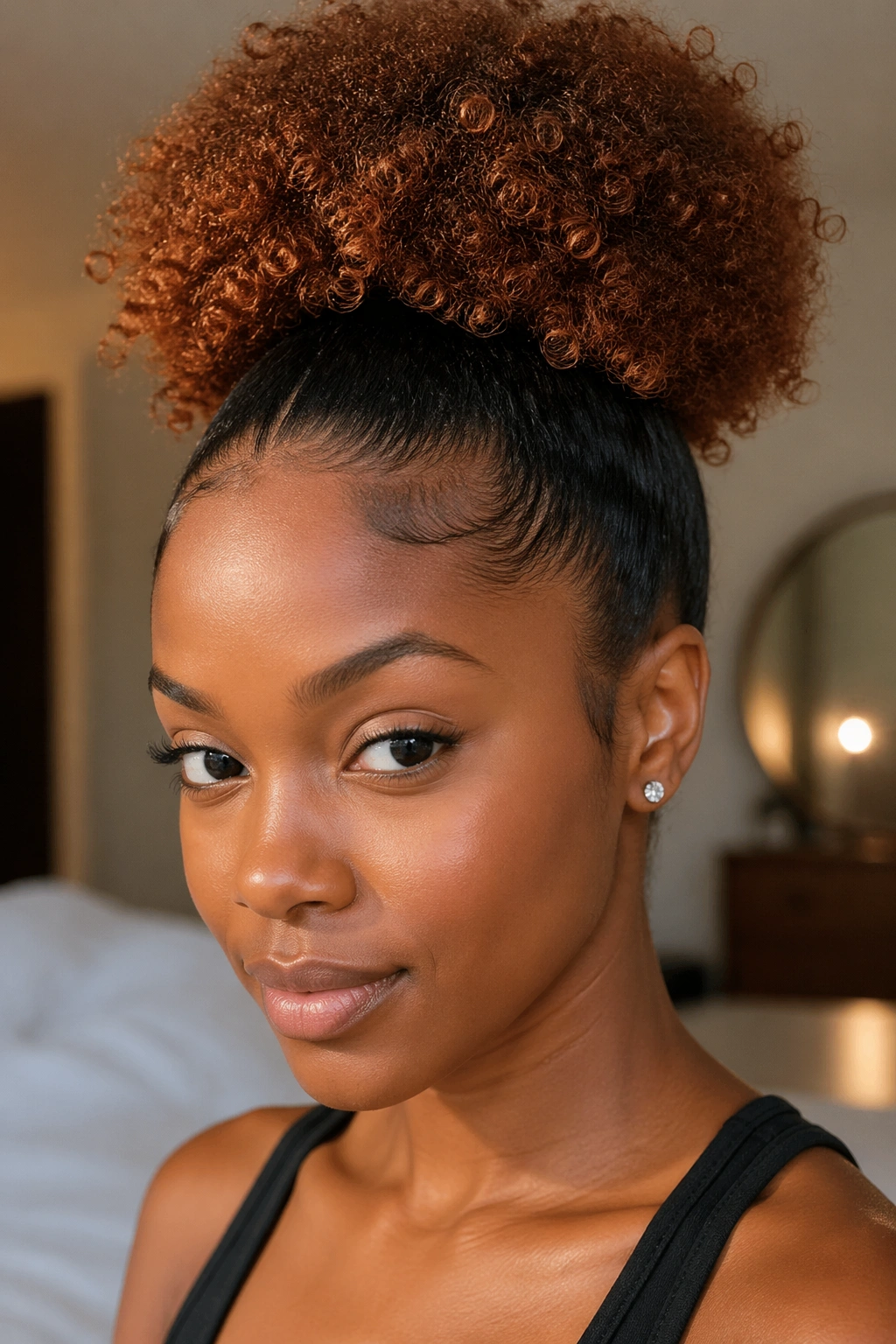
A puff ponytail with cinnamon ombre is for the days when you want your texture to stay visible. That matters. Some ponytails flatten natural hair until it barely looks like hair anymore. This one does the opposite.
The puff gives the crown shape, and the cinnamon tone adds warmth through the tail or the stretched length. It works especially well if your hair has been blown out or stretched on a twist-out base, because the cinnamon shows up in the textured strands instead of sitting on a flat surface. That keeps the finish honest.
Why a puff plus ombre works
The silhouette is soft, but not sloppy. The ombre gives the style focus so the puff does not disappear into the rest of the look. If you use a satin scrunchie and a light edge gel, the base can stay neat while the puff keeps its volume.
Best of all, it does not need to look overworked. A little fullness is the point. Leave it that way.
14. Honey Balayage Goddess Ponytail
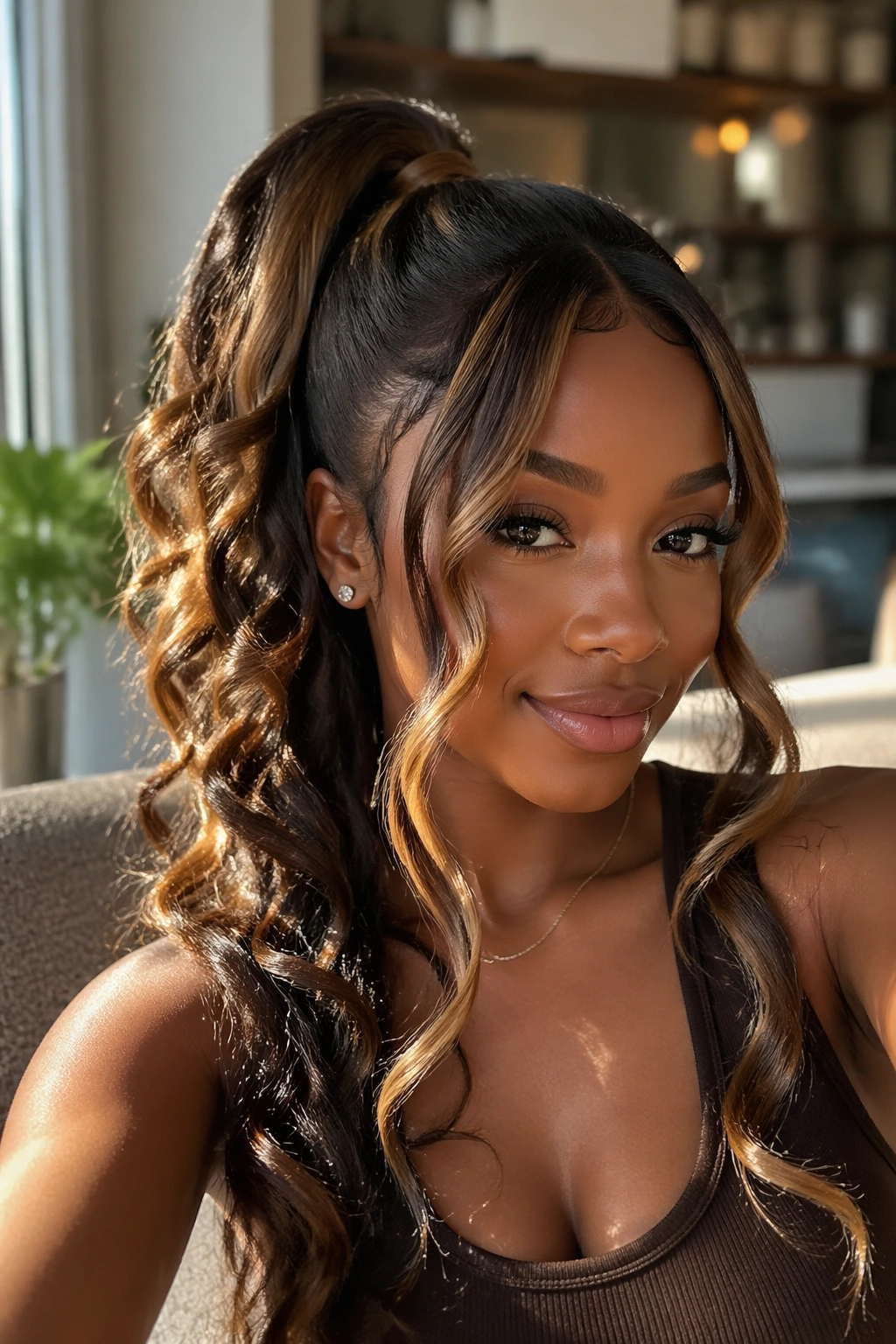
A goddess ponytail with honey balayage is one of those styles that can look expensive even when it’s fairly simple to wear. The face-framing pieces, loose curls, and lighter honey strokes work together to make the whole ponytail feel softer around the edges.
The balayage part matters because it spreads the brightness more naturally than a hard ombre line would. Instead of a single color break, you get scattered lighter pieces that move through the length. That gives the curls depth, which is exactly what you want when the ponytail is big and full.
If you like styles with a little softness around the face, this one delivers. Keep the front pieces long enough to graze the cheekbones or jaw, then let the tail fall in layered curls. Too short and it can feel choppy. Too uniform and it loses the goddess effect.
15. Mocha to Amber Twisted Ponytail
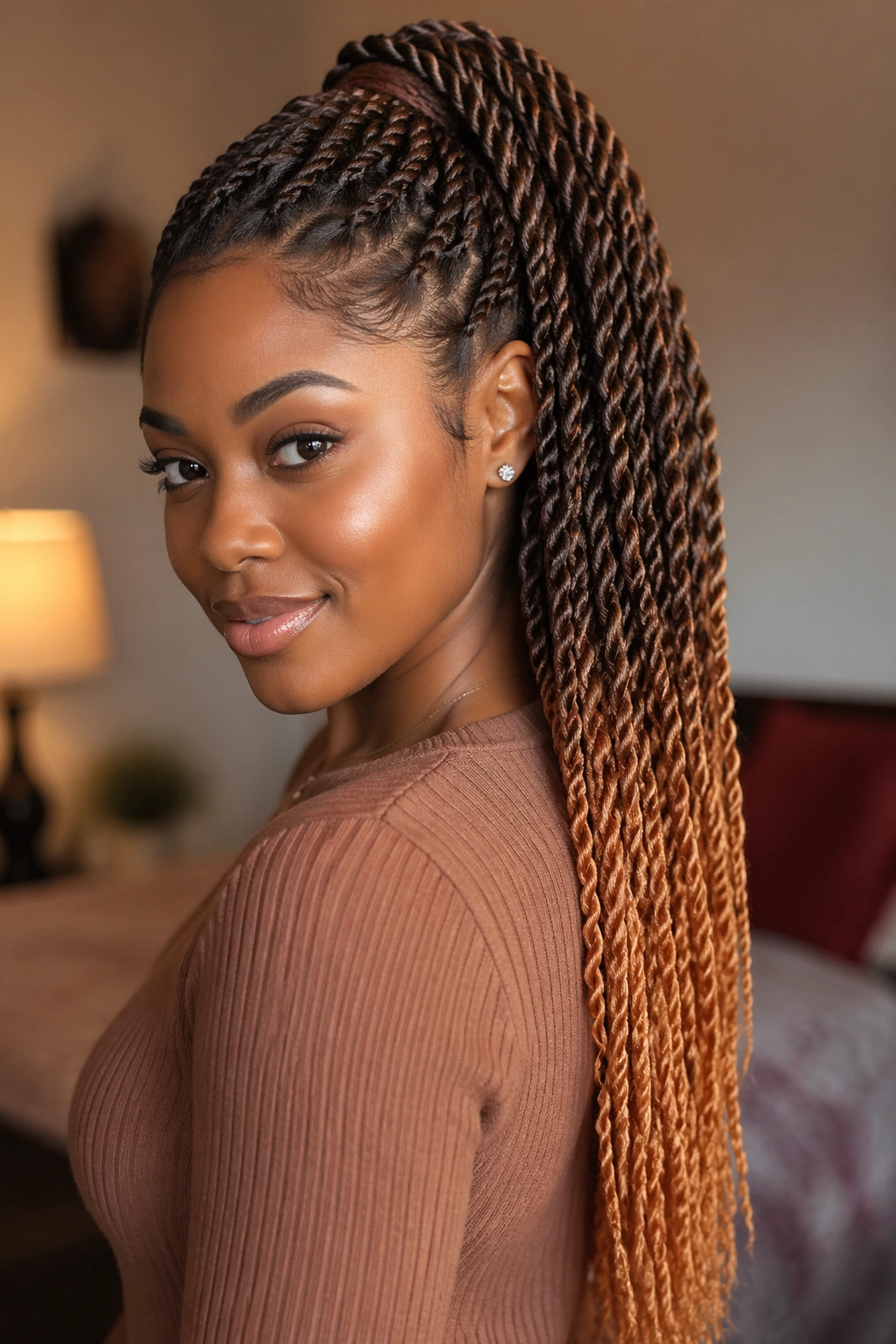
Twists make an ombre ponytail feel softer than braids do. That’s the first thing people notice. The strand definition is there, but it is gentler, and when you shift from mocha roots into amber ends, the whole style feels warm and easy to wear.
Twists also sit nicely in a ponytail because they do not need the same rigid structure as a braid style. The movement is looser. The color blend looks more fluid. If you want something protective but not too tight-looking, this is a solid direction.
Comparison-wise, this one is the softer sibling
Braids give you sharper lines. Twists give you a little more swing. That makes the amber ends show in a slower, prettier way, especially when the hair is medium to long length.
This style is good if you like ombre but do not want the color to be the loudest thing about the look. The texture does half the work for you.
16. Smoky Silver Ponytail
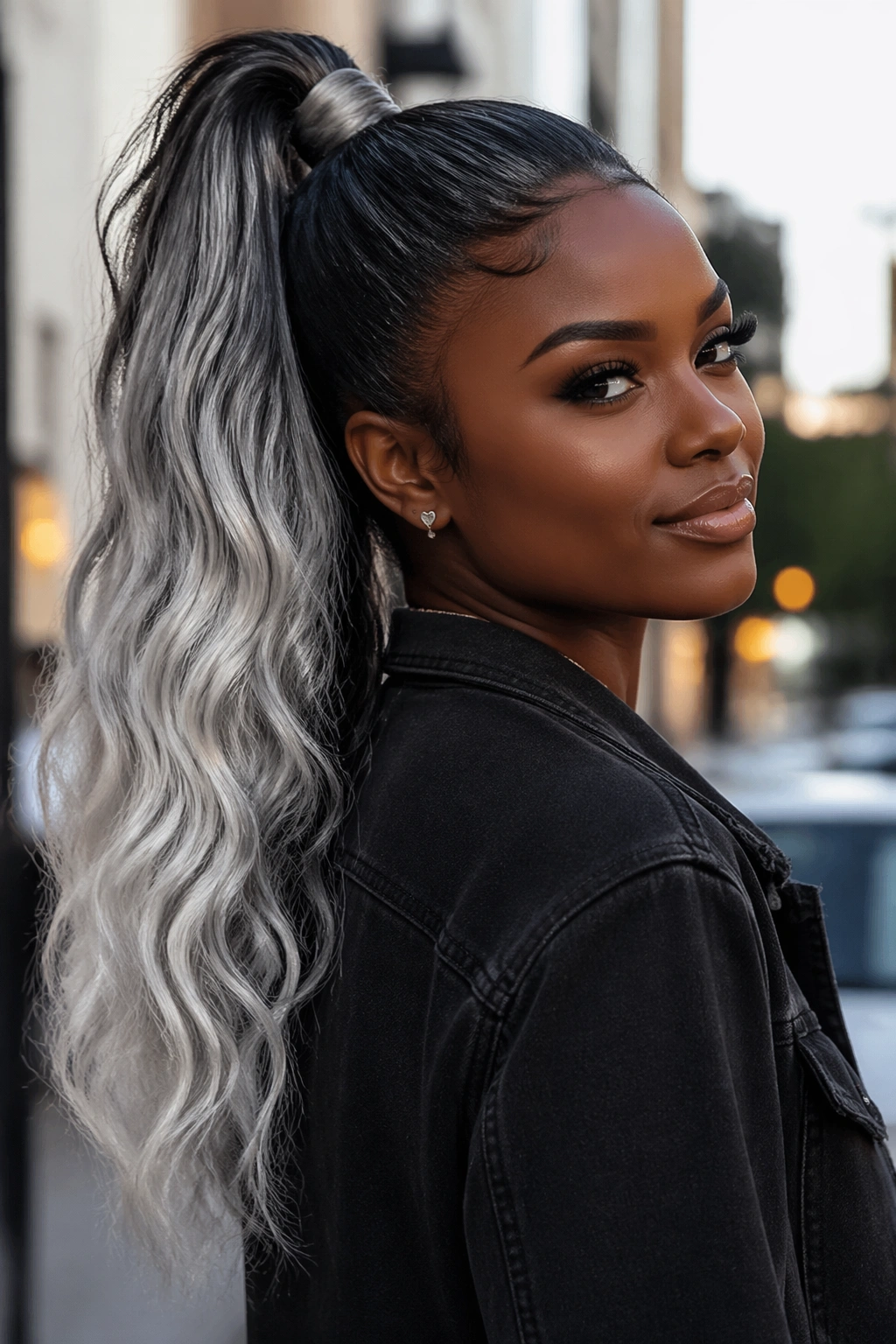
Smoky silver is dramatic in a controlled way. It has the coolness of gray, the brightness of silver, and just enough dark root to keep it from looking washed out. On Black women, that contrast can be striking without feeling costume-like.
The root has to stay deep. If the silver starts too close to the scalp, the color can lose its shape fast. A smoky transition — charcoal into soft silver — gives the ponytail dimension and keeps the whole style grounded. Straight styles make the shade look cleaner, while waves soften it up a bit.
What to watch for
- Silver tones can turn yellow if they are not toned well
- Dark roots should stay visible for contrast
- A sleek base helps the shade look richer
- A soft wave can keep the ends from looking stiff
This one is not shy, but it does not need to be flashy either. The color does the talking.
17. Cherry Cola Ponytail
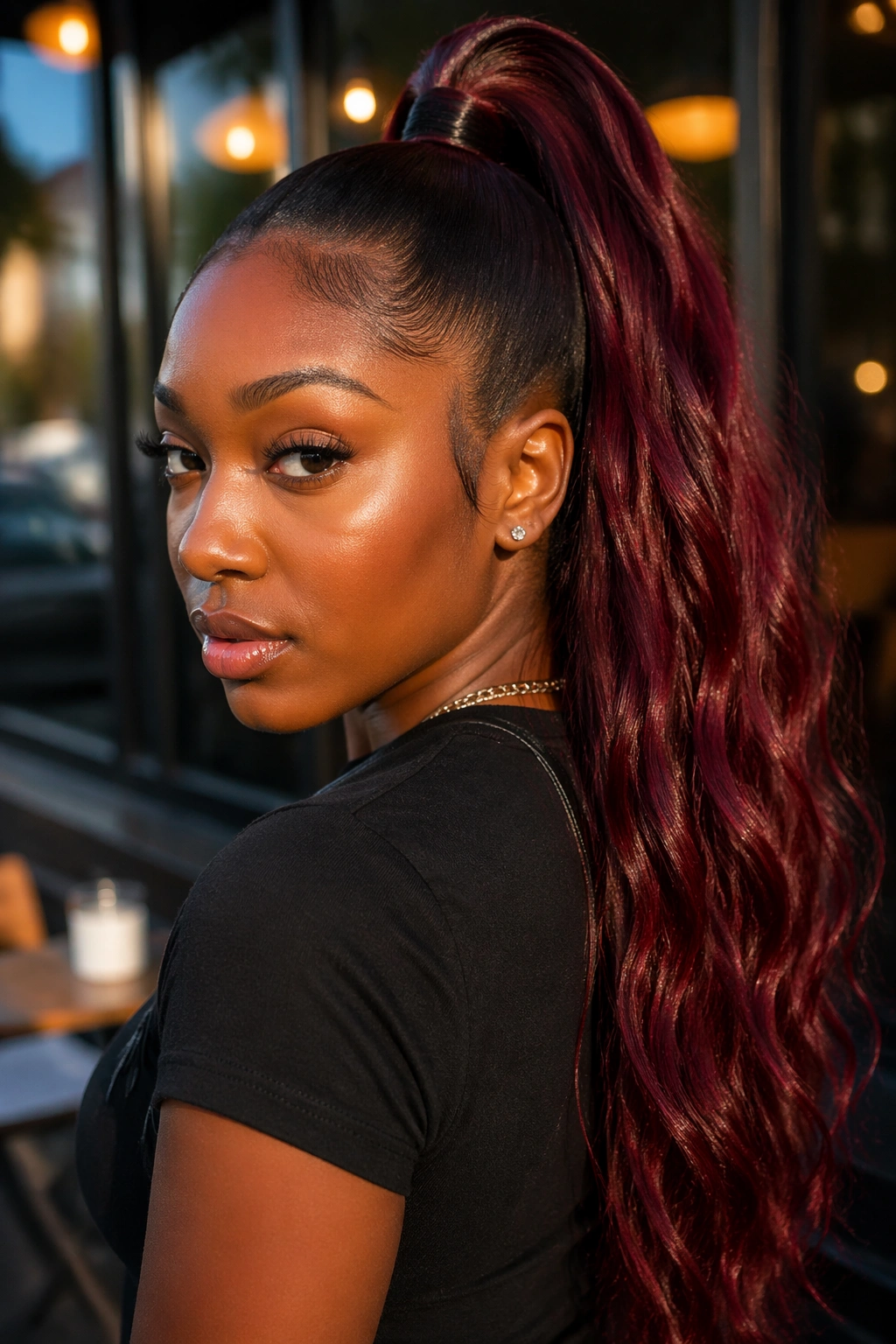
Cherry cola is one of those colors that always looks richer than it sounds. It is deep red with brown and wine undertones, which means it can read subtle in dim light and far more vivid when the hair moves. That shift is half the fun.
Why does it work so well? Because the darker base keeps the red from floating away. A ponytail with cherry cola ombre feels dimensional, not flat, and that matters a lot with long extensions or curled tails. A little shine serum on the lengths helps, but too much product can make the color look muddy.
If you want red without going bright fire-engine red, this is the shade to reach for. It is moody, flattering, and easier to wear than a more saturated red. That is probably why it keeps showing up in ponytail inspiration boards.
18. Sandy Blonde Sew-In Ponytail
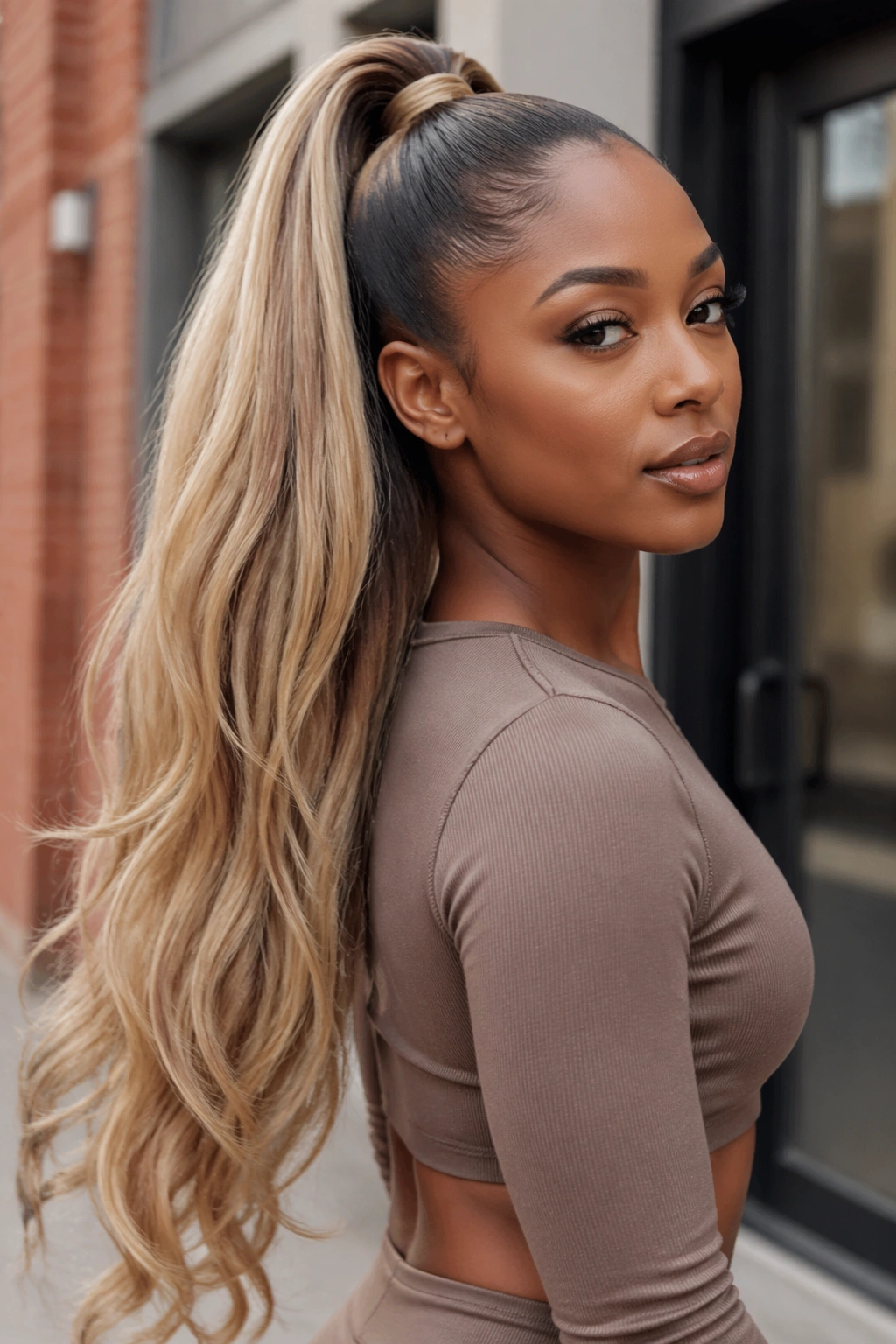
A sandy blonde sew-in ponytail gives you fullness that clip-ins sometimes cannot match. The color is softer than bright blonde, closer to beige and warm sand, which makes it easier to blend against deeper root colors.
This is the right move when you want length and density in one go. The sew-in base keeps the ponytail secure, and the sandy blonde finish lightens the whole look without making the color story too harsh. It can be worn straight, curved, or with a loose bend through the tail.
A clean installation matters more here than in a lot of other styles. If the base is bulky, the ponytail loses that elegant line and starts looking heavy. A flat, tidy anchor point makes the blonde feel intentional and lets the length carry the style.
19. Toasted Almond Curved-Part Ponytail
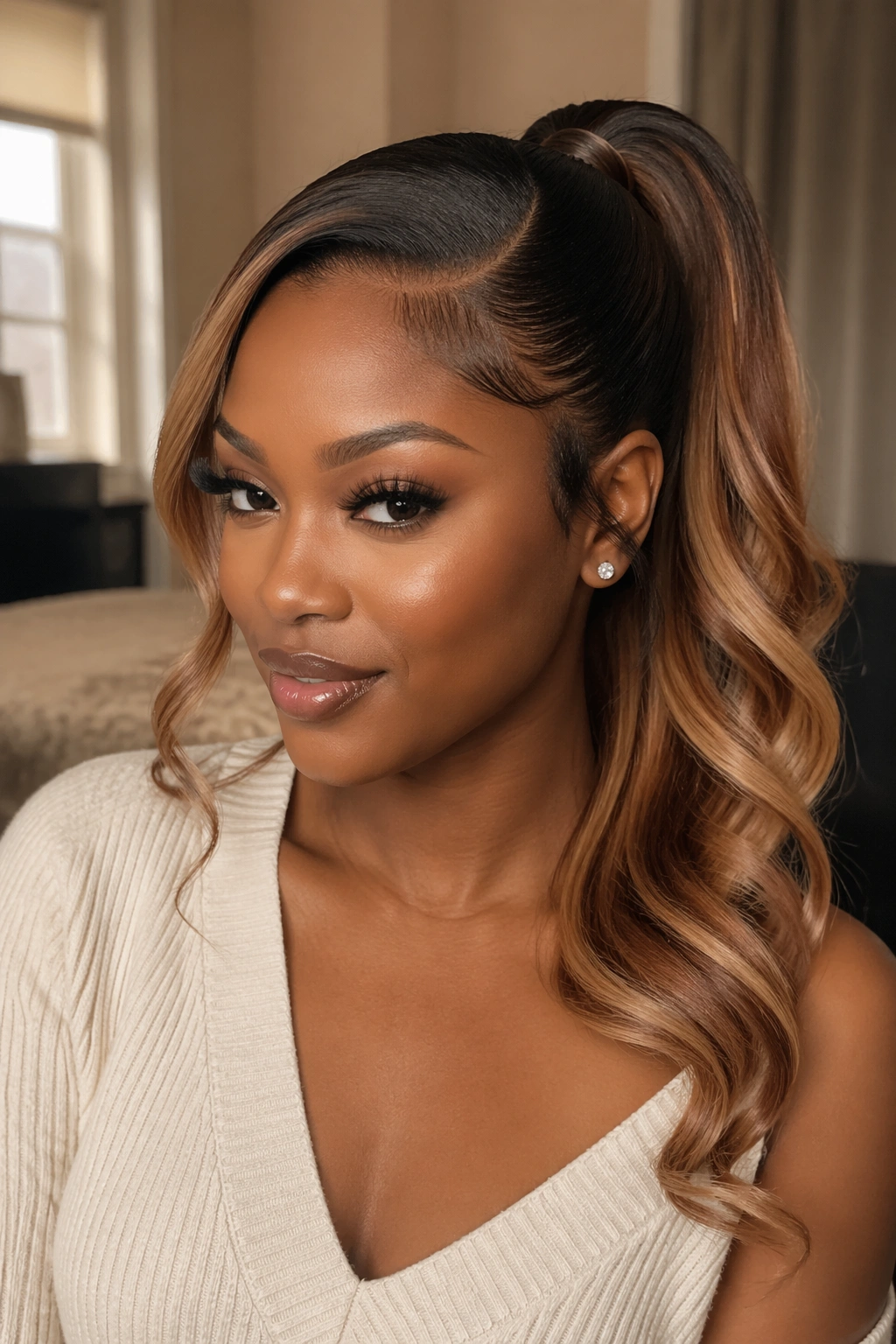
A curved part changes everything. Instead of the usual straight center or hard side part, the curve creates a softer shape across the front, and toasted almond ombre adds a warm finish that suits the sweep beautifully.
This style is less about drama and more about polish. The curved part frames the face in a gentler way, which is useful if you want the ponytail to feel elegant instead of severe. Toasted almond is a good shade for that because it sits between golden brown and light caramel, so the finish stays warm but grounded.
The crown should be laid smooth, then the ponytail can fall straight or with a soft bend. I like this one for events where you want the hair to look finished from every angle, because the part itself becomes part of the design. A small detail. A big payoff.
20. Plum Ombre Faux Loc Ponytail
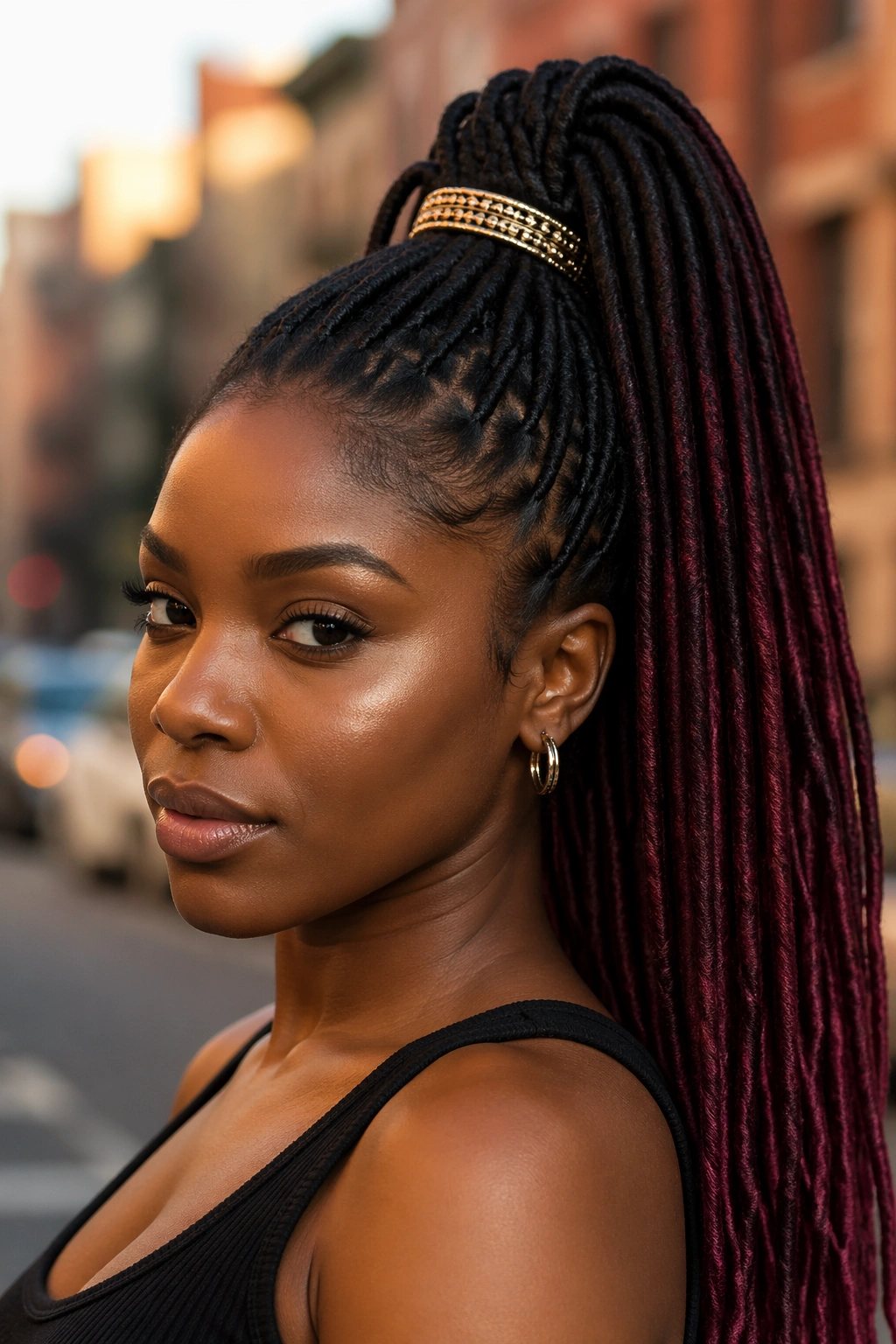
Plum faux locs gathered into a ponytail have a moody, rich look that works far better than people expect. The plum shade gives depth without losing the protective style’s texture, and the loc structure makes the color feel bold in a controlled way.
Can locs do ombre without looking overdone? Yes — if the root stays near black or deep brown and the plum starts lower on the length. That gradient keeps the style grounded. Too much plum at the root can flatten the whole look and make it feel less wearable.
How to get the most from it
- Keep the root dark for contrast
- Let the plum start mid-length or lower
- Add a few gold cuffs if you want detail, not clutter
- Choose a ponytail height that does not strain the scalp
The beauty of faux locs is that they already have texture. The plum just gives that texture another layer to work with.
21. Soft Mocha Ponytail with Blonde Money Pieces
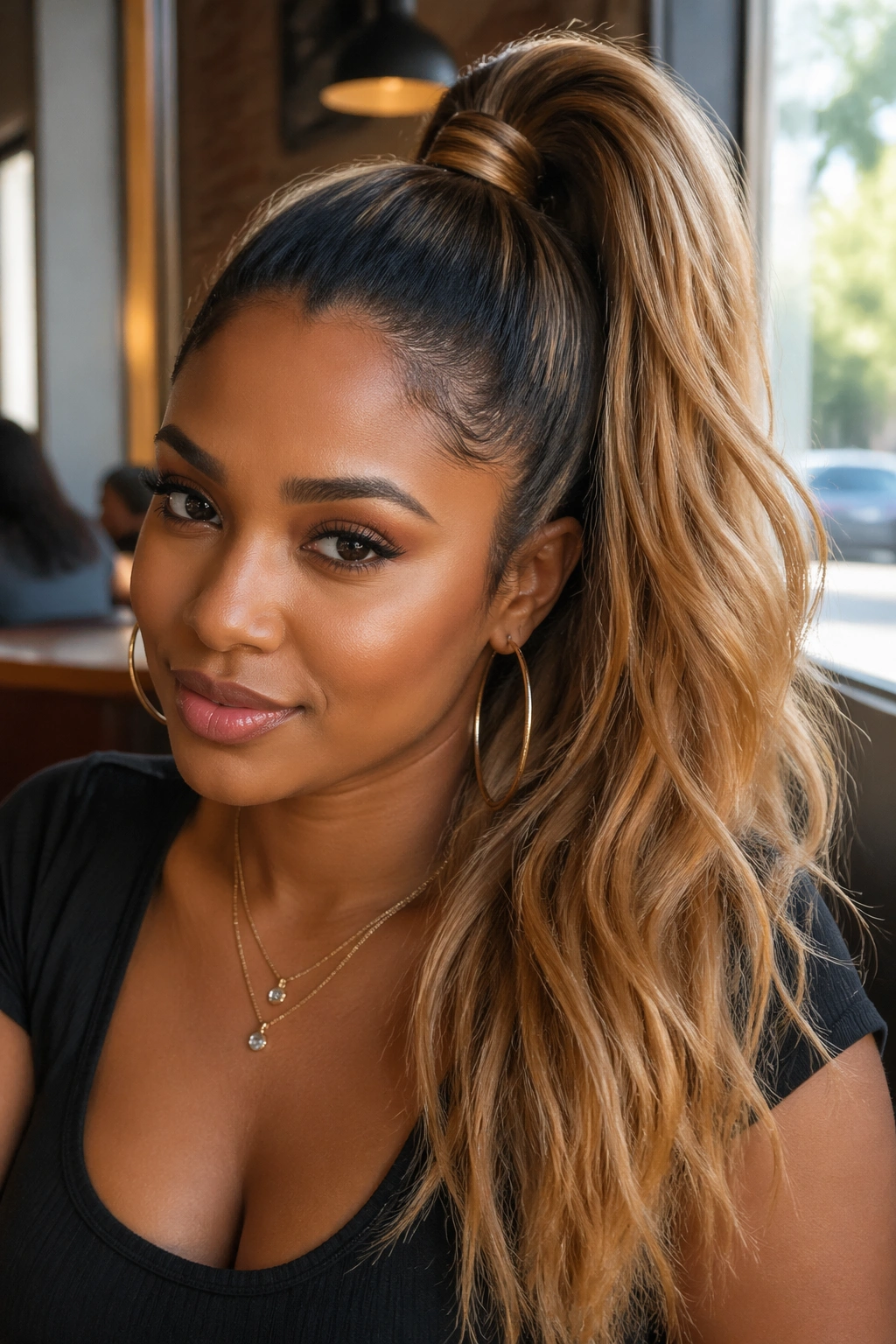
A mocha ponytail with blonde money pieces is a smart choice if you want brightness without committing to an all-over light look. The face-framing pieces do the lifting around the front, while the rest of the ponytail stays calm and grounded in mocha tones.
That contrast is the point. All-over blonde can be too much for some people. Here, the lighter sections sit where they matter most — near the cheeks and eyes — and the back stays rich and smooth. The result feels modern without being fussy.
This is also one of the easiest ombre ponytails for Black women to wear if you are new to color. The blonde is limited, the base stays familiar, and the whole style still reads full and intentional. If you only want one bright area, put it at the front. That’s enough.
