



Wavy hair and a weave ponytail make a better pair than a lot of people expect. The texture gives the tail movement, and the weave gives the style shape, length, and a clean finish that holds up better than a loose ponytail ever will.
What makes weave ponytails for wavy hair work so well is the balance. Too sleek at the crown and the style can look hard. Too much texture everywhere and the base gets messy fast. The sweet spot sits in the middle: smooth roots, a secure anchor, and waves that start to show once the pony drops past the elastic. That mix is why a body-wave bundle, a deep-wave bundle, or even a soft synthetic ponytail can look good when it is matched to the right base.
A small detail changes everything. The placement of the ponytail, the width of the wrap, and the amount of leave-out around the hairline decide whether the style looks polished or rushed. A ponytail that sits two inches too low can drag the face down. One pulled too tight can flatten the waves before they get a chance to do anything interesting.
1. High Weave Ponytail for Wavy Hair
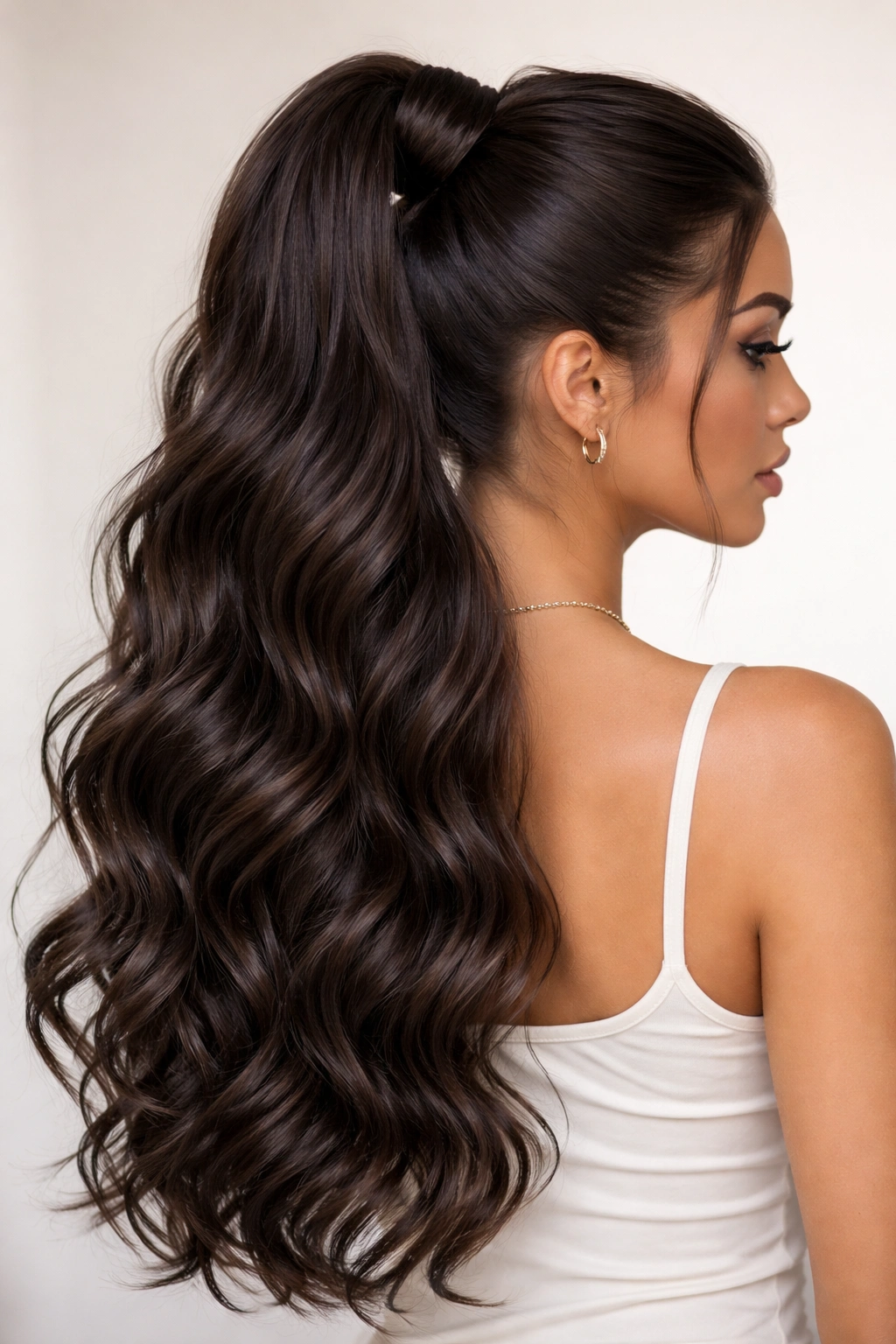
A high weave ponytail for wavy hair has that easy, lifted look that makes the whole face feel brighter. The base sits at the crown or just above it, so the waves swing instead of hanging flat against the back. That upward placement also gives the style more energy, which is why it works so well with body-wave bundles and loose deep-wave textures.
Why It Works
The height does most of the work. It opens up the cheekbones, shows off the neck, and gives the ponytail a cleaner line from root to tip. If your natural hair is wavy, the texture near the base helps the blend look softer, especially when the top is smoothed with a light gel or edge control instead of heavy product.
- Use a firm base braid or a slick ponytail anchor.
- Wrap 1 small section of weave around the elastic to hide the tie.
- Keep the crown smooth, but do not flatten it into a helmet.
- A 20- to 24-inch bundle gives the style more swing.
Best detail: leave the tail loose at the ends. A tiny bit of frizz at the tips looks normal; stiff ends do not.
2. Low Sleek Weave Ponytail with a Deep Side Part
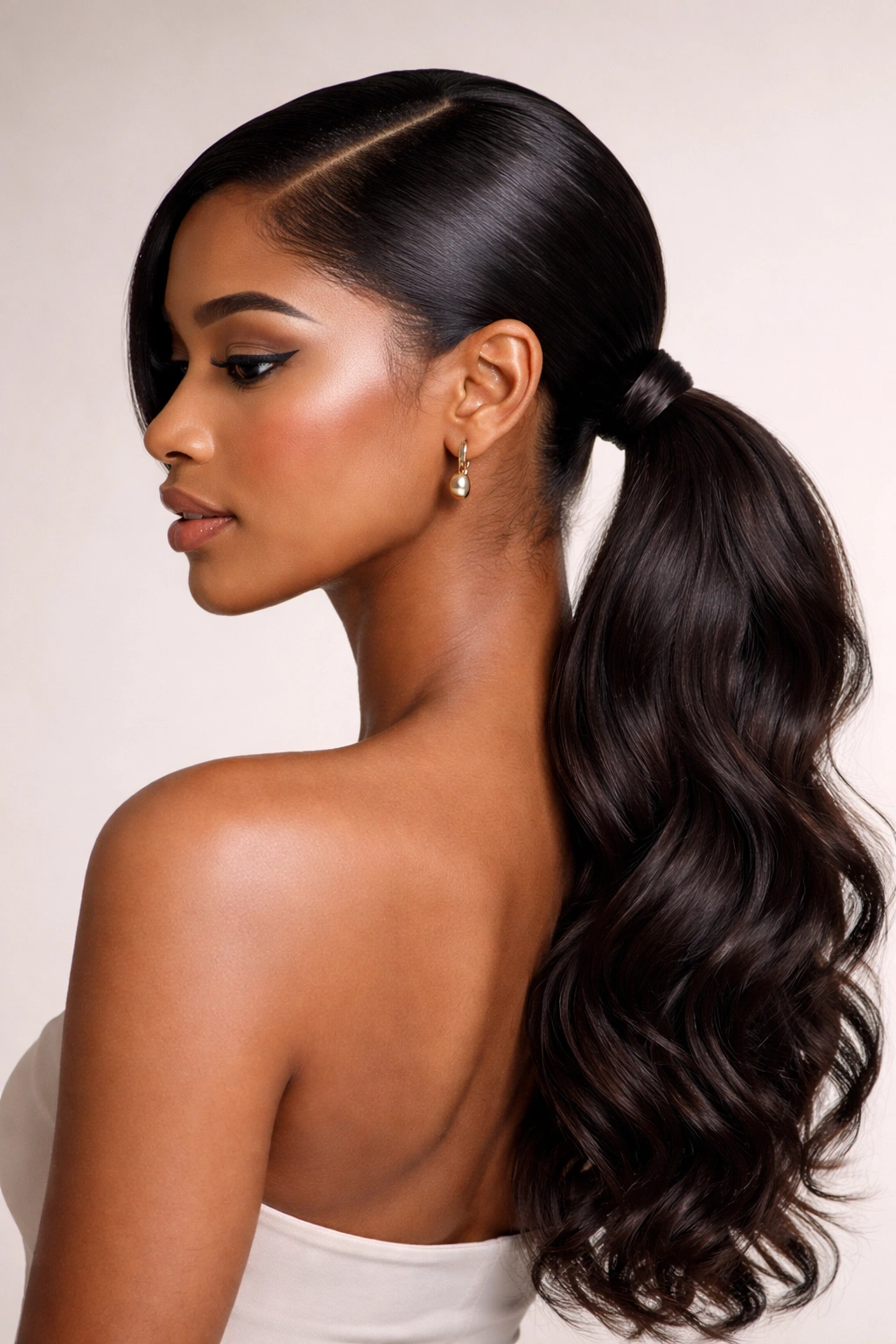
Want something sharper? A low sleek ponytail with a deep side part brings a little drama without needing a lot of extras. The part creates direction, and the low placement keeps the style grounded. It is the kind of ponytail that looks neat in photos, then still feels comfortable after a long day.
The trick is keeping the top smooth while letting the ponytail itself stay wavy. That contrast is what gives the style its shape. If every inch is flattened and shiny, the weave can start to look stiff. If the crown is soft and the tail has movement, the whole thing feels expensive in the plainest, best sense of the word.
A tail comb, a toothbrush for the hairline, and a satin scarf do most of the heavy lifting here. Press the part clean, brush the hair down in the direction you want the part to fall, then hold it in place for a few minutes before adding the ponytail piece.
3. Side-Swept Weave Ponytail with Face-Framing Waves
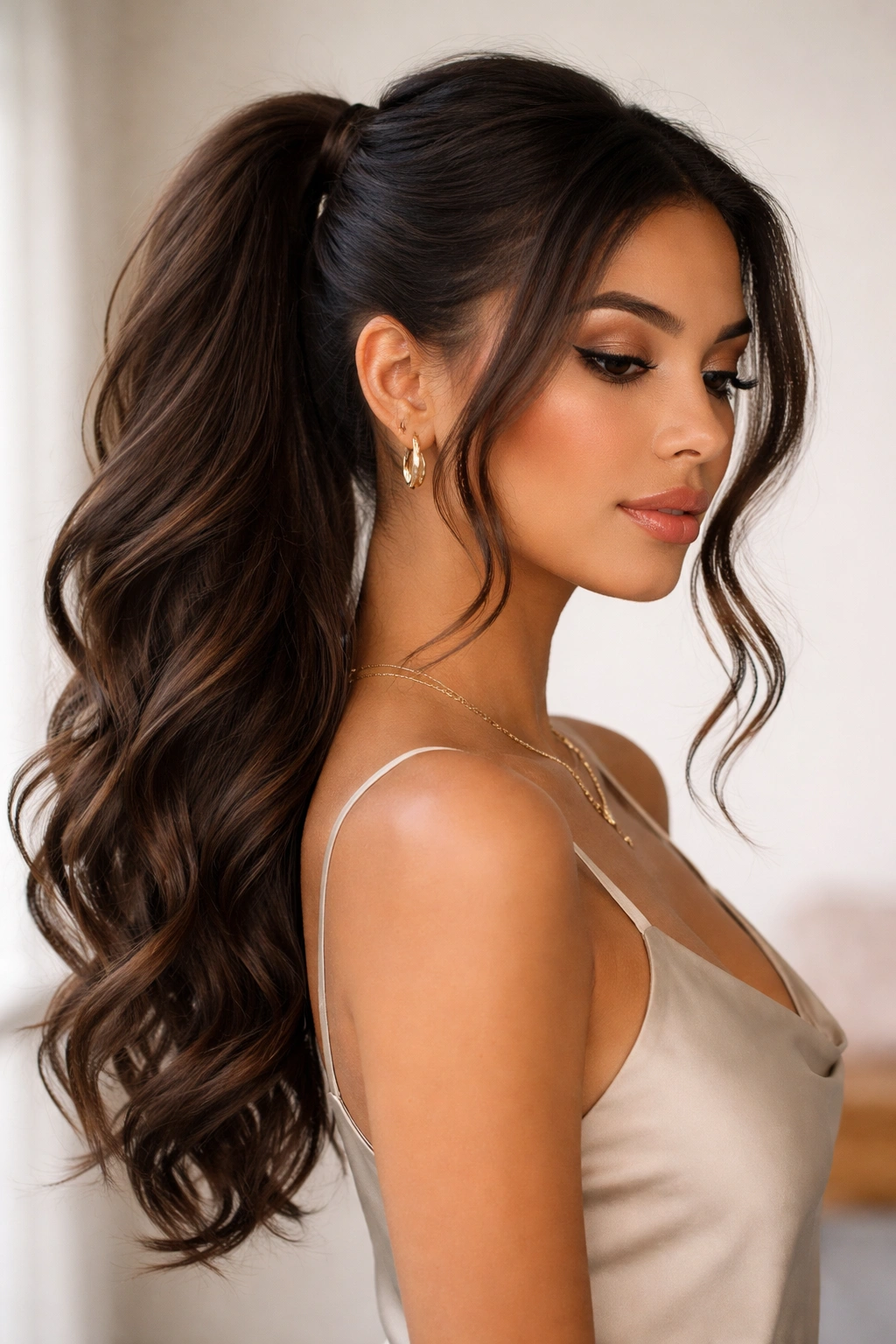
A side-swept ponytail gives wavy hair room to do what it already wants to do. Instead of pulling everything straight back, you shift the ponytail behind one ear and let the waves fall over one shoulder. It feels softer, and honestly, it photographs better than a centered ponytail when you want the texture to show.
How to Keep It from Slipping
The base needs a little more grip than people expect. A side ponytail pulls unevenly, so the anchor has to be tight enough to hold the weight without cutting into the scalp. Two small braids or a tightly secured pony base usually work better than a loose tie.
- Set the part before you gather the hair.
- Leave two thin face-framing pieces if you want a softer edge.
- Pin the ponytail slightly lower behind the ear for balance.
- Curl the front pieces away from the face so they do not stick forward.
Small note: this is one of the easiest styles to overdo. Keep the front light.
4. Bubble Weave Ponytail with Soft Texture
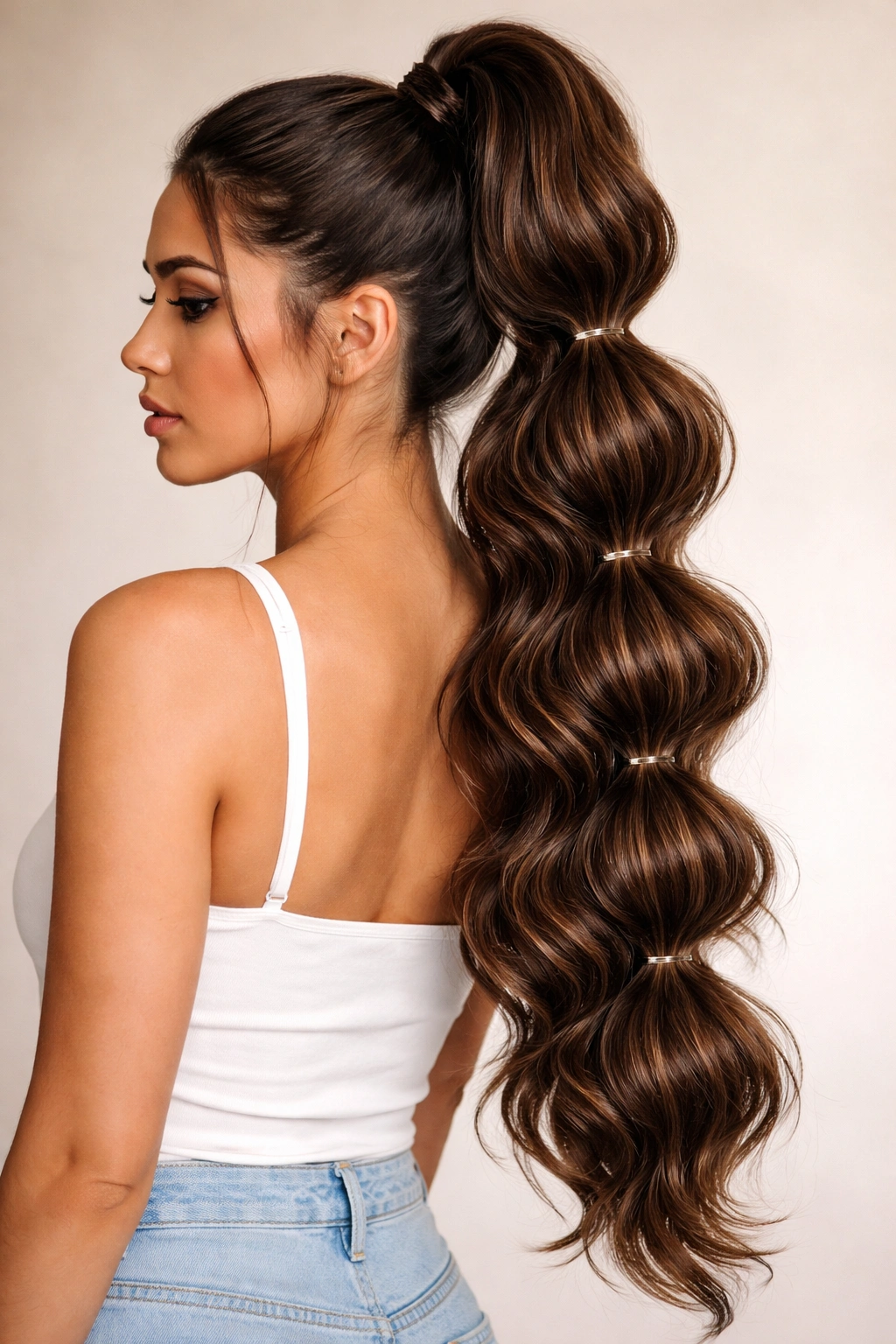
The bubble ponytail makes wavy hair look playful without making the style childish. Small elastics placed every 2 to 3 inches along the length create little round sections, and the weave bulks up those sections so they hold their shape. On wavy hair, that extra shape keeps the style from falling flat halfway through the day.
The best version uses a ponytail that has enough density to puff out between the ties. Body-wave bundles work well because they keep the bubbles full without looking too curly. A looser wave also gives the sections some movement, so the finished style does not feel stiff or overworked.
Skip tiny bubbles unless the ponytail is long enough to support them. A short tail can look chopped up fast. A longer one gives the pattern room to breathe, and the result feels cleaner.
5. Braided-Base Weave Ponytail
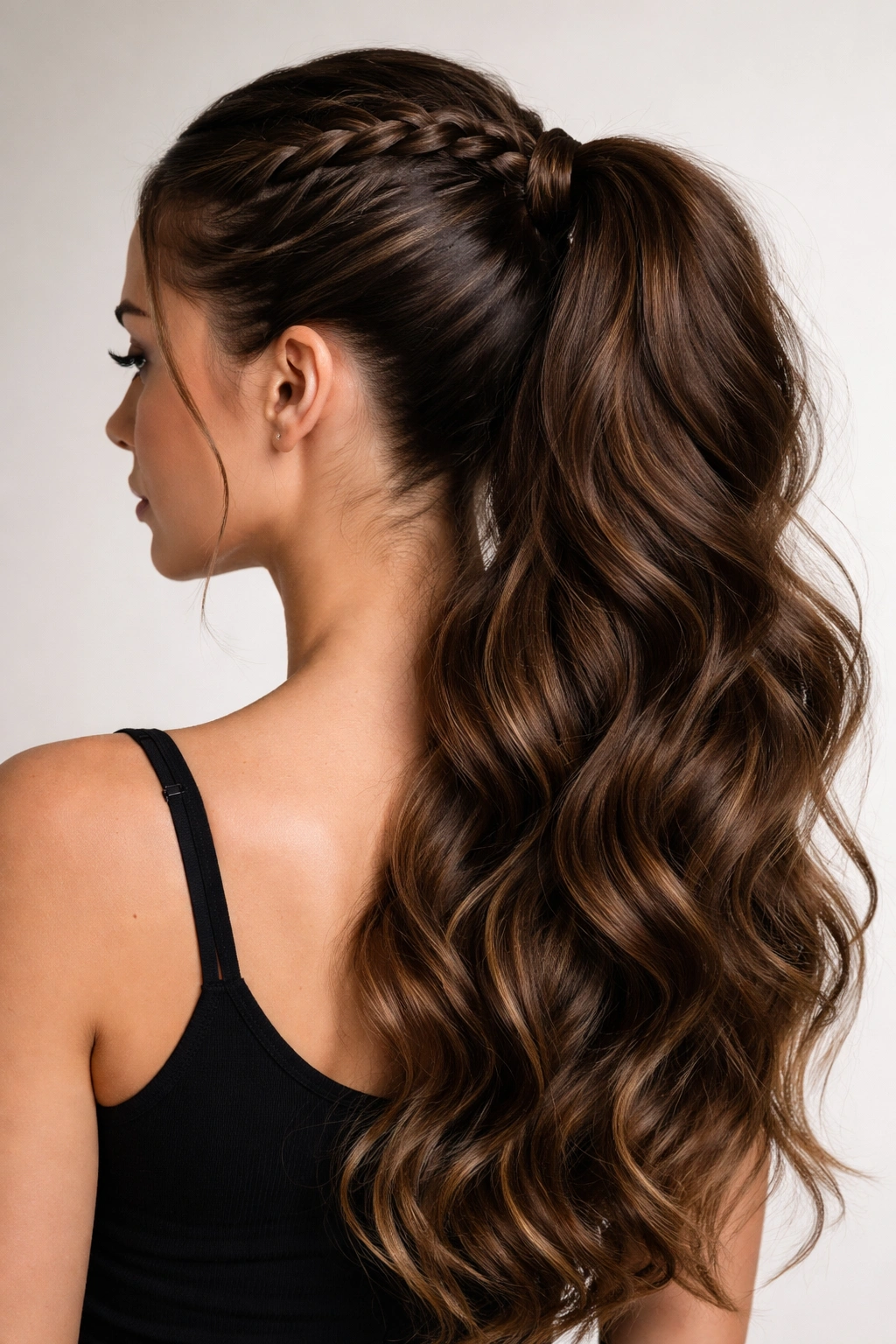
The braid at the base does more than decorate. It gives the ponytail a stronger anchor and hides the place where the weave starts, which is useful when you want the style to look neat from every angle. For wavy hair, the braid adds just enough texture near the crown to keep the style from reading too plain.
A single braid can work, but two or three small braids feeding into the ponytail usually feel sturdier. The style also gives you a little more freedom with the finish. You can keep the crown polished and the tail loose, or lean into a more textured look and let the braid stay visible.
What to Ask For
If you are going to a stylist, ask for a braid that sits flat and follows the head shape. A thick braid stuck on top of the hairline can look bulky. A smooth one disappears better and makes the ponytail itself look fuller.
6. Wrapped-Bundle Ponytail with a Clean Finish
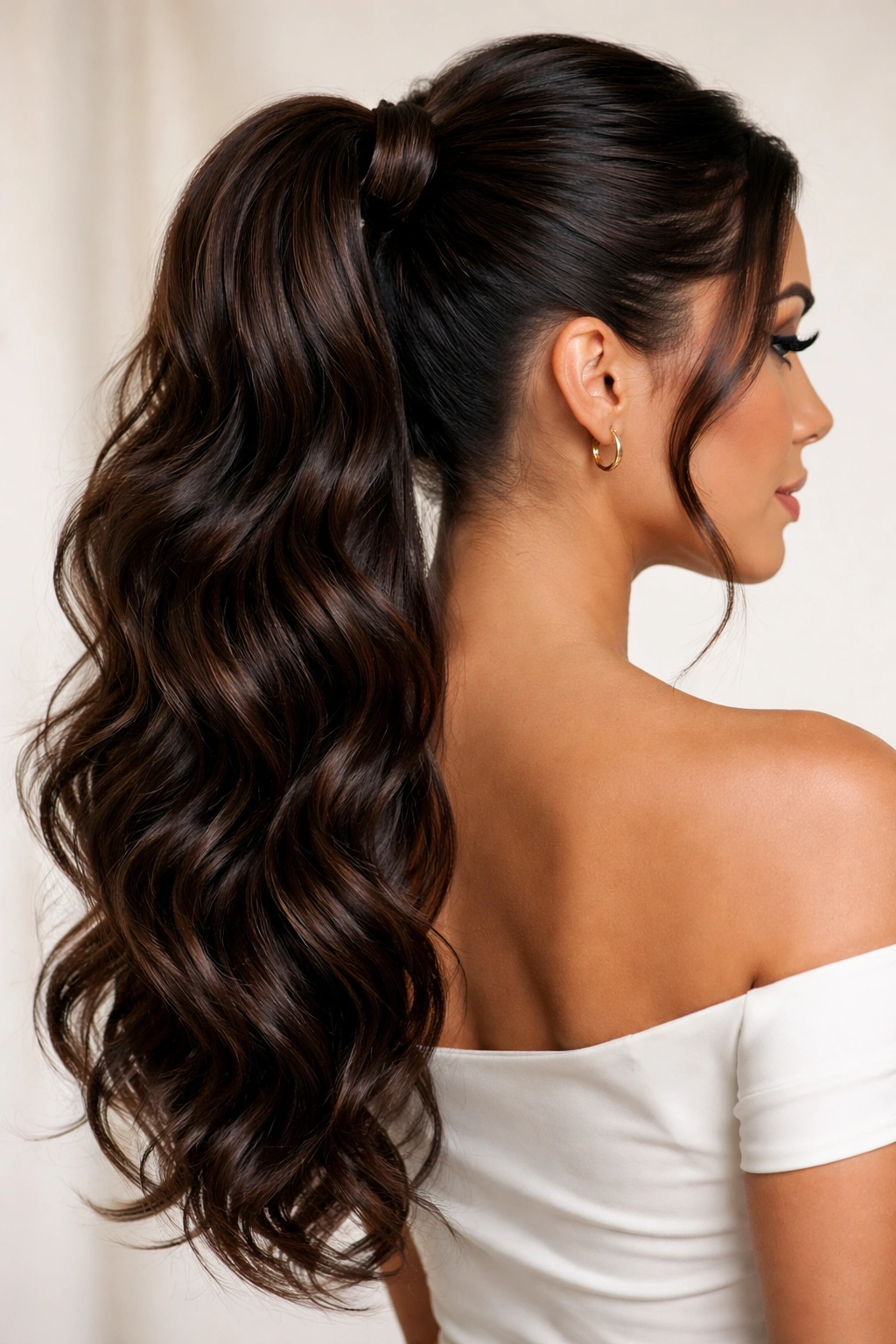
There is something satisfying about a wrap that hides every trace of the elastic. A single strip of weave wrapped around the base makes the ponytail look finished, not attached. On wavy hair, that clean start gives the loose tail even more contrast, which is part of why this style works so well.
The wrap should be snug, but not so tight that it twists the whole base. If the ponytail is already dense, keep the wrap narrow. If the hair is finer, a wider wrap helps the base look thicker and more intentional. A little shine on the wrap is fine. Too much product turns it greasy fast.
I like this style for dressier days because it never looks accidental. It reads neat from the front and polished from the back, which is harder to pull off than it sounds.
7. Half-Up Weave Ponytail for Wavy Hair
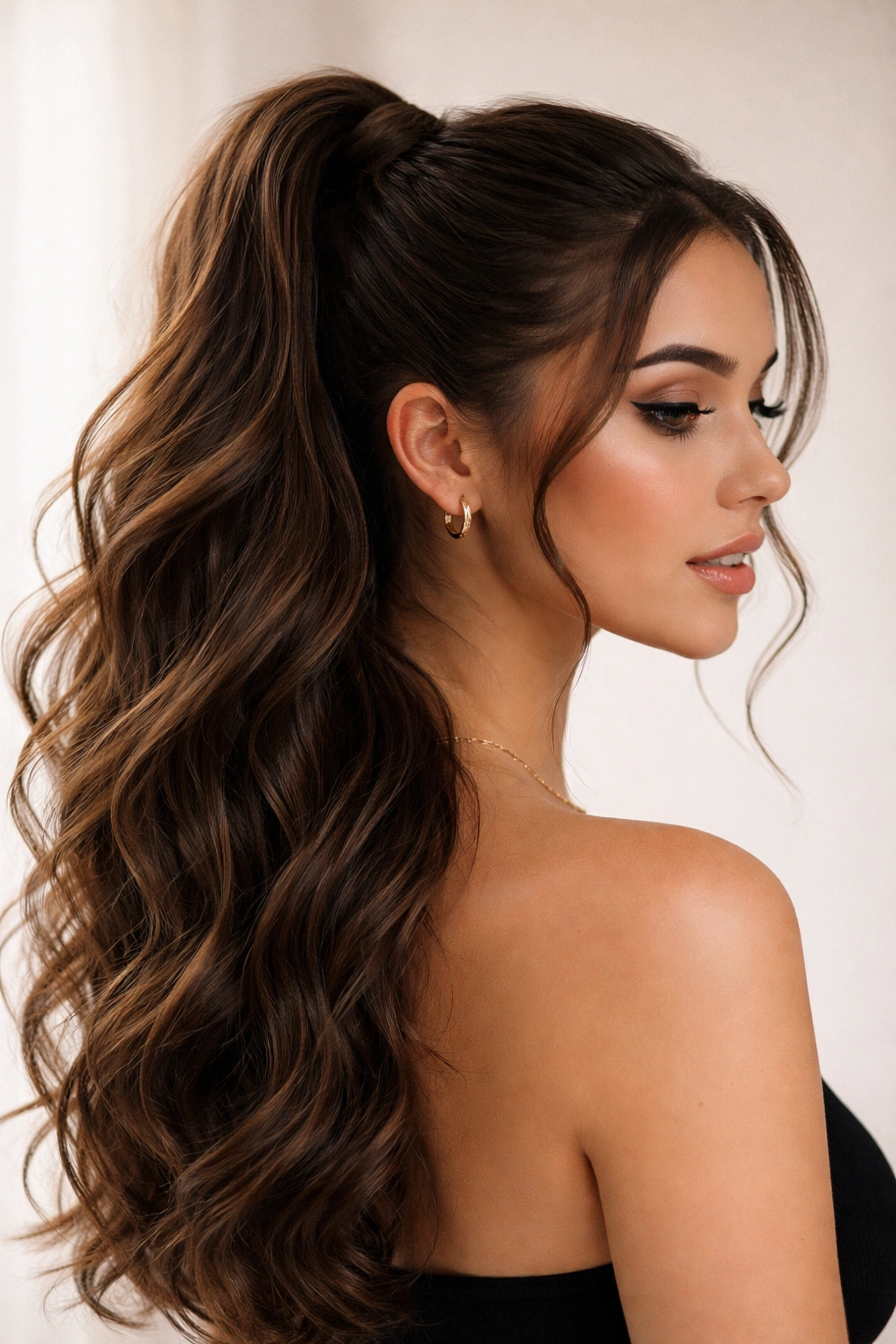
Half-up weave ponytails for wavy hair solve a very specific problem: you want lift, but you do not want all of the hair pulled away from the face. That is why this one keeps turning up in real life. It gives the top section shape and leaves the rest of the waves free.
Best for This Look
This works especially well on layered bundles or on wavy hair with a little natural bend left out underneath. The top section should be tight enough to stay put, but the lower hair needs room to move. If the bottom is brushed too much, the style loses the whole point.
- Use about one-third of the hair for the top ponytail.
- Leave the lower section loose and separate the waves with your fingers.
- Add a small curl to the front pieces if they sit too straight.
- Keep the top section smooth so the contrast stays visible.
Best detail: the lower half can be refreshed with a water mist and a drop of leave-in if it starts to frizz.
8. Extra-Long Weave Ponytail with Loose Ends
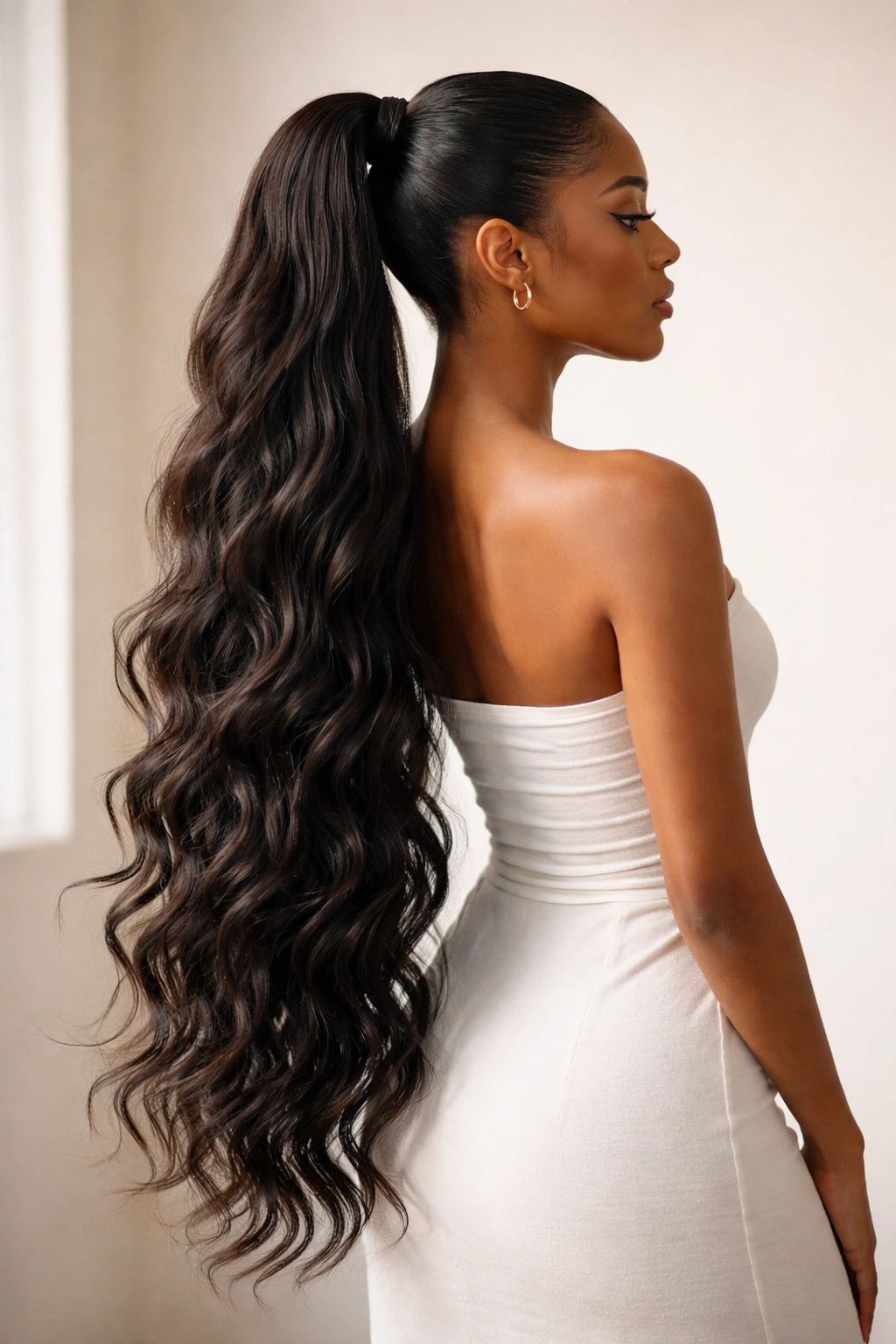
Long ponytails change the whole mood. A 28- to 30-inch weave ponytail falls lower, swings more, and has that obvious presence that shorter styles cannot fake. On wavy hair, the added length turns each bend in the bundle into something you actually notice instead of a detail that disappears halfway down the back.
The catch is weight. A long ponytail pulls harder on the base, so the anchor has to be solid. A weak tie or a sloppy install will show up quickly, usually as tension at the edges or a ponytail that tilts to one side by the end of the day.
Keep the crown simple. The longer the tail, the less extra decoration the style needs. A clean wrap and a smooth top are enough.
9. Mid-Length Everyday Weave Ponytail
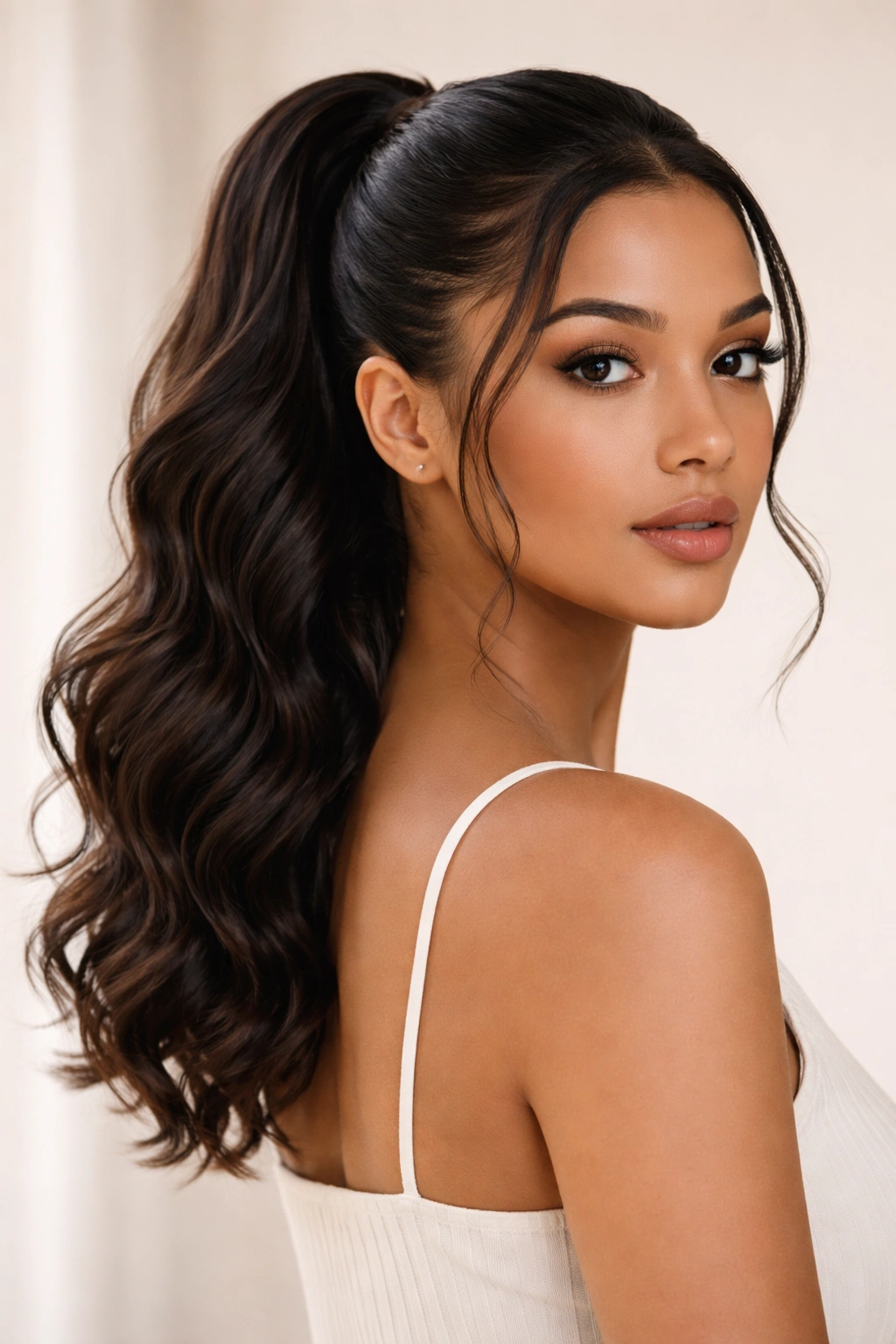
Not every ponytail has to touch the waist. A mid-length weave ponytail sits in that useful zone where it still feels styled, but it does not knock into your coat collar or feel heavy on your neck. For wavy hair, 16- to 18-inch lengths are often the most practical.
The shape matters more than the drama here. Keep the base tidy, let the waves fall in a clean line, and stop trying to make every strand behave the same way. That loose middle length looks especially good when the ends have a soft bend instead of a blunt finish.
This is the ponytail I would choose for errands, work, or any day that needs a little polish without the fuss. It is not trying to be the loudest style in the room. That is the point.
10. Wet-Look Weave Ponytail with Sharp Edges
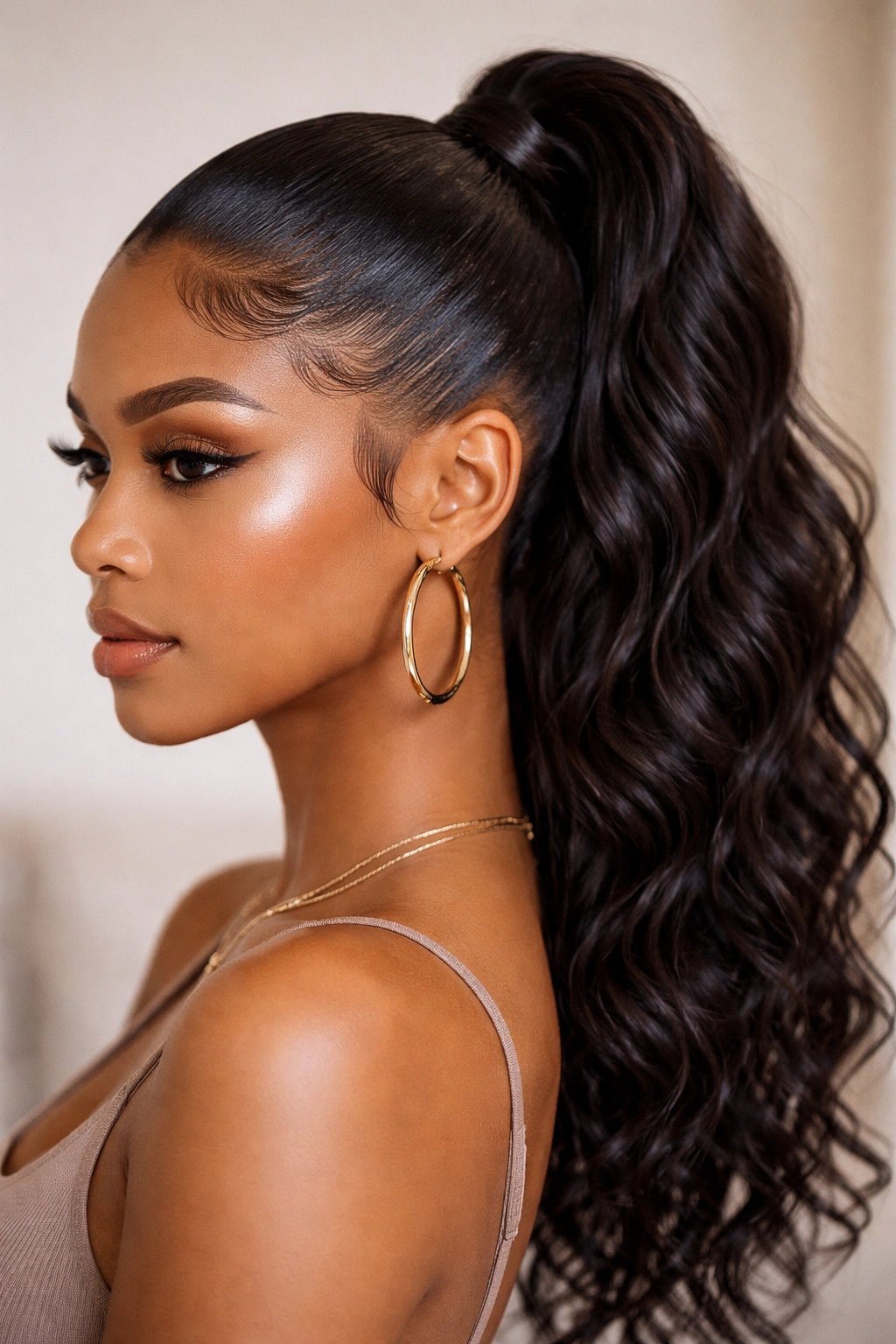
A wet-look ponytail has a slick, glossy surface that makes wavy hair look more deliberate than relaxed. The shine is concentrated at the roots and crown, while the ponytail itself keeps a bit of texture. That contrast stops the style from looking greasy, which is the line you do not want to cross.
Use gel sparingly. The hairline should look smooth and controlled, not hard and crunchy. A wide-tooth comb helps distribute the product, and a soft brush presses it flat without leaving too many lines. Once the top is set, the tail can stay wavy and loose.
A Small But Useful Detail
Wrap the finished hair with a satin scarf for 10 to 15 minutes. The surface settles, the edges lay flatter, and the shine looks cleaner once the scarf comes off.
11. Crisscross Front Weave Ponytail
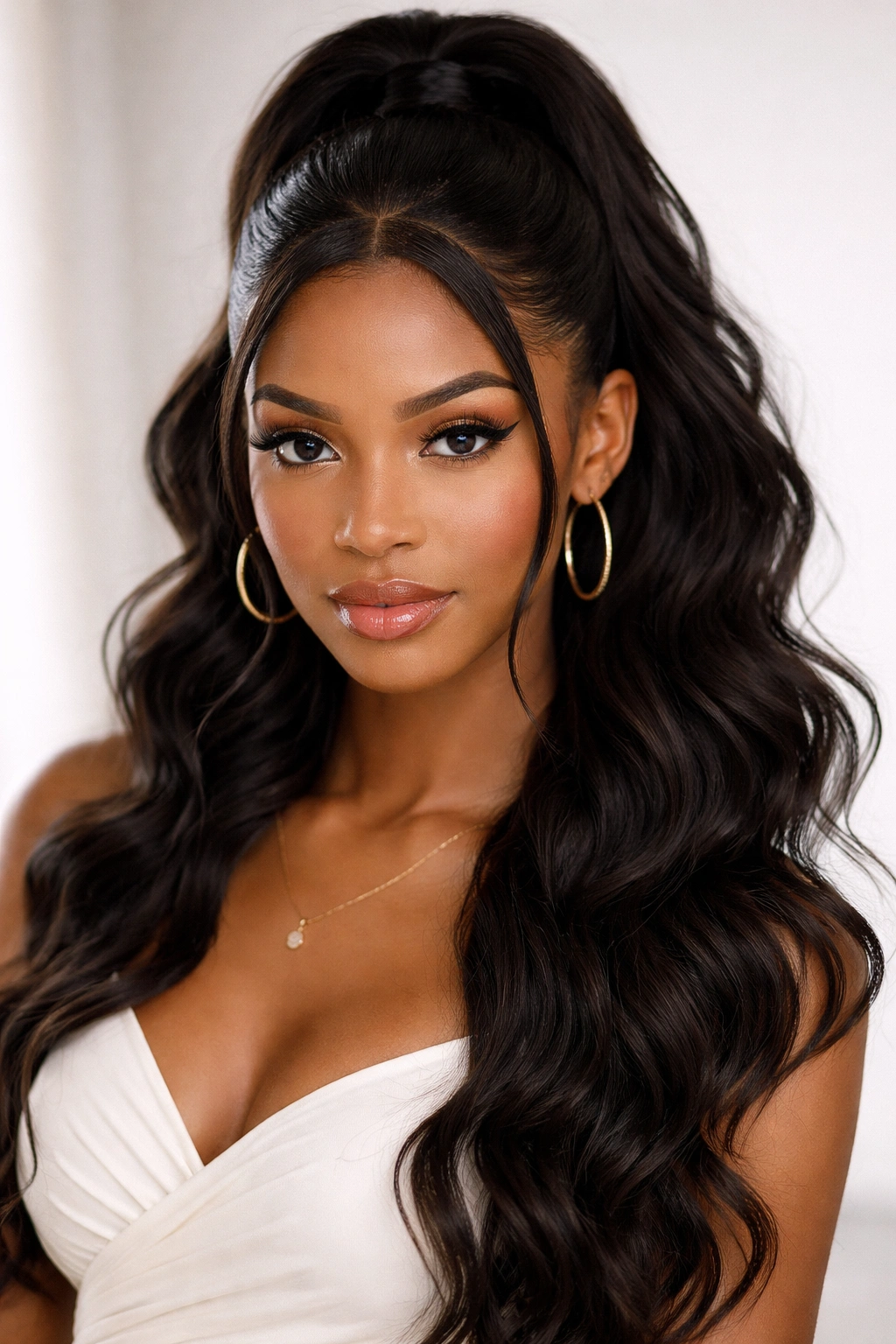
Want the front to do a little more work? A crisscross ponytail makes the base look more styled without needing a full braid pattern. Small sections from the front are crossed over each other before they disappear into the ponytail, and that tiny bit of structure changes the whole look.
The style works because it adds interest at the exact place people look first: the hairline and crown. On wavy hair, the crisscross detail also helps control any puffiness near the roots. If the base is secure, the rest of the ponytail can stay soft and loose.
Keep the sections even. One section too thick and the crisscross starts looking lopsided. Two or four neat passes are usually enough.
12. Messy Textured Weave Ponytail
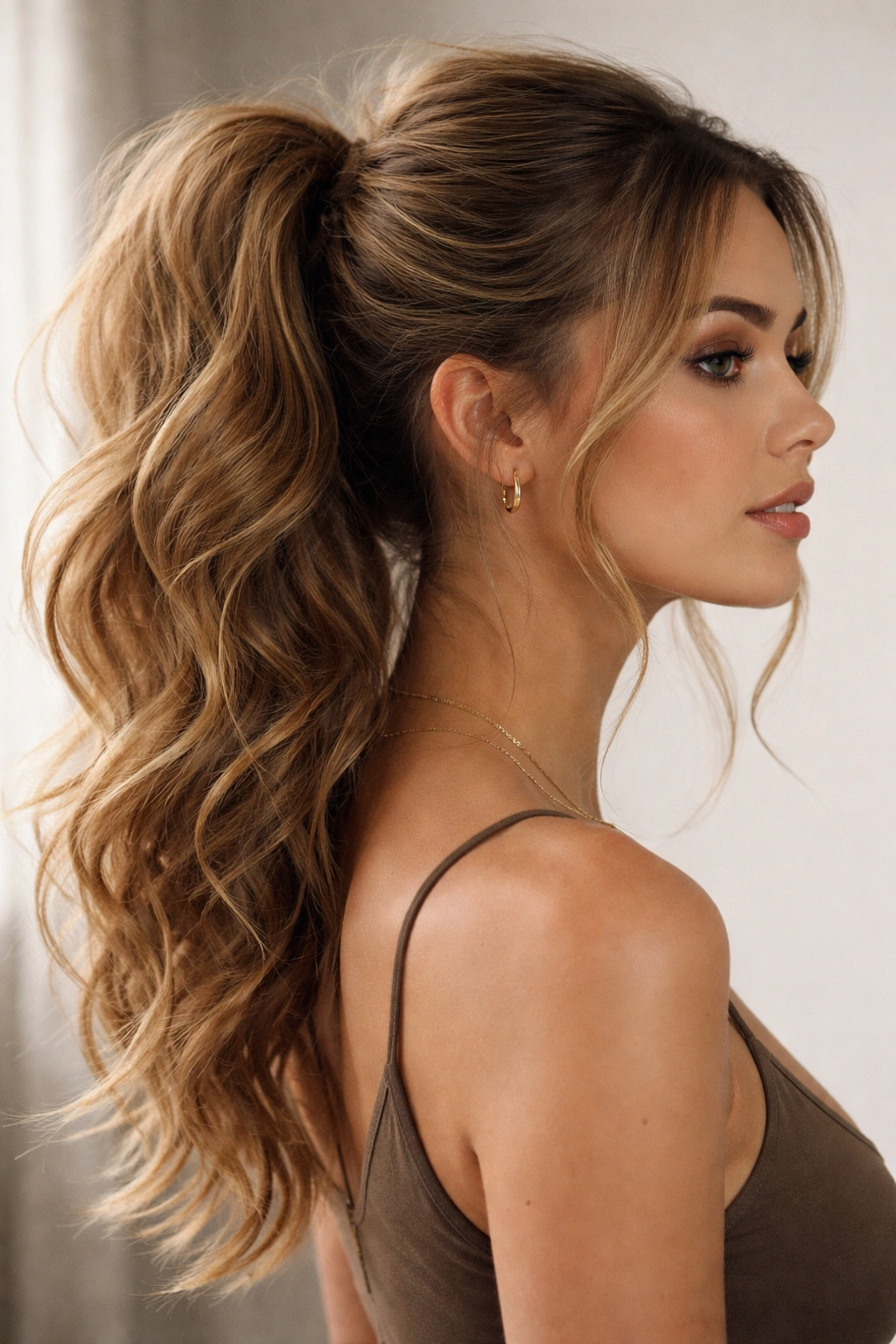
Not every ponytail needs a glassy finish. A messy textured weave ponytail is the style for people who want movement first and perfection second. It still has structure, but the waves are allowed to stay a little undone, which is exactly what makes it work on wavy hair.
The crown can be lightly teased for lift, then smoothed just enough to keep it from puffing out. The tail should be finger-combed rather than brushed to death. If the waves separate in a few places, that is fine. If they turn into a fuzzy cloud, you used too much manipulation.
What to Watch For
This look can go from effortless to sloppy fast. Stop touching it once the shape is there. Wavy hair always looks best when it still has some life left in it.
13. Low Nape Weave Ponytail with Flipped Ends
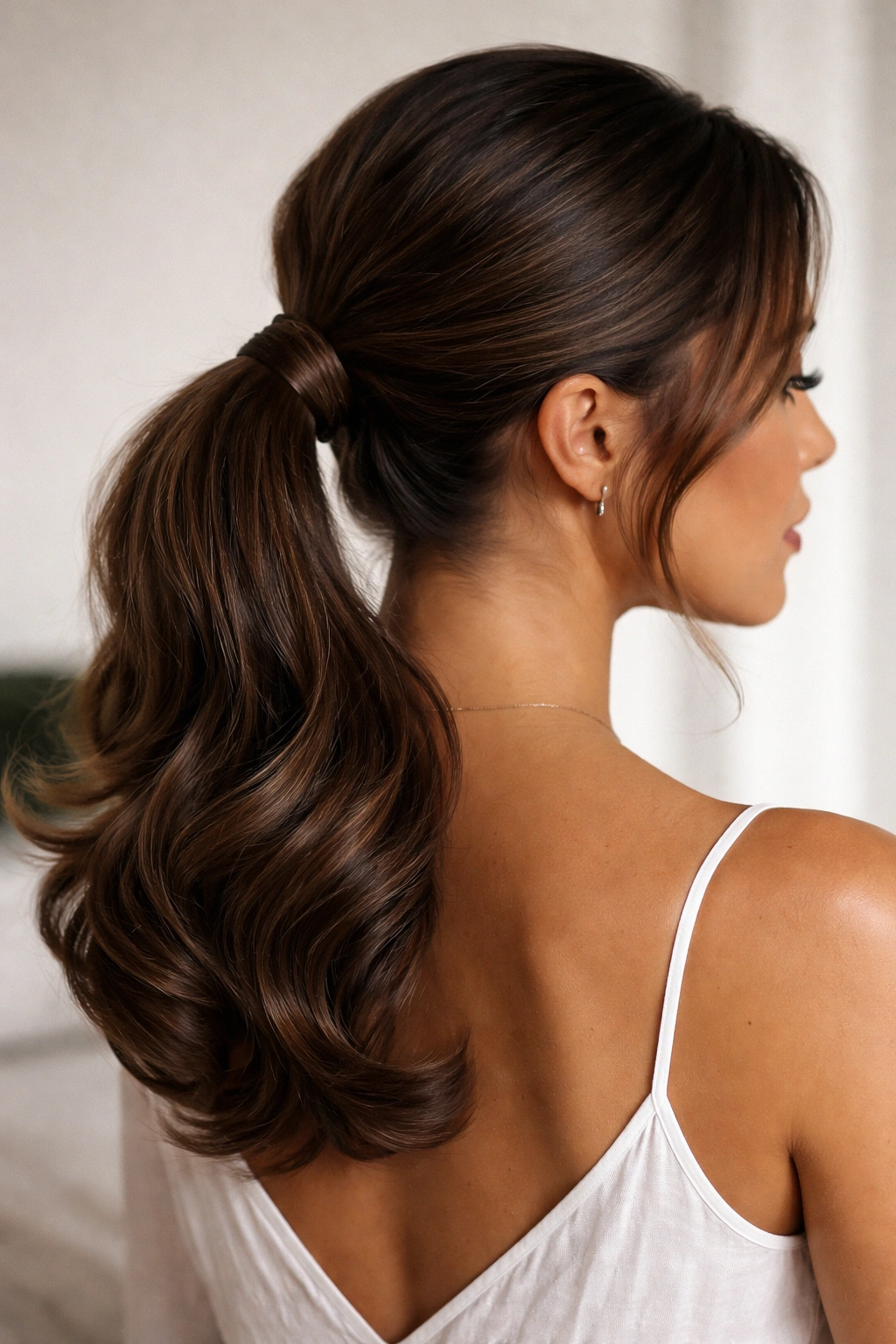
A low nape ponytail sits quietly at the base of the neck and gives the style a softer profile than a high pony ever could. Flipped ends make it even better. That little bend at the bottom gives the ponytail a finished line, and it keeps the weave from hanging in one straight block.
The shape is old-school in a good way. It feels neat, but not stiff. If the weave is slightly layered, the flip at the ends can be subtle. If the hair is fuller, the flip becomes a more obvious detail and gives the ponytail a small lift at the bottom.
A flat iron turned just slightly under at the last 3 inches can do the job. So can a set of flexi rods if you want less heat.
14. High Ponytail with Cornrow Base
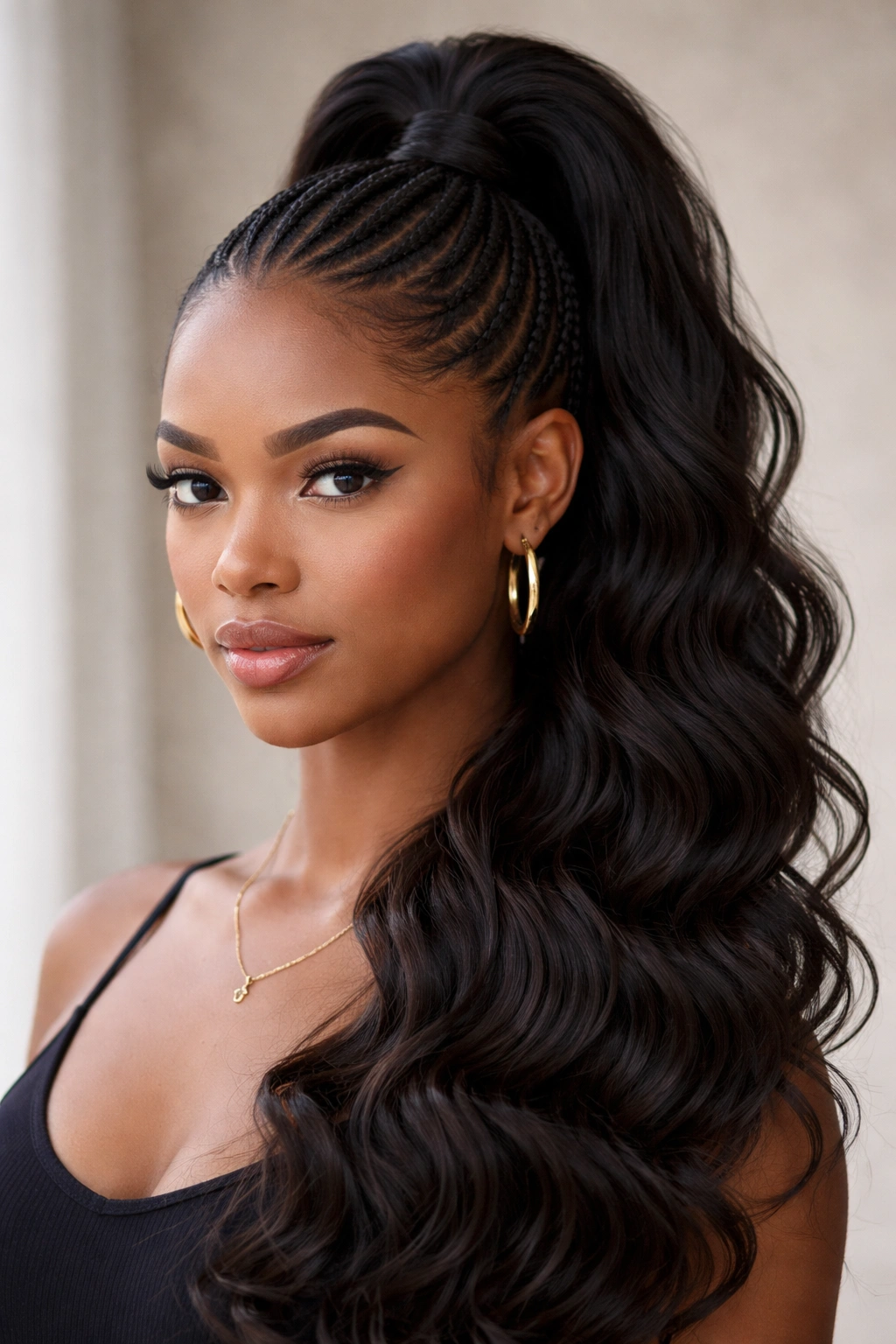
A high ponytail on a cornrow base is the version that stays put. The braids create a stable foundation, which helps if the ponytail is long, heavy, or worn for hours. It also gives the style a cleaner finish near the scalp, because the braid pattern disappears under the weave.
This style suits wavy hair well because the texture in the ponytail softens the strictness of the cornrows. That contrast matters. Without it, the style can look too sharp. With the waves, the ponytail has movement, and the whole thing feels more balanced.
The base should be flat. If the cornrows pile up too much at the crown, the ponytail starts high in an awkward way. A low-profile braid pattern makes the final silhouette look better.
15. Wavy Ponytail with a Thick Braid Wrap
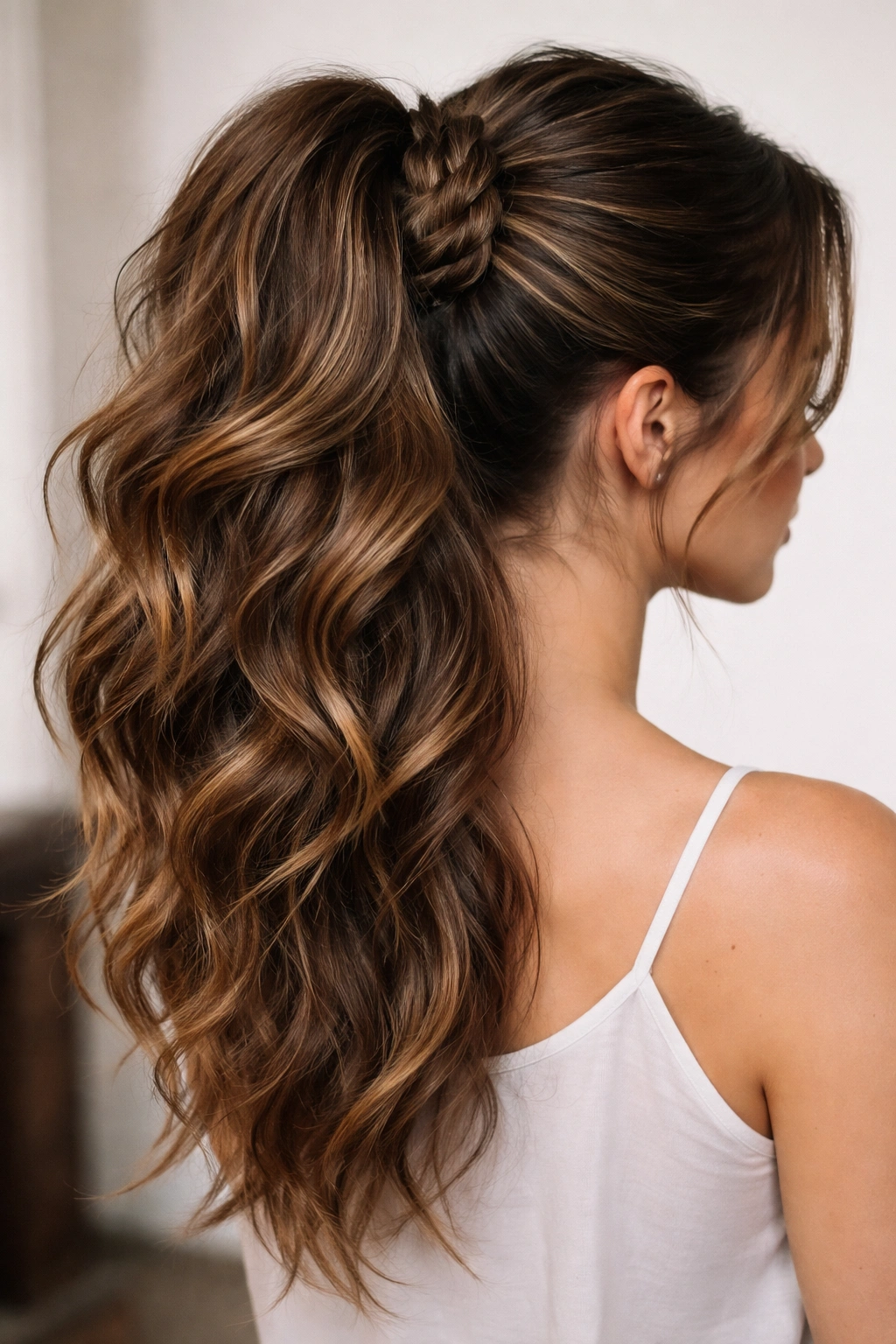
A thick braid wrap feels richer than a skinny strand wrapped around the base. It gives the ponytail a visible band of texture, almost like a built-in accessory. On wavy hair, that heavier wrap pairs well with a fuller tail because the two pieces feel related instead of competing.
Styling Trick
Start the wrap from a small section behind the ponytail and braid it before you wind it around the base. A flat wrap can disappear into the hair. A braid keeps its shape and shows up from the front, the side, and the back.
- Use a wrap section that is wide enough to stay visible, about 1 inch across.
- Secure the braid with a pin under the ponytail.
- Keep the tail loose so the wrap remains the main detail.
- Add a cuff only if the braid feels too plain.
Best detail: this style is stronger when the braid is slightly messy. Perfect braids can look too formal here.
16. Sleek Ponytail with a Curved Side Part
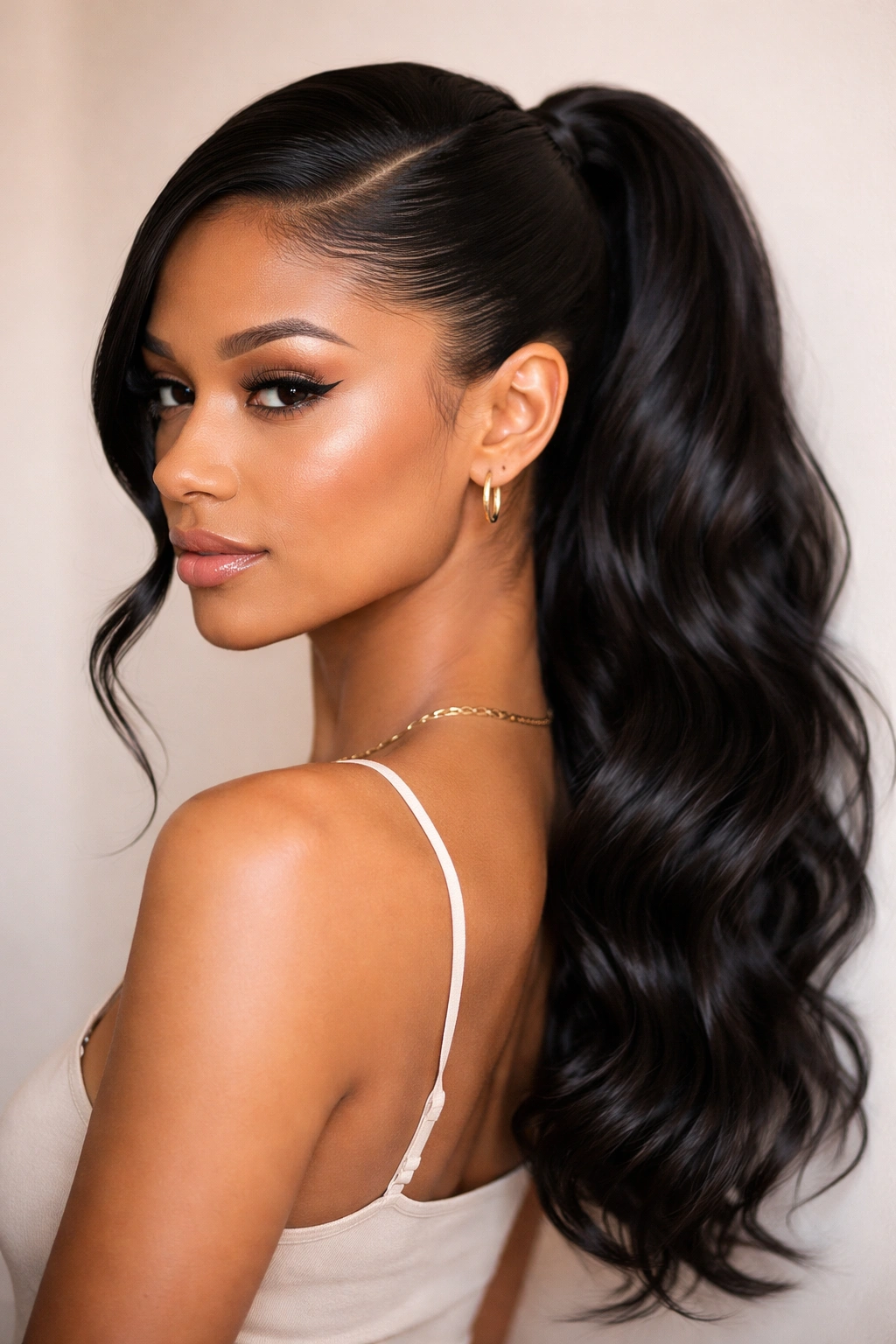
A curved side part softens the line of a sleek ponytail and keeps it from feeling too severe. Instead of cutting straight across the head, the part arcs gently toward the crown, which gives the top shape and lets the waves in the ponytail do more of the talking.
This is a useful trick for wavy hair because the curve makes the style look intentional even when the tail itself is loose. It also helps if one side of your hair naturally lifts more than the other. The curved part quietly fixes that without turning the whole style into a battle.
Use a fine tail comb and take your time with the part. A sloppy curve looks accidental. A clean one gives the style its polish.
17. Romantic Ponytail with Soft Tendrils
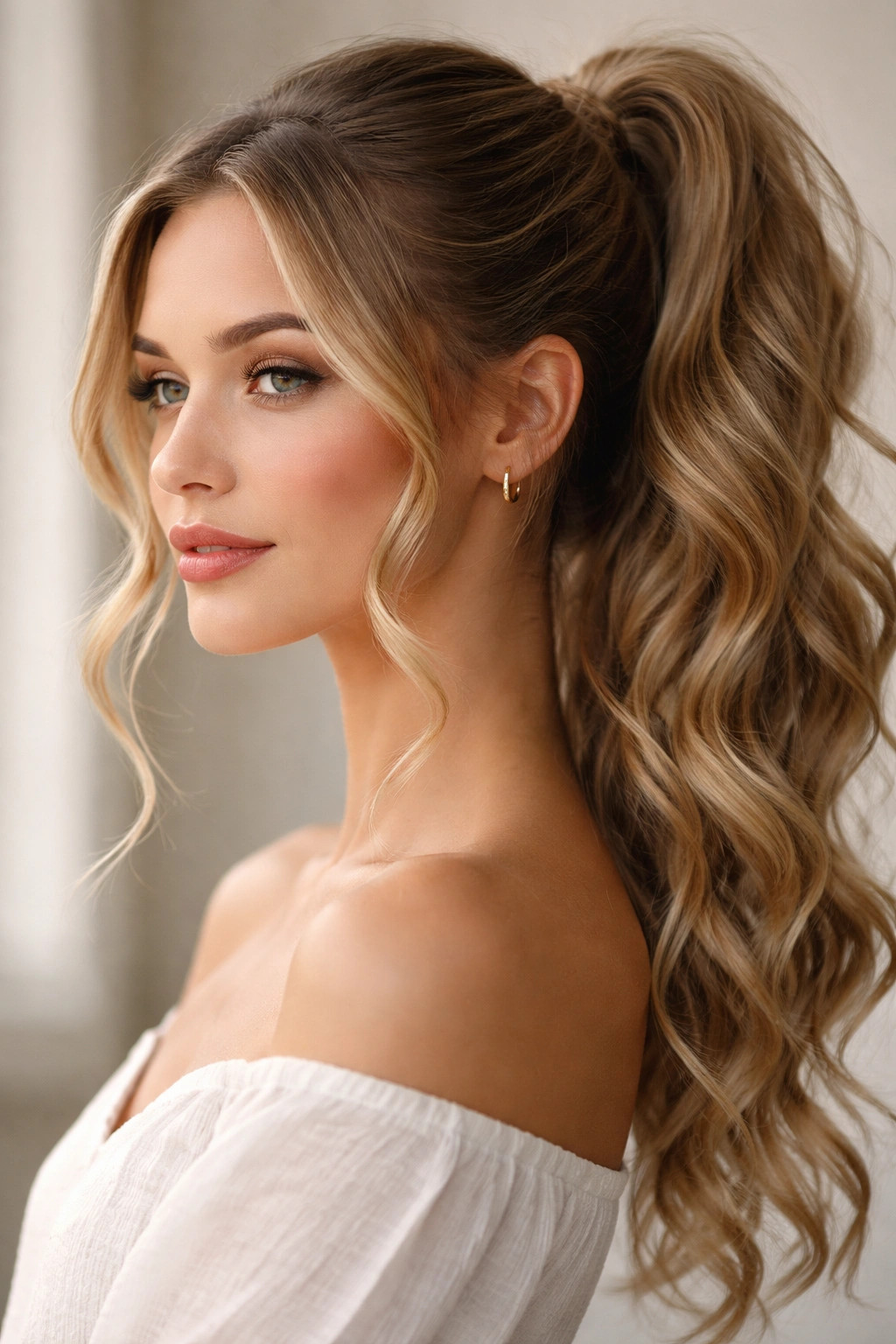
Soft tendrils around the face change the tone of a ponytail fast. The style goes from neat to soft without needing more hair or more length. A few loose pieces at the temples or jawline can frame wavy hair in a way that feels gentle instead of fussy.
Keep the tendrils thin. Thick chunks near the face can look dated and heavy. Two pieces are usually enough, and they should be curled away from the face so they fall in a relaxed line rather than sticking flat against the cheeks.
A Small Styling Note
If the tendrils are left out on purpose, treat them like part of the style. Curl them last, and use only a light mist of holding spray. Heavy product makes them look wet instead of soft.
18. Ponytail with Braided Front Accent
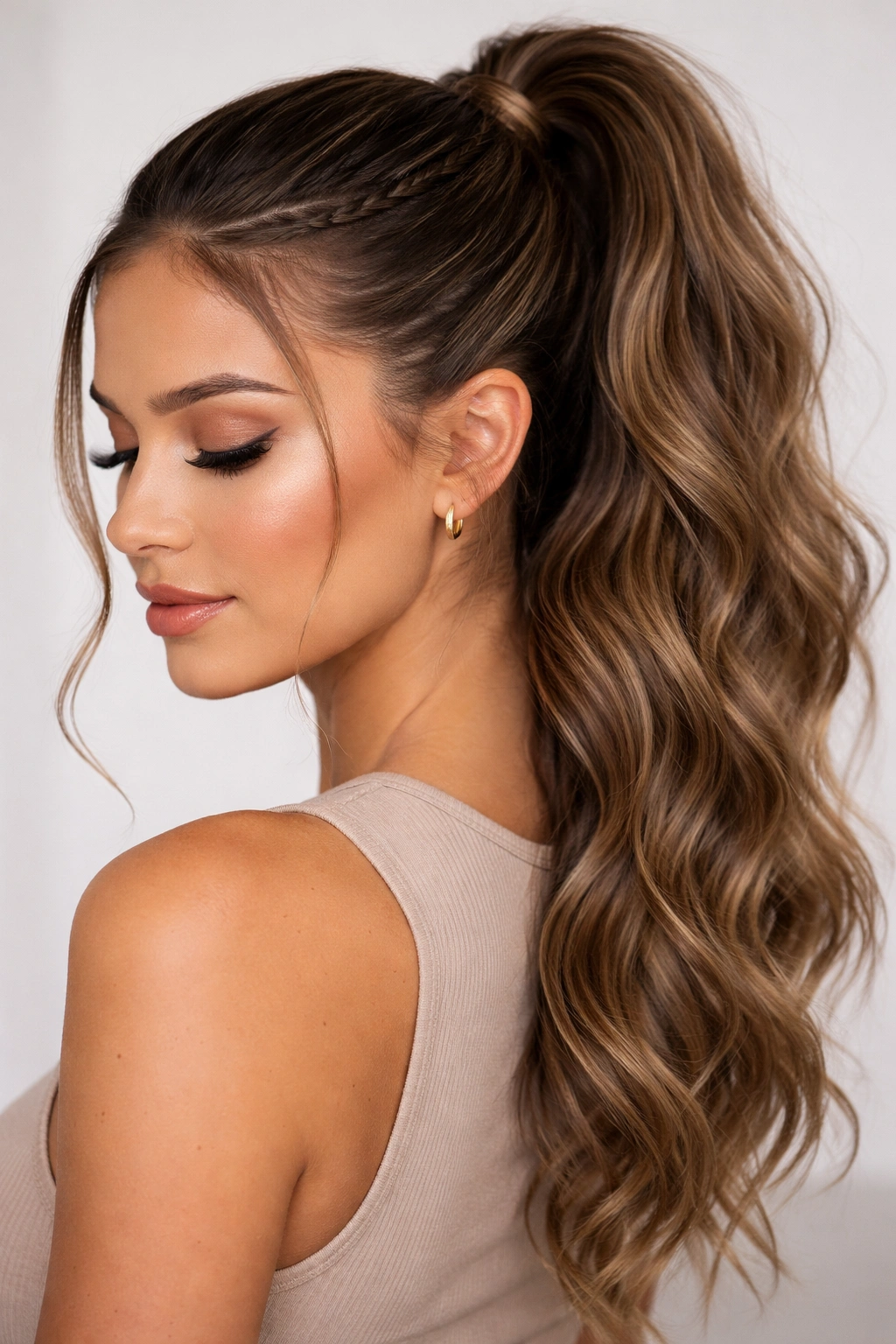
A braided front accent gives the ponytail a little detail without stealing the whole show. One small braid near the hairline, or a pair of thin braids on both sides, can make the style feel more designed. On wavy hair, those accents keep the front tidy while the tail stays loose.
This works well if you want the ponytail to look finished from the front without adding a lot of extra height. The braid also helps tame pieces that would otherwise slip out around the temples. That is the practical reason, and it matters more than the decoration.
Keep the braid narrow. Around a quarter inch is enough. Anything thicker starts taking over the look.
19. Layered Weave Ponytail with Mixed Wave Patterns
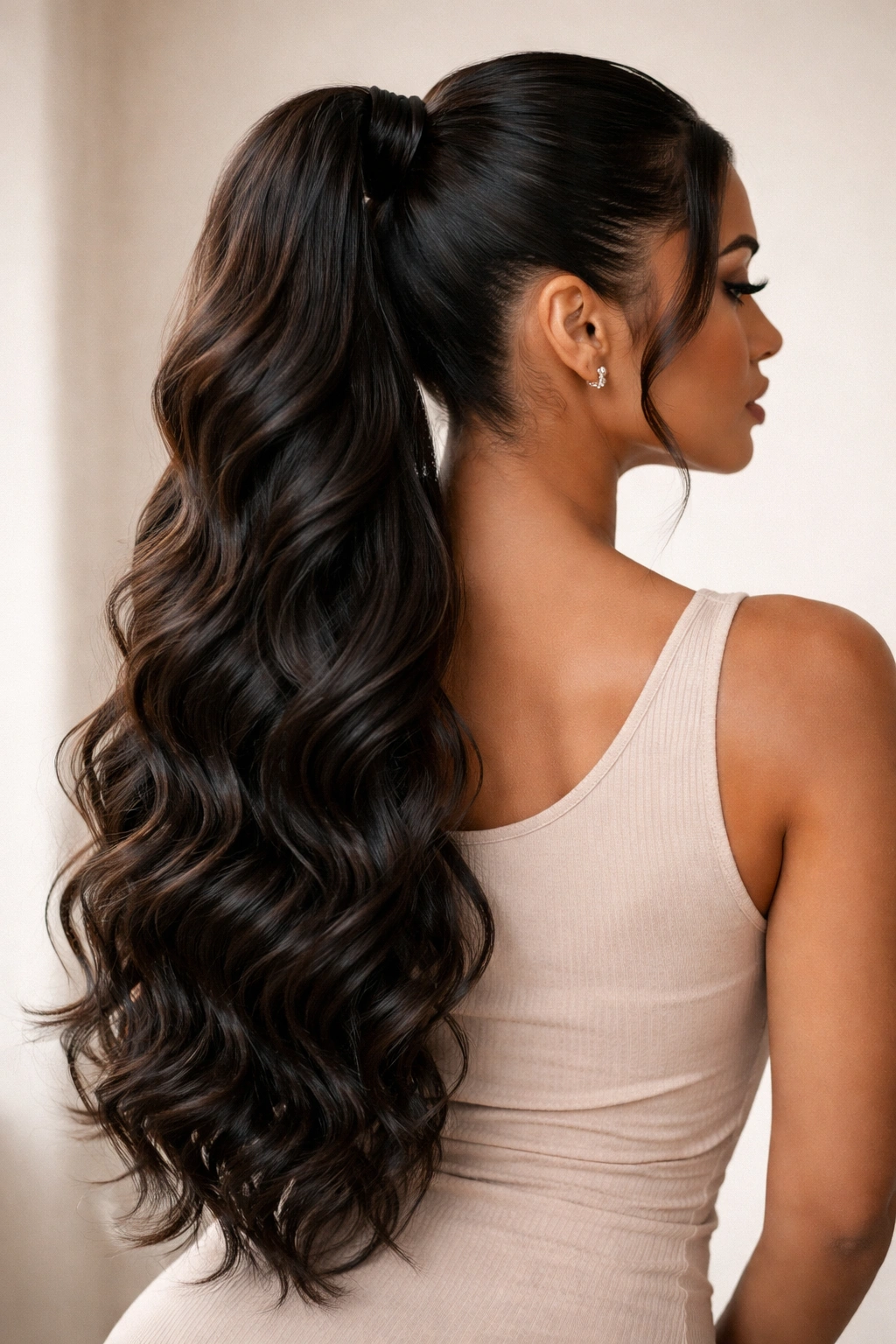
Layered bundles can make a ponytail look fuller without adding obvious bulk at the base. Mixed wave patterns do something similar, but with a little more texture variety. A looser wave near the top and a deeper wave toward the ends gives the tail more movement from top to bottom.
The result is less uniform than a single-wave bundle, and that is the appeal. It looks more like hair with personality and less like a single synthetic line hanging down the back. If you like texture that shifts as the ponytail moves, this style has a lot going for it.
The main caution is balance. Too many different textures can look messy. Keep the contrast subtle enough that the eye reads it as depth, not confusion.
20. Side Ponytail with Volume at the Crown
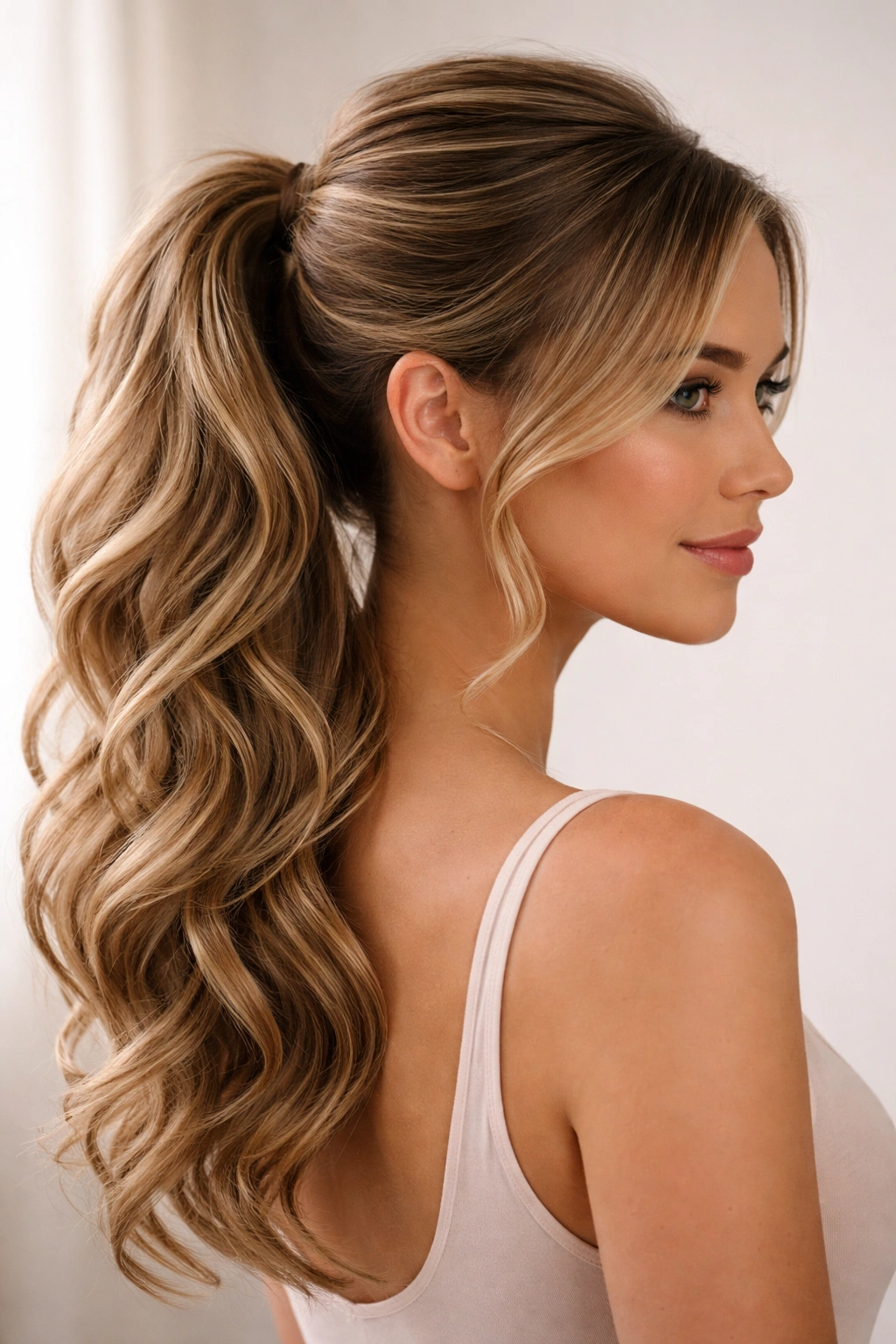
A side ponytail with volume at the crown gives you a little height without the full commitment of a high pony. The lifted crown adds shape, while the ponytail itself sits off to one side and brings the attention down toward the shoulder. It is a useful look when you want softness and structure at the same time.
This style works especially well with wavy weave because the texture keeps the side pony from looking flat. A little teasing at the crown goes a long way. Too much and the top starts looking puffy in a way that fights the rest of the style.
How to Get the Shape Right
Sweep the hair upward before you secure the ponytail, then smooth only the outer layer. That leaves just enough fullness underneath to support the lift.
- Place the ponytail behind the ear, not too far back.
- Use a light backcomb at the crown for height.
- Keep the wave pattern visible over the shoulder.
- Add a subtle part if the top needs direction.
21. Ponytail with Gold Cuff Details
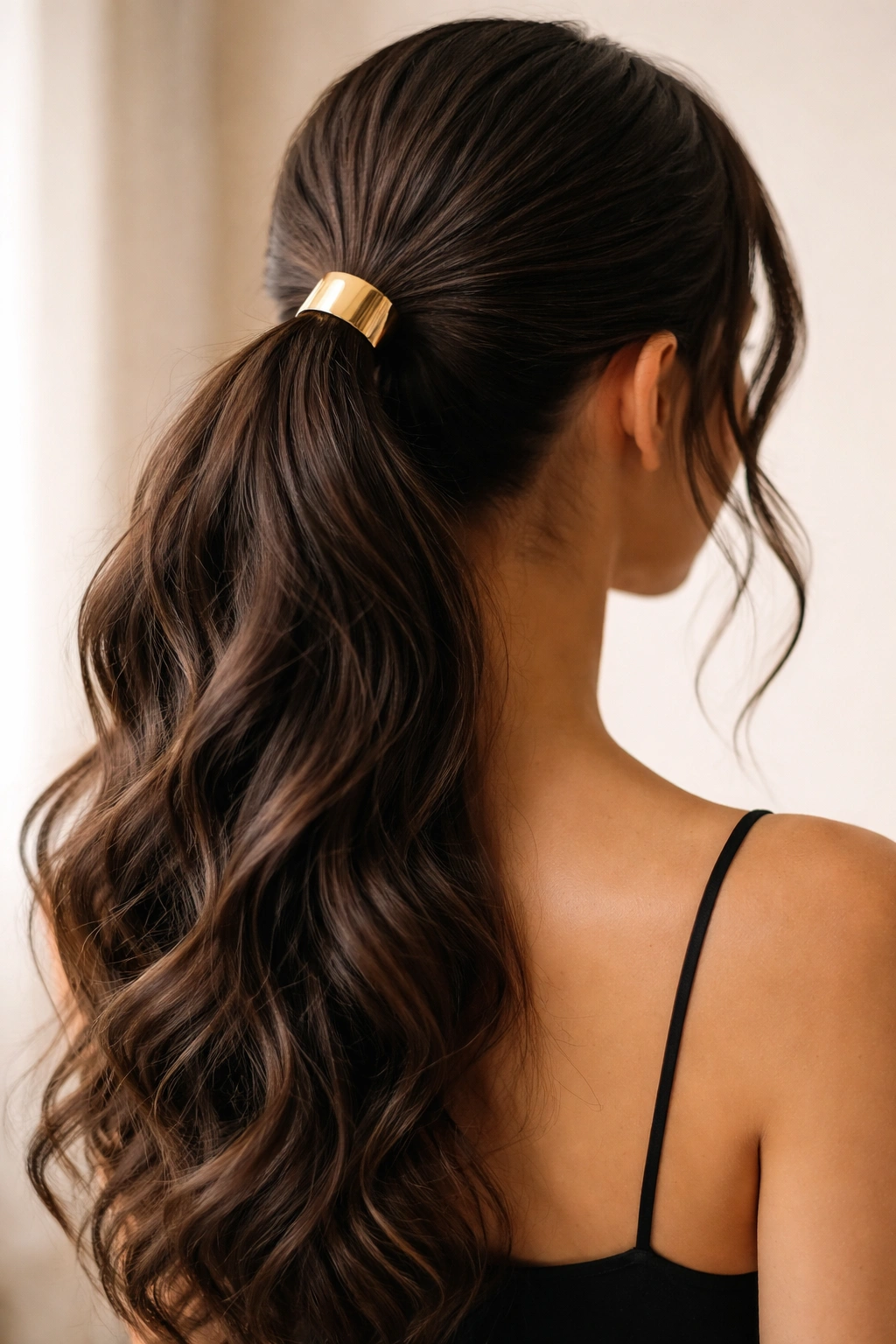
A plain weave ponytail can look expensive with one small cuff. Gold cuffs, rings, or a narrow wrap ring at the base add a bit of shine without turning the style into a costume. On wavy hair, the metal detail catches the eye because the texture behind it is soft.
One cuff is enough if the ponytail is long and full. Two or three can work if the style is simple and the accessories are narrow. The mistake is stacking too much hardware onto hair that already has a lot of movement. The ponytail starts to look crowded.
I like this version when the outfit is minimal and the hair needs one clear focal point. It is neat, plain, and just dressed up enough.
22. Sportsy Weave Ponytail That Still Looks Polished
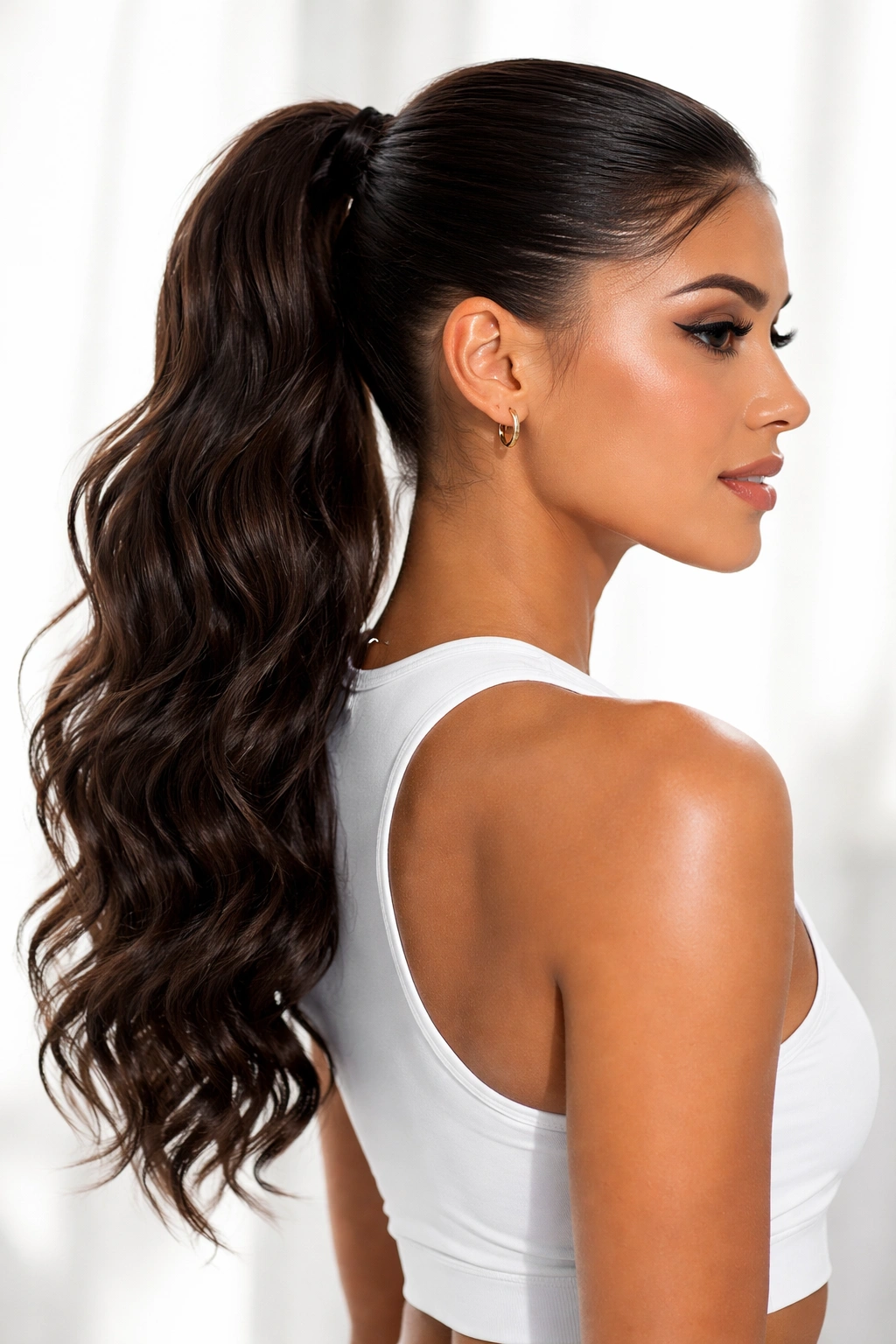
A sportsy ponytail does not have to look rushed. A tight base, a long wavy tail, and a clean side part can make the style feel practical without looking like you gave up halfway through getting ready. That is why this version works for busy days.
The key is control. The hairline should be smooth, the base should sit secure, and the tail should stay light enough to move when you walk. If the weave is too heavy, the style stops feeling sporty and starts feeling like work.
What Helps Most
Use a strong elastic and keep the base close to the head. A slightly higher ponytail usually feels better for movement, but not so high that it bounces around all day.
- Choose a medium-density bundle instead of an ultra-thick one.
- Keep the front sleek and the tail soft.
- Avoid bulky wraps that add weight.
- Refresh the crown with a small amount of edge control, not a full layer.
23. Soft Glam Weave Ponytail for Wavy Hair
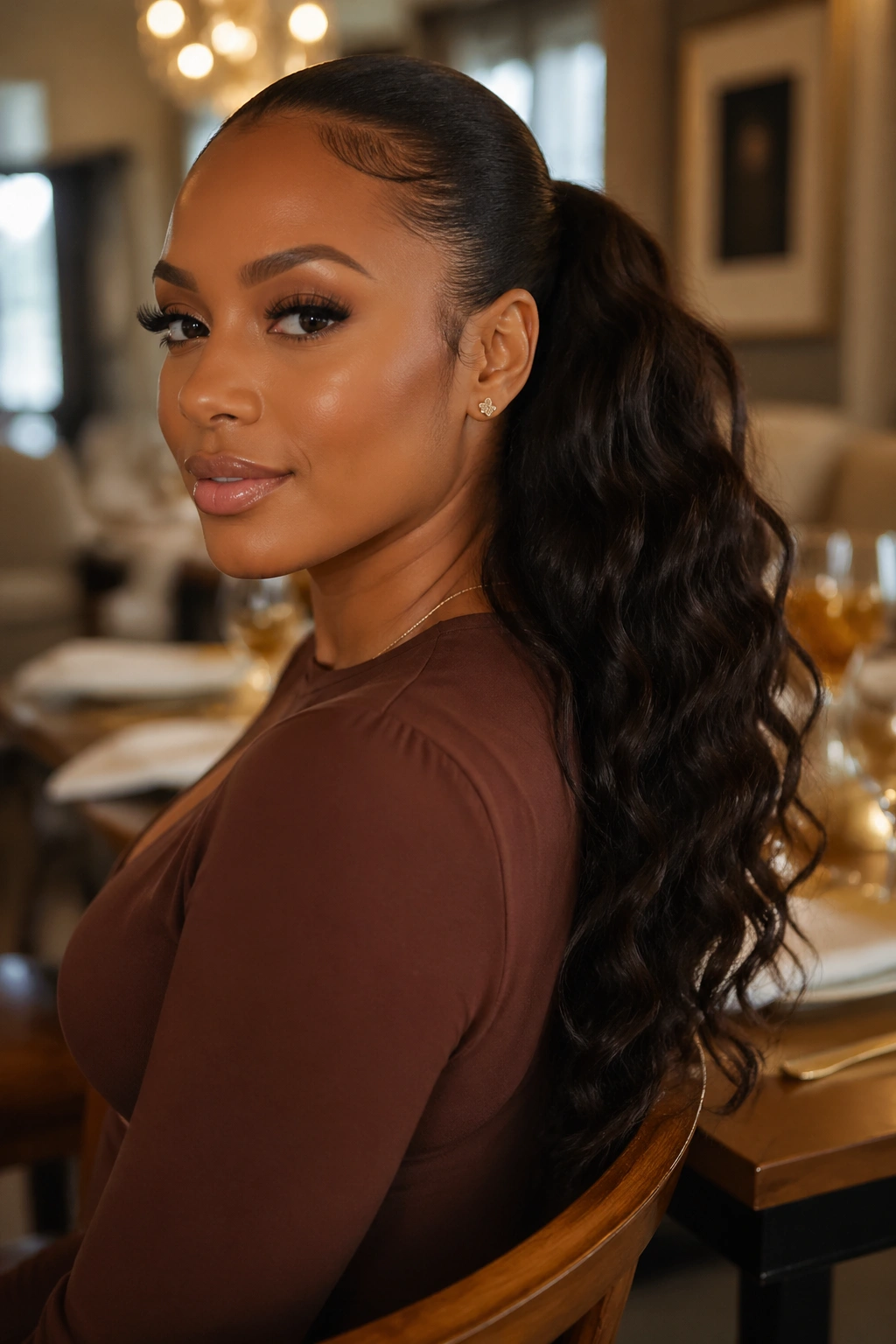
Soft glam is the version that sits at the sweet spot between polished and relaxed. The crown is smooth, the waves stay visible, and the ponytail has enough body to look intentional without feeling formal. It works for dinner, photos, dressy events, and those rare days when you want your hair to carry part of the outfit.
The appeal is in the restraint. No extra tricks. No crowded accessories. Just a clean base, a little shine, and waves that move naturally once the hair falls past the shoulder. If the bundle has a body-wave pattern, this style picks it up nicely. If the weave is deeper, brushing the tail lightly with fingers instead of a brush keeps the texture from disappearing.
A soft glam ponytail is the one I’d choose when the goal is simple: look finished, not overdone. It is tidy enough to hold up close, loose enough to feel like hair, and easy enough to wear without thinking about it every ten minutes.
