

There is a distinct, undeniable confidence that settles in the moment you walk out of the salon with a fresh set of braids. It’s not just about the look; it’s about the protection, the time saved in the morning, and the way a sharp, clean part can completely change the geometry of your face. For those of us with natural hair, braided ponytails are the ultimate balancing act. They offer the sleek, high-fashion aesthetic of a pulled-back style while simultaneously shielding our delicate strands from daily manipulation and environmental damage.
The beauty of these styles lies in their versatility. You can go from a low-profile, professional look that commands respect in a boardroom to an intricate, beaded masterpiece that feels more like art than a hairstyle. But the true secret to wearing these styles, week after week, is managing the tension. If your scalp is screaming, the style isn’t right, no matter how good it looks in the mirror. You need a balance of hold, style, and care.
Whether you are looking for something that takes twenty minutes to refresh or a complex pattern that requires a skilled braider and a few hours in the chair, the options are endless. Let’s look at the styles that actually work, how to maintain them, and why they hold up better than almost anything else in your styling rotation.
1. Classic Sleek High Ponytail with Cornrows
This is the baseline, the standard, and honestly, the style that never lets you down. It involves sweeping your natural hair up into a high, taut base while cornrowing the roots back into a singular, clean ponytail. The key to this look is the grip. You want the roots tight enough to look polished, but not so tight that they pull at your edges.
What Makes It Work
The brilliance of this style is its simplicity. Because it follows the natural shape of your head, it tends to last longer than styles that involve complex, hanging patterns. If you use a firm-hold edge control and a silk scarf to set it overnight, you can often keep this look fresh for three weeks or more.
Essential Tools for the Look
- Rat-tail comb for sharp, precise parts
- Firm-hold edge gel (alcohol-free to prevent drying)
- Boar bristle brush for smoothing
- Silk or satin bonnet for nighttime protection
Pro tip: Do not skip the silk scarf after styling. Tying it down while the edge control dries sets the hair in place, ensuring that by the time you head out the door, there isn’t a single flyaway in sight.
2. Feed-in Braided Ponytail with Curly Ends
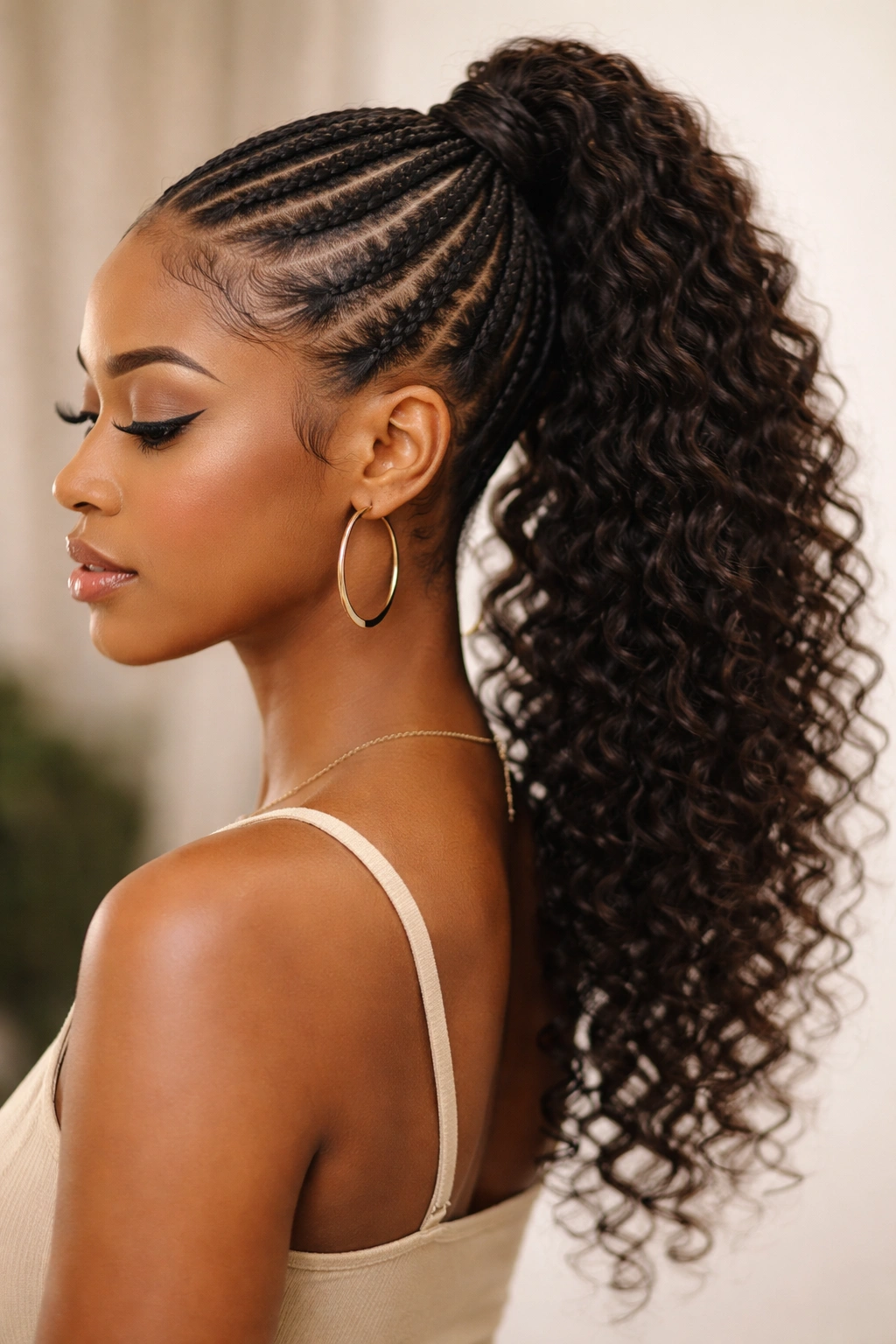
Feed-in braids have revolutionized the game because they mimic the look of natural hair growing out of the scalp. By gradually adding synthetic hair into your natural braid, you avoid that bulky knot at the start. When you finish those braids into a ponytail and let the ends remain curly or wavy, you get a soft, romantic contrast to the sharp, cornrowed base.
When choosing your extensions, look for pre-stretched braiding hair. This saves you an immense amount of time and prevents the tangling that often happens when you have to stretch the hair yourself. The goal here is a seamless transition. You want the eye to travel from your scalp down to those bouncy, curled ends without spotting where the synthetic hair begins.
3. Low Braided Ponytail with Side Part
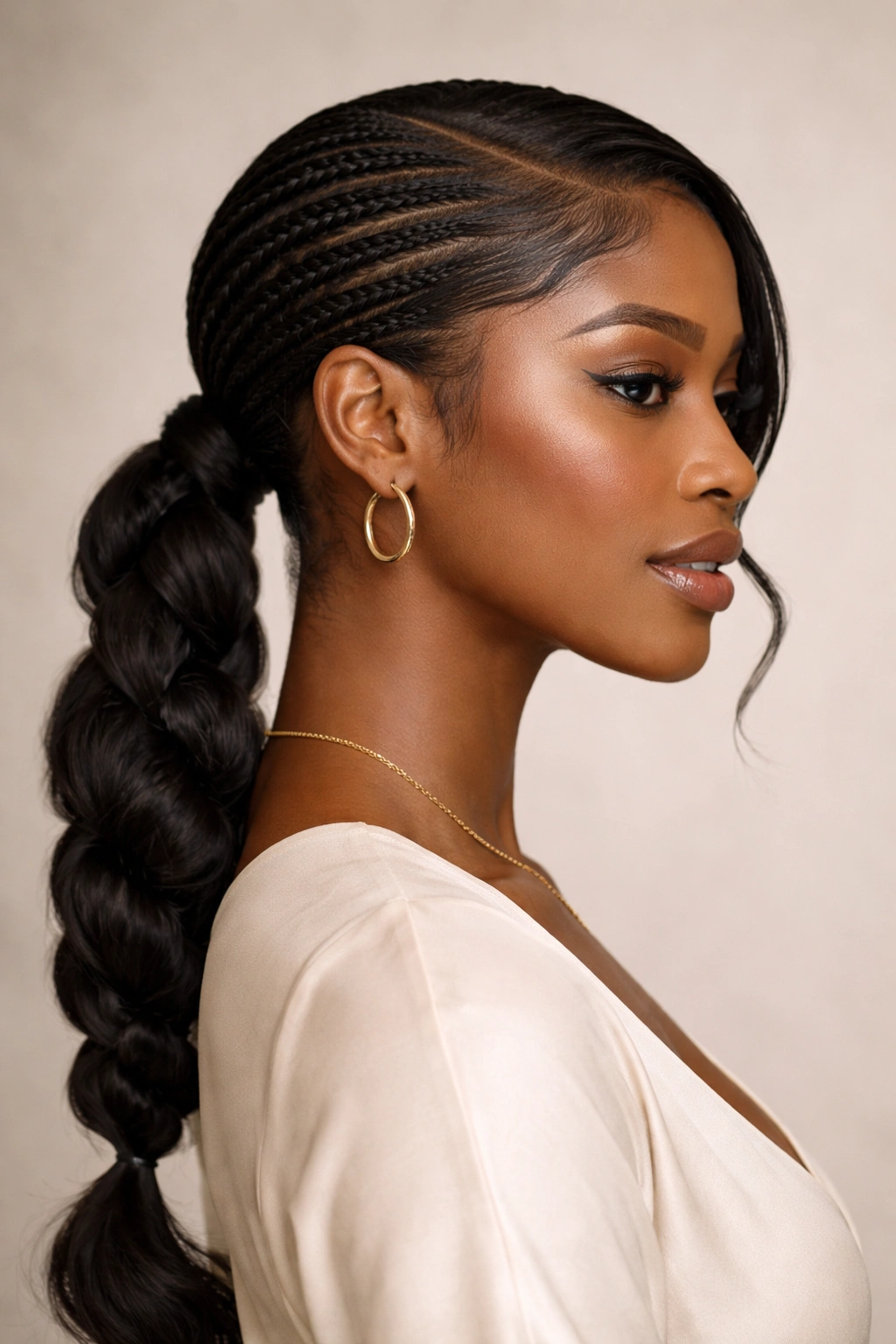
Sometimes, you need a style that whispers rather than shouts. A low ponytail sitting right at the nape of your neck creates an incredibly sophisticated silhouette. Adding a deep side part gives it a touch of elegance that works just as well for a formal event as it does for a casual Saturday afternoon.
This style is particularly forgiving if you are worried about tension on your hairline. Because the hair is being pulled back toward the nape rather than upward, there is significantly less stress on your frontal edges. It is a fantastic protective choice for those weeks when you want to give your hairline a much-needed break from the strain of high-tension styling.
4. Fulani-Inspired Braided Ponytail
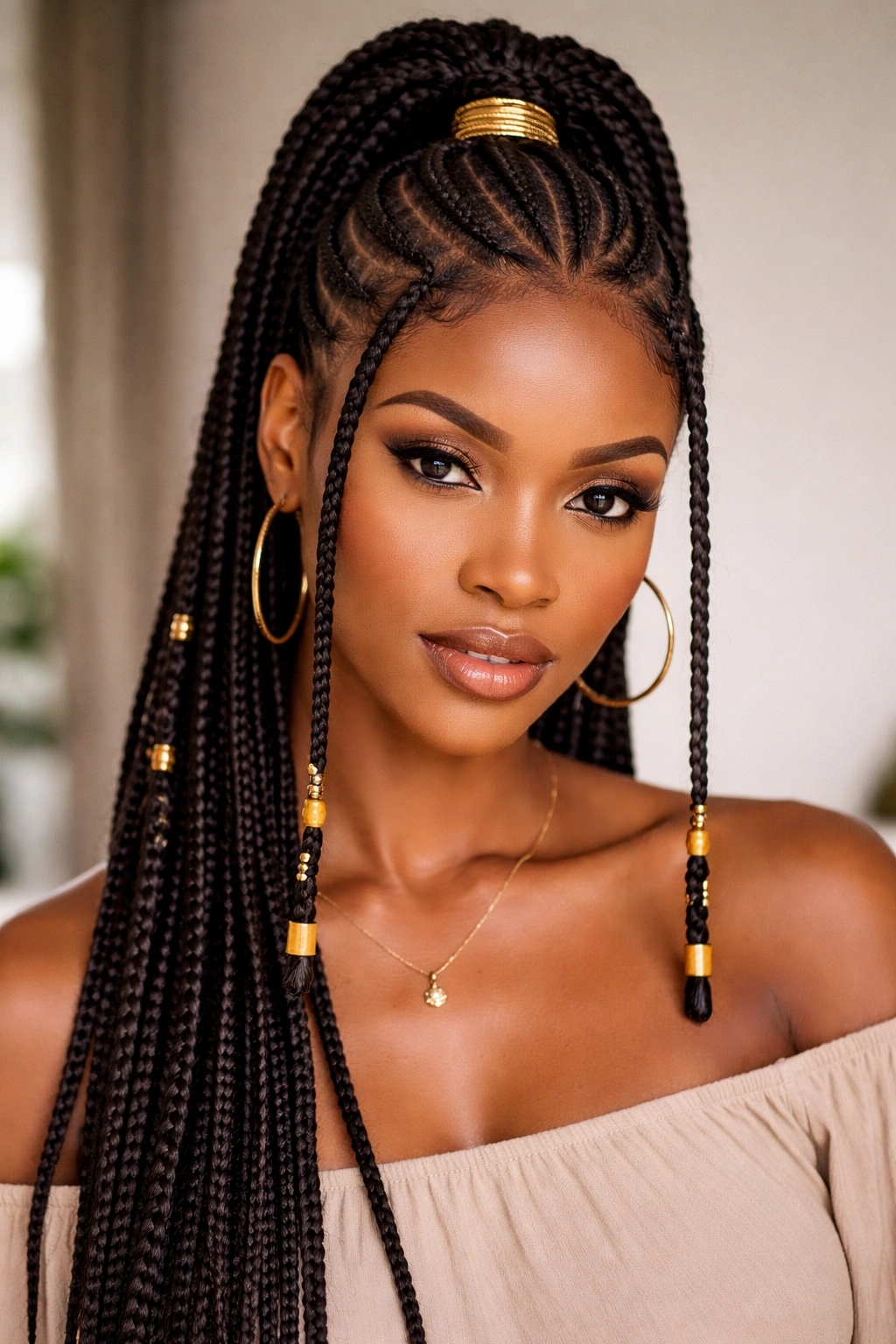
The Fulani style is iconic for a reason. It typically features a center part with braids coming forward near the temples, often accessorized with gold cuffs or beads. Translating this into a ponytail involves keeping those specific, forward-facing braids while pulling the rest of your hair into a ponytail at the crown.
Why This Style Persists
It is a celebration of history and style combined. The geometric patterns of Fulani braids are not just functional; they are decorative. When you combine them with a ponytail, you get the best of both worlds: the intricate detailing around the face and the ease of a ponytail.
Maintenance Note
Because the braids around your face are more exposed, they tend to frizz faster than the ones on the back of your head. Keep a small spray bottle of water and leave-in conditioner mixed together to lightly mist these braids every few days. It keeps them looking crisp without adding heavy product buildup.
5. Tribal Braided Ponytail with Beads
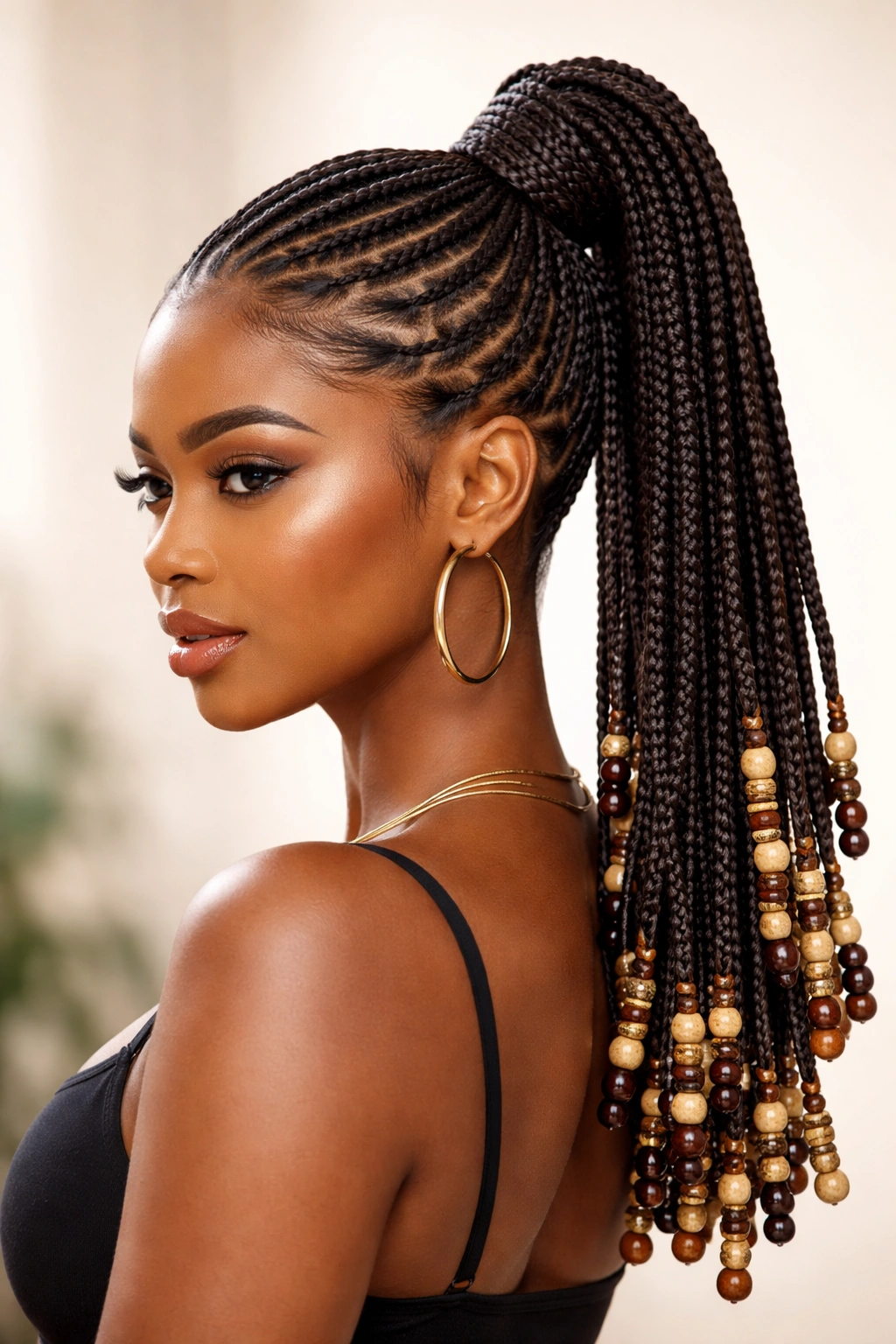
Tribal braids are defined by their complex, large-to-small patterns that often radiate from the center of the head. When you gather these into a ponytail, the look becomes bold and unapologetic. Adding wooden or clear acrylic beads to the ends of the braids adds a percussive sound and a rhythmic aesthetic that moves with you.
Don’t be afraid to experiment with bead placement. You don’t have to put them on every single braid. Placing them only on the braids that hang in the front can draw attention to your facial features, while scattering them throughout the ponytail creates a more bohemian, textured vibe. Just make sure the beads are secured with small rubber bands so they don’t slide off during the day.
6. Double Braided Ponytail with Extensions
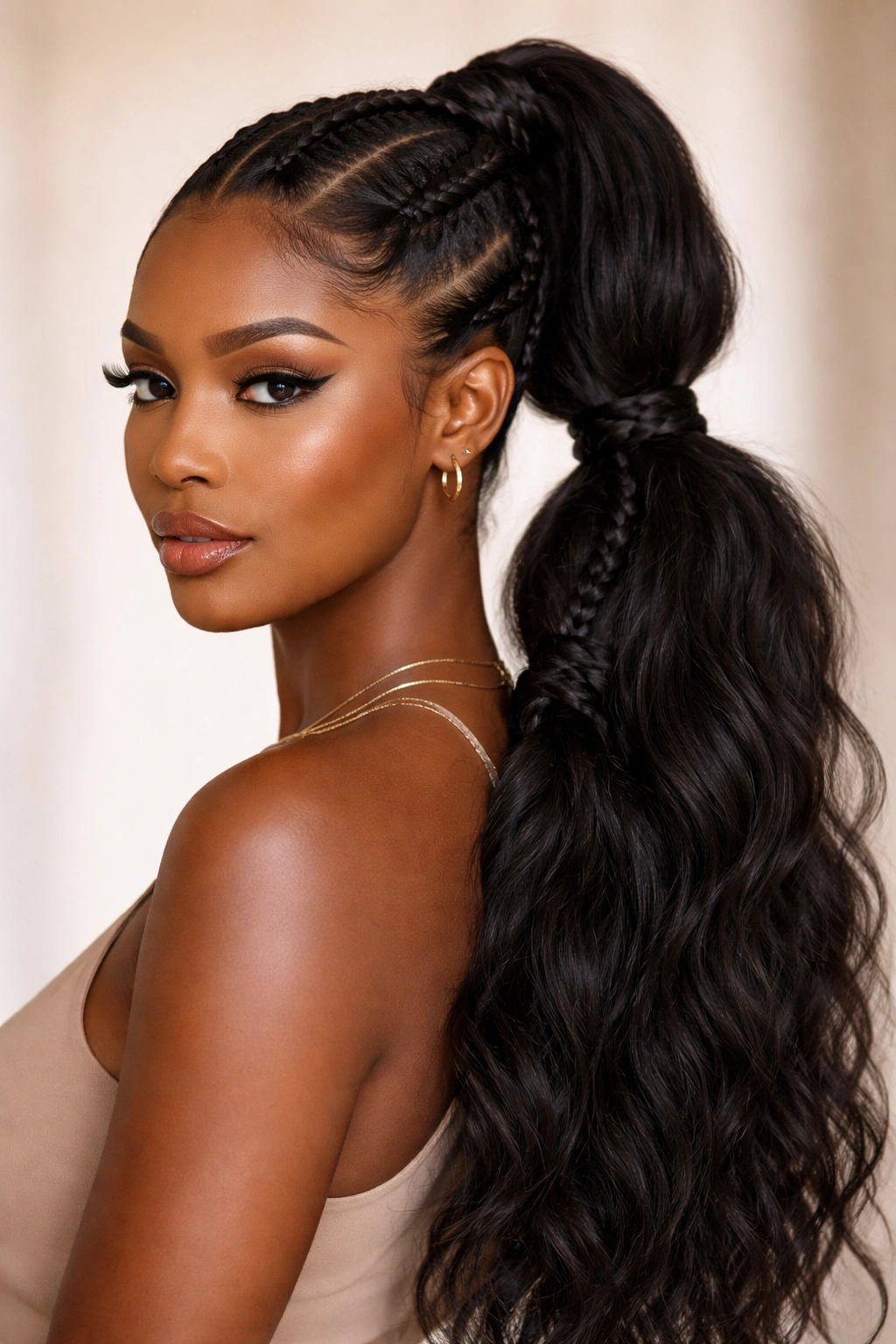
If one ponytail isn’t enough, why not double it up? This style involves creating two distinct ponytails—one slightly higher and one lower—and letting them cascade together to create the illusion of incredible volume and length. It is a fun, modern take that feels a bit more “editorial” than your standard single ponytail.
This style relies heavily on the quality of your extensions. You need hair that matches the texture of your natural hair as closely as possible. If your natural hair is pressed or blown out, choose a straight-texture extension. If you are keeping your hair natural and textured, opt for a kinky-straight or yaki texture. The blend is everything.
7. Half-Up, Half-Down Braided Ponytail
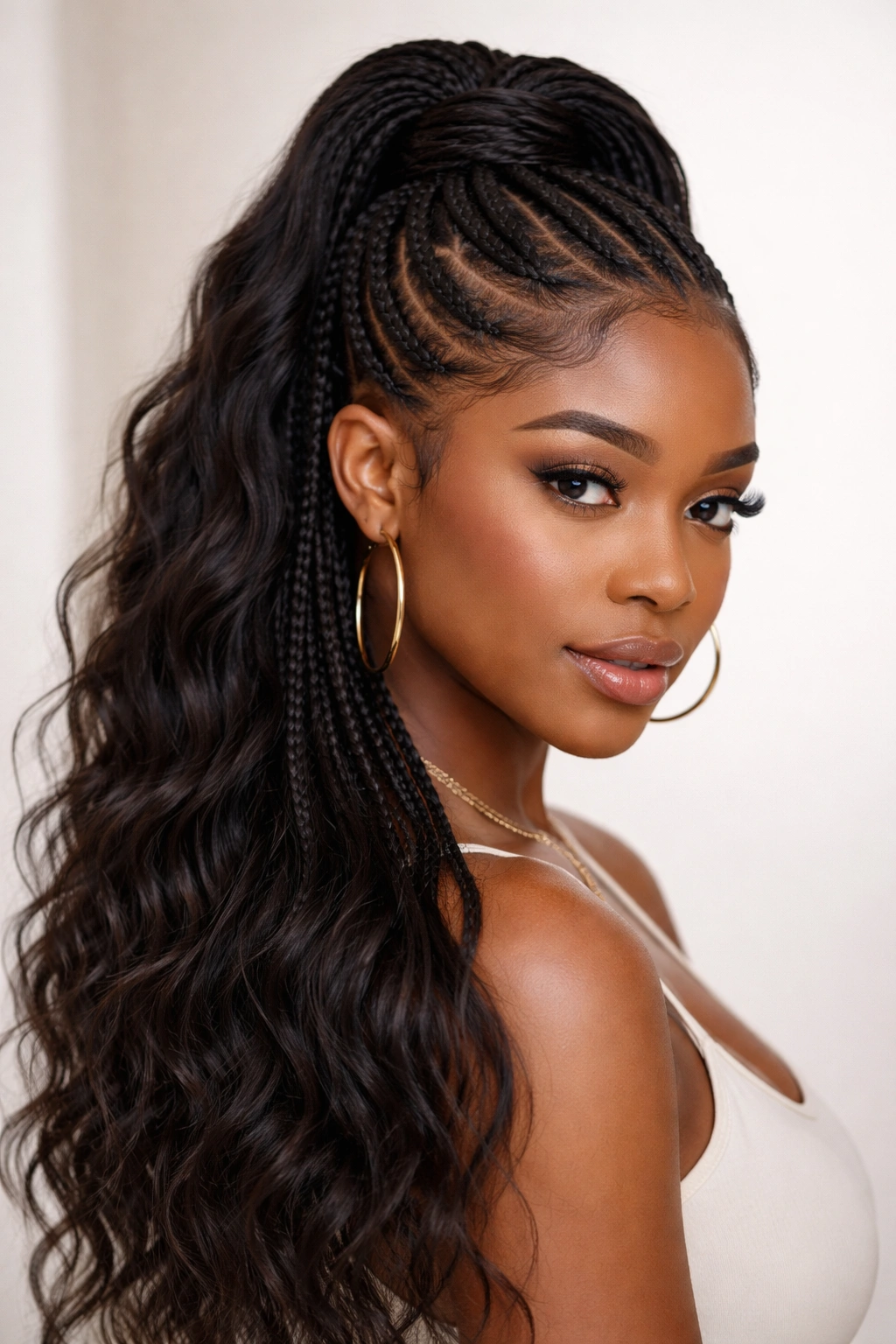
This is the ultimate compromise for the indecisive. You get the drama of a high, braided ponytail at the crown, while the bottom section of your hair remains loose and flowing. It provides the security of a ponytail, keeping hair out of your face, while allowing you to show off the length and texture of the rest of your hair.
How to Achieve Balance
- Sectioning: Keep the ponytail section relatively small. If you grab too much hair for the ponytail, the bottom section will look thin and sparse.
- Blending: If the ponytail is braided, consider putting the loose hair in soft twists or bantu knots the night before to create a cohesive, defined texture.
- Securing: Use a heavy-duty hair tie to secure the base of the ponytail, then wrap a small braid around the base to hide it.
8. Lemonade Braided Ponytail
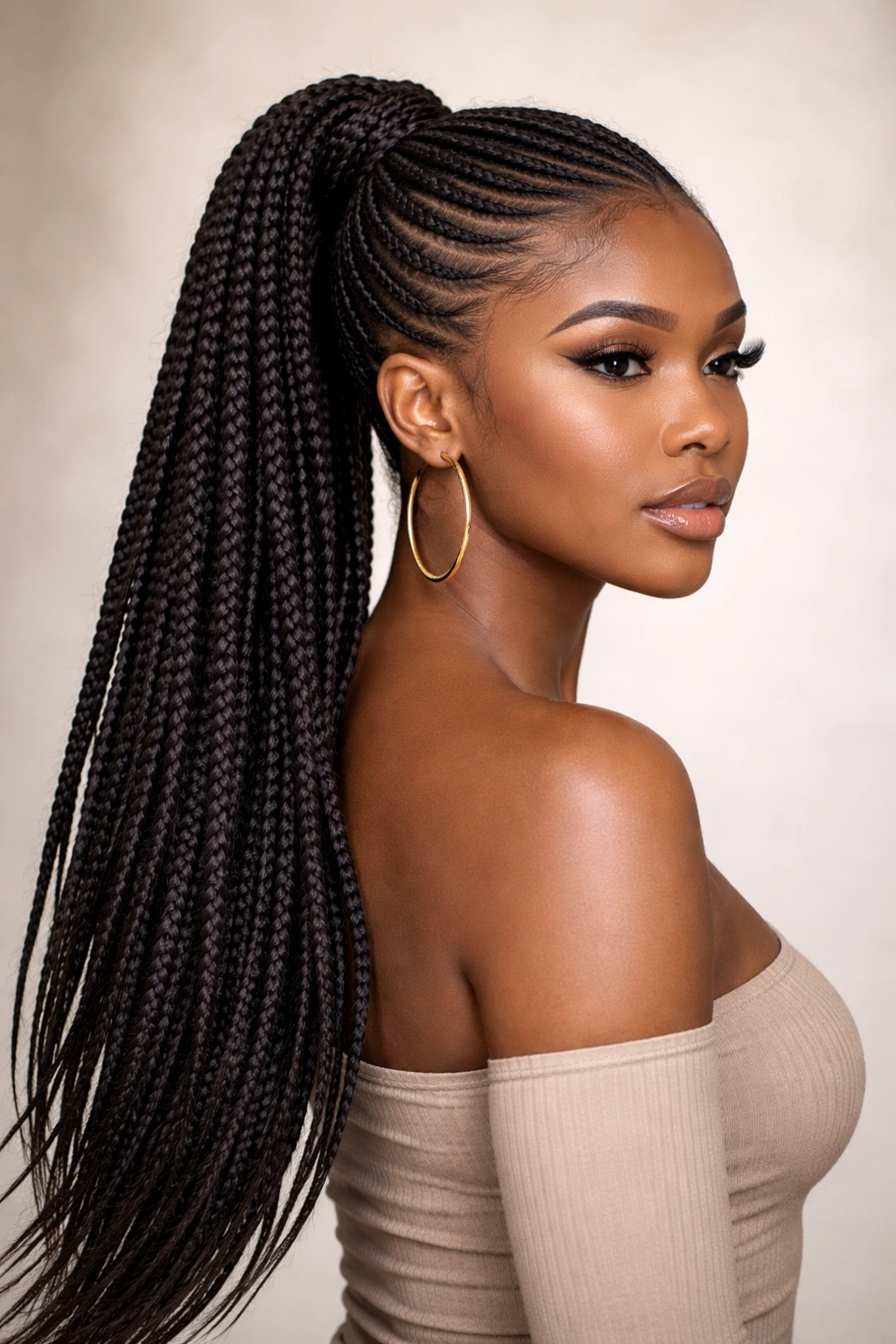
There is no mistaking a Lemonade braid style. Named after the aesthetic popularized by the iconic album, this look features long, flowing cornrows that are swept to the side. When gathered into a ponytail, it creates a dramatic, sweeping motion that is visually stunning.
The beauty of the Lemonade ponytail is that it works at any length. Whether you want the braids to stop at your shoulders or cascade down your back to your waist, the side-swept motion remains the focal point. Because all the braids are pulled in one direction, it creates a very sleek, cohesive look that is surprisingly easy to maintain.
9. Goddess Braided Ponytail with Wavy Texture
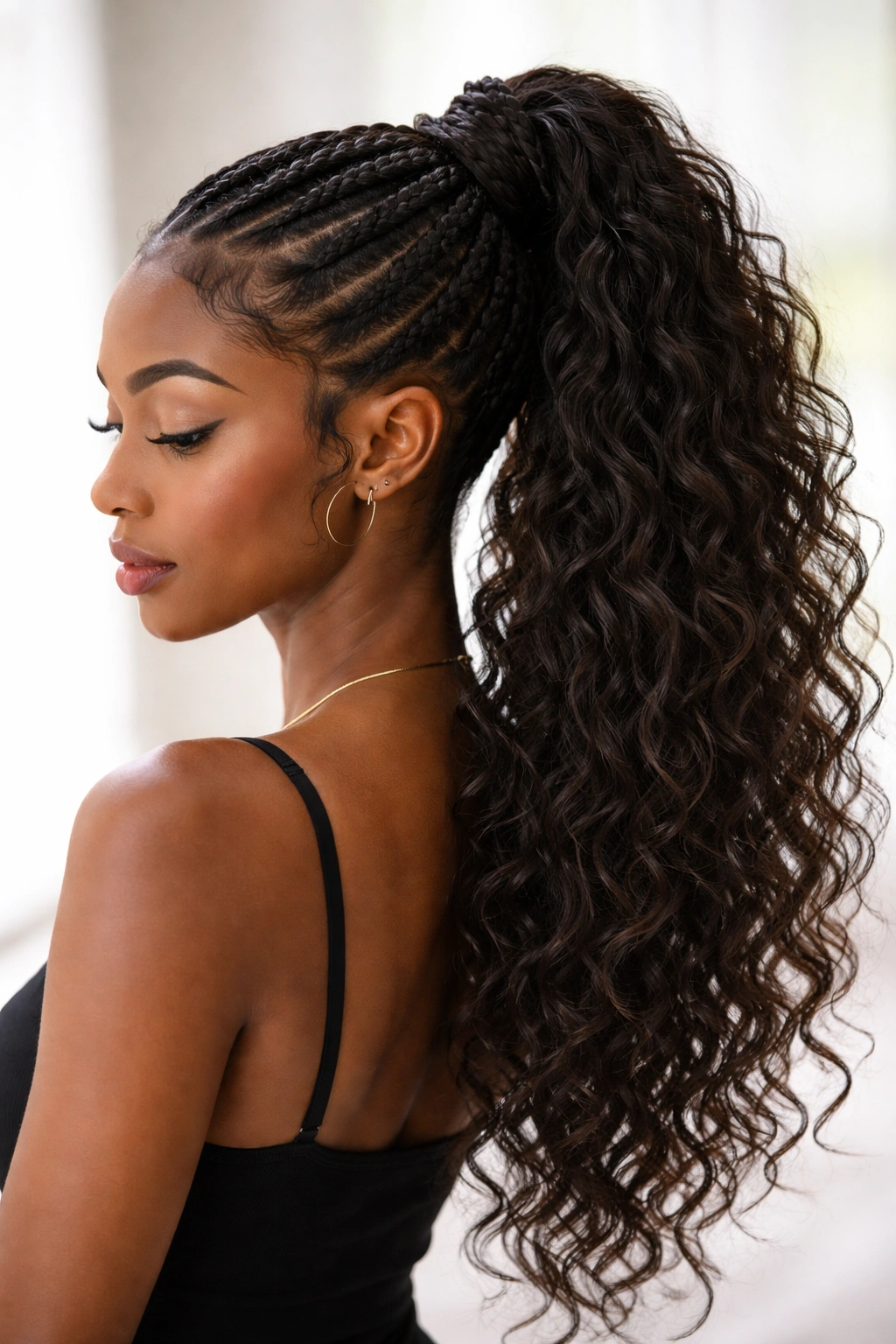
Goddess braids are characterized by their thickness and the inclusion of “boho” or “goddess” curls left out along the length of the braid. When you create a ponytail with these, you get an incredibly full, voluminous look. It is soft, feminine, and has a lot of movement.
Be prepared for these to require a little more TLC than standard tight cornrows. The curly extensions left out of the braids are prone to tangling. When you take your hair down at night, carefully separate the curls with your fingers—not a comb—and apply a tiny amount of lightweight mousse to keep them defined. Think of the curls as hair that needs to be treated like extensions, not just part of the braid.
10. Stitch Braided Ponytail
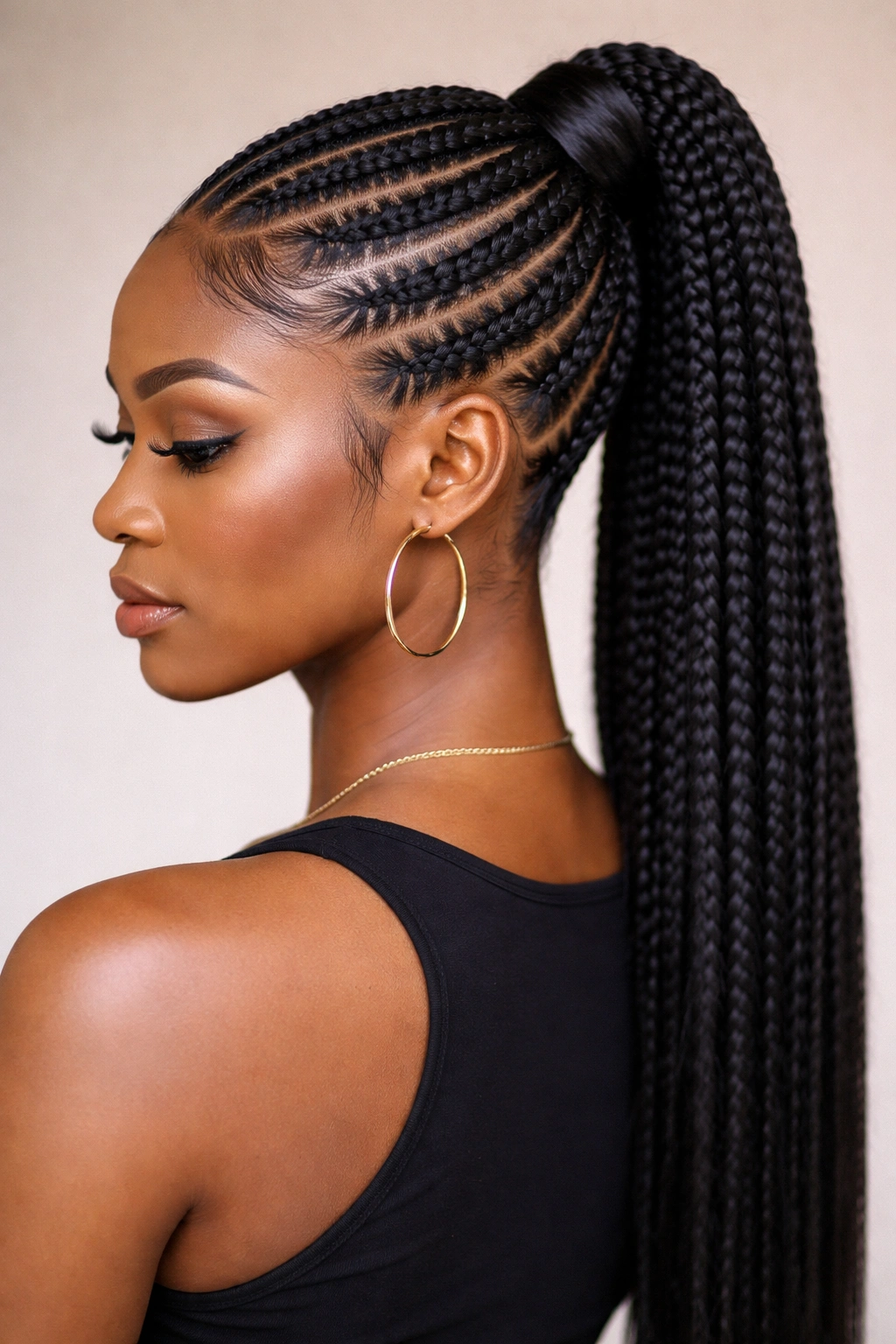
Stitch braids require an incredible amount of precision. The braider uses their pinky finger to create horizontal “stitches” in the cornrows, resulting in a very defined, segmented look. In a ponytail, this creates a clean, architectural appearance that is incredibly sharp.
These braids look best when they are very tight, which is the main downside. Because they rely on that tight stitch technique, you have to be careful about scalp health. If you are sensitive, ask for the stitches to be slightly larger. It creates the same clean look but puts less stress on the hair follicles.
11. Wrapped Base Braided Ponytail
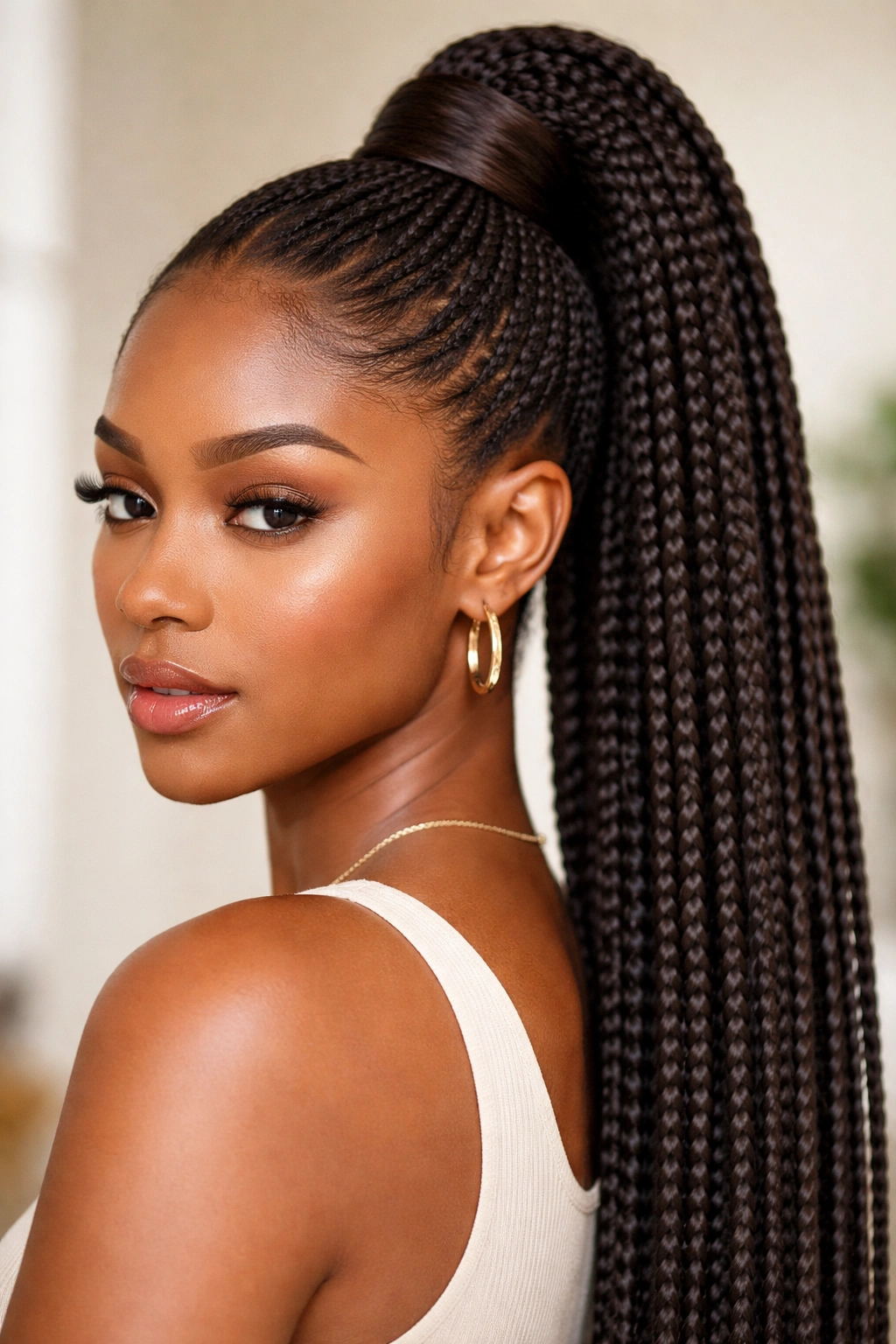
Sometimes, the simplest detail makes the biggest difference. Instead of using a plain rubber band or a scrunchie, you use a section of your own hair—or the extension hair—to wrap around the base of the ponytail. It hides the mechanics of the style and makes the ponytail look like it is floating effortlessly from your head.
The Technique
Once you have pulled your hair into a high ponytail, set aside a section of hair about one inch thick. Secure the rest of the ponytail with a band. Take the spare section, wrap it tightly around the base to cover the band, and secure the end with a bobby pin tucked underneath. It takes ten seconds but elevates the entire look from “gym hair” to “red carpet ready.”
12. Zig-Zag Part Braided Ponytail
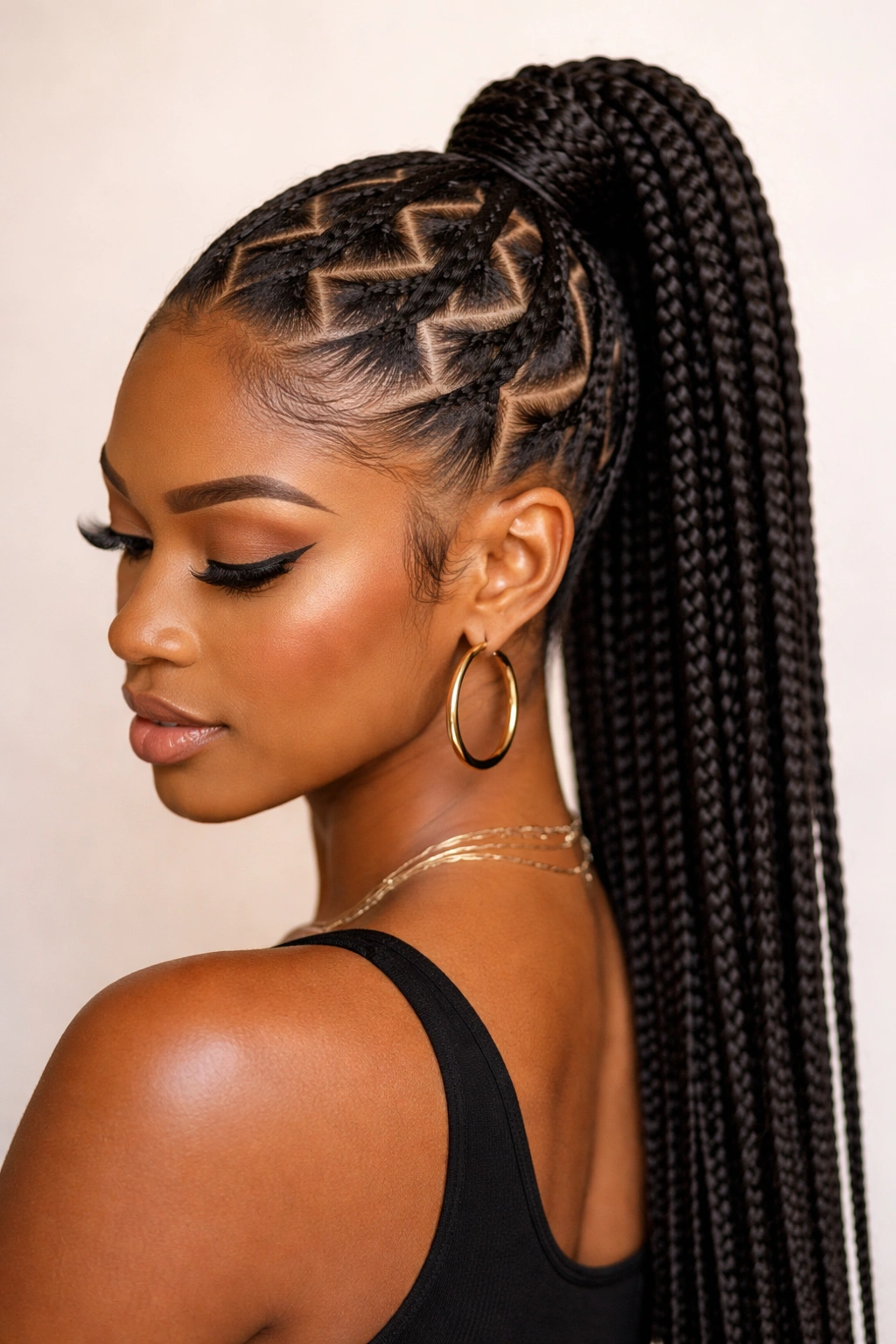
Straight parts are classic, but zig-zag parts add a playful, retro element to a braided ponytail. This style is all about the grid work on your scalp. You can go for a sharp, aggressive zig-zag or a softer, more subtle wave.
This is a high-maintenance look because the precision of the parts is the main event. You will likely need to use a clear gel or a light pomade along the parts to keep them from blurring after a few days. It is a fantastic style for summer or outdoor events where you want your hair to feel a bit more edgy and fun.
13. Voluminous Braided Ponytail with Kinky Texture
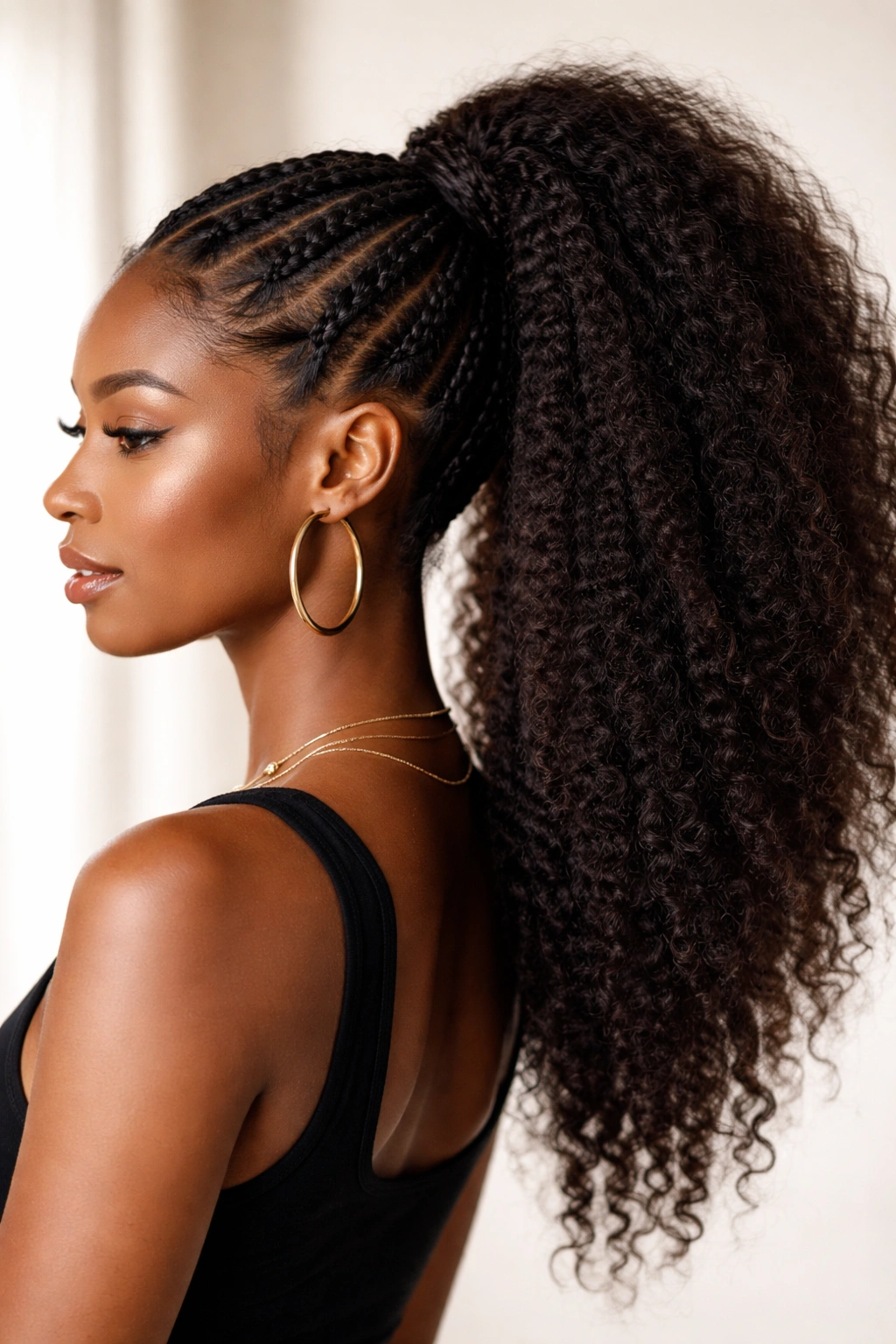
Who says a sleek ponytail has to be straight? Using extensions with a kinky, coarse texture that matches your natural hair density allows you to create a massive, high-impact ponytail. This style celebrates volume and embraces the “big hair” aesthetic, which can be incredibly flattering.
Why It Stands Out
- Texture Match: It looks more natural because it mimics the volume of 4C hair blown out or stretched.
- Statement: It is not a style for shrinking violets. It commands space.
- Longevity: Because it is designed to be full and textured, a little frizz over time actually makes the style look better, not worse.
14. Braided Ponytail with Space Buns
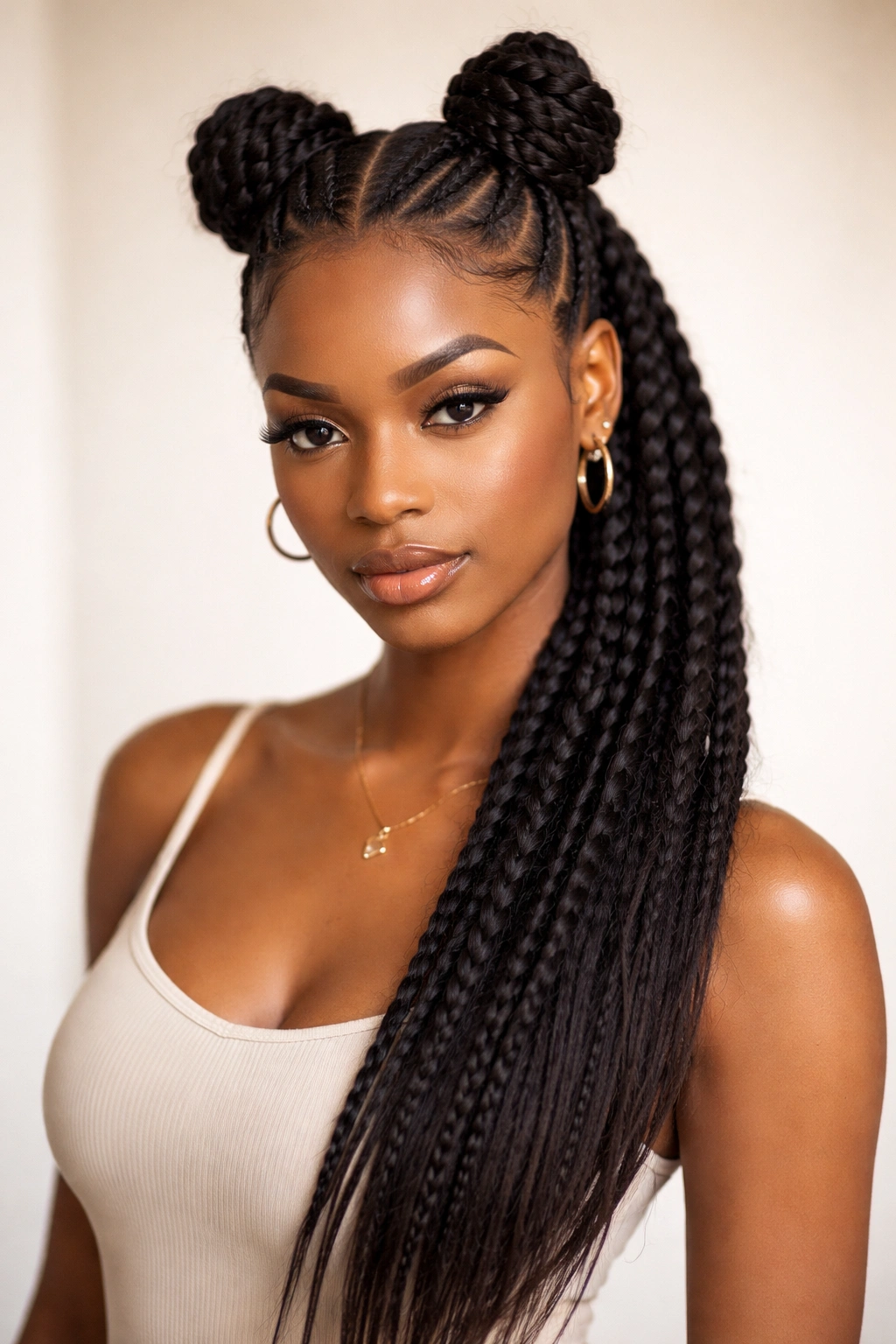
Why have one high point when you can have three? Incorporating two space buns at the front—or just two mini-buns near the base of the ponytail—adds a youthful, playful vibe. This style works exceptionally well if you have a lot of hair to play with.
The challenge here is balance. If your space buns are too big, they can overwhelm the ponytail. Keep the buns tight and defined, and let the ponytail serve as the long, flowing anchor. It is a great style for festivals, concerts, or any time you want to feel a bit more creative with your protective styling.
15. Side-Swept Braided Ponytail
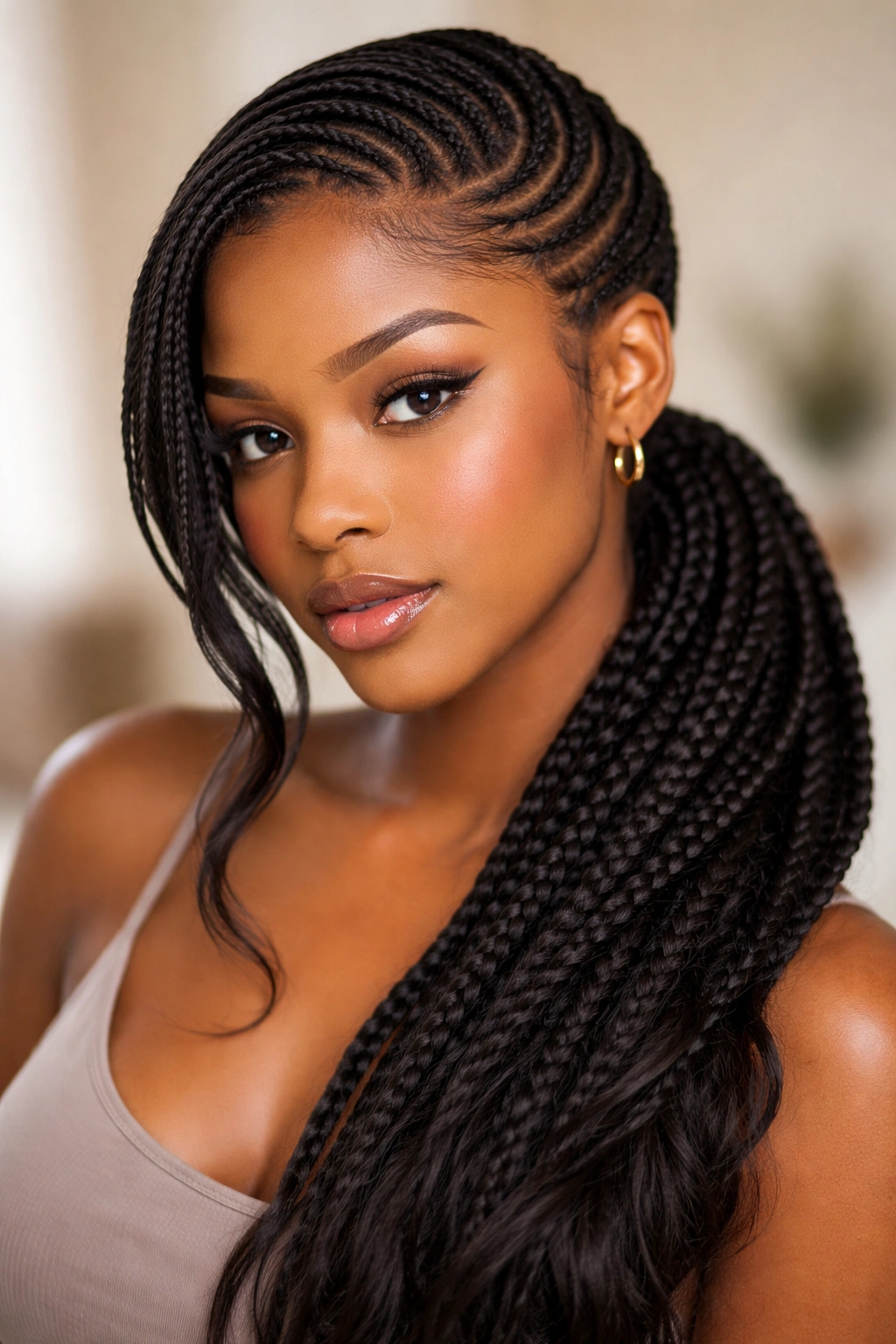
The side-swept look is inherently dramatic. By gathering your braids to one side, you frame your face in a way that feels intentional and elegant. This works perfectly with both cornrows and individual braids.
Why You’ll Love It
- Frame: It softens the jawline and highlights your cheekbones.
- Versatility: It can be worn over the shoulder for a classic look or pulled back for more security.
- Effort: It actually requires less tension than a perfectly centered ponytail because the hair is naturally resting in one direction rather than being pulled straight back from every angle.
16. Braided Bubble Ponytail
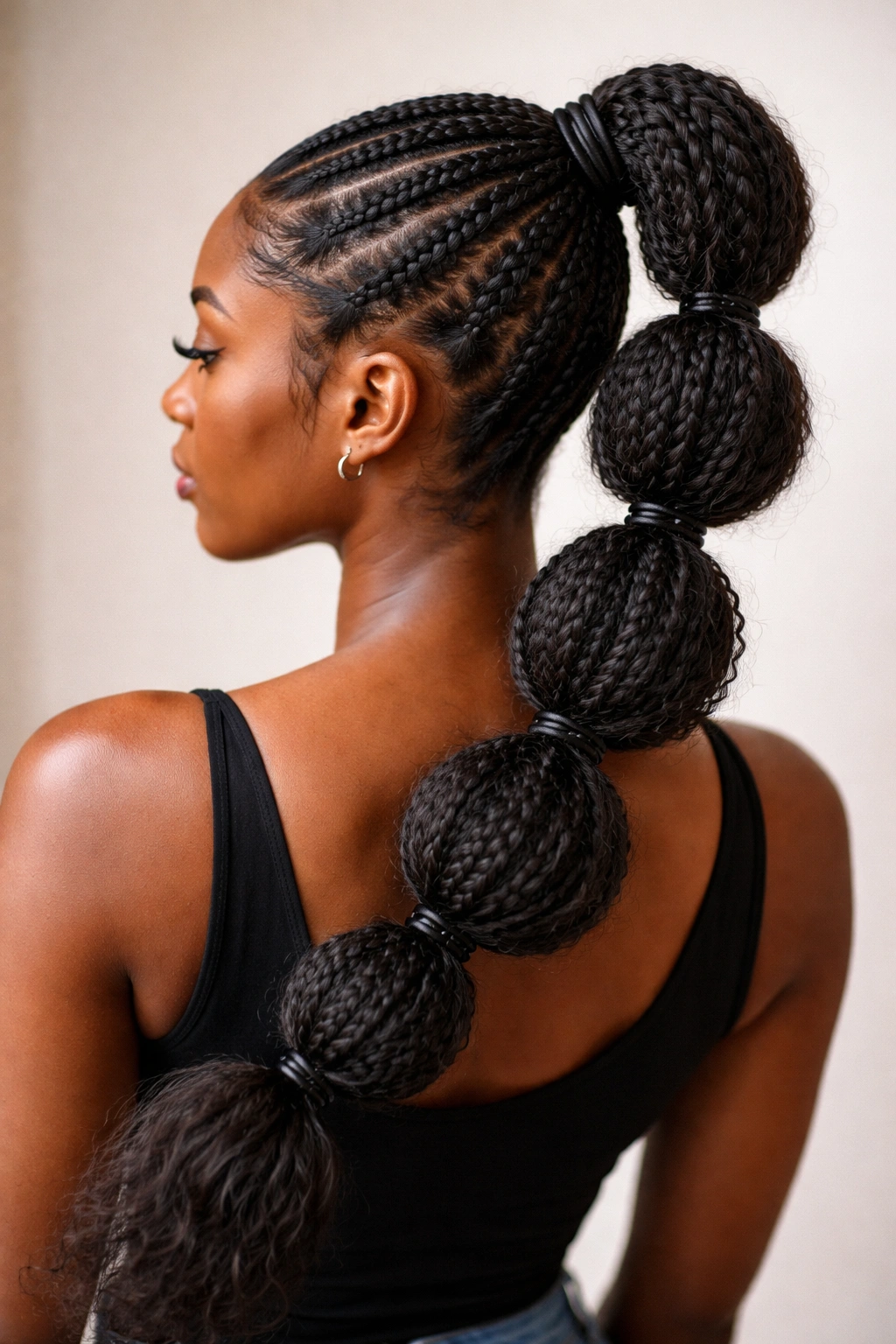
The bubble ponytail is a modern classic. You create a series of “bubbles” along the length of your ponytail by placing hair ties at regular intervals and fluffing the hair between them. When you incorporate braids into this—perhaps by braiding the “bubbles” themselves—you get a stunning, textured look.
This style is surprisingly durable. Because the hair is sectioned off into bubbles, it doesn’t get tangled as easily as a long, free-flowing ponytail might. It is a fantastic option for travel because you don’t have to worry about your ponytail getting messy in the wind or while you are on the go.
17. Two-Tone Braided Ponytail
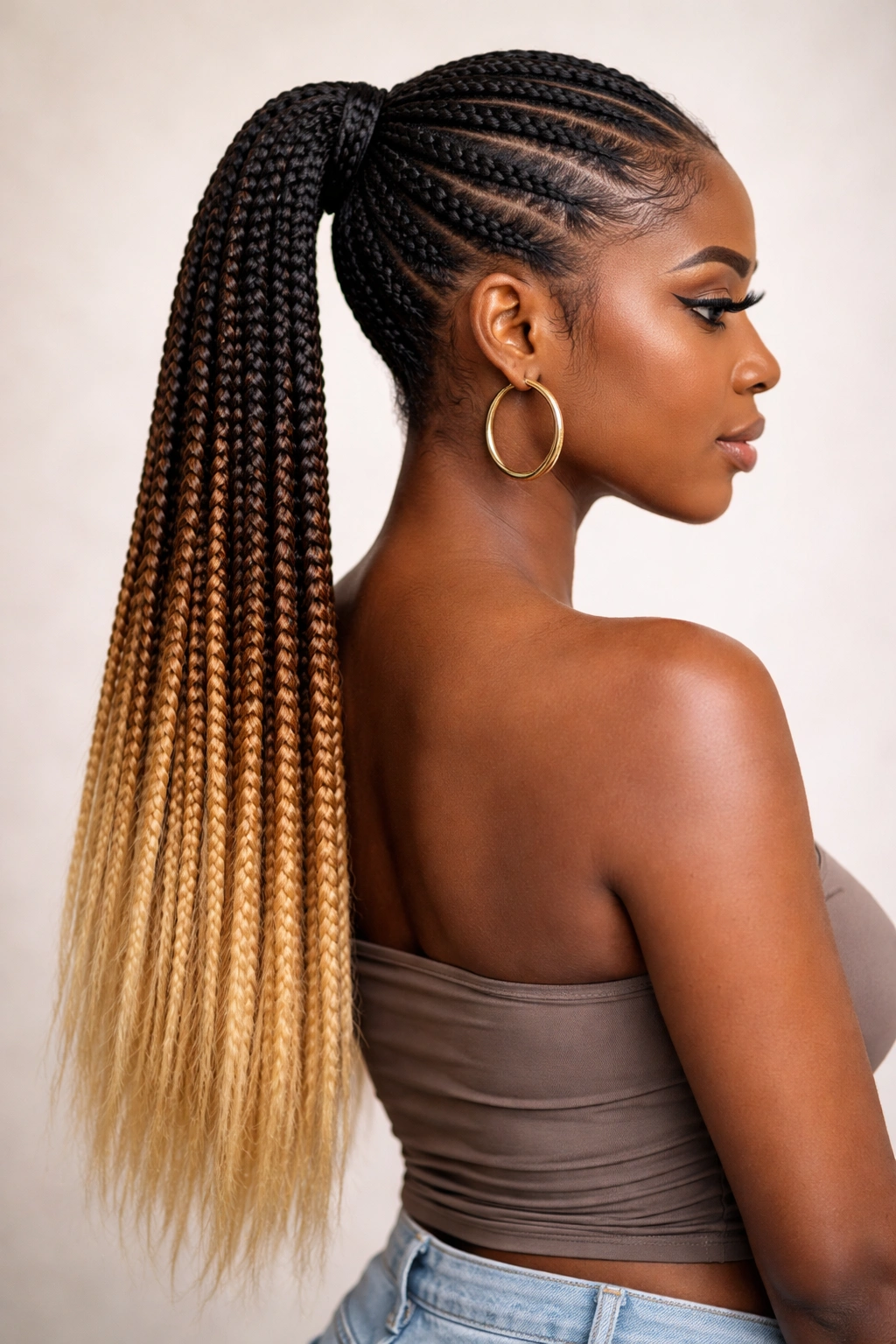
Adding color is the easiest way to transform a style, but you don’t have to dye your natural hair to do it. Using extensions in a contrasting color—like a honey blonde, deep burgundy, or even a bold silver—creates an instant visual upgrade.
When doing a two-tone look, placement matters. You can do all the braids in your natural color and the ponytail extension in the bold color for a striking dip-dye effect. Alternatively, weave the colored hair into the base braids for a multidimensional, mixed-color appearance. The latter takes more effort but looks more integrated and sophisticated.
18. Braided Ponytail with Hidden Hair Ties
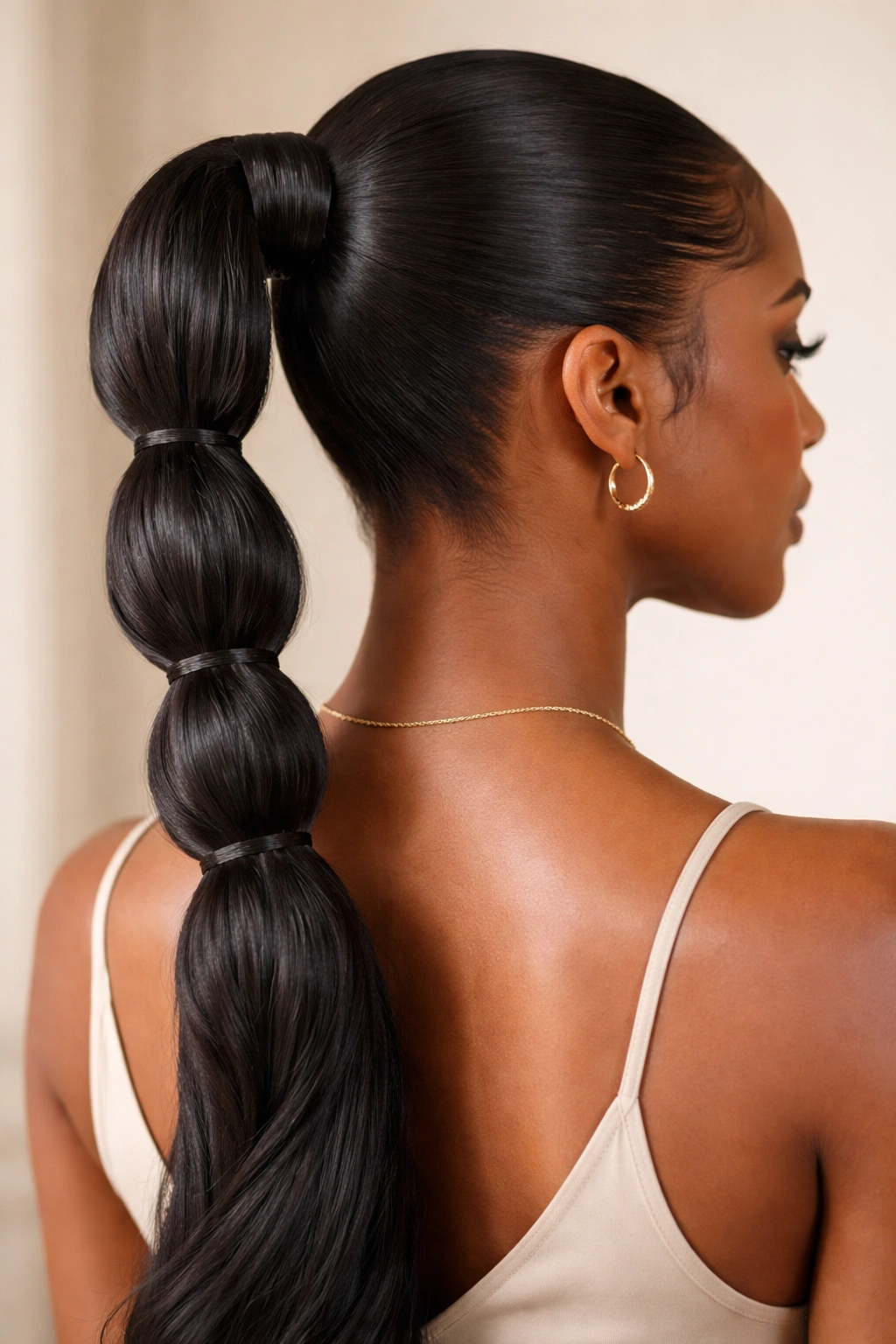
There is something deeply satisfying about a ponytail that looks like it is defying gravity without any visible hardware. You achieve this by using strong, clear elastic bands to secure the hair, then cleverly pinning small sections of hair over them to hide the bands completely.
This technique is best reserved for styles where the hair is straight or sleek. On curlier textures, the hair might not lay flat enough to hide the bands effectively. It creates a seamless, polished finish that looks like you spent hours on the styling, even if it only took a few extra minutes to tuck the pins.
19. High Sleek Ponytail with Braided Wrap
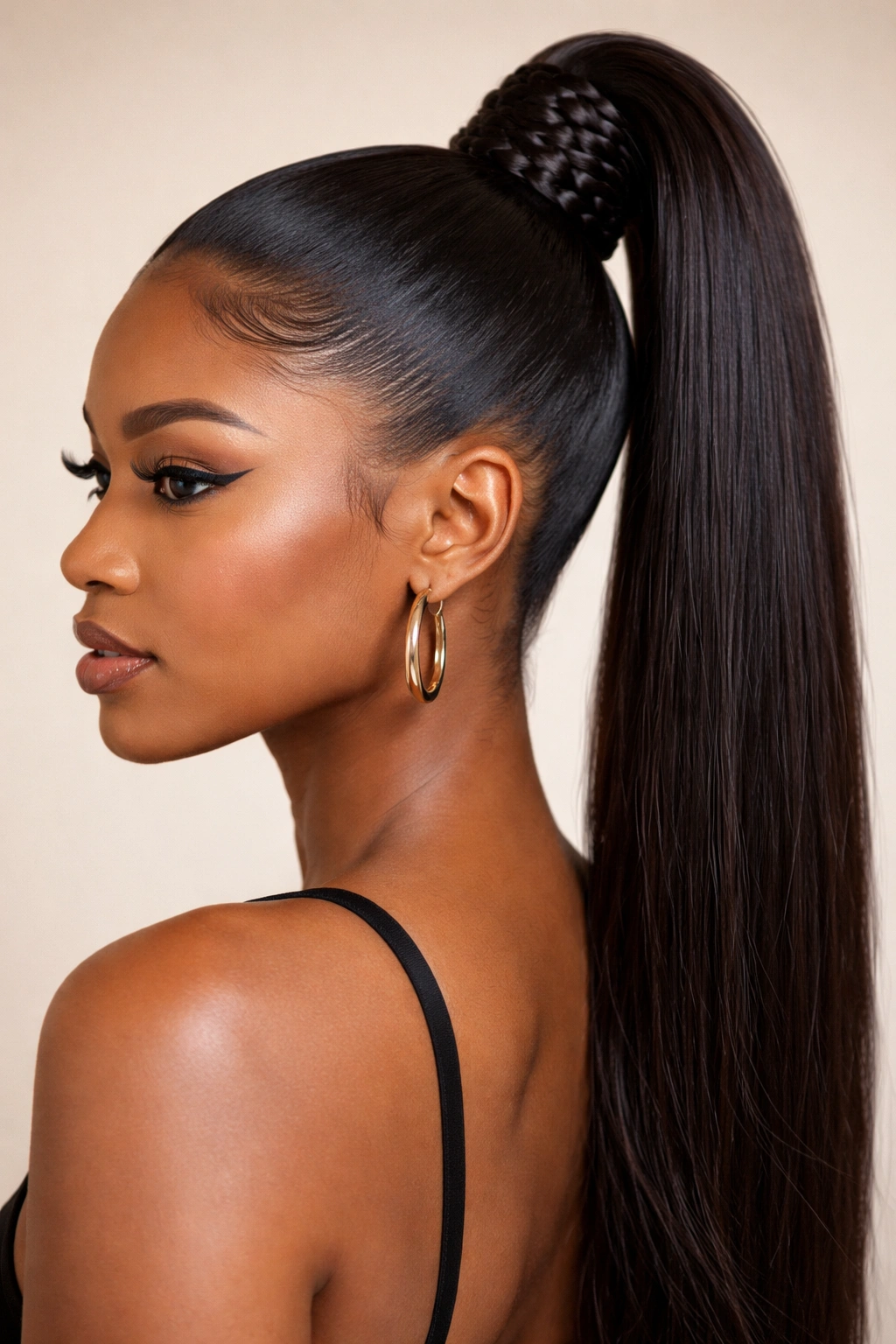
This is a variation of the wrapped base, but instead of wrapping a loose piece of hair, you wrap a small, finished braid. This adds texture and interest to the base of your ponytail. It is a subtle detail that signals that you didn’t just throw your hair up—you styled it.
Technique for Success
Take a small section of hair before you begin the main ponytail and braid it tightly. Use that braid as your final piece to wrap around the base. Because the hair is already braided, it is much easier to wrap tightly and pin without it slipping or fraying. It adds a bit of architectural interest to an otherwise standard style.
20. Braided Ponytail with Color Accents
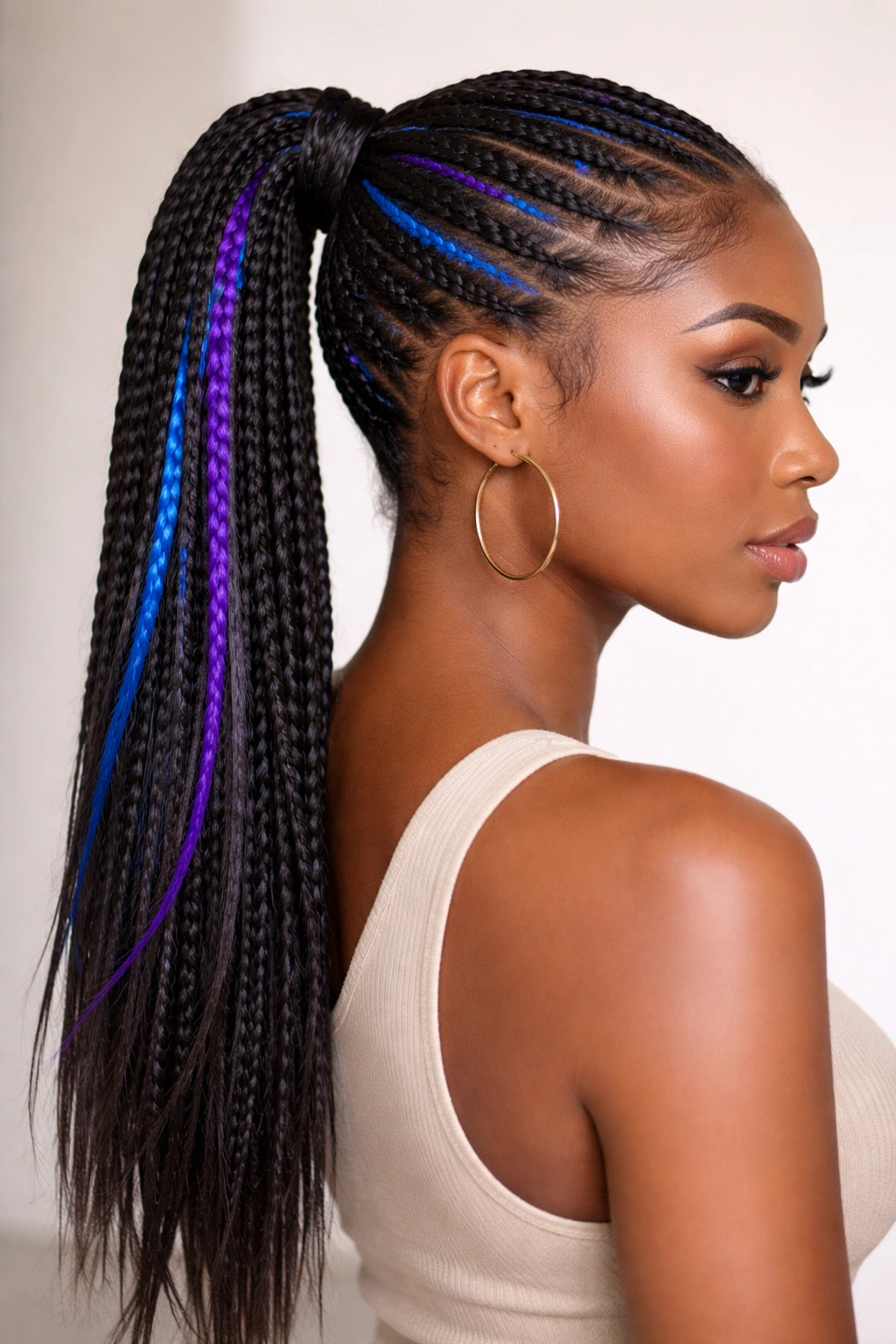
Instead of a full two-tone ponytail, try adding just a few strategic streaks of color. Braiding in a few strands of vibrant hair—think electric blue, purple, or deep red—into your natural braids creates a “peekaboo” effect.
This style is perfect if you are hesitant to commit to a full color change. It’s low-stakes, temporary, and allows you to play with different palettes depending on your mood or the season. It adds just enough spice to your style to make it interesting without demanding your entire look change.
21. Criss-Cross Braided Ponytail
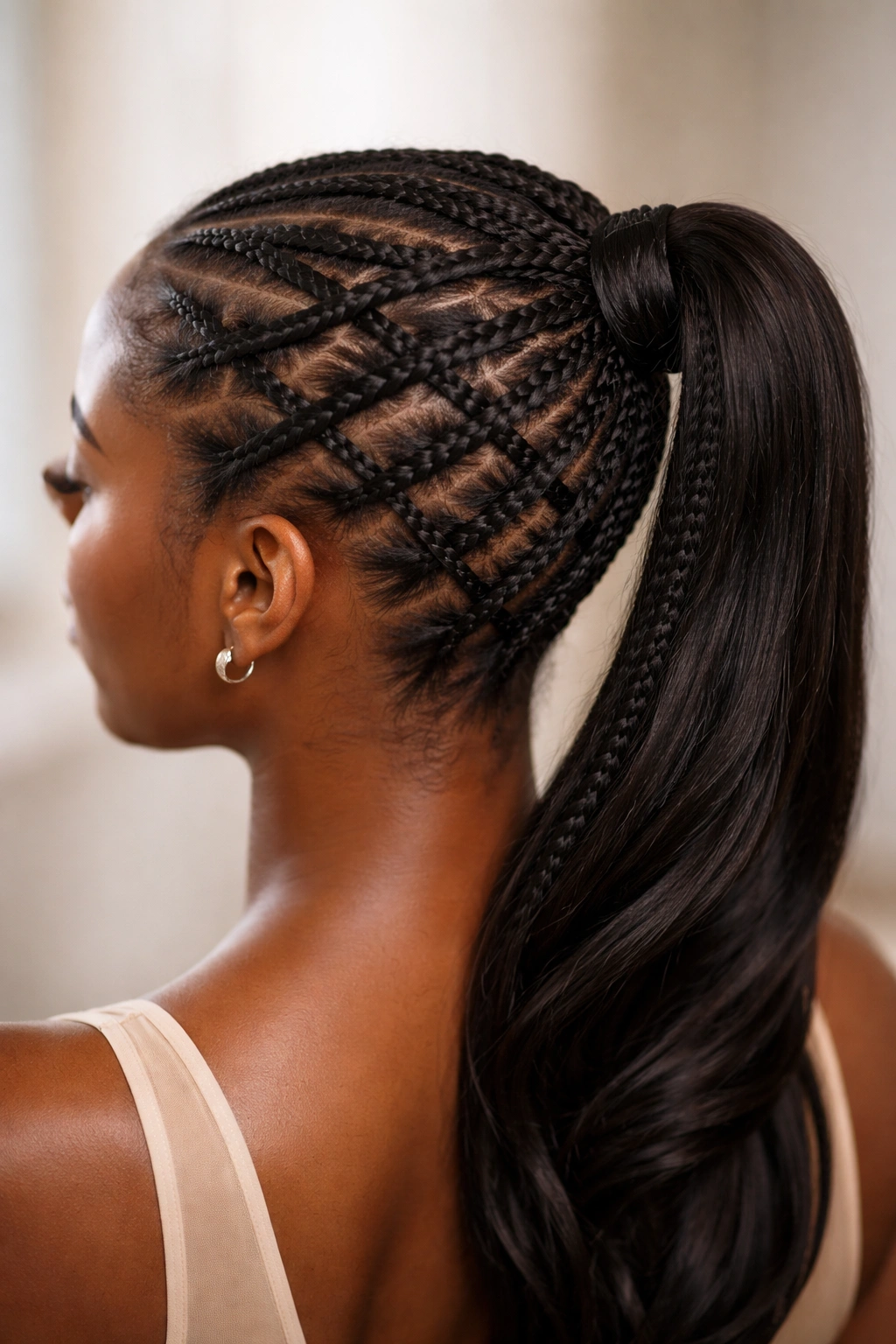
If you are tired of straight cornrows, criss-cross patterns are the solution. This style involves braiding your hair in diagonal, intersecting patterns before gathering them into a ponytail. It adds an incredible amount of visual interest to the scalp.
Why This Style Rocks
- Complexity: It looks like you spent a fortune at the salon.
- Structure: The intersecting braids provide a very stable base for the ponytail.
- Uniqueness: No two criss-cross patterns are exactly the same, making it a very personal style. Just be aware that this style usually requires a skilled braider. The geometry has to be perfect, or it can quickly look messy rather than intentional.
22. Braided Ponytail with Flat Twists
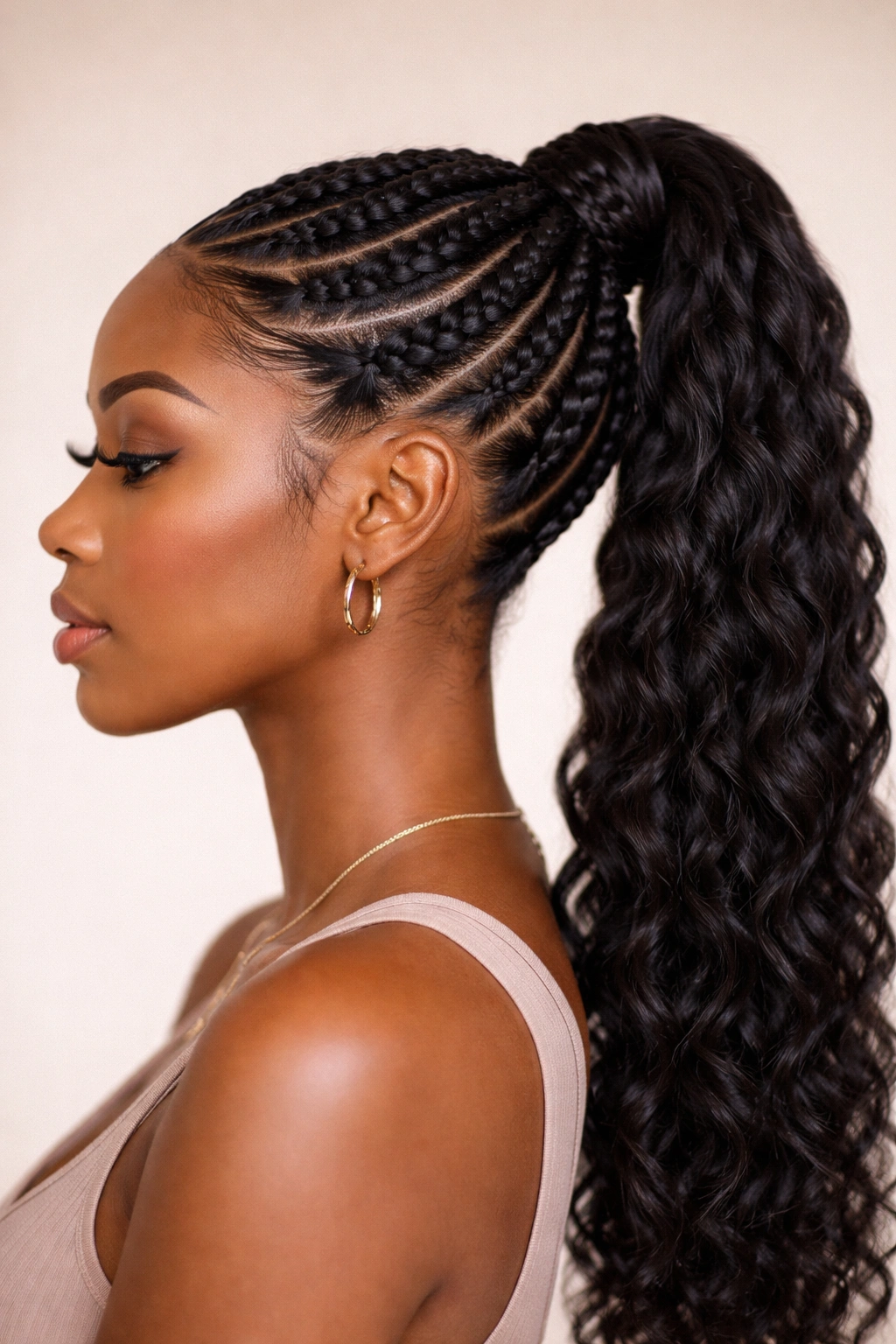
Not everyone wants to sit through hours of cornrowing. Flat twists are a faster, often gentler alternative. By creating flat twists that lead back to your ponytail, you get a beautiful, rope-like texture that looks distinct from traditional braids.
Flat twists have a different aesthetic than braids—they are rounder, softer, and have a unique spiraled appearance. They are also generally easier to take down. If you have sensitive hair that doesn’t love the tightness of cornrows, flat twists are your best friend.
23. Sleek Low Braided Ponytail with Curls
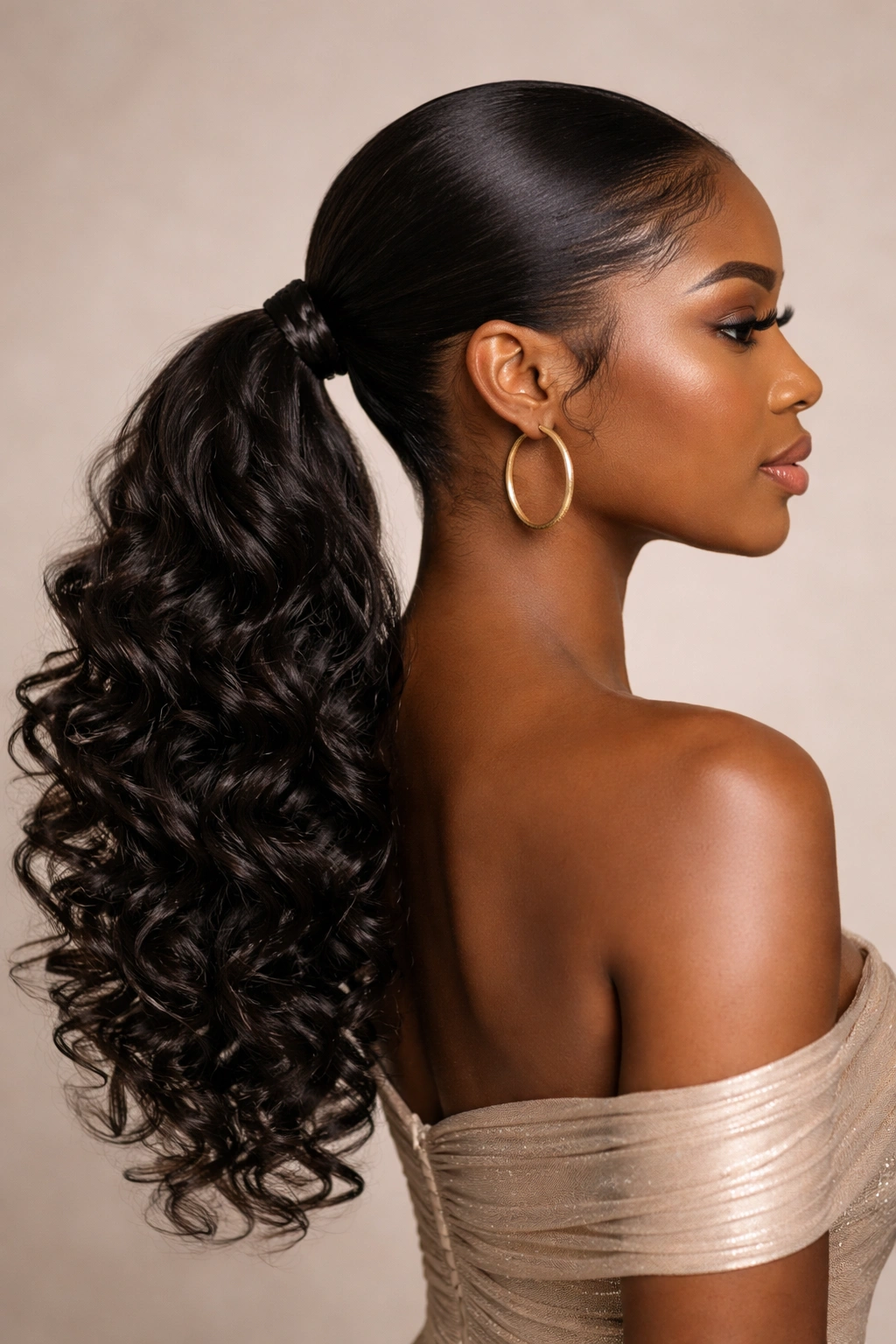
For a look that screams “red carpet,” try a sleek, low ponytail where the ends are styled into tight, voluminous ringlets. This is a classic glam style. Keep the roots perfectly laid with a strong-hold gel, and let the ponytail do the heavy lifting with big, bold curls.
Maintenance Tips
- Keep the Curls Hydrated: Use a light curl cream or mousse on the extensions to keep the curls from turning into a puffball.
- Preservation: To make this last, use large flexi-rods at night to reset the curls. Do not brush the curls out, or you will lose the definition.
24. Braided Ponytail with Gold Cuff Accessories
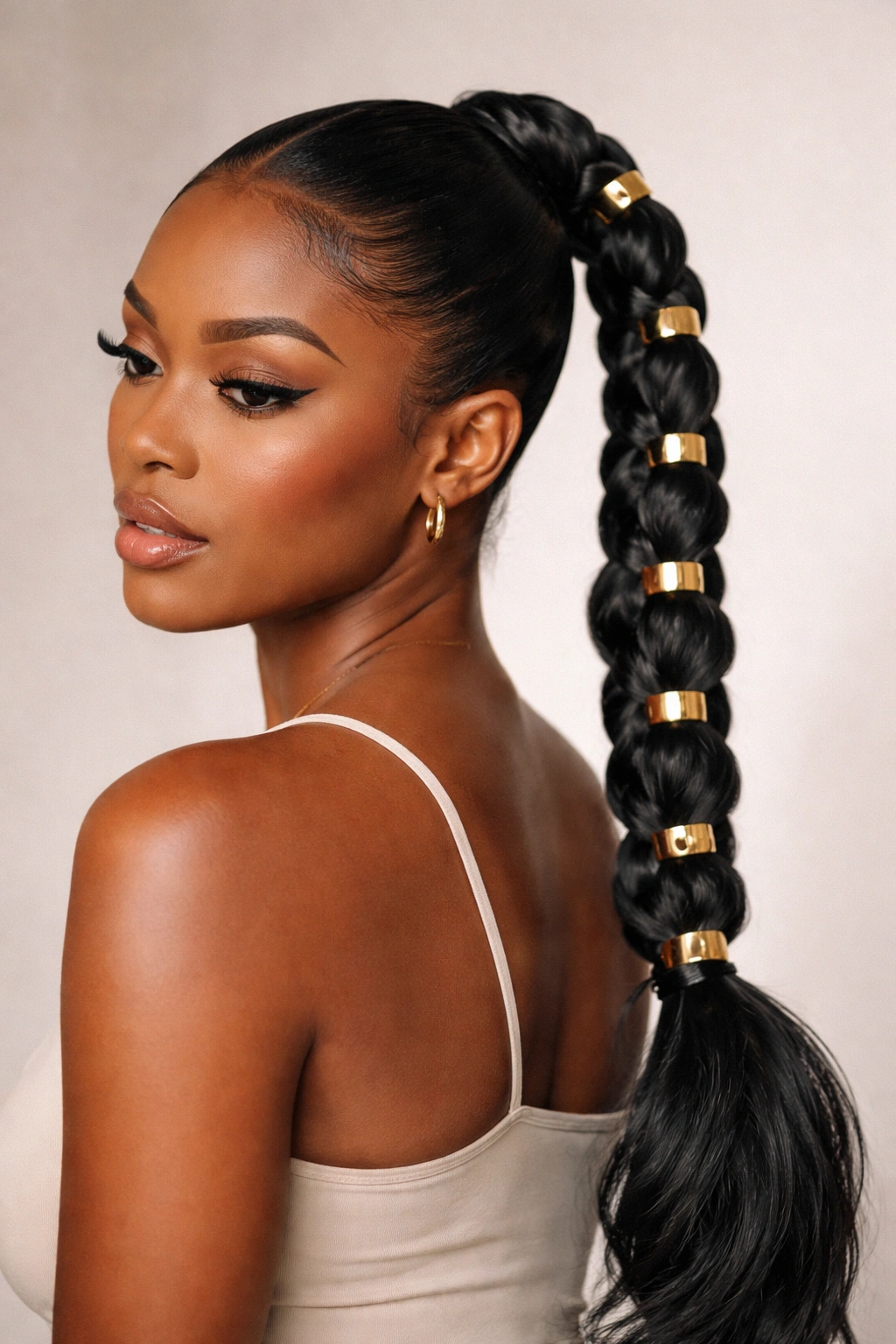
Gold cuffs are the easiest way to dress up any braided style. Placing them at the start of a braid, or randomly throughout the length of your ponytail, adds a touch of metallic luxury.
You can mix and match different styles of cuffs—some smooth, some textured, some with charms. Just remember to remove them before you wash your hair or go to sleep. Sleeping in cuffs can be uncomfortable and can also snag on your pillowcase, potentially pulling out your braids. They are for show, so take them off when the day is done.
25. Intricate Patterned Braided Ponytail
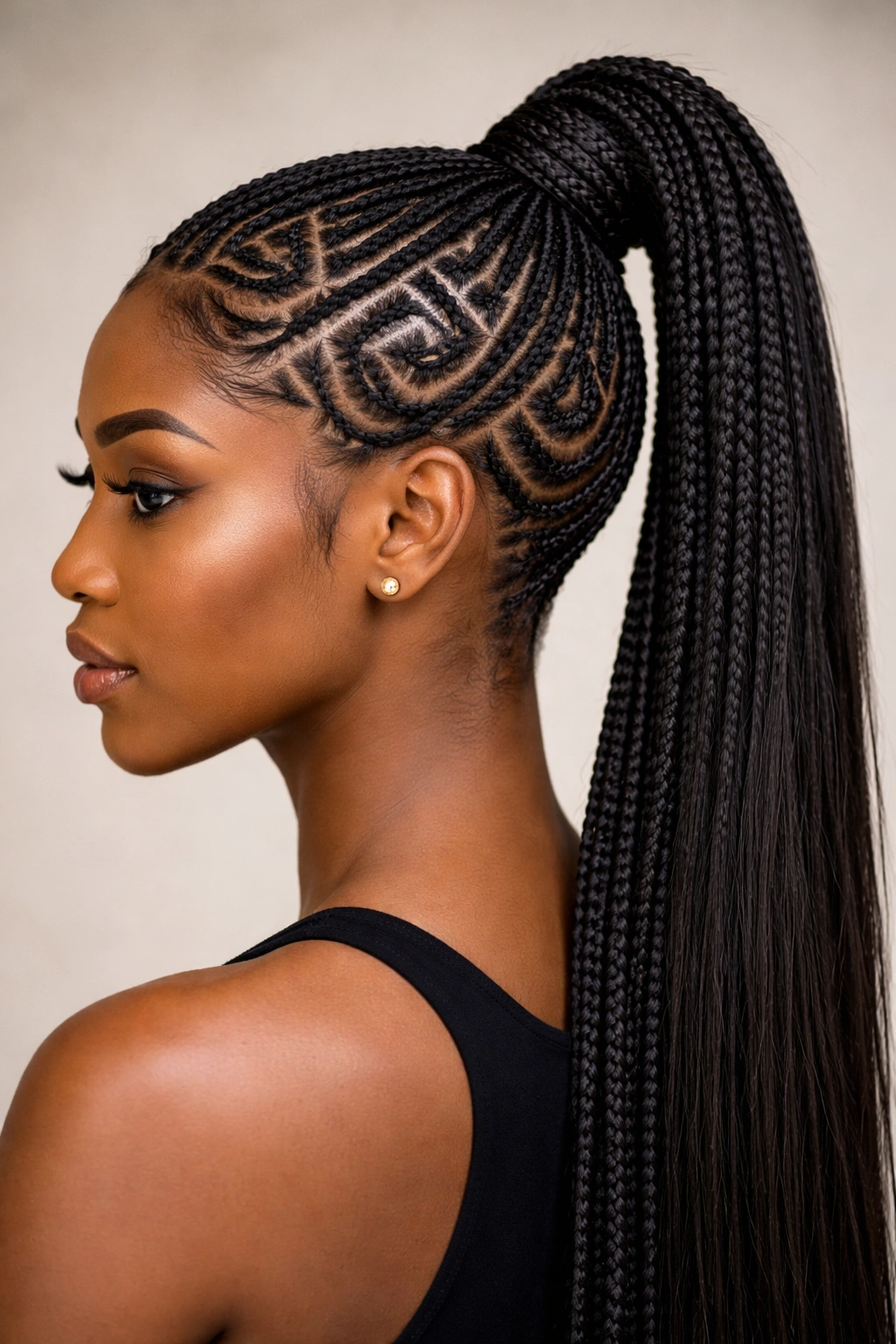
For the grand finale, we have the patterned style. This involves complex geometric shapes—circles, squares, hearts, or swirls—braided directly into the scalp. It is truly wearable art.
How to Wear It
This style is not about being subtle. It is about showing off the skill of the braider. When you wear this style, keep your accessories minimal—maybe small earrings—to let the hair pattern be the star of the show. This is a style that usually lasts a long time because the intricacy of the braids keeps the hair anchored very securely.
The Bottom Line
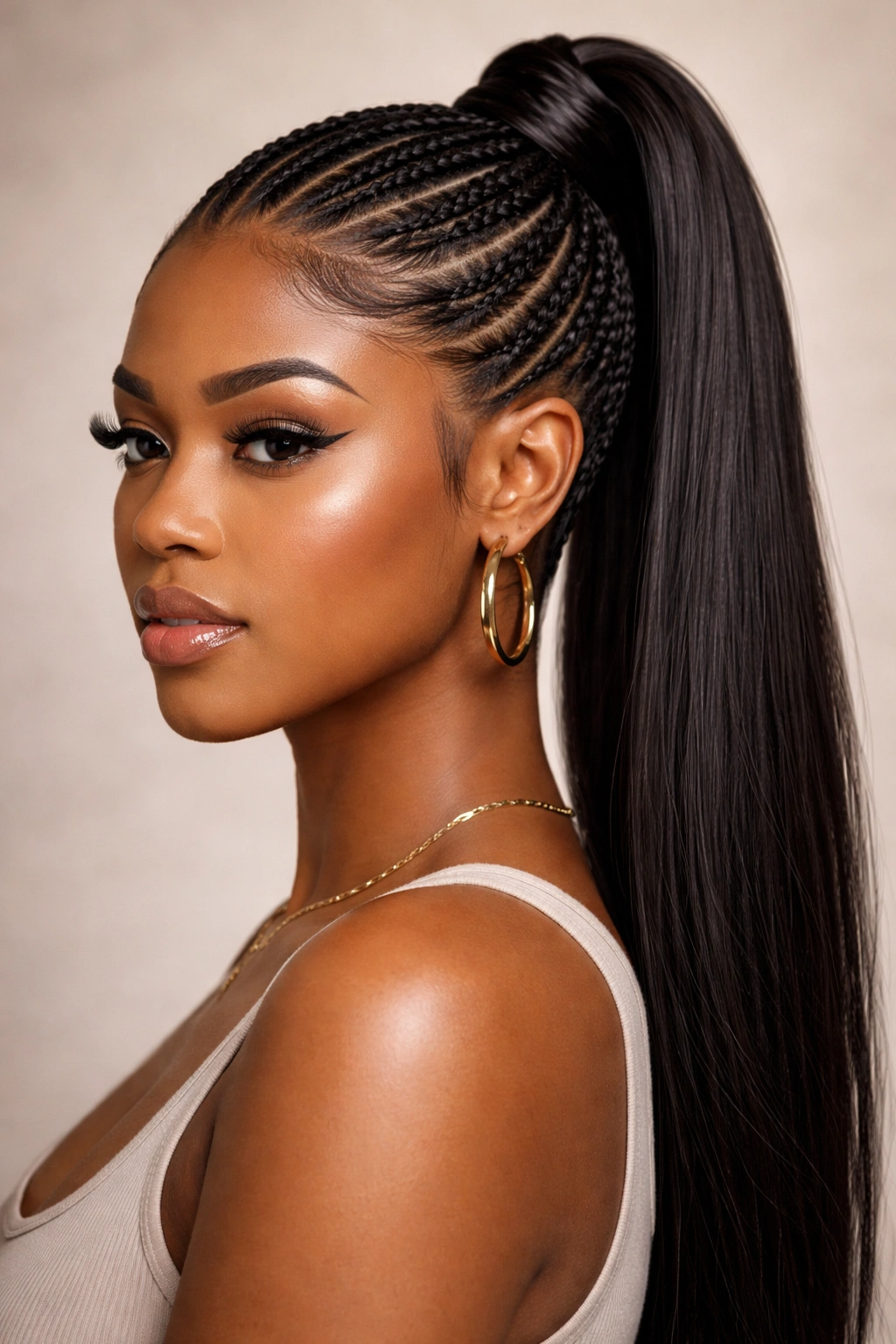
Choosing the right braided ponytail comes down to three things: the health of your edges, the amount of time you want to spend in the chair, and your personal aesthetic. There is no one-size-fits-all, but there is definitely a style that will make you feel powerful, polished, and ready for whatever comes your way.
Remember that while these styles are protective, they are not “set it and forget it.” Your scalp still needs to be moisturized, your edges still need to be protected from friction, and your extensions still need to be managed. Treat your hair with care, and these styles will return the favor by making you look incredible day in and day out.