



Short, straight hair can be stubborn in the best way. The trouble with ponytails for straight hair with short hair is never that the idea is wrong; it’s that the shape has to work harder than it does on long, dense hair. Smooth strands slip. Shorter layers pop out. The elastic ends up visible from angles you did not ask for.
That’s not a reason to give up on ponytails. It’s a reason to get smarter about them.
The styles that work best on a bob, lob, or collarbone cut are the ones that respect the cut’s length instead of pretending it’s something else. A tiny low pony can look sharp. A half-up tie can look deliberate. A twisted or wrapped base can hide the fact that the ends are shorter than you’d like. Straight hair gives you clean lines, which means the finished look can be crisp, polished, and a little cool if you build it the right way.
If you’ve ever tied your hair back and ended up with a sad little tail that sticks straight out, you already know the problem. The fix is usually not more force. It’s better placement, a smaller elastic, a little grip at the roots, and styles that make short hair look intentional instead of borrowed from a different haircut.
1. Sleek Low Micro Ponytail for a Chin-Length Bob
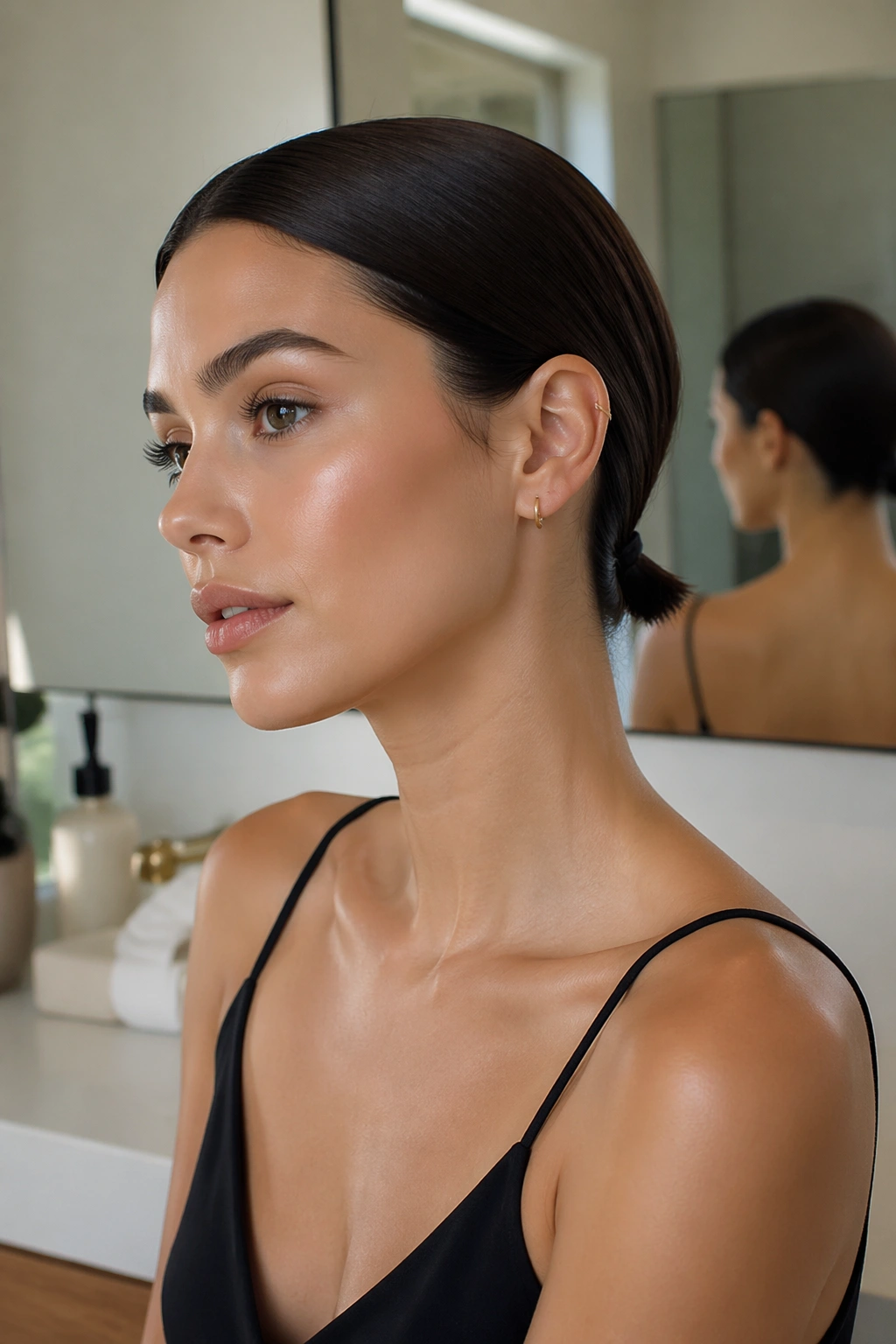
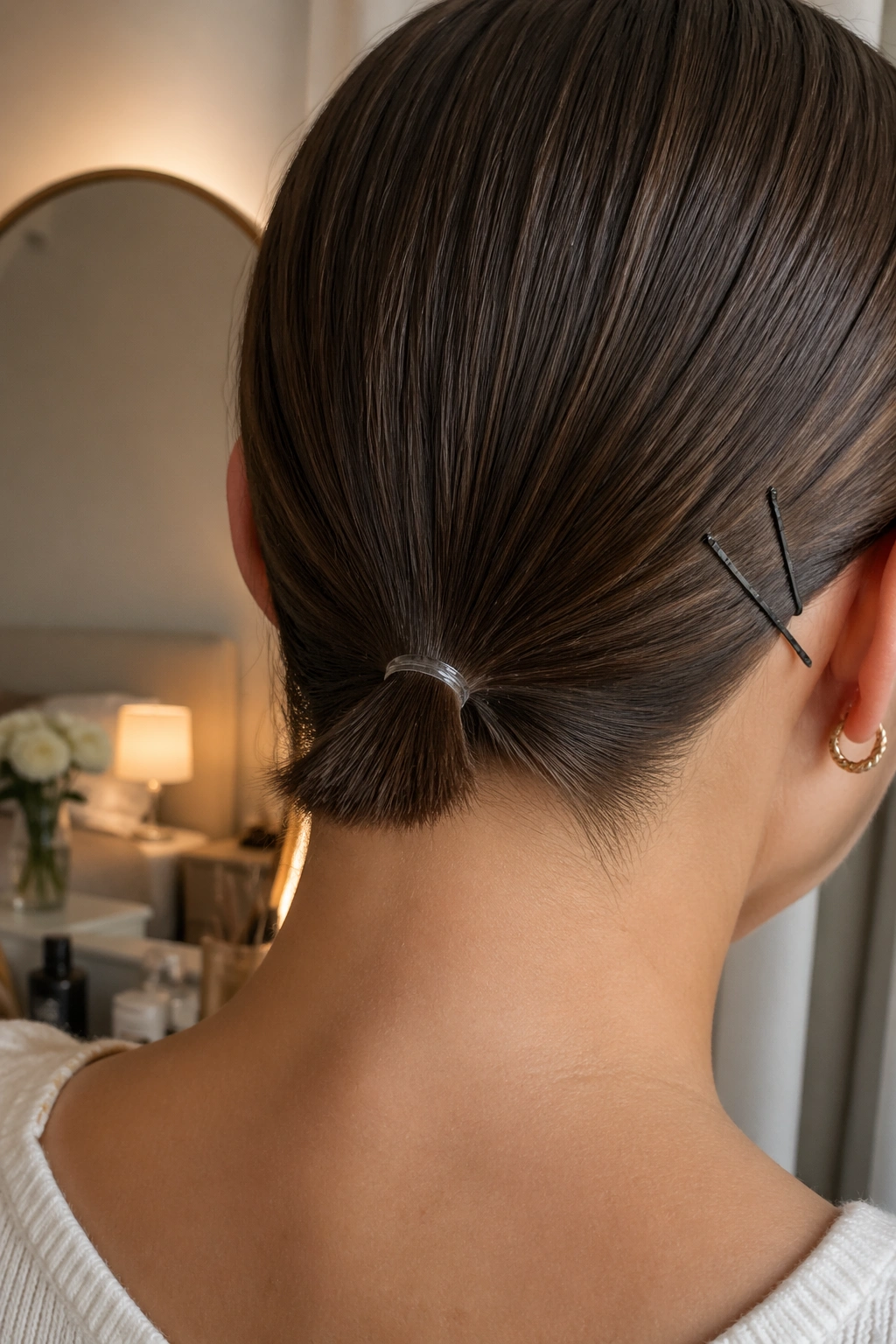
This is the one I’d start with if you want the cleanest answer to short, straight hair. A low micro ponytail sits close to the nape, so it doesn’t fight your length. It just uses it.
Brush the hair back with a fine-tooth comb, smooth a pea-sized amount of styling cream over the top layer, and gather the ponytail just above the hairline at the nape. A 1/2-inch clear elastic usually gives the best hold without looking chunky. If the tail is short, leave it alone. Let it be tiny. That’s the point.
A lot of people try to puff this style up. Don’t. The power here is in the neat shape and the clean surface. The shorter the cut, the sharper the line should be. If a few ends poke out near the ears, tuck them behind with two crossed bobby pins and call it finished.
2. Center-Part Low Ponytail That Makes Short Hair Look Longer

Why does a center part help so much? Because it creates one clean vertical line from forehead to nape, and that makes a short ponytail read as longer than it is. The eye stops bouncing around.
How to Keep the Part Crisp
Use the tail of a rattail comb to draw the part before you add product. Then mist the roots lightly with water or leave-in spray and brush each side flat toward the ears. The hair should lie close to the scalp without looking greasy. If your bob has a blunt edge, this style works especially well because the straight ends look neat instead of choppy.
A center-part low ponytail is one of the better choices for a short cut that sits somewhere between ear length and collarbone length. It can look a little too severe if you have a very strong jawline and want softness, though. In that case, pull out two slim front pieces, no wider than a pencil, and let them sit naturally.
- Best for hair that reaches the nape
- Works well with a middle part already built into the cut
- Looks cleaner with a small elastic hidden under a wrapped strand
Keep the part symmetrical, but don’t overdo the smoothing. Flat roots are enough.
3. Deep Side-Part Low Ponytail for Soft Volume at the Crown
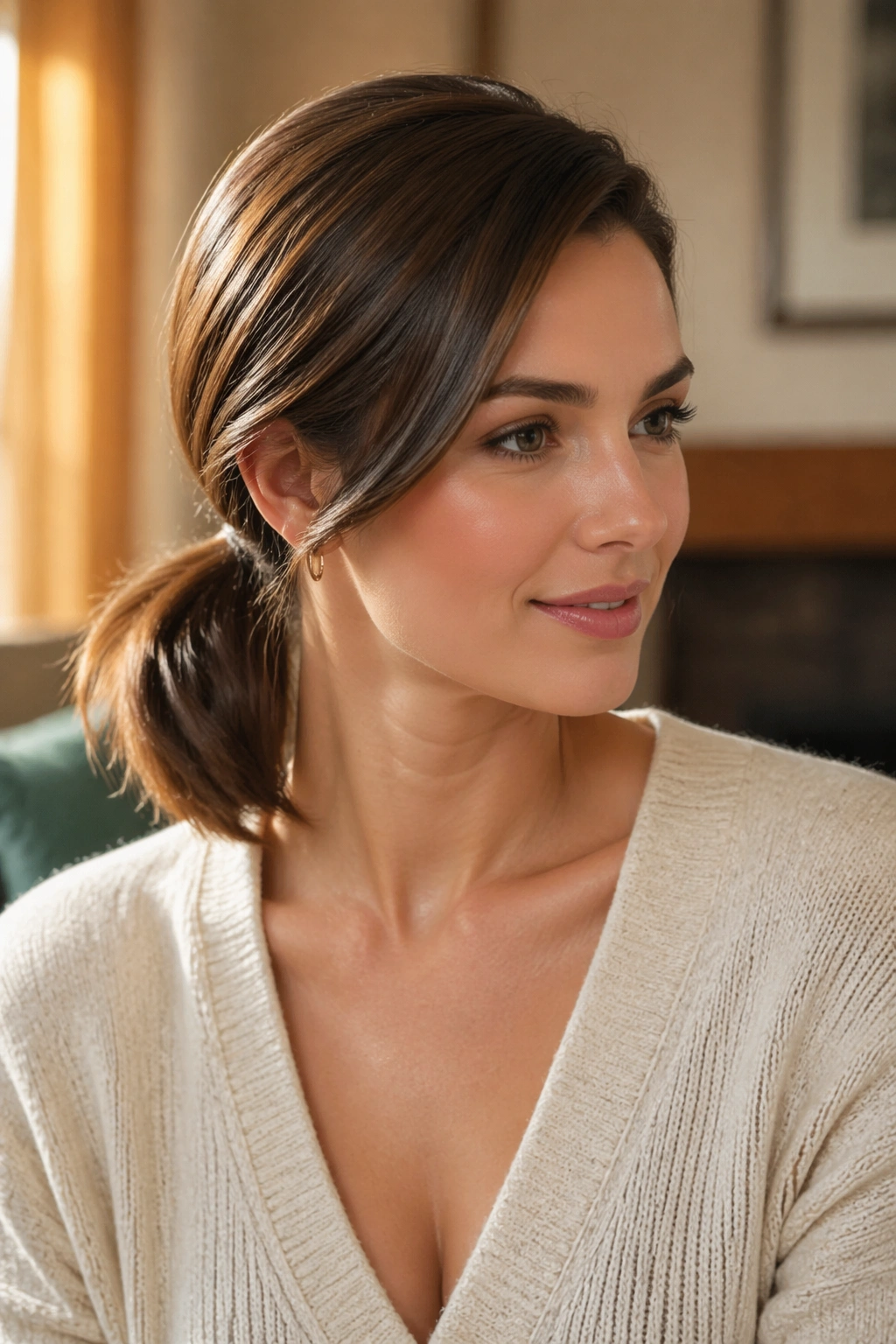
A deep side part does not hide short hair. It gives it shape.
That matters more than people think. Straight hair can look a little too even when it’s pulled back, especially if the cut is blunt. A deep side part puts more lift over one temple and makes the ponytail feel less severe. It’s also forgiving if one side of your haircut is slightly shorter than the other, which happens all the time with layered bobs.
Brush the hair diagonally back from the heavier side, then gather the ponytail low and slightly off-center. About two inches behind the ear is usually enough to keep the style looking intentional. If you want the roots to hold, use a dusting of texture spray or dry shampoo before combing. The goal is grip, not grit.
This is the style I’d choose on a day when the hair feels too flat to be interesting. It needs almost no length, and it doesn’t care if the tail is tiny. It still reads as a real style.
4. Half-Up Mini Ponytail for Hair That Barely Reaches a Tie
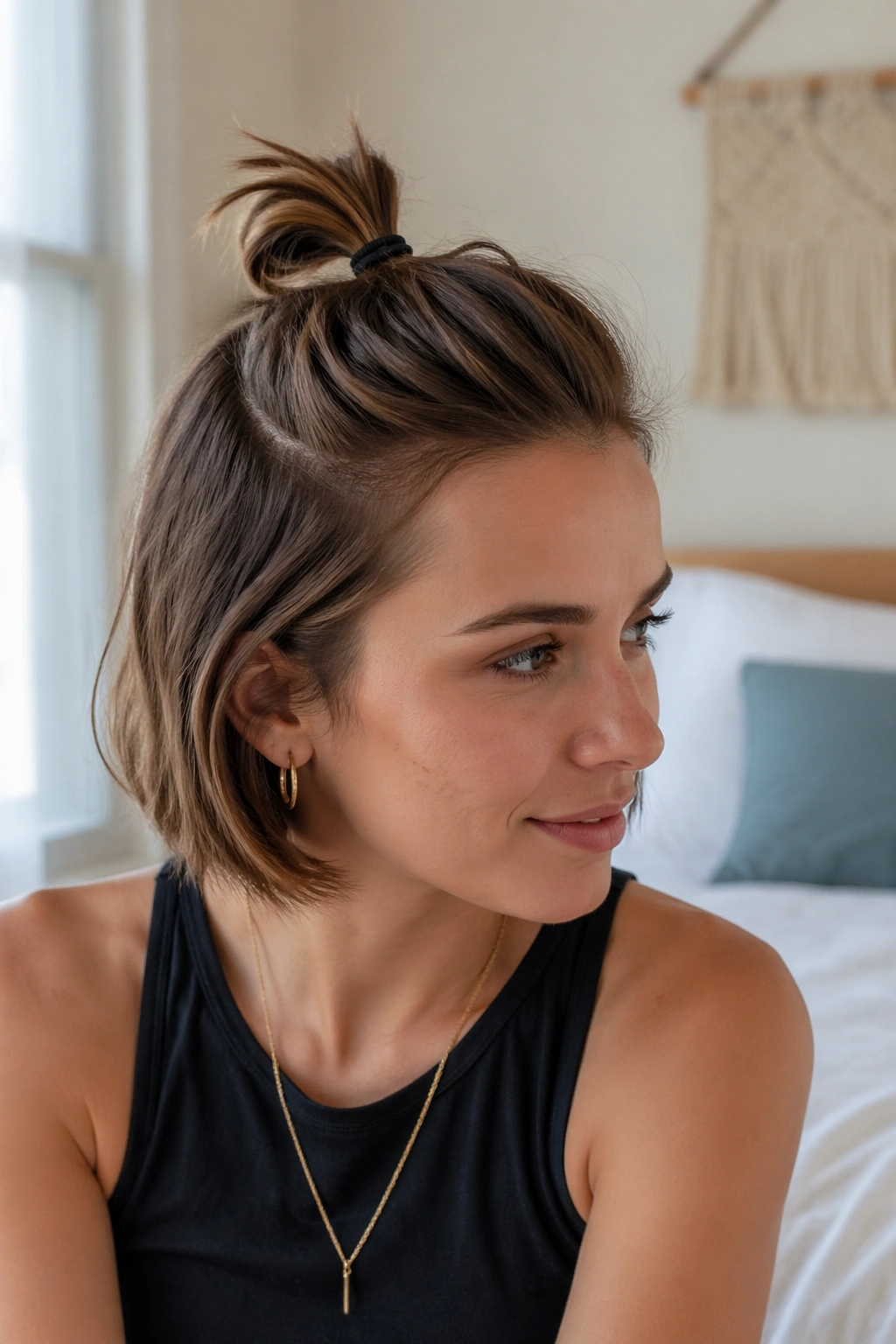
What if the bottom layer won’t reach? Use only the top.
The half-up mini ponytail is one of the smartest ponytails for straight hair with short hair because it stops asking the lower section to do a job it can’t do. Gather the hair from the temples and crown, leaving the bottom layers down. Tie the top section with a small elastic, then tug the crown up just a touch so the style doesn’t sit flat.
The Part People Miss
The section you take should be smaller than you think. A half-up on short hair gets clunky fast if you grab too much. Think from the temples back to the crown, not half the head. If your bob is chin length, this usually leaves enough hair hanging below to keep the look soft.
This style is good on day two hair because the lower section can be a little piecey. It also works when you want the feel of a ponytail without exposing every layer at the back. Tiny? Yes. Boring? Not if you keep the part clean and the top lifted.
5. High Micro Ponytail That Sits Above the Crown
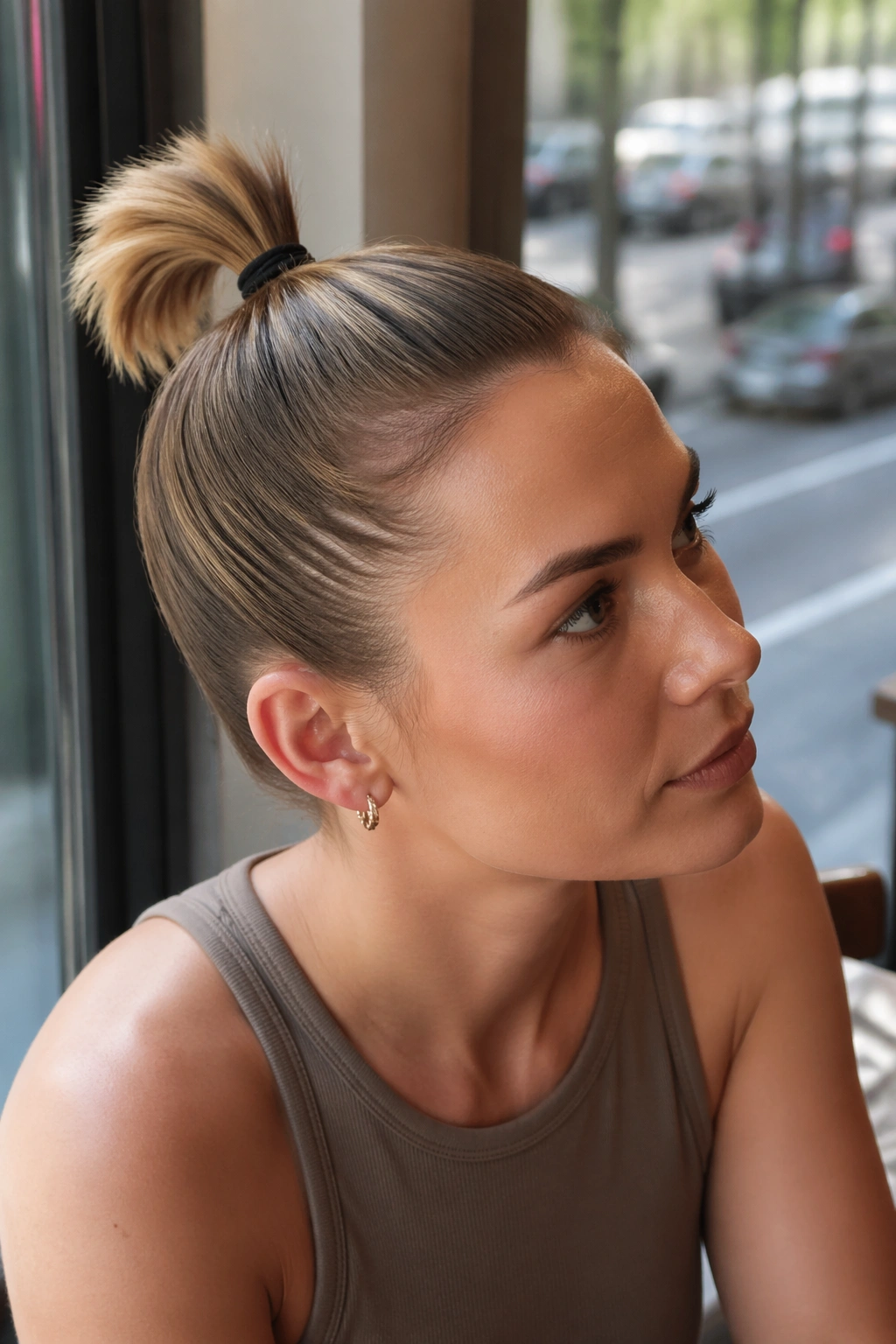
A high ponytail on short, straight hair can look sharp instead of childish if you keep it tight and small.
The trick is placement. Don’t drag it up to the moon. Set the ponytail about two inches above the crown, smooth the top with a brush, and let the tail stay compact. On shorter hair, the look is more “sleek knot” than full-length pony, and that’s fine. Better, honestly.
If your roots fall apart the second you lift them, dry shampoo helps more than extra hairspray. Spray the roots, wait a few seconds, then brush upward. The hair gets a little bit of bite, which matters a lot when the strands are straight and slippery. A second elastic placed half an inch below the first can help the tail sit up instead of drooping.
This style is a good match for a lob that has enough back length to catch the tie but not enough for a long swing. Small high ponytail, clean top, no fluff. That’s the whole thing.
6. Bubble Ponytail That Uses Tiny Elastics to Fake Length
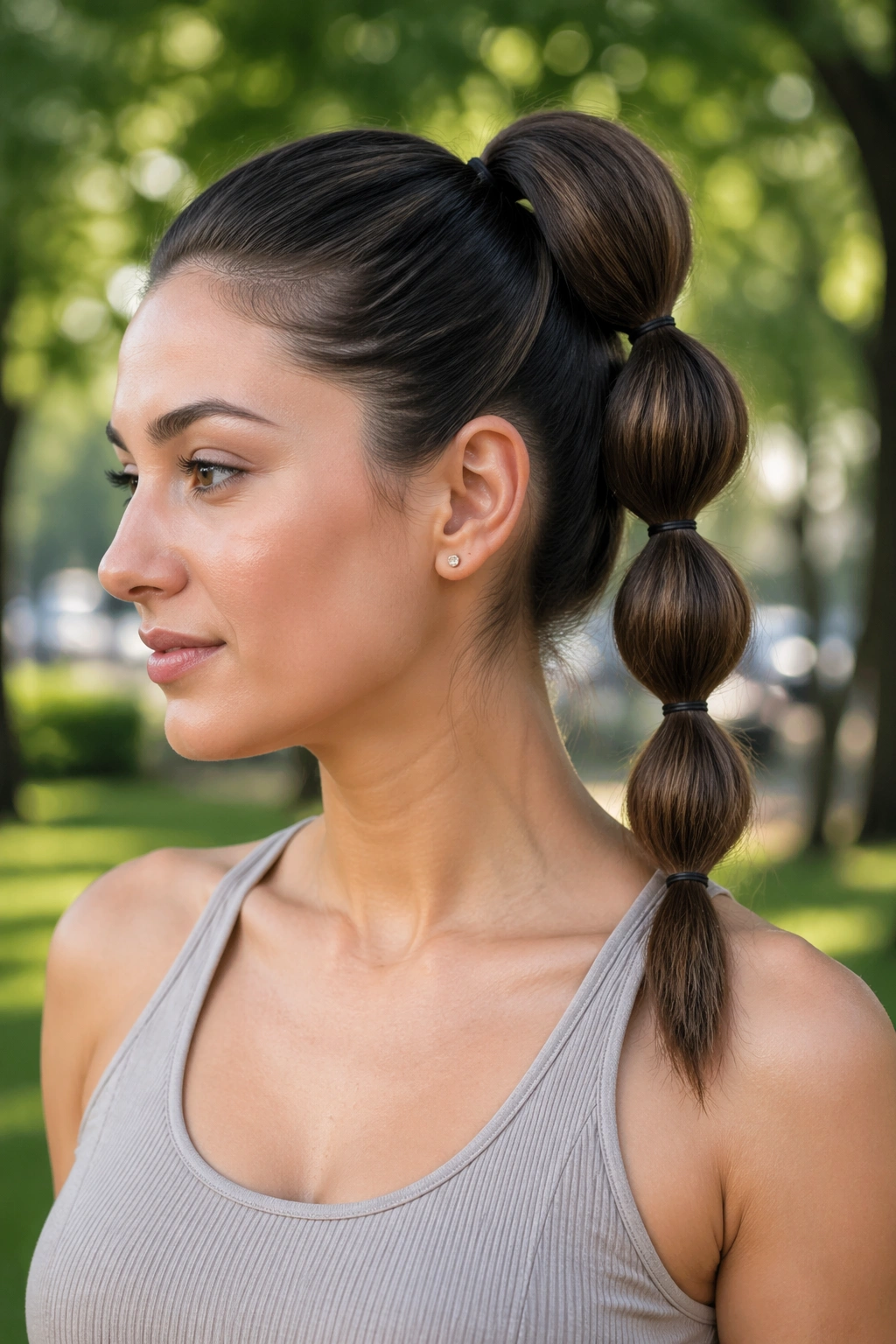
Two clear elastics can do a surprising amount of work here. A bubble ponytail gives short hair the look of extra structure, and straight strands make the bubbles look crisp.
Tie a small ponytail first, then place another clear elastic 1 to 1½ inches down the tail. Gently tug the hair between the elastics outward until it puffs a little. Repeat once or twice if your hair is long enough. If the tail is very short, one bubble may be enough. No rule says you need three.
How to Keep the Bubbles Even
The sections need to be the same size, or the style starts looking accidental. Use your fingers as a measuring tool if you do not want to fuss with a comb. A small mist of texturizing spray before the first elastic helps the bubbles hold their shape, especially on glassy straight hair.
This one works well when you want a little playfulness without curls, braids, or heat. It’s also friendly to shorter layers, because the bubbles distract from any ends that don’t perfectly align. The bubbles do the visual heavy lifting. The actual tail can stay tiny.
7. Wrapped Elastic Ponytail for a Cleaner Finish
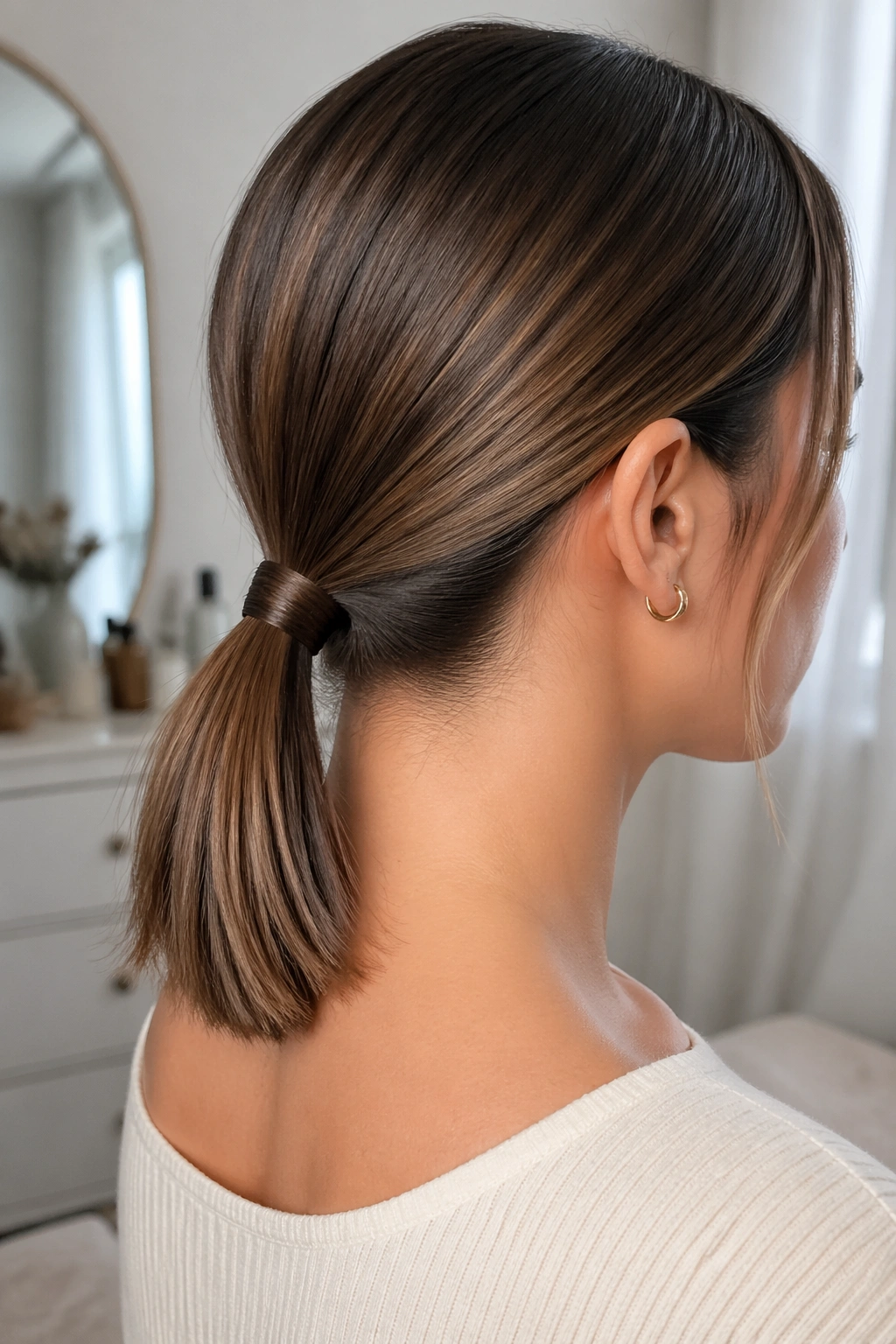
A wrapped elastic is the difference between “I tied my hair back” and “I styled my hair on purpose.”
Use a regular low or mid ponytail as your base, then take a thin strand from underneath the tail. Wrap it around the elastic until the band disappears, and pin the end under the ponytail with one bobby pin. The wrap should be narrow, about 1/4 inch thick, or it starts looking bulky on short hair.
Why It Works So Well on Straight Hair
Straight hair tends to show every tool you used. Every elastic. Every clip. Every pin. Wrapping the base hides the one thing that usually gives the style away, which makes the ponytail feel cleaner and more finished. It’s a tiny detail, but it changes the whole mood.
I’d use this on a bob that reaches the collarbone or on a blunt lob. If the tail is short, no problem. The wrapped base does the visual work, and the ponytail itself can be modest. A small shine spray on the top layer helps this style look sleek without turning the roots oily.
8. Twisted Nape Ponytail for Short Layers That Slip Out
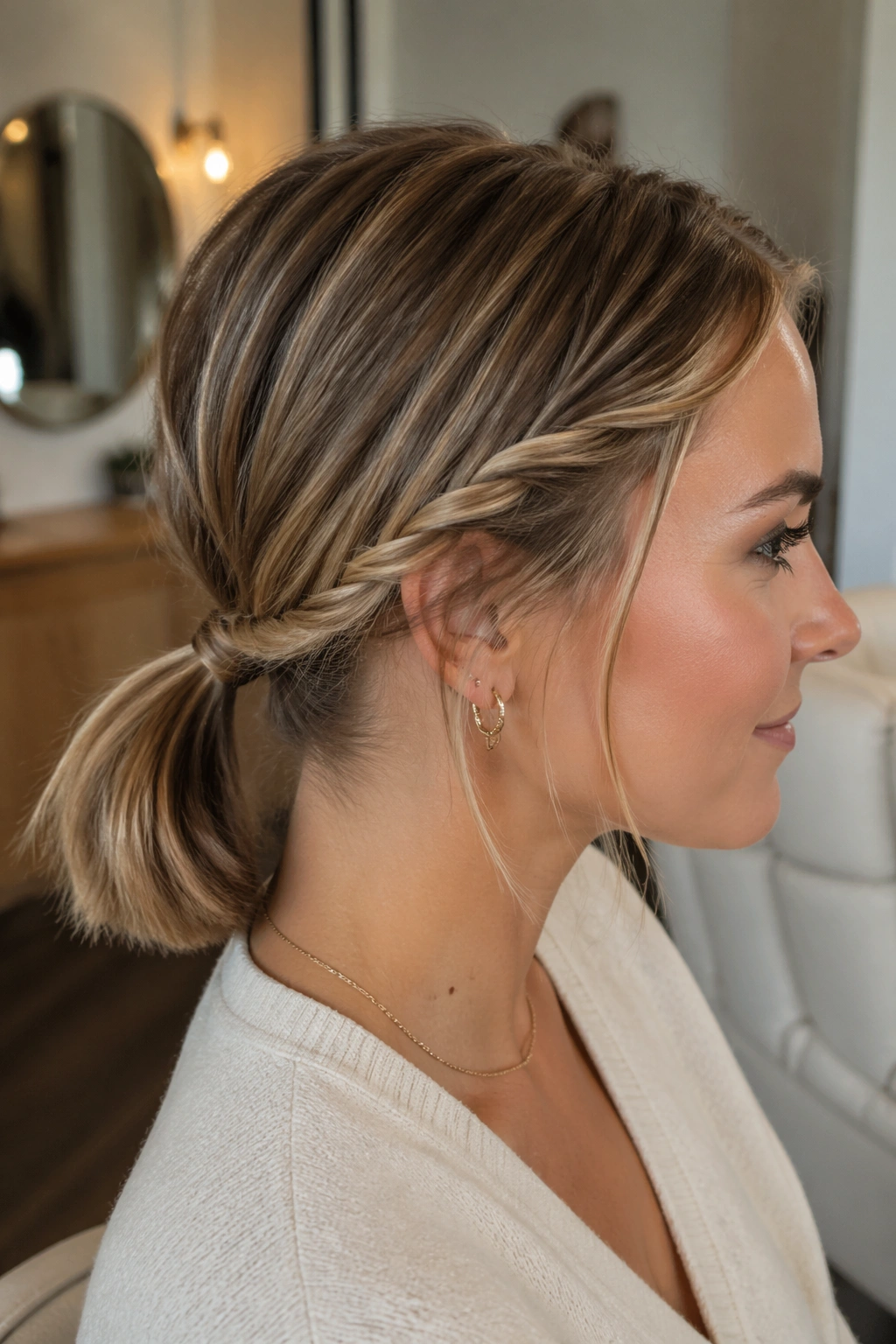
Unlike a plain low tie, a twisted nape ponytail uses the hair that usually escapes as part of the design.
Take a 1-inch section from each temple and twist them back toward the center, crossing them once before you join the rest of the hair into a low ponytail. You can secure the twists with a tiny clear elastic first if your hair is especially slippery. Then tie the main ponytail at the nape.
This style is good when your cut has shorter pieces around the cheeks or jaw. Those pieces are the ones that tend to slide free, and the twist keeps them inside the shape instead of hanging around awkwardly. Two bobby pins placed in an X pattern underneath the twist can make it last longer than you’d expect.
The finished look is neat, but it has a little movement near the temples, which keeps it from feeling too strict. On straight hair, that balance matters. Too slick, and the face can look harsh. A small twist softens the edges without turning the style messy.
9. Side Ponytail That Sits Low and Easy

There’s a reason a side ponytail often looks friendlier on short hair than a centered one. The angle gives the tail more visual length.
Gather the hair just behind one ear, not all the way under the ear, and secure it with a small elastic. The ponytail should sit low enough that the hair at the opposite side can still fall naturally. If you pull it too far back, you lose the point. This is supposed to feel easy.
A side pony is especially good if one side of your bob is a little longer or if your layers flip out at the nape. The asymmetry hides that unevenness. It also gives straight hair a softer line than a dead-center tie, which can be a welcome break if your haircut is blunt.
Add one tucked strand near the forehead if you want the style to feel less strict. Or don’t. The plain version works fine. The off-center placement is the whole trick.
10. Face-Framing Ponytail That Keeps the Front Pieces Out
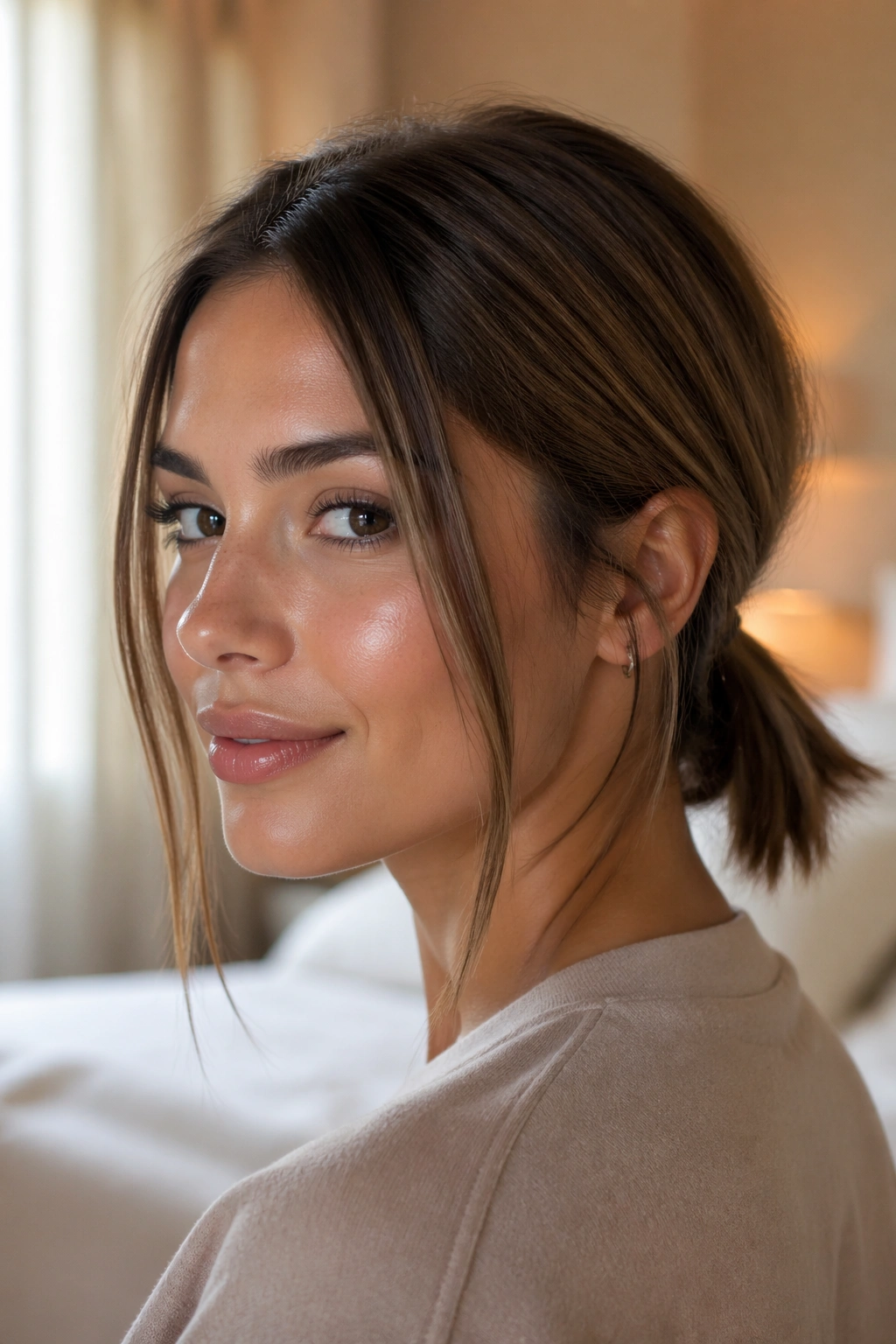
If your fringe is too short to join the ponytail, don’t fight it. Leave it out on purpose.
A face-framing ponytail works well when the front pieces are between cheekbone and jaw length. Pull the rest of the hair back into a low or mid ponytail, then leave two slim pieces at the front. You can bend them slightly with a flat iron if you want a soft curve, but straight is fine too. The key is that they look chosen, not missed.
This style has a nice effect on short straight hair because it breaks up the severity around the face. A ponytail can make features look sharper than expected, especially when the hair is smooth and tucked back. The front pieces soften that. They also give the cut a little movement when the rest of the style is tight.
Keep the face-framing sections narrow. Too much hair left out starts looking unfinished. Two slim pieces are enough. If they fall into your eyes, tuck the ends behind the ears and let the rest stay loose.
11. Faux Bob Ponytail That Cheats Length Without Looking Fake
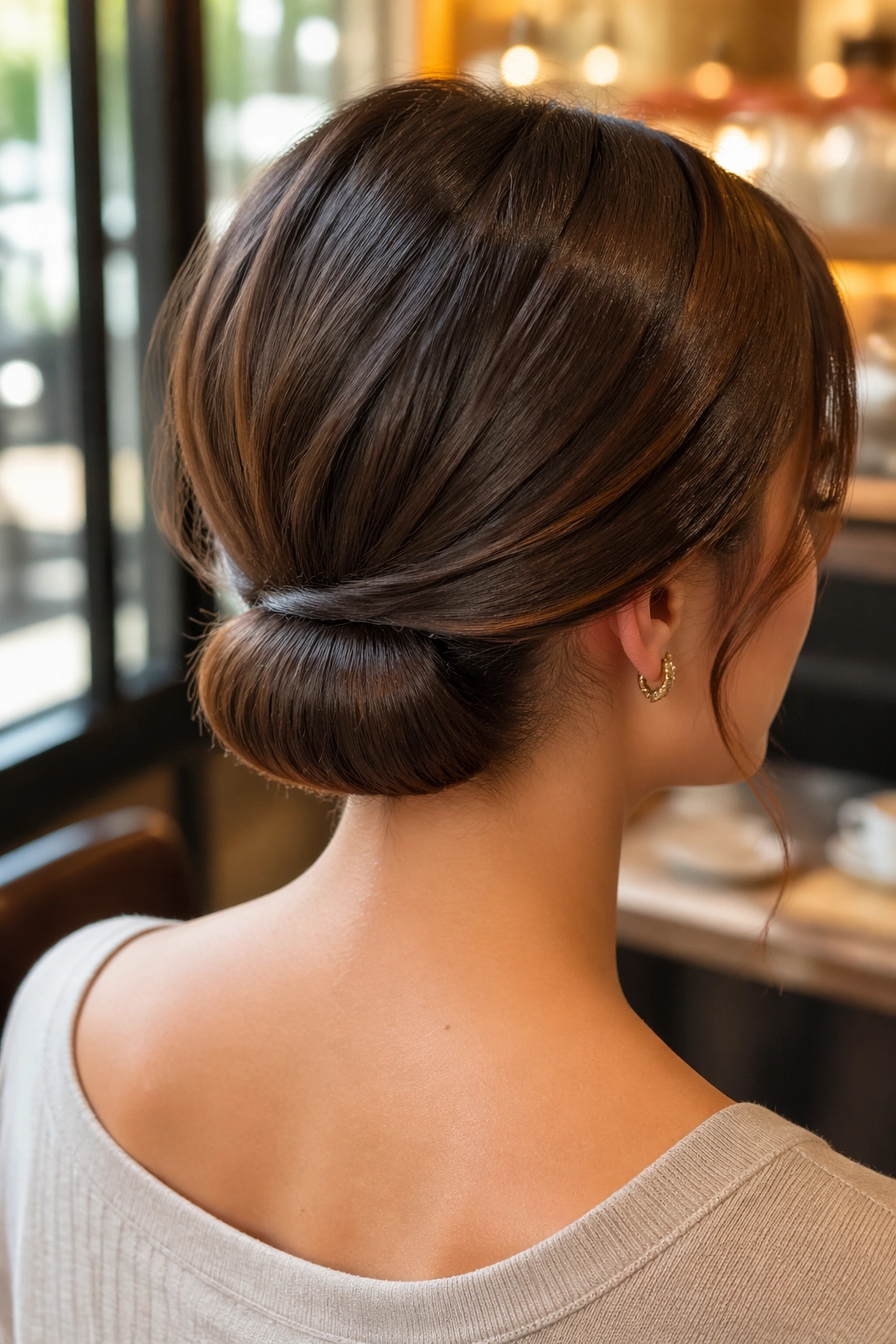
This is the style that cheats length without begging for extensions.
Tie the hair into a low ponytail, then fold the tail upward and tuck it under itself so the ends disappear. Secure the fold with two or three bobby pins from underneath. From the back, it reads like a neat bob. From the side, it looks like a tucked-under style with shape.
It works best when the hair reaches at least the nape, because you need enough length to fold. The beauty of the faux bob ponytail is that it turns a too-short tail into a feature. Short ends are not a problem here. They become the structure of the look.
What to Watch For
The fold needs to sit flat against the neck. If it sticks out, the style loses its line. A light mist of hairspray over the surface helps keep the tucked shape in place, but don’t soak it. Straight hair can go stringy fast.
This is one of the better choices for dinner, events, or any moment when you want short hair to look a little more dressed up than usual.
12. Crown-Twist Ponytail for Extra Grip at the Sides
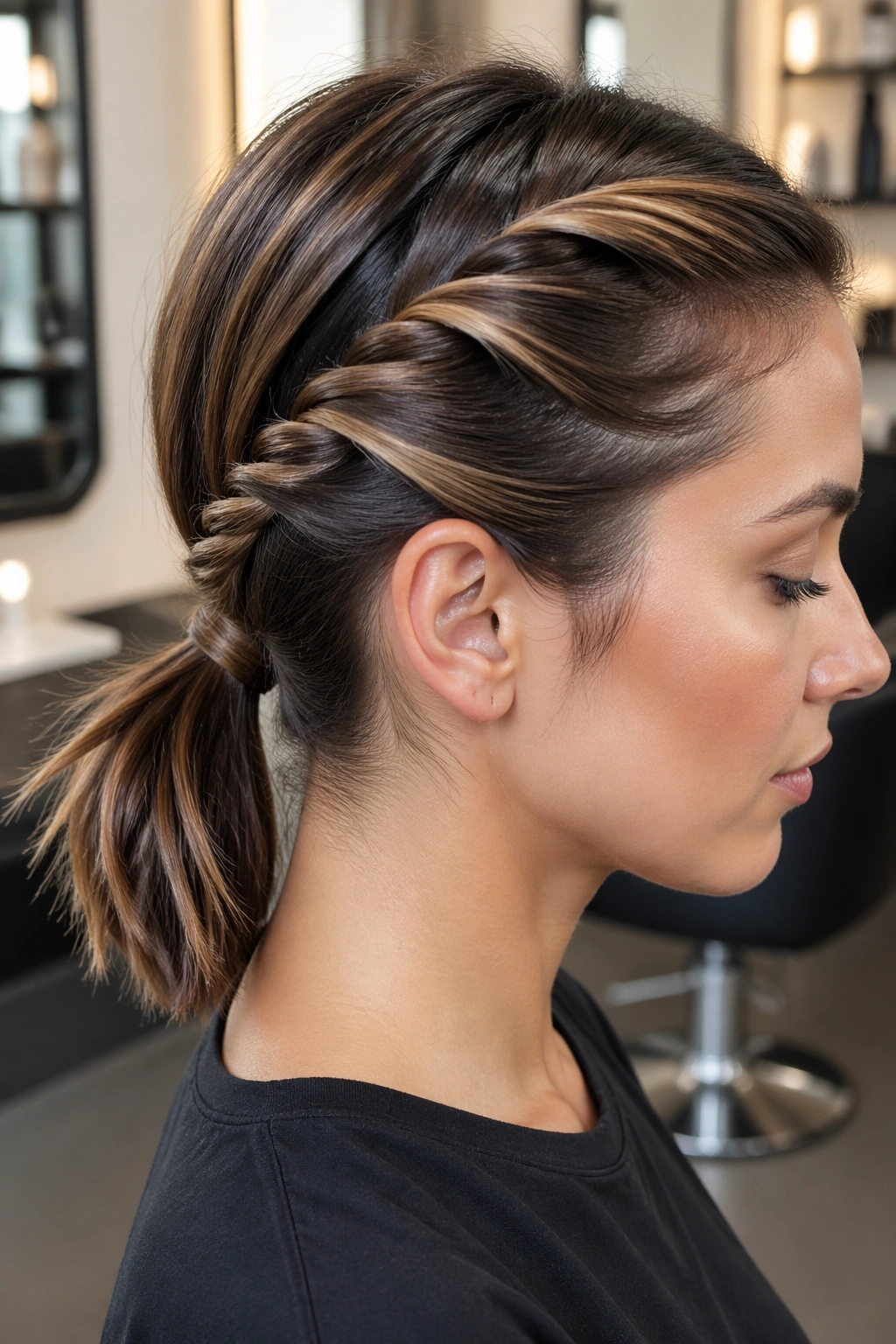
Need more hold near the temples? Add a twist before the ponytail even starts.
Take a 2-inch section from each side of the crown and twist them backward toward the center. Pin the twists or secure them with a tiny elastic, then gather the rest into a low ponytail. The twist gives you grip where straight hair usually slips, and it creates a more finished top line than a simple brush-back.
Why the Twist Helps
Straight hair is smooth, which sounds nice until it refuses to stay where you put it. Twists solve that by locking a little texture into the front section. You do not need to braid the entire head. A small twist at the crown is enough to keep the style from collapsing by noon.
This ponytail looks especially good on hair that has soft layers around the face. The twist lets those pieces blend into the shape instead of hanging like they were left out by accident. If you want it polished, smooth the top. If you want it a little less formal, loosen the twist after pinning so it sits flatter and softer.
13. Rope-Braid Ponytail for Hair That Slides Too Easily
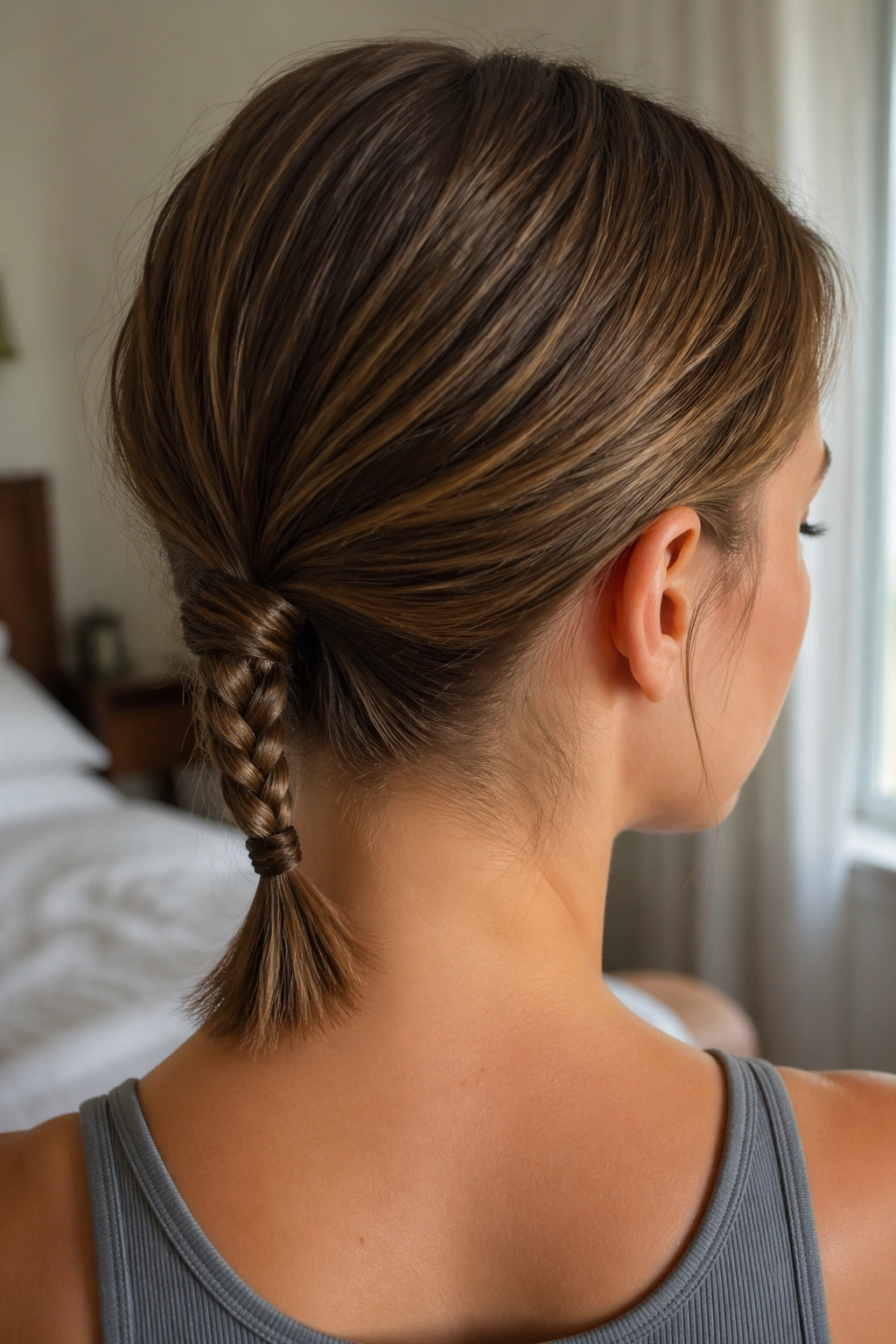
A rope-braid ponytail is a good move when your hair slips through normal styles in about five minutes.
After you secure the ponytail, split the tail into two sections and twist each one in the same direction. Then wrap them around each other in the opposite direction. That’s the basic rope-braid pattern, and on straight short hair it gives the tail enough texture to stay visually interesting even when it’s tiny. If the tail is only a few inches long, one tight rope braid is enough.
The braid gives the ponytail a more deliberate look without asking for length you do not have. It also helps the ends stay together instead of flaring out in different directions. If your hair is very fine, mist the tail with a dry texturizing spray first. Fine hair likes grip. It needs a little help.
This is a practical style, not a fussy one. That’s why I like it. It works with a blunt bob, a lob, and even some grown-out pixie cuts if the back is long enough to catch a tie.
14. Ribbon-Tied Low Ponytail That Makes Short Hair Look Intentional
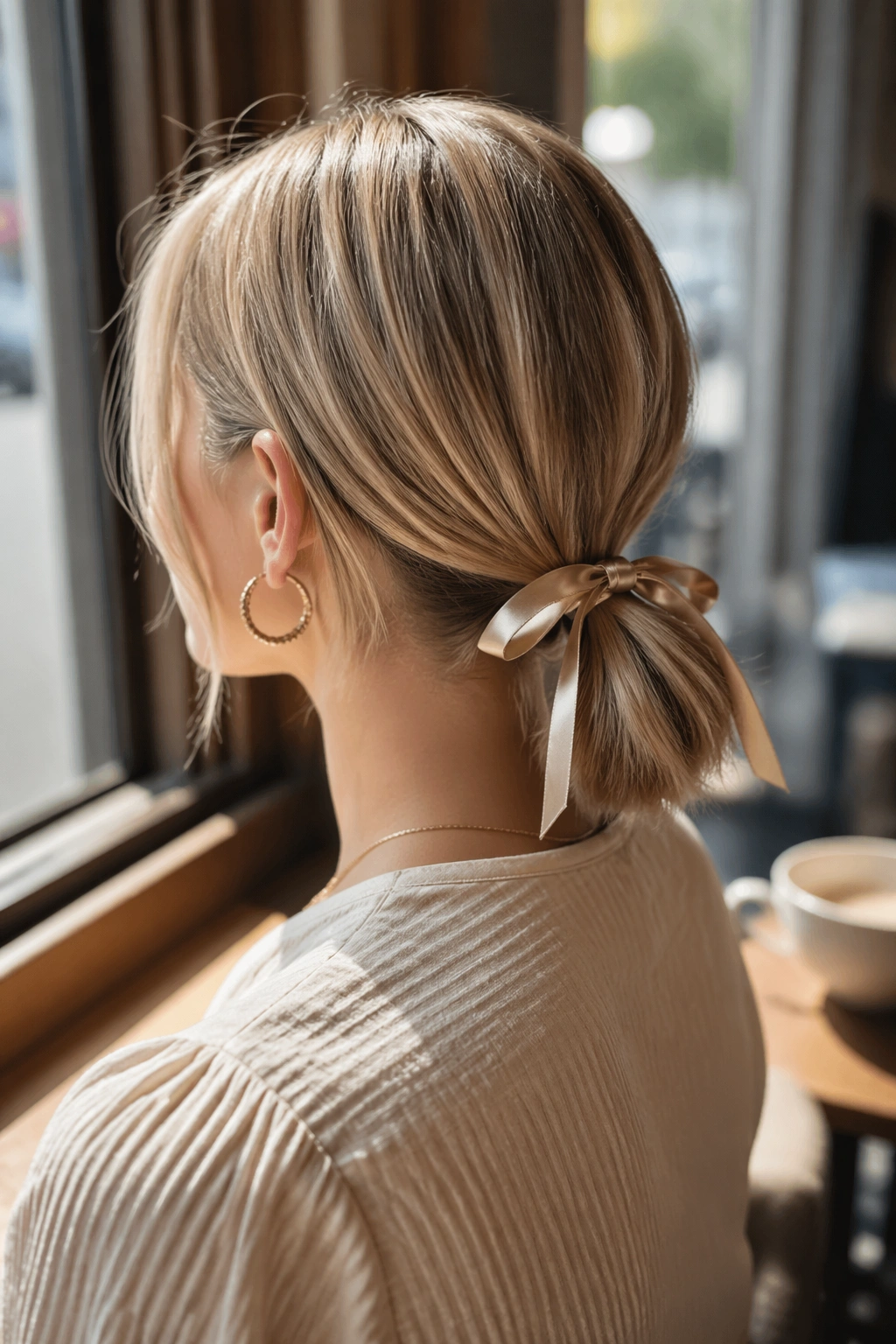
A ribbon does for short hair what extra length cannot: it gives the eye a finish line.
Tie a low ponytail first, then replace or cover the elastic with a 1- to 2-inch-wide ribbon. Satin looks smooth and polished. Grosgrain feels a little more casual and holds a bow better. Velvet gives the style some weight, which can be useful if your hair is thin and the pony itself is tiny.
A ribbon is one of the easiest ways to make a short ponytail feel styled instead of improvised. It also draws attention to the base, which is helpful when the tail is short and not doing much visually. You can leave the ends hanging, knot the ribbon once, or make a small bow that sits just off center.
This style is good when you want softness. It’s not the one I’d choose for the gym. It is the one I’d choose when a bob needs a little polish and you do not want to fuss with braids or pins.
15. Half-Up Bubble Ponytail for a Playful, Short-Hair Shape
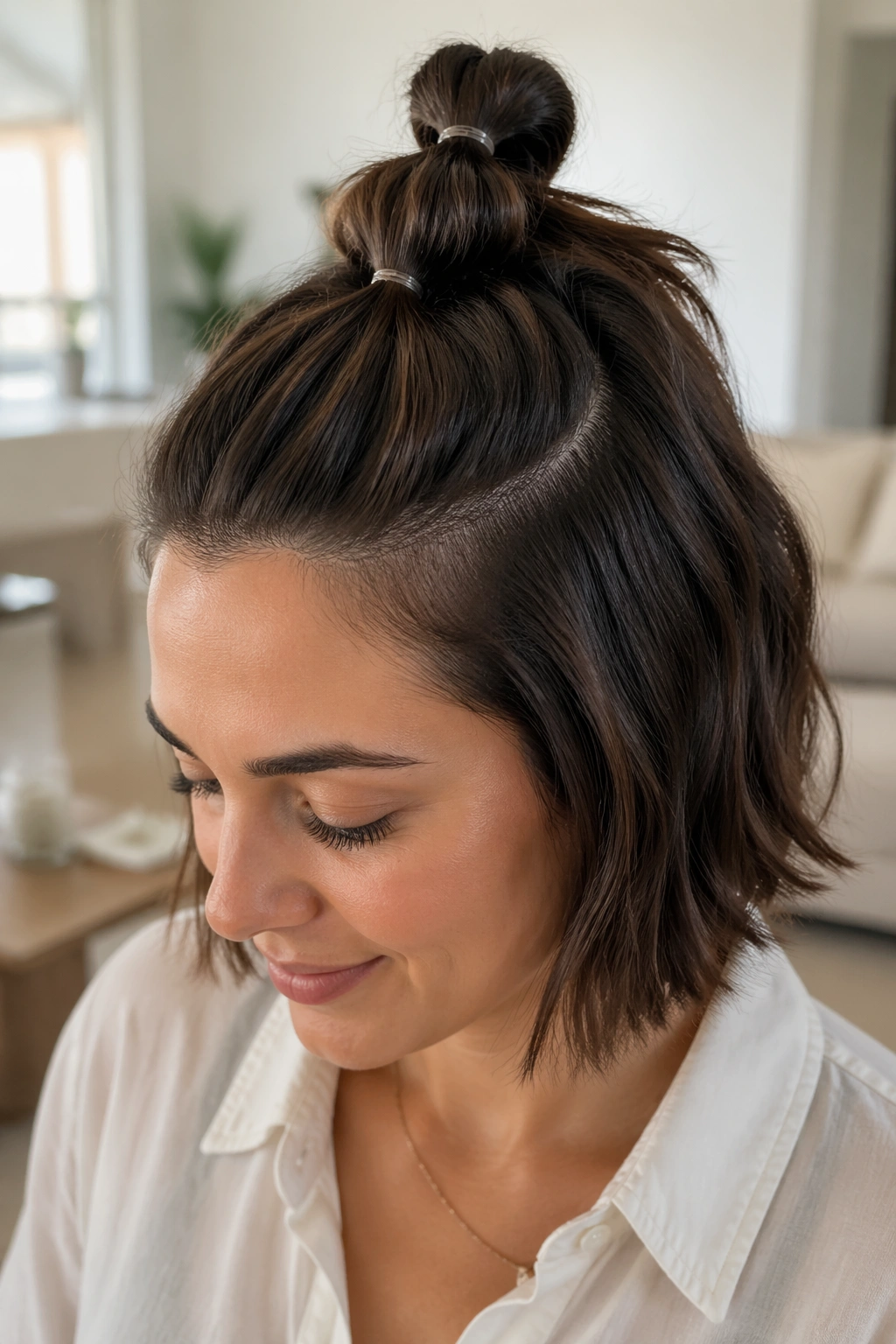
If a full bubble ponytail feels too ambitious, half of one is often enough.
Gather the top section only — from the temples up to the crown — and secure it into a small ponytail. Add a second elastic about an inch down the tail, tug the section between the elastics, and stop there if the hair is short. On a lob, you may get two bubbles. On a chin-length cut, one strong bubble can be enough to change the whole look.
This works because the half-up shape gives you lift at the top while the rest of the hair stays down and smooth. The contrast is nice. Straight hair can go flat fast, and the bubbles keep the top from disappearing into the rest of the cut.
Keep the Bubbles Small
Big bubbles look awkward on short hair. Small ones feel cute and controlled. Use clear elastics so the sections look cleaner, and tug the sides of each bubble with your fingertips instead of pulling hard. You want fullness, not frizz.
16. Double Mini Ponytail Merge for a Little Extra Length
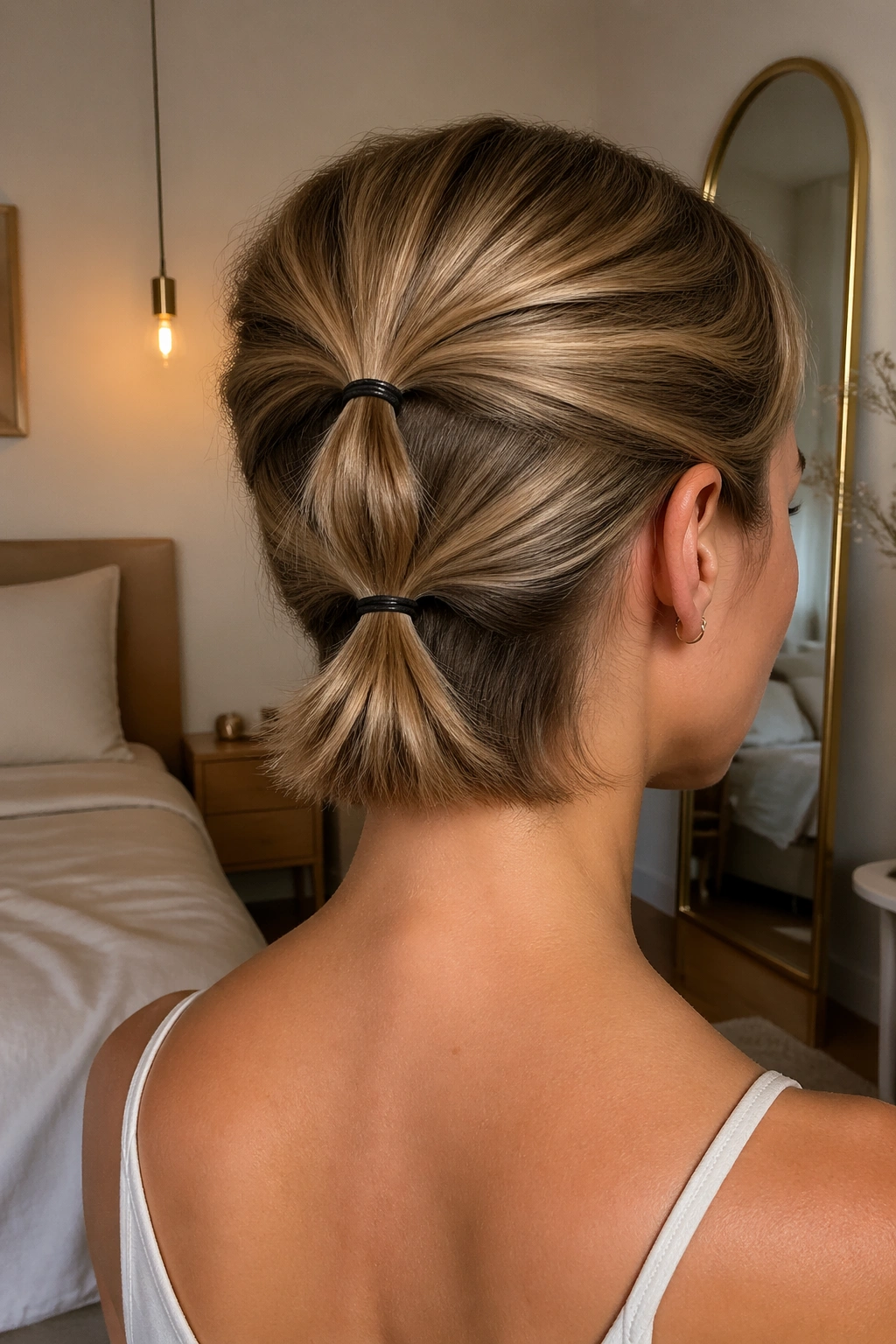
Two tiny ponies can pretend to be one longer pony if you place them well.
Make a small top ponytail first, then gather the section below it into a second ponytail directly underneath. Once both are secure, use your fingers to blend the two tails together so they read as one layered shape from the back. This works best on very short hair that won’t make a convincing single ponytail on its own.
The trick is spacing. Keep the elastics close, about 1 inch apart, or the style starts looking broken into parts. The top pony gives height. The lower one anchors the ends. Together, they make the ponytail look more substantial than a single tiny tie ever could.
It sounds a little odd, and it is a little odd. But that is exactly why it works. Straight short hair often needs structure more than length, and this gives it both. If you want to soften the look, pull out one fine strand near each temple.
17. Pinned-Under Ponytail for the Shortest Layers
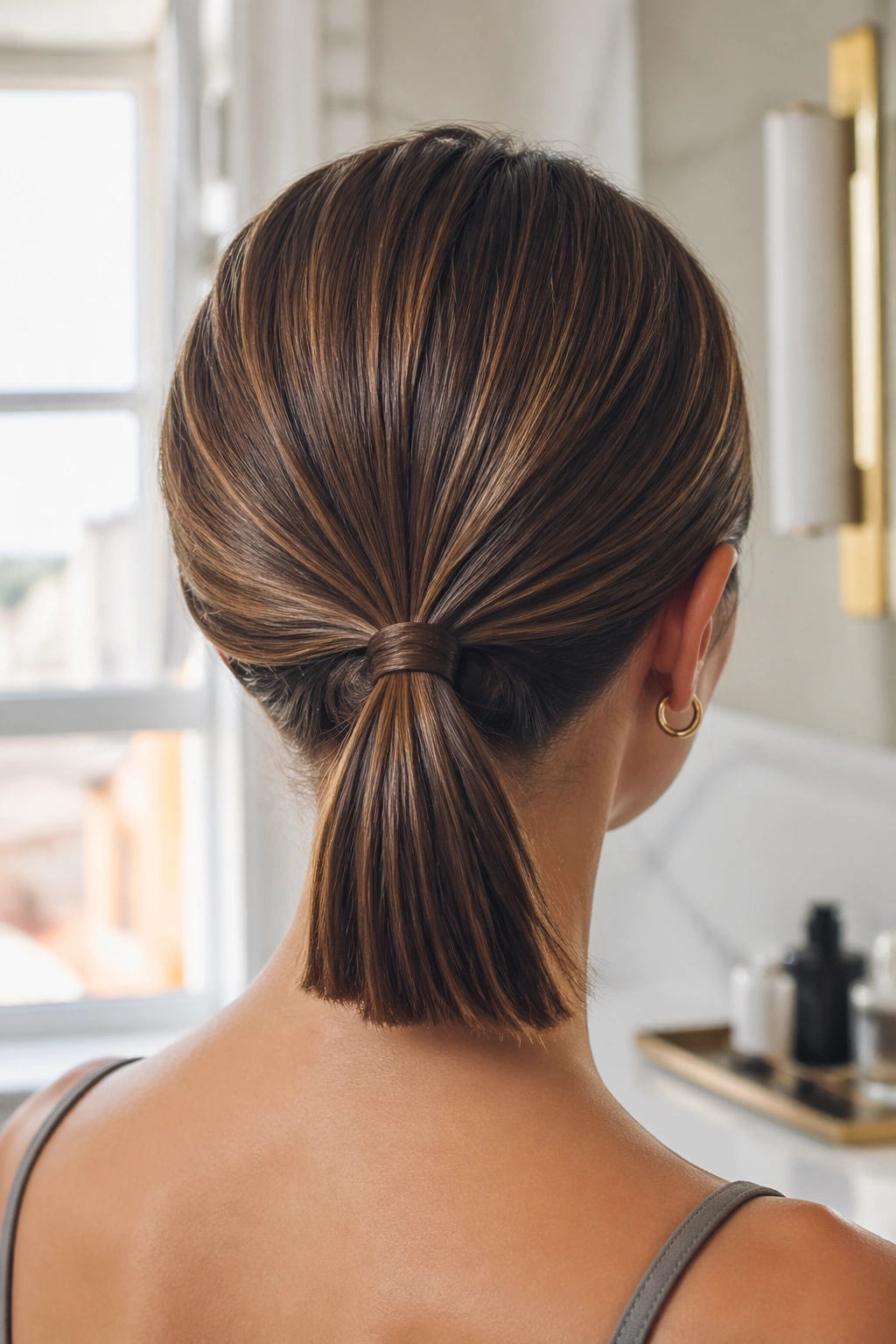
Shorter layers. Hidden, not ignored.
This is the style for hair that almost reaches a ponytail but not quite. Gather as much as you can into a low tie, then tuck the shortest ends under the elastic and secure them with bobby pins underneath the base. You’re building a shape more than a swingy tail.
How to Make It Hold
Use four bobby pins if needed, not one. Two on each side often grip better than one heavy pin. Slide them in so the wavy side faces down against the scalp. That little detail matters more than people think. The pins should feel snug, not stabbed in at random.
This style works when the cut is layered and the ends are too short to stay neat in a normal ponytail. Instead of letting them stick out, you fold them into the style. The result is tidy and a bit architectural, which suits straight hair very well. The goal is to hide the struggle, not the hair.
18. Messy Textured Ponytail for Hair That Needs a Little Friction
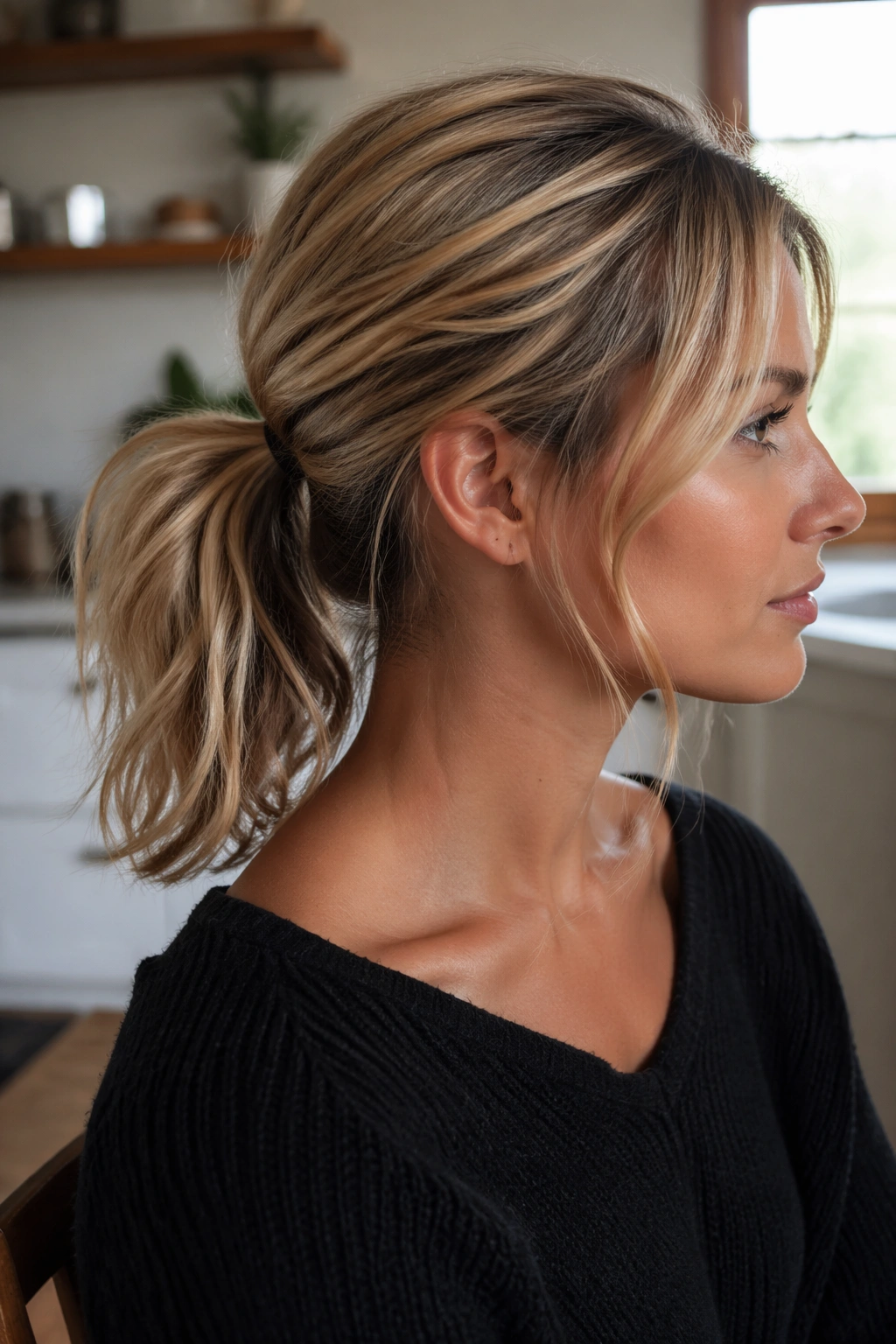
A little roughness helps straight hair hold.
Start by misting dry shampoo or texturizing spray through the roots and mid-lengths. Then rough-dry the hair with your fingers or bend a few sections with a flat iron so the tail has a little movement. Gather it low or mid-height, but don’t comb it slick. Let the surface stay piecey.
This is not the same as skipping effort. It’s a different kind of effort. Straight hair can look flat and overcontrolled when it’s pulled into a ponytail with no texture at all. A little grit gives the style shape, especially if the cut has layers or the ends flip outward.
I like this version when short hair feels too neat. It’s more relaxed, and it hides uneven ends better than a glassy sleek pony. The mess should feel deliberate, not sloppy. If the crown starts to puff too much, smooth only the top layer and leave the rest lived-in.
19. Knotted Ponytail for a Base That Stays Put
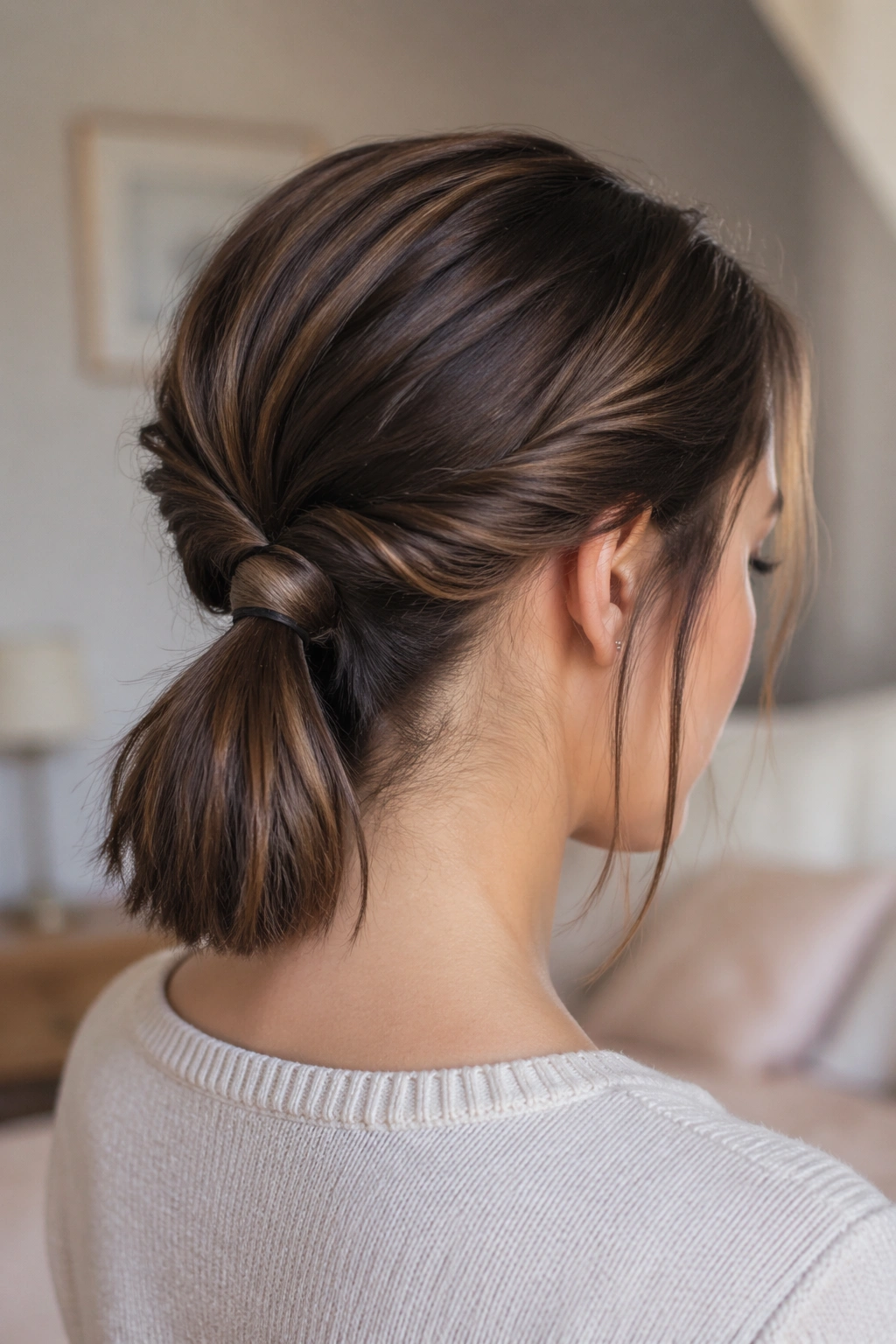
What if the hold came from a knot instead of a stretchy elastic?
Take two side sections from the front, tie them into a simple knot at the back of the head, then gather the rest into a small ponytail underneath or right after the knot. On short straight hair, this creates a surprisingly sturdy base because the knot grips the smoother strands before they reach the elastic.
A knotted ponytail works best when the hair is shoulder length or just above it. If the front pieces are shorter, make the knot lower and looser so it does not fight the cut. The style looks a little handmade in a good way. It has shape. It doesn’t look like you rushed through it.
You can keep it very plain or pin the knot in place with two bobby pins for a cleaner finish. Either way, the knot adds interest where a normal elastic would look bare. On straight hair, that detail matters.
20. Loop-Through Ponytail That Builds Its Own Volume
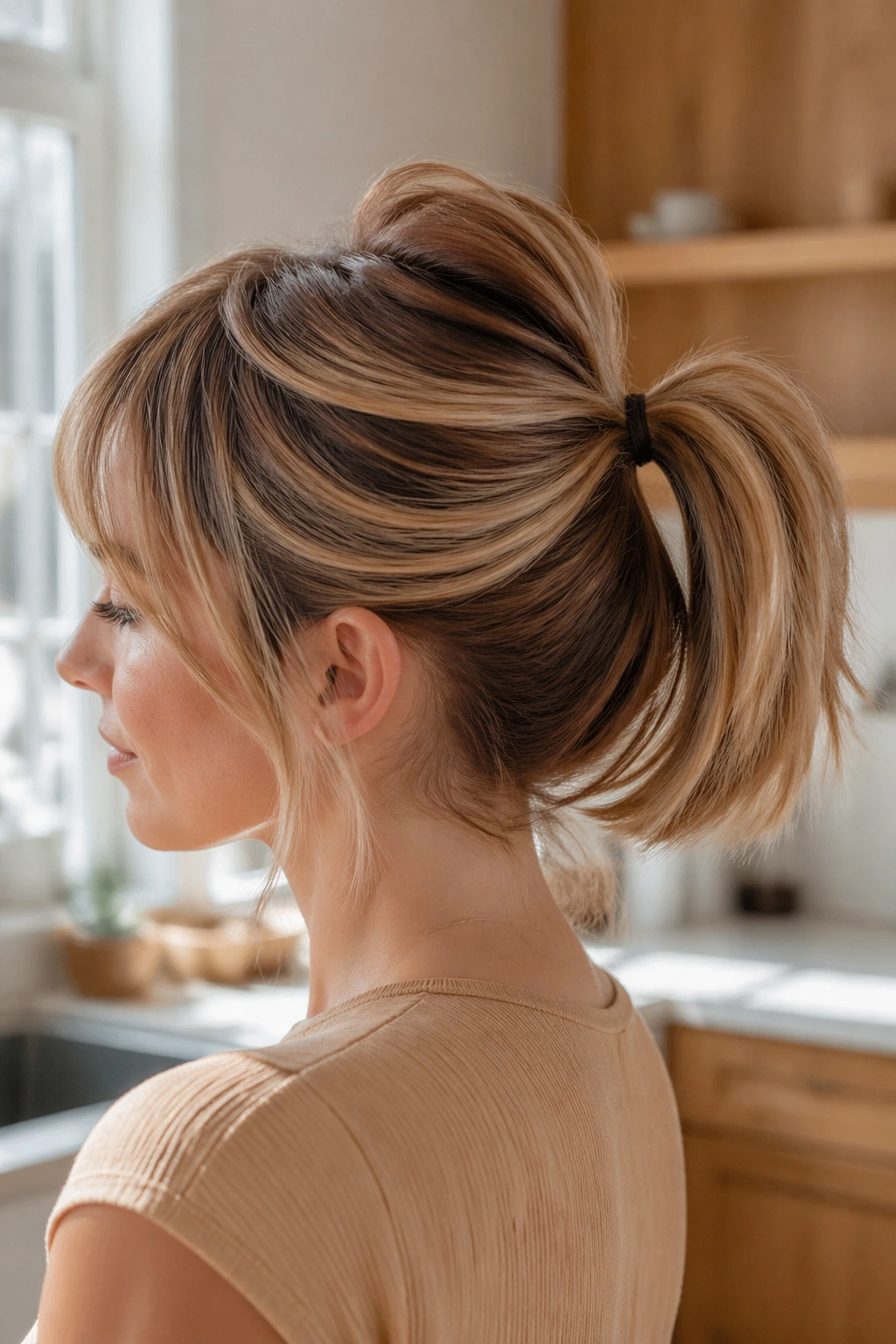
Unlike a plain tie, the loop-through version gives the ponytail a bit of lift at the base.
Make a regular ponytail, loosen the elastic slightly, and split the hair just above the band to create a small opening. Flip the tail up and through that opening once, then pull it down gently. On short hair, the loop-through move gives the illusion of more body without requiring curls or teasing.
This style is especially useful when the ponytail sits low and the top looks a little too flat. The flipped section creates movement at the nape and hides some of the bluntness that straight hair can have when it’s tied back. If the tail is short, the flip can still read clearly because the shape happens at the base.
A small amount of shine serum on the tail makes the twist look polished, but go easy. Too much product and the loop starts slipping. A little grip is better than a shiny slide.
21. Braided-Base Ponytail for Slippery Straight Hair
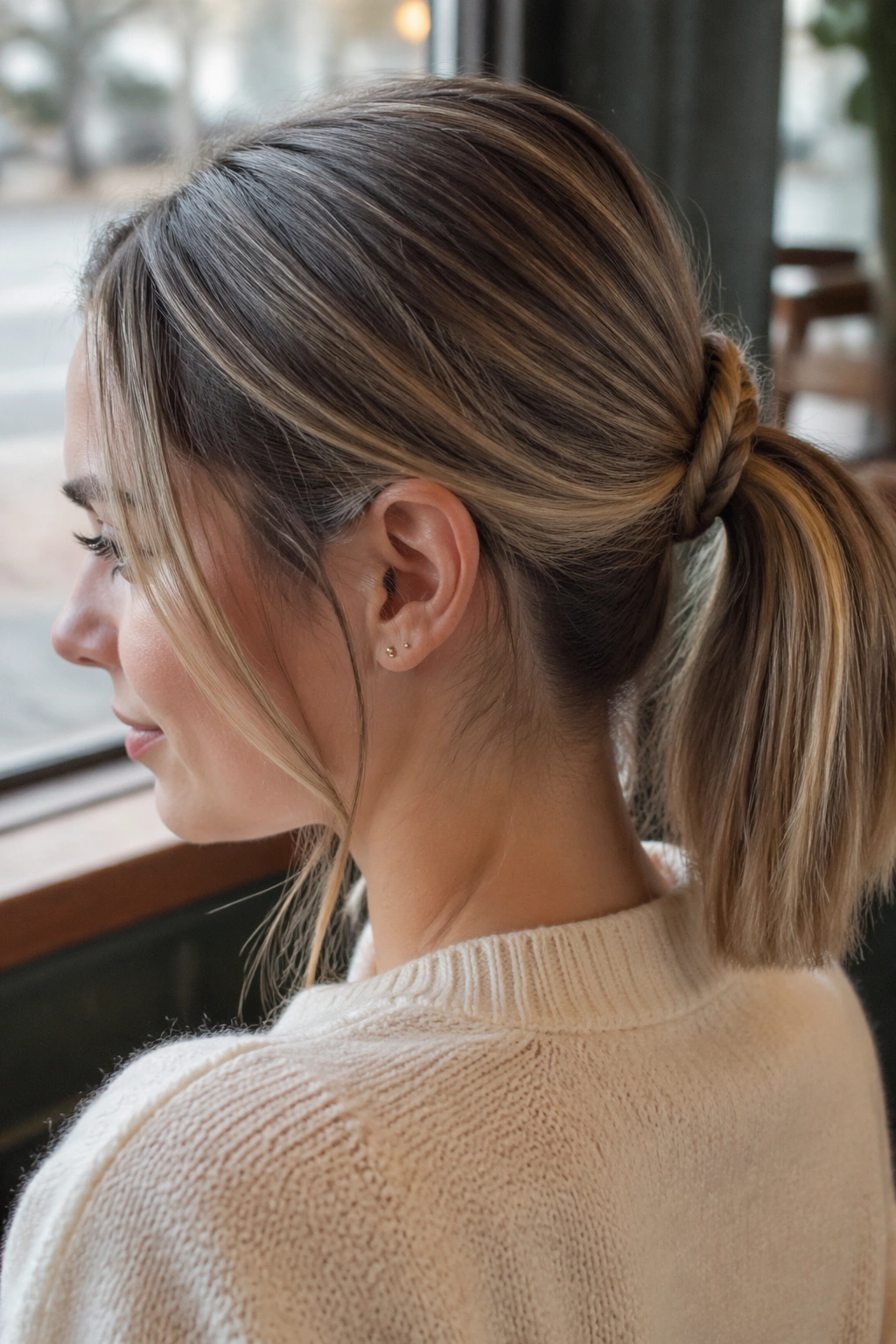
The braid belongs at the base when the hair keeps escaping.
You can start with a tiny braid on each side and join them into a ponytail, or you can braid the top crown section and gather the rest underneath. Either way, the braid acts like a built-in anchor. Straight hair often needs that. Smooth roots and small elastics do not always get along.
Where to Put the Braid
- At the crown for lift and grip
- At the sides for a softer face frame
- Right above the nape if you want the ponytail to sit low and clean
The braid should be narrow. A chunky braid can overpower short hair and make the ponytail look bulky. Keep it tight enough to hold, but not so tight that it leaves a dent you can’t smooth later. This style is one of the best for fine hair because the braided section helps the ponytail stay put instead of slipping out after twenty minutes.
22. Headband Ponytail for a Clean Forehead and Easy Hold
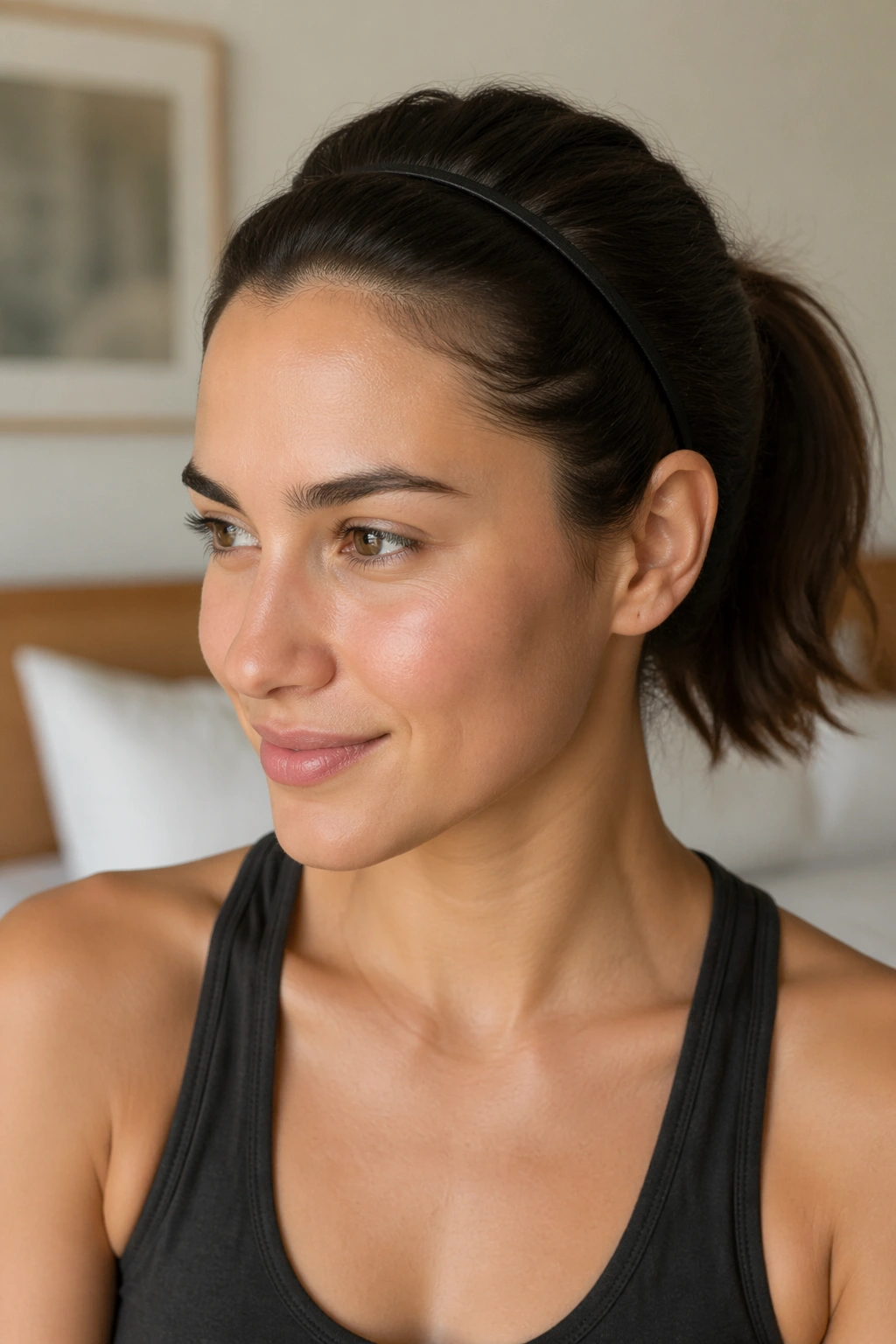
A headband can do more than decorate the style. It can hold the front in place for you.
Brush the hair back, place a slim headband about an inch behind the hairline, and tie the rest into a low or mid ponytail. On short straight hair, the band keeps the front smooth while the ponytail handles the tail end of the style. It’s a neat split of labor.
This is a useful option when your roots are too fine to stay brushed back on their own. A soft satin band gives a gentler look. A sporty elastic band feels more casual and holds tighter. If your bob has layers around the temples, the headband helps pin those down without a dozen clips.
The best part is that it doesn’t need much length. Even shorter cuts can manage this one because the headband does some of the visual work. If your hair is too short for a real ponytail, the band still makes the shape feel finished.
23. Sleek Sporty High Ponytail for a Short, Sharp Profile
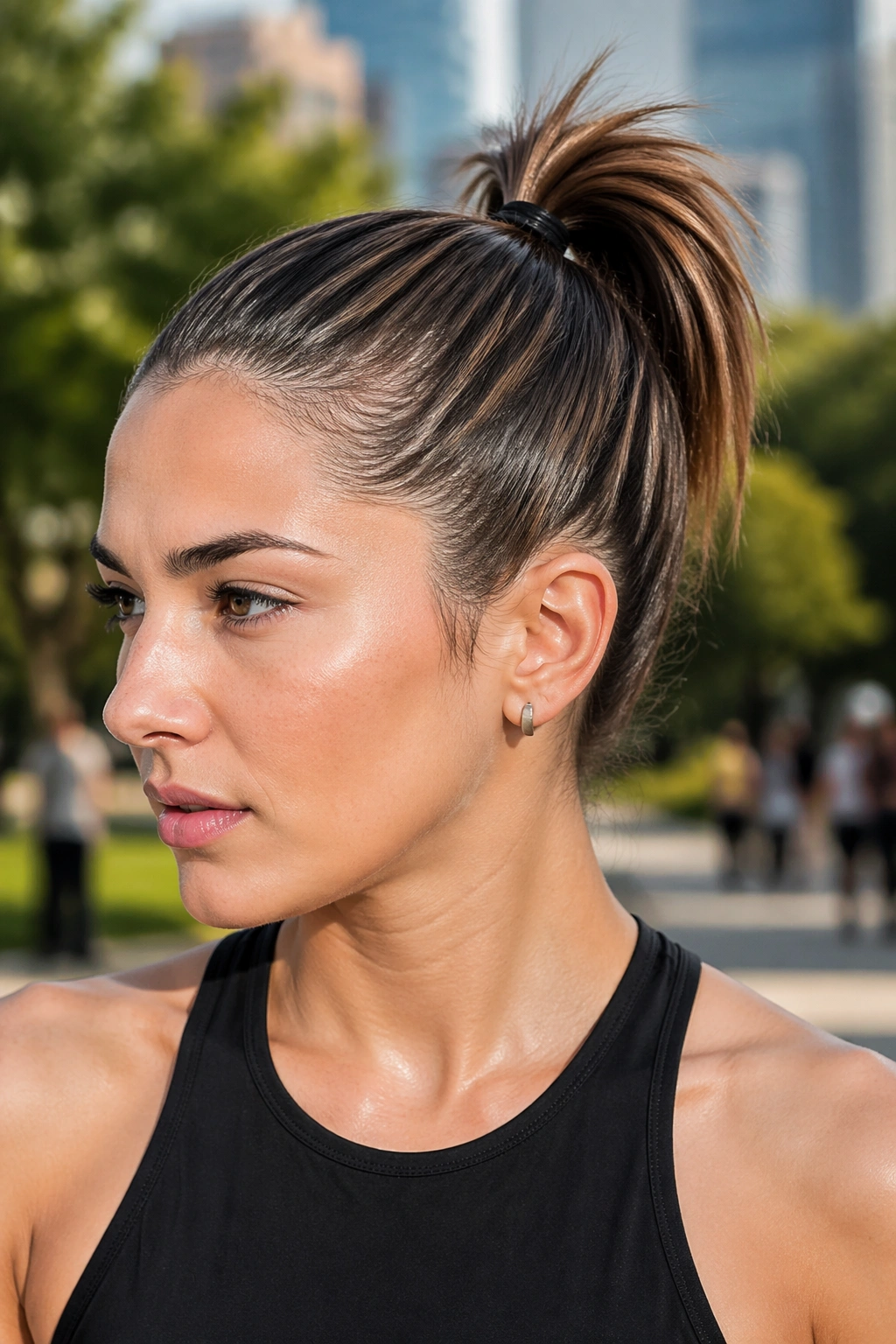
This is the ponytail that makes short straight hair look sharp, not awkward.
Pull the hair up high, near the crown, and smooth every side with a brush and a touch of gel or pomade. The ponytail should sit tight enough that the crown looks clean, but not so tight that it pulls the hairline into a harsh line. On a short cut, the tail may be small. That’s fine. The point is the height and the clean outline.
A sporty high ponytail works best when the hair reaches at least the top of the neck, though a lob gives you the most flexibility. If you have short layers, use a few bobby pins under the elastic to support the base. It keeps the tail from drooping backward.
This style has a little attitude. It feels direct and a bit athletic, which is a nice change from the soft low styles. The sleek top is what sells it. If the crown is messy, the whole look loses its edge.
24. Barrette-Stack Ponytail That Tames the Sides
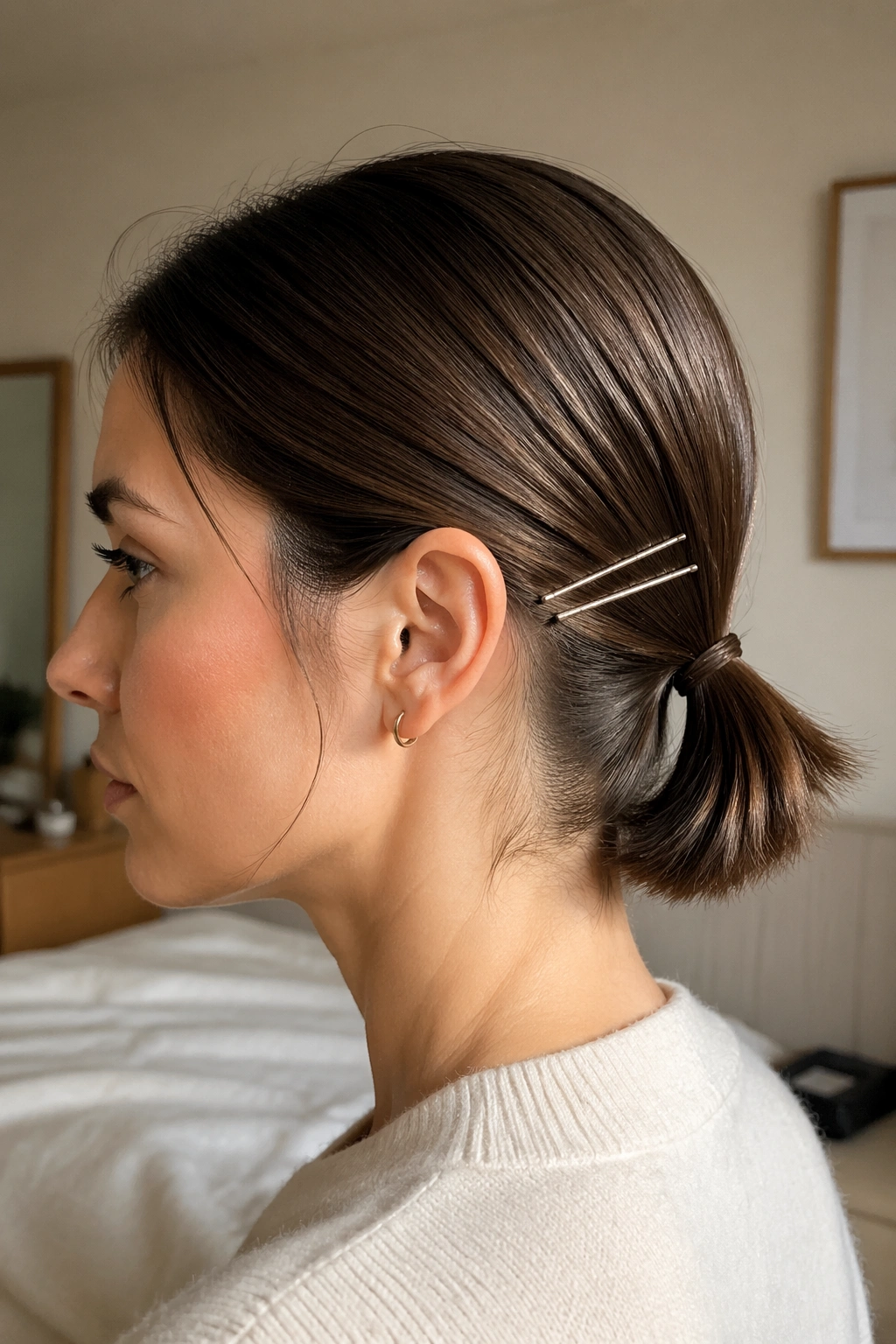
Two slim barrettes can do what one elastic cannot.
Tie a small ponytail low or mid-height, then clip one barrette on each side of the base, or stack two above the elastic in a neat line. On short straight hair, the clips help control the side pieces that usually escape first. They also add structure without making the style feel heavy.
I like this approach when the haircut has shorter layers near the ears. The barrettes catch those pieces and turn them into part of the style instead of something you keep tucking back. Metal clips feel crisp. Pearl or resin clips lean softer. The choice changes the whole mood.
This is one of those styles that looks more finished than it has any right to. The ponytail itself can be tiny. The clips do the visual work. If the elastic is all you can see, add the bars. They make the shape feel intentional.
25. Scarf-Wrapped Low Ponytail for the Softest Finish
Fabric changes the whole mood.
A scarf-wrapped low ponytail works beautifully on short straight hair because the scarf carries some of the visual weight that the hair itself can’t. Tie the hair into a small low ponytail, then knot a folded scarf around the base. A silk square or a narrow scarf strip both work. If you have very short ends, let the scarf tails hang longer than the hair. That balances the look.
This style is especially kind to blunt bobs and lobs because it softens the hard edge of the haircut. It’s also one of the easiest ways to make a short ponytail feel deliberate when the tail itself is tiny. A scarf in a solid color looks sleek. A printed scarf brings more personality, but keep the print scale small if your outfit already has a lot going on.
The best part? It hides the elastic and frames the base with almost no effort. That is the whole appeal. Short hair gets the decoration it needs, and you don’t have to pretend the ponytail is longer than it is.
Final Thoughts

The best ponytails for straight hair with short hair do not try to fake long hair. They work with what the cut already gives you: clean lines, neat edges, and a shape that can look sharp when it is handled with a little care.
If your hair slides, start with texture at the roots. If your ends are too short, lean on wraps, twists, scarves, or a tucked-under finish. If the ponytail itself is tiny, let it be tiny. A small pony that sits in the right place will always look better than a big one that keeps falling apart.
Keep a few small clear elastics, four bobby pins, a rattail comb, and a light styling cream within reach. That tiny kit solves most of the problems short straight hair throws at you. Once the base is secure, the rest gets a lot easier.
